San Francisco

Write it out

1

culture@sfbg.com

CAREERS AND ED If your New Year’s resolutions include finally finishing that post-apocalyptic S&M fantasy novel, or maybe just starting the memoir about your childhood as the illegitimate offspring of a ’70s soap opera star, you’re in the right place — and time. Here in the Bay Area, you can’t throw a copy of Robert McKee’s literary how-to “Story” without hitting a writing teacher — and January is when most writing classes ramp up. The trick is choosing the right one.

Best to begin with these 3 steps:

DECIDE EXACTLY WHAT KIND OF CLASS YOU WANT

Are you looking for a lot of lecture on writing craft, or would you rather spend more time workshopping your writing? Do you want to be assigned reading homework, or would you prefer writing exercises? All this information should be in the class description, and if it isn’t, email the teacher and ask. You’re allowed, you’re a grown-up now.

ASSESS YOUR MOTIVATION LEVEL

About mid-February it’ll be a cold, rainy night and that TiVoed episode of Downton Abbey and some takeout Indian food will seem more appealing than the experimental fiction course you signed up for. Decide now if you’re better committing to an afternoon class or a weekend workshop. Or if you should sign up with a friend so you’ll have somebody to shame you going.

VET THE INSTRUCTOR

Reading the teacher’s bio is as important as reading the course description. If you’re taking a class in novel-writing, you might want to know if your instructor has actually published (and not self-published) a novel — and if it was in the last couple of decades. This is useful information to have when you’re asking about real-world topics, such as getting an agent or dealing with publishers.

Of course, being published doesn’t necessarily make someone a good teacher. Writing is a profession that attracts people who like to lock themselves up in rooms with imaginary characters. Always check out the Yelp reviews for any place you’re thinking of taking a class. You’ll find plenty of individual teacher comments, pro and con.

*******

While there are other options, here is my personal list of the best places to take writing classes in the Bay Area:

THE WRITING SALON

Started in 1999 by a former newspaper editor, the Writing Salon (www.writingsalons.com)now has two locations, one in Potrero Hill and another in Berkeley. The Writing Salon offers intimate classes, four times a year in all genres (fiction, poetry, playwriting, even erotica) that are real crowd-pleasers. The Writing Salon won the SFBG Best of the Bay Readers’ Poll in Adult Education in 2011 and 2012.

THE SAN FRANCISCO WRITERS’ GROTTO

The Grotto began offering classes in 2008, and has seen their program grow to more than 15 classes per week. Begun in 1994 by Po Bronson, Ethan Canin, and Ethan Watters, the San Francisco Writers’ Grotto (www.sfgrotto.org) is a collective of working writers who share office space South of Market, where classes are held. Grotto classes are taught by Grotto members, as well as visiting colleagues, such as their agents, editors, and author friends. Grotto classes have perhaps the most stringent criteria for their teachers. No instructor can teach a Grotto class in a genre he or she is not published in. The Grotto has recently partnered with Litquake to sponsor the Bay Area’s first juried writers conference, Lit Camp, to be held this April.

BOOK PASSAGE

Easily the best independent bookstore in the country, Book Passage (www.bookpassage.com) in Corte Madera is also an excellent place to take a writing class. Often authors on their way through town on book tour will teach here. Book Passage is justifiably famous for its three big conferences — Children’s Writers and Illustrators, Mystery Writers, and Travel Writers and Photographers — which take place in the spring and summer. Elaine Petrocelli, the brains behind Book Passage, packs these conferences with agents and editors, and then sends them out to mingle with the students. More than one local writer has had his or her career made at a Book Passage conference.

GOING ALL IN — GRADUATE SCHOOL

If attending these writing classes has you thinking about taking your skill set to the next level, you don’t have to leave town. San Francisco State has one of the best, and for California residents, one of the least expensive Creative Writing graduate programs. It’s not easy to get into, but the upside is that once you’re in, reading your fellow students’ work is a pleasure. SF State (creativewriting.sfsu.edu) offers an MA and an MFA program, and you can go part time.

Another good, although pricier, choice is California College of the Arts, which offers a two-year MFA program at its SF campus (www.cca.edu/academics/graduate/writing).

Learned

1

ONGOING

Rockin’ Kids Singalong

Licensed clinical social worker and former punk rock singer-guitarist Stephanie Pepitone leads this musical play group for kids of all ages. Stephanie “leads families in about an hour’s worth of singing, dancing, music-making, and fun/chaos” with original tunes and familiar favorites.

Fridays, 10:30-11:30am, $10 per family. La Pena Cultural Center, 3105 Shattuck, Berk. www.lapena.org

JAN 12

Haitian Folkloric Dance

Live drumming accompanies instructor Portsha Jefferson’s class for all levels, which promises that “you will experience the meditative Yanvalou, the fiery rhythms of Petwo, the playful and celebratory dances of Banda and Rara. Expect a high energy class in celebration of a rich, spiritual tradition. Bring a long, flowy skirt if you have one.”

1:30-3pm, $13. Dance Mission Theater, 3316 24th St., SF. www.dancemission.com

JAN 16

Feeding Your Soul: Mindful Cooking and Eating in the New Year

Let the onslaught of New Year’s resolution-keeping commence. Kick off the year with an intro to mindful eating, and get away from psychologically compulsive, physically harming habits when it comes to nourishing yourself. Life coach Carley Hauck and chef Greg Lutes (known for his uni crème brulee!) team up deliver a lecture and cooking demo — aimed at helping you recognize wasteful food behaviors and reinvigorate your love for creating and enjoying healthful dishes.

$25 18 Reasons members, $35 others. 18 Reasons, 3674 18th St., SF. www.18reasons.org

JAN 17

Understanding Chinese Medicine

A six-week course at the American College of Traditional Chinese Medicine that will introduce you to the basic life force concept of Qi, and then broaden your knowledge into acupuncture, Chinese herbs, tongue and pulse diagnostics, yin and yang, five elements, and the Chinese concept of internal organs.

Thursdays, 6pm-8pm, $120. Pioneer Square and Shuji Goto Library, 555 De Haro, SF. www.actcm.edu

JAN 19

New Year, New Poems: Celebrate Your Muse!

“In our day together we’ll read and talk about an array of accessible, provocative poems by fine writers including current poet laureates Kathleen Flenniken, Juan Felipe Herrera, and Natasha Trethewey, and we’ll do some whimsical, illuminating writing exercises to bypass our inner critics and experiment with themes and tones, phrases and rhythms. We’ll listen closely and encouragingly to each other’s voices. By the end of the day we’ll have shaped a handful of budding poems and sharpened our vision for future writing projects,” says Writing Salon teacher Kathleen McClung.

10am-4pm, $95 Writing Salon members, $110 others. Writing Salon, 720 York, SF. www.writingsalons.com

JAN 19

Kongolese Contemporary Dance

Extremely charismatic instructor Byb Chanel Bibene revisits his Congolese roots, in which contemporary and traditional movements intertwined to produce a unique, exhilarating style. No experience in dance is necessary for this warm, fun, and inviting workshop.

10am-noon, $12-15 sliding scale. Also Jan. 20. Counterpulse, 1310 Mission, SF. www.counterpulse.org


JAN 25


Exploring San Francisco District Six

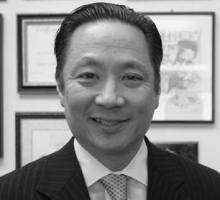
Sometimes education begins with looking more closely at your community. Supervisor Jane Kim leads a tour of her district — including South of Market, Mid-Market and Tenderloin neighborhoods — highlighting some of the recent successes and challenges affecting its residents’ quality of life.

3:30pm, $10. See www.spur.org/events for more info.

JAN 27

Bagel Making Workshop

Hole yes! You’ll never need complain about the state of West Coast bagelry again when the good folks of Sour Flour workshops lead you through the basics. You’ll begin by mixing flour, starter, salt, and water and then learning to develop the glutens through various techniques. Finally you’ll find out about boiling and baking techniques. Bring a plate to roll your creation home.

12:30-2:30pm, $80. La Victoria Bakery, 2937 24th St., SF. www.sourflour.org/workshops

FEB 2

Introduction to Coptic Bookbinding

The Coptic style of bookbinding allows a book to be laid open flat, making it ideal for sketchbooks and journals. Offered at Techshop, the epicenter of hands-on DIY yumminess, this seminar allows you to take home your own handmade journal! (To blog about?)

10am-4pm, $95 TechShop members, $110 others. TechShop, 926 Howard, SF. www.techshop.ws

FEB 5

Basic Mysteries

Revered Beat poet, former New College professor, and Guardian GOLDIE Lifetime Achievement Award-winner David Meltzer takes us on a uniquely persona tour of poetry and poetics, exploring “the roots of poetry, the invention and mythology of writing systems, divination, Kabbalah, and the page.” The four-week course (Tuesdays through February) will cover a lot of transcendent ground.

7:00-9:30pm, $200. Mythos, 930 Dwight Way #10, Berk. Contact julmind@mtashland.net for more info.

FEB 8

Career Toolbox with Suzanne Vega

The acclaimed neo-folk singer introduces us to her concept of the “career toolbox,” which “contains a unique mix of creative, strategic and marketing skills that helped her in the early stages of her career.” Honest self-reflection and an understanding of necessary skills to survive a competitive marketplace are key. Plus, hello, Suzanne Vega.

11am-2pm, $52 CIIS members, $65 others. California Institute of Integral Studies, 1453 Mission, SF. www.ciis.edu

FEB 19

Wild Oakland: Nature Photography Basics at Lake Merritt

Amid its passel of no-cost classes, including weekly courses on Eskrima, the Filipino combat system and herbal medicine, the East Bay Free Skool offers great one-off tutorials. Nature group Wild Oakland hosts a few of these that entail happy tromps about Lake Merritt. Today’s is a wildlife photography class taught by Damon Tighe, whose freelance shots appear in Bay Nature and other publications.

Noon, free. Meet in front of Rotary Nature Center, 600 Bellevue, Oakl. eastbayfreeskool.wikia.com

MARCH 17

Introduction to Neon

Surely there are few among us who could not use a custom-made neon sign. Perhaps you would like it to be clear that you are open for business. Maybe your roommate could use a permanent reminder that please Buddha Christ our savior we don’t leave our coffee mugs on the dining room table (ahem.) At any rate, this is one of this West Oakland metal mecca’s entry-level courses — check its online course schedule for more offerings in blacksmithing, welding, jewelry, glass, and more.

Sundays through 10am-6pm, $400. The Crucible, 1260 Seventh St., Oakl. www.thecrucible.org


Dapper down

3

caitlin@sfbg.com

CAREERS AND ED When Ford Models announced that its newest menswear model was a woman — Olympic swimmer and New York artist Casey Legler — in the same month that Yves Saint Laurent chose Saskia de Brauw as the face of its spring-summer 2013 menswear collection, it became clear that men’s fashion was opening itself to the fact that not all people who wear suits and sport rugged looks are male-identified.

But not every butch looking for a fly three-piece has the gamine, broad-shouldered physique of Legler and de Brauw. What’s a dapper gent to do?

Enter the new wave of menswear (or, “masculine of center,” as we’ve seen the look defined on some style blogs) brands specifically tailored to the female-born or identified. Happily, downtown San Francisco’s Crocker Galleria will be the site of the first permanent menswear store to cater to the genderqueer.

“My mother started teaching me [to sew] when I was eight,” Tomboy Tailors’ 48-year-old, butch-identified owner Zel Anders writes me in an email interview. Anders has long been a fan of suits over dresses when it came to formal occasions, but was frustrated that she could never find a well-fitting outfit — even here in the Bay Area, where she’s lived since she was 17. She says the process of suit shopping grew painful, and found it necessary to steel herself before hitting the dressing rooms.

No such toughening up will be necessary at the new shop, which has already garnered a loyal Internet following despite the fact that it won’t open its doors until February 2nd. Tomboy Tailors’ staff will help customers find suits that fit right across the chest, hips, thighs, and seat, customizing them so that each garment fits its new owner.

The store will stock not only its in-house line (Anders especially touts its three-button, notch lapel suit for heavier clientele), but items from other brands selected for a pangender crowd — including a selection of men’s shoes in smaller sizes, like a Dalton wing-tip lace-up Oxford and saddle shoes from Carlos Santos and Walk-Over.

“I am having so much fun just watching people ponder and choose from the several hundred fabrics that they have as options,” Anders says about her Tomboy Tailors experience to date. ” Not only do they have to think about what color they want their suit to be, but they have to decide if they want a solid, herringbone, pinstripe, chalk stripe, plaid, or even a bird’s eye, nail’s head, or houndstooth check pattern to the fabric.” Finally, options.

Tomboy Tailors is hardly the only option for fly transpeople, dapper dames, and other genderqueers — transgressive men’s fashion site dapperQ (www.dapperq.com) recently published a list of fab online labels like Marimacho (www.marimachobk.com), The Original Tomboy (www.theoriginaltomboy.com), Saint Harridan (www.saintharridan.com), and Androgynous (www.androgynousfashion.com) that all have a mission to provide fashion for all points on the gender-fashion spectrum.

TOMBOY TAILORS OPENING PARTY

Feb. 2, 2-6pm, free

Tomboy Tailors

Crocker Galleria

50 Post, first floor, SF

www.tomboytailors.com


The shape of stage to come

0

culture@sfbg.com

CAREERS AND ED Like most skills, acting can be honed and refined, and the number of disciplines and techniques an actor could familiarize themselves with are practically infinite. Fortunately for the professional and amateur actor alike, there’s a number of theater companies who offer the same actor trainings to the public that they utilize in the creation of their own work.

Ranging from techniques such as Suzuki Method or Viewpoints, skill sets such as improv or stage combat, or theatrical forms such as Bouffon or Kyogen, these classes help keep working actors in artistic shape, and offer a way for even rank beginners to acquire translatable performance skills. And since unlike acting schools or conservatories, there’s rarely an audition process or prerequisite for attendance, they’re accessible to a fairly broad demographic.

Ensemble theater-making is East Bay company Ragged Wing‘s focus, and therefore also the focus of the trainings it offers to the public. Utilizing techniques such as Viewpoints, mask performance, puppetry, music, and myth-based story creation, Ragged Wing introduces actors and theater-makers of all levels (including total newbies) to concepts such as devised theater, imagination play, and the psycho-physical exercises of Michael Chekhov. It even offers a workshop for teachers in applying ensemble theater techniques in the classroom. Visit its website for an overview of last year’s program, and this year’s upcoming dates, which will occur later this spring.

www.raggedwing.org/training

We like this next class so much we awarded it a Best of the Bay in 2011! Taught by Naked Empire Bouffon Company artistic director Nathaniel Justiniano, the Intro to Bouffon Workshop guides up to 20 participants on a journey to find their “personal bouffon” (or “inner psychopath,” as we termed it). Alternating between weekend intensives and four-week workshops of two-hour sessions (one of which just started on January 15), Intro to Bouffon includes instruction on creating within ecstatic play, movement-and-vocal-based improv, and blatantly violations of the usual boundaries drawn between audience and performer. In addition to teaching at the warehouse Main Street Theater, Justiniano has also recently joined the Circus Center faculty where he will teach a seven-week course on Bouffon beginning in April.

$60–$80, 20-hour intensives $200, Circus Center intensive $3200. www.nakedempirebouffon.org

Another theater company offering training in the specialized theatrical format it also performs is Theatre of Yugen, which offers a series of art of performance workshops as well as an apprenticeship program on Kyogen and Noh techniques. This year’s public trainings begin on January 26 with a weekend intensive on “Physical Character” in the Kyogen style of performance. Private apprenticeships are granted by audition, and last for an entire calendar year during which apprentices train and eventually perform with the company, sometimes staying on as company members after their graduation.

$80–$100 (with discount for taking multiple classes.) Enrollment is limited. www.theatreofyugen.org

Sure you can act if someone hands you a script. But how about when there isn’t one? At its best, improvisational theater makes use of a whole range of techniques, and requires a huge amount of focus and cooperation between players in order for a scene to work. It’s also one of the most accessible theatrical art forms for beginners to get involved with, particularly in the Bay Area. One of the newer kids on the block, EndGames Improv is nonetheless one of the most pedigreed. Offering instruction in “long form improvisation” à la Upright Citizens Brigade and Second City, EndGames Improv holds classes in four levels and stages weekly performances at Stagewerx, including its infamous “F!#&ing Free Fridays.” Seven-week classes are capped at 16 participants. January is sold out, but keep an eye on the website for future dates.

$199; $225 for upper levels. www.endgamesimprov.com

They’re not a stand-alone theater company, but I can’t resist mentioning Dueling Arts San Francisco. Providing instruction to performing artists in a wide range of stage combat skills — including quarterstaff (what up Little John?), rapier, dagger, broadsword, and unarmed combat — the instructors of Dueling Arts are also accomplished fight directors and performers in their own right, for a diverse array of companies including IMPACT Theatre, Shotgun Players, Thrillpeddlers, ACT, Berkeley Rep, San Jose Rep, SF Playhouse, and California Shakespeare Theatre. Certification class sizes are generally between six to 12 students, and there are no prerequisites for the beginning levels.

Quarterstaff Level 1 Certification Class begins March 17, $200. www.duelingartssf.com


Do we need more luxury condos?

0

There’s no shortage of high-end housing in San Francisco. If you can afford to pay $6,000 a month for your rent or mortgage, you’re going to find a nice place to live. And there’s no study anywhere in any corner of the City Planning Department suggesting that current San Francisco residents really want new luxury condos downtown.

In fact, all evidence suggests the contrary — the market for high-end downtown housing is new residents, people who are moving here to take tech jobs, empty nesters moving from the suburbs, or world travelers looking for a pied-a-terre in one of the greatest cities on Earth.

But when the City Planning Department analyzes a project like 75 Howard, that’s not part of the discussion.

The Dec. 12 preliminary environmental study on the “market-rate” (read: $1 million and up for waterfront views) project never addresses the question of what value this type of housing would bring to the city. Instead, it talks about projections from the Association of Bay Area Governments, which says that San Francisco will grow by 52,000 households by 2030.

So a project that’s creating fewer than 200 housing units, and creating a net of 77 jobs, isn’t big enough to be a factor in the future of either jobs or housing.

But in the process, the study makes a remarkable statement, one that underlines everything wrong with city planning policy. Buried on page 48 of a 151-page preliminary study is the following: “In addition, the demand for housing by the net increase in number of employees would be more than offset by the dwelling units that would be constructed on site under the proposed project or its variants.”

That sounds like bureaucratise, and it is, so allow me to translate: The project will create 186 housing units and 77 jobs. More housing than jobs; what’s there to worry about?

Well: The 77 employees at 75 Howard will work in the restaurants and stores, or in the garage under the building, or in maintenance. Not one of them will make even remotely enough money to afford to buy one of the condo units in the building.

So the project — like so much of the development that happens in San Francisco — will create jobs for people who can’t afford to live here, and housing for people who don’t currently work here. That imbalance is utterly unsustainable, spells disaster for the future of the city — and is pretty much hard-wired into current planning and housing policy.

War of the waterfront

40

tredmond@sfbg.com

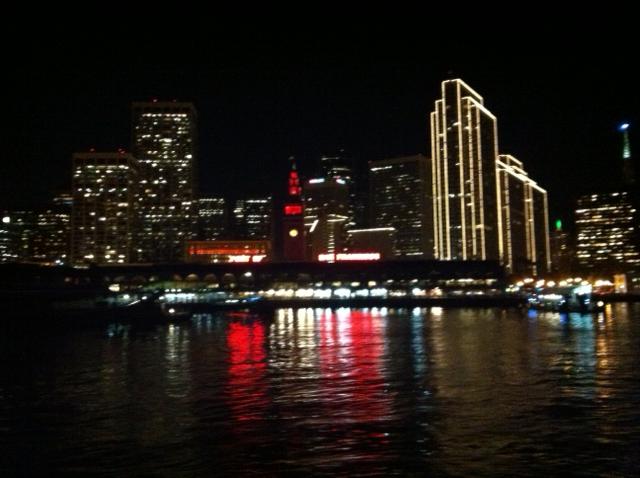
There’s a blocky, unattractive building near the corner of Howard and Steuart streets, right off the Embarcadero, that’s used for the unappealing activity of parking cars. Nobody’s paid much attention to it for years, although weekend shoppers at the Ferry Building Farmers Market appreciate the fact that they can park their cars for just $6 on Saturday and Sunday mornings.

But now a developer has big plans for the 75 Howard Street site — and it’s about to become a critical front in a huge battle over the future of San Francisco’s waterfront.

Paramount Partners, a New York-based real-estate firm that also owns One Market Plaza, wants to tear down the eight-story garage and replace it with a 350-foot highrise tower that will hold 186 high-end condominiums. The new building would have ground-floor retail and restaurant space and a public plaza.

It would also exceed the current height limit in the area by 150 feet and could be the second luxury housing project along the Embarcadero that defies the city’s longtime policy of strictly limiting the height of buildings on the waterfront.

It comes at a time when the Golden State Warriors are seeking permission to build a sports arena on Piers 30 and 32, just a few hundred feet from 75 Howard.

Between the proposed 8 Washington condo project, the arena, and 75 Howard, the skyline and use of the central waterfront could change dramatically in the next few years. Add to that a $100 million makeover for Pier 70, the new Exploratorium building on Pier 15, and a new cruise ship terminal at Pier 27 — and that’s more development along the Bay than San Francisco has seen in decades.

And much of it is happening without a coherent overall plan.

There’s no city planning document that calls for radically upzoning the waterfront for luxury housing. There’s nothing that talks about large-scale sports facilities. These projects are driven by developers, not city planners — and when you put them all together, the cumulative impacts could be profound, and in some cases, alarming.

“There hasn’t been a comprehensive vision for the future of the waterfront,” Sup. David Chiu told me. “”I think we need to take a step back and look at what we really want to do.”

Or as Tom Radulovich, director of the advocacy group Livable City, put it, “We need to stop planning the waterfront one project at a time.”


Some of the first big development wars in San Francisco history involved tall buildings on the waterfront. After the Fontana Towers were built in 1965, walling off the end of the Van Ness corridor in a nasty replica of a Miami Beach hotel complex, residents of the northern part of the city began to rebel. A plan to put a 550-foot US Steel headquarters building on the waterfront galvanized the first anti-highrise campaigns, with dressmaker Alvin Duskin buying newspaper ads that warned, “Don’t let them bury your skyline under a wall of tombstones.”

Ultimately, the highrise revolt forced the city to downzone the waterfront area, where most buildings can’t exceed 60 or 80 feet. But repeatedly, developers have eyed this valuable turf and tried to get around the rules.

“It’s a generational battle,” former Sup. Aaron Peskin noted. “Every time the developers think another generation of San Franciscans has forgotten the past, they try to raise the height limit along the Embarcadero.”

The 8 Washington project was the latest attempt. Developer Simon Snellgrove wants to build 134 of the most expensive condominiums in San Francisco history on a slice of land owned in part by the Port of San Francisco, not far from the Ferry Building. The tallest of the structures would rise 136 feet, far above the 84-foot zoning limit for the site. Opponents argued that the city has no pressing need for ultra-luxury housing and that the proposal would create a “wall on the waterfront.”

Although the supervisors approved it on a 8-3 vote, foes gathered enough signatures to force a referendum, so the development can’t go forward until the voters have a chance to weigh in this coming November.

Meanwhile, the Paramount Group has filed plans for a much taller project at 75 Howard. It’s on the edge of downtown, but also along the Embarcadero south of Market, where many of the buildings are only a few stories high.

The project already faces opposition. “The serious concerns I had with 8 Washington are very similar with 75 Howard,” Chiu said. But the issues are much larger now that the Warriors have proposed an arena just across the street and a few blocks south.

“Because of the increase in traffic and other issues around the arena, I think 75 Howard has a higher bar to jump,” Sup. Jane Kim, who represents South of Market, told me.

Kim said she’s not opposed to the Warriors’ proposal and is still open to considering the highrise condos. But she, too, is concerned that all of this development is taking place without a coherent plan.

“It’s a good question to be asking,” she said. “We want some development along the waterfront, but the question is how much.”

Alex Clemens, who runs Barbary Coast Consulting, is representing the developer at 75 Howard. He argues that the current parking garage is neither environmentally appropriate nor the best use of space downtown.

“Paramount Group purchased the garage as part of a larger portfolio in 2007,” he told me by email. “Like any other downtown garage, it is very profitable — but Paramount believes an eight-story cube of parking facing the Embarcadero is not the best use of this incredible location.”

He added: “We believe removing eight above-ground layers of parked cars from the site, reducing traffic congestion, enlivening street life, and improving the pedestrian corridor are all benefits to the community that fit well with the city’s overall goals. (Of course, these are in addition to the myriad fees and tax revenues associated with the project.)”

But that, of course, assumes that the city wants, and needs, more luxury condominiums (see sidebar).


Among the biggest problems of this rush of waterfront development is the lack of public transit. The 75 Howard project is fairly close to the Embarcadero BART station, but when you take into account the Exploratorium, the arena, and Pier 70 — where a popular renovation project is slated to create new office, retail, and restaurant space — the potential for transit overload is serious.

The waterfront at this point is served primary by Muni’s F line — which, Radulovich points out, “is crowded, expensive, low-capacity, and not [Americans with Disabilities Act]-compliant.”

The T line brings in passengers from the southeast but, Radulovich said, “if you think we can serve all this new development with the existing transit, it’s not going to happen.”

Then there are the cars. The Embarcadero is practically a highway, and all the auto traffic makes it unsafe for bicycles. The Warriors arena will have to involve some parking (if nothing else, it will need a few hundred spaces for players, staff, and executives — and it’s highly unlikely people who buy million-dollar luxury boxes are going to take transit to the arena, so there will have to be parking for them, too. That’s hundreds of spaces and new cars — assuming not a single fan drives.

The 75 Howard project will eliminate parking spaces, but not vehicle traffic — there will still be close to 200 parking spaces.

And all of this is happening at the foot of the Bay Bridge, the constantly clogged artery to the East Bay. “Oh, and there’s a new community of 20,000 people planned right in the center of the bridge, on Treasure Island,” Peskin pointed out.

Is it possible to handle all of the people coming and going to the waterfront (particularly on days where there’s also a Giants game a few hundred yards south) entirely with mass transit? Maybe — “that’s the kind of problem we’d like to have to solve,” Radulovich said. Of course, the developers would have to kick in major resources to fund transit — “and,” he said, “we don’t even know what the bill would be, and we don’t have the political will to stick it to the developers.”

But a transit-only option for the waterfront is not going to happen — at the very least, thousands of Warriors fans are going to drive.

The overall problem here is that nobody has asked the hard questions: What do we want to do with San Francisco’s waterfront? The Port, which owns much of the land, is in a terrible bind — the City Charter defines the Port as an enterprise department, which has to pay for itself with revenue from its operations, which made sense when it was a working seaport.

But now the only assets are real estate — and developing that land, for good or for ill, seems the only way to address hundreds of millions of dollars in deferred maintenance and operating costs on the waterfront’s crumbling piers. And the City Planning Department, which oversees the land on the other side of the Embarcadero, is utterly driven by the desires of developers, who routinely get exemptions from the existing zoning. “There is no rule of law in the planning environment we live in,” Radulovich said. So the result is a series of projects, each considered on its own, that together threaten to turn this priceless civic asset into a wall of concrete.

Disappearing poles

5

steve@sfbg.com

Political dynamics on the Board of Supervisors moved into uncertain new territory this week with the inauguration of two new members -– London Breed and Norman Yee –- who break the mold in representing districts that have long been predictable embodiments of opposite ideological poles.

Breed and Yee are both native San Franciscans with deep roots in their respective districts, which they tapped to win hotly contested races against challengers who seemed more closely aligned with the progressive politics of Dist. 5 and the fiscally conservative bent of Dist. 7. Both tell the Guardian that they represent a new approach to politics that is less about ideology and more about compromise and representing the varied concerns of their diverse constituencies.

“I don’t see everything as a compromise, but I want to be sure we find compromises where we can and don’t let personalities get in the way,” said Yee, whose background working in education and facilitating deals as a school board member belies District 7’s history of being represented by firebrand opponents of the progressive movement.

Some of the strongest champions of the pro-tenant, anti-corporate progressive agenda have come from the Haight and Dist. 5, a role that Breed has no intention of playing. “When you talk about the progressives of San Francisco, I don’t know that I fit in that category,” Breed told us. “I’m a consensus builder. I want to get along with people to get what I want.”

Yet what Breed says she wants are housing policies that protect renters and prevent the exodus of African-Americans, and development standards that preserve the traditional character of neighborhoods against corporate homogenization. “I don’t see the difference between my causes and progressive causes,” she said, claiming a strong independence from some of the monied interests that supported her campaign.

We spoke a few days before the Jan. 8 vote for board president (which was scheduled after Guardian press time, and which you can read about at the SFBG.com Politics blog). Neither Yee nor Breed would tip their hands about who they planned to support -– the first potential indication of their willingness to buck their districts’ ideological leanings.

Breed had raised some progressive eyebrows by telling the Guardian and others that she admired moderate Sup. Scott Wiener and would support him for president, but she had backtracked on that by the time we spoke on Jan. 5, telling us, “I’m going into this with an open mind.

“I’m waiting on my colleagues to decide who has the most votes,” Breed said, ing a candid take on valuing compromise over conflict. “I really would like to see us walk into this all together.”

Yee had similar comments. “They’re all competent people and can be leaders, it just depends on where they want to lead us,” he said. “I value people who can work with anyone and see themselves as facilitators more than as dictators.”

Both Breed and Yee come from humble roots that they say give them a good understanding of the needs of the city’s have-nots. Breed was raised in the public housing projects of the Western Addition, an experience that makes her want to solve the current dysfunction in the San Francisco Housing Authority.

“I can’t tell you what needs to be done, but I can tell you something is wrong,” Breed told us. “My goal is to get to the bottom of it and be extremely aggressive about it.”

Yee grew up in Chinatown, his father an immigrant who worked as a janitor, his mother a garment worker. They later lived in the Sunset and the Richmond, and Yee moved into his district’s Westwood Park neighborhood 26 years ago.

When Yee was eight years old, the family saved enough money to open a grocery store at 15th and Noe, and he said that he basically ran the store in his teen years while his father continued working another job.

That was where Yee developed his deep appreciation for the role that small, neighborhood-serving businesses play in San Francisco. In an era before credit cards, he would offer credit lines to local customers struggling to make ends meet; that experience showed him how stores like his family’s were essential parts of the city’s social and economic fabric.

“That’s why I value small businesses,” Yee said, calling that his top focus as a supervisor. “They’re going to have a bigger voice now.”

Yee draws a clear distinction between the interests of small business and that of the larger corporations that dominate the powerful San Francisco Chamber of Commerce. Asked where he might have placed on the Chamber’s recent scorecard ranking supervisors’ votes — where Yee’s predecessor, Sean Elsbernd, got the highest marks — Yee said, “Probably not on their A list. They are just one entity in San Francisco and I’m not going to be judged just by them.”

At 63 years old, Yee is by far the oldest member of the youngest Board of Supervisors in recent memory, while Breed, at 38, is closer to the current average. Yee hopes his age and experience will help him forge compromises among all the supervisors.

“People draw their lines, but I try to listen to people and see where their lines are,” Yee said. “It’s a balancing act, but at the same time, there’s things I’ve been working on all my life, like education and safety net issues, and this district does care about those things. At the same time, they care about their homes. Are these issues in conflict? I don’t think they have to be.”

Street music

14

le.chicken.farmer@gmail.com

CHEAP EATS It’s like a rubber band. It breaks.

CHEAP MUSIC


by Hedgehog


Happy Current Year from the not-too-distant past! We celebrated New Years Eve at the Manse de la Cooter with good luck sausages, kale, and (for some of us) perhaps a little too much vino.

Oddly, it wasn’t Chicken Farmer who over-indulged, though I expected her to drown her sorrows in the grape since earlier that day her knee doctor broke the news. Or rather, he tore the news: ACL.

"In the wind," as McNulty would say. Only permanently. Like, Chris escorted her left knee’s ACL into a "vacant," and Snoop followed behind with a bucket of quick lime and a powder-actuated nail gun, you feel me?

But, in spite of her bad case of S.A.D. (Sad ACL Discovery) the farmer stoicly sang and storied the Chunks de la Cooter to sleep, and soberly designated drivered me home, where we’ve been burying our heads ever since, recording Sister Exister music.

And so, in deference to my honey’s questionable sports future and entirely unsporty present, I’m going to focus my portion of the column on the thing I now know more about than I did last week: music in San Francisco.

What’s that? The BG already has music writers? So? They already have a food writer, too. My new twist is: Us! That’s right, it’s 2013 and Sister Exister (sisterexister.bandcamp.com) is primed for world domination. We are everywhere. We tweet, tumble, face the book, kick the songs, camp the band, and cloud the sounds with our patented brand of "What the hell was that? Are they serious?"

And it is thanks to my self-appointed role as the band’s link to all things digital that I’ve discovered — gasp — we are not the only band in San Francisco. This epiphany was mostly Soundcloud’s doing, since we never go outside, let alone to bars, let alone to bars playing loud, live, amplified music.

But maybe in 2013 we should because . . . The High Witness Co. (www.soundcloud.com/highwitness)? Digging the "Leonard Cohen and Calexico in a blender" vibe of "Borrowed Time." And the Street Eaters (www.soundcloud.com/streeteaters)? Fuck yeah! And not just because of their name, either.

Chick drummer, fella plucking the bass, and that’s it. And they sound like a full orchestra! OK not really but dang, only two people? Yowza. Check out their track "Blades" and forget what I said about there being only two people in the band. And then be amazed when I say again: all that energy is coming out of only two people!

This, and then all the bands we already know with all the people we already know in them, like the Verms, Yard Sale, the Low Rollers, 17 Reasons . . . In fact, everybody in the greater Bay Area is in a band! If this isn’t true, if you in fact are not in a band then guess what? You, like us, have got a lot of audiencing to catch up on!

CHEAP EATS continued

Yeah but now I can’t go out because I look like Rocky Balboa. I lasted just one round with the bathroom floor yesterday morning and now I have a broken nose, a black eye, and a swollen eyebrow full of dried blood, in addition to my depressing ACLessness. So I can’t even dance, let alone be seen.

For now.

Go on ahead without me, Hedgehog.

I’ll be here on the toilet, where I’ve spent most of 2013, when I wasn’t Hillary Clintoning off of it.

She found me, dear reader, in a puddle of blood. Not Hillary — Hedgehog. And that awesome moment was the highlight of my year this year so far.

Oh. This morning I ate a half of a bagel with jam on it, and I held it down!

Or up, as it were. Other than that it’s been white rice and dry toast on my menu. But you don’t want to hear about this! Go give a listen to happier times, courtesy of Hedgehog . . .

Fin-spiration

0

arts@sfbg.com

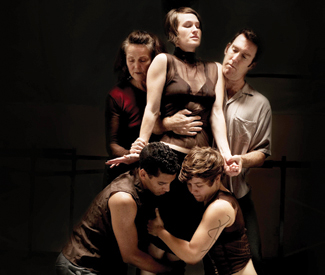
DANCE After a decade of dancing and choreographing in the Bay Area, Cid Pearlman departed for Los Angeles, spent a year in Estonia, and now lives in Santa Cruz.

At last May’s San Francisco International Arts Festival, she re-introduced herself with This is what we do in winter, choreographed in 2010 for both her own dancers and performers from Tallinn, Estonia’s capital. In that piece, dance as social activity beautifully co-existed with the art as rigorous practice. This is what made you wonder what else this choreographer might have percolating.

It turns out to be the premiere of the intriguingly named Your Body is Not a Shark, a collaboration between Pearlman, composer Joan Jeanrenaud, and poet Denise Leto. Maya Barsacq, music director of chamber orchestra Cadenza, instigated the project. The women came together with a common interest in exploring constraints — physical and otherwise — as a generative force in art making. “In dance,” Pearlman says, “the young athletic body is the norm. I want to explore physical differences because I am interested in complicated stories that show people at different stages in their lives.” Shark’s seven dancers range from 18 to 64.

As a no-longer-young dancer, the 49-year-old Pearlman knows about the fragility and vulnerability of the human body. But, as she pointed out in a New Year’s Day conversation from Santa Cruz, “there are different kinds of virtuosity. There is hugely physical, deeply embodied dancing in your 20s and 30s which relies on strength and sharpness technique. Older dancers bring maturity to their work. If they can’t jump so high, don’t ask them to. You ask a performer to do what they are good at.”

“Limitations can hit you any time,” she adds. “It’s part of the human condition.” Her collaborators know whereof she speaks. Poet Leto, who wrote the text for this production, likes to present her works orally. A few years ago, she developed dystonia, a neurological disorder that has affected her vocal chords. “Sometimes she can get the words out, sometimes she can’t,” Pearlman says. But like the dancer who finds new ways to use her body, Leto has developed new strategies for presenting her poetry. Among them is the presence of a co-reader, “so if her voice gives out, the other person picks up.” Jeanrenaud was a cellist with the Kronos Quartet who had to alter her musical career in 1999, when she was diagnosed with multiple sclerosis. She too adapted to the changed circumstances by becoming a solo performer and composer with wide-ranging works in many media.

Each of these three artists has faced the restrictions on their expressiveness by expanding their reach. (And as Pearlman points out, sharks die if they stop moving.) At the core of Shark are Leto’s poems, each written within the constraints of separate, highly formal parameters: a sestina, an oulipo, and a tanka. She then turned the verses over to Jeanrenaud, who generated a sound collage and an instrumental score to be performed by herself, percussionist William Winant, and members of the Cadenza chamber players. Leto too will be on stage.

Shark’s most demanding task by going farther afield may well have been Pearlman’s. Having immersed herself in the verses’ technical demands — some of them sound like algorithms — she shaped her choreography along the same rules. Leto seems to be happy with how her partners have worked with the poems. “Taken off the page — by the movement of bodies and the movement of sound — they have become something altogether different,” she says in the introduction to the texts’ printed version.

But what about the rest of us? With its intricately interweaving of formal questions and demands, will Shark be readable to an audience? “It’s not a problem,” Pearlman laughs. “They don’t have to know how it works. It’s an experiment. It’s meant to be a puzzle.” *

“YOUR BODY IS NOT A SHARK”

Fri/11-Sat/12, 8pm; Sun/13, 3pm, $18-$24

ODC Theater

3153 17th St, SF

www.odctheater.org


Behind today’s unanimous vote for Chiu

37

For all the high-minded talk about diversity and working together on behalf of the public – and the relentless praising of their political colleagues and supporters – today’s unanimous re-election of David Chiu as president of the Board of Supervisors once again demonstrated that much of the people’s business is done behind closed doors.

As most of the supervisors acknowledged publicly or in comments to the Guardian, in recent days there was a flurry of meetings about the president vote among the supervisors, despite the prohibition in the state’s Brown Act against “seriatim meetings,” in which elected officials have serial meetings with each other until an quorum of supervisors has illegally discussed some topic.

How else could Malia Cohen, Jane Kim, and Scott Wiener – all hopefuls for the president’s seat who withdrew themselves from consideration before a vote was cast – have all known that Chiu had the votes he needed to win an unprecedented third consecutive term? But they did know, as they all told the Guardian.

“The reality was the support wasn’t there,” Cohen told reporters after the vote when asked why she withdrew her nomination just before the supervisors were about to vote, just after Kim had done the same thing, leaving Chiu as the sole nominee.

I asked whether she was promised anything in return for withdrawing from consideration, and Cohen said, “There’s always negotiations involved in everything, from committee assignments to appointment to regional bodies…The full story will come out later.”

Cohen even obliquely suggested that Chiu – who is known to have his sights set on Tom Ammiano’s Assembly seat, which comes open in two years – may not serve his full two years as president and that was part of the backroom discussions. In the more immediate future, Cohen said she wants to serve on the Land Use Committee, so don’t be surprised if Chiu appoints her as chair of that powerful body.

“It may seem like a small setback today, but it sets the stage for greater conversations going forward,” Cohen said of her decision to voluntarily step down.

Kim also told reporters that she knew Chiu had the votes – saying “we know there was broad support for David for another term” – and that the decision that she and Cohen made to nominate one another was mostly symbolic, intended to make a point about the need for women of color to be in leadership positions: “I thought it was important that we put the dialogue out there.”

Kim said she really appreciated the opportunity to speak with more fellow supervisors privately in the last few days than she had before. “All of this was last minute. There were really only discussions in the last three days,” Kim told me. “I got a good sense of people’s policies and priorities.” As for Kim’s priorities, she said she wants to serve on the Budget Committee, so don’t be surprised when Chiu names her as chair.

Wiener also told me that he realized a couple days ago that he didn’t have the votes but that Chiu did. “It would have been an honor to serve as board president, but it wasn’t in the cards,” Wiener said.

Some of what the cards showed was made clear as the nominations for president opened today and new Dist. 7 Sup. Norman Yee spoke first and nominated Chiu, thus making it clear that Kim probably didn’t have the six votes she needed. As former Sup. Chris Daly, a veteran vote counter, told me, “Norman Yee and Eric Mar could have made Jane Kim board president. They were the deciding bloc, but it would taken both of them.”

Yet Mar told us that he was caught off guard by how the voting unfolded today. “I was surprised that people dropped out before the vote,” he told me.

Yet he acknowledged that it was perhaps a smart move by the progressive supervisors, who voted against Chiu two years ago and were punished with bad committee assignments, to instead get behind Chiu now and hand him a unanimous victory.

“I think that was the hope when people dropped out. It would have been hard if they didn’t, but these negotiations [with Chiu over committee assignments] will go on over the next few days,” Mar said, noting that he will push for strong representation by supporters of labor and other progressive constituencies on key committees.

Asked about his negotiations with fellow supervisors, Chiu would only say, “My conversation with everyone was very consistent.” As for his pending decision on committee assignments, he told me, “We have a board that is very diverse and we’ll have committees that reflect that.”

During his speech in Board Chambers, Chiu talked about running the board in a way that would let each supervisor have her/his moments in the spotlight to provide leadership on issues they care about, comparing it to the San Francisco Giants and the contributions that so many players made to their World Series sweep.

“They took turns making the big plays,” Chiu said, going on to tick off the list of how he’ll help his colleagues shine. “Whether it’s Sup. Mar advocating for a healthy environment, Sup. Farrell addressing out looming health care costs, whether it’s Sup. Chu disciplining our budget, Sup. Breed getting the jobs that young people need, Sup. Kim making sure that all our kids graduate, Sup. Yee making sure that small businesses succeed, Sup. Wiener fighting for better transportation options, Sup. Campos fighting against wage theft, or Sup. Cohen curbing gun violence, and Sup. Avalos delivering on local hire, by the end of our season, if we’re going to help each other succeed in getting these things done, we are all going to win.”

Gascon, Adachi and conviction rates

25

Public Defender Jeff Adachi just released his annual report, and it’s impressive: According to the statistic his office complied, of the 60 felony trials handled by deputy public defenders, 62 percent resulted in acquittals or hung juries. That means that the office of District Attorney George Gascon has a trial conviction rate of just 38 percent when the DA’s office is up against the PD’s office.

That’s a pretty abyssmal conviction rate — and the DA’s office has a different spin. According to DA spokesperson Stephanie Ong Stillman, the overall conviction rate on felonies in 2012 was 67.7 percent. But that includes plea bargains, which officially count as a conviction; she didn’t dispute Adachi’s contention that public defenders win far more than half of their actual trials.

There are a couple of ways to interpret this. Not all criminal trials are handled by public defenders; the better-off defendants hire private counsel. And there’s an old assumtion in the world of criminal justice that rich people get better legal defense because they can hire high-priced private counsel.

But if the DA’s figure are accurate, it’s entirely possible — although nobody has the figures — that the San Francisco PD’s office actually does better in criminal trials than private law firms. Tamara Aparton, spokeperson for Adachi, said she has no data on that, but “I wouldn’t be surprised.”

And there’s no way to dispute the fact that low conviction rates indicate the DA is sending weak cases to trial. If criminal defendants are getting off more than half the time, either the cops are making very bad busts (true all too often) or the DA is trying cases that should have been settled.

Dark side of the Dude

3

More than a year ago, in his rundown on “top substances that have influenced music,” promoter-DJ Marco De La Vega said this: “I…raid my own medicine cabinet, take a couple Vicodin, and listen to a stack of records including [Girls],Tamaryn, King Dude, Chelsea Wolfe, and Zola Jesus.”

Already a fan of the others mentioned in that paragraph, I sought out King Dude (a.k.a T.J. Cowgill) and found that I’d already known his previous work, intimately. I’d seen his black metal band Teen Cthulhu in high school, and for many years had the band’s sticker plastered on my black Nissan Maxima, later discovering his band that rose from the ashes of Teen Cthulhu: Book of Black Earth.

It was his turns as founder-creative director of his own clothing label, Actual Pain (Kanye has worn it, OK?), and solo “darkly spiritual acoustic-folk” singer-songwriter that have been the most surprising. Like previous King Dude releases, 2012’s Burning Daylight (Dais) is a desolate affair, with subtle plucking and Cowgill’s darkly raspy vocals meditating on death, murder, spirituality, and love – or as I wrote in this week’s Tofu and Whiskey print music column (Jan. 9 issue), it sounds like “a gravelly demon inside, clawing to get out.”

Yet, behind that gloomy facade, Cowgill was friendly as hell during our phone call, even in the face of adversity. While his beloved dog was going through tests at the vet, he chatted about the occult, personal influences (John Lomax, prison songs, Death in June), his musical relationship with tour-mate Chelsea Wolfe (they arrive at the Great American Music Hall this Fri/11), the differences between his many bands, and deep-seated psychological fears:

San Francisco Bay Guardian Where are you right now?

T.J. Cowgill  I’m at the vet with my dog, everything’s OK. She’s been dog aggressive a little lately, so we’re just making sure. Dogs don’t have a way to tell you when they’re sick. My dog is really nice. She’s a big black lab, and she’s usually nice but she tried to bite a dog yesterday. She’s seven, and hasn’t been to the vet in a long time, but I’m about to leave on tour, so I want to make sure she’s OK before I go.

SFBG What’s her name?

Cowgill Her name’s Pagan.

SFBG OK, so that leads into my first real question: where did you find this interest in the occult?

Cowgill It’s just how I was raised. My dad and his wife were Born Again Christians – they got saved at this church in a small town in Oregon, and that was probably when I was six or seven. Before that they were basically atheists. My mom though has always been a neo-Pagan Witch, her own breed or religion. She would teach me how to meditate, she had healing crystals. So my mother taught me that stuff sometimes out of the year, and then my dad would be telling me that it’s all devil worship. It was back and forth.

I just had to figure out why all these adults in my life were crazy. And I just had a profound interest in the history of religion in general, because of it. Where do these beliefs come from? How are people so fractured when it comes to spirituality? 

https://www.youtube.com/watch?v=BiSnI8vyxx0

SFBG Can you tell me about the process for ‘Burning Daylight?’ What was influencing you at the time you were making it?

Cowgill That record in particular, I was listening to a bunch of early field recordings, by like, John Lomax, a lot of prison songs, and a lot of early American country-blues. But it’s across the board; some of it is influenced by country stars like Roy Orbison and Johnny Cash. John Lee Hooker, a lot of his guitar playing influenced how I played guitar on that record. In all, I was just going for an early American, turn of the century vibe. An alternate score to maybe There Will Be Blood.

SFBG It does have a little bit of a darker feel to it…

Cowgill Totally, it’s really dark. I thought when I recorded like, ‘this isn’t that dark.’ But then I play it and some songs are the darkest, most depressing shit. When I was writing it, it didn’t feel like that at all. Then of course you send it off to press, to the labels, and you don’t think about it anymore, because you’re sick [of hearing it]..I record, mix, and master everything that I release, or I have so far. And so it’s like, I don’t want to hear those fucking songs for a good amount of time. It was almost three months before I listened to it again, and I was like, ‘Jesus Christ, this is the darkest fucking record.’ Who wants to sit around and listen to this?

SFBG People are drawn to the darker stuff.

Cowgill Definitely. It represents a side of every single human being. The themes were like, love causing people to murder, the need to accomplish something, preventing your own death by any means necessary. And while working on the record, I was going to this incredibly dark place. My wife noticed, everybody noticed. I would get into arguments with people, or fistfights, I got arrested, you know? I’m like, how bad am I trying to get myself into trouble to understand this, or to get this narrative correct. I’m not normally like that.

SFBG Each song does feel like its own narrative, a vignette with a scene of specific characters, like in ‘Barbara Ann,’ there’s a story of murdering for love, but is it really a love song?

Cowgill I think it’s probably the best love song I’ve ever written. Just simply because it is this character, this young kid. It’s from the perspective of this 12-year-old kid singing to another 12-year-old, this girl Barbara Anne. In my mind it takes place in a small town in the ’40s and it’s this kid who’s wildly in love but doesn’t really even know what love is.

He’s more in love than anybody has been in love before, and is willing to do anything for Barbara Anne, who’s not even a bad person but she has had some bad things happen to her in the town. So the kid is like: I’ll kill everybody in the town for you, if that’s alright with you. That’s the most loving thing I think anybody can say for somebody else.

To get into a character, if you’re trying to tell a story – and all my songs have a fairly strong narrative – it helps to give some life to the characters that you might not even talk about in the song.

SFBG How different is that from the way you’d write for your other bands like Teen Cthulhu and Book of Black Earth?

Cowgill Completely different. I have to take into consideration the feelings and religious or political stances of the people I’m in a band with. I don’t feel, in the past, that I’ve ever been able to just write whatever I wanted; there was a bit of a filter – and it’s not like they were asking me, don’t write songs about this or censoring, but I was sort of self-censoring, to not associate them with something they didn’t want to affiliate with.

SFBG Is this the first time then that you’ve really been able to write exactly how you wanted?

Cowgill Exactly. I realized early on the power of that for me, and how much I liked it. I love it. My creativity or output is much higher than it is in other bands. It’s a far more difficult process with a band. I’m in another band called CROSS with Travis [Namamura] from Teen Cthulhu and my friend Larry [Perrigo], who was in Wormwood, and that’s a collaborative band. It’ll take us months to write a single song and with King Dude, I could do a song a day.

Granted, the songs are completely fucking different. My songs are blues and folk-influenced, so the framework’s already there. In CROSS, it’s inspired a lot by Finnish black metal, so it’s a weirder process. Everybody in that band CROSS looks at it as a different band. I look at it as complete Bathory worship as a guitar player, the bass player [Perrigo] listens to Finnish Black Metal, and then [drummer Namamura] listens to hardcore and heavy metal. 

SFBG So how did you choose folk and blues as the direction for your personal project?

Cowgill It just kind of came out that way, I think. I have a strange guitar tuning I use, it’s just a little different than a normal tuning and it forces everything into a minor key, and it makes the song sound sadder, somber, with a sense of longing. When you strum an acoustic guitar with a C chord, it just sounds kind of folky.

Plus I was listening to like, a lot of British folk at the time when I started it. I listened to bands like Trees and Fairport Convention and even Krautrock too. Death in June obviously, and all the neofolk stuff was greatly influential on me.

Although, I didn’t ever really consider myself part of that scene, I just knew a little bit about. I just started discovering it around that time. Actually, I started King Dude before I heard Death in June. My friend Mary – who is a lifelong goth [laughs] –  heard the recording I did and said, ‘This sounds like Current 93 and Death in June.’ And I was like, ‘what are those bands?’ And just dived in and fell in love with both of those bands and it really influenced what I was writing.

SFBG How did you end up working with Chelsea Wolfe? This is your first tour together, but you’ve also recorded together in the past?

Cowgill We recorded a split seven-inch, we wrote two songs together and performed on each other’s material. My wife, Emily, played drums on both of the songs. And Ben Chisholm, her boyfriend who plays bass in the band, played on both songs. So it was very collaborative. That was a year and a half or two years ago. We’ve only done a couple of shows together in our lives. That’s so weird, I’ve known them for so long.

SFBG How did you first meet?

Cowgill There’s this guy Todd Pendu, Pendu Sound Recordings. He put out her early stuff. He also was a big King Dude fan. He thought I should met Chelsea and that we should do a split together. It was weird, meeting Chelsea with a pretense. It was that awkward moment when your friend is trying to set you up with someone.

I was like, I don’t know if she’s an asshole, I don’t know if she’s on heroin. I don’t know anything about her. There’s all kinds of things that would make me not want to work with someone. But as luck would have it, we got on like a house on fire. We’re similar in a lot of aesthetics and things, and Tom was right.

SFBG For the record, she’s not an asshole or a heroin addict...

Cowgill It’s really good that’s she’s not. It’s beyond just, ‘oh she’s cool.’ We’re friends. Ben wrote the intro for my last record, Love. We share music with each other before it comes out. It’s a great friendship. We’re really stoked [for the tour].

https://www.youtube.com/watch?v=bP-MBHdka90

SFBG What else do you have planned for 2013?

Cowgill I have a record called Fear. It’s a lot different than Burning Daylight. The songs are a lot more ’60s pop rock, British Invasion type of stuff. But lyrically it’s much much darker.

Burning Daylight is about death, an angry emotion, but Fear is about your deepest, darkest fears – the things that keep you awake at night; I’m exploring deep-seated psychological stuff. It’s been enlightening. The lyrics are more personal, maybe not such fictional characters. So that’s a huge step for me, I’ve never done that before. Lyrically and musically, I think it’s the best stuff I’ve written.

I’m about to tour for two months, so it’ll probably be a fall release. About a record a year is what I aim for.

SFBG And you’re still doing the Actual Pain [clothing line]?

Cowgill That’s a full-time operation as well. Luckily, [Emily] helps so much. We’re partners in the business as well as in life. And we have a couple of employees now. So it’s a little easier for me to leave and tour. For the past couple of years, it’s been too hard for me to leave for more than a week. Actual Pain is doing really well and growing a lot, and in that growth I experience a little more freedom.

King Dude
With Chelsea Wolfe
Fri/11, 9pm, $15
Great American Music Hall
859 O’Farrell, SF
www.slimspresents.com


Sunday metering begins in SF but few notice

15

Yesterday, after years of heated conflicts over the issue, San Francisco officially began charging motorists to use metered parking spaces between noon and 6pm on Sundays – and nobody seemed to notice.

For the first few weeks, parking control officers with the San Francisco Municipal Transportation Agency are going to be issuing warnings rather than expensive parking tickets. But as Streetsblog SF reported today, even that didn’t seem to be happen. Its street survey in the Haight and Mission districts found that most parkers didn’t pay, and they received no warnings that they were supposed to.

SFMTA spokespersons that didn’t respond to Streetsblog inquiries also haven’t responded to questions from the Guardian about what happened and how many warnings were issued (UPDATED BELOW).

Sunday metering is intended to create more parking turnover in busy commercial corridors and bolster the SFMTA’s budget, capturing more money for Muni. But for now, it seems that everyone involved is still trying to shake off their holiday hangovers and get up to speed.

UPDATE 5:45: SFMTA spokesperson Paul Rose just returned our call to say parking control officers were indeed busy issuing warnings yesterday. “We issued about 4,000 warnings yesterday. That’s part of getting the word out,” he said. As far as Streetsblog’s observations, he said it could have been a fluke of timing or the fact that meters don’t indicate when someone pre-pays or pays by cell phone. “In the Haight, specifically, we issued about 600 warnings, and about 1,000 in the Mission,” he said. In addition to the direct warnings, the SFMTA has been publicizing the Sunday metering on billboards and Muni posters, through merchant groups, in the media, and on the meters themselves. 

Enforcement with actual tickets begins on Jan. 27.

“Weren’t they all circus shots?” Weegee’s crime scene photography

1

In a slight departure from his job as founder of the Noir City film festival (coming up at the Castro Theater Jan. 25-Feb. 3), Eddie Muller pays homage to a dark auteur of a different medium with a talk at the Contemporary Jewish Museum on Thu/10. The object of Muller’s affection is famed crime scene photographer Arthur Fellig, a.k.a. Weegee. Weegee introduced artistry — often by way of extra-journalistic manipulation — into the documentation of extra-legal happenings during the 1930s and ’40s, so perhaps Muller’s fascination with the subject should come as no surprise. We caught up with Muller via the Interwebs to find out more about why he wants to draw upon Weegee’s dark arts in this week’s presentation.

San Francisco Bay Guardian: Why Weegee? What initially drew you into his work?

Eddie Muller: It’s about time I paid some public lip service to the guy. I’ve been fascinated by his images and the man himself since I was in high school and first saw his work — about the same time I became interested in film noir. The initial attraction to his photos is their grotesque aspect, the death, and the despair. But when you wise up a little and look deeper into the images, you see the incredible humanity … and the humor. And for many years unseen work would surface, so he’s remained fascinating. 

“Their First Murder” by Weegee

SFBG: How were his shots different from those of other crime scene photographers at the time?

EM: He was a storyteller. Other shooters were just looking for the cold facts, a documentary record of an event. Weegee was on the prowl for stories, ones you could grasp in a glance — and of course he wasn’t above manufacturing a news photo to get the story he wanted. There is a lot of editorializing in his work, so he wasn’t lying when he described himself as an artist. I love that bit in The Public Eye — in which Joe Pesci essentially plays Weegee in a film noir version of his career — he’s shooting a murder victim and he tells the cop “put the guy’s hat in picture. People like to see the dead guy’s hat.” He was a newspaper photographer whose singular style brought out the deeper meaning in his images. That was his art. What’s curious is that when he quit journalism to focus exclusively on his art, the work became less interesting, less humane.

“The Critic” by Weegee

SFBG: What about his circus shots? How would you characterize the kinds of themes that Weegee worked with?

EM: Weren’t they all circus shots? His nocturnal images of Manhattan are evidence of high-wire acts gone wrong. Not a bad description of life in the big city at 3am. I think his theme, if you want to call it that, was capturing the dread and danger lurking right below the surface of everyday life — but his genius was focusing as often on the people around the murder, the suicide, the tenement fire. The observers, the survivors. That’s where you see the courage, the determination, and the humor in “Weegee’s People.”

SFBG: Do you think he’s had a lasting impact on photography? How so?

EM: Absolutely! More than practically any photographer I can think of. Weegee was doing irony way ahead of that curve. He wasn’t only influencing news photography, he was influencing movie cinematography. I believe his vision of the big city after dark has a direct impact on the development of film noir in Hollywood. And not just on the camerawork, but on writers. He influenced the way other artists looked at the city, and the people in it. And he brought an entirely new attitude along with the good eye. He was a poor street kid who didn’t trust the rich and wanted to rub their noses in all the stuff they’d find impolite and inappropriate for public consumption. I think his attitude, the acceptance of humor and grace and grit amongst the horror and despair has been a huge cultural influence, as much on writing as on any other medium. Weegee was a writer, of sorts. Here’s a thumbnail of how he’d work: he wanted the perfect photo of street drunk, so he’d always be on the lookout for guys passed out in the gutters. But it had to be perfect! One night he finds a guy, flat on his back, under the awning for a funeral home. He gets the shot, and of course titles it: Dead Drunk. That’s not a news photographer at work. That’s not an artist with a camera—the picture isn’t even that good. That’s a writer—one who uses a camera, not a pen.

“Eddie Muller on the Art and Legacy of Weegee”

Thu/10, 6:30pm, $5 museum admission

Contemporary Jewish Museum

736 Mission, SF

www.thecjm.org

A tale of police priorities

116

By Anh Lê

On Friday afternoon, November 9th, as I was walking on Howard St. near 3rd, I was physically assaulted twice by a Caucasian man walking with an accomplice, an African American woman. I was punched in the jaw the first time while I was still on the sidewalk; the assailant followed me into the street traffic to punch me in the jaw again. Many people passed by, yet none stopped to help. 

I called 911 from the a nearby restaurant. The first oSan Francisco police officer to arrive ordered me to sit down, and then quickly left. Then two other officers arrived, one of whom told me that he was already on assignment at the Moscone Convention Center. Even though I had an eyewitness, and we both provided the officers with a description of the assailant and his accomplice, and I told the officers that the two were still in the vicinity on Howard St., the police did nothing. One of the cops told me, “I think the guy looks like someone from the Tenderloin.”

Compare that to another incident and you get a sense of the city’s police priorities.

On Thursday afternoon, December 13, at the Muni island bus stop on Market St. at 5th, I saw two young African American men in handcuffs. They were detained by an SFPD officer, and two Muni fare inspectors. Both African American men were calm, poised, and respectful in their behavior.

One of the handcuffed men had a cell phone in his mouth while the police officer was questioning him. I thought that it was an odd situation, since the officer could have assisted him by removing the cell phone from his mouth.  I also thought that the dynamics of the situation seemed degrading and demeaning to this young man.

Within five minutes, several additional SFPD officers arrived on the scene, and then several more arrived in an unmarked large black SUV. Nearly all of the police officers were Caucasian. None was African American. 

One of the officers unzipped the second detainee’s backpack.  He calmly said to the officer, “I don’t have any weapon in there.” I could see that the situation involved a simple Muni fare situation. Yet I saw more than ten SFPD officers responding.

I spoke with two of the passengers waiting at the bus stop to ask them what they had seen. Semetra Hampton and Laversa Frasier told me that they saw the two young males handcuffed, and that these young men never acted in any aggressive manner.

I spoke with the two young men, Wayne Price and Jamal Jones. Each received citations, one for paying a youth fare as an adult, the other for misuse of a Clipper card. Hardly serious crimes.

I contacted Officer Michael Andraychak in the Media Relations Unit at SFPD and Paul Rose, spokesperson for San Francisco Municipal Transit Authority to ask why so many officers were involved in such a minor incident.

Rose emailed to tell me that transit fare inspectors saw that the men were using youth passes and asked for identification. When they refused, the fare inspectors contacted police. Andraychack said a Muni fare inspector tried to detain the suspects, but they refused to comply and ran onto the Muni bus island. The inspectors flagged down a nearby police officer, who radioed his location and told dispatch that he was being summoned by Muni personnel for an undetermined problem. Additional officers heard this radio transmission and responded to the scene.

He noted that “Fifth Street / Market is on the border of Tenderloin and Southern Districts. Officers from both districts patrol this area and the MTA K9 officers routinely patrol the Market Street Muni Metro Stations and surface transit stops.”

I appreciate the efforts by Rose and Andraychack to provide me with the information requested.  However, their statements only tell part of the story. Some of their information does not match what I observed, nor what the eyewitnesses told me at the Muni bus stop.

I was there; I counted more than ten SFPD officers who descended on these two young men. Neither of them had done anything violent to anyone, yet their fare evasion elicited massive response.

On the other hand, there was no diligent effort by SFPD to locate, apprehend, and arrest the assailant who assaulted me, on November 9th when he and his accomplice were still in the vicinity of the attack.

Mayor Ed Lee recently proposed a policy permitting police officers to detain and search certain individuals on the street if police deemed it necessary. After vigorous protests from San Franciscans and the Board of Supervisors on the grounds that such a policy would encourage racial profiling, the mayor withdrew the plan.

Still, I have to wonder: Is sending that many officers to handle a simple Muni fare situation involving two young African American males necessary — or is it racial profiling at its extreme? Is this how we as San Franciscans want to see our tax dollars spent — and wasted?

Will narrow business interests continue to dominate SF’s political agenda?

44

Will the narrow, deceptive, and disempowering “jobs” rhetoric of the last two years continue to dominate San Francisco politics in 2013? Or can San Franciscans find the will and organizing ability to create a broader political agenda that includes livability, sustainability, and affordability?

If it’s up to the San Francisco Chamber of Commerce – whose perspective has been aired in both the Examiner and Chronicle over the last two days – private sector profits will continue to be our only metric of civic success.

Just take a look at the “Pinkslips and Paychecks Scorecard” that the Chamber released yesterday, rating members of the Board of Supervisors based on a series of 16 votes for tax cuts and public subsidies for businesses, approvals of projects serving the rich, rollbacks of government regulations, business surcharges on consumers, maintaining PG&E’s dirty energy monopoly, and blocking an expansion of developer fees to improve Muni.

That aggressive neoliberal agenda, which is shared by Mayor Ed Lee and his big corporate backers, was reinforced by Chamber VP Jim Lazarus in an op-ed in today’s Examiner. Ignoring the rising housing and other living costs that plague the average San Francisco, Lazarus uses hopeful language about how we’re all “poised for success in 2013,” burying the Chamber’s aggressive and exclusive agenda in the subtext.

At the top of his agenda are: “Approval of the California Pacific Medical Center rebuild, reforming San Francisco’s California Environmental Quality Act appeals process, and rule-making for the upcoming gross-receipts tax.” In other words, let CPMC have what it wants, make it more difficult to challenge developers on environmental grounds, and ensure business taxes remain as low as possible.

And to ensure supervisors get the message, he closes by noting that business leaders are “energized and ready” to push their agenda with tools such as the Alliance for Jobs and Sustainable Growth, which waged some of the nastiest and most deceptive political attack ads on progressive candidates in the last election cycle.

The progressive movement of San Francisco has its problems and issues, including a recently widening schism between environmental and transportation activists on one side and the nonprofit housing and social justice faction on the other. And in the current economic and political climate, both sides too often find themselves partnering with corporate and neoliberal interests to get things done.

But now, more than ever, San Francisco needs to broaden into political dialogue, and that means a reconstitution and expansion of its progressive movement. That’s something that the Guardian has long focused on facilitating and publicizing – something that will be my personal focus as well – and we have some idea percolating that we’ll discuss in the coming weeks and months.

Then maybe all San Franciscans can be poised for success in 2013 and beyond.

Oscar contender ‘Zero Dark Thirty’ opens today! Plus (a few) more new movies

7

At last, the movie most likely to challenge Lincoln for Best Picture opens in San Francisco, with an even wider release coming next week. Check out my review of Zero Dark Thirty here. Highly recommended, and even if it doesn’t snag the top trophy, look for Jessica Chastain to win Best Actress. (More Oscar predictions here, in case you’re getting your pool in order extra-early.)

Also this week: Texas Chainsaw 3D (the first two films in this series, I’ll defend to the death … no interest in seeing this one, frankly), a re-release of Luis Buñuel’s 1970 drama Tristana, and freewheeling New Orleans doc Tchoupitoulas (reviews of the latter two after the jump).

http://www.youtube.com/watch?v=bcW2EKnzXxE

Tristana The morality tale rarely gets as twisted as it does in Luis Buñuel’s 1970 late-in-the-day beauty Tristana. Working with Benito Perez Galdos’s novel, the filmmaker gleefully picked up a thread entwining erotic politics and S&M — explored to exquisite effect in 1967’s Belle de Jour and again offset by the immaculate bone structure of anti-heroine Catherine Deneuve — while bringing a corrosive intimacy to his black-humored disembowelment of a self-serving aristocracy, hypocritical church, and Franco-era fascism. Today it feels like one of Buñuel’s most personal and Spanish films, with the director-cowriter basing the impressionable Tristana on his sister Conchita. The starting point is an archetypal innocent “strange flower” clad in black, Tristana (Deneuve). She has been placed in the care of the aristocratic Don Lope (Buñuel regular Fernando Rey), a dissolute “senorito” (akin to Buñuel’s own father) who lives off his inheritance and espouses a kind of anti-clerical, antiauthoritarian, albeit elitist, libertine lifestyle. The patriarch can hardly deny himself anything, let alone his gorgeous ward, who is confined to the house like a prisoner and learns at Don Lope’s feet to despise the man who admits he’s her father or her husband, depending on when it suits him. Enter a dashing young artist Horacio (Franco Nero, the original Django) to spirit the increasingly embittered Tristana away from the battered, mazelike streets of Toledo, Spain. But that feat is far from easy when the “fallen” woman’s daydreams of teaching piano pale in comparison to a recurring nightmare of Don Lope’s head at the end of a rather phallic church bell clapper. What follows — photographed with disciplined, earthy beauty by cinematographer Jose Aguayo and now restored to its dusky, lustrous good looks—is a de-evolution of sorts, as both an innocent and corruptor are defiled, though Tristana’s psychosexual reverberations, which would have given both Freud and the Marquis de Sade palpitations, echo out beyond the closing montage, its tolling bell, and the repeated heavy thud of a prosthetic slamming into the floor. (1:38) (Kimberly Chun)

Tchopitoulas Three adolescent brothers enjoy a dusk-to-dawn night in the Big Easy — New Orleans, baby — in this impressionistic documentary that blurs the line between staged and sampled lyricism. Bill and Turner Ross’ film sets the trio loose in the French Quarter and beyond, where they sample the company of various drunks, buskers, oyster shuckers, painted ladies, and so forth. No laws are conspicuously broken, though a few get bent — it’s safe to say these kids probably won’t be visiting several environs again until they’re of legal drinking age. The long night is an inebriate dream of color and sound, strange but seldom menacing. Like the “city symphony” movies of the 1920s and 30s, this is less nonfiction cinema in a strict vérité vein than a poetically contrived ode to life — a life that’s sturdier than it looks, since Tchoupitoulas finds NO back to the business of partying like Katrina never happened. If you’re looking for a harder-edged portrait of the burg’s status quo, there are plenty of other documentaries to choose from; the Ross’ provide a woozy mash note rather than a sober pulse-taking. You’ll definitely want to go bar-hopping afterward. (1:20) (Dennis Harvey)

The rent is too damn high

270

You look at numbers like this and you go: Whoa. The rent really, really is too damn high. Median rent in San Francisco is now over $3,000 a month. WHo can pay that? Seriously.

The federal government says your rent payment shouldn’t be more than a third of your income. That means to qualify for the median — not the highest, but the median — rent in this town, you need to be earning $9,000 a month, or $108,000 a year. That is NOT, by any standard, the median income in town.

So let’s say you spend half your income on rent. You still have to make $72,000 to afford the median apartment. Crazy stuff. And when local politicians say they support “rent control,” that’s nice but it’s not the point. Controlling rent at $3,000 a month doesn’t make the city affordable.

If rent controls applied to vacant apartments, then rents overall, across the city, would rise at the level of inflation — and people on fixed incomes (social security, disability, SSI) would be able to keep pace. You want to know why there are so many homeless people in this city? One reason: Two decades ago, SSI paid enough every month to cover the cost of an apartment and leave enough to buy clothes and eat. Now, it doesn’t pay enough for an SRO hotel, even if you don’t buy anything else.

So people wind up on the street.


Appetite: 12 reasons to love Nevada City and Grass Valley

22

Imagine if the Wild West collided with a European village. There might be winding, narrow streets through neighboring towns, plotting through pine trees. Old West saloons, wood sidewalks and columns, classic homes in walkable small towns. Not far from Lake Tahoe, at the foothills of the Sierra Mountains, there are two such tiny towns. The Gold Country towns of Grass Valley, a charming, relaxed Old West town, and its sister merely four miles away, Nevada City, the smaller, more funky-artsy and visually striking of the two. Historically, I’d trek 30 minutes off the 80 on the way back from Lake Tahoe to spend an afternoon in these towns, particularly when fall leaves are at their peak. This fall, I decided to spend the weekend here instead of Tahoe – and a restorative weekend it was.

While you’re in Grass Valley, foodies and cooks don’t miss Tess’ Kitchen Store, three floors of every cooking accoutrement you can think of, and Back Porch Market, a small but well-curated gourmet deli of cheese, salumi, wine and gourmet foods (P.S. inhaling the house pasta sauce cooking as you enter is intoxicating).


In Grass Valley, Big A Drive In may look a little forlorn, a historic drive-in serving freezes, malts, burgers and hot dogs, but their cheeseburger is unexpectedly classic and satisfying – some even say the best in the area. If there in the fall, take the slower but lovely drive along Colfax Highway at least one way to and from the 80 freeway so you can stop off at Bierwagen’s Donner Trail Fruit & Farm Market, an idyllic apple farm selling jams, pies, an array of seasonal produce, and, yes, apples.

Between nature, architecture, food, and even unexpected nightlife, here are just a few reasons to love these Gold Country towns.

1. NEW ENGLAND VIBRANT FALL COLORS AND CHRISTMAS CELEBRATIONS – When friends from New England told me this was THE spot they’d go for equally radiant fall colors, I was skeptical. But from my first visit in November years past, I walked through neighborhoods of old Victorians and 1800s homes, awash in the brilliant reds, yellows and oranges of my favorite season, dramatically cast against the green of mountain pines.

Besides warm fall days, crisp mountain nights and stunning fall colors, winter is a festive time in these two towns that pull out all the stops for Christmas. There’s a Victorian Christmas street festival complete with horse-drawn carriages and wandering carolers, and the Sierra Foothills Christmas Festival, known locally as Cornish Christmas, as the early, late 1800s population of Grass Valley was predominantly Cornish. Now just wish for snow for added magic.

2. ROADHOUSE EXTRAORDINAIRE: THE WILLO The Willo has been around for decades, a roadhouse on Highway 49, about 15 minutes drive from Grass Valley. Part redneck party in the rowdy bar, part retro dream with neon sign shining like a beacon from a dark, two-lane road in the middle of the pines, it is easily my favorite restaurant in the region.

Locavores and dainty eaters beware. This place is about thick cuts of NY steak (you cook or they cook on the big grill between the restaurant and bar) and local character. For less than $20, one can pig out on hearty, old school fare. Although requested “cheese” with a $1.85 baked potato is a deli slice, taste does not suffer here. When you ask for medium rare steak, you get it: juicy, delicious.

In fact, after numerous meals at more modern restaurants in the area, even those with local ingredients and attention to produce and meat sources, most were highly inconsistent and well behind  even average big city standards. With The Willo, I felt like I got exactly what I came for: local flair, delicious food appropriate for bracing mountain air. We brought our own bottle of wine ($10 corkage), well worth it considering what was on offer, although the festive bar was doing just fine with big name liquor brands and country on the jukebox.

The dated, wood-paneled dining room is lined with Elvis, The Duke (John Wayne), and scripture verse clocks, while a Friday night only special of BBQ pulled pork sandwich ($12) is surprisingly good ‘que, and hard-working waitresses ensure you’re right at home with a “hon” and a smile. Dining at this packed roadhouse felt like the kind of meal my grandparents would have enjoyed, of the celebratory, unfussy kind in my childhood.

3. UNEXPECTED NIGHTLIFE AND MUSIC SCENE – Though I struggled to find strong restaurants outside of The Willo or Sushi in the Raw, Nevada City nightlife, though not in the same breath as a big city, can get surprisingly rowdy. Being here days before Halloween meant Day of the Dead parties, concerts at historic Miners Foundry with everyone in costume, revelers wandering the streets, reminiscent of raucous nights in party towns like Savannah and New Orleans.

There wasn’t an evening I didn’t catch street musicians singing along the streets, a few of them exceptional, like a girl with a soulful, R&B voice belting along to one guy beatboxing, the other with a guitar. On sleepier nights, the historic Mine Shaft Saloon is the dive bar in town. Crusty bartenders, chatty locals, plenty of personality, and bowls of hot and sour soup arrive through the swinging door at next door’s Fred’s Szechuan Chinese Restaurant.

4. WINE COUNTRY – As with many parts of California, the Sierra Foothills is home to a strong community of wineries. The best afternoon of my recent weekend was spent driving around local vineyards, off scenic country roads, tucked in between valleys and mountain views. My other afternoon highlight was an hour tasting wine with Alex Szabo of Szabo Vineyards in his downtown Nevada City tasting room. With big personality and opinionated passion for wine, he’s lived in Europe and San Francisco, now winemaking here. He knew every local who came through the door, his friendly repartee and stories of his Hungarian family with winemaking roots back to 1780 particularly engaging – he grew up taking “a few pulls of wine from the jug” in his Grandpa’s basement.

His tasting room is full of hand-crafted pieces like a striking bar made from red gum eucalyptus trees salvaged in Berkeley’s Tilden Park after a fire. Launching Szabo in 2003 with 40 acres (15 of them vines, the rest sustainable forest), Szabo’s winemaking style is “balanced wines that you can still grab onto.” He mentioned being the only winemaker in area growing all his own grapes on premises, and his wines do represent balance rather than merely bold fruit. Tasting through a flight ($6), I noted the pleasant funkiness of a 2010 Grenache ($23 a bottle) which he describes as a “dusty Spanish road”, but was surprised to find I preferred the Zinfandel, a varietal I rarely gravitate towards ($18 a bottle). Though there are intense blackberry notes, there’s no residual sugar and the berry is balanced by tannins and an earthiness. Balance is also found in a sweet dessert wine, an off-dry 2011 Muscat redolent of orange blossom with a creamy mouthfeel. Best of all, his Voila, at $28 a bottle, is the highest priced of any of Szabo wine.

5. GOURMET ICE CREAM – Every time I’m in Nevada City, I don’t miss ice cream at Treats. Gourmet flavors hit the mark, like plum shiso or saffron rose pistachio. Childhood favorites like Swiss orange chip, and a handful of daily gelatos (such as chocolate cherry), are made with big city-quality and standards.

6. CORNISH HISTORY
– With over 60% of Grass Valley’s population being Cornish in the late 1800’s, the influence of Cornwall, England, can be felt in the fact that this small town has more than one pasty shop. But there is only one you need to visit: Marshall’s. These flaky, filled pastries are certainly old school – even the tiny shop evokes 1970’s. Marshall’s has been churning them out for decades, with your choice of vinegar or ketchup alongside a classic beef and potato or sweet, spiced apple in sugary vanilla sauce.

7. CAFFEINE FIX
– Hipsterization has even reached this small foothills town, but it’s a pleasure at Curly Wolf, an espresso house with Victorian wallpaper and couches on Nevada City’s main street. This form of retro/Old World hipster feels right home off wood sidewalks, serving properly prepared cappuccinos, coffees, cold brew iced coffee, even a chocolate orange espresso reminiscent of a Caffe Nico at LA’s Caffe Luxxe.

In Grass Valley, Caroline’s Coffee Roasters is a roaster and shop of the old school kind, not necessarily a coffee geek’s dream. But when in Grass Valley, it’s where locals congregate on a Saturday morning talking arts and sports (the SF Giants, naturally) over bracing cups of coffee.

8. SUSHI HOTSPOT – One doesn’t expect to find a sushi haven in towns this small. In fact, I’ve been to bigger towns around the country that lack a sushi restaurant as good as Sushi in the Raw. The fish is fresh and pristine and the environment in a converted Victorian boasts quirky charm, feeling like a hidden big city gem.

That being said, sushi aficionados and purists, while delighting at house pickled ginger and only sustainable fish will also notice an excess of sauce on or with most sushi, a “no-no” many a hardcore sushi master from Japan has warned us against. Though wishing I could taste the cleanness of fish apart from muddles of sauce (and this is coming from a sauce fanatic), Sushi in the Raw is still one of the better meals to be found in the area, though good luck getting a reservation. You MUST call ahead no matter the night of the week – they book weeks in advance. Husband/wife owners, Susan Frizzle and Executive Chef Kaoru “Ru” Suzuki, have created that small town rarity: a coveted hot spot everyone seems dying to get into.

Octopus/tako salad ($11.50), though thoughtfully presented, was surprisingly bland  drowning in spicy sauce with kelp, carrots and shredded nori, and the popular black truffled sashimi ($10/17), made with “best fish of the day” (each piece was different: salmon, yellowtail, kanpachi, albacore, trout) was overwhelmed by Italian black truffle, truffle salt, soy vinaigrette and French black truffle oil (tasting a number of truffle sashimi dishes over the years, a light hand is needed). While a sashimi platter arrives with five different bright cuts of fish, again, one is served a generous side of three sauces… with sashimi! So the drowning continues.

Rolls/maki are solid, like the Susan Roll ($14.50) of avocado, mango, smelt roe, crab mix, green onion, ginger, while scallop shooters ($3 each or $4 “drunken”) are vividly fresh with green mussel, mango and quail egg, particularly fun ordered drunken with a shot of shochu. On the drink side, a plum refresher ($4) is a lovely way to go with organic plum wine, lightened but not diluted by lemon, ice and sparkling water. “Ru’s pick” for sake, Kikusui KaraKuchi Dry ($5.50 glass/$33 bottle) is a crisp, pleasant accompaniment.

9. JUICE CENTRAL – As with a number of small California towns, you’ll find a healthy dose of hippies and back-to-the-earth folk. In Nevada City, Fudenjuce is a blissed out roadside hut with outdoor picnic tables, serving wraps, salads and rice bowls – but go for the juice. Though you may reek afterwards, a garlic heavy Immune Enhancer is an eye-opener with carrot, apple, parsley, spinach, ginger, while Planet Favorite is tart with lots of lemon, carrot, apple. Unlike most juice shops, everything, even 24 oz. pours, are affordably under $7. Only downside is that wheatgrass shots tasted sickly sweet – I like wheatgrass for that fresh-cut grass taste and wished it had been noted that it was sweetened so I could opt out. http://www.fudenjuce.com

Flour Garden Bakery
is mainly a bakery but also whips up a few fresh (and a couple thankfully green) juices in the Neal Street shopping center location of downtown Grass Valley.

10. GRAB A PINT – Though far from my top California brewery, Ol’ Republic Brewery is the first local brewery in town. The sterile, low ceiling space does have a front patio and Saturday nights draw live bands and crowds. The IPA English Ale strikes a fine balance of hoppy notes, and their range includes Bavarian Black Lager, Dead Canary (German lager), Celtic Red, Schwarzbier and Export Stout. Pretty much across the street from Ol’ Republic, Jernigan’s Tap House & Grill has a rotating draft selection of beers from around California.

11. AND ONE MORE ROADHOUSE: THE OLD 5 MILE HOUSE – Just follow the bikers (motorcycles parked out front) who congregate at The Old 5 Mile House, an 1890 roadhouse and former stagecoach stop off forested Highway 20 just 5 miles out of Nevada City. You’ll find a cozy, dark wood respite with fireplace, bocce area and back patio under massive trees. It’s a bar with decent beer selection and surprisingly tart, tasty margaritas, and a restaurant with far better-than-expected food. Recommended dishes: Piadine (aka pizza crust topped with salad) – the arugula version with tender skirt steak, chimichurri sauce, red onions and blue cheese ($14.99), the pizzas (some are better than others), and hearty 5 Mile Corned Beef Hash ‘n Eggs ($10.99).

12. HOT TUBBING UNDER THE STARS
– Though my room felt a bit cavelike on the bottom floor with only one small window and minimal light at Grass Valley Courtyard Suites (ask for an upstairs room with more windows), the room was otherwise comfortable, the owners and service exceptionally friendly, with an unexpectedly pleasant hotel breakfast in a cozy dining room, a day spa and comfortable gym,  easily walkable in old town Grass Valley, and best of all, the hot tub next to the pool was the ideal way to unwind every night. The stars appeared in all their glory and crisp foothill air invigorated as I relaxed in soothing, hot waters. http://www.gvcourtyardsuites.com

Subscribe to Virgina’s twice-monthly newsletter, The Perfect Spot, www.theperfectspotsf.com

The Performant: One for the road

0

Baxtalo Drom’s happy trails — and the Performant’s faves of 2012

With 2012 finally behind us, apocalypse thwarted, we have to get back to the business of preparing for a future we were told not to expect. Stretched out before us, a ribbon of Alfred Noyes moonlight looping the landscape of possibility, the road of the future beckons us onward, final destination unknown. What lies ahead, nobody knows for sure. But at least we know that for the moment there *is* an ahead.

During both the best and worst of times, the heady mystique of the open road is always in fashion, imbued with an undeniable glamour that monthly “gypsy punk cabaret” Baxtalo Drom is all too happy to exploit. Baxtalo Drom translates to “Lucky Road” — happy trails, if you like — and it plays out very much like a quick-and-dirty variety show performed by a high-spirited caravan-load of traveling players. A showcase for pretty girls, hobo bands, and eclectic DJ’s, Baxtalo Drom’s shabby chic and Balkan streak make it a perfect fit for Amnesia’s convivial ramshackle allure, its dark corners and hardwood floors.

The weather was cold, but the action onstage was hot for Baxtalo Drom’s last show of the year. Saucily MCed by Mz. K., and featuring a sizzling playlist courtesy of guest DJ, Wolfgang von Cope, the show starred two very different dancers and one eclectic band, with a cameo by “The Human Cortex” — SF’s most cerebral sword swallower.

First up was Amberetta, billed as a second-generation belly dancer, who first performed to a blues version of “You Shook me All Night Long” and later in the evening to The Prodigy while balancing two curved swords on top of her regally poised head. Burlesque firecracker Bunny Pistol showed off her tasseled pasties and tattooed midriff, and Thee Hobo Gobbelins, armed with squeezebox, banjo, and guitarrón, rollicked their way through a setlist of junkyard anthems and phantasmagoric drinking songs. Swords being somewhat a theme, an appearance by “The Human Cortex” (Hernan Cortez) who gave an impromptu lesson on sword swallowing to an excitable oddience member, was a fitting complement to the evening’s entertainments, infusing the stage with a bit of dramatic vaudevillian bombast.

And as both the evening and the year drew to a close, a momentarily prophetic vision of the Lucky Road lurching forward into the future rose to mind, making said future seem less daunting, more familiar, even worth looking forward to — roadblocks, ruts, unexpected twists and all.

*******

Five for the road: five awesome events the Performant checked out in 2012 that you can still catch in 2013:

1) The San Francisco Tape Music Festival, January: www.sfsound.org/tape

2) Bay One Acts, TBD: www.bayoneacts.org

3) Robogames, April: www.robogames.net

4) KC Turner House Concerts, monthly or more: www.kcturnermusic.com

5) Popcorn Anti-Theater, monthly: www.antitheater.com

Golden doodles

4

cheryl@sfbg.com

Yeah, the presidential election happened months ago. But the most intense campaign season is just beginning, as multiple ceremonies ramp up to Hollywood’s ultimate night of self-congratulation (and occasionally questionable fashion): the Academy Awards. The nominations will be announced Jan. 10; the ceremony, hosted by first-timer Seth MacFarlane — of Family Guy and talking teddy bear fame — is Feb. 24. Predictions are based on Golden Globe nominations, Screen Actors Guild Award nominations, Independent Spirit Award nominations, random news and gossip reports, and my own loudmouthed opinion.

Best Actor This one’s already in the bag, or more accurately, tucked under the stovepipe hat: Daniel Day-Lewis is the closest thing 2013 has to a lock, for Lincoln. The only strike against the two-time winner is that his last trophy came pretty recently, for 2007’s There Will Be Blood. Though it’s unlikely any of the other nominees have a chance, best guesses for also-rans are Hugh Jackman for Les Misérables (he sings!); John Hawkes for The Sessions (he’s paralyzed!); and Denzel Washington for Flight (he drinks!) The fifth slot could go to Silver Linings Playbook‘s Bradley Cooper, The Master‘s Joaquin Phoenix (my pick), or dark horse Jack Black, for Bernie.

Best Actress Two women enter, one woman leaves … with a little gold man in tow. Best Actress looks to be a battle between Zero Dark Thirty‘s Jessica Chastain and Silver Linings Playbook‘s Jennifer Lawrence. Both have been nominated before, though Chastain might have an edge here: Zero is a serious action-drama that’s been hyped more than Playbook, and Chastain — last year’s “Where did she come from and why is she in every movie?” surprise — has settled down from overexposed newcomer to reliable talent. Lawrence, also the lead in the mega-popular Hunger Games series, is just 22 years old, and though her sophisticated work in Playbook belies her relative youth, she may be passed over with the understanding that she’ll soon be nominated again.

Other names that will likely appear on the ballot: Marion Cotillard, a past winner, for playing a woman who loses her legs in Rust and Bone; and Naomi Watts, a past nominee who should probably have gotten a statuette by now, for playing the matriarch of a tsunami-ravaged family in The Impossible. The last slot could go to Academy fave Helen Mirren (for the so-so Hitchcock); another past winner, Rachel Weisz, for her raw turn in The Deep Blue Sea; Emmanuelle Riva, winner of the San Francisco Film Critic Circle’s Best Actress award for her work as a dying woman in Amour; or grade-school discovery Quevenzhané Wallis, for her tough-sprite turn in Beasts of the Southern Wild.

Best Supporting Actor After I saw Argo, I was certain that Alan Arkin (who won in this category for 2006’s Little Miss Sunshine) would repeat. Then I saw Lincoln, and decided Tommy Lee Jones was the clear favorite. Then I saw Django Unchained, and Samuel L. Jackson, Leonardo DiCaprio, and Christoph Waltz lurched forth. I suspect all of Django‘s supporting cast won’t actually be nominated (my favorite of the trio: Jackson), and The Master’s Philip Seymour Hoffman and Silver Linings Playbook‘s Robert De Niro are likely contenders. Matthew McConaughey could also slither in, for the crowd-pleasing Magic Mike. But right now, I’m leaning toward the hilariously world-weary Jones for the win. “It opens!”

Best Supporting Actress It’s going to be Sally Field, the nutty-yet-sympathetic Mary Todd in Lincoln, versus Anne Hathaway, the weepy, shorn Fantine in Les Misérables. I am not a Hathaway fan, but if the Academy — who are not immune to being emotionally manipulated by director Tom Hooper (2010’s Best Picture The King’s Speech) — wants to award someone from Les Mis, she’s more likely to squeak in than Jackman. Plus, she hosted the Oscars a few years ago. That’s got to count for something, right?

Other nominees: I’m hoping both Amy Adams (spooky in The Master) and Nicole Kidman (daffy in the Paperboy) get nods, but any slots left over will probably be filled by The Sessions’ Helen Hunt or Maggie “Dowager Countess 4-Lyfe” Smith, for The Best Exotic Marigold Hotel.

Best Screenplay (Original and Adapted) The Golden Globes, the Oscars’ boozier little bro, doesn’t differentiate between original or adapted, but its lumped-together nominees contain the likely winners in each category: Mark Boal for Zero Dark Thirty (original), and Tony Kushner for Lincoln (adapted). Other original nominees could include Django Unchained, The Master, Amour, and Looper; other adapted nominees will be sure-things Argo and Silver Linings Playbook, with The Sessions and Beasts of the Southern Wild possibly filling out the category.

Best Documentary The 15-film short list was released in early December, so there’s a bit of navigational help with this one. I have seen most (but not all) of the films on the list; with that disclaimer, my predictions for the final five are: The House I Live In, The Imposter, Searching for Sugar Man, This Is Not a Film, and the SFFCC’s top doc, locally-made hospital drama The Waiting Room. I’m still awaiting the chance to check out Mea Maxima Culpa: Silence in the House of God, a highly-praised look at clerical sex abuse from oft-nominated (and once-rewarded, for 2007’s Taxi to the Dark Side) director Alex Gibney.

Best Foreign Language Film Since only one film per country can be submitted, and The Intouchables snagged France’s spot, my favorite movie of the year (Holy Motors) isn’t even eligible. But that doesn’t matter, really — Intouchables will likely get a nod, but this race is for the critically-beloved Amour (from Austrian director Michael Haneke, whose The White Ribbon was nominated in 2010) to lose. Other short listers (there are a total of nine) include Canada’s War Witch, Chile’s No, Denmark’s A Royal Affair, Romania’s Beyond the Hills, and Switzerland’s Sister.

Best Director/Best Picture As Steven Spielberg surely recalls, just because you win Best Director (for 1998’s Saving Private Ryan) doesn’t mean Shakespeare in Love won’t swoop in and steal your Best Picture prize. Oscar can tap between five and ten nominees for Best Picture, so the categories won’t necessarily line up — but this year, they just might. Look for the top contenders to be Kathryn Bigelow-Zero Dark Thirty (see my review elsewhere in this issue; it’s also my pick to win), and Spielberg-Lincoln. Other likely nominees: Paul Thomas Anderson-The Master; Ben Affleck-Argo; Tom Hooper-Les Misérables; David O. Russell-Silver Linings Playbook; and Michael Haneke-Amour.