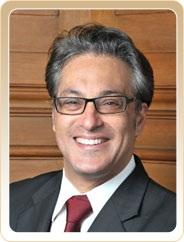
Ross Mirkarimi

SF Labor Council makes surprising dual endorsements

5

The San Francisco Labor Council made a pair of dual endorsements last night that reflect the wide ideological range of local unions — stretching from the progressive SEIU Local 1021 that represents city workers to the more conservative members of the trade unions — as well as the power of behind-the-scenes politicking.

For mayor, the council made a dual endorsement of Leland Yee — who secured an early endorsement from the trade unions and has significant progressive support as well — and Dennis Herrera, whose supporters deftly worked to secure the long-shot endorsement for his ascendant campaign.

Similarly, the council gave a dual endorsement in the sheriff race to Ross Mirkarimi, the progressive candidate who has a long list of labor union endorsements, and Chris Cunnie, whose base of support is the police unions and other more conservative groups and individuals. There was no endorsement in the DA’s race.

So how did Herrera and Cunnie manage to land such influential support despite having secured only a few endorsements from individual labor unions? Several of those in attendance wondered the same thing, but several sources say both dual endorsements were engineered by Labor Council President Mike Casey, who heads UNITE-HERE Local 2, whose hotel worker members have been locked in a bitter labor dispute with the big hotel corporations. Casey did not immediately return a call for comment, but I’ll update this post if and when I hear back.   

The Fillmore’s facelift: Independent Artists Week fills the street

1

Bayview native Meaghan Mitchell first started working in the neighborhood as a hostess at 1300 on Fillmore. Not anymore – now she co-owns a pop-up neighborhood art gallery across the street from the restaurant and is organizing an entire week of events geared towards filling the historic neighborhood’s streets again (Independent Artists Week, now through Sun/11).

The Fillmore’s the kind of neighborhood that inspires creative growth, famous for its days as a cultural hub where African Americans celebrated the arts, succeeded in the business arena, and solidified community. This week’s lineup of IAW events hopes to highlight that legacy, with speed networking for creative types, free art walks, and more. 

Because right now, the area definitely needs some shine.

“We’re struggling with the identity of the Fillmore right now,” says Mitchell, who sits in her small gallery space surrounded by paintings and sculptures done by local artists during her interview with the Guardian. Sisters Melorra and Melonie Green co-own the space, and Mitchell gives us a tour of the neighborhood art the three have filled their gallery with, from elaborate metal wall sculptures to small drawings by local grade-schoolers. The Greens are the other two lead organizers of Independent Artists Week. 

Mitchell gestures to the towering condo and apartment buildings visible through the gallery’s front windows. “Look at all those apartment buildings. Where do those people go?”

Despite its history of locally-owned businesses, Fillmore is far from bustling during the daytime, when the street’s renowned jazz clubs are closed. There’s a handful of black-owned businesses (including New Chicago Barbershop, which we profiled earlier this summer) that are still standing, but you see a lot of empty storefronts when you walk down the sidewalk. 

Mitchell and her partners would like to reverse that trend. “There’s so much potential for African American people to take back our neighborhood,” she says. “Facilitating our own events is a part of that.”

She should know – she learned from an event-planner extraordinaire. Mitchell says she owes her organizing skills to Ave Montague, the woman who was in charge of public relations at 1300 when Mitchell was first hired on. 

“She made this neighborhood poppin’,” remembers Mitchell. Montague organized the Black Film Festival, and took Mitchell under her wing, training her to help coordinate a slew of other events that were important to the Fillmore community – and the country. Montague passed away shortly after she threw the official West Coast inauguration party for Barack Obama in 2008. 

“When she died, this neighborhood was in a different place,” says Mitchell. “It was grey.”

There was some question about who would take up Montague’s crusade to make Fillmore Street a vibrant center of black Bay Area culture once again. But not for long – soon Mitchell and the other neighborhood business-owners and advocates from the Fillmore Community Benefit District were back in talks with the Mayor’s Office, which is now once again subsidizing their event-planning efforts. 

Of course, Mitchell says, there are challenges to this kind of city government-funded community organizing in a neighborhood that was gutted by “redevelopment” campaigns in the past. Long-time residents are less than thrilled to put the future of the neighborhood in the hands of organizations responsible for driving out black families in the first place. She’s attended CBD meetings that ended in shouting and finger-pointing over who did and didn’t deserve a piece of the $800,000 the Mayor’s Office had contributed to their work. 

“You’ve got to check in with folks.” Mitchell says that even though she is a San Francisco native, she’s still a newcomer to the Fillmore scene – and that a big part of her work is involving the long-time movers and shakers in the area. She now holds monthly merchant meetings that started out with three and now generally attract 11 participants. 

But it’s worth it to become a part of a neighborhood this unique. “[Working in] the Fillmore, it was the first time I worked in a place where I really felt appreciated,” she says. “I met all these prestigious African American people who helped me and who I could look up to.” 

Hopefully this week’s events will provide similar opportunities for other up-and-comers – check out the schedule below to see what’s on offer for artists, art lovers, wannabe yogis, and anyone who is into the idea of a new, brighter Fillmore. 

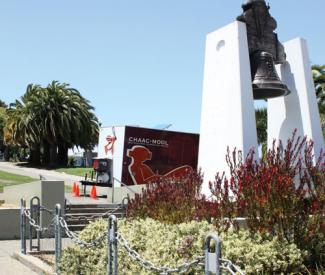
Photo above right: Mitchell has joined Fillmore’s entrepreneurs with a gallery space of her own on the strip. Photo by Caitlin Donohue


“Opportunity Knocks” speed-networking event

Local music scenesters, public relations experts, and other sources of knowledge on making a living off of art in the Bay Area will be available to chat with artists on those topics and more. 

Tues/6 7-9 p.m., $15. Yoshi’s, 1330 Fillmore, SF. 


Sustainable fashion fair-clothing swap

Trade in your clothes for other people’s hand-me-downs – style on a budget (and with a low carbon profile, hell yeah). 

Wed/7 7-10 p.m. African American Cultural Arts Center, 762 Fulton, SF. 


Thank You Awards

Honorees will include filmmaker Kevin Epps, Sup. Ross Mirkarimi, and other supporters of the local arts community. 

Thu/8 7-9 p.m., $15. African American Cultural Arts Center. 


Fillmore Art Walk

Art in the streets! Tour the neighborhood’s galleries and businesses (including Mitchell’s space at 

Fri/9 6 p.m.-midnight, free. Fillmore between Post and McAllister, SF. 


Healing arts demonstration

The perfect, low-commitment intro to tai chi, yoga, acupuncture, meditation, and more. Swing through to ask about body and soul woes with experienced practitioners in the sunshine. 

Sat/10 9 a.m.-1 p.m., free. Fillmore Center Plaza, Fillmore and O’Farrell, SF. 


Western Addition Sunday Streets

A huge swath of Fillmore, Divisadero, and the Panhandle will be blessed with a free roller disco, break dancing lessons, free bike repair and rental, and of course lots of car-free asphalt for walking, biking, boarding, and blading community members. 

Sun/11 11 a.m.-4 p.m., free. Various streets in Western Addition, SF. www.sundaystreetssf.com


Will progressives prevail at DCCC? — UPDATED

57

UPDATE: The DCCC endorsed Ross Mirkarimi for sheriff; John Avalos in first place for mayor and Dennis Herrera in second place; and David Onek in first place for DA and Sharmin Bock in second place.

There’s been a flurry of negotiations, backroom deal-making, and wild conspiracy theories leading up to tonight’s (Wed/17) San Francisco Democratic County Central Committee meeting, where the big item on the agenda is endorsements for this fall’s citywide elections, endorsements that are among the most influential in this one-party town.

Depending on one’s definition of the label, progressives still hold a majority of seats on the 32-member elected body, so solidly progressive candidates Ross Mirkarimi, who is running for sheriff, and John Avalos, who is running for mayor, have a decided advantage going into the vote.

Nothing is certain given the crowded fields in both races, although we’re hearing Mirkarimi getting the first place – and probably the only – endorsement in that race is the only prediction those involved are willing to make. Everything else is up in the air.

“How it goes down, only tonight will tell,” DCCC Chair Aaron Peskin told us. “Anything can happen. It is real democracy, with a lowercase D.”

We’ve spoken to other current and former DCCC members on background and gotten a sense of how things are shaping up, although new plays have been popping up all the time. Avalos seems to be close to the 17 votes that he needs to get the endorsement, with the second largest block of votes being supporters of Dennis Herrera, including savvy and influential players such as Carole Migden who will try to leverage at least a second place endorsement for him.

Mayor Ed Lee also has some support on the DCCC, probably not enough to get on the slate without some serious deal-cutting, but maybe enough to gum up the works and threaten to prevent a mayoral endorsement and neutralize the DCCC. Leland Yee also has some support, but it would still be a surprise if he or Lee ends up on the slate, even in third place.

In the District Attorney’s race, it seems to be coming down to a contest between David Onek and Sharmin Bock, who has gained significant ground on the committee in the last couple months to pull almost even with Onek, although neither appears to have the 17 votes they need (or 16 is someone abstains). While the very few George Gascon and Bill Fazio supporters on the DCCC may try to make mischief and deny anyone the DA’s endorsement, a more likely scenario is the Onek and Bock camps will cut a deal to give them the endorsements, probably with Onek first and Bock second.

DCCC rules don’t allow for dual endorsements – they must be ranked – it’s also possible that in either the DA or mayor’s races that there will be a movement to postpone the vote and change that rule to allow a dual endorsement. But again, things are still in such flux that anything can happen, so stop by the 6 pm meeting in the basement of the state building at 455 Golden Gate Avenue, if you’re into that sort of thing.

Shelter from the storm

0

rebeccab@sfbg.com

Ms. Li has a petite build, but she’s physically strong. Hauling around dish bins and boxes of produce weighing 50 pounds was part of her daily routine when she worked shifts lasting 12 hours a day, six days a week, at a San Francisco Chinatown eatery that later made headlines for its poor labor standards.

Li, who did not share her full name for fear of retaliation, says things have improved slightly since the days she worked at King Tin Restaurant, which closed its doors abruptly in 2004 after workers who hadn’t seen paychecks in months filed an onslaught of complaints. At the time, her husband was unemployed and she was struggling to support her two teenagers on a single paycheck totaling $950 a month.

It took about five years before the San Francisco Office of Labor Standards Enforcement (OLSE), the City Attorney’s Office, and grassroots advocates with the Chinese Progressive Association (CPA) finally succeeded in forcing the restaurant’s previous owner to grant Li and other workers the back wages they were owed.

Now, she’s working 12 hour shifts, five days a week at a different restaurant, but says she still isn’t receiving minimum wage or overtime pay. Li aided in the efforts of the Progressive Workers Alliance (PWA) to urge members of the Board of Supervisors to pass the Wage Theft Prevention Ordinance, which aims to strengthen enforcement of local labor standards by empowering OLSE to take a more proactive role against employers who don’t pay workers what they’re owed.

As a kitchen worker at a high-end restaurant in downtown San Francisco, Li receives a monthly paycheck totaling a little more than $1,400 before taxes. Take-home pay is less, because the employer deducts for meals, a requirement that cannot be dodged even if employees bring their own food.

Li told the Guardian her coworkers are angry about the working conditions, but fear of job loss keeps them silent. “Some of my coworkers work so hard that they cry,” she said, speaking through a translator. “One worker was burned badly in the kitchen, and didn’t receive worker’s compensation or paid sick leave.” That person uses their own ointment to treat the burns, she added.

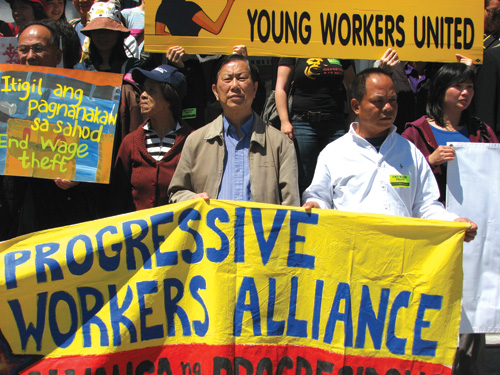
As she described her predicament at the CPA office in Chinatown, student volunteers were creating a banner to be displayed during a press event at City Hall. They arranged folded red and yellow petitions signed by workers in similar situations to spell out PWA, for Progressive Worker’s Alliance, to urge city officials to crack down on employers who violate local labor laws.

PWA has been meeting regularly since last year, but the organizations that are part of the advocacy group have been engaged in organizing low-wage workers for much longer. Over the course of more than three years, CPA interviewed hundreds of restaurant workers in Chinatown, and their surveys revealed that about half were not receiving San Francisco’s minimum wage, while about 75 percent weren’t being paid overtime when they worked more than 40 hours a week. Yet the problem of wage theft in San Francisco extends well beyond Chinatown.

PWA includes representatives from CPA, the Filipino Community Center, Young Workers United, People Organized to Win Employment Rights (POWER), the San Francisco Day Labor Program, and Pride at Work, among others. On August 2, workers and organizers with PWA burst into thunderous applause after the Board of Supervisors voted unanimously to pass the Wage Theft Prevention Ordinance on first reading. This represented a major victory.

“With the economic crisis, and the backlash against workers, we felt that as a small grassroots organization, we needed to have a more powerful voice and a specific space for worker issues to be brought to light,” CPA lead organizer Shaw San Liu said of the impetus behind PWA.

“You’re talking about workers who are pretty vulnerable — not knowing the laws, not speaking the language. People who need a job and cannot afford to lose it are vulnerable to exploitation,” Liu said.

While labor laws in San Francisco are uniquely strong, with mandatory paid sick leave and local minimum wage established at $9.92 per hour, “When it comes to implementation and enforcement, there’s still a lot left to be desired,” Liu said. As things stand, investigation of employer violations are predicated on worker complaints, and it can take years for a worker to get a hearing if they’re owed back wages.

The Wage Theft Prevention Ordinance doubles the fines for employers who retaliate against workers who file complaints. It allows OLSE investigators to issue immediate citations if they detect a problem in a workplace. When an employer comes under investigation, it requires them to post a notice informing workers that they have a right to cooperate with investigators — and imposes a fine for failing to post the notice. It also establishes a one-year timeline in which cases brought to OSLE’s attention must be resolved.

Under the new law, employers would also be required to provide contact information to their workers, an important change for day laborers who are sometimes taken to job sites where they perform manual labor, only to be dropped off later without payment and no way to get in touch with their temporary bosses.

“You have raised awareness about the crisis of wage theft,” OLSE director Donna Levitt told workers at an Aug. 2 rally outside City Hall. “And we have made it clear that wage theft will not be tolerated in our city.”

The ordinance was spearheaded by Sups. David Campos and Eric Mar, with Sups. Jane Kim, John Avalos, Ross Mirkarimi, and Board President David Chiu signing on as co-sponsors. Members of PWA met with supervisors to win their support, and even succeeded in bringing on board the influential Golden Gate Restaurant Association.

“The fact is that even though we have minimum wage laws in place, those laws are still being violated not only throughout the country, but here in San Francisco,” Campos told the Guardian. “Wage theft is a crime, and we need to make sure that there is adequate enforcement — and that requires a change in the law so that we provide [OLSE] more tools and more power to make sure that the rights of workers are protected.”

Victoria Aquino, 66, spent several years working 16-hour hours without minimum wage or overtime pay as the sole live-in caregiver for six disabled patients at a San Francisco care center. Her duties included feeding patients, bathing them, changing diapers, and cleaning.

“The patients would knock to wake me up and ask me for cigarettes or food in the middle of the night,” she recounted, “and I wasn’t paid for that.” She first complained to OLSE after one of the patients physically attacked her, leaving her black and blue with a permanently injured finger, and later sought the help of the Filipino Community Center to file a claim demanding back wages. It took months, but her employer eventually settled, agreeing to pay $60,000 in back wages and reduce her shifts to eight hours a day.

Aquino said she became involved with the Filipino Community Center because “there are a lot of caregivers still suffering, and more than I suffered — especially those who don’t know the laws. I sympathize for them. It hurts me when I hear some caregivers who are no longer supposed to work. They’re past their 70s, and they’re still working.”

Ecological rewind

25

rebeccab@sfbg.com

Follow the trail from Yosemite National Park’s Rancheria Falls up along dusty switchbacks and down through a canopy of pines and madrones for roughly three miles, and you will reach Tiltill Valley.

Accessible only to hikers and horseback riders, the backwoods meadow hums with the chatter of birds, bees, and the distant rush of water spilling over rocks. Butterflies dart among wild orchids, lilies, yarrow, and other kinds of flowering plants that thrive there, and a lone sequoia stands along the perimeter. The valley floor is lush and boggy, with the forested hills of the High Sierra as its backdrop.

Tiltill Valley is a real-life example of what Yosemite’s Hetch Hetchy Valley might look like if the reservoir that holds San Francisco’s water supply were drained and the terrain allowed to return to its natural state, according to Mike Marshall, executive director of Restore Hetch Hetchy.

His nonprofit group has a singular mission, as the title suggests. The upbeat, 50-year-old former political consultant wants to place a charter amendment on the November 2012 ballot to ask San Francisco voters if Hetch Hetchy Reservoir should be drained so that the valley, which has been underwater since 1923, can be ecologically restored and turned into an attraction for park visitors.

Yet that simply stated goal belies an extraordinarily difficult and expensive task, one that would fundamentally alter San Francisco’s water delivery system and diminish a city-owned source of inexpensive, green energy.

“The destruction of Hetch Hetchy Valley in the 1920s was the worst environmental disaster to ever besiege the national park system,” Marshall says. “And today, it is completely out of whack with the values of the vast majority of people who live here.”

But most city officials think this idea is just plain crazy. Whether or not it was a good idea to build the dam originally, they say it’s unwise and unrealistic to spend scarce resources to destroy one of city’s most valuable assets.

“While it is an interesting idea, I don’t think that there is yet a credible plan to move forward and actually restore Hetch Hetchy that will ensure that within our budget, we’ll be able to get the water that 2.5 million Bay Area customers need, as well as do everything else that the current Hetch Hetchy system does,” Board President David Chiu told the Guardian.

Based in San Francisco, Restore Hetch Hetchy worked in tandem with the Environmental Defense Fund and a consulting firm to craft a technical analysis describing how the city could continue receiving reliable freshwater deliveries without the reservoir, although it would require filtration because of its lower quality and be less abundant in drought years.

While restoring the valley would be an ecological win in a perfect world, cost estimates range in the billions of dollars at a time when budgets are shrinking and economic turbulence rocks the public and private sectors.

Draining Hetch Hetchy Reservoir and replacing it with other water and power projects would punch holes in an already cash-strapped city budget, first with the high capital costs and then with higher long-term annual costs. The hydro-electric system provides carbon-free electricity to city agencies at basement rates and helps fund local renewable-energy projects, so relinquishing some of that generation capacity would be a step backward when it comes to addressing climate change.

“The loss of Hetch Hetchy Reservoir would fly in the face of every effort San Francisco has made to replace fossil-fuel power generation with renewable energy sources,” City Attorney Dennis Herrera wrote in a 2004 editorial in the Guardian. Losing hydropower from the dam, he wrote, “would force greater dependence on fossil-fuel electricity and impair low-cost hydropower with higher-cost renewables, making San Francisco’s efforts to create a sustainable energy future virtually impractical. And it would devastate our efforts to enact a public power system in San Francisco. Hetch Hetchy was built by people who envisioned a public power system to serve all of San Francisco. We should finish that system before we start tearing it down.”

But when a round of invitations went out to Bay Area journalists to join a three-day backpacking trip in Yosemite and learn about Restore Hetch Hetchy’s vision, I signed up to attend. After all, here was a chance to go backpacking in beautiful terrain and assess one of the most controversial and impactful proposals facing San Francisco.


WATER

Our first stop within park boundaries was a chocolate-colored chalet with a spacious deck overlooking the waterfront. Owned by the San Francisco Public Utilities Commission (SFPUC), it’s notorious in San Francisco politics as a weekend getaway for local elected officials, city commissioners, and favored staffers. Stories of the chalet abound, as it’s rumored to have been the site of private soirees for powerful players and a rendezvous for lovers in extramarital affairs.

The eight-mile long, 300-foot deep Hetch Hetchy Reservoir holds 360,000 acre-feet of water, and the dam itself is an impressive structure, although Marshall scoffs at the popular wisdom casting it as “a marvel of engineering,” and dryly quips, “so was the Titanic.”

Native American remains were buried underwater when it was built, Marshall told us as we peered out over the towering dam wall, and 67 lives were lost during construction. As we rounded the perimeter of the man-made water body, sweating in the summer heat and saddled with gear, he asked us to imagine peering down into a dramatic sloping valley instead of what it looks like in its current state, which is a lake.

“Don’t call it a lake,” he insisted. Restore Hetch Hetchy regards the reservoir as an unnatural blemish that should never have been imposed upon a scenic and biodiverse environment in a national park. According to Mark Cedorborg, an ecological restoration expert with Hanford ARC and a Restore Hetch Hetchy board member who joined the trip, it wouldn’t take long for the natural ecosystem to bounce back if the water were removed, recreating a rare wildlife habitat that would mirror Yosemite Valley.

Sierra Club founding president John Muir would have sided with them, of course. The famous ecologist wrote passionately about the valley and vehemently fought the effort to submerge it. At the time, a chorus of opposition arose against flooding Hetch Hetchy — and that was before modern science documenting the impacts dams have wrought on the environment.

A black-and-white image of Michael O’Shaughnessy, the civil engineer behind the project, is posted on an info kiosk beside the dam, his eyebrows arched in a wizard-like, calculating gaze as he uses a pointer to mark the spot on a map of San Francisco’s watershed.

As things stand today, Hetch Hetchy Reservoir is a crucial storage facility for drinking water. Freshwater flowing from the Tuolumne River through the glacial formation accounts for 85 percent of SFPUC deliveries to about 2.5 million customers in the city and on the peninsula.

Hetch Hetchy is unique in that it’s just one of a handful of water systems nationwide that uses chemical treatment and ultraviolet disinfection, but no filtration, to purify fresh water that is transported along a gravity-fed system down to the city.

SFPUC spokesperson Tyrone Jue said Hetch Hetchy water does not require filtration “because basically, it’s a giant granite basin there in the reservoir, so there’s no sedimentation.” He added that the water quality is exceptionally high. “It’s high up in the watershed. The higher up in the watershed, the better it is.”

Restore Hetch Hetchy has submitted a number of proposals to ensure that San Francisco could still receive adequate supplies without the reservoir, including constructing a new intertie at Don Pedro Reservoir, which lies downstream from Hetch Hetchy, to get drinking water supplies from there instead.

Under this scenario, the SFPUC would continue to get its water from the Tuolumne River — but it would have to build a new filtration system to treat it because the water quality would be worse and the city would lose its federal waiver.

That’s an expensive consideration, particularly at a time when city coffers are depleted, critical services for vulnerable populations have been gutted, and taxpayers are wary of authorizing costly new endeavors.

Marshall defends the cost by asserting that the current system is flawed; the lack of filtration makes San Francisco’s water more susceptible to contamination from nasty microorganisms like cryptosporidium and giardia, he says.

“San Francisco has a unique health demographic in that over 5 percent of the people that live in the city have compromised immune systems, if you just look at people who are HIV positive,” he said. “Ultimately, San Francisco is going to be forced to filter its water, so why are we kicking this can down the road?”

But filtering water at the residential level would be far cheaper than tearing down the dam. Jue pegs the cost of a new filtration system at somewhere between $3 billion and $10 billion, but Marshall rejects that estimate as “just crazy.”

So we called Xavier Irias, director of engineering at the East Bay Municipal Utility District. “Ten looks a little high, but the three sounds very credible,” Irias said, acknowledging that there were many complicating factors that could affect cost. Ultimately, he said, the cost range could be anywhere from half a billion to the single-digit billions of dollars.

“With the filtration costs, not only are you talking about building a facility to filter the water, you’re now talking about increased power consumption to basically power those filtration plants,” Jue noted. “You’d have to start pumping water, which would require additional energy. And then on top of that, there’s the long-term operation.”

What’s more is that the quantity of water that San Francisco now depends on wouldn’t be guaranteed every year. According to an analysis done in partnership with the Environmental Defense Fund, reconfiguring the system to tap Don Pedro would result in 19 percent less water delivered from the Tuolumne in critically dry years, and similar losses would result from alternative proposals like tapping Cherry Reservoir, another storage facility in the SFPUC system.

Restore Hetch Hetchy has suggested that the shortfall could be made up in part with new water-conservation measures, something that cities arguably ought to be practicing anyhow since climate change threatens to bring about drier conditions in California’s watershed. It could also place the city in the position of having to go to the open market to purchase water for customers — just as dwindling water supplies raise the temperature between cities and counties scrambling to secure reliable deliveries.

“The Hetch Hetchy water system is a fully owned public asset,” Jue notes. “At a time when state and federal governments are struggling with even being able to close our budget deficits, to even look at dismantling an environmentally sound, cost-efficient water system that delivers water to 2.5 million people is sort of outrageous.”


POWER

In addition to capturing the flow of pristine Tuolumne River water that eventually makes its way into the city’s plumbing network, O’Shaughnessy Dam is a key component of the SFPUC-owned hydro-electric system, which produced 1.7 billion kilowatt hours of power last year with no greenhouse gas emissions.

If efforts to advance the cause of a public power system resurfaced in San Francisco, having the full capacity of the Hetch Hetchy hydro-electric generation in place would be vital. Juice for city streetlights, Muni’s light rail cars, the chandeliers adorning the Board Chambers in City Hall, and countless other municipal uses are derived from this gravity-fed system, which provides roughly one-fifth of San Francisco’s overall energy needs.

City departments pay three or four cents per kilowatt-hour, less than what it costs to generate the power. If all the hydro-electric power were eliminated and substituted with PG&E power, the city would get pinned with $32 million in additional costs annually, and its carbon footprint would expand by more than 900 million pounds of greenhouse-gas emissions, according to the SFPUC. However, a technical report produced by the Environmental Defense Fund suggests the city would only suffer a 20 percent decline in the hydro-electric output, since operations at other SFPUC reservoirs would continue.

The hydro-electric system also generates revenue through the sale of excess power to Turlock and Modesto irrigation districts, but that would come to an end if the generation capacity fell by 20 percent. Restore Hetch Hetchy estimates this loss to be around $10 million annually.

“Whenever we sell the power to Modesto and Turlock, that revenue then goes to fund programs like GoSolarSF, and all of our energy-efficiency retrofits of municipal facilities,” Jue explains. If the city lost its ability to sell off this excess supply, “We would no longer be getting power revenue at all, which we’re using to help fund community choice aggregation.”

Fraught with problems as it is, the city’s effort to launch a community choice aggregation program offering residential customers an alternative to PG&E nevertheless holds promise as a powerful green shift for a major metropolitan hub. For all the ecological benefits to Yosemite, restoring Hetch Hetchy could wind up undercutting the fledgling green power initiative, and the upshot would be a boon for PG&E. Coupled with the fact that ceding control of the valley back to the National Park Service could strip the city of its mandate for public power, the utility giant would benefit tremendously from this plan.

All of this makes it somewhat surprising that District 5 Sup. Ross Mirkarimi, a longtime champion of the cause of public power, appointed Marshall to serve on the SFPUC Citizens Advisory Committee, a move that rankled SFPUC staff.

“I’ve known Mike many years and have found him to be whip smart when it comes to complicated policy issues,” Mirkarimi told the Guardian when asked about this. “He knows that I am an unwavering supporter for public power and that I’d hope his advocacy on the SFPUC continues to advance and innovate our locally-driven clean energy objectives.”


POLITICS

The concept of bringing back Hetch Hetchy Valley originated with the Sierra Club in 1999, and several mainstream environmental organizations have lent support for the cause although few have made it a high priority. Nevertheless, there’s plenty of financial backing and support from key political players to keep the vision alive.

Democratic County Central Committee Chair Aaron Peskin, a member of Restore Hetch Hetchy’s national advisory board, told me he’s been active with the group for at least a decade, making him a rare exception among the city’s political leaders.

“San Francisco is a remarkably sophisticated town that is technologically advanced and environmentally advanced, and this is an opportunity to right one of the most destructive environmental wrongs,” he said. “It’s time to start a local and national conversation.”

He acknowledged that there were a lot of technical issues to contend with, saying, “It should only be done in a way that makes sure San Francisco and communities that rely on the system are taken care of.”

Major funders backing Restore Hetch Hetchy include retired businesspeople from the financial sector, Patagonia founder Yvon Chouinard, council members of the Yosemite Conservancy, and Lance Olson, a Restore Hetch Hetchy board member and partner in Olson Hagel & Fishburn, LLP, a prominent Sacramento legal firm that represents the California Democratic Party and elected officials.

Other influential and politically connected individuals have joined the effort as well. Marshall assured me that “no one from PG&E has given us a dime.” Yet the project still faces some powerful opponents. “I have opposed removing the O’Shaughnessy Dam in Hetch Hetchy Valley for decades and I remain opposed,” U.S. Sen. Dianne Feinstein told the Guardian. “Draining the reservoir would endanger San Francisco’s water supply, further jeopardize California’s water infrastructure and impose a huge financial burden on the state.”

Fall ballot gets stripped of progressive measures

25

The San Francisco Tenants Union suffered a pair of disappointing setbacks in the last week – first when a referendum on the Parkmerced project narrowly failed to qualify for the fall ballot, then when progressive supervisors withdrew a proposed ballot measure to prevent demolition of existing rental housing – leaving the fall ballot without any progressive measures (unless one counts the sales tax measure that was unanimously approved this week by the Board of Supervisors).

Also dropped from the ballot this week was another progressive measure that would have prevented the Recreation and Park Department from entering into new commercial leases of parks and recreation centers, a measure written by the citizens group Take Back Our Parks to reverse RPD’s recent push to monetize more of its assets.

Yet unlike last week’s removal of a third measure placed on the ballot by at least four progressive supervisors – the Fair Shelter Initiative, written by the Coalition on Homelessness, which was unhappy that Sup. Jane Kim dropped her support under pressure from the Mayor’s Office – it was the sponsoring groups that asked the supervisors to remove the two measures this week.

Sponsors of the parks measure say it had some legal problems that would have complicated the campaign, particularly after an analysis by the City Attorney’s Office concluded that it could affect things like private party reservations and leases associated with the America’s Cup.

Ted Gullicksen of the San Francisco Tenants Union said his group concluded there were legal problems with the anti-demolition measure as well and that it wouldn’t affect the demolition of 1,500 housing units associated with the Board of Supervisors’ 6-5 vote to approve the massive Parkmerced project, which was the catalyst for the measure.

SFTU sponsored the signature-gathering campaign to do a referendum on that vote, but the Elections Department concluded on July 29 that of the 18,487 signatures that were turned in, just 12,917 were valid, falling short of the 14,336 they needed. Gullicksen said delays in qualifying the 56-page petition gave them just three weeks to gather signatures, and a freak mid-June rainstorm hurt that effort as well.

“We knew from the get-go that it was going to be a challenge,” he said. “It was very disappointing that we fell just short.”

But he said there was a silver lining: “It sent a message to the supervisors. David Chiu [the swing vote on the Parkmerced approval] called me the next day to say he’d make sure demolitions don’t become an epidemic.”

Sup. David Campos – who helped sponsor all three measures and even kept his name on the shelter measure after Sups. Eric Mar and Kim had removed theirs – told us, “I think it’s disappointing that there isn’t a measure on the ballot to excite the progressive base, but at the end of the day, we do have an exciting mayor’s race and races for sheriff and district attorney.”

Campos has endorsed John Avalos of mayor and Ross Mirkarimi for sheriff, but has not yet made an endorsement for DA.

A song and dance at City Hall

It was a lively scene on the steps of City Hall Aug. 2, as back-to-back press events featured live performances, lots of cheering, and support for new legislation that supporters hope will benefit low-wage workers, small businesses, and musicians.

Spirits were high at the Progressive Workers’ Alliance (PWA) rally, as organizers anticipated strong support for an ordinance they helped craft which aims to prevent wage theft by strengthening the powers of the city’s Office of Labor Standards & Enforcement (OLSE).

The Wage Theft Prevention Ordinance would double fees for employers who retaliate against employees seeking to have labor laws enforced, impose a timeline in which employee complaints must be addressed, and create new penalties for employers who fail to adhere to local labor standards. During the rally, workers speaking in various languages described their experiences of working long hours without receiving minimum wage or overtime pay.

Organized under PWA as part of a number of organizations including the Chinese Progressive Association, Young Workers United, the Filipino Community Center, the San Francisco Day Laborer’s Program, and others, the crowd of PWA members crammed into the Board Chambers and exploded into applause when the board voted unanimously to pass the ordinance on first reading.

Following a noon rally, youth with the Chinese Progressive Association’s high school program treated supporters and members of the press to a dance performance.

http://www.youtube.com/watch?v=X7CVb4K3tcw

Directly afterward, District 5 Supervisor Ross Mirkarimi appeared at the podium to drum up support for legislation he’d proposed to create a more affordable permit for cafes and restaurants wishing to host live performances in their establishments. He described it as a business-friendly idea that could “put musicians to work,” adding that more music in smaller venues could help dispel the notion that San Francsico isn’t as supportive of the arts as Chicago, Boston, New York, or even Paris. A preliminary survey found that some 700 restaurants could benefit from having access to less expensive live performance permits, he said.

Supervisors showed unanimous support for Mirkarimi’s idea, but Sups. David Chiu and Mark Farrell each added amendments to ensure that live performances couldn’t go past 10 p.m. in certain neighborhoods in their districts.

Mirkarimi invited Jazz Mafia to play a tune before the board meeting started. Here’s what they sounded like.

http://www.youtube.com/watch?v=WjRbGBTEdMk

Videos by Rebecca Bowe

Taking out the trash

1

sarah@sfbg.com

A controversial city waste disposal contract appeared primed for final approval by the Board of Supervisors on July 26 (after Guardian press time) — despite being challenged by a lawsuit and initiative campaign — after two progressive supervisors rescinded their initial vote in a July 20 committee hearing and supported awarding the contract to Recology.

City staff had recommended awarding the 10-year, $112-million landfill disposal and facilitation agreement to Recology (formerly NorCal Waste Systems, Inc.), which has grown from a locally based company to the 10th largest waste management firm in the US, with $652 million in annual revenue, according to Waste Age magazine.

If the full board follows the unanimous recommendation of its Budget & Finance Committee, the vote will authorize Recology to transport and dispose up to 5 million tons of the city’s solid waste at the company’s Ostrom Road landfill in Wheatland, Yuba County. The contract will take effect when San Francisco’s disposal agreement at Waste Management Inc.’s Altamont landfill in Livermore expires — estimated to occur in 2015.

The deal will cement Recology’s control, at least for a 10-year period, over all aspects of the city’s solid waste stream, at a cost of about $225 million per year, even as the company faces significant challenges, many related to the city’s 1932 refuse collection and disposal ordinance.

That law, approved during the Great Depression to prevent conflict between competing garbage haulers, has resulted in Recology’s exercising complete control over trash collection and transportation in San Francisco, without having to bid on those contracts or pay the city franchise fees.

During the negotiations over the city’s next landfill contract — the only aspect of San Francisco’s waste stream put out to bid — this 79-year-old law was invoked to explain why Recology has the sole authority to transport trash and compostables to Wheatland, which is 130 miles from San Francisco.

The move also comes as Yuba County is contemplating significantly increasing dumping fees at the landfill — from $4.40 per ton to $20 or $30 per ton — a hike that could erase the $100 million that the Department of the Environment (DoE) claims the Recology deal would save over a competing bid by Waste Management Inc. WM is the largest waste firm in the U.S., according to Waste Age, with about $12.5 billion in annual revenues.

On July 18, WM filed a lawsuit in San Francisco Superior Court to prevent the city from approving the agreements with Recology on the grounds that they violate the city’s competitive bid laws.

“The Department of the Environment inappropriately and unlawfully expanded the scope of its 2009 ‘request for proposal for landfill disposal capacity’ and, therefore, violated the city’s competitive procurement laws,” WM alleges in the suit.

WM has long held that DoE inappropriately issued a tentative contract award for both the transportation and disposal of solid waste to Recology without soliciting any other transportation bids. But DoE, which gleans $7 million annually (to operate recycling, green building, and environmental justice programs and long-term planning for waste disposal) from rates that Recology’s customers pay, ruled last year that WM’s objections are “without merit.”

Now WM is asking the court to require DoE to scrap its award to Recology and issue a new request for proposals to comply with competitive bidding requirements.

“There is ample time for the department to issue a new RFP,” WM stated July 18, noting that there is plenty of room at its Altamont landfill to accommodate the city’s waste after the contract expires.

That same week, a coalition led by retired Judge Quentin Kopp, community activist Tony Kelly, and Waste Solutions CEO David Gavrich announced that it had submitted enough signatures to qualify an initiative on the June 2012 ballot requiring competitive bidding and franchise fees from any company that seeks to win any aspect of the city’s solid waste business.

Kelly says his group was unable to collect enough signatures in time for the November election because Recology hired the city’s two biggest signature-gathering firms to circulate what he calls a “phony petition” in support of Recology’s performance in San Francisco. And signature gatherers say they were harassed by Recology boosters while trying to petition citywide.

“But I believe the question of whether candidates support competitive bidding will continue to be a defining issue this fall,” Kelly said.

The board’s decision on the landfill agreements has already been delayed several months, following a February 2011 Budget and Legislative Analyst report recommending that the board consider submitting a proposition to the voters to repeal the 1932 refuse ordinance so that future collection and transportation services be put to bid. The report also recommended that future residential and commercial refuse collection rates be subject to board approval.

But with two progressive supervisors running in citywide elections this fall, and with Recology exerting massive pressure on elected officials, the Kelly coalition could not find four supervisors to place such a charter amendment on the November ballot, forcing them to launch their own initiative.

And at the July 20 meeting of the board’s Budget and Finance Committee, Sup. Ross Mirkarimi, who is running for sheriff, and Sup. Jane Kim rescinded their initial decision to send the agreements to the full Board without recommendation. Instead, after the committee had moved on to other business, they joined Chair Carmen Chu, one of the most conservative supervisors, in forwarding the Recology agreements to the full board with unanimous support.

Mirkarimi interrupted the committee’s next discussion to rescind the landfill vote. “I think there was some misunderstanding a little bit in wrapping up the landfill agreements with Recology, ” Mirkarimi said. He said that he asked for the vote to be rescinded, “so we can accurately reflect some of the sentiments being articulated here. I think we just learned some things on the fly.”

In many respects, the switch by Kim and Mirkarimi made sense: prior to their initial vote, they made positive statements about the proposed agreements, but also stated an interest in exploring the appropriateness of the city’s 1932 law.

“Overall, I think this was a good contract,” Kim said. But she noted that, thanks to the 1932 ordinance, the city doesn’t get franchise fees. And she claimed that it only gets half of what other Bay Area cities get from their waste contractors. “So, I’m really interested in continuing that conversation, but I think it’s a separate conversation,” she said.

Mirkarimi said it was his concerns that led the committee to “put a pause” on the Recology agreements until it could “undertake more homework.” He also noted that his office “held a number of meetings” and he tried to “leverage this opportunity to reanimate activity at the Port.”

“I was hoping that we might be able to arrive at something much more deliverable,” Mirkarimi said, presumably referring to the fact that these efforts resulted in DoE unveiling an amendment to include two “possible changes” to operations and facilities at the Port of San Francisco in the agreements.

These changes involve utilizing other modes of transportation, including barges, as alternatives to the rail-haul plan proposed in the agreement. They also call for developing new facilities at the Port for handling waste, recyclables, organics, and other refuse. The cost of such alternatives would be passed onto the rate payers.

“I think that, cost-effectively, we may be able to insert the Port into this equation, but it’s not ready for prime-time yet,” Mirkarimi said. He concluded by saying that Recology has been innovative in reducing the city’s waste stream.

“This should be a front-burner conversation,” Mirkarimi said, noting that former Mayor Gavin Newsom focused on making San Francisco “the greenest city” in the United States. He added that San Francisco claims to have a 77 percent diversion rate, the highest in the U.S., and said, “That comes at a cost, it doesn’t come for free.”

After the meeting, DoE deputy director David Assmann said that the City Attorney’s Office is reviewing WM’s filing. “But it’s too soon to comment,” Assmann said.

He also claimed that, thanks to the 1932 ordinance, “there was no practical way” for another company to transport San Francisco’s waste to its designated landfill, “other than building a second transfer station outside the city.”

But Kelly continued to express concerns that the agreements are not competitive, and that the city lacks a contract and ensuing franchise fees. “They are running this as if it’s still the 1950s,” he said.

Kelly claimed that Recology Vice President John Legnitto, who is the 2011 chair of the SF Chamber of Commerce’s Board of Directors, recently told him that Recology has been in negotiations with City Hall around a $4 million franchise fee, but that the money would now be spent opposing Kelly’s competitive bidding initiative.

Kim removes homeless shelter reform measure from ballot

8

Under pressure from the Mayor’s Office, Sup. Jane Kim today removed her sponsorship of the Fair Shelters Initiatives, effectively killing the measure that was set to appear on the November ballot, according to activists working on the issue. Sup. Eric Mar reportedly followed Kim’s lead and also removed his sponsorship, telling activists he was deferring to Kim’s decision.

“We hardly expected the supervisors would put a measure forward and then cave in before the campaign had even started,” said Bob Offer-Westort of the Coalition on Homelessness, which had asked Kim to be the lead sponsor of a measure that he said is the homeless community’s highest priority.

The measure would have removed shelter beds from the definition of housing under the city’s voter-approved Care Not Cash program, thus freeing up beds for the larger homeless population that is often denied space in shelters even as beds reserved for CNC recipients – who give up most of their welfare support in return for housing and services – often remain vacant.

The measure — which was sponsored by Sups. Ross Mirkarimi, David Campos, and John Avalos, in addition to Kim and Mar, giving it one more than the four votes it needed to make the ballot – had been harshly criticized by the San Francisco Chamber of Commerce and other downtown groups, as well as Mayor Ed Lee and other moderate politicians, who said it would somehow destroy CNC and attract more homeless people to the city.

In a recent email blast, Chamber head Steve Falk called the measure “alarming” and was “effectively dismantling the nationally-recognized program.” He tried to use the 100 nightly vacant shelter beds as a rationale against the measure (despite the fact that was the very problem the measure tried to correct), and wrote, “This measure is nothing more than pure politics to turn out progressive voters in a crowded mayoral race.”

Kim and her staffers haven’t returned Guardian calls for comments, and neither Mar nor Mirkarimi could be reached. But Offer-Westort said the arm-twisting by the Mayor’s Office shows just how little things have really changed at City Hall.

“It sets a really bad precedent when once again a mayor bullies members of the Board of Supervisors to get his way,” he said, noting that Kim still claimed to support the reform in her conversations with COH members. “It certainly wasn’t because she changed her mind about whether this was right or wrong. It had more to do with her concerns over the board’s relationship with Room 200.”

Will Kopp’s competitive bidding initiative derail Recology’s train to Yuba?

1

Sponsors of an initiative to require competitive bidding on all aspects of the city’s multi-million-dollar garbage services say they plan to deliver their initiative petitions to the Department of Elections this afternoon. The petitions contain 12,000 signatures, far more than the 7,000-8,000 required, effectively signalling that, even after the city weeds out non-valid signatures, the initiative will qualify for the June 2012 election.

The move threatens to give the Board a political migraine, since the Board is set to vote July 26 on a Department of Environment resolution to expand Recology (formerly Norcal Waste System, Inc)’s monopoly on San Francisco’s garbage and recycling services.

In fact, the DoE resolution contains two separate agreements: a $112 million long-term landfill disposal agreement that was competitively bid, and a facilitation agreement that governs how waste is transported to the landfill and that was not competitively bid. As such, the city’s facilitation agreement is already the subject of a lawsuit that Waste Management Inc. filed in San Francisco Superior Court last week.

Sponsors of the competitive bidding ordinance, which include retired judge Quentin Kopp, community activist Tony Kelly and Waste Solutions CEO David Gavrich,believe the Board should delay voting on the landfill disposal and facilititation agreements until next summer, after voters have had a chance to weigh in on the bigger question of whether folks want competitive bidding on all the city’s garbage-related services, which are worth a quarter of a billion, each year. “

“It would be disrespectful to voters to accept a resolution while an initiative is pending,” Kopp stated.

“It would make sense if they severe the landfill disposal and facilitation agreements into two files,” Kelly added, referring to how the two separate agreements are currently lumped into one item on the Board’s July 26 agenda, under the section titled “recommendations of the Budget and Finance sub-committee.”

How the deal got filed in the B&F sub-committee’s recommended section is another story unto itself: Last Wednesday, after Sups. Ross Mirkarimi and Jane Kim, who sit on the Board’s Budget and Finance sub-committee, voted to send the deal to the Board with no recommendation, (a vote that suggested that they had some concerns with the deal) and after members of the public who came to testify about the item had left,  Mirkarimi asked to rescind the landfill vote.

“I think there was some misunderstanding a little bit in wrapping up the landfill agreements with Recology, “ Mirkarimi said, as he asked for the vote to be rescinded, “so we can accurately reflect some of the sentiments being articulated here.”
“I think we just learned some things on the fly,” Mirkarimi stated, as he and Kim joined committee chair Sup. Carmen Chu, one of the Board’s more conservative members, in sending the deal to the full Board “with recommendation.”

The Guardian learned of the vote switcheroo, after the DoE, which is apparently anxious to see the Recology agreements move forward, contacted us to say that our blog post about the Budget and Finance sub-committee, incorrectly stated that Mirkarimi and Kim had not given the deal their unmitigated thumbs-up. (The Guardian has since amended its blog post to accurately reflect what happened at the meeting, after this reporter and most members of the public, except the Chamber of Commerce’s Jim Lazarus, who supports the Recology agreements, had left the Board’s Chambers.)

Asked about the last-minute move to amend the vote Kelly said, “It was Ross at his Rossest.”

And in many ways, Mirkarimi’s move to rescind made sense: neither he nor Kim had registered any problems with the landfill disposal and facilitation agreements during the committee hearing, though a number of seemingly valid concerns were raised, including the observation by Yuba County supervisor Roger Abe that Yuba County is considering raising its host fees at Recology’’s Ostrom Road landfill in Wheatland from $4.40 a ton to $20- $30 a ton. If Yuba County does raise itsw fees, the move could wipe out the estimated $100 million in savings that DoE claims Recology’s proposal represents for San Francisco ratepayers. According to Abe, Yuba’s fees have not been raised for 14 years, and his county, which is one of the poorest in California, could use the additional income, especially if it is going to see its local landfill fill up faster than anticipated, thanks to San Francisco sending up to 5 million tons of trash over a 10-year period.

To be fair, Mirkarimi did warn that it would be unwise to dismiss Yuba County’s concerns , but he countered that any county can raise its fees. And DoE suggested that it was unlikely that Yuba County can raise its fees excessively, because those same fees would have to be paid by the other municipalities that use the Ostrom ROad dump, most of which are small towns that can’t afford to pay as much as relatively prosperous Bay Area cities like San Francicso.

Instead, Mirkarimi and Kim reserved most of their concerns for the bigger question of whether San Francisco ratepayers are best served by the city’s continuing lack of competitive bidding and franchise fee requirements on San Francisco’s remaining $225-million-a-year garbage collection related services–concerns that seem to bring us back full circle to Kopp and Kelly’s competitive bidding ordinance, which they had hoped to qualifty for

Asked how many supervisors he thought will stand up tomorrow and dig into the details of the DoE agreements and how they contradict with the requirements of the Kopp-Kelly-Gavrich competing bidding initiative, Kelly said, “Two.”

If so, that’s not likely to derail Recology’s train to Yuba, especially given that Mayor Ed Lee, who holds veto power over any item that less than eight supervisors support or oppose, told the Guardian in February that he believes Recology had earned its privilege.

But so far the City Attorney’s Office is remaining mum about the potential impact of WM’s lawsuit on Recology’s train to Yuba County, a silence that will give the Board the political cover they apparently so desperately need, if they vote tomorrow to haul San Francisco’s trash to Yuba County by rail, an arrangement that won’t start until after the city’s current contract at Waste Management’s Altamont landfill expires, something that is not anticipated to happen until 2015, based on the city’s current diversion rates.


Recology president Mike Sangiacomo disses the Guardian as landfill agreements head to full Board

4

Dressed in neon- yellow vests, a crowd of Recology employees filed into the Board’s Chambers to witness the Board’s Budget and Finance subcommittee, which Sup. Carmen Chu chairs, vote to forward the Department of Environment’s proposal to award the city’s landfill disposal and facilitation agreements to Recology (formerly NorCal Waste, Inc), to the full Board.

The B&F vote wasn’t exactly a surprise. In the past six months, Recology’s top brass have been exerting pressure on the committee members to approve the agreements, which got delayed after folks started raising questions about the lack of a franchise fee and competitive bidding on all other aspects of San Francisco’s multimillion dollar municipal solid waste stream. And lobbyist Alex Clemens reported $17, 134.25 in promised payments from Recology between January and June 2011 for services that included contact with B&F subcommittee vice-chair Ross Mirkarimi in mid-June.

If the full Board goes ahead and gives the green light July 26, that approval would authorize Recology, which Waste Age’s June 2011 issue named as the 10th largest waste management company in the U.S.,  to start transporting and disposing up to 5 million tons of municipal solid waste in its Ostrom Road Landfill in Wheatland, Yuba County, once the city’s agreement at Waste Management’s Altamont landfill in Livermore expires, which is expected to happen some time in 2014 or 2015.

The initial refusal of Mirkarimi and fellow B&F subcommittee member Sup. Jane Kim to agree to Chu’s suggestion that they forward the proposed agreements “with recommendation” appeared to be indications that both supervisors harbored some concerns about the deal. UPDATE: But According to DoE communications director Mark Westlund, before yesterday’s meeting was over, Mirkarimi called to rescind the vote on the landfill item asking for it to go to the full Board with recommendation. Jane Kim concurred, and so now it goes to the Board with unanimous committee support. 

“Overall, I think this was a good contract,” Kim said during the July 20 hearing.

Kim added that she thinks “We need to continue the dialogue,” about the city’s 1932 refuse collection and disposal ordinance, which resulted in Recology gaining a monopoly over every aspect of the city’s $225 million-a-year waste stream, except the $11-million-a-year landfill disposal agreement.

Kim noted that under the arrangement that grew out of the 1932 ordiance the city doesn’t get a  franchise fee. And she claimed that San Francisco is getting half of what other Bay Area cities, which all have franchise fees, get from their waste contractors. “So, I’m really interested in continuing that conversation, but I think it’s a separate conversation,” Kim said.

Mirkarimi, who is running for sheriff this fall, noted that he has been “the most outspoken member” of the committee on the Recology item, and that his concerns were what led the committee to “put a pause” on the deal, until the committee could “undertake more homework.”

Thanks to that pause, the city’s LAFCO committee was able to commission a report on what other jurisdictions do around transporting and disposing of their solid waste in landfills, and Mirkarimi noted that his office “held a number of meetings” and he tried to leverage this opportunity to “reanimate activity at the Port.”

“I was hoping we might be able to arrive at something much more deliverable,” Mirkarimi said, presumably referring to the fact that these efforts only resulted in DoE unveiling a last-minute amendment to include two “possible changes” to operations and facilities at the Port of San Francisco in the agreements.

These possible changes, which DoE director Melanie Nutter presented during the July 20 hearing, involve a) utilizing modes of transportation, including barges, other than, or in addition to, the rail haul plan proposed in the agreement, b) developing new facilities at the Port for the handling of waste, recyclables, organics and other refuse, meeting no later than the fifth anniversary of the agreement to discuss the feasibility of such changes, and c) incorporating into the rates, or otherwise financing, the cost of implementing such transportation alternatives and the cost of such facilities.

“I think that cost-effectively we may be able to insert the Port into this equation, but it’s not ready for prime-time yet,” Mirkarimi observed.

Mirkarimi concluded by noting the many innovative things Recology has done in terms of making the city’s waste disposal system more environmentally friendly. “This should be a front-burner conversation,” Mirkarimi said noting that Mayor Gavin Newsom made it a focus of his administration to make San Francisco the greenest city. Referring to the fact that San Francisco claims to have a 77 percent diversion rate—the highest in the U.S—Mirkarimi said, “That comes at a cost, it doesn’t come for free.”

Mirkarimi’s comments came in the wake of Nutter’s claims that Recology’s bid for the landfill disposal agreement will save ratepayers $130 million, over the 10-year course of the agreement, compared to the bid that Waste Management submitted. “This is the best deal for San Francisco,” Nutter said.

Nutter’s estimates were repeated by Jim Lazarus, who spoke on behalf of the SF Chamber of Commerce and the Alliance for Jobs and Sustainable Growth. “This is the right contract for the people of San Francisco,” Lazarus said.

But Nutter’s $130 million estimate was thrown into question by Yuba County Sup. Roger Abe, who had driven the 130 miles from Wheatland to alert San Francisco  that Recology’s bid is based on the assumption that Yuba County will only charge San Francisco a $4.40 per ton host fee.

As Abe pointed out, Yuba’s rates have not changed in 14 years, and his county is considering increasing them later this year by up to $20 or $30 a ton.
Such an increase, multiplied by the 5-million tons of garbage in the agreement, could dramatically increase the cost to San Francisco ratepayers over the course of 10 years, Abe observed..

[If Yuba County approves an increase, and diesel fuel prices also increase, it could eliminate much of the cost differential between Recology’s and WM’s bid: a recent Budget and Legislative Analyst report shows that Recology would charge $58.94 a ton, ($28.53 for tipping and other fees + $30.14 transportation cost per ton), while WM would charge $66.79 for tipping and other fees + $18.33 transportation costs per ton.). But if diesel rises above $2:30 a gallon, SF ratepayers could also get hit with a fuel surcharge.]

Also speaking at the hearing was former D10 supervisorial candidate Tony Kelly, who along with retired Judge Quentin Kopp, David Gavrich’s SF Bay Railroad, and other concerned citizens, recently gathered 12,000 signatures to qualify a petition to require all aspects of San Francisco’s $225-million-a-year waste services to be put out to bid, and to require the winning bidder to pay San Francisco an annual franchise fee.

Kelly et al were originally aiming to qualify their petition for the 2011 ballot, but they blame what Kelly described during public comment as, “a very expensive advertising campaign,” by Recology, plus harassment of petition gatherers and signers, as why they ultimately had to delay qualifying their initiative until the June 2012 election cycle.

Kelly urged the committee to probe the details of a $10 million Special Reserve fund, which Recology could access, under the terms of its facilitation agreement, to cover all its expenses that have not yet been reimbursed through rate hikes. “You’d think the Budget and Finance sub-committee would want to explore those things,” Kelly said.

David Gavrich, who is also President & CEO of Waste Solutions Group, which has hauled 6 million tons of waste in the last 20 years, said approving the landfill disposal agreement, without knowing what rates Yuba County are about to set, was tantamount to “opening up San Francisco’s check book to Yuba County.”

“Recology has never moved a single ton by rail,” Gavrich also asserted.

But while none of the supervisors asked for any clarification of details in the proposed agreements, including the last-minute amendment, during the hearing, Chu was quick to comment about Gavrich’s “blank check” comment, noting that any county can increase its rates. “Alameda County already charges a lot more, so there are no guarantees either way,” Chu said.

She also claimed that the agreements had been subjected to a “very extensive, competitive and open process, especially around tipping fees.” What Chu didn’t mention is that earlier this week, WM filed a writ of mandate with San Francisco Superior Court to prevent the final award of a new long-term solid waste transportation agreement and landfill disposal contract to Recology ordinances, on the grounds that the deal violates the City’s competitive procurement laws.

Instead, Chu urged moving on the deal as soon as possible, by invoking the specter of a disaster hitting San Francisco before a landfill agreement is reached.
“Imagine if we had to go to the open market,” Chu said, apparently ignoring the fact that WM has stated that it would take SF’s waste in an emergency.

After the vote, Kelly expressed concern that the agreements are not competitive, but cost-plus, which means all costs get passed along to ratepayers. And that the city continues to lack a contract and ensuing franchise fees. “They are running this as if it’s still the 1950s,” Kelly said.

Kelly claimed that Recology Vice President John Legnitto, who is the 2011 Chair of the SF Chamber of Commerce’s Board, told him that Recology had been in negotiations with City Hall around a $4 million franchise fee, but that the money would now be spent opposing Kelly et al’s competitive bidding initiative.
But when the Guardian approached Legnitto after the hearing, he refused to comment, telling me my questions should go to Recology’s Robert Reed.
And Recology President Mike Sangiacomo, who was speaking to Chronicle reporter Rachel Gordon rudely told me, “Not today thank you,” when I approached him seeking comment on the Board committee’s vote.

“What did you do to him?” Gordon asked, as she followed Sangiacomo into a corner of City Hall. Er, nothing. Except what any self-respecting reporter would do. Like ask questions, read documents, and challenge the spin.

But that something clearly has ruffled the feathers of Recology’s top brass.
 “It’s like Godzilla, it’s like Monster Island, they can’t help themselves,” Beyond Chron’s Eric Smith commented to me during the hearing. “I’m disgusted by how money, labor and all these different entities can influence what happens. They don’t care about the little people. They care about the bottom line.”

Smith, who ran for D10 supervisor in 2010, spoke to the huge pressure that has been exerted on those supervisors who have publicly raised questions about Recology’s monopoly over all other aspects of the city’s $225 million-per-year waste stream. “Big corporations like Recology throw big money around and intimidate the electeds,” Smith said.

Meanwhile, DoE deputy director David Assmann confirmed that the City Attorney’s Office is looking at WM’s writ of mandate. But Assmann added that it is too early to respond to questions about the implications of that legal action on the Recology agreements.

Assmann also responded to a number of questions I’d already raised on the Guardian’s blog about the juicy details buried in the Recology agreements, beginning with a special reserve fund that was established in 1988, as part of Recology’s facilitation agreement that governed the transportation of waste to WM’s Altamont landfill, which is where San Francisco has been depositing its trash since 1987, and that will be rolled over to form the basis of a new special reserve fund.

Assmann said the fund currently contains almost $29 million, but only needs a baseline of $15 million. The extra funds will be the subject of a hearing this fall, he said, to determine how to use the balance, including exploring the possibility of using the funds, which were collected through a 1.3 percent surcharge on ratepayers, to lower the garbage rates.

Assmann also noted that while there is no limit on how much Yuba County can theoretically increase its host fees, “there has to be a nexus with associated costs,” and that Yuba County supervisors would have to bring any such proposed increase, which would also apply to all their other landfill users, to their voters.

Assmann further noted that the idea behind developing new facilities relates to the city’s 2020 goal of zero waste is “to get to zero waste we need new methods of handling waste,” Assmann told me explaining that San Francisco wants to be able to take residual material and process it so it could be recycled and wouldn’t end up in the landfill.

Assmann said a consultant is comparing the feasibility of building those facilities on land next to Recology’s Tunnel Road facility in Brisbane, or on land the Port owns in San Francisco, and the report should be completed later this year. He also noted that the transportation amendment would allow the City to switch or improve its transportation mode, during the life of the agreement, should cleaner technologies be developed, “including trains that run on less polluting fuel.”

Assmann clarified that San Francisco ratepayers won’t be footing the cost of building a new rail spur in Yuba County. “We’re not paying capital costs. The rail spur is not a cost that Recology can charge because it’s out of county. And if San Francisco only produces 2 million tons during the life of the agreement, we are under no obligation beyond that.”

And he noted that a potential $10 million contingency payment would only go into play if the City gave Recology the green light, and the company incurred costs related to rail haul, and the City then reneged on its deal, at which point Recology could then use its incurred costs to justify why it needs up to $10 million to included in the garbage rates.

All interesting details as we approach the Board’s July 26 vote—with a lawsuit hanging over the City’s head. So stay tuned…

Wage theft prevention ordinance moves forward

Supervisors expressed strong support July 20 for an ordinance that a San Francisco coalition of labor advocates is pushing for to prevent wage theft and shore up protections for low-income workers. Spearheaded by Sups. Eric Mar and David Campos with Sups. Ross Mirkarimi, Jane Kim, John Avalos, and David Chiu as co-sponsors, the legislation would enhance the power of the city’s Office of Labor Standards and Enforcement (OLSE) and double fines for employers who retaliate against workers.

Dozens of low-wage restaurant workers, caregivers, and day laborers turned out for a July 20 Budget & Finance Committee meeting to speak in support of the Wage Theft Prevention Ordinance, which was drafted in partnership with the Progressive Workers Alliance. The umbrella organization includes grassroots advocacy groups such as the Chinese Progressive Association, the Filipino Community Center, Pride at Work, Young Workers United, and others.

A restaurant worker who gave his name as Edwin said during the hearing that he’d been granted no work breaks, no time off, and had his tips stolen by his employer during a two-and-a-half year stint in a San Francisco establishment, only to be fired for trying to take a paid sick day. “When I was let go, I did not receive payment for my last days there,” he said.

His experience is not uncommon. An in-depth study of labor conditions in Chinatown restaurants conducted by the Chinese Progressive Association found that some 76 percent of employees did not receive overtime pay when they worked more than 40 hours in a week, and roughly half were not being paid San Francisco’s minumum wage of $9.92 an hour.

“People who need a job and can’t afford to lose it are vulnerable to exploitation,” Shaw San Liu, an organizer with the Chinese Progressive Association who has been instrumental in advancing the campaign to end wage theft, told the Guardian.

The ordinance would increase fines against employers from $500 to $1,000 for retaliating against workers who stand up for their rights under local labor laws. It would establish $500 penalties for employers who don’t bother to post notice of the minimum wage, don’t provide contact information, neglect to notify employees when OLSE is conducting a workplace investigation, or fail to comply with settlement agreements in the wake of a dispute. It would also establish a timeline in which worker complaints must be addressed.

“The fact is that even though we have minimum wage laws in place, those laws are still being violated not only throughout the country but here in San Francisco,” Campos told the Guardian. “Wage theft is a crime, and we need to make sure that there is adequate enforcement — and that requires a change in the law so that we provide the Office of Labor Standards and Enforcement more tools and more power to make sure that the rights of workers are protected. Not only does it protect workers, but it also protects businesses, because the vast majority of businesses in San Francisco are actually … complying with the law, and it’s not fair for them to let a small minority that are not doing that get away with it.”

So far, the ordinance is moving through the board approval process with little resistance. Mayor Ed Lee has voiced support, and Budget Committee Chair Carmen Chu, who is often at odds with board progressives, said she supported the goal of preventing wage theft and thanked advocates for their efforts during the hearing. The item was continued to the following week due to several last-minute changes, and will go before the full board on Aug. 2.

Digging into the juicy details of Recology’s proposed landfill disposal and facilitation agreements

1

Last weekend, I tried to review online the details of the landfill disposal and facilitation agreements with Recology that the Board’s Budget & Finance committee votes on Wednesday, July 20, (assuming Waste Management’s petition for a writ of mandate doesn’t throw a monkey wrench into the committee’s scheduled vote on those agreements. And when I finally got to view the agreements in person, they raised a number of questions.

(WM has asked the Superior Court to issue a temporary, preliminary and permanent injunction, immediately enjoining the City and Recology from conducting any further action in connection with those agreements, including finally awarding them to Recology, and requiring the City to set aside and vacate the agreements, based on the grounds that they were not procured in accordance with the City’s competitive procurement laws. But as of press time, the City Attorney’s office had not issued any statement leading me to conclude that the hearing will proceed as planned.)

As it happens, my online research was thwarted by the fact that not all of the details in the proposed agreement with Recology are available electronically. So, on Monday I headed to City Hall. And I spent most of the day in the Clerk of the Board’s office, where I reviewed a) the contract language, b) the history of how the Recology was tentatively awarded the 10-year landfill disposal contract by the Department of the Environment, c) how Waste Management has been complaining ever since about what it perceives to be the unfair process whereby Recology was also awarded the city’s facilitation agreement, which governs how San Francisco’s waste would be hauled to the landfill, and d) why the Budget and Legislative Analyst recommended that the Board consider submitting a proposition to the voters to repeal the city’s 1932 refuse ordinance so future refuse collection and transportation services would be awarded under the city’s normal competitive bidding process, and require that refuse collection rates for residential and commercial services be henceforth subject to Board approval.

Heading into tomorrow’s hearing at 10 a.m, the Board has still not submitted any such ordinance (So, here are some of the questions that came up as a result of my research that I would like to learn more about before the committee takes its vote.

1. Why pay $10 million to build a rail spur in Yuba County if San Francisco’s goal is to have zero waste by 2020?

The landfill disposal agreement grants the city the right to deposit at Recology’s Ostrom Road landfill in Wheatland, Yuba County, all solid waste collected in San Francisco until Dec. 31, 2025, or until 5 million tons has been deposited. But according to the landfill disposal agreement’s Appendix B, which cites the city’s landfill disposal targets, San Francisco is projected to produce 2.4 million tons of trash between now and 2019, with zero waste projected for 2020. That got me wondering why get San Francisco ratepayers paying $10 million for the construction of a rail spur in Yuba County that would only get a few years heavy use, if these estimates are indeed accurate?

2. Just how green is my city?

According to the landfill agreement, the commencement date, when all or substantially all of the city’s solid waste is first accepted, may not be later than January 1, 2019. But according to the agreement’s Appendix B, San Francisco has an annual disposal target of 36, 614 tons in 2019, and zero waste in 2020. So are those figures just pie in the sky? And if so, is San Francisco’s claim to be the “greenest city in the U.S.” a tad overblown? Or is an independent agency like Cal ReCycle auditing these claims?

3. Oops. Are we about to authorize a $10-million annual slush fund?

Last year, the city held a hearing to consider plans to reallocate 1.3 percent of its ratepayers’ overall refuse rates that previously went to a special reserve fund that then contained $28 million, and that was initially created as a result of the city’s 1987 facilitation agreement to cover extraordinary costs associated with WM’s Altamont landfill and hazardous waste control and disposal.

There are still several years to go at Altamont (see number 1), but last fall, the Rate Board, which consisted of then City Administrator (and now mayor) Ed Lee, Deputy City Controller Monique Zmuda and SFPUC director Ed Harrington, voted 3-0 to authorize the Director of Public Works to reallocate the 1.3 percent billing surcharge to an impound account to offset DPW’s recycling and waste management costs for the period of July 1, 2010 to September 30, 2011.

“The change will not affect the monthly rate charged for residential collection service and the reallocation will be reviewed as part of the public process to review and update refuse rates, expected to take place in 2011 or 2012,” DPW’s website stated. “The city is proposing these changes to help meet San Francisco’s goal of diverting 75 percent of its waste from landfills by 2010 and to achieve zero waste by 2020.” (See number 2 in my list.)

The city also noted the need for a public hearing to discuss the special reserve fund and its uses, before September 30, 2011 (which is 10 weeks away). But to date, there appears not to have been any such hearing. Meanwhile, the city’s proposed amended facilitation agreement with Recology mentions establishing another special reserve fund, for no less than $10 million, this time funded from a one percent surcharge on all waste delivered to Recology’s transfer station, landfill and back-up landfill.

And the agreement stipulates that Recology may draw upon the reserve fund “from time to time” to reimburse costs that have or will be incurred by Recology, but have not yet been fully reimbursed, (“e.g. because a corresponding adjustment in rates has not yet taken effect, or has taken effect but has not yet been fully reimbursed.”) Such costs include all fees and penalties, including the $10 million cost of constructing a new rail spur and facility in Yuba County that Recology could become liable for if the city breaches the landfill disposal contract, or there is a delay in the contract’s commencement date.

So, does this mean that Recology will potentially have access to an additional $10 million a year for a decade, in addition to its guaranteed $200 million-a-year from the rest of the city’s collection, consolidation, transfer and composting non-biddable agreements? And does that inflate the worth of Recology’s landfill disposal and facilitation agreements by an additional $100 million?

4. Why isn’t the business related to San Francisco’s mandatory composting ordinance put out to bid, since our organics appear to be processed in Vacaville?

In the city’s master file on the disposal and facilitation agreements, I came across the following figures related to the carbon footprint of the city’s proposed rail tranportation plan: in 2008, an estimated 471, 551 tons of San Francisco material were trucked to Waste Management’s Altamont landfill. And 140,213 tons were hauled to the Hay Road landfill in Vacaville of which 105,704 tons were composted, and the remaining 34,509 tons were used as alternative daily cover.

Moving forward, the proposed plan is to rail transport the city’s annual tonnage to Recology’s Ostrom Road landfill for disposal, organics processing and alternative daily cover, and transport some of the organics for digestion by the East Bay Municipal Utility District. What’s less clear is the value of the city’s mandatory composting ordinance from a business perspective, how it came to fall under Recology’s monopoly, given that it’s being processed outside city limits, and whether the organics hauling was factored into DoE’s “green” equation, when evaluating landfill disposal proposals, and Recology’s facilitation agreement?

5. Has WM actually acquired a temporary writ and if so, what does this mean for any vote that the Board subcommittee takes on the proposed agreements? Neither the City Attorney’s Office nor WM’s attorneys got back to me with an answer to this question, as of press time, but it would be good to clear this question up before the voting begins tomorrow.

I have more questions which I hope Sups. Carmen Chu, Jane Kim and Ross Mirkarimi, who sit on the Board’s Budget & Finance sub-Committee, will drill into tomorrow, but either way, stay tuned as we approach what promises to be an educational vote tomorrow, one way or another….

Alerts

0

alert@sfbg.com

WEDNESDAY 20

Hotel Frank picket line

Since being foreclosed on by Wells Fargo and taken over by a union-busting management team, Hotel Frank has unilaterally subjected its workers to new working condition and benefits and fired two labor representatives who resisted the changes (see “Lembi’s legacy,” 9/21/10, and “Hotel Frank fires key union organizer,” SFBG Politics blog, 10/4/10). Join UNITE HERE Local 2 members and other supporters of Hotel Frank workers in picketing the hotel and calling for management to respect workers’ rights. Repeats each Wednesday, and on Fridays from 1–5:30 p.m.

3–5:30 p.m., free

Hotel Frank, Geary and Mason, SF

www.hotelfranksf.info


THURSDAY 21

Summer of Choice kickoff

Concerned about how budget cuts and new campaigns against abortion rights, the Bay Area Coalition for Our Reproductive Rights is launching the Summer of Choice with an event featuring Shawna Pattison of New Generations Health Center, Loren Dobkin of UCSF Nursing Students for Choice, and Belle Taylor-McGhee, president of California Coalition for Reproductive Freedom.

7–9 p.m., $3 donation

Quaker Meeting House

65 Ninth St, SF

bacorrinfo@yahoo.com


FRIDAY 22

Living Wage Awards dinner

The San Francisco Living Wage Coalition, which has sponsored several successful local campaigns protecting and expanding the rights of workers, is holding the first of what is intended to be an annual awards ceremony honoring labor’s local heroes. Conny Ford, the secretary-treasurer of Office and Professional Employees Local 3, will be named Labor Woman of the Year, while San Francisco Labor Council Executive Director Tim Paulson will receive Labor Man of the Year honors. The event is part of this year’s Laborfest, a month-long commemorate of San Francisco’s 1934 General Strike. And for details on a pair of labor mural tours on Saturday, July 23, visit www.laborfest.net/2011/2011schedule.htm

6:30 p.m., $35 or $300 for a table of nine

Third Baptist Church

1399 McAllister, SF

415-863-1225

sflivingwage@riseup.net

www.livingwage-sf.org


SUNDAY 24

Mirkarimi for Sheriff fundraiser

Join supporters of Ross Mirkarimi in a fundraiser for his campaign to succeed longtime Sheriff Michael Hennessey, who has endorsed Mirkarimi. In addition to serving on the Board of Supervisors, Mirkarimi is graduate of the San Francisco Police Academy and former investigator with the San Francisco District Attorney’s office. He’s running against a field of police officers and sheriff’s deputies.

2–4 p.m., $25+ suggested donation

Park 77

77 Cambon, SF

www.rossmirkarimi.com

Chris Cunnie running for sheriff?

65

It appears that the race for San Francisco sheriff is about to get more competitive: Chris Cunnie, the former Police Officers Association president, the former undersheriff and chief district attorney investigator is getting close to deciding to run, numerous sources tell me.


I haven’t been able to reach Cunnie directly, but he’s been calling around to local political types and talking about the race, and several people close to him say he’s about ready to make the jump.


Cunnie was widely expected to run when incument Mike Hennessey appointed him as undersheriff more than a year ago, but Cunnie left that job for personal reasons and appeared to have no interest in trying for the top position.


But he’s apparently changed his mind, and he would be the third candidate in the race and likely to get more traction than Paul Miyamoto, a captain in the Sheriff”s Department who has no prior political experience.


At this point, however, Hennessey has already endorsed Ross Mirkarimi, who is by any account the front-runner. He’s the only candidate with any electoral experience and he’ll have the progressives united behind his campaign. Cunnie’s time as the POA boss will hurt him on the left.


It’s not clear why Cunnie has decided to enter the race, but I think it’s safe to say that a lot of powerful people in this town are worried that Mirkarimi — a stalwart progressive who happens to have been very involved in law-enforcement issues — could wind up in a citywide office from which he might at some point seek to run for mayor. Cunnie would make it much safer for the more conservative types.


Repulsed by Recology’s tactics, Kopp strikes name from Adachi initiative

36

Who knew that a bunch of garbage could get a taxpayer watchdog like former supe/state senator/judge Quentin Kopp threatening not to endorse Public Defender Jeff Adachi’s pension reform initiative? But that’s what happened according to Kopp, who adds that he was “personally insulted’ by a signature gatherer outside the West Portal post office last week, after he struck his name from a petition he had signed in support of Public Defender Jeff Adachi’s pension reform measure.

Adachi, who has reportedly been paying up to $5 per signature, also came under fire this week from opponents of his measure, who are threatening legal action after an undercover video showed four signature gatherers for Adachi’s measure soliciting signatures while making misleading statements about the proposal.

But this misbehavior had not been made public when Kopp encountered a signature gatherer last Friday, who asked if he would sign the Adachi petition. “I wrote my name and has just started to print it, when he said, how do you feel about Recology?” recalled Kopp, who is backing a ballot initiative that would require competitive bidding and hundreds of millions of dollars in franchise fees from firms who seek to win San Francisco’s garbage collection and recycling contract.

As such, Kopp’s initiative threatens to up-end the terms of an 80-year old charter amendment that resulted in Recology (formerly Norcal Waste Systems) gaining a contractless monopoly on San Francisco’s $226 million-a-year garbage and recycling stream. 

When Kopp asked the signature gatherer, who identified himself as Tim McArdle, why he was asking about Recology, McArdle said he had another petition on hand, which referred to the allegedly satisfactory service that Recology is providing.

At which point, Kopp began to strike his name from Adachi’s $5-a pop petition. McArdle allegedly interrupted, saying, “No, that’s not the same petition as Recology’s.” And when Kopp kept scratching out his name, McArdle allegedly began swearing at him, even allegedly employing the time-honored F-word. “A woman walked by and was shocked,” Kopp said.(So far the Guardian has been unable to locate McArdle, but when we do, we’ll be sure to update this post.)


When McArdle grabbed back his clipboard, Kopp said he was able to see that on its backside was what Kopp describes as ‘Recology’s phony petition.”

So, why is Kopp so repulsed by Recology? According to Kopp. Recology recently signed up the city’s top signature-gathering firms to work on their petition thereby preventing Kopp and his associates from hiring these firms to collect signatures for his competitive bidding initiative. “And they are doing so from our rates, the money we pay, its legalized misappropriation of our money,” Kopp claimed

So far, it seems as if Recology’s strategy is paying off, at least in the short term. This week, sponsors of the competitive bidding initiative announced that they will turn in their signatures by December 11 to qualify their measure for the June 2012 ballot—and not their original target of November 2011.

Their decision followed less than three weeks of signature-gathering, a tight squeeze that occured, in part, because the City Attorney’s Office  took the full 15 days allowed by law to review the language of the Kopp initiative, which was first submitted June 3.

Even so, and despite an extensive Recology-financed media campaign that included push polls and network and cable TV ads against competitive bidding,  proponents and volunteers with Kopp’s campaign managed to gather the 7,168 signatures they needed to qualify his initiative by the city’s July 11 deadline for submitting petitions for the November election. But some signatures could prove invalid, hence the decision to delay the competitive bidding initiative until June.

And the Guardian learned today that the Board’s Budget and Finance Committee has scheduled a July 20 hearing on whether to award Recology the city’s $11 million-a-year landfill disposal contract, with the full Board set to vote on the issue on July 26 and August 2. In other words, the Board is rushing to make a decision on the landfill, which would further consolidate Recology’s monopoly on the city’s waste stream, before the Board’s summer recess.

The Guardian has also learned that the Budget and Finance Committee will hear a resolution July 20 concerning Recology’s existing agreement with the city over garbage. Rumors are swirling that this hearing will allow Sup. Ross Mirkarimi, who sits on the committee, is running for sheriff and has allegedly been meeting with Mayor Ed Lee and Recology president and CEO Mike Sangiacomo behind closed doors, to insert a clause to allow for the payment of a $4 million franchise fee. But insiders assure the Guardian that Mirkarimi has no such plans, although Mirkarimi himself could not be reached.


Either way, as Kopp points out, the alleged proposed $4 million fee would only amount to 2 percent of Recology’s annual revenue from San Francisco ratepayers. ‘That’s almost an insult,” Kopp said, noting that Oakland, whose population is 340,000, (42 percent of San Francisco’s daytime population) gets a franchise fee of $30 million.

Now, in a recent report to the Board’s LAFCO committee, Recology claimed it provides $18 million annually in “free services” to the city. But the report did not include an independent analysis of Recology’s estimates, and therefore these claims raised the hackles of Kopp, Kelly and other competitive bidding proponents.

Kopp predicts a $4 million franchise fee would allow city leaders who oppose his measure to claim that one of the two objectives of his proposed initiative have been addressed.

In an interview with the Guardian earlier this year, Mayor Ed Lee said he felt that Recology “has justified its privilege to be the permit holder in San Francisco because of the things that it has been willing to do with us.”

Kopp said Lee repeated this position in June, and that Board President David Chiu recently said that he is opposed to monopolies in concept, but felt that any effort to allow competitive bidding on garbage services would tear the city apart.

“Chiu spoke in such draconian terms I thought I was in Iraq or Afghanistan,” Kopp said.

But these latest developments have strengthened Kopp and Kelly’s resolve to push ahead with their effort to give local residents a chance to decide whether competitive bidding would be better for San Francisco rate payers. As they point out, such a vote doesn’t mean Recology would be ousted from the city because they stand an excellent chance of winning any competitive bid. But it could mean that Recology is ousted from its current cost-plus arrangement with the city that allows them to make an estimated 10-20 percent profit.

And whatever happens, the upcoming battle threatens to shed light on Recology’s business model, which is based on vertical expansion into other counties and states, and the knowledge that, unlike the competitive bids it submits everywhere else in California, it has a guaranteed annual revenue of $225 million in San Francisco. In its 1996 filings with the Securities Exchange Commission, NorCal Waste and its 45 subsidiaries (now known as Recology) reported that San Francisco accounts for 50 percent of its annual revenue. And while those public filings are 15 years old, it’s clear Recology continues to rely on San Francisco for a large and guaranteed chunk of its income.

Or as one insider put it, “When you have a cost-plus contract, you can start buying things—like the Pier 96 development, and the recycling facility. And you can move profits to a different part of the company. You’re not competitively bidding the composting. And you can shift your profits out of San Francisco. And with a cost-plus contract, you put everything in the rates. For instance, the city says it wants composting. Ok, here’s the cost, here’s the bill. But you take the profit from the composting and invest it in San Jose, or San Bernardino, and use it to advance your other objectives, like buying two large landfills in Nevada and financing political campaigns.”

Meanwhile, Kopp says he plans to take Adachi to task for hiring the same signature gathering firm that is trying to undermine his petition.


“And I’m not planning to sign his petition now, and I might not endorse it,” Kopp said.


Human rights for felons

57

Matier and Ross have a way with making any story into something the national news media will use to say “only in San Francisco.” And here it is again; check out hte first paragraph of the July 13 item:


Ex-convicts may soon become a “protected class” in San Francisco – joining African Americans, Latinos, gays, transgender people, pregnant women and the disabled.


Right there in one sentence, everything Fox news loves to report: That crazy city that loves gays and trannies now wants to protect criminals.

And this is going to play out as an issue in the sheriff’s race, since Supervisor (and sheriff candidate) Ross Mirkarimi is the one carrying the legislation. You know, that crazy liberal — the guy who whant to give civil rights to ex-cons. I can see the ads now — if any of the other candidates decide to go negative on something that actually makes a lot of law-enforcement sense.

See, if people returning from prison can’t get a place to live or a job, they’re going to be homeless and back to a life of crime. Pretty basic math. And thanks to the governor’s realignment plan, a lot more prisoners are coming to San Francisco, and the next sheriff is going to have to make anti-recidivism programs a top priority. That’s really what this is.

And the fact that the district attorney and former police chief supports it was buried in the story.


Parks Inc.

6

steve@sfbg.com

Should the city be trying to make money off of its parks, recreation centers, and other facilities operated by the Recreation and Park Department? That’s the question at the center of several big controversies in recent years, as well as a fall ballot measure and an effort to elevate revenue generation into an official long-term strategy for the department.

So far, the revenue-generating initiatives by RPD General Manager Phil Ginsburg and former Mayor Gavin Newsom have been done on an ad hoc basis — such as permitting vendors in Dolores Park, charging visitors to Strybing Arboretum, and leasing out recreation centers — but an update of the Recreation and Open Space Element (ROSE) of the General Plan seeks to make it official city policy.

The last of six objectives in the plan, which will be heard by the Planning Commission Aug. 4, is “secure long-term resources and management for open space acquisition, operations, and maintenance,” a goal that includes three policies: develop long-term funding mechanisms (mostly through new fees and taxes); partner with other public agencies and nonprofits to manage resources; and, most controversially, “pursue public-private partnerships to generate new operating revenues for open spaces.”

The plan likens that last policy to the city’s deal with Clear Channel to maintain Muni bus stops with funding from advertising revenue, saying that “similar strategies could apply to parks.” It cites the Portland Parks Foundation as a model for letting Nike and Columbia Sportswear maintain facilities and mark them with their corporate logos, and said businesses such as bike rental shops, cafes, and coffee kiosks can “serve to activate an open space,” a phrase it uses repeatedly.

“The city should seek out new opportunities, including corporate sponsorships where appropriate, and where such sponsorship is in keeping with the mission of the open space itself,” the document says.

Yet that approach is anathema to how many San Franciscans see their parks and open spaces — as vital public assets that should be maintained with general tax revenue rather than being dependent on volunteers and wealthy donors, subject to entry fees, or leased to private organizations.

That basic philosophical divide over how the city’s parks and recreational facilities are managed has animated a series of conflicts in recent years that have soured many people on the RPD. They include the mass firing of rec directors and leasing out of rec centers, the scandal-tinged process of selecting a new Stow Lake Boathouse vendor, new vending contracts for Dolores Park, the eviction of the Haight Ashbury Neighborhood Center recycling facility, plans to develop western Golden Gate Park and other spots, the conversion by the private City Fields Foundation of many soccer fields to artificial turf, and the imposition of entry fees at the arboretum.

Activists involved in those seemingly unrelated battles united into a group called Take Back Our Parks, recognizing that “it’s all the same problem: the monetization of the park system,” says member John Rizzo, a Sierra Club activist and elected City College trustee. “It’s this Republican idea that the parks should pay for themselves.”

And now, with the help of the four most progressive members of the Board of Supervisors, the group is putting the issue before voters and trying to stop what it calls the auctioning off of the city’s most valuable public assets to the highest bidders.

The Parks for the Public initiative — which was written by the group and placed on the ballot by Sups. John Avalos, David Campos, Eric Mar, and Ross Mirkarimi — is intended to “ensure equal public access to parks and recreation facilities and prevent privatization of our public parks and facilities,” as the measure states. It would prevent the department from entering into any new leases or creating new entry fees for parks and other facilities.

Even its promoters call it a small first step that doesn’t get into controversies such as permitting more vending in the parks, including placing a taco truck in Dolores Park and the aborted attempt to allow a Blue Bottle Coffee concession there. But it does address the central strategy Newsom and his former chief of staff, Ginsburg, have been using to address the dwindling RPD budget, which was slashed by 7 percent last year.

“What a lot of us think the Recreation and Parks Department is actually doing is relinquishing the maintenance of park facilities to private entities,” says Denis Mosgofian, who founded the group following his battles with RPD over the closures and leases rec centers. “They’re actually dismantling much of what the public has created.”

He notes that San Francisco voters have approved $371 million in bonds over the last 20 years to improve parks and recreation centers, only to have their operations defunded and control of many of them simply turned over to private organizations that often limit the public’s ability to use them.

By Mosgofian’s calculation, at least 14 of the city’s 47 clubhouses and recreation centers have been leased out and another 11 have been made available for leases, often for $90 per hour, which is more than most community groups can afford. And he says 166 recreation directors and support staffers have been laid off in the last two years, offset by the hiring of at least nine property management positions to handle the leases.

Often, he said, the leases don’t even make fiscal sense, with some facilities being leased for less money than the city is spending to service the debt used to refurbish them. Other lease arrangements raised economic justice concerns, such as when RPD evicted a 38-year-old City College preschool program from the Laurel Hill Clubhouse to lease it to Language in Action, a company that does language immersion programs for preschoolers.

“Without telling anyone, they arranged to have a private, high-end preschool go in,” Rizzo said, noting that its annual tuition of around $12,000 is too expensive for most city residents and that the program even fenced off part of the playground for its private use, all for a monthly lease of less than $1,500. “They don’t talk to the neighbors who are affected or the users of the park … We’re paying for it and then we don’t have access to it.”

They also refused to answer our questions. Neither Ginsburg nor Recreation and Park Commission President Mark Buell responded to Guardian messages. Department spokesperson Connie Chan responded by e-mail and asked us to submit a list of questions, which department officials still hadn’t answered at Guardian press time. But it does appear that the approach has at least the tacit backing of Mayor Ed Lee.

“In order to increase its financial sustainability in the face of ongoing General Fund reductions, the Recreation and Parks Department continues to focus on maximizing its earned revenue. Its efforts include capitalizing on the value of the department’s property and concessions by entering into new leases and developing new park amenities, pursuing philanthropy, and searching for sponsorships and development opportunities,” reads Mayor Lee’s proposed budget for RPD, which includes a chart entitled “Department Generated Revenue” that shows it steadily increasing from about $35 million in 2005-06 to about $45 million in 2011-12.

And that policy approach would get a big boost if it gets written into the city’s General Plan, which could happen later this year.

Land use attorney Sue Hestor has been fighting projects that have disproportionately favored the wealthy for decades, often using the city’s General Plan, a state-mandated document that lays out official city goals and policies. She also is concerned that the ROSE is quietly being developed to “run interference for Rec-Park to do anything they want to.”

“By getting policies into the General Plan that are a rationalization of privatization, it backs up what Rec-Park is doing,” Hestor said, noting how much influence Ginsburg and his allies have clearly exerted over the Planning Department document. “It’s effectively a Rec-Park plan.”

Sue Exeline, the lead planner on ROSE, said the process was launched in November 2007 by an Open Space Task Force created by Newsom, and that the Planning Department, Neighborhood Parks Council, and speakers at community meetings have all influenced its development. Yet she conceded that RPD was “a big part of the process.”

When we asked about the revenue-generating policies, where they came from, and why they were presented in such laudatory fashion without noting the controversy that underlies them, Exeline said simply: “It will continue to be vetted.” And when we continued to push for answers, she tried to say the conversation was off-the-record, referred us to RPD or Planning Director John Rahaim, and hung up the phone.

The rationale for bringing in private sources of revenue: it’s the only way to maintain RPD resources during these tight budget times. A July 5 San Francisco Examiner editorial that praised these “revenue-generating business partnerships” and lambasted the ballot measure and its proponents was titled “Purists want Rec and Park to pull cash off trees.”

But critics say the department could be putting more energy into a tax measure, impact fees, or other general revenue sources rather than simply turning toward privatization options.

“We need to see revenue, but we also need to stop the knee-jerk acceptance of every corporate hand that offers anything,” Mosgofian said. “Our political leadership believes you need to genuflect before wealth.”

And they say that their supporters cover the entire ideological spectrum.

“We’re getting wide support, everywhere from conservative neighborhoods to progressive neighborhoods. It’s not a left-right issue, it’s about fairness and equity,” Rizzo said.

In sponsoring the Parks for the People initiative and unsuccessfully trying to end the arboretum fees (it failed on a 5-6 vote at the Board of Supervisors, with President David Chiu the swing vote), John Avalos is the one major mayoral candidate that is raising concerns about the RPD schemes.

“Our parks are our public commons. They are public assets that should be paid for with tax dollars,” Avalos told us. He called the idea of allowing advertising and corporate sponsorships into the parks, “a real breach from what the public expects from parks and open space.”

When asked whether, if he’s elected mayor, he would continue the policies and let Ginsburg continue to run RPD, Avalos said, “Probably not. I think we need to make a lot of changes in the department. They should be given better support in the General Fund so we don’t have to make these kinds of choices.”

ROSE will be the subject of informational hearings before the Planning Commission on Aug. 4 and Sept. 15, with an adoption hearing scheduled for Oct. 13. Each hearing begins at noon in Room 400, City Hall, 1 Dr. Carlton B. Goodlett Dr., San Francisco.


Mayor Lee’s budget deal

0

The way the daily newspapers are presenting it, the budget that Mayor Ed Lee and the Board of Supervisors Budget and Finance Committee negotiated represents a new era of civility and cooperation at City Hall. The committee, after marathon negotiations, approved the $6.8 billion deal unanimously. Both sides called it a good process and a good result.

And indeed, by any standard, the way Lee worked with community groups was a huge breakthrough. After 16 years of essentially being cut out of the process under mayors Willie Brown and Gavin Newsom, the stakeholders — the people who provide the essential city services — were actually at the table. And the final blueprint isn’t as bad as it could be.

But it’s still a budget that does nothing to restore the roughly $1 billion of General Fund cuts over the past five years, that seeks no new taxes from big business or the wealthy, and that includes spending on a new Police Academy class that even the mayor doesn’t think the city needs.

And from the start, the mayor and his staff were absolutely determined to privatize security at the city’s two big public hospitals — even when it makes no political or fiscal sense.

The privatization plan was the centerpiece of what became a 13-hour shuttle diplomacy session, as staffers and supervisors sought to reach a deal they could all accept. The Mayor’s Office — particularly Steve Kawa, the chief of staff — put immense pressure on the committee members to accept a plan to replace deputy sheriffs with private security guards at San Francisco General and Laguna Honda hospitals. In the grand scheme of things, the $3 million in projected savings wasn’t a huge deal — but the politics was unnecessarily bloody. It’s as if Lee and Kawa were determined to privatize something, whatever the cost.

In the end, Sup. Jane Kim deserves considerable credit for holding firm and refusing to accept the proposal — and since Sup. David Chiu went along with her, they joined Sup. Ross Mirkarimi as a three-vote majority on the five-member panel and shot it down.

Police Chief Greg Suhr pushed for funding for a new police academy class to train 35 officers at a cost of $3.5 million (that’s $100,000 a cop). “I don’t think the department has looked hard enough at how we deploy the existing officers,” Sup. John Avalos told us.

And some key issues are still up in the air — for example, whether the mayor will adequately fund public financing of the November campaigns. With at least eight serious candidates running for mayor (not counting Lee), and most of them looking for the public financing that will help level the playing field, the city’s going to have to come up with at least several million dollars. That’s critical to the fairness of the election.

The bottom line remains: This city has been deeply damaged by years of cuts. And the next budget needs to start with a plan to repair that.

Editorial: Mayor Lee’s budget deal

1

The way the daily newspapers are presenting it, the budget that Mayor Ed Lee and the Board of Supervisors Budget and Finance Committee negotiated represents a new era of civility and cooperation at City Hall. The committee, after marathon negotiations, approved the $6.8 billion deal unanimously. Both sides called it a good process and a good result.

And indeed, by any standard, the way Lee worked with community groups was a huge breakthrough. After 16 years of essentially being cut out of the process under mayors Willie Brown and Gavin Newsom, the stakeholders — the people who provide the essential city services — were actually at the table. And the final blueprint isn’t as bad as it could be.

But it’s still a budget that does nothing to restore the roughly $1 billion of General Fund cuts over the past five years, that seeks no new taxes from big business or the wealthy, and that includes spending on a new Police Academy class that even the mayor doesn’t think the city needs.

And from the start, the mayor and his staff were absolutely determined to privatize security at the city’s two big public hospitals — even when it makes no political or fiscal sense.

The privatization plan was the centerpiece of what became a 13-hour shuttle diplomacy session, as staffers and supervisors sought to reach a deal they could all accept. The Mayor’s Office — particularly Steve Kawa, the chief of staff — put immense pressure on the committee members to accept a plan to replace deputy sheriffs with private security guards at San Francisco General and Laguna Honda hospitals. In the grand scheme of things, the $3 million in projected savings wasn’t a huge deal — but the politics was unnecessarily bloody. It’s as if Lee and Kawa were determined to privatize something, whatever the cost.

In the end, Sup. Jane Kim deserves considerable credit for holding firm and refusing to accept the proposal — and since Sup. David Chiu went along with her, they joined Sup. Ross Mirkarimi as a three-vote majority on the five-member panel and shot it down.

Police Chief Greg Suhr pushed for funding for a new police academy class to train 35 officers at a cost of $3.5 million (that’s $100,000 a cop). “I don’t think the department has looked hard enough at how we deploy the existing officers,” Sup. John Avalos told us.

And some key issues are still up in the air — for example, whether the mayor will adequately fund public financing of the November campaigns. With at least eight serious candidates running for mayor (not counting Lee), and most of them looking for the public financing that will help level the playing field, the city’s going to have to come up with at least several million dollars. That’s critical to the fairness of the election.

The bottom line remains: This city has been deeply damaged by years of cuts. And the next budget needs to start with a plan to repair that.


Board rebuffs Farrell’s shrinking of affordable housing project

12

The efforts by Sup. Mark Farrell and a group of his constituents from wealthy District 2 to downsize or derail an affordable housing project for young people at risk of homelessness was rebuffed yesterday by the Board of Supervisors, which voted 9-2 to deny an appeal of Planning Commission’s 5-1 approval of the Booker T. Washington Community Service Center project.

As the Guardian has reported, neighborhood opponents to the project convinced Farrell to change his position and propose that it be reduced from five stories to four without first consulting with project proponents. Farrell’s co-sponsor for the legislation, Sup. Ross Mirkarimi, opted to continue carrying the original legislation, creating a standoff at the board.

Farrell has said Mirkarimi and the other supervisors should defer to him and his constituents in District 2, a point he reiterated at the hearing. “We need to be really careful about introducing projects in other people’s districts,” he said. Mirkarimi has countered that the project is close to his District 5, it addresses a citywide problem of a lack of housing options for young people aging out of the foster care system, and it has long had the support of Farrell’s predecessor, Michela Alioto-Pier.

Everyone who spoke claimed to basically support the project, and Farrell argued that reducing it by one story shouldn’t make a difference, particularly given that shrinking the project would prevent neighbors from suing to stop it. “This is one of the most bizarre projects I’ve worked on since taking office,” Farrell said, later arguing the board should heed the concerns of neighbors: “That’s what we’re here to do as district supervisors, listen to our constituents.”

But most of his colleagues said the project addressed an important need and that city needs even more housing than this project supplies, making it difficult for them to simply defer to Farrell. His motion to reduce the project size was rejected on a 4-7 vote, with Farrell joined in dissent by Sups. Sean Elsbernd, Carmen Chu, and Scott Wiener. The appeal of the overall project was then denied 9-2, with only Chu standing with Farrell.

The cab driver protest

4

I’m on the side of the taxi drivers who held that noisy demonstration at City Hall. The folks who drive taxis get screwed in so many ways — the gate fees (the price of leasing a cab for a shift) go up faster than the fares the drivers can charge. Gas (which comes out of the drivers’ pockets) goes up even faster. And now they’re getting dinged for credit-card fees (even though by law they’re supposed to take credit cards). Add it all up, and the drivers are losing thousands of dollars a year — and they weren’t making all that much in the first place.


Wonder why drivers are bombing along 101 at 80 miles an hour from SFO to the city? The less time they spend on a fare the more fares they can take. It’s dangerous and the drivers don’t like it, but if you have to make a living and the city and the cab companies keep squeezing every dime out of your pocket, you have to drive like crazy.


I understand why Ross Mirkarimi was pissed at the noise — he’s trying to hold a press conference on education and nobody can hear the kids talking. Bad timing. But still — I’m amazed the drivers aren’t more angry. I’m amazed more of them aren’t calling for a strike. Driving a cab used to be a decent way to make a living (half the freelance writers in San Francisco were cab drivers). Now it’s a nasty grind for a stingy reward (and no helath insurance).


A note to journalists covering this story: Most of the drivers I know hate the word “cabbie.” They’re drivers. Taxi drivers. They’re rather be treated as professionals.