Republicans

The GOP and class warfare

42

Every political consultant knows that words like “together” and “unite” play well with voters. That’s why you hear them so much on the campaign trail, from races for local office to presidential campaigns. Remember Obama’s signature speech, with his signature line?

Now even as we speak, there are those who are preparing to divide us, the spin masters, the negative ad peddlers who embrace the politics of anything goes. Well, I say to them tonight, there is not a liberal America and a conservative America – there is the United States of America. There is not a Black America and a White America and Latino America and Asian America – there’s the United States of America.

Now the Republicans are claiming that it’s the Obama administration that’s dividing America:

Democrats will “poison the American spirit by pitting one American against another and engaging in class warfare,” Romney said. “I believe in an America that is one nation under God, and I will keep it that way.”

But here’s the thing: Obama actually tried to work with both sides. I wish he hadn’t tried so hard, since the Republicans have no interest in helping him govern, but you can’t say he was a divider. The GOP candidates, on the other hand, can’t possibly succeed without being divisive; as Kos points, that’s all they have:

Their entire schtick is predicated on pitting Americans against Americans. Without such demonization, they would be unable to function as an ongoing concern.

I don’t have to run for office, so I can get away with saying this: I am not a uniter, not in the sense that the politicians are using the word. I want us all to get along and I’m not a fan of violence, but there’s already a war on in this country. There’s a class war — and our side didn’t start it. Americans have already been pitted against each other — not by Obama but by a small group of the very rich and the political toadies who support them, who have systematically dismantled the tax, education and service system that once made at least an attempt at creating a country with a level playing field, a stable middle class and an income and wealth distribution curve that wasn’t grossly distorted.

The one percent has declared war on the rest of us. And we’re supposed to sit here and take it and not fight back?

Or should we attempt to drown corporatocracy in the bathtub?

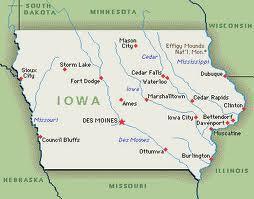
How scary is Iowa?

40

I know, I know: It doesn’t deserve the hype. And Mitt Romney’s going to be the Republican nominee anyway; the rest is all theater. And I was just joking about how it might help Obama if one of the true wingnuts won the Iowa Caucuses.

But in the cold light of a Jan. 4 morning, I have to say:

It’s pretty fucking scary that the voters in Iowa not only took seriously but gave a fair amount of support to someone who has made much of his career out of being a homophobe and a racist. Oh, and really, really stupid:

“There are people who were gay and lived the gay lifestyle and aren’t anymore. I don’t know if that’s the similar situation or that’s the case for anyone that’s black. It’s a behavioral issue as opposed to a color of the skin issue, and that’s the diff for serving in the military.”

Seriously: I know that he only got 30,000 votes, and there are a lot of evangelical Christians in Iowa, and I suppose not all of them hate queer people. Al Sharpton — and whatever you say, Sharpton’s no political fool — says that Santorum helps the Democrats by forcing Romney to continue to pander to the right. And I don’t believe that even 25 percent of the Republican voters in the nation as a whole would support someone with Santorum’s views.

But still: It’s 2012. And the most virulently antigay candidate in a right-wing field is right up near the top in the first real contest.

Isn’t that a little bit alarming?

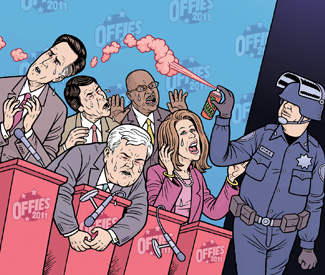
OFFIES 2011

0

It was the year of the Rapture (oh, wait, maybe not), the year of the great Republican resurgence (oh wait, maybe not), the year of Anthony Weiner’s penis and Gerard Depardeiu’s piss, the year of the Kardashians and Charlie Sheen … and the Offies in-basket overflows. Here are our favorite choice moments of 2011.


ACTUALLY, HIS THUMBS ON THE PHONE WERE THE ONES DOING DAMAGE

Anthony Weiner, in a sexting conversation with a middle-aged Nevada Democratic volunteer, described his penis as “ready to do some damage.”


AT LEAST SOMEBODY’S DOING SOMETHING ABOUT THE UNEMPLOYMENT RATE

Hustler publisher Larry Flynt offered Weiner a job


GOOD THING EXPERTISE IN THE ENGLISH LANGUAGE HAS NEVER BEEN A PREREQUISITE OF THE JOB

Presidential candidate Herman Cain, in an interview, said he didn’t know the name of the president of Uzbekistan, which he called UBEKE BEKI KEIE BAH BAH STAND O BAN STAN SO WHAT WHAT?


CERTAINLY NOT THE KIND OF FOOD FOR A MIGHTY MAN WHO SEXUALLY HARASSES HIS SUBORDINATES

Cain said that too many vegetable toppings make a “sissy pizza.”


BECAUSE AN ELECTRIFIED CARTOON MOUSE IS AN INSPIRATION TO US ALL

Cain blamed “elites” for derailing his campaign, then quoted from the Pokemon theme song.


NICE TO SEE HERMAN CAIN HAS COMPANY IN THE DEPARTMENT OF QUALITY POLITICAL CANDIDATES

Joe the Plumber announced he would run for Congress


COULD IT BE — THE STUPIDEST REPUBLICAN CANDIDATE EVER?

Rick Perry couldn’t remember which federal agencies he wanted to shut down.


EXCEPT THAT THE ALMIGHTY HASN’T BEEN ABLE TO TELL US WHICH DEPARTMENTS HE WOULD CUT, EITHER

Michelle Bachman said that the East Coast earthquake and hurricane were signs that God thought the country was spending too much money on government services.


IT APPEARS THE CHRISTIAN RIGHT CAN’T GET ITS STORIES STRAIGHT

Rush Limbaugh said that the power of Hurricane Irene, which caused 53 deaths and $15 billion in property damage, was blown out of proportion to promote “the leftist agenda.”


HMMM… SINCE HERS MAKES A BUSINESS OF “CONVERTING” GAY PEOPLE, WE HAVE TO WONDER WHAT HE TELLS HER TO DO

Bachman said wives should be obedient to their husbands


BUT HEY — THOSE GUYS ALL LOOK ALIKE

Bachman praised Waterloo, Iowa as the home of John Wayne, when it’s actually the home of serial killer John Wayne Gacy


AN EXCEPTIONAL NEW INTERPRETATION OF THE INTELLECTUAL ROOTS OF THE SECOND AMENDMENT

Sarah Palin insisted that Paul Revere “warned the British that they weren’t going to be taking away our arms, by ringing those bells.”


UM, RICK, THE SCHOOLS ARE CLOSED ON CHRISTMAS

A Rick Perry campaign ad said that “something’s wrong with America” because “gays can serve openly in the military but our kids can’t openly celebrate Christmas or pray in school.”


DAMN — THAT MEANS HE REALLY IS A DUMB AS HE LOOKS

Perry insisted he wasn’t drunk when he delivered a rambling speech in New Hampshire


OR MAYBE A LITTLE LIKE FINDING OUT THAT SHE WAS JUST USING YOU ALL ALONG

Sup. David Chiu said meeting Mayor Lee — who he helped put in office — after he broke his promise not to run was “a little like meeting an ex-girlfriend after a breakup.”


AND TALK ABOUT BEING USED

Ed Lee said he didn’t want to run for mayor, but he had trouble saying no to Rose Pak and Willie Brown


IT DOESN’T MATTER — AS THE GREAT RONALD REAGAN ONCE SAID, “FACTS ARE STUPID THINGS.”

Sen. John Kyle announced that 90 percent of Planned Parenthood’s business was abortions, and when it turned out he was wrong by a factor of 30, he said his allegation “wasn’t meant to be factual.”


THE U.S. HAS DEPOSED PEOPLE FOR LESS THAN THAT. OH, WAIT …

Moammar Gadafi said his political opponents were on LSD and kept a stash of photos of Condoleeza Rice.


OH WELL, YOU KNOW HOW GOD IS; HE FLAKES OUT ON DATES ALL THE TIME

Oakland radio minister Harold Camping announced that the end of the world would come Oct. 21.


TOO BAD THAT WILL ONLY COVER THE FIRST SESSION OF THE POOR KID’S THERAPY

A woman who created a media frenzy when she said that she had given her young daughter botox admitted she made the story up so a tabloid would pay her $200.


WHEREAS, OBAMA HAS NEVER DEMANDED THAT TRUMP SHOW HIS REAL HAIR

Donald Trump demanded that Barack Obama show his birth certificate.


IF THE JAPANESE WOULD ONLY CUT GOVERNMENT SPENDING SOME MORE, THIS SORT OF THING WOULDN’T HAPPEN

Rush Limbaugh made fun of Japanese people after the earthquake and tsunami, saying “where Gaia blew up is right where they make all these electric cars.”


THE SCHOOL’S ESTEEMED NAMESAKE, ON THE OTHER HAND, HAD 27 WIVES, SOME AS YOUNG AS 15, AND AT LEAST 64 CHILDREN, SO HE WOULD NEVER HAVE APPROVED OF SUCH A THING

Brigham Young University suspended basketball star Brandon Davies because he sex with his girlfriend.


IT’S AWFUL, THE SACRIFICES OUR POLITICAL LEADERS HAVE TO MAKE IN THE NAME OF THE COUNTRY

Newt Gingrich told the Christian Broadcasting Network that he’d cheated on his wife because he loved America so much.


ON THE OTHER HAND, IF YOU WEREN’T SO FULL OF SHIT THE PLUMBING MIGHT FUNCTION A BIT BETTER

Sen. Rand Paul complained to an energy department official that he didn’t like appliance efficiency standards because “we have to flush the toilet 10 times before it works.”


NATURALLY — CLEANLINESS IS NEXT TO GODLINESS. SORT OF LIKE MARITAL FIDELITY

Gingrich told Occupy protesters to take a bath.


WHAT — HE DOESN’T CONSIDER HIMSELF A “FROTHY MIX OF FECAL MATTER AND LUBE THAT IS SOMETIMES THE BYPRODUCT OF ANAL SEX?”

Former Senator and presidential candidate Rick Santorum complained about what turns up when you put his name in a Google search.


AND NEXT, WE’LL REDEFINE “POOR” AND ELIMINATE FOOD STAMPS

House Republicans tried to redefine “rape” to eliminate funding for abortions


OH WELL, THERE GOES THE SEASON

Stanford University stopped giving student athletes special lists of easy classes


DONALD — YOU’RE FIRED

Donald Trump tried to host a presidential debate but gave up when nobody wanted to be there.


THIS FROM A MAN WITH “INVENTED” INTEGRITY

Gingrich called the Palestinians an “invented” people.


GOOD THING ABOUT THE CRACK — THAT SHIT FUCKS UP YOUR BRAIN

Charlie Sheen opened his Violent Torpedo of Truth Tour in Detroit, where he burned a Two and A Half Men T-shirt, told the crowd that he was “finally here to identify and train the Vatican assassin locked inside each and every one of you,” demanded “freedom from monkey-eyed&ldots;sweat-eating whores,” and said he doesn’t do crack anymore.


AT LEAST HE’S GOT ONE THING GOING FOR HIM: HE JOGS WITH A GUN AND SO FAR HASN’T SHOT HIS OWN BALLS OFF

Rick Perry told the Associated Press that he shot a coyote that had threatened him on his morning jog.


KILL ‘EM ALL AND LET GOD SORT ‘EM OUT

The crowd at a Republican debate cheered after moderator Brian Williams noted that Rick Perry had overseen 234 executions.


ANOTHER GREAT MOMENT IN THE ANNALS OF LAW ENFORCEMENT

A Davis police officer pepper sprayed a group of peaceful protesters who were sitting on the ground.


SINCE THERE’S NO NEWS IN THE WORLD OF THE 1 PERCENT

The New York Post investigated sex at Occupy Wall Street


GOOD THING IT DIDN’T WORK — THE WATER FROM HEAVEN WOULD HAVE MADE THE BUNS ALL SOGGY

Perry held a religious rally to pray for rain at Reliant Stadium in Houston, and urged people to fast, although the concession stands sold hot dogs.


BUT WAIT — IF WE SHUT DOWN THE GOVERNMENT, AREN’T WE … OH, NEVER MIND

Michelle Bachman said she opposes same-sex marriage because “the family is the fundamental unit of the government.”


THE FACT THAT WE’RE EVEN WRITING ABOUT A TEENAGER WHO CALLS HER TITS “SNOWBALLS” IS A SIGN OF THE END OF CIVILIZATION

Child bride Courtney Stodden was kicked out of a pumpkin patch for dressing in daisy dukes and making out with her 53-year old husband, Doug Hutchinson, and she madly tweets things like “Squeezing my snowballs inside of a seasonal sexy little lingerie as I begin to swing around the Christmas tree to hot rock ‘n roll hits!”


IT SELLS, BABY, IT’S SELLS

Kim Kardashian made $12 million for doing essentially nothing.


A NEW DEFINITION OF TERROR: WATCHING A 63-YEAR-OLD MAN WHIP OUT HIS DICK

Gerard Depardieu pissed on the floor of an Air France jet after flight attendants told him he’d have to wait to use the bathroom.


WE’RE GOING TO TAKE A BUNCH OF STEROIDS AND THEN LIE ABOUT IT AND MAYBE WE CAN SPEND A MONTH THERE, TOO

The U.S. Justice Department spent millions of dollars and eight years to convince a judge to sentence Barry Bonds to spend a month at his Beverly Hills estate.

The Iowa Caucuses are silly (but we’re all watching)

18

We all know (or we ought to) that Iowa is radically unrepresentative of the United States and that the Iowa Caucuses are a dumb barometer for choosing a president and that only really insane news media coverage has made this into such a big event. And this year it’s a freak show, complete with Santorum Salad and a weird World War II reference and that creepy guy calling that deadly dull guy a liar and lots of other fun Republican tomfoolery.

But here’s the question for those of us who don’t vote in Iowa (and wouldn’t be hanging out at a Republican caucus anyway): Is it better for one of the major-league wingnuts to win, or should we all hope that Mitt Romney, who is going to be the nominee anyway, comes out ahead and we can stop wasting our time talking about Michelle Bachman, Ron Paul, Newt Gingrich and that guy named Santorum?

Seriously: Is it better for the country to have the Republicans look even crazier than they really are, and have someone who’s gone far off the deep end become the front-runner, and leave Obama looking like the only grownup in the race — or is it better if Iowans dismiss the worst of the worst and go with someone who’s just a typical opportunistic sack of shit but who once managed to run the liberal state of Massachussetts and probably wouldn’t attempt to have half of San Francisco locked in prison on general principles?

I must admit, I’m tempted to root for the nutjobs.

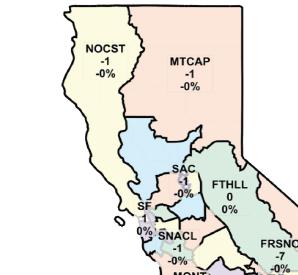
The redistricting furor

55

I opposed the measure that created California’s new Redistricting Commission. As we noted in our endorsements at the time:

The commission is hardly a fair body — it has the same number of Republicans as Democrats in a state where there are far more Democrats than Republicans. And most states still draw lines the old-fashioned way, so Prop. 20 could give the GOP an advantage in a Democratic state. States like Texas and Florida, notorious for pro-Republican gerrymandering, aren’t planning to change how they do their districts.

But Prop. 20 passed anyway, and control of the critically important task of drawing lines for state Legislature and Congressional districts fell to an unbalanced group of people with no political experience. They commission held hearings up and down the state, took reams of testimony — and wound up with a map that will probably add six or seven Democratic seats to the Congressional delegation.

That’s not a big surprise: Democratic Party registration is stable in a very blue state, and Republican registration is declining. Any fair redistricting would likely lead to more Democratic seats. And it’s clear that the likes of Phil Burton were not involved: In Los Angeles, two powerful veteran members of the House, Brad Sherman and Howard Berman, wound up in the same district. No matter what happens, the Democratic Party will lose one of its heaviest hitters.

But ProPublica, the national (and generally very solid) investigative reporting group, took on the process and concluded that the Democratic Party managed to wire the deal:

As part of a national look at redistricting, ProPublica reconstructed the Democrats’ stealth success in California, drawing on internal memos, emails, interviews with participants and map analysis. What emerges is a portrait of skilled political professionals armed with modern mapping software and detailed voter information who managed to replicate the results of the smoked-filled rooms of old.

(Memo to the folks at PP: There haven’t been “smoked filled rooms” in this state in quite a while. By the time the 1990 census was done, most of the state (including most public facilities) had strict limits on indoor smoking, and in 2000, nobody smoked in any rooms controlled by any governmental agency. But we get the point.)

The story has set off a furor. Robert Cruikshank, one of my favorite political bloggers, did a fairly brutal takedown on the report:

Of course, the core assumption that California Republicans deserved any new seats is challenged by their collapse in the November 2010 elections. While Republicans across the country were having a banner night, California Republicans lost every single statewide election (including losing the governor’s race by 13 points despite outspending the Democrats nearly 10 to 1). They also failed to pick up a single seat in either the legislature or Congress, losing one Assembly seat. California voters made explicitly clear in November 2010 that they do not like Republicans. That doesn’t appear to have actually influenced the commission’s deliberations, but it does mean the claim that Republicans had any reasonable expectation of gains is ridiculous.

Then Jerry Roberts and Phil Trounstine, two poltical reporters with at least 50 years of experience between them, did their own examination at CalBuzz, and asked PP’s Jeff Larson to explain himself. The result is scathing:

  Plainly put, their piece is the worst kind of ersatz “investigative” reporting: lots of heavy breathing and over-reaching conclusions drawn from selectively using, twisting or ignoring facts, relying on innuendo and suggestion, and mischaracterizing crucial elements of the story to inferentially allege an impropriety where none exists. Wink, wink, nudge, nudge, say no more. Moreover, ProPublica never even called the commission for a comment on its much-ballyhooed “findings.”

In failing the smell test, this clunker promises plenty, but simply doesn’t deliver the goods.

Wow. Harsh.

But the Roberts/Trounstine takedown holds up pretty well. The point they make is that everyone — the GOP, the Dems, city and state officials, groups like the Mexican American Legal Defense and Education Fund and more — tried to influence the process. In Northern California, the Dems were apparently a little better at it (and managed to create at least one fake front group to promote the interests of Rep. Jerry McNerney); in the southland, the big Democratic operation of Howard Berman and his brother, Michael, which, as CalBuzz points out, have played a key role in past redistricing efforts (those “smoke-filled rooms”), got totally fucked and Howard may lose his seat after 28 years.

I will say that PP dug up some new info and exposed how the Dems managed to create “communities of interest,” some of them bogus, to try to influence the final lines. But I’ve been watching this stuff for a long time, and I can tell you: Reapportionment is political. Always has been, always will be. There are better lines and worse lines, there are scandalous cases of gerrymandering and political payback and there are (relatively) honest attempts to create districts that are fairly compact and also comply with federal law and don’t dilute minority representation. But there’s no such thing as “clean” reapportionment — and if the Dems and Republicans weren’t trying their best to influence the outcome, they’d be guilty of partisan misconduct.

The CalBuz conclu:

The plain fact is that while Democratic registration has been essentially flat in recent years, Republican registration has fallen into the toilet, and the GOP now represents less than one-third of state voters.

This means that Democrats represent an increasing proportion of the electorate; add to that the fact that decline-to-state independents, the fastest growing bloc of registered voters, also tend to vote Democratic, as we’ve shown previously.

This makes Johnson’s claim that Republicans are entitled to at least their current number of seats, which is the money quote of the Pierce-Larson opus, not only laughable but also intellectually dishonest. Sort of like the whole piece.


Dick Meister: Unemployment is slamming public employees

18


By Dick Meister

Dick Meister, former labor editor of the SF Chronicle and KQED-TV Newsroom, has covered labor and politics for more than a half-century. Contact him through his website, www.dickmeister.com, which includes more than 350 of his columns.

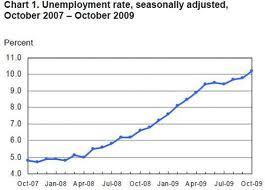
The latest job reports show that public employees, those favorite targets of Republicans and other government budget slashers, are being hit particularly hard by the country’s severe unemployment problems.

As the New York Times reported, 20,000 government workers were laid off in November alone, most of them state, county and city employees.

The public workers’ unemployment numbers have been steadily increasing for the past several years, at the same time that the jobless figures for workers in private employment actually have been decreasing.

In fact, private employers have been adding jobs since the end of 2009, a year after the beginning of the Great Recession. More than a half-million government jobs have been lost since the recession began.

The Times noted that in most cases, the layoffs were made because of declining tax revenues, or reduced federal aid “because of Washington’s inexplicable decision to focus more on the deficit in the near term than on jobs.”

The layoffs mean “a lower quality of life . . . fewer teachers, pothole repair crews and nurses.” It’s been happening all over the country, of course. The Times cited as a typical example what’s been happening in the Indiana city of Marion, population 30,000.

Marion city officials recently announced what they called a “radical reorganization” of city services that will mean laying off 15 of the city’s 58 police officers and 12 of its 50 firefighters. Radical, indeed. That’s more than 25 percent of Marion’s police and firefighters.

As elsewhere, the layoffs of course reduce vital public services, but it’s important to note that they also of course have a serious impact on those who lose their jobs. The impact has been especially harsh on African- American workers.

The Times’ Timothy Williams reported that one-fifth of the nation’s millions of black workers “have entered the middle class through government employment” and tend to make 25 percent more than other African-American workers. But now tens of thousands are being forced to leave both their jobs and the middle class.

The Times cited as a prime example the city of Chicago, which is scheduled to lay off more than 200 employees in the next fiscal year, two-thirds of them African-Americans.

It shouldn’t be surprising, then, that the African-American jobless rate has risen to more than 15 percent nationwide, almost double the rate for other workers.

As the Times said, the effect has been severe – “destabilizing black neighborhoods and making it harder for young people to replicate their parents’ climb up the economic ladder.” Their rise was made largely by the government jobs that they’re now losing without much hope of finding other jobs, given the current tattered state of the economy and continued job discrimination against African-American workers generally.

It certainly would be hard to disagree with the Times’ conclusion that much of the public job losses and consequent cutbacks in public services stem from the fact that many Republicans “don’t regard government jobs as actual jobs, and are eager to see them disappear. Republican governors around the Midwest have aggressively tried to break the power of public unions while slashing their workforces, and Congressional Republicans have proposed paying for a payroll tax cut by reducing federal employment rolls by 10 percent through attrition.”

That 10 percent, the Times pointed out, is 200,000 jobs. And, surprise! Many of those jobs “would be filled by blacks and Hispanics and others who tend to vote Democratic.” So, said the Times, those workers “are considered politically superfluous” by the GOP.

But, the Times concluded, “every layoff, whether public or private, is a life, and a livelihood, and a family. And too many of them are getting battered by the economic storm.”

Dick Meister, former labor editor of the SF Chronicle and KQED-TV Newsroom, has covered labor and politics for more than a half-century. Contact him through his website, www.dickmeister.com, which includes more than 350 of his columns.


Editor’s notes

0

tredmond@sfbg.com

The private sector that Republicans see as our economic savior has been creating jobs. Not a lot, a few hundred thousand a month, but some. And yet the unemployment rate remains stubbornly high.

There’s a reason for that, one politicians from San Francisco to Washington D.C. don’t want to talk about. But the New York Times put it nicely in a Dec. 5 editorial:

“While the private sector has been adding jobs since the end of 2009, more than half a million government positions have been lost since the recession…”

“The cutbacks hurt more than just services. As Timothy Williams of the Times reported last week, they hit black workers particularly hard. Millions of African Americans — one in five who are employed — have entered the middle class through government employment, and they tend to make 25 percent more than other black workers. Now tens of thousands are leaving both their jobs and the middle class.”

Remember: Most of the biggest employers in this city are not corporations; they’re government agencies. The City and County of San Francisco, the University of California, the State of California, the United States Postal Service, City College and the San Francisco Unified School District drive the local economy more than any one private company. Between them, those public-sector operations employ more than 60,000 people. The largest single private employer, Wells Fargo, has fewer than one sixth of that number.

Most of the those public-sector jobs are unionized and offer decent benefits. They are such an important part of the city’s economic development future that it’s impossible to talk about jobs in San Francisco unless you start the conversation with the public sector.

Mayor Ed Lee is about to enter negotiations with unions representing 24,000 city employees. His office is already indicating that cost savings will be a big part of the discussion. I know there are cost savings out there — you can’t spend $2 billion on payroll and not have some waste somewhere in the package.

But if he’s serious about his campaign mantra — jobs, jobs, jobs — I hope he remembers what the Republicans don’t: Government jobs count, too.

Government jobs are jobs, too

81

The New York Times weighed in Dec. 4 on an economic fact of life that I’ve been harping about for years now: Jobs in the public sector are … jobs. In many cases, they’re good jobs. And when conservatives and business leaders talk about reducing the size of government — and then complain about the unemployment rate — they’re stuck in doublespeak.

I know the Times has a paywall now, so if you can’t get in from that link I’ll give you the main points of the editorial:

While the private sector has been adding jobs since the end of 2009, more than half a million government positions have been lost since the recession. … The cutbacks hurt more than just services. As Timothy Williams of The Times reported last week, they hit black workers particularly hard. Millions of African-Americans — one in five who are employed — have entered the middle class through government employment, and they tend to make 25 percent more than other black workers. Now tens of thousands are leaving both their jobs and the middle class. Chicago, for example, is laying off 212 employees in the upcoming fiscal year, two-thirds of whom are black.

That’s one reason the black unemployment rate went up last month, to 15.5 percent from 15.1. The effect is severe, destabilizing black neighborhoods and making it harder for young people to replicate their parents’ climb up the economic ladder. …

Many Republicans, however, don’t regard government jobs as actual jobs, and are eager to see them disappear. Republican governors around the Midwest have aggressively tried to break the power of public unions while slashing their work forces, and Congressional Republicans have proposed paying for a payroll tax cut by reducing federal employment rolls by 10 percent through attrition. That’s 200,000 jobs, many of which would be filled by blacks and Hispanics and others who tend to vote Democratic, and thus are considered politically superfluous.

But every layoff, whether public or private, is a life, and a livelihood, and a family. And too many of them are getting battered by the economic storm.

Something to think about as city officials try to eliminate the latest defict and negotiate new union contracts. Because Repbulicans aren’t the only ones who don’t regard government jobs as actual jobs; a lot of Democratic officials and business leaders in liberal San Francisco seem to feel the same way.J


The women who love Herman Cain

4

Sexual harassment is serious, and Herman Cain ought to be held to account for the sizable number of allegations against him. (Really, whatever Cain says, most women don’t make this stuff up; going public is painful enough). The charges that he had an affair? Whatever — that’s none of my business or anyone else’s. But in the GOP world, being “unfaithful” is a pretty serious sin (unless, of course, your name is Newt Gingrich).

Still, it’s pretty creepy that he’s set up a “women for Cain” website, with some truly bizarre testimonials:

**Sir, I firmly believe that you were sent to our nation through Divine Providence and I believe that you are the man to preserve our Republic for our children.

**”I first saw Mr Cain on the day he announced his presidency! I absolutely loved his upbeat attitude about my country! Then he smiled … how long has it been since we have seen a sincere smile from a political candidate!

**I am with you all the way Sir!!!!!!!! We need someone that believes in GOD, life and liberty

**Mrs. Cain, Joshua 1:6 says, “”Be strong and courageous, because you will lead these people to inherit the land I swore to their forefathers to give them.” I am praying for you and Mr. Cain…that God would protect you and give you courage to be obedient to Him…whatever He asks.

**Dear Mr Cain many years ago I find this not so unique for christians I knew a man Charles in died at 54 i knew him and and his wife and they were beautiful from the heart christians. at one point in my live i was going to lose my home and well he heard about it, so me at Maass and told me Adrinne I want you to go down to the bank Monday and there wil be a check for 40.000 dollars. I told him I dont know how in the world i would pay it back and he just said don.t worry you are young and you have your whole live to pass a blessing on to someone else, At any rate he died at 54 of a heart attack and when I went to the funeral I was not surprised to see at least 500 or more people at his funeral and I went up to his wife and she told me has helped so many people his whole life and I looked in those green eyes with flowing tears and I said I was one of those people!

Whoa. These are the supporters of Herman Cain. I wonder what Women for Gingrich would look like.

The impact of Occupy

8

With the city getting ready to crack down on OccupySF, and Occupy encampments around the country under attack, it’s easy to get discouraged. And I know that a lot of the Occupiers aren’t thinking about specific legislation or how the movement translates into action in Washington.

But it does — it does:

In the world where Occupy had never happened, Republicans would’ve held these tax cuts hostage without suffering any ill repercussions. Why would they? The chattering class and Beltway media would be droning on endlessly about deficits and other things that didn’t matter.

In this world, Occupy has thrust income inequality to the forefront of the political debate — so much so that typically immovable Republicans are afraid to feed that narrative.

In other words, a ragtag bunch of hippies with supposedly no demands have done what Democrats have never been able to do — get Republicans to cry “uncle”

And this is just the beginning.

Editor’s Notes

2

tredmond@sfbg.com

I want to take a few Republicans on a road trip.

A few days after the GOP-led Congress cut off funding for high-speed rail in California, I drove to Los Angeles for Thanksgiving. I wish the critics of the project were with me in the car, with two kids fighting in the back seat, constant traffic delays, and about as unpleasant an automobile excursion as you can imagine.

I hate driving. When I was 16, in the New York suburbs, all I wanted to do was drive; now I can’t stand it. But when you’re invited to a friend’s house 380 miles away and flying is too expensive and the one rail line that lumbers along the north-south corridor takes 14 hours and is always three or four hours late, there’s not much of an option.

And even by my standards, I-5 is a miserable experience. It’s crowded, it stinks like the piss of 5,000 doomed cows, and it goes on forever. On and on and on, through fields where big agricultural corporations using heavily subsidized water grow cotton in the desert, up the grapevine, down the grapevine, fighting trucks and too many cars, no place to stop and stretch your legs … I-5 isn’t a working road like 101, where people commute to work and go shopping and get on and off after a few miles. Most of the way from Sacramento to L.A., there’s nowhere to go — 40 miles or more between exits. Everybody on the road — all 10,000 or 20,000 or 50,000 or however many gasoline-powered steel boxes were crammed onto the concrete ribbon Thanksgiving week — were in it for the long haul. People drive I-5 to get from one end of the state to the other; that’s why the thing exists.

And that’s why it’s about the best place in the country to run a high-speed rail line.

Seriously: I bet 90 percent of the people on that wretched roadway Thanksgiving week would have been thrilled to take a train directly from downtown San Francisco (or Sacramento) to Union Station in L.A. — particularly if the ride took half the time of the drive and cost about the same.

I can talk forever about fossil fuels and climate change and air pollution and all the reasons people should get out of their cars. But all you have to do to convince any reasonable person that driving from S.F. to L.A. is a bad idea is to do it.

Dick Meister: The lessons of Ohio

0

By Dick Meister

Dick Meister, former labor editor of the SF Chronicle and KQED-TV Newsroom, has covered labor and politics for more than a half-century. Contact him through his website, www.dickmeister.com, which includes more than 350 of his columns.

AFL-CIO President Richard Trumka has drawn some important lessons from last week’s election in Ohio that repealed a state law severely limiting the collective bargaining rights of public employees. Worse, it threatened to inspire passage of similar anti-bargaining laws elsewhere.

Listen to Trumka, a man who obviously knows what he’s talking about. In an article he wrote for Reader Supported News, he cites post-election polls showing that more than half of Ohio’s voters correctly “perceived the law as a political maneuver by Gov. John Kasich and state Republicans to weaken labor unions, rather than a genuine effort to make state government more efficient.”

Another poll, done for the AFL-CIO, showed that more than half the voters also found that Kasich and his allies “are putting the interests of big corporations ahead of average working people.”<–break->

Voters everywhere in the mid-term elections clearly wanted change. But, as Trumpka says, they did not want “political maneuvers and overreach” like those of Kasich and Republican legislators. They want effective action to curb unemployment, create jobs and deal with the other severe economic problems facing the country.

As Trumka notes, public employees, union members, Democrats and liberals voted overwhelmingly to repeal the Ohio law, but so did a majority of voters “from households with no public employee, workers without union representation and independents – as well as 30 percent of Republicans and 36 percent of conservatives.”

One of the key lessons Trumka draws from Ohio’s election is that “the myth of the pampered public employee has been busted. Public employees didn’t cause the economic crisis and they’re not the enemy. Demonization of public employees is neither a strategy nor a solution and the heartland Americans who voted to restore rights for public employees understood that.”

The election also reinforced the continued need for working people, public and private employees alike, to join closely together. That’s what happened in Ohio. There, as Trumka notes, “firefighters, teachers and other public employees were joined by plumbers, pilots and all kinds of private sector employees to win. Worker to worker, neighbor to neighbor, the message spread, and what began as an attempt to divide workers flopped famously. In the end, working people’s solidarity was the message.”

Politicians could also learn important lessons – if they will. For the Ohio voters “showed that when fundamental rights and livelihoods are targeted, working people will not only defend themselves, but come back stronger.”

The outcome of the Ohio vote should show politicians seeking office that it would be wise for them to pay much more attention to the wishes of working and middle class voters than to those of the wealthy and privileged. Says Trumka:

“Cutting taxes for millionaires and billionaires, scapegoating working Americans and their unions and downsizing Social Security and Medicare may get you a standing ovation from the 1%, but the voters who decide elections will not be fooled – and you may just get more than you bargained for.”

Trumka’s correct. But despite the results in Ohio and the lessons they hold for the anti-labor political right, many undoubtedly will continue what the AFL-CIO sees as “part of Wall Street’s strategy to chip away at collective bargaining rights, piece by piece, law by law, until unions and collective bargaining rights are destroyed.”

Working people and their unions can be reasonably certain, at least, that they’ll have strong support in trying to withstand the attack – including support from the Occupy Wall Street movement, which Trumka credits with “redefining the political narrative.”

The next major test will come in the presidential and congressional elections in 2012. They’re especially looking for support from the swing voters who supported President Obama in the 2008 election and generally have the same political views as the majority of Ohio voters.

Trumka describes the swing voters as “working Americans with modest incomes, moderate views and little patience for polices that aren’t fair and don’t work.”

He says politicians seeking election or re-election next year must heed them and “support public policies for the 99 percent – policies that create jobs, invest in America’s future, safeguard Social Security, Medicare and Medicaid, and promote fiscal sanity by requiring millionaires and billionaires to pay their fair share.”

OK, that’s asking for much more than we’ve been getting. But the Ohio vote demonstrated that it is possible to garner the votes necessary to overcome the forces that would deny us vital economic and political rights.

Dick Meister, former labor editor of the SF Chronicle and KQED-TV Newsroom, has covered labor and politics for more than a half-century. Contact him through his website, www.dickmeister.com, which includes more than 350 of his columns.

Will Occupy message reach Sacramento?

26

One of the early tests of the political impact of the Occupy movement will come in the next two months, as California prepares to make drastic further cuts in education and social services for the poor and the Democratic governor begins — cautiously and hesitantly — to talk about new revenues.

The numbers from the Legislative Analysts Office are fairly bleak — the state budget relied on $4 billion in revenue that hasn’t been collected. That’s because Gov. Brown and the Democrats in the Legislature assumed that the economy would pick up more than it has. We don’t know what the final shortfall will be — but because the budget deal included automatic trigger cuts, it’s clear that K-12 education, CSU and UC are going to get hit again, as will, for example, medical assistance for the disabled.

So just as students and faculty all over the state are protesting existing cuts and tuition hikes, more are on the way. I expect this will go over extremely well on the campuses.

The cops may be poised to shut down OccupySF, but this is a movement that isn’t about to go away. And if the governor and the Democrats in the Legislature (who are going to be running from new districts next fall) start to feel the heat and realize that the Occupy movement is already influencing the political debate and will, directly or indirectly, be playing a major role in state and national politics, they’re going to have to respond.

How? Well, the Legislature can always decide to scrap the cuts and raise taxes now. Unlikely, since that would require a two-thrids vote and the Republicans still care more about their no-taxes pledge than they do about the tens of thousands of people (including in their own districts) who are taking to the streets to protest economic inequality.

More likely the talk will be about November, 2012, and what sort of revenue measures Jerry Brown wants to put on the ballot. And that’s where the politics of Occupy can have a significant impact.

There are so many ways to go with tax measures; the easiest, in some ways, is to talk about the state sales tax, which bothers the GOP hardliners (like any tax) but bothers the big-business world a lot less. Most of any sales tax hike would be paid by consumers and the poor would pay more than the rich; typically, big business groups are willing to accept a sales tax hike before they’ll go for anything more progressive.

Obviously, the best option is to do exactly what Occupy is talking about, and raise the income tax on the top brackets (and cut corporate loopholes, and pass an oil severance tax). And that’s what will drive the California Chamber of Commerce types absolutely mad.

But I think a there’s a way to make this a winner at the polls, and a winner for the legislators who push it — and maybe even a winner for a Dem or a moderate Republican in some of the potential swing districts. Just call it a One Percent Tax — that is, a tax on the One Percent. Could be a combination of income taxes and corporate taxes, as long as it’s a package carefully written to target largely the wealthiest in the state.

Hard for anyone these days to oppose something that is totally defined and promoted that way. Gives the Occupy movement something to vote for. Could save jobs, keep classrooms open, keep sick people alive … I see no downside at all.


Will Obama win in 2012?

43

Right now, all the signs say no — the economy isn’t improving, he’s pissing off his base, the GOP kicked his ass in the 2010 midterms, and a vast majority of Americans think the country is headed in the wrong direction. But then, at this time in 1991, all the signs said that George Bush I was unbeatable.

And then, of course, you have the Republican candidates.

That’s why the political consultant brain trust at CalBuzz predicts by a 2-1 margin that Obama will be relected. We’re talking Democrats and Republicans, from across the ideological spectrum (although mostly centrist; there aren’t many radical political consultants, since they have to make a living working with all sorts of candidates).

I always get these things wrong — a good way to win an election-day bet is to listen to my predictions then go the other way — and I’m not the Obama supporter I once was. But I think these folks have a point — is there a single Republican now in the field who won’t self-destruct by the end of next year, in the heat of battle? You can say all you want about his namby-pamby positions and the bimbo eruptions, but Bill Clinton was a hell of a campaigner — and it takes a hell of a campaigner to unseat an incumbent president, no matter how bad he looks in the polls.

Some of their comments:

As much as history points to no president being re-elected with unemployment numbers this high, there is no sign that the GOP can get its act together and nominate anyone capable of defeating Obama. As amazing as it may be the GOP is poised to grasp defeat from the jaws of victory — what a party!

Romney, the probable GOP nominee, combines most of the worst features of Walter Mondale, Michael Dukakis, Al Gore and John Kerry. That’s some feat — and it won’t get him to the White House.

Obama will win . . . more because the Republican field is pathetic.  “Mittens” is the likely winner, but has flip-flopped more than a tuna on the deck of a boat.

Harsh — but possibly true. Thoughts?

The growing 99 percent

0

steve@sfbg.com

In recent weeks, the Bay Area has been roiled by anger and frustration with how the rich have grown richer while the rest of us endure underemployment, foreclosures, and deep cuts to public education and services, peaking with the Nov. 2 Oakland General Strike that drew more than 10,000 people into the streets to demand economic justice.

The Occupy Wall Street movement — and its many local manifestations, including OccupySF and Occupy Oakland — has been the main vehicle for those populist passions for the last two months, with the support of the labor movement. But now, student and faculty groups from California’s three public university systems are about to get involved in the fight in a big way.

Student and labor groups allied with the ReFund California coalition are planning a week of action for Nov. 9-16, culminating that final day in demonstrations outside the California State University Board of Trustees meeting in Fullerton and University of California Board of Trustees meeting at the UCSF campus in San Francisco’s Mission Bay.

Those protests aim to connect the problem of deep cuts and tuition hikes in the public university systems with the larger issue of wealthy individuals and corporations that haven’t been paying their fair share. The coalition wants the boards to pledge support for a five-point action plan that includes taxes on the wealthy, removing commercial property from Prop. 13 caps on property taxes, restoration of cuts to higher education, a sales tax on Wall Street financial transactions, and pressuring banks to reduce mortgage debt on underwater homes.

Charlie Eaton, a ReFund California organizer from United Auto Workers Local 2865, which represents teaching assistants at UC, notes that many UC and CSU board members also sit on the boards of major banks and corporations that have contributed to the current financial crisis and which have been in the crosshairs of the Occupy Wall Street movement.

“It’s really a club of California’s corporate elites,” Eaton said. “It’s about saying to these folks: if you aren’t willing to actively support paying your fair share, or at least get out of the way, we can’t let it be business as usual at the Wall Street institutions that you help run.”


NO BUSINESS AS USUAL

He said there’s a direct connection between the actions of these corporate boards and lack of resources in California for public education and services, so it’s only right that these powerful board members — from Regent Richard Blum, the investment banker husband of Sen. Dianne Feinstein, to Trustee Bill Hauck, former head of the California Business Roundtable — support the needs of the 99 percent.

“We’ll be there to call on them to sign the pledge,” Eaton said of the Nov. 16 meetings. “And if they aren’t prepared to make that pledge, we’re headed to the Financial District to make sure there is no business as usual for these corporations.”

That day of action will echo the last ReFund California protest in San Francisco, the Sept. 29 “Make Banks Pay” march through the Financial District that was one of the first high-profile demonstrations involving OccupySF. The march was several hundred strong, targeting major financial institutions including a Chase Bank branch on Market Street that was occupied by protesters, resulting in six arrests.

When we asked Eaton whether the Occupy movement would lend its energy and numbers to these ReFund California protests, he said, “We’re embedded in the Occupy movement, so it’s not quite right to say it’s something the Occupy movement might help with…I think the Occupy Wall Street movement shows we can make them pay.”

Meanwhile, the next day (Nov. 17), Occupy Wall Street plans to march the 11-mile length of Manhattan in a day of action that will be supported by solidarity marches by Occupy encampments across the country. That is also the day that a two-campus strike is being threatened by the California Faculty Association.

“I think that day is going to be a busy day all around the nation,” Kim Geron, a political science professor at CSU East Bay and vice president of the CFA, told us.

On Nov. 7, the CFA Board of Directors authorized one-day strikes for Nov. 17 at the CSU East Bay and CSU Dominguez Hills campuses to protest CSU Chancellor Charles B. Reed’s decision to withhold negotiated faculty pay raises. It would be the first faculty strike in the system since 1983, although a strike was authorized in 2007 but called off after a negotiated settlement.

After the vote, according to a statement put out to members, CFA President Lillian Taiz told her board, “We hope this carefully targeted strike, which symbolizes both our anger and our commitment to fairness, will lead to changes in his priorities and his positions. If it does not, the CFA leadership—and the CSU faculty we represent—are prepared to escalate the fight.”


DUCKING THE TAX ISSUE

CSU spokesperson Mike Uhlenkamp said the campuses will remain open despite the strikes. “We expect it to be business as usual,” he said. As for the pledge that ReFund California is seeking, “We don’t get into advocating between taxing and not taxing,” he said, saying that’s a state decision and “we’re not going to push them to make that determination.”

Guardian calls to the UC President’s Office were not returned by press time. A spokesperson for Gov. Jerry Brown, who is the subject of a student letter-writing campaign urging him to tax the rich and stop cutting public services, continued to blame Republicans.

“We too are deeply concerned about cuts to the state’s universities and colleges, which is why the Governor pushed for a solution to our budget deficit that included extending revenues. Unfortunately, Republicans in the Legislature refused to even allow the people of California to vote on the measure, which could have helped prevent future cuts,” Brown spokesperson Evan Westrup responded via email.

When we asked whether Brown was simply giving up, how he planned to deal with the problem, and why Brown has not followed up his campaign pledge to tax the rich with any proposals to do so, he wrote simply, “There are a number of ways to pursue additional revenue moving forward and these options are being considered.”

Geron said there is a clear connection between problems in the CSU system and the hoarding of resources by the richest one percent of Americans, the main critique of Occupy Wall Street, a movement driven largely by current and recent college students.

“We are part of it. One of our slogans is we are the 99 percent and we teach the 99 percent,” Geron told us.

While the CFU is focused on decisions by the Chancellor’s Office — indeed, the strike is legally allowed only because the chancellor broke the contract by withholding negotiated pay increases — Geron said those decisions were made in a climate of deep funding cuts prompted by the state budget crisis.

“Obviously, the economic crisis is a lot of the reason why all this happened. It’s part of a larger crisis that is going on about how to fund the public good, including higher education,” Geron said. “Students are paying a lot more and getting a lot less. That’s the heart of what’s going on.”

The UC Student Association is taking part in the ReFund California week of action, but has not yet voted to participate in direct action against corporations on Nov. 16, Executive Director Matt Haney told us. But he said that many UC students will still take part in that action, just as they’ve been taking part in the Occupy movement.

“It’s the same frustrations. We have to get out there and start pushing this ourselves,” he told us. “We need to show the state that things can’t just keep moving along as they have. We have to put a stop to business as usual. The economic collapse is what destroyed the UC system.”

Haney sees the student, labor, and Occupy movements starting to come together in a very natural way. “It has really put the wind in the sails of student activists to see the energy of the Occupy movement,” Haney said. “There is a coming together of students and labor, and it’s overlapping with the Occupy movement in a powerful way.” *

Find details about the ReFund California Week of Action at www.makebankspaycalifornia.com.

The Black Bloc is always with us

23

I learned about how a handful of people could screw up a major demonstration back in 1984, when the Democratic National Convention was in San Francisco and a fairly large number of peace activists had arranged a protest called the “War Chest Tour.” The idea was to draw attention to the fact that Democrats as well as Republicans got big campaign donations from defense contractors whose business was making war. Back then, a bunch of the biggest war profiteers had offices in San Francisco, and the demonstration — which attracted hundreds of people — wound through the financial district with signs and banners. It was, generally, a great success — except in the national press.

The thing is, the protest (like occupy Oakland) was prety anarchic, which a small “a” — peaceful, but leaderless. There was no organization with an office and a phone that the press could call for comment, no easy way to identify the coalition that had put it together.

Oh, but there was one very organized group present: The Revolutionary Communist Party had maybe a dozen members marching (which may have been the entire local membership of that particular group, which has been on the margins of the American left for many years). The RCP members had T-Shirts, newspapers, people designated to speak to the media, handouts with an office phone number — all the stuff that made lazy reporters’ lives easier. So when the story broke, both locally and nationally, the first paragraph read:

“Revolutionary Communists protestested yesterday in San Francisco ….” And the whole point of the War Chest Tour, which my friends had worked on for months, was lost.

Those of us who have been around awhile knew, and know, that the RCP is always with us. There may only be a handful of them still around, but they show up for everything — and don’t seem to care if they undermine the message that event organizers are trying to put out.

The Black Bloc — the “big A” Anarchists who broke windows in Oakland —  are becoming part of the same tradition. It’s a relatively small group, but it’s always around. The marches against the War in Iraq were huge, with tens of thousands of people, and entirely peaceful — except for a few Black Bloc-ers who broke windows and set fires.

Now: I’m not here to blast the Anarchists, or even the RCP. The Maoist/Bob Avakian types have become almost a parody of themselves in recent years, but if that’s what you’re into, go for it. I’m not even going to get into the argument over whether property damage counts as violence; been there, done that, got the circle-A T-shirt. Destroying stuff and causing mayhem can be a powerful political statement, and there have certainly been times when it was appropriate, effective and considered more than acceptable.

But it’s not always the right strategy, and in Oakland in 2011, I think it wasn’t. I recognize that this is an emergency situation, that the class warfare has already begun, and that extreme tactics are necessary to fight back. And hell, I don’t think smashing a bank window is so awful; smash enough of them and you put a lot of unemployed glaziers back to work. But in downtown Oakland, that tactic can too quickly backfire and lead to stuff like this. (Here’s an idea — how about a Shop Local day at Occupy Oakland, where everyone agrees to patronize small local businesses downtown? It fits right into the plan to withdraw your money from the big banks and put it in local credit unions.)

The problem with the Black Bloc (which isn’t really a bloc at all, it’s just a loose group of people who (a) think their tactics are appropriate and (b) love this shit) is that it’s acting in direct conflict with the many, many people who worked really, really hard to organize what was supposed to be a peaceful event. Like the RCP, they’re too quick to piss in the well.

You want to get violent? You want to break stuff? Show up for the general assembly, make your case, and see if you can convince the rest of the group that this is a good idea, right now, one that sends the right message and promotes the cause. Maybe you can do that; maybe everyone agrees. But if the majority of the group says no — that respect for property (much as we may hate private property, particularly bank property, and all that) is a better way to go right now, today, in this situation — then back off, dudes, and get with the program.

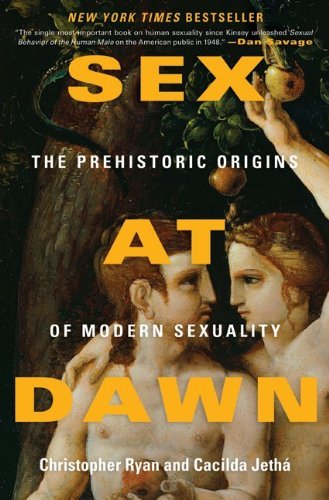
Author Christopher Ryan and the socio-evolutionary reasons for non-monogamy

0

Love your partner and love to fool around with other people? Author Christopher Ryan says that’s perfectly natural. A psychologist and historian who insists that human beings are not cut out for sexual monogamy, Ryan’s hitting SF next week (Wed/9-Thu/10) to talk about the evolutionary reasons for why that’s so.

Sure the freaks will be out in force for his events, but Ryan says that his book’s message is not just for people who already embrace alternative sexuality identities. 

Sex At Dawn shows that they’re not freaks because they find so-called traditional, strict monogamy to be stilted and unnatural for them. There’s a good reason for that, it is unnatural for them, and for the rest of us.” Ryan told the Guardian in a recent interview.  

But Sex at Dawn is not about modern non-monogamous types. It’s an ancient history that traces human evolution and focuses on pre-agricultural societies. Ryan explains, “Our ancestors evolved for 95 percent or more of our existence as a species of nomadic hunter-gatherers. In nomadic hunter-gatherer society, the central organizing principle is sharing. Sharing of childcare, sharing of food, defense, shelter, access to the sprit world, medical shamanic principles.”

His book argues that sexual pleasure was a no less communal practice for these early humans. 

“You look at our bodies, you look at anthropology, you look at all these different sources of information and you see, no, they weren’t possessive about sexuality in a way that they weren’t about anything else.”

But he has little idea on how to apply these historical tendencies to a modern society hooked on the one-plus-one-equals-two arrangement.

That’s partly why Andrew Sullivan, the organizer of next weeks’ events, wanted to present Ryan’s theories with the work of San Francisco’s esteemed sex activists. The expert panel backing up the author at Club Exotica will include relationship coach Marcia Baczynski, the founder of Kinky Salon Polly Pandemonium, and sex-positive icon and founder of the Center for Sex and Culture Carol Queen.

Says Sullivan: “Ryan talks about this pre-agricultural state, but he doesn’t really talk about — well, what do you do. He doesn’t deal with that. And that’s why I wanted to have him do this presentation, provide the science, provide the motivation for the work.”

He thinks these events will attract Bay Area residents from all walks of life.

“The cross-sections of life that are intersecting around this book are extremely diverse. You’ve got Republicans on the other side of the tunnel who are coming to an event like this because it hits them. They’re like, that’s part of my life, but its something they hide from out there, and they’re afraid of. All of a sudden they’re at the same event with somebody whose got a whip and rope and somebody else who is in a completely different socio-political mindset than they are, but they’re all going ‘we share something in common here.’”

The party that follows the Nov. 9 panel is sure to bring people together on whole other level. Sullivan says the event will “transition into an actual environment, this essential erotic environment that actually facilitates these kinds of connections. That’s why I call it the full spectrum event. It’s all right here. It’s like Woodstock for alternative relationships.”

On Nov. 10, economists and alternative currency advocates will gather to discuss sex and scarcity. Ryan says the talk will compare pre-agricultural society to our current system. “Our ancestors’ societies were based on sharing resources, which means they’re based on a notion of plenty — there will always be enough. Whereas post-agricultural societies, like our own, shifted 130 degrees to an orientation of scarcity. There’s never enough.” 

Ryan applies this scarcity theory to modern-day relationships. 

“You say well, I have to have my sex partner, I have to have my lover because she’s the one who gives me sexual pleasure, the stuff that I need, companionship, intimacy, security. If I lose her, I’m screwed, I’m alone. Because we live in that sort of fractured world. But our ancestors didn’t live in that sort of world, they lived in a world where hey, it doesn’t matter. I’m with her, I’m with her, she’s with her, she’s with him. You know we’ve all got multiple lovers, so if one relationship isn’t working, it’s not the end of the world.  It allows the social groups to function much more smoothly without all this conflict.”

He’s even found a way to connect this scarcity-plenty conundrum with the zeitgeist of our times.

Says Ryan, “I think that the message from the Occupy Wall Street movement, and Occupy different cities all around the country, is that no society can last if we lose sight of the fact that we’re in this together. That we are a species that evolved sharing resources and taking care of one another. And the more we lose sight of that, the more miserable we become. I don’t care how rich you are. I’ve known a lot of very wealthy people in my life, and they are not the happiest people I’ve known. The happiest people I’ve known are the ones who are living in communities where they’re taking care of each other and there’s a sense of unity and fairness that people respect. So I think that’s their message. That we have to get back to this understanding of what sort of animal we are and what sort of social system works best for us.”


Club Exotica presents Sex at Dawn

Wed/9 8 p.m.-2 a.m., $10-$35

Supperclub

657 Harrison, SF

www.clubexoticapresents.com


“Sex at Dawn: Modeling a New Culture of Sharing”

Thurs/10 free for members, guests $20 

Mission Control 

www.missioncontrolsf.org


Stealing an election — and more

5

news@sfbg.com

OPINION The emergence of apparent voter fraud that mars San Francisco’s mayoral election rightly resulted in calls for a federal investigation and federal monitors. It’s not the political interests of rival candidates that are at issue. It is the consequences of a dishonest election process for our city and its future.

Almost exactly 20 years ago, the McArthur Foundation, home of the genius awards, recognized the Democracy Index for showing the connection between voter participation and election and campaign reforms. The group found that the greater the transparency in political contributions, the stronger the protections against pay-to-play politics, and the greater protection against voter fraud, the higher voter participation climbed.

Today it doesn’t take a genius to recognize that sleazy tactics, end-runs around campaign rules, and dubious voting schemes do as good a job suppressing voter interest as the Republicans did in Florida in the 2000 election victory of George W. Bush, or poll taxes did in the past.

In this year’s mayoral election, we appear to be headed toward the bottom of a slippery slope. Campaigns hungry for advantage aren’t slow to recognize loopholes; soon a loophole becomes a strategy. What follows then is to push the envelope over the line. A candidate’s honorable intentions too quickly fall prey to the politics of convenience.

This year, with an interim mayor pledged not to run for election and thus avoid the entanglements of political self-interest, the expectation was raised high.

“My goal is to restore the trust in the mayor’s office of the past,” Mayor Ed Lee said in an interview just two weeks after assuming office.

In the ensuing months, Lee’s posture changed. He would be no better than the minimum standard required in the law, he said in his interview with the San Francisco Examiner.

He would not release the names of his finance committee, he claimed that a Run Ed Run effort was blameless after the Ethics Commission found a loophole that left them outside the city’s campaign laws, he complained that keeping track of contractor contributions was burdensome paperwork that he should be spared, and he maintained a close relationship with the leaders of independent expenditure committees while insisting he knew nothing of their activities.

When new tools can provide citizens with near instant access to everything from when the next bus comes to restaurant inspection scores, Lee’s campaign is supported by efforts that are deliberately opaque, designed to misinform if not to mislead.

Clearly this is not a mayor trying to leave the city, or its political process, better than he found it.

A 2011 mayoral victory under fraudulent terms would make everyone a loser, regardless of candidate preference.

It’s not just an election that might be “stolen” by unethical or illegal manipulation.

We would be defrauded of what we are entitled to have: the chance for all of us to forge a better future for the city without our optimism shattered by dishonest, unethical practices. That should not be sacrificed for anyone’s political advantage…

Larry Bush publishes citireport, a journal of politics and money


Mormons and Republicans

12

CalBuzz, one of my favorite political sites, has an interesting essay on what the anti-Mormon sentiment in America means for Mitt Romney. Among the central points:

Gallup found that Democrats (27%) were more unlikely to support a Mormon than were Republicans (18%) – suggesting that in a general election, a Mormon’s hard-right views on gays, marriage, abortion and women’s rights might have more to do with resistance to an LDS candidate than religion itself.

Actually, not all politically active Mormons share that “hard right” approach — Stew Udall, the Arizona environmentalist, Congressmember and interior secretary under Kennedy and Johnson was a Mormon. So was his brother Mo, a liberal member of Congress who ran for president in 1976 as a left alternative to Jimmy Carter. But like evangelical Christians, Mormons in general tend to be conservative, especially on social issues.

The CalBuzzers are puzzled by the distrust of this particular religion:

It’s hard to determine what, exactly, drives anti-Mormon sentiments – whether it’s what people know, what they don’t know or what they think they know.

Are they familiar with Joseph Smith, Jr., the treasure digger from Palmyra, New York, who said he was visited by the angel Moroni in 1827 and guided to a box of golden plates which he said contained what is now known as the Book of Mormon, after he transcribed them from “reformed Egyptian”?

Are they thinking about the breakaway Mormons in HBO’s late great “Big Love” with Bill Paxton, Jeanne Tripplethorn, Chloe Sevigny, Ginnifer Goodwin, Bruce Dern, Mary Kay Place and Amanda Seyfried? Maybe they think Mormons are all like Roman Grant, the evil self-proclaimed prophet and leader of the Juniper Creek Compound played by Harry Dean Stanton.

Or are they like one wag we know who argues that the only difference between Mormonism and Scientology is the choir?

If you want to pounce on logical improbabilities in religions, you’ve got your parting of the Red Sea and the burning bush, the immaculate conception and the resurrection and that passel of virgins waiting for you in Heaven. Pick your myth.

The point, of course, is that the stuff Mormons believe is no odder than the teachings of most major religions. But there’s a big difference, and I find it fascinating.

The thing is, if you believe in Jesus or Abraham or Mohammed, you’re talking about people who lived a really long time ago, before there were accurate written records. Despite former Guardian writer Burton Wolfe’s best efforts, you can’t really prove that Jesus lived or didn’t live, or did or didn’t turn water into wine or cure lepers. The Bible has been translated so many times (and by many accounts, rewritten so many times) that it’s hard to know exactly what the original stories even were.

On the other hand, there are people alive today whose grandparents might have known Joseph Smith. Mormonism came to life in a time of newspapers and nearly-modern record keeping. Upstate New York in 1827 wasn’t exactly Manhattan today, but it wasn’t the Middle East in 44 B.C. either. There are still accounts of newspapers of the day denouncing Smith as a charlatan and fraud. Nobody can argue about whether he was into polygamy or not.

In the context of the 1800s, although there was plenty of strange religious stuff going on, the notion of a failed treasure hunter finding golden plates left by an angel (who then took the plates back after Smith made the one and only translation) seems pretty bizarre. That’s in part because the traditional religions all teach that the weird shit took place a really long time ago, which somehow makes it easier to justify.

If the son of a carpenter announced in 1827 that he was really the son of God, and that his mother was a virgin who had been impregnated by something called the Holy Spirit, who was also sorta, kinda part of God, isn’t it likely he might be called a nutjob? Ya think?

And the way the Mormon Church operates, with all of its official secrecy, just encourages people to think of it as a cult. But you ever tried really looking into the Vatican?

My point is that poor Mitt is going to face an uphill battle over his religion largely because the stuff that’s really, really hard to believe supposedly happened a couple millenia after stuff that’s really, really hard to believe was supposed to happen.

Not defending the Mormons here. (Although, if you stipulate that women have equal opportunity and gay people can get married, too, what IS wrong with polygamy?)

Just saying.


Medical marijuana protesters gather at City Hall in wake of federal raids

9

Protesters met in front of the San Francisco Federal Building this afternoon to challenge the recent federal crackdown on California’s medical marijuana industry. The rally formed on the heels of yesterday (October 13)’s raid by federal agents on Northstone Organics, a Ukiah medical marijuana cooperative.  

“Our state, our medicine,” protesters chanted. Among those present — about 30 individuals, per Guardian estimates — were medical marijuana patients, patient advocates, dispensary employees, and a representative of the Medical Cannabis Association

“When you’re a part of the medical cannabis movement, you feel personally affected by these raids,” said Shantanae Todd, an advocate and patient herself. Todd suffers from seizures and says she has found relief through her medical cannabis presciption for two years.

“What’s the difference between Democrats and Republicans? I’m not seeing much of a difference here,” cried Shona Gochenaur, executive director of low income medicinal cannabis center Axis of Love and member of the city’s Medical Cannabis Task Force. Gochenaur urged Kamala Harris, California’s Attorney General — who has resisted taking a stand on the federal government’s persecution of medicinal cannabis producers — to lend more vocal support. 

“We need to give everyone a clear message today that patients are not willing to go underground,” said Gochenaur. The protesters plan to meet and rally at noon the day after each and any future large-scale federal raids on California marijuana producers.