Rent

Why do Lee, Chiu, and others want to stifle economic growth?

16

Why do Mayor Ed Lee, Board of Supervisors President David Chiu, and San Francisco’s two major daily newspapers want to punish success? Because that’s exactly what their proposal to create a new gross receipts tax for businesses – in which corporations would be taxed more as they grow, thus encouraging economic stagnation – would do.

Right now, the city taxes businesses through a payroll tax, levying taxes based on the number of employees the company has. But under a gross receipts tax that would replace the payroll tax, employees have a disincentive to be productive and efficient and increase their companies’ profits because that would expose those companies to more of the city’s onerous tax burden.

Why would investors and employees want to grow a business in San Francisco when that would only submit them to higher taxes. Clearly, this is anti-business measure that is likely to plunge our local economy back into the depths of the recession. Don’t our leaders understand the need to help this fragile economic recovery?

Okay, okay, in case you haven’t guessed it yet, the previous three paragraphs are satire of the ridiculously overblown and misleading political rhetoric used by Lee and other critics of the city’s payroll tax, which they deride as as “job killer” that makes companies not want to hire new employees.

“Mayor Lee and Board President David Chiu proposed a gross receipts tax as an alternative to the City’s current payroll tax, which punishes companies for growing and creating new jobs in San Francisco,” Lee’s office wrote in a press release it distributed last week.

Yet my argument that a gross receipts taxes “punishes companies for growing” is just as logically sound as Lee’s argument that the payroll tax discourages companies from “creating new jobs” – and both arguments are also complete hyperbolic bullshit. But it’s seductively simple and widely parroted bullshit.

“To attract more companies to San Francisco and encourage existing employers to hire more employees, it is past time to do away with this tax,” our new neighbors down the hall, the editors of the Examiner, wrote in their editorial today, a oft-repeatedly refrain from the Chronicle and SF Chamber of Commerce as well. It later added that switching tax methods “wouldn’t penalize companies for employing people or paying them well. And city policy wouldn’t give employers any incentive to shed employees during a downturn.”

But the reality is that the 1.5 percent payroll tax is too small to really be a factor in the decision by corporations to add new employees, something they are already loath to do unless forced to by rising demand. It is simply one imperfect gauge of the size of a company and its ability to pay local taxes, just as the gross receipts tax is.

Health insurance costs, which Lee’s CPMC deal doesn’t adequate contain, is a far bigger factor in a company’s hiring decisions. So is commercial rent, which Lee’s corporate welfare policies are causing to go up downtown and throughout the city.

For decades, conservatives have tried to sell the general public on bogus trickle down economic theories that we all benefit from corporate tax cuts and that people will simply stop working if you tax them, ideas that should have been discarded as they were discredited. But they’re back with a vengeance, in supposedly liberal San Francisco of all places, actively peddled by key Lee supporters like billionaire venture capitalist Ron Conway, who only recently dropped his Republican party affiliation in favor of declined to state.

But it’s time to call out this voodoo economics for what it is: self-serving bullshit that ought to be rejected by citizens of a city that prides itself as being more educated and enlightened than the rubes in the flyover states that have been so thoroughly manipulated by the Republican Party and Blue Dog Democrats, to the detriment of our entire country.

Now, the Examiner’s argument that the business tax reform proposal would broaden and stabilize the tax base is a sound and meaningful argument, which is why the concept enjoys widespread support from across the ideological spectrum and is worth doing (although progressives rightful argue that if the tax base is being broadened then the city should reap some benefits from that, logic that Lee inexplicably resists).

Yet as the City Hall debates that will shape the details of business tax reform begin in a couple of weeks, it’s time to drop this misleading “job killer” label that has been promulgated by Republicans and other fiscal conservatives over the last decade and have an honest debate over what’s best for San Francisco’s private and public sectors.

WTF, Chuck: Those poor exploited landlords

92

In my continuing attempt to make sense of the politics of the Chron’s C.W. Nevius, I present: What The Fuck, Chuck — the saga of the poor landlord.

I’ll try to be fair: There’s nothing inherently wrong with this story. I don’t like rich people taking advantage of anything, particularly rent control. It’s true that there are a few people who are cheating, good for Chuck to expose them (tho he didn’t exactly name names). You can’t make better copy than a family that moves to Hawaii (!) and keeps a rent-controlled house in the Richmond. (Of course, maybe the parents needed to be there for a couple of years for work, and were hoping to return to their family home and the landlord wouldn’t allow sublets, but whatever. Sounds horrible.)

And I’m not excusing it for a minute.

But I’ve never seen Nevius write a story about a family that can remain in this city only because of rent control, or a longterm tenant being forced out by the Ellis Act to create “homeownership” opportunities for a wealthier person who can buy a tenance in common, or a landlord who lies, cheats and abuses tenants to get rid of them so he or she can raise the rent — and those are far, far more common occurences. Those are problems that happen every day in this city.

It’s always about the poor landlords.

Yeah, there are bad tenants. But anyone on the front lines of the renatl-housing struggles in San Francisco can tell you that the abuses by the property-owning class radically exceed the harm caused by the tenant class.

I feel about this the same way I feel about the ongoing stories on bloated city employee pay and pensions. Yes, it’s true: Some city employees game the overtime and pension systems and in effect pluck money from the pockets of the taxpayers. I see no reason why a police chief who retires at 55 should get $250,000 a year for life.

But it’s also true that a lot of city employees earn a basic middle-class salary and get a pension of maybe $30,000 a year, which is hardly excessive — and the fact that the private sector quit giving pensions decades ago doesn’t mean that the public sector is wrong to do it. But all of these stories create a powerful Big Lie mythology of bloated public payrolls, which undermines any effort to raise taxes for desperately needed public services.

You tell people enough tales about the poor landlord and the rich tenants and you start to make rent control look like a bad idea. Which is about the worst thing you can do in San Francisco today, where the existence of any middle class at all is primarily the result of rent control — and if anything, rent control ought to be stronger.

In other words: A little perspective here, please.


Guardian voices: The zombie condo converters

28

What is the shelf life of  a really bad public policy concerning housing in  San Francisco?

When it comes to condo conversions of existing rent controlled apartments, the answer is that there is no limit on how many times this bad idea is taken off the shelf. Like a bad summer zombie movie, this undead keeps  walking, no matter what San Franciscans say.

A little history.  In 1982 Supervisor Willie Kennedy, not a bomb-throwing tenant advocate by any stretch, sponsored legislation that limited the  conversion of existing apartments to condos to no more than 200 a year. The measure did not touch new constriction, allowing unlimited condominium construction. Indeed, from 1983 to 2000, some 12,200 new condos were built, an average of some 680 units a year. Since 2000, nearly 100 percent of all new residential constriction is built as condos; there is no limit on renting a condo, but an annual limit in converting an existing apartment. Clearly, condos are a tenure type of housing that is dramatically expanding.

The reason Kennedy and the at-large elected Board of Supervisors voted for the annual limit was to protect rent-controlled apartments, a type of housingthat can’t be expanded. San Francisco’s 1978  rent control ordinance exempted all new construction from being under rent control. So rent-controlled apartments were a fixed number — all apartments built before 1978 — banned by law from ever being expanded. 

Yet those apartments are the largest number of affordable housing units available to moderate and middle income households. Thus, there’s a rational desire to preserve them by a public policy that limits their conversion to condos because they are declining in numbers.

And San Francisco voters understand and support this very rational policy.

In 1989, realtors and speculators tried to overturn the annual limit, proposing a measure that said if 51 percent of a building’s existing tenants voted for a conversion, then the building could be converted with no annual limit. This proposal laid out a future of a Hobbesian society here in San Francisco with one set of well-to-do tenants fighting another set of less-well-off tenants, building by building. San Francisco voters defeated the measure 63-37.

But in the land of the living dead condo converters, no is never the answer.
 
In 2002, Gavin Newsom, Tony Hall and Leland Yee, Plan C, and the Chamber of Commerce placed another measure on the ballot to repeal the annual limit. It too, was  rejected: 60 percent voted no, and 40 percent yes. The measure was defeated in all of the supervisorial districts except  Newsom’s D2, Tony Hall’s D7, and Leland Yee’s D4.

Tenant and affordable housing advocates were not unmoved by the desire of tenants, especially in privately owner rental housing facing Ellis Act and TIC evictions, to seek the protection of home ownership. In 2008 they supported an amendment to the Subdivision Code carving out from the annual limit conversions of apartments by nonprofit, limited equity housing
co-ops.

Now were are confronted again by a desire to allow more conversions of rent controlled units by private buyers who bought into the TIC dodge around the annual condo conversion limit.

Since TIC’s do not require a sub-division map, creating legally recognized separate units, they became “grey market” condos. With hot mortgage money flowing during the bubble, TIC owners could get financing. Now, banks are actually following some laws and will not lend to buy a legally grey TIC.  Thus the move to get them converted to legal condos.
 
This is, in its most basic form, yet another bailout caused by speculative capitalism. We seem to no longer believe in the market as an economic system, in which bad economic decisions result in economic loss for the folks involved. We now seem to believe in the “market society” — in which those with money get to keep it no matter what bad decisions they make.

What this is all about is not really homeownership but about home sales. After all, if you have a TIC you already have a home. You want to convert it to a condo not to live in, but to sell. To make it easier to sell TICs would make it harder to sell the thousands of already approved but stalled new condos.

Mayor Lee administration want to stimulate these stalled condo developments, claiming they will create constriction jobs. The Farrell and Wiener condo conversion plan undercuts these efforts and, of course, will create no jobs for anyone but realtors and moving companies.

This is called a “contradiction of capitalism,” when one set of capitalists seek, to the disadvantage of another group of capitalists, to get the government to intervene on their behalf.  But it does prove once again that Lenin was right when he said that one could count on one set of capitalists to compete with each other to sell rope to hang another set.

It’s really bad economic policy, and even worse housing policy.

Why I hope Sup. Farrell is wrong about condos

213

So Sup. Mark Farrell thinks the Board of Supervisors is ready to turn its back on the tenants movement and vote for legislation that would increase evictions, eliminate rental housing and undermine one of the most important pieces of tenant legislation to come out of City Hall in decades?

Gawd, I hope he’s wrong.

From the Examiner:

Similar proposals have gone nowhere at City Hall. Farrell acknowledged it has been a “third rail,” but he suggested the political climate has shifted. “This is a different Board of Supervisors and this is a different time,” Farrell said.

Yeah, it’s a different Board of Supervisors. Five years ago, the 8 Washington project would never have been approved in its current form. Five years ago, Ed Lee wouldn’t have been elected mayor.

But I don’t think this board is ready to abandon the tenant vote.

Making condo conversions easier is a huge deal. When San Francisco put a limit on condo conversions more than 20 years ago, it was a landmark law that put the preservation of affordable, rent-controlled housing over the needs of speculators. Over the past decade, the single greatest threat to tenants in this city is Ellis-Act evictions done to create tenancies in common. And the only check on more of that happening is the disincentive posed by the limits on condo conversions.

If Farrell gets his way, and TIC owners can bypass the conversion lottery, tenant organizations will be furious. There are, at best, five reliable pro-landlord votes on the board, so It’s not going to happen without either David Chiu, Christina Olague or Jane Kim siding with Farrell. A lot of things suprise me in local politics, but that would be a shocker.


Mecke joins crowded District 5 supervisorial race

26

Progressive activist Quintin Mecke jumped into the District 5 supervisorial race today, echoing gentrification concerns raised this week by the Guardian and The New York Times and promising to be an independent representative of one of the city’s most progressive districts, a subtle dig at Sup. Christina Olague’s appointment by Mayor Ed Lee.

“The City is at an economic crossroads. As a 15 year resident of District 5, I cannot sit idly by while our City’s policies force out our residents and small businesses, recklessly pursuing profits for big business at whatever cost,” he began a letter to supporters announcing his candidacy, going on to cite the NYT article on the new tech boom that I wrote about earlier this week.

“What we do next will define the future of San Francisco; the city is always changing but what is important is how we choose to manage the change. One path leads to exponential rent increases, national corporate chain store proliferation, and conversion of rent-controlled housing. The other path leads to controlled and equitable growth, where the fruits of economic development are shared to promote and preserve what is great about this City and our district,” Mecke wrote.

Mecke came in second to Gavin Newsom in the 2007 mayor’s race and then served as the press secretary to Assembly member Tom Ammiano before leaving that post last week to run for office. Mecke joins Julian Davis and John Rizzo in challenging Olague from her left, while London Breed and Thea Selby are the leading moderates in a race that has 10 candidates so far, the largest field in the fall races.

Although he never mentioned Olague by name, Mecke closed his message by repeatedly noting his integrity and independence, a theme that is likely to be a strong one in this race as Olague balances her progressive history and her alliance with the fiscally conservative mayor who appointed her.

“Politics is nothing without principles; and it’s time now to put my own principles into action in this race,” Mecke wrote. “District 5 needs a strong, independent Supervisor. I am entering this race to fight for the values that I believe in and to fight to preserve what is great about District 5 and the city. I have brought principled independence to every issue I’ve worked on and that’s what I’ll continue to bring to City Hall.”

In an interview with the Guardian, Mecke said he sees the campaign as a “five-month organizing project” to reach both regular voters and residents of the district who haven’t been politically engaged, including those in the tech sector. He’d like to see the perspective of workers represented in discussions about technology, not simply the narrow view of venture capitalist Ron Conway that Mayor Lee has been relying on.

“Local politics needs new blood,” Mecke said, “it needs to hear from these people.”

Demand and ye shall receive: Wolfe enters the realm of VOD

0

Good news for fans of the watch-movies-at-home lifestyle (stay tuned for tomorrow’s post aimed at new-movies-in-the-theater junkies): just in time for Pride season (and just a week ahead of Frameline 36, the San Francisco International LGBT Film Festival), Wolfe — “the largest exclusive distributor of gay and lesbian films” — launched a worldwide video-on-demand service.

Zip on over to Wolfeondemand.com to check out the 30 titles available for instant streaming (kind of like Netflix, you “rent” the film for viewing via home computer, iPad, iPhone, or even iPodTouch). The company plans to have its entire library of features and docs available eventually, but for now, check out films like Tomboy, which spent just a brief time in Bay Area theaters last year but was among Guardian critic Lynn Rapoport’s top three of 2011 (read her review here).

http://www.youtube.com/watch?v=Jb-Oys-IcWE

In her blog on the Huffington Post, Wolfe founder Kathy Wolfe (speaking of Frameline, she and her groundbreaking company won the Frameline Award in 2010; check out my interview with her here), explained her motivation for starting the VOD service:

“Our goal all along has been to provide LGBT audiences with access to films that reflect their lives, but in reality, that’s not as simple as it sounds. There are certain territorial and language barriers that can complicate matters. As online distribution options have evolved, we’ve made it a priority to find ways Wolfe could provide our audiences unprecedented, timely access to our films, while at the same time discouraging the illegal ‘sharing’ of our films.”

Also among the current selections at Wolfe On Demand: critically acclaimed 2010 Peruvian import Undertow; read Dennis Harvey’s review here.

The funny money against Prop. B

19

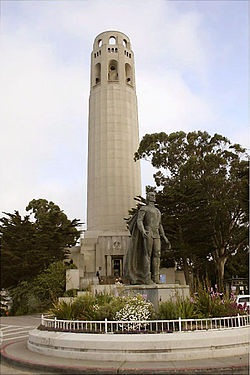
Credit where it’s due: My competitor and sometimes journalistic adversary Joe Eskenazi has a nice little piece on the weird money behind the campaign against Prop. B, a policy statement about the privatization of Coit Tower. He points out that such varied groups as the California Dental Association and the San Manuel Band of Mission Indians have coughed up money to protect the right of San Francisco officials to close Coit Tower to the public and rent it out for fancy corporate parties.

And how exactly did that happen?

Well, Eskenazi manages to tie Willie Brown into it. (He also calls this “Nimby against the Swells,” which isn’t quite fair — I don’t think the supporters of Prop. B are trying to keep anything out of their back yards. If anything, they want more noisy tourists and fewer quiet, subdued rich-people events. And I don’t think the “swells” are against it as much as the mayor, his Rec-Park director and big businesses that generally back the privatization of public resources.)

But there’s another interesting twist: I’m not sure the folks who gave to the Golden State Leadership Fund Political Action Committee, which is running a No on B independent expenditure, had any clue where their money was going.

Sure, the Chamber of Commerce and BOMA know what’s up, and it’s pretty clear why they like the idea of raising money for the parks by holding exclusive private events instead of by raising taxes. But the Indians? And the dentists? By what possible stretch do they care about a San Francisco ballot measure that has nothing to do with Native American rights or oral health?

Eskenazi may be right — maybe Brown called the Indians and asked, and they threw the money his way to help his buddy the mayor (while keeping the mayor’s fingers out of this particular political pie). But the Golden State Leadership PAC, through which all this money flowed, has been around for years and gives money to candidates all over the state. (It’s definately something of a slush fund for local races — files in the Secretary of State’s office show that in 2008, money from Pacific Gas and Electric Co. flowed in and out of the PAC as it ran a campaign against the San Francisco public-power measure, Prop. H. PAC money went to David Chiu, Phil Ting and Ed Lee for mayor.) It’s based in West Hollywood and the treasurer is a guy named William Molina.

I called the San Manuel Band of Mission Indians and the California Dental Association and asked them why there were helping fund a campaign against Prop. B in San Francisco. The press person at the dental group apparently had no idea what I was talking about and asked for more details about the contribution. I gave her the date and the PAC and I haven’t heard back.

The Indians didn’t seem to clear on Prop. B, either. Kenneth Shoji, a spokesperson for the group, told me by email:

The San Manuel Band of Mission Indians made a contribution of $25,000 to the Golden State Leadership Fund PAC with the expectation of helping to support candidate(s) for public office in the 2012 elections.  We do not control where or how the PAC might extend its support beyond that.

In other words: This Coit tower thing is news to us.

UPDATE: I got essentially the same message from the dentists. Alicia Malaby at the CDA writes:

 When an organization such as CalDPAC contributes to an independent expenditure committee, that committee may spend money on races and issues that CalDPAC supports, but may also spend money on other campaigns. CalDPAC does not control how those committees spend money, and in this case, CalDPAC has no interest in and no position on Proposition B.

UPDATE TWO: Ron Cottingham at PORAC just called me and said his group has no position on or interest in Prop. B. The money that went to the PAC was earmarked to support Rob Bonta for Assembly in the East Bay. Presumably the PAC folks keep track of such things.

Maybe not. Maybe Willie or someone else made a call. It happens all the time.  I mean, somebody clearly was raising money for this PAC, which right now isn’t doing a hell of a lot besides No on B in San Francisco. (Oh, I called Brown, too. He hasn’t called back. He never does. I still always try.)

Either way, it’s a classic San Francisco political story — and it reflects how muddy and corrupt local politics can still be, even in an era of electronic disclosure and ethics laws. Why, if the dentists and Indians don’t like Prop. B, didn’t they (or any of the others in the PAC) create a No on B committee, disclose who was behind it and let the voters know a little more about the real money trail? Why funnel all this cash through a little-known Southern California PAC?

And for that matter, why is there a sudden influx of late money in this race? Has the mayor and the Chamber types suddenly discovered that Prop. B might pass — and might set a precedent against future privatization efforts?

June 5 is Election Day. Vote early and often.


Save Adobe Books?

2

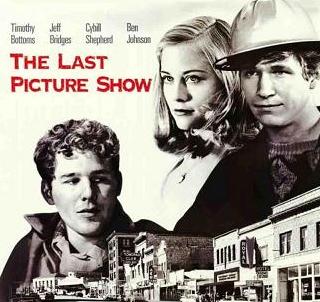
Adobe Books owner Andrew McKinley didn’t have to think long when I asked him the corniest question of our interview, occasioned by the announcement that his store was in serious danger of having to close. Question: if you had to choose one book to describe your situation, what would it be? “It reminds me of The Last Picture Show by Larry McMurty,” McKinley gamely responded. “It’s about a movie theater in a small Texas town that’s dying out.”

But! ask Mission District bibliophiles. Can Adobe Books be saved? The answer, according to McKinley, lies in whether you have a buddy with $60,000 to save the future of SF books — or better yet, $3 million.

McKinley has owned the store for the past 24 years, originally with a business partner. “I always dreamed of having a store filled with artists, poets, and writers,” he told me. “Meeting people who want to be artists has been the best part.” For decades, that’s what he did — he even opened a gallery space in the back that hosted near-monthly art openings. But times, they are a’changin’ — and rising real estate costs in the area have made it impossible for the bookstore to continue to exist in its prime location astride Valencia and 16th Streets. Granted, this isn’t the first time the alarm has been sounded, but McKinley forsees having to close his doors for good at some point over the next few months. 

Unless… and on this point he’s almost reluctant to give us hope. Unless some “angel” descends from heaven (or the hills south of Dolores Park perhaps) to pluck Adobe from its doom. With $60,000, McKinley reckons he could keep the shop open for three more years — that amount is approximately a year’s rent on the space. With $3 million, said “golden angel” could buy the building and ensure that the inner Mission continues to have a place to buy dog-eared paperbacks and browse well-curated banks of sweet, sweet literature. 

But. “I don’t want to be a charity,” says McKinley. “I feel that closure might be the best solution if no one can step into save it.” The bookshopkeep allows that he hasn’t exactly bent over backwards to adjust our times of Amazon.com and 140-character attention spans. He could have added a cafe to augment the business, he posits. Maybe started selling new and remaindered volumes. 

But. There it is, he didn’t, and now we’re faced with losing yet another Mission bookstore to the march of time. (Granted, it’s not all bad news for bookworms — Modern Times Bookstore Collective was able to relocate to a gorgeous new location on 24th Street and the Dog-Eared Books family recently had a new baby not too far away in the form of Phoenix Books.) 

Unless. McKinley says the notion of re-starting Adobe as a member-based collective has been thrown around by some of the shop’s super fans. But that could be just the well-wishing of the community members he’s held so dear over the years. 

Just remember. “The knowledge in books is not as important to get by in this modern world,” says McKinley. “People don’t put together large collections of books as much. It is funny, more books have been created in the last few decades and more people can read than ever before.” We read you, sir.

P.S., massive sale going on right now at Adobe Books. 

Adobe Books

3166 16th St., SF

(415) 864-3936

adobebooksbackroomgallery.blogspot.com

Fit as a fig

0

le.chicken.farmer@gmail.com

CHEAP EATS On my birthday I saw a lot of water. I took a bath. I drove over the longest continuous bridge over water in the world. It was 90 degrees on the North Shore. I drank a lot of water, used water to wash the fish sauce out of my skirt, and bought a new car.

The Honda Fit! It’s not only the best kind of car to have if you live in a city, it’s the best kind of car. Period. It’s such a good car, I have now bought one twice! And I’ve only ever bought two new cars in my life.

This time it’s a different kind of blue. Less subtle, less sexy, but intensely fun, and even more lickable — in a cotton-candy-y way — than my last Honda Fit.

I left our rental car behind and drove this very shade of blue back onto the Causeway, and back over Lake Pontchartrain. Nothing to look at. Nothing but water, and the road seems to just float on it for 25 miles. It’s like the Salt Flats: terrifyingly boring. And beautiful in its relentlessness, drive drive drive drive drive.

For my birthday, Hedgehog went to wd-50 without me. What the hell, she was in New York, spotting sessions or sessioning spots or some such, and she and her co-writer have to eat, too, don’t they? So while I was eating leftover bad North Shore Vietnamese for dinner, she was sending along pictures of plate after plate after plate of fancy high-falutin’ dishes. I never felt more like a chicken farmer than I did on my 49th birthday.

After dinner I made some popcorn and found Chelsea vs. Bayern Munich on TV. Mother fucking molecular tom-chef-ery, who needs it you got popcorn? Hot dogs …

Vietnamese leftovers.

Egg sandwich.

Oh, hey, this reminds me about Blue Fig, on Valencia Street. Well, technically it was my li’l friend Hoolibloo who reminded me. She and her even li’l’er sis are holding down our Mission digs while Hedgehog and me crash bang boom our way through the home stretch here in New Orleans.

Before I left this last time, Hooli and me dropped onto Blue Fig for lunch or some such. I don’t remember anything. I remember the coffee was good.

I remember we talked about Life, and Careers, how Hooli hoped to produce the theater one day, and I’m pretty sure I encouraged her in this. I’m pretty sure I said, Do what is in your heart, at all costs. Never mind rent.

She wasn’t asking for advice, but — for the record — people do. These days. Me being 49 and all. Maybe this is just the chicken shit talking, but I think I might even have an air of wisdom about me, when there isn’t hay in my hair.

But after the accident, all my memories got erased — except how to make frittatas, oddly enough, since I didn’t know I knew how to make them before the accident. Also worth noting: I didn’t hit my head. At all. So apparently my memories were being stored in my left arm.

Anyway, when wind got back to SF that we were hurting down here, and how, Hooli wrote and said, “Can I help?”

“You can write my review!” I said. “Remember that meal?”

“Blue Fig?” she said.

I said tell me.

“You got the egg sandwich,” she said.

She wrote: I like Blue Fig because the food is very fresh and flavorful. I’ve always been greeted by a smile, she wrote.

She wrote: they cook the food right there in the tiny kitchen behind the counter. It’s all open. It’s fun to watch them. They make the eggs for the egg sandwich on the little burner right behind the cash register.

The first time we went there, she wrote, they were sugaring the pecans for one of the salads, which made the whole restaurant smell so —

Thank you, I wrote. That’ll be enough. I have me a new favorite restaurant. *

BLUE FIG

Mon-Fri 7am-7pm; Sat-Sun 7:30am-7pm

990 Valencia St., SF

(415) 875-9622

Cash only

No alcohol


Housing and highrise offices

0

EDITORIAL It's something of a civic shame that the only way San Francisco can build a new transit terminal is to sell a private developer the rights to stick a 1,070-foot highrise office tower on public land. In fact, it's a sad statement on the city, state, and local government: Once upon a time — and it wasn't the long ago — tax dollars collected through a progressive system paid for major infrastructure projects.

But there's no easy way to raise $4 billion in tax money for the Transbay Terminal — even though it ought to be seen as part of the high-speed rail project, and the federal and state government ought to be picking up the tab. So San Francisco ambles forward, selling land and lease rights to the highest bidder.

In this case, Gerald Hines of Houston won the right to build the largest highrise west of the Mississippi on property owned by the Transbay Joint Powers Authority. There are all sorts of drawbacks to the deal — among other things, it will cast shadows on a number of city parks, all the way to Portsmouth Square in Chinatown. Like any massive office complex, it will put pressure on Muni, on city streets, on police and fire and other city services — and no commercial office building ever pays its fair share of that burden. And since in this case the major recipient of the money from the project will be the TJPA, the city's General Fund will suffer.

Oh, and the building is ugly.

Meanwhile, city planners want to increase height limits all around the Transbay Terminal and allow hundreds of units of new (luxury) housing and more commercial office space. It's going to be a new highrise neighborhood, complete with a rooftop park and a few little patches of ground-level open space, which won't get a whole lot of sun, particularly in the morning and evening.

And at this point, there's been very little focus on what ought to be the defining issue of this and the other major developments on the city's planning horizon, and that's affordable housing.

This city has a terrible jobs-housing mix. The vast majority of the people who currently work in San Francisco can't afford to buy a house here, and many of them can only rent if they pay for more than the federal standard of one-third of their income for housing. So people who work in hotels and restaurants and city, state and federal offices and hospitals and even financial district companies wind up living far from the city and commuting. Nobody thinks that's a sound environmental policy.

And this kind of full-scale rezoning and development will only make it worse. According to the City Planning Department, the Hines project will pay about $27 million into the city's affordable housing fund, enough to pay for maybe 60 or 70 housing units. That won't even begin to cover the need created by the thousands of employees who will fill that tower. The market-rate housing on the site will almost certainly be beyond the reach of most San Franciscans, and probably many of the office workers who fill the Hines building. And only 35 percent of the new housing — at maximum — will be affordable.

San Francisco has to get a grip. The city can't keep allowing more high-end housing and highrise office space without a plan to meet its housing needs. We're glad to see the mayor talking about a $50 million a year fund, but that will barely meet existing needs; it can't possible keep pace with new development.

So before the supervisors rush ahead to approve this ambitious new downtown district, they need to ask Hines, and the TJPA, and any other developer who comes along, how it intends to meet the demonstrated need for affordable housing that these projects will create — and demand a much higher level of payment that what's currently on the city's books.

City weighs artificial turf fields in Golden Gate Park

81

[[UPDATE 5/25: The project was approved]] The San Francisco Planning and Recreation & Park commissions will hold a special joint hearing tomorrow (Thurs/24) afternoon to consider approving the Beach Chalet Athletic Fields Renovation, a controversial city proposal to replace the natural grass fields on the west end of Golden Gate Park with artificial turf.

The $48 million project – years in development by Recreation & Park officials and championed by department head Phil Ginsburg, who has aggressively tried to monetize the city’s parks – has inflamed the passions of both supporters and opponents, who are expected to jam into the 3 pm hearing in City Hall’s Room 400 to deliver hours’ of testimony. [Correction: Patrick Hannan with City Fields Foundation says this is a $14 million project, part of its overall $48 million artificial turf program for the city.]

Supporters say there aren’t enough fields in the city for young soccer players and the existing fields there are in bad shape and without adequate lighting. In addition to the artificial turf, which the City Fields Foundation (created and funded by the Fisher family, founders of The Gap) has been helping to install in parks throughout the city, the project would include 150,000-watt lighting 60 feet in the air to illuminate the fields until 10 pm, year-round.

Opponents of the project, which include primarily environmentalists and park neighbors, cite a litany of problems with the project, saying it violates city plans that call for the park to remain a natural area open to all park users. They say it will disturb wildlife, increase traffic (much of it from out-of-towners who rent the fields), and create potentially toxic runoff in a sensitive habitat.

“Golden Gate Park is a unique, magnificent, and world-famous San Francisco treasure. It was conceived to serve as an open space preserve in the midst of San Francisco – a cultivated pastoral and sylvan landscape. It was designed to afford opportunities for all to experience beauty and tranquility. Plastic fields that are brightly lighted until 10 pm every night of the year are entirely out of place in this setting. The western end of Golden Gate Park should remain a part of the cohesive naturalistic environment envisioned by the Park’s creators,” Katherine Howard of SF Ocean Edge, which organized in opposition to the project, wrote in a May 22 letter to the two commissions.

While it will be a joint hearing, the Planning Commission is charged with approving the project’s environmental impact report and the RPC will consider approval of the project itself. But judging from the long list of angry comments to our last story on the subject by people on both sides of the debate, this divisive project will likely be the subject of appeals and lawsuits for months or years to come.

Localized Appreesh: Wild Hunt

1

Localized Appreesh is our weekly thank-you column to the musicians that make the Bay. To be considered, contact emilysavage@sfbg.com.

The essence of Oakland’s Wild Hunt could summed up thusly: doomy, progressive metal that perches in the cerebral cortex during a waking nightmare. A ghoulish nightmare from which you don’t necessary wish to wake. It’s black magic behind fluttering eyelids.

Along with more traditional metal riffs, there are drawn-out, heavy breakdowns that lend easily to slow, deliberate head banging, blended with modern hypnotic ambiance that gives it that dream-like quality. It doesn’t hurt that drummer-vocalist Harland Burkhart sounds like he’s growling underwater. I’ve seen Enslaved noted as a point of reference here, and agree with that assessment.

So now you need to hear it, right? Well, you’ve chased it down and speared it. The quartet’s debut album, Before the Plane of Angles, which was mixed by Laudanum’s Salvador Raya and mastered by Justin Weis (Hammers of Misfortune, Ludicra), is out now on Kemado. And the album release show is this weekend at El Rio.

http://www.youtube.com/watch?v=ihzeCQWlMHc

I caught up with the Wild Hunt in that unsettling space between wake and sleep. Here’s what Burkhart had to say:

Band name origin: “Wild Hunt” refers to the ancient European myth of a phantasmal cavalcade of dead folks seen madly flying through the sky, usually around Yuletide. There are a variety of different versions of the legend; some believe the Norse god Odin leads the pack, others believe King Arthur, others believe Ronald McDonald.

Band motto: You got fourteen cent?

Description of sound in 10 words or less: Heavy, melodic, dreamlike. At times jarring, at times tranquil.

Instrumentation: Two guitarists, one bassist, one drummer/vocalist.

Most recent release: Before the Plane of Angles (Kemado Records, 2012)

Best part about life as a Bay Area band:
Being situated in such a hotbed of creative activity.

Worst part about life as a Bay Area band: Paying rent.

First album purchased: For me, possibly Oingo Boingo, Only a Lad.

Most recent album purchased/downloaded: Allseits, Hel.

Favorite local eatery and dish: Southie has become my lunchtime destination. That dang fried rock shrimp sandwich has changed my life, tell you what.

Wild Hunt
With Giant Squid, Black Queen
Sat/19, 10pm, $8
El Rio
3158 Mission, SF
(415) 282-3325
www.elriosf.com

Sonic attack on the poor

3

news@sfbg.com

It was 11pm on Thursday, May 3, and the ballet was just letting out. Affluently dressed dance enthusiasts streamed arm in arm down Grove street towards the Civic Center BART station chatting about the evening performance. That night’s show of Don Quixote at War Memorial and Performing Arts Center was likely excellent judging by the theatergoers’ exuberance.

As they passed by the Bill Graham Civic Auditorium, a half-dozen homeless people seated along the route begged the procession for change. Across the street and a block down Grove, a few homeless individuals had bedded down for the night in front of the Main Library.

It is these encounters, normal to urban life, that are at the center of a controversial strategy by Another Planet Entertainment, which leases the auditorium from the city, to drive the homeless away. They hope that by blasting a late night sampling of industrial noise through the venue’s sound system between the hours of 11pm and 7am, making sleep nearly impossible, that the homeless will be discouraged from congregating there.

A women selling the Street Sheet newspaper on the corner sums up the social tension that invoked the strategy. “They’re doing it to keep the homeless from sleeping there. All these people don’t want to see the homeless when they come through here,” she said, gesturing to the now thin stream from the ballet.

She had heard the noise over the past few nights and described it as deafening. “The first time I heard it I thought the building was under construction, then I thought a motorcycle gang was coming through. It is so bad it makes the windows of the building shake.”

Another Planet had no comment on the racket and would not say if the strategy would continue. But in an interview with the San Francisco Chronicle, company founder Gregg Perloff said the venue has had “an enormous amount of complaints” from their patrons about the homeless.

Late at night, police are powerless to respond to such complaints. The city’s carefully crafted sit-lie ordinance, which bars people from assuming either of those postures on city sidewalks during the day, is lifted between the hours of 11pm and 7am to satisfy constitutional concerns that have overturned similar ordinances in other cities.

“This it the first time I’ve heard of a strategy like this used against the homeless,” Bob Offer-Westort, civil rights organizer with the Coalition on Homelessness, said of the noise. “It is really problematic for a business to say that people on public property not breaking the law are a public nuance. It is a intrusion of a private company on public space.”

Standing in front of the building late on a foggy night, it’s easy to see why the homeless would gravitate to here. The building’s huge awning, covering much of the broad sidewalk, must be the easiest place to stay dry outdoors for many blocks. And since the demolition of the city’s old central bus terminal last year, it is perhaps the largest dry public space in the city’s core.

But is this sonic attack even legal? That’s a question that the Mayor’s Office and the San Francisco Police Department, neither of which answered our repeated inquiries, don’t seem to want to address.

San Francisco’s noise ordinance is a weighty document. Most cities suffice with a paragraph or two to regulate noise, while San Francisco’s ordinance runs nine pages. Noise, or rather the relative lack of it, seems of great importance to the city. There is even a city committee on noise.

The reason for the seriousness the city gives the issue of controlling excess noise is expressed in the very first paragraph of the noise ordinance: “Persistent exposure to elevated levels of community noise is responsible for public health problems including, but not limited to: compromised speech, persistent annoyance, sleep disturbance, physiological and psychological stress, heart disease, high blood pressure, colitis, ulcers, depression, and feelings of helplessness.”

Many of the cities homeless already suffer acutely from conditions on this list. Asked how an already vulnerable population could be affected by random industrial noise known to (and in this case intended to) cause agitation, Offer-Westort said, “It’s crazy to try to create these conditions, they are quite literally trying to create a civil disturbance, and not on their own property, but in a public space.”

With the adverse effects of noise pollution well-outlined, the ordinance goes on to state, “In order to protect public health, it is hereby declared to be the policy of San Francisco to prohibit unwanted, excessive, and avoidable noise.”

The ordinance pays particularly attention to licensed entertainment venues like the Bill Graham auditorium: “No noise or music associated with a licensed Place of Entertainment shall exceed the low frequency ambient noise level defined in Section 2901(f) by more than 8 dBC.”

As a matter of comparison the difference between a whisper and a quiet conversation is roughly an eight decibel increase, a relatively narrow margin. It seems reasonable that if you’re standing outside a venue, and the music coming from inside sounds louder than the person talking next to you, the city’s noise ordinance has been exceeded.

So motorcycles, saws, and other industrial sounds that were described at the auditorium late at night would range around 100 decibels without being amplified. Amplify it enough to shake the window in the building, one can assume it’s louder than a power tool, louder by far than the noise ordinance permits.

Everyone who has ever held a loud late night event in the city know the consequences of breaking the noise ordinance. A knock on the door by the SFPD that comes with a ticket and the end of your gathering. Do it again in a year and the fines doubles.

The strategy at the auditorium seems to be having some effect, but where the homeless will be shuffled off to is anybody’s guess. The reality of the homelessness crisis is there is no place for the homeless to simply move off too. With their numbers in the thousands, only bold political action on behalf of the city’s leadership can solve the problem.

“The root of the problem is that people can’t afford rent. Everyone who rents in San Francisco knows that it is way too expensive to live in this city,” says Offer-Westort. “We stopped creating public housing. Housing has become a commodity, an investment rather then a home, and that has driven up prices.”

Passing back through the area later at night, the building was quiet for the moment. A tow truck was loading a car out front with a beeping alarm, a motorcycle roars by, a boombox is playing across Civic Center Plaza, a man is yelling around the corner only to be drown out by a broken wheeled shopping cart clanking by. If this is the normal late night quiet of the streets, it’s a wonder the homeless get a moments sleep at all. But the building itself remains quiet right now.

A lone homeless man has bedded down in front but has not yet fallen asleep. Young and dreadlocked, he tells me that he has been in town only two days and is unaware of the controversial blasts of noise.

“God I hope they don’t do that,” he said from his sleeping bag. “It’s supposed to rain tonight. Why would they do that? As long as you are up before sunrise and move on, who are you bothering?”

And here in front of the auditorium in the middle of the night, with the concert patrons at home getting a comfortable night’s sleep, the question seemed valid. “It’s mean spirited. I think that we as society agree noise should be maintained at a reasonable level to not bother your neighbors,” said Offer-Westort. “The fact that their neighbors are homeless doesn’t mean they are not part of society.”

Film Listings May 16-22, 2012

0

Film listings are edited by Cheryl Eddy. Reviewers are Kimberly Chun, Max Goldberg, Dennis Harvey, and Lynn Rapoport. For rep house showtimes, see Rep Clock at www.sfbg.com. Complete film listings also posted at www.sfbg.com.

OPENING

Battleship During idle moments before the action revs up, the aliens start menacing, and the deadly razor balls-cum-air mines start rampaging, wrap your noggin around these random brainwaves: can Taylor Kitsch be any better named? Is it possible for Alexander Skarsgård’s glassy eyes to get any deader? Where are all the Hawaiians, Asians, and people of color in this white-bread vision of Hawaii? All matters to puzzle over in this toy franchise hopeful directed by ex-Chicago Hope regular Peter Berg. The 2007 Transformers is the best this gung-ho hybrid of up-with-the-military “Army of One” commercial and alien invasion flick — with plenty of blow-’em-up-real-good explosions and a dab of J-monster movies, but the writing never quite rises to the occasion. Here, an international group of navy folk and their ships are convening in Hawaii for playful wargames, though the exercises turn somewhat more serious when alien vessels splash down in the middle of the fun —and some mild, no-investment family drama: Alex (Kitsch) is the screw-up younger brother of stony-faced naval man Stone (Skarsgård) and courting the daughter (Brooklyn Decker) of the fleet commander (Liam Neesom), who seems to hate his guts. The ultimate battle with space invaders, however, promises to turn that all around, as Alex is forced to sailor up and lead crew mates like Rihanna and work with former opponents like Captain Nagata (Tadanobu Asano). Here, at least, in the shadow of Pearl Harbor, U.S. and Japanese naval dudes can heal the wounds of World War II and bond in battle against the last unimpeachable interstellar villains who couldn’t give a rat’s ass if you say “I sunk your battleship.” But Berg’s muddled direction doesn’t help when it comes to piecing out the chronology and balancing assorted perspectives in this latest effort to equate militarism with the games big and little kids play. (2:11) (Chun)

Bernie See “Small-Town Confidential.” (1:39) Embarcadero, Shattuck, Smith Rafael.

The Dictator As expected, The Dictator is, yet again, Sacha Baron Cohen doing his bumbling-foreigner shtick. Said character (here, a ruthless, spoiled North African dictator) travels to America and learns a heaping teaspoon of valuable lessons, which are then flung upon the audience — an audience which, by film’s end, has spent 80 minutes squealing at a no-holds-barred mix of disgusting gags, tasteless jokes, and schadenfreude. If you can’t forgive Cohen for carbon-copying his Borat (2006) formula, at least you can muster admiration for his ability to be an equal-opportunity offender (dinged: Arabs, Jews, African Americans, white Americans, women of all ethnicities, and green activists) — and for that last-act zinger of a speech. If The Dictator doesn’t quite reach Borat‘s hilarious heights, it’s still proudly repulsive, smart in spite of itself, and guaranteed to get a rise out of anyone who watches it. (1:23) Balboa, Presidio. (Eddy)

Elles Graphic sex scenes distinguish this otherwise fairly unremarkable tale of Anne (Juliette Binoche), a magazine writer whose blah life (sure, she has a luxurious apartment, but it’s populated by a distant husband, a sullen teenager, and a younger son who’d rather interface with technology than humans) becomes even more unbearable when she begins a new assignment: an article on college students who moonlight as call girls. The always-reliable Binoche brings depth to her role as a bored woman who finds herself unexpectedly titillated by her close brush with dirty thrills, but her eventual rebellion is anti-climactic after all that naughty build-up. Elles does plenty to earn its NC-17 rating, but filmmaker Malgoska Szumowska could’ve titled it Ennui instead. (1:36) Bridge, Shattuck. (Eddy)

Indie Game: The Movie Much like the film business, the video-game biz is mostly controlled by a few huge companies with thousands of employees, hell-bent on ensnaring as many of the billions of dollars spent on games annually as possible. And then, as James Swirsky and Lisanne Pajot’s documentary explores,

there are the little guys, who are “not trying to be professional” or produce glossy content for the masses. Instead, these individuals (or pairs) take advantage of the miracle of digital distribution to follow their own visions and create their own games. The best-case scenarios — illustrated by San Francisco indie developer Jonathan Blow and his hugely successful Braid — can reap enormous creative and financial rewards, but getting there — as the struggles facing the creators of Super Meat Boy and Fez plainly attest can be a mentally and physically draining process, filled with frustration and self-doubt, exacerbated by the taunts of haters online. A thoughtful, artfully-shot peek at one tiny corner of a behemoth industry, Indie Game also offers a surprisingly tense, raw look at some very bright minds struggling to triumph on their own terms. (1:36) Roxie. (Eddy)

Mansome This study of contemporary male grooming — from ironic mustaches to competitive “beardbuilding” to the fine art of the hairpiece — is yet another lighthearted entry from prolific doc-factory Morgan Spurlock (the subject matter being particularly appropriate, given his own trademark ‘stache). With interstitials by co-producers Will Arnett and Jason Bateman — getting pedicures and facials while exchanging barbs, like the TV brothers they are — and input from an array of famous faces (Zach Galifianakis, Paul Rudd, the Old Spice Guy, Judd Apatow, ZZ Top), Mansome is actually most interesting when it focuses on less boldfaced names — like the deadly-serious “beardsman” whose flowing red locks have won him international titles, and the old-school toupee expert who matter-of-factly erases baldness for grateful clients. One quibble: though John Waters appears to discuss his own trademark facial hair, and there’s a Freddy Mercury clip, Mansome remains stubbornly focused on straight dudes — though it does dig up the only man in the galaxy still using the term “metrosexual.” (1:24) Lumiere, Shattuck. (Eddy)

Payback Jumping off Margaret Atwood’s Payback: Debt and the Shadow Side of Wealth, her 2008 meditation on borrowing and lending and the way those acts reverberate through culture, documentarian Jennifer Baichwal finds a thought-provoking, graceful, seemingly free-form way into the writer’s ideas. The film dips into the dynamics between a handful of unlikely debtors and creditors scattered around the globe: two families in Northern Albania tied by a blood feud over disputed land and dishonor; organizing migrant workers and their employers in Florida; and the BP oil spill and an unsuspecting environment. Baichwal, like Atwood, uncovers few easy answers — especially when it comes to handling disasters on the scale of the BP spill — all the while treating her material with elegantly considered imagery and handling her subjects with a cool intelligence. That approach might leave some yearning for an uptick in emotional connection, or simply some connect-the-dots storytelling and, dare we say, drama. Meanwhile fans of the director’s Manufactured Landscapes (2006) will see Payback as its writerly relation, a tone poem about the crimes we’ve manufactured and muddled. (1:26) Lumiere, Shattuck. (Chun)

What to Expect When You’re Expecting The mommy guidebook hits the big screen, with an all-star cast including Jennifer Lopez and Cameron Diaz. (1:50) Presidio, Shattuck.

Where Do We Go Now? With very real, deadly sectarian conflict on their doorstep, a group of Lebanese village women are making it up as they go along in this absurdist, ultimately inspiring dramedy with a dash of musical. Once sheltered by its isolation and the cheek-to-jowl intimacy of its denizens, the uneasy peace between Muslims and Christians in this small town threatens to shatter when the outside world begins to filter in, first through town-square TV broadcasts then tit-for-tat jabs that appear ready to escalate into violence. So the village’s women conspire to preserve harmony any way they can, even if that means importing a motley cadre of Ukrainian “exotic” dancers. What results is a post debauchery climax that almost one-ups 2009’s The Hangover — and a film that injects ground-level merriment and humanity into the headlines, thanks to director, co-writer, and star Nadine Labaki (2007’s Caramel), who has a gimlet eye and a generous spirit. (1:40) Embarcadero. (Chun)

ONGOING

The Artist With the charisma-oozing agility of Douglas Fairbanks swashbuckling his way past opponents and the supreme confidence of Rudolph Valentino leaning, mid-swoon, into a maiden, French director-writer Michel Hazanavicius hits a sweet spot, or beauty mark of sorts, with his radiant new film The Artist. In a feat worthy of Fairbanks or Errol Flynn, Hazanavicius juggles a marvelously layered love story between a man and a woman, tensions between the silents and the talkies, and a movie buff’s appreciation of the power of film — embodied in particular by early Hollywood’s union of European artistry and American commerce. Dashing silent film star George Valentin (Jean Dujardin, who channels Fairbanks, Flynn, and William Powell — and won this year’s Cannes best actor prize) is at the height of his career, adorable Jack Russell by his side, until the talkies threaten to relegate him to yesterday’s news. The talent nurtured in the thick of the studio system yearns for real power, telling the newspapers, “I’m not a puppet anymore — I’m an artist,” and finances and directs his own melodrama, while his youthful protégé Peppy Miller (Bérénice Béjo) becomes a yakky flapper age’s new It Girl. Both a crowd-pleasing entertainment and a loving précis on early film history, The Artist never checks its brains at the door, remaining self-aware of its own conceit and its forebears, yet unashamed to touch the audience, without an ounce of cynicism. (1:40) Metreon. (Chun)

The Best Exotic Marigold Hotel (1:42) Albany, SF Center, Sundance Kabuki.

Bully Anyone who’s ever been a kid on the wrong side of a bully — or was sensitive and observant enough not to avert his or her eyes — will be puzzling over the MPAA’s R rating of this doc, for profanity. It’s absurd when the gory violence on network and basic cable TV stops just short of cutting characters’ faces off, as one blurred-out bus bully threatens to do to the sweet, hapless Alex, dubbed “Fish Face” by the kids who ostracize him and make his life hell on the bus. It’s a jungle out there, as we all know — but it’s that real, visceral footage of the verbal (and physical) abuse bullied children deal with daily that brings it all home. Filmmaker Lee Hirsch goes above and beyond in trying to capture all dimensions of his subject: the terrorized bullied, the ineffectual school administrators, the desperate parents. There’s Kelby, the gay girl who was forced off her beloved basketball team after she came out, and Ja’Maya, who took drastic measures to fend off her tormenters — as well as the specters of those who turned to suicide as a way out. Hirsch is clearly more of an activist than a fly on the wall: he steps in at one point to help and obviously makes an uplifting effort to focus on what we can do to battle bullying. Nevertheless, at the risk of coming off like the Iowa assistant principal who’s catching criticism for telling one victim that he was just as bad as the bully that he refused to shake hands with, one feels compelled to note one prominent component that’s missing here: the bullies themselves, their stories, and the reasons why they’re so cruel — admittedly a daunting, possibly libelous task. (1:35) Smith Rafael. (Chun)

The Cabin in the Woods If the name “Joss Whedon” doesn’t provide all the reason you need to bum-rush The Cabin in the Woods (Whedon produced and co-wrote, with director and frequent collaborator Drew Goddard), well, there’s not much more that can be revealed without ruining the entire movie. In a very, very small nutshell, it’s about a group of college kids (including Chris “Thor” Hemsworth) whose weekend jaunt to a rural cabin goes horribly awry, as such weekend jaunts tend to do in horror movies (the Texas Chainsaw and Evil Dead movies are heavily referenced). But this is no ordinary nightmare — its peculiarities are cleverly, carefully revealed, and the movie’s inside-out takedown of scary movies produces some very unexpected (and delightfully blood-gushing) twists and turns. Plus: the always-awesome Richard Jenkins, and in-jokes galore for genre fans. (1:35) Metreon, 1000 Van Ness, Shattuck. (Eddy)

Chimpanzee (2:00) Metreon, 1000 Van Ness.

Dark Shadows Conceptually, there’s nothing wrong with attempting to turn a now semi-obscure supernaturally themed soap opera with a five-year run in the late 1960s and early ’70s into a feature film. Particularly if the film brings together the sweetly creepy triumvirate of Tim Burton, Johnny Depp, and Helena Bonham Carter and emerges during an ongoing moment for vampires, werewolves, and other things that go hump in the night. Depp plays long-enduring vampire Barnabas Collins, the undead scion of a once-powerful 18th-century New England family that by the 1970s — the groovy decade in which the bulk of the story is set — has suffered a shabby deterioration. Barnabas forms a pact with present-day Collins matriarch Elizabeth (Michelle Pfeiffer) to raise the household — currently comprising her disaffected daughter, Carolyn (Chloë Grace Moretz), her derelict brother, Roger (Jonny Lee Miller), his mournful young son, David (Gulliver McGrath), David’s live-in lush of a psychiatrist, Dr. Hoffman (Carter), and the family’s overtaxed manservant, Willie (Jackie Earle Haley) — to its former stature, while taking down a lunatic, love-struck, and rather vindictive witch named Angelique (Eva Green). The latter, a victim of unrequited love, is the cause of all Barnabas’s woes and, by extension, the entire clan’s, but Angelique can only be blamed for so much. Beyond her hocus-pocus jurisdiction is the film’s manic pileup of plot twists, tonal shifts, and campy scenery-chewing by Depp, a startling onslaught that no lava lamp joke, no pallid reaction shot, no room-demolishing act of paranormal carnality set to Barry White, and no cameo by Alice Cooper can temper. (2:00) California, Marina, Metreon, 1000 Van Ness, Sundance Kabuki. (Rapoport)

Darling Companion When the carelessness of self-absorbed surgeon Joseph (Kevin Kline) results in the stray dog adopted by Beth (Diane Keaton) going missing during a forest walk, that event somehow brings all the fissures in their long marriage to a crisis point. Big Chill (1983) director Lawrence Kasdan’s first feature in a decade hews back to the more intimate, character-based focus of his best films. But this dramedy is too often shrilly pitched and overly glossy (it seems to take place in a Utah vacation-themed L.L. Bean catalog), with numerous talented actors — including Richard Jenkins, Dianne Wiest, Mark Duplass, Elisabeth Moss, and Sam Shepard — playing superficially etched characters that merely add to the clutter. Most cringe-inducing among them is Ayelet Zurer’s Carmen, a woman of Roma extraction who apparently has a crystal ball in her psychic head and actually speaks lines like “My people have a saying….” (1:43) Opera Plaza, Shattuck. (Harvey)

First Position Bess Kargman’s documentary follows a handful of exceptional young ballet dancers, ranging in age from 10 to 17, over the course of a year as they prepare for the Youth America Grand Prix, the world’s largest ballet scholarship competition. Those who make it from the semifinals (in which some 5,000 dancers aged 9 to 19 perform in 15 cities around the world) to the finals (which bring some 300 contestants to New York City) compete for scholarships to prestigious ballet schools, dance-company contracts, and general notice by both the judges and the company directors in the audience. The film’s subjects come from varied backgrounds — 16-year-old Joan Sebastian lives and studies in NYC, far from his family in Colombia; 14-year-old Michaela was born in civil war-torn Sierra Leone and adopted from an orphanage by an American couple in Philadelphia; 11-year-old Aran, an American, lives in Italy with his mother while his father serves in Kuwait. The common threads in their stories are the daily sacrifices made by them as well as their families, whose energies and other resources are largely poured into these children’s single-minded pursuit. We get a vague sense of the difficult world they are driving themselves, in nearly every waking hour, to enter. But the film largely keeps its focus on the challenges of preparing for the competition, offering us many magnificent shots of the dancers pushing their bodies to mesmerizing physical extremes both on- and offstage. (1:34) Embarcadero, Piedmont, Shattuck, Smith Rafael. (Rapoport)

The Five-Year Engagement In 2008’s Forgetting Sarah Marshall, viewers were treated to the startling, tragicomic sight of Jason Segel’s naked front side as his character got brutally dumped by the titular perky, put-together heartbreaker. In The Five-Year Engagement, which he reunited with director Nicholas Stoller to co-write, Segel once again sacrifices dignity and the right to privacy, this time in exchange for fake orgasms (his own), ghastly hand-knit sweaters, egregious facial-hair arrangements, and various other exhaustively humiliating psychological lows — all part of an earnest, undying quest to make people giggle uncomfortably. Segel plays Tom, a talented chef with a promising career ahead of him in San Francisco’s culinary scene (naturally, food carts get a cameo in the film). On the one-year anniversary of meeting his girlfriend, Violet (Emily Blunt), a psychology postgrad, he asks her to marry him in a meticulously planned, gloriously botched proposal scene coengineered by Tom’s oafish friend Alex (Chris Pratt), little realizing that this romantic gesture will soon lead to successive frozen winters in the Midwest (Violet gets offered a job at the University of Michigan), loss of professional stature, cabin fever, mead making, bow-hunting accidents, the titular nuptial postponement, and other, more gruesome events. The humor at times descends to some banally low depths as Segel and Stoller explore the terrain of the awkward, the poorly socialized, and the playfully grotesque. But Segel and Blunt present a believable, likable relationship between two warm, funny, flawed people, and, however disgusted, no one should walk out before a scene in which Violet and her sister (Alison Brie) channel Elmo and Cookie Monster to elaborate on the themes of romantic idealism and marital discontent. (2:04) 1000 Van Ness, Presidio, SF Center, Vogue. (Rapoport)

Footnote (1:45) Opera Plaza, Shattuck.

Girl in Progress (1:30) SF Center.

God Bless America Middle-aged office drone Frank (Joel Murray) is not having a good day-week-month-year-life. His ex-wife is about to happily remarry; his only child is a world-class brat who finds father-daughter time “boring;” his neighbors are a young couple who only get more loudly obnoxious when politely asked to keep the noise down. When that and insistent migraines keep Frank awake night after night, the parade of pundit and reality stupidities on TV only turn his insomnia into wide awake fury. Then he’s fired from his job for unjust reasons — on the same day he gets a diagnosis of brain cancer. Mad as hell, not-gonna-take-it-anymore, he impulsively decides to make a “statement” by assassinating a viral-video poster child for “entitlement.” This attracts admiring attention from extremely pushy, snarky teen Roxy (Tara Lynne Barr), who appoints herself Bonnie to his reluctant Clyde. They drive around the country bestowing “big dirt naps” on other exemplars of what’s wrong with America today, including religious hate mongers, rude moviegoers, and the purveyors of American Idol-type idiotainment. Comedian Bobcat Goldthwait’s latest feature as writer-director has its head in the right place, and so many good ideas, that it’s a pity this gonzo satire-rant runs out of steam so quickly. Aiming splattering paintball gun at the broadest possible targets, it covers them with disdainful goo but not as much wit as one would like. Plus, Barr’s hyper precocious smart mouth is yet another annoying Juno (2007) knockoff — never mind that she counts Diablo Cody among her (many) pet peeves. If God Bless winds up closer to Uwe Boll’s Postal (2007) than, say, Network (1976) in scattershot impact, it nonetheless almost makes it on sheer outré audacity and will alone. A movie that hates everything you hate should not be sneezed at; if only it hated them with more parodic snap, thematic depth and narrative structure. (1:44) Lumiere, Shattuck. (Harvey)

Headhunters Despite being the most sought-after corporate headhunter in Oslo, Roger (Aksel Hennie) still doesn’t make enough money to placate his gorgeous wife; his raging Napoleon complex certainly doesn’t help matters. Crime is, as always, the only solution, so Roger’s been supplementing his income by stealthily relieving his rich, status-conscious clients of their most expensive artworks (with help from his slightly unhinged partner, who works for a home-security company). When Roger meets the dashing Clas Greve (Nikolaj Coster-Waldau of Game of Thrones) — a Danish exec with a sinister, mysterious military past, now looking to take over a top job in Norway — he’s more interested in a near-priceless painting rumored to be stashed in Greve’s apartment. The heist is on, but faster than you can say “MacGuffin,” all hell breaks loose (in startlingly gory fashion), and the very charming Roger is using his considerable wits to stay alive. Based on a best-selling “Scandi-noir” novel, Headhunters is just as clever as it is suspenseful. See this version before Hollywood swoops in for the inevitable (rumored) remake. (1:40) Clay, Piedmont, Shattuck. (Eddy)

Here (2:00) SF Film Society Cinema.

The Hunger Games Katniss Everdeen (Jennifer Lawrence) is a teenager living in a totalitarian state whose 12 impoverished districts, as retribution for an earlier uprising, must pay tribute to the so-called Capitol every year, sacrificing one boy and one girl each to the Hunger Games. A battle royal set in a perilous arena and broadcast live to the Capitol as gripping diversion and to the districts as sadistic propaganda, the Hunger Games are, depending on your viewpoint, a “pageant of honor, courage, and sacrifice” or a brutal, pointless bloodbath involving children as young as 12. When her little sister’s name comes up in the annual lottery, Katniss volunteers to take her place and is joined by a boy named Peeta Mellark (Josh Hutcherson), with whom she shares an old, unspoken bond. Tasked with translating to the screen the first installment of Suzanne Collins’s rabidly admired trilogy, writer-director Gary Ross (2003’s Seabiscuit, 1998’s Pleasantville) telescopes the book’s drawn-out, dread-filled tale into a manageable two-plus-hour entertainment, making great (and horrifying) use of the original work’s action, but losing a good deal of the narrative detail and emotional force. Elizabeth Banks is comic and unrecognizable as Effie Trinket, the two tributes’ chaperone; Lenny Kravitz gives a blank, flattened reading as their stylist, Cinna; and Donald Sutherland is sufficiently creepy and bloodless as the country’s leader, President Snow. More exceptionally cast are Woody Harrelson as Katniss and Peeta’s surly, alcoholic mentor, Haymitch Abernathy, and Stanley Tucci as games emcee Caesar Flickerman, flashing a bank of gleaming teeth at each contestant as he probes their dire circumstances with the oily superficiality of a talk show host. (2:22) 1000 Van Ness, SF Center, Sundance Kabuki. (Rapoport)

Jiro Dreams of Sushi Celebrity-chef culture has surely reached some kind of zeitgeist, what with the omnipresence of Top Chef and other cooking-themed shows, and the headlines-making power of people like Paula Deen (diabetes) and Mario Batali (sued for ripping off his wait staff). Unconcerned with the trappings of fame — you’ll never see him driving a Guy Fieri-style garish sports car — is Jiro Ono, 85-year-old proprietor of Sukiyabashi Jiro, a tiny, world-renowned sushi restaurant tucked into Tokyo’s Ginza station. Jiro, a highly-disciplined perfectionist who believes in simple, yet flavorful food, has devoted his entire life to the pursuit of “deliciousness” — to the point of sushi invading his dreams, as the title of David Gelb’s reverential documentary suggests. But Jiro Dreams of Sushi goes deeper than food-prep porn (though, indeed, there’s plenty of that); it also examines the existential conflicts faced by Jiro’s two middle-aged sons. Both were strongly encouraged to enter the family business — and in the intervening years, have had to accept the soul-crushing fact that no matter how good their sushi is, it’ll never be seen as exceeding the creations of their legendary father. (1:21) Embarcadero, Shattuck. (Eddy)

Last Call at the Oasis If you like drinking water, or eating food, or using mass-produced physical objects, and you also enjoy not being poisoned by virulent chemicals such as hexavalent chromium and atrazine, you probably want to see — but most likely won’t much enjoy — Jessica Yu’s latest documentary, about the impending global water crisis. Or rather, the crisis, the film makes clear, that has already arrived in many parts of the world and — in the sense that it’s about a shortage of safe drinking water — in many parts of the United States. The Academy Award–winning Yu, whose previous films include the 2004 Henry Darger documentary In the Realms of the Unreal, invites various experts to lay out the alarming facts for us, as we sit in the theater clutching our bottles of Dasani. Last Call‘s talking heads include UC Irvine professor Jay Famiglietti, the Pacific Institute’s Peter Gleick (who, regardless of February’s firestorm over an ethical lapse, speaks eloquently here), journalist Alex Prud’homme, whose book The Ripple Effect the documentary is based on, and Erin Brockovich. An unexpected appearance by Jack Black in the role of potential future spokesperson for potable recycled water (one name under consideration: Porcelain Springs) adds levity to a film that is short on silver linings, as well as solutions. The title conveys the sort of gallows humor occasionally displayed by Yu’s subjects — one of whom ponders for a moment the situation he’s just described and then offers this succinct summary: “We’re screwed.” (1:45) Opera Plaza. (Rapoport)

The Lucky One Iraq War veteran Logan (Zac Efron) beats PTSD by walking with his German shepherd from Colorado to the Louisiana bayou, in search of a golden-haired angel in cutoff blue jean short shorts (Taylor Schilling). His stated (in soporific voice-over) aim is to meet and thank the angel, who he believes repeatedly saved his life in the combat zone after he plucked her photograph from the rubble of a bombed-out building. The snapshot offers little in the way of biographical information, but luckily, there are only 300 million people in the United States, and he manages to find her after walking around for a bit. The angel, or Beth, as her friends call her, runs a dog kennel with her grandmother (Blythe Danner) while raising her noxiously Hollywood-precocious eight-year-old son (Riley Thomas Stewart) and fending off the regressive advances of her semi-villainous ex-husband (Jay R. Ferguson). Logan’s task seems simple enough, and he’s certainly walked a fair distance to complete it, but rather than expressing his gratitude, he becomes tongue-tied in the face of Beth’s backlit blondness and instead fills out a job application and proceeds to soulfully but manfully burrow his way into her affections and short shorts. Being an adaptation of a Nicholas Sparks novel, The Lucky One requires some forceful yanking on the heartstrings, but director Scott Hicks (1999’s Snow Falling on Cedars, 1996’s Shine) is hobbled in this task by, among other things, Efron’s wooden, uninvolved delivery of queasy speeches about traveling through darkness to find the light and how many times a day a given woman should be kissed. (1:41) SF Center. (Rapoport)

Marley Oscar-winning documentarian Kevin Macdonald (1999’s One Day in September; he also directed Best Actor Forest Whitaker in 2006’s The Last King of Scotland) takes on the iconic Bob Marley, using extensive interviews — both contemporary (with Marley friends and family) and archival (with the musician himself) — and performance and off-the-cuff footage. The end result is a compelling (even if you’re not a fan) portrait of a man who became a global sensation despite being born into extreme poverty, and making music in a style that most people had never heard outside of Jamaica. The film dips into Marley’s Rastafari beliefs (no shocker this movie is being released on 4/20), his personal life (11 children from seven different mothers), his impact on Jamaica’s volatile politics, his struggles with racism, and, most importantly, his remarkable career — achieved via a combination of talent and boldness, and cut short by his untimely death at age 36. (2:25) California, Opera Plaza, Smith Rafael. (Eddy)

Marvel’s The Avengers The conflict — a mystical blue cube containing earth-shattering (literally) powers is stolen, with evil intent — isn’t the reason to see this long-hyped culmination of numerous prequels spotlighting its heroic characters. Nay, the joy here is the whole “getting’ the band back together!” vibe; director and co-writer Joss Whedon knows you’re just dying to see Captain America (Chris Evans) bicker with Iron Man (a scene-stealing Robert Downey Jr.); Thor (Chris Hemsworth) clash with bad-boy brother Loki (Tom Hiddleston); and the Hulk (Mark Ruffalo) get angry as often as possible. (Also part of the crew, but kinda mostly just there to look good in their tight outfits: Jeremy Renner’s Hawkeye and Scarlett Johansson’s Black Widow.) Then, of course, there’s Nick Fury (Samuel L. Jackson) running the whole Marvel-ous show, with one good eye and almost as many wry quips as Downey’s Tony Stark. Basically, The Avengers gives you everything you want (characters delivering trademark lines and traits), everything you expect (shit blowing up, humanity being saved, etc.), and even makes room for a few surprises. It doesn’t transcend the comic-book genre (like 2008’s The Dark Knight did), but honestly, it ain’t trying to. The Avengers wants only to entertain, and entertain it does. (2:23) Balboa, Marina, Metreon, 1000 Van Ness, Presidio, Sundance Kabuki. (Eddy)

Michael Michael follows a few months in the lives of a pedophile (Michael Fulth) and his captive (David Rauchenberger). It is no surprise that Austrian director Markus Schleinzer previously worked for Michael Haneke: the film’s cold, inanimate aesthetic is the means for psychological torture, on the part of both Michael’s prisoner, and the audience. Michael, a sociopath who works in an office by day, keeps the boy, a pensive 10-year-old named Wolfgang, in a basement behind a bolted door. He visits him nightly, and allows the boy to dine with him. As master and slave go about their mundane routine their level of comfort with one another is just as unsettling as the off-screen sex. Equally disturbing is how Michael manages to maintain such a normal life on the surface. After he tries to bring a new victim home and fails, Wolfgang starts to find ways to push his captor’s buttons. In spite of the loud subject, rarely has such formal reticence registered as this horrifying. (1:36) SF Film Society Cinema. (Ryan Lattanzio)

Monsieur Lazhar When their beloved but troubled teacher hangs herself in the classroom — not a thoughtful choice of location, but then we never really discover her motives — traumatized Montreal sixth-graders get Bachir Lazhar (Fellag), a middle-aged Algerian émigré whose contrastingly rather strict, old-fashioned methods prove surprisingly useful at helping them past their trauma. He quickly becomes the crush object of studious Alice (Sophie Nelisse), whose single mother is a pilot too often away, while troublemaker Simon (Emilien Neron) acts out his own domestic and other issues at school. Lazhar has his own secrets as well — for one thing, we see that he’s still petitioning for permanent asylum in Canada, contradicting what he told the principal upon being hired — and while his emotions are more tightly wrapped, circumstances will eventually force all truths out. This very likable drama about adults and children from Quebec writer-director Philippe Falardeau doesn’t quite have the heft and resonance to rate among the truly great narrative films about education (like Laurent Cantet’s recent French The Class). But it comes close enough, gracefully touching on numerous other issues while effectively keeping focus on how a good teacher can shape young lives in ways as incalculable as they are important. (1:34) Opera Plaza, Piedmont, Shattuck, Smith Rafael. (Harvey)

The Perfect Family Having survived years of hardship by dint of her faith, devout Catholic Eileen Cleary (Kathleen Turner) now lets nothing stand between her and the heavy-handed pursuit of grace — including her own family’s perceived imperfections. The past, in which long-sober husband Frank (Michael McGrady) was an abusive alcoholic, is not discussed. The present — in which ne’er-do-well son Frank Jr. (Jason Ritter) is not yet divorced yet already involved with a Protestant manicurist (Kristen Dalton), while otherwise exemplary daughter Shannon (Emily Deschanel) insists on marrying and child-raising with another woman (Angelique Cabral) — is ignored when it can’t be nagged into submission. These modern aberrations from the Pope-embraced allowable lifestyles must be addressed, however, when Eileen’s endless charitable toil gets her nominated as Catholic Woman of the Year. This would be her crowning achievement, but naturally something’s gotta give: either her family’s going to at least pretend it’s “normal,” or she’s got to grow more accepting at the potential loss of her big moment in the spotlight. Directed by Anne Renton, written by Paula Goldberg and Claire V. Riley, The Perfect Family is an ensemble dramedy (also encompassing Richard Chamberlain and Elizabeth Peña) that trundles as effortfully as its stressed-out protagonist from sitcomish humor to tearjerking, leaving no melodramatic contrivance unmilked along the way. Its intentions (primarily gay-positive ones, in line with the scenarists’ prior features) are good. But the execution is like a sermon whose every calculated chuckle and insight you anticipate five minutes before you hear it. To see Turner really excel as a controlling mother, rent 1994’s Serial Mom again. (1:24) Sundance Kabuki. (Harvey)

The Pirates! Band of Misfits Aardman Animations, home studio of the Wallace and Gromit series as well as 2000’s Chicken Run, are masters of tiny details and background jokes. In nearly every scene of this swashbuckling comedy, there’s a sight gag, double entendre, or tossed-off reference (the Elephant Man!?) that suggests The Pirates! creators are far more clever than the movie as a whole would suggest. Oh, it’s a cute, enjoyable story about a kind-hearted Pirate Captain (Hugh Grant) who dreams of winning the coveted Pirate of the Year award (despite the fact that he gets more excited about ham than gold) — and the misadventures he gets into with his amiable crew, a young Charles Darwin, and a comically evil Queen Victoria. But despite its toy-like, 3D-and-CG-enhanced claymation, The Pirates! never matches the depth (or laugh-out-loud hilarity) of other Aardman productions. Yo ho-hum. (1:27) 1000 Van Ness, SF Center. (Eddy)

The Raven How did Edgar Allan Poe, dipsomaniac, lover of 13-year-old child brides, and teller of tales designed to make the flesh creep and crawl, wind up, at age 40, nearly dying in the gutter and spending his last days in a Baltimore hospital, muttering incoherent imprecations about a mysterious fellow named Reynolds? In The Raven, director James McTeigue (2006’s V for Vendetta) makes the case for a crafty, sociopathic serial killer having played a role in the famous yet impoverished writer’s sad, derelict demise. Recently returned to the dark, thickly fog-machined streets of Baltimore, Poe, vehemently embodied by John Cusack, is chagrined to learn from one Detective Fields (Luke Evans) that someone has begun using his macabre stories (“The Pit and the Pendulum” to particularly gory effect) to enact a series of murders. When the killer successfully gains Poe’s full attention by seizing his ladylove, Emily Hamilton (Alice Eve), the pileup of bodies inspires a few last outbursts of genius. The trail of literary clues feels a bit forced, and Cusack’s Poe possesses an admirable quantity of energy, passion, and general zest for life for one so roundly indicted — by everyone from his editor to his barkeep to his sweetheart’s roundly repellent father (Brendan Gleeson) — as a useless, used-up slave to opiates and alcohol. But the script is smart enough and the action absorbing enough to keep us engaged as Poe attempts to rescue Emily and the film attempts to rescue Poe’s reputation through imagined heroics of both the pen and the sword. (1:50) 1000 Van Ness, SF Center. (Rapoport)

Safe The poster would be slightly more on-point if its suave thug of a star, Jason Statham, were hiding behind the scrunched-faced Catherine Chan rather than the other way around — because at times it’s tough to see this alternately enjoyable and credibility-taxing action flick as more than some kind of naked play for the Chinese filmgoer. Jamming the screen with a frantic kineticism, director-writer Boaz Yakin seems to be smoothing over the problems in his vaguely stereotype-flaunting, patchy puzzle of a narrative with a high body count: the cadavers pile like those in an old martial arts flick — made in Asia, it’s implied, where life is cheap and spectacle is paramount. Picking up in the middle, with flashbacks stacked like firewood, Safe opens on young math prodigy Mei (Chan) on the run from the Russian mafia. A pawn and virtual slave of the Chinese mob, she holds a number in her head that all sorts of ruthless crime factions want. To her rescue is mystery man Luke Wright (Statham), who has had his own deadly tussle with the same Russian baddies and is now on the street and on the verge of suicide, believe it or not. It’s tough to wrap your head around the fact that any of Statham’s rock-hard tough guys could possibly crumble — or even have a sense of humor. You’ll need one to accept the ludicrous storyline as well as the notion that a jillion bullets could be fired and never hit his superhuman street-fighting man. (1:35) Metreon, 1000 Van Ness. (Chun)

Salmon Fishing in the Yemen In Lasse Hallström’s latest film, a sheikh named Muhammed (Amr Waked) with a large castle in Scotland, an ardent love of fly-fishing, and unlimited funds envisions turning a dry riverbed in the Yemeni desert into an aquifer-fed salmon-run site and the surrounding lands into an agricultural cornucopia. Tasked with realizing this dream are London marketing consultant Harriet Chetwode-Talbot (Emily Blunt) and government fisheries scientist Alfred Jones (Ewan McGregor), a reluctant participant who refers to the project as “doolally” and signs on under professional duress. Despite numerous feasibility issues (habitat discrepancies, the necessity for a mass exodus of British salmon, two million irate British anglers), Muhammed’s vision is borne forward on a rising swell of cynicism generated within the office of the British prime minister’s press secretary (Kristin Scott Thomas), whose lackeys have been scouring the wires for a shred of U.K.-related good news out of the Middle East. Ecology-minded killjoys may question whether this qualifies. But putting aside, if one can, the possible inadvisability of relocating 10,000 nonnative salmon to a wadi in Yemen — which is to say, putting aside the basic premise — it’s easy and pleasant enough to go with the flow of the film, infected by Jones’s growing enthusiasm for both the project and Ms. Chetwode-Talbot. Adapted from Paul Torday’s novel by Simon Beaufoy (2009’s Slumdog Millionaire), Salmon Fishing is a sweet and funny movie, and while it suffers from the familiar flurried third-act knotting together of loose ends, its storytelling stratagems are entertaining and its characters compellingly textured, and the cast makes the most of the well-polished material. (1:52) Piedmont. (Rapoport)

Think Like a Man (2:02) Metreon, 1000 Van Ness.

Titanic 3D (3:14) Metreon.

21 Jump Street One of the more pleasant surprises on the mainstream comedy landscape has to be this, ugh, “reboot” of the late-’80s TV franchise. I wasn’t a fan of the show — or its dark-eyed, bad-boy star, Johnny Depp — back in the day, but I am of this unexpectedly funny rework overseen by apparent enthusiast, star, co-writer, and co-executive producer Jonah Hill, with a screenplay by Scott Pilgrim vs. the World (2010) co-writer Michael Bacall. There’s more than a smidge of Bacall’s other high school fantasy, Project X, in the buddy comedy premise of nerd (Hill’s Schmidt) meets blowhard (Channing Tatum’s Jenko), but 21 Jump Street thankfully leapfrogs the former with its meta-savvy, irreverent script and har-dee-har cameo turns by actors like Ice Cube as Captain Dickson (as well as a few key uncredited players who shall remain under deep cover). High school continues to haunt former classmates Schmidt and Jenko, who have just graduated from the lowly police bike corps to a high school undercover operation — don’t get it twisted, though, Dickson hollers at them; they got this gig solely because they look young. Still, the whole drug-bust enchilada is put in jeopardy when the once-socially toxic Schmidt finds his brand of geekiness in favor with the cool kids and so-called dumb-jock Jenko discovers the pleasures of the mind with the chem lab set. Fortunately for everyone, this crew doesn’t take themselves, or the source material, too seriously. (1:49) Metreon. (Chun)

Wrath of the Titans Playing fast and loose with Greek myths but not agile enough to kick out a black metal jam during a flaming underworld power-grab, Wrath of Titans is, as expected, a bit of a CGI-crammed mess. Still, the sword-and-sandals franchise has attracted scads of international actorly talent — the cast is enriched this time by Édgar Ramírez (2010’s Carlos), Bill Nighy, and Rosamund Pike — and you do get at least one cool monster and paltry explication (Cerberus, which bolts from earth for no discernible reason except that maybe all hell is breaking loose). Just because action flicks like Cloverfield (2008) have long dispensed with narrative handlebars doesn’t mean that age-old stories like the Greek myths should get completely random with their titanic tale-spinning. Wrath opens on the twilight of the gods: Zeus (Liam Neeson) is practically groveling before Perseus (Sam Worthington) — now determined to go small, raise his son, and work on his fishing skills — and trying to persuade him to step up and help the Olympians hold onto power. Fellow Zeus spawn Ares (Ramírez) is along for the ride, so demigod up, Perseus. In some weird, last-ditch attempt to ream his bro Zeus, the oily, mulleted Hades (Ralph Fiennes) has struck a deal with their entrapped, chaotic, castrating fireball of a dad Cronus to let them keep their immortality, on the condition that Zeus is sapped of his power. Picking up Queen Andromeda (Pike) along the way, Perseus gets the scoop on how to get to Hell from Hephaestus (Nighy playing the demented Vulcan like a ’60s acid casualty, given to chatting with mechanical owl Bubo, a wink to 1981 precursor Clash of the Titans, which set the bar low for the remake). Though there are some distracting action scenes (full of speedy, choppy edits that confuse disorientation for excitement) and a few intriguing monsters (just how did the Minotaur make it to this labyrinth?), there’s no money line like “Release the Kraken!” this time around, and there’s way too much nattering on about fatherly responsibility and forgiveness —making these feel-good divinities sound oddly, mawkishly Christian and softheaded rather than mythically pagan and brattily otherworldly. Wasn’t the appeal of the gods linked to the fact that they always acted more like outta-hand adolescents than holier-than-thou deities? I guess that’s why no one’s praying to them anymore. (1:39) Metreon. (Chun)


Tour de F*ck You: Sons of Science speak!

5

In our recent Bike Issue, we profiled several of our favorite Bike People — freewheelin’ movers on the 2012 bike scene we particularly admired. Among them, for how could it be otherwise, were the Sons of Science, an augmented trio of musical bike-tivists whose side-splitting viral “Motherf*cking Bike” video hit lampooned and celebrated SF’s precious, in-your-face bike culture. 

John Benson and Ward Evans of Sausage Films teamed up with amazing bike horn soloist Hector Pérez for the one-off (perhaps?) project — and there are plenty of juicy local cameos in the video. Benson and Evans took some time from sippin’ lattes on their fixies (kind of!) to answer some questions.

SFBG So…. I heard Russell Crowe just tweeted about you ….

SONS OF SCIENCE  Yes apparently he’s an avid cyclist, and we think he approved of the language. The video got several thousand more hits as a result of his tweet, and to show our appreciation we’re going to rent every one of his movies — even Breaking Up.

SFBG Who’s all in the band and when did you get together? Is it an outgrowth of other media projects?

SOS Sons of Science are Hector (Pérez, who appears as Horn Solo in the MFB video), John (Benson, who appears as Fixie Hipster) and Ward (Evans, who plays Stoner Messenger). We’ve known each other for years and just recently decided to collaborate for fun, and it clicked. John and Ward also direct as a team, so it was a great excuse to do a video. For this track we were also very lucky to feature Tim Brooks (formerly of the Young Offenders, who plays the Angry Commuter), he brought a pantload of energy and genuine cyclist cred to the project. He also knows the MASH guys, which was how we got that great cameo.

SFBG
Are you all on a motherfucking bike right now?

SOS Hells yeah, we are live-tweeting this interview from the center lane of Market at rush hour while sipping nonfat lattes.

SFBG Who are some of your bike heroes (besides Russell Crowe)?

SOS A guy named Joff Summerfield rode a penny farthing around the globe, he’d be right up there. Then there’s Elliot from ET, Dave from Breaking Away, Juliette Lewis (who also tweeted our video and has probably been on a bike), and pretty much everyone on two wheels who risks their lives in traffic every day — while employing common sense and basic courtesy, of course.

http://www.youtube.com/watch?v=VAJBXtVg8nQ

SFBG Will we see you performing live soon?

SOS You can see us anytime on YouTube, but a live show will require more songs and the perfect ratio of smoke to lasers. Right now we’re focused on MFB, but it’s definitely on the to-do list.

SFBG What’s your next big project? Because I want to see you rolling down Valencia on a motherfucking Ferris Wheel, living the dream of the 1890s.

SOS We’re considering some kind of performance art piece involving giant illuminated human hamster balls out on the Bay, but the wind and tides would have to be just right. It’s a work in progress.

SFBG If you could rename the Wiggle, what would you call it?

SOS We shot a good deal of Tim’s bits in and around the Wiggle, so in his honor we’d probably go with the “Tour de F*ck You.”

Film Listings May 9-15, 2012

0

Film listings are edited by Cheryl Eddy. Reviewers are Kimberly Chun, Max Goldberg, Dennis Harvey, and Lynn Rapoport. For rep house showtimes, see Rep Clock at www.sfbg.com. Complete film listings also posted at www.sfbg.com.

OPENING

Dark Shadows Conceptually, there’s nothing wrong with attempting to turn a now semi-obscure supernaturally themed soap opera with a five-year run in the late 1960s and early ’70s into a feature film. Particularly if the film brings together the sweetly creepy triumvirate of Tim Burton, Johnny Depp, and Helena Bonham Carter and emerges during an ongoing moment for vampires, werewolves, and other things that go hump in the night. Depp plays long-enduring vampire Barnabas Collins, the undead scion of a once-powerful 18th-century New England family that by the 1970s — the groovy decade in which the bulk of the story is set — has suffered a shabby deterioration. Barnabas forms a pact with present-day Collins matriarch Elizabeth (Michelle Pfeiffer) to raise the household — currently comprising her disaffected daughter, Carolyn (Chloë Grace Moretz), her derelict brother, Roger (Jonny Lee Miller), his mournful young son, David (Gulliver McGrath), David’s live-in lush of a psychiatrist, Dr. Hoffman (Carter), and the family’s overtaxed manservant, Willie (Jackie Earle Haley) — to its former stature, while taking down a lunatic, love-struck, and rather vindictive witch named Angelique (Eva Green). The latter, a victim of unrequited love, is the cause of all Barnabas’s woes and, by extension, the entire clan’s, but Angelique can only be blamed for so much. Beyond her hocus-pocus jurisdiction is the film’s manic pileup of plot twists, tonal shifts, and campy scenery-chewing by Depp, a startling onslaught that no lava lamp joke, no pallid reaction shot, no room-demolishing act of paranormal carnality set to Barry White, and no cameo by Alice Cooper can temper. (2:00) California, Four Star, Presidio.

Darling Companion When the carelessness of self-absorbed surgeon Joseph (Kevin Kline) results in the stray dog adopted by Beth (Diane Keaton) going missing during a forest walk, that event somehow brings all the fissures in their long marriage to a crisis point. Big Chill (1983) director Lawrence Kasdan’s first feature in a decade hews back to the more intimate, character-based focus of his best films. But this dramedy is too often shrilly pitched and overly glossy (it seems to take place in a Utah vacation-themed L.L. Bean catalog), with numerous talented actors — including Richard Jenkins, Dianne Wiest, Mark Duplass, Elisabeth Moss, and Sam Shepard — playing superficially etched characters that merely add to the clutter. Most cringe-inducing among them is Ayelet Zurer’s Carmen, a woman of Roma extraction who apparently has a crystal ball in her psychic head and actually speaks lines like “My people have a saying….” (1:43) Embarcadero. (Harvey)

First Position Bess Kargman’s documentary follows a handful of exceptional young ballet dancers, ranging in age from 10 to 17, over the course of a year as they prepare for the Youth America Grand Prix, the world’s largest ballet scholarship competition. Those who make it from the semifinals (in which some 5,000 dancers aged 9 to 19 perform in 15 cities around the world) to the finals (which bring some 300 contestants to New York City) compete for scholarships to prestigious ballet schools, dance-company contracts, and general notice by both the judges and the company directors in the audience. The film’s subjects come from varied backgrounds — 16-year-old Joan Sebastian lives and studies in NYC, far from his family in Colombia; 14-year-old Michaela was born in civil war-torn Sierra Leone and adopted from an orphanage by an American couple in Philadelphia; 11-year-old Aran, an American, lives in Italy with his mother while his father serves in Kuwait. The common threads in their stories are the daily sacrifices made by them as well as their families, whose energies and other resources are largely poured into these children’s single-minded pursuit. We get a vague sense of the difficult world they are driving themselves, in nearly every waking hour, to enter. But the film largely keeps its focus on the challenges of preparing for the competition, offering us many magnificent shots of the dancers pushing their bodies to mesmerizing physical extremes both on- and offstage. (1:34) Embarcadero, Piedmont, Shattuck, Smith Rafael. (Rapoport)

God Bless America Middle-aged office drone Frank (Joel Murray) is not having a good day-week-month-year-life. His ex-wife is about to happily remarry; his only child is a world-class brat who finds father-daughter time “boring;” his neighbors are a young couple who only get more loudly obnoxious when politely asked to keep the noise down. When that and insistent migraines keep Frank awake night after night, the parade of pundit and reality stupidities on TV only turn his insomnia into wide awake fury. Then he’s fired from his job for unjust reasons — on the same day he gets a diagnosis of brain cancer. Mad as hell, not-gonna-take-it-anymore, he impulsively decides to make a “statement” by assassinating a viral-video poster child for “entitlement.” This attracts admiring attention from extremely pushy, snarky teen Roxy (Tara Lynne Barr), who appoints herself Bonnie to his reluctant Clyde. They drive around the country bestowing “big dirt naps” on other exemplars of what’s wrong with America today, including religious hate mongers, rude moviegoers, and the purveyors of American Idol-type idiotainment. Comedian Bobcat Goldthwait’s latest feature as writer-director has its head in the right place, and so many good ideas, that it’s a pity this gonzo satire-rant runs out of steam so quickly. Aiming splattering paintball gun at the broadest possible targets, it covers them with disdainful goo but not as much wit as one would like. Plus, Barr’s hyper precocious smart mouth is yet another annoying Juno (2007) knockoff — never mind that she counts Diablo Cody among her (many) pet peeves. If God Bless winds up closer to Uwe Boll’s Postal (2007) than, say, Network (1976) in scattershot impact, it nonetheless almost makes it on sheer outré audacity and will alone. A movie that hates everything you hate should not be sneezed at; if only it hated them with more parodic snap, thematic depth and narrative structure. (1:44) Bridge, Shattuck. Harvey)

Here Sparks fly when a satellite-mapping expert (Ben Foster) meets a photographer (Lubna Azabal) while traveling in Armenia. (2:00) SF Film Society Cinema.

Last Call at the Oasis If you like drinking water, or eating food, or using mass-produced physical objects, and you also enjoy not being poisoned by virulent chemicals such as hexavalent chromium and atrazine, you probably want to see — but most likely won’t much enjoy — Jessica Yu’s latest documentary, about the impending global water crisis. Or rather, the crisis, the film makes clear, that has already arrived in many parts of the world and — in the sense that it’s about a shortage of safe drinking water — in many parts of the United States. The Academy Award–winning Yu, whose previous films include the 2004 Henry Darger documentary In the Realms of the Unreal, invites various experts to lay out the alarming facts for us, as we sit in the theater clutching our bottles of Dasani. Last Call’s talking heads include UC Irvine professor Jay Famiglietti, the Pacific Institute’s Peter Gleick (who, regardless of February’s firestorm over an ethical lapse, speaks eloquently here), journalist Alex Prud’homme, whose book The Ripple Effect the documentary is based on, and Erin Brockovich. An unexpected appearance by Jack Black in the role of potential future spokesperson for potable recycled water (one name under consideration: Porcelain Springs) adds levity to a film that is short on silver linings, as well as solutions. The title conveys the sort of gallows humor occasionally displayed by Yu’s subjects — one of whom ponders for a moment the situation he’s just described and then offers this succinct summary: “We’re screwed.” (1:45) Embarcadero, Shattuck. (Rapoport)

Michael Michael follows a few months in the lives of a pedophile (Michael Fulth) and his captive (David Rauchenberger). It is no surprise that Austrian director Markus Schleinzer previously worked for Michael Haneke: the film’s cold, inanimate aesthetic is the means for psychological torture, on the part of both Michael’s prisoner, and the audience. Michael, a sociopath who works in an office by day, keeps the boy, a pensive 10-year-old named Wolfgang, in a basement behind a bolted door. He visits him nightly, and allows the boy to dine with him. As master and slave go about their mundane routine their level of comfort with one another is just as unsettling as the off-screen sex. Equally disturbing is how Michael manages to maintain such a normal life on the surface. After he tries to bring a new victim home and fails, Wolfgang starts to find ways to push his captor’s buttons. In spite of the loud subject, rarely has such formal reticence registered as this horrifying. (1:36) SF Film Society Cinema. (Ryan Lattanzio)

Otter 501 A young woman comes to the aid of an orphaned otter pup in this narrative-doc hybrid shot in the Bay Area. (1:24) Presidio.

The Perfect Family Having survived years of hardship by dint of her faith, devout Catholic Eileen Cleary (Kathleen Turner) now lets nothing stand between her and the heavy-handed pursuit of grace — including her own family’s perceived imperfections. The past, in which long-sober husband Frank (Michael McGrady) was an abusive alcoholic, is not discussed. The present — in which ne’er-do-well son Frank Jr. (Jason Ritter) is not yet divorced yet already involved with a Protestant manicurist (Kristen Dalton), while otherwise exemplary daughter Shannon (Emily Deschanel) insists on marrying and child-raising with another woman (Angelique Cabral) — is ignored when it can’t be nagged into submission. These modern aberrations from the Pope-embraced allowable lifestyles must be addressed, however, when Eileen’s endless charitable toil gets her nominated as Catholic Woman of the Year. This would be her crowning achievement, but naturally something’s gotta give: either her family’s going to at least pretend it’s “normal,” or she’s got to grow more accepting at the potential loss of her big moment in the spotlight. Directed by Anne Renton, written by Paula Goldberg and Claire V. Riley, The Perfect Family is an ensemble dramedy (also encompassing Richard Chamberlain and Elizabeth Peña) that trundles as effortfully as its stressed-out protagonist from sitcomish humor to tearjerking, leaving no melodramatic contrivance unmilked along the way. Its intentions (primarily gay-positive ones, in line with the scenarists’ prior features) are good. But the execution is like a sermon whose every calculated chuckle and insight you anticipate five minutes before you hear it. To see Turner really excel as a controlling mother, rent 1994’s Serial Mom again. (1:24) Sundance Kabuki. (Harvey)

The Road It’s rare that a film from the Philippines gets a commercial release in the US, and The Road is the first horror movie to be widely distributed here. The story is inspired by the tragic tale of the Chiong sisters, allegedly raped and murdered in 1997. The case inspired a sensational, controversial trial, explored in detail in the excellent recent doc Give Up Tomorrow (which screened at the 2012 San Francisco International Asian American Film Festival). Unfortunately, the true story is better than the fictional one; though Yam Laranas’ backwoods creep show has plenty of atmosphere, its flashback-within-a-flashback structure can feel a bit incoherent. Also bummers: the identity of the villain — who comes packaged with a tidy, here’s-my-motivation back story — is patently obvious well before the final reel, and once you get used to The Road‘s silent corpse-ghosts popping up amid the foliage, they cease to wield much shock value. (1:50) Presidio. (Eddy)

ONGOING

The Artist With the charisma-oozing agility of Douglas Fairbanks swashbuckling his way past opponents and the supreme confidence of Rudolph Valentino leaning, mid-swoon, into a maiden, French director-writer Michel Hazanavicius hits a sweet spot, or beauty mark of sorts, with his radiant new film The Artist. In a feat worthy of Fairbanks or Errol Flynn, Hazanavicius juggles a marvelously layered love story between a man and a woman, tensions between the silents and the talkies, and a movie buff’s appreciation of the power of film — embodied in particular by early Hollywood’s union of European artistry and American commerce. Dashing silent film star George Valentin (Jean Dujardin, who channels Fairbanks, Flynn, and William Powell — and won this year’s Cannes best actor prize) is at the height of his career, adorable Jack Russell by his side, until the talkies threaten to relegate him to yesterday’s news. The talent nurtured in the thick of the studio system yearns for real power, telling the newspapers, “I’m not a puppet anymore — I’m an artist,” and finances and directs his own melodrama, while his youthful protégé Peppy Miller (Bérénice Béjo) becomes a yakky flapper age’s new It Girl. Both a crowd-pleasing entertainment and a loving précis on early film history, The Artist never checks its brains at the door, remaining self-aware of its own conceit and its forebears, yet unashamed to touch the audience, without an ounce of cynicism. (1:40) Opera Plaza, Shattuck. (Chun)

The Best Exotic Marigold Hotel (1:42) Albany, SF Center, Sundance Kabuki.

Bully Anyone who’s ever been a kid on the wrong side of a bully — or was sensitive and observant enough not to avert his or her eyes — will be puzzling over the MPAA’s R rating of this doc, for profanity. It’s absurd when the gory violence on network and basic cable TV stops just short of cutting characters’ faces off, as one blurred-out bus bully threatens to do to the sweet, hapless Alex, dubbed “Fish Face” by the kids who ostracize him and make his life hell on the bus. It’s a jungle out there, as we all know — but it’s that real, visceral footage of the verbal (and physical) abuse bullied children deal with daily that brings it all home. Filmmaker Lee Hirsch goes above and beyond in trying to capture all dimensions of his subject: the terrorized bullied, the ineffectual school administrators, the desperate parents. There’s Kelby, the gay girl who was forced off her beloved basketball team after she came out, and Ja’Maya, who took drastic measures to fend off her tormenters — as well as the specters of those who turned to suicide as a way out. Hirsch is clearly more of an activist than a fly on the wall: he steps in at one point to help and obviously makes an uplifting effort to focus on what we can do to battle bullying. Nevertheless, at the risk of coming off like the Iowa assistant principal who’s catching criticism for telling one victim that he was just as bad as the bully that he refused to shake hands with, one feels compelled to note one prominent component that’s missing here: the bullies themselves, their stories, and the reasons why they’re so cruel — admittedly a daunting, possibly libelous task. (1:35) Metreon, Smith Rafael. (Chun)

The Cabin in the Woods If the name “Joss Whedon” doesn’t provide all the reason you need to bum-rush The Cabin in the Woods (Whedon produced and co-wrote, with director and frequent collaborator Drew Goddard), well, there’s not much more that can be revealed without ruining the entire movie. In a very, very small nutshell, it’s about a group of college kids (including Chris “Thor” Hemsworth) whose weekend jaunt to a rural cabin goes horribly awry, as such weekend jaunts tend to do in horror movies (the Texas Chainsaw and Evil Dead movies are heavily referenced). But this is no ordinary nightmare — its peculiarities are cleverly, carefully revealed, and the movie’s inside-out takedown of scary movies produces some very unexpected (and delightfully blood-gushing) twists and turns. Plus: the always-awesome Richard Jenkins, and in-jokes galore for genre fans. (1:35) Four Star, Metreon, 1000 Van Ness, Shattuck. (Eddy)

Chimpanzee (2:00) Metreon, 1000 Van Ness, Shattuck.

The Day He Arrives Korean auteur (Woman Is the Future of Man, 2004) Hong Sang-soo’s latest exercise in self-consciousness, this black-and-white, fable-like study of a frustrated filmmaker (Yu Jun-sang), returning home to Seoul to visit an old friend after spending time in the countryside teaching, adds up to a kind of formal palimpsest. Surrounded by sycophants, vindictive former leading men, and women who seem to serve a purely semiotic purpose, he participates in an endless loop of drink, smoke, and conversation in a series of dreamlike scenes that play on the theme of coincidence and endless variation. Hong’s layering of alternate scenarios at times feels like a bit of a gimmick, but the way he infuses specific urban spaces with forlorn significance in mostly static shots is affecting — even if the film’s ultimate narrative slightness has the cut-and-paste haphazardness of fridge poetry magnets. (1:19) SF Film Society Cinema. (Michelle Devereaux)

The Deep Blue Sea Caught between the devil and the deep blue sea, filmmaker Terence Davies, much like his heroine, chooses a mutable, fluid sensuality, turning his source material, Terence Rattigan’s acclaimed mid-century play, into a melodrama that catches you in its tide and refuses to let go. At the opening of this sumptuous portrait of a privileged English woman who gives up everything for love, Hester (Rachel Weisz) goes through the methodical motions of ending it all: she writes a suicide note, carefully stuffs towels beneath the door, takes a dozen pills, turns on the gas, and lies down to wait for death to overtake her. Via memories drifting through her fading consciousness, Davies lets us in on scattered, salient details in her back story: her severely damped-down, staid marriage to a high court judge, Sir William (Simon Russel Beale), her attraction and erotic awakening in the hands of charming former RF pilot Freddie Page (Tom Hiddleston), her separation, and her ultimate discovery that her love can never be matched, as she hazards class inequities and ironclad gender roles. “This is a tragedy,” Sir William says, at one point. But, as Hester, a model of integrity, corrects him, “Tragedy is too big a word. Sad, perhaps.” Similarly, Sea is a beautiful downer, but Davies never loses sight of a larger post-war picture, even while he pauses for his archetypal interludes of song, near-still images, and luxuriously slow tracking shots. With cinematographer Florian Hoffmeister, he does a remarkable job of washing post-war London with spots of golden light and creating claustrophobic interiors — creating an emotionally resonant space reminiscent of the work of Wong Kar-wai and Christopher Doyle. At the center, providing the necessary gravitas (much like Julianne Moore in 2002’s Far From Heaven), is Weisz, giving the viewer a reason to believe in this small but reverberant story, and offering yet another reason for attention during the next awards season. (1:38) Opera Plaza, Smith Rafael. (Chun)

The Five-Year Engagement In 2008’s Forgetting Sarah Marshall, viewers were treated to the startling, tragicomic sight of Jason Segel’s naked front side as his character got brutally dumped by the titular perky, put-together heartbreaker. In The Five-Year Engagement, which he reunited with director Nicholas Stoller to co-write, Segel once again sacrifices dignity and the right to privacy, this time in exchange for fake orgasms (his own), ghastly hand-knit sweaters, egregious facial-hair arrangements, and various other exhaustively humiliating psychological lows — all part of an earnest, undying quest to make people giggle uncomfortably. Segel plays Tom, a talented chef with a promising career ahead of him in San Francisco’s culinary scene (naturally, food carts get a cameo in the film). On the one-year anniversary of meeting his girlfriend, Violet (Emily Blunt), a psychology postgrad, he asks her to marry him in a meticulously planned, gloriously botched proposal scene coengineered by Tom’s oafish friend Alex (Chris Pratt), little realizing that this romantic gesture will soon lead to successive frozen winters in the Midwest (Violet gets offered a job at the University of Michigan), loss of professional stature, cabin fever, mead making, bow-hunting accidents, the titular nuptial postponement, and other, more gruesome events. The humor at times descends to some banally low depths as Segel and Stoller explore the terrain of the awkward, the poorly socialized, and the playfully grotesque. But Segel and Blunt present a believable, likable relationship between two warm, funny, flawed people, and, however disgusted, no one should walk out before a scene in which Violet and her sister (Alison Brie) channel Elmo and Cookie Monster to elaborate on the themes of romantic idealism and marital discontent. (2:04) Marina, 1000 Van Ness, SF Center, Vogue. (Rapoport)

Footnote (1:45) Opera Plaza, Shattuck.

Friends With Kids Jennifer Westfeldt scans Hollywood’s romantic comedy landscape for signs of intelligent life and, finding it to be a barren place possibly recovering from a nuclear holocaust, writes, directs, and stars in this follow-up to 2001’s Kissing Jessica Stein, which she co-wrote and starred in. Julie (Westfeldt) and Jason (Adam Scott) are upper-thirtysomething New Yorkers with two decades of friendship behind them. He calls her “doll.” They have whispered phone conversations at four in the morning while their insignificant others lie slumbering beside them on the verge of getting dumped. And after a night spent witnessing the tragic toll that procreation has taken on the marriages of their four closest friends — Bridesmaids (2011) reunion party Leslie (Maya Rudolph), Alex (Chris O’Dowd), Missy (Kristen Wiig), and Ben (Jon Hamm), the latter two, surprisingly and less surprisingly, providing some of the film’s darkest moments — Jason proposes that they raise a child together platonically, thereby giving any external romantic relationships a fighting chance of survival. In no time, they’ve worked out the kinks to their satisfaction, insulted and horrified their friends, and awkwardly made a bouncing baby boy. The arrival of significant others (Edward Burns and Megan Fox) signals the second phase of the experiment. Some viewers will be invested in latent sparks of romance between the central pair, others in the success of an alternative family arrangement; one of these demographics is destined for disappointment. Until then, however, both groups and any viewers unwilling to submit to this reductive binary will be treated to a funny, witty, well crafted depiction of two people’s attempts to preserve life as they know it while redrawing the parameters of parenthood. (1:40) Sundance Kabuki. (Rapoport)

Gerhard Richter Painting O to be a eye in the studio, simply taking in a master’s process. Anyone who’s wondered how artist Gerhard Richter makes his monumental paintings — or even just idly pondered art making in general — gets that rare chance with this fascinating, elegant portrait of a man and his method. After capturing Richter for the first time in 15 years in her 2007 short on his stained glass window at the Cologne Cathedral, filmmaker Corinna Belz was entrusted with pointing a camera at the artist as he worked a new series of abstractions and prepared for a major retrospective. Through unusual archival footage, brief discussions of his past, and glimpses of everyone from Richter’s wife to his US dealer Marian Goodman, we end up with a privileged window in the German maker’s world and utterly riveting footage of Richter in the studio — applying color to canvas; taking a squeegee to the blobs and splotches; scraping, manipulating, and morphing the hues with a mesmerizing combination of improvisation and consideration; and then stepping back to study the results, occasionally out loud. Even more than a glance into a workspace, it’s a light into the mind of the man who has recharged painting and its myriad approaches, techniques, and ideas with new relevance. (1:37) Roxie. (Chun)

Headhunters Despite being the most sought-after corporate headhunter in Oslo, Roger (Aksel Hennie) still doesn’t make enough money to placate his gorgeous wife; his raging Napoleon complex certainly doesn’t help matters. Crime is, as always, the only solution, so Roger’s been supplementing his income by stealthily relieving his rich, status-conscious clients of their most expensive artworks (with help from his slightly unhinged partner, who works for a home-security company). When Roger meets the dashing Clas Greve (Nikolaj Coster-Waldau of Game of Thrones) — a Danish exec with a sinister, mysterious military past, now looking to take over a top job in Norway — he’s more interested in a near-priceless painting rumored to be stashed in Greve’s apartment. The heist is on, but faster than you can say “MacGuffin,” all hell breaks loose (in startlingly gory fashion), and the very charming Roger is using his considerable wits to stay alive. Based on a best-selling “Scandi-noir” novel, Headhunters is just as clever as it is suspenseful. See this version before Hollywood swoops in for the inevitable (rumored) remake. (1:40) Clay, Piedmont, Shattuck. (Eddy)

Hit So Hard Along with Last Days Here, which screened earlier this year as part of the San Francisco Independent Film Festival, Hit So Hard is one of the most inspiring rock docs in recent memory. Patty Schemel was the drummer for Hole circa Live Through This, coolly keeping the beat amid Courtney Love’s frequent Lollapalooza-stage meltdowns after Kurt Cobain’s 1994 death. Offstage, however, she was neck-deep in substance abuse, weathering several rounds of rehab even after the fatal overdose of Hole bandmate Kristen Pfaff just months after Cobain (who appears here in Schemel’s own remarkable home video footage). P. David Ebersole’s film gathers insight from many key figures in Schemel’s life — including her mother, who has the exact voice of George Costanza’s mother on Seinfeld, and a garishly made-up, straight-talking Love — but most importantly, from Schemel herself, who is open and funny even when talking about the perils of drug addiction, of the heartbreak of being a gay teen in a small town, and the ultimate triumph of being a rock ‘n’ roll survivor. (1:43) Roxie. (Eddy)

The Hunger Games Katniss Everdeen (Jennifer Lawrence) is a teenager living in a totalitarian state whose 12 impoverished districts, as retribution for an earlier uprising, must pay tribute to the so-called Capitol every year, sacrificing one boy and one girl each to the Hunger Games. A battle royal set in a perilous arena and broadcast live to the Capitol as gripping diversion and to the districts as sadistic propaganda, the Hunger Games are, depending on your viewpoint, a “pageant of honor, courage, and sacrifice” or a brutal, pointless bloodbath involving children as young as 12. When her little sister’s name comes up in the annual lottery, Katniss volunteers to take her place and is joined by a boy named Peeta Mellark (Josh Hutcherson), with whom she shares an old, unspoken bond. Tasked with translating to the screen the first installment of Suzanne Collins’s rabidly admired trilogy, writer-director Gary Ross (2003’s Seabiscuit, 1998’s Pleasantville) telescopes the book’s drawn-out, dread-filled tale into a manageable two-plus-hour entertainment, making great (and horrifying) use of the original work’s action, but losing a good deal of the narrative detail and emotional force. Elizabeth Banks is comic and unrecognizable as Effie Trinket, the two tributes’ chaperone; Lenny Kravitz gives a blank, flattened reading as their stylist, Cinna; and Donald Sutherland is sufficiently creepy and bloodless as the country’s leader, President Snow. More exceptionally cast are Woody Harrelson as Katniss and Peeta’s surly, alcoholic mentor, Haymitch Abernathy, and Stanley Tucci as games emcee Caesar Flickerman, flashing a bank of gleaming teeth at each contestant as he probes their dire circumstances with the oily superficiality of a talk show host. (2:22) 1000 Van Ness, SF Center, Sundance Kabuki. (Rapoport)

Jeff, Who Lives at Home The failure-to-launch concept will always thrive whenever and wherever economies flail, kids crumble beneath family trauma, and the seduction of moving back home to live for free with the parental units overcomes the draw of adulthood and individuation. Nevertheless brotherly writing and directing team Jay and Mark Duplass infuse a fresh, generous-minded sweetness in this familiar narrative arc, mainly by empathetically following those surrounding, and maybe enabling, the stay-at-home. Spurred by a deep appreciation of Signs (2002) and plentiful bong hits, Jeff (Jason Segel) decides to go with the signals that the universe throws at him: a mysterious phone call for a Kevin leads him to stalk a kid wearing a jersey with that name and jump a candy delivery truck. This despite the frantic urging of his mother (Susan Sarandon), who has set the bar low and simply wants Jeff to repair a shutter for her birthday, and the bad influence of brother Pat (Ed Helms), a striving jerk who compensates for his insecurities by buying a Porsche and taking business meetings at Hooters. We never quite find out what triggered Jeff’s dormancy and Pat’s prickishness — two opposing responses to some unspecified psychic wound — yet by Jeff, Who Lives at Home‘s close, it doesn’t really matter. The Duplass brothers convince you to go along for the ride, much like Jeff’s blessed fool, and accept the ultimately feel-good, humanist message of this kind-hearted take on human failings. (1:22) Sundance Kabuki. (Chun)

Jiro Dreams of Sushi Celebrity-chef culture has surely reached some kind of zeitgeist, what with the omnipresence of Top Chef and other cooking-themed shows, and the headlines-making power of people like Paula Deen (diabetes) and Mario Batali (sued for ripping off his wait staff). Unconcerned with the trappings of fame — you’ll never see him driving a Guy Fieri-style garish sports car — is Jiro Ono, 85-year-old proprietor of Sukiyabashi Jiro, a tiny, world-renowned sushi restaurant tucked into Tokyo’s Ginza station. Jiro, a highly-disciplined perfectionist who believes in simple, yet flavorful food, has devoted his entire life to the pursuit of “deliciousness” — to the point of sushi invading his dreams, as the title of David Gelb’s reverential documentary suggests. But Jiro Dreams of Sushi goes deeper than food-prep porn (though, indeed, there’s plenty of that); it also examines the existential conflicts faced by Jiro’s two middle-aged sons. Both were strongly encouraged to enter the family business — and in the intervening years, have had to accept the soul-crushing fact that no matter how good their sushi is, it’ll never be seen as exceeding the creations of their legendary father. (1:21) Embarcadero, Shattuck. (Eddy)

The Lady Luc Besson directs Michelle Yeoh — but The Lady is about as far from flashy action heroics as humanly possible. Instead, it’s a reverent, emotion-packed biopic of Nobel Peace Prize winner Aung San Suu Kyi, a national hero in Burma (Myanmar) for her work against the country’s oppressive military regime. But don’t expect a year-by-year exploration of Suu’s every accomplishment; instead, the film focuses on the relationship between Suu and her British husband, Michael Aris (David Thewlis). When Michael discovers he’s dying of cancer, he’s repeatedly denied visas to visit his wife — a cruel knife-twist by a government that assures Suu that if she leaves Burma to visit him, they’ll never allow her to return. Heartbreaking stuff, elegantly channeled by Thewlis and especially Yeoh, who conveys Suu’s incredible strength despite her alarmingly frail appearance. The real Iron Lady, right here. (2:07) Lumiere. (Eddy)

Letters From the Big Man Don’t fear the yeti. Filmmaker Christopher Munch (1991’s The Hours and Times) gets back to nature — and a more benevolent look at the sasquatch — with the engrossing Letters From the Big Man. Sarah (Lily Rabe, Jill Clayburgh’s daughter, perhaps best known for her ghostly American Horror Story flapper) is a naturalist and artist determined to get off trail, immerse herself in her postfire wilderness studies in southwestern Oregon, and leave the hassles and heartbreak of the human world behind. She’s far from alone, however, as she senses she’s being tailed — even after she confronts another solo hiker, Sean (Jason Butler Harner), who seems to share her deep love and knowledge of the wild. What emerges — as Sarah lives off the grid, sketches soulful-eyed Bigfoots, and powers her laptop with her bike — is a love story that might bear a remote resemblance to Beauty and the Beast if Munch weren’t so completely straight-faced in his belief in the big guys. The question, the mystery, isn’t whether or not sasquatch exist, according to the filmmaker, who paces his tale as if it were as big and encompassing as an ancient forest — rather, whether we can hold onto a belief in nature and its unknowables and coexist. (1:44) Smith Rafael. (Chun)

A Little Bit of Heaven Kate Hudson goes without make-up (but keeps her flowing curls) to play Marley, a New Orleans advertising exec whose social life of drunken good times and booty calls is rudely interrupted by a colon cancer diagnosis. Her movie-perfect friends (Lucy Punch as the artsy one; Rosemarie DeWitt as the pregnant one; Romany Malco as the gay one) and worried parents (Kathy Bates, Treat Williams) gather ’round as Marley undergoes various treatments and works on her personality flaws. Once Gael García Bernal shows up to play her doctor (and yes, that’s some icky boundary-crossing, but come on — it’s GGB!), a romance conveniently enters the mix as well. This is the kind of Hollywood-disease flick where God appears in the wisecracking, champagne-sipping guise of Whoopi Goldberg — and the talented Peter Dinklage (also of Game of Thrones) appears in one scene as an escort whose sole purpose is reveal his nickname, thereby giving the movie its title. (1:46) Metreon. (Eddy)

The Lucky One Iraq War veteran Logan (Zac Efron) beats PTSD by walking with his German shepherd from Colorado to the Louisiana bayou, in search of a golden-haired angel in cutoff blue jean short shorts (Taylor Schilling). His stated (in soporific voice-over) aim is to meet and thank the angel, who he believes repeatedly saved his life in the combat zone after he plucked her photograph from the rubble of a bombed-out building. The snapshot offers little in the way of biographical information, but luckily, there are only 300 million people in the United States, and he manages to find her after walking around for a bit. The angel, or Beth, as her friends call her, runs a dog kennel with her grandmother (Blythe Danner) while raising her noxiously Hollywood-precocious eight-year-old son (Riley Thomas Stewart) and fending off the regressive advances of her semi-villainous ex-husband (Jay R. Ferguson). Logan’s task seems simple enough, and he’s certainly walked a fair distance to complete it, but rather than expressing his gratitude, he becomes tongue-tied in the face of Beth’s backlit blondness and instead fills out a job application and proceeds to soulfully but manfully burrow his way into her affections and short shorts. Being an adaptation of a Nicholas Sparks novel, The Lucky One requires some forceful yanking on the heartstrings, but director Scott Hicks (1999’s Snow Falling on Cedars, 1996’s Shine) is hobbled in this task by, among other things, Efron’s wooden, uninvolved delivery of queasy speeches about traveling through darkness to find the light and how many times a day a given woman should be kissed. (1:41) SF Center. (Rapoport)

Marley Oscar-winning documentarian Kevin Macdonald (1999’s One Day in September; he also directed Best Actor Forest Whitaker in 2006’s The Last King of Scotland) takes on the iconic Bob Marley, using extensive interviews — both contemporary (with Marley friends and family) and archival (with the musician himself) — and performance and off-the-cuff footage. The end result is a compelling (even if you’re not a fan) portrait of a man who became a global sensation despite being born into extreme poverty, and making music in a style that most people had never heard outside of Jamaica. The film dips into Marley’s Rastafari beliefs (no shocker this movie is being released on 4/20), his personal life (11 children from seven different mothers), his impact on Jamaica’s volatile politics, his struggles with racism, and, most importantly, his remarkable career — achieved via a combination of talent and boldness, and cut short by his untimely death at age 36. (2:25) California, Embarcadero, Smith Rafael. (Eddy)

Marvel’s The Avengers The conflict — a mystical blue cube containing earth-shattering (literally) powers is stolen, with evil intent — isn’t the reason to see this long-hyped culmination of numerous prequels spotlighting its heroic characters. Nay, the joy here is the whole “getting’ the band back together!” vibe; director and co-writer Joss Whedon knows you’re just dying to see Captain America (Chris Evans) bicker with Iron Man (a scene-stealing Robert Downey Jr.); Thor (Chris Hemsworth) clash with bad-boy brother Loki (Tom Hiddleston); and the Hulk (Mark Ruffalo) get angry as often as possible. (Also part of the crew, but kinda mostly just there to look good in their tight outfits: Jeremy Renner’s Hawkeye and Scarlett Johansson’s Black Widow.) Then, of course, there’s Nick Fury (Samuel L. Jackson) running the whole Marvel-ous show, with one good eye and almost as many wry quips as Downey’s Tony Stark. Basically, The Avengers gives you everything you want (characters delivering trademark lines and traits), everything you expect (shit blowing up, humanity being saved, etc.), and even makes room for a few surprises. It doesn’t transcend the comic-book genre (like 2008’s The Dark Knight did), but honestly, it ain’t trying to. The Avengers wants only to entertain, and entertain it does. (2:23) Balboa, Marina, Metreon, 1000 Van Ness, Presidio, Sundance Kabuki. (Eddy)

Mirror Mirror In this glittery, moderately girl-powery adaptation of the Snow White tale (a comic foil of sorts to this summer’s gloomier-looking Snow White and the Huntsman), Julia Roberts takes her turn as stepmom, to an earnest little ingenue (Lily Collins) whose kingly father (Sean Bean) is presumed dead and whose rather-teeny-looking kingdom is collapsing under the weight of fiscal ruin and a thick stratum of snow. Into this sorry realm rides a chiseled beefcake named Prince Alcott (Arnie Hammer), who hails from prosperous Valencia, falls for Snow White, and draws the attentions of the Queen (Roberts) from both a strategic and a libidinal standpoint. Soon enough, Snow White (Snow to her friends) is narrowly avoiding execution at the hands of the Queen’s sycophantic courtier-henchman (Nathan Lane), rustling up breakfast for a thieving band of stilt-walking dwarves, and engaging in sylvan hijinks preparatory to deposing her stepmother and bringing light and warmth and birdsong and perennials back into fashion. Director Tarsem Singh (2000’s The Cell, 2011’s Immortals) stages the film’s royal pageantry with a bright artistry, and Roberts holds court with vicious, amoral relish as she senses her powers of persuasion slipping relentlessly from her grasp. Carefully catering to tween-and-under tastes as well as those of their chaperones, the comedy comes in various breadths, and there’s meta-humor in the sight of Roberts passing the pretty woman torch, though Collins seems blandly unprepared to wield her power wisely or interestingly. Consider vacating your seats before the extraneous Bollywood-style song-and-dance number that accompanies the closing credits. (1:46) Metreon. (Rapoport)

Monsieur Lazhar When their beloved but troubled teacher hangs herself in the classroom — not a thoughtful choice of location, but then we never really discover her motives — traumatized Montreal sixth-graders get Bachir Lazhar (Fellag), a middle-aged Algerian émigré whose contrastingly rather strict, old-fashioned methods prove surprisingly useful at helping them past their trauma. He quickly becomes the crush object of studious Alice (Sophie Nelisse), whose single mother is a pilot too often away, while troublemaker Simon (Emilien Neron) acts out his own domestic and other issues at school. Lazhar has his own secrets as well — for one thing, we see that he’s still petitioning for permanent asylum in Canada, contradicting what he told the principal upon being hired — and while his emotions are more tightly wrapped, circumstances will eventually force all truths out. This very likable drama about adults and children from Quebec writer-director Philippe Falardeau doesn’t quite have the heft and resonance to rate among the truly great narrative films about education (like Laurent Cantet’s recent French The Class). But it comes close enough, gracefully touching on numerous other issues while effectively keeping focus on how a good teacher can shape young lives in ways as incalculable as they are important. (1:34) Lumiere, Piedmont, Shattuck, Smith Rafael. (Harvey)

The Pirates! Band of Misfits Aardman Animations, home studio of the Wallace and Gromit series as well as 2000’s Chicken Run, are masters of tiny details and background jokes. In nearly every scene of this swashbuckling comedy, there’s a sight gag, double entendre, or tossed-off reference (the Elephant Man!?) that suggests The Pirates! creators are far more clever than the movie as a whole would suggest. Oh, it’s a cute, enjoyable story about a kind-hearted Pirate Captain (Hugh Grant) who dreams of winning the coveted Pirate of the Year award (despite the fact that he gets more excited about ham than gold) — and the misadventures he gets into with his amiable crew, a young Charles Darwin, and a comically evil Queen Victoria. But despite its toy-like, 3D-and-CG-enhanced claymation, The Pirates! never matches the depth (or laugh-out-loud hilarity) of other Aardman productions. Yo ho-hum. (1:27) 1000 Van Ness, SF Center. (Eddy)

The Raven How did Edgar Allan Poe, dipsomaniac, lover of 13-year-old child brides, and teller of tales designed to make the flesh creep and crawl, wind up, at age 40, nearly dying in the gutter and spending his last days in a Baltimore hospital, muttering incoherent imprecations about a mysterious fellow named Reynolds? In The Raven, director James McTeigue (2006’s V for Vendetta) makes the case for a crafty, sociopathic serial killer having played a role in the famous yet impoverished writer’s sad, derelict demise. Recently returned to the dark, thickly fog-machined streets of Baltimore, Poe, vehemently embodied by John Cusack, is chagrined to learn from one Detective Fields (Luke Evans) that someone has begun using his macabre stories (“The Pit and the Pendulum” to particularly gory effect) to enact a series of murders. When the killer successfully gains Poe’s full attention by seizing his ladylove, Emily Hamilton (Alice Eve), the pileup of bodies inspires a few last outbursts of genius. The trail of literary clues feels a bit forced, and Cusack’s Poe possesses an admirable quantity of energy, passion, and general zest for life for one so roundly indicted — by everyone from his editor to his barkeep to his sweetheart’s roundly repellent father (Brendan Gleeson) — as a useless, used-up slave to opiates and alcohol. But the script is smart enough and the action absorbing enough to keep us engaged as Poe attempts to rescue Emily and the film attempts to rescue Poe’s reputation through imagined heroics of both the pen and the sword. (1:50) 1000 Van Ness, SF Center. (Rapoport)

Safe The poster would be slightly more on-point if its suave thug of a star, Jason Statham, were hiding behind the scrunched-faced Catherine Chan rather than the other way around — because at times it’s tough to see this alternately enjoyable and credibility-taxing action flick as more than some kind of naked play for the Chinese filmgoer. Jamming the screen with a frantic kineticism, director-writer Boaz Yakin seems to be smoothing over the problems in his vaguely stereotype-flaunting, patchy puzzle of a narrative with a high body count: the cadavers pile like those in an old martial arts flick — made in Asia, it’s implied, where life is cheap and spectacle is paramount. Picking up in the middle, with flashbacks stacked like firewood, Safe opens on young math prodigy Mei (Chan) on the run from the Russian mafia. A pawn and virtual slave of the Chinese mob, she holds a number in her head that all sorts of ruthless crime factions want. To her rescue is mystery man Luke Wright (Statham), who has had his own deadly tussle with the same Russian baddies and is now on the street and on the verge of suicide, believe it or not. It’s tough to wrap your head around the fact that any of Statham’s rock-hard tough guys could possibly crumble — or even have a sense of humor. You’ll need one to accept the ludicrous storyline as well as the notion that a jillion bullets could be fired and never hit his superhuman street-fighting man. (1:35) Metreon, 1000 Van Ness. (Chun)

Salmon Fishing in the Yemen In Lasse Hallström’s latest film, a sheikh named Muhammed (Amr Waked) with a large castle in Scotland, an ardent love of fly-fishing, and unlimited funds envisions turning a dry riverbed in the Yemeni desert into an aquifer-fed salmon-run site and the surrounding lands into an agricultural cornucopia. Tasked with realizing this dream are London marketing consultant Harriet Chetwode-Talbot (Emily Blunt) and government fisheries scientist Alfred Jones (Ewan McGregor), a reluctant participant who refers to the project as “doolally” and signs on under professional duress. Despite numerous feasibility issues (habitat discrepancies, the necessity for a mass exodus of British salmon, two million irate British anglers), Muhammed’s vision is borne forward on a rising swell of cynicism generated within the office of the British prime minister’s press secretary (Kristin Scott Thomas), whose lackeys have been scouring the wires for a shred of U.K.-related good news out of the Middle East. Ecology-minded killjoys may question whether this qualifies. But putting aside, if one can, the possible inadvisability of relocating 10,000 nonnative salmon to a wadi in Yemen — which is to say, putting aside the basic premise — it’s easy and pleasant enough to go with the flow of the film, infected by Jones’s growing enthusiasm for both the project and Ms. Chetwode-Talbot. Adapted from Paul Torday’s novel by Simon Beaufoy (2009’s Slumdog Millionaire), Salmon Fishing is a sweet and funny movie, and while it suffers from the familiar flurried third-act knotting together of loose ends, its storytelling stratagems are entertaining and its characters compellingly textured, and the cast makes the most of the well-polished material. (1:52) Opera Plaza, Piedmont, Shattuck. (Rapoport)

A Separation Iran’s first movie to win Berlin’s Golden Bear (as well as all its acting awards), this domestic drama reflecting a larger socio-political backdrop is subtly well-crafted on all levels, but most of all demonstrates the unbeatable virtue of having an intricately balanced, reality-grounded screenplay — director Asghar Farhadi’s own — as bedrock. A sort of confrontational impartiality is introduced immediately, as our protagonists Nader (Peyman Moadi) and Simin (Leila Hatami) face the camera — or rather the court magistrate — to plead their separate cases in her filing for divorce, which he opposes. We gradually learn that their 14-year wedlock isn’t really irreparable, the feelings between them not entirely hostile. The roadblock is that Simin has finally gotten permission to move abroad, a chance she thinks she must seize for the sake of their daughter, Termeh (Sarina Farhadi). But Nader doesn’t want to leave the country, and is not about to let his only child go without him. Farhadi worked in theater before moving into films a decade ago. His close attention to character and performance (developed over several weeks’ pre-production rehearsal) has the acuity sported by contemporary playwrights like Kenneth Lonergan and Theresa Rebeck, fitted to a distinctly cinematic urgency of pace and image. There are moments that risk pushing plot mechanizations too far, by A Separation pulls off something very intricate with deceptive simplicity, offering a sort of integrated Rashomon (1950) in which every participant’s viewpoint as the wronged party is right — yet in conflict with every other. (2:03) Four Star, Opera Plaza. (Harvey)

Sound of My Voice Gripped with the need to do something important before they shrivel up and turn 30, Peter (Christopher Denham) and Lorna (Nicole Vicius) pretend to join a mysterious cult with the aim of making a documentary exposé. Their target: an alluring woman named Maggie (co-writer Brit Marling) — all golden hair and new-age wisdom — who lives in a basement and claims to be from the future. What Maggie is preparing her followers for is never quite explained, with their secret handshakes and all-white attire, but director and co-writer Zal Batmanglij builds up plenty of subtle dread: there’s a visit to a shooting range (shades of last year’s Martha Marcy May Marlene), Maggie’s whispery references to an impending civil war, and Peter’s diminishing ability to resist his faux-guru’s prove-your-faith demands. Just when you think you have Maggie figured out (as when she’s put on the spot to sing a song “from the future”), Batmanglij and Marling add another layer of ambiguity. An intriguing presence, Marling also wrote herself a juicy role in 2011’s Another Earth; it’ll be interesting to see if she can hold her own in a movie that doesn’t paint her character as the center of the universe. (1:25) Lumiere. (Eddy)

Think Like a Man (2:02) Metreon, 1000 Van Ness, Shattuck, Sundance Kabuki.

The Three Stooges: The Movie (1:32) Metreon.

Titanic 3D (3:14) Metreon, 1000 Van Ness.

21 Jump Street One of the more pleasant surprises on the mainstream comedy landscape has to be this, ugh, “reboot” of the late-’80s TV franchise. I wasn’t a fan of the show — or its dark-eyed, bad-boy star, Johnny Depp — back in the day, but I am of this unexpectedly funny rework overseen by apparent enthusiast, star, co-writer, and co-executive producer Jonah Hill, with a screenplay by Scott Pilgrim vs. the World (2010) co-writer Michael Bacall. There’s more than a smidge of Bacall’s other high school fantasy, Project X, in the buddy comedy premise of nerd (Hill’s Schmidt) meets blowhard (Channing Tatum’s Jenko), but 21 Jump Street thankfully leapfrogs the former with its meta-savvy, irreverent script and har-dee-har cameo turns by actors like Ice Cube as Captain Dickson (as well as a few key uncredited players who shall remain under deep cover). High school continues to haunt former classmates Schmidt and Jenko, who have just graduated from the lowly police bike corps to a high school undercover operation — don’t get it twisted, though, Dickson hollers at them; they got this gig solely because they look young. Still, the whole drug-bust enchilada is put in jeopardy when the once-socially toxic Schmidt finds his brand of geekiness in favor with the cool kids and so-called dumb-jock Jenko discovers the pleasures of the mind with the chem lab set. Fortunately for everyone, this crew doesn’t take themselves, or the source material, too seriously. (1:49) Metreon, 1000 Van Ness, Sundance Kabuki. (Chun)

Warriors of the Rainbow: Seediq Bale The head count — as in decapitated noggins — of this epic thrashathon almost rivals that of 2010’s 13 Assassins (hell, maybe even 1976’s Master of the Flying Guillotine), so, er, does that make this high-minded endeavor by Wei Te-Sheng (2008’s Cape No. 7) any more or less worth squirming through? The feeling is mixed — part disgust, part fascination — when it comes to this little-known part of Taiwan’s indigenous history. Moura Rudo (first-time aborigine actor Lin Ching-tai, he of the superheroically muscular calves) is the leader of the once-fierce, now-barely contained Seediq tribe — here depicted as the almost supernaturally gifted hunters of Taiwan’s mountainous jungles. As a young man he waged a valiant guerrilla war of resistance, armed with only shotguns and machetes and the like, against the Japanese colonizers, who took over the island from 1895 to 1945. But the indignities and humiliations his tribesmen suffer at the hands of the police finally spur them to action. Embarking on what would become known as the Wushe Incident Rebellion, the men form a coalition with other aboriginal tribes to undertake a clearly suicidal mission, standing up for their identity and becoming “Seediq Bale,” or true men, capable of crossing a rainbow bridge to meet their ancestors in the next world. All of which sounds noble — and the filmmaker interjects moments of grace, as when Mouna intones a folk ballad alongside his dead father, and foregrounds the intriguing cultural similarities between the Seediq and Japanese warrior codes of honor. Yet as compelling Warrior‘s concept is — and as heartfelt as it seems — it fails to rise above its treatment of violence, at the unnerving center of everything: the cheesily bug-eyed gore, overwrought sentimentality, and sheer bloody body count come off as closer to classic drive-in exploitation than that of a lost, vital history that needs to be remembered. (2:30) Metreon. (Chun)

Wrath of the Titans Playing fast and loose with Greek myths but not agile enough to kick out a black metal jam during a flaming underworld power-grab, Wrath of Titans is, as expected, a bit of a CGI-crammed mess. Still, the sword-and-sandals franchise has attracted scads of international actorly talent — the cast is enriched this time by Édgar Ramírez (2010’s Carlos), Bill Nighy, and Rosamund Pike — and you do get at least one cool monster and paltry explication (Cerberus, which bolts from earth for no discernible reason except that maybe all hell is breaking loose). Just because action flicks like Cloverfield (2008) have long dispensed with narrative handlebars doesn’t mean that age-old stories like the Greek myths should get completely random with their titanic tale-spinning. Wrath opens on the twilight of the gods: Zeus (Liam Neeson) is practically groveling before Perseus (Sam Worthington) — now determined to go small, raise his son, and work on his fishing skills — and trying to persuade him to step up and help the Olympians hold onto power. Fellow Zeus spawn Ares (Ramírez) is along for the ride, so demigod up, Perseus. In some weird, last-ditch attempt to ream his bro Zeus, the oily, mulleted Hades (Ralph Fiennes) has struck a deal with their entrapped, chaotic, castrating fireball of a dad Cronus to let them keep their immortality, on the condition that Zeus is sapped of his power. Picking up Queen Andromeda (Pike) along the way, Perseus gets the scoop on how to get to Hell from Hephaestus (Nighy playing the demented Vulcan like a ’60s acid casualty, given to chatting with mechanical owl Bubo, a wink to 1981 precursor Clash of the Titans, which set the bar low for the remake). Though there are some distracting action scenes (full of speedy, choppy edits that confuse disorientation for excitement) and a few intriguing monsters (just how did the Minotaur make it to this labyrinth?), there’s no money line like “Release the Kraken!” this time around, and there’s way too much nattering on about fatherly responsibility and forgiveness —making these feel-good divinities sound oddly, mawkishly Christian and softheaded rather than mythically pagan and brattily otherworldly. Wasn’t the appeal of the gods linked to the fact that they always acted more like outta-hand adolescents than holier-than-thou deities? I guess that’s why no one’s praying to them anymore. (1:39) Metreon. (Chun) *


 

20 percent by 2020

52

steve@sfbg.com

There’s no doubt that San Francisco is one of the best cities in the United States for bicyclists, a place where near universal support in City Hall has translated into regular cycling infrastructure improvements and pro-cyclist legislation, as a slew of activists and politicians will attest to on May 10 after dismounting from their Bike to Work Day morning rides.

But even the most bike-friendly U.S. cities — including Portland, Ore., Davis, Chicago, and New York City — are still on training wheels compared to our European counterparts, such as Amsterdam and Copenhagen, where around 30 percent of all vehicle trips are by bike. By comparison, even the best U.S. cities are still in the low single digits. [Correction: Davis, which stands alone among U.S. cities, is actually at about 15 percent bike mode share]

Board President David Chiu and other city officials proposed to aggressively address that gap two years ago after returning from a fact-finding trip to Europe that also included Ed Reiskin, executive director of the San Francisco Municipal Transportation Agency (SFMTA), the agency charged with implementing city policies that favor transit riders, cyclists, and pedestrians over motorists.

Chiu sponsored legislation setting the goal of having 20 percent of all vehicle trips in San Francisco be by bike by the year 2020 and calling for the SFMTA to do a study on how to meet that goal. It was overwhelmingly approved by the Board of Supervisors and signed by Mayor Ed Lee, who has regularly cited it and proclaimed his support for what it now official city policy.

But the city will fail to meet that goal, probably by a significant amount, unless there is a radical change on our roadways.

The latest SFMTA traffic survey, released in February, showed that bikes represent about 3.5 percent of vehicle trips, a 71 percent increase in five years. While the San Francisco Bicycle Coalition (SFBC) lauded that gain as “impressive,” it would mean a 571 percent increase in the next seven years to meet the 2020 goal.

The SFMTA study on how to meet the goal is long overdue, with sources telling us its potentially controversial conclusions have it mired by internal concerns and divisions. SFMTA spokesperson Paul Rose told us in March that it was coming out in April, and now he won’t say when to expect it and he won’t even make its authors available to answer our questions.

“We want to make sure everything is addressed before the plan is finalized,” he told us, acknowledging that it’s been a difficult process. “The challenge of reaching the goal is ambitious.”

Chiu acknowledges that the goal he set probably won’t be met and expressed frustration with the SFMTA. “I’m disappointed that two years after we set that goal, there is still no plan,” he told us, adding that to make major gains “will take leadership at the top” and a greater funding commitment to this cost-effective transportation option: “We’re spending budget dust on something that we say is a priority for the city.”

Reiskin also seemed to acknowledge the difficulty in meeting the goal when we asked him about it and he told us, “To get to 20 percent would be a quantum leap, no question, but the good news is there’s strong momentum in the right direction.”

Yet on Bike to Work Day, it’s worth exploring why we’re failing to meet our goal and how we might achieve it. What would have to happen, and what would it look like, to have 20 percent of traffic be people on bikes?


CLOSING THE GAP

SFBC Executive Director Leah Shahum said that all the group’s studies show safety concerns are by far the biggest barrier to getting more people on bikes. Most people are simply scared to share space with automobiles, so SFBC’s top priority has been creating more bikes lanes, particularly lanes that are physically separated from traffic, known as cycletracks, like those on a portion of Market Street.

“We’ve seen it time and again, when you build, they will come,” Shahum said. “People want to feel safe. They want dedicated space on the roadways.”

SFBC’s Connecting the City proposal calls for the creation of four crosstown colored cycletracks totaling 100 miles. Other bike activists emphasize the importance of projects that close key gaps in the current bike network, such as the dangerous section along Oak and Fell streets that separates the Panhandle from the Wiggle, scary spots that deter people from cycling.

That safety concern — and the possibilities for making cycling a more attractive option to more people — extends to neighborhood streets that don’t have bike lanes, where Shahum said measures to slow down automobile traffic and increase motorist awareness of cyclists would help. “What we’re talking about is a calmer, safer, greener, neighborhood-focused street,” she said.

Bike advocates say the goal is to make cycling a safe and attractive option for those 8 to 80 years old, a goal that will require extensive new bike infrastructure — not just new bike lanes, but also more dedicated bike parking — as well as education programs for all road users.

“What I hope is on the drawing board is infrastructure that will make more people feel safe riding, particularly women,” SFMTA board member Cheryl Brinkman, a regular cyclist, told us.

Shahum also praised the Bay Area Rapid Transit District’s new Bike Plan, which seeks to double the percentage of passengers who bike to stations (from 4 percent now up to 8 percent in 10 years), saying Muni should also take steps to better accommodate cyclists. And she praised the city’s bike-sharing program that will debut in August, making 1,000 bikes available to visitors.

But to realize the really big gains San Francisco would need to hit 20 percent by 2020 would take more than just steadily increasing the mileage of bike lanes, says Jason Henderson, a San Francisco State University geography professor who is writing a book on transportation politics. It would take a systemic, fundamental shift, one either deliberately chosen or forced on the city by dire circumstances.

“If gasoline goes to $10 per gallon, sure, we’ll get to 20 percent just because of austerity,” Henderson said. But unless energy prices experience that kind of sudden shock, which would idle cars and overwhelm public transit, thus forcing people onto bikes, getting to 20 percent would take smart planning and political will. In fact, it will require the city to stop catering to drivers and accommodating cars.

Henderson noted that bicycle mode share is as high as 10 percent in some eastern neighborhoods, such as the Mission District, Lower Haight, and in some neighborhoods near Civic Center. “In this part of the city, Muni is crowded and young people get tired of Muni being such a slow option,” Henderson said. “If you live within a certain radius of downtown, it’s easier to bike.”

To build on that, he said the city needs to limit the number of parking spaces built in residential projects in the city core even more than it does now, as well as adding substantially more affordable units. “The most bikeable parts of the city have massive rent increases,” he said. “We have to make sure affordable housing is wrapped around downtown.”

Henderson said city leaders need to show more courage in converting car lanes and street parking spaces into bike lanes, creating bike corridors that parallel those focused on cars or transit, and exempting most bike projects from the detailed environment review that slow their implementation. At the same time, he said the city needs to drastically expand Muni’s capacity to give people more options and compensate for bike improvements that may make driving slower.

“If you want 20 percent bike mode share, you need 30 percent on transit,” he said, noting that public transit ridership in San Francisco is now about 17 percent, far less than in the great bike cities of Amsterdam and Copenhagen, which made a commitment to reducing reliance on the automobile starting in the 1970s. “It’s like a puzzle.”


BARRIERS AND BACKLASH

The kind of active urban planning that Henderson advocates would be anathema to many San Franciscans, particularly people like Rob Anderson, the blogger and activist who sued San Francisco over the lack of studies supporting its Bike Plan and created a four-year court injunction against bike projects that just ended two years ago.

“The only way you could get to 20 percent is creating gridlock in San Francisco. I don’t think it’s going to happen. City Hall is adopting a slogan as transportation policy,” he told us. “It’s a statement of pro-bike, anti-car principle, but it’s not a realistic transportation policy.”

Anderson considers bicycles to be dangerous toys that will never be used by more than a small minority of city residents, believing the majority will always rely on automobiles and there will be a huge political backlash if the city continues to take space from cars for bikes or open space.

Many city officials and cycling advocates say making big gains means convincing people like Anderson that bicycles are not just a viable transportation option, but an important one to facilitate given global warming, oil wars, public health issues, and traffic congestion that will only worsen as the population increases.

“We need to help all San Franciscans see cycling as a legitimate transportation option,” Chiu said. Or as Shahum put it, “It’s prioritizing space for biking, walking, and transit over driving.”

Shahum said the city’s political leaders seem to get it, but she doesn’t feel the same sense of urgency from the city’s planners.

“I feel like the bureaucracy needs to get on board. We have strong political support and the public support is growing,” Shahum said. “We’ve set ambitious, worthwhile, and I think achievable goals, yet nobody is holding the city accountable….It can’t just be a political platitude, it needs to be an actual plan with measureables and people held accountable.”

She cited studies showing that the most bike-friendly cities in the U.S. are spending between $8 million and $40 million a year on bike infrastructure and education programs, “but San Francisco is spending more like $2-3 million, which is peanuts…San Francisco has got to start putting its money where its mouth is to improve biking numbers.”

It’s cheap and easy to stripe new bike lanes. “It’s one of the best investments we can make in terms of mode share,” Reiskin said. That makes cycling advocates question the city’s true commitment to goals like the 2020 policy. “We will need more investment,” Chiu said, “but compared to other modes of transportation, it is far cheaper per mile.”


POLITICAL WILL

So why then has San Francisco slipped back into a slow pace for doing bike projects following a year of rapid improvements after the bike injunction was lifted? And why does the city set arbitrary goals that it doesn’t know how to meet? The answer seems to lie at the intersection of the political and the practical.

“We need a more detailed and comprehensive strategy that says this is where we need to be in five years and this is how we get there,” Sup. David Campos, who chairs the San Francisco Transportation Authority, told us. “I feel like the commitment is there, but it’s a question of what resources you have to devote to that goal.”

But it’s also a question of how those resources are being used, and whether political leaders are grabbing at low-hanging fruit rather than making the tough choices to complete the city’s bike network and weather criticisms like those offered by Anderson.

It often seems as if SFMTA is still prioritizing political projects or experimenting in ways that waste time and money. For example, the most visible improvement to the bike network in the last year, and the one most often cited by Mayor Lee, is the new cycletracks on JFK Drive in Golden Gate Park. But they do little to make cycling more attractive and they may even exacerbate tensions between cyclists and drivers.

It was one of two major bike projects that Mayor Lee announced on Bike to Work Day last year, and it seemed to have more to do with politicians announcing more bike lane mileage that with actually improving the bike network.

The other project Lee announced, just a few blocks of bike lanes on Fell and Oak streets, really was a significant bike safety advance that SFBC has been seeking for several years. But Lee failed to live up to his pledge to install them by the end of 2011 after neighbors complained about the lost parking spots, and the project was pushed back to next year at the earliest.

“We’re talking about three blocks. It’s relatively small in scope but huge in impacts,” Shahum said of the project. “If the pace of change on these three blocks is replicated through the city, it’ll take hundreds of years to meet the [20 percent] goal.” But Lee Press Secretary Christine Falvey said: “The mayor is very much committed to the aggressive goals set to get to 20 percent by 2020 and the city is moving in the right direction. He has also always supported the Oak Fell project and we’re seeing progress.” Yes, but not the kind of progress the city would need to make to meet its own goal. “Chicago is really the leader right now,” Shahum said, noting Chicago Mayor Rahm Emanuel’s commitment to building 25 miles a year of new cycletracks and the city’s advocacy for getting more federal transportation money devoted to urban cycling improvements. “Where does San Francisco fit in this? Do we want to be at that level or not?”

Only real change can avert more conflict

44

This week’s May Day events brought together immigrant groups, labor unions, and activists with the Occupy movement to confront gross inequities in our economic and political systems. That’s a healthy democratic exercise, even if it sometimes provokes tense standoffs with police and property interests. But the day was marred by violence that didn’t need to happen, and that’s a dangerous situation that could only get worse.

The Oakland Police Department debuted new crowd control policies to manage marches of several thousand people, and there were some improvements over its previous “military-type responses” that have placed the OPD under the oversight of federal courts. For example, when the decision was made to clear Frank Ogawa Plaza around 8:30 p.m., police allowed escape routes (instead of using dangerous kettle-and-arrest tactics), clearly visible public information officers were available to answer questions, and people were allowed to return shortly thereafter.

“We’re not attempting to permanently clear the plaza, we just want things to settle down,” OPD spokesperson Robyn Clark told me at the scene.

But the OPD continues to provoke conflicts and mistrust with its confrontational tactics, even as it argues that such tactics are actually intended to improve its approach to handling large demonstrations. “Today’s strategy focused on swiftly addressing any criminal behavior that would damage property or jeopardize public or officer safety. Officers were able to identify specific individuals in the crowd committing unlawful acts and quickly arrest them so the demonstration could continue peacefully,” OPD wrote in press release late Tuesday night.

That sounds nice, but it’s only partially true, and the entire situation is a lot more complicated and volatile than that. Clark and witnesses told me at the scene that the dispersal order came after police charged into a crowd of several hundred, perhaps more than 1,000, to arrest someone with a stay-away order and were met with an angry reaction from the crowd.

What did they expect? The city decided to seek stay-away orders against many Occupy Oakland protesters – a barely constitutional act that only fans divisions between the city and protesters – and then to execute them at a time when elements of both sides were itching for a fight anyway. Perceptions become reality in a scene like that, which can quickly escalate out of control (which is what happened – almost all the property damage in Oakland occurred after the plaza was cleared by police).

“These pigs can’t wait to come in here and bust us up,” speaker Robbie Donohoe told the crowd shortly before the sound permit ended at 8 pm, warning people to leave soon is they didn’t want to assume the risk of a violent confrontation with police.

It wasn’t an unreasonable expectation after watching police decked out in riot gear, loaded down with tear gas canisters, and gathered around an armored vehicle with military-style LRAD sound weapon since mid-afternoon. Donohoe wasn’t advocating violence, but an important revolutionary and constitutional principle: the right to assemble and seek redress of our grievances.

“They didn’t have a permit in Egypt, they didn’t have a permit in Tunisia, and we don’t need a permit here! If you want to stay, you stay!” he said.

Many Americans share that viewpoint, and they’re frustrated that political corruption and economic exploitation have continued unabated since the Occupy Wall Street movement began almost eight months ago. And many young people – particularly the Black Bloc kids who show up with shields and weapons, ready to fight – are prepared to take those frustrations out in aggressive ways, as we saw Monday night during their rampage through the Mission District.

Witnesses and victims of that car- and storefront-smashing spree are understandably frustrated both with the perpetrators and the San Francisco Police Department, whose officers watched it happen and did nothing to stop it or apprehend those who did it. SFPD spokesperson Daryl Fong told us it just happened too quickly, with less than 20 officers on hand to deal with more than 150 vandals.

“Obviously, you have people with hammers, crowbars, and pipes engaged in this kind of act, with the number of officers involved, it was challenging and difficult to control,” he told us.

In both Oakland and San Francisco, the reasons for the escalation of violence were the same: police officer safety. That’s why OPD asserts the right to use overwhelming force against even the slightest provocation, and it’s why the SFPD says they could do nothing even when the Mission Police Station came under attack.

Now, I’m not going to second-guess these decisions by police, even though we should theoretically have more control over their actions than any of us do those of angry Black Bloc kids, although I do think both of these sides are looking for trouble and invested in the paradigm of violent conflict.

Rather, I think it’s time for our elected leaders, from Mayor Ed Lee to President Barack Obama, to stop giving lip service to supporting the goals and ideals of the Occupy movement and start taking concrete actions that will benefit the 99 percent and diffuse some of these tensions. This is dangerous game we’re all planning, and we’re teetering on the edge of real chaos that will be difficult to reel back in once it begins.

“We are not criminals. We are workers, we pay rent, we own homes,” Alicia Stanio, an immigrant and labor organizer for the Pacific Steel Casting Company, told a crowd of thousands that had gathered in San Antonio Park in Oakland, where three marches converged on their way to City Hall, carefully monitored by a phalanx of cops.

She and thousands like her didn’t march or speak or risk violence on May Day just because they like being in the streets. They’re desperate for change, real change, and it’s time that our leaders begin to deliver it before things really get out of hand in this country.


Shawn Gaynor contributed to this report.

Reflecting on violence at the SF Commune

15

Occupy San Francisco protesters entered Catholic Church-owned properties at 888 Turk last night. This is the same building that a similar group occupied April 1, in a peaceful action that lasted about 24 hours. 

The successful reentry was a testament to the spread of skills and cultures surrounding building takeovers by groups like Homes Not Jails. The resulting “rebirth of the SF Commune” was a mellow and pleasant event at first, as protesters on a march from the celebratory Peoples Street Festival joined in the commune. Some held back in the street while others entered the building in hopes of building a “community center”—most remained outside the building, enjoying a free meal cooked and served by some of the same Occupy SF kitchen volunteers that once fed hundreds of people daily at Justin Herman Plaza.


The building occupation was meant to affirm a strong belief in the rights of people to gather and organize, or at the very least have a warm place to sleep at night. It was also an assertion from Occupy: we’re still here, your warnings to property owners to board up their vacant buildings and the chain-link fence you put up in front of 888 Turk (which protesters casually removed upon arrival) won’t stop us.

“The Catholic church owns it. They’re supposed to be doing charity, but they’re leaving it vacant until they can get high rent out of it,” said Jazzie Collins that afternoon, an organizer with Senior Action Network who was there to support the May Day actions.

“There’s too many vacant buildings in this city, while people sleep on the streets.”

Collins spoke only for herself, but her take on the situation matched the sentiments of many who questioned the importance of property rights in the light of unused building and homelessness throughout the city. That’s the same reason that the SF Commune had sprung up in the same building, exactly one month earlier.

Police spokesperson Sergeant Michael Andraychak seemed to believe that this repeat occupation would turn out the same way. “We’re putting up some barricades attempting to restrict access to the building,” said Andraychak around 5pm. “We’re opening traffic back up.”

But not half an hour later, when the police put up the final barricades sealing off access to the building, the dozen or so people who got caught inside pushed back at the barricade. Police responded with intimidating and striking a few with batons. Then, a man appeared on the roof.

His face was covered in a black bandanna. He raised his arms, and in each hand, he held a brick. Onlookers began shouting, “don’t throw those!” He did though. He hit one man in the face, a fellow protester who, according to one source, has supported the Occupy SF effort since the camp.  

The mood of the crowd chilled. The brick-thrower held up more bricks, menacingly. 

Police closed the street off to traffic. Soon most protesters, supporters, and interested bystanders were on the other side of Gough or in the park, watching the events. A few spoke to and yelled at police lined up on the corners. Hundreds more police stood ground on Turk in front of the building. A few dozen remained inside, including one who had appeared on the roof, taken the bricks from the assailant, and tossed them off, out of reach.

Police arrested a suspect for the brick throwing as he exited the building out the back. Jesse Nesbitt, 34, is in custody in San Francisco County jail on $150,000 bail. According to sheriff’s department spokesperson Susan Fahey, he has been charged with three penal code violations: felony assault with force likely to cause great bodily injury (245a), assault on a peace officer with force likely to cause great bodily injury (245c), and felony vandalism of more than $400, 594b1.
 
A dozen or so remained in the building during the stand-off. Some poked their faces out an open window, hung down peace sign painted on a piece of cardboard, and talked into a megaphone. “We are not armed, we are completely peaceful,” one man assured. Meanwhile, police told press that they estimated 200 were inside and were “stockpiling pipes, bricks.”

The stand-off continued for a few hours until, at 7:30pm, police cleared out of the area. Most activists had left- thousands were massing in Oakland. But 40 or so people remained and re-entered the building. Many stayed until police came around 5am, arresting 26. Seven remain in custody, and all have been charged with trespassing. (Indicating that the weapon stockpiling concern turned out to be false. Which, as far as I could tell inside the building, it certainly was).

At that point, I entered the building as well to speak with those that remained. How did they feel about the violence? Did they think it was connected to the previous night’s events, when mysterious protesters destroyed numerous Valencia St businesses and cars in what some Occupy SF protesters suspect was an act of provocateurs?

For a response to come from Occupy SF, it must be consented on at a general assembly, a long process. So all the respondents represent only themselves- though most chose to remain anonymous. This structure can lead to a troubling lack of accountability: if something harmful happens at an action, who can be expected to explain it and help to prevent it in the future if everyone is responsible for only themselves? At the same time, each personal answer is less riddled in spin than a form answer would be, since people speak honestly, and for only themselves.

The Valencia St destruction “was enough that I didn’t come out and do anything today, whether it was Occupy or not,” one woman who had been “pretty involved in camp, back when it was at JHP” told me. “They were there to piggy back off an Occupy event, to use the organization of Occupy to organize themselves,”

The brick incident, however, did not caution her against showing up, as she did later that night. “Incidents like this happen often with mentally ill or violent people, but they get more publicity when they’re at an Occupy event.”

D, a longtime Occupy SF organizer, said wearily that “we were all surprised” at the incident.
“We weren’t expecting any bricks to be thrown,” he said, “and we didn’t want anyone to get hurt.”

But in terms of preventing similar actions in the future, D said, “We can only do so much. Everybody’s an autonomous individual and we can’t control what they do.”

“We can try to clean up everything that could be thrown, we did that last time. This time we focused more on stopping graffiti in the building. There wasn’t any.”

“That’s my friend. When I saw the brick flying at his face, I was hurt. Half our crew is in the hospital with him right now,” said another organizer. “But the real violence is the system putting people on the street, and the cops enforcing that. I’ve seen [Nesbitt] beat up by police.”

“What should we do, just turn our backs on people with mental illnesses?” another piped up.

“This whole occupy thing at this point is so spread out and separated,” said a self-described Occupy SF supporter. “There are parts that are revolutionary and parts that are more reform, and they’re trying to bridge that. I don’t know what it is at this point anymore. But I know I support a movement to articulate the rage at what’s happening in our country right now.”