Protest

Film Listings

0

Film listings are edited by Cheryl Eddy. Reviewers are Kimberly Chun, Dennis Harvey, Lynn Rapoport, and Sara Maria Vizcarrondo. For rep house showtimes, see Rep Clock.

OPENING

Broken City It’s a tough guy-off when an ex-cop (Mark Wahlberg) dares to take on New York’s corrupt mayor (Russell Crowe). (1:49)

Hellbound? See "Damnation Investigation." (1:25) Yerba Buena Center for the Arts.

The Last Stand In Arnold Schwarzenegger’s first leading role since that whole Governator business, he plays a small-town sheriff doing battle with an escaped drug kingpin. (1:47) Shattuck.

The Law in These Parts Ra’anan Alexandrowicz’s documentary is a rather extraordinary historical record: he interviews numerous retired Israeli judges and lawyers who shaped and enforced the country’s legal positions as occupiers of Palestinian land and "temporary guardians" of a Palestinian populace living under foreign occupation. The key word there is "temporary" — in using here a different (military rather than civil) justice from the one Israeli citizens experience, Israel has been able to exert the extraordinary powers of an invading force in wartime. But what is "temporary" about an occupation that’s now lasted nearly 45 years? How can the state justify (under Geneva Convention rules, for one thing) building permanent Jewish settlements that now house about half a million Israelis on land that is as yet not legally Israel’s? By constantly changing the terms and laws of occupation, they do just that. If many policies have been perhaps necessary to control terrorist attacks, one can argue that they and other policies have created the climate in which oppositional fervor and terroristic acts were bound to flourish. That, of course, is a political-ethical judgement far beyond the public purview of the judges and others here, whose dry legalese admits no personal culpability — and indeed sometimes seems almost absurdly divorced from real-world ethics and consequence, which of course serves an increasingly rigid governmental stance just fine. Without preaching, The Law in These Parts raises a number of discomfiting questions about bending law to suit an agenda that in any other context would seem frankly unlawful. (1:40) Roxie. (Harvey)

Let Fury Have the Hour Though its message — that creative expression is a powerful, meaningful way to fight oppression — is a valuable one, Antonino D’Ambrosio’s Let Fury Have the Hour covers turf well-trod for anyone who has ever seen a documentary about punk rock and social justice. (Especially when it contains usual suspects like Ian MacKaye, Shepard Fairey, and Billy Bragg waxing nostalgic about how nonconformist they were in the 1980s.) In truth, Fury is more collage than doc, pasting together talking-head interviews (also here: Chuck D, John Sayles, Van Jones, Tom Morello, Boots Riley, and Wayne Kramer, plus a few token women, chiefly Eve Ensler) with a mish-mash of sepia-toned stock footage that more or less thematically compliments what’s being discussed at the time. A more focused examination of D’Ambrosio’s thesis might have resulted in a more effective film — like, say, an in-depth look at how Sayles’ politically-themed films (here, he reads from the script for 1987’s Matewan in a frustratingly brief segment) are echoed in works by contemporary artists and citizen journalists, particularly now that the internet has opened up a global platform for protest films. Listen: I admire what the film is trying to do. I am OK with watching yet another doc that contains the phrase "Punk rock politicized me." But with too much lip service and precious little depth, Fury‘s fury ends up feeling a bit diluted. (1:40) Balboa. (Eddy)

LUV Baltimore native Sheldon Candis drew from his own childhood for this coming-of-age tale, which takes place in a single day as 11-year-old "little man" Woody (Michael Rainey Jr.) tags along with his uncle, Vincent (Common), recently out of jail and rapidly heading back down the criminal path. With both parents out of the picture, Woody’s been raised by his grandmother (Lonette McKee), so he idolizes Vincent even though it’s soon clear the short-tempered man is no hero. Of course, things go horribly awry, bloody lessons are learned, tears are shed, etc. Despite the story’s autobiographical origins, the passable LUV suffers greatly by inviting comparisons to The Wire — the definitive docudrama examining drug crime in Baltimore. Most blatantly, sprinkled into an all-star cast (Dennis Haysbert, Danny Glover, Charles S. Dutton) are supporting characters played by Wire icons Michael K. "Omar" Williams (as a cop) and Anwan "Slim Charles" Glover (as a meaner Slim Charles, basically). Perhaps if you’ve never seen the show this wouldn’t be distracting — but if that’s the case, you should really be watching The Wire instead of LUV anyway. (1:34) (Eddy)
Mama Two long-lost children bring something supernatural home with them in this horror flick starring Jessica Chastain and Nikolaj "Jaime Lannister" Coster-Waldau. (1:40) California.

The Rabbi’s Cat A rabbi, a Muslim musician, two Russians (a Jew and a boozy Christian), and two talking animals hop into an antique Citroën for a road trip across Africa. No, it’s not the set-up for a joke; it’s the premise for this charming animated film, adapted from Joann Sfar’s graphic novel (the author co-directs with Antoine Delesvaux). In 1930s Algiers, a rabbi’s pet cat suddenly develops the ability to talk — and read and write, by the way — and wastes no time in sharing opinions, particularly when it comes to religion ("God is just a comforting invention!") When a crate full of Russian prayer books — and one handsome artist — arrives at the rabbi’s house, man and cat are drawn into the refugee’s search for an Ethiopian city populated by African Jews. Though it’s not suitable for younger kids (there’s kitty mating, and a few bursts of surprising violence) or diehard Tintin fans (thanks to a randomly cranky spoof of the character), The Rabbi’s Cat is a lushly illustrated, witty tale of cross-cultural clashes and connections. Rockin’ soundtrack, too. (1:29) Smith Rafael. (Eddy)

ONGOING

Amour Arriving in local theaters atop a tidal wave of critical hosannas, Amour now seeks to tempt popular acclaim — though actually liking this perfectly crafted, intensely depressing film (from Austrian director Michael Haneke) may be nigh impossible for most audience members. Eightysomething former music teachers Georges and Anne (the flawless Jean-Louis Trintignant and Emmanuelle Riva) are living out their days in their spacious Paris apartment, going to classical concerts and enjoying the comfort of their relationship. Early in the film, someone tries to break into their flat — and the rest of Amour unfolds with a series of invasions, with Anne’s declining health the most distressing, though there are also unwanted visits from the couple’s only daughter (an appropriately self-involved Isabelle Huppert), an inept nurse who disrespects Anne and curses out Georges, and even a rogue pigeon that wanders in more than once. As Anne fades into a hollow, twisted, babbling version of her former self, Georges also becomes hollow and twisted, taking care of her while grimly awaiting the inevitable. Of course, the movie’s called Amour, so there’s some tenderness involved. But if you seek heartwarming hope and last-act uplift, look anywhere but here. (2:07) Albany, Clay, Smith Rafael. (Eddy)

Anna Karenina Joe Wright broke out of British TV with the 9,000th filmed Pride and Prejudice (2005), unnecessary but quite good. Too bad it immediately went to his head. His increasing showiness as director enlivened the silly teenage-superspy avenger fantasy Hanna (2011), but it started to get in the way of Atonement (2007), a fine book didn’t need camera gymnastics to make a great movie. Now it’s completely sunk a certified literary masterpiece still waiting for a worthy film adaptation. Keira Knightley plays the titular 19th century St. Petersburg aristocrat whose staid, happy-enough existence as a doting mother and dutiful wife (to deglammed Jude Law’s honorable but neglectful Karenin) is upended when she enters a mutually passionate affair with dashing military officer Count Vronsky (Aaron Taylor-Johnson, miscast). Scandal and tragedy ensue. There’s nothing wrong with the screenplay, by Tom Stoppard no less. What’s wrong is Wright’s bright idea of staging the whole shebang as if it were indeed staged — a theatrical production in which nearly everything (even a crucial horse race) takes place on a proscenium stage, in the auditorium, or "backstage" among riggings. Whenever we move into a "real" location, the director makes sure that transition draws attention to its own cleverness as possible. What, you might ask, is the point? That the public social mores and society Anna lives in are a sort of "acting"? Like wow. Add to that another brittle, mannered performance by Wright’s muse Knightley, and there’s no hope of involvement here, let alone empathy — in love with its empty (but very prettily designed) layers of artifice, this movie ends up suffocating all emotion in gilded horseshit. The reversed-fortune romance between Levin (Domhall Gleeson) and Kitty (Alicia Vikander) does work quite well — though since Tolstoy called his novel Anna Karenina, it’s a pretty bad sign when the subsidiary storyline ends up vastly more engaging than hers. (2:10) Embarcadero, Opera Plaza, Shattuck. (Harvey)

Argo If you didn’t know the particulars of the 1979 Iranian Revolution, you won’t be an expert after Argo, but the film does a good job of capturing America’s fearful reaction to the events that followed it — particularly the hostage crisis at the US embassy in Tehran. Argo zeroes in on the fate of six embassy staffers who managed to escape the building and flee to the home of the sympathetic Canadian ambassador (Victor Garber). Back in Washington, short-tempered CIA agents (including a top-notch Bryan Cranston) cast about for ways to rescue them. Enter Tony Mendez (Ben Affleck, who also directs), exfil specialist and father to a youngster wrapped up in the era’s sci-fi craze. While watching 1973’s Battle for the Planet of the Apes, Tony comes up with what Cranston’s character calls "the best bad idea we have:" the CIA will fund a phony Canadian movie production (corny, intergalactic, and titled Argo) and pretend the six are part of the crew, visiting Iran for a few days on a location shoot. Tony will sneak in, deliver the necessary fake-ID documents, and escort them out. Neither his superiors, nor the six in hiding, have much faith in the idea. ("Is this the part where we say, ‘It’s so crazy it just might work?’" someone asks, beating the cliché to the punch.) Argo never lets you forget that lives are at stake; every painstakingly forged form, every bluff past a checkpoint official increases the anxiety (to the point of being laid on a bit thick by the end). But though Affleck builds the needed suspense with gusto, Argo comes alive in its Hollywood scenes. As the show-biz veterans who mull over Tony’s plan with a mix of Tinseltown cynicism and patiotic duty, John Goodman and Alan Arkin practically burst with in-joke brio. I could have watched an entire movie just about those two. (2:00) Embarcadero, Castro, 1000 Van Ness, Piedmont, Sundance Kabuki. (Eddy)

Cirque du Soleil: Worlds Away (1:31) Metreon, Shattuck.

Cloud Atlas Cramming the six busy storylines of David Mitchell’s wildly ambitious novel into just three hours — the average reader might have thought at least 12 would be required — this impressive adaptation directed (in separate parts) by Tom Twyker (1998’s Run Lola Run) and Matrix siblings Lana and Andy Wachowski has a whole lot of narrative to get through, stretching around the globe and over centuries. In the mid 19th century, Jim Sturgess’ sickly American notory endures a long sea voyage as reluctant protector of a runaway-slave stowaway from the Chatham Islands (David Gyasi). In 1931 Belgium, a talented but criminally minded British musician (Ben Whishaw) wheedles his way into the household of a famous but long-inactive composer (Jim Broadbent). A chance encounter sets 1970s San Francisco journalist Luisa (Halle Berry) on the path of a massive cover-up conspiracy, swiftly putting her life in danger. Circa now, a reprobate London publisher’s (Broadbent) huge windfall turns into bad luck that gets even worse when he seeks help from his brother (Hugh Grant). In the not-so-distant future, a disposable "fabricant" server to the "consumer" classes (Doona Bae) finds herself plucked from her cog-like life for a rebellious higher purpose. Finally, in an indeterminately distant future after "the Fall," an island tribesman (Tom Hanks) forms a highly ambivalent relationship toward a visitor (Berry) from a more advanced but dying civilization. Mitchell’s book was divided into huge novella-sized blocks, with each thread split in two; the film wastes very little time establishing its individual stories before beginning to rapidly intercut between them. That may result in a sense of information (and eventually action) overload, particularly for non-readers, even as it clarifies the connective tissues running throughout. Compression robs some episodes of the cumulative impact they had on the page; the starry multicasting (which in addition to the above mentioned finds many uses for Hugo Weaving, Keith David, James D’Arcy, and Susan Sarandon) can be a distraction; and there’s too much uplift forced on the six tales’ summation. Simply put, not everything here works; like the very different Watchmen, this is a rather brilliant "impossible adaptation" screenplay (by the directors) than nonetheless can’t help but be a bit too much. But so much does work — in alternating currents of satire, melodrama, pulp thriller, dystopian sci-fi, adventure, and so on — that Cloud Atlas must be forgiven for being imperfect. If it were perfect, it couldn’t possibly sprawl as imaginatively and challengingly as it does, and as mainstream movies very seldom do. (2:52) Castro. (Harvey)

Django Unchained Quentin Tarantino’s spaghetti western homage features a cameo by the original Django (Franco Nero, star of the 1966 film), and solid performances by a meticulously assembled cast, including Jamie Foxx as the titular former slave who becomes a badass bounty hunter under the tutelage of Dr. Schultz (Christoph Waltz). Waltz, who won an Oscar for playing the evil yet befuddlingly delightful Nazi Hans Landa in Tarantino’s 2009 Inglourious Basterds, is just as memorable (and here, you can feel good about liking him) as a quick-witted, quick-drawing wayward German dentist. There are no Nazis in Django, of course, but Tarantino’s taboo du jour (slavery) more than supplies motivation for the filmmaker’s favorite theme (revenge). Once Django joins forces with Schultz, the natural-born partners hatch a scheme to rescue Django’s still-enslaved wife, Broomhilda (Kerry Washington), whose German-language skills are as unlikely as they are convenient. Along the way (and it’s a long way; the movie runs 165 minutes), they encounter a cruel plantation owner (Leonardo DiCaprio), whose main passion is the offensive, shocking "sport" of "Mandingo fighting," and his right-hand man, played by Tarantino muse Samuel L. Jackson in a transcendently scandalous performance. And amid all the violence and racist language and Foxx vengeance-making, there are many moments of screaming hilarity, as when a character with the Old South 101 name of Big Daddy (Don Johnson) argues with the posse he’s rounded up over the proper construction of vigilante hoods. It’s a classic Tarantino moment: pausing the action so characters can blather on about something trivial before an epic scene of violence. Mr. Pink would approve. (2:45) Four Star, Metreon, 1000 Van Ness, Presidio, Sundance Kabuki. (Eddy)

Gangster Squad It’s 1949, and somewhere in the Hollywood hills, a man has been tied hand and foot to a pair of automobiles with the engines running. Coyotes pace in the background like patrons queuing up for a table at Flour + Water, and when dinner is served, the presentation isn’t very pretty. We’re barely five minutes into Ruben Fleischer’s Gangster Squad, and fair warning has been given of the bloodletting to come. None of it’s quite as visceral as the opening scene, but Fleischer (2009’s Zombieland) packs his tale of urban warfare with plenty of stylized slaughter to go along with the glamour shots of mob-run nightclubs, leggy pin-curled dames, and Ryan Gosling lounging at the bar cracking wise. At the center of all the gunplay and firebombing is what’s framed as a battle for the soul of Los Angeles, waged between transplanted Chicago mobster Mickey Cohen (Sean Penn) — who wields terms like "progress" and "manifest destiny" as a rationale for a continental turf war — and a police sergeant named John O’Mara (Josh Brolin), tasked with bringing down Cohen’s empire. The assignment requires working under cover so deep that only the police chief (Nick Nolte) and the handpicked members of O’Mara’s "gangster squad" — ncluding Gosling, a half-jaded charmer who poaches Cohen’s arm candy (Emma Stone) — know of its existence. This leaves plenty of room for improvisation, and the film pauses now and again to wonder about what happens when you pit brutal amorality against brutal morality, but it’s a rhetorical question, and no one shows much interest in it. Dragged down by talking points that someone clearly wanted wedged in (as well as by O’Mara’s ponderous voice-overs), the film does better when it abandons gravitas and refocuses on spinning its mythic tale of wilder times in the Golden State. (1:53) Metreon, 1000 Van Ness. (Rapoport)

The Guilt Trip (1:35) Metreon.

A Haunted House (1:25) Metreon, 1000 Van Ness.

Hitchcock On the heels of last year’s My Week With Marilyn comes another biopic about an instantly recognizable celebrity viewed through the lens of a specific film shoot. Here, we have Anthony Hopkins (padded and prosthetic’d) playing the Master of Suspense, mulling over which project to pursue after the success of 1959’s North by Northwest. Even if you’re not a Hitch buff, it’s clear from the first scene that Psycho, based on Robert Bloch’s true crime-inspired pulpy thriller, is looming. We open on "Ed Gein’s Farmhouse, 1944;" Gein (Michael Wincott) is seen in his yard, his various heinous crimes — murder, grave-robbing, body-part hoarding, human-skin-mask crafting, etc. — as yet undiscovered. Hitchcock, portrayed by the guy who also played the Gein-inspired Hannibal Lecter, steps into the frame with that familiar droll greeting: "Guhhd eevvveeeening." And we’re off, following the veteran director as he muses "What if somebody really good made a horror picture?" Though his wife and collaborator, Alma (Helen Mirren), cautions him against doing something simply because everyone tells him not to, he plows ahead; the filmmaking scenes are peppered with behind-the-scenes moments detailed in Stephen Rebello’s Alfred Hitchcock and the Making of Psycho, the source material for John J. McLaughlin’s script. But as the film’s tagline — "Behind every Psycho is a great woman" — suggests, the relationship between Alma and Hitch is, stubbornly, Hitchcock‘s main focus. While Mirren is effective (and I’m all for seeing a lady who works hard behind the scenes get recognition), the Hitch-at-home subplot exists only to shoehorn more conflict into a tale that’s got plenty already. Elsewhere, however, Hitchcock director Sacha Gervasi — making his narrative debut after hit 2008 doc Anvil: The Story of Anvil — shows stylistic flair, working Hitchcock references into the mise-en-scène. (1:32) Embarcadero, New Parkway. (Eddy)

The Hobbit: An Unexpected Journey Make no mistake: the Lord of the Rings trilogy represented an incredible filmmaking achievement, with well-deserved Oscars handed down after the third installment in 2003. If director Peter Jackson wanted to go one more round with J.R.R. Tolkien’s beloved characters for a Hobbit movie, who was gonna stop him? Not so fast. This return to Middle-earth (in 3D this time) represents not one but three films — which would be self-indulgent enough even if part one didn’t unspool at just under three hours, and even if Jackson hadn’t decided to shoot at 48 frames per second. (I can’t even begin to explain what that means from a technical standpoint, but suffice to say there’s a certain amount of cinematic lushness lost when everything is rendered in insanely crystal-clear hi-def.) Journey begins as Bilbo Baggins (a game, funny Martin Freeman) reluctantly joins Gandalf (a weary-seeming Ian McKellan) and a gang of dwarves on their quest to reclaim their stolen homeland and treasure, batting Orcs, goblins, Gollum (Andy Serkis), and other beasties along the way. Fan-pandering happens (with characters like Cate Blanchett’s icy Galadriel popping in to remind you how much you loved LOTR), and the story moves at a brisk enough pace, but Journey never transcends what came before — or in the chronology of the story, what comes after. I’m not quite ready to declare this Jackson’s Phantom Menace (1999), but it’s not an unfair comparison to make, either. (2:50) California, Metreon, 1000 Van Ness, Sundance Kabuki. (Eddy)

Hyde Park on Hudson Weeks after the release of Lincoln, Hyde Park on Hudson arrives with a lighthearted (-ish) take on Franklin D. Roosevelt’s 1939 meeting with King George VI (of stuttering fame) and Queen Elizabeth at FDR’s rural New York estate. Casting Bill Murray as FDR is Hyde Park‘s main attraction, though Olivia Williams makes for a surprisingly effective Eleanor. But the thrust of the film concerns FDR’s relationship with his cousin, Daisy — played by Laura Linney, who’s relegated to a series of dowdy outfits, pouting reaction shots, and far too many voice-overs. The affair has zero heat, and the film is disappointingly shallow — how many times can one be urged to giggle at someone saying "Hot dogs!" in an English accent? — not to mention a waste of a perfectly fine Bill Murray performance. As that sideburned Democrat bellows in Lincoln, "Howwww dare you!" (1:35) Albany, Embarcadero. (Eddy)

The Impossible Spanish director Juan Antonio Bayona (2007’s The Orphanage) directs The Impossible, a relatively modestly-budgeted take on the 2004 Indian Ocean tsunami, based on the real story of a Spanish family who experienced the disaster. Here, the family (Naomi Watts, Ewan McGregor, three young sons) is British, on a Christmas vacation from dad’s high-stress job in Japan. Beachy bliss is soon ruined by that terrible series of waves; they hit early in the film, and Bayona offers a devastatingly realistic depiction of what being caught in a tsunami must feel like: roaring, debris-filled water threatening death by drowning, impalement, or skull-crushing. And then, the anguish of surfacing, alive but injured, stranded, and miles from the nearest doctor, not knowing if your family members have perished. Without giving anything away (no more than the film’s suggestive title, anyway), once the survivors are established (and the film’s strongest performer, Watts, is relegated to hospital-bed scenes) The Impossible finds its way inevitably to melodrama, and triumph-of-the-human-spirit theatrics. As the family’s oldest son, 16-year-old Tom Holland is effective as a kid who reacts exactly right to crisis, morphing from sulky teen to thoughtful hero — but the film is too narrowly focused on its tourist characters, with native Thais mostly relegated to background action. It’s a disconnect that’s not quite offensive, but is still off-putting. (1:54) California, Piedmont, SF Center, Sundance Kabuki. (Eddy)

Jack Reacher (2:10) Metreon, 1000 Van Ness.

Life of Pi Several filmmakers including Alfonso Cuarón, Jean-Pierre Jeunet, and M. Night Shyamalan had a crack at Yann Martel’s "unfilmable" novel over the last decade, without success. That turns out to have been a very good thing, since Ang Lee and scenarist David Magee have made probably the best movie possible from the material — arguably even an improvement on it. Framed as the adult protagonist’s (Irrfan Khan) lengthy reminiscence to an interested writer (Rafe Spall) it chronicles his youthful experience accompanying his family and animals from their just shuttered zoo on a cargo ship voyage from India to Canada. But a storm capsizes the vessel, stranding teenaged Pi (Suraj Sharma) on a lifeboat with a mini menagerie — albeit one swiftly reduced by the food chain in action to one Richard Parker, a whimsically named Bengal tiger. This uneasy forced cohabitation between Hindu vegetarian and instinctual carnivore is an object lesson in survival as well as a fable about the existence of God, among other things. Shot in 3D, the movie has plenty of enchanted, original imagery, though its outstanding technical accomplishment may lie more in the application of CGI (rather than stereoscopic photography) to something reasonably intelligent for a change. First-time actor Sharma is a natural, while his costar gives the most remarkable performance by a wild animal this side of Joaquin Phoenix in The Master. It’s not a perfect film, but it’s a charmed, lovely experience. (2:00) New Parkway, 1000 Van Ness, Presidio, SF Center. (Harvey)

Lincoln Distinguished subject matter and an A+ production team (Steven Spielberg directing, Daniel Day-Lewis starring, Tony Kushner adapting Doris Kearns Goodwin, John Williams scoring every emotion juuust so) mean Lincoln delivers about what you’d expect: a compelling (if verbose), emotionally resonant (and somehow suspenseful) dramatization of President Lincoln’s push to get the 13th amendment passed before the start of his second term. America’s neck-deep in the Civil War, and Congress, though now without Southern representation, is profoundly divided on the issue of abolition. Spielberg recreates 1865 Washington as a vibrant, exciting place, albeit one filled with so many recognizable stars it’s almost distracting wondering who’ll pop up in the next scene: Jared Harris as Ulysses S. Grant! Joseph Gordon-Levitt as Robert Lincoln! Lena Dunham’s shirtless boyfriend on Girls (Adam Driver) as a soldier! Most notable among the huge cast are John Hawkes, Tim Blake Nelson, and a daffy James Spader as a trio of lobbyists; Sally Field as the troubled First Lady; and likely Oscar contenders Tommy Lee Jones (as winningly cranky Rep. Thaddeus Stevens) and Day-Lewis, who does a reliably great job of disappearing into his iconic role. (2:30) 1000 Van Ness, Presidio, SF Center, Shattuck, Sundance Kabuki. (Eddy)

Les Misérables There is a not-insignificant portion of the population who already knows all the words to all the songs of this musical-theater warhorse, around since the 1980s and honored here with a lavish production by Tom Hooper (2010’s The King’s Speech). As other reviews have pointed out, this version only tangentially concerns Victor Hugo’s French Revolution tale; its true raison d’être is swooning over the sight of its big-name cast crooning those famous tunes. Vocals were recorded live on-set, with microphones digitally removed in post-production — but despite this technical achievement, there’s a certain inorganic quality to the proceedings. Like The King’s Speech, the whole affair feels spliced together in the Oscar-creation lab. The hardworking Hugh Jackman deserves the nomination he’ll inevitably get; jury’s still out on Anne Hathaway’s blubbery, "I cut my hair for real, I am so brave!" performance. (2:37) Marina, 1000 Van Ness, SF Center, Shattuck, Sundance Kabuki. (Eddy)

Monsters, Inc. 3D (1:35) Metreon.

My Worst Nightmare First seen locally in the San Francisco Film Society’s 2012 "French Cinema Now" series, My Worst Nightmare follows icy art curator Agathe (Isabelle Huppert) as her airless, tightly-controlled world begins to crumble — thanks in no small part to an exuberantly uncouth, down-on-his-luck Belgian contractor named Patrick (Benoît Poelvoorde). (His obnoxious, freewheeling presence in Agathe’s precision-mapped orbit gives rise to the film’s title.) Director and co-writer Anne Fontaine (2009’s Coco Before Chanel) injects plenty of offbeat, occasionally raunchy humor into what could’ve been a predictable personal-liberation tale — the sight of classy dame Huppert driving through a bikini car wash, for instance. (1:43) Smith Rafael. (Eddy)

Not Fade Away How to explain why the Beatles have been tossed so many cinematic bon mots and not the Stones? The group’s relatively short lifespan — and even the tragic, unexpectedly dramatic passing of John Lennon — seem to have all played into the band’s nostalgia-marinated legend, while the Stones’ profitable tour rotation and shocking physical resilience have lessened their romantic charge. So it reads as a counterintuitive, and a bit random, that Sopranos creator David Chase would open his first feature film with a black and white re-creation of the Mick Jagger and Keith Richards meet-up, before switching to the ’60s coming-of-age of New Jersey teen geek Douglas (John Magaro), trapped in an oppressively whiny nuclear family headed up by his Pep Boy grouch of a dad (James Gandolfini) — at least until rock ‘n’ roll saves his soul and he starts beating the skins. Graduating to better-than-average singer after his band’s frontman Eugene (Boardwalk Empire‘s Jack Huston) inhales a joint, Douglas not only finds his voice, but also wins over dream girl Grace (Bella Heathcote). Sure, Not Fade Away is about sex, drugs, and rock ‘n’ roll — and much attention is dutifully squandered on basement shows, band practice, and politics, and posturing with wacky new haircuts and funny cigarettes, thanks to Chase’s own background in garage bands and executive producer, music supervisor, and true believer Steve Van Zandt’s considerable passion. Yet despite the amount screen time devoted to rock’s rites, those familiar gestures never rise above the clichéd, and Not Fade Away only finds its authentic emotional footing when Gandolfini’s imposing yet trapped patriarch and the rest of Douglas’s beaten-down yet still kicking family enters the picture — they’re the force that refuses to fade away, even after they disappear in the rear view. (1:52) Shattuck. (Chun)

Only the Young First seen locally at the 2012 San Francisco International Film Festival, this documentary from Elizabeth Mims and Jason Tippet is styled like a narrative and often shot like a fine art photograph (or at least a particularly bitchin’ Instagram), with an unexpectedly groovy soundtrack. It follows a pair of high schoolers with ever-changing hairstyles in dried-up Santa Clarita, Calif. — a burg of abandoned mini-golf courses and squatter’s houses, and a place where the owner of the local skate shop seems equally obsessed with tacos and Jesus. It’s never clear where Garrison and Kevin fall on the religious spectrum — though "the church" has a looming importance, influencing relationships if not wardrobe choices — but one gets the feeling all they really care about is skateboarding, with their own friendship a close second. Less certain are Garrison’s feelings about punky, tough-yet-sweet gal pal Skye — especially when they begin spending time with new flames. Only the Young‘s seemingly random choice of subjects works to its advantage, capturing the kids’ unaffected, surprisingly honest point of view on subjects as varied as cars, dating, college, the economy, and Gandalf Halloween costumes. (1:10) Roxie. (Eddy)

Parental Guidance (1:36) Metreon.

The Perks of Being a Wallflower Move over, Diary of a Wimpy Kid series — there’s a new shrinking-violet social outcast in town. These days, life might not suck quite so hard for 90-pound weaklings in every age category, what with so many films and TV shows exposing, and sometimes even celebrating, the many miseries of childhood and adolescence for all to see. In this case, Perks author Stephen Chbosky takes on the directorial duties — both a good and bad thing, much like the teen years. Smart, shy Charlie is starting high school with a host of issues: he’s painfully awkward and very alone in the brutal throng, his only friend just committed suicide, and his only simpatico family member was killed in a car accident. Charlie’s English teacher Mr. Andersen (Paul Rudd) appears to be his only connection, until the freshman strikes up a conversation with feline, charismatic, shop-class jester Patrick (Ezra Miller) and his magnetic, music- and fun-loving stepsister Sam (Emma Watson). Who needs the popular kids? The witty duo head up their gang of coolly uncool outcasts their own, the Wallflowers (not to be confused with the deeply uncool Jakob Dylan combo), and with them, Charlie appears to have found his tribe. Only a few small secrets put a damper on matters: Patrick happens to be gay and involved with football player Brad (Johnny Simmons), who’s saddled with a violently conservative father, and Charlie is in love with the already-hooked-up Sam and is frightened that his fragile equilibrium will be destroyed when his new besties graduate and slip out of his life. Displaying empathy and a devotion to emotional truth, Chbosky takes good care of his characters, preserving the complexity and ungainly quirks of their not-so-cartoonish suburbia, though his limitations as a director come to the fore in the murkiness and choppily handled climax that reveals how damaged Charlie truly is. (1:43) Opera Plaza.. (Chun)

Promised Land Gus Van Sant’s fracking fable — co-written by stars Matt Damon and John Krasinski, from a story by Dave Eggers — offers a didactic lesson in environmental politics, capped off by the earth-shattering revelation that billion-dollar corporations are sleazy and evil. You don’t say! Formulated like a Capra movie, Promised Land follows company man Steve Butler (Matt Damon) as he and sales partner Sue (Frances McDormand) travel to a small Pennsylvania town to convince its (they hope) gullible residents to allow drilling on their land. But things don’t go as smoothly as hoped, when the pair faces opposition from a science teacher with a brainiac past (Hal Holbrook), and an irritatingly upbeat green activist (Krasinski) breezes into town to further monkey-wrench their scheme. That Damon is such a likeable actor actually works against him here; his character arc from soulless salesman to emotional-creature-with-a-conscience couldn’t be more predictable or obvious. McDormand’s wonderfully biting supporting performance is the best (and only) reason to see this ponderous, faux-folksy tale, which targets an audience that likely already shares its point of view. (1:46) 1000 Van Ness, SF Center. (Eddy)

Rise of the Guardians There’s nothing so camp as "Heat Miser" from The Year Without a Santa Claus (1974) in Rise of the Guardians,, but there’s plenty here to charm all ages. The mystery at its center: we open on Jack Frost (voiced by Chris Pine) being born, pulled from the depths of a frozen pond by the Man on the Moon and destined to spread ice and cold everywhere he goes, invisible to all living creatures. It’s an individualistic yet lonely lot for Jack, who’s styled as an impish snowboarder in a hoodie and armed with an icy scepter, until the Guardians — spirits like North/Santa Claus (Alec Baldwin), the Tooth Fairy (Isla Fisher), and the Easter Bunny (Hugh Jackman) — call on him to join them. Pitch the Boogeyman (Jude Law) is threatening to snuff out all children’s hopes and dreams with fears and nightmares, and it’s up to the Guardians must keep belief in magic alive. But what’s in it for Jack, except the most important thing: namely who is he and what is his origin story? Director Peter Ramsey keeps those fragile dreams aloft with scenes awash with motion and animation that evokes the chubby figures and cozy warm tones of ’70s European storybooks. And though Pine verges on blandness with his vocal performance, Baldwin, Jackman, and Fisher winningly deliver the jokes. (1:38) Metreon. (Chun)

Rust and Bone Unlike her Dark Knight Rises co-star Anne Hathaway, Rust and Bone star Marion Cotillard never seems like she’s trying too hard to be sexy, or edgy, or whatever (plus, she already has an Oscar, so the pressure’s off). Here, she’s a whale trainer at a SeaWorld-type park who loses her legs in an accident, which complicates (but ultimately strengthens) her relationship with Ali (Belgian actor Matthias Schoenaerts, so tremendous in 2011’s Bullhead), a single dad trying to make a name for himself as a boxer. Jacques Audiard’s follow-up to 2009’s A Prophet gets a bit overwrought by its last act, but there’s an emotional authenticity in the performances that makes even a ridiculous twist (like, the kind that’ll make you exclaim "Are you fucking kidding me?") feel almost well-earned. (2:00) Embarcadero, Shattuck. (Eddy)

Searching for Sugar Man The tale of the lost, and increasingly found, artist known as Rodriguez seems to have it all: the mystery and drama of myth, beginning with the singer-songwriter’s stunning 1970 debut, Cold Fact, a neglected folk rock-psychedelic masterwork. (The record never sold in the states, but somehow became a beloved, canonical LP in South Africa.) The story goes on to parse the cold, hard facts of vanished hopes and unpaid royalties, all too familiar in pop tragedies. In Searching for Sugar Man, Swedish documentarian Malik Bendjelloul lays out the ballad of Rodriguez as a rock’n’roll detective story, with two South African music lovers in hot pursuit of the elusive musician — long-rumored to have died onstage by either self-immolation or gunshot, and whose music spoke to a generation of white activists struggling to overturn apartheid. By the time Rodriguez himself enters the narrative, the film has taken on a fairy-tale trajectory; the end result speaks volumes about the power and longevity of great songwriting. (1:25) Opera Plaza. (Chun)

The Sessions Polio has long since paralyzed the body of Berkeley poet Mark O’Brien (John Hawkes) from the neck down. Of course his mind is free to roam — but it often roams south of the personal equator, where he hasn’t had the same opportunities as able-bodied people. Thus he enlists the services of Cheryl (Helen Hunt), a professional sex surrogate, to lose his virginity at last. Based on the real-life figures’ experiences, this drama by Australian polio survivor Ben Lewin was a big hit at Sundance this year (then titled The Surrogate), and it’s not hard to see why: this is one of those rare inspirational feel-good stories that doesn’t pander and earns its tears with honest emotional toil. Hawkes is always arresting, but Hunt hasn’t been this good in a long time, and William H. Macy is pure pleasure as a sympathetic priest put in numerous awkward positions with the Lord by Mark’s very down-to-earth questions and confessions. (1:35) New Parkway, Opera Plaza. (Harvey)

Silver Linings Playbook After guiding two actors to Best Supporting Oscars in 2010’s The Fighter, director David O. Russell returns (adapting his script from Matthew Quick’s novel) with another darkly comedic film about a complicated family that will probably earn some gold of its own. Though he’s obviously not ready to face the outside world, Pat (Bradley Cooper) checks out of the state institution he’s been court-ordered to spend eight months in after displaying some serious anger-management issues. He moves home with his football-obsessed father (Robert De Niro) and worrywart mother (Jacki Weaver of 2010’s Animal Kingdom), where he plunges into a plan to win back his estranged wife. Cooper plays Pat as a man vibrating with troubled energy — always in danger of flying into a rage, even as he pursues his forced-upbeat "silver linings" philosophy. But the movie belongs to Jennifer Lawrence, who proves the chops she showcased (pre-Hunger Games megafame) in 2010’s Winter’s Bone were no fluke. As the damaged-but-determined Tiffany, she’s the left-field element that jolts Pat out of his crazytown funk; she’s also the only reason Playbook‘s dance-competition subplot doesn’t feel eye-rollingly clichéd. The film’s not perfect, but Lawrence’s layered performance — emotional, demanding, bitchy, tough-yet-secretly-tender — damn near is. (2:01) Four Star, Piedmont, Presidio, SF Center, Shattuck. (Eddy)

Skyfall Top marks to Adele, who delivers a magnificent title song to cap off Skyfall‘s thrilling pre-credits chase scene. Unfortunate, then, that the film that follows squanders its initial promise. After a bomb attack on MI6, the clock is running out for Bond (Daniel Craig) and M (Judi Dench), accused of Cold War irrelevancy in a 21st century full of malevolent, stateless computer hackers. The audience, too, will yearn for a return to simpler times; dialogue about "firewalls" and "obfuscated code" never fails to sound faintly ridiculous, despite the efforts Ben Whishaw as the youthful new head of Q branch. Javier Bardem is creative and creepy as keyboard-tapping villain Raoul Silva, but would have done better with a megalomaniac scheme to take over the world. Instead, a small-potatoes revenge plot limps to a dull conclusion in the middle of nowhere. Skyfall never decides whether it prefers action, bon mots, and in-jokes to ponderous mythologizing and ripped-from-the-headlines speechifying — the result is a unsatisfying, uneven mixture. (2:23) Metreon, Shattuck, Sundance Kabuki. (Ben Richardson)

Texas Chainsaw 3D (1:32) Metreon, 1000 Van Ness.

This is 40 A spin-off of sorts from 2007’s Knocked Up, Judd Apatow’s This is 40 continues the story of two characters nobody cared about from that earlier film: Debbie (Leslie Mann, Apatow’s wife) and Pete (Paul Rudd), plus their two kids (played by Mann and Apatow’s kids). Pete and Debbie have accumulated all the trappings of comfortable Los Angeles livin’: luxury cars, a huge house, a private personal trainer, the means to throw catered parties and take weekend trips to fancy hotels (and to whimsically decide to go gluten-free), and more Apple products than have ever before been shoehorned into a single film. But! This was crap they got used to having before Pete’s record label went into the shitter, and Debbie’s dress-shop employee (Charlene Yi, another Knocked Up returnee who is one of two people of color in the film; the other is an Indian doctor who exists so Pete can mock his accent) started stealing thousands from the register. How will this couple and their whiny offspring deal with their financial reality? By arguing! About bullshit! In every scene! For nearly two and a half hours! By the time Melissa McCarthy, as a fellow parent, shows up to command the film’s only satisfying scene — ripping Pete and Debbie a new one, which they sorely deserve — you’re torn between cheering for her and wishing she’d never appeared. Seeing McCarthy go at it is a reminder that most comedies don’t make you feel like stabbing yourself in the face. I’m honestly perplexed as to who this movie’s audience is supposed to be. Self-loathing yuppies? Masochists? Apatow’s immediate family, most of whom are already in the film? (2:14) Metreon, 1000 Van Ness, Shattuck, Vogue. (Eddy)

Wreck-It Ralph Wreck-It Ralph cribs directly from the Toy Story series: when the lights go off in the arcade, video game characters gather to eat, drink, and endure existential crises. John C. Reilly is likable and idiosyncratic as Ralph, the hulking, ham-fisted villain of a game called Fix-It-Felix. Fed up with being the bad guy, Ralph sneaks into gritty combat sim Hero’s Duty under the nose of Sergeant Calhoun (Jane Lynch), a blond space marine who mixes Mass Effect‘s Commander Shepard with a PG-rated R. Lee Ermey. Things go quickly awry, and soon Ralph is marooned in cart-racing candyland Sugar Rush, helping Vanellope Von Schweetz (a manic Sarah Silverman), with Calhoun and opposite number Felix (Jack McBrayer) hot on his heels. Though often aggressively childish, the humor will amuse kids, parents, and occasionally gamers, and the Disney-approved message about acceptance is moving without being maudlin. The animation, limber enough to portray 30 years of changing video game graphics, deserves special praise. (1:34) Metreon, Shattuck. (Ben Richardson)

Zero Dark Thirty The extent to which torture was actually used in the hunt for Osama Bin Ladin may never be known, though popular opinion will surely be shaped by this film, as it’s produced with the same kind of "realness" that made Kathryn Bigelow’s previous film, the Oscar-winning The Hurt Locker (2008), so potent. Zero Dark Thirty incorporates torture early in its chronology — which begins in 2003, after a brief opening that captures the terror of September 11, 2001 using only 911 phone calls — but the practice is discarded after 2008, a sea-change year marked by the sight of Obama on TV insisting that "America does not torture." (The "any more" goes unspoken.) Most of Zero Dark Thirty is set in Pakistan and/or "CIA black sites" in undisclosed locations; it’s a suspenseful procedural that manages to make well-documented events (the July 2005 London bombings; the September 2008 Islamabad Marriott Hotel bombing) seem shocking and unexpected. Even the raid on Bin Ladin’s HQ is nail-bitingly intense. The film immerses the viewer in the clandestine world, tossing out abbreviations ("KSM" for al-Qaeda bigwig Khalid Sheikh Mohammed) and jargon ("tradecraft") without pausing for a breath. It is thrilling, emotional, engrossing — the smartest, most tightly-constructed action film of the year. At the center of it all: a character allegedly based on a real person whose actual identity is kept top-secret by necessity. She’s interpreted here in the form of a steely CIA operative named Maya, played to likely Oscar-winning perfection by Jessica Chastain. No matter the film’s divisive subject matter, there’s no denying that this is a powerful performance. "Washington says she’s a killer," a character remarks after meeting this seemingly delicate creature, and he’s proven right long before Bin Ladin goes down. Some critics have argued that character is underdeveloped, but anyone who says that isn’t watching closely enough. Maya may not be given a traditional backstory, but there’s plenty of interior life there, and it comes through in quick, vulnerable flashes — leading up to the payoff of the film’s devastating final shot. (2:39) Balboa, Marina, 1000 Van Ness, SF Center, Sundance Kabuki. (Eddy)

Discord at City College as accreditation cliff nears

48

More than 300 City College of San Francisco (CCSF) faculty and supporters protested their chancellor’s “state of the school” address at CCSF’s Diego Rivera Theater on Friday (Jan.11) morning as the clock continues to tick down to March 15 — when the community college accrediting commission will decide the future of City College.

Teachers and administrators are now battling over the right way to meet the challenge of staying accredited. The administrators are trying desperately to “cut the fat,” and the teachers contend the baby is being thrown out with the bathwater.

As we’ve reported previously, CCSF’s new divide is over the use of the $14 million a year generated by the parcel tax voters created through Proposition A in November. The school’s administration still wants faculty to take an 8.8 percent pay cut, and already has over 70 faculty and staff “not being rehired” next semester. The school plans to use the money to shore up their fiscal reserves, one of the many sticking points the accrediting commission wanted them to adhere to in order to stay accredited and open.

The teachers see it differently. They volunteered and worked long hours, rallying and passing out flyers about Prop. A for months leading up to the election, with little to no financial support from administrators and the college’s Board of Trustees. They contend that Prop A’s language, which you can read online, specifically outlines that the money should be used to prevent layoffs — which the school has decided to do anyway.

The teachers, understandably, are upset.

“A lot of our teachers work really hard, and this is a slap in the face, frankly,” Greg Keech, the English as Second Language Department chair, said to faculty the day of the rally, outside the college’s Diego Rivera Theater.

The theater houses a giant, elaborate fresco, Diego Rivera’s World War II era mural “Pan-American Unity,” which depicts the 1940s working class laboring toward a common goal, a stark contrast to the college’s divisions. As the cries of the marchers echoed from just outside the door, CCSF’s chancellor Thelma Scott-Skillman stood at the theater’s main stage defending City College’s faculty pay cuts and recent layoffs.

“Over the years, CCSF has managed to serve far more students than they had resources available, a very laudable goal,” Scott-Skillman said to her audience of mostly faculty and staff. “However, harsher austerity measures unfortunately are being implemented to address this imbalance.”

The San Francisco Chronicle seems to think Scott-Skillman has a point, writing an editorial siding with the administration. If the Chronicle and the college’s leadership had their way, the teachers would just shut-up and take their medicine.

“I think the protest today was an unproductive response to a house that’s burning down,” Steve Ngo, the newly re-elected college trustee, told us. “We’re trying to put out the fire, and [faculty] are arguing about the drapes.”

But teachers have good reason to be worried. When a commission with the power to close your school holds a gun to your head and essentially says, “You have one year to implement drastic reforms at your college that will last years, or we’ll close you down,” yeah, of course teachers are going to be worried about the lasting affects on their careers and their students.

Some of those changes are happening already, teachers told us.

“People without academic expertise, who don’t know the field, will lead the departments,” said Kristina Whalen, the director of the speech department at CCSF. “Academic reorganization will have automotive and child development under the same dean — those fields aren’t related.”

The previous model had teachers elected from within their own departments who represented those departments, leading to at least 60 department chairs at CCSF. The college has since consolidated those positions, and is moving to hire a smaller number of deans to handle the same jobs. Faculty who have worked under deans at other colleges didn’t have many kind things to say about the experience.

“I’ve worked at other schools where you reported to a dean,” art teacher Andrew Leone told us as rally-goers marched and yelled behind around him. He’s worked at San Francisco State University, and USF, among other schools, he said.  “The dean has so many responsibilities, there’s no way they can deal with them all.”

The chairpersons at City College were more efficient at taking care of teachers’ needs, he said. Now, “they’re giving us a top down corporate model. They’re turning us into Wal-mart.”

Meanwhile, the tally of concessions made to keep the college open keeps piling up. More than 160 teachers have left the school due to retirement and attrition without being replaced, and more than 50 faculty members and 30 staff have been reported as being let go so far, according to data from the teacher’s union, AFT 2121. The union won’t know the full number of faculty not rehired until early March, and the total amount of “not rehired teachers,” can be hard to track. Additionally, three school sites, Castro, Presidio and Fort Mason, will close soon.

Despite the drastic measures being taken, Interim-Chancellor Scott-Skillman made the case that arguing about them is a moot point.

“This college represents a promise to the surrounding communities that this is a place of quality and opportunity to acquire higher education, “Scott-Skillman said. “Reality check:  unfortunately, we can no longer keep that promise for everyone.”

Trustee Ngo took it a step further, saying that the protest could hurt the school’s chances at keeping its accreditation, especially in light of CCSF asking the state for an extension to the March 15 deadline for accreditation.

“These protests are hurting our chance for an extension,” Ngo said. “If [the accrediting commission] sees protests of our interim chancellor, they’ll think that, chances are, these people aren’t ready for change.”

Ngo could be right. Notably, the accreditation commission’s evaluation report of the college, which is the guiding document of what the college has to fix, called out the school’s divisions: “Despite the unified commitment to the college mission, there exists a veil of distrust among the governance groups that manifests itself as an indirect resistance to board and administrative decision-making authority.”

Beyond just the teachers, at least one person was happy to see the protest. CCSF student Kitty Lui , 26, is a a few units shy of transferring to San Francisco State, and sees the cuts at City College as a threat to her education, she said.

“We need good jobs, especially here in SF, so we’re not living paycheck to paycheck,” Lui said. “It’s inspiring to see so many teachers here — it gives me hope.”

Estamos atentos: Photos and lessons from Friday’s anti-violence march in the Mission

36

It’s hard to say if the march of neighbors from the 16th Street BART station, to Valencia Street, to 24th Street, and back down Mission Street will stop attacks like the January 6th assault on 23rd and Guerrero Streets that inspired last Friday’s anti-violence demonstration and walk. But for a community that feels nervous about walking one’s own sidewalks at times due to an ongoing spate of sexual assaults, that wasn’t really the point. 

“No violence, no police! From the bathroom, to the streets!” went the crowd’s chant, led by an ambulatory drum circle past the 1,000 new restaurant seats on Valencia and the tourists snapping photos of the massive, swaying protest puppets above our heads. Making the violence visible? Check. A disempowering situation turned into a show of strength? Check.

Bilingual handmade signs, bodies made out of roses on the sidewalk at the 16th Street BART plaza, musical instruments, famous writers — that was how the Mission spoke its mind at the march. Information was passed around about the International Women’s Day protest in UN Plaza, and a bright orange “Manifesto for Safe Streets” called for the right to be on the street safely at any hour (head to Mission Mission to read the full manifesto.)

Events were kicked off by a rally at the BART station, where announcements about Impact Bay Area self-defense courses and safe cab services shared time with a poetry reading, a first-person testimonial from a local sexual assault survivor, and remarks by writer Rebecca Solnit, who recently moved to the neighborhood after living in Western Addition for decades. Solnit is working on a new book which examines the various permutations of violence against women today — the recent attack in India, football players and rape in Stuebenville, the Republican Party. 

Impact Bay Area passed out a flier with the following tips on how to stay safe in the streets. (Though we think these “10 Ways to Prevent Rape” would be way more effective):

Be alert: Using awareness and intuition are two of the best ways to keep yourself safe. Pay attention to where you are, and what is happening when you are out in public. Texting, looking at a smart phone, or even talking on the phone divides your attention and may prevent you from noticing important information. If your intuition tells you something is wrong, listen to it and take steps to get to a safe place (even if you can’t articulate why you feel like something is wrong.)

Use strong, confident body language: If someone sets off your internal alarms or gives you a bad feeling, don’t look away and don’t be afraid to make eye contact. Often we have the instinct to avoid eye contact for fear of provoking someone. A person with no bad intentions will not harm you because you look at him. On the other hand, someone who is looking for a victim will read you body language and by facing that person you send the message that you will not be an easy target. 

Use your voice: Your voice is one of your strongest self defense weapons. Not only did the neighbors hear her and open a window, scaring the man off, but yelling is a good way to start harnessing your adrenaline by breakign the common “freeze response.” If you don’t know what to say, you can just yell “NO!” as loud as you can. 

Fight back: Every situation is different and you must use your best judgement about whether to fight back. But don’t assume that you can’t fight if you don’t think of yourself as particularily strong. Adrenaline dramatically increases strength and speed. The element of surprise is also very important. Most assailants don’t expect their victims to fight back. The moment you start fighting back, you force that person to reassess their plan, and if they were looking for an easy victim you have shown that that’s not going to be you. 


Despite settlement, Wells Fargo still in housing activists’ crosshairs

Federal regulators cut a deal with 10 major banks to “speed up housing relief,” major news outlets reported earlier this week – but to exactly no one’s surprise, the amount promised to struggling homeowners is a pittance compared with the overwhelming losses sustained during the foreclosure crisis. National consumer advocates criticized the deal as a lost opportunity to demand some accountability from Wall Street. In San Francisco, neighborhood activists with Occupy Bernal dismissed the agreement as falling short and vowed to continue campaigning against Wells Fargo, a primary mortgage lender based in San Francisco and one of the 10 financial institutions to sign on. 

The bank settlement replaced a mandatory, independent foreclosure review process that financial institutions were required to take on following revelations of widespread abuses, like robo-signing. Created to benefit homeowners who faced foreclosure in the wake of these shady lending practices, the program was ultimately chalked up as a failure for being too slow, costly and ineffective. Not only did it reach just a tiny fraction of those eligible to file claims, said Bruce Mirken of the Greenlining Institute, but “as of the end of the year, nobody had actually gotten any money.”

Instead of continuing down that fraught path, big lenders such as Bank of America, Wells Fargo, JPMorgan Chase and others agreed to shell out $8.5 billion to settle the claims. Under a process that remains far from clear, payments are supposed to be distributed among 3.8 million struggling households nationwide – some of whom went through foreclosure in 2009 and 2010, and others currently in danger of losing their homes.

Local housing activists were cynical. “Wells Fargo and the other big banks have agreed to paying principal reductions and affordable permanent loan modifications about 20 times. They haven’t done it yet, and they’re not going to do it unless we make ’em,” said Buck Bagot, a neighborhood activist who has been organizing around foreclosure issues with Occupy Bernal. In San Francisco alone, more than 1,200 foreclosed properties turned up in a quick search on Trulia.com – many listed at prices exceeding $500,000.

The situation is far worse in the East Bay. From 2006 to 2011, one out of every 14 Oakland households faced foreclosure and had their property reverted back to the bank, according to data compiled by the Urban Strategies Council, an Oakland-based nonprofit working on anti-poverty issues. East Oakland was hit hardest, with data visualizations showing between 165 and 409 properties per census tract that had reverted back to lenders in 2008. (You can view detailed geographic foreclosure data compiled by the Council here.)

“The amount of wealth that has been sucked out of communities is astonishing,” said Mirken, of the Greenlining Institute, a Berkeley-based research advocacy organization focused on economic justice. “It’s not at all clear that the $8.5 billion is at all in relation to the trillions in wealth that was drained from communities in the foreclosure crisis.” In California there are currently 208,435 foreclosed homes up for sale, according to data recently accessed on housing tracking site RealtyTrac, with average price listings of around $273,000. The amount that stands to be gained by selling off bank-owned properties exceeds the total settlement payout by many orders of magnitude. 

Mirken said he was glad the banks are promising at least some form of relief to struggling homeowners, even if it’s small potatoes. “I’m not dismissing this as nothing,” he said. “But it feels like the response has never matched the scale of the problem.”

Meanwhile, some nationwide consumer advocates blasted the deal. “The capped pool of cash payments is wholly inadequate in light of the scale of the harm,” said Alys Cohen, staff attorney for the National Consumer Law Center. “If the reviews had been done right the first time, banks would have been on the hook to pay far more to homeowners, even though the planned scheme fell far short of full compensation.”

Occupy Bernal staged a protest at the Bayview branch of Wells Fargo several weeks ago in an effort to draw attention to abusive lending practices that disproportionately affected African American, Asian and Latino homeowners. Bagot told the Guardian there are more to come. As for the bank settlement deal, he scoffed: “These governmental chickens live in the chicken coop that’s run by the fox.”

Lamebows 2013

0

marke@sfbg.com

POODLES ON PARADE Marriage, the military, nudity bans, Bravo TV: queople, why must we torture ourselves! It’s true that we are everywhere, lurking even in the aeries of stupid-headedness. But queen, please, put down that can of mentally challenged and back slowly away in your new cha-cha heels. Here I am once again to call my people out for their foibles of faggotry with the annual Lamebow Awards. Even in a banner year for LGBT wins, we still clutched a Gucci full of dumb.

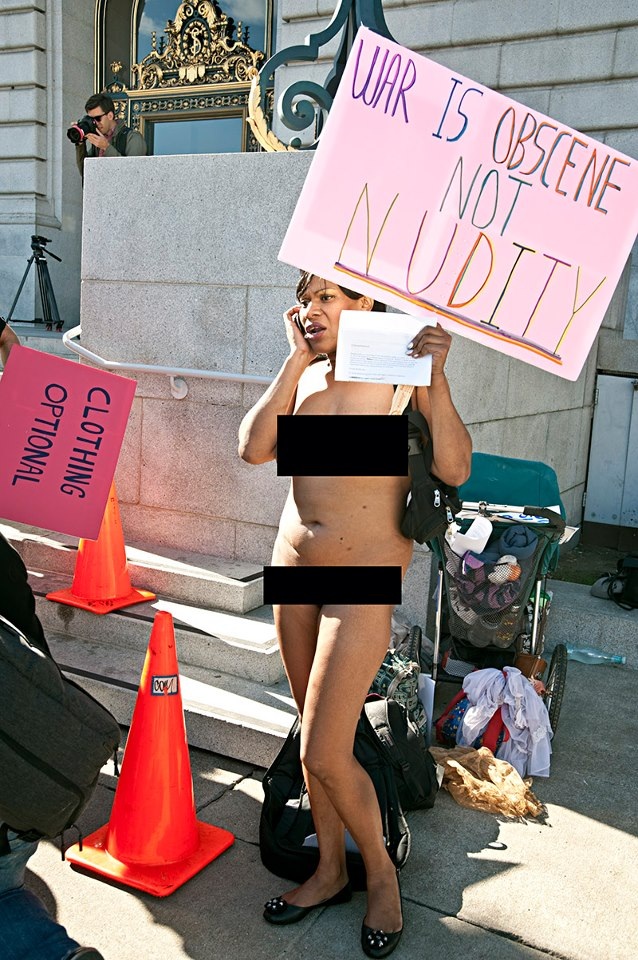
The cliches write themselves: My Dearest Scott Wiener, I write this not as someone who disagrees profoundly with your “moderate” politics or your collection of Banana Republic v-neck sweaters. I write this because, this year, a supervisor named Wiener, representing the Castro, got so obsessed with a few naked guys that he rammed through a nudity ban (oh, and a bunch of other awful stuff, too) that made national news. I have to talk to my relatives back East about all this. My great-aunt-in-law almost choked to death on her turkey from laughter. Please stop.

Not helping: Mountain-out-of-molehill blogger Michael Petrelis in turn became obsessed with Wiener’s penis, attempting to snap a pic of the Supes’ member at a City Hall urinal. Not making this up. Nor this: it took too long for Petrelis’ camera from the ’90s to warm up, so he only managed a shot of Wiener brushing his teeth, post-pee. Petrelis is being sued by Wiener.

Seriously not helping though: In August, 28-year-old Floyd Corkins II, a former LGBT center volunteer, attempted to storm the Washington, DC headquarters of the Family Research Council (recently and correctly categorized as a hate group by the Southern Poverty Law Center), shooting a security guard.

You just helped, actually: We never knew we should be boycotting Sodastream products because they are manufactured in illegal Israeli settlements on Palestinian land. But thanks to a widely viewed YouTube video — in which it appears a peaceful Code Pink protest inside Sodastream-carrying Cliff’s Variety in the Castro is violently broken up by hysterically screaming Cliff’s employees — we know! Troll is successful.

The fact is, you’re late: “The fact is, I’m gay,” Anderson Cooper wrote to blogger Andrew Sullivan by way of coming out. Anderson Cooper is the Clay Aiken of our generation.

The fact is you’re veeery late: As her 50th birthday approached, Kristy McNichol came out. “She hopes that coming out can help kids who need support,” said her publicist. There are no kids who know who Kristy McNichol is.

And you’re just trapped in a closet full of spray-on hair forever now: Many, many of John Travolta‘s male masseurs “opened up” about his happy endings. His response? A horrifying Christmas album reunion with Olivia Newton John full of the most awkward sexual metaphors ever. Greased lightning!

Freedom to fly, to fail: Director Lena Wachowski came out beautifully, vocally, and powerfully as a transgender person with deep thoughts about the nature of sexual identity. Too bad Cloud Atlas had me rolling my eyes to the high heavens.

Hide your buns, hide your wings: Reviving his meme career somewhat, Antoine Dodson said she was gonna eat Chik-fil-A anyway. Well-played.

I’m sorry: Castigating Log Cabin Republicans is easier than finding Anderson Cooper on Grindr, but watching them bend over backwards to justify supporting the Tea Party party when even our president had “evolved” on gay marriage was a real hoot. Especially because they had to say “fiscal” so many times.

All of us: While we were all arguing over gay shit (as usual), a young musical genius named Frank Ocean quietly erased the goalposts and went public with his generation’s sublime, amorphous “meh” about sexual labels. Let’s catch up.


Our Weekly Picks

0

WEDNESDAY 26

San Francisco Kwanzaa Celebration

The celebration of Nguzo Saba (“The Seven Principles”) was created by Dr. Maulana Karenga in 1966 as a way for the African American community to reaffirm its values. Accordingly, concepts that we all should live by are the focus of each day’s worth of Kwanzaa events at City Hall this year. Today’s candle-lighting, feast, and live entertainment pay homage to unity — in the days following, self determination, collective responsibility, cooperative economics, purpose, creativity, and faith will be the program’s focus. (Caitlin Donohue)

Events through Jan. 1

Unity celebration: noon, free

City Hall

1 Dr. Carlton B. Goodlett Place, SF

www.kwanzaasanfrancisco.com


THURSDAY 27

Sepalcure

In 2011, producers Machinedrum (a.k.a. Travis Stewart) and Braille (a.k.a. Praveen Sharma) teamed up for the self-titled Sepalcure, a genre cross-stepping album that brought together past and present sounds of house, garage, and dubstep. Take standout track “Pencil Pimp,” where solemn keys progress with gospel moans that share space against hyped “heys” and light, energizing percussive beats. It’s an evocative emotional balance that puts them in league with contemporaries Tomas Barfod and Shlohmo — the latter providing support for this show, which will feature live visuals created by designer Sougwen Chung (a.k.a. Sharma’s girlfriend) for the 2011 MUTEK festival in Mexico City. (Ryan Prendiville)

9pm, $25 Independent 628 Divisadero, SF (415) 771-1421 www.theindependentsf.com


FRIDAY 28

We are Legion: The Story of the Hacktivists

When Israel threatened to shut down all Internet communication into and out of Gaza, Anonymous responded by taking down Israeli sites and providing instructional “care packages” for the case of outages. When Westboro Baptist Church announced plans to protest Connecticut’s legalization of gay marriage at vigils for the Sandy Hook Elementary School victims, Anonymous responded by shutting down the church’s site, godhatesfags.com, and the releasing names and information of church leaders. The group is relatively new but has had a huge impact with over a hundred raids in the last few years. This is the Story of the Hacktivists. The film’s director, Brian Knappenberger, interviews members of the online community in order to spark conversations about tactics, motives, and whether these illegal activities are the work of vigilantes, power-trippers, or just what we needed. (Molly Champlin)

7pm, $10

Roxie

3117 16th St., SF

(415) 863-1087

www.roxie.com


Cherub

Do we need another electro-pop, falsetto-laden act to follow the likes of Passion Pit and MGMT? Listening to Cherub, the answer is a resounding, “absolutely.” For one thing, this band is a bit sexier than the others (aspiring towards that pan-sexual prowess of Prince.) The duo — made up of Jason Huber and Jordan Kelley — is from Nashville, Tenn., but a respect for mac’n’cheese as a vegetable is about as far as their Southern roots extend. There’s no twang found here. Huber and Kelley’s layered, upbeat guitar, vocals, and synth meld in an energetic show that will demand you dance. (Champlin)

With Battlehooch and Rappers

9:30pm, $12

Bottom of the Hill

1233 17th St., SF (415) 626-4455

www.bottomofthehill.com


X

Legendary Los Angeles punk act X has always distinguished itself from other bands of its time and genre, with the rock solid drumming of DJ Bonebrake, the guitar virtuosity of Billy Zoom, and the poetic lyrics and intimate vocal interplay of John Doe and Exene Cervenka. Currently celebrating its 35th anniversary — which is hard to believe, considering X’s material sounds as fresh as ever, and it sounds better than ever live — the iconic group is traveling up the West Coast on a mini “X-mas 2012” tour where fans are sure to hear all of their favorite tunes, as well as a couple of revved-up holiday favorites thrown in for good measure. (Sean McCourt)

Also Sat/29, 9pm, $32

Slim’s

333 11th St., SF

(415) 255-0333

www.slimspresents.com


Wintersalt 2012

It took us a few head-scratching minutes to get the pun on sommersault (I think we get it?), but the two-night Wintersalt festival is sure to bring a little tumble of sunshine into our nightlives. Headliners include that tropical beat-appropriating genius, Diplo; our own atmospheric vinyl cut-up legend DJ Shadow, fresh from infamously getting booted off the decks at Miami douche palace the Mansion for being “too future”; a wee hip-hop rainbow of local adored MCs — Lyrics Born and Lateef, K.Flay, and Goldenchyld. Oh yes, there will also be EDM of the pop monster kind from Zedd and Dillon Francis — ensuring that at least the first night of this 18+ event will be flooded with fun-loving, neon-Raybanned, un-shirted younger brothers and sisters. Travis Barker and Mixmaster Mike will also be there, pumping the retro-’90s live drum-turntable alchemy they’re experts at. (Marke B.)

Also Sat/29

7pm-2am, $50-$160

Fort Mason Festival Pavillion

Marina Blvd, SF

www.wintersaltsf.com


SATURDAY 29

Lee Burridge

On “Lost in a Moment,” the 2012 track by Matthew Dekay and Lee Burridge, a snake-charming synth befitting of Vangelis winds around a hazy, beguiling vocalist who seems thoroughly entranced by the beat. The result is hypnotically effective and typical of Burridge, a much loved globe-trotting DJ who has created a dedicated following by transforming sets into moments to remember. Just Youtube his rapturous sunrise performances atop Robot Heart, or ask anyone who caught the last time he came through Public Works, and reportedly kept things going until 5am. (Prendiville)

With Rooz, Bo, Ben Seagren, Atish, and Brian Bejarano

9:30pm, $18–$25

Public Works

161 Erie, SF

(415) 932-0955

www.publicsf.com


SUNDAY 30

PRIMUS

Got plans for New Year’s Eve? Want to go Sailing The Seas Of Cheese? Do you plan on serving up some Frizzle Fry? Imbibing some Pork Soda? Any way you look at it, the two club shows this week by musical boundary-busting Bay Area rock favorites Primus are a rare treat for local fans to see the band up close and personal. You can party with Les Claypool and company on Sunday night, or ring in the New Year with them on Monday, either way, you’re guaranteed quite a night as these special “Frankenstein’s Masquerade” shows are part of Primus’ new 3D Tour, complete with stereoscopic visuals and quad surround sound. (McCourt)

Also Mon/31, 9pm, $47.50–$75

Warfield

982 Market St., SF

www.thewarfieldtheater.com


MONDAY 31

Sea of Dreams NYE 2013: LunaSea

The biggest pain about NYE is coordinating all your friends, not to mention their inseparable dates. The annual SOD event is a big tent experience, with wide-ranging musical choices and live, body-warping spectacles to please just about everyone. (Okay, maybe not your roommate’s boyfriend — he should just stay home.) Best of all, it’s broken up into distinct areas to prevent the oppressing, cramped feel of a “massive.” Check out the headliners, with the added bonus of having both Opulent Temple and Dirtybird DJs under one roof. (Prendiville)

With Gogol Bordello, Shpongle’s Quixotic Masquerade, The Glitch Mob (DJ set), Trentemoller (DJ Set), Diego’s Umbrella, Pumpkin, Robert Delong, and more 8pm-4am, $79–$145 SF Concourse Exhibition Center 635 8th St., SF www.seaofdreamsnye.com


Remones

Dec. 31 generally cost a lot of money. It’s just this weird, ingrained fact of the day that with the slow, chilly shifting of years comes the jacking up of prices. Hey, here’s an additional $20–$40 tacked on for a glass of bubbly! Sure, some of those crazy pricey shows are probably worth it — the big-name bands, the packed lineups with sparklers, dancers, and holiday accoutrement. But if you’re just in it for the basic, primal fun of fun, here’s a show that’s totally free: the Remones, a Ramones cover band (duh) playing the Riptide. Because really, all you want to do on NYE is gather with friends in a warm, Bay Area environment, drink copious amounts of liquor, and watch live, sing-along punk songs. Hey ho, let’s go. (Emily Savage)

9:30pm, free

Riptide

3639 Taraval, SF (415) 681-8433

www.riptidesf.com


The New Parish: The People NYE Ball

The People Party was started in 2007 by a group of artists who thought that the East Bay was being overlooked by Bay Area taste-makers (wow, how time flies). Though Oakland has been saturated in attention in the last few years, the event still stands out in the area’s nightlife scene. The multidimensional dance party attracts a creative group of people. It’s a chance for local artists to show their work in a fun environment, and from samples of organic tea to dripping, bright acrylic paint, there is plenty to see. Headlining to celebrate the end of the year will be poet, DJ, and producer, Rich Medina, livening up the evening with his unique connections between spoken word, hip-hop, afrobeat, and jazz. (Champlin)

New Parish

9pm, $20

579 18th St., Oakl.

(510) 444-7474

www.thenewparish.com


TUESDAY 1


No Way Back New Years Day Disco

There’s a few places to head if you went all night long and want to keep going all day strong. But to start the year off with a certain fresh feeling (and avoid an entire crowd of socket-eyed, gurning zombies), head over to Monarch. With No Ways Back’s reputation of infallible parties and quality music — in this case including Brooklyn’s Justin Vandervolgen (responsible for a double set on Beats in Space earlier this year) and local disco veteran James Glass — there are likely to be a fair number of people skipping the night altogether, and setting their clocks and krups for this one. (Prendiville) With Justin Vandervolgen, Sunny Side Up, Solar, Conor, 40 Thieves, and James Glass 6am, $15–$20 Monarch 101 Sixth St., SF (415) 284-9774 www.monarchsf.com


The Guardian listings deadline is two weeks prior to our Wednesday publication date. To submit an item for consideration, please include the title of the event, a brief description of the event, date and time, venue name, street address (listing cross streets only isn’t sufficient), city, telephone number readers can call for more information, telephone number for media, and admission costs. Send information to Listings, the Guardian, 225 Bush, 17th Flr., SF, CA 94105; or e-mail (paste press release into e-mail body — no attachments, please) to listings@sfbg.com. Digital photos may be submitted in jpeg format; the image must be at least 240 dpi and four inches by six inches in size. We regret we cannot accept listings over the phone.

YEAR IN MUSIC 2012: Blowing like the wind

2

marke@sfbg.com

SUPER EGO Look, if I was doing my job properly, there’s no way in Hello Kitty I’d remember what happened on the club scene the past year. It’s all fuzzy shapes and drunk colors, like Barbara Bush in a bathhouse. Last February, it took me two whole pages of tiny type just to list my favorite weekly clubs, so I’m not gonna go into all that here. (I will say that parties like Housepitality, Honey Soundsystem, Lights Down Low, Icee Hot, Dub Mission, Non-Stop Bhangra, No Way Back, As You Like It, Forward, Deep, Base, and Sunset continued to introduce us to incredible DJs. And wasn’t there someone from Detroit here, like, every week?) Here are some things, however, I do recall

Loudest: Body and Soul at Mighty — my ears rang for a week, my feet for three.

Wowest: Amon Tobin’s giant tetris of digital video projections for his ISAM Live 2.0 tour at the Greek Theater.

Scary-Hottest: International leather techno entity Luther at Folsom Street Fair.

Coolest: Marco De La Vega, cross-genre promoter of the year, watching from the DJ booth as a kick-ass $3000 light falls on a table’s-worth of Balam Acab and Andy Stott’s live electronic equipment at Public Works. Then finishing his cocktail before handling the ensuing panic.

Wowest, part 2: The SF Symphony’s American Mavericks concert series (including a Kate Bush-referencing piece by DJ Masonic), SF Opera’s “Nixon in China,” the amazing Soundwave Festival, the hella robust Electronic Music festival.

Trippiest: Those immersive projections at Public Works, which turned Laurent Garnier’s live show into a cartoon-heart-filled rave aquarium and Jeff Mills’ into a star-map vortex.

Cutest: The tiny flashing lights on the ceiling of the remodeled, excellent 222 Hyde.

Latest: We got a trap club (Trap City), a new wave of cyber-horror drag performance artists (at Some Thing, Dark Room, High Fantasy), a packed gay sports bar (Hi Tops), a great-sounding new club (Monarch), a lunchtime dance party (Beats for Lunch, also at Monarch), an outbreak of vogueing (everywhere), a queer nu-hip-hop club (Swagger Like Us), a queer funk classics party (Love Will Fix It), and a weird “sparkling alcohol water” (Air). But we lost Club Six, which I loved. Also I think dubstep died.

Loveliest: Dancing in a church with 30 other people to hip-house legend Tyree Cooper, singing along to “Turn Up the Bass.” Watching real house parties like The People blow up in the East Bay. Sipping homemade sljivovica behind the decks with DJ Zeljko of Kafana Balkan. Doing the jerk ’til I melted at Hard French. DJing (eek!) Club Isis classics on vinyl at Go Bang. I think I almost made out with Kenny Dope at Red Bull Music Academy? Oh, and running into you.

>>Check the rest of our YEAR IN MUSIC 2012 issue.


MARKE B.’S 2012 JAMS

1. Todd Terje, “Inspector Norse” This was a dance music year that sometimes seemed to vacillate among three primary moods — prim sophistication, moneyed “indulgence,” and too-broad jokes. But Norwegian Terje dared proffer the sweetest humor in this instant earworm’s worth of re-engineered nostalgia, embracing the cheery electronic toodles of early ’80s British and Scandinavian TV show themes (cf. especially “Grange Hill” and “Swap Shop,” though not “Inspector Morse”) and bringing smiles back to the dance floor.

2. John Talabot, FACT Mix 315 A spectacular year for the Spaniard, whose expansive take on the decades-old Balearic sound already had him pegged for a 2012 favorite, even before he dropped excellent album Fin, which toyed with melancholic UK bass sounds and yielded my second favorite tune of the year, hopelessly romantic “So Will Be Now” with Pional. But this mix for FACT showed that the dark underpinnings of witchy house and the sunstroked uplift of Ibiza could be reconciled via a tingly rush of subtle, brilliant psychedelia. Trippy, lovely, and the right little bit of creepy.

3. Plan B, “Ill Manors” I detested The Prodigy the first time around — they were goofy twats who had nothing to be angry about. No surprise “Firestarter” was played for the Queen at this year’s Olympics opening ceremony. So much for anarchy in the UK, although Azaelia Banks mashing it up with “212” at Coachella was fun. UK rapper-singer Plan B managed to weld the Prodigy (and nascent drum and bass) revival to the real world anarchic energy of last year’s UK riots, his Tchaikovsky-sampling tune shivering with council flat rage, ambivalent violence, Olympic protest, and youthful nihilism. Watch his self-directed, horrifically poignant shoestring video, then laugh at the Grammys as accolades rain down on Romain Gavras’ extravagant ripoff for “No Church in the Wild.”

4. Rrose, Smoke Machine Podcast 069 Electronic Body Music for our time, rippling with muscular textures and ethereal trap doors.

5. Justin Martin, Crackcast 019 For all the diversity of the local scene, the Dirtybird crew is still our major player on the global dance music stage. (Of our three big breakout acts this year, Safeword is rad, Poolside is cute, Pillow Talk leaves me cold so far.) Fine, I adore them. Nobody else sounds like they’re having more fun while slyly executing tricky, emotionally satisfying bass maneuvers like Claude VonStroke and his stable. This year was stellar for the fiendishly clever Justin in terms of addictive mixes (his album “Ghettos and Gardens” was good, too, but I took issue with the insensitive tone of some of the promotional materials). This podcast, along with his Fabric and Clash ones, never left my iRotation.

OTHERS: MK, Old School Classics Mix; Le1f, “Wut”; Azaelia Banks, “Fierce”; Fantastic Mr. Fox, “San’en”; Andy Stott, “Luxury Problems EP”; Dutch Uncles, “Fester”; Ripperton, “Let’s Hope”; Sailor & I, “Tough Love (Aril Brikha remix)”; Jessie Ware and Julio Bashmore, “110%,”; Disclosure, “Latch”; Prince Club and Steve Huerta, “Can’t Let Go”; Bwana, “Baby Let Me Finish (Black Orange Juice Remix)”; Stereogamous, “Feel Love Anew”; Little People, “Aldgate Patterns.”

Healthy school food delayed by bid protest

0

A proposal to bring fresh, healthy, locally produced food to San Francisco school kids ran into a roadblock when the losing bidder on the deal filed a protest, forcing the School Board to delay acton on the contract.

Revolution Foods of Oakland offered to supply fresh breakfast and lunch fare to the district, replacing the current vendor, Preferred Meal Systems, Inc., which ships in prepackaged, frozen entrees from Illinois.

According to SFUSD bid documents, Revolution’s price was $59,356 a day, and Preferred came in at $61,416. So not only was the local alternative better, it was cheaper.

Gentle Blythe, SFUSD spokesperson, could only say that a bid challenge had been filed, but since Preferred was the only other qualified bidder, it’s pretty clear what happened.

Once a bid challenge is filed, the district has to suspend board approval of the deal and respond to the challenge, which Blythe said should only take a week or so. “We’d like to have this back on the board agenda by the end of December,” she said, so fresh meals can start with the spring semester.

So maybe it’s only a minor setback; we can hope for the best.


Free the free

2

VISUAL ART It starts with the streets. Walls, the texture of walls, rough and colored in swirls of graffiti letters. Walls you feel you could reach out and touch their cold and grit. Establishing shots — the streets of San Francisco in the dot-com era. The photos are of their times: an unattended shopping cart in the streets appears as early as page three. Soon follows the spray-painted legend, “Don’t let the good times fool you.”

The pictures are inscrutable, their sequence seemingly random. Yet other than the gnomic title (Friendship Between Artists is an Equation of Love and Survival), the only text in Xara Thustra’s self-published new book’s 500 pages is a brief intro from the author insisting that the book is meant to be read from left to right, from top and bottom in the order the photos appear. There are no captions or prompts to lead the viewer. It is the mute gravity of the photos that pulls you in. What is happening here? It’s like finding a box of photos on a trash pile in the Mission — old furniture, clothes out on the curb, a pile of books and CDs. Why is all this stuff in the trash? Did the owners die? Or get evicted? Photos of strangers. You go from one photo to the next and the outline of a missing life starts to appear. What is happening here?

The action moves in and out of the streets, cinematic — the interiors dark, claustrophobic. The streets provide narration. Everything is spray painted. Demand Community Control. Everything bright, everything clean. Everything they build be like fuck you, fuck you, fuck you. Familiar everyday locations have become enlisted as battlegrounds. At the Dolores Park tennis courts, someone has hung a screen on the fence, painted so that it reads “Sink the Ship” in shimmery, see-through letters. A subliminal message to the tennis players visible on the other side? Or a secret signal to an unseen underground army?

Cut to the interior. Some dim locations start to become recognizable: a performance crammed into a corner of Adobe Books, a crowd seen through a doorway at the old Needles and Pens. The images are at times grainy and low res, like bad cell phone photos or surveillance camera footage. Much is shot in indistinct rooms or hallways, tightly cropped. The people in the interiors model homemade clothing or stare back at us from unmade beds. They are dancing in high heels or fucking each other, holding whips and dildos. No one is smiling. Instead they stare defiantly into the camera as if to ask, “Who are you to watch? Which side are you on?” This is not the careless and fashionable hedonism of Ryan McGinley photos. Instead, like the subjects of Nan Goldin photos, the people in these images know how much their search for freedom costs, and who will have to pay.

Meanwhile, the battle in the streets continues. Scum bags dressed as imposter yuppies stand in front of the mall on Market Street, holding handmade signs reading, “The bombs are dropping, lets go shopping!” An effigy of Gavin Newsom burns at 18th and Castro. Back inside, homeless guys from Fifth and Market calmly eat free breakfast at the 949 Market Squat. More drab interiors, more surveillance footage, and then what is happening here? Scenes of naked people grimly carving designs into each other with razors, holding dripping, bleeding arms up to the camera. It must be 2005, I think, when we all started to give up on ever stopping the war and just started hurting each other.

Full disclosure: I am in this book. I might be too close to the people and events depicted to discern whether the images are strictly documentary or whether their arrangement is intended to create a new story. But the juxtapositions, eerie and dreamlike, pack a wallop. In one two page spread, my dead friend, Pete Lum, stairs from the left page into another photograph on the right of an unknown drag queen out front of Aunt Charlie’s on Turk Street. Their eyes seem to meet across the gutter of the book and across time and space, as if sharing a secret the rest of us cannot know.

Ultimately, perhaps the one indisputable narrative of the book is the tremendous progression in Xara Thustra’s artwork, as the early agitprop graffiti by “Heart 101” in support of street protests slowly morphs into a far more ambitious project, an ongoing collaboration with countless others through performance, print, and cinema to abandon protest and instead collectively embody through art the autonomy and ethics of a truly different world. Perhaps inevitably then, Friendship Between Artists is both a monumental achievement and something of an anti-climax. The protests, the willful art world obscurity, the dead friends — what did it all add up to?

I am certain, anyway, that nothing in the book was conceived with the idea that it would one day appear in an art book. Instead, the interventions, experiments, and protests detailed herein, while at times quite joyous, were, as the book’s title suggests, originally part of a deadly serious struggle to keep oppositional culture alive in San Francisco, and for many that struggle now feels lost. But life must go on, and this is no museum piece.

The book’s 500 pages positively overflow with life, salvaging from oblivion the raw, visceral feel of 15 years of ephemeral underground freedom. While some will be haunted by the suspicion that the answer to the above question is “not enough,” the people in these photos stare into the camera and demand we consider instead a hard-earned and far more redemptive possibility: that this isn’t an art project, it’s how we live. This isn’t representation of a different reality, but about being a different reality. And fuck you, anyway, because being free is its own reward.

For an interview with Xara Thustra, visit sfbg.com/pixel_vision.

XARA THUSTRA BOOK RELEASE AND SOLO SHOW

Thu/6, 7-9pm, free

Needles and Pens

3252 16th St., SF

www.needles-pens.com


Media Alliance SOS: Fight the FCC rush to more media consolidation (again)!

2

The Media Alliance, a local media watchdog group leading the media consolidation battles,  says in an SOS message  that the Federal Communications Commission is once again trying to jam through new rules during the Christmas rush to facilitate more media consolidation.  The FCC, the Alliance points out, “touts localism, competition and diversity as the hallmarks of a healthy media ecosystem. This rule change guts all three.” Here is the Alliance’s  action alert (b3):

New proposed rules relax media cross-ownership rules (again) paving the way for more media concentration and polishing the path for the Rupert Murdochs of the world to buy up everything that’s left. 

In the now-familiar holiday season hurry-up employed by federal agencies when they want to sneak something through before the public has a chance to get outraged about it, FCC commissioner Julius Genachowski has proposed a relaxation of the media cross-ownership rules remarkably similar to Kevin Martin’s try at increasing media consolidation several years ago.

What can you do?

Tell the Democratic commissioners they need to fight this and that as a member of the public, you have their back if they publicly oppose the Christmas rush to media consolidation today December 4th National Day of Action:

Mignon Clyburn –  (202) 418-2100 

Jessica Rosenworcel –  (202) 418-2400 

And then send a tweet @fcc no xmas sneak #mediajustice

Background:

The relaxation permits the same corporation to own print, radio and television outlets in the top 20 communication markets in the US, condemning urban populations to canned and repetitive news and information, especially those who depend heavily on free over-the-air broadcasts. 

The FCC is trying to jam these rules through during the holiday siesta to avoid the outpouring of public protest engendered during the last attempt at relaxing the rules, when the FCC received the largest quantity of public comments in their history and eventually lost in court and rescinded the attempted rule change.

The FCC was ordered to do research into impact on the diversity of media ownership, particularly by women and minorities. Despite completing a comprehensive  whose initial results indicate little to no improvement in increasing ownership diversity and not completing a full impact report on the mounds of ownership data received in the quadrennial report, the FCC seems to be determined to move ahead with the rule change in an evidence-free zone.
The FCC touts localism, competition and diversity as the hallmarks of a healthy media ecosystem. This rule change guts all three.

Links:

Politifact ranks Obama’s promise to foster media diversity as a broken promise: 

http://www.politifact.com/truth-o-meter/promises/obameter/promise/388/encourage-diversity-in-media-ownership/

Article: FCC Abandons Media Diversity: 

http://newamericamedia.org/2012/11/fcc-abandons-diversity-embraces-rupert-murdoch.php

Seattle Times editorial: 

http://seattletimes.nwsource.com/html/editorials/2019751774_editfccreportxml.html


Media Alliance Email News and Updates
1904 Franklin Street, Suite 818 Oakland, CA 94612 :  (510) 832-9000 

Ethics Commission wants to hide its own flaws

3

The Ethics Commission has serious problems. A detailed report by Board of Supervisors Budget Analyst Harvey Rose, comparing SF’s ethics rules and enfocement to that of Los Angeles, found a long list of ways that this city is falling short. The supervisors asked the commission to have a robust discussion of the findings and propose reforms.

Now Friends of Ethics, made up of a number of former commissioners, activists, and campaign-finance watchdogs, says that the commission is trying to hold a quick hearing that will gloss over much of the criticism of the Rose report. The group wants the hearing delayed until there’s a lot more time to bring a lot more people into the process.

Here’s the letter FOE sent over:

To the Ethics Commission and Staff:

Friends of Ethics is writing with objections and protests regarding the upcoming “Interested Persons” meetings scheduled for December 4 and 10, 2012.

The Commission notified “Candidates, Treasurers and Interested Persons” of meetings “to discuss recommendations of the Budget Analyst report (also known as the Harvey Rose report) comparing programs of the San Francisco Ethics Commission with those of the Los Angeles Ethics Commission.”

The notice was dated November 28, providing only three business days before the first meeting will take place.

The Friends of Ethics bases its protest and objections on the following facts, and by this memo, formally requests that Ethics postpone these meetings until February.

     The proposed Interested Persons meetings do not mention inclusion of a representative from the Board Budget Analyst office to present their report and to discuss its findings. Without their direct involvement, as well as the invited presence of Supervisor Campos who requested the Rose report, the Interested Persons meeting will have only the staff’s views of the report as a basis for discussion. We believe this fails to provide the direct interaction and communication that should be part of this process.

    Ethics was requested by the Board of Supervisors to conduct robust and inclusive outreach to all participants in San Francisco’s political life. Ethics provided Friends of Ethics with the list used to contact Interested Persons about this meeting. We believe the list provided is not an adequate outreach, includes no community-based organizations active in electoral politics, any of the chartered Democratic clubs or other partisan political organizations, or special focus organizations active in San Francisco elections. We believe the lack of an inclusive outreach as evidenced by this list denies the Commission of a full discussion of the issues and is weighted toward the regulated community. We are puzzled by the fact that many people who do receive the Interested Persons notices are not on the list provided by Ethics, and seek a clarification on whether additional lists were used that were not disclosed to us. We also note that the late Joe Lynn, while the Campaign Finance Officer for Ethics, not only conducted extensive outreaches for IP meetings, including contacting past treasurers and press and posting notices on local political blogs and chat boards, but also later informed Director St. Croix in writing about those practices for the purpose of encouraging the continuation of such outreach.

    Ethics provided insufficient time for a review and analysis of recommendations that are significant and meaningful for the operation and success of the Ethics Commission mission. We believe that Ethics has done the bare minimum of notice of a public meeting and failed to take a serious approach to this important issue. Providing notice three days before the meeting, particularly in the holiday period between Thanksgiving and the first of December, means that no organization has an opportunity to place this issue on their agenda for a discussion or to endorse comments to be provided to the Ethics Commission.

    Ethics prepared an agenda that omitted significant and critically important comparisons between the Los Angeles and San Francisco Ethics Commissions that were included in the Rose report. While Ethics did list specific recommendations from the Rose report, the report itself detailed a number of additional differences that are significant to the San Francisco political community as we know it, and that should be part of a discussion of the Rose report.

Among the omitted points are:

    Los Angeles has a private right of action for citizens to act when Ethics does not; in Los Angeles this can include penalties under a civil action. San Francisco has no such provision. We believe this is essential to meaningfully empower citizens to directly seek compliance with our laws.

    Los Angeles requires disclosure of contributors of $100 or more to groups making “third party” expenditures. San Francisco does not require public disclosure of this money stream. Disclosure of donors to third party committees would add transparency, particularly if this has become a strategy to allow city contractors to influence elections.

    Los Angeles prohibits contributions from those seeking permits, while San Francisco does not. Friends of Ethics has determined that over 90 percent of all City Hall lobbying involves permit decisions.

    Los Angeles prohibits commissioners from fundraising for candidates, while San Francisco does not. This is the heart of pay-to-play politics that infects city appointments as commissioners are often the first stop for fundraising on behalf of city elected officials. We note a recent case where a city commissioner hosted a fundraiser that included contributions from city employees from the same department. The candidate returned the contributions, recognizing that commissioners are prohibited from seeking contributions from city employees. However, this demonstrates the potential abuse and underscores that Los Angeles’ policy is a stronger and more easily enforced prohibition. We recommend it.

    Los Angeles prohibits fundraising from city contractors and those seeking city actions. San Francisco allows contractors to fundraise and serve on candidate finance committees, although they may not contribute their own funds. Currently San Francisco also does not require candidates to disclose the names of their Finance Committee members. However, we strongly prefer closing the loophole, as Los Angeles has done, by prohibiting city contractors and permit seekers from fundraising.

    Los Angeles requires a more robust disclosure of “paid by” notification on telephone messages when 200 or more people are called. San Francisco sets the threshold at 500 people. Therefore, “paid by” calls to members of political clubs during the endorsement process would be missed under San Francisco’s standard but included under LA’s standard.

    Los Angeles provides a “Guide for Contributors” that educates donors and reduces confusion on such issues as aggregate contribution limits, prohibitions on officers of organizations receiving city funds, and so forth. This is done at minimal cost and made available on the Internet with no printing or mailing costs. San Francisco does not provide a Guide. Instead, the Ethics staff has recommended that the Commission rewrite the law to overturn specific prohibitions, stating that contributors are confused about the rules. The best approach is Los Angeles, where an educational outreach to contributors is part of their program. We note that San Francisco provides guides and outreach to most others involved in political activities, including committee treasurers, candidates and others but does not include an educational outreach to donors.

    Los Angeles prohibits political contributions from being made at City Hall or other city offices, including offices rented with city funds. San Francisco allows contributions to take place in the mayor’s own office, supervisor’s offices, at Redevelopment, Planning, Port or other offices – in short, anywhere that a donor chooses to make a contribution. We believe allowing contributions to be made in the workplace of city officials undermines public confidence and is inconsistent with other restrictions on the use of city resources for political purposes.

    Los Angeles has a more robust view of what constitutes lobbying and includes attorneys who offer strategic advice even if they do not directly contact a city official. San Francisco does not require registering or disclosing clients from such attorneys involved in orchestrating a favorable result for a paying client. Attorneys who serve as committee treasurers also do not face the same level of public disclosure as lobbyists.

We believe this list of omitted topics, coupled with the unacceptable short timeframe provided for analysis and review by the political community, and the failure to provide adequate outreach, raises serious concerns that Ethics is not engaged in a serious effort to obtain the public’s views on its operations and policies based on the Harvey Rose report.

We further note that Ethics has not provided a public schedule of when it will complete a summary of the Interested Persons meeting and comments, or a schedule for consideration by the full Commission of any recommendations.

In addition, Friends of Ethics requests that the San Francisco Ethics Commission audio record the IP meetings regarding the Rose report and post the recordings on its website, as is done by the Los Angeles City Ethics Commission.  In the past, the San Francisco Ethics Commission made audio recordings of its IP meetings, though they were not posted online.  The Commission’s Directors later discontinued the audio recording altogether, which may have been motivated by valuing the privacy of attendees over public transparency.  Given that the Rose report IP meetings are about comparing San Francisco’s good government laws with Los Angeles’ to consider adopting improvements offered by Los Angeles, Friends of Ethics believes that the first improvement that San Francisco should adopt is the Los Angele set of standard practices for conducting IP meetings.  When it comes to the development of good government law and policy, the public’s right to know is paramount.  Therefore, Friends of Ethics requests that all future IP meetings held by the San Francisco Ethics Commission be audio recorded and the recordings promptly posted online.”

Our reasons for requesting a specific timetable for next steps is based on our observation of lengthy delays in staff action on issues even when raised by the Commission itself. We believe the political community will be unlikely to participate in a process that has no specific and public timetable for action but that could take more than a year to reappear.

For example:

    In July 2011, the Ethics Commission requested that staff draft proposals to close the loophole that allows committees seeking to draft a candidate to fall outside the normal reporting and disclosure requirements. However, staff did not produce a proposal until November 2012, 16 months later, and did so without an Interested Persons meeting to discuss their proposal.

    Also at the July 2011 meeting, the Ethics Commission requested that staff examine the loophole that prevented the Commission from acting in cases of Official Misconduct by a commissioner. Ethics staff still has not produced a proposal to close that loophole.

    Also in 2011, a Superior Court judge suggested that San Francisco adopt a policy prohibiting commissioners from recommending a specific lobbyist to parties seeking a contract or other decision from that commission. Ethics has not prepared any response to that suggestion.

    In June 2012, Rules Committee Chair Jane Kim requested that the Ethics Commission provide some information on the city’s Ethics laws in languages other than English, noting that the rules are as important to donors and committees as they are to the public. The Ethics Commission has taken no steps, including in the election just concluded.

Given this record, we believe that any public process to examine the Harvey Rose Report and build new recommendations must include proposed timelines for action if there is to be public confidence that this process is meaningful.

We also strongly recommend that the Ethics Commission set aside time to allow a full discussion before the Commission itself. We believe that such a discussion should not place a two-minute limit on public members making comments.

For the above reasons and cited facts, Friends of Ethics requests that the Interested Persons meeting on the Harvey Rose Report be postponed until February when the political community will have an opportunity to evaluate the proposals and endorse changes, that the Commission immediately engage in a more robust outreach effort that extends beyond the list provided by Ethics to us, that the conversation be broadened to include all topics of comparison between Los Angeles and San Francisco, and that a proposed timeline for a record of the Interested Persons meeting and action by the Commission be provided.

We submit this protest respectfully and with support for the work of the Commission and specifically for the thorough review of any steps that can improve the Commission and public confidence in our political process.

Signed:

Eileen Hansen, former Ethics Commissioner
Bob Planthold, former Ethics Commissioner
Paul Melbostad, former Ethics Commissioner
Sharyn Saslafsky, former Ethics Commissioner
Bob Dockendorff, former Ethics Commissioner
Joe Julian, former Ethics Commissioner
Oliver Luby, former Ethics Commission staffer
Aaron Peskin, past President, Board of Supervisors
Charles Marsteller, former SF Coordinator, Common Cause
Karen Babbitt, community advocate
Marc Saloman, community advocate
Larry Bush, Publisher, CitiReport


The nudists file suit

32

You all know the joke: What did the unsuccessful lawyer who joined a nudist colony never have? (A suit. LOL. Sort of.)

But a successful lawyer just filed a detailed suit trying to stop San Francisco from enforcing a ban on public nudity, and it makes a lot of interesting points. You can read the filing here (pdf). I’ll get beyond the fact that a legal argument over nudism uses the terms “prong” and “thrust” and “penal” all in a few short paragraphs, and get to the substance:

Attorney Christina DeEduoardo claims that her clients use nudity as a form of free speech and protest — and given who they are, it’s a pretty good argument. You’ve got a guy who ran as the nudist candidate for mayor and a woman who took her clothes off at a Board of Supervisors meeting for political reasons, and they contend that they have the right to appear naked in public.

The claim seeks a restraining order prohibiting the Board of Supervisors from enacting the law, but a federal judge already nixed that, according to City Attorney spokesperson Matt Dorsey. Instead, all parties have to wait unitl the supes approve the law, at which point this will become a motion for an injunction against the law taking effect.

So banning a handful of people, mostly older guys, from hanging out naked on Castro Street is going to become a legal battle that will cost the city a bunch of money. Unless sanity prevails and Sup. Scott Wiener, the city attorney and the nudists can reach a deal, which might be pretty simple:

It’s cool to get all nekkid (although it won’t be happening much in the next few months, way too cold). But maybe the Castro Guys can agree not to wear cockrings that attract attention to their dicks (and seem to be the proximate cause of all the fuss). Just be natural when you go au naturel, and we can all stop fighting over this.

You think?


Protest — and run for office

1

OPINION Millions of Americans are eager, even desperate, for a political movement that truly challenges the power of Wall Street and the Pentagon. But accommodation has been habit-forming for many left-leaning organizations, which are increasingly taking their cues from the party establishment: deferring to top Democrats in Washington, staying away from robust progressive populism, and making excuses for the Democratic embrace of corporate power and perpetual war.

It’s true that many left-of-center groups are becoming more sophisticated in their use of digital platforms for messaging, fundraising and other work. But it’s also true that President Obama’s transactional approach has had demoralizing effects on his base. Even the best resources — mobilized by unions, environmental groups, feminist organizations, and the like — can do only so much when many voters and former volunteers are inclined to stay home.

For people fed up with bait-and-switch pitches from Democrats who talk progressive to get elected but then govern otherwise, the Occupy movement has been a compelling and energizing counterforce. Its often-implicit message: protesting is hip and astute, while electioneering is uncool and clueless. Yet protesters’ demands, routinely focused on government action and inaction, underscore how much state power really matters.

To escape this self-defeating trap, progressives must build a grassroots power base that can do more than illuminate the nonstop horror shows of the status quo. To posit a choice between developing strong social movements and strong electoral capacity is akin to choosing between arms and legs. If we want to move the country in a progressive direction, the politics of denunciation must work in sync with the politics of organizing — which must include solid electoral work.

Movements that take to the streets can proceed in creative tension with election campaigns. But even if protests flourish, progressive groups expand and left media outlets thrive, the power to impose government accountability is apt to remain elusive. That power is contingent on organizing, reaching the public and building muscle to exercise leverage over what government officials do — and who they are. Even electing better candidates won’t accomplish much unless the base is organized and functional enough to keep them accountable.

Politicians like to envision social movements as tributaries flowing into their election campaigns. But a healthy ecology of progressive politics would mean the flow goes mostly in the other direction. Election campaigns should be subsets of social movements, not the other way around.

For progressives, ongoing engagement with people in communities has vast potential advantages that big money can’t buy — and (we hope) can’t defeat. But few progressive institutions with election goals have the time, resolve, resources or patience to initiate and sustain relationships with communities. For the most part, precinct organizing is a lost art that progressives have failed to revitalize. Until that changes, the electoral future looks bleak.

Norman Solomon is founding director of the Institute for Public Accuracy and co-founder of rootsaction.org. A longer version of this piece appears in the Nov. 24 edition of The Nation.

outLOUD Radio snags stories from an evolving queer world

0

It’s Saturday afternoon and, two weeks before the gala that will mark its 10th year of existence (coming up Wed/14) outLOUD Radio is talking style. Elders from the queer community are sitting in a circle in a LGBT Community Center third floor conference room, translating their thoughts on the concept of “gay uniform” into the waiting mics of outLOUD Radio youth volunteers.

“Describe what you’re wearing today.”

“Jeans, which could be categorized as old hippie jeans with tight ankles — not flares. That’s what I feel comfortable in, pants.”

“I’m wearing designer jeans. I bought them from Goodwill for $4.” “Nice.” “Very nice, actually.”

“I’m a dyke, and I wear pants. I’m cold a lot of the time because of my peripheral circulation.”

“There’s something about this T-shirt that makes me feel more alive, more vibrant.”

This is outLOUD’s intergenerational storytelling project. 

Phuong Tsing is 20. Tsing is holding the mic for the seniors to talk about their clothes because “I wanted to feel more connected with the LGBT community, to make myself feel more comfortable about myself. [The elders] make me feel like I live in the present, but I’m connected with the past.”

“What does your outfit say about you?”

“I decided at some point in my old age I was not going to dress like a geezer. And I live in San Francisco, so I don’t have to.”

“Not too flashy, except for the rhinestones on the shoes.”

“I’m alive, grateful, a vital human being.”

“I have on what I have on to keep warm.”

The first generation of out LGBT elders are coming of age these days, and they’re providing the community with a heretofore unique resource — the chance for baby gays to sit around and listen to what it was like being queer back in the day. Pre-Stonewall (some of the seniors at this Saturday session were actually present at the infamous raid and insuing protest), pre Glee, pre civil unions. Not only that — one of outLOUD’s major goals is the empowerment of youth through this archiving. Young people assemble pieces on the salient issues of their day, forming their own voice in the process. 

“Is there a gay uniform?”

“No. It just seems to me that there’s so many reasons why people put on one thing any morning. Right now in modern times you can wear anything, be anything.”

“What I really love about his group is that it feels really empowering,” say Tsing. Like outLOUD’s other projects, eventually this footage will be edited, and assembled into a radio show that can be streamed online and heard on radio stations across the country. Past podcast topics have included transbodied athletes, the definition of masculinity, sexual harassment on the Muni, even history like the piece below, that interviews members of the Sisters of Perpetual Indulgence about creating the first safe sex pamphlet. 

The work, led by executive director Noah Miller, has been going on for a decade, and needs more funds to stay on track. This week’s gala, featuring gay NPR White House correspondent and sometimes-Pink Martini vocalist Ari Shapiro, and KQED host and reporter Scott Shafer.

“Did you dress differently before and after coming out?”

“Not really. But I got my ear pierced when only gay men wore earrings.”

Assembling stories is important work — and not just for those that would compile and listen to the recorded product. That afternoon in the LGBT Community Center, the seniors being interviewed were aglow after interacting with the young people, and probably had plenty to think about after being interviewed about what they were wearing, from the guy in rhinestone shoes to the woman who proudly asserted she was wearing the activist dyke uniform. Telling your stories makes you realize that you have stories, to be really simplistic about it. 

Anyway, listen to this podcast — we need 10 more years of this right?

“10 Years of Making Waves”: outLOUD Radio benefit

Wed/14 7pm, $25-5,000

Brava Theater

2781 24th St., SF

gala.outradio.org

Paul Addis, playwright and Burning Man arsonist, dies

55

UPDATED Paul Addis – the San Francisco playwright and performer best known for igniting Burning Man’s eponymous central symbol early in the 2007 event, a crime for which he served two years in a Nevada prison – died Saturday night after jumping in front of a BART train in Embarcadero station. He was 42.

His friend Amacker Bullwinkle told us she was shocked and saddened by the news, first reported by the SF Appeal and confirmed to us by the San Francisco Medical Examiner’s Office, which contacted Addis’ mother. Bullwinkle said she wasn’t sure if there was a suicide note, but given his prolific writings, “I can’t imagine he wouldn’t want to write something.”

After Addis was released from prison in 2010, he came to the Guardian for a three-hour interview to discuss how and why he torched the Man during a Monday night lunar eclipse, another pair of bizarre arrests that followed, and the San Francisco debut of latest one-man play, Dystopian Veneer, which he wrote in prison. That interview was the basis of two Guardian articles and an extended telling of his story in my book, The Tribes of Burning Man, which also draws from an earlier interview with Addis.

“It’s a brand new life and I’ve got all this potential and I want to make the most out of it,” Addis told me in a hopeful moment. But he was also clearly a troubled soul, deeply unhappy with what Burning Man and San Francisco had become and resentful of the role that Burning Man organizers played in supporting his prosecution.

But his frustrations seemed to stem from a desire shake up the city and Burning Man, an event that was personally transformative for him, “to bring back that level of unpredictable excitement, that verve, that ‘what’s going to happen next?’ feeling, because it had gotten orchestrated and scripted.”

Services for Addis are pending.

UPDATE 11/2: Sup. John Avalos adjourned this week’s Board of Supervisors meeting in the memory of Paul Addis and made the following comments about him:

·        Addis was a San Francisco performance artist and playwright who was best known from 2007’s Burning Man when he lit the Man on fire.
·        Addis wrote and performed several one-man plays, including Dystopian Veneerand Gonzo, A Brutal Chrysalis.
·        After years of struggling with mental health issues, Addis took his own life the past weekend. He was forty-two.
·        Addis’ controversial act was viewed by some as a dangerous act of arson and by others as a subversive protest of how Burning Man had strayed from its core principles.
·        Addis served two years in a Nevada prison for burning the Man.
·        On this day when we’re commemorating Mental Health Awareness month, I think it’s appropriate to recognize the loss of Paul Addis, and recognize how our mental health and criminal justice systems failed him, and how they fail so many others who struggle with mental health issues.


Dick Meister: Your first World Series is always the best

0

Dick Meister, former labor editor of the SF Chronicle and KQED-TV Newsroom has covered labor and politics for more than a half-century. Contact him through his website, www.dickmeister.com, which includes more than 350 of his columns.

Whoopie! Our valiant Giants are in the World Series again, for the fifth time since they moved to the city from New York in 1958. Pretty exciting, but it can’t possibly be more exciting than the first SF Giants series in 1962.
Actually, it was more than excitement that swept San Francisco during that ’62 World Series and the regular season leading up to the series. It was near-hysteria. As a young reporter for the SF Chronicle in those days, I felt it up close and very personal.

It didn’t matter what had happened anywhere in the world during that summer and early fall, the main headline in the Chronicle and the city’s other two daily newspapers, spread in screaming black type 1 1/4 inches high all across the top of page one – day after day – was almost always about them.

Merchants filled the newspapers with ads that offered goods “the Giants look up to,” promised “big league values,” and, of course, congratulated the Giants and their fans for every victory leading to the series.

The hype was too much for some of us at the Chronicle, even me, a former ballplayer. I joined ten others to sign an anti-baseball petition prompted by the airing at the paper – loudly and daily – of the radio broadcasts of Giants’ games.

 “It is not that we have any inherent objection to the Great American Pastime,” the petitioners explained. “Our protest is against the unilateral establishment of an electronic device which broadcasts to a captive city room the trivia associated with the sport. Exhortations like ‘Willie Mays,’ while they obviously provoke a pseudo-religious ecstasy among fans, leave a number of us writhing in embarrassment.”

We gained nothing by our petition. Worse, City Editor Abe Mellinkoff added insult to injury by sending us out, transistor radios in hand, to capture the mood of the “man on the street” during the World Series’ broadcasts. I was the first to get the assignment. I was supposed to rush up to people in the street after particularly exciting plays, get their excited comments and weave them into one of the fluffy page one feature stories my editors favored – “wiggly rulers,” they called them, after the wavy lines used to set them off.

But I stuffed the radio into a jacket pocket and wandered aimlessly around Chinatown, where there were few Giants fans in evidence, returning later to explain lamely that I just couldn’t find any men in the street who cared about the World Series.

The next day, the radio was turned over to another reporter, but he had no more interest in the assignment than I. City Editor Mellinkoff, hinting darkly that he might fire the lot of us for insubordination, got his story on the third try – even though the reporter he sent out that day spent the whole time in his favorite drinking establishment down the street.

The reporter returned to the office barely able to walk, much less type a story or give a coherent excuse for not doing so. We propped him up carefully behind a desk in the far reaches of the city room, safely hidden from the nearsighted city editor, then dictated a story to another reporter at the desk directly in front of his, using the names of friends for our men on the street and quotes we had turns making up to go along with the names.

As he completed a page, the reporter who was typing the story would turn and lay it on the desk of the reporter who supposedly was writing the story, one of us would shout, “Boy!” and a copy boy would grab the page and rush it to the city editor’s desk at the front of the room.

It was a very lively story, quite possibly the best wiggly ruler the Chronicle had run in several months.

This week in sex events: Free Internet anti-porn and sex nerd heaven

7

What to do when Halloween rolls around, but you’re already slutty 365 days a year? Up the ante with one of this week’s sex events, because you’re more than just an awkwardly-gender-coded bag of crap from Spirit.

Quickies Indie Erotic Short Film Festival

Once a year, locally-born sex toy behemoth Good Vibrations gives us an opportunity to don a Halloween costume, kick back in a historic theater, and watch ourselves have sex. This would be Good Vibes’ annual erotic short film competition, which welcomes sensual submissions featuring sexualities of all stripes, vanilla and kink alike, and all manner of core, rock-hard to whisper-soft. This year, sexologist-about-town Carol Queen and drag cinenova Peaches Christ host the affair, whose audience-selected winner will take home a cool $1,500.  

Pre-party 7pm, $10; screening 8pm, $10

Castro Theatre

429 Castro, SF

(415) 621-6120

www.castrotheatre.com

Australian animated genitals await you at Quickies

Good Vibrations Sex Summit

And the fun need not end in the Castro. “Sex nerd” is becoming one of those that’s-so-San-Francisco identities, right up there with “proud wearer of cock rings.” Bawdy Storytelling based an entire show ‘n’ tell session around the concept this year, and now you can spend an entire Saturday (bonus if it’s bright and sunny out) getting into the nitty-gritty of desire, lecture style! Good Vibes hosts this day of panels and keynote talks by all kinds of sexperts. Topics up for discussion include “Regulating Pleasure: Sex, Politics and Censorship,” “Outspoken/Unsaid: Sex and Media,” “Pills, Profits and Pleasures: Sexual Health and Pharmaceuticals,” and “Sexual Stargazing: Sex and Pop Culture.” Attendees get in free to Friday night’s erotic film festival at the Castro. Make a weekend of it, nerd!

Sat/27 8:30am-9pm, $69-99

Marriot Marquis Hotel

www.goodvibessexsummit.com

XXX Apocalypse Funhouse 

This Halloween season, hightail to the one haunted house where you don’t have to be embarassed about getting the pants scared off you (and yes, this is the perfect opportunity to look at those photos again.) Kinky Salon hosts a spooky, two-night edition of its vampire kink orgy (all orientations, all the time.) This weekend look for zombie strippers, Satanic rituals gone sexy, and tunes by DJ Fact 50.

Fri/26 Sat/27, 10pm, $25-35

Mission Control

2519 Mission, SF

www.missioncontrolsf.org

Poetry class for sex workers

Poet Zhayra Palma is teaching four sessions (they started Oct. 23) of writing workshops for people in the sex industry, because really who has better stories than them? (Sorry, Muni drivers.) Come if you’d like your poetry demystified, your voice unleashed, your writing workshops taking place in the most amazing library of sex lit in San Francisco. 

Tuesdays through Nov. 13, 4-6pm, free 

Center for Sex and Culture

1349 Mission, SF

www.sexandculture.org

As this trailer of Somebody’s Daughter clearly shows, when women become sex workers they become mice.

White Ribbon Against Pornography Week

Through some odd vagary in conservative PR-think, I am on the press list for Morality in Media, a batshit crazy anti-porn organization who sends me important tidings like the fact that adult filmmakers are voting for Obama. Thusly, I have been alerted to the fact that next week will be chockful of free livestreams of sure-to-be-hilarious-if-you’re-not-terrified anti-porn flicks (like this documentary of a real-life pastor’s son who “felt a call from God” to marry a sex worker. Lucky her), seminars on how to spy on your child/limit their ability to access information, and psuedo scientific talks on porn addiction. I suggest masturbating to all of it. 

Various online events, Sun/28-Nov.4, free

www.pornharms.com

Protest the Weiner bill

Though public nudity is currenty legal in our fair city, your right to strut like a peacock may be in danger — Supervisor Scott Weiner has submitted an anti-nudity piece of legislation that woud make everyone put their clothes on. Should that rub you the wrong way, join this protest in the middle of the city to show your true colors. Clothing very much optional. After the chanting, head to the Center for Sex and Culture to estatic dance the night away with Seattle DJ Jules O’Keefe. 

Protest: Tue/30, noon, free

City Hall

1 Dr. Carlton B. Goodlett 

After-party: Tue/30, 7pm, free (all-ages)

Center for Sex and Culture

1349 Mission, SF

www.mynakedtruth.tv


Alerts

0

THURSDAY 18

Culture as a weapon: poetry and storytelling SOUL School of Unity and Liberation, 1904 Franklin Suite 904, Oakl; www.schoolofunityandliberation.org, RSVP at info@schoolofunityandliberation.org. 6:30pm, $5-25. The second in a three-part series exploring how art and culture can be a form of political resistance. At this workshop, learn from poet, writer, artist and organizer Erika Vivianna Céspedes about writing that helps build movements. RSVP is required, and if you can’t get into this one, try their next event in the series, an activist printmaking workshop on Oct. 25.

Fall of the I-Hotel film screening New Nothing Cinema, 16 Sherman, SF; newnothing.wordpress.com. 8pm, free. A screening of a film depicting the historic struggle between residents and supporters of the International Hotel and the landlords that wanted it razed and turned into a parking lot. After massive neighborhood “revitalization,” the I-Hotel was one of the last remnants of the once-lively Manilatown neighborhood. See how residents fought for it at a screening presenting by Shaping San Francisco, New Nothing Cinema, and the CIIS Anthropology and Social Change Department.

FRIDAY 19

Say goodbye to condoms as evidence Jane Warner Plaza, 401 Castro, SF; www.tinyurl.com/condommarch. 6-8pm, free. As we reported this week, SFPD has decided to temporarily end the controversial practice of using possession of condoms as evidence in prostitution cases. For a three to six month trial period, condoms will not be seized or photographed if a cop thinks someone might be a sex worker. A group that was planning to march in opposition to the practice will now march in celebration of the decision, and to urge the city to make the trial period permanent.

Disobeying with great love Powell Street Bart station, Powell and Market, SF; www.tinyurl.com/disobeylove. 6pm, free. A flash mob meditation in the middle of the Disneyland-like shopping district. What better way to relax amongst the chaos?

SATURDAY 20

Op Trapwire Department of Homeland Security, 560 Golden Gate Ave, #36127, SF. WikiLeaks let loose information about Trapwire, the now-notorious company that uses surveillance and tracking to monitor people’s movements and aggregate them into patterns. It does this with a network of security cameras across the country, government and law enforcement uses its information, and the whole thing may be illegal. Some Occupy types have called for a national day of action against surveillance on Oct. 20, and San Francisco is joining in.

Picket Mi Pueblo market Mi Pueblo Mercado1630 High, Oakl; dignityandresistance@gmail.com. 1-4pm, free. Mi Pueblo Market is a successful and beloved grocery store chain. Workers were upset to learn that the company signed up to participate in E-Verify, a voluntary program that tracks the immigration status of all new hires. Managers say that the decision was made after serious pressure from ICE and the Department of Homeland Security. Workers and community supporters will picket the store in protest of the new policy.

SUNDAY 21

Amy Goodman speaks First congregational church of Oakland, 2501 Harrison, Oakl; www.kpfa.org/events. 7pm, $15 in advance. Amy Goodman co founded Democracy Now! The War and Peace Report in 1996. Since then, she has consistently brought progressive, hard hitting reporting to television screens and radios, authored a few books, and established herself as a distinctive voice in journalism. She’s also a kick ass speaker. Come hear her share her wisdom at a benefit for KPFA radio, where she’ll be speaking on “The Silenced Majority: Stories of Uprisings, Occupations, Resistance, and Hope”

MONDAY 22

Tasers forum Hamilton Recreation Center, 1900 Geary, SF; www.tinyurl.com/taserforums. 5pm, free. The SFPD has called a public forum to discuss the possible introduction of tasers into the police arsenal. Come to share your thoughts on the idea. And if you want to hear more, show up a half hour early for a community-led forum. “This summer, ACLU delivered a report of 532 documented Taser related deaths in the US since 2001, but that has not stopped SF Police Chief Greg Suhr from pushing the fourth attempt to spend several million dollars to equip SFPD with these deadly weapons,” say organizers.

Homes Not Jails protesters released

29

This article has been updated

Nineteen Homes Not Jails protesters who were arrested last night and held on felony charges of vandalism, conspiracy and burglary, many on bail as high as $325,000, have been released.

Their charges have not been dropped. Instead, those arrested have been “discharged pending further investigation,” according to District Attorney spokesperson Stephanie Ong Stillman.

Friends and supporters say that they spent the day calling the office of District Attorney George Gascón, asking him to release the demonstrators.

The arrests were made during a protest marking World Homeless Day. It involved opening and entering a vacant building at 535 Castro St. The building, a commercial ground floor space and second floor apartments, has been vacant seven years. It’s owned by Les Natali, who also owns the vacant Patio Cafe next door as well as several other neighborhood properties.

Homes Not Jails has been protesting landlords who let properties lie vacant since it was founded in 1992. Many in the group were surprised with the charges leveled against those arrested last night,

“My understanding is that after 2008, these actions usually resulted in misdemeanor charges,” said longtime housing rights advocate and Castro resident Tommi Avicolli Mecca.

Mecca said he was surprised at the police response to the protest. At least 80 police officers gathered outside Dolores Park and observed a rally that took place yesterday. They then escorted the march and closed the street, lining up in riot gear, as protesters entered the building. 

“Homes Not Jails has absolutely no history of violence,” said Mecca.

Stillman said that the DA’s office could not go into details about the reasoning for the charges and bail amount, as they cases are under ongoing investigation.