Pride

‘Holy Motors’ and everything else: new movies

0

This week: Keira Knightley takes on a classic, but Jennifer Lawrence proves more worthy of leading-lady praise in a decidedly contemporary tale. Also, The Twilight Saga takes its fangs and goes home (at last), and HOLY MOTORS HOLY MOTORS HOLY MOTORS.

Anna Karenina Joe Wright broke out of British TV with the 9,000th filmed Pride and Prejudice (2005), unnecessary but quite good. Too bad it immediately went to his head. His increasing showiness as director enlivened the silly teenage-superspy avenger fantasy Hanna (2011), but it started to get in the way of Atonement (2007), a fine book didn’t need camera gymnastics to make a great movie. Now it’s completely sunk a certified literary masterpiece still waiting for a worthy film adaptation. Keira Knightley plays the titular 19th century St. Petersburg aristocrat whose staid, happy-enough existence as a doting mother and dutiful wife (to deglammed Jude Law’s honorable but neglectful Karenin) is upended when she enters a mutually passionate affair with dashing military officer Count Vronsky (Aaron Taylor-Johnson, miscast). Scandal and tragedy ensue.

There’s nothing wrong with the screenplay, by Tom Stoppard no less. What’s wrong is Wright’s bright idea of staging the whole shebang as if it were indeed staged — a theatrical production in which nearly everything (even a crucial horse race) takes place on a procenium stage, in the auditorium, or “backstage” among riggings. Whenever we move into a “real” location, the director makes sure that transition draws attention to its own cleverness as possible. What, you might ask, is the point? That the public social mores and society Anna lives in are a sort of “acting”? Like wow. Add to that another brittle, mannered performance by Wright’s muse Knightley, and there’s no hope of involvement here, let alone empathy — in love with its empty (but very prettily designed) layers of artifice, this movie ends up suffocating all emotion in gilded horseshit. The reversed-fortune romance between Levin (Domhall Gleeson) and Kitty (Alicia Vikander) does work quite well — though since Tolstoy called his novel Anna Karenina, it’s a pretty bad sign when the subsidiary storyline ends up vastly more engaging than hers. (2:10) (Dennis Harvey)

Brooklyn Castle Geeks rock — that much we all know in the science- and math-rich Bay Area. That doesn’t lessen the impact of this documentary about Brooklyn I.S. 318’s young chess players, who have won the most junior high chess championships in the country and were the first middle school team to win the US Chess Federation’s national high school championship. With 60-plus percent of the students below the federal poverty level, the players certainly aren’t rolling in privilege, especially during these budget-slashing times. Nonetheless, with the help of caring teachers and an intensive chess class, the school’s players, spanning a spectrum of skills with some surpassing even Einstein’s rating, have managed to bring home state and national championships for the school — and vastly improved their prospects along the way. They range from Rochelle, the shy girl who has the chance to become the first African American female chess master; Alexis, the boy who yearns to get into a good high school and college to care for his immigrant parents; Justus, the sixth-grade chess prodigy who’s already a master and suffers intensely when he loses; and Pobo, the sweet-faced son of Nigerian émigrés who says he probably wouldn’t even be in school if not for chess. Brooklyn Castle is about chess, yes, as director Katie Dellamaggiore takes the time to spell out the rating and tournament point systems, but it’s also just as importantly about the kids, who are smart, strategic, and getting primed to play the game of life. (1:42) (Kimberly Chun)

Holy Motors Holy moly. Offbeat auteur Leos Carax (1999’s Pola X) and frequent star Denis Lavant (1991’s Lovers on the Bridge) collaborate on one of the most bizarrely wonderful films of the year, or any year. Oscar (Lavant) spends every day riding around Paris in a white limo driven by Céline (Edith Scob, whose eerie role in 1960’s Eyes Without a Face is freely referenced here). After making use of the car’s full complement of wigs, theatrical make-up, and costumes, he emerges for “appointments” with unseen “clients,” who apparently observe each vignette as it happens. And don’t even try to predict what’s coming next, or decipher what it all means, beyond an investigation of identity so original you won’t believe your eyes. This wickedly humorous trip through motion-capture suits, graveyard photo shoots, teen angst, back-alley gangsters, old age, and more (yep, that’s the theme from 1954’s Godzilla you hear; oh, and yep, that’s pop star Kylie Minogue) is equal parts disturbing and delightful. Movies don’t get more original or memorable than this. (1:56) (Cheryl Eddy)

http://www.youtube.com/watch?v=FGXNQu3fpP8

A Royal Affair At age 15 in 1766, British princess Caroline (Alicia Vikander) travels abroad to a new life — as queen to the new ruler of Denmark, her cousin. Attractive and accomplished, she is judged a great success by everyone but her husband. King Christian (Mikkel Boe Følsgaard) is just a teenager himself, albeit one whose mental illness makes him behave alternately like a debauched libertine, a rude two year-old, a sulky-rebellious adolescent, and a plain old abusive spouse. Once her principal official duty is fulfilled — bearing a male heir — the two do their best to avoid each other. But on a tour of Europe Christian meets German doctor Johann Friedrich Struenesse (Mads Mikkelsen), a true man of the Enlightenment who not only has advanced notions about calming the monarch’s “eccentricities,” but proves a tolerant and agreeable royal companion. Lured back to Denmark as the King’s personal physician, he soon infects the cultured Queen with the fervor of his progressive ideas, while the two find themselves mutually attracted on less intellectual levels as well. When they start manipulating their unstable but malleable ruler to push much-needed public reforms through in the still basically feudal nation, they begin acquiring powerful enemies. This very handsome-looking history lesson highlights a chapter relatively little-known here, and finds in it an interesting juncture in the eternal battle between masters and servants, the piously self-interested and the secular humanists. At the same time, Nikolaj Arcel’s impressively mounted and acted film is also somewhat pedestrian and overlong. It’s a quality costume drama, but not a great one. (2:17) (Dennis Harvey)

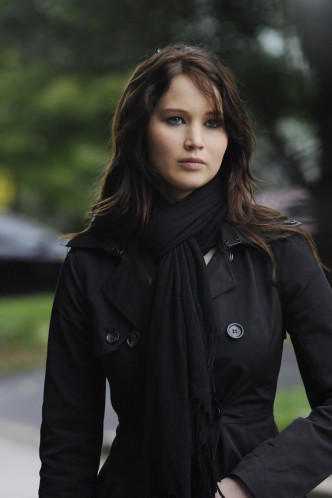
Silver Linings Playbook After guiding two actors to Best Supporting Oscars in 2010’s The Fighter, director David O. Russell returns (adapting his script from Matthew Quick’s novel) with another darkly comedic film about a complicated family that will probably earn some gold of its own. Though he’s obviously not ready to face the outside world, Pat (Bradley Cooper) checks out of the state institution he’s been court-ordered to spend eight months in after displaying some serious anger-management issues. He moves home with his football-obsessed father (Robert De Niro) and worrywart mother (Jacki Weaver of 2010’s Animal Kingdom), where he plunges into a plan to win back his estranged wife. Cooper plays Pat as a man vibrating with troubled energy — always in danger of flying into a rage, even as he pursues his forced-upbeat “silver linings” philosophy. But the movie belongs to Jennifer Lawrence, who proves the chops she showcased (pre-Hunger Games megafame) in 2010’s Winter’s Bone were no fluke. As the damaged-but-determined Tiffany, she’s the left-field element that jolts Pat out of his crazytown funk; she’s also the only reason Playbook‘s dance-competition subplot doesn’t feel eye-rollingly clichéd. The film’s not perfect, but Lawrence’s layered performance — emotional, demanding, bitchy, tough-yet-secretly-tender — damn near is. (2:01) (Cheryl Eddy)

The Twilight Saga: Breaking Dawn – Part 2 The final installment of the Twilight franchise picks up shortly after the medical-emergency vampirization of last year’s Breaking Dawn – Part 1, giving newly undead Bella Swan (Kristen Stewart) just enough time to freshen up after nearly being torn asunder during labor by her hybrid spawn, Renesmee. In a just world, Bella and soul mate Edward Cullen (Robert Pattinson) would get more of a honeymoon period, given how badly Part 1’s actual honeymoon turned out. Alas, there’s just enough time for some soft-focus vampire-on-vampire action (a letdown after all the talk of rowdy undead sex), some catamount hunting, some werewolf posturing, a reunion with Jacob (Taylor Lautner), and a few seconds of Cullen family bonding, and then those creepy Volturi are back, convinced that the Cullens have committed a vampire capital crime and ready to exact penance. Director Bill Condon (1998’s Gods and Monsters, 2004’s Kinsey) knows what the Twi-hards want and methodically doles it out, but the overall effect is less sweeping action and shivery romance and more “I have bugs crawling on me — and yet I’m bored.” Some of that isn’t his fault — he bears no responsibility for naming Renesmee, for instance, to say nothing of a January-May subplot that we’re asked to wrap our brains around. But the film maintains such a loose emotional grip, shifting clumsily and robotically from comic interludes to unintentionally comic interludes to soaring-music love scenes to attempted pathos to a snowy battlefield where the only moment of any dramatic value occurs. Weighed down by the responsibility of bringing The Twilight Saga to a close, it limps weakly to its anticlimax, leaving one almost — but not quite — wishing for one more installment, a chance for a more stirring farewell. (1:55) (Lynn Rapoport)

Howard Wallace, LGBT icon, dies at 76

6

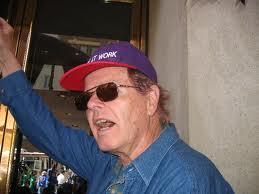
Howard Wallace, a longtime organizer who played a key role in bringing the LGBT movement and labor together in San Francisco, died Nov. 14. He was 76 and had been struggling with Alzhiemer’s disease.

Wallace grew up in Denver, and according to a biography by Andrej Koymasky, was forced to drop out of college when his father saw some United World Federalist literatature he’d brought home and told him to drop of of “commie” politics:

“He put a couple of checks on the dining-room table – the checks for next year’s tuition – and said, ‘Get out [of activism] and you can have those checks.’ I tore them up in his face, and that was the end of my college education.” 

Instead, he began a series of blue-collar jobs that brought him into labor organizing.

By the early 1970s he was in San Francisco, part of a generation of activists that included the late Hank Wilson and Assemblymember Tom Ammiano, who together helped form a group called Bay Area Gay Liberation.

“He made bridges,” Ammiano told me. “He came to BAGL and told us we had to support Cesar Chavez, and some of us were reluctant — you know, it was the Catholic Church, homophobia, all of that. But he convinced us to go on that march, and we were all glad we did.”

Wallace was a founder of the Lesbian-Gay Labor Alliance and later Pride at Work, and he was instrumental in bringing LGBT workers into the labor movement — and also bringing labor support to LGBT causes.

In 1974, Wallace worked with members of the Teamsters Union — not a group always known in those days known for enlightened attitudes towards gay people — on a boycott of Coors beer.  The teamsters were fighting bad labor practices at Coors, including a mandate that all employees take a lie-detector test that incuded the question “are you a homosexual?”

Working with both sides, Wallace got the LGBT community to sign on to the boycott, got Coors out of many of the bars in the Castro — and made lasting connections between local labor leaders and the LGBT community.

“He’s the one who brought Harvey Milk into the Coors boycott,” Ammiano recalled. “And he was never afraid to call out labor leaders when they were being homophobic.”

Like all great organizers, he could be persistent to the point where he was sometimes infuriating — but always, always pure of heart. “He was a character,” Ammiano said. “I never knew what color his hair would be, but I always knew what color his politics would be.”

Tommi Avicolli Mecca, a longtime activist and writer on LGBT history, said Wallace was “a giant among us. He was always there, for the rights of union members, the poor and working class, antiwar activists … you could always count on Howard to be there.”

Mecca noted that Wallace “saw the connections between the LBGT movement and disenfranchised people everywhere. He saw the queer struggle as part of a larger struggle for social and economic justice.”

He will be sorely missed, but as Mecca said, “we will always have his legacy; future generations can look back and understand what our movement was about.”

Said Ammiano: “I hope he and Hank Wilson are up there tipping a few back and talking about Lenin vs. Trotsky.”
 
A memorial is pending, and I’ll keep you posted as updates are available.

UPDATE NUMBER 1: State Sen. Mark Leno told me that Wallace “was not only a dear friend but a teacher. His values were strongly intact.” Leno recalled chairing the fundraising drive for the LGBT Center, a huge undertaking, and accepting a check from Coors for $5,000. “I though I had done due diligence, I knew the boycott was over, but Howard came to our board meeting and convinced us that the LGBT Center had to be above reproach.” 

(I’m sure Howard Wallace didn’t use those exact words).

“It was after that that we became good friends,” Leno said.

UPDATE NUMBER 2: From Gabriel Haaland, Pride at Work co-vice-president (SEIU< SF): I don’t know if most progressives know how much Howard gave to us all. I know there are so many who considered him a mentor and an inspiration. For those of you who don’t know him, Howard had a way of connecting the dots across so many issues. A legend and a hero for sure. A fearless warrior for justice, Howard was both passionate and gentle in his own way… He gave so much of himself and taught me so much in the rashness of my younger years. Even in death, he continues to inspire me to be better than I was before, more in integrity. I honor those who took such good care of him in the last year, like Kathy Lipscomb, Carl Finamore, Tab Buckner, Eileen Hansen, and Susan
Englander. I will miss him.

Film Listings

0

Film listings are edited by Cheryl Eddy. Reviewers are Kimberly Chun, Dennis Harvey, Lynn Rapoport, and Sara Vizcarrondo. For rep house showtimes, see Rep Clock.

DOCFEST

The 11th San Francisco Documentary Film Festival runs through Nov 21 at the Brava Theater, 2781 24th St, SF; Roxie, 3117 16th St, SF; and Shattuck Cinema, 2230 Shattuck, SF. Tickets (most films $10-12) and complete schedule at www.sfindie.com.

OPENING

Anna Karenina Joe Wright broke out of British TV with the 9,000th filmed Pride and Prejudice (2005), unnecessary but quite good. Too bad it immediately went to his head. His increasing showiness as director enlivened the silly teenage-superspy avenger fantasy Hanna (2011), but it started to get in the way of Atonement (2007), a fine book didn’t need camera gymnastics to make a great movie. Now it’s completely sunk a certified literary masterpiece still waiting for a worthy film adaptation. Keira Knightley plays the titular 19th century St. Petersburg aristocrat whose staid, happy-enough existence as a doting mother and dutiful wife (to deglammed Jude Law’s honorable but neglectful Karenin) is upended when she enters a mutually passionate affair with dashing military officer Count Vronsky (Aaron Taylor-Johnson, miscast). Scandal and tragedy ensue. There’s nothing wrong with the screenplay, by Tom Stoppard no less. What’s wrong is Wright’s bright idea of staging the whole shebang as if it were indeed staged — a theatrical production in which nearly everything (even a crucial horse race) takes place on a proscenium stage, in the auditorium, or "backstage" among riggings. Whenever we move into a "real" location, the director makes sure that transition draws attention to its own cleverness as possible. What, you might ask, is the point? That the public social mores and society Anna lives in are a sort of "acting"? Like wow. Add to that another brittle, mannered performance by Wright’s muse Knightley, and there’s no hope of involvement here, let alone empathy — in love with its empty (but very prettily designed) layers of artifice, this movie ends up suffocating all emotion in gilded horseshit. The reversed-fortune romance between Levin (Domhall Gleeson) and Kitty (Alicia Vikander) does work quite well — though since Tolstoy called his novel Anna Karenina, it’s a pretty bad sign when the subsidiary storyline ends up vastly more engaging than hers. (2:10) (Harvey)

Brooklyn Castle Geeks rock — that much we all know in the science- and math-rich Bay Area. That doesn’t lessen the impact of this documentary about Brooklyn I.S. 318’s young chess players, who have won the most junior high chess championships in the country and were the first middle school team to win the US Chess Federation’s national high school championship. With 60-plus percent of the students below the federal poverty level, the players certainly aren’t rolling in privilege, especially during these budget-slashing times. Nonetheless, with the help of caring teachers and an intensive chess class, the school’s players, spanning a spectrum of skills with some surpassing even Einstein’s rating, have managed to bring home state and national championships for the school — and vastly improved their prospects along the way. They range from Rochelle, the shy girl who has the chance to become the first African American female chess master; Alexis, the boy who yearns to get into a good high school and college to care for his immigrant parents; Justus, the sixth-grade chess prodigy who’s already a master and suffers intensely when he loses; and Pobo, the sweet-faced son of Nigerian émigrés who says he probably wouldn’t even be in school if not for chess. Brooklyn Castle is about chess, yes, as director Katie Dellamaggiore takes the time to spell out the rating and tournament point systems, but it’s also just as importantly about the kids, who are smart, strategic, and getting primed to play the game of life. (1:42) Opera Plaza. (Chun)

Holy Motors Holy moly. Offbeat auteur Leos Carax (1999’s Pola X) and frequent star Denis Lavant (1991’s Lovers on the Bridge) collaborate on one of the most bizarrely wonderful films of the year, or any year. Oscar (Lavant) spends every day riding around Paris in a white limo driven by Céline (Edith Scob, whose eerie role in 1960’s Eyes Without a Face is freely referenced here). After making use of the car’s full complement of wigs, theatrical make-up, and costumes, he emerges for "appointments" with unseen "clients," who apparently observe each vignette as it happens. And don’t even try to predict what’s coming next, or decipher what it all means, beyond an investigation of identity so original you won’t believe your eyes. This wickedly humorous trip through motion-capture suits, graveyard photo shoots, teen angst, back-alley gangsters, old age, and more (yep, that’s the theme from 1954’s Godzilla you hear; oh, and yep, that’s pop star Kylie Minogue) is equal parts disturbing and delightful. Movies don’t get more original or memorable than this. (1:56) Embarcadero, Shattuck. (Eddy)

A Royal Affair At age 15 in 1766, British princess Caroline (Alicia Vikander) travels abroad to a new life — as queen to the new ruler of Denmark, her cousin. Attractive and accomplished, she is judged a great success by everyone but her husband. King Christian (Mikkel Boe Følsgaard) is just a teenager himself, albeit one whose mental illness makes him behave alternately like a debauched libertine, a rude two year-old, a sulky-rebellious adolescent, and a plain old abusive spouse. Once her principal official duty is fulfilled — bearing a male heir — the two do their best to avoid each other. But on a tour of Europe Christian meets German doctor Johann Friedrich Struenesse (Mads Mikkelsen), a true man of the Enlightenment who not only has advanced notions about calming the monarch’s "eccentricities," but proves a tolerant and agreeable royal companion. Lured back to Denmark as the King’s personal physician, he soon infects the cultured Queen with the fervor of his progressive ideas, while the two find themselves mutually attracted on less intellectual levels as well. When they start manipulating their unstable but malleable ruler to push much-needed public reforms through in the still basically feudal nation, they begin acquiring powerful enemies. This very handsome-looking history lesson highlights a chapter relatively little-known here, and finds in it an interesting juncture in the eternal battle between masters and servants, the piously self-interested and the secular humanists. At the same time, Nikolaj Arcel’s impressively mounted and acted film is also somewhat pedestrian and overlong. It’s a quality costume drama, but not a great one.(2:17) California, Clay, Smith Rafael. (Harvey)

Silver Linings Playbook David O. Russell follows up 2010’s The Fighter with this dark comedy about a troubled man (Bradley Cooper) attempting to piece his life back together. Jennifer Lawrence and Robert De Niro co-star. (2:01)

The Twilight Saga: Breaking Dawn – Part 2 The Twilight series ends. BUT IT WILL NEVER DIE. (1:55)

ONGOING

Argo If you didn’t know the particulars of the 1979 Iranian Revolution, you won’t be an expert after Argo, but the film does a good job of capturing America’s fearful reaction to the events that followed it — particularly the hostage crisis at the US embassy in Tehran. Argo zeroes in on the fate of six embassy staffers who managed to escape the building and flee to the home of the sympathetic Canadian ambassador (Victor Garber). Back in Washington, short-tempered CIA agents (including a top-notch Bryan Cranston) cast about for ways to rescue them. Enter Tony Mendez (Ben Affleck, who also directs), exfil specialist and father to a youngster wrapped up in the era’s sci-fi craze. While watching 1973’s Battle for the Planet of the Apes, Tony comes up with what Cranston’s character calls "the best bad idea we have:" the CIA will fund a phony Canadian movie production (corny, intergalactic, and titled Argo) and pretend the six are part of the crew, visiting Iran for a few days on a location shoot. Tony will sneak in, deliver the necessary fake-ID documents, and escort them out. Neither his superiors, nor the six in hiding, have much faith in the idea. ("Is this the part where we say, ‘It’s so crazy it just might work?’" someone asks, beating the cliché to the punch.) Argo never lets you forget that lives are at stake; every painstakingly forged form, every bluff past a checkpoint official increases the anxiety (to the point of being laid on a bit thick by the end). But though Affleck builds the needed suspense with gusto, Argo comes alive in its Hollywood scenes. As the show-biz veterans who mull over Tony’s plan with a mix of Tinseltown cynicism and patiotic duty, John Goodman and Alan Arkin practically burst with in-joke brio. I could have watched an entire movie just about those two. (2:00) Four Star, Marina, 1000 Van Ness, Presidio, SF Center, Sundance Kabuki. (Eddy)

Cloud Atlas Cramming the six busy storylines of David Mitchell’s wildly ambitious novel into just three hours — the average reader might have thought at least 12 would be required — this impressive adaptation directed (in separate parts) by Tom Twyker (1998’s Run Lola Run) and Matrix siblings Lana and Andy Wachowski has a whole lot of narrative to get through, stretching around the globe and over centuries. In the mid 19th century, Jim Sturgess’ sickly American notory endures a long sea voyage as reluctant protector of a runaway-slave stowaway from the Chatham Islands (David Gyasi). In 1931 Belgium, a talented but criminally minded British musician (Ben Whishaw) wheedles his way into the household of a famous but long-inactive composer (Jim Broadbent). A chance encounter sets 1970s San Francisco journalist Luisa (Halle Berry) on the path of a massive cover-up conspiracy, swiftly putting her life in danger. Circa now, a reprobate London publisher’s (Broadbent) huge windfall turns into bad luck that gets even worse when he seeks help from his brother (Hugh Grant). In the not-so-distant future, a disposable "fabricant" server to the "consumer" classes (Doona Bae) finds herself plucked from her cog-like life for a rebellious higher purpose. Finally, in an indeterminately distant future after "the Fall," an island tribesman (Tom Hanks) forms a highly ambivalent relationship toward a visitor (Berry) from a more advanced but dying civilization. Mitchell’s book was divided into huge novella-sized blocks, with each thread split in two; the film wastes very little time establishing its individual stories before beginning to rapidly intercut between them. That may result in a sense of information (and eventually action) overload, particularly for non-readers, even as it clarifies the connective tissues running throughout. Compression robs some episodes of the cumulative impact they had on the page; the starry multicasting (which in addition to the above mentioned finds many uses for Hugo Weaving, Keith David, James D’Arcy, and Susan Sarandon) can be a distraction; and there’s too much uplift forced on the six tales’ summation. Simply put, not everything here works; like the very different Watchmen, this is a rather brilliant "impossible adaptation" screenplay (by the directors) than nonetheless can’t help but be a bit too much. But so much does work — in alternating currents of satire, melodrama, pulp thriller, dystopian sci-fi, adventure, and so on — that Cloud Atlas must be forgiven for being imperfect. If it were perfect, it couldn’t possibly sprawl as imaginatively and challengingly as it does, and as mainstream movies very seldom do. (2:52) California, 1000 Van Ness, SF Center, Sundance Kabuki. (Harvey)

Dangerous Liaisons John Malkovich and Sarah Michelle Gellar may have already starred in pop culture’s favorite adaptations of this classic French novel, but since pretty people scheming never gets old, here’s a Chinese take on Les Liaisons dangereuses, complete with big-name cast and all the visual allure of 1930s Shanghai. "You are such a cad!" a woman shrieks at Xie Yifan (Jang Dong-gun) in the first scene, and indeed he is — though his heart belongs to "Miss Mo" (Cecilia Cheung). The malicious wager (if you seduce her and then horribly dump her, I’ll let you sleep with me … plus: incidental affairs along the way) is struck and things proceed on schedule, until Yifan finds himself actually falling for virtuous widow Fenyu (Zhang Ziyi). You know how it ends. Gorgeous costumes and mise-en-scène add visual interest to the familiar story, which also adds a little political flair in the form of Chinese students protesting the early days of Japanese occupation. (1:45) Metreon. (Eddy)

Diana Vreeland: The Eye Has to Travel The life of legendary fashion editor Diana Vreeland is colorfully recounted in Diana Vreeland: The Eye Has to Travel, a doc directed by her granddaughter-in-law, Lisa Immordino Vreeland. The family connection meant seemingly unlimited access to material featuring the unconventionally glamorous (and highly quotable) Vreeland herself, plus the striking images that remain from her work at Harper’s Bazaar, Vogue, and the Costume Institute of the Metropolitan Museum of Art. "Narrated" from interview transcripts by an actor approximating the late Vreeland’s husky, posh tones, the film allows for some criticism (her employees often trembled at the sight of her; her sons felt neglected; her grasp of historical accuracy while working at the museum was sometimes lacking) among the praise, which is lavish and delivered by A-listers like Anjelica Huston, who remembers "She had a taste for the extraordinary and the extreme," and Manolo Blahnik, who squeals, "She had the vision!" (1:26) Opera Plaza. (Eddy)

The Flat Arnon Goldfinger’s The Flat begins as the filmmaker’s family descends upon the Tel Aviv apartment of his recently-deceased grandmother, "a bit of a hoarder" who lived to 95 and seemingly never got rid of anything. This includes, as Goldfinger discovers, copies of the Joseph Goebbels-founded newspaper Der Angriff, containing articles about "the Nazi who visited Palestine." The Nazi was Leopold von Mildenstein, an SS officer with an interest in Zionism. Turns out he made the journey in 1933 with his wife and a Jewish couple named Kurt and Gerda Tuchler — Goldfinger’s grandparents. Understandably intrigued and more than a little baffled, Goldfinger investigates, finding letters and diary entries that reveal the unlikely traveling companions were close friends, even after World War II. His mother, the Tuchler’s daughter, prefers to "keep the past out," but curiosity (and the pursuit of a good documentary) presses Goldfinger forward; he visits von Mildenstein’s elderly daughter in Germany, digs through German archives, and unearths even more suprises about his family tree. Broader themes about guilt and denial emerge — post-traumatic coping mechanisms that echo through generations.

(1:37) Albany, Opera Plaza. (Eddy)

Flight To twist the words of one troubled balladeer, he believes he can fly, he believes he can touch the sky. Unfortunately for Denzel Washington’s Whip Whitaker, another less savory connotation applies: his semi-sketchy airline captain is sailing on the overconfidence that comes with billowing clouds of blow. Beware the quickie TV spot — and Washington’s heroic stance in the poster — that plays this as a quasi-action flick: Flight is really about a man’s efforts to escape responsibility and his flight from facing his own addiction. It also sees Washington once again doing what he does so well: wrestling with the demons of a charismatic yet deeply flawed protagonist. We come upon Whip as he’s rousing himself from yet another bender, balancing himself out with a couple lines with a gorgeous, enabling flight attendant by his side. It’s a checks-and-balances routine we’re led to believe is business as usual, as he slides confidently into the cockpit, gives the passengers a good scare by charging through turbulence, and proceeds to doze off. The plane, however, goes into fail mode and forces the pilot to improvise brilliantly and kick into hero mode, though he can’t fly from his cover, which is slowly blown despite the ministrations of kindred addict Nicole (Kelly Reilly) and dealer Harling (John Goodman at his most ebullient) and the defensive moves of his pilots union cohort (Bruce Greenwood) and the airline’s lawyer (Don Cheadle). How can Whip fly out of the particular jam called his life? Working with what he’s given, Washington summons reserves of humanity, though he’s ultimately failed by John Gatins’ sanctimonious, recovery-by-the-numbers script and the tendency of seasoned director Robert Zemeckis to blithely skip over the personal history and background details that would have more completely filled out our picture of Whip. We’re left grasping for the highs, waiting for the instances that Harling sails into view and Whip tumbles off the wagon. (2:18) 1000 Van Ness, Presidio, SF Center, Sundance Kabuki. (Chun)

Hotel Transylvania (1:32) Metreon.

A Late Quartet Philip Seymour Hoffman is fed up playing second fiddle — literally. He stars in this grown-up soap opera about the internal dramas of a world-class string quartet. While the group is preparing for its 25th season, the eldest member (Christopher Walken) is diagnosed with early stage Parkinson’s. As he’s the base note in the quartet, his retirement challenges the group’s future, not just his own. Hoffman’s second violinist sees the transition as an opportunity to challenge the first violin (Mark Ivanir) for an occasional Alpha role. When his wife, the quartet’s viola player (Catherine Keener), disagrees, it’s a slight ("You think I’m not good enough?") and a betrayal because prior to their marriage, viola and first violin would "duet" if you get my meaning. This becomes a grody aside when Hoffman and Keener’s violin prodigy daughter (Imogen Poots) falls for her mother’s old beau and Hoffman challenges their marriage with a flamenco dancer. These quiet people finds ways to use some loud instruments (a flamenco dancer, really?) and the music as well as the views of Manhattan create a deeply settled feeling of comfort in the cold —insulation can be a dangerous thing. When we see (real world) cellist Nina Lee play, and her full body interacts with a drama as big as vaudeville, we see what tension was left out of the playing and forced into the incestuous "family" conflicts. In A Late Quartet, pleasures are great and atmosphere, heavy. You couldn’t find a better advertisement for this symphonic season; I wanted to buy tickets immediately. And also vowed to stay away from musicians. (1:45) Albany, Embarcadero, Smith Rafael. (Vizcarrondo)

A Liar’s Autobiography: The Untrue Story of Monty Python’s Graham Chapman Blessed with recordings made by Monty Python member Graham Chapman (King Arthur in 1975’s Monty Python and the Holy Grail; Brian in 1979’s Life of Brian) before his death in 1989 from cancer, filmmakers Bill Jones, Jeff Simpson, and Ben Timlett recruited 14 different animation studios to piece together Chapman’s darkly humorous (and often just plain dark) life story. He was gay, he was an alcoholic, he co-wrote (with John Cleese) the legendary "Dead Parrot Sketch." A Liar’s Autobiography starts slowly — even with fellow Monty Python members Cleese, Terry Jones, Terry Gilliam, and Michael Palin lending their voices, much of the bone-dry humor falls disappointingly flat. "This is not a Monty Python film," the filmmakers insist, and viewers hoping for such will be disappointed. Stick with it, though, and the film eventually finds its footing as an offbeat biopic, with the pick-a-mix animation gimmick at its most effective when illustrating Chapman’s booze-fueled hallucinations. (1:22) Smith Rafael. (Eddy)

Lincoln Distinguished subject matter and an A+ production team (Steven Spielberg directing, Daniel Day-Lewis starring, Tony Kushner adapting Doris Kearns Goodwin, John Williams scoring every emotion juuust so) mean Lincoln delivers about what you’d expect: a compelling (if verbose), emotionally resonant (and somehow suspenseful) dramatization of President Lincoln’s push to get the 13th amendment passed before the start of his second term. America’s neck-deep in the Civil War, and Congress, though now without Southern representation, is profoundly divided on the issue of abolition. Spielberg recreates 1865 Washington as a vibrant, exciting place, albeit one filled with so many recognizable stars it’s almost distracting wondering who’ll pop up in the next scene: Jared Harris as Ulysses S. Grant! Joseph Gordon-Levitt as Robert Lincoln! Lena Dunham’s shirtless boyfriend on Girls (Adam Driver) as a soldier! Most notable among the huge cast are John Hawkes, Tim Blake Nelson, and a daffy James Spader as a trio of lobbyists; Sally Field as the troubled First Lady; and likely Oscar contenders Tommy Lee Jones (as winningly cranky Rep. Thaddeus Stevens) and Day-Lewis, who does a reliably great job of disappearing into his iconic role. (2:30) Presidio, SF Center, Shattuck. (Eddy)

Looper It’s 2044 and, thanks to a lengthy bout of exposition by our protagonist, Joe (Joseph Gordon-Levitt), here’s what we know: Time travel, an invention 30 years away, will be used by criminals to transport their soon-to-be homicide victims backward, where a class of gunmen called loopers, Joe among them, are employed to "do the necessaries." More deftly revealed in Brick writer-director Rian Johnson’s new film is the joylessness of the world in which Joe amorally makes his way, where gangsters from the future control the present (under the supervision of Jeff Daniels), their hit men live large but badly (Joe is addicted to some eyeball-administered narcotic), and the remainder of the urban populace suffers below-subsistence-level poverty. The latest downside for guys like Joe is that a new crime boss has begun sending back a steady stream of aging loopers for termination, or "closing the loop"; soon enough, Joe is staring down a gun barrel at himself plus 30 years. Being played by Bruce Willis, old Joe is not one to peaceably abide by a death warrant, and young Joe must set off in search of himself so that—with the help of a woman named Sara (Emily Blunt) and her creepy-cute son Cid (Pierce Gagnon)—he can blow his own (future) head off. Having seen the evocatively horrific fate of another escaped looper, we can’t totally blame him. Parsing the daft mechanics of time travel as envisioned here is rough going, but the film’s brisk pacing and talented cast distract, and as one Joe tersely explains to another, if they start talking about it, "we’re gonna be here all day making diagrams with straws" —in other words, some loops just weren’t meant to be closed. (1:58) 1000 Van Ness, Piedmont, Sundance Kabuki. (Rapoport)

The Man With The Iron Fists (1:36) 1000 Van Ness, SF Center.

The Other Son The plot of ABC Family’s Switched at Birth gets a politically-minded makeover in Lorraine Lévy’s The Other Son, in which the mixed-up teens represent both sides of the Israel-Palestine conflict. When mop-topped wannabe rocker Joseph (Jules Sitruk) dutifully signs up for Israeli military duty, the required blood test reveals he’s not the biological son of his parents. Understandably freaked out, his French-Israeli mother (Emmanuelle Devos) finds out that a hospital error during a Gulf War-era evacuation meant she and husband Alon (Pascal Elbé) went home with the wrong infant — and their child, aspiring doctor Yacine (Medhi Dehbi), was raised instead by a Palestinian couple (Areen Omari, Khalifia Natour). It’s a highly-charged situation on many levels ("Am I still Jewish?", a tearful Joseph asks; "Have fun with the occupying forces?", Yacine’s bitter brother inquires after his family visits Joseph in Tel Aviv), and potential for melodrama is sky-high. Fortunately, director and co-writer Levy handles the subject with admirable sensitivity, and the film is further buoyed by strong performances. (1:53) Opera Plaza, Smith Rafael. (Eddy)

Paranormal Activity 4 (1:21) Metreon.

The Perks of Being a Wallflower Move over, Diary of a Wimpy Kid series — there’s a new shrinking-violet social outcast in town. These days, life might not suck quite so hard for 90-pound weaklings in every age category, what with so many films and TV shows exposing, and sometimes even celebrating, the many miseries of childhood and adolescence for all to see. In this case, Perks author Stephen Chbosky takes on the directorial duties — both a good and bad thing, much like the teen years. Smart, shy Charlie is starting high school with a host of issues: he’s painfully awkward and very alone in the brutal throng, his only friend just committed suicide, and his only simpatico family member was killed in a car accident. Charlie’s English teacher Mr. Andersen (Paul Rudd) appears to be his only connection, until the freshman strikes up a conversation with feline, charismatic, shop-class jester Patrick (Ezra Miller) and his magnetic, music- and fun-loving stepsister Sam (Emma Watson). Who needs the popular kids? The witty duo head up their gang of coolly uncool outcasts their own, the Wallflowers (not to be confused with the deeply uncool Jakob Dylan combo), and with them, Charlie appears to have found his tribe. Only a few small secrets put a damper on matters: Patrick happens to be gay and involved with football player Brad (Johnny Simmons), who’s saddled with a violently conservative father, and Charlie is in love with the already-hooked-up Sam and is frightened that his fragile equilibrium will be destroyed when his new besties graduate and slip out of his life. Displaying empathy and a devotion to emotional truth, Chbosky takes good care of his characters, preserving the complexity and ungainly quirks of their not-so-cartoonish suburbia, though his limitations as a director come to the fore in the murkiness and choppily handled climax that reveals how damaged Charlie truly is. (1:43) Bridge, Embarcadero, Piedmont, Shattuck, Sundance Kabuki. (Chun)

Pitch Perfect As an all-female college a cappella group known as the Barden Bellas launches into Ace of Base’s "The Sign" during the prologue of Pitch Perfect, you can hear the Glee-meets-Bring It On elevator pitch. Which is fine, since Bring It On-meets-anything is clearly worth a shot. In this attempt, Anna Kendrick stars as withdrawn and disaffected college freshman Beca, who dreams of producing music in L.A. but is begrudgingly getting a free ride at Barden University via her comp lit professor father. Clearly his goal is not making sure she receives a liberal arts education, as Barden’s academic jungle extends to the edges of the campus’s competitive a cappella scene, and the closest thing to an intellectual challenge occurs during a "riff-off" between a cappella gangs at the bottom of a mysteriously drained swimming pool. When Beca reluctantly joins the Bellas, she finds herself caring enough about the group’s fate to push for an Ace of Base moratorium and radical steps like performing mashups. Much as 2000’s Bring It On coined terms like "cheerocracy" and "having cheer-sex," Pitch Perfect gives us the infinitely applicable prefix "a ca-" and descriptives like "getting Treble-boned," a reference to forbidden sexual relations with the Bellas’ cocky rivals, the Treblemakers. The gags get funnier, dirtier, and weirder, arguably reaching their climax in projectile-vomit snow angels, with Elizabeth Banks and John Michael Higgins as grin-panning competition commentators offering a string of loopily inappropriate observations. (1:52) Metreon. (Rapoport)

Searching for Sugar Man The tale of the lost, and increasingly found, artist known as Rodriguez seems to have it all: the mystery and drama of myth, beginning with the singer-songwriter’s stunning 1970 debut, Cold Fact, a neglected folk rock-psychedelic masterwork. (The record never sold in the states, but somehow became a beloved, canonical LP in South Africa.) The story goes on to parse the cold, hard facts of vanished hopes and unpaid royalties, all too familiar in pop tragedies. In Searching for Sugar Man, Swedish documentarian Malik Bendjelloul lays out the ballad of Rodriguez as a rock’n’roll detective story, with two South African music lovers in hot pursuit of the elusive musician — long-rumored to have died onstage by either self-immolation or gunshot, and whose music spoke to a generation of white activists struggling to overturn apartheid. By the time Rodriguez himself enters the narrative, the film has taken on a fairy-tale trajectory; the end result speaks volumes about the power and longevity of great songwriting. (1:25) Opera Plaza. (Chun)

The Sessions Polio has long since paralyzed the body of Berkeley poet Mark O’Brien (John Hawkes) from the neck down. Of course his mind is free to roam — but it often roams south of the personal equator, where he hasn’t had the same opportunities as able-bodied people. Thus he enlists the services of Cheryl (Helen Hunt), a professional sex surrogate, to lose his virginity at last. Based on the real-life figures’ experiences, this drama by Australian polio survivor Ben Lewin was a big hit at Sundance this year (then titled The Surrogate), and it’s not hard to see why: this is one of those rare inspirational feel-good stories that doesn’t pander and earns its tears with honest emotional toil. Hawkes is always arresting, but Hunt hasn’t been this good in a long time, and William H. Macy is pure pleasure as a sympathetic priest put in numerous awkward positions with the Lord by Mark’s very down-to-earth questions and confessions. (1:35) Embarcadero, Piedmont, Shattuck, Sundance Kabuki. (Harvey)

Seven Psychopaths Those nostalgic for 1990s-style chatty assassins will find much to love in the broadly sketched Seven Psychopaths. Director-writer Martin McDonough already dipped a pen into Tarantino’s blood-splattered ink well with his 2008 debut feature, In Bruges, and Seven Psychopaths reads as larkier and more off-the-cuff, as the award-winning Irish playwright continues to try to find his own discomfiting, teasing balance between goofy Grand Guignol yuks and meta-minded storytelling. Structured, sort of, with the certified lucidity of a thrill killer, Seven Psychopaths opens on Boardwalk Empire heavies Michael Pitt and Michael Stuhlbarg bantering about the terrors of getting shot in the eyeball, while waiting to "kill a chick." The talky twosome don’t seem capable of harming a fat hen, in the face of the Jack of Spades serial killer, who happens to be Psychopath No. One and a serial destroyer of hired guns. The key to the rest of the psychopathic gang is locked in the noggin of screenwriter Marty (Colin Farrell), who’s grappling with a major block and attempting the seeming impossible task of creating a peace-loving, Buddhist killer. Looking on are his girlfriend Kaya (Abbie Cornish) and actor best friend Billy (Sam Rockwell), who has a lucrative side gig as a dog kidnapper — and reward snatcher — with the dapper Hans (Christopher Walken). A teensy bit too enthusiastic about Marty’s screenplay, Billy displays a talent for stumbling over psychos, reeling in Zachariah (Tom Waits) and, on his doggie-grabbing adventures, Shih Tzu-loving gangster Charlie (Woody Harrelson). Unrest assured, leitmotifs from McDonough plays — like a preoccupation with fiction-making (The Pillowman) and the coupling of pet-loving sentimentality and primal violence (The Lieutenant of Inishmore) — crop up in Seven Psychopaths, though in rougher, less refined form, and sprinkled with a nervous, bromantic anxiety that barely skirts homophobia. Best to bask in the cute, dumb pleasures of a saucer-eyed lap dog and the considerably more mental joys of this cast, headed up by dear dog hunter Walken, who can still stir terror with just a withering gaze and a voice that can peel the finish off a watch. (1:45) Metreon, 1000 Van Ness, Sundance Kabuki. (Chun)

Silent Hill: Revelation 3D The husband and adopted daughter of Rosa (Radha Mitchell, star of the 2006 first film and seen briefly here), Harry (Sean Bean) and Heather (Adelaide Clemens) have been on the run from both police and ghouls since mom vanished into the titular nether land some years ago. When dad is abducted, Heather must follow him to you-know-where, accompanied by cute-boy-with-a-secret Vincent (Kit Harington). There she runs screaming from the usual faceless knife-wielding nuns and other nightmare nemeses while attempting to rescue Pa and puzzle out her place in resolving the curse placed on the ghost town. The original 2006 film adaptation of the video game was a mixed bag but, like the game, had splendid visuals; this cut rate sequel lacks even that, despite the addition of 3D (if you’re willing to pay for a premium ticket). It’s pure cheese with no real scares, much-diminished atmosphere, and laughable stretches of mythological mumbo-jumbo recited by embarrassed good actors (Martin Donovan, Deborah Kara Unger, Carrie-Anne Moss, a punishingly hammy Malcolm McDowell). There is one cool monster — a many-faced "tarantula" assembled from mannequin parts — but its couple minutes aren’t worth ponying up for the rest of a movie that severely disappoints already low expectations. (1:34) Metreon. (Harvey)

Sinister True-crime author Ellison Oswalt (Ethan Hawke) hasn’t had a successful book in a decade. So he uproots wife (Juliet Rylance) and kids (Michael Hall D’Addario, Clare Foley) for yet another research project, not telling them that they’re actually moving into the recent scene of a ghastly unsolved murder in which an entire family — save one still-missing child — was hanged from a backyard tree. He finds a box in the attic that somehow escaped police attention, its contents being several reels of Super 8 home movies stretching back decades — all of families similarly wiped out in one cruel act. Smelling best-sellerdom, Ellison keeps this evidence of a serial slayer to himself. It’s disturbing when his son re-commences sleepwalking night terrors. It’s really disturbing when dad begins to spy a demonic looking figure lurking in the background of the films. It’s really, really disturbing when the projector starts turning itself on, in the middle of the night, in his locked office. A considerable bounce-back from his bloated 2008 Day the Earth Stood Still remake, Scott Derrickson’s film takes the opposite tact — it’s very small in both physical scope and narrative focus, almost never leaving the Oswalt’s modest house in fact. He takes the time to let pure creepiness build rather than feeling the need to goose our nads with a false scare or goresplat every five minutes. As a result, Sinister is definitely one of the year’s better horrors, even if (perhaps inevitably) the denouement can’t fully meet the expectations raised by that very long, unsettling buildup. (1:50) Metreon. (Harvey)

Skyfall Top marks to Adele, who delivers a magnificent title song to cap off Skyfall‘s thrilling pre-credits chase scene. Unfortunate, then, that the film that follows squanders its initial promise. After a bomb attack on MI6, the clock is running out for Bond (Daniel Craig) and M (Judi Dench), accused of Cold War irrelevancy in a 21st century full of malevolent, stateless computer hackers. The audience, too, will yearn for a return to simpler times; dialogue about "firewalls" and "obfuscated code" never fails to sound faintly ridiculous, despite the efforts Ben Whishaw as the youthful new head of Q branch. Javier Bardem is creative and creepy as keyboard-tapping villain Raoul Silva, but would have done better with a megalomaniac scheme to take over the world. Instead, a small-potatoes revenge plot limps to a dull conclusion in the middle of nowhere. Skyfall never decides whether it prefers action, bons mots, and in-jokes to ponderous mythologizing and ripped-from-the-headlines speechifying — the result is a unsatisfying, uneven mixture. (2:23) California, Four Star, Marina, Metreon, 1000 Van Ness, Shattuck, Sundance Kabuki. (Ben Richardson)

Taken 2 Surprise hit Taken (2008) was a soap opera produced by French action master Luc Besson and designed for export. The divorced-dad-saves-daughter-from-sex-slavery plot may have nagged at some universal parenting anxieties, but it was a Movie of the Week melodrama made on a major movie budget. Taken 2 begins immediately after the last, with sweet teen Kim (Maggie Grace) talking about normalizing after she was drugged and bought for booty. Papa Neeson sees Kim’s mom (Famke Janssen) losing her grip on husband number two and invites them both to holiday in Istanbul following one of his high-stakes security gigs. When the assistant with the money slinks him a fat envelope, Neeson chuckles at his haul. This is the point when women in the audience choose which Neeson they’re watching: the understated super-provider or the warrior-dad whose sense of duty can meet no match. For family men, this is the breeziest bit of vicarious living available; Neeson’s character is a tireless daddy duelist, a man as diligent as he is organized. (This is guy who screams "Victory loves preparation!") As head-splitting, disorienting, and generally exhausting as the action direction is, Neeson saves his ex-wife and the show in a stream of unclear shootouts. Taken 2 is best suited for the small screen, but whatever the size, no one can stop an international slave trade (or wolves, or Batman) like 21st century Liam. Swoon. (1:31) Metreon, 1000 Van Ness. (Vizcarrondo)

The Waiting Room Twenty-four hours in the uneasy limbo of an ER waiting room sounds like a grueling, maddening experience, and that’s certainly a theme in this day-in-the-life film. But local documentarian Peter Nicks has crafted an absorbing portrait of emergency public health care, as experienced by patients and their families at Oakland’s Highland Hospital and as practiced by the staff there. Other themes: no insurance, no primary care physician, and an emergency room being used as a medical facility of first, last, and only resort. Nicks has found a rich array of subjects to tell this complicated story: An anxious, unemployed father sits at his little girl’s bedside. Staffers stare at a computer screen, tracking a flood of admissions and the scarce commodity of available beds. A doctor contemplates the ethics of discharging a homeless addict for the sake of freeing up one of them. And a humorous, ultra-competent triage nurse fields an endless queue of arrivals with humanity and steady nerves. (1:21) Shattuck. (Rapoport)

Wreck-It Ralph Wreck-It Ralph cribs directly from the Toy Story series: when the lights go off in the arcade, video game characters gather to eat, drink, and endure existential crises. John C. Reilly is likable and idiosyncratic as Ralph, the hulking, ham-fisted villain of a game called Fix-It-Felix. Fed up with being the bad guy, Ralph sneaks into gritty combat sim Hero’s Duty under the nose of Sergeant Calhoun (Jane Lynch), a blond space marine who mixes Mass Effect‘s Commander Shepard with a PG-rated R. Lee Ermey. Things go quickly awry, and soon Ralph is marooned in cart-racing candyland Sugar Rush, helping Vanellope Von Schweetz (a manic Sarah Silverman), with Calhoun and opposite number Felix (Jack McBrayer) hot on his heels. Though often aggressively childish, the humor will amuse kids, parents, and occasionally gamers, and the Disney-approved message about acceptance is moving without being maudlin. The animation, limber enough to portray 30 years of changing video game graphics, deserves special praise. (1:34) Metreon, 1000 Van Ness, Presidio, Shattuck, Sundance Kabuki. (Ben Richardson)

Shit happened

0

CASH FOR TRASH

Recology, the city’s garbage monopoly, has a problem: It charges residential customers only for the black cans full of unrecyclable material headed for the landfill — but thanks to city policy and environmental consciousness, there’s less and less traditional trash out there. Ultimately, the company wants to get rid of the big black cans altogether.

So a business model based on offering free recycling and compost doesn’t work any more — and everyone has known for some time that it had to change.

But there was no discussion of rate changes earlier this year; in fact, Recology folks said there were no plans for an immediate rate hike in the works. That’s because the June ballot included a measure that would have created competitive bidding for the city’s garbage contract — and the last thing Recology wanted was the threat of a rate hike to drive voters toward amending the 1932 City Charter provision that gives just one company complete control over the lucrative waste franchise.

Ah, but the June election is long over, and Recology beat back that effort — so the rate hike we all expected is now on the table.

On Sept. 11, Recology informed the city that it intends to apply for a new rate structure — and while the process is long and convoluted, we’ll see the details in a few weeks, and you can expect to start paying more for your service by next summer.

There’s no formal proposal yet — that will come in December. The director of the Department of Public Works has to approve it, and so does a Rate Board made up of the city administration, the controller and the head of the Public Utilities Commission. But both Recology and the city say there will be some significant changes in the way San Franciscans pay to have their refuse removed.

“We can’t focus our financial operations on a black can if we’re trying to get rid of it,” Recology spokesperson Eric Potashner told us.

Douglas Legg, the finance director at the Department of Public Works agrees. “As we’ve been pushing diversion, the blue and green cans have been pretty heavily subsidized.”

But shouldn’t good habits, like recycling, be subsidized? Should people who recycle and compost more be penalized? “That’s the challenge,” Potashner said.

And in the end, it’s going to be more than a shift in which bins cost how much. There’s no doubt that your bills will be rising, perhaps by a significant amount. “I assume it will go up,” Legg said. “There hasn’t been a cost-of-living increase since 2010.”

Which, of course, brings back the competitive bidding point. If others had a chance to make a play for the city contract, might rates be lower? Or might the city get more out of the deal?

Retired Judge Quentin Kopp, who helped spearhead the campaign for competitive bidding, thinks so. “If we had competitive bidding,” he told us, “these rate hikes would be more moderate.”

OPENING THE LAST CLOSET DOOR

While most everyone’s attention was focused on electoral politics in late October, Supervisors David Campos and Christina Olague were talking about a different level of political issue, one that’s still a huge taboo: Gay men in professional sports. At an Oct. 30 press conference, the two LGBT supes joined with representatives of The Last Closet, an SF-based campaign that’s trying to get gay professional athletes to come out.

It’s remarkable (or maybe, sadly, it isn’t) that in 2012, not one openly gay man has played in any of the Big Five pro sports (football, basketball, hockey, baseball and soccer). There are, everyone knows, plenty of gay athletes, and the NFL, NBA, NHL, MLB and various soccer associations all have gay players. Some of them have come out after they’ve retired. But on the field (or on the floor, or on the ice)? No way.

Why does anyone care? Because youth sports are still, even in this town, full of homophobic language and homophobic attitudes, and it’s hard to imagine what young LGBT football or basketball players have to endure. Even one gay player could make a world of difference.

“What I saw with the San Francisco Giants, all of the Latino players, was such a source of pride to Latino boys and girls,” Campos told us. “We can’t feel that in the LGBT community. We know there are gay baseball players, but the LGBT youth don’t have those role models to look up to.”

The Last Closet campaign emerged out of a documentary film project that sought to look at homophobia in pro sports. “It became clear that some members of the sports hierarchy were not going to make themselves available to speak about this taboo subject,” the group’s website notes.

In fact, Fawn Yacker, one of the project directors, told us that nobody in a senior position in any sports organization was willing to talk — and that’s turned the movie into a political campaign. “We want the fans to push the sports leaders to address this,” she said.

In fact, all The Last Closeters want right now is for the commissioners of the major sports leagues to make a statement that homophobia is unacceptable and that the leagues will do everything possible to make sure that out gay players are accepted. Seems like a pretty simply no-brainer — but so far, not one sports official has gone along.

It’s pretty crazy, considering that it’s almost inevitable that a few major sports athletes will come out in the next few years — and the leagues are going to look foolish if they pretend it’s not going to happen. Any bets on which sport is going to be the first? “I don’t know,” Yackey said. “I think it might be hockey.” 

Out of the last closet

20

It got pretty well buried in the last-minute election madness, but Sups. David Campos and Christina Olague did a very cool thing Oct. 31 — they helped create some press, and some possible national buzz, for a small San Francisco organization that’s taking on a very big issue.

The Last Closet is trying to get someone — anyone — in the senior hierarchy of male professional sports to talk about homophobia and the fact that there are no out gay men in any of the five major pro sports (football, basketball, baseball, hockey and soccer). When Olague and Campos held a press conference to introduce a resolution endorsing the group’s aims, it got at least passing mention on sfgate. And that’s a start.

Everyone knows there are gay men in the NFL, and in the NBA, and in MLB, and on the ice playing professional hockey. Yet even in 2012, when retired tough-guy athletes can talk about homophobia and the need for equality, not one active player has come out of the closet.

Who cares? Well, if you’re a young LGBT person involved in sports, you care — and you care a lot. Middle-school and high-school locker rooms (male locker rooms, particularly) are still pretty homophobic places and can be scary for gay kids. And there’s nobody for them to see as a role model.

As Campos told me, “What I was with the San Francisco Giants, all the Latino players, was such a source of pride to Latino boys and girls. We can’t feel that in the LGBT community. We know there are gay baseball players, but the LGBT youth don’t have those rold models to look up to.”

Not that sports figures are great role models, but still: One badass NFL player — I envision a linebacker — comes out, and a generation of LGBT youth can say: He’s gay. He’s tougher than any of you assholes who are teasing me.

And it would change lives.

All the Last Closeters want right now is for the commissioners of the five major sports to speak out, to make a statement, to say that out gay players would be welcomed and protected in their leagues and that homophobia would not be tolerated. Doesn’t seem like much to ask.

And yet: Not one will do it.

Maybe Larry Baer can bring it up at the next owner’s meeting.


Tiny hats and Trannyshack: this year’s Masquerotica has something for everyone

1

What of the the sex expo? Hundreds of new pairs of fishnet stockings await this weekend’s Masquerotica at the Concourse Exhibition on Sat/13. They languish in their packages, yearning for the convention center-sized strut between rooms of Kink.com performers, contortionists, fetish wear booths, Trannyshack vamps, and Hard French DJs. For months now, we at the Guardian have been receiving tidings of the second annual Masquerotica’s impending onslaught, which, event PR folk assured us, was to be a true representative of SF sex culture. 

To fully prepare ouselves for the scantily-clad melees, we turned to event co-organizer Scott Levkoff for answers. Levkoff is the founded of Mission Control, that pansexual playground here in the city that hosts such swinger’s balls as Kinky Salon with his partner, Polly Pandemonium. He gave us an idea of what to expect, and unexpectedly extolled the virtues of tiny top hats and sexy nurse costumes.

SFBG: After Exotic Erotic went down in financial flames, why do you think it’s important to have these large scale sex events?

SL: Its one thing to explore freedom behind closed doors, to express and explore in small circles or at invite only events- but if you have ever participated with any of the larger events such as Folsom Fair and Pride, there is a feeling that you are amongst a majority and no longer a minority. 

The first time I went to events such as Folsom Fair, and even the now-defunct Exotic Erotic Ball, I marvelled at the sense of freedom and elation that I experienced. There is a weird sense of belonging that I feel at these large scale events, a sense of rightness regarding your choice to live and love the way you wish that is amplified by the sheer numbers present. In a practical sense, large scale events can model the behaviors necessary for the adoption and acceptance of progressive attitudes if done right.

SFBG: How do you think Masquerotica would be as an entry point for someone who is looking to explore their kinkyness?

SL: Masquerotica has been intentionally curated as a sort of smorgasbord of SF’s sexiest and most creative communities — think of the party like a sampler buffet of many sensual delights and treats. Guests newer and perhaps a bit timid in exploring these worlds will also find the party a great introduction. They’ll be welcomed by our trained event hosts courtesy of Mission Control, dubbed Masqueteers. They will greet guests at the front gate, present our basic house rules, such as: Be nice! Consent is sexy! No aggressive cruising — even if they are really cute! Please ask before touching! Etc.

SFBG: Can you tell me about some of the fashion that will be at the expo? 

SL: One will see a lot of Dark Garden corsets, Burning Man fashions, the ever perennial ‘tiny top hat’, animal costumes, and clothing from SF establishments such as Costume on Haight, Distractions, Piedmont Boutique, Fantasy Makers, Mr. S Leather, New York Apparel, Idol Vintage, Multi-Kulti and one of my faves-Decades of Fashion. We’re encouraging guests to put on what makes them feel sexy and playful, whether it’s Venetian carnival couture, leather, shiny latex, lingerie, corsets, uniforms, gothic Lolita, steampunk, high Victorian, Phantom of The Opera tuxedos, lace masks, see-through fabrics, bubble wrap — get creative! As always, I predict Legs Avenue costumes will make a strong showing as well. You can never have enough sexy cats, sexy nurses, and sexy witches at a party.

SFBG: I’ve gotten a lot of emails from the organization promoting Masquerotica as a sex-positive event, as compared to other massive sex expos that the city hosts. What about Masquerotica is different from XO Expo, etc.?

SL: There really is a science to creating sexy creative events where everyone feels safe and free to express themselves. Empowering guests to ‘step up their game,’ and following through with them when they don’t, is hugely important. Just saying that you support freedom and self-expression can unleash a Mardi Gras, free-for-all mentality. Foster creative community engagement, participation, and hearty dialogue with your brand. Also important: choosing good music, erotic art, and playful visuals that brings a good vibe. Embrace true diversity whenever possible and communicate your vision to your public constantly. And make sure your space smells good! Nothing says sexy like the scent of cow dung and wet asphalt! [editor’s note: sarcasm and the Internet have few happy meetings]

Masquerotica

Sat/20 8:30pm-3am, $55–$125

Concourse Exhibition Center

635 Eighth St., SF

www.masquerotica.com


SF Stories: Benjamin Bac Sierra

5

46TH ANNIVERSARY SPECIAL 

Puro San Fran: These words have inspired me to somewhere beyond my city and to someone beyond myself. Puro San Fran, I have howled into our smashed streets, into the lush jungles of Okinawa, death deserts of Saudi Arabia, the overly intellectual classrooms at U.C. Berkeley — into barrios worldwide.

Puro San Fran can be literally translated into Pure San Francisco, but what exactly is so pure about this Golden Gated city is the subject for this musing.

As an adolescent homeboy from our Mission district, I shouted Puro San Fran with anger, as a demand to combat. In different evolutions, though, St. Francis blessed me with different powers that forced me to confront profound paradoxes, within myself and my home.

Puro San Fran is more than a battle-cry; it is a meditation, a mantra that has soothed me and granted me an identity that has fueled my consciousness. I like to pride myself as a Missionero and Cortlandero before gentrification of those gritty hoods, but it is idealistic impurity to tell the tale that the Mission district is all I knew. I liked to claim those territories as if I, we, owned those streets, but those streets were only half my story.

A veteran Muni bus rider by age 11, I would graffiti tag my name and the name of our break dance crew all over every neighborhood — the Haight, Noe Valley, Soma (back when all that existed there were dull warehouses), the Sunset, Excelsior, etc. At 14 years old, we, brown skinned, would blow white angel-dust smoke halos into San Francisco’s spitting seashore at Ocean Beach. During the crack-era 1980s, we would drink and fight at rat-infested Union Square, a home for black-bearded bums who we would share our Mad-Dog 20/20 wine with. Parading our poverty on 30th street after our many 49ers Superbowl victories, we proclaimed the streets as ours, not knowing or understanding that the actual tar and cement would be “rehabilitated” (gentrified) before we would be, so that now almost all of my former San Franeros have vanished outside its borders.

Except for very brief stints in backyard cities, I did not truly explore outside of San Francisco until I was seventeen and joined the Marine Corps. Before then, I had never even heard of other major Bay Area cities called Santa Rosa, Richmond, Berkeley, or Menlo Park. My world, my life was Puro San Fran, but it was that spirit that also charged me forward, so that now I have trumpeted our unique city everywhere I have traveled. With San Fran spirit, I thrust myself into becoming a student, a writer, a professor, a father, a sinner, and a fuller human being.

San Francisco is changing, as it has always been changing, but we are at our roots Native American hippie Missionary 49er Giant locos. Thanks to our counterculture tradition, we believe in peace and diversity as an essence, yet we contradict ourselves by also being hedonistic kings and queens who wear the golden crown of capitalism on the West Coast. What goes on in Vegas may stay in Vegas, but what goes on here in San Fran becomes a permanent tattoo on our souls, and we like to believe we have them, that stuff of souls. We live in the moment trusting it is forever. Go to AT&T Park during the Giants playoffs; you will feel the forever, and you will fall in love with it. Puro San Fran, therefore, is a hopeless romantic nostalgia for something that never really existed but that always is possible. With that purity, that hopeless possibility, that profound paradox, I write and represent us all. Con Safos.

Benjamin Bac Siera is a San Francisco City College English composition and literature professor and author of Barrio Bushido, an ode to Mission District vato locos.

Live Shots: Treasure Island Music Festival 2012

0

Music nerds talk lineups the way sports fans manage fantasy teams, particularly with festivals, where suddenly strategy becomes a part of catching a show. Treasure Island Music Festival, is sort of an exception, since in theory you can catch every single act, given the two alternating stages. At the same time, this means that unless you head to the silent disco or take a nap, one of those geeks will be standing behind you during a set, obsessively talking about how the lineup should be slotted differently.

Day 1
SF’s Dirty Ghosts had the challenging task of being a rock band opening the festival on the traditional hip-hop/electronic day. K. Flay followed, and told the crowd “I know it’s early, but we can still party,” and the local MC proceeded to give a hair tossing performance that had her drummer breaking a snare. It was a decent lead in for Oakland’s the Coup. Boots Riley has been off my radar for a bit, but it appears our ambassador of P-funked rap has been keeping more than his afro tight – pulling from now-more-appropriate-than-ever classics like “5 Million Ways to Kill a C.E.O” and the upcoming Sorry to Bother You.

At 2:31pm, a guy in a tie-dye Quicksilver shirt was vomiting near where Grimes was playing: the festival had started. Like Matthew Dear and Porter Robinson, Grimes is a returning acts from this year’s Noise Pop. Maybe it was just her bandmate’s flowing iridescent ponchos, but Grimes’ sound seemed lighter than at the Rickshaw Stop. I decided I preferred this side of Grimes, but the Euro bubblegum quality of the creepily infantile “Phone Sex” was pushing it. Matthew Dear seemed out of place in full sun on the Bridge Stage, fog machines pumping. His set was similar to what I heard at Public Works, but progressed slowly. Nearing the end of his set the band got into a groove with “You Put a Smell on Me” but it’ was a little late.

Toro y Moi sounded just like when I saw it a couple years back, but would probably have fit in better somewhere on Sunday. Near the end you could hear a DJ on the other stage playing snippets and raising the crowd, partly using soundcheck to hype for Public Enemy. When actually starting, Chuck D arrived on stage, introducing the whole support crew but saved Flavor Flav for last.

The hyperbolic performance took me back to a time before reality TV. Chuck D was outspoken (Fuck BET. Fuck urban radio. Fuck Viacom.) but used time well. Flavor was Flavor, and rambled for five minutes after his time is up. AraabMusik, waiting on the Tunnel Stage didn’t seem to mind: he gave an impressive, sample stuttering finger drumming MPC performance, after having a smoke with his crew.

At 6:01 I saw the guy who’d been throwing up earlier, walking arm in arm with a girl, both smiling and probably holding each other up.

Things started to blur, the time between switching stages seemed to decrease. Porter Robinson left no impression on me. Tycho sounded like a person making slow, thoughtful love to a synthesizer, but whereas it could have been a great lead-in to the xx, suffered from being between Robinson and a high energy performance from the Presets.

Speaking of which, I’ve had an aversion to the Presets (largely stemming from issues I have with Australian pop), but their performance, particularly “If I Know You” won me over. An awkward soundcheck delay for the following band, SBTRKT, meant the worst thing I could say about it is that it felt too short. Producer Aaron Jerome and singer Sampha played to their strengths, closing with “Wildfire” and having what seemed like the whole crowd leaning back and strutting like they were the sexiest, smoothest motherfuckers on the field.

Girl Talk opened with the awesome (and oft utilized) “International Player’s Anthem” by UGK before quickly triggering “Dancin’ in the Dark.” I hear the Boss at least once more before I leave twenty minutes later. I’m sure there was confetti.  

Day 2

Between openers Imperial Teen and Joanna Newsom, things were rather low-key, just all around relaxing, emotional, sunny music (including my returning favorites, Hospitality.) The crowd trickled in steadily and the field fills up with blankets faster than the day before. It’s a rather sedate afternoon, aside from one thing.

Who scheduled Ty Segall – noted garage thrasher, guitar mangler, and kick drum stomper – in that mid-afternoon slot? Love the dude, he sounded great, but he was not much appreciated outside the pit. The blanket crowd? It didn’t dig that. Particularly right between Youth Lagoon’s indie emo Bob Dylan and Gavin’s second cousin. That’s prime time nap time, especially when the first half of Joanna Newsom’s performance can’t be heard past the soundbooth. (Seriously, can Nap Time with Joanna Newsom be a real thing? On Nick Jr. after Yo Gabba Gabba?) The collective bombast of Los Campesinos picked things up – back to back with Segall would have been a hell of a way to wake up.

And bake up. Because Best Coast was playing with the sun going down. When this festival is at its best, the music and the environment seem to play into one another, and from there out, it basically went perfect. I haven’t seen the band since a sloppy show at Regency Ballroom with Wavves a few years back. The basic sound is still the same – beachy guitar pop with a stony edge – but has developed since then. Part of it’s lineup changes, as the new drummer is a lot tighter than before (and has easily the loudest snare of the weekend), part of it’s just improvement. Bethany Consentino apologized for singing a slow song, but there’ was no reason. She can definitely carry a ballad now.

Anticipation iwas high for Divine Fits, the “supergroup” featuring Dan Boeckner, Britt Daniels, and Sam Brown. Mainly I’m sure because a lot of fans were there for the Bay Area debut, but also because of the glorious, Hollywood matte painting skyline waiting for them behind the Tunnel Stage. As soon as they hit the chorus of “Baby Get Worse,” complete with the ’80s throwback keyboard, I was sold. Halfway through the set someone up front was apparently amped enough for Boeckner to ask, “Dude, are you on PCP?” Elsewhere in the crowd people pleasantly remarked, “Hey, this sounds like Spoon.”

Previously I’d thought the crowd seemed thicker due to all the blankets, but when I walked back towards the Bridge Stage, I realizes that simply way more people turned out for some combination of the last three bands.

M83 – returning to the Bay for the first time since their sold out Fillmore shows in the spring – opened with an alien, had lots of lasers, and played that one song. One thing I now know for sure: it is possible to play percussion while doing the running man.

The last act on the Tunnel Stage, Gossip was one of the only real surprises for me this festival. Punk diva Beth Ditto opened by welcoming the audience to comedy night, later commenting that the band hadn’t toured the US in three years, because the Euro is stronger. Crowded at the front of the stage were possibly the most intense fans I saw all weekend, clearly attached not only to Ditto’s vocal talent, but also her empowering, Aretha Franklin-esque sense of Pride. Pointing to the already crowded photo pit, Ditto said cruelly, “I wish there was a lot less space. And a lot more photographers.”

You couldn’t really have more photographers than there were in the pit at the end of the night for the xx, stopping in the Bay Area for the last festival date on their current tour, supporting the sophomore album Coexist.

It was clear that in their live performance the xx tries to capture the same sort of intimacy as their albums, with a stark and stripped down stage and singers Romy Madley Croft and Oliver Sim in the front. Either singer could do well alone, but together there’s an undeniable chemistry, like lovers in dialogue.

In their live show they definitely play into that, while producer Jamie XX stays literally more in the shadows; Sunday night he was up a level behind the pair, manning a series of controllers, cymbals, and drum pads to creates the fundamental beats that the guitars wash over. The resulting music takes its time – I’d call it shoegaze dance if that weren’t such an idiotic concept – and the xx did as well, opening with the enrapturing “Angels,” setting a sensual mood that stayed till then end.

Earlier Ditto had called them, obviously, the Sex Sex. Anyone who really felt that way – or just wanted to get to John Talabot and Jamie XX at Public Works – hopefully caught a cab, as the wait for shuttles off the island at the end of the night were upwards of an hour and a half. Note to self: work that factor into the TIMF strategy next year.

SFBC keeps its distance from Critical Mass anniversary ride

27

Today’s 20th anniversary Critical Mass ride has received overwhelming media coverage in the last few days, including a surprisingly laudatory editorial in yesterday’s Examiner, so people are expecting the ride to be huge. But the talk of last night’s CM20 birthday celebration at CELLspace was about Quintin Mecke’s widely circulated letter blasting the San Francisco Bicycle Coalition for refusing to even put the event on its calendar or in its newsletter.

By contrast, even the San Francisco Planning & Urban Research Association (SPUR) – founded and funded by downtown players with little love for Critical Mass – listed today’s “special anniversary ride” and related events throughout the week in its calendar and on its newsletter, recognizing this “monthly bicycling event that began in San Francisco and inspired similar events throughout the world.”

As I wrote in this week’s cover story, SFBC and Critical Mass grew up together on a similar, symbiotic trajectory, effectively working an outside/insider strategy (think MLK/Malcolm X) that has won cyclists a recognized spot on the roadways. But SFBC always warily kept its distance from Critical Mass, worried about offending politicians, the mainstream media, or the driving public.

That’s an understandable strategy, given the persistent resentment many feel toward Critical Mass. But when considered in combination with SFBC’s increasingly corporate culture and sponsorships and its controversial recent decision to allegedly overrule its member vote in its District 5 supervisorial endorsements, SFBC is in danger of losing the allegiance of much of the cycling community (which remains a minority of road users, and thereby political outsiders almost by definition).

David Snyder — SFBC’s executive director through its biggest growth period, SPUR’s former transportation policy director, and currently the executive director of the California Bicycle Coalition — is reluctant to wade into the current controversy, but he does acknowledge the important role Critical Mass played in winning political acceptance for cyclists in San Francisco. 

“In the mid-’90s, when the San Francisco Bicycle Coalition was a couple thousand members, the brouhaha around Critical Mass [particularly the crackdown in ’97] increased our membership by 50 percent at one point,” Snyder told us. “At that time, we benefitted hugely form the attention Critical Mass paid to safe streets for bicycles. And I don’t think we need Critical Mass to do that anymore…The Bicycle Coalition’s goal these days isn’t to develop an awareness of unsafe streets, it’s to develop a bold agenda to fix them.”

I spoke with Mecke, who finished second in the 2007 mayor’s race, at last night’s event, and he was frustrated by his follow-up conversations with SFBC leaders, who seem to have taken a very defensive posture instead of welcoming this interesting conversation. I called SFBC Executive Director Leah Shahum to discuss these issues, and I’m waiting to hear back from her and I’ll update this post when I do.

But in the meantime, to feed the discussion, here’s the full text of Mecke’s letter, followed by another letter to SFBC on the endorsement issue:

Dear Bike Coalition:

Sadly, I can’t say I was surprised when I read this week’s SFBC Newsletter and found absolutely zero mention of the 20th Anniversary of Critical Mass.  According to your own newsletter, apparently the only thing happening in the San Francisco bike world that is worthy of your 12,000 members knowing about on Friday, Sept. 28 is SFBC’s Valet Bike Parking at the DeYoung Museum.  Seriously?

This is the San Francisco Bike Coalition and you couldn’t even bring yourselves to stick a small mention of Critical Mass in your newsletter or on your website (or god forbid you actually celebrate/acknowledge CM and show some pride), a cycling event created here in San Francisco which has spread across the globe to multiple continents since its inception & inspired thousands of cyclists to take to the street?  It’s truly amazing that Critical Mass was on the cover of the Guardian this week and even SF Funcheap listed the event but SFBC wouldn’t even put a mention at the bottom in the “Upcoming Events” section, hidden away amongst all the SFBC sponsored events? Not even a listing of the critical mass website or the community events going on all week long?  Your website lists the celebration of the 15th anniversary of TransForm but not Critical Mass?

Wow.  I’m truly speechless.  How embarrassing but more to the point, how sad. Are you afraid of offending Chuck Nevius or Mayor Lee? I don’t know how, why or what SFBC has become as an organization at this point but it’s disappointing as a long time cyclist to see the city’s only (?) organized bike advocacy organization which continually touts how many members you have to not even show the smallest amount of solidarity to your fellow cyclists and to the city’s own cycling history.  That being the case, history will march on without you.

Contrary to our “biking” Supervisor David Chiu’s comments in today’s Chronicle (I always enjoy politicians running from anything deemed controversial), it’s actually SFBC that is simply one tiny part of a much larger movement made up of a variety of cyclists from all walks of life whose decision twenty years ago to ride freely in the street once a month for just a few short hours has laid the groundwork for cycling reforms, political action and transformative experiences across the country and the world.

What a shame that instead of celebrating all parts of the cycling community, SFBC has decided to distance itself from the historic roots of its own community in the name of moderation, families on bikes and political expediency.

Enjoy Bike Valet night at the DeYoung Museum, it sounds like an awesome event.

thanks,
Quintin


Dear Leah:

My name is Gus Feldman. I am an avid bicyclist, a Bike Coalition member, and the President of the District 8 Democrats.

I’m in receipt of a letter from you, dated September 12, 2012, requesting that I renew my SFBC membership. I am writing to inform you that I will only renew my membership if the SFBC Board of Directors publicly releases the results of the SFBC member vote for the District 5 supervisor race.

While it is clear that the membership vote is one of several factors used by the SFBC Board of Directors to determine endorsements, the refusal of the Board to grant SFBC members the ability to see the results of their votes demonstrates an unacceptable degree of secrecy. By withholding this information, the Board is publicly stripping SFBC members of all agency in the endorsement process.

If in fact the popular suspicion is true – that Julian Davis won the most votes from SFBC members, but the Board decided to grant Christina Olague the top endorsement in the interests of expediting the construction of separated bike lanes on Oak & Fell streets – we would greatly appreciate the Board publicly declaring and explaining the decision. Such a decision is certainly logical, as the Oak/Fell bikes lanes are a key priority for many SFBC members. The fact that the Board has elected to conceal the vote results, as opposed to explaining to SFBC members why and how Olague received the number one endorsement, is highly insulting as it insinuates that the Board does not have faith in SFBC members’ capacity to understand the rationale by which the Board arrived at their determinations. 

Please understand that if the Board elects to depart from the current practice of concealing the vote results, and transitions to one of transparency, I will promptly renew my membership.

Respectfully,
Gus Feldman

Where is Occupy SF now?

28

On the anniversary of Occupy Wall Street, Occupy San Francisco also celebrated its birthday.

Demonstrations throughout the day Sept. 17, focusing on a variety of topics, converged at 5pm at 555 California, Bank of America’s west coast headquarters. A lively march of about 600 became a street festival down the block. There, protesters stopped for a circus of birthday activities. In one corner, people saddled by debt wrote their debt information on pieces of paper, explained their situations to the crowd, and dropped the papers into a trash can for a symbolic burning. One person also burned cash. “Hell no, we won’t pay,” the crowd chanted.

A few feet over, protesters painted the street with a bright yellow sun declaring “democracy not debt.” Volunteers then fed a free meal to the hundreds in attendance and wheeled in a video screen to watch some recaps of the year’s best moments. Around 8pm, the group left as peacefully as they had come.

In the darkness, a few hundred headed east on Market. When they arrived in Justin Herman Plaza– or Bradley Manning Plaza, as Occupy SF has christened it, in honor of the whistle blowing soldier- a few police stood guard around the perimeter. Undeterred, protesters walked in, and shouts of “happy birthday” gave way to “welcome home.”

The birthday party continued with a night of music. Five tents were pitched, sleeping bags were brought out. Police vehicles carrying truckloads of barricades drove by, but police told protesters they would have to leave the park by 6am, the hour the park opens.

30 or 40 spent the night. In the morning police came back. As ukelele and drums continued to play, tents were dutifully broken down. A few went back to sleep.

Video by Eric Louie

Last fall, Occupy SF could basically be found here. The camp was at Justin Herman Plaza. The ever-expanding list of working groups sometimes met somewhere else, but Occupy was at camp. But after a series of police raids, from Oct. 5 to the raid that finally brought the camp down in December, this camp was no more.

Now, Occupy SF is found all over the place.

As longtime Occupy SF activist Vi Huynh said while celebrating the anniversary: “I think it’s good to honor these milestones because, unlike the mainstream media would have us believe, we haven’t gone away. We’re not dying either. They’re writing our obituaries, but we’re very much alive. And we’re doing things every day.”

Here’s an uncomprehensive list of active groups from Occupy in San Francisco.

101 Market. This is the old camp of Occupy, “re-occupied” in February in response to a national call. At least 30 sleep there every night, and the camp is a veritable fortress of furniture and belongings. They’re mere existence is a refusal to humor the concept of private property. General Assembly meetings occur at 101 Market Tuesdays and Thursdays at 7pm.

Action Council. Action Council is a forum meant to connect Occupy with unions, non-profits, and community groups. They played a big role in planning demonstrations like the Jan. 20 shutdown of the financial district and the May Day solidarity demonstrations. Action Council meets weekly, Sundays at 2pm at Unite Here headquarters, 215 Golden Gate Ave.

All Streets Yoga. Since last winter, All Streets Yoga, formerly known as Decolonize Yoga, has been transforming part of the sidewalk at the 16th and Mission BART station into a yoga studio free for all. Volunteer yoga teachers lay out rugs and lead personalized yoga sessions for anyone who chooses to join. They transform space and creating calm in the busy city landscape. Join them Fridays 5-7pm.

Community Not Commodity. Also known as Bay Occupride, this group formed to protest commercialization of the Pride Parade. On the Sept. 17 anniversary they did a march on the Castro banks and a sit-in to protest sit-lie at Harvey Milk Plaza. CNC describes itself as “a collective assembly of queer/trans-focused community groups with established reputations in the Bay Area that have come together to strengthen and unify our diverse communities. We have come together to confront the 1% within our movement. We work for complete liberation of queer and trans people!” They meet Sundays at noon at Muddy Waters Café, 521 Valencia. See more at www.bayoccupride.com.

Direct Action working group. Direct action is a central tenant of Occupy. It means taking action to prevent something bad or create something good without permission or help of those with political power. In a 1912 essay titled Direct Action, Voltairine de Cleyre cited the Boston Tea Party as an example and wrote that “Every person who ever had a plan to do anything, and went and did it, or who laid his plan before others, and won their co-operation to do it with him, without going to external authorities to please do the thing for them, was a direct actionist. All co-operative experiments are essentially direct action.” The direct action working group meets Wednesdays, 6pm, at the Redstone Building at 2940 16th Street.

Environmental Justice working group. The environmental justice working group keeps the pressure on the corporations that exploit the planet. They’ve protested hydraulic fracturing and the nuclear industry. They meet Tuesdays at 4pm at 101 Market.

Food bank of America. Occupy SF set up the first Food Bank of America to feed thousands of hungry protesters and passers-by on Jan. 20. A Market Street Bank of America branch locked its doors when volunteers set up a food table and passed out hot meals. Now, Food Bank of America continues in front of the mega-bank’s 23rd and Mission branch, where volunteers pass out produce, mostly donated from farmers’ markets, along with literature on switching to credit unions. They’re usually there Thursdays 5-6pm.

Ideological Liberation working group. This working group has produced pamphlets explaining Occupy, trading cards of especially greedy bankers, and postcards summarizing issues like the foreclosure crisis and the National Defense Authorization Act. They also created the Occupy SF Declaration. Brainstorm and write with them on Tuesdays, 7:30-9pm, at the decidedly ideologically un-liberated meeting spot of the Starbucks at 27 Drumm.

Occupy Bay Area United. Occupy Bay Area United spent the night outside 555 California on the eve of the Occupy SF anniversary, an occupation complete with tents and signs. They are “committed to non-violent direct action.” They meet on Sundays, 5-7pm, and post meeting locations on their website, www.obau.org.

Occupy Bernal. This neighborhood-based group is largely considered one of the most effective and desperately needed parts of the Occupy movement in San Francisco. Occupy Bernal is in the business of stopping foreclosures and evictions. “Since January no one we worked with has had an auction. People we work with who already had auctions, we’re stopping their evictions. We’ve stopped six of them so far. So we’re almost done with all the evictions, and we can go back to just stopping the auctions. We have 60 people in line to get loan modifications from Wells,” said Occupy Bernal organizer Buck Bagot. On the anniversary, Occupy Bernal hosted a rally highlighting the disproportionate effects of the foreclosure crisis and veterans and elderly and disabled people. “There were about 100 of us at the protest and five people, all over 80, veterans who are all at risk of losing their homes because they don’t have very much income,” said Bagot. Occupy Bernal meets 7-9pm on the second and fourth Thursday of each month at the Bernal Heights Neighborhood Center at 515 Cortland Ave. See www.occupybernal.org for more information.

Occupy Forum. Occupy Forum started up in early June in the Women’s Building, and has since moved to Justin Herman Plaza. The well-attended forums, usually around 70 people, are a time to discuss issues that concern people in Occupy. From the beginning Occupy has been said to have “no focus”– maybe that’s because those involved saw that everything from greedy banks to income inequality to homelessness to discrimination in loans to healthcare to racism to wars were all connected. The forum is a chance to focus in on a different topic every week. Check them out Mondays at 6pm at Justin Herman Plaza, at Market and Embarcadero.

Occupy the Richmond. A philosophical Occupy. If you’ve ever gotten sick of decrying problems in society and yearned to discuss creative solutions, Occupy the Richmond may be your cup of tea. A philosophical Occupy. Saturdays at 4pm, Occupy the Richmond gets together at 11th Ave. in Mountain Lake Park “to talk about what kind of society we want to organize together,” according to Occupy the Richmond participant Alex Zane. “Occupy opens up the possibility for talking about that. Otherwise, people would be stuck behind their screens freaking out about what kind of society we should organize. We should get together and talk with real, living people about how we’re supposed to reorganize our society,” said Zane.

Outreach working group. A group that spreads the word about Occupy and speaks with people and community organizations about working together. They meet Wednesdays at 7pm at One Rincon Center, also known as 121 Spear.

This article has been corrected. Bradley Manning served as a soldier in the Army, not a marine

Cocktail harvest

0

virginia@sfbg.com

APPETITE Judging a cocktail contest in Calistoga and sampling Wine Country cocktails early in 2011, I witnessed a rise in quality congruent with the cocktail renaissance exploding across the nation, beyond longtime torchbearers like SF and NYC. This is especially notable in tourist-heavy Wine Country, where shaking off the all-consuming culture of the grape is an uphill battle (so local bartenders tell me). Although you won’t see many cocktail bars opening up, restaurants continue to refine their cocktails and spirits selections. You’ll now find a few city-quality drinks among the vineyards. Here are two intriguing spots in Napa, perfect for harvest-time exploration.


GOOSE AND GANDER

Scott Beattie has long been considered the number one talent in Wine Country — he crafted exquisite cocktails in sleepy, chic Healdsburg at Cyrus long before many of the country’s big cities had clued in, leading the way in farm-fresh, artisanal cocktails (see his book, Artisanal Cocktails, www.scottbeattiecocktails.com), torching kumquats and crisping apple slivers from his backyard as garnishes.

When Beattie left Spoonbar to take over the bar at St. Helena’s Goose and Gander, which opened in April, Sonoma’s loss was Napa’s gain. Goose and Gander is in the former Martini House in a 90-year-old craftsman bungalow with idyllic yard and patio. Red walls, bookshelves, brown leather booths, fireplaces, wood ceilings and floors impart a charming hunting lodge feel. Beattie works alongside talent like Michael Jack Pazdon, who previously supervised the bar program at SolBar and has won numerous cocktail contests. Beattie, Pazdon, and crew serve fantastic drinks from a handful of cocktails (all $11) on the regular menu. Ask for “the book” for a more extensive selection — and peruse an impressive spirits collection lining the bar.

The Mellivora Capensis (a.k.a. honey badger) is a prime example of Beattie-style cocktails: Eagle Rare 10 year bourbon, honey, and lemon sound like a classic base, but it gets interesting with a touch of peat from Ardbeg Scotch, pineapple, black cardamom, and chili, with coconut foam contributing texture, and edible flowers the crowning touch. A Cucumber Collins (Square One cucumber vodka, yuzu, lemon, fresh and pickled cucumber, huckleberries, seltzer) is classic Beattie: striking visuals, artfully refreshing.

Executive Chef Kelly McCown’s food is notable. Spicy whole blue prawns ($16) are large and juicy, skillet-roasted brown, swimming in shallot garlic butter, rosemary, and chilis over polenta. A bright crudo of Hawaiian lemon snapper ($17) is lined up next to heirloom tomatoes dotted with shaved tomatillos and sea beans. As a twist on the ever-gratifying wedge salad, a Berkshire pork belly “wedge” ($15) is an understandable hit: a disc of iceberg topped with a hefty chunk of pork belly and Shaft’s blue cheese dressing. Jersey cow’s milk ricotta gnocchi ($18) melt joyously in the mouth, intermingling with cherry tomatoes, basil, and tomato coulis, crowned by a light Parmesan crisp. Goose and Gander is the whole package and works both as a romantic date locale or relaxed stop for bite and drink.

1245 Spring, St. Helena. (707) 967-8779, www.goosegander.com


THE THOMAS

Follow the vintage neon signage of the former Fagiani’s, where The Thomas opened just last month in a 1909 building restored by New York’s AvroKO Hospitality Group. First visiting during opening week, I dined on the partially covered third floor terrace (although housing a second bar, this floor is for diners only) gazing out over downtown Napa. As the sun set over the river below, rooftops and hills peeking above the the deck, I was transported to Europe, a timeless moment on a summer night.

I was immediately hooked, but I’m waiting to see how the place evolves, particularly with just-launched brunch and recently named bar manager Jim Wrigley of London’s Albannach and the Lonsdale. During my visit, AvroKO cocktail director Naren Young was in town serving drinks from the menu he co-created with Linden Pride, with whom he runs Saxon+Parole in NY. Drinks are classic, simple, playful with the ubiquitous (though not so much in Napa) Negroni on tap ($12), and a generous White Manhattan on tap ($15), utilizing Death’s Door white whiskey, white vermouth, kirschwasser, jasmine bitters. An ideal aperitif is Jasmine ($14), made of Campari, Beefeater Gin, Combier triple sec and lemon juice. Dessert was a winning round of a Grasshopper and an elegant whiskey cocktail with biscotti, ideal alongside dreamy dark chocolate pot de creme with cookies or decadent monkey bread.

Though it’s a bit too early to call, there’s plenty to enjoy on Executive Chef Brad Farmerie’s casual, comfortable American food menu. (he’s formerly of The Public in NYC.) On a warm night with an icy-cool White Manhattan, a raw bar seafood tower (mini $22, medium $67, large $125) suited perfectly with a sampling of East and West Coast oysters, smoked mussels, Dungeness crab, and plump shrimp. Grilled chorizo sausage ($13.50) was lively, with txiki cheese, black bean chocolate puree, and padron peppers.

The three-story space has a big city energy, with much of the staff from NY, imparting a welcome cosmopolitan vibe atypical of the area. The bottom floor boasts a vintage oak bar and pressed-tin ceiling, which looks like it’s been there for 100 years, in keeping with the historicity of the building, freshly incarnated.

813 Main, Napa, 707-226-7821, www.thethomas-napa.com

Subscribe to Virgina’s twice-monthly newsletter, The Perfect Spot, www.theperfectspotsf.com


Film Listings

0

Film listings are edited by Cheryl Eddy. Reviewers are Kimberly Chun, Dennis Harvey, and Lynn Rapoport. For rep house showtimes, see Rep Clock.

3RD I

The San Francisco International South Asian Film Festival runs Sept. 19-30 at various Bay Area venues. Tickets and schedule at thirdi.org/festival. For commentary, see "Cinetology."

OPENING

About Cherry See "Sex Things We Love." (1:42) Castro.

Dredd 3D See "Cinetology." (1:38)

End of Watch See "Cinetology." (1:49) Marina.

Hello I Must Be Going Blindsided by her recent divorce, 35-year-old Amy (Melanie Lynskey) flees New York City for quaint Westport, Conn., where she nurses her wounds, mostly by sleeping and watching Marx Brothers movies. Amy’s protracted moping rankles her perfectionist mother (Blythe Danner, bringing nuance to what could have been a clichéd character) and concerns her workaholic father (John Rubenstein). Dad’s trying to land a big client so he can "make back some of the money we lost in the market" — a subtle aside in Sarah Koskoff’s script that suggests Amy’s parents aren’t as well-heeled as they used to be, despite the ongoing renovations to their swanky home, catered dinners, and expensive art purchases. Money woes are just one of Amy’s many concerns, though, and when a distraction presents itself in the form of 19-year-old Jeremy (Girls’ Christopher Abbott), she finds herself sneaking out at night, making out in her mom’s car, smoking weed, and basically behaving like a teenager herself. As directed by indie actor turned director Todd Louiso (2002’s Love Liza), Hello I Must Be Going is a nicely contained, relatable (self-loathing: we’ve all been there) character study — and props for casting the endearing Lynskey, so often seen in supporting roles, as the film’s messy, complex lead. (1:35) SF Center. (Eddy)

House At the End of the Street Oh, Jennifer Lawrence, don’t you know better than to poke around in that creepy house where all those murders happened? (1:43)

How to Survive a Plague David France’s documentary chronicles the unprecedented impact political activism had on the course of AIDS in the U.S. — drastically curtailing its death toll within a few years despite considerable institutional indifference and downright hostility. As the epidemic here first surfaced in, and decimated, the gay male community, much of Reagan America (particularly in religious quarters) figured the death sentence was deserved. The President himself infamously refrained from even saying the word "AIDS" publicly until his final year of office, after thousands had died. Both terrified and outraged, the gay community took it upon themselves to demand treatment, education, and research. Most of this urgent 1980s overview is concerned with the rise of ACT-UP, whose angry young men successfully lobbied and shamed corporate, academic, medical, and pharmaceutical bodies into action, with the result that by the mid-90s new drugs existed that made this dreaded diagnosis no longer a necessarily terminal one. France is a journalist who’s been covering AIDS practically since day one, and his first feature (made with the help of numerous first-rate collaborators) is authoritative and engrossing. Just don’t expect much (or really any) attention paid to the contributions made by S.F. or other activist hotspots — like many a gay documentary, this one hardly notices there’s a world (or gay community) outside Manhattan. (1:49) Embarcadero. (Harvey)

The Master See "Cinetology." (2:17) Embarcadero, Presidio.

Somewhere Between Five years ago, when filmmaker Linda Goldstein Knowlton adopted a baby girl from China, she was inspired to make Somewhere Between, a doc about the experiences of other Chinese adoptees. The film profiles four teenage girls, including Berkeley resident Fang "Jenni" Lee, whose American lives couldn’t be more different (one girl has two moms and attends a fancy prep school; another, raised by devout Christians, dreams of playing her violin at the Grand Ole Opry) but who share similar feelings about their respective adoptions. The film follows the girls on trips to London (as part of an organized meeting of fellow adoptees), Spain (to chat with people interested in adopting Chinese babies, and where the question "What does it feel like to be abandoned?" is handled with astonishing composure), and China (including one teen’s determined quest to track down her birth family). Highly emotional at times, Somewhere Between benefits from its remarkably mature and articulate subjects, all of whom have much to say about identity and personal history. Lee and filmmaker Goldstein Knowlton will appear in person at select opening shows; visit www.landmarktheatres.com for more information. (1:28) Opera Plaza. (Eddy)

10 Years Channing Tatum and Rosario Dawson star in this high-school reunion comedy. Which one of them invented Post-its, again? (1:50)

Trouble with the Curve Baseball scout Gus (Clint Eastwood) relies on his senses to sign players to the Atlanta Braves, and his roster of greats is highly regarded by everyone — save a sniveling climber named Sanderson (Matthew Lillard), who insists his score-keeping software can replace any scout. Gus’ skill in his field are preternatural, but with his senses dwindling, his longtime-friend Pete (a brilliant John Goodman) begs Gus’ daughter Mickey (Amy Adams) to go with him — to see how bad the situation is and maybe drive him around. Ultimately, the film’s about the rift between career woman Mickey, and distant dad Gus, with some small intrusions from Justin Timberlake as Mickey’s romantic interest. Trouble with the Curve is a phrase used to describe batters who can’t hit a breaking ball and it’s a nuance — if an incontrovertible one — unobservable to the untrained eye. While Mickey and Gus stumble messily toward a better relationship (with a reasonable amount of compromise), Curve begins to look a bit like The Blind Side (2009), trading the church and charity for therapy and baggage. But what it offers is sweet and worthwhile, if you’re tolerant of the sanitized psychology and personality-free aesthetics. But it’s a movie about love and compromise — and if you love baseball you won’t have trouble forgiving some triteness, especially when Timberlake, the erstwhile Boo-Boo, gets to make a Yogi Berra joke. (1:51) Four Star, Marina. (Sara Vizcarrondo)

ONGOING

Arbitrage As Arbitrage opens, its slick protagonist, Robert Miller (Richard Gere), is trying to close the sale of his life, on his 60th birthday: the purchase of his company by a banking goliath. The trick is completing the deal before his fraud, involving hundreds of millions of dollars, is uncovered, though the whip-smart daughter who works for him (Brit Marling) might soon be onto him. Meanwhile, Miller’s gaming his personal affairs as well, juggling time between a model wife (Susan Sarandon) and a Gallic gallerist mistress (Laetitia Casta), when sudden-death circumstances threaten to destroy everything, and the power broker’s livelihood — and very existence — ends up in the hands of a young man (Nate Parker) with ambitions of his own. It’s a realm that filmmaker Nicholas Jarecki is all too familiar with. Though like brothers Andrew (2003’s Capturing the Friedmans) and Eugene (2005’s Why We Fight), Jarecki’s first love is documentaries (his first film, 2006’s The Outsider, covered auteur James Toback), his family is steeped in the business world. Both his parents were commodities traders, and Jarecki once owned his own web development firm and internet access provider, among other ventures. When he started writing Arbitrage‘s script in 2008, he drew some inspiration from Bernard Madoff — but ultimately, the film is about a good man who became corrupted along the way, to the point of believing in his own invincibility. (1:40) Metreon, Smith Rafael, Sundance Kabuki. (Chun)

Bachelorette A movie called Bachelorette is inevitably going to be accused of riding Bridesmaids‘ coattails, even if — as it happens — Bachelorette‘s source-material play was written years before the 2011 comedy hit theaters. (That said, there are inevitable similarities, what with the shared wedding themes and all.) Playwright turned scriptwriter-director Leslye Headland does a good job of portraying women who are repulsive in realistic ways: a decade ago, Regan (Kirsten Dunst), Gena (Lizzy Caplan), Katie (Isla Fisher) were the popular "B-Faces" at their high school and haven’t matured much since. Competitive Regan is a Type A blonde; Gena’s the queen of one-night stands; and Katie’s a self-destructive party girl. All of them are pushing 30, and though Regan’s the most functional among them, she’s the hardest-hit when she learns that Becky (Bridesmaids‘ Rebel Wilson), always treated as a second-tier B-Face by virtue of being plus-sized, is engaged. "I was supposed to be first," Regan wails via three-way cell call to Gena and Katie, who’re sympathetic to this sense of entitlement. The wedding is a fancy New York City affair, so the B-Faces reunite for what they think will be a bachelorette party for the ages. Most of the film takes place during that single night, a madcap, coke-fueled, mean-spirited spiral into chaos. It’s raunchy and funny, but every character is utterly unlikable, which becomes more of a problem and less of an amusement as the movie trundles onward toward the expected happy ending. Bachelorette would’ve been better served by sticking with its rallying cry — "Fuck everyone!" — to the bitter end. (1:34) 1000 Van Ness. (Eddy)

Beasts of the Southern Wild Six months after winning the Grand Jury Prize at Sundance (and a Cannes Camera d’Or), Beasts of the Southern Wild proves capable of enduring a second or third viewing with its originality and strangeness fully intact. Magical realism is a primarily literary device that isn’t attempted very often in U.S. cinema, and succeeds very rarely. But this intersection between Faulkner and fairy tale, a fable about — improbably — Hurricane Katrina, is mysterious and unruly and enchanting. Benh Zeitlin’s film is wildly cinematic from the outset, as voiceover narration from six-year-old Hushpuppy (Quvenzhané Wallis) offers simple commentary on her rather fantastical life. She abides in the Bathtub, an imaginary chunk of bayou country south of New Orleans whose residents live closer to nature, amid the detritus of civilization. Seemingly everything is some alchemical combination of scrap heap, flesh, and soil. But not all is well: when "the storm" floods the land, the holdouts are forced at federal gunpoint to evacuate. With its elements of magic, mythological exodus, and evolutionary biology, Beasts goes way out on a conceptual limb; you could argue it achieves many (if not more) of the same goals Terrence Malick’s 2011 The Tree of Life did at a fraction of that film’s cost and length. (1:31) Four Star, Lumiere, Smith Rafael. (Harvey)

Beauty is Embarrassing You may not recognize the name Wayne White offhand, but you will know his work: he designed and operated many of the puppets on Pee-Wee’s Playhouse, including Randy (the blockheaded bully) and Dirty Dog (the canine jazzbo). Neil Berkeley’s Beauty Is Embarrassing — named for a mural White painted on the side of a Miami building for Art Basel 2009 — charts the life of an artist whose motto is both "I want to try everything I can!" and "Fuck you!" The Southern-born oddball, who came of age in the early-1980s East Village scene, is currently styling himself as a visual artist (his métier: painting non-sequitur phrases into landscapes bought from thrift stores), but Beauty offers a complex portrait of creativity balanced between the need to be subversive and the desire to entertain. (1:27) Roxie. (Eddy)

The Bourne Legacy Settle down, Matt Damon fans — the original Bourne appears in The Bourne Legacy only in dialogue ("Jason Bourne is in New York!") and photograph form. Stepping in as lead badass is Jeremy Renner, whose twin powers of strength and intelligence come courtesy of an experimental-drug program overseen by sinister government types (including Edward Norton in an utterly generic role) and administered by lab workers doing it "for the science!," according to Dr. Rachel Weisz. Legacy‘s timeline roughly matches up with the last Damon film, The Bourne Ultimatum, which came out five years ago and is referenced here like we’re supposed to be on a first-name basis with its long-forgotten plot twists. Anyway, thanks to ol’ Jason and a few other factors involving Albert Finney and YouTube, the drug program is shut down, and all guinea-pig agents and high-security-clearance doctors are offed. Except guess which two, who manage to flee across the globe to get more WMDs for Renner’s DNA. Essentially one long chase scene, The Bourne Legacy spends way too much of its time either in Norton’s "crisis suite," watching characters bark orders and stare at computer screens, or trying to explain the genetic tinkering that’s made Renner a super-duper-superspy. Remember when Damon killed that guy with a rolled-up magazine in 2004’s The Bourne Supremacy? Absolutely nothing so rad in this imagination-free enterprise. (2:15) 1000 Van Ness, SF Center, Sundance Kabuki. (Eddy)

Branded (1:46) SF Center.

The Bullet Vanishes Veteran Hong Kong actor Lau Ching-wan stars as a Sherlock Holmes type in 1930s Shanghai, bumped up from prison-guard detail to homicide detective by top brass impressed with his talent, if not his unusual methods. Good timing, since there’s been a series of killings at the local munitions factory, an operation run by a Scooby Doo-ish villain — in cahoots with corrupt cops — who’s prone to snappy hats and checkered overcoats. Adding to the mystery: a tragic back story involving Russian roulette and blood-written graffiti promising "The phantom bullets will kill you all!" Helping solve the crimes is Nicholas Tse as "the fastest gun in Tiancheng," no slouch of an investigator himself; together, the sleuths compile evidence and recreate scenes of murders, including one that seemingly transpired in a locked room with only one exit. The Bullet Vanishes contains more plot twists, slightly fewer steampunk flourishes, and way less slo-mo fist action than Guy Ritchie’s recent attempts at Holmes; though it’s no masterpiece, it’s a fun enough whodunit, with a reliably great and quirky performance from Lau. (2:00) Metreon. (Eddy)

The Campaign (1:25) 1000 Van Ness, SF Center.

Cane Toads: The Conquest They’re baaack — and in 3D. Director Mark Lewis returns to the subject that made him famous, or notorious, in Cane Toads: The Conquest. Lewis’ 1988 short doc Cane Toads: An Unnatural History — about the warty critters’ population explosion after being imported to Australia as part of an unsuccessful pest-control experiment, after which they became pests themselves — is by now a cult hit, thanks to its droll tone, quirky interview subjects, and toad’s-eye-view P.O.V. shots. These days, Australia’s toad situation has, predictably, gotten worse — and weirder, thanks in part to the popularity of the first film, as Lewis chats up a mix of scientists, government officials, and everyday folk on the subject. High points: a man whose "traveling toad show" includes dioramas of costumed, taxidermied toads (there’s a wrestling match, a nightclub scene, a highway accident, and an Aussie rules football game); advanced production values, which render our bulging-eyed buddies in lush detail; and fun 3D flourishes, as when a squeezed poison gland splatters the lens. (1:25) Smith Rafael. (Eddy)

Celeste and Jesse Forever Married your best friend, realized you love but can’t be in love with each other, and don’t want to let all those great in-jokes wither away? Such is the premise of Celeste and Jesse Forever, the latest in what a recent wave of meaty, girl-centric comedies penned by actresses — here Rashida Jones working with real-life ex Will McCormack; there, Zoe Kazan (Ruby Sparks), Zoe Lister Jones (Lola Versus), and Lena Dunham (Girls) — who have gone the DIY route and whipped up their own juicy roles. There’s no mistaking theirs for your average big-screen rom-com: they dare to wallow harder, skew smarter, and in the case of Celeste, tackle the thorny, tough-to-resolve relationship dilemma that stubbornly refuses to conform to your copy-and-paste story arc. Nor do their female protagonists come off as uniformly likable: in this case, Celeste (Jones) is a bit of an aspiring LA powerbitch. Her Achilles heel is artist Jesse (Andy Samberg), the slacker high school sweetheart she wed and separated from because he doesn’t share her goals (e.g., he doesn’t have a car or a job). Yet the two continue to spend all their waking hours together and share an undeniable rapport, extending from Jesse’s encampment in her backyard apartment to their jokey simulated coitus featuring phallic-shaped lip balm. Throwing a wrench in the works: the fact that they’re still kind of in love with each other, which all their pals, like Jesse’s pot-dealer bud Skillz (McCormack), can clearly see. It’s an shaggy, everyday breakup yarn, writ glamorous by its appealing leads, that we too rarely witness, and barring the at-times nausea-inducing shaky-cam under the direction of Lee Toland Krieger, it’s rendered compelling and at times very funny — there’s no neat and tidy way to say good-bye, and Jones and McCormack do their best to capture but not encapsulate the severance and inevitable healing process. It also helps that the chemistry practically vibrates between the boyish if somewhat one-note Samberg and the soulful Jones, who fully, intelligently rises to the occasion, bringing on the heartbreak. (1:31) Presidio, Sundance Kabuki. (Chun)

Chicken With Plums Steeped in whimsy — and a longing for love, beauty, and home — this latest effort from brilliant Persian-French cartoonist-filmmaker Marjane Satrapi and director Vincent Paronnaud flaunts the odd contours of its eccentric narrative, enchants with its imaginative tangents, sprawls like an unincapsulated life, and then takes off on aching, campy romantic reverie—a magical realistic vision of one Iranian artist’s doomed trajectory. Master violinist Nasser Ali Khan (Mathieu Amalric) is seeking the ineffable — a replacement for his destroyed instrument — and otherwise he’s determined to die. We trace the mystery of his passing, backward, with wanders through the life of his family and loved one along the way in this playful, bittersweet feast. Despite Amalric’s glazed-eyed mugging, which almost spoils the dish, Satrapi’s wonderfully arch yet lyrical visual sensibility and resonant characters — embodied by Maria de Medeiros, Jamel Debbouze, Golshifteh Farahani, and Isabella Rossellini, among others — satisfy, serving up so much more than chicken with plums. (1:31) (Chun)

The Cold Light of Day (1:33) 1000 Van Ness, SF Center.

Compliance No film at this year’s Sundance Film Festival encountered as much controversy as Craig Zobel’s Compliance. At the first public screening, an all-out shouting match erupted, with an audience member yelling "Sundance can do better!" You can’t buy that kind of publicity. Every screening that followed was jam-packed with people hoping to experience the most shocking film at Sundance, and the film did not disappoint. (Beware: every review I have happened upon has unnecessarily spoiled major plots in the film, which is based on true events.) What is so impressive about Zobel’s film is how it builds up a sense of ever-impending terror. In fact, I would go as far as to say that the film steps into Psycho (1960) terrain, as it boldly aims to confront a society filled with people who are trained to follow rules without questioning them. Magnolia Pictures, which previously collaborated with Zobel on his debut film Great World of Sound (which premiered at Sundance in 2007), picked up the film for theatrical release; if you dare to check it out, prepare to be traumatized as well as intellectualized. You’ll be screaming about one of the most audacious movies of 2012 — and that’s exactly why the film is so brilliant. For an interview with Zobel, visit www.sfbg.com/pixel_vision. (1:30) (Jesse Hawthorne Ficks)

Cosmopolis With end times nigh and the 99 percent battering the gates of the establishment, it’s little wonder David Cronenberg’s rendition of the Don DeLillo novel might rotate, with the stately rhythm of a royal funeral and deliciously tongue-in-cheek humor, around one of the most famed vampire heartthrobs at the cineplex. Sadly, a recent paparazzi scandal threatens to eclipse this latest, enjoyably blighted installment in the NYC urban nightmare genre. Robert Pattinson’s billionaire asset manager Eric Packer takes meetings with his new wife Elise (Sarah Gadon) and staffers like his monetary theorist Vija (Samantha Morton) in his moving office: a white, leather-bound stretch limo that materializes like a sleek, imposing extension of his pale frame. Seriously disassociated from reality on multiple levels, Eric is a 28-year-old boy in a bubble, speaking of himself in third person and willing to spend all day making his way across town to get a haircut at his father’s old barbershop, even though his head of security (Kevin Durand) warns him that at least one "credible threat" has designs on his life. The passing of his favorite Sufi rapper (K’Naan), a possible Rothko for sale, a mad pie-thrower, and an asymmetrical prostate all threaten to capsize those, as it turns out, not-so-humble plans. Warning: the brainier members of Team Edward might plan on finding their minds blown by this thoughtful and mordantly humorous meditation on this country’s cult of money, while Cronenberg watchers will be gratified to pluck out his recurring themes, here dealt with a lighter hand than usual. At this date, rather than telegraphing how one might feel about a scene by way of, say, music, the director is increasingly comfortable with the ambiguity — and the uneasy, pleasing mix of sneaking repulsion and gimlet-eyed humor, of these scenes and their language. Thus the autoerotic-car fetishism of Crash (1996) and hallucinatory culture grazing of Naked Lunch (1991) — and that fascination with how a body intersects sexually or otherwise with a machine or "other" — seems completely natural here. Or perhaps it’s a measure of how much Cronenberg’s preoccupations and cinematic language have made themselves at home in the vernacular. (1:49) (Chun)

The Dark Knight Rises Early reviews that called out The Dark Knight Rises‘ flaws were greeted with the kind of vicious rage that only anonymous internet commentators can dish out. And maybe this is yet another critic-proof movie, albeit not one based on a best-selling YA book series. Of course, it is based on a comic book, though Christopher Nolan’s sophisticated filmmaking and Christian Bale’s tortured lead performance tend to make that easy to forget. In this third and "final" installment in Nolan’s trilogy, Bruce Wayne has gone into seclusion, skulking around his mansion and bemoaning his broken body and shattered reputation. He’s lured back into the Batcave after a series of unfortunate events, during which The Dark Knight Rises takes some jabs at contemporary class warfare (with problematic mixed results), introduces a villain with pecs of steel and an at-times distractingly muffled voice (Tom Hardy), and unveils a potentially dangerous device that produces sustainable energy (paging Tony Stark). Make no mistake: this is an exciting, appropriately moody conclusion to a superior superhero series, with some nice turns by supporting players Gary Oldman and Joseph Gordon-Levitt. But in trying to cram in so many characters and plot threads and themes (so many prisons in this thing, literal and figural), The Dark Knight Rises is ultimately done in by its sprawl. Without a focal point — like Heath Ledger’s menacing, iconic Joker in 2008’s The Dark Knight — the stakes aren’t as high, and the end result feels more like a superior summer blockbuster than one for the ages. (2:44) Metreon, 1000 Van Ness, Sundance Kabuki. (Eddy)

The Expendables 2 (1:43) Metreon, 1000 Van Ness.

Farewell, My Queen (Benoît Jacquot, France, 2012) Opening early on the morning of July 14, 1789, Farewell, My Queen depicts four days at the Palace of Versailles on the eve of the French Revolution, as witnessed by a young woman named Sidonie Laborde (Léa Seydoux) who serves as reader to Marie Antoinette (Diane Kruger). Sidonie displays a singular and romantic devotion to the queen, while the latter’s loyalties are split between a heedless amour propre and her grand passion for the Duchess de Polignac (Virginie Ledoyen). These domestic matters and other regal whims loom large in the tiny galaxy of the queen’s retinue, so that while elsewhere in the palace, in shadowy, candle-lit corridors, courtiers and their servants mingle to exchange news, rumor, panicky theories, and evacuation plans, in the queen’s quarters the task of embroidering a dahlia for a projected gown at times overshadows the storming of the Bastille and the much larger catastrophe on the horizon. (1:39) Opera Plaza. (Rapoport)

Finding Nemo 3D (1:40) 1000 Van Ness, Presidio, SF Center, Sundance Kabuki.

For a Good Time, Call&ldots; Suffering the modern-day dilemmas of elapsed rent control and boyfriend douchebaggery, sworn enemies Katie (Ari Graynor) and Lauren (Lauren Miller) find themselves shacking up in Katie’s highly covetable Manhattan apartment, brought together on a stale cloud of resentment by mutual bestie Jesse (Justin Long, gamely delivering a believable version of your standard-issue young hipster NYC gay boy). The domestic glacier begins to melt somewhere around the time that Lauren discovers Katie is working a phone-sex hotline from her bedroom; equipped with a good head for business, she offers to help her go freelance for a cut of the proceeds. Major profitability ensues, as does a friendship evoking the pair bonding at the center of your garden-variety romantic comedy, as Katie trains Lauren to be a phone-sex operator and the two share everything from pinkie swears and matching pink touch-tone phones to intimate secrets and the occasional hotline threesome. Directed by Jamie Travis and adapted from a screenplay by Miller and Katie Anne Naylon, the film is a welcome response to the bromance genre, and with any luck it may also introduce linguistic felicities like "phone-banging" and "let’s get this fuckshow started" into the larger culture. The raunchy telephonic interludes include cameos by Kevin Smith and Seth Rogen (Miller’s husband) as customers calling from such unfurtive locations as a public bathroom stall and the front seat of a taxicab. But the two roomies supply plenty of dirty as Katie, an abashed wearer of velour and denim pantsuits, helps the more restrained Lauren discover the joys of setting free her inner potty mouth. (1:25) SF Center. (Rapoport)

Girl Model Everyone wants to be special — though of course that only works if other people aren’t. The disturbingly instructive new documentary Girl Model makes a good case for not encouraging such desires in your child, because the likelihood is that someone will come along to exploit that desire, convincingly promise them fame, then leave them worse off than before. "The first secret to a successful modeling career is to start modeling at five or ten years old," says an emcee at a cattle-call showcase early on in David Redmond and Ashley Sabin’s film. It’s Russia, where the relatively new capitalism trickles down even less than here, so the families are even more eager to turn little Svetlana into a moneymaker. But that way lies madness, or at least deceit and disappointment. Plucked from a couple hundred pretty, rail-thin girls, 13-year-old wide-eyed blonde Nadya Vall is yanked from her rural Siberian village and mother and sent to Japan, where she fits a general type sought there. The younger the better, as talent scout Ashley Arbaugh tells us, qualifying that it’s not her taste, but she’s learned to see through the clients’ eyes. An ex-model herself, Ashley gives off disillusioned, compromised vibes. (It takes a while for us to realize that she’s a user and a hypocrite — not a buffer between the girls and harsh reality but a key part of the problem herself.) Needless to say, Nadya ends up owing rather than making money. Meanwhile Ashley lounges around the immaculate, expansive, coldly all-white house her job as middleman has earned; at the end of the film, she’s telling a new group of parents "Every model has success in Japan, unlike other markets where they might go into debt. They never do in Japan." For a longer version of this review, visit sfbg.com/pixel_vision. (1:17) (Harvey)

The Imposter A family tragedy, an international thriller, a Southern-fried mystery, and a true story: The Imposter is all of these things. This unique documentary reveals the tale of Frédéric Bourdin, dubbed "the Chameleon" for his epic false-identity habit. His ballsiest accomplishment was also his most heinous con: in 1997, he claimed to be Nicholas Barclay, a San Antonio teen missing since 1994. Amazingly, the impersonation worked for a time, though Bourdin (early 20s, brown-eyed, speaks English with a French accent) hardly resembled Nicholas (who would have been 16, and had blue eyes). Using interviews — with Nicholas’ shell-shocked family, government types who unwittingly aided the charade, and Bourdin himself — and ingenious re-enactments that borrow more from crime dramas than America’s Most Wanted, director Bart Layton weaves a multi-layered chronicle of one man’s unbelievable deception. (1:39) (Eddy)

The Inbetweeners The bro-bacchanal never stops being funny in some circles, and those acolytes might want to attempt to penetrate the thick, juicy UK accents in this writ-large version of the English sitcom of the same name. The deliciously awkward teenage boy gang’s all here — with an added dose of ultragross-out humor that one-ups the American Pie gang. Brainy Will (Simon Bird), aggressively gelled Simon (Joe Thomas), super-horndog Jay (James Buckley), and lanky oddity Neil (Blake Harrison) are off on summer break before "uni" on a booze- and sex-swathed Greek isle. The goal: to get soundly laid and eradicate Simon’s heartbreak over recently departed girlfriend Carli (Emily Head). As luck would have it, the bunch even stumble over some nubile, nice cuties — including doll-faced blonde Allison (Laura Haddock) and far-too-accommodating brunette Lucy (Tamla Kari) — in their quest for "fit" slatterns. In between them and a very certain happy ending, in more ways than one, are plenty of excess, barf, poo, blackouts on ant hills — what’s not to love, provided you can overlook the very un-PC rumblings from this dude-a-rama? A self-fellatio interlude even takes on the Jackass posse on their own physically challenging turf. (1:37) Metreon. (Chun)

The Intouchables Cries of "racism" seem a bit out of hand when it comes to this likable albeit far-from-challenging French comedy loosely based on a real-life relationship between a wealthy white quadriplegic and his caretaker of color. The term "cliché" is more accurate. And where were these critics when 1989’s Driving Miss Daisy and 2011’s The Help — movies that seem designed to make nostalgic honkies feel good about those fraught relationships skewed to their advantage—were coming down the pike? (It also might be more interesting to look at how these films about race always hinge on economies in which whites must pay blacks to interact with/educate/enlighten them.) In any case, Omar Sy, portraying Senegalese immigrant Driss, threatens to upset all those pundits’ apple carts with his sheer life force, even when he’s shaking solo on the dance floor to sounds as effortlessly unprovocative, and old-school, as Earth, Wind, and Fire. In fact, everything about The Intouchables is as old school as 1982’s 48 Hrs., spinning off the still laugh-grabbing humor that comes with juxtaposing a hipper, more streetwise black guy with a hapless, moneyed chalky. The wheelchair-bound Philippe (Francois Cluzet) is more vulnerable than most, and he has a hard time getting along with any of his nurses, until he meets Driss, who only wants his signature for his social services papers. It’s not long before the cultured, classical music-loving Philippe’s defenses are broken down by Driss’ flip, somewhat honest take on the follies and pretensions of high culture — a bigger deal in France than in the new world, no doubt. Director-writer Olivier Nakache and Eric Toledano aren’t trying to innovate —they seem more set on crafting an effervescent blockbuster that out-blockbusters Hollywood — and the biggest compliment might be that the stateside remake is already rumored to be in the works. (1:52) Lumiere. (Chun)

Keep The Lights On In Ira Sachs’ intensely discomfiting Keep the Lights On, Erik (Thure Lindhardt) is a Danish documentarian in late-1990s New York City, prodding his career along, spending time with friends, having casual sex with strangers. One of the latter is Paul (Zachary Booth), a publishing-house lawyer who first tells him "I have a girlfriend, so don’t get your hopes up." Yet some time later they’ve become a tentative couple, then a live-in one. Erik is patient and easygoing, but Paul has secrets and problems all the more difficult to deal with because he denies, hides, or lies about them. He disappears for days at a time, then turns up wrecked. Crack is just the addiction we see; there are evidently others. Erik tries everything — group interventions, rehab, endless attempts at frank conversation that invariably turn into Paul accusing him of being unreasonable — but nothing sticks. It takes Erik a decade to come to terms with, and extricate himself from, a relationship in which all his best efforts only bring torment, grief, and exasperation. Keep the Lights On is the kind of excellent movie a lot of people don’t like: it’s not just depressing in the sense of having downbeat, difficult subject matter, it actually sets out to be unpleasant and succeeds. There is a point to that. Leaping forward a couple years at a time, leaving us to figure out how things have shifted in the interim, Sachs’ script (co-written with Mauricio Zacharias) induces in the viewer the disoriented helplessness of dealing with a loved one who can’t or won’t tell the full truth — it’s his best defense. (1:42) Lumiere. (Harvey)

Kumaré Just as there was a certain bullying pride of snark that made Bill Maher and Larry Charles’ Religulous (2008) more mean-spirited than necessary, Kumaré leaves a sour, smug aftertaste. Raised in New Jersey by a first-generation immigrant family of Hindus, Vikram Gandhi proclaims himself a skeptic who started out wanting to make a documentary about the opportunistic charlatans one can find passing as spiritually enlightened gurus in both India and around the booming US yoga industry. "I wanted to prove to others looking for answers that no one is more spiritual than anyone, that spiritual leaders are just illusions," he tells us. A noble impulse. Yet somehow this took the form of growing his hair and beard out, wearing saffron robes, and posing as Sri Kumaré, a fresh-off-the-boat guru who arrives in Phoenix, Ariz. to open up shop as a one-stop spiritual guide for the gullible. He asks "Could people find the same peace in a made-up religion that they would in a real one?" But too often the real question here seems to be "How silly can I make these chumps look while starring in my very own nonfiction version of The Love Guru?" The comedy Kumaré has been primarily compared to is 2006’s Borat, another Larry Charles joint. As unhappy as their portraiture in Borat made its duped participants, it was hard to feel sorry for them — given enough rope they gladly hung themselves expressing racism, homophobia, sexism, and sheer Ugly Americanism. But those who fall under Kumaré‘s farcical spell don’t deserve to be exposed and ridiculed; they’re just people with real-world issues — financial struggles, low self-esteem, empty-nest loneliness, etc. — looking for somebody to tell them what to do. (1:24) Roxie. (Harvey)

Lawless Lawless has got to be the most pretentiously humorless movie ever made about moonshiners — a criminal subset whose adventures onscreen have almost always been rambunctious and breezy, even when violent. Not here, bub. Adapting Matt Bondurant’s fact-inspired novel The Wettest County in the World about his family’s very colorful times a couple generations back, director John Hillcoat and scenarist (as well as, natch, composer) Nick Cave have made one of those films in which the characters are presented to you as if already immortalized on Mount Rushmore — monumental, legendary, a bit stony. They’ve got a crackling story about war between hillbilly booze suppliers and corrupt lawmen during Prohibition, and while the results aren’t dull (they’re too bloody for that, anyway), they’d be a whole lot better if the entire enterprise didn’t take itself so gosh darned seriously. The Bondurant brothers of Franklin County, Va. are considered "legends" when we meet them in 1931, having defied all and sundry as well as survived a few bullets: mack-truck-built Forrest (Tom Hardy); eldest Howard (Jason Clarke), who tipples and smiles a lot; and "runt of the litter" Jack (Shia LeBeouf), who has a chip on his shoulder. The local law looks the other way so long as their palms are greased, but the Feds send sneering Special Deputy Charlie Rakes (Guy Pearce), it’s an eye for an eye for an eye, etc. The revenge-laden action in Lawless is engaging, but the filmmakers are trying so hard to make it all resonant and folkloric and meta-cinematic, any fun you have is in spite of their efforts. (1:55) 1000 Van Ness, SF Center, Sundance Kabuki. (Harvey)

Little White Lies In the wake of a serious accident that puts magnetic Ludo (Jean Dujardin, just briefly seen) in the hospital, his circle of closest friends go without him on their annual vacation at a beachfront summer home, courtesy of well-off restaurateur Max (Francois Cluzet) and wife Vero (Valerie Bonneton). But this year they’ve all got a lot of drama going on. Marie (Marion Cotillard) is suffering the uncomfortable consequences of all the lovers (male and female) she’s run out on when "commitment" reared its head. Similarly, the roving eye of actor Eric (Gilles Lellouche) threatens the stable relationship he’s finally sorta settled on. Hapless boy-man Antoine (Laurent Lafitte) obsesses over the longtime girlfriend who’s dumping him. And Vincent (Benoit Magimel) endangers his marriage to Isabelle (Pascale Arbillot) by privately proclaiming more-than-platonic love for best friend Max — whose discomfort manifests itself in hostile behaviors that threaten to ruin everyone’s stay. Actor Guillaume Canet’s third film as writer-director (following the 2006 hit thriller Tell No One) has been compared, even by himself, to 1983’s The Big Chill. But while that slick, somewhat glib seriocomedy’s characters had 1960s activist pasts and faded ideals to square with encroaching midlife, this slicker, glibber ensemble piece is about people who’ve never shared much more than good times and mutual self-absorption. Though Canet has worked with most of these actors before, and developed Lies in collaboration with them, the thinly amusing, often contrived results hardly tax anyone’s resources. (Nor are they equal-opportunity: star attraction Cotillard aside, he barely seems interested in the women here.) It takes two and a half hours for this overblown fluff to arrive at a group-hug freeze frame (ugh), aiming for emotional heft it still hasn’t earned. (2:34) (Harvey)

Moonrise Kingdom Does Wes Anderson’s new film mark a live-action return to form after 2007’s disappointingly wan Darjeeling Limited? More or less. Does it tick all the Andersonian style and content boxes? Indubitably. In the most obvious deviation Anderson has taken with Moonrise, he gives us his first period piece, a romance set in 1965 on a fictional island off the New England coast. After a chance encounter at a church play, pre-teen Khaki Scout Sam (newcomer Jared Gilman) instantly falls for the raven-suited, sable-haired Suzy Bishop (Kara Hayward, ditto). The two become pen pals, and quickly bond over the shared misery of being misunderstood by both authority figures and fellow kids. The bespectacled Sam is an orphan, ostracized by his foster parents and scout troop (much to the dismay of its straight-arrow leader Edward Norton). Suzy despises her clueless attorney parents, played with gusto by Bill Murray and Frances McDormand in some of the film’s funniest and best scenes. When the two kids run off together, the whole thing begins to resemble a kind of tween version of Godard’s 1965 lovers-on the-lam fantasia Pierrot le Fou. But like most of Anderson’s stuff, it has a gauzy sentimentality more akin to Truffaut than Godard. Imagine if the sequence in 2001’s The Royal Tenenbaums where Margot and Richie run away to the Museum of Natural History had been given the feature treatment: it’s a simple yet inspired idea, and it becomes a charming little tale of the perils of growing up and selling out the fantasy. But it doesn’t feel remotely risky. It’s simply too damn tame. (1:37) Four Star, Sundance Kabuki. (Michelle Devereaux)

The Odd Life of Timothy Green (2:05) SF Center.

ParaNorman (1:32) Metreon, 1000 Van Ness.

The Possession (1:31) Metreon, 1000 Van Ness.

Premium Rush "Fixed gear. Steel frame. No brakes. Can’t stop … don’t want to." Thus goes the gear breakdown and personal philosophy of New York City bike messenger Wilee (Joseph Gordon-Levitt), an aggro rider who uses his law school-refined brain to make split-second decisions regarding which way to dart through Midtown traffic. Though bike messengers had a pop culture moment in the 1990s, Premium Rush is set in the present day, with one of Wilee’s numerous voice-overs explaining the job’s continued importance even in the digital era. One such example: a certain envelope he’s tasked with ferrying across the city, given to him by the troubled roommate (Jamie Chung) of the pretty fellow messenger (Dania Ramirez) he’s romantically pursuing. The contents of the envelope, and the teeth-gnashingly evil-cop-with-a-gambling-problem (Michael Shannon, adding some weird flair to what’s essentially a stock villain) who would dearly love to get his mitts on it, are less crucial to Premium Rush than the film’s many, many chase scenes featuring Wilee outwitting all comers with his two-wheeled Frogger moves. Silly fun from director David Koepp (2008’s Ghost Town), but not essential unless you’re a fixie fanatic or a JGL completist. (1:31) Metreon, 1000 Van Ness. (Eddy)

The Queen of Versailles Lauren Greenfield’s obscenely entertaining The Queen of Versailles takes a long, turbulent look at the lifestyles lived by David and Jackie Siegel. He is the 70-something undisputed king of timeshares; she is his 40-something (third) wife, a former beauty queen with the requisite blonde locks and major rack, both probably not entirely Mother Nature-made. He’s so compulsive that he’s never saved, instead plowing every buck back into the business. When the recession hits, that means this billionaire is — in ready-cash as opposed to paper terms — suddenly sorta kinda broke, just as an enormous Las Vegas project is opening and the family’s stupefyingly large new "home" (yep, modeled after Versailles) is mid-construction. Plugs must be pulled, corners cut. Never having had to, the Siegels discover (once most of the servants have been let go) they have no idea how to run a household. Worse, they discover that in adversity they have a very hard time pulling together — in particular, David is revealed as a remote, cold, obsessively all-business person who has no use for getting or giving "emotional support;" not even for being a husband or father, much. What ultimately makes Queen poignantly more than a reality-TV style peek at the garishly wealthy is that Jackie, despite her incredibly vulgar veneer (she’s like a Jennifer Coolidge character, forever squeezed into loud animal prints), is at heart just a nice girl from hicksville who really, really wants to make this family work. (1:40) Opera Plaza. (Harvey)

Red Hook Summer It seems like lifetimes ago that Michelle and Barack found each other beneath the flicker of filmmaker Spike Lee’s Do the Right Thing (1989), so the director-cowriter’s cameo in his now-graying, still-pizza-delivering Mookie guise, in this hot, bothered return to Brooklyn, reverberates with meaning. Less polemical and now complicated by an acute, confused love and loathing for certain places and faces, Red Hook Summer takes a different tact — the Red Hook projects rather than the streets of Bedford-Stuyvesant — and narrows its focus on Flik Royale (Jules Brown), the reluctant young visitor to the humble home of his grandfather, Da Good Bishop Enoch Rouse (Clarke Peters from Treme and The Wire). A true child of his time and place, the introverted, rebellious Atlanta kid would rather hide behind his favorite screen, a.k.a. the iPad that he’s using to document his world, than engage with reality, even when it’s raging in his face by way of his grandfather’s fiery sermons or threats from the glowering rapper Box (Nate Parker). Only a charismatic girl his age, Chazz Morningstar (Toni Lysaith), seems to get through, despite the Bishop’s passionate efforts to bond with the boy. Alas, Lee himself doesn’t seem to quite get his youthful protagonist — one who’s predisposed to turn inward rather than turn a politicized lens outward — and instead casts about restlessly to the detriment of this supposed coming-of-age narrative. No shock that somehow Red Hook Summer gets caught in the undertow of the magnetic Peters, who will turn heads with his take on a tormented believer, eager to forgive and equally hopeful for forgiveness. (2:01) Roxie. (Chun)

Resident Evil: Retribution (1:35) Metreon, 1000 Van Ness.

Robot and Frank Imagine the all-too-placid deadpan of Hal from 2001: A Space Odyssey (1968) coming out of a home-healthcare worker, and you get just part of the appeal of this very likable comedy debut with a nonrobotic pulse directed by Jake Schreier. Sometime in the indeterminate near future, former jewel thief and second-story man Frank (Frank Langella) can be found quietly deteriorating in his isolated home, increasingly forgettable and unable to care for himself and assemble a decent bowl of Cap’n Crunch (though he can still steal fancy soaps from the village boutique). In an effort to cover his own busy rear, Frank’s distracted son (James Marsden) buys him a highly efficient robotic stand-in (voiced by Peter Sarsgaard), much to his father’s grim resistance ("That thing is going to murder me in my sleep") and the dismay of crunchy sibling Madison (Liv Tyler). The robot, however, is smarter than it looks, as it bargains with Frank to eat better, get healthier, and generally reanimate: it’s willing to learn to pick locks, participate in a robbery, and even plan a jewel heist, provided, say, Frank agrees to a low-sodium diet. Frank flourishes, like the garden the robot nurtures in a vain attempt to interest his human charge, and even goes on a date with his librarian crush (Susan Sarandon), though can the self-indulgent idyll last forever? A tale about aging as much as it is about rediscovery, Robot tells an old story, but one that’s wise beyond its years and willing to dress itself up in some of the smooth, sleek surfaces of an iGeneration. (1:30) Opera Plaza, Sundance Kabuki. (Chun)

Samsara Samsara is the latest sumptuous, wordless offering from director Ron Fricke, who helped develop this style of dialogue- and context-free travelogue with Koyaanisqatsi (1982) and Baraka (1992). Spanning five years and shooting on 70mm film to capture glimmers of life in 25 countries on five continents, Samsara, which spins off the Sanskrit word for the "ever-turning wheel of life," is nothing if not good-looking, aspiring to be a kind of visual symphony boosted by music by the Dead Can Dance’s Lisa Gerrard and composers Michael Stearns and Marcello De Francisci. Images of natural beauty, baptisms, and an African woman and her babe give way to the madness of modern civilization — from jam-packed subways to the horrors of mechanized factory farming to a bizarre montage of go-go dancers, sex dolls, trash, toxic discarded technology, guns, and at least one gun-shaped coffin. After such dread, the opening and closing scenes of Buddhist spirituality seem almost like afterthoughts. The unmistakable overriding message is: humanity, you dazzle in all your glorious and inglorious dimensions — even at your most inhumane. Sullying this hand wringing, selective meditation is Fricke’s reliance on easy stereotypes: the predictable connections the filmmaker makes between Africa and an innocent, earthy naturalism, and Asia and a vaguely threatening, mechanistic efficiency, come off as facile and naive, while his sonic overlay of robot sounds over, for instance, an Asian woman blinking her eyes comes off as simply offensive. At such points, Fricke’s global leap-frogging begins to eclipse the beauty of his images and foregrounds his own biases. (1:39) Embarcadero. (Chun)

Searching for Sugar Man The tale of the lost, and increasingly found, artist known as Rodriguez seems to have it all: the mystery and drama of myth, beginning with the singer-songwriter’s stunning 1970 debut, Cold Fact, a neglected folk rock-psychedelic masterwork. (The record never sold in the states, but somehow became a beloved, canonical LP in South Africa.) The story goes on to parse the cold, hard facts of vanished hopes and unpaid royalties, all too familiar in pop tragedies. In Searching for Sugar Man, Swedish documentarian Malik Bendjelloul lays out the ballad of Rodriguez as a rock’n’roll detective story, with two South African music lovers in hot pursuit of the elusive musician — long-rumored to have died onstage by either self-immolation or gunshot, and whose music spoke to a generation of white activists struggling to overturn apartheid. By the time Rodriguez himself enters the narrative, the film has taken on a fairy-tale trajectory; the end result speaks volumes about the power and longevity of great songwriting. (1:25) Clay. (Chun)

Sleepwalk with Me Every year lots of movies get made by actors and comedians who want to showcase themselves, usually writing and often directing in addition to starring. Most of these are pretty bad, and after a couple of festival appearances disappear, unremembered by anyone save the credit card companies that vastly benefited from its creation. Mike Birbiglia’s first feature is an exception — maybe not an entirely surprising one (since it’s based on his highly praised Off-Broadway solo show and best-seller), but still odds-bucking. Particularly as it’s an autobiographical feeling story about an aspiring stand-up comic (Mike as Matt) who unfortunately doesn’t seem to have much natural talent in that direction, but nonetheless obsessively perseveres. This pursuit of seemingly fore destined failure might be causing his sleep disorder, or it might be a means of avoiding taking the martial next step with long-term girlfriend (Lauren Ambrose, making something special out of a conventional reactive role) everyone else agrees is the best thing in his life. Yep, it’s another commitment-phobic man-boy/funny guy who regularly talks to the camera, trying to find himself while quirky friends and family stand around like trampoline spotters watching a determined clod. If all of these sounds derivative and indulgent, well, it ought to. But Sleepwalk turns a host of familiar, hardly foolproof ideas into astute, deftly performed, consistently amusing comedy with just enough seriousness for ballast. Additional points for "I zinged him" being the unlikely most gut-busting line here. (1:30) Embarcadero. (Harvey)

Ted Ah, boys and their toys — and the imaginary friends that mirror back a forever-after land of perpetual Peter Pans. That’s the crux of the surprisingly smart, hilarious Ted, aimed at an audience comprising a wide range of classes, races, and cultures with its mix of South Park go-there yuks and rom-commie coming-of-age sentiment. Look at Ted as a pop-culture-obsessed nerd tweak on dream critter-spirit animal buddy efforts from Harvey (1950) to Donnie Darko (2001) to TV’s Wilfred. Of course, we all know that the really untamable creature here wobbles around on two legs, laden with big-time baggage about growing up and moving on from childhood loves. Young John doesn’t have many friends but he is fortunate enough to have his Christmas wish come true: his beloved new teddy bear, Ted (voice by director-writer Seth MacFarlane), begins to talk back and comes to life. With that miracle, too, comes Ted’s marginal existence as a D-list celebrity curiosity — still, he’s the loyal "Thunder Buddy" that’s always there for the now-grown John (Mark Wahlberg), ready with a bong and a broheim-y breed of empathy that involves too much TV, an obsession with bad B-movies, and mock fisticuffs, just the thing when storms move in and mundane reality rolls through. With his tendency to spew whatever profanity-laced thought comes into his head and his talents are a ladies’ bear, Ted is the id of a best friend that enables all of John’s most memorable, un-PC, Hangover-style shenanigans. Alas, John’s cool girlfriend Lori (Mila Kunis) threatens that tidy fantasy setup with her perfectly reasonable relationship demands. Juggling scary emotions and material that seems so specific that it can’t help but charm — you’ve got to love a shot-by-shot re-creation of a key Flash Gordon scene — MacFarlane sails over any resistance you, Lori, or your superego might harbor about this scenario with the ease of a man fully in touch with his inner Ted. (1:46) Metreon. (Chun)

To Rome with Love Woody Allen’s film legacy is not like anybody else’s. At present, however, he suffers from a sense that he’s been too prolific for too long. It’s been nearly two decades since a new Woody Allen was any kind of "event," and the 19 features since Bullets Over Broadway (1994) have been hit and-miss. Still, there’s the hope that Allen is still capable of really surprising us — or that his audience might, as they did by somewhat inexplicably going nuts for 2011’s Midnight in Paris. It was Allen’s most popular film in eons, if not ever, probably helped by the fact that he wasn’t in it. Unfortunately, he’s up there again in the new To Rome With Love, familiar mannerisms not hiding the fact that Woody Allen the Nebbish has become just another Grumpy Old Man. There’s a doddering quality that isn’t intended, and is no longer within his control. But then To Rome With Love is a doddering picture — a postcard-pretty set of pictures with little more than "Have a nice day" scribbled on the back in script terms. Viewers expecting more of the travelogue pleasantness of Midnight in Paris may be forgiving, especially since it looks like a vacation, with Darius Khondji’s photography laying on the golden Italian light and making all the other colors confectionary as well. But if Paris at least had the kernel of a good idea, Rome has only several inexplicably bad ones; it’s a quartet of interwoven stories that have no substance, point, credibility, or even endearing wackiness. The shiny package can only distract so much from the fact that there’s absolutely nothing inside. (1:52) (Harvey)

Total Recall Already the source material for Paul Verhoeven’s campy, quotable 1990 film (starring the campy, quotable Arnold Schwarzenegger), Philip K. Dick’s short story gets a Hollywood do-over, with meh results. The story, anyway, is a fine nugget of sci-fi paranoia: to escape his unsatisfying life, Quaid (Colin Farrell) visits a company capable of implanting exciting memories into his brain. When he chooses the "secret agent" option, it’s soon revealed he actually does have secret agent-type memories, suppressed via brain-fuckery by sinister government forces (led by Bryan Cranston) keeping him in the dark about his true identity. Shit immediately gets crazy, with high-flying chases and secret codes and fight scenes all over the place. The woman Quaid thinks is his wife (Kate Beckinsale) is actually a slithery killer; the woman he’s been seeing in his dreams (Jessica Biel) turns out to be his comrade in a secret rebel movement. Len Wiseman (writer and sometimes director of the Underworld films) lenses futuristic urban grime with a certain sleek panache, and Farrell is appealing enough to make highly generic hero Quaid someone worth rooting for — until the movie ends, and the entire enterprise (save perhaps the tri-boobed hooker, a holdover from the original) becomes instantly forgettable, no amnesia trickery required. (1:58) Metreon, 1000 Van Ness. (Eddy)

2 Days in New York Messy, attention-hungry, random, sweet, pathetic, and even adorable — such is the latest dispatch from Julie Delpy, here with her follow-up to 2007’s 2 Days in Paris. It’s also further proof that the rom-com as a genre can yet be saved by women who start with the autobiographical and spin off from there. Now separated from 2 Days in Paris‘s Jake and raising their son, artist Marion is happily cohabiting with boyfriend Mingus (Chris Rock), a radio host and sometime colleague at the Village Voice, and his daughter, while juggling her big, bouncing bundle of neuroses. Exacerbating her issues: a visit by her father Jeannot (Delpy’s real father Albert Delpy), who eschews baths and tries to smuggle an unseemly selection of sausages and cheeses into the country; her provocative sister Rose (Alexia Landeau), who’s given to nipple slips in yoga class and Marion and Mingus’ apartment; and Rose’s boyfriend Manu (Alexandre Nahon), who’s trouble all around. The gang’s in NYC for Marion’s one-woman show, in which she hopes to auction off her soul to the highest, and hopefully most benevolent, bidder. Rock, of course, brings the wisecracks to this charming, shambolic urban chamber comedy, as well as, surprisingly, a dose of gravitas, as Marion’s aggrieved squeeze — he’s uncertain whether these home invaders are intentionally racist, cultural clueless, or simply bonkers but he’s far too polite to blurt out those familiar Rock truths. The key, however, is Delpy — part Woody Allen, if the Woodman were a maturing, ever-metamorphosing French beauty — and part unique creature of her own making, given to questioning her identity, ideas of life and death, and the existence of the soul. 2 Days in New York is just a sliver of life, but buoyed by Delpy’s thoughtful, lightly madcap spirit. You’re drawn in, wanting to see what happens next after the days are done. (1:31) Bridge, Smith Rafael. (Chun)

The Words We meet novelist Rory Jansen (Bradley Cooper) as he’s making his way from a posh building to a cab in the rain; it’s important the shot obscures his generally shiny exterior, because we’re meant to believe this guy’s a sincere and struggling novelist. Jeremy Irons, aged with flappy eye makeup, watches him vengefully. Seems Rory fell upon the unpublished novel Irons’ character wrote in sadness and loss — and feeling himself incapable of penning such prose, transcribed the whole thing. When his lady friend (Zoe Saldana) encourages him to sell it, he becomes the next great American writer. He’s living the dream on another man’s sweat. But that’s not the tragedy, exactly, because The Words isn’t so concerned with the work of being a writer — it’s concerned with the look and insecurity of it. Bradley and Irons aren’t "real," they’re characters in a story read by Clay Hammond (Dennis Quaid) while the opportunistic, suggestive Daniella (Olivia Wilde) comes onto him. She can tell you everything about Clay, yet she hasn’t read the book that’s made him the toast of the town — The Words, which is all about a young plagiarist and the elderly writer he steals from. "I don’t know how things happen!", the slimy, cowering writers each exclaim. So, how do you sell a book? Publish a book? Make a living from a book? How much wine does it take to bed Olivia Wilde? Sure, they don’t know how things happen; they only know what it looks like to finish reading Hemingway at a café or watch the sun rise over a typewriter. Rarely has a movie done such a trite job of depicting the process of what it’s like to be a writer — though if you found nothing suspect about, say, Owen Wilson casually re-editing his 400-page book in one afternoon in last year’s Midnight in Paris, perhaps you won’t be so offended by The Words, either. (1:36) 1000 Van Ness, SF Center, Sundance Kabuki. (Vizcarrondo)


On the Cheap Listings

0

Submit items for the listings at listings@sfbg.com. For further information on how to submit items for the listings, see Picks.

WEDNESDAY 19

Meet the artist: “Photographs From Lebanon” SF Main Library, 100 Larkin, SF. www.sfpl.org. 6pm, free. Najib Joe Hakim went back to his hometown Beirut to capture the culture that survived after Israel bombed the country. Coffee, candles, fishermen repairing nets — the resulting photo exhibit is a testament to resiliency, check it out today with the artist as your guide.

Elizabeth Rosner reads Grace Paley Pegasus Books, 1885 Solano, Berk. (510) 525-6888, www.pegasusbookstore.com. 7:30pm, free. The award-winning bookstore and Berkeley establishment Pegasus Books is starting up a brand-new reading series showcasing local writers opining on and dissecting the works of other writers. The first writer’s words to be in the spotlight will be activist Grace Paley, whose three feminist short stories will be interpreted by novelist Elizabeth Rosner.

24th Street Listening Project Brava Theater, 2781 24th St., SF. (415) 641-7657, www.brava.org. 5pm-9pm, free. In this project, artists Lynn Marie Kirby and Alexis Petty double as your tour guides as they take you on a vibrant five-block excursion complete with colorful meditation and reverberating echoes and concludes with the creation of a collective pigment poem. After the walk there will be a presentation at the Brava that will include mapping videos, local music, and story-telling.

THURSDAY 20

California history third Thursdays Society of California Pioneers, 300 Fourth St., SF. (415) 957-1849, www.californiapioneers.org. 4-7pm, free. Full of California pride, but uninformed on California history? The Society of California Pioneers will gladly school you on the history of our great state with their “Third Thursday” bargain book sale. Visitors and amateur California historians will also have the chance to check out the current exhibit “Singing the Golden State,” which showcases a collection of late 18th and early 19th century songs that pay homage to our fair state.

“Art Making in the 21st Century: Social and Subversive Practices” Yerba Buena Community Benefit District, UC Berkeley Extension, 95 Third St., (415) 644-0728, www.artsindialogue.org. 7pm, free. Reactionary artists Anthony Discenza, Dawn Weleski, and Ray Beldner will convene to tackle issues surrounding community-based art-making on a panel sponsored by the Yerba Buena Community Benefit District. These artists whose work involves re-appropriating common items of normal will be discussing interactive media, guerrilla interventions, and more.

SATURDAY 22

LOTR roundtable discussion Books Inc., 601 Van Ness, SF. www.booksinc.net. 7pm, free. In honor of the 75th anniversary of The Hobbit, this bookstore hosts an open panel discussion on the books. Guinness for the grown-ups will be provided, plus birthday cake for all ages.

Tour de Fat Lindley Meadow, Golden Gate Park, SF. www.newbelgium.com. 11am-5pm, parade registration 10am, free admission, $5 parade admission. A bike-beer carnival par excellence, featuring live bands, a costumed bike parade, and an elaborate ritual in which a lucky automobilist trades in their car for a fly new cycle.

North Beach Art Walk North Beach neighborhood, SF. www.artwalk.thd.org. Also Sun/23, 11am-6pm, free. The fifth annual NB art walk visits a plethora of cafes, galleries, and studios. Snag a map from Live Worms Gallery (1345 Grant, SF), and discover the northern neighborhood’s founts of creativity.

Roadworks: A Steamroller Printing Festival Rhode Island between 16th and 17th Sts., SF. www.sfcb.org. Noon-5pm, free. San Francisco Center for the Book celebrates the art of printed matter with this street fair, which features a three-ton construction steamroller that will put the finishing touches on 3-foot square linoleum block prints.

Superhero Street Fair Cesar Chavez and Indiana, SF. www.superherosf.com. 2pm-midnight, $10 in costume, $20 otherwise. Flip those undies outside your tights and soar down to Bayview for this open-air weirdo-fest in honor of caped crusaders. Climbing walls, jousts, floating pontoon boats — plenty of trouble to get into, while sound camps like Pink Mammoth, Opel, and Dancetronauts provide beats.

Precita Eyes 35th anniversary gala Meridien Gallery, 535 Powell, SF. www.precitaeyes.org. 5:30pm, VIP cocktail reception; 7pm, gala, $35-100. Is there a single arts organization that has done more to beautify the city of San Francisco? Debatable. Tonight, the transcendent community arts program that sponsors murals by established artists and schoolchildren alike takes a moment to reflect on its achievements. Bay graff cornerstone Estria Miyashiro will be honored for his epic contributions to the culture, and Susan Cervantes gets her due for 45 years of wall painting.

SUNDAY 23

Teacher supplies swap Fontana Room, 1050 North Point, SF. www.educycle.com/party. 3-6pm, free. Maestros, bring your old classroom accoutrements and trade up with your peers. There will be wine, snacks, chances to share back to school war stories.

Yerba Buena family day Yerba Buena Gardens, Mission and Fourth St., SF. www.ybfamilyday.org. 11am-4pm, free. Grab the fam for cost-free entry at the SFMOMA, Children’s Creativity Museum, Contemporary Jewish Museum, and Museum of the African Diaspora. When the troops tire of the museum track, head to the YB Gardens for free performances by Latin jazz great Eddie Palmieri, Red Panda Acrobats, Afro-Puerto Rican group Los Pleneros de la 21, and much more.

MONDAY 24

“20 Years of Critical Mass Art” 518 Valencia, SF. www.sfcriticalmass.org. Opening reception: 6pm, free. The 20th anniversary of SF’s world-famous monthly bike parade-protest kicks off its celebrations with this show of posters, t-shirts, graphics, and more from the last two decades.


Happy Birthday Occupy

20

Occupy celebrates its one-year anniversary Monday, and many of the groups who have gotten involved over the past year will be going all out. These groups’ goals–  including ending unjust foreclosures,  fighting displacement of queer people and homeless people, and taking back power from banks and the one percent– are a lot to achieve in one year. But they’ve made great stride. They’ll celebrate, and commit to another year of action, on Monday. 

Occupy Bernal, Occupy Noe and Alliance of Californians for Community Empowerment will put the pressure on banks that continue to foreclose on San Franciscans despite widespread evidence of fraud and a city resolution calling for a moratorium on foreclosures. At noon, they will hold a rally highlighting the ways that the foreclosure crisis disproportionately affects seniors, veterans and disabled people- find them at 401 Van Ness. At 3pm they will rally One Market Plaza, the officers of Fortress Investment Group board co-chair Peter Briger, infamous amongst the “foreclosure fighters” for his role in selling off distressed home mortgage debt.  

In the Castro, Community Not Commodity, the coalition that formed around an Occupride march protesting the corporate takeover of the Gay Pride Parade and continues to fight “increased rent, foreclosures and evictions, and the displacement of queer and homeless youth.”  They will meet up at 2pm at 18th and Castro for a speak-out, followed by a march on the banks at 3 and a sit-in protesting sit-lie at Harvey Milk Plaza. 

Also at 2pm, Occupy Oakland is throwing a street party. They’ll converge at Embarcadero and Market at Justin Herman Plaza (renamed Bradley Manning Plaza by the people from Occupy San Francisco, whose encampment stood there for three months last fall.) Organizers advise: stay tuned for Oct. 10, the one-year anniversary of Occupy Oakland. 

But Occupy San Francisco didn’t start at Justin Herman Plaza. It started Sept. 17, 2011 at 555 California, outside the building that houses the Bank of America west coast headquarters along with Goldman Sachs offices. It’s there that everyone will converge at 5pm for a raucous casserole-style march with the Brass Liberation Orchestra, followed by guerilla movie screenings, food to share, and a debt burning: “bring dept papers (BYOD) to burn symbolically,” say organizers.

Can’t wait for tomorrow? Occupy SF hosts a day of poetry and speakers at Justin Herman Plaza today. The Human Be In, the unpermitted music and skillshare festival that brought hundreds to play music, teach workshops, and “transform space” in a dusty spot near Ocean Beach yesterday continues through tonight.  Occupy Bay Area United is also throwing a rally and teach–in focused on corporate greed starting outside 555 California at 7pm. 

Occupy is dead! Long live Occupy!

Alerts

0

Thursday 13

Coalition on Homelessness 25 years SomArts Cultural Center, 934 Brannan, SF; www.cohsf.org. 5:30pm, $25-75. The Coalition on Homelessness has been working for the rights on the homeless for 25 years, always with a focus on people defining for themselves what their needs are and how to meet them. San Francisco has the Coalition on Homelessness to thank for more than a thousand supportive housing units, an expanded substance abuse treatment system, rental subsidy programs for poor families to access housing, and so much more. Show them some love back at their anniversary celebration., an art auction and benefit for the organization.

Friday 14

Human be-in Kezar Gardens, 780 Frederick, SF; www.humanbein.org. 3pm, free. Beginning Friday and spanning three days leading up the anniversary of Occupy on Sept. 17, this festival in Golden Gate Park celebrates coming together in pubic spaces and the commons. Musical performances are booked all weekend, a film festival will be screened in the evening, and workshops and skill-shares ranging from rainwater harvesting basics to bread baking to living without conventional currency fill the weekend, as well as yoga and meditation. But don’t just come to check out what the organizers and participants offer. As they put it, “you are invited to teach a workshop, facilitate a discussion, share a skill, play music, make art, cook a meal, or simply be.” They did it in 1967 — come create the modern Human Be-in this weekend.

Saturday 15

Odd couples Modern Times. Author Anna Muraco’s has done loads of interviews with “odd couples” — friends who don’t fit the norms of what genders go with which platonic and romantic relationships. “Odd Couples” examines friendships between gay men and straight women, and also between lesbians and straight men, and shows how these “intersectional” friendships serve as a barometer for shifting social norms, particularly regarding gender and sexual orientation,” say event organizers. So come here Muraco speak and examine the relationships and norms in your life.

Monday 17

Fight foreclosure Spear Tower, 1 Market Plaza, SF; www.occupybernal.org. 3pm, free. Occupy Bernal, Occupy Noe, and foreclosure fighters will rally at the offices of Peter Briger, board co-chair at Fortress Investment Group. These anti-foreclosure occupiers have zeroed in on Briger for involvement buying up distressed mortgage bond debt and selling it to turn a profit, a process Briger calls “Financial Services Garbage Collection.” As people resisting foreclosure with these Occupy groups put it, “we’re not garbage!”

Occuanniversary 555 California, SF; www.occupyactionsf.org. 5pm, free. One year ago, “Occupy the Financial District San Francisco” met at this spot, the massive Bank of America San Francisco headquarters and Goldman Sachs offices. The meeting was called in solidarity with Occupy Wall Street, and the first San Francisco occupiers began camping out at 555 that night. Celebrate a year of resisting the 1 Percent and taking back power with a debt burning. Organizers ask that participants bring copies of debt papers to burn symbolically, and pots and pans for a loud casserole march. There will also be music and guerrilla movie screenings.

Community Not Commodity 18th and Castro, SF; www.bayoccupride.com. 2pm, free. Community Not Commodity came together to protest commercialization and corporate greed at Gay Pride this year. Join the group today to celebrate the one-year anniversary of Occupy Wall Street. Protesters will march on the banks, hold a sit-in at Harvey Milk Plaza to protest the sit-lie ordinance that forbids San Franciscans from sitting or lying on sidewalks during the daylight hours, then meet up with other occupy anniversary events at 555 California at 5pm.

Tuesday 18

Connie Rice book reading Prevention Institute, 221 Oak, Oakl; preventioninstitute.org. 4:30-6:30 p.m., free. Civil rights attorney Connie Rice worked to reform the Los Angeles Police Department, filing case after case in an attempt to end police brutality against LA’s communities of color. She’s also Condoleezza Rice’s cousin. She will speak and read from her book, Power Concedes Nothing: One Woman’s Quest for Social Justice in America, from the Courtroom to the Kill Zones.

Film Listings

0

Film listings are edited by Cheryl Eddy. Reviewers are Kimberly Chun, Dennis Harvey, and Lynn Rapoport. For rep house showtimes, see Rep Clock. Due to the Labor Day holiday, theater information was incomplete at presstime.

CINE+MAS

The San Francisco Latino Film Festival runs Sept. 13-28 at various Bay Area venues. For tickets (most shows $12) and schedule, visit www.sflatinofilmfestival.com. For commentary, see "Got Movie Fever?"

OPENING

Arbitrage See "All in the Game." (1:40) Shattuck, Smith Rafael.

Bangkok Revenge After witnessing the murder of his parents as a child (and suffering an injury that renders him incapable of feeling emotions), a man (Jon Foo) grows up with one thing on his mind: payback. First he gets insanely good at martial arts, though. (1:20) Metreon.

Beauty is Embarrassing See "Got Movie Fever?" (1:27) Roxie.

Cane Toads: The Conquest See "See Got Movie Fever?" (1:25) Smith Rafael.

Finding Nemo 3D Pixar’s Oscar-winning undersea tale returns, spiffed-up from its 2003 version with 3D. (1:40) Presidio, Shattuck.

Girl Model Everyone wants to be special — though of course that only works if other people aren’t. The disturbingly instructive new documentary Girl Model makes a good case for not encouraging such desires in your child, because the likelihood is that someone will come along to exploit that desire, convincingly promise them fame, then leave them worse off than before. "The first secret to a successful modeling career is to start modeling at five or ten years old," says an emcee at a cattle-call showcase early on in David Redmond and Ashley Sabin’s film. It’s Russia, where the relatively new capitalism trickles down even less than here, so the families are even more eager to turn little Svetlana into a moneymaker. But that way lies madness, or at least deceit and disappointment. Plucked from a couple hundred pretty, rail-thin girls, 13-year-old wide-eyed blonde Nadya Vall is yanked from her rural Siberian village and mother and sent to Japan, where she fits a general type sought there. The younger the better, as talent scout Ashley Arbaugh tells us, qualifying that it’s not her taste, but she’s learned to see through the clients’ eyes. An ex-model herself, Ashley gives off disillusioned, compromised vibes. (It takes a while for us to realize that she’s a user and a hypocrite — not a buffer between the girls and harsh reality but a key part of the problem herself.) Needless to say, Nadya ends up owing rather than making money. Meanwhile Ashley lounges around the immaculate, expansive, coldly all-white house her job as middleman has earned; at the end of the film, she’s telling a new group of parents "Every model has success in Japan, unlike other markets where they might go into debt. They never do in Japan." For a longer version of this review, visit sfbg.com/pixel_vision. (1:17) Lumiere, Shattuck. (Harvey)

Keep The Lights On See "Dark and Stormy." (1:42) Embarcadero, Shattuck.

ONGOING

Ai Weiwei: Never Sorry Unstoppable force meets immovable object — and indeed gets stopped — in Alison Klayman’s documentary about China’s most famous contemporary artist. A larger than life figure, Ai Weiwei’s bohemian rebel persona was honed during a long (1981-93) stint in the U.S., where he fit right into Manhattan’s avant-garde and gallery scenes. Returning to China when his father’s health went south, he continued to push the envelope with projects in various media, including architecture — he’s best known today for the 2008 Beijing Olympics’ "Bird’s Nest" stadium design. But despite the official approval implicit in such high-profile gigs, his incessant, obdurate criticism of China’s political repressive politics and censorship — a massive installation exposing the government-suppressed names of children killed by collapsing, poorly-built schools during the 2008 Sichuan earthquake being one prominent example — has tread dangerous ground. This scattershot but nonetheless absorbing portrait stretches its view to encompass the point at which the subject’s luck ran out: when the film was already in post-production, he was arrested, then held for two months without official charge before he was accused of alleged tax evasion. (He is now free, albeit barred from leaving China, and "suspected" of additional crimes including pornography and bigamy.) (1:31) Smith Rafael. (Harvey)

The Apparition Does this horror flick stand a ghost of a chance against its predecessors? So many bodies, so many mysteriously slammed doors, so many girl ghouls — they all surface in this obviously low-budget cash-in on the coattails of the Paranormal Activity franchise. Look to the signs: the slow build of zero-CGI/bucks tension-building devices like flung-open doors that are supposed to be locked, scarily grainy, nausea-inducing handheld video footage and spastic editing, and screams in pitch blackness—with a dash of everything from 1979’s Phantasm to Fulci to J-Horror. Prefaced by the story of psychics’ attempts to rouse a spirit, then a flashback to a group of college students’ try at recreating the séance by magnifying their brainwaves, The Apparition opens on the cute, perfectly made-up, and way-too-glamorous-for-suburbia Kelly (Ashley Greene) and her boyfriend Ben (Sebastian Stan), who have just moved into a new faceless development in the middle of nowhere, into a house her family has bought as an investment. Turns out they aren’t the only ones playing house, as the building’s alarm is continually bypassed, mysterious mold appears, and the neighbor’s adorable pup whimpers at thin air and obligingly dies in their laundry room. Matters go from bad to worst, as some invisible force does in Kelly’s cactus, messes up her closet, and blows the lights — all of which also sounds like the antics of a lousy roommate. Add in choppy, continuity-destroying editing; throwaway dialogue; music that sounds like it came from Kelly’s favorite store, Costco; overt appropriations like a slithery, long-haired ghoul girl that slimes her way out of a cardboard box; and that important, indelibly spooky image that comes far too late to count — and you’ll find yourself rooting for the fiend to put these kids out of their misery. (1:22) Metreon. (Chun)

Bachelorette A movie called Bachelorette is inevitably going to be accused of riding Bridesmaids‘ coattails, even if — as it happens — Bachelorette‘s source-material play was written years before the 2011 comedy hit theaters. (That said, there are inevitable similarities, what with the shared wedding themes and all.) Playwright turned scriptwriter-director Leslye Headland does a good job of portraying women who are repulsive in realistic ways: a decade ago, Regan (Kirsten Dunst), Gena (Lizzy Caplan), Katie (Isla Fisher) were the popular "B-Faces" at their high school and haven’t matured much since. Competitive Regan is a Type A blonde; Gena’s the queen of one-night stands; and Katie’s a self-destructive party girl. All of them are pushing 30, and though Regan’s the most functional among them, she’s the hardest-hit when she learns that Becky (Bridesmaids‘ Rebel Wilson), always treated as a second-tier B-Face by virtue of being plus-sized, is engaged. "I was supposed to be first," Regan wails via three-way cell call to Gena and Katie, who’re sympathetic to this sense of entitlement. The wedding is a fancy New York City affair, so the B-Faces reunite for what they think will be a bachelorette party for the ages. Most of the film takes place during that single night, a madcap, coke-fueled, mean-spirited spiral into chaos. It’s raunchy and funny, but every character is utterly unlikable, which becomes more of a problem and less of an amusement as the movie trundles onward toward the expected happy ending. Bachelorette would’ve been better served by sticking with its rallying cry — "Fuck everyone!" — to the bitter end. (1:34) Metreon, Presidio. (Eddy)

Beasts of the Southern Wild Six months after winning the Grand Jury Prize at Sundance (and a Cannes Camera d’Or), Beasts of the Southern Wild proves capable of enduring a second or third viewing with its originality and strangeness fully intact. Magical realism is a primarily literary device that isn’t attempted very often in U.S. cinema, and succeeds very rarely. But this intersection between Faulkner and fairy tale, a fable about — improbably — Hurricane Katrina, is mysterious and unruly and enchanting. Benh Zeitlin’s film is wildly cinematic from the outset, as voiceover narration from six-year-old Hushpuppy (Quvenzhané Wallis) offers simple commentary on her rather fantastical life. She abides in the Bathtub, an imaginary chunk of bayou country south of New Orleans whose residents live closer to nature, amid the detritus of civilization. Seemingly everything is some alchemical combination of scrap heap, flesh, and soil. But not all is well: when "the storm" floods the land, the holdouts are forced at federal gunpoint to evacuate. With its elements of magic, mythological exodus, and evolutionary biology, Beasts goes way out on a conceptual limb; you could argue it achieves many (if not more) of the same goals Terrence Malick’s 2011 The Tree of Life did at a fraction of that film’s cost and length. (1:31) California, Embarcadero, Presidio, Smith Rafael, Vogue. (Harvey)

The Bourne Legacy Settle down, Matt Damon fans — the original Bourne appears in The Bourne Legacy only in dialogue ("Jason Bourne is in New York!") and photograph form. Stepping in as lead badass is Jeremy Renner, whose twin powers of strength and intelligence come courtesy of an experimental-drug program overseen by sinister government types (including Edward Norton in an utterly generic role) and administered by lab workers doing it "for the science!," according to Dr. Rachel Weisz. Legacy‘s timeline roughly matches up with the last Damon film, The Bourne Ultimatum, which came out five years ago and is referenced here like we’re supposed to be on a first-name basis with its long-forgotten plot twists. Anyway, thanks to ol’ Jason and a few other factors involving Albert Finney and YouTube, the drug program is shut down, and all guinea-pig agents and high-security-clearance doctors are offed. Except guess which two, who manage to flee across the globe to get more WMDs for Renner’s DNA. Essentially one long chase scene, The Bourne Legacy spends way too much of its time either in Norton’s "crisis suite," watching characters bark orders and stare at computer screens, or trying to explain the genetic tinkering that’s made Renner a super-duper-superspy. Remember when Damon killed that guy with a rolled-up magazine in 2004’s The Bourne Supremacy? Absolutely nothing so rad in this imagination-free enterprise. (2:15) 1000 Van Ness, SF Center, Sundance Kabuki. (Eddy)

Branded (1:46) SF Center.

The Bullet Vanishes Veteran Hong Kong actor Lau Ching-wan stars as a Sherlock Holmes type in 1930s Shanghai, bumped up from prison-guard detail to homicide detective by top brass impressed with his talent, if not his unusual methods. Good timing, since there’s been a series of killings at the local munitions factory, an operation run by a Scooby Doo-ish villain — in cahoots with corrupt cops — who’s prone to snappy hats and checkered overcoats. Adding to the mystery: a tragic back story involving Russian roulette and blood-written graffiti promising "The phantom bullets will kill you all!" Helping solve the crimes is Nicholas Tse as "the fastest gun in Tiancheng," no slouch of an investigator himself; together, the sleuths compile evidence and recreate scenes of murders, including one that seemingly transpired in a locked room with only one exit. The Bullet Vanishes contains more plot twists, slightly fewer steampunk flourishes, and way less slo-mo fist action than Guy Ritchie’s recent attempts at Holmes; though it’s no masterpiece, it’s a fun enough whodunit, with a reliably great and quirky performance from Lau. (2:00) Metreon. (Eddy)

The Campaign (1:25) 1000 Van Ness, SF Center.

Celeste and Jesse Forever Married your best friend, realized you love but can’t be in love with each other, and don’t want to let all those great in-jokes wither away? Such is the premise of Celeste and Jesse Forever, the latest in what a recent wave of meaty, girl-centric comedies penned by actresses — here Rashida Jones working with real-life ex Will McCormack; there, Zoe Kazan (Ruby Sparks), Zoe Lister Jones (Lola Versus), and Lena Dunham (Girls) — who have gone the DIY route and whipped up their own juicy roles. There’s no mistaking theirs for your average big-screen rom-com: they dare to wallow harder, skew smarter, and in the case of Celeste, tackle the thorny, tough-to-resolve relationship dilemma that stubbornly refuses to conform to your copy-and-paste story arc. Nor do their female protagonists come off as uniformly likable: in this case, Celeste (Jones) is a bit of an aspiring LA powerbitch. Her Achilles heel is artist Jesse (Andy Samberg), the slacker high school sweetheart she wed and separated from because he doesn’t share her goals (e.g., he doesn’t have a car or a job). Yet the two continue to spend all their waking hours together and share an undeniable rapport, extending from Jesse’s encampment in her backyard apartment to their jokey simulated coitus featuring phallic-shaped lip balm. Throwing a wrench in the works: the fact that they’re still kind of in love with each other, which all their pals, like Jesse’s pot-dealer bud Skillz (McCormack), can clearly see. It’s an shaggy, everyday breakup yarn, writ glamorous by its appealing leads, that we too rarely witness, and barring the at-times nausea-inducing shaky-cam under the direction of Lee Toland Krieger, it’s rendered compelling and at times very funny — there’s no neat and tidy way to say good-bye, and Jones and McCormack do their best to capture but not encapsulate the severance and inevitable healing process. It also helps that the chemistry practically vibrates between the boyish if somewhat one-note Samberg and the soulful Jones, who fully, intelligently rises to the occasion, bringing on the heartbreak. (1:31) Marina, Shattuck, Sundance Kabuki. (Chun)

Chicken With Plums Steeped in whimsy — and a longing for love, beauty, and home — this latest effort from brilliant Persian-French cartoonist-filmmaker Marjane Satrapi and director Vincent Paronnaud flaunts the odd contours of its eccentric narrative, enchants with its imaginative tangents, sprawls like an unincapsulated life, and then takes off on aching, campy romantic reverie—a magical realistic vision of one Iranian artist’s doomed trajectory. Master violinist Nasser Ali Khan (Mathieu Amalric) is seeking the ineffable — a replacement for his destroyed instrument — and otherwise he’s determined to die. We trace the mystery of his passing, backward, with wanders through the life of his family and loved one along the way in this playful, bittersweet feast. Despite Amalric’s glazed-eyed mugging, which almost spoils the dish, Satrapi’s wonderfully arch yet lyrical visual sensibility and resonant characters — embodied by Maria de Medeiros, Jamel Debbouze, Golshifteh Farahani, and Isabella Rossellini, among others — satisfy, serving up so much more than chicken with plums. (1:31) Opera Plaza. (Chun)

The Cold Light of Day (1:33) 1000 Van Ness, SF Center.

Compliance No film at this year’s Sundance Film Festival encountered as much controversy as Craig Zobel’s Compliance. At the first public screening, an all-out shouting match erupted, with an audience member yelling "Sundance can do better!" You can’t buy that kind of publicity. Every screening that followed was jam-packed with people hoping to experience the most shocking film at Sundance, and the film did not disappoint. (Beware: every review I have happened upon has unnecessarily spoiled major plots in the film, which is based on true events.) What is so impressive about Zobel’s film is how it builds up a sense of ever-impending terror. In fact, I would go as far as to say that the film steps into Psycho (1960) terrain, as it boldly aims to confront a society filled with people who are trained to follow rules without questioning them. Magnolia Pictures, which previously collaborated with Zobel on his debut film Great World of Sound (which premiered at Sundance in 2007), picked up the film for theatrical release; if you dare to check it out, prepare to be traumatized as well as intellectualized. You’ll be screaming about one of the most audacious movies of 2012 — and that’s exactly why the film is so brilliant. For an interview with Zobel, visit www.sfbg.com/pixel_vision. (1:30) Lumiere. (Jesse Hawthorne Ficks)

Cosmopolis With end times nigh and the 99 percent battering the gates of the establishment, it’s little wonder David Cronenberg’s rendition of the Don DeLillo novel might rotate, with the stately rhythm of a royal funeral and deliciously tongue-in-cheek humor, around one of the most famed vampire heartthrobs at the cineplex. Sadly, a recent paparazzi scandal threatens to eclipse this latest, enjoyably blighted installment in the NYC urban nightmare genre. Robert Pattinson’s billionaire asset manager Eric Packer takes meetings with his new wife Elise (Sarah Gadon) and staffers like his monetary theorist Vija (Samantha Morton) in his moving office: a white, leather-bound stretch limo that materializes like a sleek, imposing extension of his pale frame. Seriously disassociated from reality on multiple levels, Eric is a 28-year-old boy in a bubble, speaking of himself in third person and willing to spend all day making his way across town to get a haircut at his father’s old barbershop, even though his head of security (Kevin Durand) warns him that at least one "credible threat" has designs on his life. The passing of his favorite Sufi rapper (K’Naan), a possible Rothko for sale, a mad pie-thrower, and an asymmetrical prostate all threaten to capsize those, as it turns out, not-so-humble plans. Warning: the brainier members of Team Edward might plan on finding their minds blown by this thoughtful and mordantly humorous meditation on this country’s cult of money, while Cronenberg watchers will be gratified to pluck out his recurring themes, here dealt with a lighter hand than usual. At this date, rather than telegraphing how one might feel about a scene by way of, say, music, the director is increasingly comfortable with the ambiguity — and the uneasy, pleasing mix of sneaking repulsion and gimlet-eyed humor, of these scenes and their language. Thus the autoerotic-car fetishism of Crash (1996) and hallucinatory culture grazing of Naked Lunch (1991) — and that fascination with how a body intersects sexually or otherwise with a machine or "other" — seems completely natural here. Or perhaps it’s a measure of how much Cronenberg’s preoccupations and cinematic language have made themselves at home in the vernacular. (1:49) Opera Plaza. (Chun)

The Dark Knight Rises Early reviews that called out The Dark Knight Rises‘ flaws were greeted with the kind of vicious rage that only anonymous internet commentators can dish out. And maybe this is yet another critic-proof movie, albeit not one based on a best-selling YA book series. Of course, it is based on a comic book, though Christopher Nolan’s sophisticated filmmaking and Christian Bale’s tortured lead performance tend to make that easy to forget. In this third and "final" installment in Nolan’s trilogy, Bruce Wayne has gone into seclusion, skulking around his mansion and bemoaning his broken body and shattered reputation. He’s lured back into the Batcave after a series of unfortunate events, during which The Dark Knight Rises takes some jabs at contemporary class warfare (with problematic mixed results), introduces a villain with pecs of steel and an at-times distractingly muffled voice (Tom Hardy), and unveils a potentially dangerous device that produces sustainable energy (paging Tony Stark). Make no mistake: this is an exciting, appropriately moody conclusion to a superior superhero series, with some nice turns by supporting players Gary Oldman and Joseph Gordon-Levitt. But in trying to cram in so many characters and plot threads and themes (so many prisons in this thing, literal and figural), The Dark Knight Rises is ultimately done in by its sprawl. Without a focal point — like Heath Ledger’s menacing, iconic Joker in 2008’s The Dark Knight — the stakes aren’t as high, and the end result feels more like a superior summer blockbuster than one for the ages. (2:44) Metreon, 1000 Van Ness, Sundance Kabuki. (Eddy)

The Expendables 2 (1:43) Metreon, 1000 Van Ness.

Farewell, My Queen (Benoît Jacquot, France, 2012) Opening early on the morning of July 14, 1789, Farewell, My Queen depicts four days at the Palace of Versailles on the eve of the French Revolution, as witnessed by a young woman named Sidonie Laborde (Léa Seydoux) who serves as reader to Marie Antoinette (Diane Kruger). Sidonie displays a singular and romantic devotion to the queen, while the latter’s loyalties are split between a heedless amour propre and her grand passion for the Duchess de Polignac (Virginie Ledoyen). These domestic matters and other regal whims loom large in the tiny galaxy of the queen’s retinue, so that while elsewhere in the palace, in shadowy, candle-lit corridors, courtiers and their servants mingle to exchange news, rumor, panicky theories, and evacuation plans, in the queen’s quarters the task of embroidering a dahlia for a projected gown at times overshadows the storming of the Bastille and the much larger catastrophe on the horizon. (1:39) Opera Plaza, Shattuck. (Rapoport)

For a Good Time, Call&ldots; Suffering the modern-day dilemmas of elapsed rent control and boyfriend douchebaggery, sworn enemies Katie (Ari Graynor) and Lauren (Lauren Miller) find themselves shacking up in Katie’s highly covetable Manhattan apartment, brought together on a stale cloud of resentment by mutual bestie Jesse (Justin Long, gamely delivering a believable version of your standard-issue young hipster NYC gay boy). The domestic glacier begins to melt somewhere around the time that Lauren discovers Katie is working a phone-sex hotline from her bedroom; equipped with a good head for business, she offers to help her go freelance for a cut of the proceeds. Major profitability ensues, as does a friendship evoking the pair bonding at the center of your garden-variety romantic comedy, as Katie trains Lauren to be a phone-sex operator and the two share everything from pinkie swears and matching pink touch-tone phones to intimate secrets and the occasional hotline threesome. Directed by Jamie Travis and adapted from a screenplay by Miller and Katie Anne Naylon, the film is a welcome response to the bromance genre, and with any luck it may also introduce linguistic felicities like "phone-banging" and "let’s get this fuckshow started" into the larger culture. The raunchy telephonic interludes include cameos by Kevin Smith and Seth Rogen (Miller’s husband) as customers calling from such unfurtive locations as a public bathroom stall and the front seat of a taxicab. But the two roomies supply plenty of dirty as Katie, an abashed wearer of velour and denim pantsuits, helps the more restrained Lauren discover the joys of setting free her inner potty mouth. (1:25) SF Center. (Rapoport)

Hit and Run Annie (Kristen Bell) has a Stanford doctorate but is treading in the academic backwaters until the prospect is raised of an ideal department-heading position at UCLA. She’s thrilled, but also conflicted, because live-in beau Charlie (Dax Shepard) is in the Federal Witness Protection program, and can’t leave the nowhere burg he lives in incognito — particularly for Los Angeles — without risking serious personal harm. However, for love he decides he’ll risk everything so she can take the job. Unfortunately, this fast attracts the attention of various people very much interested in halting this exodus, for various reasons: notably Charlie’s inept U.S. Marshall "protector" (Tom Arnold), Annie’s psycho ex (Smallville’s Michael Rosenbaum), and a guy with an even more serious grudge against Charlie (Bradley Cooper in a dreadlock wig). A whole lot of wacky chases and stunt driving ensues. The second feature Shepard’s co-directed (with David Palmer) and written, this aims for a cross between 1970s drive-in demolition derbies (1977’s Smokey and the Bandit, 1974’s Dirty Mary, Crazy Larry, etc.) and envelope-pushing comedy thrillers like 1993’s True Romance. There’s a lot of comic talent here, including some notable cameos, yet Hit and Run is one of those cases where the material is almost there, but not quite. It moves breezily enough but some of the characters are more annoying than funny; the dialogue is an awkward mix of bad taste and PC debates about bad taste; and some ideas that aim to be hilarious and subversive (naked old people, a long discussion about jailhouse rape) just sit there, painfully. Which makes this only the second-best Dax Shepard movie with incarceration rape jokes, after 2006’s Let’s Go to Prison. (1:38) Metreon, 1000 Van Ness. (Harvey)

Hope Springs Heading into her 32nd year of matrimony with aggressively oblivious Arnold (Tommy Lee Jones), desperate housewife Kay (Meryl Streep) sets aside her entrenched passivity in a last-ditch effort to put flesh back on the skeleton of a marriage. Stumbling upon the guidance of one Dr. Bernard Feld (Steve Carell) in the self-help section of a bookstore, Kay (barely) convinces Arnold to accompany her to a weeklong session at Feld’s Center for Intensive Couples Counseling, in Hope Springs, Maine. The scenes from a marriage leading up to their departure, as well as the incremental advances and crippling setbacks of their therapeutic sojourn, are poignant and distressing and possibly familiar. Some slow drift, long ago set in motion, though we don’t know by what, has settled them in concrete in their separate routines — and bedrooms. It’s the kind of thing that, if it were happening in real life — say, to you — might make you weep. But somehow, through the magic of cinema and the uncomfortable power of witnessing frankly depicted failures of intimacy, we laugh. This is by no means a wackiness-ensues sort of sexual comedy, though. Director David Frankel (2006’s The Devil Wears Prada and, unfortunately, 2008’s Marley & Me) and Jones and Streep, through the finely detailed particularities of their performances, won’t let it be, while Carell resists playing the therapeutic scenes for more than the gentlest pulses of humor. More often, his empathetic silences and carefully timed queries provide a place for these two unhappy, inarticulate, isolated people to fall and fumble and eventually make contact. (1:40) Piedmont, SF Center, Sundance Kabuki. (Rapoport)

The Imposter A family tragedy, an international thriller, a Southern-fried mystery, and a true story: The Imposter is all of these things. This unique documentary reveals the tale of Frédéric Bourdin, dubbed "the Chameleon" for his epic false-identity habit. His ballsiest accomplishment was also his most heinous con: in 1997, he claimed to be Nicholas Barclay, a San Antonio teen missing since 1994. Amazingly, the impersonation worked for a time, though Bourdin (early 20s, brown-eyed, speaks English with a French accent) hardly resembled Nicholas (who would have been 16, and had blue eyes). Using interviews — with Nicholas’ shell-shocked family, government types who unwittingly aided the charade, and Bourdin himself — and ingenious re-enactments that borrow more from crime dramas than America’s Most Wanted, director Bart Layton weaves a multi-layered chronicle of one man’s unbelievable deception. (1:39) Lumiere. (Eddy)

The Inbetweeners The bro-bacchanal never stops being funny in some circles, and those acolytes might want to attempt to penetrate the thick, juicy UK accents in this writ-large version of the English sitcom of the same name. The deliciously awkward teenage boy gang’s all here — with an added dose of ultragross-out humor that one-ups the American Pie gang. Brainy Will (Simon Bird), aggressively gelled Simon (Joe Thomas), super-horndog Jay (James Buckley), and lanky oddity Neil (Blake Harrison) are off on summer break before "uni" on a booze- and sex-swathed Greek isle. The goal: to get soundly laid and eradicate Simon’s heartbreak over recently departed girlfriend Carli (Emily Head). As luck would have it, the bunch even stumble over some nubile, nice cuties — including doll-faced blonde Allison (Laura Haddock) and far-too-accommodating brunette Lucy (Tamla Kari) — in their quest for "fit" slatterns. In between them and a very certain happy ending, in more ways than one, are plenty of excess, barf, poo, blackouts on ant hills — what’s not to love, provided you can overlook the very un-PC rumblings from this dude-a-rama? A self-fellatio interlude even takes on the Jackass posse on their own physically challenging turf. (1:37) Metreon. (Chun)

The Intouchables Cries of "racism" seem a bit out of hand when it comes to this likable albeit far-from-challenging French comedy loosely based on a real-life relationship between a wealthy white quadriplegic and his caretaker of color. The term "cliché" is more accurate. And where were these critics when 1989’s Driving Miss Daisy and 2011’s The Help — movies that seem designed to make nostalgic honkies feel good about those fraught relationships skewed to their advantage—were coming down the pike? (It also might be more interesting to look at how these films about race always hinge on economies in which whites must pay blacks to interact with/educate/enlighten them.) In any case, Omar Sy, portraying Senegalese immigrant Driss, threatens to upset all those pundits’ apple carts with his sheer life force, even when he’s shaking solo on the dance floor to sounds as effortlessly unprovocative, and old-school, as Earth, Wind, and Fire. In fact, everything about The Intouchables is as old school as 1982’s 48 Hrs., spinning off the still laugh-grabbing humor that comes with juxtaposing a hipper, more streetwise black guy with a hapless, moneyed chalky. The wheelchair-bound Philippe (Francois Cluzet) is more vulnerable than most, and he has a hard time getting along with any of his nurses, until he meets Driss, who only wants his signature for his social services papers. It’s not long before the cultured, classical music-loving Philippe’s defenses are broken down by Driss’ flip, somewhat honest take on the follies and pretensions of high culture — a bigger deal in France than in the new world, no doubt. Director-writer Olivier Nakache and Eric Toledano aren’t trying to innovate —they seem more set on crafting an effervescent blockbuster that out-blockbusters Hollywood — and the biggest compliment might be that the stateside remake is already rumored to be in the works. (1:52) Lumiere. (Chun)

Kumaré Just as there was a certain bullying pride of snark that made Bill Maher and Larry Charles’ Religulous (2008) more mean-spirited than necessary, Kumaré leaves a sour, smug aftertaste. Raised in New Jersey by a first-generation immigrant family of Hindus, Vikram Gandhi proclaims himself a skeptic who started out wanting to make a documentary about the opportunistic charlatans one can find passing as spiritually enlightened gurus in both India and around the booming US yoga industry. "I wanted to prove to others looking for answers that no one is more spiritual than anyone, that spiritual leaders are just illusions," he tells us. A noble impulse. Yet somehow this took the form of growing his hair and beard out, wearing saffron robes, and posing as Sri Kumaré, a fresh-off-the-boat guru who arrives in Phoenix, Ariz. to open up shop as a one-stop spiritual guide for the gullible. He asks "Could people find the same peace in a made-up religion that they would in a real one?" But too often the real question here seems to be "How silly can I make these chumps look while starring in my very own nonfiction version of The Love Guru?" The comedy Kumaré has been primarily compared to is 2006’s Borat, another Larry Charles joint. As unhappy as their portraiture in Borat made its duped participants, it was hard to feel sorry for them — given enough rope they gladly hung themselves expressing racism, homophobia, sexism, and sheer Ugly Americanism. But those who fall under Kumaré‘s farcical spell don’t deserve to be exposed and ridiculed; they’re just people with real-world issues — financial struggles, low self-esteem, empty-nest loneliness, etc. — looking for somebody to tell them what to do. (1:24) Roxie. (Harvey)

Lawless Lawless has got to be the most pretentiously humorless movie ever made about moonshiners — a criminal subset whose adventures onscreen have almost always been rambunctious and breezy, even when violent. Not here, bub. Adapting Matt Bondurant’s fact-inspired novel The Wettest County in the World about his family’s very colorful times a couple generations back, director John Hillcoat and scenarist (as well as, natch, composer) Nick Cave have made one of those films in which the characters are presented to you as if already immortalized on Mount Rushmore — monumental, legendary, a bit stony. They’ve got a crackling story about war between hillbilly booze suppliers and corrupt lawmen during Prohibition, and while the results aren’t dull (they’re too bloody for that, anyway), they’d be a whole lot better if the entire enterprise didn’t take itself so gosh darned seriously. The Bondurant brothers of Franklin County, Va. are considered "legends" when we meet them in 1931, having defied all and sundry as well as survived a few bullets: mack-truck-built Forrest (Tom Hardy); eldest Howard (Jason Clarke), who tipples and smiles a lot; and "runt of the litter" Jack (Shia LeBeouf), who has a chip on his shoulder. The local law looks the other way so long as their palms are greased, but the Feds send sneering Special Deputy Charlie Rakes (Guy Pearce), it’s an eye for an eye for an eye, etc. The revenge-laden action in Lawless is engaging, but the filmmakers are trying so hard to make it all resonant and folkloric and meta-cinematic, any fun you have is in spite of their efforts. (1:55) California, Four Star, Marina, 1000 Van Ness, SF Center, Sundance Kabuki. (Harvey)

Little White Lies In the wake of a serious accident that puts magnetic Ludo (Jean Dujardin, just briefly seen) in the hospital, his circle of closest friends go without him on their annual vacation at a beachfront summer home, courtesy of well-off restaurateur Max (Francois Cluzet) and wife Vero (Valerie Bonneton). But this year they’ve all got a lot of drama going on. Marie (Marion Cotillard) is suffering the uncomfortable consequences of all the lovers (male and female) she’s run out on when "commitment" reared its head. Similarly, the roving eye of actor Eric (Gilles Lellouche) threatens the stable relationship he’s finally sorta settled on. Hapless boy-man Antoine (Laurent Lafitte) obsesses over the longtime girlfriend who’s dumping him. And Vincent (Benoit Magimel) endangers his marriage to Isabelle (Pascale Arbillot) by privately proclaiming more-than-platonic love for best friend Max — whose discomfort manifests itself in hostile behaviors that threaten to ruin everyone’s stay. Actor Guillaume Canet’s third film as writer-director (following the 2006 hit thriller Tell No One) has been compared, even by himself, to 1983’s The Big Chill. But while that slick, somewhat glib seriocomedy’s characters had 1960s activist pasts and faded ideals to square with encroaching midlife, this slicker, glibber ensemble piece is about people who’ve never shared much more than good times and mutual self-absorption. Though Canet has worked with most of these actors before, and developed Lies in collaboration with them, the thinly amusing, often contrived results hardly tax anyone’s resources. (Nor are they equal-opportunity: star attraction Cotillard aside, he barely seems interested in the women here.) It takes two and a half hours for this overblown fluff to arrive at a group-hug freeze frame (ugh), aiming for emotional heft it still hasn’t earned. (2:34) Albany. (Harvey)

Moonrise Kingdom Does Wes Anderson’s new film mark a live-action return to form after 2007’s disappointingly wan Darjeeling Limited? More or less. Does it tick all the Andersonian style and content boxes? Indubitably. In the most obvious deviation Anderson has taken with Moonrise, he gives us his first period piece, a romance set in 1965 on a fictional island off the New England coast. After a chance encounter at a church play, pre-teen Khaki Scout Sam (newcomer Jared Gilman) instantly falls for the raven-suited, sable-haired Suzy Bishop (Kara Hayward, ditto). The two become pen pals, and quickly bond over the shared misery of being misunderstood by both authority figures and fellow kids. The bespectacled Sam is an orphan, ostracized by his foster parents and scout troop (much to the dismay of its straight-arrow leader Edward Norton). Suzy despises her clueless attorney parents, played with gusto by Bill Murray and Frances McDormand in some of the film’s funniest and best scenes. When the two kids run off together, the whole thing begins to resemble a kind of tween version of Godard’s 1965 lovers-on the-lam fantasia Pierrot le Fou. But like most of Anderson’s stuff, it has a gauzy sentimentality more akin to Truffaut than Godard. Imagine if the sequence in 2001’s The Royal Tenenbaums where Margot and Richie run away to the Museum of Natural History had been given the feature treatment: it’s a simple yet inspired idea, and it becomes a charming little tale of the perils of growing up and selling out the fantasy. But it doesn’t feel remotely risky. It’s simply too damn tame. (1:37) Four Star, Piedmont, Sundance Kabuki. (Michelle Devereaux)

The Odd Life of Timothy Green (2:05) Four Star, SF Center.

ParaNorman (1:32) Metreon, 1000 Van Ness.

The Possession (1:31) Metreon, 1000 Van Ness.

Premium Rush "Fixed gear. Steel frame. No brakes. Can’t stop … don’t want to." Thus goes the gear breakdown and personal philosophy of New York City bike messenger Wilee (Joseph Gordon-Levitt), an aggro rider who uses his law school-refined brain to make split-second decisions regarding which way to dart through Midtown traffic. Though bike messengers had a pop culture moment in the 1990s, Premium Rush is set in the present day, with one of Wilee’s numerous voice-overs explaining the job’s continued importance even in the digital era. One such example: a certain envelope he’s tasked with ferrying across the city, given to him by the troubled roommate (Jamie Chung) of the pretty fellow messenger (Dania Ramirez) he’s romantically pursuing. The contents of the envelope, and the teeth-gnashingly evil-cop-with-a-gambling-problem (Michael Shannon, adding some weird flair to what’s essentially a stock villain) who would dearly love to get his mitts on it, are less crucial to Premium Rush than the film’s many, many chase scenes featuring Wilee outwitting all comers with his two-wheeled Frogger moves. Silly fun from director David Koepp (2008’s Ghost Town), but not essential unless you’re a fixie fanatic or a JGL completist. (1:31) Metreon, 1000 Van Ness. (Eddy)

The Queen of Versailles Lauren Greenfield’s obscenely entertaining The Queen of Versailles takes a long, turbulent look at the lifestyles lived by David and Jackie Siegel. He is the 70-something undisputed king of timeshares; she is his 40-something (third) wife, a former beauty queen with the requisite blonde locks and major rack, both probably not entirely Mother Nature-made. He’s so compulsive that he’s never saved, instead plowing every buck back into the business. When the recession hits, that means this billionaire is — in ready-cash as opposed to paper terms — suddenly sorta kinda broke, just as an enormous Las Vegas project is opening and the family’s stupefyingly large new "home" (yep, modeled after Versailles) is mid-construction. Plugs must be pulled, corners cut. Never having had to, the Siegels discover (once most of the servants have been let go) they have no idea how to run a household. Worse, they discover that in adversity they have a very hard time pulling together — in particular, David is revealed as a remote, cold, obsessively all-business person who has no use for getting or giving "emotional support;" not even for being a husband or father, much. What ultimately makes Queen poignantly more than a reality-TV style peek at the garishly wealthy is that Jackie, despite her incredibly vulgar veneer (she’s like a Jennifer Coolidge character, forever squeezed into loud animal prints), is at heart just a nice girl from hicksville who really, really wants to make this family work. (1:40) Opera Plaza, Smith Rafael. (Harvey)

Red Hook Summer It seems like lifetimes ago that Michelle and Barack found each other beneath the flicker of filmmaker Spike Lee’s Do the Right Thing (1989), so the director-cowriter’s cameo in his now-graying, still-pizza-delivering Mookie guise, in this hot, bothered return to Brooklyn, reverberates with meaning. Less polemical and now complicated by an acute, confused love and loathing for certain places and faces, Red Hook Summer takes a different tact — the Red Hook projects rather than the streets of Bedford-Stuyvesant — and narrows its focus on Flik Royale (Jules Brown), the reluctant young visitor to the humble home of his grandfather, Da Good Bishop Enoch Rouse (Clarke Peters from Treme and The Wire). A true child of his time and place, the introverted, rebellious Atlanta kid would rather hide behind his favorite screen, a.k.a. the iPad that he’s using to document his world, than engage with reality, even when it’s raging in his face by way of his grandfather’s fiery sermons or threats from the glowering rapper Box (Nate Parker). Only a charismatic girl his age, Chazz Morningstar (Toni Lysaith), seems to get through, despite the Bishop’s passionate efforts to bond with the boy. Alas, Lee himself doesn’t seem to quite get his youthful protagonist — one who’s predisposed to turn inward rather than turn a politicized lens outward — and instead casts about restlessly to the detriment of this supposed coming-of-age narrative. No shock that somehow Red Hook Summer gets caught in the undertow of the magnetic Peters, who will turn heads with his take on a tormented believer, eager to forgive and equally hopeful for forgiveness. (2:01) Roxie. (Chun)

Robot and Frank Imagine the all-too-placid deadpan of Hal from 2001: A Space Odyssey (1968) coming out of a home-healthcare worker, and you get just part of the appeal of this very likable comedy debut with a nonrobotic pulse directed by Jake Schreier. Sometime in the indeterminate near future, former jewel thief and second-story man Frank (Frank Langella) can be found quietly deteriorating in his isolated home, increasingly forgettable and unable to care for himself and assemble a decent bowl of Cap’n Crunch (though he can still steal fancy soaps from the village boutique). In an effort to cover his own busy rear, Frank’s distracted son (James Marsden) buys him a highly efficient robotic stand-in (voiced by Peter Sarsgaard), much to his father’s grim resistance ("That thing is going to murder me in my sleep") and the dismay of crunchy sibling Madison (Liv Tyler). The robot, however, is smarter than it looks, as it bargains with Frank to eat better, get healthier, and generally reanimate: it’s willing to learn to pick locks, participate in a robbery, and even plan a jewel heist, provided, say, Frank agrees to a low-sodium diet. Frank flourishes, like the garden the robot nurtures in a vain attempt to interest his human charge, and even goes on a date with his librarian crush (Susan Sarandon), though can the self-indulgent idyll last forever? A tale about aging as much as it is about rediscovery, Robot tells an old story, but one that’s wise beyond its years and willing to dress itself up in some of the smooth, sleek surfaces of an iGeneration. (1:30) Albany, Embarcadero, Shattuck, Sundance Kabuki. (Chun)

Samsara Samsara is the latest sumptuous, wordless offering from director Ron Fricke, who helped develop this style of dialogue- and context-free travelogue with Koyaanisqatsi (1982) and Baraka (1992). Spanning five years and shooting on 70mm film to capture glimmers of life in 25 countries on five continents, Samsara, which spins off the Sanskrit word for the "ever-turning wheel of life," is nothing if not good-looking, aspiring to be a kind of visual symphony boosted by music by the Dead Can Dance’s Lisa Gerrard and composers Michael Stearns and Marcello De Francisci. Images of natural beauty, baptisms, and an African woman and her babe give way to the madness of modern civilization — from jam-packed subways to the horrors of mechanized factory farming to a bizarre montage of go-go dancers, sex dolls, trash, toxic discarded technology, guns, and at least one gun-shaped coffin. After such dread, the opening and closing scenes of Buddhist spirituality seem almost like afterthoughts. The unmistakable overriding message is: humanity, you dazzle in all your glorious and inglorious dimensions — even at your most inhumane. Sullying this hand wringing, selective meditation is Fricke’s reliance on easy stereotypes: the predictable connections the filmmaker makes between Africa and an innocent, earthy naturalism, and Asia and a vaguely threatening, mechanistic efficiency, come off as facile and naive, while his sonic overlay of robot sounds over, for instance, an Asian woman blinking her eyes comes off as simply offensive. At such points, Fricke’s global leap-frogging begins to eclipse the beauty of his images and foregrounds his own biases. (1:39) Embarcadero, Shattuck. (Chun)

Searching for Sugar Man The tale of the lost, and increasingly found, artist known as Rodriguez seems to have it all: the mystery and drama of myth, beginning with the singer-songwriter’s stunning 1970 debut, Cold Fact, a neglected folk rock-psychedelic masterwork. (The record never sold in the states, but somehow became a beloved, canonical LP in South Africa.) The story goes on to parse the cold, hard facts of vanished hopes and unpaid royalties, all too familiar in pop tragedies. In Searching for Sugar Man, Swedish documentarian Malik Bendjelloul lays out the ballad of Rodriguez as a rock’n’roll detective story, with two South African music lovers in hot pursuit of the elusive musician — long-rumored to have died onstage by either self-immolation or gunshot, and whose music spoke to a generation of white activists struggling to overturn apartheid. By the time Rodriguez himself enters the narrative, the film has taken on a fairy-tale trajectory; the end result speaks volumes about the power and longevity of great songwriting. (1:25) Clay. (Chun)

Sleepwalk with Me Every year lots of movies get made by actors and comedians who want to showcase themselves, usually writing and often directing in addition to starring. Most of these are pretty bad, and after a couple of festival appearances disappear, unremembered by anyone save the credit card companies that vastly benefited from its creation. Mike Birbiglia’s first feature is an exception — maybe not an entirely surprising one (since it’s based on his highly praised Off-Broadway solo show and best-seller), but still odds-bucking. Particularly as it’s an autobiographical feeling story about an aspiring stand-up comic (Mike as Matt) who unfortunately doesn’t seem to have much natural talent in that direction, but nonetheless obsessively perseveres. This pursuit of seemingly fore destined failure might be causing his sleep disorder, or it might be a means of avoiding taking the martial next step with long-term girlfriend (Lauren Ambrose, making something special out of a conventional reactive role) everyone else agrees is the best thing in his life. Yep, it’s another commitment-phobic man-boy/funny guy who regularly talks to the camera, trying to find himself while quirky friends and family stand around like trampoline spotters watching a determined clod. If all of these sounds derivative and indulgent, well, it ought to. But Sleepwalk turns a host of familiar, hardly foolproof ideas into astute, deftly performed, consistently amusing comedy with just enough seriousness for ballast. Additional points for "I zinged him" being the unlikely most gut-busting line here. (1:30) Embarcadero, Piedmont, Shattuck. (Harvey)

Ted Ah, boys and their toys — and the imaginary friends that mirror back a forever-after land of perpetual Peter Pans. That’s the crux of the surprisingly smart, hilarious Ted, aimed at an audience comprising a wide range of classes, races, and cultures with its mix of South Park go-there yuks and rom-commie coming-of-age sentiment. Look at Ted as a pop-culture-obsessed nerd tweak on dream critter-spirit animal buddy efforts from Harvey (1950) to Donnie Darko (2001) to TV’s Wilfred. Of course, we all know that the really untamable creature here wobbles around on two legs, laden with big-time baggage about growing up and moving on from childhood loves. Young John doesn’t have many friends but he is fortunate enough to have his Christmas wish come true: his beloved new teddy bear, Ted (voice by director-writer Seth MacFarlane), begins to talk back and comes to life. With that miracle, too, comes Ted’s marginal existence as a D-list celebrity curiosity — still, he’s the loyal "Thunder Buddy" that’s always there for the now-grown John (Mark Wahlberg), ready with a bong and a broheim-y breed of empathy that involves too much TV, an obsession with bad B-movies, and mock fisticuffs, just the thing when storms move in and mundane reality rolls through. With his tendency to spew whatever profanity-laced thought comes into his head and his talents are a ladies’ bear, Ted is the id of a best friend that enables all of John’s most memorable, un-PC, Hangover-style shenanigans. Alas, John’s cool girlfriend Lori (Mila Kunis) threatens that tidy fantasy setup with her perfectly reasonable relationship demands. Juggling scary emotions and material that seems so specific that it can’t help but charm — you’ve got to love a shot-by-shot re-creation of a key Flash Gordon scene — MacFarlane sails over any resistance you, Lori, or your superego might harbor about this scenario with the ease of a man fully in touch with his inner Ted. (1:46) Metreon. (Chun)

To Rome with Love Woody Allen’s film legacy is not like anybody else’s. At present, however, he suffers from a sense that he’s been too prolific for too long. It’s been nearly two decades since a new Woody Allen was any kind of "event," and the 19 features since Bullets Over Broadway (1994) have been hit and-miss. Still, there’s the hope that Allen is still capable of really surprising us — or that his audience might, as they did by somewhat inexplicably going nuts for 2011’s Midnight in Paris. It was Allen’s most popular film in eons, if not ever, probably helped by the fact that he wasn’t in it. Unfortunately, he’s up there again in the new To Rome With Love, familiar mannerisms not hiding the fact that Woody Allen the Nebbish has become just another Grumpy Old Man. There’s a doddering quality that isn’t intended, and is no longer within his control. But then To Rome With Love is a doddering picture — a postcard-pretty set of pictures with little more than "Have a nice day" scribbled on the back in script terms. Viewers expecting more of the travelogue pleasantness of Midnight in Paris may be forgiving, especially since it looks like a vacation, with Darius Khondji’s photography laying on the golden Italian light and making all the other colors confectionary as well. But if Paris at least had the kernel of a good idea, Rome has only several inexplicably bad ones; it’s a quartet of interwoven stories that have no substance, point, credibility, or even endearing wackiness. The shiny package can only distract so much from the fact that there’s absolutely nothing inside. (1:52) Albany, Sundance Kabuki. (Harvey)

Total Recall Already the source material for Paul Verhoeven’s campy, quotable 1990 film (starring the campy, quotable Arnold Schwarzenegger), Philip K. Dick’s short story gets a Hollywood do-over, with meh results. The story, anyway, is a fine nugget of sci-fi paranoia: to escape his unsatisfying life, Quaid (Colin Farrell) visits a company capable of implanting exciting memories into his brain. When he chooses the "secret agent" option, it’s soon revealed he actually does have secret agent-type memories, suppressed via brain-fuckery by sinister government forces (led by Bryan Cranston) keeping him in the dark about his true identity. Shit immediately gets crazy, with high-flying chases and secret codes and fight scenes all over the place. The woman Quaid thinks is his wife (Kate Beckinsale) is actually a slithery killer; the woman he’s been seeing in his dreams (Jessica Biel) turns out to be his comrade in a secret rebel movement. Len Wiseman (writer and sometimes director of the Underworld films) lenses futuristic urban grime with a certain sleek panache, and Farrell is appealing enough to make highly generic hero Quaid someone worth rooting for — until the movie ends, and the entire enterprise (save perhaps the tri-boobed hooker, a holdover from the original) becomes instantly forgettable, no amnesia trickery required. (1:58) Metreon, 1000 Van Ness. (Eddy)

2 Days in New York Messy, attention-hungry, random, sweet, pathetic, and even adorable — such is the latest dispatch from Julie Delpy, here with her follow-up to 2007’s 2 Days in Paris. It’s also further proof that the rom-com as a genre can yet be saved by women who start with the autobiographical and spin off from there. Now separated from 2 Days in Paris‘s Jake and raising their son, artist Marion is happily cohabiting with boyfriend Mingus (Chris Rock), a radio host and sometime colleague at the Village Voice, and his daughter, while juggling her big, bouncing bundle of neuroses. Exacerbating her issues: a visit by her father Jeannot (Delpy’s real father Albert Delpy), who eschews baths and tries to smuggle an unseemly selection of sausages and cheeses into the country; her provocative sister Rose (Alexia Landeau), who’s given to nipple slips in yoga class and Marion and Mingus’ apartment; and Rose’s boyfriend Manu (Alexandre Nahon), who’s trouble all around. The gang’s in NYC for Marion’s one-woman show, in which she hopes to auction off her soul to the highest, and hopefully most benevolent, bidder. Rock, of course, brings the wisecracks to this charming, shambolic urban chamber comedy, as well as, surprisingly, a dose of gravitas, as Marion’s aggrieved squeeze — he’s uncertain whether these home invaders are intentionally racist, cultural clueless, or simply bonkers but he’s far too polite to blurt out those familiar Rock truths. The key, however, is Delpy — part Woody Allen, if the Woodman were a maturing, ever-metamorphosing French beauty — and part unique creature of her own making, given to questioning her identity, ideas of life and death, and the existence of the soul. 2 Days in New York is just a sliver of life, but buoyed by Delpy’s thoughtful, lightly madcap spirit. You’re drawn in, wanting to see what happens next after the days are done. (1:31) Bridge, Shattuck, Smith Rafael. (Chun)

The Words We meet novelist Rory Jansen (Bradley Cooper) as he’s making his way from a posh building to a cab in the rain; it’s important the shot obscures his generally shiny exterior, because we’re meant to believe this guy’s a sincere and struggling novelist. Jeremy Irons, aged with flappy eye makeup, watches him vengefully. Seems Rory fell upon the unpublished novel Irons’ character wrote in sadness and loss — and feeling himself incapable of penning such prose, transcribed the whole thing. When his lady friend (Zoe Saldana) encourages him to sell it, he becomes the next great American writer. He’s living the dream on another man’s sweat. But that’s not the tragedy, exactly, because The Words isn’t so concerned with the work of being a writer — it’s concerned with the look and insecurity of it. Bradley and Irons aren’t "real," they’re characters in a story read by Clay Hammond (Dennis Quaid) while the opportunistic, suggestive Daniella (Olivia Wilde) comes onto him. She can tell you everything about Clay, yet she hasn’t read the book that’s made him the toast of the town — The Words, which is all about a young plagiarist and the elderly writer he steals from. "I don’t know how things happen!", the slimy, cowering writers each exclaim. So, how do you sell a book? Publish a book? Make a living from a book? How much wine does it take to bed Olivia Wilde? Sure, they don’t know how things happen; they only know what it looks like to finish reading Hemingway at a café or watch the sun rise over a typewriter. Rarely has a movie done such a trite job of depicting the process of what it’s like to be a writer — though if you found nothing suspect about, say, Owen Wilson casually re-editing his 400-page book in one afternoon in last year’s Midnight in Paris, perhaps you won’t be so offended by The Words, either. (1:36) 1000 Van Ness, Presidio, SF Center, Sundance Kabuki. (Sara Vizcarrondo)

Slutwalk’s tomorrow! Whatcha not wearing?

1

It’s only a year old, but the international Slutwalk movement — born in Canada when a police officer affirmed that rape could be avoided if women could “avoid dressing like sluts” during a panel on crime prevention — has enraged the sexphobic, galvanized many feminists, and inspired thousands to yes, walk the streets. Tomorrow (Sat/8), the fun comes to Dolores Park.

Sick of the noise? Canadian organizers sure were — and their response to the officer’s comments led them to don fishnets, cake on the makeup, basically kit themselves out in whatever they were feeling that day, and take to the streets to show that women, and everyone else for that matter, should be able to wear anything they feel like without fear of being violated. 

The guest speakers at SF’s second Slut Walk tomorrow include Good Vibrations staff sexologist Carol Queen, queer activist Tommi Avicolli Mecca (who called out Pride on its lameness as a radical event this summer in the Guardian), and state assemblyperson Sally Leiber. You can catch the organized rally from 11am-noon, though there will be sluts all over Dolo from 9am-1pm. 

Slutwalk

Sat/8 9am-1pm

Dolores Park

19th St. and Dolores, SF

www.slutwalksfbay.org


Single ladies, fake gurus, ponderous authors, and more: new flicks!

0

Bachelorette A movie called Bachelorette is inevitably going to be accused of riding Bridesmaids‘ coattails, even if — as it happens — Bachelorette‘s source-material play was written years before the 2011 comedy hit theaters. (That said, there are inevitable similarities, what with the shared wedding themes and all.) Playwright turned scriptwriter-director Leslye Headland does a good job of portraying women who are repulsive in realistic ways: a decade ago, Regan (Kirsten Dunst), Gena (Lizzy Caplan), Katie (Isla Fisher) were the popular “B-Faces” at their high school and haven’t matured much since. Competitive Regan is a Type A blonde; Gena’s the queen of one-night stands; and Katie’s a self-destructive party girl.

http://www.youtube.com/watch?v=X4U_kt2h-Sc

All of them are pushing 30, and though Regan’s the most functional among them, she’s the hardest-hit when she learns that Becky (Bridesmaids‘ Rebel Wilson), always treated as a second-tier B-Face by virtue of being plus-sized, is engaged. “I was supposed to be first,” Regan wails via three-way cell call to Gena and Katie, who’re sympathetic to this sense of entitlement. The wedding is a fancy New York City affair, so the B-Faces reunite for what they think will be a bachelorette party for the ages. Most of the film takes place during that single night, a madcap, coke-fueled, mean-spirited spiral into chaos. It’s raunchy and funny, but every character is utterly unlikable, which becomes more of a problem and less of an amusement as the movie trundles onward toward the expected happy ending. Bachelorette would’ve been better served by sticking with its rallying cry — “Fuck everyone!” — to the bitter end.  (1:34) (Cheryl Eddy)

Chicken With Plums Steeped in whimsy — and a longing for love, beauty, and home — this latest effort from brilliant Persian-French cartoonist-filmmaker Marjane Satrapi and director Vincent Paronnaud flaunts the odd contours of its eccentric narrative, enchants with its imaginative tangents, sprawls like an unincapsulated life, and then takes off on aching, campy romantic reverie—a magical realistic vision of one Iranian artist’s doomed trajectory. Master violinist Nasser Ali Khan (Mathieu Amalric) is seeking the ineffable — a replacement for his destroyed instrument — and otherwise he’s determined to die. We trace the mystery of his passing, backward, with wanders through the life of his family and loved one along the way in this playful, bittersweet feast. Despite Amalric’s glazed-eyed mugging, which almost spoils the dish, Satrapi’s wonderfully arch yet lyrical visual sensibility and resonant characters — embodied by Maria de Medeiros, Jamel Debbouze, Golshifteh Farahani, and Isabella Rossellini, among others — satisfy, serving up so much more than chicken with plums. (1:31) (Kimberly Chun)

http://www.youtube.com/watch?v=OXUzG6YKuvo

Kumaré Just as there was a certain bullying pride of snark that made Bill Maher and Larry Charles’ Religulous (2008) more mean-spirited than necessary, Kumaré leaves a sour, smug aftertaste. Raised in New Jersey by a first-generation immigrant family of Hindus, Vikram Gandhi proclaims himself a skeptic who started out wanting to make a documentary about the opportunistic charlatans one can find passing as spiritually enlightened gurus in both India and around the booming US yoga industry. “I wanted to prove to others looking for answers that no one is more spiritual than anyone, that spiritual leaders are just illusions,” he tells us. A noble impulse. Yet somehow this took the form of growing his hair and beard out, wearing saffron robes, and posing as Sri Kumaré, a fresh-off-the-boat guru who arrives in Phoenix, Ariz. to open up shop as a one-stop spiritual guide for the gullible. He asks “Could people find the same peace in a made-up religion that they would in a real one?” But too often the real question here seems to be “How silly can I make these chumps look while starring in my very own nonfiction version of The Love Guru?” The comedy Kumaré has been primarily compared to is 2006’s Borat, another Larry Charles joint. As unhappy as their portraiture in Borat made its duped participants, it was hard to feel sorry for them — given enough rope they gladly hung themselves expressing racism, homophobia, sexism, and sheer Ugly Americanism. But those who fall under Kumaré‘s farcical spell don’t deserve to be exposed and ridiculed; they’re just people with real-world issues — financial struggles, low self-esteem, empty-nest loneliness, etc. — looking for somebody to tell them what to do. (1:24) Roxie. (Dennis Harvey)

http://www.youtube.com/watch?v=P0xVp3N-M84

Samsara Samsara is the latest sumptuous, wordless offering from director Ron Fricke, who helped develop this style of dialogue- and context-free travelogue with Koyaanisqatsi (1982) and Baraka (1992). Spanning five years and shooting on 70mm film to capture glimmers of life in 25 countries on five continents, Samsara, which spins off the Sanskrit word for the “ever-turning wheel of life,” is nothing if not good-looking, aspiring to be a kind of visual symphony boosted by music by the Dead Can Dance’s Lisa Gerrard and composers Michael Stearns and Marcello De Francisci. Images of natural beauty and African women cradling their babies give way to the madness of modern civilization — from jam-packed subways to the horrors of mechanized factory farming to a bizarre montage of go-go dancers, sex dolls, trash, toxic discarded technology, guns, and at least one gun-shaped coffin. After such dread, the closing scenes of Jewish, Muslim, and Buddhist spirituality seem almost like afterthoughts. The unmistakable overriding message is: humanity, you dazzle in all your glorious and inglorious dimensions — even at your most inhumane. Sullying this handwringing, selective meditation is Fricke’s reliance on easy stereotypes: the predictable connections the filmmaker makes between Africa and an innocent, earthy naturalism, and Asia and a vaguely threatening, mechanistic efficiency, come off as facile and naive, while his sonic overlay of robot sounds over, for instance, an Asian woman blinking her eyes comes off as simply offensive. At such points, Fricke’s global leap-frogging begins to eclipse the beauty of his images and foregrounds his own biases. (1:39) (Kimberly Chun)

http://www.youtube.com/watch?v=gjmrDDD9o_k

The Words We meet novelist Rory Jansen (Bradley Cooper) as he’s making his way from a posh building to a cab in the rain; it’s important the shot obscures his generally shiny exterior, because we’re meant to believe this guy’s a sincere and struggling novelist. Jeremy Irons, aged with flappy eye makeup, watches him vengefully. Seems Rory fell upon the unpublished novel Irons’ character wrote in sadness and loss — and feeling himself incapable of penning such prose, transcribed the whole thing. When his lady friend (Zoe Saldana) encourages him to sell it, he becomes the next great American writer. He’s living the dream on another man’s sweat. But that’s not the tragedy, exactly, because The Words isn’t so concerned with the work of being a writer — it’s concerned with the look and insecurity of it. Bradley and Irons aren’t “real,” they’re characters in a story read by Clay Hammond (Dennis Quaid) while the opportunistic, suggestive Daniella (Olivia Wilde) comes onto him. She can tell you everything about Clay, yet she hasn’t read the book that’s made him the toast of the town — The Words, which is all about a young plagiarist and the elderly writer he steals from. “I don’t know how things happen!”, the slimy, cowering writers each exclaim. So, how do you sell a book? Publish a book? Make a living from a book? How much wine does it take to bed Olivia Wilde? Sure, they don’t know how things happen; they only know what it looks like to finish reading Hemingway at a café or watch the sun rise over a typewriter. Rarely has a movie done such a trite job of depicting the process of what it’s like to be a writer — though if you found nothing suspect about, say, Owen Wilson casually re-editing his 400-page book in one afternoon in last year’s Midnight in Paris, perhaps you won’t be so offended by The Words, either. (1:36) (Sara Vizcarrondo)

False idol

0

arts@sfbg.com

FILM It’s easy to make fun of religion — particularly this election year — but when people aren’t trying to kill or control one another over it, it’s best to leave the subject alone. Why begrudge anyone whatever makes sense of the world for them, or gives comfort when in need?

All the major prophets — let’s exclude those who self-appointed themselves to the job within the last 150 years or so — had very useful things to say. It’s not their fault if some contemporary followers distort their teachings or choose only to emphasize the parts concerned with “thou shalt not do this,” “go smite that,” etc. For most people, religion is a balm, not an incitement. A strident atheist calling believers idiots can seem just as insufferable as a fundamentalist certain you’re going to hell.

Ergo, just as there was a certain bullying pride of snark that made Bill Maher and Larry Charles’ Religulous (2008) more mean-spirited than necessary, the new Kumaré leaves a sour, smug aftertaste. Raised in New Jersey by a first-generation immigrant family of Hindus, Vikram Gandhi proclaims himself a skeptic who started out wanting to make a documentary about the opportunistic charlatans one can find passing as spiritually enlightened gurus in both India and around the booming US yoga industry. “I wanted to prove to others looking for answers that no one is more spiritual than anyone, that spiritual leaders are just illusions,” he tells us.

A noble impulse. Yet somehow this took the form of growing his hair and beard out, wearing saffron robes, adopting a Kwik-E-Mart Apu accent, and posing as Sri Kumaré, a fresh-off-the-boat guru who arrives in Phoenix, Ariz. to open up shop as a one-stop spiritual guide for the gullible. He asks “Could people find the same peace in a made-up religion that they would in a real one?” But too often the real question here seems to be “How silly can I make these chumps look while starring in my very own nonfiction version of The Love Guru?”

Actually the comedy Kumaré has been primarily compared to is 2006’s Borat, another Larry Charles joint (Charles was, unsurprisingly, solicited for some input on this new film), and one as hilariously subversive as Mike Myers’ 2008 flop was just dumb. But as unhappy as their portraiture in Borat made its duped participants, it was hard to feel sorry for them — given enough rope they gladly hung themselves expressing racism, homophobia, sexism, and sheer Ugly Americanism.

But those who fall under Kumaré‘s farcical spell don’t deserve to be exposed and ridiculed. They aren’t even, it seems, the kind of trust-fund folk with “white people’s problems” and too much time on their hands one finds represented in most New Age circles. They’re just people with real-world issues — financial struggles, low self-esteem, empty-nest loneliness, etc. — looking for somebody to tell them what to do. Of course they could tell themselves; the answers aren’t that mysterious. But a voice of authority always provides motivation. After all, something like “You could lose some weight” sounds very different when a doctor says it, as opposed to your own nagging inner voice.

Using nonsense chants and rituals he’s invented, giving himself a silly backstory, Gandhi duly magnetizes followers who take the bait and then some, attributing him with radiating light, energy, bliss, and healing. He’s called “a living embodiment of the divine;” one woman gushes exposure to him “changed my DNA!” When he says things like “I am the biggest faker I know,” it’s assumed he’s talking about some deep reality vs. illusion stuff. Ha ha.

With his earnest narration attempting to soften the snideness of the joke, Gandhi claims to have realized he’s connected with people more deeply as Kumaré than he ever did as himself. And several acolytes really do appear to benefit, making life changes for the better. When finally does his big “unveiling,” revealing his true identity, some actually applaud him for underlining that the real guru is the one inside each of them.

But what about the others who leave, furious or humiliated? We don’t hear their reactions, or find out how the woman who confided on camera to “Kumaré” about her family’s rampant sexual abuse feels now that her revelations are preserved in the context of a comedic hoax. Gandhi’s slick feature never feels more staged than when he’s supposedly alone, looking pensive and guilty over the possible consequences of his ruse — a performance of conscience that’s as disingenuous as anything here. 

KUMARÉ opens Fri/7 at the Roxie.

Secret Scotsman

0

marke@sfbg.com

SUPER EGO So: woozy hip-hop has snuck back onto better dance floors via trap music, neon mutant Goosebumps-Beetlejuice children are ruling the queer clubs, techno keeps getting rave-wiggier, a true house revival is lighting up Oakland — and right now I’m wearing 6-inch shiny black pumps, a canary yellow pencil skirt, and a pair of sexy hornrims, because I am breaking down summer nightlife for you like the busy head of a global conglomerate, power points everywhere. Now where’s my soy double mocha latte no foam with a single ice cube?

(Belatedly, also, can I give a wee squee over the strange EDM-dubstep party cheerleader-gang phenomenon? Air kisses to the Wompettes, and Atomic Girls. You make that music fun for me.)

However, my ear and heart are still captivated by the excellent wave of esoteric bass music rolling out of various world capitals (and our own backyard). Deep, dark, heavy, and moody will always be my type — I’m basically the fruit on the bottom.

Great SF parties like Soundpieces, Footwerks, Icee Hot, Ritual, and Tormenta Tropical and shindigs from DJ Dials and the Low End Theory crew help keep my bass mechanics well-lubricated. And one of my absolute favorite DJs in the city, Nebakaneza, is doing amazingly moody and apocalyptic things with the post-dubstep vibe of the moment.

But my true ears on the street — my secret weapon, really — belong to the one and only DJ Deevice, who is a bass snoop par excellence, at least of the more occult and groovy UK variety. Deevice, a.k.a. Martin Collins was a resident at Glasgow’s seminal Sub Club during its wild rave years before heading for our fair-but-still-foggy shores in the ’90s. (He threw the storied UK Gold weekly party). There’s a whole thesis to be written about how British Isles immigrants warped and woofed the history of Bay Area dance music, and Deevice is one of the big players, although he’s never held down a regular residency here.

>>READ MORE ABOUT DEEVICE AND HEAR HIS MIXES

Instead, Deevice takes to the airwaves, both invisible and virtual, for his weekly Gridlock radio show on Radio Valencia, 87.9FM (Thursdays, noon-2pm, www.radiovalencia.fm) — the play list of which, posted at gridlockfm.blogspot.com, is an ace cheat sheet for us bass- and househeads. He’s also an A&R scout for the legendary R&S Records’ Apollo imprint. Those two positions put him prime for hearing all the best things first. “For some strange reason a lot of this music isn’t finding a home here like it is in Europe,” Deevice told me through his clipped Scottish brogue in Lower Haight recently. “And people send me great stuff all the time, so I’m happy to be passing it on.”


DJ DEEVICE SUMMER ’12 TOP 10

Makoto, “Another Generation” (Apollo)

Om Unit, “Ulysses” (Civil)

Ave Astra, “More L (Original Mix)” (Filigran)

John Tejada, “When All Around Is Madness” (Kompakt)

Sarrass, “A New Day (Original Mix)” (Third Ear)

Steve Huerta, “Take Me Closer” (Amadeus)

Mathew Jonson “Passage to the other side” (Itiswhatitis Recordings)

Ghosts On Tape “Nature’s Law” (Icee Hot)

Volor Flex “About You” (Apollo)

BWANA “Baby Let Me Finish (Black Orange Juice remix)” (Somethinksounds)


THE FIELD

Last time gorgeously hypnotic looper Alex Willner, aka the Field, came through SF, he had augmented his formidable live bank of tech with a drummer and bassist — the effect was outstanding, even though a certain gaggle of talky gays in the Rickshaw Stop crowd would not shut up during his set. (You know who you are.) Now he’s back with musicians in tow on Mighty’s mighty sound system. Hush, children, and sink into the killer grooves.

Fri/31, 10pm, $15–$20. Mighty, 119 Utah, SF. www.blasthaus.com


ORIGINAL PLUMBING THIRD ANNIVERSARY

The hot-hot-hot trans male quarterly always brings the party — if you missed its Pride weekend shindig, or want more of that uniquely seductive machismo in your life, hightail it to this. With Rocco Katastrophe, Billy Elizabeth, Nicky Click, Jenna Riot, Chelsea Starr, Rapidfire, and more.

Fri/31, 10pm, $3 before 11pm, $6 after. Elbo Room, 647 Valencia, SF. www.elbo.com


ODYSSEY

For well-nigh a year, Odyssey was the underground loft party of choice for those ready for an extralegal journey through the sparkling state of local house music. Robin Malone and crew aren’t letting some silly shutdown stand in their way — it’s bigtime, baby, as they take over Public Works all night with hometown hero DJs Sergio Fedasz, Doc Sleep, P-Play, and Stanley Frank. True SF family vibes!

Sat/1, 10pm-4am, $10. Public Works, 161 Erie, SF. www.tinyurl.com/odysseysf


DUB MISSION 16TH ANNIVERSARY

One of the longest-running and consistently excellent weekly parties turns sweet (and deep) sixteen, with one of my longtime favorites, Vinnie Esparza of the Groove Merchants record store, guesting — if anyone’s got the mindblowing underground Latin funk dubs, it is he. Plus: Seattle Mistah Chatman MCing and Dub Mission founder DJ Sep and Ludachris rolling on decks.

Sun/2, 9pm, $8–$10. Elbo Room, 647 Valencia, SF. www.dubmission.com