Pot

Get lit! A handy guide to Saturday night’s LitCrawl

0

LitQuake has been rough. You’ve been dashing out of work, shoving people away from their cabs to make it to the Chuck Klosterman event and sprinting after buses to catch Karen Russell; you’ve had to make the hard decision between “Kafkaesque” and “Rock Out with your Book Out;” and all the while, you keep thinking Jeffrey Eugenides has just passed you on the street. With LitCrawl coming up Sat/15, things become even more overwhelming and terrific. In the Mission, bars, cafes, and bookstores together host 450 readers in 79 readings, all free and open to the public. One way to navigate the event might be to pick your favorite bar or cafe, find a chair, order a drink and wait for something to happen. Or, you can check these readings out:
 
I Live Here: SF. How We Got Here, Why We Stay
Not a lot of us can say we were born and raised in San Francisco. Most of us fled here from elsewhere for one reason or another: failed relationships, parents kicked you out, a nervous breakdown, a mid-life crisis, you formed an indie-rock band. Maybe you came for LoveFest and simply forgot whom you were. There are a thousand reasons for arriving and a thousand more for staying. In Clarion Alley, writers and non-writers alike including Mark Bittner and M.C. Mars talk about what brought them here and why they haven’t budged. 6 p.m., Clarion Alley, between Mission and Valencia, and 17th and 18th Sts, SF

BARTab’s Blame it on the a a a a a Alcohol: Tall Tales of Inebriated Adventures
Alcohol and writers have always had a vital, if tumultuous relationship. Hemingway said that when you worked in your head day after grueling day, the only viable remedy was whiskey; that “The only time it isn’t good for you is when you write or when you fight. You have to do that cold.” Luckily, a drunken night can become a source of inspiration, if not the next morning, sometime when you’re “cold.” At this reading, writers like Daphne Gottlieb, Jon Ginoli, Brenda Knight, and the editor of BARtab, Joe Provenzano, read about nights of drunken debauchery. 6 p.m., Martuni’s, 4 Valencia, SF
 
Come Cheer the Reaper: Readings from the San Francisco Writers’ Grotto
The San Francisco Writers’ Grotto was founded because, dammit, this writing business can be agonizing, but it’s more manageable when others surround you with whom you can collectively suffer. Convening at the Elbo Room for a night of readings tied around death, you might think that collectively suffering wasn’t working out so well for the Grotto. However, tonight is not a night for morbidity and gloom. Nine writers, including Janis Cooke Newman, Marianna Cherry, Gerard Jones, and Chris Colin read work that looks at death with humor and lightheartedness. 7:15 p.m., Elbo Room, 647 Valencia, SF
 
The Three-Penny Review Presents…
The Three-Penny Review, based out of Berkeley, would naturally host a night of premium writers at LitCrawl. The journal has been hosting the best authors, poets, and critics in its pages since 1980, and it publishes reviews and essays about everything under the sun (their recent issue features 3 great essays about live music). A good way to gauge the journal’s breath is looking at tonight’s lineup at the Summit. Kay Ryan is, of course, the former Poet Laureate of the U.S. and the Pulitzer Prize winner for The Best of It: New and Selected Poems; Walter Murch is a three-time Oscar-winning film and sound editor famous for his work on Apocalypse Now and The English Patient; Louis B. Jones is an author whose most recent novel is Radiance. Others tonight are poet Victoria Chang and the playwright and screenwriter Erik Tarloff. 7:15 p.m., Summit, 760 Valencia, SF
 
Zyzzyva Presents…
If you’ve taken a look at the West Coast writers and artists magazine Zyzzyva lately, you probably noticed some substantial changes: a new design, a full color art spread, an additional 40 pages of content. The changes are credited to the magazine’s first new editor since its founding in 1985, Laura Cogan. At 29, Cogan has breathed new life into the magazine and given it more presence in the community by doing, among other things, events like this one. Contributors to the fall issue of the magazine W.S. Di Piero and Troy Jollimore are joined by Heather Altfeld, and Malena Watrous. 7:15 p.m., Blue Macaw, 2565 Mission, SF
 
From Buddha to Batman
If you’re a fan of comic superheroes and also have a costume you’re dying to wear before Halloween, this event is most certainly for you. Gotham Chopra, co-founder of Liquid Comics and co-author of the comic Bullet Proof Monk, discusses our persistent fascination with muscles, spandex, super powers, and sidekicks. If you’re one of the first 20 to arrive to the event in a superhero costume, you get a free drink, while the best three costumes win signed books. 8:30 p.m., Laszlo Bar, 2526 Mission, SF

McSweeny’s and The Believer Present…
McSweeny’s and The Believer need no introduction. They are of what they are, and everyone knows that, together, the publisher and magazine support the very best writing. This event features a handful of those talent writers and personalities: poets Matthew Zapruder and Tess Taylor, columnist Daniel Handler (known by some as Lemony Snicket), and Anthony Myint and Karen Leibowitz, founders of Mission Street Food, and authors of the book Mission Street Food: Recipes and Ideas from an Improbable Restaurant. 8:30 p.m., Latin American Club, 3286 22nd St., SF

The World Cries Out for Revolution
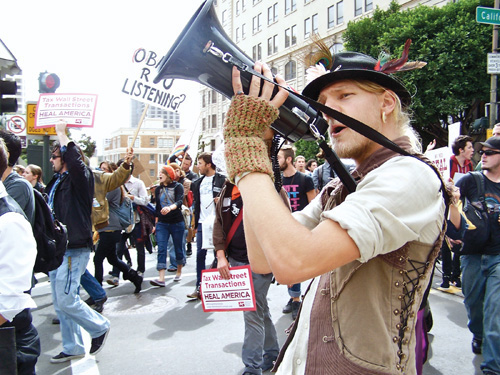
Some, like the protestors defiantly camping outside the Federal Reserve Building for OccupySF, get their voices heard by taking to the streets. Others, like us at the San Francisco Bay Guardian, stir things up with the written word. You can see this every week in the articles written by our own Steven T. Jones (check out his article on the pot club crackdowns in this week’s issue). At Cafe La Boheme, Jones reads in the spirit of dissent with former Black Panther Richard Brown, as well as Larry Everest, the author of Oil Power & Empire: Iraq and the U.S. Global Agenda.
8:30 p.m., Cafe La Boheme, 3318 24th St., SF

Why are Harris, Newsom, and other pols silent on the federal pot crackdown?

24

UPDATED BELOW As I worked on this week’s story about the federal crackdown on California’s marijuana industry, I tried to get a statement from California Attorney General Kamala Harris. After all, it’s her job to defend California’s medical marijuana laws, which she was fairly supportive of as our district attorney. And she was an early Barack Obama backer who could probably get him or U.S. Attorney General Eric Holder on the phone to say, “What the hell are you guys doing? Please, for your own sake and California’s, just back off.”

After all, as I reported, this multi-agency federal crackdown could destroy a thriving industry that is pumping billions of dollars into California’s economy and employing tens of thousands of people – at a cost of many millions of dollars in enforcement costs to simply destroy the state’s top cash crop, ruin the lives of people working in the industry, and strain our already overtaxed court and prison systems.

“It’s a policy with no upsides and all downsides,” Steve DeAngelo of Harborside Health Center correctly told me.

But when I finally got Harris’ Press Secretary Lynda Gledhill on the phone, she said Harris had nothing to say on the issue. “Nothing?” I asked, “Really?” What about off-the-record, I asked, how does she feel about it and might she make some statement in the future. Again, nothing to say, no comment.

So I tried Lieutenant Governor Gavin Newsom, another San Franciscan who as mayor helped oversee the creation of the city’s widely lauded system for regulating the dispensaries, which by all accounts has made it a legitimate and thriving member of the business community. Given Newsom’s current obession with job creation and how hungry he’s been for attention, surely he’d have something to say in defense of the good jobs that this sustainable industry has created in California. Again, nothing. I haven’t even gotten a call back yet from his press secretary, Francisco Castillo.

Also, no public statements have been issued by Mayor Ed Lee, David Chiu, or most other mayoral candidates who have put “jobs” at the center of their agendas – or from the SF Chamber of Commerce or other business groups that regularly deride bad government actions as “job killers – despite this move by the Obama Administration to destroy an important industry in California.

The only major politician from San Francisco (SEE UPDATE BELOW) to come out strongly against the federal crackdown was Assemblymember Tom Ammiano, author of measures to legalize and tax marijuana, who put out the following statement: “I am bitterly disappointed in the Obama Administration for this unwarranted and destructive attack on medical marijuana and patients’ rights to medicine.  Today’s announcement by the Department of Justice means that Obama’s medical marijuana policies are worse than Bush and Clinton.  It’s a tragic return to failed policies that will cost the state millions in tax revenue and harm countless lives. 16 states along with the District of Columbia have passed medical marijuana laws – whatever happened to the promises he made on the campaign trail to not prosecute medical marijuana or the 2009 DOJ memo saying that states with medical marijuana laws would not be prosecuted?  Change we can believe in?  Instead we get more of the same.”

But from most of the politicians who claim to support both jobs and the right of patients to access medical marijuana, we also get more of the same. They pander to people’s economic insecurities in order to give corporations and wealthy what they want – tax cuts, deregulation, union-busting, corporate welfare — but aren’t willing to risk any political capital defending the rest of us.

UPDATE (11/13): San Francisco’s other two representatives in the Legislature have also criticized the crackdown.


Sen. Leland Yee put out a statement saying: “Medical marijuana dispensaries are helping our economy, creating jobs, and most importantly, providing a necessary service for suffering patients. There are real issues and real problems that the US Attorney’s Office should be focused on rather than using their limited resources to prosecute legitimate businesses or newspapers. Like S-Comm, our law enforcement agencies – both state and local – should not assist in this unnecessary action. Shutting down state-authorized dispensaries will cost California billions of dollars and unfairly harm thousands of lives.”

Sen. Mark Leno, another medical marijuana support, also criticized the move. He told the Los Angeles Times, “”The concern here is that the intimidation factor will directly impact safe and affordable access for patients.” And he told Associated Press, “”I don’t understand the politics of it, and certainly if we haven’t learned anything over the past century, it’s that Prohibition does not work.”

Inside the occupation

20

Follow the Guardian’s complete Occupy SF coverage here.

Thursday morning, in gray seven o’clock fog, about 100 people asleep in front of the Federal Reserve building began to blink their eyes open. The bustling camp that had been there the day before — a small village of tents, tarps and easy-ups, shelves brimming with books, art supplies, and a display of hundreds of signs — was gone. The kitchen and all their food were missing, too.

“Wake up, everyone’s gotta wake up. Remember, sit/lie kicks in at seven,” urged a few protesters gently, winding their way through the maze of sleeping bags and blankets. No one was in the mood for legal trouble. All the people there, and a few hundred more who had gone home at two and three in the morning, had been a part of OccupySF’s first clash with the police. Someone pushed a cart full of fruit and granola bars. Breakfast. It was the camp’s first food donation since the incident, which had ended only four hours before. In the calm morning air, it was clear: the police could confiscate gear, but they could not stop the protest. It was only the beginning.

To say that OccupySF has grown in the past three weeks does not begin to describe it.

On Wednesday, Oct. 5, the camp was busy, clean, and what organizer Amy O proudly described as “jubilant.” Hundreds exchanged ideas, played music, and made signs and art. Two abundant snack tables providing free food to any and all were only the tip of the iceberg; the kitchen was piled so high that organizers had begun turning away food donations.

This scene contrasted starkly to the demonstration’s first night. Occupy SF started on Sept. 17, the same day as Occupy Wall Street, as one of the solidarity actions now reportedly numbering over 1,000. About 150 people gathered for the protest that first day and only a handful stayed the night. A week later, there was a devoted group of 10 campers. By Oct. 1, a good 40 people were camping and the kitchen and communications sections were set up. When the police showed up late Wednesday night, camp was 200 strong.


AS LONG AS IT TAKES

Spending time at the camp is addictive. Since my first night, I feel something constantly pulling me back. That night, Oct. 1, the camp was lively and half a block long. A big, hot pot of soup sat on the kitchen stove. Next door, the communications area was populated with organizers busily typing on laptops. The medical tent was next, kept pristine but as of yet untouched—its necessity, nonetheless, was evident after that week’s incident in New York when police pepper sprayed a group of young women.

At that point, the San Francisco Police Department had been courteous with OccupySF. They provided escorts on marches and didn’t bother the camp. Soon after arriving, Russell, a friendly 23-year-old from San Diego who has been camping since the first day, greeted me. He told me that there was a Gardening Committee meeting in a few minutes, and I planned to check it out. Next I saw Lesley Moore, 48, an Oakland resident with unrelenting energy and a knack for mediating misunderstandings at meetings.

She carried a clipboard and was compiling a massive list of food, supplies, and every imaginable resource the group might want. I learned that a flood of supporters, eager to donate, had requested info about what the camp needed. She planned to post the list on occupysf.com later that night.

Fifteen people climbed into a tent for the Gardening Committee meeting, keen to begin growing food for the camp. The donations were rolling in, and if there was a project we wanted to do, well, we probably could. We discussed what could grow in the winter and planting more in the spring. The mood was giddy with possibility but a bit uneasy— could we imagine we’d still be here then?

Many participants are determined to stay put. Jreds, a protester who had come from Chico, looked me in the eye and promised, “I’m staying as long as it takes.”

When asked his occupation, Jreds replied, “This is our occupation.”

After years of foreclosures and unemployment, no wonder so many people are motivated and available to work and sleep at a place like this. Wall Street’s unmitigated power has failed to trickle down into economic opportunities for the rest of us, and in this economy, “why don’t you just get a job” is starting to sound like “let them eat cake.”

As John Reimann, 65, a retired carpenter from Oakland, put it, “I’ve been waiting 10 years for something like this.” He helped start Occupy Oakland last week.

Protester Chris L, who says the community at the camp is the best part about it, also plans to stay indefinitely. Billy Gene Hobbs, a promoter from LA who can often be seen jumping and shouting to keep protest crowds pumped, came to visit San Francisco two weeks ago, found the camp, and hasn’t left. Since the police came through, almost 100 more people have joined.

The camp’s population is a source of ongoing discussion. Complaints of “too many hippies” usually die quickly when someone actually comes to camp, where the people they’re referring to are not the only ones and, moreover, are active and responsible organizers.

Others object that the protest is populated mostly with young people, especially white and male. There is active discussion on how to accommodate people with children as well as people with disabilities.

It seems everyone — including the many people of color, folks of all ages, and disabled people who have been organizers and participants in the movement — shares the view that oppressive institutions work hand in hand with the corporate corruption and power that the movement strives to end.


THE PEOPLE’S MIC

Camp life is dotted with calls for the People’s Mic, a tool developed at Occupy Wall Street, where using bullhorn or speakers is illegal. When someone yells “Mic check!” the crowd echoes in response. The person speaks his piece, sentence by sentence, as the crowd repeats. If a few people nearby can hear him, everyone can. For better or for worse, it tends not to amplify ideas people don’t have much taste for; at a recent meeting, when someone insisted that people who had been foreclosed on were greedy and foolish, the People’s Mic’s volume faded fast.

The People’s Mic requires no electricity, discourages rambling, a brilliant improvisation. But the central feature of Occupations throughout the country is the General Assembly. OccupySF has been holding General Assemblies every day at camp at 6 p.m. and on Saturdays at noon in Union Square. In the past week they have consistently boasted a couple hundred participants daily, but continue to practice consensus-based decision-making and participatory democracy. They’re long and often frustrating, but for many, as a standard rallying cry insists, “This is what democracy looks like!”

Many have stepped up at meetings to say that too many men, too many white people, or simply too many of the same voices are being heard. Solidarity efforts like Occupy the Hood, which declares the vital need that people of color make decisions and organize in and along with the occupations, have surfaced nationally.

On Oct. 5, after about 700 people marched on the Financial District with OccupySF, the General Assembly was particularly well attended. It was peppered with invitations and expressions of solidarity, conveyed by representatives of groups from throughout the Bay Area.

The week’s schedule slowly filled: Thursday’s anti-war march, the next day’s teach-in with activist Miguel Robles, a 7 am “Wake Up Action” with Unite-HERE Local 2 on Oct. 10, and plans to coordinate with the LGBT rights group Get Equal for a National Coming Out Day action the next day.

Carolyn DeRoo, a brightly charismatic BART station agent, reveled in the whoops and cheers when she announced that Amalgamated Transit Union Local 1555, the union that represents BART workers, had just voted to endorse Occupy SF. “I got an hour off work today so I could be in the march,” said DeRoo.

She expressed concern over the lack of coherent messaging, hoping it wouldn’t hurt the movement. “I was about to get on a plane to New York because of how badly I wanted to be a part of it,” she said. “I’m so glad it has started in SF.”


THE COPS ARRIVE

But on that fateful night, Oct. 5, meeting ideals were strained. High-tension and often angry debate filled the hours between being warned of police action and its onset, making consensus difficult. Some wanted to take down the camp, unable to risk arrest. There were campers from all walks of life present, including some homeless folks and travelers who would risk losing all or most of their possessions if the police confiscated them. Others didn’t want to see the camp’s growth stunted due to police intimidation.

Dierdre Anglin, 40, an Oakland resident who works in the nonprofit sector, was particularly calm amongst the chaos. “I think the energy got a little high,” she said, as protesters ran around taking down tents and preparing for the imminent police confrontation. “But we have decided to take the stance and to stay here.”

She added, “I personally feel that they are not going to do anything because it would make the police look quite bad. There’s a lot of support for us.” Anglin’s prediction about the cops’ actions, if not their public relations consequences, was mistaken. Police marched in around 1 am, and Department of Public Works employees began to fill their trucks with camp materials.

Billy Gene, ever energetic, raced to lie down on the street in front of trucks and was dragged away, yelling “Don’t be mean!” at police. Many sat and stood in front of trucks. Others could be seen shaking their heads at colleagues’ verbal attacks and murmuring, “that isn’t nonviolent.”

There was no property damage or physical violence on the part of the protesters, although one man was arrested for allegedly punching an officer in the face, which both sides cast as an aberration that didn’t reflect the tenor of the standoff.

At 3 am, protesters surveyed the damage. An organizer addressed the group: “We’re still here, and it’s time to rebuild.” The camp received a donation of blankets and sleeping bags at four o’clock that morning. At five, a small jam session and dance party broke out.

Police have since provided information on how to retrieve confiscated materials, and Police Chief Greg Suhr told us they’ve been actively trying to facilitate getting people their stuff back and allowing the occupation to continue (see accompanying article for more from Suhr).

In the days since, the mood has again turned jubilant. On Thursday afternoon, Oct. 6, about 120 people were gathered at the camp. Signs ranged from “student loan debt is slavery” to “grannies against war.” The next night, the mass of people had increased, and with it the group’s creativity. Protesters could be seen pedaling a stationary bike connected to a battery, powering laptops.

As the sun set Friday, 300 people at camp looked west. They erupted in cheers as a 500-person anti-war demonstration marched onto the site. Market between Main and Embarcadero was shut down as protesters rallied and then held General Assembly. A dozen police lined up near the sidewalk; one told me they were separating OccupySF from the march. The next second, the “march” erupted in chants of “We are the 99 percent,” the Occupy movement’s signature rallying cry. Attempts to divide were futile.

That the movement has no “one message” has in many ways worked to their advantage. It seems hundreds of thousands of people with varying issues and concerns can all agree that an elite class, embodied by Wall Street, has far too much power and money, and that the people must unite against the sorry state of this system. As I looked in the officers’ eyes, I wondered how long even their disconnect from the protesters will last. Most are, after all, the 99 percent too.

After the General Assembly held the street for an hour, police requested that they please move to the sidewalk. A consensus vote decided to oblige. An assembly member proclaimed, words booming with the roar of the People’s Mic, “Let us remember that we took this street, and we could have held it if we wanted to.”

This is the kind of power many haven’t felt in a long time. And I get the feeling that no one intends to relinquish it any time soon.

Do North

0

FILM You could drive (or if you have the time, public transport) to the 34th annual Mill Valley Film Festival solely for movies like period drama Albert Nobbs, which is already generating Oscar buzz for Glenn Close. Hot tip, though: anything with the words “Oscar buzz” attached to it, or “critically acclaimed” (including believe-the-hype entries Martha Marcy May Marlene and Like Crazy), will likely arrive in San Francisco over the next few months.

However, Mill Valley also offers a huge schedule of films you haven’t heard of yet, like Bill Couturié’s Thumbs, a zippy doc about swift-fingered teens battling to win the 2010 US National Texting Championships. Before you shake your head in disbelief, Grandpa, note that the top finishers rake in major skrilla (first place: $50,000). Thumbs, which owes much to earlier competition docs like 2002’s Spellbound, has already taken aim at its target demographic by airing on MTV, but it holds up beyond the small screen. Kids will dig the wholesome protagonists: the punky small-town girl who argues with her mother via text; the soft-spoken swim-team standout. But anyone who doesn’t hang with the class of 2014 will find Thumbs an eye-opening (and surprisingly positive) peek at high-school society in the digital age.

Using technology in a completely different way is Granito: How to Nail a Dictator, acclaimed documentarian Pamela Yates’ follow-up to her 1983 doc about the Guatemalan civil war, When the Mountains Tremble. “How does each of us weave our responsibilities into the fabric of history?” Yates wonders in her introspective voice-over. When a human-rights lawyer working to charge Guatemalan military leaders with genocide asks Yates for her Mountains outtakes, the filmmaker scours her archives, digging for evidence and eventually becoming deeply involved in the case. Granito is a legal thriller, but it’s also a personal journey, for Yates and, most potently, survivors still traumatized by Guatemala’s years of repression and violence.

On the lighter side is Smokin’ Fish, a low-key profile of wry businessman Cory Mann (who also co-directs). Born in Juneau, raised in San Diego, the half-white, half-Native American (“For a long time, I thought I was Mexican!”) puts his mail-order company on hold for a few months every year to catch and smoke salmon using traditional methods in rural Alaska. More than a character study, Smokin’ Fish is also a portrait of what it means to be an “authentic Indian” in the 21st century, in a world where you can spend one day tangling with the IRS and the next trading fish for fresh moose meat.

A far less gratifying tradition is the subject of The Forgiveness of Blood, the sophomore effort from Maria Full of Grace (2004) director Joshua Marston. The Los Angeles-born, internationally-minded Marston travels to Albania for this fictional drama about the decades-old conflict between two rival families — and the devastating impact the eye-for-an-eye feud has on the younger generation. Already tapped as Albania’s entry for Best Foreign Language Film at next year’s Oscars, Forgiveness is definitely gonna be one of those MVFF films you’ll be able to see theatrically. Make sure you don’t miss it.

Got no transition here, just another recommendation. Guru: Bhagwan, His Secretary and His Bodyguard, a Swiss documentary about the late Bhagwan Shree Rajneesh — and two of his most devoted followers, bodyguard Hugh Milne and secretary-spokesperson Sheela Birnstiel. “When did it begin to go wrong?” asks Milne early in the film, which utilizes a bounty of archival footage to chart a movement that started in the 1970s, when a charismatic guru first enthralled thousands of spiritual, sexually adventurous hippies. Milne (mournful) and Birnstiel (incredibly, still a believer) reconstruct the confusing, emotionally exhausting years that followed; the subsequent web of culty weirdness culminated with the hostile takeover of a rural Oregon community, and, most famously, an unholy collection of Rolls-Royces.

Mill Valley’s shorts programs are always strong, from the “5@5” selections to the films paired with longer features throughout the fest. Of local interest, the UC Berkeley Graduate School of Journalism presentation Pot Country (part of the “5@5: Circle of Life” program) travels 200 miles north of San Francisco to hang with marijuana farmers. The film interviews both the world’s smarmiest pot lobbyist and a veteran grower prone to poetic, philosophical musings (“We didn’t move here to grow marijuana. It came to us as a gift”). Directors Kate McLean and Mario Furloni are particularly interested in divisive Prop 19 (which would have legalized weed for personal use, but had the potential to squeeze out small farmers), and the fact that, like, everyone grows pot these days. “We came [to Northern California] to be away from the mainstream culture,” remarks the grower. “Now, we’re in it.”

Screening alongside two other shorts in a program dubbed “The Barber, The Brush, and the Baton” is Paige Bierma’s A Brush With the Tenderloin, which follows muralist Mona Caron as she creates her landmark piece at Jones and Golden Gate Streets in San Francisco. Despite the neighborhood’s bad rep, its residents — no matter how intimidating they may look — rally around Caron’s efforts with positivity and pride.

The art theme continues with Library of Dust, screening before William Kurelek’s The Maze. Directed by Ondi Timoner and Robert James, Library draws inspiration from David Maisel’s photography collection of the same name. His subject? Abandoned canisters of human ashes discovered at the Oregon State Hospital. Library recounts how the canisters were found and how Maisel’s haunting artwork came about; it also delves into the troubled history of mental health care. Despite the tragedy of the forgotten ashes — very few have been claimed to date, though the “reunions” captured on camera are poignant — the resulting media storm was enough to convince voters that Oregon was long overdue for new mental health facility. Powerful stuff, all vividly explored in the span of 16 minutes. 

MILL VALLEY FILM FESTIVAL

Oct. 6-16, most shows $13.50

Various North Bay venues

www.mvff.com


Uncorking Jameson

0

virginia@sfbg.com

APPETITE Ireland is a green land of rolling hills, sheep, and craggy coastline, to be sure. The people enchanted even more: a generous, welcoming, hilarious lot. One of my favorite people in recent Ireland travels was Liam O’Leary, distillery operations manager at New Midleton Distillery in County Cork, near the southern coast of Ireland.

The name New Midleton may not mean a lot to some, but if you follow Irish whiskey, you know there are merely three distilleries producing publicly sold spirits in all of Ireland and this one’s the mother. Most famously, it’s the home to Jameson (founded in 1780 by John Jameson and originally produced in Dublin at the Old Jameson Distillery, which I also visited). New Midleton also produces numerous Irish whiskies including Midleton, Powers Gold Label, Tullamore Dew, Paddy, and smaller pot still brands like my longtime favorite Irish whiskey, Redbreast, and new love Green Spot. (Oh, that it would become available in the States).

Liam hosted the Renaissance Man and I on a private tour of the grounds. Spending pleasurable hours talking of whiskey and his 40-year history at Jameson (long before it was the huge company it is now), we soon delved into a subject dear to my heart, and, it seems, to every local I spoke to: music. We watched mass distilling in action, and finished with a hearty Irish lunch in the distillery restaurant.

The New Midleton facility is to date the most colossal, high production I’ve yet seen: towering stills, control panels, endless storage buildings stacked with barrels, and the world’s largest pot still (able to hold up to 125,000 liters, or roughly 33,000 gallons), which is no longer in use but is viewable in the Old Midleton museum. Numerous copper pot stills operate simultaneously, holding a massive 75,000 liters each. The facility whirs and buzzes continuously, recalling Ireland’s past, creating its future.

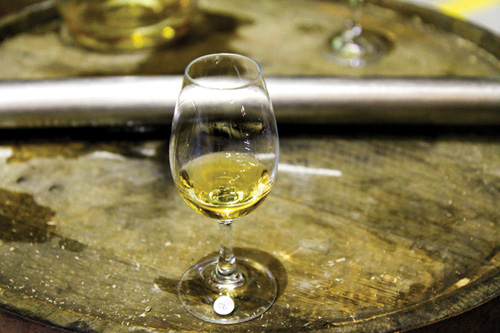
Exploring New Midleton, it was only fitting we talk Jameson. Possibly the highlight of my trip to Ireland — and there were many — was tasting Jameson 20-year whiskey straight from bourbon barrels (of which the majority of Jameson is aged in), and alongside it, 10-year whiskey in sherry barrels, both of which are blended into higher-end final product.

Both were superb, the purest forms of Irish whiskey I’ve tasted, particularly the golden, 20-year in bourbon barrels. Its layers kept unfolding: warm, honeyed and bright, spicy, fresh with grain and fruit. Already perfection, this stuff should be bottled at cask strength on its own. The sherry cask whiskey adds round, dark notes, giving it fullness and sensual depth.

As I taste through the Jameson line here at home, notes from those unforgettable barrels come back to me. I pick up various strains from the bourbon and sherry oak, all with that ever-present smoothness Irish whiskey is known for as it is generally triple-distilled. As the biggest selling Irish whiskey in the world, Jameson has done much to advance the category. Here are my tasting notes:

Jameson Rarest Reserve, $279: Rarest Reserve is the granddaddy of the line. Winning numerous awards (including this year’s Double Gold at the SF World Spirits Competition), it’s an expensive but truly special imbibement. After one explores the full-bodied aromas of ripe plum and spice, the taste impresses with toasted wood, dusty peach, dark chocolate, a hint of slate, leather, and earth. Here I find encompassed the approachable yet elevated possibilities inherent in Irish whiskey.

Jameson 18-year Limited Reserve, $86.99: The 18-year is another big award-winner, hitting my taste buds with an intense amount of peach. For me it evokes a golden summer freshness. Though I prefer it neat, it’s also lovely on the rocks. A couple drops of water allow other tastes to unfold, including orange marmalade, gentle spice, nuttiness, and biscuit. It’s soft yet bright, and could convert the non-whiskey drinker.

Jameson Gold Reserve, $60.99: Gold Reserve is a richer whiskey than the 12-year or Jameson Irish Whiskey. I get creamy apple on the nose, a gentle honey texture, and a peppery finish.

Jameson 12-year Special Reserve, $39.99: The 12-year won Gold this year at the SF World Spirits Competition. It’s sweet and spicy with sherry, wood notes. Oddly enough, I find its astringency is softened and rounded out with food.

Jameson Irish Whiskey, $24.99: The original Jameson has never been my Irish whiskey go-to. I find it a bit hot and thin, despite sweet fruit, vanilla and nuts. But this is the great global seller in Irish whiskey, often the first introduction many have to the category.

Subscribe to Virgina’s twice monthly newsletter, The Perfect Spot, www.theperfectspotsf.com


We could ride trains

0

The Muni trains are fun. I rode them for years before I figured that out. 

Muni was always a matter of function, a means of getting around. I was in a rush, a busy person with Places to Be. I was late; the train wasn’t there. When one of those historic clankers from Boston showed up on Church Street, I got even more crabby. The thing goes about four miles an hour; don’t they know we’re on a schedule here?

And then I had a son.

Even before he could talk, Michael loved trains. He’d point at them and start waving his hands up and down and laughing. “Choo-choo” was one of his first words; I think he knew that one even before “dada” and “mama.” And when I finally took him for a ride on the J-Church, around his second birthday, he became the happiest boy on the planet.

For the next year or so, every weekend morning, when he woke me up at the crack of dawn, I’d ask him what he wanted to do that day, and he’d say, with a big smile, “We could ride trains!” And almost every Saturday and Sunday afternoon, that’s what we’d do, from Church Street to Market Street, down Market, maybe along the waterfront to the end of the line at Fisherman’s Wharf. Then we’d get on another train and ride back home.

Sometimes we’d stop for a while at Dolores Park; sometimes we’d have doughnuts and check out the sea lions at the wharf. Sometimes we’d take a walk along the bay and look at boats. But really, as Zen masters and three-year-old boys have always known, the journey was the destination.

It’s different seeing the city through a child’s eyes.

I remember the amazing sense of wonder I had when I first arrived in San Francisco, a 22-year-old out of the New York suburbs and a Connecticut college town who had never been west of Buffalo. Everything seemed so alive, so special and strange and funny. And after a while, like everyone else, I had to pay the rent, and fight with the bank and the phone company, and the IRS found me, and life in the big city became, well, life in the big city.

But when you walk around with a kid, it all starts to come back. The whole urban world is an adventure. That stuff blowing around on the sidewalks isn’t garbage — it’s treasure. The graffiti on the walls isn’t vandalism (or even art) — it’s a clue to some sort of puzzle, maybe a map to where the pirates buried the gold. Even watching the train pull away just before you get to the corner isn’t any reason to be mad — because (as Michael always announces with glee) pretty soon there will be another one!

Just walking out the door is an explosion of scientific marvels. The wind is moving air, which is pretty cool when you think about it. The fog is a cloud on the ground. The rain makes puddles, and puddles lead to big splashes and soaking wet feet, and life doesn’t get much better than that. I suspect that every day in Michael’s life is like the first time I smoked pot and tried to talk about the difference between time and color.

There was a long period (and now it seems like another lifetime) when I could go for weeks without venturing beyond work, the 500 Club, a couple of take-out places, and my apartment. The advantage (and curse) of this city is that you can live quite well in your own neighborhood (particularly when it’s a place like the Mission District or Bernal Heights), so you don’t need to go anywhere else.

Amazing what I was missing.

I’ve lived in or around the Mission for 10 years, and I’d never been to Garfield Pool. You can swim there for three bucks, and it’s never crowded. The locker room feels like something out of a 1940s socialist paradise — everything’s one color, brutally utilitarian, and just a little bit broken. There are free kickboards, basketballs (and a poolside hoop), and sometimes even swim goggles (I guess when people leave them behind they become properly nationalized). The Upper Noe Recreation Center has the same sort of feel: on Saturday mornings, there’s a toddler gym, filled with a huge conglomeration of toys that look and feel like they were never actually new. But they work just fine and are durable as hell, and on rainy days, dozens of children stranded inside get a chance to ride welded tricycles and plastic cars around and crash into each other, with no ill effect. I smile just thinking about it.

The big children’s playground at Golden Gate Park has a long, steep slide made out of concrete that would make a modern-day insurance agent gasp in horror and alarm. Kids who have barely learned to walk somehow manage to climb up about 75 slippery, uneven steps that are almost too much for me, then sit on torn pieces of cardboard and careen down a hard, fast incline and skid to a stop at the bottom. It’s outstanding.

At Crissy Field, there’s a narrow, shallow channel where the water in the newly restored tidal marsh flows in and out of the bay. I don’t think the people who oversaw the ecological restoration of the wetlands area had any idea they were creating a swimming hole for kids, but that’s what happened: on warm days, dozen of children splash in the stream and build elaborate sand castles on the banks. When the tide goes out, a muddy island appears in the middle. Even with the tide coming in, the channel is never more than a few feet deep. It’s mind-boggling: you’re on the edge of the bay, in the shadow of the Golden Gate Bridge, a few yards away from the icy-cold currents and riptides where even seriously athletic adults in wet suits venture only with care — and three-years-olds are romping in the water with their dogs.

There’s a railroad museum at the old Hunters Point shipyard, with vintage steam engines that still work. There’s a model river (full of water and plastic fish) at the Bay Area Discovery Museum in Sausalito. There’s a working beehive in the bug house at the San Francisco Zoo, and the queen bee has a white dot painted on her abdomen. There’s an artificial earthquake that shakes up the Lego houses you can build at the California Academy of Sciences.

There are stores in the Mission that sell parachuting space aliens. If you ask nicely at Mitchell’s Ice Cream, they’ll stick a few green gummy worms in your chocolate-chip cone.

These are all things I didn’t know.

When I was a kid in the suburbs, I couldn’t imagine growing up in a city. I hope my kids see it differently. Because I’m getting to be a kid again right here in San Francisco — and I can’t imagine anyplace better.

Counting calories

2

caitlin@sfbg.com

HERBWISE An old factory sits in the outskirts of Oakland. In decades past, this building produced name brand snacks, but the smell of baking still permeates the factory air.

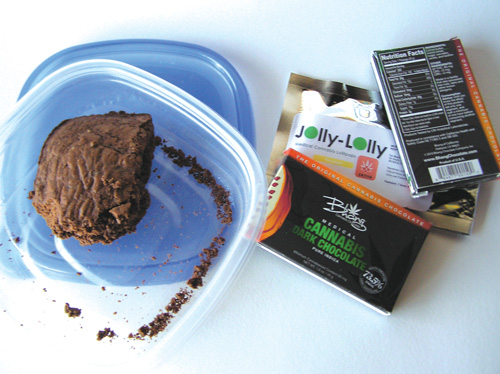
And weed. It smells like weed too. Bhang Chocolate churns out medicinal marijuana sweets here, bars that are smartly packaged in Bhang’s sleek black, orange, and green boxes that are a far cry from the plain wax envelopes and saran wrap that most marijuana edibles used to be sold in. The company is part of the current expansion in edible products — these days, patients can buy medicated cheesecakes, and even savory trail mix.

Adjacent to Bhang’s factory floor, about ten marijuana edibles producers are listening to a man talk about quality control for weed food. Robert Martin, Ph.D., worked for years in corporate food product development and quality assurance. He tells the class his specialty was frozen foods.

Martin is the co-founder of C.W. Analytical, a business that consults marijuana producers and has cannabis testing facilities. A patient himself, he says that marijuana-medicated foods are technically subject to all the same guidelines for commercially-produced non-pot products, although actual enforcement is sparse. C.W. offers these classes for free to interested entrepreneurs. They teach professional skills and serve as an introduction to the for-sale services the business provides.

The students are being treated to quality assurance fail stories from Martin’s career in the corporate world. A sherbet producer he once knew bought a wildly expensive machine to make fudge bars, but when he failed to make the proper tests on his treats, they caused a nasty spate of diarrhea in consumers and he ended up losing his shirt.

“That’s the kind of crap that can happen to you guys,” cautions Martin, and starts reading from a tongue-in-cheek guide to how you can tell food has gone bad. “Flour is spoiled when it wiggles,” he reads. This is quality assurance humor. “I love this stuff!”

One of the day’s students Lacey (not her real name) says she learned a lot from the class that she’ll be able to implement in her own business, Laced Cakes Bakery. She’s been making prettily iced cannabis cookies and brownies since 2007 and has seen the industry requirements shift dramatically.

“Years ago, you could just bring down a tray [to a dispensary] and drop it off,” she says. Nowadays, to sell in San Francisco she has to package the sweets in opaque material and make sure that the design can’t be interpreted as too appealing to kids. “The laws keep changing.”

She had heard about C.W. Analytical at some of the cannabis expos she’s been a vendor at — the firm will have a booth at next weekend’s West Coast Cannabis Expo as well — and was happy that the class was offered for free. She hadn’t finalized her opinion, however, on Martin’s suggestion that producers get their foods analyzed by the company so that they can put nutrition labels on their packaging. “It seems like they might just be trying to make money off of us,” she mused. 

WEST COAST CANNABIS EXPO

Oct. 7-9. Fri/7, 3-9 p.m.; Sat/8, 11 a.m.-9 p.m.; Sun/9 11 a.m.-7 p.m., $18 one day/$45 weekend pass

Cow Palace

Geneva and Santos, Daly City

(650) 591-0420

www.westcoastcannabisexpo.com


Harsh times

0

caitlin@sfbg.com

HERBWISE It’s what you would call a recession novel.

The lead character of Tony D’Souza’s Mule: A Novel of Moving Weight (292 pp, Mariner Books, $14.95)has nearly navigated the entirety of the upward-downward spiral to drug kingpin-dom we know so well from Scarface. This is how his story ends, in part:

“And there was the recession and there was not the recession and there was fear from the recession and there was not the fear from the recession. And there was America and there was not America and there was me and there was not me.”

The moment comes after hundreds of pages of violence and paranoia. D’Souza’s James is a successful freelance journalist rendered financially obsolete in the Crash Which Dare Not Speak It’s Name. Reduced from an A-list Austin lifestyle, he decides to drive a pound of marijuana across the country, literally to make ends meet for himself and his young family. His surprising ambition leads to mansions in Florida and reliance on the money-sick and power-mad for business.

Mule reads like an episode of The Wire, drawing from Weeds for some background material. And like those two series, what it has to say about the times we’re living in is worth hearing.

James is a deal-shoot-angst protagonist, a thoroughly middle class character. He wears Lacoste. He can’t get a byline to save his life, hence the drug running. His white skin is an advantage as a mule because it keeps him from being profiled by highway cops.

But if the Obama job plan passes, if unemployment was no longer at 9.1 percent, would James still be hustling? This is where Mule succeeds, its sheer ambiguity making it so much a product of this rightnow. In 2011, it’s not clear if we should be taking deep breathes and job hunting through the madness or straight up losing our shit in the face of economic meltdown, environmental heart attack, and vitriolic culture war.

And yes, Mule is also about marijuana itself. This too is important. How many Cali children have saved their skins by trimming in Mendo?

This is the same substance that supports the professional photographers and glamour shots we profiled in last week’s column. Only in Mule, double murders are performed over the stuff, people lose their minds to transport it. These are the same things that are happening across the hemisphere, despite our privileged Bay Arean cradle where we smoke in the streets and get prescriptions to stoke our appetites. Medicine, felony: marijuana is ambivalence itself these days.

If you’re looking for a novel-length iteration of why cannabis should be legalized, you could do worse than Mule. But you could also do better. That’s because of the book’s omnipresent ghoul, the generation-derailing R-word.

Sure, if selling pot wasn’t grounds for a felony or worse in most of the country, James would never have to smack around that snotty college dealer with the kid’s own textbooks, or been rendered paralyzed by fear in a grotty hotel room in San Angelo, Tex. — but would his world morph to emerald green good vibes? If weed were legal, wouldn’t it be assimilated into that other source of our brave protagonist’s dread? Would it be just one more job field described by our dismal unemployment levels?

Mule is a drug novel. But it’s also a recession novel and it’s not a recession novel and the novel’s about fear from the recession and the novel is not about fear from the recession.

In other words, read it.

It’s people!

0

arts@sfbg.com

THEATER Last Thursday afternoon, the floor before the stage at Z Space was strewn with dollar-store paraphernalia, neon-colored wigs, and the odd piece of kitchenware. On the stage itself, near the front, ran a long makeshift video screen about four-and-a-half feet high. Immediately behind that, at regular intervals, four small video cameras on thin stands faced the back of the stage. Caden Manson, New York–based Big Art Group’s artistic director, had been leading a workshop all week in performance media techniques for about 15 locals (most of them active in the dance-performance scene) but today they were crafting something that would actually be a part of this week’s much anticipated Big Art Group premiere, The People: San Francisco.

To that end, performers picked through the detritus on the floor and fashioned neo-classical costumes for themselves: a broom brush for a centurion’s plume, pot lids for shields, a colander for a battle helmet, a table cloth for a toga, an incongruous toy gun, a festive pair of streamers on sticks, a black cap with beaded veil, swords, plastic flowers, and other pop neo-classical accoutrement. “If anybody wants a Molotov cocktail, there’s four of them right there,” offers one of the group’s members helpfully.

By the time they had assembled themselves on stage they had become a strikingly photogenic band of miscreants and martyrs, like the crew of the Bad Ship Lollipop. Manson, a 40ish blond with an equanimous mien and contrastingly subdued in black coat and blue sneakers, announces they have ten minutes to produce a narrative tableau in an epic vein. Maybe because most of these folks — among them Evan Johnson, Ben Randle, Honey McMoney, Maryam Rostami, Laura Arrington, Rachael Dichter, and Sara Kraft — have worked together before, this all happens surprisingly on schedule.

Manson — who with a few directorial adjustments soon has them all grandly and neatly materializing on the video screen at the front of the stage — explains to me that the pop-up tableau of civil strife the performers have just concocted will act as one of several backdrops to passages from the Oresteia, the ancient trilogy of plays by Aeschylus, which itself acts as counterpoint to the series of contemporary interviews of random Bay Area citizens that forms a key component of The People.

The results you can see for yourself this weekend, as Florida Street outside Z Space (formerly Theater Artaud) becomes a re-imagined public square where a localized discussion of democracy gets played out in a big way, through massive video projections, personal perspectives, and live performance in a dazzlingly intricate and thought-provoking merger of bodies and images, the epic and the mundane, the spectacular and the quotidian.

Big Art Group’s last appearance in the Bay Area was 2009’s deft and rowdy “action media performance,” SOS, at Yerba Buena Center for the Arts. Founded and led by Manson and executive director and writer Jemma Nelson, Big Art’s distinctive, highly integrated blend of theater and media into something it calls “real-time film” was the basis then for a rousing camp send-up and critique of this culture’s media-immersive materialism and its social ramifications.

The People: San Francisco takes Big Art’s fundamental approach to performance and democratizes it. The fourth installment of a serial project begun in 2007 in Polverigi, Italy (before moving onto Halle, Germany and Salzburg, Austria), The People was designed with two goals in mind, according to Manson. One was to craft a collaborative project that might allow Manson and Nelson greater contact with the communities they’ve been regularly traveling through on Big Art’s annual performance tours. The tradeoff would be some of the precision and expertise on display in shows like SOS for an immediate and interactive bead on a specific locale. In the Bay Area, this contact was managed through three host organizations: Marin’s Headlands Center for the Arts (where Manson and Nelson were in residency a few months ago), YBCA, and Z Space. Through this relationship, the project gathered some 40 hours of taped interviews with 42 subjects (including this writer) who were asked an identical set of questions about terrorism, justice, democracy, and war. (Manson was last week still carefully whittling down those 40 hours to a manageable 16 minutes, but notes the remainder will be archived online).

The other goal was related but more specific and immediate: “At the time we started this, in 2007, Bush was in office and he was always talking about promoting democracy,” explains Manson. “We were touring all over Europe at this time, and we’re wondering: What exactly does that mean, democracy? So we started asking. It’s the first time we’ve asked here, in the United States.”

The timing, coming just after the 10th anniversary of 9/11, is auspicious (if coincidental). As a localized act of public discussion of words like terrorism, justice, democracy, and war, The People reclaims from the centers of power and their diffuse mouthpieces the shibboleths and catchwords that normally act as so many parade floats leading us all down blind alleys, if not over cliffs. Wasn’t this the real discussion we should have had ten years ago? Some did; some tried and were shouted down. This weekend, at least, the conversation continues. 

THE PEOPLE: SAN FRANCISCO

Fri/16-Sat/17, 8 p.m., $10

Z Space

450 Florida, SF

(415) 978-2787

www.ybca.org


Boxing Room

1

paulr@sfbg.com

DINE It does make a difference, I must say, when you step into a restaurant and find the people at the host’s station smiling and nodding at you, riffling their stack of menus before showing you to your table — instead of not. The last time I made an attempt on Citizen Cake, a few years ago, at lunchtime, I found myself confronted by a rather steely-eyed maitre d’ who advised me, in a spirit of what I took to be barely suppressed glee, that there was no possibility of seating my party of two even though the restaurant was all but empty. I left and did not look back.

If only for a marked change in tone, the Boxing Room, which opened recently in Citizen Cake’s old haunt at the corner of Gough and Grove, is a welcome turning of the page. Just as welcome is the remodel of what was once a shirt factory into a wonder of woodiness, from the ceiling of exposed joists to the impressive swaths of sauna-like blond paneling along the rear wall. Best of all is the long, sinuous bar in place of Citizen Cake’s boxy, glass-and-steel dessert cases; the bar’s reassuring jiggle, like a well-banked S-curve on a freeway, softens the hard, high angles of the space. And while the floor (of poured concrete) is of a cold hardness that usually means reverberant noise, that isn’t the case here. Even when the restaurant is nearly full, it’s possible to have a pleasant conversation without having to raise your voice.

Are there bitter cold nights in New Orleans? The Boxing Room is one of the latest entrants in what seems to be spate of bayou-themed spots in our chilly city. As at Roy’s, I felt a slight dissonance in eating the food of some faraway warm place while awaiting the little tongues of clamminess that would slither into the dining room every time somebody came in the front door. (The front door is gorgeous, incidentally, a masterwork of glass and iron, but very heavy and unwieldy.) The restaurant belongs to the Absinthe group, and the chef is Justin Simoneaux, whose name speaks for itself, at least if you speak French.

The obvious question is how Boxing Room’s food stacks up against that of Criolla Kitchen, the new, Louisiana-accented successor to Baghdad Cafe in the Castro. As we might expect, there is considerable overlap, including red beans, handlings of mirliton (the cucumber relative), various versions of the po’boy, and fried chicken. The cooking of the Mississippi Delta is well-defined and has, for North America, deep historical roots. If there’s a meaningful difference between the two menus, it’s probably Boxing Room’s upmarketiness; a couple of the main dishes pop the $20 boundary.

But most of them don’t, and the tapas-like nibbles called lagniappe are just $5 each. (This might be a small joke, since the word supposedly means, more or less, “gift.” Maybe the modest charge is the equivalent of shipping and handling.) Of these, the one that particularly caught our eye was the small cast-iron pot of Cajun boiled peanuts. We were expecting something flamingly spicy — Cajun is one of those words — and were surprised to find the legumes mildly seasoned and rather soggy, like the bits of wood that splinter from old decks in rainy weather. At first this was disappointing, but in true bar-food fashion, the peanuts built up a subtle momentum and, by the end, were nearly addictive.

You may have had grilled Monterey Bay squid ($9) before, but you probably haven’t had it like this — with tasso (a form of spicy cured pork), fried okra, and aioli made with roasted garlic, all of it brought together into a voluptuous faux-stew. Just as good, if more conventional, was a little cast-iron pot of red beans and sausage ($6) — all the cast-iron pots, incidentally, amount to a small detail that makes a big impression — while a green-tomato ratatouille ($5) seemed underpowered, though beautifully diced.

Apart from the occasional small smear of foie gras, I don’t think I’ve ever eaten a savory item as rich as the fried-oyster po’boy ($18). The quite-large oysters had been battered with corn meal and slathered with mayonnaise before being snuggled between slices of fabulously fresh baguette — a kingly sandwich. The throw weight was increased slightly by a small litter of hushpuppies on the side.

“Gumbo” is derived from the West African word for “okra,” and there was okra aplenty in the gumbo ($9), along with andouille coins and shreds of chicken in a thick, smoky broth. Okra is like cilantro: You either love or hate its unmistakable flavor. As I happen to love it, I loved this gumbo. But it isn’t for doubters.

The dessert menu includes beignets ($7), and they’re fine — shaped like hamantaschen here. A livelier choice would be the pralines and cream ($7), a sundae of vanilla ice cream embellished with chunks of praline, candied almonds, and little squares of blondie bar — a ghost of pastries past? 

BOXING ROOM

Continuous service: Mon.-Wed., 11:30 a.m.-midnight; Thurs.-Fri., 11:30-1 a.m.; Sat., 5 p.m.-1 a.m.; Sun., 5 p.m.-midnight

399 Grove, SF

(415) 430-6590

www.boxingroomsf.com

Beer and wine

AE/DC/DS/MC/V

Noisy

Wheelchair accessible


Stage Listings

0

THEATER

OPENING

A Midsummer Night’s Dream Phoenix Theatere, 414 Mason, Sixth flr, SF; (415) 509-8656. $10-20. Previews Wed/7, 8pm. Opens Fri/8, 8pm. Runs Thurs-Sat, 8pm (also Sat/10, 2pm; Sept 17, 3pm). Through Sept 17. Ninjaz of Drama and Divinity Productions Presents Rey Carolino’s contemporary staging of the Bard’s classic.

Not Getting Any Younger Marsh San Francisco, Studio Theater, 1062 Valencia, SF; (415) 826-5750, www.themarsh.org. $15-50. Previews Thurs/8-Fri/9, 8pm; Sat/10, 8:30pm; Sun/11, 3pm. Opens Thurs/15, 8pm. Runs Thurs-Fri, 8pm; Sat, 8:30pm; Sun, 3pm. Through Oct 23. Marga Gomez performs her comedy about “lies, vanity, and the good old days.”

Patience Worth Thick House, 1695 18th St, SF; (415) 456-8892, www.symmetrytheatre.com. $20-30. Opens Sat/10, 8pm. Runs Thurs-Sat, 8pm; Sun, 2pm. Through Oct 2. Symmetry Theatre Company performs Michelle Carter’s world premiere about a spirit who appears via Ouija board in 1913. Erika Chong Shuch directs.

“San Francisco Fringe Festival” Exit Theatre, 156 Eddy, SF; (415) 673-3847, www.sffringe.org. $7-10 (passes, $40-75). Sept 7-18. The 20th annual fest contains over 40 shows highlighting unique indie theater.

Show Ho New Conservatory Theatre Center, 25 Van Ness, SF; (415) 861-8972, www.nctcsf.org. $20-32. Previews Thurs/8, 8pm. Opens Fri/9, 8pm. Runs Thurs-Sat, 8pm; Oct 9, 2pm. Through Oct 9. Sara Moore performs her multi-character story about a clown in a low-rent circus.

“3 Guys in Drag Selling Their Stuff” Garage, 975 Howard, SF; www.brownpapertickets.com. $20. Opens Fri/9, 8pm. Runs Fri-Sat, 8pm. Through Sept 17. Edward Crosby Wells’ bawdy comedy is about a trio of friends who host an unusual yard sale.

Turandot War Memorial Opera House, 201 Van Ness, SF; (415) 864-3330, www.sfopera.com. $21-389. Opens Fri/9, 8pm. Runs Sept 14, 22, and Oct 4, 7:30pm; Sept 17 and Oct 1, 8pm; Sept 25, 2pm. The San Francisco Opera performs Puccini’s classic in conjunction with the Lyric Opera of Chicago.

Unveiled Brava Theater, 2781 24th St, SF; (415) 647-2822, www.brava.org. $10-25. Previews Wed/7-Thurs/8, 7pm. Opens Fri/9, 7pm. Runs Sat/10, 3pm; Sun/11-Mon/12 and Sept 15-17, 3pm (also Sun/11, 3pm). Brava Theater presents Rohina Malik’s solo show about five Muslim women in the post-9/11 world.

ONGOING

“AfroSolo Arts Festival” Various venues, SF; www.afrosolo.org. Free-$100. Through Oct 20. The AfroSolo Theatre Company presents its 18th annual festival celebrating African American artists, musicians, and performers.

All Atheists Are Muslim Stage Werx Theatre, 533 Sutter, SF; (415) 517-3581, www.brownpapertickets.com. $20. Thurs-Sat, 8pm. Through Oct 1. Zahra Noorbakhsh performs her solo comedy.

American Buffalo Actors Theatre of San Francisco, 855 Bush, SF; (415) 345-1287, www.actorstheatresf.org. $26-38. Wed-Sat, 8pm. Extended through Sept 17. Actors Theatre of San Francisco performs the David Mamet crime classic.

Cymbeline Parade Ground Lawn, Main Post, Presidio (between Graham and Keyes), SF; www.sfshakes.org. Free. Sat, 7:30pm; Sun, 2:30pm. Through Sept 25. The San Francisco Shakespeare Festival presents its annual “Free Shakespeare in the Park” performance.

Exit, Pursued By a Bear Boxcar Playhouse, 505 Natoma, SF; www.crowdedfire.org. $10-35. Wed-Sat, 8pm. Through Sept 17. Crowded Fire performs Lauren Gunderson’s new play, a feminist revenge comedy.

Geezer Marsh, 1062 Valencia, SF; (415) 282-3055. $25-100. Thurs, 8pm; Sat-Sun, 5pm. Through Sept 18. Geoff Hoyle returns to the Marsh with his acclaimed solo show.

King Henry the Sixth Boxcar Studios, 125a Hyde, SF; www.brownpapertickets.com. $12-15. Thurs-Sat, 8pm. Through Sept 17. Do It Live Productions debuts with a contemporary Shakespeare adaptation.

Tigers Be Still SF Playhouse, 522 Sutter, SF; www.sfplayhouse.org. $30-50. Wed/7, 7pm; Thurs/8-Sat/10, 8pm (also Sat/10, 3pm). SF Playhouse performs Kim Rosenstock’s quirky comedy.

True West NOHspace, 2840 Mariposa, SF; 1-800-838-3006, www.truewestsf.com. $10-28. Wed-Sat, 8pm. Through Sept 17. Expression Productions presents Sam Shepard’s tale of two brothers.

Waiting for Giovanni Decker Theater, New Conservatory Theatre Center, 25 Van Ness, SF; www.nctcsf.org. $25-36. Wed-Sat, 8pm; Sun, 2pm. Through Sept 18. This world-premiere play by Jewelle Gomez in collaboration with Harry Waters Jr. imagines a split-second of indecision in the mind of author James Baldwin.

BAY AREA

The Complete History of America (abridged) Dominican University of California, Forest Meadows Amphitheater, 1475 Grand, San Rafael; (415) 499-4488, www.marinshakespeare.org. $20-35. Performance times vary; check website for schedule. Through Sept. 25. Marin Shakespeare Company performs Adam Lon, Reed Martin, and Austin Tichenor’s three-person romp through American history.

A Delicate Balance Aurora Theatre, 2081 Addison, Berk; (510) 843-4822, www.auroratheatre.org. $10-48. Previews Wed/7, 8pm. Opens Thurs/8, 8pm. Runs Tues, 7pm; Wed-Sat, 8pm; Sun, 2 and 7pm. Through Oct 9. Aurora Theatre performs Edward Albee’s comedy of manners.

The Merry Wives of Windsor Old Mill Park, 375 Throckmorton, Mill Valley; www.curtaintheatre.org. Free. Sat-Sun and Sept 5, 2pm. Through Sept 18. Curtain Theatre performs Shakespeare’s Falstaff-centric comedy.

Not a Genuine Black Man Marsh Berkeley, TheaterStage, 2120 Allston, Berk; 1-800-838-3006, www.themarsh.org. $20-50. Sat, 5pm (also Sept 8 and 22, 7:30pm). Through Sept 24. This is it: the final extension of Brian Copeland’s solo show about growing up in (nearly) all-white San Leandro.

Of Dice and Men La Val’s Subterranean, 1834 Euclid, Berk; www.impacttheatre.com. $10-20. Thurs-Sat, 8pm. Through Oct 1. Impact Theatre performs Cameron McNary’s comedy about a group of adult Dungeons and Dragons players.

Rita Moreno: Life Without Makeup Berkeley Repertory Theatre, Roda Theatre, 2015 Addison, Berk; (510) 647-2949, www.berkeleyrep.org. $14.50-73. Opens Wed/7, 8pm. Runs Tues-Sun, showtimes vary. Through Oct 30. Rita Moreno stars in a show created specifically for her by Berkeley Rep’s Tony Taccone and David Galligan.

The Road to Hades John Hinkel Park, Southampton Ave, Berk; (510) 841-6500, www.shotgunplayers.org. $10 (suggested donation; no one turned away for lack of funds). Sat/10-Sun/11, 3pm. Shotgun Players presents a new comedy written by and starring veteran comedian and clown Jeff Raz.

Sense and Sensibility Mountain View Center for the Performing Arts, 500 Castro, Mtn View; (650) 463-1960, www.theatreworks.org. $19-69. Tues-Wed, 7:30pm; Thurs-Sat, 8pm (also Sat, 2pm); Sun, 2 and 7pm. Through Sept 18. TheatreWorks performs Roger Parsley and Andy Graham’s adaptation of the Jane Austen novel.

The Tempest Dominican University of California, Forest Meadows Amphitheater, 1475 Grand, San Rafael; (415) 499-4488, www.marinshakespeare.org. $20-35. Performance times vary; check website for schedule. Through Sept. 25. Marin Shakespeare Company presents Shakespeare’s romance with a steampunk twist.

Toke Ashby Stage, 1901 Ashby, Berk; www.brownpapertickets.com. $25. Thurs/8-Sat/10, 8pm; Sun/11, 5pm. Swirl Media presents Deedee Kirkwood’s pot-fueled comedy.

PERFORMANCE/DANCE

“Comedy Returns to El Rio” El Rio, 3158 Mission, SF; www.brownpapertickets.com. Mon, 8pm, $7-20. Stand-up performers include Dhaya Lakshminarayanan, Josh Healey, Nathan Habib, Conrad Roth, and Lisa Geduldig.

FACT/SF and Lenora Lee Dance CounterPULSE, 1310 Mission, SF; (415) 626-2060, www.counterpulse.org. Thurs-Sun, 8pm. $15-20. The companies present Pretonically Oriented v.3 and Reflections.

“Hand to Mouth Comedy” Dark Room, 2263 Mission, SF; handtomouthcomedy.tumblr.com. Thurs, 8pm. Pay what you can. This month, comedians Kurt Weitzmann, Cory Loykasek, and Bryan Yang take on conspiracy theories.

“Mortified SF” DNA Lounge, 375 11th St, SF; www.getmortified.com. Fri, 8pm, $17. The embarassing-tales smorgasbord rolls on in a back-to-school edition.

“Opera in the Park” Sharon Meadow, Golden Gate Park, SF; www.sfopera.com. Sun, 2pm. Free. SF Opera pays tribute to the victims of 9/11 with a free program of Mozart, Leonard Bernstein, and others.

“Porchlight Season 10 Kickoff: Shipwrecked! Stories from the Sea” Maritime Museum, foot of Polk (at Beach), SF; www.brownpapertickets.com. Thurs, 8pm, $15. The storytelling series beings its tenth year with a special seafaring edition.

“Process as Adventure” ODC Commons, 351 Shotwell, SF; www.odcdance.org. Thurs, 8pm. Free. Dance company Project Bandaloop presents this multi-media event and discussion.

“Second Sandwiches” Purple Onion, 140 Columbus, SF; www.willfranken.com. Sat, 8pm. $20. Comedian Will Franken performs his new solo show.

“True Stories Lounge” Make-Out Room, 3225 22nd St, SF; www.makeoutroom.com. 7:30pm, $10. Narrative journalism and other nonfiction readings from Joyce Maynard, the Guardian’s Steven T. Jones, and others.

“WestWave Dance: A Monday a Month” ODC Theater, 351 Shotwell, SF; www.westwavedancefestival.org. Mon, 8pm, $18-25. Thus month’s program, “Duets,” features Ethan and Nikki White, Pearl Marill Dance Theater, Dana Lawton, Jean Isaacs, and more.


Stage listings are compiled by Guardian staff. Performance times may change; call venues to confirm. Reviewers are Robert Avila, Rita Felciano, and Nicole Gluckstern. Submit items for the listings at listings@sfbg.com. For further information on how to submit items for the listings, see Picks. For complete listings, see www.sfbg.com.

Stage Listings

0

Stage listings are compiled by Guardian staff. Performance times may change; call venues to confirm. Reviewers are Robert Avila, Rita Felciano, and Nicole Gluckstern. Submit items for the listings at listings@sfbg.com. For further information on how to submit items for the listings, see Picks. For complete listings, see www.sfbg.com.


THEATER

OPENING

All Atheists Are Muslim Stage Werx Theatre, 533 Sutter, SF; (415) 517-3581, www.brownpapertickets.com. $20. Opens Thurs/1, 8pm. Runs Thurs-Sat, 8pm. Through Oct 1. Zahra Noorbakhsh performs her solo romantic comedy.

Cymbeline Parade Ground Lawn, Main Post, Presidio (between Graham and Keyes), SF; www.sfshakes.org. Free. Opens Sat/3, 7:30pm. Runs Sun/4-Mon/5, 2:30pm; Sept 10, 17, and 24, 7:30pm; Sept 11, 18, and 25, 2:30pm. Through Sept 25. The San Francisco Shakespeare Festival presents its annual “Free Shakespeare in the Park” performance.

King Henry the Sixth Boxcar Studios, 125a Hyde, SF; www.brownpapertickets.com. $12-15. Opens Fri/2, 8pm. Runs Thurs-Sat, 8pm. Through Sept 17. Do It Live Productions debuts with a contemporary Shakespeare adaptation.

BAY AREA

A Delicate Balance Aurora Theatre, 2081 Addison, Berk; (510) 843-4822, www.auroratheatre.org. $10-48. Previews Fri/2-Sat/3 and Sept 7, 8pm; Sun/4, 2pm; Tues/6, 7pm. Opens Sept 8, 8pm. Runs Tues, 7pm; Wed-Sat, 8pm; Sun, 2 and 7pm. Through Oct 9. Aurora Theatre performs Edward Albee’s comedy of manners.

Rita Moreno: Life Without Makeup Berkeley Repertory Theatre, Roda Theatre, 2015 Addison, Berk; (510) 647-2949, www.berkeleyrep.org. $14.50-73. Previews Fri/2-Sat/3 and Tues/6, 8pm; Sun/4, 7pm. Opens Sept 7, 8pm. Runs Tues-Sun, showtimes vary. Through Oct 30. Rita Moreno stars in a show created specifically for her by Berkeley Rep’s Tony Taccone and David Galligan.

ONGOING

“AfroSolo Arts Festival” Various venues, SF; www.afrosolo.org. Free-$100. Through Oct 20. The AfroSolo Theatre Company presents its 18th annual festival celebrating African American artists, musicians, and performers.

American Buffalo Actors Theatre of San Francisco, 855 Bush, SF; (415) 345-1287, www.actorstheatresf.org. $26-38. Wed-Sat, 8pm. Extended through Sept 17. Actors Theatre of San Francisco performs the David Mamet crime classic.

Exit, Pursued By a Bear Boxcar Playhouse, 505 Natoma, SF; www.crowdedfire.org. $10-35. Wed-Sat (no shows this week; shows resume Sept 7), 8pm. Through Sept 17. Crowded Fire performs Lauren Gunderson’s new play, a feminist revenge comedy.

Geezer Marsh, 1062 Valencia, SF; (415) 282-3055. $25-100. Thurs, 8pm; Sat-Sun, 5pm. Through Sept 18. Geoff Hoyle returns to the Marsh with his acclaimed solo show.

Tigers Be Still SF Playhouse, 522 Sutter, SF; www.sfplayhouse.org. $30-50. Tues-Wed, 7pm; Thurs-Sat, 8pm (also Sat, 3pm). Through Sept 10. SF Playhouse performs Kim Rosenstock’s quirky comedy.

True West NOHspace, 2840 Mariposa, SF; 1-800-838-3006, www.truewestsf.com. $10-28. Wed-Sat, 8pm. Through Sept 17. Expression Productions presents Sam Shepard’s tale of two brothers.

2012: The Musical! This week: Mill Valley Community Center (back lawn), 180 Camino Alto, Mill Valley; www.sfmt.org. Free. Wed/31, 7pm. Also Thurs/1, 7pm, Mitchell Park, South Field, 600 East Meadow, Palo Alto; Sat/3-Mon/5, 2pm, Dolores Park, 18th St at Dolores, SF. Continues through Sept 25 at various Bay Area venues. San Francisco Mime Troupe mounts their annual summer musical; this year’s show is about a political theater company torn between selling out and staying true to its anti-corporate roots.

Waiting for Giovanni Decker Theater, New Conservatory Theatre Center, 25 Van Ness, SF; www.nctcsf.org. $25-36. Wed-Sat, 8pm; Sun, 2pm. Through Sept 18. This world-premiere play by Jewelle Gomez in collaboration with Harry Waters Jr. imagines a split-second of indecision in the mind of author James Baldwin.

BAY AREA

Candida Bruns Memorial Amphitheater, 100 California Shakespeare Theatre Way, Orinda; www.calshakes.org. $35-66. Wed/31-Thurs/1, 7:30pm; Fri/2-Sat/3, 8pm (also Sat/3, 2pm); Sun/4, 4pm. Cal Shakes artistic director helms this taken on George Bernard Shaw’s classic about a housewife torn between her husband and a new suitor.

The Complete History of America (abridged) Dominican University of California, Forest Meadows Amphitheater, 1475 Grand, San Rafael; (415) 499-4488, www.marinshakespeare.org. $20-35. Performance times vary; check website for schedule. Through Sept. 25. Marin Shakespeare Company performs Adam Lon, Reed Martin, and Austin Tichenor’s three-person romp through American history.

The Merry Wives of Windsor Old Mill Park, 375 Throckmorton, Mill Valley; www.curtaintheatre.org. Free. Sat-Sun and Sept 5, 2pm. Through Sept 18. Curtain Theatre performs Shakespeare’s Falstaff-centric comedy.

Not a Genuine Black Man Marsh Berkeley, TheaterStage, 2120 Allston, Berk; 1-800-838-3006, www.themarsh.org. $20-50. Sat, 5pm (also Sept 8 and 22, 7:30pm). Through Sept 24. This is it: the final extension of Brian Copeland’s solo show about growing up in (nearly) all-white San Leandro.

Of Dice and Men La Val’s Subterranean, 1834 Euclid, Berk; www.impacttheatre.com. $10-20. Thurs-Sat, 8pm. Through Oct 1. Impact Theatre performs Cameron McNary’s comedy about a group of adult Dungeons and Dragons players.

The Road to Hades John Hinkel Park, Southampton Ave, Berk; (510) 841-6500, www.shotgunplayers.org. $10 (suggested donation; no one turned away for lack of funds). Sat-Sun, 3pm. Through Sept 11. Shotgun Players presents a new comedy written by and starring veteran comedian and clown Jeff Raz.

Sense and Sensibility Mountain View Center for the Performing Arts, 500 Castro, Mtn View; (650) 463-1960, www.theatreworks.org. $19-69. Tues-Wed, 7:30pm; Thurs-Sat, 8pm (also Sat, 2pm); Sun, 2 and 7pm. Through Sept 18. TheatreWorks performs Roger Parsley and Andy Graham’s adaptation of the Jane Austen novel.

Seven Guitars Marin Theatre Company, 397 Miller, Mill Valley; (415) 388-5208, www.marintheatre.org. $34-55. Wed/31, 7:30pm; Thurs/1-Sat/3, 8pm (Sat/3, 2pm); Sun/4, 2 and 7pm. Marin Theatre Company performs August Wilson’s 1940s-set entry into his series of plays about the African-American experience.

The Tempest Dominican University of California, Forest Meadows Amphitheater, 1475 Grand, San Rafael; (415) 499-4488, www.marinshakespeare.org. $20-35. Performance times vary; check website for schedule. Through Sept. 25. Marin Shakespeare Company presents Shakespeare’s romance with a steampunk twist.

Toke Ashby Stage, 1901 Ashby, Berk; www.brownpapertickets.com. $25. Thurs-Sat, 8pm; Sun, 5pm. Through Sept 11. Swirl Media presents Deedee Kirkwood’s pot-fueled comedy.

PERFORMANCE/DANCE

“The Kurt Weill Project” Café Royale, 800 Post, SF; (415) 641-6033. Wed, 8pm. Free. Cabaret opera.

“The Romane Event Comedy Show” Make-Out Room, 3225 22nd St, SF; www.romaneeventcomedyshow.com. Wed, 7:30pm. $10. Paco Romane hosts, and Nato Green headlines, this comedy variety show.

BAY AREA

“Finian’s Rainbow” Woodminster Amphitheater, Joaquin Miller Park, 3300 Joaquin Miller, Oakl; (510) 531-9597, www.woodminster.com. $26-42. Opens Fri/2, 8pm. Runs Thurs and Sun, 7pm; Fri-Sat, 8pm. Through Sept 11. Outdoor performance of the Irish-tinged Broadway classic.

Good girls inhale

16

caitlin@sfbg.com

HERBWISE This is the image that could very well legalize weed in the United States, if not on the books then in our national subconscious: a be-curlered, white-bathrobed housewife ducking behind the backyard clothesline for a quick toke before her adolescent son comes to ask her to wash his gear for the Little League championship tomorrow.

Dee Dee Kirkwood thinks so. The playwright behind Toke places the image at the center of an opening scene in her semi-autobiographical play about a woman and her weed.

“It’s all positives, there are no negatives about marijuana,” chirped Kirkwood over the phone the day after the friends and family preview performance of Toke. “I wanted to focus my writing on making a change, helping cannabis smokers, and helping people come out of the closet.”

Out of the closet? Kirkwood does put much truck in marijuana as a libido-enhancer, and noted Bay sexologist Carol Queen is slated to step into the pointy high heels of Toke‘s pot fairy character for the second two weeks of the play. Sexuality is in the air of Ashby Theatre as much as smoke, in fact — but Kirkwood’s talking about an entirely different kind of self-realization here.

The climactic scene of Toke takes place after protagonist Wee Dee (get it!) has surfed the seas of kitchen table abortions, Post Traumatic Stress Disorder-having Vietnam vet first loves, radical European commune life, and a confining marriage to the father of her two children — happenings that Kirkwood’s script manage to make touching and madcap in turns. The character is plucky, likable, fun, so it makes sense when her second hubby encourages her to take that indomitable Wee Dee spirit and channel it towards marijuana activism.

So she organizes an event. It’s not important what the event is, because it’s at the end of an already-wacky play and if you’re not stoned by that point, it’s not clear why you at a production called Toke to begin with.

What is important is that after Wee Dee has listened to the This is Your Life-style cassette tape of various blasts from the past wishing her well, she emerges onstage with a glittering, Beach Blanket Babylon-esque cannabis headdress. She announces “I’m coming out of the closet! I’m green!”

And boy does the audience cheer. Wee Dee is a hero.

Toke is Kirkwood’s raison d’être. She doesn’t consider herself a career activist, just wants to lead people to more morality-based look at marijuana’s outlaw status, even though the unjust incarceration issue doesn’t get much play in Toke. As a wife and mother, she wants others to share in the happiness that the dro has brought to her life.

And — if it ever makes it out of Berkeley’s green hills — one could see Toke performing similar feats for weed that Eat, Pray, Love enacted on Middle America’s acceptance of yoga and women traveling solo.

“If it ever makes it out of Berkeley” being the key phrase there, of course.

TOKE

Fri/26 – Sept. 11, Thu.-Sat, 8 p.m.; Sun., 5 p.m., $25

Ashby Theatre

1901 Ashby, Berk.

www.toketheplay.com


Bestivals

0

caitlin@sfbg.com

FALL ARTS Now that even the quaintest neighborhood block parties publish music lineups in advance and big beat fests give as much shine to snack vendors as secondary stages, it’s becoming clear that the events on our fall fair and festival listings are all just part of one big movement. Leading to what, you might ask? Leading to you having a celebrate-good-times kind of autumn in the Bay Area. Seize the day, pack your sunscreen, bring cash: from film to activism to chocolate, here comes the sun.


NOW-SEPT. 25

Shakespeare in the Park Presidio’s Main Post Parade Ground Lawn, between Graham and Keyes, SF. (415) 558-0888, www.sfshakes.org. Times vary, free. Whilst thou be satisfied with the Bard’s hits in the open air, free for you and the clan? The line-up, from Cymbeline to Macbeth, suggests that it won’t be so hard.


AUG. 27

J Pop Summit Japantown Peace Plaza, SF. www.newpeopleworld.com. 11 a.m.-6 p.m., free. Enter the kaleidoscope of anime, manga, Lolita, androgynously cute boys in tuxedo jackets, keyboard theatrics, and Vocaloid (a computer program that creates complete songs, vocals and all) contests at this unique festival marathon of Japanese pop culture.

Rock The Bells Shoreline Amphitheatre, Mountain View. www.rockthebells.net. 10:55 a.m.-10:25 p.m., $55.50-281.00. Lauryn Hill, Nas, GZA, Common, Black Star — the country’s biggest hip-hop festival hits the Bay, bigger than ever.


SEPT. 3

International Cannabis and Hemp Expo Telegraph from 16th to 20th sts. and Frank Ogawa Plaza, Oakl. intche.eventbrite.com. Noon-8 p.m., $18-300. 120 different strains of Mary Jane should be enough to get you through eight hours of festival — if not, there will be three stages of music and educational speakers for pot pals to trip on.


SEPT. 3-4

Zine Fest SF County Fair Building, 1199 Ninth Ave., SF. www.sfzinefest.org. 11 a.m.- 6 p.m., free. If arbiter of Bay indie comic cute Lark Pien’s original kitty cat Zine Fest 2011 poster doesn’t hook you (how?), you’re sure to find something that tickles your cut-and-paste among the aisles at this assemblage of DIY publishers and comic heads.

Millbrae Art and Wine Festival Broadway between Victoria and Meadow Glen, Millbrae. (650) 697-7324, www.miramarevents.com. 10 a.m.- 5 p.m., free. Celebrate Labor Day at this multi-faceted celebration of artisan comestibles, classic cars, live tunes, and hundreds of crafters — it even has a kids talent show.


SEPT. 4

EcoFair Marin Marin County Fairgrounds, San Rafael. www.ecofairmarin.org. 10 a.m.-7 p.m., $5. The keynote speaker at this expo of all things green and cutting-edge is Temple Grandin, Ph.D., one of the world’s leading autism advocates.


SEPT. 7-18

Fringe Festival Various locations, times, prices. www.sffringe.org. This festival’s egalitarian method of stage assignments mean that there’s no better time of year in the city to check out first-time playwrights and original (yes, sometimes wonky) scripts.


SEPT. 8-11

Electronic Music Festival Brava Theater Center, 2789 24th St., SF. www.sfemf.org. The Bay’s new music artists pop off together for this long weekend of exploration of the sonic spectrum.


SEPT. 10

Brews on the Bay Pier 45, SF. www.sfbrewersguild.org. Noon-5 p.m., $45. The city’s biggest brewers: Magnolia, Beach Chalet, Anchor, and Speakeasy among others, pour out endless tastes at this Bay-side swigfest


SEPT.10-11

Ghirardelli Square Chocolate Festival Ghriradelli Square, North Point and Larkin sts., SF. (415) 775-5500, www.ghirardellisq.com. Noon-5 p.m., $20 for 15 samples. A benefit for chronically ill and housebound elderly folks, chocolatier demonstrations and ice cream sandwich-eating contests sprinkle over this day of chocolate tasting par excellence.


SEPT. 14-18

Berkeley Old Time Music Convention Times, locations, and prices vary. www.berkeleyoldtimemusic.org. Loosen up them joints — it’s time to get goofy and gangly to some banjos and flat-footin’ at this multi-day Americana celebration of film screenings, concerts, open jams, and more.

Power and Sailboat Expo Jack London Square, Broadway and First St., Oakl. (510) 536-6000, www.ncma.com. Wed.-Fri., noon — 6 p.m.; Sat.-Sun., 10 a.m.-6 p.m., $10. In the market for a rubber inflatable raft? Wanna scope haute yachts? Sail away to this family-friendly event on the Bay.


SEPT. 15 — DEC. 18

SF Jazz Fest Times, locations, and prices vary. (866) 920-5299, www.sfjazz.org. Esperanza Spalding, Booker T., Aaron Neville, and performances by SF’s most talented high school jazz players mark this season of innovative concerts and jazz appreciation events.


SEPT. 23-25

Eat Real Jack London Square, Broadway and First St., Oakl. (510) 250-7811, www.eatrealfest.com. Fri, 1-8 p.m.; Sat, 11 a.m.-8 p.m.; Sun, 11 a.m.-7 p.m., free. A celebration of all foods local and sustainable, you can enter your prize pickles in a contest at this burgeoning fest, learn how to be a backyard farmer, and of course, eat good food til you burst.


SEPT. 23 — OCT. 16

24 Days of Central Market Arts www.centralmarketarts.org. Most events are free. The heart of the city organizes this smorgasboard of art events — from world class dance to circus to quirky theater pieces. Take your brown bag (lunch? something else?) down to Civic Center for one of the free performances.


SEPT. 24

Lovevolution Oakland Coliseum, 7000 Coliseum Way, Oakl. www.sflovevolution.org. Noon- 8 p.m., $25. The days of prancing neon-ly down Market Street are over but hey, Oakland’s got better weather! This year’s massive outdoor rave stages its traditional parade around the circumference of the coliseum’s parking lot.


SEPT. 25

Folsom Street Fair Folsom between Seventh and 12th sts., SF. www.folsomstreetfair.org. 11 a.m.- 6 p.m., $10 suggested donation. Sure, it’s touristy, but this kink community mega-event has its heart in the right place (between its legs). The premier place to get whipped in public, hands down.


SEPT. 30 — OCT. 2

Hardly Strictly Bluegrass Speedway Meadows, Golden Gate Park, SF. www.strictlybluegrass.com. Sure this homegrown free twangfest gets more crowded by the year — but attendance numbers are directly tied to the ever-more-badass lineup of multi-genre legends. This year: Emmylou Harris, Bright Eyes, Broken Social Scene, Robert Plant — and yes, MC Hammer.

Oktoberfest By the Bay Pier 48, SF. 1-888-746-7522, www.oktoberfestbythebay.com. Fri, 5 p.m.-midnight; Sat, 11 a.m.-5 p.m. and 6 p.m.-midnight; Sun, 11 a.m.-6 p.m., $25-65. Oompah, it’s time for some bratwurst! Raise your stein to this boozy celebration of German culture.


OCT. 1

Wildlife Conservation Expo Mission Bay Conference Center, 1675 Owens, SF. www.wildnet.org. 10 a.m.- 6 p.m., $30-60. Save the Botswanan cheetahs and okapis! Learn from leading conservationists about innovative environmental projects around the world.


OCT. 1-2

World Vegetarian Day County Fair Building, 9th Ave. and Lincoln, SF. (415) 273-5481, www.worldvegfestival.com. 10 a.m.-6 p.m., $10 suggested donation, free before 10:30 a.m. The 40-year old SF Vegetarian Society sponsors this expo of veggie livin’ — expert speakers talk science and advocacy, and there’ll even be a round of vegan speed dating for those hoping to share their quinoa with a like-minded meatless mama.

Alternative Press Expo (APE) Concourse Exhibition Center, 635 Eighth St., SF. (619) 491-1029, www.comic-con.org/ape. Check website for times and prices. The indie version of Comic-Con offers a weekend designed to give budding comics a leg up: workshops, keynote talks by slammin’ scribblers, issue-based panel discussions, and tons of comics for sale.


OCT. 2

Castro Street Fair Castro and Market, SF. (415) 841-1824, www.castrostreetfair.org. 11 a.m.- 6 p.m., free. This is no standard block party — big name acts take the stage at our historic homo ‘hood’s neighborhood get down, and along the curbs, crafters and chefs park alike.


OCT. 7-15

Litquake Times, locations, and prices vary. www.litquake.org. Our very own literary festival has grown a lot — the Valencia Street LitCrawl tradition has even spread to Austin and New York — check out its schedule for a chance to see one of your favorite scribes live and reading.


OCT. 9

Italian Heritage Day Parade Begins at Jefferson and Stockton sts., SF. (415) 703-9888, www.sfcolumbusday.org. 12:30 p.m., free. Peroni floats and courts of teenaged “Isabellas” reign supreme at this long-running North Beach cultural day.

Decompression Indiana outside Cafe Cocomo, SF. www.burningman.com. Check website for times prices. The Burning Man after-after-after party will be slammin’ this year, what with all the playa peeps that couldn’t score a ticket in the sell-out.


OCT. 15

Potrero Hill Festival 20th St. between Missouri and Arkansas, SF. potrerohillfestival.eventbrite.com. 9 a.m.- 4:30 p.m., free. $12 for brunch. A New Orleans-style mimosa brunch with live music kicks off this neighborhood gathering, also featuring a petting zoo and traditional Chinese dancers.

Noe Valley Harvest Festival 24th St. between Sanchez and Castro, SF. www.noevalleyharvestfestival.com. 10 a.m.- 5 p.m., free. Your little pumpkins can get their faces painted at this neighborhood fest, while you cruise the farmer’s market and meet the neighbors.


OCT. 15-16

Treasure Island Music Festival Treasure Island, SF. www.treasureislandfestival.com. $69.50-219.50. Indie fever takes a hold of the island this weekend, with a varied lineup this year featuring Aloe Blacc, Death Cab for Cutie, Empire of the Sun, and Dizzee Rascal.


OCT. 22

CUESA Harvest Festival In front of the Ferry Building, Embarcadero and Market, SF. www.cuesa.org. 10 a.m.-1 p.m., free. Butter churning, cider pressing, weaving demonstrations, and a chance to pick the mind of Bi-Rite Market founder Sam Morgannam.


NOV. 12-13

Green Festival SF Concourse Exhibition Center, 635 Eighth St., SF. www.greenfestivals.org. Sat, 10 a.m.- 7 p.m.; Sun, 11 a.m.- 6 p.m. Check website for prices. What would the sustainability movement be without endless halls of hemp backpacks and urban farming lectures? Keep up with the (Van) Joneses at this marquee environmental event.

Stage Listings

0

THEATER

OPENING

Geezer Marsh, 1062 Valencia, SF; (415) 282-3055. $25-100. Opens Thurs/25, 8pm. Runs Thurs, 8pm; Sat-Sun, 5pm. Through Sept 18. Geoff Hoyle returns to the Marsh with his acclaimed solo show.

BAY AREA

The Merry Wives of Windsor Old Mill Park, 375 Throckmorton, Mill Valley; www.curtaintheatre.org. Free. Opens Sat/27, 2pm. Runs Sat-Sun and Sept 5, 2pm. Through Sept 18. Curtain Theatre performs Shakespeare’s Falstaff-centric comedy.

Of Dice and Men La Val’s Subterranean, 1834 Euclid, Berk; www.impacttheatre.com. $10-20. Previews Thurs/25-Fri/26, 8pm. Opens Sat/27, 8pm. Runs Thurs-Sat, 8pm. Through Oct 1. Impact Theatre performs Cameron McNary’s comedy about a group of adult Dungeons and Dragons players.

Sense and Sensibility Mountain View Center for the Performing Arts, 500 Castro, Mtn View; (650) 463-1960, www.theatreworks.org. $19-69. Previews Wed/24-Fri/26, 8pm. Opens Sat/27, 8pm. Runs Tues-Wed, 7:30pm; Thurs-Sat, 8pm (also Sat, 2pm); Sun, 2 and 7pm. Through Sept 18. TheatreWorks performs Roger Parsley and Andy Graham’s adaptation of the Jane Austen novel.

The Tempest Dominican University of California, Forest Meadows Amphitheater, 1475 Grand, San Rafael; (415) 499-4488, www.marinshakespeare.org. $20-35. Performance times vary; check website for schedule. Through Sept. 25. Marin Shakespeare Company presents Shakespeare’s romance with a steampunk twist.

ONGOING

“AfroSolo Arts Festival” Various venues, SF; www.afrosolo.org. Free-$100. Through Oct 20. The AfroSolo Theatre Company presents its 18th annual festival celebrating African American artists, musicians, and performers.

American Buffalo Actors Theatre of San Francisco, 855 Bush, SF; (415) 345-1287, www.actorstheatresf.org. $26-38. Wed-Sat, 8pm. Extended through Sept 17. Actors Theatre of San Francisco performs the David Mamet crime classic.

The Book of Liz Custom Made Theatre, 1620 Gough, SF; www.custommade.org. $25-32. Thurs/25-Sat/27, 8pm; Sun/28, 7pm. Custom Made Theatre performs David and Amy Sedaris’ comedy about an unconventional nun.

Exit, Pursued By a Bear Boxcar Playhouse, 505 Natoma, SF; www.crowdedfire.org. $10-35. Wed-Sat (Wed/24-Sat/27 and Sept 7-17), 8pm. Through Sept 17. Crowded Fire performs Lauren Gunderson’s new play, a feminist revenge comedy.

Gilligan’s Island: Live On Stage! 2011 Garage, 975 Howard, SF; www.brownpapertickets.com. $10-20. Sat/27-Sun/28, 8pm. Moore Theatre and SAFEhouse for the Performing Arts presents this updated, ribald take on TV’s classic castaways.

A Midsummer’s Night Dream This week: Dolores Park, 19th St at Dolores, SF; www.womanswill.org. Free (donations requested). Sat/27-Sun/28, 2pm. Woman’s Will performs the Shakespeare favorite.

The Nature Line Phoenix Theater, 414 Mason, SF; www.sleepwalkerstheatre.com. $17-20. Thurs/25-Sat/27, 8pm. With The Nature Line, Sleepwalkers Theatre concludes playwright J.C. Lee’s ambitious apocalypse trilogy, “This World and After.” Now well into the post-apocalyptic age, Aya (Charisse Loriaux) buries her miscarriages in the hardscrabble earth, tended by a blind one-breasted s/he named T (Amy Prosser) who plants a would-be garden and collects tattered love letters from a past when people could still physically — and emotionally — touch one another. All that’s been banished now, Aya’s friend Arty (Ariane Owens) tells us, along with the onetime plague of “sadness.” The few humans remaining huddle in the antiseptic arms of a corporate entity represented by a bossy nurse (Janna Kefalas) and her spacey assistant (Lissa Keigwin), who manage an artificial insemination clinic fueled by a stable of four comic-book–reared studs, or “dudes” in the argot of the future (a sensitive crooner smitten with Aya, played by Joshua Schell, and a boisterously adolescent fantastic three played by the roundly hilarious Roy Landaverde, Jeff Moran, and Jomar Tagatac). If Lee’s title suggests “line” as both lineage and division, the play recovers a timeless order by challenging the artificial lines between persons; people and “nature”; past, present, and future; or dream and reality. Director Mina Morita’s staging is fleet and at times poetic, while she gets generally solid performances from her cast (the more comical parts working best). Imaginative, just a little risqué, and reminiscent in its heightened vernacular, low humor, and romantic optimism of word-struck apocalypto-dramas like Liz Duffy Adams’ Dog Act, Nature is a well-constructed narrative with a theme and dialogue that can feel alternately eloquent and heavy-handed. (Avila)

Peaches en Regalia Stage Werx, 533 Sutter, SF; www.wilywestproductions.com. $12-24. Thurs/25-Sat/27, 8pm. The new comedy by Bay Area playwright Steve Lyons borrows its title from a Frank Zappa instrumental and stamps it on the menu of a local diner (tangibly evoked in Wes Cayabyab and Quinn J. Whitaker’s spiffy set design), where new employee and recent college graduate Peaches (an endearingly offbeat Sarah Moser) revels in her impulse decision to leave a job at an investment bank to work at a place with such an auspicious side dish. We meet Peaches, as well as best friend Joanne (Nicole Hammersla), nebbish customer Norman (Philip Goleman), and confident guy’s guy Syd (Cooper Carlson), through a set of discrete monologues, each illustrated with mute help from the other characters. Philosophies of life and hidden desires are all on display but the plot is a prix fixe menu of romance, marriage, and parenthood as deliberate encounters lead to unexpected matches. Sharp performances crisply directed by Sara Staley add zest to otherwise average comic fare, but the writing has several inspired flights of zaniness too. Questionable whether the second act’s course is warranted, however, since it’s plot to pull into parenthood a reluctant Norman — for whom the pace of events collapses nine months and more into a dizzying time warp — is a bit too I Love Lucy to concentrate on without itching to change the channel. (Avila)

Tigers Be Still SF Playhouse, 522 Sutter, SF; www.sfplayhouse.org. $30-50. Tues-Wed, 7pm; Thurs-Sat, 8pm (also Sat, 3pm). Through Sept 10. SF Playhouse performs Kim Rosenstock’s quirky comedy.

True West NOHspace, 2840 Mariposa, SF; 1-800-838-3006, www.truewestsf.com. $10-28. Wed-Sat, 8pm. Through Sept 17. Expression Productions presents Sam Shepard’s tale of two brothers.

Waiting for Giovanni Decker Theater, New Conservatory Theatre Center, 25 Van Ness, SF; www.nctcsf.org. $25-36. Previews Wed/24-Fri/26, 8pm. Opens Sat/27, 8pm. Runs Wed-Sat, 8pm; Sun, 2pm. Through Sept 18. This world-premiere play by Jewelle Gomez in collaboration with Harry Waters Jr. imagines a split-second of indecision in the mind of author James Baldwin.

BAY AREA

Candida Bruns Memorial Amphitheater, 100 California Shakespeare Theatre Way, Orinda; www.calshakes.org. $35-66. Tues-Thurs, 7:30pm; Fri-Sat, 8pm (also Sept 3, 2pm); Sun, 4pm. Through Sept 4. Cal Shakes artistic director helms this taken on George Bernard Shaw’s classic about a housewife torn between her husband and a new suitor.

The Complete History of America (abridged) Dominican University of California, Forest Meadows Amphitheater, 1475 Grand, San Rafael; (415) 499-4488, www.marinshakespeare.org. $20-35. Performance times vary; check website for schedule. Through Sept. 25. Marin Shakespeare Company performs Adam Lon, Reed Martin, and Austin Tichenor’s three-person romp through American history.

Madhouse Rhythm Cabaret at Marsh Berkeley, 2120 Allston, Berk; (415) 282-3055, www.themarsh.org. $15-35. Thurs/25, 7:30pm. Joshua Walters performs his hip-hop-infused autobiographical show about his experiences with bipolar disorder.

Not a Genuine Black Man Marsh Berkeley, TheaterStage, 2120 Allston, Berk; 1-800-838-3006, www.themarsh.org. $20-50. Sat, 5pm (also Sept 8 and 22, 7:30pm). Through Sept 24. This is it: the final extension of Brian Copeland’s solo show about growing up in (nearly) all-white San Leandro.

Reduction in Force Berkeley City Club, 2315 Durant, Berk; (510) 558-1381, www.centralworks.org. $14-25. Thurs/25-Sat/27, 8pm (also Sat/27, 5pm); Sun/28, 5pm. Central Works performs “an economic comedy about back-stabbing, ass-kissing, and survival of the sneakiest.”

The Road to Hades John Hinkel Park, Southampton Ave, Berk; (510) 841-6500, www.shotgunplayers.org. $10 (suggested donation; no one turned away for lack of funds). Sat-Sun, 3pm. Through Sept 11. Shotgun Players presents a new comedy written by and starring veteran comedian and clown Jeff Raz.

Seven Guitars Marin Theatre Company, 397 Miller, Mill Valley; (415) 388-5208, www.marintheatre.org. $34-55. Tues and Thurs-Sat, 8pm (also Thurs/25, 1pm; Sept 3, 2pm); Wed, 7:30pm; Sun, 2 and 7pm. Through Sept 4. Marin Theatre Company performs August Wilson’s 1940s-set entry into his series of plays about the African-American experience.

Strange Travel Suggestions Cabaret at Marsh Berkeley, 2120 Allston, Berk; (415) 282-3055, www.themarsh.org. $20-50. Fri/26, 8pm; Sat/27, 5pm. Jeff Greenwald returns with a new version of his hit show of improvised monologues about travel.

Toke Ashby Stage, 1901 Ashby, Berk; www.brownpapertickets.com. $25. Thurs-Sat, 8pm; Sun, 5pm. Through Sept 11. Swirl Media presents Deedee Kirkwood’s pot-fueled comedy.

2012: The Musical! This week: Veterans’ Memorial Park, Main at Third St, Napa; www.sfmt.org. Free. Wed/24, 7pm. Also Thurs/25, 7pm, Montclair Ball Field, 6300 Moraga, Montclair; Sat/27-Sun/28, 3pm, San Lorenzo Park, Dakota at Ocean, Santa Cruz. Continues through Sept 25 at various Bay Area venues. San Francisco Mime Troupe mounts their annual summer musical; this year’s show is about a political theater company torn between selling out and staying true to its anti-corporate roots.

PERFORMANCE/DANCE

“Crazy Ain’t Nothing But Love Misspelled” Stage Werx Theatre, 533 Sutter, SF; www.brownpapertickets.com. Sun, 7pm. $12. Presented by Solo Sundays, this evening includes performances by Maria Affinito, David Caggiano, and Vanessa Alabarces.

Gray Garage, 975 Howard, SF; www.brownpapertickets.com. Thurs, 8pm. $10. The Oakland-based solo performer presents excerpts from Burst and the work-in-progress Self-ish.

“Hubba Hubba Revue Summer Camp” DNA Lounge, 375 11th St, SF; www.hubbahubbarevue.com. Fri, 10:15pm. $15. The burlesque and variety revue returns with a summer camp there.

“Rustling Silk” CounterPULSE, 1310 Mission, SF; www.brownpapertickets.com. Fri-Sat, 8pm. $15-20. This Avy K Productions project is inspired by the world of ancient nomadic horsemen, with music, dance, video, and live painting. 


Stage listings are compiled by Guardian staff. Performance times may change; call venues to confirm. Reviewers are Robert Avila, Rita Felciano, and Nicole Gluckstern. Submit items for the listings at listings@sfbg.com. For further information on how to submit items for the listings, see Picks. For complete listings, see www.sfbg.com.
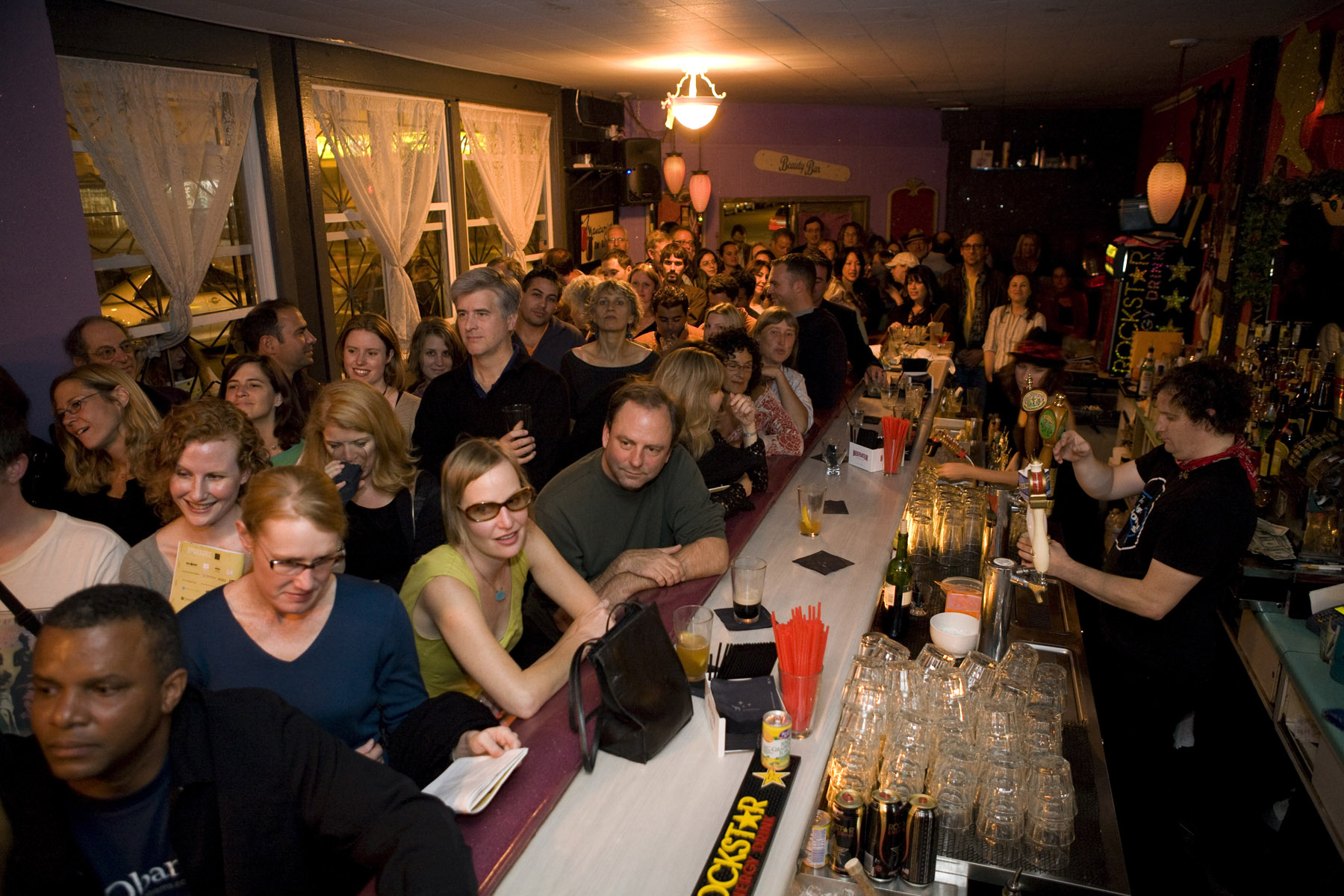
Pointless waste at SFPD

1

EDITORIAL So you’re sitting in a doorway, filling a bowl from the dregs of what was once an eighth of (perhaps nonmedical) bud, and some guy comes up an offers you $20 for what’s left in the little plastic bag. Maybe you’re unemployed, or maybe just a bit short of cash, but either way, it’s a no-brainer: For $20, you can some more pot. If the guy’s that desperate, and he’s waving the cash in front of you, what are you going to do?

So you take his money and give him the bag — and next thing you know, a half-dozen cops are surrounding you. You’re knocked to the sidewalk, cuffed and arrested — for selling drugs. And although the amount may be miniscule, the charges aren’t; selling drugs, any amount of drugs, can land you in the county jail.

As Rebecca Bowe reported June 21, this is how a sizable number of San Francisco police officers are spending their time these days. The so-called buy-bust operations involve an average of eight officers, working in teams. One poses as a desperate buyer, approaching not just people who are clearly dealers but anyone who might be in possession of illegal narcotics. He offers cash — often far more than the street value of the drugs — to entice a sale. Then after a pre-arranged signal, the team charges in, arresting the seller.

The bills carried by the decoys are photocopied in advance to make it easier to prove that the money in the seller’s pocket came from the supposed drug buyer.

Bowe reports in this issue that another team of cops has been using another similar scheme: A hapless-looking undercover officer, often appearing drunk, will wander around a low-income neighborhood with cash hanging out of his pockets, enticing someone to try to rob him. The Robbery Abatement Team (RAT) sometimes nabs people with no prior criminal records.

Police Chief Greg Suhr supports the programs, saying that the buy-bust teams discourage open-air drug dealing. But the Public Defender’s Office is dubious: Most of the people who wind up snared in these nets are not big-time drug dealers or hard-core criminals. And while many of the cases are dismissed (and some of the suspects wind up winning in court), the practice is using substantial amounts of police time and public resources — at a time when the police department claims it lacks the cash for more effective neighborhood foot patrols.

Both schemes are very, very close to entrapment — and even if the courts have allowed the undercover operations to continue, they make little sense as public policy. As Deputy Public Defender Bob Dunlap notes, “There’s something distasteful about going into the poorest neighborhoods and fishing with money.” And it’s expensive — as many as 14 officers can be involved in a single buy-bust or RAT patrol. Some of the officers are working overtime, collecting money the department doesn’t have. Since most of the people who get arrested are too poor to afford lawyers, the public defender has to put resources into defending the cases. The courts — which are so strapped for cash that civil cases aren’t even getting heard these days — have to take the time to sort out the charges. And the taxpayers have to fork over money to keep people who in many cases aren’t a threat to public safety in jail.

Suhr ought to shut down the two programs — and if he doesn’t, the supervisors should hold hearings, demand an audit of the cost of the undercover operations and make that a factor in the next police department budget.

Editorial: Pointless waste of resources at the SF :Police Department

3

So you’re sitting in a doorway, filling a bowl from the dregs of what was once an eighth of (perhaps nonmedical) bud, and some guy comes up an offers you $20 for what’s left in the little plastic bag. Maybe you’re unemployed, or maybe just a bit short of cash, but either way, it’s a no-brainer: For $20, you can some more pot. If the guy’s that desperate, and he’s waving the cash in front of you, what are you going to do?

So you take his money and give him the bag — and next thing you know, a half-dozen cops are surrounding you. You’re knocked to the sidewalk, cuffed and arrested — for selling drugs. And although the amount may be miniscule, the charges aren’t; selling drugs, any amount of drugs, can land you in the county jail.

As Rebecca Bowe reported June 21, this is how a sizable number of San Francisco police officers are spending their time these days. The so-called buy-bust operations involve an average of eight officers, working in teams. One poses as a desperate buyer, approaching not just people who are clearly dealers but anyone who might be in possession of illegal narcotics. He offers cash — often far more than the street value of the drugs — to entice a sale. Then after a pre-arranged signal, the team charges in, arresting the seller.

The bills carried by the decoys are photocopied in advance to make it easier to prove that the money in the seller’s pocket came from the supposed drug buyer.

Bowe reports in this issue that another team of cops has been using another similar scheme: A hapless-looking undercover officer, often appearing drunk, will wander around a low-income neighborhood with cash hanging out of his pockets, enticing someone to try to rob him. The Robbery Abatement Team (RAT) sometimes nabs people with no prior criminal records.

Police Chief Greg Suhr supports the programs, saying that the buy-bust teams discourage open-air drug dealing. But the Public Defender’s Office is dubious: Most of the people who wind up snared in these nets are not big-time drug dealers or hard-core criminals. And while many of the cases are dismissed (and some of the suspects wind up winning in court), the practice is using substantial amounts of police time and public resources — at a time when the police department claims it lacks the cash for more effective neighborhood foot patrols.

Both schemes are very, very close to entrapment — and even if the courts have allowed the undercover operations to continue, they make little sense as public policy. As Deputy Public Defender Bob Dunlap notes, “There’s something distasteful about going into the poorest neighborhoods and fishing with money.” And it’s expensive — as many as 14 officers can be involved in a single buy-bust or RAT patrol. Some of the officers are working overtime, collecting money the department doesn’t have. Since most of the people who get arrested are too poor to afford lawyers, the public defender has to put resources into defending the cases. The courts — which are so strapped for cash that civil cases aren’t even getting heard these days — have to take the time to sort out the charges. And the taxpayers have to fork over money to keep people who in many cases aren’t a threat to public safety in jail.

Suhr ought to shut down the two programs — and if he doesn’t, the supervisors should hold hearings, demand an audit of the cost of the undercover operations and make that a factor in the next police department budget.

Green buds

56

steve@sfbg.com

CANNABIS Most marijuana sold in Bay Area dispensaries is grown indoors, where the ability to precisely control conditions creates the kind of buds — strong, dense, crystal-covered, fragrant, beautiful — that consumers have come to expect. But that perfection comes at a high price, both financially and environmentally.

So some local leaders in the medical marijuana movement have begun to nudge the industry to return to its roots, to the days before prohibition and the helicopter raids of the Campaign Against Marijuana Planting chased the pot growers indoors. They say it’s time for California to start growing more of its cannabis outdoors again, in the soil and sunlight, just like the rest of the state’s crops.

Growers have long known how inefficient it is to grow indoors. All they need to do is look at their huge monthly energy bills. Between the powerful grow lights, constantly running air conditioners, elaborate ventilation systems, pumps and water purifiers, and heaters used for drying and curing, this is an energy-intensive endeavor.

But a widely circulated study released in April — “Energy Up in Smoke: The Carbon Footprint of Indoor Cannabis Production” by Evan Mills, a researcher with Lawrence Berkeley National Laboratory — revealed just what a huge cumulative toll the practice was taking on California and the planet.

It found that indoor pot production accounts for about 8 percent of California household energy use, costing about $3 billion annually and producing about 4 millions tons of greenhouse gases each year, the equivalent of 1 million automobiles. Producing one joint was the equivalent of driving 15 miles in a 44 mpg car.

“The emergent industry of indoor Cannabis production results in prodigious energy use, costs, and greenhouse-gas pollution. Large-scale industrialized and highly energy-intensive indoor cultivation of cannabis is driven by criminalization, pursuit of security, and the desire for greater process control and yields,” Mills wrote in the report’s summary.

Yet while opponents of marijuana seized on the report to condemn the industry, proponents say there’s a very simple solution to the problem: grow it outdoors. And with the artisanship and quality in the fields and greenhouses now rivaling that of indoor buds, the biggest barriers to moving most marijuana production outdoors are federal laws and the biases of pot consumers.

“There’s a misconception out there that indoor is better marijuana than outdoor, but we don’t think that’s true,” Erich Pearson, who runs the San Francisco Patient and Resource Center (SPARC) dispensary and sits on the city’s Medical Cannabis Task Force. “Marijuana is a plant that came from the earth and that’s where we should grow it, just like our food.”


INDOOR VS. OUTDOOR

There are definitely some benefits to growing indoors, beyond just the ability to hide it from the prying eyes of law enforcement. The grow cycles are shorter, allowing for multiple harvests around the year. The generally small operations and precise control over growing conditions also tend to produce the best-looking buds, which command the highest prices and win the top prizes in competitions.

Kevin Reed, who runs Green Cross — a venerable medical marijuana delivery service that works closely with an established group of growers — told us there are several reasons why indoor buds have dominated the marketplace.

“The most important factor is local laws and regulations and the enforcement of those various laws. A second factor is space and climate — obviously outdoor cultivation will flourish is some places better than other. And, a final factor is sustainability of the market; indoor cultivators can produce crops on a year-round basis, providing some stability in the market over the long-term, especially in the event of crop failure or other unforeseen and unexpected disasters,” Reed told us.

Yet he also said, “If cultivated correctly and with care, there should be no difference between the same strain grown in- or outdoors.” And he said that from an environmental standpoint, outdoor is clearly superior: “So far as environmental factors are concerned, there is little doubt in my mind that outdoor cultivation is kinder to Mother Earth.”

Wilson Linker, with Steep Hill Laboratories, Northern California’s largest tester of medical marijuana, said that outdoor plants generally have more vegetative growth because of the longer light cycles, meaning that “indoor tests generally higher in cannabanoids, with THC [marijuana’s main psychoactive compound] in particular.”

But he and other marijuana experts also say that the quality of the buds ultimately depends on a wide variety of factors, from the strain used to the expertise of the cultivators to the time and care taken by the trimmers.

“I’ve seen outdoor that can compete with the best indoor strains,” said David Goldman, who runs San Francisco’s Americans for Safe Access (ASA) chapter, sits on the city’s Medical Marijuana Task Force, and is active in rating the various dispensaries and pot strains in terms of quality, using magnifying glasses to investigate the trichomes and other characteristics. “I would match the best outdoor I know up with anybody’s indoor, any day.”

Even when indoor buds look better, Pearson said, that doesn’t means they are better. Looks can be deceiving, he said, noting how local consumers now accept that those perfect-looking, genetically modified apples and tomatoes in the store aren’t as tasty or good for you as their ugly, organic counterparts.

“It’s not all about appearance,” he said, noting that marijuana grown in the sunshine is more robust and complex than its indoor cousins.

“We’re starting to find [outdoor] strains that were scoring just as high as indoor,” says Rick Pfrommer, the purchasing manager for Oakland’s Harborside Health Center.

And that’s especially true when the cannabis is grown in greenhouses, where it gets natural sunlight but growing conditions can be controlled better than in the fields.

“Greenhouses can attain a level of cosmetic attractiveness that is right up there with indoor,” Pfrommer said.

“There are a lot of products coming out of greenhouses that even trained eyes can’t tell the difference with [compared to indoors],” Linker said. “Greenhouses are the future.”

Or at least they might be the future if there is a change in the federal laws, which still view any marijuana cultivation as a crime — which is why indoor grows flourished in the first place.


LINGERING PROHIBITION

Rising demand for medical marijuana has created some regulatory pushback, even in pot-friendly San Francisco, where the Department of Public Health announced earlier this year that it wanted to create a registry of growers that work with the dispensaries in order to weed out the illegal growing operations.

“In the last few years, there’s been a proliferation of both illegal and legal cultivators,” Dr. Rajiv Bhatia, San Francisco’s environmental health director, told us earlier this summer. “We’re asking for this information to try to steer them back toward legal cultivation.”

Reed, Goldman, and other industry representatives strongly condemned the move, mostly on the grounds that creating lists of growers could subject them to federal prosecution, so the idea was shelved for now. But Bhatia said the problem remains, and in San Francisco, it’s a problem created largely by the demand for cannabis grown indoors.

But allowing for a more widespread conversion to sustainably grown marijuana will require a relaxation of the federal enforcement to allow for more land cultivation and the development of high-tech greenhouses.

“A lot of that rests in the hands of law enforcement,” Pearson said.

But it isn’t just the cops. Consumers are also supporting indoor grows.


SUPPLY AND DEMAND

Pfrommer said there are many factors that influence whether customers choose indoor or outdoor, or what he calls the “bag appeal” that causes customers to zero in on one strain among the 40 or so that can be offered at one time.

Generally, indoor grows are smaller operations, allowing greater care in the tending and processing of the buds, whereas outdoor grows usually produce large crops harvested all at once, “so frequently people won’t manicure it as well,” Pfrommer said.

Smell is another big factor, Pfrommer said, and that’s one area where he thinks outdoor actually has an advantage. “Outdoor generally has a more pungent smell,” he said. “Cannabis is very sensitive to the environment, so it can pick up elements from the soil, the wind, and the surroundings. It picks up different qualities.”

For that reason, he also said, “I personally find outdoor to taste better when it’s grown well,” comparing it to the subtle qualities that various appellations can give to fine wines.

The final factor is price, and that’s one area where outdoor has a distinct advantage. SPARC is currently selling quarter-ounces of greenhouse-grown Big Buddha Cheese with a THC content of more than 17 percent for just $70. And when the buds from open outdoor fields arrive this fall, they’ll be as low as $50.

“This,” Pearson said, holding up a beautiful bud of greenhouse-grown Green Dragon, “was grown at a fraction of the cost of indoor and it’s outstanding.”

“That’s why indoor sells for so much more,” Goldman said, ” because it costs so much more to grow.”

So if outdoor cannabis is cheaper, better for the environment, less risky for the industry, and just as good, why are the indoor stains still so much more popular?

“You’re looking a 20-plus years of indoor being the standard,” Pfrommer said, noting that the hardest part of creating a more substantial changeover in people’s buying habits is their expectations.

He said Harborside started offering more outdoor strains three years ago, “but the market wasn’t responding as strongly.” In other words, people still preferred indoor.

Yet things are changing, prompted partly by the Mills study. “That was what kicked off this latest round,” Pfrommer said. “There is a small but growing awareness among the regular marijuana consumers about the costs of growing indoors…The consciousness is starting to shift, but it’ll be slow, probably over the next two seasons.”

Harvests usually take place during the full moons in September and October, after which they are cured and processed for about four weeks, finally coming to market around Thanksgiving.

“It’s mostly an education process,” Pfrommer said. “We’re going to have a vigorous push around harvest time this year.”

“We’re trying to transition completely to outdoor because the environmental toll is less, the cost is less, the yield is higher, and our testing is showing that the quality is just as good,” said Nick Smilgys, who has done both marketing and purchasing at SPARC. “It just makes more sense to grow it outdoors.”

Stage Listings

0

OPENING

Exit, Pursued By a Bear Boxcar Playhouse, 505 Natoma, SF; www.crowdedfire.org. $10-35. Previews Thurs/18-Fri/19, 8pm. Opens Sat/20, 8pm. Runs Wed-Sat (Aug 24-27 and Sept 7-17), 8pm. Through Sept 17. Crowded Fire performs Lauren Gunderson’s new play, a feminist revenge comedy.

Waiting for Giovanni Decker Theater, New Conservatory Theatre Center, 25 Van Ness, SF; www.nctcsf.org. $25-36. Previews Fri/19-Sat/20 and Aug 24-26, 8pm; Sun/21, 2pm. Opens Aug 27, 8pm. Runs Wed-Sat, 8pm; Sun, 2pm. Through Sept 18. This world-premiere play by Jewelle Gomez in collaboration with Harry Waters Jr. imagines a split-second of indecision in the mind of author James Baldwin.

BAY AREA

Toke Ashby Stage, 1901 Ashby, Berk; www.brownpapertickets.com. $25. Opens Thurs/18, 8pm. Runs Thurs-Sat, 8pm; Sun, 5pm. Through Sept 11. Swirl Media presents Deedee Kirkwood’s pot-fueled comedy.

ONGOING

Act One, Scene Two SF Playhouse, Stage Two, 533 Sutter, SF; (415) 869-5384, www.un-scripted.com. $10-20. Thurs/18-Sat/20, 8pm. Un-Scripted Theater Company hosts a different playwright each night, performing the first scene of an unfinished play and then improvising its finish.

“AfroSolo Arts Festival” Various venues, SF; www.afrosolo.org. Free-$100. Through Oct 20. The AfroSolo Theatre Company presents its 18th annual festival celebrating African American artists, musicians, and performers.

American Buffalo Actors Theatre of San Francisco, 855 Bush, SF; (415) 345-1287, www.actorstheatresf.org. $26-38. Wed-Sat, 8pm. Through Sept 3. Actors Theatre of San Francisco performs the David Mamet crime classic.

Bedtime in Detroit Boxcar Theatre Studios, 125A Hyde, SF; www.boxcartheatre.org. $15. Thurs/18-Sat/20, 8pm; Sun/21, 4pm. Boxcar Theatre’s first-ever Directing Lab Performance is of Ellen K. Anderson’s drama, set in Detroit on Devil’s Night.

Billy Elliot Orpheum Theater, 1192 Market, SF; www.shnsf.com/shows/billyelliot. $35-200. Wed/17-Sat/20, 8pm (also Sat/20, 2pm); Sun/21, 2 and 7:30pm. As a Broadway musical, Billy Elliot proves more enjoyable than the film. The movie’s T. Rex score may have been a major selling point, but it was a bit maudlin for a story that needed no help in that department. The musical naturally has a sentimental moment or three, but it’s much more often funny, muscular in its staging (with repeatedly inspired choreography from Peter Darling), and expansive in its eclectic score (Elton John) and well-wrought book and lyrics (Lee Hall). Moreover, Stephen Daldry (who also directed the 2000 film) plays up bracingly the too-timely class politics of the modest 1980s English mining town besieged by Margaret Thatcher’s neoliberal regime in the latter’s ultimately successful bid to crush the once-powerful miners union. The cast is likewise very strong. The second act is not as strong as the first, but as crowd-pleasing entertainment the musical burrows deep and more often than not comes up with gold. (Avila)

The Book of Liz Custom Made Theatre, 1620 Gough, SF; www.custommade.org. $25-32. Thurs-Sat, 8pm; Sun, 7pm. Extended through Aug 28. Custom Made Theatre performs David and Amy Sedaris’ comedy about an unconventional nun.

Gilligan’s Island: Live On Stage! 2011 Garage, 975 Howard, SF; www.brownpapertickets.com. $10-20. Sat-Sun, 8pm. Through Aug 28. Moore Theatre and SAFEhouse for the Performing Arts presents this updated, ribald take on TV’s classic castaways.

A Midsummer Night’s Dream Steve Silver Theater, 1101 Eucalyptus (on the Lowell High School campus), SF; www.bathwater.org. $20. Thurs/18-Sat/20, 7:30pm. Bathwater Productions performs an acrobatic version of the Shakespeare classic.

A Midsummer’s Night Dream This week: McLaren Park, Mansell St, SF; www.womanswill.org. Free (donations requested). Sat/20-Sun/21, 2pm. Performances continue at Bay Area parks through Aug 28. Woman’s Will performs the Shakespeare favorite.

The Nature Line Phoenix Theater, 414 Mason, SF; www.sleepwalkerstheatre.com. $17-20. Thurs-Sat, 8pm. Through Aug 27. With The Nature Line, Sleepwalkers Theatre concludes playwright J.C. Lee’s ambitious apocalypse trilogy, “This World and After.” Now well into the post-apocalyptic age, Aya (Charisse Loriaux) buries her miscarriages in the hardscrabble earth, tended by a blind one-breasted s/he named T (Amy Prosser) who plants a would-be garden and collects tattered love letters from a past when people could still physically — and emotionally — touch one another. All that’s been banished now, Aya’s friend Arty (Ariane Owens) tells us, along with the onetime plague of “sadness.” The few humans remaining huddle in the antiseptic arms of a corporate entity represented by a bossy nurse (Janna Kefalas) and her spacey assistant (Lissa Keigwin), who manage an artificial insemination clinic fueled by a stable of four comic-book–reared studs, or “dudes” in the argot of the future (a sensitive crooner smitten with Aya, played by Joshua Schell, and a boisterously adolescent fantastic three played by the roundly hilarious Roy Landaverde, Jeff Moran, and Jomar Tagatac). This all takes place at the edge of a vast, reportedly menacing frontier. Lured by an enchanting dream, and urged by T, Aya crosses over into this forbidding land, followed willy-nilly by everyone else, only to find another Eden of sorts, inhabited by the, at first, unrecognized figures of Aya’s lost and future familia (Soraya Gillis and Carla Pantoja) — a poignant moment comes in a bilingual reunion that magically erases barriers of language and time. Indeed, if Lee’s title suggests “line” as both lineage and division, the play recovers a timeless order by challenging the artificial lines between persons; people and “nature”; past, present, and future; or dream and reality. Director Mina Morita’s staging is fleet and at times poetic, while she gets generally solid performances from her cast (the more comical parts working best). Imaginative, just a little risqué, and reminiscent in its heightened vernacular, low humor, and romantic optimism of word-struck apocalypto-dramas like Liz Duffy Adams’ Dog Act, Nature is a well-constructed narrative with a theme and dialogue that can feel alternately eloquent and heavy-handed. That said, its final image remains an apt conclusion for the trilogy as a whole, amid another Eden where the first kiss, and first heartbreak, starts the beating all over again. (Avila)

Peaches en Regalia Stage Werx, 533 Sutter, SF; www.wilywestproductions.com. $12-24. Thurs-Sat, 8pm. Through Aug 27. The new comedy by Bay Area playwright Steve Lyons borrows its title from a Frank Zappa instrumental and stamps it on the menu of a local diner (tangibly evoked in Wes Cayabyab and Quinn J. Whitaker’s spiffy set design), where new employee and recent college graduate Peaches (an endearingly offbeat Sarah Moser) revels in her impulse decision to leave a job at an investment bank to work at a place with such an auspicious side dish. We meet Peaches, as well as best friend Joanne (Nicole Hammersla), nebbish customer Norman (Philip Goleman), and confident guy’s guy Syd (Cooper Carlson), through a set of discrete monologues, each illustrated with mute help from the other characters. Philosophies of life and hidden desires are all on display but the plot is a prix fixe menu of romance, marriage, and parenthood as deliberate encounters lead to unexpected matches. Sharp performances crisply directed by Sara Staley add zest to otherwise average comic fare, but the writing has several inspired flights of zaniness too. Questionable whether the second act’s course is warranted, however, since it’s plot to pull into parenthood a reluctant Norman — for whom the pace of events collapses nine months and more into a dizzying time warp — is a bit too I Love Lucy to concentrate on without itching to change the channel. (Avila)

Tigers Be Still SF Playhouse, 522 Sutter, SF; www.sfplayhouse.org. $30-50. Tues-Wed, 7pm; Thurs-Sat, 8pm (also Sat, 3pm). Through Sept 10. SF Playhouse performs Kim Rosenstock’s quirky comedy.

True West NOHspace, 2840 Mariposa, SF; 1-800-838-3006, www.truewestsf.com. $10-28. Wed-Sat, 8pm. Through Sept 17. Expression Productions presents Sam Shepard’s tale of two brothers.

2012: The Musical! This week: Washington Square Park, Columbus at Union, SF; www.sfmt.org. Free. Sat/20, 2pm. Also Sun/21, 2pm, Yerba Buena Gardens, Mission at Third St, SF. Continues through Sept 25 at various Bay Area venues. San Francisco Mime Troupe mounts their annual summer musical; this year’s show is about a political theater company torn between selling out and staying true to its anti-corporate roots.

What Mamma Said About Down There SF Downtown Comedy Theater, 287 Ellis, SF; www.sfdowntowncomedytheater.com. $15. Thurs/18-Sat/20, 8pm. Sia Amma returns with her solo comedy.

BAY AREA

Candida Bruns Memorial Amphitheater, 100 California Shakespeare Theatre Way, Orinda; www.calshakes.org. $35-66. Tues-Thurs, 7:30pm; Fri-Sat, 8pm (also Sept 3, 2pm); Sun, 4pm. Through Sept 4. Cal Shakes artistic director helms this taken on George Bernard Shaw’s classic about a housewife torn between her husband and a new suitor.

Communicating Doors Live Oak Theatre, 1301 Shattuck, Berk; www.aeofberkeley.org. $12-15. Fri/19-Sat/20, 8pm. Actors Ensemble of Berkeley performs Alan Ayckbourn’s “time-travel-battle-of-the-sexes comedy.”

The Complete History of America (abridged) Dominican University of California, Forest Meadows Amphitheater, 1475 Grand, San Rafael; (415) 499-4488, www.marinshakespeare.org. $20-35. Performance times vary; check website for schedule. Through Sept. 25. Marin Shakespeare Company performs Adam Lon, Reed Martin, and Austin Tichenor’s three-person romp through American history.

Madhouse Rhythm Cabaret at Marsh Berkeley, 2120 Allston, Berk; (415) 282-3055, www.themarsh.org. $15-35. Thurs, 7:30pm. Through Aug 25. Joshua Walters performs his hip-hop-infused autobiographical show about his experiences with bipolar disorder.

Not a Genuine Black Man Marsh Berkeley, TheaterStage, 2120 Allston, Berk; 1-800-838-3006, www.themarsh.org. $20-50. Sat, 5pm (also Sept 8 and 22, 7:30pm). Through Sept 24. This is it: the final extension of Brian Copeland’s solo show about growing up in (nearly) all-white San Leandro.

Reduction in Force Berkeley City Club, 2315 Durant, Berk; (510) 558-1381, www.centralworks.org. $14-25. Thurs-Sat, 8pm (also Sat/20 and Aug 27, 5pm); Sun, 5pm. Through Aug 28. Central Works performs “an economic comedy about back-stabbing, ass-kissing, and survival of the sneakiest.”

The Road to Hades John Hinkel Park, Southampton Ave, Berk; (510) 841-6500, www.shotgunplayers.org. $10 (suggested donation; no one turned away for lack of funds). Sat-Sun, 3pm. Through Sept 11. Shotgun Players presents a new comedy written by and starring veteran comedian and clown Jeff Raz.

Seven Guitars Marin Theatre Company, 397 Miller, Mill Valley; (415) 388-5208, www.marintheatre.org. $34-55. Tues and Thurs-Sat, 8pm (also Aug 25, 1pm; Sat/20 and Sept 3, 2pm); Wed, 7:30pm; Sun, 2 and 7pm. Through Sept 4. Marin Theatre Company performs August Wilson’s 1940s-set entry into his series of plays about the African-American experience.

Strange Travel Suggestions Cabaret at Marsh Berkeley, 2120 Allston, Berk; (415) 282-3055, www.themarsh.org. $20-50. Fri, 8pm; Sat, 5pm. Through Aug 27. Jeff Greenwald returns with a new version of his hit show of improvised monologues about travel.

“2011 New Works Festival” TheatreWorks at Lucie Stern Theatre, 1355 Middlefield, Palo Alto; (650) 463-1960, www.theatreworks.org. $19-29. Schedule varies. Through Sun/21. TheatreWorks presents its annual festival of new musicals and plays, performed in workshop or staged-reading form, plus a panel discussion.

PERFORMANCE/DANCE

“Four Saints in Three Acts: An Opera Installation” Novellus Theater, 700 Howard, SF; (415) 978-2787, www.ybca.org. Previews Thurs, 7:30pm. Runs Fri-Sat, 8pm; Sun, 2pm. $10-85. SFMOMA and YBCA present this new production of Virgil Thomson and Gertrude Stein’s opera.

“Free Preview of SF Fringe Festival” Exit Theatre, 156 Eddy, SF; RSVP to carrpool@pacbell.net. Sat, 8pm. Free. Check out excerpts from Fringe-bound works by local companies.

“Help is on the Way XVII: Gotta Sing! Gotta Dance!” Herbst Theatre, 401 Van Ness, SF; www.helpisontheway.org. Sun, 7:30pm. $50-125. Performers including Lea Salonga, Shirley Jones, Kim Nalley, Paula West, and more join forces to raise money for local AIDS service organizations, presented by the Richmond/Ermet AIDS Foundation.

“House Special” ODC Theater, 3153 17th St, SF; (415) 863-9834, www.odctheater.org. Sat, 8pm. $15-18. Julie Caffey, Christine Bonasea, and Raisa Punkii present works-in-progress as part of ODC’s summer shared-residency program.

“A Mix Tape for Ophelia” CounterPULSE, 1310 Mission, SF; www.counterpulse.org. Fri-Sat, 8pm. $20. CounterPULSE and Collage Theater present this multimedia exploration of adolescence through a Shakespearian, queer lens.

“SF Live!” 50 Mason Social House, 50 Mason, SF; www.50masonsocialhouse.com. Mon, 9:30pm. Free. Ongoing. Comedy and music showcase.

“2011 Bay Area Rhythm Exchange” Herbst Theatre, 401 Van Ness, SF; (415) 392-4400, www.cityboxoffice.com. Fri-Sat, 8pm. $17-25. Stepology presents this tap dance festival, featuring Melinda Sullivan, Channing Cook Holmes, the Barbary Coast Cloggers, and more.

“The Wounded Stag” Marsh, 1062 Valencia, SF; www.themarsh.org. Tues, 7:30pm, $10. Musical performance and monologues with multi-instrumentalist Andrew Goldfarb (a.k.a. the Slow Poisoner) and absurdist performance artist Dan Carbone.


Performance times may change; call venues to confirm. Reviewers are Robert Avila, Rita Felciano, and Nicole Gluckstern. Submit items for the listings at listings@sfbg.com. For further information on how to submit items for the listings, see Picks. For complete listings, see www.sfbg.com.

Hot sexy events: August 10-16

0

As the world comes tumbling down around our ears, it can be difficult to think about getting it on. Just kidding. People are as freaky as ever in San Francisco, which is good ’cause pretty soon that Big One will come and we’ll all fall into the ocean, the flames, a cravasse-abyss where the San Andreas Fault used to be — naked. Hopefully it won’t be this week, though. We’ve got a lot of filthy sex events to go to.

“Bawdy Storytelling: Queer”

How hip is queer right now? From Hard French to New York’s recent triumph to Queen Latifah, all you gotta do is add a LGBT to the front of your event title and bam! Your crowd will be a. hotter and b. hotter. Perhaps, then, you should not miss this edition of Bawdy Storytelling, fresh off its triumphant receipt of our Best of the Bay award for “Best Titillating T.M.I.” The pervy share sesh is trotting out sexy dykes ‘n’ fags galore to share the more, er, colorful side of living over the rainbow. 

Wed/10 8 p.m., $10

The Blue Macaw

2565 Mission, SF

www.bawdystorytelling.com


“SSEX BBOX: It’s Complicated”

You’ve got lots to say about sex, don’t you? SSEX BBOX is counting on it – that’s why the alternative sexuality web series is hosting this dance party-fundraiser-filming (we know what you’re thinking, it’s not like that. Okay, maybe it’s kind of like that) at El Rio. They’ll be looking for your views on gender, relationships, and sexuality – all while DJs Booty Klap and Miss Pop shuck and jive. 

Thu/11 8 p.m.-1 a.m., $7

El Rio

3158 Mission, SF

www.ssexbbox.com


Lick It

This poster for this party asks “what do you have a taste for?” It’s really, really hoping the answer is go-go dancers. The menfolk will be gyrating under the black lights for this one, and you’re invited to bust your tongue out, all over them. Brush your teeth before you come, yes you. 

Fri/12 10 p.m.-1 a.m., $5

Powerhouse 

1347 Folsom, SF

(415) 552-8689

www.powerhouse-sf.com


Arty Shoe Party

“You know how picky I am about shoes, and they only go on my feet!” Ah Alicia Silverstone, how you right you were: it simply doesn’t do to be Clueless about footwear. Alas, many of us are – hell, I’m wearing waterproof boat shoes as we speak. Not so at this weekend’s Center for Sex and Culture fundraiser bash, where nude models will be strutting about in artistically accomplished heels and flats. Worship them, foot fetishers – that’s kind of the point. 

Sat/13 2-7 p.m., $20

Center for Sex and Culture 

1349 Mission, SF

(415) 552-7399

www.sexandculture.org


Burlesque and Brass 

Cafe Van Kleef’s cozy climes, crowded with mysterious tchotchkes and cocktail-wielding friendly strangers, seems ready-made for Louisianian jazz. It’s a busty sort of music, isn’t it? Perhaps that’s why Hot Pink Feathers’ floorshows seem to go so well with Blue Bone Express’ robust aural stylings at Burlesque and Brass. Of course, New Orleans has long been known as a top-notch melting pot of colorful characters – small wonder that this show features Italy’s Scarlett Martini, Germany’s Hedo Luxe, and Switzerland’s Koko La Douce. 

Sat/13 9:30 p.m.-1 a.m., $10

Cafe Van Kleef

1621 Telegraph, Oakl.

www.cafevankleef.com


“How To Have Sex With a Transguy”

A special somebody caught your eye on the dancefloor last weekend, but you backed off after the initial make-out session because you weren’t positive you’d know what to do with it once you got it? To the uninitiated, having sex with a transperson can seem very mysterious. And no one likes to look like a first-timer (unless that’s like, your thing). Enter Liam “Captain” Snowdon, poet-activist-educator. Snowdon will be giving not-super-straight talk on gender reassignment surgery and its results on getting down – strategies, and ways to communicate so that you and Mr. Lust can skip to the bedroom, sans baggage. 

Mon/15 6-8 p.m., $20-25

Good Vibrations

1620 Polk, SF

(415) 345-0500

www.goodvibes.com


Appetite: At Beefeater Distillery, London

0

One jumps at the chance to spend a day at London’s Beefeater Distillery, particularly when given a personal tour by Beefeater‘s master distiller Desmond Payne. Gracious and mannered, Payne has been making gin for over 40 years, his early days being at Plymouth Gin. As a guest of Beefeater, my trip to London was full of unforgettable days, and this was one of them.

Join me on the photo tour, above, through the distillery, one that has been in operation since 1820 – the longest running London Dry Gin actually made in London.

Beefeater’s unique process is that they steep their 9 botanicals (juniper, angelica root, angelica seeds, coriander, liquorice, almonds, orris root, Seville oranges, lemon peel) for 24-hours in copper pot stills with water and a neutral grain base of English wheat. All this with only five year-round staff? Impressive at over 2 million cases a year.

Payne has been producing a series of seasonal releases, like Beefeater Winter Gin in December, a  Summer Gin (floral notes from elderflower and hibiscus), and a brand new London Market Gin (with kaffir lime and cardamom) that sadly we won’t see released in the US.

— Subscribe to Virgina’s twice-monthly newsletter, The Perfect Spot. Read more about Virginia’s exciting cocktail adventures in London here.

Best of the Bay 2011 Readers Poll: Food and Drink

13

BEST OF THE BAY READERS POLL 2011

FOOD AND DRINK


BEST OVERALL RESTAURANT

Nopa

560 Divisadero, SF. (415) 864-8643, www.nopasf.com


BEST NEW RESTAURANT

Wayfare Tavern

558 Sacramento, SF. (415) 772-9060, www.wayfaretavern.com


BEST BUDGET RESTAURANT

Jake’s Steaks

3301 Buchanan, SF. (415) 922-2211, www.jakessteaks.net


BEST SPLURGE RESTAURANT

Millennium

580 Geary, SF. (415) 345-3900, www.millenniumrestaurant.com


BEST LATE NIGHT RESTAURANT

Sparky’s Diner

242 Church, SF. (415) 692-7673, www.sparkysdinersf.com


BEST ROMANTIC RESTAURANT

The Cliff House

1090 Point Lobos, SF. (415) 386-3330, www.cliffhouse.com


BEST FOOD CART

Curry Up Now

www.curryupnow.com


BEST FARMER’S MARKET

Ferry Plaza

1 Ferry Building, SF. (415) 291-3276, www.cuesa.org


BEST PIZZA

Little Star

Various locations, www.littlestarpizza.com


BEST SANDWICHES

Ike’s Place

3489 16th St., SF. (415) 553-6888, www.ilikeikesplace.com


BEST BURRITOS

Papalote

3409 24th St., SF. (415) 970-8815 and 1777 Fulton, SF. (415) 776-0106, www.papalote-sf.com


BEST SMALL PLATES

Cha Cha Cha

1801 Haight, SF. (415) 386-7670 and 2327 Mission, SF. (415) 824-1502, www.cha3.com


BEST BURGER AND FRIES

Burgermeister

Various locations, www.burgermeistersf.com


BEST BARBECUE

Memphis Minnie’s

576 Haight, SF. (415) 864-7675, www.memphisminnies.com


BEST SUSHI

Ichi Sushi

3369 Mission, SF. (415) 535-4750, www.ichisushi.com


BEST BOWL OF NOODLES

Turtle Tower

631 Larkin, SF. (415) 409-3333 and 5716 Geary, SF. (415) 221-9890, www.turtletowersf.com


BEST SEAFOOD RESTAURANT

Woodhouse Fish Co.

2073 Market, SF. and 1914 Fillmore, SF. (415) 437-2722, www.woodhousefish.com


BEST ITALIAN RESTAURANT

Delfina

3621 18th St., SF. (415) 552-4055, www.delfinasf.com


BEST MIDDLE EASTERN RESTAURANT

Café La Mediterranée

Various locations, www.cafelamed.com


BEST INDIAN RESTAURANT

Dosa

995 Valencia, SF. (415) 642-3672 and 1700 Fillmore (415) 441-3672, www.dosasf.com


BEST MEXICAN RESTAURANT

Puerto Alegre

546 Valencia, SF. (415) 255-8201


BEST CHINESE RESTAURANT

Mission Chinese

2234 Mission, SF. (415) 863-2800, www.missionchinesefood.com


BEST THAI RESTAURANT

Osha Thai

Various locations, www.oshathai.com


BEST VEGETARIAN RESTAURANT

Greens

Fort Mason, Building A, SF. (415) 771-6222, www.greensrestaurant.com


BEST VEGAN RESTAURANT

Gracias Madre

2211 Mission, SF. (415) 683-1346, www.gracias-madre.com


BEST BREAKFAST

Chloe’s Café

1399 Church, SF. (415) 648-4116


BEST BRUNCH

Zazie

941 Cole, SF. (415) 564-5332, www.zaziesf.com


BEST LUNCH

San Francisco Soup Co.

Various locations, www.sfsoupco.com


BEST DESSERT

Bi-Rite Creamery

3692 18th St., SF. (415) 626-5600, www.biritecreamery.com


BEST SERVICE

Gary Danko

800 North Point, SF. (415) 749-2060, www.garydanko.com


BEST FOOD/DRINKS BLOG OR SITE

Tablehopper

www.tablehopper.com


BEST CAFÉ

Café Flore

2298 Market, SF. (415) 621-8579, www.cafeflore.com


BEST CUP OF COFFEE

Blue Bottle

Various locations, www.bluebottlecoffee.net


BEST CUP OF TEA

Satori Tea Company

37 N. San Pedro St., San Jose. (408) 292-1502, www.thesatoriteacompany.com


BEST OVERALL BAR

Forbidden Island Tiki Lounge

1304 Lincoln, Alameda. (510) 749-0332, www.forbiddenislandalameda.com


BEST DIVE BAR

El Rio

3158 Mission, SF. (415) 282-3325, www.elriosf.com


BEST SWANKY BAR

Bourbon and Branch

501 Jones, SF. (415) 931-7292, www.bourbonandbranch.com


BEST SINGLES BAR

Blackbird

2124 Market, SF. (415) 503-0630, www.blackbirdbar.com


BEST HAPPY HOUR

Midnight Sun

4067 18th St., SF. (415) 861-4186, www.midnightsunsf.com


BEST WINERY

V Sattui

1111 White Lane, St. Helena. (707) 963-7774, www.vsattui.com


BEST WINE BAR

Noeteca

1551 Dolores, SF. (415) 824-5524, www.noeteca.com


BEST BREWERY

Anchor Steam Brewery

1705 Mariposa, SF. (415) 863-8350. www.anchorbrewing.com


BEST SELECTION OF BEERS

Toronado

547 Haight, SF. (415) 863-2276, www.toronado.com


BEST COCKTAILS

Smuggler’s Cove

650 Gough, SF. (415) 869-1900, www.smugglerscovesf.com


BEST BLOODY MARY

Zeitgeist

199 Valencia, SF. (415) 255-7505, www.zeitgeistsf.com


BEST BAR STAFF

DNA Lounge

375 11th St., SF. (415) 626-1409, www.dnalounge.com


BEST POT EDIBLES

The Vapor Room

607A Haight, SF. (415) 633-6072, www.vaporroom.com


BEST BAKERY

Tartine

600 Guerrero, SF. (415) 487-2600, www.tartinebakery.com


BEST BUTCHER SHOP

Drewes Bros.

1706 Church, SF. (415) 821-0515, www.drewesbros.com


BEST CHEESE SHOP

Cowgirl Creamery

1 Ferry Building No. 17, SF. (415) 362-9354, www.cowgirlcreamery.com


BEST CHOCOLATIER

Recchiuti Confections

1 Ferry Building No. 30, SF. (415) 834-9494, www.recchuiti.com


Editorial: Don’t gut SF campaign law

1

The U.S. Supreme Court, which has already ruled that corporations can spend all the money they want on political campaigns, dealt another huge blow to democracy in June when it struck down a campaign finance law in Arizona that was designed to level the playing field for candidates running against better-financed opponents.

The ruling has implications for San Francisco’s public finance law, and already the Ethics Commission has moved to amend — some would say gut — the ordinance. The supervisors also have to approve the changes, and they should move cautiously; there is much about the local law that can still be saved, and there are experts working on alternative models that could still work under the Arizona ruling.

The Arizona law gave public funds to candidates who agreed to limit personal spending to $500. The more privately financed opponents and independent expenditure (IE) committees spent on a candidate, the more public matching money the other candidates received.

The idea: if one rich candidate — or one candidate supported by deep-pocketed special interests — tried to dominate the election, the others would be given enough money to make things fair.

That’s the same motivation behind San Francisco’s law, which sets a spending limit for the mayoral and supervisorial races, provides matching funds for small contributions — and gives public money to candidates who are attacked by outside independent expenditure committees.

It’s possible that the current IE match won’t hold up to legal scrutiny under the Arizona decision. And already some of the city’s biggest downtown interests are threatening to sue to overturn the local ordinance. But there is much about the San Francisco law that will likely survive a court challenge.

Bob Stern, a campaign finance expert and president of the Center for Governmental Studies in Los Angeles, told us that he’s working on a new model law for cities like San Francisco. The Ethics Commission knew that when it voted July 11 to eliminate matching for IEs and to reduce the available pot of money.

Now the law comes to the Board of Supervisors, where eight votes are required to accept the Ethics Commission amendments. Good government advocates say the supervisors should do only what is clearly legally necessary: “The Ethics Commission should have used a scalpel, not a sledgehammer,” Oliver Luby, a former commission staffer, told us.

The November mayor’s race is a huge test for the city’s law; this will be the first time effective public financing will be in place for a citywide race, and the success of the ordinance will draw national attention. The supervisors should stop short of so badly amending it that it will lose all its teeth.

The board should hold public hearings and solicit input from local and national experts. The supervisors shouldn’t be intimidated by downtown lawsuits and consider only the most limited changes — after reviewing every possible alternative.