Pot

California dreaming

2

arts@sfbg.com

HAIRY EYEBALL In his review of the latest Venice Biennale, Boston Globe art critic Sebastian Smee threw down something of a gauntlet when he wrote, “The received wisdom is that contemporary art is mostly about ideas. In truth, however, it’s mostly about gestures.”

Smee’s generalization offers plenty to chew on and plenty to disagree with. For starters, it implicitly presents one of art’s oldest chicken-egg scenarios — one that was muddied decades ago by Marcel Duchamp and later Conceptual Art — as a false choice between thought and spectacle, sustained engagement and capricious showmanship.

But it can also be read as a pretty spot-on diagnosis of the current moment in art — at least, as refracted through the fun house mirror of the Biennale — in which having a gimmick, however thought through or critically engaged, or bringing out the big guns guarantees attention in an increasingly crowded market already clogged with gimmicks and big guns.

Bay Area Now, Yerba Buena Center for the Arts’ triennial snapshot of local creative culture, is the closest thing the Bay Area has to the Biennale and also, thankfully, the furthest thing from it. Still, Smee’s comment provides a useful rubric for navigating its sixth installment, which is full of gestures (some well-executed, others not so much) that at times overshadow the ideas (some half-baked, others worth mulling over) they’re meant to put across.

Visual art curators Betti-Sue Hertz and Thien Lam have pared the number of participating artists, now augmented by art collectives, to a tidy 18. This smaller range gives each participant’s work — most of it created especially for BAN6 — a little more breathing room, although the exhibition’s layout isn’t exactly conducive to following the connecting threads (environmentalism, geopolitics, Americana, and local subcultures, among other topics) unspooled in their curators’ statement.

Tammy Rae Carland’s wonderful series of work about the self-effacing price female comedians have had to pay (and continue to pay) to get a laugh is the first thing you see when you enter. But her photographs of local comediennes in ambiguous forms of self-presentation, text pieces that isolate the painful punch lines of Phyllis Diller, Joan Rivers, et al., and banana peels cast in brass are spread between two floors: a confusing arrangement if you don’t directly proceed up the stairway next to which Carland has created an elegiac installation that, save for the large helium balloons suspending a porcelain microphone, is also easy to miss.

YBCA’s main gallery is another case in point: it’s a good site for large installations that pack a lot of visual impact (think Song Dong’s Waste Not or Nick Cave’s soundsuits), but can pose a challenge for arranging groups of smaller-scale pieces coherently. It’s too bad, then, that the three box-like structures housing works by Brion Nuda Rosch, Rio Babe International, and Chris Sollars cut diagonally across the space like a semipermeable wall of shipping crates. Incidentally, these installations are also some of BAN6’s least compelling pieces.

Harder to ignore is Ben Venom’s See You on the Other Side, a giant quilt whose centerpiece motif of snakes sprouting from a human skull, all made from old metal band T-shirt scraps, only becomes visible as your eyes adjust to the surrounding negative space. It is, in a word, awesome. But it’s also a canny fusion of craft traditions already present in metal subcultures — the quilt is flanked by two cut-off embroidered and studded denim vests, familiar handmade vestments of the tribe — with an older American precedent.

Quilting is also taken up in Suzanne Husky’s nearby Sleep Cell Hotel installation, a collection of three potentially inhabitable nest-like wooden structures that resemble porcupines, replete with quilts covered in radical slogans. A goofy infomercial touts the dwellings as the next development in politically conscious eco-tourism, while a hand-drawn sign warns of their structural unsoundness. Husky’s isolation tanks take the piss out of radical chic and backpackers alike while questioning the impact even the most well-intentioned and off-the-grid 21st century nomads leave in the wake of their habitats beyond carbon footprints.

That question is reframed in more ambiguous terms by Ranu Mukherjee’s wonderful series of drawings and watercolors of “nomadic artifacts” located in YBCA’s smaller second gallery. Each work is based on an image or stories sent to Mukherjee by friends and associates that reflect their conception of the nomadic, a process of translation neatly embodied by the blank fields against which a camper van or an ancient Egyptian temple is depicted. Isolated from their original contexts, these purloined postcards from the edge form an ongoing archive of mobile existence (the call for submissions is still open).

This second room — darkened to accommodate a video projection by Mukherjee as well as Sean McFarland’s crepuscular, large-format photographs of forest interiors — is actually BAN6’s most coherent grouping, with Weston Teruya’s architectural model-like paper sculptures and Richard T. Walker’s winsome three channel video installation rounding out a chorale of differing takes on land use, abuse, occupation, and representation.

In many cases at BAN6, ambition tends to exceed execution, but the results — as with Tony Labat’s large neon marijuana leaf that, seen from the outside, makes YBCA’s Mission Street lobby look like the city’s chicest pot dispensary — still pack a punch. Whether that is enough, or enough for a “moment in time” group survey such as this, is another question.

BAY AREA NOW 6

Through Sept. 25

Thurs.–Sat., noon–8 p.m.; Sun, noon–6 p.m., $5–$7

Yerba Buena Center for the Arts

701 Mission, SF

www.ybca.org


Don’t gut SF campaign law

0

The U.S. Supreme Court, which has already ruled that corporations can spend all the money they want on political campaigns, dealt another huge blow to democracy in June when it struck down a campaign finance law in Arizona that was designed to level the playing field for candidates running against better-financed opponents.

The ruling has implications for San Francisco’s public finance law, and already the Ethics Commission has moved to amend — some would say gut — the ordinance. The supervisors also have to approve the changes, and they should move cautiously; there is much about the local law that can still be saved, and there are experts working on alternative models that could still work under the Arizona ruling.

The Arizona law gave public funds to candidates who agreed to limit personal spending to $500. The more privately financed opponents and independent expenditure (IE) committees spent on a candidate, the more public matching money the other candidates received.

The idea: if one rich candidate — or one candidate supported by deep-pocketed special interests — tried to dominate the election, the others would be given enough money to make things fair.

That’s the same motivation behind San Francisco’s law, which sets a spending limit for the mayoral and supervisorial races, provides matching funds for small contributions — and gives public money to candidates who are attacked by outside independent expenditure committees.

It’s possible that the current IE match won’t hold up to legal scrutiny under the Arizona decision. And already some of the city’s biggest downtown interests are threatening to sue to overturn the local ordinance. But there is much about the San Francisco law that will likely survive a court challenge.

Bob Stern, a campaign finance expert and president of the Center for Governmental Studies in Los Angeles, told us that he’s working on a new model law for cities like San Francisco. The Ethics Commission knew that when it voted July 11 to eliminate matching for IEs and to reduce the available pot of money.

Now the law comes to the Board of Supervisors, where eight votes are required to accept the Ethics Commission amendments. Good government advocates say the supervisors should do only what is clearly legally necessary: “The Ethics Commission should have used a scalpel, not a sledgehammer,” Oliver Luby, a former commission staffer, told us.

The November mayor’s race is a huge test for the city’s law; this will be the first time effective public financing will be in place for a citywide race, and the success of the ordinance will draw national attention. The supervisors should stop short of so badly amending it that it will lose all its teeth.

The board should hold public hearings and solicit input from local and national experts. The supervisors shouldn’t be intimidated by downtown lawsuits and consider only the most limited changes — after reviewing every possible alternative. 


Editor’s notes

16

tredmond@sfbg.com

I’m not prone to agreeing with right-wing nuts from Riverside County, but there’s a county supervisor down there named Jeff Stone who has a dandy idea. He wants to secede.

According to the Los Angeles Times, Stone is proposing that 13 counties in the southland and inland empire split off and become their own state, which would be called South California. We’re talking everything south of Madera, with the coastal counties (and Los Angeles) left behind. A real conservative haven of low taxes and limited regulation.

And I say: Go for it, pal. I’m completely with you.

Imagine what would happen if Supervisor Stone got his way. There would be no more budget paralysis in the California Legislature. Democrats would control two-thirds of both houses and could pass a budget that included higher taxes on the rich and big corporations. Candidates for governor wouldn’t have to worry about getting votes from the conservative parts of the state, so they could talk more honestly about the major issues. Same-sex marriage would pass the first week. Pot would be legal. The death penalty would be gone in a year or two.

It might take a while longer to amend Prop. 13, but with the ability to raise revenue instead of just cutting, California could begin to fund the schools adequately, rebuild the state university system, and move forward with projects like high-speed rail.

And let’s remember: those counties that want to leave? They elect representatives who won’t vote for taxes — but they are the biggest beneficiaries of state revenues. The northern and coastal counties, the more liberal ones, pay more in taxes than we get in services. Our taxpayers are subsidizing their tax haters.

So go on — leave. We’ll keep our money here.

Now, just to our south and east would be a train wreck of a state with few public services — but South California would still be part of America, so people could move north without worrying about immigration papers. I’d propose that we set up a state fund to resettle refugees from Republicanland.

And maybe, after a while, the people who have to live with crappy schools and crumbling roads will look across the border and say, Why do they have it so good? And maybe they’ll start to think differently about the role of government.

Maniocs!

0

le.chicken.farmer@gmail.com

CHEAP EATS I’ve got to get my head out of my ass. I don’t know if bars are where this happens, but the music is better. At the Dovre Club, they were playing the Cars, then the Clash, and Kayday was trying to think what comes next — the Dead Kennedys, or Devo — when a cockroach peeked out from under a coaster, then scampered between our drinks.

An interesting thing is that I was having a gin and tonic for probably the first time since I was in high school, listening to the Cars, the Clash, and then-what. This cockroach had probably only been alive for six days, week-and-a-half tops. It was pretty scrawny.

Kayday, who is a way, way more classy woman than I can ever dream of being, sort of lifted her glass (without spilling!) and scooted the little no-no over toward the bartender, who unceremoniously dealt with it.

And that was a life.

Mine is different. The Dovre Club has always been good to me, ever since it was in the downstairs corner of the Women’s Building. It was there, 15 years ago, in front of a pint of something-or-other, that I made an important, life-altering decision: to go to El Rio.

Where I met Crawdad de la Cooter, my most significant ex-other ever, whose children are the strongest argument for getting out of bed in the morning that I have ever heard. Especially the past couple mornings, when the argument was made in person and accompanied by pulls and tugs and demands for oatmeal.

With kids it’s automatic: your head can’t be up your ass because it has to be up theirs. And this is why my No. 1 goal in life is to become a grandmother. Somehow. Against all odds — every single one of them, given my own personal lack of children. But if I can only have a grandchild! Then I can die, when I do, with my head out of my ass.

And with a big pot of sauce on the stove.

I was talking with my hairdresser last night about mortality, and our problems with it — which are for the most part, at this point, conceptual. When I left the house, the kids were sleeping. Their father was home from work, eating ice cream, being the dad of their dreams, and just generally practicing the sousaphone. Their mom was in Bellingham, Wash., memorializing a friend of ours who was too young to die but did.

So I got my hair done. And when I came back, he didn’t even look up from his ice cream. “Nice haircut,” he said.

“Crawdad is a lucky woman,” I said, and went to bed.

But before any of this, before even the cockroach that came after the Cars and the Clash and between our drinks, my long-lost bestie Kayday and me were seeing to some Nicaraguan food at Nicaragua Restaurant on Mission Street.

There was ceviche, which I loved, and a tamale, which I didn’t, and the great Nicaraguan dish called chancho con yuca, which means, in no uncertain terms, pig with yuca.

As you know if you’ve ever been to Limon Rotisserie and ordered right (i.e. fried), yuca can be so good. Or … not.

Not that it was bad at Nicaragua. It just was, you know, a starch. Like a boiled potato, it needed work. If you scoop a bunch of the tangy ceviche juices onto it, hot sauce, salsa, and mash it up with your fork: OK. Yum. Otherwise, you know, ho fuckin’ hum.

Kayday started waxing poetic on the nature of starches, such troopers! How resilient and accommodating they are. Up for anything. Then the next thing I knew, she was speaking from the point of view of our plate-loads of underseasoned yuca. She’s from Indiana and therefore does great impersonations of starches.

Anyway, it was better than the music. For some strange reason, by way of atmosphere, they were playing Juice Newton and Laura Branigan. Which is why the Cars and Clash songs after were such a treat, like a chiropractic adjustment.

Or something.

NICARAGUA RESTAURANT

Sun.–Thurs. 11 a.m.–8:30 p.m.;

Fri.–Sat. 11 a.m.–9:30 p.m.

3015 Mission, SF

(415) 826-3672

Beer and wine

Cash only

Film Listings

0

Film listings are edited by Cheryl Eddy. Reviewers are Kimberly Chun, Michelle Devereaux, Peter Galvin, Max Goldberg, Dennis Harvey, Johnny Ray Huston, Louis Peitzman, Lynn Rapoport, Ben Richardson, and Matt Sussman. For rep house showtimes, see Rep Clock. For first-run showtimes, see Movie Guide. Due to the Fourth of July holiday, theater information was incomplete at presstime.

OPENING

A Better Life Demian Bichir (Weeds) stars in this drama about an immigrant family struggling to realize the American dream. (1:38)

Horrible Bosses Jason Bateman and Jennifer Aniston star in this workplace comedy. (1:33)

How to Live Forever After his mother died, documentarian Mark S. Wexler began to seriously contemplate aging and, inevitably, his own death. A certain amount of baby boomer naval-gazing is the inevitable result, but Wexler is curious enough to expand his quest into realms beyond his own graying hair and expanding midsection. The film’s (mostly) tongue-in-cheek title comes into play as he visits scientists, inventors, new age types, cryonics-facility workers, and doctors with various anti-aging philosophies and agendas. But probably the most compelling long-life widsom comes from the elderly folks he visits for practical advice. While the Guinness record-holding 114-year-olds aren’t much for coherent communication, quite a few of the 80-, 90- and 100-somethings Wexler talks to suggest that simply being a spitfire is a key to longevity. Highlights include the late fitness guru Jack LaLanne, enviably energetic in his mid-90s; a 104-year-old Brit who’s a smoker, drinker, and aspiring marathoner; and an 80-year-old tap dancer who decides to compete in a beauty pageant for senior citizens. “I’m older than he is,” she giggles of her boyfriend. “But he can drive at night!” (1:34) (Eddy)

Vincent Wants to Sea An anorexic, an obsessive-compulsive, and someone with Tourette syndrome go on a roadtrip: it’s not the setup to a bad joke, it’s the gist of Vincent Wants to Sea, a mostly fun, sometimes touching, but often improbable film. When Vincent’s mother dies, his father (Heino Ferch) decides it’s time for Vincent (Florian David Fitz — who also wrote the screenplay) to once and for all eradicate his tics and spasms and sequesters him at a summer camp-esque institution in the German countryside. The subsequent escape and journey to the Italian coast (where Vincent hopes to scatter his mother’s ashes) with two fellow patients, the anorexic Marie (Karoline Herfuth) and the Bach-loving compulsive Alex (Johannes Allmayer), is rife with self-discovery and uplifting music, so much so that it sometimes resembles a Levi’s ad more than a feature film. There’s real heart and humor beneath the cheese, but there’s a lot of cheese. (1:36) (Cooper Berkmoyer)

Zookeeper Kevin James graduates from policing mall rats to hanging with talking zoo animals. (1:42)

ONGOING

The Art of Getting By The Art of Getting By is all about those confusing, mixed-up and apparently sexually frustrating months before high school graduation. George (Freddie Highmore) is a trench coat-wearing misanthrope — an old soul, as they say — whose parents and teachers are always trying to put him inside a box and tell him how to think. He finds a kindred sprit in Sally (Emma Roberts) who smokes and watches Louis Malle films. Hot. Heavily scored by the now-ancient songs of early ’00s blog bands, it may all sound like indie bullshit but this one has charm and wit despite its post-trend package. Like a sad little crayon, Highmore is a competent Michael Cera surrogate du jour. Writer-director Gavin Wiesen embraces hell of clichés, but he suitably sums up a generational angst along the way. The film may not always feel real, but it does have real feeling. Look out for great performances from Blair Underwood and Alicia Silverstone. (1:24) (Ryan Lattanzio)

Bad Teacher Jake Kasdan, the once-talented director of a few Freaks and Geeks episodes and 2002’s underrated Orange County, seems hell-bent on humiliating everyone in the cast of Bad Teacher. Cameron Diaz is Elizabeth, the title’s criminally bad pedagogue who prefers the Jack Daniels method to the Socratic. Her impetus for pounding Harper Lee into her middle school students’ bug-eyed little heads is to cash in on a bonus check to fund her breast-y ambitions and woo Justin Timberlake and his baby voice. The only likable onscreen presence is Jason Segal as a sad sack gym teacher in love with Elizabeth. But he could do so much better. There’s no shortage of racist jokes and potty humor in this R-rated comedy pandering to those 17 and below. When asked if she wants to go out with her coworkers, Elizabeth ripostes, “I’d rather get shot in the face!” That scenario is likely a better alternative than suffering this steaming pile of cash cow carcass. (1:29) (Lattanzio)

*Beginners There is nothing conventional about Beginners, a film that starts off with the funeral arrangements for one of its central characters. That man is Hal (Christopher Plummer), who came out to his son Oliver (Ewan McGregor) at the ripe age of 75. Through flashbacks, we see the relationship play out — Oliver’s inability to commit tempered by his father’s tremendous late-stage passion for life. Hal himself is a rare character: an elderly gay man, secure in his sexuality and, by his own admission, horny. He even has a much younger boyfriend, played by the handsome Goran Visnjic. While the father-son bond is the heart of Beginners, we also see the charming development of a relationship between Oliver and French actor Anna (Mélanie Laurent). It all comes together beautifully in a film that is bittersweet but ultimately satisfying. Beginners deserves praise not only for telling a story too often left untold, but for doing so with grace and a refreshing sense of whimsy. (1:44) (Peitzman)

*Bill Cunningham New York To say that Bill Cunningham, the 82-year old New York Times photographer, has made documenting how New Yorkers dress his life’s work would be an understatement. To be sure, Cunningham’s two decades-old Sunday Times columns — “On the Street,” which tracks street-fashion, and “Evening Hours,” which covers the charity gala circuit — are about the clothes. And, my, what clothes they are. But Cunningham is a sartorial anthropologist, and his pictures always tell the bigger story behind the changing hemlines, which socialite wore what designer, or the latest trend in footwear. Whether tracking the near-infinite variations of a particular hue, a sudden bumper-crop of cropped blazers, or the fanciful leaps of well-heeled pedestrians dodging February slush puddles, Cunningham’s talent lies in his ability to recognize fleeting moments of beauty, creativity, humor, and joy. That last quality courses through Bill Cunningham New York, Richard Press’ captivating and moving portrait of a man whose reticence and personal asceticism are proportional to his total devotion to documenting what Harold Koda, chief curator at the Costume Institute at the Metropolitan Museum of Art, describes in the film as “ordinary people going about their lives, dressed in fascinating ways.” (1:24) (Sussman)

Bride Flight Who doesn’t love a sweeping Dutch period piece? Ben Sombogaart’s Bride Flight is pure melodrama soup, enough to give even the most devout arthouse-goer the bloats. Emigrating from post-World War II Holland to New Zealand with two gal pals, the sweetly staid Ada (Karina Smulders) falls for smarm-ball Frank (Waldemar Torenstra, the Dutchman’s James Franco) and kind of joins the mile high club to the behest of her conscience. The women arrive with emotional baggage and carry-ons of the uterine kind. As the harem adjusts to the country mores of the Highlands, Frank tries a poke at all of them in a series of sex scenes more moldy than smoldery. This Flight, set to a plodding score and stuffy mise-en-scene, never quite leaves the runway. Not to mention the whole picture, pale as a corpse, resembles one of those old-timey photographs of your great grandma’s wedding. These kinds of pastoral romances ought to be put out to, well, pasture. (2:10) (Lattanzio)

*Bridesmaids For anyone burned out on bad romantic comedies, Bridesmaids can teach you how to love again. This film is an answer to those who have lamented the lack of strong female roles in comedy, of good vehicles for Saturday Night Live cast members, of an appropriate showcase for Melissa McCarthy. The hilarious but grounded Kristen Wiig stars as Annie, whose best friend Lillian (Maya Rudolph) is getting hitched. Financially and romantically unstable, Annie tries to throw herself into her maid of honor duties — all while competing with the far more refined Helen (Rose Byrne). Bridesmaids is one of the best comedies in recent memory, treating its relatable female characters with sympathy. It’s also damn funny from start to finish, which is more than can be said for most of the comedies Hollywood continues to churn out. Here’s your choice: let Bridesmaids work its charm on you, or never allow yourself to complain about an Adam Sandler flick again. (2:04) (Peitzman)

Buck This documentary paints a portrait of horse trainer Buck Brannaman as a sort of modern-day sage, a sentimental cowboy who helps “horses with people problems.” Brannaman has transcended a background of hardship and abuse to become a happy family man who makes a difference for horses and their owners all over the country with his unconventional, humane colt-starting clinics. Though he doesn’t actually whisper to horses, he served as an advisor and inspiration for Robert Redford’s The Horse Whisperer (1998). Director Cindy Meehl focuses generously on her saintly subject’s bits of wisdom in and out of a horse-training setting — e.g. “Everything you do with a horse is a dance” — as well as heartfelt commentary from friends and colleagues. In the harrowing final act of the film, Brannaman deals with a particularly unruly horse and his troubled owner, highlighting the dire and disturbing consequences of improper horse rearing. (1:28) Smith Rafael. (Sam Stander)

Cars 2 You pretty much can’t say a bad thing about a Pixar film. Cars 2 is by no means Ratatouille (2007) or Wall-E (2008), but the sequel to the 2006 hit Cars offers plenty of sleek visuals and one-note gags under its hollow hood. If nothing else, Pixar seems to have overcome the dingy, dark glaze that plagues 3-D films. Directors John Lasseter and Joe Ranft return to beloved autos Lightning McQueen (Owen Wilson) and the “extremely American” Mater (Larry the Cable Guy). This time around, secret agents Finn McMissile (Michael Caine) and Holley Shiftwell (Emily Mortimer) come along for the ride while working to expose sabotage in the alternative fuel industry. Compelling chase sequences, explosions and more than a few jabs at cultural stereotypes follow suit. This is the lightest, silliest Pixar film to date, but you probably don’t have any business seeing it unless you’ve got a kid in tow. (1:52) Balboa. (Lattanzio)

*Cave of Forgotten Dreams The latest documentary from Werner Herzog once again goes where no filmmaker — or many human beings, for that matter — has gone before: the Chauvet-Pont-d’Arc Cave, a heavily-guarded cavern in Southern France containing the oldest prehistoric artwork on record. Access is highly restricted, but Herzog’s 3D study is surely the next best thing to an in-person visit. The eerie beauty of the works leads to a typically Herzog-ian quest to learn more about the primitive culture that produced the paintings; as usual, Herzog’s experts have their own quirks (like a circus performer-turned-scientist), and the director’s own wry narration is peppered with random pop culture references and existential ponderings. It’s all interwoven with footage of crude yet beautiful renderings of horses and rhinos, calcified cave-bear skulls, and other time-capsule peeks at life tens of thousands of years ago. The end result is awe-inspiring. (1:35) (Eddy)

Conan O’Brien Can’t Stop Conan O’Brien Can’t Stop seems less of a movie title and more like a hushed comment shared between one of the many hangers-on during the filming of the “Legally Prohibited From Being Funny On Television Tour.” Throughout 23 cities’ worth of footage, O’Brien seethes, paces, sweats, yells and beats dead jokes so hard that they spring back to life, as he is wont to do. At this point, the Leno/Coco drama is a bit stale — at least in internet time — but the documentary is a fascinating comedian character study nonetheless. It may be hard to sympathize with a man nursing a bruised ego as he cashes a $45 million dollar check, but it’s easy to see that he’s one of the best late night hosts (temporarily off) the air. Split primarily between clips of O’Brien performing songs on stage with a myriad of celebrity guests and bemoaning how exhausted and frustrated he is, Can’t Stop derives most of its hilarity from the off-the-cuff comments that pepper Conan’s everyday conversations. (1:29) (David Getman)

*The Double Hour Slovenian hotel maid Sonia (Ksenia Rappoport) and security guard Guido (Filippo Timi) are two lonely people in the Italian city of Turin. They find one another (via a speed-dating service) and things are seriously looking up for the fledgling couple when calamity strikes. This first feature by music video director Giuseppe Capotondi takes a spare, somber approach to a screenplay (by Alessandro Fabbri, Ludovica Rampoldi, and Stefano Sardo) that strikingly keeps raising, then resisting genre categorization. Suffice it to say their story goes from lonely-hearts romance to violent thriller, ghost story, criminal intrigue, and yet more. It doesn’t all work seamlessly, but such narrative unpredictability is so rare at the movies these days that The Double Hour is worth seeing simply for the satisfying feeling of never being sure where it’s headed. (1:35) (Harvey)

Empire of Silver Love, not money, is at the core of Empire of Silver — that’s the M.O. of a Shanxi banking family’s libertine third son, or “Third Master” (Aaron Kwok) in this epic tug-of-war between Confucian duty and free will. The Third Master pines for his true love, his stepmother (Hao Lei), yet change is going off all around the star-crossed couple in China at the end of the 19th century and the start of the 20th, and the youthful scion ends up pouring his passion into the family business, attempting to tread his own path, apart from his Machiavellian father (Tielin Zhang). Much like her protagonist, however, director (and Stanford alum) Christina Yao seems more besotted with romance than finance, bathing those scenes with the love light and sensual hues reminiscent of Zhang Yimou’s early movies. Though Yao handles the widescreen crowd scenes with aplomb, her chosen focus on money, rather than honey, leaches the action of its emotional charge. It doesn’t help that, on the heels of the Great Recession, it’s unlikely that anyone buys the idea of a financial industry with ironclad integrity — or gives a flying yuan about the lives of bankers. (1:52) (Chun)

Green Lantern This latest DC Comics-to-film adaptation fails to recognize the line between awesome fantasy-action and cheeseball absurdity, often resembling the worst excesses of the Christopher Reeve Superman movies. A surprisingly palatable Ryan Reynolds stars as Hal Jordan, the cocky test pilot who is chosen to wield a power ring as a member of an intergalactic police force called the Green Lantern Corps. He must face down Parallax, an alien embodiment of fear, who appears here as a chuckle-inducing floating head surrounded by tentacles. Peter Sarsgaard is effectively nauseating as Hector Hammond, who becomes Parallax’s crony after he is transformed by a transfusion of fear energy. The acting is all over the map, with Blake Lively’s blank-faced love interest caricature as the weakest link, and the effects are hit-or-miss, but scenes featuring alien Green Lanterns should please fans, and you could probably do worse if you’re looking for an entertaining popcorn flick. (1:45) (Stander)

The Hangover Part II What do you do with a problematic mess like Hangover Part II? I was a fan of The Hangover (2009), as well as director-cowriter Todd Phillips’ 1994 GG Allin doc, Hated, so I was rooting for II, this time set in the East’s Sin City of Bangkok, while simultaneously dreading the inevitable Asian/”ching-chang-chong” jokes. Would this would-be hit sequel be funnier if they packed in more of those? Doubtful. The problem is that most of II‘s so-called humor, Asian or no, falls completely flat — and any gross-out yuks regarding wicked, wicked Bangkok are fairly old hat at this point, long after Shocking Asia (1976) and innumerable episodes of No Reservations and other extreme travel offerings. This Hangover around, mild-ish dentist Stu (Ed Helms) is heading to the altar with Lauren (The Real World: San Diego‘s Jamie Chung), with buds Phil (Bradley Cooper) and Doug (Justin Bartha) in tow. Alan (Zach Galifianakis) has completely broken with reality — he’s the pity invite who somehow ropes in the gangster wild-card Mr. Chow (Ken Jeong). Blackouts, natch, and not-very-funny high jinks ensue, with Jeong, surprisingly, pulling small sections of II out of the crapper. Phillips obviously specializes in men-behaving-badly, but II‘s most recent character tweaks, turning Phil into an arrogant, delusional creep and Alan into an arrogant, delusional kook, seem beside the point. Because almost none of the jokes work, and that includes the tired jabs at tranny strippers because we all know how supposedly straight white guys get hella grossed out by brown chicks with dicks. Lame. (1:42) (Chun)

Happy Happy, a documentary by Roko Belic (1999’s Genghis Blues), traces the contented lifestyles of men and women around the globe. Manoj Singh is a Kolkata rickshaw driver sustained by his son’s smile. Anne Bechsgaard’s life is enriched by her co-housing community in Denmark. These soothingly sentimental profiles are intercut with commentary from leading neuroscientists and psychologists. They provide a cursory guide to the rare balancing act that is happiness in the 21st century. A brisk 75 minutes, the film is saturated with thought-provoking tidbits (the Bhutan government aims for gross national happiness instead of GDP) and an ambient backing track that’s heavy on the chimes. However, sometimes there’s the sense that these mechanics of happiness aren’t cinematically compelling enough, and that rifling through a couple Wikipedia pages might offer just as much insight. At its best, Happy sparks a reflection on how many of the unofficial criteria for joy one has fulfilled, and suggests ideas for simple happiness boosters. (1:15) Roxie. (Getman)

Kung Fu Panda 2 The affable affirmations of 2008’s Kung Fu Panda take a back seat to relentlessly elaborate, gag-filled action sequences in this DreamWorks Animation sequel, which ought to satisfy kids but not entertain their parents as much as its predecessor. Po (voiced by Jack Black), the overeating panda and ordained Dragon Warrior of the title, joins forces with a cavalcade of other sparring wildlife to battle Lord Shen (Gary Oldman), a petulant peacock whose arsenal of cannons threatens to overwhelm kung fu. But Shen is also part of Po’s hazy past, so the panda’s quest to save China is also a quest for self-fulfillment and “inner peace.” There’s less character development in this installment, though the growing friendship between Po and the “hardcore” Tigress (Angelina Jolie) is occasionally touching. The 3-D visuals are rarely more than a gimmick, save for a series of eye-catching flashbacks in the style of cel-shaded animation. (1:30) (Stander)

Larry Crowne While Transformers: Dark of the Moon may be getting all the attention for being the most terrible summer movie, I’d like to propose Larry Crowne as the bigger offender. No, it doesn’t have the abrasive effects of a Michael Bay blockbuster, but it’s surely just as incompetent. And coming from an actor as talented as Tom Hanks — who co-wrote, directed, produced, and stars in the film —Larry Crowne is insulting. The plot, insofar as there is one, centers around the titular Larry (Hanks), a man who goes to community college, joins a scooter gang led by Wilmer Valderrama, and ends up falling for his cranky, alcoholic teacher Mercedes (Julia Roberts). The scenes are thrown together hapharzadly, with no real sense of character development or continuity. Larry Crowne doesn’t even feel like a romantic comedy until a drunk Mercedes begins kissing and dry humping her student. But hey, who can resist a shot of Larry’s middle-aged bottom as he tries to wriggle into jeans that are just too small? (1:39) (Peitzman)

Midnight in Paris Owen Wilson plays Gil, a self-confessed “Hollywood hack” visiting the City of Light with his conservative future in-laws and crassly materialistic fiancée Inez (Rachel McAdams). A romantic obviously at odds with their selfish pragmatism (somehow he hasn’t realized that yet), he’s in love with Paris and particularly its fabled artistic past. Walking back to his hotel alone one night, he’s beckoned into an antique vehicle and finds himself transported to the 1920s, at every turn meeting the Fitzgeralds, Gertrude Stein (Kathy Bates), Dali (Adrien Brody), etc. He also meets Adriana (Marion Cotillard), a woman alluring enough to be fought over by Hemingway (Corey Stoll) and Picasso (Marcial di Fonzo Bo) — though she fancies aspiring literary novelist Gil. Woody Allen’s latest is a pleasant trifle, no more, no less. Its toying with a form of magical escapism from the dreary present recalls The Purple Rose of Cairo (1985), albeit without that film’s greater structural ingeniousness and considerable heart. None of the actors are at their best, though Cotillard is indeed beguiling and Wilson dithers charmingly as usual. Still — it’s pleasant. (1:34) Balboa. (Harvey)

Monte Carlo (1:48)

Mr. Nice By the second hour of Mr. Nice, star Rhys Ifans and company have exhausted every possible pot smoking flourish. There’s the seductive French inhale by the pool, the suggestive mouth to mouth, the euphoric dragon release in the deserts of Pakistan: all rendered in extreme close-up with improbably thick plumes of white smoke. Mr. Nice is mostly sexy drug use tutorial, though it’s also part biography of real-life drug smuggler Howard Marks. His claim to fame — at least according to the movie’s tagline — is the sheer number of aliases, phone lines, and children he had (43, 89, and 4, respectively). Unexpectedly, it’s the period costuming, cinematography, and the enchanting listlessness of Chloe Sevigny that redeem the film. Mr. Nice is captivatingly interlaced with vintage news and scenery clips from the period and it’s shot in a way that is both hyper-stylized and erratic. Those twists and turns of Marks’s life turn out to be not nearly as suspenseful onscreen as they should be, making the movie less of a traditional drug thriller and more of a mildly interesting reflection on the culture of the period. (2:01) (Getman)

Mr. Popper’s Penguins (1:35)

*My Perestroika Robin Hessman’s very engaging documentary takes one very relatable look at how changes since glasnost have affected some average Russians. The subjects here are five thirtysomethings who, growing up in Moscow in the 70s and 80s, were the last generation to experience full-on Communist Party indoctrination. But just as they reached adulthood, the whole system dissolved, confusing long-held beliefs and variably impacting their futures. Andrei has ridden the capitalist choo-choo to considerable enrichment as the proprietor of luxury Western menswear shops. But single mother Olga, unlucky in love, just scrapes by, while married schoolteachers Lyuba and Boris are lucky to have inherited an apartment (cramped as it is) they could otherwise ill afford. Meanwhile Ruslan, once member of a famous punk band (which he abandoned on principal because it was getting “too commercial”), both disdains and resents the new order just as he did the old one. Home movies and old footage of pageantry celebrating Soviet socialist glory make a whole ‘nother era come to life in this intimate, unexpectedly charming portrait of its long-term aftermath. (1:27) Balboa. (Harvey)

*Page One: Inside the New York Times When Andrew Rossi’s documentary premiered at Sundance this January, word of mouth on it was respectable but qualified, with nearly everyone opining that it was good … just not what they’d been led to expect. What they expected was (in line with the original subtitle A Year Inside the New York Times) a top-to-bottom overview of how the nation’s most respected — and in some circles resented — arbiter of news, “style,” and culture is created on a day-to-day as well as longer term basis. That’s something that would doubtless fascinate anyone still interested in print media, or even that realm of web media not catering to the ADD nation. But that big picture and the wealth of minute cogs within isn’t Page One‘s subject. Instead, Rossi focuses on the Gray Lady’s wrestling with admittedly fast-changing times in which newspapers and any other information source on paper seem to constitute an endangered species. This particular Times, however, is such a special case that that crisis might better have been explored by training a camera on a less fabled publication, perhaps one of the many that have succumbed to a once unthinkable, market-shrunk mortality in recent years. The film finds its colorful protagonist in David Carr, an ex-crack addict turned media columnist who retains his cranky, nonconformist edge even as he defends the Times itself from the same out-with-the-old cheerleaders who 15 years ago were inflating the dot-com boom till it burst. Facing one particularly smug champion of the blogosphere at a forum, Carr notes that without a few remaining outlets — like the Times — doing the hard work of serious research and reportage, the web would have nothing to purloin or offer but its own unending trivia and gossip. Page One does what it does entertainingly well, but if you’re looking for insight toward this not-dead-yet U.S. institution as a whole, you’d be better off simply picking up this week’s Sunday edition and reading every last word. (1:28) Smith Rafael. (Harvey)

*Super 8 The latest from J.J. Abrams is very conspicuously produced by Steven Spielberg; it evokes 1982’s E.T.: The Extra-Terrestrial as well as 1985’s The Goonies and 1982’s Poltergeist (so Spielbergian in nature you’d be forgiven for assuming he directed, rather than simply produced, the pair). But having Grandpa Stevie blessing your flick is surely a good thing, especially when you’re already as capable as Abrams. Super 8 is set in 1979, high time for its titular medium, used by a group of horror movie-loving kids to film their backyard zombie epic; later in the film, old-school celluloid reveals the mystery behind exactly what escaped following a spectacular train wreck on the edge of their small Ohio town. The PG-13 Super 8 aims to frighten, albeit gently; there’s a lot of nostalgia afoot, and things do veer into sappiness at the end (that, plus the band of kids at its center, evoke the trademarks of another Grandpa Stevie: Stephen King). But the kid actors (especially the much-vaunted Elle Fanning) are great, and there’s palpable imagination and atmosphere afoot, rare qualities in blockbusters today. Super 8 tries, and mostly succeeds, in progressing the fears and themes addressed by E.T. (divorce, loneliness, growing up) into century 21, making the unknowns darker and the consequences more dire. (1:52) (Eddy)

*13 Assassins 13 Assassins is clearly destined to be prolific director Takashi Miike’s greatest success outside Japan yet. It’s another departure for the multi-genre-conquering Miike, doubtless one of the most conventional movies he’s made in theme and execution. That’s key to its appeal — rigorously traditional, taking its sweet time getting to samurai action that is pointedly not heightened by wire work or CGI, it arrives at the kind of slam-dunk prolonged battle climax that only a measured buildup can let you properly appreciate. In the 1840s, samurai are in decline but feudalism is still hale. It’s a time of peace, though not for the unfortunates who live under regional tyrant Lord Naritsugu (Goro Inagaki), a li’l Nippon Caligula who taxes and oppresses his people to the point of starvation. Alas, the current Shogun is his sibling, and plans to make little bro his chief adviser — so a concerned Shogun official secretly hires veteran samurai Shinzaemon (Koji Yakusho) to assassinate the Lord. Fully an hour is spent on our hero doing “assembling the team” stuff, recruiting other unemployed, retired, or wannabe samurai. When the protagonists finally commence their mission, their target is already aware he’s being pursued, and he’s surrounded by some 200 soldiers by the time Miike arrives at the film’s sustained, spectacular climax: a small village which Shinzaemon and co. have turned into a giant boobytrap so that 13 men can divide and destroy an ogre-guarding army. A major reason why mainstream Hollywood fantasy and straight action movies have gotten so depressingly interchangeable is that digital FX and stunt work can (and does) visualize any stupid idea — heroes who get thrown 200 feet into walls by monsters then getting up to fight some more, etc. 13 Assassins is thrilling because its action, while sporting against-the-odds ingeniousness and sheer luck by our heroes as in any trad genre film, is still vividly, bloodily, credibly physical. (2:06) (Harvey)

Transformers: Dark of the Moon I’ll never understand the wisdom behind epic-length children’s movies. What child — or adult, for that matter — wants to sit through 154 minutes of assaultive popcorn entertainment? It’s an especially confounding decision for this third installment in the Transformers franchise because there’s a fantastic 90-minute movie in there, undone at every turn by some of the worst jokes, most pointless characters, and most hateful cultural politics you’re likely to see this summer. But when I say a fantastic movie, I mean a fantastic movie. It took two very expensive earlier attempts before director Michael Bay figured out that big things require a big canvas. Every shot of Dark of the Moon‘s predecessors seemed designed to hide their effects by crowding the screen. Finally we get the full view — the scale is now rightly calibrated to operatic and ridiculous. The marquee set pieces are inspired and terrifying, eliciting a sense of vertigo that’s earned for once, not imposed by the editing. The human hijinks are less consistent but ingratiatingly batshit, and without resorting to preening self-awareness and elaborately contrived mea culpas. But unfortunately Bay is too unapologetic even to walk back the ethnic buffoonery that not only upsets hippies like me but also seems defiantly disharmonious with the movie he’s trying to make. Bay is like that guy at the party who thinks amping up the racism will prove he’s not a racist. It’s that kind of garbage (plus, I guess, some universal primal hatred of Shia LaBeouf that I don’t really get) that makes people dismiss these movies wholesale. This time it’s just not deserved. I wouldn’t want to meet the asshole who made this thing, but credit where credit is due. It’s a visual marvel with perfectly integrated, utterly tactile, brilliantly choreographed CG robotics — a point that’ll no doubt be conceded in passing as if it’s not the very reason the movie exists. As if it’s not a feat of mastery to make a megaton changeling truck look graceful. (2:34) (Jason Shamai)

The Tree of Life Mainstream American films are so rarely adventuresome that overreactive gratitude frequently greets those rare, self-conscious, usually Oscar-baiting stabs at profundity. Terrence Malick has made those gestures so sparingly over four decades that his scarcity is widely taken for genius. Now there’s The Tree of Life, at once astonishingly ambitious — insofar as general addressing the origin/meaning of life goes — and a small domestic narrative artificially inflated to a maximally pretentious pressure-point. The thesis here is a conflict between “nature” (the way of striving, dissatisfied, angry humanity) and “grace” (the way of love, femininity, and God). After a while Tree settles into a fairly conventional narrative groove, dissecting — albeit in meandering fashion — the travails of a middle-class Texas household whose patriarch (a solid Brad Pitt) is sternly demanding of his three young sons. As a modern-day survivor of that household, Malick’s career-reviving ally Sean Penn has little to do but look angst-ridden while wandering about various alien landscapes. Set in Waco but also shot in Rome, at Versailles, and in Saturn’s orbit (trust me), The Tree of Life is so astonishingly self-important while so undernourished on some basic levels that it would be easy to dismiss as lofty bullshit. Its Cannes premiere audience booed and cheered — both factions right, to an extent. (2:18) (Harvey)

*The Trip Eclectic British director Michael Winterbottom rebounds from sexually humiliating Jessica Alba in last year’s flop The Killer Inside Me to humiliating Steve Coogan in all number of ways (this time to positive effect) in this largely improvised comic romp through England’s Lake District. Well, romp might be the wrong descriptive — dubbed a “foodie Sideways” but more plaintive and less formulaic than that sun-dappled California affair, this TV-to-film adaptation displays a characteristic English glumness to surprisingly keen emotional effect. Playing himself, Coogan displays all the carefree joie de vivre of a colonoscopy patient with hemorrhoids as he sloshes through the gray northern landscape trying to get cell reception when not dining on haute cuisine or being wracked with self-doubt over his stalled movie career and love life. Throw in a happily married, happy-go-lucky frenemy (comic actor Rob Brydon) and Coogan (TV’s I’m Alan Partridge), can’t help but seem like a pathetic middle-aged prick in a puffy coat. Somehow, though, his confused narcissism is a perverse panacea. Come for the dueling Michael Caine impressions and snot martinis, stay for the scallops and Brydon’s “small man in a box” routine. (1:52) Smith Rafael. (Devereaux)

*Trollhunter Yes, The Troll Hunter riffs off The Blair Witch Project (1999) with both whimsy and, um, rabidity. Yes, you may gawk at its humongoid, anatomically correct, three-headed trolls, never to be mistaken for grotesquely cute rubber dolls, Orcs, or garden gnomes again. Yes, you may not believe, but you will find this lampoon of reality TV-style journalism, and an affectionate jab at Norway’s favorite mythical creature, very entertaining. Told that a series of strange attacks could be chalked up to marauding bears, three college students (Glenn Erland Tosterud, Tomas Alf Larsen, and Johanna Morck) strap on their gumshoes and choose instead to pursue a mysterious poacher Hans (Otto Jespersen) who repeatedly rebuffs their interview attempts. Little did the young folk realize that their late-night excursions following the hunter into the woods would lead at least one of them to rue his or her christening day. Ornamenting his yarn with beauty shots of majestic mountains, fjords, and waterfalls, Norwegian director-writer André Ovredal takes the viewer beyond horror-fantasy — handheld camera at the ready — and into a semi-goofy wilderness of dark comedy, populated by rock-eating, fart-blowing trolls and overshadowed by a Scandinavian government cover-up sorta-worthy of The Girl with the Dragon Tattoo (2009). (1:30) (Chun)

*X-Men: First Class Cynics might see this prequel as pandering to a more tweeny demographic, and certainly there are so many ways it could have gone terribly wrong, in an infantile, way-too-cute X-Babies kinda way. But despite some overly choppy edits that shortchange brief moments of narrative clarity, X-Men: First Class gets high marks for its fairly first-class, compelling acting — specifically from Michael Fassbender as the enraged, angst-ridden Magneto and James McAvoy as the idealistic, humanist Charles Xavier. Of course, the celebrated X-Men tale itself plays a major part: the origin story of Magneto, a.k.a. Erik Lehnsherr, a Holocaust survivor, is given added heft with a few tweaks: here, in an echo of Fassbender’s turn in Inglourious Basterds (2009), his master of metal draws on his bottomless rage to ruthlessly destroy the Nazis who used him as a lab rat in experiments to build a master race. The last on his list is the energy-wrangling Sebastian Shaw (Kevin Bacon), who’s set up a sweet Bond-like scenario, protected by super-serious bikini-vixen Emma Frost (January Jones). The complications are that Erik doesn’t ultimately differ from his Frankensteins — he pushes mutant power to the detriment of those puny, bigoted humans — and his unexpected collaborator and friend is Xavier, the privileged, highly psychic scion who hopes to broker an understanding between mutants and human and use mutant talent to peaceful ends. Together, they can move mountains—or at least satellite dishes and submarines. Jennifer Lawrence as Raven/Mystique and Nicholas Hoult as Hank McCoy/Beast fill out the cast, voicing those eternal X-Men dualities — preserving difference vs. conformity, intoxicating power vs. reasoned discipline. All core superhero concerns, as well as teen identity issues — given a fresh charge. (2:20) (Chun)

The Chron is clueless

8

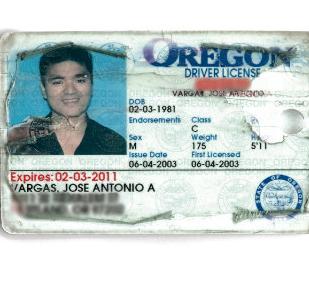
The ol’ Chron commissioned its former reader representative, Dick Rogers, to do a piece on the Jose Antonio Vargas story, and he concludes that Vargas was a liar whose failure to turn himself in to immigration authorities (and thus accept deportation to a country he hardly knew) undermined his journalistic work. Rogers quotes editor Ward Bushee:


“While he deserves sympathy for his efforts to become a citizen, Vargas’ lack of forthrightness in some of his reporting cannot be defended,” Bushee said. “He practiced a pattern of deception that was not only dishonest, but disrespectful of his readers and fellow journalists at The Chronicle.”


Pardon me while I puke.


I’ve already written about Vargas and about former Chron editor Phil Bronstein’s (far more nuanced) handwringing over the situation. But the conclusions the Chron reached in the Rogers article are just bizarre and reflect a creaky, ancient attitude towards journalism that makes no sense in the modern world.


I called Rogers, who is a nice guy with a long history in journalism, and we had a long talk about the situation. I asked him what the young man should have done when he found out at 16 that his parents had sent him to the Unites States illegally. Rogers, to his credit, said he didn’t know, that it was a tricky moral and legal dilmemma. “But that’s not what I was asked to write about,” he said.


The issue for him: Vargas lied when he filled out his employment application and failed to disclose to his editors that he was in the country illegally. That damaged the Chronicle. “You can’t put yourself above your newspaper,” he told me.
Okay, once again: What should Vagas have done? What should a person who is forced by stupid and inconsistent federal laws to lie about his immigration status do if he wants to be a journalist? Well, Rogers said, that’s the dilemma: “I don’t think he should have been working in mainstream journalism.”


Of course, he’s have to lie to get a job as a lawyer, or doctor, or CPA. And all of those professions also have ethical codes that discourage lying. So perhaps he should have been a bricklayer.


To be fair, Rogers doesn’t go that far — he suggested that there were other types of journalism Vargas could have done. He could, for example, have worked for the Bay Guardian. (I wish.) After we talked for a while, Rogers said that if Vargas was going to work for the Chron, he should have recused himself from any stories involving immigration.


But let’s be real here: The Chron allowed a reporter who took money from a nativist group to keep writing about immigration. Bushee, who is so outraged about Vargas, has no problem allowing an (illegally) unregistered lobbyist who gets paid to advocate for wealthy interests in the city to write a political column without ever disclosing his clients or conflicts. (Rogers told me that was a legitimate point. “Conflicts are conflicts,” he said.)


And at the same time, the Chron fired a reporter who participated in an antiwar march and wouldn’t let a lesbian reporter cover same-sex marriage.


It’s inconsistent to the point of being silly.


Look: All of us have conflicts. As the great Larry Bensky once told me, “People who have no conflicts have no interests.” Can a person who drives a car write about transportation policy? Can a person who smokes pot write about medical marijuana (or should she tell her editor, sorry boss — I’m illegally ingesting a controlled substance at night, better fire me or report me to the cops because I can’t cover this story)? Can a person with children write about whether San Francisco is a good city to raise children? Can a person with kids in the public schools write about the school board? Can a divorced person cover a wedding? Can a person who had an affair write about a politician who’s caught fooling around? Can a person who drinks beer write about the city’s alcohol tax?


I mean, let’s not be ridiculous here.


Let me tell a perhaps hypothetical story. Suppose that, when I was working for a (socially conservative) daily newspaper in a (socially conservative) New England city in the mid-1970s, I had a colleague who was gay. And suppose she decided — correctly — that her career would be damaged (at that time, at that institution) if she was out of the closet. (For all I know, she was a criminal, too — I’m not sure when this particular state repealed its sodomy laws.) So suppose she lied — to her boss, to her coworkers, to everyone around. Did that mean she was a bad reporter? Not at all. My hypothethical friend did what she thought she had to do, at a time when the professional and political world she lived in was unwilling to accept who she was. (In fact, there were no laws back then about firing people because of their sexual orientation.) She hated it, we all hated it, and we worked to change things. But I’m not going to condemn her — or call into question the credibility of her work — because of it.


(By the way: I lied, too. I told my boss at this particular institution that I didn’t smoke marijuana. It was a job requirement. I wanted the job. I was a lawbreaker, and I still covered the cops. In fact, I wrote about pot busts. Thank god they didn’t test my pee.)


Let’s face it: Everyone at the Chron, and at every daily newspaper, has personal issues that prevents him or her from being completely objective. Jose Antonia Vargas was no different. The fact that the United States government forced him to lie is no grounds for saying he couldn’t be, and isn’t, a good, honest reporter.
 

Appetite: Time for tea

0

Ever a fan of a civilized (and delicious) respite for afternoon tea, here I present to you two divergent ways to raise your pinky in the city.

Kettle Whistle at Burritt Room: A gourmand’s pop-up tea

Currently scheduled to take place on the last Saturday of every month through October, Kettle Whistle launched its inaugural tea this past week in the spacious back room of Burritt Room’s turn-of-the-century-style bar, tucked upstairs in the Crescent Hotel.

The brainchild of pastry chef par excellence William Werner of Tell Tale Preserve Co. and tea mavens Lawrence Lai and Ann Lee of Naivetea, Kettle Whistle is essentially a pop-up high tea, one where ladies (and men) meet over crumpets and scones. But this is no typical tea.

At a pricey $55 per head, it’s even more costly than high tea at the stunning Palace Hotel — but Kettle Whistle has vastly superior food and drinks. Though dishes and tea pairings will rotate, you can be assured of three themed courses: savory bites, followed by scones and crumpets (the passion fruit olive oil curd on this tray will blow your mind — regular old lemon curd might never seem the same), ending with dessert. There’s even a take home bag of tea and a snack (mine came labeled “damn good granola,” a savory-sweet mix).

You’ll be full after three courses because the savory and dessert courses offer four to five different bites, each from Werner’s creative hand. An heirloom tomato sable on a homemade cracker with lemon and a strip of lardo iberico de Bellota was revelatory. Spheres of tomato and pig fat dissolved in my mouth like a dream I wish I could have over and over again. On the dessert platter, a chocolate and salted caramel fondant was silky save for a crispy strip of chocolate on top, enlivened with avocado and lime layers. I’d go back just to see what Werner will serve next.

Naivetea’s Taiwanese teas (a local Bay Area company run by Taiwan natives) are elegant, worthy companions — not overpowering nor overshadowed by any of the courses. My favorite was their award-winning (it recently took home first place at the North American Tea Championship) Dong Ding Oolong, a gentle beauty with backbone, whose toasted rice and caramel notes shine.

Kettle Whistle’s two July 23 seatings are already filling up, so I’d look into reserving a spot now. Dress up, wear a hat, and come hungry.

Through October. 417 Stockton, SF. (415) 400-0500, www.naivetea.com


Rose Tea: Casual tea cafe

Rose Tea, an open, airy new shop, is a peaceful respite off Irving Street that doubles as take-out cafe and flower shop. It’s only been open a few weeks, but my two visits there have been rewarded with herbal teas (I like the Fire on Ice: ginger and lime steeped with fresh mint leaves) served in a bottomless pot with a mini-French almond cake and jam for $6.50.

Sandwiches ($5.95-7.50) are made with care on rye bread with sides of fruit and nuts. I liked the chicken, apple, cream cheese, and raisins version, and the feta, avocado, and walnut with tomato and basil. Plates come finished with house macarons or baklava. With what appears to be Armenian and Greek roots (if the jams for sale are any indication), the cafe also offers Turkish coffee, an espresso bar, and spiced rose chai. It’s a welcome neighborhood spot for a pot of tea and a bite.

549 Irving, SF. (415) 592-8174, www.roseteasf.com


Subscribe to Virgina’s twice monthly newsletter, The Perfect Spot


Film Listings

0

Film listings are edited by Cheryl Eddy. Reviewers are Kimberly Chun, Michelle Devereaux, Peter Galvin, Max Goldberg, Dennis Harvey, Johnny Ray Huston, Louis Peitzman, Lynn Rapoport, Ben Richardson, and Matt Sussman. For rep house showtimes, see Rep Clock. For first-run showtimes, see Movie Guide.

OPENING

Happy Happy, a documentary by Roko Belic (1999’s Genghis Blues), traces the contented lifestyles of men and women around the globe. Manoj Singh is a Kolkata rickshaw driver sustained by his son’s smile. Anne Bechsgaard’s life is enriched by her co-housing community in Denmark. These soothingly sentimental profiles are intercut with commentary from leading neuroscientists and psychologists. They provide a cursory guide to the rare balancing act that is happiness in the 21st century. A brisk 75 minutes, the film is saturated with thought-provoking tidbits (the Bhutan government aims for gross national happiness instead of GDP) and an ambient backing track that’s heavy on the chimes. However, sometimes there’s the sense that these mechanics of happiness aren’t cinematically compelling enough, and that rifling through a couple Wikipedia pages might offer just as much insight. At its best, Happy sparks a reflection on how many of the unofficial criteria for joy one has fulfilled, and suggests ideas for simple happiness boosters. (1:15) Roxie. (David Getman)

Larry Crowne A recently unemployed man (Tom Hanks, who also co-wrote and directs the film) starts attending college, where he promptly becomes hot for teacher (Julia Roberts). (1:39) Four Star, Piedmont, Presidio, Shattuck.

Monte Carlo Selena Gomez, Leighton Meester, and Katie Cassidy play friends who fake their way to an awesome European vacation. (1:48)

Mr. Nice By the second hour of Mr. Nice, star Rhys Ifans and company have exhausted every possible pot smoking flourish. There’s the seductive French inhale by the pool, the suggestive mouth to mouth, the euphoric dragon release in the deserts of Pakistan: all rendered in extreme close-up with improbably thick plumes of white smoke. Mr. Nice is mostly sexy drug use tutorial, though it’s also part biography of real-life drug smuggler Howard Marks. His claim to fame — at least according to the movie’s tagline — is the sheer number of aliases, phone lines, and children he had (43, 89, and 4, respectively). Unexpectedly, it’s the period costuming, cinematography, and the enchanting listlessness of Chloe Sevigny that redeem the film. Mr. Nice is captivatingly interlaced with vintage news and scenery clips from the period and it’s shot in a way that is both hyper-stylized and erratic. Those twists and turns of Marks’s life turn out to be not nearly as suspenseful onscreen as they should be, making the movie less of a traditional drug thriller and more of a mildly interesting reflection on the culture of the period. (2:01) Lumiere, Shattuck. (Getman)

*Page One: Inside the New York Times When Andrew Rossi’s documentary premiered at Sundance this January, word of mouth on it was respectable but qualified, with nearly everyone opining that it was good … just not what they’d been led to expect. What they expected was (in line with the original subtitle A Year Inside the New York Times) a top-to-bottom overview of how the nation’s most respected — and in some circles resented — arbiter of news, “style,” and culture is created on a day-to-day as well as longer term basis. That’s something that would doubtless fascinate anyone still interested in print media, or even that realm of web media not catering to the ADD nation. But that big picture and the wealth of minute cogs within isn’t Page One‘s subject. Instead, Rossi focuses on the Gray Lady’s wrestling with admittedly fast-changing times in which newspapers and any other information source on paper seem to constitute an endangered species. This particular Times, however, is such a special case that that crisis might better have been explored by training a camera on a less fabled publication, perhaps one of the many that have succumbed to a once unthinkable, market-shrunk mortality in recent years. The film finds its colorful protagonist in David Carr, an ex-crack addict turned media columnist who retains his cranky, nonconformist edge even as he defends the Times itself from the same out-with-the-old cheerleaders who 15 years ago were inflating the dot-com boom till it burst. Facing one particularly smug champion of the blogosphere at a forum, Carr notes that without a few remaining outlets — like the Times — doing the hard work of serious research and reportage, the web would have nothing to purloin or offer but its own unending trivia and gossip. Page One does what it does entertainingly well, but if you’re looking for insight toward this not-dead-yet U.S. institution as a whole, you’d be better off simply picking up this week’s Sunday edition and reading every last word. (1:28) Bridge, Shattuck, Smith Rafael. (Harvey)

Transformers: Dark of the Moon Just wondering how Michael Bay could possibly improve on the previous film’s robot balls. (2:34) Presidio.


ONGOING

The Art of Getting By The Art of Getting By is all about those confusing, mixed-up and apparently sexually frustrating months before high school graduation. George (Freddie Highmore) is a trench coat-wearing misanthrope — an old soul, as they say — whose parents and teachers are always trying to put him inside a box and tell him how to think. He finds a kindred sprit in Sally (Emma Roberts) who smokes and watches Louis Malle films. Hot. Heavily scored by the now-ancient songs of early ’00s blog bands, it may all sound like indie bullshit but this one has charm and wit despite its post-trend package. Like a sad little crayon, Highmore is a competent Michael Cera surrogate du jour. Writer-director Gavin Wiesen embraces hell of clichés, but he suitably sums up a generational angst along the way. The film may not always feel real, but it does have real feeling. Look out for great performances from Blair Underwood and Alicia Silverstone. (1:24) Sundance Kabuki. (Ryan Lattanzio)

Bad Teacher Jake Kasdan, the once-talented director of a few Freaks and Geeks episodes and 2002’s underrated Orange County, seems hell-bent on humiliating everyone in the cast of Bad Teacher. Cameron Diaz is Elizabeth, the title’s criminally bad pedagogue who prefers the Jack Daniels method to the Socratic. Her impetus for pounding Harper Lee into her middle school students’ bug-eyed little heads is to cash in on a bonus check to fund her breast-y ambitions and woo Justin Timberlake and his baby voice. The only likable onscreen presence is Jason Segal as a sad sack gym teacher in love with Elizabeth. But he could do so much better. There’s no shortage of racist jokes and potty humor in this R-rated comedy pandering to those 17 and below. When asked if she wants to go out with her coworkers, Elizabeth ripostes, “I’d rather get shot in the face!” That scenario is likely a better alternative than suffering this steaming pile of cash cow carcass. (1:29) Marina, 1000 Van Ness, Shattuck, SF Center. (Lattanzio)

*Beginners There is nothing conventional about Beginners, a film that starts off with the funeral arrangements for one of its central characters. That man is Hal (Christopher Plummer), who came out to his son Oliver (Ewan McGregor) at the ripe age of 75. Through flashbacks, we see the relationship play out — Oliver’s inability to commit tempered by his father’s tremendous late-stage passion for life. Hal himself is a rare character: an elderly gay man, secure in his sexuality and, by his own admission, horny. He even has a much younger boyfriend, played by the handsome Goran Visnjic. While the father-son bond is the heart of Beginners, we also see the charming development of a relationship between Oliver and French actor Anna (Mélanie Laurent). It all comes together beautifully in a film that is bittersweet but ultimately satisfying. Beginners deserves praise not only for telling a story too often left untold, but for doing so with grace and a refreshing sense of whimsy. (1:44) Embarcadero, Piedmont, Sundance Kabuki. (Peitzman)

*Bill Cunningham New York To say that Bill Cunningham, the 82-year old New York Times photographer, has made documenting how New Yorkers dress his life’s work would be an understatement. To be sure, Cunningham’s two decades-old Sunday Times columns — “On the Street,” which tracks street-fashion, and “Evening Hours,” which covers the charity gala circuit — are about the clothes. And, my, what clothes they are. But Cunningham is a sartorial anthropologist, and his pictures always tell the bigger story behind the changing hemlines, which socialite wore what designer, or the latest trend in footwear. Whether tracking the near-infinite variations of a particular hue, a sudden bumper-crop of cropped blazers, or the fanciful leaps of well-heeled pedestrians dodging February slush puddles, Cunningham’s talent lies in his ability to recognize fleeting moments of beauty, creativity, humor, and joy. That last quality courses through Bill Cunningham New York, Richard Press’ captivating and moving portrait of a man whose reticence and personal asceticism are proportional to his total devotion to documenting what Harold Koda, chief curator at the Costume Institute at the Metropolitan Museum of Art, describes in the film as “ordinary people going about their lives, dressed in fascinating ways.” (1:24) Opera Plaza. (Sussman)

Bride Flight Who doesn’t love a sweeping Dutch period piece? Ben Sombogaart’s Bride Flight is pure melodrama soup, enough to give even the most devout arthouse-goer the bloats. Emigrating from post-World War II Holland to New Zealand with two gal pals, the sweetly staid Ada (Karina Smulders) falls for smarm-ball Frank (Waldemar Torenstra, the Dutchman’s James Franco) and kind of joins the mile high club to the behest of her conscience. The women arrive with emotional baggage and carry-ons of the uterine kind. As the harem adjusts to the country mores of the Highlands, Frank tries a poke at all of them in a series of sex scenes more moldy than smoldery. This Flight, set to a plodding score and stuffy mise-en-scene, never quite leaves the runway. Not to mention the whole picture, pale as a corpse, resembles one of those old-timey photographs of your great grandma’s wedding. These kinds of pastoral romances ought to be put out to, well, pasture. (2:10) Opera Plaza. (Lattanzio)

*Bridesmaids For anyone burned out on bad romantic comedies, Bridesmaids can teach you how to love again. This film is an answer to those who have lamented the lack of strong female roles in comedy, of good vehicles for Saturday Night Live cast members, of an appropriate showcase for Melissa McCarthy. The hilarious but grounded Kristen Wiig stars as Annie, whose best friend Lillian (Maya Rudolph) is getting hitched. Financially and romantically unstable, Annie tries to throw herself into her maid of honor duties — all while competing with the far more refined Helen (Rose Byrne). Bridesmaids is one of the best comedies in recent memory, treating its relatable female characters with sympathy. It’s also damn funny from start to finish, which is more than can be said for most of the comedies Hollywood continues to churn out. Here’s your choice: let Bridesmaids work its charm on you, or never allow yourself to complain about an Adam Sandler flick again. (2:04) Marina, 1000 Van Ness, Shattuck, Sundance Kabuki. (Peitzman)

Buck This documentary paints a portrait of horse trainer Buck Brannaman as a sort of modern-day sage, a sentimental cowboy who helps “horses with people problems.” Brannaman has transcended a background of hardship and abuse to become a happy family man who makes a difference for horses and their owners all over the country with his unconventional, humane colt-starting clinics. Though he doesn’t actually whisper to horses, he served as an advisor and inspiration for Robert Redford’s The Horse Whisperer (1998). Director Cindy Meehl focuses generously on her saintly subject’s bits of wisdom in and out of a horse-training setting — e.g. “Everything you do with a horse is a dance” — as well as heartfelt commentary from friends and colleagues. In the harrowing final act of the film, Brannaman deals with a particularly unruly horse and his troubled owner, highlighting the dire and disturbing consequences of improper horse rearing. (1:28) Embarcadero, Shattuck, Smith Rafael, Sundance Kabuki. (Sam Stander)

Cars 2 You pretty much can’t say a bad thing about a Pixar film. Cars 2 is by no means Ratatouille (2007) or Wall-E (2008), but the sequel to the 2006 hit Cars offers plenty of sleek visuals and one-note gags under its hollow hood. If nothing else, Pixar seems to have overcome the dingy, dark glaze that plagues 3-D films. Directors John Lasseter and Joe Ranft return to beloved autos Lightning McQueen (Owen Wilson) and the “extremely American” Mater (Larry the Cable Guy). This time around, secret agents Finn McMissile (Michael Caine) and Holley Shiftwell (Emily Mortimer) come along for the ride while working to expose sabotage in the alternative fuel industry. Compelling chase sequences, explosions and more than a few jabs at cultural stereotypes follow suit. This is the lightest, silliest Pixar film to date, but you probably don’t have any business seeing it unless you’ve got a kid in tow. (1:52) Balboa, Empire, 1000 Van Ness, Presidio, SF Center, Shattuck, Sundance Kabuki. (Lattanzio)

*Cave of Forgotten Dreams The latest documentary from Werner Herzog once again goes where no filmmaker — or many human beings, for that matter — has gone before: the Chauvet-Pont-d’Arc Cave, a heavily-guarded cavern in Southern France containing the oldest prehistoric artwork on record. Access is highly restricted, but Herzog’s 3D study is surely the next best thing to an in-person visit. The eerie beauty of the works leads to a typically Herzog-ian quest to learn more about the primitive culture that produced the paintings; as usual, Herzog’s experts have their own quirks (like a circus performer-turned-scientist), and the director’s own wry narration is peppered with random pop culture references and existential ponderings. It’s all interwoven with footage of crude yet beautiful renderings of horses and rhinos, calcified cave-bear skulls, and other time-capsule peeks at life tens of thousands of years ago. The end result is awe-inspiring. (1:35) SF Center, Shattuck. (Eddy)

Conan O’Brien Can’t Stop Conan O’Brien Can’t Stop seems less of a movie title and more like a hushed comment shared between one of the many hangers-on during the filming of the “Legally Prohibited From Being Funny On Television Tour.” Throughout 23 cities’ worth of footage, O’Brien seethes, paces, sweats, yells and beats dead jokes so hard that they spring back to life, as he is wont to do. At this point, the Leno/Coco drama is a bit stale — at least in internet time — but the documentary is a fascinating comedian character study nonetheless. It may be hard to sympathize with a man nursing a bruised ego as he cashes a $45 million dollar check, but it’s easy to see that he’s one of the best late night hosts (temporarily off) the air. Split primarily between clips of O’Brien performing songs on stage with a myriad of celebrity guests and bemoaning how exhausted and frustrated he is, Can’t Stop derives most of its hilarity from the off-the-cuff comments that pepper Conan’s everyday conversations. (1:29) Lumiere, Shattuck. (Getman)

*The Double Hour Slovenian hotel maid Sonia (Ksenia Rappoport) and security guard Guido (Filippo Timi) are two lonely people in the Italian city of Turin. They find one another (via a speed-dating service) and things are seriously looking up for the fledgling couple when calamity strikes. This first feature by music video director Giuseppe Capotondi takes a spare, somber approach to a screenplay (by Alessandro Fabbri, Ludovica Rampoldi, and Stefano Sardo) that strikingly keeps raising, then resisting genre categorization. Suffice it to say their story goes from lonely-hearts romance to violent thriller, ghost story, criminal intrigue, and yet more. It doesn’t all work seamlessly, but such narrative unpredictability is so rare at the movies these days that The Double Hour is worth seeing simply for the satisfying feeling of never being sure where it’s headed. (1:35) Opera Plaza. (Harvey)

Empire of Silver Love, not money, is at the core of Empire of Silver — that’s the M.O. of a Shanxi banking family’s libertine third son, or “Third Master” (Aaron Kwok) in this epic tug-of-war between Confucian duty and free will. The Third Master pines for his true love, his stepmother (Hao Lei), yet change is going off all around the star-crossed couple in China at the end of the 19th century and the start of the 20th, and the youthful scion ends up pouring his passion into the family business, attempting to tread his own path, apart from his Machiavellian father (Tielin Zhang). Much like her protagonist, however, director (and Stanford alum) Christina Yao seems more besotted with romance than finance, bathing those scenes with the love light and sensual hues reminiscent of Zhang Yimou’s early movies. Though Yao handles the widescreen crowd scenes with aplomb, her chosen focus on money, rather than honey, leaches the action of its emotional charge. It doesn’t help that, on the heels of the Great Recession, it’s unlikely that anyone buys the idea of a financial industry with ironclad integrity — or gives a flying yuan about the lives of bankers. (1:52) Four Star. (Chun)

Green Lantern This latest DC Comics-to-film adaptation fails to recognize the line between awesome fantasy-action and cheeseball absurdity, often resembling the worst excesses of the Christopher Reeve Superman movies. A surprisingly palatable Ryan Reynolds stars as Hal Jordan, the cocky test pilot who is chosen to wield a power ring as a member of an intergalactic police force called the Green Lantern Corps. He must face down Parallax, an alien embodiment of fear, who appears here as a chuckle-inducing floating head surrounded by tentacles. Peter Sarsgaard is effectively nauseating as Hector Hammond, who becomes Parallax’s crony after he is transformed by a transfusion of fear energy. The acting is all over the map, with Blake Lively’s blank-faced love interest caricature as the weakest link, and the effects are hit-or-miss, but scenes featuring alien Green Lanterns should please fans, and you could probably do worse if you’re looking for an entertaining popcorn flick. (1:45) 1000 Van Ness, Sundance Kabuki. (Stander)

The Hangover Part II What do you do with a problematic mess like Hangover Part II? I was a fan of The Hangover (2009), as well as director-cowriter Todd Phillips’ 1994 GG Allin doc, Hated, so I was rooting for II, this time set in the East’s Sin City of Bangkok, while simultaneously dreading the inevitable Asian/”ching-chang-chong” jokes. Would this would-be hit sequel be funnier if they packed in more of those? Doubtful. The problem is that most of II‘s so-called humor, Asian or no, falls completely flat — and any gross-out yuks regarding wicked, wicked Bangkok are fairly old hat at this point, long after Shocking Asia (1976) and innumerable episodes of No Reservations and other extreme travel offerings. This Hangover around, mild-ish dentist Stu (Ed Helms) is heading to the altar with Lauren (The Real World: San Diego‘s Jamie Chung), with buds Phil (Bradley Cooper) and Doug (Justin Bartha) in tow. Alan (Zach Galifianakis) has completely broken with reality — he’s the pity invite who somehow ropes in the gangster wild-card Mr. Chow (Ken Jeong). Blackouts, natch, and not-very-funny high jinks ensue, with Jeong, surprisingly, pulling small sections of II out of the crapper. Phillips obviously specializes in men-behaving-badly, but II‘s most recent character tweaks, turning Phil into an arrogant, delusional creep and Alan into an arrogant, delusional kook, seem beside the point. Because almost none of the jokes work, and that includes the tired jabs at tranny strippers because we all know how supposedly straight white guys get hella grossed out by brown chicks with dicks. Lame. (1:42) 1000 Van Ness, SF Center. (Chun)

Kung Fu Panda 2 The affable affirmations of 2008’s Kung Fu Panda take a back seat to relentlessly elaborate, gag-filled action sequences in this DreamWorks Animation sequel, which ought to satisfy kids but not entertain their parents as much as its predecessor. Po (voiced by Jack Black), the overeating panda and ordained Dragon Warrior of the title, joins forces with a cavalcade of other sparring wildlife to battle Lord Shen (Gary Oldman), a petulant peacock whose arsenal of cannons threatens to overwhelm kung fu. But Shen is also part of Po’s hazy past, so the panda’s quest to save China is also a quest for self-fulfillment and “inner peace.” There’s less character development in this installment, though the growing friendship between Po and the “hardcore” Tigress (Angelina Jolie) is occasionally touching. The 3-D visuals are rarely more than a gimmick, save for a series of eye-catching flashbacks in the style of cel-shaded animation. (1:30) 1000 Van Ness, SF Center. (Stander)

*Making the Boys In 1968 The Boys in the Band revolutionized Broadway and opened a lot of minds by being a hit play (and film) about NYC homosexuals. Yet on the cusp of “Gay Liberation” and for many years thereafter, much of the actual gay community hugely objected to author Mart Crowley’s fictive portrait of its ‘mos as insular, shallow, classist, bitchy, and guilt-ridden. It was (as interviewee Edward Albee notes here) a picture ideally suited to straight Broadway audiences who lined up to see queers rendered pitiful if still identifiably human. Crayton Robey’s absorbing documentary chronicles the bumpy road of Boys and its creators — Crowley never had another hit, floundering until he moved into TV series scripting. The cast of the 1970 movie version, directed by William Friedkin (one year before The French Connection, followed by The Exorcist), saw their big break turn into a virtual industry blacklisting. Exceptions were unimpeachably heterosexual thespians Laurence Luckinbill and Cliff Gorman, who only “played” gay. This engrossing document recalls a work that trailblazed, was rejected as politically correct, then re embraced as an important touchstone in gay visibility and self-empowerment. (1:33) Roxie. (Harvey)

Midnight in Paris Owen Wilson plays Gil, a self-confessed “Hollywood hack” visiting the City of Light with his conservative future in-laws and crassly materialistic fiancée Inez (Rachel McAdams). A romantic obviously at odds with their selfish pragmatism (somehow he hasn’t realized that yet), he’s in love with Paris and particularly its fabled artistic past. Walking back to his hotel alone one night, he’s beckoned into an antique vehicle and finds himself transported to the 1920s, at every turn meeting the Fitzgeralds, Gertrude Stein (Kathy Bates), Dali (Adrien Brody), etc. He also meets Adriana (Marion Cotillard), a woman alluring enough to be fought over by Hemingway (Corey Stoll) and Picasso (Marcial di Fonzo Bo) — though she fancies aspiring literary novelist Gil. Woody Allen’s latest is a pleasant trifle, no more, no less. Its toying with a form of magical escapism from the dreary present recalls The Purple Rose of Cairo (1985), albeit without that film’s greater structural ingeniousness and considerable heart. None of the actors are at their best, though Cotillard is indeed beguiling and Wilson dithers charmingly as usual. Still — it’s pleasant. (1:34) Albany, Balboa, Embarcadero, 1000 Van Ness, Piedmont, Sundance Kabuki. (Harvey)

Mr. Popper’s Penguins (1:35) 1000 Van Ness.

*My Perestroika Robin Hessman’s very engaging documentary takes one very relatable look at how changes since glasnost have affected some average Russians. The subjects here are five thirtysomethings who, growing up in Moscow in the 70s and 80s, were the last generation to experience full-on Communist Party indoctrination. But just as they reached adulthood, the whole system dissolved, confusing long-held beliefs and variably impacting their futures. Andrei has ridden the capitalist choo-choo to considerable enrichment as the proprietor of luxury Western menswear shops. But single mother Olga, unlucky in love, just scrapes by, while married schoolteachers Lyuba and Boris are lucky to have inherited an apartment (cramped as it is) they could otherwise ill afford. Meanwhile Ruslan, once member of a famous punk band (which he abandoned on principal because it was getting “too commercial”), both disdains and resents the new order just as he did the old one. Home movies and old footage of pageantry celebrating Soviet socialist glory make a whole ‘nother era come to life in this intimate, unexpectedly charming portrait of its long-term aftermath. (1:27) Balboa. (Harvey)

Submarine (1:37) Opera Plaza.

*Super 8 The latest from J.J. Abrams is very conspicuously produced by Steven Spielberg; it evokes 1982’s E.T.: The Extra-Terrestrial as well as 1985’s The Goonies and 1982’s Poltergeist (so Spielbergian in nature you’d be forgiven for assuming he directed, rather than simply produced, the pair). But having Grandpa Stevie blessing your flick is surely a good thing, especially when you’re already as capable as Abrams. Super 8 is set in 1979, high time for its titular medium, used by a group of horror movie-loving kids to film their backyard zombie epic; later in the film, old-school celluloid reveals the mystery behind exactly what escaped following a spectacular train wreck on the edge of their small Ohio town. The PG-13 Super 8 aims to frighten, albeit gently; there’s a lot of nostalgia afoot, and things do veer into sappiness at the end (that, plus the band of kids at its center, evoke the trademarks of another Grandpa Stevie: Stephen King). But the kid actors (especially the much-vaunted Elle Fanning) are great, and there’s palpable imagination and atmosphere afoot, rare qualities in blockbusters today. Super 8 tries, and mostly succeeds, in progressing the fears and themes addressed by E.T. (divorce, loneliness, growing up) into century 21, making the unknowns darker and the consequences more dire. (1:52) California, Empire, 1000 Van Ness, Presidio. (Eddy)

*13 Assassins 13 Assassins is clearly destined to be prolific director Takashi Miike’s greatest success outside Japan yet. It’s another departure for the multi-genre-conquering Miike, doubtless one of the most conventional movies he’s made in theme and execution. That’s key to its appeal — rigorously traditional, taking its sweet time getting to samurai action that is pointedly not heightened by wire work or CGI, it arrives at the kind of slam-dunk prolonged battle climax that only a measured buildup can let you properly appreciate. In the 1840s, samurai are in decline but feudalism is still hale. It’s a time of peace, though not for the unfortunates who live under regional tyrant Lord Naritsugu (Goro Inagaki), a li’l Nippon Caligula who taxes and oppresses his people to the point of starvation. Alas, the current Shogun is his sibling, and plans to make little bro his chief adviser — so a concerned Shogun official secretly hires veteran samurai Shinzaemon (Koji Yakusho) to assassinate the Lord. Fully an hour is spent on our hero doing “assembling the team” stuff, recruiting other unemployed, retired, or wannabe samurai. When the protagonists finally commence their mission, their target is already aware he’s being pursued, and he’s surrounded by some 200 soldiers by the time Miike arrives at the film’s sustained, spectacular climax: a small village which Shinzaemon and co. have turned into a giant boobytrap so that 13 men can divide and destroy an ogre-guarding army. A major reason why mainstream Hollywood fantasy and straight action movies have gotten so depressingly interchangeable is that digital FX and stunt work can (and does) visualize any stupid idea — heroes who get thrown 200 feet into walls by monsters then getting up to fight some more, etc. 13 Assassins is thrilling because its action, while sporting against-the-odds ingeniousness and sheer luck by our heroes as in any trad genre film, is still vividly, bloodily, credibly physical. (2:06) Four Star, Opera Plaza, Shattuck. (Harvey)

The Tree of Life Mainstream American films are so rarely adventuresome that overreactive gratitude frequently greets those rare, self-conscious, usually Oscar-baiting stabs at profundity. Terrence Malick has made those gestures so sparingly over four decades that his scarcity is widely taken for genius. Now there’s The Tree of Life, at once astonishingly ambitious — insofar as general addressing the origin/meaning of life goes — and a small domestic narrative artificially inflated to a maximally pretentious pressure-point. The thesis here is a conflict between “nature” (the way of striving, dissatisfied, angry humanity) and “grace” (the way of love, femininity, and God). After a while Tree settles into a fairly conventional narrative groove, dissecting — albeit in meandering fashion — the travails of a middle-class Texas household whose patriarch (a solid Brad Pitt) is sternly demanding of his three young sons. As a modern-day survivor of that household, Malick’s career-reviving ally Sean Penn has little to do but look angst-ridden while wandering about various alien landscapes. Set in Waco but also shot in Rome, at Versailles, and in Saturn’s orbit (trust me), The Tree of Life is so astonishingly self-important while so undernourished on some basic levels that it would be easy to dismiss as lofty bullshit. Its Cannes premiere audience booed and cheered — both factions right, to an extent. (2:18) California, Embarcadero, Empire, Smith Rafael, Sundance Kabuki. (Harvey)

*The Trip Eclectic British director Michael Winterbottom rebounds from sexually humiliating Jessica Alba in last year’s flop The Killer Inside Me to humiliating Steve Coogan in all number of ways (this time to positive effect) in this largely improvised comic romp through England’s Lake District. Well, romp might be the wrong descriptive — dubbed a “foodie Sideways” but more plaintive and less formulaic than that sun-dappled California affair, this TV-to-film adaptation displays a characteristic English glumness to surprisingly keen emotional effect. Playing himself, Coogan displays all the carefree joie de vivre of a colonoscopy patient with hemorrhoids as he sloshes through the gray northern landscape trying to get cell reception when not dining on haute cuisine or being wracked with self-doubt over his stalled movie career and love life. Throw in a happily married, happy-go-lucky frenemy (comic actor Rob Brydon) and Coogan (TV’s I’m Alan Partridge), can’t help but seem like a pathetic middle-aged prick in a puffy coat. Somehow, though, his confused narcissism is a perverse panacea. Come for the dueling Michael Caine impressions and snot martinis, stay for the scallops and Brydon’s “small man in a box” routine. (1:52) Albany, Clay, Smith Rafael. (Devereaux)

*Trollhunter Yes, The Troll Hunter riffs off The Blair Witch Project (1999) with both whimsy and, um, rabidity. Yes, you may gawk at its humongoid, anatomically correct, three-headed trolls, never to be mistaken for grotesquely cute rubber dolls, Orcs, or garden gnomes again. Yes, you may not believe, but you will find this lampoon of reality TV-style journalism, and an affectionate jab at Norway’s favorite mythical creature, very entertaining. Told that a series of strange attacks could be chalked up to marauding bears, three college students (Glenn Erland Tosterud, Tomas Alf Larsen, and Johanna Morck) strap on their gumshoes and choose instead to pursue a mysterious poacher Hans (Otto Jespersen) who repeatedly rebuffs their interview attempts. Little did the young folk realize that their late-night excursions following the hunter into the woods would lead at least one of them to rue his or her christening day. Ornamenting his yarn with beauty shots of majestic mountains, fjords, and waterfalls, Norwegian director-writer André Ovredal takes the viewer beyond horror-fantasy — handheld camera at the ready — and into a semi-goofy wilderness of dark comedy, populated by rock-eating, fart-blowing trolls and overshadowed by a Scandinavian government cover-up sorta-worthy of The Girl with the Dragon Tattoo (2009). (1:30) Lumiere. (Chun)

*X-Men: First Class Cynics might see this prequel as pandering to a more tweeny demographic, and certainly there are so many ways it could have gone terribly wrong, in an infantile, way-too-cute X-Babies kinda way. But despite some overly choppy edits that shortchange brief moments of narrative clarity, X-Men: First Class gets high marks for its fairly first-class, compelling acting — specifically from Michael Fassbender as the enraged, angst-ridden Magneto and James McAvoy as the idealistic, humanist Charles Xavier. Of course, the celebrated X-Men tale itself plays a major part: the origin story of Magneto, a.k.a. Erik Lehnsherr, a Holocaust survivor, is given added heft with a few tweaks: here, in an echo of Fassbender’s turn in Inglourious Basterds (2009), his master of metal draws on his bottomless rage to ruthlessly destroy the Nazis who used him as a lab rat in experiments to build a master race. The last on his list is the energy-wrangling Sebastian Shaw (Kevin Bacon), who’s set up a sweet Bond-like scenario, protected by super-serious bikini-vixen Emma Frost (January Jones). The complications are that Erik doesn’t ultimately differ from his Frankensteins — he pushes mutant power to the detriment of those puny, bigoted humans — and his unexpected collaborator and friend is Xavier, the privileged, highly psychic scion who hopes to broker an understanding between mutants and human and use mutant talent to peaceful ends. Together, they can move mountains—or at least satellite dishes and submarines. Jennifer Lawrence as Raven/Mystique and Nicholas Hoult as Hank McCoy/Beast fill out the cast, voicing those eternal X-Men dualities — preserving difference vs. conformity, intoxicating power vs. reasoned discipline. All core superhero concerns, as well as teen identity issues — given a fresh charge. (2:20) 1000 Van Ness, Sundance Kabuki. (Chun)


Busted!

0

le.chicken.farmer@gmail.com

CHEAP EATS I have already written a restaurant review, a poem, and a cheerful pop song about my anal abscess. I don’t know how else to celebrate the cursed motherfucker. I could curse … But I guess I’ve done that too.

I’ve already had it lanced twice. Those were the good times. Except that on the first occasion I missed a day of work, and on the second I missed a baby shower. I felt so badfully about the missed baby shower that I invited the moms-to-be, Pod and the Attack, to breakfast the following Saturday. Technically I guess maybe I invited myself to breakfast. At their house.

Bless them, they made my favorite: waffles! With fresh strawberries! They made bacon! They made eggs! They made roasted tomatoes! It was the perfect meal! It was a masterpiece! It was culinary genius! It was the time of our lives!

Problem: I forgot to go. I don’t know, I was looking forward to it all week and then I woke up on Saturday morning, went, “Dum-de-doe,” and decided — oh, I don’t know — maybe do a little recording, or something.

I record in my kitchen because it’s the quietest room in my apartment, if I turn off the refrigerator. My cell phone was in the closet. At the designated hour, Pod went to West Oakland BART and waited for me.

When she called to say what-the-where-the-fuck-are-you? I was in the kitchen. I had my headphones on, refrigerator off, and was laying some blistering electric ukulele tracks onto Garage Band, singing: “It’s a new day/ It’s a driving rain/ I’m gonna have anal surgery/ It’s gonna be OK/ Gonna feel no pain / Or if I do it will be good for me.” La la la la la la.

And so forth.

Then.

I saw my cell phone while I was getting ready for work. It was lit up like a Christmas tree: texts, voicemails, e-mails. What-the-where-the-fuck-was-I? Oh my sweet baby Jesus, you can imagine my horror, and self-hatred — nay, loathing — as it all sunk in. How did I do that? How could I? Was my head so far up my ass that … ?

Well, technically it was, damn me. Clobber me in the kidneys with a golf club. I felt as low as a horse’s hoof cheese. And that was before the Attack sent me a picture of their spread, Pod in all her pregnancy sitting down to eat those wonderful things I said, plus cantaloupe.

Minus me.

I’ve done some dumb-ass things in my day, but don’t know if I’ve ever hated myself more. I couldn’t imagine how I was ever going to forgive myself. I still kinda can’t. I mean, the bacon alone looked so good in that picture.

They were of course very gracious and forgiving, and I was of course determined to make it up somehow. I invited them over to Berkeley that evening for some of the chicken pot pie that me and the kids were making. They declined.

I invited them to breakfast the following morning. Out somewhere, on me, and they accepted. We went to the Sunny Side Café in Albany, which was alleged to be kind of fancy-pants, and great.

Never in my life, before this, have I wanted a meal to cost more than it did. But, alas, it didn’t. It was like normal weekend brunch prices, roughly $10 apiece. Less tragically, but more to the point, I didn’t think the food was that good. Let alone great. I may have malordered. Maybe I was still traumatized by my brain fart from the morning before, but my spinach-and-sausage scramble was bland city, even with salt-pepper-Tapatío. The roasted tomatoes … meh.

Pod’s pigs in blankets … that was better. And the Attack, she got it right. She hit the jackpot with the Alameda, a stack-up of good stuff — ham, cheese, french toast, eggs — and some other things I personally don’t go for, which is to say mushrooms and Hollandaise. Oh, and a balsamic reduction.

It’s her new favorite restaurant.

SUNNY SIDE CAFÉ

Mon.–Fri. 8 a.m.–3 p.m.;

Sat.–Sun. 8:30 a.m.–3 p.m.

1499 Solano, Albany

(510) 527-5383

Full bar

AE/D/MC/V


Alexander’s Steakhouse

0

paulr@sfbg.com

DINE “This doesn’t really look like a steakhouse,” a friend said recently while scanning the ambience of Alexander’s Steakhouse, which opened last fall in the fabulous Bacar space. Since Alexander’s isn’t an ordinary steakhouse, it’s probably okay that it doesn’t look like one. It’s probably additionally okay that it still looks more or less like Bacar: old brick, gleaming copper and chrome, a vault-like spaciousness, the wall of translucent glass cells in which bottles of wine are stored as if by giant oenophile bees. Even the lounge below decks is still there; it’s is a peaceful haven from the tumult upstairs, with its noticeable Hooters atmospherics.

The central novelty of Alexander’s (the original is in San Jose) is the sensibility of the chef, Jeffrey Stout, whose culinary poles are Japan and France. In this respect the kitchen’s nearest relation in town is probably 5A5, the splendid Asian-inflected steakhouse in the Barbary Coast. Stout’s wrinkle is to swirl some Gallic seasoning into the pot. And while most of the food’s cues seem to be taken from east Asia, the kitchen does turn out such sly treats as truffled french fries ($12 for a good-sized stack). As someone who’s not wild about truffles, despite or because of their expensive exclusivity, I was surprised to find this was an effective idea, with the earthy taste and scent of the truffles neatly nested in the crunchy, all-American bonhomie of the potatoes. Americanness isn’t a neglected theme here, either, incidentally, from Maine lobster to a credible salad of iceberg lettuce ($10), with Point Reyes blue cheese, a fine dice of smoked bacon, and a tangy buttermilk dressing I thought to describe as “ranch.”

“Please don’t call it ranch,” a voice across the table implored. Well, okay, but that’s what it was. Next to the lettuce wedge sat cubes of candied applewood smoked bacon ($5), like a stack of miniature bricks. In their meatiness they could easily have passed for Canadian bacon.

For a steakhouse, there’s a surprising amount of seafood, including Kusshi oysters ($4 each) and hamachi shots ($4 each), cubes of fish served like ceviche in martini glasses with an electric ensemble of chile coins, ginger, and truffled ponzu sauce. There was also, one evening, a main dish of halibut ($34), a perfectly nice filet that had a length of chicken skin roasted onto it. This wasn’t quite a bad idea, but it wasn’t a good one, either. Chicken skin would in theory provide some chicken fat, which is full of flavor and moistness, important considerations when dealing with fish. But halibut is a hardy fish that stands up well to chefly handling, and the chicken skin turned ornery in the roasting, like gum stuck to the bottom of a shoe. Worst of all, the fish seemed to have dried out a bit during its time in the kitchen — not fatally, but still.

Well, you’re thinking, what fool orders fish at a steakhouse? The point of such a place must be the beef, and what grander beef is there than prime rib? Alexander’s offers it in two sizes: 14 ounces ($38) or 20 ounces ($42), the 20-ouncer seeming almost big enough to have been pulled from its own Cryovac pack. The meat, we were told, had been slow-roasted for hours and were presented with jus and a trio of horseradish creams.

(The service, incidentally, must be the among the wordiest in the city. Each item is described at length, with the particulars flying at you like buckshot. Complicating matters is the noisiness of the place, which is like being in the pit of the New York Stock Exchange when full and can make some of the servers hard to understand. I saw lips moving, I heard sounds, but I could not piece together a narrative. Like Woody Allen in Annie Hall, I nodded, smiled, and hoped for the best.)

The beef looked splendid — rather on the purplish, rare side, but that was fine. It was also tough. This was a new prime-rib experience for me; in the past it’s always been tender, if not quite butter-like. Alexander’s meat had a good, rich flavor, but it was hard to separate flavor from texture when texture was calling attention to itself. I’ve often roasted my own prime rib at the holidays, but I’ve never had it show this kind of obstinacy.

Pastry chef Dan Huynh’s dessert menu is littered with French terms (financier, crème brûlée), along with something called “dark dimensions” ($12) that sounded like an episode of The Twilight Zone but turned out to be a miniature playground of chocolate, including logs of malted chocolate ice cream and a small bowl of popcorn. All was tender.

ALEXANDER’S STEAKHOUSE

Dinner: Mon.–Sat., 5:30–10 p.m.;

Sun., 5:30–9 p.m.

448 Brannan, SF

(415) 495-1111

www.alexanderssteakhouse.com

Full bar

AE/DS/MC/V

Noisy

Wheelchair accessible


Sacramento deadline: Some key bills

0

A bunch of key bills come up in the state Legislature this week — and some of them are going to be very close. Assemblymember Tom Ammiano is pushing hard to get AB 1017, which would eliminate mandatory felony charges for pot cultivation, throught the Assembly floor (in fact, when I called his press secretary, Quintin Mecke, today (June 1) at about 11 a.m., Ammiano was on the floor making his 1017 pitch.) Ammiano also has a key tenant bill, AB 265, which would allow tenants who are a few days late with the rent to avoid eviction.


Dean Preston, executive director of Tenants Together, has a great rundown on the major tenant bills here. Sen. Mark Leno’s bill, SB 184, which is critical to protecting the rights of cities to demand affordable housing as part of a development deal, is going to be very close. So is Assemblymember Mike Feuer’s AB 934 — a nobrainer that simply clarifies tenant protections that have been threatened by recent court cases. (Preston told me that San Francisco Assemblymember Fiona Ma is not among the bill’s supporters at this point; you can call her office at  557-2312 and let her know you want her to vote for it.)


Sen. Leland Yee has gotten two bills through, one that would allow pharmacies to sell sterile syringes without a prescription and one that mandates more sunshine in the courts. His bill forcing the University of California to open up its foundation records will almost certainly clear the Senate now that UC had dropped its opposition. Tougher going, I expect, for SB 9, which would end life without parole sentences for juveniles.


Leno’s bill legalizing infusion drinks at bars cleared the Senate. He’s also pushing a Community Choice Aggregation bill, SB 790, and  the long-awaited, much-fought-over cell phone, SB 932, which would require modest disclosure of cell-phone radiation.


The difference between this session and the last one is that a lot of these bills might actually get the governor’s signature.

Appetite: Island bites, part five

0

Kauai: dreamy island respite, painfully beautiful, truly relaxing (other than east side traffic!) Last time, I covered restaurants and cheap eats, and killer cocktails on the island. This time, the final post in the series, I’ll focus on the best places to stay, and more on libations from coffee to rum.


HOTELS

Grand Hyatt Kauai, Poipu Beach:

Do yourself a favor and stay at Grand Hyatt Kauai. A resort in the full sense of the word, it is its own world unto itself. From lava rock waterways and multiple levels of pools (including a salt water-sand pool), to its world class spa, Anara, and open air couples cabanas, you leave here feeling as if you’ve truly had a vacation.

Dinner at Tidepools, features pina coladas sipped poolside, taking in the sunset from the deck of your room with a bottle of wine, conversing with the parrots in the massive open air atrium, live bands, and a scotch in Stevenson’s Library. It’s all unforgettable. Yes, it will cost you, but service is impeccable and the experience ranks up there with (or above) the best I’ve had, anywhere – and that includes the Ritz Carlton and the Four Seasons. The unreal setting, balmy by day, lit by tiki torches at night, is unbeatable.


Outrigger Waipoli Beach Resort, Kapaa:

My initial take on Outrigger Waipouli wasn’t strong. On a busy, strip mall-lined stretch of East Kauai in the town of Kapaa, its appears fairly generic from the outside, while kids swarm the lovely pool area (modeled loosely after Grand Hyatt’s incredible pools and waterways). At the time, the one spa for adults was overtaken by eight children.

But from a non-descript hallway, the door to our room opened onto what felt like our own private beach house. Two bedrooms, three bathrooms, a spacious living room and kitchen; each room had sliding doors opening onto the lawn than ran right down to the beach. Breezes flowed through the space, which felt private and removed from any of the hotel’s structure. Dishware, wine glasses, coffeemaker, everything we needed was in the kitchen, making it feel like a home away from home. It was the one part of the trip where we could cook and watch movies (Blue Hawaii, thank you very much) on flat screens in each room.

Though the location is not near as idyllic or removed as Grand Hyatt on Poipu Beach (it’s certainly more affordable), inside our room we felt secluded, rested and as if we could settle in for weeks.


DRINKS

Kauai Coffee Plantation, Eleele: 

The coast from the caffeinated climes of Kauai Coffee

Originally McBryde Sugar Plantation back in the 1880s, Kauai Coffee is Kauai’s one and only coffee plantation, encompassing over 3,000 acres set right on the ocean. A more striking setting I could hardly envision. A half day personal tour with its amazing sales manager, Marty Amaro, was a highlight in Kauai. We off-roaded in his truck over red dirt roads, through coffee fields, and next to ocean rocks where we watched sea turtles lolling.


Coffee plant at Kauai Coffee

They do everything locally themselves. I toured the factory, climbed atop a coffee harvesting tractor, witnessed bean roasting and bagging on a vertical form-fill-and-seal machine, and of course, sipped Kauai coffee. Amaro makes a mean iced mocha, let me tell you. I was envisioning a sweet, chocolate-y drink but it’s a bracing, coffee lover’s delight, refreshing and cool on a hot island day.

Kauai Coffee grows farm varietals of Arabic coffee: yellow catuai, red catuai (both with high levels of acidity for medium-bodied coffee), typica (medium acidity for medium-bodied coffee), Kauai Blue Mountain (medium acidity and full-bodied), and Mundo Novo (low acidity but full-bodied).

Coffee beans roasting

They run the largest drip-irrigated coffee estate in the world, sourcing waters from a nearby dam in the foothills, roasting over 600,000 pounds of coffee a year: an amazing feat when you see the size of the room it all happens in. Similar to wine, harvesting happens annually, around September through November, when staff double in size to get it all processed.

You can join the coffee club for a reasonable $15.25 to receive one 10 oz. bag, or $29 for two. Besides some of the elegant estate coffees, I find the newer Big Braddah a real representation of Kauai spirit: casual, familial, playful. I’m definitely not a flavored coffee type, but I am pleasantly embarrassed to admit I was taken with the Hawaiian coconut caramel crunch coffee. Each batch is painstakingly hand-flavored and the result is not so much sweet as integrated and nutty.

Kauai Coffee should be a stop on any visit to Kauai.


Koloa Rum, Lihue: 

I found Koloa Rum to be a bit of a mixed bag. The setting is memorably Hawaiian: a traditional sugar plantation-style tasting room on the grounds of the delightful Kilohana Plantation (a former sugar plantation preserved since its 1930s heyday). The distillery’s elegant packaging makes for a strong first impression.

Staff are gracious and aim to please. But complex Hawaii liquor laws are such that tastes remain exceptionally tiny, cannot be shared, and though they have created a mai tai mix, it’s illegal for them to mix alcohol – you won’t find cocktails of any kind here.

Using a 1,210 gallon copper pot still originally used for Kentucky bourbons post World War II, white, gold, and dark rums work best as entry points to the pleasures of rum. I know some who find them flat or not as nuanced as other rums, yet each one has won bronze or silver medals at esteemed rum tasting competitions like the Miami Rum Renaissance Festival.

I expected to find the gold ($30.95) and dark ($32.95) rums too sweet, given their somewhat unnatural coloring, which comes from crystallized sugar and molasses. But they were more balanced than I expected. But I’d be most inclined to drink the white ($29.95): clean and light, appropriate for cocktails. Another recent launch is the spiced rum.

If you’re in the area, it is a worthy stop: a local venture using the last of the little sugarcane left from the island, and pure mountain rainwater of nearby Mt. Wai’ale’ale.


Java Kai, Kapaa: 

The best coffee I had in Kauai, the bracing coffee at Java Kai is a local favorite for a strong cappuccino or espresso. It doesn’t have the friendliest staff (which is unusual in Hawaii), but that’s no matter when coffee is being prepared right. It was my regular morning stop on this side of the island (P.s. – it’s ideal iced, next door at Mermaids Cafe.


Kalaheo Cafe, Kalaheo: 

On the south shore of Kauai, this casual cafe would be at home in any hip, small town. Kalaheo Cafe has a healthy, locals vibe and is packed for breakfast. Eat-in or take-out, stand-outs include straight-from-the-oven baked goods (apple coffee cake is one). Using local coffees like Kauai Coffee, they serve robust espressos and cappuccinos. There may be no third wave, artful foam atop that capp, but rest assured it will wake you up. For one picky about coffee and how it is prepared, I didn’t feel like I had to suffer for good coffee on the sleepy island of Kauai.


— Subscribe to Virgina’s twice monthly newsletter, The Perfect Spot


Where’s Gascon on Ammiano’s pot bill?

4

Some very good news from Sacramento (and since good news from that part of the world is rare these days, let’s celebrate it). Assembly Member Tom Ammiano has a bill that would eliminate the mandatory felony charges for marijuana cultivation and allow district attorneys to charge some pot farmers with misdemeanors. And it’s cleared committee and is headed to the Assembly floor. The Bay Citizen has a decent wrapup on the politics (including the fact that the prison guards union isn’t going to like it — less customers).


It’s likely the Senate will go along with the bill, too — particularly since most of the district attorneys in Pot Country are supporting it. Mendocino DA David Eyster is the main sponsor. His colleagues in Humboldt, Del Norte and Lake Counties are all on board.


Oddly enough, the California District Attorneys Association still opposes the bill. The board of this august group seems to be dominated by the more conservative counties, but still: The DAs who have to deal with this issue regularly all want the bill passed. What’s up with that? Well, the spokesman for the group, Cory Salzillo, told me that the bill “send the wrong message with controlled substances generally” and that it would also give not only a prosecutor but a judge the ability to turn a potential felony into a misdemeanor. “We’re concerned about that judicial discretion,” he said.


Which seems, frankly, a little nuts — again, the four DAs who are most involved in charging people for cultivation of marijuana — the folks on the front lines, so to speak — want the bill to pass. So who decided the association position?


Salzillo says there’s a legislative committee, but since this one was controversial, it went to the full board. And guess what? There’s a San Francisco rep. on the board — Assistant D.A. Jerry Coleman. I called him to ask how the vote went down. Here’s our conversation:


Me: Hi, Mr. Coleman, I understand you’re on the board of the California DAs association and I wanted to talk to you about why that group is opposing the Ammiano marijuana bill, which the DAs of the north counties that deal with the issue all support.


Coleman: “I’m not the spokesman for that association.”


Me: Yes, but you’re on the board and I’m wondering if you voted in favor of opposing AB 1017.


Coleman: “I can’t give you an answer to that. I won’t discuss any vote. I don’t remember this one, but if I did I wouldn’t talk to you about it anyway.”


That was helpful.


Meanwhile, where’s Coleman’s boss, the San Francisco DA, George Gascon? This is a city that supports medical marijuana, has perhaps a few growers living in its city limits — and if I had to guess, about, maybe, 93 percent of the voters would agree that marijuana cultivation shouldn’t be an automatic felony. Why isn’t Gascon’s name on the list of supporters?


I dunno. His office hasn’t called me back. I’ll let you know when they do.

The case for local taxes

8

When state Sen. Darrell Steinberg introduced SB 653, a bill that would allow cities to impose an income tax, a car tax and excise taxes, I called his press office and asked if the senator was serious. Me, I thought this was one of the best ideas I’d ever heard of out of Sacramento, but I couldn’t believe Steinberg was actually going to push it.


After all, Steinberg has been in heated discussions with the Republicans over the state budget, and they’ve been refusing to bend, even an inch, on new revenue. And the Democrats can’t pass a budget alone; the two-thirds requirement for new taxes means at least four members of the recalictrant GOP have to go along.


But if Steinberg could threaten the jerks with a bill that requires only a majority vote but would open the door to all kinds of new taxes up and down the state, maybe they’d start to come around. That seemed like the theory.


But his staff told me that he was entirely serious — and to my astonishment (and perhaps his) the bill is moving forward. We did an editorial endorsing it two weeks ago, and all of a sudden, it’s getting a lot of attention. And it’s exposed a fascinating political debate in the state and raised a lot of questions that ought to be part of the political conversation.


Jerry Brown’s been talking for months about “realignment” — sending more state services back to local government. It’s part of the populist side of the guv, and it flies in the face of 50 years of liberal thought. The federal government used to be our friend — the feds enforced civil rights laws in the racist South. The feds put money into inner cities. The state of California enforced equality, too — the famous Serrano v. Priest decision, in state court, guaranteed that public schools in all areas, not just rich ones, had the resources to provide a quality education to all. “State’s rights” was the cry of segregationists; rich people in conservative communities wanted school funding to be a local decision.


But things are different now, and the political stars are realigned. The most important civil rights moves are coming from cities (see: San Francisco, same-sex marriage) and progressive communities are defying the feds on issues from immigration to medical pot. (The flip side is also happening, see: Arizona and SB 1070).


Right now, today, the single most important issue in the United States (with the possible exception of stupid foreign wars) is the wealth gap and taxation. So much flows from that — the collapse of social services, the cost of health care, unemployment, the crisis in state budgets, the decline in public education … name an issue, and it has at least some roots in the way the nation handles money. And two things have happened in the last 15 years or so, at least at the national level:


1. The Republican Party has been taken over by the far right.


2. The Democratic Party has been taken over by Wall Street.


So nothing good’s going to happen in Washington. And in California, thanks to our two-thirds rule, nothing good’s going to happen in Sacramento as long as a tiny minority of really bad Republicans can hold the state hostage.


Which means that the only hope for progressive economic policy is going to come from local government — and the best thing the Democrats can do in the state Legislature is to stand back and allow it to happen. Which is exactly what the Steinberg bill would do.


Now, the San Francisco Chronicle has come out against the Steinberg bill, saying it would


mark a regrettable retreat from the notion that Californians of many lifestyles and cultures – city dwellers, beach-goers, farmers, ranchers, techies, loggers, entrepreneurs – share a common bond. The delegation of a greater tax burden and government duties to 58 counties and hundreds of cities would only compound the disparities that make this state nirvana for some and Appalachia for others.


The problem is, that notion — that romantic vision of One California — is already gone. California isn’t one state any more; it’s too big to be a state, and it ought to be at least three states. The Democrats control both houses of the Legislature and the governor’s office — and it’s almost impossible even to pass a state budget. There’s nothing resembling a political consensus in California, and we might as well admit it.

I understand the problem of economic disparity — but you can’t address it under the current system. There are, indeed, a few counties that have very little tax base, and that will need substantial state aid; I’m good with that. I’m happy to have my tax money go to the poorest counties. But I’m not seeing the Steinberg bill as a reason to cut state spending; I think we ought to increase state spending. I just think that what comes out of Sacramento should be a floor, not a ceiling. If people in San Francisco want to spend more on their public schools — and do it in a progressive way — what’s wrong with that?

The problem with local taxes is that the most progressive, fair revenue solutions aren’t available to cities. Income taxes are far better than sales taxes; ad valorem property taxes are better than parcel taxes. But cities can’t impose traditional income taxes, and are hobbled by Prop. 13 on property taxes. So when cities DO try to impose their own taxes, the results aren’t fair — the poor pay more than the rich.

Interestingly, Dan Walters of the SacBee, who is by no means considered a liberal, likes the Steinberg bill:

California’s experiment in centralized budgeting, the unintended consequence of Propostition 13’s approval in 1978, has been an abject failure. California is simply too diverse for one-size-fits-all decision making from Sacramento, especially when the Capitol can’t even decide what that size should be.

And City Attorney Dennis Herrera, who is running for mayor, likes the idea, too:


California communities that view government as a needless intrusion into people’s lives are morally entitled to limit their local government, and to pay less for fewer services.   Conversely, California communities that see government’s potential to improve the lives of their residents deserve to fully realize the benefits of the public services they’re paying for.


But the notion that we must bind the fate of 37 million Californians to the governance of lowest common denominator is absurd. 


Steinberg’s bill isn’t perfect — it doesn’t include corporate income taxes. But it’s a lot better than what we have now.

I realize that we’re in tricky territory here — should counties where 80 percent of the voters want mandatory prayer in schools and a curriculum that says God doesn’t like homosexuality have the right to overrule state and federal law and ignore the Constitution in the name of local control? Of course not.

But I think you can argue that local government, after meeting the basic federal and state requirements, has the right to go a step further in the pursuit of civil and Constitutional rights. Just as cities, after receiving their minimum allotment of stae money, have the right to raise more. And do it in a fair way.

At the very least, the bill creates a discussion that we all ought to be having. Cuz the way we’re running the state right now isn’t working.

Into the Vortex, part one

0

arts@sfbg.com

For some the ’60s and ’70s never stopped swinging — even (or especially) if they were barely out of womb when all that decadence crashed into the anti-counterculture, pro-coke Reagan era.

For many years, one of SF’s greatest connoisseurs of retro sexual revolution kitsch and coolness has been Scott Moffett. For all we know, even as you read this he’s reclining on a fun fur rug, drinking Martini & Rossi on the rocks, reeking of Hai Karate, sandwiched by Barbarella and Pussy Galore.

In 1994 he and Jacques Boyreau cofounded the Werepad, a waaaaaay-south o’ Market psychedelic lounge that hosted parties and screened rare, frequently scratchy 16mm prints of movies with titles like Maryjane (1968), Island of the Bloody Plantation (1983), and William Shatner’s Mysteries of the Gods (1977). He also created the Cosmic Hex Archive (whose website lets you can download everything from 1966’s Dr. Goldfoot and the Girl Bombs and 1976’s Shriek of the Mutilated to 1972’s Santa and the Ice Cream Bunny for a modest fee) to protect and show just such “forgotten works.” He’s collaborated on movies, books, and traveling exhibits, all reflecting the same groovy aesthetic.

The Werepad is now gone (as is Boyreau, to Portland, Ore.), but Moffett now runs its more compact successor not-so-far south of Market, the Vortex Room, and with Joe Niem programs its Thursday Film Cult nights.

The theme to the Vortex’s May schedule — sorry if you missed last week’s bill of Roger Corman’s 1959 beatnik parody Bucket of Blood and the astonishing 1969 Japanese portrait-of-a-crazed-artist erotic horror Blind Beast — is “Art, Obsession, and Film Cult.” The series unites a widely disparate slate dealing with art-making in one form or another, as inspired, manipulated, or rendered homicidal by sexuality and violence.

Thursday, May 12 there’s a double bill whose first half unusually (for the Vortex) reaches back to mainstream Hollywood’s “golden” era. German Expressionist master Fritz Lang (Metropolis, 1927; M., 1931), followed up 1944’s The Woman in the Window by regathering its stars on a new suspense melodrama: 1945’s Scarlet Street. The latter is crasser, pulpier, and driven by demure 1930s ingénue (and future Dark Shadows matron) Joan Bennett’s inspired vulgarity as Kitty “Lazy Legs” March, whose yea lazier boyfriend (Dan Duryea) proposes that she seduce an accountant and amateur painter (Edward G. Robinson) whom they both mistake for a wealthy artist. This lurid saga ends on an unusually bitter, ironic, haunted note for its time.

A greater discovery is Scarlet Street‘s Vortex cofeature. Scream Baby Scream (1969) is vintage psychedelic horror at its trippiest. This low-budget but pretty dang groovy artifact goes out of its way to be with-it: the cast wears ultra-mod fashions, the interiors are crammed with objets d’Op Art, the score is cool jazz-rock (dig those flute solos), and the dialogue is chock-full of Now Generation philosophizing (some rather grammatically-challenged, such as “I feel so strange — like a nightmare that I don’t want to think about”).

All of which doubles the fun in watching an otherwise (slightly better made) imitation of movies like Herschell Gordon Lewis’ 1965 Color Me Blood Red. Written by future genre hero Larry Cohen, its young protagonists are four art-school students; hero Jason is practically cohabiting with girlfriend Janet, but she’s acting like maybe she Needs Some Space. (Of course, he’s also acting like a jealous jerk — it’s unclear whether the film is aware how clearly it reflects the none-too-feminist gender dynamics of mainstream hippiedom.)

Janet takes her art very seriously, attracting attention from a creepy established artist (Larry Swanson) famous for oil portraits of hideously distorted faces. Meanwhile, models, art students, and miscellaneous youth-on-the-beach keep “disappearing.”

You can guess what happens. But among Scream Baby Scream‘s many surprises are a long LSD trip sequence (protagonists go motorcycling on the highway! Feed baby elephants at the zoo! Imagine themselves as monkeys in a cage! Interpretive dance!), scenes at a psychedelic coffeehouse, a party setpiece with groovy band the Odyssey (plus go-go dancers and liquid light projections), and zombie ghouls on the loose.

There’s also nudity, pot smoking, and a lot of relationship arguments. The last half hour takes a weird left turn into Vincent Price terrain, complete with a gloomy old mansion, a mad-doctor flashback, and so forth. The movie was clearly intended for drive-ins at best, but it’s colorful, fast-paced, and ever so delightfully wrong. Directed by little remembered B-pic toiler Joseph Adler, it was an early big-screen writing credit for Cohen, showing signs of the perversity that would later result in 1973’s Black Caesar, 1974’s It’s Alive, 1976’s God Told Me To, and 1988’s Maniac Cop, to name a few.

Trash will spotlight the rest of the Vortex’s May schedule next week. A $5 donation gets you into these Thursday screenings. For that dough, you could buy half a ticket to Bridesmaids. Please don’t tell me that’s a tough decision. (Dennis Harvey)

ART, OBSESSION, AND FILM CULT

Scarlet Street, Thurs/12, 9 p.m.;

Scream Baby Scream, Thurs/12, 11 p.m., $5

Vortex Room

1082 Howard, SF

www.myspace.com/thevortexroom


Bedbugs and pickpockets: a non-travelers tale

3

I am a hotel aficionado. I wrote my undergraduate thesis in a New Haven hotel lobby, watching the light fade from pink to orange to a deep purple-blue each night, sometimes not leaving until the floor-to-ceiling panes of glass began to brighten with the morning.


Some of my favorite places in San Francisco are hotels: I love their bars and cafes, awash at all hours with a tide of voices bubbling forth in languages I don’t understand. I love the scale and grandeur of the marble foyers and reams of upholstery. I love making up stories about the passers-by: this one with jetlagged eyes and too much eyeliner; that one walking an unwieldy assortment of shopping bags like too many dogs; the last, an anachronism with a cigar and seersucker.


Like the airport bar, hotels hold all the romance of a moment suspended: an alternate reality, set apart from the day-to-day. Of course, most people associate traveling with a whole set of very real hassles – from which, I found out yesterday, my little non-vacation vacations are not immune. I experienced some authenticity along with all that atmosphere: in the lush upholstery, bedbugs, and among the tides of travelers, at least one very skilled pickpocket.


Picture me: a steaming pot of Earl Grey, settling into a sofa, the sun slanting through the gauzy drapes. No sooner have I unfolded my laptop and set Pandora to supply the elevator music (embarrassing but true) than I feel a tickle on my neck. Absentmindedly, I brush it away, and there – sitting right there on my hand – is an impudent, shameless, full-grown bedbug.


I’d like to point out that I am not a paranoid person. But the bedbug’s reputation precedes him, and the tales of horror are too overwhelming to take lightly. Bedbugs, parasites that snack on human blood, can survive temperatures that dip below freezing and soar above 100 degrees. They can go months without feeding – some say more than a year. More than enough to warrant my jumping, yelping reaction.


I smushed the bug, heart racing, and looked for the nearest escape. But simply running away would not do. Instead, I needed to assess my situation.


I put Mr. Bug in a Ziploc bag (despite a thorough smashing, he waved jauntily as I sealed him shut) and began to examine the couch. Bedbugs particularly like seams, corners, rolls in the fabric, and cording. If an infestation is severe, piles of cast-off skins and small white eggs can be found in little caches. The bugs also leave dark brown droppings dotted over areas where they have recently fed.


My search didn’t reveal much, but adults – flat, rusty-brown, and about the size of a pencil-eraser – generally hide during the day. Nymphs range from .5-4mm – easily small enough to hitch a ride on clothing, shoes, luggage, or hair without arousing suspicion. Once they reach their new home, they will burrow into the cracks around baseboards, to say nothing of the raging party they will have in mattresses.


The thing about bed bugs is that they can come from anywhere. Even if a hotel is scrupulous about maintenance, any person who walks in and sits on a couch can bring them and transfer them to the next person. Females lay eggs continuously (300 in a lifetime) so a lone straggler is enough to start an infestation.


So, I did what any sane and sensible person in my position would: I politely informed the hotel staff that I had found the dreaded critter, and then I got the heck out. I had the urge to tear off my clothes and burn them, but I settled for locking myself in the bathroom of the hotel next door and performing a careful inspection. I would need to wash my clothes in hot water and dry on “high” when I got home – a good policy for all travelers, especially if they’ve received suspicious bites on their trip. Suitcases should also be thoroughly inspected and vacuumed.


I said good-bye to Mr. Bug and threw him out in his sealed Ziploc – never throw out infested items (such as vacuum bags used to clean buggy furniture) without sealing them first – and sighed, secure in the knowledge that I’d sufficient precautions.


I settled down with a new pot of Earl Grey in my new hotel, ready to regain my earlier calm. It was a bustling lobby of tiny tables overflowing with a tipsy happy-hour crowd. Hotel happy hours are another reason I love this city’s hospitality industry: the bartenders are less hassled than at the typical neighborhood watering hole, and the people-watching is far better.
After a happy few hours (during which I switched from plain tea to G&T), I had finished a pile of work and was ready to pack up. I bid adieu to the bartender and looked for my pocketbook to leave a tip.


It was gone.


For the second time that day, I found myself groveling on the floor, lifting up couch cushions, and sweeping through curtains. I wished I’d had enough to drink to call the whole thing a hallucination, but by the time I found myself riffling the leaves of the potted plants, I had to admit that my wallet was not going to reappear.


I dumped out my purse (which is really just a canvas shoulder bag) I realized my phone was gone, too. Both had been in the bag, which had spent the last couple hours hanging on the back of my chair. This, obviously, was a huge mistake.
In all that cheery hustle and bustle, I’d been totally hustled. I have to hand it to my assailant – who, I’ll deduce from the $800 Nordstrom splurge, was a woman. She managed to get both items out of my possession without my noticing a thing. Of course, I did her a huge favor by favoring an open-style bag without a zipper or other closure. I love that my laptop and other sundries fit in the loose sack, and Ms. X loved that it enabled her to take a quick trip to Saks.


In just a few hours, Ms. X loaded a total of $6,000 of charges onto my Merrill Lynch Visa. To their credit, the folks at Chase Bank didn’t let the same thing happen to my debit card – when I called the hotline, a representative read me a list of fraudulent charges they had denied. Five minutes and a few identifying security questions later, I was slated to receive a new card in the mail.


It may seem obvious, but if your wallet is stolen, the absolute first order of business is to cancel your cards – even if means spending, as I did, the hours of 12 a.m. to 3 a.m. on the phone with a series of outsourced Visa workers. Word to the wise: it’s far easier to call your bank directly than deal with your credit card company. Like most US banks, Merrill Lynch has a 24-hour customer support line, and if I’d dialed it rather than the number I found on the Visa website, I’d have bypassed a long painful process. Furthermore, only my bank was able to tell me what charges had been made, and what I will need to do to reverse them.


And then there’s the police report: it’s a pain, especially because fraudulent charges mean you must appear at the station in-person, rather than filing online or by phone. But it’s also crucial in case you have troubles down the road with your bank, credit card company, or someone who wants to pretend they’re you. Reports are kept on file, and copies may be requested at a later date.


Verizon received an A+ for swiftly cutting service to my cell phone, switching me back to my old dumb-as-a-brick phone, and automatically crediting charges for my no longer needed data plan. By then, it was 4:00 a.m. The next day, I would need to tackle the new driver’s license, the new student ID, and the new keys. But first, I needed a good night’s sleep – in my own non-vaction home, in my bed bug-free bed.

Knee-jerked reaction

1

CHEAP EATS I left my uke in New York City — technically in Boston, in the back of a station wagon headed for New York City. I left my baby, my toothbrush, my second-favorite pillow, and my other baby in New Orleans. My rabbit-fur jacket that I only ever wear to Rainbow Grocery … I left that in New Orleans too. I left my stomach in Dallas. I left my left knee in San Francisco, on the 50-yard line of a football field at Crocker Amazon. I don’t know where I left my pink cowboy hat. I can’t find it, and it’s pink cowboy hat season.

I got the ain’t-got-no-cowboy-hat-or-left-knee-neither blues.

One thing: I do have a new baby. He’s four months old and lives upstairs in my apartment building, so the commute’s real easy compared to Louisiana or even Berkeley. And he likes to suck on my left bicep sometimes while I’m rocking him to sleep, which gives me cute little hickies there.

In Dolores Park, a live dog’s got a stuffed bunny by the throat. He’s thrashing it this way and that, hammering it into the ground, growling, and beating the living fuzz out of it.

In various states of revelry and/or reverie, my friends and I are occupied in just generally occupying a couple of blankets, watching this big dog do its thing.

“My money is on the rabbit,” I say, because it is. I love an underdog.

In fact, we all are one — back in last place, our one-game winning streak having come to an inglorious end earlier that morning. Dig, who had an important sack on a third-and-short, our play-of-the-game, goes, “Look! It’s playing possum.”

Sure enough, the rabbit is lying very still in the grass, the dog standing over it, watching warily. I’m not a dog person, but I almost feel bad for this un. Its prey, this shattered, chewed-up Easter bunny, is limper than limp, is missing an ear, and arguably never had much fight in it; Nevertheless, I more than half expect it to at least jump up and run away, if not kick the dumb dog’s ass first.

Next week is the Kentucky Derby, and now that I officially “play the ponies,” I will have to find me a long shot to get behind. And get shat upon.

I got the ain’t-got-no-cowboy-hat-or-even-no-left-knee-neither blues.

My own Hedgehog says I ain’t no spring chicken farmer. I’m afraid someone’s going to buy me golf clubs for my birthday. Please don’t buy me golf clubs please. I got some team sports left in me, and contact ones at that. I know I do. Get me a knee brace, an ice pack, and a Costco-size bottle of ibuprofen, I got the ain’t-got-no-left-knee blues is all.

When that happens — that is, this happens — there is only one thing for me, and that is some quality Chunks de la Cooter time. It puts everything else in perspective. So I went and made a chicken pot with them, and bathed them and sang them to sleep and woke up with them in the middle of the night, and in the morning I took them to their Chunk Fu class, and then to Arizmendi and then what they call “the new park” because it’s probably the oldest park in all of Berkeley and therefore not on their beaten path. And I took pictures of them on the big-girl swings.

It was hard to say goodbye, so I didn’t. I went to dinner with the whole de la Cooter fambly down to Solano, to the new-to-me Korean bowls-of-things place, called Bowl’d.

The idea here — at least the main one — is bibimbap in stone bowls with your choice of meat or tofu. They also give you a choice of white rice or mixed grain. Either way it’s going to get all crusty and delicious at the bottom of your hot hot hot stone bowl.

At the top: cabbage, carrots, sprouts, greens, bulgogi if you’re me, and one nice sunny-side-up fried egg.


I wish there was a little more meat in it. But the meat there was good, and so was everything else. They don’t give you so many little bowls of things for the table, but they’ll refill what you love. In my case: kimchi. Super spicy. New favorite restaurant. 

BOWL’D

Sun.–Thurs.: 11 a.m.–10 p.m.;

Fri.–Sat.: 11 a.m.–11 p.m.

1479 Solano, Albany

(510) 526-6223

Beer and wine

AE/D/MC/V


Puke and privatization in Dolores Park

44

Editors note: the vow by Chicken John Rinaldi to vomit in Dolores Park has gotten a lot of media attention — but there’s a real story behind it that the press has missed. Chicken sent us this opinion piece presenting his side of the story.

By Chicken John Rinaldi

It happened pretty quickly, when privatization came to Doritos Park. Sorry; Dolores Park. I keep forgetting they haven’t sold the name yet.

It didn’t come like a wraith with icy fingers or an immense monster with an army of lawyers. Privatization came to Dolores Park in the form of a nonprofit incubator for immigrant women entrepreneurs called La Coucina. For a progressive city like San Francisco, you can’t get much more cuddly than that.

I hear the Trojan horse was adorable, too. It had a cute mane and soft eyes and was made of really high quality lumber. You’d be a fool to criticize that kind of craftsmanship. But it was privatization of a park, even so. Selling space on public land without the public’s consent.

And there was resistance, of course. But the resistance was met with the oddest enemy. The resistance didn’t find itself fighting against people who believed that the park should be privatized. The resistance debated with people who did not know what privatization was. The resistance debated with people who did not know it was coming. The resistance debated with people who knew what it was, but refused to recognize it.

“Yummy tacos!” they chirped, as though that actually was an answer. Enron served tacos, too. Every Tuesday. The problem wasn’t the tacos: it was Enron.

“It’s just a food truck!” they said. “For immigrant ladies! No one who gives work to immigrant ladies could ever be involved in something bad!” This kind of thinking, that anything is okay as long as it also raises money for a good cause, is what will sink our own City of Art and Innovation: San Francisco.

The people who resisted asked questions: Why can’t they park the taco truck on the curb, where cars belong? Why drive a truck on the grass? Why not rent a parking space for the truck? Ummmmmm….. “Yummy tacos!!!” They said, looking around the room for approval.

The people who resisted pointed out that the public outreach that was supposed to be done before this kind of thing is authorized was never done. They told us at the first meeting that it was too late to stop. They did that thing where they create the illusion of inevitability.

Some things are almost impossible to undo once they’ve happened. Sacking the city of Troy, for instance. Or detonating a neutron bomb. Or kissing your best friend. Or doing all the cocaine in the cab before you get back to the party. Privatization is like that. Once a government starts getting easy revenue from a public trust, it doesn’t want to go back. Then it starts taking everything else with it: once one park has a food concession, every park that doesn’t have a food concession starts to look like a drain on the budget. Once one park gets a gift shop, every park needs a gift shop. Pretty soon you end up with a city full of park-themed malls. Well, in the rich neighborhoods anyway. The poor neighborhoods will have fences around the parks. Because they can’t carry their weight.

This is what a class war looks like. Straight up. RPD (mainly the general manager, Philip Ginsburg) has declared class war on San Francisco.

We’ve seen where this leads before: like in the news industry. Back in 1967, network news was almost … almost … a public trust. There was tight regulation. There was no consolidated corporate ownership. The people who owned the stations had zero influence on what was broadcast. Most importantly, no one expected network news to turn a profit. It was something the networks did, for the public good, as a condition of getting access to the public airwaves. It wasn’t perfect, but it tended to be solid news about factual issues that were relevant to the times.

That began to change in 1968, when CBS started a show called “60 Minutes,” and for the first time in network history a news show made a profit. Suddenly all news had to make a profit. And then it had to make a bigger profit, and then a bigger profit. It was a slippery slope. By the 2000 election we had FOX news.

As part of this trend, facts got replaced with opinions – because opinions are cheap and profitable. You want to make more money? Cut your foreign reporters, replace them with a pundit who once visited France. Need to make more money? Cut your congressional reporters and replace them with a couple of hacks arguing about congress.

As a result of the rush to make a profit, news coverage has become completely tabloidized … which is why some idiot with a cause needs to throw a “Puke-In” to get attention to a relevant issue like the privatization of parks. And it worked.

A cleverly worded publicity stunt that claimed I was going to “Fill Dolores park with vomit and watch the trailer of privatization float away on a river of puke” got attention. News organizations that never would have run a headline like “parks department fails to consult with residents” were tripping over themselves to be the first to run headlines like “Incensed man vows to puke on immigrants” and “park activist to puke on vendors.” All told, 57 stories appeared online and in the papers.

 Eventually, most of them mentioned that the park was going to get privatized. It was ugly, but it was a win – and with the media the way it is, everything’s ugly.

After it had been going on for two weeks, I had to explain to people that my cheap and obvious publicity stunt was a cheap and obvious publicity stunt. This lead to more headlines. But come on – “puke in?” That’s funny! But for the record, no, I’m not going to throw up on immigrants. I do have $750 worth of novelty vomit, but all I’m really doing is collecting signatures for my petition: Did anyone really think I could puke on another human being … someone who I didn’t know … just because we had different opinions on the location of a taco truck? After I ran for mayor for second place? After Porneokie? After a career in San Francisco spent producing benefits and rallies and meetings and art incubators and pot luck dinners and bus trips to amazing places?

Well, actually… yes. People thought I was going to go assault someone. Welcome to San Fransandiego. Whatever. The point is: the Recreation and Parks department is trying to rent out public parks to make money, and they’re not consulting the neighborhoods. And while they’ve found the nicest, sweetest, bestest cause they could find to rent the first plot of your land too, the next time it might be FOX news. It might be Exxon. It might be Goldman Sachs. They don’t care: they’re just in it for the money.

Privatization came to Doritos Park. Shit, I did it again. Sorry. Privatization came to Dolores Park. And the progressive left of the Mission showed up. We showed up and we showed that we have a gag reflex. We let Mr. Ginsburg know that privatization makes us nauseous. If they’ve got budget problems, close a few golf courses, they’re horrible for our ecology anyway. Endangered species; frogs and what have you. Lowering kids services 30% and then raising your payroll 670% is not gonna work. Duh. You can’t fire all the kids’ teachers that were making $35K a year, close the clubhouses and then hire thirteen $120K a year bureaucrats and not start a class war. There should be 50 neighborhood groups at your door with torches and pitchforks!

If the Recreation and Parks Department needs more money, they should show good faith and manage what they have better first, before selling our future with privatization. And if they need more money from the General Fund, then lets find it! Lets partner with them to seek solutions or restructure how the financial system works so they get the money they need without ruining our city.

As for us eating each other alive over this issue? I think it’s worth our time to talk this out, argue it out. Work it out. It’s definitely worth poking taco truck sized holes in this moral justification for selfishness. Which is what I think we have here. I think fighting that is worth signing a petition, and worth protesting. And it’s worth a cheap publicity stunt. I bet I can think of another one, too.

Chicken John is a San Francisco showman. Here is the petition:

FEAST: 8 intriguing entrees

0

virginia@sfbg.com

Forget that gourmet mac ‘n’ cheese, leave behind another night of Neapolitan pizza — it’s time to consider a meal that has yet to be repeated all over town. Here are a few that have really turned my head of late.


HIBISCUS

Hop a flight to the Caribbean via this downtown Oakland eatery, where chef Sarah Kirnon pulls together stimulating new interpretations of classic island flavors. A stand-out on this menu of tastes native to Barbados and Jamaica is Kinon’s Dungeness crab cornmeal porridge, a comforting blue cornmeal mash laced with chunks of crab, butternut squash, carrots, leeks, and spiced up with bird’s eye chili. It may be one of the best dishes she’s served yet.

1745 San Pablo, Oakl. (510) 444-2626, www.hibiscusoakland.com


WISE SONS DELI

As long as it stays in its current form — a pop-up eatery that takes over Jackie’s Vinoteca and Cafe on Saturdays — lines at Wise Sons are sure to stay painfully long. That’s because nowhere else in the city can you get the authentic Jewish eats these young guys serve up. It’s no surprise that after only a few weeks of operation, they’re already in hot demand. Corned beef and pastrami are sliced before your eyes in all their meaty glory, excellent chocolate babka is earthy with dark chocolate or laced with Clairessquares caramel in a sweeter incarnation. Don’t miss house-smoked salmon with red onions and capers on a bialy, a traditional roll that’s similar to a bagel but baked instead of boiled.

Saturdays 9 a.m .–2 p.m. 105 Valencia, SF. (415) 787-DELI, www.wisesonsdeli.com


BAR BAMBINO

It was with delight I heard that one of the city’s first Italian charcuteries was shifting to a Germanic-Italian cuisine that would focus on the Tyrol and Friuli regions. I’ve been craving Tyrolean food ever since I traveled the area in Italy — its melting pot of cultures equals pleasure on a plate. Bambino’s executive chef Lizzie Binder plays with unique dishes like chewy, subtle pumpkin seed spaetzle, but my favorite is the Alpine bruschetta, simple hunks of rustic bread layered with Alpine ham, melted Montasio cheese, and horseradish kraut. It transported me straight back to dining on ham and cheese on sunny patios in the Alps.

2931 16th St., SF. (415) 701-VINO, www.barbambino.com


GITANE

Do not fear raw lamb. Do not expect gaminess. Order this dish — and prepare for fresh, succulent meat to rival the best beef tartares you’ve ever had. Chef Batson’s lamb tartare is unexpectedly silky meat, loaded with flavor. The added bonus is three dollops of worthy spreads, from an eggplant compote to a mix of pomegranate, walnut, and red pepper. There’s just no dish like it in town.

6 Claude, SF. (415) 788-6686, www.gitanerestaurant.com


FIFTH FLOOR

Since executive chef David Bazirgan recently climbed aboard, there are a number of noteworthy dishes here — particularly the Mendocino uni flan. It arrives unceremoniously, resembling a little bowl of foam. Dig into this “saffron air” and underneath you’ll find Dungeness crab fondue and a silky uni flan. Heightened by aged kaffir lime and Sichuan pepper, you’ll be dreaming about it all week.

12 Fourth St., SF. (415) 348-1555, www.fifthfloorrestaurant.com


HELMAND PALACE

A highly underrated SF gem. Decor is not the latest or hippest — but even better, it’s mellow and unassuming. It’s easy to get a reservation, you can fill up for $15, and even after 20 years, Helmand Palace remains our city’s best Afghani restaurant. Although kaddo (pumpkin that is pan-fried, then baked) in yogurt-garlic sauce remains a favorite dish of mine, I’m just as crazy about aushak, Afghan raviolis filled with leeks and scallions and served in a sauce of yogurt, mint, garlic, tomato, and ground beef: Middle Eastern cuisine meets red sauce Italian.

2424 Van Ness, SF. (415) 345-0072, www.helmandpalace.com


ICHI SUSHI

Industry insiders sidle up to Ichi’s sushi bar for impeccable fish from chef Tim Archuleta and crew. Archuleta keeps it seasonal and affordable — you’ll find far less interesting slices of fish elsewhere at higher prices. There are also high quality hot plates, and a particular stand-out is the artistic beef tataki. All-natural beef is seared sous vide, then accented with radish, kimchee, white ponzu, and crispy burdock root. The meat oozes tenderness while the accompanying ingredients add dimension to the dish.

3369 Mission, SF. (415) 525-4750, www.ichisushi.com


SPQR

Though everyone loves SPQR’s rustic pastas and exquisite antipasti, you’ll be equally satisfied at its bar with spuntini small bites and a glass of Italian wine from Shelley Lindgren’s impeccable list. Executive chef Matthew Accarrino infuses Roman sensibilities throughout the menu, achieving near-perfection in snacks like milky burrata cheese, which runs over accompanying toast and is sweetened with honey, hazelnuts, and a hint of chili — savory, sweet, silky. Spiced ricotta fritters are equally unforgettable: warm, with a whisper of smoked maple syrup.

1911 Fillmore, SF. (415) 771-7779, www.spqrsf.com


What to watch, part two

0

WEDS/27

The Ballad of Genesis and Lady Jaye (Marie Losier, U.S., 2011) Once dubbed “the wickedest man in the world”, shock artist and cofounder of seminal industrial music pioneers Throbbing Gristle Genesis Breyer P-Orridge has softened somewhat with time. Her plunge into pandrogyny, an ongoing artistic and personal process embarked upon with the late Jacqueline “Lady Jaye” Breyer P-Orridge, is an attempt to create a perfectly balanced body, incorporating the characteristics of both. As artists, the two were committed to documenting their process, but as marriage partners, much of their footage is sweetly innocuous home video footage: Genesis cooking in the kitchen decked out in a little black dress, Lady Jaye setting out napkins at a backyard bar-b-que or helping to dig through Genesis’ archives of COUM Transmissions and Throbbing Gristle “ephemera,” the two wrapped in bandages after getting matching nose jobs. “I just want to be remembered as one of the great love affairs of all time,” Jaye tells Genesis. This whimsical documentary by Marie Losier will go a long way toward making that wish a reality. Wed/27, 9:15 p.m., and May 5, 6:30 p.m., Kabuki. (Nicole Gluckstern)


THURS/28

Love in a Puff (Pang Ho-cheung, Hong Kong, 2010) In 2007 the global crackdown on smoking made its way to Hong Kong, where the smoking ordinance effectively banned the practice in all indoor areas. This has lead to the explosion of “hot pot packs,” where smokers from varying walks of life come together in solidarity to grab their drags in the streets. That’s the milieu of Love in a Puff, an utterly charming, endearingly funny rom-com from Hong Kong filmmaker Pang Ho-cheung. When Cherie, a pretty Sephora sales clerk and asthmatic with a magenta-hued bob, meets Jimmy, a blandly handsome 20-something advertising exec, over Capri Slims and Lucky Strikes, what follows is a thoroughly modern and tentative courtship waged through dozens of text messages, a dash of karaoke, and a chaste encounter in a Hong Kong “love hotel.” Throw in some haunted car trunks, rogue foreign pubes in bracelets, all night-smoke runs to beat brutal tax increases, and a dry-ice-in-the toilet fetish (“It’s like taking a dump in heaven!” exclaims Jimmy) and you get a thoroughly quirky but never overly cute take on modern romance, one that never blows smoke when it comes to navigating the messy realities of love. Thurs/28, 8:45 p.m., and Sat/30, 1:15 p.m., Kabuki. (Michelle Devereaux)


SAT/30

The Black Power Mixtape 1967-1975 (Göran Hugo Olsson, Sweden/U.S.) Cinematic crate-diggers have plenty to celebrate, checking the results of The Black Power Mixtape 1967-1975. Swedish documentarian Göran Hugo Olsson had heard whispers for years that Swedish television archives possessed more archival footage of the Black Panthers than anyone in the states — while poring through film for a doc on Philly soul, he discovered the rumors were dead-on. With this lyrical film, coproduced by the Bay Area’s Danny Glover, Olsson has assembled an elegant snapshot of black activists and urban life in America, relying on the vivid, startlingly crisp images of figures such as Stokely Carmichael and Huey P. Newton at their peak, while staying true to the wide-open, refreshingly nonjudgmental lens of the Swedish camera crews. Questlove of the Roots and Om’Mas Keith provide the haunting score for the film, beautifully historicized with shots of Oakland in the 1960s and Harlem in the ’70s. It’s made indelible thanks to footage of proto-Panther school kids singing songs about grabbing their guns, and an unforgettable interview with a fiery Angela Davis talking about the uses of violence, from behind bars and from the place of personally knowing the girls who died in the infamous Birmingham, Ala., church bombing of 1963. Sat/30, 9 p.m., Kabuki, and Tues/3, 6 p.m., New People. (Kimberly Chun)


SUN/1

Circumstance (Maryam Keshavarz, France/U.S./Iran/Lebanon) Thirteen (2003) goes to Tehran? The world of sex, drugs, and underground nightclubs in Iran provides the backdrop for writer-director Maryam Keshavarz’s lusty, dreamy take on the passionate teenagers behind the hijabs. Risking jail and worse are the sassy, privileged Atafeh (Nikohl Boosheri) and the beautiful, orphaned Shireen (Sarah Kazemy), who, much like young women anywhere, just want to be free — to swim, sing, dance, test boundaries, lose, and then find themselves. The difference here is that they’re under constant, unnerving surveillance, in a country where more than 70 percent of the population is younger than 30. Nevertheless, within their mansion walls and without, beneath graffitied walls and undulating at intoxicating house parties, the two girls begin to fall in love with each other, as Atafeh’s handsome, albeit creepy older brother Mehran (Palo Alto-bred Reza Sixo Safai) gazes on. The onetime musical talent’s back from rehab, has returned to the mosque with all the zeal of the prodigal, and has hooked up with the Morality Police that enforces the nation’s cultural laws. Filmed underground in Beirut, with layers that permit both pleasure and protest (wait for the hilarious moment when 2008’s Milk is dubbed in Farsi), Circumstance viscerally transmits the realities and fantasies of Iranian young women on the verge. Sun/1, 6 p.m., and Tues/3, 6:15 p.m., Kabuki. (Chun)

The Salesman (Sébastien Pilote, Canada) Indefatigably optimistic on the outside, small-town Quebec car salesman Marcel (Gilbert Sicotte) refuses to slow down, let alone retire — perhaps from fear that grief over his wife’s death would fill any hours left empty, though he’s far too composed to let that show. He has his daughter (Nathalie Cavezzali) and grandson (Jeremy Tessier) to dote on, and his customers to endlessly fuss over and reassure. But there are few customers these days because the local factory workers are on strike, their plant in danger of being shuttered. Sébastien Pilote’s quiet drama carefully accumulates everyday details toward a full understanding of Marcel and his milieu, the stability of both eventually threatened by factors that not even his formidable powers of denial can overcome. It’s the kind of movie so small and unassuming you’re caught completely unaware when it delivers a gut-punch. Sun/1, 6:15 p.m., Kabuki; Tues/3, 8:50 p.m., PFA; and May 5, 2 p.m., Kabuki. (Dennis Harvey)

13 Assassins Before you accuse Japan’s bad boy director Takashi Miike of going all prestige-y by making a Kurasawa-esque samurai pic, consider that his 13 Assassins is actually a remake of what was originally dismissed by many as a Seven Samurai knockoff, the late Eiichi Kudo’s 1963 film of the same name. Koji Yakusho stars as Shinzaemon Shimada, an aging ronin convinced to come out of the proverbial retirement to assassinate a psychotically brutal lord (Goro Inagaki) with a penchant for raping, killing, and wreaking general havoc. Shinzaemon assembles a ragtag team of warriors with varying levels of experience, and the requisite carnage ensues. Featuring solid performances and an impressively choreographed climax, this well-told tale nevertheless feels disappointing stale. The idea of the iconoclastic Miike reinventing the samurai genre is an intriguing one. But while the film at times gnashes the provocative pulp that most Miike devotees have come to crave, it admittedly elicits a measure of old-fashioned respectability that the genre, by default, seems to command like a master ordering his knightly charge. It certainly beheads all its targets, but with something of a shrug of its shoulders. Sun/1, 8:30 p.m., Castro. (Devereaux)


MON/2

Incendies (Denis Villeneuve, Canada/France, 2010) When tightly wound émigré Nawal (Luba Azabal) dies, she leaves behind adult twins Jeanne (Mélissa Désormeaux-Poulin) and Simon (Maxim Gaudette) — and leaves them documents that only compound their feelings of grief and anger, suggesting that what little they thought they knew about their background might have been a lie. While resentful Simon at first stays home in Montreal, Jeanne travels to fictive “Fuad” (a stand-in for source-material playwright Wajdi Mouawad’s native Lebanon), playing detective to piece together decades later the truth of why their mother fled her homeland at the height of its long, brutal civil war. Alternating between present-day and flashback sequences, this latest by Canadian director Denis Villeneuve (2000’s Maelstrom) achieves an urgent sweep punctuated by moments of shocking violence. Resembling The Kite Runner in some respects as a portrait of the civilian victimization excused by war, it also resembles that work in arguably piling on more traumatic incidences and revelations than one story can bear — though so much here has great impact that a sense of over-contrivance toward the very end only slightly mars the whole. Mon/2, 6:30 p.m., and May 5, 8 p.m., Kabuki. (Harvey)


TUES/3

Tabloid (Errol Morris, U.S., 2010) Taking a break from loftier subjects, Errol Morris’ latest documentary simply finds a whopper of a story and lets the principal participant tell her side of it — one we gradually realize may be very far from the real truth. In 1978 former Miss Wyoming Joyce McKinney flew to England, where the Mormon boy she’d grown infatuated with had been posted for missionary work by his church. What ensued became a U.K. tabloid sensation, as the glamorous, not at all publicity-shy Yankee attracted accusations of kidnapping, imprisonment, attempted rape, and more. Her victim of love, one Kirk Anderson, is not heard from here — presumably he’s been trying to live down an embarrassing life chapter ever since. But we do hear from others who shed considerable light on the now middle-aged McKinney’s continued protestations that it was all just one big misunderstanding. Most important, we hear from the lady herself — and she is colorful, unflappable, unapologetic, and quite possibly stone-cold nuts. Tues/3, 9:30 p.m., Kabuki, and May 5, 2:45 p.m., New People. (Harvey)

THE 54TH ANNUAL SAN FRANCISCO INTERNATIONAL FILM FESTIVAL runs through May 5. Venues are the Sundance Kabuki, 1881 Post, SF; Castro, 429 Castro, SF; New People, 1746 Post, SF; San Francisco Museum of Modern Art, 151 Third, SF; and Pacific Film Archive, 2575 Bancroft, SF. For tickets (most shows $13) and complete schedule visit www.sffs.org>.

5 Things: April 22, 2011

1


>>BLACK WHEELS Three reasons why African-Americans should ride bicycles, brought to you courtesy of community two-wheeler group Red Bike and Green. One, health: the exercise can counter obesity and chronic disease. Two, economics: why drop all your cash into a car pit when you can put it to brightening your present and future? Three, environment: environmental racism — including pollution in low-income communities — has gone on too long, and you can do you part to change it. Now that we have that out of the way, check out Red Bike and Green’s first “black Critical Mass” of the year in Oakland on Sat/23. Bikes: too many good reasons to ride them.

>>LOCAL BOY DONE GOOD Reynaldo Cayentano Jr. grew up on Sixth Street, and he’s not going anywhere. The City College student and photographer recently opened up gallery space with cohort Chris Beale in the old District Attorney’s office, but the two will be throwing their Sat/23 “Native Taste” party at the House Kombucha factory, where they’ll showcase the work of 13 local artists and the hip-hop stylings of Patience. Speaking of local boys, have you heard the new SF anthem by Equipto and Mike Marshall?

Equipto ft. Mike Marshall, “Heart and Soul”:

http://www.youtube.com/watch?v=F3Fh0dXpuco&feature=player_embedded

>>GOOD & PLENTY CHEAP There’s nothing we like better than good, cheap stuff. Not the cheap, cheap stuff of a Walmart or Kmart, or the good, pricey stuff of a Neiman Marcus or Bloomingdale’s. Good. Cheap. Stuff. And in pursuit of said stuff, we know that many of our fellow city dwellers have checked out a City Car Share car for the express purpose of driving to Serramonte Shopping Center in Daly City and hitting the Daiso store. Put away that gas tank: now we have our own Daiso store, newly opened in Japantown. Since most of the items cost $1.50, a $20 bill will get you a Santa Claus-size bagful of beautiful origami paper, clever lunch boxes, kitchenware, or whatever strikes your fancy from Daiso’s — no jive — selection of 70,000 good, cheap goods.

>>THEY WALK AMONG US It isn’t often that we indulge in a little unabashed fandom when a celebrity comes to our city/ashram. After all, we have our standards (smart, funny, left-leaning, maybe a pot bust or two), which rules out your Biebers, your Gagas, your Cruises ‘n’ Holmeses. We also believe that a man with a three-day stubble muttering to himself as he walks down the street has a right to his private musings. But when that man is Alec Baldwin, well, we have to stop, give him a deep Zen bow, tell him he’s welcome here, and report back. We have no idea why Baldwin is here – a Giants game? No, they’re on the road. SFIFF? No, we would have heard. Filming an episode of 30 Rock, Alcatraz Edition? Possibly –- and truthfully, we don’t care. We will take this no further. No tweets, no nothing. Because we want him to come back -– with Tina Fey.

>>THE GOOD BOOKS
A few minutes spent reading a good, cheap book can add some insight and perspective to anyone’s day, and this weekend presents a reason to look for said books. The San Francisco Public Library’s 50th Anniversary Book Sale is going on at the Fort Mason Center Festival Pavilion until Sun/24, with everything on sale for three dollars or less. Books, DVDs, CDs, tapes, and other media are available, and on the sale’s final day, nothing will cost more than a dollar.

Beyond 420

0

steve@sfbg.com

GREEN CITY When the clock or the calendar hits 420 — and particularly at that magical moment of 4:20 p.m. on April 20 — the air of Northern California fills with the fragrant smell of green buds being set ablaze. But this year, some longtime cannabis advocates are trying to focus the public’s attention on images other than stoners getting high.

“I hope the house of hemp will replace the six-foot-long burning joint as the symbol of 420,” says Steve DeAngelo, executive director of Harborside Health Center, an Oakland cannabis collective, and one of the organizers of an April 23 festival in Richmond dubbed Deep Green that offers an expanded view of cannabis culture.

In addition to big musical acts, guest speakers, and vendors covering just about every aspect of the cannabis industry, the event will feature a house made almost entirely of industrial hemp. That exhibit and many others will highlight the myriad environmental and economic benefits of legalizing hemp, as California Sen. Mark Leno has been trying to do for years, with his latest effort, SB676, The California Industrial Hemp Farming Act, clearing the Senate Agriculture Committee on a 5–1 vote April 5.

Public opinion polls show overwhelming support for ending the war on drugs, particularly as it pertains to socially benign substances like industrial hemp, a strain of cannabis that doesn’t share the psychoactive qualities of its intoxicating sister plants. Yet DeAngelo said that after 40 years of advocating for legalization, he’s learned to be patient because “unfortunately, our politicians are lagging behind public opinion.”

In San Francisco and many other cities, marijuana dispensaries have become a legitimate and important part of the business community (see “Marijuana goes mainstream,” 1/27/10), spawning offshoots like the edibles industry that provide more safe and effective ways of ingesting marijuana (see “Haute pot,” 1/25/11).

But the proof that the medical marijuana is about more than just getting people high also continues to grow, from the endless touching tales of cancer, AIDS, and other patients who have been saved from suffering by this wonder weed to the lengths that the industry is going to cultivate cannabidiol (CBD), a compound found in marijuana that doesn’t get people high but offers many other benefits, including acting as an antidepressant and antiinflammatory medicine.

CBD and tetrahydrocannabinol (THC), the main psychoactive compound in marijuana, generally have an inverse relationship in cannabis plants, so the efforts by generations’ worth of pot cultivators to breed strains with higher THC content have almost completely bred the CBD out of the plants. “In the underground markets, it didn’t have any value,” DeAngelo said.

When Harborside Health Center first started laboratory-testing marijuana many years ago, DeAngelo said that of 2,000 strains tested, only nine had “appreciable quantities of CBD.” In addition to efforts by Harborside and the San Francisco Patient and Resource Center (SPARC) to work with growers on bringing back CBD-heavy strains, modern scientific techniques are allowing CBD to be extracted from the strains that do exist.

“It’s not psychoactive, but let me tell you, it is mood-altering,” says Albert Coles, founder of CBD Sciences in Stinson Beach. “A lot of people, when they smoke pot go inward, but that often isn’t good for social interactions.”

His company makes laboratory-tested cannabis tinctures called Alta California that have been increasingly popular in San Francisco, offering three different varieties: high THC/low CBD, low THC/high CBD, and a 50-50 mix. “It’s good for creative thinking because it just clears out all the noise,” Coles said of CBD.

But even when talking about THC, many in the industry dispute the criticism that most marijuana use is merely recreational drug use. Vapor Room founder Martin Olive has said most pot use isn’t strictly medical or recreational, but a third category he calls “therapeutic,” people who smoke pot to help cope with the stress of modern life.

DeAngelo agrees, although he puts it slightly differently: “The vast majority of cannabis users use it for the purpose of wellness.” 

DEEP GREEN FESTIVAL Saturday, April 23. Performances by The Coup, Heavyweight Dub Champion, and more; speakers include pot cultivation columnist Ed Rosenthal, Steve DeAngelo, and business owner David Bronner. $20 advance/$30 door ($20 for bicyclists and carpoolers, $100 VIP).

Craneway Pavilion, 1414 Harbour Way South, Richmond. www.deepgreenfest.com