Police

Solomon: The moral verdict on Bradley Manning

0

Norman Solomon is co-founder of RootsAction.org and founding director of the Institute for Public Accuracy. His books include “War Made Easy: How Presidents and Pundits Keep Spinning Us to Death.”

The sun rose with a moral verdict on Bradley Manning well before the military judge could proclaim his guilt. The human verdict would necessarily clash with the proclamation from the judicial bench.

In lockstep with administrators of the nation’s war services, judgment day arrived on Tuesday to exact official retribution. After unforgiveable actions, the defendant’s culpability weighed heavy.

“Our apologies, good friends, for the fracture of good order, the burning of paper instead of children, the angering of the orderlies in the front parlor of the charnel house,” another defendant, Fr. Daniel Berrigan, wrote about another action that resulted in a federal trial, 45 years earlier, scarcely a dozen miles from the Fort Meade courtroom where Bradley Manning faced prosecution for his own fracture of good order.

“We could not, so help us God, do otherwise,” wrote Berrigan, one of the nine people who, one day in May 1968 while the Vietnam War raged on, removed several hundred files from a U.S. draft board in Catonsville, Maryland, and burned them with napalm in the parking lot. “For we are sick at heart…”

On the surface, many differences protrude between those nine draft-files-burning radical Catholics and Bradley Manning. But I wonder. Ten souls saw cruelties of war and could no longer just watch.

“I prefer a painful truth over any blissful fantasy,” Manning wrote in an online chat. Minutes later he added: “I think I’ve been traumatized too much by reality, to care about consequences of shattering the fantasy.” And he also wrote: “I want people to see the truth … regardless of who they are … because without information, you cannot make informed decisions as a public.”

Those words came seven weeks after the world was able to watch the “Collateral Murder” video that Manning had provided to WikiLeaks. And those words came just days before military police arrived to arrest him on May 29, 2010.

Since then, huge numbers of people around the world have come to see Bradley Manning as personification of moral courage. During the last several months I’ve read thousands of moving comments online at ManningNobel.org, posted by signers of the petition urging that he receive the Nobel Peace Prize. The comments are often stunning with heartfelt intensity of wounded idealism, anger and hope.

No verdict handed down by the military judge can change the moral verdict that has emerged from people all over the world, reciprocating what Bradley Manning expressed online a few days before his arrest: “I can’t separate myself from others.” And: “I feel connected to everybody … like they were distant family.”

The problem for the U.S. government was not that Bradley Manning felt that way. The problem came when he acted that way. Caring was one thing. Acting on the caring, with empathy propelling solidarity, was another.

Days ago, in closing argument, the prosecutor at Fort Meade thundered: “He was not a whistleblower, he was a traitor.”

But a “traitor” to what? To the United States … only if the United States is to be a warfare state, where we “cannot make informed decisions as a public.” Only if we obey orders to separate ourselves from the humanity of others. Only if authoritative, numbing myths are to trump empathy and hide painful truth.

Norman Solomon is co-founder of RootsAction.org and founding director of the Institute for Public Accuracy. His books include “War Made Easy: How Presidents and Pundits Keep Spinning Us to Death.”

(Bruce B. Brugmann, who signs his blogs and emails b3, writes and edits the bruce blog on the Bay Guardian website at sfbg.com. He is the former editor and co-founder and co-publisher of the Bay Guardian with his wife, Jean Dibble, 1966-2012).

Immigrants vulnerable to domestic violence

0

In San Francisco Sup. John Avalos’ District 11, half of all residents were born outside the U.S. In Sup. Jane Kim’s District 6, more than a third of residents are foreign-born, and almost half speak a language other than English.

Given the sizable immigrant population in San Francisco, it may not come as a surprise that Secure Communities (S-Comm), a federal immigration program administered by the U.S. Immigration and Customs Enforcement (ICE), is highly unpopular. What might not be so obvious is how dramatically S-Comm can impact the lives of foreign-born women who are survivors of domestic violence.

The reason for this is simple. “If you are a victim or a survivor of domestic violence and you call the police, you do not want to end up deported,” Beverly Upton of the San Francisco Domestic Violence Consortium explained at a July 23 rally, where advocates from organizations such as Mujeres Unidas y Activas, Causa Justa, the Filipino Community Center, and others stood and held banners demonstrating opposition to S-Comm. “We want it to be safer to call the police, not less safe.”

A member of Mujeres Unidas y Activas who introduced herself as Lourdes and spoke through a translator delivered a personal account of feeling fearful of police as well as an abusive partner. “Many times, abusers tell us not to call the police, because the police will not believe us. They say the police will probably deport us.”

The domestic violence and immigrant community advocates were there to champion Avalos’ Due Process for All Ordinance, which is being introduced at today’s Board meeting and is co-sponsored by seven other supervisors, essentially guaranteeing its passage. Avalos himself didn’t speak, and Sups. David Campos and Board President David Chiu, co-sponsors of the legislation, sent female staff members to make statements on their behalf as part of the all-female roster of speakers.

The legislation prohibits law enforcement officials from detaining individuals solely in response to immigration detainer requests issued by immigration authorities under S-Comm. As things stand, “the request has been honored in many cases,” Avalos explained in comments to the Guardian, even though California Attorney General Kamala Harris has affirmed that local law enforcement agencies are not obligated to comply with ICE detainers because they are mere “requests” and not legally binding. Since 2010, according to data provided be Avalos’ office, 784 San Franciscans have been deported after being turned over to federal authorities due to ICE detainers.

Sup. Jane Kim called S-Comm “a giant step backward when it comes to equality and fairness,” and added that S-Comm “makes our neighborhoods less safe.”

Legal Counsel Freya Horne read a statement on behalf of San Francisco Sheriff Ross Mirkarimi, stating that the sheriff has reduced the number of ICE detainers leading to deportations, and was supportive of Avalos’ legislation. She added that Mirkarimi had made it a policy to honor immigration detainer requests only in cases of criminal convictions of serious or violent felonies.

Avalos said he was compelled to move the legislation forward because “I’ve talked to so many people whose families have been separated, and have been devastated,” due to deportations under S-Comm. “We want to make sure we’re maintaining a level of due process,” he added, since the detainer requests are routinely issued without warrants or a requirement to show probable cause.

SF Jewish Film Festival, Hugh Jackman, killer whales, and more: new movies!

3

This week: the 33rd San Francisco Jewish Film Festival takes off with screenings all over the Bay Area; check out my take on some of the documentary selections here. Also, the harrowing documentary Blackfish opens, a film that will make you never want to visit SeaWorld again (with good reason). My interview with the film’s director, Gabriela Cowperthwaite, here.

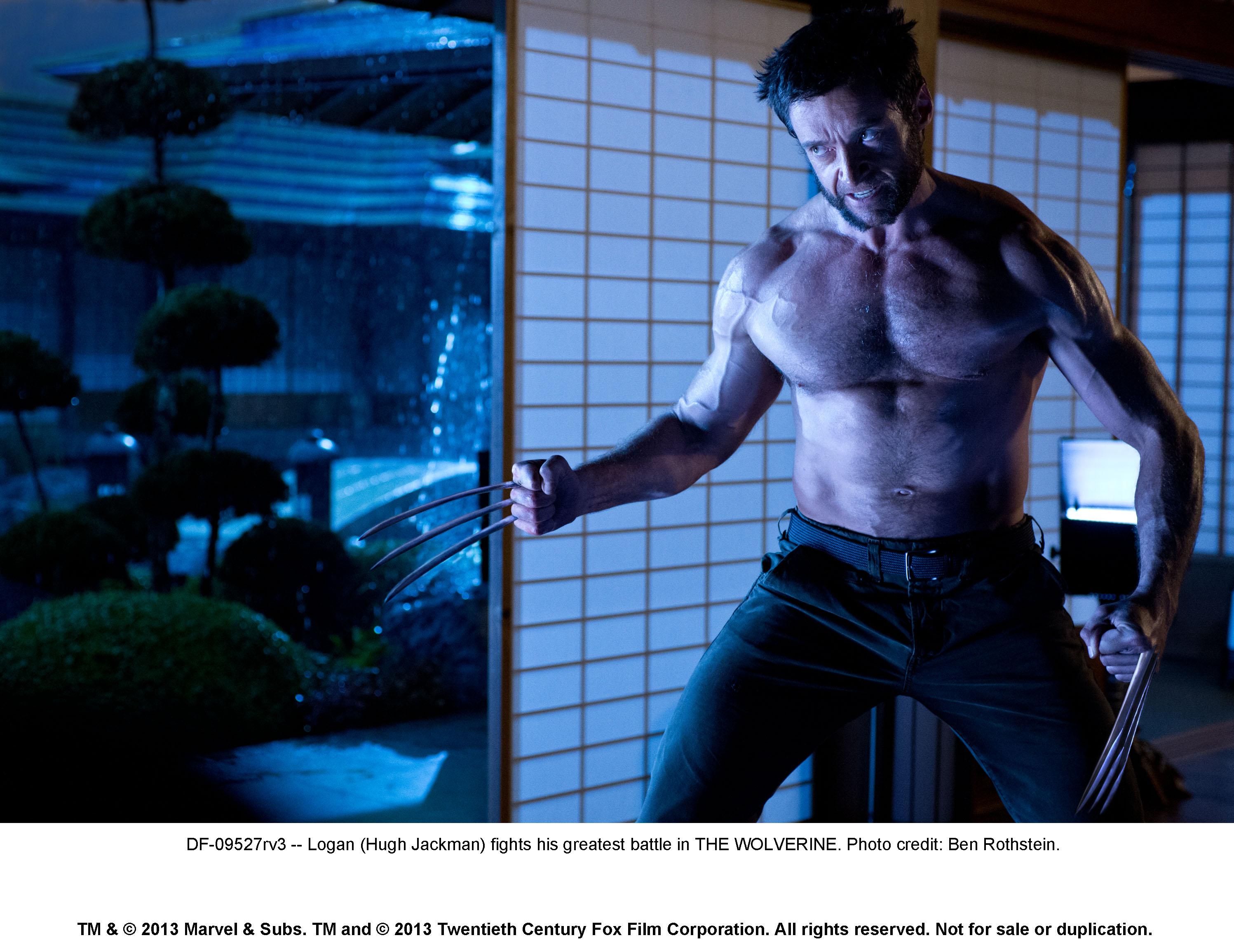
Elsewhere, Hollywood hopes you’re ready for yet more claw-bearing Hugh Jackman (in The Wolverine), Danish actor Mads Mikklesen shines as a falsely-accused man in The Hunt; indie darling Andrew Bujalski delivers what may be his finest film to date with Computer Chess; a majorly great/bad/quotable/mind-blowing cult film plays the Clay’s midnight series; and more. Read on for our short takes.

http://www.youtube.com/watch?v=vnoHSnJsy6Q

Computer Chess Mumblecore maestro Andrew Bujalski (2002’s Funny Ha Ha; 2005’s Mutual Appreciation) makes his first period picture, kinda, with this stubbornly, gloriously retro saga set at an early-1980s computer-chess tournament (with a few ventures into the freaky couples-therapy seminar being held at the same hotel). The technology is dated, both on and off-screen, as hulking machines with names like “Tsar 3.0” and “Logic Fortress” battle for nerdly supremacy as a cameraman, wielding the vintage cameras that were actually used to film the feature, observes. Tiny dramas highlighting the deeply human elements lurking amid all that computer code emerge along the way, and though the Poindexters (and the grainy cinematography) are authentically old-school, the humor is wry and awkwardly dry — very 21st century. Keep an eye out for indie icon Wiley Wiggins, last seen hiding from Ben Affleck’s hazing techniques in 1993’s Dazed and Confused, as a stressed-out programmer. (1:32) (Cheryl Eddy)

http://www.youtube.com/watch?v=qNHPB-dS1t0

Fame High This doc by Scott Hamilton Kennedy (2008’s The Garden) steps behind the doors of the LA County High School for the Arts, where teens toil in (and out of) the classroom to achieve their artistic dreams. There’s the jazz pianist with the overbearing stage dad; the sheltered ballerina whose Juilliard aspirations depend on her learning to loosen up on the dance floor; the sparkplug actress who hails from a theatrical family; and the harpist-singer whose mother moved with her from small-town Wisconsin to nurture her talents. As the year progresses, Fame High tracks each teen’s struggle to negotiate academics and arts, their relationships with their parents, budding romances, and rebellions both tentative and full-blown. In a culture in which insta-fame seems the norm, thanks to reality TV competitions and the internet, Fame High serves as a reminder that most show-biz careers are built on hard work and difficult lessons — with the added bonus of likeable, well-chosen subjects, all of whom happen to be easy to root for. (1:41) Elmwood. (Cheryl Eddy)

http://www.youtube.com/watch?v=ieLIOBkMgAQ

The Hunt Mads Mikkelsen has the kind of face that is at once strikingly handsome and unconventional enough to get him typecast in villain roles. Like so many great foreign-accented actors, he got his big international break playing a bad guy in a James Bond film — as groin-torturing gambler Le Chiffre in 2006 franchise reviver Casino Royale. Currently, he’s creeping TV viewers out as a young Dr. Lecter on Hannibal. His ability to evoke both sympathy and a suspicion of otherness are particularly well deployed in Thomas Vinterberg’s very Danish The Hunt, which won Mikkelsen the Best Actor prize at Cannes last year. He plays Lucas, a lifelong small-town resident recently divorced from his son’s mother, and who currently works at the local kindergarten. One day one of his charges says something to the principal that suggests Lucas has exposed himself to her. Once the child’s misguided “confession” is made, Lucas’ boss immediately assumes the worst. She announces her assumptions at a parent-teachers meeting even before police can begin their investigation. By the time they have, the viral paranoia and suggestive “questioning” of other potential victims has created a full-on, massive pederasty scandal with no basis in truth whatsoever. The Hunt is a valuable depiction of child-abuse panic, in which there’s a collective jumping to drastic conclusions about one subject where everyone is judged guilty before being proven innocent. Its emotional engine is Lucas’ horror at the speed and extremity with which he’s ostracized by his own community — and its willingness to believe the worst about him on anecdotal evidence. Engrossing, nuanced, and twisty right up to the fade-out, The Hunt deftly questions one of our era’s defining public hysterias. (1:45) (Dennis Harvey)

http://www.youtube.com/watch?v=S4uPcFRBJbM

Plimpton! Starring George Plimpton as Himself Tom Bean and Luke Poling’s Plimpton! Starring George Plimpton as Himself, an affectionate portrait of the longtime Paris Review editor and “professional collector of experiences” who wrote books, articles, and made TV specials about his delight in being “the universal amateur.” His endeavors included playing football with the Detroit Lions, hockey with the Boston Bruins, and the triangle with the New York Philharmonic, among even more unusual pursuits. Some called him a dilettante (to his face while he was alive, and in this doc, too), but most of the friends, colleagues, and family members here recall Plimpton — born to an upper-crust New York family, he was friends with the Kennedys and worshipped Hemingway — as an irrepressible adventurer who more or less tailored a journalism career around his talents and personality. (1:29) Roxie. (Cheryl Eddy)

http://www.youtube.com/watch?v=R6OoZNdAQuA

Samurai Cop Terrible movies deserve restoration too! Such is the case with this under-the-radar 1989 direct-to-video atrocity whose slowly accumulated cult audience now has a newly restored print to watch in apt contexts like the Clay’s midnight series. It’s a martial arts movie shot in the US by an Iranian director (Amir Shervan), with at least one porn star (Krista Lane of such classics as Fatal Erection, Days Gone Bi, Mammary Lane, and The Bitches of Westwood) in the cast. Shervan also wrote the script, and to say the dialogue is a tad ESL would be a very kind way of putting it. Low-end Miami Vice-like duo Joe (Matt Hannon) and Frank (Mark Frazer) are cops on the trail of Japanese gangsters led by Mr. Fugiyama (Gerard Okamura), with Robert Z’Dar (from 1988’s Manic Cop) as their main enforcer. Joe acts like the slimiest swingin’-dick stud on the fern bar scene, his spray-tanned, long-feathered-hair vanity just partially excused when he takes off his shirt to reveal Tarzan-worthy musculature. (Hitherto a film-crew carpenter, Hannon understandably never acted again.) Frank is, er, African American. (Black sidekicks never require much character definition in this sort of movie.) Between fight scenes that feature some of the most ludicrous martial-arts howls ever (personal favorite: “Wafu!”), we get numerous gratuitous soft core sex scenes that briefly provide a female full-frontal glimpse. Other highlights include the peppy aerobics-workout synth score, an outrageously swishy “comedy gay” Costa Rican waiter, and the opening credit “Hollywood Royal Pictures presents.” You will laugh, you will cry (from the pain). While Samurai Cop will no doubt be an experience to remember watched on the big screen with an unruly crowd, you might also want to check out its DVD extras, the most memorable of which is an interview with today’s Z’Dar — a huge, burly actor now incongruously hair-dyed, rouge-painted and otherwise completely weird-looking. (1:36) Clay. (Dennis Harvey)

http://www.youtube.com/watch?v=7UrOOoOXLV8

The To Do List Mistress of deadpan Aubrey Plaza stars in this raunchy comedy about a recent high-school grad determined to go all the way (and then some) before she ships off to college. (1:44)

http://www.youtube.com/watch?v=AWemNKXIou4

The Wolverine James Mangold’s contribution to the X-Men film franchise sidesteps the dizzy ambition of 2009’s X-Men Origins: Wolverine and 2011’s X-Men: First Class, opting instead for a sleek, mostly smart genre piece. This movie takes its basics from the 1982 Wolverine series by Chris Claremont and Frank Miller, a stark dramatic comic, but can’t avoid the convoluted, bad sci-fi plot devices endemic to the X-Men films. The titular mutant with the healing factor and adamantium-laced skeleton travels to Tokyo, to say farewell to a dying man who he rescued at the bombing of Nagasaki. But the dying man’s sinister oncologist has other plans, sapping Wolverine of his healing powers as he faces off against ruthless yakuza and scads of ninjas. The movie’s finest moments come when Mangold pays attention to context, taking superhero or Western movie clichés and revamping them for the modern Tokyo setting, such as a thrilling duel on top of a speeding bullet train. Another highlight: Rila Fukushima’s refreshing turn as badass bodyguard Yukio. Oh, and stay for the credits. (2:06) (Sam Stander)

After Oscar, after Trayvon…

49

rebecca@sfbg.com

Even before Cephus “Uncle Bobby” Johnson picked up the phone on Feb. 27, 2012, he wasn’t having an easy day. His nephew, Oscar Grant, would have celebrated his 26th birthday on that date if he had not been killed by a gunshot wound on Jan. 1, 2009.

Grant was shot by BART police officer Johannes Mehserle while lying face down on a train platform, an incident that was caught on film, prompted riots in Oakland, drew international scrutiny, and became the subject of the award-winning film Fruitvale Station by Oakland filmmaker Ryan Coogler.

In the years since Grant’s death, Johnson and his wife, Beatrice X, founded the Oscar Grant Foundation to develop a support network for families who’ve lost loved ones due to police violence. It was his involvement in this work that led Johnson to be contacted that day, and informed that a 17-year-old boy named Trayvon Martin had been gunned down in Florida one day earlier.

It wasn’t a police shooting but nevertheless, “We knew at this point that we had to go to Florida,” Johnson recalled. “What we’ve decided is that whenever a family experienced that, we would definitely try and get to them.”

Fast forward to July 13, almost exactly three years after violent protests erupted in Oakland following the news that Mehserle, who was charged with second degree murder, had been convicted of involuntary manslaughter instead. A new wave of demonstrations flared up as word spread that George Zimmerman, the neighborhood watch volunteer who killed Martin, had been acquitted.

“We weren’t surprised,” Johnson, who returned to Florida last month to observe the jury selection process for Zimmerman’s trial, told the Guardian. “But it was still painful.”

The verdict in this high-profile case has brought discussions about racial profiling and unequal treatment in the criminal justice system to the forefront. Even President Barack Obama touched on the theme in comments to White House reporters on July 19, saying, “Trayvon Martin could have been me 35 years ago.”

At the national level, new findings on “implicit bias” — unconscious prejudices that research in psychology has shown can persist in individuals (including poorly trained police officers), even if they consciously reject racial stereotypes — has started to inform policy debates around racial profiling.

“Policy needs to recognize that implicit bias exists,” Maya Wiley, founder and president of the New York City-based Center for Social Inclusion, told us. “Rep. John Conyers introduced a bill last year to prohibit racial profiling in law enforcement. That bill, if made law, would collect data on stops by race, as well as provide resources for training. That is a step in the right direction.”

But things get complicated, Wiley says, because “research shows that people of color, women, the elderly, may all experience discrimination as a result of implicit bias. There is no remedy in the law for this. … I think what is important now is to fight Stand Your Ground Laws which empower people to act on their implicit biases.”

At a July 16 rally held on the steps of San Francisco City Hall, Rev. Malcolm Byrd, pastor of San Francisco’s First A.M.E. Zion Church, illustrated his point about racial profiling by donning a hoodie and sneakers at the rally.

“I wanted to come looking suspicious,” he explained. “I wanted to give you an image that America has of young black men. I look suspicious. This is my country. I love my country. Yet, I look suspicious.”

Last year, Mayor Ed Lee’s proposal to introduce a stop-and-frisk policy, which would have allowed police officers to randomly stop individuals who appeared to be suspicious in an effort to get weapons off the streets, was abandoned in the face of widespread community concern.

Officers who undergo training at the San Francisco Police Department Academy must complete 52 hours of “cultural diversity” training, according to SFPD spokesperson Sgt. Dennis Toomer, which includes a mandatory four-hour intensive geared toward preventing racial profiling. State law mandates just 16 hours for such training for law enforcement agencies, Toomer told us.

But despite supplemental police training and the efforts of grassroots organizations that carefully monitor police activity, the Bay Area has witnessed a number of fatal shootings at the hands of police since Grant’s death, and many draw a link between these cases and the broader issue of racial profiling.

When asked about the outreach efforts of the Oscar Grant Foundation, Johnson began to rattle off a long list of names — mostly young black men, from places ranging from Oakland to Vallejo to Stockton to San Leandro — who were killed by police, and whose families his organization has reached out to.

They have also been in touch with several families in New York City who lost loved ones in similar situations, Johnson said. In many cases, the individuals were killed despite being unarmed, and officers later explained their actions by saying they’d mistakenly believed the shooting victims had firearms.

After several years of taking an up-close look at the investigative and legal proceedings that unfold in the aftermath of officer-involved shootings, Johnson has reached the conclusion that from case to case, “The playbook is pretty much the same. The officer first alleges he felt threatened — it’s all about the thought process of the officer. It’s always found to be justifiable because the officer feared for his life.”

One long-term goal of the Oscar Grant Foundation is to build up a coalition that can mount a meaningful challenge to the California Peace Officers Bill of Rights, a law enacted some 30 years ago that affords special protections for law enforcement officers facing misconduct charges. Johnson and others are critical of provisions such as officers’ rights to keep confidential information out of their personnel files, which can prevent significant information from being disclosed during a criminal trial. Meanwhile, others throughout the Bay Area seem primed to push for change in the wake of the Zimmerman verdict. “On Sunday, every black church in the nation was talking about what? Trayvon Martin, and what we need to do,” Andrea Shorter, a member of the San Francisco Commission on the Status of Women, said during the July 16 rally. “Two weeks ago, and we were all standing here as San Franciscans to rejoice … because we knew that LGBT people could be treated as first class citizens. The job is not done.” San Francisco NAACP President Rev. Amos Brown, who organized the rally, vowed that his organization “will push for a civil suit to bring this Zimmerman gentlemen to justice.” The national NAACP is petitioning U.S. Attorney General Eric Holder to open a civil rights case against Zimmerman. Sups. London Breed, Malia Cohen, Jane Kim, and David Campos also delivered speeches at the rally. “For the first time in my life, after growing up and going to funeral after funeral after funeral after funeral, of all boys and black men throughout my life, I see people in this audience who are not African American, who are just as hurt as I am, who are just as sick of this as I am,” Breed said. “And we are all in this together. We have got to work together if we want to change it.”

Due Process for All ordinance may offer better protection for domestic violence victims

In San Francisco Sup. John Avalos’ District 11, half of all residents were born outside the U.S. In Sup. Jane Kim’s District 6, more than a third of residents are foreign-born, and almost half speak a language other than English.

Given the sizable immigrant population in San Francisco, it may not come as a surprise that Secure Communities (S-Comm), a federal immigration program administered by the U.S. Immigration and Customs Enforcement (ICE), is highly unpopular. What might not be so obvious is how dramatically S-Comm can impact the lives of foreign-born women who are survivors of domestic violence.

The reason for this is simple. “If you are a victim or a survivor of domestic violence and you call the police, you do not want to end up deported,” Beverly Upton of the San Francisco Domestic Violence Consortium explained at a rally this afternoon, where advocates from organizations such as Mujeres Unidas Activas, Causa Justa, the Filipino Community Center and others stood and held banners demonstrating opposition to S-Comm. “We want it to be safer to call the police, not less safe.”

A member of Mujeres Unidas y Activas who introduced herself as Lourdes and spoke through a translator delivered a personal account of feeling fearful of police as well as an abusive partner. “Many times, abusers tell us not to call the police, because the police will not believe us. They say the police will probably deport us.”

The domestic violence and immigrant community advocates were there to champion Avalos’ Due Process for All Ordinance, which is being introduced at today’s Board meeting and is co-sponsored by seven other supervisors, essentially guaranteeing its passage. Avalos himself didn’t speak, and Sups. David Campos and Board President David Chiu, who were co-sponsors of the legislation, sent female staff members to make statements on their behalf as part of the all-female roster of speakers.

The legislation prohibits law enforcement officials from detaining individuals solely in response to immigration detainer requests issued by immigration authorities under S-Comm. As things stand, “the request has been honored in many cases,” Avalos explained in comments to the Guardian, even though California Attorney General Kamala Harris has affirmed that local law enforcement agencies are not obligated to comply with ICE detainers because they are mere “requests” and not legally binding. Since 2010, according to data provided be Avalos’ office, 784 San Franciscans have been deported after being turned over to federal authorities due to ICE detainers.

Sup. Jane Kim called S-Comm “a giant step backward when it comes to equality and fairness,” and added that S-Comm “makes our neighborhoods less safe.” 

Legal Counsel Freya Horne read a statement on behalf of San Francisco Sheriff Ross Mirkarimi, stating that the sheriff has reduced the number of ICE detainers leading to deportations, and was supportive of Avalos’ legislation. She added that Mirkarimi had made it a policy to honor immigration detainer requests only in cases of criminal convictions of serious or violent felonies.

Avalos said he was compelled to move the legislation forward because “I’ve talked to so many people whose families have been separated, and have been devastated,” due to deportations under S-Comm. “We want to make sure we’re maintaining a level of due process,” he added, since the detainer requests are routinely issued without warrants or a requirement to show probable cause.

Alerts: July 24 – 31

0

WEDNESDAY 24

Milk Club Dinner & Gayla Roccapulco Supper Club, 3140 Mission, SF. http://milkdinner2013.eventbrite.com. 7-10pm, $40 and up. Join the Harvey Milk LGBT Democratic Club in celebrating 37 years of queer progressive leadership. Featuring U.S. Army Lieutenant Dan Choi, staunch advocate for the successful repeal of the U.S. military’s “Don’t Ask, Don’t Tell” policy affecting LGBT service members, as keynote speaker. Milk Club honorees include whistleblower Bradley Manning, queer activist group ACT UP, the San Francisco Gay Men’s Chorus and others.

THURSDAY 25

Forum: The worst international trade deal you’ve never heard of First Unitarian Universalist Society of San Francisco, 1187 Franklin, SF. 7-9pm, free. You may or may not have heard of the Trans-Pacific Partnership, a multinational “free-trade” agreement that’s being hashed out largely behind closed doors. Why should you are? Here’s a hint: It’s being orchestrated by the likes of Chevron, Halliburton, Walmart, and major financial firms among others. Join experts in globalization and learn about international resistance to this shady trade deal.

SATURDAY 27

Party with Meiklejohn Civil Liberties Institute 1715 Francisco St., Berk. (510) 848-0599. 1:30-4pm, donation requested. This benefit gathering for a unique think tank on human rights will include a special treat: Oakland attorney Walter Riley will deliver a talk on “getting the Oakland Police Department to obey the law.” And just in case you require more discussion on our eroding civil liberties to make your hair stand up, there will also be discussion about how drones violate the California Constitution.

TUESDAY 30

Teach-in: immigration and labor ILWU Local 34 union hall, 801 2nd St., SF. (415) 362-8852, http://www.lclaa.org. 7-9pm, free. Join the International Longshore and Workers Union for this Laborfest event, offering a concise history of labor and immigration in California. The history of the Bracero Program is key to understanding the current Congressional debate about immigration reform. Featuring members of the Association of Braceros of Northern California. Al Rojas, a labor organizer and with Labor Council For Latin America Advancement, LCLAA, of Sacramento, will discuss the continuing struggle of California Braceros for justice and the connection of the struggle for immigrant rights.


Silent films, racing snails, haunted houses, and more in weekend movies!

2

Those long, well-dressed lines wrapping around the Castro Theatre signal the advent of the annual San Francisco Silent Film Festival, now in its 18th year and popular as ever. Though the fest opened last night, programming continues through the weekend; check out my take on some of the films (including one of tonight’s selections, 1928 rom-com The Patsy) here.

Elsewhere, in first-run and rep theaters, it’s a robust week for openings. There’s something for nearly every age and appetite (plus a few recommendations on what to avoid) in the short reviews below.

Big Star: Nothing Can Hurt Me The ultimate pop-rock cult band’s history is chronicled in Drew DeNicola and Olivia Mori’s documentary. Alex Chilton sold four million copies of 1967 Box Tops single “The Letter,” recorded when he was 15 years old. After years of relentless touring, he quit that unit and returned home just as fellow Memphis native and teenage musical prodigy Chris Bell was looking to accentuate his own as-yet-unnamed band. Big Star’s 1973 debut LP #1 Record, like subsequent years’ follow-ups Radio City and Third/Sister Lovers, got great reviews — but won no commercial success whatsoever, in part due to distribution woes, record-company politics, and so forth. The troubled Bell struggled to get a toehold on a solo career, while barely-more-together Chilton changed his style drastically once invigorated by the punk invasion. At the least the latter lived long enough to see Big Star get salvaged by an ever-growing worshipful cult that includes many musicians heard from here, including Robyn Hitchcock, Matthew Sweet, and Tav Falco, plus members of the Posies, Flaming Lips, Teenage Fanclub, Yo La Tengo, R.E.M., Mitch Easter, the dB’s, and Meat Puppets. Unfortunately the spoken input from Chilton and Bell is mostly limited to audio (didn’t anyone actually film interviews back then?) Still, this semi-tragic story of musical brilliance, commercial failure, and belated “legendary” beknighting is compelling — not to mention a must for anyone interested in the annals of power pop. Now, would somebody please make documentaries about Emitt Rhodes, Game Theory, and SF’s own Oranger? (1:53) Roxie. (Dennis Harvey)

http://www.youtube.com/watch?v=Vjk2So3KvSQ

The Conjuring Irony can be so overrated. Paying tribute to those dead-serious ‘70s-era accounts of demonic possession — like 1973’s The Exorcist, which seemed all the scarier because it were based on supposedly real-life events — the sober Conjuring runs the risk of coming off as just more Catholic propaganda, as so many exorcism-is-the-cure creepers can be. But from the sound of the long-coming development of this project — producer Tony DeRosa-Grund had apparently been wanting to make the movie for more than a dozen years — 2004’s Saw and 2010’s Insidious director James Wan was merely applying the same careful dedication to this story’s unfolding as those that came before him, down to setting it in those groovy VW van-borne ‘70s that saw more families torn apart by politics and cultural change than those ever-symbolic demonic forces. This time, the narrative framework is built around the paranormal investigators, clairvoyant Lorraine Warren (Vera Farmiga) and demonologist Ed Warren (Patrick Wilson), rather than the victims: the sprawling Perron family, which includes five daughters all ripe for possession or haunting, it seems. The tale of two families opens with the Warrens hard at work on looking into creepy dolls and violent possessions, as Carolyn (Lili Taylor) and Roger Perron (Ron Livingston) move into a freezing old Victorian farmhouse. A very eerie basement is revealed, and hide-and-seek games become increasingly creepy, as Carolyn finds unexplained bruises on her body, one girl is tugged by the foot in the night, and another takes on a new invisible pal. The slow, scary build is the achievement here, with Wan admirably handling the flow of the scares, which go from no-budg effects and implied presences that rely on the viewer’s imagination, to turns of the screws that will have audiences jumping in their seats. Even better are the performances by The Conjuring’s dueling mothers, in the trenches of a genre that so often flirts with misogyny: each battling the specter of maternal filicide, Farmiga and Taylor infuse their parts with an empathetic warmth and wrenching intensity, turning this bewitched horror throwback into a kind of women’s story. (1:52) (Chun)

http://www.youtube.com/watch?v=expPMt-TX_k

Crystal Fairy Mysteriously given a tepid reception at Sundance this year, Chilean writer-director Sebastián Silva’s new film is — like his 2009 breakout The Maid — a wickedly funny portrait of repellent behavior that turns unexpectedly transcendent and emotionally generous in its last laps. Michael Cera plays a Yank youth living in Santiago for unspecified reasons, tolerated by flatmate Champa (José Miguel Silva) and his brothers even less explicably — as he’s selfish, neurotic, judgmental, hyper, hyper-annoying, and borderline-desperately in endless pursuit of mind-altering substances. At a party he meets a spacey New Age chick who calls herself Crystal Fairy (Gaby Hoffman). The next morning he’s horrified to discover he’d invited her on a road trip whose goal is to do drugs at an isolated ocean beach, but despite their own discomfort, Champa and company insist he honor his obligation. What ensues is near-plotless, yet always lively and eventually rather wonderful. If you have an allergy to Cera, beware — he plays a shallow (if possibly redeemable) American brat all too well here. But it would be a shame to miss a movie as spontaneous and surprising as this primarily English-language one, which underlines Silva’s stature as a talent likely well worth following for the long haul. (1:40) (Dennis Harvey)

http://www.youtube.com/watch?v=NqNgrsxcwiY

Girl Most Likely Even an above-average cast (Kristen Wiig, Annette Bening, Matt Dillon) can’t elevate this indie entry from Shari Springer Bergman and Robert Pulcini (2003’s American Splendor) above so many life-crisis comedies that have come before. Blame the script by Michelle Morgan (who also cameos), which never veers from the familiar, except when it dips into cliché. After she’s dumped by her suit-wearing boyfriend, failed playwright Imogene (Wiig) realizes her life is superficial and meaningless. Oopsies! A faux suicide attempt forces her to leave the cold sparkle of NYC for the neon glimmer of the Jersey shore, where her batty mother (Bening, in “tacky broad” mode) lives with her says-he’s-a-CIA-agent boyfriend (Dillon) and Imogene’s older brother (Christopher Fitzgerald), an Asperger’s-y sort obsessed with hermit crabs. Also in the mix — because in a movie like this, the adorably depressed lead can only heal with the help of a new romance — is Glee‘s Darren Criss; by the time you realize his character is a Backstreet Boys impersonator who also happens to be a fluent-in-French Yale grad with the patience and kindness to help a bitchy stranger work through her personal drama, you’re either gonna be OK with Girl Most Likely‘s embrace of the contrived, or you’ll have given up on it already. The takeaway is a fervent hope that the talented Wiig will write more of her own scripts in the future. (1:43) (Cheryl Eddy)

http://www.youtube.com/watch?v=JtdYdT17Vuk

The Look of Love Though his name means little in the US, in the UK Paul Raymond was as famous as Hugh Hefner. Realizing early on that sex does indeed sell, he (played by Steve Coogan) began sticking half-naked girls in 1950s club revues, then once the Sexual Revolution arrived, helped pull down a prudish country’s censorship barriers with a variety of cheesy, nudie stage comedies, “members-only” clubs, and girly mags. En route he abandoned a first wife (Anna Friel) for a bombshell actress-model (Tamsin Egerton), all the while continuing to play the field mightily. Nothing — lawsuits, police raids, public denunciations of his smutmongering — seemed to give him pause, save the eventually tragic flailing about of a daughter (Imogen Poots) who was perhaps the only person he ever loved in more than a physical sense. This fourth collaboration between director Michael Winterbottom and actor Coogan is one of those biopics about a driven cipher; if we never quite learn what made Raymond tick, that may be because he was simply an unreflective man satisfied with a rich (he was for a time Britain’s wealthiest citizen), shallow, hedonistic life. But all that surface excess is very entertainingly brought to life in a movie that’s largely an ode to the tackiest decor, fashions, and music of a heady three-decade period. (1:41) Smith Rafael. (Dennis Harvey)

Only God Forgives Julian (Ryan Gosling) and Billy (Tom Burke) are American brothers who run a Bangkok boxing club as a front for their real business of drug dealing. When the latter kills a young prostitute for kicks, then is killed himself, this instigates a chain reaction bloodbath of retribution slayings. Their primary orchestrators: police chief Chang (Vithaya Pansingarm), who always has a samurai-type sword beneath his shirt, pressed against his spine, and incongruously sings the most saccharine songs to his cop subordinates at karaoke; and Crystal (Kristin Scott Thomas, doing a sort of Kabuki Cruella de Vil), who flies in to avenge her son’s death. (When told he’d raped and slaughtered a 16-year-old girl, she shrugs “I’m sure he had his reasons.”) Notoriously loathed at Cannes, this second collaboration between director-scenarist Nicolas Winding Refn and star-producer Gosling certainly isn’t for those who found their 2011 Drive insufferably pretentious and mannered. But that movie was downright gritty realism compared to this insanely stylized action abstraction, which blares its influences from Walter Hill and Michael Mann to Suzuki and Argento. The last-named particularly resonates in Suspira-level useage of garishly extreme lighting effects, much crazy wallpaper, and a great score by Cliff Martinez that duly references Goblin (among others). The performances push iconic-toughguy (and toughmutha) minimalism toward a breaking point; the ultraviolence renders a term like “gratuitous” superfluous. But there’s a macabre wit to all this shameless cineaste self-indulgence, and even haters won’t be able to deny that virtually every shot is knockout gorgeous. Haters gonna hate in the short term, but God is guaranteed a future of fervent cult adoration. (1:30) (Dennis Harvey)

http://www.youtube.com/watch?v=COpJwAeuWHo

An Oversimplification of Her Beauty Terence Nance’s original, imaginative feature is a freeform cinematic essay slash unrequited-love letter. He and Namik Minter play fictionalized versions of themselves — two young, African American aspiring filmmakers in Manhattan, their relationship hovering uneasily between “just friends” and something more. To woo her toward the latter, he makes an hour-long film called How Would You Feel?, and the movie incorporates that as well as following what happens after he’s shown it to Minter. En route, there’s a great deal of animation (in many different styles), endless ruminative narration, and … not much plot. The ephemeral structure and general naval-gazing can get tiresome, but Beauty‘s risk-taking plusses outweigh its uneven qualities. (1:24) Roxie. (Dennis Harvey)

Red 2 Sequel to the 2010 action hit starring Bruce Willis about a squad of “retired, extremely dangerous” secret agents. (1:56)

http://www.youtube.com/watch?v=X07xNrVd7DU

R.I.P.D. Expect to see many reviews of R.I.P.D. calling the film “D.O.A.” — with good reason. This flatly unfunny buddy-cop movie hijacks elements from Ghost (1990), Ghostbusters (1984), and the Men in Black series, but even 2012’s lackluster third entry in the MIB franchise had more zest and originality than this sad piece of work. Ryan Reynolds plays Boston police officer Nick, recruited into the afterlife’s “Rest In Peace Department” after he’s gunned down by his crooked partner (Kevin Bacon). His new partner is Wild West casualty Roy, embodied by a scenery-chomping Jeff Bridges in an apparent parody of both his own turn in 2010’s True Grit and Sam Elliott’s in 1998’s The Big Lebowski. Tasked with preventing ghosts who appear to be human (known as “deados”) from assembling an ancient artifact that’ll empower a deado takeover, Nick and Roy zoom around town cloaked by new physical identities that only living humans can see. In a joke that gets old fast, Roy’s earthly form resembles a Victoria’s Secret supermodel, while Nick is stuck with “Chinese grandpa.” That the latter’s avatar is portrayed by James Hong — deliciously villainous as Lo Pan in 1986’s Big Trouble in Little China, a vastly superior supernatural action comedy — is one bright spot in what’s otherwise the cinematic equivalent of a shoulder shrug. (1:36) (Cheryl Eddy)

http://www.youtube.com/watch?v=Mv_Rl0CBPNs

Still Mine Canadian production Still Mine is based on the true story of Craig Morrison (James Cromwell), an elderly man whose decision to build a new house on his own land — using materials he’d harvested himself, and techniques taught to him by his shipwright father — doesn’t go over well with local bureaucrats, who point out he’s violating nearly every building code on the books. But Craig has a higher purpose than just challenging the system; he’s crafting the home for the comfort of his physically and mentally ailing wife of 61 years (Geneviève Bujold). It’s pretty clear from the opening courtroom scene how Still Mine will end; though it’s well-crafted — and boasts moving turns by Cromwell and Bujold — it ultimately can’t overcome its sentimental, TV-movie vibe. A heartfelt tale, nonetheless. (1:43) (Cheryl Eddy)

http://www.youtube.com/watch?v=ADuKkRTiCfI

Turbo It’s unclear whether the irony of coupling racing — long the purview of white southern NASCAR lovers — with an animated leap into “urban” South Central LA is lost on the makers of Turbo, but even if it is, they’re probably too busy dreaming of getting caught in the drift of Fast and Furious box office success to care much. After all, director David Soren, who came up with the original idea, digs into the main challenge — how does one make a snail’s life, before and after a certain magical makeover, at all visually compelling? — with a gusto that presumes that he’s fully aware of the delicious conundrums he’s set up for himself. Here, Theo (voiced by Ryan Reynolds) is your ordinary garden snail with big, big dreams — he wants to be a race car driver like ace Guy Gagne (Bill Hader). Those reveries threaten to distract him dangerously from his work at the plant, otherwise known as the tomato plant, in the garden where he and brother Chet (Paul Giamatti) live and toil. One day, however, Theo makes his way out of the garden and falls into the guts of a souped-up vehicle in the midst of a street race, gobbles a dose of nitrous oxide, and becomes a miraculous mini version of a high-powered race car. It takes a meeting with another dreamer, taco truck driver Tito (Michael Pena), for Theo, a.k.a. Turbo, to meet up with a crew of streetwise racing snails who overcome their physical limitations to get where they want to go (Samuel L. Jackson, Snoop Dogg, Maya Rudolph, Michael Bell). One viral video, several Snoop tracks, and one “Eye of the Tiger” remix later, the Indianapolis 500 is, amazingly, in Turbo’s headlights — though will Chet ever overcome his doubts and fears to get behind his bro? The hip-hop soundtrack, scrappy strip-mall setting, and voice cast go a long way to revving up and selling this Cinderella tall/small tale about the bottommost feeder in the food chain who dared to go big, and fast; chances are Turbo will cross over in more ways than one. (1:36) (Kimberly Chun)

http://www.youtube.com/watch?v=o2i6gJjzX2Y

V/H/S/2 This surprisingly terrific sequel to last year’s just-OK indie horror omnibus rachets up the tension and energy in each of its four segments, again connected by a thread involving creepy “home videos” found in a seemingly abandoned house. Adam Wingard and Simon Barrett’s Phase 1 Clinical Trials is a straightforwardly scary tale in which the former stars as a wealthy slacker who finds himself victim to predatory ghosts after surgery changes his physiological makeup. Reunited Blair Witch Project (1999) alumni Eduardo Sanchez and Gregg Hale’s A Ride in the Park reinvigorates zombie clichés with gleefully funny bad taste. The most ambitious narrative, Timo Tjahjanto and Gareth Huw’s Safe Haven, wades into a Jonestown type cult and takes it a few steps beyond mere mass suicide. Finally, Hobo With a Shotgun (2011) auteur Jason Eisener’s Slumber Party Alien Abduction delivers on that title and then some, as hearty-partying teens and their spying little brothers face something a whole lot more malevolent than each others’ payback pranks. The found-footage conceit never gets old in this diverse and imaginative feature. Plus, kudos to any horror sequel that actually improves upon the original. V/H/S/3? Bring it on. (1:36) Clay. (Dennis Harvey)

Brutal murder, wrenching trial: HBO’s must-see doc “The Cheshire Murders”

10

It was, people said, Connecticut’s version of the In Cold Blood murders. In July 2007, Jennifer Hawke-Petit and her two daughters, 11-year-old Michaela and 17-year-old Hayley, were murdered by a pair of strangers — Steven Hayes and Joshua Komisarjevsky, who’d picked the family at random — while patriarch William Petit lay bound and beaten in the basement of their suburban home. He survived; the women perished either at the hands of their attackers or in the fire the men set to cover their tracks.

Clearly, the bare facts of the case — which took place in Cheshire, Conn., a bedroom community near New York City — are horrific enough, without considering any of its other elements. But The Cheshire Murders, created for HBO’s Summer Documentary Series by married filmmaking team Kate Davis and David Heilbroner (2010’s Stonewall Uprising), reveals that the deaths may have been preventable if only police had intervened; a frantic bank teller dialed 911 after observing a frightened Jennifer Petit withdrawing a large sum of money for the waiting Hayes. Or, perhaps the family would have been spared if Komisarjevsky and Hayes, men with long rap sheets, had been more closely monitored by their parole officers and drug counselors — or had received better mental-health care during their respective troubled childhoods.

But all the “what if” scenarios in the world can’t restore three lives — or fill the void felt by those they left behind. Using revealing interviews that explore the many facets of the case, deft editing, and a sensitive yet questioning tone, The Cheshire Murders is a both thought-provoking and disturbing viewing experience. I spoke with Davis and Heilbroner ahead of the film’s Mon/22 HBO debut.

SF Bay Guardian A story like The Cheshire Murders, with its many lurid details, could come across as exploitation, but your film manages to avoid that.

David Heilbroner It would have been very easy to go down the “murder-tainment” path. Obviously, we didn’t go there.

SFBG The earliest interviews in the film seem to occur right after the crimes. How did you first hear about the murders, and how did you go about getting access to your subjects?

DH We heard about the murders, I think, like everybody else — in the papers the next day. We’ve been working with Sheila Nevins, who is the President of HBO Documentary Films, for over a decade, and she called us up. I used to be a prosecutor and I’ve written true crime, and she said, “You guys should go to Cheshire and take a look at what’s going on. There might be a movie — I don’t know, but go look.”

So Kate and I went, and what really got us hooked was that nothing about this case screwed together all that logically right from the beginning. It just was a mystery. It didn’t make sense. It was the wrong town: Cheshire, this stuff just doesn’t happen there. It was the wrong family: usually when you have a crime like this, it turns out one of them was dealing drugs after all. Like Breaking Bad or something, the guy’s actually cooking meth in the basement. But everyone in this family was wonderful. They were all just good, upright citizens. The didn’t bring this upon themselves at all.

And the perpetrators weren’t lifelong arsonists, or sexual predators, or people with vicious assaults in their records. They were petty burglars. And then, Mrs. Petit turns out to have been at the bank and alerted the police in a timely fashion, when the perpetrators were separated and the family was still alive. And yet, 35 minutes later, everybody’s dead.

So, it just was full of weird mysteries that got us immediately hooked on what happened, and why.

SFBG It seemed like you had pretty generous access to everyone (except the police, who refused to comment at all). Several family members on both sides give very open interviews. How forthcoming were they really, and how did you get access to them?

KD It was not easy. The town had virtually shut its doors because it was inundated by a tidal wave of media trucks and reporters. It’s a place where people like to keep to themselves, and privacy is considered a really important commodity. So they were shell-shocked and didn’t want to talk, by and large.

But we stuck around, because we had the latitude to do that with HBO’s support. And beyond that, it really took months for people to understand that this would be a story that really would take place over time, and that we would allow people to speak for themselves, and we weren’t trying to squeeze them into our version of the story. We also assured the people in the film that us filming them, before the trial particularly, wouldn’t affect the trial, because nobody would see the material until after both trials were done. But did it take a long time? Yes.

DH It took months. People were shell-shocked by the horror of the crime, and wary of being taken advantage of. They didn’t want their sound bites taken out of context, and they wanted to trust us. So we spent a long time talking to people about what exactly we were trying to do. They’re hard questions to answer when you’d love someone to open up and be part of your film, but you have to earn their trust.

Now that the film is done, we were able to show it to a few of the central characters in the film — I was actually shaking, I was so nervous showing it to them, because I really wanted them to like it and think we hadn’t abused their kindness — and I’m delighted to say that they all really liked the film, and really believe in it. That’s more gratifying than I can say.

SFBG Did you try to interview either of the killers?

DH We did try. Steven Hayes, shortly after his trial, fell apart mentally. He started writing crazy letters to these sort of death row groupies who are out there, and his letters were intercepted. He’d started taking credit for 17 rape-murder-abductions, none of which were true. He was just losing it, and saying all this crazy stuff, and his lawyer said, “You know, I just can’t have you interview him in this state. He’s a mess.” He was falling apart anyway; he was depressed, he was on meds during the trial, he was deeply suicidal.

As for Joshua Komisarjevsky, the prison authorities have not been kind to any reporting. They literally wouldn’t allow us to film any exteriors of the prison in which he was incarcerated, unless we were off the perimeter of the property. Eventually we hit a brick wall with them. And even if Steven had said yes, we probably wouldn’t have gotten in, ultimately. Not unlike what happened with the Cheshire police, we offered any number of compromises and suggestions, and the prison authorities flatly rebuffed all filming requests.

As for the Cheshire police, if you’ve seen the film, you know there is a terrible scandal about the way they treated the family [of Jennifer Hawke-Petit]. I went and had two meetings with the Chief of Police in Cheshire, and I said, “Our film’s going to come out, and it’s going to say X, Y, and Z, and it’s not very flattering to you. I bet you have good answers to this. Please be in our film. We will honor what you have to say and let you give your point of view, and rebut these allegations if you want to.” And they said no. They didn’t want to say anything.

I’m sorry to say, both the Cheshire police and the correctional authorities have lot of unanswered questions. [After his arrest,] Steven Hayes was able to squirrel away days and days of medication, even though he was on suicide watch, so how did that happen? So many mysteries in this case. It just kept getting weirder as the trial wore on.

SFBG The film’s revelation about the timeline of the crime — that the police could have, maybe, intervened while Jennifer Hawke-Petit was at the bank — was something that the mainstream media hadn’t really covered.

DH What was also missed was that they came up with a cover story. Right after the crime, both the state and the local police had this story about how, the minute they arrived at the crime scene, the house was already on fire and the perpetrators were running out of the building. And that was directly contradicted by their own records. It shows that they had a full complement of officers, about 16 of them, surrounding the house for about half an hour.

That was really troubling — this is a crime that took place in small-town America, with a local police force that everyone knows, and you’d think if anyone was going to stand up for me, and protect me, and tell me the truth about what happened, it would be those guys.

SFBG I appreciated how you included the Hartford Courant reporter in the film. It seemed like he encountered some of the same frustrations that you guys did.

DH Yeah. Colin Poitras. He was a model reporter, I thought, because he was very cool-headed, extremely dogged, just wanted the facts. He had to bring a lawsuit to even pry loose heavily redacted [case] documents. He was very gracious to let us into this real-time process of reporting on an ongoing event.

SFBG The film ends up making a pretty strong statement against the death penalty, although for reasons not normally mentioned in death-penalty debates: it was known from the beginning that the trial would be long and costly, and would make the crime’s most traumatic details public knowledge. Plus, the men were willing to plead guilty in exchange for life sentences, but emotions were so high that the quest for death sentences kind of took over. Did you start out making The Cheshire Murders with that theme in mind, or did it emerge while you were filming?

KD David, you have a legal background, so you may have been aware of the two-part stage of death penalty trials. But it was new to me. I went into the film really being quite open-minded. I was historically anti-death penalty, but with this case, I thought — particularly as a filmmaker — that I would learn more, and make a better film, and think more deeply about things if I could set aside my political beliefs and just watch the story unfold.

So if anything, I went into this thinking that this might steer me toward understanding why somebody would want the death penalty, and that I might end up more pro-death penalty than I was. But in watching the re-victimization of the family members on both sides, and what they had to go through — with these protracted displays of the worst evidence you can imagine — even the jurors suffered from PTSD and many of them had to undergo therapy after the trial.

This was all avoidable, had these guys been locked up for life. In the end, in the end, that’s what will happen, because the chances of them actually being put to death is slim to none.

DH There are any number of documentaries that have looked at the death penalty, and I’ve seen a lot of them. Most of them are about cases where guilt is ultimately in question. Maybe they didn’t do it, this was a miscarriage of justice and god forbid we execute somebody who didn’t do it. That’s the worst indictment of the death penalty.

This is the first case that’s the poster child for the death penalty, if you’re going to have a death penalty. These guys definitely did it. They admitted they did it. And what they did is just awful. There’s no conceivable good spin you can put on tying girls to their beds, dousing them with gasoline, and setting them on fire. It’s as bad as it gets.

Then, since guilt isn’t the question, and since the horribleness of the crime isn’t the question, it becomes, “What is the death penalty going to achieve, emotionally, in terms of society, in terms of finances?” It was a chance to document that and it had never been done before. I think it gives you a chance to really look the death penalty squarely in the eye and decide whether you believe in it, not when someone’s innocent, but when someone’s guilty.

KD And guilty of, arguably, one of the worst domestic crimes in US history.

SFBG Somebody in the movie mentions that it’s like a modern-day In Cold Blood.

DH It’s a comparison that gets made often, and with good reason. There’s an uncanny similarity between the crimes. A family of four in a nice rural home. Two perpetrators who barely know each other break in, in the hopes of stealing money, and by morning nearly everybody’s dead. And they’re eventually sentenced to death. The similarities were resonant in my mind as we were making the film.

SFBG Did you try to get a more formal interview with William Petit, or is what’s in the movie all he was willing to share one-on-one?

DH That was what he was willing to share, and that was more than he was willing to share with anybody but Oprah. He did do one sit-down interview with Oprah, although he refused to discuss the crime. To this day, he refuses to discuss the crime publicly. He doesn’t do interviews. We were close with his family and he agreed to talk with us on camera on a couple of occasions, and he was inundated with requests. I think he spent as much time fending off the media as he did being at the trial. He couldn’t walk down the street without this school of fish of cameras and mics following him, just hoping he might say something.

So to get the few intimate moments we got with him — it was hard to find him when he wasn’t surrounded. We were grateful. And I think it gives you a glimpse into his loneliness and his struggle with pain, anger, and frustration, which is completely understandable, given that he is a man who literally lost everything in his life overnight.

SFBG What are the advantages of working with a company like HBO, and making a film for cable rather than theatrical release?

KD First of all, it really reaches millions of people. The audience is built-in. And for such a national story, I think it was important for us to know that it would be seen if we were going to invest that kind of time. Theatrical documentaries are a wonderful way to see films, but the numbers of people who see them are much smaller.

Also, HBO is one of the few places in the world that has the appetite and the financial backing to support long-term stories like this. The fact that the film went on for years, and the trial took a long time, didn’t stop them from wanting to continue to make the film.

DH Having a place like HBO, which will give you a national audience and potentially an international platform, is really amazing. If your goal as a filmmaker is to get your take on a subject into the public zeitgeist, it’s a great way to go. And they’re wonderful to work with, I have to say. At least with Kate and me, they do not have a heavy editorial hand; they’re just helpful and I have always been really grateful to work with them.

THE CHESHIRE MURDERS airs Mon/22 on HBO.

Trayvon Martin: Can it happen here?

25

OPINION Like many others I have been captivated by the proceedings in the Trayvon Martin case. Personally, and as a member of the Board of Supervisors, it has inspired disappointment, outrage, frustration, and more questions about our criminal justice system than I have answers. But more than anything else this case prompts me to ask: Can this happen here?

However you feel about this particular case, we all like to think that in San Francisco we are more advanced than the rest of the country, and in most ways we are. From our Sanctuary City to our community policing strategies, we have always been conscious about race in our criminal justice system and City policies.

The neighborhoods I represent have 33 percent of the City’s African American population, more than any other area of our City, and we also have the highest concentration of young people, nearly 23 percent. More than half of the individuals who are incarcerated in San Francisco are African American and last year District 10 had the City’s highest number of youth on probation.

Regardless of their ethnicity, residents of areas that experience public safety challenges have a heightened sense of awareness or tension about what goes on in their neighborhoods. Unfortunately, sometimes seeing a young African American man is a trigger. It is a trigger to walk faster, be more alert, notify neighbors, or even call the police to report suspicious behavior.

This is the exact tension that a year ago led Mayor Lee to discuss implementing a version of New York City’s controversial Stop and Frisk Policy. Under this policy, each year police officers stop hundreds of law abiding citizens, the vast majority of which are African American, Latino, and young men on the suspicion that they may be engaging in illegal behavior. I was proud to join with many residents, faith leaders, and even our Police Chief in outlining more productive ways that we can interrupt violent behavior without instituting a policy based on racial profiling.

Thankfully, Stop and Frisk was never implemented in San Francisco, but the debate we had about it demonstrated that we still struggle with the role race plays in our criminal justice system and crime in our neighborhoods.

This verdict serves as a call to action for all of us that if we don’t want a similar tragedy to occur here, we must continue to do what San Francisco has always done best — lead the way. I will continue to push our City to have open dialogues about race in all of our public safety policies. I have spent the last year and will continue to do everything possible to strengthen our City’s regulations on gun control and work collaboratively with all of our communities to develop real solutions to violence that are rooted in protecting and supporting our neighborhoods instead of racial profiling.

Malia Cohen represents southeast San Francisco on the Board of Supervisors.

Hysterical blindness

0

arts@sfbg.com

FILM Mads Mikkelsen has the kind of face that is at once strikingly handsome and unconventional enough to get him typecast in villain roles. (A good Hollywood parallel would be Jack Palance in his prime — they’ve got the same vaguely Slavic features, with sharp cheekbones and narrow eyes.)

He’s certainly known best, if not exclusively, as a villain in countries where Danish cinema has a non-existent or minor presence. (Which is to say, most of the world.) Like so many great foreign-accented actors, he got his big international break playing a bad guy in a James Bond or other blockbuster action series — in his case an actual Bond, as groin-torturing gambler Le Chiffre in 2006 franchise reviver Casino Royale. He was mean again in the big-budget 2011 flop Three Musketeers remake, and is currently creeping TV viewers out as a young Dr. Lecter on Hannibal.

Those roles are pretty much all American viewers know about Mikkelsen. But if you’ve been following Danish movies since 1996, when he debuted in the first of Nicolas Winding Refn’s Pusher trilogy — and you should have been, even years before that — you’d know he’s an endlessly charismatic actor who’s played many sympathetic roles. Several have been for leading Danish writer directors Anders Thomas Jensen (2005’s Adam’s Apples), Ole Bornedal (2002’s I Am Dina), Susanne Bier (2002’s Open Hearts, 2006’s After the Wedding) and Lone Scherfig (2002’s Wilbur Wants to Kill Himself). Why he hasn’t made a movie for Lars von Trier, I dunno — though he’s probably a happier person for it.

He’s a very fine actor, the kind whose international profile is eventually assured — even though Hollywood, which invariably magnetizes such actors with its engorged salaries and publicity, has so far found nothing else for him to do than play diabolically intelligent monsters. The Danish movies reveal other sides: the gradual crumbling of his charity-worker’s character’s well guarded emotional defenses in After the Wedding, for instance, or the near farcical yet eventually beatific blind faith of his minister in Adam’s Apples, who holds fast during a blackly comedic avalanche of misfortunes echoing the Book of Job.

His ability to evoke both sympathy and a suspicion of otherness are particularly well deployed in The Hunt, which won him the Best Actor prize at Cannes last year. Strangely, it’s Mikkelsen’s first film with another major Danish writer-director, Thomas Vinterberg — perhaps because the latter spent most of the interim time since 1998’s Dogme triumph The Celebration making weak English-language features.

In the very Danish Hunt, Mikkelsen plays Lucas, a benign lifelong small-town resident recently divorced from his son’s mother (with whom he has ongoing custody disputes), and who currently works at the local kindergarten. One day one of his charges — the youngest child of his best friend, in fact — says something to the principal that suggests Lucas has exposed himself to her. We’ve already seen how the little girl, who has obvious if unexplained psychological issues (symptomized by her superstitious skittishness about stepping on any sidewalk or tiling line), might’ve been led to parrot elders’ statements through sheer infantile confusion and willingness to say what adults apparently want.

Once her misguided “confession” is made, however, Lucas’ boss immediately assumes the worst. She announces her assumptions at a parent-teachers meeting (from which Lucas has already been excluded) even before police can begin their investigation. By the time they have, the viral paranoia and suggestive “questioning” of other potential child victims by all parties has created a full-on, massive pederasty scandal with no basis in truth whatsoever. Lucas is shunned (even beaten) by people he’s known all his life.

The Hunt is a valuable depiction of child-abuse panic, in which there’s a collective jumping to drastic conclusions about one subject where everyone is judged guilty before being proven innocent. (If you doubt that judgment, look on any gay-related Yahoo news comment-board, in which some posters will invariably state the “fact” that all gay people are pedophiles and/or were “turned” gay by being molested as children.) Many parents fervently believe “children don’t lie” — yet they do all the time. Sometimes inadvertently because they don’t understand the complexities of a situation, sometimes blatantly because they’re simply trying to tell adults what they want to hear.

The Hunt‘s emotional engine is Lucas’ horror at the speed and extremity with which he’s ostracized by his own community — and its willingness to believe the worst about him on anecdotal evidence. Mikkelsen’s imperfect yet upstanding father and teacher here is a fine parabolic illustration of such predator-hyperconscious adults’ victims. Engrossing, nuanced, and twisty right up to the fade-out, The Hunt questions one of our era’s defining public hysterias. In our own society, many people believe in entrusting guns to young children whom they wouldn’t dream of thinking mature enough to drive, drink, or absorb basic sex ed. Nonetheless — and this is not to remotely dismiss the existence and prosecution of genuine child sexual abuse cases — they assume children always know what they’re talking about when they’re nose-led into accusing elders of vaguely grapevine-heard behaviors they probably don’t yet understand the actual meaning or consequences of. *


THE HUNT opens July 26 in Bay Area theaters.

Giraudo (and activists) close CPMC deal

18

The takeaway message from a July 11 press conference held in the Mayor’s Office touting legislation authorizing California Pacific Medical Center’s construction of two new San Francisco hospitals was seemingly this: Everyone hearts Lou Giraudo.

A part owner of Boudin Bakery and former president of the San Francisco Police Commission, Giraudo was called in last year to help mediate a deal that seemed doomed when CPMC, city officials, and a coalition of labor and community organizations were unable to hash out an agreement that was acceptable to all sides.

Negotiations have been contentious over the past year due to early indications that CPMC would not guarantee that St. Luke’s, a health care facility relied upon by many low-income San Franciscans, would keep its doors open as a condition of moving forward with the new Cathedral Hill facility, a centerpiece of CPMC’s $2.5 billion project.

Enter Giraudo, who was, according to a not-so-subtle hint dropped by former Mayor Willie Brown in his San Francisco Chronicle column last year, “quietly brought in” by the mayor’s office to fix the half-baked mess that the CPMC deal had evidently devolved into.

Sup. David Campos sang Giraudo’s praises, saying, “I have yet to meet a finer public servant,” and calling Giraudo “a real hero of mine.”

Giraudo himself told the Guardian that his strategy was “to de-politicize the process and get people to think about the community.”

Board President David Chiu, who worked closely with Campos and Sup. Mark Farrell to negotiate with CPMC and other parties on behalf of the Board, went so far as to compare Giraudo to Batman. He even joked that he was going to shine a bat signal the next time a negotiator was needed, in hopes that Giraudo would save the day.

Yet while Giraudo may have provided the catalyst needed for a deal, it was community advocates who ensured that the public at large benefited from the CPMC plan more than they would have otherwise — since the mayor’s office seemed willing to go along with the health care giant’s original terms.

Long before Giraudo’s involvement, a coalition of labor and community organizations waged a campaign to rebuild CPMC “the right way,” holding strong on the issue of St. Lukes and refusing to agree to anything that would leave open the possibility that the hospital, a critically important facility for low-income patients, would be shuttered. “That coalition has been working for quite some time … to save St. Lukes,” Campos said of the diverse coalition of community and labor leaders, who formed under the name San Franciscans for Healthcare, Housing, Jobs and Justice. “It kept working for many years.” Under the terms of the agreement that was ultimately agreed upon, St. Luke’s will have a number of specified services to ensure it remains a full-service hospital, and CPMC will commit to providing services to 30,000 charity care patients and 5,400 Medi-Cal managed care patients per year. CPMC will also contribute $36.5 million to the city’s affordable housing fund, and it will pay $4.1 million to replace the homes it displaces on Cathedral Hill. While many advocates for San Francisco’s most vulnerable populations heralded the deal, some were disheartened that it did not dedicate space for psychiatric care.

A community-based coalition, a trio of supervisors and a very special mediator helped seal CPMC deal

The takeaway message from a July 11 press conference held in the Mayor’s office touting legislation authorizing California Pacific Medical Center’s construction of two new San Francisco hospitals was seemingly this: Everyone hearts Lou Giraudo.

A part owner of Boudin Bakery and former president of the San Francisco Police Commission, Giraudo was called in last year to help mediate a deal that seemed doomed when CPMC, city officials, and a coalition of labor and community organizations were unable to hash out an agreement that was acceptable to all sides.

Negotiations have been contentious over the past year due to early indications that CPMC would not guarantee that St. Luke’s, a health care facility relied upon by many low-income San Franciscans, would keep its doors open as a condition of moving forward with the new Cathedral Hill facility, a centerpiece of CPMC’s $2.5 billion project.

Enter Lou Giraudo, everybody’s favorite public servant who was, according to a not-so-subtle hint dropped by former Mayor Willie Brown in his San Francisco Chronicle column last year, “quietly brought in” by the mayor’s office to fix the half-baked mess that the CPMC deal had evidently devolved into.

“He’s often said he’s just a businessman. A baker, if you will,” Lee said during yesterday’s press conference. But Giraudo came to the table with the right “recipe” and the “main ingredients” for a successful deal, Lee added.

Sup. David Campos also sang Giraudo’s praises, saying, “I have yet to meet a finer public servant,” and calling Giraudo “a real hero of mine.” 

Giraudo himself told the Guardian that his strategy was “to de-politicize the process and get people to think about the community.”

Board President David Chiu, who worked closely with Sups. David Campos and Mark Farrell to negotiate with CPMC and other parties on behalf of the Board, went so far as to compare Giraudo to Batman. He even joked that he was going to shine a bat signal the next time a negotiator was needed, in hopes that Giraudo would save the day.

Presumably, when this happens, Giraudo will dust the flour off his apron after toiling away at some sourdough bread shaped like an alligator, duck into a Boudin Bakery bathroom to squeeze into a superhero costume, strap on his jet pack and take off for the gold-capped dome.

Giraudo may have provided the catalyst needed for a deal, but it was community advocates who ensured that the public at large benefitted from the CPMC plan more than they would have otherwise – since the mayor’s office seemed willing to go along with the health care giant’s original terms.

Long before Giraudo’s involvement, a coalition of labor and community organizations waged a campaign to rebuild CPMC “the right way,” holding strong on the issue of St. Lukes and refusing to agree to anything that would leave open the possibility that the hospital, a critically important facility for low-income patients, would be shuttered.

“That coalition has been working for quite some time … to save St. Lukes,” Campos said yesterday. The diverse coalition of community and labor leaders, who formed under the name San Franciscans for Healthcare, Housing, Jobs and Justice, commissioned studies on the need for health care services for low-income populations, studied housing and transportation impacts, and developed a broad base of support for a better deal than what was originally floated by the healthcare giant. “It kept working for many years,” Campos noted.

Under the terms of the agreement that was ultimately agreed upon, St. Luke’s will have a number of specified services to ensure it remains a full-service hospital, and CPMC will commit to providing services to 30,000 charity care patients and 5,400 Medi-Cal managed care patients per year. CPMC will also contribute $36.5 million to the city’s affordable housing fund, and it will pay $4.1 million to replace the homes it displaces on Cathedral Hill.

But wait, one last thing we’ve just learned about Giraudo: Did you know he also served as chairman at Pabst Brewing Company? The next time you get drunk off PBR while gorging yourself on sourdough baked into the shape of a teddy bear, or for that matter receive emergency medical care at St. Luke’s after an unsuccessful attempt at building a DIY jetpack, you’ll know who to thank.

Once upon a time in Oakland

1

cheryl@sfbg.com

FILM By now you’ve heard of Fruitvale Station, the debut feature from Oakland-born filmmaker Ryan Coogler. With a cast that includes Academy Award winner Octavia Spencer and rising star Michael B. Jordan (The Wire, Friday Night Lights), the film premiered at the 2013 Sundance Film Festival, winning both the Audience Award and the Grand Jury Prize en route to being scooped up for distribition by the Weinstein Company. A few months later, Coogler, a USC film school grad who just turned 27, won Best First Film at Cannes.

Accolades are nice, especially when paired with a massive PR push from a studio known for bringing home little gold men. But particularly in the Bay Area, the true story behind Fruitvale Station eclipses even the most glowing pre-release hype. The film opens with real footage captured by cell phones the night 22-year-old Oscar Grant was shot in the back by BART police, a tragedy that inspired multiple protests and grabbed national headlines. With its grim ending already revealed, Fruitvale Station backtracks to chart Oscar’s final hours, with a deeper flashback or two fleshing out the troubled past he was trying to overcome.

http://www.youtube.com/watch?v=9yy1znso-fc

Mostly, though, Fruitvale Station is very much a day in the life, with Oscar (Jordan, in a nuanced performance) dropping off his girlfriend at work, picking up supplies for a birthday party, texting friends about New Year’s Eve plans, and deciding not to follow through on a drug sale. Inevitably, much of what transpires is weighted with extra meaning — Oscar’s mother (Spencer) advising him to “just take the train” to San Francisco that night; Oscar’s tender interactions with his young daughter; the death of a friendly stray dog, hit by a car as BART thunders overhead. It’s a powerful, stripped-down portrait that belies Coogler’s rookie-filmmaker status.

I spoke with Coogler the day after Fruitvale Station‘s emotional local premiere at Oakland’s Grand Lake Theater.

San Francisco Bay Guardian How was the screening at the Grand Lake?

Ryan Coogler It was intense! Pretty much everybody at the screening had a stake in the film and the story: being from the Bay Area, being there when [Grant’s death] happened, being a member of Oscar’s family, being an employee of BART or a law enforcement officer, being a member of my family, or being someone who opened up their home or business to our film. Everybody was there under one roof, you know? In many ways, we wanted our film to be something that brought people together — and that screening was a personification of that.

SFBG The film doesn’t make Oscar out to be a saint; rather, it shows that he was a real human who’d made some serious mistakes. Were you careful to portray him that way?

RC Absolutely. We set out to examine him through the lens of his relationships with the people who knew him best. I think that’s often what’s not looked at, in terms of tragedies that get politicized like this: people forget that this guy was a person who mattered to specific people — and he couldn’t make it home to those people. When you know somebody intimately, you know their good qualities and their faults. You know their flaws firsthand, and [their behavior] affects you firsthand. I think it would have been a mistake not to look at the things he was struggling with in his life.

SFBG You were born in 1986, the same year as Oscar, and you’re both from the East Bay. Were there other things that drew you to his story?

RC Those commonalities were a major factor. But young people like Oscar Grant’s lives are lost constantly over violence, and I was really interested in exploring why it happens, and why people shouldn’t be OK with it.

Oscar was the kind of person who is often marginalized, both in the media and in fiction films. I thought that giving his story this type of personal perspective could be eye-opening for people that wouldn’t get to know a character like him in their own lives. So that’s what really drew me to it — to add a perspective that might promote some healing and some growth.

SFBG What was the reaction when members of Oscar’s community found out you were making the film?

RC The Bay Area is culturally diverse, but it’s also diverse as far as opinions go. Obviously, there were people on both sides of the fence, since this was a complicated situation. Some people were glad the story was being told; others were like, “That story doesn’t deserve to be told.” There were also a lot of opinions between those two ends of the spectrum. But overwhelmingly, the community supported the film in many ways, especially when they found out the approach we were taking.

SFBG Did you ever consider making the BART cops full-fledged characters, or did you always plan to just focus on Oscar?

RC I decided from the beginning that Oscar would be the focal point of the story. That was the type of film that I wanted to make, and that was the one perspective that I felt wasn’t really heard — because he’s not around to speak anymore. In terms of filmmaking, it was really a creative choice. You have these types of films that follow one character around, and we really wanted to follow Oscar and see how other characters bump off of him. In the scope of his day, the cops were only involved for a very small amount of time.

SFBG BART itself is almost a character in the film. It’s something that non-locals might not pick up on, but Bay Area residents will be able to tell how carefully you chose your locations to include it in the background.

RC When I was researching the film, I noticed a lot of things that were always there, but that I hadn’t thought about before. In San Francisco, BART is underground. You don’t see or hear it when you’re walking around. In the East Bay, however, it’s always above you. Oscar’s from the East Bay, and I’m from the East Bay, so that’s how I know BART. It’s something that you can always hear in the distance — and it’s something that rushes over you. 


FRUITVALE STATION opens Fri/12 in Bay Area theaters.

Stage Listings

0

Stage listings are compiled by Guardian staff. Performance times may change; call venues to confirm. Reviewers are Robert Avila, Rita Felciano, and Nicole Gluckstern. Submit items for the listings at listings@sfbg.com.

THEATER

OPENING

Endgame Royce Gallery, 2901 Mariposa, SF; www.itetheater.org. $18-24. Previews Thu/11, 8pm. Opens Fri/12, 8pm. Runs Thu-Sat, 8pm. Through July 20. International Theater Ensemble performs Samuel Beckett’s Theatre of the Absurd classic.

Keith Moon: The Real Me Eureka Theatre, 215 Jackson, SF; www.brownpapertickets.com. $40. Opens Wed/10, 8pm. Runs Thu-Sat, 8pm; Sun, 7pm. Through July 28. Mick Berry performs the world premiere of his solo play about the Who drummer.

Wunderworld Creativity Theater, 221 Fourth St, SF; www.wunderworld.net. $10-15. Opens Sat/13, 11am and 2pm. Runs Sat-Sun, 2pm (also Sat, 11am; Sun, 5pm). Through Aug 11. Sara Moore and Michael Phillis wrote and star in this “world-premiere human cartoon,” a pantomime about an elderly Alice going back down the rabbit hole.

BAY AREA

The Loudest Man on Earth Lucie Stern Theatre, 1305 Middlefield, Palo Alto; www.theatreworks.org. $19-73. Previews Wed/10-Fri/12, 8pm. Opens Sat/13, 8pm. Runs Tue-Wed, 7:30pm; Thu-Sat, 8pm (also Sat, 2pm); Sun, 2 and 7pm. Through Aug 4. TheatreWorks presents the world premiere of Catherine Rush’s unconventional romantic comedy starring acclaimed actor Adrian Blue, who is deaf.

The Spanish Tragedy Forest Meadows Amphitheater, 890 Bella, Dominican University of California, San Rafael; www.marinshakespeare.org. $20-37.50. Opens Fri/12, 8pm. Presented in repertory Fri-Sun through Aug 11; visit website for performance schedule. Marin Shakespeare Company performs Thomas Kyd’s Elizabethan revenge tragedy.

The Wiz Julia Morgan Theater, 2640 College, Berk; www.berkeleyplayhouse.org. $17-60. Previews Thu/11, 7pm; Sat/13, 2pm. Opens Sat/13, 7pm. Runs Wed-Thu and Sat, 7pm (also Sat, 2pm); Sun, noon and 5pm. Through Aug 25. Berkeley Playhouse travels to Oz with the Tony-winning musical.

ONGOING

Betrayal Phoenix Theatre, 414 Mason, Sixth Flr, SF; www.offbroadwaywest.org. $40. Thu-Sat, 8pm. Through July 20. Off Broadway West Theatre Company performs Harold Pinter’s out-of-sequence drama about an unfaithful married couple.

Can You Dig It? Back Down East 14th — the 60s and Beyond Marsh San Francisco, 1062 Valencia, SF; www.themarsh.org. $15-50. Sat, 8:30pm; Sun, 7pm. Through Aug 25. Solo performer Don Reed returns with a prequel to his autobiographical coming-of-age hits, East 14th and The Kipling Hotel.

Chance: A Musical Play About Love, Risk, and Getting it Right Alcove Theater, 415 Mason, Fifth Flr, SF; www.thealcovetheater.com. $40-60. Thu-Sat, 8pm (also Sat, 3pm); Sun, 5pm. Through July 28. New Musical Theater of San Francisco presents Richard Isen’s world premiere work inspired by the writings of Oscar Wilde.

Dark Play, or Stories for Boys Exit Theatre, 156 Eddy, SF; www.theexit.org. $5-20. Fri/12-Sat/13, 9pm. Do It Live! Productions offers a steadily engrossing production of this slippery play from Chicago playwright Carlos Murillo, wherein a less-then-trusty teenage narrator, Nick (a clever, tightly wound, darkly charming Will Hand), addicted to “making shit up,” recounts his fateful internet-baiting of a fellow teen upon whom he had become fixated. As the unwitting object of Nick’s desire, sweet guy Adam (Adam Magil) gets pulled into an online love affair with Rachel (Amy Nowak), his first love, and — as fate and Nick would have it — Nick’s sister. But Rachel exists only online. And her equally fantastical evil stepdad (Nathan Tucker) soon intercedes, throwing Nick and Adam closer together. All of this disembodied desire floating around the ether leads to a physical climax even Freud might find a bit much, but the way there proves increasingly tense and interesting — if also a little frustrating itself at times in some strained plot points and, especially, its overwrought psychopathologizing of homoerotic desire. (Erik LaDue’s awkward set design also takes a little getting over.) But despite various flaws, the story intrigues, thanks to the solid performances from director Logan Ellis’s sure cast. Tucker and Kelly Rauch are dependable throughout in a varied range of sharp and often hilarious supporting roles. Nowak’s take on the vital (albeit imaginary) teen heroine is refreshingly straightforward. And Hand, while slightly slower to catch fire, ends up a persuasively complex figure at the center of it all. (Avila)

Foodies! The Musical Shelton Theater, 533 Sutter, SF; www.foodiesthemusical.com. $30-34. Fri-Sat, 8pm. Open-ended. AWAT Productions presents Morris Bobrow’s musical comedy revue all about food.

God of Carnage Shelton Theater, 533 Sutter, SF; www.sheltontheater.com. $26-38. Thu-Sat, 8pm. Through Sept 7. Shelton Theater peforms Yasmina Reza’s award-winning play about class and parenting.

Hedwig and the Angry Inch Boxcar Theatre, 505 Natoma, SF; www.boxcartheatre.org. $27-43. Thu-Sat, 8pm. Open-ended. John Cameron Mitchell’s cult musical comes to life with director Nick A. Olivero’s ever-rotating cast.

In A Daughter’s Eyes Brava Theater Center, 2781 24th St, SF; www.brava.org. $15. Thu/11-Sat/13, 8pm; Sun/14, 3pm. Brava! for Women in the Arts and Black Artists Contemporary Cultural Experience present the award-winning 2011 play by A. Zell Williams. It’s a tense, sophisticated exploration of the politics of class and race in the story of two daughters drawn together in uneasy alliance over a legal case that forever scarred each of their families. Based on the story of journalist-activist Mumia Abu-Jamal, placed on death row in 1982 for allegedly killing a Philadelphia police officer (he was removed form death row in 2012 but remains in prison), Williams’s well written and unpredictable two-hander takes place in the legal office of Rahema Abu-Salaam (a tough, tightly wound Britney Frazier), the young Stanford law graduate trying to get a new trial for her father, a well known Black Panther, author, and death row political prisoner. To this end, she’s convinced Katherine Tinney (a quietly forlorn, conflicted Lisa Anne Porter), daughter of the murdered white police officer with a checkered past, to craft a statement to the court requesting admittance of heretofore unexamined evidence. Director Edris Cooper-Anifowoshe and her excellent cast astutely draw out the subtleties and mounting tension in a timely and involving political play, convincingly re-set in West Oakland, that forgoes easy answers for a complicated portrait of competing filial claims to justice. (Avila)

Sex and the City: LIVE! Rebel, 1760 Market, SF; trannyshack.com/sexandthecity. $25. Wed, 7 and 9pm. Open-ended. It seems a no-brainer. Not just the HBO series itself — that’s definitely missing some gray matter — but putting it onstage as a drag show. Mais naturellement! Why was Sex and the City not conceived of as a drag show in the first place? Making the sordid not exactly palatable but somehow, I don’t know, friendlier (and the canned a little cannier), Velvet Rage Productions mounts two verbatim episodes from the widely adored cable show, with Trannyshack’s Heklina in a smashing portrayal of SJP’s Carrie; D’Arcy Drollinger stealing much of the show as ever-randy Samantha (already more or less a gay man trapped in a woman’s body); Lady Bear as an endearingly out-to-lunch Miranda; and ever assured, quick-witted Trixxie Carr as pent-up Charlotte. There’s also a solid and enjoyable supporting cast courtesy of Cookie Dough, Jordan Wheeler, and Leigh Crow (as Mr. Big). That’s some heavyweight talent trodding the straining boards of bar Rebel’s tiny stage. The show’s still two-dimensional, even in 3D, but noticeably bigger than your 50″ plasma flat panel. Update: new episodes began May 15. (Avila)

So You Can Hear Me Marsh San Francisco, 1062 Valencia, SF; www.themarsh.org. $15-50. Thu-Fri, 8pm; Sat, 5pm. Through July 20. A 23-year-old with no experience, just high spirits and big ideals, gets a job in the South Bronx teaching special ed classes and quickly finds herself in over her head. Safiya Martinez, herself a bright young woman from the projects, delivers this inspired accounting of her time not long ago in perhaps the most neglected sector of the public school system — a 60-minute solo play that makes up for its relatively slim plot with a set of deft, powerful, lovingly crafted characterizations. These complex portraits, alternately hysterical and startling, offer their own moving ruminations on a violent but also vibrant stratum of American society, deeply fractured by pervasive poverty and injustice and yet full of restive young personalities too easily dismissed, ignored, or crudely caricatured elsewhere. An effervescent, big-hearted, and very talented performer, Martinez’s own bounding personality and contagious passion for her former students (as complicated as that relationship was), makes this deeply felt tribute all the more memorable. (Avila)

Steve Seabrook: Better Than You Marsh San Francisco, 1062 Valencia, SF; www.themarsh.org. $15-50. Sat, 8:30pm. Extended through August 24. Self-awareness, self-actualization, self-aggrandizement — for these things we turn to the professionals: the self-empowerment coaches, the self-help authors and motivational speakers. What’s the good of having a “self” unless someone shows you how to use it? Writer-performer Kurt Bodden’s Steve Seabrook wants to sell you on a better you, but his “Better Than You” weekend seminar (and tie-in book series, assorted CDs, and other paraphernalia) belies a certain divided loyalty in its own self-flattering title. The bitter fruit of the personal growth industry may sound overly ripe for the picking, but Bodden’s deftly executed “seminar” and its behind-the-scenes reveals, directed by Mark Kenward, explore the terrain with panache, cool wit, and shrewd characterization. As both writer and performer, Bodden keeps his Steve Seabrook just this side of overly sensational or maudlin, a believable figure, finally, whose all-too-ordinary life ends up something of a modest model of its own. (Avila)

Tinsel Tarts in a Hot Coma: The Next Cockettes Musical Hypnodrome, 575 10th St, SF; www.thrillpeddlers.com. $30-35. Thu-Sat, 8pm. Extended through July 27. Thrillpeddlers and director Russell Blackwood continue their Theatre of the Ridiculous series with this 1971 musical from San Francisco’s famed glitter-bearded acid queens, the Cockettes, revamped with a slew of new musical material by original member Scrumbly Koldewyn, and a freshly re-minted book co-written by Koldewyn and “Sweet Pam” Tent — both of whom join the large rotating cast of Thrillpeddler favorites alongside a third original Cockette, Rumi Missabu (playing diner waitress Brenda Breakfast like a deliciously unhinged scramble of Lucille Ball and Bette Davis). This is Thrillpeddlers’ third Cockettes revival, a winning streak that started with Pearls Over Shanghai. While not quite as frisky or imaginative as the production of Pearls, it easily charms with its fine songs, nifty routines, exquisite costumes, steady flashes of wit, less consistent flashes of flesh, and de rigueur irreverence. The plot may not be very easy to follow, but then, except perhaps for the bubbly accounting of the notorious New York flop of the same show 42 years ago by Tent (as poisoned-pen gossip columnist Vedda Viper), it hardly matters. (Avila)

The World’s Funniest Bubble Show Marsh San Francisco, 1062 Valencia, SF; www.themarsh.org. $8-50. Sun, 11am. Through July 21. Louis “The Amazing Bubble Man” Pearl returns after a month-long hiatus with his popular, kid-friendly bubble show.

BAY AREA

Oil and Water This week: Rhythmix Cultural Works, 2513 Blanding, Alameda; www.sfmt.org. $15-25. Also Cedar Rose Park, 1300 Rose, Berk; www.sfmt.org. Free. Sat/13-Sun/14, 2pm. At various NorCal venues through Sept. 2. It’s a rough year for mimes, or at any rate for the San Francisco Mime Troupe who, after presenting 53 seasons of free theater in the parks of San Francisco (and elsewhere), faced a financial crisis in April that threatened to shut down this season before it even started. The resultant show, funded by an influx of last-minute donations, is one cut considerably closer to the bone than in previous years. With a cast of just four actors and two musicians, plus a stage considerably less ornate then usual, even the play has shrunk in scale, from one two-hour musical to two loosely-connected one-acts riffing on general environmentalist themes. In Deal With the Devil, a surprisingly sympathetic (not to mention downright hawt) Devil (Velina Brown) shows up to help an uncertain president (Rotimi Agbabiaka) regain his conscience and win back his soul, while in Crude Intentions adorable, progressive, same-sex couple Gracie (Velina Brown) and Tomasa (Lisa Hori-Garcia) wind up catering a “benefit” shindig for the Keystone XL Pipeline giving them the opportunity to perpetrate a little guerilla direct action on a bombastic David Koch (Hugo E Carbajal) with a “mole de petróleo” and a smartphone. Throughout, the performers remain upbeat if somewhat over-extended as they sing, dance, and slapstick their way to the sobering conclusion that the time to turn things around in the battles over global environmental protection is now — or never. (Gluckstern)

Sea of Reeds Ashby Stage, 1901 Ashby, Berk; www.shotgunplayers.org. $20-35. Wed-Thu, 7pm; Fri-Sat, 8pm; Sun, 5pm. Through Aug 18. Josh Kornbluth’s brand new comedy — it involves atheism, oboes, and the Book of Exodus — opens at Shotgun Players “before it goes on Torah.”

Superior Donuts Pear Avenue Theatre, 1220 Pear, Mtn View; www.thepear.org. $10-30. Thu/11-Sat/13, 8pm; Sun/14, 2pm. Pear Avenue Theatre performs Tracy Letts’ comedy about the redemptive power of friendship.

This Is How It Goes Aurora Theatre, 2081 Addison, Berk; www.auroratheatre.org. $32-60. Tue and Sun, 7pm (also Sun, 2pm); Wed-Sat, 8pm. Extended through July 28. An awkward love triangle between former high school classmates gets the caustic Neil LaBute treatment in Aurora Theatre Company’s production of This is How it Goes. Not content to merely skewer the familiar battles between the sexes, LaBute further prods his captive audience with the big stick of race relations, and the often unacknowledged prejudices that lurk in the hearts of men. And women. There are no innocents in this play, though each character certainly has moments where they play upon audience sympathies, only to betray them a few inflammatory lines later. As the marriage between the successful yet self-conscious African American alpha male Cody (Aldo Billingslea) and his neurotically placating Caucasian wife Belinda (Carrie Paff) erodes, the mostly affable (and former fat kid) “Man” (Gabriel Marin) insinuates himself in the middle of their troubled relationship, obviously still carrying the torch for Belinda he did 15 years ago — as well as the same wary animosity an unpopular kid carries for the star of the track team, in this case, Cody. All three actors do a very good job of shape-shifting between their middle-class Jekyll and Hyde selves, assisted in part by Marin’s amiable asides, which don’t so much lull the audience as tease them with the idea that things are about to get better, when they can only get worse. (Gluckstern)

PERFORMANCE/DANCE

BATS Improv Bayfront Theater, B350 Fort Mason, SF; www.improv.org. Fri, 8pm. Through July 26. $20. BATS Improv performs spontaneous shows based on current events.

“Botany’s Breath” Conservatory of Flowers, 100 JFK Dr, Golden Gate Park, SF; www.conservatoryofflowers.org. Wed/10-Sat/13, 7:30-8:30pm and 9-10pm (short, free outdoor video/dance performances take place each night from 8:30-9pm). $30. Epiphany Productions Sonic Dance Theater performs a site-specific contemporary dance work.

Caroline Lugo and Carolé Acuña’s Ballet Flamenco Peña Pachamama, 1630 Powell, SF; www.carolinalugo.com. Sat/13, July 21, and 27, 6:15pm. $15-19. Flamenco performance by the mother-daughter dance company, featuring live musicians.

“Courage” CounterPULSE, 1310 Mission, SF; www.counterpulse.org. Fri/12-Sat/13, 8pm. $10-15. Rasika Kumar presents a solo Bharatanatyam performance.

“Mission Position Live” Cinecave, 1034 Valencia, SF; www.missionpositionlive.com. Thu, 8pm. Ongoing. $10. Stand-up comedy with rotating performers.

“Randy Roberts: Live!” Alcove Theater, 414 Mason, Ste 502, SF; www.thealcovetheater.com. Tue, 9pm. Through July 23. $30. The famed female impersonator takes on Cher, Better Midler, and other stars.

“The Rape of Lucretia” Everett Auditorium, 450 Church, SF; www.merola.org. Thu/11, 7:30pm; Sat/13, 2pm. $25-60. Merola Opera Program presents Britten’s chamber opera.

Red Hots Burlesque El Rio, 3158 Mission, SF; www.redhotsburlesque.com. Wed, 7:30-9pm. Ongoing. $5-10. Come for the burlesque show, stay for OMG! Karaoke starting at 8pm (no cover for karaoke).

“San Francisco Magic Parlor” Chancellor Hotel Union Square, 433 Powell, SF; www.sfmagicparlor.com. Thu-Sat, 8pm. Ongoing. $40. Magic vignettes with conjurer and storyteller Walt Anthony.

“Union Square Live” Union Square, between Post, Geary, Powell, and Stockton, SF; www.unionsquarelive.org. Through Oct 9. Free. Music, dance, circus arts, film, and more; dates and times vary, so check website for the latest.

“Yerba Buena Gardens Festival” Yerba Buena Gardens, Mission between 3rd and 4th Sts, SF; www.ybgfestival.org. Through Oct 15. Free. This week: AXIS Dance Company, inMotion Dance Workshop (Sun/14, 1-2pm).

The Fourth of July: Remembering the good old days in Rock Rapids, Iowa, circa 1940s to 1950s

0

By Bruce B. Brugmann

(Note: In July of 1972, when the Bay Guardian was short a Fourth of July story, I sat down and cranked out this one for the front page on my trusty Royal Typewriter. I now reprint it each year on the Bruce blog, with some San Francisco updates and postscripts.)

Back where I come from, a small town beneath a tall standpipe in northwestern Iowa, the Fourth of July was the best day of a long, hot summer.

The Fourth came after YMCA camp and Scout camp and church camp, but before the older boys had to worry about getting into shape for football. It was welcome relief from the scalding, 100-degree heat in a town without a swimming pool and whose swimming holes at Scout Island were usually dried up by early July. But best of all, it had the kind of excitement that began building weeks in advance.

The calm of the summer dawn and the cooing of the mourning doves on the telephone wires would be broken early on July Fourth: The Creglow boys would be up by 7 a.m. and out on the lawn shooting off their arsenal of firecrackers. They were older and had somehow sent their agents by car across the state line and into South Dakota where, not far above the highway curves of Larchwood, you could legally buy fireworks at roadside stands.

Ted Fisch, Jim Ramsey, Wiener Winters, the Cook boys, Hermie Casjens, Jerry Prahl, Elmer Menage, and the rest of the neighborhood gang would race out of  their houses to catch the action. Some had cajoled firecrackers from their parents or bartered from the older boys in the neighborhood: some torpedoes (the kind you smashed against the sidewalk); lots of 2 and 3-inchers, occasionally the granddaddy of them all, the cherry bomb (the really explosive firecracker, stubby, cherry red, with a wick sticking up menacingly from its middle; the kind of firecracker you’d gladly trade away your best set of Submariner comics for.)

Ah, the cherry bomb. It was a microcosm of excitement and mischief and good fun. Bob Creglow, the most resourceful of the Creglow boys, would take a cherry bomb, set it beneath a tin can on a porch, light the fuse, then head for the lilac bushes behind the barn.

“The trick,” he would say, imparting wisdom of the highest order, “is to place the can on a wood porch with a wood roof. Then it will hit the top of the porch, bang, then the bottom of the porch, bang. That’s how you get the biggest clatter.”

So I trudged off to the Linkenheil house, the nearest front porch suitable for cherry bombing, to try my hand at small-town demolition. Bang went the firecracker. Bang went the can on the roof. Bang went the can on the floor. Bang went the screen door as Karl Linkenheil roared out in a sweat, and I lit out for the lilacs behind the barn with my dog, Oscar.

It was glorious stuff – not to be outdone for years, I found out later, until the Halloween eve in high school when Dave Dietz, Ted Fisch, Ken Roach, Bob Babl, and rest of the Hermie Casjens gang and I made the big time and twice pushed a boxcar loaded with lumber across Main Street and blocked it for hours. But that’s another story for my coming Halloween blog.

Shooting off fireworks was, of course, illegal in Rock Rapids, but Chief of Police Del Woodburn and later Elmer “Shene” Sheneberger used to lay low on the Fourth. I don’t recall ever seeing them about in our neighborhood and I don’t think they ever arrested anybody, although each year the Lyon County  Reporter would carry vague warnings about everybody cooperating to have “a safe and sane Fourth of July.”

Perhaps it was just too dangerous for them to start making firecracker arrests on the Fourth – on the same principle, I guess, that it was dangerous to do too much about the swashbuckling on Halloween or start running down dogs without leashes (Mayor Earl Fisher used to run on the platform that, as long as he was in office, no dog in town would have to be leashed. The neighborhood consensus was that Fisher’s dog, a big, boisterous boxer, was one of the few that ought to be leashed).

We handled the cherry bombs and other fireworks in our possession with extreme care and cultivation; I can’t remember a single mishap. Yet, even then, the handwriting was on the wall. There was talk of cutting off the fireworks supply in South Dakota because it was dangerous for young boys. Pretty soon, they did cut off the cherry bomb traffic and about all that was left, when I came back from college and the Roger boys had replaced the Creglow boys next door, was little stuff appropriately called ladyfingers.

Fireworks are dangerous, our parents would say, and each year they would dust off the old chestnut about the drugstore in Spencer that had a big stock of fireworks and they caught fire one night and much of the downtown went up in a spectacular shower of roman candles and sparkling fountains.

The story was hard to pin down, and seemed to get more gruesome every year – but, we were told, this was why Iowa banned fireworks years before, why they were so dangerous and why little boys shouldn’t be setting them off. The story, of course, never made quite the intended impression; we just wished we’d been on the scene.  My grandfather was the town druggist (Brugmann’s Drugstore, “Where drugs and gold are fairly sold, since 1902″) and he said he knew the Spencer druggist personally. Fireworks put him out of business and into the poorhouse, he’d say, and walk away shaking his head.

In any event, firecrackers weren’t much of an issue past noon – the Fourth celebration at the fairgrounds was getting underway and there was too much else to do. Appropriately, the celebration was sponsored by the Rex Strait post of the American Legion (Strait, so the story went, was the first boy from Rock Rapids to die on foreign soil during World War I); the legionnaires were a bunch of good guys from the cleaners and the feed store and the bank who sponsored the American Legion baseball team each summer.

There was always a big carnival, with a ferris wheel somewhere in the center for the kids, a bingo stand for the elders, a booth where the ladies from the Methodist Church sold homemade baked goods, sometimes a hootchy dancer or two, and a couple of dank watering holes beneath the grandstand where the VFW and the Legion sold Grainbelt and Hamms beer  at 30¢ a bottle to anybody who looked of age.

Later on, when the farmboys came in from George and Alvord, there was lots of pushing and shoving, and a fist fight or two.

In front of the grandstand, out in the dust and the sun, would come a succession of shows that made the summer rounds of the little towns. One year it would be Joey Chitwood and his daredevil drivers. (The announcer always fascinated me: “Here he comes, folks, rounding the far turn…he is doing a great job out there tonight…let’s give him a big, big hand as he pulls up in front on the grandstand…”)

Another year it would be harness racing and Mr. Hardy, our local trainer from Doon, would be in his moment of glory. Another year it was tag team wrestling and a couple of barrel-chested goons from Omaha, playing the mean heavies and rabbit-punching their opponents from the back, would provoke roars of disgust from the grandstand. ( The biggest barrel-chest would lean back on the ropes, looking menacingly at the crowd and yell, “ Aw, you dumb farmers. What the hell do you know anyway? I can beat the hell out of any of you.”   And the crowd  would roar back in glee.)

One year, Cedric Adams, the Herb Caen of Minneapolis Star-Tribune, would tour the provinces as the emcee of local  variety shows. “It’s great to be in Rock Rapids,” he would say expansively, “because it’s always been known as the ‘Gateway to Magnolia.” (Magnolia, he didn’t need to say, was a little town just over the state line in Minnesota which was known throughout the territory for its liquor-by-the-drink roadhouses. It was also Cedric Adams’ hometown: his “Sackamenna,” as Caen would say.  Adams kissed each girl (soundly) who came on the platform to perform and, at the end, hushed the crowd for his radio broadcast to the big city “direct from the stage of the Lyon County Fairgrounds in Rock Rapids, Iowa.”

For a couple of years, when Rock Rapids had a “town team,” and a couple of imported left-handed pitchers named Peewee Wenger and Karl Kletschke, we would have some rousing baseball games with the best semi-pro team around, Larchwood and its gang of Snyder brothers: Barney the eldest at shortstop, Jimmy the youngest at third base, John in center field, Paul in left field, another Snyder behind the plate and a couple on the bench. They were as tough as they came in Iowa baseball.

I can remember it as if it were yesterday at Candlestick, the 1948 game with the Snyders of Larchwood. Peewee Wenger, a gawky, 17-year-old kid right off a high school team, was pitching for Rock Rapids and holding down the Snyder artillery in splendid fashion. Inning after inning he went on, nursing a small lead, mastering one tough Larchwood batter after another, with a blistering fastball and a curve that sliced wickedly into the bat handles of the right-handed Larchwood line-up.

Then the cagey Barney Snyder laid a slow bunt down the third base line. Wenger stumbled, lurched, almost fell getting to the ball, then toppled off balance again, stood helplessly holding the ball. He couldn’t make the throw to first. Barney was safe, cocky and firing insults like machine gun bullets at Peewee from first base.

Peewee, visibly shaken, went back to the mound. He pitched, the next Larchwood batter bunted, this time down the first base line. Peewee lurched for the ball, but couldn’t come up with it. A couple more bunts, a shot through the pitcher’s mound, more bunts and Peewee was out. He could pitch, but, alas, he was too clumsy to field. In came Bill Jammer, now in his late 30’s, but in his day the man who beat the University of Iowa while pitching at a small college called Simpson.

Now he was pitching on guts and beer, a combination good enough for many teams and on good days even good enough  to take on the Snyders. Jammer did well for a couple of innings, then he let two men on base, then came a close call at the plate. Jammer got mad. Both teams were off the bench and onto the field and, as Fred Roach wrote in the Reporter, “fisticuffs erupted at home plate.” When the dust cleared, Jammer had a broken jaw, and for the next two weeks had to drink his soup through a straw at the Joy Lunch cafe, John Snyder, it was said later, came all the way in from center field to throw the punch, but nobody knew for sure and he stayed in the game. I can’t remember the score or who won the game, but I remember it as the best Fourth ever.

At dusk, the people moved out on their porches or put up folding chairs on their lawns. Those who didn’t have a good view drove out to the New Addition or parked out near Mark Curtis’ place or along the river roads that snaked out to the five-mile bridge and Virgil Hasche’s farm.

A hush came over the town. Fireflies started flickering in the river bottom and, along about 8:30, the first puff of smoke rose above the fairgrounds and an aerial bomb whistled into the heavens. BOOM! And the town shook as if hit by a clap of thunder.

Then the three-tiered sky bombs – pink, yellow, white, puff, puff, puff. The Niagara Falls and a gush of white sparks.

Then, in sudden fury, a dazzling display of sizzling comets and aerial bombs and star clusters that arched high, hung for a full breath and descended in a cascade of sparks that floated harmlessly over the meadows and cornfields. At the end, the flag – red, white and blue – would burst forth on the ground as the All-American finale in the darkest of the dark summer nights. On cue, the cheers rolled out from the grandstand and the cars honked from the high ground and the people trundled up their lawn chairs and everybody headed for home.

Well, I live in San Francisco now, and I drive to Daly City with my son, Danny, to buy some anemic stuff in gaudy yellow and blue wrapping and I try unsuccessfully each year to get through the fog or the traffic to see the fireworks at Candlestick. But I feel better knowing that, back where I come from, everybody in town will be on their porches and on the backroads on the evening of the Fourth to watch the fireworks and that, somewhere in town, a little boy will put a big firecracker under a tin can on a wood porch, then light out for the lilacs behind the barn.

P.S. Our family moved in l965 from Daly City to a house in the West Portal area of San Francisco. There are, I assure you, few visible fireworks in that neighborhood. However, down at the bottom of Potrero Hill, the professional and amateur action is spectacular on the evening of the Fourth of July.

From any Potrero Hill height, you can see the fireworks in several directions: the waterfront fireworks in the city, fireworks on the Marin side of the Golden Gate bridge, fireworks at several points in the East Bay, fireworks along the Peninsula coast line.

And for the amateur action, parents with kids, kids of all ages, spectators in cars and on foot, congregate after dusk along Terry Francois Boulevard in San Francisco along the shoreline between the Giants ballpark and the  Mission Rock restaurant.

The action is informal but fiery, fast, and furious: cherry bombs, clusters, spinning wheels, high flying arcs, whizzers of all shapes and sizes. The cops are quite civilized and gingerly patrol the perimeter but don’t bother anybody. I go every year. I think it’s the best show in town. B3.

Community awaits benefits as Lennar finally breaks ground in Hunters Point

26

More than five years after San Francisco voters approved a massive redevelopment plan for the Hunters Point Shipyard and much the southeast part of the city — giving Lennar Corp., the country’s biggest home builder, the largest tracts of open land in the city — that project is now finally, slowly, getting underway.

But activists who have been following the project say the city is getting played by Lennar because of an agreement that lacks performance standards and has allowed the company to drag its feet to maximize its profits despite an affordable housing crisis in the city. And some community members say Lennar hasn’t lived up to promises of jobs and other benefits.

“The modus operandi of Lennar is bait and switch and delay,” Saul Bloom of Arc Ecology, who consulted on this development deal for the Redevelopment Agency before his contract was dropped in 2010 after publicly raising concerns, told us. Bloom and his firm have decades of experience analyzing complex development deals, and he has been tracking Lennar’s pattern of behavior around the country. 

Bloom said that when Lennar cut its initial deals with then-Mayor Willie Brown and other local officials in 1997, the company said it needed no external financing and that it would build housing affordable to Hunters Point residents, including rentals. Since then, the deal has gotten steadily better for the company and worse for San Francisco, and the groundbreaking date has been repeatedly pushed back.

“The city was not smart enough to build in liquidated damage and a performance schedule and that kind of thing,” Bloom said. “Lennar tells them what they want and the city tends to roll over, and there’s been no pushback.”

When Lennar ended up needing financing after all, the project stood by while a $1.7 billion deal with the China Development Bank Corp. was structured in 2012. Despite Mayor Lee personally participating in the quest for capital in China alongside the developer, the deal quickly collapsed. It is yet to be seen how Lennar will satisfy its commitments in the Bayview and at its separate Treasure Island site since the plug was pulled on the loan deal.

Lennar Urban Director of Community Affairs Cheryl Smith referred our questions to communications consultant David Satterfield of G.F. Bunting, who said that he passed them on to Lennar officials and, “They don’t have anything to say.” The Mayor’s Office also has not responded to our request for comment on the issues that Bloom is raising.

With a weak agreement and a lack of political will to push the company to expedite construction of affordable housing, Bloom said Lennar has simply waited for housing prices to increase and for other developers to lead the way in gentrifying Bayview Hunters Point before moving forward on the nearly 1,400 acres of land it controls in San Francisco — an area equivalent in size to the Presidio.

“Their incentive is to wait for the property values to rise…Lennar understands how much this land is worth,” Bloom said. “What Lennar has done is crafted a strategically smart box that the city is in.”

Yet after years of delays, the project did officially get underway last week (Wed/27), with a well-attended hilltop ceremony.  Mayor Ed Lee, former Mayor Willie Brown, District 10 Sup. Malia Cohen, and Cohen’s predecessor, Sophie Maxwell, joined Lennar Urban President Kofi Bonner to speak at the long-anticipated event.

Lennar’s local subsidiary, Lennar Urban, unveiled a master plan to convert the land to a brand new mixed-use community. At the ceremony, Brown remarked that “there is no other piece of soil that is as lucrative” as the Bayview Hunters Point peninsula and that it promises to be the “ideal place to live.”

The Hunters Point Shipyard, occupies roughly 500 acres of southeastern San Francisco and when taken together with neighboring Candlestick Point and parts of Bayview, it is the largest single tract of land in San Francisco designated for redevelopment. The other big redevelopment site in the city, Treasure Island, is also controlled by Lennar and its partners.

A former naval base, the shipyard was transferred to the city in 2004. Most naval operations there had ceased in 1974 and commercial uses declined in the 20 years that followed, steadily displacing black workers employed on the premises.

Affordable housing and job creation for neighborhood locals were two major stipulations in the ballot measure San Francisco voters approved in 2008. The “Bayview Jobs, Parks, and Housing Initiative,” however, entrusted that goal fulfillment almost wholly to Lennar and Bloom now questions whether that trust was well placed.

Phase 1 of the project will consist of construction of 1,400 new residential units in the shipyard, approximately 30 percent of which will one day be affordable housing. But Bloom said that Lennar has delayed construction of the affordable units until after much of the more lucrative market rate housing is done.

At the event, Bonner enthusiastically outlined the goal of having 800 of 1,100 market rate homes in this first phase constructed and occupied within 36 months time and Mayor Lee opened his remarks with the celebratory chant “Welcome to The Bayview! We need housing for everybody!”

But Bloom said that the city is rapidly gentrifying as Lennar waits to meet its affordable housing obligations, noting that the city was 11 percent African-American when Lennar cuts its first deal to develop Hunters Point in 1997, and that population is now 4 percent and falling.

Reconstruction of the Alice Griffith Public Housing Project will help Lennar to satisfy its affordable housing quota. Announcements of these plans garnered large applause from community activists in attendance, though they are slated for the project’s second phase, which likely won’t begin for years.

“They could build all of Alice Griffith on Parcel A, but they’re not going to do it,” Bloom said. “When is this community going to get what was promised to them?”

A group of picketers from Aboriginal Blackman United (ABU) was contained by SFPD at the bottom of the hill during the afternoon’s proceedings. As black town cars chauffeured officials to the event site, the protesters’ cries were drowned out by the music of Miles Davis playing from stage speakers.

ABU was protesting non-inclusive hiring practices at the shipyard site. Members, who were outnumbered by police 2-to-1, argued that they were being wrongfully barred access to the ceremony above and by the event’s conclusion, they had been relocated from the main intersection at Innes Avenue and Donahue Street to a side access road.

Job creation was trumpeted generally in the afternoon’s speeches, with Sup. Cohen applauding the public-private partnership between Lennar and Bayview organizations and Mayor Lee praising the project for “honoring labor and honoring local residents.” However, ABU’s founder and president, James Richards, said “we’re not getting the jobs or the contracts that the community people are supposed to get and that’s why we’re out here.”

Though ABU wants to see local residents of color placed in many of the new positions opening up, workers in the community have only been promised good faith consideration rather than actual job guarantees by the San Francisco Building and Construction Trades Council, which is in charge of staffing the project. Attempts to reach Michael Theriault, Secretary-General of the Council, were unsuccessful.

Bloom said Lennar has insulated itself from community criticism with an agreement that promises money to community groups that refrain from publicly criticizing Lennar or the project. He said Lennar has followed a similar pattern here as it has elsewhere, using its clout and political contacts to get lucrative redevelopment deals, then using delay and bait-and-switch tactics to make those projects more lucrative. He cited Lennar’s Mare Island project, which is now in bankruptcy, and its massive Newhall Ranch project north of Los Angeles.

In that latter deal, the California Public Employees’ Retirement System lost the $970 million it paid Lennar in 2007 for part of its stake in Newhall Land Development Co., which went bankrupt when the housing market crashed the next year. But Lennar built in an option to reclaim the shares, which a bankruptcy judge allowed Lennar to do in 2009 for just $138 million.

Bloom said that deal is typical behavior for a manipulative company that has a history of acting contrary to the public interest, but in which local political officials have given tremendous control over the city’s future.

“We remain skeptical about their commitment to getting it done,” Bloom said of the affordable housing that Lennar has promised. “What we’d like to see is some real action on the promises that were made to the public.”

Disillusionment, “Everyman,” and Netroots Nation

For nearly the entire Caltrain ride to down San Jose last Thursday morning, my thoughts were fully consumed by the subject of liberal disillusionment and cynicism. I pondered the question, “How much progress have the things that liberals care about made since the start of the new millennium?”

The issue of gay rights was the only glimmer of hope I could conjure up. Since 2000, income inequality has increased astronomically, the military-industrial complex grows unabated, the drug war continues to destroy millions of lives, women are having to protest the same idiotic conservatives policies their mothers protested, we are realizing the tangible repercussions of climate change, the Citizens United ruling and Republicans have become the John Birch Party and Democrats, by and large, have become identical to the Republicans of 30 years ago.

And while it may be true that progressives were responsible for electing the first black president, the Obama Administration has, for the most part, ignored, shunned, and at times insulted progressives. If Obama governed like a progressive, he would have jailed Wall Street executives for their roles in the financial crisis and HSBC bankers for laundering terrorist and drug cartel money, he would have rejected the Keystone pipeline in resounding fashion, he would have fought harder for a public option, he would have ended or at least decreased the surveillance state, and he wouldn’t be prosecuting medical pot dispensaries with extreme vigor.

Like a lot of the other media there, I came in search of demoralized liberals and to see if the Democratic Party leaders and other notable figures in attendance would feel the brunt of this dismay.

Unsurprisingly, the boogeyman of John Boehner, the Koch Brothers, and other rightwing caricatures were paraded out in order to stomp out any reservations you may have had about the president. One of the most notable lines of the conference was Howard Dean’s unfunny salvo of how the president isn’t perfect, “but it sure beats having Bain Capital, oops, I mean Mitt Romney in the White House!”

When our Rep. Nancy Pelosi was booed for saying that Edward Snowden should be prosecuted for his leaks, she tried shouting over the jeers by repeatedly saying that Obama’s second term was not Bush’s fourth. Then she tried to calm the crowd down (in a twist of irony, a man named Marc Peckel was kicked out for voicing objection to a police state), saying she welcomed the booing and debate about privacy. But would we be having this debate now, if it weren’t for Snowden’s leaks?

I attempted to ask Rep. Pelosi some follow-up questions as she exited the building (flanked by numerous aides and security) but oddly enough, my shouts of “I’m with the San Francisco Bay Guardian!” didn’t faze her one bit.

From the dozens of interviews I conducted with a wide range of attendees, the overall consensus seemed to be that Obama, his administration and other Democratic Party leaders are still on their side – though a good number of my interviewees expressed profound disappointment that the president hasn’t been liberal enough. One healthcare organizer from Chicago said he was immensely dissatisfied by Obamacare, but believes that it’s right the step toward implementing universal healthcare.

Obama’s most visible critic for the three days was a man who goes by the name Stan Everyman, who came on behalf of the San Jose Peace & Justice Center and carried a sign everywhere he went that read “OBAMA=CHENEY”. Everyman, who fervently believes that “Netroots is firmly under control of the Democratic party,” saw the conference as an opportunity to connect with other progressives who have gripes with Obama. The majority of reactions to his sign were positive, he said, but he did wind up engaging in some mild confrontations with what he calls “Democrat loyalists.” He was aghast when he encountered someone who came to Netroots on behalf of a liberal dating service, saying, “she didn’t mind if her emails and calls were tapped and didn’t care if there were helicopters hovering over her house as long as it caught the terrorists.” and when it did elicit a reaction, did nothing more than get a thumbs up or an eye-roll.

Meanwhile, some Democratic figures urged progressives to pressure elected leaders as much as possible. Keith Ellison, a Minnesota representative and co-chair of the progressive caucus, stated: “If people who came before us got discouraged because things were hard, we’d still have slavery, have no right to collective bargaining, the air quality would be horrible. The problem isn’t that you’re not involved and you didn’t get what you wanted, the problem is that you got to stay involved.”

When I countered that a big reason behind liberal disillusionment was that our own guy didn’t come through for us, Ellison’s responded, “Let me say this, never ever organize around a personality – even if it’s an awesome personality like Obama’s. Organize around the principles that guide you. Somewhere along the way we stopped saying ‘yes we can’ and started saying ‘yes he can,’ and when he didn’t do certain things we want, we got discouraged. What personality does the Tea Party coalesce around? None! They coalesce around, ‘we hate government, we love guns’ and ‘if you’re not quite like us, you’re not all right.’ So the progressive movement should coalesce around generosity, inclusion, fairness, sustainability, and leaders need to live up to that, and if they do, they’re good, and if they don’t, they’re not. But it shouldn’t be a personality-driven thing.”

If you want change, you have to keep on keeping on, no matter. Sure, town halls, letter campaigns, and protests are great ways to engage your politicians and in democracy, but when you got to go to work or tend to your family, six-figure lobbyists walk through the halls of Congress retracting whatever impact the people’s efforts made. Politicians want us to give them the political will to do what’s right even though we elected them to do what’s right. I don’t naively believe politicians are perfect and that they’re our friends and that we can sit back and relax after we pull the voting lever. However I do have a problem with “I’ll fight for you!” during the campaign season and “Fight for me!” during the legislative sessions. The latter due to this being a non-election year, was the unofficial theme of Netroots Nation 2013, which also possessed a palpable feeling that the reason why many of the big names showed up was to throw the progressive wing a bone and quell whatever qualms they have.

I do admit that Netroots, in the past, has resulted in a concrete impact (namely, helping to get Obama elected and being instrumental in manufacturing a 21st century online campaign apparatus). However, the chances that it will be able to pull Hillary Clinton—who’s just as hawkish as Dianne Feinstein— to the left beyond the duration of the conference are lower than the probability of Obama appointing Angela Davis as his Chief of Staff. A piece on Salon.com a couple days ago reported that progressives are open to a Clinton run, which should come as no surprise to given how good the left is at reconciling their beliefs with that of their leaders.

So between now and NN14 (which is in Detroit), when the Democratic Leadership will come begging for the left’s help to return the Speakership crown back to Pelosi, pretty much everything the left holds dear will wallow in purgatory or regress to hell. But cheer up: At least Bain Capital isn’t president!

Supreme Court same-sex marriage decisions: DOMA invalidated, Prop 8 case dismissed, SF reacts [UPDATED]

27

Watch this space throughout the day for breaking news on the decision and reactions. Tonight there will be a celebration of the Court’s decisions at Castro and Market Streets at 6:30pm. (Join  the Guardian beforehand, 6-9 at the Pilsner in the castro, at its annual pre-Pride event.) 

DOMA INVALIDATED

The Supreme Court released its ruling this morning that the Defense of Marriage Act, which denies federal recognition of same-sex marriage, “is unconstitutional as a deprivation of the equal liberty of persons that is protected by the Fifth Amendment.”

“DOMA singles out a class of persons deemed by a State entitled to recognition and protection to enhance their own liberty,” according to the majority opinion. “DOMA’s principal effect is to identify a subset of state sanctioned marriages and make them unequal.” The Court voted 5-4, with Justice Kennedy, who wrote the majority opinion, as the decisive vote along the usual liberal/conservative lines. You can read the full opinion here

This means that same-sex marriages performed in states that have legalized such marriages will be recognized by federal law.  

PROP 8 DISMISSED ON STANDING

As for Hollingsworth v. Perry, the Prop 8 case, it was dismissed on standing, due to the fact that the State of California refused to defend the case that would uphold Prop 8 (which denied same-sex marriage).That meant private citizens were left to defend a state statute, which was unprecedented, and the Court refused to rule on those grounds.

We have never before upheld the standing of a private party to defend the constitutionality of a state statute when state officials have chosen not to. We decline to do so for the first time here,” the majority Court statement (which broke along the typical 5-4 line) said. That means there is no specific decision from the Court regarding Prop 8, and the previous ruling, by Judge Vaughan Walker and upheld by the Ninth Circuit Court, that invalidated Prop 8 as discriminatory, stands.

This may mean that same-sex marriages in California can resume as early as July.

You can read the full Prop 8 ruling here.

Scene this morrning at SF City Hall, with Mayor Ed Lee and Lt. Gov. Newsom. Photo by Dan Bernal.

[UPDATE] REACTIONS AT CITY HALL

Steven T. Jones reports from SF City Hall:

City Hall was totally packed at 7am when the US Supreme Court convened — tons of journalists, lots of couples, many signs in the crowd. Two screens were set up, one with a live blog from court chamber, the other with the CNN live feed. Huge cheers erupted at 7:11 when the decision was announced striking down DOMA and forcing the federal government to recognize the rights of same-sex married couples.  Then at 7:38, when the Prop 8 statement came down, the room went nuts. 

A moment later, an array of current and former city officials appeared at the top of the City Hall main staircase. Mayor Ed Lee and Lt. Gov. Gavin Newsom escorted a fragile Phyllis Lyon down the stairs — she, along with the late Del Martin, were the first same-sex couple to get legally married in California in 2004 — flanked by the rest of the city family, all with big smiles.

“Welcome to the people’s house of San Francisco,” Mayor Lee said, thanking the crowd “for sharing in this historic moment.”

“It feels good to have love triumph over ignorance,” he said.

At 7:44, City Attorney Dennis Herrera and Chief Deputy City Attorney Terry Stewart, who had been on the City Hall steps addressed reporters’ question on the legal details of the ruling, joined the crew to sustained applause as Lee recognized them. He then introduced Newsom, who in 2004 as San Francisco mayor allowed same-sex marriages to be performed, as “one person who used the power of this office to make history and show his love for the city.”

“San Francisco is not a city of dreamers, but a city of doers,” Newsom said. “Here we don’t just tolerate diversity, we celebrate our diversity.” He thanked Herrera and everyone who contributed to this moment. “It’s people with a true commitment to equality that brought us here.”

Newsom introduced Kate Kendall with the National Center for Lesbian Rights, who has led the coalition of groups that have push for marriage equality. She looked around the crowd and said, “Fuck you, Prop 8!”

The crowd roared, and she said that she had scanned the room for children, and promised to “put a dollar in the swear jar” if necessary. But she said that, “We have lived for too many years under that stigmatizing piece of crap.”

Then Herrera took the podium, turned to Newsom, and said, Now you can say, ‘Whether you like it or not!'” — a joking reference to Newsom’s same-sex marriage rallying cry, which some blamed for boosting the anti-same-sex marriage cause.

“We wouldn’t be here today if it wasn’t for Gavin Newsom’s leadership,” Herrera continued. ““I remember in 2004 when people were saying it was too fast, too soon, too much.”

But today, that long effort has been vindicated, Now, he said, “It’s about changing the hearts and minds of people and educating them.” He also pledged to continue the fight that began here in City Hall more than nine years ago: “We will not rest until we have marriage equality throughout this country.”

Gavin Newsom being interviewed inside City Hall. Photo by Steve Jones

Finally Stewart, who has argued cases related to San Francisco’s stand before both the US and California Supreme Courts, praised both the Prop. 8 and DOMA rulings and the precedents they set. “In the DOMA case decision, the Supreme Court expressed a stong equal protection philosophy…that will help legalize same sex marriage in other states.”

Three members of the Board of Supervisors were also invited by Kendell to address the huge City Hall crowd: Board President David Chiu and Sups. David Campos and Scott Wiener, the only two current supervisors who are gay.

Chiu noted that the bust of slain Sup. Harvey Milk is prominently positioned outside the Board Chambers, a reminder of the long struggle for gay rights that San Franciscans have led. “That work lives on today,” he said.

He added the hope that the work done here will ripple out of across the country because, he said, “As goes San Francisco, so goes California, so goes the rest of the country.”

Campos, an attorney who has long been in a committed relationship, said, “It’s a very emotional moment for those of us who are part of the LGBT community.” He said this Supreme Court ruling is the first time it has really acknowledged “that we are people and we have dignity,” and that the rulings sends a clear message to Congress that legislation like DOMA is unconstitionally discriminatory.

Wiener praised the resilience of the LGBT community, from the early days of enduring the AIDS crisis and fighting for federal support through the current campaign for marriage equality. And he cheered the fact that, “Those marriages that we see under the rotunda [in City Hall] will get a little more diverse.”

11:30 AM UPDATE: Style and substance

While Newsom strutted around like a proud peacock in front of City Hall — clearly the leading man in this epic story with the happy ending, much in demand by the television crews — Herrera and Stewart briefed various reporters on the details of the case that they had just won.

Gavin Newsom outside City Hall. Photo by Steve Jones.

“I wanted a merits ruling, but a standing ruling is a victory too,” Herrera told us, making the distinction between the court ruling that banning same-sex marriage is unconstitutional on the grounds of equal protection under the law — which it did not do — and the 5-4 ruling it did issue: that those who appealed the Ninth Circuit Court ruling invalidating Prop. 8 lack proper legal standing to do so.

The standing ruling leaves same-sex marriage opponents more wiggle room to argue that the ruling might only apply to the couples named in the suit, or in just the counties that took part, which also included Alameda and Los Angeles, positions they were already signaling in press statements.

But Herrera said that he would vigorously contest that kind of challenge, which he considers to be without merit, telling us, “The injunction is not limited in its scope.”

UPDATE: SFPD isn’t worried

Police Chief Greg Suhr, who attended the City Hall event, said the timing on the ruling during Pride Week couldn’t be better. “It’s nice that it all lined up for us,” he told us. “This town is going to rock ‘til the wheels come off.”

Asked whether he has any heightened security concerns about the Pride Parade in the wake of a ruling that is controversial to some, Suhr said that he’s not worried. He said SFPD is now fully staffed and all available personnel working this weekend, although he will try allow many of his gay and lesbian officers to join the celebration if they want.

“We’re going to police what’s likely to be the biggest party this city has ever seen,” Suhr said, adding that his policing philosophy is, “We plan for the worst and hope for the best.”


Protesters to be awarded $1 million settlement in mass arrest lawsuit

A federal judge has granted preliminary approval for a settlement of more than $1 million to a group of 150 activists who were mass arrested in Oakland three years ago. The National Lawyers Guild filed the federal class action civil-rights suit on behalf of the protesters, who in some cases were held for more than 24 hours despite never facing formal charges.

The mass arrest took place on Nov. 5, 2010, when activists marched in opposition to the light sentence handed down to Johannes Mehserle, the former BART officer who was tried for murder after he shot and killed unarmed BART passenger Oscar Grant.

After winding through the streets in downtown Oakland, protesters took a turn toward Fruitvale Station, where Grant was fatally shot. But instead, police in riot gear forced them into a residential neighborhood where they were kettled in and mass-arrested for unlawful assembly.

There’s a process for making mass arrests that is clearly laid out in OPD’s crowd control policy, “to comply with California law and the U.S. constitution. That would involve giving a warning, and then allowing people to disperse,” Rachel Lederman of the NLG points out. “This was a perfectly legal demonstration,” and with the exception of one or two individuals who vandalized bus windows during the march, the vast majority of protesters did not engage in illegal activity.

Instead of being cited and released, or simply allowed to disperse once police declared the march to be “unlawful,” the 150 demonstrators who were penned in by police were sent through a long and uncomfortable booking process, Lederman said. They were left sitting on the street, then loaded onto buses and vans where they were made to wait, still handcuffed, for up to 6 hours in some cases. (Note: This reporter was kettled in along with protesters initially but then allowed to leave when police created an exit for members of the media. From there, all reporters were sent to an area cordoned off by police tape, where it was difficult to observe the arrests. So reporters were essentially given the choice between being sent to jail, which would have made it difficult to file a timely story, or being roped off in an area far from where police activity could be observed. But that’s a different story.)

The Alameda County Sheriff’s Department then sent demonstrators through a lengthy jail booking process, even though in similar circumstances, arrestees have typically been cited and released. They were placed in overcrowded, temporary holding cells with no beds and no chairs. “People needed medical attention that they didn’t get,” Lederman said. “No food was provided for more than twelve hours after our initial detention,” noted plaintiff Katie Loncke. “There was no room to lie down. I sat up against a wall for the entire night.”

Lederman said she expects protesters who were part of the class action suit to receive somewhere around $4,500 each in settlement payments. In addition to the monetary payment, the settlement agreement reaffirms and reincorporates OPD’s crowd control policy for up to seven years.

That policy dates back to 2004, when the NLG and the American Civil Liberties Union jointly drafted the regulations in the wake of an anti-war demonstration where police fired rubber bullets into the crowd, resulting in serious injuries and intense scrutiny on the police department’s practices.

While OPD complied with the crowd control policy in the first years after it was implemented, Lederman said, there were relatively few mass mobilizations in the streets of Oakland until those mounted in response to the Oscar Grant shooting. Those street demonstrations were followed by 2011 mass marches organized in conjunction with the Occupy movement.

“Our primary goal, and our clients’ primary goal, was to stop” unlawful police practices that violated OPD’s crowd control policy, Lederman said, “so that people can be freer to organize on the streets.”

Did the Hayes Valley Farm occupation help or hurt the cause of liberating urban space?

16

Did the recent activist occupation of a temporary urban farming plot help “liberate the land,” as they claimed, or might it actually make property owners less likely to allow community-based temporary uses on land awaiting development? And did the farmers of this once-fallow land inadvertently provide a new toehold to challenge a proposed housing project?

Promptly after Hayes Valley Farm ended its three-year stint to make way for long-planned housing that would be built on the lot, a group of activists (many from Occupy San Francisco) calling itself Liberate the Land took residency for nearly two weeks, renaming it Gezi Gardens in solidarity with protesters at Gezi Square in Turkey. At 2am on June 13, Gezi Gardens was raided by police and the activists ejected.

The rise and fall of Gezi Gardens has had some people within the San Francisco urban agriculture community questioning whether or not the occupation was helpful in promoting the cause for more green space in the city. For some involved in the urban agriculture community, the end of Hayes Valley Farm reflects a not-so-distant future for other green spaces in the community.

Pastor Megan Rohrer is executive director of Welcome: A Communal Response to Poverty and project coordinator for The Free Farm, a community garden on St. Paulus Lutheran Church’s land on Gough and Eddy Street. That plot, temporarily turned into green space with permission from the landlord, St. Paulus Lutheran Church, is scheduled to end its three-year stint in December to make way for housing construction, much like Hayes Valley Farm.

The Free Farm’s land will sprout a housing project with all low-income housing units, whereas the project being built on the Hayes Valley Farm site will have 40 low-income units out of 180 total condos. Regardless, the possibility of a similar situation to what happened with Hayes Valley Farm has Rhorer on edge.

“I have a nervous feeling that what happened with Hayes Valley Farm may happen with my garden. I just want everything to end smoothly and peacefully,” Rohrer said. “I respect what the Occupy folks are doing in bringing awareness, but feel that what they did was a little disingenuous. Since the start of Hayes Valley Farm, there was an understanding that condos would be built over it. It was going to happen eventually.”

Longtime San Francisco activist Diamond Dave Whitaker was one of the people that occupied Gezi Gardens. He’s not sure if the occupation will be prove helpful to the urban agriculture movement in San Francisco.

“I’m not sure. What I do know is that Gezi Gardens was one of the few wild spaces left here,” Whitaker said. “Not everything has to be done within the law. Time will tell if what happened there helped urban agriculture here.”

Katy Broker-Bullick, a site steward at the 18th and Rhode Island community garden, told us the occupation of Gezi Gardens served to spark a dialogue about green spaces in San Francisco.

“I appreciate what the Occupiers are doing at Hayes Valley Farm in so much as it draws attention to innovative, community-based green spaces in San Francisco, and serves to foster a balanced, open discussion of the function and importance of such sites for community connection and innovation in urban spaces,” Broker-Bullick said.

Assemblymember Phil Ting (D-SF) is also weighing in on the discussion of urban green spaces in the city. Although he does not have a stance on the occupation of Gezi Gardens, he has made strides in trying to make urban agriculture more accessible with San Francisco’s Urban Agriculture Incentive Zones Act, Assembly Bill 551. It calls for property owners to sign a contract that would zone their land strictly for agriculture for 10 years in exchange for decreased property taxes.

Ting doesn’t necessarily support those who occupied Gezi Gardens, but said this: “What I do believe is that we should be doing what we can to keep green spaces in San Francisco.”

Some groups in the city may respect what the Liberate the Lands attempts at occupying Gezi Gardens, but the politically active Hayes Valley Neighborhood Association wasn’t one of them.

On June 7, nearly a week before the raid of Gezi Gardens, HVNA President William Bulkley penned a letter to Mayor Ed Lee, pleading to end the occupation of that land: “The HVNA board of directors feels that the current situation on Parcels O and P places a health and safety risk to both the participants and our neighbors. We respectfully request that, as mayor, you direct your staff to take appropriate action in a swift and timely fashion.”

Yet Rohrer also said Occupy activists are a much-needed part of San Francisco’s urban agriculture community. “It’s because of the hard work from people who have been connected to Occupy that spaces, like the Free Farm, are running,”  Rohrer said. “We have a lot of Occupy folk who volunteer that put their hearts and souls into the soil.”

There are efforts to halt building on Gezi Gardens, though many of the people who had occupied the lot have “scattered to the wind,” Whitaker said.

Mona Lisa Wallace, an attorney working with Liberate the Land, is attempting to halt construction based on the grounds that an accurate environmental impact report was not done because the land was found to be exempt from a more current report. Wallace said the last report was done five years ago when Parcels O and P were classified as “disturbed land.” Since then, plants and wildlife have flourished on Hayes Valley Farm.

She said an appeal to the exemption from a current environmental impact report will be filed at the the Board of Supervisor’s office on Friday. “Over the years a habitat has been created for hummingbirds, bees, crows, and quail,” Wallace said. “The exemption from the environmental impact report does not free them from being in compliance with federal and state law.”