Police

A big Oscar contender opens! Plus: two politically charged docs, ‘Diana,’ and more new movies

1

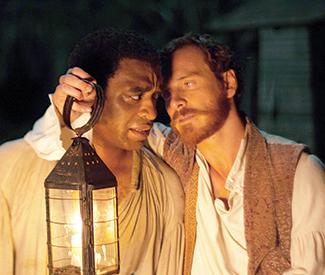
The movie you need to see this weekend, ASAP, is 12 Years a Slave — one of the most important releases of the year, and a likely contender for all possible awards, including Best Actor and Best Picture. (Review here.) Also new to theaters is the Cannes-winning, controversy-stirring Blue is the Warmest Color. (Review here.)

Read on for more short takes on today’s new releases, plus a 1979 cult classic that’s ripe for rediscovery.

http://www.youtube.com/watch?v=Q2Ir5LsraA4

About Time Richard Curtis, the man behind 2003’s Love Actually, must be enjoying his days in England, rolling in large piles of money. Coinciding with the 10-year anniversary of that twee cinematic love fest comes Curtis’ latest ode to joy, About Time. The film begins in Cornwall at an idyllic stone beach house, as Tim (Domhnall Gleeson) describes his family members (Bill Nighy is dad; Richard Cordery is the crazy uncle) and their pleasures (rituals (tea on the beach, ping pong). Despite beachside bliss, Tim is lovelorn and ready to begin a career as a barrister (which feels as out of the blue as the coming first act break). Oh! And as it happens, the men in Tim’s family can travel back in time. There are no clear rules, though births and deaths are like no-trespass signs on the imaginary timeline. When he meets Mary (Rachel McAdams), he falls in love, but if he paves over his own evening by bouncing back and spending that night elsewhere, he loses the path he’s worn into the map and has to fix it. Again and again. Despite potential repetition, About Time moves smoothly, sweetly, slowly along, giving its audience time enough to feel for the characters, and then feel for the characters again, and then keep crying just because the ball’s already in motion. It’s the most nest-like catharsis any British film ever built. (2:03) (Sara Maria Vizcarrondo)

http://www.youtube.com/watch?v=8oOG3vUkKUM

A.K.A. Doc Pomus “All greatness comes from pain.” The simple statement comes from Raoul Felder, brother of legendary R&B songwriter Doc Pomus, in the beautiful, crushing mediation on his brother’s life, A.K.A. Doc Pomus, opening theatrically this week after serving as the closing-night film of the 2012 San Francisco Jewish Film Festival. Doc wrote some of the greatest music of a generation: R&B and early rock’n’roll standards such as “This Magic Moment,” “A Teenager in Love,” “Save the Last Dance For Me,” and “Viva Las Vegas” — songs made famous by the likes of Dion, the Drifters, and Elvis Presley. Jewish, debilitated by polio, and vastly overweight, Doc defied expectations while struggling with a lifetime of outsider status and physical pain. William Hechter and Peter Miller’s doc offers a revealing look at his remarkable life. (1:38) Vogue. (Emily Savage)

http://www.youtube.com/watch?v=axLcfpj7xeU

Diana The final years of Diana, Princess of Wales are explored in what’s essentially a classed-up Lifetime drama, delving into the on-off romance between “the most famous woman in the world” (Naomi Watts) and heart surgeon Hasnat Khan (Naveen Andrews). Relationship roadblocks (his Muslim family, back home in Pakistan, is hesistant to accept a divorced, Christian Brit as their son’s partner) are further complicated by extraordinary circumstances (Diana’s fame, which leads to paparazzi intrusions on the very private doctor’s life), but there’s real love between the two, which keeps them returning to each other again and again. By the third or fourth tearful breakup — followed by a passionate reunion — Diana’s story becomes repetitive as it marches toward its inevitable tragic end. Still, director Oliver Hirschbiegel (2004’s Downfall, another last-days-in-the-life biopic, albeit of a slightly different nature) includes some light-hearted moments, as when a giggling Diana smuggles Hasnat through the palace gates (past guards who know exactly what she’s up to). As you’d expect, Watts is the best thing here, bringing warmth and complexity to a performance that strives to reach beyond imitation. (1:52) (Cheryl Eddy)

http://www.youtube.com/watch?v=2UNWLgY-wuo

Ender’s Game Asa Butterfield (star of 2011’s Hugo), Harrison Ford, and Ben Kingsley appear in this adaptation of Orson Scott Card’s sci-fi novel. (1:54)

http://www.youtube.com/watch?v=mueIglaVYDk

Free Birds Owen Wilson and Woody Harrelson lend their voices to this animated turkey tale. (1:31)

http://www.youtube.com/watch?v=m3_hKv4pEM4

God Loves Uganda Most contemporary Americans don’t know much about Uganda — that is, beyond Forest Whitaker’s Oscar-winning performance as Idi Amin in 2006’s The Last King of Scotland. Though that film took some liberties with the truth, it did effectively convey the grotesque terrors of the dictator’s 1970s reign. But even decades post-Amin, the East African nation has somehow retained its horrific human-rights record. For example: what extremist force was behind the country’s Anti-Homosexuality Bill, which proposed the death penalty as punishment for gayness? The answer might surprise you, or not. As the gripping, fury-fomenting doc God Loves Uganda reveals, America’s own Christian Right has been exporting hate under the guise of missionary work for some time. Taking advantage of Uganda’s social fragility — by building schools and medical clinics, passing out food, etc. — evangelical mega churches, particularly the Kansas City, Mo.-based, breakfast-invoking International House of Prayer, have converted large swaths of the population to their ultra-conservative beliefs. Filmmaker Roger Ross Williams, an Oscar winner for 2010 short Music by Prudence, follows naive “prayer warriors” as they journey to Uganda for the first time; his apparent all-access relationship with the group shows that they aren’t outwardly evil people — but neither do they comprehend the very real consequences of their actions. His other sources, including two Ugandan clergymen who’ve seen their country change for the worse and an LGBT activist who lives every day in peril, offer a more harrowing perspective. Evocative and disturbing, God Loves Uganda seems likely to earn Williams more Oscar attention. (1:23) Roxie. (Cheryl Eddy)

http://www.youtube.com/watch?v=AxGgkEHmHHg

Kill Your Darlings Relieved to escape his Jersey home, dominated by the miseries of an oft-institutionalized mother (Jennifer Jason Leigh) and long-suffering father (David Cross), Allen Ginsberg (Daniel Radcliffe) enters Columbia University in 1944 as a freshman already interested in the new and avant-garde. He’s thus immediately enchanted by bad-boy fellow student Lucien Carr (Dane DeHaan), a veteran of numerous prestigious schools and well on the road to getting kicked out of this one. Charismatic and reckless, Carr has a circle of fellow eccentrics buzzing around him, including dyspeptic William S. Burroughs (Ben Foster) and merchant marine wild child Jack Kerouac (Jack Huston). Variably included in or ostracized from this training ground for future Beat luminaries is the older David Kammerer (Michael C. Hall), a disgraced former academic who’d known Carr since the latter was 14, and followed him around with pathetic, enamored devotion. It’s this last figure’s apparent murder by Carr that provides the bookending crux of John Krokidas’ impressive first feature, a tragedy whose motivations and means remain disputed. Partly blessed by being about a (comparatively) lesser-known chapter in an overexposed, much-mythologized history, Kill Your Darlings is easily one of the best dramatizations yet of Beat lore, with excellent performances all around. (Yes, Harry Potter actually does pass quite well as a somewhat cuter junior Ginsberg.) It’s sad if somewhat inevitable that the most intriguing figure here — Hall’s hapless, lovelorn stalker-slash-victim — is the one that remains least knowable to both the film and to the ages. (1:40) (Dennis Harvey)

http://www.youtube.com/watch?v=IMnr-R7BkkU

Last Vegas This buddy film may look like a Bucket List-Hangover hybrid, but it’s got a lot more Spring Breakers in it than you’d expect — who beats Vegas for most bikinis per capita? Four old friends reunite for a wedding in Vegas, where they drink, gamble, and are confused for legendary men. Morgan Freeman sneaks out of his son’s house to go. Kevin Kline’s wife gave him a hall pass to regain his lost sense of fun. Kline and Freeman trick Robert De Niro into going — he’s got a grudge against Michael Douglas, so why celebrate that jerk’s nuptials to a 30-year-old? The conflicts are mostly safe and insubstantial, but the in-joke here is that all of these acting legends are confused for legends by their accidentally obtained VIP host (Romany Malco). These guys have earned their stature, so what gives? When De Niro flings fists you shudder inside remembering Jake LaMotta. Kline’s velvety comic delivery is just as swaggery as it was during his ’80s-era collaborations with Lawrence Kasdan. Douglas is “not as charming as he thinks he is,” yet again, and voice-of-God Freeman faces a conflict specific to paternal protective urges. Yes, Last Vegas jokes about the ravages of age and prescribes tenacity for all that ails us, but I want a cast this great celebrated at least as obviously as The Expendables films. Confuse these guys for better? Show me who. (1:44) (Sara Maria Vizcarrondo)

http://www.youtube.com/watch?v=-v5ZXAxTGHg

Let the Fire Burn In 1985 a long-simmering conflict between Philadelphia police and the local black liberation group MOVE came to a catastrophic conclusion. Ordered to leave their West Philly building after numerous neighborhood complaints about unsanitary conditions, incessant noise, child endangerment and more, the commune refused. An armed standoff came to a halt when a helicopter dropped two FBI-supplied water gel bombs on the roof, killing 11 MOVE members (including five kids) and creating an uncontrollable fire that destroyed some 60 nearby homes. It’s hard to deny after watching Jason Osder’s powerful documentary that MOVE then looked like one crazy cult — its representatives spouting extreme, paranoid rhetoric in and out of court; its child residents (their malnutrition-bloated stomachs nonsensically explained as being due to “eating so much”) in visibly poor health; its charismatic leader John Africa questionably stable. But whatever hazards they posed to themselves and the surrounding community, it’s also almost undeniable here that city law enforcement drastically overreacted, possibly in deliberate retaliation for an officer’s shootout death seven years earlier. The filmed and amply media-reported trials that ensued raised strong suspicions that the police even shot unarmed MOVE members trying to escape the blaze. This outrageous saga, with numerous key questions and injustices still dangling, is an American history chapter that should not be forgotten. Let the Fire Burn is an invaluable reminder. (1:35) (Dennis Harvey)

http://www.youtube.com/watch?v=HIKQCZDYfEI

Man of Tai Chi Keanu Reeves directs and plays a supporting role in this contemporary Beijing-set martial-arts drama. (1:45)

http://www.youtube.com/watch?v=N6lImifpiZM

The Pin Canadian film about a romance between two Eastern European youths, in hiding during World War II. (1:23)

The Visitor Directed by “Michael J. Paradise” (aka Giulio Paradisi), this 1979 Italian-US. co-production is belatedly starting to acquire a cult following. Joanne Nail is Barbara, mother of Katy (Paige Conner), a seemingly normal little girl with a disconcerting tendency to swear like a longshoreman when out of ma’s earshot. Also unbeknownst to mom is that her boyfriend (Lance Henriksen, no less), as well as characters played by Mel Ferrer, Glenn Ford, John Huston, Sam Peckinpah, and the inimitable Shelley Winters are all very interested — on the good and the evil side — in Katy, a “miracle of nature” with “immense powers.” Those powers apparently include making Kareem Abdul-Jabbar’s basketball explode at the hoop, and sending teenage boys through plate glass at an ice rink. Some of the adults nosing around Katy really, really want Barbara to give her a similarly gifted baby brother, others do not. It all involves some kind of interplanetary conspiracy to … well, beats me, frankly. Its utter senselessness part of the charm, The Visitor includes any number of bizarre moments, including Winters’ evident enjoyment of slapping some sense into Katy (the child thesp later confirmed that the Oscar winner went a little too Method in that scene), and crusty old Huston intoning the line “I’m, uh, the babysitter.” This glossy sci-fi horror mess. which the Roxie is showing in a new digital transfer, borrows elements freely from 1977’s Exorcist II: The Heretic (a fiasco that inspired very little imitation), 1976’s The Omen (or rather 1978’s Damien: Omen II) and, strangely, Orson Welles’ 1947 The Lady from Shanghai (directly ripping off its famous hall of mirrors scene). Yet there’s a certain undeniable originality to its incoherence. (1:48) Roxie. (Dennis Harvey)

Halloween 1951 and the good old days in Rock Rapids, Iowa

0

The tale of what really happened on Halloween Eve in 1951 in Rock Rapids, Iowa.  (Updated by popular demand.)

By Bruce B. Brugmann

Back where I come from,  Halloween was one of the most culturally advanced holidays of our era.  We had some fast times and created some enduring smalltown legends on Halloween. This was in my hometown of Rock Rapids, a small farming community nestled along the Rock River in northwest Iowa just five miles south of  the Minnesota state line.  I can speak for a generation or two back in the early 1950s when Halloween was the one night of the year when we could raise a little hell and and hope to stay one step ahead of the cops.

Or, in the case of Rock Rapids, the one and only cop, who happened to be Elmer “Shinny” Sheneberger. Shinny had the unenviable job of trying to keep some semblance of law and order during an evening when the Hermie Casjens gang was on the loose and genial mayhem was on the agenda.  Somehow through the years, nobody remembered exactly when, the tradition was born that the little kids would go house to house trick and treating but the older boys could roam the town looking to make trouble and pull off some pranks.

It was all quite civilized.

The Casjens gang would gather (no girls allowed) and set out about our evening’s business, being careful to stay away from the houses of watchful parents and Shinny on patrol. Dave Dietz and I specialized in finding cars with keys in the ignition and driving them to the other end of town and just leaving them. We tipped over an outhouse or two, the small town cliche, but one time we thought there was someone inside. We never hung around to find out. There was some mischief with fences and shrubs and lawn sprinklers and potted plants on porches.

After an evening of such lusty adventures, we would go home about 11 p.m. and tell our parents what we had been up to and how we evaded Shinny the whole evening and they would (generally) be relieved. Shinny would just drive around in his patrol car and shine his lights here and there when he saw trouble brewing  and do some honking. But somehow he never caught anybody, made no arrests nor did any  followup investigations.  And the targets of our pranks never seemed to make police complaints. I once asked Paul Smith, the editor of the celebrated Lyon County Reporter, why he never wrote up this bit of zesty small town lore. “Bruce,” he said, “I don’t want things to get out of hand.” During my era, they never did. As a Rock Rapids reporter on special assignment, I feel an obligation to retell this story on Halloween and bring some Rock Rapids values to San Francisco.

Nonetheless, the city elders decided to keep Halloween devastation to a minimum and scheduled a dance in the Community Building, with the misbegotten idea the pranksters would give up their errant ways and come to the dance. The Casjens Gang would have none of this. In fact it was the year of the dance diversion that we made our most culturally significant contribution to Halloween lore in Rock Rapids. We happened upon a boxcar, loaded with coal, parked on a siding a block or so from Main Street, which also served as a busy main arterial highway for cars coming across northwest Iowa.

It is not clear to this day who came up with the idea of rolling the boxcar across Main Street and blocking all traffic coming from both directions. We massed behind the car and pushed and pushed but it wouldn’t budge. Then Bob Babl came up with a brilliant idea:  to use a special lever his dad used to move boxcars full of lumber from the  nearby Babl  lumberyard. Bob slipped through a fence behind the yard and somehow managed to find the lever in the dark. He soon came forth, triumphantly holding the lever.

We massed again, now some 20 or so strong, behind the railroad  car and waited for the signal to push. Willie Ver Meer climbed to the top of the car and wrenched the wheel that loosened the brakes. We heaved in unison and the car moved slowly on the tracks until it reached the middle of Main Street. Willie gave a mighty heave and ground the car to a dead stop, bang, squarely in the middle of the street. Almost immediately, the cars started lining up on both sides of the car, honking away. Grace under pressure. An historic event. Man, were we proud.

We slipped away and from a safe distance watched the fruits of our labor unfold. Shinny, the ever resourceful police chief, soon came upon the scene. He strode into the dance in the nearby Community Building and commandeered the dancers to come out and help him move the car back onto its siding. We bided our time, waited till the dancers started dancing again and then went back and pushed the car once again into the middle of the street. Jerry Prahl added a nice touch by rolling out a batch of Firestone tires onto the street from his Dad’s nearby store. Suddenly, Main Street was a boxcar- blocked, tire-ridden mess. Again, the cars started lining up, honking away. Then we fled, figuring we were now wanted pranksters and needed to be on the lam for the duration.

The Casjens gang and groupies have retold the story through the years at our regular get togethers at the Sportsmen’s Club bar at Heritage Days in Rock Rapids and at our all-Rock Rapids Cocktail Party and Beer Kegger held for years in a Long Beach park and then in the back lawn of the Mary Rose Babl Hindt house in Cupertino. We would jokingly say that the statute of limitations never runs out in Rock Rapids and so we needed to be careful what we said and ought not to disclose fully the involvement of Dave Dietz, Hermie Casjens, Ted Fisch, Ken Roach, Jerry Prahl, Bob Babl, Romain Hahn, Willie Ver Meer, and lots of others, some who were there working in peril, others who declared they were there safely after the fact.

A few years ago, just before Halloween, I was invited back to Rock Rapids to speak to a fund-raising event for the local high school. It was a a crisp clear night just like the night of Halloween in l95l and a perfect setting to tell the story publicly in town for the first time. The event was at the new community building, on Main Street, just a block or so from the old Community Building, and a block or so from the siding where we found the boxcar. I told the audience that Shinny had assured me the statute of limitations had run out in Rock Rapids and that I could now,  five decades later, tell the boxcar- across -Main -Street caper with no fear of prosecution. And so I did, with relish.

Chuck Telford was in the audience and I recalled that he had driven up to us that night, as part of a civilian patrol, and inquired as to what we were doing. When he could see what we were doing, he just quietly drove off. “Very civilized behavior,” I told the audience.  Afterward, I told Chuck I would back him for mayor, on the basis of that enlightened response alone. Craig Vinson, then the Iowa  highway patrolman for the area, came up to me and said he remembered the incident vividly because he was on duty that night and came upon the boxcar blocking the highway with long lines of honking cars. “I got ahold of Shinny that night and told him it was his job to move the boxcar and get it off the highway,” he said. Others in attendance said they had gotten a whiff of the story but were never able to pin it down and were glad to get the real story.  The high school principal and superintendent didn’t say much and, I suspect, were worried my tale might lead to the Rock Rapids version of the movie “Ferris Buhler Takes A Day Off.”

For years, I said in my talk, I didn’t think that Shinny ever knew exactly what happened or who was involved in the caper or how we pulled it off, twice, almost before his very eyes. Shinny retired in Rock Rapids and I saw him twice a year when I came back to visit my parents. But I never said anything and he never said anything but I finally found the right moment and cautiously filled him in. He chuckled and said, “Let’s drink to it.”  And we did,  for years.

At the 55th reunion of the famous Dream Class of l953, I invited Shinny to sit in with us. He was still going strong at 89. He assured us once again that the statute of limitations had run out and we could speak openly about the Halloween caper in his presence and in front of witnesses. So Dave Dietz and I retold the story with expansiveness and gusto. Shinny supplied some key missing details. For example, he said that he didn’t get his troops out of the dance but out of the nearby movie theater with the threat that he would arrest them if they didn’t help him move the boxcar. However, Dave and I didn’t pin down some key details, such as how Shinny got someone nimble and brave enough to undo the work of Willie Ver Meer, climb to the top of the boxcar, twice, and wrench loose the brake. The boxcar would not budge until that brake was undone. That would have required some  expertise with boxcars, plus some physical skills, and would have been quite a feat to do at night with a gallery of a crowd and honking cars.  And then there was the issue of the second boxcar blocking and how he could rally his troops twice in one might. Thus, there are some tantalizing questions that may never get answered.

So there we were, five decades later, working to make the fast times even faster on Halloween in Rock Rapids. Did Shinny  ever arrest anybody on Halloween? “No,” he said. “I would just shine my car lights and honk my horn and everybody would run.” Any hard feelings? Shinny chuckled. “Naw,” he replied. “Let’s drink to Halloween in the good old days.”

And so we did. Shinny often called me at my office in San Francisco and he always told  the receptionist, “Tell Bruce, it’s Shinny. I’m his parole officer in Rock Rapids.”  I”m glad that we were able to confess properly to the top cop of Rock Rapids in l951 and to hear Shinny’s side of the story. 

Alas, Shinny had died by the time of our 60th class reunion last summer. But in the curious way that news gets around Rock Rapids, Delores Ockenga Berg  reported at the reunion that there was some major news about Shinny. She said the source for the news was a relative of hers who was the camp director at Camp Foster, a YMCA camp on East Lake Okiboji where Dave Dietz, Alan Lyng, and I from our class and many other boys from Rock Rapids and northwest Iowa towns spent many happy summers. Among other things, we learned to swim, because our town had no swimming pool, and we learned to row boats and paddle canoes, because we had no lake and only a shallow river. 

Shinny, Delores said, had willed his farm to Camp Foster. The camp had sold the farm and used the money to build a large lodge in his honor. Delores said the lodge was named Sheneberger Hall and that it  was a splendid addition to the camp. Shinny didn’t say much before he died about his plans for this unusual bequest. Most people didn’t even know he owned a farm. But he confided in me in his later years and explained  that he wanted to do something special for Camp Foster. The reason, he said, was because the boys who went to Foster had all turned out so well and he wanted to do his bit to see that this trend continued.  

And so we toasted Shinny as a philanthropist for young boys and an enlightened small town police officer whose career was symbolized by the way he handled things on Halloweens in Rock Rapids: he turned on his patrol lights and honked his horn but never made any arrests.

Those were the days, my friends. The days of fast times and enduring legends of Halloweens in Rock Rapids, Iowa. Let’s hope they never end.  B3

P.S.: Ted Fisch, a key conspirator, and I talk regularly about Rock Rapids. He was the center and I was the left-handed quarterback on our almost  famous 195l football  team. He became a colonel in the Air Force and loved to say that he was the only field grade officer he knew of who was a solid Democrat. He lives in Redondo Beach and we talk often on the phone and discuss such things as why there are so few Democrats in Rock Rapids. and why our congressional district must live with Rep Steve King, a tea party politician before there was a tea party. In one conversation, he said, “Bruce, a friend of mine googled my name the other day and found that I was mentioned in your Halloween story. How could that be? Does that mean I am up there forever? Does that mean the boxcar story will be up there forever?” Somehow, the news made me feel good.

STOP THE DIGITAL PRESSES:  Then I realized as I was finishing  this blog that Ted has a good and timely point. So I just now googled Dave Dietz and Hermie Casjens and Jerry Prahl  for starters and found that they, too, and probably all other named co-conspirators, have been outed in my world-wide blog, Thank God the statute of limitations has run out in Rock Rapids.


Red herring or not, park closure vote delayed while supes seek police input

26

There is only one police chief in this town, and no law regarding the usage of public parks shall pass without him. Or so they said yesterday when Sup. Scott Wiener continued for a week consideration by the Board of Supervisors of his controversial proposal to close the city’s parks and plazas at night.

Wiener – champion of the legislation that homeless advocates say specifically target the City’s homeless population — motioned for continuance on the hotly contested agenda item after Police Chief Greg Suhr was unavailable to discuss how the measure might be enforced. The motion was seconded by Sup. Malia Cohen and passed without objection. 

But the continuance request means that Wiener will have to deal with what he calls an “epidemic of vandalism” for another week as well. The legislation would amend the “Park Code to establish hours of operation for City parks from 5am to midnight, with certain exceptions; and make environmental findings.” 

“It’s long been illegal to sleep or camp in parks,” said Sup. Wiener. “[Police] don’t need another law.” 

“This. Is. About. Vandalism,” Recreation and Parks Department General Manager Phil Ginsburg told the Guardian. “The homeless won’t be thrown out. The laws are already on the books, man.”

And while Wiener and those in the RPD have continued their insistence that that the legislation was written explicitly to target late-night vandalism, illegal dumping, and other nefarious activities not related to homelessness, opposition to the legislation say it’s “red herring” legislation that, on its face, claims to combat vandalism, but underneath is actually a bill targeting the homeless.

Wiener disagrees with this stance, however, and actually called the argument made by the legislation’s opposition — that the bill is a “red herring” ostensibly aimed at vandalism, but that really targets the homeless — a “red herring” as well. A red herring, historically, is a distraction. It’s a Trojan Horse, a magician’s assistant, a tool designed to confuse and obfuscate actual information or intent. 

It is a term that first found a foothold in the hunting world, but made it’s transcendental leap into the world of politics. Politicians have employed the use of “red herrings” in the past. But why would a group called the Coalition on Homelessness actually support vandalism, as the supervisor’s “red herring” comments would suggest?

When this fact was pointed out, Wiener told the Guardian that he “wasn’t going to speculate.” (And neither will we, at least as to why the supervisor chose to use the phrase “red herring” to describe the COH’s argument in the first place.)

But regardless of rhetoric, next week’s vote promises to be close. COH Executive Director Jennifer Friedenbach told the Guardian last week that she had the support of the four most progressive supervisors — John Avalos, Jane Kim, David Campos and Eric Mar — and needed just two of the three swing votes to shoot down the legislation. Those three undecided votes rest in the hands of Sups. London Breed, Katy Tang and Norman Yee.

“This is going to be a close vote,” said Wiener.

But a vote that will have to wait a week.


The art of dialogue

1

arts@sfbg.com

THEATER Maybe there’s no better way to grasp your own time and place than by leaving it — in this case, trading San Francisco for Wroclaw, Poland, and Pacific Standard Time for a whiplashing case of jet lag. Wroclaw was home base for a little more than a week during the recent Dialog Festival (Oct. 11–18; dialogfestival.pl/en), which was in its seventh season as a major biennial international theater festival created and programmed by Krystyna Meissner, a force in Polish and European theater for decades.

Joining a cohort of Americans, including several from the Bay Area, most of whom had been invited to the festival by the Center for International Theatre Development (an organization with which I’ve recently become formally associated), we were treated to work by artists from Poland, Germany, Holland, South Africa, Rwanda, Estonia, Iran, Canada, Mexico, Spain, and Hungary. The topic this year, “Violence makes the world go ’round,” was a proposition answered variously and often ingeniously by the productions on offer. The best of these expertly delivered that consciousness-altering blow you want from theater or any art form, as well as much food for thought — not only about the reality of violence in the world today, but the place in it all of the artist, the individual, the public, the spectator, and the theater itself.

For now, one example will have to suffice: a staging of British playwright Sarah Kane’s 1998 play, Cleansed, by Polish director Krzysztof Warlikowski. This was actually one of two separate stagings of the same play in the festival this year; the other was by renowned Dutch director Johan Simons, working with Germany’s Münchner Kammerspiele, who offered three Kane plays in a single evening. (It was also one of two pieces from Warlikowski at the festival, the other being his latest work, Warsaw Cabaret.)

Warlikowski is widely known as one of the masters of the Polish theater today, and his staging of the Kane play is still in demand 12 years after its controversial premiere in 2001. Seeing this legendary production was an extraordinary opportunity, and its impact was in no way diminished by the hype.

Cleansed comprises a discrete set of scenes in which a sadistic “doctor” named Tinker perpetrates vicious humiliations and atrocities on a group of inmates. Among the latter is a grieving woman who has entered the doctor’s wicked sanatorium to commune with the spirit of her dead brother, a heroin addict murdered gruesomely by Tinker in an early scene. There is also a gay couple whose commitment to each other is brutally tested by the awful interventions of Tinker.

Warlikowski’s production unfolds as a harrowing yet gorgeously languid fever dream. Set on a small stage, with an institutional bathroom wall at the back, the strikingly crisp and potent images throughout distort in the reflective surfaces bounding the space. Often drowned in a shifting sea of garish light, accentuated with piercingly beautiful music (the songs derived from the text are sung in the original English), the stage nevertheless leaves ample room for brilliant performances. These deftly created characters and relationships speak eloquently to the deep compassion and understanding there throughout Kane’s penetrating nightmare. (In a seductive and telling move, Warlikowski tacks on a monologue about desperate love, taken from Kane’s Crave, at the outset of the evening.)

Kane’s own productive extremes as a playwright — her cool formal intelligence and invention, as well as her anguished, aching, and uncompromising vision — were served perfectly by the precise and enveloping aesthetic of this exquisite production. But what was it that brought this play and this director together in the first place? And what was the nature of its early impact? In a talkback with the director the following day, a Polish journalist and critic helped set the scene.

“I saw Cleansed many years ago,” he remembered, “at a time when the LGBT movement in Poland was just coming out of the closet. At the time, it was truly a shocking piece. Now it’s a piece that I’m proud of. I’m proud to see how much has changed. Back in the day, the mayor of Warsaw tried to ban the Pride parade and there was only one politician who dared to show up. I remember there being several hundred of us, separated by a double line of police officers — mind you, the demonstration was legal — and above the heads of the police officers, stones were flying at us.”

Warlikowski recalled, “After the first reading we gave up on it. I decided we wouldn’t do Cleansed but do Hamlet instead. It’s a little difficult to imagine now, but I was really shattered by the stones flying at participants of the LGBT Pride Parade. We were working on Angels in America in some dingy little basement. I felt excluded. I felt like I was underground. Groups of women would roam the streets and tear down the posters for Cleansed. Director Krystyna Meissner would go around town to keep them from being torn down.

“I added the monologue from Crave because I thought that would be the only way to get Polish theatergoers to see the piece. The first response was horrible. Whereas people saw the dismemberment as theatrical and acceptable, they were more offended by two guys kissing, and people would get up and leave the room. That’s not something we can really understand today. So there had to be this ten-minute monologue, speaking of love, to trick you into staying for the rest.

“I remember watching the show sitting next to a couple, probably a yuppie couple, new middle-class, in their late 30s. During the first monologue, the woman never looked up. I felt I was embarrassing her. And for the Catholic nation that we still are, it was a lot to expect. Hence all the embellishments, everything that brings in a dimension that makes the dialogue possible — dialogue with the piece and dialogue with society.” *


For more on the Dialog festival, visit www.sfbg.com/pixel_vision.

Meister: A Halloween invasion from Mars

0

Guardian columnist Dick Meister is a longtime Bay Area journalist.

“2X2L calling CQ … 2X2L calling CQ, New York … Isn’t there anyone on the
air? Isn’t there anyone on the air? Isn’t there anyone?”

Millions of Americans — panic-stricken, many of them — waited anxiously
for a response to the message, delivered over the CBS radio network in slow,
flat, mournful tones on the crisp Halloween eve of Oct. 30, 1938.

“Isn’t … there … anyone?”

There wasn’t. Listeners heard only the slapping sounds of the Hudson River.

Many of New York’s residents were dead. The others had fled in panic from
“five great machines,” as tall as the tallest of the city’s skyscrapers,
that the radio announcer at CQ, New York, had described in the last words he
would ever utter. The metallic monsters had crossed the Hudson “like a man
wading a brook,” destroying all who stood in their way.

“Our army is wiped out, artillery, air force — everything wiped out,”
gasped the radio announcer.

It was the War of the Worlds, Mars versus Earth, and the Martians were
winning with horrifying ease. Their giant machines had landed in the New
Jersey village of Grovers Mill, and soon they would be coming to your town,
too … and yours … and yours. Nothing could stop them.

The War of the Worlds had sprung with frightening clarity from the extremely
fertile imagination of Orson Welles and the other young members of the
Mercury Theater of the Air who adopted Wells’ novel and dramatized it so
brilliantly — and believably — from the CBS radio studios on that long ago
Halloween eve.

Their use of realistic sounding bulletins and other tools of radio news
departments made it sound as if Martian machines truly were everywhere, and
everywhere invincible.

Studies done at the time show that at least one million of the program’s
estimated six million listeners panicked.

“People all over the United States were praying, crying, fleeing frantically
to escape death from the Martians,” noted Hadley Cantril, an actual
Princeton professor who directed the most detailed study of the panic that
was caused in part by the pronouncements of “Richard Pierson,” a bogus
Princeton professor played by Welles.

“Some ran to rescue loved ones. Others telephoned farewells or warnings,
hurried to inform neighbors … summoned ambulances and police cars … For
weeks after the broadcast, newspapers carried human interest stories
relating the shock and terror of local citizens.”

“When the Martians started coming north from Trenton we really got scared,”
a New Jerseyian told one of Professor Cantril’s interviewers. “They would
soon be in our town. I drove right through Newberg and never even knew I
went through it … I was going eighty miles an hour most of the way. I
remember not giving a damn, as what difference did it make which way I’d get
killed.”

Those who didn’t join the streams of cars that clogged the highways clogged
the phone lines or huddled in cellars and living rooms to await the end,
some with pitchfork, shotgun or Bible in hand.

“I knew it was something terrible and I was frightened,” a woman recalled.
“When they told us what road to take, and to get up over the hills, and the
children began to cry, the family decided to go. We took blankets and my
granddaughter wanted to take the cat and the canary.”

It was an extremely rare occurrence., as Cantril noted: “Probably never
before have so many people in all walks of life and in all parts of the
country become so suddenly and so intensely disturbed …”

And never since then has the country experienced such deep and widespread
fear and anxiety. Not even after Japan’s surprise attack on Pearl Harbor
three years later. Not even in the wake of the terrorist attacks of Sept.
11, 2001.

It was a unique display of widespread panic. Many people actually believed
their very world was coming to an end and there was nothing anyone could do
to stop it.

Welles had made clear at the start that the presentation was fictional. But
radio listeners generally paid little attention to opening announcements,
and many Sunday night listeners commonly turned first to the very popular
Edgar Bergen-Charley McCarthy show that was broadcast over another network
in the same 8 p.m. time slot, turning to the Mercury Theater out of
curiosity only later.

What they heard that Sunday were primarily news reports and commentaries
ingeniously patterned on the real reports and commentaries that were
constantly interrupting programs to report the aggressive actions of Nazi
Germany and other events that would shortly lead to the outbreak of World
War II.

People expected to hear the worst. Most also expected that what they heard
would be accurate, radio having supplanted newspapers as the most trusted
and relied upon of the mass media.

It helped, too, that much of the information was presented by “experts” …
Welles and other make-believe professors from universities around the world,
supposed astronomers, army officers and Red Cross officials, even the
otherwise unidentified “secretary of the interior.”

“I believed the broadcast as soon as I heard the professor from Princeton
and the officials in Washington,” as one listener recalled.

Even relatively sophisticated and well-informed listeners were fooled by
what Cantril cited as the program’s “sheer dramatic excellence.”

Events developed slowly, starting with the relatively credible — brief news
bulletins calmly reporting some “atmospheric disturbances,” later some
“explosions of incandescent gas,” and finally the discovery of what appeared
to be a large meteorite. Only then came the incredible — the discovery that
the “meteorite” was a Martian spaceship, reported in a halting, incredulous
manner by the “reporter” supposedly broadcasting live from Grovers Mill.

The police, the New Jersey State Guard, the army — none could subdue the
invaders. Finally, the “secretary of the interior” announced that man could
do no more, that the only hope for deliverance from the Martians was to
“place our faith in God.”

Few listeners were in a position to make independent judgements about
matters Martian. Few knew astronomy, and what standards does one use to
judge an invasion from Mars anyway?

Listeners could easily have turned to other radio networks for the truth, of
course, but many were too caught up in the masterful drama of the CBS
program to think of that.

Even some people who lived near the alleged invasion site were fooled. “I
looked out the window and everything was the same as usual,” said one, “so I
thought it hadn’t reached our section yet.”

The second half of the hour-long broadcast, with “Professor Pierson”
wandering dazedly through the deserted and ravaged streets of New York,
should have made it obvious to even the most gullible that they had been
listening to drama rather than news. Welles, shocked and shaken by the
listener response, followed that quickly with an ad-libbed assurance that it
had all been make-believe.

But by then, many people had left their radios. They had other ways in which
to spend their last hours on earth.

Copyright © 2013 Dick Meister
Guardian columnist Dick Meister is a longtime Bay Area journalist
.

Film listings and reviews Oct. 30-Nov.5, 2013

0

Film listings are edited by Cheryl Eddy. Reviewers are Kimberly Chun, Dennis Harvey, Lynn Rapoport, Sam Stander, and Sara Maria Vizcarrondo. For rep house showtimes, see Rep Clock.

OPENING

About Time Richard Curtis, the man behind 2003’s Love Actually, must be enjoying his days in England, rolling in large piles of money. Coinciding with the 10-year anniversary of that twee cinematic love fest comes Curtis’ latest ode to joy, About Time. The film begins in Cornwall at an idyllic stone beach house, as Tim (Domhnall Gleeson) describes his family members (Bill Nighy is dad; Richard Cordery is the crazy uncle) and their pleasures (rituals (tea on the beach, ping pong). Despite beachside bliss, Tim is lovelorn and ready to begin a career as a barrister (which feels as out of the blue as the coming first act break). Oh! And as it happens, the men in Tim’s family can travel back in time. There are no clear rules, though births and deaths are like no-trespass signs on the imaginary timeline. When he meets Mary (Rachel McAdams), he falls in love, but if he paves over his own evening by bouncing back and spending that night elsewhere, he loses the path he’s worn into the map and has to fix it. Again and again. Despite potential repetition, About Time moves smoothly, sweetly, slowly along, giving its audience time enough to feel for the characters, and then feel for the characters again, and then keep crying just because the ball’s already in motion. It’s the most nest-like catharsis any British film ever built. (2:03) (Vizcarrondo)

A.K.A. Doc Pomus “All greatness comes from pain.” The simple statement comes from Raoul Felder, brother of legendary R&B songwriter Doc Pomus, in the beautiful, crushing mediation on his brother’s life, A.K.A. Doc Pomus, opening theatrically this week after serving as the closing-night film of the 2012 San Francisco Jewish Film Festival. Doc wrote some of the greatest music of a generation: R&B and early rock’n’roll standards such as “This Magic Moment,” “A Teenager in Love,” “Save the Last Dance For Me,” and “Viva Las Vegas” — songs made famous by the likes of Dion, the Drifters, and Elvis Presley. Jewish, debilitated by polio, and vastly overweight, Doc defied expectations while struggling with a lifetime of outsider status and physical pain. William Hechter and Peter Miller’s doc offers a revealing look at his remarkable life. (1:38) Vogue. (Emily Savage)

Blue is the Warmest Color See “Hot and Cool.” (2:59) Embarcadero.

Diana Naomi Watts stars in this exploration of the last two years in the life of Princess Diana. (1:52) Shattuck.

Ender’s Game Asa Butterfield (star of 2011’s Hugo), Harrison Ford, and Ben Kingsley appear in this adaptation of Orson Scott Card’s sci-fi novel. (1:54) Presidio.

Free Birds Owen Wilson and Woody Harrelson lend their voices to this animated turkey tale. (1:31)

God Loves Uganda Most contemporary Americans don’t know much about Uganda — that is, beyond Forest Whitaker’s Oscar-winning performance as Idi Amin in 2006’s The Last King of Scotland. Though that film took some liberties with the truth, it did effectively convey the grotesque terrors of the dictator’s 1970s reign. But even decades post-Amin, the East African nation has somehow retained its horrific human-rights record. For example: what extremist force was behind the country’s Anti-Homosexuality Bill, which proposed the death penalty as punishment for gayness? The answer might surprise you, or not. As the gripping, fury-fomenting doc God Loves Uganda reveals, America’s own Christian Right has been exporting hate under the guise of missionary work for some time. Taking advantage of Uganda’s social fragility — by building schools and medical clinics, passing out food, etc. — evangelical mega churches, particularly the Kansas City, Mo.-based, breakfast-invoking International House of Prayer, have converted large swaths of the population to their ultra-conservative beliefs. Filmmaker Roger Ross Williams, an Oscar winner for 2010 short Music by Prudence, follows naive “prayer warriors” as they journey to Uganda for the first time; his apparent all-access relationship with the group shows that they aren’t outwardly evil people — but neither do they comprehend the very real consequences of their actions. His other sources, including two Ugandan clergymen who’ve seen their country change for the worse and an LGBT activist who lives every day in peril, offer a more harrowing perspective. Evocative and disturbing, God Loves Uganda seems likely to earn Williams more Oscar attention. (1:23) Roxie. (Eddy)

Kill Your Darlings Relieved to escape his Jersey home, dominated by the miseries of an oft-institutionalized mother (Jennifer Jason Leigh) and long-suffering father (David Cross), Allen Ginsberg (Daniel Radcliffe) enters Columbia University in 1944 as a freshman already interested in the new and avant-garde. He’s thus immediately enchanted by bad-boy fellow student Lucien Carr (Dane DeHaan), a veteran of numerous prestigious schools and well on the road to getting kicked out of this one. Charismatic and reckless, Carr has a circle of fellow eccentrics buzzing around him, including dyspeptic William S. Burroughs (Ben Foster) and merchant marine wild child Jack Kerouac (Jack Huston). Variably included in or ostracized from this training ground for future Beat luminaries is the older David Kammerer (Michael C. Hall), a disgraced former academic who’d known Carr since the latter was 14, and followed him around with pathetic, enamored devotion. It’s this last figure’s apparent murder by Carr that provides the bookending crux of John Krokidas’ impressive first feature, a tragedy whose motivations and means remain disputed. Partly blessed by being about a (comparatively) lesser-known chapter in an overexposed, much-mythologized history, Kill Your Darlings is easily one of the best dramatizations yet of Beat lore, with excellent performances all around. (Yes, Harry Potter actually does pass quite well as a somewhat cuter junior Ginsberg.) It’s sad if somewhat inevitable that the most intriguing figure here — Hall’s hapless, lovelorn stalker-slash-victim — is the one that remains least knowable to both the film and to the ages. (1:40) Shattuck. (Harvey)

Last Vegas This buddy film may look like a Bucket List-Hangover hybrid, but it’s got a lot more Spring Breakers in it than you expect — who beats Vegas for most bikinis per capita? Four old friends reunite for a wedding in Vegas, where they drink, gamble, and are confused for legendary men. Morgan Freeman sneaks out of his son’s house to go. Kevin Kline’s wife gave him a hall pass to regain his lost sense of fun. Kline and Freeman trick Robert De Niro into going — he’s got a grudge against Michael Douglas, so why celebrate that jerk’s nuptials to a 30-year-old? The conflicts are mostly safe and insubstantial, but the in-joke here is that all of these acting legends are confused for legends by their accidentally obtained VIP host (Romany Malco). These guys have earned their stature, so what gives? When De Niro flings fists you shudder inside remembering Jake LaMotta. Kline’s velvety comic delivery is just as swaggery as it was during his 80s era collaborations with Lawrence Kasdan. Douglas is “not as charming as he thinks he is,” yet again, and voice-of-God Freeman faces a conflict specific to paternal protective urges. Yes, Last Vegas jokes about the ravages of age and prescribes tenacity for all that ails us, but I want a cast this great celebrated at least as obviously as The Expendables films. Confuse these guys for better? Show me who. (1:44) Presidio. (Vizcarrondo)

Let the Fire Burn In 1985 a long-simmering conflict between Philadelphia police and the local black liberation group MOVE came to a catastrophic conclusion. Ordered to leave their West Philly building after numerous neighborhood complaints about unsanitary conditions, incessant noise, child endangerment and more, the commune refused. An armed standoff came to a halt when a helicopter dropped two FBI-supplied water gel bombs on the roof, killing 11 MOVE members (including five kids) and creating an uncontrollable fire that destroyed some 60 nearby homes. It’s hard to deny after watching Jason Osder’s powerful documentary that MOVE then looked like one crazy cult — its representatives spouting extreme, paranoid rhetoric in and out of court; its child residents (their malnutrition-bloated stomachs nonsensically explained as being due to “eating so much”) in visibly poor health; its charismatic leader John Africa questionably stable. But whatever hazards they posed to themselves and the surrounding community, it’s also almost undeniable here that city law enforcement drastically overreacted, possibly in deliberate retaliation for an officer’s shootout death seven years earlier. The filmed and amply media-reported trials that ensued raised strong suspicions that the police even shot unarmed MOVE members trying to escape the blaze. This outrageous saga, with numerous key questions and injustices still dangling, is an American history chapter that should not be forgotten. Let the Fire Burn is an invaluable reminder. (1:35) Opera Plaza, Shattuck. (Harvey)

Man of Tai Chi Keanu Reeves directs and plays a supporting role in this contemporary Beijing-set martial-arts drama. (1:45) Metreon.

The Pin Canadian film about a romance between two Eastern European youths, in hiding during World War II. (1:23) Opera Plaza.

12 Years a Slave See “To Hell and Back.” (2:14) California, Embarcadero.

The Visitor Barbara (Joanne Nail) Directed by “Michael J. Paradise” (aka Giulio Paradisi), this 1979 Italian-US. co-production is belatedly starting to acquire a cult following. Joanne Nail is Barbara, mother of Katy (Paige Conner), a seemingly normal little girl with a disconcerting tendency to swear like a longshoreman when out of ma’s earshot. Also unbeknownst to mom is that her boyfriend (Lance Henriksen, no less), as well as characters played by Mel Ferrer, Glenn Ford, John Huston, Sam Peckinpah, and the inimitable Shelley Winters are all very interested — on the good and the evil side — in Katy, a “miracle of nature” with “immense powers.” Those powers apparently include making Kareem Abdul-Jabbar’s basketball explode at the hoop, and sending teenage boys through plate glass at an ice rink. Some of the adults nosing around Katy really, really want Barbara to give her a similarly gifted baby brother, others do not. It all involves some kind of interplanetary conspiracy to … well, beats me, frankly. Its utter senselessness part of the charm, The Visitor includes any number of bizarre moments, including Winters’ evident enjoyment of slapping some sense into Katy (the child thesp later confirmed that the Oscar winner went a little too Method in that scene), and crusty old Huston intoning the line “I’m, uh, the babysitter.” This glossy sci-fi horror mess. which is the Roxie is showing in a new digital transfer, borrows elements freely from 1977’s Exorcist II: The Heretic (a fiasco that inspired very little imitation), 1976’s The Omen (or rather 1978’s Damien: Omen II) and, strangely, Orson Welles’ 1947 The Lady from Shanghai (directly ripping off its famous hall of mirrors scene). Yet there’s a certain undeniable originality to its incoherence. (1:48) Roxie. (Harvey)

ONGOING

All Is Lost As other reviewers have pointed out, All Is Lost‘s nearly dialogue-free script (OK, there is one really, really well-placed “Fuuuuuck!”) is about as far from J.C. Chandor’s Oscar-nominated script for 2011’s Margin Call as possible. Props to the filmmaker, then, for crafting as much pulse-pounding magic out of austerity as he did with that multi-character gabfest. Here, Robert Redford plays “Our Man,” a solo sailor whose race to survive begins along with the film, as his boat collides with a hunk of Indian Ocean detritus. Before long, he’s completely adrift, yet determined to outwit the forces of nature that seem intent on bringing him down. The 77-year-old Redford turns in a surprisingly physical performance that’s sure to be remembered as a late-career highlight. (1:46) Albany, SF Center, Sundance Kabuki. (Eddy)

Blue Jasmine The good news about Blue Jasmine isn’t that it’s set in San Francisco, but that it’s Woody Allen’s best movie in years. Although some familiar characteristics are duly present, it’s not quite like anything he’s done before, and carries its essentially dramatic weight more effectively than he’s managed in at least a couple decades. Not long ago Jasmine (a fearless Cate Blanchett) was the quintessential Manhattan hostess, but that glittering bubble has burst — exactly how revealed in flashbacks that spring surprises up to the script’s end. She crawls to the West Coast to “start over” in the sole place available where she won’t be mortified by the pity of erstwhile society friends. That would be the SF apartment of Ginger (Sally Hawkins), a fellow adoptive sister who was always looked down on by comparison to pretty, clever Jasmine. Theirs is an uneasy alliance — but Ginger’s too big-hearted to say no. It’s somewhat disappointing that Blue Jasmine doesn’t really do much with San Francisco. Really, the film could take place anywhere — although setting it in a non-picture-postcard SF does bolster the film’s unsettled, unpredictable air. Without being an outright villain, Jasmine is one of the least likable characters to carry a major US film since Noah Baumbach’s underrated Margot at the Wedding (2007); the general plot shell, moreover, is strongly redolent of A Streetcar Named Desire. But whatever inspiration Allen took from prior works, Blue Jasmine is still distinctively his own invention. It’s frequently funny in throwaway performance bits, yet disturbing, even devastating in cumulative impact. (1:38) Clay, Metreon. (Harvey)

Captain Phillips In 2009, Captain Richard Phillips was taken hostage by Somali pirates who’d hijacked the Kenya-bound Maersk Alabama. His subsequent rescue by Navy SEALs came after a standoff that ended in the death of three pirates; a fourth, Abduwali Abdukhadir Muse, surrendered and is serving a hefty term in federal prison. A year later, Phillips penned a book about his ordeal, and Hollywood pounced. Tom Hanks is perfectly cast as Phillips, an everyman who runs a tight ship but displays an admirable ability to improvise under pressure — and, once rescued, finally allows that pressure to diffuse in a scene of memorably raw catharsis. Newcomer Barkhad Abdi, cast from an open call among Minneapolis’ large Somali community, plays Muse; his character development goes deep enough to emphasize that piracy is one of few grim career options for Somali youths. But the real star here is probably director Paul Greengrass, who adds this suspenseful high-seas tale to his slate of intelligent, doc-inspired thrillers (2006’s United 93, 2007’s The Bourne Ultimatum). Suffice to say fans of the reigning king of fast-paced, handheld-camera action will not be disappointed. (2:14) Four Star, Marina, 1000 Van Ness, SF Center, Sundance Kabuki. (Eddy)

Carrie Is the world ready for a candy-covered Carrie? It’s a sad state of affairs when the best thing about a movie, particularly a wholly superfluous remake like this, is its creepy poster. That’s the closest thing this Carrie has to offer next to that retina-scorching, iconic 1976 image of blood-saturated Sissy Spacek that continues to lend inspiration to baby Billiths everywhere. Nonetheless, like a shy violet cowering in the gym showers, this Carrie comes loaded with potential, with Boys Don’t Cry (1999) director Kimberly Peirce at the helm, the casting of Julianne Moore and Chloe Grace Moretz in the critical mother-daughter roles, and the unfortunately topical bullying theme. Peirce makes a half-hearted attempt to update the, um, franchise when the tormented Carrie (a miscast Moretz) is virally videoed by spoiled rival Chris (Portia Doubleday), but the filmmaker’s heart — and guts — aren’t in this pointless exercise. We speed through the buildup — which unconvincingly sets up Carrie’s torments at home, instigated by obviously mentally ill, Christian fundamentalist mom Margaret (Moore), and at school, where the PE teacher (Judy Greer) pep-talks Carrie and Sue Snell (Gabriella White) is mysteriously hellbent on paying penance for her bullying misdeeds — to the far-from-scary denouement. Let’s say mean-spirited reflexive revenge-taking is no real substitute for true horror and shock. Supposedly drawn to Carrie for its female-empowerment message, Peirce nevertheless isn’t cut out to wade into horror’s crimson waters — especially when one compares this weak rendition with Brian De Palma’s double-screen brio and high-camp Freudian passion play. (1:32) Metreon, 1000 Van Ness. (Chun)

Cloudy With a Chance of Meatballs 2 (1:35) Metreon, 1000 Van Ness.

The Counselor The reviews are in, and it’s clear Ridley Scott has made the most polarizing film of the season. Most of The Counselor‘s detractors blame Cormac McCarthy’s screenplay, the acclaimed author’s first that isn’t drawn from a prexisting novel. To date, the best film made from a McCarthy tale is 2007’s No Country for Old Men, and The Counselor trawls in similar border-noir genre trappings in its tale of a sleek, greedy lawyer (Michael Fassbender) who gets in way over his head after a drug deal (entered into with slippery compadres played by Brad Pitt and Javier Bardem) goes wrong. Yes, there are some problems here, with very few unexpected twists in a downbeat story that’s laden with overlong monologues, most of them delivered by random characters that appear, talk, and are never seen again. But some of those speeches are doozies — and haters are overlooking The Counselor‘s sleazy pleasures (many of which are supplied by Cameron Diaz’s fierce, feline femme fatale) and attention to grimy detail. One suspects cult appreciation awaits. (1:57) Four Star, Marina, Metreon, 1000 Van Ness, Sundance Kabuki. (Eddy)

Don Jon Shouldering the duties of writer, director, and star for the comedy Don Jon, Joseph Gordon-Levitt has also picked up a broad Jersey accent, the physique of a gym rat, and a grammar of meathead posturing — verbal, physical, and at times metaphysical. His character, Jon, is the reigning kingpin in a triad of nightclubbing douchebags who pass their evenings assessing their cocktail-sipping opposite numbers via a well-worn one-to-10 rating system. Sadly for pretty much everyone involved, Jon’s rote attempts to bed the high-scorers are spectacularly successful — the title refers to his prowess in the art of the random hookup — that is, until he meets an alluring “dime” named Barbara (Scarlett Johansson), who institutes a waiting period so foreign to Jon that it comes to feel a bit like that thing called love. Amid the well-earned laughs, there are several repulsive-looking flies in the ointment, but the most conspicuous is Jon’s stealthy addiction to Internet porn, which he watches at all hours of the day, but with a particularly ritualistic regularity after each night’s IRL conquest has fallen asleep. These circumstances entail a fair amount of screen time with Jon’s O face and, eventually, after a season of growth — during which he befriends an older woman named Esther (Julianne Moore) and learns about the existence of arty retro Swedish porn — his “Ohhh&ldots;” face. Driven by deft, tight editing, Don Jon comically and capably sketches a web of bad habits, and Gordon-Levitt steers us through a transformation without straining our capacity to recognize the character we met at the outset — which makes the clumsy over-enunciations that mar the ending all the more jarring. (1:30) 1000 Van Ness, SF Center, Sundance Kabuki. (Rapoport)

Enough Said Eva (Julia Louis-Dreyfus) is a divorced LA masseuse who sees naked bodies all day but has become pretty wary of wanting any in her bed at night. She reluctantly changes her mind upon meeting the also-divorced Albert (James Gandolfini), a television archivist who, also like her, is about to see his only child off to college. He’s no Adonis, but their relationship develops rapidly — the only speed bumps being provided by the many nit-picking advisors Eva has in her orbit, which exacerbate her natural tendency toward glass-half-empty neurosis. This latest and least feature from writer-director Nicole Holofcener is a sitcom-y thing of the type that expects us to find characters all the more adorable the more abrasive and self-centered they are. That goes for Louis-Dreyfus’ annoying heroine as well as such wasted talents as Toni Colette as her kvetching best friend and Catherine Keener as a new client turned new pal so bitchy it makes no sense Eva would desire her company. The only nice person here is Albert, whom the late Gandolfini makes a charming, low-key teddy bear in an atypical turn. The revelation of an unexpected past tie between his figure and Keener’s puts Eva in an ethically disastrous position she handles dismally. In fact, while it’s certainly not Holofcener’s intention, Eva’s behavior becomes so indefensible that Enough Said commits rom-com suicide: The longer it goes on, the more fervently you hope its leads will not end up together. (1:33) Balboa, SF Center, Sundance Kabuki. (Harvey)

Escape From Tomorrow Escape From Tomorrow acquired cachet at Sundance this year as a movie you ought to see because it probably wouldn’t surface again. The reason was its setting, which composites two of the most photographed (and “happiest”) places on Earth. They’re also among the most heavily guarded from any commercial usage not of their own choosing. That would be Disney World and Disneyland, where Escape was surreptitiously shot — ingeniously so, since you would hardly expect any movie filmed on the sly like this to be so highly polished, or for its actors to get so little apparent attention from the unwitting background players around them. That nobody has pulled the fire alarm, however, suggests Disney realized this movie isn’t going to do it any real harm. While its setting remains near-indispensable, what writer-director Randy Moore has pulled off goes beyond great gimmickry, commingling satire, nightmare Americana, cartooniness, pathos, and surrealism in its tale of 40-ish Jim (Roy Abramsohn), which starts on the last day of his family vacation — when his boss calls to fire him. What follows might either be hallucinated by shell-shocked Jim, or really be a grand, bizarre conspiracy, with occurrences appearing to be either imaginary or apocalyptic (or both). Lucas Lee Graham’s crisp B&W photography finds the grotesquerie lurking in the shadows of parkland imagery. Abel Korzeniowski’s amazing score apes and parodies vintage orchestral Muzak, cloying kiddie themes, and briefly even John Williams at his most Spielbergian. All the actors do fine work, slipping fluidly if not always explicably from grounded real-world behavior to strangeness. But the real achievement of Escape From Tomorrow is that while this paranoid fantasy really makes no immediate sense, Moore’s cockeyed vision is so assured that we assume it must, on some level. He’s created a movie some people will hate but others will watch over and over again, trying to connect its almost subliminal dots. (1:43) Roxie. (Harvey)

Escape Plan It’s fascinating how ruined faces and silvered goatees can lend an air of, uh, gravitas to even the most muscle-bound action-movie veterans. The logic: Sylvester Stallone and Arnold Schwarzenegger have been around so long that they must possess more than a few brain cells to rub together. And rub they do — to surprisingly pleasing effect in this cut-above-the-next-Expendables-sequel meeting of blockbuster behemoths. Stallone’s Ray Breslin is a prison security specialist so nerdily devoted to his work that he gets himself locked up to test his clients’ jails. He gets in over his head when he’s thrown into the most secure private prison in the world, which happens to be run by former Blackwater mercenaries. It’s essentially the next, rather permanent-looking step after your not-so-friendly rendition flight. Breslin befriends security man Rottmayer (Schwarzenegger), who’s in the clink on behalf of his “digital Robin Hood” boss. Menaced by warden Hobbs (Jim Caviezel) and brawny Drake (Vinnie Jones), the two prisoners kick off a changeable game, Muslim prisoner Javed (Faran Tahir) in tow. Director Mikael Håfström lays out the plans with geeky enthusiasm by way of zippy point-of-view shots that are supposed to let you into Breslin’s noggin. Shockingly, after Stallone’s recent brain-dead exercises (2012’s Bullet to the Head), it’s not an unhappy experience in this smarter-than-it-looks post-9/11 prison-break drama that wears its complicated feelings about War on Terror-era crime and punishment — and torture — on its sleeve. Still, matters never get too bleeding-heart liberal here, at the risk of alienating the stars’ audiences. Sly obviously embraces this opportunity to play smarter than usual, while the ex-Governator sinks his choppers into his role with glee, trotting out a Commando-style slo-mo gun-swinging move that will have his geek brigade cheering. (1:56) 1000 Van Ness, SF Center. (Chun)

The Fifth Estate After being our guide through the world of 1970s Formula One racing in Rush, Daniel Brühl is back serving that same role — and again grumbling in the shadows cast by a flashier character’s magnetism — for a more recent real life story’s dramatization. Here he’s German “technology activist” Daniel Domscheit-Berg, who in 2007 began collaborating with the enigmatic, elusive Julian Assange (Benedict Cumberbatch) on WikiLeaks’ airing of numerous anonymous whistleblowers’ explosive revelations: US military mayhem in Afghanistan; Kenyan ruling-regime corruption; a Swiss bank’s providing a “massive tax dodge” for wealthy clients worldwide; ugly truths behind Iceland’s economic collapse; and climactically, the leaking of a huge number of classified U.S. government documents. It was this last, almost exactly three years ago, that made Assange a wanted man here and in Sweden (the latter for alleged sexual assaults), as well as putting US Army leaker Chelsea (née Bradley) Manning in prison. The heat was most certainly on — although WikiLeaks was already suffering internal woes as Domscheit-Berg and a few other close associates grew disillusioned with Assange’s megalomania, instability, and questionable judgment. It’s a fascinating, many-sided saga that was told very well in Alex Gibney’s recent documentary We Steal Secrets: The Story of WikiLeaks, and this narrative feature from director Bill Condon (2004’s Kinsey, 2006’s Dreamgirls, the last two Twilights) and scenarist Josh Singer feels disappointingly superficial by contrast. It tries to cram too information in without enough ballasting psychological insight, and the hyperkinetic editing and visual style intended to ape the sheer info-overload of our digital age simply makes the whole film seem like it’s trying way too hard. There are good moments, some sharp supporting turns, and Estate certainly doesn’t lack for ambition. But it’s at best a noble failure that in the end leaves you feeling fatigued and unenlightened. (2:04) 1000 Van Ness, SF Center, Sundance Kabuki. (Harvey)

Gravity “Life in space is impossible,” begins Gravity, the latest from Alfonso Cuarón (2006’s Children of Men). Egghead Dr. Ryan Stone (Sandra Bullock) is well aware of her precarious situation after a mangled satellite slams into her ship, then proceeds to demolition-derby everything (including the International Space Station) in its path. It’s not long before she’s utterly, terrifyingly alone, and forced to unearth near-superhuman reserves of physical and mental strength to survive. Bullock’s performance would be enough to recommend Gravity, but there’s more to praise, like the film’s tense pacing, spare-yet-layered script (Cuarón co-wrote with his son, Jonás), and spectacular 3D photography — not to mention George Clooney’s warm supporting turn as a career astronaut who loves country music almost as much as he loves telling stories about his misadventures. (1:31) Balboa, Metreon, 1000 Van Ness, Presidio, Sundance Kabuki, Vogue. (Eddy)

Informant Local filmmaker Jamie Meltzer’s complex, compelling Informant makes its theatrical bow at the Roxie a year and a half after it premiered at the 2012 San Francisco International Film Festival (it’s been playing festivals nearly nonstop since). The doc explores the strange life of Brandon Darby, a lefty activist turned FBI informant turned Tea Party operator who helped send two 2008 Republican National Convention protestors to jail. He’s a polarizing guy, but the film, which is anchored by an extensive interview with Darby, invites the audience to draw their own conclusions. (Side note: if you conclude that you want to yell at the screen and give Darby a piece of your mind, chances are you won’t be alone.) (1:21) Roxie. (Eddy)

Insidious: Chapter 2 The bloodshot, terribly inflamed font of the opening title gives away director James Wan and co-writer and Saw series cohort Leigh Whannell’s intentions: welcome to their little love letter to Italian horror. The way an actor, carefully lit with ruby-red gels, is foregrounded amid jade greens and cobalt blues, the ghastly clown makeup, the silent movie glory of a gorgeous face frozen in terror, the fixation with 1981’s The Beyond — lovers of spaghetti shock will appreciate even a light application of these aspects, even if many others will be disappointed by this sequel riding a wee bit too closely on its financially successful predecessor’s coattails. Attempting to pick up exactly where 2011’s Insidious left off, Chapter 2 opens with a flashback to the childhood of demonically possessed Josh Lambert (Patrick Wilson), put into a trance by the young paranormal investigator Elise. Flash-forward to Elise’s corpse and the first of many terrified looks from Josh’s spouse Renai (Rose Byrne). She knows Josh killed Elise, but she can’t face reality — so instead she gets to face the forces of supernatural fantasy. Meanwhile Josh is busy forcing a fairy tale of normalcy down the rest of his family’s throats — all the while evoking a smooth-browed, unhinged caretaker of the Overlook Hotel. Subverting that fiction are son Dalton (Ty Simpkins), who’s fielding messages from the dead, and Josh’s mother Lorraine (Barbara Hershey), who sees apparitions in her creepy Victorian and looks for help in Elise’s old cohort Carl (Steve Coulter) and comic-relief ghost busters Specs (Whannell) and Tucker (Angus Sampson). Sure, there are a host of scares to be had, particularly those of the don’t-look-over-your-shoulder variety, but tribute or no, the derivativeness of the devices is dissatisfying. Those seeking wickedly imaginative death-dealing machinations, or even major shivers, will curse the feel-good PG-13 denouement. (1:30) Metreon. (Chun)

Jackass Presents: Bad Grandpa (1:32) Metreon, 1000 Van Ness, Presidio.

Machete Kills Herewith we have the first sequel to a film (2010’s Machete) spawned from a fake trailer (that appeared in 2007’s Grindhouse). Danny Trejo’s titular killer has been tasked by the POTUS (Charlie Sheen, cheekily billed by his birth name, Carlos Estevez) to take down a Mexican madman (Demian Bechir) who’s an enemy of both his country’s drug cartels and the good ol’ USA. But it’s soon revealed (can you have plot spoilers in a virtually plotless film?) that the real villain is weapons designer Voz (Mel Gibson), a space-obsessed nutcase who’d fit right into an Austin Powers movie. The rest of Machete Kills, which aims only to entertain (with less social commentary than the first film), plays like James Bond lite, albeit with a higher, bloodier body count, and with famous-face cameos and jokey soft-core innuendos coming as fast and furious as the bullets do. As always, Trejo keeps a straight face, but he’s clearly in on the joke with director Robert Rodriguez, who’d be a fool not to continue to have his exploitation cake and eat it too, so long as these films — easy on the eyes, knowingly dumb, and purely fun-seeking — remain successful. (1:47) Metreon, 1000 Van Ness. (Eddy)

Metallica: Through the Never The 3D IMAX concert film is lurching toward cliché status, but at least Metallica: Through the Never has more bite to it than, say, this summer’s One Direction: This is Us. Director Nimród Antal (2010’s Predators) weaves live footage of the Bay Area thrash veterans ripping through hits (“Enter Sandman,” “For Whom the Bell Tolls,” etc.) into a narrative (kinda) about one of the band’s roadies (The Place Beyond the Pines‘ Dane DeHaan). Sent on a simple errand, the hoodie-wearing hesher finds himself caught in a nightmarish urban landscape of fire, hanging bodies, masked horsemen, and crumbling buildings — more or less, the dude’s trapped in a heavy metal video, and not one blessed with particularly original imagery. The end result is aimed more at diehards than casual fans — and, R-rated violence aside, there’s nothing here that tops the darkest moments of highly personal 2004 documentary Metallica: Some Kind of Monster. (1:32) Metreon. (Eddy)

Muscle Shoals Hard on the heels of Dave Grohl’s Sound City comes another documentary about a legendary American recording studio. Located in the titular podunk Northern Alabama burg, Fame Studio drew an extraordinary lineup of musicians and producers to make fabled hits from the early 1960s through the early ’80s. Among them: Percy Sledge’s “When a Man Loves a Woman,” a slew of peak era Aretha Franklin smashes, the Rolling Stones’ “Brown Sugar,” and those cornerstones of Southern rock, Lynyrd Skynyrd’s “Freebird” and “Sweet Home Alabama.” Tales of how particular tracks came about are entertaining, especially when related by the still-lively likes of Etta James, Wilson Pickett, and Keith Richards. (Richards is a hoot, while surprisingly Mick Jagger doesn’t have much to say.) Director Greg Camalier’s feature can be too worshipful and digressive at times, and he’s skittish about probing fallouts between Fame’s founder Rick Hall and some long-term collaborators (notably the local in-house session musicians known as the Swampers who were themselves a big lure for many artists, and who left Fame to start their own successful studio). Still, there’s enough fascinating material here — also including a lot of archival footage — that any music fan whose memory or interest stretches back a few decades will find much to enjoy. (1:51) Opera Plaza. (Harvey)

Runner Runner Launching his tale with a ripped-from-the-headlines montage of news reports and concerned-anchor sound bites, director Brad Furman (2011’s The Lincoln Lawyer) attempts to argue his online-gambling action thriller’s topicality, but not even Anderson Cooper can make a persuasive case for Runner Runner‘s cultural relevance. Justin Timberlake plays Richie Furst, a post-2008 Wall Street casualty turned Princeton master’s candidate, who is putting himself through his finance program via the morally threadbare freelance gig of introducing his fellow students to Internet gambling. Perhaps in the service of supplying our unsympathetic protagonist with a psychological root, we are given a knocked-together scene reuniting Richie with his estranged gambling addict dad (John Heard). By the time we’ve digested this, plus the image of Justin Timberlake in the guise of a grad student with a TAship, Richie has blown through all his savings and, in a bewildering turn of events, made his way into the orbit of Ben Affleck’s Ivan Block, a shady online-gambling mogul taking shelter from an FBI investigation in Costa Rica, along with his lovely adjutant, Rebecca (Gemma Arterton). Richie’s rise through the ranks of Ivan’s dodgy empire is somewhat mysterious, partly a function of the plot and partly a function of the plot being piecemeal and incoherent. The dialogue and the deliveries are also unconvincing, possibly because we’re dealing with a pack of con artists and possibly because the players were dumbfounded by the script, which is clotted with lines we’ve heard before, from other brash FBI agents, other sketchily drawn temptresses, other derelict, regretful fathers, and other unscrupulous kingpins. (1:31) Metreon. (Rapoport)

Rush Ron Howard’s Formula One thriller Rush is a gripping bit of car porn, decked out with 1970s period details and goofily liberated camera moves to make sure you never forget how much happens under (and around, and on top of) the hood of these beastly vehicles. Real life drivers James Hunt and Niki Lauda (played by Chris Hemsworth and Daniel Brühl, respectively) had a wicked rivalry through the ’70s; these characters are so oppositional you’d think Shane Black wrote them. Lauda’s an impersonal, methodical pro, while Hunt’s an aggressive, undisciplined playboy — but he’s so popular he can sway a group of racers to risk their lives on a rainy track, even as Lauda objects. It’s a lovely sight: all the testosterone in the world packed into a room bound by windows, egos threatening to bust the glass with the rumble of their voices. I’m no fan of Ron Howard, but maybe the thrill of Grand Theft Auto is in Rush like a spirit animal. (The moments of rush are the greatest; when Lauda’s lady friend asks him to drive fast, he does, and it’s glorious.) Hunt says that “being a pro kills the sport” — but Howard, an overly schmaltzy director with no gift for logic and too much reliance on suspension of disbelief, doesn’t heed that warning. The laughable voiceovers that bookend the film threaten to sink some great stuff, but the magic of the track is vibrant, dangerous, and teeming with greatness. (2:03) SF Center, Sundance Kabuki. (Vizcarrondo)

Torn An explosion at a mall throws two families into turmoil in this locally-shot drama from director Jeremiah Birnbaum and scenarist Michael Richter. Maryam (Mahnoor Baloch) and Ali (Faran Tahir) are Pakistani-émigré professionals, Lea (Dendrie Taylor) a working-class single mother. Their paths cross in the wake of tragedy as both their teenage sons are killed in a shopping center blast that at first appears to have been caused by a gas-main accident. But then authorities begin to suspect a bombing, and worse, the principals’ dead offspring — one as a possible Islamic terrorist, another for perhaps plotting retaliation against school bullies. As the parents suffer stressful media scrutiny in addition to grief and doubt, they begin to take their frustrations out on each other. An earnest small-scale treatment of some large, timely issues, the well-acted Torn holds interest as far as it goes. But it proves less than fully satisfying, ending on a note that’s somewhat admirable, but also renders much of the preceding narrative one big red herring. (1:20) Opera Plaza, Shattuck. (Harvey)

The Trials of Muhammad Ali If you’ve seen an Ali doc before (or even the 2001 biopic), a lot of the material in The Trials of Muhammad Ali will feel familiar. But Bill Siegel’s lively investigation, which offers interviews with Louis Farrakhan and Ali’s former wife Khalilah, among others, does well to narrow its focus onto one specific — albeit complicated and controversial — aspect of Ali’s life: the boxing champ’s Nation of Islam conversion, name change, and refusal to fight in Vietnam. And as always, the young, firebrand Ali is so charismatic that even well-known footage makes for entertaining viewing. (1:26) Opera Plaza, Shattuck. (Eddy)

Wadjda Hijabs, headmistresses, and errant fathers fall away before the will and wherewithal of the 11-year-old title character of Wadjda, the first feature by a female Saudi Arabian filmmaker. Director Haifaa al-Mansour’s own story — which included filming on the streets of Riyadh from the isolation of a van because she couldn’t work publicly with the men in the crew — is the stuff of drama, and it follows that her movie lays out, in the neorealist style of 1948’s The Bicycle Thief, the obstacles to freedom set in the path of women and girls in Saudi Arabia, in terms that cross cultural, geographic, and religious boundaries. The fresh star setting the course is Wadjda (first-time actor Waad Mohammed), a smart, irrepressibly feisty girl practically bursting out of her purple high-tops and intent on racing her young neighborhood friend Abudullah (Abdullrahman Algohani) on a bike. So many things stand in her way: the high price of bicycles and the belief that girls will jeopardize their virginity if they ride them; her distracted mother (Reem Abdullah) who’s worried that Wadjda’s father will take a new wife who can bear him a son; and a harsh, elegant headmistress (Ahd) intent on knuckling down on girlish rebellion. So Wadjda embarks on studying for a Qu’ran recital competition to win money for her bike and in the process learns a matter or two about discipline — and the bigger picture. Director al-Mansour teaches us a few things about her world as well — and reminds us of the indomitable spirit of girls — with this inspiring peek behind an ordinarily veiled world. (1:37) Opera Plaza. (Chun)

Zaytoun It’s 1982 in war-torn Beirut, and on the semi-rare occasion that streetwise 12-year-old Palestinian refugee Fahed (Abdallah El Akal) attends school, he’s faced with an increasing number of empty desks, marked by photos of the dead classmates who used to sit there. His own father is killed in an air strike as Zaytoun begins. When an Israeli pilot (Stephen Dorff — a surprising casting choice, but not a bad one) is shot down and becomes a PLO prisoner, Fahed’s feelings of hatred give way to curiosity, and he agrees to help the man escape back to Israel, so long as he brings Fahed, who’s intent on planting his father’s olive sapling in his family’s former village, along. It’s not an easy journey, and a bond inevitably forms — just as problems inevitably ensue when they reach the border. Israeli director Eran Riklis (2008’s Lemon Tree) avoids sentimentality in this tale that nonetheless travels a pretty predictable path. (1:50) Smith Rafael. (Eddy)