Performance

Magic, madness, witches, and holdin’ on to that feeeeeling: new movies!

0

The newly-renamed CAAMfest (the film festival formerly known as the San Francisco International Asian American Film Festival) opens tonight with its own slice of March Madness: basketball-themed doc Linsanity. For more on that film and other CAAMfest documentaries, go here. You’ll find a rundown of films focusing on troubled family ties here.

Also this week: Park Chan-wook’s first English-language film, Stoker, opens tomorrow — it’s a creepy delight, and I spoke with Park about Hitchcock and more in this interview.

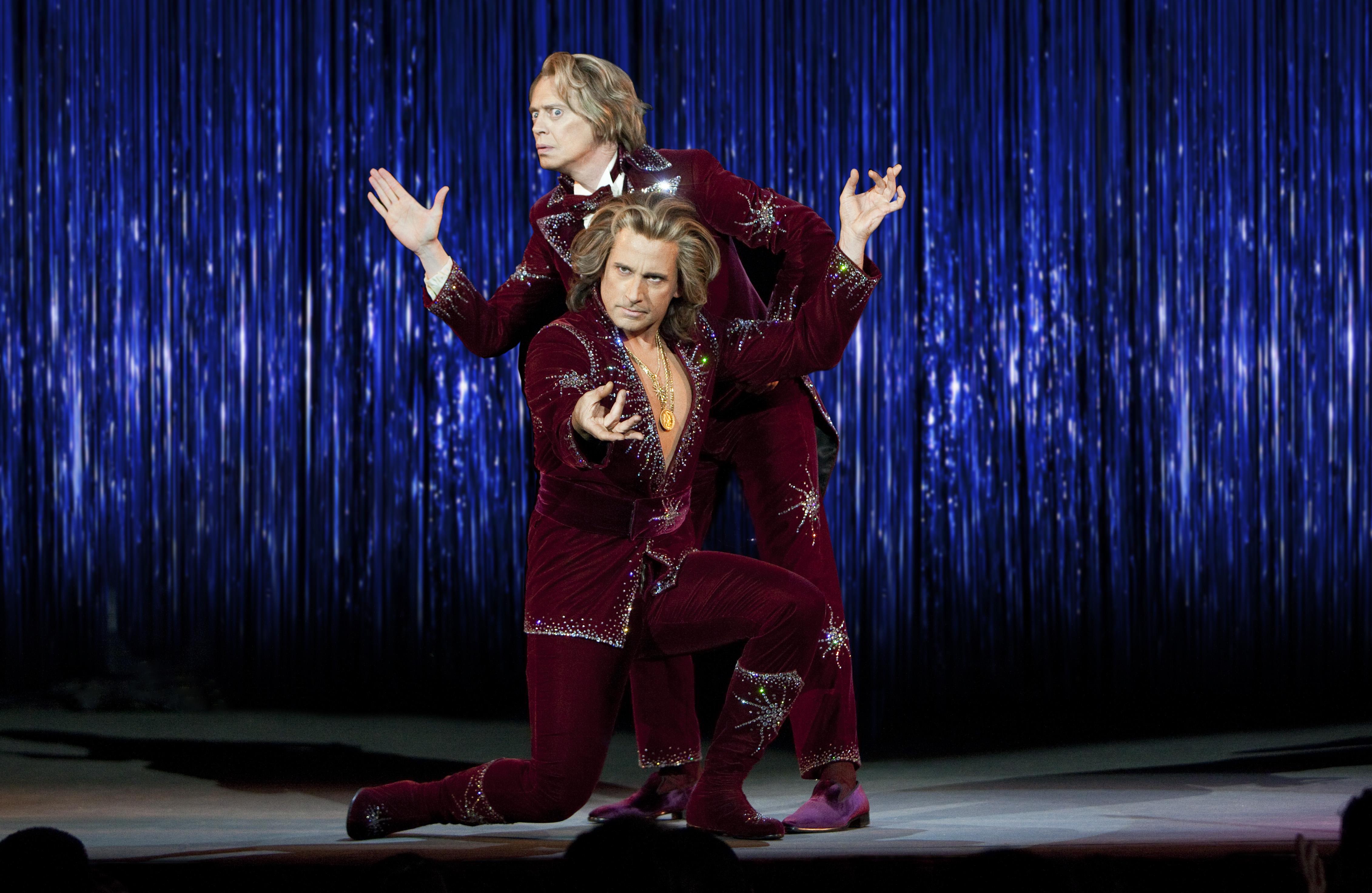
For those so inclined, Hollywood rolls out Halle Berry thriller The Call (make your own “phoning in her performance” joke here) and Steves Carell and Buscemi, plus Jim Carrey, as battling magicians in comedy The Incredible Burt Wonderstone.

Read on for short takes on a new horror omnibus, a stirring tale from Romania, the Oscar-nominated War Witch, two music docs (Journey + Snoop Lion), and more.

http://www.youtube.com/watch?v=LiZr4VFmcpk

The ABCs of Death Variety is the spice of life, yet this international omnibus with 26 directors contributing elaborate micro-shorts on various methods of death — one per alphabetical letter — is like eating dried dill or cilantro for two-plus hours. It’s pungent, but what might color a complex stew proves insufferable in this narrow one. Just why it seems narrow is anyone’s guess — this should have been a genius idea. Yet there are almost no outstanding or memorable contributions, despite the wide-open invitation to extreme content. Filmmakers include Jorge Michel Grau (2010’s We Are What We Are), Simon Rumley (of brilliant 2006 feature The Living and the Dead), Srdjan Spasojevic (2010’s A Serbian Film), cult-favorite actress Angela Bettis, and many more. Nearly all seem to have spent far more than their allotted $5000 budget. There are segments parodying exploitation cinema and video games; offering hyperbolic Terminator-style sci-fi; line-drawing and claymation segments; plus plenty of gross-out narratives. Yet it’s all surprisingly crappy (not least an episode called “Toilet”), with precious few more than halfway decent episodes. The sum impact is of a mean-spirited project that brings out the vacuously shock-value prone worst in everyone involved. (2:03) (Dennis Harvey)

http://www.youtube.com/watch?v=HiJRGbCKCu0

Beyond the Hills Cristian Mungiu — one of the main reasons everyone’s all excited about the Romanian New Wave — follows up his Palme d’Or winner, 2007’s 4 Months, 3 Weeks and 2 Days, with another stark look at a troubled friendship between two women. Beyond the Hills‘ Voichita and Alina (Cosmina Stratan and Cristina Flutur, who shared the Best Actress prize at the 2012 Cannes Film Festival; for his part, Mungiu won Best Screenplay) were BFFs and, we slowly realize, lovers while growing up at a Romanian orphanage. When they aged out of the facility, the reserved Voichita moved to a rural monastery to become a nun, and the outburst-prone Alina pinballed around, doing a stint as a barmaid in Germany before turning up in Voichita’s village, lugging emotional baggage of the jealous, needy, possibly mentally ill, and definitely misunderstood variety. It can’t end well for anyone, as all involved — dismissive local doctors, Alina’s no-longer-accomodating foster family, the priest (Valeriu Andriuta), and the other nuns —  would rather not spend any time or energy caring for a troubled, destitute outsider. Even Voichita can only look on helplessly as an exorcism, a brutal and cruel procedure, is decided upon as Alina’s last, best hope. Based on a real 2005 incident in Moldavia, Mungiu’s unsettling film is a masterpiece of exquisitely composed shots, harsh themes, and naturalistic performances. Check out an interview with Mungiu here. (2:30) (Cheryl Eddy)

http://www.youtube.com/watch?v=Z0cIj3OPM2k

Don’t Stop Believin’: Everyman’s Journey The director of 2003’s Imelda returns with this portrait of a way more sympathetic Filipino celebrity: Arnel Pineda, plucked from obscurity via YouTube after Journey’s Neil Schon spotted him singing with a Manila-based cover band. Don’t Stop Believin’ follows Pineda, who openly admits past struggles with homelessness and addiction, from audition to 20,000-seat arena success as Journey’s charismatic new frontman (he faces insta-success with an endearing combination of nervousness and fanboy thrill). He’s also up-front about feeling homesick, and the pressures that come with replacing one of the most famous voices in rock (Steve Perry doesn’t appear in the film, other than in vintage footage). Especially fun to see is how Pineda invigorates the rest of Journey; as the tour progresses, all involved — even the band’s veteran members, who’ve no doubt played “Open Arms” ten million times — radiate with excitement. (1:45) (Cheryl Eddy)

http://www.youtube.com/watch?v=94zbq5Vaod0

A Fierce Green Fire: The Battle for a Living Planet San Franciscan Mark Kitchell (1990’s Berkeley in the Sixties) directs this thorough, gracefully-edited history of the environmental movement, beginning with the earliest stirrings of the Audubon Society and Aldo Leopold. Pretty much every major cause and group gets the vintage-footage, contemporary-interview treatment: the Sierra Club, Earth Day, Silent Spring, Love Canal, the pursuit of alternative energy, Greenpeace, Chico Mendes and the Amazon rainforests, the greenhouse effect and climate change, the pursuit of sustainable living, and so on. But if its scope is perhaps overly broad, A Fierce Green Fire still offers a valuable overview of a movement that’s remained determined for decades, even as governments and corporations do their best to stomp it out. Celebrity narrators Robert Redford, Ashley Judd, and Meryl Streep add additional heft to the message, though the raw material condensed here would be powerful enough without them. (1:50) (Cheryl Eddy)

http://www.youtube.com/watch?v=MTqyV5Kw9Ss

Reincarnated Reinvention is the name of the game for some mercurial, inventive pop artists, but for rapper Snoop Dogg, now going by the moniker Snoop Lion — you get the scoop on the name change in this doc — transformation turns out to be unexpectedly serious, earnest business. Flirting with Cheech and Chong travelogue comedy, Reincarnated ostensibly spins off the making of the hip-hop artist’s forthcoming 12th album of the same name in Jamaica, with smokin’ production help from Diplo’s Major Lazer gang. The camera is there for many standard behind-the-music moments — sessions with family and adulation in the musical-fertile Trenchtown — along with many not-quite-ready-for-prime-times spent lighting up with other musicians, growers up in the mountains, and reggae forebears like Bunny Wailer. But there’s more going on beneath the billowing smoke: providing the context for today’s high times and ultimately chronicling the rhyme-slinger’s life and times and his path to Jamaica, reggae, and Rastafari spirituality and culture, Vice Films director Andy Capper lays the foundation for Snoop’s shift from rap to Rastafari by revisiting his gangster youth, the rise and fall of Death Row Records, the passing of 2Pac and Nate Dogg, and the music that made the man’s name —and continues to give us a reason to care. The easy, sexy charisma that made Snoop a star is on full display here, and doubtless his latest experiences on reality TV have made Capp’s job that much easier when it came to digging deeper, while the clouds of herb, Cali and Jamaican alike, give viewers a taste of the fun, and possibly healing, attendant with life with the Doggfather. (1:36) (Kimberly Chun)

http://www.youtube.com/watch?v=XtixqUXid9A

Upside Down This sci-fi romance from Argentine-French director Juan Solanas is one of those movies that would look brilliant as a coffee-table photo book — nearly every shot is some striking mix of production design, CGI, color grading, and whatnot. Too bad, though, that it has to open its mouth and ruin everything. Jim Sturgess and Kirsten Dunst play star-crossed lovers who live on adjacent twin planets with their own opposing gravitational forces. Nonetheless, they somehow manage to groove on one another until the authorities — miscegenation between the prosperous residents of “Up Top” and the exploited peasants of “Down Below” being forbidden — interfere, resulting in a ten-year separation and one case of amnesia. But the course of true love cannot be stopped by evil energy conglomerates, at least in the movies. Sturgess’ breathless narration starts things off with “The universe…full of wonders!” and ends with “Our love would change the entire course of history,” so you know Solanas has absolutely no cliché-detecting skills. He does have a great eye — but after a certain point, that isn’t enough to compensate for his awful dialogue, flat pacing, and disinterest in exploring any nuances of plot or character. Dunst is stuck playing a part that might as well simply be called the Girl; Sturgess is encouraged to overact, but his ham is prosciutto beside the thick-cut slabs of thespian pigmeat offered by Timothy Spall as the designated excruciating comic relief. If the fact that our lovers are called “Adam” and “Eden” doesn’t make you groan, you just might buy this ostentatiously gorgeous but grey-matter-challenged eye candy. If you think Tarsem is a genius and 1998’s What Dreams May Come one of the great movie romances, you will love, love, love Upside Down. (1:53) (Dennis Harvey)

http://www.youtube.com/watch?v=BKXEh_kfPCY

War Witch They should give out second-place Oscars. Like, made of silver instead of gold. In that alternate-universe scenario, Canadian writer-director Kim Nguyen’s vivid, Democratic Republic of the Congo-shot drama might’ve picked up some hardware (beyond its many film-fest accolades) to go with its Best Foreign Language Film nomination. War Witch couldn’t stop the march of Amour, but it’s deeply moving in its own way — the story of Komona (played by first-time actor Rachel Mwanza), kidnapped from her village at 12 and forced to join the rebel army that roams the forests of her unnamed African country. Her first task: machine-gunning her own parents. Her ability to see ghosts (portrayed by actors in eerie body paint) elevates her to the status of “war witch,” and she’s tasked with using her sixth sense to aid the rebel general’s attacks against the government army. But even this elevated position can’t quell the physical and spiritual unease of her situation; idyllic love with a fellow teenage soldier (Serge Kanyinda) proves all too brief, and as months pass, Komona remains haunted by her past. The end result is a brutal yet poetic film, elevated by Mwanza’s thoughtful performance. (1:30) (Cheryl Eddy)

Angels in Budapest

0

arts@sfbg.com

THEATER On two old VHS tapes in the collection of San Francisco’s Museum of Performance and Design you can watch the Eureka Theater’s 1991 world premiere of Tony Kushner’s Angels in America, a response to the AIDS epidemic and the reactionary politics of the Reagan era. It’s a low-fi document, with poor sound quality, but it’s completely riveting. Something more than the play’s words and images, as striking as they are, cling to that worn magnetic tape: there’s the electric excitement of a work of art cracking open its historical moment.

A similar frisson passed through the main auditorium of the National Theatre of Budapest last week, where I joined a group of international guests and a local audience for Romanian-born American director Andrei Serban’s production of Angels in America, starring as Prior Walter the National’s celebrated yet politically embattled artistic director, Robert Alföldi, an award-winning international director in his own right and one of the country’s most famous actors.

The production was the capstone of an impressive weeklong festival featuring some of the best work in contemporary Hungarian independent and state-sponsored repertory theater. Presented by the Hungarian Critics Association, in international partnership with Philip Arnoult’s Center for International Theatre Development and the Trust for Mutual Understanding, the Hungarian Showcase (March 2–9) encompassed a revelatory range of styles and talents. It also highlighted a theater actively responding to a rising tide of reactionary politics — reminiscent (especially in its overt anti-Semitism, homophobia, and anti-Roma racism) of the ultra-nationalism of the 1930s — even as the arts in general and theater in particular reel under the economic strain of the conservative government’s neoliberal agenda and attempted curbs on free expression.

The National’s production of Angels is just one instance of theater’s critical role in public dialogue in Hungary today, but in many ways it was the most poignant instance encountered. That’s in large part owed to Alföldi’s powerhouse performance in the lead — a muscular, charismatic performance, extremely witty and wrenching by turns — and simultaneously to his history as artistic director over the last five years. Since Alföldi’s government appointment in 2008, something extraordinary has been underway at the country’s premier stage. Previously, Budapest’s National Theatre had been better known for its kitschy postmodern edifice (opened in 2002 and made to resemble a rather gaudy ship aimed vaguely at the nearby Danube) than for the unexceptional productions on display inside. Under Alföldi’s brilliant and maverick leadership, the theater has come to be widely regarded as one of the best — if not the best — in the country, and attendance has grown dramatically, including among younger audiences.

Alföldi’s attempts to make the theater a place of inclusion and dialogue, meanwhile, as well as his lively and provocative interpretations of classic Hungarian nationalist texts like The Tragedy of Man and John the Valliant, have earned the disfavor of rightwing politicians — including members of the ultra nationalist Jobbik party, who were not above demonstrating noisily outside the theater to demand his ouster, and slandering Alföldi on the floor of the Parliament. Alföldi, popular and unprecedentedly successful in the post, has managed to stay on for his five-year term, but the government denied his application for a second term in favor of a well-known director with conservative political opinions.

In Serban’s considerably pared down version, Millennium Approaches and Perestroika together come in at just under four hours, separated by a short intermission. There are naturally some sacrifices entailed. The subplot involving Roy Cohn (played by the National’s brilliant János Kulka), for example, takes a big hit in terms of stage time. But whatever the faults of the production, the exuberant, ironical tone feels aptly knowing, as does the rotating stage set up like a cross between a dance floor and a merry-go-round.

In just one example of the production’s winking conversation with the audience, an announcement over the PA system at the outset of Part II reminds patrons in this former Soviet bloc country that the play is set in a far off land bearing little resemblance to anything close by — only to be followed by the familiar twang of an electric guitar as the Beatles’ “Back in the USSR” creates a musical bridge to a speech by the Oldest Living Bolshevik. Like Prior’s heavenly counselors, the Bolshevik urges a halt to history. The significance of the theme is unlikely to be lost on an audience facing the atavistic return to authoritarian models of the past.

While this isn’t the first time a Hungarian theater has essayed Kushner’s play, enough has changed politically in Hungary in the last few years to make this production, in which Alföldi assumes the role of the play’s cross-dressing openly gay hero, an act of brazen defiance as well as solidarity with all “outsiders” in the right wing’s narrow compass of nationhood.

“The world only spins forward. We will be citizens. The time has come,” says Alföldi as Prior. “The great work begins.” In its own call for “more life,” the National’s production captures something of the original life of the play all over again — defining the nation and its theater as a place of empathy and inclusion, of harmony in difference.

Meanwhile, tickets for Angels in America, widely seen as Alföldi’s farewell bow, are completely sold out.


Stage Listings

0

Stage listings are compiled by Guardian staff. Performance times may change; call venues to confirm. Reviewers are Robert Avila, Rita Felciano, and Nicole Gluckstern. Submit items for the listings at listings@sfbg.com. For further information on how to submit items for the listings, see Picks.

THEATER

ONGOING

Assistance NOHspace, 2840 Mariposa, SF; www.opentabproductions.com. $20. Thu-Sat, 8pm; Sun, 6pm. Through March 30. Over the past three years, things we’ve come to expect from plucky OpenTab Productions — whose annual offerings deal in aggressively contemporary themes such as media spin, business fraud, and job (in)security — include tight ensemble acting, minimal tech, and snappy direction, and in all these regards, Assistance does not disappoint. A crew of desperate office drones whose lives basically revolve around the abuse dished out by their unseen employer, Daniel Weisinger (who may or may not resemble playwright Leslye Headland’s old boss, Harvey Weinstein), hold down their airless fort, fielding calls at 11 p.m. and shirking responsibility whenever possible. Though Headland doesn’t do much to make her emotionally and professionally stunted characters palatable, the capable cast and director Ben Euphrat do manage to wring something resembling humanity out of them. From Nick (Tristan Rholl,) the frustrated slacker supervisor, to Nora (Melissa Keith), the-new-girl-turned-cynical-old-hand, to Justin (Nathan Tucker), the unctuous winner of the title of “last man standing,” to Jenny (Michelle Drexler) a pragmatic yet annoyingly bubbly Brit, what stands out in each performance are the perfectly captured quirky nuances and barely-concealed neuroses of people caught in the process of losing their souls. Nothing about Assistance is likely to change your view of the business world, but if you’ve yet to experience the frenetic fun of an OpenTab show, it’s a perfect primer to the madness behind their method. (Gluckstern)

The Chairs Exit on Taylor, 277 Taylor, SF; www.cuttingball.com. $20-45. Thu, 7:30pm; Fri-Sat, 8pm (also Sat, 2pm); Sun, 5pm. Through March 31. Cutting Ball Theater performs Rob Melrose’s new Eugene Ionesco translation.

Dead Metaphor ACT’s Geary Theater, 415 Geary, SF; www.act-sf.org. $20-95. Tue-Sat, 8pm (also Sat, 2pm); Sun, 2 and 7pm. Through March 24. American Conservatory Theater performs George F. Walker’s dark comedy about postwar living.

Foodies! The Musical Shelton Theater, 533 Sutter, SF; www.foodiesthemusical.com. $30-34. Fri-Sat, 8pm. Open-ended. AWAT Productions presents Morris Bobrow’s musical comedy revue all about food.

The Great Big Also Z Space, 450 Florida, SF; www.zspace.org. $15-30. Thu-Sat, 8pm; Sun, 5pm. Through March 24. Mugwumpin performs a world premiere about creating a new world.

God of Carnage Shelton Theater, 533 Sutter, SF; www.sheltontheater.org. $38. Thu-Sat, 8pm. Through March 30. Shelton Theater presents Yasmina Reza’s Tony-winning comedy about upper-middle-class parents clashing over an act of playground violence between their children.

Inevitable SF Playhouse, 533 Sutter, SF; www.sfplayhouse.org. $20. Thu-Sat, 8pm. Through March 23. SF Playhouse’s “Sandbox Series,” enabling new and established playwrights to stage new works, kicks off its third season with Jordan Puckett’s drama about a woman trying to make sense of her life.

Jurassic Ark Exit Theatre, 156 Eddy, SF; www.theexit.org. $15-25. Fri/16-Sat/16, 8pm. Writer-performer David Caggiano’s zany, well-executed solo play centers on a Christian televangelist who is unwaveringly bent on making a big-budget movie about a cowboy-like Biblical Noah, his Ark, and the largely lovable dinosaurs callously left out of the story — a project he sees delivering a decisive blow to the Darwinians, while turning cineplexes across the land into celluloid cathedrals. Brother Dallas and his proselytizing pitch eventually find receptive ears in a trinity of movie-industry heavies, whose collective business acumen demands a few changes to the script. Meanwhile, the intoxicating power of it all leads to a lapse in Brother Dallas’s righteousness and a scandal reminiscent of Hugh Grant’s career. Dallas rebounds from this bout with the Devil and sees his movie made — but surely only he is unaware that the Devil keeps a Hollywood address. Smartly directed by Mark Kenward, this low-frills production relies almost exclusively on Caggiano’s sturdy ability with quick-change characterizations (couched in Dylan West’s modest lighting design and a suggestive soundscape by sound editor–musician John Mazzei). The fitful satire trades in pretty orthodox caricature and, in Brother Dallas, lacks a very compelling or sympathetic central figure; but it unfolds with a very cinematic imagination that, while formulaic, is itself one hell of a movie pitch. (Avila)

Just One More Game Exit Theatre, 156 Eddy, SF; www.tripleshotprodutions.org. $25. Thu-Sat, 8pm; Sun/17, 2pm. Through March 30. With the rise of the programmer as pop culture hero, it was probably inevitable that we’d start writing plays about them too. In local playwright Dan Wilson’s Just One More Game our programmer protagonist is Kent (Christopher DeJong) whose mission is to find love, and his co-player is Marjorie (Linda-Ruth Cardozo), who wields her own geek credentials like a Mortal Kombat wrath hammer. Where Wilson’s comedy excels is in the witty gamer banter that defines much of their attraction and commonality — references to Zork, Oregon Trail, Dungeons and Dragons, and The Secret of Monkey Island abound, while a series of meticulous video game animations (also Wilson’s) lend colorful counterpoint to the action on the stage. DeJong plays his role of emotionally-inhibited loner with a degree of laconic detachment that unfortunately eliminates all traces of chemistry between him and Cardozo, who is especially good at capturing the cheerfully aggressive awkward of a woman accustomed to being “one of the boys” because there was nothing about “the girls” she could relate to. Both the comedy and pace flag by the time the first NPCs (non-player characters) enter the room, broadly clichéd parents yammering for grandchildren and obnoxious college buddies armed with too many baby photos, who conspire to stunt the growth of Kent and Marjorie’s relationship and wind up stunting the growth of the play. If the quest for love is a game, as the title suggests, it’s one that could use a little more back-end development, and a much greater degree of playfulness. (Gluckstern)

A Lady and a Woman Eureka Theatre, 215 Jackson, SF; www.therhino.org. $15-30. Wed-Sat, 8pm; Sun, 3pm. Through March 24. Life wasn’t easy in the South of the 1890s, particularly for single black women, but in Shirlene Holmes’ A Lady and a Woman the focus is emphatically on rising above circumstance. When itinerant hog-cutter Biddie Higgins (Dawn L. Troupe) swaggers into the village inn run by Miss Flora Devine (Velina Brown) and demands a room, sparks fly almost instantaneously, as the two pragmatic and independent women become drawn to the strength they see in the other. A healer and midwife as well as an innkeeper, Miss Flora has endured enough abuse at the hands of men in her life to make her grateful to be able to live without one around, while Biddie, the only daughter in a household of fourteen, has become accustomed to a life of manual labor and clandestine trysts with willing women, never sticking around one place long enough to run out of either, declaring “it’s been easier to live a hard life then a lie.” Both Brown and Troupe embody their multi-dimensional characters with grace and backbone, never striking a false note as their tender courtship unfolds and they discover that the greatest strength of all is the ability to love freely. (Gluckstern)

The Lisbon Traviata New Conservatory Theatre Center, 25 Van Ness, SF; www.nctcsf.org. $25. Wed-Sat, 8pm; Sun, 2pm. Through March 24. New Conservatory Theatre Center performs Terrence McNally’s play, a mix of comedy and tragedy, about the relationship between two opera fanatics.

The Motherfucker with the Hat San Francisco Playhouse, 450 Post, SF; www.sfplayhouse.org. $30-70. Wed/13-Thu/14, 7pm; Fri/15-Sat/16, 8pm (also Sat/16, 3pm). A fine cast makes the most of Stephen Adly Guirgis’s deceptively coarse, often amusing little play, The Motherfucker with the Hat, which receives its local premiere in a sure and rowdy production from SF Playhouse. Director and designer Bill English’s striking two-tier set almost belies the intimate nature of the quirky story, which concerns a hapless parolee and recovering alcoholic named Jackie (a winningly frazzled, bumptious Gabriel Marin) who retreats to his AA sponsor’s apartment to pine and plot revenge after he discovers a stranger’s hat in the bedroom of his longtime Puerto Rican girlfriend, Veronica (played vividly by an at once edgy and vulnerable Isabelle Ortega). But Ralph, his suave and persuasive sponsor (played with unctuous charm gilded by just a hint of ineptitude by an excellent Carl Lumbly), may not be the guy he wants in his corner. Not that Jackie can see that — he’s got a man-crush on Ralph that dwarfs his already ambivalent affection for much put-upon but stalwart cousin Julio (a sharply funny Rudy Guerrero) and blinds him to the warning signals from Ralph’s own disgruntled wife (a coolly disgusted Margo Hall). Throughout, these working-class New York borough dwellers display their wit and shield their soft underbellies with a rapid-fire barrage of creative swearing. English and cast display a real comfort with this kind of material (this is SF Playhouse’s fourth Girguis play), which drapes its soft heart in the intimations of violence more than the real thing. If the heat and imaginative cursing also seem to cover up for a play with little dramatic purpose beyond a gentle and somewhat pat exploration of loyalty, maturity, and trust, there’s pleasure to be had in the unfolding. (Avila)

Sex and the City: LIVE! Rebel, 1760 Market, SF; trannyshack.com/sexandthecity. $25. Wed, 7 and 9pm. Open-ended. It seems a no-brainer. Not just the HBO series itself — that’s definitely missing some gray matter — but putting it onstage as a drag show. Mais naturellement! Why was Sex and the City not conceived of as a drag show in the first place? Making the sordid not exactly palatable but somehow, I don’t know, friendlier (and the canned a little cannier), Velvet Rage Productions mounts two verbatim episodes from the widely adored cable show, with Trannyshack’s Heklina in a smashing portrayal of SJP’s Carrie; D’Arcy Drollinger stealing much of the show as ever-randy Samantha (already more or less a gay man trapped in a woman’s body); Lady Bear as an endearingly out-to-lunch Miranda; and ever assured, quick-witted Trixxie Carr as pent-up Charlotte. There’s also a solid and enjoyable supporting cast courtesy of Cookie Dough, Jordan Wheeler, and Leigh Crow (as Mr. Big). That’s some heavyweight talent trodding the straining boards of bar Rebel’s tiny stage. The show’s still two-dimensional, even in 3D, but noticeably bigger than your 50″ plasma flat panel. (Avila)

Steve Seabrook: Better Than You Marsh San Francisco, 1062 Valencia, SF; www.themarsh.org. $15-50. Fri, 8pm; Sat, 8:30pm. Through March 22. Kurt Bodden’s San Francisco Best of Fringe-winning show takes a satirical look at motivational speakers.

The Voice: One Man’s Journey Into Sex Addition and Recovery Stage Werx Theater, 446 Valencia, SF; thevoice.brownpapertickets.com. $10-18. Fri-Sat, 8pm. Through April 6. Ticket sales for David Kleinberg’s autobiographical solo show benefit 12-step sex addiction recovery programs and other non-profits.

The Waiting Period Marsh San Francisco, 1062 Valencia, SF; www.themarsh.org. $25-50. Fri, 8pm; Sat, 5pm. Through March 30. Brian Copeland (comedian, TV and radio personality, and creator-performer of the long-running solo play Not a Genuine Black Man) returns to the Marsh with a new solo, this one based on more recent and messier events` in Copeland’s life. The play concerns an episode of severe depression in which he considered suicide, going so far as to purchase a handgun — the title coming from the legally mandatory 10-day period between purchasing and picking up the weapon, which leaves time for reflections and circumstances that ultimately prevent Copeland from pulling the trigger. A grim subject, but Copeland (with co-developer and director David Ford) ensures there’s plenty of humor as well as frank sentiment along the way. The actor peoples the opening scene in the gun store with a comically if somewhat stereotypically rugged representative of the Second Amendment, for instance, as well as an equally familiar “doood” dude at the service counter. Afterward, we follow Copeland, a just barely coping dad, home to the house recently abandoned by his wife, and through the ordinary routines that become unbearable to the clinically depressed. Copeland also recreates interviews he’s made with other survivors of suicidal depression. Telling someone about such things is vital to preventing their worst outcomes, says Copeland, and telling his own story is meant to encourage others. It’s a worthy aim but only a fitfully engaging piece, since as drama it remains thin, standing at perhaps too respectful a distance from the convoluted torment and alienation at its center. Note: review from an earlier run of the same production. (Avila)

The World’s Funniest Bubble Show Marsh San Francisco, 1062 Valencia, SF; www.themarsh.org. $8-50. Sun/17, 11am. The Amazing Bubble Man (a.k.a. Louis Pearl) continues his family-friendly bubble extravaganza.

BAY AREA

Dostoevsky’s The Grand Inquisitor Berkeley City Club, 2315 Durant, Berk; www.centralworks.org. $15-28. Thu-Sat, 8pm; Sun, 5pm. Through March 31. Central Works performs Gary Graves’ adaptation of the story-within-a-story from The Brothers Karamazov.

Fallaci Berkeley Repertory Theatre, 2015 Addison, Berk; www.berkeleyrep.org. $29-89. Opens Wed/13, 8pm. Runs Tue, Thu-Sat, 8pm (also Sat, 2pm); Wed and Sun, 7pm (also Sun, 2pm). Through April 21. Berkeley Rep performs Pulitzer-winning journalist Lawrence Wright’s new play about Italian journalist Oriana Fallaci.

The Mountaintop Lucie Stern Theatre, 1305 Middlefield, Palo Alto; www.theatreworks.org. $23-75. Tue-Wed, 7:30pm; Thu-Sat, 8pm (also Sat, 2pm), through March 31. Starting April 3, runs Wed-Thu, 11am (also Thu, 8pm); Sat, 8pm; Sun, 2pm. Through April 7. TheatreWorks performs Katori Hall’s play that re-imagines the events on the night before Dr. Martin Luther King, Jr.’s assassination.

The Real Americans Marsh Berkeley, 2120 Allston, Berk; www.themarsh.org. $25-50. Fri, 8pm; Sat, 5pm. Through April 6. Dan Hoyle shifts his popular show about small-town America to the Marsh’s Berkeley outpost.

PERFORMANCE/DANCE

“Adventures of a Black Girl: Traveling While Black” Brava Theater Center, 2781 24th St, SF; www.brava.org. Fri/15-Sat/16, 8pm; Sun/17, 3pm. $15. Edris Cooper-Anifowoshe performs the second part of her “Adventures of a Black Girl” trilogy, this time taking a look at the impact of African migration on the black diaspora.

BATS Improv Bayfront Theater, Fort Mason Center, Marina at Laguna, SF; www.improv.org. $20. “Theatresports,” Fri, 8pm. Through March 29. “Double Feature,” Sat, 8pm. Through March 30.

Caroline Lugo and Carolé Acuña’s Ballet Flamenco Peña Pachamama, 1630 Powell, SF; www.carolinalugo.com. Sat/16 and March 24, 6:15pm. $15-19. Flamenco performance by the mother-daughter dance company, featuring live musicians.

“Dream Queens Revue” Aunt Charlie’s Lounge, 133 Turk, SF; dreamqueensrevue@gmail.com (reservations suggested). Wed/13, 9:30pm. Free. Groovy drag with Colette LeGrande, Diva LaFever, Sophilya Leggz, and more.

“Ham Pants Productions presents Sketch Comedy and More!” Stage Werx Theatre, 446 Valencia, SF; www.hampantsproductions.com. Tue/19, 8pm. $10. Sketch comedy, music, and “general chicanery.”

Labayen Dance Dance Mission Theater, 3316 24th St, SF; www.dancemission.com. Fri/15-Sat/16, 8pm; Sun/17, 7:30pm. $25. The company, which blends classical and modern dance with Philippine arts, celebrates its 18th anniversary spring season with the US premiere of Enrico Labayen’s Rites of Spring.

“Laughs at the Lookout” Lookout, 3600 16th St, SF; www.lookoutsf.com. Thu/14, 10pm. $10. Comedy with host Valerie Branch and performers Charlie Ballard, Ronn Vigh, Natasha Muse, and more.

“Mission Position Live” Cinecave, 1034 Valencia, SF; www.missionpositionlive.com. Thu, 8pm. Ongoing. $10. Stand-up comedy with rotating performers.

“The Next Generation of Comedy Tour” Palace of Fine Arts, 3301 Lyon, SF; www.ngoctour.com. Sat/16, 8pm. $25-65. With Ahmed Ahmed (TBS’s Sullivan and Son), Assad Motavasseli, Raj Sharma, Fahim Anwar, and more. “ODC/Dance Downtown 2013” Yerba Buena Center for the Arts Theater, 700 Howard, SF; www.odcdance.org. Thu/14-Sat/16 and March 22-23, 8pm; Sun/17 and March 24, 4pm; March 20-21, 7:30pm. $20. The company celebrates its 42nd season with three world premieres from Brenda Way and KT Nelson.

“Push Dance March Benefit Performance and Party” Terra Gallery and Event Venue, 511 Harrison, SF; marchbenefit.eventbrite.com. Fri/15, 7pm. $25-50. Dance performances plus a silent auction, culinary delights, and a DJ party.

“San Francisco Magic Parlor” Chancellor Hotel Union Square, 433 Powell, SF; www.sfmagicparlor.com. Thu-Sat, 8pm. Ongoing. $40. Magic vignettes with conjurer and storyteller Walt Anthony.

“Unturtled” CounterPULSE, 1310 Mission, SF; www.counterpulse.org. Fri/15-Sat/16, 8pm. $15. The Goethe-Institut presents a conceptual performance by choreographer Isabelle Schad and visual artist Laurent Goldring. (Artist talk Wed/13, 8pm, free.)

Steven Wright Regency Ballroom, 1300 Van Ness, SF; www.theregencyballroom.com. Fri/15, 9pm. $32-47. The deadpan comedian performs.

BAY AREA

“Incarnating for the Evening with the X-plicit Players” East Bay Media Center Performance Space, 1939 Addison, Berk; www.xplicitplayers.com. Fri/15, 8pm. $8-15. Clothing-optional event with an enactment of audience-participatory performance “Group Body,” plus excerpts from the new DVD, Incarnating for an Afternoon: The Ninth Annual Nude and Breast Freedom Parade.

Film Listings

0

Film listings are edited by Cheryl Eddy. Reviewers are Kimberly Chun, Dennis Harvey, Lynn Rapoport, and Sara Maria Vizcarrondo. For rep house showtimes, see Rep Clock.

CAAMFEST

The Center for Asian American Media Fest runs March 14-24. Venues include the Castro Theatre, 429 Castro, SF; New People Cinema, 1746 Post, SF; Great Star Theater, 636 Jackson, SF; Pacific Film Archive, 2575 Bancroft, Berk; and Sundance Kabuki Cinemas, 1881 Post, SF. For tickets (most films $12) and complete schedule, visit www.caamedia.org. For commentary, see "Truth and Daring" and "In the Blood."

OPENING

The ABCs of Death Variety is the spice of life, yet this international omnibus with 26 directors contributing elaborate micro-shorts on various methods of death — one per alphabetical letter — is like eating dried dill or cilantro for two-plus hours. It’s pungent, but what might color a complex stew proves insufferable in this narrow one. Just why it seems narrow is anyone’s guess — this should have been a genius idea. Yet there are almost no outstanding or memorable contributions, despite the wide-open invitation to extreme content. Filmmakers include Jorge Michel Grau (2010’s We Are What We Are), Simon Rumley (of brilliant 2006 feature The Living and the Dead), Srdjan Spasojevic (2010’s A Serbian Film), cult-favorite actress Angela Bettis, and many more. Nearly all seem to have spent far more than their allotted $5000 budget. There are segments parodying exploitation cinema and video games; offering hyperbolic Terminator-style sci-fi; line-drawing and claymation segments; plus plenty of gross-out narratives. Yet it’s all surprisingly crappy (not least an episode called "Toilet"), with precious few more than halfway decent episodes. The sum impact is of a mean-spirited project that brings out the vacuously shock-value prone worst in everyone involved. (2:03) Clay. (Harvey)

Beyond the Hills Cristian Mungiu — one of the main reasons everyone’s all excited about the Romanian New Wave — follows up his Palme d’Or winner, 2007’s 4 Months, 3 Weeks and 2 Days, with another stark look at a troubled friendship between two women. Beyond the Hills‘ Voichita and Alina (Cosmina Stratan and Cristina Flutur, who shared the Best Actress prize at the 2012 Cannes Film Festival; for his part, Mungiu won Best Screenplay) were BFFs and, we slowly realize, lovers while growing up at a Romanian orphanage. When they aged out of the facility, the reserved Voichita moved to a rural monastery to become a nun, and the outburst-prone Alina pinballed around, doing a stint as a barmaid in Germany before turning up in Voichita’s village, lugging emotional baggage of the jealous, needy, possibly mentally ill, and definitely misunderstood variety. It can’t end well for anyone, as all involved — dismissive local doctors, Alina’s no-longer-accommodating foster family, the priest (Valeriu Andriuta), and the other nuns — would rather not spend any time or energy caring for a troubled, destitute outsider. Even Voichita can only look on helplessly as an exorcism, a brutal and cruel procedure, is decided upon as Alina’s last, best hope. Based on a real 2005 incident in Moldavia, Mungiu’s unsettling film is a masterpiece of exquisitely composed shots, harsh themes, and naturalistic performances. For an interview with Mungiu, visit www.sfbg.com/pixel_vision. (2:30) Embarcadero, Shattuck. (Eddy)

The Call Brad Anderson (2004’s The Machinist) directs Halle Berry as a 911 operator who has to save a girl (Abigail Breslin) from a killer. (1:34) Shattuck.

Don’t Stop Believin’: Everyman’s Journey The director of 2003’s Imelda returns with this portrait of a way more sympathetic Filipino celebrity: Arnel Pineda, plucked from obscurity via YouTube after Journey’s Neil Schon spotted him singing with a Manila-based cover band. Don’t Stop Believin‘ follows Pineda, who openly admits past struggles with homelessness and addiction, from audition to 20,000-seat arena success as Journey’s charismatic new front man (he faces insta-success with an endearing combination of nervousness and fanboy thrill). He’s also up-front about feeling homesick, and the pressures that come with replacing one of the most famous voices in rock (Steve Perry doesn’t appear in the film, other than in vintage footage). Especially fun to see is how Pineda invigorates the rest of Journey; as the tour progresses, all involved — even the band’s veteran members, who’ve no doubt played "Open Arms" ten million times — radiate with excitement. (1:45) Sundance Kabuki. (Eddy)

A Fierce Green Fire: The Battle for a Living Planet San Franciscan Mark Kitchell (1990’s Berkeley in the Sixties) directs this thorough, gracefully-edited history of the environmental movement, beginning with the earliest stirrings of the Audubon Society and Aldo Leopold. Pretty much every major cause and group gets the vintage-footage, contemporary-interview treatment: the Sierra Club, Earth Day, Silent Spring, Love Canal, the pursuit of alternative energy, Greenpeace, Chico Mendes and the Amazon rainforests, the greenhouse effect and climate change, the pursuit of sustainable living, and so on. But if its scope is perhaps overly broad, A Fierce Green Fire still offers a valuable overview of a movement that’s remained determined for decades, even as governments and corporations do their best to stomp it out. Celebrity narrators Robert Redford, Ashley Judd, and Meryl Streep add additional heft to the message, though the raw material condensed here would be powerful enough without them. (1:50) Opera Plaza, Shattuck, Smith Rafael. (Eddy)

The Incredible Burt Wonderstone Steve Carell, Steve Buscemi, and Jim Carrey star in this comedy about rival Las Vegas magicians. (1:40) Presidio.

Reincarnated Reinvention is the name of the game for some mercurial, inventive pop artists, but for rapper Snoop Dogg, now going by the moniker Snoop Lion — you get the scoop on the name change in this doc — transformation turns out to be unexpectedly serious, earnest business. Flirting with Cheech and Chong travelogue comedy, Reincarnated ostensibly spins off the making of the hip-hop artist’s forthcoming 12th album of the same name in Jamaica, with smokin’ production help from Diplo’s Major Lazer gang. The camera is there for many standard behind-the-music moments — sessions with family and adulation in the musical-fertile Trenchtown — along with many not-quite-ready-for-prime-times spent lighting up with other musicians, growers up in the mountains, and reggae forebears like Bunny Wailer. But there’s more going on beneath the billowing smoke: providing the context for today’s high times and ultimately chronicling the rhyme-slinger’s life and times and his path to Jamaica, reggae, and Rastafarian spirituality and culture, Vice Films director Andy Capper lays the foundation for Snoop’s shift from rap to Rastafari by revisiting his gangster youth, the rise and fall of Death Row Records, the passing of 2Pac and Nate Dogg, and the music that made the man’s name —and continues to give us a reason to care. The easy, sexy charisma that made Snoop a star is on full display here, and doubtless his latest experiences on reality TV have made Capp’s job that much easier when it came to digging deeper, while the clouds of herb, Cali and Jamaican alike, give viewers a taste of the fun, and possibly healing, attendant with life with the Doggfather. (1:36) Opera Plaza. (Chun)

Stoker See "Family Plot." (1:38) California.
Upside Down This sci-fi romance from Argentine-French director Juan Solanas is one of those movies that would look brilliant as a coffee-table photo book — nearly every shot is some striking mix of production design, CGI, color grading, and whatnot. Too bad, though, that it has to open its mouth and ruin everything. Jim Sturgess and Kirsten Dunst play star-crossed lovers who live on adjacent twin planets with their own opposing gravitational forces. Nonetheless, they somehow manage to groove on one another until the authorities — miscegenation between the prosperous residents of "Up Top" and the exploited peasants of "Down Below" being forbidden — interfere, resulting in a ten-year separation and one case of amnesia. But the course of true love cannot be stopped by evil energy conglomerates, at least in the movies. Sturgess’ breathless narration starts things off with "The universe…full of wonders!" and ends with "Our love would change the entire course of history," so you know Solanas has absolutely no cliché-detecting skills. He does have a great eye — but after a certain point, that isn’t enough to compensate for his awful dialogue, flat pacing, and disinterest in exploring any nuances of plot or character. Dunst is stuck playing a part that might as well simply be called the Girl; Sturgess is encouraged to overact, but his ham is prosciutto beside the thick-cut slabs of thespian pigmeat offered by Timothy Spall as the designated excruciating comic relief. If the fact that our lovers are called "Adam" and "Eden" doesn’t make you groan, you just might buy this ostentatiously gorgeous but gray-matter-challenged eye candy. If you think Tarsem is a genius and 1998’s What Dreams May Come one of the great movie romances, you will love, love, love Upside Down. (1:53) Embarcadero. (Harvey)

War Witch They should give out second-place Oscars. Like, made of silver instead of gold. In that alternate-universe scenario, Canadian writer-director Kim Nguyen’s vivid, Democratic Republic of the Congo-shot drama might’ve picked up some hardware (beyond its many film-fest accolades) to go with its Best Foreign Language Film nomination. War Witch couldn’t stop the march of Amour, but it’s deeply moving in its own way — the story of Komona (played by first-time actor Rachel Mwanza), kidnapped from her village at 12 and forced to join the rebel army that roams the forests of her unnamed African country. Her first task: machine-gunning her own parents. Her ability to see ghosts (portrayed by actors in eerie body paint) elevates her to the status of "war witch," and she’s tasked with using her sixth sense to aid the rebel general’s attacks against the government army. But even this elevated position can’t quell the physical and spiritual unease of her situation; idyllic love with a fellow teenage soldier (Serge Kanyinda) proves all too brief, and as months pass, Komona remains haunted by her past. The end result is a brutal yet poetic film, elevated by Mwanza’s thoughtful performance. (1:30) Elmwood, Roxie. (Eddy)

ONGOING

Adventures of Serial Buddies (1:31) 1000 Van Ness.

Amour Arriving in local theaters atop a tidal wave of critical hosannas, Amour now seeks to tempt popular acclaim — though actually liking this perfectly crafted, intensely depressing film (from Austrian director Michael Haneke) may be nigh impossible for most audience members. Eightysomething former music teachers Georges and Anne (the flawless Jean-Louis Trintignant and Emmanuelle Riva) are living out their days in their spacious Paris apartment, going to classical concerts and enjoying the comfort of their relationship. Early in the film, someone tries to break into their flat — and the rest of Amour unfolds with a series of invasions, with Anne’s declining health the most distressing, though there are also unwanted visits from the couple’s only daughter (an appropriately self-involved Isabelle Huppert), an inept nurse who disrespects Anne and curses out Georges, and even a rogue pigeon that wanders in more than once. As Anne fades into a hollow, twisted, babbling version of her former self, Georges also becomes hollow and twisted, taking care of her while grimly awaiting the inevitable. Of course, the movie’s called Amour, so there’s some tenderness involved. But if you seek heartwarming hope and last-act uplift, look anywhere but here. (2:07) Four Star, Smith Rafael. (Eddy)

Argo If you didn’t know the particulars of the 1979 Iranian Revolution, you won’t be an expert after Argo, but the film does a good job of capturing America’s fearful reaction to the events that followed it — particularly the hostage crisis at the US embassy in Tehran. Argo zeroes in on the fate of six embassy staffers who managed to escape the building and flee to the home of the sympathetic Canadian ambassador (Victor Garber). Back in Washington, short-tempered CIA agents (including a top-notch Bryan Cranston) cast about for ways to rescue them. Enter Tony Mendez (Ben Affleck, who also directs), exfil specialist and father to a youngster wrapped up in the era’s sci-fi craze. While watching 1973’s Battle for the Planet of the Apes, Tony comes up with what Cranston’s character calls "the best bad idea we have:" the CIA will fund a phony Canadian movie production (corny, intergalactic, and titled Argo) and pretend the six are part of the crew, visiting Iran for a few days on a location shoot. Tony will sneak in, deliver the necessary fake-ID documents, and escort them out. Neither his superiors, nor the six in hiding, have much faith in the idea. ("Is this the part where we say, ‘It’s so crazy it just might work?’" someone asks, beating the cliché to the punch.) Argo never lets you forget that lives are at stake; every painstakingly forged form, every bluff past a checkpoint official increases the anxiety (to the point of being laid on a bit thick by the end). But though Affleck builds the needed suspense with gusto, Argo comes alive in its Hollywood scenes. As the show-biz veterans who mull over Tony’s plan with a mix of Tinseltown cynicism and patiotic duty, John Goodman and Alan Arkin practically burst with in-joke brio. I could have watched an entire movie just about those two. (2:00) SF Center, Sundance Kabuki. (Eddy)

Barbara The titular figure (Nina Hoss) looks the very picture of blonde Teutonic ice princess when she arrives — exiled from better prospects by some unspecified, politically ill-advised conduct — in at a rural 1980 East German hospital far from East Berlin’s relative glamour. She’s a pill, too, stiffly formal in dealings with curious locals and fellow staff including the disarmingly rumpled, gently amorous chief physician Andre (Ronald Zehrfeld). Yet her stern prowess as a pediatric doctor is softened by atypically protective behavior toward teen Stella (Jasna Fritzi Bauer), a frequent escapee from prison-like juvenile care facilities. Barbara has secrets, however, and her juggling personal, ethical, and Stasi-fearing priorities will force some uncomfortable choices. It is evidently the moment for German writer-director Christian Petzold to get international recognition after nearly 20 years of equally fine, terse, revealing work in both big-screen and broadcast media (much with Hoss as his prime on-screen collaborator). This intelligent, dispassionate, eventually moving character study isn’t necessarily his best. But it is a compelling introduction. (1:45) Opera Plaza, Shattuck. (Harvey)

Birth Story: Ina May Gaskin and the Farm Midwives When Ina May Gaskin had her first child, the hospital doctor used forceps (against her wishes) and her baby was sequestered for 24 hours immediately after birth. "When they brought her to me, I thought she was someone else’s," Gaskin recalls in Sara Lamm and Mary Wigmore’s documentary. Gaskin was understandably flummoxed that her first experience with the most natural act a female body can endure was as inhuman as the subject of an Eric Schlosser exposé. A few years later, she met Stephen Gaskin, a professor who became her second husband, and the man who’d go on to co-found the Farm, America’s largest intentional community, in 1971. On the Farm, women had children, and in those confines, far from the iron fist of insurance companies, Gaskin discovered midwifery as her calling. She recruited others, and dedicated herself to preserving an art that dwindles as the medical industry strives to treat women’s bodies like profit machines. Her message is intended for a larger audience than granola-eating moms-to-be: we’re losing touch with our bodies. Lamm and Wigmore bravely cram a handful of live births into the film; footage of a breech birth implies this doc could go on to be a useful teaching tool for others interested in midwifery. (1:33) New Parkway, Roxie. (Vizcarrondo)

Dead Man Down Pee. Yew. This Dead Man reeks, though surveying the cast list and judging from the big honking success of director Niels Arden Oplev’s previous film, 2009’s The Girl With the Dragon Tattoo, one would hope the stench wouldn’t be quite so crippling. Crime boss (Terrence Howard) is running panic-stricken after a series of spooky mail-art threats — and it isn’t long before we realize why: his most handy henchman Victor (Colin Farrell) is the one out to destroy him after the death of his wife and daughter. The wrinkle in the plot is the moody, beautiful, and scarred French girl Beatrice (Noomi Rapace) who lives across the way from Victor’s apartment with her deaf mom (Isabelle Huppert) and has plans to extract her own kind of vengeance. Despite Rapace’s brooding performance (Oplev obviously hopes she’ll pull a Lisbeth Salander and miraculously hack this mess — unsure about whether it’s a shoot-’em-up revenge exercise or a Rear Window-ish misfit love story — into something worthwhile) and cameos by actors like Dominic Cooper and F. Murray Abraham, they can’t compensate for the weak writing and muddled direction, the fact that Victor conveniently dithers instead of putting an end to his victim’s (and our) agony, and that the entire mis-en-scene with its Czechs, Albanians, et al, which reads like a Central European blood feud played out in Grand Central Station — just a few components as to why Dead Man stinks. (1:50) Metreon, 1000 Van Ness, Presidio, Shattuck. (Chun)

Django Unchained Quentin Tarantino’s spaghetti western homage features a cameo by the original Django (Franco Nero, star of the 1966 film), and solid performances by a meticulously assembled cast, including Jamie Foxx as the titular former slave who becomes a badass bounty hunter under the tutelage of Dr. Schultz (Christoph Waltz). Waltz, who won an Oscar for playing the evil yet befuddlingly delightful Nazi Hans Landa in Tarantino’s 2009 Inglourious Basterds, is just as memorable (and here, you can feel good about liking him) as a quick-witted, quick-drawing wayward German dentist. There are no Nazis in Django, of course, but Tarantino’s taboo du jour (slavery) more than supplies motivation for the filmmaker’s favorite theme (revenge). Once Django joins forces with Schultz, the natural-born partners hatch a scheme to rescue Django’s still-enslaved wife, Broomhilda (Kerry Washington), whose German-language skills are as unlikely as they are convenient. Along the way (and it’s a long way; the movie runs 165 minutes), they encounter a cruel plantation owner (Leonardo DiCaprio), whose main passion is the offensive, shocking "sport" of "Mandingo fighting," and his right-hand man, played by Tarantino muse Samuel L. Jackson in a transcendently scandalous performance. And amid all the violence and racist language and Foxx vengeance-making, there are many moments of screaming hilarity, as when a character with the Old South 101 name of Big Daddy (Don Johnson) argues with the posse he’s rounded up over the proper construction of vigilante hoods. It’s a classic Tarantino moment: pausing the action so characters can blather on about something trivial before an epic scene of violence. Mr. Pink would approve. (2:45) Metreon, Sundance Kabuki. (Eddy)

Emperor This ponderously old-fashioned historical drama focuses on the negotiations around Japan’s surrender after the bombings of Hiroshima and Nagasaki. While many on the Allied side want the nation’s "Supreme Commander" Emperor Hirohito to pay for war crimes with his life, experts like bilingual Gen. Bonners Fellers (Matthew Fox) argue that the transition to peace can be achieved not by punishing but using this "living god" to wean the population off its ideological fanaticism. Fellers must ultimately sway gruff General MacArthur (Tommy Lee Jones) to the wisdom of this approach, while personally preoccupied with finding the onetime exchange-student love (Kaori Momoi) denied him by cultural divisions and escalating war rhetoric. Covering (albeit from the U.S. side) more or less the same events as Aleksandr Sokurov’s 2005 The Sun, Peter Webber’s movie is very different from that flawed effort, but also a lot worse. The corny Romeo and Juliet romance, the simplistic approach to explaining Japan’s "ancient warrior tradition" and anything else (via dialogue routinely as flat as "Things in Japan are not black and white!"), plus Alex Heffes’ bombastic old-school orchestral score, are all as banal as can be. Even the reliable Jones offers little more than conventional crustiness — as opposed to the inspired kind he does in Lincoln. (1:46) Albany, Embarcadero, Piedmont, Sundance Kabuki. (Harvey)

Escape from Planet Earth (1:35) Metreon.

56 Up The world may be going to shit, but some things can be relied upon, like Michael Apted’s beloved series that’s traced the lives of 14 disparate Brits every seven years since original BBC documentary 7 Up in 1964. More happily still, this latest installment finds nearly all the participants shuffling toward the end of middle-age in more settled and contented form than ever before. There are exceptions: Jackie is surrounded by health and financial woes; special-needs librarian Lynn has been hit hard by the economic downturn; everybody’s favorite undiagnosed mental case, the formerly homeless Neil, is never going to fully comfortable in his own skin or in too close proximity to others. But for the most part, life is good. Back after 28 years is Peter, who’d quit being filmed when his anti-Thatcher comments provoked "malicious" responses, even if he’s returned mostly to promote his successful folk trio the Good Intentions. Particularly admirable and evidently fulfilling is the path that’s been taken by Symon, the only person of color here. Raised in government care, he and his wife have by now fostered 65 children — with near-infinite love and generosity, from all appearances. If you’re new to the Up series, you’ll be best off doing a Netflix retrospective as preparation for this chapter, starting with 28 Up. (2:24) Magick Lantern, Opera Plaza. (Harvey)

The Gatekeepers Coming hard on the heels of The Law in These Parts, which gave a dispassionate forum to the lawmakers who’ve shaped — some might say in pretzel form — the military legal system that’s been applied by Israelis to Palestinians for decades, Dror Moreh’s documentary provides another key insiders’ viewpoint on that endless occupation. His interviewees are six former heads of the Shin Bet, Israel’s secret service. Their top-secret decisions shaped the nation’s attempts to control terrorist sects and attacks, as seen in a nearly half-century parade of news clips showing violence and negotiation on both sides. Unlike the subjects of Law, who spoke a cool, often evasive legalese to avoid any awkward ethical issues, these men are at times frankly — and surprisingly — doubtful about the wisdom of some individual decisions, let alone about the seemingly ever-receding prospect of a diplomatic peace. They even advocate for a two-state solution, an idea the government they served no longer seems seriously interested in advancing. The Gatekeepers is an important document that offers recent history examined head-on by the hitherto generally close-mouthed people who were in a prime position to direct its course. (1:37) Embarcadero, Shattuck. (Harvey)

A Good Day to Die Hard A Good Day to Die Hard did me wrong. How did I miss the signs? Badass daddy rescues son. Perps cover up ’80s era misdeeds. They’re in Russia&ldots;Die Hard has become Taken. All it needs is someone to kidnap Bonnie Bedelia or deflower Jai Courtney and the transformation will be complete. What’s more, A Good Day is so obviously made for export it’s almost not trying to court the American audience for which the franchise is a staple. In a desperate reach for brand loyalty director John Moore (2001’s Behind Enemy Lines) has loaded the film with slight allusions to McClane’s past adventures. The McClanes shoot the ceiling and litter the floor with glass. John escapes a helicopter by leaping into a skyscraper window from the outside. John’s ringtone plays "Ode to Joy." The glib rejoinders are all there but they’re smeared by crap direction and odd pacing that gives ample time to military vehicles tumbling down the highway but absolutely no time for Bruce’s declarations of "I’m on VACATION!" Which may be just as well — it’s no "Yipee kay yay, motherfucker." When Willis says that in A Good Day, all the love’s gone out of it. I guess every romance has to end. (1:37) Metreon. (Vizcarrondo)

Happy People: A Year in the Taiga The ever-intrepid Werner Herzog, with co-director Dmitry Vasyukov, pursues his fascination with extreme landscapes by chronicling a year deep within the Siberian Taiga. True to form, he doesn’t spend much time in the 300-inhabitant town nestled amid "endless wilderness," accessible only by helicopter or boat (and only during the warmer seasons); instead, he seeks the most isolated environment possible, venturing into the frozen forest with fur trappers who augment their passed-down-over-generations job skills with the occasional modern assist (chainsaws and snowmobiles are key). Gorgeous cinematography and a curious, respectful tone elevate Happy People from mere ethnographic-film status, though that’s essentially what it is, as it records the men carving canoes, bear-proofing their cabins, interacting with their dogs, and generally being incredibly self-reliant amid some of the most rugged conditions imaginable. And since it’s Herzog, you know there’ll be a few gently bizarre moments, as when a politician’s summer campaign cruise brings a musical revue to town, or the director himself refers to "vodka — vicious as jet fuel" in his trademark droll voice over. (1:34) Magick Lantern, Smith Rafael. (Eddy)

Harvest of Empire This feature spin-off from Juan Gonzalez’s classic nonfiction tome aims to temper anti-immigration hysteria with evidence that the primarily Latino populations conservatives are so afraid of were largely invited or driven here by exploitative US policies toward Latin America. Dutifully marching through countries on a case-by-case basis, Peter Getzels and Eduardo Lopez’s documentary covers our annexing much of a neighboring country (Mexico) and using its citizens as a "reserve labor force;" encouraging mainland immigration elsewhere to strengthen a colonial bond (Puerto Rico); covertly funding overthrow of progressive governments and/or supporting repressive ones, creating floods of political asylum-seekers (Guatemala, Cuba, Nicaragua, El Salvador); and so on and so forth. Our government’s policies were often justified in the name of "fighting the spread of Communism," but usually had a more pragmatic basis in protecting US business interests. The movie also touches on NAFTA’s disastrous trickle-up effect on local economies (especially agricultural ones), and interviews a number of high achievers from immigrant families (ACLU chief Anthony Romero, Geraldo Rivera) as well as various activists and experts, including Nobel Peace Prize winner Rigoberta Menchu, while sampling recent years’ inflammatory anti-immigrant rhetoric. There’s a lot of important information here, though one might wish it were packaged in a documentary with a less primitive, classroom-ready episodic structure and less informercial-y style. (1:30) Shattuck. (Harvey)

Identity Thief America is made up of asshole winners and nice guy losers — or at least that’s the thesis of Identity Thief, a comedy about a crying-clown credit card bandit (Melissa McCarthy) and the sweet sucker (Jason Bateman) she lures into her web of chaos. Bateman plays Sandy, a typical middle-class dude with a wife, two kids, and a third on the way. He’s always struggling to break even and just when it seems like his ship’s come in, Diana (McCarthy) jacks his identity — a crime that requires just five minutes in a dark room with Sandy’s social security number. Suddenly, his good name is contaminated with her prior arrests, drug-dealer entanglements, and mounting debt; it’s like the capitalist version of VD. But as the "kind of person who has no friends," Diana is as tragic as she is comic, providing McCarthy an acting opportunity no one saw coming when she was dispensing romantic advice on The Gilmore Girls. Director Seth Gordon (2011’s Horrible Bosses) treats this comedy like an action movie — as breakneck as slapstick gets — and he relies so heavily on discomfort humor that the film doesn’t just prompt laughs, it pokes you in the ribs until you laugh, man, LAUGH! While Identity Thief has a few complex moments about how defeating "sticking it to the man" can be (mostly because only middle men get hurt), it’s mostly as subtle as a pratfall and just as (un-)rewarding. (1:25) 1000 Van Ness, SF Center. (Vizcarrondo)

Jack the Giant Slayer (1:55) Metreon, 1000 Van Ness.

The Jeffrey Dahmer Files Chris James Thompson’s The Jeffrey Dahmer Files, a documentary with narrative re-enactments, is savvy to the fact that lurid outrageousness never gets old. It also plays off the contrast between Dahmer’s gruesome crimes and his seemingly mild-mannered personality; as real-life Dahmer neighbor Pamela Bass recalls here, the Jeff she knew ("kinda friendly, but introverted," Bass says) hardly seemed like a murdering cannibal. Though homicide detective Pat Kennedy and medical examiner Dr. Jeffrey Jentzen both share compelling details about the case, Bass’ participation is key. Not only did she have to deal with the revelation that she’d been living next to a killer ("I remember a stench, an odor"), she found herself surrounded by a media circus, harassed by gawkers, and blamed by strangers for "not doing anything." Even after she’d moved, the stigma of having been Dahmer’s neighbor lingered — lending a different meaning to the phrase "serial-killer victim." Essental viewing for true-crime fiends. (1:16) Roxie. (Eddy)

The Last Exorcism Part II When last we saw home-schooled rural Louisiana teen Nell (Ashley Bell), she had just given birth to a demon baby in an al fresco Satanic ritual that also saw the violent demise of her father and brother, not to mention the visiting preacher and film crew who’d hoped to debunk exorcisms by recording a fake one. (They were mistaken on many levels.) We meet her again now … about five minutes later, as a traumatized survivor placed in a New Orleans halfway house for girls in need of a "fresh start." Encouraged to view her recent past as the handywork of cult fanatics rather than supernatural forces, she’s soon adjusting surprisingly well to independence, secular humanism, and life in the big city. But of course malevolent spirit "Abalam" isn’t done with her yet. This sequel eschews the original’s found-footage conceit, stoking up a goodly fire of more traditional atmospherics and scares, albeit at the cost of simplified character and plot arcs. As PG-13 horror goes, it’s quite creepy — even if the finale paints this series into a corner from which it will require considerable future writing ingenuity to avoid pure silliness. (1:28) 1000 Van Ness, SF Center. (Harvey)

Life of Pi Several filmmakers including Alfonso Cuarón, Jean-Pierre Jeunet, and M. Night Shyamalan had a crack at Yann Martel’s "unfilmable" novel over the last decade, without success. That turns out to have been a very good thing, since Ang Lee and scenarist David Magee have made probably the best movie possible from the material — arguably even an improvement on it. Framed as the adult protagonist’s (Irrfan Khan) lengthy reminiscence to an interested writer (Rafe Spall) it chronicles his youthful experience accompanying his family and animals from their just shuttered zoo on a cargo ship voyage from India to Canada. But a storm capsizes the vessel, stranding teenaged Pi (Suraj Sharma) on a lifeboat with a mini menagerie — albeit one swiftly reduced by the food chain in action to one Richard Parker, a whimsically named Bengal tiger. This uneasy forced cohabitation between Hindu vegetarian and instinctual carnivore is an object lesson in survival as well as a fable about the existence of God, among other things. Shot in 3D, the movie has plenty of enchanted, original imagery, though its outstanding technical accomplishment may lie more in the application of CGI (rather than stereoscopic photography) to something reasonably intelligent for a change. First-time actor Sharma is a natural, while his costar gives the most remarkable performance by a wild animal this side of Joaquin Phoenix in The Master. It’s not a perfect film, but it’s a charmed, lovely experience. (2:00) 1000 Van Ness, SF Center, Sundance Kabuki. (Harvey)

Like Someone in Love A student apparently moonlighting as an escort, Akiko (Rin Takanashi) doesn’t seem to like her night job, and likes even less the fact that she’s forced into seeing a client while the doting, oblivious grandmother she’s been avoiding waits for her at the train station. But upon arriving at the apartment of the john, she finds sociology professor Takashi (Tadashi Okuno) courtly and distracted, uninterested in getting her in bed even when she climbs into it of her own volition. Their "date" extends into the next day, introducing him to the possessive, suspicious boyfriend she’s having problems with (Ryo Kase), who mistakes the prof for her grandfather. As with Abbas Kiorostami’s first feature to be shot outside his native Iran — the extraordinary European coproduction Certified Copy (2010) — this Japan set second lets its protagonists first play at being having different identities, then teases us with the notion that they are, in fact, those other people. It’s also another talk fest that might seem a little too nothing-happening, too idle-intellectual gamesmanship at a casual first glance, but could also grow increasingly fascinating and profound with repeat viewings. (1:49) Opera Plaza. (Harvey)

Lincoln Distinguished subject matter and an A+ production team (Steven Spielberg directing, Daniel Day-Lewis starring, Tony Kushner adapting Doris Kearns Goodwin, John Williams scoring every emotion juuust so) mean Lincoln delivers about what you’d expect: a compelling (if verbose), emotionally resonant (and somehow suspenseful) dramatization of President Lincoln’s push to get the 13th amendment passed before the start of his second term. America’s neck-deep in the Civil War, and Congress, though now without Southern representation, is profoundly divided on the issue of abolition. Spielberg recreates 1865 Washington as a vibrant, exciting place, albeit one filled with so many recognizable stars it’s almost distracting wondering who’ll pop up in the next scene: Jared Harris as Ulysses S. Grant! Joseph Gordon-Levitt as Robert Lincoln! Lena Dunham’s shirtless boyfriend on Girls (Adam Driver) as a soldier! Most notable among the huge cast are John Hawkes, Tim Blake Nelson, and a daffy James Spader as a trio of lobbyists; Sally Field as the troubled First Lady; and likely Oscar contenders Tommy Lee Jones (as winningly cranky Rep. Thaddeus Stevens) and Day-Lewis, who does a reliably great job of disappearing into his iconic role. (2:30) Metreon, Sundance Kabuki. (Eddy)

Lore Set in Germany amid the violent, chaotic aftermath of World War II, Lore levels some brutally frank lessons on its young protagonist. Pretty, smart 14-year-old Lore (Saskia Rosendahl) is tasked with caring for her twin brothers, sister, and infant brother when her SS officer father (Hans-Jochen Wagner) and true-believer mother (Ursina Lardi) depart. Her seemingly hopeless mission is to get what’s left of her family across a topsy-turvy countryside to her grandmother’s house, a journey that’s less a fairy tale than a kind of inverted nightmare — yet another dystopic vision — as seen by children who must beg, barter, and scrounge to survive when they aren’t singing songs in praise of the Third Reich. Enter magnetic mystery man Thomas (Kai Malina), who offers Lore life lessons about the assumed enemy. Tarrying briefly to savor the sensual pleasure of a river bath or the beauty of a spring landscape, albeit one riddled with bodies, director and co-writer Cate Shortland rarely averts her eyes from the sexual and psychological dangers of her charges’ circumstances, making us not only care for her players but also imparting the dark magic of a world destroyed then born anew. (1:48) Embarcadero, Shattuck. (Chun)

No Long before the Arab Spring, a people’s revolution went down in Chile when a 1988 referendum toppled the country’s dictator, Augusto Pinochet, thanks in part to an ad exec who dared to sell the dream to his countrymen and women — using the relentlessly upbeat, cheesy language of a Pepsi Generation. In No‘s dramatization of this true story, ad man Rene Saavedra (Gael Garcia Bernal) is approached by the opposition to Pinochet’s regime to help them on their campaign to encourage Chile’s people to vote "no" to eight more years under the brutal strongman. Rene’s well-aware of the horrors of the dictatorship; not only are the disappeared common knowledge, his activist ex (Antonia Zegers) has been beaten and jailed with seeming regularity. Going up against his boss (Alfredo Castro), who’s overseeing the Pinochet campaign, Rene takes the brilliant tact in the opposition’s TV programs of selling hope — sound familiar? — promising "Chile, happiness is coming!" amid corny mimes, dancers, and the like. Director-producer Pablo Larrain turns out to be just as genius, shooting with a grainy U-matic ’80s video camera to match his footage with 1988 archival imagery, including the original TV spots, in this invigorating spiritual kin of both 2012’s Argo and 1997’s Wag the Dog. (1:50) Embarcadero, Piedmont, Shattuck. (Chun)

Oz: The Great and Powerful Providing a backstory for the man behind the curtain, director Sam Raimi gives us a prequel of sorts to 1939’s The Wizard of Oz. Herein we follow the adventures of a Depression-era Kansas circus magician named Oscar (James Franco) — Oz to his friends — as he cons, philanders, bickers with his behind-the-scenes assistant Frank (Zach Braff), and eventually sails away in a twister, bound for a Technicolor land of massively proportioned flora, talking fauna, and witches ranging from dazzlingly good to treacherously wicked. From one of them, Theodora (Mila Kunis), he learns that his arrival — in Oz, just to clarify — has set in motion the fulfillment of a prophecy: that a great wizard, also named Oz, will bring about the downfall of a malevolent witch (Rachel Weisz), saving the kingdom and its cheery, goodhearted inhabitants. Unfortunately for this deserving populace, Oz spent his last pre-twister moments with the Baum Bros. Circus (the name a tribute to L. Frank Baum, writer of the Oz children’s books) demonstrating a banged-up moral compass and an undependable streak and proclaiming that he would rather be a great man than a good man. Unfortunately for the rest of us, this theme is revisited ad nauseam as Oz and the oppressively beneficent witch Glinda (Michelle Williams) — whose magic appears to consist mainly of nice soft things like bubbles and fog — stand around debating whether he’s the right man for the task. When the fog clears, though, the view is undeniably pretty. While en route to and from the Emerald City, Oz and his companions — among them a non-evil flying monkey (voiced by Braff) and a rather adorable china doll (Joey King) — wander through a deliriously arresting, Fantasia-esque landscape whose intricate, inventive construction helps distract from the plodding, saccharine rhetoric and unappealing story line. (2:07) California, 1000 Van Ness, Presidio, SF Center, Sundance Kabuki. (Rapoport)

Quartet Every year there’s at least one: the adorable-old-cootfest, usually British, that proves harmless and reassuring and lightly tear/laughter producing enough to convince a certain demographic that it’s safe to go to the movies again. The last months have seen two, both starring Maggie Smith (who’s also queen of that audience’s home viewing via Downton Abbey). Last year’s The Best Exotic Marigold Hotel, in which Smith played a bitchy old spinster appalled to find herself in India, has already filled the slot. It was formulaic, cute, and sentimental, yes, but it also practiced more restraint than one expected. Now here’s Quartet, which is basically the same flower arrangement with quite a bit more dust on it. Smith plays a bitchy old spinster appalled to find herself forced into spending her twilight years at a home for the elderly. It’s not just any such home, however, but Beecham House, whose residents are retired professional musicians. Gingerly peeking out from her room after a few days’ retreat from public gaze, Smith’s Jean Horton — a famed English soprano — spies a roomful of codgers rolling their hips to Afropop in a dance class. "This is not a retirement home — this is a madhouse!" she pronounces. Oh, the shitty lines that lazy writers have long depended on Smith to make sparkle. Quartet is full of such bunk, adapted with loving fidelity, no doubt, from his own 1999 play by Ronald Harwood, who as a scenarist has done some good adaptations of other people’s work (2002’s The Pianist). But as a generator of original material for about a half-century, he’s mostly proven that it is possible to prosper that long while being in entirely the wrong half-century. Making his directorial debut: 75-year-old Dustin Hoffman, which ought to have yielded a more interesting final product. But with its workmanlike gloss and head-on take on the script’s very predictable beats, Quartet could as well have been directed by any BBC veteran of no particular distinction. (1:38) Albany, Clay, Marina, Smith Rafael. (Harvey)

Safe Haven Over a decade and a half, as one Nicholas Sparks novel after another has hit the shelves and inexorably been adapted for the big screen, we’ve come to expect a certain kind of end product: a romantic drama that manages, in its treacly messaging and relentless arc toward emotional resonance, to give us second thoughts about the redemptive power of love. The latest, Safe Haven, directed by Lasse Hallström (2011’s Salmon Fishing in the Yemen, 1993’s What’s Eating Gilbert Grape), follows the formula fairly dutifully. Julianne Hough (2012’s Rock of Ages) plays Katie, a Boston woman on the run from the kind of terrifying event that causes a person to dye their hair platinum blond and board a Greyhound in the middle of the night, a trauma whose details are doled out to us in a series of flashbacks. Winding up in a small coastal town in North Carolina, she meets handsome widower and father of two Alex (Josh Duhamel), who runs the local general store and takes a shine to the unfriendly new girl. Viewers of last year’s Sparks adaptation The Lucky One will find some familiar elements (the healing balm of a good man’s love, cloying usage of the paranormal), as will viewers of 1991’s Sleeping with the Enemy, another film that presents the fantasy of a fresh start in Smalltown, U.S.A. (1:55) Metreon. (Rapoport)

Side Effects Though on the surface Channing Tatum appears to be his current muse, Steven Soderbergh seems to have gotten his smart, topical groove back, the one that spurred him to kick off his feature filmmaking career with the on-point Sex, Lies, and Videotape (1989) and went missing with the fun, featherweight Ocean’s franchise. (Alas, he’s been making claims that Side Effects will be his last feature film.) Here, trendy designer antidepressants are the draw — mixed with the heady intoxicants of a murder mystery with a nice hard twist that would have intrigued either Hitchcock or Chabrol. As Side Effects opens, the waifish Emily Taylor (Rooney Mara), whose inside-trading hubby (Tatum) has just been released from prison, looks like a big-eyed little basket of nerves ready to combust — internally, it seems, when she drives her car into a wall. Therapist Jonathan Banks (Jude Law), who begins to treat her after her hospital stay, seems to care about her, but nevertheless reflexively prescribes the latest anti-anxiety med of the day, on the advice of her former doctor (Catherine Zeta-Jones). Where does his responsibility for Emily’s subsequent actions begin and end? Soderbergh and his very able cast fill out the issues admirably, with the urgency that was missing from the more clinical Contagion (2011) and the, ahem, meaty intelligence that was lacking in all but the more ingenious strip scenes of last year’s Magic Mike. (1:30) Four Star, Metreon, 1000 Van Ness, Presidio, Shattuck, Sundance Kabuki. (Chun)

Silver Linings Playbook After guiding two actors to Best Supporting Oscars in 2010’s The Fighter, director David O. Russell returns (adapting his script from Matthew Quick’s novel) with another darkly comedic film about a complicated family that will probably earn some gold of its own. Though he’s obviously not ready to face the outside world, Pat (Bradley Cooper) checks out of the state institution he’s been court-ordered to spend eight months in after displaying some serious anger-management issues. He moves home with his football-obsessed father (Robert De Niro) and worrywart mother (Jacki Weaver of 2010’s Animal Kingdom), where he plunges into a plan to win back his estranged wife. Cooper plays Pat as a man vibrating with troubled energy — always in danger of flying into a rage, even as he pursues his forced-upbeat "silver linings" philosophy. But the movie belongs to Jennifer Lawrence, who proves the chops she showcased (pre-Hunger Games megafame) in 2010’s Winter’s Bone were no fluke. As the damaged-but-determined Tiffany, she’s the left-field element that jolts Pat out of his crazytown funk; she’s also the only reason Playbook‘s dance-competition subplot doesn’t feel eye-rollingly clichéd. The film’s not perfect, but Lawrence’s layered performance — emotional, demanding, bitchy, tough-yet-secretly-tender — damn near is. (2:01) Marina, 1000 Van Ness, Piedmont, SF Center, Shattuck, Sundance Kabuki. (Eddy)

Snitch (1:35) Metreon.

21 and Over (1:33) Metreon, 1000 Van Ness.

Warm Bodies A decade and a half of torrid, tormented vampire-human entanglements has left us accustomed to rooting for romances involving the undead and the still-alive. Some might argue, however, that no amount of pop-cultural prepping could be sufficient to get us behind a human-zombie love story for the ages. Is guzzling human blood really measurably less gross than making a meal of someone’s brains and other body parts? Somehow, yes. Recognizing this perceptual hurdle, writer-director Jonathan Levine (2011’s 50/50, 2008’s The Wackness) secures our sympathies at the outset of Warm Bodies by situating us inside the surprisingly active brain of the film’s zombie protagonist. Zombies, it turns out, have internal monologues. R (Nicholas Hoult) can only remember the first letter of his former name, but as he shambles and shuffles and slumps his way through the terminals of a postapocalyptic airport overrun by his fellow corpses (as they’re called by the film’s human population), he fills us in as best he can on the global catastrophe that’s occurred and his own ensuing existential crisis. By the time he meets not-so-cute with Julie (Teresa Palmer), a young woman whose father (John Malkovich) is commander-in-chief of the human survivors living in a walled-off city center, we’ve learned that he collects vinyl, that he has a zombie best friend, and that he doesn’t want to be like this. We may still be flinching at the thought of his and Julie’s first kiss, but we’re also kind of rooting for him. The plot gapes in places, where a tenuous logic gets trampled and gives way, but Levine’s script, adapted from a novel by Isaac Marion, is full of funny riffs on the zombie condition, which Hoult invests with a comic sweetness as his character staggers toward the land of the living. (1:37) Metreon, 1000 Van Ness. (Rapoport)

Zero Dark Thirty The extent to which torture was actually used in the hunt for Osama Bin Ladin may never be known, though popular opinion will surely be shaped by this film, as it’s produced with the same kind of "realness" that made Kathryn Bigelow’s previous film, the Oscar-winning The Hurt Locker (2008), so potent. Zero Dark Thirty incorporates torture early in its chronology — which begins in 2003, after a brief opening that captures the terror of September 11, 2001 using only 911 phone calls — but the practice is discarded after 2008, a sea-change year marked by the sight of Obama on TV insisting that "America does not torture." (The "any more" goes unspoken.) Most of Zero Dark Thirty is set in Pakistan and/or "CIA black sites" in undisclosed locations; it’s a suspenseful procedural that manages to make well-documented events (the July 2005 London bombings; the September 2008 Islamabad Marriott Hotel bombing) seem shocking and unexpected. Even the raid on Bin Ladin’s HQ is nail-bitingly intense. The film immerses the viewer in the clandestine world, tossing out abbreviations ("KSM" for al-Qaeda bigwig Khalid Sheikh Mohammed) and jargon ("tradecraft") without pausing for a breath. It is thrilling, emotional, engrossing — the smartest, most tightly-constructed action film of the year. At the center of it all: a character allegedly based on a real person whose actual identity is kept top-secret by necessity. She’s interpreted here in the form of a steely CIA operative named Maya, played to likely Oscar-winning perfection by Jessica Chastain. No matter the film’s divisive subject matter, there’s no denying that this is a powerful performance. "Washington says she’s a killer," a character remarks after meeting this seemingly delicate creature, and he’s proven right long before Bin Ladin goes down. Some critics have argued that character is underdeveloped, but anyone who says that isn’t watching closely enough. Maya may not be given a traditional backstory, but there’s plenty of interior life there, and it comes through in quick, vulnerable flashes — leading up to the payoff of the film’s devastating final shot. (2:39) Metreon, 1000 Van Ness, Presidio, Sundance Kabuki. (Eddy)


Unexplored terrain

0

arts@sfbg.com

MUSIC From David Bowie and Brian Eno’s forays into ambience, to the unrelenting pulse of trance and house, minimalist icon Steve Reich’s propulsive compositions have irreversibly shaped the pop world’s development since the 1970s. Now, four decades into his career, Reich is reversing the formula with “Radio Rewrite:” a new piece adapted from and inspired by the recordings of alt-rock institution Radiohead.

This Saturday, Stanford University is set to host the US premiere of “Radio Rewrite,” performed by acclaimed new-music ensemble Alarm Will Sound, in a program comprised entirely of Reich’s works.

Credited alongside Philip Glass, Terry Riley, and LaMonte Young for introducing minimalism to classical music, Reich is often cited as the most influential living composer. After moving west from his native NYC to study composition at Mills College in Oakland, and finding his voice with a series of groundbreaking, spoken-word tape loops (’65’s “It’s Gonna Rain” ’66’s “Come Out,”), he headed back east to form his own large ensemble: Steve Reich and Musicians.

The sound Reich achieved with this group was refreshing and unprecedented, combining pianos, strings and mallet instruments to create glassy, resonant textures, and mechanical rhythms that mirrored NYC’s industrial, caffeinated soul. His flagship composition, “Music for 18 Musicians,” (1976) showed a remarkable ability to breathe life into rigid structures, resulting in, arguably, the richest, lushest, most approachable recording of the Minimalist era.

Reich is noted for cutting against the grain of classical traditionalism. The percussive drive of his music reflects his beginnings as a bebop drummer, as well his time spent studying West African percussion and Indonesian gamelan. “Music for 18 Musicians” was released in ’76 by ECM, the esteemed jazz label, earning him cultural capital far beyond the confines of the so-called “new-music ghetto.” And, in 2008, Reich premiered “2×5,” his first piece written for rock-band instrumentation, electric guitars and all. Though Reich might be classified as a classical composer, he remains a musical omnivore.

Similarly, guitarist and composer Jonny Greenwood has built a reputation over the past decade as Radiohead’s experimenter-in-chief, by employing exotic instruments (Ondes Martenot, anyone?) and imaginative guitar techniques, as well as delving into the classical world with compositions of his own. After testing the waters with “Popcorn Superhet Receiver” in 2006, and penning the acclaimed score to Paul Thomas Anderson’s There Will Be Blood, (2007) Greenwood flew to Krakow, Poland in 2011 to take part in Sacrum Profanum: a festival dedicated to Reich’s music, where the two musicians would first meet.

Before Greenwood caught his ear with a solo rendition of 1987’s “Electric Counterpoint,” (a piece written for 14 guitarists), Reich had been unaware of Radiohead. “It was a great performance and we began talking,” Reich told the Independent (UK) recently, in anticipation of “Radio Rewrite”‘s world premiere in London.

“I found his background as a violinist and his present active role as a composer extremely interesting when added to his major role in such an important and innovative rock group,” Reich continues in the Independent article. “When I returned home I made it a point to go online and listen to Radiohead, and the songs ‘Everything in its Right Place’ and ‘Jigsaw Falling into Place’ stuck in my mind.”

In an interview with the Herald Scotland, Reich described his affinity for the two pieces, explaining, “‘Everything’ is a very rich song. It’s very simple and very complex at the same time. What does it mean? Maybe it’s about a relationship, maybe I should ask (Radiohead bandleader) Thom Yorke, but he wouldn’t tell me, I wouldn’t get anywhere with that… For ‘Jigsaw,’ it’s the harmonic jumps of the piece, it’s a beautiful tune.”

Two years later, Reich has re-interpreted both songs as the foundation for “Radio Rewrite.” The five-movement piece takes significant creative liberties, barely resembling the source material at times, Reich explains.

“It was not my intention to make anything like ‘variations’ on these songs, but rather to draw on their harmonies and sometimes melodic fragments and work them into my own piece. This is what I have done. As to whether you actually hear the original songs, the truth is — sometimes you hear them and sometimes you don’t.”

Instrumentation for “Radio Rewrite” consists of flute, clarinet, two vibes, two pianos, electric bass, and a string quartet. Other works included in the all-Reich program are “Clapping Music,” (featuring Mr. Reich, himself) “Piano Counterpoint,” (1985) “City Life,” (1995), “Four Genesis Settings from The Cave,” (1993) and “New York Counterpoint.” (1985)

Debuting the piece is NYC’s Alarm Will Sound, one of the most aggressively modern classical ensembles currently working. Having performed works by Aphex Twin, and collaborated with Dirty Projectors, the 20-piece seems aptly chosen to tackle “Radio Rewrite”‘s inherent genre-ambiguity.

Considering Reich’s enormous influence, the opportunity to witness him approach a younger generation’s music for the first time is a significant one. Implied within “Radio Rewrite” is a collision between two musical worlds, and the exploration of new, unpredictable terrain. Live music rarely seems so promising.

MUSIC BY STEVE REICH

Performed by Alarm Will Sound

Sat/16, 8pm, $25–$60

Bing Concert Hall

327 Lausen, Stanford

650) 725-2787

live.stanford.edu

Live Shots: Passion Pit, Icona Pop, Matt and Kim at the Bill Graham

0

Swedish duo Icona Pop made the typical announcement about being really happy to finish up its tour in San Francisco, last Thursday at the Passion Pit/Icona Pop/Matt and Kim show at the Bill Graham Civic Auditorium.

Things likely have changed for Icona Pop, which specializes in bouncy, dubstep-inflected pop about “heartbreak,” particularly since the song “I Love It”* was appropriately included in the episode of HBO’s Girls where TV’s most self-centered character** goes on a coke binge.

Icona Pop received its biggest, swelling crowd response closing its set with the track, essentially the millionth song to say YOLO in recent memory. I’d say it has the potential to be the “song of its generation,” but only if we can all agree that that whole concept needs revising.***

Matt and Kim played Girl Talk (or at least a mega-mashup-mix of Black Sabbath, Timbaland beats, Jay Z 1.0, etc.) while warming up. Matt wore a Big Freedia t-shirt. Just a couple clues that the pair is similarly oriented towards audience response.

Snippets of familiar hits – Alice DeeJay’s “Do You Think You’re Better Off Alone” comes to mind, as well as Dr.Dre and Snoop**** – were occasionally mixed in with their own music, which most often has the same twinkling piano and rudimentary drum beat. Fun often came at the cost of sticking slavishly to trends, which would explain the “Harlem Shake” section of the show.

I want to dislike the duo, but somehow the two members remain really shiny, seemingly unpretentious musicians who have done their best to scale up from fine china-shattering house parties to festival sized performances and still be engaging. (The equipment mounted cameras they use make them seem slightly less like rockstars and more like contestants on a reality TV show, still slightly shocked by the exposure.) Even slightly criticizing them makes me feel like the time I tossed a kitten down a staircase. (I was 6.)

The last time I went to see Passion Pit – at the Warfield during the Manners tour – well, it was on what would retroactively be a first date, and in part because of the lame soul revue opener and my general nervousness, I drank way too much alcohol and ended high up in my balcony seat, where the show on stage seemed to consist of firing strobes lights directly at the audience. So, yeah, it was a lot of fun.

And, of course, I was very interested to see what a Passion Pit concert is actually like. Well, things started off maximally with “I’ll be Alright,” Manners single “The Reeling”, “Carried Away,” and the pretty “Moth Wings.” Then singer Michael Angelakos moved into a slight lull of twee balladry with “Love Is Greed,” a potentially devastating song for anyone that grew up on watching too many Disney movies*****, and “It’s Not My Fault, I’m Happy”, eventually rising back up to peak with the two best songs from sophomore album Gossamer, the R.Kelly-esque “Constant Conversations” and the politipop masterpiece “Take a Walk”******. It was a good performance, with Angelakos stalking the stage throughout and the band actually jamming a little bit on “Mirrored Sea.”

Passion Pit ended with “Sleepyhead” and “Little Secrets” as the encore. There were bubbles and confetti, but ultimately it all may not have been as memorable as forgetting.

*I like to imagine this song is borrowing the chorus structure of 10cc’s “Dreadlock Holiday,” but somehow I doubt it.
**Besides maybe Walter White.
***How can someone three years younger than me not know of Mr. T?
****Or David Axelrod/David McCallum.
*****At one point in the night, Angelakos began singing slowly and for a split second I was expecting this.
******Also on Girls, last night.

There’s at least one reason to care about the 2013 MTV Movie Awards

1

Oh, gawd. Another movie awards show? Ain’t we done with the tired old titles of 2012? MTV’s just announced its nominees for the 2013 MTV Movie Awards, an all-style-and-no-substance annual event that, HOLD UP, may actually be worth watching this year (airdate is April 14).

Reason being: host Rebel Wilson, an inspired choice who happens to be up for Best Female Performance as well as Best Breakthrough Performance for Pitch Perfect. Tumblr agrees … Rebel is awesome.

http://www.youtube.com/watch?v=eUdM9vrCbow

Complete list of nominees on MTV’s site here, with categories like Movie of the Year (spoiler alert: Amour is not on the list); Best Shirtless Performance (why are there people on this list who weren’t in Magic Mike?); crowd favorites Best Kiss and Best Fight; and my personal favorite, Best WTF Moment — because aren’t those the moments we really remember when the lights go up? My pick for pure, over-the-top violence and lavish WTF-ness, full of dialogue I don’t dare repeat here: “Jamie Foxx and Samuel L. Jackson, Candieland Gets Smoked, in Django Unchained.”

Noise Pop 2013: YACHT, Shock, and Future Twin at Slim’s

0

When I went to see YACHT, a couple years ago during the Treasure Island Music Festival, it was playing outdoors in the afternoon, and it seemed like the wrong time and place. Last year at the Fox, the conceptual electropop band seemed stifled by the combination of the large venue and sparse crowd, and also mired by the same lackluster audio conditions that made headliner Hot Chip sound like it was playing underwater. But Saturday at Slim’s, on my last night of Noise Pop, it seemed just…

Fuck, I’ve wandered into the Goldilocks cliché.

Anyway, YACHT likes to keep it personal. Personable? The duo of Jona Bechtolt and Claire L. Evans (bolstered by other band members on tour) affect a borderline cultish air — utopian ideals were all over its last album Shangri-La and lead track, um, “Utopia” — that plays better when the audience is kept close, in a intimate venue.

“Ahhh, your hair is so long!” a woman in the sold out crowd screamed, when singer Evans first appeared on stage during the sound check, dark roots showing under what was previously close cropped and bleached blonde. It struck me as the kind of thing you say to a close friend you haven’t seen in a while. (“She’s much better looking than the last time I saw her,” someone else near me judged later in the show.)

This friendly rapport makes a lot of sense, given how much effort the group makes towards fostering it. Hopping off stage and tangling the crowd up in a mic cord has basically become a rock party trick at this point (probably because it’s an almost foolproof way to charm the crowd). Evans employed it as a starter, but went on to continually flatter fans and solicit questions, indulging in requests for hugs and spare beers. Throughout this course of events, singer, multi-instrumentalist, and YACHT founder Bechtolt competed for the larger cult of personality with a hopped-up glee.

Somewhat listless at the Fox performance, YACHT was nothing but efficient on Saturday. Maybe it was limited on time to begin with, but the set clicked by, highlighted by high-energy renditions of “I Walked Along” and “Utopia” — better than any I’ve heard.

An obvious encore followed (right after Bechtolt assured someone — probably the guy up front waving a sticker sheet and Sharpie since the sound check —that he’d sign anything five minutes after the show was over) with “Ring the Bell,” a super snappy version of shout-along “Psychic City,” and “Second Summer.” It was all done with an intentionality that could be either super endearing to a fan or off-putting viewed as an outsider, but I’m increasingly finding myself group with the former.

Openers

Shock: “We only have two minutes left and our songs are like seven minutes,” singer and bassist Terri Loewenthal of Shock said, after playing three tracks of slinky synth funk with slow vocals and lots of glissando. Five or so minutes later, the ground finished its set and she added, “So that was the short version.” Which was pretty satisfying.

Future Twin: Future Twin was precociously San Francisco, noting that one song was about trying to find affordable housing and cracking dead on delivery jokes about the nudity ban only applying out on the streets. But with dynamic singer and guitarist Jean Yaste  — whose voice recalls equally parts Corin Tucker and Exene Cervenka — and drummer Antonio Roman-Alcala, this band can get away with saying whatever it wants during mic breaks. Its upcoming benefit for the Roxie at the Verdi Club with Thee Oh Sees and Sonny and the Sunsets has it in good company.

Tussle: It’s been three years since I last saw Tussle at Milk Bar, and given the recordings the group released since then I had high expectations to see it much improved. But trouble with setting up a ton of equipment and subsequent delays really hobbled its start, and the group never seemed to quite overcome it. Unintentional tempo shifts seemed common, the double drummers never quite seemed to sync, and the generally structureless songs seemed to only end when every member came to the sudden realization that someone else was cuing them to wrap it up.

The Nonconformist

0

arts@sfbg.com

FILM Most observers of last week’s Oscar telecast assumed elegant 86-year-old Emmanuelle Riva was the star of the movie she’d gotten a Best Actress nomination for. Conspicuously absent — from that and most other awards events — was Amour‘s real performing lead, who’d gotten crowded out of the field by the usual surplus of major English-language roles for men. As the dignified elderly husband decreasingly able to care for a longtime spouse’s dignity-robbing failing health, Jean-Louis Trintignant grows more dominant in his character’s helplessness as Riva’s recedes into illness. It’s a powerful performance made all the more so by the simple shock of seeing him. Hasn’t he been, er, away a while? Or to put it bluntly: he’s still alive?!

The last time wide audiences would have seen him was in the large ensemble of Patrice Chéreau’s 1998 Those Who Love Me Can Take the Train. Already nearing 70 then, he remained somewhat active in theater while staying mostly off screen for the next 14 years. In honor of his return, the Pacific Film Archive is providing a retrospective that runs through April 21.

“And God Created Jean-Louis Trintignant” offers a mix of popular hits, agreed-upon masterpieces, and rarities that give fair measure of a long, prolific yet discriminating career. It’s surprising to see the wide range of films he’s played in, since Trintignant is so often the still center of them — he communicates such reserve, thoughtfulness, and economy of craft that it takes seeing numerous roles back-to-back like this to realize how very different his performances are. They’re just not flamboyantly different, in the way of a Daniel Day-Lewis or Meryl Streep. He’s said “The best actors in the world are those who feel the most and show the least,” a rule one could argue with — but it’s certainly true in his case.

Short, slight, handsome in a slightly nondescript way, he couldn’t have struck anyone at first as natural movie star material. But he did intrigue Roger Vadim, when the latter was looking for a newcomer to play off his female discovery in 1956’s …And God Created Woman. The woman was Brigitte Bardot, introduced completely nude (albeit laying on her stomach); it was Bardot and Vadim’s shared gift that though she spent the rest of the story clothed, one imagined with an indolent shrug those rags might tumble at any moment and she’d be starkers again. As the village lad who marries “that little slut” lest she be sent back to the orphanage (!), while she exerts a siren pull toward every other man around, Trintignant sounded a modest note in one of the most garishly silly yet influential films ever made. Yet the global sensation Bardot caused cast a public glare on anyone with a connection, let alone a purported inamorato. He voluntarily fled for military service.

When he returned — with rather less fanfare than Army-sprung Elvis — he set about building a serious actor’s resume with diverse projects and interesting directors. He was suddenly blond and uncharacteristically glamorous as a golden youth of Italy’s fascist elite in Valerio Zurlini’s Violent Summer (1959), so in love with an older woman (Eleanora Rossi Drago) they’re barely aware there’s a World War going on. But more typically he was creating anti-romantic characters typical of the 1960s — variably neurotic, eccentric, conflicted, always with more going on under the surface than one could fully grasp. One lesser-remembered PFA selection is Alain Cavalier’s 1962 New Wave triangle Le combat dans l’ile, in which his marital discord with Romy Schneider is eventually explained by his secretly belonging to a far-right terrorist cell.

https://www.youtube.com/watch?v=0WQhJyse4hg

Trintignant was in two of the most wildly popular “art” export hits of the decade, Claude Lelouch’s gauzy swoonfest A Man and a Woman (1966) and Costa Gavras’ political thriller Z (1969). Yet his race-car driver in the former tempers its Eurokitsch atmosphere with impenetrable cool, while in the hyperbolic latter he’s almost monastically austere as the investigator who patiently picks apart an assassination cover-up. Perhaps his ultimate role as a man of decisive inaction was as The Conformist (1970), again as a Mussolini-era fascist — one who betrays his friends as ruthlessly and usefully as director Bertolucci does the original Moravia novel. Amid that film’s ravishing baroque excesses, he’s as reptilian, quease-making, and pitiable as a Gollum, if better-dressed.

While he continued to make the odd all-star purely commercial project — a good one being rare 1973 American foray The Outside Man — he usually chose riskier fare. Thus he was the first major star to work with Eric Rohmer (as the Catholic fussbudget sorta-seeking romance in 1969’s My Night at Maud’s), and an early ally to figures as disparate as Jacques Demy, Claude Chabrol, Tinto Brass, Umberto Lenzi, Alain Robbe-Grillet, and André Téchiné.

Barely slowing despite the transition to character support, he’d found perhaps a definitive pre-Amour farewell role (and chronological end to the PFA series) as the retired judge busy bending laws for his personal amusement in Krzysztof Kieslowski’s Three Colors trilogy (and career) finale Red (1994). It might have served as a perfect capper — but you’ve got to hand it to any 83-year-old savvy enough to realize Michael Haneke was worth coming out of retirement for. *

“AND GOD CREATED JEAN-LOUIS TRINTIGNANT”

Through April 21

Pacific Film Archive

2575 Bancroft, Berk.

bampfa.berkeley.edu


Rep Clock

0

Schedules are for Wed/6-Tue/12 except where noted. Director and year are given when available. Double features marked with a •. All times pm unless otherwise specified.

AQUARIUM OF THE BAY Pier 39, SF; www.oceanfilmfest.org. $8-150. “San Francisco International Ocean Film Festival,” over 50 ocean-inspired films from around the world, Thu-Sun.

BERKELEY UNITARIAN FELLOWSHIP HALL 1924 Cedar, Berk; www.greensangha.org. $10. “Plastics 360: Film Night,” short films about plastic waste, Thu, 7.

BRAVA THEATER CENTER 2781 24th St, SF; sfbff.blogspot.com. $12. “San Francisco Bulgarian Film Festival,” first annual event featuring six films from Bulgaria, Sat-Sun.

CASTRO 429 Castro, SF; (415) 621-6120, www.castrotheatre.com. $8.50-11. Chasing Ice (Orlowski, 2012), Wed, 2:30, 4:45, 7, 9. •Cabaret (Fosse, 1972), Thu, 2:25, 7, and Pennies from Heaven (Ross, 1981), Thu, 4:45, 9:20. •The Outside Man (Deray, 1972), Fri, 7, and The Terminator (Cameron, 1984), Fri, 9:10. Peaches Christ Productions presents: Paris is Burning (Livingston, 1990), Sat, 8. With a pre-show ball and guest Latrice Royale, Sat, 8. Advance tickets ($22-42) at www.peacheschrist.com. •Days of Heaven (Malick, 1978), Sun, 2, 8, and Heaven’s Gate (Cimino, 1980), Sun, 4.

CHRISTOPHER B. SMITH RAFAEL FILM CENTER 1118 Fourth St, San Rafael; (415) 454-1222, www.cafilm.org. $6.75-$10.25. Amour (Haneke, 2012), call for dates and times. Happy People: A Year in the Taiga (Herzog and Vasyukov, 2012), call for dates and times. Quartet (Hoffman, 2012), call for dates and times. “Oscar Nominated Shorts: Animation, Documentary, and Live Action,” call for dates and times.

“CINEQUEST” Various venues, San Jose; www.cinequest.org. $5-50. The 23rd annual film fest honors a slew of stars in addition to screening global films and highlighting new film technology. Through Sun/10.

CLAY 2261 Fillmore, SF; www.landmarktheatres.com. $9-10. “Midnight Movies:” The Room (Wiseau, 2003), Sat, midnight. With host Sam Sharkey.

“EAST BAY INTERNATIONAL JEWISH FILM FESTIVAL” Various East Bay venues; www.eastbayjewishfilm.org. $10. Forty films total, with special focuses on Jewish-Muslim relations and musicals. March 9-17.

NEW PARKWAY 474 24th St, Oakl; www.thenewparkway.com. $6-10. “Parkway Classics:” Quadrophenia (Roddam, 1979), Thu, 9pm; “Thrillville:” “Sci-Fi Bob’s Psychotronix Film Festival,” Sun, 6. “Documentary Series:” Flag Wars (Bryant and Poitras, 2003), Tue, 7.

PACIFIC FILM ARCHIVE 2575 Bancroft, Berk; (510) 642-5249, bampfa.berkeley.edu. $5.50-9.50. “Alfred Hitchcock: The Shape of Suspense:” The Paradine Case (1947), Wed, 7; Rope (1948), Fri, 7; I Confess (1953), Fri, 8:40; Lifeboat (1944), Sun, 5. “Werner Schroeter: Magnificent Obsessions:” Palermo or Wolfsburg (1980), Thu, 7; Deux (2002), Sat, 8:30. “And God Created Jean-Louis Trintignant:” Violent Summer (Zurlini, 1959), Sat, 6:30. “Filmmaker Provocateur: Jean Rouch:” Moi, un noir (1958), Sun, 3. “Documentary Voices:” “Latin American Legacies: Films of Leandro Katz,” Tue, 7.

ROXIE 3117 and 3125 16th St, SF; (415) 863-1087, www.roxie.com. $6.50-11. “Hollywood Before the Code: Deeper, Darker, Nastier!”: •Lady Killer (Del Ruth, 1933), Wed, 8, and Night World (Henley, 1932), Wed, 6:30, 9:40; “Tribute to Screen Legend Lyle Talbot with Margaret Talbot in Person:” •Fog Over Frisco (Dieterle, 1934), and Heat Lightning (Le Roy, 1934), Thu, 6:30, 9:40. The Jeffrey Dahmer Files (Thompson, 2012), Wed-Thu, 7. Birth Story: Ina May Gaskin and the Farm Midwives (Lamm and Wigmore, 2011), March 8-14, 7, 9:15 (also Sat-Sun, 3, 5).

SAN FRANCISCO PUBLIC LIBRARY 100 Larkin, SF; www.irishamericancrossroads.org. Free. “Crossroads Irish American Festival:” Nights in Shanaglish (Tighe, 2012), Sat, 1 (live Irish musical performance; film at 1:45).

VOGUE 3290 Sacramento, SF; www.cinemasf.com. $10. “Rendez-vous with French Cinema:” Augustine (Winocour, 2012), Fri, 5 and Tue, 5; You, Me, and Us (Doillon, 2012), Fri, 7:30 and March 13, 7:30; Rich is the Wolf (Odoul, 2012), Sat, 5 and Tue, 7:30; Granny’s Funeral (Podalydès, 2012), Sat, 7:30 and March 14, 5; You Will Be My Son (Legrand, 2012), Sun, 3:30; The Suicide Shop (Leconte, 2012), Sun, 7 and March 14, 7:30; Journal de France (Depardon and Nougaret, 2012), Mon, 5; Persecution (Chéreau, 2012), Mon, 7:30 and March 13, 5.

YERBA BUENA CENTER FOR THE ARTS 701 Mission, SF; www.ybca.org. $8-10. “International Buddhist Film Festival Showcase 2013:” KanZeOn (Cantwell and Grabham, 2011), Sat, 2; The Mourning Forest (Kawase, 2007), Sat, 4; Olo, The Boy from Tibet (Iwasa, 2012), Sun, 2; Tokyo Waka (Haptas and Samuelson, 2011), Sun, 4. *


Stage listings

0

Stage listings are compiled by Guardian staff. Performance times may change; call venues to confirm. Reviewers are Robert Avila, Rita Felciano, and Nicole Gluckstern. Submit items for the listings at listings@sfbg.com. For further information on how to submit items for the listings, see Picks.

THEATER

OPENING

The Chairs Exit on Taylor, 277 Taylor, SF; www.cuttingball.com. $20-45. Opens Thu/7, 7:30pm. Runs Thu, 7:30pm; Fri-Sat, 8pm (also Sat, 2pm); Sun, 5pm. Through March 31. Cutting Ball Theater performs Rob Melrose’s new Eugene Ionesco translation.

Dead Metaphor ACT’s Geary Theater, 415 Geary, SF; www.act-sf.org. $20-95. Opens Wed/6, 8pm. Runs Tue-Sat, 8pm (also Sat, 2pm; Sun/10, 7pm; Tue/12 show at 7pm); Sun, 2 and 7pm. Through March 24. American Conservatory Theater performs George F. Walker’s dark comedy about postwar living.

The Great Big Also Z Space, 450 Florida, SF; www.zspace.org. $15-30. Previews Thu/7-Fri/8, 8pm. Opens Sat/9, 8pm. Runs Thu-Sat, 8pm; Sun, 5pm. Through March 24. Mugwumpin performs a world premiere about creating a new world.

A Lady and a Woman Eureka Theatre, 215 Jackson, SF; www.therhino.org. $15-30. Previews Thu/7-Sat/8, 8pm. Opens Sat/9, 8pm. Runs Wed-Sat, 8pm; Sun, 3pm. Through March 24. Theatre Rhinoceros performs the Bay Area premiere of Shirlene Holmes’ play about a love affair between two African American women in the late 19th century.

BAY AREA

Fallaci Berkeley Repertory Theatre, 2015 Addison, Berk; www.berkeleyrep.org. $29-89. Previews Fri/8-Sat/9 and Tue/12, 8pm; Sun/10, 7pm. Opens March 13, 8pm. Runs Tue, Thu-Sat, 8pm (also Sat, 2pm); Wed and Sun, 7pm (also Sun, 2pm). Through April 21. Berkeley Rep performs Pulitzer-winning journalist Lawrence Wright’s new play about Italian journalist Oriana Fallaci.

The Mountaintop Lucie Stern Theatre, 1305 Middlefield, Palo Alto; www.theatreworks.org. $23-75. Previews Wed/6-Fri/8, 8pm. Opens Sat/9, 8pm. Runs Tue-Wed, 7:30pm; Thu-Sat, 8pm (also Sat, 2pm), through March 31. Starting April 3, runs Wed-Thu, 11am (also Thu, 8pm); Sat, 8pm; Sun, 2pm. Through April 7. TheatreWorks performs Katori Hall’s play that re-imagines the events on the night before Dr. Martin Luther King, Jr.’s assassination.

The Real Americans Marsh Berkeley, 2120 Allston, Berk; www.themarsh.org. $25-50. Opens Fri/8, 8pm. Runs Fri, 8pm; Sat, 5pm. Through April 6. Dan Hoyle shifts his popular show about small-town America to the Marsh’s Berkeley outpost.

ONGOING

Assistance NOHspace, 2840 Mariposa, SF; www.opentabproductions.com. $20. Thu-Sat, 8pm; Sun, 6pm. Through March 30. Leslye Headland’s comedy about assistants is loosely based on her experiences working for Harvey Weinstein.

Foodies! The Musical Shelton Theater, 533 Sutter, SF; www.foodiesthemusical.com. $30-34. Fri-Sat, 8pm. Open-ended. AWAT Productions presents Morris Bobrow’s musical comedy revue all about food.

God of Carnage Shelton Theater, 533 Sutter, SF; www.sheltontheater.org. $38. Thu-Sat, 8pm. Through March 30. Shelton Theater presents Yasmina Reza’s Tony-winning comedy about upper-middle-class parents clashing over an act of playground violence between their children.

Inevitable SF Playhouse, 533 Sutter, SF; www.sfplayhouse.org. $20. Thu-Sat, 8pm. Through March 23. SF Playhouse’s “Sandbox Series,” enabling new and established playwrights to stage new works, kicks off its third season with Jordan Puckett’s drama about a woman trying to make sense of her life.

Jurassic Ark Exit Theatre, 156 Eddy, SF; www.theexit.org. $15-25. Fri-Sat, 8pm. Through March 16. Writer-performer David Caggiano’s zany, well-executed solo play centers on a Christian televangelist who is unwaveringly bent on making a big-budget movie about a cowboy-like Biblical Noah, his Ark, and the largely lovable dinosaurs callously left out of the story — a project he sees delivering a decisive blow to the Darwinians, while turning cineplexes across the land into celluloid cathedrals. Brother Dallas and his proselytizing pitch eventually find receptive ears in a trinity of movie-industry heavies, whose collective business acumen demands a few changes to the script. Meanwhile, the intoxicating power of it all leads to a lapse in Brother Dallas’s righteousness and a scandal reminiscent of Hugh Grant’s career. Dallas rebounds from this bout with the Devil and sees his movie made — but surely only he is unaware that the Devil keeps a Hollywood address. Smartly directed by Mark Kenward, this low-frills production relies almost exclusively on Caggiano’s sturdy ability with quick-change characterizations (couched in Dylan West’s modest lighting design and a suggestive soundscape by sound editor–musician John Mazzei). The fitful satire trades in pretty orthodox caricature and, in Brother Dallas, lacks a very compelling or sympathetic central figure; but it unfolds with a very cinematic imagination that, while formulaic, is itself one hell of a movie pitch. (Avila)

Just One More Game Exit Theatre, 156 Eddy, SF; www.tripleshotprodutions.org. $25. Thu-Sat, 8pm; Sun/10 and March 17, 2pm. Through March 30. Triple Shot Productions presents Dan Wilson’s video game-themed romantic comedy.

The Lisbon Traviata New Conservatory Theatre Center, 25 Van Ness, SF; www.nctcsf.org. $25. Wed-Sat, 8pm; Sun, 2pm. Through March 24. New Conservatory Theatre Center performs Terrence McNally’s play, a mix of comedy and tragedy, about the relationship between two opera fanatics.

The Motherfucker with the Hat San Francisco Playhouse, 450 Post, SF; www.sfplayhouse.org. $30-70. Tue-Thu, 7pm; Fri-Sat, 8pm (also Sat, 3pm). Through March 16. A fine cast makes the most of Stephen Adly Guirgis’s deceptively coarse, often amusing little play, The Motherfucker with the Hat, which receives its local premiere in a sure and rowdy production from SF Playhouse. Director and designer Bill English’s striking two-tier set almost belies the intimate nature of the quirky story, which concerns a hapless parolee and recovering alcoholic named Jackie (a winningly frazzled, bumptious Gabriel Marin) who retreats to his AA sponsor’s apartment to pine and plot revenge after he discovers a stranger’s hat in the bedroom of his longtime Puerto Rican girlfriend, Veronica (played vividly by an at once edgy and vulnerable Isabelle Ortega). But Ralph, his suave and persuasive sponsor (played with unctuous charm gilded by just a hint of ineptitude by an excellent Carl Lumbly), may not be the guy he wants in his corner. Not that Jackie can see that — he’s got a man-crush on Ralph that dwarfs his already ambivalent affection for much put-upon but stalwart cousin Julio (a sharply funny Rudy Guerrero) and blinds him to the warning signals from Ralph’s own disgruntled wife (a coolly disgusted Margo Hall). Throughout, these working-class New York borough dwellers display their wit and shield their soft underbellies with a rapid-fire barrage of creative swearing. English and cast display a real comfort with this kind of material (this is SF Playhouse’s fourth Girguis play), which drapes its soft heart in the intimations of violence more than the real thing. If the heat and imaginative cursing also seem to cover up for a play with little dramatic purpose beyond a gentle and somewhat pat exploration of loyalty, maturity, and trust, there’s pleasure to be had in the unfolding. (Avila)

Pageant: The Musical! Victoria Theatre, 2961 16th St, SF; www.brownpapertickets.com. $25. Thu/7-Sat/9, 8pm. Robbie Wayne Productions presents this “drag-tastic adventure through the hilarious world of beauty contests.”

Sex and the City: LIVE! Rebel, 1760 Market, SF; trannyshack.com/sexandthecity. $25. Wed, 7 and 9pm. Open-ended. It seems a no-brainer. Not just the HBO series itself — that’s definitely missing some gray matter — but putting it onstage as a drag show. Mais naturellement! Why was Sex and the City not conceived of as a drag show in the first place? Making the sordid not exactly palatable but somehow, I don’t know, friendlier (and the canned a little cannier), Velvet Rage Productions mounts two verbatim episodes from the widely adored cable show, with Trannyshack’s Heklina in a smashing portrayal of SJP’s Carrie; D’Arcy Drollinger stealing much of the show as ever-randy Samantha (already more or less a gay man trapped in a woman’s body); Lady Bear as an endearingly out-to-lunch Miranda; and ever assured, quick-witted Trixxie Carr as pent-up Charlotte. There’s also a solid and enjoyable supporting cast courtesy of Cookie Dough, Jordan Wheeler, and Leigh Crow (as Mr. Big). That’s some heavyweight talent trodding the straining boards of bar Rebel’s tiny stage. The show’s still two-dimensional, even in 3D, but noticeably bigger than your 50″ plasma flat panel. (Avila)

Steve Seabrook: Better Than You Marsh San Francisco, 1062 Valencia, SF; www.themarsh.org. $15-50. Fri, 8pm; Sat, 8:30pm. Through March 22. Kurt Bodden’s San Francisco Best of Fringe-winning show takes a satirical look at motivational speakers.

The Voice: One Man’s Journey Into Sex Addition and Recovery Stage Werx Theater, 446 Valencia, SF; thevoice.brownpapertickets.com. $10-18. Fri-Sat, 8pm. Through April 6. Ticket sales for David Kleinberg’s autobiographical solo show benefit 12-step sex addiction recovery programs and other non-profits.

The Waiting Period Marsh San Francisco, 1062 Valencia, SF; www.themarsh.org. $25-50. Fri, 8pm; Sat, 5pm. Through March 30. Brian Copeland (comedian, TV and radio personality, and creator-performer of the long-running solo play Not a Genuine Black Man) returns to the Marsh with a new solo, this one based on more recent and messier events` in Copeland’s life. The play concerns an episode of severe depression in which he considered suicide, going so far as to purchase a handgun — the title coming from the legally mandatory 10-day period between purchasing and picking up the weapon, which leaves time for reflections and circumstances that ultimately prevent Copeland from pulling the trigger. A grim subject, but Copeland (with co-developer and director David Ford) ensures there’s plenty of humor as well as frank sentiment along the way. The actor peoples the opening scene in the gun store with a comically if somewhat stereotypically rugged representative of the Second Amendment, for instance, as well as an equally familiar “doood” dude at the service counter. Afterward, we follow Copeland, a just barely coping dad, home to the house recently abandoned by his wife, and through the ordinary routines that become unbearable to the clinically depressed. Copeland also recreates interviews he’s made with other survivors of suicidal depression. Telling someone about such things is vital to preventing their worst outcomes, says Copeland, and telling his own story is meant to encourage others. It’s a worthy aim but only a fitfully engaging piece, since as drama it remains thin, standing at perhaps too respectful a distance from the convoluted torment and alienation at its center. Note: review from an earlier run of the same production. (Avila)

The World’s Funniest Bubble Show Marsh San Francisco, 1062 Valencia, SF; www.themarsh.org. $8-50. Sun, 11am. Extended through March 17. The Amazing Bubble Man (a.k.a. Louis Pearl) continues his family-friendly bubble extravaganza.

BAY AREA

Dostoevsky’s The Grand Inquisitor Berkeley City Club, 2315 Durant, Berk; www.centralworks.org. $15-28. Thu-Sat, 8pm; Sun, 5pm. Through March 31. Central Works performs Gary Graves’ adaptation of the story-within-a-story from The Brothers Karamazov.

The Fourth Messenger Ashby Stage, 1901 Ashby, Berk; www.thefourthmessenger.com. $23-40. Wed/6-Thu/7, 7pm; Fri/8-Sat/9, 8pm; Sun/10, 2pm. It’s been some time since a work by local playwright Tanya Shaffer last graced our stages, not since 2005 to be precise, and in keeping with her penchant for multicultural themes, her latest piece, The Fourth Messenger, is a reimagining of the Siddhartha story, written as a musical in collaboration with composer Vienna Teng. Raina (Anna Ishida), a “hungry” journalism intern with a secret agenda, pitches her first scoop — the debunking of a beatific guru named Mama Sid (Annemaria Rajala) — and embeds herself in a meditation retreat where she can get close to the famously private teacher and uncover her past. Neither as humorous or as merciless as Jesus Christ Superstar or as exuberant as Godspell (though the excellent song “Monkey Mind” crackles with wit and trenchant observation, and the tender “Human Experience” genuinely uplifts), Messenger does offer a fairly solid primer to the path of spiritual enlightenment including its all-too-human fallout and sacrifices. The white-on-wood set design by Joe Ragey frames the action in a deceptively delicate layer of gauze and mystery, and the capable ensemble inhabit their multiple roles with ease — from jaded newsies to loyal disciples. Which makes it doubly unfortunate that the jazzy, piano-driven score seems pitched just outside of most of the actor’s ranges, even those of the notably skilled Ishida and Rajala, an admitted distraction for the monkey-minded, which is to say most of us. (Gluckstern)

My Recollect Time South Berkeley Community Church, 1802 Fairview, Berk; (510) 788-6415. $12-25. Thu/7 and Sat/9, 8pm; Fri/8, 9pm. Inferno Theater performs Jamie Greenblatt’s play about the life of former slave Mary Fields.

PERFORMANCE/DANCE

BATS Improv Bayfront Theater, Fort Mason Center, Marina at Laguna, SF; www.improv.org. $20. “Theatresports,” Fri, 8pm. Through March 29. “Double Feature,” Sat, 8pm. Through March 30.

“The Buddy Club Children’s Shows” Randall Museum Theater, 199 Museum Wy, SF; www.thebuddyclub.com. Sun/10, 11am. $8. Family improv with Kevin Adams’ Adventure Theater.

“RAWdance presents the CONCEPT Series: 13” 66 Sanchez Studio, 66 Sanchez, SF; www.rawdance.org. Sat/9-Sun/10, 8pm (also Sun/10, 3pm). Pay what you can. An informal, intimate salon of contemporary dance with Here Now Dance Collective, Mark Foehringer Dance Project SF, Randee Paufve, and more.

“San Francisco Magic Parlor” Chancellor Hotel Union Square, 433 Powell, SF; www.sfmagicparlor.com. Thu-Sat, 8pm. Ongoing. $40. Magic vignettes with conjurer and storyteller Walt Anthony.

“Shylock” Kanbar Hall, JCCSF, 3200 California, SF; www.jccsf.org. Fri/8, 8pm. $32-45. Guy Masterson performs a solo play about Shakespeare’s infamous Merchant of Venice character. *


Film listings

0

Reviewers are Kimberly Chun, Dennis Harvey, Lynn Rapoport, and Sara Maria Vizcarrondo. For rep house showtimes, see Rep Clock.

OPENING

Adventures of Serial Buddies Self-description: “the first serial killer buddy comedy.” (1:31) 1000 Van Ness.

Barbara The titular figure (Nina Hoss) looks the very picture of blonde Teutonic ice princess when she arrives — exiled from better prospects by some unspecified, politically ill-advised conduct — in at a rural 1980 East German hospital far from East Berlin’s relative glamour. She’s a pill, too, stiffly formal in dealings with curious locals and fellow staff including the disarmingly rumpled, gently amorous chief physician Andre (Ronald Zehrfeld). Yet her stern prowess as a pediatric doctor is softened by atypically protective behavior toward teen Stella (Jasna Fritzi Bauer), a frequent escapee from prison-like juvenile care facilities. Barbara has secrets, however, and her juggling personal, ethical, and Stasi-fearing priorities will force some uncomfortable choices. It is evidently the moment for German writer-director Christian Petzold to get international recognition after nearly 20 years of equally fine, terse, revealing work in both big-screen and broadcast media (much with Hoss as his prime on-screen collaborator). This intelligent, dispassionate, eventually moving character study isn’t necessarily his best. But it is a compelling introduction. (1:45) Embarcadero. (Harvey)

Birth Story: Ina May Gaskin and the Farm Midwives When Ina May Gaskin had her first child, the hospital doctor used forceps (against her wishes) and her baby was sequestered for 24 hours immediately after birth. “When they brought her to me, I thought she was someone else’s,” Gaskin recalls in Sara Lamm and Mary Wigmore’s documentary. Gaskin was understandably flummoxed that her first experience with the most natural act a female body can endure was as inhuman as the subject of an Eric Schlosser exposé. A few years later, she met Stephen Gaskin, a professor who became her second husband, and the man who’d go on to co-found the Farm, America’s largest intentional community, in 1971. On the Farm, women had children, and in those confines, far from the iron fist of insurance companies, Gaskin discovered midwifery as her calling. She recruited others, and dedicated herself to preserving an art that dwindles as the medical industry strives to treat women’s bodies like profit machines. Her message is intended for a larger audience than granola-eating moms-to-be: we’re losing touch with our bodies. Lamm and Wigmore bravely cram a handful of live births into the film; footage of a breech birth implies this doc could go on to be a useful teaching tool for others interested in midwifery. (1:33) Roxie. (Vizcarrondo)

Dead Man Down Noomi Rapace reunites with her Girl With the Dragon Tattoo (2009) director, Niels Arden Oplev, for this crime thriller co-starring Colin Farrell. (1:50) Presidio.

Emperor This ponderously old-fashioned historical drama focuses on the negotiations around Japan’s surrender after the bombings of Hiroshima and Nagasaki. While many on the Allied side want the nation’s “Supreme Commander” Emperor Hirohito to pay for war crimes with his life, experts like bilingual Gen. Bonners Fellers (Matthew Fox) argue that the transition to peace can be achieved not by punishing but using this “living god” to wean the population off its ideological fanaticism. Fellers must ultimately sway gruff General MacArthur (Tommy Lee Jones) to the wisdom of this approach, while personally preoccupied with finding the onetime exchange-student love (Kaori Momoi) denied him by cultural divisions and escalating war rhetoric. Covering (albeit from the U.S. side) more or less the same events as Aleksandr Sokurov’s 2005 The Sun, Peter Webber’s movie is very different from that flawed effort, but also a lot worse. The corny Romeo and Juliet romance, the simplistic approach to explaining Japan’s “ancient warrior tradition” and anything else (via dialogue routinely as flat as “Things in Japan are not black and white!”), plus Alex Heffes’ bombastic old-school orchestral score, are all as banal as can be. Even the reliable Jones offers little more than conventional crustiness — as opposed to the inspired kind he does in Lincoln. (1:46) Embarcadero. (Harvey)

Greedy Lying Bastards Longtime activist Craig Rosebraugh (a former spokesperson for radical groups the Animal Liberation Front and the Earth Liberation Front) makes his directorial debut with Greedy Lying Bastards, a doc that examines the climate-change denial movement. The briskly-paced film — narrated in first person by Rosebraugh, and jam-packed with interviews — begins with stories from homeowners devastated by recent Colorado wildfires, and visits a tribal community perched on Alaska’s eroding shores. But while it touches on global warming’s causes, and the phenomenon’s inevitable outcome (see also: 2006’s An Inconvenient Truth), the film’s particular focus is lobbyists who’ve built careers off distorting the facts, leading Tea Party rallies, and chuckling condescendingly at environmentalists on Fox News — and the fat cats who’re pulling the strings: the dreaded Koch brothers, ExxonMobil execs, and others. Rosebraugh owes a hefty stylistic debt to Michael Moore — right down to his film’s attention-grabbing title — and, like Moore’s films, Greedy Lying Bastards seems destined to reach audiences who already agree with its message. Still, it’s undeniably provocative. (1:30) Grand Lake, Metreon. (Eddy)

Harvest of Empire This feature spin-off from Juan Gonzalez’s classic nonfiction tome aims to temper anti-immigration hysteria with evidence that the primarily Latino populations conservatives are so afraid of were largely invited or driven here by exploitative US policies toward Latin America. Dutifully marching through countries on a case-by-case basis, Peter Getzels and Eduardo Lopez’s documentary covers our annexing much of a neighboring country (Mexico) and using its citizens as a “reserve labor force;” encouraging mainland immigration elsewhere to strengthen a colonial bond (Puerto Rico); covertly funding overthrow of progressive governments and/or supporting repressive ones, creating floods of political asylum-seekers (Guatemala, Cuba, Nicaragua, El Salvador); and so on and so forth. Our government’s policies were often justified in the name of “fighting the spread of Communism,” but usually had a more pragmatic basis in protecting US business interests. The movie also touches on NAFTA’s disastrous trickle-up effect on local economies (especially agricultural ones), and interviews a number of high achievers from immigrant families (ACLU chief Anthony Romero, Geraldo Rivera) as well as various activists and experts, including Nobel Peace Prize winner Rigoberta Menchu, while sampling recent years’ inflammatory anti-immigrant rhetoric. There’s a lot of important information here, though one might wish it were packaged in a documentary with a less primitive, classroom-ready episodic structure and less informercial-y style. (1:30) Opera Plaza. (Harvey)

Like Someone in Love A student apparently moonlighting as an escort, Akiko (Rin Takanashi) doesn’t seem to like her night job, and likes even less the fact that she’s forced into seeing a client while the doting, oblivious grandmother she’s been avoiding waits for her at the train station. But upon arriving at the apartment of the john, she finds sociology professor Takashi (Tadashi Okuno) courtly and distracted, uninterested in getting her in bed even when she climbs into it of her own volition. Their “date” extends into the next day, introducing him to the possessive, suspicious boyfriend she’s having problems with (Ryo Kase), who mistakes the prof for her grandfather. As with Abbas Kiorostami’s first feature to be shot outside his native Iran — the extraordinary European coproduction Certified Copy (2010) — this Japan set second lets its protagonists first play at being having different identities, then teases us with the notion that they are, in fact, those other people. It’s also another talk fest that might seem a little too nothing-happening, too idle-intellectual gamesmanship at a casual first glance, but could also grow increasingly fascinating and profound with repeat viewings. (1:49) Opera Plaza. (Harvey)

Long Distance Revolutionary: A Journey with Mumia Abu-Jamal Or, almost everything you ever wanted to know about the guy who inspired all those “Free Mumia” rallies, though Abu-Jamal’s status as a cause célèbre has become somewhat less urgent since his death sentence — for killing a Philadelphia police officer in 1981 — was commuted to life without parole in 2012. Stephen Vittoria’s doc assembles an array of heavy hitters (Alice Walker, Giancarlo Esposito, Cornel West, Angela Davis, Emory Douglas) to discuss Abu-Jamal’s life, from his childhood in Philly’s housing projects, to his teenage political awakening with the Black Panthers, to his career as a popular radio journalist — aided equally by his passion for reporting and his mellifluous voice. Now, of course, he’s best-known for the influential, eloquent books he’s penned since his 1982 incarceration, and for the worldwide activists who’re either convinced of his innocence or believe he didn’t receive a fair trial (or both). All worthy of further investigation, but Long Distance Revolutionary is overlong, fawning, and relentlessly one-sided — ultimately, a tiresome combination. Director Vittoria in person at the film’s two screenings, Fri/8 at 6:30pm and Sat/9 at 3:30pm. (2:00) New Parkway. (Eddy)

Oz the Great and Powerful Sam Raimi directs James Franco, Michelle Williams, and Rachel Weisz in this fantasy that imagines the origin story of L. Frank Baum’s Emerald City-dwelling wizard. (2:07) Balboa, Cerrito, Presidio.

Three Worlds A trio of lives intersect after a tragedy in French director Catherine Corsini’s drama. (1:51) Four Star.

ONGOING

Amour Arriving in local theaters atop a tidal wave of critical hosannas, Amour now seeks to tempt popular acclaim — though actually liking this perfectly crafted, intensely depressing film (from Austrian director Michael Haneke) may be nigh impossible for most audience members. Eightysomething former music teachers Georges and Anne (the flawless Jean-Louis Trintignant and Emmanuelle Riva) are living out their days in their spacious Paris apartment, going to classical concerts and enjoying the comfort of their relationship. Early in the film, someone tries to break into their flat — and the rest of Amour unfolds with a series of invasions, with Anne’s declining health the most distressing, though there are also unwanted visits from the couple’s only daughter (an appropriately self-involved Isabelle Huppert), an inept nurse who disrespects Anne and curses out Georges, and even a rogue pigeon that wanders in more than once. As Anne fades into a hollow, twisted, babbling version of her former self, Georges also becomes hollow and twisted, taking care of her while grimly awaiting the inevitable. Of course, the movie’s called Amour, so there’s some tenderness involved. But if you seek heartwarming hope and last-act uplift, look anywhere but here. (2:07) Elmwood, Opera Plaza, Smith Rafael. (Eddy)

Argo If you didn’t know the particulars of the 1979 Iranian Revolution, you won’t be an expert after Argo, but the film does a good job of capturing America’s fearful reaction to the events that followed it — particularly the hostage crisis at the US embassy in Tehran. Argo zeroes in on the fate of six embassy staffers who managed to escape the building and flee to the home of the sympathetic Canadian ambassador (Victor Garber). Back in Washington, short-tempered CIA agents (including a top-notch Bryan Cranston) cast about for ways to rescue them. Enter Tony Mendez (Ben Affleck, who also directs), exfil specialist and father to a youngster wrapped up in the era’s sci-fi craze. While watching 1973’s Battle for the Planet of the Apes, Tony comes up with what Cranston’s character calls “the best bad idea we have:” the CIA will fund a phony Canadian movie production (corny, intergalactic, and titled Argo) and pretend the six are part of the crew, visiting Iran for a few days on a location shoot. Tony will sneak in, deliver the necessary fake-ID documents, and escort them out. Neither his superiors, nor the six in hiding, have much faith in the idea. (“Is this the part where we say, ‘It’s so crazy it just might work?'” someone asks, beating the cliché to the punch.) Argo never lets you forget that lives are at stake; every painstakingly forged form, every bluff past a checkpoint official increases the anxiety (to the point of being laid on a bit thick by the end). But though Affleck builds the needed suspense with gusto, Argo comes alive in its Hollywood scenes. As the show-biz veterans who mull over Tony’s plan with a mix of Tinseltown cynicism and patiotic duty, John Goodman and Alan Arkin practically burst with in-joke brio. I could have watched an entire movie just about those two. (2:00) Elmwood, SF Center, Sundance Kabuki. (Eddy)

Beautiful Creatures In the tiny South Carolina town of Gatlin, a teenage boy named Ethan Wate (Alden Ehrenreich) finds himself dreaming about a girl he’s never met (Alice Englert), until she shows up at school one day with an oddly behaving tattoo on her wrist and the power to disrupt local weather patterns when she loses her temper. Thus begins Richard LaGravenese’s adaptation of the first installment in Kami Garcia and Margaret Stohl’s four-book YA series the Caster Chronicles. The girl of Ethan’s dreams, Lena Duchannes, is the youngest member of a reclusive local family long suspected by the town’s inhabitants of performing witchcraft and otherwise being in league with Satan. They’re at least half right, though Lena and her relatives (among them Jeremy Irons, Emma Thompson, and Emmy Rossum) prefer the term caster to witch, a slur inflicted on them by mortals. As for the diabolical part, casters are, it seems, slaves to essentialism: their coming-of-age rite at age 16 entails learning whether their true nature will turn them toward the forces of darkness or light. Lena’s special birthday, as it happens, is coming up, a circumstance complicating the romance that sparks between her and Ethan. Though the altitude is lower, and the sweeping pans of coniferous forests have been replaced by claustrophobic shots of swampland and live oaks draped with Spanish moss, comparisons to the Twilight franchise are inevitable. But while we’re not unfamiliar with the arc of a human teenage protagonist who is drawn into the orbit of an alluring supernatural and finds life forever changed, Beautiful Creatures‘ young lovers are more relatable, less annoying and creepy, and smaller targets for an SNL spoof. (2:04) SF Center. (Rapoport)

Dark Skies The Barretts are a suburban family stuck together with firm-enough glue of love and habit, even if they’re suffering from some unfortunately typical current problems: architect dad (Josh Hamilton) has been out of work for some time, mom’s (Keri Russell) own job isn’t going gangbusters, they’re mortgaged to the hilt, and the fiscal prognosis is not good. These issues are stressing their marriage, and that vibe is stressing their sons, a 13-year-old (Dakota Goya) and a 6-year-old (Kadan Rockett). So initially it seems somebody might be acting out when they begin experiencing nocturnal disturbances that could be chalked up to an intruder if there were any sign of forced entry. But soon the disturbances grow inexplicable by any normal standard, and it begins to seem they might be having unwelcome “visitors” of the evil-E.T. kind. Writer-director Scott Stewart’s prior features were breathless, ludicrous, FX-cluttered fantasy action films (2010’s Legion, 2011’s Priest); this goes in the opposite direction by carefully building atmosphere, character, and credibility while withholding spectacle for as long as possible. That’s an admirable approach, and Dark Skies duly holds attention — but one wishes the basic ideas were a little more original, and the payoff a little more substantial. (1:35) Metreon, 1000 Van Ness. (Harvey)

Django Unchained Quentin Tarantino’s spaghetti western homage features a cameo by the original Django (Franco Nero, star of the 1966 film), and solid performances by a meticulously assembled cast, including Jamie Foxx as the titular former slave who becomes a badass bounty hunter under the tutelage of Dr. Schultz (Christoph Waltz). Waltz, who won an Oscar for playing the evil yet befuddlingly delightful Nazi Hans Landa in Tarantino’s 2009 Inglourious Basterds, is just as memorable (and here, you can feel good about liking him) as a quick-witted, quick-drawing wayward German dentist. There are no Nazis in Django, of course, but Tarantino’s taboo du jour (slavery) more than supplies motivation for the filmmaker’s favorite theme (revenge). Once Django joins forces with Schultz, the natural-born partners hatch a scheme to rescue Django’s still-enslaved wife, Broomhilda (Kerry Washington), whose German-language skills are as unlikely as they are convenient. Along the way (and it’s a long way; the movie runs 165 minutes), they encounter a cruel plantation owner (Leonardo DiCaprio), whose main passion is the offensive, shocking “sport” of “Mandingo fighting,” and his right-hand man, played by Tarantino muse Samuel L. Jackson in a transcendently scandalous performance. And amid all the violence and racist language and Foxx vengeance-making, there are many moments of screaming hilarity, as when a character with the Old South 101 name of Big Daddy (Don Johnson) argues with the posse he’s rounded up over the proper construction of vigilante hoods. It’s a classic Tarantino moment: pausing the action so characters can blather on about something trivial before an epic scene of violence. Mr. Pink would approve. (2:45) Elmwood, Metreon, New Parkway, 1000 Van Ness, Sundance Kabuki. (Eddy)

Escape from Planet Earth (1:35) Metreon, 1000 Van Ness.

56 Up The world may be going to shit, but some things can be relied upon, like Michael Apted’s beloved series that’s traced the lives of 14 disparate Brits every seven years since original BBC documentary 7 Up in 1964. More happily still, this latest installment finds nearly all the participants shuffling toward the end of middle-age in more settled and contented form than ever before. There are exceptions: Jackie is surrounded by health and financial woes; special-needs librarian Lynn has been hit hard by the economic downturn; everybody’s favorite undiagnosed mental case, the formerly homeless Neil, is never going to fully comfortable in his own skin or in too close proximity to others. But for the most part, life is good. Back after 28 years is Peter, who’d quit being filmed when his anti-Thatcher comments provoked “malicious” responses, even if he’s returned mostly to promote his successful folk trio the Good Intentions. Particularly admirable and evidently fulfilling is the path that’s been taken by Symon, the only person of color here. Raised in government care, he and his wife have by now fostered 65 children — with near-infinite love and generosity, from all appearances. If you’re new to the Up series, you’ll be best off doing a Netflix retrospective as preparation for this chapter, starting with 28 Up. (2:24) New Parkway. (Harvey)

The Gatekeepers Coming hard on the heels of The Law in These Parts, which gave a dispassionate forum to the lawmakers who’ve shaped — some might say in pretzel form — the military legal system that’s been applied by Israelis to Palestinians for decades, Dror Moreh’s documentary provides another key insiders’ viewpoint on that endless occupation. His interviewees are six former heads of the Shin Bet, Israel’s secret service. Their top-secret decisions shaped the nation’s attempts to control terrorist sects and attacks, as seen in a nearly half-century parade of news clips showing violence and negotiation on both sides. Unlike the subjects of Law, who spoke a cool, often evasive legalese to avoid any awkward ethical issues, these men are at times frankly — and surprisingly — doubtful about the wisdom of some individual decisions, let alone about the seemingly ever-receding prospect of a diplomatic peace. They even advocate for a two-state solution, an idea the government they served no longer seems seriously interested in advancing. The Gatekeepers is an important document that offers recent history examined head-on by the hitherto generally close-mouthed people who were in a prime position to direct its course. (1:37) Embarcadero. (Harvey)

A Good Day to Die Hard A Good Day to Die Hard did me wrong. How did I miss the signs? Badass daddy rescues son. Perps cover up ’80s era misdeeds. They’re in Russia&ldots;Die Hard has become Taken. All it needs is someone to kidnap Bonnie Bedelia or deflower Jai Courtney and the transformation will be complete. What’s more, A Good Day is so obviously made for export it’s almost not trying to court the American audience for which the franchise is a staple. In a desperate reach for brand loyalty director John Moore (2001’s Behind Enemy Lines) has loaded the film with slight allusions to McClane’s past adventures. The McClanes shoot the ceiling and litter the floor with glass. John escapes a helicopter by leaping into a skyscraper window from the outside. John’s ringtone plays “Ode to Joy.” The glib rejoinders are all there but they’re smeared by crap direction and odd pacing that gives ample time to military vehicles tumbling down the highway but absolutely no time for Bruce’s declarations of “I’m on VACATION!” Which may be just as well — it’s no “Yipee kay yay, motherfucker.” When Willis says that in A Good Day, all the love’s gone out of it. I guess every romance has to end. (1:37) Metreon, 1000 Van Ness, Sundance Kabuki. (Vizcarrondo)

Happy People: A Year in the Taiga The ever-intrepid Werner Herzog, with co-director Dmitry Vasyukov, pursues his fascination with extreme landscapes by chronicling a year deep within the Siberian Taiga. True to form, he doesn’t spend much time in the 300-inhabitant town nestled amid “endless wilderness,” accessible only by helicopter or boat (and only during the warmer seasons); instead, he seeks the most isolated environment possible, venturing into the frozen forest with fur trappers who augment their passed-down-over-generations job skills with the occasional modern assist (chainsaws and snowmobiles are key). Gorgeous cinematography and a curious, respectful tone elevate Happy People from mere ethnographic-film status, though that’s essentially what it is, as it records the men carving canoes, bear-proofing their cabins, interacting with their dogs, and generally being incredibly self-reliant amid some of the most rugged conditions imaginable. And since it’s Herzog, you know there’ll be a few gently bizarre moments, as when a politician’s summer campaign cruise brings a musical revue to town, or the director himself refers to “vodka — vicious as jet fuel” in his trademark droll voice over. (1:34) Magick Lantern, Smith Rafael. (Eddy)

Identity Thief America is made up of asshole winners and nice guy losers — or at least that’s the thesis of Identity Thief, a comedy about a crying-clown credit card bandit (Melissa McCarthy) and the sweet sucker (Jason Bateman) she lures into her web of chaos. Bateman plays Sandy, a typical middle-class dude with a wife, two kids, and a third on the way. He’s always struggling to break even and just when it seems like his ship’s come in, Diana (McCarthy) jacks his identity — a crime that requires just five minutes in a dark room with Sandy’s social security number. Suddenly, his good name is contaminated with her prior arrests, drug-dealer entanglements, and mounting debt; it’s like the capitalist version of VD. But as the “kind of person who has no friends,” Diana is as tragic as she is comic, providing McCarthy an acting opportunity no one saw coming when she was dispensing romantic advice on The Gilmore Girls. Director Seth Gordon (2011’s Horrible Bosses) treats this comedy like an action movie — as breakneck as slapstick gets — and he relies so heavily on discomfort humor that the film doesn’t just prompt laughs, it pokes you in the ribs until you laugh, man, LAUGH! While Identity Thief has a few complex moments about how defeating “sticking it to the man” can be (mostly because only middle men get hurt), it’s mostly as subtle as a pratfall and just as (un-)rewarding. (1:25) 1000 Van Ness, SF Center. (Vizcarrondo)

Jack the Giant Slayer (1:55) Balboa, Cerrito, Metreon, 1000 Van Ness, Presidio.

The Jeffrey Dahmer Files Chris James Thompson’s The Jeffrey Dahmer Files, a documentary with narrative re-enactments, is savvy to the fact that lurid outrageousness never gets old. It also plays off the contrast between Dahmer’s gruesome crimes and his seemingly mild-mannered personality; as real-life Dahmer neighbor Pamela Bass recalls here, the Jeff she knew (“kinda friendly, but introverted,” Bass says) hardly seemed like a murdering cannibal. Though homicide detective Pat Kennedy and medical examiner Dr. Jeffrey Jentzen both share compelling details about the case, Bass’ participation is key. Not only did she have to deal with the revelation that she’d been living next to a killer (“I remember a stench, an odor”), she found herself surrounded by a media circus, harassed by gawkers, and blamed by strangers for “not doing anything.” Even after she’d moved, the stigma of having been Dahmer’s neighbor lingered — lending a different meaning to the phrase “serial-killer victim.” Essental viewing for true-crime fiends. (1:16) Roxie. (Eddy)

The Last Exorcism Part II When last we saw home-schooled rural Louisiana teen Nell (Ashley Bell), she had just given birth to a demon baby in an al fresco Satanic ritual that also saw the violent demise of her father and brother, not to mention the visiting preacher and film crew who’d hoped to debunk exorcisms by recording a fake one. (They were mistaken on many levels.) We meet her again now … about five minutes later, as a traumatized survivor placed in a New Orleans halfway house for girls in need of a “fresh start.” Encouraged to view her recent past as the handywork of cult fanatics rather than supernatural forces, she’s soon adjusting surprisingly well to independence, secular humanism, and life in the big city. But of course malevolent spirit “Abalam” isn’t done with her yet. This sequel eschews the original’s found-footage conceit, stoking up a goodly fire of more traditional atmospherics and scares, albeit at the cost of simplified character and plot arcs. As PG-13 horror goes, it’s quite creepy — even if the finale paints this series into a corner from which it will require considerable future writing ingenuity to avoid pure silliness. (1:28) 1000 Van Ness, SF Center. (Harvey)

Life of Pi Several filmmakers including Alfonso Cuarón, Jean-Pierre Jeunet, and M. Night Shyamalan had a crack at Yann Martel’s “unfilmable” novel over the last decade, without success. That turns out to have been a very good thing, since Ang Lee and scenarist David Magee have made probably the best movie possible from the material — arguably even an improvement on it. Framed as the adult protagonist’s (Irrfan Khan) lengthy reminiscence to an interested writer (Rafe Spall) it chronicles his youthful experience accompanying his family and animals from their just shuttered zoo on a cargo ship voyage from India to Canada. But a storm capsizes the vessel, stranding teenaged Pi (Suraj Sharma) on a lifeboat with a mini menagerie — albeit one swiftly reduced by the food chain in action to one Richard Parker, a whimsically named Bengal tiger. This uneasy forced cohabitation between Hindu vegetarian and instinctual carnivore is an object lesson in survival as well as a fable about the existence of God, among other things. Shot in 3D, the movie has plenty of enchanted, original imagery, though its outstanding technical accomplishment may lie more in the application of CGI (rather than stereoscopic photography) to something reasonably intelligent for a change. First-time actor Sharma is a natural, while his costar gives the most remarkable performance by a wild animal this side of Joaquin Phoenix in The Master. It’s not a perfect film, but it’s a charmed, lovely experience. (2:00) Elmwood, 1000 Van Ness, SF Center, Sundance Kabuki. (Harvey)

Lincoln Distinguished subject matter and an A+ production team (Steven Spielberg directing, Daniel Day-Lewis starring, Tony Kushner adapting Doris Kearns Goodwin, John Williams scoring every emotion juuust so) mean Lincoln delivers about what you’d expect: a compelling (if verbose), emotionally resonant (and somehow suspenseful) dramatization of President Lincoln’s push to get the 13th amendment passed before the start of his second term. America’s neck-deep in the Civil War, and Congress, though now without Southern representation, is profoundly divided on the issue of abolition. Spielberg recreates 1865 Washington as a vibrant, exciting place, albeit one filled with so many recognizable stars it’s almost distracting wondering who’ll pop up in the next scene: Jared Harris as Ulysses S. Grant! Joseph Gordon-Levitt as Robert Lincoln! Lena Dunham’s shirtless boyfriend on Girls (Adam Driver) as a soldier! Most notable among the huge cast are John Hawkes, Tim Blake Nelson, and a daffy James Spader as a trio of lobbyists; Sally Field as the troubled First Lady; and likely Oscar contenders Tommy Lee Jones (as winningly cranky Rep. Thaddeus Stevens) and Day-Lewis, who does a reliably great job of disappearing into his iconic role. (2:30) Metreon, Sundance Kabuki. (Eddy)

Lore Set in Germany amid the violent, chaotic aftermath of World War II, Lore levels some brutally frank lessons on its young protagonist. Pretty, smart 14-year-old Lore (Saskia Rosendahl) is tasked with caring for her twin brothers, sister, and infant brother when her SS officer father (Hans-Jochen Wagner) and true-believer mother (Ursina Lardi) depart. Her seemingly hopeless mission is to get what’s left of her family across a topsy-turvy countryside to her grandmother’s house, a journey that’s less a fairy tale than a kind of inverted nightmare — yet another dystopic vision — as seen by children who must beg, barter, and scrounge to survive when they aren’t singing songs in praise of the Third Reich. Enter magnetic mystery man Thomas (Kai Malina), who offers Lore life lessons about the assumed enemy. Tarrying briefly to savor the sensual pleasure of a river bath or the beauty of a spring landscape, albeit one riddled with bodies, director and co-writer Cate Shortland rarely averts her eyes from the sexual and psychological dangers of her charges’ circumstances, making us not only care for her players but also imparting the dark magic of a world destroyed then born anew. (1:48) Embarcadero. (Chun)

No Long before the Arab Spring, a people’s revolution went down in Chile when a 1988 referendum toppled the country’s dictator, Augusto Pinochet, thanks in part to an ad exec who dared to sell the dream to his countrymen and women — using the relentlessly upbeat, cheesy language of a Pepsi Generation. In No‘s dramatization of this true story, ad man Rene Saavedra (Gael Garcia Bernal) is approached by the opposition to Pinochet’s regime to help them on their campaign to encourage Chile’s people to vote “no” to eight more years under the brutal strongman. Rene’s well-aware of the horrors of the dictatorship; not only are the disappeared common knowledge, his activist ex (Antonia Zegers) has been beaten and jailed with seeming regularity. Going up against his boss (Alfredo Castro), who’s overseeing the Pinochet campaign, Rene takes the brilliant tact in the opposition’s TV programs of selling hope — sound familiar? — promising “Chile, happiness is coming!” amid corny mimes, dancers, and the like. Director-producer Pablo Larrain turns out to be just as genius, shooting with a grainy U-matic ’80s video camera to match his footage with 1988 archival imagery, including the original TV spots, in this invigorating spiritual kin of both 2012’s Argo and 1997’s Wag the Dog. (1:50) Embarcadero. (Chun)

Phantom (1:37) 1000 Van Ness.

A Place at the Table Obesity gets all the concern-trolling headlines, but America’s hunger crisis is also very real — and the two are closely related to each other, as Kristi Jacobson and Lori Silverbush’s sobering, informative documentary investigates. A Place at the Table assembles a mix of talking-head experts, celebrities (actor and longtime hunger activist Jeff Bridges; celebrity chef Tom Colicchio, who’s married to Silverbush), and (most compellingly) average folks dealing with “food insecurity:” a Philadelphia single mom who joins the Witnesses to Hunger advocacy project; a pastor in small-town Colorado who oversees his struggling community’s crucial food bank; the Mississippi elementary-school teacher who uses her own struggles with diabetes to educate her students about nutrition. The film digs into the problem’s root causes (one being a government that prefers to subsidize mega-farming corporations that produce ingredients used in processed food), and conveys its message with authentic urgency. (1:24) Opera Plaza. (Eddy)

Quartet Every year there’s at least one: the adorable-old-cootfest, usually British, that proves harmless and reassuring and lightly tear/laughter producing enough to convince a certain demographic that it’s safe to go to the movies again. The last months have seen two, both starring Maggie Smith (who’s also queen of that audience’s home viewing via Downton Abbey). Last year’s The Best Exotic Marigold Hotel, in which Smith played a bitchy old spinster appalled to find herself in India, has already filled the slot. It was formulaic, cute, and sentimental, yes, but it also practiced more restraint than one expected. Now here’s Quartet, which is basically the same flower arrangement with quite a bit more dust on it. Smith plays a bitchy old spinster appalled to find herself forced into spending her twilight years at a home for the elderly. It’s not just any such home, however, but Beecham House, whose residents are retired professional musicians. Gingerly peeking out from her room after a few days’ retreat from public gaze, Smith’s Jean Horton — a famed English soprano — spies a roomful of codgers rolling their hips to Afropop in a dance class. “This is not a retirement home — this is a madhouse!” she pronounces. Oh, the shitty lines that lazy writers have long depended on Smith to make sparkle. Quartet is full of such bunk, adapted with loving fidelity, no doubt, from his own 1999 play by Ronald Harwood, who as a scenarist has done some good adaptations of other people’s work (2002’s The Pianist). But as a generator of original material for about a half-century, he’s mostly proven that it is possible to prosper that long while being in entirely the wrong half-century. Making his directorial debut: 75-year-old Dustin Hoffman, which ought to have yielded a more interesting final product. But with its workmanlike gloss and head-on take on the script’s very predictable beats, Quartet could as well have been directed by any BBC veteran of no particular distinction. (1:38) Clay, Marina, Smith Rafael. (Harvey)

Safe Haven Over a decade and a half, as one Nicholas Sparks novel after another has hit the shelves and inexorably been adapted for the big screen, we’ve come to expect a certain kind of end product: a romantic drama that manages, in its treacly messaging and relentless arc toward emotional resonance, to give us second thoughts about the redemptive power of love. The latest, Safe Haven, directed by Lasse Hallström (2011’s Salmon Fishing in the Yemen, 1993’s What’s Eating Gilbert Grape), follows the formula fairly dutifully. Julianne Hough (2012’s Rock of Ages) plays Katie, a Boston woman on the run from the kind of terrifying event that causes a person to dye their hair platinum blond and board a Greyhound in the middle of the night, a trauma whose details are doled out to us in a series of flashbacks. Winding up in a small coastal town in North Carolina, she meets handsome widower and father of two Alex (Josh Duhamel), who runs the local general store and takes a shine to the unfriendly new girl. Viewers of last year’s Sparks adaptation The Lucky One will find some familiar elements (the healing balm of a good man’s love, cloying usage of the paranormal), as will viewers of 1991’s Sleeping with the Enemy, another film that presents the fantasy of a fresh start in Smalltown, U.S.A. (1:55) SF Center. (Rapoport)

Side Effects Though on the surface Channing Tatum appears to be his current muse, Steven Soderbergh seems to have gotten his smart, topical groove back, the one that spurred him to kick off his feature filmmaking career with the on-point Sex, Lies, and Videotape (1989) and went missing with the fun, featherweight Ocean’s franchise. (Alas, he’s been making claims that Side Effects will be his last feature film.) Here, trendy designer antidepressants are the draw — mixed with the heady intoxicants of a murder mystery with a nice hard twist that would have intrigued either Hitchcock or Chabrol. As Side Effects opens, the waifish Emily Taylor (Rooney Mara), whose inside-trading hubby (Tatum) has just been released from prison, looks like a big-eyed little basket of nerves ready to combust — internally, it seems, when she drives her car into a wall. Therapist Jonathan Banks (Jude Law), who begins to treat her after her hospital stay, seems to care about her, but nevertheless reflexively prescribes the latest anti-anxiety med of the day, on the advice of her former doctor (Catherine Zeta-Jones). Where does his responsibility for Emily’s subsequent actions begin and end? Soderbergh and his very able cast fill out the issues admirably, with the urgency that was missing from the more clinical Contagion (2011) and the, ahem, meaty intelligence that was lacking in all but the more ingenious strip scenes of last year’s Magic Mike. (1:30) Four Star, Metreon, 1000 Van Ness, Presidio, Sundance Kabuki. (Chun)

Silver Linings Playbook After guiding two actors to Best Supporting Oscars in 2010’s The Fighter, director David O. Russell returns (adapting his script from Matthew Quick’s novel) with another darkly comedic film about a complicated family that will probably earn some gold of its own. Though he’s obviously not ready to face the outside world, Pat (Bradley Cooper) checks out of the state institution he’s been court-ordered to spend eight months in after displaying some serious anger-management issues. He moves home with his football-obsessed father (Robert De Niro) and worrywart mother (Jacki Weaver of 2010’s Animal Kingdom), where he plunges into a plan to win back his estranged wife. Cooper plays Pat as a man vibrating with troubled energy — always in danger of flying into a rage, even as he pursues his forced-upbeat “silver linings” philosophy. But the movie belongs to Jennifer Lawrence, who proves the chops she showcased (pre-Hunger Games megafame) in 2010’s Winter’s Bone were no fluke. As the damaged-but-determined Tiffany, she’s the left-field element that jolts Pat out of his crazytown funk; she’s also the only reason Playbook‘s dance-competition subplot doesn’t feel eye-rollingly clichéd. The film’s not perfect, but Lawrence’s layered performance — emotional, demanding, bitchy, tough-yet-secretly-tender — damn near is. (2:01) Four Star, Marina, 1000 Van Ness, SF Center, Sundance Kabuki. (Eddy)

Snitch (1:35) Metreon, 1000 Van Ness.

The Sweeney Based on the 1970s British TV series, Nick Love’s action drama is bolstered enormously by Ray Winstone’s snarling-bulldog lead performance. He plays skull-cracking cop Regan, head of an elite unit that has relied upon freely violent, rule-bending methods to bust many an in-progress armed robbery. As his worried boss (Homeland‘s Damian Lewis) warns, internal affairs has taken an interest in Regan’s activites, and the situation isn’t helped by the fact that Regan is having an affair with a comely co-worker (Hayley Atwell) who is married to IA’s prick-in-chief (Steven Mackintosh). When a Serbian assassin enters the picture and monkey-wrenches Regan’s career, love life, and tenuously calibrated moral compass, all hell predictably breaks loose. Shot in moody, London-appropriate gray and blue monochrome, and featuring bravura set pieces (a shootout in Trafalgar Square) and a supporting cast that includes rapper Ben Drew (a.k.a. Plan B) and Downtown Abbey‘s Allen Leech, The Sweeney doesn’t surprise much with its beat-by-beat plot. But it’s enjoyable — maybe not enough to travel to Antioch (its only local theatrical opening) to see it, but worth a look on its simultaneous VOD release. (1:52) AMC Deer Valley. (Eddy)

21 and Over (1:33) Metreon, 1000 Van Ness.

Warm Bodies A decade and a half of torrid, tormented vampire-human entanglements has left us accustomed to rooting for romances involving the undead and the still-alive. Some might argue, however, that no amount of pop-cultural prepping could be sufficient to get us behind a human-zombie love story for the ages. Is guzzling human blood really measurably less gross than making a meal of someone’s brains and other body parts? Somehow, yes. Recognizing this perceptual hurdle, writer-director Jonathan Levine (2011’s 50/50, 2008’s The Wackness) secures our sympathies at the outset of Warm Bodies by situating us inside the surprisingly active brain of the film’s zombie protagonist. Zombies, it turns out, have internal monologues. R (Nicholas Hoult) can only remember the first letter of his former name, but as he shambles and shuffles and slumps his way through the terminals of a postapocalyptic airport overrun by his fellow corpses (as they’re called by the film’s human population), he fills us in as best he can on the global catastrophe that’s occurred and his own ensuing existential crisis. By the time he meets not-so-cute with Julie (Teresa Palmer), a young woman whose father (John Malkovich) is commander-in-chief of the human survivors living in a walled-off city center, we’ve learned that he collects vinyl, that he has a zombie best friend, and that he doesn’t want to be like this. We may still be flinching at the thought of his and Julie’s first kiss, but we’re also kind of rooting for him. The plot gapes in places, where a tenuous logic gets trampled and gives way, but Levine’s script, adapted from a novel by Isaac Marion, is full of funny riffs on the zombie condition, which Hoult invests with a comic sweetness as his character staggers toward the land of the living. (1:37) 1000 Van Ness, SF Center. (Rapoport)

Zero Dark Thirty The extent to which torture was actually used in the hunt for Osama Bin Ladin may never be known, though popular opinion will surely be shaped by this film, as it’s produced with the same kind of “realness” that made Kathryn Bigelow’s previous film, the Oscar-winning The Hurt Locker (2008), so potent. Zero Dark Thirty incorporates torture early in its chronology — which begins in 2003, after a brief opening that captures the terror of September 11, 2001 using only 911 phone calls — but the practice is discarded after 2008, a sea-change year marked by the sight of Obama on TV insisting that “America does not torture.” (The “any more” goes unspoken.) Most of Zero Dark Thirty is set in Pakistan and/or “CIA black sites” in undisclosed locations; it’s a suspenseful procedural that manages to make well-documented events (the July 2005 London bombings; the September 2008 Islamabad Marriott Hotel bombing) seem shocking and unexpected. Even the raid on Bin Ladin’s HQ is nail-bitingly intense. The film immerses the viewer in the clandestine world, tossing out abbreviations (“KSM” for al-Qaeda bigwig Khalid Sheikh Mohammed) and jargon (“tradecraft”) without pausing for a breath. It is thrilling, emotional, engrossing — the smartest, most tightly-constructed action film of the year. At the center of it all: a character allegedly based on a real person whose actual identity is kept top-secret by necessity. She’s interpreted here in the form of a steely CIA operative named Maya, played to likely Oscar-winning perfection by Jessica Chastain. No matter the film’s divisive subject matter, there’s no denying that this is a powerful performance. “Washington says she’s a killer,” a character remarks after meeting this seemingly delicate creature, and he’s proven right long before Bin Ladin goes down. Some critics have argued that character is underdeveloped, but anyone who says that isn’t watching closely enough. Maya may not be given a traditional backstory, but there’s plenty of interior life there, and it comes through in quick, vulnerable flashes — leading up to the payoff of the film’s devastating final shot. (2:39) 1000 Van Ness, Presidio, SF Center, Sundance Kabuki. (Eddy)


On the Cheap listings

0

Submit items at listings@sfbg.com. For further information on how to submit items for listings, see Picks

WEDNESDAY 6

RayKo’s sixth annual plastic camera show RayKo Photo Center, 428 Third St., SF. www.raykophoto.com. Through April 22. Opening reception: 6-8pm, free. You’d never these cameras’ non-pro status by the breathtaking images they are capable of creating. Highlighted in this year’s RayKo show is LA-based artist Thomas Alleman, who began using a Holga camera in 2001 to document the aftermath of 9/11. His dreamy, dramatic prints perfectly pinpoint the dysfunctional beauty of these toy cameras.

“Beyond THC: Cannabidiol and the future of medical marijuana” Commonwealth Club of California, 595 Market, SF. www.commonwealthclub.org. 5:30pm, $12 members, $7 students, $20 nonmembers. Martin A. Lee, author of Smoke Signals — which focuses on the social history of cannabis — will be speaking about the benefits of cannabidiol (CBD), a non-psychoactive component of marijuana that lacks the “high” effect of THC and contains key medicinal benefits. Lee will discuss how the medical marijuana industry has responded to the discovery of CBD and sign copies of his book afterward.

THURSDAY 7

Robot NightLife California Academy of Sciences, 55 Music Concourse, SF. www.calacademy.org. 6-10pm, $12. This beloved weekly museum soiree delves into sci-fi this evening with a focus on robots. Managing director of Silicon Valley Robotics will speak to the local innovation and commercialization of robots and Academy curator Gary Williams will show off footage of deep-sea corals from Pillar Point Harbor. A robotic performance by art group Survival Research Labs and exceptional designs by robot design studio BeatBots are also on tonight’s schedule.

“Art Star” Otis Lounge, 25 Maiden Lane, SF. www.otissf.com. 10pm-2am, free. If you’re looking to submerge yourself into the city’s art community, head over to Otis Lounge to meet and network with artsy individuals at this monthly first Thursday event. Whether you make, buy, sell, or just love art, all creatives are welcome.

Community dinner St. Cyprian’s Episcopal Church, 2097 Turk, SF. www.saintcyprianssf.org. 7pm, free. Hungry, cash-strapped health nuts listen up. This free dinner created from USF’s garden and local farmers markets is open to everyone and anyone interested. The event lacks any motivation beyond a heartfelt effort to bring the community together through wholesome food.

Writerscorps Live with Tamim Ansary Contemporary Jewish Museum, 736 Mission, SF. www.sfartscommission.org. 6:30-7:30pm, free. Award-winning youth writing program WritersCorps has partnered with the CJM for a multi-generational live reading. Author Tamim Ansary will read from his memoir West of Kabul, East of New York, based on his family’s immigration from Afghanistan to San Francisco. The reading will also showcase WritersCorps teaching artist Minna Dubin and students from Downtown High School, Aptos Middle School, Mission High School, and more.

First Thursday with OM Cocktails Hang Street Gallery, 567 Sutter, SF. www.hangart.com. 6-8pm, free. Organic mixology — premixed in the bottle? Will wonders never cease. Check out this brand’s coconut-lychee cocktails and more at Hang Street’s First Thursday reception.

FRIDAY 8

East Bay Bike Party, location TBA. 7:30, free. eastbaybikeparty.wordpress.com. It’s time to go green, literally. The theme of this month’s East Bay group rideout is the favored color of enviro-fans and Kermit the Frog alike. Whether you want to channel your inner leprechaun or bike around as giant pot leaf, the possibilities are endless. If you’re a Bike Party virgin make sure to also look over the code of conduct to help keep the event as community-friendly as possible.

SATURDAY 9

White Walls gallery 10th anniversary show White Walls, 886 Geary, SF. www.whitewallssf.com. Through April 6. Opening reception 7-11pm, free. Town’s best-known “urban art” gallery hosts this retrospective of a decade of boundary-breaking work within its wall (kind of — the gallery recently moved to a larger space on Geary Street). Check out works from Shepard Fairey, ROA, Apex, Ferris Plock, and of the best who have plied works there.

“Doctors on Board” Oakland Marriott City Center, 1001 Broadway, Oakl. www.pmfmd.com/doctors-on-board. 6am-6:30pm, free to students. Application required. The Physicians Medical Forum is hosting a day of workshops and skills training session helping African American students to attend medical school and residency programs. Prominent physicians will provide information about medical school preparation, medical specialties, and life as a physician.

“Quilt San Francisco” Concourse Exhibition Center, 635 Eighth St., SF. www.sfquiltersguild.org Also Sun/10. 10am-4pm, $10 for two-day pass. This two-day exhibit, organized by the San Francisco Quilters Guild, vividly showcases the revitalization of the traditional art form. 400 quilts and special exhibits will shown the many artistic dimensions of wearable art and modern stitching. There will also be a children’s corner, where kids can get marching orders for a treasure hunt that will lead them to special quilts in the show.

Irish-American children’s hour of music, song and dance San Francisco Public Library, Fisher Children’s Center, 100 Larkin, SF. 11am, free. www.sfpl.org. Crossroads, an annual Irish-American festival timing to open up St. Patrick’s Day season, invites the kiddos to learn traditional Irish dance taught by instructors from the Brosnan School of Irish Dance.

Fourth annual World Naked Bike Ride Meet at Justin Herman Plaza, Market and Embarcadero, SF. www.worldnakedbikeride.org. 11am-4pm, free. Protest global dependency on oil and find out what its like to pedal through Fisherman’s Wharf in the buff. All are welcome to take part — even clothed riders — but those in the buff earn extra badass points, given the uncertain status of the ride under the city’s new anti-public nudity ordinance.

“Permutation Unfolding” Root Division, 3175 17th St., SF. www.rootdivision.org. Opening reception 7-10pm, free. Bring the kids to the opening of this group exhibition exploring the biomorphic formations that can spring from the artistic process (we’re not sure what that means either.) There will be an all-ages creativity station, a perfect place to craft while Markus Hawkins spins an auditory web in an 8pm performance.

SUNDAY 10

Exploratorium’s On the Move Fest Mission District location: Buena Vista Horace Mann School, 3351 23rd St., SF. 11am-4pm, free; Bayview location: Bayview Opera House Ruth Williams Memorial Theatre, 4705 Third St., SF. 11am-4pm; Embarcadero location: Pier 15, 11am-10pm. www.exploratorium.edu. All locations offer free admission. Everyone’s favorite on-hiatus science museum is sending 10 trucks tricked out with the kind of wacky, hands-on exhibits its know for to the Mission, Bayview, and the Embarcadero for a day of science, music, and food. In both Bayview and the Mission, enjoy itinerant filmmaking, projects that encourage attendees to sport costumes and act out a special script which will then be chopped, screwed, and shown to the public.

TUESDAY 12

“Stars of Stand-up Comedy” Neck of the Woods, 406 Clement, SF. www.dannydechi.com. 8pm, $10. Comedian and pencil musician (exactly what that means we are not quite sure, please report back if you go) Danny Delchi is hosting tonight’s show. Long-time Niners field announcer Bob Sarlatte and the quirky Mr. Mystic will be performing alongside a number of other top Bay Area comedians.

Persian New Year Festival Persian Center, 2029 Durant, Berk. www.anotherbullwinkelshow.com. What better way to welcome spring than to jump over a bonfire? Head over to the Persian Center to take part in this ritual that has been passed down since Zoroastrian times. Accompanying the fiery activity will be Persian food, music, and dancing.

Trouble down under: SF indie film banned in Australia

21

Cuddle porn, banned in Oz? The Australian Classification Board took exception with auteur Travis Mathews’ tender look at life and love among gay men in San Francisco — which included explicit sex scenes. Film fanatics at the Melbourne Queer Film Festival, Sydney’s Queer Screen, and the Brisbane Queer Film Festival will be missing out on Mathew’s work — I Want Your Love was scheduled to screen at all three this year.

Look, James Franco is sad too. “This seems really silly,” the actor says, wearing an absolutely interestingly patterned t-shirt and blonde head of hair in the video statement below. “I don’t think we’d be having this conversation if he’d made a very violent film.” Franco and Mathews recently collaborated on the film Interior. Leather Bar., inspired by the 40 minutes of S&M footage excised from the 1980 Al Pacino film Cruising:


Just as it did in 2010 with Bruce LaBruce’s gay bloodbath LA Zombie, the Classification Board deemed I Want Your Love‘s sexual content “gratuitous.” The term struck a chord with I Want Your Love‘s supporters, who may fail to see the connection between their film’s depictions of real-life gay sex and LaBruce’s necrophiliac plotline/erect zombie prosthetics.

“This is movie about gay life and relationships,” wrote the president of local gay porn company Naked Sword, Tim Valenti, in an editorial for Huffington Post that will be posted later today (we are sneaky/his press person sent us the op-ed text early-like.) Naked Sword produced I Want Your Love. “If we wanted to just sell sex, we could have made another porno,” Valenti writes. “But where’s the challenge in that?”

You can check out I Want Your Love on the Naked Sword website. Here’s Marke B.’s review of the flick from when it screened at the 2012 Frameline Fest

I Want Your Love (Travis Mathews, US, 2011) Local director Travis Mathews’ first full-length feature — produced by porn impresario Jack Shamama and the good, pervy folks at Naked Sword — is so beautifully shot, edited, paced, and true to life for a certain young, scruffy, artsy fag demographic (not to mention brimming with explicit sex scenes) that you probably won’t notice that hardly anything happens plotwise. A cute performance artist named Jesse, played by one of our top performance artists also named Jesse, is getting ready to move back to Ohio due to those all-too-familiar San Franciscan money woes, but maybe also to forge some deeper connection to life. That’s about it. The true joy here is seeing most of the Bay Area’s gay underground arts scene nailing peripheral roles: Brontez Purnell hilariously steals the movie, cute naked gay boys abound, and the whole thing really does come off as a lovely West Coast boho version of last year’s UK indie hit Weekend, with more fog and condoms.

Noise Pop 2013: Califone, ‘Scene Unseen,’ and DIIV

0

Will 2013 be the year that Noise Pop began downsizing? Or, is the festival simply adjusting its focus towards smaller, rising acts? Either way, this year’s lineup was surprising from the get-go, eschewing the name-brand, Flaming Lips-y headliners in favor of rising, blog-friendly outfits like Toro Y Moi and DIIV. Sadly, I couldn’t occupy nine venues at a time, so here’s a rundown of the Noise Pop shows I did see this past weekend.

CALIFONE
Having listened to Califone‘s records for over a decade, yet never seen it live, I was curious about the band’s strategy in translating its studio material to the stage. From its introductory statement, Roomsound (2001), to the extended freakout-jams of Heron King Blues (2004), to last year’s Sometimes Good Weather Follows Bad People, Califone’s sound has always been production-oriented, augmenting the rustic twang of blues and roots music with an equally faded, rusted, precarious palette of electronic sound. No one merges the old and the new quite like Califone in the studio; the band’s records are visionary, but sadly, its live show didn’t quite measure up.

My first impression: no electronics. Frontperson Tim Rutili’s four-piece band consisted simply of two guitars, bass, and drums, leaving behind a significant part of the Califone identity. While this stripped-down approach isn’t necessarily a bad move, it requires a batch of songs strong enough to resonate after being whittled down to their skeletal forms.

While certain pieces thrived under the minimal treatment (“The Orchids,” “Electric Fence,” “Bottles and Bones”) others began spinning their wheels after a while (“Ape-Like,” “All Tied,” by Rutili’s side project Red Red Meat), without electronic ornamentation to keep the dynamics compelling. Yet, whenever the instrumentation was lacking, Rutili’s raspy voice and slide guitar came to the rescue, and picked up most of the slack.

While I would’ve liked to see them approach their studio material with more ambition and imagination, Rutili and Co. certainly made the trip to Cafe Du Nord worthwhile.

SCENE UNSEEN
After Califone, I headed to 1015 Folsom to catch the last two sets of Scene Unseen, the club’s attempt to piece together the remnants of the “chillwave” scene of summer 2010. NYC’s Washed Out and recent Bay-Area transplant Toro Y Moi played DJ sets, one after the other, both of which seemed to amount to little more than standing in front of a MacBook, and pushing play. So, those seeking a “performance” were likely disappointed. However, both musicians put on competent, engaging sets, showing a deft understanding of flow and dynamics, and putting the crowd into a well-controlled frenzy.

Washed Out‘s crowd-pleasing-est moment was likely Todd Terje’s “Inspector Norse,” the space-disco extravaganza that every critic seemed to embrace in 2012. The best thing I heard for the first time was “Holding On” by Classixx, a house anthem that played like a poor-man’s “Digital Love” by Daft Punk, yet trounced most of the competition.

Toro Y Moi’s set was more diverse, and less reliant on four-on-the-floor percussion than Washed Out’s. Jumping from a Larry Levan remix of Positive Force’s “We Got the Funk,” to Daphni, Purity Ring, Mariah Carey, and most memorably, Ginuwine’s “Pony,” the lack of genre-specificity was reminiscent of Anything in Return, Toro Y Moi’s new LP that rejects the notion of chillwave for something warmer, more personable, and harder to classify.

It seems that Washed Out and Toro Y Moi have differing priorities at this point, with one staying comfortably within the confines of chillwave, and the other exploring beyond its boundaries. As a result, there wasn’t much of a unifying scene to be found at Scene Unseen, but it was a treat to see both artists, in a one-two punch.

DIIV
One of the most promising groups within the current revival of shimmery, glassy dream-pop, NYC’s DIIV put on a truly impressive show for a one-album band. While it simply doesn’t have enough material at this point for an all-killer-no-filler, hour-long set, the band showed a great ability to adapt its recordings for the stage. Upping the tempos on a handful of songs, and veering into some extended jams, it managed to subvert expectations constantly, however slightly, making for a way more compelling show than a note-for-note playthrough of its 2012 debut Oshin would have been.

“Air Conditioning” was a big highlight, rejecting the laid-back swagger of the studio version, for a fast, propulsive, borderline-motorik groove that recalled the Velvet Underground and Ride. “Wait” and “How Long Have You Known?” were similarly impressive, rounding out the slam-dunk middle section of Oshin. The big surprise of the night came with a cover of Stereolab’s “Blue Milk,” (Bradford Cox’ favorite song, perhaps), a number that fit in seamlessly with the band’s glassy, shiny guitar sound, yet pushed its penchant for droney, chugging dynamics to a new extreme.

However, the elephant in the room: a lot of DIIV’s material sounds the same. Tracks like “Past Lives,” “Earthboy,” and “Sometime,” feature slight variations on the same guitar melody, and I’m still not sure how that makes me feel.

Whether its music is modular, lazy, or just underdeveloped this early in the game, there’s no doubt the band has a lot of room for refinement. Despite that, it was pretty thrilling to witness DIIV at (hopefully) the start of its lifespan, hungry to put its potential on display.

Noise Pop 2013: The Crystal Ark at the Mezzanine

0

“Dude, a satchel? That’s the gayest shit I’ve ever seen.”
“What?” I asked.
“Your purse,” he said, pointing to my camera bag, as his apparent girlfriend giggled and tried to cover his mouth. “That’s so fucking gay. Are you from America?”
“Thank you,” I said, as I finished putting in my ear plugs, mostly disinterested but half curious what he made of the two guys making out 10 feet across the dance floor.

Given that the last time I was in this situation, at Mezzanine to see NYC’s disco band the Crystal Ark supported by “San Francisco’s coveted queer DJ collective” Honey Soundsystem, was during Pride weekend, this was an odd encounter. But I’d already expected the crowd to be a little off, given that it was seemingly a late addition to the Noise Pop Festival and had to compete with packed, sold-out events in the vicinity.

Maybe the couple came out for the free Toro y Moi/Washed Out club night/email farm going on over at 1015 Folsom, and got turned off by the massive line. Maybe they were just visiting from out of town, and Mezzanine was close to their hotel. In any case, a short time into the band’s set, I couldn’t see them around, and presumed they left early.

Whatever. The Crystal Ark would be pretty central in a Venn diagram of my musical tastes. Gavin Russom is easily the fifth most significant member of now-defunct LCD Soundsystem, which doesn’t mean much except for obsessives (guilty.) With The Crystal Ark, he combines his synth expertise with Latin percussion and a trio of female singers in a way that recalls both ESG and Fania All-Stars. Plus, an additional utopian/spacey theme that suckers me.

http://www.youtube.com/watch?v=P3X2NAqqUCM

Still, to be honest, the first time I saw the band I was a little disappointed. Mainly because it seemed to take at least a half an hour before it livened up and built into the kind of fluid groove you want from a group like that. Friday, the Crystal Ark seemed much improved. Coming to the stage with the slight awkwardness that comes with being the headlining band with no real opener, Russom proceeded with introductions, saying that they were glad to be back at Mezzanine, noting that “This is a wild city. I’ve only been two blocks, but I’ve seen a lot of wild shit.” (Presumably arriving via Sixth Street rather than Mint Plaza.)

But a few minutes into their new single “Rain,” the band seemed ready to go, with the chorus “C’mon, and show me what’s the best you got,” being an obvious challenge to the small crowd.

This time around the band was also smaller, consisting of Russom, a single percussionist and a group of singers-dancers led by Viva Ruiz. But the performance and connection to the audience was improved.

Throughout the night Ruiz would alternate between English and Spanish, at one point dedicating what I’d failed to realized was a pro-immigration song, “We Came To (Work)” to her father and “We the fucking people.”

Despite the smaller size, the sound was bigger and more synchronized. After finishing with the appropriate “Ascension” and the refrain “the time has come,” it was a little disappointing seeing the club shut down – opposed to last time where the Pride crowd and Honey Soundsystem kept things going – and Russom was packing up his gear. When I complimented him on the show, he attributed it to having released their album and having more time to focus on performing. Now they just have to find the right crowd.

Noise Pop 2013: !!!, White Arrows, the Mallard at Great American Music Hall

0

It’s hard to be Nic Offer. Not because he’s a tortured artist struggling with celebrity or some other cliche, but because he busts it on stage in a way that’s difficult to match. A couple songs into !!!/Chk Chk Chk‘s Noise Pop show at the Great American Music Hall last night, the lead singer and number one dancer hustled along the row of tables between the crowd and the stage. “I need my catwalk,” he said, picking up all the glasses, water cups, and beer bottles along the way.

Anyone who has seen a !!! show knows that Offer is hyperkinetic. (He comes prepared to dance, dressed in a t-shirt and short shorts, a combination that reminds me of drummer Pat Mahoney, who would be similarly attired for endurance pushing set with LCD Soundsystem.)

This time around, Offer seemed especially energized, probably because the band was debuting material from the upcoming album Thr!!!er, including “One Girl / One Boy” and “Except Death.” The funky, acid-house infused “Slyd” was supposedly played by the band for the first time in a live setting, and Offer and company seemed pleased to pull off the sample-heavy track.

The singer made a big deal of it, but it was just one of many things he made look relatively easy. Perhaps a little too easy: near the end of !!!’s performance, the hyped up bass player from White Arrows hopped on stage. As the cocktail table toppled, the stage dive became a corgy flop.

Openers:
White Arrows – its pseudo psychedelic pop is getting better all the time, although the band no longer seems to be coordinating thrift store Hawaiian shirts. The drummer has a nice predilection for irregular, semi-tribal beats, and the keyboardist’s falsetto sounded nice harmonizing with the singer’s drawl near the end of the set.

The Mallard – “hell of a screeching, bass-pumping build for an opener” is what I initially wrote down, seconds after the San Francisco band got going. Then it built and built, with lead singer Greer McGettrick seemingly telling a story in a way reminiscent of “The Gift.” The mix was off in a way that lost the narrative, but sonically it was interesting, complete with a kind of drone I’d never heard before via a live horn.

It was also assaultive; next to the speaker it felt like the back of my throat was full of Rice Crispies and Pop Rocks. By the end, stretching across the Mallard’s whole set, I started to pick up more of the lyrics – 911 calls and sirens – as McGettrick started eerily circling the crowd, intoning “There’s been a muhmuhmuhmuhmuh-murdah.” More Noise than Pop, it was the kind of opening that makes you super excited to hear the second song, and desperately hoping it doesn’t sound like the first. Which was probably why the trio camped out next to the stage with their fingers in their ears looked relieved when it turned out to be the band’s only one for the night. [Ed. note: apparently the Mallard was doing an extended cover of Throbbing Gristle last night]

The Yellow Dogs – the band looked like the Iranian Strokes, sounded like a speedier version of the Rapture crossed with a little Mars Volta, and sang wildly like the B-52s. They supposedly drove four days to get to the show, only to break down an hour away. They said it was worth it to perform with their favorite band, and the way the singer moved, I believe it.

The Oscars are over … time for some new movies!

0

The Oscars are over! You may now openly admit that Silver Linings Playbook offered just a slightly edgier twist on a pretty predictable rom-com, with one great lead performance (duly rewarded) and a De Niro crying scene. Time to revisit the should-have-won-everything Holy Motors (which came out on Blu-ray this week) and cheer that theaters will finally begin phasing out all the awards hopefuls and bringing in fresh new movies.

This week: Cinequest continues in San Jose, the Roxie screens both a gleefully nasty pre-Code fest (Dennis Harvey’s appreciative article here) and a Jeffrey Dahmer doc (my review here). Hollywood trots out yet another fairytale-inspired CG spectacle, Jack the Giant Slayer; a submarine drama with Ed Harris and David Duchovny, Phantom; and a PG-13 horror sequel, The Last Exorcism Part II.

More reviews, including the Oscar-nominated Chilean import No and an informative doc about hunger in America, A Place at the Table, after the jump.

http://www.youtube.com/watch?v=hPBCwDR8giI

Lore Set in Germany amid the violent, chaotic aftermath of World War II, Lore levels some brutally frank lessons on its young protagonist. Pretty, smart 14-year-old Lore (Saskia Rosendahl) is tasked with caring for her twin brothers, sister, and infant brother when her SS officer father (Hans-Jochen Wagner) and true-believer mother (Ursina Lardi) depart. Her seemingly hopeless mission is to get what’s left of her family across a topsy-turvy countryside to her grandmother’s house, a journey that’s less a fairy tale than a kind of inverted nightmare — yet another dystopic vision — as seen by children who must beg, barter, and scrounge to survive when they aren’t singing songs in praise of the Third Reich. Enter magnetic mystery man Thomas (Kai Malina), who offers Lore life lessons about the assumed enemy. Tarrying briefly to savor the sensual pleasure of a river bath or the beauty of a spring landscape, albeit one riddled with bodies, director and co-writer Cate Shortland rarely averts her eyes from the sexual and psychological dangers of her charges’ circumstances, making us not only care for her players but also imparting the dark magic of a world destroyed then born anew. (1:48) (Kimberly Chun)

http://www.youtube.com/watch?v=lOeiw_BJPas

No Long before the Arab Spring, a people’s revolution went down in Chile when a 1988 referendum toppled the country’s dictator, Augusto Pinochet, thanks in part to an ad exec who dared to sell the dream to his countrymen and women — using the relentlessly upbeat, cheesy language of a Pepsi Generation. In No‘s dramatization of this true story, ad man Rene Saavedra (Gael Garcia Bernal) is approached by the opposition to Pinochet’s regime to help them on their campaign to encourage Chile’s people to vote “no” to eight more years under the brutal strongman. Rene’s well-aware of the horrors of the dictatorship; not only are the disappeared common knowledge, his activist ex (Antonia Zegers) has been beaten and jailed with seeming regularity. Going up against his boss (Alfredo Castro), who’s overseeing the Pinochet campaign, Rene takes the brilliant tact in the opposition’s TV programs of selling hope — sound familiar? — promising “Chile, happiness is coming!” amid corny mimes, dancers, and the like. Director-producer Pablo Larrain turns out to be just as genius, shooting with a grainy U-matic ‘80s video camera to match his footage with 1988 archival imagery, including the original TV spots, in this invigorating spiritual kin of both 2012’s Argo and 1997’s Wag the Dog. (1:50) (Kimberly Chun)

http://www.youtube.com/watch?v=cgxxT4xpVNI

A Place at the Table Obesity gets all the concern-trolling headlines, but America’s hunger crisis is also very real — and the two are closely related to each other, as Kristi Jacobson and Lori Silverbush’s sobering, informative documentary investigates. A Place at the Table assembles a mix of talking-head experts, celebrities (actor and longtime hunger activist Jeff Bridges; celebrity chef Tom Colicchio, who’s married to Silverbush), and (most compellingly) average folks dealing with “food insecurity:” a Philadelphia single mom who joins the Witnesses to Hunger advocacy project; a pastor in small-town Colorado who oversees his struggling community’s crucial food bank; the Mississippi elementary-school teacher who uses her own struggles with diabetes to educate her students about nutrition. The film digs into the problem’s root causes (one being a government that prefers to subsidize mega-farming corporations that produce ingredients used in processed food), and conveys its message with authentic urgency. (1:24) (Cheryl Eddy)

http://www.youtube.com/watch?v=EaNAtkzaKe4

The Sweeney Based on the 1970s British TV series, Nick Love’s action drama is bolstered enormously by Ray Winstone’s snarling-bulldog lead performance. He plays skull-cracking cop Regan, head of an elite unit that has relied upon freely violent, rule-bending methods to bust many an in-progress armed robbery. As his worried boss (Homeland‘s Damian Lewis) warns, internal affairs has taken an interest in Regan’s activites, and the situation isn’t helped by the fact that Regan is having an affair with a comely co-worker (Hayley Atwell) who is married to IA’s prick-in-chief (Steven Mackintosh). When a Serbian assassin enters the picture and monkey-wrenches Regan’s career, love life, and tenuously calibrated moral compass, all hell predictably breaks loose. Shot in moody, London-appropriate gray and blue monochrome, and featuring bravura set pieces (a shootout in Trafalgar Square) and a supporting cast that includes Ben Drew (a.k.a. rapper Plan B) and Downtown Abbey‘s Allen Leech, The Sweeney doesn’t surprise much with its beat-by-beat plot. But it’s enjoyable — maybe not enough to travel to Antioch (its only local theatrical opening) to see it, but worth a look on its simultaneous VOD release. (1:52) (Cheryl Eddy)

The Performant: An expedition report from the All Worlds Fair

0

A visitor to the inter-dimensional, pan-galactic celebration known as the All Worlds Fair has to be prepared to fulfill the bureaucratic requirements, which are, by Earth standards, unusually rigid. In order to enter this portal into a unique realm which contains all possible and alternate realities under one roof, travelers must fill out both a visa application and an immigration form and additionally agree to adhere to the more-or-less strictly enforced dress code (black-and-white) and no-digital device accord.

Ushered first into a tented holding area of the sort that will seem familiar to seasoned travelers waiting to embark on a voyage across international waters, travelers are urged to fill out an additional form, as a bevy of extraterrestrial functionaries in matching red-and-black dresses and pillbox hats topped with twitching antennae, scuttle to-and-fro, monitoring progress.

Travelers are then funneled through passport control and given that most essential of documents, embossed gold on red, with plenty of pages for exhaustive stamp collectors. Upon entering the portal to the Fair, aka the side entrance of San Francisco’s Old Mint, the route taken and wonders encountered by each explorer will be effectively unique, as a dozen different directions and dimensions become immediately possible in the cramped warren of small brick rooms that make up the first level of the historic “Granite Lady.”

I am whisked down to the far end of the hall by a brusque docent in a bellhop’s uniform who ushers me into a room full of giant plushy mustaches on rockers and urges me to take a ride. Just outside, a more titillating ride awaits—a trip on the “time-folding” massage chairs of Wrinkle Inc. The friendly proprietors offer me a handful of official AWF currency — “genuine” Emperor Norton banknotes — and wish me luck with me “upcoming appendectomy.” Clairvoyance, it seems, is a side effect of time travel, or maybe it’s actually appendicitis that is. A tentacled oracle further predicts my future, the Aixiodimensional Adventure company offers me brochures for the Planet Ckikyuu and Urataint, a destination recommended “only for hardy, experienced dimension-jumpers.”

I’m temporarily kidnapped by mermaids, challenged to a cardboard cutlass duel by a lusty wench, serve on the jury of the All World’s Court, and undergo the necessary formality of the Open Secret Cabaret, where all the esoteric and practical knowledge assembled by permanent Fair inhabitants is presented in lulling sing-song interspersed by manic outbursts of a caged studio musician. I’m told later of wonders such as a penny arcade, an endless tea party, and a Merkin Tile where Norton bucks can be exchanged for goods, but hustled up to the second level too soon, I can only hope to experience these in another point along the time-space continuum.

The Upper Floor contained, among other wonders, the splendid collection of “Wrongitudinal Flora” at the Botanarium, including the delicious-looking fried egg plant and a pair of comfy, deciduous sofas, an interactive “live sculpture garden” and solemn retelling of the horror story (and intergalactic bestseller!) that is the Book of Revelations, and the centerpiece of the event: a dance performance imported all the way from the Andromeda Galaxy, which combined familiar elements of earthly disciplines such as Butoh, polyrhythmic percussion, occasional throat-singing, and acrobatics in a strobe-lit, rooftop spectacle as well as a more intimate portion performed in rooms filled with clouds, enigmatic musicians, and writhing bodies dressed in their traditional garb of white-on-white layers (the Andromedans have no developed sense of color).

This energetic display regrettably marked the end of the All World’s Fair for another eternity (give or take a few millennium), and with hardly a moment to regroup, we were whisked out of the building and deposited back onto Fifth Street, where gravity and the Gregorian calendar conspired to anchor us firmly back to Earth. And thus concludes my expedition report, at least within this dimension.

*End Transmission*

Giving consent to capitalism

15

caitlin@sfbg.com

SEX “BDSM so quickly and easily gets painted with a broad brush,” said porn performer and author (her piece this week on Jezebel, “How I Became a Feminist Porn Star” is not to be missed) Dylan Ryan.

I’d called her in the wake of last week’s SF Weekly cover story (“Gag Order,” 2/20/13), which included some healthy critiques of Kink.com, the local porn company often held up as the standard when it comes to shooting kinky sex.

The piece also included testimony that was run without being fact-checked from certain ex-Kink employees — and that aside, the article was clearly timed to capitalize on controversy surrounding owner Peter Acworth’s recent drug and gun arrest. (ATTN: Weekly, you need not call into question the “strict code of ethical behavior and transparency” a pornographer is known for when it is discovered that said pornographer does cocaine, nor when he fires guns in the bowels of a building made for that purpose.)

The Weekly’s investigation continues. Hopefully it will help move conversation forward on how to make better porn.

As Ryan — who has shot for Kink.com for nearly 10 years — pointed out, the trouble with porn wars is that they can be skewed into a referendum on whether such-and-such porn (and often, by extension, the sexual desire it portrays) should exist.

So real quick, let’s use this moment to convene members of our occasionally dysfunctional, but forever-forward thinking sex work community. The question: can sexual consent exist when you’re doing it for the money? Who is in charge of making sure everyone’s needs are respected?

“When capitalism is involved, it makes the situation…interesting,” wrote performer Maxine Holloway [after protesting and ceasing to shoot for Kink.com when it removed base pay for web cam models, Holloway settled out of court with the company. Her voice appears in the Weekly article.] “As models we want to perform well, we want to push our boundaries, we want to get paid, and we want to be hired again and again.”

But, she continued, “money can be a perfectly legitimate reason to consent. Most people would not agree to show up at their nine-to-five job if they were not being paid an agreed amount of money.”

Ryan re-enforced the importance of the shoot’s producers stating clear run times, expectations, and other matters with performers before filming. After that point: “it’s a fine line, but so much of the onus is on the person to be their own agent.”

Locally, performer Kitty Stryker has examined these issues in her “Safe/Ward” consent workshops. And Holloway wrote she hopes to create an “industry standards” rating system that could guide performers to responsible producers. “Porn performers are not inherently victims and producers are not inherently exploitive,” she cautioned.

“These things can be positive, sexually healthy,” Ryan continued. “Every performance I do is about showing women how much fun I’m having.” Would that all debate on ethical porn started off with how its participants want to demystify, and excise shame from, sexuality — instead of drug charges.

THIS WEEK’S SEX EVENTS

“Bling My Vibe” Fri/1-March 31, free. Good Vibrations, 1620 Polk, SF. tinyurl.com/blingmyvibe.

Who says no to creating a work of art with a $3 vibrating dildo? Not this writer — check out my handiwork, and that of other Bay Area artists and sexy local celebs at this sex toy art show on view ’til the end of the month.

The Great Church of Holy Fuck Fri/1-Sun/3, 8pm, $15. Counterpulse, 1310 Mission, SF. www.counterpulse.org. The name, the fact that this production is helmed by Annie Danger, queer trans utopia-seeker, the promise of nudity — surely these will add to a truly religious interactive theater experience.

International Sex Workers Rights Day picnic Sun/3, 11am-2pm, free. Dolores Park, 19th St. and Guerrero, SF. www.swopbay.org. The Sex Workers Outreach Project and St. James’ Infirmary are hosting this gathering of past and present sex workers and their allies in celebration of this day of commemoration, which started in 2001 at sex worker festival in Calcutta, India.