Opinion

Kim chichi

0

le.chicken.farmer@gmail.com

CHEAP EATS It was the weekend and my kitten and me were dancing to the Ramones in our pajamas. Coffee sloshing all over the place. Kibble clattering. The phone rang and we let it ring. I already had lunch plans and dinner plans. Why answer the phone?

I answered the phone. Knowing me, it was either my lunch plan or my dinner plan, calling to cancel. So I stopped the music.

Stoplight kept dancing.

On the phone was one of my three-year-old pals. She was upset and wanted to talk, so we talked. Once she had collected herself and was breathing normally I asked, “How’s your mommy?”

“Good,” she said, in her normal little voice. “How’s Stoplight?”

“Good. We were dancing,” I said.

“Oh.”

“Ramones.”

If she had an opinion about them, she didn’t say. For the moment, her favorite bands are ABBA and Harry Belafonte — who isn’t, strictly speaking, a band. We made plans to get a burrito between lunch and dinner, and then she put her mom on. Coincidentally, we too made plans to get a burrito between lunch and dinner.

For lunch, I had a burrito. You will be relieved to learn that it was not the conventional kind. It was another one of those Korean-style kimchi burritos, such as had bewitched, bothered, and bewildered me a few months back at John’s Snack & Deli, downtown.

I haven’t slept well ever since. And I wanted to repay the kind then-stranger who ruined my circadian rhythm, if not life, by introducing me to the kimchi burrito. Interestingly, he’s never had one himself. Just saw the sign at John’s and thought I should know, bless him.

John’s is not in my opinion open on weekends. Nor is it open past six on weekdays, meaning most working stiffs who aren’t lucky enough to work in the Financial District will never know. A moment of silence, for them.

The good news is that the HRD Coffee House, South of Market, also has a kimchi burrito, and is open Saturdays. The bad news is it’s pork, not beef, and it ain’t even a third as juicy as John’s sleep disorder was, as I recall. By comparison, HRD’s kimchi burrito is underspicy and over-ricy. But, come to think of it, underpricey too. It’s only $5.50, and that’s good news all over again. Plus you don’t have to eat it on your bike (or at your desk, I guess) because HRD is an actual place. You know, with tables, chairs, counters, a very fluorescent back room, and college football on TV.

We sat at the window counter, me and my new friend Mr. Wong — not to be confused with Mr. Wrong (my old friend). And we talked about movies, food, and movies about food. He’s a film writer and, I gather, a collector. But he’s in over his head. He’s attended and collected so many movies that he hasn’t had time, in 51 years, to learn how to cook, not even pasta. Check it out, this cat owns copies of my two favorite movies — which are both very, very obscure, and, Jesus, pretty old — but he hasn’t seen either one!

Yet.

In exchange for teaching Mr. Wong how to cook, I think he’s going to share his collection with me. First thing I’m going to show him how to make: popcorn.

We will work our way up to kimchi, and then bulgogi, and then kimchi burritos because, sad to say, my Mr. Wong still hasn’t exactly had an exactly brilliant and/or life-altering one. As much as we both liked HRD, the place.

And the people.

He finished his. I gave the second half of mine to a homeless person on Market Street.

“It’s a burrito,” I said, “but, get this: it’s Korean!”

The dude, apparently not a foodie, was underplussed.

“So you know,” I said. “A Korean burrito.”

“I’ll think about that,” he said, “while I’m eating it.”

HRD COFFEE SHOP

Mon.–Fri. 7 a.m.–3 p.m.; Sat. 9 a.m.–3 a.m.

521 Third St.

(415) 543-2355

Cash only

No alcohol

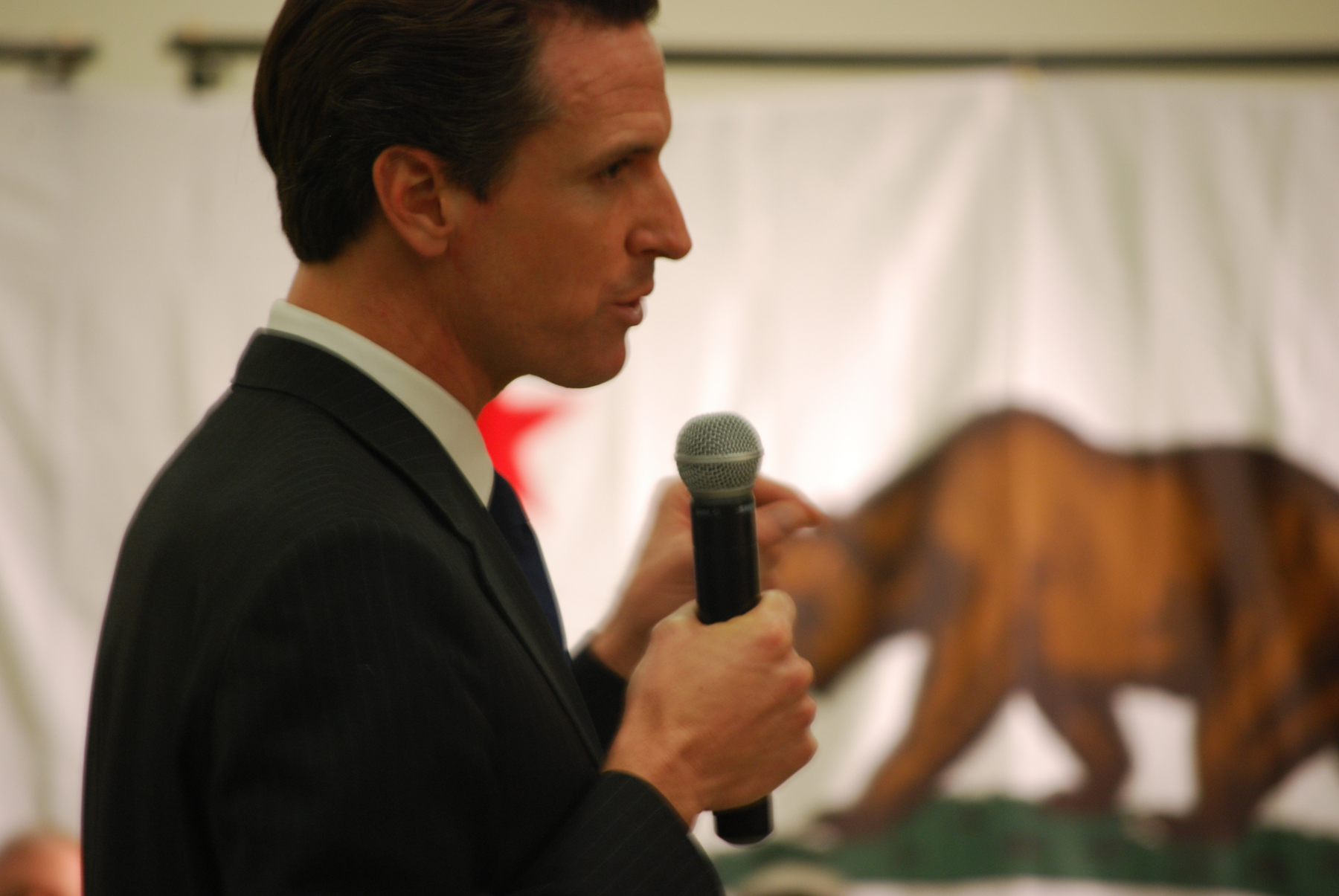
Newsom could be headed for victory

11

Gavin Newsom seems poised to win his race for lieutenant governor, at least as indicated by his opponent Abel Maldonado’s increasingly desperate campaign tactics and Newsom’s string of newspaper endorsements, including the Spanish language La Opinion, which chose to pass over a moderate Latino that it has endorsed in the past. The only question now is voter turnout, and whether Newsom’s negatives would be enough to drag him down if the Democratic base stays home in this lackluster election.

In its endorsement in Sunday’s paper, La Opinion wrote, “We are deeply disappointed that in this election [Maldonado] has opted for an opportunistic strategy of using images of undocumented criminals to earn political points. This is unacceptable and his charges against Newsom on this issue are inaccurate.” The reference was to Maldonado’s wild charges in an Oct. 15 debate that Newsom created San Francisco’s sanctuary city policies and was responsible for the fatal shootings of Bologna family members, allegedly by an undocumented immigrant who had once been in city custody. The reality was that Newsom inherited the sanctuary city policy and unilaterally weakened it after the Bologna shooting, even refusing to implement legislation approved by the Board of Supervisors (which Newsom vetoed but the board overrode) to require due process before those arrested are turned over to the feds for possible deportation.

While the paper didn’t seem to understand that Newsom has snubbed his nose at San Francisco progressives and petulantly fed a particularly divisive style of politics here, they do rightfully give him credit for running a complicated city, unlike the conservative city of Santa Maria where Maldonado was mayor and always did the bidding of the Chamber of Commerce, something I observed while working at the Santa Maria Times at the time. “The Democratic candidate has implemented solid, progressive management while leading a diverse city during a deep budget crisis. Newsom has proven to be creative, resourceful, and sensitive while forging alliances that improve the quality of life for his city’s residents,” La Opinion wrote. 

Then yesterday, as the Los Angeles Times reports on its blog, when Newsom held a campaign event trumpeting his support by Latino leaders such as Los Angeles Mayor Antonio Villaraigosa and labor leader Dolores Huerta, Maldonado showed up and sat in the back with his advisers during the event. Now that’s just strange.

A California Democratic Party e-mail blast this afternoon used a series of rhetorical questions to describe the campaign’s episodes: “So was Maldonado’s bizarre behavior an egotistical attempt to intimidate other Latinos who came to the event to support Newsom? Does he feel entitled to the appointed position now that he actually has to compete for voters in a real election? Is he desperate for media attention? Or does he just enjoy being a spectator, watching his opponent secure key Latino endorsements while his own campaign falls apart?”

But the real question is whether Democrats can mobilize enough voters to overcome Newsom’s negatives, from his arrogance to his personal foibles. When I did a search for Gavin Newsom’s name on Yahoo, which automatically guesses what you’re asking for based on past queries, the first three that listed were “Gavin Newsom girlfriend,” “Gavin Newsom divorce,” and “Gavin Newsom affair,” an apparent reference to his admitted affair with Ruby Rippey Tourk, who worked for him and was married to his reelection campaign manager.

So, if you support Newsom for this office — or even if you’re just anxious for him to leave San Francisco a year before his mayoral term expires — don’t forget to get out there and vote.

Get angry and make ’em do it!

9

After crashing the country’s economy and turning the world against us, Republicans are clawing their way back into power by stoking voter anger at political and economic systems that are stacked against the common citizen, a tactic that progressives need to adopt if we ever hope to move our agenda forward.

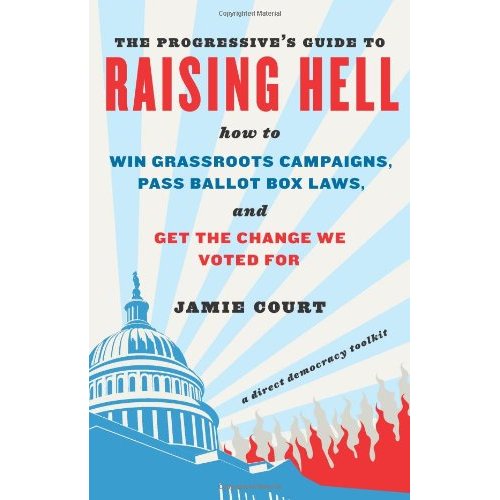
“Anger, not hope, is the fuel of political and economic change,” Jamie Court, head of Consumer Watchdog, writes in his new book, The Progressive’s Guide to Raising Hell: How to win grassroots campaigns, pass ballot box laws, and get the change we voted for (Chelsea Green Publishing, 2010).

Court writes that progressives are rightfully disappointed and disillusioned that after helping to elect President Barack Obama, he and Congressional Democrats turned around and gave Wall Street, the military-industrial complex, and the health insurance companies everything they wanted, with Obama even caving in on requiring all Americans to purchase health insurance, something he opposed as a candidate.


Yet Court said politicians never do the right thing and push progressive political change unless they’re forced to do so. He opened the book with a scene in which President Franklin Delano Roosevelt met with progressive political leaders, listened to their proposals, and then told them, “I agree. I am all for your plan. Now make me do it.”

It’s a concept that the conservative Tea Party movement understands well, and even though they may be crazy and wrongheaded in their utterly unsustainable and destabilizing policy agenda, they have effectively used anger as a political tool, and as a result, the NY Times reports they are poised to wield a disproportionate amount of political power after this election.

It’s the same story on the local level, where the only real anger in this election cycle is coming from those mad at public employee unions and their pension deals, and vagrants who sit uncivilly on sidewalks. These people will keep pushing for what they expect, but many progressives act as if it’s enough to prevent truly heinous Republicans like Meg Whitman from taking power, rather than trying to push Jerry Brown or Board of Supervisors’ progressives from day one to start empowering people over corporations.

“After the vote, power vacuums fill with familiar values, if not faces. Promises give way to fiscal realities, hope succumbs to pragmatism, and ambition concedes to inertia. The old tricks of interest group – confuse, diffuse, scare – prevail over the better angels of American nature,” Court writes, relaying a familiar electoral pattern.

Yet in this election, when the best outcome seems to be simply dodging a bullet, is there any hope for progressive political change? Isn’t the system just too broken? I asked Court these questions when he stopped by the Guardian office for a chat recently, and he retains a belief that with the right kind of tactics and agenda, progressives can still seize the political initiative and power.

http://www.youtube.com/watch?v=J3RD0YObHok

“I wrote it to reengage progressives because they are so despondent,” Court told me. “It’s about how to use anger and focus anger…Politicians don’t answer polite mobs, they only answer angry mobs and the Tea Party is the only angry mob in the room.”

Progressive have understandable doubts about the responsiveness of the current political system, but Court said, “I know if we don’t try to make it work, we’re never going to get there.”

And his book lays out the path to get there, step by step, based on some of the legislative and political successes that Consumer Watchdog and other progressives have had in recent years, such as rejecting the well-funded corporate con jobs in Propositions 16 and 17 earlier this year. Yet it involves an approach based on principle and not parties, and with being relentless in pursuing the kind of world we need.

“If you want to fight corporate power, you have to fight Democrats and Republicans,” Court said.

Specifically, Court is calling for progressives to push a California ballot measure that would establish a public health care option here, the very thing that Obama and the Democrats failed to include in their health reform package, and which will dash any hopes of it working if the people are forced to rely on unregulated insurance company products.

“The biggest thing is mandatory health insurance, which is a ticking time bomb,” Court said, one set to go off in 2014 when that aspect of Obama’s health care reform kicks in.

Corporate and political power working together seem to be a force too strong to overcome, but as Court writes, “Public opinion is the most powerful force in the world. While it can be muted, distracted, and co-opted, it cannot be controlled, except by the public.”

Treasure Island Music Fest preview, take one

0

Cords. Pedals. Buttons. Plugs and pieces. What is electronic music but a soundtrack of electricity flowing from one plastic part to another; a collection of volts humming and vibrating in an ironically harmonious fashion that somehow manages to tantalize our organic bones and flesh? Treasure Island’s Saturday lineup is dedicated to the electronic elements of today’s sound waves, but the event’s artist grouping distorts the genre’s seemingly obvious definition to one that is tattered with new sound bytes and unlikely additions.

Out goes the assumption that “electronic music” equals tranquilized club kids, and in come the offshoots of chill wave, electro-pop, electro-rock, folktronica, dance rock, and all kinds of made-up names. From the dance-party infiltrators, LCD Soundsystem, to the “next level shit” of Die Antwoord, each of the 13 acts playing Saturday’s Island stage hold unique qualities. DeadMau5 and Kruder and Dorfmeister remain strictly digital; Little Dragon and Holy Fuck incorporate traditional instruments; French duo Jamaica bans synth completely, while Miike Snow and Wallpaper might consider their vintage plug-in pianos family members. When it comes to defining today’s electronic scene, DJs and professional remixers definitely count, but the full set of rules is still TBD.

Music is what frees us from our overloaded lives, cutting through our webbed-out existence with sounds that take us “away from it all,” yet electronic music seems to work as both an escape and a reminder. Aren’t we tired of hearing our computers bleep? How about those ridiculously catchy videogame noises and horrid ringtones that rot the brain? Electronically-inclined musicians are adding such sounds to their repertoire, disguising them with mustaches and wigs, tangling them with bass and dreamy melodies then handing them back in a totally rad new package.

It’s a streamlined recycling process, melting, molding, and converting junk sounds into something that injects new movement into our robot routines. No, not everything has been thought of before — here is one area where fresh sounds are being discovered.

In fact, things are so new and up in the air that some bands included in the electronic half of this weekend don’t even consider themselves part of the genre. Sarah Barthel, half of the newest blog sensation Phantogram, is one example, though she and bandmate Josh Carter use a fair amount of outlet-powered instruments like samplers, synths, beat machines, and loop machines. “Sound has so many options today. It’s mind boggling and amazing,” she says while riding in a tour van to Atlanta.

Phantogram’s mysterious electro-rock doesn’t necessarily call out “brand new” when it spins, mostly due to its throwbacks to ’90s trip-hop. But similar to a fair portion of Saturday’s bill, the duo is living somewhere off the classic genre map.

“People will ask, ‘Where’s your drummer? Why don’t you have one?” and I just tell them, ‘We don’t want one,'” Barthel says with a laugh, remembering that just moments prior she had expressed her excitement over Phantogram’s newest addition to the tour family— a real drummer to replace their box with buttons. “In general, we’re just trying to go for a different aesthetic. And typically, more traditional elements like a live drummer wouldn’t fit that. But right now, it’s totally working.”

Electronic music today is full of contradictions — as many loopholes as loops. Anything goes and nothing fits quite right, which is why Antoine Hilarie of Jamaica doesn’t even know how to answer the question, What is electronic music?

“I don’t have the slightest idea, to be honest,” he says, before taking it a philosophical step farther and questioning the point of my question altogether. “Genre-defining is a bit obsolete in my opinion. These days I only listen to bands I like, whether they’re rap, electronic music, rock, or folk.”

It’s a genre that can incorporate all genres, meaning it’s own definition is completely lost for words. But none of the bands on Saturday will be playing unplugged. And if the power does disconnect any of our electric artists, we’ll have a very quiet island. 

TREASURE ISLAND MUSIC FESTIVAL

Sat/16, noon–11 p.m.; Sun/17, noon–10:30 p.m.;

$67.50–$475

Treasure Island, SF

www.treasureislandfestival.com


To tell the truth

0

cheryl@sfbg.com

FILM Have you heard the one about the hook-handed killer who stalks little kids deep in the woods? Filmmakers Barbara Brancaccio and Joshua Zeman met as adults, but they both grew up on Staten Island, hearing stories of a local boogeyman nicknamed Cropsey — campfire tales that took on more sinister shades when a girl with Down syndrome went missing in 1987. Turns out a lot of children vanished from Staten Island over the years. Was the urban legend real?

Brancaccio and Zeman’s fascinating documentary, Cropsey, is obsessed with answering this question. The film follows the recent trial of transient Andre Rand — convicted of that 1987 kidnapping and suspected by a fearful community of more terrible crimes. Was bringing Rand up on new charges the result of a witch hunt, or was justice finally being served? Cropsey, which considers layers of details (from circumstantial evidence to wild rumors), encourages the viewer to form his or her own opinion on the case. Along the way, there are visits to abandoned mental hospitals, discussions of Satanism, and glimpses of hidden histories stashed all over Staten Island.

As Brancaccio and Zeman worked on Cropsey, they became so involved with the material that they weren’t sure what to believe themselves. “We each had a viewpoint about whether [Rand] was guilty or innocent, and it switched during the middle of the filming,” Zeman recalls. “At times we didn’t know what to think. I think that’s something we wanted to convey to the audience. There was definitely enough doubt to go around.”

Unsurprisingly, given its subject matter, Cropsey is genuinely scary. (It’s attracted horror fans for that reason, including director Peter Jackson, who recently requested a copy.) “At times it’s part crime thriller, at times it plays like a narrative horror film,” Zeman says. “That was not an easy task — we really had to play with the tone [while editing] and figure out what kind of movie we wanted to make. Also, how do you make a documentary seem literally scary? Thing is, filming the movie, we were scared all the time. We weren’t creating an emotion that wasn’t there — we would come home from shooting and have nightmares.”

Rand, who communicated with the filmmakers from prison via a series of incoherent letters, hasn’t seen Cropsey — yet. In the meantime, fans of the doc can be assured the legend will live on: “We’re trying to work on a narrative remake of Cropsey,” Zeman says. “There was so much we couldn’t put in the doc, so rather than make Cropsey 2: Electric Boogaloo, we’re going to try and tell some other parts of the story in a narrative version.”


PARTY AT GROUND ZERO

Cropsey made its local debut at the 2009 San Francisco Documentary Film Festival; this year’s DocFest kicks off with Everyday Sunshine: The Story of Fishbone, codirected by San Franciscan Chris Metzler (2004’s Plagues and Pleasures on the Salton Sea). Sunshine, which Metzler made with Lev Anderson (Salton Sea co-helmer Jeff Springer served as Sunshine‘s cinematographer and editor), is a lively, revealing look at cult SoCal ska-punk rockers Fishbone.

Its formation — circa 1979, in a San Fernando Valley junior high newly filled with bussed-in South Central kids — is explored via animation, which is used periodically throughout the film. The film’s quirkier stylistic choices offer evidence that Sunshine was made by two guys who don’t like traditional music docs. It’s a label they resist because it could potentially limit the film’s audience.

“I find music documentaries kind of boring and formulaic,” admits Anderson, who worked on Taggart Siegel’s 2005 doc The Real Dirt on Farmer John. A lifelong music fan, his father took him to a Fishbone concert when he was 10 years old. “But I figured if you could make a music documentary that would be interesting, have good characters, have a good story, and be able to reflect on some larger cultural issues — I thought that would be the Fishbone story.”

Anderson, who met Metzler at a Salton Sea-era film festival party and pitched him the Fishbone idea on the spot, was confident the band would be an ideal subject. “I knew that we could interview just about anybody in popular music, from Ice-T to Mike Watt, Flea to George Clinton — I knew that those were all people who were aware of Fishbone in one way or another. The musical legacy they have is inspiring. If you’re going to do one music documentary, that’s the one, because you can talk to everybody.”

In addition to chatting with famous faces (and getting longtime Fishbone fan Laurence Fishburne to narrate), the filmmakers spent months on the road with the band, capturing the infectious energy of its live shows in addition to behind-the-scenes tension. Past members chime in, but the main protagonists are bassist-vocalist Norwood Fisher and lead vocalist-saxophone player Angelo Moore. Their intertwining stories offer a poignant portrait of creative soulmates who’ve weathered many storms (personality conflicts, legal and money troubles, an industry that didn’t know how to categorize them) without once giving up on their music.

Metzler sees Sunshine‘s appeal as extending beyond Fishbone fans, or even music fans. “We’re hoping that the people who come to see the film are the same sort of people who were attracted to the Salton Sea film,” he says. “People who want to watch an engaging, offbeat story about these eccentric personalities and their perseverance to do things their own way. The Fishbone story is an outsider tale about these guys who fit in everywhere — yet didn’t fit in anywhere, all at the same time.”

CROPSEY

Fri/15–Tues/19, $6–$10

Red Vic

1727 Haight, SF

www.redvicmoviehouse.com

SF DOCFEST

Oct. 15–28, $11

Roxie

3117 16th St., SF

www.sfindie.com


D8 debate: “Filling Harvey’s Shoes”

0

Editors note: I ran out of space for opinion pieces this week (endorsements just ran too long) so I’m posting this timely oped here.

By Jeff Sheehy

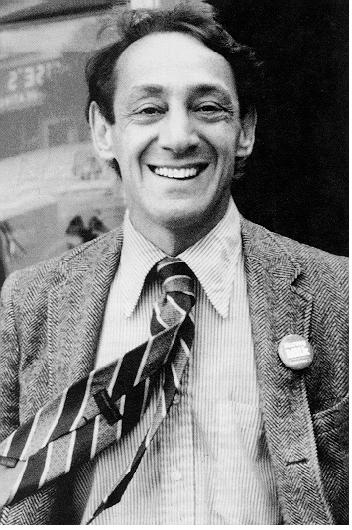
Harvey Milk Civil Rights Academy, a public elementary school in the heart of the Castro, is hosting a debate between the four candidates for District 8 Supervisor on Friday, October 8 at 7 pm.   The school, formerly Douglass Elementary, was named for Milk in 1996. 

The community that comprises the school has adopted an unique mission to honor Milk’s life: to empower student learning by teaching tolerance and non-violence, celebrating our diversity, achieving academic excellence, and fostering strong family-school-community connections.
 
The theme of the debate—“Filling Harvey’s Shoes”— centers on the values inspired by Harvey Milk’s life that have now been enshrined in the mission of the school named after him. Cynthia Laird, the editor of the Bay Area Reporter, and Christina Velasco, principal of Harvey Milk Civil Rights Academy, will moderate, asking questions themselves, taking questions from the audience and reading questions submitted by Harvey Milk students.

One of the candidates was quoted in this paper a couple of weeks ago saying about the race: “It’s a definitional fight about what the queer community is about in 2010.”  This debate offers the candidates the opportunity to directly address this “definitional” question.

In many ways, the LGBT community is at a crossroads. For those with good jobs and good incomes and the means to rent or own a house in District 8, much of the struggle for LGBT civil rights in San Francisco must feel more like history than a critically important issue for someone who seeks election in his former district.

However, I wonder if Harvey’s oft-referenced kid from Altoona hopping a bus to San Francisco in search of freedom would feel the same way. The kids arriving here are much more likely to be kids of color, transgender or undocumented. To what degree does District 8 or even San Francisco offer a place to live or real economic opportunity? Is Harvey’s legacy a gentrified Oz, great for those who can afford it, but little solace to those desperately seeking haven?

Plus, what is Harvey’s larger legacy?  Harvey Milk Civil Rights Academy defines one vision. Kids from under-resourced areas and under-represented communities are actively recruited to the school as part of its commitment to teaching tolerance and diversity. The LGBT experience is presented as one among the many struggles that communities of color, women, the undocumented and working people have fought in America to create a more just and tolerant society. Consciousness of shared struggle and the necessity of creating community amongst the disenfranchised and marginalized are crucial values inculcated at the school. The school’s pledge sums up this vision of Harvey’s legacy:  “I pledge allegiance to the world, to cherish every living thing, to care for earth and sea and air with peace and freedom everywhere.”

My husband and I thought deeply about community and values when we were deciding where to send our daughter to school. We felt that our daughter should begin to understand the world and how to act in it in the context of struggles for civil rights and social justice.  

I hope others in the LGBT community will take a moment and think about their values, hopefully attend the debate on Friday, and recognize that the election for this seat is about the future direction of the community.

Indeed, next May would have been Harvey’s 80th birthday and one wonders which candidate he would have endorsed and in what direction he would have advised the LGBT community to take had he lived.

Sheehy is the parent of a kindergartener at Harvey Milk Civil Rights Academy 

The debate will be held in the auditorium at Harvey Milk Civil Rights Academy at the corner of 19th and Collingwood, in the Castro.

Opinion: For Democratic unity

6

We ran out of space in today’s print edition and couldn’t publish either of the two opeds I wanted to run, so I’m posting them here. The first one is by the chairman of the SF Democratic Party.

By  Aaron Peskin

As one of the most Democratic cities in California, San Francisco has a special responsibility to make sure we help elect a Democratic ticket on November 2nd.  We always take that responsibility seriously – but this year we will have the pleasure of helping elect our own to statewide office: Gavin Newsom as Lt. Governor, Kamala Harris as Attorney General and even native son Jerry Brown as California’s next Governor.

Because so many of our nominees are from San Francisco – and because San Francisco is so Democratic – and because so many of the statewide elections are so, so close – what we do to turn out the vote here in San Francisco could very well be the difference between victory and defeat for many statewide candidates. 

A quick look at the numbers shows just how important San Francisco could be in this year’s statewide races. In November of 2008, a total of 388,112 San Franciscans cast ballots. In November of 2006, the last gubernatorial contest, just 253,719 San Franciscans voted. That is a difference of 134,393 votes.

Local Democratic Party leaders agree a coordinated campaign could turn out at least 20% of these “occasional” voters and probably many more.  That means we could add a minimum of more than 25,000 votes from this Democratic base to the statewide total.

In a year in which the polls show razor-thin margins separating the winners from the losers, a 25,000 vote margin could make the difference between Democratic policies like support for schools, investing in green jobs and protecting a woman’s right to choose and the Republican reaction supported by Meg Whitman, Carly Fiorina, Steve Cooley and Able Maldonado.
Considering how important Democratic unity is to our city and our state – we need to pay it more than lip service. And that’s what our local party is trying to do.

It is certainly true that there are important local issues upon which we disagree. For example, I certainly take issue with some of Mayor Newsom’s positions – such as his so-called Sit/Lie ordinance. I know that he takes issue with many of my positions.

There are many in our party unhappy with Newsom for putting an attack on the ballot on the elected members of the local party in this crucial election.  Again, I know Mayor Newsom has expressed his displeasure with the local party for not supporting some of his candidates and positions.

But these local disagreements are small in comparison to what is at stake for Californians. They are actually small compared to what is at stake for San Franciscans – a city that relies on state aid to support our schools and colleges, much of our local health services and many other important programs.

That’s why unity is the only sensible policy in this crucial 4-weeks of voting until the November 2nd election. And that’s why I have a simple and genuine invitation to Mayor Newsom and the other statewide candidates.

Come help us help you.

We are gathering every day at our headquarters at 1261 Howard Street to knock on doors, register voters and make phone calls to get out the vote.  Come show with your presence that turning out the vote is so important that we will turn aside both petty differences and legitimate policy disagreements on local concerns.

Across California our opponents are attacking “San Francisco” Values. Come show that a core value of San Francisco Democrats is uniting to support the greater good.

The Governator: Fighting oil villains or making life easier for them?

Today’s San Francisco Chronicle contains an opinion piece by David Horsey commending Gov. Arnold Schwarzenegger, a Republican, for taking Texas oil companies Tesoro and Valero to task for attempting to subvert California’s landmark global warming legislation, AB 32.

Titled “The Governator battles villains with ‘black oil hearts,’” the piece casts Schwarzenegger as an environmental superhero facing off against a band of greedy cowboys. Tesoro and Valero have sunk millions into Proposition 23, the deceptively titled “California Jobs Initiative,” which would suspend implementation of the greenhouse-gas reduction law until unemployment drops to 5.5 percent for four consecutive quarters. Prospects are dim for such a market condition anytime soon.

“It is electrifying to hear a Republican politician expose the big corporations that relentlessly subvert public policy and the national interest,” Horsey notes. “Arnold Schwarzenegger might be leaving office with a mixed record of accomplishment, but when it comes to challenging these modern-day bandits of industry, he could be the boldest action hero we’ve got.”

Schwarzenegger deserves credit for taking a stand against oil-industry giants on this particular issue, but he’s no environmental action hero. On Sept. 30, The Governator vetoed legislation that would have improved the state’s capability to respond to oil spills.

AB 234, authored by Assembly Member Jared Huffman, would have required large vessels to deploy oil containment booms prior to fuel transfers. The Dubai Star oil spill occurred during a fuel transfer, and the precautionary measure could have lessened the impact.

Additionally, the bill would have increased existing oil fees to bolster funding for the state’s oil spill prevention and response efforts. And it would have required the State Lands Commission to report on safeguards for offshore oil drilling and response plans in the event of the failure of an oil rig’s blowout preventer. The BP oil spill demonstrated how dire the consequences can be if such a failure occurs.

“With his veto of AB 234, Governor Schwarzenegger failed miserably when it came to protecting California’s environment, public health, seabirds, and our coastal waters from oil spills,” said Marcie Keever, Oceans & Vessels Campaign Director at Friends of the Earth, which sponsored the bill along with Pacific Environment.  “Assembly Member Huffman and the Legislature worked extremely hard this year to craft AB 234 to protect the people and resources of the state of California — and with a few strokes of his pen the Governor struck a significant blow to public health and our environment.”

Schwarzenegger may have publicly reprimanded the Texas oil cowboys for bankrolling Prop. 23, but he’s no Captain Planet.

Do it Clean

0

arts@sfbg.com

MUSIC For over 30 years now, the Clean have been at the forefront of the New Zealand rock scene. Despite some early lineup changes and temporary breakups, the core of the band — Robert Scott and brothers Hamish and David Kilgour — continue to tour together, work on solo or side projects, and occasionally release a new album. For special insight into Kiwi rock and all things Clean, I decided to get in touch with San Francisco expat Barbara Manning, who will be opening for the group at the Independent with her new band, the Rocket 69.

Welcoming me into her house in Chico, Manning pointed to a stack of vinyl and a couple dozen CDs she’d pulled out in a living room stocked full of records. She fancies herself as having one of the most thorough personal collections of New Zealand music around, and after just a quick glance it was easy to see why.

“We probably don’t have time for New Zealand Rock Music 101,” Manning said. “So I’ll just put some Clean stuff on.”

In Manning’s opinion, despite a well-developed and underrated rock music scene that has thrived since the late ’70s, New Zealand rock and roll can really be narrowed down to three essential contributors — the Bats, the Chills, and the Clean. While all three groups have enjoyed various degrees of success, the Clean’s appeal has extended far beyond the borders of their native home to impact everything from ’80s power pop to ’90s indie rock to contemporary garage sounds.

“People incorrectly think that the Clean started rock music in New Zealand,” Manning said. “But they were the first ones to make America notice.”

From the bouncy keyboard melody and chugging bass line of the 1981 hit “Tally Ho” to the more exploratory and expansive feel of some of their later work, the Clean have always excelled at combining a good pop song with a rough-around-the-edges “hypnotic groove,” as Manning put it. Pavement and Yo La Tengo have gone on record singing the group’s praises, and more recently, artists such as Kurt Vile and the late Jay Reatard have made Clean-like recordings.

“The Clean have an edge to them that was especially fresh in the ’80s, when there was a ton of crap out there,” said Manning. “It was great hearing good, urgent, jangly pop songs that cut away the fat.”

Despite loving their music for decades and recording songs for one of David Kilgour’s solo albums, Manning — who lived in San Francisco from 1986 to 1998 — has never seen the Clean perform live. When bassist Robert Scott called to make sure she was coming to the group’s Bay Area show, she jumped at the opportunity to get involved.

“I said, ‘I’ll be there,'<0x2009>” Manning remembered, “<0x2009>’and how ’bout I open for you?'<0x2009>”

Manning’s new project includes Maurice Spencer on guitar, Jonathan Stoyanoff on bass, and Marcel Deguerre on drums. She said that those in attendance can expect a “power pop-heavy” set made up of material from her songbook and a handful of covers. Both her band and the Clean inject a sinister irreverence into the sometimes cookie-cutter world of guitar-driven pop. As Manning put it, “It’s always nice to hear jangly pop music that’s not all paisley and flowery.”

THE CLEAN

With the Rocket 69

Mon/4, 8 p.m., $18–$20

The Independent

628 Divisadero, SF

(415) 771-1421

www.theindependentsf.com


Prop. B will save healthcare

59

By Jeff Adachi and Jim Illig

Editors note: Last week we ran an op-ed by Assemblymember Tom Ammiano opposing Proposition B. Public Defender Jeff Adachi asked for space to respond. His position follows.

OPINION San Francisco prides itself on the excellent health care services it provides to its residents. Per capita, San Francisco provides better quality healthcare to its poorest and most vulnerable residents than any other city in our state. Our city’s Healthy San Francisco program, which provides low- cost access to healthcare for all uninsured residents, has been heralded as a model program nationwide.

But the healthcare system that serves the city’s employees is teetering on the brink of insolvency. This year, the city will spend $456 million for healthcare costs for 26,000 city employees, and 28,000 retirees and their 47,000 dependents. According to the Controller’s Office, the city’s health system has an unfunded liability of $4 billion — meaning that it has made $4 billion in promised coverage to city employees and their dependents that it doesn’t have the money to pay for.

That’s a major reason why two city departments that serve the poorest residents, the Public Defender and Public Health, must cut millions of dollars of essential services each year, to save the city’s General Fund for growing employee healthcare and pension costs.

Currently most city employees contribute nothing for their own healthcare. Taxpayers subsidize the entire cost, which runs between $2,890 and $5,560 per year for each employee. Proposition B would change this by requiring that an employee insured under the basic health plan pay just $96 a year ($8 a month) for their healthcare. Under Prop. B, city employees would still pay 22 times less than private sector employees, who pay an average of $2,185 per year for their health insurance.

City employees with dependents currently pay $8 a month. Under Prop. B, they would pay $2,988 per year. Private sector employees with dependents pay an average of $7,026 a year. And this doesn’t include the 31 percent of San Franciscans who do not receive employer-paid health care costs and pay the entire cost themselves.

Opponents of Prop. B claim that city workers cannot afford to pay the health benefits if Prop B. passes. Their argument ignores the fact that the average San Francisco city employee earns $93,000 a year in salary alone, excluding benefits, while the average private sector salary is $46,000.

They also argue that “a single mother will be forced to pay up to $5,600 per year for her child’s health care — in addition to the $8,154 she already pays.”

First, this is not true. A city employee with two dependents only pays a total of $448 a month for full health coverage. Only if the city employee chooses the most expensive health plan, which costs $31,645, would the employee have to pay $19,561 a year under Prop. B instead of the $16,922, which he or she now pays.

Even with contributions required by Prop. B, city employees will receive a benefit package that is unparalleled in the private sector. Even more important, the city’s healthcare fund will be made more sustainable by ensuring that the funding for the city’s healthcare program doesn’t run dry when the city can no longer afford to pay these costs.

According to the Controller’s ballot statement, Prop. B would save the city $121 million annually. Some of these funds could be used to prevent the devastating cuts to the city’s mental health, substance abuse, and other community health programs for poverty-stricken adults and children who do not have healthcare coverage.

Voting yes on Prop. B is an antidote to continuing cuts to healthcare for the poorest San Franciscans. *

Jeff Adachi is a proponent of Proposition B and the city’s public defender. Jim Illig is the president of the San Francisco Health Commission.

Redevelopment throws Arc Ecology under the bus

3

No one was really surprised when the Redevelopment Commission voted 4-0 not to renew Arc Ecology’s contract to provide environmental information services regarding remediation plans at Hunters Point Shipyard and award it to Circle Point.

Sad and disgusted, yes. But surprised, no. That’s because everyone expected that Commissioners Leroy King, Darshan Singh, Rick Swig and Francee Covington, who are all appointees of Mayor Gavin Newsom, would throw Arc under the bus as payback for Arc’s decision to comment on the EIR for Lennar’s Candlestick Point/shipyard redevelopment plan and oppose the giving away of state parklands so Lennar could build luxury condos.

“The message was that we shouldn’t have commented ” Arc’s executive director Saul Bloom told the Guardian after the Commission vote went down. “But this you’re-either-on-our-side-or-out-of-a- contract attitude is completely bogus. It’s tactics that Republicans use against Democrats.”

And with the exception of Al Norman (who had the bad manners to burst out laughing when Arc got voted out) and Circle Point staffers, who obviously wanted the contract, those who attended the Commission’s September 21 meeting agreed that the outcome symbolized everything that’s wrong with Redevelopment’s current model of governance, in which political appointees, not elected officials, make decisions that majorly impact the city’s land use.

Thor Kaslofsky, Redevelopment’s shipyard project manager, kicked off the Commission’s contract discussions by explaining why Redevelopment Agency staff were recommending that the Commission award the contract to Arc Ecology.
As Kaslofsky explained, Circle Point received 0.2 points more than Arc from the Agency’s scoring panel, “making it difficult for the panel to determine who is the most qualified.”

Kaslofsky noted that there had been “concerns about Arc Ecology’s multiple roles in the community.”
This was a reference to the fact that, besides, providing independent assessments on the Navy’s clean-up plans, Arc produced “Alternatives For Study,” a report that studied alternatives to a plan that Lennar and the city refused to change–a public-private stubbornness that most recently resulted in a lawsuit from the Sierra Club and the Golden Gate Audubon Society.

“But the panel voted for Arc as the most qualified firm,” Kaslofsky concluded, noting that there were “concerns about Circle Point’s ability to ramp up”—a reference to the fact that though Circle Point has offices in Sacramento and downtown San Francisco, it doesn’t have a presence in the Bayview and little-to-no experience of the military base clean-up process.

Bloom then talked about how Arc has been active in the Bayview for decades.

“We’ve been in the Bayview for 25 years,” Bloom told the Commission. “We’ve read every environmental document that’s been produced. And our office is on Third Street,”
Bloom noted that after Arc scored the highest for Redevelopment’s environmental services contract in 2009, the Agency withdrew its request for proposals (RFP) leaving the community without Arc’s services—and without the services of the Navy’s community-based Restoration Advisory Board—at a time when the Navy was pushing clean-up plans that favor capping the shipyard’s heavily polluted Parcel E-2, rather than digging and hauling out the contamination.

As Bloom noted, the Agency’s contract RFP switcheroo, “caused significant costs to the community because we were unable to provide services at the same time the Navy’s RAB was closed down.”

After Bloom spoke, a stream of Bayview advocates testified in support of Arc.

“Arc is more knowledgeable about clean-up issues than most government regulators,” said Scott Madison, a member of the shipyard’s citizen advisory committee.
“The community asked for—and you granted—an independent contractor, a watch dog, not a lap dog,” Madison continued. “Circle Point may be technically qualified, but they are strangers to the Bayview. The Commission should have the courage to hire a watchdog, even at the risk of a nip at the heels.”

Michael Lynes, conservation director with the Golden Gate Audubon Society, which recently joined the Sierra Club in suing to block the city’s EIR on Lennar’s Candlestick/ shipyard plans, told the Commission that he found “the value provided by Arc to be absolutely essential.”

D10 candidate Eric Smith, a member of the Navy’s now defunct RAB, praised Arc for, “being fantastic in sharing the information.”
“There is no other organization that has their history, has done the work they’ve done, and has the relationship with the community,” Smith said, “With the loss of the RAB, Arc was the only place to go.”

Jackie Phillips of ACCE (Alliance of Californians for Community Empowerment) noted that how a lot of organizations come to the Bayview, but unlike Arc, few stay the course.
“I’ve gone to their workshops,” Phillips said. “They sat us down, they’ve taken us on tours, they’ve taken us to the toxic sites, they have shown us what these changes will mean.”

Phillips also expounded on the difficulty of winning the trust of the Bayview community.
“In the Bayview, we don’t know who to trust, because there have been a lot of broken promises,” Phillips said. “Arc did not try to hide things from us. They have a relationship with the community.”

Next up was Claude Eberhart, who said ordinarily he’d be happy to see Circle Point get the contract, because he likes their staff.
“But by rights, I can’t recommend that,” Eberhart said. “The issue is trust.”
Noting that he has worked with Arc since 1987 when he and Bloom fought plans to homeport the USS Missouri at the shipyard, Eberhart said that in terms of getting “clear, concise and correct information,” Arc is “one environmental organization we can rely on.”

Eberhart also noted that last year, when there was pressure to take a large chunk out of the Candlestick Point State Recreation Area so that the city/Lennar could build luxury condos on state parklands, “Arc stepped forward and provided the information we needed to achieve a community consensus and have the Sierra Club come up with the final deal that allowed for an exchange [of state parklands].”

John Eller, an organizer with ACCE, which co-signed the community benefits agreement that the Labor Council negotiated with Lennar to secure living wages and higher levels of affordable housing, noted that Commission President Rick Swig had spoken earlier in the meeting about how Cohen, Newsom’s former economic advisor, was a consensus builder.

“And that’s exactly what Arc has done over the years,” Eller said.

Kate Kelley, director of the Sierra Club’s San Francisco Bay Chapter, praised Arc’s integrity.
“The information it provided was balanced, responsive and certainly technically competent,” she said.

“This is not a baseball game,” Kelley continued, referring to Circle Point’s understandable claim that it rightfully won the contract based on the Agency’s scoring process. “This is about relationships and trust—and I trust Arc Ecology to do the right thing.”

Al Norman, who heads the Bayview Merchants Association, was the sole dissenter among Bayview residents who spoke at the meeting.
Norman claimed that Arc’s critique of the city’s EIR was somehow “a conflict of interest.”

But instead of providing evidence to support his claims, Norman launched into a personal attack.
“[Bloom] went against this agency and the community, concerning his alternative plan, when we already had a plan in place,” Norman said. “I think Circle Point deserves a chance.”

The son of the late Jesse Mason, who worked for Arc until he died this summer, spoke in support of Arc and Bloom.
“My father believed in Arc, he trusted Arc,” Mason said.

And Christine Johnson, secretary of the shipyard’s Citizen Advisory Committee, spoke of the pressing need in the Bayview for independent review of technical environmental documents.
“We feel it’s imperative to get immediate advice and expert opinion and to properly assimilate information,” Johnson said, referring to the Navy’s shipyard clean-up plans.
‘We’ve been without that advice for nearly a year.”

Terry Ander, whose organization is a member of the Southeast Jobs Coalition, which includes Brightline, Inner City Youth, Visitacion Valley Community Development Coalition and Young Community Developers, spoke highly of Arc.
“Arc Ecology deserves this contract,” Anders said, noting that the Bayview community has been part of “enough neglect and B.S. to last for ten life times.”

And D10 candidate Kristine Enea, a former member of the Navy’s RaB, urged the Commission to “support Arc and focus on the community’s need for information.”

Bayview community advocate Espanola Jackson stressed the need for accurate information from a trusted source, as opposed to politically comfortable lip service.
“We need the correct information and not the lies and the politics that have been played upon my community,” Jackson said.

After 17 folks spoke in favor of Arc, many of them registering surprise that there was talk of taking the contract away from a small Bayview-based non-profit, Bloom sought to correct any misinformation that had been spread about his organization.
Noting that Arc’s Alternative for Studies “was an attempt to do some problem solving,” Bloom observed how, “Instead, we got painted as an opponent to a bridge. We are a strong supporter of the development and we have put 300 people to work in the Bayview.”

But all this support and clarification was not enough to save Arc from being thrown under the bus.

Commissioners Leroy King, Francee Covington and Darshan Singh joined Commission President Rick Swig in calling for Arc’s ouster. And along the way, they variously accused Bloom of disloyalty, dishonesty and expectations of winning the contract. (The latter accusation was a tad ironic given that there are currently no term limits for Redevelopment commissioners, as evidenced by King who has sat on the commission for decades and has just been renominated by Mayor Gavin Newsom to serve yet another term.)

“I’m opposed to giving the contract to Arc,” Commissioner King said. “Each time, [Bloom] spoke opposed to Redevelopment,” King continued, without proffering any details to support his claims, but giving a disturbing insight into how he thinks organizations that contract with Redevelopment for $282,000 a year (the amount Circle Point will be paid for four years for the environmental services contract) should position themselves on all Agency-related issues.

“[Lennar’s] Kofi Bonner called me and said. ‘Will you chance your vote? We need him’” King said, acknowledging that he didn’t want to award the contract to Arc, when it first applied, four years ago.  “But every time [Bloom] was opposed to basic things to fill that shipyard. He talks against Lennar.”

Commissioner Covington confused the audience by pulling out a copy of the city’s response to comments on its EIR for Lennar’s redevelopment plans, even though the Redevelopment contract in question concerns assessing the environmental issues related to the Navy’s shipyard clean-up plans.

Covington then pointed to, but did not identify, letters that she claimed were from individuals who alleged their names were falsely included in a letter supporting Arc’s EIR comments.

Covington then told the audience that the Agency’s 50 percent small business enterprise standard in contract awards “ is a goal but does not apply to non-profits”.

And Commission President Swig, a hotel and tourism industry consultant, sought to frame Arc, which is respected as an independent non-profit, as an ungrateful consultant.
“As a consultant myself, I don’t agree with all my customers, but I don’t bite the hand that feeds me,” Swig said.

And then the Commission voted 4-0 to reject Arc—and award the contract to Circle Point.

Outside the meeting, a black mood reigned.
“It was political payback,” Scott Madison said. “I think the Commission made a bad choice.”

Mike McGowan. Arc’s senior scientist, noted that public support was 17-3 in favor of Arc.
“But I guess only four votes counted,” he observed. “It seemed that Redevelopment’s staff was in favor of Arc, as was the community except for a few voices, but the Commission kept harping on incidental issues. The truth is that there are no holes in our qualifications.”

McGowan noted that the environmental services contract relates primarily to Navy clean-up.
“Arc never got in the way of the development,” McGowan said. “What it did was participate more fully in the EIR process, and, as I understand, Lennar incorporated some of Arc’s suggestions into their design. But by Arc not having its contract for the last 18 months, a lot of misinformation floated to the top.”

McGowan noted that the spirit of the Agency’s policy on small business enterprises is to foster the development of small firms that are disadvantaged and local.
“And Arc definitely is smaller, less advantaged and based in the Bayview, but it seemed like a lot of personal animosity came up,” he said.

Bloom acknowledged that the loss of this contract is a serious economic blow for Arc.
“They screwed a local small non-profit in the face of a multi-million dollar organization that swathed itself in a couple of small Bayview businesses,” Bloom continued, referring to Circle Point’s inclusion of three local SBEs as sub-contractors in its contract proposal.

Others, speaking off the record for fear of political reprisal, told the Guardian that the Commission’s treatment of Arc—and its refusal to listen to community members and community-based organizations that represent many thousands of local residents—calls into question the need for Redevelopment to exist in its present configuration, if the Commission believes its priority is to fire contractors that disagree with its plans in other arenas.

“The Board can eliminate the Redevelopment Agency and/or change its governance,” a Bayview resident said. “The Bayview is the last frontier of the eastern side of San Francisco. It’s a historically neglected neighborhood that many folks in City Hall now see as the next potential gold mine.”


Snap Sounds: The Walkmen

0

By Landon Moblad

THE WALKMEN
Lisbon

(Fat Possum)

You & Me, the Walkmen’s excellent 2008 album, showcased how strong the band could be while working within a mellower, more plaintive framework. Not that they’d ever been entirely void of it before, but that album’s wistful horns and lyrics dripped with melancholy that hardly let up. Early publicity about its follow-up, Lisbon, hinted at the group’s desire to revisit some of the more raucous material they toyed with on earlier albums and then fully succumbed to on 2006’s track-by-track cover of the Harry Nilsson/John Lennon album, Pussycats.
 
Inspired by the Memphis Sun Studio sound of the ’50s, Lisbon was written off-and-on during various trips to the Portuguese title city and then recorded in Philadelphia and New York City. The final product is an album of 11 songs (whittled down from a whopping 28 they recorded) that confirm the Walkmen’s status as one of the most consistent rock bands working today. To think these guys were initially lumped in with the wave of awful one-off bands ripping the Strokes in the early part of last decade is laughable now.

But is Lisbon the overhaul in style that advance word suggested? Well, yes and no. Standout “Angela Surf City” alone rocks harder than pretty much the entirety of You & Me. It also gives drummer Matt Barrick—the band’s secret weapon, in my opinion—a chance to attack his kit with a ferocity not heard since “The Rat” from 2004’s Bows + Arrows. Elsewhere, “Woe Is Me” is the Walkmen at their breezy up-tempo best, while “Follow the Leader” makes a lot of racket but unfortunately doesn’t really serve much of a purpose.

Ultimately, however, the sweeping, dreamy tracks again carry the majority of Lisbon. The appropriately titled “Torch Song” is a beautiful vessel for Hamilton Leithauser’s voice—a bourbon-soaked lovechild of Spoon’s Britt Daniel and early Rod Stewart. With its lullaby-like verses and old-fashioned backup harmonies, it’s also the most glaring example of the inspiration pulled out of those early Sun albums from the likes of Elvis Presley and Roy Orbison.

Lisbon probably won’t be remembered as many fans’ favorite Walkmen album—it’s not as flashy as earlier recordings and it’s not quite as unified as You & Me. But when a band has created a catalog as front-to-back strong as theirs has become, picking favorites starts to feel a little ridiculous anyway.

Prop. B is bad medicine

57

OPINION Proposition B on the November ballot would eviscerate health care for tens of thousands of public workers and their families. It would double the cost of children’s health care for more than 30,000 public employees including teachers, nurses, firefighters, custodians, and gardeners — regardless of their ability to pay.

But you wouldn’t know this is actually what Prop. B does because the recent focus has been on the measure’s "reforms" to employee retirement. You wouldn’t know this has anything to do with children’s health care — because proponents don’t want you to know the true costs of Prop. B.

What are those true costs?

A single mother will be forced to pay up to $5,600 per year for her child’s health care — in addition to the $8,154 she already pays.

A custodian making only $40,000 per year would have to pay the same hike in health insurance premiums as the city’s top brass, who could be making three times as much.

Talk about unintended consequences.

That’s not reform, and it’s not fair. The workers being blamed are the same city employees who this year voluntarily agreed to $250 million in wage concessions. These are the same workers who have willingly taken pay cuts totaling $750 million the last decade.

Proponents have framed Prop. B as an answer to the city’s pension and retirement costs, but in reality, this measure is about health care. San Francisco’s Office of the Controller’s impartial analysis of Prop. B concludes that 70 percent of the savings from the measure would come from dramatically increasing the cost of dependent health care for working families.

A deep recession spurred by costly wars and reckless behavior on Wall Street has had devastating effects on our city and nation. Prop. B punishes city workers for this economic collapse by radically increasing the cost of their health care.

San Francisco has led the nation in providing universal access to health care. As author and founder of our HealthySF program, I encourage you to resist the attempt reverse progress on health care. Vote no on B.

Assembly Member Tom Ammiano represents the 13th District.

The battle against desalination in the bay

2

OPINION In July 2010, in one fell swoop, the Marin Municipal Water District’s board of directors ambushed an initiative that would force a public vote on an expensive an environmentally destructive desalination plant on the edge of the bay.

In August 2009, the board unanimously voted to approve an environmental study to pave the way for the desalination plant, which would suck up bay water, filter out the salt, and dump the briny extract back into the bay.

In response, a group of unpaid, grassroots volunteers gathered more than 18,000 signatures to qualify Measure T for the November ballot. The measure requires voter approval before up to $51 million in public money is spent on desalination planning.

On July 6, 2010, the board had a chance to avoid the ballot fight by adopting the proposed initiative as an ordinance. Instead, MMWD voted to “study” Measure T’s impact on desalination planning. And at a packed special four-hour meeting on July 26, the board announced that it decided to place its own rival initiative, Measure S, on the ballot, which allows the plant to move forward without delay.

Then, on Aug. 18, the board went a step further and enacted Measure S as law. Consequently, even if S loses in November, the path is cleared for the environmentally damaging project. And the only way it can be stopped is if Measure T wins.

MMWD argues that Measure T ties the agency’s hands and that the 18,000 signatories knew not what they signed. According to MMWD General Manager Paul Helliker (founding member of CalDesal, “a unified voice for water desalination in the Golden State,”) the actual cost of the plant could run as high as $400 million.

Measure T allows MMWD to study desalination, but the agency can’t start making concrete plans for the project — and start collecting permits and issuing multimillion dollar contracts — without a vote.

MMWD argues its desalination plant is a small capital expenditure for ratepayers. As one Measure T proponent, Bill Rothman, observed, MMWD’s profligate spending needs to be checked because its hands are “in our pockets.” In the past three years, for example, ratepayers have shelled out $252,176 in benefits to directors. It’s no wonder MMWD is drowning in $2.56 million in debt.

This November, the choice is clear: Measure T, the people’s initiative, endorsed by 18,000 Marin voters, would mandate a public vote before any further wasteful, costly, desalination proceeds for a plant that poses health risks from the toxic bay.

Yes on T, no on S.

Joan Bennett is a member of the Coalition for the Public’s Right to Vote About Desalination.

American politics is a circus that never leaves town

0

 American politics is a circus, no doubt of that. The trouble is, it’s a circus that never leaves town.

That’s bad for the country, but good for observers who are interested in becoming more intimately acquainted with the talent on display. Having watched several recent performances, I’d like to offer my opinion of some of the leading players in what is surely the greatest show on earth, Ringling Brothers, Barnum and Bailey, and Buffalo Bill Cody himself notwithstanding.

(One caveat: Because the show never stops, there’s a regular turnover in personnel. I can’t guarantee that the same performers will be on hand when you next visit the big tent. But don’t worry about being short-changed on entertainment. The supply of people who want to be in this circus is limitless.)

Aerialists:

The principal high flyer of the moment is Rep. Paul Ryan, Republican of Wisconsin, who when he’s not soaring high above reality represents, with no particular distinction, a district just down the road from where I live. Brightly costumed in Austrian economic theory and unencumbered by data or any knowledge of the behavior of actual human beings, he swings on his trapeze while waving the banner of his Plan for America’s Future. In the future this daring young man envisions, taxes will be cut, the budget will be pared down to next to nothing, the deficit will be erased, Medicare will be replaced by vouchers and Social Security with private accounts, all insurance companies will be scrupulously honest and all businessmen incorruptible and everyone will invest wisely and there will never be another depression or even recession and wishes will be horses and beggars will ride to El Dorado, which will turn out to be situated at the base of the Big Rock Candy Mountain . Remember, though, that while Rep. Ryan is working with a net, if he gets his way you won’t have one.

Jugglers:

Right now it’s the Tea Partiers doing the bulk of the juggling. They’re mostly old enough to be covered by Medicare and on the receiving end of Social Security and no way in hell are they giving up those benefits. Still, they are committed to reducing government spending as long as there’s a black guy running the government. So to keep those balls in the air they have to believe both things at least until 2012 when they can put a white person back in the White House (and why else would they call it that?) and the deficit won’t matter anymore.

Clowns:

Those oddly-dressed and -painted little men you see emerging from the tiny car, whom you first take to be syphilitic dwarfs, are in reality congressman of both parties fleeing responsibility for anything congress itself may have done. Good or bad doesn’t matter; if the public is anti-Washington, so are they. With their antics – hurling invective and flailing at one another with slap-sticks – they hope to distract you from examining their records; regrettably, they are no more amusing than ordinary clowns.

Lion Tamers:

No lions are being tamed at present. The erstwhile lion tamers – the members of the Supreme Court – have been called away to protect corporations from the depredations of the public interest.

Contortionists:

Before your very eyes, the Anti-Defamation League will twist its principles (in order to suck up the American right-wing) by opposing the so-called Ground Zero mosque. Pretzel-making is a straightforward business in comparison. Don’t miss this one.

Ringmaster:

There is no ringmaster, but candidates for the position are coming from all directions. There are so many of them Halloween party-goers can’t find costumes and BDSM parlors are facing a shortage of whips. First there’s Sarah Palin, all spiffed up and ready to take charge. But no, here comes Glenn Beck and he’s got God on his side. Now Bill O’Reilly is sputtering with anger at his losing his lead. Sean Hannity wants the world to know that if anger is what it takes nobody can get than him. And Rupert Murdoch may just decide to let his underlings sulk and take the job himself.

Nobody can predict the outcome. All we know, alas, is that the show must go on.

The case for SEIU at Kaiser

6

Editors note: In last week’s issue, we ran an op-ed piece by two hospital workers who are members of Service Employees International Union and want to change their affiliation to the new National Union of Healthcare Workers. SEIU asked for the right to respond, so we’re presenting the arguments of an SEIU worker who opposes the change.

OPINION I’m a licensed vocational nurse (LVN) at Kaiser Permanente Oakland, where I’ve worked for 26 years. As an LVN and a union shop steward, I have two passions: patients and workers.

I do home health visits. My patients are sick and sometimes feel anxious and upset. Those feelings can be overwhelming. When I walk into a patient’s house, that person has my full attention. Little things like that make people feel better and heal more quickly. That’s what’s important.

I also know that healthcare givers can’t provide good care if we don’t have the basic things we need. I worked for another hospital before, but I came to Kaiser because the benefits, wages, and working conditions were better — and the union was better.

Service Employees International Union-United Healthcare Workers West (SEIU-UHW), my union, is the largest at Kaiser and has represented workers here since the 1930s. It’s through our union that we’ve been able to make our jobs some of the best in California at one of the state’s largest employers. Kaiser workers are not just providing quality healthcare throughout the state, we’re also contributing to local our economies and getting our communities through these tough times.

I was one of 121 workers to be elected to the national bargaining team that negotiated our union contract, the largest committee ever in the history of our union. Members filled out surveys to set our priorities and we were able to win 9 percent raises over three years, no change in the cost of our fully-paid family healthcare, and some of the best job protection in the industry. I’m very proud that everyone’s voice was heard and that we had the largest ever rank-and-file member vote to approve our contract. But now all that could be lost.

On the heels of winning the contract, another union — the National Union of Healthcare Workers (NUHW) — filed a petition for an election to represent Kaiser workers. Now Kaiser workers will vote on which union they want: SEIU-UHW, the union we won this contact with, or NUHW, which hasn’t bargained a contract for anyone.

People want to know the truth, even if it’s a hard truth. Here’s the truth about NUHW: it was formed by former leaders of our union who were removed from office and have been found in federal court to have misused members’ money. NUHW was ordered by a federal judge to repay $1.57 million in damages to SEIU-UHW members. They then filed a motion to delay payment, saying it would potentially bankrupt the new union. But their motion was denied. Let’s face it — NUHW needs us more than we need them.

What’s going on right now with this union election is a shame. I see some of my coworkers getting afraid and angry — afraid that we could lose the wage increases and healthcare benefits we fought so hard for and angry that NUHW is coming after us like this and creating these distractions. I tell them what I tell my patients: just focus on healing and moving forward.

We have a long history at Kaiser of supporting each other as coworkers, which is why it’s so important that we resolve our differences and keep going. We’ve walked picket lines together, even when it’s to support workers in other hospitals, and have fought to improve the quality of care we deliver to patients. We’ve worked hard to create good jobs in this community while people around us are losing everything. All this has been possible because workers are united in our union SEIU-UHW. *

Earlene Person is a home health licensed vocational nurse at Kaiser Permanente Oakland and a member of the national bargaining committee for SEIU-UHW.


SEIU and the new McCarthyism

2

OPINION More than 43,000 California health care employees are currently involved in the largest union election in private industry since the 1940s, a contentious campaign that pits officials of the Service Employees International Union (SEIU) against the National Union of Health Care Workers (NUHW). The outcome of the election may well determine the future of the labor movement for years to come.

The leaders of NUHW (the interim president is Sal Rosselli) are the same organizers who inspired and united us in achieving a historic victory: the five-year Kaiser Permanente contract of 2005-10. Health care workers all over the state depend on the benefits enumerated in that contract, including employment and income seniority, paid retirement, paid family health care, and employee participation in staffing and health care issues. The contract is still considered the national gold standard for hospitals.

A few years ago, our union, part of SEIU, was united and strong. The nurses, lab technicians, secretaries, operators, environmental service personnel, x-ray technologists — we were all proud to work together in a noble enterprise, fostering and saving human life. Today, SEIU is in disarray.

The decline began when Andy Stern took power in Washington. He established absentee rule of California. After he withdrew SEIU from the AFL-CIO (which prohibits union raids of other unions), Stern launched a series of raids on two sister unions, UNITE HERE and the Puerto Rican Teachers’ Union. The San Francisco Labor Council (along with the AFL-CIO) formally denounced the Stern raid on UNITE HERE. The raid cost our members millions of dollars. Stern then moved against our California locals, particularly United Healthcare Workers-West, led by Rosselli. Rosselli was the leading champion of democratic unionism in the state. In defiance of the wishes of our membership, Stern fired Rosselli.

The bitterness and hostility within our union today are a direct result of Stern’s mass purges. One hundred elected members of the executive board were removed by fiat. Hundreds of elected shop stewards were dismissed. Subsequently, 48 other stewards resigned in protest of the autocratic policies of the national office. The standard joke at California Kaiser worksites is, “Got a grievance? Call Washington!” Juan Gonzalez, the widely read columnist for the New York Daily News, called the Stern blitz “a stunning assault on democracy within his own union.”

SEIU represents a new kind of McCarthyism in the labor movement, a trend that threatens the unity of labor as a whole.

SEIU bully tactics to prevent workers from joining NUHW are so widespread, so well-documented, that Dolores Huerta, cofounder of the United Farm Workers, sent an open letter to SEIU President Mary Kay Henry, who succeeded Stern after he retired. Huerta complained that “every time workers met to talk about NUHW, SEIU staff surrounded them and began chanting and yelling insults, refusing to let workers talk.”

Even the homes of workers are not off limits. In Fresno, local TV stations (just Google “TV Coverage of SEIU Threats”) documented SEIU pressure tactics during house visits, after workers received their ballots in the mail.

The demise of our once great union has implications far beyond our locals in California. If California’s most successful, democratic labor organizers can be overthrown, If elected shop steward networks (shop stewards are the backbone of union democracy) can be dismantled by fiat, if Washington can establish absentee rule of locals from 3,000 miles away, no union is safe, and American democracy itself is diminished.

Jessica Garcia and Elaine Monney are rank-and-file members of SEIU.

Alioto-Pier vows to take D. 2 re-election bid to California Supreme Court

4

Sup. Michela Alioto-Pier announced today that she will file an appeal with the California Supreme Court by the end of tomorrow (August 25), following today’s California Court of Appeal ruling that found she was ineligible to seek another term.

Alioto-Pier’s announcement came shortly after City Attorney Dennis Herrera issued a press release, announcing that today’s California Court of Appeals’ decision “strongly vindicates” his office.

Herrera’s office advised Alioto-Pier in a February 2008 legal opinion that she was ineligible to seek another term on the Board due to the city charter’s term limits provisions.

“More than two years later, Alioto-Pier sued to force Elections Department officials to place her name on the ballot,” Herrera’s office stated, noting that a San Francisco Superior Court judge granted Alioto-Pier’s petition on July 22, holding that voters had implicitly rendered the 20-year-old term limits rule “ineffective” with subsequent charter amendments. 

“Today’s appellate court ruling restores the legal effect of the voter-approved ‘rounding-up rule,’ which provides that if an appointed incumbent serves more than two years of a term, it counts as a full four-year term for purposes of term limits,” Herrera’s office said.  “In so doing, the decision affirms Herrera’s original conclusion that Alioto-Pier is ineligible to seek another term on the Board.”

Herrera included a personal statement in his office’s press release, indicating that he does not want this decision to be seen as a personal attack on Alioto-Pier.

“I am grateful to the Court of Appeal for recognizing the obvious intent of San Francisco voters, and for affirming the clear meaning of the law,” Herrera stated. “This case has always been about the principle of upholding voters’ will, and I regret that some political pundits focused instead on personalities.  I’ve consistently defended Sup. Alioto-Pier’s right to pursue this dispute in the courts, and I wish her and her family every success in their future endeavors.  I know I join the vast majority of San Franciscans in expressing gratitude for her record of public service to the City we share.”

But Alioto-Pier isn’t about to give up on her bid just because of an appeal court ruling.

“Clearly, we disagree with that ruling,” Tom Pier, Alioto-Pier’s husband, told me. “We feel that the panel failed to look at the clear language of the charter in which voters expressed their clear intent that no supervisor should serve no more than two consecutive four-year terms.”

Pier noted that the City Attorney’s Office applied this same argument when it allowed now Assembly member Tom Ammiano to serve on the Board for 14 years, a decision Pier believes was rendered in 1998.

One difference between these two cases is that Ammiano was elected to serve all those years, while Alioto-Pier was initially appointed by Gavin Newsom to fill his D. 2 seat in January 2004, when he became  mayor. Alioto-Pier was then elected to the Board in November 2004. As a result, Alioto-Pier will have served on the Board for seven years, when her term expires in January 2011.

Rumor has it that Elections has had to print two versions of the ballot, one with Alioto-Pier’s name on it, and one without, in face of uncertainty about her appeal.
And now the question becomes if and when the California Supreme Court will agree to hear her appeal in time, given that the election is less than 10 weeks away.

 “The exact date by which they need to render an opinion is yet to be determined,” Pier said.

Apathy and the arboretum

5

OPINION Nobody believed it could happen, that the ordinance might pass. On the face of it, it seemed inconceivable. The very idea that visitors would have to pay to enter a public park appeared absurd, and had been rejected only the year before. Some believed the hype and were convinced that this would help solve the budget deficit. Others expected someone besides themselves would take action, or believed that that the $7 fee, once imposed, would apply only to nonresidents.

So, by and large, people sat on their hands. Meanwhile, the San Francisco Botanical Garden Society at Strybing Arboretum, the driving force behind the privatization of the arboretum in Golden Gate Park, was using the camouflage of hard times to mask the absurdity of its proposal. The way had been carefully paved. A real estate developer and Bolinas resident handpicked by Mayor Gavin Newsom to head the Recreation and Park Commission voiced his enthusiasm. The rubber-stamp commission he heads passed it on to the Board of Supervisors. Despite the presence of his grandfather’s native plant garden within the arboretum, the mayor lent his support.

The society had craftily employed lobbyist Sam Lauter, who had set up meetings between individual supervisors and wealthy trustees.

The strategy succeeded. Astonishingly, only three supervisors voted against the ordinance imposing a fee on entrance to the arboretum. Leading the charge for the measure was John Avalos, who had added a “sunset” clause along with other vaguely worded amendments. At the hearing, the ever-congenial Chris Daly accused opponents of “elitism.” No public comment was permitted, and no supervisor questioned Recreation and Parks Department head Phil Ginsberg, although Eric Mar did announce his intention to join the Botanical Garden Society.

Much was made about union jobs — as though holding three gardeners’ salaries hostage to the passing of a privatization ordinance was a reasonable proposition.

As things stand now, the society is planning to allow its members free admission to the arboretum. Given that the reason for the $7 fee is all about the budget, this makes no logical sense. Low-income people and the undocumented (not to mention the homeless) will be excluded.

The society is also planning to build a $13 million glorified greenhouse that would have its own entrance on John F. Kennedy Drive. No community discussion has been held, but that has not deterred the society from soliciting the state to pay $7 million toward this so-called “sustainable gardening center,” an edifice that would likely memorialize the likes of Dede Wilsey or similar donor.

So what’s a good citizen to do? If you value public free space, the wings of the society need to be clipped. The best way to do this is to directly contact the offices of your supervisors, especially Sups. John Avalos (554-6975), David Campos (554-5144), David Chiu (554-7450),Michela Alioto-Pier (554-7752), Sean Elsbernd (554-6516) and Carmen Chu (554-7460). And vociferously voice your feelings.

Otherwise, the fee will not sunset next year — or any year.

Harry S. Pariser is a long-term resident of the Inner Sunset. You can join the Yahoo! group at groups.yahoo.com/group/keepthearboretumfree.

Yee blocks traffic camera at Octavia

37

The Market-Octavia intersection is one of the most dangerous places in the city for bicyclists. Cars making an illegal right turn onto the freeway ramp hit riders; there were nine collisions in 2008 alone, and there have been 20 injury accidents since the freeway ramp opened. The city’s built barriers and traffic signs, but the illegal turns continue.


So with the backing of the SF Bicycle Coalition, Assemblymember Tom Ammiano introduced a bill that would allow the city to install a trafic camera to monitor illegal turns at that intersection. It’s a modest pilot project, a test run until 2014. It cleared the Assembly easily, with bipartisan support, and right now it’s just one state Senate vote away from the governor’s desk. That is, Ammiano is one state Senate vote short.


And Sen. Leland Yee of San Francisco is refusing to vote for it.


That kind of mystified me; why would Yee be against a fairly common-sense safety measure? I called Yee’s aide, Adam Keigwin, who said it was a matter of principle: “He’s never voted for traffic cameras,” Keigwin said. “He sees it as a police state issue. Once they take pictures of you driving, what else are they going to take pictures of?”


Again: That’s a bit odd. Yee’s usually a law-and-order type of guy. And I’m not for cameras everywhere; I have problems with the cops wanting to put “crime cameras” in neighborhoods. But this one seems fairly harmless — it’s a busy intersection where someone’s going to die one of these days, and I don’t think a traffic camera is going to take us down a slippery slope to a police state.


In fact, the bike coalition’s acting director, Renee Rivera, told me that she understands Yee’s concern, but “in this case, the safety concern takes precedence. This camera enforcement is going to make it safer for people walking and biking.”


Anyway, if you want to express an opinion on this, Yee’s office is (916) 651-4008.

Eating humble pie with Glendon “Anna Conda” Hyde

22

It was with a sinking feeling that I read the comments that Glendon “Anna Conda” Hyde’s supporters left on the Guardian’s website last week, after I wrote about the DCCC questionnaires last week—and managed to screw up by omitting Conda/Hyde from my hasty round up.

“How is it that you’ve omitted Anna/Glendon from your election roundup?” was one of many similar comments made by Conda/Hyde’s outraged supporters. “This looks awfully like PREJUDICE, darlings. You should be ashamed of yourselves. Anna/Glendon’s candidacy is not a joke. S/he is one of the most promising progressive voices in SF. Wake up.”

So, I picked up the phone, and called Conda/Hyde to offer my humble apologies.

And today we sat down and talked about the role of the media and political endorsement clubs in propping up the marginalization of marginalized candidates and communities—and the role of radical queers in pushing back against the status quo and the political machines.

Conda/Hyde kicked off by recalling how the DCCC offered congratulations on the campaign’s artwork.

“But then they said you are not a viable candidate, and have you thought about taking the spotlight off yourself,” Conda/Hyde claimed.

(After our interview, I put in a call to DCCC chair Aaron Peskin. He had no recollection of the conversation going down quite like that. But Peskin also noted that the DCCC had done a ton of interviews recently.

“I like Glendon and I remember him appearing,” Peskin said. “But I don’t remember anyone telling him he was not viable.”

But with 26 candidates in the D. 6 race, and 27 candidates in the D. 10 race, it’s likely that some similar-minded candidates in those contests may decide, or be advised, to rally together between now and the election to increase the chances that  “the bad guys” don’t win, right?

“You’d think,” Peskin said. “That’s why I dropped out of the Board of President’s race when Willie Brown’s guy looked like he was going to win, and as a result, Matt Gonzalez won the race.”)

Anyways, back to my interview with Conda/Hyde, who also claimed that D. 6 candidate h.brown recently got barred from a small business debate in SoMa.

I wasn’t at that particular forum, or the D. 10 debate that the SF Young Dems recently hosted in the Bayview.

But I have watched videos of the outrage that was triggered at the Young Dems forum, when D. 10 candidates Dianne Wesley Smith, Nyese Joshua, Ed Donaldson, Marie Harrison and Espanola Jackson were excluded from the debate, even though the Bayview is where they are based.

And it’s similar to the outrage that Conda/Hyde supporters understandably felt when their candidate’s positions on issues like Mayor Gavin Newsom’s sit-lie legislation weren’t included in my original summary of the DCCC questionnaire. Especially since Conda/Hyde led the pushback against Newsom’s sit-lie measure.

“Marginalized districts, marginalized candidate voices,” Conda/Hyde observed.

The point Conda/Hyde is making here is that all candidates bring unique voices and perspectives to a race, and they provide marginalized communities with a rare opportunity to push back against powerful interests and ill-advised measures before this or that political machine can shoe horn its preferred slate into office.

“I was the first candidate to come out against sit-lie aggressively,” Conda/Hyde noted, by way of example.

At this point in our conversation, Labor leader and DCCC member Gabriel Haaland, who sat in on today’s meeting and voiced sharp criticism of my Conda/Hyde omission last week, chimed in.

“So many candidates were ducking sit-lie, so when I introduced a resolution opposing sit-lie at the DCCC, so many people were pissed off,” Haaland said. “And it was refreshing to see Anna Conda vocally opposing sit-lie in drag on Polk Street.”

Haaland added that he’d be working for Conda/Hyde’s campaign, “if not for a 15 year friendship with Debra Walker.”

And then he pointed to the central role that radical queers have played in pushing for political change.

“The first queer to run for elected office was a drag queen,” Haaland observed. “Radical queers have always been leading the movement, busting a move and changing the world. And Anna Conda is more the Harvey Milk of the race, in my opinion.”

“You reflect my radical queer positions more,” Haaland continued, addressing Conda/Hyde direct.  “And you have a real base in the district in a way that Theresa Sparks does not. But people are moving into the district and having bases created for them.”

Conda/Hyde then observed that plans are afoot for an inclusionary District 6 forum.

“Jane Kim and I are getting together to do a forum that includes all the D. 6 candidates,” Conda/Hyde said, “We’ll be including James Keys, Dean Clark and Fortunate ‘Nate’ Payne, who are all out there working hard on their campaigns, as well.”

The ability to raise funds is often an indicator of whether a candidate is viable. Campaign finance records show that Conda/Hyde has applied for public funds, the application is under review, and that Jane Kim, Jim Meko, Theresa Sparks, Debra Walker and Elaine Zamora have qualified for public financing in the D. 6 race.

That level of public fund raising is only bested by D. 10 where Malia Cohen, Kristine Enea, Chris Jackson, Tony Kelly, DeWitt Lacy, Steven Moss, Eric Smith and Lynette Sweet have already qualified for public financing, and Diane Wesley Smith, has her application under review.

(In D. 2, Kat Anderson and Abraham Simmons have already qualified for public funding. In D. 8, Rafael Mandelman, Rebecca Prozan and Scott Wiener have already qualified, and Bill Hemenger’s application is under review.)

At the end of our meeting, Conda/Hyde talked about name recognition problems.
“I have a lot of name recognition as Anna Conda, and not as much as Glendon Hyde,” Conda/Hyde noted, choosing to pose as Glendon Hyde next to his D. 6 campaign sign.
“I think I’ve already proven that I’m a drag queen,” Hyde explained.

“And not just a pretty face,” Haaland concluded.


Behind Whitman’s attack on nurses

0

OPINION Meg Whitman’s increasingly high-profile war with California’s nurses poses important questions about a potential Whitman term as governor and the implications for California.

California’s nurses began pressing Whitman during the primary, when she was spending up to $21,000 an hour — more than many California families earn in a year — in a frenzy well on its way to smashing all previous campaign finance records.

Whitman’s pledge to spend up to $180 million out of her billionaire pocket by November to drown out all competition was accompanied by other disturbing trends. She refused to engage regular Californians in public events and avoided the public’s watchdog, the press. And she demonstrated a haughty temperament symbolized by her now-famous altercation with a subordinate employee to whom she paid a $200,000 settlement.

In short, Whitman was acting as if she was entitled to be crowned governor because of her wealth and privilege, a hubris also indicated by her failure to vote for much of her adult life but assumption that her billions and social rank alone qualify her to be governor.

Thus, the parody of Queen Meg was born, in which the California Nurses Association trailed Whitman to campaign events with a mock Queen Meg; her court, including chaperones Mr. Goldman and Mr. Sachs (in honor of her checkered career on the Goldman Sachs board); and nurses waving “Rich Enough to Rule” signs.

Whitman, who appears not to handle stress well, reacted with a full-scale assault on CNA and nurses. She demanded the home addresses of CNA members but refused CNA’s offer to meet with nurses in unscripted forums instead.

It turned out she just wanted to bully nurses, not actually talk to them. So Whitman began to bombard registered nurses in the state with multiple attack mailings and phone calls from a purchased outside list (is there anything she can’t or won’t buy?), and created a union-busting “nurse” website. What next, an enemies list?

In addition to reservations about Whitman’s temperament, attitude toward her opponents, and her royal pretensions, nurses have significant concerns about her policies as well, including her plans to:

Slash 40,000 state jobs, creating hardship for thousands of additional California families in the midst of our ongoing recession, just as she sent 40 percent of company jobs overseas as the chief executive of eBay.

Freeze regulations opposed by her CEO friends, presumably including many that will impair workplace safety rules, clean air and water requirements, and protections against food toxins.

Suspend California’s new law to reduce greenhouse gases and the impact of climate change.

Expand tax breaks for corporations and multimillionaires while pushing even deeper cuts in critical safety-net programs that will punish the most vulnerable Californians.

Make new budget cuts that will likely reduce education funding by some $7 billion.

Roll back public pensions, even for those who have sacrificed pay or other benefits for a more secure retirement.

End workplace standards such as guaranteed meal and rest breaks and overtime pay.

All these programs have a common theme: they’re the wish list of the corporate CEOs who for the past seven years have taken residency in the governor’s office under Arnold Schwarzenegger. And they want more.

With Whitman, they would get it. Her pledges to “streamline” regulations, slash corporate taxes, and curtail workplace economic and safety standards, reflect the corporate agenda Whitman embodies and an escalation of the policies that have plagued our state under Schwarzenegger.

The troubling combination of Whitman’s sense of entitlement, intolerance of critics, and corporate to-do list are an ominous mix for California. She may be rich enough to rule, but her character and values say we should all be wary. *

Zenei Cortez is a registered nurse and co-president of the California Nurses Association.


PG&E CEO paints a rosy picture for CPUC

2

Pacific Gas & Electric CEO Peter Darbee’s address to the California Public Utilities Commission yesterday focused on his company’s national reputation as a corporate advocate for addressing climate change, largely ignoring PG&E’s $46 million waste of ratepayer money supporting June’s failed Proposition 16, which was designed to expand the utility’s monopoly in California and thwart local renewable power projects.

CPUC President Michael Peevey warmly introduced Darbee to the crowd, calling the CEO an upfront thought leader on climate change — a very different message from the same man who harshly criticized PG&E’s spearheading of Proposition 16 before its defeat in June.

“There is something fundamentally wrong with the idea that one company, spending $35 million can, by majority vote of the electorate, seek and obtain a two-thirds vote protection in our State Constitution,” Peevey wrote in an opinion published in the San Jose Mercury News in May. “The purpose of the Constitution is to protect our sacred rights as citizens. It is not to protect the narrow private interests of a particular utility company.”

Darbee’s only comment on Proposition 16 came near the end of his speech, when he attempted to justify PG&E’s spending on failed campaign that some have said should have cost Darbee his job. Referring to the company’s regular opposition to public power campaigns, he said, “$45 million versus $15 million a year – financially it made sense.” But it wasn’t news to anyone that PG&E had an economic interest in essentially killing public power start-ups.

Instead, the CEO chose to focus PG&E efforts in Washington D.C. to nationally address climate change and his company’s support of AB 32, a 2006 law that requires California to reduce its greenhouse gas emissions to 1990 levels by 2020, and PG&E’s opposition to Proposition 23, a November ballot initiative that would freeze AB 32 until California’s unemployment levels drop below 5.5 percent and stay there for at least one year – a rare occurrence in modern economies.

Local environmental activists call PG&E’s purported concern over climate change greenwashing and hypocrisy. “That’s complete crap,” San Francisco Green Party Sustainability Chair Eric Brooks told the Guardian. “For them to claim that they’re a green company is a joke. They do the same thing that tobacco companies used to do; they spread a little money around supporting renewables that aren’t even part of their energy portfolio.”

Brooks said that AB 32’s mandates were flexible enough not to really harm PG&E’s profit margins, so the company can oppose Proposition 23 without impacting its bottom line. Steven Maviglio, spokesman for No on 23 — Stop the Dirty Energy Proposition told the Guardian PG&E had reported no contributions opposing Proposition 23, a far cry from the more than $46 million the company spent championing Proposition 16 in June.

“Thing about Prop. 23 is [that] AB 32 doesn’t really box them in,” Brooks told us. “If we switch to localized, renewable energy, that puts PG&E out of business. Prop 16 would have been much more effective at eliminating green energy in California than anything else like Prop 23.”

Yet the main controversy aired at the CPUC meeting wasn’t about greenwashing or Prop. 16, but smart meters. About a dozen protesters gathered at the steps of the California Public Utilities Commission before Darbee started speaking. The group is concerned about PG&E’s construction of a “smart grid” of wirelessly transmitting electronic meters critics say can cause cancer due to electromagnetic radiation as well as immediate discomfort for those who are electrically sensitive.

Joshua Hart of Scotts Valley Neighbors Against Smart Meters interrupted Darbee near the beginning of his speech. “Mr. Darbee, your smart meter program is a false solution to climate change,” Hart shouted as he presented Darbee with a “dumb meter,” a cardboard box with photos of smart meters pasted to it in which the word “smart” was replaced with the word “dumb,” Hart told the Guardian.

Hart was escorted out by a CHP officer, but he was not arrested or cited. Darbee finished his opening remarks before addressing first concerns about false billing information that had been transmitted by a small percentage of the more than 6 million smart meters already installed in California, then radiation generated by the devices.

Darbee said residents of Bakersfield were confused about rate tiers in July 2009, which had more days with temperatures exceeding 100 degrees than the year before, but he insisted the meters were not to blame for high energy bills.

However, PG&E has acknowledged that some of its new smart meters malfunctioned and were broadcasting energy usage reports that resulted in higher bills for consumers. But the company insists that less than 1 percent of installed smart meters have malfunctioned.

San Francisco City Attorney Dennis Herrera petitioned the CPUC in June to immediately halt installation of smart meters until state regulators conclude an investigation into whether the meters are accurate. The CPUC has not stopped PG&E from installing the devices.

“This is Peevey’s legacy,” Hart told the Guardian referring to CPUC President Michael Peevey, “a ‘smart grid’ in California.”

Darbee next addressed the electromagnetic radiation generated by the smart meters’ wireless transmissions by describing a comparison PG&E did between the new meters and cell phones.

“Let’s be conservative,” he told the crowd. “Let’s assume the smart meter is 10 feet away, and there are no walls between you and the smart meter, which of course there are. And let’s assume the person is only on the cell phone 10 minutes per day … If you live in a home with a smart meter, you have to live in that home for 13,000 years before it compares to your use of a cell phone for one year.”

But Hart rejected PG&E’s study and said he didn’t believe the Federal Communication Commission’s limits on electromagnetic radiation were actually safe. “The FCC regulations on EMF [electromagnetic field] safety were written by the telecommunications industry,” Hart told the Guardian. “If the smart meters were being installed in Russia, they would be illegal.”

Sebastopol resident Janhavi Hubert attended the protest and speech as a representative of people who are “electronically sensitive.” “When they put a smart meter on my neighbor’s house 25 feet away, I didn’t expect to feel anything,” Hubert told the Guardian. “I had heart palpitations, which I’ve never had before, heart arrhythmia, and headaches, and when I go away from the house, it goes away.”

Rebecca Bowe contributed to this report.