Opinion

No more fast food: Slow Sex Symposium proposes a love beyond capitalism

0

After a hectic Pride weekend, it’s about time to slow down. A Sat/30 performance-workshop (part of this week’s stellar This Is What I Want performance art fest — read Guardian theater critic Robert Avila’s enlightening interview with artistic director Tessa Wills here) should fit the bill nicely. Introducing “Slow Sex Symposia” and its curator, internationally-acclaimed writer and dancer Doran George. George is planning an afternoon exploration into alternative sexual practices, lifestyles, and unique relationships. Slow sex is a term the artist coined to serve as counterpoint to today’s fast-paced, commercialized notions of sex. Last week, George and I spoke about what it was like to work with a blockbuster lineup of artist, “the economics of queer desire,” and a childhood solo of  “Yankee Doodle.”

San Francisco Bay Guardian: Tell us about the slow sex movement. What makes it important?

Doran George: Slow sex is not a movement as far as I know. It’s a term that I coined for the symposium because I like the idea that communities of alternative sexual practice are engaged in the long-term process of cultivating a culture of sex that takes time, in contrast with the immediacy of practicing conventional ideas about sex. 

Setting up a good SM scene, negotiating non-monogamy, negotiating racist ideas about the sexuality of non-white bodies while still claiming the space for pleasure, these all take time. There is also a parallel [between slow sex and] the slow food movement, in the sense that I believe the radical pleasure community provides a model of sexual practice that is more nourishing, [similar to how] slow food is better than its fast equivalent. 

>>FOR MORE ON THE FESTIVAL, READ “ECONOMIES OF DESIRE”: ROBERT AVILA’S INTERVIEW WITH THIS IS WHAT I WANT‘S ARTISTIC DIRECTOR

SFBG: In your artist statement you reference accessibility to touch, conceptualizing new models of relationships, and the complexities of race in the sex industry. Can the slow sex movement move into mainstream and can queer forms of thought (around sex) be integrated into popular culture?

DG: There are many examples of alternative sexual practice entering mainstream culture. Unfortunately most of them are bitterly disappointing. Mainstream culture constantly needs new images and ideas to make it seem exciting, but at the same time it is usually committed to sustaining convention. Take Madonna’s use of SM imagery in the late 20th century as an example. Although some of the aesthetics were tantalizing, the bodies and constructions of gender were incredibly conservative. There were no sexy butch leather dykes on Madonna’s stage or in her videos. 

I think this is partly because the real power of alternative sexual culture is located in the fact that it is something you have learn and practice — it often entails carefully unpicking and rethinking relationships.. All of this takes careful work that is difficult for the fast consumer culture to contend with. In this sense I’m not sure that existing structures for the production and distribution of mainstream culture are very well designed for alternative sexual culture because radical sex depends upon local economy rather than global corporations. 

SFBG:  You are working with a blockbuster cast of queer artists, sex educators, and performers. What was it like working alongside all these influential queer people?

DG: I first heard about radical sex culture when I was in the fourth year of my dance training, nearly 20 years ago. Rachel Kaplan came to my dance academy and gave me a copy of More Out than In which was writing that came out of 848 space about the intersection between art, sex and community. 

A few years later I came to San Francisco from London with an artist’s grant to research diverse sexual cultures. It was 1999 and I was refusing to use gendered pronouns and regularly getting harassed on those big red buses for looking like a freak. When I first arrived in the Bay Area I felt like a queen. Susan Stryker showed me the hot-spots of transgender history and bought me my first\-ever burrito in the Mission. Pat (now Patrick) Califia and Matt Rice took me out for sushi. Annie Sprinkle gave me a pin badge that said “metamorphosexual” on it, and I met with Carol Queen and a host of other San Francisco folk. 

I was overwhelmed by the culture that had emerged in this city, the ideas and practices that people had pioneered, and the history that was being recorded. Returning to the UK I carried on making my own dance works that were influenced by the knowledge I had gleaned from people in the Bay. Being able to create a symposium that looks at how the unique sex culture of San Francisco has informed and been informed by the practice of art is therefore my own way of honoring the people and the gifts I was given as a young queer artists. 

SFBG: What does the term “the economics of queer desire” mean for you?

DG: I’m interested in how conventional economies of desire are queered, or how the queer dimensions of economies of desire become visible. Someone said to me recently that the extra-marital affair is the straight way to play. It made me laugh and struck me as a beautiful queering of heterosexuality, although Carol Queen’s Bend Over Boyfriend is still my all time favorite queering of straight sex.

SFBG: Where does art, desire, and sex intersect in your opinion?

DG: I don’t think that art, desire, and sex ever don’t intersect. Artistic practice has been involved in representing ideals of gender, desire and sex for centuries, and they inform the way that we practice sex. The symposium provides two different frames in which to think, one of them is

performance, and the other is sexual practice, but in reality these things are not separate. Having two frames is useful because it helps to start a conversation by giving us two different ideas to talk about: Performers make their work to represent or express something, and sex radicals do their practice to connect with people erotically (in all the different dimensions that the erotic can exist).

SFBG: How should attendees of the Slow Sex Symposia expect to walk away feeling? 

DG: I hope that attendees will walk away thinking about their feelings, and feeling about their thinking! I also hope their thinking and feeling moves in lots of different directions. My desire for the symposium is that it will provide a space for discourse about sexual and artistic practice to proliferate. A strong culture is one that can contend with diverse opinions being voiced.

SFBG: I enjoyed reading your bio on the This is What I Want website. You are quite an accomplished artist and scholar. Can you tell us something about yourself most people don’t know?

DG: My first major stage performance was a solo rendition of “Yankee Doodle” at the age of nine in the scout gangshow at the amateur dramatic theatre in a working class hosiery town in the British midlands. I don’t think the audience or I ever really recovered! 

Slow Sex Symposia 

Sat/30 noon-4pm, free with reservation

Center for Sex and Culture

1349 Mission, SF

www.theoffcenter.org

LGBT Pride: the good, the bad and the ugly

0

OPINION No doubt about it, LGBT Pride is a mixed bag.

Long gone are the days when Gay Freedom Day, later Gay Pride, was a one-day affair, a protest march and celebration to commemorate the Stonewall Riots in New York City in June, 1969.

These days, it’s a month-long, corporate-sponsored, $1.8 million-dollar, glitzy affair with events at fancy hotels and a “parade” (not a march) that remains totally out of touch with the radical, grassroots activism that first created it. Not only are contingents charged to participate, but curbside barricades make it impossible for onlookers to jump in, and participants are asked to “donate” to enter the festival after the parade. Even if the pride committee waives the fee for small groups, why does anyone have to pay to be part of pride?

Especially given that it has corporate sponsors with very deep pockets. Some of those sponsors are strange — and ugly — bedfellows indeed. They include Wells Fargo and B of A, two banking institutions that have been foreclosing queer and other people out of their homes. Their motto might well be, “We take Pride in evicting you.” What does it say about our community that we allow these institutions to use our events to buy good PR? Banks don’t deserve good PR, especially when the government is not holding them accountable in any real way for what they continue to do to us.

Fortunately, there are pride events that remain true to the fiery, uncompromising spirit that was demonstrated by those queens who refused to go quietly into the paddy wagons 43 years ago. Including the Faetopia “pop-up queer arts, ecology, theater and community center” at the old Tower Records space at Market and Noe, with lots of great events continuing through June 22 (www.faetopia.com); and the Vito Russo documentary, Vito, at the Frameline Film Festival last week. Vito’s life of gay and AIDS activism is a reminder of why Pride month exists. It’s just a shame that Wells Fargo is a sponsor of the festival.

You won’t find banks sponsoring the Trans and the Dyke marches (Friday, June 22 and Saturday, 23 respectively). Nothing in Pride month comes closer to being like the 1970s gay Pride marches (that I miss so much) than these two grassroots efforts.

Finally, a coalition calling itself OccuPride plans to protest the “increasingly commercialized” Pride parade that caters “only to those of us with money to spend.” According to a press statement, it will also “honor our radical roots for full liberation for women, people of color, immigrants, the disabled, all the oppressed and marginalized.” Sounds like a Gay Liberation Front manifesto I helped write 42 years ago. Join up with OccuPride on June 24 at 10 AM at Mission and Main, or at Taylor and Turk at 2:30 PM for a rally on the site of the former Compton’s Cafeteria where, three years before Stonewall, drag queens rioted.

Like Vito a reminder of where we came from.

A longtime queer and tenants rights activist, Tommi Avicolli Mecca was involved with organizing Philly’s first pride march in 1972. He is editor of Smash the Church, Smash the State: the Early Years of Gay Liberation (City Lights).

Bringing the heat

9

On June 13, more than 400 people, mainly from law enforcement and non-profits, gathered for a conference in downtown Oakland’s Marriott Hotel. Outside, a group of angry protesters gave impassioned speeches before trying to enter the hotel. The complex set of issues involved? The conference was organized to discuss tactics for arresting and charging child sex traffickers, but the protesters said that the conference would do nothing but further the state’s harmful impact on the lives of sex workers.

I wasn’t able to attend the conference itself; the Alameda County District Attorney’s office decided at the last minute that press would not be permitted inside. But from the conference’s description and a talk with Casey Bates, head of DA’s Human Exploitation and Trafficking Unit (HEAT), it seemed that the conference was mostly focused on improving efforts to by law enforcement to find people underage people who are having sex for money and prosecute their “traffickers,” a designation not much different than “pimps.”

According to Bates, the HEAT unit has focused on people selling sex on the street and online, and most are from California or nearby states, although he hopes the efforts can expand to people who are trafficked in from other countries.

Under the law, anyone selling sex under 18 years of age is classified as a CSEC- commercially sexually exploited child.

As DA Nancy O’Malley emphasizes on the HEAT unit website, “We have been fighting to shatter the perception of children as prostitutes and criminals undeserving of protection.  These young people are victims of child abuse.”

The sex workers rights movement, organized by people in the sex industry who see their work as legitimate, has largely called for decriminalization of prostitution and other forms of sex work since the movement off in the 1960s, with new concerns in the 21st century. Many groups have argued that police increase the violence in the lives of prostitutes, harassing and arresting them while not taking violence against sex workers seriously. The much older anti-trafficking movement, (or, as it was called at the beginning of the 20th century, anti- “white slavery,”) has many proponents who disagree, saying all prostitution involves some form of coercion. The two movements have a long history of conflict, and on June 13, this dynamic was thrust into the public eye.

Policing the problem

This conference was described as “comprehensive event designed to enhance the capacity of law enforcement and practitioners to combat commercial sex trafficking of children (CSEC).” 

“Of course we support refuges, housing, and other services for these children,” said Rachel West, an organizer with US Prostitutes Collective. “Why aren’t the police focused on that instead of spending hours on the net looking for women, or going out on the street doing street sweeps?”

But US Prostitutes Collective, part of the International Prostitutes Collective, which has been campaigning for decriminalization of prostitution since 1975, didn’t organize last week’s protest. This time it was Occupy Patriarchy, an Occupy Oakland affiliated group.

Occupy Oakland has not been shy about calling out police behaviors, from infamous incidents like the tear gas-heavy offensive on the Occupy Oakland camp last fall to shootings of local teenagers. The HEAT Conference, which was organized by the DA’s office and played host to law enforcement from across the country, was no exception.

“Whose inside this conference?” said one demonstrator who spoke during a 20-minute speak-out in front of the hotel that afternoon. “61 official speakers are law enforcement agents, DA workers, or politicians with anti-sex worker reputations. 39 speakers are individuals or representatives of non-profits. The vast majority of these work directly with law enforcement or politicians to criminalize sex workers. Where is the voice of the sex workers?” 

“What we find disturbing as anti-capitalists and anti-authoritarians is these police who, to sex workers, are oppressing us,” Clarissa McFaye, one of the demonstrators, told me in an interview. “We know that police are a very violent, fearsome presence in the lives of all sex workers, and we feel the only way that we can abolish child trafficking and exploitative forms of labor, which is all labor in actuality, is to abolish the police state.”

“They think working to enforce criminalization isn’t going to help child victims of sexual slavery. We know they exist, but we don’t feel this is a solution. We don’t think enhancing the ability to arrest people is a solution,” said McFaye.

“We really appreciate a lot of the effort that some of the non profits are doing,” McFaye continued, “We want to talk to them and form a sense of camaraderie with them and tell them that we don’t need the cops. We don’t want them. They’re bad for us.” 

Sex workers rights groups have long spoken out about police treatment of prostitutes. Stories of police harassing sex workers, going through with sexual acts while undercover before making prostitution arrests, and demanding sex in exchange for letting an arrest slide are fairly common. As McFaye told me, “they’re condoning child trafficking because they make deals with pimps.”

“Not to mention that hella cops are tricks,” she added.

Pimps and traffickers, children and minors

The HEAT Unit’s website lists 237 charges and 160 convictions made by the unit between 2006 and 2011. The statistics include trafficking as defined by California Penal Code Section 236.1, California’s Human Trafficking Statute. But they also include charges and convictions for pimping and pandering, sexual assault, kidnapping, and burglary, and the website specifies that “these statistics do not differentiate between child and adult victims, though the majority of HEAT victims are minors.”

The anti-trafficking statute defines a human trafficker as “Any person who deprives or violates the personal liberty of another with the intent to effect or maintain a felony violation of ” one of several anti-pimping, pandering, and solicitation Penal Code violations.

This includes Penal Code section 266 which defines a pimp as someone who, knowing another person has commercial sex, “lives or derives support or maintenance in whole or in part from the earnings or proceeds of the person’s prostitution.” 

But for Bates, “The way a pimp-prostitute relationship works is the pimp takes 100 percent of the cash.”

I brought up the pimp question with Cyd Nova, harm reduction services coordinator at San Francisco’s for sex workers-by sex workers health clinic, the St. James Infirmary.

“I know a lot of street-based sex workers who are totally independent,” said Nova. “Some do split their money with pimps or managers.”

Nova also said pimping’s legal definition can often have questionable consequences. “Legally that would be most peoples partners, children, friends.”

“I have met sex workers who have had their partners charged under pimping codes, which was not their relationship with that person,” Nova told me.

Many “pimping” relationships fall somewhere in between “peoples partners, children, and friends” and “the pimp takes 100 percent of the cash.” Sex workers, a criminalized class, often experience violence from both pimps and clients- but fear for their own consequenes if they report the crimes. I asked Bates his opinion on granting immunity from prostitution charges or a person who comes forward to report all too common violations committed against sex workers like rape, assault and theft.

“We do this all the time in the context of other types of crime that we work with. If it’s a murder, we may be willing to negotiate with our witness to determine whether or not is appropriate to give immunity for the person to testify against this other person, in exchange they won’t be prosecuted for the crime that they committed.”

But Nova said that striking that deal can be a major problem.

“One thing that is an issue for people forced into the industry is they are unable to receive services until they agree to testify against their trafficker. This doesn’t work for the majority of people, and it’s a major issue when you’re talking about services for trafficking victims,” he said.

At the St. James Infirmary, “We have people who have been in situations where they feel that they wanted to leave, but are not willing to bring criminal charges against the person,” he continued.

Nova also described a distinction between the terms “child” and “minor.”

“People have choices in how they use their bodies, and that includes youth. We are living in a world where sometimes people have to choose options that are not ideal,” he said. 

McFaye painted a similar picture, saying that “sex work is a form of work that all genders do sex work can make a lot more money than other options.”

“It allows me to do my political work as well as work a few times a week, instead of working at McDonalds. When I was 17 years old I tried to get a job, couldn’t find anything but shitty house cleaning jobs. Then some sex workers I knew showed me the ropes, and my life’s been a lot better ever since,” she said.

I described a similar situation, in which a minor chooses prostitution to make desperately needed money or escape an abusive situation, to Bates. “There are going to be people that make that claim,” he responded. “There’s no doubt about it. Part of the phenomenon is that a lot of people that are being abused, when they’re being abused, don’t even realize that they’re being abused. That’s a big issue,” said Bates. “People have made the claim, they did what they had to do in a difficult circumstance, and they don’t really see themselves as being a victim of crime. And what I’m suggesting is, that’s not uncommon, it’s part of the victimology actually.” 

He added, “I’m speaking specifically to people that are being trafficked. What you described doesn’t sound as much like a trafficking situation.”

But the law doesn’t allow for that kind of nuance. 

“That is a clear distinction that we want to draw. This is focused on commercial sexual exploitation of children,” Bates said. “When you become 18, you’re given a set of rights and you’re treated differently under the law.”

Solutions

The HEAT Unit’s model is unique, and if the conference has its intended consequences, it may be replicated throughout the country.

For minors that the HEAT unit identifies as CSEC, “The goal is to try to stabilize them, to figure out what services they need, what situation they came from and figure out how we can get that child back on track,” Bates told me.

“Sometimes, that requires that we detain them for a period of time so we can figure out what services are necessary. That’s somewhat controversial, because some people say that’s not appropriate. We believe that it’s in the interest of these girls initially, to figure out what’s necessary. That to turn them back on the street means to turn your back on them, period.”

Many sex workers’ rights groups, however, argue for antoher solution entirely- decriminalization of prostitution. Part of the argument for decriminalization is that sex workers would feel more comfortable coming to police with reports that they are their colleagues had been victims of crimes like rape, assault or theft. 

As Nova said, “California is currently using anti-trafficking federal funds to target all sex workers. They say, if we arrest a bunch of sex workers, some of them are going to be trafficked. This has not proven to be very effective, whereas decriminalization would result in people, who are in coercive work situations, feeling more comfortable coming forward and asking for help.

“They need an evaluation of what kind of practices are going on and what results they’re turning out,” Nova said. “A study where they have conversations with people who have been arrested and detained and talk about what their life was like, what was detrimental and what was beneficial.”

For some of the more anarchist-leaning protesters, however, the police should play no role in the solution.

“What we think would help is if we as sex workers come together is if we come together and combat this exploitation,” McFaye told me.

I asked if there was anything the police could do.

“No,” said McFaye. “They can turn in their badges. That’s what they could do.” 

When the sex workers’ rights movement took off in the ’60s, they joined the debate that had been going on surrounding prostitution and policing for a century. The movement continues- and on Wednesday, a distinctly anti-capitalist side of it made noise. These groups may be piping up more, as the Californians Against Sexual Exploitation (CASE) Act, which would increase funding and resources for policing sex traffickers, goes to the ballot this November.

What $40 million buys

5

OPINION I am a diehard and devoted follower of the round-ball. Basketball. If the game did not exist, I wouldn’t spend a minute — hot or cold — planted in front of telly, save the half hour my kids and I watch the new Regular Show. I have no idea who wins the beauty contests or who is villain or hero on reality TV, couldn’t ID you the hit sitcom star of today, don’t know and don’t care.

For this reason, I am intimately aware of the massive anti-Prop 29 campaign waged by the tobacco companies (their target audience is male and of a certain age).

Prop. 29 narrowly lost last Tuesday, almost entirely due to the $40 million plus poured into its defeat from out of state interests, specifically RJ Reynolds.

Without that money, Prop. 29 passes easily, a no-brainer. A dollar-a-pack tax to raise $735 million a year for cancer research, with the secondary effect of smoking reduction (the costlier cigarettes are, the more likely one will quit — also, despite the misinformation, a raised tax on cigarettes doesn’t lead to bootlegging, as is Internet myth).

But at least a half dozen times per NBA playoff game, a grave looking woman in a medical outfit came on the air to warn us of the incipient dangers of this horrible idea — a new bureaucracy, new taxes (well, duh), money going out of state — relentless repetition of talking points ramrodded down the throats of the viewer.

I am told that Lance Armstrong made a pro-29 spot. Never saw it and now, I never will.

In most instances, I would have opposed Prop. 29 myself. I dislike sin taxes. I dislike the idea that one person’s poison is more pernicious than another when less than 15 percent of our state smokes and a much higher percentage is overweight. But the pounding of the tobacco industry — a far more diabolical and lethal group of parasites than even the lowliest dope dealer (but legal, of course and subsidized by the taxpayer) planted enough doubt in the minds of semi-interested sports fans to send a well-meaning and job creating piece of legislation onto the shoals of defeat.

This event, coupled with the Koch family’s purchase of the Wisconsin recall, signals the possible death knell for American democracy. The fact that money is speech and corporations are people has been codified into law doesn’t change the reality that said sentiment is gibberish intended to consolidate a permanent plutocrat class that, on any whim, can simply bury their opposition in an avalanche of half truths and outright lies.

If you own the megaphone, the transmitter, and the mouth, we are not equal — if you are heard and I am not, no one ever hears my side. And that’s where we’re going.

The saddest moment in all of this was taking a trip to a liquor store the other day with my kids to get some sodas and hearing the owner’s justification for supporting No on 29 — “this will wipe me out.” When I pointed out that maybe soon he could sell marijuana in the place of cigarettes when it becomes legal, he turned pale and exclaimed “I don’t want that shit in here”.

Marlboro’s and Jack Daniels, ok. The chronic, no.

And that’s the mindset in America’s most progressive state. I wasn’t made for these times at all.

Johnny Angel Wendell is a talk show host at KTLK-AM1150 and KFI-AM640 in Los Angeles and an American roots musician

Time’s on his side

1

arts@sfbg.com

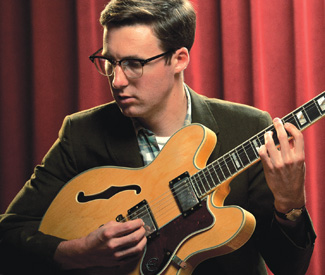
MUSIC Nick Waterhouse no longer calls San Francisco home, but the city’s fingerprints are all over Time’s All Gone, his effortlessly fun, debut LP. The retro-minded songwriter-producer crafts perfect little tributes to the punchy 1950s R&B sounds he’s been drawn to since he was a kid, all steeped with an endearing reverence for old-school record culture and recording techniques.

“We cut as live as possible, so a lot of the record is eight people in one room playing at the same time,” he explains. “Everybody’s gotta feel it together, and if they don’t, you really don’t have a song, in my opinion.”

As a Southern California kid growing up in the Costa Mesa area, Waterhouse approached his music listening from a studious angle, soaking up the Van Morrison and John Lee Hooker records of his parents, along with the Descendents and Sonic Youth albums he found. The well-rounded sonic diet can be heard within the frayed edges and garage rock appeal that Time’s All Gone has in spades.

“I listened to everything I could because I wanted to gain as much experience as possible,” he says. “I was the kid staying up for hours with the radio under the covers.”

By 18, Waterhouse had moved to San Francisco and quickly jumped headfirst into the DJ scene, spinning and building a network of like-minded cohorts at the Knockout’s Oldies Night and Saturday Night Soul Party at the Elbo Room, which brought him in touch with folks like Ty Segall and Mikal Cronin. No connection, however, would become as important to him as his relationship with Rooky Ricardo’s, the Dick Vivian-owned oldies-R&B-soul-centric gem of a record store in the Lower Haight.

“Rooky Ricardo’s informed a lot of how I developed as a person, and it’s all in the spirit of the place,” he says. “It’s got that clubhouse feel.”

http://www.youtube.com/watch?v=mJruQmdlU10

Waterhouse recorded the saxophone-propelled blast of “Some Place” in the summer of 2010, an undertaking that he says was fueled more by a desire to sell vinyl copies to friends and fellow Rooky’s shoppers than to start a full-fledged music project.

“I really had no interest in it at the time,” he explains. “I figured I’d just keep making these 45s for fun and no one would even know who I was.”

After some nagging by friends to put something together for live shows, however, he caved and began recruiting players for the beginnings of what is now the Tarots, his perfectly complementary backing band. Together with Waterhouse’s guitar playing and expressive croon, the group uses horns, piano, drums, and female backing vocals to pay tribute to soulful R&B without ever falling victim to hollow mimicry or self-conscious irony. This is warm music made by passionate people with only the purest of intentions.

When it came time to record an LP, Waterhouse did what anyone who’s heard his music might expect and found an all analog studio in Costa Mesa called the Distillery to work out of. With the use of vintage gear, old ribbon mics, and classic recording techniques, he says that Time’s All Gone was constructed entirely with vinyl in mind.

“I can’t lie and pretend that as somebody born in the late-1980s I haven’t had moments of discovery because of digital music,” he says. And while yes, he has found music digitally over the years, he doesn’t have any vivid, concrete memories of those discoveries, the way he does with physical records. “I can still remember what listening station at Rooky’s I was at when I first heard a record, or what weird flea market I found something at. Having something tangible in front of you helps you associate.”

Waterhouse recently moved back to Southern California due to his quickly escalating, hectic tour schedule, but the plan has always been to officially release his album in San Francisco. In a beautiful bout of planning, Wednesday night’s show will not only mark the release of Time’s All Gone, but will also serve as a celebration for the 25th anniversary of the day Rooky Ricardo’s first opened its doors. Expect the dance party to start early and run late, as Waterhouse has enlisted the help of some of his favorite local DJs to spin before and after his set.

“In my mind, my album was born out of Rooky’s and out of a specific period of time in San Francisco more than anything else,” he says. “So this is my party for all the people and things that really mattered to me there.”

NICK WATERHOUSE

With DJs Carnita, Primo, Matt B, Lucky

Wed/6, 8pm, $12 sold out

Verdi Club

2424 Mariposa, SF (415) 861-9199

www.verdiclub.net


Sunshine eclipsed

1

As an advocate for the passage of the San Francisco Sunshine Ordinance in the early 1990s, I felt obligated to take my first and only City Hall position and serve as a founding member of the Sunshine Ordinance Task Force. I served for l0 years and helped with many other good members to build the task force into a strong and respected agency for helping citizens get access to records and meetings and hold city officials accountable for suppressing access and information.

The task force is the first and best local sunshine task force of its kind in the country, if not the world. It is the only place where citizens can file an access complaint without an attorney or a fee and force a city official, including the mayor, to come before the task force for questioning and a ruling on whether they had violated sunshine laws. The task force lacked enforcement powers, but it still annoyed city officials, including Mayor Willie Brown.

In fact, Brown spent a good deal of time trying to kick me off the task force. He used one jolly maneuver after another, even getting an agent to make a phony complaint against me for violating the ordinance with an email (The complaint went nowhere). I refused to budge and decided to stay on until Brown left office—on the principle that neither the mayor nor anybody else from City Hall could arbitrarily kick members off the task force.

That principle held until about 3pm last Thursday (May 17) at the meeting of the Board of Supervisors Rules Committee to appoint candidates to the task force. At that meeting, without proper notice, advance warning, explanation, apology, or even a nice word or two, the supervisors suddenly turned a normal drowsy committee meeting into an unprecedented bloodbath for the task force and its independence. Sup. Mark Farrell played the heavy, Jane Kim was the facilitating chair, and David Campos was the reluctant third party, working together to bring Willie Brownism back at the task force with a vengeance.

The committee rejected four qualified candidates from three organizations who are mandated by the Sunshine Ordinance to choose representatives for the task force because of the organizations’ special open government credentials. (Doug Comstock, editor of the West of Twin Peaks Observer; Attorney Ben Rosenfeld from the Northern California chapter of Society of Professional Journalists, sponsor of the ordinance; Allyson Washburn from the League of Women Voters and Suzanne Manneh from America New Media.)

The committee without blushing asked the organizations to come up with a “list of names,” a whiff of grapeshot aimed at members and organizations who had served the public well for years. Who wants to go before the supervisors on a list of names for a bout of public character assassination? Meanwhile, while knocking off the qualified, knowledgeable candidates, the committee approved four neophytes without experience and then unanimously appointed David Pilpel, a former task force member known for delaying meetings with bursts of nitpicking. He almost always comes down on the side of City Hall and against citizens with their complaints.

Farrell also tried to bounce Bruce Wolfe, an excellent member, but Kim and Campos supported him and his name was sent on to the full board for approval.

Then, when Wolfe’s name got to the board on May 22, it was a repeat of Willie Brownism and this time to the max. Sup. Scott Wiener moved to amend the motion and substituted Todd David. Farrell seconded. The vote was 6-5, meaning that Willie Brownism wiped the sunshine slate clean of anybody who would raise a pesky question of city officials and the City Attorney’s Office.

The infamous votes against Wolfe: Wiener (ah, yes, the heir of the Harvey Milk and Harry Britt seat in the Castro), Farrell (where is Janet Reilly when we need her?), Malia Cohen (who comes from the Potrero Hill/Bay View/Hunters Point district that needs all the sunshine it can get in facing an Oklahoma-style land rush of development), David Chiu (who was reportedly angry over the unanimous task force opinion finding he violated the Sunshine Ordinance with late submission of documents before the controversial vote to redevelop Parkmerced), Carmen Chu and Sean Elsbernd (neighborhood supes way out in West Portal and the Sunset who almost always vote the downtown line at City Hall). The good votes for Wolfe: John Avalos, Eric Mar, Cristina Olague, Jane Kim, and David Campos.

Campos told me that the organization candidates were “eminently qualified,” that they should have been appointed, and that he would fight for them. He advised the organizations to “stand by their candidates.” He is urging that the issue of organization candidates come back to the next Rules Committee.

Rick Knee, SPJ’s mandated journalist on the task force surveying the carnage, said the supervisors’ actions stem “partly from a desire by some supervisors to sabotage the task force and ordinance itself, and partly from a vendetta by certain supervisors after the task force found several months ago that the board violated local and state open meeting laws when it railroaded some last minute changes to a contract on the Parkmerced development project without allowing sufficient time for public review and comment.”

Knee is right, and it isn’t just Parkmerced, but all the high-stakes development deals flowing through City Hall these days, with their advocates preferring to cut backroom deals rather than being subjected to the full scrutiny of the public and the task force.

James Chaffee, a former chair of the task force, watched the board proceedings with outrage and fired off a letter to all supervisors later that day. He charged that the board in sacking Wolfe violated the Sunshine Ordinance on several counts. Among them: the board changed the committee recommendation on Wolfe without allowing public comment and it passed over Wolfe even though the ordinance requires at least one member of the task force to be “physically handicapped.” That was Wolfe.

Thus, Chaffee wrote, the orchestrated coup was “the perfect example of a failure to follow the sunshine ordinance that led to the sort of problem that it was intended to forestall, namely the supervisors taking an action without being informed of what they are doing.  If Scott Weiner and David Chiu and the rest of the crew did not consider the citizens the enemy and exercize judgment about whether they were complying with the spirit of open government rather than just shaving off the letter of the law as closely as possible, this could have been avoided.”

Chaffee said he couldn’t tell if David was physically handicapped but he said nothing in his application for the task force nor was any disability apparent from the video of the rules committee meeting.

Chaffee said David’s  application showed he  was “self-employed as an investor, obtained a BA from Stanford in 1993, has never attended a task force meeting, and left the statement of his qualifications blank.”

Chaffee said, “It’s easy to see why Scott Wiener likes him. He said it would be a long road before he would go against the city attorney’s office and when it came to constitutional law, he would place the city attorney’s opinion above his own because the city attorney is an ‘expert.'”

I sent Chaffee’s letter and my Bruce Blog post ( “The return of Willie Brown to the Sunshine Task Force,” 5/21) to City Attorney Dennis Herrera for comment: How can his office sit by while the letter and spirit of the sunshine laws are being violated in the move to sabotage the sunshine ordinance and task force? I also sent Chaffee’s letter, with the Bruce blog, to the supervisors with similar questions: Why  are you violating the sunshine laws to kick out the best candidates? For their answers (coming)  and the latest on this evolving controversy, follow along at  www.sfbg.com/bruce.

There you have it:  the state of sunshine and open government in city hall in San Francisco in May of 2012. Todd David over Bruce Wolfe. David  Pilpel uber alles.  Five inexperienced candidates over five experienced candidates. David Pilpel uber alles. A city attorney who rolls over and over and over again. And a whiff of grapeshot for the three organizations mandated by the charter to have represenatives on the task force  because of their open government and public access credentials (the Northern California chapter of the Society of Professional Journalists, the League of Women Voters, and America New Media.)  On guard,  b3


Live Shots: Spiritualized at the Fillmore

0

The guy working security at the Fillmore Wednesday night gave all the photographers in the pit the fingers. Two. Letting them know that rather than the usual three songs, they’d only be allowed to stay there and shoot the first couple. Coming from some bands this sort of announcement would be enough to send the photogs into a hurried panic, but as Spiritualized set the pace with “Hey Jane,” the almost nine-minute rocker that opens latest album Sweet Heart Sweet Light, it was clear the show wouldn’t be so rushed.

It also set a theme for the night. “Hey Jane, when you gonna die?” the band – with extra soul coming from a pair of backup singers – sang over and over. Death isn’t a new topic for Spiritualized, a group (largely Jason Pierce) that’s always combined psychedelic self-realization with gospel influenced calls for salvation. But with Sweet Heart Sweet Light, an album that came about as Pierce struggled with life threatening pneumonia and a degenerative liver disease, the topic seems to have a new gravity.

There was a fairly logical thread early in the set as the band transitioned across albums thorough “Lord Let It Rain on Me,” “Headin’ for the Top Now,” and “Walking With Jesus.” Midway through “Walking” – a bit of rhythm and blues accentuated with harmonica and a whirling organ worthy of a wildly enthusiastic church revival or Allman Brothers concert on Venus – the music got quieter, slower, and darker. Pierce’s vocals were in focus and as he sang “I know I’ve done wrong but I could have done worse.” The song dates back to the Spaceman 3 days, and the line now comes with a lot of weight.

At one point, relatively early in the set, during “Rated X” the person standing behind me told their friend, “This show is kind of boring me to death.” Minority opinion. Even after Spiritualized played their arguably most well-known song, “Ladies and Gentlemen We’re Floating in Space,” having already played for a reasonable amount of time (outside of jam band standards,) the sold out crowd was still thick.

The closer for the night was “Cop Shoot Cop.” It certainly runs on, from a strolling piano groove with light guitars and drums, to a raging wash of guitar and drums with light piano, effectively exhausting the audience’s attention span, so that when it was over the lights were ready to come on.

But for me the real goodbye was “So Long You Pretty Thing,” the final track off of the latest album. Not (just) because of my vanity, but because it – as tenderly beautiful as anything Pierce has put out – is also a reminder that every time you see a band could be the last.

Ugh, that’s depressing, but I guess that alternation between desperation and hope is pretty central to Spiritualized. So I’ll keep in mind the other line from “Walking With Jesus” – that Pierce has been singing for decades – “It’s a long, long time between now and my death.” Maybe it’s a mantra.

Set List:
Hey Jane
Lord Let It Rain On Me
Headin’ For The Top Now
Walking With Jesus
Oh Baby
Rated X
Born Never Asked
Electric Mainline
Soul On Fire
I Am What I Am
Ladies And Gentlemen We Are Floating In Space
Mary
Stay With Me
She Kissed Me (It Felt Like A Hit)
Come Together
–Encore–
So Long You Pretty Thing
Cop Shoot Cop

Opener:
Whether her normal mode or to fit the bill, country singer Nikki Lane sang everything–songs about marriage, a move to California, or taking a walk of shame–with the same solemn tone, strumming her acoustic guitar. Her banter was a little more cheery. “I used to collect Fillmore posters,” the singer said. “I only stopped because some burned up in an apartment I had in L.A.” Then she smiled and added, “Now I have one with my name on it.”

To Yelp at City Hall

1

By Anne Stuhldreher

OPINION If you attended any of the oodles of mayoral debates during last fall’s election, you surely heard every candidate say two things: One, that they’d make city government more accountable to San Franciscans — and two, that they’d harness technology to make city services better.

Now that Mayor Ed Lee is settled into office, there’s an easy and affordable way he can make good on this promise. It would give a megaphone to San Franciscans fed up (or delighted) with city services, letting them tell City Hall — and each other — what is and isn’t working with their tax dollars. It would amplify consumer power, increasing the responsiveness the public sector the way it has the private one.

San Francisco should be the first city to list all municipal services on one of the existing user-review websites that thousands of San Franciscans already rely on to critique restaurants, drycleaners, and auto repair shops. City Hall leaders would encourage all San Franciscans to get online and post reviews, to tell them what happens when they apply for a business license or send their kids to a city camp. Yelp and Citysearch are two user review sites that San Franciscans use right now.

This wouldn’t have a big price tag. Lee would simply mandate that every city service include a prominent icon on its web site asking users to “rate them” on the site. At every window and desk where public servants serve San Franciscans, there’d be a sign encouraging the public to share their experience on the site. Reviews on user review sites aren’t a feedback form sent to nowhere. People’s comments are seen by everyone.

Such open feedback has spurred thousands of businesses—from restaurants and retailers to doctors and dentists — to be more customer-focused and make better decisions with scarce resources.

Public servants and elected politicians are extremely keyed into public sentiment. They just often lack ways to gauge it. Feedback from public reviews would give them a clear picture of what successes they can tout and what problems they need to fix so they can benefit the most people and voters.

Imagine if you could look at online reviews before you went to apply for this permit or pay that fee. People would have written about good and bad times of day to go. They would have written about how much time it takes. They also would have written about which staff were friendly and which were rude.

I know I’d use it. I’d want to see what parks people think are good for toddlers and which ones are better for bigger kids. And what other parents think of different schools, camps, and pools. I’d also use it let the City know when I’ve called 311 three times to get an obscenity painted over in Dolores Park (that my kids walk by every day) but nothing has happened.

For inspiration, city leaders could look to the Family Independence Initiative, a coalition of working-class families in the Bay Area who grew frustrated after bad experiences with local programs. Nothing changed when the parents approached program leaders. So they set up an online rating system so parents could compare notes on services like childcare, job training, or after school-programs.

As decisions are made to dice up the shrinking budget pie to best serve San Franciscans, City Hall needs to hear from San Franciscans. Most city residents don’t have a lobbyist at city hall, but they have a lot to say.

Anne Stuhldreher is a Senior Policy Fellow at the New America Foundation

State of debate

yael@sfbg.com

On May 24, a panel of three Jewish activists and authors from the Bay Area will discuss the historical figures and ancestors that inspire their work today. The event was originally scheduled to take place at the Jewish Community Library, operated by the Bureau of Jewish Education (BJE), which is largely supported by the Jewish Community Federation (JCF, or “the Federation”).

Leaders at the BJE canceled the event in January after discussions about its content with organizers of the panel, who then found another venue: Congregation Sha’ar Zahav. That seemed like a harmless turn of events that has nothing to do with the Israeli-Palestinian conflict, at least not directly.

But with the current state of discourse in the Bay Area’s Jewish community, just beneath the surface are complex dynamics that raise issues of censorship, bonds forged by religion, whether certain criticisms of Israel should be off-limits, and a battle for the hearts of minds of Jews in the diaspora.

Anti-war activist Rae Abileah has found herself at the middle of this battle. She is on the panel to discuss her great uncle Joseph Abileah, an Israeli pacifist who was charged and tried in 1949 after he refused to join the army as part of Israel’s mandatory military service.

Abileah is a member of Code Pink who is outspoken about her opposition to the Israeli occupation in Palestine. The panel is meant to discuss decades-old work, not the current state of affairs domestically or in Israel, but Abileah’s inclusion made it too political for some.

In March, the panelists — which also include Julie Gilgoff and Elaine Elinson — and event organizer Diana Scott wrote an open letter to the Jewish Community Library saying, “We find it particularly troubling that an act of censorship has occurred at the Library — an institution that it supposed to be a symbol of open thought in learning in the Jewish Community.”

David Waksberg, the director of the BJE who was instrumental in the decision-making process, said it was nothing of the sort. “We had very honest, productive, and respectful discussions about why the program wasn’t for us,” he told me.

The letter concludes: “We seek to make clear that Federation policies, designed to foster the appearance of Jewish solidarity by shutting down the vital exchange of ideas in the Jewish community, are divisive and intolerable. They are also ultimately ineffective in suppressing dissent, and, paradoxically, undermine the values and mission of some of our most cherished Jewish institutions.”

“The Jewish Community Federation didn’t tell us whether or not to do this program,” Waksberg insists. “They didn’t pressure us one way or another.”

The open letter also discusses funding guidelines, adopted in 2010 by the Federation. The guidelines restrict funding for events that “endorse the BDS (boycott-divestment-sanctions) movement or positions that undermine the legitimacy of the State of Israel.”


DELEGITIMIZING ISRAEL?

The guidelines have meaning beyond these specific circumstances. They represent a conflict in what counts as diversity of opinion, what counts as dissent, and the incredibly loaded concept of “delegitimizing Israel.”

The guidelines were a response to a controversial 2009 screening of Rachel, a documentary on the life of Rachel Corrie, a 24-year-old who was killed when she stood in front of a bulldozer on its way to level a Palestinian home. The film was screened at the San Francisco Jewish Film Festival followed by speaker Cindy Corrie, Rachel’s mother. The film-going crowd yelled and booed, and the Federation threatened to quit funding the festival.

The next year was declared by some Jewish leaders to be the Year of Civil Discourse. The Jewish Community Relations Council (JCRC), the self-described “central public affairs arm of the organized Bay Area Jewish Community,” organized a year of programming and discussion, with an aim to “elevate the level of discourse in the Jewish community when discussing Israel.” The J Weekly, the magazine of the Jewish Bay Area, reported that “[organizers] agree that the Year of Civil Discourse was a success,” though these organizers acknowledged their work was far from over.

Indeed, the controversies rage on. Two months before the Year of Civil Discourse officially ended Dec. 13, the Museum of Children’s Art in Oakland canceled an exhibit, “A Child’s View from Gaza”, that would have showcased drawings by Palestinian children, after pressure from Jewish organizations.

The director of the JCRC, Doug Kahn, became a spokesperson against the exhibit, butting up against groups like the Middle East Children’s Alliance and Bend the Arc (formerly Progressive Jewish Alliance). In March, an event that would have featured author and journalist Peter Beinart lost support after the JCC of the East Bay learned that one of the event’s moderators was on the board of Bend the Arc. Add this panel to the mix, and the six months since the Year of Civil Discourse ended have proven how taboo topics like BDS and Israeli violence in Palestine remain volatile.

BDS in particular has emerged as an untouchable issue. The campaign is a result of a 2005 Palestinian call for boycott and divestment from Israeli companies, and economic sanctions on Israel. BDSmovement.net, which provides news and background information regarding BDS efforts, lists three goals to the protest: “Ending [Israel’s] occupation and colonization of all Arab lands and dismantling the Wall; recognizing the fundamental rights of the Arab-Palestinian citizens of Israel to full equality; and respecting, protecting and promoting the rights of Palestinian refugees to return to their homes and properties as stipulated in UN resolution 194.”

The campaign has seen effects worldwide. Abileah has organized to promote BDS, in particular working to get Bay Area stores to stop carrying Ahava, skin-care products made in what she calls an illegal Israeli settlement in Palestine.

The BDS campaign is “a tried and true nonviolent tactic to get the Israeli government to uphold international law,” Abileah told me. “We decided to be in solidarity.”

But some Jewish leaders feel BDS goes too far.

“The term delegitimizing Israel refers to the intent to eliminate the Jewish and democratic State of Israel by portraying it as an illegitimate nation,” Kahn wrote in an email. “The boycott/divestment/sanctions movement’s leadership has made clear that this is their ultimate agenda and one of the movement’s explicit objectives would achieve that aim resulting in a dire threat to nearly half of the world’s Jewish population that lives in Israel.”

BDS is mentioned several times in the Federation funding guidelines, and stands out as the only specific example of what it means to “undermine the legitimacy of the state of Israel.”


ISOLATE THE EXTREMISTS

But organizations like the Federation and the JCRC aren’t the only ones interested in the path that Israel-Palestine discourse among Bay Area Jews takes. The Reut Institute, a think tank based in Tel Aviv, “has been committed to responding to the assault on Israel’s legitimacy since 2008,” according to the introduction to its 2011 report: “San Francisco as a Delegitimization Hub.”

The report ranks San Francisco and London among the “few global hubs of delegitimization.” It also warns of the dangers of San Francisco in particular as top-delegitimizing city, noting “the role of the San Francisco Bay Area as a generator and driver of broader trends, or as a hub of social experiments…What won’t pass in San Francisco won’t pass anywhere else, and what happens in San Francisco doesn’t stay in San Francisco.'”

San Francisco gets this attention from Reut because of dissent within its Jewish community, which the institute calls globally unparalleled. “While in London delegitimization is being promoted primarily by groups that are not part of the Jewish community…an increasing number of Jews in the San Francisco Bay Area have become ‘agnostic’ towards Israel, and are fueling the delegitimization campaign.”

The report’s authors, Reut’s “national security team,” do not spend much time explaining what “delegitimizing Israel” means. When it does, BDS again stands out as one of the only concrete examples. According to the report, in the Bay Area “the number of individuals who are willing to stand up for Israel is declining while others have been fueling the delegitimization campaign, many times unintentionally, by engaging in acts of delegitimization — namely, actions or campaigns framed by their initiators as a reaction to a specific Israeli policy, which in practice aim to undermine Israel’s political and moral foundations. Examples include support for the BDS movement and the 2010 Gaza Flotilla,” a protest in which ships full of supporters and cargo tried to make it to Palestinian land in violation of an Israeli embargo.

The report labels those looking to delegitimize Israel “extremists.” It warns, however, that those questioning Israel’s policies, when rebuked by its “tradition defenders,” may be swayed into trusting the extremists. It therefore advocates a “broad tent approach,” advising that Jews in the Bay Area initiate a “community-wide deliberation” with an “aim to…drive a wedge between the extremists and those who principally support the legitimacy of Israel’s existence regardless of policy agreements.”

It’s important, according to the report, to make sure that supporters of BDS are seen as “extremists.” The “broad tent” is supposed to contain all Jews, with a diversity of opinions — except those supporting BDS and other acts of “delegitimization.” In light of this goal, the report praises the Federation’s funding guidelines and the Year of Civil Discourse.

“Through the funding guidelines drafted by a JCRC-JCF Working Group…the San Francisco Bay Area has set the standard nationally as the first American Jewish community to develop guidelines delineating red lines that go hand-in-hand with the broad tent approach,” Reut reports. “Additionally, we regard the Year of Civil Discourse…led by the JCRC, as important best practices that could be emulated in other places.”


ORTHODOXY

The Bay Area’s left-leaning Jewish organizations may be influential, but under such a hot spotlight, they tread carefully. Congregation Sha’ar Zahav is one such organization. Last year, the synagogue surveyed its members to test opinions on Israel.

“In general, the survey shows that we have a liberal left-leaning congregation,” said Terry Fletcher, a member of Sha’ar Zahav who now heads a committee created to follow up on the survey results. “People tend to blame, shall we say, both sides of the conflict, both Israelis and Palestinians, somewhat equally.”

Fletcher’s committee has organized events and discussions in the wake of the survey since January. “One idea was that we would start with something non-controversial,” Fletcher told me. “But we couldn’t think of anything that everyone on the committee considers non-controversial.”

The programming has featured discussions on evolving relationships with Israel and questioned their nuances. But Fletcher says they haven’t been able to venture into BDS territory.

“I would love it if we could get to a place where we could actually address that,” Fletcher reflected. “And we would want to do it from a balanced perspective. But it’s such an emotional issue.”

There are practical concerns as well. According to Fletcher, the Federation gives a small amount of funding for scholarships for Sha’ar Zahav’s religious school. The money that funded Fletcher’s committee’s programming came from Sha’ar Zahav’s general fund, when there was enough of it. She says that the committee is now operating without a budget due to tight finances. Even so, if the committee’s programming were to breech the Federation’s funding guidelines, it might put the program in jeopardy.

“To me, that’s what’s so problematic about these guidelines,” Fletcher said. “The guidelines are saying, if you want money from us, we have restrictions on what your organization can do. Even though our programming is not funded by the Federation, because it funds something completely unrelated, it could get cut.”

Fletcher also questions that paradigm of “delegitimizing Israel.”

“I think this is a term that people who defend Israel use to label people who criticize Israel in a certain way,” she said. “Many of us would answer that it’s Israel’s own policies that are delegitimizing Israel in the eyes of the world. I don’t find it a useful term.”

Sha’ar Zahav will be hosting the Reclaiming Jewish Activism panel. Davey Shlasko, a member of the congregation who helped facilitate the new arrangement, thinks the concern about Abileah’s associations were misplaced.

“I think it is unfortunate that the predicted objection to Rae’s other work was enough of a concern to cancel an event that is actually about drawing inspiration from our ancestors,” Shlasko told me via email.

But it’s in looking back at history that the panel acquires so much meaning. “It is safe to say that living in the United States, Jews have never been more empowered, safe, and connected to the community they live in,” mused one source, who wished to remain anonymous. “It is inevitable that with such success, the need to band together changed. The group identity changes. Sometimes it’s that fight, that need to rally together, that keeps the group intact.”

For Abileah, “the event will be Jewish activists talking about our ancestors.” She’s upset about the event’s cancellation, but not surprised.

“For a lot of Jewish people it can be challenging to speak out against this issue because you don’t know where your friends stand on this, or your synagogue or even your family,” she said. “There are a lot of people who we say are PEP: progressive except Palestine. My family and community have been supportive, but I’ve gotten hate mail and threats of violence.”

“It sounds like these Jewish institutions that are censoring have so much power, like they’re the mainstream Jewish voice. But I think the majority of Jewish Americans want a resolution to the conflict and are opposed to the occupation,” she said.

And how does she think Joseph Abileah would react to this situation? “I’d like to think that he would be shocked and hurt by it,” she said. “It’s sad to see so much fracture in the Jewish community over this issue.”

The war on sunshine

0

EDITORIAL The Rules Committee of the San Francisco Board of Supervisors joined the war on sunshine May 17 when it rejected four qualified candidates from three organizations who are mandated by the ordinance to choose representatives for the task force because of the organizations’ special open government credentials.

The representatives served as experienced, knowledgeable members who were independent counters to the nominees of supervisors who were often promoting an anti-sunshine agenda. The committee asked the organizations to come up with more names.

That was a nasty slap at members and organizations that have served the task force well for years. And this arbitrary demand will make it virtually impossible for these organizations to come up with a “list of candidates” to run the supervisorial gauntlet. Who wants to go before the supervisors on a list for a bout of public character assassination?

Specifically, the committee:

• Unanimously moved to sack the two incumbents (Allyson Washburn from the League of Women Voters) and Suzanne Manneh (New California Media). The League was mandated to name a representative because of its tradition and experience with good government and public access issues. New California Media was mandated to name a member to insure there would always be a journalist of color on the task force.

• Unanimously refused to seat two representatives from the Northern California chapter of the Society of Professional Journalists, the sponsor of the ordinance with a long tradition in open government and First Amendment issues. One SPJ mandated representative was for a journalist (Doug Comstock, editor of the West of Twin Peaks Observer, one of the best neighborhood papers in town and a former chair of the task force.) The second mandated seat was for an attorney (Ben Rosenfeld).

• Tried to knock out incumbent Bruce Wolfe on motion of member Mark Farrell, but Wolfe survived on a 2-l vote.

• Voted unanimously for four new persons to the task force while sacking and refusing to appoint able members with experience and expertise without a word of thanks.

Committee Member David Campos later told me that he went along because he could see he didn’t have the votes. He said the organization’s candidates “were eminently qualified,” that they should have been appointed, and that he would fight for them. He said he would ask the office of Jane Kim, who chairs the committee, to set the issue for hearing at the next rules meeting or call for a special meeting.

We asked Campos what the organizations should do. “They should stand by their candidates,” he said. We concur.

The Society of Professional Journalists, the League of Women Voters, and California New Media and their open government allies should stand by their candidates, lobby for them with the rules committee and the full board, and get out the word about this attempted coup in the most important court of all, the court of public opinion.

The Sunshine Task Force has annoyed some elected officials with its dogged efforts to promote open government. City Hall is already trying to find ways to undermine it. That needs to end, now.

Editorial: The war on sunshine

7

EDITORIAL The Rules Committee of the San Francisco Board of Supervisors joined the war on sunshine May 17 when it rejected four qualified candidates from three organizations who are mandated by the ordinance to choose representatives for the task force because of the organizations’ special open government credentials.

The representatives served as experienced, knowledgeable members who were independent counters to the nominees of supervisors who were often promoting an anti-sunshine agenda. The committee asked the organizations to come up with more names.

That was a nasty slap at members and organizations that have served the task force well for years. And this arbitrary demand will make it virtually impossible for these organizations to come up with a “list of candidates” to run the supervisorial gauntlet. Who wants to go before the supervisors on a list for a bout of public character assassination?

Specifically, the committee:

•Unanimously moved to sack the two incumbents (Allyson Washburn from the League of Women Voters) and Suzanne Manneh (New California Media now known as America New Media.)  The League was mandated to name a representative because of its tradition and experience with good government and public access issues. America New Media was mandated to name a member to insure there would always be a journalist of color on the task force.

•Unanimously refused to seat two representatives from the Northern
California chapter of the Society of Professional Journalists, the sponsor of the ordinance with a long tradition in open government and First Amendment issues. One SPJ mandated representative was for a journalist (Doug Comstock, editor of the West of Twin Peaks Observer, one of the best neighborhood papers in town and a former chair of the task force.) The second mandated seat was for an attorney (Ben Rosenfeld).

•Tried to knock out incumbent Bruce Wolfe, an excellent member,  on motion of member Mark Farrell, but Wolfe survived on a 2-l vote.

•Voted unanimously for four new persons to the task force while sacking and refusing to appoint able members with experience and expertise without a word of thanks, explanation, or apology.

Committee Member David Campos later told me that he went along because he could see he didn’t have the votes. He said the organizations’ candidates “were eminently qualified,” that they should have been appointed, and that he would fight for them. He said he would ask the office of Jane Kim, who chairs the committee, to set the issue for hearing at the next rules meeting or call for a special meeting.

We asked Campos what the organizations should do. “They should stand by their candidates,” he said. We concur.

The Society of Professional Journalists, the League of Women Voters, and America New Media and their open government allies should stand by their candidates, lobby for them with the rules committee and the full board, and get out the word about this attempted coup in the most important court of all, the court of public opinion.

The Sunshine Task Force has annoyed some elected officials with its dogged efforts to promote open government. City Hall is again  trying to find ways to undermine it. That needs to end, now.


The return of Willie Brownism to the sunshine task force

35

As an advocate for the passage of the  San Francisco sunshine ordinance and task force in the early 1990s, I felt obligated to take my first and only City Hall position and serve as a founding member of the task force. I served for l0 years and helped with many other good members to build the task force into a strong and respected agency  for helping citizens get access to records and meetings and hold city officials accountable for suppressing access.

The task force is the only place where citizens can file an access complaint without an attorney or a fee and force a city official, including the mayor, to come before the task force for questioning and a ruling on whether they had violated  sunshine laws, The task force lacked enforcement power, but it still annoyed of city officials, including Mayor Willie Brown.

In fact, Willie spent a good deal of time trying to kick me off the task force. He used one jolly  maneuver after another, even getting an agent to make a phony complaint against me for violating the ordinance with an email. (The complaint went nowhere.) I refused to budge and decided to stay on the task force until Willie left office—on the principle that that neither the mayor nor anybody else from City Hall could arbitrarily kick members off the task force. When Willie left office after two terms, I resigned with the hope that the Willie principle had been established.

The principle held, until last Thursday (May 17) when the board’s rules committee (Sup. Mark Farrell, Chair Jane Kim, and Sup. David Campos) brought Willie Brownism back to the task force with a vengeance. The committee moved to sabotage the task force by sacking or refusing to appoint four qualified candidates from three organizations who are mandated by the ordinance to choose representatives for the task force because of the organizations’ special open government  credentials. Their representatives served as experienced, knowledgeable members who were independent counters to nominees of supervisors who were often  promoting an anti-sunshine agenda. The committee asked the organizations to come up with more names. There was no explanation nor apology to the candidates nor to their organizations. It was a nasty slap at members and organizations that have served the task force well for years. And this arbitrary demand  will make  it virtually impossible for these organizations to come up with a “list of candidates” to run the supervisorial gauntlet.  Who wants to go before the supervisors on a list for a bout of public character assassination?

 Specifically, the committee:

+unanimously moved to sack the two incumbents (Allyson Washburn from the League of Women Voters) and Suzanne Manneh (California New Media.)  The League was mandated to name a representative because of its tradition and experience with good government and public access issues.  California New Media was mandated to name a member to insure there would always be a journalist of color on the task force.

+unanimously refused to seat two representatives from the Northern
California chapter of the Society of Professional Journalists, the sponsor of the ordinance with a long tradition in open government and First Amendment issues.  One SPJ  mandated  representative was for a journalist (Doug Comstock, editor of the West of Twin Peaks Observer, one of the best neighborhood papers in town and a former chair of the task force.) The second mandated seat was for an attorney (Ben Rosenfeld.)

+tried to knock out incumbent Bruce Wolfe on motion of Farrell, but Wolfe survived on a 2-l vote.   

+voted unanimously to approve David Pilpel, a former task force member who is known by observers for delaying meetings with is  bursts of lengthy nitpicking on almost every item.   He then usually votes against citizen complaints and for protecting  city officials on the basis of spotting   “onerous” burdens caused by the complaint

+voted unanimously for four new persons to the task force while sacking  and refusing to appoint able members with experience and expertise without a word of thanks. The four new members are “a “a bunch of neophytes,” according Rick Knee, outgoing SPJ member for 10 years.

Knee, a former task force chair surveying the carnage,  said that the committee’s actions stemmed “partly from a desire  by some supervisors to sabotage the task force and the ordinance itself, and partly from a vendetta by certain supervisors after the task force found several months ago that the board violated local and state open meeting laws when it railroaded some last minute changes to a contract on the Park Merced development project without allowing sufficient time for public service review and comment.” He noted that the developer “had slipped in a 14-page package of amendments at the llth hour”  to get board approval.

Knee said  that the rules committee is recommending sacking two incumbents and apparently hopes to sack two more. Farrell wanted to push out a fifth but was outvoted by Kim and Campos.  All five candidates, he said,  “have done excellent work, each brought a unique perspective and, while we had our share of disagreements among ourselves, all shared a passion for open government and for making sure that everyone who came before us got a fair hearing.”

Hanley Chan, an outgoing task force member,  backed up Knee’s point in an email. He  wrote that “I spoke with Sup. David Chiu and he told me that the rest of the supervisors will not appoint any incumbent, because we defied the city attorney’s opinion (the Park Merced  case). “”You should have made a right decision. I was told by the city attorney that it was legal, my aides explained it to the task force and you should have made a better judgment.'”  Chan said that the rules committee ouster move  was “retribution on how we voted that day.”  Chan said that “Bruce Wolfe and all the task force members made a wonderful argument and stuck to their guns.” The task force vote was a  unanimous 8-0 vote.The point: defy the supervisors and city attorney and the boys and girls in the back room and  get blasted off   the task force, bang, bang, bang, bang. 

The committee choreographed the move smoothly.  Farrell as the heavy  would make the move. Kim would agree and facilitate as chair. Campos would go along reluctantly. The deputy city attorney would be supine through the process  even though the supervisors were breaking precedent and misinterpreting the ordinance.  Sunshine candidates and advocates in the audience were furious and emails have been crackling back and forth ever since.

Campos later told me that he went along because he could see he didn’t have the votes. He said the organization’s candidates “were eminently qualified,” that they should have been appointed, and that he would fight for them. He said he would ask Kim’s office to set the issue for hearing at the next rules meeting or call for a special meeting. Kim did not return calls for comment.

I asked Campos what the organizations should do. “They should stand by their candidates,” he said.

I concur. The Society of Professional Journalists,  the League of Women Voters, and California New Media and their open government allies should stand by their candidates, lobby for them with the rules committee and the full board, and get out the word about this attempted coup in the most important court of all, the court of public opinion. Make this an election issue with all incumbents and candidates.  Let public officials know there are serious consequences to supporting Willie Brownism on the sunshine task force, the first and best local task force of its kind in the country if not the world.

The good news is that the rules committee has demonstrated, with its sneak attack,  the value of the task force for citizens and open government and why it is a San Francisco institution that needs to be saved and strengthened.  All of this  illustrates once again my  favorite axiom of mine. In San Francisco, the public is generally safe, except when the mayor is in his office and the supervisors are in session. b3


Deutch maneuver

0

le.chicken.farmer@gmail.com

CHEAP EATS “Berlin is awesome,” Kayday writes me, from Berlin. “We should all live here.”

Amazingly, I answer her in German. “Genau,” I write.

Berlin is awesome, true. But it’s one thing May through September, and something very much else the rest of the time. Is my opinion.

Kayday lives in Seattle, and complains about the weather there from September through July.

She doesn’t want to live in Germany, I feel certain.

When she was here, just a few weeks ago, she wanted to eat at Schmidt’s, maybe for practice. So we did. No complaints from me. Schmidt’s has the best wild boar sausage in all of San Francisco.

We also ate at my new favorite Chinese restaurant, in the Richmond, but I’m not going to tell you yet about that. Maybe next week. If you’re good.

Wild boar sausage, I’m pretty sure I already told you about. There’s Rice Broker though, in the Mission, which is another place where Kayday and me ciao’d down.

“Hi,” I said.

“Hello.”

“Hola.”

And she tried to answer — probably in German — but couldn’t, because something had gone down the wrong pipe. Maybe, I’m thinking, a sesame seed. Or a teeny tiny speck of almond?

Both things were in her rice bowl, which was the two skewers of lemongrass beef one, with whole orange slices, string beans, and, yeah, almonds and sesame seeds.

Now, I’ve seen people choking in restaurants before. I’ve even been the person choking in restaurants. It’s no big thing. You cough, you turn red, you hold up your finger to let your dining companions know that, no, in fact you don’t need the Heimlich. Yet. And then you drink some water, cough some more, tear up a little, feel like an idiot, and continue eating.

So happens, the wrong-pipe problem is a recurring theme for me, in life. I have lots and lots of sympathy and patience, and too am ready — if necessary — to spring into action. Ever the nanny, I am trained in CPR and so forth.

“Hello?” I said again. “Are you quite sure you don’t need the Heimlich?”

“I’m OK,” Kayday said. “I just need to go for a walk.” And she excused herself. “Be right back.” And left.

This was a first.

I digged into my own bowl, which was rice porridge with pork-and-ginger meatballs, bok choy, and cilantro. It was excellent, and went down very smoothly.

While I ate, though, I couldn’t take my eyes off of Kayday’s bowl, which was beautiful. The meat, as yet untouched, glistened on its skewers. The orange slices shone forth, like little sunsets. The beans — it was just a beautiful bowl of food. Calling to me.

Kayday is a dear and good friend. She’s an important part of my band. It occurred to me she could choke and die outside on the sidewalk. Still, I decided not to eat her food. When she came back, I would ask. And she would share.

Then, the hell with it, I reached across the table and tried a piece of meat from her skewer. Tough city, go figure!

But, like I says, mine was very good. The meatballs were almost as smooth as the porridge, and good and gingery. And I loved my edamame snack bowl, with dandelion and cane vinegar.

Come to think of it, she’d had a snack bowl appetizer too. Pickled daikon and carrots. And I can’t remember now if I even tasted it, but it sounds pretty good, no?

Of course, this isn’t Kentucky Fried Chicken. But to its credit it isn’t Spork either. And even though it choked my friend, I like that Rice Broker is there. Here in the hood.

And anyway, she survived. She came back.

“Hello,” I said.

She said, “Hi.”

RICE BOWL

Wed-Sun 6-10pm

1058 Valencia, SF.

(415) 643-5000

Cash only

Beer and wine


GUEST OPINION: The politics of retribution

122

By Debra Walker and Krissy Keefer

We have been shocked and saddened by the perpetual attack on Ross Mikarimi and his family.

To Ross’s credit, he took responsibility in the criminal case he faced, and accepted a plea bargain to a non-domestic-violence misdemeanor that the district attorney concluded served the interests of justice.

He and his wife, Eliana Lopez, had resolved their dispute before the betrayed disclosure to the police and the media by the trained but unlicensed attorney that began the criminal case. The plea bargain was vetted and all legal ethicists consulted concluded that the plea bargain could not be the basis of any action against Ross for the now infamous term “official misconduct.” Ross was ordered into counseling.

Since the criminal case ended we have watched the mayor, domestic-violence advocates, and the majority of the print media, collectively pass judgment without connection to reality, with devastating consequences to Ross Mirkarimi, his family and the people of San Francisco.

Mayor Ed Lee suspended Ross without a hearing and without pay. In other words, the mayor acted against Ross without due process. City Attorney Dennis Herrera has merely repeated all of the unsubstantiated allegations from a newspaper opinion piece in the form of a pleading — and actually submitted this as fact, further embarrassing our city.

Barring further intervention by the courts, the Board of Supervisors and the Ethics Commission will now be forced to publicly weigh in on the concluded criminal case that occurred before Ross was in office.

Was the punishment laid out by the courts not enough? Are we going to all sit back and watch as San Francisco engages in a public political assassination of a progressive elected official? At what point does it stop? 

Clearly it hasn’t stopped with Ross. Now the mayor and the city attorney have begun the attack on his campaign manager and well-known City Hall aide Linette Peralta-Hayes. Who is next? It could be any of us, of you.

As close friends of Ross and Eliana, we can attest to the fact that this family has paid dearly for their now very public fight and we all should hope for a healing. It does not bring justice to any women’s issues to have such a public display of retribution and revenge. Blowing this out of proportion like this has been only sets the stage for the continued backlash against women’s real issues.

If there were not a complete attack on women’s rights at this time in our country, this might be easier to stomach. Not one thing about this has advanced the rights of women or the understanding of domestic violence. Instead, the criminal justice system has been manipulated to further a political agenda of removing an elected official from office.

We all make mistakes in life. There have been several recent occasions involving officials actually in office where their behavior was questioned.  One issues involved sexual contact with a subordinate, another involved domestic violence and others involved substance abuse. In not one of these instances has the person been removed office.

To remove Ross from office is political and nothing else.

People are purportedly so outraged on behalf of abused women everywhere. But where is the outrage about the coordinated attack on choice in our country or about the documented inhumanities perpetrated against women throughout the world, even today?  Or equal pay, or adequate healthcare? What about the families losing their homes to greedy banks? Nothing of substance gets done on these issues. Instead, attention is focused away from the important issues to the personal shortcomings of the politicians seeking to address those issues.

From the impeachment efforts against Clinton to the allegations against the Wikileaks activist, there are over-amped attacks aimed to politically destroy the target in the press.  “Due process” and “innocent until proven guilty” are essentially thrown out the pressroom window. 
In the name of domestic violence, the mayor and the city attorney have removed an elected official from office. Domestic violence advocates are being used to further an agenda that is hypocritical and ultimately will undermine and dis-empower us all.

Ross Mikirimi was the only progressive elected in the last election. Ross has always been an ideological feminist. The established power brokers in City Hall did not want Ross to be sheriff. They do not want someone who advocates for diversity. They do not want someone who supports the rights of the people to implement the Compassionate Use Act and maintain cannabis dispensaries. They do not want a sheriff who will stand up to the federal government.  They do not want a sheriff who will stand with the 99 percent.

San Francisco is a great city not because of intolerance but because of tolerance. The strength of the city came about because of respect for diversity and encouragement of diversity. Ross stands for those principles.

Ross made a mistake in his personal relationship. Eliana Lopez, his wife, has clearly forgiven him. Each of us should do the same. To do otherwise is to disrespect Lopez.

Are we going to trust City Hall to be the arbitrators of conduct?  And are we really going to sit by and watch as they systematically throw untrue, unfounded, unsubstantiated accusations at whomever they want? Really?

To use this incident as the basis for this coup is without precedent. City Hall’s actions are without basis in fact and without foundation in law.

We believe that the mayor, among others, is doing what he wants to under the guise of women’s rights. We do not want to be used in that way.

There is something very wrong with what is happening — and sadly if this public political assassination can happen to Ross and his family, it can and will happen to anyone of us. Ask Linette Peralta Hayes.
 
Krissy Keefer is artist director, Dance Mission Theater. Debra Walker, an artist, is political development chair of the California Democratic Party Women’s Caucus.

Upper highs, Valley loves

0

virginia@sfbg.com

APPETITE I’m constantly asked what my favorite restaurant is. It’s an impossible question. Inquire about my favorite taqueria, German spot, tea house, French bistro, and I’m ready to talk. There’s a favorite for every style and mood in a metropolitan city such as ours. My current home is on the cusp of Haight-Ashbury and Cole Valley, which, like every neighborhood in our food-rich city, has its treasures. We’ll breeze past the touristy swill and explore its best here. Find more of my picks in this neighborhood, from coffee to cocktails, here.


ALEMBIC

Thank God for The Alembic. The bar has been one of SF’s best since it opened, thanks to bar manager Daniel Hyatt, whose expertise in American whiskeys equals an ahead-of-the-curve selection. Alembic claims many gifted bartenders, like Danny Louie and Janiece Gonzalez, and I’m never disappointed when asking for an off-menu cocktail creation. The food is destination-worthy in its own right — maybe the best in the Haight. Whether at the bar with jerk-spiced duck hearts and a bowl of shishito peppers, or dining on caramelized scallops and sweetbreads over kabocha squash spaetzle, I continue to be satisfied.

1725 Haight, SF. (415) 666-0822, www.alembicbar.com


MAGNOLIA PUB AND BREWERY

Owner and brewmaster Dave McLean opened Magnolia Brewery more than 14 years ago, brewing the best beers in SF (in my humble opinion). Magnolia’s space has Old World, gastropub charm in black leather and wood booths and antique floor tiles. It serves the best brunch in the area — sorry, Zazie and Pork Store — which includes BBQ belly over Anson Mills cheddar grits, or quinoa hash and eggs if you want to cut down the fat quotient. For lunch and dinner, house sausages delight (rabbit currywurst!) as does savory mushroom bread pudding or a near-perfect Magnolia pub burger.

1398 Haight, SF. (415) 864-7468, www.magnoliapub.com


GIOVANNI’S PIZZA AT CLUB DELUXE

Upper Haight’s best hidden gem is Giovanni’s, a pizza kitchen in the back of Club Deluxe (eat in the bar or take-out). Giovanni’s pies aren’t so much Neapolitan perfection as a mix between Italian and East Coast styles, with a classic margherita and spicy Diavola, laden with pepperoncini, salami, Parmigiano, and a Belizean hot sauce. Save room for a West Coast rarity: a fresh cannoli, sweet ricotta stuffing brightened with orange blossom oil. Club Deluxe’s drinks are of the mojito, greyhound kind. Not exactly a cocktailian destination. What makes Deluxe special? Nightly live jazz in a well-loved bar that thankfully hasn’t changed decor for decades, with a 1950s, cozy bar feel. Bands rotate: trios, duos, quartets, even organ acts, providing some of the best jazz in the city, usually free. If only, like New Orleans, our neighborhoods were lined with such clubs.

1511 Haight, SF. (415) 552-6948, www.sfclubdeluxe.com


ICE CREAM BAR AND SODA FOUNTAIN

I wrote much of Ice Cream Bar back in February, so I’ll send you to the review detailing my fascination with this one-of-a-kind, 1930s-era soda fountain. It’s my top pick for dessert.

815 Cole, SF. (415) 742-4932, www.theicecreambarsf.com


PARADA 22

Parada 22 is a vibrant little space with aquamarine walls and vintage South American food products lining the shelves. The casual eatery feels vacation-like, offering Puerto Rican food. My favorite dish here is camarones a la Criolla: sauteed shrimp, tomato and onions in a dreamy-light cream sauce. Sides like plantains and red or white beans in sofrito-based sauces, are fresh and appealing. The restaurant has recently joined forces with sister restaurant Boogaloos (www.boogaloossf.com) in the Mission, serving Boogaloos’ brunch menu every weekend.

1805 Haight, SF. (415) 750-1111, www.parada22.com


THAI DUO: PLOY II AND SIAM LOTUS

Haight-Ashbury has two unexpectedly strong Thai spots serving authentic dishes. Ploy II is upstairs in an old Victorian space, with weathered carpet and decor (elephants, tapestries) straight out of Chang Mai’s Night Bazaar. It does standards well, and I crave the mango panang curry: spicy, creamy with coconut milk and peanut sauce. Siam Lotus also is reliable on Thai classics, though it’s the daily changing chef’s special board that sets it apart. Thankfully on the permanent menu, the Thai tacos are a must. Though the paper thin crepes fall apart at the touch, a filling of ground chicken, shredded coconut, mini-shrimp, and peanuts makes for one of the more fun Thai dishes anywhere.

Ploy II: 1770 Haight, SF. (415) 387-9224, www.ployii.com

Siam Lotus: 1705 Haight, SF. www.siamlotussf.com


HAMA-KO

Hama-Ko husband-and-wife owners Tetsuo and Junko Kashiyama open only when they feel ready and usually treat regulars best, service is slow, and certainly there are no California rolls. But this nearly 30-year-old classic is one of those neighborhood secrets that locals return to and sushi devotees enjoy. It’s straightforward sushi: silky scallops, bright-as-the-sea tai (red snapper), melt-in-your-mouth unagi avocado maki. You won’t find the variety of rare fish found at Zushi Puzzle (www.zushipuzzle.com), but you will find impeccable freshness — Tetsuo sources his fish from the same place The French Laundry and Chez Panisse gets theirs, he proudly tells me — from a couple who cares.

108 Carl, SF. (415) 753-6808

Subscribe to Virgina’s twice-monthly newsletter, The Perfect Spot, www.theperfectspotsf.com 


All together now

0

virgnia@sfbg.com

APPETITE Incredible burgers in a bowling alley, SF’s deaf community gathering over Neapolitan pizzas, brothers serving food from their hometown of Nice in a tiny restaurant, dining around a U-shaped counter off a FiDi alley… each of the restaurants below opened within the last 6 months, providing a unique communal experience (and, most important, fine food to go with) that makes one feel like actually engaging with, rather than ignoring, fellow diners.


MISSION BOWLING CLUB

Mission Bowling Club (MBC) is one badass bowling alley. Squeaky clean hipster all the way: there’s no funky smell or dated dinginess in this brand new space. Open and industrial, it boasts a front patio, separate dining room downstairs and one upstairs overseeing six lanes and a wood-lined bar area. Cheer on bowlers from comfy couches while sipping a cocktail (solid, though not noteworthy drinks) and filling up on French onion casserole.

As soon as I heard chef Anthony Myint, Mission Chinese Food and Mission Street Food wunderkind, would oversee the menu, it was easy to guess MBC was going to boast exceptional food. The beloved Mission Burger ($15, $10 during happy hour) is back. I missed the rich, granulated patty, lathered in caper aioli. An avowed carnivore, I was shocked to find the vegan burger ($10) is almost as exciting. A fried chickpea, kale, shitake fritter is brightened up with sambal (Indian chili sauce), guacamole, and fennel slaw. A juicy sausage corn dog ($7) arrives upright in molecular fashion, standing watch over a dollop of habanero crema. Only a hard, small “everything pretzel” ($5) disappointed. Not bad for a bowling alley.

3176 17th St., SF. (415) 863-2695, www.missionbowlingclub.com


CASTAGNA

Brothers Jerome and Stephane Meloni from Nice infuse their Italian heritage and French upbringing in Italian and Niçoise dishes. I enjoyed Stephane’s cooking at their former Restaurant Cassis, a far roomier Pac Heights space, but their tiny new Castagna lends itself to connection. Stephane cooks within full view, Jerome interacts with diners, and I found myself in conversation with tables next to me. On a good night, it exudes that neighborhood conviviality found in similar-sized restaurants around Europe. Decor isn’t particularly memorable, though red walls always bring a space to life.

Sticking closer to tradition is the best way to navigate Castagna’s menu. Stephane’s classic Niçoise caramelized onion tart ($7.50) is the best dish, silky with caramelized onions in a flaky crust, with (the good stuff) white anchovies on the side, which they explained neighborhood diners weren’t quite ready for — I say place them on top and let diners sort it out. I found the steak in my steak frites ($18) too well done (medium rare, please) despite a lush green peppercorn sauce. I’d opt instead for French-style campagnarde pizza ($15), in the spirit of flammkuchen (Alsatian flatbread), covered in potato sauce, bacon, crème fraîche and raclette.

2015 Chestnut, SF. (415) 440-4290, www.castagnasf.com


MOZZERIA

The communal award could easily go to the Mission’s Mozzeria. Maybe we didn’t need an umpteenth Neapolitan pizza place, but there’s none quite like this, run by a deaf couple and staff. San Francisco’s deaf community gathers en masse at a hangout where speaking with your eyes and hands is as important as speaking verbally. Of course, verbal processors are welcome, too.

The dining bar is my preferred perch, particularly to engage with chef Russell Stein (who co-owns Mozzeria with wife Melody). He’s hilarious and reads lips like a master, joking with diners as he spreads ingredients over wheels of dough before popping them into a wood-burning oven. His heartwarming Neapolitan pizzas ($12-18) are topped with the likes of caramelized onion, pancetta, mozzarella or goat cheese and eggplant. I must admit, my favorite item, Mozzeria bar ($8), isn’t the most gourmet, but hearkens back to my Jersey youth. Let’s call it what it is: a fried mozzerella cheese log doused in pomodoro sauce and basil. Sheer comfort.

3228 16th St., SF. (415) 489-0963, www.mozzeria.com


CLAUDINE

Claudine’s chic cafe charms. Big picture windows and corner space on an alley up a half flight of stairs appeal, while a u-shaped bar creates a convivial dining experience, the bar is so small so you can’t help but exchange good will with neighboring patrons. You can dine at a table, but the bar is far more fun, and works for a casual meal all day.

Much has been made of the meatball, kale, and fregola soup ($7/10), and rightly so. It is an unexpected culinary delight: olive oil-laced broth, laden with Parmesan, onions, carrots. I can be bored by broth soups at times, but this one holds my interest with plump veal-pork-beef meatballs and pleasantly soggy kale. Roasted mussels ($12 and $17) arrive aromatic with fennel sausage in lemon and white wine, while even avocado toast ($12) delights topped with dill gravlax, Spanish black radish, and lemon. Leave room at the end for Claudine favorite s’mores ($7) baked in a glass bowl with layers of marshmallow and chocolate on graham cracker crust. My meals at dinner have been more satisfying than at lunch, but each visit improves my opinion.

8 Claude Lane, SF. (415) 362-1988, www.myclaudine.com *

Subscribe to Virgina’s twice-monthly newsletter, The Perfect Spot, www.theperfectspotsf.com


A Guardian announcement

58

After 45 years of “printing the news and raising hell” — and contributing significantly to the cultural and political vibrancy of the Bay Area — Bay Guardian co-publishers Bruce Brugmann and Jean Dibble are stepping down from day-to-day operations at the paper.

Under their leadership, the paper – which started in 1966 as a 12-page “fortnightly journal of news, analysis and opinion” – has grown to be one of the premier alternative newsweeklies in the nation and an undeniable part of San Francisco.

This transition is connected to ongoing exclusive negotiations with a subsidiary of The SF Newspaper Company LLC to purchase all assets related to the the Guardian publishing operations. SFN also owns and publishes the San Francisco Examiner. Both parties are optimistic that a final contract will be signed shortly, most likely in May.

There are no plans to change the editorial content or positions of the Guardian, which will remain the voice of progressive politics and alternative culture in San Francisco. Executive Editor Tim Redmond will stay on in the expanded role of executive editor and publisher.

Bruce and Jean will remain involved in the paper in a consulting role. The famous “Bruce Blog” will continue uninterrupted.

Todd Vogt, president and publisher of the Examiner, said he was proud to be able to help a community institution continue with its mission. “Bruce and Jean have created a legendary publication, and we are happy to be able to give it a new home and the chance to continue its mission.” He said that the two papers will remain separate and distinct in most ways, although “the potential synergies will be beneficial to readers and advertisers.”

SFN bought the Examiner in December, 2011.

Redmond said: “Todd Vogt is a San Francisco resident who believes in and cares about newspapers, and we’re thrilled to be working with him to preserve and build on the Guardian’s legacy.”

GUEST OPINION: The Mirkarimi case — is this justice?

65

I appreciate that everyone is doing his or her best to dialogue on the very complicated, nuanced and difficult issue of domestic violence in a context where the press and politicians are doing their best to use the issue for their own agenda and making it a very polarizing issue in the media.

I know that many of us confront this issue at work, and  most encounter it in our own personal lives, so it is a very emotionally charged issue.  My heart goes out to Eliana Lopez, their son Theo, and yes, Ross.  As a practicing Buddhist, I find that people are often unwilling to forgive others, like Ross, because they are unwilling to forgive themselves for their own challenging impulses. 

We live in an emotionally and physically violent world, and demonizing Ross only externalizes the story, externalizes our own pain, denies our own impulses.  Anyone who thinks that he or she is perfect or above this seriously needs a mirror.  Bringing mindfulness to that is all that we can do and hope that we can have compassion for ourselves.  Truly, our inability to have compassion for him only exposes our inability to have compassion for ourselves.

Myrna Melgar, a survivor of domestic violence, wrote a very thoughtful piece for the SF Bay Guardian on restorative justice as an alternative to the criminal justice response to domestic violence, and if you get a chance, take a moment to read it.
http://www.sfbg.com/bruce/2012/03/27/guardian-op-ed-domestic-violence-latina-feminist-perspective

For me, the main question she poses is:   “How did it come to be that a system that was intended to empower women has evolved into a system that disempowers them so completely?”  In short, when Ross grabbed her arm, it became a media/political frenzy that destroyed Eliana’s life.  Myrna posits that the increased criminalization on low-level, first offenses of domestic violence on this one immigrant woman, Eliana Lopez, meant that a long list of mostly men spent the next few months making decisions on her behalf without her input as she was treated as incompetent to make decisions.

Eliana never had a chance ever to find justice, to regain her power,  and Ross never really had the opportunity to take 100 percent responsibility for his actions, which is the goal of restorative justice.  For Ross to take 100 percent responsibility means not defending, not explaining, not evading.  Simply taking responsibility.  I haven’t seen Ross do this — but to be fair, he never had a chance.

I am a survivor of domestic violence as a child, and it has been painful to me to observe people using a family’s pain for their own political agendas and missing this opportunity to do things differently, There could have been a path where the powers that be could have acted with integrity towards this family, our city, and to all the survivors of domestic violence.  Instead, the whole situation was manipulated from beginning to end.

Honestly, no “side” has been perfect.  Those that are loyal to Ross seem unwilling to hear anything beyond how people are out to “get” him, and those that are against him, well, most of the resources against Ross are from a “side” that has all the social capital, resources, media,  and political power at their disposal which leaves me frustrated with those who are supposedly holding him accountable. 

It’s a disservice to survivors of domestic violence to be used a political pawns, and it’s a disservice to survivors of domestic violence for the media and governmental powers to be misused like this. 

As it relates to Ross being sheriff, it’s clear that the system for accountability has also broken down and no one trusts what is happening in the courts. And as one observer has written, “Are we considering the public punishment that has already been heaped on both Ross and Eliana? Was Mirkarimi’s act so vile that we don’t allow him a chance to attend domestic violence treatment and redeem himself before ruining his life?  I’m not defending domestic violence in any way, shape or form, but I do believe this situation has been badly politicized.”

It’s unfortunate.  It leaves me with little hope that justice will be served. I have long been a proponent of restorative justice, and now more than ever in my life, I see the power of taking full responsibility for my actions, for our actions.  I’m so sorry the road to healing and restoration was not taken in this case.

Shanti.

Gabriel Haaland is a survivor of domestic violence, and a queer, transfeminist man who sits on the San Francisco Democratic County Central Committee.

“This was such a wipeout psychologically”: Mirkarimi tells the story Lee didn’t want to hear

89

As Ross Mirkarimi and his legal team prepare for a trio of legal hearings that could determine the future of his career, the suspended sheriff sat down with the Guardian for nearly two hours in his first extended interview recounting what happened during that fateful New Year’s Eve conflict with his wife, their actions in its aftermath, and whether any of it should cost him his job.

As the story continues to unfold, and the facts come out, it’s becoming more and more clear that neither of two central players – Mirkarimi’s wife, Eliana Lopez, and the neighbor who called the police, Ivory Madison – had any idea how this would play out, or, apparently, any desire for the incident to bring down the elected sheriff.

Mirkarimi has been in a bind for much of the last four months: Because of a pending criminal case, he hasn’t been able to tell his side of the story. And since he pled guilty instead of going to trial, his version of events is only now beginning to trickle out.

And the interview made clear that the man who has in the past been accused of arrogance has lost a lot of his ego.

“This was such a wipeout psychologically,” Mirkarimi said. “It makes me immensely insecure and has left me in vulnerable state.”

He looks it – the elected sheriff’s face is drawn, almost haggard. His once-frequent smile and laughter is almost gone.

>>Read our full Mirkarimi coverage here.

He’s a politician who freely admits he had marital troubles, was in some ways a bad husband, treated his wife poorly and, in an incident sparked by his own anger, physically hurt her. He knows he’s let down his supporters and damaged his once-bright political future.

He’s struggling to keep his job, arguing that the incident has been blown out of proportion and inappropriately used to remove him from elected office, with Mayor Ed Lee showing a reckless disregard for the truth before making the rare decision to institute official misconduct proceedings.

And you don’t have to endorse Mirkarimi’s actions or even agree that he should stay in office to find indications that the mayor’s case against him is shaky and at times clearly unfair.

Judge Harold Kahn will hear arguments today [April 19] that the City Attorney’s Office should be barred for overseeing the official conduct proceedings, and the next day he will hear Mirkarimi’s main challenges to Lee’s actions, including the arguments that the city’s official misconduct statute is unconstitutionally broad and that Mirkarimi was denied due process before being suspended without pay.

Then, on April 23, the Ethics Commission will convene to discuss procedures for handling the case.

Some key issues that could affect the outcomes of the city and court processes involve what Mirkarimi actually did – as opposed to what others have suggested he did. The whole thing may hinge on whether the sheriff did anything to hinder the domestic violence investigation, what his plea deal to official misconduct entailed – and whether the mayor made efforts to differentiate between fact and rumor.  

But let’s start at the beginning, just before lunchtime on New Year’s Eve, with a story that Mirkarimi told in great detail as we peppered him with questions seeking details on what happened, what his motivations and thoughts were at critical junctures, and what it all meant.

Around 11:45 am on Dec. 31, Mirkarimi, Lopez, and their nearly three-year-old son, Theo, got into their red 1998 Dodge Caravan to go to lunch at Delfina Pizzeria. Just before leaving their house on Webster Street, the couple had started talking about how Lopez wanted to take Theo on a trip to her native Venezuela to visit her father, who is battling cancer.

“It was not an unfamiliar topic,” Mirkarimi said, recounting how it had become an issue of increasing concern by him after her three previous trips had each been extended. They had been having marital problems, and he told us he was concerned that she might not come back – or that Theo could be at risk of kidnapping.

“We didn’t have a plan and there was no permission,” Mirkarimi said, with “permission” meaning his written permission to take their son out of the country, which he had learned from a lawyer was required. “The body of our quarrel on Dec. 31 is we need a plan.”

But Lopez told him in the car than she had also talked to an attorney and she contested that it was as clear-cut as Mirkarimi claimed. He later learned that the “attorney” Lopez was referring to was their neighbor, Ivory Madison, a writer who had attended law school and noted her “legal training” on the www.redroom.com website she ran with her husband, lawyer Abraham Mertens. But Madison hadn’t taken the bar exam and wasn’t licensed to practice law in California.

“This was a sucker punch, it really walloped me,” Mirkarimi said of the news that Lopez was speaking with an attorney, and it made him angry. “I was acting inappropriately, I swore at my wife and said ‘where is this coming from?’ So I could have handled it better.”

“I decided, because we were quarreling, to make the unilateral decision against Eliana’s wishes to turn the car around,” he said.

This, he contends, was the act that constituted false imprisonment, the misdemeanor charge that he pled guilty to last month in exchange for prosecutors dropping misdemeanor charges of domestic violence, dissuading a witness, and child endangerment. Mirkarimi contends this was the only point in their conflict in which he restrained his wife’s freedom. Other reports suggest that he didn’t let her leave the house shortly after the conflict, which he denies.

Mirkarimi’s criminal attorney, Lidia Stiglich, told us false imprisonment is a very broad term, and because it was such low-level charge, there wasn’t a specific action it covered. In other words there’s nothing factual in the legal record or anywhere supporting the notion that Mirkarimi actually held his wife against her will.

“You don’t need to agree to a factual basis to plead to a misdemeanor,” Stiglich said, noting that Mirkarimi’s interpretation is reasonable, but prosecutors might mean something different by it. “We can agree to disagree,” she said, although she acknowledges that vagueness has opened him up to a variety of interpretations in the political arena.

In other words, the notion that a sheriff, who oversees the jails, has pled guilty of false imprisonment looks just terrible, and has been been played up in the press. But it’s not clear that he actually imprisoned anyone, beyond refusing to take his wife and son to lunch. It’s an oddity of law, and the nuance doesn’t play well in a scandal-crazed media.  

But back to the day of the incident.

“I was loud, I was gruff, I was just pissed off, and I am ashamed of my behavior,” Mirkarimi said. By the time they got back home, the sheriff-elect had calmed down, but Lopez was getting increasingly angry at being mistreated.

He said she quickly got out of the car and was brusquely trying to remove Theo, who was crying and upset over his parents’ conflict, from his car seat. “I got scared because Theo was in danger a little bit,” he said, his voice choking up and eyes filled with tears, saying that he reached back and grabbed Lopez’s right arm, with three fingers under her arm, while he was still seatbelted into the front seat.

“Eliana reacted like, get away from me, and she tugged her arm,” he said. “The incident was minutes.”

Inside the house, tensions quickly de-escalated, he said, and they didn’t discuss the conflict again that day. They went grocery shopping together, brought home takeout for dinner, and Lopez went out briefly that night while Mirkarimi stayed home with their son.

But the next morning, she showed him the bruise that had formed on her right bicep where he grabbed her. “She said, ‘Look,’ and it just crushed me,” Mirkarimi said, adding that he apologized for hurting her and that he agreed to go to couples counseling.

Lopez had been asking her husband to seek counseling for some time, he acknowledged, and he’d been putting it off. “I take full blame that that didn’t happen earlier,” he said.

Then, mid-morning, Lopez told him that she was going to talk with their neighbors, Madison and Mertens, who Mirkarimi considered “nice people. They were supporters during my race, but I didn’t know them that well.” He said that he didn’t think much of it or worry that she might talk about the previous day’s incident, although he said he did make the connection after she left that perhaps this was the “lawyer” Lopez has referred to the day before – something she later confirmed.

From Mirkarimi’s perspective, the next few days were uneventful. The family left for a long-planned vacation to Monterey the next day, staying at the Intercontinental Hotel and taking Theo to the Monterey Bay Aquarium. He said they talked “a little” about their New Year’s Eve conflict. “We were trying to gauge each other and our comfort level in talking about this,” he said. 

But Mirkarimi didn’t know about the storm that was brewing. He said he had no idea that Lopez had heeded Madison’s suggestion on Jan. 1 to make a video in which Lopez tearfully recounted the grabbing incident and displayed her bruise. Lopez, a former Venezuelan soap opera star, has consistently denied publicly that Mirkarimi ever abused her and has said, directly and through attorney Paula Canny, that the video was intended solely to be used in child custody proceedings if their marriage continued to devolve and that Lopez assumed she was getting legal advice and that the communications were private and subject to attorney-client privilege.

But Madison, who has not returned calls from the Guardian or other media outlets, wrestled with whether to go to the police and sought counsel on the question from several people, as information obtained by Mirkarimi’s team during discovery showed, including Phil Bronstein, the former editor for the Examiner and Chronicle who now chairs the board of the Center for Investigation and Bay Citizen.

Madison had two phone conversations with Bronstein, the veteran journalist told us. He said he knew Madison socially and “she gave me a brief narrative of the events.

“I said you should do whatever you think you should do to keep Eliana safe,” Bronstein told us.

Bronstein said he doesn’t know what happened between Mirkarimi and Lopez, but he understood from Madison that she was acting on behalf of Lopez, that the two women were communicating by text and e-mail, and that “I got the impression that Eliana was still trying to figure out what she wanted to do.”

“Eliana was continuing to e-mail with Ivory, saying he was being nicer now,” Bronstein said, but Madison was still concerned enough that she didn’t want to let the incident go, so Bronstein said she decided to call the San Francisco Police Department on Jan. 4 to get information on whether domestic violence incidents could be reported several days after they occurred, a decision he learned about after the fact.

“Ivory called the police hotline hypothetically to get information on when they can file,” Bronstein said, recounting a phone conversation they had on the afternoon of Jan. 4. But he said Madison was told by police that she could be charged with obstruction of justice for not reporting a crime – which isn’t exactly true under California law – and that SFPD had sent officers to her house to discuss the matter.

Shortly after that visit from police, Madison called Bronstein to tell him the story. “She was surprised that an inquiry had triggered a police investigation,” Bronstein said. Madison’s initial refusal to turn the videotape over to police, who needed a court order to seize it, is another indication that perhaps she didn’t want this case to explode the way it did.

In one version of events that Bronstein has discussed, Madison told him she wanted to help Lopez get in touch with three people who might be able to talk to Mirkarimi and convince him to seek counseling. Madison asked Bronstein if he had phone numbers for Aaron Peskin, Mike Hennessey and Art Agnos.

The odd thing about that is that Lopez already knew the three, and that their contact information was in the couple’s house.

But Mirkarimi had no idea any of this was going on, or even that his wife had discussed their conflict with Madison and made the videotape. “Everything happened on the 4th of January and literally I was the last one to know,” Mirkarimi told us.

Months later, Mertens wrote an op-ed for the Chronicle (“A neighbor’s side of Ross Mirkarimi case,” 3/20) in which he alleges Mirkarimi “paid a team of lawyers to relentlessly attempt to discredit, dissuade, and harm my wife,” although he didn’t return Guardian calls seeking comment or clarification of what he meant.

“The last time I spoke to Eliana was when she called me on Jan. 4. I recognized what I thought was Ross’ voice in the background as Eliana pressured me to destroy evidence and lie to the police. Then she repeatedly called Ivory, demanding that Ivory destroy the video, e-mail and texts from Eliana about the incident,” Mertens wrote. The allegation was parroted in the city’s official misconduct charges against Mirkarimi, which claim he “or his agents” sought to destroy evidence and obstruct the investigation.

But Mirkarimi and his lawyers say the charge is simply untrue. “The idea that he sought to get the videotape back or destroy it is nonsense,” Waggoner said, noting that Mirkarimi wasn’t even home as these events unfolded – on that fateful January day, he attended a ceremony marking the demolition of the old jail and then was in a long Budget Committee meeting, followed by a farewell celebration from the Local Agency Formation Commission. In other words, he couldn’t have been “in the background” during that call.

In fact, as far as we can tell, there is no evidence anywhere that Mirkarimi ever contacted Madison or Mertens. “I never talked to Ivory Madison and I never talked to her husband, Abraham Mertens, after any of this happened,” Mirkarimi said.

Mirkarimi said that Lopez first told him that she had told Madison about the grabbing incident by phone on the afternoon of Jan. 4, shortly after Madison told her in the street that she had called the police and they were on the way. Lopez didn’t know what to do and wanted to come meet her husband near City Hall. The officers that came tried to talk to Lopez, but she refused.

“She was panicked because she thought things were getting out of control with this neighbor and she asked for my recommendation,” Mirkarimi said, noting that Lopez literally ran from their home to City Hall and met Mirkarimi outside on Grove Street. It was then, he said, that Lopez first told Mirkarimi about making the videotape.

Mirkarimi said he greeted the news with stunned disbelief, and that his first instinct was to try to help his panic-stricken wife, but that he didn’t know what to do. “She was petrified about what was going on…She was frantic and I was getting frantic too,” he said. “I didn’t have a remedy, except oh my God, I think we need an attorney.”

They made a couple calls to find an attorney, and he said Lopez had the idea of having their friend, Linnette Peralta Haynes, a domestic violence advocate with the Our Family Coalition, reach out to Madison about why she had gone to police and what could be done at that point. “I had no idea what they were going to talk about,” Mirkarimi claims. Peralta Haynes didn’t return our calls and she is reportedly being sought as a witness by the City Attorney’s Office in the official misconduct proceedings.

Mirkarimi is adamant that he never did anything to gain possession of the videotape, dissuade his wife or any other witnesses from talking to police or prosecutors, or otherwise interfere with the investigation, even though Lopez was appealing to him to do something.

“She really wanted me to stop it, and I was like, dear, this bell has already rung and I don’t think we can unring it,” Mirkarimi said.

Lopez has said publicly that she felt betrayed by Madison, and Canny filed motions to suppress the video on the grounds of attorney-client privilege, conflicts that seem to have soured the relationship between the two women and fed feelings by Mertens that Madison was wronged for doing the right thing during the media circus that followed.

As a result, as part of Mirkarimi’s plea deal last month, the District Attorney’s Office insisted that Mirkarimi publicly apologize to Madison. It was an odd demand, since nobody (other than an op-ed writer in the Chron who gave no substantiation for his charges) had ever said that Mirkarimi had any contact at all with Madison.

DA’s spokesperson Stephanie Ong Stillman explained the insistence to us this way: “Ivory Madison’s actions were courageous. She found herself in a difficult situation trying to protect a friend who was in danger. In a surprising and disappointing turn, she was vilified for this act of courage. She suffered much unnecessary public scrutiny.”

Stillman wouldn’t deviate from that prepared statement when we asked specifically what Mirkarimi had done to Madison – or if there was any indication that the sheriff had ever done anything to “vilify” her – but she did said that the insistence on that direct apology was about encouraging witnesses of domestic violence, an underreported crime, to come forward. “We didn’t want other witnesses to be discouraged from reporting crimes after seeing what Ivory Madison went through,” she said.

Yet Stiglich said Canny’s motions and the divisions that developed between Lopez and Madison had nothing to do with Mirkarimi: “There were lot of actions taken by Eliana’s lawyers that caused a backlash that affected Ross.”

It’s not a minor issue: The allegation that Mirkarimi attempted to dissuade witnesses and used his official position to gain advantage is central to the mayor’s formal misconduct charges. But Mirkarimi and Stiglich maintain that there is nothing in the public record that supports the charge that he dissuaded witnesses or that he used his position as sheriff to gain advantage either before or after the incident.

“I was very surprised to see the allegation from the Mayor’s Office about dissuasion [of witnesses or interfering with the investigation] because there was no evidence of that,” Stiglich said. “He was the last person to know there was a video and that police were involved.”

It appears that Mirkarimi thought his guilty plea would end the case – and it was crafted not to give the mayor any grounds for removal. “I would not have entered a plea in a way that would inhibit my ability to be sheriff,” Mirkarimi said. “This was a very lucid conversation.”

In fact, he said, his instinct was to fight the charges all the way. “We were dying to go to trial,” Mirkarimi said.

But the cops and the DA’s Office did an excellent job of creating pre-trial publicity that made it almost impossible for Mirkarimi to get an impartial jury pool. Jury surveys showed that more than 70 percent of the potential jurors had already formed a negative opinion about Mirkarimi based on news coverage, he said.  

He has belatedly sought to address other oft-repeated misimpressions, disputing telling his wife that he would get custody because “I am a powerful man” (he says he told her the U.S. has powerful child custody laws) and saying journalists have distorted his comment that the conflict was “a private matter.”

In a charge that will be central to the upcoming legal battles, Mirkarimi and his attorneys say Mayor Lee wasn’t interested in hearing from Mirkarimi or discovering the truth about what happened before deciding to suspend Mirkarimi without pay and bring official misconduct charges against him. That, they say, denied the elected sheriff his due-process rights.

In his sworn affidavit in the case, Lee characterized his March 19 meeting with Mirkarimi – which he began by asking Mirkarimi to resign within 24 hours or be suspended – this way: “I explained to Sheriff Mirkarimi that I wanted to give him an opportunity to talk to me about this issue. It was a free flowing conversation with no time constraints. Sheriff Mirkarimi told me that he has not yet told his side of the story. I said, Okay, and waited for him to tell me his side of the story. He did not. Instead, after pausing, he asked me whether the suspension was based on his conduct as Sheriff. I responded that it was based on his conduct as a public official. I paused again and waited for Sheriff Mirkarimi to give me whatever information he thought important. He did not. Instead, Sheriff Mirkarimi asked me whether the suspension would be with or without pay. I told him it would be without pay. After giving him another chance to ask questions or give more information, I told Mr. Mirkarimi to consider my instruction to resign over the next 24 hours.”

But Mirkarimi said that narrative isn’t accurate or complete. He had sought to talk with Lee the previous week to explain what happened, but Lee refused. And when he showed up to talk to Lee on the March 19, he brought Sheriff’s Department legal counsel Freya Horne with him and asked that she be included in the conversation, but Lee refused, so there were no witnesses to the conversation.

“I went into that meeting with the express purpose to tell the mayor everything…As soon as I walk in the door, he gives me a little bit of preamble and then asks me to resign,”Mirkarimi said. “I said I’d really like you to talk to Eliana, can I give you her phone number? Nothing…I was asking questions and I wasn’t getting answers.”

Asked why he didn’t just start telling the full story, as Lee’s narrative indicates he was ready to hear, Mirkarimi insists that Lee simply informed him of the decision he had made and didn’t want to hear anything else. “He wanted the meeting to end after a minute, and I dragged it out by asking questions,” Mirkarimi said of the 15-minute meeting. Asked why he didn’t take a more forceful position, insisting on Horne being there or telling his full story, Mirkarimi said, “I’m the guy who’s trying to be contrite, not the one to walk in there with muscle.”

But now that those lines have been drawn, Mirkarimi says he intends to mount a vigorous defense, and he has some serious muscle on his legal team, including Waggoner and Shepard Kopp, who has worked on a variety of high profile cases.

Waggoner said the mayor’s affidavit, which he made under penalty of perjury, “is not truthful,” noting the inconsistency between telling Mirkarimi that he had made a decision to suspend him and saying he wanted to hear his side of story.

“That claim is undermined by his statements after when he describes how the meeting went down,” Waggoner said, saying he’s hopeful that the courts will agree that Lee acted inappropriately. “All that language undermines his initial claim that the purpose of the meeting was to gather information.”

That’s a central question: Did the mayor give the sheriff a chance to defend himself before making the highly unusual decision to suspend him? Or did Lee base that decision on evidence (like Mertens’ opinion piece) that lacked substantiation without giving Mirkarimi a chance to rebut it?

In other words, was Lee’s decision already made when he met with Mirkarimi? And if so, did the city’s chief executive deny another elected official the basic legal right to a fair hearing?

That’s what the courts will address.

Then if the case moves forward, the Ethics Commission will hold hearings –and again, Mirkarimi is at a disadvantage. The Mayor’s Office, through the city attorney, is already sending subpoenas to witnesses and preparing testimony. The defense can’t do that – because there are, at this point, no rules of evidence, no rights for the defense to compel testimony and, frankly, nothing for Mirkarimi’s lawyers to go on.

Four of the five members of the Ethics Commission are lawyers. At some point, they’re going to have to find a way to make this case comply to the rule of law.


4 Spanish treats

0

A year ago, Hunky Beau and I were tootling wantonly around the Iberian peninsula, from San Sebastiàn and Vitoria-Gasteiz in the Basque north to Sevilla and Tarifa in the Andalucian south, leaving a trail of licked little plates in our wake. We dove into exquisitely stacked two-bite prawn pintxos in Bilbao, leafy salads piled high with tiny, transparent angulas (eels) in Barcelona, rabbit paella in Valencia …

Claro, you don’t need me waggling my delectable Spanish gustation in your face. So let me offer you instead a quartet of recos in SF. There’s been a diverse boom of Spanish spots lately, from gypsy-flavored Gitane to meaty Basque outpost Txoko — both raved about in recent Guardian reviews. Here are four perhaps lesser-known Spanish gems that have tugged at my tongue. 

BOCADILLOS

Don’t let the sandwich-y name fool you, this well-appointed Financial District spot is on the classier end. Absolutely lovely tuna-ventresca salad with miso-lemon vinaigrette and grilled prawns a la plancha provide flavor thrills; the palatial Scientology HQ across the street takes care of the people-watching. Another glass of rich, plummy Arretxia Irouleguy, please. Be warned: Bubble Lounge next door sometimes uncorks a wave of the over-giggly into Bocadillo’s loud space.

710 Montgomery, SF. (415) 982-2622, www.bocasf.com

CANELA

The Castro has suffered its lion’s share of culinary misfortune of late, so how awesome is it that there’s suddenly a tasty, homestyle Spanish joint in that legendary foodie-uninspiring hood? “Bring joy” is the motto: amazing coca flatbreads with farmer’s cheese; hearty, tomato-y albondigas (meatballs) and lamb guisado (stew), and a super-friendly atmosphere make it happen. Bacalao (salt cod) salad with orange, spicy gambas (shrimp) and a tangy chilled gazpacho soup will get me through the summer, I’m guessing.

2272 Market, SF. (415) 552-3000, www.canelasf.com

LALOLA

In my opinion the most authentic bar-style Spanish tapas experience I’ve found in SF — albeit without my cherished vermouth, but with plenty of wine choices to suffice. (Full disclosure: one of the owners has become my real estate agent.) Sidle up to the no-reservation bar or grab a table in the bright, window-laden space with almost-secret flamenco performance room below, and order some perfectly familiar boquerones (anchovies in vinegar), espinacas (spinach sauteed with pine nuts and raisins, croquetas (bechamel croquettes) or that famous heavy Madrid bar-snack mainstay, patatas bravas — potatoes topped with zesty romanesco sauce.

1358 Mason, SF. (415) 981-5652, www.lalolasf.com

THIRSTY BEAR

Come for the wonderful array of local microbrews (Valencia Wheat = light bliss) — treated with wine-like reverence here in terms of kicky pairings with piquant escabeche (pickled vegetables), pollo al vino tinto (chicken in red wine) and bright octopus terrine. But do stay for the fabulous flamenco performances on Sunday evening, when a crowd of the city’s more adventurous culinary explorers watch expertly dramatic dancers kick up their heels.

661 Howard, SF. (415) 974-0905, www.thirstybear.com

The problem with Laura’s Law

9

OPINION Mental health conditions and mental illness are issues that bring passionate people to the table from all sides of the spectrum. Individuals who have lived with the experience of mental-health conditions, clinicians, family members, researchers, and advocates all have a lot to say.

But as a March 11 San Francisco Chronicle piece, “Laura’s Law likely to save lives,” suggests, people can be fueled by pain and emotion, rather than logic and information. It’s in such a hot zone that AB 1421 emerged, after the tragic death of a young woman at the hands of a violent man who also happened to be dealing with mental health conditions.

The so-called Laura’s Law passed the state Legislature in 2002, and counties have a choice whether to implement it locally. If enacted in San Francisco, AB 1421 would mandate outpatient treatment for some people with mental illness — and those out of compliance would get a 72-hour hold under lock and key at the hospital, and would be at risk of being thrown into the revolving door of the criminal justice system.

The public support for AB 1421 and similar involuntary measures outlines the pervasive misunderstanding that comes when emotion rules the fray over common sense and dignity. And more dangerously, it promotes the long-debunked myth that mental illness is related to violence. In fact, individuals with mental illness are one percent less likely to commit violence than other individuals.

Often, the very people whose voices are left out of the decision making process in legislation such as AB 1421, are the ones who are directly affected personally by mental illness and mental-health conditions. That’s due in large part to the lasting impact of stigma, which deprives people of dignity, individual choice, and the empowerment to seek their own goals and paths in life.

What we know is this: voluntary treatment that is accessible in community settings and centered on individual strength is by far the best option for recovery from mental health conditions and the path for a rewarding, enriched life.

San Francisco typically leads the state in the number of involuntary commitments for people in acute psychiatric crisis. That’s proven to be not only a colossal waste of resources but also the wrong approach. Many of those who are involuntarily detained are accessing the mental health system for the first time—in restraints. This leads to further mistrust and trauma for those dealing with mental health challenges.

When it comes to embracing laws such as AB 1421, California voters know better. After the passage of that measure, California voters passed the landmark Mental Health Services Act in 2004. It is the principles of MHSA—voluntary, community-driven treatment, and full inclusion of individuals with mental health conditions as decision-makers—that should guide our efforts in recovery from mental health conditions and eliminating the pervasive stigma and bias that are the true culprits in causing pain and trauma in our society. MHSA provides funding for innovative, alternative approaches to Treatment As Usual.

Michael Gause is deputy director of the Mental Health Association of San Francisco.


So you want to be a time traveler!

0

If you’re an aspiring time traveler, you need to pick up a copy of the brand-new how-to book So You Created a Wormhole: The Time Traveler’s Guide to Time Travel (Berkley Trade, 326pp., $15). If you are already a time traveler, you should probably pick up a copy, read it, then go back in time till before you time-traveled in the first place, and use your new knowledge wisely.

Wait, does that make any sense? Time travel is some intense and tricky stuff. I got ahold of authors and time-travel experts Phil Hornshaw and Nick Hurwitch for further intel on the matter.

SFBG The book contains several film references (Back to the Future, Bill and Ted’s Excellent Adventure, The Terminator, etc). In your opinion, which film offers the most accurate depiction of time travel? Which is the least accurate?

Phil Hornshaw Back to the Future is a pretty reliable resource for the perils of time travel, even if it does take a few liberties in the service of being awesome. Granted, you can’t go into the future and find yourself there — how could you be there in the future if you left from the past? — but the ideas of timelines being corrupted and for the most part, of needing antecedents in the past in order to create the future, is handled pretty deftly in Back to the Future.

http://www.youtube.com/watch?v=2SrV13F3x7Y

McFly: accurate.

Conversely, Terminator is a pretty terrible time travel movie, even though evil robots are super-cool, because of the problem of Kyle Reese going back, creating John Connor, and then getting sent back by John Connor in order to create John Connor in order to get sent back by John Connor. Those kinds of stories can work, but they make your brain ache. And that’s just not very nice, James Cameron. But really, there’s not really a “worst” time travel movie because they’re pretty universally terrible at being time travel movies. That was a big reason for the Time Traveler’s Guide in the first place.

Nick Hurwitch Agreed. You can’t go wrong with the Holy Trilogy — that’s Back to the Future, not Star Wars, kids. But the time travel movies that always bug me are those that send their characters to the era during which the film was made for the rest of the movie. For example, in Time After Time, the movie starts out in the late 19th Century, but the hero and the villain are quickly sent to San Francisco, 1979. The movie was made in, you guessed it, 1979.

That’s to say nothing of all the hundreds of movies and television shows that get time travel completely wrong — but at a minimum, don’t be lazy. Hopefully after reading this guide, the audience at large will have a better grasp of what works in a time travel movie and what doesn’t.


SFBG The book points out that time travel can have catastrophic results when executed improperly. Which rule of time travel is the most important?

NH You should never, under any circumstances, visit yourself in the past. History is easy enough to screw up simply by hopping around through time, but any interactions with other versions of yourself increase the risk of paradoxes exponentially. You could prevent yourself from traveling back in the first place, get yourself killed, be mistaken for yourself, or, more often than not, engage in hand-to-hand combat to the death with yourself. If you’re going to mess up time for the rest of us, at least stick to stepping on butterflies.

PH Yeah, that’s a good one. Also don’t make out with your mom or dad. That actually applies all the time. You don’t have to be a time traveler to apply that to your life.


SFBG Is time travel an activity suited for beginners? What kind of pre-training do you recommend, and will a montage be necessary?

PH The biggest danger of time travel is getting killed within the first 10 minutes of your arrival, so if there’s one thing a novice time traveler should be good at, it’s running. We also recommend bringing along a firearm, so if you’re looking for a montage, I’d recommend track-running and then gunplay. We don’t recommend them at the same time as that’s generally frowned upon no matter what time you’re visiting, but both are useful skills.

NH Many idiots less prepared and less intelligent than your readers have shot off through spacetime and managed to make it back alive, or at least only partially maimed. That’s a crapshoot, though. The best way to get your feet wet (or singed by electricity, as the case may be) is to sign up for the Qualified Users And Negotiators of Time Travel Universal Ministry (QUAN+UM) internship program, WEDGIE (the Wormhole Educational Development and Guided Internship Experience). It’s the bottom rung of time travel, sure, but you learn the ins and outs of quantum physics, proper shotgun etiquette, laboratory-mopping, and sandwich-making. 


SFBG Two of the most obvious reasons to attempt time travel are the “do-over” — re-living some important past event — and the “betting on sports games/lotteries in the past after learning the final score/winning number in the future.” The book strongly discourages both. Can you elaborate on why?

PH Do-overs never go all that well. When you head to the past to do over something you already did, you have your past-self to deal with. He or she is, you know, there doing the thing. Doing it poorly, usually. How do you get rid of yourself in order to do something over? You can’t kill them or really remove them from the situation because you risk further complications. Plus, you’re Old You and they’re Younger You and it gets all complex and confusing. It’s generally inadvisable. As for time gambling, it has to do with the Biff’s World Effect which is that acquiring a bunch of money through time travel generally makes you a jerk.


SFBG If a time traveler finds your book mid-journey, which is the first chapter he or she should read?

NH That of course depends on what era they find themselves in. The survival guide portion of the book is organized by era, so should they be in Prehistory in need of shelter or a dino pal, then the Prehistory chapter is for them. Or, if they’re next up to joust at the Renaissance Festival an actual festival during the Renaissance the chapter on medieval times might just get them out alive. For general panic on the run, however, Chapter IV: The Perplexing Pandemic of Potential Paradoxes, is your one-stop shop for things you’re likely about to screw up.

PH There’s a lot of generalized knowledge right at the front of the Survival Guide portion of the book. Really, though, you should never time travel without reading the whole book. And you should always have a copy. And a backup copy. As many copies as you can comfortably carry. The more copies you have, the safer you probably are. We have no science to back that up.


SFBG Which do you prefer, traveling forward in time or backward? Why? And what is the time and place of your favorite or ideal destination?

PH There’s a period right before the Robot Uprising and subsequent Robopocalypse when things are pretty great. Robotic butlers, plenty of technology, food for everyone generally, everything is beaches and mai tais. Immediately after this comes the Robot Uprising, life underground and the near destruction of humanity, and after that comes peace between robots and humans, immediately after which aliens arrive and subjugate Earth for quite a while. But after that things are pretty cool. Especially if you like space adventures, which everyone does, obviously.

NH Riding dinosaurs is one of the most underrated facets of human existence, sadly underserved due to a lack of time travel. It’s also pretty neat using just a single leaf as a blanket. But if you put a gun to my head, nothing beats forming a ragtag team of castoffs and space aliens and bounding around the universe as a smuggler and/or freedom fighter.


SFBG QUAN+UM is a mysterious entity often referenced in the book. What are you at liberty to reveal about the organization? Why are the official colors purple and orange?

NH Only that they have the best damned bowling team this side of the Cretaceous. As for the colors: it’s a science-y thing. You wouldn’t understand.

PH Purple and orange are great colors for intern time travel test jumpsuits because they stand out when you’re trying to recover bodies, but have you seen them together? It’s so horrific, it has been known to drive people insane. Also, as it happens, purple and orange are radioactive when combined.


SFBG Do you think time travel will ever be an option for uber-rich tourists like Richard Branson and Ashton Kutcher, a la space travel? Would this be a disastrous business venture that would ultimately require a hero or machine-man to travel back from the future to prevent?

NH If we learned anything from Jurassic Park, and we did, it’s that tourism and playing God with science do not mix.

http://www.youtube.com/watch?v=g5gbNtYw9KA

“Hold onto your butts.”

PH QUAN+UM exists because of jerks with money and crazy people in their basement, making radioactive mini-fridges and trying to ride in them to visit the Wild West. We’re not really supposed to talk about it, but to answer your questions, yes. And yes. Repeatedly. In fact, that’s kind of what we’re doing in 2012 right now. We won’t say who needs a strict talking to, however. He knows what he did.


SFBG What’s the most dangerous foe (dinosaurs, wizards, Nazis, alien overlords, etc.) one might encounter while traveling through time? What’s the most important thing to know about them?

NH Yourself. No other foe is as dangerous to you or to the sanctity of the timeline. The most important thing to know about them is that they know everything about you. The second most important thing to know about them is that they will turn hostile, inevitably. It’s best to be unpredictable and use moves and tactics that you would never use, otherwise they’ll have a leg up in the battle. Or … a leg even, anyway.

PH Also dragons.

***

Bonus round:

SFBG This sign appeared last year outside of the Guardian offices. Please advise.

NH Uh-oh. What was the date, exactly? Looks like another intern is trying to “take matters into his own hands.”


Check out Hornshaw and Hurwitch’s web site for more info on So You Created a Wormhole: The Time Traveler’s Guide to Time Travel, which contains extended discussions on riding dinosaurs, the Robot Uprising, and other topics.