Mission

New classics

1

arts@sfbg.com

DANCE It took Los Angeles-born Melody Takata, founder and artistic director of Japantown’s GenRyu Arts, four years to convince her parents to let her study dance. It was her older sister’s “fault” — she had studied ballet for a while but didn’t like it and stopped. “So my parents didn’t want to go through that experience again,” Takata remembered. But Takata was living in a Japanese American community that embraced traditional arts, and ballet wasn’t what she had in mind.

When she finally got her way, she went all out, starting at eight with Odori (Japanese dance), including Bon Odori, a popular circular community dance integral to the Odon festival that honors the ancestors. At 10, she began studying Nihon Buyo (Japanese classical dance) and did so for a decade. During that time, she acquired a repertoire of some two dozen solos drawn from Kabuki. “Some of them, I perform excerpts only; they are too long for an audience to sit through,” she observed. They are also expensive to perform because they have to be licensed, and the elaborate costumes (up to $10,000 a piece) are costly, even on loan. Yet recently, Takata reprised her studies with her 93-year-old Nihon Buyo teacher, wanting to deepen her insight into this noble art.

So what attracted her to this rigorous and highly stylized form that includes — besides dancing from within heavy costumes — an intricate gestural vocabulary of fans, swords, scarves, umbrellas, and even canes? “I just liked becoming all these different characters,” she smiled.

Adding to her dance studies, at 13 she started on the shamisen (“three-stringed”) instrument; at 15 she joined the Taiko group Los Angeles Matsuri. “Dance is my first love, and music is part of that,” she explained. Taiko sharpens rhythmic acuity, but for Takata, it’s also part of a communal experience.

She creates multifaceted works in which she wants “to explore our story” through Taiko, spoken word, contemporary movement, music, traditional Japanese dance, and video. Regular collaborators include Francis Wong and Asian Improv aRts, as well as actor-comedian Todd Nakagawa and Chicago filmmaker, bassist, shamisen expert, and Taiko drummer Tatsuo Aoki.

Though steeped in tradition, Takata doesn’t want these practices to become enshrined as museum pieces. In 2012, as part of Chicago’s annual Taiko Legacy festival, Takata — dressed in a black evening gown and elbow-length white gloves — performed her solo Yodan, which melded dance and Taiko. Her works may examine issues particular to her community, but they also resonate with broader audiences. In 2010, Tsuki no Usagi (Rabbit in the Moon) was created to mark the centennial of the Angel Island Immigration Center, where 60,000 Japanese passed through 1910-1940. The work is rooted in a popular myth in which a rabbit was willing to sacrifice its life for others. As a reward it was lifted to the moon where, Takata said, “it can be seen on either side of the ocean.”

The themes of 2011’s Fox and Jewel — which added jazz, animation, and poetry into the dance-and-Taiko mix — no doubt resonated with Bay Area audiences. Fox is a magical shape-shifting being who comes to the aid of humble folks; in this piece, it’s a mochi-shop owner who takes on real estate speculators who continue to threaten the existence of the local Japantown.

Takata’s newest work, Shadow to Shadow, premieres Sat/12 as part of this year’s Japan Week. The hourlong piece draws inspiration from Junichiro Tanizaki’s poetic In Praise of Shadows, in which he wistfully looks at Japan’s increasing Westernization and the essential differences between two cultures that are still learning to coexist.


BE THERE

Physically, Enrico Labayen may be small, but in importance, he stands tall. Faced with multiple physical challenges and exorbitant medical bills, the choreographer and artistic director of Labayen Dance/SF is in the fight of his life. So the dance community is stepping up with “Encore for Enrico,” a benefit performance to help one of its own. Though he was an early member of Lines Ballet and a longtime ballet teacher, Labayen may best be known as a prolific and wide-ranging choreographer for his own company. But he also is a generous supporter for those who come here from other places, as he did. Recent arrivals like Victor Talledos and Daiane Lopes da Silva found an early home in his company. Health permitting, Labayen will perform a new solo, Will You Still Be There? *

SHADOW TO SHADOW

Sat/12, 2 and 7:30pm, free (donations accepted; sign up for free tickets at brownpapertickets.com/event/704453)

Tateuchi Hall

1830 Sutter, SF

www.genryuarts.org

“ENCORE FOR ENRICO”

Sat/12, 7:30pm, $25-$30

Dance Mission Theater

3316 24th St, SF

http://labayendancecompany.com

Motorists fight back in “transit-first” San Francisco

78

Believing that they’re somehow discriminated against on the streets of San Francisco, a new political coalition of motorists, conservatives, and neighborhood NIMBYs yesterday [Mon/7] turned in nearly twice the signatures they need to qualify the “Restore Transportation Balance in San Francisco” initiative for the November ballot.

It’s a direct attack on the city’s voter-approved “transit-first” policies and efforts to reduce automobile-related pollution and greenhouse gas emissions. It would prevent expanded parking meter enforcement unless requested by a neighborhood petition, freeze parking and permit rates for five years, require representation of motorists on the SFMTA board and create a Motorists Citizens Advisory Committee within the agency, set aside SFMTA funding for more parking lot construction, and call for stronger enforcement of traffic laws against cyclists.  

“With 79 percent of San Francisco households owning or leasing an automobile and nearly 50 percent of San Franciscans who work outside of their homes driving or carpooling to work, it is time for the Mayor, the Supervisors, and the San Francisco Municipal Transportation Agency (SFMTA) Board to restore a balanced transportation policy for all San Franciscans,” the group claims on its petition.

But given that drivers already dominate the space on public roadways, often enjoying free parking on the public streets for their private automobiles, transportation activists say it’s hard to see motorists as some kind of mistreated population.

“The idea that anyone who walks or cycles or takes public transit in San Francisco would agree that these are privileged modes of transportation is rather absurd,” Tom Radulovich, executive director of Livable City and an elected member of the BART board, told the Guardian.

He said this coalition is “co-opting the notion of balance to defend their privilege. They’re saying the city should continue to privilege drivers.”

But with a growing population using a system of roadways that is essentially finite, even such neoliberal groups as SPUR and the San Francisco Chamber of Commerce have long promoted the idea that continued overreliance on automobiles would create a dysfunctional transportation system.

“Prioritization of the single modes of transportation isn’t a matter of ideology, it’s a matter of geometry,” Radulovich said. “We’re all better off, including motorists, if we prioritize other modes of transportation and encourage people to get out of their cars.”

Still, the revanchist approach to transportation policy in San Francisco has been on the rise in recent years, starting with protests against parking management policies in the Mission and Potrero Hill, and continuing this year with Mayor Ed Lee successfully pushing the repeal of charging for parking meters on Sundays.

The coalition behind this ballot measure includes some of the combatants in those battles, including the new Eastern Neighborhoods United Front (ENUF) and old Coalition of San Francisco Neighborhoods. Other supporters include former westside supervisors Quentin Kopp, Tony Hall, and John Molinari, and the city’s Republican and Libertarian party organizations.

Spokespersons for the coalition didn’t return Guardian calls, but we’ll update this post if and when we hear back, and we’ll have a longer analysis of this issue in next week’s Guardian.

But Radulovich said that while conservatives are helping drive this coalition, anger over the city’s transportation policies is more of a throwback to a bygone era than it is based on conservative principles (for example, the SF Park program criticized by the coalition uses market-based pricing to better manage street parking and encourage turnover in high-demand areas).

As he said, “There are certain people who believe in the welfare state, but only for cars and not for humans.”  

Making waves

1

arts@sfbg.com

THEATER The Fourth of July kicked off a revolution once; could it happen again? Each year in Dolores Park the San Francisco Mime Troupe gives it a shot, kicking off its touring season of free outdoor shows with a musical-comical call to arms — an appeal to popular solidarity against the very real forces of oppression on a holiday gleefully synonymous with keg-tapping.

It’s a task the legendary 55-year-old artist-run collective pursues with passion and its own unique flair: a larger-than-life mix of Italian commedia dell’arte storytelling and American-style melodrama, with a smattering of original songs thrown in for good measure. It’s an eye and ear catching spectacle that this year hits close to home, wading into the conflicts and displacement churned by a rapidly transforming high-tech, high-cost city.

Ripple Effect is set in present-day San Francisco, or just offshore in the bay, in a small tour boat where three women of very different backgrounds reckon with one another. The boat’s captain is an ardent but paranoid Lefty activist (played by Velina Brown). Her passengers are a Vietnamese beautician and all-American immigrant (Keiko Shimosato Carreiro) and a newbie tech worker from small-town Nebraska (Lisa Hori-Garcia) whose popular app landed her a corporate job in the big city.

Against the backdrop of a yawning wealth gap, real estate speculation, an epidemic of evictions, Google bus protests, and diminishing diversity, Ripple Effect‘s three protagonists (all played by longtime Mime Troupe members) explore the tensions that divide them and the common ground beneath them. (The Mime Troupe is also linking the play to a series of community forums, at its Mission studio and after select performances, in which various community leaders will facilitate public dialogue around the show’s themes and the growing divide in the city.)

“It’s always tough because we do tour the shows, so we don’t want to make them too specific to San Francisco,” says Mime Troupe actor-writer Michael Gene Sullivan, who plays several secondary roles in Ripple Effect, including a certain wily CEO. “But we feel like there are so many issues going on within the city that people around the state, really around the country, will be able to relate to — not just housing and how the cities are changing, but also the struggle within the working class, the way people are being pitted against each other while the incredibly rich are getting incredibly richer. It’s just that it’s more pointed here.”

There is precedent for SF-centric plays in past Mime Troupe offerings. In fact, the company’s 1999 show, City For Sale, took on the housing crisis of the last real estate and dot-com bubble. But Sullivan says the issue has also changed. “This show, while it touches on [housing], is much more about a change in the culture of the city. Not just what does it mean to be living in San Francisco, but what is San Francisco now?”

Ripple Effect is a departure in some other ways too. It’s a more concentrated drama, less concerned with a particular impending disaster to push the plot than in the precise relationship between the main characters. “In this show the dilemma is, to a large extent, how the characters see each other,” notes Sullivan. To this end, Sullivan, head writer for the collective since 2000, shared the writing this time around with Bay Area playwrights Eugenie Chan and Tanya Shaffer, each of whom explored specific aspects of the characters’ back stories. The show also sports two directors (Hugo E. Carbajal and Wilma Bonet) and comes with a new musical team: composer-lyricist Ira Marlowe and musical director Michael Bello, who together fill roles covered in recent years by Pat Moran.

The Mime Troupe has not been immune to the financial upheaval shaking the city. Last year, the collective had to launch an emergency fundraising campaign called the Cost of Free to make up for a serious budget shortfall that jeopardized its ability to offer its annual show. Velina Brown, Sullivan’s life partner as well as fellow artist, explains that the 2008 economic downturn had reduced the offerings of arts foundations by as much as 40 percent. “Being already a really lean organization anyway, 40 percent going away is huge.” But where another theater might have folded up shop, the Mime Troupe, with help from its audience, bounced back.

“One of the things that’s helped us over the years with all these ups and downs is that we are a collective,” says Brown. “It’s not all on one or two people and if they feel like that’s it, then that’s it — there’s a larger group of people that have to agree that that’s it before the doors close. We also own our building, and that has definitely saved our behinds. We haven’t had to be at the mercy of a landlord — who says, “Hey, I could get 10 times what you people are paying” — and kicked to the curb.”

“Because we’re a collective it takes people a lot longer to get burned out,” agrees Sullivan. “Because we’re worker-owners of our company we are willing to put in more time, do things for a little less pay, come to meetings when we’re not paid to be there. We do get paid; it’s an [Actors] Equity company. But we have a sense of ownership you don’t get at other places, and that also helps the company in the most difficult times.” *


THE RIPPLE EFFECT

Through Sept. 1 at various NorCal venues

Fri/4-Sat/5, 2pm, free

Dolores Park

19th St at Dolores, SF

Also Sun/6, 2pm, free

Yerba Buena Gardens

760 Howard, SF

www.sfmt.org

This Week’s Picks: July 2 – 8, 2014

0

WEDNESDAY 2


Be Calm Honcho

As Be Calm Honcho’s lead singer croons about her love of California on the band’s debut album, differences between the SF-based band and an LA-based band quickly emerge. (Yes, LA. You can stop bragging about being able to bath in sunshine at the beach 365 days a year.) Be Calm Honcho recorded the album in Stinson Beach, where Karl the Fog must’ve frequently drifted in, comfortably settling into his guest role on the album. The tunes sound effortlessly dreamy — even a little gloomily hopeful. The band is joined, fittingly, by fellow local bands, The She’s and Owl Paws, at its record release show tonight. (Amy Char)

With The She’s and Owl Paws

8pm, $10

Rickshaw Stop

155 Fell, SF

(415) 861-2011

www.rickshawstop.com


Deafheaven

For the past three years, these hometown heroes have managed to charm the pants off of critics and fans alike with their powerfully emotive mixture of black metal and shoegaze. The band’s most recent album, Sunbather, a sad, seething record about the melancholy of perfectionism and unattainable ideals, was a critical darling that brought Deafheaven onto the national stage in a flood of gushing reviews and end-of-the-year best-of lists. Though they are a relatively new band, with only a few years and two albums under their belt, Deafheaven both record and perform with a masterful confidence and unabashed willingness to break the rules, creating a sound that has been described as “post-everything.” You don’t want to miss the chance to see them shred on their home turf. (Haley Zaremba)

With Wreck & Reference

8pm, $16

Great American Music Hall

859 O’Farrell, SF

(415) 885-0750

www.slimspresents.com


Answer Me! A Comedy Game Show

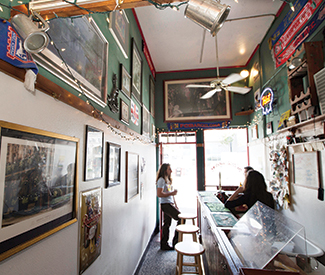
A thick layer of dust covers your high school quiz bowl trophy in your childhood bedroom. Between Netflix marathons of Orange Is the New Black, you sort of yearn for an intellectually stimulating challenge. Take everything you know about Piper Chapman and head over to the Mission for tonight’s pop culture game show. (While you’re at it, consider renting a video or two to support Lost Weekend Video before the competition begins.) Two teams, each comprised of two local comedians and one randomly selected audience member, duke it out for frivolous fame and useless trinkets. Plus, your teammates are sure to be more entertaining than that awkward mouth-breather back in high school. (Amy Char)

8pm, $10

The Cinecave at Lost Weekend Video

1034 Valencia, SF

(415) 643-3373

www.lostweekendvideo.com


THURSDAY 3


Legendary Stardust Cowboy

Inspired by his obsession with space travel, Norman Carl Odam became the Legendary Stardust Cowboy in 1961 and has been honing his maniacal psychobilly style ever since. “The Ledge” is as interested in cars and girls as he is in sci-fi, toilet humor, and the political issues of whatever era he happens to find himself in (“They signed the treaty in Kyoto, Japan!” he screams on “Global Warming,” as if a UN conference was as exciting as a sockhop.) His absurd subject matter and often incomprehensible vocals have earned him fans from outsider-music guru Irwin Chusid to David Bowie, who covered “I Took A Ride On A Gemini Spacecraft” on his album Heathen. The Ledge’s upcoming Stork Club show should demonstrate why he’s considered one of America’s best — or at least most polarizing — touring musicians. (Daniel Bromfield)

9:30pm, $5

Stork Club

2330 Telegraph, Oakland

(510) 444-6174

www.storkcluboakland.com


FRIDAY 4


Venetian Snares

Winnipeg-based electric music artist Andy Funk, better known as Venetian Snares, has been releasing bass-heavy odysseys of albums since the early 1990s. His artistic diversity and tendency to reinvent himself has led to a scattered but unbelievably prolific output — he’s put out 26 formal full-lengths for 8 different labels since 1998 alongside hundreds of EPs, singles, and mixes. While Venetian Snare’s time signatures, samples, and equipment are constantly in flux, his music stays abrasive and challenging no matter the set-up. His newest album, My Love, is a Bulldozer, released two weeks ago, juxtaposes modern classical elements — particularly strings — with extended drum machine and bass breakdowns and irreverent, often hilarious lyrics. Known for his live mixing and aggressive sets, expect both IDM aficionados and raging moshers to be showing up in full force. Avoid the trite fireworks and head to the Independent for some real explosives. (David Kurlander)

8pm, $15

Independent

628 Divisadero, SF

(415) 771-1421

www.theindependentsf.com


Gilman Benefit

924 Gilman has gotten some flak recently for hiking up the prices of its shows, deviating from its original $5-a-show credo in order to satisfy the demands of its $4,500 rent. Luckily, Gilman will will be hosting not one, but two benefit concerts in the first two weeks of June — and both will only set you back a paper Lincoln. The first will take place on the 4th of July and features a host of local bands, including The SoundWaves (San Leandro), Flip & The European Mutts (San Jose), and Black Dream (San Francisco) — plus Drinking Water, an Arizona ska-punk trio that’s toured in the US and Mexico. Though benefit No. 2 features a higher proportion of indie rockers, this one is as punk as anything the Gilman’s ever put on. (Daniel Bromfield)

7pm, $5

924 Gilman

924 Gilman, Berkeley

(510) 524-8180

www.924gilman.org


SATURDAY 5


The Fresh & Onlys

Though they rose to fame with the San Francisco garage-rock explosion of a few years back, the Fresh & Onlys eschew the punky pulp-horror aesthetic of many of their contemporaries in favor of a romantic sound that’s more Heart Shaped World than “Heart Shaped Box.” Though their early recordings (Grey Eyed Girls, Play It Strange) are as fuzzy as anything Ty Segall or John Dwyer’s ever done, the Fresh & Onlys have always been more pop than rock, more brain than body, more introverted than extroverted. But that doesn’t mean they can’t hold it down live — whether as an opener or headliner, they can bend their style to suit just about any live setting and keep the party going. (Daniel Bromfield)

9pm, $15

The Chapel

777 Valencia, San Francisco

(415) 551-5157

www.thechapelsf.com


SUNDAY 6


“Brakhage, Brakhage, Brakhage!”

Add about 397 more “Brakhages” to the title of this Yerba Buena Center of the Arts tribute to the late, great experimental filmmaker, and you’ll have the approximate number of films he created over the span of his career. Three programs highlight both familiar and rare works from the celluloid wizard. Up first is today’s “Self and Other,” films from 1974-86 that examine “how autobiography and portraiture can be represented with motion pictures.” Later programs are “Sound Films” (1962-74), spotlighting some of the oft-silent artist’s soundtracked pieces; and a vivid, gorgeous array of late-career works represented in “Hand-Painted Films” (1993-2002). (Cheryl Eddy)

2pm, $8-$10

Also July 10, 7:30pm; July 13, 2pm

Yerba Buena Center for the Arts

701 Mission, SF

www.ybca.org


The San Francisco Symphony

The San Francisco Symphony heads west to the Sunset on Sunday for its annual appearance at the free Stern Grove Festival. The outdoor affair, picturesquely located in a green basin of rocks and picnic tables, will feature a mostly 20th-century program conducted by charismatic former Symphony Resident Conductor Edwin Outwater. More unconventional programming, including several offerings from Howard Hansons 1930s opera Merry Mount, join standard overtures and waltzes by Bernstein and Richard Rodgers. A potential second-half highlight comes in the form of Ravel’s heartbreakingly gorgeous “Pavane Pour Une Infante Defunte” and exhilarating “Bolero,” both presented with jazz improvisations from prolific pianist Makoto Ozone — the reworking of these iconic classics into new styles should lead to striking new modalities and moods. Pack up a cheese plate and your best white capris and head down to the Grove for an alternately meditative and rousing journey through the modern classical canon. (David Kurlander)

2pm, free

Sigmund Stern Grove

19th Ave. and Sloat, SF

(415) 252-6252

www.sterngrove.org


MONDAY 7


Cloud Nothings

Cleveland’s Cloud Nothings have been indie darlings since the band’s formation in 2009, but have received special praise for April’s Here and Nowhere Else. The new work sees the group embracing a punchier punk aesthetic — lead singer and rhythm guitarist Dylan Baldi spins confused, remarkably catchy choruses over staccato guitar lines and astonishing drum fills by hitherto unknown new addition Jayson Gerycz. Their present tour, which winds around iconic mid-size theaters in the West and Midwest before a European leg, promises a taut, kinetic setlist that includes all of their new album and a few scattered cuts from their three preceding LPs. These guys may be melodic, but they embrace involved and improvised instrumental interludes onstage that lend each show unpredictability and showcase Gerycz, Baldi, and excellent bassist TJ Duke. The stately Great American Music Hall provides an ideal locale for the group’s blend of flash and homage. (David Kurlander)

8pm, $20

859 O’Farrell, SF

(415) 885-0750

www.gamhtickets.com


TUESDAY 8

Nick Cave and the Bad Seeds

Eccentric doesn’t really being to cover it. Nick Cave is a madman with a burning spark of genius propelling his frenetic presence and unparalleled career, careening from genre to genre, turntable to page to screen, and implanting his gritty, unmistakable thumbprint into everything he touches. With an almost four-decade career, the onetime frontman of Australian punk and post-punk bands the Lost Boys and the Birthday Party, and current frontman of Grinderman and the Bad Seeds, Nick Cave is a legendary force of nature. Everything about Cave’s musical style is unique, but it is his lyrics that set him apart as one of the most imaginative and unapologetically confrontational artists in the industry. Stained pink with blood, sweat, and semen, his songs are a visceral journey that only Cave, one of the most energetic and impassioned performers alive, could properly deliver. His sneer and snarl are a sight to behold. (Haley Zaremba)

With Jonathan Richman

8pm $53

The Warfield

982 Market, SF

(415) 673-4653

www.thewarfieldtheatre.com

The Guardian listings deadline is two weeks prior to our Wednesday publication date. To submit an item for consideration, please include the title of the event, a brief description of the event, date and time, venue name, street address (listing cross streets only isn’t sufficient), city, telephone number readers can call for more information, telephone number for media, and admission costs. Send information to Listings, the Guardian, 225 Bush, 17th Flr., SF, CA 94105; or e-mail (paste press release into e-mail body — no attachments, please) to listings@sfbg.com. Digital photos may be submitted in jpeg format; the image must be at least 240 dpi and four inches by six inches in size. We regret we cannot accept listings over the phone.

Google Bus sewers

131

STREET FIGHT With most city officials supporting the accommodation of private transit in some form, the San Francisco Municipal Transportation Agency is now vetting where tech workers should board and egress the private corporate commuter buses that ply the 101 and I-280 between San Francisco and Silicon Valley suburbs. A list of proposed bus stops was circulated in June, and the first round of bus stop proposals is set for approval in August.

Short of a proper environmental study, which is the subject of ongoing litigation, the list deserves more scrutiny and deliberation because certain areas of the city — such as Hayes Street in the Western Addition and 18th Street in the Mission — might be effectively made into Google Bus sewers.

I hope SFMTA is open to reconsidering some of these proposed bus stops.

Rather than jamming oversized interstate highway-scale coaches on human-scaled, walkable, and bikeable streets with important Muni routes, SFMTA ought to steer them where they are more appropriate: on the wider, car-oriented streets that bifurcate the city.

For example, the current proposal for private commuter buses in the Western Addition is to have these mammoth and incongruent buses running on Hayes Street using Muni stops at Clayton, Steiner, Laguna, and Buchanan.

This is bad news for passengers on the 21-Hayes, a key neighborhood-serving electric trolley bus that has gotten short shrift in the city planning process. With 12,500 boardings daily, the 21-Hayes is often at capacity every morning before it crosses Van Ness.

Just last week, I was on a packed 21 that was blocked (illegally) by a huge corporate bus on Hayes. With an already dense and slow traffic situation, this added at least 30 seconds to the trip before the 21 could access its stop. Repeat that multiple times in the morning and afternoon and you can see that this will be a mess. It’s not worth the dollar the SFMTA collects for such stops, that’s for sure.

Concentrating the private buses on the 21 line (or the 33 in the Mission) will block Muni where Muni is already slow, unreliable, and overcrowded. It will also diminish walkability and bicycle safety on Hayes and other streets identified in the current list (including the commercial corridors on Divisadero and 18th Street in the Mission.)

Rather than streets such as Hayes, SFTMA should redirect the private buses to the multilane, one-way couplet on Fell and Oak streets, only one block south. Along the corridor, SFMTA could collaborate with the private systems to establish new bus stops (red paint) at Clayton, Masonic, Divisadaro, Fillmore, and near Octavia. This scheme would limit clunky turn movements onto neighborhood streets by oversized buses and contribute to traffic calming.

In the mornings, the buses would pick up passengers on Oak Street, starting along the Panhandle, then travel towards Octavia Boulevard before swinging onto the freeway southbound. In the evenings the buses would exit the freeway at Octavia, and stop at drop-off hubs on Fell, between Octavia and Laguna, and then stop incrementally toward Golden Gate Park.

Additionally, the city needs to consider a space for the underpaid, nonunionized drivers to pull over and rest before and after long segments of freeway driving. We want these buses to be safe.

Similar arrangements should be made to spare 18th Street in the Mission from reverting to a Google bus sewer, with emphasis on private corporate bus stops on South Van Ness or Guerrero-San Jose. Surely there are other examples in other parts of the city.

The urgent affordable housing crisis aside, this could be a win-win from a transportation perspective. Tech workers would no longer get blamed for blocking Muni and they can know that while waiting for their bus, they are contributing to calming erstwhile hazardous streets.

There’s a lot of opportunity to combine these new bus stops with traffic calming at dangerous intersections such as Fell and Masonic or Oak and Octavia, all without mucking up Muni or diminishing the walkable human scale of nearby neighborhood commercial streets. And hey, since this is all a “pilot program,” no pesky and expensive EIR is needed — right?

Thinking long-term, this scheme could be a template to jumpstart making this ridiculous private transit system into a regional public bus system modeled on AC transit or Golden Gate Transit, a service open to all. Our car-centric streets are ripe for express bus service and this would help relieve parallel lines like the N-Judah, while enabling the city to attain its aspiration of 30 percent mode share on transit.

And for Mayor Ed Lee and pro-tech-bus members of the Board of Supervisors, it helps with their “vision zero” rhetoric of increasing pedestrian safety because placing the buses on car-centric one-way couplets can help calm traffic.

With a little cajoling by the mayor, he could get his tech sponsors to underwrite streetscape and beautification at the bus stops along these kinds of streets.

After all, Mayor Lee needs to find the money, because last month he betrayed pedestrian and bicycle safety and Muni when he abandoned support for increasing the Vehicle License Fee locally this fall, all the while misleading the public about the important role of Sunday metering. Perhaps it’s time for a tax or license fee on the ad hoc private transit system?

SLOWING DOWN

Speaking of vision zero, Sup. Eric Mar deserves hearty thanks for proposing to reduce speed limits citywide. This is one of the most effective ideas to come from the progressive wing of the Board of Supervisors in a long time and should be implemented yesterday. Higher speeds maim and kill, and the faster cars go the more voracious the appetite for both fuel and urban space.

With reduced speed, the motorist would still be able to drive, just more slowly, perhaps with less convenience than now. But over time the options of cycling, of walkable shopping, and improved public transit would synchronize more seamlessly as car space is ceded to separated cycletracks and transit lanes.

My suggestion is to make the city navigable by car at no greater than 15 miles per hour, a speed deemed not only to be comfortable on calmed pedestrian streets, but also to minimize injury and fatalities when there are collisions. Ultimately, our efforts to curb global warming, reduce injury and death from automobility, and make the city more livable obliges us to slow down, so looking at speeds is a step forward.

Street Fight is a monthly column by Jason Henderson, a geography professor at San Francisco State University and the author of Street Fight: The Politics of Mobility in San Francisco.

Solving the housing crisis takes all San Franciscans, even big tech

56


By Joseph Tobener


OPINION This week, San Franciscans learned that they will not be able to rely on Sacramento to fix the housing crisis. State lawmakers voted down Senate Bill 1439, which would have stopped speculators from using the Ellis Act to evict and convert buildings to upscale offices and TICs. One Assembly Democrat said that San Franciscans were “exaggerating the problem.” That same day, my office received Ellis Act eviction notices for 21 tenants from an artist building at 16th and Mission streets. The building has a new buyer, and it will soon be a high-end commercial space.

I was a tenant rights attorney during the first dot-com boom, and without question, this new housing crisis is much worse. The gentrification is more widespread and permanent. This time around, the evicted teachers, musicians, and artists are not simply moving down the street to smaller units, they are being priced out of San Francisco altogether.

We need to decide now, as San Franciscans, what we want our city to feel like in a decade. Here are five things I believe we need to do now to address the crisis:

1. Collaborate with tech leaders, rather than vilify them. I have been as guilty as the next person in blaming and berating big tech, ignoring the fact that many of my neighbors, clients, and friends are long-time San Franciscans who work in the tech industry. Enough blaming. We need to somehow bring tech to the table to help create large-scale solutions to the housing crisis. It may not be easy to do.

Earlier this year, Marc Benioff, the CEO of Salesforce, criticized tech companies for being “stingy” in giving to their communities, and I have heard nonprofit fundraisers echo this. If true, we need to find out why. On the other side, our healthy anti-corporate, ‘us and them’ mindset, which is deeply rooted in San Francisco’s political tradition, is not serving us in collaboratively addressing the housing crisis.

While there are a handful of high-profile examples of tech workers wrongfully displacing tenants, tech workers are not the real problem. It is true that tech money drives up prices, but the real villains are the predatory speculators who are profiting from our shared crisis. The bottom line is, like it or not, tech is here to stay, and tech leaders have the resources to fund the arts, help our schools, and yes, help us address the housing crisis.

2. Stop illegal mergers of multi-unit buildings into single-family mansions. It is not enough to have regulations in place to prevent mergers. Real estate speculators are merging units surreptitiously, without permits. The Department of Building Inspection needs to actively police projects. And all San Francisco residents need to share in the responsibility of ensuring that speculators are not doing major construction without permits in our neighborhoods.

3. Support legislation to stop landlords from renting their units as hotel rooms. It is estimated that more than a 1,000 units in San Francisco are being rented out full-time for short-term corporate or tourist use. We need a law to get these units back into the permanent housing stock.  

4. Donate to the Community Land Trust and the Community Arts Stabilization Trust. Community land trusts are buying property to permanently preserve residential housing and art space. We need to do more to support these organizations. Other cities do a much better job than San Francisco in partnering with corporations to preserve culture.  

5. Support an anti-speculation tax. Tenant activists have introduced an anti-speculation tax designed to stop real estate flipping. Our office sees the same LLCs flip properties time and time again.

Ultimately it is up to all San Franciscans to embrace this cause if we hope to preserve the diverse and complex character of our city. One thing is sure: We cannot wait to add our voices, or it will be too late.

Joseph Tobener is a tenant rights attorney.

Guardian Intelligence: July 2 – 8, 2014

0

GUARDIAN ON THE MOVE

There were a couple of big changes for the Bay Guardian this week. We and our sister newspapers within San Francisco Media Company — San Francisco Examiner and SF Weekly — moved into the Westfield Mall. Yes, the mall, but in the fifth floor business offices formerly occupied by the San Francisco State University School of Business extension program. The company, owned by Black Press in Canada and Oahu Publications in Hawaii, also named Glenn Zuehls as the new publisher and Cliff Chandler, who worked for the Examiner for years, as the senior vice president of advertising. Zuehls, who comes from Oahu Publications, replaces Todd Vogt as the head of SFMC. Zuehls and Chandler told the staff of all three papers that their primary goal is to grow the company’s revenues.

QUEER SPIRIT ROILS PRIDE

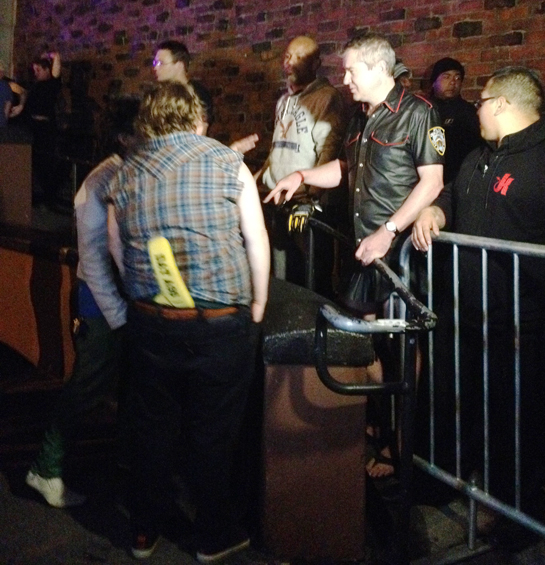
Even as an awareness of the ever-growing commercialization of SF Pride dawned on younger participants, a spirit of activism also took flight. Community grand marshal Tommi Avicolli Mecca led a fiery parade contingent (above) of housing activists in Sunday’s parade, protesting skyrocketing evictions in San Francisco. The anti-eviction brigade staged a die-in in front of the official parade observation area. Friday’s Trans March was the biggest so far, and Saturday’s Dyke March featured a huge contingent marching under the banner “Dykes Against Landlords.” Meanwhile, hundreds of protestors targeted a Kink.com prison-themed party, saying it glorified a prison-industrial complex, which “destroys the lives of millions of people.” Seven of the protestors were arrested, and charges of police brutality are being investigated.

LESBIANS BASHED AT PRIDE

While there were some disturbing anecdotal reports of homophobic slurs and queer bashing at Pride this year (including one of a Sister of Perpetual Indulgence and her husband being attacked at Pink Saturday), San Francisco Police Department spokesperson Albie Esparza said police are only investigating one incident so far as an actual hate crime. It occurred on June 28 around 5:30pm near the intersection of Mission and Ninth streets when two young lesbians were subjected to homophobic taunts and then severely beaten by five young male suspects, all of whom remain at large. They’re described at 16 to 20 years old, two black, three Hispanic. Esparza said hate crimes are defined as attacks based solely on being a protected classes, so that doesn’t include robbery or assaults in which racism or homophobic slurs are used, if that doesn’t seem to be the motivation for the attacks.

LIFE’S A STAGE

Hark! It must be summer, because all the companies dedicated to outdoor theater are opening new productions in parks across the Bay Area. Aside from the San Francisco Mime Troupe’s Ripple Effect (see feature in this issue; www.sfmt.org), Marin Shakespeare is presenting As You Like It in San Rafael (pictured), with Romeo and Juliet opening later in July (www.marinshakespeare.org); Free Shakespeare in the Park brings The Taming of the Shrew to Pleasanton and beyond (www.sfshakes.org); and Actors Ensemble of Berkeley goes stone-cold Austen with Pride and Prejudice in John Hinkel Park (www.aeofberkeley). AS YOU LIKE IT PHOTO BY STEVEN UNDERWOOD

TEN YEAR GRIND

Kids and pro skaters from One Love boards tore up “the island” — between the Ferry Building and the Embarcadero — with flips, kick tricks and plants June 29, celebrating the tenth anniversary of the much loved skate spot. Local Hunters Point pro skater Larry Redmon sat watching the new generation of skaters and offering pointers. Sure downtown has more grind blockers then it did a decade ago, but as Redmon says, “We out here.” PHOTO BY PAUL INGRAM

THE WILLIE CONNECTION

Muni’s workers and the SFMTA reached a final labor deal over the final weekend of June, but Mayor Ed Lee is telling news outlets the real dealmaker was former mayor Willie Brown. “He’s someone who understands the city, understands labor, the underlying interests,” SFMTA Director Ed Reiskin told various news outlets. Reports say Brown went unpaid by the city for the deed. That’s hard to believe: Anyone who knows Slick Willie knows he seldom does anything for free.

WAXING NOSTALGIC

The new Madame Tussauds wax museum attraction opened June 26 at Fisherman’s wharf — and includes SF-specific figure replicas like Mark Zuckerberg, Harvey Milk, and, of course, our real mayor, Nicolas Cage (pictured). See the Pixel Vision blog at SFBG.com for more creepy-ish pics and a review.

SHARON SELLS OUT (THE INDEPENDENT)

Despite her catalog full of confessional songs about nasty breakups and other dark subject matter, Sharon Van Etten was all smiles during two sold-out shows at the Independent June 29 and June 30. Leaning heavily on songs from her new album, Are We There, Van Etten and her four-piece band even led the adoring crowd in a cheerful sing-along at one point. On her next pass through town, we expect to be seeing her on a much bigger stage.

UNION PROUD

If BBQ and black-market fireworks aren’t your idea of showing civic pride, make your way over to the Mission’s Redstone Building (2940 16th St. at Capp) for a street fair Sat/5 with local musicians, poets, visual artists, and more, to mark the 100th anniversary of the SF Labor Temple and call attention to current labor issues like the fight for a $15 minimum wage. Built by the city’s Labor Council in 1914, the building formerly housed SF’s biggest labor unions and was the planning center for the famous 1934 General Strike. This celebration is part of Labor Fest, now in its 20th year, which runs throughout July around the Bay Area — for more: www.laborfest.net


Don’t weaken protections against chain stores

5

EDITORIAL As we reported two weeks ago (“Breaking the chains,” June 17), the San Francisco Planning Commission will soon consider rival measures to modify the city’s decade-old policies regulating chain stores (aka formula retail businesses) and giving neighborhoods the ability to reject them. This should be viewed as a chance to strengthen protections, not to weaken them at a time when small businesses need all the help they can get.

There are a number of important reforms in both the formula retail proposal by Sup. Eric Mar and the one developed by the Planning Department in coordination with the Mayor’s Office. Both expand on the types of businesses covered by the regulations, they close key loopholes, and they require more detailed economic studies to give the public and policymakers more information on how chain stores impact neighborhood commercial districts.

But in exchange for those protections, the Planning Department measure also makes concessions that are unacceptable and inconsistent with the formula retail standards that voters adopted through Prop. G in 2006. Specifically, planners are making the dubious claim that they have the authority to increase the threshold of what’s considered a chain from 11 stores now up to 20 stores, unilaterally rejecting a compromise number negotiated at the time between progressive leaders and the business community.

The logic offered for that change is equally questionable. The planners and backers of the change in the Mayor’s Office and business community say local businesses that grow beyond 11 outlets — such as Philz Coffee, Lee’s Deli, and San Francisco Soup Company — shouldn’t be “punished for their success” by enduring a lengthy and expensive conditional use permit process.

But gathering information and letting the community have a voice isn’t punishment. Larger businesses have more resources to go through the approval process, and the city rarely rejects formula retail applications anyway. Planners argue that the conditional use process is onerous and can take six months or more — but that’s an argument for reforming the process, not bypassing it. The Mayor’s Office should devote more resources to hiring more Planning Department staff to speed up this process, raising the fees on applicants to do so if necessary.

The Planning Department proposal also makes no effort to determine who owns the business that want to open here, allowing corporations to create endless subsidiaries and spinoffs to bypass the formula retail controls, something the city already has seen with the controversial Jack Spade application in the Mission District and other projects.

Corporations can be wily and predatory as the seek to endlessly expand into new markets, and if San Francisco’s nationally recognized controls are to have any relevance, they’ll need to adapt to changing circumstances. That means we need to strengthen and not weaken them.

Civil Grand Jury report highlights gifts made on mayor’s behalf

A major real-estate firm contributed $1 million to the America’s Cup Organizing Committee at the behest of Mayor Ed Lee, right around the time it sought city approval to expand a downtown tech office building that was already under construction.

Kilroy Realty, the developer of a 30-story building that will house more than 400,000 square feet of office space for Salesforce.com, won approval in August of 2013 to add an additional six floors to its 350 Mission commercial office space project. That building is one of three in the Transbay area that will house Salesforce.com offices.

Kilroy sent one check for $500,000 to the America’s Cup Organizing Committee on June 24, 2013, and a second one for the same amount on Jan. 31 of this year.

While it’s impossible to say for sure whether the generous gifts had anything to do with the request for approval for a major building expansion, the “behested payment” reports documenting the transactions did draw the attention of the San Francisco Civil Grand Jury, which included them in a report titled “Ethics in the City: Promise, Practice, or Pretense?”

In another example highlighted in the report, Mayor Lee accepted travel funds for a trip to China and Korea last October. Contributors who provided more than $500 apiece for that trip included Uber and Airbnb, both tech-based companies whose businesses stand to be directly impacted by city policies.

Uber has been sparring with the San Francisco International Airport over its drivers’ unauthorized passenger drop-offs as of late, while Airbnb long skirted its responsibility to pay the city’s hotel tax and is now the subject of legislation regulating short-term housing rentals. It’s interesting that each of these companies felt compelled to donate toward the mayor’s travel fund, given the city’s attempts to regulate them.

The Civil Grand Jury report highlights the shortcomings of the San Francisco Ethics Commission, an agency tasked with ensuring that government operations aren’t tainted by conflicts of interest or official misconduct.

Citizen watchdogs of San Francisco government have sought to eliminate pay-to-play politics for years.

Back in 2000, San Francisco voters approved a ballot measure seeking to bar elected officials from accepting campaign donations or gifts from corporations or individuals who had received city contracts or “special benefits.”

Known as Proposition J, that measure sought to eliminate the undue influence of deep-pocketed, well-connected players in local government.

It was popular and won by a landslide: No ballot arguments were registered against it, and the measure won with 82.66 percent of the vote.

Nevertheless, the Civil Grand Jury report noted, Prop. J was “amended out of existence” – through an effort led by none other than the Ethics Commission.

“The Ethics Commission proposed repealing Proposition J at their April 2003 meeting,” the report notes.

That proposal was part of an effort to “recodify conflict of interest laws,” the Civil Grand Jury found. Some laws were amended. Others were tweaked so that amendments could be made in the future, without voter approval.

After winning approval from the Board of Supervisors, that package of legislative changes became Proposition E on the 2003 ballot. “In 2003, voters approved Proposition E that recodified the ethics laws; however, it also had the undisclosed effect of deleting Proposition J language,” the Civil Grand Jury noted. “Thus, the concept of regulating public officials’ relations with those who receive ‘public benefits’ from them (Proposition J’s intent) was totally eliminated from San Francisco law.”

The report also takes the Ethics Commission to task for being too lax when it comes to addressing potential conflicts of interest.

It goes so far as to recommend that the agency hand over control of its major enforcement investigations to the Fair Political Practices Commission, a state agency with a more robust team of investigators who might produce better results.

“The Ethics Commission lacks resources to handle major enforcement cases,” the Civil Grand Jury notes. “These include, for example, cases alleging misconduct, conflict of interest, violating campaign finance and lobbying laws, and violating post-employment restrictions.”

The full report can be found here.

Protest against “Prison of Love” Armory party leads to arrests

23

At least six people were arrested and taken into custody shortly before midnight on Saturday at the 16th Street Mission BART Plaza following a raucous protest of Kink.com’s pre-Pride party, according to San Francisco Police Department spokesman Albie Esparza.

The protest, put on by LGBTQ activist group Gay Shame, totaled around 150 people who were unhappy with the theme of the Kink.com party, “Prison of Love.” They allege that the company used sexual assault in prisons as a means of revenue, saying it has “turned these genocidal practices into a cash-making joke.” (Tickets to the party were as much as $175.)

Though a statement from Gay Shame said the protesters were arrested “without provocation,” Esparza told us they stemmed from alleged assaults on the security guards at the party by protesters. According to an account of the protest compiled by Armory facilities manager Andrew Harvill and provided by Kink.com CEO and Armory owner Peter Acworth, “protesters were largely peaceful, though unruly. Having said that, at least a dozen were highly militant.” 

Witnesses recalled seeing a Kink.com security guard follow protesters to 16th Street roughly 30 minutes after the protest ended and begin “targeting people who were casually standing on the sidewalk getting ready to go home.” According to the witnesses, “the arrests and police violence were reportedly in retaliation for the night’s protest.”

Esparza confirmed that a security guard followed the protesters down to the plaza, though for the purpose of identifying the offenders when the police arrived. One protester reportedly threw a metal object and made threats toward a security guard during the protest, both of which are being charged as felonies, while another allegedly through an egg and spit on a security guard. When the police attempted to arrest the protester for the alleged felonies, Esparza said two other protesters tried to intervene. They were arrested and charged with lynching—a violation of Penal Code 405a, defined as “the taking by means of a riot of any person from the lawful custody of any peace officer.”

Two other protesters were cited for interfering with an officer and resisting arrest, and released, according to Esparza. The protesters who allegedly threw the egg was cited for battery and released, he said. But those involved in the protest see it a bit differently.

“A friend of mine was standing with a bicycle and they arrested her seemingly at random,” said protester Erin McElroy, who was at the BART station and said the police were simply searching for someone with a bike, which led to her friend’s arrest. Similarly, another person was arrested because the police “were looking for an Asian woman with short hair,” according to McElroy, and the woman was “identified as somebody who had been with a provocateur.”

Those arrested and facing felony charges are Prisca Carpenter, Sarai Robles-Mendez, and Rebecca Ruiz-Lichter, although District Attorney George Gascón is unlikely to pursue the lynching charges, according to Rachel Lederman, president of the San Francisco Bay Area Chapter of the National Lawyers Guild.

“I can pretty much guarantee that the DA will not be proceeding on those charges. It is the DA who makes the charging decision…[the protesters are] being subjected to preemptive punishment right now,” Lederman wrote in an email.

Video of the Prison of Love pride party provided by Kink.com.

Harvill’s account of the events stated that protesters “used a slingshot to propel objects at security,” and punched and spat in the face of the Armory’s manager of security. The Armory guards reportedly did not retaliate or detain anyone, though they had to “block/deny intrusion onto property a few times.”

In his account, Harvill also wrote, “There was a decent contingent of protesters who were militant and provoking. Our own security was extremely professional in face of numerous provoking acts and assaults. Any claims of police brutality would be highly unlikely, but I will confirm exact details of those arrested.”

Those involved with the protest were unsurprisingly dismayed by the night’s proceedings, including members of Gay Shame.

“Like the Stonewall rebellion 45 years ago, last night’s attack reminds us how trans and queer people of color are criminalized and arrested for simply gathering in public space, like the 16th Street BART plaza,” said Gay Shame representative Mary Lou Ratchet in a statement.

Attorney John Viola, sent as an observer from the National Lawyers Guild, was also arrested, according to Lederman. The NLG is “appalled by all of the arrests…particularly that three people have been held in jail since Saturday night on groundless charges, in violation of their constitutional rights,” wrote Lederman in her email.

Four arrestees have since been released, including Viola, and all were initially medically cleared, indicating that they likely did not sustain injuries. Nevertheless, Lederman said the NLG is still working to get the three women released, with their bail currently set at a combined $178,000, Chief Deputy Kathy Gorwood told the Guardian. (Carpenter’s bail is set at $78,000, while Robles-Mendez and Ruiz-Lichter are each at $50,000.)

Acworth expressed his thoughts about his party in an open letter, stating he believes that “if a group wants to organize a particular kind of party, they should be free to do so without shame,” though conceding that “the extent to which some groups find this theme offensive because the party is happening during the San Francisco Pride weekend has given me cause to reflect.”

The Kink.com CEO has also voiced his support for the protesters’ contention, writing in an email, “I attempted to negotiate directly with the crowd, but this proved unsuccessful. This was frustrating, because I agree with the underlying issue that we are in need of prison reform,” adding, “Had it been possible to change the theme, we would have done so.”

A great week for (indie) sci-fi and docs: new movies!

0

This week, Frameline continues (our coverage here!), plus offbeat sci-fi winners Coherence and Snowpiercer are well worth seeking out … especially if you’re not in the mood for more giant robot smash-ups from the Michael Bay factory. Plus: new docs and more! Read on.

Breathing Earth: Susumu Shingu’s Dream Japanese artist Susumu Shingu has built his career through his concerted engagement with the natural world. The wise and eternally smiling 75-year-old creates angular and often gargantuan mobiles that harness the power of wind and water to gyrate in ever-changing directions. In Breathing Earth, German director Thomas Riedelsheimer crafts a deliberately paced rumination on Shingu’s life philosophy that, while devoid of the frenetic facts, figures, and trite biographical rehashes that punctuate hyper-informative pop-docs, uses a beautifully simplistic narrative arc to illuminates Shingu’s attempt to create a hilly, open-air collection of windmills. The sculptor’s impassioned narration and charming conversations with potential landlords and investors (who usually entirely miss the point of his mission to raise environmental consciousness through aesthetic beauty) make Shingu impossible not to fall in love with — he is laid-back, funny, and astonishingly youthful. Riedelsheimer’s camera is similarly relaxed, gliding sumptuously over the green and wild landscapes on which Shingu installs his works. Despite his meditative tempo, Riedelsheimer manages to explore a remarkably wide scope; Shingu’s late-life marriage to a fellow sculptor, his appeals to both Japanese and German schoolchildren to care for the earth and help to avoid environmental disasters, and his intricate technical processes all receive intimate and inspiring sections. (1:37) (David Kurlander)

Citizen Koch After quietly influencing conservative ideology, legislation, and elections for decades, the billionaire industrialist Koch brothers have found themselves becoming high-profile figures — much to their dismay, no doubt. The relative invisibility they hitherto enjoyed greatly abetted their impact in myriad arenas of public policy and “popular” conservative movements. Look behind any number of recent red-vs.-blue flashpoint issues and you can find their fingerprints: Notably state-level union busting; “smaller government” (i.e. incredible shrinking social services); seeding allegedly grassroots organizations like the Tea Party; furthering the Corporations = People thing (see: Citizens United); and generally helping the rich like themselves get richer while fostering working-class outrage at everybody else. This documentary by Trouble the Water (2008) co-directors Carl Deal and Tia Lessen touches on all those matters, while also focusing on Wisconsin as a test laboratory for the brothers’ Machiavellian think-tank maneuvers, following a Lousiana GOP candidate on the campaign trail (one he’s marginalized on for opposing corporate influence peddling), and more. Any one of these topics could support a feature of their own (and most already have). Citizen Koch’s problem is that it tries to encompass too much of its subjects’ long reach, while (despite the title) leaving those subjects themselves underexplored. (It also suffers from being a movie completed at least 18 months ago, a lifetime in current US political terms.) For the reasonably well-informed this documentary will cover a lot of familiar ground—which is not to say that ground isn’t still interesting, or that the added human interest elements don’t compel. But the film covers so much ground it ends up feeling overstuffed and unfocused. (1:26) (Dennis Harvey) 

Coherence See “Vortex Room.” (1:29)

Korengal This companion piece to 2010’s Oscar-nominated Restrepo — one of the best docs about modern-day warfare to date, offering unfiltered access to an Army platoon stationed in Afghanistan’s Korengal Valley — uses previously unseen footage shot during the year filmmakers Sebastian Junger and Tim Hetherington spent shadowing their subjects. Korengal is structured as a more introspective work, with musings on what it feels like to be a soldier in the Korengal, surrounded by rough (yet strikingly beautiful) terrain populated by farmers who may or may not be Taliban sympathizers, not to mention unpredictable, heavily armed opponents referred to simply as “the enemy.” Interviews reveal sadness, boredom, a deep sense of brotherhood, and the frustrating feeling of going from “100 miles an hour to a dead halt” after the surreal exhilaration of a firefight. Korengal also functions as a tribute to Hetherington, who was killed in 2011 while on assignment in Libya. Not only does his death add a layer of poignant subtext, it also suggests why Junger felt moved to revisit this story. That said, though Korengal‘s footage is several years old, its themes remain distressingly timely. (1:24) (Cheryl Eddy)

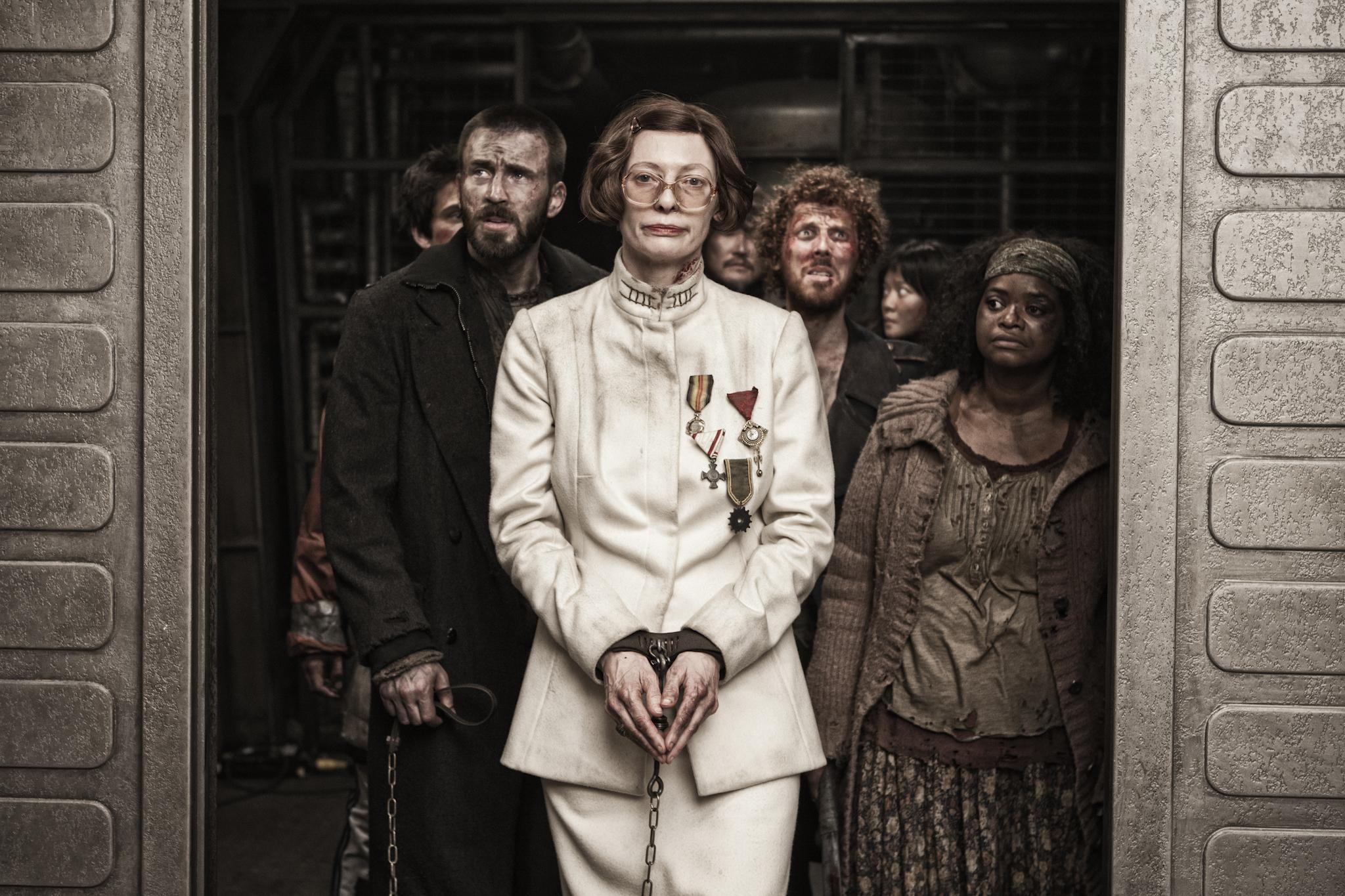
Snowpiercer Eighteen years after an attempt to reverse global warming has gone wildly awry — freezing all life into extinction — the only known survivors are on a one-of-a-kind perpetual-motion train that circles the Earth annually, has its own self-contained ecosystem, and can smash through whatever ice buildup has blocked its tracks since the last go-round. It’s also a microcosm of civilization’s worst class-economic-racial patterns over history, with the much-abused “tail” passengers living in squalor under the thumb of brutal military police. Unseen at the train’s front is its mysterious inventor, Wilford, whose minions enforce “Eternal Order Prescribed by the Sacred Engine.” Curtis (Chris Evans) is default leader of the proletariat’s latest revolt, in which they attempt to force their way forward though the prison section (where they free Song Kang-ho and Go Ah-sung as the train’s original lock designer and his psychic daughter) on to the wonders of the first class compartments, and beyond. This first (mostly) English-language feature by South Korean Bong Joon-ho (2006’s The Host, 2009’s Mother), based on a 1982 French graphic novel, starts out as a sort of locomotive, claustrophobic Mad Max (1979) variation. But it gets wilder and more satirical as it goes along, goosed by Tilda Swinton’s grotesquely comic Minister Mason, and Alison Pill as a teacher propagandist in a particularly hilarious setpiece. In case the metaphor hasn’t already hit you on the head, one character explains “The train is the world, we the humanity.” But Snowpiercer’s sociopolitical critique is as effective as it is blunt, because Bong handles everything here — visceral action, absurdist humor, narrative left-turns, neatly etched character archetypes, et al. — with style, confidence, and wit. Some of the FX may not be quite as seamless as it would have been in a $200 million Hollywood studio production, and fanboys will no doubt nitpick like nitwits at various “credibility gaps.” (As if this movie ever asks to be taken literally.) But by current, or any, sci-fi action blockbuster standards, this is a giddily unpredictable, risk-taking joy. (2:07) (Dennis Harvey)

Third Person A screenwriter, Paul Haggis, pens a script in which a novelist (Liam Neeson) sits alone in a smoke-filled hotel room in Paris struggling over a manuscript about a novelist who can only feel emotions through his characters. What that psychic state would actually look like remains unclear — when the woman (Olivia Wilde) he’s left his wife (Kim Basinger) for shows up, their playful, painful, fraught interactions reveal a man with above-average emotional reserves. Meanwhile, in another hotel in another city, Rome, a sleazy fashion industry spy (Adrien Brody) finds his life turned sideways by a seemingly chance encounter in a bar with a beautiful Romanian woman (Moran Atias) in dire need of money. And in a third hotel, in Manhattan, a young woman (Mila Kunis) cleans up the suites she used to stay in when she was married to a renowned painter (James Franco), with whom she has a son she may or may not have harmed in some terrible way. The film broadly hints at connections between these three sets of lives — in each, the loss or endangerment of a child produces an unrelenting ripple effect; speaking of which, objects unnaturally submerged in water present an ominous visual motif. If the movie poster doesn’t give the game away as you’re walking into the theater, the signposts erected by Haggis ensure that you won’t be in the dark for long. Learning how these characters relate to one another, however, puts considerable drag on the fabric of the plot, exposing the threadbare places, and where Haggis offers his tortured characters redemption, it comes at the cost of good storytelling. (2:17) (Lynn Rapoport)

Transformers: Age of Extinction In Michael Bay’s fourth Transformers installment a villainous Black Ops leader (Kelsey Grammer) allies with a snarky Steve-Jobs-alike (Stanley Tucci) to build Transformers de coeur: designer impostor robot-cars they hope will reinvent the face of war. In IMAX 3D, “TransFOURmers” is packed with relentless rock-‘em-sock-‘em action, spectacular property destruction, and about as much sense as a bucket of worms. After 60 minutes, you think you’re getting more than your money’s worth. At 90 minutes, you’re tired. At two hours, confusion sets in: If Autobots get stronger together how could Optimus be in so much trouble? Who is the bounty hunting Terminator lookalike? HOW MUCH MORE COULD THERE BE? And then … the action shifts to China, Optimus rides a Dinobot, and chaos reigns. I’ve always liked the working-class poetry of the Transformers themselves — the leader is a trucker and the cast is stacked with ambulances, tanks, and the metal workforce that preserves American lives. If that’s not traditional hero worship, I don’t know what is. But Age of Extinction is the soulless designer imposter it lampoons — the whole sequel-snarking ordeal makes you long for Buzz Lightyear, who saw a thousand Buzz Lightyears on a store shelf and survived that existential crisis heroically — while also riding a dinosaur and fighting Frasier. This Transformers movie (sadly, it won’t be the final one) starts with a thesis: Mark Wahlberg walks through an abandoned movie theater and a Wilford Brimley twin (Ron Shedd) bellows: “Movies today! Sequels! Remakes! Crap!” Age of Extinction follows that moment with nearly three hours of evidence that the cause of extinction is redundancy. (2:30) (Sara Maria Vizcarrondo)

Under the Electric Sky Hey, raver! This 3D concert film enables you to experience the Electric Daisy Carnival without punching any holes in your brain. Or, y’know, dying. (1:25)

Violette Taking on another “difficult” woman artist after the excellent 2008 Séraphine (about the folk-art painter), Martin Provost here portrays the unhappy life of Violette Leduc (Emmanuelle Devos), whose fiction and autobiographical writings eventually made her a significant figure in postwar French literature. We first meet her waiting out the war with gay author Maurice Sachs (Olivier Py), one of many unrequited loves, then surviving via the black market trade before she’s “discovered” by such groundbreaking, already-established talents as Jean Genet (Jacques Bonnaffé) and Simone de Beauvoir (Sandrine Kiberlain). It is the latter, a loyal supporter who nonetheless retains a chilly emotional distance, who becomes bisexual Violette’s principal obsession over the coming 20 years or so. Devos does her best to portray “a neurotic crazy washed-up old bag” with an “ugly mug” — hardly! — who is perpetually broke, depressed, and awkward, thanks no doubt in part to her mean witch of a mother (Catherine Hiegel). “Screaming and sobbing won’t get you anywhere,” Simone at one point tells her, and indeed Leduc is a bit of a pill. For the most part lacking the visual splendors of Séraphine (this character’s environs weren’t so pastoral), Violette is finely acted and crafted but, like its heroine, hard to love. (2:18) (Dennis Harvey)

A benefit series aims to keep the unique Meridian Gallery afloat

0

In 2001, interns at Powell Street’s Meridian Gallery planned and painted a 13×48 foot mural on the wall of the SRO Hartland Hotel, a few blocks away in the Tenderloin. The mural, a colorful and sunny street scene showcasing the multiculturalism of the neighborhood, was revered by residents and and left untouched for 10 years until it was vandalized by graffiti. In response, former interns who had worked on the project came back together and, alongside the current kids in the program, repainted the piece. The artists’ lasting willingness to help Meridian in times of need reemerges in a broader sense this week, which marks the climax of the gallery’s June Benefit Series (tonight’s entry: “16 Years of Meridian Music,” a diverse program of new music). 

Meridian Gallery, whose name comes from its mission to focus on hemispheric and cross-cultural interactions, is facing eviction. As rent around Union Square has skyrocketed, from $400 per square foot in 2007 to up to $3,000 today (according to retail consultant Helen Bulwik, quoted in a KQED report), many galleries have been forced to close their doors. The stately Perine Mansion, the three-story French Second Empire brick building where Meridian makes its home, is an especially attractive and lucrative piece of property. Instead of throwing in the towel, Anne Brodzsky, the dynamic co-founder of the gallery who has overseen its operations for over 25 years, has reached out to her friends. 

The original eviction notice was handed down in April. Some close to the gallery are convinced that despite any efforts, the rent will be impossible to pay. Others, Brodzky chief among them, think that the response to the bad news suggests a potential long-term rally from Meridian. Her optimism is fueled by two forces. First, on May 13, the SF Board of Supervisors beefed up affordability programs, including supplemental displacement funds and health benefits, for struggling art non-profits in the city. “I’m amazed by how they’ve managed to come together to help arts programs,” Brodzky exclaimed. 

More effective and instantly helpful than any bureaucratic assistance, however, have been the programs put together by artists affiliated with Meridian. Around the time of the Supervisors’ decision, Brodzky asked her gallery-mates if they were willing to stage an auction. The response was staggering; over 60 artists put up works. More astonishing to Brodzky, though, was the kind of excitement many of the participants exhibited for further events. “Bob Marsh, among many others, approached me and asked if they could stage fundraisers.” 

 Tonight, Marsh is one of the main attractions at the “16 Years of Meridian Music” showcase. An avant-garde visual artist and musician, Marsh discovered Meridian shortly after his arrival in San Francisco 14 years ago. “I started visiting galleries and found that Meridian had a wonderful monthly music series,” he says.

Marsh was inspired by the political sharpness of the organization. “I thought early on, ‘They’re not purveyors of bourgeois wallpaper,’ like so many galleries can be.” For Marsh’s offering, “The Visitor,” he’ll don his Sonic Suit #9, a wearable sculpture made from empty water bottles and other modern detritus, and engage in narrative movement to a musical accompaniment.

“He’s a visitor from another dimension,” Marsh says. “He arrives here, looks around, and has different reactions to the confusing environment that is our world.” Marsh debuted the ever-changing character at the Meridian and feels that its a fitting tribute to the openness and experimentation that the gallery fosters. 

Despite his excitement about the benefit, Marsh turns somber when discussing its necessity. “They have given so much with such passion,” he says. “It’s sad to see them persecuted by blind greed … I don’t think its personal, but everyone just wants a lot of money. Everybody thinks that’s some kind of virtue.”

Neither Brodzky, Marsh, nor other performers and Meridian affiliates with whom I talked  were quick to link the gallery’s financial troubles to a larger ill in San Francisco. They seemingly eschew that brand of macrocosmic victimhood and instead zoom in on what they can do to stay open, one step at a time. Their optimism may be healthier, but it does not mask the sad fact that rising rents are making grassroots galleries a thing of the past. If the artists continue to come together with the intensity of the mural renovation, auction, and benefit series, however, Meridian may just buck the trend.  


16 Years of Meridian Music: Composers in Performance

With Bob Marsh, Andrea Williams, Bryan Day, Phillip Greenlief and Jon Raskin’s 1+1, David Samas, Tom Bickley, and the Cornelius Cardew Choir

Thu/26, 7-10pm, $35

Meridian Gallery

535 Powell, SF

meridiangallery.org


Grand Jury warns SF to prepare for rising seas

19

Following its recent report criticizing the Port of San Francisco for being unduly influenced by wealthy developers and their allies in the Mayor’s Office, the San Francisco Civil Grand Jury today released its second report of the current session, calling on the city to do more to prepare for the impacts of global warming.

“Rising Sea Levels…At our Doorstep” assessed recognition and preparedness in a city where projections by the San Francisco Bay Conservation and Development Commission show San Francisco International Airport, Treasure Island, and parts of Mission Bay and Hunters Point inundated by water by the end of the century. The report found that while most city departments and private developers were aware of and planning adaptive responses to the problem, far more needs to be done — including adoption of less intensive development strategies for flood-prone areas, such as Mission Bay.  

“We are currently at the cusp of the future in terms of sustainability. It took the Loma Prieta earthquake to awaken San Francisco to the necessity of intensified seismic retrofitting. Let’s not wait for a major flooding disaster, like Hurricane Sandy on the east coast, to start addressing the serious threat of rising sea levels. The threat is real; the time to act is now,” the grand jury wrote. “For a start, San Francisco should, among other things, adopt a citywide comprehensive plan for adaptation to rising sea levels and amend the City’s Planning and Building Codes to include provisions addressing the impacts of sea level rise.”

The report urged city leaders to accelerate plans to implement recommendations of the Ocean Beach Master Plan, which among other things called for rerouting Highway 1 in sections where the coastline is now receding and creations of tidelands on the southern part of Ocean Beach.  

2014 CGJ Report Rising Sea Levels by Joe Fitzgerald Rodriguez

Your latest SF gentrification soundtrack: Cold Beat, Thee Oh Sees, Violent Change, and more

3

Is San Francisco doomed?  The legendary SF punk band Crime said so 35 years ago on their album San Francisco’s Doomed. Yet with tech money flowing into San Francisco and musicians being priced out of the city, the phrase has taken on a new resonance among those musicians who have stayed in town.

There’s been no shortage of music and other art forms lamenting the sea change in our dear city: Earlier this month, Katie Day drew accolades and vitriol with “San Francisco (Before the West Falls),” and tonight [Wed/25], cabaret singer-songwriter Candace Roberts will celebrate the debut of her theatrical “Not My City Anymore” with a party at the Gold Dust Lounge (where the music video was shot).

Stepping up to the plate for the indie/garage/punk kids is Hannah Lew, currently of Cold Beat, formerly of Grass Widow, and most recently the curator of a compilation whose name differs from Crime’s album by one contraction: San Francisco Is Doomed.  Released on Lew’s Crime On The Moon label, the compilation features 13 songs by either former or current San Francisco bands and artists, from Thee Oh Sees to Erase Errata to Violent Change, all of them dealing with the tech boom’s effect on the city and its music scene.

Lew has lived in the city since 1989, and was a first-hand witness to the ascent of the city’s garage-rock scene to international prominence as a member of Grass Widow. Though she plans to stay in the city, it’s increasingly difficult for musicians in San Francisco to keep up with increased prices. Most of the artists on the compilation have since moved.

“People are moving here to make money now,” Lew said. “It’s never really been like that before — not since the Gold Rush. Because of that there’s a lot of foodie culture…things catered to people with a lot of money. I think that creates a cultural divide.”

The compilation isn’t an act of war against the “techies,” though; according to Lew, some of the artists on the compilation actually work in the tech industry. It’s not a benefit album either. It’s simply a snapshot of the time and place in which SF musicians currently exist. 

For now, Lew and Cold Beat are still headquartered and playing shows in the city — the compilation seems timed nicely to coincide with the release of the band’s latest, Over Me, which will be out July 8 (a music video for the first single just premiered over at NPR). But it’s hard to say the band is part of a “scene” anymore. Bay Area scenes have come and gone, of course, from psychedelic rock to ’80s thrash metal, and, as others have noted, it’s increasingly apparent that the garage-rock movement is at the end of its lifespan. The question of whether or not San Francisco’s music scene is truly doomed relies on a different equation — whether musicians are willing to move into San Francisco. And according to Lew, it’s not exactly an attractive option for most.

“I can’t really imagine people moving here for a thriving music scene without the rent prices going way down,” she said. “Usually the towns with a thriving music scenes are affordable to live in. But it’s hard to even find an affordable practice space in San Francisco these days.”

“There’s nothing we can do about it,” she added. “[San Francisco] is becoming more of a fancy town. But we just want to talk about it and hopefully provide another voice in that conversation.”
 
San Francisco Is Doomed Record Release

With Cold Beat, Synethic ID, Violent Change, Caged Animal

July 1, 9pm, free

Brick and Mortar Music Hall

1710 Mission, SF

www.brickandmortarmusic.com


On the hoof

0

culture@sfbg.com

THE WEEKNIGHTER Roughly a decade ago a guy named Ken came into the restaurant I was working at in North Beach. He was new to SF so I convinced him to buy my zine Broke-Ass Stuart’s Guide to Living Cheaply in San Francisco. Thinking it was a good idea, he tried to drink at every bar in the zine in a single night. That was, in fact, a terrible idea and he ended up blacking out and getting kicked out of a few of them. But what he woke up with the next day, besides a horrific hangover, was a brilliant idea: the Broke-Ass Stuart Pub Crawl. And it was through this act of genius that Ken and I became good friends.

The idea was simple; get a big vehicle, fill it with lots of rowdy, drunk people, and cruise around SF descending on bars like a Mongol horde. Ken and his peeps worked at the corporate offices of multibillion dollar companies so they could afford one of those boozy trollies that you see around. Considering no one I knew had any money, I rented a big yellow school bus and filled it with my fellow broke folk, then the trolley and the bus caravanned around town causing mayhem.

As you can tell already, Ken is a man of vision and he said to me at one of our drunken stops, “There’s something I need to do. You know The Black Horse London Pub (1514 Union, SF. 415-928-2414)? It’s the smallest bar in San Francisco. I want to break the record for how many people have fit in there at one time. This is important shit, man.” I could tell Ken was serious, but there was no way both the bus people and the trolley people could all fit into the Black Horse. We decided it was best if the trolley people did Ken’s mission from god by themselves. Afterwards they would meet us at the next stop.

The Black Horse London Pub really is the smallest bar in San Francisco. It’s only 136 square feet, so all it has room for is seven seats, a little bit of standing room, a bar, and a bathtub full of beer. In fact, all it serves is beer. It also has “ten commandments” that include things like women having priority over the seating, kisses being the only thing allowed to be thrown in the bar, and not using your phone. It’s a good place for a party of two — and a terrible place for a party trolley.

“We did it!” Ken told me as he met us at the next bar, “We broke the record!” Honestly, I don’t know if there even was a record before that night, but there certainly was now. Ken was beaming and I was proud of him. He set out to achieve something and he accomplished it with flying colors. Fucking tenacity…or at least, fucking booznacity.

Since then we’ve done the pub crawl six times and Ken has even managed to beat his previous record. Of course nobody is ever sober enough to remember what the record is. Maybe I’ll pop into The Black Horse, ask the owner James if he knows the record, and tell him I’m thinking about planning another pub crawl soon. Hopefully he won’t make an 11th commandment forbidding them.

Stuart Schuffman aka Broke-Ass Stuart is a travel writer, poet, and TV host. You can find his online shenanigans at www.brokeassstuart.com


This Week’s Picks: June 25 – July 1, 2014

0

WEDNESDAY 25


‘Football Under Cover’

Unofficial festivities for World Cup fans whose allegiances lie with Die Mannschaft (rather than with The Yanks) begin the night before the Germany-USA match. Don’t expect the Goethe-Institut San Francisco’s screening of 2008’s Football Under Cover to include any headbutts directed toward German athletes. The documentary follows the first match between the Iranian women’s soccer team and a German women’s club team. In spite of cultural differences, the two teams are united by a universal love for soccer — or in that part of the world, football. In that mindset, it doesn’t matter which team wins Thursday’s match&ldots;right? Thomas Müller will be noticeably absent tonight to convince you otherwise. (Amy Char)

6:30 pm, $5

Goethe-Institut San Francisco

530 Bush, SF

(415) 263-8760

www.goethe.de


‘Yours For Eternity’ with Damien Echols and Lorri Davis

In 1996, Lorri Davis attended a early screening of Paradise Lost, the first in what would become a trilogy of documentaries about the West Memphis Three. Haunted by the film, she dashed off a letter to Damien Echols, who’d been sentenced to death for a brutal crime all evidence suggested he did not commit. They soon became passionate pen pals, and she left her successful career in NYC to devote herself to proving his innocence. Echols penned best-selling memoir Life After Death after the WM3 were released in 2011; now comes the intimate Yours For Eternity, a collection of missives Davis and Echols exchanged over 16 years. The WM3 tale is well-known, but this angle is not, and it makes for one of the most unusual and genuine love stories you’ll ever read. (Cheryl Eddy)

6pm, free

Book Passage

1 Ferry Bldg, SF

www.bookpassage.com 


Also Thu/26, 7pm, free

Copperfield’s Books

850 Fourth St, San Rafael

www.copperfieldsbooks.com


Zvuloon Dub System

Despite hailing from Tel Aviv rather than Kingston, Zvuloon Dub System is committed to the sound of classic roots reggae. The band’s two albums, 2012’s Freedom Time and this year’s Anbessa Dub, eschew the tight production sheen of contemporary reggae artists like Rebelution in favor of a spacious sound evoking the classic soundboard wizardry of Lee “Scratch” Perry and King Tubby. Yet Zvuloon is hardly conservative. Anbessa Dub finds the group collaborating with Ethiopian-Jewish artists, wrapping the sounds of modern Ethiopian music in a dense cloak of dub. Though some of the sounds on Anbessa Dub might sound alien to Western ears —particularly set against the more familiar sounds of reggae — the melange of styles and sounds rapidly starts to make a whole lot of sense. (Daniel Bromfield)

9pm, $15

Brick & Mortar

1710 Mission, SF

(415) 800-8782

www.brickandmortarmusic.com


THURSDAY 26


Kit Hinrichs

Five years removed from the founding of his independent graphic design outlet, former Pentagram partner Kit Hinrichs is still going strong. His recent work includes crafting new brand identities and aesthetics for the University of San Francisco, the Golden Gate Bridge’s 75th anniversary, and the Walt Disney Family Museum. Add that to visual consultancy work with the San Francisco Zoo, the California Academy of Sciences, and a bevy of other local institutions, and one begins to understand the extensive cultural influence that Hinrichs wields in the city. He takes to the stage of the Contemporary Jewish Museum to discuss the legacy of Paul Rand, the late Modernist designer responsible for the ABC, IBM, and UPS logos. Hinrich’s lecture, which is part of San Francisco Design Week, will focus on Rand’s uncanny ability to adapt to trends over the course of his half-century career. (David Kurlander)

6:30pm, $10

Contemporary Jewish Museum

736 Mission, SF

(415) 655-7881

www.thecjm.org


FRIDAY 27


Daria Kaufman farewell show

When she graduated from Mills in 2008, Daria Kaufman decided to stick around. The Bay Area seemed a good place for the kind of choreography she had in mind — interdisciplinary, flexibly structured, collaborative, site-specific. Now she is going to another, reportedly hot city for experimental dance on the western edge of another continent, Lisbon. The upcoming concert is summing up and looking forward. The reprise of Product examines the type of job that used to be routinely offered to women grads: marketing assistant. (The other was editorial assistant). She is also taking with her two world premieres, a solo for herself, Restless Myth, and an ensemble piece, In Her Tower, for longtime collaborators and colleagues Bianca Brzezinski, Rebecca Chun, Aura Fischbeck, and Karla Quintero. (Rita Felciano)

Also June 28, both 8pm, $20

Joe Goode Annex

401 Alabama, SF

www.inhertower.brownpapertickets.com


‘What Stays’

Home is where the art is in this site-specific dance-theater piece presented by Right Brain Performancelab and Dance Up-Close/East Bay — a final iteration of Right Brain Performancelab’s What Stays, which explores the subjects of home and the passage of time in a literal and metaphorical treatment that has the audience moving about Berkeley’s Shawl-Anderson Dance Center (once a craftsman house, now a series of spacious studios). Performers include Right Brain’s John Baumann and Jennifer Gwirtz along with Lisa Claybaugh, Laura Marsh, and Jennifer Minore. David Samas accompanies on instruments of his own invention, performing original compositions by Dave Rodgers. (Robert Avila)

Also June 28, both at 8pm, and June 29, 5pm, $20-25

Shawl-Anderson Dance Center

2704 Alcatraz at College, Berk.

www.whatstays.brownpapertickets.com


SATURDAY 28


No Happy Endings

Even without the guarantee of any happy endings, Granny Cart Gangstas’ one-night-only comedy show promises to deliver. Feeling uncertain? The “granny cart” will steer you in the right direction. In fact, the members of this women-of-color comedy troupe have even reclaimed the very notion of strolling in San Francisco’s streets with one of those recognizable carts. It’s commendable —”gangsta,” even — in their eyes. The group will also wheel in other stereotypes, such as glorified consumerism and sexist media depictions, to satirize during tonight’s show, promising a night full of laughs, regardless of your gender. (Amy Char)

8pm, $15

Little Boxes Theater

1661 Tennessee, SF

(415) 603-0061

www.littleboxestheater.wordpress.com


Dave and Phil Alvin

Hailing from the working class town of Downey, California, brothers Dave and Phil Alvin grew up absorbing a host of varied musical influences, among them old-school blues. Forming scorching roots-rockers extraordinaire The Blasters in 1979, the siblings eventually went their separate ways when Dave left the band in 1986 — until now, that is. Following a health scare for Phil two years ago, the duo has gotten back together and returned to one of their first musical loves, paying tribute to bluesman Big Bill Broonzy on their excellent new LP, the aptly titled Common Ground (Yep Roc). This is a family reunion you won’t want to miss. (Sean McCourt)

8pm, $22

Great American Music Hall

859 O’Farrell, SF

(415) 885-0750

www.slimspresents.com

The British Invasion

Dust off your best mod outfit and head over to this Inner Richmond haunt for The British Invasion, a night of tunes and dance from Anglophilic local bands. Topping the bill is Chick Jagger, an energetic, female-fronted Rolling Stones tribute band. Known for an oeuvre-spanning set that includes tracks as disparate as “It’s All Over Now” and “Beast of Burden” — not to mention a delightfully gimmicky “Moves Like Jagger”), the group’s Stones scholarship and appreciation is palpable. Also performing are The Landbirds, who are first and foremost a Beatles cover group but may also offer hits from The Kinks, the Who, and the Yardbirds (from whom they take their name). Dancer Rasa Vitalia offers a choreographed set of additional upbeat British classics. The nostalgia and pastiche will be flowing along with the drinks late into the evening. (David Kurlander)

8:30pm, $10

Neck of the Woods

406 Clement, SF

(415) 857-2725


www.neckofthewoodssf.com


SUNDAY 29

Roxie Kids

By now, even childless people are sick of Frozen and every song that filled last year’s Disney sensation. Take a break from Elsa and company and introduce the kids to Papa Panda and his wee son, stars of Panda! Go, Panda!, an early entry in Hayao Miyazaki’s filmography (he wrote the 1972 film, which came out over 10 years before Studio Ghibli was founded). This gentle adventure — about a young girl who befriends the roly-poly zoo escapees — kicks off the Roxie’s “Reel Kids” Japanese animation summer series, a co-presentation with CAAM. Future entries include Miyazaki’s directorial debut, The Castle of Cagliostro (1979), in July; and four episodes of Osamu Tezuka’s classic manga series Astro Boy in August. (Eddy)

Also July 27 and Aug 24

2pm, free for kids under 12 (adults, $7.50)

Roxie Theater

3117 16th St, SF

www.roxie.com


Sharon Van Etten

Less than a month removed from the release of her acclaimed fourth album Are We There, Sharon Van Etten is already on a summer-long world tour. The new album, on which she is also the lead producer, sounds remarkably live — extended jams and minimal overdubs make the songs feel kinetic and ready for the stage. The Brooklyn-based folk-rocker sticks mostly with her favorite subject, the torture and confusion of love and relationships, but couples her angst with hilarious and confrontational lyrics like “I washed your dishes, then I shit in your bathroom.” Van Etten is looking increasingly consistent and prolific, as the shockwaves from her gorgeous and hyped 2012 album Tramp had barely settled before talk of Are We There began. Add constant touring, including a summer 2013 stint with Nick Cave and the Bad Seeds, and Van Etten begins to look almost supernatural in her output. (Kurlander)

8pm, $20

Independent

628 Divisadero, SF

(415) 771-1421

www.theindependentsf.com


MONDAY 30


Future

One of modern hip-hop’s greatest eccentrics, Future takes the Auto-Tuned rapper-turned-singer template established by T-Pain and Lil Wayne in the aughts and runs wild with it. While those artists use the oft-derided vocal software to make their voices slippery and smooth, Future wails, growls, and shrieks maniacally, leaving the Auto-Tune to bubble up over his voice like a pie crust. By all logic, such an unhinged artist should be an underground curiosity. But he’s a rising star, with names as prestigious as Pharrell, Kanye, and Andre 3000 gracing his new album Honest. Even if you still blast “Death of Auto-Tune” in your car every day, there’s no denying Future is — and will likely continue to be — one of the most interesting figures in contemporary hip-hop. (Bromfield)

8pm, $30

Regency Ballroom

1300 Van Ness, SF

(415) 673-5716

www.theregencyballroom.com


The Guardian listings deadline is two weeks prior to our Wednesday publication date. To submit an item for consideration, please include the title of the event, a brief description of the event, date and time, venue name, street address (listing cross streets only isn’t sufficient), city, telephone number readers can call for more information, telephone number for media, and admission costs. Send information to Listings, the Guardian, 225 Bush, 17th Flr., SF, CA 94105; or e-mail (paste press release into e-mail body — no attachments, please) to listings@sfbg.com. Digital photos may be submitted in jpeg format; the image must be at least 240 dpi and four inches by six inches in size. We regret we cannot accept listings over the phone.

Rep Clock: June 25 – July 1, 2014

0

Schedules are for Wed/25-Tue/1 except where noted. Director and year are given when available. Double and triple features marked with a •. All times pm unless otherwise specified.

ANSWER COALITION 2969 Mission, SF; www.answersf.org. $5-10 donation. Two Spirits (Nibley, 2009), Wed, 7.

ARTISTS’ TELEVISION ACCESS 992 Valencia, SF; www.atasite.org. $7-10. “Rotterdam VHS Festival,” short videos, Thu, 8. “Mission Eye and Ear #5,” new music/sound and film/video collaborations by Dominique Leone and Brenda Contreras, Kyle Bruckmann and John Slattery, and Gino Robair and Bryan Boyce, Fri, 8.

BERKELEY FELLOWSHIP OF UNITARIAN UNIVERSALISTS 1924 Bonita, Berk; www.bfuu.org. $10 suggested donation. Born This Way (Tullmann and Kadlec, 2012), Sat, 7:30.

CASTRO 429 Castro, SF; (415) 621-6120, www.castrotheatre.com. $8.50-11. Frameline 38: SF International LGBT Film Festival, June 19-29. For tickets and schedule, visit www.frameline.org.

COURTHOUSE SQUARE 2200 Broadway, Redwood City; www.redwoodcity.org. Free. Frozen (Buck and Lee, 2013), Thu, 8:45. Presented sing-along style.

JACK LONDON FERRY LAWN Clay and Water, Oakl; www.jacklondonsquare.com. Free. “Waterfront Flicks:” The Secret Life of Walter Mitty, Thu, sundown.

PACIFIC FILM ARCHIVE 2575 Bancroft, Berk; (510) 642-5249, bampfa.berkeley.edu. $5.50-9.50. “Martin Scorsese Presents Masterpieces of Polish Cinema:” Mother Joan of the Angels (Kawalerowicz, 1961), Wed, 7; Innocent Sorcerers (Wajda, 1960), Fri, 7. “Kenji Mizoguchi: A Cinema of Totality:” The Story of the Last Chrysanthemums (1939), Thu, 7; The 47 Ronin, Parts I and II (1941/42), Sat, 6. “Rude Awakening: American Comedy, 1990-2010:” Waiting for Guffman (Guest, 1996), Fri, 8:50; Groundhog Day (Ramis, 1993), Sun, 6. “Picture This: Classic Children’s Books on Film:” “Take Aways,” short films, Sun, 3:30.

ROXIE 3117 and 3125 16th St, SF; (415) 863-1087, www.roxie.com. $6.50-11. Frameline 38: SF International LGBT Film Festival, Wed-Sun. For tickets and schedule, visit www.frameline.org. Ping Pong Summer (Tully, 2014), Wed-Thu, 6:30, 8:20. Breathing Earth: Susumu Shingu’s Dream (Riedelsheimer, 2013), Fri-Sat, 6, 8; June 29-July 3, 7, 9. “Roxie Kids:” Panda! Go, Panda! (Takahata, 1972), Sun, 2.

SMITH RAFAEL FILM CENTER 1118 Fourth St, San Rafael; (415) 454-1222, www.cafilm.org. $6.50-$10.75. Breathing Earth: Susumu Shingu’s Dream (Riedelsheimer, 2013), June 27-July 3, call for times.

YERBA BUENA CENTER FOR THE ARTS 701 Mission, SF; www.ybca.org. $8-10. Thy Womb (Mendoza, 2012), Thu and Sat, 7:30; Sun, 2. *


Events: June 25 – July 1, 2014

0

Listings are compiled by Guardian staff. Submit items for the listings at listings@sfbg.com. For further information on how to submit items for the listings, see Selector.

WEDNESDAY 25

Damien Echols and Lorri Davis Book Passage, 1 Ferry Bldg, SF; www.bookpassage.com. 6pm, free. The husband-and-wife authors discuss Yours for Eternity, a collection of letters they exchanged while Echols, a member of the West Memphis Three who was freed in 2011, was imprisoned on Arkansas’ Death Row.

Joyce Goldstein Mechanics’ Institute, 57 Post, Rm 406, SF; www.milibrary.org. 6pm, $15. The chef and cookbook author discusses Inside the California Food Revolution: Thirty Years That Changed Our Culinary Consciousness.

THURSDAY 26

Joshua Weil City Lights Bookstore, 261 Columbus, SF; www.citylights.com. 7pm, free. The author reads from The Great Glass Sea.

FRIDAY 27

Ken LaZebnik University Press Books, 2430 Bancroft, Berk; http://universitypressbooks.indiebound.com. 6pm, free. The veteran film and TV writer shares his new book of essays, Hollywood Digs: An Archaeology of Shadows.

“MarinScapes Fine Art Exhibit and Sale” Historic Escalle Winery, 771 Magnolia, Larkspur; www.buckelew.org/marinscapes. Today, 5:30-8pm; Sat/28-Sun/29, noon-6pm. $15. Buckelew Programs (including Family Service Agency of Marin and Helen Vine Recovery Center) benefits from this showcase of work by 30 artists and photographers whose work is inspired by Marin County. Author Anne Lamott gives a talk Sat/28, 12:30pm.

“Pancakes and Booze Art Show” 111 Minna Gallery, 111 Minna, SF; www.pancakesandbooze.com. 8pm-2am, $5. Also Sat/28. Over 100 emerging artists showcase their wares at this party, which also features live body painting, live music, live art battles, and an all-you-can-eat pancake bar.

SATURDAY 28

Jennifer Coburn and Cindy Arora Book Passage, 1 Ferry Bldg, SF; www.bookpassage.com. 4pm, free. The authors discuss We’ll Always Have Paris and Heartbreak Cake.

“Hand to Mouth/Words Spoken Out #67” Rebound Bookstore, 1611 Fourth St, San Rafael; www.reboundbookstore.com. 4-6pm, donation requested. Poet Gerald Nicosia reads with special guests.

Art Peterson Book Passage, 1 Ferry Bldg, SF; www.bookpassage.com. 2pm, free. The author discusses his San Francisco tale, Why Is That Bridge Orange?

El Tecolote benefit Cesar’s Latin Palace, 826 26th St, SF; www.accionlatina.org. 9pm-2am, $10. Raise money for Mission district bilingual newspaper El Tecolote at this dance party, featuring music by Cesar’s Latin All-Stars and Bahia Son.

SUNDAY 29

“Reimagining Progress: The Power of Word” David Brower Center, Goldman Theater, 2150 Allston, Berk; www.browercenter.org. 5:30pm, free. Fourteen acclaimed poets, including Patricia Smith and Josh Healey, read works addressing “environmental health, social justice, and the notion of progress.”

“We Shape Our City” Old Mint, 88 Fifth St, SF; www.sfhistory.org. 1-4pm, $5-10. Ongoing every Sunday. The San Francisco Museum and Historical Society hosts docent-led tours of the historic landmark, as well as showcasing a number of exhibits, including photographic explorations of various SF neighborhoods and the new “We Shape Our City,” dedicated to local innovators.

MONDAY 30

Bill Hillman and Tim Kinsella Books Inc., 601 Van Ness, SF; www.booksinc.net. 7pm, free. The authors read from The Old Neighborhood and Let Go and Go on and on.

TUESDAY 1

LaborFest Art Show ILWU Local 34 Hall, 801 Second St, SF; www.laborfest.net. Today through July 12, (4-6pm weekdays; noon-4pm, Sat-Sun). Free. LaborFest honors the 100th year commemoration of the Ludlow mining strike in Colorado with this art exhibit themed around “Extraction.” Artists include Philippe Barmoud, Sherri Craven, Mike Conner, Peter Hudson, and others. *