Mayor

The failure of Lee’s business tax plan

16

The Mayor’s Office and city finance officials are circulating drafts of a new business tax plan that would largely abolish the payroll tax and replace it with a levy on gross receipts.

Ben Rosenfield, the city controller, and Ted Egan, the chief economist, have been meeting with business groups and presenting what’s described in the documents they’re circulating as “one possible idea.” And there’s some very positive news about the proposal: It would greatly broaden the tax base (only about 10 percent of the city’s businesses are hit by the payroll tax) and it’s designed to be somewhat progressive: Businesses with higher gross receipts would pay a higher percentage tax.

The plan is complicated — since some types of industries (retailers, for example) have high gross receipts compared to payroll, and some (financial services) have high payrolls compared to gross receipts, the levies are broken down into four schedules. At the lowest end, companies with comparatively large gross reciepts would pay between 0.05 percent and 0.125 percent. At the highest end, the tax would go from 0.220 to 0.535.
But there’s one central — and simple — element of the proposal: At this point, it’s entirely revenue neutral. In fact, finance officials say, over time the total tax burden paid by local businesses would go down, since payroll tends to rise slightly faster than gross receipts.

That, sources say, is something the mayor has made clear he doesn’t want to budge on. He’s not willing to accept a plan that raises the total amount of money the city gets from business taxes.

Which puts him in synch with what some business groups want: “The business community thinks this should be revenue-neutral,” Scott Hauge, who runs Small Business California, told me.

But in a city that faces a large structural budget deficit, some supervisors have other ideas. “I want to look at new revenue possibilities,” Sup. John Avalos said.

And even the current proposals would let banks, which are exempt from local business taxes, escape without paying anything.
In reality, the proposals are less then revenue-neutral. Rosenfield and Egan project that the new tax system would lead to the creation of 2,500 jobs a year — mostly because businesses over time would be paying lower taxes.

Hague told me that he’s not sure exactly how business leaders feel about this. “We don’t know yet how it will affect people,” he noted. But some political leaders have been clamoring for years for the elimination of the payroll tax, which, by taxing employment, appears to be a damper on job growth.

That’s actually a myth. The payroll tax is so minor that it can’t possibly influence any individual hiring decision. It’s true that if city business taxes in general are reduced, companies will have more money — and some might spend that on new hiring. But San Francisco, like most major cities, has to have some kind of business tax — and I can already hear some downtown types complaining that a gross receipts tax “punishes growth and success.”

This proposal is a long way from what Sup. David Chiu suggested a year ago. His plan would have included a commercial rent tax — ensuring that financial institutions that get away with paying nothing would have to contribute like other businesses. Like most local taxes, it wasn’t perfect — state law bars cities from imposing corporate income taxes and limits what else municipalities can do — but together with a reworked gross receipts tax, it was projected to bring $28 million more dollars into the city treasury — without any job loss.

But the Chamber of Commerce and crew fought bitterly against that idea, and Chiu withdrew it.

At this point, Chiu said, he’s working with the mayor and trying to get the business community to accept the idea of a change in the tax structure. But this is a rare opportunity to do two things — to make the local tax system more fair, and to raise taxes on the biggest companies to bring additional revenue into the city.

The plan will probably have to go to the ballot anyway, so why not do it right?

Herbwise: Shambhala Healing Center next on the federal chopping block

1

When Al Shawa, founder of Shambhala Healing Center, was asked about what he was going to do now that the federal government is trying to shut down his business, he was (understandably) irresolute. 

“I have no idea. Who comes first, the chicken or the egg? Do I blame the federal government or the city? Somebody did me wrong.”

Shawa opened his medical cannabis dispensary one short year ago on Mission Street. He knew he was close to Jose Coronado Playground, but that’s why he underwent an 18-month permitting process with the city, which assured him that the playground’s clubhouse was not being used. In late February, his landlord received a letter from US attorney Melinda Haag that asserted illegal trafficking of drugs were taking place near a children’s playground. His landlord, Haag informed, risked criminal prosecution, imprisonment, fines, and civil forfeiture if Shawa’s business wasn’t out of the space in 40 days. Similar letters were sent out to roughly 12 dispensaries last autumn. Those dispensaries are now closed.

But on Saturday morning, Shawa seemed confused, and not entirely hopeless that his small business could be saved. He sat in his back office, a man trimming weed one room over. “I would hope the city would stand firm and protect these entities,” he said from behind his desk, next to a bank of security cameras. “I don’t understand where it stands on this – it should be taking a leading role.”

Posted: these signs now greet patients at the Shambhala Healing Center. Guardian photos by Caitlin Donohue

Though the SF Board of Supervisors passed a resolution in support of cannabis dispensaries’ right to operate without federal persecution last October, Mayor Ed Lee has yet to speak out on the federally-compelled closures, besides to comment that he’ll kow-tow to the authorities on the matter of marijuana’s medicinal efficacy. We asked Lee’s office for comment when the Department of Justice requested Department of Public Health records for 12 Bay Area dispensaries in February (a move that preceded the previous round of letters from Haag), to no avail. 

Shawa had previously operated a clothing store named Privilege at the address, but opened up Shambala when a fire damaged his inventory. Since opening, he said he’s become attached to many of the regular patients. “You feel like your responsible for their wellbeing,” he said, before talking about how his dispensary passed out 200 turkeys to the community on Thanksgiving, and gave the nearby Folsom Street firehouse $5,000 worth of toys to distribute during the holiday season. 

Throughout the recent travails of the medical cannabis industry, one of the more frustrating issues has been the seemingly random way businesses have been targeted by federal agencies. Shawa’s is a case in point. While he grapples with the notion of shutting his doors, the owner of a restaurant across the street, Gus Murad of Medjool Restaurant and Lounge, is applying for a permit to open a new dispensary on the same block (as reported by Mission Local). 

Lupe Ruiz, who has been floor manager at Shambala since the dispensary opened, seemed likewise shaken and frustrated with the city’s lack of response in the matter. 

“I’m kind of devastated,” she told me in between helping patients. “How do you allow someone to open and then when things get hot you don’t say anything about it?” She recalled a picnic in Dolores Park Shambala recently organized for its patients at which people played ball games and got to meet each other.

The dispensary does seem to be a gathering place of sorts – on the morning I interviewed Ruiz and Shawa, patients consulted budtenders about the right strain of cannabis for them, joking and friendly-like. Shawa says that more than one patient has teared up when he told them that the dispensary’s future was uncertain. 

“Who listens to these stories?” Ruiz concludes sadly, with a sentiment that the rest of the medical marijuana community can surely sympathize with. “People are not being heard.”

SF Chamber poll distorts the facts…again

61

The San Francisco Chamber of Commerce this week released its annual City Beat poll – promoting its results at the top of its website and feeding it to media outlets such as the San Francisco Examiner, which faithfully reported its finding, apparently without seeking underlying data – and once again the poll was marred by distortions and hidden agendas.

For example, the Chamber claims that 58 percent of the poll’s 500 respondents prefer runoff elections (up from 52 percent in 2011) and 31 percent prefer ranked-choice voting (down from 42 percent last year), with the balance refusing to answer or saying they don’t know. But what the Chamber doesn’t say is that voters were read a series of arguments for each system first, and the anti-RCV statement contained a flat-out inaccuracy.

“Critics of ranked choice voting say that it is a confusing system that results in lower voter turnout – as the last Mayoral election had the lowest overall voter turnout in more than 35 years. They say candidates are getting elected with extremely low number of votes which doesn’t represent the true will of the voters. Instead of ranked choice voting, they propose having run-off elections so that voters have a clear choice on something as important as Mayor,” the statement read.

Yet it’s simply not true that November’s 42.47 percent turnout was the lowest in 35 years (as you can see here). Off-year elections have far lower turnouts, as did the last mayoral election in 2007, which had a turnout of 35.6 percent. Even the hotly contested, pre-RCV November mayoral election of 2003 had a turnout of 45.67 percent, just a few percentage points higher that the low turnout that the question implies that RCV causes.

But Jim Lazarus, the Chamber’s vice president of public policy, won’t concede the error, telling the Guardian that respondents understand the statement to apply to only closely contested mayoral elections. “We believe the average voter realizes a competitive race is what we’re talking about,” Lazarus said, dismissing the 2007 mayor’s race as uncompetitive.

Yet Rob Richie, executive director of FairVote, which supports RCV, said the poll was deceptive and seems designed to achieve results that are consistent with public policy stands that the Chamber has taken. “I think they do a better job of making their arguments than the RCV arguments,” he said.

“Supporters of ranked choice voting say it gives voters more choices and does not force voters to vote twice in just five weeks on the same contest. They say it has resulted in more diverse representatives for the city. They also say that it encourages campaigns to find common ground and ways to work together because they must win supporters of other candidates,” reads the polling statement.

Richie concedes that supporters of RCV have made these statements, but he said they aren’t the strongest arguments or the ones they generally tend to lead with, such as how big spending by well-funded independent expenditure groups tend to dominate the low-turnout runoff elections, which more conservative candidates win every time in San Francisco.

But Lazarus claims the Chamber was trying to honestly gauge public opinion, not influence it in favor of Chamber positions. “We didn’t skew it, we’re trying to get honest answers,” he told us. “It doesn’t do us any good to fake the outcomes. We aren’t doing this for PR reasons or press releases.”

Yet many of the issues the poll dealt with are active campaigns in which the Chamber is trying to influence the decisions made at City Hall, such as its longstanding crusade to repeal the city’s payroll tax. In the poll results, 57 percent of respondents said the supported a “payroll tax decrease from 1.5 percent to 1 percent, making up the difference with other revenues.” In the Examiner story, the paper even deleted that last crucial clause.

Yet what neither the Chamber nor the Examiner told readers was that the question was set up with this statement: “It has also been suggested that reforming the city’s payroll tax system could spur job growth. I would like to read you some potential tax reforms that have been suggested to help spur job growth.”

But even with that repetition of “spur job growth” as a prompt, only 25 percent of respondents agree with the crusade of the Chamber and its allies in City Hall to “Eliminate the payroll tax all together, replacing lost revenue with higher license fees and taxes on businesses.”

On the half-dozen tax measures the poll asked about, none of which received majority support, the questions were set up with this statement, “Some members of the Board of Supervisors have suggested a vote on new taxes may be necessary to help solve this budget deficit,” referring to the oft-demonized legislative body that enjoyed 45 percent in this poll, rather than Mayor Ed Lee, who has made similar suggestions and enjoys 68 percent support.

The poll was conducted by David Binder Research, and Binder was out-of-town and unavailable to answer questions. Lazarus said the language in the questions was jointly developed by Binder and the Chamber.

Mayor Lee praises the importance of nightlife to SF

3

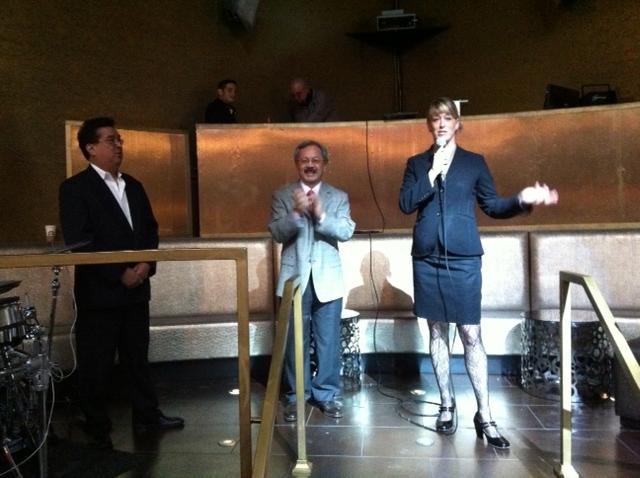
Addressing a gathering of nightlife advocates at a California Music and Culture Association event last night, Mayor Ed Lee praised the economic and cultural role that the entertainment industry plays in San Francisco, announced plans to add a “nightlife unit” in the Mayor’s Office of Economic and Workforce Development, and even hinted that Halloween in the Castro might be returning after being shut down during the city’s so-called “war on fun.”

“If I’m going to be about jobs,” he said, referring to his near-constant emphasis on economic development, “it should be both for the day and for the night…I do recognize this as a business, as a serious contributor to the economic engine of city.”

Lee referenced the new Controller’s Office report that was requested by Sup. Scott Wiener, which concludes that the nightlife industry generates about $4.2 billion in annual economic activity in the city (that report will be the subject of a rally and hearing on Monday at City Hall starting on the steps at noon). And he said that the benefits of a vibrant nightlife scene also help make San Francisco an appealing city for other businesses, an indirect economic benefit.

“You’re all part of a great part of the city that keeps everyone refreshed,” Lee said, later adding, “I think we can do more at night. The young people who work gobs of hours need to have an entertaining evening.”

As he announced plans to add a nightlife unit to OEWD, the office that works with private companies looking to locate or expand here, he said, “We, as government, need to fast-track things that are successful.” Yet he also said that public safety is still a challenge and called for the industry to work closely with police to keep everyone safe.

Yet Lee spoke positively about Halloween in the Castro, a once-popular event that was canceled because Mayor Gavin Newsom and then-Sup. Bevan Dufty (who Lee recently hired as his new homeless czar) feared the city couldn’t control it, and Lee alluded to plans being developed to revive it in some form. “I hate to see any event that brought so many people to the city gone,” he said.

The event was held at The Grand, a club owned by CMAC board member and new Entertainment Commissioner Steven Lee. CMAC was formed two years ago in response to crackdowns on SF nightlife by city and state officials.

The 8 Washington disaster goes to Planning

100

The urban planning disaster that is 8 Washington goes before the San Francisco City Planning Commission March 8 amid a long list of questions — including Mayor Lee’s position on the project and how it could screw up the America’s Cup.

Developer Simon Snellgrove wants to build the most expensive condos in San Francisco history on the waterfront, 145 units that will be far out of reach to anyone who makes less than half a million dollars a year. And many of the units will require income far higher than that. It’s not just housing for the 1 percent; it’s housing for the top half of the 1 percent.

There’s no need for this kind of housing in SF; the very rich have no problem finding places to live. And the spot zoning violates every standard of good waterfront planning practice.

The project will benefit the Port of San Francisco, which stands to take a cut of the money since some of the project is on Port land. But more than half of the land is owned by Golden Gateway and is a former redevelopment area, so the supervisors and the Port are going to have to fight over who gets the property tax increments and how that’s all financed.

More interesting, 8 Washington will be a boon to Golden Gateway, which as the landowner is a partner in the deal. And Golden Gateway is one of those big properties that are paying far too little in city taxes. When the complex changed hands several years ago, the owners used a stock-swap deal to transfer it, avoiding the Prop. 13 reassessment that could have substantially raised its taxes. So the city’s losing millions of dollars — and now Timothy Foo, who is the principal owner of Golden Gateway, will be getting a nice favor from the city he’s been screwing.

Oh, and by the way — a lot of Golden Gateway units are being advertised as short-term (that is, hotel) rentals — something that violates at least the spirit of city law. This is an outfit that deserves special zoning treatement from San Francisco?

Then there’s the fact that this could be a serious problem for the big America’s Cup party. Project critic Brad Paul has been analyzing the impacts of the development, and noticed some new language in the comments and responses to the Environmental Impact Report suggesting that excavation could lead to something like 200 dump-truck trips a day along the Embarcadero — roughly one trip every two minutes. In an email to Paul, Paul Matltzer in the Planning Department confirmed that the likely construction process could, indeed, involve that many dump trucks, rumbling along the Embarcadero during the peak construction period, which will also be the peak period for America’s Cup tourism.

Dump trucks, Paul (who used to drive one) notes, start slowly and brake slowly. The Embarcadero is already crowded — and will be far more crowded during the Cup races, so much so that city officials are thinking of closing traffic lanes to all but bicyles and transit. How, exactly, will that work out with 200 trucks a day fighting for room?

I’ve called and emailed the America’s Cup people, but they haven’t gotten back to me. I’ll keep you posted.

Lee’s office hasn’t gotten back to me, either, but I’m hearing that the mayor is telling people he hasn’t made up his mind — on a project that’s a week away from the Planning Commission and that one of his close allies, Rose Pak, is strongly promoting.


Nathaniel Blumberg: Open to change

0

By Wilbur Wood

 (Wilbur Wood was a student of Nathaniel Blumberg in the early 1960s at the University of Montana in Missoula. And he was the leader  of a contingent of Blumberg students that turned up in San Francisco, many dispatched by the  Dean to work on the Guardian during the highly active and newsworthy 1960s.   Wilbur was a poet and a reporter,  with a master’s degree in creative wiriting at San Francisco State, so he fit in well at the Guardian. He had edited his campus paper,  so I made him city editor. He covered the 1967 mayor’s race and operated as if he were directed by Blumberg himself.  Wilbur followed Joe Alioto around, from place to place, and found that Alioto was changing his story depending on the audience.  Wilbur, as a Blumberg mentee, was not shocked. He nailed Alioto and  wrote one of the most amusing and  illuminating stories of the campaign. but it did not deter Alioto from becoming mayor. Wilbur ‘s big triumph as city editor was his work in positioning and editing an investigative story exposing how the members of the  local  San Francisco draft boards were anonymous, establishment types who worked in secrecy at secret meetings to draft a disproportionate number of minorities.  The expose  appeared in Deccember, 1967, in  the red hot middle of the Vietnam War. It was a bombshell, the first such story ever done in the nation, and led to extensive litigation on behalf of draftees in federal court, pioneering reforms in the draft, and inspired a national New York Times investigation.  It was written by Eugene Hunn, the husband of Nancy Engelbach Hunn from Kalispell, Montana, and a classmate of Wilbur’s and a student of Blumberg at the Montana School of Journalism.

(Alas, Wilbur  went back to Montana, as all Montana people seemed to do, and is now a poet, reporter, and philosopher living in his hometown of Roundup, Montana with his wife Elizabeth. She worked as an ad representative at the Guardian. Elizabeth and Wilbur run a a writing, editing, and consulting business called Stone House Productions. The stonehouse was built by Wilbur’s grandfather and is where the two live, work, and play.   Others in this Guardian era also went back to Montana:  Printer Bowler, Troy Holter, Larry Cripe, Nancy Engelbach Hunn, Karen King, Bruce DeRosier, Doug Giebel et al, a talented group of journalists, writers, and political activists bristling with Montana populism. The Blumberg/Montana contributions were enormously valuable in our early days when we had lots of ideas and ambitions but slender resources.   Why they left San Francisco to go back to Montana is still a mystery to me.)

I’m late for class, jogging, short-cutting across a mowed lawn in front of the School of Journalism. A window squeaks open and the unmistakable voice of the Dean, Nathan Blumberg, roars out a second story window: “BARBARIAN!”

Astonished, I plop down on the ground, speechless, chagrined, then leap up and disappear into class. It is the early 1960s. The Dean is, at that time, a man who believes that people should walk on the sidewalks, not upon the carefully tended lawns, at the University of Montana. He sees a reason for rules, even as he openly questions many of them

A scant six or seven years later, this same man is gliding over those same lawns, sailing Frisbees into the sky, chasing the return throws from students, the occasional faculty colleague, and former students back for a visit.

“When did Nathan start calling himself Nathaniel?” asks Bruce Brugmann, editor and publisher of the San Francisco Bay Guardian. We’re talking on the phone on the day of Nathaniel Blumberg’s death, February 14, 2012. Valentine’s Day. It is fifty-four days before his 90th birthday, on April 8. (April 8, Blumberg was delighted to learn, is Buddha’s birthday.)

“The name change happened in the 1970s or early ‘80s,” I tell Brugmann. Bruce, back in 1953, at the University of Nebraska, was a student of Nathan Blumberg. “We called him by his last name,” Brugmann said, “outside class. We never used his first name.”

Nor did we in the early ‘60s, I reply. He was The Dean, Dean Blumberg — until Printer Bowler (one of his students) began calling him “Coach.” Things were starting to loosen up by then.

“Blumberg is who inspired me,” Brugmann says. “He was highly critical of the mainstream press–and this was back in the ‘50s. He pointed out their faults in class. He advised me to go someplace – he mentioned San Francisco — and start an independent weekly newspaper. When I could do that, I did.”

But why change his name from Nathan? Both Brugmann and I know people who, through the years, met Blumberg and later named their sons Nathan. “It’s about affirming his full identity,” I say to Bruce. “He decided to accept his name as it appears on his birth certificate: Nathaniel Bernard Blumberg.”

NBB arrives at middle age in the 1960s — a man of high principles, acute intelligence, possessing an inquiring mind along with great reservoirs and pride and stubbornness, his career a success. He arrives at middle age but does not come to a stop. He opens up. Opens his heart to an expanding circle of friends. His property on Flathead Lake becomes a destination. Music, talk, good food and drink flow in the clearing under the tall trees.

Not long ago Nathaniel brought up an argument he and I engaged in, more than 40 years ago, driving up the Big Sur Coast on our way back to San Francisco. We’d made a day trip to San Simeon, and toured the hilltop castle of the newspaper magnate William Randolph Hearst. Our argument was about Vietnam and the Civil Rights Movement. Blumberg thought the two issues were different, and that linking one with the other would damage the prospects for each cause, anti-war and anti-segregation. “You said the two were connected,” Blumberg reminded me, adding that about a year later, Martin Luther King, Jr., made that connection in public, in a speech at the Riverside Church in New York City. Nathaniel wanted to tell me that I had been right.

A veteran of World War II, NBB wrote the story of his weaponry unit going up against highly trained Nazi soldiers in the Battle of the Bulge. He honored that moment in history, but he approved of the next generation’s aversion and resistance to the war it had been handed: Vietnam. Although he was part of what Tom Brokaw called “the greatest generation,” Nathaniel rejected that label. He preferred the Sixties Generation, he told me, more than once, because “you did not accept the word of the government as truth.” Nor did we accept, he said, the word of the big corporations.

Nathaniel supported anyone trying to create a world based on love.

Les Gapay, a forrmer Blumberg student, writes a Blumberg remembrance and Blumberg writes his own obituary.

http://www.sfbg.com/bruce/2012/02/28/nathaniel-blumberg-everyone-needs-mentor


The war is over. Fun won.

1

steve@sfbg.com

>>Read Sup. Scott Weiner’s op-ed on SF nightlife here

Two years ago, the war on fun that the Bay Guardian had been chronicling and decrying since 2006 — involving overzealous cops, NIMBY neighbors complaining about noise, escalating fees on outdoor events, and politicians scapegoating nightclubs for urban violence –- seemed to be reaching a peak of official intolerance.

The San Francisco Police Department and California Department of Alcoholic Beverage Control were running amok, with an especially troublesome pair of enforcers harassing disfavored club owners and guests, getting rough with patrons at private parties, and seizing laptop computers from DJs and cameras from those who documented the abuses (see “The new War on Fun,” 3/23/10). Then-Mayor Gavin Newsom and then-Police Chief Heather Fong and their underlings only fed the conflict with brash statements and by refusing to support the nightlife industry.

But today, all involved say the situation has turned completely around, with the nightlife industry asserting its importance to San Francisco’s culture and economy and getting key support from a new generation of political leaders. It may be too early to say the war on fun is over, but everyone is certainly enjoying a welcome cease-fire.

Police Chief Greg Suhr has longstanding relationships with many leaders in the nightlife community -– and he’s someone who says that he goes out regularly and has a son who plays drums for a local band.

“I consider many of the people in the entertainment community to be personal friends,” Suhr told us. “And if there’s a problem, I don’t think anyone has been shy about approaching me personally.”

At the same time, the industry has taken on a higher political profile in town since forming the California Music and Culture Association two years ago during the height of the conflicts with the city and the ABC. The group now has monthly meetings with a nightlife liaison that Suhr has assigned to work through issues.

“The lines of communication are open. Despite some differences in opinion, there is a growing sense of trust and respect that is developing in these meetings,” CMAC co-chair Alix Rosenthal told us.

Rather than bashing the nightclubs as a source of trouble, political officials have been openly courting CMAC, which holds regular public events and forums on nightlife issues, including an “Industry Cocktail Hour with Mayor Ed Lee” on the evening Feb. 29 from 5-7 p.m. at The Grand, a club owned by the newest Entertainment Commission member, Steven Lee.

Sup. Scott Wiener has also been a strong advocate for nightlife issues, and has commissioned a city study on the economic benefits of the nightlife industry, which he discusses in this week’s Guardian Op-ed and which will be the subject of March 5 rally and hearing at City Hall.

Preliminary results in the study, with was conducted by City Economist Ted Egan, show that the nightlife industry generates $4.2 billion in annual spending, $55 million in taxes, and employs 48,000 people. And those figures don’t include outdoor events such as street fairs or the Outside Lands Festival, which another recent study by concert organizers found generated $60.6 million in San Francisco and $6.6 million in surrounding communities last year.

“People coming into the city to enjoy themselves is our number one industry,” Suhr said, noting how important it is to balance public safety concerns with support for the city’s cultural and entertainment offerings.

Rosenthal said CMAC was happy that Wiener commissioned the study. “This study is going to be helpful,” she said. “We’ll have hard data to show how much the entertainment economy contributes to San Francisco’s entire economy.”

Sorting out the America’s Cup re-do

8

I have to say this for Mayor Ed Lee: He’s not so stubborn or egotistical. He’s willing to listen. And when something really, really doesn’t make sense, he’s willing to let it slide.

Not like Gavin Newsom.

If Newsom were still the mayor (ick! gasp!), he’d be desperately trying to keep together the deal that gave five pieces of the waterfront to the sixth richest person on Earth for more than two-thirds of a century. He’d refuse to admit that maybe the promises of vast wealth accruing to the city from what’s really an untested event might be a little lower than projected. He’s be sucking up madly to Larry Ellison, promising him more and more city money if only His Larryness would bestow the greatness of his hotel, restaurant and condo manna upon us poor lowly San Franciscans.

The current mayor has a little more sense. But then, I don’t think Ed Lee spends much time dreaming about the Oval Office.

So now that Ellison’s team realized they weren’t going to be guaranteed enough of a profit on waterfront development and Lee realized that giving away any more of the store, or rushing this through any faster, was bad for the city, we have a deal that’s based on San Francisco hosting a sports event, not on extensive real-estate development on the waterfront. It’s better than it was, and I give the mayor credit for that.

But a few things are worth remembering:

The proverbial devil is in the proverbial details, and right now they aren’t so proverbial. There’s the minor matter of about $15 million worth of upgrades and repairs to the waterfront that’s needed for the race — and the city’s on the hook for it. Right now, it’s not clear where that money’s going to come from.

One option: The city could go back to giving Ellison some property or development rights. The Chron quotes Jennifer Matz, the mayor’s economic development director, saying that the rights to Seawall Lot 330 are still on the table (bad, bad idea). Stephanie Martin, spokesperson for Ellison’s operation, told me there are no long-term development plans included at all. Maybe the city will just pay cash from the General Fund to Ellison (seems unlikely; I’d love to watch that Budget and Finance Committee meeting.) Maybe the Port will sell revenue bonds and pay Ellison out of the projected new income from the event.

Or maybe some other deal that will be bad for the city and good for Larry will emerge, and we’ll all have to fight that one.

I realize that, if the attendance figures are anywhere near what’s projected, the city will still wind up millions of dollars to the good.

But I still don’t understand: Why are we paying Ellison to hold his race here? Yeah, it will bring tourists to the city — but as former Sup. Aaron Peskin points out, we don’t pay the Navy to bring Fleet Week and the Blue Angels to town. If anything, we should be charging these folks for the right to use so much public property for their own commercial gain. (Yes, the America’s Cup involves commercial gain. Ellison does it because he loves yacht racing and likes to win shit, but you don’t think that giant Oracle logo in 80 million pictures in newspapers and on TV isn’t worth a whole lot of money?)

Why isn’t a guy who counts as one of this generation’s great industrialists, with a fortune rivaling the Rockefellers and the Morgans and that gang, donating anything at all to San Francisco? Those old robber barons built libraries and museums and stuff for the benefit of the public. Come on, Larry — step up and help out here. Do the race, defend your Cup, then give something back to the city instead of asking the taxpayers to cover your tab.

PS: I read Randy Shaw’s attack (if that’s what this odd little piece was) on Aaron Peskin, and I wonder — what’s wrong with being a maverick who works from the outside to try to defend the city’s interests? I don’t always agree with Peskin (see: Home Depot) but I can tell you: There are a lot of people inside City Hall who are really, really happy that he’s out there doing what he’s doing. If nobody on the outside was taking on the America’s Cup deal, the city would absolutely be worse than it is. Peskin’s trying to save the city money. Why is that a bad thing?

Here’s what made me really laugh, though: Shaw criticizes Peskin for failing to support Malia Cohen and Jane Kim for supervisor, saying that he could have been mayor if he’d been working for candidates who ended up winning. Huh? Don’t progessives usuall go after pols who sell out their principles for political gain? If Peskin thought that Debra Walker and Tony Kelly would be better supervisors than Cohen and Kim, shouldn’t he be working for them instead of thinking about his own political future?

Odd where Randy Shaw is going these days.


Dramatic change in the America’s Cup deal

25

Mayor Ed Lee has announced dramatic changes in the deal for the America’s Cup race, essentially eliminating the massive real-estate development contract with Oracle CEO Larry Ellison.

Under the new agreement, the city will work with Ellison to host the race — but that’s about the beginning and the end of it.

“There is no long-term development,” Stepahnie Martin, spokesperson for the America’s Cup Event Authority, told me.

The previous deal, set for a Board of Supervisors vote Feb. 28, has been scrapped, so there won’t be any board action tomorrow, Judson True, an aide to Board President David Chiu, told me.

That deal would have given the world’s sixth richest person a swath of valuable waterfront property, with 66-year leases and development agreements, in exchange for Ellison investing millions in renovating the aging piers.

But criticism over what some called a huge giveway of public land was diverting discussion of the yacht race and threatened to undermine the city’s ability to serve as the venue host. Some supervisors were demanding more guarantees that the city wouldn’t lose money on the deal, and Ellison’s team was unwilling to budge.

In a Feb. 27 press release, Lee announced that the teams will be building a race village at Piers 27-29 and consolidating the boat launching facilities at Pier 80, on the southern waterfront. The race village will be temporary, and when the yachts leave, Ellison won’t have title to that property.

He won’t have title or development rights at Pier 80, either, and the plan to let him build on Piers 30-32, 26 and 28 as well as a lot across the Embarcadero appears to be dead.

So the America’s Cup is moving back to what it should be — a sporting event, a race on the Bay, and not some bloated development agreement that involves leases lasting more than half a century.

It’s still not clear how this happened — except that the numbers clearly weren’t working out for either side. The scaled-back agreement prevents the city from losing a fortune if the race doesn’t draw the anticipated crowds, and protects Ellison from losing money on waterfront development plans that regulators (including the Bay Conservation and Development Commission) might never have approved.

The city will still pay the ACEA about $16 million to fix a few things necessary to make the race work, and it’s not clear where that money will come from,

Aaron Peskin, a leading critic of the old deal, told me he’s cautiously optimistic. “It sounds promising, we’re getting this event down to the proper size,” Peskin said.

But he said that he hasn’t seen a written agreement “so it’s hard to tell what is and isn’t still in the deal.”

No mattter what the final agreement looks like, it’s clear that Ellison’s control of the future of the central waterfront has been radically reduced. And it’s clear that the deal former Mayor Gavin Newsom cut with Ellison wasn’t going to work for the city.

It also showed something that I’ve seen over and over again in these city deals with private parties: If the public refuses to go along, most of the time the Larry Ellisons of the world — the same people who insist they won’t move an inch and that the deal can’t be changed — will eventually back down.


Have conservatives hijacked the Small Business Commission?

19

Is the Small Business Commission really advocating for small businesses, or has the commission been hijacked by bankers and real estate developers aggressively pushing a right-wing agenda of unchecked growth and cuts to government regulation, programs, and fees? And why has the Mayor’s Office stacked the commission with these ideologues and worked behind-the-scenes to keep them in leadership roles?

Those are just a couple of the questions that have been raised by Mayor Ed Lee’s recent effort to amend the charter to give this commission broad authority over the city’s legislative agenda, which was dropped in the face of widespread opposition, and by his office’s alleged calls to their appointees urging them to vote for developer Luke O’Brien as vice president and banker Stephen Adams as president (simply reversing the roles they had played last year).

Traditionally, sources say the commission has sought to balance leadership between the mayor’s four appointees and the three appointed by the Board of Supervisors. But these days, the Mayor’s Office (mostly Chief of Staff Steve Kawa, we’re told) and its appointees (which include two bankers and one developer), at the urging of pro-development groups Coalition for Responsible Growth (CRG) and Plan C, seems to want to consolidate their control and push their agenda.

Neither Kawa nor Press Secretary Christine Falvey would address our direct question about the Mayor’s Office interfering with the internal working of supposedly independent commissions, but the Examiner today had a story about the Mayor’s Office doing the same thing on the Planning Commission with its leadership vote this week.

“If the Mayor’s Office feels the need to interfere in commission votes, it interferes with internal commission matters and the spirit of the commission,” Board President David Chiu, who has been following the Small Business Commission dynamics, told the Guardian.

Outgoing commission member Janet Clyde, who runs the legendary Vesuvio bar in North Beach, said she has long been bothered by the changing tone and dynamics on the commission: “There is definitely an agenda that is driven by the Mayor’s Office, a more conservative view…There is a big business agenda in small business clothes.”

And she said that change has been pushed by Plan C, CRG, and other fiscally conservative groups that backed Lee’s mayoral campaign. “They really saw an opportunity to use the Small Business Commission to push their agendas.”

The CRG board includes three members of Murphy O’Brien Real Estate Investments, including O’Brien and Mel Murphy, who is a mayoral appointee to the Building Inspection Commission, where he also regularly advocates for real estate interests. CRG, which did not return our calls for comment, testifies regularly at City Hall in favor of development and against regulation. Clyde and current commission member Kathleen Dooley say O’Brien has been especially aggressive in pushing his ideological agenda.

O’Brien ignored repeated Guardian requests for comment, and when we finally reached him by phone, he said, “I have no interest in talking to you.”

In December, in his role as president, O’Brien called a special hearing to discuss the Eastern Neighborhoods Plan, the massive land use plan passed a few years ago after dozens of public hearings to work out its myriad complicated details and balance the preservation of light industrial properties with housing development, providing city services, and other considerations.

“This thing really needs to be thought out a little bit more,” O’Brien said at the hearing in a video clip that is prominently displayed on the CRG website.

Commission Executive Director Regina Dick-Endrizzi defended that hearing and others that have ventured into planning, regulation, and land uses issues that seem to be the purview of other city commissions. “Every business we talk to that wants to be in a brick-and-mortar space, it’s all about land use,” she said, noting that at the commission’s last annual retreat, “they decided to take a look at impact fees and their implications.”

She also noted that the city defines small businesses as having fewer than 100 employees, and that both developers and bankers are legitimate small business advocates, noting how important loans and other capital sources are to small business survival. Mayoral spokesperson Christine Falvey also defended the appointments and their focus: “The Commission has a diverse group of individuals to represent small business. The agenda is not controlled by any one group. There is a diverse group of voices and all deserve to be heard.”

Falvey also said it’s important to have bankers like Adams, a branch manager of Sterling Bank & Trust, on the commission: “The Mayor understands the important link between conventional banks and micro lenders. While there are moderate improvements in the lending environment, understanding the current status of access to capital is critical information for the Commission in its role to advise and make recommendations to the Mayor and Board of Supervisors on policy matters and City regulations that affect either the ease or difficulty in doing business in San Francisco.”

But progressive members of the Board of Supervisors – including Sup. Christina Olague, a mayoral appointee, in her recent interview with the Guardian – have regularly derided the narrow focus and ideological agenda of the commission, particularly its mayoral appointees. Some privately call it the “Small-Minded Business Commission.”

“We need some diversity on this commission. It can’t be all white men with a particular point of view,” Dooley said.

That could begin to happen on Tuesday when the Board of Supervisors is slated to replace two of its outgoing appointees, Michael O’Connor and Janet Clyde, with two that have been recommended by the Rules Committee: Monette White, who runs Food for Soul, “an upscale restaurant and holding company,” and William Ortiz-Cartagena, CEO of Gentle Parking, which managing parking lots in the city.

But that won’t go very far in changing a commission that seems focused on using the “small business” fig leaf to push a more broad and ideological pro-business agenda. Even Chiu, who is strongly pro-business, told us, “The Small Business Commission needs to be focused on the plight and issues of small businesses.”

What’s wrong with the America’s Cup deal? A lot

21

Let’s start out with a premise that even Larry Ellison’s minions have come to accept: The race is happening here. Too late now to move it to another city. Worst-case scenario, according to Stephen Barclay, the point person for the world’s sixth-richest man: “If we don’t meet those dates, the teams will be forced to relocate to other places around the bay.”

That’s right — the teams will relocate to other places around the bay. The host city will still, for all practical purposes, be San Francisco; the races will happen off SF’s waterfront (where the Coast Guard is willing to allow them and the conditions are right) and the rich tourists will stay here, not in Burlingame or Fremont.

If Ellison decides the city’s not giving him enough, he won’t put up $55 million to fix up some of the waterfront piers. The city may decide that a development deal of some sort with him makes economic sense. But it’s a real-estate deal at this point, not a deal for the race. At least, that’s what the Ellison team seems to be confirming.

And I fear that the real-estate deal that the Board of Supervisors Finance Committee sent forward yesterday, 2-1, is a bad deal for the city.

The terms are really complicated, and it makes my head hurt just trying to figure it all out — and still, the supes are expected to vote on the 120-plus-page document Feb. 28. Here’s what we do know, though:

The supervisors originally came to a deal with the America’s Cup Event Authority back in December. The concept was — and is — pretty straightforward, the same sort of deal the city has done (or, certainly, the Redevelopment Agency has done) many times in the past. In exchange for putting cash into renovating several piers, Ellison’s group would get long-term leases and development rights on the property. The idea: The city can’t afford to fix the piers. Ellison’s organization can. And once the property is renovated, the developer can make back that initial investment, and a profit, by building commercial space, condos and whatever else the Port decides to allow.

In a perfect world, San Francisco (and the state and the feds) would tax the hell out of people like Ellison, and there’d be public money to rebuild the waterfront as public open space, recreational facilities and the like. And wouldn’t that be utterly cool? Wouldn’t this city have the most awesome waterfront in the world?

But no: The only way the piers are going to anything but a place to park cars until they fall into the bay is if some private developer gets the rights to build something that I won’t like.

Supervisors Jane Kim and Mark Farrell, who don’t agree on a lot of things, both agreed with my basic analysis of the politics here: We shouldn’t let the excitement over the prospect of a boat race get in the way of analyzing this for what it is: A financing tool for the Port to get its infrastructure fixed up. Without a private investor, “they just don’t have the capacity to do that,” Kim told me.

So let’s just stipulate for a moment that this is the best, maybe the only way the city can restore the Port. Then it comes down to the real issue: Has the Mayor’s Office negotiated a good enough deal? Is San Francisco getting enough out of this? Or is everyone so hyper-buzzed about fancy carbon-fiber boats in the water (and I admit, they’re pretty cool) and free-spending tourists in the hotels and restaurants that we’re letting Mr. Ellison — who didn’t get so stinky rich by being a weak negotiator — walk away with most of the cookies?

Remember: Ellison’s not doing the city any favors. He’s only fixing up the piers that he will effectively own (as least for most of the rest of this century).

Back in December, the rough outlines looked like this: A corporation set up by Oracle, called the America’s Cup Event Authority, would put $55 million into repairing and renovating piers, then would get  66-year leases and development rights on piers 30-32, 26 and 28, as well as seawall lot 330, across the Embarcadero, which Ellison’s team wants to turn into more condos for rich people. If that’s not enough to pay for Ellison’s investment, Ellison’s heirs or successors get half the rent for the piers for another 15 years. That’s 81 years.

The original deal mandated that the city would collect a 1 percent fee on the re-sale of the new condos. It also had a requirement that Ellison share with the city any profits he made by flipping the long-term leases.

That’s a big deal, because almost nobody in the city actually holds onto development entitlements anymore. A developer wins the right to build an office building — and next week, he or she sells that right to somebody else. It’s almost certain that at some point, Ellison — whose sole goal here is going to be making a profit off city land — will decide that the best way to make money is to cash out. He’ll keep his 66-year leases for a few years, maybe lobby his way to approvals for office, condos, time-shares (gasp! yeah, they’ll do that if it’s legal) restaurants or whatever — then sell the remaining time on the leases, plus the development rights, to somebody else. And because he’s Larry Ellison, he’ll wind up making a nice tidy profit.

That used to be what happened with Port property (see: Pier 39) but lately, the Port’s gotten a bit wiser and has, in some cases, insisted that part of the profit from flipping a lease goes back to the city. In the original discussions, Ellison was going to have to pay the Port 15 percent of any net gains he made from the almost inevitable sale of the valuable leases.

But that’s gone now. After the board approved Newsom’s deal, the former mayor — who was always terrible at negotiation with the rich and powerful and always gave away the store — went back and monkeyed around with it. He and Sup. David Chiu insisted that the changes were just technical, not substantive enough to require a new board vote — but the current deal has no 15 percent cut for the Port, and the 1 percent levy on condo sales only applies after the second owner sells — which will be years down the road.

Then there’s the part where the city has to reimburse Ellison if the cost of renovating the piers exceeds what’s expected (oh, and we have to pay him 11 percent interest, which is about ten times what I get on my bank account; how about you?) There’s no cap on what the city might have to pay. And Ellison gets to develop a new marina.

And while Pier 29 is no longer a part of the deal, the city has to give Ellison $12 million — or rights to a pier to be named later. (Maybe Ellison figures that in a few years the people who opposed Pier 29 development will be out of office and he can convince the new mayor and supervisors to give Pier 29 back. It’s not legally excluded.)

Kim told me she’s going to insist that the final deal include a local-hire provision, which the rest of the board would be crazy not to support (and which Ellison, despite his company’s problems with local labor laws in the past, would be crazy not to accept).

But overall, Kim — who with Sup. Carmen Chu was part of the 2-1 majority sending the package to the full board — told me she thought the city got a good deal. “It took me a while,” she said. “But [Port Director] Monique Moyer convinced me that this was good for them.”

Sup. John Avalos, the dissenting vote on the Finance Committee, isn’t convinced. He’s got a long list of concerns, starting with the fact that he thinks the projected attendance and economic benefits are a bit delusional. “The figures seem farfetched,” he told me. “I’m seeing a lot of pumped up numbers. And those numbers drive whether this is a good deal for the city or not.”

He’d like to see the 1 percent rule apply to the second condo sale, not the third. He’d like to see the Port get 15 percent of the profits from any sale. And he’d like a cap on the reimbursements the city has to give to Ellison.

But here’s the problem: When the development agreement comes before the board, sitting as a Committee of the Whole Feb. 28, it will be hard to put any of that back in the agreement. This is a contract, and while the board can pass a resolution asking for more, in the end, it’s a matter of voting it up or down.

Vote yes and it’s done — more or less as is — although Kim says there will be another chance to make changes down the road, since the board and the Planning Commission will have to sign off on whatever type of development Ellison wants to do. The problem with that scenario? Ellison’s lawyers will wave this development agreement around like a Giants victory towel and proclaim that it binds the city and limits any ability to demand any more changes later. That’s how these people operate.)

Vote no and the ball goes back to Larry’s Court: His group can sit down with the Mayor’s Office and make some changes, or they can walk away (and build their boat sheds in …. where? Oakland? Foster City? Who’s got waterfront that can handle this?)

When the Finance Committee send the package to the full board, Avalos said, “we pretty much lost our ability to influence the agreement. Now we have to decide if we want to call [Ellison’s] bluff.”

PS: One of the lingering issues is whether the America’s Cup Organizing Committee can raise the $30 million-odd that is needed to make the numbers pencil out. If I were a rich person and Mark Buell, the ACOC point person, called me for money, here’s what I’d say:

How much is Larry Ellison contributing?

See, Ellison’s improvements on the waterfront aren’t charity. He’s looking to make a buck off everything he does. In past eras, the great robber baron capitalists would donate civic monuments — libraries and museums and stuff — and by any traditional standard of great wealth, Ellison ought to be writing a personal check for that $30 million. Or at least for some of it.

But so far, he hasn’t given a penny. The sixth richest man in the world isn’t actually donating anything to San Francisco. Yeah, he’s gracing us with his lordly presence, but cash? Nada.

Good luck with that one, Mark.

PPS: This whole concept that the city needs to fix the “crumbling” piers ought to be examined. First of all, nobody’s ever said that Pier 29 was in anything but fine shape. But beyond that, the Bay Conservation and Development Commission considers piers to be bay fill, and in the long term, wants San Francisco to get rid of some of them. “Maybe it’s a good thing if some of the piers fall into the bay,” former Sup. Aaron Peskin told me. “Then we’ll have more leeway with BCDC when we want to fix up some of the others.”

Research assistance by Royce Kurmelovs

Campaign cash roundup and questions about our sleeping watchdog

3

Oliver Luby – the last true public-spirited employee at the Ethics Commission (a campaign lapdog when it should be a watchdog) before being forced out in 2010 – has written an insightful and comprehensive analysis of spending by candidates and outside groups during last year’s election. It’s published by CitiReport.

Among his findings are that the largely unregulated spending by supposedly independent third-party groups totaled $3.6 million, with $1.4 million of that going to support Mayor Ed Lee, and much of it coming so late in the race that voters weren’t able to factor its sources into their decisions.

Those outside groups spent almost as much to elect Lee as the campaign itself raised, which was almost $1.6 million. When those two figures are combined, and one subtracts the $419,891 in independent expenditure (IE) spending in opposition to Lee, the appointed mayor and his supporters spent $33.87 for each first place vote he received, or about 2.5-times that of second-place finisher John Avalos, whose $757,327 in “supportive financing” works out to $13.25 per vote.

Luby has long called for Ethics to get tougher on violators of campaign finance law, playing whistleblower at several key points in his career, starting in 2004 when he and then-staffer Kevin DeLiban exposed notorious campaign attorney Jim Sutton’s alleged scheme to illegally launder unregulated funds being collected for then-Mayor Gavin Newsom’s inauguration into paying off some of his $550,000 campaign debt.

In his latest piece, Luby again calls out his old bosses at Ethics for ignoring local laws against maxing out donations to many candidates in order to buy influence at City Hall. Donors are limited to an “overall contribution limit” that equals the maximum individual donation of $500 times the number of offices open, which was three in this election. It allows the city recoup from the campaigns money collected in excess of that, which Luby said totals $29,111 in this election.

“The SF Ethics Commission does not enforce this law. Supervisor Scott Wiener wants to help them get rid of it,” Luby wrote. Ethics Commission Executive Director John St. Croix was out of the office and hasn’t returned a Guardian call for comment.

Among those whose excessive contributions would be diverted to city coffers are Planning Commissioner Michael Antonini (perhaps the city’s most powerful Republican), PR powerhouse Sam Singer, medical marijuana activist Kevin Reed, political fundraiser Wade Randlett, city staffer-turned-developer Michael Cohen, moderate Democrat Mary Jung, and Coalition for Responsible Growth (a pro-development group) President Rodrigo Santo. Not surprisingly, they all contributed to Lee, whose campaign would be on the hook for the most in givebacks, $7,725, followed by David Chiu’s mayoral campaign at $4,700.

Finally, for all their talk about fiscal responsibility, Lee and his supporters couldn’t seem to live within their means in this election. Lee’s campaign finished about $275,000 in debt, while two of the pro-Lee IEs also finished in the red: SF Neighbor Alliance ($11,338) and Progress for All ($35,890), the ethically challenged creators of the “Run Ed Run” campaign that purported to talk Lee out of his pledge not to run for a full term in the office he’d been appointed to.

These are just some of the findings in Luby’s voluminous reporting, so check it.

Guardian editorial: The DA and mayoral corruption

8

EDITORIAL The indictments of two executives of an airport shuttle company on charges of laundering campaign money are, in themselves, a rarity and something to celebrate: the district attorney of San Francisco is actually attempting to enforce the laws against political corruption. That’s unusual in this city, and worthy of note.

But at this point, the entire sum total of prosecutions involving the scandal-ridden campaign of Mayor Ed Lee amounts to a pair of cases against people who made what appear to be illegal contributions. As of today, the message that’s being sent is that nobody in the Lee campaign did anything wrong. And that seems a little bit curious.

Lee’s late entry into the race — after he’d promised for months not to run — and his refusal to abide by the rules of public financing forced his supporters to raise a large amount of money very quickly. There were so-called independent expenditure committees collecting donations and running parallel campaigns that, by law, should have been entirely distinct from Lee and his official effort. We’ve always been dubious about the supposed lack of coordination.

Then there were the well-documented instances of irregularities serious enough that every other candidate in the race asked for state and federal monitors to watch the election. Several eyewitnesses told local reporters that they saw volunteers for one of the supposedly independent groups filling out absentee ballots for voters, using a special template that ensured the votes would go for Lee. Some said they saw ballots being collected at a makeshift voting booth. In a video provided by the campaign of State Sen. Leland Yee, it appears that volunteers were both filling out ballots and placing them in bags — both clear violations of law.

Gascon’s announced investigations of all the allegations — but more than three months later, nothing has come of it. His office won’t confirm or deny whether investigations are ongoing or whether any further indictments may be forthcoming. But at the Chinese New Year Parade, Chinatown powerbroker and Lee ally Rose Pak announced that she had heard Gascon was investigating her.

There’s been plenty of time to collect evidence, and Gascon has a responsibility to let the public know, as quickly as possible, what’s happened to the rest of the allegations. If everyone in the Lee campaign is really innocent, and none of the independent groups supporting the mayor did anything wrong, he should say that, and present the evidence.

It doesn’t help Lee, the city, or the integrity of the voting process to have these cases drag out. Gascon needs to conclude them, expeditiously.

Who gets to live here?

38

yael@sfbg.com

Housing policy — which determines who will be able to live in San Francisco — has been a hot topic at City Hall these days.

At a Board of Supervisors Land Use and Economic Development Committee meeting on Feb. 13, representatives from the Mayors Office of Housing (MOH) reported on the state of middle-income housing in San Francisco, at the request of Sup. Scott Wiener. “Middle class” people make up 28 percent of the city’s population, a 10 percent decrease in the past two decades, and to reverse that decline would cost about $4.3 billion in housing subsidies, or more than half the city’s annual budget.

Wiener, who insists that “middle income and low income housing are not mutually exclusive,” said he’s raising the issue because the needs of the shrinking middle class are not being addressed. But during the public comment period, a long procession of low-income residents say city housing policies have kept them on the brink of homelessness. The takeaway message was: don’t embark on new housing efforts until you can enforce the ones that are already in place.

Also underscoring the desperate state of many San Francisco residents, Assessor-Recorder Phil Ting released a report Feb. 16 that contains shocking statistics about invalid foreclosures and illegal evictions in San Francisco. Ting found that 99 percent of all foreclosure proceedings in San Francisco in the past four years have contained paperwork irregularities, and in 84 percent of cases, banks or lenders have committed fraud or broke other laws.

With the loss of the redevelopment agencies, Mayor Ed Lee’s proposal for a housing trust fund, renewed calls for more condo conversions, and a new focus on middle income housing incentives, the conversation on housing in San Francisco is heating up.


MOVING TOWARDS RENTAL

San Francisco’s housing market is 64 percent rentals and 36 percent ownership, according to MOH. So despite the focus of politicians and developers on homeownership, housing policy in San Francisco mostly involves renters, many of whom face myriad threats.

Rents can be so steep that market-rate rental housing is becoming increasingly accessible only for parts of the middle class and the highest income brackets in the city. People in San Francisco tend to pay a huge chunk of their income towards rent.

The federal Housing and Urban Development Agency considers it reasonable for a households to pay 30 percent of their income towards rent; but for the city’s very low income households, rent is typically nearly 60 percent of income. For middle income households, the average percent paid toward rent has increased since 1990, but remains below 30 percent.

Those people fall mainly into the middle-income bracket, those earning 80-120 percent of Area Median Income (AMI.) Planning Director John Rahaim said that for the very low-income population (0-50 percent AMI) all rental housing is “virtually off-limits.”

So, for the middle class, renting a place in San Francisco is tough. For the low and very-low income, it’s next to impossible. And that reality threatens the city’s diversity.

“The highest rent burden still falls on lower income residents, many of whom pay 70 percent of their income as rent,” Sup. Eric Mar, who also sits on the Land Use Committee, said at the hearing. “In my district, people have whole families living in their living room or extra bedroom.”

But things may be looking up for renters. MOH’ Brian Cheu said developers believe that the market trends are heading towards construction of new rental housing after being almost exclusively owner-occupied units for many years. Cheu said there are 725 rental units in the pipeline for the next five to ten years, more than twice the new housing units meant for ownership slated for that time period.

Most of this will be market rate housing, and thus still unaffordable for a good deal of the population. But for those making around 100 percent of AMI — the middle class that Wiener hopes to serve — there are more rental units on the way.

“Any increase in supply of rental housing would help,” said San Francisco Tenants Rights head Ted Gullickson, “because there’s been virtually no new rental housing built in San Francisco is last 20 years.”

Even as Wiener promised to continue to prioritize the needs low-income residents, the foreclosure crisis was barely acknowledged at the Feb. 13 hearing. Many low-income residents say they are not sure they can trust the city’s claim that “this is not a matter of us vs. them.”

At public comment, many community members spoke of the housing troubles that they were already facing. Yue Hua Yu, who spoke at the Feb. 13 hearing, lives with her family of four in a single residency occupancy hotel room (SRO), units intended for single occupants.

“We would support a policy that protects the city’s affordable housing stock,” said a statement from Wing Hoo Leumg, president of the Chinatown Community Tenants Association.

Renting may be the realistic choice for most San Franciscans, but homeownership remains an important goal and achievement for many families, and the main obsession of many politicians.

Part of the middle class exodus is unmistakably due to better homeownership rates in Oakland, Daly City, Marin, and other surrounding areas. But there are neighborhoods with higher rates of homeownership than others, including Bayview-Hunters Point.

BHP has long been a prime spot for low-income homeowners, but it’s slated for extensive new housing construction in the coming decades that could compromise its affordability. It is also an area hit hard by the foreclosure crisis: there have been 2,000 foreclosures in Bayview in the past four years, according to Ed Donaldson, housing counseling director at the San Francisco Housing Development Corporation.

Rising prices and the foreclosure crisis have played a large part in the large-scale African American out-migration that has devastated San Francisco communities in recent decades.


APARTMENTS OR CONDOS?

One of the biggest points of controversy in the homeownership debate has been the issue of condo conversion, which was brought up again this past week at the Feb. 14 Board of Supervisors meeting, when Sup. Mark Farrell asked Lee if he would support legislation to let 2400 tenancy-in-common (TIC) owners bypass legal limits and fastrack towards condo conversion.

Farrell framed this as “a vehicle to allow residents of our city to realize their goal of homeownership.”

On Jan. 16, the city held its annual condo conversion lottery, in which 200 lucky TIC owners win the chance to convert their units into condos, thereby legally becoming homeowners. TICs and condo conversion have long been fraught with controversy in San Francisco, where there is never enough housing for everyone who wants it.

Condo conversion proponents say that turning a TIC — usually a building that used to be rental housing that has been purchased by a group of people that own it in common — into condos is a cheap way to become a homeowner in a city as expensive as San Francisco.

But tenants rights advocates have long opposed this process on the basis that it depletes the city of its rental housing stock. “When you have more condo conversions, you have more evictions, and it’s harmful to low-income residents” Gullicksen said.

This controversy, and the struggle to maintain a balance between opportunities for homeownership and reasonable rents has raged in San Francisco for years. In 1982, the Board of Supervisors passed a limit of 200 condo conversions per year as a compromise. There are no regulations, however, on converting rental housing to TICs.

“This has come up almost every single year for years and years about this time,” said Peter Cohen, organizer with the Council of Community Housing Organizations.

This year, however, proponents are not simply reiterating a request to bypass the condo conversion lottery. Plan C, a coalition of San Francisco moderates, is pushing for adding a fee to condo conversion, ranging from $10,000 to $25,000, which would go towards an affordable housing fund.

Mayor Lee said that he is open to considering a change in condo conversion policy, “providing it balances our need for revenue for affordable housing, the value that responsible homeownership brings to the city, and the rights of tenants who could be affected by a change in policy.”


WHOSE TRUST FUND?

This comes at a time when the city is facing a loss of millions per year for affordable housing with the dissolution of the redevelopment agency (see “Transfer of power, Jan. 31).

That dissolution led to Mayor Lee’s plan for an affordable housing trust fund, to be voted on as a ballot measure this November. The kick-off for that plan also began recently, with a press conference and big-tent meeting to discuss what it might look like.

On the day after the Land Use Committee meeting, where he started the conversation on “middle class” housing, Wiener posed a question to Lee at a Board of Supervisors meeting, asking how the mayor plans to “ensure that the housing trust fund that comes out of the process you have convened will meaningfully address the need for moderate/middle income housing.”

Some are concerned that too much of the trust fund could be allocated outside low-income demographics. “There’s a limited size pie of resources,” Cohen said. “Just in a matter of the last months, we lost the redevelopment agency. The city is madly scrambling to try to replace that through housing trust fund, and working to get us back to somewhere close to where we were…Is that pie, that has dramatically shrunk, going to be stretched further for another income band?”

That question will be important when the proposal goes to vote in November. According to Donaldson, many low-income homeowners will not vote for the measure unless it addresses their needs. The specifics of the measure calling for the trust fund are still being worked out. But, it will likely be funded by an increase of the transfer tax paid when homes change ownership.

Yet that proposal was the subject of an unusual political broadside from the San Francisco Association of Realtors, which last week sent out election-style mailers attacking the idea. “Brace yourself for an unexpected visit from the city’s tax collector,” the mailer warns, showing the hand of government bursting through the wall of a home, urging people to contact Lee’s office.

The measure may also see opposition from low-income communities, especially if, as Wiener has urged in the past week, it allocates a chunk of funds towards middle-income housing.

“It’s hard to find people who will support it. They’re saying, ‘what’s in it for me? Why would I vote for a transfer tax that I’m going to have to pay to help finance the building of affordable housing or middle-income housing. Why support programs that will support middle income people, who make more money than existing homewoners?” explained Donaldson. To agree on a way forward for housing in San Francisco, policymakers will need to reconcile a range of interests. In the worst-case scenario, the profit interests of realtors and developers will overtake the interests of San Francisco families struggling to continue to live in the city they love. But housing advocates are willing to work together to come to a solution. “Let’s put everything on the table, and let’s figure it out. In the spirit of cooperation, and with the understanding that each respective constituent group is not going to get everything that they want, but let’s put all the cards of the table,” said Donaldson.

Editor’s Notes

1

“San Francisco’s economy is moving in the right direction,” Mayor Ed Lee told the Examiner last week. “My economic development and job creation policies are setting San Francisco on a path toward economic recovery.”

The normally modest mayor is making a rather sweeping statement there — the US economy is improving in general, and I don’t think the mayor can take credit for all of it. But he’s absolutely correct that he’s promoted policies that are aimed at bringing more tech companies in to San Francisco, and over the next few years, they will no doubt create a lot of high-paid jobs for people with specific skills that require a high degree of training and education.

Is that “the right direction” for the city? I lived here the last time that San Francisco was part of a tech boom, and I’m not so sure.

See, bringing all sorts of new wealth into town sounds good on the surface, and for some people — particularly real-estate speculators, landlords and purveyors of high-end services — it is. But in a city that has limited space and nearly unlimited demand for housing, lots of new rich people and lots of high-paid people looking for places to live puts pressure on the existing residents, particularly the poor and the working class. It screws the middle class, too — if you’re a teacher or a nurse and you want to buy a house in San Francisco during a boom, you’re S.O.L. You can barely afford to rent — and if you’re already renting, you’re constantly at risk of losing your home, and your ability to live in this city, because your landlord can make more money kicking you out and selling the place as a tenancy in common to someone with more money.

There’s no way to build enough new affordable rental housing, or housing that middle-class families can buy, to keep up with the demand. It’s impossible. Developers won’t do that — there’s too much money to be made in high-end housing for anyone in the private marketplace to waste time on anything else.

The only way to preserve the middle class in the upcoming boom that Lee is promoting is to aggressively protect existing rental housing stock — which means preventing condo conversions and TICs and the stuff that gets promoted as “middle-class housing.” The only way to prevent massive displacement of people and existing businesses is to regulate space in the city more tightly than anyone has ever done — which will, by its nature, make it harder for the newcomers and new millionaires to find places to live.

That’s the tradeoff. That’s the fact that Lee and his allies don’t seem to want to grasp

Gascon and mayoral corruption

1

EDITORIAL The indictments of two executives of an airport shuttle company on charges of laundering campaign money are, in themselves, a rarity and something to celebrate: the district attorney of San Francisco is actually attempting to enforce the laws against political corruption. That’s unusual in this city, and worthy of note.

But at this point, the entire sum total of prosecutions involving the scandal-ridden campaign of Mayor Ed Lee amounts to a pair of cases against people who made what appear to be illegal contributions. As of today, the message that’s being sent is that nobody in the Lee campaign did anything wrong. And that seems a little bit curious.

Lee’s late entry into the race — after he’d promised for months not to run — and his refusal to abide by the rules of public financing forced his supporters to raise a large amount of money very quickly. There were so-called independent expenditure committees collecting donations and running parallel campaigns that, by law, should have been entirely distinct from Lee and his official effort. We’ve always been dubious about the supposed lack of coordination.

Then there were the well-documented instances of irregularities serious enough that every other candidate in the race asked for state and federal monitors to watch the election. Several eyewitnesses told local reporters that they saw volunteers for one of the supposedly independent groups filling out absentee ballots for voters, using a special template that ensured the votes would go for Lee. Some said they saw ballots being collected at a makeshift voting booth. In a video provided by the campaign of State Sen. Leland Yee, it appears that volunteers were both filling out ballots and placing them in bags — both clear violations of law.

Gascon’s announced investigations of all the allegations — but more than three months later, nothing has come of it. His office won’t confirm or deny whether investigations are ongoing or whether any further indictments may be forthcoming. But at the Chinese New Year Parade, Chinatown powerbroker and Lee ally Rose Pak announced that she had heard Gascon was investigating her.

There’s been plenty of time to collect evidence, and Gascon has a responsibility to let the public know, as quickly as possible, what’s happened to the rest of the allegations. If everyone in the Lee campaign is really innocent, and none of the independent groups supporting the mayor did anything wrong, he should say that, and present the evidence.

It doesn’t help Lee, the city, or the integrity of the voting process to have these cases drag out. Gascon needs to conclude them, expeditiously.

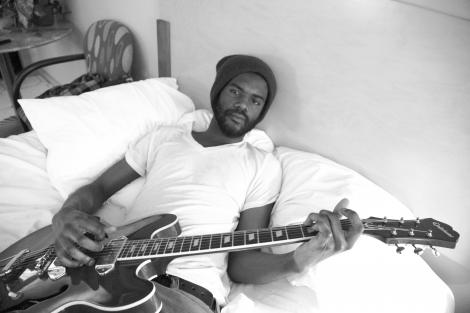
Blues guitarist Gary Clark Jr. solos as long as he damn well pleases

0

“Well you gonna know my name, by the end of the night,” Gary Clark Jr. sings during his take off Jimmy Reed’s blues classic, “Bright Lights, Big City.” The Animals, Rolling Stones, Clapton, Dylan –  many have had their take on it, but Clark flipped the tale of urban intoxication, giving it extra bravado and, with a notable performance at the Crossroads Guitar Festival 2010 and resulting Warner Bros record contract, turned it into an announcement of his own impending stardom (with risks involved).

As Clark Jr. walked out onto the stage of the Great American Music Hall Wednesday night it was clear that “Bright Lights” had been working given that the sold out crowd not only knew who he was, but readily sang him “Happy Birthday.” Of course Clark, turning 28, has had plenty of time to build up a following. At 17, in his home of Austin, TX the mayor was already proclaiming a Gary Clark Jr. Day, on account of his prodigious and heralded guitar skills.

It was those skills that people came out to hear at the Great American, and that’s what they got. There’s a lot of ways someone like Clark could go, but at this point in his career, Clark is still more of an old school, straight ahead blues rockers than successful popular contemporaries like Jack White or the Black Keys’s Dan Auerbach.

Clark opened the night with a couple tracks from his The Bright Lights EP. With “When My Train Pulls In,” he set a simple rule – the length of the songs would be less structured around the verses and would instead go as long as he wanted to solo. That one’s a bit heavier and slow, but he followed it up with “Don’t Owe You A Thang,” a catchy number built from some Bo Diddley-esque guitar playing. Clark would alternately double time or halve the solos, but kept the number well balanced by coming right back in with forceful vocals right before a shift in beat.

As he worked through a set that consisted of some covers and some originals, it was clear that Clark was experimenting with a number of styles, with mixed results. Compared to the confidence on display in “Don’t Owe You A Thang” and “Bright Lights,” the fluttery soul piece, “Things Are Changin’” had a John Meyer quality to it that I found unappealing. Almost reading my mind, Clark finished playing the number and said, “So enough of that sweet soft stuff, we’re about to get crazy up in here.” After a noisy intro that recalled another Austin guitar hero, Eric Johnson, the band started breaking the beat down more, playing “If You Love Me Like You Say,” with a big funky drummer solo, over which Clark pulled out some tricked out technique that sounded more like scratching on vinyl than anything I was expecting.

After a set involving a couple of real stretched out numbers, Clark met expectations with “Bright Lights.” But as he walked off stage it seemed like a number of people either had enough or got what they wanted, not waiting for the encore. People still called for it, though, and the guitarist returned, first without his band, saying “I want some alone time with you guys,” softly playing a couple songs. Anyone who left missed out, as the band came back on stage to closed the night with Curtis Mayfield’s “Move On Up.” It’s a song that’s hard for almost anyone to cover, particularly if they lack a really good horn section. But at Clark Jr.’s hands, it didn’t seem like anything was missing.

1. When My Train Pulls In
2. Don’t Owe You A Thang
3. ?
4. Please Come Home
5. Things Are Changing
6. If You Love Me Like You Say (Albert Collins)
7. 3 O’Clock Blues (Lowell Fulson)
8. ?
9. Bright Lights
Encore
10. When The Sun Goes Down
11. Freight Train (Elizabeth Cotten)
12. Move On Up

Openers:
Aren’t there a lot of bands right now with White Something as their name? In any case, when the White Buffalo finished its set, someone next to me remarked “Man, I wish there were encores for openers. I could go home right now and been glad I heard that.” For my part I could have stood to hear some more of the first opener, White Dress, particularly the twangy, smoky voice of Arum Rae, who seems to do equally well with or without accompaniment.

Lackluster finish to case that made serious political charges

9

A jury awarded the City and County of San Francisco $24,498 yesterday following its deliberations of a complicated civil case filed by the city in 2003 against a minority-owned computer services company accused of fraud and breach of contract, a company that countersued with a claim of being harmed by top city officials.

But that paltry sum and the jury’s verdict of shared responsibility in failing to root out corruption in city government belied the more politically significant accusations made through depositions in the case that Mayor Ed Lee and former Mayor Willie Brown overrode city staff to give contracts to a “fraudulent” yet politically connected company, which proved to be a tangential issue that was left largely unexplored at trial.

In CCSF vs. Cobra Solutions, the jury found that both the city and Cobra Solutions failed in their responsibilities to prevent a former Department of Building Inspection information technology manager, Marcus Armstrong, from fraudulently bilking the city out of at least $482,000 between 1999 and 2001. An alleged Armstrong accomplice, Government Computer Sales, Inc. – which witnesses said Brown and Lee improperly certified, and which they say they don’t remember – fled and was never brought to justice.

Cobra Solutions, which was awarded master contract status in 1998, was bound by a provision in its agreement with the city that required Cobra to “supervise” sub-contractors. The allegation of fraud against Cobra, however, was effectively dropped from the city’s complaint, but not until the end of the trial when consideration of fraud was omitted from the city’s closing arguments.

The award to the city was the difference between the monies paid by the city to Cobra Solutions ($269,739.93) and the monies paid by Cobra Solutions to Armstrong’s phony companies ($245,241.93), or the markup Cobra Solutions received from the city following the submission of several fraudulent invoices from two phony sub-contractor companies, Monarch Enterprises and Mindstorm technologies, set up by Armstrong.

Following the verdict announcement, a juror who did not want to be identified, said there wasn’t a single piece of evidence that was most compelling, but that, “the city proved its case. Cobra failed to prove its case.” The “vast majority” of jurors shared that opinion, the juror said. “It wasn’t even close.”

“The jury thought there was obviously a failure to supervise,” the juror continued. “[Cobra Solutions] took on work without even knowing who the party was that was working for them. Who was Monarch?”

Several invoices from Armstrong’s phony companies contained different addresses that the juror described as “a bit of a red flag.”

“If I’m in business, I’m not going to have someone working for me who I don’t know, and I’m not going to be paying them checks,” the juror said.

“The city also bore responsibility” in its failure to detect Armstrong’s kickback scheme, the juror said, mirroring the same sentiment echoed by then-City Controller Ed Harrington, who took the stand and conceded the city’s internal controls – as well as those of Cobra Solutions – failed to detect Armstrong’s kickback scheme.

Cobra had sought damages for breach of contract (the city’s failure to pay monies owed Cobra) and due process violations in connection with the city’s alleged debarment of Cobra from doing further business with the city.

“I’m disappointed,” said Cobra Solutions founder and president James Brady. “Life goes on. We’ll continue to move forward and repair our damaged reputation, raise our grandchildren, and focus on our families.”

Asked about the issue of sub-contractor supervision, Brady said, “I don’t think anybody could supervise a con man and the city was negligent in hiring this guy – they wouldn’t even bring him in the courtroom – so it’s just betrayal. And it’s a sad day that you hire con man and you won’t take any responsibility for his actions and you blame the small business. That’s not the American way.”

On the jurors finding that Cobra was not intentionally or defacto debarred from doing further business with the city, Brady said, “I think they got it wrong. I have no doubt about that.”

“The jury missed a lot of important facts,” said Mr. Brady’s wife, Deborah Brady, a co-founder of Telecon, the parent company of Cobra Solutions. The city had originally sued Telecon in its case-in-chief, but pursued no claims against Telecon at trial. “I don’t know how they missed them, but they missed them.”

Ms. Brady said the city gave another company, Desktop, the opportunity to defend itself against debarment, but “they never gave us that opportunity.”

“Judith Blackwell, she told the whole story in terms of Monique Zmuda saying they wanted us out, that we’re crooks,” Ms. Brady continued. “They accused us… and never gave us the opportunity to respond, ever.” Monique Zmuda is the deputy City Controller.

“I feel really betrayed by a city that I used to really love and [City Attorney] Dennis Herrera, who is our private attorney, betrayed us,” a tearful Ms. Brady said. “Ed Lee, who claims he barely knew us, betrayed us. Ed Harrington? I don’t know what that was all about, or Monique Zmuda… but Ed Lee and Dennis Herrera, they let down really good people who used to live in this city and loved this city and did all that we could to do good in the community and this city. “

“So I pretty much call it, ‘The City of Betrayal.’”

Cobra’s lead counsel in the case, Whitney Leigh, told us, “The jury made its decision. We’re concerned that the jury was allowed to find that Cobra could have breached the contract by refusing to submit to an audit by the City Attorney. So we believe there are some issues that need to be researched, so we’ll be looking at those issues.”

Asked if there would be post-trial motions, Leigh said, “Post trial motions and/or appeal.”

“Obviously we’re disappointed,” Leigh added, “but we’ll review the transcripts and see what options are available.”

Because of the possibility of an appeal, Herrera was unable to comment on the verdict or to discuss city’s costs in trying the case, said Herrera spokesperson Matt Dorsey.


Stage Listings

0

Stage listings are compiled by Guardian staff. Performance times may change; call venues to confirm. Reviewers are Robert Avila, Rita Felciano, and Nicole Gluckstern. Submit items for the listings at listings@sfbg.com. For further information on how to submit items for the listings, see Picks.

THEATER

OPENING

The Real Americans Marsh Studio Theater, 1062 Valencia, SF; (415) 282-3055, www.themarsh.org. $25-50. Opens Fri/17, 8pm. Runs Fri, 8pm; Sat, 5pm; Sun, 2pm. Through March 18. Dan Hoyle revives his hit solo show about small-town America.

Scorched American Conservatory Theater, 415 Geary, SF; (415) 749-2228, www.act-sf.org. $10-85. Previews Thurs/16-Sat/18 and Tues/21, 8pm (also Sat/18, 2pm). Opens Feb 22, 7pm. Runs Tues-Sat, 8pm (Feb 28, show at 7pm); Wed, Sat-Sun, 2pm (no matinee Feb 22). Through March 11. Oscar nominee David Strathairn stars in ACT’s performance of Wajdi Mouawad’s haunting drama.

Three’s Company Live! Finn’s Funhouse, 814 Grove, SF; www.brownpapertickets.com. $20. Opens Fri/17, 7 and 9pm. Runs Fri-Sat, 7 and 9pm. Through March 3. Cat Fights and Shoulder Pads Productions (best production company name ever?) brings the classic sitcom to the stage.

Tontlawald Exit on Taylor, 277 Taylor, SF; (415) 525-1205, www.cuttingball.com. $10-50. Previews Fri/17-Sat/18, 8pm; Sun/19, 5pm. Opens Feb 23, 7:30pm. Runs Thurs, 7:30pm; Fri-Sat, 8pm (also Sat, 2pm); Sun, 5pm. Through March 11. Cutting Ball Theater presents this world premiere ensemble piece, using text by resident playwright Eugenie Chan, a capella harmonies, and movement to re-tell an ancient Estonian tale.

BAY AREA

Mesmeric Revelation Berkeley City Club, 2315 Durant, Berk; (510) 558-1381, www.centralworks.org. Previews Thurs/16-Fri/17, 8pm. Opens Sat/18, 8pm. Runs Thurs-Sat, 8pm; Sun, 5pm. Through March 18. Central Works opens its season of world premieres with Aaron Henne’s Edgar Allen Poe-inspired drama.

ONGOING

*Blue/Orange Lorraine Hansberry Theatre, 450 Post, SF; (415) 474-8800, www.lhtsf.org. $43-53. Thurs-Sat, 8pm (also Sat, 2pm). Through March 18. Lorraine Hansberry Theater offers an uneven but worthwhile production of British playwright Joe Penhall’s sardonic comedy of ideas and institutional racism, an intriguingly frustrating three-hander about a young doctor (a bright Dan Clegg) at a psychiatric teaching hospital who begins a battle royal with his suave and pompous supervising physician (a comically nimble Julian Lopez-Morillas) over the release of a questionably-sane black patient. Originally brought in by police for creating a disturbance, Christopher (the excellent Carl Lumbly) still exhibits signs of psychosis and his ability to care for himself seems doubtful to the young doctor treating him. The older physician appeals to the patient’s general competence, hospital procedures, the shortage of beds, and the exigencies of career advancement in countering the younger doctor’s insistence on keeping the patient beyond the mandatory 28-day period required by law. For his part, Christopher, nervous and rather manic, is at first desperately eager to be released back to his poor London neighborhood. Competing interviews with the two doctors complicate his perspective and ours repeatedly, however, as a heated debate about medicine, institutionalization, cultural antecedents to mental “illness,” career arcs, and a “cure for black psychosis,” leave everyone’s sanity in doubt. Although our attention can be distracted by a too-pervading sound design and less than perfect British accents, Edris Cooper-Anifowoshe directs a strong and engaging cast in a politically resonant not to say increasingly maddening play. (Avila)

Cabaret Young Performers Theatre, Fort Mason Center, Bldc C, Room 300, Marina at Laguna, SF; (415) 381-1638, cabaretsf.wordpress.com. $25-45. Thurs/16-Sat/18, 8pm; Sun/19, 7pm. Shakespeare at Stinson and Independent Cabaret Productions perform the Kander and Ebb classic in an intimate setting.

52 Man Pick Up Brava Theater, 2781 24th St, SF; (415) 647-2822, www.brava.org. $10-25. Thurs-Sat, Wed/15, and Feb 27, 8pm. Through March 3. Desiree Butch performs her solo show about a deck of cards’ worth of sexual encounters.

Geezer Marsh San Francisco, MainStage, 1062 Valencia, SF; (415) 282-3055, www.themarsh.org. $25-100. Thurs and Sat, 8pm; Sun, 5pm. Through March 18. Geoff Hoyle’s hit solo show returns.

Glengarry Glen Ross Actors Theatre of San Francisco, 855 Bush, SF; (415) 345-1287, www.brownpapertickets.com. $26-40. Fri-Sat, 8pm. Through March 24. David Mamet’s cutthroat comedy, courtesy of the Actors Theatre of San Francisco.

Higher Theater at Children’s Creativity Museum, 221 Howard, SF; (415) 749-2228, www.act-sf.org. $10-65. Wed/15-Sat/18, 8pm (also Wed/15 and Sat/18, 2pm); Sun/19, 2pm. American Conservatory Theater premieres artistic director Carey Perloff’s ambitious but choppy play about renowned architect Michael Friedman (an affably egotistical Andrew Polk) and brilliant but still up-and-coming Elena Constantine (a restlessly clever yet vulnerable René Augesen), lovers who find themselves competing for the same commission to design a memorial at the site of a bus bombing on the Sea of Galilee. The spunky widow (Concetta Tomei) of a wealthy American Jewish businessman is funding the memorial, and supervising the competition with the help of a handsome young Israeli, Jacob (Alexander Crowther), grieving for his father. The jet-set lovers only gradually realize they’re competitors (Michael very late in the game, which seems a bit too clueless). Meanwhile, Michael attends to the strained relationship with his grown-up but too-long-neglected gay son (Ben Kahre), a convert to “born-again Judaism” in contrast to his father’s attenuated affiliations; and shiksa Elena finds inspiration for a radical design in the grief-stricken (but soon smitten) Jacob, kneading the burnt sand at the shore of a lake “filled with Jewish tears.” In a play dealing with land and memory, reconciliation, chauvinism, and short-sightedness, the absence of any mention of Palestinian “tears” in the same water (or Palestinians at all) seems a conspicuous absence. The dialogue, meanwhile, while often witty, can be labored in its mingling of airy architectural notions with earthier matters. Mark Rucker’s direction gives scope to an admirably tailored performance from Augesen (the small stage offers a rewarding chance to watch the ACT veteran work up close) but not enough attention goes to the supposed sexual tension between Elena and Michael, which, despite sporadically randy dialogue and some awkward blocking on a mattress, is effectively nil. (Avila)

Jesus in India Magic Theatre, Fort Mason Center, Marina at Laguna, SF; www.magictheatre.org. $20-55. Wed/15-Sat/18, 8pm (also Sat/18, 2:30pm); Sun/19, 2:30pm. Lloyd Suh’s American Hwangap is still one of Magic’s strongest premieres in recent years; his latest makes a disappointing contrast. There’s again an absent father (or two) and a sense of dislocation, but Suh’s “Jesus in India” does little or nothing with them. Director Daniella Topol assembles a bright cast headed by musically adept charmer Damon Daunno — on Michael Locher’s colorful, all-encompassing street mosaic set (comprised of floor-to-wall stickers, spray-paint, and mandalas around a central thicket of abandoned bicycle wheels) — but it all serves an insipid chronicle of the deity’s wayward teen years. (Avila)

*Little Brother Gough Street Playhouse, 1620 Gough, SF; www.custommade.org. $25-32. Thurs-Sat, 8pm; Sun, 7pm. Through Feb 25. Custom Made Theatre Co. performs Josh Costello’s adaptation of Cory Doctorow’s San Francisco-set thriller.

Not Getting Any Younger Marsh San Francisco, Studio Theater, 1062 Valencia, SF; (415) 826-5750, www.themarsh.org. $15-50. Fri, 8pm; Sat, 5 and 8:30pm. Extended through Feb 25. Marga Gomez is back at the Marsh, a couple of too-brief decades after inaugurating the theater’s new stage with her first solo show — an apt setting, in other words, for the writer-performer’s latest monologue, a reflection on the inevitable process of aging for a Latina lesbian comedian and artist who still hangs at Starbucks and can’t be trusted with the details of her own Wikipedia entry. If the thought of someone as perennially irreverent, insouciant, and appealingly immature as Gomez makes you depressed, the show is, strangely enough, the best antidote. (Avila)

Olivia’s Kitchen Exit Theatre, 156 Eddy, SF; www.generationtheatre.com. $20-40. Fri/17-Sat/18, 8pm; Sun/19, 3pm. GenerationTheatre offers this “remix” of Shakespeare’s Twelfth Night.

Private Parts SF Playhouse, Stage 2, 533 Sutter, SF; www.sfplayhouse.org. $20. Thurs, 7pm; Fri-Sat, 8pm. Through Feb 25. Graham Gremore performs his autobiographical solo comedy.

*True West Boxcar Studios, 125A Hyde, SF; (415) 967-2227, www.boxcartheatre.org. $25. Thurs-Sat, 8pm. Through April 7. The first installment of Boxcar Theatre’s four-play Sam Shepard repertory project, True West ushers in the ambitious run with a bang. This tale of two brothers who gradually assume the role of the other is one of Shepard’s most enduring plays, rich with humorous interludes, veering sharply into dangerous terrain at the drop of a toaster. In time-honored, True West tradition, the lead roles of Austin, the unassuming younger brother, and Lee, his violent older sibling, are being alternated between Nick A. Olivero and Brian Trybom, and in a new twist, the role of the mother is being played by two different actresses as well (Adrienne Krug and Katya Rivera). The evening I saw it, Olivero was playing Austin, a writer banging away at his first screenplay, and Trybom was Lee, a troubled, alcoholic drifter who usurps his brother’s Hollywood shot, and trashes their mother’s home while trying to honor his as yet unwritten “contract”. The chemistry between the two actors was a perfect blend of menace and fraternity, and the extreme wreckage they make of both the set (designed by both actors), and their ever-tenuous relationship, was truly inspired. (Gluckstern)

*Vice Palace: The Last Cockettes Musical Thrillpeddlers’ Hypnodrome, 575 10th St, SF; (415) 377-4202, www.thrillpeddlers.com. $30-35. Fri-Sat, 8pm. Through March 3. Hot on the high heels of a 22-month run of Pearls Over Shanghai, the Thrillpeddlers are continuing their Theatre of the Ridiculous revival with a tits-up, balls-out production of the Cockettes’ last musical, Vice Palace. Loosely based on the terrifyingly grim “Masque of the Red Death” by Edgar Allan Poe, part of the thrill of Palace is the way that it weds the campy drag-glamour of Pearls Over Shanghai with the Thrillpeddlers’ signature Grand Guignol aesthetic. From an opening number set on a plague-stricken street (“There’s Blood on Your Face”) to a charming little cabaret about Caligula, staged with live assassinations, an undercurrent of darkness runs like blood beneath the shameless slapstick of the thinly-plotted revue. As plague-obsessed hostess Divina (Leigh Crow) and her right-hand “gal” Bella (Eric Tyson Wertz) try to distract a group of stir-crazy socialites from the dangers outside the villa walls, the entertainments range from silly to salacious: a suggestively-sung song about camel’s humps, the wistful ballad “Just a Lonely Little Turd,” a truly unexpected Rite of Spring-style dance number entitled “Flesh Ballet.” Sumptuously costumed by Kara Emry, cleverly lit by Nicholas Torre, accompanied by songwriter/lyricist (and original Cockette) Scrumbly Koldewyn, and anchored by a core of Thrillpeddler regulars, Palace is one nice vice. (Gluckstern)

*Vigilance Phoenix Theatre, 414 Mason, SF; (415) 335-6087, secondwind.8m.com. $20-25. Thurs-Sat, 8pm; Sun, 2pm. Through Feb 25. Ian Walker (The Tender King) directs a sharp revival of his own lucid, involving 2000 domestic drama about three households brought to the brink by the arrival of a menacing working-class loner. Seamlessly staged in a single pair of rooms (designed by Fred Sharkey) representing all three suburban middle-class homes — as well as downstage on the street where dream-home lottery winner Duncan (an imposing Steven Westdahl) throws his beer cans and leers at the wives and children — Vigilance begins with three friends meeting under the pretext of a poker game. Host Virgil (played with gruff charm by a commanding Mike Newman) is a 30-something husband, father, and guy’s guy whose Montana-grown libertarian machismo compensates for the agro of a stormy marriage and rocky finances. He talks the suggestible, nebbishy Bert (a slyly humorous Ben Ortega) and the equally nerdy but independent-minded Dick (a nicely layered Stephen Muterspaugh) into forming a “committee” to deal with the troublesome Duncan. Walker’s well-honed dialogue brings out the false notes in the supposed pre-Duncan harmony right away, and the play strikes best at the buried politics of marriage and friendship. (Avila)

Waiting for Godot Royce Gallery, 2901 Mariposa, SF; (415) 336-3522, www.tidestheatre.org. $20-38. Thurs/16-Sat/18, 8pm. The fuchsia papier-mâché tree and swirling grey-on-white floor pattern (courtesy of scenic designer Richard Colman) lend a psychedelic accent to the famously barren landscape inhabited by Vladimir (Keith Burkland) and Estragon (Jack Halton) in this production of the Samuel Beckett play by newcomers Tides Theatre. The best moments here broadcast the brooding beauty of the avant-garde classic, with its purposely vague but readily familiar world of viciousness, servility, trauma, want, fear, grudging compassion, and the daring, fragile humor that can look it all squarely in the eye. (Avila)

The Waiting Period MainStage, Marsh San Francisco, 1062 Valencia, SF; (415) 282-3055, www.themarsh.org. $15-50. Fri, 8pm; Sat, 5pm. Through March 24. Brian Copeland returns with a new solo show about his struggles with depression.

BAY AREA

Arms and the Man Lesher Center for the Arts, Margaret Lesher Theater, 1601 Civic, Walnut Creek; (925) 943-7469, www.centerrep.org. $38-43. Wed, 7:30pm; Thurs-Sat, 8pm; Sun, 2:30pm. Through Feb 25. Center REPertory Company presents George Bernard Shaw’s classic romantic comedy.

*Body Awareness Aurora Theatre, 2081 Addison, Berk; (510) 843-4822, www.auroratheatre.org. $30-48. Tues, 7pm; Wed-Sat, 8pm; Sun, 2 and 7pm. Through March 11. In Annie Baker’s new comedy, receiving a top-notch Bay Area premiere at Aurora Theatre, peppy psychology prof Phyllis (Amy Resnick) hosts “Body Awareness Week” at her small Vermont college, while back home partner Joyce (Jeri Lynn Cohen) talks to her 21-year-old son Jared (Patrick Russell) about the porn pay-per-view bill he’s racked up. Phyllis contends that Joyce’s introverted, somewhat explosive virgin son (who in addition to bouts of violent anger soothes himself compulsively with an electric security toothbrush) has Asperger’s Syndrome — a diagnosis that Jared, a budding not too say obsessive lexicographer, hotly contests. That same week, the couple hosts a guest artist, Frank (Howard Swain), a breezy man’s man whose career stands squarely on a series of photographs of nude women and girls. The young man seeks sexual advice from the older one, much to Phyllis’s disgust and Joyce’s relief, while also tempting Joyce with the notion of posing for a nude portrait and “reclaiming her body image,” in a well-used phrase. An already delicate balance thus goes right off kilter as, between the poles of Phyllis and Frank, Joyce and Jared chase competing notions and definitions of themselves and the world. In the volatile tension between perspectives, power trips, and extreme personalities, playwright Baker initially pushes a comic form toward an unsettling edge, only to retreat in the end for safer ground and a family-friendly resolution. While that feels like a lost opportunity, Body Awareness is still a stimulating and solidly entertaining evening, brought to life by a warm and dexterous ensemble under fine, lively direction by Joy Carlin. (Avila)

Counter Attack! Ashby Stage, 1901 Ashby, Berk; (510) 444-4755, ext. 114, www.stagebridge.org. $18-25. Wed-Thurs, 7:30pm; Fri-Sat, 8pm (also Sat, 2pm); Sun, 2pm. Through March 4. Stagebridge presents the world premiere of Joan Holden’s waitress-centric play.

A Doctor in Spire of Himself Berkeley Repertory Theatre, Roda Theatre, 2015 Addison, Berk; (510) 647-2949, www.berkeleyrep.org. $14.50-73. Opens Wed/15, 8pm. Runs Tues and Thurs-Sat, 8pm (also Thurs and Sat, 2pm; no matinees Thurs/16, Feb 25, March 1, 8, and 15; no show March 23); Wed and Sun, 7pm (also Sun, 2pm). Through March 25. Berkeley Rep performs a contemporary update of the Molière comedy.

Ghost Light Berkeley Repertory Theatre, Thrust Stage, 2025 Addison, Berk; (510) 647-2949, www.berkeleyrep.org. $14.50-73. Wed/15 and Sun/19, 7pm (also Sun/19, 2pm); Thurs/16-Sat/18, 8pm (also Thurs/16 and Sat/18, 2pm). Berkeley Rep performs Tony Taccone’s world-premiere play about George Moscone’s assassination, directed by the late San Francisco mayor’s son, Jonathan Moscone.

*The Kipling Hotel: True Misadventures of the Electric Pink ’80s New venue: Marsh Berkeley, 2120 Allston, Berk; (415) 282-3055, www.themarsh.org. $20-50. Sat, 8:30pm; Sun, 7pm. Extended through March 25. This new autobiographical solo show by Don Reed, writer-performer of the fine and long-running East 14th, is another slice of the artist’s journey from 1970s Oakland ghetto to comedy-circuit respectability — here via a partial debate-scholarship to UCLA. The titular Los Angeles residency hotel was where Reed lived and worked for a time in the 1980s while attending university. It’s also a rich mine of memory and material for this physically protean and charismatic comic actor, who sails through two acts of often hilarious, sometimes touching vignettes loosely structured around his time on the hotel’s young wait staff, which catered to the needs of elderly patrons who might need conversation as much as breakfast. On opening night, the episodic narrative seemed to pass through several endings before settling on one whose tidy moral was delivered with too heavy a hand, but if the piece runs a little long, it’s only the last 20 minutes that noticeably meanders. And even with some awkward bumps along the way, it’s never a dull thing watching Reed work. (Avila)

A Steady Rain Marin Theatre Company, 397 Miller, SF; (415) 388-5208, www.marintheatre.org. $34-55. Tues and Thurs-Sat, 8pm (also Thurs/16, 1pm; Feb 25, 2pm); Wed, 7:30pm; Sun, 2 and 7pm. Through Feb 26. Marin Theatre Company performs Keith Huff’s neo-noir drama.

The World’s Funniest Bubble Show Marsh Berkeley, TheaterStage, 2120 Allston, Berk; (415) 826-5750, www.themarsh.org. $8-50. Extended run: Sun/19, Feb 26, March 11, and 18, 11am. Louis “The Amazing Bubble Man” Pearl returns with this kid-friendly, bubble-tastic comedy.

PERFORMANCE/DANCE

Tanya Bello’s Project. B. and Alyce Finwall Dance Theater Garage, 975 Howard, SF; www.975howard.com. Fri/17-Sat/18, 8pm. $15. New work by choregraphers Bello and Finwall.

“Black Choreographers Festival: Here and Now 2012” Dance Mission Theater, 3316 24th St, SF; www.bcfhereandnow.com. Fri/17-Sat/18 and Feb 24-25, 8pm; Sun/19, 4pm; Feb 26, 7pm. $10-25. Celebrate African and African American dance and culture at this multi-part festival, with works by Marc Bamuthi Joseph, Kendra Kimbrough Barnes, and more.

Company C Contemporary Ballet Yerba Buena Center for the Arts, 701 Mission, SF; (415) 978-2787. Fri/17, 8pm; Sat/18, 6:30pm (gala benefit); and Sun/19, 3pm. $23-175. The company opens its 10th anniversary season.

“Elect to Laugh” Studio Theater, Marsh San Francisco, 1062 Valencia, SF; (415) 282-3055, www.themarsh.org. Tues, 8pm. Ongoing through Nov 6. $15-50. Will Durst and friends perform in this weekly political humor show that focuses on the upcoming presidential election.

“The Eric Show” Milk Bar, 1840 Haight, SF; www.milksf.com. Tues, 8pm (ongoing). $5. Local comedians perform with host Eric Barry.

“Forever Tango” Marines Memorial Theatre, 609 Sutter, SF; www.marinesmemorialtheatre.com. Wed/15-Sat/18, 8pm (also Sat/18, 2pm); Sun/19, 2pm. $45-75. Dancing With the Stars’ Anna Trebunskaya stars in this tango extravaganza.

“Hold Me Closer, Tiny Dionysus: A Greek Comedy Rock Epic” CounterPULSE, 1310 Mission, SF; www.counterpulse.org. Fri/17-Sun/19, 8pm. $20. Trixxie Carr and Ben Randle’s San Francisco-set multimedia performance returns.

Holly Johnston/Ledges and Bones ODC Theater, 3153 17th St, SF; (415) 863-9834, www.odctheater.org. Fri/17-Sat/18, 8pm; Sun/19, 7pm. $17-37. The contemporary dance company world-premieres Want.

“The Past is a Grotesque Animal” Yerba Buena Center for the Arts, 701 Mission, SF; (415) 978-2787, www.ybca.org. Thurs/16-Sat/18, 8pm. $5-25. Argentine writer-director Mariano Pensotti presents the Bay Area premiere of his acclaimed drama.


Mayor Lee’s vanishing bike lanes

77

By Morgan Fitzgibbons

OPINION When Mayor Ed Lee announced in February 2011 that he understood both the critical importance and the severe dangers inherent in the current bicycle infrastructure along the dual three-block stretches of Fell and Oak between Scott and Baker, a shot went through the community of people who had worked for so long to bring awareness to this troubled path.

Finally, it seemed, we had a mayor who understood that if San Francisco was serious about living up to its own nearly 40-year-old pledge to be a transit-first city, a narrow bike lane sandwiched between parked cars and fast-moving traffic on Fell Street and a complete absence of any bicycle infrastructure on Oak simply wouldn’t do.

Finally, we had a mayor who wouldn’t be satisfied with mere words on a page, who had the courage to carve out one single safe bike route from the east side of town to the west, to create a viable alternative to automobile transportation, to prepare our city for the inevitable challenges presented by climate change, peak oil, and economic collapse, and to do it in the face of the predictable objections from a few small-picture citizens who couldn’t look at the 60 square feet of a parking spot and imagine anything other than a privately owned two-ton pile of steel taking up precious public space.

The community of people who had waited nearly 40 years for the city to live up to its own word kept on waiting throughout 2011, patiently allowing the Municipal Transportation Agency to perform its due diligence, attending multiple public meetings in the hundreds, and delivering a resounding verdict: bring us our separated bike lanes. Make this neighborhood a better place to live. Begin the long work of preparing our city for a way of living that doesn’t center around the automobile.

With the public process complete and the calendar turning to nearly one year since Lee called for the MTA to “move quickly” to create separated bike lanes on Fell and Oak, the MTA handed down a jarring announcement. The Fell and Oak Bikeways were being delayed because the agency needed to take extra time to do all that could be done to find nearby replacements for the 80 parking spots set to be removed for the bike lanes.

That’s right — in a city that has for 40 years had an explicit policy of giving preference to transit options that weren’t the automobile, in a city that, nevertheless, has over 440,000 public parking spots and zero safe, accessible bike routes from the east side of town to the west, the creation of a separated bikeway that the vast majority of the community wants, and that the mayor’s own newly appointed District Supervisor, Christina Olague, is in support of, was being delayed by nearly a year so that the loss of private automobile parking would be as small as possible.

How does this happen? In a word: fear. The mayor and MTA are afraid of ruffling a few feathers to do what they know is right.

Cities like New York, Portland, and Minneapolis are leapfrogging us in building the cities of tomorrow. Chicago is creating 100 miles of separated bike lanes in the next four years. Don’t call us America’s Greenest City — you’re thinking of the San Francisco of 40 years ago.

Morgan Fitzgibbons is co-founder of the Wigg Party, a Western Addition neighborhood sustainability group

How business was done

8

news@sfbg.com

A complicated civil lawsuit alleging corruption and fraud and involving several prominent current and former city officials — including Mayor Ed Lee, who took the witness stand to discuss actions he took as city purchaser a decade ago — could end up costing city taxpayers as much as $10 million.

City and County of San Francisco vs. Cobra Solutions and Telecon was being deliberated by jurors in Superior Court at press time. It centers on a fraud and kickback scheme engineered by convicted felon Marcus Armstrong, a former Department of Building Inspection information technology manager who bilked the city out of at least $482,000 between 1999 and 2001 (see “Dirty Business,” 2/8/11). His scheme was exposed by an FBI investigation following a whistleblower’s complaints in September 2001 that sub-contractors were not being paid.

The City Attorney’s Office accused Cobra Solutions of participating in Armstrong’s fraud, but Cobra’s owners denied being part of the scheme and they say their business was wrongfully damaged when their contracts were frozen by city officials.

Armstrong created two phony companies, Monarch Enterprises and Mindstorm Technologies, and ordered master contractor Cobra Solutions to use the phony sub-contractor companies to provide technology services to the city’s Computer Store (a list of approved contractors) under an agreement awarded to Cobra by the Committee on Information Technology (COIT). It also partnered with another company alleged by the city to be fraudulent, Government Computer Sales, Inc. (GCSI), whose principals fled and whose whereabouts are unknown.

Cobra Solutions founder and president James Brady had raised questions about Armstrong as early as 2000, questions that triggered an unfruitful investigation by the city. Brady maintained in court testimony that Cobra, unaware of Armstrong’s fraud, relied on him to sign off on work services that Armstrong’s phony companies were supposed to have supplied to the city.

The Computer Store was set up by then-Purchaser Ed Lee under the administration of then-Mayor Willie Brown to centralize technology procurement across departments. Now-Mayor Lee was deposed in the case and called to the witness stand on Feb. 6, where he said he awarded Cobra Solutions the highest-rated ranking among several vendors being evaluated by COIT for master contract award status. Each of the other city evaluators, including Deputy Controller Monique Zmuda, also ranked Cobra the top service provider.

According to Armstrong’s guilty plea agreement, GCSI partnered with Armstrong to defraud the City out of $240,000. Deborah Vincent James — then-director of COIT and now deceased — testified in a pre-trial deposition that GCSI was “fraudulent,” that city staffers recommended against certifying the company, and that it was only awarded master contract status because of its political ties to Brown, who directed Lee to overrule the staff recommendation. In his deposition, Lee claimed he could not remember GCSI.

Vincent-James and former Purchasing Directory Judith Blackwell forwarded whistleblower complaints about GCSI to the City Attorney’s Office in early 2001, but neither that office nor the Controller’s Office acted on the complaints until GCSI had gone bankrupt and GCSI’s owners, two foreign nationals, had disappeared.

Of note, Lee was not questioned about his and Brown’s involvement in awarding GCSI its master contract status in 1998. Time restrictions placed on attorneys by Judge James McBride limited the scope of witness examinations, so the most politically explosive charges went largely unexplored in court.

The city completed a subsequent investigation in January 2003 that resulted in stopped payments to Cobra, contract termination, and the city’s civil lawsuit filed by City Attorney Dennis Herrera against Cobra in April 2003. Following Herrera’s filing against Cobra, Herrera demanded an audit of Cobra which Cobra refused, citing a conflict of interest. Herrera had previously represented Cobra in private practice before he was elected City Attorney in 2001.

A trial court ruled in that Herrera had a conflict of interest, disqualifying Herrera and his office from participating in the Cobra case, a ruling later upheld by the California Supreme Court. Yet the suit alleges Herrera and his office continued to supply work to various City agencies and to effectively prevent Cobra from doing further business with city. By withholding the $2 million Cobra was owed by the City, COIT was able to disbar Cobra from entering into master contract agreements with the city, claiming Cobra was fiscally “non-responsible,” according to court testimony.

Blackwell, in her testimony at trial, said the determination of Cobra’s non-responsibility was used as a “pretext” for Cobra’s disbarment, a procedure that should have triggered a hearing to allow Cobra to defend itself against debarment. That never happened.

An FBI investigation into Armstrong’s kickback scheme resulted in Armstrong pleading guilty to mail fraud, wire fraud, and obstruction of justice in July 2003. No criminal charges were ever brought against Cobra Solutions or Telecon and yet the city’s outside law firm, Cotchett, Pitre & McCarthy LLP, which tried the case on behalf of the city, held on to the city’s allegation of fraud committed by Cobra and Telecon throughout the case and trial until closing arguments on Feb. 9.

In his closing arguments, attorney Ara Jabagchourian made no mention of Telecon, effectively dropping the city’s claims against Telecon, and constricted the city’s damage claims against Cobra. He asked the jury to award the city up to $266,000, money paid to Cobra for work authorized and signed-off by the city, via Armstrong, for breaching a provision in the contract agreement between the city and Cobra that requires the master contractor to “supervise” sub-contractors.

But Cobra’s lawyers — the firm of Gonzalez & Leigh, which includes former Board of Supervisors President Matt Gonzalez, who took a leave from his current job as deputy public defender to consult on the case — says it is the city that should pay for fatally harming a business without just cause.

“The City and City Attorney’s office falsely accused Cobra and Telecon of stealing $2.4 million dollars from the City, destroying these companies and ruining the lives of good, decent people who were the victims of a city tech official who should not have been hired in the first place,” said attorney Whitney Leigh. “Then the City Attorney made it worse, flatly defying an order disqualifying the City Attorney’s Office and instead driving efforts to run Cobra and Telecon out of business just because Cobra raised the issue of the conflict of interest. I’ve been unable to find any case in which an attorney has so flagrantly ignored a disqualification order.”

Herrera can’t comment on the case, but his office previously told the Guardian, “Immediately upon discovery of Cobra’s role, the office screened Herrera off from further involvement in the investigation and all matters related to it in accordance with a stringent ethical screening policy Herrera established when he took office.”

The-City Controller Ed Harrington, who exerted significant influence over contract awards and debarment proceedings as chair of COIT, conceded in court testimony that internal controls failed to detect Armstrong’s scheme.

“In the case of Marcus Armstrong, the control within the city failed and the control within Cobra failed,” Harrington, now head of the San Francisco Public Utilities Commission, told the court. “We had both controls in place. If they had worked, the city would have been protected. Both failed.”

Cobra is seeking damages for breach of contract (the city’s failure to pay monies owed Cobra), and civil rights due process violations in connection with the city’s apparent conspiracy to bar Cobra from doing further business with the city.

A business valuation expert testified Cobra Solutions was valued between $5.2 million and $8.8 million based on future lost profits from the city’s debarment. With attorney fees and court costs, the city could be on the hook for as much as $10 million.

The city has subsequently established more stringent controls as it relates to the authorization of work assigned to master contractors and sub-contractors. The jury was expected to resume deliberations on Feb. 14 and deliver its verdict by week’s end. Check the SFBG.com Politics blog for the latest.

Alerts

0

yael@sfbg.com

WEDNESDAY 15

Which way forward?

Four panelists will speak on their approach to creating progressive change in the United States. Speakers include Rocky Anderson, former mayor of Salt Lake City and presidential candidate with the Justice Party; Margaret Flowers of Physicians for National Health Program and organizer with Occupy DC; Tom Gallagher, former state legislator in Massachusetts; and Dave Welsh of the San Francisco Labor Council. With moderator Rose Aguilar of KALW’s Your Call radio. A forum organized by the 99% Coalition, a group focused on anti-war and non-violence activism working alongside Occupy San Francisco.

7 p.m., $10 suggested donation

Unitarian Universalist Church

1187 Franklin, SF

(415) 710-7464

www.sf99percent.org


Black history film and discussion

A screening of Freedom Riders, the film detailing the story of 400 groundbreaking Civil Rights Movement activists that rode on integrated buses throughout the South despite violent resistance everywhere they turned.

7pm, $5 suggested donation

2969 Mission, SF

415-821-6545

answer@answersf.org


FRIDAY 17

Join the Un-Conference

Reverend Billy Talen, the performance artist pastor of the anti-consumerist Church of Life After Shopping, will give a sermon Friday evening. That part is $10, and all proceeds go to whistleblower Bradley Manning’s defense. But that’s just the first night of a free, three-day “un-conference.” Participants will set their own agenda, and range from experts and stars like Daniel Ellsberg, Annie Sprinkle, and Colonel Ann Wright to your run-of-the-mill folks interested in justice for whistleblowers.

6 p.m., $10

UC Berkeley International House

2299 Piedmont, Berk

www.freshjuiceparty.com


MONDAY 20

Stand with prisoners

A demonstration to protest racism and economic injustice perpetuated by mass incarceration and the prison-industrial complex and to stand in solidarity with prisoners and their families. This event is called by prisoners and sponsored by Occupy Oakland, reminding us that “there are more African Americans under correctional control today — in prison or jail, on probation or parole — than there were enslaved in 1850.” It will feature speakers and musical performances.

10 a.m., free

1540 Market, SF for bus and carpool

www.occupuy4prisoners.org


Occupying elders

The Gray Panthers present a discussion with participants in Occupy Bernal and the Wild Old Women, Occupy Oakland, and Occupy San Francisco. How can elders contribute to Occupy? Come find out from the people on the ground, including Ginny Jordan of the Wild Old Women, who have shut down more banks than any other Bay Area Occupy group, and Tova Fry of Occupy Oakland.

1 p.m., free

Unitarian Universalist Center

1187 Franklin, SF

graypanther-sf@sbcglobal.net