Local

An art benefit — for the artists

1

All sorts of political campaigns and causes raise money by asking artists to donate work that can be auctioned off. It’s not often that the artists themselves get the benefits.

So Matt Gonzalez — former supervisor, longtime criminal defense lawyer, and big fan of local arts — is putting together a different type of fund-raiser. It’s an art auction — to benefit the artists.

“This is a kind of thank you to the artists who have donated works in the past,” Gonzalez told me. “All the sale proceeds, every cent, goes directly to the artists. “As a result most artists are starting the bidding on their pieces at 1/3 or 1/2 of the retail price (since there’s no gallery cut to worry about).”

Gonzalez, along with co-sponsors Peter Kirkeby and Aimee Friberg, have paid to rent out Incline Gallery. Beer and wine will be served, cheap. A long list of artists are participating: Adam Feibelman, Alicia Escott, Andrew Schoultz, Anthony Torres, Ben Venom, Bill McRight, Brian Lucas, Christa Assad, Claire Colette, Clare Judith, David Molesky, Ezra Eismont, Felix Macnee, Gianluca Franzese, Gina Borg, Guy Colwell, Harley Lafarrah Eaves, Hilary Pecis, Jean Oppermann, Jet Martinez, Jeff Petersen, Jenny Sharaf, Jonathan Steinberg, Kara Maria, Kathryn Kain, Kelly Ording, Kevin Taylor, Kim Frohsin, Kottie Paloma, Kristen van Diggelen, Kyle Ranson, Lauren Douglas, Lawrence Ferlinghetti, Mark Battinger, Mark Van Proyen, Megan Gorham, Megan Seiter, Michael Krause, Michael Rauner, Nellie King Solomon, Paz de la Calzada, Ryan Coffey, Ryan Shaffer, Tahiti Pehrson, Tom Schultz, and Yuri Psinakis.

It’s Friday, April 19, from 6pm – 9pm. Incline Gallery, 766 Valencia.

When conservatives love Leno

11

State Sen. Mark Leno is used to facing opposition. His efforts to regulate chemicals, end gender discrimination in insurance, and force cell-phone makers to come clean about radiation levels put him up against some of the most powerful interest groups in the state. He’s fought with Republicans over state spending and taxes.

He’s not used to getting support from right-wing media.

Yet that’s what’s happening now: In an odd political reversal, Leno’s (eminently reasonable) bill to allow cities to explore extending drinking hours is getting flak from progressive groups like Alcohol Justice — and support from the Orange County Register and Fox News.

The Register, which hates all forms of regulation, ran an editorial endorsing Leno’s bill on the grounds that it makes perfect sense for a world where people no longer always work 9-5. (Oh, and it makes sense because there are two many damn laws anyway and we should let people drink when they want.)

Neil Cavuto of Fox News interviewed Leno recently, and his only complaint about the bill was that the procedure for actually getting a late-hours license would be so complicated that even hearing about it was driving him to drink.

That’s the thing: Leno’s bill doesn’t force anyone to do anything. It just sets up a long, complicated process that might, in the end, after extensive public input on the state and local level, allow a couple of bars in a few limited areas (in cities that want to pursue this) to stay open until 4am, as bars in many civilized states already do.

So while Bruce Livingston, who is a decent guy and usually works on good issues, is running around the state trying to get progressives to oppose the Leno bill, the conservatives who usually vote against everything Leno does might wind up on board.

And wouldn’t that be an odd way to get a good bill passed?


Words, words, words permeate a couple of unconventional theater options this weekend

0

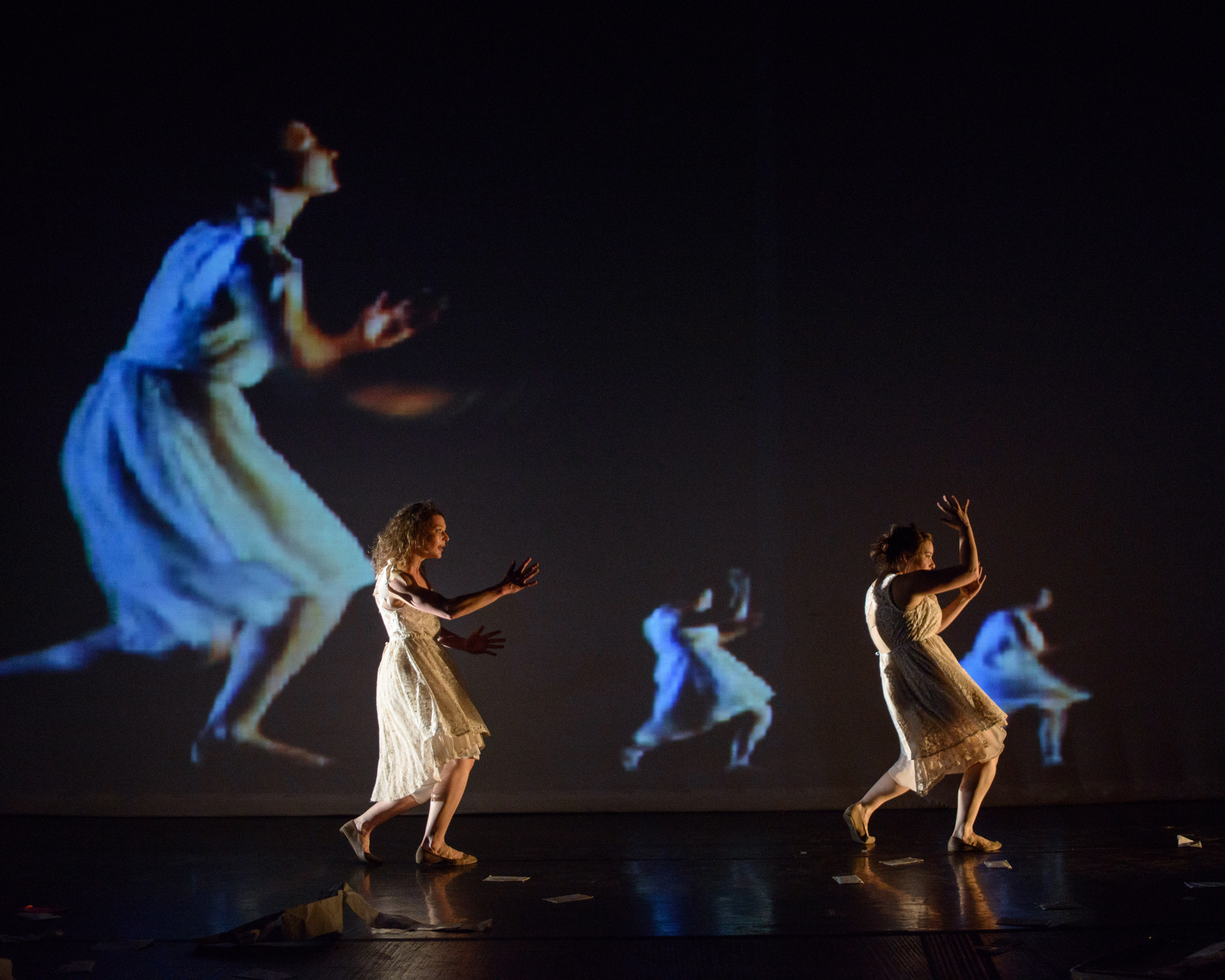
The scattered letters piled on the floor are alternately a lover, a tormentor, a terrible reminder, a set of mysterious directives, and a bed for restless dreaming for Ophelia — or rather, one of her three incarnations — as French company Carte Blanche presents its roaming, site-specific riff on Shakespeare’s sad heroine, with inspiration drawn from Arthur Rimbaud’s famous elegy.
 
But despite all those missives from a certain gloomy prince, the piece makes much use of silence too, as the audience mills around the Firehouse at Fort Mason Center, watching the agitated actions of three young heroines in various rooms before being led outside for a journey to other environs.

The dramatic tone in Ophelia tends toward the sentimental but the environmental staging has its charms, as do certain aspects of the mise-en-scène, which makes use of a giant warehouse space on the pier and at one point includes an enormous video backdrop enveloping the three dancer-performers. A little bit of Sleep No More, a little bit of Cirque du Soleil, and a little bit its own bilingual, francophone thing, Ophelia is a limited but curious journey of discovery.

Elsewhere around town: the great Sheffield-based English experimental theater company Forced Entertainment has only been to San Francisco once before, back in the 1990s, which (there’s no getting around it) just sucks. But FE is coming to a computer screen near you this weekend, live, starting at 3:59 this afternoon local time, for a 24-hour version of its durational performance Quizoola!, a collectively devised piece that relies on thousands of pre-written questions (you can submit your own too) in free-play between audience and performers across an evolving scenario that will only get weirder over the course of the earth’s slow full turn.

Tune in! Play at home! This may be the closest we get to having Forced Entertainment come back to the Bay Area. Link up here.

Side note: A few months ago in London, I had the chance to interview Tim Etchells, Forced Entertainment’s artistic director (and chief producer of questions for Quizoola!), about the group and its approach to the sometimes-sinister power of narrative—including the ongoing rehabilitation of the awful neoliberal hatchet-woman Margaret Thatcher. That interview can be found here.

OPHELIA

Sat/13-Sun/14, 8:30pm, $22

Fort Mason Center

Marina at Laguna, SF

www.carteblanche-sf.com

Natural woofin’

2

culture@sfbg.com

PETS If you shop at the farmers market, drive a Prius, have a compost bin, and read this newspaper, chances are you care about the environment. Doesn’t that mean that your dog does too, by extension? Diminish your canine’s carbon paw print with these eco-friendly pet products and services. Not only will they alleviate that non-existent doggie guilt, but used correctly, li’l buddy will be looking fly for this weekend’s amazing McKinley Elementary School fundraiser DogFest (Sat/13, 11am-4pm, free. Duboce Park, Duboce and Noe, SF. www.mckinleyschool.org/dogfest).

JEFFREY’S NATURAL PET FOODS

Prepared fresh five days a week, everything at local pet food store chain Jeffrey’s is fresh and locally sourced. This food contains high-quality raw, free-range meats, organic vegetables, vitamins, and minerals. Why go raw? Uncooked meats and vegetables contain a host of essential fatty acids, beneficial bacteria, and antioxidants in their natural state. This type of diet can result in better weight control for your baby, healthier skin and coat, and energy and stamina for endless rolls in the grass.

284 Noe, SF. (415) 864-1414; 1841 Powell, SF. (415) 402-0342, www.jeffreysnaturalpetfood.com

EO DOG SHAMPOO

After a play in the park, rinse Fido off with this gentle wash that combines essential oils with other natural botanicals for freshly scented canines. EO’s natural shampoo is made in Marin and consists primarily of herbal, organic ingredients like French lavender oil, aloe vera, chamomile, and white tea. The biodegradable shampoo is made without irritating sodium laureth or lauryl sulfates, and is perfectly safe for hands-on doggie scrubbing.

Available at various Bay Area stores. www.eoproducts.com

GREEN PAWZ DELIVERY PACK

If prefer receiving your puppy supplies in a manner similar to Chinese-food delivery, here’s a trick for you. Cole Valley’s Green Pawz Pet Boutique specializes in providing customers with environmentally friendly supplies and services. Become a Green Priority customer and receive scheduled ongoing deliveries of regular supplies like its in-house line of shampoos and natural pet foods. Priority customers are also sent information on store specials, coupons, free goodies, and invitations to Green Pawz events.

772 Stanyan, SF. (415) 221-7387, www.greenpawzsf.com

PRIMAL PET FOODS RECREATIONAL BONES

San Mateo-based Primal Pet Foods’ products abide by the “BARF” (bones and raw food) diet, so think raw, meaty bones, muscle meat, organs, fresh fruits, and veggies. We recommend Primal’s raw recreational bones, which are 100 percent human-grade (er, suitable for human consumption, as in stocks and such) and procured from ranches across the US. Choose from buffalo marrow, beef marrow, venison marrow, or lamb femur.

Available at various Bay Area stores. www.primalpetfoods.com

HOLISTIC HOUNDS ANESTHESIA-FREE TEETH CLEANING

You and your pup may love to snuggle, but when her breath is less-than-pleasant, tough love may be required. Walk your dog over to Berkeley’s Holistic Hounds for an annual anesthesia-free teeth cleaning. All cleanings are done on-site at Holistic Hound by Dawn Leiske and her staff at Waggin Smiles and are supervised and checked by veterinarian Dr. Jennifer Luna-Repose. Check Holistic Hound’s website to see when Dawn Leiske is next available to make your pup’s teeth sparkle, sans drugs.

1510 Walnut, Berk. (510) 843-2133, www.holistichound.com

Film listings

0

Film listings are edited by Cheryl Eddy. Reviewers are Kimberly Chun, Dennis Harvey, Lynn Rapoport, and Sara Maria Vizcarrondo. For rep house showtimes, see Rep Clock.

OPENING

The Company You Keep In this political thriller, a young journalist (Shia LaBeouf) pursues a scoop that uncovers the secret identity of a Weather Underground activist (Robert Redford, who also directs). (2:05) Albany.

Disconnect Ensemble drama about the darker effects of technology starring Jason Bateman, Hope Davis, Andrea Riseborough, and Alexander Skarsgard. (1:55)

42 Biopic about baseball great and civil rights hero Jackie Robinson (played by TV actor Chadwick Boseman); also stars Harrison Ford and John C. McGinley. (2:08) Marina, Vogue.

The Mafu Cage and The Witch Who Came from the Sea Don’t miss this Roxie double-bill of two neglected but fascinating 1970s psychological horrors about craaaaaazy women. Karen Arthur’s 1978 The Mafu Cage has Lee Grant and Carol Kane are sisters who were raised by an eccentric anthropologist father in Africa. Grant, the older, "normal" one, is now a professional astronomer who resists romantic overtures from her nice coworker (James Olson) because she has a "secret" life — care taking the wildly unstable Kane, who never leaves their house and appears to have been warped beyond salvage by their bizarre childhood. She keeps pet apes, acts like them, and in occasional rages kills them. When Grant goes away for a few days, all hell breaks loose as Kane goes "savage" — and unfortunately, she finds a human quarry to put in the ape cage. The performances are terrific (Kane is electrifying here), the situation farfetched yet very credibly drawn, and the whole atmosphere both suspenseful and strangely poignant. Italian director Matt Cimber’s 1976 Witch — a bizarre, disorienting psycho chiller-cum-suspense-drama — was little-seen when it first came out, and has been very hard to find since. Millie Perkins (of 1959’s The Diary of Anne Frank and Monte Hellman’s cult classics) plays Molly, a cocktail waitress in a Santa Monica dive bar who lives with her two young nephews and sad-sack welfare-mother sister. No one seems to be paying attention, but Molly is going quite insane, apparently the result of childhood molestation by the father she claims was "lost at sea" (the truth, we discover, is a lot more sordid). Prone to irrational rages, blackouts, drinking binges, and indiscriminate pill-popping, plus the occasional homicide, Molly has increasing trouble separating fantasy from reality … and so do we, since the movie deploys distortive sound/visuals and unclear time progression to convey her slippery sanity. With its very thorny protagonist and depressing view of LA’s "fringe" life, Witch is moody, creepy, and unique. Roxie. (Harvey)

My Brother the Devil Though its script hits some unsurprising beats, Sally El Hosaini’s drama is buoyed by authentic performances and a strong command of its setting: diverse London ‘hood Hackney, where sons of Egyptian immigrants Rashid (James Floyd) and Mo (Fady Elsayed) stumble toward maturity. After his best friend is killed in a gang fight, older "bruv" Rashid turns away from a life of crime, but dropping his tough-guy façade forces him to explore feelings he’s been desperately trying to deny, especially after he meets photographer Sayyid (Saïd Taghmaoui). The only thing he knows for certain is that he doesn’t want his little brother to start running with the drug-dealing crew he’s lately abandoned. The less-worldly Mo, already dealing with a tidal wave of typical teenage emotions, idolizes his brother — until he finds out Rashid’s secret, and reacts … badly, and the various conflicts careen toward a suspenseful, dread-filled, life-lessons-learned conclusion. Added bonus to this well-crafted film: sleek, vibrant lensing, which earned My Brother the Devil a cinematography prize at Sundance 2012. (1:51) Opera Plaza, Shattuck. (Eddy)

No Place on Earth "Every cave I enter has a secret," muses caver Chris Nicola in his clipped New York accent at the start of No Place on Earth. An interest in his family’s Eastern Orthodox roots brought him to the Ukraine soon after the Soviet Union dissolved; while exploring one of the country’s lengthy gypsum caves, he literally stumbled over what he calls "living history:" artifacts (shoes, buttons) that suggested people had been living in the caves in the not-too-distant past. Naturally curious, Nicola investigated further, eventually learning that two families of Ukrainian Jews (including young children) hid in the caves for 18 months during World War II. Using tasteful re-enactments and interviews with surviving members of the families, as well as narration taken from memoirs, director Janet Tobias reconstructs an incredible tale of human resilience and persistence; there are moments of terror, literally hiding behind rocks to escape roaming German soldiers, and moments of joy, as when a holiday snowfall enables precious outdoor playtime. Incredibly, the film ends with now-elderly survivors — one of whom lived just seven miles from Nicola in NYC — returning to "say thank-you to the cave," as one woman puts it, with awed and grateful grandchildren in tow. (1:24) Elmwood, Embarcadero. (Eddy)

Scary Movie 5 Not to be confused with A Haunted House, which came out earlier this year and also spoofed the Paranormal Activity series — but did not feature cameos by Charlie Sheen and Lindsay Lohan. (1:35)

To the Wonder See "Rambling Man." (1:53) California, Embarcadero.

Trance Where did Danny Boyle drop his noir? Somewhere along the way from Shallow Grave (1994) to Slumdog Millionaire (2008)? Finding the thread he misplaced among the obfuscating reflections of London’s corporate-contempo architecture, Boyle strives to put his own character-centered spin on the genre in this collaboration with Grave and Trainspotting (1996) screenwriter John Hodge, though the final product feels distinctly off, despite its Hitchcockian aspirations toward a sort of modern-day Spellbound (1945). Untrustworthy narrator Simon (James McAvoy) is an auctioneer for a Sotheby’s-like house, tasked with protecting the multimillion-dollar artworks on the block, within reason. Then the splashily elaborate theft of Goya’s Witches’ Flight painting goes down on Simon’s watch, and for his trouble, the complicit staffer is concussed by heist leader Franck (Vincent Cassel). Where did those slippery witches fly to? Simon, mixed up with the thieves due to his gambling debts, cries amnesia — the truth appears to be locked in the opaque layers of his jostled brain, and it’s up to hypnotherapist Elizabeth (Rosario Dawson) to uncover the Goya’s resting place. Is she trying to help Simon extricate himself from his impossible situation, seduce Franck, or simply help herself? Boyle tries to transmit the mutable mind games on screen, via the lighting, glass, and watery reflections that are supposed to translate as sleek sophistication. But devices like speedy, back-and-forth edits and off-and-on fourth-wall-battering instances as when Simon locks eyes with the audience, read as dated and cheesy as a banking commercial. The seriously miscast actors also fail to sell Trance on various levels — believability, likeability, etc. — as the very unmesmerized viewer falls into a light coma and the movie twirls, flaming, into the ludicrous. (1:44) Piedmont, Shattuck. (Chun)

Upstream Color See "Stop Making Sense." (1:35) Elmwood, Roxie.

ONGOING

Admission Tina Fey exposes the irritating underbelly of the Ivy League application process as Princeton admissions officer Portia Nathan. When her school falls to number two in U.S. News and World Report‘s annual ranking, Portia and her colleagues are tasked by their boss (Wallace Shawn) with boosting application numbers to bring the university back into the lead. Alterna-school headmaster John Pressman (Paul Rudd) has one more applicant to add to the pile: a charmingly gawky autodidact named Jeremiah (Nat Wolff), who John is convinced is the child Portia gave up for adoption back when they were both students at Dartmouth. Stuck in a dreary 10-year relationship with an English professor (Michael Sheen) whose bedtime endearments consist of absentmindedly patting her on the head while reading aloud from The Canterbury Tales, and seeming less than thrilled with the prospect of another season of sifting through the files of legacies and overachievers, Portia is clearly ripe for some sort of purgative crisis. When it arrives, the results are fairly innocuous, if ethically questionable. Directed by Paul Weitz, the man responsible for bringing Little Fockers (2010) into the world, but About a Boy (2002) as well, Admission is sweet and sometimes funny but unmemorable, even with Lily Tomlin playing Portia’s surly, iconoclast mother. (1:50) Presidio, SF Center, Sundance Kabuki. (Rapoport)

The Call (1:34) SF Center.

The Croods (1:38) Metreon, 1000 Van Ness, Presidio.

Evil Dead "Sacrilege!" you surely thought when hearing that Sam Raimi’s immortal 1983 classic was being remade. But as far as remakes go, this one from Uruguayan writer-director Fede Alvarez (who’d previously only made some acclaimed genre shorts) is pretty decent. Four youths gather at a former family cabin destination because a fifth (Jane Levy) has staged her own intervention — after a near-fatal OD, she needs her friends to help her go cold turkey. But as a prologue has already informed us, there is a history of witchcraft and demonic possession in this place. The discovery of something very nasty (and smelly) in the cellar, along with a book of demonic incantations that Lou Taylor Pucci is stupid enough to read aloud from, leads to … well, you know. The all-hell that breaks loose here is more sadistically squirm-inducing than the humorously over-the-top gore in Raimi’s original duo (elements of the sublime ’87 Evil Dead II are also deployed here), and the characters are taken much more seriously — without, however, becoming more interesting. Despite a number of déjà vu kamikaze tracking shots through the Michigan forest (though most of the film was actually shot in New Zealand), Raimi’s giddy high energy and black comedy are replaced here by a more earnest if admittedly mostly effective approach, with plenty of decent shocks. No one could replace Bruce Campbell, and perhaps it was wise not to even try. So: pretty good, gory, expertly crafted, very R-rated horror fun, even with too many "It’s not over yet!" false endings. But no one will be playing this version over and over and over again as they (and I) still do the ’80s films. (1:31) Balboa, Metreon, 1000 Van Ness. (Harvey)

From Up on Poppy Hill Hayao (dad, who co-wrote) and Goro (son, who directed) Miyazaki collaborate on this tale of two high-school kids — Umi, who does all the cooking at her grandmother’s boarding house, and Shun, a rabble-rouser who runs the school newspaper — in idyllic seaside Yokohama. Plans for the 1964 Olympics earmark a beloved historic clubhouse for demolition, and the budding couple unites behind the cause. The building offers a symbolic nod to Japanese history, while rehabbing it speaks to hopes for a brighter post-war future. But the past keeps interfering: conflict arises when Shun’s memories are triggered by a photo of Umi’s father, presumed lost at sea in the Korean War. There are no whimsical talking animals in this Studio Ghibli release, which investigates some darker-than-usual themes, though the animation is vivid and sparkling per usual. Hollywood types lending their voices to the English-language version include Jamie Lee Curtis, Christina Hendricks, Ron Howard, and Gilllian Anderson. (1:31) Embarcadero, Shattuck, Sundance Kabuki. (Eddy)

GI Joe: Retaliation The plot exists to justify the action, but any fan of badass-ness will forgive the skimpy storyline for the outlandish badassery in GI Joe: Retaliation. Inspired by action figures and tying loosely to the first flick, Retaliation starts with a game of "secure the defector," followed by "raise the flag," but as soon as the stakes aren’t real, the Joes outright suck. They don’t have "neutral," which is maybe why a mission to rescue and revive the Joes as a force is the most ferocious fight that ever pit metal against plastic. The set pieces are stunning: a mostly silent sequence with Snake Eyes (Ray Park) and Jinx (Elodie Yung) on a mountainside will leave the audience gaping in its high speed wake, and a prison break featuring covert explosives is nonstop amazing. You’ll notice an emphasis on chain link fences and puddles (terra nostra for action figures) and set pieces conceived as if by kids who don’t have a concept of basic irrefutable truths like gravity. It’s just that kind of imagination and ardor and limitlessness that makes this Joe incredible, memorable, and a reason to crack out your toys again. (1:50) Metreon, 1000 Van Ness. (Vizcarrondo)

Ginger and Rosa It’s the 1960s, nuclear war is a real possibility, and nuclear-family war is an absolute certainty, at least in the London house occupied by Ginger (Elle Fanning), her emotionally wounded mother (Mad Men‘s Christina Hendricks), and her narcissistic-intellectual father (Alessandro Nivola). In this downbeat coming-of-age tale from Sally Potter (1992’s Orlando), Ginger’s teenage rebellion quickly morphs into angst when her BFF Rosa (Beautiful Creatures‘ Alice Englert) wedges her sexed-up neediness between Ginger’s parents. Hendricks (playing the accordion — just like Joan!) and Annette Bening (as an American activist who encourages Ginger’s political-protest leanings) are strong, but Fanning’s powerhouse performance is the main focus — though even she’s occasionally overshadowed by her artificially scarlet hair. For an interview with writer-director Potter, visit www.sfbg.com/pixel_vision. (1:30) Smith Rafael. (Eddy)

The Host (2:01) Metreon, 1000 Van Ness.

The Incredible Burt Wonderstone Steve Carell dips into the men-at-work comic genre so associated with Will Ferrell: he’s Burt Wonderstone, who starts out as a picked-on kid discovering his powers via a kit by Las Vegas magician Rance Holloway (Alan Arkin). The ensuing years have not been kind to Burt, a relatively decent guy struggling to shed the douchey buildup of ego, corn, and dated moves à la David Copperfield (ta-da, who magically appears), while working for benevolently threatening casino boss Doug Munny (James Gandolfini) with his childhood best friend Anton (Steve Buscemi, reviving the naifitude of The Big Lebowski‘s Donny) and side fox Jane (Olivia Wilde). The shot of adrenalin to the moribund heart of Burt and Anton’s act: Jim Carrey’s "Brain Rapist," who aims to ream his colleagues by cutting playing cards from his flesh and going to bed on fiery coals. How can the old-schoolers remain relevant? Hard work is key for Carell, who rolls out the straight-man sweetness that seem to make him a fit for romantic comedies — though his earnestness and need to be liked, as usual, err on the side of convention, while taking for granted the not-quite-there chemistry with, in this instance, Wilde. Fortunately whatever edge is lacking materializes whenever Carrey’s ridiculously ombré-tressed daredevil is on screen. Using his now-battered, still-malleable features to full effect, he’s a whole different ball of cheese, lampooning those who will go to any lengths — gouging, searing, and maiming — to entertain. (1:40) Metreon. (Chun)

Jack the Giant Slayer (1:55) Metreon.

Jurassic Park 3D "Life finds a way," Jeff Goldblum’s leather-clad mathematician remarks, crystallizing the theme of this 1993 Spielberg classic, which at its core is more about human relationships than genetically manufactured terrors. Of course, it’s got plenty of those, and Jurassic Park doesn’t really need its (admittedly spiffy) 3D upgrade to remain a thoroughly entertaining thriller. The dinosaur effects — particularly the creepy Velociraptors and fan-fave T. rex — still dazzle. Only some early-90s computer references and Laura Dern’s mom jeans mark the film as dated. But a big-screen viewing of what’s become a cable TV staple allows for fresh appreciation of its less-iconic (but no less enjoyable) moments and performances: a pre-megafame Samuel L. Jackson as a weary systems tech; Bob Peck as the park’s skeptical, prodigiously thigh-muscled game warden. Try and forget the tepid sequels — including, dear gawd, 2014’s in-the-works fourth installment. This is all the Jurassic you will ever need. (2:07) 1000 Van Ness, Presidio, SF Center, Shattuck. (Eddy)

No Long before the Arab Spring, a people’s revolution went down in Chile when a 1988 referendum toppled the country’s dictator, Augusto Pinochet, thanks in part to an ad exec who dared to sell the dream to his countrymen and women — using the relentlessly upbeat, cheesy language of a Pepsi Generation. In No‘s dramatization of this true story, ad man Rene Saavedra (Gael Garcia Bernal) is approached by the opposition to Pinochet’s regime to help them on their campaign to encourage Chile’s people to vote "no" to eight more years under the brutal strongman. Rene’s well-aware of the horrors of the dictatorship; not only are the disappeared common knowledge, his activist ex (Antonia Zegers) has been beaten and jailed with seeming regularity. Going up against his boss (Alfredo Castro), who’s overseeing the Pinochet campaign, Rene takes the brilliant tact in the opposition’s TV programs of selling hope — sound familiar? — promising "Chile, happiness is coming!" amid corny mimes, dancers, and the like. Director-producer Pablo Larrain turns out to be just as genius, shooting with a grainy U-matic ’80s video camera to match his footage with 1988 archival imagery, including the original TV spots, in this invigorating spiritual kin of both 2012’s Argo and 1997’s Wag the Dog. (1:50) Opera Plaza, Shattuck. (Chun)

Olympus Has Fallen Overstuffed with slo-mo shots of the flag rippling (in breezes likely caused by all the hot air puffing up from the script), this gleefully ham-fisted tribute to America Fuck Yeah estimates the intelligence of its target audience thusly: an establishing shot clearly depicting both the Washington Monument and the US Capitol is tagged "Washington, DC." Wait, how can you tell? This wannabe Die Hard: The White House follows the one-man-army crusade of secret service agent Mike Banning (Gerard Butler), the last friendly left standing when the President (Aaron Eckhart) and assorted cabinet members are taken hostage by North Korean terrorists. The plot is to ridiculous to recap beyond that, though I will note that Morgan Freeman (as the Speaker of the House) gets to deliver the line "They’ve just opened the gates of hell!" — the high point in a performance that otherwise requires him to sit at a table and look concerned for two hours. With a few more over-the-top scenes or slightly more adventurous casting, Olympus Has Fallen could’ve ascended to action-camp heights. Alas, it’s mostly just mildly amusing, though all that caked-on patriotism is good for a smattering of heartier guffaws. (2:00) Four Star, 1000 Van Ness, SF Center, Sundance Kabuki. (Eddy)

On the Road Walter Salles (2004’s The Motorcycle Diaries) engages Diaries screenwriter Jose Rivera to adapt Jack Kerouac’s Beat classic; it’s translated to the screen in a streamlined version, albeit one rife with parties, drugs, jazz, danger, reckless driving, sex, philosophical conversations, soul-searching, and "kicks" galore. Brit Sam Riley (2007’s Control) plays Kerouac stand-in Sal Paradise, observing (and scribbling down) his gritty adventures as they unfold. Most of those adventures come courtesy of charismatic, freewheeling Dean Moriarty (Garrett Hedlund of 2010’s Tron: Legacy), who blows in and out of Sal’s life (and a lot of other people’s lives, too, including wives played by Kristen Stewart and Kirsten Dunst). Beautifully shot, with careful attention to period detail and reverential treatment of the Beat ethos, the film is an admirable effort but a little too shapeless, maybe simply due to the peripatetic nature of its iconic source material, to be completely satisfying. Among the performances, erstwhile teen dream Stewart is an uninhibited standout. (2:03) Shattuck, Smith Rafael. (Eddy)

Oz: The Great and Powerful Providing a backstory for the man behind the curtain, director Sam Raimi gives us a prequel of sorts to 1939’s The Wizard of Oz. Herein we follow the adventures of a Depression-era Kansas circus magician named Oscar (James Franco) — Oz to his friends — as he cons, philanders, bickers with his behind-the-scenes assistant Frank (Zach Braff), and eventually sails away in a twister, bound for a Technicolor land of massively proportioned flora, talking fauna, and witches ranging from dazzlingly good to treacherously wicked. From one of them, Theodora (Mila Kunis), he learns that his arrival — in Oz, just to clarify — has set in motion the fulfillment of a prophecy: that a great wizard, also named Oz, will bring about the downfall of a malevolent witch (Rachel Weisz), saving the kingdom and its cheery, goodhearted inhabitants. Unfortunately for this deserving populace, Oz spent his last pre-twister moments with the Baum Bros. Circus (the name a tribute to L. Frank Baum, writer of the Oz children’s books) demonstrating a banged-up moral compass and an undependable streak and proclaiming that he would rather be a great man than a good man. Unfortunately for the rest of us, this theme is revisited ad nauseam as Oz and the oppressively beneficent witch Glinda (Michelle Williams) — whose magic appears to consist mainly of nice soft things like bubbles and fog — stand around debating whether he’s the right man for the task. When the fog clears, though, the view is undeniably pretty. While en route to and from the Emerald City, Oz and his companions — among them a non-evil flying monkey (voiced by Braff) and a rather adorable china doll (Joey King) — wander through a deliriously arresting, Fantasia-esque landscape whose intricate, inventive construction helps distract from the plodding, saccharine rhetoric and unappealing story line. (2:07) 1000 Van Ness, SF Center, Shattuck, Sundance Kabuki. (Rapoport)

The Place Beyond the Pines Powerful indie drama Blue Valentine (2010) marked director Derek Cianfrance as one worthy of attention, so it’s with no small amount of fanfare that this follow-up arrives. The Place Beyond the Pines‘ high profile is further enhanced by the presence of Bradley Cooper (currently enjoying a career ascension from Sexiest Man Alive to Oscar-nominated Serious Actor), cast opposite Valentine star Ryan Gosling, though they share just one scene. An overlong, occasionally contrived tale of three generations of fathers, father figures, and sons, Pines‘ initial focus is Gosling’s stunt-motorcycle rider, a character that would feel more exciting if it wasn’t so reminiscent of Gosling’s turn in Drive (2011), albeit with a blonde dye job and tattoos that look like they were applied by the same guy who inked James Franco in Spring Breakers. Robbing banks seems a reasonable way to raise cash for his infant son, as well as a way for Pines to draw in another whole set of characters, in the form of a cop (Cooper) who’s also a new father, and who — as the story shifts ahead 15 years — builds a political career off the case. Of course, fate and the convenience of movie scripts dictate that the mens’ sons will meet, the past will haunt the present and fuck up the future, etc. etc. Ultimately, Pines is an ambitious film that suffers from both its sprawl and some predictable choices (did Ray Liotta really need to play yet another dirty cop?) Halfway through the movie I couldn’t help thinking what might’ve happened if Cianfrance had dared to swap the casting of the main roles; Gosling could’ve been a great ambitious cop-turned-powerful prick, and Cooper could’ve done interesting things with the Evel Knievel-goes-Point Break part. Just sayin’. (2:20) California, Embarcadero, Piedmont, Sundance Kabuki. (Eddy)

Quartet Every year there’s at least one: the adorable-old-cootfest, usually British, that proves harmless and reassuring and lightly tear/laughter producing enough to convince a certain demographic that it’s safe to go to the movies again. The last months have seen two, both starring Maggie Smith (who’s also queen of that audience’s home viewing via Downton Abbey). Last year’s The Best Exotic Marigold Hotel, in which Smith played a bitchy old spinster appalled to find herself in India, has already filled the slot. It was formulaic, cute, and sentimental, yes, but it also practiced more restraint than one expected. Now here’s Quartet, which is basically the same flower arrangement with quite a bit more dust on it. Smith plays a bitchy old spinster appalled to find herself forced into spending her twilight years at a home for the elderly. It’s not just any such home, however, but Beecham House, whose residents are retired professional musicians. Gingerly peeking out from her room after a few days’ retreat from public gaze, Smith’s Jean Horton — a famed English soprano — spies a roomful of codgers rolling their hips to Afropop in a dance class. "This is not a retirement home — this is a madhouse!" she pronounces. Oh, the shitty lines that lazy writers have long depended on Smith to make sparkle. Quartet is full of such bunk, adapted with loving fidelity, no doubt, from his own 1999 play by Ronald Harwood, who as a scenarist has done some good adaptations of other people’s work (2002’s The Pianist). But as a generator of original material for about a half-century, he’s mostly proven that it is possible to prosper that long while being in entirely the wrong half-century. Making his directorial debut: 75-year-old Dustin Hoffman, which ought to have yielded a more interesting final product. But with its workmanlike gloss and head-on take on the script’s very predictable beats, Quartet could as well have been directed by any BBC veteran of no particular distinction. (1:38) Opera Plaza, Shattuck, Smith Rafael. (Harvey)

Reality Director Matteo Garrone’s Cannes Grand Prix winner couldn’t be more different from his 2008 Gomorrah, save one similarity: that film was about organized crime, and dark comedy Reality stars Aniello Arena, a former gangster who was allowed out of prison to shoot his scenes. All things considered, he’s rather winning as Neapolitan everyman Luciano, whose daily life slinging fish can’t compete with his big dreams of appearing on the Italian version of Big Brother. He makes it through the second round of auditions — and soon starts believing he’s being watched by casting agents considering whether to put him on the show. His level-headed wife (Loredane Simioli) suspects he’s being paranoid (as does the audience, before long), though he’s told "never give up!" by cheesy-sleazy Big Brother vet Enzo (Raffaele Ferrante), a character clearly designed to comment on reality TV’s own peculiar brand of insta-fame. Nobody who’s ever watched reality TV will be surprised at the film’s ultimate messages about the hollow rewards of that fame, but Arena’s powerful performance makes the journey worthwhile. (1:55) Sundance Kabuki. (Eddy)

Renoir The gorgeous, sun-dappled French Riviera setting is the high point of this otherwise low-key drama about the temperamental women (Christa Theret) who was the final muse to elderly painter Auguste Renoir (Michel Bouquet), and who encouraged the filmmaking urges in his son, future cinema great Jean (Vincent Rottiers). Cinematographer Mark Ping Bin Lee (who’s worked with Hou Hsiao-hsein and Wong Kar Wai) lenses Renoir’s leafy, ramshackle estate to maximize its resemblance to the paintings it helped inspire; though her character, Dédée, could kindly be described as "conniving," Theret could not have been better physically cast, with tumbling red curls and pale skin she’s none too shy about showing off. Though the specter of World War I looms in the background, the biggest conflicts in Gilles Bourdos’ film are contained within the household, as Jean frets about his future, Dédée faces the reality of her precarious position in the household (which is staffed by aging models-turned-maids), and Auguste battles ill health by continuing to paint, though he’s in a wheelchair and must have his brushes taped to his hands. Though not much really happens, Renoir is a pleasant, easy-on-the-eyes experience. (1:51) Clay, Shattuck, Smith Rafael. (Eddy)

The Revolutionary Optimists If the children, as someone once sang, are our future, the inspiring work done by youth activists living in the slums of Kolkata, India hints that there might be brighter days ahead for some of the poorest communities in the world. Under the guidance of Amlan Ganguly and his non-profit, Prayasam, kids whose daily struggles include lacking easy access to drinking water, having to work backbreaking long hours at the local brick field, and worrying that their parents will marry them off as soon as they turn 13, find hope via education and artistic expression. Sensitively directed over the span of several years by Nicole Newnham (who made the excellent 2006 doc The Rape of Europa) and Maren Grainger-Monsen, The Revolutionary Optimists shows stories of both success (12-year-old sparkplug Salim speaks before Parliament about bringing water to his neighborhood) and failure (16-year-old Priyanka is forced into an abusive marriage, ending her dreams of becoming a dance teacher). With harsh reality keeping its stories firmly grounded, the film — which is, of course, ultimately optimistic — offers a look at how the youngest members of a community can help effect real change. (1:23) Marina. (Eddy)

The Sapphires The civil rights injustices suffered by these dream girls may be unique to Aboriginal Australians, but they’ll strike a chord with viewers throughout the world — at right about the same spot stoked by the sweet soul music of Motown. Co-written by Tony Briggs, the son of a singer in a real-life Aboriginal girl group, this unrepentant feel-gooder aims to make the lessons of history go down with the good humor and up-from-the-underdog triumph of films like The Full Monty (1997) — the crucial difference in this fun if flawed comedy-romance is that it tells the story of women of color, finding their voices and discovering, yes, their groove. It’s all in the family for these would-be soul sisters, or rather country cousins, bred on Merle Haggard and folk tunes: there’s the charmless and tough Gail (Deborah Mailman), the soulful single mom Julie (Jessica Mauboy, an Australian Idol runner-up), the flirty Cynthia (Miranda Tapsell), and the pale-skinned Kay (Shari Sebbens), the latter passing as white after being forcibly "assimilated" by the government. Their dream is to get off the farm, even if that means entertaining the troops in Vietnam, and the person to help them realize that checkered goal is dissolute piano player Dave (Chris O’Dowd). And O’Dowd is the breakout star to watch here — he adds an loose, erratic energy to an otherwise heavily worked story arc. So when romance sparks for all Sapphires — and the racial tension simmering beneath the sequins rumbles to the surface — the easy pleasures generated by O’Dowd and the music (despite head-scratching inclusions like 1970’s "Run Through the Jungle" in this 1968-set yarn), along with the gently handled lessons in identity politics learned, obliterate any lingering questions left sucking Saigon dust as the narrative plunges forward. They keep you hanging on. (1:38) Albany, Piedmont, SF Center. (Chun)

Side Effects Though on the surface Channing Tatum appears to be his current muse, Steven Soderbergh seems to have gotten his smart, topical groove back, the one that spurred him to kick off his feature filmmaking career with the on-point Sex, Lies, and Videotape (1989) and went missing with the fun, featherweight Ocean’s franchise. (Alas, he’s been making claims that Side Effects will be his last feature film.) Here, trendy designer antidepressants are the draw — mixed with the heady intoxicants of a murder mystery with a nice hard twist that would have intrigued either Hitchcock or Chabrol. As Side Effects opens, the waifish Emily Taylor (Rooney Mara), whose inside-trading hubby (Tatum) has just been released from prison, looks like a big-eyed little basket of nerves ready to combust — internally, it seems, when she drives her car into a wall. Therapist Jonathan Banks (Jude Law), who begins to treat her after her hospital stay, seems to care about her, but nevertheless reflexively prescribes the latest anti-anxiety med of the day, on the advice of her former doctor (Catherine Zeta-Jones). Where does his responsibility for Emily’s subsequent actions begin and end? Soderbergh and his very able cast fill out the issues admirably, with the urgency that was missing from the more clinical Contagion (2011) and the, ahem, meaty intelligence that was lacking in all but the more ingenious strip scenes of last year’s Magic Mike. (1:30) 1000 Van Ness. (Chun)

The Silence Maybe "fun" is a tasteless way to describe The Silence, which hinges on pederasty and child murder — though in the end this is more an intelligent pulp thriller than serious address of those issues, uneasily as it straddles both at times. In 1986 two men abduct an 11-year-old girl — one the initially excited, then horrified observer to the second’s murderous sexual assault. Twenty-three years later, another young girl disappears in the same place under disturbingly identical circumstances. This event gradually pulls together a large cast of characters, many initial strangers — including the original victim’s mother (Katrin Sass) and the just-retired detective (Burghart Klaubner) who failed to solve that crime; parents (Karoline Eichhorn, Roeland Wiesnekker) of the newly disappeared teen, who experience full-on mental meltdown; a solidly bourgeoise husband and father of two girls (Wotan Wilke Möhring), inordinately distressed by this repeat of history; and the erstwhile friend he hasn’t contacted in decades, an apartment-complex handyman with a secret life (Ulrich Thomsen). Part procedural, part psychological thriller, part small-town-community portrait, director-scenarist (from Jan Costin Wagner’s novel) Baran bo Odar’s The Silence is just juicy and artful enough to get away with occasional stylistic hyperbole. It’s a conflicted movie, albeit handled with such engrossing confidence that you might not notice the credibility gaps. At least until thinking it over later. Which, don’t. (1:59) Opera Plaza. (Harvey)

Silver Linings Playbook After guiding two actors to Best Supporting Oscars in 2010’s The Fighter, director David O. Russell returns (adapting his script from Matthew Quick’s novel) with another darkly comedic film about a complicated family that will probably earn some gold of its own. Though he’s obviously not ready to face the outside world, Pat (Bradley Cooper) checks out of the state institution he’s been court-ordered to spend eight months in after displaying some serious anger-management issues. He moves home with his football-obsessed father (Robert De Niro) and worrywart mother (Jacki Weaver of 2010’s Animal Kingdom), where he plunges into a plan to win back his estranged wife. Cooper plays Pat as a man vibrating with troubled energy — always in danger of flying into a rage, even as he pursues his forced-upbeat "silver linings" philosophy. But the movie belongs to Jennifer Lawrence, who proves the chops she showcased (pre-Hunger Games megafame) in 2010’s Winter’s Bone were no fluke. As the damaged-but-determined Tiffany, she’s the left-field element that jolts Pat out of his crazytown funk; she’s also the only reason Playbook‘s dance-competition subplot doesn’t feel eye-rollingly clichéd. The film’s not perfect, but Lawrence’s layered performance — emotional, demanding, bitchy, tough-yet-secretly-tender — damn near is. (2:01) Metreon, Presidio, Sundance Kabuki. (Eddy)

Spring Breakers The idea of enfant terrible emeritus Harmony Korine — 1997’s Gummo, 2007’s Mister Lonely, 2009’s Trash Humpers — directing something so utterly common as a spring break movie is head-scratching enough, even moreso compounded by the casting of teen dreams Vanessa Hudgens, Selena Gomez, and Ashley Benson as bikini-clad girls gone wild. James Franco co-stars as drug dealer Alien, all platinum teeth and cornrows and shitty tattoos, who befriends the lasses after they’re busted by the fun police. "Are you being serious?" Gomez’s character asks Alien, soon after meeting him. "What do you think?" he grins back. Unschooled filmgoers who stumble into the theater to see their favorite starlets might be shocked by Breakers‘ hard-R hijinks. But Korine fans will understand that this neon-lit, Skrillex-scored tale of debauchery and dirty menace is not to be taken at face value. The subject matter, the cast, the Britney Spears songs, the deliberately lurid camerawork — all carefully-constructed elements in a film that takes not-taking-itself-seriously, very seriously indeed. Korine has said he prefers his films to make "perfect nonsense" instead of perfect sense. The sublime Spring Breakers makes perfect nonsense, and it also makes nonsense perfect. (1:34) 1000 Van Ness, SF Center, Shattuck, Sundance Kabuki. (Eddy)

Starbuck Starbuck has a great (if not entirely original) comedic concept it chooses to play seriocomedically — i.e., less for the laughs it seldom earns than for the heart-tugging it eventually pretty much does. An ingratiatingly rumpled Patrick Huard (a major Quebec star best known for the mega-hit Les Boys series and 2006’s Good Cop, Bad Cop) plays David, erstwhile stellar contributor to a Montreal sperm bank in his salad days. Now older but no wiser, he finds himself confronted by the reality of 533 biologically fathered, now-grown offspring who’ve filed a class action lawsuit to discover his identity even as he deals with mob debt and an exasperated, pregnant semi-ex-girlfriend (Julie LeBreton). This is one of those "loser manboy must semi-grow up fast amid crisis, finding family values en route" scenarios tailor-fit for Adam Sandler. That said, the overlong, stubbornly endearing Starbuck is so much less insufferable than anything Sandler has made since … um, ever? Halfway through, this agreeable movie gets clever — as David stumbles into a meeting of his prodigious anonymous progeny — and remains reasonably so to the satisfyingly hard-won happy ending. It’s still got moments of contrivance, editorial fat (too many montages, for one thing), and more climactic hugs than any self-respecting dramedy needs to get the redemptive point across. Yet it’s also got something few comedies of any national origin have today: a lovely, distinctive, bright yet non-cartoonish widescreen look. (1:48) Opera Plaza. (Harvey)

Tyler Perry’s Temptation: Confessions of a Marriage Counselor (2:06) 1000 Van Ness, Shattuck.

Warm Bodies A decade and a half of torrid, tormented vampire-human entanglements has left us accustomed to rooting for romances involving the undead and the still-alive. Some might argue, however, that no amount of pop-cultural prepping could be sufficient to get us behind a human-zombie love story for the ages. Is guzzling human blood really measurably less gross than making a meal of someone’s brains and other body parts? Somehow, yes. Recognizing this perceptual hurdle, writer-director Jonathan Levine (2011’s 50/50, 2008’s The Wackness) secures our sympathies at the outset of Warm Bodies by situating us inside the surprisingly active brain of the film’s zombie protagonist. Zombies, it turns out, have internal monologues. R (Nicholas Hoult) can only remember the first letter of his former name, but as he shambles and shuffles and slumps his way through the terminals of a postapocalyptic airport overrun by his fellow corpses (as they’re called by the film’s human population), he fills us in as best he can on the global catastrophe that’s occurred and his own ensuing existential crisis. By the time he meets not-so-cute with Julie (Teresa Palmer), a young woman whose father (John Malkovich) is commander-in-chief of the human survivors living in a walled-off city center, we’ve learned that he collects vinyl, that he has a zombie best friend, and that he doesn’t want to be like this. We may still be flinching at the thought of his and Julie’s first kiss, but we’re also kind of rooting for him. The plot gapes in places, where a tenuous logic gets trampled and gives way, but Levine’s script, adapted from a novel by Isaac Marion, is full of funny riffs on the zombie condition, which Hoult invests with a comic sweetness as his character staggers toward the land of the living. (1:37) Metreon. (Rapoport)

Why CEQA matters

3

By Arthur Feinstein and Alysabeth Alexander

OPINION Is now the time to significantly weaken San Francisco’s most important environmental law? When our world is facing the greatest environmental threats ever experienced, why is there a rush to diminish our hard won environmental protections?

That’s the question we should all ask Supervisor Scott Wiener, who has proposed legislation that would significantly weaken the city’s regulations that enforce the California Environmental Quality Act.

Global climate change and extreme weather events are sending a clear message that the world is in trouble. Unprecedented droughts threaten our food supply and drinking water, while floods and sea level rise threaten our homes (the Embarcadero now floods where it never has before). The ozone hole still exists, threatening us with skin cancer, and the critters with whom we share this world are experiencing an unprecedented extinction rate.

Recent region-wide planning efforts, such as One Bay Area, expect San Francisco to provide housing for more than 150,000 new residents, bringing even more impacts to our city.

The best tool available to city commissioners, supervisors, and the public to understand and effectively reduce negative environmental effects of new projects is CEQA, which requires analysis and mitigation of unavoidable environmental project impacts. CEQA mandates that the public be informed of such impacts, and requires decision-makers to listen to the public’s opinions about what should be done to address them. It allows the people to go to court if decision-makers ignore their concerns.

Without an effective CEQA process, the public is helpless in the face of poor planning, and planning based only on the highest corporate-developer-entrepreneur return on the dollar with no regard for environmental consequences, including noise, night-lighting, aesthetics, and transportation — all issues of concern to urban residents. And with current tight real-estate economics, worker safety is at risk if developers cut corners on environmental review, especially with projects built on toxic and radioactive waste sites like Treasure Island, which potentially endanger construction workers and service employees who will work in these areas after projects are completed.

Wiener’s legislation, introduced at the Land Use Committee April 8, makes it much harder for the public to appeal potentially damaging permit decisions, by shortening timelines and establishing more onerous requirements for such appeals. In many instances it would also steer appeals away from being heard by the entire Board of Supervisors, instead allowing small committees to rule on these crucial issues.

A broad coalition of environmental, social justice, neighborhood, parks protection and historic preservation groups, allied with labor unions, is challenging Wiener’s attack on our environmental protections.

Supervisor Jane Kim recently stepped forward to champion these efforts, and work with these groups to draft a community alternative to make the CEQA process more fair and efficient while carefully protecting our rights to challenge harmful projects.

The supervisors need to reject Wiener’s damaging legislation and consider Kim’s community-based alternative in seeking to truly improve our local California Environmental Quality Act process.

Arthur Feinstein is chair of the Sierra Club Bay Chapter. Alysabeth Alexander is vice-president of politics for SEIU Local 1021.


Sneaky surveillance

19

steve@sfbg.com

After public outrage stopped the San Francisco Police Department from instituting controversial — and unconstitutional, say civil libertarians — new video surveillance requirements in bars and clubs more than two years ago, the department quietly began inserting that same requirement into new liquor licenses, a move met with concern at City Hall last week.

In late 2010, the SFPD proposed a draconian set of new security requirements for drinking establishments in the city, including requirements that they do video surveillance and take an image of all patrons’ identification cards and make them available to police upon request, without a warrant or any other controls (see “Going to a club — or boarding an airplane?,” 12/7/10).

That proposal ran into a wall of opposition from the American Civil Liberties Union, California Music and Culture Association, progressives on the Board of Supervisors, and others, who said such a blanket policy violates privacy protections in the California Constitution. The Entertainment Commission held a hearing on the proposal in April of 2011 and voted unanimously to reject the proposals.

At that point, they seemed to just disappear, but they didn’t. Instead, SFPD internally decided at that time to begin asking the California Department of Alcoholic Beverage Control to insert a video surveillance requirement in most new liquor licenses in San Francisco, which escaped public notice until Sup. Scott Wiener raised the issue at the April 2 Board of Supervisors meeting.

“If you have an establishment that perhaps has a track record of bad things happening, that’s one thing. But absent that, I don’t believe that this is justified,” Wiener said as he voted against the requirement in a pair of new liquor licenses. Although Wiener was alone in opposing those applications, Sup. David Campos said he shared Wiener’s concern and the pair called an upcoming hearing on the new policy.

Two days later, at the board’s Neighborhood Services and Safety Committee meeting, Wiener again raised the issue and sought to have the new requirement removed from a pair of proposed liquor licenses: Cesar’s Ballroom on 26th and 3rd streets, the latest project of veteran local club owner Cesar Ascarrunz, and Nosa Ria, a market in Hayes Valley that will import gourmet food and wine from Spain.

“It’s the exact opposite of some kind of rowdy bar or nightclub where people are going in and getting drunk and really bad things are happening,” Wiener said of Nosa Ria, for which he persuaded fellow Sups. Eric Mar and Norman Yee to vote to remove the video surveillance condition before approving the application.

That condition stated: “The petitioner shall utilize electronic surveillance and recording equipment that is able to view the outside of the premises, including all entrances and exits, and that is actively monitored and recorded. The electronic surveillance shall be utilized during operating hours. Said electronic recording shall be kept at least 30 days and shall be made available to the Department or Police Department upon demand.”

Mar said he agreed with Wiener that “a broad discussion of electronic surveillance requirements would be important for this committee,” but Mar then voted against removing that condition from the Cesar’s Ballroom application, saying, “I think we need surveillance in certain spots on a case-by-case basis, and I think this is an area that needs surveillance.”

SFPD IS WATCHING

When SFPD first sought new video surveillance tools — back in 2005, when the department asked for 71 video cameras at high-crime intersections around the city — it was rigorously debated in public hearings for months. And when they were finally approved by the Board of Supervisors, they included an extensive set of controls on when SFPD could request footage — the department wasn’t even allowed to control the cameras directly — how it could be used and when it must be erased.

The legislation also required a follow-up study of their effectiveness in deterring and prosecuting crimes. Conducted by the University of California’s Center for Information Technology Research in the Interest of Society (CITRIS) in 2008, the report found the cameras had no impact on violent crime rates but a small deterrent impact on property crimes in the filmed areas.

As a tool for prosecuting crimes after the fact, “There has been limited success with the cameras acting as a ‘silent witness,’ with footage standing in for witness testimony; some anecdotal evidence suggests that the existence of CSC program footage can actually deter witnesses from cooperating under the assumption that the cameras have caught all necessary evidence,” the report said, also noting that twice in the 120 police requests made by 2008, footage resulted in charges being dropped or downgraded.

But today, SFPD apparently believes that times have changed, and that the rigorous oversight and evaluation of video surveillance tactics and their implications on people’s privacy rights — or even the need to notify the public that SFPD is seeking new ways to watch citizens — are no longer necessary.

“Over the last few years, we’ve increased the number of recommendations for video surveillance, for a few reasons,” SFPD spokesperson Gordon Shyy told the Guardian, citing how cheap and ubiquitous the technology has become and the role that video footage can play in solving crimes.

Yet attorney Michael Rischer with the ACLU of Northern California, who actively opposed the SFPD’s proposal in 2011 and was dismayed to hear the department secretly and unilaterally expanded its video surveillance reach after its proposal was rejected, said that reasoning is exactly why there are legal controls on the expanding police state.

“Both of those justifications are exceedingly troubling and they demonstrate why the San Francisco Police Department should not be doing this in some room sealed off from the public,” Rischer said. “The police have this totally backward. The ease and cost of doing this is a reason why these protections are in place.”

PRIVACY PROTECTIONS

Unlike under federal law, Californians have an explicit constitutional privacy guarantee and a body of case law defining that right in great detail. But the SFPD doesn’t seem to be aware of the nuances of that case law, such as the distinction it makes between people’s expectation of privacy on public streets versus in private businesses.

“When you enter a bar or restaurant, you don’t have an expectation of privacy,” Shyy told us.

But Rischer said that just isn’t true under the law. He noted that people do indeed have a reasonable expectation that they can enter a gay bar without being outed, for example, or that police won’t be able to demand video from a gathering in a bar where subversive political ideas are being discussed. And those concerns are exacerbated by SFPD’s policy that bar owners must simply turn over footage “upon demand.”

“The notion that the government is requiring a business to conduct surveillance of its patrons and to turn it over to the Police Department without any judicial oversight or even rules is deeply troubling and probably unconstitutional,” Rischer said.

Shyy said SFPD will “only request them when a crime has been committed,” but he also admitted that the conditions it is requesting on liquor licenses don’t set that limit and the policy hasn’t been reviewed by the Police Commission or other local oversight bodies.

ABC spokesperson John Carr told us his department doesn’t have a position on video surveillance and hasn’t tracked whether other jurisdictions are seeking the condition. As for whether it routinely includes SFPD’s recommended conditions, he said, “ABC reviews each application on a case by case basis.”

There are indications that SFPD sometimes resorts to bullying bar owners into turning over video surveillance without legal authority to do so. Jamie Zawinski with DNA Lounge last month blogged about Officer Simon Chan telling the club that it was required to keep video footage and turn it over upon request, which club operators informed the SFPD wasn’t true. “It’s just another sneaky, backdoor regulation that ABC and SFPD have been foisting on everyone without any kind of judicial oversight, in flagrant violation of the Fourth Amendment,” Zawinski wrote.

Regarding that incident, Shyy would only confirm that most bars aren’t yet required to keep and turn over video footage. And he said SFPD will cooperate with the hearing Campos and Wiener have called. “At this point, we don’t believe we’re violating people’s constitutional rights, but we’re willing to have that discussion,” Shyy said.

Wiener said that on April 3, he discussed the issue with Police Chief Greg Suhr, who indicated a willingness to cooperate with public hearings on the policy. But Wiener said he’s bothered by the fact that SFPD seems to have put this new policy in place right after being unsuccessful in doing this through a public process in 2011.

“I and others expressed opposition to this and I and others thought the Police Department had backed away from it,” Wiener said at the April 4 hearing, noting that “I’m not philosophically opposed to surveillance,” only with how SFPD instituted it. “I have an issue with the Police Department deciding to insert this on its own without a broader policy discussion.”

Spring breakers

0

culture@sfbg.com

DRINK San Francisco: the best bars, mixologists, and produce — not to mention drinkers — in the country. And once the weather warms up (fingers crossed), can a bloom of excellent fruity cocktails be far behind? In honor of the lengthening sunlight, here’s a full day’s selection of spring drinks picks.


DAYTIME JAM: RICKHOUSE

This bustling bar nestled in the FiDi — and brought to us by the contemporary speakeasy minds behind Bourbon and Branch and Tradition (see below) — gets a lot of attention. In fact, I couldn’t stop hearing about its cocktails (most $10–$12) made with fresh fruit and local produce. And when I stepped inside early one sunny afternoon, I wasn’t disappointed. The bar was stocked with vibrantly colored jars of berries, citrus, and mint leaves. Joined by a friend, I quickly dived in.

Our first round of drinks consisted of the Kentucky Buck and the Paloma, a Mexican classic. The Buck, served with soda, is a combination of Bourbon infused with organic strawberries, fresh lemon juice, ginger beer, and bitters. It’s a smooth drink that still packs a punch, so don’t be deceived. The Paloma, a fizzy mix of tequila and grapefruit soda (in Mexico, usually Jarritos or Fresca; here housemade, of course), could be considered a more refreshing version of a margarita. True to the meaning of its name (“dove”), it’s light and floaty.

(Perhaps inspired by our fruit journey, our friendly bartender next treated us to his own invention, consisting of strawberries, cinnamon, and whiskey. It wasn’t named or even perfected yet — but when it’s on the house, I’ll gladly take it.)

Next round: the Pleasant Evening and my personal favorite, the Berry Bramble. With sparkling wine, crème de cassis, peach bitters, and grapefruit juice, plus a beautiful lemon twist garnish, The Pleasant Evening is also perfect for a warm and boozy afternoon. But the Berry Bramble topped my spring-quest list. Crushed berries and gin with crushed ice yields an invigorating but not overly sweet cocktail, uncloyingly fun, tropical without all the cheesiness.

246 Kearny, SF. (415) 398-2827, www.rickhousebar.com


HAPPY AND HALF-OFF: NIHON WHISKEY LOUNGE

I’d been dying to go to lovely Mission outpost Nihon for its expansive, Japanese-leaning whiskey collection — and its selection of half-off happy hour drinks (many of them $6) provided the perfect opportunity. When I looked at the impressive cocktail menu, I knew I wasn’t ordering anything neat.

I asked our waitress for her recommendation for a nice springtime cocktail and she came back with the California Love, a pretty bourbon cocktail with orange juice, yellow chartreuse liquor, and orange oil. The citrus snaps the bourbon to life, but the drink is a bit too strong for early afternoons: you’ll want to sip this one after work while watching the sun set through Nihon’s windows. (Warning: it does get a bit crowded). If you want my advice, though, grab the Luxury Mojito instead. Topping off silver rum, nigori sake, mint, lime, and sugar with a dash of champagne turns this summer favorite into a bubbly springtime joy.

1779 Folsom, SF. (415) 552-4400


FLY BY NIGHT: TRADITION

With its emphasis on presenting a global selection of cocktail favorites, there isn’t really a season you shouldn’t drink at Tenderloin hotspot Tradition. But I have a great cocktail for you to try during a cool spring night: the Paper Plane ($10). Made with bourbon, Aperol, bittersweet Amaro Nonino, and fresh lemon juice, its zing will launch you skyward. (The drink isn’t on the regular walk-in menu, but appears on the extended menu offered with table reservations, so call ahead.) A variation with honey, adding a level of smoothness, is also amazing. Before you know it, you’ve downed several of this babies, and left any lingering winter blues far behind.

441 Jones, SF. (415) 474-2284, www.tradbar.com


SF declares Pay Equity Day as it lowers salaries for women’s jobs

87

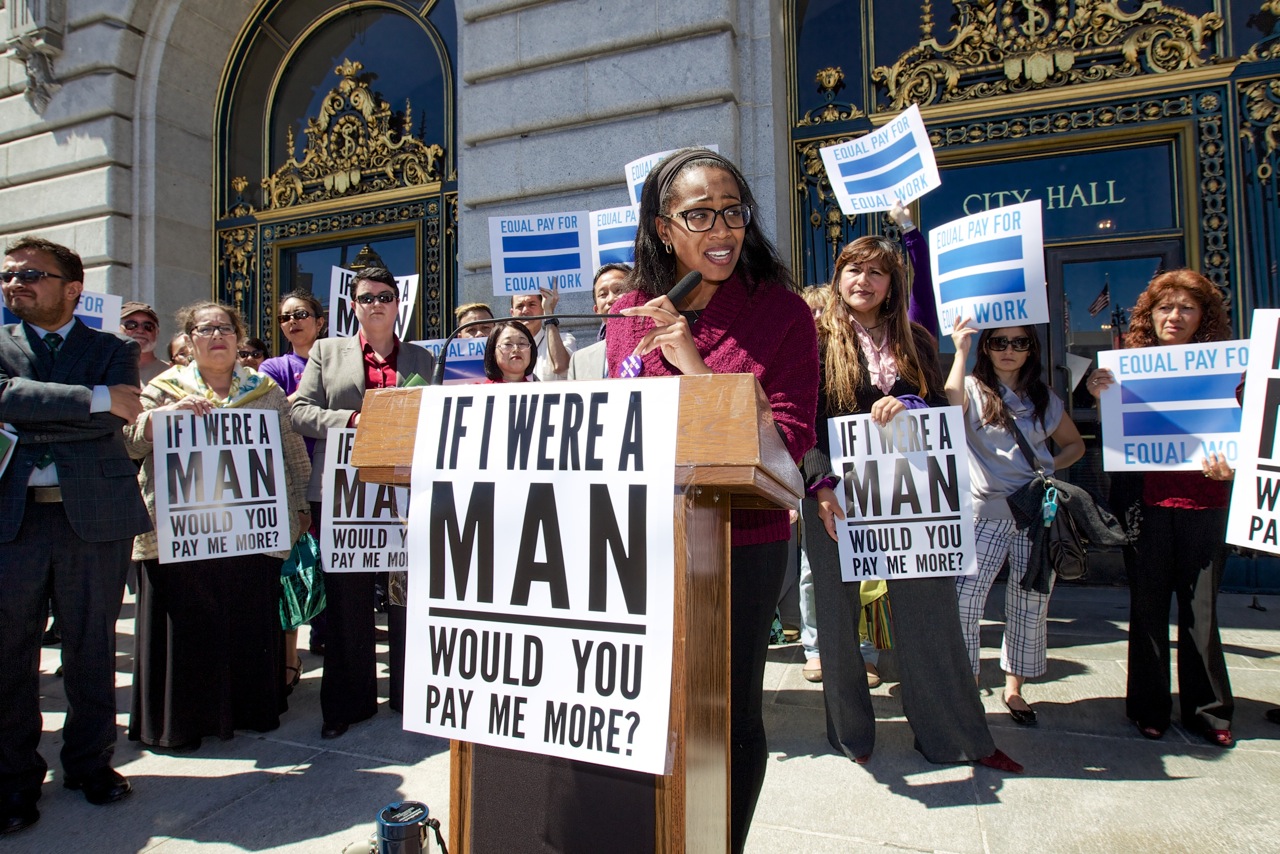
The Board of Supervisors today declared April 9 Pay Equity Day in San Francisco, in recognition of the persistent national gap between male and female financial compensation. But with the city locked in a dispute with SEIU Local 1021 over pay cuts to jobs dominated by women and workers of color, the day took on special local significance. Ahead of the declaration, union members, activists, and supervisors rallied in front of City Hall, chanting against San Francisco’s wage inequality and the general climate of fiscal austerity.

Women in San Francisco earn just 84 cents for every dollar paid to their male counterparts. Although this figure is slightly higher than the national average of 77 cents per dollar, the discrepancy represents a yearly wage gap of $9,968 per year, according to the National Partnership for Women and Families. At today’s press conference in front of City Hall, Sup. Malia Cohen called the gap “unconscionable in a country as wealthy as ours.”

Cohen was joined by Sups. David Chiu and David Campos, who both spoke out against gender-based wage gaps. “It is important for men to speak out,” Chui said. “It wasn’t women who made the decision for pay to be unequal.” Campos went a step further, promising to vote against any budget that further entrenches unequal pay. “I will not support any budget that reflect this discrepancy,” he said.

SEIU Local 1021, which represents over half of city employees, is currently locked in a budget dispute with the city over pay cuts that would adversely affect women and workers of color. The city Department of Human Resources has recommended that the city cut the salaries of 16 categories of city workers, including personnel clerks and nursing technicians, which are disproportionately females and workers of color. The dispute was recently sent to an arbitrator.

At today’s event, local SEIU leaders and the San Francisco Women’s Political Committee (SFWPC) continued to pressure the city to reconsider the salary cuts. SFWPC President Laura Hahn called persistent pay inequality “embarrassing.”

“If we can’t achieve it here in San Francisco where are we going to do it?” she asked.

Former Supervisor Chris Daly, who now works as political director for SEIU 1021, echoed Hahn’s concerns and charged that the proposal to cut pay for female-dominated categories calls into question the city’s long term commitment to pay equity.

“If you ask Mayor Lee if he supports wage equality, of course he will say yes,” Daly told us. “But in reality, his Department of Human Resources is rolling back progress.” Daly’s repeated requests for Mayor Lee to intervene in the wage-cut arbitration have not yet been answered.
But for the DHR, the recommended cuts have more to do with fiscal reality than gender equality. At a March 7th budget hearing, DHR director Micki Callahan said, “It would be improper to base any decision on demographics.”

She voiced concern over the “root causes” of pay discrepancy, but indicated that these issues fall outside the purview of her department. Spokespeople for the the DHR department have repeatedly assured us that the proposed budget cuts have nothing to do with gender, but rather reflect an effort to bring city salaries in line with market forces.

TRUST Act clears committee as immigration reform heats up nationally

It was late at night by the time New Latthivongskorn, then 22, finally started to make his way home from the University of California Berkeley campus after a long night of studying for midterm exams.  A third year molecular and cell biology major who was trying to keep up his grades in preparation for med school applications, Latthivongskorn said he noticed a man in a black hooded sweatshirt walking toward him as he approached his home. At first he didn’t think much of it – but just as he was about to unlock the door to his apartment, the young Thai student heard a voice. “Give me everything you’ve got,” the man commanded.

“I looked at him, and I looked down, and I saw a gun pointed straight at me,” Latthivongskorn recounted. Terrified, he tried to stay calm and simply cooperated; handing over his backpack and cell phone, silently feeling relieved that he hadn’t been carrying his laptop. Fortunately, Latthivongskorn was able to proceed into his apartment unscathed after the man who robbed him at gunpoint vanished down the street.

When his concerned housemate asked if he wanted to file a police report, Latthivongskorn faced a dilemma. “Yes, I wanted to report it,” he told the Guardian in a phone interview, “for me, but also for the community. That same man ended up mugging another individual later that night.”

But there was a problem. Latthivongskorn had moved with his family from Bangkok to Sacramento when he was just nine years old – and despite the fact that his entire life was rooted in California, he’d never obtained U.S. citizenship. Any interaction with police, he feared, could place him in jeopardy – even if he was approaching law enforcement as a crime victim.

“In the end, I couldn’t call,” he said. “What was going through my mind was thinking of all the sacrifices that my family had made for me … and I worked so hard to get to this point, and I’m still not there yet.” His decision not to report the armed robbery came down to “the simple fact that it could all end – that I could get deported.”

Fast-forward to today, and Latthivongskorn has graduated and earned a spot on the waitlist at Stanford while he awaits responses from a number of other med schools. He’s also active with ASPIRE, Asian Students Promoting Immigrant Rights through Education.

On April 9, he shared his experience of being mugged with California legislators at a hearing of the Public Safety Committee, and urged lawmakers to approve the TRUST Act.

Authored by Assembly Member Tom Ammiano, the bill seeks to “limit harmful deportations often stemming from trivial or discriminatory arrests,” according to a statement from Ammiano’s office.

As things stand, all arrestees have their fingerprints recorded and submitted to ICE, or U.S. Immigration and Customs Enforcement. Under the federal Secure Communities program, ICE can then direct local law enforcement to hold arrestees without bail, beyond the time they’d be detained under normal circumstances, for the purposes of immigration proceedings.

The idea is to hold and deport dangerous criminals, but in practice it’s proved problematic. “More than 90,000 Californians have been deported, with 70 percent not convicted of anything, or only of lesser crimes,” Ammiano’s office points out. “Some were never charged with crimes, and some were crime victims.”

The TRUST Act would “establish a statewide policy that says if the person has not been convicted of a serious or violent felony, they would no longer be held any longer than authorities would hold them otherwise,” explained Carlos Alcalá, a spokesperson for Ammiano. The idea is to draw a distinction between violent or serious offenders, and anyone else who could be swept up in the system and needlessly held without bail.

Also on hand to testify at the April 9 hearing was Ruth Montaño, a Bakersfield woman who was arrested and nearly deported after someone complained that her dog was barking too loud.

Alcalá recounted other horror stories that had made their way to the Capitol. There was the day laborer whose employer reported him to immigration authorities at the end of his shift when all he was expecting was a day’s wage, and the woman who was arrested outside of Walmart for trespassing – and nearly deported – for selling tamales. Then there were women who reported incidents of domestic violence only to be subjected to immigration proceedings (and their counterparts, who stayed mum about abuse because they feared deportation).

Members of the Public Safety Committee approved the TRUST Act 4-2, clearing the way for the bill to go to the floor of the Assembly as early as next week. An earlier version made its way to the desk of Gov. Jerry Brown last year, but was ultimately vetoed, leading to a revised version. “Because of last session’s history, we’re hoping to have more substantive discussions with the governor beforehand,” Alcalá told the Guardian.

The timing is significant. “Immigration changes are moving quickly at the national level,” Ammiano noted, “and California needs to make changes here to keep pace.”

Advocates expect a national proposal for immigration reform to be introduced in the Senate any day now, according to Jon Rodney of the California Immigrant Policy Center. West Coast activists are planning an event April 10 to mirror a mass rally and march for immigration reform planned in D.C.

In San Francisco, the march will begin outside Sen. Dianne Feinstein’s office on Post Street and then proceed to Civic Center, where a rally is planned for 5 p.m. Latthivongskorn plans to participate along with other organizers from ASPIRE, and a host of local and regional immigration reform advocates are getting involved.

Those joining the march “will carry 1,000 paper flowers,” Rodney said, “to represent 1,000 deportations that happen every day in the U.S. That’s one piece of Wednesday’s rally, is stopping deportations.”

Kink.com beloved in Pope land! Local porn site among top downloaded in Vatican City [UPDATED]

0

A local anti-BDSM porn activist emailed me tidings of Flash magazine’s Guatanamo-themed Coachella party this morning as proof that “Kink.com’ s influence is spreading, albeit interrupted by the sex-negative Philistines of Coachella.” Leaving aside the well-worth-it debate over the role art and nightlife have in political parody and the fact that torture in fact, existed well before Kink founder Peter Acworth (it wasn’t called the “Kinkquisition,” darling), I would say this is about 8,000 times more convincing proof that Kink.com is winning hearts and minds, should you need proof of such a thing.

According to Torrentfreak (and helpfully elaborated on by Fleshbot) the local BDSM site is responsible for two of the 13 most-pirated downloads in Vatican City. No, not top porn downloads, the most-pirated files, period.

Yes, for while Love Actually came in at #6, a scene featuring Lea Lexis and Krissy Lynn on “lezdom bondage” Kink site Whipped Ass followed close behind at #8, and #13 was occupied by Tiffany Starr and Sheena Shaw on the TS Pussyhunters site. 

We’re putting out the feelers to Kink to see how news of their influence in — and being robbed of revenue by — the world’s most flamboyantly attired country is being recieved by the company, stand by for post updates. 

UPDATE: Acworth has released a statement that implies the Vatican will espace legal action from the website:

While we don’t support theft of content, in this case we’re happy whoever he (or she) is is enjoying our movies. Our mission is to demystify BDSM and celebrate alternate sexuality. This is different from the Catholic Church’s mission which has (traditionally) been to shame anyone who deviates from a sexuality that isn’t procreative. We figure whoever is downloading these movies is feeling a fare amount of shame as it is, so we’ll let this one slide.

Read Acworth’s full statement here, featuring more Kink-Church comparisons like, “what is subspace if not a way to exorcise demons?” 


All killer, no filler: new movies!

0

Deadites, dino-junkies, indie supporters, doc watchers, foreign-film fans, “Hey Girl” lovers … there’s a little something for all y’all this week. (If you’d prefer to avoid the multiplex, check out the Yerba Buena Center for the Arts’ Pen-ek Ratanaruang series and/or the San Francisco Cinematheque’s Crossroads fest.)

http://www.youtube.com/watch?v=pvDLWlxxcak

Evil Dead “Sacrilege!” you surely thought when hearing that Sam Raimi’s immortal 1983 classic was being remade. But as far as remakes go, this one from Uruguayan writer-director Fede Alvarez (who’d previously only made some acclaimed genre shorts) is pretty decent. Four youths gather at a former family cabin destination because a fifth (Jane Levy) has staged her own intervention — after a near-fatal OD, she needs her friends to help her go cold turkey. But as a prologue has already informed us, there is a history of witchcraft and demonic possession in this place. The discovery of something very nasty (and smelly) in the cellar, along with a book of demonic incantations that Lou Taylor Pucci is stupid enough to read aloud from, leads to … well, you know. The all-hell that breaks loose here is more sadistically squirm-inducing than the humorously over-the-top gore in Raimi’s original duo (elements of the sublime ’87 Evil Dead II are also deployed here), and the characters are taken much more seriously — without, however, becoming more interesting. Despite a number of déjà vu kamikaze tracking shots through the Michigan forest (though most of the film was actually shot in New Zealand), Raimi’s giddy high energy and black comedy are replaced here by a more earnest if admittedly mostly effective approach, with plenty of decent shocks. No one could replace Bruce Campbell, and perhaps it was wise not to even try. So: pretty good, gory, expertly crafted, very R-rated horror fun, even with too many “It’s not over yet!” false endings. But no one will be playing this version over and over and over again as they (and I) still do the ’80s films. (1:31) (Dennis Harvey)

http://www.youtube.com/watch?v=C5RhdCBvwic

Gimme the Loot Biggie Smalls’ track is just a smart starting point for this streetwise, hilarious debut feature by Adam Leon. Young graf artists Malcolm (Ty Hickson) and Sofia (Tashiana Washington) are hustling hard to get paid and fund a valiant effort to tag the Mets’ Home Run Apple to show up rival gang-bangers. The problem lies in raising the exorbitant fee their source demands, either by hook (selling pot to seductive, rich white girls) or crook (offloading cell phone contraband). The absurdity of the pair’s situation isn’t lost on anyone, especially Leon. But their passion to rise above (sorta) and yearning for expression gives the tale an emotional heft, and Gimme the Loot stays with you long after the taggers have moved onto fresh walls. (1:21) (Kimberly Chun)

Jurassic Park 3D “Life finds a way,” Jeff Goldblum’s leather-clad mathematician remarks, crystallizing the theme of this 1993 Spielberg classic, which at its core is more about human relationships than genetically manufactured terrors. Of course, it’s got plenty of those, and Jurassic Park doesn’t really need its (admittedly spiffy) 3D upgrade to remain a thoroughly entertaining thriller. The dinosaur effects — particularly the creepy Velociraptors and fan-fave T. rex — still dazzle. Only some early-90s computer references and Laura Dern’s mom jeans mark the film as dated. But a big-screen viewing of what’s become a cable TV staple allows for fresh appreciation of its less-iconic (but no less enjoyable) moments and performances: a pre-megafame Samuel L. Jackson as a weary systems tech; Bob Peck as the park’s skeptical, prodigiously thigh-muscled game warden. Try and forget the tepid sequels — including, dear gawd, 2014’s in-the-works fourth installment. This is all the Jurassic you will ever need. (2:07) (Cheryl Eddy)

The Place Beyond the Pines Powerful indie drama Blue Valentine (2010) marked director Derek Cianfrance as one worthy of attention, so it’s with no small amount of fanfare that this follow-up arrives. The Place Beyond the Pines‘ high profile is further enhanced by the presence of Bradley Cooper (currently enjoying a career ascension from Sexiest Man Alive to Oscar-nominated Serious Actor), cast opposite Valentine star Ryan Gosling, though they share just one scene. An overlong, occasionally contrived tale of three generations of fathers, father figures, and sons, Pines’ initial focus is Gosling’s stunt-motorcycle rider, a character that would feel more exciting if it wasn’t so reminiscent of Gosling’s turn in Drive (2011), albeit with a blonde dye job and tattoos that look like they were applied by the same guy who inked James Franco in Spring Breakers. Robbing banks seems a reasonable way to raise cash for his infant son, as well as a way for Pines to draw in another whole set of characters, in the form of a cop (Cooper) who’s also a new father, and who — as the story shifts ahead 15 years — builds a political career off the case. Of course, fate and the convenience of movie scripts dictate that the mens’ sons will meet, the past will haunt the present and fuck up the future, etc. etc. Ultimately, Pines is an ambitious film that suffers from both its sprawl and some predictable choices (did Ray Liotta really need to play yet another dirty cop?) Halfway through the movie I couldn’t help thinking what might’ve happened if Cianfrance had dared to swap the casting of the main roles; Gosling could’ve been a great ambitious cop-turned-powerful prick, and Cooper could’ve done interesting things with the Evel Knievel-goes-Point Break part. Just sayin’. (2:20) (Cheryl Eddy)

Reality Director Matteo Garrone’s Cannes Grand Prix winner couldn’t be more different from his 2008 Gomorrah, save one similarity: that film was about organized crime, and dark comedy Reality stars Aniello Arena, a former gangster who was allowed out of prison to shoot his scenes. All things considered, he’s rather winning as Neapolitan everyman Luciano, whose daily life slinging fish can’t compete with his big dreams of appearing on the Italian version of Big Brother. He makes it through the second round of auditions — and soon starts believing he’s being watched by casting agents considering whether to put him on the show. His level-headed wife (Loredane Simioli) suspects he’s being paranoid (as does the audience, before long), though he’s told “never give up!” by cheesy-sleazy Big Brother vet Enzo (Raffaele Ferrante), a character clearly designed to comment on reality TV’s own peculiar brand of insta-fame. Nobody who’s ever watched reality TV will be surprised at the film’s ultimate messages about the hollow rewards of that fame, but Arena’s powerful performance makes the journey worthwhile. (1:55) (Cheryl Eddy)

Renoir The gorgeous, sun-dappled French Riviera setting is the high point of this otherwise low-key drama about the temperamental women (Christa Theret) who was the final muse to elderly painter Auguste Renoir (Michel Bouquet), and who encouraged the filmmaking urges in his son, future cinema great Jean (Vincent Rottiers). Cinematographer Mark Ping Bin Lee (who’s worked with Hou Hsiao-hsein and Wong Kar Wai) lenses Renoir‘s leafy, ramshackle estate to maximize its resemblance to the paintings it helped inspire; though her character, Dédée, could kindly be described as “conniving,” Theret could not have been better physically cast, with tumbling red curls and pale skin she’s none too shy about showing off. Though the specter of World War I looms in the background, the biggest conflicts in Gilles Bourdos’ film are contained within the household, as Jean frets about his future, Dédée faces the reality of her precarious position in the household (which is staffed by aging models-turned-maids), and Auguste battles ill health by continuing to paint, though he’s in a wheelchair and must have his brushes taped to his hands. Though not much really happens, Renoir is a pleasant, easy-on-the-eyes experience. (1:51) (Cheryl Eddy)

The Revolutionary Optimists If the children, as someone once sang, are our future, the inspiring work done by youth activists living in the slums of Kolkata, India hints that there might be brighter days ahead for some of the poorest communities in the world. Under the guidance of Amlan Ganguly and his non-profit, Prayasam, kids whose daily struggles include lacking easy access to drinking water, having to work backbreaking long hours at the local brick field, and worrying that their parents will marry them off as soon as they turn 13, find hope via education and artistic expression. Sensitively directed over the span of several years by Nicole Newnham (who made the excellent 2006 doc The Rape of Europa) and Maren Grainger-Monsen, The Revolutionary Optimists shows stories of both success (12-year-old sparkplug Salim speaks before Parliament about bringing water to his neighborhood) and failure (16-year-old Priyanka is forced into an abusive marriage, ending her dreams of becoming a dance teacher). With harsh reality keeping its stories firmly grounded, the film — which is, of course, ultimately optimistic — offers a look at how the youngest members of a community can help effect real change. (1:23) (Cheryl Eddy)

Mayor Lee’s trip to China raises questions of ethics and influence

86

[UPDATED(x3)] Mayor Ed Lee barely had time to unpack from his recent political junket to Paris before he was off on his current trip to China – both of which were paid for and accompanied by some of his top political supporters and among the city’s most influential power brokers. No wonder Lee doesn’t have time to weigh in on Airbnb’s tax dodge, the condo conversion stalemate, or other important city issues.

Local good government advocate Charles Marsteller learned of the current China trip from Willie Brown’s column in Sunday’s San Francisco Chronicle, whose editors (including Editor Ward Bushee, who we’re still waiting to hear back from about this trip) consider it a “man about town” column immune from conflict-of-interest policies that normally require journalists to disclose who is paying them on the side.

“I’m here with Mayor Ed Lee for my seventh official visit,” Brown cheerfully wrote, although readers were left to wonder just what official business Brown might be conducting with our mayor and his entourage. So, being an expert on political disclosure laws, Marsteller went down to the Ethics Commission to pull the Form SFEC-3.216(d) that state law requires elected officials to file before leaving on trips paid for by outside interests.

But it wasn’t there, so Marsteller filed an official complaint with the commission, telling us, “I did so to impress upon our Elected and other City Officials the need to properly report gifts in a timely way and in the manner as called for by State law and on the forms provided by the SF Ethics Commission.” 

When we contacted mayoral Press Secretary Christine Falvey, she forwarded us a copy of the form that should have been filed before the trip and told us, “I’m not going to answer the question about why we failed to file the appropriate forms with the Ethics Commission, as we worked closely with the City Attorney’s office to exceed reporting requirements by all appropriate deadlines.” [UPDATE: The time stamp on the form indicated it was filed on May 25, before the trip, even though it wasn’t publicly available at the Ethics Commission office when Marsteller went down to look for it].

The form indicates that Lee’s portion of the trip was paid for by the San Francisco Chinese Chamber of Commerce, whose influential leader Rose Pak conspired with Brown to get Lee appointed mayor more than two years ago. This is also the same Rose Pak who was admonished by the state’s Fair Political Practices Commission for illegally funding another political junket to China in 2009 with Sups. David Chiu and Eric Mar and then-Sup. Carmen Chu, who Lee appointed as Assessor earlier this year.

Those officials were forced to repay the expenses after the FPPC found that Pak, that time acting under the auspices of the Chinese New Year Festival Committee, was not allowed to make gifts exceeding $420 per official that year. “Please be advised that since the Chinese New Year Festival Committee is not an organization that falls under Section 501(c)(3) of the Internal Revenue Code, no public official may accept gifts of any type from this organization valued in excess of the applicable limit,” FPPC counsel Zachary Norton wrote in an Aug. 22, 2011 enforcement letter to Pak.

In other words, because this committee and “other 501(c)(6) chamber of commerce organization[s]” are in the business of actively lobbying top elected officials for favorable policies, rulings, and projects, they are barred by ethics law from giving them the gifts of big overseas political junkets. As Marsteller noted in his complaint letter, violations are punishable by fines of $5,000 per violation, or if they are “willful violations of the law” – which doing the same thing you were sanctioned for just two years ago certainly might be considered – the criminal penalties are $10,000 per violation or up to a year in jail.

Mayor Lee’s portion of the trip cost the Chamber $11,970, according to the form. But this time, to get around the FPPC restrictions, Pak seems to have passed the hat among various business elites to fund the trip. The mayor’s form shows that 41 people paid up to the current gift limit of $440 “to defray the cost of the mayor’s trip.”

They include Pak, Brown, four people from Kwan Wo Construction, three from American Pacific International Capital, two each from Boyett Construction, Young Electric, and Bel Builders, Harbor View Holdings Director Gorretti Lo Lui, and SF Immigration Rights Commissioner Sonya Molodetskaya – most of whom were also part of the trip’s 43-member delegation.

Among others who tagged along for the trip are Public Works Director Mohammed Nuru (who has a history of political corruption under Mayors Brown and Newsom and no clear business being on a Chinese trade delegation, but who doesn’t love a free trip?!), Kofi Bonner from Lennar Home Builders, Harlan Kelly with the SFPUC, Jay Xu with the Asian Art Museum, the wives of Lee and Bonner, Kandace Bender with San Francisco International Airport, and Mark Chandler with the Mayor’s Office of International Trade and Commerce.

It’s not clear who paid for those other public officials or even what they were doing there. [UPDATE: Department of Public Works spokesperson Rachel Gordon told us that Nuru paid for the trip himself, but that he’ll be studying China’s instrastructure, from its separated bikesways to greening of public rights-of-way, as well as meeting with Chinese businesses involved in the redevelopment of Hunter’s Point. “He’s been looking at a lot of the infrastructure in China,” Gordon said. “I expect a dozen if not more ideas when he returns.”] Then again, it also wasn’t clear why venture capitalist Ron Conway – Lee’s top campaign fundraiser and possible reason for publicly subsidizing big tech companies, including many that Conway funds – joined and helped sponsor Lee’s recent trip to Paris. This is just how business gets done in San Francisco.

“Willie Brown is the former Mayor of San Francisco,” Falvey told us when we asked why Brown was on the trip and what its purpose was. “The purpose of the trip is to promote San Francisco, its local manufacturing, cultural exchanges, he is signing an MOU and meeting with high level, new Chinese government officials.”

[UPDATE 4/5: Marsteller has withdrawn his complaint from the Ethics Commission alleging the mayor’s form wasn’t filed on time, but he and another citizen have filed separate complaints with the FPPC alleging the trip and its funding mechanism may violate the agency’s 2011 ruling against Pak.]

The Performant: The sacred and the profane

0

Putting the “good” back into Good Friday at “Sing-Along Jesus Christ Superstar” and Zombie Christ Haunted House

They might seem merely irreverent, or downright blasphemous, to conservative churchgoers, but I’m pretty sure the original JC Superstar would have dug the Sisters of Perpetual Indulgence — you know, the water-into-wine Jesus who supported sex workers and preached tolerance and respect for the marginalized.

The Sisters, who have been preaching the same since 1979, really get a chance to shine (and glitter) come Easter Weekend. One of SF’s most singular events, Easter Sunday in Dolores Park grabs the lion’s share of the attention, what with its iconic Easter Bonnet contest, the sainting of local community heroes, and the ever-popular Hunky Jesus competition, being rescheduled as we speak due to spring showers. But for those of us who find it difficult to get up early on a Sunday morning, hardbody of Christ or no hardbody of Christ, the Sisters have expanded their influence across the weekend, creating plenty of opportunity for the nocturnal among us to grab a little of the resurrection gusto for themselves.

Thus it was the holy day saddled with what must surely be the world’s greatest misnomer—“Good” Friday— that played host to two separate events dedicated to the mystery of the risen dead. The Zombie Christ, if you will.

Kicking off the evening at the endearingly ramshackle Victoria Theatre, the second (hopefully annual) “Sing-Along Jesus Christ Superstar” gathered the faithful together to wave palm fronds and cheer for the last days of cinema’s most notorious Rock Star Jesus (Ted Neeley).

Fortunately it’s not bring-your-own, since I don’t know where one goes to source official Easter weekend palm fronds, nor the communion wafers that get blessed pre-show by Sister Connie Pinko and passed around during the Last Supper scene. The Sisters work in mysterious ways. Props and palm fronds aside, the real fun is bellowing “What’s the buzz?” “So, you are the Christ,” and “just watch me die” along with the brooding, scantily-clad, long-haired Jesus freaks on the screen.

Produced by Bad Flower Productions, and co-hosted by StormMiguel Florez and Sister CP, that the Sing-Along is also a fundraiser for the Trans March makes it a Holy Week “must-do” that I hope finds a permanent spot on the Sisters’ Holy Week calendar.

Later that night I found myself hanging with a pack of monster messiahs, in the Gay-Glo labyrinth of the Zombie Christ Haunted House on Market Street. Another fun(d)-raiser the interactive setup included communion with the holy blood of Franzia (died for our sins), a disco inferno, “glory” holes, a giant pope puppet (scary!), strewn body parts, a smidgen of hardcore pornography, and a variety of cannibal Christs jumping out of dark corners and demanding brains.

“Not much there,” I tell one eager ghoul with fantastic bloody makeup.

“Christ not expecting much,” he reassures me.

More than anything it reminded me of the early days of Bunny Jam, when it was still all about pin-the-tail on the Trailer Trash bunny and less of a fashion show, ragged but vibrant; a fun, freaky kickstart to our famously irreverent Eastertide bacchanal.

Local filmmaker’s ’50 Children’ doc debuts on HBO

1

San Franciscan Steven Pressman makes his filmmaking debut with 50 Children: The Rescue Mission of Mr. and Mrs. Kraus, an informative documentary about Philadelphia residents Gilbert and Eleanor Kraus — grandparents to Pressman’s wife, Liz Perle — who hatched a daring plan in 1939 to rescue 50 Jewish children from Nazi-occupied Austria. The hour-long film airs Mon/8 on HBO.

http://www.youtube.com/watch?v=aSFJOSPEZ8g

“I don’t think we’ll ever know why my grandparents did what they did,” Perle muses. But her recollections, along with historical accounts of the Kraus’ activities (including first-hand reportage from Eleanor’s unpublished memoir, expressively read by actor Mamie Gummer), reveal a couple dedicated to doing something they knew was right, even as both the government and general population of the United States resisted making exceptions to existing, strict immigration quotas. Even when children’s lives were at stake — and despite the efforts of other countries, including England, which welcomed 10,000 young refugees. (America’s own anti-Semitism problem gets a mention here, as you might imagine.)

The risks the Jewish couple (in their early 40s at the time) took were considerable; as the film explores, they pushed through every barricade thrown in their way. With additional narration by Alan Alda, the Kraus’ remarkable tale unfolds via vintage photos, footage, and interviews with historians and several of the now-elderly children — who choke up at the memory of leaving their parents behind, but whose appreciation for the couple that saved them has not diminished. Catch HBO showings of 50 Children: The Rescue Mission of Mr. and Mrs. Kraus starting next week; schedule details here.

Localized Appreesh: Sunbeam Rd.

0

Localized Appreesh is our thank-you column to the musicians that make the Bay. To be considered, contact emilysavage@sfbg.com

I’m a lover of past treasures. I like my music vinyl, and I like my mail snail. Sure, I download thousands (millions would be hyperbolic, right?) of tracks a year, send hundreds of emails a day, tweet with the rest of them, and then some. Technology is still my friend, but vintage pleasures will always be my lover. Hence, my delight with the arrival of a colorfully confetti’d physical postcard from psychedelia-minded local fuzz-pop trio Sunbeam Rd., announcing the group’s 50th show.

The  San Francisco band’s debut LP, Breathers, came out last October, and I slept on it then, so I’m not making the same mistake twice. And while its psychedelic guitars, tender melodies, and fuzz-layered pop hooks may be blissfully of another era, Sunbeam Rd. also knows how to harness modern technology – it raised enough money through Kickstarter last year to press the record on vinyl. 

The band is made up of brothers Trevor Hacker and Clive Hacker, along with Harrison Pollack – all graphic design graduates from California College of the Arts (you might get a sense of that in the cat-filled video for swirling “Lucy”).

Check it out below and then see the trio live this weekend at Bottom of the Hill, celebrating 50 performances on the Sunbeam Rd.
http://www.youtube.com/watch?v=Z8ziAxlNZa4

Year and location of origin: TREVOR: We formed in early 2009 after setting up a drumset and some amps in the kitchen of the flat where Harrison and I used to live near Glen Park. Our roommates must have hated us.

Band name origin: HARRISON: In the ’80s, NASA was planning to build a big spaceport near the Air Force base in our hometown. It was slated to be like the West Coast Cape Canaveral but NASA pulled out at the last minute for some reason relating to the Challenger disaster, leaving the town in a severe recession.

One time my friend that worked on the base took me to the hangars that NASA built and never used. “The Sunbeam Road” was the nickname give to one of the landing strips, which had been gradually falling apart over the last 20-30 years. It was a super eerie place in contrast to the overly optimistic name. It kind of stuck with me for some reason.

Band motto: CLIVE: Wise men say forgiveness is divine, but never pay full price for late pizza.

Description of sound in 10 words or less: Hook-laden, fuzz-saturated trance states.

Instrumentation: CLIVE: Drums; TREVOR: Vox/Guitar; HARRISON: Bass.

Most recent release: BREATHERS (our debut LP) and BREATHERS Remixed.

Best part about life as a Bay Area band:
TREVOR: Road trips to Mt. Diablo, Big Sur, Point Reyes, and course all of the live music & great record stores.

HARRISON: Close proximity to the Based God.

CLIVE: What Harrison said; Also, it’s certainly never boring being a band in the Bay Area. There’s constantly something new and/or different happening that has yet to be explored.

Worst part about life as a Bay Area band:

TREVOR: It aint cheap!

HARRISON: The feeling that the Based God is so close, yet so far away.

CLIVE: What Harrison said; Also, it’s too easy to be complacent here in San Francisco.  

First album ever purchased:

CLIVE: I believe it was Whatever and Ever Amen by Ben Folds Five.

TREVOR: Blur, Blur.

HARRISON: Smash, The Offspring.

Most recent album purchased/downloaded:

CLIVE:  Acquiring the Taste, Gentle Giant.

TREVOR: Stone Shift, Larry Ochs Sax and Drumming Core.

HARRISON: Jack The Tab/Tekno Acid Beat, Psychic TV.

Favorite local eatery and dish:

CLIVE: #19 on the menu at Evergreen Garden (pho with five-spice chicken). It’s just great!

TREVOR: Little Yangon in Daly City. Pork and sour bamboo shoot curry with coconut rice

HARRISON: Taqueria Vallarta’s street tacos are basically the only things I like to eat.

Sunbeam Rd.
With Halsted
Sun/7, 9pm, $9
Bottom of the Hill
1233 17 St., SF
www.bottomofthehill.com

Ennui and I

0

FILM Thai filmmaker Pen-ek Ratanaruang’s international breakthrough, Last Life in the Universe, came out 10 years ago, but its themes of isolation and loneliness still feel very much of the moment. Eternally cool Japanese star Tadanobu Asano plays librarian Kenji, whose Better Off Dead-style existential turmoil leads him to attempt suicide, or at least think long and hard about it, multiple times. His morbid fantasies are varied: hanging (with a note, “This is bliss,” later repurposed by his crass brother as scratch paper: “Gone jogging”); gunshot; bridge-jumping.

The latter brings him into contact with a pair of sisters, Nid and Noi (real-life siblings Laila and Sinitta Boonyasak); when Nid is suddenly killed in a car accident, Kenji and Noi form a cross-cultural attachment against the backdrop of the girls’ ramshackle Bangkok house — a riot of dirty dishes and slobbery that contrasts sharply with Kenji’s obsessively tidy apartment, though that space has been lately littered by two dead bodies, courtesy of some inconvenient yakuza-on-yakuza violence.

Working from a script by Thai writer Prabda Yoon, and benefiting from Christopher Doyle’s meticulous cinematography, Ratanaruang structures his film along a non-linear timeline, suggesting, as Doyle points out in Last Life‘s DVD commentary, the way the human mind jumps back and forth, mixing flashes of memories into perceptions of the present. It’s a film that will most benefit a viewer willing to pay close attention to its “implications, rather than explications, of ideas” (Doyle again), and certainly holds up under repeat viewings. Another added benefit of watching it again: appreciating the humor that Ratanaruang sneaks in on occasion, as when director Takashi Miike (whose Asano-starring 2001 Ichi the Killer is referenced early on), in a cameo as a gangster, tells a woman she has seaweed stuck in her teeth. (It’s all in the delivery.)

Director, writer, cinematographer, and star reunited in 2006 for the noirish Invisible Waves, which has its own moments of dark comedy, as Kyoji (Asano), a chef with underworld ties, murders his lover at the behest of her husband — his boss — before sailing on the world’s grimmest cruise ship from Macau to Phuket. Aboard, he meets a wistful single mother with the familiar name of Noi (Kang Hye-jung from 2003’s Oldboy); her baby’s named Nid. (Another connection to Last Life: a shady, karaoke-loving character who goes by Lizard, echoing a reptilian motif from that earlier film.)

Kyoji’s journey is complicated by his malfunctioning room, with its haywire shower head and temperamental front door. “I’m inside the room and I cannot get out,” the frustrated man explains over the phone to an unhelpful concierge. It’s clear long before he gets off the ship and begins fumbling around an unwelcoming Phuket, however, that the biggest trap Kyoji is caught in was set by his own dubious life choices. Not for nothing does someone dub him “the stupidest smart guy I ever met.”

Ratanaruang’s most recent film, 2011’s Headshot, makes its local debut as part of the Yerba Buena Center for the Arts’ “Thai Dreams: The Films of Pen-ek Ratanaruang.” Dubbed a “Buddhist neo-noir,” Headshot features a flashy poster and an even flashier tag line: “Bangkok’s most dangerous cop is about to have his world turned upside down.” This is meant literally; the film concerns cop-turned-assassin Tul (Nopporn Chaiyanam) who suffers an injury that inverts his eyesight. Thankfully, the film is shot right side up, for the most part — and in Ratanaruang’s hands, what could’ve been a cheap gimmick becomes an entry point into a surprisingly layered tale.

Ratanaruang will be at the YBCA in person — his first-ever visit to San Francisco — for screenings of Headshot (Thu/4) and 2009 ghost story Nymph (Sun/7), which both star Chaiyanam. The YBCA’s retrospective also includes Last Life and Invisible Waves, plus 2007’s Ploy, about an endangered marriage, and 1999’s loopy thriller 6ixtynin9. 

“THAI DREAMS: THE FILMS OF PEN-EK RATANARUANG”

April 4-21, $8–$10

Yerba Buena Center for the Arts

701 Mission, SF

ybca.org/thai-dreams-films-pen-ek-ratanaruang