Local

The Milkman delivers

1

esilvers@sfbg.com

LEFT OF THE DIAL It’s a question most musicians are all too familiar with. If you tell someone at a party that you’re a working musician, that person is inevitably going to ask — after a few polite questions about your hardcore band/classical jazz quartet/street-corner performance art where you alternate reading Blake passages with playing the accordion — “So, you have a day job?”

In a city like San Francisco, especially, the answer is almost always “yes.” And there’s no shame in that! Bartender, barista, Whole Foods cashier, teacher, graphic designer, marijuana dispensary employee — I’ve heard all of these in just the last month or so of musician interviews. A person’s gotta eat.

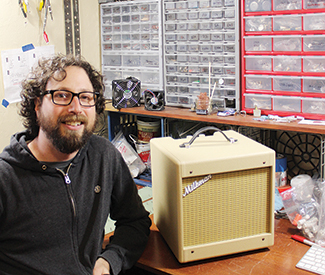
And then there’s Tim Marcus. On a recent, rainy Tuesday afternoon, the guitarist was hunkered down in a small bedroom-turned-electrical engineering workshop in the Lower Haight apartment he shares with his girlfriend. Marcus, 35, is one of the most sought after steel guitar players in the Bay Area. He spent the latter half of the aughts with the now-defunct (but much loved) San Francisco Americana band Or, the Whale. A few hours after this interview, he’ll be playing Amnesia with alt-country rocker Tom Rhodes; two days later he’s heading out on the road for a three-week East Coast tour with San Francisco folk songstress Kelly McFarling. But right now he’s at his day job: Flanked by stacks of glass tubes, fuses, and various tiny metal parts whose purpose we can only guess at, he’s building an amplifier. And not just any amplifier. An amplifier of pedal steel dreams.

amp

As the founder, owner, and sole employee of Milkman Sound, Marcus has created a living from building toys — and he’s the first to call them that — for musicians who are just as choosy as he is.

“I started playing guitar when I was 10, and played in bands all through middle school, high school, college,” says Marcus. “I started doing it professionally in the early 2000s. And there just wasn’t what I’d consider to be a boutique option [for amplifiers] for pedal steel guitars. If you drive a car, most people buy a Ford or a Subaru, but you have the option to buy a Ferrari. As a pedal steel player, in particular, you really wound up shoehorned into buying Fords and Chevrolets, things that are made for [regular] guitar players.”

He gained the technical know-how required to build amplifiers from a couple places. Back East, he worked for a company that did repairs on audio-visual equipment, where he’d hand off old or unused parts to a friend who built amps in exchange for his tutelage. After moving out to San Francisco, Marcus went to work for BBI Engineering, an SF company that installs AV and theatrical systems for museums “and other places that use automated amps, where you walk in, push a button and everything happens,” he says. “I learned a lot about making things that work well, that aren’t going to break if they’re subjected to kids poking at them day, in day out.”

Frustrated at being unable to get the clarity and quality of sound he wanted out of his guitar, Marcus started small, ordering the best parts he could find — some vintage, some new, with a priority on materials made in America — to build one amplifier for himself. He still has it (it’s sitting in a custom Milkman slipcover in the corner of the workshop, which, Marcus notes, is more easily navigated than usual — he just shipped out a bunch of amps) but he’s revamped that first one more times than he can count.

He’s an admitted perfectionist as well as a workaholic, he says, but it runs in the family: the name “Milkman” is a nod to his longstanding family business in Connecticut, starting with a small dairy farm his great-grandfather bought and built out. “The spirit of my great-grandfather was like ‘I’m going to sell something that I make,’ and my family’s always continued that,” says Marcus. “That definitely plays a role in my work ethic.”

Since he built that first amp four years ago, he’s been crafting custom amps for guitar and steel players all over the country. He does every part of production himself — friends have asked to help so they can learn, but he’s “crazy OCD about doing everything” with his own hands — and he builds each amp to a customer’s specifications, one at a time. He’s branched out into amplifiers for regular guitarists, and for bass players. Each amp takes him a couple of days to build, and then he tests it meticulously by (someone’s gotta do it) playing guitar through it lots of different ways.

Marcus still buys parts from small US-based companies where possible, including many in California, which he says is expensive but worth it for the quality. They don’t manufacture the glass tubes that go into amplifiers in the US at all, anymore, he explains, which is a shame, because the ones produced here in the ’50s and ’60s were great — they played an unsung role in creating what we think of as the early American rock ‘n’ roll sound. (Marcus can and will explain the history of amplifiers to you, as well as the differences between every iteration of each part that goes into them, at the drop of a hat.) The majority of his cabinets come from a revered one-man shop in Nashville, though Marcus has just begun working with a family business in Oakland to try to make the operation even more local.

amp

The price for all this care and OCD-level handiwork? Milkman amps run from $900 for a five-watt “half pint” amp to $3000 for the more powerful models. But for the musicians Marcus is catering to, that’s well worth it — last year, he sold 40 amplifiers; this year, by the end of March, he’d already shipped 20. Milkman amps have been out on tour in Eric Clapton’s band, thanks to acclaimed steel player and producer Greg Leisz taking a liking to Marcus’ simple, vintage rock ‘n’ roll aesthetic and careful technical work; they can also be heard on the most recent Daft Punk and Norah Jones records.

Maybe most impressively: Marcus seems to have cracked a code. He’s surviving in San Francisco by doing something he loves — and something that allows him to stay here as a working musician. He stopped working for his old audio-visual company about a year ago.

“I know I’m extraordinarily lucky that I’ve figured out a way to have music be something I can make a living off of,” he says. “I mean, I don’t get rich playing pedal steel. I wouldn’t be able to pay my rent playing pedal steel. If I lived in Nashville, or even LA, maybe; not here.

“But there’s also pride in that,” he says. “That’s why it says ‘Made in San Francisco, USA’ on the front. It’s not easy to do things in San Francisco, so when you do I think it’s just that much more awesome. I kind of got into the pirate ship mentality, and working for myself is great. I get up early — but I haven’t set an alarm clock in a long time.”

Events: April 9 – 15, 2014

0

Listings are compiled by Guardian staff. Submit items for the listings at listings@sfbg.com. For further information on how to submit items for the listings, see Selector.

WEDNESDAY 9

Poetry reading Pegasus Books Downtown, 2349 Shattuck, Berk; (510) 649-1320. 7:30pm, free. With Raina Leon, Erica Lewis, Alexandra Mattraw, and Val Witte.

Tom Fitzgerald and Lorenzo Marquez Booksmith, 1644 Haight, SF; www.booksmith.com. 7:30pm, free. The fashion bloggers discuss Everyone Wants to Be Me or Do Me: Tom and Lorenzo’s Fabulous and Opinionated Guide to Life and Style.

THURSDAY 10

Arlo Crawford Booksmith, 1644 Haight, SF; www.booksmith.com. 7:30pm, free. The author discusses A Farm Dies Once a Year: A Memoir.

Emma Donoghue Alexander Book Co., 50 Second St, SF; www.alexanderbook.com. Noon-1pm, free. The author reads from her new mystery novel Frog Music, with musicians Patrice Haan and Tony Marcus playing tunes that were popular during San Francisco’s Barbary Coast days.

Leslie Jamison City Lights Bookstore, 261 Columbus, SF; www.citylights.com. 7pm, free. The author reads from her new essay collection, The Empathy Exams.

Fred Martin BookShop West Portal, 80 West Portal, SF; (415) 564-8080. 7pm, free. The author discusses his new book, Abraham Lincoln’s Path to Reelection in 1864.

“Off the Grid: Twilight at the Presidio” Main Post, Presidio, SF; www.offthegridsf.com. 5-9pm, free. Every Thursday through June 26. This ongoing evening event features lantern-lit dining cabanas, cocktails, fire pits, and food trucks galore.

FRIDAY 11

“Chomp! They Came from the Swamp” Conservatory of Flowers, 100 JFK Dr, Golden Gate Park, SF; www.conservatoryofflowers.org. 10am-4pm, $1.50-8. Tue-Sun through Oct 19. Explore the oddly alluring world of meat-eating plants at this exhibit, starring California’s own cobra lilies and the ever-popular Venus flytrap. Who’s hungry?

“An Evening with Nightboat Books: Mostly New Work” Green Arcade, 1680 Market, SF; www.thegreenarcade.com. 7:30pm, free. With Brian Blanchfield, Laura Moriarity, George Albon, Brandon Som, and Kevin Killian.

“Walk to Work Day” SF; www.walksf.org. Hoof it to work today and get a reward (snacks, Clipper cards, etc.) at a number of “hubs” stationed around SF. All of the supervisors will be hanging out in cafés in their districts (7:45-9am) to encourage walkers; check the website for more deets.

“YBCA Teen Night 2014: Visions of an Abolitionist Future” Yerba Buena Center for the Arts, 701 Mission, SF; www.ybca.org. 6-10pm, free. Youth-created performance and exhibition that looks at the crisis of mass incarceration in America.

SATURDAY 12

Berkeley Bay Festival Berkeley Marina, Berk; cityofberkeley.info/bayfestival. 11am-4pm, free. Live music, environmentally-themed exhibitors, boating, and “green” vendors highlight this event celebrating the bay.

“Jack of All Trades” Jack London Square, 55 Harrison, Oakl; www.jackofalltradesoakland.com. 11am-5pm, free. Treasure Island Flea hosts this gathering of local makers, indie designers, artists, and more.

“Nicolas Cage Art Show” Balancoire, 2565 Mission, SF; eventbrite.com/e/nicolas-cage-art-show-san-francisco-tickets-11103499867. 8pm, $8-10. Group art show paying tribute to the many nuances of the Oscar-winning, delightfully odd actor.

Northern California Cherry Blossom Festival Japantown, SF; www.sfcherryblossom.org. April 12-13 and 19-20, free. Celebrate Japanese culture and the Japanese American community at this 47th annual street fair, boasting food booths, live music, martial arts demonstrations, and more.

“SiteWorks: Archaeologies of San Francisco Performance, 1969-85” Yerba Buena Center for the Arts, 701 Mission, SF; www.ybca.org. 3-4:40pm, free. Artist Nick Kaye discusses an ongoing, site-specific Google Maps project gathering “archival remains of past ephemeral art and performance in the present city of SF.”

“Writers with Drinks” Make-Out Room, 3225 22nd St, SF; www.writerswithdrinks.com. 7:30-9:30pm, $5-10. With Eileen Gunn, April Sinclair, Caitlin Donohue, Nona Caspers, and Siouxsie Q.

SUNDAY 13

“Foster Family Fun Day” Habitot Children’s Museum, 2065 Kittredge, Berk; www.habitot.org. 2-5pm, free. Foster, kinship, and adoptive families are welcome to visit the museum and enjoy free, exclusive access to the hands-on exhibits and creative art activities.

Darick Robertson Two Cats Comic Book Store, 320 West Portal, SF; www.twocatscomicbookstore.com. 3pm, free. The comics artist (Transmetropolitan, The Boys, Marvel Knights) discusses his work with Comic Vine’s Corey Schroeder.

MONDAY 14

Market Street Kiosk Youth Poster Series Bus kiosks along Market Street, SF; www.sfgov.org. Through July 7. Budding photographers working with San Francisco Arts Commission photo-mentoring program First Exposures exhibit scenes snapped in their neighborhoods — the Tenderloin, SoMa, and Central Market — in public displays along Market Street.

TUESDAY 15

Matthew Zapruder City Lights Bookstore, 261 Columbus, SF; www.citylights.com. 7pm, free. The poet celebrates the release of his new collection, Sunbear. *


From brushes to bytes

0

joe@sfbg.com

CAREERS AND ED Matt Burdette is a video game environment artist, crafting expansive alien vistas by tapping out ones and zeroes the way a painter flourishes a brush. But unlike paint on canvas, Burdette’s vistas are meant to be explored by video game avatars hunting computerized enemies.

He’s crafted trees and bushes, and paid loving attention to every stem and every leaf, but his proudest project was not nearly so serene. While employed at LucasArts he worked on a later-cancelled project: Star Wars 1313.

Burdette was tasked with blowing up a spaceship.

“They said to me, ‘This needs to look photoreal,'” he told me. “I was all, ‘Hell yeah, let’s do that.'” The video game trailer that played at the 2013 Electronic Entertainment Expo featured a laser toting hero jumping through a burning spaceship. It was hailed by the national press as the most impressive looking new video games on the horizon.

But Burdette was not always a digital craftsman. At one point, he was a pencil and paper artist.

For artists facing hard times in a dwindling San Francisco art scene, the Bay Area’s burgeoning video game industry is rife with possibility. About 100 video game studios call the Bay Area home, according to Game Job Hunter, from Electronic Arts to Zynga. And many of these studios need artists and composers. Burdette made the digital leap from traditional art by studying film visual effects at Savannah College, in Georgia.

Above is the E3 trailer for Star Wars: 1313. 


“To bring a more artistic sensibility to what is maybe a technical, rigid kind of space is valuable and a lot of fun,” Burdette, 28, said.

Disney later bought LucasArts and laid off many of its staff, and Burdette found a new job at Visceral games crafting environments for Battlefield 4. But despite the video game industry reputation for grueling work hours, he still manages to find time for personal art.

Lately he’s slowly built a virtual island, like a hobbyist building a model ship during off hours.

“It was nice to come home and think, ‘I’ll make a tuft of grass today,'” he said. He then plugged his island into a new virtual reality device known as Oculus Rift, VR goggles that show the player a 3D world that looks eerily real, sensing the player’s head movements and portraying a sense of depth.

“I put on the Oculus and thought I was going to cry. You are there,” he said. “I walked up to a bush and felt physically uncomfortable, like this is impugning on my personal space.”

Burdette may get to play inside virtual worlds some artists haven’t dreamed of, but his reality is the same: Business can be tough.

He noted that many video game designers and artists are laid off after projects are complete, a standard industry practice. Most industry workers, he said, “are very much more mercenaries now.”

Some opt out of the boom and bust system altogether. Liz Ryerson, 26, is an independent game designer, visual artist, and music composer. She’s had hard times, crashing on couches and bordering on homelessness, but found a new way to raise money for her work. She now solicits support on Patreon, a Kickstarter for artists.

Thanks to contributions from fans, she has a spiffy new place by downtown Berkeley where she crafts her indie games.

“Indie game” is a nebulous phrase, of course. But if the multi-million-dollar video game Halo is comparable to the blockbuster film Avatar, Ryerson’s version of indie is closer to the DIY digital videographers of the local Artists’ Television Access. She makes video games for expression’s sake, not necessarily for profit.

Not to say Ryerson isn’t successful. She composed music for the immensely popular Dys4ia, a flash game detailing the lead designer’s gender transition. Ryerson’s own game, Problem Attic, tackles her own personal demons.

Floating crosses pursue the avatar, a stick figure, across a 2D plane. The game world resembles an 8-bit rendering of a brain merged with a nightmare, and the player must traverse frightening but intentional digital glitches. In an industry filled with shoot-’em-up games, it’s esoteric and strange, and that’s how Ryerson likes it.

“The game is definitely David Lynch-inspired, without a doubt,” she said. “Things that are more indefinable, with more of a sensibility to them. That’s what I respond to.”

A trailer for Liz Ryerson’s game, Problem Attic.


She’s mostly self-taught, sometimes building games in flash, and scoring the games using computer software like Reason. Though her design ethos couldn’t be further from Burdette’s blockbuster Star Wars games, they share a common bond: They were artists before they were game makers.

“I used to record songs and play guitar,” Ryerson said. “That was one of the biggest things I wanted to do, was be a pop musician.”

Eventually she started remixing video game compositions and posting them to the web via video game music website OCRemix. She studied film in school and made a documentary. The music from a Gus Van Sant film, the visual presentation of comic books, and the movement inherent in a game controller — all of these concepts inspire her work.

“That’s what you can do with video games, you can create these abstract, very different worlds,” she said. “You can do this more easily with video games than you can represent reality.”

Consumers spent over $20 billion on video games in 2012, according to the Entertainment Software Association. But for artists looking for an easy transition to an industry flush with cash, Ryerson and Burdette made one thing abundantly clear: The video game industry is extremely competitive.

“It’s hard to make games,” Burdette said. “You’ve got to want it real bad.”


Get action

4

cheryl@sfbg.com

CAREERS AND ED Ah, the bright lights of Hollywood — so close, and yet thankfully far enough away to allow Bay Area filmmakers to develop their own identities. The SF scene thrives thanks to an abundance of prolific talent (exhibit A: have you noticed how many film festivals we have?), and continues to grow, with a raft of local programs dedicated to teaching aspiring Spielbergs — or better yet, aspiring Kuchars — the ins and outs of the biz.

San Francisco’s big art schools all have film programs. California College of the Arts offers both a BFA and an MFA in film, with an eye toward keeping students trained not just in cinema’s latest technological advancements, but its ever-changing approaches to distribution and exhibition. One look at the staff roster and it’s not hard to see why CCA’s program is so highly-acclaimed, with two-time Oscar winner Rob Epstein (1985’s The Times of Harvey Milk; 1995’s The Celluloid Closet; 2013’s Lovelace); indie-film pioneer Cheryl Dunye (1996’s The Watermelon Woman; 2001’s The Stranger Inside); and noted experimental artist Jeanne C. Finley, among others. www.cca.edu

The Art Institute of California has a Media Arts department that offers a whole slew of programs, including BS degrees in digital filmmaking and video production, digital photography, and media arts and animation, as well as an MFA in Computer Animation. The school, which offers a number of online courses, is affiliated with the for-profit Argosy University system and aims for “career-focused education.” www.artinstitutes.edu/san-francisco/

The San Francisco Art Institute has this to say about its programs: “The distinguished filmmaker Sidney Peterson initiated filmmaking courses at SFAI in 1947, and the work made during that period helped develop “underground” film. From the 1950s to the early 1970s, filmmakers at the school such as Bruce Conner, Robert Nelson, Stan Brakhage, and Gunvor Nelson brought forth the American avant-garde movement. Our current faculty is internationally renowned in genres including experimental film, documentary, and narrative forms.” The school has embraced new technology and offers extensive digital resources, but it also supports artists who prefer working with celluloid. 16mm and Super 8 filmmaking lives! www.sfai.edu/film

The Academy of Art University may be largely known around SF for the number of buildings it owns downtown, but it does have a School of Motion Pictures and Television that offers AA, BFA, and MFA diplomas, augmented by an extensive online program. Its executive director is Diane Baker, eternal pop-culture icon for her role in 1991’s Silence of the Lambs (“Take this thing back to Baltimore!”) Other faculty members include acclaimed choreographer Anne Bluethenthal. Students can also take classes from Guardian contributor Jesse Hawthorne Ficks, who programs the popular “Midnites for Maniacs” series at the Castro Theatre and is the school’s film history coordinator.

“I teach 11 different theory classes, including the evolution of horror, Westerns, melodramas, musicals, and ‘otherly’ world cinema, as well as a close-up on Alfred Hitchcock,” Ficks says. “But bar none, the History of Female Filmmakers class seems to create the biggest debates. Some find it sexist to emphasize gender — as artists, why can’t we transcend that concept? Except why have the majority of textbooks forgotten, ignored, or even re-written these women out of history? If the argument is that female filmmakers just aren’t good enough to be ranked alongside their male counterparts, how about watching more than one film by Alice Guy, Lois Weber, Frances Marion, Dorothy Arzner, Maya Deren, Ida Lupino, or Agnes Varda? And that’s just the first six weeks of class.” www.academyart.edu

The eventual fate of the City College of San Francisco is still being decided, but for now, its cinema department offers students a mix of hands-on (classes in cinematography, editing, sound, etc.) and theory (film theory, film history, genre studies, etc.) classes. The spring 2014 course catalog included such diverse offerings as “Focus on Film Noir,” “The Documentary Tradition,” “Pre-Production Planning,” and “Digital Media Skills.” Since 2000, the department has showcased outstanding student work in the City Shorts Film Festival, which last year screened both on-campus and at the Roxie Theater. www.ccsf.edu

Tucked into the city’s foggiest corner is San Francisco State University, whose cinema department remains strongly tied to the school’s “core values of equity and social justice,” according to its website, with a special focus on experimental and documentary films. The faculty includes acclaimed filmmakers Larry Clark and Greta Snider, and students can earn a BFA, an MFA, or an MA (fun fact: like I did!) www.cinema.sfsu.edu

On the newer end of the spectrum is the eight-year-old Berkeley Digital Film Institute, which offers “weekend intensives” to smaller groups of students. Dean Patrick Kriwanek says the school teaches “LA-style,” or commercial-style, filmmaking. “Our teachers all come from the American Film Institute or have worked on features,” he says. “We’re trying to train our kids to produce the same level of work that you’d see out of UCLA or USC grad schools — excellent work that’s thoughtful.”

The school also takes the practical side of entertainment into account. “I always joke that we try to be 51 percent art school and 49 percent business school, but it’s really true,” he adds. “You really have to be a business person if you want to succeed.” www.berkeleydigital.com

On this side of the bay, at Mission and Fifth streets to be precise, there’s the San Francisco School of Digital Filmmaking, which aims to “create filmmakers with careers in the entertainment industry.” Faculty members include Frazer Bradshaw, director of the acclaimed indie drama Everything Strange and New (2009) and screenwriter Pamela Gray (1999’s A Walk on the Moon). In addition to months-long programs, the school offers workshops like a crowd funding how-to (an essential area of expertise for any independent artist these days) and a single-day “boot camp-style” intro to digital filmmaking. www.filmschoolsf.com *


Covered San Francisco unveiled

2

At the tail end of a long Board of Supervisors meeting last week, Sup. David Campos introduced legislation to create Covered San Francisco, a city healthcare option designed to remedy a coverage gap that will be created under the Affordable Care Act.

Lately, we’ve gotten reports of San Franciscans hoping to enroll in Covered California — the state-run health insurance marketplace created under the ACA — leaving meetings with enrollment counselors in tears of frustration. Even though these would-be enrollees are technically eligible for Covered California — which makes them ineligible to stay in Healthy San Francisco — the insurance cost is nevertheless too high to be a realistic option.

“In high cost-of-living cities like San Francisco, many will simply not be able to afford it,” Campos said when he introduced the legislation. “The most authoritative study says 40 percent of San Franciscans who are eligible for Covered California still will not be able to afford it.”

Co-sponsored by Sups. John Avalos, Eric Mar, and Jane Kim, the legislation seeks to address the problem by creating a new option for employees to receive subsidies to purchase health insurance under Covered California through the Department of Public Health. The funding would be derived from an employer spending requirement already in place under the city’s Health Care Security Ordinance, the law that created Healthy San Francisco.

The proposal also seeks to close a loophole that Campos said incentivizes employers to set up health reimbursement accounts for employees that cannot be used to purchase Covered California insurance plans. To discourage the use of these accounts, the proposal would make spending irrevocable, meaning employers would be unable to claw back funding they’ve contributed. (Rebecca Bowe)


PG&E INDICTMENT DOESN’T GO FAR ENOUGH

A federal grand jury in San Francisco issued a criminal indictment against Pacific Gas & Electric for negligence in the 2010 gas pipeline explosion in San Bruno that killed eight people and destroyed an entire neighborhood. But that falls far short of what this rapacious company and its conniving executives — none of whom face personal criminal charges — should be facing.

The indictment omits key details of what happened leading up this tragic and entirely preventable explosion, buying into the fiction that there is a meaningful difference between PG&E Co., the regulated utility, and PG&E Corp., the wealthy and powerful Wall Street corporation. This is a stark example of how corporations are given all the rights of individuals, but accept few of the responsibilities, with the complicity of the political and economic systems.

The 12-count indictment focused on violation of the Pipeline Safety Act, which requires companies to maintain their potentially dangerous pipelines, including keeping detailed records and doing safety inspections that would detect flaws like the faulty weld that caused the San Bruno explosion on Sept. 9, 2010 — work the company negligently failed to perform.

But PG&E’s wanton disregard for public safety, combined with the greed and shameless self-interest of then-CEO Peter Darbee and other executives, goes far deeper than that. A report by the California Public Utilities Commission released in January 2012 found that $100 million in ratepayer funds that had been earmarked for pipeline maintenance and replacement, including this section in San Bruno, was instead diverted to executive bonuses and shareholder profits.

“PG&E chose to use the surplus revenues for general corporate purposes,” the audit said, noting that the company was flush with cash at the time and there was no good reason to neglect this required maintenance. (Steven T. Jones)


911 DISPATCHERS STRESSED

The controversial tax breaks given to tech companies in San Francisco in 2011 came under fire again last week, as emergency dispatchers protested crippling budget shortages on April 2 in front of the Department of Emergency Management.

“When you call 911, there should be enough people working to pick up the phone,” said Ron Davis, an emergency dispatcher in San Francisco for 13 years. “It’s upsetting when you or someone you love is in a life-threatening emergency and you’re put on hold for 30 seconds, 45 seconds, or even a minute and longer.”

The department receives, on average, nearly 3,000 phone calls per day, and the workers who spoke at the rally described long hours and inadequate coverage for the volume of calls that they receive. California law mandates that 90 percent of 911 calls be answered in 10 seconds or less, but in San Francisco that number often drops to 60 percent or lower. Davis said that on particularly busy nights, such as New Year’s Eve, there can be up to 20 calls in the queue waiting for an available dispatcher.

The rally was organized by SEIU Local 1021 and was part of the union’s contract negotiations with the city. Larry Bradshaw, vice president for the San Francisco region of the union, said workers were willing to make sacrifices during the recession but now, “we just want to recoup our losses and make up for lost ground.” (Brian McMahon)


WILL AIRBNB PAY UP?

Airbnb has agreed to start collecting and paying the transient occupancy tax in San Francisco sometime this summer — finally acknowledging that’s the only workable way to meet the tax obligation it shares with its hosts. But that leaves open the question of whether this $10 billion corporation intends to pay the tax debt it has accumulated for years while trying to duck its responsibility to the city.

That’s at least several million dollars that the city could really use right now. As we’ve previously reported, Airbnb commissioned and publicized a study in late 2012 claiming its San Francisco hosts collected $12.7 million from Airbnb guest in fiscal year 2011-12, meaning they should have collected and remitted to the city $1.9 million.

In early 2012, the San Francisco Tax Collector’s Office held public hearings to clarify whether the TOT applies to the short-term rentals facilitated by Airbnb and similar companies, ruling in April 2012 that the TOT does apply to those stays and that it is a “joint and several liability” shared by the hosts and Airbnb, which conducts the transaction and takes a cut.

As we also reported, despite heavily lobbying during the hearing and being acutely aware of the outcome and its resulting tax obligation, Airbnb simply refused to comply and tack the 15 percent surcharge onto its transactions, as similar companies such as Roomorama were doing.

So if Airbnb was really being the good corporate citizen that it’s now claiming to be, it would not only start charging the 15 percent fee and sharing that money with the city, it would also cut San Francisco a check for around $4 million, or whatever the tax would be on what this growing business has collected from its guests since April 2012. (Steven T. Jones)


BURSTING THE MONTEREY SHALE BUBBLE

“We’ve been told that there’s a great oil boom on the immediate horizon,” billionaire investor Tom Steyer noted at the start of a March 27 talk in Sacramento.

But Steyer (who has pledged to spend $100 million on ad campaigns for the 2014 election to promote action on climate change) wasn’t there to trumpet the oil industry’s high expectations. Instead, he introduced panelists who dismissed the buzz on drilling the 1,750-square-mile Monterey Shale as pie-in-the-sky hype.

Dr. David Hughes, a geoscientist with the Post Carbon Institute, and researcher Robert Collier had been invited to speak by Next Generation, a policy group focused on climate change that was co-founded by Steyer.

Both experts questioned the findings of a University of Southern California study that wound up being cited time and again as the basis for the oil industry’s arguments, in the context of a statewide debate on fracking.

Partially funded by the Western States Petroleum Association, the USC report outlined a rosy economic outlook stemming from oil extraction in the Monterey Shale, estimating that it would create 2.8 million jobs and $24 billion in tax revenues, findings that were “echoed by politicians of both parties,” Collier noted.

Yet prominent economists could find no basis for certain claims. “They said: ‘We cannot see any justification for these incredible numbers,” Collier reported. “They seem too big to be believable.” The Post Carbon Institute and Physicians, Scientists and Engineers for Healthy Energy published their own report challenging the findings, titled Drilling California: A Reality Check on the Monterey Shale. (Rebecca Bowe)

Privatization of public housing

14

news@sfbg.com

Like so many San Franciscans, Sabrina Carter is getting evicted.

The mother of three says that if she loses her home in the Western Addition, she’ll have nowhere to go. It’s been a tough, four-year battle against her landlord — a St. Louis-based development company called McCormack Baron — and its law firm, Bornstein & Bornstein. That’s the same law firm that gained notoriety for holding an “eviction boot camp” last November to teach landlords how to do Ellis Act evictions and sweep tenants out of rent-controlled housing.

But Carter’s story isn’t your typical Ellis eviction. Plaza East, where she lives, is a public housing project. Public housing residents throughout the country are subject to the “one-strike and you’re out” rule. If residents get one strike — any misdemeanor or felony arrest — they get an eviction notice. In Carter’s case, her 16-year-old was arrested. He was cleared of all charges — but Carter says McCormack Baron still wouldn’t accept her rent payment and wouldn’t respond to her questions.

“I was never informed of my status,” she said.

That is, until her son was arrested again, and Carter found herself going up against Bornstein & Bornstein. She agreed to sign a document stipulating that her eviction would be called off unless her son entered Plaza East property (he did). It was that or homelessness, said Carter, who also has two younger sons.

“They criminalized my son so they could evict my family,” Carter said.

McCormack Baron and Bornstein & Bornstein both declined to comment.

On March 12, Carter and a band of supporters were singing as they ascended City Hall’s grand staircase to Mayor Ed Lee’s office.

“We’re asking the mayor to call this eviction off. Another black family cannot be forced out of this city,” Lisa “Tiny” Gray-Garcia, co-founder of Poor Magazine, said at the protest.

Nearly half of San Francisco’s public housing residents are African American, according to a 2009 census from the city’s African American Out-Migration Task Force. These public housing residents represent a significant portion of San Francisco’s remaining African American population, roughly 65 percent.

Carter’s eviction was postponed, but it raises an important question: Why is a public housing resident facing off with private real estate developers and lawyers in the first place?


PUBLIC HOUSING, PRIVATE INTERESTS

Plaza East is one of five San Francisco public housing properties that was privatized under HOPE VI, a federal program that administers grants to demolish and rebuild physically distressed public housing.

The modernized buildings often have fewer public housing units than the ones they replaced, with private developers becoming their managers. San Francisco’s take on HOPE VI, called HOPE SF, is demolishing, rebuilding, and privatizing eight public housing sites with a similar process.

US Department Housing and Urban Development is rolling out a new program to privatize public housing. The San Francisco Housing Authority is one of 340 housing projects in the nation to be chosen for the competitive program. The city is now starting to implement the Rental Assistance Demonstration program. When it’s done, 75 percent of the city’s public housing properties will be privatized.

Under RAD, developers will team up with nonprofits and architectural firms to take over managing public housing from the Housing Authority. RAD is a federal program meant to address a nationwide crisis in public housing funding. Locally, the effort to implement the program has been spurred by the Mayor’s Office of Housing and Community Development.

MOHCD Director Olson Lee has described RAD in a report as “a game-changer for San Francisco’s public-housing residents and for [Mayor] Lee’s re-envisioning plan for public housing.” Later, Lee told us, “We have 10,000 residents in these buildings and they deserve better housing. It’s putting nearly $200 million in repairs into these buildings, which the housing authority doesn’t have. They have $5 million a year to make repairs.”

Funding is sorely needed, and this won’t be enough to address problems like the perpetually broken elevators at the 13-story Clementina Towers senior housing high-rises or SFHA’s $270 million backlog in deferred maintenance costs.

But RAD is more than a new source of cash. It will “transform public housing properties into financially sustainable real estate assets,” as SFHA literature puts it.

RAD changes the type of funding that supports public housing. Nationally, federal dollars for public housing have been drying up since the late ’70s. But a different federal subsidy, the housing choice voucher program that includes Section 8 rent subsidies, has been better funded by Congress.

Under RAD, the majority of the city’s public housing will be sustained through these voucher funds. In the process, the Housing Authority will also hand over responsibility for managing, maintaining, and effectively owning public housing to teams of developers and nonprofits. Technically, the Housing Authority will still own the public housing. But it will transfer the property through 99-year ground leases to limited partnerships established by the developers.

The RAD plan comes on the heels of an era marked by turmoil and mismanagement at the Housing Authority. The agency’s last director, Henry Alvarez, was at the center of a scandal involving alleged racial discrimination. He was fired in April 2013.

In December 2012, HUD declared SFHA “troubled,” the lowest possible classification before being placed under federal receivership. A performance audit of the agency, first submitted in April 2013 by the city’s Budget and Legislative Analyst, determined that “SFHA is expecting to have no remaining cash to pay its bills sometime between May and July of 2013.”

Six of the seven members of the Housing Authority Commission were asked to resign in February 2013, and were replaced with mayoral appointees.

Joyce Armstrong is not a member of this commission, but she sits on the dais with them at meetings, and gives official statements and comments alongside the commissioners. Armstrong is the president of the citywide Public Housing Tenants Association, and she talked about RAD at a March 27 meeting, conveying tenants’ apprehension toward the expansion of private managers in public housing.

“Staff in HOPE VI developments are very condescending,” Armstrong said. “We’re not pleased. We’re being demeaned, beat up on, and talked to in a way I don’t feel is appropriate.”


NONPROFITIZATION

When RAD is implemented, it won’t just be development companies interacting with public housing residents. San Francisco’s approach to RAD is unique in that it will rely heavily on nonprofit involvement. Each “development team” that is taking over at public housing projects includes a nonprofit organization. Contracts haven’t been signed yet, but the Housing Authority has announced the teams they’re negotiating with.

“We call it the nonprofitization of public housing,” said Sara Shortt, executive director of the Housing Rights Committee.

The developers are a list of the usual players in San Francisco’s affordable housing market, including the John Stewart Company, Bridge Housing Corporation, and Tenderloin Neighborhood Development Corporation.

Community-based organizations that are involved include the Mission Economic Development Agency, the Japanese American Religious Federation, Ridgepoint Nonprofit Corporation, Glide Community Housing, Bernal Heights Housing Corporation, and the Chinatown Community Development Center.

On March 13, when the Housing Authority Commission announced who would be on these teams, the meeting was packed with concerned members of the public. Two overflow rooms were set up. One group with a strong turnout was SEIU Local 1021, which represents public housing staff.

Alysabeth Alexander, vice president of politics for SEIU 1021, said that 120 workers represented by the union could be laid off as management transfers to development teams, and 80 other unionized jobs are also on the line.

“They’re talking about eliminating 200 middle-class jobs,” Alexander said.

She also noted that SEIU 1021 wasn’t made aware of the possible layoffs — it only found out because of public records requests. (Another downside of privatization is that certain information may no longer be publicly accessible.)

“We’re concerned about these jobs,” Alexander said. “But we’re also concerned about the residents.”


RESIDENTS’ RIGHTS

HUD protects some residents’ rights in its 200-page RAD notice. These include the right to return for residents displaced by renovations and other key protections, but rights not covered in the document — some of which were secured under the current system only after lengthy campaigns — are less clear. In particular, rights relating to house rules or screening criteria for new tenants aren’t included.

Negotiations with development teams are just beginning. Lee said tenants’ rights not included in the RAD language would be discussed as part of that process.

“It will be a function of what is best practice,” Lee said.

But developers have already expressed some ideas about public housing policies they want to tweak when they take over. At one point, the city was considering developers’ requests to divide the citywide public housing wait-list into a series of site-specific lists. Lee says that this option is no longer on the table.

But as developers’ interests interact with local, state, and federal tenant regulations, things could get messy. James Grow, deputy director of the National Housing Law Project, says that whatever standard is the most protective of residents’ rights should apply.

Still, Grow said, “There’s going to be inconsistencies and gray areas.”

Grow said that inevitably some residents’ rights will be decided “on a case-by-case basis, in litigations between the tenant and the landlord…They’ll be duking it out in court.”

This will be true nationwide, as each RAD rollout will be different. But at least in San Francisco, “Most of the tenant protections in public housing will remain,” said Shortt. “We are trying to tie up any holes locally to make sure that there is no weakening of rights.”

Grow’s and Shortt’s organizations are also involved in San Francisco’s RAD plan. The National Housing Law Project, along with the Housing Rights Committee and Enterprise Community Partners, have contracts to perform education and outreach to public housing residents and development teams.


UNCERTAIN FUTURE

Just how much money will go to RAD is still under negotiation. The RAD funding itself, derived from the voucher program, will surpass the $32 million the city collected last year in HUD operating subsidies. But its big bucks promise is the $180 million in tax credit equity that the privatization model is expected to bring in.

The city will also be contributing money to the program, but how much is unclear.

“The only budget I have right now is the $8 million,” Lee said, money that is going to the development teams for “pre-development.”

Lee added that funding requests would also be considered; those requests could total $30-50 million per year from the city’s housing trust fund, according to Shortt.

To access that $180 million in low-income housing tax credits, development teams will need to create limited partnerships and work with private investors. The city wants to set up an “investor pool,” a central source which would loan to every development team.

It’s a complicated patchwork of money involving many private interests, some of whom don’t have the best reputations.

Jackson Consultancy was named as a potential partner in the application for the development team that will take over management at Westbrook Apartments and Hunters Point East-West. That firm is headed by Keith Jackson, the consultant arrested in a FBI string in late March on charges of murder-for-hire in connection with the scandal that ensnared Sen. Leland Yee and Chinatown crime figure Raymond “Shrimp Boy” Chow.

Presumably, Jackson is no longer in the running, although the entire transformation is rife with uncertainties.

Residents often feel blindsided when management or rules change at public housing properties. And RAD will be one of the biggest changes in San Francisco’s public housing in at least a decade.

“People are concerned about their homes. When they take over the Housing Authority property, what’s going to happen? They keep telling us that it’s going to stay the same, nothing is going to change,” said Martha Hollins, president of the Plaza East Tenants Association.

Hollins has been part of Carter’s support network in her eviction case.

“They’re always talking about self-sufficient, be self-sufficient,” Hollins said. “How can we be self-sufficient when our children are growing up and being criminalized?”

Public housing has many complex problems that need radical solutions. But some say RAD isn’t the right one. After seeing developers gain from public housing while generational poverty persists within them, Gray-Garcia says that her organization is working with public housing residents to look into ways to give people power over their homes. They are considering suing for equity for public housing residents.

“‘These people can’t manage their own stuff and we need to do it for them.’ It’s that lie, that narrative, that is the excuse to eradicate communities of color,” Gray-Garcia said. “We want to change the conversation.”

Rising tide of plutocracy

21

EDITORIAL The pace of life under late capitalism seems to be speeding up these days, and so too have the bad news developments and warnings of impending doom come at a more rapid clip, at least according to the headlines over the last couple weeks.

First it was a report from the US Commerce Department showing that corporate profits are at the highest level in 85 years while employee compensation is at its lower level in 65 years. After-tax corporate profits are now 10 percent of gross domestic product (a record high) as a result of the effective corporate tax rate (figuring in loopholes) of 20.5 percent, the lowest tax rates since 1929, not coincidentally when the Great Depression began.

Then came the latest report from the Intergovernmental Panel on Climate Change, striking a more urgent tone than the four preceding reports as it documents the threats already unfolding and the major social upheaval to come. And then we were hit with the US Supreme Court’s 5-4 McCutcheon vs FEC decision, which “eviscerates our nation’s campaign finance laws,” as Justice Stephen Breyer wrote in his dissent, striking down aggregate contribution caps and giving even more political power to those with the most economic power.

So wealthy individuals and corporations are hoarding more of the nation’s resources than ever before, and now they’ll be able to spend even more of it to influence and corrupt our already broken political system, weakening its ability to take on big challenges such as addressing global warming because the solutions — including slowing down economic activity (we’ll have more on that in next week’s issue) and helping poor countries deal with rising seas and social instability — require resources from the greedy rich. Call it self-perpetuating plutocracy, with life as we know it on planet Earth at stake.

Meanwhile, on the local front, a Tenants Together study of the economic displacement now underway in San Francisco found it is mostly real estate speculators who are evicting renters using the Ellis Act, a state law ostensibly designed for letting property owners eventually get out of the rental business. Instead, the report’s analysis of eviction data since the Ellis Act was adopted in 1985 showed that 51 percent of Ellis evictions occurred within a year of the property changing hands, 68 percent within five years of new ownership, and 30 percent of Ellis evictions came from serial evictors — all told, displacing 10,000 San Francisco tenants, mostly from rent-controlled housing.

Prohibiting Ellis evictions for the first five years — which is part of Sen. Mark Leno’s SB 1439, which had its first hearing this week — is a good idea that will help. But it also feels a bit like sticking a finger in the hole of a crumbling dike, when what we really need is a strong, new, progressive seawall to protect us against the rising tide of plutocracy, or rule by the rich, and its myriad ravages.

Kanye and the Heartbreakers? The Outside Lands lineup is here

1

Well that’s…an interesting bunch. Another Planet Entertainment just announced the lineup for Outside Lands, set for Aug. 8 through 10 this year in Golden Gate Park (as per usual). The heavy-hitters include Kanye West, Tom Petty & the Heartbreakers, the Killers, Macklemore and Ryan Lewis, Arctic Monkeys, Death Cab for Cutie, Flaming Lips, Ray Lamontagne, and Atmosphere, with local faves Nicki Bluhm and the Gramblers, Tumbleweed Wanderers and Trails and Ways as supporting acts. The full lineup’s here — but why just read it when you can have Huey Lewis tell you all about it?

Tickets go on sale this Thursday, April 10 at 10am. See ya there?

Covered San Francisco plan would bridge gaps between Healthy San Francisco and Obamacare

The whole point of Healthy San Francisco, the city’s universal healthcare program, is to help people who can’t afford health insurance get medical care when they need it. Despite the intentions of expanding access to healthcare under the Affordable Care Act, that goal won’t necessarily be realized now that federal reform is underway.

Lately, we’ve gotten reports of San Franciscans hoping to enroll in Covered California, the state-run health insurance marketplace created under the ACA, leaving meetings with enrollment counselors in tears of frustration. Even though these would-be enrollees are technically eligible for Covered California – which makes them ineligible to stay in Healthy San Francisco – the insurance cost is nevertheless too high to be a realistic option.

“The most authoritative study says 40 percent of San Franciscans who are eligible for Covered California still will not be able to afford it,” Sup. David Campos noted in a recent phone interview. At the tail end of a long Board of Supervisors meeting on Tuesday, Campos introduced legislation that would create “Covered San Francisco,” a health care option designed to remedy this coverage gap. “In high cost-of-living cities like SF, many will simply not be able to afford it,” Campos said when he introduced the legislation.

The legislation is co-sponsored by Sups. John Avalos, Eric Mar, and Jane Kim. Drafted along with a team that included experts in healthcare and representatives from the city’s Department of Public Health and City Attorney’s Office, the proposal essentially does three things.

First, it seeks to close a loophole that incentivizes employers to comply with the city’s health care law in a way that makes it harder for employees to access medical care.

Under the Health Care Security Ordinance, the law that created Healthy San Francisco, employers must contribute toward their workers’ healthcare costs based on hours worked. In the past, they could comply by setting up standalone accounts, called healthcare reimbursement accounts (HRAs). If employees never tapped those accounts for healthcare needs, the businesses could take back the money they put in.

Under Obamacare, those standalone HRAs are now illegal. But some employers have discovered that they can still set up a different kind of HRA, called an “excepted benefits HRA,” which can only be used toward ancillary care like vision or dental needs.

For employees who are sick and need some kind of medical coverage, these “excepted benefit HRAs” can result in a bind, because under the new federal law, workers are expressly prohibited from using them to obtain insurance through Covered California. And, if employees don’t spend what’s in these accounts, employers can still take the money back – making this option very attractive to employers looking to reduce spending.

Therefore, Campos’ legislation seeks to make all spending to satisfy the local health care law irrevocable, meaning the employers cannot take it back.

“While individuals will face a federal mandate for the first time to purchase health insurance, they will not be able to use these accounts in these excepted benefit HRAs to actually meet that mandate,” Campos pointed out, saying the legislation seeks to do away with “this perverse incentive” for employers to set up HRAs instead of going with an option that would aid employees in seeing a doctor when needed.

This change would leave employers with the choice of keeping ever-expanding HRAs on their books – which is a liability – or looking for a different way to comply with the city’s healthcare law. Other options include providing insurance for their employees, or paying into a locally administered health-care program known as the “city option.”

Many employers already use this city option, and Campos’ proposal would change how it works. First, workers would sit down with city health officials for a consultation. From there, if workers were eligible for Covered California, they’d be enrolled, and they would get additional subsidies to make it more affordable. This system would be known as Covered San Francisco.

Workers not eligible for Covered California, such as undocumented residents, would be enrolled into Healthy San Francisco. And healthcare accounts would be set up for those who didn’t fall into one of the other two categories.

The third thing the law would do is require the city’s health department to extend Healthy San Francisco coverage to include anyone not already covered by the ACA, either due to economic hardship or because they lack an affordable health insurance option.

Already, the newly introduced legislation has some detractors in the Golden Gate Restaurant Association, a business entity that sued the city several years ago to challenge employer requirements under Health Care Security Ordinance.

Gwyneth Borden, executive director of the Golden Gate Restaurant Association — which brought and unsuccessful legal challenge to HCSO when the city adopted it — said her group takes issue with the idea of making HRA spending irrevocable. “The irrevocability does limit the choices – the city is trying to force the hand of the employer, to choose the city option,” she said. “The city’s making it more restrictive.”

She also said the GGRA was concerned about transparency. “What they’re saying is that … that entire cost wouldn’t have to sit in an account for an employee; it would fund the system,” in the event that an employer selected the city option, Borden said. “If they’re arguing that the employer has to spend every cent of the dollar on health care for the employee, then the city should have to do that as well.”

But Borden said GGRA had litigated on this issue before, and therefore would not be able to bring their opposition to the courts again. Borden also added that GGRA wanted to make one thing clear: “We applaud Sup. Campos’ efforts to broaden the city option,” she said, “and get more people health care.”

Is Kink breaking up with SF?

85

Tales of local porn-purveyor Kink.com’s demise were reported early yesterday by Uptown Almanac, whose story, “Freak Flag May Not Fly Forever Over Kink’s Castle,” sounded the alarm. 

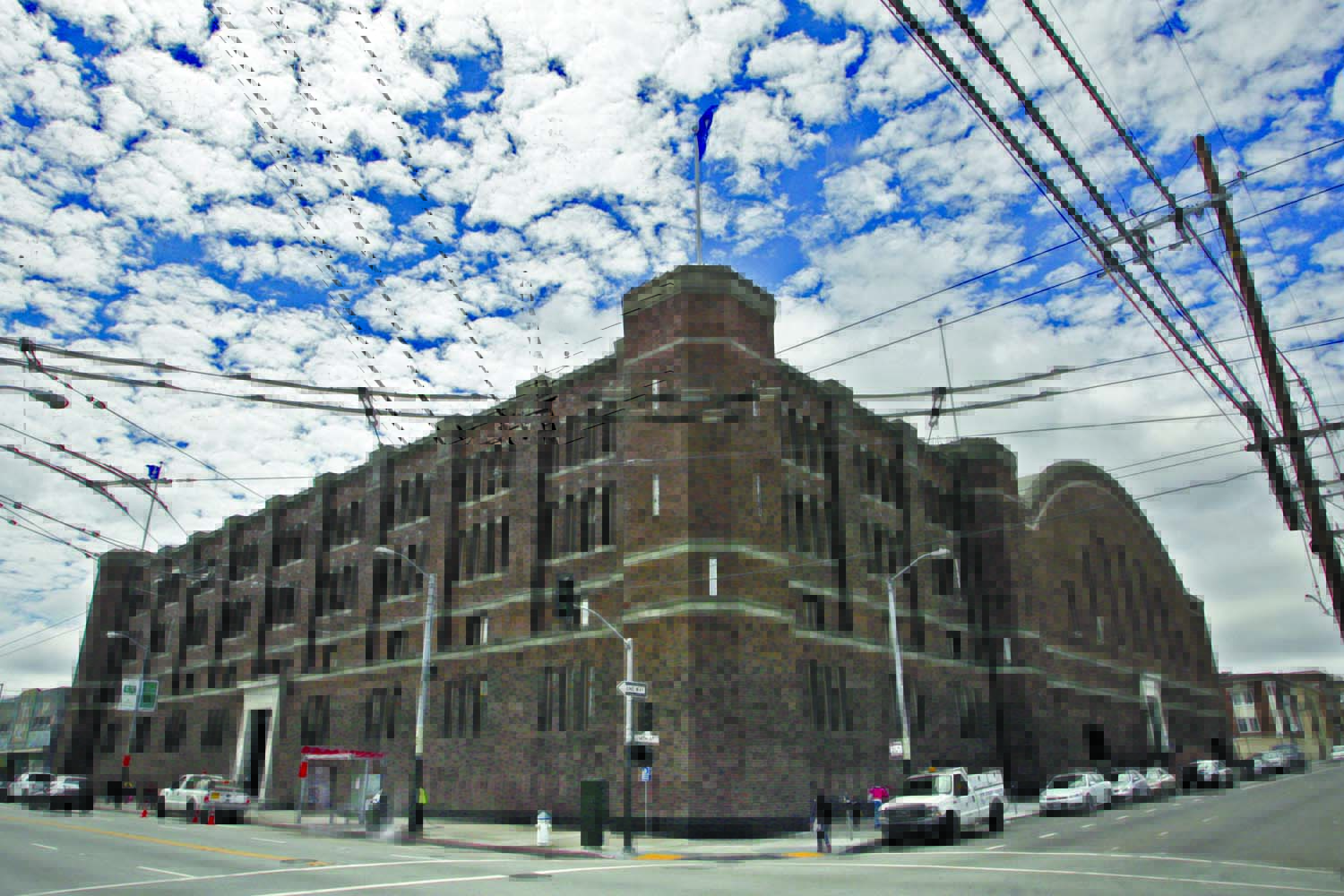
“It seems to have become not a question of if, but when there will be no more porn in our beloved Porn Castle,” reporter Jackson West wrote. To the uninitiated, the Porn Castle to which West is referring is known as The Armory, a brick fortress with histroic designation on 14th Street and Mission where the ever-adventurous pornographers at Kink.com film their wonderful smut (a term we use as endearingly as possible).

The planning department document West posted posted to his article show Peter Acworth, founder and CEO of Kink.com, requested the city to convert the basement, “drill court,” second, and third floors of The Armory into office space. The document also shows a need for an environmental review before conversion. (Side note: Gee, wouldn’t you love to be the city worker who had to inspect The Armory? “Hell of a day at work today honey, I was so tied up. Well technically, this guy wearing clothespins was tied up.”) The planning department told the Bay Guardian we could inspect the documents for ourselves tomorrow, but were unable to supply them for viewing today.

So, is it true? Is Kink.com fleeing our quickly gentrifying city?

Not to ball-and-gag West’s reporting, but we went straight to Kink.com owner Peter Acworth, who told us Uptown Almanac’s article is “half-correct.”

Firstly, the conversion of the first floor drill court into office space was a long time in planning, multiple sources (including Acworth) confirmed for us. Kink.com intends to use the space for its community center, as well as to rent to outside vendors.

But Acworth did admit that conversion of the rest of The Armory into office space was a preliminary move to vacate The Armory — but that it’s a last-ditch move he hopes he won’t need to make.

kinkac

Peter Acworth and Princess Donna. Photo by Pat Mazzera.

“I would still think of Kink.com production moving out as a question of ‘if’ as opposed to ‘when,’” he wrote to us in an email. “This move represents an insurance policy.  If the various regulations that are being considered currently in Sacramento and by Cal-OSHA become law, we will likely have to move production out of California to Nevada.”

The regulations he’s referring to are a statewide version of the recent Los Angeles condom law, AB 1576, Introduced by Assemblymember Isadore Hall, III, (D- Los Angeles), as well as new Occupational Safety and Health Administration standards legally requiring porn actors wear protective goggles to protect their eyes from STDs that may be present in ejaculate.

Kink.com was fined $78,000 by CAL/OSHA earlier this year for workplace hazard violations, according to a report by SF Weekly. Kate Conger writes, “The majority of the fines were for allowing performers to work without using condoms, while a $3,710 portion of the total fine was for additional violations, including improperly placed power cords, an absence of first aid supplies, and missing health safety training materials.”

The AIDS Healthcare Foundation also told SF Weekly they filed violations because, they alleged, two actors contracted HIV in connection with their performances in Kink.com shoots. At the time, Kink.com spokespeople denied the claims had merit.

[Update 8:20pm: Shortly after this story was published, the AIDS Healthcare Foundation published a press release announcing the state bill to mandate condoms in pornography made progress today. From the release: “Assembly Bill 1576, Rep. Isadore Hall’s bill to require condoms in all adult films made in California cleared the Committee on Labor and Employment in the California Assembly in a 5 to 0 vote (with 1 absence & 1 abstention) today and now moves on to the Assembly Arts & Entertainment Committee.

“In the last year, at least two additional adult performers—Cameron Bay and Rod Daily—sadly became infected with HIV while working in the industry,” said Michael Weinstein, President of AIDS Healthcare Foundation. “AB 1576 expands and broadens worker protections for all California’s adult film workers on a statewide basis.”]

For Acworth, the passage of either of the statewide reforms in porn would be too prohibitive to do business in California. He’d then move the whole kinky company to Nevada, as many of his fellow pornographers have already done.

“We hope this never happens and that the new regulations are reasonable, but if it does happen over the coming years, we would like the option to rent out The Armory – or portions thereof – to other users.”

The planning review process takes 18-24 months, so in the short term, everyone can calm down. But for the long term, you’ll know Kink.com is ready to move by watching the progress of statewide porn reforms. If porn actors need to wear goggles in productions, it looks like we’ll say goodbye to Kink.com.

Below we’ve embedded the planning department filing from Acworth, obtained by Uptown Almanac.

Planning Department File on Kink.com by FitztheReporter

Federal criminal indictment of PG&E doesn’t go far enough

83

  A federal grand jury in San Francisco yesterday issued a criminal indictment against Pacific Gas & Electric for negligence in the 2010 gas pipeline explosion in San Bruno that killed eight people and destroyed an entire neighborhood. That’s significant and serious, but it also falls far short of what this rapacious company and its conniving executives — none of whom face personal criminal charges — should be facing.

The indictment and media reports on it omit key details of what happened leading up this tragic and entirely preventable explosion, buying into the fiction that there is a meaningful difference between PG&E Co., the regulated utility, and PG&E Corp., the wealthy and powerful Wall Street corporation. This is a stark example of how corporations are given all the rights of individuals, but accept few of the responsibilities, with the complicity of the political and economic systems.

The 12-count indictment focused on violation of the Pipeline Safety Act, which requires companies to maintain their potentially dangerous pipelines, including keeping detailed records and doing safety inspections that would detect flaws like the faulty weld that caused the San Bruno explosion on Sept. 9, 2010 – work the company negligently failed to perform.

But PG&E’s wanton disregard for public safety, combined with the greed and shameless self-interest of then-CEO Peter Darbee and other executives, goes far deeper than that. A report by the California Public Utilities Commission released in January 2012 found that $100 million in ratepayer funds that had been earmarked for pipeline maintenance and replacement, including this section in San Bruno, was instead diverted to executive bonuses and shareholder profits.

“PG&E chose to use the surplus revenues for general corporate purposes,” the audit said, noting that the company was flush with cash at the time and there was no good reason to neglect this required maintenance.

And in 2010, those questionable corporate purposes included spending more than $45 million to write and promote Prop. 16, a June 2010 ballot measure that would have required approval by two-thirds of voters whenever cities wanted to start community choice aggregation programs such as San Francisco’s proposed CleanPowerSF. California voters rejected that outrageous ruse by more than a 2-1 margin – so Mayor Ed Lee and his appointees were forced to kill CleanPowerSF on their own last year.

PG&E maintains the explosion was just an accident.

“San Bruno was a tragic accident. We’ve taken accountability and are deeply sorry. We have worked hard to do the right thing for victims, their families and the community, and we will continue to do so,” PG&E CEO Tony Early, who was hired after the explosion, said in a prepared statement. “We want all of our customers and their families to know that nothing will distract us from our mission of transforming this 100-plus-year-old system into the safest and most reliable natural gas system in the country.”

But this “tragic accident” was foreseeable and preventable, particularly if PG&E was spending our ratepayer money on the system maintenance it was allocated for, instead of trying to fool us with a deceptive and myopic political campaign. Those were decisions made by real people, including Darbee and others, decisions that killed innocent people – and they should be held accountable. Neither this indictment nor a previous civil settlement go far enough.

PG&E’s employee union, IBEW Local 1245, continues to act as an apologist for the company executives, issuing a statement that in part says, “The federal indictment filed April 1st against the company says that PG&E willfully failed to identify and evaluate threats to its transmission pipelines. We know of nothing that would rise to the level of willful. It is possible there are things we don’t know. But based on what we do know, the company failures that led to the San Bruno explosion were not willful.”

Meanwhile, even some PG&E shareholders are siding with the company’s federal prosecution while bringing a shareholder lawsuit seeking to recover some of the diverted funds. Their high-powered attorney, Joe Cotchett, issued a statement today that said, “We welcome yesterday’s indictment by the federal grand jury of PG&E on criminal charges that it violated federal pipeline regulations. It is clear the federal government agrees with us that PG&E chose profits over safety. The indictment comes as no surprise, as it closely mirrors the detailed complaint we filed months ago against PG&E’s officers and directors, after our own extensive investigation.  The indictment states that PG&E ignored and failed to properly identify potential threats to gas pipelines, failed to gather relevant data, maintained flawed records, and as a result, was unable to accurately assess the dangers related to its lines that could have prevented the explosion. On behalf of the shareholders of PG&E, we intend to amend our complaint to add some additional facts stated in the indictment.”

“Our complaint alleges that PG&E’s executives dropped the ball and failed to implement safety measures despite numerous red flags raised by Company insiders with risk management responsibilities. We allege PG&E has already incurred charges of about $1.83 billion related to the San Bruno accident and natural gas matters. In its annual report, PG&E admitted that this criminal investigation could expose the Company to even greater losses. Our complaint also alleges that PG&E’s Board sponsored reviews of its risk management practices revealing that PG&E was in ‘crisis’ mode prior to the accident, and that, in 2007, PG&E’s newly-hired Senior Vice President of Engineering and Operations determined that the Company’s Enterprise Risk Management program ‘seems unactionable because almost everything is broken.’”

This is the company that Mayor Lee praises as a “great company that gets it,” supporting its continued monopoly control of San Francisco’s energy system and subverting a city proposal to provide renewable energy to city residents, even as the threats posed by global warming increase, as this week’s report by the United Nations Intergovernmental Panel on Climate Change warns.

This is a sick system, and something needs to change.

Billionaire helps poke holes in oil industry’s argument for drilling Monterey Shale

“We’ve been told that there’s a great oil boom on the immediate horizon,” billionaire investor and Pac Heights resident Tom Steyer noted at the start of a March 27 talk in Sacramento. 

But Steyer (who has pledged to spend $100 million on ad campaigns for the 2014 election to promote action on climate change) wasn’t there to trumpet the oil industry’s high expectations. Instead, he introduced panelists who dismissed the buzz on drilling the Monterey Shale as pie-in-the-sky hype.

Dr. David Hughes, a geoscientist with the Post Carbon Institute, and researcher Robert Collier had been invited to speak by Next Generation, a policy group focused on climate change that was co-founded by Steyer.

Last year, researchers from the University of Southern California released a study that wound up being cited time and again as the basis for the oil industry’s arguments in the context of a statewide debate on fracking ignited by environmentalists.

Partially funded by the Western States Petroleum Association, oil industry lobbyists, the USC report outlined a rosy economic outlook stemming from oil extraction in the Monterey Shale, a vast geologic formation touted as “a new, economy-spurring natural resource.”

The Monterey Shale spans 1,750 square miles, running beneath much of the San Joaquin Valley and into Southern California. Authors of a private-sector report produced by INTEK, referenced by the USC report, estimated that 15.4 billion barrels of oil could be extracted from the shale formation – mostly through nontraditional methods such as fracking or acidizing, a process that involves pumping acid underground.

But Hughes, the geoscientist, characterized this estimate as unrealistic. “The Monterey Shale certainly will produce more oil and gas, but likely only a very small fraction of what’s been reported in the INTEK report,” he said. “Projections are highly unlikely to be realized.” The Post Carbon Institute and Physicians, Scientists and Engineers for Healthy Energy published their own report, Drilling California: A Reality Check on the Monterey Shale.

Also unlikely to be realized are the optimistic figures on job creation and economic activity, Collier noted.

California is the nation’s fourth largest oil producer, but its production has been on a steady decline for the past two decades. “So the hopes for the Monterey Shale come in the context of a gradual decline, and the hopes that California will echo the big boom of North Dakota and Texas,” he said.

The USC report contained sensational projections, predicting that 2.8 million net new jobs would be created statewide in sectors indirectly or directly associated with oil. The most optimistic scenario predicted 4.4 million net new jobs. The report also predicted that opening up the Monterey Shale for drilling would result in a 14 percent increase in per capita GDP, as well as  $24 billion in state and local tax revenues.

And as the debate about regulating fracking raged on, the findings in this study were “echoed by politicians of both parties,” Collier noted.

But prominent economists, tapped by Next Generation to analyze the study, said they could find no basis for certain claims.

Next Generation researchers turned to University of California economists Jerry Nickelsburg of UCLA, Jesse Rothstein of UC Berkeley and Olivier Deschênes of UC Santa Barbara. “They said: ‘We cannot see any justification for these incredible numbers,” Collier reported. “They seem too big to be believable.”

Instead, the economists believed the potential job creation was closer to 100,000 in total direct and indirect employment, he added. More information is presented in Next Generation’s report.

So arguments that the oil industry has been using in favor of opening up the Monterey Shale might be based on flimsy math. 

Steyer, at the close of the talk, put in a plug for focusing on clean-energy sector growth instead.

“When we sit here and talk about jobs, let’s remember that the clean energy jobs are most likely to solve our employment problems,” he said. “If we want a boom in energy production, then we have a boom in energy production. I think it’s clear, our future is in advanced energy.”

Theater Listings: April 2 – 8, 2014

0

Stage listings are compiled by Guardian staff. Performance times may change; call venues to confirm. Reviewers are Robert Avila, Rita Felciano, and Nicole Gluckstern. Submit items for the listings at listings@sfbg.com.

THEATER

OPENING

E-i-E-i-OY! In Bed with the Farmer’s Daughter NOHSpace, 2840 Mariposa, SF; www.vivienstraus.com. $20. Opens Fri/4, 8pm. Runs Fri-Sat, 8pm. Through May 10. Vivien Straus performs her autobiographical solo show.

Painting the Clouds With Sunshine Eureka Theatre, 215 Jackson, SF; www.42ndStMoon.org. $25-75. Previews Wed/2-Thu/3, 7pm. Opens Fri/4, 8pm. Runs Wed-Thu, 7pm; Fri, 8pm; Sat, 6pm (also April 12, 1pm); Sun, 3pm. Through April 20. 42nd Street Moon performs a world premiere, a first for the company: Greg MacKellan and Mark D. Kaufmann’s tribute to songs from 1930s movie musicals.

BAY AREA

The Hound of the Baskervilles Mountain View Center for the Performing Arts, 500 Castro, SF; www.theatreworks.org. $19-73. Previews Wed/2-Fri/4, 8pm. Opens Sat/5, 8pm. Runs Tue-Wed, 7:30pm; Thu-Sat, 8pm (also Sat, 2pm); Sun, 2 and 7pm. Through April 27. TheatreWorks performs Stephen Canny and John Nicholson’s comedic send-up of Sherlock Holmes.

The 25th Annual Putnam County Spelling Bee Julia Morgan Theater, 2640 College, Berk; www.berkeleyplayhouse.org. $18-60. Previews Sat/5, 1pm. Opens Sat/5, 6pm. Runs Fri, April 24, and May 1, 7pm; Sat, 1 and 6pm; Sun, noon and 5pm. Through May 4. Berkeley Playhouse performs the Tony-winning musical comedy.

Wittenberg Aurora Theatre, 2081 Addison, Berk; www.auroratheatre.org. $32-60. Previews Fri/4-Sat/5 and April 9, 8pm; Sun/6, 2pm; Tue/8, 7pm. Opens April 10, 8pm. Runs Tue, 7pm; Wed-Sat, 8pm; Sun, 2 and 7pm. Through May 4. Aurora Theatre Company performs David Davalos’ comedy about reason versus faith.

ONGOING

Bauer San Francisco Playhouse, 450 Post, SF; www.sfplayhouse.org. Tue-Thu, 7pm; Fri-Sat, 8pm (also Sat, 3pm); April 13, 2pm. Through April 19. San Francisco Playhouse presents the world premiere of Lauren Gunderson’s drama about artist Rudolf Bauer.

Every Five Minutes Magic Theatre, Fort Mason Center, Marina at Laguna, SF; www.magictheatre.org. $20-60. Previews Wed/2, 8pm. Opens Thu/3, 8pm. Runs Tue, 7pm; Fri-Sat, 8pm (also April 9, 2:30pm); Sun, 2:30pm (also Sun/6, 7pm). Through April 20. Magic Theatre presents the world premiere of Linda McLean’s drama about a man’s homecoming after years behind bars.

Feisty Old Jew Marsh San Francisco Main Stage, 1062 Valencia, SF; www.themarsh.org. $25-100. Sat, 8pm; Sun, 7pm. Extended through May 4. Charlie Varon performs his latest solo show, a fictional comedy about “a 20th century man living in a 21st century city.”

Foodies! The Musical Shelton Theater, 533 Sutter, SF; www.foodiesthemusical.com. $32-34. Fri-Sat, 8pm. Open-ended. AWAT Productions presents Morris Bobrow’s musical comedy revue all about food.

The Habit of Art Z Below Theatre, 470 Florida, SF; www.therhino.org. $15-25. Wed-Sat, 8pm; Sun, 3pm. Through April 13. Theatre Rhinoceros performs a “very British comedy” by History Boys author Alan Bennett.

Hundred Days Z Space, 450 Florida, SF; www.zspace.org. $10-100. Wed/2 and Sun/6, 7pm; Thu/3-Sat/5, 8pm. Married musical duo the Bengsons (Abigail and Shaun) provide the real-life inspiration and guiding rock ‘n’ roll heart for this uneven but at times genuinely rousing indie musical drama, a self-referential meta-theater piece relating the story of a young couple in 1940s America who fall madly in love only to discover one of them is terminally ill. As an exploration of love, mortality, and the nature of time, the story of Sarah and Will (doubled by the Bengsons and, in movement sequences and more dramatically detailed scenes, by chorus members Amy Lizardo and Reggie D. White) draws force from the potent musical performances and songwriting of composer-creators Abigail and Shaun Bengson (augmented here by the appealing acting-singing chorus and backup band that also feature El Beh, Melissa Kaitlyn Carter, Geneva Harrison, Kate Kilbane, Jo Lampert, Delane Mason, Joshua Pollock). Playwright Kate E. Ryan’s book, however, proves too straightforward, implausible, and sentimental to feel like an adequate vessel for the music’s exuberant, urgent emotion and lilting, longing introspection. Other trappings of director Anne Kauffman’s elaborate production (including an inspired set design by Kris Stone that echoes the raw industrial shell of the theater; and less-than-inspired choreography by the otherwise endlessly inventive Joe Goode) can add texture at times but also prove either neutral figures or distracting minuses in conveying what truth and heft there is in the material. Ultimately, this still evolving world premiere has a strong musical beat at its core, which has a palpable force of its own, even if it’s yet to settle into the right combination of story and staging. (Avila)

I Never Lie: The Pinocchio Project Phoenix Theatre, 414 Mason, SF; www.99stockproductions.org. $15. Fri-Sat and April 10, 8pm; Sun, 5pm. Through April 12. 99 Stock Productions performs Meredith Eden’s bold fairytale retelling.

Lottie’s Ghosts Brava Theater Center, 2781 24th St, SF; www.brava.org. $20. Thu/3-Sat/5, 8pm; Sun/6, 3pm. Dancer, storyteller, and Brava artist-in-residence Shakiri presents a new work based on her novel of the same name.

Lovebirds Marsh San Francisco Studio, 1062 Valencia, SF; www.themarsh.org. $15-50. Thu-Fri, 8pm; Sat, 8:30pm. Extended through April 12. Theater artist and comedian Marga Gomez presents the world premiere of her 10th solo show, described as “a rollicking tale of incurable romantics.”

Pearls Over Shanghai Hypnodrome Theatre, 575 10th St, SF; www.thrillpeddlers.com. $30-35. Thu-Sat, 8pm. Through May 31. Thrillpeddlers present the fifth anniversary revival production of its enormously popular take on the 1971 Cockettes musical.

The Scion Marsh San Francisco, 1062 Valencia, SF; www.themarsh.org. $15-60. Thu-Fri, 8pm; Sat, 5pm. Through April 18. In his latest solo show, Brian Copeland (Not a Genuine Black ManThe Waiting Period) explores an infamous crime in his hometown of San Leandro: the 2000 murder of three government meat inspectors by Stuart Alexander, owner of the Santos Linguisa Factory. The story is personal history for Copeland, at least indirectly, as the successful comedian and TV host recounts growing up nearby under the common stricture that “rules are rules,” despite evidence all around that equity, fairness, and justice are in fact deeply skewed by privilege. Developed with director David Ford, the multiple-character monologue (delivered with fitful humor on a bare-bones stage with supportive sound design by David Hines) contrasts Copeland’s own youthful experiences as a target of racial profiling with the way wealthy and white neighbor Stuart Alexander, a serial bully and thug, consistently evaded punishment and even police attention along his path to becoming the “Sausage King,” a mayoral candidate, and a multiple murderer (Alexander died in 2005 at San Quentin). The story takes some meandering turns in making its points, and not all of Copeland’s characterizations are equally compelling. The subject matter is timely enough, however, though ironically it is government that seems to set itself further than ever above the law as much as wealthy individuals or the bogus “legal persons” of the corporate world. The results of such concentrated power are indeed unhealthy, and literally so — Copeland’s grandmother (one of his more persuasive characterizations) harbors a deep distrust of processed food that is nothing if not prescient — but The Scion’s tale of two San Leandrans leaves one hungry for more complexity. (Avila)

She Rode Horses Like the Stock Exchange Thick House, 1695 18th St, SF; www.crowdedfire.org. $15-35. Wed-Sat, 8pm. Through April 12. Crowded Fire offers a fine West Coast premiere of a clever if less than satisfying satire of the nouveaux riche and pauvre by American playwright Amelia Roper, in which two married couples meet on the grass of their neighborhood park and unravel their tangled, starkly childlike relations and dreams. Amy (a sharp and spirited Zehra Berkman) is a smart and restless woman who knows what she wants and can get it too, but without the slightest idea of how to sit comfortably still and enjoy a sunnySunday morning. Her husband, Henry (a droll, unfussy, good-natured George Sellner), is clearly the antidote to the corporate jungle Amy works in, an agreeably boyish nurse and nurturer, who alleviates the stress of his own workweek in a children’s cancer ward with a scoop of strawberry-flavored ice cream on a cone. Soon they are sharing their modest picnic blanket with a bounding, slightly older couple, well-pampered housewife Sara (Marilee Talkington, alternately splendid and deflated in a beautifully modulated performance) and bank-owning breadwinner Max (an equally dynamic Kevin Clarke, outwardly suave yet reveling in Ubu-esque paroxysms of infantile yearning). Against a backdrop of post-pastoral suburban ease (succinctly evoked in scenic designer Maya Linke’s dangling mobiles, a lovely abstraction of dappled light and trees), we see the couples first commiserate then trade places, like pirate ships on the high seas of finance capitalism. Yet their viciousness has a gentleness around it too, like children playing pirates. In their jockeying, they seem both utterly willful and beyond their ken, while the triumphs and possibilities of a bygone innocence reassert themselves in unguarded moments like a lost Eden. If anything, the play hits its themes (including this sandbox metaphor) a little too forcefully even for satire, and its fleet 80 minutes get only so far in producing a sense of personal and systemic exhaustion as well as transcendence. The play’s agile humor and director M. Graham Smith’s strong and astute cast make the going a pleasure, however, even if we leave wanting a deeper excavation of that pristine lawn. (Avila)

Shit & Champagne Rebel, 1772 Market, SF; shitandchampagne.eventbrite.com. $25. Fri-Sat, 8pm. Open-ended. D’Arcy Drollinger is Champagne White, bodacious blond innocent with a wicked left hook in this cross-dressing ’70s-style white-sploitation flick, played out live on Rebel’s intimate but action-packed barroom stage. Written by Drollinger and co-directed with Laurie Bushman (with high-flying choreography by John Paolillo, Drollinger, and Matthew Martin), this high-octane camp send-up of a favored formula comes dependably stocked with stock characters and delightfully protracted by a convoluted plot (involving, among other things, a certain street drug that’s triggered an epidemic of poopy pants) — all of it played to the hilt by an excellent cast that includes Martin as Dixie Stampede, an evil corporate dominatrix at the head of some sinister front for world domination called Mal*Wart; Alex Brown as Detective Jack Hammer, rough-hewn cop on the case and ambivalent love interest; Rotimi Agbabiaka as Sergio, gay Puerto Rican impresario and confidante; Steven Lemay as Brandy, high-end calf model and Champagne’s (much) beloved roommate; and Nancy French as Rod, Champagne’s doomed fiancé. Sprawling often literally across two buxom acts, the show maintains admirable consistency: The energy never flags and the brow stays decidedly low. (Avila)

The Speakeasy Undisclosed location (ticket buyers receive a text with directions), SF; www.thespeakeasysf.com. $70 (gambling chips, $5-10 extra; after-hours admission, $10). Thu-Sat, 7:40, 7:50, and 8pm admittance times. Extended through May 24. Boxcar Theater’s most ambitious project to date is also one of the more involved and impressively orchestrated theatrical experiences on any Bay Area stage just now. An immersive time-tripping environmental work, The Speakeasy takes place in an “undisclosed location” (in fact, a wonderfully redesigned version of the company’s Hyde Street theater complex) amid a period-specific cocktail lounge, cabaret, and gambling den inhabited by dozens of Prohibition-era characters and scenarios that unfold around an audience ultimately invited to wander around at will. At one level, this is an invitation to pure dress-up social entertainment. But there are artistic aims here too. Intentionally designed (by co-director and creator Nick A. Olivero with co-director Peter Ruocco) as a fractured super-narrative — in which audiences perceive snatches of overheard stories rather than complete arcs, and can follow those of their own choosing — there’s a way the piece becomes specifically and ever more subtly about time itself. This is most pointedly demonstrated in the opening vignettes in the cocktail lounge, where even the ticking of Joe’s Clock Shop (the “cover” storefront for the illicit 1920s den inside) can be heard underscoring conversations (deeply ironic in historical hindsight) about war, loss, and regained hope for the future. For a San Francisco currently gripped by a kind of historical double-recurrence of the roaring Twenties and dire Thirties at once, The Speakeasy is not a bad place to sit and ponder the simulacra of our elusive moment. (Avila)

“Standing On Ceremony: The Gay Marriage Plays” New Conservatory Theatre Center, 25 Van Ness, SF; www.nctcsf.org. $25-45. Wed-Sat, 8pm; Sun, 2pm. Through April 27. New Conservatory Theatre Center performs short plays about marriage equality by Mo Gaffney, Neil LaBute, Wendy MacLeod, Paul Rudnick, and others.

Tipped & Tipsy Marsh Studio Theater, 1062 Valencia, SF; www.themarsh.org. $15-50. Sat/5, 5pm; Sun/6, 7pm. Last fall’s San Francisco Fringe Festival began on a high note with Jill Vice’s witty and deft solo, Tipped & Tipsy, and the Best of Fringe winner is now enjoying another round at solo theater outpost the Marsh. Without set or costume changes, Vice (who developed the piece with Dave Dennison and David Ford) brings the querulous regulars of a skid-row bar to life both vividly and with real quasi–Depression-Era charm. She’s a protean physical performer, seamlessly inhabiting the series of oddball outcasts lined up each day at Happy’s before bartender Candy — two names as loaded as the clientele. After some hilarious expert summarizing of the do’s and don’ts of bar culture, a story unfolds around a battered former boxer and his avuncular relationship with Candy, who tries to cut him off in light of his clearly deteriorating health. Her stance causes much consternation, and even fear, in his barfly associates, while provoking a dangerous showdown with the bar’s self-aggrandizing sleaze-ball owner, Rico. With a love of the underdog and strong writing and acting at its core, Tipsy breezes by, leaving a superlative buzz. (Avila)

Top Girls Gough Street Playhouse, 1620 Gough, SF; www.custommade.org. $15-35. Thu-Sat, 8pm; Sun, 7pm. Through April 13. Custom Made Theatre Company performs Caryl Churchill’s celebration of powerful women.

Twisted Fairy Tales Shelton Theater, 533 Sutter, SF; www.leftcoasttheatreco.org. $15-25. Thu/3-Sat/5, 8pm. Left Coast Theatre Co. performs the world premiere of seven one-act LGBT-themed plays based on classic children’s stories.

The Two Chairs Bindlestiff Studios, 185 Sixth St, SF; www.performersunderstress.com. $10-30. Thu-Sat, 8pm; Sun, 2pm. Through April 13. In this world premiere by Performers Under Stress of its cofounder Charles Pike’s play, two chairs, per title, come matched with two cameras projecting two angles on two characters — He (Vince Faso, alternating nights with Duane Lawrence) and She (Juliana Egley, alternating nights with Valerie Fachman) — who sit at right angles to one another in a series of terse, vaguely clinical encounters. Introduced and concluded each time with cheeky inter-titles (à la Beckett) and the sound of a buzzer (à la Beckett — pretty much everything here is à la Beckett), their interactions unfold as progressive variations on a theme, freighted with references to the Goldberg Variations and other pretentious class markers (belied somewhat by the characters’ less than wholly sophisticated demeanors). Each mysterious not to say unorthodox session also concludes with a limp slap and the exchange of an envelope, as a banal male heterosexual masochist fantasy is jokily and tediously pursued to the point of He’s final erasure. Directed by PUS’s Scott Baker, the production adds a generational variation too across the alternating casts. But at least with the younger cast (Faso and Egley), the exploration comes across as glib and lifeless, and Pike’s self-conscious regression to an old-school avant-garde style feels too ersatz to be persuasive. (Avila)

Venus in Fur Geary Theater, 415 Geary, SF; www.act-sf.org. $20-120. Wed-Sat and Tue, 8pm (also Sat, 2pm); Sun, 7pm. Through April 13. American Conservatory Theater performs a new production of David Ives’ 2012 Tony-nominated play.

The World of Paradox Garage, 715 Bryant, SF; www.paradoxmagic.com. $12-15. Mon/7, 8pm. Footloose presents David Facer in his solo show, a mix of magic and theater.

The World’s Funniest Bubble Show Marsh San Francisco, 1062 Valencia, SF; www.themarsh.org. $8-11. Sun, 11am. Extended through May 25. The popular, kid-friendly show by Louis Pearl (aka “The Amazing Bubble Man”) returns to the Marsh.

Wrestling Jerusalem Intersection for the Arts, 925 Mission, SF; www.theintersection.org. $20-30. Thu/3-Sat/5, 7:30pm; Sun/6, 2pm. Intersection for the Arts presents Aaron Davidman in his multicharacter solo performance piece about Israel and Palestine.

BAY AREA

Accidental Death of an Anarchist Berkeley Repertory Theatre, Roda Theatre, 2015 Addison, Berk; www.berkeleyrep.org. $29-99. Tue and Thu-Sat, 8pm (no show April 18; also Sat and April 17, 2pm); Sun, 2 and 7pm. Through April 20. Berkeley Rep presents comic actor Steven Epp in Dario Fo’s explosive political farce, directed by Christopher Bayes,

Arms and the Man Barn Theatre, 30 Sir Francis Drake, Ross; www.rossvalleyplayers.com. $13-26. Thu, 7:30pm; Fri-Sat, 8pm; Sun, 2pm. Through April 13. Ross Valley Players perform George Bernard Shaw’s romantic comedy.

Bread and Circuses La Val’s Subterranean, 1834 Euclid, Berk; www.impacttheatre.com. $20-25. Thu/3-Sat/5, 8pm; Sun/6, 7pm. Impact Theatre performs “a cavalcade of brutal and bloody new short plays” by various contemporary playwrights.

The Coast of Utopia Ashby Stage, 1901 Ashby, Berk; www.shotgunplayers.org. $20-35 (three-show marathon days, $100-125). Part One: Voyage runs through April 17; Part Two: Shipwreck runs through April 19; Part Three: Salvage runs through April 27. Three-play marathon, Sat/5 and April 26. Through April 27. Check website for showtime info. Shotgun Players performs Tom Stoppard’s epic The Coast of Utopia trilogy, with all three plays performed in repertory.

East 14th Marsh Berkeley, 2120 Allston, Berk; www.themarsh.org. $20-50. Fri, 8pm; Sat, 8:30pm. Through April 26. Don Reed’s hit autobiographical solo show returns to the Marsh Berkeley.

Fool For Love Pear Avenue Theatre, 1220 Pear, Mtn View; www.thepear.org. $10-35. Thu/3-Sat/5, 8pm; Sun/6, 2pm. Pear Avenue Theatre performs Sam Shepard’s iconic play, about a pair of former lovers who reunite at a lonely desert motel.

Geezer Marsh Berkeley, 2120 Allston, Berk; www.themarsh.org. $25-50. Thu, 8pm; Sat, 5pm. Through April 26. Geoff Hoyle moves his hit comedy about aging to the East Bay.

Johnny Guitar, the Musical Masquers Playhouse, 105 Park Place, Point Richmond; www.masquers.org. $22. Fri-Sat, 8pm; Sun, 2pm. Through April 26. Masquers Playhouse performs the off-Broadway hit based on the campy Joan Crawford Western.

Sleuth Center REPertory Company, 1601 Civic, Walnut Creek; www.centerrep.org. $33-54. Wed, 7:30pm; Thu-Sat, 8pm (also April 26, 2:30pm); Sun, 2:30pm. Through April 26. Center REPertory Company performs Anthony Shaffer’s classic, Tony-winning thriller.

Vampire Lesbians of Sodom and Sleeping Beauty or Coma Live Oaks Theater, 1301 Shattuck, Berk; www.viragotheatre.org. $28. Thu-Sat, 8pm; Sun, 2pm. Through April 19. Virago Theatre Company performs Charles Busch’s outrageous double bill.

PERFORMANCE/DANCE

“California Dreamin’, A Musical Celebration of our Golden State” Ebenezer Herchurch, 678 Portola, SF; www.sflgfb.org. Sun/6, 4pm. Free. The San Francisco Lesbian/Gay Freedom Band performs. Check website for info on Davis and Woodland concerts.

Caroline Lugo and Carolé Acuña’s Ballet Flamenco Peña Pachamama, 1630 Powell, SF; www.carolinalugo.com. Sun/6, April 12, 19, 30, May 4, 10-11, 17, and 25, 6:15pm. $15-19. Flamenco performance by the mother-daughter dance company, featuring live musicians.

“Conjuring Wonder” Prescott Hotel, 545 Post, SF; www.miraclemagic.com. Thu/3, 7pm. (Ongoing first Thursday of every month). $35. Dennis Kyriakos performs close-up magic to a small audience; advance ticket purchase recommended.

“Dance Discourse Project #18: Exploring Choreographic Thinking” CounterPULSE, 1310 Mission, SF; www.counterpulse.org. Thu/3, 7:30pm, Free. CounterPULSE and Dancers’ Group present a panel discussion exploring “choreographic thinking.” Participants include moderator Megan Nicely and choreographers Christian Burns and Christy Funsch, and dancer-scholar Rebecca Chaleff.

“Drone Magic: San Francisco Bagpipe Festival” Croatian American Cultural Center, 60 Onondaga, SF; www.croatianamericanweb.org. Sun/6, 2-6pm. $15 (children free). With bagpipe music from around the world.

“Dying While Black and Brown” ZACCHO Studio, 1777 Yosemite #330, SF; www.zaccho.org. Fri/4, 8pm; Sat/5, 2pm. Free. ZACCHO Dance Theatre presents two free performances of Joanna Haigood’s San Francisco Equal Justice Society-commissioned work investigating capital punishment and incarcerated people of color.

“Falsehoods & Fairytales” Exit Theater, 156 Eddy, SF; www.mindofkevin.com. Fri/4-Sat/5, 8pm. $20. Kevin Ferguson — “mind-screwer, thought-fiddler, and perception-twiddler” — performs his new magical stage show.

“The Flow Show” Dance Mission Theater, 3316 24th St, SF; www.theflowshow.org. Fri/4, 8pm. $20. “A cutting-edge showcase of object manipulation” with dance, circus acts, and more.

“Interlace” ODC Dance Commons, 351 Shotwell, SF; www.odctheater.org. Sat/5, 8pm; Sun/6, 4 and 7pm. $10-15. Teen dancers performs works by KT Nelson, Kimi Okada, and others in this 17th season of the ODC Dance Jam.

Morgan James Venetian Room, Fairmont San Francisco, 950 Mason, SF; www.bayareacabaret.org. Sun/6, 7:30pm. $48. The Broadway and jazz singer performs.

“The Life You’ll Never Have” Stage Werx Theatre, 446 Valencia, SF; www.foulplaysf.com. April 8-9, 7pm writing party; 8pm performance. $20. The audience crafts each evening’s soap opera-inspired play at this interactive, immersive performance by Exquisite Corpse Theatre.

“Magic at the Rex” Hotel Rex, 562 Sutter, SF; www.magicattherex.com. Sat, 8pm. Ongoing. $25. Magic and mystery with Adam Sachs and mentalist Sebastian Boswell III.

Margaret Jenkins Dance Company Yerba Buena Center for the Arts, 701 Mission, SF; www.ybca.org. Thu/3-Sat/5, 7:30pm; Sun/6, 3pm. $30-35. The company marks its 40th anniversary season with the West Coast premiere of Times Bones, plus a collaboration with Kolben Dance Company of Jerusalem, The Gate of Winds.

“Mi Corazón es tu Piñata” Stage Werx Theatre, 446 Valencia, SF; www.corazonpinata.com. Fri/4-Sat/5, 8pm. $16-20. Fully improvised telenovela (in English) based on audience suggestions.

“Mutiny Radio Comedy Showcase” Mutiny Radio, 2781 21st St, SF; www.mutinyradio.fm. Fri/4, 8pm. $10. Also Sat/5, 5pm, $10, Purple Onion at Kells, 530 Jackson, SF; www.mutinyradio.fm. Local comedians perform.

“Point Break Live!” DNA Lounge, 373 11th St, SF; www.dnalounge.com. Fri/4, 7:30 and 11pm. $25-50. Dude, Point Break Live! is like dropping into a monster wave, or holding up a bank, like, just a pure adrenaline rush, man. Ahem. Sorry, but I really can’t help but channel Keanu Reeves and his Johnny Utah character when thinking about the awesomely bad 1991 movie Point Break or its equally yummily cheesy stage adaptation. And if you do an even better Keanu impression than me — the trick is in the vacant stare and stoner drawl — then you can play his starring role amid a cast of solid actors, reading from cue cards from a hilarious production assistant in order to more closely approximate Keanu’s acting ability. This play is just so much fun, even better now at DNA Lounge than it was a couple years ago at CELLspace. But definitely buy the poncho pack and wear it, because the blood, spit, and surf spray really do make this a fully immersive experience. (Steven T. Jones)

“Schubertiade” Salle Pianos, 1632 C Market, SF; modernschubertiade.brownpapertickets.com. Fri/4, 8pm. $30. Kathryn Roszak’s Danse Lumière performs an updated version of an 1820s salon, with music, dance, and poetry.

“Strange Things” One Grove Street, SF; www.ftloose.org. Sat/5, 8pm. $20-30. Magician Christian Cagigal and mentalist Paul Draper perform together.

Terminator Too: Judgment Play DNA Lounge, 373 11th St, SF; www.dnalounge.com. Thu/3 and May 1, 9pm. $25-50. The creators of Point Break Live! take on James Cameron’s 1991 sci-fi classic, with an audience member picked on the night of the show to embody Schwarzenegger’s iconic role.

BAY AREA

Alvin Ailey American Dance Theater Zellerbach Hall, Bancroft at Telegraph, UC Berkeley, Berk; www.calperformances.org. Wed/2-Sun/6, 8pm. $30-92. The company performs new works by top choreographers, as well as company classics, as part of its annual Cal Performances residency.

“Feisty Old Jew” Osher Marin JCC, 200 N. San Pedro, San Rafael; www.marinjcc.org. Sun/6, 2pm. Free. Charlie Varon performs his latest solo, a fictional comedy about “a 20th century man living in a 21st century city.” Opening the show is Maxine Epstein’s 15-minute monologue, Pushin’ the Pushka.

“IMPACT” Odell Johnson Theater, Laney College, 900 Fallon, Oakl; www.destinyarts.org. Fri/4-Sat/5 and April 11-12, 7:30pm (also April 12, 2pm). $13-30. Destiny Arts Youth Performance Company celebrates the youth arts and violence prevention organization’s 25th anniversary with this world-premiere show, a mix of dance, theater, spoken word, rap, and song.

“MarshJam Improv Comedy Show” Marsh Berkeley, 2120 Allston, Berk; www.themarsh.org. Fri, 8pm. Ongoing. $10. Improv comedy with local legends and drop-in guests. *


 

All (really, all) are welcome

0

By Whitney Phaneuf

arts@sfbg.com

Mark Growden had a passion for jazz and classical music from a young age, growing up in the small northeast California mountain town of Westwood. So he set out to be a composer. He only learned to sing as an adult — out of necessity, when his instruments were stolen — and only then did his rich baritone vocals become a way to book gigs and get his music heard.

Now he’s teaching others to sing — often, amateurs who have never sung before — and writing original songs for them to perform. His Calling All Choir, now in its second season, is a 150-person choir made up of singers who, for the most part, have never taken the stage before in their lives.

Growden has always found inspiration in unexpected places. His take on American roots music blends his love of jazz with influences as varied as Appalachian folk, cabaret, and prison work songs from the old South. He started out composing for local dance companies, mainly on saxophone, before learning to play more folk-oriented instruments such as banjo and accordion. He’s spent the last 20-some years nomadically touring the country as a one-man band and in ensembles. In between shows, he’d stick around a city long enough to hold a singing workshop, which was as much about technique as it was about playful exercises that opened people up to music. Soon, Growden was known for both his songwriting and teaching abilities.

“The people in SF [in particular] kept coming back to the workshop,” said Growden, now an Oakland resident. “They asked ‘why do we have to stop for two months while you go on tour?’ I had it in my mind that I had to be on the road to make money.”

In September of last year, having just moved back to Oakland to settle down, Growden told his San Francisco workshop members, “Let’s try it.” He studied the community choir model, in which members pay dues to compensate the director, and started designing a program around his original compositions. He knew from the beginning that there would be no auditions; to reinforce its inclusive nature, he called it The Calling All Choir.

Growden spread the word online and through his previous workshop attendees, forming chapters in Sonoma and the East Bay, in addition to San Francisco. He set the dues on a sliding scale, ranging from $0 to $500 per person for the 18-week season. The inaugural season last year kicked off with about 40 members in each location. The three groups rehearsed separately — once a week for two hours a night — before coming together in January for dress rehearsals and final performances at The Sebastopol Center for the Arts and The Crucible in Oakland. The choir also performs at local hospitals and retirement homes.

First season member Gianna Smart had never heard Growden’s music before joining, but it ended up being part of the appeal.

“I imagined I’d find a Christmas choir in a church basement somewhere, and was okay with that, but when I met Mark and discovered that he wrote all of his own original compositions, I was really excited,” said Smart, who lives in Healdsburg. “The choir is a safe place to explore your own voice and be a part of a bigger sound. You don’t have to hit all the notes because you’re supported — someone always has your back.”

The second season is already five weeks under way, with 150 members. They’re set to perform four compositions by Growden in the coming weeks, plus a 1936 cantata by Ralph Vaughan Williams called “Dona nobis pacem.”

“It’s a classic round that the older generations know,” Growden said. “It’s important to keep those rounds alive in our culture.” So how do amateurs go from zero experience to singing in Latin? Growden said it usually comes down to practice: “There were people who couldn’t match pitch, but I kept having them come in early to work with them one-on-one or with a buddy,” he said. “People who I thought absolutely couldn’t sing, end up being able to sing.”

During a recent rehearsal, his patience seemed endless and his energy infectious. When the choir formed a circle grouped by vocal ranges — sopranos, altos, tenors, and basses — Growden sprinted from section to section, signaling with his arms and voice when and how to sing. He encouraged them “to lean” into their next notes, reminded them not to bury their heads in their black binders filled with sheet music, and even stopped them when they sounded flat. Sure, there were a few off-key, cringe-worthy moments.

But there was also something beautiful in those imperfections. “I don’t like to use the word spiritual – it’s way overused – but there is something sacred in people singing together. Even if they’re just drinking together,” Growden said later by phone.

Each rehearsal begins with vocal exercises, many of which Growden borrowed from theater, and usually some form of dancing to encourage people to use their entire body as an instrument. The rehearsals also end with a dance party, for which Growden lowers the lights and blasts everything from hip-hop to ABBA. For the rehearsal he let us sit in on, it happened to be James Brown.

The second season will culminate with a finale June 20, at a venue TBD, and the third season will begin in September 2014. The choir accepts members within the first three weeks of the season, though Growden said he makes exceptions for experienced singers who know how to read music.

“When you’re writing for amateurs, it’s harder. I’ve got to set them up for success,” he said. “But as a composer, I am really lucky. Vivaldi was a music teacher at an all-girls orphanage, Duke Ellington had his band…I mean, do you know how hard it is for composers to have their music made?”

For upcoming shows and more information: www.callingallchoir.org

Brawl opera

0

cheryl@sfbg.com

FILM There are action films. And then there’s The Raid 2. One need not have seen 2011’s The Raid: Redemption to appreciate this latest collaboration between Welsh director Gareth Evans and Indonesian actor, martial artist, and fight choreographer Iko Uwais — it’s recommended, of course, but the sequel stands alone on its own merits.

Overstuffed with gloriously brutal, cleverly staged fight scenes, The Raid 2 — sometimes written with the subtitle “Berendal,” which means “thugs” — picks up immediately after the events of the first film. Quick recap of part one: a special-forces team invades an apartment tower controlled by gangsters. Among the cops is idealistic Rama (Uwais). Seemingly bulletproof and fleet of fists and feet, Rama battles his way floor-by-floor, encountering machete-toting heavies and a wild-eyed maniac appropriately named Mad Dog (Yayan Ruhian), as well as his own older brother, who’s a high-up in the organized crime world. Rama also realizes he’s been unwittingly working for a corrupt police lieutenant, who’s got a personal beef with the bad guys. The Raid‘s gritty, unadorned approach (streamlined location and cast, gasp-inducing fights) resonated with thrill seeking audiences weary of CG overload.

“Before we’d screened the first movie anywhere, we watched it to do a tech check on it. After we finished, we thought, ‘Ok. We have … something,'” Evans recalled on a recent visit to San Francisco with Uwais. “But we just kept kind of focusing on, ‘There’s pixellation here, the picture’s not great there.’ We were looking at all the problems that you do when you’re deep into production on something. Then, when [the 2011 Toronto International Film Festival] happened, it was like, ‘Holy shit!’ We had no idea it was going to get received like that. And it kept growing! For us, it was this weird experience where something that we’d made within our own little creative vacuum was suddenly being accepted by people.”

A second Raid film was inevitable, especially since Evans — who became interested in Indonesian martial arts, or pencak silat, while working on 2007 doc The Mystic Art of Indonesia — already had its story in mind: Rama goes undercover in the underworld, a ploy that necessitates he do a prison stint to gain the trust of a local kingpin. Naturally, not much goes according to plan, and blood is shed along the way, as multiple power-crazed villains set their sinister plans into motion. Evans originally wanted to film it after making 2009’s Merantau, his first action film with Uwais, but it proved too costly for the then-unproven team.

“For two years, we were looking for financing, but were not able to get it. So we did the first Raid because it was lower budget. It was like a plan B,” Evans said. “After that, our investor was willing to help finance the second one. It bought us better equipment, more time to shoot, better sets. All of that stuff that we spent extra money on went up on the screen.”

With a fan base established by the first film, Evans — himself a lifelong action movie lover — knew expectations were high. Somehow, he’d have to top The Raid. “It couldn’t be The Raid 2, except now it’s a bigger building,” he joked. “So, what can we do differently? Expand the universe, and expand the characters. Explore different territory and be able to try different action beats: Car chase! Prison riot! And using weapons that we hadn’t introduced before, like the curved blades. It’s one of the weapons in silat. So it’s like, ‘Ok, this thing exists. Why haven’t we used it yet?’ We kind of hinted at it in Merantau — but we never really used it. Indonesian fans of that movie complained, but I was like, ‘Hold tight. We will use it.’ It’s such a violent, aggressive weapon that it wouldn’t have felt right in Merantau. But in The Raid 2, it felt right.”

Evans was also concerned that the “element of surprise” would be lost for audiences who had seen the first film. When asked to elaborate — because Uwais’ character is a mild-mannered nice guy who, surprise, is also an explosive killing machine? — he broke it down.

“[In the first film, audiences] got a taste for our choreography. We try to differentiate ourselves from other martial artists and filmmakers that do this type of stuff. Not in a way of like, ‘What we do is better.’ It’s more a case of, everyone packages their films differently,” he said. “We’re big fans of what Tony Jaa has done, and Sammo Hung, Donnie Yen, and Jackie Chan. But we have certain rules that we just don’t break. We never do a replay of anything when it comes to a stunt or an action sequence. It’s all one flow, and it never breaks rhythm — it keeps going until the thing is finished. In terms of slo-mo, we only ever use it to tell something dramatically within a fight sequence. We never use it to show off a movement. Which segues into, no acrobatics. Because as soon as you do that, you’ve got a stunt guy waiting to get hit. And that takes you out of the scene straightaway.”

Presenting the fight scenes as realistically benefits more than just the audience. “On TV in Indonesia, silat is represented in the most bullshit way possible: people jump into the sky and fly, and turn into jaguars, and shoot fireballs out of their eyes. I’m not exaggerating! When we first went to gather money for Merantau, we’d say, ‘We’re gonna make a silat film!’ and people would be like, ‘Aw, silat? That’s that stupid thing on TV,'” Evans recalled. “But I’d met Iko, and his gurus and teachers, and silat is such an integral part of their lives. [It was important to me that] if we made films about this martial art, we had to do it in a way that reclaims it from what had been done before. We wanted it to be real, and true to what they study.”

Though the actual fighting is realistic, the settings were carefully chosen for cinematic impact. Both of those ante-upping “action beats” Evans mentioned — the car chase, in which Uwais’ character batters his opponents inside of a moving vehicle, and the prison riot, which is muddy, bloody mayhem — are standouts.

“A lot of people responded to the idea of claustrophobia in the first one, because of all the enclosed spaces,” Evans said. “I wanted to find a way to still have these tight moments in the second one, even though the scope was much wider. Even within a car chase, we could dive right inside and have this super claustrophobic fight in the back seat.”

Uwais estimated that each fight scene required three or four months of practice — and even more for the car stunt. “Standing and fighting is very different than sitting and fighting,” he pointed out.

The collaborators, who have an easygoing rapport, have conflicting memories when it comes to filming the sloppy prison brawl — though they agree it was far and away the least fun scene to shoot. (Evans: “We shot that for eight days straight.” Uwais: “Eight days? It was 10 days.” Evans: “The guys were caked in mud all day.” Uwais: “From 6am to 5pm.” Evans: “More like, 4pm.” Uwais: “5pm!” Evans: “Ok, 5pm!”)

As The Raid 2 prepares to open wide, Evans is ramping up plans for the third film in the trilogy. “Whereas The Raid 2 starts like two hours after The Raid finishes, The Raid 3 starts three hours before The Raid 2 finishes,” he revealed. “So there’s a scene toward the end where a certain group makes a decision on something, and part three’s gonna follow the consequences of those actions. The Raid 3 is going to be way more streamlined than part two [which runs 148 minutes], and it’s going to be an homage to certain styles of cinema that I love that I really want to try and play with.”

And yes, there’s an American Raid remake in the works. When asked “Whyyyy?”, Evans was ready with an answer. “I’ve been a huge fan of Asian cinema ever since I was a kid, and I used to have that same feeling: ‘Oh my god, they can’t remake that!’ But in this case, nothing takes the original away. If anything, people who see the remake might get introduced to the original now, because they didn’t know it existed before.”

THE RAID 2 opened Fri/4 in Bay Area theaters.