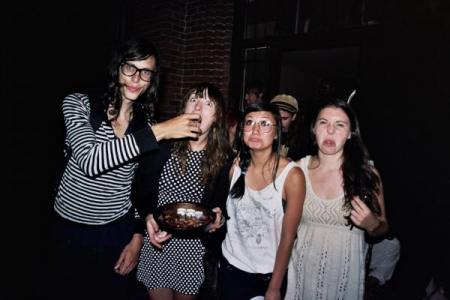
I had, as they say, a spirited and frank discussion last week with Enrique Pearce, the political consultant working on the Run Ed Run campaign. I chided Pearce, whose firm is called Left Coast Communications, for leading an effort that, at the very least, involves some touchy legal and ethical issues. (After all, the group is raising money for a campaign for a candidate who hasn’t filed as a candidate. There are reasons why federal, state, and local laws mandate that people who are running for office declare that they want the office before they start raising money.)
Pearce insisted he was doing nothing illegal. (Okay, if he says so.) He also argued that his firm is the most progressive consulting operation in the city. (Whatever.) But the real focus of our discussion — and the reason it’s worth talking about — was the question of whether corruption really matters.
I think sleaze — and the appearance of sleaze — is a defining progressive issue. If Pearce agrees, he’s got some ‘splainin’ to do.
Let’s back up here. When Willie Brown was speaker of the state Assembly, he passed some good legislation, and allowed some very bad legislation to become law. But his greatest legacy is term limits — and the terrible public perception of what was once one of the best state legislatures in the nation.
Brown was the epitome of corruption, a guy who actively flouted the notion of honest, open government. Among other things, he had a private law practice on the side — and clients would pay him big money because of his influence on state legislation. Of course, we never knew who the clients were; he wouldn’t release the list.
When he was mayor, his sleazy ways continued — and left even progressive San Franciscans believing that you can’t trust City Hall with your money. Which means, of course, that it’s harder to convince anyone to pay more taxes.
There’s no question that Brown and Chinatown powerbroker Rose Pak (don’t get me started) were key players in putting Mayor Ed Lee in office, and that they’re playing a big role in this new effort. Which means, as far as I’m concerned, that it’s utterly untrustworthy — and that progressives should be miles and miles away.
I’m not arguing that Ed Lee is a bad mayor (he’s way better than the last guy). He might even turn into a good mayor if he runs for a full term. Pearce thinks he’d be better for progressives than state Sen. Leland Yee. We can argue that later.
But as long as his campaign is directly linked to people whose standard practices undermine the heart of the progressive agenda (which depends on a belief that government can be trusted to take on social problems), then you can count me out.
On the Cheap listings are compiled by Jackie Andrews. Submit items for the listings at listings@sfbg.com. For further information on how to submit items for the listings, see Picks.
THURSDAY 7
SPACEcraft’s birthday bash CELLspace, 2050 Bryant, SF; www.cellspace.org. 7-11pm, free. This one-night-only event featuring visual art, music, and performances from emerging artists has been going strong every first Thursday at CELLspace for two years now. It is once again time for the yearly celebration of this local art collective with a show featuring the works of Grace Cooper (you may also know her from the Sandwitches), Kool Kid Kreyola (yeah, that Kid Kreyola), and 25 others – not to mention musical performances from Panic is Perfect, Late Space Empire, and more.
SATURDAY 9
Renegade Craft Fair Fort Mason Center Festival Pavilion, Marina and Buchanan, SF.; www.renegadecraft.com. Sat/9 and Sun/10, 11am-7pm, free. Been jonesing for some post-Maker Faire handmade whatchamacallits? Get your D.I.Y. fix at this two-day smorgasbord of handmade goods – everything from jewelry, clothing, ceramics, stationary, and housewares to comics, art, and more. Looking for something specific? Plushy pomegranate-shaped salt and pepper shakers? If it’s handmade, it’s fair game and chances are you will find whatever you are looking for here – if not the inspiration to make it yourself.
Bay Area Now 6 Yerba Buena Center for the Arts, 701 Mission, SF.; (415) 978-ARTS, www.ybca.org. Noon, free. This is the YBCA’s triennial nod to outstanding artistic talents who are inspired by the Bay Area – whether it be African American identity in Oakland as expressed in the afro-futurist canvasses of David Huffman or the re-birth of heavy metal, articulated in the quilting of Ben Venom. However varied the media and styles, the works are all connected by a common thread that resonates Golden Gate.
“Sees Girls” opening reception Mission Comics and Art, 3520 20th St., SF; (415) 695-1545, www.jenwang.net, www.missioncomicsandart.com. 7pm, free. Jen Wang – San Francisco native now living in L.A. – can add artist, illustrator, cartoonist, paper doll designer, and now graphic novelist to her curriculum vitae. Having contributed artwork to various art anthologies and McSweeny’s publications in the past, Wang has recently published her very own graphic novel, Koko Be Good, a colorful tale of a happy 20-something drifter living in San Francisco about to embark on some big life changes. Be sure to check out her homecoming exhibition, mostly of recent paintings, illustrations, and (hopefully) fan-art (fingers crossed – we hear she’s a big Game of Thrones enthusiast).
A Rocky Horror roller disco Big Gay Warehouse, SF; www.biggaywarehouse.com, Facebook: Rocky Horror Roller Disco. 7pm, sliding scale donation. Dust off your roller skates, this will be the last event ever at the Big Gay Warehouse – for real this time, (sadly) we swear. Be sure to bring some cash because they need help with their moving costs. It will surely be worth every penny with the night they have planned – lot’s of bands, a showing of Rocky Horror Picture Show (“I’m just a sweet transvestite, from Transsexual, Transylvania”) and a roller disco with DJs spinning everything from – surprise! – disco to house and hardcore. Be sure to check Facebook – the exact address will be disclosed the day of for the newbies.
SUNDAY 10
The Stranger Dinners Various locations, SF; www.strangerdinner.org. Time TBD, $5-10 suggested donation. Tonight (and usually about once or twice a month), groups of six strangers will come together to create a collaborative meal without any expectations or commitment attached. Did you say the guy across from you chews with his mouth full? Gross! You won’t ever have to see him again. But more than likely, you will make a new friend or two, snag a couple of recipes or learn a new joke, because you’re an amazing, outgoing, and adventurous person, right? Bring your favorite dish to share (social lubricants provided) and get ready for a serendipitous adventure! Don’t forget to register online to participate and receive the deets, like time and location.
Sunday Streets: Great Highway! Great Highway, SF; www.sundaystreetssf.com. 11am-4pm, free. The fifth “Streets” of the season returns to the Great Highway. It will begin at the SF Zoo and follow Route 1 to Golden Gate Park and continue down JFK Drive to Stanyan. Bring your roller skates, unicycle, skateboard, or just a plain pair of walking shoes and enjoy the activities and vendors that line the nearly six miles of car-free roads.
Malinda LaVelle’s Project Bust tackles tits and ass without A Chorus Line. Presented as part of the San Francisco Conservatory of Dance’s second annual Summer Dance Series, Project Bust is the culmination of 18 months of research and creation with eight women in their 20s. A group of SF Conservatory of Dance-trained performers make up LaVelle’s company, Project Thrust, and for this evening-length dance theater work, they address some of the ups and downs of being young and female. This fresh crew marries athletic prowess with a fearless attitude, and their work is not complete without a competitive pillow fight. (Julie Potter)
Honestly, talking about this band at all makes me feel creepy. I blame their publicist. Since the release of The Rosebuds Make Out and over the course of four albums, Ivan Howard and Kelly Crisp were not just a band, they were married. Ideally, they were in love. It’s the sort of biographical information that can’t be glossed, but also overwhelmingly frames the musical relationship. Now that the pair are divorced, is their new album, Loud Planes Fly Low, truly as plaintively sad as it sounds? Onstage is it just an act? Does Howard seem happier in GAYNGS? Maybe Crisp’s latest blog post has the answers. (Ryan Prendiville)
San Francisco has more film festivals than people I think. But — like the star of Last Fast Ride: The Life, Love, and Death of a Punk Goddess — the San Francisco Frozen Film Festival stands out from the pack. Last Fast Ride, which is screening at the fest, documents the late Marion Anderson: dominatrix, performance artist, and native San Franciscan whose stint as lead vocalist of the Insaints (and arrest at 924 Gilman; hint: it involves nudity and a banana) will forever secure her legacy as one of the wildest and most outspoken women ever to pick up a microphone. Also screening at the festival are several enormously varied collections of short films, as well as other full-length documentaries including Color Me Obsessed: A Film About the Replacements and Ocean Monk, which follows the surfing disciples of weightlifting spiritualist Sri Chinmoy. (Cooper Berkmoyer)
The summer months call for color and spontaneity; the newest exhibit at Cain Schulte Contemporary Art offers both. Tonight’s opening reception rings in a monthlong show featuring bright hues rendered in all kinds of media by five different artists. The gallery consistently spotlights artists on the rise and those just hitting their stride. This show is no different. Jessica Snow displays pieces on canvas and paper; Carrie Seid uses aluminum and silk; David Buckingham constructs with metal; Joel Hoyer with panel; and Eileen Goldenberg encaustic works. Don’t be blue if you can’t make it tonight: the art is on display for most of the summer. (David Getman)
Here’s a unique idea from a theater company that takes its name to heart: Un-Scripted’s Act One, Scene Two, which every night hosts a different playwright wielding an unfinished script. After an onstage debriefing with the author, the company takes the stage to perform the first scene from the first act, reading through the lines for the first time. The flyin’-by-the-seats-of-our-pants theme continues as Un-Scripted shifts to full-on improv mode, finishing out the play using their own wits but guided by information shared by the writer in that on-stage interview about his or her writing process, influences, etc. Sophisticated spontaneity (and likely some decent doses of impulsive humor) awaits. (Cheryl Eddy)
“Watching Big Brother: A Tribute to the Summer of 1984”
Ah, 1984: “Like a Virgin,” Boy George, Mary Lou Retton, Ronald Reagan — er, anyway. Politics aside, it was a magnificent year if you were an elementary-school kid obsessed with pausing the VCR to better analyze each second of every new Duran Duran video. The movies from 1984 weren’t too shabby, either, with a top 10 filled with now-classics: Ghostbusters, Beverly Hills Cop, Footloose … trust me, you’ve seen ’em all. Midnites for Maniacs salutes one of the greatest years for film (suck it, 1939) with a two-day cinematic throwdown. The event’s title, “Watching Big Brother,” nods to the Orwellian tone of the times, but the films are (mostly) pure fun, from big hits like Gremlins and The Karate Kid to more culty choices: The Pope of Greenwich Village, starring the original faces of Eric Roberts and Mickey Rourke; immortal sci-fi new-wave nugget The Adventures of Buckaroo Banzai Across the 8th Dimension; and a Midnites for Maniacs favorite, Diane Lane punk-noir musical relic Streets of Fire. (Eddy)
How high can your hair go? Like, 1962 high? Better get to back-combing, because “Let Her Dance” is a recreation of a prom circa the early ’60s, with a lineup of local musicians crooning tunes from the era (think Ike and Tina, the Bobby Fuller Four, Curtis Mayfield, and the like). The elegant Verdi Club, which could actually serve as a prom venue, has a big dance floor, so you can twist, mashed-potato, watusi, and frug to the sounds of DJ Primo Pitmo, plus Heidi Alexander and Grace Cooper (the Sandwitches), Shannon “And the Clams” Shaw, Quinn Deveaux, and others breathing new life into retro jams, with back-up help from the Goldstar Band. (Eddy)
As punk rock begins yet another agonizing mutation into a marketable consumer good, a process that seems to ebb and flow with each passing lustrum, it’s easy to forget that bands can still be fierce. With a fearsome live show (I have seen the band rip a microphone cord in half, which, if you’ve ever tried — though I don’t know why you would — ou know is not easy) and songs like “I Love Hardcore Boys, I Love Boys Hardcore” and “Recruiting Time,” Limp Wrist strikes terror into the hearts of homophobes everywhere with wit, intelligence, and wicked-fast power chords. Vocalist Martin, also of the infamous Los Crudos, is a hairy-chested, short-shorts-wearing bomb who goes off when drum blasts start and queercore reaches its blitzkrieg zenith. (Berkmoyer)
There is an arms race taking place right now in the electronic music scene. The DJ booth has become a launching pad for a complete sensory assault. Tipper is not new to the fight, having built up a reputation by stuffing cars with a dangerous quantity of speakers (Funktion Ones — only the best), and blowing up crowds. This latest project not only continues the weaponization of glitchy breakbeats and wobbly down- tempo, but escalates it through Tipper’s extensive research into holographic surround sound, for 360 degrees of musical bombardment. (Prendiville)
With VibesquaD, Dov, and Hypnotech; visuals by Johnathan Singer
Algerian-born DJ turned world musician Cheb I Sabbah been a part of San Francisco’s music scene since the 1980s; he’s the kind of innovative, constantly evolving musician who can’t help but influence other creative types he’s met along the way. That community, as well as his many fans, are uniting to help Cheb I, who is uninsured, cover medical bills after a devastating diagnosis of stage four stomach cancer. As you might suspect, the benefit boasts a massive lineup, with artists drawn from Anon Salon, Hookahdome, Opel Productions, Non Stop Bhangra, and Six Degrees Records, plus Fat Chance Bellydance dancers and DJs Syd Gris, Janaka Selecta, Turbo Tabla, DJ Sep, and many more. There will also be a raffle (win private belly dance lessons!) and if you can’t make the show, you can donate directly to the cause at Cheb I’s website. (Eddy)
CLASH’s Ugly Sweater Scavenger Hunt finally gives you an excuse to bust out that Christmas gift from Grandma on a summer Saturday night. The hunt is stitched together by so-bad-it’s-good fashion, flowing alcohol, and scavenger accomplishments beamed in by social networking. Four to six people team up to complete funky challenges that might include coercing clues from characters planted in the city, thumb wrestling children, and sparking impromptu street dance parties. CLASH (which stands for California League of Adult Scavenger Hunters) pledges to “avoid the raunchy” but warns of a “light suggestive undertone at times” to shake things up. Luckily, anyone age 21 to 87 is welcome, so feel free to bring along the original gifter! (Getman)
The Guardian listings deadline is two weeks prior to our Wednesday publication date. To submit an item for consideration, please include the title of the event, a brief description of the event, date and time, venue name, street address (listing cross streets only isn’t sufficient), city, telephone number readers can call for more information, telephone number for media, and admission costs. Send information to Listings, the Guardian Building, 135 Mississippi St., SF, CA 94107; fax to (415) 487-2506; or e-mail (paste press release into e-mail body — no text attachments, please) to listings@sfbg.com. Digital photos may be submitted in jpeg format; the image must be at least 240 dpi and four inches by six inches in size. We regret we cannot accept listings over the phone.
Elizabeth Lesly Stevens has done some good work on the insanity of Prop. 13. Check out this, and this, and this — all of which say, more or less, that rich people are getting a great deal under the tax law, and aren’t paying their share.
Correct. Well said. Good points.
So why did she decide to take a cheap shot at the one local politician who’s actually trying to do something about it?
A column that ran in the New York Times July 3 talks about Assemblymember Tom Ammiano, who is leading an effort to reform the worst parts of Prop. 13 — the loopholes that allow commercial property to avoid reassessment, costing the state and local government tens of millions of dollars or more a year.
And what does Stevens, who based on her past writing clearly agrees this is a problem, have to say? Well, she says Ammiano is courageous for taking on the issue — then tweaks him for having a low, Prop. 13-protected assessment on his own house in Bernal Heights:
Yet the feisty Mr. Ammiano is quiet as a church mouse about altering the residential protections of Proposition 13 — of which he is a signal beneficiary.
Mr. Ammiano, who is also a comedian, pays just $530 a year in taxes on the Bernal Heights home he has owned since 1974. As far as the city and Proposition 13 are concerned, his house is worth $45,600. Zillow estimates its current worth at $645,000. At that value, the tax would be about $7,500.
That’s all perfectly true. It’s also true that Ammiano is (a) not rich and (b) has spoken for years of the need to reform all of Prop. 13, not just the commercial loophole he’s going after right now. I’ve known Ammiano a long time — and I can tell you that, since the days he was on the San Francisco School Board in the 1990s, he has consistently favored amending Prop. 13, including the residential benefits that he now enjoys.
So he hasn’t been “quiet as a church mouse.” He’s been pretty loud, for a pretty long time.
He also knows, as does Stevens, that repealing Prop. 13 entirely is a political nonstarter. Not going to happen. Too bad, but even talking about it is a waste of time right now. So Ammiano’s going after the only reform he has a chance of winning — and, by the way, attacking the most outrageous loophole.
I don’t think Stevens meant this to be a hit piece or anything; she, and her editors, are just fascinated by this strange law we Californians call Prop. 13. But when I read her piece, what I got out of it was: Here’s a guy who wants to make other people pay more taxes — but he’s not going to do anything about his own tax breaks. I just don’t think that’s terribly true, or terribly fair.
(By the way, Stevens is on vacation with her family, and, as is her usual practice, didn’t want to comment. She just said people can make their points in the comments section of her piece.)
(Note: In July of l972, when the Guardian was short a Fourth of July story, I sat down and cranked out this one for the front page on my trusty Royal Typewriter. I now reprint it each year on the Bruce blog (by popular demand, of course), with some San Francisco updates and postscripts. My update for this year’s Fourth is the story on today’s Chronicle front page that reports sadly, “Leaner budgets douse fireworks shows.” But, if you read to the end of this piece, I will point you to a little known spot in town where the amateurs and semi-pros and parents with children will go to fire off their cherry bombs and Roman candles.
Back where I come from, a small town beneath a tall standpipe in northwestern Iowa, the Fourth of July was the best day of a long, hot summer.
The Fourth came after YMCA camp and Scout camp and church camp, but before the older boys had to worry about getting into shape for football. It was welcome relief from the scalding, 100-degree heat in a town without a swimming pool and whose swimming holes at Scout Island were usually dried up by early July. But best of all, it had the kind of excitement that began building weeks in advance. The calm of the summer dawn and the cooing of the mourning doves on the telephone wires would be broken early on July Fourth: The Creglow boys would be up by 7 a.m. and out on the lawn shooting off their arsenal of firecrackers. They were older and had somehow sent their agents by car across the state line and into South Dakota where, not far above the highway curves of Larchwood, you could legally buy fireworks at roadside stands.
Ted Fisch, Jim Ramsey, Wiener Winters, the Cook boys, Hermie Casjens, Jerry Prahl, and the rest of the neighborhood would race out of their houses to catch the action. Some of them had cajoled firecrackers from their parents or bartered from the older boys in the neighborhood: some torpedoes (the kind you smashed against the sidewalk); lots of 2 and 3-inchers, occasionally the granddaddy of them all, the cherry bomb (the really explosive firecracker, stubby, cherry red, with a wick sticking up menacingly from its middle; the kind of firecracker you’d gladly trade away your best set of Submariner comics for).
Ah, the cherry bomb. It was a microcosm of excitement and mischief and good fun. Bob Creglow, the most resourceful of the Creglow boys who lived next door, would take a cherry bomb, set it beneath a tin can on a porch, light the fuse, then head for the lilac bushes behind the barn.
“The trick,” he would say, imparting wisdom of the highest order, “is to place the can on a wood porch with a wood roof. Then it will hit the top of the porch, bang, then the bottom of the porch, bang. That’s how you get the biggest clatter.”
So I trudged off to the Linkenheil house, the nearest front porch suitable for cherry bombing, to try my hand at small-town demolition. Bang went the firecracker. Bang went the can on the roof. Bang went the can on the floor. Bang went the screen door as Karl Linkenheil roared out in a sweat, and I lit out for the lilacs behind the barn with my dog, Oscar.
It was glorious stuff – not to be outdone for years, I found out later, until the Halloween eve in high school when Dave Dietz, Ted Fisch, Ken Roach, Bob Babl, and rest of the Hermie Casjens gang and I made the big time and twice pushed a boxcar loaded with lumber across Main Street and blocked it for hours. But that’s another story in my annual Halloween blog.
Shooting off fireworks was, of course, illegal in Rock Rapids, but Chief of Police Del Woodburn and later Elmer “Shinny” Sheneberger used to lay low on the Fourth. I don’t recall ever seeing them about in our neighborhood and I don’t think they ever arrested anybody, although each year the Rock Rapids Reporter would carry vague warnings about everybody cooperating to have “a safe and sane Fourth of July.” My father, a bit of a law and order sort, would take Jimmy DeYoung and me five miles north of town and across the state line to Minnesota where it was legal to shoot off fireworks.
Perhaps it was just too dangerous for them to start making firecracker arrests on the Fourth – on the same principle, I guess, that it was dangerous to do too much about the swashbuckling on Halloween or start running down dogs without leashes (Mayor Earl Fisher used to run on the platform that, as long as he was in office, no dog in town would have to be leashed. The neighborhood consensus was that Fisher’s dog, a big, boisterous boxer, was one of the few that ought to be leashed).
We handled the cherry bombs and other fireworks in our possession with extreme care and cultivation; I can’t remember a single mishap. Yet, even then, the handwriting was on the wall. There was talk of cutting off the fireworks supply in South Dakota because it was dangerous for young boys. Pretty soon, they did cut off the cherry bomb traffic and about all that was left, when I came back from college and the Roger boys had replaced the Creglow boys next door, was little stuff appropriately called ladyfingers.
Fireworks are dangerous, our parents would say, and each year they would dust off the old chestnut about the drugstore in Spencer that had a big stock of fireworks and they caught fire one night and much of the downtown went up in a spectacular shower of roman candles and sparkling fountains.
The story was hard to pin down, and seemed to get more gruesome every year – but, we were told, this was why Iowa banned fireworks years before, why they were so dangerous and why little boys shouldn’t be setting them off. The story, of course, never made quite the intended impression; we just wished we’d been on the scene. My grandfather was the town druggist (Brugmann’s Drugstore, “where drugs and gold are fairly sold,” since 1902) and he said he knew the Spencer druggist personally. Fireworks put him out of business and into the poorhouse, he’d say, and walk away shaking his head.
In any event, firecrackers weren’t much of an issue past noon – the Fourth celebration at the fairgrounds was getting underway and there was too much else to do. Appropriately, the celebration was sponsored by the Rex Strait post of the American Legion (Strait, so the story went, was the first boy from Rock Rapids to die on foreign soil during World War I); the legionnaires were a bunch of good guys from the cleaners and the feed store and the bank who sponsored the American Legion baseball team each summer.
There was always a big carnival, with a ferris wheel somewhere in the center for the kids, a bingo stand for the elders, a booth where the ladies from the Methodist Church sold homemade baked goods, sometimes a hootchy dancer or two, and a couple of dank watering holes beneath the grandstand where the VFW and the Legion sold Grainbelt and Hamms beer at 30¢ a bottle to anybody who looked of age.
Later on, when the farmboys came in from George and Alvord, there was lots of pushing and shoving, and a fist fight or two.
In front of the grandstand, out in the dust and the sun, would come a succession of shows that made the summer rounds of the little towns. One year it would be Joey Chitwood and his daredevil drivers. (The announcer always fascinated me: “Here he comes, folks, rounding the far turn…he is doing a great job out there tonight…let’s give him a big, big hand as he pulls up in front on the grandstand…”)
Another year it would be harness racing and Mr. Hardy, our local horse trainer from nearby Doon, would be in his moment of glory. Another year it was tag team wrestling and a couple of barrel-chested goons from Omaha, playing the mean heavies and rabbit-punching their opponents from the back, would provoke roars of disgust from the grandstand. ( The biggest barrel-chest would lean back on the ropes, looking menacingly at the crowd and yell, “ Aw, you dumb farmers. What the hell do you know anyway?” And the grandstand would roar back in glee.)
One year, Cedric Adams, the Herb Caen of Minneapolis and the Star-Tribune, would tour the provinces as the emcee of a variety show. “It’s great to be in Rock Rapids,” he would say expansively, “because it’s always been known as the ‘Gateway to Magnolia.” (Magnolia, he didn’t need to say, was a little town just over the state line in Minnesota which was known throughout the territory for its liquor-by-the-drink roadhouses. It was also Cedric Adams’ hometown: his “Sackamenna.”) Adams kissed each girl (soundly) who came on the platform to perform and, at the end, hushed the crowd for his radio broadcast to the big city “direct from the stage of the Lyon County Fairgrounds in Rock Rapids, Iowa.”
For a couple of years, when Rock Rapids had a “town team,” and a couple of imported left-handed pitchers named Peewee Wenger and Karl Kletschke, we would have some rousing baseball games with the best semi-pro team around, Larchwood and its gang of Snyder brothers: Barney the eldest at shortstop, Jimmy the youngest at third base, John in center field, Paul in left field, another Snyder behind the plate and a couple on the bench. They were as tough as they came in Iowa baseball.
I can remember it as if it were yesterday at Candlestick, the 1948 game with the Snyders of Larchwood. Peewee Wenger, a gawky, 17-year-old kid right off a high school team, was pitching for Rock Rapids and holding down the Snyder artillery in splendid fashion. Inning after inning he went on, nursing a small lead, mastering one tough Larchwood batter after another, with a blistering fastball and a curve that sliced wickedly into the bat handles of the right-handed Larchwood line-up.
Then the cagey Barney Snyder laid a slow bunt down the third base line. Wenger stumbled, lurched, almost fell getting to the ball, then toppled off balance again, stood helplessly holding the ball. He couldn’t make the throw to first. Barney was safe, cocky and firing insults like machine gun bullets at Peewee from first base.
Peewee, visibly shaken, went back to the mound. He pitched, the next Larchwood batter bunted, this time down the first base line. Peewee lurched for the ball, but couldn’t come up with it. A couple more bunts, a shot through the pitcher’s mound, more bunts and Peewee was out. He could pitch, but, alas, he was too clumsy to field. In came Bill Jammer, now in his late 30’s, but in his day the man who beat the University of Iowa while pitching at a small college called Simpson.
Now he was pitching on guts and beer, a combination good enough for many teams and on good days even to take on the Snyders. Jammer did well for a couple of innings, then he let two men on base, then came a close call at the plate. Jammer got mad. Both teams were off the bench and onto the field and, as Fred Roach wrote in the Rock Rapids Reporter, “fisticuffs erupted at home plate.” When the dust cleared, Jammer has a broken jaw, and for the next two weeks had to drink his soup through a straw at the Joy Lunch. John Snyder, it was said later, came all the way in from center field to throw the punch, but nobody knew for sure and he stayed in the game. I can’t remember the score or who won the game, but I remember it as the best Fourth ever.
At dusk, the people moved out on their porches or put up folding chairs on the lawn. Those who didn’t have a good view drove out to the New Addition or parked out near Mark Curtis’ place or along the river roads that snaked out to the five-mile bridge and Virgil Hasche’s place.
A hush came over the town. Fireflies started flickering in the river bottom and, along about 8:30, the first puff of smoke rose above the fairgrounds and an aerial bomb whistled into the heavens. BOOM! And the town shook as if hit by a clap of thunder.
Then the three-tiered sky bombs – pink, yellow, white, puff, puff, puff. The Niagara Falls and a gush of white sparks.
Then, in sudden fury, a dazzling display of sizzling comets and aerial bombs and star clusters that arched high, hung for a full breath and descended in a cascade of sparks that floated harmlessly over the meadows and cornfields. At the end, the flag – red, white and blue – would burst forth on the ground as the All-American finale in the darkest of the dark summer nights. On cue, the cheers rolled out from the grandstand and the cars honked from the high ground and the people trundled up their lawn chairs and everybody headed for home.
Well, I live in San Francisco now, and I drive to Daly City with my son, Danny, to buy some anemic stuff in gaudy yellow and blue wrapping and I try unsuccessfully each year to get through the fog or the traffic to see the fireworks at Candlestick. But I feel better knowing that, back where I come from, everybody in town will be on their porches and on the backroads on the evening of the Fourth to watch the fireworks and that, somewhere in town, a little boy will put a big firecracker under a tin can on a wood porch, then light out for the lilacs behind the barn.
P.S. Our family moved in l965 from Daly City to a house in the West Portal area of San Francisco. There are, I assure you, few visible fireworks in that neighborhood. However, down where we work at the Guardian building at the bottom of Potrero Hill, the professional and amateur action is spectacular.
From the roof of the Guardian building at 135 Mississippi, and from any Potrero Hill height, you can see the fireworks in several directions: the waterfront fireworks in the city, fireworks on the Marin side of the Golden Gate bridge, fireworks at several points in the East Bay, fireworks along the Peninsula coast line.
And for the amateur action, parents with kids, kids of all ages, spectators in cars and on foot, congregate after dusk along Terry Francois Boulevard in San Francisco along the shoreline between the Giants ballpark and Kellys Mission Rock restaurant.
The action is informal but fiery and furious: cherry bombs, clusters, spinning wheels, high flying arcs, whizzers of all shapes and sizes. The cops are quite civilized and patrol the perimeter but don’t bother anybody. I go every year. I think it’s the best show in town. B3.
There’s some fascinating back and forth in media circles about the Village Voice, its chain (which includes SF Weekly), Ashton Kutcher, Demi Moore, prostitution, and layoffs and budget cuts as the nation’s oldest alternative weekly.
It’s all so juicy I don’t know where to begin. Perhaps with the SF Weekly’s cover story this week, which also ran in the Voice and most of the chain’s other papers.
The story takes Kutcher and Moore to task for launching a campaign against child prostitution using bogus numbers. For the record: I have no reason to doubt the Voice’s conclusions here. I have no problem with adult ads (which the Guardian also takes). And frankly, I have no problem with prostitution, which, like gambling and drugs, ought to be legalized, regulated and taxed.
And the Voice was scrupulous about disclosing that it has a financial interest in this issue. How much of an interest? Well, a lot. In fact, according to the New York Observer, the prostitution ads could well be floating the financially troubled chain:
Backpage, which is a fraction of the size of Craigslist, is the only popular classifieds site left willing to host the paid escort and body-rub ads that are often thinly veiled fronts for prostitution. In the month after Craigslist closed its erotic services sections under pressure from Congress and state attorneys general, Backpage enjoyed a half-million-visitor bump in traffic, according to Quantcast, and became the No. 1 publisher of escort ads on the Internet. The Aim Group, a media consulting firm, estimated that in January, Backpage brought in $2.1 million in revenue from erotic services ads alone.
That would be about $24 million a year — and the Observer notes that VVM desperately needed the cash:
For more than two decades, Village Voice Media executive editor Mike Lacey employed a simple, often devastatingly successful strategy for gaining control of the country’s alternative weekly business: acquire the local paper, cut editorial costs (lay off critics, reporters and, reportedly, entire fact-checking departments), pump the paper full of nationally syndicated content and splash an occasional local investigative piece on the cover. It was working like a charm until 2004, when the San Francisco Bay-Guardian sued VVM’s SF Weekly for manipulating ad prices in an attempt to drive the rival paper out of business. According to court transcripts, Mr. Lacey told the staff on his first day as owner of SF Weekly that this was precisely his intention.
Despite facing legendary antitrust lawyers in a state notorious for its aversion to monopolistic practices, Mr. Lacey spent years appealing the court’s award of $16 million, which grew to $21 million with interest, until the California Supreme Court threw out VVM’s petition. During the proceedings, the company revealed that it owed creditors $80 million and claimed it could not afford to pay the award. Lawyers for the Bay-Guardian threatened to force bankruptcy.
In January 2011, VVM and SF Weekly settled the issue privately. Though the terms of the agreement were not disclosed, between the settlement and what one attorney familiar with the case said were legal fees of at least $5 million to fight the case, VVM was likely left with an eight-figure hole burned in its pocket.
Since last spring, the company’s efforts to patch that hole up have included the unthinkable (laying off legendary Village Voice investigative reporter Wayne Barrett in January); the surprising (selling off Kansas City Pitch to Tennessee publisher South Comm, Inc., in mid-March); and the long overdue: shutting down an experiment with a pair of sex blogs that were never publicly launched despite being published for nearly a year.
(For the record: The Guardian and VVM have agreed not to discuss the terms of the settlement.)
Mike Lacey, the executive editor of Village Voice Media, shot back with a letter to the Observer featuring his typical wild-ass metaphors and flowery prose:
In fact, in just the past few months Backpage.com has spent millions of dollars policing content to attempt, for example, to keep underage kids out of adult listings. Despite Trench’s professed lack of knowledge, which we do not doubt for a second, anyone looking at Backpage will notice the absence of nudity-merely one of thousands of changes over the past year.
Damn — no more nudity on Backpage. Then Lacey goes on to describe what he found at the Voice when he took it over:
We found a Voice “library” where an individual sat with scissors and clipped out articles from other publications for filing. The age of the Internet stopped at the library’s doors. Town cars arrived to ferry one late working chap to Westchester County. While we kept critics at Cannes, Toronto, and Sundance, we equivocated on sending them to Rotterdam. The Voice was the only alternative newspaper in the country that thought its reporters needed to have their facts checked in addition to being edited, copyedited, and proofread. I disagreed. (Though I do not wish to presume that the Observer might not benefit from such staffing.)
Actually, it was a little more than that. There were a number of longtime Voice staffers — mostly with politically left views — who earned, by alternative press standards, fairly high salaries. They’ve been shoved out the door. Nat Hentoff, James Ridgeway, Wayne Barrett … all gone. They were, in some ways, the soul of the old Voice — scrappy, unafraid to be progressives (and to care about political causes) and interested in social change. That didn’t fit with Lacey’s world view.
But it gets better: The Voice and Kutcher are now in a tweet war — and all of this is going to bring more attention to Backpage and the sex ads — which, again, don’t bother me, but do bother a lot of stuck-up law-enforcement types, who will now have even more reason to go after VVM. At the Observer notes:
As Backpage grows in popularity, more news stories have emerged suggesting that the kinds of abuses that led lawmakers to demand Craigslist shutter its erotic-services section are increasingly occurring on the site. In September a former child prostitute sued VVM for knowingly publishing advertisements of her, and later that month 21 attorneys general called on the company to follow Craigslist’s lead and ban escort ads. VVM declined, but offered to continue cooperating with law enforcement officials on cases originating on the site.
I’m not sure all this publicity is exactly what Lacey had in mind.
The Bay’s east side can seem a little prudish, especially when compared to its slutty sister city. Until February, Oakland’s only retail resources for sex were a couple of trashy adult “superstores.” Those places can be fun and functional, but it’s safe to bet the cashier probably isn’t too concerned about answering a list of questions and making you feel comfortable with your purchase. Nenna Joiner, the owner of Oakland’s new sex-positive shop, Feelmore510, is quite the opposite and simply can’t wait to start friendly conversations about sex with everyone in her community.
Joiner, a sex educator and adult film director, has been dreaming about opening an Oakland shop for years, but her ideas go far beyond retail. From terminology to etiquette, Joiner says her community needs to start at the beginning, birds and bees style. “I love talking to people. People teach me new things everyday. I’m open and not judgmental. I’ll talk about anything,” she says after ushering a couple ladies out the door who had spent their lunch break browsing.
From basic questions to the personal, Joiner is educating from the inside out. “A guy came by the other day asking if it was gay for him to want to play with his girlfriend’s butt,” she says. “San Francisco takes its sexual openness for granted — the community there is so exposed, probably overexposed,” she laughs, a playful swipe at the close-knit kink communities and accessible sex-positive resources she loves.
Joiner says Oakland residents may attend erotic events like Folsom or shop for dildos west of the bridge, but when they return home, the conversation goes flaccid. She puts partial blame on years of serious bedroom talk: preventative health and safe sex practices have been a priority due to the high number of HIV cases in the area. No one is contesting the importance of these topics, but in terms of fast, slutty fun they can be total Debbie Downers. Joiner wants to put the spunk back into conversations about sexuality.
Before the shop opened, the surrounding neighborhood seemed nervous about the addition of a sex shop on the block, but Joiner has been extra careful to make sure people understand that her intentions are purely rooted in the revitalization of Oakland. She keeps up on local politics, attends city meetings, directs tourists to other neighborhood businesses, and even watches high school band concerts. She waves at people from across the street and welcomes anyone inside to chat and enjoy the space. Joiner feels supported by the city around her, which she thinks is happy to recognize her role as a successful business owner. She regularly gets friendly calls from the Alameda Small Business Association, casual check-ins to make sure she’s doing well.
“They know I’m a young woman of color, working my ass off. Maybe they don’t watch porn or have interest in the products I sell, but they support me because they know how hard I’m working.”
Nestled between downtown office buildings on Telegraph Avenue, Feelmore510 lures in its share of curious customers during the day with a modest store front that looks more art gallery than porn hub. Inside the store, Joiner loves to play her late grandmother’s vinyl collection, including Sinatra and Perry Como, which perfectly compliment the space’s glowing chandeliers and velvet curtains. The shop stays open until midnight, way past the bedtime of most of her neighbors’, but with the Fox Theater nearby and a collection of bars and clubs in walking distance, Joiner likes providing the night owls some after-party options.
“I stay open late because I want to help more people have great sex.” Getting people off the streets and under the sheets with body-safe, pleasurable accessories– now that’s community activism!
SUPER EGO Whew, it’s all a preposterous worldwind of nightlife news and woo-hoo this pre-Fourth week, so let’s take a minute to catch up before we put the riot in patriot (and the “tearoom” back in tea party).
First the awful: beloved global “1002 Nights” DJ Cheb i Sabbah was recently diagnosed with dire cancer and is having trouble paying for health care. For 45 years, the Algerian-born DJ and former Living Theatre actor has been spreading worldly musical vibes — the past 30 or so in San Francisco, ensuring our status as one of the most open-eared, innovative places on the sonic map. Read more and help out at www.chebisabbah.org.
Better news: The Bay’s biggest legal outdoor rave, Lovevolution, is back on this year, now on the grounds of Oakland Coliseum (deftly avoiding the war on Fun in SF that forced previous cancellation.) Prepare your fuzzy outfit for Sept. 24 and hit up www.sflovevolution.org for details.
Three new party venues opened recently. Chambers (601 Eddy, SF. www.chambers-sf.com), in the old Bambuddha space in the Phoenix Hotel — it has an amazing “Be Amazing” light-bulb-bedecked sign within its wood-paneled, library-like setting featuring shelf upon shelf of vinyl records. I haven’t yet dropped in on Noble (600 Polk, SF. www.noblesf.com), which seems to be taking a more mainstream approach with some yummier stuff thrown in nevertheless, or 11th Street Corridor after-hours spot Beatbox (314 11th St., SF. www.beatboxsf.com) — no relation to one of our more active party promotions crews (www.beatboxevents.com) — but I’m sure I’ll be rolling around their floors soon.
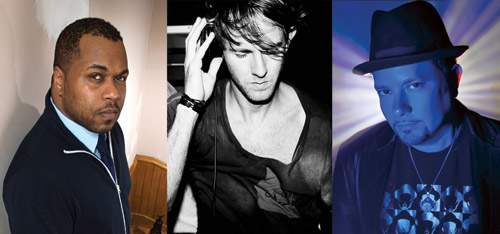
Speaking of threes: on Friday, July 1, SF will be hit with three actually legendary DJs at once: Nuyorican Master at Work Lil Louie Vega (9 p.m.–late, $15. Mighty, 119 Utah, SF. www.mighty119.com), Chicago boogaloo-house pioneer Derrick Carter (9:30 p.m.–3:30 a.m., Public Works, 161 Erie, SF. www.publicsf.com), and Detroit-Windsor Plastikman techno wiz Richie Hawtin (9 p.m.–3 a.m., $22.50 advance. Mezzanine, 444 Jessie, SF. www.mezzaninesf.com). The agony of indecision is exquisite. I’m totally setting up a senior shuttle among the three for us frisky old-schoolers.
A CLUB CALLED RHONDA
One day, one of our fantastic young queer-friendly clubs will grow up to be like L.A.’s A Club Called Rhonda — a kiki polysexual house and disco free-for-all that still retains its underground energy even as it draws huge-name talent and, now, tours the country with the awesome Metro Area and House of House. Seriously, can’t miss.
Wild queer-and-beyond Unclear Cabaret, formerly hosted at the Mission’s favorite anarchist underground warehouse, goes all legit with this new biweekly at the Stud: Miss Oblivious hosts live music and punked-out “lowered expectations” drag performances galore, with DJs Phatima and M.F.
Thurs/30 9 p.m., $3.99. The Stud, 399 Ninth St., SF. Facebook: Club Cornhole, www.studsf.com
RADIO SLAVE
Berlin-based DJ and music-maker Matt Edwards is a man of many musical personae — Rekid, Matthew E., Sea Devils, Quiet Village. His deeper house and disco re-edit one, Radio Slave, is the one I like best — even as I like the name the least, ha — with the soulful build of Rekid a close second. Radio Slave (and I suspect a bit of Rekid) will be playing the weekly Base party.
Thurs/30, 10 p.m., $10–$20. Vessel, 85 Campton Pl., SF. www.vesselsf.com
RITUAL WITH MOCHIPET
Rad dubstep massive Ritual amps up its weekly Thursday blast for this specialness, feting furry Daly City beat-chameleon Mochipet’s new release on MalLabel, “Spacezilla.” Goofball skull-crushing bass for all!
Thurs/30, 9 p.m.–3 a.m., $5. Temple, 540 Howard, SF. www.templesf.com
DEBASER
Big themes at this crazy-gnarly 1990s grunge and alternative retro party: American vs. British indie battle! DJs Jamie Jams and Emdee “recreate the American Revolution using only ’90s rock vinyl,” pitching Brits against Murikans all night for the crowd’s vote. Oh please, we all know Oasis is gonna win. KIDDING.
More freaky people need to get to the monthly Kontrol party at the End Up — the minimal techno and “avant house” programming is right on time, although the techy crowd sometimes blands me out. Help, weird fellow music fiends! This time, the boys are bringing in Steve Rachmad from the Netherlands, who knows how to sculpt a postminimal set superbly. Also on hand: a rare treat from Asia, Singapore’s Xhin, and the debut of hometown duo Safeword.
Sat/2, 10 p.m.–6 a.m., $20, free before 11 p.m. The EndUp, 401 Sixth St., SF. www.kontrolsf.com
CREAM OF BEAT
Time for a real decks education: classic Bay Area hip-hop and scratch DJs kick up a celebration for gear store True’s 15th anniversary, with Apollo, Shortkut, Sake 1, Rolo 1-3, Fran Boogie, and Del live. The Pirate DJs are presenting, so it’ll be a bit bonkers.
Sun/3, 9 p.m., $20. Mezzanine, 444 Jessie, SF. creamofbeat.eventbrite.com
BOOM!
It’s a colorful gay-dependence extravaganza (despite the disappointingly stereotypical shirtless dude on the flyer), as promoters Miss Juanita More and Joshua J go all out at the DNA, with a smorgasbord of performances and tricks from the Miss Honey, Some Thing, Viennetta Discotheque, and Booty Call crews. Boom, like your hairdo.
Sun/3, 9 p.m.–3 a.m., $10 advance. DNA Lounge, 375 11th St., SF. www.dnalounge.com
HONEY WITH ANTHONY MANSFIELD
Local disco edit and funky house king Mansfield will be polishing up his crown with a special techno set at Honey Soundsystem’s weekly Sunday blowout, which attracts one of the best-energied and most interesting crowds in the city. The barbeque starts at 6 p.m. in the back, so come hungry.
Sun/3, 6 p.m.–2 .m., $3 before 11 p.m., $5 after. Holy Cow, 1535 Folsom, SF. facebook: Honey Mansfield, www.honeysoundsystem.com
INDEPENDANCE
The annual, exuberant pairing of classic SF Stompy and Sunset crews will ride you this year like Paul Revere, sweetie. Steaming up Cafe Cocomo’s massive patio and indoor dance floor? Parisian sexy house groover Jef K puts some France in your pants, while SF native, New York City transplant DJ Spun of Rong Music is a master of deep re-edits and funky churn. Solar, Galen, Tasho, J-Bird, Deron, and Sweet P support.
Sun/3, 2 p.m.–2 a.m., $10 before 5 p.m., $20 after. Cafe Cocomo, 650 Indiana, SF. www.stompy.com/dance
Love the mommy bloggers. Such a feel good moment when a harried parent gets to sit down and share (even electronically, even through a screen) just what they’ve been feeling about their day with the kids. Y’know, how to talk to a youngster about adoption, wise words from grandma, the best new G-spot stimulator.
Oh yes, there’s a new kind of mommy in town. Or at least, pervy parents are finally getting their due. Dirty mommies now have their very own local blog, and meet-up.
To compliment personal online screeds that are already being penned by Shar Rednour of How Good Sex Made Me a Great Mom, of the example above, and sex toy shop mommies Moms In Babeland, Madison Young organized Sexy Mamas Social Club (she’s also held workshops on motherhood and sexuality at Good Vibes, and ate breast milk icecream as performance art this year). It’s open to moms in the sex trade, moms who have sex on screen, moms in alternative sexuality communities, and moms who support all of the above. The group meets for brunch at one in the afternoon on Fridays, which is another reason to like it.
Sex With Emily livecast
Today, Emily Morse told me all about the new semen cookbook (there’s something weird in the air about cooking with cum). She’s got this squeaky little voice, she’s broadcasts outta San Francisco, she has very little qualms about talking about her decidedly heterosexual, but fairly entertaining love life. And she’s there for you everyday so that you can snicker through the afternoon, especially when your boss asks you what you’re listening to and you say “making Jello shots with male ejaculate.” Now I wish that would happen.
There’s nothing worse than being in the middle of a good grind and looking up to see the scantily clad go-gos with looks of boredom on their Adonis-like faces. Well hell, how hard do you have to work it to get a rise out of them? KOK feels your pain, so they’ve assembled a line-up of faces so fresh they’ve had no time to weary of your (adorable) flailing. Sexxy.
Because sexy thangs shouldn’t be barred from having kids – or from continuing to be hella sexy. New mamí Madison Young has apparently organized a get-together for mommas from the sex industry. Be you a sex worker, a sex writer, polyamorous, an adult film actress, or just supportive, roll through this brunch (the group’s third) to be part of a new old girl’s club.
Fri/11-4 p.m.
Email Madison Young at feminapotens@gmail.com for details
In addition to hosting a frequently-updated site of HIV/AIDS research news, Project Inform throws a good party. We think – Powerhouse‘s Nasty will now go to benefit the HIV/AIDS advocacy organization, which is promising for many reasons. The party’s raised over $30,000 for the AIDS Emergency Fund in the past, and it’s kind of your dirty, dirty duty to make sure that it gets off (ha) on the right food with Project Inform. All for charity!
Why wait til the Fourth for the fireworks? Rumor has it this power couple of SF BDSM learned their fireplay skills in a sub-zero Minnesota dungeon – that’s one way to figure out how to be sensual with flame, but getting taught by the experts, with super hot models, in one of the city’s best-known dungeons – you’ve upped them on comfort factor, at least. Learn skills in tools, safety, and the psychology of properly lighting your lover aflame.
Ever a fan of a civilized (and delicious) respite for afternoon tea, here I present to you two divergent ways to raise your pinky in the city.
Kettle Whistle at Burritt Room: A gourmand’s pop-up tea
Currently scheduled to take place on the last Saturday of every month through October, Kettle Whistle launched its inaugural tea this past week in the spacious back room of Burritt Room’s turn-of-the-century-style bar, tucked upstairs in the Crescent Hotel.
The brainchild of pastry chef par excellence William Werner of Tell Tale Preserve Co. and tea mavens Lawrence Lai and Ann Lee of Naivetea, Kettle Whistle is essentially a pop-up high tea, one where ladies (and men) meet over crumpets and scones. But this is no typical tea.
At a pricey $55 per head, it’s even more costly than high tea at the stunning Palace Hotel — but Kettle Whistle has vastly superior food and drinks. Though dishes and tea pairings will rotate, you can be assured of three themed courses: savory bites, followed by scones and crumpets (the passion fruit olive oil curd on this tray will blow your mind — regular old lemon curd might never seem the same), ending with dessert. There’s even a take home bag of tea and a snack (mine came labeled “damn good granola,” a savory-sweet mix).
You’ll be full after three courses because the savory and dessert courses offer four to five different bites, each from Werner’s creative hand. An heirloom tomato sable on a homemade cracker with lemon and a strip of lardo iberico de Bellota was revelatory. Spheres of tomato and pig fat dissolved in my mouth like a dream I wish I could have over and over again. On the dessert platter, a chocolate and salted caramel fondant was silky save for a crispy strip of chocolate on top, enlivened with avocado and lime layers. I’d go back just to see what Werner will serve next.
Naivetea’s Taiwanese teas (a local Bay Area company run by Taiwan natives) are elegant, worthy companions — not overpowering nor overshadowed by any of the courses. My favorite was their award-winning (it recently took home first place at the North American Tea Championship) Dong Ding Oolong, a gentle beauty with backbone, whose toasted rice and caramel notes shine.
Kettle Whistle’s two July 23 seatings are already filling up, so I’d look into reserving a spot now. Dress up, wear a hat, and come hungry.
Through October. 417 Stockton, SF. (415) 400-0500, www.naivetea.com
Rose Tea: Casual tea cafe
Rose Tea, an open, airy new shop, is a peaceful respite off Irving Street that doubles as take-out cafe and flower shop. It’s only been open a few weeks, but my two visits there have been rewarded with herbal teas (I like the Fire on Ice: ginger and lime steeped with fresh mint leaves) served in a bottomless pot with a mini-French almond cake and jam for $6.50.
Sandwiches ($5.95-7.50) are made with care on rye bread with sides of fruit and nuts. I liked the chicken, apple, cream cheese, and raisins version, and the feta, avocado, and walnut with tomato and basil. Plates come finished with house macarons or baklava. With what appears to be Armenian and Greek roots (if the jams for sale are any indication), the cafe also offers Turkish coffee, an espresso bar, and spiced rose chai. It’s a welcome neighborhood spot for a pot of tea and a bite.
The latest figures show that some 44 million workers in private employment – more than 40 percent of the private sector workforce – do not have paid sick days that they could use to recover from illnesses, including contagious illnesses such as the flu, or worse.
It should be of particular concern that those occupations which are currently least likely to provide paid sick days include occupations most likely to have regular contact with the public – most importantly and most disturbingly, food service and food preparation.
That raises serious health problems – especially in these tight economic times, when workers need to stay on the job as much as they can, no matter how ill they are, to earn as much money as they can. Which, of course, endangers the health of those who come in contact with them, as well as delaying their recovery from their illness.
Public health experts note that the fewer the number of workers who are able to stay at home when sick, the more likely it is that diseases will spread. In addition to the increased suffering of the public and other workers which that causes, it also causes significant economic losses.
Laws have been proposed in several states and in Congress that would require employers to grant paid sick leaves to their employees, but it seems unlikely that the measures, however much they are needed, will pass any time soon – if at all.
But there has at least been a start, however slight, toward what’s broadly needed. That’s a paid sick leave law that was adopted by the city of San Francisco five years ago – the first citywide such law in the country. If nothing else, the San Francisco ordinance proves that such laws are quite feasible, and not the “job killers” that anti-labor forces contend they would be.
San Francisco business groups fought fiercely against adoption of the ordinance and thankfully lost big time. The ordinance was approved by 61 percent of the voters in a citywide election in 2006.
Under the ordinance, workers in businesses with fewer than 10 workers can earn up to five paid sick days a year, while workers in larger businesses can earn up to nine paid sick days. Workers accrue one hour of paid sick leave for every 30 hours they work. They may use the sick time to recover from their own illnesses, care for a sick family member, or seek routine medical care.
A recent independent survey of nearly 1,200 San Francisco workers and nearly 700 employers by the Institute for Women’s Policy Research came up with findings that the city ordinance was, in the words of the California AFL-CIO, “overwhelmingly positive for workers, businesses and the public.”
The labor federation called the study “further evidence policies that help working families meet their responsibilities at work and at home are good for everyone.”
The study shows, in short, that the San Francisco ordinance has had a great impact on workers’ lives but little or no impact on the city’s businesses. They overwhelmingly report that the law has not cut into their profits. Two-thirds of them reported no problems implementing the law.
It seems likely that the reason for the slight impact on businesses business can be attributed to the fact that most workers take sick leave days only when they need them. Even though the law allows workers five to nine sick days a year, San Francisco workers used a median of just three days a year. And one-quarter of the workers didn’t take a single sick day.
Even the major opponent of the law prior to its passage, the local, politically powerful restaurant association that led the political fight against the city ordinance, now concedes it hasn’t led to employee abuses or hurt restaurants or other business.
Most important, as the state AFL-CIO noted, the survey proved that having paid sick days makes a substantial difference for working families. More than half the workers surveyed said they’ve benefitted from the law. Among other important things, the law has given workers who need paid sick days the most, including parent and workers with chronic health conditions, the time they need to care for their health and that of their children.
The labor federation reports that it hears regularly “the stories of parents who are forced to choose between their children’s health and the financial well-being of their family . . . who have put off visits to the doctor and sacrifice their health to avoid losing their jobs.
Washington, D.C. and Milwaukee have followed San Francisco’s lead and adopted ordinances providing paid sick leave for workers. And some states, California, New Jersey and Connecticut among them, have adopted similar though less extensive laws.
But what’s most needed is a federal law – a law that, if properly enforced, would grant sick leave pay to all workers, helping them, their families and anyone else who might be exposed to their illness.
It’s obviously the sensible thing to do.
Dick Meister, former labor editor of the SF Chronicle and KQED-TV Newsroom, has covered labor and politics for more than a half-century as a reporter, editor, author and commentator. Contact him through his website, www.dickmeister.com, which includes more than 300 of his columns.
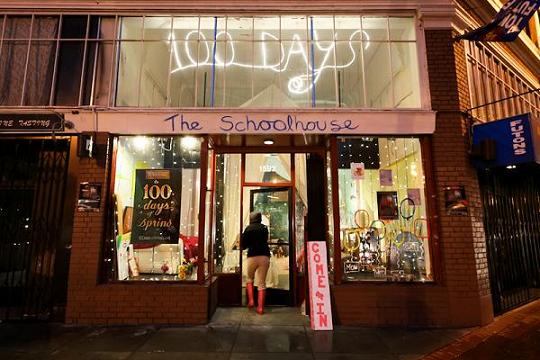
Just beyond the scope of the perpetual debate of revitalizing Mid-Market — defined as the stretch from Fifth Street to Van Ness Avenue — an extraordinary project is quietly closing its doors on an oblique, no-man’s-land corner of Market near Franklin. There, for one hundred days and nights, an empty glass storefront opened up to spill a swath of light and music onto the cigarette-studded sidewalk — without funding, a business model, or (as founders Will Greene and Sam Haynor are the first to say) much of anything else.
“We don’t have one,” Greene, his creative partner, cuts in.
“Well, yes we do,” says Haynor.
“Yeah, that not doing it seemed like a cop-out,” the pair concludes.
“It” was creating more than three months of free and donation-based events, classes, and recorded stories representing a variegated slice of the local population: hipster kids in art collectives, professionals on their Market Street commutes, and low income neighborhood residents, including many who bed down each night on the block.
As part of Central Market Partnership’s ongoing efforts to inject arts and culture into revitalization plans for mid-Market, the San Francisco Office of Economic and Workforce Development is joining with the Arts Commission to hold a series of focus groups exploring ways to engage artists, small businesses and cultural organizations in the making of a thriving creative district.
Five focus groups have already met, according to OEWD’s Jordan Klein, and over the coming weeks, more gatherings — of community residents, transportation advocates, historical preservation advocates, and nonprofit leaders — will provide insight for the Central Market Economic Strategy, to be released in the late summer or early fall.
One Hundred Days of Spring wasn’t on the agenda of any of these meetings. A former boutique clothing store sandwiched between SROs and auto body shops on a strip shadowed by the sheer, block-long face of a Honda dealership, the space’s previous tenants didn’t last long. But transformed into a gypsy-tent-circus-wagon-theater-gallery-cum-classroom, the storefront, reborn as the Schoolhouse, rooted itself in the neighborhood in just a few months.
The hundred days are now over. But if the packed closing ceremony was any indication, Haynor and Greene’s model is one that the community is keen to reproduce. Mark Singer, a research librarian and freelance writer who found the project in what the two founders call the “analog way” — by stumbling across the threshold — told supporters, “I challenge everyone in this room to replicate what we’ve seen here, seen in the last hundred days.”
“The ultimate goal,” Haynor said, “is not only to share and to educate, but at the end of one hundred days, to have created one hundred new ideas for people to carry out into the world.”
Nothing to it
One Hundred Days of Spring was an experiment in community-supported programming. Rather than relying on or waiting for grant money, Haynor and Greene hoped to show that a community space can be self-sustaining — for the benefit of those who can contribute more and those who must contribute less.
“San Francisco is grant rich,” Haynor explains, “but it’s also full of people waiting for grants. They have a bunch of awesome ideas, but by the time the grant cycle comes around, the initial spark is gone. For us, going after a grant would just eat up time, and we wouldn’t end up doing what we wanted.”
Instead, the two 25-year-olds pooled their savings and paid $2,000 a month for rent from March to June, $200 for utilities, plus a few hundred extra for renovations and insurance. Within three weeks of the initial idea, they had moved into the space and populated a calendar of events through friends, friends of friends, and tools like SF Chalkboard. They were running full tilt by day six.
In just over three months, the team offered more than 250 classes, shows, and tutorials — sometimes five in a day — covering everything from truffle-making and fermentation to bike repairs, aerial silks, and open mics. By collecting donations on a pay-what-you-can basis, Haynor and Greene were able to recover a large portion of their initial output, and also garner an extra $4,000 to reinvest into the project.
Greene on the value of 100 days of events: “If you try to put a value on what we have now, that we didn’t have then, you couldn’t buy it for $4,000.”
Though the Schoolhouse founders ended up $4,000 short, Greene says they “could have broken even” if they had focused more on the project’s revenue-generating components, like filming videos for musicians who performed in the space.
Even so, for Greene the worth of One Hundred Days of Spring was indisputable. “If you try to put a value on what we have now, that we didn’t have then, you couldn’t buy it for $4,000,” he says.
When Judy Nemzoff, community arts and education program director for the Arts Commission, stopped by the Schoolhouse and asked how Haynor and Greene did what they did, the two replied, “Well, we just signed a lease.”
It takes two
Inside the Schoolhouse, the laid-back attitude seemed to likewise shrug “nothing to it but to do it.” But the warm, easy atmosphere belied the late nights and hard work it took to get ‘er done.
Understanding how One Hundred Days of Spring came to be — and why it worked so well — means understanding a bit about its creators
Greene and Haynor, hanging at the Schoolhouse
Haynor and Greene have the kind of friendship people make movies about. Besides the sort-of charming things like finishing each other’s sentences and bragging about accomplishments each knows the other would never mention for himself, there’s the sense that somehow, these two unassuming fellows are going to change the world.
“We’re a good balance,” Greene says. With the air of someone showing how two-plus-two equals four, he explains, “Sam’s a bit spastic, and I can plunge a toilet.”
“We have different skill sets, but we share goals,” he continues. “We keep each other in check. We’re both very often wrong, but we’re rarely both wrong at the same time.”
Coco Spencer, who joined One Hundred Days of Spring as an intern partway through and become an indispensible team member, says she was willing to dedicate so many hours to the Schoolhouse because, “Basically, Sam and Will are the most inspiring people I’ve ever met.”
Haynor and Greene were campers and later counselors together at the Bar 717 Ranch in Trinity County. There, they found each other, and also a passion for teaching — or, as they put it, “helping people to be good versions of themselves.”
Though each has traveled and embarked on sundry individual projects — Greene as a musician and videographer, Haynor as a chess champion and conflict-area journalist — they continue to connect over their drive to educate in unique new ways.
Bathroom, beats, and big ideas
At the Schoolhouse, that meant engaging community members through a service-based approach. “Our main goal is to provide resources to people who need resources,” Greene says. “We’re not interested in providing resources to people who have resources.”
Given the diversity of The Schoolhouse’s participants, “resources” could mean different things.
Haynor explains, “For some people, we’re a bathroom. For some we’re a place to stop in and say ‘hi.’ For some, we’re a place to do events.”
“We’re successful because we’re always doing something fun, and everyone feels invited,” Greene says. “It’s the loose nature of our project. There’s no doorman, no guy with a cash box.”
There were challenges (“Sam’s been trying to put together homeless poetry readings, but he’s scheduled them for the first of the month. That’s when everyone gets their checks, so everyone gets drunk,” Greene says at one point), but there were also many moments — like when a woman from the block walked up and started giving Haynor a massage, or when Greene calmly negotiated with a rowdy, intoxicated visitor, encouraging her to pipe down and eventually leave — that pointed to a deft interface with the surrounding community.
“They respect our storefront more than they do the others,” Greene says. Some locals worked shifts at the Schoolhouse in return for resources. Others stopped in for music, for food and nutrition classes, or to look at the art. Some simply came by to talk about living in the area.
During an “Un-Talent Show”, a performer named SofT humorously described a street-dweller’s perpetual problem: carrying belongings. He showed an in-stitches audience how to bundle objects in an old sweater — a wholly relatable rap on wrapping. Another visit came from Benny, one of SF’s famous itinerant tamale sellers, who lives in an SRO across the street and makes what partakers described as “possibly the world’s best tamales” across town in his girlfriend’s kitchen.
Haynor describes a woman who walked into a sewing workshop — run by SF Social Fabric, a volunteer-staffed bike maintenance and sewing skills collective — with “some trepidation.”
“She was in a room with a bunch of people who were nothing like her,” he says, “but we got to know each other over the fact that we all wear clothes. And they all fall apart.”
Neighborhood connections at the Schoolhouse
“There’s a duality to this corner,” Haynor says. “From doctors to the people who live on the block to all the people in the middle who travel Market Street. Before us, some wouldn’t even cross the street.”
“At our best,” he continues, “we’re a place people from another demographic can discover the old-fashioned way — with their eyes and their feet. They cross the threshold, ask what we’re doing, decide to stay, and learn something. Now, I can’t go five minutes without seeing someone I know, or someone who I recognize, or someone who just popped in.”
Singer, a perfect example of the phenomenon, started stopping by between two and five times a week after his initial discovery. He framed the project’s importance in simpler terms: “This is where we need these things to happen. Where it smells like urine on a hot day.”
Let’s put on a show!
Singer believes that projects like the Schoolhouse can “transform parts of San Francisco” by providing services that are more than “just artists and gallery-talk.” The Schoolhouse, he says, “was something visceral.”
“One Hundred Days of Spring created an infinite possibility for community that can’t be replicated on a screen or keyboard. We’re not talking Internet cafés with white earbuds, but humans breathing in the same space — collaborating, communicating in one room, and that room changing every darn day.”
Indeed, the walls of the Schoolhouse were repainted so many times over the course of the hundred days — with layers of murals, street art, installations, white space for projecting films — that Spencer, who took charge of many of the events’ logistics, joked she was hoping to reduce the interior square footage, and thus, the rent.
The zealous energy required to transform the space again and again was reminiscent — Singer pointed out — of Babes-in-Arms-era Mickey Rooney and Judy Garland exclaiming Hey, kids! Let’s put on a show in this old barn! That down-home, DIY energy may be just what efforts like the Mid-Market revitalization require.
Greene, who attended one of the Central Market Partnership’s focus groups, says the consensus was that knowledge about and access to space were the biggest obstacles to creating and executing programs of any kind.
“People are looking for answers,” he says, “looking for some larger entity to hand them space, or looking tax breaks. There’s the feeling that you can’t just do what you want to do.”
“Rather than saying ‘if you give us space, we’ll fill it with beautiful things,’ you can say ‘I’m just going to do it.’ If you’re willing to make it happen, if you work really hard, if you work with the people you’re trying to reach, then you don’t have to worry about anything else.”
Despite the waiting, wanting, hoping attitudes Greene says he encountered, he points out that plenty of others are “just doing it.” The Schoolhouse helped along a few such visionaries by sponsoring two “Grant Prix Dinners.” During the informal roundtables, entrepreneurs presented project ideas between courses. Participants paid a fee for dinner and a ballot on which to elect their favorite projects – to whom the entry frees were turned over as seed money at the end of the night.
Bringing together the neighborhood
At times, especially in San Francisco and other urban areas where real estate is costly, amping up a neighborhood’s arts and cultural amenities has acted as a roundabout measure to invite the type of gentrification that sweeps streets clean. That kind of programming is not intended to serve current residents so much as to usher in new ones.
By contrast, the Schoolhouse made a conscious decision to serve the neighborhood’s existing population — with safer-feeling streets resulting, and much more quickly, at that.
One Hundred Days of Spring was a bold, direct move to engage the local community. As such, it was highly effective not only at providing needed resources, but at tempering the less-desirable qualities of the neighborhood by creating a sense of community and responsibility among residents and passers-through.
“Coming out of Muni, walking home on Market Street,” Singer had said, “can frankly be pretty scary. There’s substance abuse, drug deals, and people who may or may not be harmless.” The Schoolhouse, he said, helped diffuse that lack of ownership and feeling of “anything goes.” For Singer – and Schoolhouse denizens of all backgrounds — the space managed to help tie a few new knots.
“The Schoolhouse brought me closer to a world that’s very marginal,” Singer said. “the homeless world.”
Whether or not Mid-Market planners will look to the Schoolhouse for a lesson in effective community building, the project’s two masterminds have undoubtedly developed a model they can draw on in the future.
Haynor and Greene plan to continue working together on community education projects. With One Hundred Days of Spring under their belts, they will be able to approach supporters “not just with an idea, but with a proven concept.”
“We are both in this together to see what we’re both capable of,” Haynor said. “To see if we’re any good at this thing.”
In the style of banter so typical of the pair, Greene added, “So we can figure out the rest of what we’re going to do with our whole darn lives.”
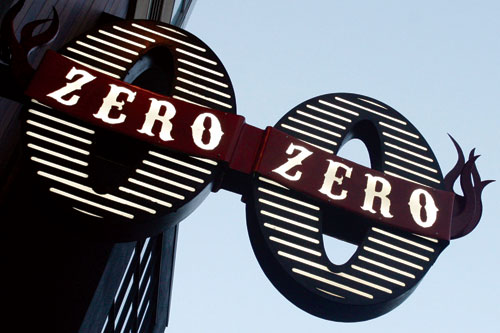
DINE Our recent bout of pizza chic was bound to reach some sort of apex sooner or later, like all fevers, and it now appears to have done so at Zero Zero, the Bruce Hill endeavor that opened last summer in the old Azie space adjoining LuLu. The name refers to a vaunted Neapolitan flour used to make pizza dough, but it also seems to suggest the turn of the millennium, with its near-5,000 Nasdaq and the reinvention of SoMa as the urban version of Silicon Valley. If you’d gone to sleep about 10 years ago and were just now waking up, you probably wouldn’t think much had changed, except that pizza had become very grand indeed during your little nap.
As a pizza master, Hill has a formidable pedigree. He was the longtime chef at Oritalia, one of the city’s most interesting and innovative restaurants of the 1980s and 1990s before moving on to reinvigorate the cooking at both the Waterfront and Bix. The Zero Zero gamble is to open a pizzentric restaurant in the heart of the city’s new restaurantland instead of at its fringes, in the lower Haight (Ragazza), Dogpatch (Piccino), or Glen Park (Gialina). A major plus of the location is that a rich lode of clientele is near at hand; being upstairs at Zero Zero on a busy weekend night is a little like trying to work your way through the break room of the Abercrombie and Fitch catalog. Clearly pizza is familiar and reassuring to people who aren’t too many years past their college graduations and who are now living in SoMa’s innumerable new luxury lofts. But is pizza enough to carry a serious restaurant?
Hill has gracefully hedged his bets by laying out a menu that’s considerably broader and more sophisticated than a few tomato-red pies to be washed down with steinfuls of brew. The kitchen turns out an assortment of crudo, antipasti, and pasta plates to keep things interesting. And if you don’t want pizza at all, you can certainly get by — although you won’t find so much as a single conventional large dish. It’s little dishes, with or without pizza. Or bupkes.
We found the food beautifully conceived and presented, although several dishes struck me as being on the verge of too salty. This is odd, considering that so much restaurant food has struck me as underseasoned over the years. Whenever I come upon oversalted food in a restaurant, I find myself thinking of the young chefs-in-waiting who can often be seen in clusters on the sidewalks in front of culinary academies, puffing away at their ciggies. It is well known that smoking cigarettes dulls the sense of taste and affects the way a chef is seasoning things.
A crudo of California halibut flaps ($12.95) was presented on a narrow sushi platter, as if subtly to enhance our sense of its freshness. And it was glisteningly tender, its butteriness deepened by Fiordolio EVOO. But the promised “panzanella” was just golden-crisp croutons with salt sprinkled over the top. It is surprising how much damage even a little salt can do to delicate food. I also found too salty an otherwise marvelous salad of wild arugula ($9.50) with quarters of ultra-ripe yellow nectarine and marcona almonds. The greens, with their almost prickly freshness, could have been picked five minutes before. But the lemon vinaigrette tended toward briny. One dish we did find in good tune was expertly braised octopus ($13.95), cubed and tender and plated with Sicilian chickpea fritters that could have passed for polenta triangles, along with the wondrous weed purslane and an agrodolce (sweet-sour) sauce. There was an important clue in this dish — that saltiness is a relative phenomenon. It can be balanced.
The pizzas buck the local trend by using a slightly thicker, puffier crust. One nice feature of puffs: they blister well. Blisters suggest that the pie has been rushed to you straight from the oven, like a popover. The topping combinations are elegant and restrained; even a relatively lavish pie, the Fillmore ($15.95), with leeks, mozzarella, hen-of-the-wood mushrooms, garlic, thyme, and three cheeses (parmesan, pecorino, fontina), remained coherent, with fresh herb breath.
But Zero Zero’s best feature is probably its build-your-own-dessert option. You choose your base ($4), your ice cream ($4.95) — simple flavors but housemade — and your toppings ($1 each). Olive oil and sea salt are among them, but so is chocolate hazelnut crunch. Which would you rather have?
SHOPPING I stumbled into a small-town saloon, complete with a dingy 1950s cowboy mural over the door, a horseshoe-shaped bar, and the feeling that everybody — everybody! — knew the score better than I did.
Oh wait, I remembered. I’m just in Bernal Heights.
Normally I do not spend my Tuesday night on this hill, but tonight was an exception. Cortland Avenue was hosting a local business walk — the sidewalks lined with bustling young families and the fundraising popcorn stands of neighborhood groups. Paulie’s Pickling was offering free tastes of its delicious jarred carrots and cauliflower.
I wasn’t even on the hill for the sour samples. The evening also was meant to debut the Bernal Bucks card — an innovative, or at the very least, new take on the idea of local currency.
Bernal Heights is a neighborhood full of folks who don’t have much call to go anywhere else. Harriet — the kindly woman whose hubby was playing fiddle in the bluegrass sextet perched cozily on the small stage to the side of the Lucky Horseshoe’s front door — told me that they had lived in the neighborhood since 1971. They were well-acquainted with Lisa Marie Delgadillo, owner of the Horseshoe. In fact, Delgadillo’s partner would be playing banjo during the next set with his band Shedhouse.
“I wasn’t expecting this many people to show up,” Delgadillo said. As luck would have it, that day was actually the soft opening of the tavern, which she had bought from an owner who had stocked the historic space with great blues music but “hadn’t given it a good clean in 20 years.”
“Bernal really has a tight-knit community of business owners and residents — it totally makes sense that they’d promote in this way. It’s totally Bernal,” she said, refilling my pint as Shedhouse launched into four-part gospel harmony.
Mind you, this was not the start of Bernal’s local currency program. Bernal Bucks have been in circulation since 2009, initially as stickers users could affix to $1 bills. By spending them, users got a little more for their money — a free Fuji apple at Good Life Grocery, a free used DVD from Four Star Video, $1 off your drink at Stray Bar. The money went to the Bernal Heights Neighborhood Center and other community groups. The nonprofits got funding, shoppers felt warm inside, and businesses passed along the stickered bills to the next consumer, encouraging more people to drop dough in the area.
But now there’s a debit card, which eliminates the sticker step and acts like a frequent-flyer miles credit card. The more you spend, the more Bernal Bucks you rack up. You print out the bucks in $10 increments on your computer and spend them in your favorite local enterprise — on a screwdriver on Wild Side West’s garden patio perhaps, or a quick knife sharpening at Bernal Cutlery. The whole shebang is accessible via computer: no fuss, no muss.
“How can we create a mechanism that gives us more control over our economic destiny?” asked Arno Hesse, co-creator of the program, in a phone interview. Hesse hopes the card will “create a reminder in the wallet and an incentive to do the right thing more often.” He cited a study done on a similar shopping mall program that yielded a 24 percent income growth for business owners as a result of increased buying trips and ticket sales.
Hesse expects that “hundreds, hopefully even thousands” of Bernal Heights residents and workers will sign up. “We are optimistic that it will be a mainstream phenomenon. You don’t have to have a degree in economics to jump on this program,” he said.
He estimates that the program’s participating companies receive 50 percent of the neighborhood’s cash flow to locally run businesses.
The card is available through Mission SF Federal Credit Union, whose sole location is just down the hill from Cortland Avenue. Local bank, local businesses, card design by local artist (Ashley Wolff, an accomplished children’s book author) — it’s all local except for one thing: the glaring Visa symbol in the card’s lower right-hand corner.
Hesse is aware of the irony of having a megacorporation’s logo on a card meant to prevent Bernal money from “leaking out to the Safeways, Home Depots, or Amazons of this world.” There was debate at the Bernal Business Alliance over the issue, he said. But in the end, it was all about convenience: Business owners were unsure if part-time employees would be able to grasp an alternative payment system and counter space was too valuable to set up another kind of card-processing apparatus.
“Choosing Visa makes sense because is widely accepted by most merchants,” said Kathleen Scheible, an eight-year resident of the area and owner of Bernal Homeopathy. She added that the program also features a Web interface for businesses that would like to skip the Visa step. “There was a fair amount of logistical challenge to using the Bernal Bucks: having to go somewhere to physically purchase them, knowing how to use them. We like the idea of cash over credit in Bernal, but for many of us, debit or credit is the reality for anything over $10.”
I handed Delgadillo my sticker-less cash and told her I’d be back for more bluegrass when the bar gets its cabaret license in August. Judging from the convivial tenor of her first night, I bet by that point she’ll have seen her share of the Bernal Bucks card.
Bernal Heights is truly doing its own thing — few neighborhoods in the city produce the same close-knit, down-home vibe. If the program succeeds, Hesse said his group might respond to requests to help implement it in other neighborhoods or even citywide. The responses I heard from neighbors that night indicated the program will continue to succeed. Still, it is somewhat discouraging that even this successful local business campaign comes by way of plastic fantastic.
To learn more about the Bernal Bucks program, let your fingers do the walking to www.bernalbucks.org.
SOUND TO SPARE “What show are you here for?” asked what looked like a curious 10-year-old as I took care of business at the urinal. “I’m here to see Uzi Rash,” I answered matter-of-factly. But I wasn’t so sure he was curious about the bands by the way he stared at what makes it the men’s room. Apparently Oakland’s the New Parish (www.thenewparish.com) took the phrase “all ages show” to heart.
After that somewhat disturbing run-in, I settled into the bar excited for a night of firsts. It would be my first time at the venue, as well as my first time seeing openers Terry Malts. They were fine, but like I told the tiny Peeping Tom, I wanted to check out the East Bay’s Uzi Rash (www.myspace.com/uzirash). I hadn’t seen them since they did a memorable night of Monks’ covers on Halloween, where their performance included theatrical embellishments like shaved monk-like heads and makeshift robes.
This night’s scene was different. The onset of a rare heat wave was kicking in while the murky, cave-wave sounds of the mutable band — these days, a seven-piece stage outfit — took charge with a commanding and cacophonous presence. The Rash seems to be sitting on a backlog of sludgy, lo-fi treasure: current LP Palmwine Rumpus Vol. 2 (Party Ngg! Records) precedes a September release on Volar Records titled I Was 30 in 2012. Next month the band plans to start recording another full-length album, Whyte Rash Time — not a play on “white trash,” but a reference to the Monks’ Black Monk Time — which will hopefully see the light of day before the year’s end and they embark on a West Coast tour.
I caught up with Max Nordlie, the band’s toenail-painted, jorts-wearing guitarist and vocalist. He gave me a peek into his philosophy on degeneration and premonitions. (With song titles like “Bag of Dirt” and “I’m a Trashbag,” it’s tempting to see Uzi Rash as emblematic of the self-deprecating sounds I often notice oozing out of Oakland.)
Nordlie directly references 2012 as the year of the band’s apocalyptic demise, and explains how the Rash players were “born grown” four years ago. “The band sound was much more the same of itself than it could possibly be now,” Nordlie says cryptically, going on to cite a permanent need for regression. I hear that yearning for regression in the music — at times it reminds me of an unpolished version of Devo’s de-evolution.
That night, the ensemble’s delivery of what Nordlie calls “beach party squelch and shimmy” included electro-sax, keys, and cool-looking guitars. The band looked sort of like a low-budget version of Sly and the Family Stone: keyboardist Thee Whyte Bitch in her long white wig hammering out some discord and bassist Mateo Luv looking svelte in his long johns.
Their performance is raw and charged, and while the front man looks as if he’s working out some serious emotion, Nordlie assures me that he’s aiming at “getting it right” in an expressive sense — he just wants a playfully spirited “twist-and-shout-up.”
I asked Nordlie if the constant revolving door of musicians in the band dizzies him. “Stability, much like ability, is overrated,” he replied. “We seek to compensate for the traditional rock spectacle of ritual with monstrous unpredictability — even to ourselves,” he said, before quipping that the forthcoming Volar record is simultaneously “sophisticated and appalling.” That sounds like a great introduction to 2012, end times or no.
There will be a few more local opportunities to catch Uzi Rash this summer — most notably the 1-2-3-4 Go! Records 10-year anniversary show July 22 at Oakland Metro Operahouse (www.oaklandmetro.org) — before it goes on tour with Unnatural Helpers.
On the Cheap listings are compiled by Jackie Andrews. Submit items for the listings at listings@sfbg.com. For further information on how to submit items for the listings, see Picks.
WEDNESDAY 29
Support SF Pride At Work Women’s Building, 3543 18th St., SF; www.sfprideatwork.org. 6-8pm, sliding scale donation. Help support the LGBTQ arm of the labor movement at SF Pride at Work’s annual fundraiser featuring art, music and karaoke, and tasty treats. This year, in addition to a silent auction and art sale featuring work from the Beehive Collective, Jamie Q, Lex Non Scripta, and others, DJ BootyKlap will take the decks to get you dancing.
THURSDAY 30
“Small” Creativity Explored, 3245 16th St., SF.; www.creativityexplored.org. 7-9pm, free. You won’t find “Guernica”-sized works at this art exhibition. “Small” is all about artwork that can fit in the palm of your hand, and features over 100 pee wee stylings from 40 big talents. There will be smatterings from art modes from ceramics to woodblock prints, and mixed-media pieces exploring a wide variety of themes – the only parameter given to the artists was the size (seven by seven inches) allowing them to either interpret life’s minutia or immensity in any media they choose.
FRIDAY 1
“Homebrew” Rare Device, 1845 Market, SF; www.raredevice.net. 7-9pm, free. Artist and founder of Born Ugly skate mag Mickael Broth shows all new work at this opening reception for the former hooligan (as a young’n, he enjoyed graffiti and stealing beer from neighbors’ garages, and later spent 10 months in the slammer for vandalism.) The show, up all month, features an installation composed of drawings, paintings, and photographs that follow the theme of the home – which helped Broth overcome a crippling fear of one day coming home to his house in flames with his dog trapped inside. However morbid the inspiration, the result is inspiring and surprisingly optimistic.
SATURDAY 2
Fillmore Jazz Festival Fillmore between Jackson and Eddy, SF; www.fillmorejazzfestival.com. Sat/2 and Sun/3, 10am-6pm, free. Celebrate the rich history and jazz tradition of San Francisco’s Fillmore District with two days, and three stages of up-and-coming acts and seasoned crooners – like Mingus Amungus, Scary Larry and many others. Of course there will also be arts and crafts to check out, eclectic cuisine from a variety of food vendors, and other goods to purchase.
SUNDAY 3
Neko Case at the Stern Grove Festival Stern Grove, 19th Ave. and Sloat, SF; www.sterngrove.org. 2pm, free. Enjoy a free concert at this beautiful outdoor amphitheater in the park. Singer-songwriter Neko “Lungs for Days” Case headlines this 74 year-old tradition of free performing arts at the Grove. Also performing is local faves the Dodos, and to occupy the kiddies, Magik Magik orchestra (the Tiny Telephone recording studio’s official house orchestra) will get them making music together at the “build a band” workshop.
These Colors Don’t Run SOMArts Cultural Center, 934 Brannan, SF; www.squart.eventbrite.com. 3-11:30pm, $10. There’s a lot going on at this nine hour party – a mini-Hard French complete with BBQ, an experimental drag show, live bands including Dave End, Night Call, and Double Dutchess, and something called – ahem — squart performances. Not to be confused with the flatulent surprise known as a shart, squarting involves glitter, nudity, adult diapers, and spandex and works like this: artists break into randomly assigned teams and receive a list of theme criteria, for which they have two hours to assemble a piece and face a panel of judges for anything-goes spontaneous performance art.
East Bay Symphony and fireworks Craneway Pavilion, 1414 Harbor Way South, Richmond; www.oebs.org. 6:30pm, free. Enjoy live music, food, and fireworks for this Independence Day weekend celebration. Oakland East Bay Symphony will perform patriotic standards and popular movie scores to fireworks and breathtaking views of the San Francisco skyline. The venue will host a Fourth of July-themed concession menu, and you’ve got options: the adjacent Boiler restaurant will remain open during the event.
MONDAY 4
Pier 39 July Fourth celebration Pier 39, Embarcadero, SF; www.pier39.com. 1pm, free. Take the family to Pier 39 for this year’s Independence Day celebration featuring live music, fireworks, and all the attractions that Pier 39 always has to offer (sea lions!) Live performances lined up for this event are beach pop-y Ruby Summer and Tainted Love, everyone’s favorite ’80s cover band. There will also be a Club 90 dance party featuring club hits from back in the day. After the sun goes down, be sure to stick around for the fireworks display.
Photographer Brenda Paik Sunoo presents her book Moon Tides, an homage to the female divers of Jeju-do between the ages of 39 and 93. Through photographs and interviews, the author presents the lives of these remarkable South Korean women who dive for seaweed and shellfish with little more than a knife and no breathing apparatus. This practice is common throughout coastal Korea and Japan, usually leaving the men to stay at home and care for the family. The film focuses on the older generations who still do it. The evening includes a wine reception; tickets can be purchased online.
Like a Left Coast Ellis Island, Angel Island was an immigration station for newly arrived immigrants and war prisoners. It was also the location of the 1939 trial to deport Australian-born International Longshore and Warehouse Union (ILWU) President Harry Bridges for allegedly being a member of the Communist Party. ILWU historian Harvey Schwartz and ironworker Mike Daly discusses the island’s history — from the trial of Harry Bridges to the Pearl River Delta Taishan people of China, who were largely responsible for building the early infrastructure of California. Check the website for ferry and shuttle information.
The McCarthy-era “witch hunts” in California that targeted trade union members and their right to make a living also helped shape the future of the labor movement. The backlash included a large protest and sit-in at the House Un-American Activities Committee (HUAC) hearings in San Francisco, which resulted in ending the HUAC hearings and their attack on the labor movement. Hear about that tumultuous time from those who were involved, including Phil Mezey (the San Francisco State University professor who was fired for not signing a loyalty oath), labor historians, and a handful of retired workers and protestors.
Mail items for Alerts to the Guardian Building, 135 Mississippi St., SF, CA 94107; fax to (415) 437-3658; or e-mail alert@sfbg.com. Please include a contact telephone number. Items must be received at least one week prior to the publication date.
Truly astonishing moment at the June 23 Budget Committee hearing. The director of Public Health, Barbara Garcia, actually testified that San Francisco General Hospital would be better off with private security guards instead of sheriff’s deputies — because the deputies were only able to follow the law.
You can watch the video here. The discussion starts at 4:49. It begins with Sup. Scott Wiener, is his quiet Scott Wiener way, asking Garcia to talk about the plan to contract out hospital security.
Garcia first insisted that this was a way to save $2 million that would prevent further cuts to health programs. That’s always the primary argument for contracting out.
But then she went a step further. An outside company, she said, could provide better security — because the (low paid, poorly trained) guards will be able to operate without the restrictions of being peace officers. “There are some restrictions on [the deputy sheriffs’] ability to restrain patients,” she said.
That wasn’t a slip of the tongue — Gregg Sass, the chief financial officer, repeated it again. “If a patient isn’t breaking the law,” he said, “a deputy sheriff won’t intervene.” More: “Private security can intervene. They’re not bound by the same limits that a deputy sheriff is bound by.”
Both Garcia and Sass noted that they wanted security officers who reported directly to them, not to an elected sheriff.
Am I the only one who thinks this is a little weird?
The money thing I understand. I don’t agree — often these supposed savings don’t show up in the end, and besides, do we really want people who get paid $13 an hour without benefits handling security at SF General? But I understand the argument.
On the other hand, the notion that peace officers have to follow rules, and so we should have people who don’t have to follow rules instead strikes me as pretty disturbing. And I’m not sure how true it is: Can a security guard hold and restrain a patient who hasn’t broken the law and isn’t covered by a legal order like a 5150?
I don’t think so. The folks at SEIU Local 1021 don’t think so, either: A flier the group put out notes that:
The issue of Sheriff’s Dept. having legal restraints applies equally to all employees. If there is no 5150 or 5250, no-one has a right to restrain the patient against their will; but a well trained Institutional Policeman can gently persuade a patient with Alzheimer’s to return to their unit.
And I have to say, the notion of having the Department of Public Health oversee a security force (instead of the Sheriff or the Police Department) is disturbing, too. The worst problems in police abuse tend to come from little fiefdoms that aren’t propertly managed — the BART Police, for example, and housing and transit cops in other jurisdictions. Nobody at DPH is trained to manage a security force.
What, exactly, are these (low paid, poorly trained) security guards going to do — grab patients who complain about waiting six hours to see a doctor and “restrain” them? What happens when somebody actually does commit a crime (or brings a gun or a knife into the hospital)? The guards can’t make an arrest. So they call the cops — who come, in due time, but maybe not quickly enough to prevent a disaster. And, of course, we then pay the cops to come and make the arrest.
I haven’t been able to reach Eileen Shields, the public information officer at the Health Department, but I can tell you: The language that her boss used at the Budget and Finance Committee was pretty frightening.
UPDATE: Shields sent me over Garcia’s memo on this, which lays out the case. It pretty much says it all:
There are times when patients are unable to control their behavior due to acute medical illness, such as delirium or brain injury. These patients may present a serious risk to their own safety as well as to the safety of other patients and hospital staff.
These situations are not the result of – nor do they result in – illegal activity. This puts the Sheriff’s deputies, whose responsibility is to uphold the law, in a difficult situation when they are confronted with potentially harmful (but not illegal) situations caused by acute, non-psychiatric medical conditions. Outside security firms do not operate under the same constraints. Instead, they function as members of the health care team whose responsibility is to enforce hospital policy. They are charged with ensuring a safe environment and can act with greater freedom to ensure safety within the limits of the law but without the additional requirements and expectations placed upon a law enforcement officer.
A woman as president of the macho Teamsters Union that was once headed by supermacho Jimmy Hoffa? It could happen.
Sandy Pope thinks so, and she’s going to try as hard as she can to make it happen – going to try as hard as she can to succeed Hoffa’s lawyer son, Jimmy junior, as head of one of the country’s largest and most powerful unions.
If a majority of delegates at the Teamster convention that opened today in Las Vegas vote for Pope to unseat Hoffa, who was first elected a dozen years ago, she’ll be only the third woman to ever head an international union.
Randi Weingarten, the highly regarded president of the American Federation of Teachers, who took office in 2008, is one of the others. The third is Mary Kay Henry, who just recently succeeded the controversial Andy Stern as president of the country’s largest union, the 1.3 million-member Service Employees International Union, the SEIU.
The Teamsters comes in at number two, with 1.2 million members. Hoffa’s supporters argue that Sandy Pope is not up to handling such a huge and diverse union. Her record, however, seems to indicate otherwise.
For 33 years, the 54-year-old Pope has held her own in the union’s macho culture, as a driver of big long haul freight trucks and as a warehouse worker. For seven years she’s been president of a New York Teamster local of drivers and warehouse workers, one of only 16 of the Teamster’s 407 locals nationwide to be headed by a woman.
Before that, Pope was an international union representative in the Teamster’s warehouse division. She’s been a longtime leader of the Teamsters for a Democratic Union (TDU), which has exposed much of the corruption that’s been common in the union since the days of Hoffa senior as president.
The TDU’s work has led to some important corrections in union operations, but much remains to be done, and it’s unlikely that Hoffa junior would do much about it. As the incumbent, he’s running a status quo campaign. Some local level Teamster officials fear retaliation from Hoffa and his allies if they campaign for Pope.
But Pope certainly isn’t backing off one bit. She’s promising to halt or at least slow the concessions that Teamster negotiators have granted employers in recent years. Under her, she says, the union” will close the concessions stand.”
It also would push the union’s officers off the gravy train. In one Minnesota Teamsters local closely allied with Hoffa, for instance, the principal officer is paid $200,000 a year. Hoffa himself is paid $363,000. And that’s going on at the same time that many rank-and-file Teamsters are taking pay and benefit cuts and otherwise feeling the effects of a declining economy.
It’s what the pro-labor magazine “Labor Notes” quite accurately calls “the union leadership’s back-scratching, pocket-lining culture.”
Generally speaking, Pope’s promising to return to the basics of union operations – to build public support, mobilize the union’s current members and wage a major organizing drive to recruit new members. Pope also promises that some 20,000 of the union’s members whose jobs have been downgraded to part-time can expect a drive to make those jobs full-time.
It’s clear that, like many dissident Teamsters, Sandy Pope is “sick of having a lawyer with a big name hijack our union.”
Dick Meister, former labor editor of the SF Chronicle and KQED-TV Newsroom, has covered labor and politics for more than a half-century. Contact him through his website, www.dickmeister.com, which includes more than 300 of his columns.
There’s nothing quite like dining with the person who made the wine you’re drinking — intimate and focused, it gives one a special insight into what’s in one’s glass. Earlier this month, I met with three Napa-Sonoma winemakers. Recently, I had the chance to spend time with two Europeans from the unparalleled regions of Bordeaux and Kamptal. Look for these wines in local wine shops — or ask that your shopkeeper stock them, they’re that good.
LAURENZ V., Austria – The Gruner Veltliners and Rieslings of Laurenz V.’s — whose name is pronounced “Laurenz Five” — hail from one of my favorite wine-making countries. I adore these two varietals when they come from skilled hands, and those of Laurenz Maria Moser V certainly qualify. He comes from five generations of winemaking, and his grandfather was the legendary Professor Dr. Lorenz Moser III, inventor of the Lenz Moser Hocherziehung trellising system that caught on across European vineyards.
Lunch with Moser entailed colorful stories and many a laugh — the man is hilarious. It also meant a line-up of gorgeous Gruners from a terraced landscape in the Kamptal region, north of Vienna. His wines are stainless steel-fermented, a technique which yields a crisp, bright Gruner profile.
We tasted through seven Gruners, from a juicy 2009 Laurenz und Sophie Singing to his Charming line (years 2005-2009). I was partial to the 2005, full and balanced with acidity and apple spice, as well as the 2006 with its clean nose and creamy yet mineral taste. We even sampled a honeyed 1980 (!) Gruner to witness the possibilities of a Gruner aging — contrary to popular opinion, they can mature quite prettily.
We ended with a lively citrus-apple 2009 Prinz Von Hessen ‘H’ riesling and a lush, grapefruit-touched Johannisberger Klaus Riesling Kabinett Trocken. The two reflected the range of beautiful wines that come out of Austria.
Chateau Palmer, Bordeaux, France – When one is invited to a personal dinner with a winemaker from Bordeaux, France, it’s a requirement to jump at the opportunity. During three plus hours with Bernard de Laage at Berkeley’s Claremont Hotel we tasted twelve Chateau Palmer, de Laage’s blends of equal parts merlot and cabernet sauvignon with just a touch of petit verdot. Comparing vintages side by side, we were able to gain a deeper appreciation of the inflections and strengths brought by each harvest.
For me, the stand outs were the lush 2000 Palmer, the less aged but still bright 2005 Alter Ego — a robust, young expression of Chateau Palmer — an opulent and exuberant 1999 Palmer, and the musty, full, smoky but acidic 2002 Palmer. I actually couldn’t find a single low point in the 1998-2006 line-up.
The evening, part of Berkeley Wine Festival (check out its site for future dinners), was over the top — spectacular views of the San Francisco Bay from the back room of Claremont Hotel’s Meritage restaurant. Twinkling lights on a warm night made a brilliant partner to rising star chef Josh Thomsen‘s menu. I was duly impressed with all his dishes, and wouldn’t be surprised if we see a lot more from him in coming years. My top dish of the five course dinner was the Maine sea scallops topped with Hudson Valley foie gras. Served over rhubarb-balsamic compote and endive, it was the dining pinnacle of the night. But for sheer satisfaction, I’m giving my points to Thomsen’s succulent Creek Stone beef short rib.
All in all, a happy marriage of wine, food, people, and setting.
— Subscribe to Virgina’s twice monthly newsletter, The Perfect Spot
“The Civil Grand Jury concludes that the Hunter’s Point Shipyard redevelopment project will require more communication, more transparency, and more commitment from the City in order to achieve its goals of providing housing, jobs and economic development, tax revenue and open spaces to San Francisco and its residents, particularly those residing in the surrounding neighborhoods.”
The jury found that the San Francisco Department of Public Health (SFDPH) is not in compliance with its pledge to the California Department of Public Health to keep residents informed of developments at the Hunters Point Shipyard. As the report’s authors note, the SFDPH’s website “is not regularly updated.”
The jury also found that the City has placed itself in a potentially compromising situation with developer Lennar where in essence, “the wolf is paying the shepherd to guard the flock.”
The jury further noted that by having developer Lennar reimburse the city for monitoring expenses associated with the shipyard project, SFDPH has created a situation that “could raise doubt in the public’s mind about its commitment to proactively and impartially enforce environmental health regulations even when it might adversely impact Lennar.”
Public trust in the SFPDH has been further jeopardized by its failure to update its website in a timely manner, and its apparent reluctance to comment publicly on the best method to deal with the clean-up of Parcel E-2, which is the site of a former dump and deemed one of the most polluted parcels of land on the shipyard.
The jury found that the above concerns were “further reinforced by the recent release of email messages that purportedly showed inappropriate communications between senior officials at the SFDPH and the U.S. Environmental Protection Agency and Lennar.”
The jury found that with the exception of Parcel A, the City has no legal control over the remaining shipyard property. “Consequently, in a technical sense, the City has no authority over matters dealing with deadlines and deliverables for environmental clean-up. However, the City does in fact have some standing in these matters via the 2004 conveyance agreement between the San Francisco Redevelopment Agency (SFRA) and the Navy. The agreement stipulates that the Navy will work collaboratively with the SFRA and share information about cleanup work.”
Last but not least, the jury found the previous efforts by the City to implement workforce policies at city-funded construction projects such as the shipyard have “largely proved ineffective” as they only require contractors to make good-faith efforts, but that earlier this year, a new local hire ordinance was implemented with stricter requirements and mandates.
Based on these findings, the jury recommended that SFDPH needs to update its shipyard project website on a weekly or monthly basis, immediately stop accepting money from Lennar to pay for monitors at the shipyard and cover the costs from its own resources, rigorously enforce conflict of interest guidelines governing deals between its officials and the companies they are monitoring, and conduct its own environmental assessment of the issue of capping Parcel E-2 and make its findings available to the public for comment.
The jury also recommended that because the Navy still owns the majority of the shipyard land and therefore the city has no direct control over deadlines and deliverables, it is critical that the Bay Area Air Quality Management District and SFDPH be “particularly vigilant in monitoring clean-up activities at the shipyard.”
The jury further recommended that the City and the SFRA should have “contingency plans in place” for continuing Redevelopment-related projects, including the shipyard, “in the event State redevelopment plans are cut or eliminated.”
Last but not least, the jury recommended that to ensure that promised job creation goals for the shipyard are realized, “the City should ensure that the Office of Labor Standards Enforcement has sufficient resources to allow it to effectively enforce the provisions of the new workforce laws.”
According to the conditions of the Civil Grand Jury’s report, for each finding the responding parties must report if the recommendation has been implemented or not, whether it requires further analysis, or was not implemented because it is either unwarranted or not reasonable.
So, expect to see some fireworks in the coming weeks, given that the Mayor’s Office, the Board, the Office of Economic and Workforce Development, SFDPH, the Office of Labor Standards Enforcement, the Redevelopment Agency and the BAAQMD have been named as the responding parties in this report…
Our bike spotted this super clean tag in the Lower Haight the other day. It was drawn to the piece not just for its subject matter (you know how bikes tend to stick with their own kind), but also because of the composition. Check those lines! Dynamic! Hot. It was in love.
It’s the work of Jaut Cares — we told our bike — who has been spraying two-wheelers around the Bay for a hot minute. Superlative local street art photography blog Endless Canvas has been tracking the artist since early last year, and Altar of Unanswered Prayers snapped a radtacular shot of a red, white, and blue number Jaut put up.
Our bike didn’t have much to say in response, just recommenced scouting around for the Macaframa minibike and anything/one ever featured on Erin from Calivintage’s Bike + Babes blog. Fickle, fickle bici.
It’s purple and bloodied, scuffed and raw from a blind leap and yet if you dig your finger in deep enough, there’s a soft spot back and to the left. The Oakland-based quartet Wax Idols— playing Sun/26 at Thee Parkside — puts on a badass punk front, but those shiny hooks expose just enough emotion to keep things from scabbing. Wax Idols are super-gritty and always promise to play their noisy garage punk loud and hard. The band is fronted by Hether Fortune who’s got a firecracker reputation and a long list of local music projects, including Blasted Canyons and previously, Hunx and his Punx. She’s joined by Keven Tecon on the drums, Jennifer Mundy on the guitar and vox, and Amy Rosenoff on bass, and although the band is dominated by ladies, it keeps an angsty, andro-sound.
Fortune told 7×7 that the band’s name was inspired by the lyrics “flesh-colored Christs that glow in the dark” from Bob Dylan’s “It’s Alright Ma (I’m Only Bleeding)”, which isn’t creepy at all, right? A quick scroll through the band’s blog and it’s obvious this stellar mix of freak-show inspiration is constantly being collected, analyzed, and hopefully churned into some new music. Think bones, lots of nude ladies in strange public arrangements, bizarre music icons, and all kinds of other awesome dream material; puts some physical creep into the layered emotions. More please!
Wax Idols will be joined by the grungy, ’90s-rock of San Francisoc’s Lilac, the surfy sounds of The Wrong Words, and Paperhead, a psych-pop trio from Nashville.
WAX IDOLS w/Lilac, The Paperhead and The Wrong Words
For the pastfewyears, as part of our annual Queer Issue, we’ve rounded up a few of the people who have inspired us with their unique approaches to queer life. Whether they’re activists, artists, performers, or just plain hot-to-trot rabble-rousers, they’ve made our queer hearts beat a little faster (and reminded us of the fantastic diversity and dedication of the community). This year, we’ve gathered together another Hot Pink bunch, and asked them. “What inspires you right now — and what could the queer community use more of?” This year’s Hot Pink List was photographed by Keeney + Law.
HONEY MAHOGANY
Singer, performer, social worker, photographer, glamour girl — Miss Honey Mahogany (www.itshoney.com) does it all and leaves you breathless. Catch up with her on the SFMOMA Pride Parade float (a drag salute to Paris, 1928) on Sunday, June 26, and look for her forthcoming EP this summer. “I feel really lucky to be coming of age as a performer at a time when there seem to be more and more queers out there in the public eye. Whether it be in popular media, politics, art, advocacy work, research … we are everywhere! One thing I would really like to see in the next few years is the rise of new, massively popular gay icons … and I mean ICONS, not celebrities. I think the world is ready for that. In fact, I think the world needs it.”
ROSE SLAM! JOHNSON
Have fun or make a difference? Bike-food-community activist Rose Slam! Johnson has found the two can make hot partners. She helped plan SF Bike Coalition’s Bike to School Day, and merrily oversees the Western Addition’s Urban Eating League, Apothocurious (a bike-powered organic food subscription service, www.apothocurious.com), and her own queer adult outdoors camp. This summer, she’s embarking on an multimonth bike ride and camping with Northwest queer youth. “Fear and defensiveness often distract us. By bringing people together around things we are passionate about — food, bikes, community, fun — we are able to move towards love, acceptance, and healing.”
KB BOYCE AND CELESTE CHAN
The masterminds behind Queer Rebels (www.queerrebels.com), an organization that showcases queer artists of color, KB and Celeste are involved in everything from Community United Against Violence (www.cuav.org) to “TuffNStuff: The Last Delta Drag King,” KB’s musical act. Upcoming “Queer Rebels of the Harlem Renaissance” (Friday, July 1 and Saturday, July 2), part of the national Queer Arts Festival (www.queerculturalcenter.org) is a stage extravaganza celebrating that great period. And TuffNStuff performs at the Trans March Rally (www.transmarch.org) Friday, June 24 from 3:30 p.m.-6:30 p.m. “We are inspired by new queer work that creates our own myths, reveals hidden histories, and is unapologetically, riotously gay!”
ALIX P. SHEDD
“It’s very rare to find an aesthetically dedicated queer space that isn’t centered around alcohol, includes queer youth, and is right for all different kinds of performers and performances. Somewhere you can scream, dance, and love everything that’s gay.” So Alix (with help from Lorin Murphy and a ton of volunteers) found a space, painted it pink, and launched the Big Gay Warehouse (www.biggaywarehouse.org). For the past year, the bGw has hosted many of the city’s most intriguing queercentric events, from punk concerts and video nights to sensory derangements and environmental makeovers. Alas, bGw’s days are numbered due to rising rents, but Alix — who’s also involved in trans-women-empowering nonprofit thrift store the Junque Shoppe and designs a clothing line called Apocalypse Vintage — already has the next move in mind.
MICAH TRON (WITH DJ JEANINE DA FEEN)
Super-sharp MC Micah Tron has been rising through the Bay’s hip-hop ranks with a deep electric sound and sexy come-ons. Check her out at www.soundcloud.com/Micahtron and peep her forthcoming EP “Jungle Music,” produced by the HOTTUB crew. She’ll be performing at the Crooked party at the Showdown on Friday, June 24 and on the Pride celebration main stage (www.sfpride.org) on Sunday, June 26 at 11:50 a.m. with her DJ Jeanine Da Feen. “Walking the streets of San Francisco inspire me, there’s nothing like being surrounded by people who aren’t afraid to be themselves. Our community could use more self-acceptance — we’re beautiful people!”
JOCQUESE “JOQ” WHITFIELD
Work! Voguer extraordinaire, Jocquese teaches the wonderful Tuesday night Vogue and Tone class — “a dance class with a party feel” — at Dance Mission Theatre (www.dancemission.com). He’s also part of the raucous Miss Honey nightlife crew and is a collaborator, with Shireen Rahimi, on the West Coast Dopest Outsiders youth life skills program, encouraging “movement through movement.” He’ll be performing at Crooked and Pride with Micah Tron. “I think we live in a society where we place sexuality on everything. I want to strip that away and tell people to just be themselves and dance.”
DIEGO GOMEZ/ TRANGELA LANSBURY
George Washington was due for a kick-ass sex change — so artist and illustrator Diego Gomez (designnurd.blogspot.com) started painting colorful characters like Storm from X-Men, She-Ra, and Jem on dollar bills, a.k.a. “Diego Dollars.” As the designer for Tweaker.org, he gets out valuable information from the San Francisco AIDS Foundation. He’s currently illustrating an “all-Latin porn-graphic novel” called Spicey and a comic book called “CuntBricks,” making clothes and accessories for Barney’s New York and local boutique Sui Generis, crafting with his “Needle X Change” knitting group, performing as his alter ego Trangela Landsbury, and a ton of other neon-bright activities. “I’d like to see more glitter and gold in the future and ‘happy’ surprises (not to mention endings).”
CHRISTOPHER REYNOLDS AND ALYSIA SEBASTIANI
Sustainability was all the queer conceptual rage this past year — but Christopher and Alysia, the powerhouses behind landscape design firm Reynolds-Sebastiani (www.reynolds-sebastiani.com) have been setting the principles in motion by designing and maintaining spaces throughout the city that morph norms to create alternative environments that adapt to change. Recent projects include a redesign of the Phoenix Hotel grounds, to be unveiled at Juanita More’s Pride Party on Sunday, June 26 and a show of amazing terrariums using vintage bottles they unearthed at St. Francis Fountain in the Mission’s new event space, Candy Kitchen, opening Thursday, June 23, 6 p.m.-10 p.m., and continuing for two weeks. “Like any cultural paradigm shift, sustainable practices must reach and change the popular vernacular in order to become truly sustainable — in this way they’re like queer culture,” says Christopher.