Landlords

The sleazy money typhoon

106

CORRECTION: This article has been updated to correct inaccurate information.


The flood of money into the San Francisco elections over the past month is mind-boggling. We’ve never seen this level of independent-expenditure attacks in district elections. We’ve never seen an out-of-nowhere conservative candidate with no political experience at all spend half a million of his own money to buy a San Francisco Assembly seat. It could be a very ugly Nov. 6.

The most dramatic entry in the last-minute sewer-money contest is the political action committee just formed to attack Sup. Christina Olague over her vote to retain Sheriff Ross Mirkarimi. San Francisco Women for Responsibility and Accountable Supervisor exists only to oppose Olague; Ron Conway, a close ally Mayor Ed Lee, has thrown $20,000 into the group, and his wife Gayle put up $49,000. Linda Voight, who is married to real-estate industry mogul and rent-control foe Thomas Coates, put up another $49,000. That more than $100,000 coming in during the last 10 days of a campaign and it’s an unprecedented amount of negative money for a district race.

The idea that a tech titan and a big landlord would use the Mirkarimi vote in a hit-campaign is disturbing to a lot of people, particularly Ted Gullicksen, who runs the San Francisco Tenants Union:

Conway’s committee attacks Christina Olague for supporting Ross Mirkarimi.  But really he is just using the issue of domestic violence as a tool to unseat a political opponent.  By doing so, he is cheapening the issue of domestic violence to further his crass political agenda of repealing rent control.

(Conway, in an Oct. 30 note, says he does not oppose San Francisco’s rent control laws. Coates has put significant money into anti-rent-control efforts.)

It’s also, apparently, payback from two of the mayor’s money guys — and it makes a screwy election even stranger. Particularly since none of the other prominent candidates in D5 are out there going after Olague on her vote and most of them probably would have voted the same way.

Conventional wisdom is that attacking Olague helps London Breed, who is the candidate the landlords have chosen (and spent $40,000 on). But nobody knows exactly what will happen when all the ranked-choice ballots are counted. John Rizzo has largely weathered the story of attacks from all sides and will be #2 on a lot of ballots. I think Julian Davis is finished, and more of his supporters will go to Rizzo or Olague than to Breed.

Still, it’s entirely possible that the most progressive district in the city will be represented by someone who is likely to be more aligned with the moderates and conservatives than with the left.

Then there’s Michael Breyer, who has now put more than $500,000 of his own money into the Assembly race against Assessor Phil Ting. Breyer’s never done anything in local politics; he claims to talk about old-fashioned San Francisco values and hypes his family members from past generations who have been active in the community, but he grew up on the East Coast and moved here in 2002. But with that kind of money, the more conservative candidate has been able to bring the race close to even.

And if he can use his own fortune to top Ting — who’s been a decent Assessor and has long ties to the community — it’s going to be a bad moment for San Francisco politics.


San Francisco Stories: The literary life

9

tredmond@sfbg.com

A few months before I graduated from college, a group of Distinguished Literary Figures came to my Fancy Eastern University and gave a special seminar on careers in literature. At least 150 of my classmates showed up in their $80 Frye boots and their shirts with the alligators on them and the attitudes they’d carefully honed during a life in which things pretty much went their way.

After an erudite discussion of the lofty (the philosophy of writing) and the mundane (write every day and don’t send bad photocopies of your manuscript to your publisher), one of the DLF’s asked for a show of hands: How many of you are planning a career as a writer?

Every hand in the room shot up. And I looked around and said to myself:

No you aren’t.

No, most of you people will never be writers. Because you’re too fucking happy. Because you’re all well-adjusted young men and women with real futures, who will want jobs that pay and apartments with heat and decent food and cars that start and clothes that look cool, and cappuccino that someone else makes for you, and vacations in nice places where the sun always shines.

You’ll never be writers. You don’t know enough about life.

*****

A year or so later, I was sitting in the makeshift loft of my $175-a-month illegal storefront apartment, and my fingers were so cold that I couldn’t work the cheap and nasty typewriter very well, and there wasn’t any heat and the only way to get rid of the chill was to turn on the oven, which was a very bad idea because a banged-up British motorcycle shared the concrete floor of my room with me and the gas tank leaked, not enough to spill but enough that after five or six hours the collected aromatic hydrocarbons in the air were probably enough to ignite and consume me and half the neighborhood in a cataclysmic fireball. So: we sat in the cold.

My girlfriend had left me; her cat was gone but the place was full of fleas, and I’d picked one out of my mustache that morning when I tried to shave. I was finishing a story about antinuclear protests for a magazine that would soon fold, but maybe not before I got my $200 check, and all I could think about was:

I still have a couple cold beers, and Brian Eno on the box, the toilet hadn’t overflowed yet this week — and fuck: This is about as good as it gets.

This is how young writers live.

We don’t ask for much, writers. We don’t need better iPhones or wifi at Union Square or tax breaks. What we need, and have always needed, is chaos, misery, and grit. We need places where money doesn’t rule and where everything isn’t comfortable. We need, more than anything, a kind of cheap that isn’t cool.

You go to the Salvation Army or Goodwill these days and you don’t see many writers who have day jobs as temps in the Zone buying the crummiest suits and ties they can get away with; it’s all, like, hipster fashion.

Writers need real cheap. They need $2 beers and $4 burritos and crappy places to live that cost less than you can make selling a story or two a month. They need to exist, for real, not just for fun, in a world outside the bubble — and they need a city that makes room for that to happen.

I love where I live, but it’s failing me. And I sometimes think that nobody in charge really cares.

*****

The Bay Guardian turns 46 this week. I’ve been part of it for more than half its life, since I sold my first story to the paper in 1982, a shocking expose about police harassing homeless people for sitting on the sidewalk. I got paid $50. It was a huge deal. I ran right out and bought a bottle of whiskey.

The Guardian was always more of a reporter’s paper than a writer’s paper — we wanted news, facts, information more than we wanted flair. And that’s as it should be in a newspaper. But we’ve also always appreciated the local literary scene, and have always been a place where young (and old) writers could find their voices and tell stories.

Now the paper’s under new ownership, and for our birthday, we contacted some of the best writers we could find in town and asked them to tell us their San Francisco story. What is the city’s literary narrative? What, to use a horrible cliché, do we talk about when we talk about San Francisco?

I’m not surprised that some of what we got was about rent — about the fact that nobody like us can live here anymore without rent control, that the housing crisis brought on by the latest tech boom has made it a terribly unfriendly city for writers.

But they also talked about beauty and passion and the reasons that, despite it all, we remain.

*****

One day after I’d been in San Francisco a few years, my brother called me from Boulder, Colorado, where he’d enrolled as a University of Colorado student. “I can’t stand it here,” he said. “There aren’t any fucking problems.”

Yep — everyone he saw in Boulder was rich and white and clean and educated and healthy. He dropped out pretty quickly, and went back to his America, where it’s nasty and you fight for every scrap and life sucks and then you die — but along the way, you meet the greatest people in the world and you live and love and get in some awesome kicks.

Me, I stayed in my city, a place worth fighting for.

I spent my childhood and college years in New York and Connecticut; I grew up in San Francisco. This is my place in the world, and, as the late great John D. MacDonald said of Florida, “It is where I am and where I will stay, right up to the point where the Neptune Society sprinkles me into the dilute sewage off the Fun Coast.”

And for better and for worse, San Francisco is a great story, a world of love and hope and fear and greed and all these people who wake up every morning and try to make it and the world a better place, often against the greatest possible odds.

Herb Caen said it once: “Love makes this town go ’round. Love and hate, pot and booze, despair and buckets of coffee, most of it stale.” We are strange, and we are proud, and we are freaks, and while our local politicians try to tamp us down and make us normal, the rest of the world treats us as special because of who and what we are.

We are immigrants, most of us, and we all love the city we once knew, and those of us who have been here a while are the worst kind of radicals, the ones who hate change … but inside us, inside the ones who know and care and believe, there’s a heartbeat that says: We have something special here, and part of it comes from tradition, and part of it comes from the shabby underclass side of life, from the fight against greed and landlords and smart-eyed speculators who want to charge for what San Francisco once gave away free.

And that’s a kind of style and class that doesn’t fit into anyone’s portfolio of stock options.

I can talk about policy options all night. It’s a disease you get when writing becomes journalism and the fight goes out of the pen in your hand and into the pen where the decisions that change your life get made. I could tell you a thousand ways that San Francisco can stop becoming a city of the rich and too fucking cool for words and could give a little, tiny bit of its soul to the population that made it great.

I could say that the dot.com booms that ruined so much of this city’s crazy madness would never have happened without the Beats and the Summer of Love, and that we ought to honor our ancestors — even if it means the newcomers have to do what everyone else did, and live a little lower for a while.

I could make the case that housing in San Francisco ought to be treated like a public utility, dispensed by seniority, so the folks who worked for 30 years trying to build community without making a lot of cash get priority over the ones who arrived yesterday, with gobs of money and no concept of what the people who came before them did to make this city great.

But mostly I want to say this:

It’s not pretty, being a writer. The ones who succeed are few, and the ones who fail are many, and the city’s poorer for every one who is force to give up because the city would rather have rich people than people who live on the edge.

But in my San Francisco, some people still make it. I love them all. It gives me hope.

SF Stories: Tiny

3

46TH ANNIVERSARY SPECIAL I have a Vision..(Too!)

of poor people-led revolutions and clan mothers wit solutions including the many colored, many spirited, humble people who still remain in San Francisco even though we are systematically incarcerated, profiled, shot or just hated Used by akkkademic institutions, Nonprofiteering, complex over-funded government collusions — From gang ijunctions to sit-lie laws —

Arresting poor folks of color for no just cause

From Ambassador security guards to Stop ‘ n’ Frisk-

using code words like”cleaning up streets”

so frisko is only for the white ‘ n’ Rich The Afrikan population Out-migration caused by Negro Removal, Redlining, Re-Devil-opment and Lennar displacement La Raza en la mission replaced, displaced by condominiums and Eastern Neighborhood Plans, making room for wheatgrass juice and gourmet coffe stands-

And then let’s go back to the Original removal — !st Peoples of the Ohlone Nation — rarely remembered, considered, spoken about or even named..

Caring for Pachamama, mother Earth in a good way, by the teachings of our ancestors every day

So where does this leave us folx who refuse to be cleaned out, incarcerated, profiled or Wheat-grasserated…

We still here, aqui estamos y no nos vamos —

You can’t Frisk, me, Injunct me or incarcerate me cuz let me be clear.

I am staying in my hood, on my corner

and gonna stay seated in my newly gentrifuked park

.. and to Google buses, condominium, devil-opers and un-conscous new-comers,

we will be a thorn in your side for life and up-end your corporate, money-driven hustle

with our feet, our love, our actions …and our ancestors at our side…

“Where we supposed to go, us po’ folks born here, raised here?” said Vietnam vet, disabled, poverty skola and panhandler reporter at POOR magazine, Papa Bear, arrested three times in one day under Sit-lie. “Going to Hell,” thats my vision (of the city) — when they killed the black community — the soul of this city was gone,” said Tony Robles, PNN co-editor, poet, author and organizer and revolutionary son of San Francisco natives of Manilatown. “I don’t care if I’m the last Mexican in the Mission,” said Sandra Sez, indigenous warrior mama and organizer born and raised in the Mission District.

I was born in the back seat of a car, dealt with houselessness and criminalization since I was 11. Ended up in the Bay Area when I was 14. Can’t say San Francisco is my town. But I have had the blessing of meeting and being in family with some of the most powerful revolutionaries from both sides of this beautiful bay. From the I-Hotel resistance to Mission Anti-displacement Coalition to HOMIES to PODER, from The Bay View Newspaper, Idriss Stelley Foundation to the Coalition on Homelessness. Me and my houseless mama along with other landless revolutionaries launched revolutionary projects, POOR Magazine/Prensa POBRE, PeopleSkool, the Po Poets/Poetas POBRE’s , the welfareQUEENs and Theatre of the POOR, to name a few.

I have also been houseless, incarcerated, evicted, profiled, poverty-pimped, gentriFUKed and welfare deformed in the Bay. I have seen beauty and felt resistance in this place in ways I don’t believe would have been possible anywhere else. And yet now it seems like the struggle is just to remain.

Should one fight to stay in a party that no longer includes most of your friends? Neighborhoods filled with people you don’t know and don’t want to know. Schools stripped of their color and cultures. Corporate streets filled with shiney white buses for people who can’t put their deliecate feet on a public bus. Bike lanes filled with $3,000 bicycles and coffee shops that only sell $4 cups of coffee and $3 vegan donuts.

My humble vision for SF includes reparations for black peoples in the Bay View, giving back stolen vacant land to Original Peoples, makng the more than 30,000 empty units in San Francisco available for poor, houseless, and foreclosed on peoples to live in. For landlords to rent at least one apartment per building to families in poverty at reduced or no rent, for doctors and dentists to see at least three patients per practice for a sliding scale starting at $0 — and for people to not question “where their money is going” when they give 50 cents to a panhandler/street newspaper vendor while never questioning where their tax dollars go to politricksters and CEOs of corporations. For the SFPD to arrest, profile, and harass drunken white people who spill out of Bay to Breakers and Golden Gate Park concerts with the same voracity that they do poor youth of color — cause then maybe it would actually have to stop.

And finally for all racist, classist laws that target us poor folks, like sit-lie, gang injunctions and stop and frisk be repealed for their flagrant and disgusting unconstitutionality so that public space will remain truly public and people might truly be free.

Tiny, aka Lisa Gray-Garcia, is a founder of POOR Magazine.

The return of the ugly laws

0

OPINION In the late 19th and early 20th centuries, municipalities across the country passed what have become known as “ugly laws,” often modeling their ordinances word for word on San Francisco’s. According to The Ugly Laws: Disability in Public, Susan Schweik’s comprehensive study of these laws, they were intended to target those who “exposed disease, maiming, deformity, or mutilation for the purpose of begging.” In city after city a pattern emerged of “enactment, reenactment, crackdown, malaise.” As Schweik writes, “what most aligned” the cities “were not the law’s successes, but its failures, the impossibility of removing the unsightly in the form of persons.”

Fast-forward 150 years and “sit lie,” replaces “ugly,” as the name for a category of laws whose intention is to remove the unsightly from our public spaces. Different in form, but nearly identical in intent and justification, these laws are now sweeping through the country, disfiguring the municipal codes of one city after another. San Francisco is not patient zero of this epidemic. But it now threatens to pass that contagion on directly to Berkeley.

Berkeley’s Measure S would prohibit sitting on any commercial sidewalk or on any object placed on the sidewalk without express permission of the city between 7 am and 10 pm. (Since 1998 Berkeley has had an ordinance prohibiting lying on the sidewalk.)

As with the “ugly laws,” the fact that sit lie-laws have been ineffective, has proven no impediment to their spread. Months before the Berkeley City Council voted to place Measure S on the ballot, an independent analysis of San Francisco’s sit-lie ordinance conducted one year after its implementation concluded that it had “on the whole, been unsuccessful at meeting its multi-faceted intentions to improve merchant corridors, serve as a useful tool for SFPD, connect services to those who violate the law, and positively contribute to public safety for the residents and tourists of San Francisco.” Undeterred by the failures of sit-lie in San Francisco, proponents of Measure S, most prominently business improvement districts representing commercial landlords, promise it will rid the city of what they describe as unsightly “encampments” of nomadic street youth.

The fact that Measure S is targeted at homeless youth is an open secret. Ugly laws are a thing of the past. It is not constitutionally permissible to pass laws that target people for who they are as opposed to what they do. The Supreme Court has declared laws against loitering and vagrancy unconstitutionally void for vagueness. The workaround these constitutional obstacles is to pass laws against specific behaviors associated with people whom we don’t want in our public space. Like laws prohibiting sitting on the sidewalk.

Over a hundred years ago, Anatole France famously praised “the majestic equality of the law that forbids the rich and the poor alike to sleep under bridges, to beg in the streets, and to steal bread.” He would no doubt smile at a law that forbids everybody from sitting on the sidewalk. Measure S is supported by people who hide behind its “majestic equality,” but count on a “majestic inequality,” in its enforcement. They believe, without reservation, that it will always be enforced against others.

I don’t like using disease metaphors in politics. Susan Schweik describes the spread of ugly laws as a “contagion,” and it’s hard to resist a similar metaphor for the spread of sit-lie laws. But what is really at stake here is an ugly tendency in national politics, spread not by an anonymous bug, but by people in positions of power and influence, to shift the blame for our sour economy from those who run the system to those who are run over by it: labor unions, public employees, teachers, immigrants, and now, in Berkeley and too many other cities, people who are homeless. If Berkeley passes Measure S, sit-lie laws could be greenlighted across the nation, for who could object that such laws are unfair and mean spirited if oh-so-radical Berkeley passed one. On the other hand, if we defeat measure S Berkeley has a chance to model how a community can come together to find real solutions to real problems in hard economic times.

Osha Neumann is an attorney with the East Bay Community Law Center, and Chair of Berkeley Standing Up for the Right to Sit Down/No on Measure S. For more on the measure, visit www.noonsberkeley.com.

Alerts

0

THURSDAY 18

Culture as a weapon: poetry and storytelling SOUL School of Unity and Liberation, 1904 Franklin Suite 904, Oakl; www.schoolofunityandliberation.org, RSVP at info@schoolofunityandliberation.org. 6:30pm, $5-25. The second in a three-part series exploring how art and culture can be a form of political resistance. At this workshop, learn from poet, writer, artist and organizer Erika Vivianna Céspedes about writing that helps build movements. RSVP is required, and if you can’t get into this one, try their next event in the series, an activist printmaking workshop on Oct. 25.

Fall of the I-Hotel film screening New Nothing Cinema, 16 Sherman, SF; newnothing.wordpress.com. 8pm, free. A screening of a film depicting the historic struggle between residents and supporters of the International Hotel and the landlords that wanted it razed and turned into a parking lot. After massive neighborhood “revitalization,” the I-Hotel was one of the last remnants of the once-lively Manilatown neighborhood. See how residents fought for it at a screening presenting by Shaping San Francisco, New Nothing Cinema, and the CIIS Anthropology and Social Change Department.

FRIDAY 19

Say goodbye to condoms as evidence Jane Warner Plaza, 401 Castro, SF; www.tinyurl.com/condommarch. 6-8pm, free. As we reported this week, SFPD has decided to temporarily end the controversial practice of using possession of condoms as evidence in prostitution cases. For a three to six month trial period, condoms will not be seized or photographed if a cop thinks someone might be a sex worker. A group that was planning to march in opposition to the practice will now march in celebration of the decision, and to urge the city to make the trial period permanent.

Disobeying with great love Powell Street Bart station, Powell and Market, SF; www.tinyurl.com/disobeylove. 6pm, free. A flash mob meditation in the middle of the Disneyland-like shopping district. What better way to relax amongst the chaos?

SATURDAY 20

Op Trapwire Department of Homeland Security, 560 Golden Gate Ave, #36127, SF. WikiLeaks let loose information about Trapwire, the now-notorious company that uses surveillance and tracking to monitor people’s movements and aggregate them into patterns. It does this with a network of security cameras across the country, government and law enforcement uses its information, and the whole thing may be illegal. Some Occupy types have called for a national day of action against surveillance on Oct. 20, and San Francisco is joining in.

Picket Mi Pueblo market Mi Pueblo Mercado1630 High, Oakl; dignityandresistance@gmail.com. 1-4pm, free. Mi Pueblo Market is a successful and beloved grocery store chain. Workers were upset to learn that the company signed up to participate in E-Verify, a voluntary program that tracks the immigration status of all new hires. Managers say that the decision was made after serious pressure from ICE and the Department of Homeland Security. Workers and community supporters will picket the store in protest of the new policy.

SUNDAY 21

Amy Goodman speaks First congregational church of Oakland, 2501 Harrison, Oakl; www.kpfa.org/events. 7pm, $15 in advance. Amy Goodman co founded Democracy Now! The War and Peace Report in 1996. Since then, she has consistently brought progressive, hard hitting reporting to television screens and radios, authored a few books, and established herself as a distinctive voice in journalism. She’s also a kick ass speaker. Come hear her share her wisdom at a benefit for KPFA radio, where she’ll be speaking on “The Silenced Majority: Stories of Uprisings, Occupations, Resistance, and Hope”

MONDAY 22

Tasers forum Hamilton Recreation Center, 1900 Geary, SF; www.tinyurl.com/taserforums. 5pm, free. The SFPD has called a public forum to discuss the possible introduction of tasers into the police arsenal. Come to share your thoughts on the idea. And if you want to hear more, show up a half hour early for a community-led forum. “This summer, ACLU delivered a report of 532 documented Taser related deaths in the US since 2001, but that has not stopped SF Police Chief Greg Suhr from pushing the fourth attempt to spend several million dollars to equip SFPD with these deadly weapons,” say organizers.

Homes Not Jails protesters released

29

This article has been updated

Nineteen Homes Not Jails protesters who were arrested last night and held on felony charges of vandalism, conspiracy and burglary, many on bail as high as $325,000, have been released.

Their charges have not been dropped. Instead, those arrested have been “discharged pending further investigation,” according to District Attorney spokesperson Stephanie Ong Stillman.

Friends and supporters say that they spent the day calling the office of District Attorney George Gascón, asking him to release the demonstrators.

The arrests were made during a protest marking World Homeless Day. It involved opening and entering a vacant building at 535 Castro St. The building, a commercial ground floor space and second floor apartments, has been vacant seven years. It’s owned by Les Natali, who also owns the vacant Patio Cafe next door as well as several other neighborhood properties.

Homes Not Jails has been protesting landlords who let properties lie vacant since it was founded in 1992. Many in the group were surprised with the charges leveled against those arrested last night,

“My understanding is that after 2008, these actions usually resulted in misdemeanor charges,” said longtime housing rights advocate and Castro resident Tommi Avicolli Mecca.

Mecca said he was surprised at the police response to the protest. At least 80 police officers gathered outside Dolores Park and observed a rally that took place yesterday. They then escorted the march and closed the street, lining up in riot gear, as protesters entered the building. 

“Homes Not Jails has absolutely no history of violence,” said Mecca.

Stillman said that the DA’s office could not go into details about the reasoning for the charges and bail amount, as they cases are under ongoing investigation.

Local censored 2012

0


BEHIND THE MIRKARIMI CASE

In early January, details from the police investigation of then-Sheriff-elect Ross Mirkarimi bruising his wife’s arm during an argument were leaked to the San Francisco Chronicle and other news outlets. The key piece of evidence was a 45-second video that Mirkarimi’s wife, Eliana Lopez, made with her neighbor, Ivory Madison, displaying the bruise and saying she wanted to document the incident in case of a child custody battle. That video convinced many of Mirkarimi’s guilt, and a majority of Ethics Commissioners say they found it to be the main evidence on which Mirkarimi should be removed from office on official misconduct charges (the Board of Supervisors was scheduled to vote on Mirkarimi’s removal on Oct. 9, after Guardian press time).

But that video was only a small part of the overwhelming and expensive case that Mayor Ed Lee brought against Mirkarimi, including the more serious charges of abuse of power, witness dissuasion, and impeding a police investigation, all of which go more directly to a sheriff’s official duties. All of those charges got lots of media coverage and they helped cement the view of many San Franciscans that Mirkarimi engaged in a pattern of inappropriate behavior, rather than making a big momentary mistake. Yet most of the media coverage during the six months of Ethics Commission proceedings ignored the fact that none of the evidence that was being gathered supported those charges. Indeed, all those charges were unanimously rejected by the commission on Aug. 16, a startling rebuke of Lee’s case but one that was not highlighted in many media reports, which focused on the one charge the commission did uphold: the initial arm grab.


THE NEXT DOT-BOMB

In the late 1990s, San Francisco was in a very similar place to where it is now. The first dot-com boom was full bloom, driving the local economy and creating countless young millionaires — but also rapidly gentrifying the city and driving commercial and residential rents through the roof (great for the landlords, bad for everyone else). And then, the bubble popped, instantly erasing billions of dollars in speculative paper wealth and leaving this a changed city. The city’s working and creative classes suffered, but the political backlash gave rise to a decade with a progressive majority on the Board of Supervisors.

The era ended in 2010 when Ed Lee was appointed mayor, and he began ambitious agenda of pumping up a new dot-com bubble using tax breaks, public subsidies, and relentless official boosterism to lure more tech companies to San Francisco. Lee has been successful in his approach, in the process driving up commercial rents and housing prices. By some estimates, about 30 percent of the city’s economy is now driven by technology companies.

Yet there have been few voices in the local media raising questions about this risky, costly, and self-serving economic development strategy. The Bay Citizen did a story about Conway’s self interested advice, the New York Times did a front page story raising these issues, and San Francisco Magazine just last month did a long cover story questioning how much tech is enough. But most local media voices have been silent on the issue, and much of the damage has already been done.


OLD POWERBROKERS RETURN TO CITY HALL

More than a decade ago, then-Mayor Willie Brown and Chinatown power broker Rose Pak worked together to empower big business, corrupt local politics, and clear the path for rampant development — an approach that progressives on the Board of Supervisors repudiated and slowed from 2000-2010. But Brown, Pak, and a new generation of their allies have returned in power in City Hall, and it’s as bad as it ever was.

Many San Franciscans know of their high-profile role appointing Lee to office in early 2011. But their influence and tentacles have extended far beyond what we read in the papers and watch on television, starting in 2010 when their main political operatives David Ho and Enrique Pearce ran Jane Kim’s supervisorial campaign, beating Debra Walker, a veteran of the fights against Brown’s remaking of the city.

Now, this crew has the run of City Hall, meeting regularly with Mayor Lee and twisting the arms of supervisors on key votes. Pearce and Ho persuaded longtime progressive Christina Olague to co-chair the scandal-plagued Run Ed Run campaign last year, she was rewarded this year with Lee appointing her to the Board of Supervisors. Pearce has been her close adviser, and most of her campaign cash has been raised by Brown and Pak. Even progressive Sup. Eric Mar admits that Pak in raising money for him, a troubling sign of things to come.


THE REAL OCCUPY STORY

The Occupy San Francisco camp that was cleared by police last week may have been mostly homeless people. And major news media outlets from the start reported that Occupy was dangerous, filthy, and a civic eyesore.

But last fall, the camps were comprised of a huge variety of people that chose to live part or full time on the streets. Students, people with 9-5 jobs, people with service jobs, and the unemployed were all represented. Wealthy people who lived in the financial districts where camps popped up mixed with working-class people who came from suburbs and small towns. Families came out, welcomed in the “child spaces” set up in many Occupy camps throughout the country. Most camps also boasted libraries, free classes, kitchens, food distribution, and medical tents.

As news media focused on gross-out stories of pee on the streets and graphic descriptions of drunk occupiers, they managed to ignore the complex systems that were built in the camps. Nor did anyone mention that homeless people have the right to protest, too.

David Lee and his landlord backers raise the stakes in District 1

29

Realtors and commercial landlords have transformed the supervisorial race in District 1 into an important battle over rent control and tenants’ rights, despite their onslaught of deceptive mailers that have sought to make it about everything from potholes and the Richmond’s supposed decline to school assignments and economic development.

It’s bad enough that groups like the Coalition for Sensible Government – a front group for the San Francisco Association of Realtors, which itself is in the middle of internal struggles over its increasing dominance by landlords rather than Realtors – have been funding mailers attacking incumbent Eric Mar on behalf of downtown’s candidate: David Lee. Combined spending by Lee and on his behalf is now approaching an unheard of $400,000 (we’ll get more precise numbers tomorrow when the latest pre-election campaign finance statements are due).

What’s even more icky and unsettling is the fact that Lee – a political pundit who has been regularly featured in local media outlets in recent years, usually subtly attacking progressives while trying to seem objective – has refused to answer legitimate questions about his shady background and connections or the agenda he has for the city. He refused to come in for a Guardian endorsement interview or even to respond to our questions. His campaign manager, Thomas Li, told me Lee is too busy campaigning to answer questions from reporters, but he assured me that Lee will be more accessible and accountable once he’s elected.

Somehow, I don’t find that very reassuring. But I can understand why Lee is ducking questions and just hoping that the avalanche of mailers will be enough to win this one. In a city where two-thirds of residents rent, but where landlords control most of the city’s wealth, it’s politically risky to be honest about a pro-landlord agenda.

“It’s pretty clear that is a real estate-tenant battleground,” Ted Gullicksen, executive director of the San Francisco Tenants Union, told us. “District 1 is all about rent control, really. If David Lee wins, we’ll see the Board of Supervisors hacking away at rent control protections. The only question is whether it will be a severe hack or outright repeal.”

Real estate and development interests have already been able to win over Sups. Jane Kim and Christina Olague on key votes – and even Mar, who has disappointed many progressives on some recent votes, which many observers believe is the result of the strong challenge by Lee and his allies – but an outright flip of District 1 could really be dangerous.

“I want people to know how high the stakes are in this election. I want people to know that outside special interests are trying to buy this election,” Mar told us.

Mar is far from perfect, but at least he’s honest and accessible. With all the troublesome political meddling that we’ve seen in recent years from Willie Brown and Rose Pak on behalf of their corporate clients, particularly commercial landlords – which has been a big issue in District 5 this election and the mayor’s race last year – progressives were disturbed by rumors that Pak is helping Mar.

When we asked him about it, he didn’t deny it or evade the issue. “Yes, I have the support of just about all the Chinatown leaders, including Rose Pak,” Mar told us. “I’m proud to have a strong Chinese base of support.”

When asked about that support and how it will shape his votes, Mar noted that he also has strong support from labor and progressives, and that he will be far stronger on development and tenants issues than Lee. “I view myself as an independent, thoughtful supervisor who works very hard for the neighborhood,” Mar said. “There’s an accusation [in mailers paid for the Realtors] that the Richmond has become unlivable, and that’s just not true.”

We have a stack of official documents showing how Lee has used his Chinese-American Voter Education Project and his appointment to the Recreation and Parks Commission to personally enrich himself and his wife, using donations from rich corporations and individuals whose bidding he then does, and we mentioned some of that in our endorsements this week. We’ll continue seeking answers from Lee and his allies about their agenda for the city.

In fact, just as I was writing this post, Lee sent a message to supporters responding to our editorial and other efforts to raise these issues. “I know it is shocking, but while working as a full-time employee for CAVEC for the last twenty years, I was paid a salary. But let me tell you this was no six figure job with benefits,” he wrote. Actually, CAVEC’s federal 990 form shows he was paid $90,000 per year, while his wife, Jing Lee, was paid up to $65,000 per year as “program director” up until 2006. 

“We did not receive any money from the government. All of our activities were funded by private donations and grants and our finances were audited on a regular basis,” Lee wrote, not noting that he has refused to make public a full list of his donors, although we know from a 2001 report in Asian Week that they included Chevron, Wells Fargo, Anheuser-Busch, Bank of America, Marriott, Levi Strauss, Norcal Waste Management (now known as Recology), State Farm, and the late philanthropist Warren Hellman, who at the time was funding downtown attacks on progressives through groups including the Committee on Jobs.

District 1 has always been an important San Francisco battleground. During the decade that progressives had a majority on the Board of Supervisors, District 1 was represented first by Jake McGoldrick and then by Mar. Neither McGoldrick nor Mar always voted with the progressives, yet McGoldrick had to endure two failed recall drives funded by business and conservative interests.

Now, they have increased their bet, raising the question that President Barack Obama posed in last night’s presidential debate: “Are we going to double down on the top down policies that got us into this mess?”

Let’s hope not.

Much ado about nudity

69

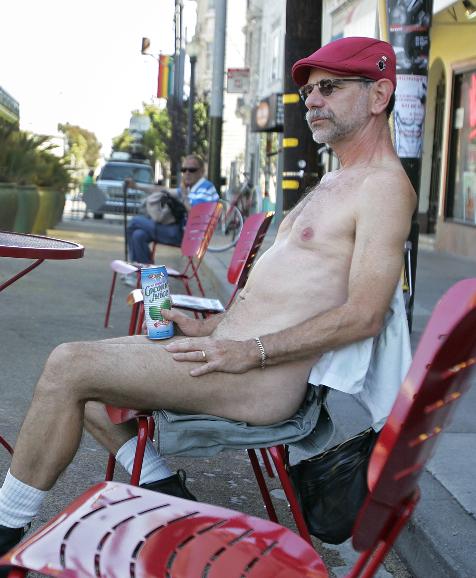
There was no public outcry when Pedro Villamore, a 44-year-old homeless gay man, was found dead in a doorway in the 500 block of Castro Street last December, a couple of weeks before Christmas and across the street from the holiday tree that the Merchants of Upper Market and Castro puts up every year to welcome big spenders into the neighborhood.

MUMC, which in years past opposed three homeless queer youth shelters and a free meals program at a local gay church, did not decry the fact that a member of our community died on the street — and where were the city’s homeless outreach teams? Nor did any of the residents of the neighborhood express any concern that others who have a problem with methamphetamine, the area’s drug of choice, might meet a similar fate — and shouldn’t the community be doing something about it?

Of course, if he had been one of the nudists who hang out naked in the Castro these days Villamore would’ve found himself on the front-page of Bay Area Reporter, the city’s gay weekly, while he was still alive. Not to mention the target of diatribes from the SF Chronicle’s chronically right-wing columnist C.W. Nevius.  

Sadly enough, a neighborhood that once stood for sexual and personal freedom has succumbed to anti-nudism hysteria, even to the point of echoing Anita Bryant’s old rallying cry, “Save the children!”

Hysteria it is, of epic proportions. Some Castro residents and MUMC merchants actually persuaded their elected official, Supervisor Scott Wiener, to introduce anti-nudism legislation because a few naked men prance around the hood au natural, even sometimes sporting (horrors!) cock rings on their dicks. In a neighborhood where there’s no dearth of cock rings or any other sex toy, not to mention every variety of gay porn imaginable, and where guys walk around bars in underwear, residents don’t want public nudity. Huh? The neighborhood’s historic live-and-let-live attitude has obviously gone the way of Halloween and being able to walk into Pink Saturday without being scanned by a metal detector.

Has gay marriage and the freedom to “be all that you can be” in the military afflicted residents of the Castro with assimilation fever? What’s next — fundraising parties for Mitt Romney or a Castro chapter of the Moral Majority?

In a community that, according to a recent Williams Institute study, is rampant with poverty and suffers a serious lack of full-time employment for transgender people (75%, according to a report from this paper and the Transgender Law Center), not to mention a major drug and alcohol problem that makes gay men easy targets for muggings as they leave the bars at night, you’d think that public nudity would the last thing on anyone’s mind.  

People with AIDS continue to be pushed out of apartments in the Castro so that landlords and realtors can make tons of dough and LGBT seniors are forced to live with little economic or social support, regular cuts to services and benefits, and discrimination and isolation in nursing care facilities.

Yet from the volume of letters in the BAR and the number of calls Wiener says he’s received, you’d think that public nudity is the biggest problem in the world.

Pedro Villamore might disagree with that.

Tommi Avicolli Mecca has been a queer activist for the past 42 years, and a Castro resident for 20. He is editor of Smash the Church, Smash the State: the early years of gay liberation (City Lights).

Why?

44

steve@sfbg.com

Just a couple years ago, it seemed like the golden age of marijuana in San Francisco, the birthplace of the movement to legalize medical pot and a national leader in creating an effective regulatory framework to govern an industry that had become a legitimate, respected member of the business community.

More than two dozen patient cooperatives jumped through a variety of bureaucratic hoops to become licensed dispensaries, most of them opening storefront businesses that were often the most attractive, clean, and secure retail outlets on their blocks, sometimes in gritty stretches of SoMa, the Tenderloin, or the Mission.

“Pretty much everyone involved agrees that San Francisco’s system for distributing marijuana to those with a doctor’s recommendation for it is working well: the patients, growers, dispensary operators, doctors, politicians, police, and regulators with the planning and public health departments,” I wrote in “Marijuana goes mainstream” (1/28/10).

Since then, San Francisco’s medical marijuana industry has only become more established and professional, complying with new city regulations (such as changing how edibles are packaged to avoid tempting children), paying taxes and fees — and making very few waves. According to city officials, there have been almost no complaints from anyone about the dispensaries — and in San Francisco, people complain about everything.

But in the last six months, the full force of the federal government has brought the hammer down hard on this budding business sector, forcing the closure of eight brick-and-mortar dispensaries and instilling paranoia and insecurity in those that remain.

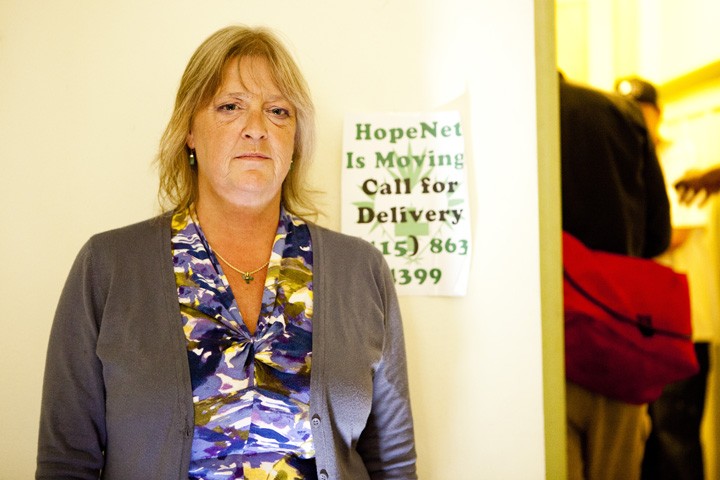
In just the past few weeks, two of the city’s oldest and most respected dispensaries –- HopeNet and the Vapor Room -– were forced to close their doors.

There’s been little rhyme or reason to which clubs get those dreaded letters warning operators and landlords to shut it down or be subject to asset forfeiture and prison time — and the officials involved have refused to explain their actions, except with moralistic anti-drug statements or unsupported accusations.

“These are people who played by the rules and paid their taxes, and now they’re being punished for it,” said Assembly member Tom Ammiano, a leader in creating a state regulatory framework to govern the distribution of medical marijuana, which California voters legalized in 1996. “This is pure thuggery. They are ignoring due process out of blind prejudice and ambition.”

Ammiano met with Melinda Haag, the US Attorney for the Northern District of California, who has coordinated the local crackdown from her 11th floor office in the Federal Building near City Hall, shortly after she announced her intentions to go after medical marijuana. He said she was like a throwback to a less enlightened era.

“In talking to Haag, not only is she a bit of a bully, but she’s totally uneducated about the issue,” Ammiano told us. When she told him that her office has received many complaints about the dispensaries, he asked to see them -– even making a formal Freedom of Information Act document request –- but she has yet to produce them. “Her duplicity is very moralistic, it’s like going back 100 years.”

Neither Haag nor anyone from the White House or Justice Department would grant an interview to the Guardian to discuss the reasons for and implications of the crackdown, or to answer the list of written questions her office asked us to submit. Instead, Haag gave the Guardian this statement and refused to respond to our follow-up questions:

“Although all marijuana stores are illegal under federal law, I decided to use our limited resources to address those that are in close proximity to schools, parks and playgrounds and operations so large that they constitute marijuana superstores. I hope that those who believe marijuana stores should be left to operate without restriction can step back for a moment and understand that not everyone shares their point of view, and that my office has received many phone calls, letters and emails from people who are deeply troubled by the tremendous growth of the marijuana industry in California and its influence on their communities.”

But in San Francisco, where more than 80 percent of residents consistently support medical marijuana in polls and at the ballot box, most people don’t share Haag’s point of view. And city officials contest many of her claims, from saying the dispensaries are “left to operate without restriction” to her implication that they promote crime or endanger children to the haphazard way she has targeted dispensaries to the characterization that many people are “deeply troubled by the tremendous growth of the marijuana industry.”

In fact, to talk to city officials, virtually nothing Haag says is true.

“We’re not getting nuisance complaints [about the dispensaries],” Dr. Rajiv Bhatia, the city’s medical director who oversees regulation of the dispensaries by the Department of Public Health, told the Guardian. “We’ve had very few complaints over the years and good cooperation with the storefront part of the regulations.”

Almost across the board, city officials and club operators praise one another and the cooperative relationship they’ve established over the last four years. Some of San Francisco’s biggest dispensaries have somehow avoided Haag’s wrath, but their once-open operators are now afraid to speak publicly, warily checking the mailbox each day. A thriving industry eager to pay its taxes and submit to regulation is being driven back underground, with all the uncertainty and hazards that creates.

“The question everyone is asking: Why here, why now, why these businesses? Nobody knows the answer,” Bhatia said. “We’re left to speculate and guess about motives.”

MULTI-AGENCY ATTACK

The federal crackdown has been stunning in both its speed and breadth, with various federal agencies coordinating their attacks. The IRS is auditing the biggest clubs and denying write-offs for routine business expenses, the DEA is threatening asset forfeiture efforts, and Haag and the DOJ are threatening prison time and court injunctions.

Underlying all of that is President Barack Obama, who pledged not to use federal resources to go after those in compliance with state law in the 17 states where medical marijuana is legal. Then, last year, Attorney General Eric Holder suddenly announced a new policy: “It will not be a priority to use federal resources to prosecute patients with serious illnesses or their caregivers who are complying with state laws on medical marijuana, but we will not tolerate drug traffickers who hide behind claims of compliance with state law to mask activities that are clearly illegal.”

When we sought an explanation and clarification from the White House Communications Office about why well-established medical marijuana collectives carefully operating under California law were suddenly deemed “drug traffickers” that wouldn’t be tolerated, they refused to answer and referred us to a statement Obama made to Rolling Stone magazine.

“What I specifically said was that we were not going to prioritize prosecutions of persons who are using medical marijuana. I never made a commitment that somehow we were going to give carte blanche to large-scale producers and operators of marijuana -— and the reason is, because it’s against federal law. I can’t nullify congressional law,” Obama told the magazine.

That simplistic explanation – which conveniently ignores how people are supposed to get this medicine – has infuriated local growers and patients. It’s particularly galling for those who supported Obama and took him at his word in the last election, and who don’t understand why he is suddenly escalating the federal war on drugs, ignoring local laws and values, and re-criminalizing their communities.

FUNERAL PROCESSION

Hundreds of medical marijuana supporters gathered on Aug. 1 for a New Orleans-style funeral procession at the Lower Haight intersection near where Vapor Room had operated -– without incident and with praise as a model business from three successive district supervisors –- from 2004 until the previous day.

The mood was festive and defiant on that sunny afternoon, where advocates from both sides of the bay gathered to express solidarity with the closed clubs and resolve to battle through the recent setbacks.

“I’m feeling the fight,” Steve DeAngelo, star of the reality television show Weed Wars and head of Oakland’s Harborside Health Center, which received Haag’s shut-down-or-else letter last month, told the Guardian. “I don’t think we can allow taking a few hits to break our spirit….We started this struggle to win it and we’re not going to stop until we do.”

Local politicians and business leaders also came to offer their support.

“As president of the Lower Haight Merchants Association, I’m upset that Vapor Room had to shut down,” Thea Selby, who is also running for the District 5 supervisorial seat, told us. “The Vapor Room did a lot of good for this neighborhood and was a great business.”

Marchers, most clad in black, carried “Cannabis is Medicine: Let States Regulate” and other signs -– as well as a makeshift coffin and massive puppet depicting a scowling Haag -– and danced down the middle of the street as Brass Mafia horns belted out lively jazz tunes. By the time the procession reached Haag’s office at the Federal Building, a chill fog had darkened the skies and the mood.

DeAngelo took the bullhorn first and called out Obama directly: “Either you were lying, sir, or your employees are out of step with your policies.” Steph Sherer, executive director of the DC-based Americans for Safe Access, told the crowd, “We need to tell Obama to lose Haag or lose California.”

Ammiano and the other mostly Democratic Party politicians who spoke tried to avoid putting Obama directly into the crosshairs of the angry activists, although he did say those executing this crackdown “are harming Obama’s chances of winning.” He also urged activists to put the pressure on politicians in Sacramento and Washington DC: “We need to be a voice in reshaping what’s happened in these last few months.”

Ammiano said the crackdown “empowers the cartels and the people who use violence,” contrasting that with San Francisco’s civilized approach to regulating marijuana.

“We in San Francisco have been a model for how to regulate this industry and we have been successful. We are not going to let the federal government interfere with our rights in this city,” Sup. David Campos told the crowd.

Cathy Smith, the founder of HopeNet, who was still reeling from watching her club gutted and shuttered the day before, also sounded an angry and defiant tone, urging supporters to make their voices heard by Haag and others.

“Everybody that’s here needs to go up to this evil woman’s office tomorrow and tell them what we think,” Smith said.

The general feeling was that if the feds can target model clubs like HopeNet and Vapor Room –- which had deep community roots and generous compassionate care programs for low-income patients -– then all clubs are in danger.

“I’m very upset that we’re losing two great medical marijuana dispensaries where patients could medicate on site,” said David Goldman, a local ASA activist and member of the city’s Medical Cannabis Task Force, noting how important that is for patients who live in apartments that ban smoking.

HopeNet and Vapor Room were some of the only dispensaries in town where smoking was allowed on site, because they were more than 1,000 feet from schools, playgrounds, or day care facilities, the city’s standard. Bhatia said that’s a very strict standard in a city as dense as San Francisco, which is why only four clubs ever met it.

Yet the feds saw things differently, ostensibly targeting HopeNet because a small private school opened two blocks away last year, and the Vapor Room because the feds didn’t use the city’s standard of being more than 1,000 feet from the playground at Duboce Park, instead deciding the dispensary was a community menace because it was a little under 1,000 feet from that dog-friendly park’s nearest patch of grass.

LAST DAYS

Vapor Room founder Martin Olive was a bundle of complicated emotions on the club’s last day in business (it will still operates as delivery-only, just like HopeNet, Medithrive, and a few other shuttered clubs have done). Initially, he didn’t want to talk to us: “I’m trying to keep a lower profile because it’s scary out there now.”

But he slowly opened up and tried to describe the feeling of watching his proudest accomplishment so rapidly undone by the one-two punch of a letter from the merchant services company cutting off credit card access (just like every dispensary in the city, returning pot sales to a cash-only status) followed days later by Haag’s shut-down letter.

“It’s complicated emotions that I’m feeling -– let down, confused. At the end of the day, I don’t understand why this is happening,” Olive said. “It’s a community tragedy, it really is.”

Vapor Room was a welcoming gathering place for its members and a supporter of a variety of community events and causes.

“I’ve always treated this as if it were just a nice coffee house. I’m not an outlaw,” Olive said. “I almost forgot I was breaking federal law. It was so normal, so legitimate.”

In fact, some club owners say their establishments helped clean up rough streets. “We took care of the entire block. Before us, it was all dealers, so there’s a safety issue,” HopeNet’s Smith told me as the once-welcoming club on 9th Street near Howard was reduced to bare walls.

Patients were also feeling the pain, including a 48-year-old ex-con who said he was paroled two years ago after serving 25 years in prison for attempted murder. “I have anger issues, big time. The only thing that keeps me calm and quiet and not blowing up is medical marijuana,” he told us, seething, before praising HopeNet’s “homelike environment” and supportive community. “It’s important to sit and relax in an environment that is comfortable and safe. All this is doing is pushing us into the streets.”

DRIVEN UNDERGROUND

Before going through his latest official misconduct battles and fighting to return to his job as the elected sheriff, Ross Mirkarimi was the District 5 supervisor who sponsored the creation of the city’s medical marijuana regulatory system, the product of a long and arduous legislative process.

“We developed the system out of stark necessity because neither local government nor state government gave a roadmap to the dispensaries,” Mirkarimi said. “Prop. 215 legalized medical marijuana, but there were no rules around it.”

After an intensely collaborative process that lasted more than a year, the city in 2005 adopted a process for licensing dispensaries that balanced the needs of this nascent industry with concerns by police, patients, disability rights activists, neighborhood groups, and health officials. Mirkarimi said that maybe it’s time for city officials to consider an idea he floated a few years ago of having the city itself directly distribute medical marijuana through General Hospital.

“I still think that’s a good idea, particularly if the feds are going to force medical marijuana dispensaries back into the dark ages.” For all his praise of the city’s dispensaries, Dr. Bhatia will admit that the industry still needed better oversight -– dealing with issues such as standards for growing and transporting cannabis, fiscal transparency, and potency and dosage standards –- but the federal crackdown has scuttled his efforts to expand the city’s regulatory system.

“This DEA action stops us from making progress on the regulation of clubs that we need to make,” Bhatia said. “There are lots of issues, but we had just finished getting the clubs into their housing.” Now the industry is being driven back underground.

Ironically, Haag and other federal officials have accused dispensary operators of profiteering, which they’ll certainly be more free to do now that local officials have lost their leverage to begin regulating the finances of the supposedly nonprofit patient collectives that officially operate each dispensary.

“That was one of the areas that we never developed the tools or capacity to look at,” said Bhatia, who proposed more transparent record-keeping by dispensaries last year, only to have the operators express concern about how the feds might use that information, which turned out to be an understandable fear.

Antonini, quarterback for development interests, wins the game

20

If there was any doubt about the loyalty to developers of Planning Commissioner Michael Antonini, he put them to rest yesterday shortly after finally winning reappointment to a fourth, four-year on a 6-5 vote by the Board of Supervisors. Afterward, in comments to Examiner reporter Joshua Sabatini, Antonini likened his role on the commission to that of a successful football team’s quarterback.

“You want to knock out the quarterback for the other team,” Antonini said. “It’s a tribute in a way – backhanded.”

The five supervisors who opposed Antonini – Sups. David Chiu, John Avalos, David Campos, Eric Mar, and Jane Kim, the board’s most progressive members – seemed to understand that Antonini saw himself playing for the developers and big corporations that see San Francisco mostly as a place to make money, even at the expense of eastern neighborhoods and the city’s long-term interests.

The voting record of this Republican dentist – an elected member of the San Francisco Republican County Central Committee who advocates for right-wing causes (such as crackdowns on the homeless) and candidates – makes clear which team Antonini plays for, and it isn’t the same team as the vast majority of people in San Francisco, where Republicans constitute less than 10 percent of the electorate.

It says a great deal about the corporatist politics of Mayor Ed Lee for re-appointing him, as well as the politics and integrity of the swing votes, Sups. Malia Cohen and Christina Olague, the Lee appointee now running for election in District 5, one of the city’s most progressive districts.

Both supervisors mouthed meaningless platitudes and justifications for their votes, but in reinstating the developers’ quarterback just as the progressives were about to remove him from the game, one wonders what team they’re playing for – or whether they even understand the dimensions of the game they have unexpectedly found themselves playing.

But Antonini clearly understands. And despite the ridiculous statements that Cohen and Olague made about holding him “accountable,” Antonini now has four more years to continue leading a team that is rapidly gentrifying San Francisco, making it more inviting to the Google-busers and Twitterati and their landlords, but less so for the average teacher, clerk, and social worker.

Two of SF’s most venerable cannabis dispensaries get shut down

7

Sadness, anger, and confusion hung thick in the fragrant, smoky air of two of San Francisco’s oldest and most prominent medical marijuana dispensaries – HopeNet in SoMa and Vapor Room in Lower Haight – during their last day in business yesterday, the latest victims of an aggressive federal government crackdown on the industry.

Throughout the day, vendors, patients, neighbors, and well-wishers stopped in to say goodbye and commiserate over a trend that just doesn’t make sense to them, or to the local politicians and city officials that have spent years setting up a regulatory structure that had legitimized the cannabis industry, which thrived as the rest of the economy suffered through the recent recession.

“I’ve always treated this as if it were just a nice coffee house. I’m not an outlaw,” said Martin Olive, whose Vapor Room was a friendly community gathering place and active member of the local business community that gave away free bags of vaporized marijuana to low-income patients on a daily basis. “I almost forgot I was breaking federal law. It was so normal, so legitimate.”

Despite previous promises to respect state laws legalizing medical marijuana, President Barack Obama and federal agencies under his control did a sudden about-face last year, with the Drug Enforcement Agency threatening landlords with property seizure, the Justice Department threatening prison sentences, and the Internal Revenue Service doing audits and refusing to allow routine business expenses.

The result has been the forced closure of eight of San Francisco’s 24 licensed dispensaries in the last seven months, with more closures likely in the coming months. Almost all of the remaining clubs have been forced to deal only in cash after the feds threatened their bankers and credit card companies. The industry that grows and sells California’s biggest cash crop is essentially being driven back underground, hurting patients and the sometimes gritty neighborhoods that dispensaries had improved with security systems and a flow of customers that put more eyes on the streets and cash in the pockets of nearby stores and restaurants.

“The people that live here are afraid the neighborhood is going to come back in here. We took care of the entire block. Before us, it was all dealers, so there’s a safety issue,” HopeNet founder Cathy Smith told me as the once-welcoming club on 9th Street near Howard was reduced to bare walls, noting that the owner of the Starbucks on the corner told her he expects his business to drop by 15 percent.

Olive shared the concerns expressed at HopeNet, which he considers “a sister dispensary,” one that also had a generous compassion program for giving cannabis to low-income patients and offering other free services like yoga.

“I’m curious to see what this neighborhood looks like in six months. I know what it was like six months before we got here,” Olive said of his club’s opening in 2004.

But for now, it’s over. Vapor Room continued to do business for most of the day yesterday, but HopeNet was already stripped bare and essentially shut down, and by 3:30pm they removed the cash register and their pot stock. “The signs are down, we’re no longer a pot club, break out the beer,” announced Smith’s son, Bill, a member of the cooperative, referring to one of the many tight restrictions of what the city allowed in clubs. “I’m the only one making light of things today, as a coping mechanism. I laugh so we don’t cry.”

Like the patients, vendors, and local officials we spoke to – who you’ll hear from in an upcoming Guardian cover story looking the end of medical marijuana’s golden age – Olive and Smith are grappling with a federal crackdown they say has myriad downsides and no benefits to anyone but federal agencies that profit from drug-related seizures and the criminal syndicates that now have less competition.

Both Olive and Smith say they voted for Obama in 2008, they believed his statements that he wouldn’t go after businesses that complied with state and local law, and now they feel betrayed.

“I feel fucked by it, betrayed is too easy a word,” Howard said.

“It’s complicated emotions that I’m feeling – let down, confused – at the end of the day, I don’t understand why this is happening,” Olive said. “It’s a community tragedy, it really is.”

Like MediThrive and other recently shuttered clubs, both Vapor Room and HopeNet will still be operating as delivery-only services, but the future seems less certain now that their direct, brick-and-mortar connection to their community has been severed.

They urge those concerned about the crackdown to contact their political representatives, and to turn out today (Wed/1) at 4pm for a funeral march that starts at Haight and Steiner streets near the now-shuttered Vapor Room and goes to the Federal Building on Golden Gate Avenue, where there will be a rally and speeches starting at 5pm.

Compromise measures

3

news@sfbg.com

San Franciscans are poised to vote this November on two important, complicated, and interdependent ballot measures — one a sweeping overhaul of the city’s business tax, the other creating an Affordable Housing Trust Fund that relies on the first measure’s steep increase in business license fees — that were the products of intense backroom negotiations over the last six months.

Mayor Ed Lee and his business community allies sought a revenue-neutral business tax reform measure that might have had to compete against an alternative proposal developed by Sup. John Avalos and his labor and progressive allies, who sought around $40 million in new revenue, although both sides wanted to avoid that fight and find a compromise measure.

Meanwhile, Mayor Lee was having trouble securing business community support for the housing trust fund that he pledged to create during his inaugural address in City Hall in January. So he modified his business tax proposal to bring in $13 million that would be dedicated to the Affordable Housing Trust Fund, but that didn’t satisfy the Avalos camp, who insisted the city needed more general revenue to offset cuts to city services and help with the city’s structural budget deficit.

Less than a day before the competing business reform measures came before the Board of Supervisors on July 24, a compromise was finally struck that would bring $28.5 million a year, with $13 million of that set aside for the affordable housing fund, tying the fate of the two measures together and creating a kumbaya moment at City Hall that was reminiscent of last year’s successful pension reform deal between labor and the business community.

But there was one voice raised at that July 24 meeting, that of Sup. David Campos, who asked questions and expressed concerns over whether this deal will adequately address the “crisis” faced by the working class in a city that will continue to gentrify even if both of these measures pass. Affordable housing construction still won’t meet the long-term needs outlined in the city’s Housing Element that indicates 60 percent of housing construction would need public subsidies to be affordable to current city residents.

It’s also worth asking why a business tax reform measure that doubles the tax base — just 8.4 percent of businesses in San Francisco now pay the payroll tax, whereas 16.4 percent would pay the gross receipts tax that replaces it — doesn’t increase its current funding level of $410 million (the $28.5 million comes from increased business license fees). Some industries — most notably the technology and restaurant industries that have strongly supported Mayor Lee’s political ambitions — could receive substantial tax cuts.

Politics is about compromise, and Avalos tells us that in the current political climate, these measures are the best that we can hope for and worthy of progressive support. And that may be true, but it also indicates that San Francisco will continue to be more welcoming to businesses than the working class residents struggling to remain here.


SOARING HOUSING COSTS

As Mayor Lee acknowledged during his inaugural speech, the boom times in the technology industry has also been driving up commercial and residential rents, he sought to create “housing for the 100 percent.”

The median rent in San Francisco has been steadily rising, jumping again in June an astounding 12.9 percent over June of last year, according to real estate monitor RealFacts, leaving renters shelling out on average an extra $350 a month to landlords.

Driven by a booming tech industry and a lag in new housing, the average San Francisco apartment now rents for $2,734. That’s an annual increase of $4,000 per unit over last year, in a city that saw the highest jumps in rent nationally in the first quarter of 2012. Even prices for the average studio apartment have edged up to $1,800 a month.

The affordability gap between housing and wages in the city is stark. Somebody spending a quarter of their income on rent would need to be making $85,000 a year just to keep up with the average studio. With a mean wage of $64,820 in the San Francisco metro area, even middle class San Franciscans have a difficult time affording a modest apartment. For the city’s lowest paid workers, even earning the country’s highest minimum wage of $10.25 an hour, even devoting every earned dollar to rent still wouldn’t pay for the average small studio apartment.

For those looking to buy a home in the city, it can be a huge hurdle to put aside a down payment while keeping up with the city’s high rents. Almost 90 percent of San Franciscans cannot afford a market rate home in the city. The average San Francisco home price was up 1.9 percent in June over May, climbing to $713,500, or a leap of $50,000 per unit over last year’s prices.

In the 2010 census, before the recent boom in the local real estate market, San Francisco already ranked third in the nation for worst ratio between income and home ownership prices, behind Honolulu and Santa Cruz.

But as the city leadership grapples to mitigate the tech boom’s effects, the lingering recession and conservative opposition to new taxes have gutted state and federal funds for affordable housing. Capped off last December by the California Legislature’s decision to dissolve the State Redevelopment Agency, a major source of money for creating affordable housing, San Francisco has seen a drop of $56 million in annual affordable housing funds since 2007.

Trying to address dwindling funding for affordable housing, the Board of Supervisors voted 8-2 on July 24 to place the Affordable Housing Trust Fund measure on the fall ballot. Only the most conservative supervisors, Sups. Sean Elsbernd and Carmen Chu, opposed the proposal. Sup. Mark Farrell, who has signaled his support for the measure, was absent.

“Creating a permanent source of revenue to fund the production of housing in San Francisco will ensure that San Francisco is a viable place to live and work for everyone, at every level of the economic spectrum. I applaud the Board of Supervisors,” Mayor Lee said in response.

At the heart of the program, the city hopes to create 9,000 new units of affordable housing over 30 years. The measure would set aside money to help stabilize the ongoing foreclosure crisis and replenish the funds of a down payment assistance program for those earning 80 to 120 percent of the median income.

To do so, the city anticipates spending $1.2 billion over the 30-year lifespan of the program, with a $20 million annual contribution the first year increasing $2.5 million annually in subsequent years. It would fold some existing funding in with new revenue sources, including $13 million yearly from the business tax reform measure. Language in the housing fund measure would allow Mayor Lee to veto it is the business tax reform measure fails.

The board was forced to delay consideration of the business tax measure until July 31 because of changes in the freshly merged measures. That meeting was after Guardian press time, although with nine co-sponsors on the board, its passage seemed assured even before the Budget and Legislative Analysts Office had not yet assessed its impacts, as Campos requested on July 24.

“I do believe that we have to ask certain questions when a proposal of this magnitude comes forward,” Campos said at the hearing, later adding, “When you have a proposal of this magnitude, you’re not going to be able to adjust it for some time, so you want it to be right.”

The report that Campos requested, which came out in the late afternoon before the next day’s hearing, agreed that it would stabilize business tax revenue, but it raised concerns that some small businesses exempt from the payroll tax would pay more under the proposal and that it would create big winners and losers compared to the current system.

For example, it calculated that between the gross receipts tax and business license fee, a sample full service restaurant would pay 69 percent less taxes and a supermarket 33 percent less taxes, while a commercial real estate leasing firm would pay 46.7 percent more tax and a large engineering firm would see its business tax bills more than double.

Board President David Chiu, who has co-sponsored the business tax reform measure with Mayor Lee since its inception, agreed that it is a “once in a decade reform,” calling it a “compromise that reflects the best sense of that word.” And that view, that this is the best compromise city residents can expect, seems to be shared by leaders of various stripes.


BACKING THE COMPROMISE

The business community and fiscally conservative politicians have long called for the replacement of the city payroll tax — which they deride as a “job killer” because it uses labor costs to gauge the size of company’s size and ability to pay taxes — with a gross receipts tax that uses a different gauge. But the devil has been in the details.

Chiu praised the “dozens and dozens and dozens of companies that have worked with us to fine-tune this measure,” and press reports indicate that representatives of major corporations and economic sectors have all spent hours in the closed door meetings shaping the complicated formulas for how they will be taxed, which vary by industry.

When the Guardian made a Sunshine Ordinance request to the Mayor’s Office for a list of all the business representatives that have been involved in the meetings, its spokespersons said no such list exists. They have also asked for a time extension in our request to review all documents associated with the deliberations, delaying the review until next week at the earliest, after the board approves the measure.

But the business community seems to be on board, even though some economic sectors — including real estate firms and big construction companies — are expected to face tax hikes.

“The general reaction has been neutral to favorable, and I expect we’ll be supportive,” Jim Lazarus, the vice president of public policy for the San Francisco Chamber of Commerce, who participated in crafting the proposal but who said the Chamber won’t have an official position until it votes later this week.

Lazarus noted the precipitous rise in annual business license fees — the top rate for the largest companies would go from just $500 now to $35,000 under the proposal, going up even more in the future as the Consumer Price Index rises — “but some of it will be offset by a drop in the payroll tax,” Lazarus said.

He also admitted that the new tax system will be “hugely complicated” compared to the payroll tax, with complex formulas that differ by sector and where economic transactions take place. But he said the Chamber has long supported the switch and he was happy to see a compromise.

“I’m assuming it will pass. I don’t believe there will be any major organized opposition to the measure,” Lazarus said.

Labor and progressive leaders also say the measure — which exempts small businesses with less than $1 million in revenue and has a steeply progressive business license fee scale — is a good proposal worth supporting, even if they didn’t get everything they wanted.

“We fared pretty well, the royal ‘we,’ with the mayor starting off from the position that he wanted a revenue-neutral proposition,” Chris Daly, who unsuccessfully championed affordable housing ballot measures as a supervisor before leaving office and becoming the political director for SEIU Local 1021, the largest union of city employees.

Both sides say they gave considerable ground to reach the compromise.

“Did we envision $28.5 million in new revenue? No,” said Lazarus, who had insisted from the beginning that the tax measure be revenue-neutral. “But we also didn’t envision the Affordable Housing Trust Fund.”

Daly and Avalos also said the measures need to be considered in the context of current political and economic realities.

“We were never going to be able to pass — or even to craft — a measure to meet all of the unmet needs in San Francisco,” Daly said. “Given the current political climate, we did very well.”

“If we had a different mayor who was more interested in serving directly the working class of the city, rather than supporting a business class that he hopes will serve all the people, the result might have been different,” Avalos said. “But what’s significant is we have a tax measure that really is progressive.”

Given that “we have an economic system that is based on profits and not human needs,” Avalos said, “This is a good step, better that we’ve had in decades.”


THE HOUSING CRISIS

The tax and housing measures certainly do address progressive priorities — bringing in more revenue and helping create affordable housing — even if some progressives express concerns that conditions in San Francisco could get worse for their vulnerable, working class constituents.

“I don’t know if the proposal before us is aggressive enough in terms of dealing with a crisis,” Campos told his colleagues on July 24 as they discussed the housing measure, later adding, “As good as this is, we are truly facing a crisis and a crisis requires a level of response that I unfortunately don’t think we are providing at this point.”

Not wanting to let “the perfect be the enemy of the good,” Campos said he still wanted to be able to support both measures, urging the board to have a more detailed discussion of their impacts.

“I wish this went further and created even more funding for critically needed affordable housing,” Sup. Eric Mar said before joining Campos in voting for the proposal anyway. “I think they need to build 60 percent of those units as below market rate otherwise we face more working families leaving the city, and the city becoming less diverse.”

Yet affordable housing advocates are desperate for something to replace the $56 million annual loss in affordable housing the city has faced in recent years, creating an immediate need for action and potentially allowing Lee to drive a wedge between the affordable housing advocates and labor if the latter held out for a better deal.

Many have heralded the mayor’s process in bringing together developers, housing advocates, and civic leaders to build a broad political consensus for the measure, particularly given the three affordable housing measures crafted by progressives over the last 10 years were all defeated by voters.

“One of the goals of any measure like this is for it to gain broad enough support to actually pass,” Sup. Scott Wiener said at a Rules Committee hearing on the measure.

In the measure’s grand bargain, developers receive a reduction in the percentage of on-site affordable housing units they are required to build, from 15 percent of units to 12 percent. The city will also buy some new housing units in large projects, paying market rate and then holding them as affordable housing — the buying power of which could be a boon to developers while creating affordable housing units.

At its root, the measure shifts some of the burden of funding affordable housing from developers to a broader tax base and locks in that agreement for 30 years, which could also spur market rate housing development in the process.

A late addition to the proposal by Farrell would create funding to help emergency workers with household earnings up to 150 percent of average median income buy homes in the city, citing a need to have these workers close at hand in the event of an earthquake or other emergency.

While some progressives have grumbled about the givebacks to developers and the high percentage of money going to homebuyer assistance in a city where almost two-thirds of residents rent, affordable housing advocates are pleased with the proposal.

“Did we gain out of this local package? Yes, we got 30 years of local funding. We came out net ahead in an environment where cities are crashing. We essentially caught ourselves way early from the end of redevelopment funds,” said Peter Cohen, executive director of the San Francisco Council of Community Housing Organizations.

Without it, Cohen says many affordable housing projects in the existing pipeline would be lost. “This last year was a bumpy year, and we will not be back to the same operation level for a number of years,” Cohen said. “There was a dip and we are coming out of that dip. It will take us a while to get back up to speed.”

The progressive side was also able to eliminate some of the more controversial items in the original proposal, including provisions that would expand the number of annual condo conversions allowed by the city and encourage rental properties to be converted into tenancies-in-common.

With ballot measures notoriously hard to amend, the Affordable Housing Trust Fund measure is a broad outline with many of the details of how the fund would be administered yet to be filled in. If passed, it will be up to Olson Lee, head of the Mayors Office on Housing and former local head of the demised redevelopment agency, to fill in the details, folding what was essential two partnered affordable housing agencies into a single local unit.

But even the most progressive members of the affordable housing community said there was no other alternative to addressing affordable housing in the wings — which is indeed a crisis now that redevelopment funds are gone — making this measure essential.

As Sara Shortt of the Housing Rights Committee of San Francisco told the Rules Committee, “We lost a very important funding mechanism. We have to replace it. We have no choice.”

Guardian Voices: Hassle-free housing

64

I’m talking to the amazing organizers at Causa Justa:: Just Cause (CJJC) about their work to protect homeowners from foreclosure by the big banks, about their long history of tenants’ rights work, and what they are up to right now. Blanca Solis says they’ve launched a new campaign for what they’re calling the “Hassle-Free Housing” ordinance. She’s a grassroots leader from CJJC, and she’s asking for our support. To protect tenants from unscrupulous landlords. To stop unfair evictions. To stop wringing our hands about gentrification and families leaving the city. She says we can do something very straightforward to keep working families in their homes.
 
On Tuesday July 31st, Solis will join other tenant leaders, advocates and supporters at city hall to call for an end to tenant harassment by landlords. The San Francisco Tenants Union will be there. Organizers at CJJC have learned from years of experience with Latino tenants struggling to make ends meet in the midst of this rapidly gentrifying city that “one of the quickest and cheapest ways to evict a tenant is by harassing them until the situation becomes unbearable and the tenant moves on their own. Whey they leave, the landlord has an empty unit that they can rent to new tenants at market-rate rent.”
 
Faced with a pattern of such blatantly unfair practices, tenant activists took the issue to the voters in 2008; when “Prop M” passed, it was an important victory for this still-majority-renter-city. But then, the landlord’s lawyers got hold of it, and sued to stop implementation.
 
No one seems to be denying that landlords do this, and that it’s wrong. But what can a family do to stop the harassment, hold on to their housing and get some relief? Here’s where the “Hassle-Free Housing” ordinance comes in. It builds on Prop M and addresses the landlords’ legal issue. It would “allow tenants to claim damages from their landlords for each incident of harassment in small claims court to collect statutory damages of up to $2,000 for each incident.”
 
Sounds good, let’s do it. City Hall – get on it.
 
All over San Francisco, probably every night, people are sitting around shaking their heads about how expensive the city has become. How families have been pushed and priced out. Folks shrug and say “But, what can you do?”
 
There is a long, proud, and painful history in San Francisco of everyday people organizing to put a stop to unfair evictions, developer-driven displacement, and the over-production of luxury housing. From the African American community’s fight to save the Fillmore from redevelopment’s “negro removal” in the 1960s, to the Filipino-led struggle to stop the eviction of elderly men at the I-Hotel in the 1970s, and to Mission activists’ campaigns to control land use during the intense gentrification of the 1990’s dot-com boom. (Just this week there’s a big celebration marking the 35th Anniversary of the I-Hotel struggle.) 
 
These “housing justice” fights are ultimately about who has the power to shape the future of our city and who has the power to determine who can and cannot afford to live here. That’s where we all come in – all of us who are renters whose lives will be better with a “Hassle-Free Housing” ordinance; all of us whose housing is insecure – because we fear foreclosure or are a paycheck away from homelessness. This is an issue of people power, and you can do something now – attend the press conference at 10am tomorrow on the steps of City Hall, or go to CJJC’s website to sign up as a campaign supporter. Being right is good, but ultimately it’s people power that matters.
 
When Solis was asked why she joined the hassle-free housing campaign and why she’s coming to City Hall tomorrow, she said:
 
“Que los supervisores aseguren que los inquilinos estemos protegidos de los desalojos injustos por parte de los caseros y asi mismo vivamos en lugares dignos, seguros y libres de hostigamiento”
 
“So that the supervisors can ensure that we, tenants, are protected from illegal and unjust evictions by landlords and be able to live in homes that are dignified, safe and free of harassment”
 
Solis and the other incredible grassroots leaders at CJJC are full of courage and determination, and have not given up hope that there is a bright future for San Francisco. Let’s join them!

The malling of San Francisco

110

steve@sfbg.com

Shopping malls filled with national chain stores and restaurants are in many respects the antithesis of San Francisco. They’re the bane of any metropolis that strives to be unique and authentic. And those just happen to be qualities that make tourism this city’s number one industry.

The logic of modern capitalism, and its relentless growth into new markets, has already placed a Target or a Walmart, and a Nordstrom, Macy’s, Ross, or a JCPenney — along with a bevy of Starbucks, Applebee’s, Jamba Juice, and McDonald’s and myriad other formulaic corporate eateries — in just about every town in the country.

Do people really need them here, too? And in a city renowned worldwide for its scenic beauty and temperate (albeit sometimes foggy) climate, do people want to shop in the enclosed, climate-controlled malls popularized in the small or suburban towns that many residents came here to escape?

For me, the answer is no. Frankly, malls have an aura of artificiality that gives me the creeps — but I freely acknowledge that not everyone feels that way. Some San Franciscans may like malls and chain stores while others don’t.

But it doesn’t really matter what any of us think. Left unchecked, it’s the market that matters — and the logic of the market gives chain stores a huge competitive advantage over the mom-and-pops. Their labor and supply costs are lower, their financial resources are more extensive and appealing to commercial landlords, and their business models are based on constantly opening new stores.

All cities have to do is just say yes. And San Francisco has been increasingly saying yes to malls and chain stores.

The economic desperation that set in since the financial crash of 2008 has overcome the trend of resistance to so-called “formula retail establishments” that had been building in San Francisco during the years before the recession.

So now, rather than dying from neglect, the Metreon mall has been brought back to life by a huge Target store set to open this fall, the second Target (the other one at Masonic and Geary) going into a city that had once eschewed such national mega-retailers.

Just down the street, in the heart of the city’s transit-rich commercial center, the CityPlace mall that had been abandoned by its previous owners after winning city approval two years ago is now being built by new owners and set to open next spring with “value-based” national chain stores like JCPenney.

Projects funded with public money aren’t immune either. The new Transbay Terminal transit center now under construction will have its own mini-mall, with 225,000 square feet of retail, much of it expected to house national chains. Even more retail will be built on the ground floor of the dozen other nearby residential and office buildings connected to the project.

And it isn’t just these new malls going in a stone’s throw from the Westerfield Mall, Crocker Galleria, San Francisco Center, and other central city malls. All over town, national chains like the Whole Foods and Fresh & Easy grocery stores are replacing Cala Foods and other homegrown markets, or going into other commercial shells like the S&C Ford building on Market near the Castro.

Just a few years ago, the approval of Home Depot on Bayshore Boulevard (since then sold and opened as Lowe’s, another national chain) was a hugely controversial project approved by the Board of Supervisors on a closely watched 6-5 vote. Now, Lennar is building an entire suburban-style complex of big box stores on Candlestick Point, hundreds of thousands of square feet — without much controversy at all.

Even Walmart — the dreaded poster child for huge corporations that use their market power to drive down wages or force local stores out of business — is reported to be actively looking to open “a couple” of stores in San Francisco (see “Walmart sets sights on San Francisco,” June 24, San Francisco Chronicle).

To Livable City Executive Director Tom Radulovich and others who have long encouraged San Francisco to embrace the kind of urbanism advocated by famed author and activist Jane Jacobs — which emphasizes unique, neighborhood-based development that enhances public spaces and street life — accepting the malls feels like giving up on more dynamic urban models.

“It’s sort of an admission of failure,” Radulovich said. “It’s the failure of urbanism in San Francisco.”


MID-MARKET SYMBOLISM

Mid-Market Street is a bellwether for the type of city San Francisco may become. Every mayor since at least Dianne Feinstein in the late 1970s has called for the redevelopment of Mid-Market into a more active and inviting commercial and social corridor, and few have done so more fervently than Mayor Ed Lee.

Several city studies have explored a wide variety of ways to accomplish that goal, from eliminating automobiles and transforming Market Street into a lively pedestrian promenade to using redevelopment money, tax breaks, and/or flashy lighted signs to encourage distinctive development projects unique to San Francisco.

“But the city failed, so the market filled the void,” Radulovich said.

It isn’t that all shopping malls or enclosed commercial areas are necessarily bad, Radulovich said, citing the influential work by writer Walter Benjamin on the roles the enclosed “arcades” of Paris played in public life. “They work when they are an extension of public spaces,” Radulovich said.

Yet that isn’t what he sees being built in San Francisco, where what gets approved and who occupies those spaces is largely being dictated by private developers who are more interested in their bottom lines than with the creation of a vibrant urban environment where people are valued as more than mere consumers or workers.

San Francisco isn’t alone in allowing national chains to increasingly dominate commercial spaces. In fact, Stacy Mitchell, a researcher with the Institute for Local Self-Reliance, said that until recently San Francisco was one of the best big US cities in controlling the proliferation of chain stores.

But the city has lost ground since its anti-chain high water mark in 2007, when voters approved Proposition G, which expanded the controls on formula retail outlets — generally requiring them to get a conditional use permit and go through public hearings — that the Board of Supervisors had approved in 2004.

Those controls are only as good as the political will to reject a permit application, and that doesn’t happen very often. A memo prepared last July for the Planning Commission — entitled “Informational Presentation on the Status of Formula Retail Controls” — found that of the 31 formula retails applications the city received since 2007, just three were rejected by the commission, six were withdrawn, and 22 were approved.

It’s gotten even worse since then, as the two Targets and other chains have been courted and embraced by Mayor’s Lee’s administration, whose key representatives didn’t respond to Guardian interview requests by press time.

Mitchell said it’s not nearly as bad in San Francisco as it is in Chicago, New York City, New Orleans, and other iconic US cities whose commercial spaces have been flooded with chains since the recession began.

“It’s nothing compared to the no-holds-barred stuff going on in New York City right now,” Mitchell said. “Walking down Broadway now is like a repeating loop of the stores you just saw further up the street.”

It isn’t that these cities are actively courting the national chains in most cases. It’s just that in the absence of strong local controls, developers and large commercial landlords just prefer to deal with chains, for a variety of reasons.

“If you’re just going with the flow of what developers are doing,” she said, “you always end up with national chains.”

And that’s what San Francisco has started to do.


MALLS LIKE CHAINS

Stephen Cornell, the owner of Brownie’s Hardware and a board member of the nonprofit advocacy group Small Business California, said chains have a huge competitive advantage over local businesses even before either one opens their doors.

“In general, landlords tend to like chains more,” said Cornell, whose business has struggled against Lowe’s and other corporate competitors. “The landlord always worries: is this guy going to make it and do they have the funds to back it up?”

Big corporate chains have lawyers and accountants on staff, and professional systems established for everything from buying goods to opening new stores, whereas most local entrepreneurs are essentially figuring things out as they go along.

“They’re very good at selling themselves,” Cornell said. “They’re going to manipulate the system perfectly, whether it’s the city and its codes or dealing with neighborhood merchants.”

And for large malls, Cornell said the problem is even worse. Brokers that fill malls have standing relationships with the national chains — most of which are publicly traded corporations seeking to constantly expand and gain market share — and no incentive to seek out or take a chance on local entrepreneurs.

“Chains have a lot of advantages,” Cornell said.

Mitchell said there are two main ways in which malls favor national chains over local businesses. In addition to the relationship between mall brokers and national chains, malls are often built with financing from financial institutions that require certain repayment guarantees.

“What they want to see are credit-worthy clients signed onto those places, and that means national chains with a credit rating from Standard & Poors,” Mitchell said, noting how that “automatically locks out” most local businesses.

Cornell also noted that national chains have already figured out how to maximize their efficiency, which keeps their costs down even though that often comes in the form of fewer employees with lower pay — and less reliance on local suppliers, accountants, attorneys, and other professionals — which ends up hurting the local economy. In fact, big chains suck money out of the city and back to corporate headquarters.

“All those people are making money and spending money here, so you have to look at the full circle,” Cornell said.

Mitchell said there are often simple solutions to the problem. For example, she said that city officials in Austin, Texas recently required the developer of a large shopping mall to set aside a certain percentage of the units for locally owned businesses.

So rather than hiring a national broker to find tenants, the developer hired a local broker to contact successful independent businesses in the area who might be interested in expanding, and the project ended up greatly exceeding the city’s minimum requirements.

Mechanisms like that, or like the formula retail controls pioneered in San Francisco, give her some hope. But she said, “Whether the counter-trends will be enough to counter the dominant trend, I don’t know.”


PUBLIC SUBSIDIES

The increased malling of San Francisco isn’t simply the result of official neglect. Often, the city’s policies and resources are actively encouraging the influx of chain stores. A prime example is the massive redevelopment project on Hunters Point and Candlestick Point that city voters approved in 2008 after mega-developer Lennar and most San Francisco political officials pushed the project with a well-funded political campaign.

“If you’re selling the land to Lennar for a dollar, and then building all the automobile infrastructure for people to get there, then that’s a massive public subsidy,” Radulovich said of the big-box mall being built on what was city-owned land on Candlestick Point.

That public subsidy creates a cycle that makes San Francisco less intimate and livable. Creating commercial spaces on the city’s edge encourages more people to drive on congested regional roadways. These spaces are filled with national chain stores that have a direct negative impact on small, locally owned stores in neighborhood commercial districts all over the city, causing some of these businesses to fail, meaning local residents will need to travel further for the goods they once bought down the street.

“Those neighborhoods are going to be less walkable as a result,” Radulovich said, noting how the trend contradicts the lip service that just about every local politician gives to supporting local businesses in neighborhood corridors. “There’s a certain schizophrenia to San Francisco’s economic development strategy.”

Sup. Eric Mar has been working with Jobs with Justice San Francisco and other groups to tweak city policies that have allowed the chains to proliferate. Last year, Mar held high-profile hearings in City Hall on how national chains impact local businesses, which pointed to the need for additional protections (see “Battling big box,” Jan. 3).

This year, he’s working on rolling out a series of legislative initiatives designed to level the playing field between local interests and those of Wall Street and the national chains it champions.

Last month, the Board of Supervisors approved Mar’s legislation to add banks to the city’s formula retail controls, a reaction to Chase Bank and other national banks snapping up vacant stores in neighborhood commercial corridors such as Divisadero Street.

Now he’s working on legislation that would mandate minimum labor and community benefit standards for chain stores — including grocery outlets such as Fresh & Easy — and study how chains affect San Francisco’s overall economy.

“There should be good neighbor policies when they come into a neighborhood,” Mar said. “Some neighborhoods are so distressed they may want a big box grocery story coming in, but we need to try to mitigate its negative impacts.”

One of his partners in that effort is his brother, Gordon Mar of Jobs with Justice, who argues the city needs to have a clearer picture of how national chains impact local communities.

“We’ve definitely seen an increase in corporate chain stores coming into San Francisco in the last year, and nobody has really been tracking it,” he said.

While the Planning Department’s quarterly pipeline report shows that applications for retail outlets has held steady at about 3 million square feet on the way in recent years, it doesn’t break out how much of that is national chains — let alone how that impacts the city’s economy and small business sector.

The city’s Legislative Analyst is now studying the matter and scheduled to release a report later this summer, which Gordon Mar said will be helpful in countering the narrow “jobs” rhetoric that now dominates City Hall.

“They are exploiting the economic recession by saying they’re bringing much needed jobs into the city and serving low-income residents,” he said. “But when you bring out the facts about the impact of these low-road retail stores on neighborhoods and small businesses, there is a net loss of jobs and a lowering of labor standards.”


VALUING MALLS

Yet the fate of those controls is uncertain at best, particularly in a tough economic environment in which the city needs revenue, people are desperate for jobs, and many residents have seen their buying power stagnate, making the cheap goods offered by Target and Walmart more attractive.

“It’s complicated stuff,” Michael O’Connor, a local entrepreneur and former member of the Small Business Commission who favors formula retail controls, told us. “Stores like Target do appeal to lower income families…The progressive agenda needs to understand that working-class families need somewhere to shop.”

O’Connor acknowledges how small businesses like those he owns, including a clothing store, often can’t compete with national chains who buy cheap goods in bulk. So he said he favors protections in some neighborhoods while allowing chains in others, telling us, “I don’t have a problem with the Target going into the Metreon.”

That argument also held sway with city officials when they considered approving the CityPlace project two years ago, which was presented as a mall filled with “value-based” stores that would be affordable to median income San Franciscans.

“At the time, the decision was around whether a value-based retail operation made sense in that location, and the answer was an emphatic ‘yes,'” Barbary Coast Consulting founder Alex Clemens, who represented the project, told us.

On a national or global level, there are good arguments against reliance on national chains selling cheap imported goods, which has created a huge trade deficit between the US and countries such as China that costs American jobs — ironically, the very things that some use as arguments for approving chain stores.

“The recession has created a climate of desperation where cities are more easily swayed by the jobs argument,” Mitchell said, noting the falsity of those arguments by pointing to studies showing that the arrival of chain stores in cities usually creates a net loss in employment. Finally, supporters of chain stores say the cash-strapped city needs the property and sales tax revenue “Because they say they’ll produce a lot sales tax revenue, they’re going to get away with all kinds of shit,” Cornell said, arguing that shouldn’t justify city policies that favor big corporations, such as tax breaks and publicly financed infrastructure. “I certainly don’t think [city officials] should be giving them any advantages.” There are few simple solutions to the complex and interconnected problems that result from the malling of San Francisco and other cities. It’s really a question of balance — and the answer of whether San Francisco can regain its balance has yet to be answered. “Given the mayor’s approach to economic development, it’s inevitable that we’ll have more coming into the city,” Sup. Mar said. “But the ’50s car culture, and the model of malls that came in the ’60s, don’t build communities or strong neighborhoods.”

Landlords and government, or WTF Chuck Part Two

7

If you didn’t get enough from my latest WTF, Chuck, Calitics has a nice addition. In a discussion about the governor’s tax proposal and the likely opposition, Brian Leubitz notes that the Howard Jarvis Taxpayers Association is going to run its usual playbook: Government is fat, government is bad — oh, and here’s a few examples of wasteful spending. Notes Leubitz:

Of course, take any large organization and you can find some dumb stuff going on. And, the California government is such and organization. But, just because there is a small stupid thing going on, doesn’t mean that we should just toss the big, smart things that go on every day. Like, you know, educating our children, maintaining our streets, and so on. California government is simply too big to fail.

Yet, that is where we are headed. With the continued pessimism and me-first attitudes of the anti-tax organizations, we are stuck on a 20th century budget in a 21st century reality.

Yes: In San Francisco city government, there are small stupid things going on. There are overtime issues and (some) pension issues, and somewhere, somebody’s probably getting an extra welfare check. You simply cannot have a $6 billion budget and not have some types of waste. Anyone who has ever run anything larger than a lemonade stand knows that.

And if that’s what the press focuses on, then we’re going to fail as a country, a state and a society.

WTF, Chuck: Those poor exploited landlords

92

In my continuing attempt to make sense of the politics of the Chron’s C.W. Nevius, I present: What The Fuck, Chuck — the saga of the poor landlord.

I’ll try to be fair: There’s nothing inherently wrong with this story. I don’t like rich people taking advantage of anything, particularly rent control. It’s true that there are a few people who are cheating, good for Chuck to expose them (tho he didn’t exactly name names). You can’t make better copy than a family that moves to Hawaii (!) and keeps a rent-controlled house in the Richmond. (Of course, maybe the parents needed to be there for a couple of years for work, and were hoping to return to their family home and the landlord wouldn’t allow sublets, but whatever. Sounds horrible.)

And I’m not excusing it for a minute.

But I’ve never seen Nevius write a story about a family that can remain in this city only because of rent control, or a longterm tenant being forced out by the Ellis Act to create “homeownership” opportunities for a wealthier person who can buy a tenance in common, or a landlord who lies, cheats and abuses tenants to get rid of them so he or she can raise the rent — and those are far, far more common occurences. Those are problems that happen every day in this city.

It’s always about the poor landlords.

Yeah, there are bad tenants. But anyone on the front lines of the renatl-housing struggles in San Francisco can tell you that the abuses by the property-owning class radically exceed the harm caused by the tenant class.

I feel about this the same way I feel about the ongoing stories on bloated city employee pay and pensions. Yes, it’s true: Some city employees game the overtime and pension systems and in effect pluck money from the pockets of the taxpayers. I see no reason why a police chief who retires at 55 should get $250,000 a year for life.

But it’s also true that a lot of city employees earn a basic middle-class salary and get a pension of maybe $30,000 a year, which is hardly excessive — and the fact that the private sector quit giving pensions decades ago doesn’t mean that the public sector is wrong to do it. But all of these stories create a powerful Big Lie mythology of bloated public payrolls, which undermines any effort to raise taxes for desperately needed public services.

You tell people enough tales about the poor landlord and the rich tenants and you start to make rent control look like a bad idea. Which is about the worst thing you can do in San Francisco today, where the existence of any middle class at all is primarily the result of rent control — and if anything, rent control ought to be stronger.

In other words: A little perspective here, please.


Mayor Lee’s business tax reform will include new revenue

30

Mayor Ed Lee has acquiesced to labor’s demand that the business tax reform measure being negotiated for the November ballot raise tens of millions of dollars in new revenue, rather than being revenue-neutral as Lee and business leaders had previously insisted, according to Guardian sources in both the business and progressive communities who are involved in the ongoing negotiations.

As we previously reported, SEIU Local 1021 had demanded that the measure – which must be submitted to the Board of Supervisors by Tuesday – raise $30-50 million in additional revenue to prevent cuts to city services and to recapture money the city lost when the largest downtown corporations sued the city in 2001 to invalidate its gross receipts tax. If not, the union threatened to qualify a competing ballot measure that would raise the money, something neither side wants.

Sources say the Mayor’s Office has agreed to structure the tax to raise at least $25 million in new revenue, and some believe they will settle on $30 million, which is being supported by the big technology companies and is probably enough for labor to sign onto the deal.

But a complicating factor is the fact that Lee’s representatives are simultaneously negotiating another ballot measure to create an Affordable Housing Trust Fund that will also need to generate revenue, most likely through an increase in the real estate transfer tax, something the commercial landlords are opposing.

The business community has opposed any tax increases, but it is split between the big technology companies who helped elect Lee and more traditional businesses, including the FIRE (Finance, Insurance, and Real Estate) companies that all observers say are likely to get hit with a higher tax burden whatever the outcome of the current negotiations.

There is an urgency to get this deal done now because of the fast-approaching deadline to introduce ballot measures to the board, and the fact that under state law revenue measure can be passed with only a simple majority of voters only in presidential election years.


Welcome back to SF President Obama! Now, say Supevisors, give us our marijuana

4

Not that it’s ever a good idea, but avoid driving downtown today like the plague — President Obama’s in town! And, (as reported by SFGate), SF supervisors want him to take a stance on pot. Sup. Christina Olague has penned a letter co-signed by Sups. David Campos, and Scott Weiner that is a solid finger-wag at the current federal administrations actions against the medical marijuana industry. Here’s the meat of it:


We believe strongly in addressing medical cannabis as a public health issue, and we will strive to fully implement state law by protecting not only our patients, but our property owners and dispensary operators as well. We want to work with President Obama on a public health solution for medical cannabis at the federal level, once he wins a second term. In the meantime, the Department of Justice must respect our laws and honor the President’s commitment on this issue. Honoring this commitment can start by taking no further action against the nine landlords of City-permitted facilities here in San Francisco.


Those “nine landlords” refer to the property owners of the five SF cannabis dispensaries that have already closed, and the additional four that are set to close this month. The federal government has sent threatening letters to dispensary landlords that posit extensive jail time and civil forfeiture for those landlords that continue to allow federally-illegal drug trafficking on their property. 

Kudos to the new Sup. Olague for taking a stand. Of course, the letter’s premise is that the Sups. are staunch supporters of Obama’s re-election, they’re just asking him to improve on this particular issue. It begs the question: why would he make capitulations to win support that is already in pocket?

Tickets are sold out for his lunch at the Julia Morgan Ballroom (465 California, between Montgomery and Sansome Streets), although his campaign website encourages you to get on the waiting list — be careful, general admission tickets start at $5,000. The President’s only other scheduled stop, says SFGate, is at a “small roundtable” at One Market Plaza. 

Afterwards, the President will head south to Los Angeles to attend the annual fundraising gala for the LGBT Leadership Council, where he will no doubt be greeted affectionately for his “I support gay marriage”isms of last month.