John Avalos

Guardian forum: Everybody loves public power

114

The Guardian candidates’ forum was a blast — standing room only at the LGBT Center, a great, lively crowd, and most of the candidates for mayor showed up. Not Ed Lee, though — we invited him, but he was a no-show. That’s typical — he’s skipped the vast majority of the mayoral debates and events, and when he does show up, he leaves early.

We set out to pin the candidates down on five key issues that came out of the Guardian’s summer issues forums. Shaw San Liu, our moderator, forced the mayoral contenders to give us yes-or-no answers, and our all-star celebrity panel of answer analyzers (Sue Hestor, Corey Cook and Fernando Marti) weighed in and raised signs to tell us whether the candidate had said Yes, No, or Waffled.

The questions:

1. Will you support the creation of a municipal bank to offer access to credit to small business instead of relying on tax breaks for economic development?

 2. Will you support a freeze on condo conversions and the development of new market-rate condos until the city has a plan and the financing in place to meet the General Plan goal of 60 percent of all new units available at below market rate — and then index new market-rate housing to the creation of affordable units?

3. Do you have a viable plan to bring $250,000 a year in new revenue into the city to address the structural budget deficit?

4. Will you agree to opt out of the federal secure communities program and will you reverse Mayor Newsom’s policy and direct all local law-enforcement agencies not to cooperate with immigration authorities?

 5. Will you support a proposal to either buy out PG&E’s San Francisco facilities or build a new city grid through a bond act so that San Francisco will control its own energy distibution system?

Only John Avalos answered Yes to all five. But it was remarkable how many of the candidates supported most or all of the progressive agenda we’ve developed. Every single candidate voiced support for a municipal bank. And every one of them said Yes to buying out PG&E’s distribution system so the city could run it’s own electric utility.

They had a lot more trouble with the notion of a freeze on new market-rate housing and condo conversions, and not all of them could explain how they would bring in $250,000 in new revenue. But I give them all credit for showing up and facing the tough questions and saying that, for the most part, they wanted to promote a progressive agenda.

Here are the scores:

John Avalos: Y, Y, Y, Y, Y

David Chiu: Y, W, Y, Y, Y

Bevan Dufty: Y, N, Y, Y,Y

Dennis Herrera: Y, W, Y, Y, Y

Phil Ting: NA. NA, Y, Y, Y (He came late and missed the first two)

Joanna Rees: Y, N, N, Y, Y

Leland Yee: Y, W, W, Y, Y

Jeff Adachi: Y, W, Y, Y, Y

Terry Baum: Y, Y, N, Y, Y

So five waffles on housing policy; nobody wants to stand up and say that we’re building too much housing for the rich and that it has to stop until we catch up with affordable housing. (At least Dufty was honest and told us he doesn’t want to cut off TIC and condo conversions).

I’m waiting for the video and I’ll post it when I get it.

On Guard!

1

news@sfbg.com


CENTRAL SUBTERFUGE

While supporters of the controversial Central Subway project — from Mayor Ed Lee and his allies in Chinatown to almost the entire Board of Supervisors — dismiss the growing chorus of critics as everything from ill-informed to racist, they refuse to address the biggest concerns about the project.

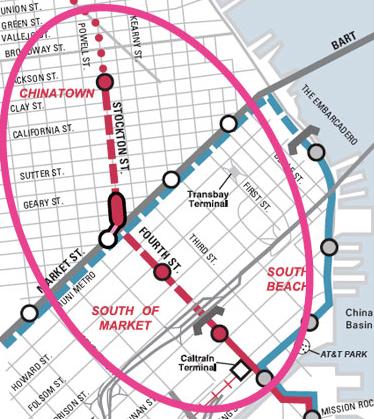
In a nutshell, the main concerns center on serious design flaws (such as the lack of direct connections to either Muni or BART), the city’s responsibility for any cost overruns on this complex $1.6 billion project, its estimated $15.2 million increase to Muni’s already strained annual operating budget (a figure used by the Federal Transportation Administration, well over the local estimate of $1.7 million), and the city’s unwillingness to implement its own plans for improving north-south transit service on congested Stockton Street rather than relying solely on such an expensive option for serving Chinatown that doesn’t start until 2019.

Judge Quentin Kopp, a longtime former legislator, called this summer’s grand jury report, “Central Subway: Too Much Money for Too Little Benefit,” the best he’s ever read and one that should be heeded. He recently wrote a letter to top state officials urging them to reconsider the $488 million in state funding pledged to the project. As we reported last week, mayoral candidate Dennis Herrera is also challenging a project that he supported before its most recent cost overruns and design changes.

But supporters of the project pushed back hard on Sept. 14, using taunts and emotional rhetoric that avoided addressing the core criticisms. “Beneath the unfounded criticism about costs is actually a disagreement over values. The grand jury report relied upon by critics makes a only brief and superficial criticism about costs,” Norman Fong and Mike Casey wrote in an op-ed in last week’s Guardian.

Actually, the 56-page grand jury report goes into great detail about why it believes cost overruns are likely, citing the myriad risks from tunneling and SFMTA’s administrative shortcomings and history of mismanagement, including on this project’s less-complicated first phase, the T-Third line, which was 22 percent over budget and a year and half late in completion. Even with the contingencies built into the Central Subway budget, the report notes that a similar overrun would increase the local share of this project from $124 million to more than $150 million.

Mayor Lee purportedly addressed criticism of the project during the Question Time session in the Sept. 14 Board of Supervisors meeting, prompted by a loaded question from Sup. Sean Elsbernd offering Lee the “opportunity to move beyond the clichés and one-liners of political campaigns.”

But Lee’s answer was classically political, touting the estimated 30,000 jobs it would create, praising those who have pushed this project since the 1980s, offering optimistic ridership estimates (that exceed current FTA figures by about 9,000 daily riders), and ignoring concerns about whether the city can cover the ever-increasing capital and operating costs.

“Now is the time to support the Central Subway,” Lee said, flashing his trademark mustachioed grin.

We called the normally responsive Elsbernd, who prides himself on his fiscal responsibility, twice, to ask about financial concerns surrounding the project and he didn’t call back. During their mayoral endorsement interviews with the Guardian last week, we also asked Sups. John Avalos and David Chiu to address how they think the city will be able to afford this project, and neither had good answers about the most substantive issues (listen for yourself to the audio recordings on our Politics blog).

Once Congress gives final approval to $966 million in federal funding for this project sometime in the next couple months, the city will be formally committed to the Central Subway and all its costs. It’s too bad that, even during election season, all its supporters have to offer to address valid concerns are “clichés and one-liners.”(Steven T. Jones)


BLACK AGENDA

Mayoral candidates faced tougher questions than usual at a Sept. 15 forum hosted by the Harvey Matthews Bayview Hunters Point Democratic Club. Whereas debates hosted in the Castro and Mission Bay, for instance, featured questions on how candidates planned to clean up city streets, what they thought about AT&T’s plan to place utility boxes on city sidewalks, or how they’d promote a more business-friendly environment, residents brought a thornier set of concerns to the Bayview Opera House.

One question pointed to an alarming statistic based on U.S. Census data and cited by racial justice advocates, showing that residents of the predominantly African American Bayview Hunters Point have a life expectancy that’s 14 years lower, on average, than that of residents of the more well-to-do Russian Hill.

Someone else asked about improving mental health services for lower-income community members struggling with post-traumatic stress syndrome (PTSD). High unemployment figured in as a key concern. And one member of the audience wanted to know how candidates planned to “improve the behavior of the police,” alluding to the mid-July officer-involved shooting that left 19-year-old Seattle resident Kenneth Harding dead, triggering community outrage.

Mayor Ed Lee attended the beginning of the forum but left early to attend an anniversary celebration for the Bayview Hunters Point Foundation; other participants included Terry Joan Baum, Jeff Adachi, Bevan Dufty, Dennis Herrera, David Chiu, Michela Alioto-Pier, and Joanna Rees.

Answers to Bayview residents’ sweeping concerns varied, yet many acknowledged that the southeastern neighborhood had been neglected and ill-served by city government for years.

“There is no economic justice here in Bayview Hunters Point,” Adachi said. “There never has been. That’s the reality.” He pointed to his record in the Pubic Defender’s Office on aggressively targeting police misconduct, and played up his pension reform measure, Prop. D, as a vehicle for freeing up public resources for critical services.

Dufty, who has repeatedly challenged mayoral contenders to incorporate a “black agenda” into their platforms, spoke of his vision for a mayor’s office with greater African American representation, and emphasized his commitment to improving contracting opportunities for minority-owned businesses.

Herrera, meanwhile, was singled out and asked to explain his support for gang injunctions, an issue that has drawn the ire of civil liberties groups. “I only support gang injunctions as a last resort,” he responded. “We shouldn’t have to use them. But … people should be able to walk around without being caught in a web of gang violence. I put additional restrictions on myself to go above and beyond what the law requires, to make sure that I am balancing safe streets with protecting civil liberties.”

Herrera asserted that gang violence had been reduced by 60 percent in areas where he’d imposed the controversial bans on contact between targeted individuals, and noted that the majority of those he’d sought injunctions against in Oakdale weren’t San Francisco residents.

Baum brought questions about a lack of services back to the overarching issue of the widening income and wealth gaps. “Right now, the money is being sucked upward as we speak,” she said. “We have to bring that money back down.”

She closed with her signature phrase: “Tax the rich. Duuuuh.” (Rebecca Bowe)


DUFTY REMEMBERS

The selection of Ed Lee as interim (or not-so-interim) mayor of San Francisco was one of those moments that left just about everyone dazed — how did a guy who wasn’t even in town, who had shown no interest in the job, who had never held elective office, suddenly wind up in Room 200?

Well, former Sup. Bevan Dufty, who was going to nominate Sheriff Mike Hennessey and switched to providing the crucial sixth vote for Lee at the last minute, told us the story during his mayoral endorsement interview last week.

Remember: Lee, as recently as a few days earlier, had told people he didn’t want to be mayor. “An hour before the meeting, Gavin (Newsom) called Michela (Alioto-Pier) and me into his office and said Ed Lee had changed his mind,” Dufty told us. He walked out of the Mayor’s Office uncommitted, he said, and even Newsom wasn’t sure where Dufty would go.

After two rounds of voting, with Dufty abstaining, there were five votes for Lee. So Dufty asked for a recess and went back to talk to Newsom — where he was told that the mayor thought the reason the progressives were supporting Hennessey was that the sheriff had agreed to get rid of about 20 mayoral staffers — including Chief of Staff Steve Kawa, “who had engineered Ed Lee running.”

So Kawa, with Newsom’s help, preserved his job and power base. “It’s all turnabout,” Dufty said. “I figure Mike Hennessey’s had a couple of beers and a couple of good times thinking about my vote. But that’s politics.” (Tim Redmond)


ALMOST FREE?

Friends and supporters of Shane Bauer and Josh Fattal were kept in a state of agonizing suspense over whether the two men, both 29, would be released from the Iranian prison where they’ve been held for more than two years following an ill-fated hiking trip in Iraqi Kurdistan.

On Sept. 13, Iranian President Mahmoud Ahmadinejad stated publicly that Bauer and Fattal could be freed “in a couple of days.” The announcement brought hope for family and friends who, just weeks earlier, had absorbed the news that the men were sentenced to eight years in prison after an Iranian court found them guilty of committing espionage, a charge that the hikers, the United States government, religious leaders, and human rights advocates have characterized as completely baseless.

Reports followed that the Iranian judiciary would commute the hikers’ sentences and release them in exchange for bail payments totaling $1 million. But by Sept. 16, when supporters gathered in San Francisco in hopes that of an imminent announcement, they were instead greeted with new delays.

The constantly shifting accounts hinted at internal strife within the Iranian government, and contributed to the sense that Bauer and Fattal were trapped as pawns in a power struggle. By Sept. 19, their Iranian lawyer remained in limbo, awaiting the signature of a judge who was scheduled to return from vacation Sept. 20.

“Shane and Josh’s freedom means more to us than anything and it’s a huge relief to read that they are going to be released,” the hikers’ families said in a statement Sept. 13. “We’re grateful to everyone who has supported us and looking forward to our reunion with Shane and Josh. We hope to say more when they are finally back in our arms.” (Rebecca Bowe)

A case for Avalos, Yee and Dufty

121

OPINION Like all of us, SEIU 1021 can take three dates to the prom when it comes to voting for mayor, but narrowing it down in a field of so many candidates was still challenging. After a month-long process, we arrived at a dual endorsement of Supervisor John Avalos and State Senator Leland Yee for first and second choice, and Supervisor Bevan Dufty for our third choice.

It’s a diverse slate, and the choices are representative of the constituencies, perspectives and priorities in our membership.

Yee’s record on labor issues in Sacramento has been impeccable, and he has long been a staunch supporter of our union, so endorsing him was a no-brainer. The Guardian asked me personally, as I am also a transgender activist, how I could support Leland after his vote against transgender health benefits. Frankly, I was disappointed in how my response was framed.

Leland approached transgender activists a number of years ago and apologized for his vote. Instead of denying or rationalizing like other politicians might do, he had the courage to come to a community meeting of transgender activists, stand in front of us, admit he was wrong, and apologize. For people to continue to attack an individual for having a true change of heart is very discouraging. We would never make any advancement of our rights if we continued to shun those who have come to understand and support the transgender fight for equality. In fact, Yee’s support was critical to the collective effort to save Lyon-Martin, a clinic that is a key service provider for trans folks, after it almost closed earlier this year.

That’s why so many in the transgender community now support Yee so strongly and why he has become an even closer, tested ally through this experience.

SEIU 1021 has always had a very close relationship with John Avalos. Avalos has been a steadfast supporter of crucial social and health- care services, and has been a leader in creating needed progressive revenue measures. But most importantly, John understands how essential jobs are for lifting people out of poverty and stimulating the local economy for everyone in San Francisco.

Last year, he introduced a Local Hire ordinance that is becoming a real jobs generator in our city and a national model. Like many of our members when they first started working for the city, workers hired under the Local Hire ordinance may for the first time have a living-wage job with benefits.

And while some in labor have been critical of this legislation — in fact, it cost him the endorsement of the San Francisco Labor Council — that’s a short-sighted criticism.

As more people are employed in San Francisco with living wage jobs, they spend money in San Francisco, boosting tax revenues and in turn creating more jobs across the city. Moreover, this visionary legislation has other benefits — workers coming from low-income communities bring a new found pride in and community spirit to what could be otherwise economically depressed areas. That’s why SEIU 1021 supports Avalos, and why I am proud to endorse him as well.

Rounding out SEIU’s endorsements in this campaign is former Supervisor Bevan Dufty. Dufty has a history of supporting preserving city services. Some have argued that Dufty can’t handle downtown pressure, and yet, Dufty has consistently supported public power, took a stance against Sit-Lie despite intense pressure, and several years ago, at a critical juncture for Tom Ammiano’s signature health care legislation, Healthy San Francisco, he didn’t blink when we called on him to be our 8th vote. In fact, he committed to the bill, unequivocally, and called on other supervisors, like Fiona Ma, to say it was time. She immediately co-sponsored and eventually it was a unanimous 11-0 vote.

For labor and progressives, Ammiano’s Healthy San Francisco legislation was the single most important piece of legislation of the last decade. And while history has been rewritten, and Lt. Gov. Gavin Newsom now takes credit for the legislation, then-Mayor Newsom did not come on board until after Dufty declared his support, and as the 8th supporter, created a veto-proof majority.

Each of these candidates have shown their capacity to grow and transform as leaders making them the best choices for progressive labor, and we believe for the San Francisco. Whatever you do, you have three votes, make them count. 

Gabriel Haaland is a transgender labor activist and the SEIU 1021 San Francisco political coordinator.


Endorsement interviews: John Avalos

17

Sup. John Avalos is running a grassroots progressive campaign for mayor. He is, he says, the only candidate talking about working-class people, and he wans to “create an administration that puts neighborhoods and people first.” He wants to create a municipal bank to use money the city now dumps into Wells Fargo and Bank of America for loans to small businesses and economic development. He told us that by the end of his eight years in office, he’d like to see the city bringing in $500 million a year in new revenue — for education, child care, Muni, parks, public health and other services. Check out the interview (audio and video) after the jump.

Avalos by endorsements2011

Bike Coalition gives Avalos its top endorsement

13

Back in May, I noted how mayoral candidates John Avalos and David Chiu seemed to be the only candidates courting the votes of San Francisco bicyclists, noting that the 13,000-plus-member San Francisco Bicycle Coalition was one of the city’s largest grassroots political organizations. Since then, Ed Lee jumped into the race and also made a point of supporting and seeking support from the city’s bicycling community.

After weeks of online voting, the SFBC today announced its endorsements, and they seem to reflect both the efforts of these three politicians and SFBC members’ recognition of who’s been working in City Hall on their behalf. They endorsed Avalos as number one, Chiu in the second slot, and Lee number three.

“By endorsing three candidates, in ranked-choice format, we are recognizing the leaders who are most actively supporting a better city through bicycling,” SFBC Executive Director Leah Shahum wrote in a message to members announcing the endorsements, also noting that there is an “unprecedented number of bicycling-friendly candidates” in this year’s mayoral field.

Avalos and Chiu are both regular cyclists who have actively supported expanding the city’s bicycle network and increasing ridership, while Lee has shepherded several key bike projects through this year and even called for improvements to dangerous conditions on Fell and Oak streets during this year’s Bike-to-Work Day.

On Guard!

0

news@sfbg.com

BART’S CRACKDOWN

For weeks now, protesters have descended on Bay Area Rapid Transit (BART) stations to denounce the fatal July 3 shooting of homeless passenger Charles Hill by a BART Police officer, and to call for the agency’s long-controversial police force to be disbanded. Commuters have had to contend with service disruptions and delays, and costs to the transit agency have exceeded $300,000. Yet it isn’t just bullhorn-wielding protesters who’ve been thrust into the spotlight — BART’s police force is also facing scrutiny for its conduct under pressure.

BART drew the ire of numerous media outlets after a Sept. 8 protest when transit cops detained members of the press along with protesters on suspected violation of California Penal Code Section 369i, which prohibits interfering with the operations of a railroad. Most journalists were eventually released, but the protest resulted in 24 arrests.

Although BART police later contended that they issued dispersal orders prior to closing in, many who were encircled and detained (including me) insisted they’d heard no such announcement. BART police also instructed San Francisco Police Department (SFPD) officers who were on hand to assist to seize reporters’ SFPD-issued press passes — a move that SFPD spokesperson Troy Dangerfield later told the Guardian was an error that went against normal SFPD protocol.

In a Sept. 10 editorial, the San Francisco Chronicle blasted BART police for placing Chronicle reporter Vivian Ho in handcuffs despite being informed that she was there as a journalist. Ho’s experience was mild compared with that of Indybay reporter David Morse (aka Dave Id), who told the Guardian he was singled out for arrest by BART Deputy Police Chief Daniel Hartwig and isolated from the scene — even though Hartwig is familiar with Morse and knows he’s been covering protests and BART board meetings for the free online publication. Asked why Morse was arrested when other journalists detained for the same violation were released, BART spokesperson Jim Allison told us, “The courts will answer that, won’t they?”

No Justice, No BART — a group that was instrumental in organizing the Sept. 8 protest — telegraphed to media and police at the outset that they intended to test BART’s assertions that people’s constitutionally guaranteed rights to free speech would be upheld as long as they remained outside the paid areas of the station, in what was dubbed a “free speech zone.” (Rebecca Bowe)


CHRON VS. WIENER(S)

Scott Wiener tried to do something eminently reasonable, and ask the naked guys in the Castro to put down a towel before they sit on public benches. Although the Department of Public Health hasn’t made any statements about the issue (and people put their naked butts on public toilet seats without creating major social problems), it’s pretty much an ick factor thing — and using a towel is an unwritten (sometimes written) rule at almost every nudist resort in the country.

The whole thing is a bit ironic, since it’s already illegal for fully clothed poor people to sit on the street — but so far, it’s not illegal for naked people to sit on benches. So far.

Wiener’s move set off an anti-nudity campaign at the San Francisco Chronicle, starting with columnist C.W. Nevius suggesting that the nudies are all perverts: “If these guys were opening a trench coat and exposing themselves to bystanders in a supermarket parking lot we’d call them creeps.” A Chron editorial called for a new law banning nudity in the city (an excellent use of time for a police department that already says it can’t afford community policing). The national (right-wing) press is having a field day. The commenters on sfbg.com are arguing about whether the pantsless men are shedding scrotal hair, or whether they’re mostly shaved. For the record, we haven’t checked.

And for the record, in a couple of months it’s going to get way too cold and rainy for this sort of thing anyway. (Tim Redmond)


HERRERA’S SMACKDOWNS

City Attorney Dennis Herrera has always been limited by his office’s neutral role in criticizing city policies and officials. But as a mayoral candidate, he seems to have really discovered his political voice, offering more full-throated criticisms of Mayor Ed Lee and his policies than any of the other top-tier candidates.

“I think it’s kind of liberating for him that he can talk policy instead of just about legal issues,” Herrera’s longtime spokesperson Matt Dorsey, who recently took a leave from his city job to work on the campaign full-time, told the Guardian.

Perhaps not surprisingly, Herrera’s shift began a little more than a month ago when Lee bowed to pressure from Willie Brown, Rose Pak, and other top power brokers to get into mayor’s race, prompting Herrera’s biting analysis that, “Ed Lee’s biggest problem isn’t that he’s a dishonest man — it’s that he’s not his own man. The fact is, if Ed Lee is elected mayor, powerful people will continue to insist on things. And I don’t think San Franciscans can be blamed for having serious doubts about whether Ed Lee would have the courage to say no.”

Herrera followed up last week by providing an example of something Lee and most other mayoral candidates don’t have the courage to say no to: the Central Subway project, with its runaway price tag and growing number of critics that say it’s a wasteful and inefficient boondoggle that will worsen Muni’s operating budget deficit.

“Fiascos aren’t born that way. They typically grow from the seeds of worthy idea, and their laudable promise is betrayed in subtle increments over time,” was how Herrera began a paper he released Sept. 8 called “It’s time to rethink the Central Subway,” in which he calls for a reevaluation of a project that he and the entire Board of Supervisors once supported.

He notes that the project’s costs have tripled and its design flaws have been criticized by the Civil Grand Jury and numerous transit experts. “Let’s look at this thing and see if it still makes sense,” Herrera told us, a stand that was greeted as blasphemy from the project’s supporters in Chinatown, who called at least two press conferences to decry that they called a “cheap political stunt.”

While the stand does indeed help distinguish Herrera from a crowded mayoral field, he insists that it was the grand jury report and other critiques that prompted him to raise the issue. “Good policy is good politics, so let’s have a debate on it and let the validity of the project stand or fall on its merits,” he said.

Herrera and fellow candidate John Avalos were also the ones who called out Lee on Sept. 2 for praising Pacific Gas & Electric Co. as “a great company that get it” for contributing $250,000 to a literacy program, despite PG&E’s deadly negligence in the San Bruno pipeline explosion and its spending of tens of millions of dollars to sabotage public power efforts and otherwise corrupt the political process.

“It shows insensitivity to victims’ families, and poor judgment for allowing his office to be used as a corporate PR tool. No less troubling, it ignores the serious work my office and others have done to protect San Franciscans from PG&E’s negligence,” Herrera said in a prepared statement.

Now, his rhetoric isn’t quite up to that of Green Party mayoral candidate Terry Baum, who last week called for PG&E executives to be jailed for their negligence, but it’s not bad for a lawyerly type. Herrera insists that he’s always wielded a big stick, expressed through filing public interest lawsuits rather than campaign missives, “but the motivation in how I do either is not really different.” (Steven T. Jones)


JACK IS BACK

The mayor’s race just got a new player, someone who is guaranteed to liven things up. His name is Jack Davis — and he’s already gone on the attack.

Davis, the infamous bad boy of political consulting who is so feared that Gavin Newsom paid him handsomely just to stay out of the 2003 mayor’s race, has been keeping a low profile of late. But he’s come out of semi-retirement to work for Jeff Adachi, the public defender who is both running for mayor and promoting Prop. D, his pension-reform plan.

Davis and Adachi first bonded when Adachi ran against appointed incumbent Kim Burton in 2002. Now, Davis has begun firing away at Mayor Ed Lee, with a new mailer that calls the competing Lee pension plan a “backroom deal.” The piece features a shadowy figure (who looks nothing like Ed Lee) slipping through a closing door, a fancy ashtray full of cigars and an allegation that Lee gave the cops a sweet pension deal in exchange for the police union endorsement.

Trust us, that’s just the start. (tr)


PENSION PALS

Meanwhile, Adachi sent Lee a letter on Sept. 8 challenging him to debate the merits of their rival pension measures — Lee spearheaded the creation of Prop. C, with input from labor unions and other stakeholders — sometime in the next month.

“I believe there is a vital need — if not an obligation — for us to ensure that the voters of San Francisco understand both the severity of our pension crisis as well as the significant differences between our two proposals,” Adachi wrote, later adding, “As the two principals behind the competing ballot measures, I hope that we can work together to increase awareness of this important issue and work toward a better future for our city.”

Lee’s campaign didn’t respond directly to Adachi, but Lee’s ever-caustic campaign spokesperson Tony Winnicker told the Guardian that the request was “the oldest political trick in book” and one they were rejecting, going on to say, “Voters deserve to hear from all the candidates on pension reform, not just two of them.”

Perhaps, but given the mind-numbing minutiae that differentiates the two measures, some kind of public airing of their differences might be good for all of us. Or I suppose we can just trust all those dueling mailers headed our way, right? (stj)

For more, visit our Politics blog at www.sfbg.com.

Mayor Lee likes Question Time just the way it is: scripted and boring

26

Mayor Ed Lee appeared before the Board of Supervisors today for his fifth monthly Question Time session, where he was asked by Sup. John Avalos – and subsequently by reporters – whether he would be willing to “change the format to make it a truly interactive, substantive, and dynamic exchange?”
But Lee disagreed with the widespread perception that the scripted nature of these exchanges – a condition that Lee’s office insisted on during negotiations with the board earlier this year, with questions submitted in writing a week before the meeting – is a contrived and dull departure from what San Francisco voters intended when they twice voted to establish Question Time.
“Supervisor Avalos, this is substance, and I think it’s exactly what the voters had in mind with Proposition C,” Lee said, reading from a prepared text. Later, he added, again reading from his script, “I think these are very substantial and dynamic exchanges.”
But apparently, that view isn’t widely shared, as the format has been criticized by a wide variety of media outlets in town, and it was the main topic that the pack of reporters who intercepted Lee in the hallway afterwards wanted to discuss. He was asked whether the session would still be as civil as they are if they were less scripted, and Lee responded that he thought they would still be civil.
“But I like a little more structure to it,” Lee said, adding that he likes to have prepared notes to address the questions that supervisors might ask. “If we don’t set boundaries, it could be a free-for-all.”
But a bit more of a free-for-all is certainly what former Sup. Chris Daly intended when he drafted the legislation, which voters approved as a binding measure last year after first approving it as an advisory measure two years early, only to have then-Mayor Gavin Newsom refuse to come.
For example, when Sup. Sean Elsbernd asked Lee for a status report on the Central Subway project, it’s possible that Lee’s recitation of the project’s benefits might have been followed up with questions asking him to address recent criticisms or the tripling of the project’s costs, which he didn’t mention.
Or perhaps Sup. Eric Mar might have asked a follow-up question when Lee answered the question “Are you willing to require that CPMC enter into a Community Benefits Agreement before their proposal is approved by the city?” by saying, “These community benefits will be incorporated into a Developer Agreement,” reminding the mayor of the premise of his question that many of the benefits that the community is seeking cannot legally be included in the Developer Agreement.
Similarly, Lee also avoided directly answering Sup. David Campos’ question about whether the mayor intends to support legislation by Campos and Sup. Mark Farrell that would require city departments to return to the board for approval of budget supplements when overtime costs are significantly exceeding those that the department budgeted for.
But there is some wiggle room in the exchanges for supervisors who want to freestyle, as long as they are within the narrow confines of civility being practiced at City Hall these days. Elsbernd embellished his approved Central Subway question, calling it an “opportunity to move beyond the clichés and one-liners of political campaigns.”
And when Lee closed his answer to Avalos by inviting him to take part in an upcoming benefit ping-pong match in Chinatown, Avalos asked the mayor, with a slight taunt in his voice, “How is your game?”
To which Lee – perhaps reaching new heights in conflict aversion – said his style of play is “diplomatic and friendship first.” To which Avalos responded, again with an air of challenge, “I used to work at the Boys and Girls Club and played everyday.”
And that, I suppose, is what passes for political conflict and debate at City Hall these days.

Team Avalos

63

When Supervisor John Avalos chaired the Budget & Finance Committee in 2009 and 2010, his office became a bustling place in the thick of the budget process. To gain insight on the real-life effects of the mayor’s proposed spending cuts, Avalos and his City Hall staff played host to neighborhood service providers, youth workers, homeless advocates, labor leaders, and other San Franciscans who stood to be directly impacted by the axe that would fall when the final budget was approved. They camped out in City Hall together for hours, puzzling over which items they could live without, and which required a steadfast demand for funding restoration.

“One year, we even brought them into the mayor’s office,” for an eleventh-hour negotiating session held in the wee morning hours, recounted Avalos’ legislative aide, Raquel Redondiez. That move came much to the dismay of Steve Kawa, mayoral chief of staff.

Avalos, the 47-year-old District 11 supervisor, exudes a down-to-earth vibe that’s rare in politicians, and tends to display a balanced temperament even in the heat of high-stakes political clashes. He travels to and from mayoral debates by bicycle. He quotes classic song lyrics during full board meetings, keeps a record player and vinyl collection in his office, and recently showed up at the Mission dive bar El Rio to judge a dance competition for the wildly popular Hard French dance party.

Yet casual observers may not be as familiar with the style Avalos brings to conducting day-to-day business at City Hall, an approach exemplified that summer night in 2010 when he showed up to the mayor’s office flanked by grassroots advocates bent on preserving key programs.

“My role is, I’m an insider, … but it’s really been about bringing in the outside to have a voice on the inside,” Avalos said in a recent interview. “People have always been camped out in my office. These are people who represent constituencies — seniors, recipients of mental health care, unions, people concerned about violence. It’s how we change things in City Hall. It’s making government more effective at promoting opportunities, justice, and greater livelihood.” Part of the thrust behind his candidacy, he added, is this: “We want to be able to have a campaign that’s about a movement.”

That makes Avalos different from the other candidates — but it also raises a crucial question. Some of the most important advances in progressive politics in San Francisco have come not just from electoral victories, but from losing campaigns that galvanized the left. Tom Ammiano in 1999 and Matt Gonzalez in 2003 played that role. Can Avalos mount both a winning campaign — and one that, win or lose, will have a lasting impact on the city?

Workers and families

No budget with such deep spending cuts could have left all stakeholders happy once the dust settled, but Avalos and other progressive supervisors did manage to siphon some funding away from the city’s robust police and fire departments in order to restore key programs in a highly controversial move.

“There’s a Johnny Cash song I really like, written by Tom Petty, called ‘I Won’t Back Down.’ I sang it during that time, because I didn’t back down,” Avalos said at an Aug. 30 mayoral forum hosted by the Potrero Hill Democratic Club. “We made … a symbolic cut, showing that there was a real inequity about how we were doing our budgets. Without impacting public safety services, we were able to get $6 million from the Fire Department. A lot of that went into Rec & Park, and health care programs, and to education programs, and we were able to … find more fat in the Police Department budget than anybody had ever found before, about $3 million.”

Last November, Avalos placed a successful measure on the ballot to increase the city’s real-estate transfer tax, which so far has amassed around $45 million in new revenue for city coffers, softening the blow to critical programs in the latest round of budget negotiations. “Without these measures that community groups, residents, and labor organizations worked for, Mayor Ed Lee would not have been able to balance the budget,” Avalos said.

More recently, he emerged as a champion of the city’s Local Hire Ordinance, designed as a tool for job creation that requires employers at new construction projects to select San Francisco residents for half their work crews, to be phased in over the next several years. That landmark legislation was a year in the making, Redondiez said, describing how union representatives, workers, contractors, unemployed residents of Chinatown and the Bayview, and others cycled through Avalos’ City Hall office to provide input.

His collaborative style stems in part from his background. Avalos formerly worked for Service Employees International Union Local 1877, where he organized janitors, and served as political director for Coleman Advocates for Children & Youth. He was also a legislative aide to former District 6 Sup. Chris Daly, who remains a lightning rod in the San Francisco political landscape.

Before wading into the fray of San Francisco politics, Avalos earned a masters degree in social work from San Francisco State University. But when he first arrived in the city in 1989, with few connections and barely any money to his name, he took a gig at a coffee cart. He was a Latino kid originally from Wilmington, Calif. whose dad was a longshoreman and whose mom was an office worker, and he’d endured a climate of discrimination throughout his teenage years at Andover High in Andover, Mass.

Roughly a decade ago, Avalos and a group of youth advocates were arrested in Oakland following a protest against Proposition 21, which increased criminal penalties for crimes committed by youth. Booked into custody along with him was his wife, Karen Zapata, whom he married around the same time. She is now a public school teacher in San Francisco and the mother of their two children, ages 6 and 9, both enrolled in public schools.

“John has consistently been a voice for disenfranchised populations in this city,” said Sharen Hewitt, who’s known Avalos for more than a decade and serves as executive director of The Community Leadership Academy & Emergency Response Project (CLAER), an organization formed to respond to a rash of homicides and alleviate violence. “He understands that San Francisco is at a major turning point in terms of its ability to keep families and low-income communities housed. With the local hiring ordinance, most of us who have been working around violence prevention agree — at the core of this horrible set of symptoms are root causes, stemming from economic disparity.”

Asked about his top priorities, Avalos will invariably express his desire to keep working families rooted in San Francisco. District 11, which spans the Excelsior, Ingleside, and other southeastern neighborhoods, encompasses multiracial neighborhoods made up of single-family homes — and many have been blunted with foreclosure since the onset of the economic crisis.

“Our motto for building housing in San Francisco is we build all this luxury housing — it’s a form of voodoo economics,” Avalos told a small group of supporters at a recent campaign stop in Bernal Heights. “I want to have a new model for how we build housing in San Francisco. How can we help [working-class homeowners] modify their loans to make if more flexible, so they can stay here?” He’s floated the idea of creating an affordable housing bond to aid in the construction of new affordable housing units as well as loan modifications to prevent foreclosures.

“That’s what is the biggest threat to San Francisco, is losing the working-class,” said community activist Giuliana Milanese, who previously worked with Avalos at Coleman Advocates for Youth and has volunteered for his campaign. “And he’s the best fighter. Basically, economic justice is his bottom line.”

Tenants Union director Ted Gullicksen gave Avalos his seal of approval when contacted by the Guardian, saying he has “a 100 percent voting record for tenants,” despite having fewer tenants in his district than some of his colleagues. “David Chiu, had he not voted for Parkmerced, could have been competitive with John,” Gullicksen said. “But the Parkmerced thing was huge, so now it’s very difficult to even have David in same ballpark. Dennis [Herrera] has always taken the right positions — but he’s never had to vote on anything,” he said. “After that, nobody comes close.”

Cash poor, community rich

There’s no question: The Avalos for Mayor campaign faces an uphill climb. Recent poll figures offering an early snapshot of the crowded field peg him at roughly 4 percent, trailing behind candidates with stronger citywide name recognition like City Attorney Dennis Herrera or the incumbent, Mayor Ed Lee, who hasn’t accepted public financing and stands to benefit from deep-pocketed backers with ties to big business.

Yet as Assembly Member Tom Ammiano phrased it, “he’s actually given progressives a place to roost. He doesn’t pussy-foot around on the issues that are important,” making him a natural choice for San Francisco voters who care more about stemming the tides of privatization and gentrification than, say, rolling out the red carpet for hi-tech companies.

One of Avalos’ greatest challenges is that he lacks a pile of campaign cash, having received less than $90,000 in contributions as of June 30, according to an Ethics Commission filing. “He can’t call in the big checks,” said Julian Davis, board president of Booker T. Washington Community Service Center, “because he hasn’t been doing the bidding of big business interests.” A roster of financial contributions filed with the Ethics Commission shows that his donor base is comprised mainly of teachers, nonprofit employees, health-care workers, tenant advocates, and other similar groups, with almost no representatives of real-estate development interests or major corporations.

Despite being strapped for cash, he’s collected endorsements ranging from the Democratic County Central Committee, to the Harvey Milk Democratic Club, to the city’s largest labor union, SEIU 1021; he’s also won the backing of quintessential San Francisco characters such as renowned author Rebecca Solnit; San Francisco’s radical bohemian poet laureate, Diane di Prima; and countercultural icon Diamond Dave.

While some of Avalos’ core supporters describe his campaign as “historic,” other longtime political observers have voiced a sort of disenchantment with his candidacy, saying it doesn’t measure up to the sweeping mobilizations that galvanized around Gonzalez or Ammiano. Ammiano has strongly endorsed Avalos, but Gonzalez — who now works for Public Defender (and mayoral candidate) Jeff Adachi — has remained tepid about his candidacy, stating publicly in an interview on Fog City Journal, “I like [Green Party candidate Terrie Baum] and John fine. I just don’t believe in them.”

Ironically, Sup. Sean Elsbernd, often Avalos’ political opposite on board votes, had kinder words for him. “John is intelligent, John is honest, and John has integrity,” Elsbernd told the Guardian. “I don’t think he knows the city well enough to serve as chief executive … but I’ve seen the good work he’s done in his district.”

Meanwhile, Avalos is still grappling with the fallout from the spending cut he initiated against the police and fire departments in 2009. Whereas those unions sent sound trucks rolling through his neighborhood clamoring for his recall from office during that budget fight, the San Francisco Police Officers Association (SFPOA), the San Francisco Fire Fighters union, and the plumbers’ union, Local 38, have teamed up now that Avalos is running for mayor to form an independent expenditure committee targeting him and Public Defender Jeff Adachi, a latecomer to the race.

“We’ll make sure we do everything we can to make sure he never sees Room 200,” SFPOA President Gary Delagnes told the Guardian. “I would spend as much money as I could possibly summon to make sure neither ever takes office.” Delagnes added that he believes the political makeup of San Francisco is shifting in a more moderate direction, to Avalos’ disadvantage. “People spend a lot of money to live here,” he said, “and they don’t want to be walking over 15 homeless people, or having people ask them for money.”

If it’s true that the flanks of the left in San Francisco have already been supplanted with wealthy residents whose primary concern is that they are annoyed by the sight of destitute people, then more has already been lost for the progressive movement than it stands to lose under the scenario of an Avalos defeat.

The great progressive hope?

Despite these looming challenges, the Avalos campaign has amassed a volunteer base that’s more than 1,000 strong, in many cases drawing from grassroots networks already engaged in efforts to defend tenant rights, advance workplace protections for non-union employees, create youth programs that aim to prevent violence in low-income communities, and advance opportunities for immigrants. According to some volunteers, linking these myriad grassroots efforts is part of the point. Aside from the obvious goal of electing Avalos for mayor, his supporters say they hope his campaign will be a force to re-energize and redefine progressive politics in San Francisco.

“All the candidates that are running are trying to appeal to the progressive base,” Avalos said. But what does it really mean? To him, being progressive “is a commitment to a cause that’s greater,” he offered. “It’s about how to alter the relationship of power in San Francisco. My vision of progressivism is more inclusive, and more accountable to real concerns.”

N’Tanya Lee, former executive director of Coleman Advocates, was among the people Avalos consulted when he was considering a run for mayor. “The real progressives in San Francisco are the folks on the ground every day, like the moms working for public schools … everyday families, individual people, often people of color, who are doing the work without fanfare. They are the unsung heroes … and the rising progressive leaders of our city,” she said. “John represents the best of what’s to come. It’s not just about race or class. It’s about people standing for solutions.”

When deciding whether to run, Avalos also turned to his wife, Zapata, who has held leadership positions in the San Francisco teacher’s union in the past. She suggested rounding up community leaders and talking it through. “The campaign needed to be a movement campaign,” Zapata told the Guardian. “John Avalos was not running because he thought John Avalos was the most important person in the world to do this job. Our question was, if John were to do this, how would it help people most affected by economic injustice?”

Hewitt, the executive director of CLAER, also weighed in. “My concern is that he has been painted as a leftist, rooted in some outdated ideology,” she said. “I think [that characterization] is one-dimensional, and I think he’s broader than that. My perception of John is that he’s a pragmatist — rooted in listening, and attempting to respond.”

Others echoed this characterization. “He doesn’t need to be the great progressive hope,” said Rafael Mandelman, an attorney who ran as a progressive in District 8 last year. “If people are looking for the next Matt Gonzalez, I’m not sure that’s what John is about. He’s about the communities he’s representing.”

As to whether or not he has a shot at victory, Mandelman said, “It’s a very wide field, and I think John is going to have a very strong base. I think he will get enough first-choice votes to be one of the top contenders. And with ranked choice voting, anything can happen.”


Central subway becomes issue in mayor’s race

19

The central subway — for years, one of those San Francisco projects that almost everyone in local politics supported — has suddenly become a major issue in the mayor’s race.


After a blistering civil grand jury report (PDF) saying that the project has become too expensive and will take cash away from Muni’s other priorities, some city officials and transit activists, including those who once were backers of the subway, are now saying it’s time to call the whole thing off.


City Attorney Dennis Herrera was the first major candidate out of the box to denounce the project, telling the Chronicle that the subway has “ceased to be a prudent investment” and that it’s time to pull the plug. It’s likely that Herrera will continue to push Mayor Ed Lee on the cost of the project and its transit value, and the other candidates will have to figure out where to go.


There’s no question — this is an expensive proposition, $1.6 billion for a 1.7-mile line. Most of the financing is also federal and state money, meaning San Francisco’s only on the hook for a little more than $100 million — as long as the construction comes in at or under budget.


And powerful players like AECOM stand to make huge amounts of money off the deal.


At the same time, almost all of Chinatown is united behind it. “The community has been working on this for a long time. It’s the first thing we’ve all worked on together,” Rev. Norman Fong, who is about to take over as director of the Chinatown Community Development Center, told me. Supporters of the subway started some 20 years ago, and collected 20,000 signatures supporting a new transit option in a community where the vast majority of residents are transit-reliant. A delegation of seniors and tenant leaders went to Washington, D.C. to lobby for it. “And everyone in town signed off on it in 2008, when the cost was $1.2 billion,” Fong said.


It makes for strange politics — most of the same people who are really pushing the central subway are trying to stop state Sen. Leland Yee from becoming mayor — but Yee is also a strong proponent of the subway. David Chiu is, also, telling me that the grand jury just “rehashed arguments that we’ve heard before” and that there’s “enormous funding from the federal government.”


I have yet to hear from John Avalos, but this one is not going away.  


Editorial: Mayor Ed Lee: Keeping City Hall safe for PG&E

15

Mayoral candidates Dennis Herrera, John Avalos and Leland Yee blast Lee’s pro-PG&E comments (in postscript)

Pacific Gas and Electric Company is the number one corporate criminal in San Francisco. The company’s malfeasance caused the deaths of eight people and destroyed an entire neighborhood in San Bruno last year. The National Transportation Safety Board, in a report issued August 30, denounced PG&E’s “integrity management program without integrity” and blasted the company’s efforts to “exploit weakness in a lax system of oversight.”

That doesn’t even address the fact that PG&E has been operating an illegal monopoly in San Francisco for more than 80 years, engaging in an ongoing criminal conspiracy to violate the federal Raker Act. Or the fact that the utility spent $50 million of ratepayer money on a ballot initiative aimed at eliminating consumer choice in the electricity market.

So why was Mayor Ed Lee out at a PG&E public relations event Sept. 1 praising the “great local corporation” as a “great company that gets it?”

Well, the mayor’s campaign press spokesperson, Tony Winnicker, says that PG&E was at the event to donate $250,000 to a program for at-risk youth, and that the mayor was only recognizing that, for all its flaws, the utility “also [does] something good for our public schools and low-income kids.”

That’s not enough, and that’s not acceptable — and the mayor should apologize to the residents of San Francisco, San Bruno and everyplace else in California where the giant corporation has done serious and lasting damage.

It’s nice that PG&E gave a contribution to a program that helps Soma kids learn to read and to play baseball. We support the RBI program and its goals. Never mind that the $250,000 is about 0.005 percent of the money that the utility spent trying to block public power in California. Never mind that PG&E pays such a low franchise fee that it robs of city of millions of annual tax dollars that could fund programs like this one. It still sounds like a large sum, and to the nonprofit program at Bessie Charmichael School, it is.

But there’s a reason PG&E gives money to community groups and programs like this all over town — it’s a way to buy support and respect. Corporate largess of this sort is a relatively cheap public relations strategy — and for the mayor not to see that is embarrassing.

It’s a particularly notable conflict of interest, too — Lee’s top patron and biggest political supporter, Willie Brown (who knows a bit about corruption himself) has been on PG&E’s payroll as a private attorney for the past several years, earning about $200,000 a year.

Most of the candidates for mayor have been taking a gentle approach to Lee, and that makes a certain amount of sense — in a ranked-choice voting environment, negative campaigning often backfires. But there’s nothing inappropriate about saying that the mayor of San Francisco has damaged his own reputation and the reputation of the city by allowing himself to be used at a PR tool by PG&E. Remember: He didn’t just show up and thank the utility for the money. He called PG&E a “great local corporation,” which is, quite simply, false. This ought to become an issue in the race, and Lee should be forced to explain his position on public power, his ties to Brown and PG&E, his positon on  community choice aggregation, his willingness to kick  the PG&E-friendly  commissioners off the PUC and appoint credible public power advocates  and to put aside decades  of  City Hall malfeasance in the name of a small contribution.

P.S. As the Sept. 2 Examiner put it neatly in its headline, “Mayor, PG&E engage in baseball diplomacy, Utility donates to youth program in wake of NTSB criticism.”
Amy Crawford’s excellent heads-up  story noted that Lee “also heaped praise on PG&E, which announced a $250,000 loan to RBI “

Then she quoted Lee as saying without gulping or blushing, “Isn’t  that a wonderful contribution from a great local corporation? They’re a great company that gets it.”

Crawford put the quote in the proper context: “PG&E”s generosity came just two days after the National Transportation Safety Board blamed it for a deadly San Bruno gas line explosion one year ago.  The blast and subsequent fire destroyed a neighborhood, killing eight.”

As usual, PG&E downplayed the tragedy by calling it all just a “coincidence.”  She quoted Joe Molica, the PG&E spokesman, as saying,  “We’re really here to talk about kids.” Crawford wrote that Molica declined to “discuss the damning criticism.”  Three mayoral candiates promptly blasted Lee for his telling remarks. Three candidates for mayor promptly blasted Lee’s pro-PG&E remarks.

City Attorney Dennis Herrera  said the next day  that  “Ed Lee’s lavish praise for PG&E as ‘a great corporation’ on the eve of the one-year anniversary of the San Bruno tragedy, just days after federal regulators blamed the utility for a ‘litany of failures’ that claimed eight lives, is unconscionable,” said Herrera. “It shows insensitivity to victims’ families, and poor judgment for allowing his office to be used as a corporate PR tool. No less troubling, it ignores the serious work my office and others have done to protect San Franciscans from PG&E’s negligence, to prevent further explosions like those in San Bruno last year and in Cupertino on Wednesday. The interim Mayor should reassess his laudatory view of PG&E, and apologize to San Bruno victims’ families.”. http://herreraformayor.com/2011/09/herrera-criticizes-ed-lees-lavish-praise-pge-eve-oneyear-anniversary-san-bruno-blast/

Sup. John Avalos also  said the next day  that  “Ed Lee called PG&E a “great corporation” yesterday–a great corporation who spent $50 million last year trying to pass a ballot measure that would ensure their monopoly in places like San Francisco instead of repairing and inspecting pipes like the one that caused this terrible destruction.  Now this “great” corporation wants its customers to foot the bills for its negligence and bad practices?  Ed Lee says that this corporation “gets it.”  PG&E seem to “get” that a symbolic donation to a charity at the height of their unpopularity might help their rate-payers forget the catastrophic results of their negligence and bad practices ”  http://avalosformayor.org/2011/09/breaking-ed-lee-praises-pge-for-being-great-avalos-responds/s

State Sen. Leland Yee later  said that  “Obviously Ed Lee doesn’t understand that words matter. Eight of my constituents died and dozens lost their homes a year ago, and that is why I passed legislation to help those affected families try rebuilding their lives and why I am now pushing legislation to hold PG&E accountable. Rather than praising PG&E, the interim mayor should be calling on the Governor to sign the numerous bills to force the private utility to do what they have failed to do for decades – proper technology, inspection, and safety.”

And so Mayor  Lee has publicly demonstrated that he doesn’t get it and that he is poised to wallow in the Willie Brown sleaze of keeping City Hall safe for PG&E and its allies. Let’s keep the pressure on.  B3


The mayor loves PG&E

9

I almost couldn’t believe it — the same week that the feds came down and essentially called Pacific Gas and Electric Co. a crew of incompetent crooks, Mayor Ed Lee goes to a PG&E PR event and talks about what a great company it is. He actually said PG&E was “a great company that gets it.”


What?


PG&E kills people, blows up houses, tries to block consumer choice, screws the city out of millions of dollars — and then uses some of its vast cash flow, which comes out of all of our pockets, to improve its image in the community by giving some money to a nonprofit that helps kids learn to read and play baseball. Nice that the company can cough up $250,000 — which is about .005% of the $50 million the company spent to block public power efforts. Thanks, guys. Sweet of you.


Listen: This sort of stunt is cheap PR for the utility. I’m happy that RBI got some money, but that doesn’t excuse what the city’s greatest corporate criminal has done — and it shouldn’t buy the mayor’s praise.


City Attorney (and mayoral candidate) Dennis Herrera was outraged. He issued a statement this morning saying


“Ed Lee’s lavish praise for PG&E as ‘a great corporation’ on the eve of the one-year anniversary of the San Bruno tragedy, just days after federal regulators blamed the utility for a ‘litany of failures’ that claimed eight lives, is unconscionable,” said Herrera.  “It shows insensitivity to victims’ families, and poor judgment for allowing his office to be used as a corporate PR tool.  No less troubling, it ignores the serious work my office and others have done to protect San Franciscans from PG&E’s negligence, to prevent further explosions like those in San Bruno last year and in Cupertino on Wednesday.  The interim Mayor should reassess his laudatory view of PG&E, and apologize to San Bruno victims’ families.”


Kind of obvious, no? Well, not according to the mayor, whose campaign spokesman, Tony Winnicker, had this to say:


This is just another political cheap shot from the City Attorney. Ed Lee was one of the first people to hold PG&E accountable for the condition of its infrastructure in SF and witnessed first hand the devastation and suffering caused by PG&E’s negligence in San Bruno within days of the blast. Holding PG&E accountable for the loss and suffering they’ve caused doesn’t mean you shouldn’t recognize when they also do something good for our public schools and low-income kids. We wish more local companies would get it and support our public schools and low-income kids, and THAT is what Mayor Lee was talking about.


And if there’s anyone who should apologize in this instance, it is Dennis Herrera for shamelessly using the victims of the San Bruno blast and the students of Bessie Carmichael as fodder for his political attacks on Mayor Lee.


Actually, I think that the fact that the company is a corporate criminal should, indeed, be a factor in recognizing it for trying to buy goodwill in the community. But as for Herrera, when I told him about Winnicker’s statement, he went a bit further:


“The mayor should understand the importance and impact his words have and what the appropriate context might be for his complements for a corporate citizen’s contributions.”


Spoken like a lawyer, but you get the point: This was really stupid, inappropriate and embarassing.


You wonder how PG&E got Lee to this event — although you don’t have to wonder too much. Lee’s pal Willie Brown is on a PG&E retainer at about $200,000 a year.


John Avalos has also weighed in on this, releasing a statement that makes all the points:


Ed Lee called PG&E a “great corporation” yesterday–a great corporation who spent $50 million last year trying to pass a ballot measure that would ensure their monopoly in places like San Francisco instead of repairing and inspecting pipes like the one that caused this terrible destruction.  Now this “great” corporation want its customers to foot the bills for its negligence and bad practices?  Ed Lee says that this corporation “gets it.”  PG&E seem to “get” that a symbolic donation to a charity at the height of their unpopularity might help their rate-payers forget the catastrophic results of their negligence and bad practices.


The residents of that neighborhood in San Bruno will not forget. The families of those who lost their lives that day will not forget. And anyone who fought to defeat Proposition 16, in an effort to maintain a city’s right to produce their own power won’t forget the blatant cynicism of this corporation.


I’m deeply disappointed, and I would like Mayor Lee to tell San Franciscans what makes this corporation “great” and what it is besides insider politics and business as usual that PG&E “gets.”


So far, the rest of the candidates have been a bit shy about going directly after the mayor. It’s about time they started.

Where’s the “tax the rich” move in SF?

20

Warren Buffett may have actually set off a movement with his NY Times oped calling for higher taxes on the rich. That’s what Carla Marinucci, who is not known as a socialist radical, reports today in the Chronicle. 


Billionaire Warren Buffett may not seem to have much in common with angry laborers at town hall meetings or armies of California nurses protesting in the streets.


But these days, the executive celebrity in his boardroom and working folks on the front lines have found a common mantra as the economy continues to sputter and the 2012 election approaches: “Tax the rich.”


It’s a great time to be talking about this — The Institute for Policy Studies just released a report showing that a lot of major corporations paid their CEOs more money last year than they paid in federal taxes. And as the economy continues to sputter, voters are going to keep asking why the rich are doing so well and the rest of us are doing worse and worse.


So let’s make this the center of the mayor’s race in San Francisco.


The nurse’s union is taking on the tax issue directly. The nurses’ candidate for mayor of San Francisco, Leland Yee, doesn’t even mention “taxes” on his list of issues in the race.


Progressive leader John Avalos talks about bringing in $40 million in new revenue, and he has told me many times that he supports taxing the rich. But those words aren’t on his issues page, either. Phil Ting supports repealing part of Prop. 13, but his website talks only of bringing in new revenue without raising taxes. David Chiu wants to reform the business tax, which is a good idea — but again, the word “tax” isn’t on his issue list, and there’s nothing about the rich at all. Bevan Dufty? Nothing about taxes at all. Ed Lee? Zero.


The only leading candidate whose website actually mentions tax reform as a leading issue is Dennis Herrera, who mentions repealing the payroll tax and holding a “tax summit.” His analysis of the payroll tax is dubious, but at least he uses the word “fair.” He doesn’t, however, use the word “rich.”


So here was have the mainstream of the Democratic Party and even ol’ Nancy Pelosi talking about making the wealthy pay their fair share, and in San Francisco, which is supposed to be the most liberal big city in America, it’s not even on the agenda.


Am I the only one who thinks this is a problem?


P

A lame attack on Avalos and Adachi

30

The Examiner headline today is about as misleading as you can get: “Labor leaders unite against mayor candidates Jeff Adachi, John Avalos.”


That’s pretty ridiculous, since Avalos has the endorsement of the largest city employee union (SEIU Local 1021) and the local teachers union and is about the most pro-labor person in the race. And when you look at what’s actually going on, only three “labor leaders” (out of 150 unions represented in the San Francisco Labor Council) are going after Adachi and Avalos — and they’re among the most conservative labor unions in the city. Who are these “labor leaders?” The cops, the firefighters and the plumbers.


The plumbers, I guess, are mad about Avalos’ local-hire law. The cops and firefighters are mad that Avalos doesn’t give them everything they want. And the fact that they’re going to raise money to go after Adachi and Avalos suggests that they think one or both of them is a serious threat to Mayor Ed Lee.


Or else they’re just blustering and throwing money around because they can.


The reality is that Avalos will have strong labor support, as he always has. Adachi will have a lot more than the cops and firefighters and plumbers to worry about — nobody in organized labor is happy with his pension-reform legislation. So this little rump group making a fuss and getting Examiner headlines means very little.

Eric Quezada. Presente.

2

By Roberto Lovato and Jason Ferreira

“I’d love to see a garden of flowers there,” whispered Eric Quezada a few days before his final breath on Earth. Looking like a Guatemalan Quixote, a lanky Eric pointed to the front of his Bernal Heights home with an index finger whittled down by a cancer he’d been fighting ferociously for seven years.

Days later, about 150 people brought pots packed with daisies, bougainvilleas, lavender, lots of red roses — and a bright bouquet of candles to bear witness to the life and friendship of a man who had planted his gentle way into our thoughts, our actions and—most especially—our hearts. To see the tearful and trembling faces of the diverse crowd — former Salvadoran revolutionaries, African American internationalists, soccer buddies made over a lifetime, immigrant rights advocates, Aztec dancers, Guatemalan family members, long time and recent Mission residents, queer leaders and the (Latino) Man Who Would Be Mayor — was heartbreaking. But at the same time we were all shining forth the beautiful Mission that Eric spent a lifetime steadfastly tending to with love.

A true revolutionary, our friend, our brother, who died Aug. 24 at 45, Eric Quezada, lived and died organizing his community, La Misión.

San Francisco and the wider community lost more than just a housing activist, a former candidate for supervisor, and an extraordinarily effective standard bearer of the left. We lost a husband-father-son-brother, a loyal friend and mentor, and a spiritual-political figure whose sources of beauty only became obvious after he gently touched you.

The son of Carlos and Clara Quezada, two Guatemalan immigrants known to many Mission residents as the dynamic duo that birthed two soccer stars (Eric and older brother Carlos) and owned CQ Bike shop on 24th Street, the very soft-spoken Eric lived to bridge the human and the political.

Traveling as a child between a San Francisco on the verge of the silicon revolution-based gentrification wave and wartime Guatemala, Eric developed early on a sense of the emotional and political circuits connecting movements and people on the insurgent continent of América. He grew up hearing stories of very involved and engaged family members like aunt, Ana Maria Quezada, who was arrested for protesting and organizing in Argentina during the 1978 World Cup, and his parents, who lived through the military coup that ousted democratically-elected Guatemalan President Jacobo Arbenz. “I remember hearing stories about Arbenz,” Eric once told us, adding, “—and how the U.S. sponsored the coup.”

Eric’s unique vision was also born out of the racism –and the resistance to it-back home in the Bay Area. Eric often talked of how his mother and he once witnessed two police officers harassing several young African American boys in the parking lot of a convenience store. Clara immediately took the officers to task for their racism, refusing to leave until they left the young boys alone. Eric never forgot his immigrant mother’s courage, her transcendent lesson: always stand alongside those who face injustice.

“Eric is a continuum,” fellow organizer and beloved compañera, Lorena Melgarejo, said. “His beliefs, his commitment didn’t stop in public. They are deep in how he thought about life. As a dad, as a friend, as a lover- that’s who he was,” said Lorena.

After Eric told her when they first met that he didn’t want to burden her with his cancer, Lorena responded: “You have no right to stop your life, you can’t close the door to life!” After that, they were never apart. Embracing life, one filled with no regrets, they fell in love immediately. A few years later, upon the arrival of their beautiful daughter Ixchel, Lorena reminded the larger-than-life, activist father that, “You can’t put your personal life on hold because there’ll always be an event, a meeting or some crisis in the world.”

As was obvious to anyone who really got to know him, one of Eric’s primary connectors to that wider, crisis-filled world of politics and culture was something seemingly apolitical: soccer.

“His politics were like his soccer playing,” explained Eric’s uncle, Edgar, who formed an important part of the Sagastume soccer dynasty in late 20th century San Francisco. “When Eric played, he was cool, but tenacious, hard working. He trained meticulously and never gave up. Eric was fond of saying how he “learned about the politics in different countries—Croatia, Greece, Mexico, El Salvador, England, all kinds—from playing in the San Francisco (soccer) leagues. You learned international relations and neighborhood politics at the same time.”

Such a schooling made Eric a ferocious ally of Central American revolutionary movements including the URNG in Guatemala, Sandinistas in Nicaragua, and the FMLN in El Salvador. These same commitments also served him well as a leader in the Venceremos Brigade to Cuba, where he met Fidel Castro, famously causing the Cuban leader to become nostalgic when asked about his memories of meeting Malcolm X in Harlem. Later, in 2002, he met with Hugo Chávez in Venezuela. They talked about everything from 21st century socialism to baseball. Beaming with the pride that only a lifelong—not fair weather—fan can display, Eric swore that Chávez was a huge fan of the San Francisco Giants.

The eclectic internationalism Eric envisioned and embodied was always two-way. He always strived towards reciprocity. Through Grassroots Global Justice and his work at the World Social Forum in Porto Alegre (Brazil), Eric sought to bring to the international stage the struggles of working class San Franciscans: day laborers, the homeless, people with HIV, and undocumented immigrants.

Eric’s journey reflected that of his mentor and dear friend, the legendary Bill Sorro (who himself died of cancer four years ago this very week). Both Bill and Eric were revolutionaries largely unsatisfied with the traditional rhetoric and disarming anger of the left. “We don’t struggle because we hate, we do so because we love. Yes, we may hate oppression but in the end we are fighting for something, we fight out of a place of love.” Eric never wavered in this.

Eric was a jazz man. A saxophone player, he believed in the art of improvisation and experimentation. At a time when the left was floundering, Eric brought a musical spirit to the necessary work of strengthening dialogue, analysis, and education in the community. He co-founded the Center for Political Education (San Francisco’s equivalent of the legendary Brecht Forum), which has served since 1998 as a catalyst for more effective organizing and as a space to build bridges.

Eric understood the centrality of compassionate bridge-building to political success. And like one of his heroes, Monseñor Oscar Romero, he will in his death rise again in his people. For Oscar Grande, a young community organizer with PODER, a Mission-based Latino environmental and economic justice organization, “Eric was instrumental in bringing radical politics and a visionary spirit to Mission politics,” said Grande.

Eric’s involvement in city politics was less about winning elections and electoral power than about the process of teaching the community how to deal with the powers that be. “He was about ‘let’s re-write the laws and get rid of the bums at City Hall so we can get the things our community needs: housing, open space and recreation opportunities at the material level,'” Grande said. But, according to Grande, who describes Eric as an “older bro/mentor,” Eric’s greatest contribution was spiritual.

“There are fewer and fewer schools of politics, places where you learn how to do politics,” said Grande. “Most of those that are still around in the Latino community are about deal-making, cozying up to the politicians. Eric offered an alternative. The spiritual and the political were always there. Those other fools started from the top-down. Eric started from the bottom up.” This was a key principle of the Mission Anti-displacement Coalition that Eric was instrumental in establishing.

During the last five years of his life, Eric’s bottom-up, interconnecting philosophy was realized at Dolores Street Community Services, a housing and community advocacy organization. For Wendy Phillips, longtime friend of Eric and DSCS Interim Executive Director, Eric was instrumental in securing real housing and other resources for different groups and in connecting DSCS and the Mission to immigrant rights, LGBT rights, and other struggles of our time.

“I think helping create MAC was a huge accomplishment of his because it stopped the massive wave of gentrifying capital entering the Mission. He and MAC mobilized hundreds of people to resist and show the board of supervisors and Mayor that the Mission wasn’t going to go down without a fight.” Their efforts resulted in a community rezoning process that has prioritized the creation of affordable housing in the Mission.

Phillips also noted that, while at DSCS, Eric also spearheaded the creation of the San Francisco Immigrant Legal and Education Network, a network of thirteen organizations that provide free legal services for immigrants, and, of course, advocacy. As if describing his soccer-inspired cosmopolitanism, she said, “Before it became obvious to most, Eric sensed that things were getting really bad on immigration and decided to create SFILEN, which unites Latino organizations, African organizations, Arab organizations, and Asian organizations in an effort to defend immigrants citywide.”

Eric’s defense of — and offensives in — La Mision continues to reverberate in and beyond his beloved neighborhood. “My campaign is really reigniting and reasserting the movement that Eric Quezada helped to build and grow,” said John Avalos, a serious contender in the upcoming Mayor’s race. Avalos, who has dedicated his campaign to Eric and his family, believes that Eric best symbolizes the continuation of the “movement of the people to build power against the downtown forces of gentrification and create livable neighborhoods where people can live with dignity.”

Eric Quezada spent his last days accompanied by loved ones. Along with Lorena, Ixchel and his mother, Eric was tended to and accompanied at his bedside by soccer buddies, family members, his closest personal and political friends, all of whom joined him in taking in the soothing sounds of his favorite music: guitarist friends playing boleros and bossa nova, CD’s of Los Lobos and Jorge Drexler, whose song “Todo Se Transforma,” (nothing is lost, everything is transformed) gave solace to Eric until his final breath. From the vantage point of our present heartbreak, it gives the rest of us hope.

In the lingo of the Latino and Latin American musical and political movements that informed Eric’s thought and action and his life in La Mision, “El Compañero Eric Quezada murio conspirando,” Comrade Eric Quezada died conspiring.

While in English the word “conspire” means to “make secret plans jointly to commit an unlawful or harmful act,” in political Spanish the word has an almost opposite meaning. Conspirar is closer to the Latin roots that combine con, meaning “together,” and spirare, the word for “breathing” and the origin of the word, “spirit.”

In this way, Eric conspired for a better world. After his last breath, he has left us a great spirit. We love you, carnal. Compañero Eric Quezada PRESENTE! La Lucha Continua!!!

(Note: The Community Celebration of Eric Quezada will take place on Sunday, September 25, 2011, 2-5 p.m. at Horace Mann Middle School, 3351 23rd Street

Those wishing to help Eric’s family can donate to the MAF — Ixchel Quezada Education Fund, http://missionassetfund.org/ixchel)

What the mayoral polls mean

25

We’ve seen a lot of polls on the mayor’s race, and they’re all pretty similar to the one the Examiner reported today: Ed Lee has about 30 percent of the vote, and everyone else is in a big, undifferentiated pack way back in the single digits. A couple of thoughts to put this in perspective:


One: All of these polls have a margin of error; a poll of 500 voters, like this one, has an MOE of at least +/- 5 percent. Which means that Lee has somewhere between about 25% and 35% of the vote. The rest of them? They’re all effectively tied. Yee and Herrera at 7 percent and Avalos at 5 percent is a statistical dead heat.


Two: What a poll like this shows, among other things, is that 70 percent of the voters are not supporting the incumbent right now. About as many are undecided as are supporting Lee. That’s not a whopping show of support for the front-runner.


Three: On the other hand, nobody else in the race is even close to Lee at this point, and he’s far enough ahead that he will be hard to catch — unless either (a) one of the other candidates catches fire, comes up with a campaign that really takes off and pulls away from the pack, or (b) the other candidates attack Lee enough, and the attacks are effective enough, to bring his numbers down significantly.


Four: There’s never been a ranked-choice vote for mayor, so nobody knows exactly how it will play out.


I don’t buy the line that Adachi is a “long shot” — not any more than anyone else. In fact, for better or for worse (and it cuts both ways) he’s better positioned than most of the candidates to get votes from both the right and the left. If I were running Adachi’s campaign, I’d be sending him out to the west side of town to tell everyone he was the only candidate tough enough to stand up to those damn city employee unions — then I’d be going to the east side of town and saying he was the only candidate who could stand up to the cops. Tell the conservatives that pension reform is about the greedy bureaucrats; tell the progressives that it’s about the greedy cops and firefighters. Wear a nice silk suit and look like a manager out west; take the tie off and talk about cops breaking into SRO rooms on the east. And with Ed Lee as an incumbent who supports a more modest pension reform plan, Adachi can run against City Hall wherever he goes.


I’m not saying he’s going to win, or even that he’s the number one challenger, but he did get 190,000 votes the last time he ran. And he can raise money. So he’s going to be a factor in the race.


What I’m waiting for is the breakout issue, the line that takes, say, John Avalos into striking range of Lee (at which point, he can start collecting “anyone but Ed” votes from the other candidates). Remember Harris Wofford, who was given absolutely zero chance of retaining his U.S. Senate seat in November, 1991? Wofford, who had been appointed that spring, was a virutal unknown (and something of a nerd) who was facing the slick and popular former Govenor Dick Thornburgh. Wofford’s campaign came up with a single-issue line that caught Thornburgh by surprise: “If every criminal has the right to a lawyer,” he asked in campaign ads, “then why doesn’t every sick person have the right to a doctor?” That  slogan, and that issue, brought him from about 30 points behind to a ten-point victory.


What’s going to catch the San Francisco public’s attention over the next two months? I don’t know. Here’s my suggestion:


“If San Francisco has 14 billionaires, why can’t we afford to buy pencils for the public schools?”


Editor’s notes

0

tredmond@sfbg.com

Gavin Newsom rode into the Mayor’s Office with a campaign to take welfare money away from homeless people. Jeff Adachi’s campaign for mayor is fueled by his attempt to cut city-employee pension costs. It’s an effective tactic: You put an initiative on the ballot and campaign as its sponsor, with your name attached — and while direct fundraising for mayoral candidates is tightly restricted (contribution limits, no corporate money), ballot-measure campaigns can collect unlimited cash, from almost anyone. Pick a popular issue (and attacking homeless people and city workers seems to have a lot of traction these days) and your chances of getting elected get a nice boost.

So why has no candidate running for citywide office in San Francisco ever made tax reform the center of his or her campaign?

I realize that tax reform is boring. Slogans like “shared progressive values” and words like “together” play much better in the focus groups. But think about it: Nearly every major national poll shows that the voters — by a margin of roughly 2-1 — think that tax increases should be part of the solution to the nation’s budget woes. Since San Francisco is way more liberal than the nation as a whole, the margin in this city is probably about 3-1.

Naturally, the poll numbers depend on how you ask the question, so let me suggest a way to frame it that’s entirely honest and consistent with what I suspect most the voters in this city believe. “Since 400 American families now own more wealth than 50 percent of the entire population put together, should San Francisco’s budget problems be solved in part with higher taxes on very rich residents and businesses?”

You might actually get 90 percent support on that one.

Look: Warren Buffett, one of the richest people in the world, recently wrote an opinion piece in the New York Times saying that his class isn’t paying its fair share. Warren Hellman, one of the richest people in San Francisco, told me the same thing a couple of months ago. (In 2006, in a particularly revealing interview, Buffett told economics writer Ben Stein that “there’s class warfare, all right, but it’s my class, the rich class, that’s making war, and we’re winning.”) This is mainstream stuff now.

And I know some of the candidates, particularly Sup. John Avalos, support new taxes on the wealthy, and Assessor Phil Ting wants to repeal parts of Prop. 13. But nobody has ever made this a signature issue. Nobody’s ever made taxing the rich his or her version of Care Not Cash. I’m thinking maybe it’s time.

Chiu and Kim are making a quick trip to Burning Man

18

Board of Supervisors President David Chiu will take a day off from his busy mayoral campaign next week to attend Burning Man, which he’ll fly into on a small private airplane along with Sup. Jane Kim and spend less than 24 hours on the ground.

“For several years, I’ve wanted to visit the Black Rock Desert to learn about how Burning Man is building 21st Century community, creating art, and fostering sustainability,” Chiu told the Guardian after we learned about the trip from several sources.

Black Rock City LLC, the company that stages Burning Man – an arts and cultural extravaganza that began in 1986 on San Francisco’s Baker Beach and now takes place in Nevada’s Black Rock Desert – has long sought to woo influential city officials to the event, offering free tickets to elected officials and some board aides. With this year’s move into a new Mid-Market headquarters space and creation of the new Burning Man Project nonprofit, both the LLC and City Hall have more reason than ever to seek stronger ties.

Sup. Eric Mar, who attended his first Burning Man last year, will be returning this year on his own to spent most of the week on the playa. By contrast, Chiu and Kim will fly into an airport set up at the event on the morning of Sept. 1 – accompanied by activists Sunny Angulo and Dan Nguyen-Tan, who will essentially staff them during their visit – stay in accommodations set up by supporters and the LLC, and fly out the next morning.

“It’ll be a super quick trip,” Chiu said, but he says that he’s excited to experience the event because, “Burning Man is an extension of our San Francisco community.”

Neither Kim nor Angulo returned calls for comment. Sources who helped set up the trip say they are trying to keep the value of the contributions to each supervisor under California’s $420 limit on gifts to public officials, and that if the value of the tickets, flight, and accommodations exceed that, Kim and Chiu will pay for the difference.

Organizers of the trip were also trying to woo another mayoral candidate, Sup. John Avalos, who considered it but ultimately decided against it. “Can’t pull away, what with being from a working family and with the kids and campaign and all,” he told us.

Tickets to Burning Man, which runs from Aug. 29-Sept. 5, sold out for the first time in its history this year, setting off a mad scramble for tickets that belied the event’s focus on a decommodified gift economy. To deal with that escalating demand, the event is expected to grow from a population of around 52,000 this year up to 70,000 within five years.

To learn more about the event and the culture is has spawned, check out our recent guide; read my book, The Tribes of Burning Man: How an Experimental City in the Desert is Shaping the New American Counterculture; or listen to the podcast of KQED’s Forum that I was on last week with event founder Larry Harvey and celebrated artist Karen Cusolito.

Will progressives prevail at DCCC? — UPDATED

57

UPDATE: The DCCC endorsed Ross Mirkarimi for sheriff; John Avalos in first place for mayor and Dennis Herrera in second place; and David Onek in first place for DA and Sharmin Bock in second place.

There’s been a flurry of negotiations, backroom deal-making, and wild conspiracy theories leading up to tonight’s (Wed/17) San Francisco Democratic County Central Committee meeting, where the big item on the agenda is endorsements for this fall’s citywide elections, endorsements that are among the most influential in this one-party town.

Depending on one’s definition of the label, progressives still hold a majority of seats on the 32-member elected body, so solidly progressive candidates Ross Mirkarimi, who is running for sheriff, and John Avalos, who is running for mayor, have a decided advantage going into the vote.

Nothing is certain given the crowded fields in both races, although we’re hearing Mirkarimi getting the first place – and probably the only – endorsement in that race is the only prediction those involved are willing to make. Everything else is up in the air.

“How it goes down, only tonight will tell,” DCCC Chair Aaron Peskin told us. “Anything can happen. It is real democracy, with a lowercase D.”

We’ve spoken to other current and former DCCC members on background and gotten a sense of how things are shaping up, although new plays have been popping up all the time. Avalos seems to be close to the 17 votes that he needs to get the endorsement, with the second largest block of votes being supporters of Dennis Herrera, including savvy and influential players such as Carole Migden who will try to leverage at least a second place endorsement for him.

Mayor Ed Lee also has some support on the DCCC, probably not enough to get on the slate without some serious deal-cutting, but maybe enough to gum up the works and threaten to prevent a mayoral endorsement and neutralize the DCCC. Leland Yee also has some support, but it would still be a surprise if he or Lee ends up on the slate, even in third place.

In the District Attorney’s race, it seems to be coming down to a contest between David Onek and Sharmin Bock, who has gained significant ground on the committee in the last couple months to pull almost even with Onek, although neither appears to have the 17 votes they need (or 16 is someone abstains). While the very few George Gascon and Bill Fazio supporters on the DCCC may try to make mischief and deny anyone the DA’s endorsement, a more likely scenario is the Onek and Bock camps will cut a deal to give them the endorsements, probably with Onek first and Bock second.

DCCC rules don’t allow for dual endorsements – they must be ranked – it’s also possible that in either the DA or mayor’s races that there will be a movement to postpone the vote and change that rule to allow a dual endorsement. But again, things are still in such flux that anything can happen, so stop by the 6 pm meeting in the basement of the state building at 455 Golden Gate Avenue, if you’re into that sort of thing.

So much for civility

0

rebeccab@sfbg.com

The San Francisco mayor’s race went from a lackluster affair to a dynamic match as the Aug. 12 filing deadline drew near and two prominent city officials who had previously said they wouldn’t run tossed their hats into the ring.

Mayor Ed Lee’s Aug. 8 announcement that he’d seek a full term prompted several of his opponents to use their time onstage at candidate forums to decry his reversal and question his ties to the moneyed, influential backers who openly urged him to run. Several days later, Public Defender Jeff Adachi’s last-minute decision to run for mayor signaled more tension yet to come in the debates.

At this point, eight current city officials are running campaigns for higher office, and the dialogue is beginning to take on a tone that is distinctly more biting than civil. Adachi, who had not yet debated onstage with his opponents by press time, told reporters he was running because he wanted “to make sure there’s a voice in there that’s talking about the fiscal realities of the city.”

Adachi authored a pension reform ballot measure that rivals the package crafted by Lee, labor unions, and business interests (see “Awaiting consensus,” May 31, 2011). At an Aug. 11 candidate forum hosted by the Alice B. Toklas Democratic Club, the San Francisco Young Democrats, and the City Democratic Club, all of the top-tier candidates who were present indicated that they would support Lee’s pension reform measure and not Adachi’s.

“The reforms that I have championed are reforms that are absolutely needed, along with action,” Adachi told reporters moments after making his candidacy official. He added that after watching the mayoral debates, “I became convinced that either the candidates don’t get it, or they don’t want to get it.”

Those fighting words will likely spur heated exchanges in the months to come, but until Adachi’s entrance into the race, it was Lee who took the most lumps from opponents. Even Board President David Chiu, a mayoral candidate whose campaign platform is centered on the idea that he’s helped restore civility to local government, had some harsh words for Lee during an Aug. 11 mayoral debate.

“I do regret my decision to take Ed Lee at his word when he said he would not run,” Chiu said in response to a question about whether he regretted any of his votes. He also said his first interaction with Lee after the mayor had announced his candidacy was “a little like meeting an ex-girlfriend after a breakup.”

Lee, whose pitch on the campaign trail features a remarkably similar narrative about transcending political squabbling in City Hall, became the target of boos, hisses, and noisemaker blasts when a boisterous crowd packed the Castro Theater for an Aug. 8 candidate forum. He received one of the most forceful rebukes from Sen. Leland Yee, an opponent whom Lee supporters are especially focused on defeating.

“Had the mayor said that he would in fact run, he may not have gotten the votes for interim mayor,” Yee said. “Will you resign from your post,” he asked, challenging Lee, “in order to then run for mayor?” Days later, Yee had developed a new mantra about throwing power brokers out of City Hall instead of “wining and dining with them.”

Yet Lee said his decision to enter the race wasn’t because of the push from his backers, but because of how well things have gone during his brief tenure in Room 200. “Things have changed at City Hall, particularly in the last seven months,” he told reporters Aug. 8. “And because of that change, I changed my mind.”

In yet another twist, former Mayor Art Agnos — whom progressives had looked to as a potential appointee to the vacant mayor’s seat back in December, before Lee was voted in to replace former mayor and Lieutenant Governor Gavin Newsom — delivered a surprise endorsement of City Attorney Dennis Herrera shortly after Lee declared. The decision was particularly significant since Agnos first hired Lee to serve in city government, and has a long history of working with him.

“[Herrera] is an independent person who will empower neighborhoods … and won’t be beholden to power brokers,” Agnos said. He also told the Guardian he wasn’t surprised that Lee had opted to run, given the role former Mayor Willie Brown and influential business consultant Rose Pak had played in orchestrating Lee’s appointment.

“Anybody who is an astute political observer saw the signs from the very beginning,” Agnos said. In response to a comment about his unique vantage point as a would-be caretaker mayor, he said, “I would’ve kept my word and not run for reelection.”

Intense focus on Lee’s flip-flop, and on the Progress for All-backed “Run, Ed, Run” effort that was the subject of an Ethics Commission discussion that same week, stemmed at least in part from the threat the incumbent mayor represents to other candidates. A CBS 5-SurveyUSA poll suggested he became an instant front-runner.

Yet questions about “Run, Ed, Run” — some raised by observers unaffiliated with any campaigns — also served to spotlight the candidate’s longstanding ties with backers closely connected to powerful business interests that stand to lose big if their links to city government aren’t preserved.

Retired Judge Quentin Kopp issued an open letter to District Attorney George Gascón Aug. 1 urging him to convene a criminal grand jury to investigate whether illegal and corrupt influencing had occurred when Pak — a close friend of Lee’s and a key driver behind the “Run, Ed, Run” effort — reportedly recruited executives of Recology to gather signatures urging Lee to run.

Recology, which handles the city’s waste, was recently awarded a $112 million city contract, and Lee’s scoring of the company and recommendation to raise rates in his previous capacity as city administrator benefited the company. Brown received substantial campaign donations from Recology in previous bids for mayor. Kopp is the coauthor of a ballot initiative asking San Francisco voters if the company’s monopoly on city garbage contracts should be put out to bid.

“A criminal grand jury is vital in order to put people under oath and interrogate them,” Kopp said. “They would put Willie Brown under oath, put Pak under oath, put [Recology President Mike Sangiacomo] under oath, put [Recology spokesperson Sam Singer] under oath … That’s the course of action that should be pursued by this.”

Although Kopp told the Guardian that he hadn’t yet received a response from Gascón, DA candidates Sharmin Bock, Bill Fazio, and David Onek nevertheless seized the opportunity to publicly and jointly call for Gascón to recuse himself from any investigation into Progress for All. Gascón has a conflict of interest, they argued, since he reportedly sought Pak’s advice when deciding whether to accept Newsom’s offer to switch from his previous post as police chief to his current job as top prosecutor.

The Ethics Commission determined unanimously Aug. 8 that the activities of Progress for All, the committee that was formed to encourage Lee to run, had not run afoul of election laws despite director John St. Croix’s opinion that it had filed improperly as a general purpose committee when it ought to have been a candidate committee, which would have placed caps on contribution limits.

“The Ethics Commission has spoken, and they’ve supported our position,” Progress for All consultant Enrique Pearce of Left Coast Communications told the Guardian.

St. Croix did not return Guardian calls seeking comment, but an Ethics Commission press release included a caveat: “Should facts surface that coordination occurred between Mayor Lee and [Progress for All], such allegations will be investigated under the Commission’s enforcement regulations.”

At a Lee support rally organized by his official campaign team on Aug. 11, volunteers who arrived with “Run, Ed, Run” materials produced by Progress for All were told they could not display those signs and T-shirts; the same people were on a first-name basis with one of Lee’s campaign team members.

Pressed on the question of whether there was any coordination between agents of Progress for All and Lee, Pearce said the Ethics Commission discussion had focused on whether Lee had been a candidate. “Whether or not he’s a candidate has nothing to do with whether or not he has dinner with Rose [Pak],” Pearce noted. He insisted that there had not been coordination, and that the efforts to encourage Lee to run and to support Lee as a candidate were totally separate.

Sup. John Avalos, who is running for mayor on a progressive platform, recalled at an Aug. 8 candidate forum how things unfolded when Lee’s name first came up as an appointee for interim mayor.

Avalos reminded people that he had called for postponing the vote back in December because he hadn’t even had a chance to sit down and meet with Lee, who was in Hong Kong at the time. With behind-the-scenes deals orchestrating his appointment, Avalos said, “We saw City Hall turning into one big back room.”

City workers union backs Yee — and Avalos

18

The press release I got from Leland Yee’s campaign made it sound as if Yee had won a major victory over progressive supervisor John Avalos:


SAN FRANCISCO – Senator Leland Yee has landed the first choice endorsement of the largest organization of city workers – Service Employees International Union (SEIU 1021) – in his campaign for San Francisco Mayor. The move by the 54,000 member union is a complete rejection of the city’s top official, interim Mayor Ed Lee.


The endorsement comes after Yee has landed virtually every major labor endorsement in the race, including the California Nurses Association, California School Employees Association, International Brotherhood of Electrical Workers, San Francisco Building and Construction Trades Council, Laborers International Union, United Brotherhood of Carpenters, Communication Workers of America, and the American Federation of State, County, and Municipal Employees, among others.


Yee has also been endorsed by the major environmental groups, including the Sierra Club and San Francisco Tomorrow.


“I am proud to be the labor candidate in this race and honored to receive the endorsement from SEIU 1021 and our city’s workforce, who run our city and provide us essential services,” said Yee. “SEIU 1021 represents some of our lowest paid and hardest working employees, including healthcare workers, nurses, and janitors. Together, we have fought to ensure greater transparency and accountability at City Hall and within state government. I look forward to working with SEIU as we move San Francisco forward.”


Local 1021 is among the most progressive unions in the city — and when it comes to local politics, one of the most effective. Candidates backed by 1021 get the union’s volunteer work and wealth of political organizing skill, and it can make a huge difference.


Avalos, the leading progressive in the race, would seem a natural for the SEIU nod, and at first glance, it appeared that one of labor’s best friends at City Hall had been stiffed. You don’t learn until the end of the Yee release what really happened:


SEIU 1021 also endorsed John Avalos as a first or second choice and Bevan Dufty as a third choice.


Yep — Yee didn’t win the endorsement outright. Local 1021 was split between Yee supporters and Avalos supporters, and wound up doing a dual endorsement. Here’s what the official 1021 statement says:


The delegates were in support of both Supervisor John Avalos and State Senator Leland Yee, both progressives with strong labor credentials and records, both having been in SEIU at one time, and both friends. The delegates reasoned that with so many candidates in the race, neither could win without the others second votes, so they made a dual endorsement of them, asking members and supporters to vote their choice of first or second between them.


Dufty came in third in part because he did (and does) really well in these kinds of interviews. Watch the candidates on the trail — Dufty is funny, relaxed, personable … the kind of guy you want to go have a beer with. The others often come off as stiff and scripted. That doesn’t mean I’m necessarily voting for Dufty, who has been on the wrong side of too many issues. But in a crowded field, his personality stands out.


What does this mean? It means that SEIU members can and will work for both Yee and Avalos, which is good news for Avalos and probably better news for Yee. The senator has been working hard to get as many Avalos/Yee dual endorsements or 1-2 endorsements as he can, since any apparent connection between the two helps Yee with the progressive vote. And while I understand and appreciate the rights of candidates to promote themselves and hype every endorsement they get in the best terms possible, this one was a bit misleading.