Jobs

SEIU 1021 employees authorize strike as its clash with the city goes to arbitration

40

[UPDATE: The two sides reportedly reached a tenative agreement over the weekend]. Service Employees International Union Local 1021, which represents most city employees in San Francisco, continues to fight both internal and external challenges, with its own staff employees overwhelmingly authorizing a strike just as the union battles the city over pay equity issues.

As we reported last month, SEIU Local 1021 organizers, researchers, negotiators, and other professional staff, represented by Communication Workers of America Local 9404, have been without a contract since last fall and they’re resisting concessions to their pensions and health care benefits that President Roxanne Sanchez and her leadership team are seeking.

After several cancelled negotiating sessions between the two sides (which haven’t met since our story was published), CWA last week called for a strike authorization vote that was approved by 94 percent of voting members. CWA Area Director Libby Sayre and Nick Peraino, a CWA shop steward at Local 1021, say the vote repudiates Sanchez’s characterization that it is a small but vocal group that is unhappy with management.

“We’re very much united in our position and our willingness to do what it takes to get a decent contract,” Peraino told us. Sayre told the Guardian, “There is widespread sentiment they’re being low-balled by management.”

The two sides are scheduled to meet tomorrow (Fri/15), and Sayre told us the likelihood of a strike “depends on what management’s attitude is tomorrow.”

Sanchez and her core leadership team, including Vice President of Politics Alysabeth Alexander (both she and Sanchez are on leave from their jobs at Tenderloin Housing Clinic) and Larry Bradshaw, the vice president for the San Francisco region, last week won decisive re-election victories, indicating they have strong support from members.

Sanchez didn’t return a phone call seeking comment, but Local 1021 Political Director Chris Daly told us that he expects the dispute with employees to be resolved without a strike. “We have reason to believe it’s a tactic before they come to settle,” he said. He also questioned how many people voted in the election, and Sayre hasn’t returned our call with that follow-up question.

Meanwhile, Sup. John Avalos last week held a hearing before the Land Use and Economic Development Committee on Local 1021’s dispute with the city over a proposal by the Department of Human Resources to unilaterally lower the salaries on new hires in 43 job categories. Such changes were allowed in hard-won contract that the union negotiated with the city last year.

City officials say the salaries are too high based on a survey of similar positions in other Bay Area cities and counties, but the union has cast it as a pay equity issue, noting that the jobs are disproportionally held by women and minorities and they were deliberately increased in the ’80s and ’90s to offset historical institutional sexism and racism.

But pay equity provisions were removed from the City Charter during its 1997 revision, and Avalos has indicated he may sponsor legislation to address the issue. But in the meantime, Daly said appeals to Mayor Ed Lee to weigh in have been ignored and DHR officially submitted its pay reduction proposal to the arbitrator in the dispute on Monday.

So stay tuned, folks, San Francisco’s biggest labor union has a lot of the table right now and we’ll let you know how it turns out.

Our Weekly Picks: March 13-19, 2013

0

WEDNESDAY 13

VOWS

The legend of San Francisco band VOWS includes heartbreak, cross-country travel, and a little gambling in Reno. All that occurred nearly six years and a couple of albums ago. Since then, it has more finely tuned its breed of psych-pop comprised of punchy guitar riffs, seamless transitions between raspy yelps and bright three-part harmonies, and depth couched in catchy lyrics that all fits perfectly into a distinctly West Coast tradition. In the midst of recording its third album, VOWS comes to Rickshaw Stop to show it all off. (Laura Kerry)

With Standard Poodle, the Goldenhearts

8pm, $10

Rickshaw Stop

155 Fell, SF

(415) 861-2011

www.rickshawstop.com


“Hooch, Harlots, and History: Vice in San Francisco”

Those who’ve moved to San Francisco from other regions (admit it, most of you) are often endlessly curious about the city’s seedier past: the sailors, roadhouses, moonshine-makers, and generalized underground happenings that helped shape our weird little city by the bay. At this Flipside (an offshoot of the the San Francisco Museum and Historical Society) event inside the historic Old Mint building — a docent tour of which is worth the ticket price, alone — there will be historical presentations by Duggan McDonnell, Stuart “Broke-Ass” Schuffman, Woody LaBounty, and Laureano Faedi, along with live music and rare archival footage of old SF. Plus, there’ll be eats on hand for purchase, and entry includes one complimentary boozy beverage. Bring on the vices. (Emily Savage)

6:30-9:30pm, $5–$10

Old Mint

88 Fifth St., SF

flipsidesfvice.eventbrite.com


THURSDAY 14

“Ask A Scientist Pi Day Puzzle Party”

What is it about this particular entity? Throughout the ages, people have composed odes for its elegance, books about its ubiquity, and formulas to try to grasp its ineffability. We’re talking about Pi, of course, and Thursday’s the day to celebrate it (3.14). And whether or not you have memorized three or three-hundred digits (or zero) of the mathematical constant, Ask A Scientist has the perfect pi-worship for you. Come to SoMa StrEat Food Park, grab some nourishment, and settle down alone or with a team to get your blood pumping with a rowdy puzzle competition. You probably won’t pin down the mystery of that wonderfully irrational number, but you just might earn a bit of glory. (Kerry)

7pm, free

SoMa StreEat Food Park

428 11th St., SF

www.askascientistsf.com


Odesza

Somewhere between SF and the Mojave desert, between midnight and three in the morning, it started to get to me. Not the physical tiredness, but the boredom that comes with staring down a couple of yellow lines perpetually receding into the darkness. I needed stimulation, and found it in Summer’s Gone, a free LP from Pacific North West electronic duo Odesza. Headphones were one thing, but hearing it in the car gave new dimension to the production: swelling bass lines emerged and pulled back, light strings and chimes moved about the interior, and the melodic, frequently chopped vocals seemed like passengers along for the ride. (Ryan Prendiville)

With Emancipator, Little People

9pm, $20

Mezzanine

444 Jessie, SF

(415) 625-8880

www.mezzaninesf.com


FRIDAY 15

“Labayen Dance 18th Anniversary Season”

In a couple of years Labayen Dance/SF will celebrate its 20th anniversary. That would be a remarkable achievement for any company, particularly a smallish one working in a town where new companies pop up like crocuses. Enrico Labayen was an excellent dancer and now creates intimate work but also tackles big ambitious pieces around often-painful issues — imprisonment, environmental disasters. child abuse, violence against women. He has choreographed to original music but also well-known scores like Carmina Burana. In this concert he’ll present the American premiere of his Rite of Spring, first shown in his native Philippines. He clearly attracts very fine dancers rarely seen anywhere else. Labayen’s own pieces will be joined by works from his own dancers. (Rita Felciano)

Also Sat/16, 8pm; Sun/17, 7:30pm, $20

Dance Mission Theater

3316 24th St. S.F.

(415) 826-4441

brownpapertickets.com/event/319623


The Chop Tops

Santa Cruz rockers the Chop Tops have been tearing up stages for nearly two decades now, taking traditional rockabilly and chucking out the owner’s manual, boosting the power, streamlining the chassis, and hot rodding it into something that’s all their own. Perennial favorites at the Viva Las Vegas festival, the trio has toured across the country and performed as far away as Australia — but local fans can check out the action tonight at “Handsome Hawk Valentine’s Rock N’ Rumble,” where Sinner, Shelby and Brett are guaranteed to blow the roof off the joint with their always incendiary set of what they call “revved-up rockabilly.” (Sean McCourt)

With Slim Jenkins, Tony T. and the Pendletons, the Bastard Makers

8:30pm, $16

Slim’s

333 11th St., SF

(415) 255-0333

www.slimspresents.com


A Wilhelm Scream

A Wilhelm Scream, named for the stock scream sound byte used in slasher films and classic horror movies, originally formed under the name Smackin’ Isaiah in New Bedford, Mass. The band emerged in a deluge of likeminded acts (Hot Water Music, Propaghandi) formed in the glorious heyday of oldschool emo, post-hardcore, and serious young adult angst — otherwise known as the mid-’90s. Through its decades of inventive melodic hardcore, name changes, shifting lineups, and five studio albums, A Wilhelm Scream never managed to attain that “big break.” Its lack of mainstream success, however, is irrelevant when compared to its incredible stamina and quietly influential presence in the punk scene. (Haley Zaremba)

With Heartsounds, Stickup Kid, I Don’t Wanna Hear It

9pm, $10

Thee Parkside

1600 17th St, SF

(415) 252-1330

www.theeparkside.com


Michael Mayer

“No hesitation, no obligation. Let’s just have a good time,” WhoMadeWho’s Jeppe Kjellberg intones on Michael Mayer’s “Good Times.” The lyrics could be creepy and pushy, but the immaculate underlying beat is strictly 4/4, familiar and reliable as a friend. An all-too-occasional producer in his own right, Mayer is a trusted name as co-owner of Germany’s Kompakt, one of the most dependable labels in the world. At one of techno’s hubs, Mayer should have a lot to pull from for his set, but make sure to arrive in time for the chill house live vocal duo Benoit and Sergio, to be assured an extra good time. (Prendiville)

9pm, $16.50

Mezzanine

444 Jessie, SF

(415) 625-8880

www.mezzaninesf.com


SATURDAY 16

“Lucidity: Fariba Bogzaran, A Retrospective” In our dreams we fly, we have intimate moments, and we travel. In our dreams we also sometimes see ourselves dreaming. Fariba Bogzaran, Ph.D. has studied lucid dreams for decades. And if that wasn’t cool enough, she has also created corresponding artwork for about the same amount of time. In Meridian Gallery’s three-story retrospective of the artist’s work, Bogzaran’s surrealist paintings will shed some light on the consciousness-expanding possibilities of dreams. Everyone dreams but no one can adequately express the images once they wake. Bogzaran presents an intriguing way to do so. (Kerry)

Through April 30

6pm, free

Meridian Gallery

535 Powell, SF

(415)398-7229

www.meridiangallery.org


MONDAY 18

“Math Films Mathathon”

Mathematicians in films are usually portrayed as wack jobs (Russell Crowe in 2001’s A Beautiful Mind; that dude in 1998’s Pi), though you could make a case for the “hunky-yet-emotionally-damaged” blackboard bandit in Good Will Hunting (1997). Bay Area filmmaker George Csicsery’s “Math Films Mathathon” docs sidestep the clichés, thankfully. Tonight brings the local premiere of Taking the Long View: The Life of Shiing-Shen Chern, about the co-founder of Berkeley’s Mathematical Sciences Research Institute, as well as Julia Robinson and Hilbert’s Tenth Problem, notable not just for its famous equation but also for focusing on a female numbers whiz. March 20’s docs spotlight both the legendary (N is a Number: A Portrait of Paul Erdos) and the up-and-coming (Hard Problems: The Road to the World’s Toughest Math Contest). (Cheryl Eddy)

Also March 20

Roxie Theater

3117 16th St., SF

www.roxie.com


The Black Lips

Cole Alexander and Jared Swilley have been making deliciously dirty, cacophonous garage rock together since they were teenagers in Atlanta. In high school, their onstage antics and outlandish humor had already earned them a reputation extreme enough to get them expelled in the anti-outcast hysteria that swept the nation after the Columbine High School massacre. This abrupt turn led them to create the group that would become the Black Lips, one of the industry’s most respected, feared, and least predictable rock bands. Vomit, urine, nudity, etc. were more or less standard in the band’s early, awe-inspiring performances. Though they’ve mellowed a bit over the years, they still provide one of the most frenetic, energetic, and thoroughly worthwhile performances out there. (Zaremba)

With Night Beats

8pm, $16

Great American Music Hall

859 O’Farrell, SF

(415) 885-0750

www.slimspresents.com


Sound Tracks: Music Without Borders

After several years as the Guardian’s art director, Mirissa Neff (already a popular DJ in her spare time) left in 2012 to pursue other avenues for her talents — including co-hosting Sound Tracks: Music Without Borders, a PBS show focusing on world music. Tonight, the latest episode premieres, featuring performances by Youssou N’dour, Wynton Marsalis, Icelandic popsters Of Monsters and Men, and Scottish musician Julie Fowlis — whose crooning on the Brave soundtrack just might have helped the 2012 Pixar hit win an Oscar for Best Animated Film. (Eddy)

10pm, KQED

pbs.com/soundtracks


The Guardian listings deadline is two weeks prior to our Wednesday publication date. To submit an item for consideration, please include the title of the event, a brief description of the event, date and time, venue name, street address (listing cross streets only isn’t sufficient), city, telephone number readers can call for more information, telephone number for media, and admission costs. Send information to Listings, the Guardian, 225 Bush, 17th Flr., SF, CA 94105; or e-mail (paste press release into e-mail body — no attachments, please) to listings@sfbg.com. Digital photos may be submitted in jpeg format; the image must be at least 240 dpi and four inches by six inches in size. We regret we cannot accept listings over the phone.

Editor’s Notes

7

tredmond@sfbg.com

EDITOR’S NOTES I wasn’t invited to the meeting where Mayor Ed Lee (and Willie Brown and Rose Pak) sat down with representatives of Lennar Corp. and a Chinese investment consortium to try to finalize a deal for Treasure Island. But I can tell you with near-absolute certainty that what comes out will not be good for San Francisco.

I can tell you that because every major project the mayor has negotiated has been bad for the city.

The way the California Pacific Medical Center project came down is a perfect example. The mayor worked directly with Sutter Corp., which owns CPMC, last spring, and in March, came out with a proposal that he and his allies presented as the best the city and the hospital giant could do.

It was awful.

CPMC would pay nowhere near enough in housing money to offset the new jobs it was creating. St. Luke’s, the critical public health link in the Mission, would be cut to 80 beds, below what it needed to be sustainable. Only about five percent of the 1,500 new jobs would go to existing San Francisco residents.

It was also pretty much dead on arrival at the Board of Supervisors, where a broad-based group of community activists pushed for big changes — and won. Sups. David Campos, David Chiu, and Mark Farrell stepped into the void created by a lack of mayoral leadership and forced Sutter to accept a much better deal, with St. Luke’s at 120 beds, vastly increased charity care, a guarantee that 40 percent of the new jobs will go to San Franciscans, and a much-better housing and transit component.

The mayor got rolled; he was ready to accept what everyone with any sense knew was better for Sutter than for his constituents. He clearly didn’t know how to say what the supervisors said: This won’t work, and we’d rather walk away from the whole deal than accept a crappy outcome.

That’s exactly what’s going on with the Warriors’ arena — the mayor is giving away the store. And he, with Brown and Pak at his side, will do the same at Treasure Island.

The balance of power in the city is moving to the board. And for good reason — the supervisors seem to be able to get things done.

Alerts

0

THURSDAY 14

Building momentum around prison activism 518 Valencia, SF. 7pm, free. Hear from former prisoners, activists and organizers who were engaged in the prisoners’ hunger strike at Pelican Bay. This event, Build to Resist, seeks to promote movement building with a focus on prisoners. Speakers will include Linda Evans of prisoner advocacy alliance All of Us or None, Azadeh Zohrabi of the Hunger Strike Coalition, and others.

SATURDAY 16

Anarchist Book Fair The Armory Community Center, 1800 Mission St, SF. www.bayareaanarchistbookfair.wordpress.com, abookfair@yahoo.com. 10am-6pm, Sat/16 and Sun/17, free. The annual Bay Area Anarchist Book Fair, presented by Bound Together Books, brings together more than 75 radical booksellers, independent presses, and political groups from around the world. Speakers will include George Katsiaficas, author of “Asia’s Unknown Uprisings;” Eddie Yuen and Jim Davis, co-authors of The Apocalyptic Politics of Collapse and Rebirth; Terry Bisson of the Beehive Design Collective, and more. Visit the website for more events happening that weekend.

SUNDAY 17

Bayard Rustin Birthday Celebration Orbit Room Café, 1900 Market, SF. www.bayardrustincoalition.com. 5-7:30pm, $5–$10 suggested donation. The Bayard Rustin LGBT Coalition will celebrate the life and legacy of openly gay African American community organizer Bayard Rustin with this fundraiser, featuring food and a no-host bar. Rustin is widely remembered for organizing the Great March on Washington for Jobs and Freedom 50 years ago. A teaser for the event reads: “What would Bayard do? Get to work. Get to organizing. Get to making history. Get to creating change. .. and he would party hearty on his birthday along the way.”

Labor activist urges “innovation” in workers’ rights organizing

Even as renowned labor activist Bill Fletcher Jr. geared up for a talk last Thursday to describe the dire situation he believes the labor movement is facing, local organizers had victories to celebrate.

Fletcher joined organizers from the Filipino Community Center, OUR Walmart, PODER and POWER for a March 7 forum hosted by San Francisco Jobs With Justice, called “Labor at the Crossroads.”

Prior to the discussion, Fletcher told the Guardian he believes the national labor movement is witnessing a “final offensive” from big business and right-wing interests, and “an attempt to destroy unions altogether.” He also criticized a reluctance among national labor leaders to openly recognize the gravity of the situation. Fletcher’s latest book, published last August, is titled They’re Bankrupting Us, and 20 Other Myths About Unions.

Fletcher said he believes labor should place less emphasis on “being invited to this or that social occasion,” and more on reaching out to community-based organizations to foster movement building. He said he thought there was a need for “innovation” by organized labor, such as forging alliances with the unemployed, or reaching out to under-employed workers earning low wages in retail positions. “The labor movement grew by being audacious … by making the comfortable uncomfortable,” he said.

Despite Fletcher’s bleak portrait and the generally discouraging trends of the day, such as the impacts of the sequester, an international move toward austerity and stubbornly high unemployment in the United States, representatives from San Francisco Jobs with Justice nevertheless were able to point to some recent worker victories.

Many San Franciscans who gathered for “Labor at the Crossroads” were encouraged by successful negotiations that resulted in what they viewed as a much-improved deal for the San Francisco CPMC hospital project, which included stronger local hiring requirements and other items labor and community organizers had fought for.

Organizers also applauded last month’s Chinese Progressive Association victory against Dick Lee Pastry on behalf of workers subjected to wage-theft violations. The San Francisco Chinatown restaurant was forced to pay a whopping $525,000 in back wages and penalties.

At the state level, the California Domestic Workers’ Coalition kicked off its mobilization last week in Los Angeles urging passage of the Domestic Workers’ Bill of Rights, authored by Assembly Member Tom Ammiano. The legislation would extend basic labor protections to housekeepers, childcare workers and caregivers, who collectively represent a primarily immigrant workforce. At the national level, momentum is starting to build around the Fair Minimum Wage Act, with supporters calling on lawmakers to raise the minimum wage to $10.10 an hour.

“The union movement should be helping unemployed workers get organized, fight back and fight for jobs,” Fletcher said. “There is no significant organization of the unemployed – no significant force that has taken up this issue and said, we need to build a mass movement around jobs.”

He urged local organizers to identify priorities. “We have to go forward with, what is the vision?” he said. “What do the people of Oakland and San Francisco need?”

Nurses still waiting for CPMC to fully embrace San Francisco

25

Labor and community activists cheered this week’s news of a much-improved deal between the city and California Pacific Medical Center to build two new hospitals in San Francisco, and there are hopeful signs that frosty local relations with this sometimes-stubborn corporate behemoth may improve. But they also say they are withholding full support for the deal until CPMC reaches a contract agreement with the California Nurses Association.

CPMC and its parent, Sutter Health, have had a nasty running battle with CNA over the six years since their last contract expired that has included strikes, lockouts, lawsuits, harsh union-busting tactics, and the pooling of bad blood on both sides. But CPMC announced a labor agreement with its other major union, National Union of Healthcare Workers, on the day after the hospital deal was announced and there are signs that a deal with CNA could also be imminent.

“We’ve made some progress and we have the makings of a settlement on the table, but we’re not there yet. Yet now is the time,” Fernando Losada, CNA’s collective bargaining director for California.

It was CNA and other labor groups that effectively partnered with community organizations and progressive members of the Board of Supervisors last year to kill the hospital deal that CPMC cut with the Mayor’s Office and to force the much-improved agreement that was announced on Tuesday. “It’s all about necessity and their being able to implement their plans,” Losada said of CPMC’s designs on San Francisco. “Obviously, the full of implementation of their plans were thwarted with the help of some good community organizing.”

And Losada said he expects that labor-community coalition to stand firm on expecting CPMC to reach a fair agreement with the nurses, who are seeking more job security and benefit concessions than CPMC has been willing to make so far.

“The successful community organizing that we played an active role in putting together has had a lot to do with them being more forthcoming at the bargaining table,” Losada said. “We like where this has ended up, particularly on the St. Luke’s [Hospital] issue [guaranteeing a larger and more viable new hospital than originally proposed]. But we can’t support this wholeheartedly and we won’t if our nurses are left out in the cold.”

Gordon Mar of San Franciscans for Healthcare, Housing, Jobs, and Justice, which formed up around the CPMC negotiations with the city, said that most community groups will also insist on CPMC reaching an agreement with CNA before the project moves forward.

“A contract for CNA is the last remaining big issue the coalition would like to see resolved,” Mar, who also works with the labor group Jobs With Justice, told us. “We at Jobs With Justice would not support the deal unless the CNA dispute is resolved.”

Paul Kumar, a consultant with NUHW who represented the coalition during the negotiations between CPMC and the city, as represented mostly by Sups. David Campos, David Chiu, and Mark Farrell, said he was happy to see CPMC reach agreements with the city and NUHW, but that it’s too soon to conclude the corporate has turned over a new leaf.

“I think it’s premature because relationships take a long time to transform themselves, but there are transformative moments, and it’s our duty to make the best of them. This may be one of them,” Kumar told us. “They’re obviously now trying to pursue their business interests in alignment with their community instead of without regard to their community, which has characterized their behavior in the past.”

Kumar said the coalition that overcame last year’s aggressive and uncompromising effort by CPMC to push through a deal that was bad for the city has learned a lot from that fight and evened out the playing field. “It’s up to us to try to build on their breakthrough,” Kumar said.

CPMC spokesperson Dean Fryer was unable to put the Guardian on contact with Sutter officials that our sources say may be responsible for the softening of CPMC’s tough negotiating stance in San Francisco, or to offer a comment on the changing dynamics in the company.

He stressed that CPMC has “a lot of interface with various communities in San Francisco” and said the company “does more charity care than anyone in San Francisco.” But he’s only been with CPMC for a few months and was unaware of studies last year showing CPMC actually does the least per-capita charity care of any hospital in San Francisco, a major point of controversy that resulted in improved charity care commitments in the latest agreement.

As for the prospects of an agreement with its nurses, “I can’t address CNA, that has been ongoing and it’s something I can’t comment on.”

NUHW – which represents medical technicians, administrative staff, and hospital workers other than nurses and doctors – announced that it reached a deal with CPMC at 12:30am on Tuesday that includes no labor concessions, retroactive wage increases, job security provisions, fully employer-paid health coverage, an improved pension, and maintenance of retiree health coverage.

Losada said he was happy to see the CPMC agreement with the city include strong local hiring requirements for construction workers, a predominantly male workforce, and now it’s time for CPMC to do right by its nurses, “an overwhelmingly female workforce.”

“As it stands, they have no protections and no guarantees they’ll be hired in the new facilities,” he said, noting how frustrating it’s been to get any assurances from CPMC as it has pursued this hospital deal over many years. “It’s always been about issues of job security, and affordable health care, ironically.”

Workers underpaid by firms renovating fancy mid-Market offices

Union members from San Francisco Carpenters Local 22 were distributing flyers outside a developer’s Bush Street headquarters this week, upset that the company hired contractors who don’t pay union scale wages. “Hurting workers!” The bright orange flyers screamed. “Shame on them!”

The developer is Group I, headed by Joy Ou. In addition to being the CEO of the development firm, Ou is also listed on state licensing records as the principal officer of Construction Studios, Inc., one of the general contracting firms singled out on the flyer. Ou did not return Guardian calls seeking comment.

Group I is conducting office renovations at 988 Market Street, a 1920s-era building located at Sixth and Market streets adjacent to the Warfield Theater. Group I purchased the Warfield office building from David Addington. It is a prominent location: when Mayor Ed Lee ran for election in 2011, his campaign office was headquartered there. The building is also included among mid-Market properties eligible for payroll tax exclusion under a program hashed out in 2011 to revitalize the central Market corridor.

Of the multiple floors under renovation, two will house Benchmark Capital, a venture capital firm that invests in tech startups. Tech startup companies are poised to move in just below. It’s unclear whether these businesses will apply for the payroll tax break.

According to Bill Gerber of Tico Construction Co., a contractor tapped to conduct some of the renovations, the workers he’s hired actually are earning union-scale wages. “Tico is running it as a union job,” he said. “We are paying area wages.”

But Scott Littlehale, a spokesperson for the carpenters’ union, told the Guardian that Gerber never responded when the union asked him if Tico pays area standard wages on all jobs. “What we believe is that the developer in this case, Group I, has not required its contractors to pay area wages all the time on all its jobs,” Littlehale said. “This is a labor market that extends beyond a single job site.”

Under California law, workers employed on city-funded projects must pay the prevailing wage, which is $38.50 an hour for carpenters before benefits are factored in, according to the Department of Industrial Relations. Since 988 Market is not a publicly funded project, it’s not bound to this requirement.

Nevertheless, the idea that construction crews are working for less than the area standard in San Francisco’s burgeoning economic climate – to renovate space for a venture-capital firm that will qualify for a payroll-tax exclusion – raises questions about whether this kind of development is actually helping struggling workers recover from the economic hit of the last several years. Group I stands to make top dollar by renting its office spaces out to tenants heavily invested in the booming tech industry. Meanwhile, San Francisco is becoming increasingly unaffordable for skilled laborers.

Construction gigs are temporary by nature, and Littlehale said many union members earn less than the area median income. “Construction work had been a pathway to fairly stable middle class standards, and that’s under threat,” Littlehale said. “The big picture is: We’re going to hold the folks up the food chain accountable.”

SF approaches 1 million residents

167

So the Association of Bay Area Governments, which plays an outsized role in local planning by making all sorts of projections, based on whatever economists and demographers use to make projections, that are supposed to guide how cities in the region make land-use decisions, says San Francisco should be prepared to see its population grow to 964,000 people by 2035.If you figure that’s only an estimate, and probably off by at least five percent, we could be talking about a million people in this city just 20 years down the road.

Now: Some of those people will be coming here for jobs that are being created. Many will be coming here as immigrants from other countries. Many more will be coming because, well, California is growing, and, as the official motto of the old Redevelopment Agency put it, “Omnes Volunt Habitare in Urbe San Francisco.” Everybody wants to live in the city of San Francisco.

ABAG says we’re going to need to build homes and create jobs for all of those people, and the Chron talks about the new private-sector development that’s going on, and the zoning plans the city has adopted to increase density, particularly on the Eastern and Southeastern side of town. (Yes, it’s crazy, but John Rahaim, the planning director, freely admits that 80 percent of all new development is going into 20 percent of the city.)

Before we decide that this is our fate and our future, though, it’s worth considering a few points.

1. San Francisco is already one of the densest urban areas in the US. Last time I check the data, this city was number three on the list, behind Manhattan and Union City, New Jersey. Clearly, urban areas are going to have to get more dense as population increases in this state; the only other option is suburban sprawl, which works for nobody. But I wonder: Should San Francisco take this much more density when Berkeley (for example) doesn’t want it and won’t take it? Should it all go on the East Side when the more suburban-style areas on the West Side don’t want it?

Is there a way to do density that looks more like North Beach — one of the densest neighborhoods in town, and a really great place to live, work, and visit — and less like the highrise forests of Soma, which are unappealing at ground level, discourage neighborhood interaction, and are lacking in human scale?

I don’t want to live in Manhattan. I don’t want Soma to turn into Manhattan. Downtown is bad enough.

2. Nowhere in the Chron article, or in the comments attributed to Rahaim, is there any mention of affordable housing. That’s crazy. The urban planning train wreck that we’re heading for is all about the balance between jobs and the cost of housing. The vast majority of the jobs in San Francisco today do not pay enough to cover the cost of renting or buying a market-rate home. That’s not going to change radically; tourism and government are, and will be, the city’s major industries, even as tech, which pays better, increases.
If the housing that gets built is not in synch with the needs of the workforce, then the workers will be forced to live futher and further away, which leads to exactly the kind of sprawl and transportation problems that this “infill” and increased density is supposed to prevent.In other words: Affordable housing for the workforce prevents sprawl. Market-rate housing for people who live here and commute to work on the Peninsula is not environmentally sound.

3. Density — both in housing and in commercial development — has huge impacts on existing populations, particularly low-income communities. That’s not part of the planning discussion at all, and it really ought to be the starting point.

I know my trolls — I know you well — and I know you’re all going to say that growth and change is inevitable. Sure. But I think of a city first and foremost as a community, as a place where a diverse group of people live. Protecting that is just as important as giving developers and businesses a chance to make money.

Oh, and Rahaim’s comment —  “This (growth) is going to happen whether we plan for it or not” — is wrong. If we don’t build office space and room for new jobs, if we don’t build housing, the growth isn’t going to happen. San Francisco gets to decide what happens on land in San Francisco. Not saying we want to stop (all) growth, but Rahaim is a planner, and he should know: Growth happens when you encourage it and allow it. Growth doesn’t happen in places where you don’t allow it.

There is no growth in Bolinas, because the people who live there don’t want it. There’s less growth in Berkeley, because the people who live there want less. Again: Not the model I want to use. I don’t want to live in Bolinas any more than I want to live in Manhattan. But San Francisco does control our own fate, and we should never forget that.


“Unlikely trio” of supervisors saves CPMC hospital deal

37

An ideologically diverse trio of supervisors, a community-minded mediator, and a deliberate negotiations process (one that that involved local stakeholders and verified corporate claims) has managed to do what the Mayor’s Office couldn’t: reach an agreement that seems to be a good deal for the city and has broad political support for California Pacific Medical Center to build two new full-service hospitals in town.

It differs from the disastrous deal announced by Mayor Ed Lee last year in key ways. St. Luke’s Hospital – a staple of care for low-income San Franciscans that must to rebuilt to meet new state earthquake safety standards – will be about 50 percent larger than previously proposed, while the new luxury hospital that CPMC has been trying to build on Cathedral Hill will be about 50 percent smaller.

That simple flip alleviated much of the Cathedral Hill project’s impact on traffic and affordable housing – which CPMC will still pay $14 million and $36.5 million respectively to mitigate, more than in the previous agreement and part of a roughly $80 million payment to the city – and overcame community concerns about the company’s commitment to St. Luke’s.

The new deal also has stronger local hiring requirements and more stringent guarantees that CPMC will serve MediCal patients and provide more charity care to the poor, regardless of the company’s financial situation, while maintaining contributions to community-based organizations at the same level as under the previous agreement.

In many ways, the agreement repudiates the deal cut last year by Mayor Ed Lee, which CPMC refused to significantly modify or even support with verifiable financial claims even as it fell apart in spectacular fashion under scrutiny last year by the Board of Supervisors, particularly during hearings at the Land Use Committee chaired by Sup. Eric Mar.

That flawed deal was rushed to completion just as the Saleforce headquarters expansion that had been trumpeted by Lee and the America’s Cup real estate deal both fell apart, which sources tell the Guardian put pressure on Lee to quickly deliver something to the business community and building trades (read tomorrow’s Guardian for more on Lee’s approach to tough negotiations and its implications).

But today’s press conference to announce the new deal at St. Luke’s was a forward-looking celebration of what was universally lauded as a big victory for the community. And most of the credit seems to go to mediator Lou Giraudo, who owns Boudin Bakery, and Sups. David Campos, David Chiu, and Mark Farrell, who all stepped up late last summer to salvage the project.

“There are two stories: the deal itself and the process,” Giraudo told the crowd. He said that he had some trepidation going in and that all he knew of the supervisors was what he read in the newspapers, and that the three represented the left (Campos), right (Farrell), and center (Chiu). Giraudo said they were the keys to making this deal happen.

“I have never been so impressed by politicians to come together as one,” Giraudo said, praising the trio for working hard, bringing in outside expertise to verify CPMC’s financial claims, and working with their constituencies. “We depoliticized together and then we built trust.”

Farrell also praised both the deal – “It ensures we have access to quality health care for years to come in San Francisco.” – and the process, in which the three supervisors worked well together. “I think about the future of the Board of Supervisors and us working together as colleagues,” he said. “None of us have spent more time on anything than we have CPMC.”

Campos echoed the point. “I really cannot be more proud of the work that we as the Board of Supervisors did here,” Campos said, noting how they had all committed to work together for the good of the city, demonstrating “how we, as the Board of Supervisors, can work on even the most difficult issues and resolve them.”

He also praised his constituents in the community coalition of labor, housing, and social justice advocates – including San Franciscans for Healthcare, Housing, Jobs, and Justice – who had pushed for a better deal for San Francisco. “This is a victory for them at the end of the day,” Campos said, singling out their consultant Paul Kumar for helping shape a deal that ensures that, “St. Luke’s plays a large role in the CPMC system.”

Kumar, a consultant with the National Union of Healthcare Workers who wasn’t at the event, later told the Guardian, “This is a victory for democratic planning.” He noted that CPMC and its parent company, Sutter Health, are notoriously hard-nosed negotiators and that he’s hoping this agreement represents a turning point in their relationship with the community and their employees.

“The question is if we can parlay this into a better and more responsible relationship between Sutter and the city,” Kumar said.

Chiu – who has been at the center of several difficult city negotiations in recent years, and who helped lead the board’s charge against CPMC last year – told the conference, “When we started this process, I was not hugely optimistic we would get here,” calling the supervisors “an unlikely trio.” But he praised all parties involved for working to get a deal with strong local hiring and charity care provisions.

“This is a comprehensive project,” Chiu said.

When Lee spoke, he praised the deal and the crucial role played by the three supervisors. “This project would not have gotten done without their direct involvement,” said Lee, who didn’t attend any of the dozens of negotiating sessions, although Ken Rich from the Mayor’s Office was involved. Yet the unusually grim-faced mayor also seemed to bring up the only doubts expressed about the deal, saying “The job is never done, this is an announcement about where we are today” and vaguely warning that, “It’s sensitive, people do have trepidation about what this will mean to them going forward.”

Afterward, Lee took reporters’ questions while walking steadily to his car, without pausing to get into what he was alluded to or why this deal seems so much better than the one he cut, except to say that the “health care landscape has changed.” Later, a mayoral staffer who would only speak on background, said one key to this deal was that CPMC had decided that demand for hospital beds would drop in the future and that they needed fewer in San Francisco.

CPMC CEO Dr. Warren Browner, who had some tough clashes with supervisors last year, didn’t go into the reasons behind the sweetened deal during his presentation (except to contest Giraudo’s comment that he had fought through “deal fatigue and was weary at times” by saying that he actually had a lingering case of “walking pneumonia” that he thanked CPMC’s medical staff for helping to cure.).

After comparing the negotiations to the legend of Sisyphus repeatedly pushing a boulder uphill, Browner said, “We are looking forward to going through the process and putting shovels in the ground, hopefully in 2013.”


Terms of the deal, which were formally introduced at today’s Board of Supervisors meeting, include:

  • Permits for a 120-bed St. Luke’s Hospital, 274-bed Cathedral Hill Hospital (or an additional 30 beds if St. Luke’s operates at 75 percent capacity), medical office buildings at both hospitals, a parking garage with up to 990 spaces (limited to CPMC staff and patients only) on Cathedral Hill, and a new Neurosciences Institute at Davies Medical Center.

  • St. Luke’s Hospital will have a number of specified services – including acute care, senior and community health care, labor and delivery, intensive care, cancer treatment, mental health services, and outpatient care – to ensure it remains a full-service hospital.

  • CPMC caring for 30,000 charity care and 5,400 Medi-Cal managed care patients per year, limits on healthcare cost increases to city employees, and CPMC endowing a new $9 million Healthcare Innovation Fund to increase capacity at local clinics.

  • CPMC contributing $36.5 million to the city’s affordable housing fund and paying $4.1 million to replace the homes it displaces on Cathedral Hill.

  • At least 30 percent of construction job and 40 percent of the permanent entry-level positions in the new facilities will be San Franciscans, and CPMC will contribute $4 million to job training.

  • To offset transportation impacts at Cathedral Hill, CPMC will give $14 million to the SFMTA and “institute a robust transportation demand management program,” as well as spending $13 million on pedestrian safety and streetscape improvements at all its San Francisco facilities.


Public broadband works; why not here?

42

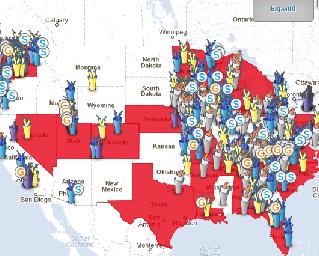
There’s a fascinating new map that the Institute for Local Self Reliance has put together that shows how 342 communities around the United States are now offering publicly owned, cheap, reliable broadband and cable service to local residents and businesses. Check it out here. Then check out why the fastest networks in the nation are built by local governments:

“It may surprise people that these cities in Virginia, Tennessee, and Louisiana have faster and lower cost access to the Internet than anyone in San Francisco, Seattle, or any other major city,” says Christopher Mitchell, Director of ILSR’s Telecommunications as Commons Initiative. “These publicly owned networks have each created hundreds of jobs and saved millions of dollars.”

Then sit back and ask yourself why you’re paying so much money every month for the rotten service you get from Comcast and AT&T. Ask your friends, ask around work; is anyone really happy with their broadband service? Do you think you’re getting a good deal for the price?

When I saw the map I called Mitchell, and he told me that every one of the cities and towns on his map has been successful with public ownership. “Within five years, everyone is either making money for the general fund or breaking even and offering really low rates,” he said. “The real benefit is lower prices, which leaves residents with more money in their pockets, which tends to get spent in their communities where it helps local business.”

Most of the cities that have muni broadband (and cable TV!) also have municipal electric power systems, which makes the whole thing easier. But Santa Monica did it bit by bit, installing fiber every time one of the streets was torn up for plumbing, sewers, etc. and gradually building out a network that so far only connects businesses but can be expanded as the money comes in. San Francisco streets are torn up all the time, and will be torn up regularly as water and sewer lines are replaced. The biggest expense of laying cable is cutting open and repaving streets; the cable itself is fairly cheap.

In some states, the big private telecoms have pushed through state legislation banning muni broadband — but not in California. San Francisco has every legal right to get into this business.

So why aren’t we doing it already? “What’s missing,” Mitchell said, “is the political will to really piss off Comcast and AT&T.”

I was just looking at the map when I got an email alerting me to this lovely discussion between Mayor Ed Lee and the head of PG&E, talking about the private utility’s plans to invest $1.2 billion in local infrastructure (more on that in a future blog post). That’s going to involve a lot of digging up streets. So what does Mayor Lee say? Maybe we could allow PRIVATE companies to lay fiber at the same time.

I want to throw up.


American horror story

1

cheryl@sfbg.com

FILM “Go look in the refrigerator.” Normally, that’s not a particularly sinister phrase. But if the fridge in question happens to be sitting in Jeffrey Dahmer’s Milwaukee kitchen, circa 1991, it contains the following: a box of Arm & Hammer, condiments (mustard, ketchup, steak sauce), and a freshly severed human head.

With details like that, there’s no wonder the Dahmer case continues to fascinate, 22 years after his capture (and 19 years after he was bludgeoned to death by a fellow inmate). Chris James Thompson’s The Jeffrey Dahmer Files, a documentary with narrative re-enactments, is savvy to the fact that lurid outrageousness never gets old. It also plays off the contrast between Dahmer’s gruesome crimes and his seemingly mild-mannered personality.

And thankfully, these aren’t cheesy, America’s Most Wanted-style re-enactments. We see Jeffrey (Andrew Swant) going about a mix of mundane and fraught-with-meaning tasks: being fitted for new glasses, eating a hamburger, shopping for 10-gallon drums, and buying way more bleach than one man could possibly ever need. We never see him kill, though we do witness him entering a hotel with another young man — and leaving with a suspiciously heavy suitcase. Swant isn’t a dead ringer for Dahmer, but he has the same “serial killers look like everybody else” quality. It’s unsettling, and goes a long way toward explaining why, as real-life Dahmer neighbor Pamela Bass recalls here, the Jeff she knew (“kinda friendly, but introverted,” Bass says) hardly seemed like a murdering cannibal.

https://www.youtube.com/watch?v=hSzeu6ohgeA

But Wisconsin’s most passionate body-part hoarder (since Ed Gein, anyway) was 100 percent authentic, a fact made abundantly clear to the homicide detective assigned to the case, Pat Kennedy (who made that stomach-turning fridge peek), and medical examiner Dr. Jeffrey Jentzen, tasked with identifying Dahmer’s torn-asunder victims. “We were dismantling someone’s museum,” Jentzen remembers of the crime scene, a tidy one-bedroom in a rough part of town where, months earlier, flippant cops had ushered a dazed teenager back into Dahmer’s clutches, believing his tale that the younger man had stormed out after a domestic spat. Oops.

Since Dahmer is dead and his crimes have been well-documented — in books by Dahmer’s father and others, true-crime specials, and the 2002 narrative film that gave future Oscar nominee Jeremy Renner his breakout role — The Jeffrey Dahmer Files does well to concentrate on people whose lives have been forever changed by the case, two because of their jobs and one due to an unfortunate coincidence. Though Kennedy and Jentzen offer compelling interviews, Bass’ participation is key; unlike the two men, who’ve no doubt told their stories dozens of times before, her emotions still feel raw.

She speaks about getting to know her across-the-hall neighbor — he stood out for being the only white guy living in the Oxford Apartments, a fact made more notable when it was revealed he killed mostly men of color, many of whom were also gay. (As his victims’ families would no doubt agree, if Dahmer’d had a taste for rich white girls, his story would certainly have played out differently.)

Not only did Bass have to deal with the revelation that she’d been living next to a killer (“I remember a stench, an odor”), she found herself surrounded by a media circus, harassed by gawkers, and blamed by strangers for “not doing anything.” Even after she’d moved — the entire apartment building was torn down — the stigma of having been Dahmer’s neighbor lingered.

Kind of like the killer’s own notoriety. Speaking of, the Akron, Ohio house where Jeffrey Dahmer grew up (and committed his first murder) has been on the market for six months. Refrigerator included.

THE JEFFREY DAHMER FILES

March 1-7

Roxie Theater

3117 16th St, SF

www.roxie.com


Why labor should oppose the pipeline

0

OPINION As pressure from the fossil-fuel industry, conservative Canadian and US politicians, and some construction unions mounts on President Obama to greenlight the controversial Keystone XL Pipeline project, a growing coalition has a different message.

On February 17, tens of thousands rallied against the pipeline in cities across the US, including San Francisco — a testament to the climate movement, ranchers and farmers, First Nations leaders, most Canadian unions, some US unions (including my nurses’ organization), transport and domestic workers, and young people who are rightfully alarmed over the global impact of Keystone XL.

For nurses, who already see patients sickened by the adverse effects of pollution and infectious diseases linked to air pollutants and the spread of water and food borne pathogens associated with environmental contaminants, Keystone XL presents a clear and present danger.

First, extracting tar sands is more complex than conventional oil drilling, requiring vast amounts of water and chemicals. The discharge accumulates in highly toxic waste ponds and risks entering water sources that may end up in drinking water, as is already occurring.

Second, the corrosive liquefied bitumen form of crude the pipeline would carry is especially susceptible to leaks that can spill into farmland, water aquifers and rivers on route, threatening an array of adverse health outcomes.

Public health costs from fossil-fuel production in the US through contaminants in our air, rivers, lakes, oceans, and food supply are already pegged at more than $120 billion every year by the National Academy of Sciences. The Environmental Protection Agency warns that exposure to particulate matter emitted from fossil fuel plants is a cause of heart attacks, long term respiratory illness including asthma, cancer, developmental delays and reproductive problems. Global-warming inducted higher air temperatures can also increase bacteria-related food poisoning, such as salmonella, and animal-borne diseases like the West Nile virus.

That’s just the tip of the melting iceberg given the planet altering consequences of rising sea levels, intensified weather events including droughts, floods and super storms already in evidence, and mass dislocation of coastal populations and starvation that may well follow our failing to stem climate change.

Far more jobs would be created by converting to a green economy. As economist Robert Pollin put it in his book Back to Full Employment, every $1 million spent on renewable clean energy sources creates 16.8 jobs, compared to just 5.2 jobs created by the same spending on fossil-fuel production.

And, as one person acerbically commented on a recent New York Times article, there are no jobs on a dead planet.

Further, stumping for the pipeline puts labor in league with the many of the most anti-union, far right corporate interests in the U.S., such as the oil billionaire Koch Brothers and energy corporations, abetted by the politicians who carry their agenda.

The future for labor should not be scrambling for elusive crumbs thrown down by corporate partners, but advocating for the larger public interest, as unions practiced in the 1930s and 1940s, the period of labor’s greatest growth and the resulting emergence of a more egalitarian society.

Deborah Burger is a registered nurse and co-president of National Nurses United, the nation’s largest organization of nurses.

Wiener’s dance mix: more DJs mixed with fines for “bad actors”

7

DJs could proliferate in San Francisco’s bars, restaurants, coffee shops, and plazas under legislation that Sup. Scott Wiener introduced today to include DJs under the city’s limited live music permits, but the legislation also includes new enforcement powers to crackdown on underground parties and other unpermitted events.

Limited live music permits – which are far cheaper and easier to obtain than the city’s full-blown Place of Entertainment permits ($385 compared to around $2,000 for the POE permits) – were created in 2011 by legislation sponsored by then-Sup. Ross Mirkarimi, allowing amplified performances until a 10pm curfew. But DJs were left out, despite their prevalence in San Francisco, something Wiener is now trying to correct.

“Entertainment and nightlife are an essential part of San Francisco’s cultural and economic vibrancy,” Wiener said today in a press release announcing the proposal. “This legislation fosters live entertainment while also heightening our ability to monitor and regulate bad actors.”

It’s that last part that doesn’t sit well with everyone, particularly given San Francisco’s pervasive culture of throwing underground parties, which are key fundraising tools for grassroots efforts such as Burning Man camps but which are the targets of periodic crackdowns by the SFPD and other agencies. It seems that when it comes to nightlife, we always have to take some medicine whenever City Hall offers a spoonful of sugar.

The legislation would give the Entertainment Commission the authority to levy $100 fines to those involved with unpermitted parties, either in established clubs or underground warehouses, whereas now the commission only has the authority to punish those who have permits for violating them.

“Punishing a DJ playing at a party in which the promoter didn’t get the proper permits (perhaps unbeknownst to the DJ), would be unfair and inappropriate, in my opinion,” was how DJ/Promoter Syd Gris from Opel Productions and Opulent Temple reacted to the legislation.

But Entertainment Commission Executive Director Jocelyn Kane told us she doesn’t expect to fine an DJs. While she asked Wiener for those enforcement powers, they are simply a way of encouraging promoters and business owners to get permits. “We’re not into punishment, we’re into compliance,” she said, adding that this is simply seeking authority to do administratively what the SFPD and California Alcoholic Beverage Control Administration can now to criminally and civilly.

Tom Temprano, president of the Harvey Milk LGBT Democratic Club and a DJ/promoter at the popular Hard French parties, told us “where I really want clarification is on the new enforcement powers for the commission,” although he agreed with Kane that the commission generally works cooperatively with the nightlife community, far more than either the SFPD or ABC.

“All in all, it’s a really good step in the right direction,” Temprano said of the Wiener legislation. “It seems really positive. As a DJ, allowing DJs to be used for limited live performances is just common sense.”

Kane said the legislation will allow music to flourish in the city, from outdoor plazas to small venues, many of which have used DJs illegally. “We’ll be able to legalize that and bring them into the fold,” she said. “There always have been places that use a DJ like a jukebox.”

In addition to the relatively cheap application cost compared to POE permits, limited live music perhaps are quick and easy to obtain and don’t necessarily require city inspections paid for by the applicant.

In his press release, Wiener praised the importance of nightlife to the city economy and cited a city study he commissioned last year which found that nightlife has a $4.2 billion impact on San Francisco, employing 48,000 people and furnishing the City with $55 million in tax revenue annually.

“We need to encourage a flourishing nightlife that not only marks San Francisco as a cultural capital, but also creates jobs and brings in revenue for essential City services,” Wiener said. “These amendments are part of that broader strategy.”

Plan C, and the C stands for Condo conversions

229

No politically savvy San Franciscan has ever really bought the rhetoric espoused by the so-called “moderate” political action group Plan C that it’s all about finding middle ground between what its website calls “a ‘downtown’ machine, and a far-left, dogmatic, so-called ‘progressive’ machine.” As if that unbalanced labeling wasn’t enough of a indicator, the fact that its funding comes from all the biggest cogs in the downtown machine should be.

But now, as the group’s members aggressively work to open the flood gates on converting San Francisco’s rent-controlled apartments into privately controlled condominiums, it’s become more clear than ever that the C stands for Condo and that the financially motivated group is moving the agenda of the real-estate and investment interests that dominate its Board of Directors.

City Hall sources connected to the ongoing meetings that Sups. David Chiu and Mark Farrell have been holding with stakeholders on the controversial condo lottery bypass legislation sponsored by Farrell and Sup. Scott Wiener say there were indications of possible compromise that came out of the first mediation meeting.

That one primarily involved the tenant advocates who have led the charge against the legislation and the representatives for tenancy-in-common owners seeking to buy a bypass to the city’s condo conversion lottery that only allows 200 new condos per year. There were whispers that came from that meeting of a compromise that would allow a one-time bypass in exchange for shutting down the lottery for several years, or indexing it to the construction of new housing for low-income San Franciscans.

Since then, the sources say, Plan C and their partners in the real-estate industry have dominated the meetings with their dogmatic advocacy for indefinitely allowing the maximum number of condo conversions. Despite public statements by Farrell and Wiener that they just want to clear out some backlog without encouraging more landlords to convert apartments to TICs in the future, Plan C just wants to feed more affordable apartments into the expensive real estate market.

Some basic research on the group and its Board of Directors seems to show that this position is about financial self-interest rather than values or ideology.

Plan C Co-Chair Steve Adams is a regional manager for Sterling Bank & Trust, which has consistently been one of the city’s top TIC lenders and which recently sponsored a forum encouraging more conversion of apartments, promising to increase its loan volume, and painting a rosy picture of the TIC financing market that belies Wiener’s claims that TIC owners can’t get financial relief and need the city’s intervention.

One of the key presenters at that symposium was TIC attorney Lyssa Paul, who is also a Plan C board member and someone who makes her living creating more TICs. Other members of the 12-member board who make their living in the real estate industry and benefit directly for TICs conversions are Amanda Jones and Brian Hecktman. Other bankers or investment managers on the board that benefit from the TIC business are Ashley Lyon and Bob Gain.

Co-Chair Mike Sullivan is a venture capital attorney who created Plan C in 2001 and used it to help then-Sup. Gavin Newsom sell his Care Not Cash homelessness plan and run for mayor. Randy Brasche is in software marketing and got involved in the issue being frustrated with the condo lottery and [[CORRECTION/DELETION: last year]] forming the San Francisco TIC Coalition.

Board member David Fix is [[CORRECTION/ADDITION: the former]] president of the Small Property Owners of San Francisco, so it’s possible that his interest is as much ideological as financial, particularly given his past public statements against rent control. That may also be the case with Baha Hariri, a principal at A&F Properties and the former political director of the downtown-funded-and-created Committee on Jobs.

Among the downtown players that fund Plan C, which was sitting on $73,872 in the bank as of the start of this year, are the Committee on Jobs, the San Francisco Association of Realtors, PG&E, San Francisco Apartment Association, Small Property Owners of San Francisco, Shorenstein Realty, the San Francisco Chamber of Commerce, and venture capitalist Ron Conway.

So Plan C appears to be little more than Plan A’s deceptive effort to push Plan Condo. BTW, I’ve been waiting more than 24 hours now to get a call back from the Plan C board, after leaving a message with its only paid administrator, Richard Magary, who told me Sullivan and his colleagues are all quite busy now. But I’ll be happy to update this post if and when I hear back.

2/22 UPDATE: Still no call back from Plan C, but Fix made a comment requesting the two minor corrections above. C’mon, Plan C, gimme a call, what are you so afraid of?

Dick Meister: Honor a legendary organizer

0

Dick Meister, former labor editor of the San Francisco Chronicle, is co-author of A Long Time Coming: The Struggle to Unionize America’s Farm Workers (Macmillan)

There’s still time, if you hurry, to join a nationwide campaign  to posthumously award the Presidential Medal of Freedom to legendary organizer Fred Ross. For more than a half-century he was among the most influential, skilled, dedicated and successful of the community organizers who have done so much for the underdogs of American society.

Most people have never heard of Fred Ross, which is exactly how he wanted it. He saw his job as training others to assume leadership and the public recognition that accompanies it.  And train them he did, hundreds of them, including farm worker leaders Cesar Chavez and Dolores Huerta, who were previously awarded the Presidential Medal of Freedom.

Chavez and Huerta were typical Ross trainees ­­ poor, inexperienced members of an oppressed minority who were inspired to mobilize others like them to stand up to their oppressors.

“Fred did such a good job of explaining how poor people could build power I could taste it,” Chavez recalled.


Chavez was among the Mexican Americans living in California’s barrios in the 1950s that Ross, then with Saul Alinsky’s Industrial Areas Foundation, was helping form political blocs to demand improvements in the woefully inadequate community services provided them.

Ross’ approach was, as always, to get people to organize themselves, and he sensed correctly that young Chavez was “potentially the best-grass-roots leader I’d ever run into.”

Within just a few years, the small organizations formed by the residents of the particular barrios joined into a potent statewide group, the Community Services Organization, headed by Chavez.

A few years later, Chavez and Huerta founded what became the United Farm Workers Union. It was the country’s first effective organization of farm workers precisely because it was built in accord with Ross’ principles ­­ from the ground up by farm workers relying heavily on such non-violent tactics as the boycott.

Ross had started out to be a classroom teacher after working is way through the University of Southern California in 1936. But he could find no teaching jobs in that dark year of the Great Depression. He took other public work, eventually managing the federal migratory labor camp near Bakersfield, California, that novelist John Steinbeck used as a model for the camp that had a central role in “The Grapes of Wrath.”

Fiction though it was, Steinbeck’s account was accurate. Conditions in the camp were deplorable. So were the conditions imposed on the migrants by the local growers for whom they worked.

But the migrants organized themselves to win better living and working conditions, thanks to young Fred Ross. He went from cabin to cabin and tent to tent every morning after daybreak, encouraging camp residents to form the organizations that helped improve their conditions,

Ross had found his life’s work. He would become a full-time organizer, a task he described as being “a social arsonist who goes around setting people on fire.” Never was Ross paid more than a marginal salary, sometimes no more than room, board and expenses, but never would he falter.

His goal was “to help people do away with fear­­ fear to speak up and demand their rights ­ ­ to push people to get out in front so they could prove to themselves they could do it.”

Ross left the migrant group to work with the Japanese Americans on the West Coast who were herded into internment camps during World War II. Ross, then with the American Friends Service Committee, helped internees win release by finding them jobs in the manpower-short steel plants and other factories in the Midwest that produced vital war materials.

After the war, he returned to southern California, to help African Americans and Mexican Americans fight against housing and school segregation.  They fought effectively, too, against police brutality and helped elect Los Angeles’ first Hispanic city councilman.

Ross also worked in Arizona, helping Yaqui Indians get sewers, paved streets, medical facilities and other basic needs that had been denied their communities.

Ross’ most ambitious and probably most satisfying work came during his 15 years of training hundreds of organizers and negotiators for the United Farm Workers from the UFW’s inexperienced and long-oppressed rank-and-file members.

Ross kept at it for virtually the rest of his life, joining his son, Fred Jr., a highly regarded organizer himself, in grass-roots campaigns for liberal politicians and progressive causes. He actively supported a wide variety of international as well as domestic issues, much of the time working with anti-nuclear and peace groups.

It was not until four years before his death in 1992, when Alzheimer’s Disease struck, that he finally stopped.

Fred Ross was an organizer’s organizer, a trailblazer, a pioneer. He was ­­and he remains ­­ a vitally important model for those seeking to empower the powerless and to truly reform, if not perfect, this imperfect society.

“Fred fought more fights  and trained more organizers and planted more seeds of righteous indignation against social injustice than anyone we’re ever likely to see again,” noted Jerry Cohen, formerly the UFW’s general counsel.

House Minority Leader Nancy Pelosi noted  that Ross “left a legacy of good works that have given many the courage of their convictions, the powers of their ideals, and the strength to do heroic deeds on behalf of the common person.”

Honoring Ross, said his son, would be recognizing “the foot soldiers in all struggles that do the day to day work but rarely get acknowledged for their labors. It’s about honoring the farm workers, low- wage urban workers, and all those fighting for social justice against what many see as insurmountable odds.”

To add your voice to those urging President Obama to award the Presidential Medal of Freedom to Fred Ross, send an email before Feb. 28 to presidential aide Julie Chavez Rodriquez at Julie_C_Rodriguez@who.eop.gov. Please send a blind copy to Fred Ross Jr. at fredross47@gmail.com. You might also ask your House and Senate representatives to join others in Congress who have signed a letter urging the President to act.

Dick Meister, former labor editor of the San Francisco Chronicle, is co-author of A Long Time Coming: The Struggle to Unionize America’s Farm Workers (Macmillan)


Oil pipeline protest coming to San Francisco

Forward on Climate, an event billed as the largest climate rally in history, will have a presence in San Francisco on Feb. 17. With most activity centered in Washington, D.C., organizers of the nationwide mobilization hope to convince President Barack Obama to reject the development of the Keystone XL pipeline, an extension of a tar-sand oil pipeline that connects Alberta, Canada and multiple Midwest cities.

In San Francisco, protesters plan to surround the U.S. State Department building at One Market Plaza to demonstrate opposition the pipeline project. “Since the pipeline crosses the international boundary with Canada, the State Department has to approve the permit, so symbolically that’s why we chose it,” explained Taylor Hawke of 350 Bay Area.

More than 70 organizations are partnering to promote the event, including 350.org, the Sierra Club, the National Resources Defense Council, CREDO Action and others. Sup. John Avalos will join student groups, indigenous organization Idle No More, and others in speaking at the rally. Organizers expect a turnout of more than 2,000 with participants traveling to San Francisco from Chico, Sacramento, Santa Cruz and University of California campuses at Davis and Merced.

Jessica Dervin-Ackerman of 350 Bay Area says activists “intend to send a strong message to President Obama that immediate action is needed to stop climate disruption and to protect current and future generations,” and that “the U.S. needs to be an international leader in the diplomacy of cutting greenhouse-gas emissions.” A recent HSBC report underscored the role of national governments in fighting climate change, noting that 90 percent of the world’s oil and gas is held by governments or state-owned oil companies.

Some climate activists aren’t waiting until Feb. 17 to get their message across. Protestors from 350.org and the Sierra Club, along with many other organizations, sat outside the gates of the White House Feb. 13 in an act of civil disobedience meant to raise awareness about the Keystone XL pipeline extension. Many were arrested, including actress Daryl Hannah, and released the following day.

Bill McKibben, co-founder of 350.org, touched on Obama’s apparent contradiction on climate change in a recent Rolling Stones article. While the President has made promises to work on wind and solar energy, McKibben said, he’s also emphasized a goal of “producing more oil and gas here at home.” The pipeline would financially benefit the Canadian government, which is anxious to export its most lucrative commodity. The tar sands in Alberta contain as much as 240 gigatons of carbon, representing half the amount carbon scientists say can be “safely” burned by 2050.

Big oil companies stand to lose the most if the Forward on Climate movement succeeds. Oil reserves represent corporate assets that lay buried underground, and that’s where organizations like 350.org want them to stay. “The key to everything is this,” Hawke said: “From the latest science, we now know that the climate crisis is the greatest moral issue of our time.”

TransCanada, the pipeline developer, claims the project would provide tens of thousands of jobs, but the U.S. State Department estimates that it would be closer to five or six thousand temporary construction jobs. A more sustainable approach, says Frances Aubrey of 350.org, would be to create new jobs by investing in renewable energy. The only ones who will benefit from fossil fuels, she added, are the oil companies and the politicians whose campaigns they fund. “Oil companies are willing to change the planet beyond what people can survive,” says Aubrey, “to make a profit.”

It’s about housing, not taxes

48

Texas Guv Rick Perry made a spectacle of himself trying to take businesses away from California, but as everyone with any sense predicted, his trip was a bust. Fact is, very few businessess anywhere make major relocation decisions because of taxes and regulations. But as Calitics points out (with a nice chart), the real reason people have left California of late is the cost of housing.

The so-called “job creators” have enough money to afford to live here, so they aren’t going anywhere. What’s happening is that the rest of the workforce, particularly the middle-class workforce, is finding the gap between the amount they can earn and the amount they have to pay for a home is getting so radical that they’re leaving altogether.

That’s happening in San Francisco, as evictions are driving people out of the city. Some may move to other parts of the Bay Area, creating what most environmentalists and economists agree is an unsustainable situation: Workers living so far from their jobs that vast amounts of energy have to be expended getting them back and forth. But the data shows that people are leaving California altogether. Calitics:

If we are to really continue our growth, we must address the housing crunch that is going on, especially along the coast. That isn’t accomplished through slashing services and budgets, but rather working to create new affordable housing solutions and ways for young families to stay here in California, where most would rather stay.

And let’s remember: One of the biggest factors that does drive business location decisions is the availability of skilled labor. If people are leaving the state because they can’t afford to live here, who’s going to work in the industries that are the biggest employers in San Francisco (hint: It’s not tech)? Tourism is this city’s greatest economic engine, and jobs in the hospitality industry don’t pay enough for housing in the city that depends on it.

That’s a dilemma we all ought to be talking about — and Rick Perry trying to get businesses to go to Texas is not.


Union divisions

28

steve@sfbg.com

Service Employees International Union Local 1021 strenuously resists the wage and benefit givebacks regularly demanded in recent years by employers, including the city of San Francisco, which is now trying to slash the salaries for more than 40 city job classifications.

At the same time, Local 1021 is asking its own employees for benefit givebacks during new contract negotiations, a move that their own union is blasting as hypocritical.

That has squeezed Local 1021 President Roxanne Sanchez and her leadership team into a difficult position. They must fend off a revolt from staff that is turning vitriolic, without offending members who are in some cases worse off than the SEIU employees who represent them — all without weakening the union’s position at the bargaining tables with employers that relentlessly work to undermine the labor movement.

And they have to do it in the middle of an internal union election that they need to win to stay in power.

“The irony here is SEIU works assiduously to avoid takeaways in their contracts with employers and here they want givebacks from their own sweatshop-type working conditions,” says Libby Sayre, area director for Communications Workers of America Local 9404, which has represented SEIU Local 1021 employees since an internal reorganization in 2007. “It’s time for them to put some of their union principles into play.”

Local 1021 is proposing to increase how much employees pay for one of their health plans, eliminate the 401(k) pension match, and change some work rules, while keeping salaries where they’ve been stuck for many years. Employees say the givebacks total $416,000, and they’re coming even as the union maintains healthy reserves of about $11 million (the union says that level is now closer to $9 million).

“These are proposals they wouldn’t accept from an employer and they’re trying to impose them on their own employees,” Sayre told us. “It’s not justifiable. It’s not like this is a union in collapse.”

Yet Sanchez and her team, including Political Director Chris Daly, say the internal revolt led by a small number of disgruntled employees misrepresents how good the workers actually have it, particularly compared to members who have endured severe layoffs and salary and benefit cuts in recent years. Employees have another generous pension on top of the 401(k) (paying 2.5 percent of final salary per year worked), employer-paid health benefits (costs would go up for the PacificCare plan, but not Kaiser), normal step salary increases, and bonuses in lieu of raises in each of the last two years.

“Our staff has not given up anything,” Sanchez said. “They saw us cut the board’s budget by several hundred thousand dollars before we asked for anything.”

She said that with dues revenue falling along with membership numbers, and pension and health care costs rising steeply, the union can’t afford to keep dipping into its reserve funds, as it has in each of the last two years.

“We’re asking them to give modestly to their health care costs, and that we don’t pay for that second pension,” Sanchez said. “We are not balancing the budget on their backs, like what gets done with us.”

While both Daly and Sanchez admit the local has healthy reserve funds for its budget level, they say that’s necessary for the union to project strength, whether it be threatening a strike at the bargaining table or taking on ballot measures that would cripple the labor movement, such as last year’s Prop. 32, which the local dug into its reserve funds to fight.

“If we didn’t have healthy reserves, we’d be coming at them for more [givebacks] and doing layoffs,” Sanchez said.

While Sanchez said she resents being compared to the employers that her union battles, her rhetoric about the need for fiscal discipline is echoed by city officials who say they are already being generous with workers and they can’t afford to continue paying salaries that are so far beyond market rates.

“The city has to look at all the costs and be fiscally responsible and prudent,” said Susan Gard, a spokesperson for the city’s Department of Human Resources. “We don’t have the luxury of just looking at what’s best for employees.”

As allowed by the two-year contract Local 1021 reached with the city last year, DHR did a study comparing local salaries with eight other jurisdictions, finding that positions such as social workers, clerks, secretaries, custodians, and nursing assistants were between 16 and 48 percent above the Bay Area average. So the city is seeking to lower the salaries in 43 job classifications (applied to new hires only) and raise them for four classifications. The proposal will go before an arbitrator for a decision early next month.

Gard said the increases take into account San Francisco’s high cost of living and historic desire for pay equity, so most increases are less than half of the pay differentials the survey revealed. “They would all still be above market rates,” she said.

But Local 1021 officials say most of these positions had their salaries deliberately increased back in the 1980s and 1990s as part of an official city policy promoting pay equity for jobs often held by women and minorities. Even though that provision was removed from the official City Charter in 1996, they say it remains an important city policy.

“The city is rolling back decades of historic work on pay equity in this city,” Daly said. “We were concerned about equal treatment of workers who were disproportionately women and people of color.”

To highlight that pay equity issue, Local 1021 is planning a rally on Feb. 14 at noon outside DHR offices at 1 South Van Ness Avenue. Gard denies that the DHR proposal rolls back pay equity advances: “The city is committed to that principal, equal pay for equal work, and we don’t think our proposal erodes that.”

Sanchez said Local 1021 employees are undermining the union’s position in fights like this one, but they say the local needs to recognize and reward their work rather than justifying givebacks by comparing employees to members. “We don’t want to play the ‘our benefits are better than X-group’ games,” Nick Peraino, a 1021 researcher and CWA steward, told us. “We work very hard on behalf of the membership.”

Sayer accused Local 1021 leaders of arrogance and told us, “There is an attitude problem on the bargaining team and a reality problem on the part of the local,” a tone that that Sanchez sometimes mirrored when talking about the CWA campaign against her leadership.

Yet such vitriolic rhetoric may have as much to do with internal union politics as it does a true impasse. The leaders of the revolt by SEIU employees recently tried to decertify CWA and go with more forceful representation, a vote they lost badly but which may have spurred CWA to toughen its approach. Similarly, after SEIU members have accepted some bad contracts in recent years, some members may resent the organizers. Sanchez stressed how Local 1021 is member-led and responsive to the needs of workers, despite the current conflict.

“We want to make this organization good and strong,” Sanchez said, “and you can’t do that if you’re screwing over someone.”

Baby-carrot steps

San Francisco is known for its discerning foodies and exotic culinary offerings, but not every neighborhood has access to nutritious, let alone gourmet, fare. Yet several programs have sprouted up recently to boost businesses that want to improve environmental practices or benefit their surrounding communities.

Carrotmob, an international organization that runs campaigns in San Francisco, encourages local consumers to make purchases at targeted businesses in order to help the establishments meet sustainability goals. “We refer to it as ‘sustainability,’ but that encompasses a broad range of issues,” explains Nisha Gulati, an organizer with the group. “A Carrotmob can range from anything from helping to reduce climate change, to carrying fair trade products.”

There is one day left for socially conscious diners to support Carrotmob’s campaign to benefit the Old Skool Café, a Bayview restaurant that employs at-risk youth. The 1940’s-style supper club, which held its grand opening last fall, is a nonprofit “designed to provide solid alternatives to a life of crime and poverty by providing jobs and a community of support,” according to the website. For every $25 dinner voucher purchased online via the “mob,” 15 percent will be dedicated to a college scholarship fund for its crew of young servers and cooks.

This past weekend, Carrotmob held a kickoff for its second San Francisco campaign to help Valencia artisan cheese vendor Mission Cheese apply for and maintain bike parking, and to install water-saving devices.

Gulati says Carrotmobbers have spent more than $1 million at 250 campaigns around the world since 2008, helping businesses achieve socially just or climate-friendly improvements. While the endeavor deserves points for creativity, we can’t help but bristle at Carrotmob’s tagline: “In a boycott, everyone loses. In a Carrotmob, everyone wins.” (Hello? Ever heard of the Anti-Apartheid Movement? The Coalition of Immokalee Workers’ boycott against Taco Bell? Those boycotts produced some winners, we think.)

Meanwhile, there’s a push underway to bring healthier food to the city’s Southeast sector. While Fresh & Easy Markets in the Bayview and other locations may or may not shut their doors (stay tuned), the Southeast Food Access Coalition (SEFA) has started partnering with Third Street corner stores to improve residents’ access to healthy food options. The coalition is a collaborative of residents, community based organizations and city agencies focused on public health and food access.

The phrase “food desert” is typically used to describe low-income areas where stretches of pavement are dotted with liquor stores peddling unhealthy products. While corner stores in upscale neighborhoods may have vats of fresh chilled salads for sale under curved glass cases, stores in food desert areas typically carry little more than high-sodium chips, sugary soft drinks and alcohol.  A SEFA survey found that 60 percent of Bayview residents do their grocery shopping outside the area, and 33 percent reported that there were produce items they wanted but couldn’t buy in the area. 

Lee’s Market and Ford’s Grocery are two corner stores participating in the program, which aims to transform businesses’ food product offerings to promote overall health in a neighborhood disproportionately impacted by diabetes and other kinds of disease. In exchange for stocking fresh foods, the stores receive access to retail technical assistance, promotion efforts by SEFA and other government incentives. Similar efforts are underway in the Tenderloin.

In late January, District 10 Sup. Malia Cohen joined representatives from SEFA and other community organizations for a store “reopening” to raise awareness about the healthier product offerings. “Within one week of stocking fresh produce, Lee’s Market sold out of its inventory,” Cohen’s aide Andrea Bruss told the Guardian via email, “demonstrating that there is a demand from these communities for fresh foods.”