International

May Day rally for immigration reform in SF

Hundreds gathered for a rally outside San Francisco City Hall on May 1, capping off a march that drew activists into the streets to commemorate International Workers Day. The events were organized by a broad coalition of immigrant rights advocates to call for improvements to the recently unveiled proposal for federal immigration reform, which will go before the Senate Judiciary Committee next week. [More photos after the jump]

Olga Miranda of SEIU Local 87, the San Francisco Janitors Union, addressed the crowd. “I want to be able to recognize sheet metal workers, carpenters, laborers, hospital workers, housekeepers, domestic workers,” she said. “We are a proud economy. … All we want is for workers to be able to come out of the dark. We want to make sure that we are not exploited for the color of our skin, that we are not pushed into the darkness. We are Chinese, we are Arabic, we are Filipino, we are gay, we are transgender. We are workers! And comprehensive immigration reform needs to be inclusive.”

Activists from Causa Justa / Just Cause led the crowd in a unity chant in five different languages.


Putri Siti, an undocumented student from Indonesia, shared the story of when she and her family thought they might face deportation. “I am more than just an illegal. I am more than just undocumented. I’m a student. I’m a dancer. It doesn’t matter what paper I have. And now, I am proud to say, that I am undocumented, unafraid, unashamed,”  she said.


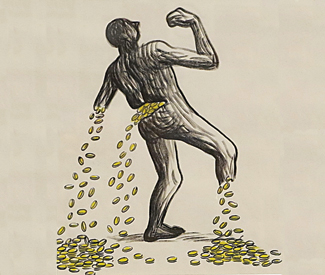
Debt peons, unite!

49

rebecca@sfbg.com

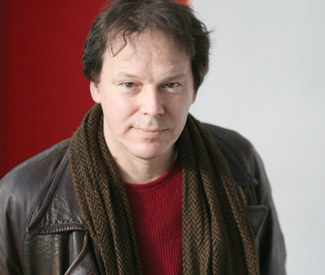
David Graeber is renowned among occupiers and idealists as an intellectual founder, or anti-leader as it were, of the Occupy Wall Street encampment that sprung up in Zucotti Park in the fall of 2011. He’s an organizer, an anarchist, a professor of anthropology and sociology at Goldsmiths University of London, a former instructor at Yale, and the author of several books, including Debt: The First 5,000 Years, a tome tracing the concept of debt back to the roots of Western civilization.

His latest book, The Democracy Project: A History, a Crisis, a Movement (Spiegel & Grau, 2013), chronicles the rise of Occupy, a leaderless economic justice movement Graeber unapologetically characterizes as a success. In honor of International Workers Day, May 1, the Bay Guardian caught up with him over coffee to talk about economic pressures facing today’s workers, particularly the young and marginalized.

Turns out, it’s not a pretty picture out there — but at least Graeber, who has a propensity to collapse into giggles between full throttle ruminations on the absurdity of global economic policy, has a sense of humor about it.

Below are some excerpts.

San Francisco Bay Guardian: Looking at the Occupy movement, the mainstream narrative seems to be that it was a short-lived, failed experiment and now it’s over. But in your book, you ask the question ‘why did it work?’

David Graeber: Let’s put it this way. When was the last time that the issue of social class was put at the center of American politics? Probably the 1930s. Social movements have been desperately trying to do this for 50, 60, 70 years and gotten nowhere. We managed to do it in three months. Um, that’s pretty impressive. … And I’m pretty sure that if it weren’t for us, we’d have a President Romney right now. That whole 47 percent thing? It would not have resonated had it not been for the 99 percent thing.

SFBG: Why do you think the idea of wealth inequality, of all issues, resonated so much?

DG: I think because there’s a basic change in the way capitalism works in America. It’s been going for some time, but it just became unmistakably apparent after 2008. People talk about the “financialization” of capitalism, and it sounds very abstract. Casino capitalism, speculation, they’re playing these games, they’re making money appear out of thin air, which is not entirely untrue. … It’s based on getting everybody into debt. The profits of Wall Street are — they now say a very small percentage is actually based on commerce — it’s now based on finance. But what does ‘based on finance’ actually mean? It means they go into your bank account and take your money.

I’ve been trying to figure out just what percentage of the average American’s income is simply extracted every month by the finance sector. …You count mortgages, you count credit card debt, loan debt, all the fees and penalties that you don’t notice… all that stuff put together comes to about 20 percent at least, and probably higher. For example, families that are in their early 30s, it’s often 40 percent. … I saw a poll the other day that said, for the first time since they’ve been taking statistics, a majority of Americans don’t consider themselves middle class. … And I think the reason for this is because it really never was an economic category. It has to do with how you feel you relate to basic institutions. What middle class first and foremost means is, if you see a policeman, do you feel safer, or do you feel less safe? … Then there’s more going on. For the first time, we found that there is incredible solidarity between students and workers, which have traditionally not been friends — go back to the 60s and it’s hard-hats beating up hippies. Now, the transit workers in New York are suing the police over taking their buses to arrest us [occupiers].

SFBG: How would you reflect on the economic condition that workers are facing, compared with how things were historically over the last several decades?

DG: It’s atrocious. One thing that’s happened is there’s been this disconnect between productivity and wages. This is kind of the deal they struck at the end of World War II in most of the North Atlantic countries: It used to be that you work harder, you produce more, you get a share of the profits. And that was worked out through mass unionization, it was worked out through negotiations, and it was tacit somewhat, but you know, it was understood.

Since the ’70s, that deal is off. So, productivity goes up, wages stay flat. So that’s why they say all profits have now gone to one percent of the population. So workers are working harder and harder, more and more hours, under more and more stress. …It’s all the more difficult because of education, because now it’s gotten to the point where if you don’t have a college degree, your chance of having any benefits at work is basically nil. If you want to have health care, you need to go to college. At the same time, if you want to go to college, you need to pay student loans. So you’re double damned. … You have all these people who are sort of trapped: I’d like to finish, I’m still going, I’ll take night classes — for five or ten years, while you have a working class job. So the line between the students and the proletariat blurs, and this is one of the reasons why the student loan issue actually spoke to people in unions.

And there’s also a shift in the type of work. Did you ever see the “We are the 99 percent” tumblr page? It was all these people talking about their jobs… their debts and difficult medical problems…. One of the things that fascinated me about that was that like 80 percent of the people on that page were women. …They were all doing something where the work was clearly to the benefit of someone else. And I think that those are the people who are the most screwed right now, ironically. The more obviously your work benefits other human beings, the less you’re paid.

SFBG: Going back to this idea of debt — your book [Debt: The First 5,000 Years] looks at debt through the ages of human history. I’m curious to hear your thoughts on debt as it relates to personal freedom.

DG: That’s one of the most pernicious things about the current debt regime in America. Being young is supposed to be a place where you can let your imagination run free and explore your sense of possibility. That’s what college used to be. In a sense, those students who are just out of college, I always call them post-students, they’re the kind of people who are activists, the kind of people who are thinking okay I’ll start a band, maybe I’ll be an artist. That’s where everything comes out of in a generation, where everything new and exciting emerges. What could be more stupid than taking all those people and turning them into debt peons? … I think of it like horror movies — what is it that’s so scary about monsters? It’s that they turn you into them, right? Vampires, werewolves. But you don’t get to be like the really cool super count vampire, you get to be a pathetic minion vampire, where you’re in debt for the rest of eternity, as a flunkie. In a way, that’s what’s scary about debt. It forces you to think like a capitalist, you have to think about money and profit all the time. But it’s even worse, because you’re a capitalist with no capital. It like totally destroys your ability to think of anything but money, and you don’t even have any money.

SFBG: Another thing we’re seeing increasingly is austerity measures and public sector spending cuts. What’s the root cause of these rollbacks, and what do you see as the most appropriate response from economic justice activists?

DG: I am in the peculiar situation at the moment that some members of the ruling class actually talk to me and even ask for my advice. Which, you know they’re in trouble if they’re talking to me, right? Part of the reason for that is that these guys are on a completely self-destructive course. I live in the UK most of the time. They’re going into a triple debt recession because of these austerity programs. Now what are you going to make of it? It has nothing to do with economics.

SFBG: So why is it happening?

DG: It’s moral. It’s political, and moral. Neoliberalism is not basically an economic ideology. It’s about politics … Always prioritize the political advantage over the economic advantage. Breaking unions, getting rid of job security, making people work more and more hours — that’s not economically efficient … So what does it do? Well, it’s the best thing you could possibly do if you want to depoliticize workers … The classic justifications for capitalism are harder and harder to maintain. … So what excuse do they have left? They can say, well, it’s the only thing that’s possible. Basically all they can do is hammer away at our imagination. The only alternative is this, or North Korea. And the amazing thing is that the only war they’ve won, is the war against the imagination.


Short takes: SFIFF week two

0

Prince Avalanche (David Gordon Green, US, 2012) It has been somewhat hard to connect the dots between David Gordon Green the abstract-narrative indie poet (2000’s George Washington, 2003’s All the Real Girls) and DGG the mainstream Hollywood comedy director (2008’s Pineapple Express, yay; 2011’s Your Highness and The Sitter, nay nay nay). But here he brings those seemingly irreconcilable personas together, and they make very sweet music indeed. Paul Rudd and Emile Hirsch play two men — one a fussy, married grown-up, another a short-attention-spanned man child — spending the summer in near-total isolation, painting yellow divider lines on recently fire-damaged Texas roads. Their very different personalities clash, and at first the tone seems more conventionally broad than that of the 2011 Icelandic minimalist-comedy (Either Way) this revamp is derived from. But Green has a great deal up his sleeve — gorgeous wide screen imagery, some inspired wordless montages, and a well-earned eventual warmth — that makes the very rare US remake that improves upon its European predecessor. Wed/1, 4pm, and Fri/3, 6:30pm, Kabuki. (Dennis Harvey)

Fill the Void (Rama Burshtein, Israel, 2012) Respectfully rendered and beautifully shot in warm hues, Fill the Void admirably fills the absence on many screens of stories from what might be considered a closed world: the Orthodox Hasidic community in Israel, where a complex web of family ties, duty, and obligation entangles pretty, accordion-playing Shira (Hada Yaron). An obedient daughter, she’s about to agree to an arranged marriage to a young suitor when her much-loved sister (Renana Raz) dies in childbirth. When Shira’s mother (Irit Sheleg) learns the widower Yochay (Yiftach Klein) might marry a woman abroad and take her only grandchild far away, she starts to make noises about fixing Shira up with her son-in-law. The journey the two must take, in possibly going from in-laws to newlyweds, is one that’s simultaneously infuriating, understandable, and touching, made all the more intimate given director Rama Burshtein’s preference for searching close-ups. Her affinity for the Orthodox world is obvious with each loving shot, ultimately infusing her debut feature with a beating heart of humanity. Wed/1, 6:30pm, and Thu/2, 4pm, Kabuki. (Kimberly Chun)

The Strange Little Cat (Ramon Zürcher, Germany, 2013) There’s a strange music to this light-on-its-toes, rhythmic, and ultimately mesmerizing chamber piece by first-time feature director Ramon Zürcher — one seemingly informed by dance, Gerhard Richter, contemporary opera, and Jean-Luc Godard in a latter-day gimlet-eyed state. The arc of a banal yet odd day is traced, within mostly the close confines of a Berlin apartment, as family members enter, interact, and then retreat in a kind of call and response: the mother runs a kitchen machine, a girl cries out as if to mimic its roar, a cousin who looks as if he’s straight out of a Dutch master painting soberly surveys the scene, while the eponymous feline weaves in and out of the action. In fact, that pet is the most domesticated of the lot populating this riveting domestic scene, all of which makes you want to see what Zürcher cooks up next. Wed/1, 9pm; Sun/5, 7pm; and May 8, 4pm, Kabuki. (Chun)

Salma (Kim Longinotto, England/India, 2012) Kept like a prisoner in her in-laws’ house for more than two decades, Salma is more than the most famed woman poet writing in the Tamil language. She’s also an archetypal South Indian woman of her time and place: married as a teen despite her desire to read and write poetry, her body controlled by her husband and family, and her freedom constricted to the point where she was once forced to write on scraps of paper in the toilet and to smuggle her verse out to have it published. What follows is the stuff of fairy tales, as Salma evolves into a politician and heroine who speaks for those otherwise muffled by their burkas and smothered by circumstance. Documentarian Kim Longinotto keeps a close eye on the oppressive culture that once harbored the writer — and inspired her to express herself — yet also takes the time to notice Tamil Nadu’s many small instances of beauty, in mutable pink and purple skies, a gold-flecked green sari, and showy weddings that mark both the beginning, and end, for so many young girls. Documentarian Longinotto whets one’s appetite for more of Salma’s words, while upholding her story’s relevance amid rising consciousness concerning the rights of all women in India. Thu/2, 6:15pm, Kabuki; Sat/4, 2pm, PFA; Sun/5, 3:45pm, New People. (Chun)

Computer Chess (Andrew Bujalski, US, 2013) Mumblecore maestro Andrew Bujalski (2002’s Funny Ha Ha; 2005’s Mutual Appreciation) makes his first period picture, kinda, with this stubbornly, gloriously retro saga set at an early-1980s computer-chess tournament (with a few ventures into the freaky couples-therapy seminar being held at the same hotel). The technology is dated, both on and off-screen, as hulking machines with names like “Tsar 3.0” and “Logic Fortress” battle for nerdly supremacy as a cameraman, wielding the vintage cameras that were actually used to film the feature, observes. Tiny dramas highlighting the deeply human elements lurking amid all that computer code emerge along the way, and though the Poindexters (and the grainy cinematography) are authentically old-school, the humor is wry and awkwardly dry — very 21st century. Keep an eye out for indie icon Wiley Wiggins, last seen hiding from Ben Affleck’s hazing techniques in 1993’s Dazed and Confused, as a stressed-out programmer. Thu/2, 9pm, and Sat/4, 4pm, Kabuki. (Cheryl Eddy)

The Cleaner (Adrián Saba, Peru, 2011) An austere take on substitute-parental bonding dressed in apocalyptic sci-fi clothing, Adrián Saba’s Peruvian feature finds the world ending not with a bang but with a sickly whimper. (If you’ve ever breathed the toxic air or looked at the shit-brown sea around Lima, you’ll find this pretty credible.) A middle-aged loner (Victor Prada) tasked with cleaning up the death sites of citizens felled by a fatal epidemic finds a surviving young boy (Adrian Du Bois) in one such apartment. Their forced, awkward pairing — because the death toll is so high city services can no longer taken in another orphan — is poignant and terse in what’s a minimalist companion to the underrated 2008 adaptation of José Saramago’s plague saga Blindness. Sat/4, 6:15pm, Kabuki; Tue/7, 8:40pm, PFA; May 9, 8:30pm, Kabuki. (Harvey)

Invasion of the Body Snatchers (Philip Kaufman, US, 1978) Yes, Vertigo (1958) is very nice. But here is my alternate choice for Best San Francisco Movie Ever: 2013 SFIFF tributee Philip Kaufman’s 1978 remake of the 1950s sci-fi classic. Donald Sutherland, Brooke Adams, Jeff Goldblum, Veronica Cartwright, and Leonard Nimoy are among the locals who get very paranoid — with no pot brownies involved — when everyone around them starts turning coldly conformist. Given the film’s fond evocation of the city’s loopy, friendly, countercultural vibe at the time, this shift in the psychological weather really is alarming — arguably much more dramatically so than it was the vanilla small-town setting of Don Siegel’s original or Abel Ferrara’s military-base 1994 version. Wonderfully creepy, eccentric, stylish and humorous, it was Kaufman’s first commercial success. He will appear at the Castro screening to discuss it, his career in general, and to accept his Founder’s Directing Award. Sun/5, 7:30pm, Castro. (Harvey)

Waxworks (Paul Leni, Germany, 1924) Paul Leni’s 1924 omnibus horror feature is considered one of the great classics of German Expressionist cinema. A young man (William Dieterle, who went on to a long Hollywood directing career) answers an ad seeking “an imaginative writer for publicity” work at a wax museum. There he’s asked to write “startling tales” about specific wax figures, envisioning himself and the owner’s comely assistant (Olga Belajeff) as hero and heroine in each narrative. The first and longest tale has the two of them as a couple who get unwanted attention from the tyrannical, lusty Caliph of Bagdad (Emil Jannings). It’s an attenuated comic episode sparked by spectacular abstracted “Middle Eastern” sets. Next, Conrad Veidt (of 1920 Expressionist flagship film The Cabinet of Dr. Caligari) plays Ivan the Terrible in a more macabre story of bloodthirst and madness. Finally, Werner Krauss is “Spring-Heeled Jack” (i.e. Jack the Ripper), terrorizing our protagonists in a brief riot of nightmarish superimposed images. SFIFF’s annual silent film extravaganza at the Castro will be accompanied by a stellar quartet of musicians playing an original score: Mike Patton, Scott Amendola, Matthias Bossi, and William Winant. Expect an eclectic and propulsive evening of sounds equally schooled by punk, prog rock, and jazz. Tue/7, 8:30pm, Castro. (Harvey)

Before Midnight (Richard Linklater, US, 2012) Proving (again) that not all sequels are autonomic responses to a marketplace that rewards the overfamiliar, director Richard Linklater and his co-writers Julie Delpy and Ethan Hawke reconnect with the characters Céline and Jesse, whom we first encountered nearly 20 years ago on a train and trailed around Vienna for a night in Before Sunrise, then met again nine years later in Before Sunset. It’s been nine more years since we left them alone in a Paris apartment, Céline adorably dancing to Nina Simone and telling Jesse he’s going to miss his plane. And it looks like he did. The third film finds the two together, yes, and vacationing in Greece’s southern Peloponnese, where the expansive, meandering pace of their interactions — the only mode we’ve ever seen them in — is presented as an unaccustomed luxury amid a span of busy years filled with complications professional and personal. Over the course of a day and an evening, alone together and among friends, the two reveal both the quotidian intimacies of a shared life and the cracks and elisions in their love story. May 9, 7pm, Castro. (Lynn Rapoport) *

The San Francisco International Film Festival runs through May 9 at the Castro Theatre, 429 Castro, SF; New People Cinema, 1746 Post, SF; Pacific Film Archive, 2575 Bancroft, Berk; and Sundance Kabuki Cinemas, 1881 Post, SF. For tickets (most shows $10-15) and info, visit festival.sffs.org.


Skate or die

0

arts@sfbg.com

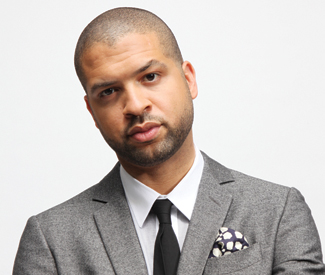
MUSIC Compared to the 1980s and early ’90s, it doesn’t seem like there are many places in this city to skate. There are always the hills and odd spots for the creative, but the few designated skateparks seem to be paltry peace offerings in proportion to the laws, security guards, and anti-grind hardware put in place to elsewhere restrict the activity. For a short time this week, the new SFJAZZ Center will be added to the small list of skate venues, with a pair of live skating performances accompanied by lauded improvisational pianist Jason Moran and his group Bandwagon.

It may seem an odd pairing, but one that has natural connections for the pianist. “San Francisco has always had an association with skateboarding for me,” Moran told me over the phone. “As a kid in the ’80s, our parents would visit SF from Houston, and my older brother and I would take our skateboards along. We weren’t super good, but we’d go down to EMB.” At that time — before merchants, property owners, and police worked to close it off — Embarcadero’s Justin Herman Plaza (or “EMB”) was an international destination for skaters who came as if it were their Mecca.

At its peak, those drawn to its concrete waves, challenging gaps, and tempting stairs could number in the hundreds (although how many were just there hoping to spot Mark Gonzales is unclear). For Moran, it left an imprint. “I think of it sort of like Minton’s Playhouse, which became known as the incubator for bebop. The kind of place where people would hang out, practice, exchange tips, and learn from each other.”

To be honest, when I first heard of the live skateboarding events SFJAZZ had planned, it struck me as an attempt to bring “low” culture into a “high” venue, the genre having increasingly entered into a museum-like curatorial setting, much like classical music. Something similar to what the Museum of Contemporary Art in LA had done under divisive director Jeffrey Deitch, with its “Art in the Streets” and planned (unplanned?) “Fire in the Disco” programs. As Artistic Advisor for Jazz at the Kennedy Center in Washington DC and a recipient of the MacArthur “genius grant” — an award which comes with a large, no strings attached monetary award and basically the suggestion of “keep doing what you’re doing” — Moran seems as much in the art world as he does the music. But it’s a position he’s aware of, addressing it head-on with his album Artist in Residence and the song “Break Down,” which riffs over a vocal track expressing a need to do exactly that to the art world (and barriers, the artist, the general public, society, misunderstanding, etc.).

As one of the first Resident Artistic Directors at SFJAZZ’s new center, Moran sees the opportunity get past these sort of dichotomies. “SFJAZZ is at a place where as a new establishment, they’re in a way positioned with more freedom, to try different things and attract a more diverse crowd and bring in a larger part of the community. Often institutions say that they want to do that, but really end up being this kind of elitist thing.” Moran’s stint includes at the center also includes a solo performance and a tribute to Fats Waller in the form of a dance party featuring Meshell Ndegeocello. Keeping with the populist ideal Moran said that, “at the Kennedy Center, where I also work, we did the Fats Waller party, and we just did it for free. It certainly brings out a different crowd. Four hundred people, whoever wants to come.” (It is, however, a paid event in SF.)

For the skating performance, Moran has partnered with FTC Skateboarding and Kent Uyehara’s Western Addition, a company that frequently adopts a jazz aesthetic in its videos and decks, the latter emblazoned with images of John Coltrane, Jaco Pastorius, or Mati Klarwein’s art for Miles Davis’ Bitches Brew. A custom half ramp is being built out in the Sunset, to be hauled into the SFJAZZ Center. Skateboarders including Adrian Williams, Alex Wolslagel, Dave Abair, Jake Johnson, and Ben Gore have been recruited. The only question is how well it will coalesce. There will be no rehearsal.

“I already know that the sound of the wheels, and the slap of the board, the quality of these sounds, for my band it’s something to work with. But as far as syncing up with them and making music that goes along perfectly, I’m not going to try and do that. It’s more about capturing the energy, and giving them support so they can sort of solo on top of it,” Moran said, also mentioning a desire to not necessarily cover but channel the spirit of bands like Suicidal Tendencies, more conventionally associated with skateboarding.

Moran’s confidence extends to the skaters, who he sees as improvisers as well. “There’s an understanding among skateboarders that’s similar to musicians, where you can see someone perform a trick or a move, and they make it look easy, and unless you’re at the level they are, or you watch a lot, you might not be able to perceive how difficult it is.” In this way the root is transcription, learning by observing, practicing, and applying. After that comes adapting, transposition. And that’s little more than a change in location.

JASON MORAN BANDWAGON AND LIVE SKATEBOARDING

Sat/4, 7:30pm, $20-$40

SFJazz Center

201 Franklin, SF

www.sfjazz.org


Love spells trouble

0

emilysavage@sfbg.com

TOFU AND WHISKEY The twin star driving forces behind Bleached (hellobleached.tumblr.com) have been around. Not in a cruising with delinquents kind of way, but that’s probably where their music is best blasted — careening down the California coast in a shiny convertible with a shitty ex-lover or two, rooftop down, an open bag of Flamin’ Hot Cheetos, lipstick-stained cola can, and the stereo crackling.

Really though, being around more refers to the basic facts that singer-guitarist Jennifer Clavin and bassist Jessie Clavin have been playing music together for a long time, since junior high, and have toured nearly as long. More so, they’ve been connected since birth — they’re sisters who grew up together in the sleepy San Fernando Valley and reached for instruments partially out of boredom and isolation.

Their first notable band was early Aughts-born Mika Miko, which became known for its near-residency at formerly grimy downtown LA venue the Smell — and its frenetic live shows on tour with bands like the Gossip and No Age.

“Mika Miko was a mutual breakup,” younger sister Jessie says with a casual Valley girl affect from the dusty tour road between El Paso and Austin, Texas. “It ended because everyone wanted to do something else, go different directions. But me and Jen still wanted to play music together.”

They began slowly picking up the pieces for Bleached shortly after Mika Miko’s 2010 breakup and released three well-received seven-inches, but had yet to debut a proper LP until just recently. On April 2, they unfurled a melodious, punks-in-the-sun full-length, the punchy pop Ride Your Heart on Dead Oceans. On tour promoting the new record, Bleached will be in San Francisco Sun/5 at the Independent, 628 Divisadero, SF. www.theindependentsf.com.

So while Jen and Jessie are blood-related and forever sonically entwined, there’s an exhilarating feeling of something new afoot at this very moment in time. “I feel like it’s a new little chapter right now for us,” Jessie says. “For so long we were just like, playing live shows with songs from the seven-inches, and that’s basically all people really knew. So now that it’s out, this tour just feels really exciting — people are going to have the record, they’ll know what to expect.”

“At the beginning [of Bleached] everyone was comparing us to every current girl band, but not anymore, maybe now that our record came out, that’s why it’s changed.”

The rock’n’roll record hints at early punk like the Ramones around its edges on opener “Looking for a Fight,” but that’s washed away with cooling waves of jangly California surf pop melodies and mid-century teen dream vocals on songs like “Dreaming Without You” and “Dead Boy.” And despite the inherent upbeat nature of the tracks, much of the lyrics in songs like “Love Spells” and “When I Was Yours” reflect a somewhat darker time for singer Jen, who moved to New York briefly between the fall of Mika Miko and rise of Bleached. Suffice to say, she’s not singing about her cats or whatever.

In NYC she joined the band Cold Cave, desperately missed her sister, dated the wrong kind of boy, and wrote breakup songs for the band she’d soon reform back on the West Coast. “I was going through a really rough time,” Jen says as Jessie passes her the phone. “I moved back to LA and stayed in [our] parent’s house in the desert for a month…and locked myself in my room, kept myself distracted by writing a bunch of songs.”

Ride Your Heart was recorded and produced last fall in various studios in Burbank and at Bedrock LA in Echo Park. At the time, Jen was listening to a lot of Blondie (there’s a song on the album called “Waiting By the Telephone”), and both sisters survived on a steady diet of Bowie — Ziggy Stardust era — along with the the Stones, Velvet Underground, and the Kinks. “We communicate better when we know exactly what we’re listening to,” Jessie says.

And communication is key to any relationship, particularly the mythic sibling-bandmate dynamic. Though this one seems far less tumultuous then those widely discussed rock’n’roll brotherhoods. “We’ve been doing this for so long. It helps to work through it and get stronger,” says Jessie. That connection was tested when Jen was in New York. While she was with Cold Cave, she was still occasionally working on songs for an early version of Bleached, but the distance was too great. “We were trying to still write back and forth, but it was just difficult, it wasn’t the same as when we’re in the room together and start playing and Jen starts singing and has the melody. It just didn’t work out.”

Now, Jen lives in Hollywood, walking distance from the Universal backlot, and Jessie lives in Silverlake. The local LA bands they listen to are most frequently their friends’ acts, including Pangea and Audacity, and they like Oakland’s Shannon and the Clams, and other Burger Records acts. As is the current zeitgeist, Jessie says Bleached might soon be doing a tape with Burger too.

“We grew up with mixtapes. I definitely remember first hearing the Germs [that way],” Jessie says. “I was transitioning from listening to like, KROQ alternative to like, underground, but then I’d go to school in a Germs shirt and think I was really cool.”

Laughing, she adds, “Well I wouldn’t say cool, but definitely different.”


STEREO TOTAL

Oui! The multilingual French-German power-pop duo Stereo Total is back with a new album, Cactus Versus Brazel on Kill Rock Stars, packed with the expected adorable electro ditties, and a rejuvenated je ne sais quoi. With Super Adventure Club, Giggle Party.

Wed/1, 8pm, $15. Rickshaw Stop, 155 Fell, SF. www.rickshawstop.com.


MARIEE SIOUX

Crystalline psych-folk crooner Mariee Sioux’s twinkly followup to debut Faces in the Rocks (2007), Gift for the End was released a whole year ago, but there was never a proper SF release party (and there was some drama with the label it was supposed to be on going defunct) so the local songwriter is celebrating now. It’s a haunting, whispery, tender album, like a less annoying Joanna Newsom selection, and deserving of attention — no matter if that’s taking place on a much later date. With Alela Diane, Conspiracy of Venus.

Thu/2, 8:30pm, $16. Great American Music Hall, 859 O’Farrell, SF. www.slimspresents.com


MIKE PATTON/WAXWORKS

Experimental contemporary live music always seems to creep its way into the SF International Film Festival. And who better to bring weirdo sound experiments than the current king of such things: Mike Patton. The operatically inclined Patton, perhaps best known as the debonaire genius behind Faith No More and Mr. Bungle (and recently as songwriter for the film The Place Beyond the Pines), will appear alongside three percussionists: Scott Amendola, Sleepytime Gorilla Museum’s Matthias Bossi, and William Winant at the Castro. The quartet, which has never before performed in this arrangement, will play an original score to 1924 German expressionist silent film, Waxworks.

Tue/7, 8:30pm, $22–$27. Castro Theater, 429 Castro, www.sffs.org.


Film Listings

0

Film listings are edited by Cheryl Eddy. Reviewers are Kimberly Chun, Dennis Harvey, Lynn Rapoport, and Sara Maria Vizcarrondo. For rep house showtimes, see Rep Clock.

SAN FRANCISCO INTERNATIONAL FILM FESTIVAL

The San Francisco International Film Festival runs through May 9 at the Castro Theatre, 429 Castro, SF; New People Cinema, 1746 Post, SF; Pacific Film Archive, 2575 Bancroft, Berk; and Sundance Kabuki Cinemas 1881 Post, SF. For tickets (most shows $10-15) and complete schedule, visit festival.sffs.org.

OPENING

At Any Price Growing up in rural Iowa very much in the shadow of his older brother, Dean Whipple (Zac Efron) cultivated a chip on his shoulder while dominating the figure 8 races at the local dirt track. When papa Henry (Dennis Quaid) — a keeping-up-appearances type, with secrets a-plenty lurking behind his good ol’ boy grin — realizes Dean is his best hope for keeping the family farm afloat, he launches a hail-mary attempt to salvage their relationship. This latest drama from acclaimed indie director Ramin Bahrani (2008’s Goodbye Solo) is his most ambitious to date, enfolding small-town family drama and stock-car scenes into a pointed commentary on modern agribusiness (Henry deals in GMO corn, and must grapple with the sinister corporate practices that go along with it). But the film never gels, particularly after an extreme, third-act plot twist is deployed to, um, hammer home the title — which refers to prices both monetary and spiritual. A solid supporting cast (Kim Dickens, Heather Graham, Clancy Brown, Red West, newcomer Maika Monroe) helps give the film some much-needed added weight as it veers toward melodrama. (1:45) Sundance Kabuki. (Eddy)

Bert Stern: Original Mad Man Mad man, cad man: both describe photographer Bert Stern, famed for his groundbreaking vodka ads as well as his “Last Sitting” session with Marilyn Monroe (a series he recently re-created, rather regrettably, with Lindsay Lohan). Now in his 80s, he’s coaxed in front of the camera by longtime muse Shannah Laumeister; though their closeness (despite a 40-year age difference) means Bert Stern: Original Mad Man contains a few uncomfortably intimate moments, it also makes for some remarkably candid interviews. And what a life he’s had, melding his voracious appetite for women with a talent for capturing them in stunning, creatively innovative photographs. Though his parade of exes (including celebrated ballet dancer Allegra Kent) remember him with a certain amount of curled-lip disdain, his iconic work — 1959 documentary Jazz on a Summer’s Day, the poster for former co-worker Stanley Kubrick’s 1962 Lolita (those heart-shaped glasses? Stern’s idea) — speaks for itself. (1:50) Opera Plaza, Shattuck. (Eddy)

Iron Man 3 Well, shit. Looks like we got a trilogy on our hands. (2:06) Balboa, Marina, Presidio.

Kon-Tiki This Best Foreign Language Film nominee from Norway dramatizes Thor Heyerdahl’s 1947 Kon-Tiki expedition. (1:58) Embarcadero.

The Reluctant Fundamentalist Based on Pakistani novelist Mohsin Hamid’s award-winning 2007 novel, and directed by the acclaimed Mira Nair (2001’s Monsoon Wedding, 2006’s The Namesake), The Reluctant Fundamentalist boasts an international cast (Kate Hudson, Martin Donovan, Kiefer Sutherland, Liev Schreiber, Om Puri) and nearly as many locations. British-Pakistani actor Riz Ahmed (2010’s Four Lions) stars as Changez Khan, a Princeton-educated professor who grants an interview with a reporter (Schreiber) after another prof at Lahore University — an American citizen — is taken hostage; their meeting grows more tense as the atmosphere around them becomes more charged. Most of the film unfolds as an extended flashback, as Changez recounts his years on Wall Street as a talented “soldier in [America’s] economic army,” with a brunette Hudson playing Erica, a photographer who becomes his NYC love interest. After 9/11, he begins to lose his lust for star-spangled yuppie success, and soon returns to his homeland to pursue a more meaningful cause. Though it’s mostly an earnest, soul-searching character study, The Reluctant Fundamentalist suddenly decides it wants to be a full-throttle political thriller in its last act; ultimately, it offers only superficial insight into what might inspire someone’s conversion to fundamentalism (one guess: Erica’s embarrassingly bad art installation, which could make anyone hate America). Still, Ahmed is a compelling lead. (2:08) Embarcadero, Shattuck. (Eddy)

The Source Family See “Aquarius Rising.” (1:38) Roxie.

ONGOING

The Angels’ Share The latest from British filmmaker Ken Loach (2006’s The Wind that Shakes the Barley) and frequent screenwriter collaborator Paul Leverty contains a fair amount of humor — though it’s still got plenty of their trademark grit and realism. Offered “one last opportunity” by both a legal system he’s frequently disregarded and his exasperated and heavily pregnant girlfriend, ne’er-do-well Glaswegian Robbie (Paul Brannigan) resolves to straighten out his life. But his troubled past proves a formidable roadblock to a brighter future — until he visits a whiskey distillery with the other misfits he’s been performing his court-ordered community service with, and the group hatches an elaborate heist that could bring hope for Robbie and his growing family … if his gang of “scruffs” can pull it off. Granted, there are some familiar elements here, but this 2012 Cannes jury prize winner (the fest’s de facto third-place award) is more enjoyable than predictable — thanks to some whiskey-tasting nerd-out scenes, likable performances by its cast of mostly newcomers, and lines like “Nobody ever bothers anybody wearing a kilt!” (not necessarily true, as it turns out). Thankfully, English subtitles help with the thick Scottish accents. (1:41) Embarcadero. (Eddy)

Arthur Newman (1:41) Metreon.

The Big Wedding The wedding film has impacted our concepts of matrimony, fashion, and marital happiness more than all the textbooks in the world have affected our national testing average; but it’s with that margin of mediocrity I report from the theater trenches of The Big Wedding. With this, the wedding movie again peters to a crawl. Susan Sarandon (an actress I love with a loyalty beyond sense) is Bebe, the stepmother/caterer swept under the rug by the selfishness of her live in lover Don (De Niro), his ex-wife/baby momma Elle (Diane Keaton) and their racist wackjob future in-laws. When Don and Elle faced the end of their marriage, they tried to rekindle with a Columbian orphan. Cue Ben Barnes in brownface. Alejandro is set to wed Amanda Seyfried and when his mother ascends from Columbia for the wedding, he decides Don and Elle have to act like their marriage never ended &ldots; which makes Bebe a mistress. Surprise! A decade of caring selflessly for your lover’s kids has won you a super shitty wedding you still have to cater! To give you a sense of the conflict management on display, Bebe — the film’s graceful savior —drops a drink on Don before fleeing the scene in her Alfa Romeo; she’s the one character not determined to act out her more selfish urges in the style of an MTV reality show. Despite some less imaginative conflicts and degrading “solutions,” this blended family still speaks some truth about the endearing embarrassment of the happy family. (1:29) 1000 Van Ness, Presidio, SF Center. (Vizcarrondo)

Blancanieves If you saw the two crappy overblown Hollywood takes on Snow White last year, my condolences. This is probably its best cinematic incarnation ever not made by someone called Walt. Pablo Berger’s Blancanieves transplants the tale to 1920s Spain and told (à la 2011’s The Artist) in the dialogue-free B&W style of that era’s silent cinema. Here, Snow is the daughter of a famous bullfighter (a beautiful performance by Daniel Giménez Cacho) who’s paralyzed physically in the ring, then emotionally by the death of his flamenco star wife (Inma Cuesta) in childbirth. He can’t bring himself to see his daughter until a grandmother’s death brings little Carmencita (the marvelous Sofía Oria) to the isolated ranch he now shares with nurse-turned-second-wife Encarna — Maribel Verdú as a very Jazz Age evil stepmother. Once the girl matures (now played by the ingratiating, slightly androgynous Macarena García), Encarna senses a rival, and to save her life Carmen literally runs away with the circus — at which point the narrative slumps a bit. But only a bit. Where The Artist was essentially a cleverly sustained gimmick elevated by a wonderful central performance, Blancanieves transcends its ingenious retro trappings to offer something both charming and substantiative. Berger doesn’t treat the story template as a joke — he’s fully adapted it to a culture, place, and time, and treats its inherent pathos with great delicacy. (1:44) Embarcadero, Shattuck, Smith Rafael. (Harvey)

The Company You Keep Robert Redford directs and stars as a fugitive former member of the Weather Underground, who goes on the run when another member (Susan Sarandon) is arrested and a newspaper reporter (Shia LaBeouf) connects him to a murder 30 years earlier during a Michigan bank robbery. Both the incident and the individuals in The Company You Keep are fictive, but a montage of archival footage at the start of the film is used to place them in the company of real-life radicals and events from the latter days of the 1960s-’70s antiwar movement. (The film’s timeline is a little hard to figure, as the action seems to be present day.) Living under an assumed name, Redford’s Nick Sloan is now a recently widowed public interest lawyer with a nine-year-old daughter, still fighting the good fight from the suburbs of Albany, NY — though some of his movement cohorts would probably argue that point. And as Nick heads cross-country on a hunt for one of them who’s still deep underground, and LaBeouf’s pesky reporter tussles with FBI agents (Terrance Howard and Anna Kendrick) and his besieged editor (Stanley Tucci) — mostly there to pass comment on print journalism’s precipitous decline — there’s plenty of contentious talk, none of it particularly trenchant or involving. Redford packs his earnest, well-intentioned film with stars delineating a constellation of attitudes about revolution, justice, and violent radical action — Julie Christie as an unrepentant radical and Nick’s former lover, Nick Nolte and Richard Jenkins as former movement members, Brendan Gleeson as a Michigan police detective involved in the original investigation, Chris Cooper as Nick’s estranged and disapproving younger brother. But their scrutiny, and the film’s, feels blurry and rote, while the plot’s one major twist seems random and is clumsily exposed. (2:05) Albany, SF Center, Sundance Kabuki. (Rapoport)

The Croods (1:38) Metreon, 1000 Van Ness.

Disconnect (1:55) 1000 Van Ness, SF Center, Sundance Kabuki.

Evil Dead “Sacrilege!” you surely thought when hearing that Sam Raimi’s immortal 1983 classic was being remade. But as far as remakes go, this one from Uruguayan writer-director Fede Alvarez (who’d previously only made some acclaimed genre shorts) is pretty decent. Four youths gather at a former family cabin destination because a fifth (Jane Levy) has staged her own intervention — after a near-fatal OD, she needs her friends to help her go cold turkey. But as a prologue has already informed us, there is a history of witchcraft and demonic possession in this place. The discovery of something very nasty (and smelly) in the cellar, along with a book of demonic incantations that Lou Taylor Pucci is stupid enough to read aloud from, leads to … well, you know. The all-hell that breaks loose here is more sadistically squirm-inducing than the humorously over-the-top gore in Raimi’s original duo (elements of the sublime ’87 Evil Dead II are also deployed here), and the characters are taken much more seriously — without, however, becoming more interesting. Despite a number of déjà vu kamikaze tracking shots through the Michigan forest (though most of the film was actually shot in New Zealand), Raimi’s giddy high energy and black comedy are replaced here by a more earnest if admittedly mostly effective approach, with plenty of decent shocks. No one could replace Bruce Campbell, and perhaps it was wise not to even try. So: pretty good, gory, expertly crafted, very R-rated horror fun, even with too many “It’s not over yet!” false endings. But no one will be playing this version over and over and over again as they (and I) still do the ’80s films. (1:31) Metreon, 1000 Van Ness. (Harvey)

42 Broad and morally cautious, 42 is nonetheless an honorable addition to the small cannon of films about the late, great baseball player Jackie Robinson. When Dodgers owner Branch Rickey (Harrison Ford) declares that he wants a black player in the white major leagues because “The only real color is green!”, it’s a cynical explanation that most people buy, and hate him for. It also starts the ball curving for a PR shitstorm. But money is an equal-opportunity leveling device: when Robinson (Chadwick Boseman) tries to use the bathroom at a small-town gas station, he’s denied and tells his manager they should “buy their 99 gallons of gas another place.” Naturally the gas attendant concedes, and as 42 progresses, even those who reject Robinson at first turn into men who find out how good they are when they’re tested. Ford, swashbuckling well past his sell-by date, is a fantastic old coot here; his “been there, lived that” prowess makes you proud he once fled the path of a rolling bolder. His power moves here are even greater, but it’s ultimately Robinson’s show, and 42 finds a lot of ways to deliver on facts and still print the legend. (2:08) Four Star, Marina, Metreon, 1000 Van Ness, Sundance Kabuki. (Vizcarrondo)

From Up on Poppy Hill Hayao (dad, who co-wrote) and Goro (son, who directed) Miyazaki collaborate on this tale of two high-school kids — Umi, who does all the cooking at her grandmother’s boarding house, and Shun, a rabble-rouser who runs the school newspaper — in idyllic seaside Yokohama. Plans for the 1964 Olympics earmark a beloved historic clubhouse for demolition, and the budding couple unites behind the cause. The building offers a symbolic nod to Japanese history, while rehabbing it speaks to hopes for a brighter post-war future. But the past keeps interfering: conflict arises when Shun’s memories are triggered by a photo of Umi’s father, presumed lost at sea in the Korean War. There are no whimsical talking animals in this Studio Ghibli release, which investigates some darker-than-usual themes, though the animation is vivid and sparkling per usual. Hollywood types lending their voices to the English-language version include Jamie Lee Curtis, Christina Hendricks, Ron Howard, and Gilllian Anderson. (1:31) Opera Plaza, Shattuck. (Eddy)

GI Joe: Retaliation The plot exists to justify the action, but any fan of badass-ness will forgive the skimpy storyline for the outlandish badassery in GI Joe: Retaliation. Inspired by action figures and tying loosely to the first flick, Retaliation starts with a game of “secure the defector,” followed by “raise the flag,” but as soon as the stakes aren’t real, the Joes outright suck. They don’t have “neutral,” which is maybe why a mission to rescue and revive the Joes as a force is the most ferocious fight that ever pit metal against plastic. The set pieces are stunning: a mostly silent sequence with Snake Eyes (Ray Park) and Jinx (Elodie Yung) on a mountainside will leave the audience gaping in its high speed wake, and a prison break featuring covert explosives is nonstop amazing. You’ll notice an emphasis on chain link fences and puddles (terra nostra for action figures) and set pieces conceived as if by kids who don’t have a concept of basic irrefutable truths like gravity. It’s just that kind of imagination and ardor and limitlessness that makes this Joe incredible, memorable, and a reason to crack out your toys again. (1:50) Metreon, 1000 Van Ness. (Vizcarrondo)

In the House In François Ozon’s first feature since the whimsical 2010 Potiche, he returns somewhat to the playful suspense intrigue of 2003’s Swimming Pool, albeit with a very different tone and context. Fabrice Luchini plays a high school French literature teacher disillusioned by his students’ ever-shrinking articulacy. But he is intrigued by one boy’s surprisingly rich description of his stealth invasion into a classmate’s envied “perfect” family — with lusty interest directed at the “middle class curves” of the mother (Emmanuelle Seigner). As the boy Claude’s writings continue in their possibly fictive, possibly stalker-ish provocations, his teacher grows increasingly unsure whether he’s dealing with a precocious bourgeoisie satirist or a literate budding sociopath — and ambivalent about his (and spouse Kristin Scott Thomas’ stressed gallery-curator’s) growing addiction to these artfully lurid possible exposé s of people he knows. And it escalates from there. Ozon is an expert filmmaker in nimble if not absolute peak form here, no doubt considerably helped by Juan Mayorga’s source play. It’s a smart mainstream entertainment that, had it been Hollywood feature, would doubtless be proclaimed brilliant for its clever tricks and turns. (1:45) Albany, Clay, Smith Rafael. (Harvey)

Jurassic Park 3D “Life finds a way,” Jeff Goldblum’s leather-clad mathematician remarks, crystallizing the theme of this 1993 Spielberg classic, which at its core is more about human relationships than genetically manufactured terrors. Of course, it’s got plenty of those, and Jurassic Park doesn’t really need its (admittedly spiffy) 3D upgrade to remain a thoroughly entertaining thriller. The dinosaur effects — particularly the creepy Velociraptors and fan-fave T. rex — still dazzle. Only some early-90s computer references and Laura Dern’s mom jeans mark the film as dated. But a big-screen viewing of what’s become a cable TV staple allows for fresh appreciation of its less-iconic (but no less enjoyable) moments and performances: a pre-megafame Samuel L. Jackson as a weary systems tech; Bob Peck as the park’s skeptical, prodigiously thigh-muscled game warden. Try and forget the tepid sequels — including, dear gawd, 2014’s in-the-works fourth installment. This is all the Jurassic you will ever need. (2:07) 1000 Van Ness, SF Center, Shattuck. (Eddy)

Lords of Salem (1:41) Metreon.

Mud (2:15) California, Metreon, Piedmont.

No Long before the Arab Spring, a people’s revolution went down in Chile when a 1988 referendum toppled the country’s dictator, Augusto Pinochet, thanks in part to an ad exec who dared to sell the dream to his countrymen and women — using the relentlessly upbeat, cheesy language of a Pepsi Generation. In No‘s dramatization of this true story, ad man Rene Saavedra (Gael Garcia Bernal) is approached by the opposition to Pinochet’s regime to help them on their campaign to encourage Chile’s people to vote “no” to eight more years under the brutal strongman. Rene’s well-aware of the horrors of the dictatorship; not only are the disappeared common knowledge, his activist ex (Antonia Zegers) has been beaten and jailed with seeming regularity. Going up against his boss (Alfredo Castro), who’s overseeing the Pinochet campaign, Rene takes the brilliant tact in the opposition’s TV programs of selling hope — sound familiar? — promising “Chile, happiness is coming!” amid corny mimes, dancers, and the like. Director-producer Pablo Larrain turns out to be just as genius, shooting with a grainy U-matic ’80s video camera to match his footage with 1988 archival imagery, including the original TV spots, in this invigorating spiritual kin of both 2012’s Argo and 1997’s Wag the Dog. (1:50) New Parkway, Shattuck. (Chun)

Oblivion Spoiler alert: the great alien invasion of 2017 does absolutely zilch to eliminate, or at least ameliorate, the problem of sci-fi movie plot holes. However, puny humans willing to shut down the logic-demanding portions of their brains just might enjoy Oblivion, which is set 60 years after that fateful date and imagines that Earth has been rendered uninhabitable by said invasion. Tom Cruise plays Jack, a repairman who zips down from his sterile housing pod (shared with comely companion Andrea Riseborough) to keep a fleet of drones — dispatched to guard the planet’s remaining resources from alien squatters — in working order. But Something is Not Quite Right; Jack’s been having nostalgia-drenched memories of a bustling, pre-war New York City, and the déjà vu gets worse when a beautiful astronaut (Olga Kurylenko) literally crash-lands into his life. After an inaugural gig helming 2010’s stinky Tron: Legacy, director Joseph Kosinski shows promise, if not perfection, bringing his original tale to the screen. (He does, however, borrow heavily from 1968’s 2001: A Space Odyssey, 1996’s Independence Day, and 2008’s Wall-E, among others.) Still, Oblivion boasts sleek production design, a certain creative flair, and some surprisingly effective plot twists — though also, alas, an overlong running time. (2:05) Metreon, 1000 Van Ness, Presidio, Sundance Kabuki. (Eddy)

Olympus Has Fallen Overstuffed with slo-mo shots of the flag rippling (in breezes likely caused by all the hot air puffing up from the script), this gleefully ham-fisted tribute to America Fuck Yeah estimates the intelligence of its target audience thusly: an establishing shot clearly depicting both the Washington Monument and the US Capitol is tagged “Washington, DC.” Wait, how can you tell? This wannabe Die Hard: The White House follows the one-man-army crusade of secret service agent Mike Banning (Gerard Butler), the last friendly left standing when the President (Aaron Eckhart) and assorted cabinet members are taken hostage by North Korean terrorists. The plot is to ridiculous to recap beyond that, though I will note that Morgan Freeman (as the Speaker of the House) gets to deliver the line “They’ve just opened the gates of hell!” — the high point in a performance that otherwise requires him to sit at a table and look concerned for two hours. With a few more over-the-top scenes or slightly more adventurous casting, Olympus Has Fallen could’ve ascended to action-camp heights. Alas, it’s mostly just mildly amusing, though all that caked-on patriotism is good for a smattering of heartier guffaws. (2:00) 1000 Van Ness, SF Center. (Eddy)

On the Road Walter Salles (2004’s The Motorcycle Diaries) engages Diaries screenwriter Jose Rivera to adapt Jack Kerouac’s Beat classic; it’s translated to the screen in a streamlined version, albeit one rife with parties, drugs, jazz, danger, reckless driving, sex, philosophical conversations, soul-searching, and “kicks” galore. Brit Sam Riley (2007’s Control) plays Kerouac stand-in Sal Paradise, observing (and scribbling down) his gritty adventures as they unfold. Most of those adventures come courtesy of charismatic, freewheeling Dean Moriarty (Garrett Hedlund of 2010’s Tron: Legacy), who blows in and out of Sal’s life (and a lot of other people’s lives, too, including wives played by Kristen Stewart and Kirsten Dunst). Beautifully shot, with careful attention to period detail and reverential treatment of the Beat ethos, the film is an admirable effort but a little too shapeless, maybe simply due to the peripatetic nature of its iconic source material, to be completely satisfying. Among the performances, erstwhile teen dream Stewart is an uninhibited standout. (2:03) Four Star, Smith Rafael. (Eddy)

Oz: The Great and Powerful Providing a backstory for the man behind the curtain, director Sam Raimi gives us a prequel of sorts to 1939’s The Wizard of Oz. Herein we follow the adventures of a Depression-era Kansas circus magician named Oscar (James Franco) — Oz to his friends — as he cons, philanders, bickers with his behind-the-scenes assistant Frank (Zach Braff), and eventually sails away in a twister, bound for a Technicolor land of massively proportioned flora, talking fauna, and witches ranging from dazzlingly good to treacherously wicked. From one of them, Theodora (Mila Kunis), he learns that his arrival — in Oz, just to clarify — has set in motion the fulfillment of a prophecy: that a great wizard, also named Oz, will bring about the downfall of a malevolent witch (Rachel Weisz), saving the kingdom and its cheery, goodhearted inhabitants. Unfortunately for this deserving populace, Oz spent his last pre-twister moments with the Baum Bros. Circus (the name a tribute to L. Frank Baum, writer of the Oz children’s books) demonstrating a banged-up moral compass and an undependable streak and proclaiming that he would rather be a great man than a good man. Unfortunately for the rest of us, this theme is revisited ad nauseam as Oz and the oppressively beneficent witch Glinda (Michelle Williams) — whose magic appears to consist mainly of nice soft things like bubbles and fog — stand around debating whether he’s the right man for the task. When the fog clears, though, the view is undeniably pretty. While en route to and from the Emerald City, Oz and his companions — among them a non-evil flying monkey (voiced by Braff) and a rather adorable china doll (Joey King) — wander through a deliriously arresting, Fantasia-esque landscape whose intricate, inventive construction helps distract from the plodding, saccharine rhetoric and unappealing story line. (2:07) 1000 Van Ness, SF Center, Shattuck, Sundance Kabuki. (Rapoport)

Pain & Gain In mid-1995 members of what became known as the “Sun Gym Gang” — played here by Mark Wahlberg, Dwayne Johnson, and Anthony Mackie — were arrested for a series of crimes including kidnapping, extortion, and murder. Simply wanting to live large, they’d abducted one well-off man (Tony Shalhoub) months earlier, tortured him into signing over all his assets, and left him for dead — yet incredibly the Miami police thought the victim’s story was a tall tale, leaving the perps free until they’d burned through their moolah and sought other victims. Michael Bay’s cartoonish take on a pretty horrific saga repeatedly reminds us that it’s a true story, though the script plays fast and loose with many real-life details. (And strangely it downplays the role steroid abuse presumably played in a lot of very crazy behavior.) In a way, his bombastic style is well-suited to a grotesquely comic thriller about bungling bodybuilder criminals redundantly described here as “dumb stupid fucks.” There have been worse Bay movies, even if that’s like saying “This gas isn’t as toxic as the last one.” But despite the flirtations with satire of fitness culture, motivational gurus and so forth, his sense of humor stays on a loutish plane, complete with fag-bashing, a dwarf gag, and representation of Miami as basically one big siliconed titty bar. Nor can he pull off a turn toward black comedy that needs the superior intelligence of someone like the Coen Brothers or Soderbergh. As usual everything is overamped, the action sequences overblown, the whole thing overlong, and good actors made to overact. You’ve got to give cranky old Ed Harris credit: playing a private detective, he alone here refuses to be bullied into hamming it up. (2:00) Metreon, 1000 Van Ness, Shattuck. (Harvey)

The Place Beyond the Pines Powerful indie drama Blue Valentine (2010) marked director Derek Cianfrance as one worthy of attention, so it’s with no small amount of fanfare that this follow-up arrives. The Place Beyond the Pines‘ high profile is further enhanced by the presence of Bradley Cooper (currently enjoying a career ascension from Sexiest Man Alive to Oscar-nominated Serious Actor), cast opposite Valentine star Ryan Gosling, though they share just one scene. An overlong, occasionally contrived tale of three generations of fathers, father figures, and sons, Pines‘ initial focus is Gosling’s stunt-motorcycle rider, a character that would feel more exciting if it wasn’t so reminiscent of Gosling’s turn in Drive (2011), albeit with a blonde dye job and tattoos that look like they were applied by the same guy who inked James Franco in Spring Breakers. Robbing banks seems a reasonable way to raise cash for his infant son, as well as a way for Pines to draw in another whole set of characters, in the form of a cop (Cooper) who’s also a new father, and who — as the story shifts ahead 15 years — builds a political career off the case. Of course, fate and the convenience of movie scripts dictate that the mens’ sons will meet, the past will haunt the present and fuck up the future, etc. etc. Ultimately, Pines is an ambitious film that suffers from both its sprawl and some predictable choices (did Ray Liotta really need to play yet another dirty cop?) Halfway through the movie I couldn’t help thinking what might’ve happened if Cianfrance had dared to swap the casting of the main roles; Gosling could’ve been a great ambitious cop-turned-powerful prick, and Cooper could’ve done interesting things with the Evel Knievel-goes-Point Break part. Just sayin’. (2:20) California, Embarcadero, 1000 Van Ness, Piedmont, Presidio, Sundance Kabuki. (Eddy)

Quartet Every year there’s at least one: the adorable-old-cootfest, usually British, that proves harmless and reassuring and lightly tear/laughter producing enough to convince a certain demographic that it’s safe to go to the movies again. The last months have seen two, both starring Maggie Smith (who’s also queen of that audience’s home viewing via Downton Abbey). Last year’s The Best Exotic Marigold Hotel, in which Smith played a bitchy old spinster appalled to find herself in India, has already filled the slot. It was formulaic, cute, and sentimental, yes, but it also practiced more restraint than one expected. Now here’s Quartet, which is basically the same flower arrangement with quite a bit more dust on it. Smith plays a bitchy old spinster appalled to find herself forced into spending her twilight years at a home for the elderly. It’s not just any such home, however, but Beecham House, whose residents are retired professional musicians. Gingerly peeking out from her room after a few days’ retreat from public gaze, Smith’s Jean Horton — a famed English soprano — spies a roomful of codgers rolling their hips to Afropop in a dance class. “This is not a retirement home — this is a madhouse!” she pronounces. Oh, the shitty lines that lazy writers have long depended on Smith to make sparkle. Quartet is full of such bunk, adapted with loving fidelity, no doubt, from his own 1999 play by Ronald Harwood, who as a scenarist has done some good adaptations of other people’s work (2002’s The Pianist). But as a generator of original material for about a half-century, he’s mostly proven that it is possible to prosper that long while being in entirely the wrong half-century. Making his directorial debut: 75-year-old Dustin Hoffman, which ought to have yielded a more interesting final product. But with its workmanlike gloss and head-on take on the script’s very predictable beats, Quartet could as well have been directed by any BBC veteran of no particular distinction. (1:38) Smith Rafael. (Harvey)

Renoir The gorgeous, sun-dappled French Riviera setting is the high point of this otherwise low-key drama about the temperamental women (Christa Theret) who was the final muse to elderly painter Auguste Renoir (Michel Bouquet), and who encouraged the filmmaking urges in his son, future cinema great Jean (Vincent Rottiers). Cinematographer Mark Ping Bin Lee (who’s worked with Hou Hsiao-hsein and Wong Kar Wai) lenses Renoir’s leafy, ramshackle estate to maximize its resemblance to the paintings it helped inspire; though her character, Dédée, could kindly be described as “conniving,” Theret could not have been better physically cast, with tumbling red curls and pale skin she’s none too shy about showing off. Though the specter of World War I looms in the background, the biggest conflicts in Gilles Bourdos’ film are contained within the household, as Jean frets about his future, Dédée faces the reality of her precarious position in the household (which is staffed by aging models-turned-maids), and Auguste battles ill health by continuing to paint, though he’s in a wheelchair and must have his brushes taped to his hands. Though not much really happens, Renoir is a pleasant, easy-on-the-eyes experience. (1:51) Opera Plaza, Shattuck, Smith Rafael. (Eddy)

Room 237 What subtexts, hidden meanings, conspiracy theories, and strange coincidences are hidden within Stanley Kubrick’s 1980 horror masterpiece The Shining? Former San Franciscan Rodney Ascher’s wonderfully spooky and unconventional doc burrows deep down the rabbit hole with five Shining-obsessed people, who share their ideas in voice-over as images from that film (and others chosen for reasons both obvious and curious) flow together on the screen. Innovative sound design and a throwback electronic soundtrack contribute to Room 237‘s spellbinding vibe. You’ll never watch The Shining the same way again. (1:42) Roxie. (Eddy)

The Sapphires The civil rights injustices suffered by these dream girls may be unique to Aboriginal Australians, but they’ll strike a chord with viewers throughout the world — at right about the same spot stoked by the sweet soul music of Motown. Co-written by Tony Briggs, the son of a singer in a real-life Aboriginal girl group, this unrepentant feel-gooder aims to make the lessons of history go down with the good humor and up-from-the-underdog triumph of films like The Full Monty (1997) — the crucial difference in this fun if flawed comedy-romance is that it tells the story of women of color, finding their voices and discovering, yes, their groove. It’s all in the family for these would-be soul sisters, or rather country cousins, bred on Merle Haggard and folk tunes: there’s the charmless and tough Gail (Deborah Mailman), the soulful single mom Julie (Jessica Mauboy, an Australian Idol runner-up), the flirty Cynthia (Miranda Tapsell), and the pale-skinned Kay (Shari Sebbens), the latter passing as white after being forcibly “assimilated” by the government. Their dream is to get off the farm, even if that means entertaining the troops in Vietnam, and the person to help them realize that checkered goal is dissolute piano player Dave (Chris O’Dowd). And O’Dowd is the breakout star to watch here — he adds an loose, erratic energy to an otherwise heavily worked story arc. So when romance sparks for all Sapphires — and the racial tension simmering beneath the sequins rumbles to the surface — the easy pleasures generated by O’Dowd and the music (despite head-scratching inclusions like 1970’s “Run Through the Jungle” in this 1968-set yarn), along with the gently handled lessons in identity politics learned, obliterate any lingering questions left sucking Saigon dust as the narrative plunges forward. They keep you hanging on. (1:38) Embarcadero, Piedmont, Shattuck. (Chun)

Scary Movie 5 (1:35) Metreon.

Silver Linings Playbook After guiding two actors to Best Supporting Oscars in 2010’s The Fighter, director David O. Russell returns (adapting his script from Matthew Quick’s novel) with another darkly comedic film about a complicated family that will probably earn some gold of its own. Though he’s obviously not ready to face the outside world, Pat (Bradley Cooper) checks out of the state institution he’s been court-ordered to spend eight months in after displaying some serious anger-management issues. He moves home with his football-obsessed father (Robert De Niro) and worrywart mother (Jacki Weaver of 2010’s Animal Kingdom), where he plunges into a plan to win back his estranged wife. Cooper plays Pat as a man vibrating with troubled energy — always in danger of flying into a rage, even as he pursues his forced-upbeat “silver linings” philosophy. But the movie belongs to Jennifer Lawrence, who proves the chops she showcased (pre-Hunger Games megafame) in 2010’s Winter’s Bone were no fluke. As the damaged-but-determined Tiffany, she’s the left-field element that jolts Pat out of his crazytown funk; she’s also the only reason Playbook‘s dance-competition subplot doesn’t feel eye-rollingly clichéd. The film’s not perfect, but Lawrence’s layered performance — emotional, demanding, bitchy, tough-yet-secretly-tender — damn near is. (2:01) New Parkway. (Eddy)

Spring Breakers The idea of enfant terrible emeritus Harmony Korine — 1997’s Gummo, 2007’s Mister Lonely, 2009’s Trash Humpers — directing something so utterly common as a spring break movie is head-scratching enough, even moreso compounded by the casting of teen dreams Vanessa Hudgens, Selena Gomez, and Ashley Benson as bikini-clad girls gone wild. James Franco co-stars as drug dealer Alien, all platinum teeth and cornrows and shitty tattoos, who befriends the lasses after they’re busted by the fun police. “Are you being serious?” Gomez’s character asks Alien, soon after meeting him. “What do you think?” he grins back. Unschooled filmgoers who stumble into the theater to see their favorite starlets might be shocked by Breakers‘ hard-R hijinks. But Korine fans will understand that this neon-lit, Skrillex-scored tale of debauchery and dirty menace is not to be taken at face value. The subject matter, the cast, the Britney Spears songs, the deliberately lurid camerawork — all carefully-constructed elements in a film that takes not-taking-itself-seriously, very seriously indeed. Korine has said he prefers his films to make “perfect nonsense” instead of perfect sense. The sublime Spring Breakers makes perfect nonsense, and it also makes nonsense perfect. (1:34) New Parkway, 1000 Van Ness. (Eddy)

Starbuck Starbuck has a great (if not entirely original) comedic concept it chooses to play seriocomedically — i.e., less for the laughs it seldom earns than for the heart-tugging it eventually pretty much does. An ingratiatingly rumpled Patrick Huard (a major Quebec star best known for the mega-hit Les Boys series and 2006’s Good Cop, Bad Cop) plays David, erstwhile stellar contributor to a Montreal sperm bank in his salad days. Now older but no wiser, he finds himself confronted by the reality of 533 biologically fathered, now-grown offspring who’ve filed a class action lawsuit to discover his identity even as he deals with mob debt and an exasperated, pregnant semi-ex-girlfriend (Julie LeBreton). This is one of those “loser manboy must semi-grow up fast amid crisis, finding family values en route” scenarios tailor-fit for Adam Sandler. That said, the overlong, stubbornly endearing Starbuck is so much less insufferable than anything Sandler has made since … um, ever? Halfway through, this agreeable movie gets clever — as David stumbles into a meeting of his prodigious anonymous progeny — and remains reasonably so to the satisfyingly hard-won happy ending. It’s still got moments of contrivance, editorial fat (too many montages, for one thing), and more climactic hugs than any self-respecting dramedy needs to get the redemptive point across. Yet it’s also got something few comedies of any national origin have today: a lovely, distinctive, bright yet non-cartoonish widescreen look. (1:48) Four Star. (Harvey)

Tai Chi Hero Six months ago, Tai Chi Zero — Stephen Fung’s nutty tale of a martial arts savant who journeys to an isolated town to learn a top-secret technique — barreled into local theaters. A stylish kung fu flick with a high degree of WTF-ness, Zero ended on a pretty significant cliffhanger, so here’s the cheeky sequel for those who’ve been wondering what happened to Yang Lu Chan (Yuan Xiaochao) — a sweet fool when he’s not in supernatural Hulk-smash mode — and company. A brief intro gets newbies up to speed before the action starts: Lu Chan and the bossy-yet-comely daughter (Angelababy) of the local grandmaster (Tony Leung Ka Fai) have entered into a marriage of convenience — and there’s something fishy about Lu Chan’s brother-in-law, newly returned from a long exile with his own secretive bride. Meanwhile, the family worries about the dreadful “bronze bell prophecy” while the first film’s Westernized villain plots tasty revenge. In addition to all the high-flying, slo-mo scenes of hand-to-hand combat, highlights include a soundtrack filled with unexpected choices (heavy metal, accordion), a cameo by cult actor Peter Stormare (hamming it up big-time), and an army tricked out with steampunky weapons. (1:40) Four Star, Metreon. (Eddy)

Trance Where did Danny Boyle drop his noir? Somewhere along the way from Shallow Grave (1994) to Slumdog Millionaire (2008)? Finding the thread he misplaced among the obfuscating reflections of London’s corporate-contempo architecture, Boyle strives to put his own character-centered spin on the genre in this collaboration with Grave and Trainspotting (1996) screenwriter John Hodge, though the final product feels distinctly off, despite its Hitchcockian aspirations toward a sort of modern-day Spellbound (1945). Untrustworthy narrator Simon (James McAvoy) is an auctioneer for a Sotheby’s-like house, tasked with protecting the multimillion-dollar artworks on the block, within reason. Then the splashily elaborate theft of Goya’s Witches’ Flight painting goes down on Simon’s watch, and for his trouble, the complicit staffer is concussed by heist leader Franck (Vincent Cassel). Where did those slippery witches fly to? Simon, mixed up with the thieves due to his gambling debts, cries amnesia — the truth appears to be locked in the opaque layers of his jostled brain, and it’s up to hypnotherapist Elizabeth (Rosario Dawson) to uncover the Goya’s resting place. Is she trying to help Simon extricate himself from his impossible situation, seduce Franck, or simply help herself? Boyle tries to transmit the mutable mind games on screen, via the lighting, glass, and watery reflections that are supposed to translate as sleek sophistication. But devices like speedy, back-and-forth edits and off-and-on fourth-wall-battering instances as when Simon locks eyes with the audience, read as dated and cheesy as a banking commercial. The seriously miscast actors also fail to sell Trance on various levels — believability, likeability, etc. — as the very unmesmerized viewer falls into a light coma and the movie twirls, flaming, into the ludicrous. (1:44) SF Center, Shattuck, Sundance Kabuki. (Chun)

Upstream Color A woman, a man, a pig, a worm, Walden — what? If you enter into Shane Carruth’s Upstream Color expecting things like a linear plot, exposition, and character development, you will exit baffled and distressed. Best to understand in advance that these elements are not part of Carruth’s master plan. In fact, based on my own experiences watching the film twice, I’m fairly certain that not really understanding what’s going on in Upstream Color is part of its loopy allure. Remember Carruth’s 2004 Primer? Did you try to puzzle out that film’s array of overlapping and jigsawed timelines, only to give up and concede that the mystery (and sheer bravado) of that film was part of its, uh, loopy allure? Yeah. Same idea, except writ a few dimensions larger, with more locations, zero tech-speak dialogue, and — yes! — a compelling female lead, played by Amy Seimetz, an indie producer and director in her own right. Enjoying (or even making it all the way through) Upstream Color requires patience and a willingness to forgive some of Carruth’s more pretentious noodlings; in the tradition of experimental filmmaking, it’s a work that’s more concerned with evoking emotions than hitting some kind of three-act structure. Most importantly, it manages to be both maddening and moving at the same time. (1:35) Roxie. (Eddy) *


Alerts

0

WEDNESDAY 1

May Day immigrant rights march 24th and Mission, SF. 3pm march, 5pm rally, free. The San Francisco Bay Coalition for Immigrant Justice invites all to join this year’s May Day immigrant rights march, convened to urge Congressional representatives to fight for improvements to the recently unveiled federal immigration reform proposal bill. The march will begin at 24th and Mission and proceed to Civic Center for a 5pm rally.


May Day celebration 518 Valencia, SF. www.518valencia.org. 3-8pm, free. After the May Day marches and rallies have come to an end, head over to the Eric Quezada Center for Culture and Politics for a celebration of international worker solidarity, featuring a theater performance on the history of May Day by the Shaping SF Players on the history of Mayday, live screen printing, Cumbia beats, Aztec dance, protest art, sangria and beer.

SATURDAY 4

Movies that motivate change The New Parkway Theater, 474 24th St, Oakl. tinyurl.com/chngmovie. (510) 568-0702 6:30pm, $15–$100. In honor of the 20th anniversary of the Rose Foundation, attend this party and film festival and enjoy beer, wine, a silent auction, and four film screenings. Featuring Trash, a documentary exploration of global waste; 16 Seeds, a film highlighting the role of people of color in the Bay Area food justice movement; A Fierce Green Fire (Act 2), documenting the environmental battle over Love Canal, and a film about the Rose Foundation for Communities and the Environment.

SUNDAY 5

Justice for Tristan art opening La Peña Cultural Center, 3105 Shattuck, Berkl. Lapena.org. 7pm, free. This art opening will feature photos and art by Tristan Anderson, an activist who sustained a serious injury when he was struck with a teargas canister fired by the Israeli Defense Forces in 2009. Anderson’s art will be set to the sounds of 40 Thieves’ revolutionary hip hop, Nepantler@s’ queer Chicano punk, and more. Free Food Not Bombs dinner at the Long Haul, across the street, at 5:30pm before the program.

MONDAY 6

Debating “sustainable capitalism” Commonwealth Club, 595 Market, SF. www.climate-one.org. 5:30pm, $20. As a consumer, how do you know if a product billed as eco-friendly is the genuine article, or just greenwashing? Join Aron Cramer, CEO of Business for Social Responsibility, and Andrea Thomas of Walmart for an intriguing discussion on “the promise and perils of a move toward so-called sustainable capitalism.”

TUESDAY 7

Panel: Communities doing it for themselves RallyPad, 144 2nd St, SF. www.communitiesforthemselves.eventbrite.com. 6pm, free. Join the San Francisco Bay Area Chapter of the Social Enterprise Alliance for “Communities Doing it for Themselves,” a look at how UK community activists are utilizing “creative finance” to invest in local communities. Hear from panelists Jim Brown, of Community Shares; John Avalos, SF District 11 Supervisor; Charlie Sciammas of PODER and others for an exploration of how these strategies could be used by US social activists and entrepreneurs.

Former Pride grand marshal: Manning is LGBT hero, Board action ‘height of stupidity’

61

“I was one of the 15 former grand marshals on the electoral commission that voted for Bradley Manning,” Barry Saiff, former BiNet president, told me over the phone this morning from Washington, DC, about the Bradley Manning Pride grand marshalship controversy. (As one half of a bi-national queer couple, he lives most of the year in the Phillipines with his boyfriend, who is unable to come to the United States due to discriminatory immigration laws.)

To recap: An ‘electoral college’ of former grand marshals elected the jailed gay (possibly now transgender) whistleblower who provided Wikileaks with a huge dump of raw classified US government info. Someone announced the choice on Friday and the media went nuts. Then the Pride executive director issued this bizarre statement repudiating the decision and rescinding the honor, to the dismay of the electoral college and a huge swath of LGBT locals. A protest at Pride HQ is planned for today, 5pm at 1841 Market, SF.) 

“The list of nominees from the other board members was presented to me in March, and the instant I saw Bradley’s name on there I knew it was the right choice. Pride stands for justice, freedom, and an end to discrimination, and I feel Bradley represents all of these things — as well as complete honesty and bravery. What the Pride board did to repudiate that choice, especially in its official statement — to not be able to make the distinction between Manning’s necessary actions and way the government is denigrating our troops with these illegal and unjust wars — is the height of stupidity.

“They [the Pride board] are colluding in the giant ‘Support Our Troops’ hoax that says you must never question the leadership of the military. There is actually no contradiction between supporting our troops as individuals, including our LGBT folks in the armed services, and supporting Bradley Manning and what he did.

“Specifically, if we care about our troops, we should care that they are used by our military for just ends, for missions and goals that actually increase our security, rather than decrease it, and that they are dealt with honestly. And, regardless of how you feel about the rightness or wrongness of Manning’s actions, there is no question that it is both immoral and illegal under international law (the US is a signatory to the Convention Against Torture), that he was tortured by the USA. Bradley Manning is an American hero, and an LGBT hero. We can rightfully be proud of him. He will rightly be remembered long after his duplicitous superiors are forgotten.

“What the Pride Board should have done to respond to the critics of the nomination was to point out that they were failing to make a crucial distinction. That it is simply a point of logic that we can support our troops while being diametrically opposed to the ends to which they are used by our government. This is a crucial point for the LGBT movement to understand and promote. We should not allow ourselves to be divided by people who are committed to denying reality. We can agree to disagree on the military and the wars in Afghanistan and Iraq, but there is no disagreement on this, it is a point of fact.”

What about the charge that Manning’s leaks endangered US troops?

“I say, ‘Bullshit.’ Of course that’s what the government says. Look, Manning did not act alone. He worked with some extremely savvy media people with this — Wikileaks, the New York Times — he didn’t just publish everything himself. Those organizations worked to edit what was put out there and protect peoples’ lives. To dump this all on him and call him a traitor is a mistake.”

How much of all this had to do with Manning’s queerness?

“Well, all things being equal, that’s what qualified him in the first place. But as I said, this fight has resonance with LGBT people in terms of freedom and justice. The fact that he’s gay may play into his situation in terms of military and former persecution.”

Were you ever given guidelines by the Pride board about who was qualified to be elected a grand marshall?  

“Not that I know of. I don’t know the bylaws off-hand, but every year, as the ‘electoral college,’ we’ve been able to elect one grand marshall and it’s never been a problem. We voted in March, although there may have been a period before the final decision was tallied. [Radical faerie elder and historian Joey Cain put forth the Manning nomination.] And that was the last I heard of it until Friday. I wasn’t contacted personally by [executive director] Lisa Williams or anybody else saying we had to change anything. It wasn’t until Friday that I found out about any controversy — in the news media, like everybody else. And I was outraged.”  


SFIFF + Hollywood = your weekend movie plans

0

The San Francisco International Film Festival kicked off its 56th year last night; it continues through May 9 at venues around San Francisco and Berkeley. Read my take on standout docs here; Dennis Harvey’s appreciation of Finnish cinema here; and short takes by both of us (plus Kimberly Chun) here.

Meanwhile, down in Hollywood, Michael Bay’s musclebound latest opens today, along with a wedding comedy starring Robert De Niro, Diane Keaton, Susan Sarandon, and always-the-bride Amanda Seyfried. Reviews of both below, along with François Ozon’s new film, a martial-arts slo-mo-stravaganza, and, yes, even more.

Arthur Newman Colin Firth and Emily Blunt star in this tale of lost souls who find happiness after meeting on a road trip. (1:41)

http://www.youtube.com/watch?v=bTGvnMQe9a4

The Big Wedding The wedding film has impacted our concepts of matrimony, fashion, and marital happiness more than all the textbooks in the world have affected our national testing average; but it’s with that margin of mediocrity I report from the theater trenches of The Big Wedding. With this, the wedding movie again peters to a crawl. Susan Sarandon (an actress I love with a loyalty beyond sense) is Bebe, the stepmother/caterer swept under the rug by the selfishness of her live in lover Don (De Niro), his ex-wife/baby momma Elle (Diane Keaton) and their racist wackjob future in-laws. When Don and Elle faced the end of their marriage, they tried to rekindle with a Columbian orphan. Cue Ben Barnes in brownface. Alejandro is set to wed Amanda Seyfried and when his mother ascends from Columbia for the wedding, he decides Don and Elle have to act like their marriage never ended … which makes Bebe a mistress. Surprise! A decade of caring selflessly for your lover’s kids has won you a super shitty wedding you still have to cater! To give you a sense of the conflict management on display, Bebe — the film’s graceful savior — drops a drink on Don before fleeing the scene in her Alfa Romeo; she’s the one character not determined to act out her more selfish urges in the style of an MTV reality show. Despite some less imaginative conflicts and degrading “solutions,” this blended family still speaks some truth about the endearing embarrassment of the happy family. (1:29) (Sara Maria Vizcarrondo)

In the House In François Ozon’s first feature since the whimsical 2010 Potiche, he returns somewhat to the playful suspense intrigue of 2003’s Swimming Pool, albeit with a very different tone and context. Fabrice Luchini plays a high school French literature teacher disillusioned by his students’ ever-shrinking articulacy. But he is intrigued by one boy’s surprisingly rich description of his stealth invasion into a classmate’s envied “perfect” family — with lusty interest directed at the “middle class curves” of the mother (Emmanuelle Seigner). As the boy Claude’s writings continue in their possibly fictive, possibly stalker-ish provocations, his teacher grows increasingly unsure whether he’s dealing with a precocious bourgeoise satirist or a literate budding sociopath — and ambivalent about his (and spouse Kristin Scott Thomas’ stressed gallery-curator’s) growing addiction to these artfully lurid possible exposé s of people he knows. And it escalates from there. Ozon is an expert filmmaker in nimble if not absolute peak form here, no doubt considerably helped by Juan Mayorga’s source play. It’s a smart mainstream entertainment that, had it been a Hollywood feature, would doubtless be proclaimed brilliant for its clever tricks and turns. (1:45) (Dennis Harvey)

Mud The latest from Jeff Nichols (2011’s Take Shelter) stars Matthew McConaughey as an escaped con who befriends two Arkansas boys while he’s on the run. (2:15)

http://www.youtube.com/watch?v=BeDYibIzS8E

Pain & Gain In mid-1995 members of what became known as the “Sun Gym Gang” — played here by Mark Wahlberg, Dwayne Johnson, and Anthony Mackie — were arrested for a series of crimes including kidnapping, extortion, and murder. Simply wanting to live large, they’d abducted one well-off man (Tony Shalhoub) months earlier, tortured him into signing over all his assets, and left him for dead — yet incredibly the Miami police thought the victim’s story was a tall tale, leaving the perps free until they’d burned through their moolah and sought other victims. Michael Bay’s cartoonish take on a pretty horrific saga repeatedly reminds us that it’s a true story, though the script plays fast and loose with many real-life details. (And strangely it downplays the role steroid abuse presumably played in a lot of very crazy behavior.) In a way, his bombastic style is well-suited to a grotesquely comic thriller about bungling bodybuilder criminals redundantly described here as “dumb stupid fucks.” There have been worse Bay movies, even if that’s like saying “This gas isn’t as toxic as the last one.” But despite the flirtations with satire of fitness culture, motivational gurus and so forth, his sense of humor stays on a loutish plane, complete with fag-bashing, a dwarf gag, and representation of Miami as basically one big siliconed titty bar. Nor can he pull off a turn toward black comedy that needs the superior intelligence of someone like the Coen Brothers or Soderbergh. As usual everything is overamped, the action sequences overblown, the whole thing overlong, and good actors made to overact. You’ve got to give cranky old Ed Harris credit: playing a private detective, he alone here refuses to be bullied into hamming it up. (2:00) (Dennis Harvey)

http://www.youtube.com/watch?v=AXdIlx29W2s

Simon Killer Antonio Campos — producer of 2011’s Martha Marcy May Marlene and director of 2008’s Afterschool — helms this dread-filled, urban-noir tale of the ultimate ugly American abroad. Smarting from a recent breakup, Simon (Brady Corbet) roams Paris’ seedier streets, composing letters to his ex in his head while blasting ironically cheerful pop songs in his headphones. But this is no twee tale of redemption: Simon is a sociopath, probably also a psychopath, and we soon fear for the willowy prostitute (Mati Diop of 2008’s 35 Shots of Rum) who is taken in by his manipulative charm. Campos has said that Simon is inspired by convicted murderer and Natalee Holloway suspect Joran van der Sloot, and Corbet’s coolly unnerving performance bears that out. The story, alas, is not nearly as compelling — even without a gold-hearted hooker it’d still hit too many predictable beats. (1:45) (Cheryl Eddy)

Tai Chi Hero Six months ago, Tai Chi Zero — Stephen Fung’s nutty tale of a martial arts savant who journeys to an isolated town to learn a top-secret technique — barreled into local theaters. A stylish kung fu flick with a high degree of WTF-ness, Zero ended on a pretty significant cliffhanger, so here’s the cheeky sequel for those who’ve been wondering what happened to Yang Lu Chan (Yuan Xiaochao) — a sweet fool when he’s not in supernatural Hulk-smash mode — and company. A brief intro gets newbies up to speed before the action starts: Lu Chan and the bossy-yet-comely daughter (Angelababy) of the local grandmaster (Tony Leung Ka Fai) have entered into a marriage of convenience — and there’s something fishy about Lu Chan’s brother-in-law, newly returned from a long exile with his own secretive bride. Meanwhile, the family worries about the dreadful “bronze bell prophecy” while the first film’s Westernized villian plots tasty revenge. In addition to all the high-flying, slo-mo scenes of hand-to-hand combat, highlights include a soundtrack filled with unexpected choices (heavy metal, accordion), a cameo by cult actor Peter Stormare (hamming it up big-time), and an army tricked out with steampunky weapons. (1:40) (Cheryl Eddy)

Hot Chip off the old block

0

Bands have hierarchies. James Murphy was essentially LCD Soundsystem, Alexis Taylor and Joe Goddard are Hot Chip. If anyone knows this, it’s Al Doyle; the multi-instrumentalist was the guitarist for LCD before it disbanded in 2011, and continues to be a crucial member in Hot Chip.

“Joe and Alexis are a songwriting duo that works extraordinarily well, and no one else has written a song that Hot Chip has played,” Doyle said over the phone, on a bus somewhere en route to Palm Springs, getting ready for the first week of Coachella, where the UK group was slotted to play. Other members Felix Martin and Owen Clarke have made musical contributions along with him, but never whole songs. “Recently, we’ve been collaborating a little more closely, and it might get to the stage where Alexis and Joe feel that they can do a song that I’ve started or Felix has started, but that hasn’t happened so far.”

This probably says less about controlling or opposing personalities, as it does the overabundance of ideas currently in Hot Chip. Goddard released a joyously cuddly dance album with Raf Daddy as the 2 Bears, Taylor is collaborating with German producer Justus Köhnhke as Fainting By Numbers, and Doyle has his own distinct musical outlet in New Build, a project with Martin. “We were working on a few tracks at the same time the LCD thing was going on. The roots were me and Felix, but working in the studio with our engineer Tom Hopkins just seemed to make sense as he got more involved with the project, so it became the three of us.”

New Build’s first album, Yesterday Was Lived and Lost, pulls back from the densely layered production of Hot Chip’s recent albums, for a slightly rawer garage sound that’s more characteristic of Doyle’s LCD background. But much of the somber and tender emotion that typifies Hot Chip is still there. On “Finding Reasons” Doyle morosely recalls Peter Gabriel over a mechanical drum beat, with recurring apocalyptic apprehension. (“And the news is coming in / Of another city’s sad demise.”)

“I was feeling a lot of apathy around at the time I was writing those lyrics,” Doyle said. “Syria was on my mind around that time, and even now there’s a weariness with that kind of information coming through.”

At times, Doyle feels a need to be purposefully obscure as the principal songwriter in New Build. “I probably write a little bit more obliquely, than some of the Hot Chip songs, which are quite intensely personal to Joe and Alexis. When I feel myself getting too personal there’s a sense of paralysis. I can’t really sort of work like that, and often write a couple of steps removed from the original feeling.”

Occasionally things are playful, silly even. Take “The Third One.” Built around a “bleepy” piece by producer Hopkins, it’s got a bouncy rhythm, and some pointedly Prince-like guitar work by Doyle, as the lyrics get into the logic of fighting Nintendo bosses, who as everyone know always come in threes. “I still enjoy videos games,” Doyle said, “It’s something me and Felix do and try not to talk about it too much.”

Still, Doyle is showing through. He describes “Medication” as a curveball, a “straight-up attempt to write as pop-y song as you kind of could.” Over a funky bassline and buoyant beat, the sardonic lyrics recommend simple, chemical solutions to your problems, coming off like a pharmaceutical jingle written by Aldous Huxley. “Retrospectively having looked at that song, there’s a lot of mental illness in my family and it’s something that I tend to find myself thinking about now and again.”

New Build is using gaps in Hot Chip’s schedule (and the relative proximity of its equipment) to stage a West Coast tour. Following the expansive models Doyle is used to, the three members will increase to seven on the road. More expensive, as well, it might mean barely breaking even or going broke, but Doyle prefers the spectacle. “Lots of new bands, you like the music on the record, but then go see them play live and it’s a couple of guys with electronics, maybe one of them is playing guitars but doesn’t really need to, or playing a bit of completely extraneous percussion. I didn’t want it to feel like a tacked on thing, I wanted to feel like an experience.”

“We’re very lucky to find some amazing musicians. Ben Ubly plays bass guitar, and he is childhood friends with Tom, who was like ‘this guy can really play.” And we were like ‘Well, how good could he really be?’ But then he turns out to the one of the best musicians we’ve ever played with. Never been in any bands, literally just a bedroom player. Just stepped up and seems like he’s built for it.”

With New Build, Doyle has also stepped up and into the front. We’ll see how well he’s built, having spent over a decade in two international touring bands, and likely picking up a thing or two from Taylor, Goddard, and Murphy. “James was just able to really relax an audience and make them feel appreciated that’s just something he has as a person. I’d obviously love to try and emulate that sort of presence. I’m still learning how to do that a little bit.”


NEW BUILD

With No Ceremony///

Sun/28, 8pm, $17

Independent

628 Divisadero, SF

(415) 771-1421

www.theindependentsf.com

San Francisco International Film Festival tickets on sale now!

0

Anything but expected.

The San Francisco International Film Festival returns for two lively weeks. SFIFF showcases cinematic innovation and presents marquee premieres, international competitions, new media programs, and star-studded events – including anticipated appearances by actor Julie Delpy of closing night film Before Midnight, actor Kate Bosworth and director Michael Polish of Big Sur, actors Greta Gerwig, Michael Cera, Amy Acker, and Alexis Denisof, Kanbar Screenwriting Award recipient Eric Roth, and POV Award recipient Jem Cohen. The program features 200 films and events of international and local distinction – highlighting new works by Peaches and Sarah Polley.
 
Thursday, April 25 thru Thursday, May 9 | Buy tickets and see full line-up at festival.sffs.org

Care clash

13

The first week in April was a rough time for Connie Salguero. The Filipina nursing assistant, who says she would’ve been eligible to retire in two years, reported to her shift at the University of California San Francisco medical center at Mt. Zion on April 1 — and was told she was laid off. Two days after that, she was forced out of her home through an eviction, but fortuitously met an elderly Filipina woman who said Salguero could stay with her until she gets back on her feet.

“This manager said to me, Connie, come here, let’s talk,” and delivered the bad news, Salgeuro recounted, getting a little misty-eyed. Two other Filipina hospital assistants in her unit met with the same fate that day, she said.

“I’m trying to find a job,” Salguero said. “It’s very hard. But I will survive.” She projected a sense of resolve despite the whirlwind of sudden stress, which seemed fitting for someone whose job entailed feeding, bathing, and assisting up to ten bedridden patients at a time, many of them suffering from cancer.

Salguero said management told her the layoffs were necessary because of the most recent wave of federal budget cuts. But Cristal Java, lead organizer for UC patient care technical workers’ union, AFSCME 3299, interjected during an interview with the Bay Guardian to refute that explanation, calling it “total crap. They don’t want to tell workers the truth,” Java said, “which is that the hospitals are extremely profitable.”

UCSF ELIMINATES 300 POSITIONS

Salguero is one of about 25 UCSF certified nursing assistants whose recent layoffs prompted AFSCME to register a formal complaint with the Public Employee Relations Board, an agency that mediates labor disputes. The CNA layoffs hit in March and early April as part of a raft of cutbacks that eliminated a total of 300 full-time equivalent positions. Some of those positions were unfilled while other staffers were reassigned elsewhere or had their hours cut; a total of 75 individuals were laid off.

The cuts prompted union representatives to organize a protest at UCSF’s Parnassus Campus April 4, with San Francisco Sup. John Avalos and California Sen. Leland Yee turning out in support of the workers. Salguero was there too, waving a sign, and she wound up telling her story for an international broadcast by a Filipino news station. Things took a dramatic turn when police arrived on the scene, and Union President Kathryn Lybarger and some others were escorted off the premises in handcuffs.

Asked to explain the rationale behind the layoffs, UCSF spokesperson Karin Rush-Monroe responded, “We evaluated the impact of the Affordable Care Act, expected reductions in Medicare, MediCal and private insurance reimbursements,” as well as employee benefits and rising costs in drugs and medical supplies, and ultimately decided on a 4 percent labor budget cut. “We must make a ‘course correction’ if we are to maintain our resources to care for our patients,” Rush-Monroe said.

But the staffing cuts hit just weeks after AFSCME published a blistering report, titled “A Question of Priorities,” charging that UC has prioritized profit margins at its medical centers since 2009 while needlessly eliminating frontline staff positions, all to the detriment of patient care.

“It feels very much like they’re chasing down the Wall Street model of business,” Randall Johnson, an MRI technologist at UCSF Parnassus Campus who is active with Local 3299, told the Guardian. “We’re pressed to move faster and faster and faster. It’s more about profit than it is about patient care.”

Steve Montiel, spokesperson for UC Office of the President, told us that UCSF is “consistently ranked as one of the top hospitals in the country by U.S. News and World Report,” and pointed out that the AFSCME report coincided with an ongoing contract dispute concerning patient care technical workers, which may lead to a strike authorization in the next few weeks.

DANGEROUSLY LOW STAFFING LEVELS?

Billed as a “whistleblower report,” AFSCME’s 40-page publication portrays an internal environment throughout UC medical centers in which staffers — particularly frontline workers — are exhausted, overburdened, and dangerously likely to make mistakes.

Peppered with anecdotal horror stories describing things like dried blood observed on operating room tables at facilities where custodial staffing was cut to a bare minimum, or an incident in which a mentally altered patient was found on a window sill at a medical facility where harrowed nursing assistants’ attention was divided too many ways, the report portrays an unsafe environment that seems out of sync with the system’s reportedly healthy earnings derived from patient care.

“Bring it up at bargaining, and you get told to kick rocks,” said union spokesperson Todd Stenhouse. AFSCME has called upon state agencies and lawmakers to investigate UC policies on “cutting costs, reducing staff, and maximizing revenue.”

“We’ve been getting lots of reports about short staffing, and no coverage for breaks,” said Tim Thrush, a diagnostic sonographer who works with patients experiencing complications in pregnancy, and has worked at UCSF for years. “If you get a break or a lunch, it seems to be rare — even though it’s state law.” Thrush added. “It looks to us … that UC’s response to us raising concerns … is to say, OK well then let’s make it worse. Let’s lay off a whole bunch of people.

“It’s been very disappointing,” he said, “and it’s getting to be kind of scary.”

The report emphasizes California Department of Public Health findings of violations relating to bedsores from 2008 to 2012. The sores can occur if a patient stays in one position for too long, causing reduced blood flow and damage to skin tissue, and have been linked to infection.

Among those affected by the layoffs were “lift and turn team” members, including care workers tasked with turning immobilized patients to prevent bedsores.

Ironically, Rush-Monroe, the UCSF spokesperson, noted in response to a Guardian query that a $300,000 “incentive pay” bonus CEO Mark Laret received in 2011 was based on multiple “clinical improvement goals” that had to be satisfied in order to qualify for the 2011 compensation increase. One of these targets was a reduction in the number of hospital-acquired bedsores.

While the union report points to rising instances of bedsores, and the UCSF administration claims they were reduced to the extent that the CEO was monetarily rewarded for the accomplishment, a quick look at scores on hospital ranking website California Hospital Compare showed that pressure sore rankings at UCSF are almost exactly even with the statewide average.

Meanwhile, hospital rankings of patient safety indicators on Health Grades, an online consumer ranking website, didn’t reflect any dramatic differences between patient safety scores at UCSF, CPMC or Kaiser Permanente.

QUESTIONS RAISED

In the midst of these staffing cuts, AFSCME charges, the $6.9 billion system has enjoyed robust finances, with UCSF earning $100 million in net revenue last year. Between 2009 to 2012, management positions increased by 38 percent system-wide, while payroll costs for managers grew by 50 percent, with an additional $100 million a year allocated to administrative staffing.

According to a 2013-14 budgetary report prepared at the UC level, the system’s network of public universities have suffered deep financial cuts while its five medical centers “have continued to flourish and grow,” and “enjoy robust earnings.”

A revenue breakdown in the UC budget report shows that 62 percent of medical center earnings system-wide were derived from private health care plan reimbursements, while about a third came from Medicare and MediCal, funded by the federal and state government.

Meanwhile, ASCFME’s report has raised eyebrows in the California Senate. Sen. Ed Hernandez, who represents part of Los Angeles County and chairs the Senate Health Committee, “has expressed an interest in looking at it further,” according to committee consultant Vincent Marchand. “We may decide to call a hearing” sometime in May to see if further action is warranted, he added.

Sen. Yee lambasted the UC system for what he called “blatant disregard for the working staff.” Yee said the layoffs raised concerns about the quality of patient care, saying, “How do you lay off 300 individuals and think that it’s not going to compromise patient care?”

Yee added that he thought the UC budget ought to be scrutinized when it goes before the Senate. “Although the Constitution gives the UCs of California tremendous autonomy via the Board of Regents, ultimately we in the Legislature still allocate dollars … so there is a legislative and moral responsibility that we need to exercise,” he said. “Are the dollars within UC being used appropriately to take care of patients and in ensuring their safety?”

CONSTRUCTION, COMPENSATION AND VIPS

In early 2015, UCSF will open its new Mission Bay complex, a 289-bed facility featuring a children’s hospital with an urgent/emergency care unit and an adult care unit for cancer patients. The estimated price tag for the project is about $1.5 billion, and construction costs associated the project were referenced in an Oct. 12 letter Laret, UCSF’s CEO, issued to hospital staff announcing the pending staffing cuts.

Thrush questions decisions made at the highest administrative levels. Laret is “eliminating 300 jobs, and we’re opening a new facility, and he’s getting a $300,000 bonus,” he said, referring to a “retention bonus” expected to be awarded this year, which could be followed by a $400,000 bonus in 2014. “Why is he getting a huge bonus if we’re having to lay off so much staff?”

With a total compensation of around $1.2 million in 2011, Laret’s salary seems excessive in comparison with that of frontline workers — and it is. At the same time, it seems to be within the realm of a CEO of a major medical facility, a quick Internet search reveals.

ACSFME’s report targets Laret specifically, saying he repeatedly emphasized to hospital staff, “When you see patients, you should see dollar signs.” Johnson, the MRI technician, told the Guardian he heard Laret make this statement years ago, when he first came on as CEO. “I know that some physicians were outraged by it,” he said. “I heard that the physicians told him to stop, and he stopped saying it.” UCSF did not respond to Guardian requests for a comment on this allegation.

The report also focuses on a practice of so-called “VIPs” — patients connected with the UC Regents or other influential persons — receiving preferential care. “I got called in on a Sunday to take care of a celebrity, because they had a headache,” said Johnson. “I’ve seen patients have to be on hold so we can scan the [VIPs]. They definitely get preference. I’ve been told, if one of those VIPs comes in, we have to get them on the scanner.” UCSF didn’t respond to Guardian questions concerning VIP patient treatment, either.

LABOR DISPUTE

Montiel, the media relations director for the UC system, responded to a Guardian query with a wholesale rejection of the detailed 40-page report, without directly addressing any of the allegations. Instead, he said the whole controversy arose from a labor rift over pension reform.

“These claims by AFSCME coincide with a bargaining impasse, and the scheduling of a strike vote by its patient care technical workers,” Montiel wrote in an email. “Quality of care is not the issue. The real issue is pension reform. AFSCME has resisted pension reforms that eight unions representing 14 other UC bargaining units have agreed to. The reforms also apply to UC faculty and staff not in unions.”

AFSCME recently announced that its membership would begin voting on April 30 over whether to authorize a strike, following months of stalled negotiations over a contract that expired last September. Stenhouse, the union spokesperson, called it “the impasse of impasses” yet suggested to the Guardian that the strike authorization vote was a side issue from the concerns raised in the whistleblower report. The workers are there to “provide patient care,” he told the Guardian. “They’re not making Buicks.”

“This report is about something much bigger than our members’ livelihoods,” Lybarger stated when the report was released. “It’s about whether the UC is prioritizing quality care for the millions of Californians who put their lives in our hands.”

Solomon: It’s time to renounce the “war on terror”

1

Norman Solomon is co-founder of RootsAction.org and founding director of the Institute for Public Accuracy. His books include “War Made Easy: How Presidents and Pundits Keep Spinning Us to Death.” He writes the Political Culture 2013 column.

As a perpetual emotion machine — producing and guzzling its own political fuel — the “war on terror” continues to normalize itself as a thoroughly American way of life and death. Ongoing warfare has become a matter of default routine, pushed along by mainline media and the leadership of both parties in Washington. Without a clear and effective upsurge of opposition from the grassroots, Americans can expect to remain citizens of a war-driven country for the rest of their lives.

Across the United States, many thousands of peeling bumper stickers on the road say: “End this Endless War.” They got mass distribution from MoveOn.org back in 2007, when a Republican was in the White House. Now, a thorough search of the MoveOn website might leave the impression that endless war ended with the end of the George W. Bush presidency.

MoveOn is very big as online groups go, but it is symptomatic of a widespread problem among an array of left-leaning organizations that have made their peace with the warfare state. Such silence assists the Obama administration as it makes the “war on terror” even more resolutely bipartisan and further embedded in the nation’s political structures — while doing immense damage to our economy, siphoning off resources that should go to meet human needs, further militarizing society and undermining civil liberties.

Now, on Capitol Hill, the most overt attempt to call a halt to the “war on terror” is coming from Rep. Barbara Lee, whose bill H.R. 198 would revoke the Authorization for Use of Military Force that Congress approved three days after 9/11. Several months since it was introduced, H.R. 198 only has a dozen co-sponsors. (To send your representative and senators a message of support for Lee’s bill, click here.)

Evidently, in Congress, there is sparse support for repealing the September 2001 blanket authorization for war. Instead, there are growing calls for a larger blanket. Bipartisan Washington is warming to the idea that a new congressional resolution may be needed to give War on Terror 2.0 an expansive framework. Even for the law benders and breakers who manage the executive branch’s war machinery, the language of the September 2001 resolution doesn’t seem stretchable enough to cover the U.S. warfare of impunity that’s underway across the globe . . . with more on the drawing boards.

On Tuesday afternoon, when a Senate Judiciary subcommittee held a hearing on “targeted killing,” the proceedings underscored the great extent of bipartisan overlap for common killing ground. Republican super-hawk Sen. Lindsey Graham lauded President Obama for “targeting people in a very commander-in-chief-like way.” And what passed for senatorial criticism took as a given the need for continuing drone strikes. In the words of the subcommittee’s chairman, Sen. Dick Durbin, “More transparency is needed to maintain the support of the American people and the international community” for those attacks.

This is classic tinkering with war machinery. During the first several years of the Vietnam War, very few senators went beyond mild kibitzing about how the war could be better waged. In recent years, during President Obama’s escalation of the war in Afghanistan that tripled the U.S. troop levels in that country, senators like John Kerry (now secretary of state) kept offering their helpful hints for how to fine tune the war effort

The “war on terror” is now engaged in various forms of military intervention in an estimated two-dozen countries, killing and maiming uncounted civilians while creating new enemies. It infuses foreign policy with unhinged messages hidden in plain sight, like a purloined letter proclaiming “What goes around won’t come around” and telling the world “Do as we say, not as we do.”

Political ripple effects from the Boston Marathon bombings have only begun. While public opinion hasn’t gotten carried away with fear, much of the news media — television in particular — is stoking the fires of fear but scarcely raising a single question that might challenge the basic assumptions of a forever “war on terror.”

After a city has been traumatized and a country has empathized, a constructive takeaway would be that it’s terribly wrong to set off bombs that kill and maim. But that outlook is a nonstarter the moment it might be applied to victims of U.S. drones and cruise missiles in Afghanistan, Pakistan, Yemen and elsewhere. The message seems to be that Americans should never be bombed but must keep bombing.

The death of Richie Havens days ago is a loss and reminder. Each of us has only so many days ahead. We may as well live them with deeper meaning, for peace and social justice. To hear Havens performing the song “Lives in the Balance” written by another great musician, Jackson Browne, is to be awakened anew:

I want to know who the men in the shadows are
I want to hear somebody asking them why
They can be counted on to tell us who our enemies are
But they’re never the ones to fight or to die

And there are lives in the balance
There are people under fire
There are children at the cannons
And there is blood on the wire

Norman Solomon is co-founder of RootsAction.org and founding director of the Institute for Public Accuracy. His books include “War Made Easy: How Presidents and Pundits Keep Spinning Us to Death.” He writes the Political Culture 2013 column.


Pageant play

0

caitlin@sfbg.com

SEX Who could have anticipate that this year’s International Ms. Leather pageant (www.imsl.org) would do so much to temper the legacy of Sarah Palin? Thanks to the crowning of Sarha Shaubach, the world now has an alternative posterwoman for that tiny hamlet on the outskirts of Anchorage’s metropolitan area.

Shaubach, who accepted her title wearing a furry hat and a stole with paws on April 20, told us a little about herself via email the day after the pageant’s climax at the Holiday Inn Golden Gateway. The event drew leatherwomen from all over the world to the Van Ness Avenue hotel for play parties, history panels, kinky writing intensives, and extensive opportunities for forging a global network of BDSM broads.

2013’s International Ms. Bootblack bella (left) and International Ms. Leather Sarha Shaubach

SFBG: What does your new title mean to you?

Sarha Shaubach: The International Ms Leather title represents a long history of diverse women from all over the country sharing a passion to support and grow bonds between leatherwomen from many different kinds of background and experiences. To me, this title is a chance to learn, educate, grow, and thrive in my journey as a leatherwoman while building bonds between communities.

SFBG: Tell me about your winning outfit.

SS: I wore a combination of fur and leather for my last and final outfit on stage. I felt that [those materials] most authentically represented who I am and where I come from. The furs were harvested by me and my family in Meadow Lakes, Alaska, and the leathers were bought secondhand at various thrift stores.

Shaubach, to the north of her leather community, per usual

SFBG: Highlight of the pageant week?

SS: The excitement of all the hot leather folk at the IMSL “Seductions Show” on Thursday night was a highlight for sure, but calling home to talk to my husband John after the contest would have to take the cake. He seems to be just as excited for my new title as I am.

SFBG: As a leatherwoman, what do you consider your greatest achievement?

SS: My greatest achievement to this point would be producing the first Northern Exposure (www.northernexposurealaska.com) in 2010, Alaska’s only BDSM/leather education weekend. Since then, and with the help of my amazing tribe of friends and volunteers, we have brought more than 50 educators from all over North America to Alaska to teach and present on all kinds of kink and leather-related topics.

SEXY EVENTS

“Maximizing a Women’s Pleasure” Wed/24, 8-10pm, $35. Pink Bunny, 1772 Union, SF. www.pinkbunny.biz. Learn how to work a clit in the Marina? It’s true! Drop in on the adorable, independently owned sex shop Pink Bunny for this two-hour seminar by Japanese bondage expert and sex educator Midori on giving and receiving female feelings. Couples and solo enthusiasts of all genders welcome.

Home Movies 101 Sat/27, 2-5pm, $60 solo admission, $80 couples. Center for Sex and Culture, 1349 Mission, SF. www.sexandculture.org. Porn star Kara Price uses hawt, if clothed, demonstrations of various positions and orgasms to teach you how to make a pro sex tape. Get half off tuition if your partner is in the military or overseas.

Music listings

0

Since club life is unpredictable, it’s a good idea to call ahead or check the venue’s website to confirm bookings and hours. Prices are listed when provided to us. Visit www.sfbg.com/venue-guide for venue information. Submit items for the listings at listings@sfbg.com. For further information on how to submit items for the listings, see Picks.

WEDNESDAY 24

ROCK/BLUES/HIP-HOP

Bob vs Guido Johnny Foley’s Dueling Pianos. 10pm, free.

Edie Sedgewick, El Elle, All Your Sisters Hemlock Tavern. 8:30pm, $7.

Flosstradamus, Lil’ Texas Regency Ballroom. 8pm, $22.

Fuzz, Wooden Burial Ground, Spyrals, Man Rickshaw Stop. 8pm, $10.

Sergent Garcia Slim’s. 8pm, $25.

Gunshy Johnny Foley’s. 10pm, free.

Telekinesis, Mount Moriah, Paparazzi Bottom of the Hill. 9pm, $10.

JAZZ/NEW MUSIC

Big Bones Royal Cuckoo, 3203 Mission, SF; www.royalcuckoo.com. 7:30-10:30pm, free.

Dink Dink Dink, Gaucho, Eric Garland’s Jazz Session Amnesia. 7pm, free.

Terry Disley’s Mini-Experience Burritt Room, 417 Stockton, SF; www.mystichotel.com. 6-9pm, free.

Lara Downes with Quartet San Francisco Yoshi’s SF. 8pm, $24.

Ricardo Scales Top of the Mark, 999 California, SF; www.topofthemark.com. 6:30pm, $5.

Craig Ventresco and Meredith Axelrod Cafe Divine, 1600 Stockton, SF; www.cafedivinesf.com.7-9pm, free.

FOLK/WORLD/COUNTRY

Kitten on the Keys Rite Spot Cafe. 8:30pm.

Timba Dance Party Bissap Baobab, 3372 19th St, SF.; www.bissapbaobab.com 10pm, $5. With DJ Walt Diggz.

Toast Inspectors Plough and Stars. 9pm.

DANCE CLUBS

Bodyshock, Inhalt, DJ Crackwhore, DJ Unit 77 Elbo Room. 9pm, $7.

Booty Call Q-Bar, 456 Castro, SF; www.bootycallwednesdays.com. 9pm. Juanita MORE! and Joshua J host this dance party.

Cash IV Gold Double Dutch, 3192 16th St, SF; www.thedoubledutch.com. 9pm, free.

Coo-Yah! Slate Bar, 2925 16th St, SF; www.slate-sf.com. 10pm, free.

Full-Step! Tunnel Top. 10pm, free. Hip-hop, reggae, soul, and funk with DJs Kung Fu Chris and Bizzi Wonda.

Hardcore Humpday Happy Hour RKRL, 52 Sixth St, SF; (415) 658-5506. 6pm, $3.

Martini Lounge John Colins, 138 Minna, SF; www.johncolins.com. 7pm. With DJ Mark Divita.

Sonic Bodies #3 Center for New Music, 55 Taylor, SF; www.centerfornewmusic.com. 7:30pm, $7-$10. Electro-acoustic and noise musicians, dancers.

THURSDAY 25

ROCK/BLUES/HIP-HOP

Aloha Screwdriver, Rocketship Rocketship, Deadbeats Thee Parkside. 9pm, $5.

Baby Dee and Annie Amnesia. 7:30pm, $12.

Joe Bagale, Crystal Monee Hall, Subharmonic Great American Music Hall. 9pm, $14-$16.

Ghost BC, Ides of Gemini Regency Ballroom. 8:30pm, $22.

Guido vs Bob Johnny Foley’s Dueling Pianos. 10pm, free.

Led Zepagain DNA Lounge. 9pm, $20.

Lydia, From Indian Lakes, Sweet Talker Slim’s. 7:30pm, $13-$15.

Dave Moreno Johnny Foley’s. 10pm, free.

Joan Osborne Acoustic Duo Yoshi’s SF. 8pm, $40.

Ben Ottewell Independent. 8pm, $15.

Papa Bear and the Easy Love, Peachalope, WOOOOOO Hemlock Tavern. 8:30pm, $6.

Transit, Seahaven, All Get Out Bottom of the Hill. 8pm, $12.

JAZZ/NEW MUSIC

Stompy Jones Top of the Mark, 999 California, SF; www.topofthemark.com. 7:30pm, $10.

Brad Mehldau SFJazz Center, 201 Franklin, SF; www.sfjazz.org. 7:30pm, $30-$70.

Chris Siebert Royal Cuckoo, 3203 Mission, SF; www.royalcuckoo.com. 7:30-10:30pm, free.

Sophisticated Ladies Rite Spot Cafe. 9pm.

FOLK/WORLD/COUNTRY

Pa’lante! Bissap Baobab, 3372 19th St, SF.; www.bissapbaobab.com 10pm, $5. With DJs Juan G, El Kool Kyle, Mr. Lucky.

Tipsy House Plough and Stars. 9pm.

DANCE CLUBS

Afrolicious Elbo Room. 9:30pm, $8. With Pleasuremaker and Senor Oz, plus Chauncey Yearwood.

All 80s Thursday Cat Club. 9pm, $6 (free before 9:30pm). The best of ’80s mainstream and underground.

Goldroom, Viceroy (DJ set), popscene DJs Rickshaw Stop. 9:30pm, $13-$17.

Ritual Temple. 10pm-3am, $5. Two rooms of dubstep, glitch, and trap music.

Sound Remedy Brick and Mortar Music Hall. 8pm, $10.

FRIDAY 26

ROCK/BLUES/HIP-HOP

Back Pages Johnny Foley’s. 10pm, free.

Bob, Guido, Jeff V. Johnny Foley’s Dueling Pianos. 10pm, free.

Dear Hunter, Naive Thieves Slim’s. 8:30pm, $16.

Dope Stars Inc., Rabid Whole DNA Lounge. 8pm, $13.

Eight Bells, Amber Asylum, Dead Man Hemlock Tavern. 9:30pm, $7.

Kill the Noise, Brillz, Codes Regency Ballroom. 9pm, $30.

Kowloon Walled City, Tartufi, Queen Crescent Brick and Mortar Music Hall. 9:30pm, $10.

Maps and Atlases, Young Man, Cannons and Clouds Rickshaw Stop. 9pm, $15.

Shuggie Otis, Jesca Hoop Mezzanine. 9pm.

Phenomenauts, Emily’s Army, Warm Soda Bottom of the Hill. 9:30pm, $12.

Proclaimers, JP Great American Music Hall. 9pm, $26.

Ruben Studdard Yoshi’s SF. 8pm, $40; 10pm, $32.

Super Diamond, Purple Ones Bimbo’s. 9pm, $22.

Tumbleweed Wanderers, Guy Fox Independent. 9pm, $18.

TV Mike and the Scarecrowes, Christian Lee Hutson, Electric Sheep, Daring Ear Thee Parkside. 9pm, $8.

JAZZ/NEW MUSIC

"A Night at the Opera" Herbst Theatre, 401 Van Ness, SF; sfwmpac.org. 8pm, free.

Audium 1616 Bush, SF; www.audium.org. 8:30pm, $20. Theater of sound-sculptured space.

Brad Mehldau Duo with Kevin Hayes SFJazz Center, 201 Franklin, SF; www.sfjazz.org. 7:30pm, $30-$70.

Hammond Organ Soul Jazz Blues Party Royal Cuckoo, 3203 Mission, SF; www.royalcuckoo.com. 7:30-10:30pm, free.

Allison Lovejoy Rite Spot Cafe. 9pm.

Loren Means, Jean Ramirez, Lee Bloom Caffe D’Melanio, 1314 Ocean, SF; (415) 333-3665. 7-9pm, free.

Paris Combo Palace of Fine Arts, 3301 Lyon, SF; www.palaceoffinearts.org. 8pm, $25-$50.

"Taglish" Red Poppy Art House. 7:30pm, $10-$15. With Karl Evangelista, Grex, and more.

FOLK/WORLD/COUNTRY

Baxtalo Drom Amnesia. 9pm, $7-$10. Live music, gypsy punk, and belly dance.

Kevin Burke and John Carty Brick and Mortar Music Hall. 7:30pm, $20.

Dave Hanley Band, Bloody Ol’ Mule Plough and Stars. 9pm.

Tina and Her Pony Modern Times Bookstore, 2919 24 St, SF; www.tinaandherpony.com. 8pm, free.

Trio Troubadour Bissap Baobab, 3372 19th St, SF.; www.bissapbaobab.com 7:30pm, free.

"Under the Influence" Emerald Tablet, 80 Fresno, SF; undertheinfluence.emtab.org. 7pm, $5. Lizzy Acker, MK Chavez, Mariama Lockington perform works by major influences.

DANCE CLUBS

araabMUZIK, Heroes x Villians, Branchez, G Jones 1015 Folsom, SF; www.1015.com. 10pm, $17.50.

Joe Lookout, 3600 16th St.,SF; www.lookoutsf.com. 9pm. Eight rotating DJs, shirt-off drink specials.

MOM SF Anniversary Cafe Du Nord. 8pm, $20. With Rojai and E. Live, Hot Pocket, DJs Gordo Cabeza, Timoteo Gigante, and more.

Old School JAMZ El Rio. 9pm. Fruit Stand DJs spinning old school funk, hip-hop, and R&B.

120 Minutes presents White Ring Elbo Room. 10pm. With resident DJs S4NtA_MU3rTE, Chauncey CC.

Paris to Dakar Little Baobab, 3388 19th St, SF; (415) 643-3558. 10pm, $5. Afro and world music with rotating DJs including Stepwise, Steve, Claude, Santero, and Elembe.

Trap and Bass DNA Lounge. 9pm, $20. With Dirty Audio.

SATURDAY 27

ROCK/BLUES/HIP-HOP

Bay Area Heat Johnny Foley’s. 10pm, free.

Broken Water, Synthetic ID, Permanent Collection Thee Parkside. 9pm, $8.

Built to Spill, Ugly Winner Slim’s. 9pm, $26-$28.

Chappo, Sunrunners, Coast Jumper, Nova Albion Elbo Room. 9:30pm, $10.

Chick Jagger 50 Mason Social House, SF; www.50masonsocialhouse.com. 7pm, free.

Clamhawk Manor, Prepare for War!? Thee Parkside. 3pm, free.

DRMS, James Riotto, Bells Atlas Bottom of the Hill. 9:30pm, $12.

Ensemble Mik Nawooj, Aima the Dreamer, CelloJoe Brick and Mortar Music Hall. 9pm, $15.

Jeff V., Greg Zema, Bob Johnny Foley’s Dueling Pianos. 10pm, free.

Qui, Victory and Associates, Minot Hemlock Tavern. 9:30pm, $8.

Rupa and the April Fishes, Las Cafeteras Independent. 9pm, $20.

Slippery Slope, Everyone is Dirty, Collapsible Empire El Rio. 9pm.

SOJA, Rootz Underground, Los Rakas Warfield. 8:30pm, $28.

Ruben Studdard Yoshi’s SF. 8pm, $40; 10pm, $32.

JAZZ/NEW MUSIC

Audium 1616 Bush, SF; www.audium.org. 8:30pm, $20. Theater of sound-sculptured space.

Brad Mehldau Duo with Mark Guiliana SFJazz Center, 201 Franklin, SF; www.sfjazz.org. 7:30pm, $30-$70.

Hammond Organ Soul Jazz Blues Party Royal Cuckoo, 3203 Mission, SF; www.royalcuckoo.com. 7:30-10:30pm, free.

Mr. Lucky and the Cocktail Party Rite Spot Cafe. 9pm.

FOLK/WORLD/COUNTRY

Fireflies Plough and Stars. 9pm.

Kafana Balkan, Inspector Gadje Brass Band, DJ Zeljko, Jill Parker Rickshaw Stop. 9pm, $15.

DANCE CLUBS

Bootie SF: Aprilween DNA Lounge. 9pm, $20. With Lobsterdust, Maya Jakobson, DJ K.Ash, Smash-Up Derby, and more.

Paris to Dakar Little Baobab, 3388 19th St, SF; (415) 643-3558. 10pm, $5. Afro and world music with rotating DJs.

Re: Edit Underground SF, 424 Haight, SF; www.undergroundsf.com. 10pm. With DJs Michael Perry, Bob V, James Demon, Zenith.

Temptation Cat Club. 9:30pm. $5-$8. Indie, electro, new wave video dance party.

SUNDAY 28

ROCK/BLUES/HIP-HOP

Absu, Pale Chalice, Cyanic DNA Lounge. 8pm, $17.

Built to Spill, Ugly Winner Slim’s. 8pm, $26-$28.

Cave Singers, Bleeding Rainbw Great American Music Hall. 8pm, $16.

Commisure, Carta, Skyscraper Mori Hemlock Tavern. 8:30pm, $7.

Har Mar Superstar, Easystreet, Rocky Business Bottom of the Hill. 9pm, $10.

Paul Kelly, Lady Crooners Brick and Mortar Music Hall. 8pm, $20.

Dave Moreno and Friends Johnny Foley’s. 10pm, free.

New Build, No Ceremony /// Independent. 8pm, $17.

Shadow Sessions performing Endtroducing Elbo Room. 5pm, $10.

Marnie Stern, SISU, E V Kain Rickshaw Stop. 8pm, $12.

We Will Be Lions, Quaaludes, Sweat Lodge, Paperhaus Thee Parkside. 8pm, $7.

JAZZ/NEW MUSIC

Lavay Smith Royal Cuckoo, 3203 Mission, SF; www.royalcuckoo.com. 7:30-10:30pm, free.

FOLK/WORLD/COUNTRY

Brazil and Beyond Bissap Baobab, 3372 19th St, SF; www.bissapbaobab.com. 6:30pm, free.

Maria Fibish Plough and Stars. 9pm.

Silver Threads Tupelo, 1337 Grant, SF; www.tupelosf.com 4-7pm, free.

Sweet Jo’s Chilli and Biscuits, Stu Allen and Mars Hotel, Echo Trails Brick and Mortar Music Hall. 2pm, free.

Tin Cup Serenade Red Poppy Art House. 7:30pm, $5.

VOENA: Voices of the River Yoshi’s SF. 6pm, $12-$22. Multi-cultural children’s choir.

DANCE CLUBS

Beats for Brunch Thee Parkside. 11am, free.

Dance to Cure Diabetes Project 1, 251 Rhode Island, SF; www.p1sf.com. Noon-11pm. With Mark Farina, Maurice Tamraz, Sen-sei and Brian Salazar, and more.

Deep Fried Soul Dance Party Boom Boom Room. 8pm, free.

Dub Mission Elbo Room. 9pm, $6. With DJ Sep, Maneesh the Twister, Dub Gabriel.

Jock Lookout, 3600 16th St, SF; www.lookoutsf.com. 3pm, $2.

MONDAY 29

ROCK/BLUES/HIP-HOP

Chad Valley, Ski Lodge, Soonest Bottom of the Hill. 9pm, $12.

Damir Johnny Foley’s. 10pm, free.

Dunwells Chapel, 777 Valencia, SF; www.thechapelsf.com. 9pm, $10-$12.

Thee Oh Sees Brick and Mortar Music Hall. 9pm, $10.

Various Cruelties, B. Hamilton, Hindu Pirates Rickshaw Stop. 8pm, $10-$12.

Whitehorse Cafe Du Nord. 8pm, $10.

FOLK/WORLD/COUNTRY

Mike Burns Rite Spot Cafe. 8:30pm.

DANCE CLUBS

Crazy Mondays Beauty Bar, 2299 Mission, SF; www.thebeautybar.com. 10pm, free. Hip-hop and other stuff.

Death Guild DNA Lounge. 9:30pm, $3-5. Gothic, industrial, and synthpop with Joe Radio, Decay, and Melting Girl.

M.O.M. Madrone Art Bar. 6pm, free. DJs Timoteo Gigante, Gordo Cabeza, and Chris Phlek playing all Motown every Monday.

Soul Cafe John Colins Lounge, 138 Minna, SF; www.johncolins.com. 9pm. R&B, Hip-Hop, Neosoul, reggae, dancehall, and more with DJ Jerry Ross.

Vibes’N’Stuff El Amigo Bar, 3355 Mission, SF; (415) 852-0092. 10pm, free. Conscious jazz and hip-hop with DJs Luce Lucy, Vinnie Esparza, and more.

TUESDAY 30

ROCK/BLUES/HIP-HOP

Blood Red Shoes, Mister Loveless Brick and Mortar Music Hall. 9pm, $12.

IAMSU!, Problem Slim’s. 9pm, $19.

In Cahoots, Ghost Tribe Fires, Balto Hotel Utah. 8pm.

Jelly Bread Boom Boom Room. 8pm, $5.

Lonely Forest, Now Now, Doe Eye Rickshaw Stop. 8pm, $10-$12.

METZ, White Lung, Mrs. Magician Bottom of the Hill. 9pm, $12.

Stan Erhart Band Johnny Foley’s. 10pm, free.

Synchronized Watches, See Minus Hemlock Tavern. 8:30pm, $6.

Titan Ups, Burnt, Giraffe Aftermath Amnesia. 9pm, $8-$10.

Wakey! Wakey! Cafe Du Nord. 8pm, $12.

JAZZ/NEW MUSIC

Terry Disley’s Mini-Experience Burritt Room, 417 Stockton, SF; www.mystichotel.com. 6-9pm, free.

Renaud Garcia-Fons Yoshi’s SF. 8pm, $24. International Jazz Day.

FOLK/WORLD/COUNTRY

Toshio Hirano Rite Spot Cafe. 8:30pm.

Film listings

0

Film listings are edited by Cheryl Eddy. Reviewers are Kimberly Chun, Dennis Harvey, Lynn Rapoport, and Sara Maria Vizcarrondo. For rep house showtimes, see Rep Clock.

SAN FRANCISCO INTERNATIONAL FILM FESTIVAL

The San Francisco International Film Festival runs April 25-May 9 at the Castro Theatre, 429 Castro, SF; New People Cinema, 1746 Post, SF; Pacific Film Archive, 2575 Bancroft, Berk; and Sundance Kabuki Cinemas 1881 Post, SF. For tickets (most shows $10-15) and complete schedule, visit festival.sffs.org.

OPENING

Arthur Newman Colin Firth and Emily Blunt star in this tale of lost souls who find happiness after meeting on a road trip. (1:41)

The Big Wedding According to the poster, The Big Wedding cake-smashes everything Hollywood loves to play on repeat into a single film: it’s an ensemble comedy, a remake of a foreign film, and features Amanda Seyfried as a bride and Robert De Niro as a rascally patriarch. Plus, Robin Williams plays a priest. (1:29) Presidio.

In the House In François Ozon’s first feature since the whimsical 2010 Potiche, he returns somewhat to the playful suspense intrigue of 2003’s Swimming Pool, albeit with a very different tone and context. Fabrice Luchini plays a high school French literature teacher disillusioned by his students’ ever-shrinking articulacy. But he is intrigued by one boy’s surprisingly rich description of his stealth invasion into a classmate’s envied "perfect" family — with lusty interest directed at the "middle class curves" of the mother (Emmanuelle Seigner). As the boy Claude’s writings continue in their possibly fictive, possibly stalker-ish provocations, his teacher grows increasingly unsure whether he’s dealing with a precocious bourgeoisie satirist or a literate budding sociopath — and ambivalent about his (and spouse Kristin Scott Thomas’ stressed gallery-curator’s) growing addiction to these artfully lurid possible exposé s of people he knows. And it escalates from there. Ozon is an expert filmmaker in nimble if not absolute peak form here, no doubt considerably helped by Juan Mayorga’s source play. It’s a smart mainstream entertainment that, had it been Hollywood feature, would doubtless be proclaimed brilliant for its clever tricks and turns. (1:45) Clay. (Harvey)

Mud The latest from Jeff Nichols (2011’s Take Shelter) stars Matthew McConaughey as an escaped con who befriends two Arkansas boys while he’s on the run. (2:15) California.

Pain & Gain Michael Bay directs this action-comedy about an organized crime ring populated by bodybuilders; the cast includes Mark Wahlberg and Dwayne "The Rock" Johnson. (2:00) Shattuck.

Simon Killer Antonio Campos — producer of 2011’s Martha Marcy May Marlene and director of 2008’s Afterschool — helms this dread-filled, urban-noir tale of the ultimate ugly American abroad. Smarting from a recent breakup, Simon (Brady Corbet) roams Paris’ seedier streets, composing letters to his ex in his head while blasting ironically cheerful pop songs in his headphones. But this is no twee tale of redemption: Simon is a sociopath, probably also a psychopath, and we soon fear for the willowy prostitute (Mati Diop of 2008’s 35 Shots of Rum) who is taken in by his manipulative charm. Campos has said that Simon is inspired by convicted murderer and Natalee Holloway suspect Joran van der Sloot, and Corbet’s coolly unnerving performance bears that out. The story, alas, is not nearly as compelling — even without a gold-hearted hooker it’d still hit too many predictable beats. (1:45) Opera Plaza, Shattuck. (Eddy)

Tai Chi Hero Six months ago, Tai Chi Zero — Stephen Fung’s nutty tale of a martial arts savant who journeys to an isolated town to learn a top-secret technique — barreled into local theaters. A stylish kung fu flick with a high degree of WTF-ness, Zero ended on a pretty significant cliffhanger, so here’s the cheeky sequel for those who’ve been wondering what happened to Yang Lu Chan (Yuan Xiaochao) — a sweet fool when he’s not in supernatural Hulk-smash mode — and company. A brief intro gets newbies up to speed before the action starts: Lu Chan and the bossy-yet-comely daughter (Angelababy) of the local grandmaster (Tony Leung Ka Fai) have entered into a marriage of convenience — and there’s something fishy about Lu Chan’s brother-in-law, newly returned from a long exile with his own secretive bride. Meanwhile, the family worries about the dreadful "bronze bell prophecy" while the first film’s Westernized villain plots tasty revenge. In addition to all the high-flying, slo-mo scenes of hand-to-hand combat, highlights include a soundtrack filled with unexpected choices (heavy metal, accordion), a cameo by cult actor Peter Stormare (hamming it up big-time), and an army tricked out with steampunky weapons. (1:40) Metreon. (Eddy)

ONGOING

The Angels’ Share The latest from British filmmaker Ken Loach (2006’s The Wind that Shakes the Barley) and frequent screenwriter collaborator Paul Leverty contains a fair amount of humor — though it’s still got plenty of their trademark grit and realism. Offered "one last opportunity" by both a legal system he’s frequently disregarded and his exasperated and heavily pregnant girlfriend, ne’er-do-well Glaswegian Robbie (Paul Brannigan) resolves to straighten out his life. But his troubled past proves a formidable roadblock to a brighter future — until he visits a whiskey distillery with the other misfits he’s been performing his court-ordered community service with, and the group hatches an elaborate heist that could bring hope for Robbie and his growing family … if his gang of "scruffs" can pull it off. Granted, there are some familiar elements here, but this 2012 Cannes jury prize winner (the fest’s de facto third-place award) is more enjoyable than predictable — thanks to some whiskey-tasting nerd-out scenes, likable performances by its cast of mostly newcomers, and lines like "Nobody ever bothers anybody wearing a kilt!" (not necessarily true, as it turns out). Thankfully, English subtitles help with the thick Scottish accents. (1:41) Embarcadero. (Eddy)

Blancanieves If you saw the two crappy overblown Hollywood takes on Snow White last year, my condolences. This is probably its best cinematic incarnation ever not made by someone called Walt. Pablo Berger’s Blancanieves transplants the tale to 1920s Spain and told (à la 2011’s The Artist) in the dialogue-free B&W style of that era’s silent cinema. Here, Snow is the daughter of a famous bullfighter (a beautiful performance by Daniel Giménez Cacho) who’s paralyzed physically in the ring, then emotionally by the death of his flamenco star wife (Inma Cuesta) in childbirth. He can’t bring himself to see his daughter until a grandmother’s death brings little Carmencita (the marvelous Sofía Oria) to the isolated ranch he now shares with nurse-turned-second-wife Encarna — Maribel Verdú as a very Jazz Age evil stepmother. Once the girl matures (now played by the ingratiating, slightly androgynous Macarena García), Encarna senses a rival, and to save her life Carmen literally runs away with the circus — at which point the narrative slumps a bit. But only a bit. Where The Artist was essentially a cleverly sustained gimmick elevated by a wonderful central performance, Blancanieves transcends its ingenious retro trappings to offer something both charming and substantiative. Berger doesn’t treat the story template as a joke — he’s fully adapted it to a culture, place, and time, and treats its inherent pathos with great delicacy. (1:44) Embarcadero, Shattuck, Smith Rafael. (Harvey)

The Company You Keep Robert Redford directs and stars as a fugitive former member of the Weather Underground, who goes on the run when another member (Susan Sarandon) is arrested and a newspaper reporter (Shia LaBeouf) connects him to a murder 30 years earlier during a Michigan bank robbery. Both the incident and the individuals in The Company You Keep are fictive, but a montage of archival footage at the start of the film is used to place them in the company of real-life radicals and events from the latter days of the 1960s-’70s antiwar movement. (The film’s timeline is a little hard to figure, as the action seems to be present day.) Living under an assumed name, Redford’s Nick Sloan is now a recently widowed public interest lawyer with a nine-year-old daughter, still fighting the good fight from the suburbs of Albany, NY — though some of his movement cohorts would probably argue that point. And as Nick heads cross-country on a hunt for one of them who’s still deep underground, and LaBeouf’s pesky reporter tussles with FBI agents (Terrance Howard and Anna Kendrick) and his besieged editor (Stanley Tucci) — mostly there to pass comment on print journalism’s precipitous decline — there’s plenty of contentious talk, none of it particularly trenchant or involving. Redford packs his earnest, well-intentioned film with stars delineating a constellation of attitudes about revolution, justice, and violent radical action — Julie Christie as an unrepentant radical and Nick’s former lover, Nick Nolte and Richard Jenkins as former movement members, Brendan Gleeson as a Michigan police detective involved in the original investigation, Chris Cooper as Nick’s estranged and disapproving younger brother. But their scrutiny, and the film’s, feels blurry and rote, while the plot’s one major twist seems random and is clumsily exposed. (2:05) Albany, SF Center, Sundance Kabuki. (Rapoport)

The Croods (1:38) Metreon, 1000 Van Ness.

Disconnect (1:55) SF Center, Sundance Kabuki.

Evil Dead "Sacrilege!" you surely thought when hearing that Sam Raimi’s immortal 1983 classic was being remade. But as far as remakes go, this one from Uruguayan writer-director Fede Alvarez (who’d previously only made some acclaimed genre shorts) is pretty decent. Four youths gather at a former family cabin destination because a fifth (Jane Levy) has staged her own intervention — after a near-fatal OD, she needs her friends to help her go cold turkey. But as a prologue has already informed us, there is a history of witchcraft and demonic possession in this place. The discovery of something very nasty (and smelly) in the cellar, along with a book of demonic incantations that Lou Taylor Pucci is stupid enough to read aloud from, leads to … well, you know. The all-hell that breaks loose here is more sadistically squirm-inducing than the humorously over-the-top gore in Raimi’s original duo (elements of the sublime ’87 Evil Dead II are also deployed here), and the characters are taken much more seriously — without, however, becoming more interesting. Despite a number of déjà vu kamikaze tracking shots through the Michigan forest (though most of the film was actually shot in New Zealand), Raimi’s giddy high energy and black comedy are replaced here by a more earnest if admittedly mostly effective approach, with plenty of decent shocks. No one could replace Bruce Campbell, and perhaps it was wise not to even try. So: pretty good, gory, expertly crafted, very R-rated horror fun, even with too many "It’s not over yet!" false endings. But no one will be playing this version over and over and over again as they (and I) still do the ’80s films. (1:31) Metreon, 1000 Van Ness. (Harvey)

42 Broad and morally cautious, 42 is nonetheless an honorable addition to the small cannon of films about the late, great baseball player Jackie Robinson. When Dodgers owner Branch Rickey (Harrison Ford) declares that he wants a black player in the white major leagues because "The only real color is green!", it’s a cynical explanation that most people buy, and hate him for. It also starts the ball curving for a PR shitstorm. But money is an equal-opportunity leveling device: when Robinson (Chadwick Boseman) tries to use the bathroom at a small-town gas station, he’s denied and tells his manager they should "buy their 99 gallons of gas another place." Naturally the gas attendant concedes, and as 42 progresses, even those who reject Robinson at first turn into men who find out how good they are when they’re tested. Ford, swashbuckling well past his sell-by date, is a fantastic old coot here; his "been there, lived that" prowess makes you proud he once fled the path of a rolling bolder. His power moves here are even greater, but it’s ultimately Robinson’s show, and 42 finds a lot of ways to deliver on facts and still print the legend. (2:08) Four Star, Marina, Metreon, 1000 Van Ness, Sundance Kabuki, Vogue. (Vizcarrondo)

From Up on Poppy Hill Hayao (dad, who co-wrote) and Goro (son, who directed) Miyazaki collaborate on this tale of two high-school kids — Umi, who does all the cooking at her grandmother’s boarding house, and Shun, a rabble-rouser who runs the school newspaper — in idyllic seaside Yokohama. Plans for the 1964 Olympics earmark a beloved historic clubhouse for demolition, and the budding couple unites behind the cause. The building offers a symbolic nod to Japanese history, while rehabbing it speaks to hopes for a brighter post-war future. But the past keeps interfering: conflict arises when Shun’s memories are triggered by a photo of Umi’s father, presumed lost at sea in the Korean War. There are no whimsical talking animals in this Studio Ghibli release, which investigates some darker-than-usual themes, though the animation is vivid and sparkling per usual. Hollywood types lending their voices to the English-language version include Jamie Lee Curtis, Christina Hendricks, Ron Howard, and Gilllian Anderson. (1:31) Embarcadero, Shattuck. (Eddy)

GI Joe: Retaliation The plot exists to justify the action, but any fan of badass-ness will forgive the skimpy storyline for the outlandish badassery in GI Joe: Retaliation. Inspired by action figures and tying loosely to the first flick, Retaliation starts with a game of "secure the defector," followed by "raise the flag," but as soon as the stakes aren’t real, the Joes outright suck. They don’t have "neutral," which is maybe why a mission to rescue and revive the Joes as a force is the most ferocious fight that ever pit metal against plastic. The set pieces are stunning: a mostly silent sequence with Snake Eyes (Ray Park) and Jinx (Elodie Yung) on a mountainside will leave the audience gaping in its high speed wake, and a prison break featuring covert explosives is nonstop amazing. You’ll notice an emphasis on chain link fences and puddles (terra nostra for action figures) and set pieces conceived as if by kids who don’t have a concept of basic irrefutable truths like gravity. It’s just that kind of imagination and ardor and limitlessness that makes this Joe incredible, memorable, and a reason to crack out your toys again. (1:50) Metreon, 1000 Van Ness. (Vizcarrondo)

Ginger and Rosa It’s the 1960s, nuclear war is a real possibility, and nuclear-family war is an absolute certainty, at least in the London house occupied by Ginger (Elle Fanning), her emotionally wounded mother (Mad Men‘s Christina Hendricks), and her narcissistic-intellectual father (Alessandro Nivola). In this downbeat coming-of-age tale from Sally Potter (1992’s Orlando), Ginger’s teenage rebellion quickly morphs into angst when her BFF Rosa (Beautiful Creatures‘ Alice Englert) wedges her sexed-up neediness between Ginger’s parents. Hendricks (playing the accordion — just like Joan!) and Annette Bening (as an American activist who encourages Ginger’s political-protest leanings) are strong, but Fanning’s powerhouse performance is the main focus — though even she’s occasionally overshadowed by her artificially scarlet hair. For an interview with writer-director Potter, visit www.sfbg.com/pixel_vision. (1:30) Smith Rafael. (Eddy)

The Host (2:01) Metreon.

Jurassic Park 3D "Life finds a way," Jeff Goldblum’s leather-clad mathematician remarks, crystallizing the theme of this 1993 Spielberg classic, which at its core is more about human relationships than genetically manufactured terrors. Of course, it’s got plenty of those, and Jurassic Park doesn’t really need its (admittedly spiffy) 3D upgrade to remain a thoroughly entertaining thriller. The dinosaur effects — particularly the creepy Velociraptors and fan-fave T. rex — still dazzle. Only some early-90s computer references and Laura Dern’s mom jeans mark the film as dated. But a big-screen viewing of what’s become a cable TV staple allows for fresh appreciation of its less-iconic (but no less enjoyable) moments and performances: a pre-megafame Samuel L. Jackson as a weary systems tech; Bob Peck as the park’s skeptical, prodigiously thigh-muscled game warden. Try and forget the tepid sequels — including, dear gawd, 2014’s in-the-works fourth installment. This is all the Jurassic you will ever need. (2:07) 1000 Van Ness, SF Center, Shattuck. (Eddy)

Lords of Salem (1:41) Metreon, 1000 Van Ness.

No Long before the Arab Spring, a people’s revolution went down in Chile when a 1988 referendum toppled the country’s dictator, Augusto Pinochet, thanks in part to an ad exec who dared to sell the dream to his countrymen and women — using the relentlessly upbeat, cheesy language of a Pepsi Generation. In No‘s dramatization of this true story, ad man Rene Saavedra (Gael Garcia Bernal) is approached by the opposition to Pinochet’s regime to help them on their campaign to encourage Chile’s people to vote "no" to eight more years under the brutal strongman. Rene’s well-aware of the horrors of the dictatorship; not only are the disappeared common knowledge, his activist ex (Antonia Zegers) has been beaten and jailed with seeming regularity. Going up against his boss (Alfredo Castro), who’s overseeing the Pinochet campaign, Rene takes the brilliant tact in the opposition’s TV programs of selling hope — sound familiar? — promising "Chile, happiness is coming!" amid corny mimes, dancers, and the like. Director-producer Pablo Larrain turns out to be just as genius, shooting with a grainy U-matic ’80s video camera to match his footage with 1988 archival imagery, including the original TV spots, in this invigorating spiritual kin of both 2012’s Argo and 1997’s Wag the Dog. (1:50) Opera Plaza, Shattuck. (Chun)

Oblivion Spoiler alert: the great alien invasion of 2017 does absolutely zilch to eliminate, or at least ameliorate, the problem of sci-fi movie plot holes. However, puny humans willing to shut down the logic-demanding portions of their brains just might enjoy Oblivion, which is set 60 years after that fateful date and imagines that Earth has been rendered uninhabitable by said invasion. Tom Cruise plays Jack, a repairman who zips down from his sterile housing pod (shared with comely companion Andrea Riseborough) to keep a fleet of drones — dispatched to guard the planet’s remaining resources from alien squatters — in working order. But Something is Not Quite Right; Jack’s been having nostalgia-drenched memories of a bustling, pre-war New York City, and the déjà vu gets worse when a beautiful astronaut (Olga Kurylenko) literally crash-lands into his life. After an inaugural gig helming 2010’s stinky Tron: Legacy, director Joseph Kosinski shows promise, if not perfection, bringing his original tale to the screen. (He does, however, borrow heavily from 1968’s 2001: A Space Odyssey, 1996’s Independence Day, and 2008’s Wall-E, among others.) Still, Oblivion boasts sleek production design, a certain creative flair, and some surprisingly effective plot twists — though also, alas, an overlong running time. (2:05) Balboa, Marina, Metreon, 1000 Van Ness, Sundance Kabuki. (Eddy)

Olympus Has Fallen Overstuffed with slo-mo shots of the flag rippling (in breezes likely caused by all the hot air puffing up from the script), this gleefully ham-fisted tribute to America Fuck Yeah estimates the intelligence of its target audience thusly: an establishing shot clearly depicting both the Washington Monument and the US Capitol is tagged "Washington, DC." Wait, how can you tell? This wannabe Die Hard: The White House follows the one-man-army crusade of secret service agent Mike Banning (Gerard Butler), the last friendly left standing when the President (Aaron Eckhart) and assorted cabinet members are taken hostage by North Korean terrorists. The plot is to ridiculous to recap beyond that, though I will note that Morgan Freeman (as the Speaker of the House) gets to deliver the line "They’ve just opened the gates of hell!" — the high point in a performance that otherwise requires him to sit at a table and look concerned for two hours. With a few more over-the-top scenes or slightly more adventurous casting, Olympus Has Fallen could’ve ascended to action-camp heights. Alas, it’s mostly just mildly amusing, though all that caked-on patriotism is good for a smattering of heartier guffaws. (2:00) 1000 Van Ness. (Eddy)

On the Road Walter Salles (2004’s The Motorcycle Diaries) engages Diaries screenwriter Jose Rivera to adapt Jack Kerouac’s Beat classic; it’s translated to the screen in a streamlined version, albeit one rife with parties, drugs, jazz, danger, reckless driving, sex, philosophical conversations, soul-searching, and "kicks" galore. Brit Sam Riley (2007’s Control) plays Kerouac stand-in Sal Paradise, observing (and scribbling down) his gritty adventures as they unfold. Most of those adventures come courtesy of charismatic, freewheeling Dean Moriarty (Garrett Hedlund of 2010’s Tron: Legacy), who blows in and out of Sal’s life (and a lot of other people’s lives, too, including wives played by Kristen Stewart and Kirsten Dunst). Beautifully shot, with careful attention to period detail and reverential treatment of the Beat ethos, the film is an admirable effort but a little too shapeless, maybe simply due to the peripatetic nature of its iconic source material, to be completely satisfying. Among the performances, erstwhile teen dream Stewart is an uninhibited standout. (2:03) Four Star, Smith Rafael. (Eddy)

Oz: The Great and Powerful Providing a backstory for the man behind the curtain, director Sam Raimi gives us a prequel of sorts to 1939’s The Wizard of Oz. Herein we follow the adventures of a Depression-era Kansas circus magician named Oscar (James Franco) — Oz to his friends — as he cons, philanders, bickers with his behind-the-scenes assistant Frank (Zach Braff), and eventually sails away in a twister, bound for a Technicolor land of massively proportioned flora, talking fauna, and witches ranging from dazzlingly good to treacherously wicked. From one of them, Theodora (Mila Kunis), he learns that his arrival — in Oz, just to clarify — has set in motion the fulfillment of a prophecy: that a great wizard, also named Oz, will bring about the downfall of a malevolent witch (Rachel Weisz), saving the kingdom and its cheery, goodhearted inhabitants. Unfortunately for this deserving populace, Oz spent his last pre-twister moments with the Baum Bros. Circus (the name a tribute to L. Frank Baum, writer of the Oz children’s books) demonstrating a banged-up moral compass and an undependable streak and proclaiming that he would rather be a great man than a good man. Unfortunately for the rest of us, this theme is revisited ad nauseam as Oz and the oppressively beneficent witch Glinda (Michelle Williams) — whose magic appears to consist mainly of nice soft things like bubbles and fog — stand around debating whether he’s the right man for the task. When the fog clears, though, the view is undeniably pretty. While en route to and from the Emerald City, Oz and his companions — among them a non-evil flying monkey (voiced by Braff) and a rather adorable china doll (Joey King) — wander through a deliriously arresting, Fantasia-esque landscape whose intricate, inventive construction helps distract from the plodding, saccharine rhetoric and unappealing story line. (2:07) 1000 Van Ness, SF Center, Shattuck, Sundance Kabuki. (Rapoport)

The Place Beyond the Pines Powerful indie drama Blue Valentine (2010) marked director Derek Cianfrance as one worthy of attention, so it’s with no small amount of fanfare that this follow-up arrives. The Place Beyond the Pines‘ high profile is further enhanced by the presence of Bradley Cooper (currently enjoying a career ascension from Sexiest Man Alive to Oscar-nominated Serious Actor), cast opposite Valentine star Ryan Gosling, though they share just one scene. An overlong, occasionally contrived tale of three generations of fathers, father figures, and sons, Pines‘ initial focus is Gosling’s stunt-motorcycle rider, a character that would feel more exciting if it wasn’t so reminiscent of Gosling’s turn in Drive (2011), albeit with a blonde dye job and tattoos that look like they were applied by the same guy who inked James Franco in Spring Breakers. Robbing banks seems a reasonable way to raise cash for his infant son, as well as a way for Pines to draw in another whole set of characters, in the form of a cop (Cooper) who’s also a new father, and who — as the story shifts ahead 15 years — builds a political career off the case. Of course, fate and the convenience of movie scripts dictate that the mens’ sons will meet, the past will haunt the present and fuck up the future, etc. etc. Ultimately, Pines is an ambitious film that suffers from both its sprawl and some predictable choices (did Ray Liotta really need to play yet another dirty cop?) Halfway through the movie I couldn’t help thinking what might’ve happened if Cianfrance had dared to swap the casting of the main roles; Gosling could’ve been a great ambitious cop-turned-powerful prick, and Cooper could’ve done interesting things with the Evel Knievel-goes-Point Break part. Just sayin’. (2:20) California, Embarcadero, 1000 Van Ness, Piedmont, Presidio, Sundance Kabuki. (Eddy)

Quartet Every year there’s at least one: the adorable-old-cootfest, usually British, that proves harmless and reassuring and lightly tear/laughter producing enough to convince a certain demographic that it’s safe to go to the movies again. The last months have seen two, both starring Maggie Smith (who’s also queen of that audience’s home viewing via Downton Abbey). Last year’s The Best Exotic Marigold Hotel, in which Smith played a bitchy old spinster appalled to find herself in India, has already filled the slot. It was formulaic, cute, and sentimental, yes, but it also practiced more restraint than one expected. Now here’s Quartet, which is basically the same flower arrangement with quite a bit more dust on it. Smith plays a bitchy old spinster appalled to find herself forced into spending her twilight years at a home for the elderly. It’s not just any such home, however, but Beecham House, whose residents are retired professional musicians. Gingerly peeking out from her room after a few days’ retreat from public gaze, Smith’s Jean Horton — a famed English soprano — spies a roomful of codgers rolling their hips to Afropop in a dance class. "This is not a retirement home — this is a madhouse!" she pronounces. Oh, the shitty lines that lazy writers have long depended on Smith to make sparkle. Quartet is full of such bunk, adapted with loving fidelity, no doubt, from his own 1999 play by Ronald Harwood, who as a scenarist has done some good adaptations of other people’s work (2002’s The Pianist). But as a generator of original material for about a half-century, he’s mostly proven that it is possible to prosper that long while being in entirely the wrong half-century. Making his directorial debut: 75-year-old Dustin Hoffman, which ought to have yielded a more interesting final product. But with its workmanlike gloss and head-on take on the script’s very predictable beats, Quartet could as well have been directed by any BBC veteran of no particular distinction. (1:38) Shattuck, Smith Rafael. (Harvey)

Renoir The gorgeous, sun-dappled French Riviera setting is the high point of this otherwise low-key drama about the temperamental women (Christa Theret) who was the final muse to elderly painter Auguste Renoir (Michel Bouquet), and who encouraged the filmmaking urges in his son, future cinema great Jean (Vincent Rottiers). Cinematographer Mark Ping Bin Lee (who’s worked with Hou Hsiao-hsein and Wong Kar Wai) lenses Renoir’s leafy, ramshackle estate to maximize its resemblance to the paintings it helped inspire; though her character, Dédée, could kindly be described as "conniving," Theret could not have been better physically cast, with tumbling red curls and pale skin she’s none too shy about showing off. Though the specter of World War I looms in the background, the biggest conflicts in Gilles Bourdos’ film are contained within the household, as Jean frets about his future, Dédée faces the reality of her precarious position in the household (which is staffed by aging models-turned-maids), and Auguste battles ill health by continuing to paint, though he’s in a wheelchair and must have his brushes taped to his hands. Though not much really happens, Renoir is a pleasant, easy-on-the-eyes experience. (1:51) Opera Plaza, Shattuck. (Eddy)

Room 237 What subtexts, hidden meanings, conspiracy theories, and strange coincidences are hidden within Stanley Kubrick’s 1980 horror masterpiece The Shining? Former San Franciscan Rodney Ascher’s wonderfully spooky and unconventional doc burrows deep down the rabbit hole with five Shining-obsessed people, who share their ideas in voice-over as images from that film (and others chosen for reasons both obvious and curious) flow together on the screen. Innovative sound design and a throwback electronic soundtrack contribute to Room 237‘s spellbinding vibe. You’ll never watch The Shining the same way again. (1:42) Roxie. (Eddy)

The Sapphires The civil rights injustices suffered by these dream girls may be unique to Aboriginal Australians, but they’ll strike a chord with viewers throughout the world — at right about the same spot stoked by the sweet soul music of Motown. Co-written by Tony Briggs, the son of a singer in a real-life Aboriginal girl group, this unrepentant feel-gooder aims to make the lessons of history go down with the good humor and up-from-the-underdog triumph of films like The Full Monty (1997) — the crucial difference in this fun if flawed comedy-romance is that it tells the story of women of color, finding their voices and discovering, yes, their groove. It’s all in the family for these would-be soul sisters, or rather country cousins, bred on Merle Haggard and folk tunes: there’s the charmless and tough Gail (Deborah Mailman), the soulful single mom Julie (Jessica Mauboy, an Australian Idol runner-up), the flirty Cynthia (Miranda Tapsell), and the pale-skinned Kay (Shari Sebbens), the latter passing as white after being forcibly "assimilated" by the government. Their dream is to get off the farm, even if that means entertaining the troops in Vietnam, and the person to help them realize that checkered goal is dissolute piano player Dave (Chris O’Dowd). And O’Dowd is the breakout star to watch here — he adds an loose, erratic energy to an otherwise heavily worked story arc. So when romance sparks for all Sapphires — and the racial tension simmering beneath the sequins rumbles to the surface — the easy pleasures generated by O’Dowd and the music (despite head-scratching inclusions like 1970’s "Run Through the Jungle" in this 1968-set yarn), along with the gently handled lessons in identity politics learned, obliterate any lingering questions left sucking Saigon dust as the narrative plunges forward. They keep you hanging on. (1:38) Albany, Embarcadero, Piedmont, Presidio, SF Center. (Chun)

Scary Movie 5 (1:35) Metreon, 1000 Van Ness.

The Silence Maybe "fun" is a tasteless way to describe The Silence, which hinges on pederasty and child murder — though in the end this is more an intelligent pulp thriller than serious address of those issues, uneasily as it straddles both at times. In 1986 two men abduct an 11-year-old girl — one the initially excited, then horrified observer to the second’s murderous sexual assault. Twenty-three years later, another young girl disappears in the same place under disturbingly identical circumstances. This event gradually pulls together a large cast of characters, many initial strangers — including the original victim’s mother (Katrin Sass) and the just-retired detective (Burghart Klaubner) who failed to solve that crime; parents (Karoline Eichhorn, Roeland Wiesnekker) of the newly disappeared teen, who experience full-on mental meltdown; a solidly bourgeoise husband and father of two girls (Wotan Wilke Möhring), inordinately distressed by this repeat of history; and the erstwhile friend he hasn’t contacted in decades, an apartment-complex handyman with a secret life (Ulrich Thomsen). Part procedural, part psychological thriller, part small-town-community portrait, director-scenarist (from Jan Costin Wagner’s novel) Baran bo Odar’s The Silence is just juicy and artful enough to get away with occasional stylistic hyperbole. It’s a conflicted movie, albeit handled with such engrossing confidence that you might not notice the credibility gaps. At least until thinking it over later. Which, don’t. (1:59) Four Star. (Harvey)

Silver Linings Playbook After guiding two actors to Best Supporting Oscars in 2010’s The Fighter, director David O. Russell returns (adapting his script from Matthew Quick’s novel) with another darkly comedic film about a complicated family that will probably earn some gold of its own. Though he’s obviously not ready to face the outside world, Pat (Bradley Cooper) checks out of the state institution he’s been court-ordered to spend eight months in after displaying some serious anger-management issues. He moves home with his football-obsessed father (Robert De Niro) and worrywart mother (Jacki Weaver of 2010’s Animal Kingdom), where he plunges into a plan to win back his estranged wife. Cooper plays Pat as a man vibrating with troubled energy — always in danger of flying into a rage, even as he pursues his forced-upbeat "silver linings" philosophy. But the movie belongs to Jennifer Lawrence, who proves the chops she showcased (pre-Hunger Games megafame) in 2010’s Winter’s Bone were no fluke. As the damaged-but-determined Tiffany, she’s the left-field element that jolts Pat out of his crazytown funk; she’s also the only reason Playbook‘s dance-competition subplot doesn’t feel eye-rollingly clichéd. The film’s not perfect, but Lawrence’s layered performance — emotional, demanding, bitchy, tough-yet-secretly-tender — damn near is. (2:01) Metreon, Presidio. (Eddy)

Spring Breakers The idea of enfant terrible emeritus Harmony Korine — 1997’s Gummo, 2007’s Mister Lonely, 2009’s Trash Humpers — directing something so utterly common as a spring break movie is head-scratching enough, even moreso compounded by the casting of teen dreams Vanessa Hudgens, Selena Gomez, and Ashley Benson as bikini-clad girls gone wild. James Franco co-stars as drug dealer Alien, all platinum teeth and cornrows and shitty tattoos, who befriends the lasses after they’re busted by the fun police. "Are you being serious?" Gomez’s character asks Alien, soon after meeting him. "What do you think?" he grins back. Unschooled filmgoers who stumble into the theater to see their favorite starlets might be shocked by Breakers‘ hard-R hijinks. But Korine fans will understand that this neon-lit, Skrillex-scored tale of debauchery and dirty menace is not to be taken at face value. The subject matter, the cast, the Britney Spears songs, the deliberately lurid camerawork — all carefully-constructed elements in a film that takes not-taking-itself-seriously, very seriously indeed. Korine has said he prefers his films to make "perfect nonsense" instead of perfect sense. The sublime Spring Breakers makes perfect nonsense, and it also makes nonsense perfect. (1:34) Balboa, 1000 Van Ness, Shattuck. (Eddy)

To the Wonder It should be a source of joy that Terrence Malick keeps getting to make large, personal, indulgent, un-commercial movies when almost no one else does. And he is indeed a poet, a visionary — but has he ever had more than passages of brilliance? Are the actors and producers who treat him with awe enabling art, or mostly high-flown pretensions toward the same? To the Wonder does provide some answers to those thorny questions. But they’re not the answers you’ll probably want to hear if you thought 2011’s The Tree of Life was a masterpiece. If, on the other hand, you found it a largely exasperating movie with great sequences, you may be happy to be warned that Wonder is an entirely excruciating movie with pretty photography, in which Ben Affleck and Olga Kurylenko (or sometimes Affleck and Rachel McAdams) wander around picturesque settings either beaming beatifically at each other or looking "troubled" because "something is missing," as one character puts it in a rare moment of actual dialogue. (Generally we get the usual Malick wall-to-wall whispered voiceover musings like "What is this love that loves us?" delivered by all lead actors in different languages for maximum annoyance.) Just what is missing? Who the hell knows. Apparently it is too vulgar to spell out or even hint at what’s actually going on in these figures’ heads, not when you can instead show them endlessly mooning about as the camera follows them in a lyrical daze. No doubt some will find all this profound; the film certainly acts as though it is. But at some point you have to ask: if the artist can’t express his deep thoughts, just indicate that he’s having them, how do we know he’s a deep thinker at all? (1:53) California, Embarcadero. (Harvey)

Trance Where did Danny Boyle drop his noir? Somewhere along the way from Shallow Grave (1994) to Slumdog Millionaire (2008)? Finding the thread he misplaced among the obfuscating reflections of London’s corporate-contempo architecture, Boyle strives to put his own character-centered spin on the genre in this collaboration with Grave and Trainspotting (1996) screenwriter John Hodge, though the final product feels distinctly off, despite its Hitchcockian aspirations toward a sort of modern-day Spellbound (1945). Untrustworthy narrator Simon (James McAvoy) is an auctioneer for a Sotheby’s-like house, tasked with protecting the multimillion-dollar artworks on the block, within reason. Then the splashily elaborate theft of Goya’s Witches’ Flight painting goes down on Simon’s watch, and for his trouble, the complicit staffer is concussed by heist leader Franck (Vincent Cassel). Where did those slippery witches fly to? Simon, mixed up with the thieves due to his gambling debts, cries amnesia — the truth appears to be locked in the opaque layers of his jostled brain, and it’s up to hypnotherapist Elizabeth (Rosario Dawson) to uncover the Goya’s resting place. Is she trying to help Simon extricate himself from his impossible situation, seduce Franck, or simply help herself? Boyle tries to transmit the mutable mind games on screen, via the lighting, glass, and watery reflections that are supposed to translate as sleek sophistication. But devices like speedy, back-and-forth edits and off-and-on fourth-wall-battering instances as when Simon locks eyes with the audience, read as dated and cheesy as a banking commercial. The seriously miscast actors also fail to sell Trance on various levels — believability, likeability, etc. — as the very unmesmerized viewer falls into a light coma and the movie twirls, flaming, into the ludicrous. (1:44) Opera Plaza, Piedmont, SF Center, Shattuck, Sundance Kabuki. (Chun)

Tyler Perry’s Temptation (2:06) Metreon.

Upstream Color A woman, a man, a pig, a worm, Walden — what? If you enter into Shane Carruth’s Upstream Color expecting things like a linear plot, exposition, and character development, you will exit baffled and distressed. Best to understand in advance that these elements are not part of Carruth’s master plan. In fact, based on my own experiences watching the film twice, I’m fairly certain that not really understanding what’s going on in Upstream Color is part of its loopy allure. Remember Carruth’s 2004 Primer? Did you try to puzzle out that film’s array of overlapping and jigsawed timelines, only to give up and concede that the mystery (and sheer bravado) of that film was part of its, uh, loopy allure? Yeah. Same idea, except writ a few dimensions larger, with more locations, zero tech-speak dialogue, and — yes! — a compelling female lead, played by Amy Seimetz, an indie producer and director in her own right. Enjoying (or even making it all the way through) Upstream Color requires patience and a willingness to forgive some of Carruth’s more pretentious noodlings; in the tradition of experimental filmmaking, it’s a work that’s more concerned with evoking emotions than hitting some kind of three-act structure. Most importantly, it manages to be both maddening and moving at the same time. (1:35) Roxie. (Eddy)

On the Cheap listings

0

Submit items for the listings at listings@sfbg.com. For further information on how to submit items for listings, see Picks.

WEDNESDAY 24

LGBT Career Fair SF LGBT Center, 1800 Market, SF. lgbtcareerfair2013.eventbrite.com. Noon, free. RSVP online. Head over to the LGBT Center today to check out some leading Bay Area employers dedicated to diversity and inclusion in the workplace. The fair provides the LGBT community and allied job seekers the opportunity to network and discover new careers.

THURSDAY 25

Green fashion show and discussion SkunkFunk, 1475 Waight, SF www.efactor.com/greenclothessf. 7-9pm, free. Check out a fashion show with a focus on sustainable, eco-friendly clothing. After you’re wooed by all the green style Oceana Lott, a human resource manager, magazine editor, and teacher will speak about how to create a lifestyle that is both fulfilling and economically minded.

The Bone Room Presents The Bone Room, 1573 Solano, SF. www.boneroompresents.com. 7pm, free. Head to the Bone Room this evening to uncover the mysteries behind the human nose. Neuroscientist Leslie Vosshall will give an in-depth presentation on the biology and possibility of genetic basis for the human sense of smell.

“How to Move a Mountain” Southern Exposure, 3030 20th St., SF. www.soex.org. 7-9pm, free. At this eclectic three-pack of presentations on the power of collaborations you’ll be able to learn about the sexual life of slime mold, robots that can improvise music, and how to draw collectively.

FRIDAY 26

Body image workshop AHP Services Center, 1930 Market, SF. www.ucsf-ahp.org. 6:30-9:30pm, free. Call (415) 476-6448 x1 to register. Join tonight’s discussion about the way gay and bisexual men see their bodies. The evening will cover ways to improve body image and how it can affect your relationships and sex life.

Natural Poetry Month book party Pegasus Downtown, 2349 Shattuck, Berk. www.omnidawn.com. 7pm, free. Celebrate National Poetry Month with Omnidawn Publishing. Writers George Albon, Norma Cole, Alice Jones, and more will give brief readings from their own Omnidawn books. Hors d’oeuvres, desserts, wine, and fizzy water will be provided to sip and snack on.

SATURDAY 27

Public Square: Future soul edition YBCA Forum and Galleries, 701 Mission, SF. www.ybca.org. 11am-1am. Check website for specific event prices. Join the YBCA for a full day of classes, performances, and exhibits. Some events on the schedule include the 50 Cent Tabernacle, which — for a mere 50 cents — will give you access to up to six of the offered dance and movement classes. Hang out at an event put on by art group Field of Inquiry afterward, which answers the question “What will soul look like in the year 2038?” The group will respond with performances, food, design, murals, and technology. Check the site for a full schedule of events for the day.

Same-Sex Ballroom Competition Just Dance Ballroom, 2500 Embarcadero, Oakl. www.aprilfollies.com. 10am-11pm, $15 for daytime events only, $25 for evening events only, $35 for entire day. Now in its 11th year, the annual and longest running same-sex dance competition will include international Latin, American smooth, and American rhythm divisions. New to the competition this year are tango and country western dances. The day includes dance lessons for beginners, A-level finals, performances by top rated couples in the evening, and an open social dance for all.

9th Annual Golden Gate Sacred Harp Singing Potrero Hill Neighborhood House, 953 De Haro, SF. www.bayareasacredharp.org. 9am-3:30pm, free. Experience the raw power and moving poetry of the sacred harp in an authentic singing ritual — a centuries-old tradition of singing early American hymns in shape note style. A dinner will be held at noon on the grounds, so bring a dish to share.

SUNDAY 28

People’s Park Anniversary People’s Park, 2556 Haste, Berk. www.peoplepark.org. Noon-6pm, free. The politically driven, community-run park is celebrating its 44th anniversary today. The day will consist of live performances by The Fvah Squad Band, Junior Toots, and more. There will be tables for community organizations, workshops, free vegan meals from Food not Bombs, and a drum circle.

Pinhole Photograph Day RayKo, 428 Third St., SF. www.raykophoto.com. Noon-5pm, free. In honor of worldwide Pinhole Photography Day, RayKo is hosting a special exhibition of this throwback, analogue art. Pinhole artist Jo Babcok will be exhibiting his images and cameras made from everything from a suitcase to coffee pots to a bowling ball case. Babcock will also be teaching pinhole amateurs how to make their own camera from supplies provided by RayKo. Check the website to enroll in this quick-and-easy seminar.

How Weird Street Faire Howard and New Montgomery, SF. www.howweird.org. Noon-8pm, $10 donation requested. The 14th annual street faire is back with the theme “Weirdi Gras.” The fair will include marching bands, parades, art, performances, 10 stages of world-class electronic music, and vendors from around the world. Expect to see costumes, and dancing reminiscent of New Orlean’s Mardi Gras style. Even more exciting, five New Orleans marching bands will roam the fair grounds this year, in accordance with the theme.

Festival of Mandolins Croatian American Cultural Center, 60 Onondage, SF. www.croationamericanweb.org. 11am-5pm, $10 advance, $15 door, children free. The 13th annual San Francisco Festival of the Mandolins will include five diverse performances ranging from bluegrass to classical. Before the show mandolin workshops will be held. Ethnic Bulgarian food will also be available.


Nordic track

0

arts@sfbg.com

SFIFF “The greatest Finnish movie ever made” — drop that phrase on someone (at least a non-Finn) and they will most likely make some crack suggesting there can’t possibly be enough of them for the distinction to matter. But Finland has had a rich and idiosyncratic filmmaking history stretching back to 1907. It hardly begins and ends with Aki Kaurismäki, the droll minimalist who was the first (and still only) Finnish director to regularly win international distribution.

Evidence of that isn’t so easy to find, or especially to watch, however. When a few years ago the Pacific Film Archive hosted a retrospective of fascinating 1930s-40s melodramas by Teuvo Tulio, it was like finding a time capsule left by a forgotten civilization — contents strange, exotic, and sort of wonderful. One yearned for more. But chances to see classic Finnish cinema haven’t exactly flourished since.

So it’s no great surprise that “the greatest Finnish movie” — so say many folk, including Kaurismäki — should turn out to be one that you’ve very likely never heard of. Mikko Niskanen’s Eight Deadly Shots, which the San Francisco International Film Festival is showing in conjunction with Finnish film scholar-director-programmer Peter von Bagh’s receipt of this year’s Mel Novikoff Award, is a five-and-one-quarter-hour rural tragedy starring Niskanen himself as a poor farmer doomed by both self-destruction and a ruthless social system. It’s not an “epic” in the usual sense of narrative expansiveness. Rather, it’s an intimate, deliberately rough-hewn drama that simply takes a very long—but never dull—time to run its course. The SFIFF catalog aptly compares it to Zola. A modern literary comparison would be to the Canadian novelist David Adams Richards, whose bucolic New Brunswick characters likewise stumble drunkenly from one bad decision to another, hemmed in by poverty and despair, yet ultimately achieving a kind of grandeur in their haplessness.

Niskanen was himself from a poor rural background, and such a handful that his father threw him out at age 13. Nonetheless he retained a strong connection to the culture of small farms that typified Finnish life in his youth but was nearly extinct by his death at age 61 in 1990.

Growing into strapping adulthood, he had some success as a 1950s stage and film actor. A man prone to have a hand in everything, he naturally progressed to operating behind as well as in front of the camera. His 1962 feature directorial debut The Boys was widely praised, and commenced a pattern in which his projects almost invariably (even when they were based on someone else’s life or fiction) contained elements of autobiography: in this case portraying a childhood lived partly under wartime privations.

Youth and country life were two of his major ongoing themes. They reached their combined popular apex in his 1967 Skin, Skin, whose sexy young protagonists on rural holiday reflected the era’s rapidly evolving mores to unprecedented box-office success.

Very different was Eight Deadly Shots, directly drawn from a true crime: After serial scrapes with the law (mostly over his illegal brewing of moonshine), an impoverished small farmer had a standoff in which he shot to death several police officers before turning himself in. Niskanen poured a great deal of himself into the story, supposedly going a bit berserk for real when the climactic sequences were filmed.

With its portrait of a well-intentioned but reckless, none-too-bright, alcoholic, eventually suicidal and family-endangering character — one that, by the way, the imprisoned real-life model found painfully accurate when Niskanen showed him the film — the black and white film finds pathos in protagonist Pasi’s steady march toward disaster. He’s too weak to save himself, yet a society in which a small-time farmer can no longer support his loved ones is as much to blame for his downfall as the hooch brewed in a tub in the forest.

The supporting performances (many cast with nonprofessional residents from the shooting locations) can be amateurish at times, but Niskanen’s own central turn is pretty epic. So is the drama he ekes from the minutiae of rural life — a scene of Pasi coaxing his stuck horse out of a snow drift takes on an urgency that could only be earned by a movie that’s made clear just how few resources (animal, vegetable or mineral) this family has.

Expected to be an 80-minute feature, Shots instead wound up being a TV miniseries. (It was later edited down to a two and a half hour feature that’s considered inferior.) It was wildly praised by everyone, even the country’s president. But the much-married, restless Niskanen never experienced such success again, gradually falling into depression and self-pity as various ventures failed to put him back on top. As von Bagh’s own three-hour TV documentary about the late artist makes clear, he was a very complicated man. But no doubt in Finland, like everywhere else, the really creative people are usually a little bit mad.

MEL NOVIKOFF AWARD: AN AFTERNOON WITH PETER VON BAGH

May 4, 3pm, $14–$15

Sundance Kabuki

EIGHT DEADLY SHOTS

May 5, noon; May 7, 12:15pm (includes 10-minute intermission), $10–$15

Sundance Kabuki

1881 Post, SF

festival.sffs.org

SAN FRANCISCO INTERNATIONAL FILM FESTIVAL

April 25-May 9, most shows $10-15

Various venues


Screening is believing

0

cheryl@sfbg.com

SFIFF Most contemporary Americans don’t know much about Uganda — that is, beyond Forest Whitaker’s Oscar-winning performance as Idi Amin in 2006’s The Last King of Scotland. Though that film took some liberties with the truth, it did effectively convey the grotesque terrors of the dictator’s 1970s reign. (Those with deeper curiosities should check out Barbet Schroeder’s 1974 documentary General Idi Amin Dada: A Self Portrait.) But even decades post-Amin, the East African nation has somehow retained its horrific human-rights record. For example: what extremist force was behind the country’s Anti-Homosexuality Bill, which proposed the death penalty as punishment for gayness?

The answer might surprise you, or not. As the gripping, fury-fomenting doc God Loves Uganda reveals, America’s own Christian Right has been exporting hate under the guise of missionary work for some time. Taking advantage of Uganda’s social fragility — by building schools and medical clinics, passing out food, etc. — evangelical mega churches, particularly the Kansas City, Mo.-based, breakfast-invoking International House of Prayer, have converted large swaths of the population to their ultra-conservative beliefs.

Filmmaker Roger Ross Williams, an Oscar winner for 2010 short Music by Prudence, follows naive “prayer warriors” as they journey to Uganda for the first time; his apparent all-access relationship with the group shows that they aren’t outwardly evil people — but neither do they comprehend the very real consequences of their actions. His other sources, including two Ugandan clergymen who’ve seen their country change for the worse and an LGBT activist who lives every day in peril, offer a more harrowing perspective. Evocative and disturbing, God Loves Uganda seems likely to earn Williams more Oscar attention.

>>Check out our short reviews of several SFIFF films of interest.

More outrage awaits in Fatal Assistance, Port-au-Prince native Raoul Peck’s searing investigation into the bungling of post-earthquake humanitarian efforts in Haiti. So many good intentions, so many dollars donated, so many token celebrities (Bill Clinton, Sean Penn) involved — and yet millions of Haitians remain homeless, living in “temporary” shelters. Disorganization among the overabundance of well-meaning NGOs that rushed to help is one cause; there’s also the matter of nobody trusting the Haitian government to make its own financial decisions. Peck, a former Minister of Culture, offers a rare insider’s perspective. Though the film’s voice-overs (framed as letters that begin “dear friend”) can get a little treacly, the raw evidence Peck collects of “the disaster of the community not being able to respond to the disaster” is powerful stuff.

There’s more levity sprinkled amid the tragedy (and bureaucratic frustration) contained in Ilian Metev’s Sofia’s Last Ambulance. If nothing else, this doc will make you extremely cautious if you ever find yourself visiting the capital of Bulgaria; its depiction of the city’s medical care is grim at best. An underpaid, harried trio — doctor, nurse, and driver — grapple with dispatchers who don’t pick up and drivers who don’t let ambulances pass, bad directions, outdated equipment, and other unbelievable situations that would be funny if lives weren’t hanging in the balance. Metev never films the patients, instead keeping his focus on the paramedics. Sarcastic nurse Mila Mikhailova is a standout, sweetly calming down an injured child, bluntly advising a drug addict, and joking about her love life with her co-workers. Only during rare moments of downtime does her exhaustion emerge.

>>Dennis Harvey on SFIFF’s Finnish angle.

More lives in chaos — albeit slightly more existentially — are depicted in A River Changes Course, which picked up a Grand Jury Prize for World Cinema Documentary at the 2013 Sundance Film Festival. Cambodian American filmmaker Kalyanee Mam followed a trio of rural Cambodian families over several years, eventually crafting a vividly-shot, meditative look at lives being forced to modernize. Talk about frustrating: farmers grapple with a new worry — debt — so the eldest daughter heads to Phnom Penh to work in a factory. But the paltry wages she earns aren’t enough to offset the money they will have to spend on food, since they can’t farm enough to eat without her around to help. Elsewhere, a teenage boy who figured he’d grow up to be a fisherman takes a backbreaking planting job when the fish grow scarce; he confesses to Mam that he’s long since given up any dreams of getting an education. “Progress” has rarely felt so bleak.

Adding a much-needed dose of quirk to all of the above is Kaspar Astrup Schröder’s Rent a Family Inc., about Ryuichi, a Tokyo man whose business name translates to “I want to cheer you up.” He’s a professional stand-in, offering himself or any of his rotating cast of staffers to pretend to be friends or relatives in situations, including weddings, where the real thing is either not available or won’t suffice.

That premise alone would make for an intriguing doc — though there’s a disclaimer that certain scenes with clients are “reconstructed” — but Ryuichi’s career choice feels even more surreal once it’s revealed how dysfunctional his own family is; among a wife and two kids, he gets along best with the family Chihuahua. Though Schröder focuses on Ryuichi’s ennui at the expense of delving into, say, what it is about Japanese culture that enables the need for fake family members, the guy is undeniably fascinating. “I’m like a handyman, fixing people’s social engagements,” he explains — but he has no clue how to mend his own. *

SAN FRANCISCO INTERNATIONAL FILM FESTIVAL

April 25-May 9, most shows $10-15

Various venues

festival.sffs.org