Hip-hop

Author (and former strip-club DJ) Dee Simon talks ‘Play Something Dancy’

2

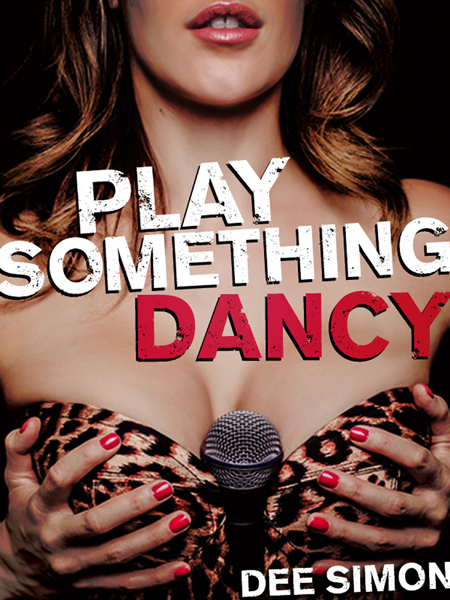
Former SF resident Dee Simon wrote a very funny, very raunchy book of short stories about his experiences spinning tunes at local strip clubs; it’s called Play Something Dancy. Clearly I had to talk to him and get the inside scoop.

San Francisco Bay Guardian Standard first question: how did you become a strip club DJ?

Dee Simon I moved to SF in 2000 to pursue a career in broadcasting. Unable to land a paying radio job, I started hosting Rampage Radio at KUSF 90.3FM and eventually found a job in production at The Industry Standard magazine. The Standard was very successful for about a year and then folded once the crash happened. I was unemployed for about eight months until that fateful day I ran into my weed dealer who hooked me up with an audition at a club on Broadway, which launched my illustrious five-year career as a DJ at clubs across the city.

SFBG When you lived in San Francisco, I used to see you at punk and metal shows all the time. Did you ever get to sneak that kind of music into your playlist?

DS When I first started working as a DJ, I mistakenly assumed that all strippers danced to Motley Crue or Guns n’ Roses. Those bands had loads of strippers in their videos. In reality, they don’t dance to hair metal. There might be a few exceptions but most tend to prefer hip-hop and R&B. In the story “Run to the Hills” I talk about how all strip club DJs reserve a special cache of music for girls who choose not to tip. If a girl tipped me, I would play her anything she wanted. But if she didn’t tip, she’d dance to the music I liked — Iron Maiden, Slayer, Gwar, W.A.S.P., Motorhead, the Dwarves — till she realized it was in her best interest to take care of the DJ.

SFBG What constitutes a good versus bad song for stripper utilization?

DS The managers invariably want the DJ to keep the music uptempo. However, there are a variety of factors involved in selecting a song for a dancer. If it’s a Friday night and the club is packed, you don’t want to play a slower song like Portishead or R. Kelly that will decimate the energy in the room. You’ll risk losing the crowd and invoking the wrath of your manager. But at the same time, the DJ also wants to satisfy the dancer, especially if she’s a good tipper.

I would base my decision on the crowd. If the crowd seemed to be really tipping the dancers on stage during rock songs, then I’d persuade her to dance to Aerosmith or Led Zeppelin or AC/DC because she’ll make a lot of money. Conversely, if the crowd was more into hip-hop, I’d choose something old school like Notorious BIG’s “Hypnotize” or Tupac’s “How Do U Want it.” Both songs are recognizable classics and upbeat.

http://www.youtube.com/watch?v=glEiPXAYE-U

SFBG What was your most-hated song to play? Also, please explain how Weird Al became part of your playlist.

DS I despised the song “Hot In Herre” by Nelly. Try listening to that wretched song 12 times a night, four nights a week, and then see how many times you contemplate suicide. It’s been years and I still cringe when I hear it. Weird Al was only bought out in extreme circumstances when a non-tipping stripper was undaunted by the heavy metal and punk music that I was playing for her. In that case, I had no choice but to play some fine Weird Al tunes such as “Dare To Be Stupid,” “Yoda,” or “Amish Paradise.” Most dancers would usually tip after dancing to “Amish Paradise” two or three times in a night.

SFBG Were you writing down the crazy stories that happened to you all along, or did you compile them later? What inspired you to write a book, and how true to life are the stories?

DS Over the five years I worked at the clubs, I kept a journal to chronicle my mishaps and shenanigans. I had several notebooks filled with amusing stories but never really did anything with them. It wasn’t until two years ago when I moved to Los Angeles and was unpacking some boxes, I found my journals and decided to officially write some of the stories down in book form. Sadly, all of the stories in the book are quite true; however, in order to protect myself from criminal prosecution and civil liability, names, locations, and identifying characteristics had to be changed.

SFBG Strip clubs are often fodder for films (Showgirls, The Wrestler, etc.) In your opinion, which is the most accurate portrayal of what goes on behind the scenes? Which is the worst, and why?

http://www.youtube.com/watch?v=CRbUSIRV6i4

DS I think The Wrestler offered a very accurate portrayal of the depressing reality of a strip club and we got to see Marisa Tomei’s ta-tas. I also thought that Tarantino did an excellent job of showing how much of an asshole strip club owners can be in Kill Bill Vol 2.

I know it’s not a film but The Sopranos delivered a realistic portrayal of strip club life with the Bada Bing! club.

Critically, it might be one of the worst films ever made but Showgirls is a hilarious cult classic that has stood the test of time, and it would be blasphemy to criticize it. In my opinion, the worst strip club movie has to be Striptease with Demi Moore and Burt Reynolds. The name of the strip club where Demi Moore worked was called the Eager Beaver and that’s all I really need to say about that.

SFBG You DIY’d the publication of the book, and are doing your own publicity. How has that process been? How do you get the word out and what has the reaction been?

DS Like the music industry, publishing has radically changed and authors are no longer beholden to literary agents and the “Big 6” publishers to produce their book. Now all an author needs to do is find an editor and a digital conversion tool and he or she can make their own digital book and publish it on Amazon or iTunes.

Instead of spending months collecting rejection letters, an author can put his or her own work out there and see who wants to read it. I’ve found that the most difficult part of self-publishing is publicity and promotion. Since I cannot afford to hire a professional publicist nor purchase ads in the New York Times, I rely on social media, blog posts, podcast interviews, and book reviews to spread the word. From what I can tell, people seem to dig the book. I’ve received a lot of positive feedback and good ratings on Amazon and iTunes, which definitely helps with exposure.

SFBG Have any of the people who figure into your stories read the book and given you feedback? Which story do people respond to the most?

DS Thankfully, none of the people I have written about have recognized themselves in the book, hunted me down, and physically harmed me. I’m rather afraid of one character in particular named Pepper. He was a frightening individual but he didn’t strike me as the type of person who would bother reading a book that didn’t have any titty pics so I’ll probably be all right.

I’ve received the biggest response from the opening story “Lexi” and the final story “Kashmir.” In fact, several people mentioned that after reading “Kashmir,” they have been unable to listen to that Led Zeppelin song again without feeling nauseous.

http://www.youtube.com/watch?v=dwisLnjsOCA

SFBG What do you think of Tucker Max comparisons? Personally I think you are a better writer than he is, but some of the … racier subject matter might speak to similarities between you two.

DS Though I’m not a fan, Tucker Max is a bestselling author who has legions of devoted readers. I’d love to replicate that success. I suppose the subject matter of our books is comparable but the theme is vastly different. Rather than boast about my various sexual exploits and deviant acts, I regret having had to endure them.

A lot of the stories in the book are humiliating and some involve venereal disease and diarrhea. There’s a definite reason the full title of the book is Play Something Dancy: The Tragic Tales of a Strip Club DJ.

SFBG What are you up to these days? What is the Sick and Wrong podcast all about?

DS I live in Los Angeles now and am writing a follow up to Play Something Dancy. I host a weekly comedy podcast called Sick and Wrong where my cohost and I ridicule inept criminals, dish out horrible advice to callers, and interview some colorful guests. At seven years, Sick and Wrong is one of the longest-running podcasts and ranked among the top 100 comedy podcasts on iTunes. I also just started a new vidcast called the Obscenesters, which is recorded at Tradiov.com/LA.

SFBG Bonus question — what’s the best rock show you’ve seen lately?

DS My favorite recent show was Graveyard. Their new record, “Lights Out” is fantastic. I highly recommend it.

Dee Simon’s book Play Something Dancy is available on Amazon.com, iTunes Bookstore, and barnesandnoble.com. Learn more about Simon and his other ventures at his website.
Live Shots: Rich Kidd, Young Galaxy, tween angst, and barbecue at SXSW, Day 3

2

Photos and words by Bowerbird Photography

The surrealists employed a method of drawing called the exquisite corpse, where an artist would create an image on a section of paper, fold it back to conceal the image, and then pass on the paper for another artist’s contribution. The beautiful monstrosity wasn’t revealed until everyone was finished and the paper unfolded.

Walking down South Congress Street during SXSW 2013 yesterday felt like the musical version of an exquisite corpse. Nearly every block had its own outdoor stage, with an alternative country performance across the street from a hard rock band, indie pop music next to honky-tonk, and street musicians in between. It was sonic mayhem.

While some find it enjoyable to be able to sing along along to a familiar band, there is unequaled pleasure and pride in “discovering” a new one – the more obscure, the better. We left our frustratingly fathomless festival handbook at the hotel, letting fortune be our guide, and made for S. Congress. The street is aptly named because it seems that everything comes together there, and has the gentrified, bohemian feel of Valencia Street, with vintage shops, craft fairs, and a good ice cream parlor.

While musicians are turned away at larger venues downtown, it’s virtually open mike in SoCo. That’s not to imply that the music is worse. On the contrary. It is here that we stumbled upon a standout band called Residual Kid, from Austin, with Max Redman (12-years-old), Ben Redman (14), and Deven Ivy (14). Teen/tween angst doesn’t get better than this.

At the Music by the Slice stage, Telekinesis lead singer Michael Lerner sat front and center, singing over the cymbals of his drumset to hipsters holding pizzas. Young Galaxy, from Canada, also performed, it with a ’80s synth-heavy sound, snappy beats, and open-throated vocals.

Moseying down to the St. Vincent De Paul parking lot, Canadian country music band Corb Lund played to a crowd lounging on overstuffed sofas, reminiscent of an impromptu porch concert. Singing straight country with a storytelling bent, he twanged about speeding on the highway with a foot “heavy with redemption” and a “bible on the dash.”

Down another block, adorable duo, Kelly Willis and Bruce Robison, got folks dancing at the South by San Jose stage with romantic country ballads.

While the music may be eclectic, the food is less so, despite the ubiquity of food trucks. While most restaurants serve any combination of Tex Mex (fried burrito anyone?) and BBQ (Austin’s staple food is shredded pork in a white bun), it is possible to find some fresh greens. At the non-profit, Casa de Luz, we sat down to a hippie-cafeteria style prix fixe lunch, piled high with kale and homemade kraut.

But the siren smell of smoked meats is too alluring, and we couldn’t help but splurge on an artery-clogging, three meat BBQ sandwich from the food truck, La Barbecue. Delicious. There was also an offshoot show behind the BBQ parking lot, called the SX704 Showcase, with hip-hop performances by SL Jones from Atlanta, and Rich Kidd from Toronto.

As we walked over the Congress Avenue Bridge in the evening, the famous bats started to leave their hiding places beneath, swarming in search of their sunset meal. They made thousands of shotgun holes in the sky, and moved in tandem like a starling murmuration, adding just one more sight to the wonderful weirdness this town has to offer.

Navigating the wild landscape of music, parties, and food at SXSW is exhausting, but in the end, we’re rewarded with great memories. And it’s a good thing we took photos too, because our eardrums are shot.

Magic, madness, witches, and holdin’ on to that feeeeeling: new movies!

0

The newly-renamed CAAMfest (the film festival formerly known as the San Francisco International Asian American Film Festival) opens tonight with its own slice of March Madness: basketball-themed doc Linsanity. For more on that film and other CAAMfest documentaries, go here. You’ll find a rundown of films focusing on troubled family ties here.

Also this week: Park Chan-wook’s first English-language film, Stoker, opens tomorrow — it’s a creepy delight, and I spoke with Park about Hitchcock and more in this interview.

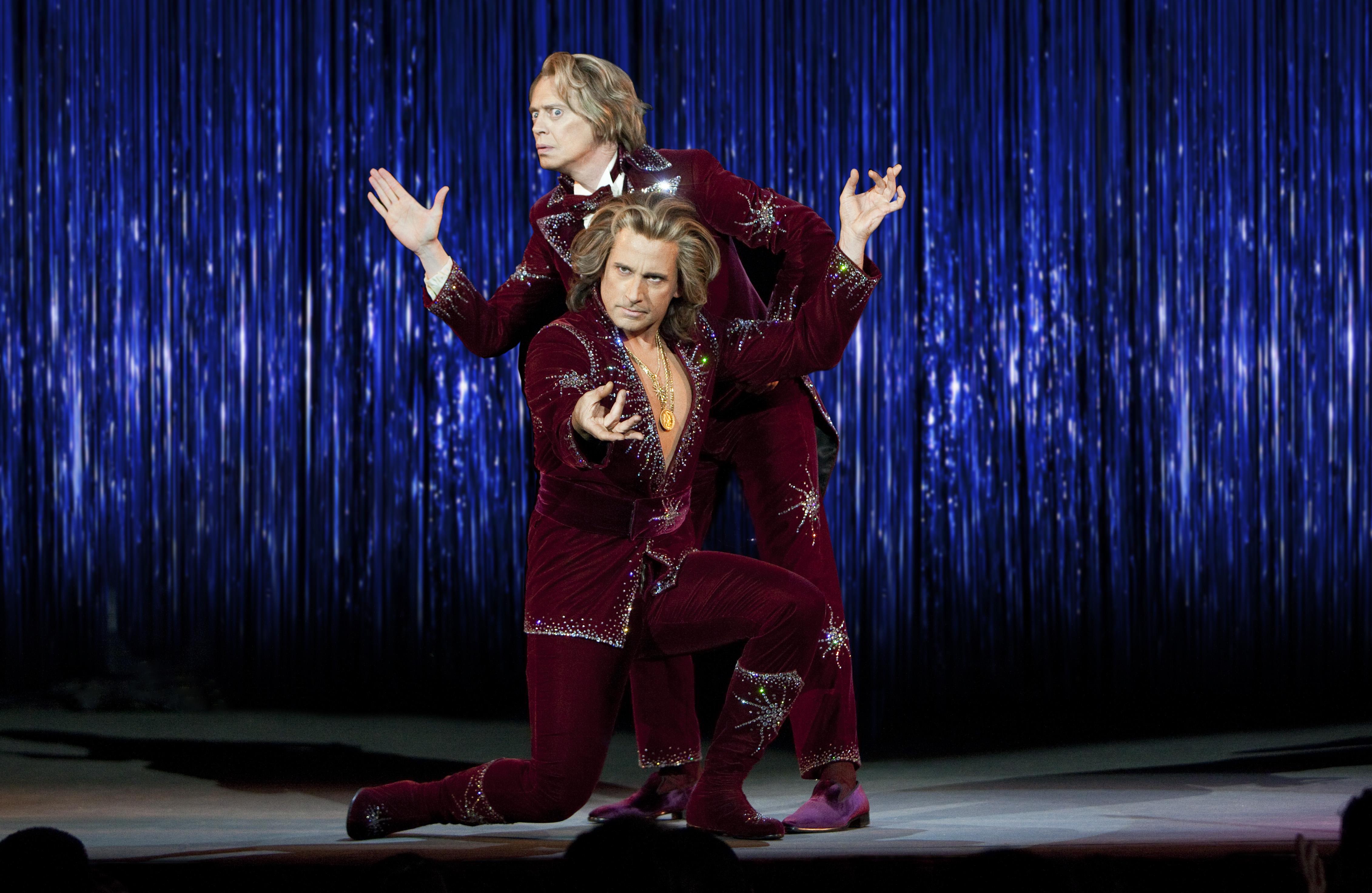
For those so inclined, Hollywood rolls out Halle Berry thriller The Call (make your own “phoning in her performance” joke here) and Steves Carell and Buscemi, plus Jim Carrey, as battling magicians in comedy The Incredible Burt Wonderstone.

Read on for short takes on a new horror omnibus, a stirring tale from Romania, the Oscar-nominated War Witch, two music docs (Journey + Snoop Lion), and more.

http://www.youtube.com/watch?v=LiZr4VFmcpk

The ABCs of Death Variety is the spice of life, yet this international omnibus with 26 directors contributing elaborate micro-shorts on various methods of death — one per alphabetical letter — is like eating dried dill or cilantro for two-plus hours. It’s pungent, but what might color a complex stew proves insufferable in this narrow one. Just why it seems narrow is anyone’s guess — this should have been a genius idea. Yet there are almost no outstanding or memorable contributions, despite the wide-open invitation to extreme content. Filmmakers include Jorge Michel Grau (2010’s We Are What We Are), Simon Rumley (of brilliant 2006 feature The Living and the Dead), Srdjan Spasojevic (2010’s A Serbian Film), cult-favorite actress Angela Bettis, and many more. Nearly all seem to have spent far more than their allotted $5000 budget. There are segments parodying exploitation cinema and video games; offering hyperbolic Terminator-style sci-fi; line-drawing and claymation segments; plus plenty of gross-out narratives. Yet it’s all surprisingly crappy (not least an episode called “Toilet”), with precious few more than halfway decent episodes. The sum impact is of a mean-spirited project that brings out the vacuously shock-value prone worst in everyone involved. (2:03) (Dennis Harvey)

http://www.youtube.com/watch?v=HiJRGbCKCu0

Beyond the Hills Cristian Mungiu — one of the main reasons everyone’s all excited about the Romanian New Wave — follows up his Palme d’Or winner, 2007’s 4 Months, 3 Weeks and 2 Days, with another stark look at a troubled friendship between two women. Beyond the Hills‘ Voichita and Alina (Cosmina Stratan and Cristina Flutur, who shared the Best Actress prize at the 2012 Cannes Film Festival; for his part, Mungiu won Best Screenplay) were BFFs and, we slowly realize, lovers while growing up at a Romanian orphanage. When they aged out of the facility, the reserved Voichita moved to a rural monastery to become a nun, and the outburst-prone Alina pinballed around, doing a stint as a barmaid in Germany before turning up in Voichita’s village, lugging emotional baggage of the jealous, needy, possibly mentally ill, and definitely misunderstood variety. It can’t end well for anyone, as all involved — dismissive local doctors, Alina’s no-longer-accomodating foster family, the priest (Valeriu Andriuta), and the other nuns —  would rather not spend any time or energy caring for a troubled, destitute outsider. Even Voichita can only look on helplessly as an exorcism, a brutal and cruel procedure, is decided upon as Alina’s last, best hope. Based on a real 2005 incident in Moldavia, Mungiu’s unsettling film is a masterpiece of exquisitely composed shots, harsh themes, and naturalistic performances. Check out an interview with Mungiu here. (2:30) (Cheryl Eddy)

http://www.youtube.com/watch?v=Z0cIj3OPM2k

Don’t Stop Believin’: Everyman’s Journey The director of 2003’s Imelda returns with this portrait of a way more sympathetic Filipino celebrity: Arnel Pineda, plucked from obscurity via YouTube after Journey’s Neil Schon spotted him singing with a Manila-based cover band. Don’t Stop Believin’ follows Pineda, who openly admits past struggles with homelessness and addiction, from audition to 20,000-seat arena success as Journey’s charismatic new frontman (he faces insta-success with an endearing combination of nervousness and fanboy thrill). He’s also up-front about feeling homesick, and the pressures that come with replacing one of the most famous voices in rock (Steve Perry doesn’t appear in the film, other than in vintage footage). Especially fun to see is how Pineda invigorates the rest of Journey; as the tour progresses, all involved — even the band’s veteran members, who’ve no doubt played “Open Arms” ten million times — radiate with excitement. (1:45) (Cheryl Eddy)

http://www.youtube.com/watch?v=94zbq5Vaod0

A Fierce Green Fire: The Battle for a Living Planet San Franciscan Mark Kitchell (1990’s Berkeley in the Sixties) directs this thorough, gracefully-edited history of the environmental movement, beginning with the earliest stirrings of the Audubon Society and Aldo Leopold. Pretty much every major cause and group gets the vintage-footage, contemporary-interview treatment: the Sierra Club, Earth Day, Silent Spring, Love Canal, the pursuit of alternative energy, Greenpeace, Chico Mendes and the Amazon rainforests, the greenhouse effect and climate change, the pursuit of sustainable living, and so on. But if its scope is perhaps overly broad, A Fierce Green Fire still offers a valuable overview of a movement that’s remained determined for decades, even as governments and corporations do their best to stomp it out. Celebrity narrators Robert Redford, Ashley Judd, and Meryl Streep add additional heft to the message, though the raw material condensed here would be powerful enough without them. (1:50) (Cheryl Eddy)

http://www.youtube.com/watch?v=MTqyV5Kw9Ss

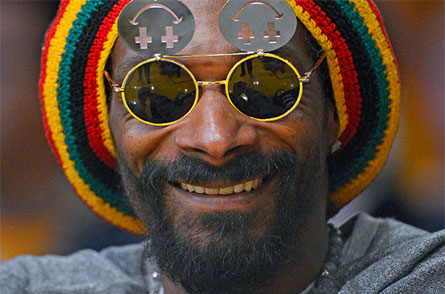
Reincarnated Reinvention is the name of the game for some mercurial, inventive pop artists, but for rapper Snoop Dogg, now going by the moniker Snoop Lion — you get the scoop on the name change in this doc — transformation turns out to be unexpectedly serious, earnest business. Flirting with Cheech and Chong travelogue comedy, Reincarnated ostensibly spins off the making of the hip-hop artist’s forthcoming 12th album of the same name in Jamaica, with smokin’ production help from Diplo’s Major Lazer gang. The camera is there for many standard behind-the-music moments — sessions with family and adulation in the musical-fertile Trenchtown — along with many not-quite-ready-for-prime-times spent lighting up with other musicians, growers up in the mountains, and reggae forebears like Bunny Wailer. But there’s more going on beneath the billowing smoke: providing the context for today’s high times and ultimately chronicling the rhyme-slinger’s life and times and his path to Jamaica, reggae, and Rastafari spirituality and culture, Vice Films director Andy Capper lays the foundation for Snoop’s shift from rap to Rastafari by revisiting his gangster youth, the rise and fall of Death Row Records, the passing of 2Pac and Nate Dogg, and the music that made the man’s name —and continues to give us a reason to care. The easy, sexy charisma that made Snoop a star is on full display here, and doubtless his latest experiences on reality TV have made Capp’s job that much easier when it came to digging deeper, while the clouds of herb, Cali and Jamaican alike, give viewers a taste of the fun, and possibly healing, attendant with life with the Doggfather. (1:36) (Kimberly Chun)

http://www.youtube.com/watch?v=XtixqUXid9A

Upside Down This sci-fi romance from Argentine-French director Juan Solanas is one of those movies that would look brilliant as a coffee-table photo book — nearly every shot is some striking mix of production design, CGI, color grading, and whatnot. Too bad, though, that it has to open its mouth and ruin everything. Jim Sturgess and Kirsten Dunst play star-crossed lovers who live on adjacent twin planets with their own opposing gravitational forces. Nonetheless, they somehow manage to groove on one another until the authorities — miscegenation between the prosperous residents of “Up Top” and the exploited peasants of “Down Below” being forbidden — interfere, resulting in a ten-year separation and one case of amnesia. But the course of true love cannot be stopped by evil energy conglomerates, at least in the movies. Sturgess’ breathless narration starts things off with “The universe…full of wonders!” and ends with “Our love would change the entire course of history,” so you know Solanas has absolutely no cliché-detecting skills. He does have a great eye — but after a certain point, that isn’t enough to compensate for his awful dialogue, flat pacing, and disinterest in exploring any nuances of plot or character. Dunst is stuck playing a part that might as well simply be called the Girl; Sturgess is encouraged to overact, but his ham is prosciutto beside the thick-cut slabs of thespian pigmeat offered by Timothy Spall as the designated excruciating comic relief. If the fact that our lovers are called “Adam” and “Eden” doesn’t make you groan, you just might buy this ostentatiously gorgeous but grey-matter-challenged eye candy. If you think Tarsem is a genius and 1998’s What Dreams May Come one of the great movie romances, you will love, love, love Upside Down. (1:53) (Dennis Harvey)

http://www.youtube.com/watch?v=BKXEh_kfPCY

War Witch They should give out second-place Oscars. Like, made of silver instead of gold. In that alternate-universe scenario, Canadian writer-director Kim Nguyen’s vivid, Democratic Republic of the Congo-shot drama might’ve picked up some hardware (beyond its many film-fest accolades) to go with its Best Foreign Language Film nomination. War Witch couldn’t stop the march of Amour, but it’s deeply moving in its own way — the story of Komona (played by first-time actor Rachel Mwanza), kidnapped from her village at 12 and forced to join the rebel army that roams the forests of her unnamed African country. Her first task: machine-gunning her own parents. Her ability to see ghosts (portrayed by actors in eerie body paint) elevates her to the status of “war witch,” and she’s tasked with using her sixth sense to aid the rebel general’s attacks against the government army. But even this elevated position can’t quell the physical and spiritual unease of her situation; idyllic love with a fellow teenage soldier (Serge Kanyinda) proves all too brief, and as months pass, Komona remains haunted by her past. The end result is a brutal yet poetic film, elevated by Mwanza’s thoughtful performance. (1:30) (Cheryl Eddy)

Film Listings

0

Film listings are edited by Cheryl Eddy. Reviewers are Kimberly Chun, Dennis Harvey, Lynn Rapoport, and Sara Maria Vizcarrondo. For rep house showtimes, see Rep Clock.

CAAMFEST

The Center for Asian American Media Fest runs March 14-24. Venues include the Castro Theatre, 429 Castro, SF; New People Cinema, 1746 Post, SF; Great Star Theater, 636 Jackson, SF; Pacific Film Archive, 2575 Bancroft, Berk; and Sundance Kabuki Cinemas, 1881 Post, SF. For tickets (most films $12) and complete schedule, visit www.caamedia.org. For commentary, see "Truth and Daring" and "In the Blood."

OPENING

The ABCs of Death Variety is the spice of life, yet this international omnibus with 26 directors contributing elaborate micro-shorts on various methods of death — one per alphabetical letter — is like eating dried dill or cilantro for two-plus hours. It’s pungent, but what might color a complex stew proves insufferable in this narrow one. Just why it seems narrow is anyone’s guess — this should have been a genius idea. Yet there are almost no outstanding or memorable contributions, despite the wide-open invitation to extreme content. Filmmakers include Jorge Michel Grau (2010’s We Are What We Are), Simon Rumley (of brilliant 2006 feature The Living and the Dead), Srdjan Spasojevic (2010’s A Serbian Film), cult-favorite actress Angela Bettis, and many more. Nearly all seem to have spent far more than their allotted $5000 budget. There are segments parodying exploitation cinema and video games; offering hyperbolic Terminator-style sci-fi; line-drawing and claymation segments; plus plenty of gross-out narratives. Yet it’s all surprisingly crappy (not least an episode called "Toilet"), with precious few more than halfway decent episodes. The sum impact is of a mean-spirited project that brings out the vacuously shock-value prone worst in everyone involved. (2:03) Clay. (Harvey)

Beyond the Hills Cristian Mungiu — one of the main reasons everyone’s all excited about the Romanian New Wave — follows up his Palme d’Or winner, 2007’s 4 Months, 3 Weeks and 2 Days, with another stark look at a troubled friendship between two women. Beyond the Hills‘ Voichita and Alina (Cosmina Stratan and Cristina Flutur, who shared the Best Actress prize at the 2012 Cannes Film Festival; for his part, Mungiu won Best Screenplay) were BFFs and, we slowly realize, lovers while growing up at a Romanian orphanage. When they aged out of the facility, the reserved Voichita moved to a rural monastery to become a nun, and the outburst-prone Alina pinballed around, doing a stint as a barmaid in Germany before turning up in Voichita’s village, lugging emotional baggage of the jealous, needy, possibly mentally ill, and definitely misunderstood variety. It can’t end well for anyone, as all involved — dismissive local doctors, Alina’s no-longer-accommodating foster family, the priest (Valeriu Andriuta), and the other nuns — would rather not spend any time or energy caring for a troubled, destitute outsider. Even Voichita can only look on helplessly as an exorcism, a brutal and cruel procedure, is decided upon as Alina’s last, best hope. Based on a real 2005 incident in Moldavia, Mungiu’s unsettling film is a masterpiece of exquisitely composed shots, harsh themes, and naturalistic performances. For an interview with Mungiu, visit www.sfbg.com/pixel_vision. (2:30) Embarcadero, Shattuck. (Eddy)

The Call Brad Anderson (2004’s The Machinist) directs Halle Berry as a 911 operator who has to save a girl (Abigail Breslin) from a killer. (1:34) Shattuck.

Don’t Stop Believin’: Everyman’s Journey The director of 2003’s Imelda returns with this portrait of a way more sympathetic Filipino celebrity: Arnel Pineda, plucked from obscurity via YouTube after Journey’s Neil Schon spotted him singing with a Manila-based cover band. Don’t Stop Believin‘ follows Pineda, who openly admits past struggles with homelessness and addiction, from audition to 20,000-seat arena success as Journey’s charismatic new front man (he faces insta-success with an endearing combination of nervousness and fanboy thrill). He’s also up-front about feeling homesick, and the pressures that come with replacing one of the most famous voices in rock (Steve Perry doesn’t appear in the film, other than in vintage footage). Especially fun to see is how Pineda invigorates the rest of Journey; as the tour progresses, all involved — even the band’s veteran members, who’ve no doubt played "Open Arms" ten million times — radiate with excitement. (1:45) Sundance Kabuki. (Eddy)

A Fierce Green Fire: The Battle for a Living Planet San Franciscan Mark Kitchell (1990’s Berkeley in the Sixties) directs this thorough, gracefully-edited history of the environmental movement, beginning with the earliest stirrings of the Audubon Society and Aldo Leopold. Pretty much every major cause and group gets the vintage-footage, contemporary-interview treatment: the Sierra Club, Earth Day, Silent Spring, Love Canal, the pursuit of alternative energy, Greenpeace, Chico Mendes and the Amazon rainforests, the greenhouse effect and climate change, the pursuit of sustainable living, and so on. But if its scope is perhaps overly broad, A Fierce Green Fire still offers a valuable overview of a movement that’s remained determined for decades, even as governments and corporations do their best to stomp it out. Celebrity narrators Robert Redford, Ashley Judd, and Meryl Streep add additional heft to the message, though the raw material condensed here would be powerful enough without them. (1:50) Opera Plaza, Shattuck, Smith Rafael. (Eddy)

The Incredible Burt Wonderstone Steve Carell, Steve Buscemi, and Jim Carrey star in this comedy about rival Las Vegas magicians. (1:40) Presidio.

Reincarnated Reinvention is the name of the game for some mercurial, inventive pop artists, but for rapper Snoop Dogg, now going by the moniker Snoop Lion — you get the scoop on the name change in this doc — transformation turns out to be unexpectedly serious, earnest business. Flirting with Cheech and Chong travelogue comedy, Reincarnated ostensibly spins off the making of the hip-hop artist’s forthcoming 12th album of the same name in Jamaica, with smokin’ production help from Diplo’s Major Lazer gang. The camera is there for many standard behind-the-music moments — sessions with family and adulation in the musical-fertile Trenchtown — along with many not-quite-ready-for-prime-times spent lighting up with other musicians, growers up in the mountains, and reggae forebears like Bunny Wailer. But there’s more going on beneath the billowing smoke: providing the context for today’s high times and ultimately chronicling the rhyme-slinger’s life and times and his path to Jamaica, reggae, and Rastafarian spirituality and culture, Vice Films director Andy Capper lays the foundation for Snoop’s shift from rap to Rastafari by revisiting his gangster youth, the rise and fall of Death Row Records, the passing of 2Pac and Nate Dogg, and the music that made the man’s name —and continues to give us a reason to care. The easy, sexy charisma that made Snoop a star is on full display here, and doubtless his latest experiences on reality TV have made Capp’s job that much easier when it came to digging deeper, while the clouds of herb, Cali and Jamaican alike, give viewers a taste of the fun, and possibly healing, attendant with life with the Doggfather. (1:36) Opera Plaza. (Chun)

Stoker See "Family Plot." (1:38) California.
Upside Down This sci-fi romance from Argentine-French director Juan Solanas is one of those movies that would look brilliant as a coffee-table photo book — nearly every shot is some striking mix of production design, CGI, color grading, and whatnot. Too bad, though, that it has to open its mouth and ruin everything. Jim Sturgess and Kirsten Dunst play star-crossed lovers who live on adjacent twin planets with their own opposing gravitational forces. Nonetheless, they somehow manage to groove on one another until the authorities — miscegenation between the prosperous residents of "Up Top" and the exploited peasants of "Down Below" being forbidden — interfere, resulting in a ten-year separation and one case of amnesia. But the course of true love cannot be stopped by evil energy conglomerates, at least in the movies. Sturgess’ breathless narration starts things off with "The universe…full of wonders!" and ends with "Our love would change the entire course of history," so you know Solanas has absolutely no cliché-detecting skills. He does have a great eye — but after a certain point, that isn’t enough to compensate for his awful dialogue, flat pacing, and disinterest in exploring any nuances of plot or character. Dunst is stuck playing a part that might as well simply be called the Girl; Sturgess is encouraged to overact, but his ham is prosciutto beside the thick-cut slabs of thespian pigmeat offered by Timothy Spall as the designated excruciating comic relief. If the fact that our lovers are called "Adam" and "Eden" doesn’t make you groan, you just might buy this ostentatiously gorgeous but gray-matter-challenged eye candy. If you think Tarsem is a genius and 1998’s What Dreams May Come one of the great movie romances, you will love, love, love Upside Down. (1:53) Embarcadero. (Harvey)

War Witch They should give out second-place Oscars. Like, made of silver instead of gold. In that alternate-universe scenario, Canadian writer-director Kim Nguyen’s vivid, Democratic Republic of the Congo-shot drama might’ve picked up some hardware (beyond its many film-fest accolades) to go with its Best Foreign Language Film nomination. War Witch couldn’t stop the march of Amour, but it’s deeply moving in its own way — the story of Komona (played by first-time actor Rachel Mwanza), kidnapped from her village at 12 and forced to join the rebel army that roams the forests of her unnamed African country. Her first task: machine-gunning her own parents. Her ability to see ghosts (portrayed by actors in eerie body paint) elevates her to the status of "war witch," and she’s tasked with using her sixth sense to aid the rebel general’s attacks against the government army. But even this elevated position can’t quell the physical and spiritual unease of her situation; idyllic love with a fellow teenage soldier (Serge Kanyinda) proves all too brief, and as months pass, Komona remains haunted by her past. The end result is a brutal yet poetic film, elevated by Mwanza’s thoughtful performance. (1:30) Elmwood, Roxie. (Eddy)

ONGOING

Adventures of Serial Buddies (1:31) 1000 Van Ness.

Amour Arriving in local theaters atop a tidal wave of critical hosannas, Amour now seeks to tempt popular acclaim — though actually liking this perfectly crafted, intensely depressing film (from Austrian director Michael Haneke) may be nigh impossible for most audience members. Eightysomething former music teachers Georges and Anne (the flawless Jean-Louis Trintignant and Emmanuelle Riva) are living out their days in their spacious Paris apartment, going to classical concerts and enjoying the comfort of their relationship. Early in the film, someone tries to break into their flat — and the rest of Amour unfolds with a series of invasions, with Anne’s declining health the most distressing, though there are also unwanted visits from the couple’s only daughter (an appropriately self-involved Isabelle Huppert), an inept nurse who disrespects Anne and curses out Georges, and even a rogue pigeon that wanders in more than once. As Anne fades into a hollow, twisted, babbling version of her former self, Georges also becomes hollow and twisted, taking care of her while grimly awaiting the inevitable. Of course, the movie’s called Amour, so there’s some tenderness involved. But if you seek heartwarming hope and last-act uplift, look anywhere but here. (2:07) Four Star, Smith Rafael. (Eddy)

Argo If you didn’t know the particulars of the 1979 Iranian Revolution, you won’t be an expert after Argo, but the film does a good job of capturing America’s fearful reaction to the events that followed it — particularly the hostage crisis at the US embassy in Tehran. Argo zeroes in on the fate of six embassy staffers who managed to escape the building and flee to the home of the sympathetic Canadian ambassador (Victor Garber). Back in Washington, short-tempered CIA agents (including a top-notch Bryan Cranston) cast about for ways to rescue them. Enter Tony Mendez (Ben Affleck, who also directs), exfil specialist and father to a youngster wrapped up in the era’s sci-fi craze. While watching 1973’s Battle for the Planet of the Apes, Tony comes up with what Cranston’s character calls "the best bad idea we have:" the CIA will fund a phony Canadian movie production (corny, intergalactic, and titled Argo) and pretend the six are part of the crew, visiting Iran for a few days on a location shoot. Tony will sneak in, deliver the necessary fake-ID documents, and escort them out. Neither his superiors, nor the six in hiding, have much faith in the idea. ("Is this the part where we say, ‘It’s so crazy it just might work?’" someone asks, beating the cliché to the punch.) Argo never lets you forget that lives are at stake; every painstakingly forged form, every bluff past a checkpoint official increases the anxiety (to the point of being laid on a bit thick by the end). But though Affleck builds the needed suspense with gusto, Argo comes alive in its Hollywood scenes. As the show-biz veterans who mull over Tony’s plan with a mix of Tinseltown cynicism and patiotic duty, John Goodman and Alan Arkin practically burst with in-joke brio. I could have watched an entire movie just about those two. (2:00) SF Center, Sundance Kabuki. (Eddy)

Barbara The titular figure (Nina Hoss) looks the very picture of blonde Teutonic ice princess when she arrives — exiled from better prospects by some unspecified, politically ill-advised conduct — in at a rural 1980 East German hospital far from East Berlin’s relative glamour. She’s a pill, too, stiffly formal in dealings with curious locals and fellow staff including the disarmingly rumpled, gently amorous chief physician Andre (Ronald Zehrfeld). Yet her stern prowess as a pediatric doctor is softened by atypically protective behavior toward teen Stella (Jasna Fritzi Bauer), a frequent escapee from prison-like juvenile care facilities. Barbara has secrets, however, and her juggling personal, ethical, and Stasi-fearing priorities will force some uncomfortable choices. It is evidently the moment for German writer-director Christian Petzold to get international recognition after nearly 20 years of equally fine, terse, revealing work in both big-screen and broadcast media (much with Hoss as his prime on-screen collaborator). This intelligent, dispassionate, eventually moving character study isn’t necessarily his best. But it is a compelling introduction. (1:45) Opera Plaza, Shattuck. (Harvey)

Birth Story: Ina May Gaskin and the Farm Midwives When Ina May Gaskin had her first child, the hospital doctor used forceps (against her wishes) and her baby was sequestered for 24 hours immediately after birth. "When they brought her to me, I thought she was someone else’s," Gaskin recalls in Sara Lamm and Mary Wigmore’s documentary. Gaskin was understandably flummoxed that her first experience with the most natural act a female body can endure was as inhuman as the subject of an Eric Schlosser exposé. A few years later, she met Stephen Gaskin, a professor who became her second husband, and the man who’d go on to co-found the Farm, America’s largest intentional community, in 1971. On the Farm, women had children, and in those confines, far from the iron fist of insurance companies, Gaskin discovered midwifery as her calling. She recruited others, and dedicated herself to preserving an art that dwindles as the medical industry strives to treat women’s bodies like profit machines. Her message is intended for a larger audience than granola-eating moms-to-be: we’re losing touch with our bodies. Lamm and Wigmore bravely cram a handful of live births into the film; footage of a breech birth implies this doc could go on to be a useful teaching tool for others interested in midwifery. (1:33) New Parkway, Roxie. (Vizcarrondo)

Dead Man Down Pee. Yew. This Dead Man reeks, though surveying the cast list and judging from the big honking success of director Niels Arden Oplev’s previous film, 2009’s The Girl With the Dragon Tattoo, one would hope the stench wouldn’t be quite so crippling. Crime boss (Terrence Howard) is running panic-stricken after a series of spooky mail-art threats — and it isn’t long before we realize why: his most handy henchman Victor (Colin Farrell) is the one out to destroy him after the death of his wife and daughter. The wrinkle in the plot is the moody, beautiful, and scarred French girl Beatrice (Noomi Rapace) who lives across the way from Victor’s apartment with her deaf mom (Isabelle Huppert) and has plans to extract her own kind of vengeance. Despite Rapace’s brooding performance (Oplev obviously hopes she’ll pull a Lisbeth Salander and miraculously hack this mess — unsure about whether it’s a shoot-’em-up revenge exercise or a Rear Window-ish misfit love story — into something worthwhile) and cameos by actors like Dominic Cooper and F. Murray Abraham, they can’t compensate for the weak writing and muddled direction, the fact that Victor conveniently dithers instead of putting an end to his victim’s (and our) agony, and that the entire mis-en-scene with its Czechs, Albanians, et al, which reads like a Central European blood feud played out in Grand Central Station — just a few components as to why Dead Man stinks. (1:50) Metreon, 1000 Van Ness, Presidio, Shattuck. (Chun)

Django Unchained Quentin Tarantino’s spaghetti western homage features a cameo by the original Django (Franco Nero, star of the 1966 film), and solid performances by a meticulously assembled cast, including Jamie Foxx as the titular former slave who becomes a badass bounty hunter under the tutelage of Dr. Schultz (Christoph Waltz). Waltz, who won an Oscar for playing the evil yet befuddlingly delightful Nazi Hans Landa in Tarantino’s 2009 Inglourious Basterds, is just as memorable (and here, you can feel good about liking him) as a quick-witted, quick-drawing wayward German dentist. There are no Nazis in Django, of course, but Tarantino’s taboo du jour (slavery) more than supplies motivation for the filmmaker’s favorite theme (revenge). Once Django joins forces with Schultz, the natural-born partners hatch a scheme to rescue Django’s still-enslaved wife, Broomhilda (Kerry Washington), whose German-language skills are as unlikely as they are convenient. Along the way (and it’s a long way; the movie runs 165 minutes), they encounter a cruel plantation owner (Leonardo DiCaprio), whose main passion is the offensive, shocking "sport" of "Mandingo fighting," and his right-hand man, played by Tarantino muse Samuel L. Jackson in a transcendently scandalous performance. And amid all the violence and racist language and Foxx vengeance-making, there are many moments of screaming hilarity, as when a character with the Old South 101 name of Big Daddy (Don Johnson) argues with the posse he’s rounded up over the proper construction of vigilante hoods. It’s a classic Tarantino moment: pausing the action so characters can blather on about something trivial before an epic scene of violence. Mr. Pink would approve. (2:45) Metreon, Sundance Kabuki. (Eddy)

Emperor This ponderously old-fashioned historical drama focuses on the negotiations around Japan’s surrender after the bombings of Hiroshima and Nagasaki. While many on the Allied side want the nation’s "Supreme Commander" Emperor Hirohito to pay for war crimes with his life, experts like bilingual Gen. Bonners Fellers (Matthew Fox) argue that the transition to peace can be achieved not by punishing but using this "living god" to wean the population off its ideological fanaticism. Fellers must ultimately sway gruff General MacArthur (Tommy Lee Jones) to the wisdom of this approach, while personally preoccupied with finding the onetime exchange-student love (Kaori Momoi) denied him by cultural divisions and escalating war rhetoric. Covering (albeit from the U.S. side) more or less the same events as Aleksandr Sokurov’s 2005 The Sun, Peter Webber’s movie is very different from that flawed effort, but also a lot worse. The corny Romeo and Juliet romance, the simplistic approach to explaining Japan’s "ancient warrior tradition" and anything else (via dialogue routinely as flat as "Things in Japan are not black and white!"), plus Alex Heffes’ bombastic old-school orchestral score, are all as banal as can be. Even the reliable Jones offers little more than conventional crustiness — as opposed to the inspired kind he does in Lincoln. (1:46) Albany, Embarcadero, Piedmont, Sundance Kabuki. (Harvey)

Escape from Planet Earth (1:35) Metreon.

56 Up The world may be going to shit, but some things can be relied upon, like Michael Apted’s beloved series that’s traced the lives of 14 disparate Brits every seven years since original BBC documentary 7 Up in 1964. More happily still, this latest installment finds nearly all the participants shuffling toward the end of middle-age in more settled and contented form than ever before. There are exceptions: Jackie is surrounded by health and financial woes; special-needs librarian Lynn has been hit hard by the economic downturn; everybody’s favorite undiagnosed mental case, the formerly homeless Neil, is never going to fully comfortable in his own skin or in too close proximity to others. But for the most part, life is good. Back after 28 years is Peter, who’d quit being filmed when his anti-Thatcher comments provoked "malicious" responses, even if he’s returned mostly to promote his successful folk trio the Good Intentions. Particularly admirable and evidently fulfilling is the path that’s been taken by Symon, the only person of color here. Raised in government care, he and his wife have by now fostered 65 children — with near-infinite love and generosity, from all appearances. If you’re new to the Up series, you’ll be best off doing a Netflix retrospective as preparation for this chapter, starting with 28 Up. (2:24) Magick Lantern, Opera Plaza. (Harvey)

The Gatekeepers Coming hard on the heels of The Law in These Parts, which gave a dispassionate forum to the lawmakers who’ve shaped — some might say in pretzel form — the military legal system that’s been applied by Israelis to Palestinians for decades, Dror Moreh’s documentary provides another key insiders’ viewpoint on that endless occupation. His interviewees are six former heads of the Shin Bet, Israel’s secret service. Their top-secret decisions shaped the nation’s attempts to control terrorist sects and attacks, as seen in a nearly half-century parade of news clips showing violence and negotiation on both sides. Unlike the subjects of Law, who spoke a cool, often evasive legalese to avoid any awkward ethical issues, these men are at times frankly — and surprisingly — doubtful about the wisdom of some individual decisions, let alone about the seemingly ever-receding prospect of a diplomatic peace. They even advocate for a two-state solution, an idea the government they served no longer seems seriously interested in advancing. The Gatekeepers is an important document that offers recent history examined head-on by the hitherto generally close-mouthed people who were in a prime position to direct its course. (1:37) Embarcadero, Shattuck. (Harvey)

A Good Day to Die Hard A Good Day to Die Hard did me wrong. How did I miss the signs? Badass daddy rescues son. Perps cover up ’80s era misdeeds. They’re in Russia&ldots;Die Hard has become Taken. All it needs is someone to kidnap Bonnie Bedelia or deflower Jai Courtney and the transformation will be complete. What’s more, A Good Day is so obviously made for export it’s almost not trying to court the American audience for which the franchise is a staple. In a desperate reach for brand loyalty director John Moore (2001’s Behind Enemy Lines) has loaded the film with slight allusions to McClane’s past adventures. The McClanes shoot the ceiling and litter the floor with glass. John escapes a helicopter by leaping into a skyscraper window from the outside. John’s ringtone plays "Ode to Joy." The glib rejoinders are all there but they’re smeared by crap direction and odd pacing that gives ample time to military vehicles tumbling down the highway but absolutely no time for Bruce’s declarations of "I’m on VACATION!" Which may be just as well — it’s no "Yipee kay yay, motherfucker." When Willis says that in A Good Day, all the love’s gone out of it. I guess every romance has to end. (1:37) Metreon. (Vizcarrondo)

Happy People: A Year in the Taiga The ever-intrepid Werner Herzog, with co-director Dmitry Vasyukov, pursues his fascination with extreme landscapes by chronicling a year deep within the Siberian Taiga. True to form, he doesn’t spend much time in the 300-inhabitant town nestled amid "endless wilderness," accessible only by helicopter or boat (and only during the warmer seasons); instead, he seeks the most isolated environment possible, venturing into the frozen forest with fur trappers who augment their passed-down-over-generations job skills with the occasional modern assist (chainsaws and snowmobiles are key). Gorgeous cinematography and a curious, respectful tone elevate Happy People from mere ethnographic-film status, though that’s essentially what it is, as it records the men carving canoes, bear-proofing their cabins, interacting with their dogs, and generally being incredibly self-reliant amid some of the most rugged conditions imaginable. And since it’s Herzog, you know there’ll be a few gently bizarre moments, as when a politician’s summer campaign cruise brings a musical revue to town, or the director himself refers to "vodka — vicious as jet fuel" in his trademark droll voice over. (1:34) Magick Lantern, Smith Rafael. (Eddy)

Harvest of Empire This feature spin-off from Juan Gonzalez’s classic nonfiction tome aims to temper anti-immigration hysteria with evidence that the primarily Latino populations conservatives are so afraid of were largely invited or driven here by exploitative US policies toward Latin America. Dutifully marching through countries on a case-by-case basis, Peter Getzels and Eduardo Lopez’s documentary covers our annexing much of a neighboring country (Mexico) and using its citizens as a "reserve labor force;" encouraging mainland immigration elsewhere to strengthen a colonial bond (Puerto Rico); covertly funding overthrow of progressive governments and/or supporting repressive ones, creating floods of political asylum-seekers (Guatemala, Cuba, Nicaragua, El Salvador); and so on and so forth. Our government’s policies were often justified in the name of "fighting the spread of Communism," but usually had a more pragmatic basis in protecting US business interests. The movie also touches on NAFTA’s disastrous trickle-up effect on local economies (especially agricultural ones), and interviews a number of high achievers from immigrant families (ACLU chief Anthony Romero, Geraldo Rivera) as well as various activists and experts, including Nobel Peace Prize winner Rigoberta Menchu, while sampling recent years’ inflammatory anti-immigrant rhetoric. There’s a lot of important information here, though one might wish it were packaged in a documentary with a less primitive, classroom-ready episodic structure and less informercial-y style. (1:30) Shattuck. (Harvey)

Identity Thief America is made up of asshole winners and nice guy losers — or at least that’s the thesis of Identity Thief, a comedy about a crying-clown credit card bandit (Melissa McCarthy) and the sweet sucker (Jason Bateman) she lures into her web of chaos. Bateman plays Sandy, a typical middle-class dude with a wife, two kids, and a third on the way. He’s always struggling to break even and just when it seems like his ship’s come in, Diana (McCarthy) jacks his identity — a crime that requires just five minutes in a dark room with Sandy’s social security number. Suddenly, his good name is contaminated with her prior arrests, drug-dealer entanglements, and mounting debt; it’s like the capitalist version of VD. But as the "kind of person who has no friends," Diana is as tragic as she is comic, providing McCarthy an acting opportunity no one saw coming when she was dispensing romantic advice on The Gilmore Girls. Director Seth Gordon (2011’s Horrible Bosses) treats this comedy like an action movie — as breakneck as slapstick gets — and he relies so heavily on discomfort humor that the film doesn’t just prompt laughs, it pokes you in the ribs until you laugh, man, LAUGH! While Identity Thief has a few complex moments about how defeating "sticking it to the man" can be (mostly because only middle men get hurt), it’s mostly as subtle as a pratfall and just as (un-)rewarding. (1:25) 1000 Van Ness, SF Center. (Vizcarrondo)

Jack the Giant Slayer (1:55) Metreon, 1000 Van Ness.

The Jeffrey Dahmer Files Chris James Thompson’s The Jeffrey Dahmer Files, a documentary with narrative re-enactments, is savvy to the fact that lurid outrageousness never gets old. It also plays off the contrast between Dahmer’s gruesome crimes and his seemingly mild-mannered personality; as real-life Dahmer neighbor Pamela Bass recalls here, the Jeff she knew ("kinda friendly, but introverted," Bass says) hardly seemed like a murdering cannibal. Though homicide detective Pat Kennedy and medical examiner Dr. Jeffrey Jentzen both share compelling details about the case, Bass’ participation is key. Not only did she have to deal with the revelation that she’d been living next to a killer ("I remember a stench, an odor"), she found herself surrounded by a media circus, harassed by gawkers, and blamed by strangers for "not doing anything." Even after she’d moved, the stigma of having been Dahmer’s neighbor lingered — lending a different meaning to the phrase "serial-killer victim." Essental viewing for true-crime fiends. (1:16) Roxie. (Eddy)

The Last Exorcism Part II When last we saw home-schooled rural Louisiana teen Nell (Ashley Bell), she had just given birth to a demon baby in an al fresco Satanic ritual that also saw the violent demise of her father and brother, not to mention the visiting preacher and film crew who’d hoped to debunk exorcisms by recording a fake one. (They were mistaken on many levels.) We meet her again now … about five minutes later, as a traumatized survivor placed in a New Orleans halfway house for girls in need of a "fresh start." Encouraged to view her recent past as the handywork of cult fanatics rather than supernatural forces, she’s soon adjusting surprisingly well to independence, secular humanism, and life in the big city. But of course malevolent spirit "Abalam" isn’t done with her yet. This sequel eschews the original’s found-footage conceit, stoking up a goodly fire of more traditional atmospherics and scares, albeit at the cost of simplified character and plot arcs. As PG-13 horror goes, it’s quite creepy — even if the finale paints this series into a corner from which it will require considerable future writing ingenuity to avoid pure silliness. (1:28) 1000 Van Ness, SF Center. (Harvey)

Life of Pi Several filmmakers including Alfonso Cuarón, Jean-Pierre Jeunet, and M. Night Shyamalan had a crack at Yann Martel’s "unfilmable" novel over the last decade, without success. That turns out to have been a very good thing, since Ang Lee and scenarist David Magee have made probably the best movie possible from the material — arguably even an improvement on it. Framed as the adult protagonist’s (Irrfan Khan) lengthy reminiscence to an interested writer (Rafe Spall) it chronicles his youthful experience accompanying his family and animals from their just shuttered zoo on a cargo ship voyage from India to Canada. But a storm capsizes the vessel, stranding teenaged Pi (Suraj Sharma) on a lifeboat with a mini menagerie — albeit one swiftly reduced by the food chain in action to one Richard Parker, a whimsically named Bengal tiger. This uneasy forced cohabitation between Hindu vegetarian and instinctual carnivore is an object lesson in survival as well as a fable about the existence of God, among other things. Shot in 3D, the movie has plenty of enchanted, original imagery, though its outstanding technical accomplishment may lie more in the application of CGI (rather than stereoscopic photography) to something reasonably intelligent for a change. First-time actor Sharma is a natural, while his costar gives the most remarkable performance by a wild animal this side of Joaquin Phoenix in The Master. It’s not a perfect film, but it’s a charmed, lovely experience. (2:00) 1000 Van Ness, SF Center, Sundance Kabuki. (Harvey)

Like Someone in Love A student apparently moonlighting as an escort, Akiko (Rin Takanashi) doesn’t seem to like her night job, and likes even less the fact that she’s forced into seeing a client while the doting, oblivious grandmother she’s been avoiding waits for her at the train station. But upon arriving at the apartment of the john, she finds sociology professor Takashi (Tadashi Okuno) courtly and distracted, uninterested in getting her in bed even when she climbs into it of her own volition. Their "date" extends into the next day, introducing him to the possessive, suspicious boyfriend she’s having problems with (Ryo Kase), who mistakes the prof for her grandfather. As with Abbas Kiorostami’s first feature to be shot outside his native Iran — the extraordinary European coproduction Certified Copy (2010) — this Japan set second lets its protagonists first play at being having different identities, then teases us with the notion that they are, in fact, those other people. It’s also another talk fest that might seem a little too nothing-happening, too idle-intellectual gamesmanship at a casual first glance, but could also grow increasingly fascinating and profound with repeat viewings. (1:49) Opera Plaza. (Harvey)

Lincoln Distinguished subject matter and an A+ production team (Steven Spielberg directing, Daniel Day-Lewis starring, Tony Kushner adapting Doris Kearns Goodwin, John Williams scoring every emotion juuust so) mean Lincoln delivers about what you’d expect: a compelling (if verbose), emotionally resonant (and somehow suspenseful) dramatization of President Lincoln’s push to get the 13th amendment passed before the start of his second term. America’s neck-deep in the Civil War, and Congress, though now without Southern representation, is profoundly divided on the issue of abolition. Spielberg recreates 1865 Washington as a vibrant, exciting place, albeit one filled with so many recognizable stars it’s almost distracting wondering who’ll pop up in the next scene: Jared Harris as Ulysses S. Grant! Joseph Gordon-Levitt as Robert Lincoln! Lena Dunham’s shirtless boyfriend on Girls (Adam Driver) as a soldier! Most notable among the huge cast are John Hawkes, Tim Blake Nelson, and a daffy James Spader as a trio of lobbyists; Sally Field as the troubled First Lady; and likely Oscar contenders Tommy Lee Jones (as winningly cranky Rep. Thaddeus Stevens) and Day-Lewis, who does a reliably great job of disappearing into his iconic role. (2:30) Metreon, Sundance Kabuki. (Eddy)

Lore Set in Germany amid the violent, chaotic aftermath of World War II, Lore levels some brutally frank lessons on its young protagonist. Pretty, smart 14-year-old Lore (Saskia Rosendahl) is tasked with caring for her twin brothers, sister, and infant brother when her SS officer father (Hans-Jochen Wagner) and true-believer mother (Ursina Lardi) depart. Her seemingly hopeless mission is to get what’s left of her family across a topsy-turvy countryside to her grandmother’s house, a journey that’s less a fairy tale than a kind of inverted nightmare — yet another dystopic vision — as seen by children who must beg, barter, and scrounge to survive when they aren’t singing songs in praise of the Third Reich. Enter magnetic mystery man Thomas (Kai Malina), who offers Lore life lessons about the assumed enemy. Tarrying briefly to savor the sensual pleasure of a river bath or the beauty of a spring landscape, albeit one riddled with bodies, director and co-writer Cate Shortland rarely averts her eyes from the sexual and psychological dangers of her charges’ circumstances, making us not only care for her players but also imparting the dark magic of a world destroyed then born anew. (1:48) Embarcadero, Shattuck. (Chun)

No Long before the Arab Spring, a people’s revolution went down in Chile when a 1988 referendum toppled the country’s dictator, Augusto Pinochet, thanks in part to an ad exec who dared to sell the dream to his countrymen and women — using the relentlessly upbeat, cheesy language of a Pepsi Generation. In No‘s dramatization of this true story, ad man Rene Saavedra (Gael Garcia Bernal) is approached by the opposition to Pinochet’s regime to help them on their campaign to encourage Chile’s people to vote "no" to eight more years under the brutal strongman. Rene’s well-aware of the horrors of the dictatorship; not only are the disappeared common knowledge, his activist ex (Antonia Zegers) has been beaten and jailed with seeming regularity. Going up against his boss (Alfredo Castro), who’s overseeing the Pinochet campaign, Rene takes the brilliant tact in the opposition’s TV programs of selling hope — sound familiar? — promising "Chile, happiness is coming!" amid corny mimes, dancers, and the like. Director-producer Pablo Larrain turns out to be just as genius, shooting with a grainy U-matic ’80s video camera to match his footage with 1988 archival imagery, including the original TV spots, in this invigorating spiritual kin of both 2012’s Argo and 1997’s Wag the Dog. (1:50) Embarcadero, Piedmont, Shattuck. (Chun)

Oz: The Great and Powerful Providing a backstory for the man behind the curtain, director Sam Raimi gives us a prequel of sorts to 1939’s The Wizard of Oz. Herein we follow the adventures of a Depression-era Kansas circus magician named Oscar (James Franco) — Oz to his friends — as he cons, philanders, bickers with his behind-the-scenes assistant Frank (Zach Braff), and eventually sails away in a twister, bound for a Technicolor land of massively proportioned flora, talking fauna, and witches ranging from dazzlingly good to treacherously wicked. From one of them, Theodora (Mila Kunis), he learns that his arrival — in Oz, just to clarify — has set in motion the fulfillment of a prophecy: that a great wizard, also named Oz, will bring about the downfall of a malevolent witch (Rachel Weisz), saving the kingdom and its cheery, goodhearted inhabitants. Unfortunately for this deserving populace, Oz spent his last pre-twister moments with the Baum Bros. Circus (the name a tribute to L. Frank Baum, writer of the Oz children’s books) demonstrating a banged-up moral compass and an undependable streak and proclaiming that he would rather be a great man than a good man. Unfortunately for the rest of us, this theme is revisited ad nauseam as Oz and the oppressively beneficent witch Glinda (Michelle Williams) — whose magic appears to consist mainly of nice soft things like bubbles and fog — stand around debating whether he’s the right man for the task. When the fog clears, though, the view is undeniably pretty. While en route to and from the Emerald City, Oz and his companions — among them a non-evil flying monkey (voiced by Braff) and a rather adorable china doll (Joey King) — wander through a deliriously arresting, Fantasia-esque landscape whose intricate, inventive construction helps distract from the plodding, saccharine rhetoric and unappealing story line. (2:07) California, 1000 Van Ness, Presidio, SF Center, Sundance Kabuki. (Rapoport)

Quartet Every year there’s at least one: the adorable-old-cootfest, usually British, that proves harmless and reassuring and lightly tear/laughter producing enough to convince a certain demographic that it’s safe to go to the movies again. The last months have seen two, both starring Maggie Smith (who’s also queen of that audience’s home viewing via Downton Abbey). Last year’s The Best Exotic Marigold Hotel, in which Smith played a bitchy old spinster appalled to find herself in India, has already filled the slot. It was formulaic, cute, and sentimental, yes, but it also practiced more restraint than one expected. Now here’s Quartet, which is basically the same flower arrangement with quite a bit more dust on it. Smith plays a bitchy old spinster appalled to find herself forced into spending her twilight years at a home for the elderly. It’s not just any such home, however, but Beecham House, whose residents are retired professional musicians. Gingerly peeking out from her room after a few days’ retreat from public gaze, Smith’s Jean Horton — a famed English soprano — spies a roomful of codgers rolling their hips to Afropop in a dance class. "This is not a retirement home — this is a madhouse!" she pronounces. Oh, the shitty lines that lazy writers have long depended on Smith to make sparkle. Quartet is full of such bunk, adapted with loving fidelity, no doubt, from his own 1999 play by Ronald Harwood, who as a scenarist has done some good adaptations of other people’s work (2002’s The Pianist). But as a generator of original material for about a half-century, he’s mostly proven that it is possible to prosper that long while being in entirely the wrong half-century. Making his directorial debut: 75-year-old Dustin Hoffman, which ought to have yielded a more interesting final product. But with its workmanlike gloss and head-on take on the script’s very predictable beats, Quartet could as well have been directed by any BBC veteran of no particular distinction. (1:38) Albany, Clay, Marina, Smith Rafael. (Harvey)

Safe Haven Over a decade and a half, as one Nicholas Sparks novel after another has hit the shelves and inexorably been adapted for the big screen, we’ve come to expect a certain kind of end product: a romantic drama that manages, in its treacly messaging and relentless arc toward emotional resonance, to give us second thoughts about the redemptive power of love. The latest, Safe Haven, directed by Lasse Hallström (2011’s Salmon Fishing in the Yemen, 1993’s What’s Eating Gilbert Grape), follows the formula fairly dutifully. Julianne Hough (2012’s Rock of Ages) plays Katie, a Boston woman on the run from the kind of terrifying event that causes a person to dye their hair platinum blond and board a Greyhound in the middle of the night, a trauma whose details are doled out to us in a series of flashbacks. Winding up in a small coastal town in North Carolina, she meets handsome widower and father of two Alex (Josh Duhamel), who runs the local general store and takes a shine to the unfriendly new girl. Viewers of last year’s Sparks adaptation The Lucky One will find some familiar elements (the healing balm of a good man’s love, cloying usage of the paranormal), as will viewers of 1991’s Sleeping with the Enemy, another film that presents the fantasy of a fresh start in Smalltown, U.S.A. (1:55) Metreon. (Rapoport)

Side Effects Though on the surface Channing Tatum appears to be his current muse, Steven Soderbergh seems to have gotten his smart, topical groove back, the one that spurred him to kick off his feature filmmaking career with the on-point Sex, Lies, and Videotape (1989) and went missing with the fun, featherweight Ocean’s franchise. (Alas, he’s been making claims that Side Effects will be his last feature film.) Here, trendy designer antidepressants are the draw — mixed with the heady intoxicants of a murder mystery with a nice hard twist that would have intrigued either Hitchcock or Chabrol. As Side Effects opens, the waifish Emily Taylor (Rooney Mara), whose inside-trading hubby (Tatum) has just been released from prison, looks like a big-eyed little basket of nerves ready to combust — internally, it seems, when she drives her car into a wall. Therapist Jonathan Banks (Jude Law), who begins to treat her after her hospital stay, seems to care about her, but nevertheless reflexively prescribes the latest anti-anxiety med of the day, on the advice of her former doctor (Catherine Zeta-Jones). Where does his responsibility for Emily’s subsequent actions begin and end? Soderbergh and his very able cast fill out the issues admirably, with the urgency that was missing from the more clinical Contagion (2011) and the, ahem, meaty intelligence that was lacking in all but the more ingenious strip scenes of last year’s Magic Mike. (1:30) Four Star, Metreon, 1000 Van Ness, Presidio, Shattuck, Sundance Kabuki. (Chun)

Silver Linings Playbook After guiding two actors to Best Supporting Oscars in 2010’s The Fighter, director David O. Russell returns (adapting his script from Matthew Quick’s novel) with another darkly comedic film about a complicated family that will probably earn some gold of its own. Though he’s obviously not ready to face the outside world, Pat (Bradley Cooper) checks out of the state institution he’s been court-ordered to spend eight months in after displaying some serious anger-management issues. He moves home with his football-obsessed father (Robert De Niro) and worrywart mother (Jacki Weaver of 2010’s Animal Kingdom), where he plunges into a plan to win back his estranged wife. Cooper plays Pat as a man vibrating with troubled energy — always in danger of flying into a rage, even as he pursues his forced-upbeat "silver linings" philosophy. But the movie belongs to Jennifer Lawrence, who proves the chops she showcased (pre-Hunger Games megafame) in 2010’s Winter’s Bone were no fluke. As the damaged-but-determined Tiffany, she’s the left-field element that jolts Pat out of his crazytown funk; she’s also the only reason Playbook‘s dance-competition subplot doesn’t feel eye-rollingly clichéd. The film’s not perfect, but Lawrence’s layered performance — emotional, demanding, bitchy, tough-yet-secretly-tender — damn near is. (2:01) Marina, 1000 Van Ness, Piedmont, SF Center, Shattuck, Sundance Kabuki. (Eddy)

Snitch (1:35) Metreon.

21 and Over (1:33) Metreon, 1000 Van Ness.

Warm Bodies A decade and a half of torrid, tormented vampire-human entanglements has left us accustomed to rooting for romances involving the undead and the still-alive. Some might argue, however, that no amount of pop-cultural prepping could be sufficient to get us behind a human-zombie love story for the ages. Is guzzling human blood really measurably less gross than making a meal of someone’s brains and other body parts? Somehow, yes. Recognizing this perceptual hurdle, writer-director Jonathan Levine (2011’s 50/50, 2008’s The Wackness) secures our sympathies at the outset of Warm Bodies by situating us inside the surprisingly active brain of the film’s zombie protagonist. Zombies, it turns out, have internal monologues. R (Nicholas Hoult) can only remember the first letter of his former name, but as he shambles and shuffles and slumps his way through the terminals of a postapocalyptic airport overrun by his fellow corpses (as they’re called by the film’s human population), he fills us in as best he can on the global catastrophe that’s occurred and his own ensuing existential crisis. By the time he meets not-so-cute with Julie (Teresa Palmer), a young woman whose father (John Malkovich) is commander-in-chief of the human survivors living in a walled-off city center, we’ve learned that he collects vinyl, that he has a zombie best friend, and that he doesn’t want to be like this. We may still be flinching at the thought of his and Julie’s first kiss, but we’re also kind of rooting for him. The plot gapes in places, where a tenuous logic gets trampled and gives way, but Levine’s script, adapted from a novel by Isaac Marion, is full of funny riffs on the zombie condition, which Hoult invests with a comic sweetness as his character staggers toward the land of the living. (1:37) Metreon, 1000 Van Ness. (Rapoport)

Zero Dark Thirty The extent to which torture was actually used in the hunt for Osama Bin Ladin may never be known, though popular opinion will surely be shaped by this film, as it’s produced with the same kind of "realness" that made Kathryn Bigelow’s previous film, the Oscar-winning The Hurt Locker (2008), so potent. Zero Dark Thirty incorporates torture early in its chronology — which begins in 2003, after a brief opening that captures the terror of September 11, 2001 using only 911 phone calls — but the practice is discarded after 2008, a sea-change year marked by the sight of Obama on TV insisting that "America does not torture." (The "any more" goes unspoken.) Most of Zero Dark Thirty is set in Pakistan and/or "CIA black sites" in undisclosed locations; it’s a suspenseful procedural that manages to make well-documented events (the July 2005 London bombings; the September 2008 Islamabad Marriott Hotel bombing) seem shocking and unexpected. Even the raid on Bin Ladin’s HQ is nail-bitingly intense. The film immerses the viewer in the clandestine world, tossing out abbreviations ("KSM" for al-Qaeda bigwig Khalid Sheikh Mohammed) and jargon ("tradecraft") without pausing for a breath. It is thrilling, emotional, engrossing — the smartest, most tightly-constructed action film of the year. At the center of it all: a character allegedly based on a real person whose actual identity is kept top-secret by necessity. She’s interpreted here in the form of a steely CIA operative named Maya, played to likely Oscar-winning perfection by Jessica Chastain. No matter the film’s divisive subject matter, there’s no denying that this is a powerful performance. "Washington says she’s a killer," a character remarks after meeting this seemingly delicate creature, and he’s proven right long before Bin Ladin goes down. Some critics have argued that character is underdeveloped, but anyone who says that isn’t watching closely enough. Maya may not be given a traditional backstory, but there’s plenty of interior life there, and it comes through in quick, vulnerable flashes — leading up to the payoff of the film’s devastating final shot. (2:39) Metreon, 1000 Van Ness, Presidio, Sundance Kabuki. (Eddy)

On the Om Front: Guys Wanted in the Yoga Room

4

I teach a weekly employee yoga class at a hospital where my students are all women. Every week, a young man peers curiously into the classroom. I asked him once if he’d like to join us, and he said, “Yes, but what would my friends say? Yoga is for girls.”

This odd societal notion that yoga is an emasculating, status-reducing activity is bad enough. But to make matters worse, people like William J. Broad, the so-called New York Times science writer, have publically espoused that yoga is actually harmful to men. Why? Because, he says, men have a tendency to push themselves too hard, and their bigger muscles are more injury prone.

Wait … what?

Here’s the truth: The majority of the yoga poses that we do in the studio today were developed by men, not women. In fact, women had to fight for the right to take part in this practice in the first place. And I could spend days discussing the fallacies of Broad’s arguments (which are based on poor science and don’t at all credit men with the ability to take care of themselves), but we all have better things to do. The point is: When did yoga get deemed wussifying or, worse, a threat to one’s health?

I don’t live in a man’s body, but I do teach yoga to a lot of strong, masculine, and intelligent men, and I can tell you from what I see that yoga is every bit as beneficial to men as it is to women. It does not seem to have negatively affected anyone’s testosterone levels, nor do my male students get injured any more than my female students — if they practice intelligently. (If one practices unintelligently, regardless of gender, one will get injured.) In fact, despite the obvious anatomical disparities, I see very little difference between the male and female practitioners I know in terms of commitment to practice, injury rate, and advancement. The largest challenge for men is the message in Western society that yoga was not made for them.

As a response to the dearth of dudes in yoga class, an interesting movement to promote male-only yoga classes has come about. The national Broga program is one example of this trend, though it hasn’t yet caught on locally. While I love that this movement is encouraging more men into the classroom, the segregation aspect feels weird to me. This is yoga, not football. I’d prefer to see all of us — men, women, and trans folk — practicing in the same room, side by side. Together.

As a society, both men and women have suffered from countless years of gender segregation. The yoga room can be a place for us to be in community together. Sure, we have different bodies, but we’re all there for the same reason: to improve ourselves and develop a deeper sense of inner intelligence. I understand that there’s a comfort in being around people who look like you, and avoiding environments where the other gender dominates. But if women had let that fear deter us, we wouldn’t have gained the right to attend college, vote, or have our own bank accounts. Besides, yoga is actually about moving out of your comfort zone, and confronting the fears and insecurities that imprison you. What better place to push your boundaries?

I’m a fan of anything that gets more guys, straight or gay, into the yoga room — even boys-only yoga. But the beautiful thing about bringing the genders together in general, and particularly in the yoga room, is that we balance one another energetically. We can learn from, support, and better understand one another. I think the time is ripe now for us to come together in mindful community — in fact, I think our evolution as a species depends on it.

And a little secret for those men who’ve yet to take a yoga class because they think the women don’t want them there: We do.

Karen Macklin is a writer and yoga teacher in San Francisco — her On the Om Front column appears biweekly here on sfbg.com.

___________________________________________________

Yoga and Spirituality Listings

By Joanne Greenstein

Restorative Yoga with Live Singing Bowls with Kevin Hibbit and Sam Jackson
Combining crystal bowl music, healing touch, poetry, and restorative yoga, this workshop will help attendees to slow down, relax and look within.
Sat/9, 6:30-9:30pm, $35, Mindful Body, 2876 California, SF

Naked Men’s Yoga
Check out these weekly classes for men that are aimed at offering community and more freedom for expression and movement. Clothing is not optional. Days and times and locations vary.

Therapeutics Workshop with John Friend
After a long hiatus from the yoga world, the founder of Anusara yoga is back in town. In this workshop, he will focus on common issues and injuries in the body, and how to overcome them using therapeutic postures based on principles of alignment.
Sat/9, 6:30-8:30pm, $50, Urban Flow Yoga, 1543 Mission, SF

Yoga Grad School
Laughing Lotus is offering several weekend workshops between now and the end of June on topics ranging from teaching yoga to at-risk youth to hands-on assisting. The workshops are appropriate for dedicated practitioners looking to deepen their practice as well as for those interested in earning credit toward advanced teacher certification. Price varies based on number of workshops taken.
Next up:
Lotus Fly: Advanced Asana and Sequencing with Sheri Celentano
March 16-17, 1-6pm, $199
Laughing Lotus, 3271 16th Street, SF

Healing the Heart – A Daylong Immersion in Bhakti Yoga with Jai Uttal, Nubia Teixeira, and Swami Ramananda
Immerse yourself in a day of devotional exploration. This daylong workshop integrates meditation, ceremony, breathing exercises, devotional dance, and chanting.
March 16, 10am-5pm, $100 ($90 by Mon/11); includes a vegetarian lunch
Integral Yoga Institute, 770 Dolores, SF

Yoga and Dance with Wendy Faith
Link two forms of movement in one in this workshop combining yoga and dance. Dance forms visited include Afro-Brazilian, salsa, tribal bellydance, Bhangra, West African and hip-hop.
March 17, 1-3:30pm, $35
Aha Yoga, 1892 Union, SF

Our Weekly Picks: March 6-12

0

WEDNESDAY 6

Sixth Annual International Juried Plastic Camera Show

These days, every smartphone-toting amateur can create his or her own hazy vignette to remind us of those groovy days before digital photography. But Instagram and its peers always stop short in their quest for that special quality that only real lo-fi technology — cameras constructed of plastic and the occasional piece of tape — can achieve. In its sixth Plastic Camera Show, RayKo Photo center will exhibit the best 90 photos chosen from thousands of international submissions, with a special focus on Los Angeles-based Thomas Alleman’s black-and-white images that his plastic camera manages to render in a mood that is both cinematic and sordid. Instagram has nothing on these photos. (Laura Kerry) Through April 22 6-8pm opening, free RayKo Photo Center

428 Third St., SF

(415) 495-3773

www.raykophoto.com


THURSDAY 7

University Dance Theatre

Student recitals are just one of a number of campus spring rituals. The University Dance Theatre’s at SF State University is no exception. This year’s program, besides showing new works by alumni, faculty, and advanced students, is very much worth trip out into the fog belt. KT Nelson, Co-Artistic Director of ODC/Dance, with whom State has an ongoing relationship, is setting her Transit on student performers. Transit is witty, wistful, and wondrous; sort of a love letter to harried urban lives. Max Chen’s fantastical, multipurpose bikes also pay tribute to the City’s favorite mode of transportation. Nelson knows that spectacular props can steal a show; she didn’t let it happen. Transit focuses its lively energy on where it belongs — the dancing. (Rita Felciano)

Through Sat/9, 8pm, $8–$15

San Francisco State University

Creative Arts Building

1600 Holloway Ave.

(415) 338-2467

creativestate.sfsu.edu


San Francisco International Ocean Film Festival

To celebrate its 10th year, the San Francisco International Ocean Film Festival is assembling the following: a Cousteau (Jean-Michel, son of Jacques, who will be a special guest at the opening-night gala); a documentary about the first lady of surfing (Brian Gillogly’s Accidental Icon: The Real Gidget); and a shark-themed program highlighted by Steve Dilaridan’s adorably-titled animated short I’m Going to Bite Someone. And that ain’t even taking into account the rest of the over 50 ocean-themed films from some 14 countries. Dive in! (Cheryl Eddy)

Through Sun/10, most films $8–$14 (opening gala, $150)

Bay Theater

Aquarium of the Bay

Pier 39, SF

www.oceanfilmfest.org


FRIDAY 8

The Hush Sound

Chicago’s the Hush Sound was “discovered” in 2005 by Pete Wentz via Panic! At the Disco’s Ryan Ross, but don’t hold that against it. The group’s simple boy-girl harmonies and catchy melodies are at once sincere and whimsical, creating a timeless, folk-tinged pop sound. When the band formed, core songwriters Greta Salpeter and Bob Morris were essentially still children, going to school and lifeguarding, respectively. In the years and three albums that followed, the band mercifully never lost its youthful nature. Now, after a five-year hiatus, the Hush Sound is finally back with a new album in the works — and its ready to relive its youth. (Haley Zaremba)

With the Last Royals, Sydney Wayser

8pm, $15

Great American Music Hall

859 O’Farrell

(415) 885-0750

www.slimspresents.com


Pickwick

A Youtube comment on the song “Blackout” from Pickwick’s record, Myths Vol. 3, reads “these fucking albums are nowhere to be found.” Though one should usually ignore Youtube comments, in this case we say, Kamelbutiken, you have a point. For the past year, the band has sold out shows in its native Seattle and earned spots in notable festivals, gaining hype only through the release of a series of seven-inch vinyl records and online videos. It’s hard to believe that with all the recognition they’ve earned, March 12 marks the release of the band’s official debut album. While the soul-and-folk-infused rock the band makes is still nowhere to be found, find Pickwick live at the Independent. (Kerry)

With Radiation City, Sandy’s

9pm, $15

Independent

628 Divisadero, SF

(415) 771-1421

www.theindependentsf.com


Melt! with Machinedrum

Futuristic beats producer Travis Stewart, a.k.a. Machinedrum, takes cues as much from hip-hop and jungle rhythms as from the current dubstep/wobble craze. The American-born Berlin resident has produced for rising Harlem star Azealia Banks and counts rhymesayer Theophilus London and UK-based dream-techno star Lone as collaborators. Machinedrum keeps his productions quick and tightly-woven, typically floating catchy melodies and some sonorous vocal samples alongside shuffling beats. The multi-faceted Stewart has also earned respect for his recent reinterpretations of giants in their respective genres, Scottish electronic duo Boards of Canada and psychedelic jazzist Sun Ra. (Kevin Lee)

With French Fries, Dark Sky, and more

10pm, $17.50–$20

1015 Folsom, SF

(415) 431-1200

www.1015.com


SATURDAY 9

San Francisco Bulgarian Film Festival

With directors like Cristi Puiu (2005’s The Death of Mr. Lazarescu) and Cristian Mungiu (whose latest, Beyond the Hills, opens March 15) leading the charge, the Romanian New Wave is a well-established phenomenon. So it stands to reason that next-door neighbor Bulgaria would also be eager to come into its own, cinematically speaking — and the inaugural San Francisco Bulgarian Film Festival is here to share some of the country’s recent triumphs with local audiences. Included in the two-day fest are Bulgaria’s 2011 Oscar submission, Tilt, about friends who dream of opening a bar amid the country’s tumultuous early 1990s; and contemporary drama Love.Net, a hit at the 2011 Bulgarian National Film Festival. (Eddy)

Through Sun/10, $12

Brava Theater Center

2781 24th St, SF

sfbff.blogspot.com


Garry Winogrand retrospective

Legend has it that Garry Winogrand would shoot an entire roll of film in a single block, barely pausing or taking his eye away from his Leica camera’s viewfinder until he reached the end. As a result, his body of work presents barely mediated views of daily life in postwar America. And it presents a lot of them. Winogrand produced so many rolls of film that he never saw an estimated 250,000 images contained on them before his untimely death in 1984. In a retrospective that will travel the globe after leaving San Francisco, SFMOMA will display about 100 of these never-before-seen prints, adding to an already prolific and important collection. We’re lucky to get to see so many streets through Winogrand’s eyes. (Kerry)

Through June 2

$9–$18

SFMOMA

151 Third St., SF

(415) 357-4000

www.sfmoma.org


Flogging Molly

Don’t let Flogging Molly fool you: everything about the band may seem wonderfully drunk and Irish, but like any other illusion, it actually hails from Los Angeles. Vocalist Dave King, however, is a bona fide Irishman, and his thick brogue is the perfect addition to Flogging Molly’s Celtic-flavored punk madness. Whether or not you want to listen to songs about drunken pirates and whiskey in your free time, its live show is a spectacle that anyone could and should enjoy. Though the band has been together and touring since the ’90s, it hasn’t slowed down one iota. That x-factor that makes some live shows over-the-top fun simply can’t be spoken for. Grab a bottle of Jameson and go see for yourself. You can thank me later. (Zaremba)

With Mariach El Bronx, Donots

7:30pm, $32.50

Fox Theater

1807 Telegraph, Oakland

(510) 302-2250

www.thefoxoakland.com


MONDAY 11

Efterklang The Danish band Efterklang first gained international plaudits with its soaring 2007 LP Parades on the Leaf Label Ltd and such triumphant, symphonic battle cries as “Mirador” and “Caravan.” Since switching labels to 4AD Ltd., Efterklang has (somewhat regrettably) corralled that bright energy and fostered a more direct, intimate sound. Legend has it that the Danish trio wandered through an abandoned Norwegian coal mining settlement near the North Pole formerly operated by the Soviet Union. The band’s journey and field recordings became source material for last year’s Piramida, in which frontperson Clasper Clausen drops his voice an octave and embarks on mysterious stories of exploration and melancholy. (Lee)

With Nightlands

8pm, $15

Great American Music Hall

859 O’Farrell, SF

(415) 885-0750

 www.slimspresents.com


San Francisco Moth StorySLAM: Secrets

The Moth: “True Stories Told Live.” Where else could we listen to strangers, alone on a stage with their words, telling fantastical-but-true personal stories of Jewish mobster uncles, family embezzlement, Montgomery Clift’s wishes from beyond the grave, the whiskey-soaked life of a rookie reporter, the cult of Radical Honesty, and sexual awakenings during midlife crises? The NY-born series — in which reading from notes is a major no-no — has been going strong since 1997, with monthly StorySLAMs (open mics) in LA, Chicago, Louisville, and Seattle, among other cities. The San Francisco Moth StorySLAM launches today at the Rickshaw Stop and will continue on the second Monday of every month. The first round’s theme is “secrets” so come prepared to divulge the dirt. And as podcast host Dan Kennedy always notes, “we hope you have a story-worthy week.” (Full of secrets you’re willing to share.) (Emily Savage)

7pm, $8

Rickshaw Stop

155 Fell, SF

(415) 861-2011

www.rickshawstop.com

The Guardian listings deadline is two weeks prior to our Wednesday publication date. To submit an item for consideration, please include the title of the event, a brief description of the event, date and time, venue name, street address (listing cross streets only isn’t sufficient), city, telephone number readers can call for more information, telephone number for media, and admission costs. Send information to Listings, the Guardian, 225 Bush, 17th Flr., SF, CA 94105; or e-mail (paste press release into e-mail body — no attachments, please) to listings@sfbg.com. Digital photos may be submitted in jpeg format; the image must be at least 240 dpi and four inches by six inches in size. We regret we cannot accept listings over the phone.

Sunday Streets hits the Embarcadero March 10

0

We love the ocean breezes of Sunday Streets Great Highway, the jampacked activities of Sunday Streets Mission, the general feeling of being on the main thoroughfare of a neighborhood you don’t usually hang out on with thousands of your city neighbors. Once again, the car-free family day is taking over the Embarcadero for its March 10 season opener.

More centrally located than the beach, more of a novelty than the at-times Mission version — this could be a good one, and it’s high time to re-acquaint yourself with the strip in these last days before America’s Cup swoops in, anyway. Here’s five ways to spend your SS Embarcadero:

– Chances are good that you’ll spend most of your time at the Exploratorium On the Move fest. They’ll have live music going on all day — the last set, El Radio Fantastique, goes on at 9pm — which may end up playing a supporting role to the joys of aquatic cars, motorized Mission Pony horses (see below), a mechanized Burning Man octopus, and the San Francisco Lowrider Council, among other Exploratorium offerings like cow eye and heart dissections. Eek! 

“Mom, Dad, you look foolish.”

– Pay a visit to Capt’n Jack Spareribs‘ noon, 1:20pm, and 2:40pm shows at Pier 39’s “Sunday Streets Treasure Hunt” — pirate festivities like arrrr. 

This =/= Johnny Depp (Capt’n Jack Spareribs!)

– Check out the yoga, hip-hop classes, rock climbing wall, roller disco, and ditch-the-training-wheels lessons that Sunday Streets is orchestrating like Michael Tilson Thomas.  

– Lounge in the 60 degree weather. 

– Grab dinner and stick around to check out “Bay Lights”, the Bay Bridge’s ludicrously elaborate new light installation, which will be illuminated for the first time on March 5. 

Sunday Streets Embarcadero

March 10, 11am-4pm, free

Embarcadero between Fisherman’s Wharf and Pier 52, SF

www.sundaystreetssf.com

Just chill

0

arts@sfbg.com

MUSIC Four years ago, in the waning days of the aughts, the befuddling adlib term “chillwave” forged in the throes of the blogosphere, accompanied nearly every story about acts like Neon Indian, Washed Out, and Toro Y Moi. For the uninitiated, chillwave is a cheap, slap-on label used to describe grainy, dancey, lo-fi, 1980s inspired music, and most importantly is a disservice to any band associated with it. Luckily for music writers and listeners alike, this term has died a relatively swift death.

Toro Y Moi, the one-man bedroom project of Chaz Bundick, has exponentially progressed since the chillwave era, in addition to his relocation to Berkeley in August 2011. Bundick is currently on a sold-out tour with his live band and will headline two sold-out Noise Pop shows at the Independent this weekend.

His latest LP, Anything In Return, which came out last month on Carpark Records and was recorded in full in the Bay Area, is a fruitful expansion beyond his earlier albums Causers of This and Underneath the Pine, and a shining foray into experimental styles and sounds.

Anything In Return marks an ambitious departure from anything Bundick has done in the past; Bundick describes it to me as a “bigger sounding album, more accessible and poppy.” The result is a fluent and delicate fabrication of funk grooviness, R&B introspection, and swirling pop melodies. The success — and more importantly, the ethos of the effort — is highly indebted to the late sacrosanct hip-hop producer J Dilla. If Anything in Return signifies a reinvention of Toro Y Moi, then J Dilla and his “try anything, do anything” mantra are its guiding light.

Such a transformation can be daunting to some, but as Bundick notes during our phone call, Dilla “makes everything seem like it’s alright to try.” One of the few Dilla tributes outside of the Paid Dues and Rock the Bells festivals.

Though maturation and cheer remain central themes in terms of sound side of things, Anything in Return is loaded with confessions about Bundick grappling with his relationship and the strain the life of a touring musician has placed on it. The gripes are most poignant on tracks like “Cola” and “Say That,” where he laments the state of flux his and his girlfriend’s different lives have placed on their relationship and the resulting insecurities that arise from such limbo.

His new life in the Bay Area — he moved out here from his hometown of Columbia, South Carolina because his girlfriend enrolled in a grad program at Cal — is expectedly represented in Anything in Return‘s character and aural makeup. One of the first and last things heard on the opening track “Harm in Change” is the crisp noise of a BART train accelerating as it leaves a station — most likely one of the three Berkeley stations.

So far Bundick has fluidly adjusted to life in Berkeley and in the Bay Area in general and signals his health as the biggest benefactor of his relocation. Coming from BBQ-laden South Carolina, the recent vegetarian convert is grateful for the Bay Area’s wealth of veggie options; in a recent interview with SFStation, he listed the revered Berkeley institution Cheese Board Pizza as his favorite food joint. And like pretty much anyone who moves here, he’s been biking, busing, and BARTing more and more.


TORO Y MOI

With Sikane, Dog Bite, DRMS (Fri.), James and Evander (Sat)

Fri/1-Sat/2, 8pm, sold out

Independent

628 Divisadero, SF

www.theindependentsf.com

Antwon goes puppet in his new video

0

Antwon, one of our favorite local rappers, goes all Muppets take the club in this video for “3rd World Grrl,” off new mixtape In Dark Denim.

For those concerned, yesterday Twon tweeted: “3rd world grrl isnt about girls in a third world its about being so physically close to someone but their heart being far away.” Aww.

You can see him next this Sat/23 at 120 Minutes night at the Elbo Room.

Nite Trax: DJ Sprinkles lays it out

32

The phenomenal house DJ and experimental musicmaker on mainstream visibility, transgender globalism, Bay Area queer culture, and the “shopping mall diversity” of the current dance music scene.

Techno has always had room for theorists and intellectuals, from Derrick May to the Mille Plateaux label roster, and social activists, like Moodymann and Underground Resistance. Most of that discourse usually takes place musically, however, with concepts emerging from the vinyl itself. The celebrated DJ Sprinkles, a.k.a. Terre Thaemlitz, the American head of Japan-based label Comatonse, tops all that by making intellectually grounded music glimmering with poetic touches and expounding in interviews and writing on such heady, heated topics as essentialism, gender idenitity, surveillance, and authenticity. She leads workshops, goes on speaking engagements, and isn’t afraid to let loose in interviews. (For example — see below — rather than “born this way” platitudes, she considers her queer identity “beat this way.”) 

It’s a beautiful thing, especially in the rare context of controversial truth and radical opinion pouring from the mouth and keyboard of an outspoken transgender major player on the stubbornly homogenous global house-techno DJ scene. Of course, it all comes down to the music — we’ll get a treat when Sprinkles (who chose the name because he wanted something that sounded “totally pussy” in opposition to macho DJ culture, to buck the testosteronal scene) performs Sun/24 at Honey Soundsystem — and Sprinkles certainly has the goods. He’s released umpteen pieces in an astoundng breadth of genres under multiple pseudonyms over the past 20 years. Masterpiece deep house album “Midtown 120 Blues” siezed the top of several best of 2009 charts and was, typically, followed by Soulnessless, a 30-hour “mp3 album” of music and video. Because why the hell not?

I got a chance to exchange emails with Sprinkles before her appearance here. It’ll be an interesting return to the Bay Area, where she lived for several years before decamping to Japan. Here’s all she had to say.    

http://www.youtube.com/watch?v=UY79cyv8pH8

SFBG It’s been 13 years since you lived in Oakland, is that correct? Can you tell me why you decided to leave and what it was like to live here then, with regards to the music, political, and queer scene?

DJ SPRINKLES Yes, it’s been a long time. I used to live across the street from a hotel where the Unabomber once stayed. Honestly, I can’t say I miss California. I never really connected with any queer or transgendered communities in SF or Oakland. Whenever I tried, they seemed immersed in West Coast spiritualism and zodiac bullshit, which I found completely alienating. Most of the transgendered people I met there were prone to metaphysics — by which I mean they were ideologically (and economically and medically) invested in defining their transgenderism in relation to a perceived split between their “physical bodies” and their “true inner selves.” I’m an anti-essentialist, non-op, materialist, anti-spiritualist… so that clearly wasn’t a match with my own transgendered identity.

There was also a weird conservatism in SF’s queer scenes that I associated with the fact a lot of people in SF had been raised in conservative Midwestern towns, so they were in SF to “live the life.” I felt there was a lot of unacknowledged parody and role play going on — people trying to overcome a life of repression and closets by wrapping themselves in rainbow flag culture. Yet, when going to buy groceries or such, I still found myself being harassed as a “fag” on the street like in any other town in the US. I felt my four years there was all quite standard. I don’t really think of the Bay Area as a “special place” for being queer and transgendered.

US identity politics have a particularly inextricable link to the concept of the ghetto — not only as a place of economic strife and forced communal ostracization from a “white middle-class mainstream,” but also as a self-invested “safe space” for non-mainstream social movements. This is part of migrant culture. For example, after my grandparents passed through Ellis Island, they immediately moved to a place where people spoke the same language as their homeland, etc. The Castro, New York’s West Village, Little Italy, China Town… these are all migrant-based communities formed by people seeking safety in numbers in the face of not being welcome elsewhere — these two dynamics of “safety” and “alienation” are inseparable to most US identity politics. So these communal zones all display the problems and contradictions of cultural identification that plague mainstream US culture as an “immigrant nation” that is simultaneously “anti-immigrant” – because the “immigrant” is a brutal reminder that there are no “real Americans” beyond Native Americans, which the majority are not. And of course, the fact that recent generations of immigrants are primarily people of color does not jibe with conventional black/white US race discourse, which continues to be largely devoid of other browns, as well as the concept of the person of color as a willing immigrant (as opposed to the descendant of a slave). This history and context is peculiar to the US social landscape, and it creates a lot of weird identity essentialisms and hostilities around gender, sexuality, race, ethnicity, class…

Not to say other countries don’t have their own fucked up ways of causing and dealing with social problems, but moving to Japan and realizing that pretty much the entirety of Western identity politics did not function here was a big life experience. It was like leaving the Earth’s gravitational pull — it didn’t mean gravity no longer existed, but almost everything I had internalized and believed I understood about my relationship to gravity was no longer helpful in understanding the dynamics of dominations at work in this other context. I wasn’t freed of gravity, but lost in weightlessness. I had to learn to feel weight in a completely different way. This is why so many of my projects dealing with my own immigration and cultural issues consistently invoke the rather limited and problematic US language of black/white race relations. It is a critical gesture intended to highlight the limitations of my having been raised amidst that US language and social conditioning, yet now living within a non-US context with few tools to work with.

Because music’s value is so often tied to an essentialist concept of racial authenticity, it becomes difficult and risky to ask an audience to question their relationships to the very value systems through which they likely purchased the album – but that is also why I choose to work with audio. Not because of its possibilities, but its all-too-clear limitations. Since I am unable to believe in the authenticity or purity of identities of any kind, when I invoke “identifiable” sounds (a “queer” sound, a “black” sound, etc.) I am doing so to question the social relationships around their construction, proliferation, and distribution. The moment we become lazy about our use of those “identifiable” sounds — the minute we take it for granted that the essentialist associations they have come to carry are unquestionable and real reflections of material social experiences — everything becomes one-dimensional and shallow. This is why almost all music is one-dimensional and shallow! [Laughs.] For example, if I can beat a dead horse, my problem with Madonna’s “Vogue” is not that it was “inauthentic,” but that its terms of discourse misrepresented its relationship to vogueing by actively erasing the very contexts of Latina and African-American transgendered culture that inspired it (via lyrics about “It makes no difference if you’re black or white, a boy or a girl”… it TOTALLY made a difference, and THAT SOCIAL REALITY is where any real discussion on vogueing BEGINS.). So I’m interested in these other directions of audio discourse that cannot even occur if one is preoccupied with conflated essentializations of identity and sound. There is never a true point of origin for anything. It’s all referential and contextual. In my opinion, there is no point in discussions focussing on identifying the source of a sound or style — that is a hopelessly futile exercise, although it is the dominant exercise! It’s a distraction from the real discussions needing to be held, and those are discussions on relations of domination.

As a DJ in the late ’80s and early ’90s, there were a lot of drag queens asking me to play Madonna’s “Vogue” when it first came out. I refused, but I could understand their requests. We all have very complicit and complex relationships to dominations, and a perverse desire to celebrate our visibility within the dominant mainstream, no matter how unfamiliar or distorted that reflection may be… often because we are conditioned to feel so unhappy with what we see in the mirror to begin with. Mainstream visibility is like getting approval of the Father. It’s a mental and abusive process. It is also totally standard. So I get it… But there is also that which remains unrepresented and invisible to most. That which existed, and may have already been lost, but did so without seeking approval of the Father. And again, this is generally not a freed or liberated space, but a space of intense hatred for the Father. These are difficult things to speak of and represent, because any act of representation has the potential to be a violation of the cultural site it wishes to speak of. So to speak of them requires obfuscating or complicating the usual functions of language – not through vague poetry, but unexpected flashes of clarity coming from unexpected vectors.

http://www.youtube.com/watch?v=R2iKF_11WbY

SFBG You left during the first Internet boom I believe, and now SF is in the middle of a second one (although a bit different than the first —  the first wave seemed to have much more geeks and freaks in it, while this one seems much more regimented and Ivy League, even while many longtime residents are still feeling the results of “global recession”). When was the last time you were back here? And what are some of your recent thoughts on how house music is being affected by economic circumstances?

DJ SPRINKLES I was only back once about 10 years ago, visiting friends for a few days. When I moved away at the end of 2000, internet and web development had already undergone a rigid formalization. Years earlier, a web designer did a bit of everything. By 2000, developers were already split into specific teams focussing on interface, coding, page flow, etc… all processes were specialized, departmentalized, corporatized. I hadn’t heard about the “second internet boom” there, but the way you describe it doesn’t surprise me since it would surely be an extension of that regimentation that took place in the first boom.

And in a way, the same can be said of this “second boom” (third?) around house music. In the same way almost all websites have taken on the same continuity and feel, so has electronic dance music. You buy an album, and all the tracks sound similar — as opposed to the old days when an electronic dance track like Donna Summer’s “I Feel Love” was tacked on to the end of an otherwise standard soul-band album that didn’t sonically match it at all. Today’s music consumer experience is much more streamlined and organized, which affects how people produce an album as well. Younger generations — 20-somethings — grew up amidst this homogenization, so I am fairly sure they do not feel what I am speaking of… although they may recognize it as a historical process.

I try to play with discontinuity and mixing things up, like in my K-S.H.E album, “Routes not Roots,” which had monologues and ambient tracks interspersed between house cuts. But I once made the mistake of reading people’s blog comments, and they really seemed upset about this kind of thing. “Way to ruin the mix,” or “Why the fuck didn’t you put that monologue at the end of the album?” They have no patience for non-homogeneity. The same goes for my Comatonse Recordings website itself — people seem utterly confused and helpless. If one doesn’t do everything completely standard and at the same level, people get disoriented. It’s a kind of cultural compression going on, similar to audio compression, where everything has to be “punched up” to the same intensity or people feel lost. What the fuck is so wrong with being lost? Why would you expect — let alone insist — your interactions with non-mainstream media to be completely mainstream in process?

http://www.youtube.com/watch?v=B8iF7JQiz50

SFBG I’ve been hanging out recently with the new, young generation of ACT-UP activists who are transcending mere ’90s revival and undertaking a lot of energizing political discourse and action. Were you involved in the queer activist movement back then — or now? Would you characterize your musical project as a form of activism, especially in its more intellectual and challenging aspects?

DJ SPRINKLES That’s nice to hear. Although you use the term “action,” I assume the real interesting stuff has little to do with demos and “direct actions,” and more to do with communal education initiatives, etc.? My direct action days were mostly during the late ’80s and early ’90s, while living in New York. Most of those activities were in conjunction with various caucuses in ACT-UP, and WHAM! (Women’s Health Action & Mobilization).

I do consider my audio and other projects “political” — in theme, and also in their attempts to (dis)engage with standard industry practices. But clearly this is something different than direct action “activism” or community outreach, because my main social engagements are with people working for labels, distributors, music festivals, museums, and other culture industries. Maybe “culture jamming” is a better way to put this kind of political activity. Personally, I found myself distanced from direct action groups because the terms of identification they cultivated out of strategic necessity so often folded back into essentialisms that excluded me on a personal level. So I was always advocating for the recognition and acceptance of something other than myself (like the way “born this way” ideologies take over discussions of LGBT rights… I consider myself more “beat this way,” my queer identity being primarily informed by material ostracism and harassment than by some mythological self-actualization and pride). That, combined with the mid-’90s move away from direct action toward CBO’s (Community Based Organizations) — largely because the tactics of direct action had been so thoroughly coopted by mainstream media – was pretty much the end of my serious direct action involvements. Over the years, enunciating this process has become the core political act of my projects and activities. I do not do this to discourage people from forms of direct action, but as a simultaneous form of critical analysis that hopefully contributes in other ways to our various attempts to react to dominations.

SFBG Do you feel that, as the means of production and distribution have been more and more democratized in the past decade, house and techno music-making and DJing have been living up to their potential as a form of resistance to mainstream capitalism and culture, or do you feel they’ve become more homogenized and/or annexed by neoliberal, bourgeois culture?

DJ SPRINKLES I do not believe the means of production and distribution have become more democratized. I take issue with the way people always confuse “commercial accessibility” with “democratization.” The breadth and variation of today’s music production strategies is no more than a shopping mall diversity. We are all working with similar software on similar platforms. Mac, Windows, Unix… Banana Republic, Abercrombie & Fitch, The Gap… Having said that, if these musics had a potential, I believe it was lost back in the ’90s when anti-sampling legislation (mostly focusing on hip-hop) laid the groundwork for today’s electronic music. It basically reinvigorated house with “musicianship,” “authorship,” and all that crap which used to play far less of a role in this genre’s early days. And the younger generation – basically, today’s 20-somethings who grew up after the whole sampling debates — really don’t seem to understand how record label legal departments work.

So they list up all the samples they recognize in a track in the comment fields of music websites, which is putting the producers they wish to support at risk. There is no sense of how we can cultivate — let alone protect — “underground” media and information in this online era. Everything is about “sharing,” when in fact we need to be developing a parallel discourse around meaningful information distribution patterns, including strategically withholding information from the web. The cliché idea of making “everything accessible for everyone” is not only naîve, but negates the social and cultural specificities that give certain forms of media their alternative values, in particular collage and sampling. Anyone who has used a random image taken from a Google image search on their blog page, and then gotten an email from Getty Images’ legal department asking for back royalties, knows what I’m talking about. Treating subcultural musics as though they are meant for “everyone” — whether this is being done by fans, or the labels and online distributors themselves — is the biggest sign of people not understanding the media they are dealing with. And since all of that is SOP these days, it’s pretty much a sign that the sample-based genres of house is dead. Is talking about house’s political potential in 2013 really all that different than the trend of talking about the radical politics of ’60s rock during the ’80s?

http://www.youtube.com/watch?v=v4M3-t9lw7o

SFBG I feel like, with parties like Honey Soundsystem, there is a huge resurgence of interest in an underground queer dance music culture — a kind of new underground opposed to corporate or low-quality dance music (yet still taking place in corporate spaces). Is this phenomenon occurring in Japan as well? Do you feel there are specific possibilities with this, not just in terms of opportunity for queer DJs to travel but of transformation of queer discourse and politically actualizing a new generation?

DJ SPRINKLES Hey, low-quality is where it’s at. It’s what it’s all about. What was Chicago house if not low quality? It’s important to place value within the “low” in order to counter conventional associations between the terms “good,” “high quality” and “upper class.” I’m not talking about celebrating kitsch, or that kind of petit-bourgeois trivialization of the “low.” I’m talking about finding other values in the “low” that cannot find expression within a language developed to express everything in terms of “low vs. high.” This is ultimately about the identification of other values amidst class struggle.

I don’t think house resonates as a queer medium anymore. Those days are over. Today it is primarily a white, heterosexual, European phenomenon. That was the case early on. I mean, how many Americans became aware of house music in the ’80s by buying Chicago house sold back to us on UK compilations? The US has always treated its own history of electronic music like utter shit… The US is such a fucking rock’n’roll shithole. So I think for people to appreciate house music’s queer roots, and to actively invest in those themes today, requires people becoming deliberate and explicit about those interests. But whether that deliberate action would focus on “queer visibility” or not is another issue. It doesn’t have to focus on “visibility” — especially since visibility has become such an oppressive aspect of dominant LGBT movements. Explicitness can also be about closets. Not only the usual closets born of heterosexism, but less considered closets around sexuality and gender that have been formed by the actions of the “born this way” LGBT mainstream. Well, that’s the direction I try to take it… reflecting on, and constructing, queer and transgendered histories that are as skeptical of Pride[TM] as they are angry about violence. And I do believe, globally speaking, queer and transgendered experiences are much more informed by violence than pride. So this should be reflected in how and where we make noise. In my opinion, music that functions in completely standard ways – socially and economically – does not have much potential for reflecting queer or transgendered contexts in politically precise, helpful or meaningful ways. You end up with essentialist, humanist shit like Lady Gaga’s, “Born This Way.” She is not somebody I would consider an ally.

You know, American media is so fixated on the idea that sexuality and gender must either be biologically predetermined, or a personal choice. The “it’s not a choice” argument is a common theme in television shows, etc. Both of these options revolve around a fiction of free will. Like, if it’s not a choice, then the only other possibility must be some supra-social, biological reason that cannot be questioned. Both of these conclusions preserve the status quo brutality of how culture forces gender and sexual binaries upon us. The thought that our absence of choice might be rooted in social tyrannies – not biological predispositions – remains unthinkable. The mainstream has it half right when they say, “it’s not a choice,” but it’s a half-truth that has been twisted into a decoy from the real issues at hand – the inescapability of the hetero/homo and female/male paradigms. We are given no other choices through which to understand our genders and sexualities. Sexuality is far greater than two or three. The same goes for gender — and yes, I’m speaking biologically, human bodies are way more diverse than A or B. To argue that the reason you deserve rights under a humanist democratic system is because of genetics is a retreat into feudalist logic. It’s the same as an aristocrat arguing that their rights and privileges were deserved because of their family blood-line and DNA. “Born this way” is antithetical to any democratic argument for rights rooted in a social capacity for understanding and transformation. It is astounding that the majority of people cannot comprehend that any “born this way” argument is a complete obliteration of their social agency. “I can’t help it, so give me the same rights as you…” Fuck that. We shouldn’t be asking to participate in the rights and privileges of those who have oppressed us. We should be trying to divest those groups of privileges. That is the best way to help ourselves and minimize the violence we enact on others.

Humanist legislative practices are still rooted in feudal ideologies, and I am convinced the long-term repercussions of this is a cultural entrenchment that makes any democratic project (including US-brand democracy, socialism or communism) an impossibility. We can already see how the post-Cold War world is retreating into clan-based, privatized, anti-state organization structures. Capitalism is increasingly liberated of democratic agendas because — surprise! — capitalism works better with slavery. Capitalism is not about the distribution of wealth, and everyone’s equal chance to partake in a petit-bourgois lifestyle. It is about the isolation of wealth. There is no doubt in my mind that today’s moral insistence that all people must work at whatever job society throws them, and the accompanying presumption that all lower-class unemployed people are “lazy” (which is perpetuated by many lower-class peoples themselves), is an argument for slavery: forced labor in return for base subsistence at best. How is that not the reality of poverty under globalized capitalism?

…and that’s why I hate Lady Gaga. [Laughs.]

http://www.youtube.com/watch?v=y-JtoRxqK8s

SFBG You have some fascinatingly poetic thoughts about the intersection of transgender issues and immigration, the idea of “living as a ghost” in politicized and police-monitored spaces. Do you have any current thoughts on how globalization continues to affect transgender issues?

DJ SPRINKLES I think the fact that the world’s two largest economies around gender transitioning are in Thailand and Iran, yet the aesthetics of those economies follow largely western models of beauty and body, says a lot about how globalization affects transgendered issues. Thailand’s dominant transgendered culture revolves around the “Ladyboy” — a very essentialist transgendered model that is rooted in heterosexism and the cultural/ideological necessity for some men to “unbecome-man” in order for “straight men” to have sex with other men. Western transgendered discourses love to fetishize the “Ladyboy” as some kind of locally celebrated and accepted third-world transgendered native other, but this is patent orientalism. It refuses to envision how the strict regimentation of social codes for those transgendered people can be oppressive, or how the mythical “transgendered native’s special place at the edge of the village, possibly as a shaman” is a form of segregation. People also never address how such cultures are invariably patriarchies, and their models for transgenderism almost exclusively revolve around the MTF paradigm. And far as I know, Thailand has still not lifted their government prohibition on homosexual government employees, which is relatively new legislation passed just a few years back. This is all part of that context of transgendered production.

Meanwhile, Iran is a country where Islamic law prohibits homosexuality by fatwah. Since the ’70s, gender transitioning has been promoted as a way for men who have sex with men to avoid the death penalty, although many transitioned people still face the possibility of being murdered by their families or local communities. The cost of their procedures is partially subsidized by the Iranian government itself. While some Westerners have attempted to portray that as “progressive,” clearly it is the opposite. Many post-op transsexuals find themselves ghettoized, unemployed and cut off from the family structures that play such important roles in Iran’s social structure.

In both Thailand and Iran one can see how the global growth of gender-transitioning economies is connected to heterosexism and homophobia — something current Western gender analyses attempt to separate from gender transitioning through clear ideological divisions between gender and sexuality. While I believe these divisions between gender and sexuality are important and do have social value in the West, it is clear that the West is not the world. And the West has surely not overcome its heterosexism and homophobia, either. I believe it is more than coincidence that the global proliferation of gender transitioning technologies is happening parallel to medical industries’ attempts to divest of their previously blatant attempts to cure homosexuality, due to such methods falling out of cultural favor in the West and elsewhere. I also believe it is more than coincidence that today’s inescapable “born this way” arguments serve and justify today’s medical agendas so well.

For sure, my stance on medical transitioning has always been that I support peoples’ abilities to transform their bodies as they see necessary. Considering how few options for gender identification are offered to us, I can understand how a person can become no longer able to live within one’s body as it has been defined and shaped by social gender constraints. But, for obvious reasons, I am unable to believe those medical systems which propagated today’s gender binary are capable or willing to offer us a way out of our gender crises. Those industries move us further and further away from cultural environments that enable transgendered people to build medically unmediated relationships to our bodies. I just can’t accept that the medical industry’s methods for mediating our suffering are the only way. It really angers me… particularly since so many transgendered people are impoverished and without health care…

Hmm, you’re probably getting an idea as to why I am never invited to perform my more thematic projects in the US — just to DJ some house and go back home to Japan. [Laughs.]

SFBG Speaking of essentialism, ha: Any food or restaurants you miss from living here?

DJ SPRINKLES Mexican food…! It’s shockingly absent in Japan… and when you do find some, you generally wish you hadn’t. But what a weak note upon which to end this interview. [Laughs.]

Travels well

0

caitlin@sfbg.com

STREET SEEN I was going to write this column about what it was like to be art star Kehinde Wiley’s model. It was supposed to be an eloquent reflection on musedom, and I’d locked down a post-performance chat with Ethiopian Israeli rapper Kalkidan, who stars in several of Wiley’s portraits in the current show at the Contemporary Jewish Museum.

But you know what, Tel Aviv to San Francisco is a long flight and I’ll wager that if you followed up the same journey with two hip-hop sets in front of the opening night Contemporary Jewish Museum hoi polloi — whose hosted-bar pink cocktails gave birth to some very art-world dance moves — you would wind up much the same way Kalkidan did for our chat. Call it jet lag. Our interview veered towards monosyllabic, though I did manage to gather he’d seen the Wiley paintings in which he stars two times before, when the exhibition toured LA and New York. And that he’s an Aquarius.

“Leviathan Zodiac”

… Leaving me to my own devices with you, dear reader. Well, not entirely. I did have a chance to ask Wiley about the direction he gives to his “painfully young and present models,” as he calls them, mere minutes after his flight touched down from New York. (Right before another journalist saw fit to ask him about Frank Ocean? Has a moratorium been decreed on talking to black queers, or anyone even tangentially related to hip-hop, about anything else?)

Insight into Wiley’s models seems central to his gorgeous “World Stage” series, for which he poses young men of color in classic historical poses, with ornate backgrounds and rarified postures mimicking 18th and 19th European portraiture, among other influences. The conceit started when the San Francisco Art Institute grad moved to New York, and he’s painted other chapters of “World Stage” starring men in India, Nigeria, Brazil, China, and elsewhere.

Kalkidan on “World Stage: Israel” opening night at the Contemporary Jewish Museum. Photo by David Schnur

Coupled with his subjects’ vivid streetwear, which Wiley and his assistants (the artist is well-known for employing staff that contribute the pieces’ background, if not more) render faithfully, and region-specific background motif, the series is a gorgeous homage to modern brown and black manhood, with a swagger that is decidedly hip-hop.

“There is an aspect of black American creative culture that has become globalized. Every country finds their own response to this evolving reality,” reads a Wiley quote that greets visitors to the CJM exhibit. How has a culture that’s made its way everywhere still so vilified?

Wiley allowed to our group of arthounds at the preview that he does tend to capture men who are gorgeous — you won’t miss the fact once surrounded by his canvas gods — but that his choice has less to do with his own personal preferences. “You can’t know who’s zooming who,” he said. “Nor is it a particular interest of mine.” I overheard curator Karen Tsujimoto tell another reporter that she didn’t believe sexuality played a role in his work.

I guess I buy that. Wiley said that painting beautiful men is about highlighting factors rarely pulled out to the front in the art world. “Male beauty seems to be the elephant in the room when it comes to the history of painting,” he reflected.

“The World Stage: Israel” Through May 27. Contemporary Jewish Museum, 736 Mission, SF. www.thecjm.org

BOYCHILD DOES BIG APPLE

I’d be wrong if I didn’t laserpoint out that drag (is that term adequate still?) babe boychild for bringing genderphucked Bay Area fierce to the runway for the Hood By Air-New York Fashion Week collection named, yeah, “boychild.” You know you’re the buzz when you’re overshadowing rapper A$AP Rocky, who also walked in the show. The look? Wetsuits and sportswear with glittering detail: canary yellow do-rags with blonde extensions, pearl-headphone earrings, French manicure. Strong, kinda freaky, hella pretty. Just like our child.

Our Weekly Picks: February 20-26, 2013

0

WEDNESDAY 20

Mega Shark vs. Giant Octopus

Head on down to the waterfront tonight for a hilarious night of bad B-movie fun! Where could be better to watch the schlocky sci-fi flick Mega Shark vs. Giant Octopus (featuring over-the-top cheesy performances from Deborah Gibson and Lorenzo Lamas) than an actual aquarium on the San Francisco Bay? Part of Aquarium of the Bay’s “Octopalooza,” a week-long fete celebrating cephalopods, the price of admission to this “Bad Movie Night” will include two drinks, popcorn, admission to the aquarium, and live satiric commentary about the film from Dark Room Theater. (Sean McCourt)

6pm, $16

Aquarium of the Bay, Bay Theater

Pier 39, SF

(415) 623-5300

www.aquariumofthebay.com


Patricia Schultz

Travel writer Patricia Schultz explained how she selected entries for her New York Times-bestseller 1,000 Places to See Before You Die in the book’s introduction: “In the final analysis, the common denominator I chose was a simple one: that each place impress upon the visitor — and, I hope, upon the reader — some sense of the earth’s magic, integrity, wonder, and legacy.” Lately, Schultz seems like she is looking for the next 1,000 places to pass on to readers. She has made stops in Connecticut, Boston, and California this month, and has a 10-day jaunt through Ethiopia in April ($5,400 to join her) followed by a 19-day cruise ship voyage near the Antarctic coast in November ($9,500). Interested (and perhaps more frugal) travelers can listen in tonight on her latest adventures. (Kevin Lee)

7pm, $12–$20

Oshman Family Jewish Community Center

3921 Fabian Way, Palo Alto

(415) 597-6700

www.commonwealthclub.org


THURSDAY 21

“Migration Now!”

The creators of the fabulous People’s History poster series, Justseeds, and Culturestr/ke have assembled a poster show to heal the psychic wounds you’ve done to yourself listening to the Right rage on against immigrants ruining our country. Seriously, this is the antidote: undocumented queer activist Julio Salgado’s peaceful odes to cross-border gay marriage, the flock of monarch butterflies that Portland, Ore.’s Roger Peet has conjured, alighting on a human skull in protest of the War on Drugs. King of the subversive poster Emory Douglas will also show work, along with many others. The opening reception features hip-hop performance, panel discussion, an appearance by the Filipino Caregiver Theater Ensemble, and more. (Caitlin Donohue)

Through Feb. 28

Opening reception: 6-10pm, free

Eric Quesada Center for Culture and Politics

518 Valencia, SF

www.justseeds.org

www.migrationnow.com


“Fabulous Artistic Guys Get Overtly Traumatized Sometimes: the Musical!”

After a sold-out weekend premiere in October, DavEnd’s sharp-witted, madcap, acronym-inviting musical comes back for another raucous binge of self-obsession and doubt before the bedroom mirror. Fabulous Artistic Guys Get Overtly Traumatized Sometimes features writer, composer, performer, chanteuse, accordionist, and costume designer extraordinaire DavEnd as, who else, queer artist DavEnd and her active — very active — imagination. Upon reflection (her own that is, courtesy of a full-length looking-glass (Maryam Farnaz Rostami)), solipsism turns to schism as DavEnd confronts a fractured fashion show of ideal or not-so-ideal types, MC’d by her Fairy Drag Mother (luminous burlesque star World Famous *BOB*). Discerning direction by D’Arcy Drollinger and musical director Chris Winslow support a pitch-perfect combo of the effervescent and deadpan, in a comedy that actually asks stark present-day questions about difference, acceptance, and validation of the self. (Robert Avila)

Through Sun/24, 8pm; (also Sun/24, 3pm), $20–$25

Counterpulse

1310 Mission, SF

(415) 626-2060

www.counterpulse.org


CHERYL at the Asian Art Museum

In the third century BCE, a Chinese emperor wanted to defeat death by commissioning a life-size terracotta army of over 7,000 warriors. In 2013, New York-based art collective CHERYL wants to defeat convention by throwing a party in honor of 10 of these warriors. At the opening of the Asian Art Museum’s “China’s Terracotta Warriors: The First Emperor’s Legacy,” the collective, joined by DJ Hakobo and the Extra Action Marching Band, will set up a video installation, an excellent set of tunes, and a bar, and they invite you to join them (preferably in a costume of your choosing). Probably not what the emperor had in mind, but it just might work. (Laura Kerry)

7pm, $18

Asian Art Museum

200 Larkin, SF

(415) 581-3500

www.asianart.org


FRIDAY 22

“Sexual Politics”

The full title of the Roxie’s first post-SF Indiefest event is “Sexual Politics: The Occasionally Autobiographical and Always Personal Films of Joe Swanberg,” a mouthful befitting a prolific filmmaker who is only 31 and yet has already made nearly 20 films. His debut, 2005’s Kissing on the Mouth, isn’t included here, but his second and third films are — LOL (2006) and Hannah Takes the Stairs (2007), both of which rushed him to the forefront of the lo-fi, low-budget, mostly-improv’d genre known (for better and worse) as “mumblecore.” (Both also star Hollywood’s next big thing, Greta Gerwig.) Among the 12 Swanberg selections is IndieFest closer All the Light in the Sky, a 2012 release that isn’t even his most recent (that’s be Drinking Buddies, which just screened at Sundance). Never sleep, Joe. (Cheryl Eddy)

Fri/22-Mon/25, $6.50–$10

Roxie Theater

3117 16th St, SF

www.roxie.com


Dave Alvin and Marshall Crenshaw

Fans of Americana, rockabilly, and roots music — or just plain old fashioned rock’n’roll — are in for a special treat tonight as two of the greatest singer-songwriters-guitarists of the past 30 years come to town on tour together — Dave Alvin and Marshall Crenshaw. First displaying his formidable chops as a member of the Blasters, Alvin has gone on to a distinguished solo career, as has Crenshaw, who gained mainstream exposure with his 1981 hit “Someday, Someway,” and portrayed Buddy Holly in the 1987 film La Bamba. Get ready for a night of shredding Stratocasters as these two tunesmith titans, who just keep getting better with age, play live backed by the Guilty Ones. (McCourt)

8pm, $22

Great American Music Hall

859 O’Farrell, SF

(415) 885-0750

www.slimspresents.com


Chrome Canyon

At this rate, I’ll never make it to the future. But when I do, I know exactly what would make the perfect soundtrack. Giorgio Moroder’s Metropolis, Wendy Carlos’s Tron, John Carpenter’s Escape From New York, Michael Jarre’s Dreamscape, and Hirokazu Tanaka’s Metroid. Of course, that’s too much for one Walkman, but since I’ll be going that direction anyway, I’ll make a point to procure a copy of Elemental Themes, the recent analog synth saturated non-soundtrack from Brooklyn’s Chrome Canyon. It captures the mood. First order of business: find a place that sells cassettes. Second: restore causality. (Ryan Prendiville)

Voltaire Records and Stones Throw Present, with Peanut Butter Wolf (DJ set), Jonas Reinhardt, Shock, Chautauqua (DJ set)

9pm, $13-15

Mezzanine

444 Jessie, SF

(415) 625-8880

www.mezzaninesf.com


SATURDAY 23

FaltyDL

Producer Drew Lustman may hail from New York, but his newest release Hardcourage impressively fuses the pace and smoothness of Chicago house with the synths and bleeps found in Detroit techno. The result is a multilayered work that leans more toward spacey introspection than frenetic movement, a somewhat surprising departure from vintage FaltyDL productions of two-step and UK-influenced garage. Consistent throughout Lustman’s discography is an emphasis on melody and texture that is quite fitting, given Lustman played upright bass and piano in jazz groups and counts Miles Davis as a big influence. How Lustman mixes groovier works like the luscious “She Sleeps” with harder-stepping garage in the tighter confines of Public Works’ loft space will bear watching. (Lee)

9:30pm, $10–$20

Public Works

161 Erie, SF

(415) 932-0955

www.publicsf.com


SUNDAY 24

Morrissey

It’s difficult to describe the voice — a tinge of a yowl but always fluid and warm. Then there’s the songwriting — mysteriously transcendent. And the incredible style that is both quirky and catchy. OK, this might be gushing, but come on, it’s Morrissey, and he’s coming to Davies Symphony Hall (and we’re keeping our fingers crossed that he actually makes it to the Bay this time). The influential artist, who established his reputation with the Smiths in the ’80s, will release a “very best of” album in April. Even though he’s looking back on career classics, he wants to show us he can still rock out. Morrissey, we wouldn’t doubt you for a second. (Kerry)

With Kristeen Young

8pm, $50-$90

Davies Symphony Hall

201 Van Ness, SF

(415) 864-6000

www.daviessymphonyhall.org


Matmos

Relax. Try to concentrate. I’m going to play some sounds. Tell me what you see. A triangle? No. Try again. A velvet blivet? No. Focus, please. What? I assure you, no one has had sex on this table. One more. A damn deacon? Please, there’s no call for that sort of language. Fail, a complete fail. Correct answer was A Marriage of True Minds, an auditory experiment into ESP by former SF — now Baltimore — residing duo Matmos. Yes, extra-sensory perception. Telepathy for the layperson like you. Here, give it a listen the next time you’re in the flotation tank. (Prendiville)

With Horse Lords, C.L.A.W.S. (DJ set), Kit Clayton, and visuals by Golden Suicide

8pm, $10

Public Works

161 Erie St., SF

(415) 932-0955

www.publicsf.com


MONDAY 25

Surfer Blood

Surfer Blood has discovered a magical formula. When the band came together in ’09, it united with the simple goal to produce an album and go on tour, but with the album and EP it has released since that time, the quartet has earned impressive recognition for its unceasingly gratifying pop-rock. Surfer Blood’s four-year-old goal continues with the launch of another tour leading up to the June release of Pythons. In the single, “Weird Shapes,” the magic continues in a catchy tune that somehow recalls both the Strokes and the Beach Boys. Come see what other tricks it has up its sleeve. (Kerry)

With Grand Rapids, Aaron Axelsen

8pm, $11

Brick and Mortar Music Hall

1710 Mission, SF

(415) 800-8782

www.brickandmortarmusic.com

Music Listings

0

Since club life is unpredictable, it’s a good idea to call ahead or check the venue’s website to confirm bookings and hours. Prices are listed when provided to us. Visit www.sfbg.com/venue-guide for venue information. Submit items for the listings at listings@sfbg.com. For further information on how to submit items for the listings, see Picks.

WEDNESDAY 20

ROCK/BLUES/HIP-HOP

Apopka Darkroom. Bleached Palms Hemlock Tavern. 8:30pm, $6.

Guido vs Jason Marion Johnny Foley’s Dueling Pianos. 9pm, free.

Jesus and the Rabbies, Cello and the Beggers Who Give Boom Boom Room. 8pm, $10.

Keith Crossan Blues Showcase with Tom Lindsay Biscuits and Blues. 8pm, $15.

Leftover Salmon Great American Music Hall. 9pm, $29-$34.

Terry Savastano Johnny Foley’s. 9pm, free.

Shannon and the Clams, Mallard, Blasted Canyons, Swiftumz Brick and Mortar Music Hall. 9pm, $10-$100. Benefit for 23 Street/Capp fire victim Ursula Rodiriguez.

Sir Richard Bishop Independent. 8pm, $15.

Spell, Rosa Grande, Future Space and Time Elbo Room. 9pm, $6.

Spooky Flowers, Standard Poodle, Big Long Now Bottom of the Hill. 9pm, $8.

JAZZ/NEW MUSIC

Dink Dink Dink, Gaucho, Eric Garland’s Jazz Session Amnesia. 7pm, free.

Terry Disley’s Mini-Experience Burritt Room, 417 Stockton, SF; www.mystichotel.com. 6-9pm, free.

Freddie Hughes Royal Cuckoo, 3203 Mission, SF; www.royalcuckoo.com. 7:30-10:30pm, free.

Ricardo Scales Top of the Mark, 999 California, SF; www.topofthemark.com. 6:30pm, $5.

FOLK/WORLD/COUNTRY

Daniel Seidel Plough and Stars. 9pm.

Timba Dance Party Bissap Baobab, 3372 19th St, SF; www.bissapbaobab.com. 10pm, $5. Timba and salsa cubana with DJ Walt Diggz.

THURSDAY 21

ROCK/BLUES/HIP-HOP

Meg Baird, Daniel Bachman, Luke Sweeney Hemlock Tavern. 8:30pm, $7.

Steve Bernstein/Sex Mob, Deep Space Quartet, Klaxon Mutant Allstars Brick and Mortar Music Hall. 9pm, $10-$13.

Coheed and Cambria, Between the Buried and Me, Russian Circles Warfield. 8pm, $32.

Robert DeLong, Neighbourhood Rickshaw Stop. 9:30pm, $13-$15.

Doro, Sister Sin, Bottom Thee Parkside. 9pm, $16.

John Lawton Trio Johnny Foley’s. 9pm, free.

Kid Ink, DJ Jack DNA Lounge. 8pm, $20

Lisa Loeb, Satellite Independent. 7:30pm, $25.

Night Marchers, Intelligence, Mrs. Magician Cafe Du Nord. 8:30pm, $12.50-$15.

Pansy Division El Rio. 8:30pm.

Papa Bear’s Birthday Bonanza with Baby Bear, Easy Love, Mowgli’s, Whiskerman, Sufis Great American Music Hall. 8:30pm, $14.

JC Rockit vs Guido Johnny Foley’s Dueling Pianos. 9pm, free.

Salvador Santana, Scribe Project Slim’s. 8pm, $16.

Chris Slebert Royal Cuckoo, 3203 Mission, SF; www.royalcuckoo.com. 7:30-10:30pm, free.

“Stevie Ray Vaughan Tribute” Biscuits and Blues. 8 and 10pm, $20. With Alan Iglesias and Crossfire.

Our Vinyl Vows, Pounders, Dangermaker Bottom of the Hill. 9pm, $10.

JAZZ/NEW MUSIC

Stompy Jones Top of the Mark, 999 California, SF; www.topofthemark.com. 7:30pm, $10.

FOLK/WORLD/COUNTRY

Gustaf Sjokvist Chamber Choir Grace Cathedral, 1100 California, SF; www.cityboxoffice.com. 7:30pm, $15-$50.

Gayle Lynn and Her Hired Hands Atlas Cafe, 3049 20th, SF; www.atlascafe.net. 8pm, free.

Tipsy House Plough and Stars. 9pm.

Twang! Honky Tonk Fiddler’s Green, 1330 Columbus, SF; www.twanghonkytonk.com. 5pm. Live country music.

DANCE CLUBS

Afrolicious Elbo Room. 9:30pm, $8. DJs-hosts Pleasuremaker and Senor Oz spin Afrobeat, Tropicália, electro, samba, and funk.

All 80s Thursday Cat Club. 9pm, $6 (free before 9:30pm). The best of ’80s mainstream and underground.

Ritual Temple. 10pm-3am, $5. Two rooms of dubstep, glitch, and trap music.

Tropicana Madrone Art Bar. 9pm, free. Salsa, cumbia, reggaeton, and more.

Twista, King Most, Ant-1 1015 Folsom, SF; www.1015folsom.com. 9pm, free with RSVP.

FRIDAY 22

ROCK/BLUES/HIP-HOP

ALO, Diego’s Umbrella Fillmore. 9pm, $22.50.

Dave Alvin and the Guilty Ones, Marshall Crenshaw Great American Music Hall. 8pm, $22.

Back Pages Johnny Foley’s. 9pm, free.

Big Sandy and His Fly-Rite Boys Elbo Room. 9pm, $18.

Jules Broussard Royal Cuckoo, 3203 Mission, SF; www.royalcuckoo.com. 7:30-10:30pm, free.

Con Brio, Justin Ancheta Band Independent. 9pm, $18.

Funk Revival Orchestra Boom Boom Room. 8pm, $15.

Indians, Night Beds, Cat Martino Brick and Mortar Music Hall. 9pm, $12.

Limousines, Doe Eye DNA Lounge. 9pm, $20.

Midtown Social, Sufis Cafe Du Nord. 9:30pm, $10.

Sellassie and Rakim 1015 Folsom, SF. 9pm, $20.

Seshen, Guy Fox, Ash Reiter Rickshaw Stop. 9pm, $10.

Somebody’s Darling, David Luning, Elliot Randall, Andrew Blair Thee Parkside. 9pm, $8.

“Stevie Ray Vaughan Tribute” Biscuits and Blues. 8 and 10pm, $20. With Alan Iglesias and Crossfire.

Tambo Rays, Sunbeam Rd., Thralls Hemlock Tavern. 9:30pm, $7.

Wallpaper, Con Bro Chill, Jhameel Slim’s. 9pm, $16-$18.

Greg Zema, Jeff V., Jason Marion Johnny Foley’s Dueling Pianos. 9pm, free.

JAZZ/NEW MUSIC

Audium 1616 Bush, SF; www.audium.org. 8:30pm, $20. Theater of sound-sculptured space.

Black Market Jazz Orchestra Top of the Mark, 999 California, SF; www.topofthemark.com. 9pm, $10.

FOLK/WORLD/COUNTRY

Baxtalo Drom Amnesia. 9pm, $7-$10. Live music, gypsy punk, belly dancing.

Get Offa My Lawn Plough and Stars. 9pm.

Inspector Gadje, Gomorran Social Aid and Pleasure Club, La Dee Da Bottom of the Hill. 9pm, $15.

“One Great City: Alexandra Iranfar and Timothy Sherren” Unitarian Universalist Society of SF Chapel, 1187 Franklin, SF; www.tangentsguitarseries.com. 7:30pm, $10-$15.

Trio Troubadour Bissap Baobab, 3372 19th St, SF; www.bissapbaobab.com. 7pm, free.

DANCE CLUBS

DJ Sneak, Doc Martin, James What Public Works. 9:30pm, $20.

Hegemoney presents Lil Texas, B. Bravo, Swerve, Trill Team 6, Pyramids/Ka$hmir F8, 1192 Folsom, SF. 9pm, $5-$10.

Joe Lookout, 3600 16th St.,SF; www.lookoutsf.com. 9pm. Eight rotating DJs, shirt-off drink specials.

Old School JAMZ El Rio. 9pm. Fruit Stand DJs spinning old school funk, hip-hop, and R&B.

Paris to Dakar Little Baobab, 3388 19th St, SF; (415) 643-3558. 10pm, $5. Afro and world music with rotating DJs.

SATURDAY 23

ROCK/BLUES/HIP-HOP

ALO, California Honeydrops Fillmore. 9pm, $22.50.

Blues Ambassadors Biscuits and Blues. 8 and 10pm, $22.

Burn River Burn, Disastroid, Fortress Thee Parkside. 9pm, $8.

Foxtail Somersault, Tomihira, Astral, United Ghosts Bottom of the Hill. 9pm, $10.

Fusion Johnny Foley’s. 9pm, free.

Hammond Organ Soul Blues Party Royal Cuckoo, 3203 Mission, SF; www.royalcuckoo.com. 7:30-10:30pm, free.

Middle Class Murder, Imperial Pints Thee Parkside. 3pm, free.

Permanent Collection, Cobalt Cranes, Legs Hemlock Tavern. 9:30pm, $7.

Phenomenauts, La Plebe, Dirty Hand Family Band, Bruises Slim’s. 9pm, $15.

Radical Something Brick and Mortar Music Hall. 6:30pm, $12-$30.

Rangda, Blues Control Chapel, 777 Valencia, SF; www.chapelsf.com. 9pm, $18-$22.

Revivalists, Great White Buffalo, Solwave Independent. 9pm, $14.

Spindrift, Gram Rabbit, Matthew Tow, Pow! Brick and Mortar Music Hall. 10pm, $10-$12.

Tracorum and Sean Leahy Boom Boom Room. 9pm, $10.

Jeff V., Jason Marion, Greg Zema Johnny Foley’s Dueling Pianos. 9pm, free.

Tyrone Wells, Graham Colton, Brett Young Great American Music Hall. 8pm, $18.

JAZZ/NEW MUSIC

Audium 1616 Bush, SF; www.audium.org. 8:30pm, $20. Theater of sound-sculptured space.

FOLK/WORLD/COUNTRY

Culann’s Hounds Plough and Stars. 9pm.

Sex With No Hands Connecticut Yankee. 10pm, $5.

DANCE CLUBS

Bootie SF: Rihanna Mashup Night DNA Lounge. 9pm, $10-$15. With A Plus D, Smash-Up Derby, and more.

120 Minutes Elbo Room. 10pm, $10. With Venus X, resident DJs S4NtA MU3rTE and Chauncey CC.

Paris to Dakar Little Baobab, 3388 19th St, SF; (415) 643-3558. 10pm, $5. Afro and world music with rotating DJs.

Temptation Cat Club. 9:30pm. $5-$8. Indie, electro, new wave video dance party.

SUNDAY 24

ROCK/BLUES/HIP-HOP

Brickbat, Hank IV, Hot Lunch, Mitchell and Manley Bottom of the Hill. 3pm, $15. Benefit for Scott Jones.

Bex Marshall Biscuits and Blues. 7 and 9pm, $15.

David Crosby, Marty Balin and Friends, MC Country Joe McDonald Great American Music Hall. 8pm, $50. Benefit for Slick Aguilar.

Judgement Day, Satya Sena, Iron Mountain, Armed for Apocalypse Hemlock Tavern. 6pm, $8.

Spencer Moody, Corey Brewer Hemlock Tavern. 10:30pm, $7.

Morrissey Davies Symphony Hall, 201 Van Ness, SF. 8pm, $49.50-$89.50.

Grant-Lee Philips, Garrin Benfield Cafe Du Nord. 9pm, $20.

Residents Bimbo’s. 8pm, $35.

Lavay Smith Royal Cuckoo, 3203 Mission, SF; www.royalcuckoo.com. 7:30-10:30pm, free.

Swingin’ Utters, Inciters, Impalers Slim’s. 8pm, $16.

Velvet Acid Christ, Twilight Garden, Vile Augury DNA Lounge. 9pm, $14.

FOLK/WORLD/COUNTRY

Brazil and Beyond Bissap Baobab, 3372 19th St, SF; www.bissapbaobab.com. 6:30pm, free.

Jack Gilder, Darcy Noonan Plough and Stars. 9pm.

Heel Draggers Amnesia. 8pm, $5-$10.

Twang Sunday Thee Parkside. 4pm, free. With Mad Mama and the Bonafide Few, Rocketship Rocketship.

DANCE CLUBS

Deep Fried Soul Dance Party Boom Boom Room. 8pm, free.

Dub Mission Elbo Room. 9pm, $6. With DJ Sep, Vinnie Esparza, Jah Yzer.

Jock Lookout, 3600 16th St, SF; www.lookoutsf.com. 3pm, $2.

Scraps! DJ Night Chapel, 777 Valencia, SF; www.chapelsf.com. 8:30pm, free.

MONDAY 25

ROCK/BLUES/HIP-HOP

Roem Baur Osteria, 3277 Sacramento, SF; (415) 771-5030. 7pm, free with RSVP.

Down Dirty Shake, Mean Streets, Han Cholo, Broonies Elbo Room. 9pm.

Surfer Blood, Grand Rapids, Aaron Axelson Brick and Mortar Music Hall. 8pm, $10.53.

Touche, Starskate, Teenage Sweater Cafe Du Nord. 9pm, $7.

DANCE CLUBS

Crazy Mondays Beauty Bar, 2299 Mission, SF; www.thebeautybar.com. 10pm, free. Hip-hop and other stuff.

Death Guild DNA Lounge. 9:30pm, $3-5. Gothic, industrial, and synthpop with Joe Radio, Decay, and Melting Girl.

M.O.M. Madrone Art Bar. 6pm, free. DJs Timoteo Gigante, Gordo Cabeza, and Chris Phlek playing all Motown every Monday.

Soul Cafe John Colins Lounge, 138 Minna, SF; www.johncolins.com. 9pm. R&B, Hip-Hop, Neosoul, reggae, dancehall, and more with DJ Jerry Ross.

Vibes’N’Stuff El Amigo Bar, 3355 Mission, SF; (415) 852-0092. 10pm, free. Conscious jazz and hip-hop with DJs Luce Lucy, Vinnie Esparza, and more.

TUESDAY 26

ROCK/BLUES/HIP-HOP

Animal Friend, Turn Me on Dead, Treehouse Orchestra Bottom of the Hill. 9pm, $8.

Bobb Saggeth, Killbossa, SFO+H Amnesia. 9pm, $10.

Body/Head, Horsebladder, Burmese, Noel Von Harmonson Rickshaw Stop. 8pm, $15.

Butt Problems, Secret Secretaries, Sweat Lodge Knockout. 9:30pm, $6.

John Garcia Band Biscuits and Blues. 8 and 10pm, $15.

Jason Lytle of Grandaddy, Jenny-O, Will Sprott Brick and Mortar Music Hall. 8pm, $14.

Philistines, Nomad, Control-R Elbo Room. 9pm, $5.

Qumran Orphics, Eye of Satan Hemlock Tavern. 8:30pm, $6.

Soul Mechanix Boom Boom Room. 8pm, $5.

Stan Erhart Band Johnny Foley’s. 9pm, free.

Stick to Your Guns, Vera Project, Saint Vernon, Murder DNA Lounge. 8pm, $15.

Used, We Came As Romans, Crown the Empire, Mindflow Fillmore. 7pm, $27.50.

JAZZ/NEW MUSIC

Terry Disley’s Mini-Experience Burritt Room, 417 Stockton, SF; www.mystichotel.com. 6-9pm, free.

FOLK/WORLD/COUNTRY

Brazilian Zouk Bissap Baobab, 3372 19th St, SF; www.bissapbaobab.com. 9:30pm, $5-$12.

Seisiun Plough and Stars. 9pm.

DANCE CLUBS

Stylus John Colins Lounge, 138 Minna, SF; www.johncolins.com. 9pm. Hip-hop, dancehall, and Bay slaps with DJ Left Lane.

Takin’ Back Tuesdays Double Dutch, 3192 16th St,SF; www.thedoubledutch.com. 10pm. Hip-hop from the 1990s.

Beyond Frank Ocean: La Peña takes a deeper look at hip-hop inclusivity

4

If I hear another journalist ask anyone involved in hip-hop incredulously, reverently, portentously about Frank Ocean and that Tumblr post someone may lose their digital recorder. Frank I love you, I love your ambiguous Internet warblings, your endearingly awful Grammy performances — and kudos on Willy Carter, damn — but obvs you’re not the first queer person to be involved with your musical genre.

The Bay Area knows this — in 2007 the PeaceOUT World Homo Hop Festival, already six years old at that point, took over deFremery Park with Oakland’s Deep Dickollective and co. And like, Cazwell? Hey.

This list goes on — but this post is more about future, specifically the Hip-Hop: Beyond Gender event series that kicks off at La Peña Cultural Center on Fri/15 with “Here Me Roar”, a lineup of queer and feminist spoken word MCs set to wrecking speed. I caught up with a couple of the artists to talk about how hip-hop came to them, and where they want it to go.

Hopefully, their events in the La Peña series — which include concerts, panel discussions, and breakdance battles — will advance the conversation about hip-hop and gender-sexuality inclusivity that Le1f, Freedia, Nicky, Mykki, Double Duchess, Syd, YES Frank Ocean, and a bajillion other awesome artists are helping to create. 

CHINAKA HODGE

Photo by Bethanie Hines

A child of Oakland, this playwright, poet, and author of Girls With Hips will perform at “Hear Me Roar” at La Peña on Fri/15.

First hip-hop album: The Roots, Illadelph Halflife. Up until that point, I’d just stolen hip-hop music from my parents. The first album of any genre that I learned all of the words to was Arrested Development’s debut, 3 Years, 5 Months & 2 Days in the Life Of… 

First hip hop concert/party: Tough. Hmmm. There’s an MC out of Oakland, originally from Queens, named Rico Pabon. When I was in high school, Rico was probably my favorite act. He used to headline a series of all-ages shows at La Peña called “Collective Soul”, alongside Company of Prophets, Lunar Heights, a bunch of the indie staples in hip-hop at the time. I think those were probably my first parties. Glad to see we’re coming full circle, and I’ll get to rock the stage at La Peña this Friday — I used to beg mom to let me attend back in the day.

First time I thought about what gender meant in hip-hop: Listening to Digable Planets. Everyone used to refer to Ladybug Mecca as “the girl” in the group. I saw that trope carry over as I listened to Blunted on Reality, the Fugees’ first album. To me, sonically, I just identified Ladybug and Lauryn as the best of the three. It wasn’t until older male relatives and friends pointed out gender that I first started to note and notice differences.

One question I’d like to see addressed “Hip-Hop: Beyond Gender”: I’d like to see us address the issue of why female-identified emcees are consistently asked to talk about gender and sex — both onstage and off — when our male identified counterparts are not.

INVINCIBLE 

Photo by B Fresh

In addition to having their own music label — Emergence Media — this Michigan MC is active with Detroit Summer, an intergenational inner-city group that links up community members in projects to change the future of their neighborhood. Invincible’s organizing the “Event Horizon” night on March 15, which promises “transcending the gender binary and entering parallel multiverses of holistic complex identities.” Ooo.

First hip-hop album: First vinyl, Paid In Full (Eric B and Rakim). First tape, Check The Rhime (maxi single!) followed by Low End Theory (A Tribe Called Quest). First CD (in the tall cardboard package): Sleeping With The Enemy (Paris).

First hip hop concert/party: When I was 15 I had a secret knock at the back door of a few local clubs where bouncers got me in to watch shows and get on the open mic. I got caught one too many times so that led to the first show I threw, which was at an abandoned hotel that me and my first DJ transformed into an all-ages venue, ’til the cops broke it up at our second event. I think the first time I actually bought a ticket was for Xzibit and Big Pun but that show sadly got shot up and shut down too soon. 

First time I thought about what gender meant in hip-hop: I remember when “Ladies First” by [Queen] Latifah came out. It made an impression on me, but I was too young to understand the power of it. I first fully saw the role gender justice plays in reviving hip-hop when I met and joined the anti-misogyny all-elements hip hop collective ANOMOLIES. They made me reflect on all the hardships i had witnessed and experienced, and realize how important it is to support each other as people whose voices are marginalized in this culture.

One question I’d like to see addressed “Hip-Hop: Beyond Gender”: How do we create space for more transgender and gender non-conforming hip-hop artists to develop skills, bring new perspectives, and be heard? How can gender justice in this music and culture benefit all marginalized voices in hip-hop?

TRU BLOO

Photo by Ruby Battacharya, logo by Maya el Helou

Tru Bloo started performing hip-hop when they were 11, played Angela Davis’ induction into the La Peña hall of fame in 2011, and has dabbled in classical guitar and piano among a million other projects. They’re curating the May 10 “Wo(MB) Manifest” night of breakdancing, graffiti, and performance at La Peña.

First hip-hop album: I found a 2 Live Crew rap tape on my school bus in fourth grade and memorized the entire album. Also danced a lot to Rob Base & DJ E-Z Rock.

First hip hop concert/party: MC Hammer

First time I thought about what gender meant in hip-hop: When groups like TLC, Salt ‘N Pepa and Queen Latifah’s U.N.I.T.Y. anthem came out in late ’80s/early ’90s, I realized women had a different story to tell via hip-hop.

One question I’d like to see addressed “Hip-Hop: Beyond Gender”: Do female, trans, and gender non-conforming hip-hop artists have the power to change the social discourse around patriarchy, misogyny, homophobia, and transphobia within our communities and mainstream pop culture, if given a voice?

On the Rise: The Seshen

0

If Erykah Badu, Little Dragon, and Beach House, met-cute and made jazzy, passionate pop music together, the resulting mix might sound something like a song by the Seshen (as those are its main influences). The seven-piece Oakland band is known for its blend of sounds and regions, with robust musicianship by bassist Aki Ehara, drummer Chris Thalmann, percussionist Mirza Kopelman, Kumar Butler on samples, and Mahesh Rao on keys, filled out by fierce vocalists Lalin St. Juste and Akasha Orr. Though mostly, at this point, it’s known for a little track called “Oblivion.”

The electronic pop song, off the band’s self-titled 2012 debut LP, employs the consistent Seshen method, a live rock band set-up with deeply soulful singing, cosmic hip-hop beats, and densely layered effects and samples.

Most recently, the Seshen remixed fellow On the Risers Trails and Ways’ “Border Crosser.” Next up, the band will drop “Turn,” the first single off its upcoming EP, due later this year.

Description of sound: Our sound utilizes electronic textures and layers that seek to blur the distinction between the abstract and the familiar while incorporating influences from a variety of genres.

http://www.youtube.com/watch?v=gOkubxzD4gY

What piece of music means a lot to you: There’s seven of us so there are many pieces of music that have moved us, some of which include: Mama’s Gun (Erykah Badu), Voodoo (D’Angelo), Pink Moon (Nick Drake) and the works of Radiohead, Stevie Wonder, James Blake, Bob Marley, and Broadcast, to name a few.

Favorite local eatery and dish: Too hard to narrow it down to one!! We love Souley Vegan in Oakland, Pancho Villa in the Mission, and Zachary’s Pizza (spinach and mushroom deep dish pizza).

Who would you most like to tour with: Little Dragon or Animal Collective would be amazing but more immediately it’d be fun to tour with some of the other Bay Area bands we love like Bells Atlas or DRMS.

The Seshen with Guy Fox, Ash Reiter. Feb. 22, 9pm, $10. Rickshaw Stop, 155 Fell, SF. www.rickshawstop.com, www.theseshen.com

On the Rise: Space Ghost

1

Space Ghost’s textured, sample-based electronic compositions might sound like fat rain drops dribbling over tight beats, as is the case with “SD”, or like the remnants of a soulful club hit stretched over hollow wooden percussion in newly uploaded tracks like one-minute-long “King City.”

He is ambient music-maker/Oakland producer Sudi Wachspress — not the masked Hanna-Barbera character — who pieces together tracks using sounds found on the Internet and arranges them in Ableton. The Ukiah native, born in ’91, says he also has a Zoom H4 audio recorder, which he’s used for field recordings in the past, an Alesis Micron, and a vintage Korg Mono/Poly, which he’s currently learning to incorporate into his music. He also occasionally works with his own recorded voice.

His music is, for the most part, simply created in his bedroom then uploaded to Soundcloud, sometimes unfinished, often with a raw murmur, always intriguing. He’s also put out a few actual records, including 2012’s You’re There, and he’s one of the hosts of Sick Sad World, with fellow DJs Mike Melero and Albert Luera. He described the monthly party — which has seen Le1f, Friendzone, and Main Attrakionz — in another publication as “a grimey warehouse Oakland rap-bass-dance party.”

Description of sound: Ambient/electronic/hip-hop based/instrumental/meditative.

What you like most about the Bay Area music scene: I don’t really think there is a specific electronic music scene in the Bay Area like the way Chicago has house music, Detroit with house and techno, LA with beats. And because of that I think the Bay Area is a really good place to be, for electronic music, because I feel like I stand out more at shows. I can play songs at shows that are completely rinsed in other places, but it could be some people’s first time hearing that song in the crowd. Also, at Sick Sad World, we have been pushing different bass heavy genres of electronic music in our sets, as well as including old and current rap, creating a sort of mixture of sounds at our shows. And because there is a lot of ground to be explored in electronic stuff around here, I think we are in the right place at the right time.

What piece of music means a lot to you: “Left Side Drive” by Boards of Canada. That was the first song I heard by them, second to “Roygbiv,” and it’s kind of unexplainable how it made me feel. I had never really heard much electronic music before then, and that song was just so deep. It just had this slow lagging hip-hop beat but was super grainy and had sounds I had never heard. All the sounds flow around each other so fluently and then at the end it enters 30 seconds of just pure angelic-like chords.

Favorite local eatery and dish: I’m super into nachos. I went to this place in Emeryville the other day called “Los Cantaros Taqueria,” and they have real good nachos and horchata.

Who would you most like to tour with: I think it would be tight to tour with the other guys on Astro Nautico, the label I released my last album on.

soundcloud.com/space-ghost-1

Bands on the Rise 2013

7

emilysavage@sfbg.com

MUSIC Ask 10 artists the same question, get back a dozen answers. The replies to my very brief questionnaires this year — it’s our second annual On the Rise issue — were revealing, like peeling back the skin of a tender orange, or rather fragrant onion.

Some juicy responses filled me with pride for our fair city and sisters across the bay, some inspired me to dig deeper, some just stunk. Jokes — they were all much appreciated, thank you. As the surveys came floating back in, I got excited by personal sonic descriptions such as “club bangers and sultry club grind jams,” “morbid classics,” and “Brazilian shoegaze.”

Another question that garnered a flurry of diverse answers from the acts: what’s the best part of life as a Bay Area artist? Turns out, the artists like that the crowds here mosh and smile, that making music locally isn’t intimidating like it can be in LA or NY, that new groups pop up whenever you think you’re clued in to it all, that they’re able to see live music every night of the week, the monthly showcases like Sick Sad World, the tight knit community of elder area rappers, and “the widespread non-commercial ethos of groove.”

And like last year’s list, this On the Rise bunch is rather varied, dealing in electronic arts, post-metal, hip-hop hype, ’70s glam, radio-friendly soul pop, and beyond — truly creating unique sounds across the board. One common thread I did find was the location; more than half of those picked for the 2013 list happen to be based in the East Bay, meaning at least six of the 10 are usually spotted across the bridges and BART stations. What that says about our local music scene, I haven’t quite dissected, though I often hear rumblings from artists in the area about rising SF rents and lack of rehearsal space. These are concerns to discuss amongst ourselves.

For On the Rise 2013, this much I know: these are the acts that I’d like to see get more attention this year and beyond. These are the bands, singers, musicians, and rappers that have been creating exciting output for less than a year, or some, for nearly a decade. They’re the ones to keep your eye on, to stay involved with, to hand over your hard-earned cash to see live. They’re keeping the Bay interesting — and weird — and for that, I’m grateful. Here are their stories.

>>A-1

>>CHIPPY NONSTOP

>>HOLLY HERNDON

>>KOWLOON WALLED CITY

>>THE SHE’S

>>SPACE GHOST

>>THE SESHEN

>>TRAILS AND WAYS

>>WARM SODA

>>WAX IDOLS

Our Weekly Picks: February 13-19, 2013

0

WEDNESDAY 13

Dirty Looks Road Show

How Do I Look? asks a seminal weighty tome addressing queer film and video theory from 1991. “Dirty!” I always wanted to shout back to my dusty bookshelf when it caught my eye. Well, hey — 22 years later along comes NYC’s Dirty Looks collective, which showcases queer experimental film and video with startling freshness. The edgy gems on offer in its two-night visit to SF may have slipped through your Youtube crack. Thu/14’s “Yesterday Once More” at SFMOMA, www.sfmoma.org, gives you contemporary coolness from Matt Wolf, Zachary Drucker, Mariah Garnett, and Chris E. Vargas. Then check out Fri/15’s “Pickle Surprise! The Eyes of Tom Rubnitz” at Artists Television Access, www.atasite.org, which has me jumping for joy — this ’80s underground clubkid, filmmaker, and musician caught the spirit of one of our civilizations most vividly glorious times before he died of AIDS. Legendary drag queens and trashy foodstuffs galore! (Marke B.)

“Yesterday Once More”: Thu/14, 7-9pm, $10

Phyllis Watts Theater, SF MOMA

151 Third St., SF

“Pickle Surprise”: Fri/15, 8pm, $6

992 Valencia, SF

www.dirtylooksnyc.org


Comedy! Comedy!

As the name subtlety implies, this event will showcase humor. Hosted by the sardonic upstart comic Cameron Vannini, this event, billed as a standup show for comics and by comics, will be the first ever comedic event at the nascent Chapel, signaling more standup shows in its future. Going up to bat tonight will be an all-local slate featuring Kevin O’Shea, Clare O’Kane, Jules Posner, Sean Keane, Brendan Lynch, and Kevin Camia. O’Shea, O’Kane, Posner, Keane, and Vannini will all be coming fresh off recent gigs at Sketchfest. The blunt and jabbing Camia, whose record Kindness was voted among the top 10 best comedy albums on iTunes in 2010, is a stalwart of the local scene and recently has been rumored to be making “the move” down to LA. A night like this should be the perfect respite for those still pining for Sketchfest. (George McIntire)

9pm, $15

Chapel

777 Valencia, SF

(415) 551-5157

www.thechapelsf.com


Stone Foxes

Remember rock’n’roll? You know, that dynamic and gritty music before the age of synthesizers? The Stone Foxes show at the New Parish might jog your memory. Launching into experimentation from strong roots in blues, the band plays a range from the catchy interpretation of Edgar Allen Poe’s gothic, “The Tell-Tale Heart,” (“Everybody Knows”) to the elegy in minor, “Battles, Blades and Bones,” which repeats, “We need someone to sing/’Cause we’ve turned everything/To battles, blades, and bones.” In their third album, Little Fires (which came out Feb. 12), collaboration with Girls’ producer Doug Boehm proves that polish doesn’t mean sterility, that good production doesn’t mean overproduction, and that good old rock’n’roll lives on. (Laura Kerry)

With Mahgeetah, Black Cobra Vipers

9pm, free

New Parish

579 18th St., Oakl.

(510) 444-7474

www.thenewparish.com


THURSDAY 14

“The Algorithm of Love”

Sam Yagan might be as qualified as anyone to decipher the formula for love. Yagan and his three Harvard classmates founded the online dating site OKCupid as a spin off from the Spark Notes study guides they created at the turn of the millennium. Since then, Internet matchmaking has become a booming business, and Yagan and Co. capitalized in 2011 by selling OKCupid to rival Match.com. Yagan, now Match.com’s CEO, uses data from 8 million users to quantify the unquantifiable, to dissect what exactly goes into fuzzy feelings and unexplainable attractions. Bay Area matchmaker Joy Nordenstrom and SFGate blogger Beth Spotswood will be on hand to help translate the love equation. (Kevin Lee)

6:30pm, $7–$20

Commonwealth Club

595 Market, SF

www.commonwealthclub.org


The Wooster Group/New York City Players: Early Plays

However it pans out as a performance, this has to be one of the theatrical events of the year: A rare Bay Area appearance by the famed Wooster Group in collaboration with another NY-based contemporary experimental theater company of renown, Richard Maxwell’s New York City Players. Maxwell directs members of both companies in a trio of “Early Plays” by Eugene O’Neill —three one-acts also known as the Glencairn plays, after the ship on which work the men of Moon of the Caribbees, Bound East for Cardiff, and The Long Voyage Home. Each unfolds in the director’s emblematic affectless style, which seeks out the unfamiliar beneath layers of received theatricality and, in the case of these young yet also experimental plays, lingering melodrama. (Robert Avila)

Through Sat/16, 8pm, $20–$30 ($10 Thu/14)

Yerba Buena Center for the Arts

750 Folsom, SF

(415) 978-2787

www.ybca.org


Feed Me with Teeth

Britain’s Jon Gooch has many alter egos. He’s a producer and a DJ, he’s Spor and he’s Feed Me. No matter what the role or the moniker, however, Gooch remains constant and consistent in his creation of unrelentingly catchy electro and yes, dubstep. Teeth, Gooch’s newest creation, is the element that pushes Feed Me’s act over the line from just another EDM act and into the realm of a truly spectacular performance that’s going to keep you talking about it for quite a while. The Teeth are comprised of 20 jagged LED screens that create a huge, crooked grin that flashes and pulses in sync with Feed Me’s expert mixing. Dancing shoes required, party provided. (Haley Zaremba)

With Mord Fustang

9pm, $38

Regency Ballroom

1300 Van Ness, SF

www.theregencyballroom.com


Body Cartography: Symptom

Last time Olive Bieringa and Otto Ramstad’s Body Cartography Project performed locally downtown, it was difficult to tell the dancers apart from the mingling pedestrians. Shortly after that the company left its home turf of SF for greener pastures, Minneapolis, as it turned out. From there Body Cartography has taken its expanded investigations of physicality — both geographically and the mediums within which it works — around the globe. For its return engagement as part of CounterPULSE’s Queer Series (running through March), Body Cartography is bringing a relatively small group, Ramstad with sibling Emmett. One is a dancer, the other a visual artist. They look very much alike; they are even dressed alike. They have called what they do Symptom, a work they say is “sculpture, drawing, movement and text.” (Rita Felciano)

8pm, $20-30

Also Feb. 15-17

CounterPULSE

1310 Mission, SF

(877) 297-6805

www.counterpulse.org


FRIDAY 15

“Engulfing the Elusory”

Here are some of the themes that the sculptures of Rachel Mica Weiss undertake: human vulnerability, large-scale disasters, self-inflicted limitations. Does an image come to mind? I’m guessing that it does not resemble Weiss’s black net installations. But when you see the twisted rope, the rough stones, and the tarnished wood that comprise Weiss’s previous work, idea and object click. The artist condenses so much conceptual work into physical pieces of inexplicable poignancy. Let’s throw a few more themes in: boundaries, environmental change, cultural constructs. All of it will be on view in the windows of the Arts Commission Gallery. (Kerry)

Through April 27

6pm, free

SF Arts Commission Gallery

401 Van Ness, SF

(415) 554-6080

sfartscommission.org/gallery


Every Time I Die

The metal life isn’t for everyone. Constant touring, an over-crowded industry, and headbang whiplash causes many bands to give up their brutal dream early into their career. Buffalo, NY’s Every Time I Die isn’t one of those bands. ETID has been churning out its distinctive Southern-tinged hardcore since 1998. Six studio albums, a billion bassists, and a tour with Steve-O later, the Buckley brothers are still going strong. Incredibly, their high-energy live show has shown no signs of fatigue in well over a decade, and their reputation for intensity continues to be well-earned. Come for the snarky lyrics and clever songwriting, stay for the circle pit. (Zaremba)

With the Acacia Strain, Vanna, Hundreth, No Bragging Rights

8pm, $17

Oakland Metro Operahouse

630 Third St, Oakl.

(510) 763-1146

www.oaklandmetro.org


“Hip-Hop Beyond Gender”

My first compact disc was Salt ‘N Pepa’s masterful ode to minding one’s business, safe sex, and superlative/godawful male companions, 1993’s Very Necessary. Imagine my confusion, then, upon my discovery that the rest of the hip-hop world was hardly as empowering for females as that power-sass had led me to believe. But hip-hop has always been a site of subversion, where societal rules are flipped, and so it makes perfect since that some day, its lovers would take back the form from the silly misogynists on the Billboard charts. So, yay: tonight, nu-world griots Aya De Leon, Raquel Gutierrez, Chinaka Hodge, Carrie Leilam Love, Dawn Robinson, and Kity Yan examine hip-hop’s queer-feminist revolutionary potential through spoken word. It’s the first of five La Peña events in 2013 focused on breaking down hip-hop’s gender barriers. (Caitlin Donohue)

8pm, $15–$18

La Peña Cultural Center

3105 Shattuck, Berk.

www.lapena.org


Ott and the All-Seeing I

If you’re into dub, electronic, Middle Eastern, and psychedelic sounds, you must meet Ott. Ott — a veteran electronic British musician-producer who has worked with big names like Sinéad O’Connor, Brian Eno, and Simon Posford (Shpongle) — makes rich, ambient, trancey electronic dub jams under the moniker Ott and the All-Seeing I. “Owl Stretching Time,” one of the band’s signature tracks, could just as easily be the anthem to a Jamaican surf trip as the soundtrack to a night out in Berlin. Ott handles electronics alongside Naked Nick (guitars, synths, percussion), bassist Chris Barker, and drummer Matt White. (Mia Sullivan)

With KiloWatts, Desert Dwellers, Outersect

10pm, $15

1015 Folsom, SF

(415) 264-1015

www.1015folsom.com


MONDAY 18

Buke and Gase

Before we begin, let’s establish a few definitions. Buke: an altered six-string baritone banjo. Gase: a blend of a guitar and bass. Surely, a band that carries its own invented glossary approaches music differently. Arone Dyer and Aron Sanchez, the duo that with its homemade instruments manages to sound more like an offbeat orchestra, alters language, genre, and the overall assumptions of the listener. The driving cacophony in the recently released General Dome shouldn’t make sense. Somehow, though, with Dyer’s expressive singing, the building repetition of sounds, and the band’s confidence in its own inventiveness, it all comes together. See Dyer and Sanchez create their own rules at Café Du Nord. (Kerry)

With Aleuchatistas, Yassou Benedict

9pm, $10

Cafe Du Nord

2170 Market, SF

(415) 861-5016 

www.cafedunord.com

The Guardian listings deadline is two weeks prior to our Wednesday publication date. To submit an item for consideration, please include the title of the event, a brief description of the event, date and time, venue name, street address (listing cross streets only isn’t sufficient), city, telephone number readers can call for more information, telephone number for media, and admission costs. Send information to Listings, the Guardian, 225 Bush, 17th Flr., SF, CA 94105; or e-mail (paste press release into e-mail body — no attachments, please) to listings@sfbg.com. Digital photos may be submitted in jpeg format; the image must be at least 240 dpi and four inches by six inches in size. We regret we cannot accept listings over the phone.