Health

PBS’s Frontline edits out single payer

1

Documentary misrepresented advocates as supporters of a public option
4/23/10

Silencing supporters of single-payer, or Medicare for All, is a media staple, but PBS’s Frontline found a new way to do that on the April 13 special Obama’s Deal–by selectively editing an interview with a single-payer advocate and footage of single-payer protesters to make them appear to be activists for a public option instead.

The public option proposal would have offered a government-run health insurance program to some individuals as an alternative to mandatory private health insurance. Not only is this not the same thing as Medicare for All, it’s an idea many single-payer advocates actually opposed, arguing that it would leave the insurance industry intact as dominant players in the healthcare business (PNHP.org, 7/20/09).

In the report, Frontline explained that insurance industry lobbyists pushed a bill in the Senate Finance Committee chaired by Sen. Max Baucus (D.-Montana) “that would include the mandate to buy insurance and kill the public option.” That “didn’t sit well with the president’s liberal supporters,” the Frontline narrator told viewers. After a clip from public-option supporter Howard Dean, a full minute and a half focused on protests: “The left counterattacked in May…. Liberal outrage arrived in Baucus’ own hearing room as healthcare activists, one after another, shouted him down.” Several of these protesters are seen in action, with a clip of an interview with Margaret Flowers of Physicians for a National Health Program (PNHP) saying that these were members of her group shut out of the hearings.

Now, Flowers and PNHP are leading single-payer advocates–but you’d never learn that from watching the Frontline program, which never mentions the single-payer concept. Instead, viewers were left to assume that Flowers and the protesters were public-option proponents, since that was the only progressive proposal that had been discussed. As Flowers explained (Consortium News, 4/15/10):

When the host, Mr. [Michael] Kirk, interviewed me for Obama’s Deal, we spoke extensively of the single-payer movement and my arrest with other single-payer advocates in the Senate Finance Committee last May. However, our action in Senate Finance was then misidentified as “those on the left” who led a “counterattack” because of “liberal outrage” at being excluded.

Viewers saw more footage of protesters being handcuffed and led away, with an unidentified voiceover from Amy Goodman of Democracy Now! describing the arrests, and finally a voice was heard saying: “This option cannot be part of the discussion at a Senate hearing? Now, I think that’s wrong.”

The audience could only conclude that “this option” referred to the public option, but this conclusion would be incorrect; this voice was actually MSNBC host Ed Schultz, a single-payer supporter, and a fuller version of his quote (5/7/09) would have made it clear that he was complaining about single-payer being excluded from the hearing:

Now, let me explain single-payer for just a minute. The money comes from one source, the government. Now, you and I pay taxes, OK. The government pays the bill. It’s that simple. Patients are not caught in the middle between doctors and insurance companies, no game-playing here. There’s no middleman. You know? There’s no decision-makers between you and your doctor. It’s a clean deal.

So what Chairman Baucus has decided, this option cannot be part of the discussion at a Senate hearing? Now, I think that’s wrong. I don’t think it’s fair.

Frontline’s editors responded to Flowers’ complaints, saying that they “understand the frustration of Dr. Flowers and others in what she calls the ‘single-payer movement,'” but that “it’s the work of journalism to report widely on a topic, then find the sharpest focus for the reporting, unfortunately leaving out much strong material along the way to shaping the clearest communication possible in the time or space allowed.”

The statement also argued that

the section that included Dr. Flowers was focused on the power of the insurance lobby and showed how activists like Dr. Flowers were excluded from the debate over the bill. The protesters themselves said they were protesting the fact that they had been excluded from the debate, so we believe we presented the protests in the proper context.

But in Frontline’s presentation, “activists like Dr. Flowers”–that is, single-payer advocates–didn’t even exist. Having itself excluded their perspective from the debate–and even misrepresented them as supporters of a position that many of them actually oppose–there’s some irony in Frontline claiming to have put this exclusion in the “proper context.”

This is not the first time that Frontline has decided that a conversation about healthcare reform should exclude single-payer (FAIR Action Alert, 4/7/09). The March 31, 2009, Frontline special Sick Around America avoided discussions of national healthcare plans. This omission led Frontline correspondent T.R. Reid–who had hosted a previous Frontline special (4/15/08) that examined various public healthcare models–to withdraw from the project.
When Frontline pushed single-payer out of the debate last year, PBS ombud Michael Getler (4/10/09) weighed in on the side of critics, calling it a “missed opportunity.” Getler today (4/23/10) published a column about the latest Frontline omissions, once again finding that ignoring a popular policy like single-payer is problematic:

It seems to me that to ignore something that was out there and popular with millions of people and thousands of healthcare professionals, but not really on the table, was a mistake. Although obviously tight on time, the producers should have found 30 seconds to take this into account, because many Americans support it, yet the deal makers never mention it, nor is the politics of discarding it addressed.

We’re thankful that Getler has once again taken this view and encouraged a more inclusive discussion of healthcare on PBS. However, his criticism misses the critical journalistic fact that single-payer advocates were not only marginalized by Frontline–they were misrepresented.

ACTION:
Tell Frontline that their recent program Obama’s Deal should have accurately explained the views of single-payer advocates.

CONTACT:
Frontline
frontline@pbs.org

You may also want to write to PBS ombud Michael Getler (ombudsman@pbs.org).

    
TAKE ACTION!

ACTION:

Tell Frontline that their recent program Obama’s Deal should have accurately explained the views of single-payer advocates.

CONTACT:
Frontline
frontline@pbs.org

Godzilla versus Mothra: the LBAM sequel

2

It seems like only the other day that the Guardian broke the news that the California Department of Food and Agriculture was threatening to spray San Francisco with moth pheromones, based on controversial estimates of a tiny invasive moth’s economic and environmental impacts.

That program was stopped, but not before residents of Santa Cruz and Monterey were subjected to repeated spraying by low-flying crop dusters, and questions were raised about the economic and political motivations behind the push to spray.

And now, on the 4oth anniversary of Earth Day, City Attorney Dennis Herrera has announced that San Francisco is joining a coalition of cities and health, environmental and mothers’ groups in a lawsuit that challenges the state’s current light brown apple moth (LBAM) eradication program. 

Filed in Alameda County Superior Court today, the civil lawsuit charges that the final programmatic Environmental Impact Report for the program is not based on sound science, and is invalidated because the program’s objective was changed from eradicating to merely controlling the moth, after the EIR was finished.

“The California Department of Food and Agriculture (CDFA) has produced an environmental impact report that raises many more questions than it answers,” Herrera said in a press release. “After combing through this document, it is literally impossible to say with certainty what CDFA plans to do, or when and where it plans to do it. To confuse matters further, the eradication program under review was subsequently morphed into a ‘control, contain and suppress’ program-whatever that means.”

Copies of case documents are available at the City Attorney’s website.


War — or a million more teachers?

1

I love these kinds of statistics. You want a reminder of why this country seems so broke all the time? It’s right here, in this nifty Consumer Federation of California report, brought to you by Calitics. California taxpayers have spent $38 billion supporting the war in Afghanistan — a war that has little point and that we can’t possibly win. No outside power ever wins in Afghanistan; it’s a country only in name, a collection of tribal fiefdoms that’s nearly impossible to govern, impossible to conquer and very, very costly to engage on a military level.


Remember what Kipling said about 100 year ago, when Great Britain was (foolishly) trying to fight where we’re (foolishly) trying to fight:


When you’re wounded and left on Afghanistan’s plains,
And the women come out to cut up what remains,
Jest roll to your rifle and blow out your brains
An’ go to your Gawd like a soldier.


And here’s what we could be doing instead with $38 billion in California:


•    15.6 million people with health care;
•    5.7 million scholarships and 7 million Pell Grants for university students;
•    4.5 million Head Start placements for children;
•    500,000 new elementary school teachers;
•    676,649 public safety officers;
•    535,058 music and arts teachers;
•    113,373 affordable housing units;
•    And 67.4 million homes with renewable electricity.


Just worth remembering every time our distinguished representatives in Washington vote to continue spending money in Afghanistan.


Events listings

0

Event Listings are compiled by Paula Connelly. Submit items for the listings at listings@sfbg.com.

WEDNESDAY 21

"Out in Israel" Various locations, visit www.outinisraelsf.org for more details. It’s not too late to catch some of the events taking place across the Bay Area in celebration of queer Israeli culture. On Wed/20 folk singer Yael Deckelbaum will be performing at Muse Gallery (614 Alabama, SF; (415) 279-6281) at 8:30pm, free. On Thurs/21 Israeli chef and TV personality Gil Hovav will takeover Regalito’s Restaurant (3481 18th St., SF; (415) 503-0650) for a 6pm and 8pm seating wherehe will entertain guests while making traditional Israeli cuisine with a Mexican influence available at two pre fix price points of $25 or $40. For more free events, talks, and performances, visit www.outinisraelsf.org.

"Water Dilemma – Bottled or Tap?" San Francisco Main Library, Latino Hispanic Room, 100 Larkin, SF; (415) 557-4400. 6pm, free. Consumers are provided with yearly test results on contaminant levels in tap water, but the bottled water industry is not required to disclose any testing results. Hear the Director of the California Office of the Environmental Working Group (EWG) Renee Sharp discuss this disparity and the EWG’s recent discovery of array of chemical contaminants found in every bottled water brand.

THURSDAY 22

Book Arts and Environmental Awareness San Francisco Center for the Book, 300 DeHaro, SF; (415) 565-0545. 1pm, free. Celebrate Earth Day by taking part in free activities like free printmaking, green typography, making "Save – Don’t Pave – the Bay" postcards that can be mailed to elected representatives, and more.

FRIDAY 23

Academy of Sciences Neighborhood Days California Academy of Sciences, 55 Music Concourse, Golden Gate Park, SF; www.calacademy.org. Through June 13. Look up which weekend your zip code gets you a free pass into the Academy of Science, grab your housemates and photo ID with proof of residency, and get your science on. The Parkside and Sunset (94116, 94122) neighborhoods are up first.

Earth Day at City College City College of San Francisco, 50 Phelan, SF; (415) 239-3580. 11am, free. Attend this environmental fair featuring live music, instructions on how to compost including information about the new city ordinance, how to fix your bike, how to recycle, and more.

Free Dance Classes ODC Dance Commons, 351 Shotwell, SF; (415) 863-6606. Various times through May 2, free. In honor of National Dance Week, ODC is offering free dance classes in many different styles, like Afro-Cuban modern, tango, hip hop, ballet, contemporary, flamenco, belly dancing, and more.

SATURDAY 24

Swan Day Hanuman Center, 4450 18th St., SF; www.womenarts.org. 10am; $35 all day pass, individual event passes available for less. Show your support for women in the arts at this all day festival featuring a multicultural blessing, a Haitian dance workshop, an open mic, screenings of short films, and more.

Twin Peaks Bioregion Meet in Golden Gate Park, SF; call (415) 564-4107 or email iris@natureinthecity.org to RSVP and for exact meeting location. 4pm, $10-20 donation to support nature in the city. Explore the wilderness of the live oak woodlands of Golden Gate Park, Mt. Sutro, Twin Peaks, and Glen Canyon and learn about species and habitats, issues and controversies.

BAY AREA

Salute to the Women of Congo Fotovision, 5515 Doyle, Emeryville; (415) 725-1636. 1pm, $1-35 suggested donation. Make creative cards to show your support and recognition of the courageous women in the Democratic Republic of Congo. Postcards will be distributed to women on the Congo as an act of solidarity and compassion. Materials are provided, but you are welcome to bring your own photographs.

SUNDAY 25

Hot.Fat.Femmes Good Vibrations, 603 Valencia, SF; (415) 522-5460. 7pm, free. Enjoy a fiercely intellectual panel of voluptuous vixens, fattiesexuals, and fat activists at this evening of body positive, sex positive and size affirming fat girl love hosted by Virgie Tovar. Tovar will read from her most recent work and there will be a photo exhibit featuring hot fatties.

People’s Earth Day Women’s Building, 3543 18th St., SF; www.greenaction.org. 2pm, $10-$50 suggested donation. Join Greenaction and youth and women community leaders from Kettleman City and Bayview Hunters Point for an afternoon of live theater, local foods, and solidarity with these polluted communities that are fighting for health and justice.

Poem for Mother Earth Galeria de la Raza, 2857 24th St., SF; (415) 826-8009. 4pm, $5. Take part in this indigenous healing day for Earth Day featuring poets, artists, musicians, and story-tellers of all ages presenting an afternoon of Bi-lingual performance and action. In conjunction with POOR magazine, a poor and indigenous people led, non-profit grassroots arts organization.

BAY AREA

People’s Park Anniversary Concert People’s Park, Telegraph at Dwight, Berk.; www.peoplespark.org. Noon, free. Enjoy music from Antioquia, Funky Nixons, Phoenix, Wingnut Breakfast, and many more as well as activities, a circus workshop, drum circle and more to celebrate the 41st anniversary of People’s Park.

MONDAY 26

"Leaders at the Lab" Margaret Jenkins Dance Lab, suite 200, 301 8th St., SF; (415) 861-3940. 7pm, free. Choreographers, dancers, dance-makers, and enthusiasts are invited to attend this talk with choreographer Alonzo King, who will discuss the career choices he made in order to succeed in the ever-changing climate of dance-making art.

TUESDAY 27

Underground Market San Francisco Art Institute, 800 Chestnut Street, SF; foragesf.com. 4pm, free. Taste and purchase food that is being produced in backyards and home kitchens in the Bay Area at this underground market presented by Forage SF. The market will feature live music, homemade baked goods, raw chocolate, raw honey, jams, jellies, pickles, kombucha, and more.

What do you get for your tax dollars?

0

By Steven Hill

OPINION Most Americans seem to regard April 15 — the day income tax returns are due — as a recurring tragedy akin to a biblical plague. Europe frequently plays the punching bag role during these moments because there is a perception that the poor Europeans are overtaxed serfs.

But a closer look reveals that this is a myth that prevents Americans from understanding the vast shortcomings of our own system.

The fact is, in return for their taxes, Europeans receive a generous support system for families and individuals that Americans must pay for exorbitantly, out-of-pocket, if we are to receive it at all. That includes high-quality health care for every single citizen, the average cost of which is about half what Americans pay, even as various studies show that Europeans achieve healthier results.

But that’s not all. In return for their taxes, Europeans also receive affordable childcare, a decent retirement pension, free or inexpensive university education, job retraining, paid sick leave, paid parental leave, ample vacations, affordable housing, senior care, efficient mass transportation, and more. To receive the same level of benefits as Europeans, most Americans fork out a ton of money in out-of-pocket payments, in addition to our taxes.

For example, while 47 million Americans have no health insurance, many who do pay escalating premiums and deductibles. Anthem Blue Cross of California announced that its premiums will increase by up to 40 percent. But all Europeans receive health care in return for a modest amount deducted from their paychecks.

Friends have told me they are saving nearly $100,000 for their children’s college education, and most young Americans graduate with tens of thousands of dollars in debt. But European children attend for free or nearly so (depending on the country).

Childcare in the U.S. costs over $12,000 annually for a family with two children; in Europe, it costs about one-sixth that amount, and the quality is far superior. Millions of Americans are stuffing as much as possible into their IRAs and 401(k)s because Social Security provides only about half the retirement income needed. But the more generous European retirement system provides about 75 percent to 85 percent (depending on the country) of retirement income. Either way, you pay.

Americans’ private spending on old-age care is nearly three times higher per capita than in Europe because Americans must self-finance a significant share of their own senior care. Americans also tend to pay more in local and state taxes, as well as in property taxes. Americans also pay hidden taxes, such as $300 billion annually in federal tax breaks to businesses that provide health benefits to their employees.

That’s something to keep in mind as you pay your income taxes.

Steven Hill is the author of the recently published Europe’s Promise: Why the European Way is the Best Hope in an Insecure Age (www.EuropesPromise.org) and director of the Political Reform Program for the New America Foundation.

SF’s Tax Day protests: Progressives 300, Teabaggers 4

31

For all the hype about Tax Day Tea Parties, include two in San Francisco this afternoon, it was progressive causes that put the most protesters on the streets today. In fact, at a 1 p.m. Tea Party outside City Hall, the teabaggers were way outnumbered by journalists and satirical “teabaggers” doing street theater.

For awhile, 70-year-old Al Anolik – clad in his American flag shirt and NRA hat – was the only teabagger present, although he was joined by 23-year-old Odell Howard (wearing his American flag on his hat) at about 1:20 p.m. Another pair arrived later, making it four in all.

“It is San Francisco,” Anolik offered by way of explaining the anemic gathering.

Contrast that with two other rallies going on at the same time: Service Employees International Union fielding about 200 protesters on Mission Street near the federal building demanding immigration reform and respect for immigrants, and about 100 people who turned out for the Mobilization for Climate Justice, protesting a conference on carbon offsets.

“Nobody should be given credit for creating greenhouse gas emissions,” Ana Orozco, an organizer for Communities for a Better Environment, Richmond, told the gathering.

CBE was one of several groups demonstrating on Fourth Street outside the Marriott, which was hosting New Direction for Climate Action, put on by Navigating the American Carbon World, a group that promotes a cap-and-trade market for pollution credits.

The protesters said that system would only legitimize pollution and delay the strong actions needed to avert the worst impacts of global warming. “Keep the cap, nix the trade,” the group chanted at one point.

I asked one conference attendee (who wouldn’t give his name) what he thought of the protesters and he called them, “watermelons – green on the outside and red on the inside.” Longtime progressive activist Chris Carlsson said accusing someone of being a communist has always been tactic capitalists use to shut down real debate on important issues.

Anolik and Howard were also quick to play the red card, accusing the Obama administration of plotting to take away people’s guns and instituting a government takeover of the health care system, and neither would listen to arguments that their claims were demonstrably false.

But the progressives on the street today were all about sparking debate, including two members of the Raging Grannies that were at the climate event and then headed over to the Tea Party, where they satirically advocated for a health care system run by wealthy corporations.

“Billionaires for Wealthcare,” was the sign one held, while the other’s read, “Blue Cross, Palin, 2012,” advocating that we cut out the middle man and elect Blue Cross as the next president, with Sarah Palin as its running mate.

And then they broke into the song “We shall overcome,” but with a modified chorus: “We shall overcharge.”

On Tax Day, are Americans getting our money’s worth?

0

Editor’s Note: While the teabaggers try to claim Tax Day as a national day of protest against government and taxes, San Francisco author and activist Steven Hill (the father of the city’s ranked choice voting system) offers a different perspective, noting that it isn’t taxes and government that we should be so angry about today, but how little we get for them, thanks largely to right-wing opposition to expanding public services

By Steven Hill
Most Americans seem to regard April 15 — the day income tax returns are due to the Internal Revenue Service — as a recurring tragedy akin to a Biblical plague.  Particularly this year, with US government deficits soaring, everyone from the teabaggers to Fox News and Senate Republicans are sounding the alarm about a return to “big government.” Recently former New York mayor Rudy Giuliani even stated that President Obama was moving us towards — gasp — European socialism.
Europe frequently plays the punching bag role during these moments because there is a perception that the poor Europeans are overtaxed serfs.  But a closer look reveals that this is a myth that prevents Americans from understanding the vast shortcomings of our own system.

A few years ago, an American acquaintance of mine who lives in Sweden told me that, quite by chance, he and his Swedish wife were in New York City and ended up sharing a limousine to the theater district with a southern U.S. Senator and his wife. This senator, a conservative, anti-tax Democrat, asked my acquaintance about Sweden and swaggeringly commented about “all
those taxes the Swedes pay.” To which this American replied, “The problem with Americans and their taxes is that we get nothing for them.” He then went on to tell the senator about the comprehensive level of services and benefits that Swedes receive.

“If Americans knew what Swedes receive for their taxes, we would probably riot,” he told the senator. The rest of the ride to the theater district was unsurprisingly quiet.

The fact is, in return for their taxes, Europeans are receiving a generous support system for families and individuals for which Americans must pay exorbitantly, out-of-pocket, if we are to receive it at all. That includes quality health care for every single person, the average cost of which is about half of what Americans pay, even as various studies show that Europeans achieve healthier results.  

But that’s not all.  In return for their taxes, Europeans also are receiving affordable childcare, a decent retirement pension, free or inexpensive university education, job retraining, paid sick leave, paid parental leave, ample vacations, affordable housing, senior care, efficient mass transportation and more. In order to receive the same level of benefits as Europeans, most Americans fork out a ton of money in out-of-pocket payments, in addition to our taxes.

For example, while 47 million Americans don’t have any health insurance at all, many who do are paying escalating premiums and deductibles.  Indeed, Anthem Blue Cross announced that its premiums will increase by up to 40%. But all Europeans receive health care in return for a modest amount deducted from their paychecks.

Friends have told me they are saving nearly a hundred thousand dollars for their children’s college education, and most young Americans graduate with tens of thousands of dollars in debt.  But European children attend for free or nearly so (depending on the country).

Childcare in the U.S. costs over $12,000 annually for a family with two children, but in Europe it cost about one-sixth that amount, and the quality is far superior. Millions of Americans are stuffing as much as possible into their IRAs and 401(k)s because Social Security provides only about half the retirement income needed. But the more generous European retirement system provides about 75-85 percent (depending on the country) of retirement income. Either way, you pay.

Americans’ private spending on old-age care is nearly three times higher per capita than in Europe because Americans must self-finance a significant share of their own senior care. Americans also tend to pay more in local and state taxes, as well as in property taxes.  Americans also pay hidden taxes, such as $300 billion annually in federal tax breaks to businesses that provide health benefits to their employees.

When you sum up the total balance sheet, it turns out that Americans pay out just as much as Europeans — but we receive a lot less for our money.  

Unfortunately these sorts of complexities are not calculated into simplistic analyses like Forbes’ annual Tax Misery Index, a “study” which shows European nations as the most miserable and the low-tax United States as happy as a clam — right next to Indonesia, Malaysia and the Philippines.

In this economically competitive age, increasingly these kinds of services are necessary to ensure healthy, happy and productive families and workers. Europeans have these supports, but most Americans do not unless you pay a ton out-of-pocket. Or unless you are a member of Congress, which of course provide European-level support for its members and their families.

That’s something to keep in mind on April 15.  Happy Tax Day.

[Steven Hill is the author of the recently published “Europe’s Promise: Why the European Way is the Best Hope in an Insecure Age” (www.EuropesPromise.org) and director of the Political Reform Program for the New America Foundation].

Teabaggers: Angry, ignorant, and proud of it

16

As the teabaggers hit the streets again on April 15 to shout their denunciations of taxes and government, a new poll in the New York Times confirms what most of us knew: these people are angrier, more conservative, and less informed than the average American – a deadly combination.

The Grey Lady didn’t say it that way exactly, but that’s what the results show. They overwhelmingly hate Obama and think that he’s been pushing policies that disproportionately help the poor and African-Americans and that he has already increased taxes on most Americans, none of which is true, as untrue as the supposed “government takeover” of the health care system that ushered in the Tea Party in the first place.

The teabaggers are older and wealthier than most Americans, and they also describe themselves as far more angry than the average American or even most Republicans. And considering their affections for guns and Revolutionary War metaphors, that’s kinda scary.

Frankly, I was hoping that these people would eventually realize that Obama was as far from being a socialist and I am from being, well, a teabagger. But this strange circle jerk of proud ignorance seems to have some staying power. In San Francisco, there are not one but two Tax Day Tea Parties: an event from 4-7 pm at Union Square and another from 1-4 pm at Civic Center with the telling title, “Tell Pelosi to Shove It!”

Emerald city

0

GREEN ISSUE Walk out your front door today and you won’t find a corner store that doesn’t sell “organic food,” a restaurant whose we-buy-sustainable addendum reads “whenever possible,” a trash can with a precious separate compartment for your all-natural soda cans. It’s hard to forget that it’s not all another secret plan from the government to make your life less fun. But it’s not! Below, please find assembled an all-star list of resources that are honest-to-goodness designed to help you help out our little ball, spinning all terrestrially out in space.

RECYCLING
They’ve tried to make it easy on you. Compost goes in green! Beer bottles in blue! Devil Styrofoam — where’d you get that? — in black! But still, you have questions. What about the bottle caps? Can I recycle the bag my Korean taco came in? Can I get a new green bin without a rat-hole in it? (Yes! No, that’s compost! Yes, but work on that vermin problem!) One quick stop at the Recology SF Web site has you sorted. You’ll also find info on the dump’s sculpture garden — the world’s only garbage company’s art park.

GROWING THAT GREEN
Because that window box in your bedroom hasn’t contributed anything to dinner in way too long, SF Garden Resource Organization maintains a database on everything you need to grow your own sustenance in the city. Find within its welcoming Internet embrace info on cheap local classes to turn that idle thumb green, all kinds of gardening pointers, and the lowdown on which community gardens are accepting new plot tenders.

PESTICIDES AND JUNK MAIL
They’re awful, aren’t they? And they’re all around us, which is why the Environmental Health Association of Nova Scotia’s toxicity guide for everyday lotions, cleaners, and pet products is so nice to have on hand. Thanks, Nova Scotia! For up close and personal commerce, the friendly worker-owners at Rainbow Grocery can steer you toward natural household products. An there are a bajillion lovely shops like Marie Veronique Organics (1790 Fifth St., Berk.) that’ll sell you the good local stuff. Kill your junk mail with the support of the helpful folks at Bay Area Recycling Outreach Coalition.

SHOPPING
Go organic or go secondhand. For natural fiber or recycled fabric gear, the Bay’s got lots of flash spots like Ladita (827 Cortland, SF. 415-648-4397 www.shopladita.com) or Eco Citizen (1488 Vallejo, SF. 415-614-0100. www.ecocitizenonline.com). Little Otsu (849 Valencia, SF. 415-255-7900 www.littleotsu.com) is all you need for gift shopping, with unique posters, books, and various assorted preciousness. But for the broke environmentalists, wait for the $2 per item of clothing sales at Goodwill (Various locations, www.goodwill.com), Mission Thrift (2330 Mission, SF. 415-821-9560), or even one of the several consignment stores along Fillmore like Repeat Performance (2436 Fillmore, SF. 415-563-3123) or Seconds to Go (2252 Fillmore, SF. 415-563-7806) to feel good about confounding consumerism. The big fish in our green pond, however, remains the invaluable Green Zebra coupon book, with hundreds of deals on earth-lovin’ spas, goods, and adventures.

OUT ON THE TOWN
There are oodles of spots to help you make a night of it without playing our environment for a fool. Terroir (1116 Folsom, SF. (415) 558-9546, www.terroirsf.com) serves elegant, chemical-free wines that taste even better if the wine-bar’s adorably scruffy owners pour them. Thirsty Bear Brewpub (661 Howard, SF. (415) 974-0905. www.thirstybear.com) has a stellar system of low-waste operation and serves only organic brews through its taps. For the club kids, the eco spot de rigueur is Temple (540 Howard, SF. (415) 978-8853 www.templesf.com), where owner Paul Hemming’s Zen Compound concept is expanding to include a roof garden, global art gallery, and dance floor that harnesses the energy expended on beats.

ACTIVISM
Of course, you could always do something outside your day’s normal scope. Hit up the following organizations to make change in your little corner of the world: Roots of Change for food sustainability issues, Livable City for hopes of a future outside our cars, and Planning and Conservation League for work on issues like global warming and water usage.

An inconvenient war

4

By Christopher D. Cook

news@sfbg.com

For two weeks, in the marble-walled modernist grandeur of the Ninth Circuit U.S. District court in San Francisco, I watched nearly a dozen well-dressed lawyers for the Service Employees International Union — long my favorite union and one I’ve written about and marched with over the years — sue the bejeezus out of two-dozen former SEIU comrades-in-arms, some of labor’s most committed soldiers.

Judge William Alsup’s courtroom was packed and tense every day for two weeks, patrolled watchfully by U.S. marshals as former coworkers shot glares across the aisle and rushed by each other in the hallway outside. “This is like a bad family reunion,” one told me. Indeed, there’s a painful, often quite personal fight inside the family of labor — a fight one can only hope will lead to strong, deep democratic unionism down the road.

In the latest chapter of a saga that’s simmered to a boil over four years, SEIU sued 24 former staffers of its powerful 150,000-member Bay Area local, United Healthcare Workers West (UHW), alleging they used the union’s money and resources to create a rival organization. Since SEIU took over the old local in a bitter trusteeship fight in January 2009, the National Union of Healthcare Workers (NUHW), led by former UHW president Sal Rosselli, has been organizing workers in droves, challenging SEIU’s hold on health care workers in California.

In the end, following grueling testimonies and cross-examinations, it came to this: on April 9, the jury hit NUHW and 16 of its leaders with a $1.5 million penalty (which might be reduced to $737,850 depending on Alsup’s interpretation of the jury’s intent). It’s a lot of money, but far less than SEIU’s original claim seeking $25 million, and the appeals are likely to drag on into next year.

After dozens of interviews and whispered conversations in the hallways outside Alsup’s courtroom, I was left wondering: how could this be happening? At a time of historic lows in union membership (7.2 percent in the private sector last year) and a recession that may never end for workers, how could SEIU, once the darling of the progressive labor movement, be embroiled in a brutal war with one of its flagship former locals? How could these two unions be tearing each other apart, exchanging ugly accusations that threaten to further tarnish labor’s tenuous reputation? All at a time when California unemployment sits stubbornly at 12.5 percent and more than 90 percent of workers remain unorganized. Hospital executives who are accustomed to tangling with a unified labor front must be thanking their lucky stars.

But this isn’t some union corruption story or simply a scuffle for personal power. Beyond the name-calling lie crucial questions about how unions function, about whose voices are heard both in union offices and on the shop floor. How much voice will workers have in union decisions, not just about break rooms and arguments with the boss, but in the shape and direction of the labor movement?

Ultimately this fight won’t be decided by any jury or judge: despite the verdict, NUHW and its volunteer organizers are pressing on with SEIU for the right to represent California’s health care workers, 400,000 of whom currently pay dues to SEIU. Over the past year, more than 80,000 of those dues-payers have signed petitions to join NUHW, which has won seven of nine elections of health care workers called so far. With more big elections coming soon, most notably among 47,000 Kaiser Permanente workers this June, the stakes are only getting higher.

In a nutshell, the two sides argue thus: SEIU contends that Rosselli and company flouted the will of President Andy Stern, and ultimately its members, by refusing to abide by Stern’s decisions on a union consolidation. That led to a trusteeship of Rosselli’s local, with its leaders allegedly using SEIU resources to form their own union. Rosselli and NUHW insist they were boxed into an untenable corner by Stern’s centralization of power in Washington, D.C., at the expense of locals and workers and that they tried many times to resolve disputes internally, and only broke away to form a new union after they were forced out by Stern.

To convince a jury of its claims, SEIU amassed a formidable legal team drawing from four firms at a cost of roughly $5 million, according to SEIU spokesman Steve Trossman. (An expert witness hired by SEIU testified the union paid him roughly $300,000 just to prepare testimony for the case; defendants say the trial cost SEIU closer to $10 million.) Whatever the number, it’s an awful lot of time and money that could be spent organizing new workers and winning strong contracts instead.

Asked if he thinks the trial is worth the expense, Trossman said, “I think members of the union, when this is over, are going to get the truth of what happened — that they directly used union resources … to hold onto personal power.”

Dan Siegel, NUHW’s chief attorney, casts it differently: “This case is about punishing the defendants and sending a message” to other union dissidents across the country.


A LONG-TERM BATTLE

The rift that ended up in federal court has its roots in a 2006 move by Stern to consolidate California’s long-term health care workers, such as home care and nursing home employees, into a single statewide local — a move that would peel away 65,000 long-term care workers from Rosselli’s union.

The most likely beneficiary of the consolidation was the Los Angeles-based Long-Term Care Workers Union, local 6434, headed by Tyrone Freeman, who had been fending off corruption charges (allegedly stealing more than $1 million in union funds for personal gain) since 2002, according to the Los Angeles Times.

“Nowhere else but in California did SEIU attempt splitting long-term care and acute care workers into different unions,” said John Marshall, an SEIU strategic researcher who resigned in protest of UHW’s trusteeship, but who remains active in the labor movement. “But it’s worse than that — here SEIU proposed forcing long-term care workers into a local that was widely known to be corrupt, that had contracts with substandard wages and benefits. And on top of it all Stern and SEIU refused to allow those workers to vote on whether or not the transfer should occur.”

When Freeman’s alleged corruption became front-page news in the Times in 2008, and even after SEIU put the L.A. local in trusteeship later that year, Stern continued to push the consolidation. Rosselli resisted, arguing the shift would weaken workers’ voice and standards; wages for workers in Local 6434 were often far lower than those for their counterparts up north, and the mounting corruption charges didn’t bode well for union bargaining power or democracy.

SEIU’s Trossman insists union leaders were not aware of the Freeman allegations until they appeared in the L.A. Times, though one of those stories quotes an unnamed inside source saying Trossman knew of the charges as early as 2002. But Trossman said the issue was not Freeman. “The proposal was to create a new long-term care local in California, and by the time that decision was made in January 2009, Tyrone Freeman was already long out of the picture,” he told us, insisting the long-term care decision was made after hearings and an “advisory member vote.”

Yet 15 months after the takeover of UHW, the consolidation of long-term care workers remains on hold.

Friction between Stern and Rosselli — over the merger, leadership, and labor movement strategy — heated up throughout 2007 and 2008; Rosselli was unanimously booted off of Stern’s “kitchen cabinet” of labor leaders, and removed from his post as president of SEIU’s California State Council.

Then on Jan. 22, 2009, an SEIU-commissioned report by former Labor Secretary Ray Marshall recommended trusteeship — if Rosselli’s union didn’t abide by the transfer of its long-term care workers. A few days later Rosselli and the UHW executive board sent Stern a letter saying they would abide by the merger — if the UHW rank and file could vote on it first. No deal: on Jan. 27, UHW was put into trusteeship: its buildings were locked up, security guards patrolled the perimeters, and many of the deposed union staff camped out on the floors of their old offices.

On the afternoon of the 27th, Rosselli, who had been reelected UHW president earlier that month, spoke to cheering supporters: “[It’s] your right to determine what union you want to be in!”

NUHW members insist it’s never been about Rosselli or the other defendants. “We are not just a bunch of lemmings — we do what we believe,” said Tonya Britton, a Fremont convalescent home worker. “They couldn’t make it this far if there weren’t all of us members … When I heard about the trusteeship, I wanted a union that was for members, not top-down. We were making gains. Now it seems we’re doing nothing but fighting.”


Christopher D. Cook is a former Bay Guardian city editor. He has written on labor for Mother Jones, Harper’s, The Economist and others. This story was funded in part by spot.us.

In the company of bees

0

Sarah@sfbg.com

GREEN ISSUE On a rainy afternoon in April, I’m standing on an abandoned military base on Alameda Island counting bees on a wild rosemary bush. In the three minutes I’ve been standing here, I’ve spotted five large, furry bumblebees, flitting from flower to flower, performing the function that keeps the whole ecosystem buzzing.

But the honeybees I often see here are absent. I’m not surprised. As I learned from Bernd Heinrich’s Bumblebee Economics (Harvard University Press, 1979) bumblebees are tundra-adapted insects that are better able to forage at low temperatures than sun-loving Italian honeybees.

I’ve been obsessed with bees for years. My sister says it began when I got stung on the bum as a toddler. My daughter says it started the day we rescued a swarm of half-drowned honeybees that had gotten stranded in high winds on a beach in Santa Cruz. All I know is that my bee obsession really bloomed when we lived on a lavender farm on the north coast of California and I found bumblebees asleep on the lavender, at night.

A beekeeper on the farm explained that, unlike honeybees, bumblebees don’t form permanent colonies. Instead, they nest in empty mouse holes and form small social groups that die out each fall. The bees sleeping on the flowers were probably male, he added; they tend to be lazier, while the females do most of the work.

He told me that only the young pregnant bumblebee queens hibernate in the fall, emerging alone the next spring to start new colonies. There are more than 4,000 species of native bees in North America. Some are the size of ants; others are territorial and drive other bees off the flowers they guard. Most are solitary, nonaggressive loners, and some aren’t that busy at all.

Curious, I bought a book about beekeeping from a clerk who told me his father once kept bees in Oakland. “Urban honey is the best,” he said, explaining that urban gardens often contain unusual and diverse collections of plants. “City bees have far more exotic choices of nectar.”

Fast-forward to the present and it seems that the general public also has taken a much more active interest in bees, particularly since 2006 when colony collapse disorder decimated honeybee populations, triggering warnings of a coming agricultural crisis and potential devastation to the ecosystem.

Scientists estimate that bees pollinate nearly three-fourths of the world’s flowering plants. These plants provide food and shelter for many species of animals. A 2008 survey by the U.S. Department of Agriculture shows that 36 percent of the 2.4 million hives in the U.S. have been lost to colony collapse disorder, which translates into billions of honeybees.

Some species of bumblebees also are vanishing. Robbin Thorp, professor emeritus of entomology at UC Davis, blames their disappearance on commercially reared bumblebees that are imported to pollinate hothouse tomatoes and then escape into the wild, where they leave pathogens on flowers (see “Buzz Kill,” 01/27/10).

But amid such big news, I’m still keeping a diary of notes on bees and focusing on my own backyard on Alameda Island, wondering how I can attract more bees. Xerces Society for Invertebrate Conservation heeded Thorp’s thesis and petitioned to stop the cross-country movement of bumblebees, but the Portland, Ore.,-based group has also produced handy pocket guides to help people like me identify bumblebees in the field.

So far I haven’t spotted the missing Western bumblebee, Bombus occidentalis. But I did see a bumblebee queen spiraling through a Potrero Hill garden on a mild day in early January. Reached by phone, Heinrich, professor emeritus of the biology department of the University of Vermont, told me that the queen would retreat into her underground hole when the weather got cold and wet again, which it soon did.

When he was writing Bumblebee Economics, which explores biological energy costs and payoffs using bumblebees as the model, Heinrich studied Bombus terricola, the yellow-banded bumble bee that was plentiful around Maine bogs in the 1970s.

“I could see dozens all at once. But since then, for years I didn’t see any at all, and since then I’ve only seen a few,” Heinrich said “Nobody figured out what happened.”

Gordon Frankie, professor and research entomologist at UC Berkeley, told me he’s happy to see the increased interest in urban bees. “People have begun to recognize that bees have a major role to play in agriculture,” Frankie said, as he and Rollin Coville, who has a doctorate in entomology from UC Berkeley and a passion for photographing insects, showed me around the experimental urban bee garden they created in 2003 at the edge of a field in downtown Berkeley.

“Bees love blues, purples, pinks, and yellows,” Frankie said, explaining that bees can see ultraviolet hues but not red flowers as we observe bees busily foraging on a blue lilac bush.

He also said bees love hanging out in open meadows where the sun shines and where they can see the flowers. “In the forest is no damn good if you’re a bee,” he said.

In July 2009, Frankie, Coville, and Thorp published an article in California Agriculture that outlined the results of bee surveys in gardens in Berkeley, La Canada Flintridge, Sacramento, San Luis Obispo, Santa Barbara, Santa Cruz, and Ukiah.

“Evidence is mounting that pollinators of crop and wild land plants are declining worldwide,” they wrote. “Results indicate that many types of residential gardens provide floral and nesting resources for the reproduction and survival of bees, especially a diversity of native bees. Habitat gardening for bees — using targeted ornamental plants — can predictably increase bee diversity and abundance and provide clear pollinator benefits.”

Frankie and Coville also helped produce a 2010 native bee calendar that features Coville’s photographs of bumble, squash, mason, carpenter, leafcutter, mining, wool carder, cuckoo, and ultragreen sweat bees, plus tips on how to attract these pin-ups by planting a variety of bee-friendly plants, avoiding pesticides, and refraining from over-mulching.

Researchers have observed almost 50 species of native bees at UC Berkeley’s bee garden, out of 85 species recorded citywide. UC Berkeley’s urban bee gardens’ Web site, (www.nature.Berkeley.edu/urbanbeegardens) notes that bees have preferences for gardens as well as flowers.

“Gardens with 10 or more species of attractive plants attracted the largest number of bees,” the Web site states, cautioning people against hanging around plants too long. “If an observer spends too long in one place hovering over the same patch of flowers, the bees will gradually begin to move on to other flowers where they won’t be bothered. To facilitate counts, it is sometimes a good idea to create little paths through the garden so that all patches are accessible to the observer.”

Here in California, high real estate prices have led to the increased paving over of bee habitat. And bees have come under additional stress in the wake of a 2006 E. coli outbreak that sickened more than 200 individuals and resulted in at least three deaths on the Central Coast. Growers have since been pressured to eliminate hedgerows, wetlands, habitat, and wildlife around farms.

But as a February 2010 Nature Conservancy report on food safety and ecological health notes, “certain on-farm food safety requirements may do little to protect human health and might in fact damage the natural resources on which agriculture and all life depend.”

These concerns have a direct, if hidden, impact on Bay Area residents, whose food supply comes almost exclusively from outside urban limits. Take San Francisco, where crop production consists of $1 million worth of orchids, flower cuttings, and sprouts on two acres of land, according to a 2008 Department of Public Health report.

Missing from that equation is the honey that local bees produced. As San Francisco beekeeper Robert MacKimmie recently noted, mites hit his hives hard in 2009. “And the summer and fall were pretty brutal since we were in the third year of drought,” MacKimmie said.

He hopes El Nino-related rains will be good for this year’s bees: more water means more flowers for bees, which rely on nectar and pollen to sustain themselves and their developing brood.

MacKimmie doesn’t have a garden and uses other people’s yards to keep his bees. “The honey serves as rent,” he said, noting that he only places two hives in each yard to disperse the bees in more equitably and sustainably. He points to the work of Gretchen LeBuhn, a San Francisco State University professor who started the Great Sunflower Project in 2008, as a fairly easy way to gather information about bee populations.

Reached by e-mail, LeBuhn said her project has more than 80,000 people signed up to plant sunflowers this year. “Participants create habitat by planting sunflowers and then contribute data to our project by taking 15 minutes to count the number of bees visiting their sunflower,” she wrote.

“The Great Sunflower Project empowers people from preschoolers to scientists to do something about this global crisis by identifying at risk pollinator communities,” LeBuhn said. “By volunteering to collect data as a group, these citizen scientists provided huge leverage on a minimal investment in science and created the first detailed international survey of pollinator health and its implications for food production.

“Getting this kind of critical scientific data at thousands of locations using traditional scientific methods would cost so much money that it is untenable,” she added.

LeBuhn encourages people to submit their bee count data at www.greatsunflower.org, which recommends growing bee balm, cosmos, rosemary, tickseed, purple coneflowers, and sunflowers. Unfortunately her data shows that “at least 20 percent of the gardens are getting very poor pollinator service.”

The public is encouraged to visit the UC Berkeley bee garden in May when public tours begin. But you might want to brush up on your Latin, the language experts speak when they hang out with the bees.

Coville saw a mason bee land on a lavender-flowered sage and said, “I think I just saw an Osmia on a Salvia mellifera!”

Frankie smiled at me and said, “It’s bee talk.”

The dawn of Earth Day

2

tredmond@sfbg.com

GREEN ISSUE The heavens welcomed Earth Day to America. All over the country, April 22, 1970 dawned clear and sunny; mild weather made it even easier to bring people into the streets. The Capitol Mall was packed, and so many members of Congress were making speeches and appearing at events that both houses adjourned for the day.

Mayors, governors, aldermen, village trustees, elementary school kids, Boy Scout troops, labor unions, college radicals, and even business groups participated. In fact, the only organization in the nation that actively opposed Earth Day was the Daughters of the American Revolution, which warned ominously that "subversive elements plan to make American children live in an environment that is good for them."

By nightfall, more than 20 million people had participated in the First National Environmental Teach-In, as the event was formally known. It established the environmental movement in the United States and helped spur the passage of numerous laws and the creation of hundreds of activist groups.

It was, by almost all accounts, a phenomenal success, an event that dwarfed the largest single-day civil rights and antiwar demonstrations of the era — and the person who ran it, 25-year-old Denis Hayes, wasn’t happy.

His concern with the nascent movement back then says a lot about where environmentalism is 40 years later.

Gaylord Nelson, a mild-mannered U.S. senator from Wisconsin, came up with the idea of Earth Day on a flight from Santa Barbara to Oakland. Nelson was the kind of guy who doesn’t get elected to the Senate these days — a polite, friendly small-town guy who was anything but a firebrand.

A balding, 52-year-old World War II veteran who survived Okinawa, Nelson was a Democrat and generally a liberal vote, but he got along fine with the die-hard conservatives. He kept a fairly low profile, and did a lot of his work behind the scenes.

But long before it was popular, Nelson was an ardent environmentalist — and he was always looking for ways to bring the future of the planet into the popular consciousness.

In August 1969, Nelson was on a West Coast speaking tour — and one of his mandatory stops was the small coastal city that seven months earlier had become ground zero for the environmental movement. Indeed, a lot of historians say that Earth Day 1970 was the coming out party for modern environmentalism — but the spark that made it possible, the event that turned observers into activists, took place Jan. 28, 1969 in Santa Barbara.

About 3:30 on a Tuesday afternoon, a photographer from the Santa Barbara News Press got the word that something had gone wrong on one of the Union Oil drilling platforms in the channel just offshore. The platforms were fairly new — the federal government had sold drilling rights in the area in February 1968 for $603 million, and Union was in the process of drilling its fourth offshore well. The company had convinced the U.S. Geological Survey to relax the safety rules for underwater rigs, saying there was no threat of a spill.

But shortly after the drill bit struck oil 3,478 feet beneath the surface, the rig hit a snag — and when the workers got the equipment free, oil began exploding out. Within two weeks, more than 3 million gallons of California crude was on the surface of the Pacific Ocean, and a lot of it had washed ashore, fouling the pristine beaches of Santa Barbara and fueling an angry popular backlash nationwide.

Nelson received an overwhelming reception at his Santa Barbara talk — and horrified as he was by the spill, he was glad that an environmental concern was suddenly big news. But, as he told me in an interview years ago, he still wasn’t sure what the next steps ought to be — until, bored on an hour-long flight to his next speech in Berkeley, he picked up a copy of Ramparts magazine.

The radical left publication, once described as having "a bomb in every issue," wasn’t Nelson’s typical reading material. But this particular issue was devoted to a new trend on college campuses — day-long "teach-ins" on the Vietnam War.

Huh, Nelson thought. A teach-in. That’s an intriguing idea.

Hayes was a student in the prestigious joint program in law and public policy at Harvard. He’d been something of a campus activist, protesting against the war, but hadn’t paid much attention to environmental issues. He needed a public-interest job of some sort for a class project, though, so when he read a newspaper article about the senator who was planning a national environmental teach-in, he called and offered to organize the effort in Boston. Nelson invited him to Washington, was impressed by his Harvard education and enthusiasm, and hired him to run the whole show.

The senator was very clear from the start: the National Environmental Teach-In would not be a radical Vietnam-style protest. The event would be nonpartisan, polite, and entirely legal. Hayes and his staffers chafed a bit at the rules (and the two Senate staffers Nelson placed in the Earth Day office to keep an eye on things), and they ultimately set up a separate nonprofit called the Environmental Action Foundation to take more aggressive stands on issues.

Meanwhile, Hayes did the job he was hired to do — and did it well. Everywhere he turned, from small towns to big corporations, people wanted to plug in, to be a part of the first Earth Day. Many wanted to do nice, noncontroversial projects: In Knoxville, Tenn., students decided to scour rivers and streams for trash to see if they could each clean up the five pounds of garbage the average American threw away each day. In dozens of communities, people organized tree-plantings. In New York, Mayor John Lindsay led a parade down Fifth Avenue.

A few of the actions were more dramatic. A few protesters smashed a car to bits, and in Boston, 200 people carried coffins into Logan International Airport in a symbolic "die-in" against airport expansion. In Omaha, Neb., so many college students walked around in gas masks that the stores ran out. But it was, Hayes realized, an awful lot of talk and not a lot of action. The participants were also overwhelmingly white and middle-class.

Hayes wasn’t the only one feeling that way. In New York, author Kurt Vonnegut, speaking from a platform decorated with a giant paper sunflower, added a note of cynicism.

"Here we are again, the peaceful demonstrators," he said, "mostly young and mostly white. Good luck to us, for I don’t know what sporting event the president [Richard Nixon] may be watching at the moment. He should help us make a fit place for human beings to live. Will he do it? No. So the war will go on. Meanwhile, we go up and down Fifth Avenue, picking up trash."

Hayes finally broke with the politics of his mentor early on Earth Day morning when it was too late to fire him. The next day, the National Environmental Teach-In office would close and the organization would shut down. From that moment on, he could say what he liked and not worry who he offended.

"I suspect," he told a crowd gathered at the Capitol Mall, "that the politicians and businessmen who are jumping on the environmental bandwagon don’t have the slightest idea what they are getting into. They are talking about filters on smokestacks while we are challenging corporate irresponsibility. They are bursting with pride about plans for totally inadequate municipal sewage plants. We are challenging the ethics of a society that, with only 6 percent of the world’s population, accounts for more than half the world’s annual consumption of raw materials.

"We are building a movement," he continued, "a movement with a broad base, a movement that transcends traditional political boundaries. It is a movement that values people more than technology and political ideologies, people more than profit.

"It will be a difficult fight. Earth Day is the beginning."

I first met Hayes in 1990, near the office in Palo Alto where he was planning the 20th anniversary of Earth Day. He’d continued his environmental work inside and outside government, at one point running the National Energy Laboratory under President Jimmy Carter. Earth Day 20 was shaping up as a gigantic event, one that would ultimately involve 200 million people around the globe. Earth Day was becoming the largest secular holiday on the planet.

Hayes was excited about the event, which he was running this time without the moderating influence of a U.S. senator. And he was aiming for a much more activist message — in fact, at that point, he was pretty clear that the U.S. environmental movement was running out of time.

"Twenty years ago, Earth Day was a protest movement," he told a crowd of more than 300,000 in Washington, D.C. "We no longer have time to protest. The most important problems facing our generation will be won or lost in the next 10 years. We cannot protest our losses. We have to win."

And now another 20 years have passed — and by many accounts, we are not winning. Climate change continues, and even accelerates; an attempt at a global accord just failed; and Congress can’t even pass a mild, watered-down bill to limit carbon emissions.

And Hayes, now president of the Bullitt Foundation, a sustainability organization in Seattle, thinks the movement has a serious problem. "Earth Day has succeeded in being the ultimate big tent," he told me by phone recently. "To some rather great extent, is had some measure of success."

But he noted that "in American politics these days, it’s not the breadth of support, it’s the intensity that matters. Environmentalists tend to be broadly progressive people who care about war and the economy and health care. They aren’t single-issue voters. And somehow, the political intensity is missing."

Hayes isn’t advocating that environmentalists forget about everything else and ignore all the other issues — or that the movement lose its broad-based appeal — but he said it’s time to bring political leaders and policies under much, much sharper scrutiny and to "stop accepting a voting record of 80 percent."

It’s hard today to be bipartisan, and compromise is unacceptable, Hayes told me. "I was probably right [in 1990]," he said. "If what you’re aspiring to do is stop the greenhouse gases before they do significant damage to the environment, it’s too late." At this point, he said, it’s all about keeping the damage from turning into a widespread ecological disaster.

"I would like to see Earth Day 50 be a celebration," he said. "I would like to see by then a real price on carbon, nuclear power not proliferating, and a profound, stable investment in cost-effective, distributed renewable energy." But for that to happen, "we need to have a very intense core of environmental voters who realize that these threats to life on the planet are more important than a lot of other things."

Tim Redmond is the author, with Marc Mowrey, of Not In Our Back Yard: The People and Events that Shaped America’s Modern Environmental Movement (William Morrow, 1993) which can still be found in the remainder bins of a few used book stores.

Events listings

0

Events listings are compiled by Paula Connelly. Submit items for the listings at listings@sfbg.com.

WEDNESDAY 14

How to Grow Veggies Baazar Café, 5927 California, SF; (415) 831-5620. 7pm, free. Just because you live in a small apartment in San Francisco with no backyard doesn’t mean you can’t grow fruits and vegetables. Pam Pierce, author of Golden Gate Gardening, will be on hand to teach attendees how to do just that.

Mission Bay Farmers’ Market 3rd Street between 4th and 5th Streets on Campus Way, SF; 1-800-949-FARM, or www.pcfma.com. 10am-2pm, free. Check out the opening of the weekly Mission Bay Farmers’ Market and take home some produce, flowers, seafood, tofu, and more from over two dozen vendors.

THURSDAY 15

“The Americanitis Elixir” Southern Exposure, 3030 20th St., SF; (415) 863-2141. 7pm, free. If you are suffering from Americanitis, the cure may be in your own backyard. Bring some hand picked fruits or herbs to share and watch as artist Alison Pebworth and collaborator Jerome Waag debut a San Francisco Americanitis Elixir, distilled from the vital spirits of collected native ingredients.

BAY AREA

Jewish Jokes JCC of the East Bay, 1414 Walnut, Berk.; (510) 848-0237. 7:30pm, $9. Hear performers and scholars tell jokes, look at the history of Jewish humor, and explore the future featuring Jewish comedian Joseph Nguyen, Jewish clown Jeff Raz, and Jewish joke expert Mel Gordon. Jewish joke open mic to follow.

Strictly Sail Pacific Jack London Square, 1956 Webster, Oak.; www.strictlysailpacific.com. Thurs.-Fri. 10am-6pm, $12; Sat. 10am-7pm, $15; Sun. 10am-5pm, $15. Join other sailing enthusiasts for this four day sailing show featuring the hottest new sailboats, gear, and accessories, including the latest in green sailing, and activities, demonstrations, and seminars.

FRIDAY 16

CubaCaribe Dance Mission Theater, 3316 24th St., SF; (415) 273-4633. Fri. and Sat. 8pm, Sun. 7pm; $15. Through May 2, visit cubacaribe.org for full schedule. Enjoy this festival of dance and music “From Katrina to Port-au-Prince” celebrating the spirit of the Caribbean with artists from Haiti, New York, New Orleans, and Cuba.

World Wide Hustle[rs] Luggage Store Annex, Cohen Alley, 509 Ellis, SF; (415) 255-5971. 6pm, free. Attend the opening reception of collaborative work by Robin David and Angela Angel that pays homage to markets and workers across the globe, inspired by true narratives from Chile, India, Mexico, the Philippines, and Tanzania.

SATURDAY 17

Bug Day Randall Museum, 199 Museum Way, SF; (415) 554-9600. 10am, $3 suggested donation. Bring your family or date and explore the incredible worlds of arthropods, creepy crawlies, hoppers, and slitherers. Learn how important bugs are to the earth and our survival, enjoy love entertainment, make bug-related crafts, play bug games, and bring a picnic lunch to enjoy with the view.

Goat Cheese Festival Ferry Plaza Farmers’ Market, Ferry Building, One Ferry Building, SF; (415) 291-3276. 10am-1pm, free. Celebrate all things goat at this festival sponsored by the Center for Urban Education about Sustainable Agriculture (CUESA) featuring samples, cooking demonstrations, a reading by Gordon Edgar, author of Cheesemonger: A life on the wedge, a chance to pet baby goats, and more.

“Insight and Inspiration” de Young Museum, Koret Auditorium, 50 Hagiwara Tea Garden, Golden Gate Park, SF; (415) 750-3627. 10am, $10. Attend this panel discussion with Bay Area fiber artist Judith Content, and Studio Art Quilt associates Marion Coleman, Charlotte Bird, and more discussing fiber art, different creative processes for making fiber art, and the history of contemporary fiber art.

Swankety Swank Trunk Sale 289 Divisadero, SF; (415) 932-6615. 11am, free. Part of San Francisco’s “Shop Local SF” program, Swankety Swank will be hosting monthly trunk sales through Labor Day. This month’s sale features DJ Sunshine Jones spinning smooth music and art, furniture, accessories, and clothes made by local artists.

SUNDAY 18

American College of Traditional Chinese Medicine San Francisco War Memorial Building, Green Room, 401 Van Ness, SF; (415) 355-1601 ext. 12. 2pm, free. Celebrate the 30th anniversary of the ACTCM with local politicians, community health organizers, and other members of the community and enjoy performances by the renowned Monks of the Shaolin Temple, Chinese folk dancers, a traditional Lion Dance performance, and more.

Northern California Book Awards San Francisco Public Main Library, Koret Auditorium, 100 Larkin, SF; (510) 525-5476. 1pm, free. Find out the winners of this year’s book awards at this ceremony, where all nominated books will be saluted, but only a few will win. Nominees are entered in categories for fiction, general nonfiction, creative nonfiction, poetry, translation, and children’s literature and include Michael Chabon, Dave Eggers, Joseph Stroud, Catherine Brady, Yiyun Li, and more. To view a full list of nominees, visit www.poetryflash.org.

Tequila and Tamales by the Bay Fort Mason Center, Conference Center, Buchanan at Marina, SF; (415) 695-9296. Noon, $40. Sample tamales from Cocina Poblana, La Espiga de Oro, Tamale Factory, the Whole Tortilla, and Evelia and sip tequilas from Don Julio, Jose Cuervo, and El Relingo at this festival featuring contests, craft vendors, and more to benefit the Benchmark Institute.

MONDAY 19

No


TUESDAY 20

“Cool Cuisine” San Francisco Main Library, 100 Larkin, SF; (415) 557-4484. 6pm, free. Hear chef Laura Stec and atmospheric scientist Eugene Cordero, Ph.D., discuss how to move to a diet that counters the biggest environmental problems while also eating more healthy and getting more pleasure out of food at this talk titled, “Cool Cuisine: Taking a bite out of global warming.

Alerts

0

alert@sfbg.com›

WEDNESDAY, APRIL 14

Organize against General Atomics


Attend this organizing meeting to learn how you can join the upcoming protest against General Atomics, scheduled for May 18–19 in San Diego, and take a stand against this manufacturer of defense drones that have caused the deaths of many innocent civilians in Afghanistan and Pakistan.

7 p.m., free

Global Exchange Office

2017 Mission, Suite 200, SF

codepinkalert.org

Rally Against Carbon Trading


Protest carbon trading and carbon offsets as false solutions to climate change outside the Navigating the American Carbon World conference attended by bankers, oil industry representatives, financial speculators, and big environmental groups.

Noon, free

San Francisco Marriott Marquis

55 Fourth St., SF

west.actforclimatejustice.org

THURSDAY, APRIL 15

Bike to School Day


Whatever kind of student you are, biking is an easy, healthy way to get to school. Encourage kids to take part in this city wide Bike to School Day with group ride locations throughout San Francisco.

All day, free

Throughout the city

Visit, sfbiketoschoolday.org for more information.

SATURDAY, APRIL 17

Berkeley Shore Cleanup

In preparation for Earth Day, help clean up the planet by taking part in one of the many cleanup activities being organized by Berkeley Earth Day and Shorebird Park Nature Center.

Various times and locations, free

(510) 654-6346

www.bayareaearthday.org

Building Bridges


Take part in this conference to build strategies and plans for successful protest, community organizing, civil disobedience, and direct action on LGBTQ, questioning, intersex, asexual, and related social justice issues. Help build solidarity, connections, and momentum.

10 a.m., free

Mission Cultural Center

2868 Mission, SF

(415) 821-1155

www.lgbtbridges.org

Counter Recruitment Training


Whether you’re a teacher, student, activist, parent, veteran, or family member, learn about the resources and materials on the realities of military service, aggressive military recruitment, and alternative options for youth.

9 a.m.; free, donations accepted

War Memorial Veteran’s Building

401 Van Ness, SF

(415) 565-0201, ext. 24

TUESDAY, APRIL 20

Building Materials You Wish You Never Used

Hear a presentation about commonly used building materials that are more hazardous than others and the risk that they pose to the environment and to personal health and safety. Dr. Arlene Blum and Tom Lent discuss the perils of these materials, like PVC vinyl and chemical flame retardants, and offer alternatives.

7 p.m., $10 donation

AIA San Francisco

130 Sutter, sixth floor, SF

(510) 845-1000

International Cannabis Smokers Day


Herb enthusiasts are invited to join fellow ganja smokers in defiant solidarity against the impracticality of enforcing current marijuana laws and to publicly show your support of the upcoming November 2010 statewide ballot initiative to legalize, control, and tax recreational use of marijuana.

4:20 p.m. sharp, free

Hippie Hill

Golden Gate Park, SF

cannabisculture.com

Mail items for Alerts to the Guardian Building, 135 Mississippi St., SF, CA 94107; fax to (415) 255-8762; or e-mail alert@sfbg.com. Please include a contact telephone number. Items must be received at least one week prior to the publication date.

SF smokers kicked to curb, by the cars

9

By Adam Lesser

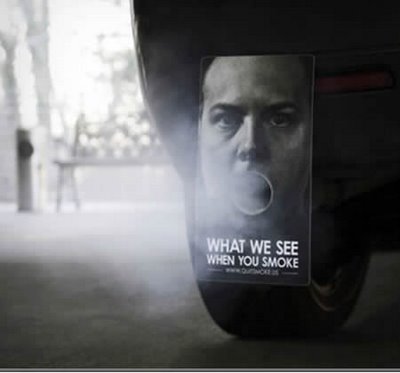
San Francisco smokers will be hit with the latest in a long lines of restrictions starting April 25, when they’ll be kicked to the curb, out by the cars whose tailpipes are at least as dangerous as secondhand smoke.

But drivers haven’t been as easy to demonize as smokers. Light up within 15 feet of a building entrance and you’ll be breaking the law. Other spots where smokers will be barred include outdoor areas at cafes and restaurants, farmer’s markets, and charity bingo games (grandma can take her wheelchair to the curb if she needs a puff).

But pot smokers need not fear. The new law maintains a provision allowing you to light up in licensed dispensaries. Smoking patios at bars are still okay, though smokers probably shouldn’t get too comfortable.

            The San Francisco Department of Public Health frames the smoking debate in terms of the impacts of secondhand smoke. And there’s some good data there. People tend to think lungs and cancer when they think smoking, but the real problem with second hand smoke is heart attacks.  A 2005 estimate from the California EPA put the number of heart attack deaths from second hand smoke at 3,600 annually. Second hand smoke contains a host of toxins from benzene to arsenic.

But it’s hard to know the incremental benefits of moving smokers to the curb. Almost all of the positive data on public health improvements from smoking bans has come from measures the city has already taken. But Mele Lau-Smith of DPH gave me a preview of the potential next battleground: third hand smoke.

“The new science that’s coming out on third hand smoke is interesting. Third hand smoke is everything that clings to furniture and hair and takes longer to dissipate. They’re smaller particles that get deeper into the lungs,” she says. The term was coined last year in the journal Pediatrics and a 2010 paper showed that nicotine reacts with nitrous acid to form carcinogenic molecules that hang around long after a smoker has left the room.

            So the news gets worse for smokers, and the anti-smoking crusade to completely eliminate smoking gains an inch. The smoking prevalence rate in California is among the lowest in the country at 14.3 percent. Most states are in the 18-20 percent range.

            And while it’s all well and good, one wonders if there are other problems in the air besides second hand smoke. Choosing to live in an urban area like San Francisco lowers one’s life expectancy by two years, and one of the major reasons for that is auto exhaust and illnesses related to poorer air quality.

            Mark Jacobson, Professor of Civil and Environmental Engineering at Stanford University, believes the government should keep regulating until smoking is eliminated. But when comparing deaths from automobile emissions versus second hand smoke, he added, “If you look at the mass of the automobile exhaust, then you’re looking at a much bigger figure than second hand smoke. Vehicle exhaust is still way under regulated for addressing health concerns.” Over 2 million people die globally from air pollution each year. About 500,000 die from second hand smoke.

            In the end, Jacobson says it comes down to combustion. When you start burning, you release toxins that eventually hurt or kill people. It doesn’t matter if it’s diesel fuel, gasoline, or tobacco. Combustible products harm public health, and in the case of oil, the environment.

Smokers have proven ideal targets for taxes. San Francisco smokers pay $2.08 in taxes on every pack of cigarettes. When you’re in the minority and the government needs cash, it’s a political no brainer. A 20 cent cigarette tax was tacked on by the Board of Supervisors last October, done under the argument that the money was needed to clean up cigarette butts. Recent proposals to add a local 10 cent tax on gasoline in order to help various cash strapped public transit agencies haven’t found much traction.

So smokers, enjoy the summer. It’ll be the last summer you can light up after an outdoor sunset meal. The smoking ban at restaurants won’t be implemented for another six months.

But come November you’ll be enjoying that smoke out by the curb, where you’ll also be treated to some car exhaust. But, hey, at this point you’re probably all in anyways.

Force is the weapon of the weak: decrying the right’s violent rhetoric

16

American political discourse is being poisoned by some truly scary rhetoric from the right-wing, which is increasingly resorting to threats and condoning of violence, a trend that has played out in recent weeks right here on the Guardian’s Politics blog. Now is the time to recognize and stop it, just as a new coalition is calling for

San Francisco resident Greg Lee Giusti was arraigned in federal court this morning for making threatening phone calls to House Speaker Nancy Pelosi, one day after the arrest of Charles Alan Wilson for threatening to kill Sen. Patty Murray (D-Wash.). In both cases, the subject was the recent health care reform bill, the anger of the suspects stoked by misinformation and inflammatory rhetoric from top conservative politicians and media figures, as well as the Tea Party movement.

But these cases – along with the recent domestic terrorism plot by Christian fundamentalists and other incidents of overt and implied threats of violence – aren’t isolated examples; they are closer to the norm of rhetoric emanating from the right-wing these days, a trend not seen in this country since the months that led up to the bombing of the Oklahoma City federal building by right-wing radical Timothy McVeigh, the biggest act of domestic terrorism before 9/11.

Consider Giusti, who also wrote a scary letter to me and the Guardian in the midst of his threats against Pelosi, taking issue with our recent cover story that was critical of police crackdowns on SF nightlife. In additional to praising police violence and encouraging cops to “crack a few skulls open,” just like his NYPD cop uncle, who “knows how to inflect [sic] excruciating Paine [sic] on someone without leaving any signs of what happened.”

But Giusti was far from alone in promoting violence over the issues we’ve raised. SFPD Southern Station Capt. Daniel McDonough praised the sometimes-violent tactics of the two undercover cops who bust parties and nightclubs, strongly implying those tactics were justified to counter the unspecified threats of violence that nightclubs represent. “Because of their diligence and professionalism the amount of violence and disorder has been reduced,” McDonough wrote, echoing a troubling strain of right-wing political thought that condones violence to prevent even speculative threats of violence, a perspective that led us to invade Iraq.

And when I wrote about McDonough’s response yesterday, a commenter wrote that aggressive police tactics are justified because, “The unprecedented ascendancy of nightclubs and violation of the Constitutional rights of residents to peaceful use of their property calls for drastic measures.”

In a similar vein, our blog post this week on a newly released video of American soldiers in a helicopter opening fire on a crowd in Baghdad that included journalists and children while making disturbing comments that seemed to relish the opportunity to kill people also provoked some equally disturbing comments.

“So a couple of journalists embedded with terrorists killing Americans got wiped out…congrats to the shooters! A couple of terrorists in training got shot up in a terrorist rescue attempt…congrats to the shooters! Everyone on scene who died got what was coming to them,” one wrote, while another warned, “Raise a weapon against America or Americans and prepare to experience the worst day in the rest of your life. Hoowa!”

Even though the helicopter was miles away and the video showed no credible threats toward it or anyone else, supporters of the war seemed to think that quickly resorting to violence is acceptable. “This is the price we pay for are [sic] freedom. put yourself in that chopper and then put yourself on the ground they all no [sic] what can and will happen. It will happen at home again 911 just give it time. We will do are [sic] best to defend are [sic] country. GOD BLESS USA.”

And I will do my best to defend this country from right-wing extremists. That effort starts with challenging Sarah Palin’s winking exhortation for her followers to “lock and load,” and with letting commentators like Glenn Beck and Bill O’Reilly, on a nightly basis, cast liberals as enemies of the state to their well-armed listeners.

This is simply not OK, a point that’s being made by the prosecutors of Giusti and Wilson, as well as the new Stop Domestic Terrorism campaign by a coalition of organization concerns about the increasing violent rhetoric of the rights. 

“Law abiding Americans do not advocate violence against fellow Americans,” campaign spokesperson Brad Friedman said in a public statement. “As Americans, we all need to engage in a vigorous debate of the issues based on facts and reason rather than fear and prejudice.”

But even in San Francisco, it’s common for conservatives and so-called “moderates” to condone violence against the homeless, drug users, petty criminals, ravers, Critical Mass bicyclists, “illegal immigrants,” or others that they dismiss as “getting what’s coming to them” for daring to violate laws or social mores. I’ve personally had violence wished on me more times than I can count, in letters, phone messages, and to my face. 

As a full-time newspaper journalist for almost 20 years, I’ve dealt with right-wing crazies for a long time, but there are times when you can sense their indignation getting ratcheted up to dangerous levels. In 1994, I wrote stories for the Auburn Journal and Sacramento News & Review about right-wing “patriots” and “constitutionalists” that were part of the militia movement in Placer County.

They warned me that then-President Bill Clinton was an agent of the “New World Order” who was plotting a socialist takeover of the “real Americans,” and that violent resistance was necessary. They spun elaborate fantasies about the impending civil war, which they said the federal government had already started with their raids in Ruby Ridge and Waco. 

“You won’t be able to write an article like this anymore because the government will come and kick in your door and murder you and your children,” one militia member told me after my first article came out.

On April 19 of the next year, while I was working for the Santa Maria Times, I remember vividly when the federal building in Oklahoma City was bombed, killing 168 people. For the first 24 hours, most media outlets speculated that it was an attack by terrorists from the Middle East, but as soon as I heard it was the anniversary of the Waco incident, I knew exactly who was really responsible: the dangerous right wing extremism that pushed militia member Timothy McVeigh to attack his own country.

And now, it’s happening again. Overheated rhetoric on the right is casting Pelosi and fellow Democrats not just as political opponents, but as dangerous enemies of the “real Americans” that Palin claims to champion. They have, like Wilson said of Murray, “ a target on her back.”

When Sen. Leland Yee tried to find out how much Palin was being paid to speak at California State University-Stanislaus, he was aggressively attacked by her acolytes for trying to “take away her constitutional right to free speech,” according to an anonymous message left on his answering message yesterday, which his office shared with the Guardian. “Maybe we ought to have a homosexual with a long enough dick so he can stick it up his ass and fuck himself while he’s on stage giving a speech.”

Such crass, semi-literate, weirdly homophobic comments might be funny if they weren’t part of a larger, more dangerous trend in this country. Once again, a Democratic president is being actively accused of treasonous hostility to “real Americans” by major conservative figures with huge audiences, and once again, the lunatic fringe is being worked up into a frenzy.

The recently uncovered plot by Michigan militia members to murder police officers in the hopes of starting a holy war with the enemies of Christianity is just one indication for what this kind of rhetoric is leading to in isolated pockets around the country. Now is the time to put a stop to condoning violence in any of its forms, whether it’s cops cracking the skulls of clubbers or street denizens, soldiers firing on crowds of people, or citizens threatening our elected representatives.

“Force is the weapon of the weak,” said the radical pacifist-anarchist Ammon Hennacy, a quote that was often repeated by folk singer and progressive writer Utah Phillips, who I had the honor of covering at the same time I was covering the militia movement. It’s true, and at this difficult moment in our country’s history, let’s all try to stay strong.  

The Daily Blurgh: Stick a Bjork in it

0

Curiosities, quirks, oddites, and items from around the Bay and beyond

So what if the Fader posted this last week? Vallejo royalty E-40’s new Bjork-sampling track, the Droop-E produced, “Spend the Night” is too fabulous not to share (and it looks like the NY Times likes it too). The icing on the cake is that Bjork cleared the samples, taken from “Oceanea” off of her, IMHO severely underrated, acapella album Medulla. And as Fader commenter bollocks noted, this isn’t the first time Queen B has appeared on a local hip-hop track. The timpani-heavy riff from “Human Behavior” was used back in 2003, “by Bay Area legends Hieroglyphics, for ‘Let It Roll,’ off their classic album Full Circle.” Thanks for the knowledge.


I bet I can guess what you’re doing on your coffee break. Wheee!


Slog nicely sums up the cases of Gregory Lee Giusti, who was arrested yesterday for allegedly threatening House Speaker Nancy Pelosi over her support of the health care reform bill (he threatened us too), and Charles Alan Wilson, who allegedly threatened to kill Washington Senator Patty Murray over her support of the health care reform bill, best: “Powerful Women, and the Men Who Threaten Them.”


 “Let’s just say that if Malcolm breathes, it’s too much for me to stomach.” Johnny Rotten on the Sex Pistols’ former manager Malcom McLaren. RIP, Madame Butterfly Buffalo Gal Duck Rock. (Watch all three simultaneously for our version of heaven?)


Researchers at UCSF School of Pharmacy want you to know that the bacteria in that tainted burger patty could become the next Monet.


Tonight, SFMOMA presents “Streets of San Francisco: Filmic Journeys,” a program of over 50 years of footage of SF’s streets as filmed by the many wonderful experimental filmmakers – including Martha Rosler, Hollis Frampton, Lawrence Jordan, and more – who have called this city home and muse. 50 footage!

Uproot: Notes from the underground food scene

0

Recently Kitchen Table Talks, a monthly series of discussions on the US food system, invited a panel of SF entrepreneurs from the emerging underground food scene for a QA, hoping to answer big questions like what’s driving the trend and whether or not it has a future. As Iso Rabins from forageSF, Leif Hedendal, a veteran chef of secret suppers, Lucera Muñoz Arrellano, the owner of a bacon-wrapped hot dog cart in the Mission, shared their stories, I got a sense that no one had an overarching theory about the recent surge of popular interest. But it’s clear a lot of passionate people are firmly committed to redefining our food culture whether the man likes it or not.

Rabins originally began forageSF as a way to educate people about wild food with guided foraging tours that served to recontextualize nature as not an abstraction but an integrated environment to which we are inherently bound; it can even feed us. As he saw more and more people’s interest in preparing food grow and their resources dwindle, forageSF evolve to include the Underground Market, a venue for foragers and other uncertified producers to sell their goods. He’s had a few run-ins with the health department, but since he’s now operating under the quasi-legal status of a club he said he pretty much plans on running the market till forced to shut down.

In the long term, though, Rabins doesn’t have much interest in “legitimizing” the market considering enough certified farmers markets already exist, and to him, adjusting to the regulations would circumscribe the innovative spirit of the project. But he does see it developing into more of a launching pad for those wanting to make the switch over to the mainstream.

Hedendal, after working in brick-and-mortar food establishments, became disillusioned with what he described as kitchen culture — the demanding schedule and strict hierarchy that disconnected workers from the community, and thus, one of the main pleasures of cooking. He’s also critical of the “cheating” that many restaurants resort to in order to still be considered sustainable and not go broke. After getting out of the professional world almost a decade ago, he’s been involved with various food projects and secret dinners that sought to uphold the values of community, affordability, and creativity — it’s a pretty long and impressive resume. As of right now, he’s cooking for Dinner Discussions, which brings together food and socially-engaged artists. But for all his negative experiences working in restaurants, Hedendal’s ultimate goal is to open one that satisfies his values of true sustainability and community—maybe impossible now but who knows what will be eventually possible with the changing tides in our food and economic culture.

Lucero Muñoz Arrellano, though, kept the conversation grounded in the practical reality for a lot of those who informally vend on the streets. When asked why she began selling the popular Mexican hot dogs, she answered, assisted by a translator, that her biggest reason was to find a way to support her children, bringing it home that for many in this recession, underground food is a means to surviving in a shrinking job market that’s squeezing out the marginalized—especially those who might lack formal education or English language skills.

I don’t want to sell her short, though; her experiences and trials as an informal street vendor have given her a goal other than just subsisting. With her recent acceptance into the incubator program at La Cocina, a nonprofit geared towards nurturing low-income food entrepreneurs, Arrellano has been inspired to convince others to legalize their businesses. She’s intimately familiar with the hurdles that are almost impossible to navigate—like the bureaucratese of the necessary documentation that frustrates many non-English speakers or those who have limited education. And she also knows the risks that informal vendors suffer. At a minimum, the $250 citation fee can wipe out more than a day’s worth of work, not to mention the threat of having the cart confiscated and losing what may be their only livelihood. Some work in fear of arrest and deportation. A very big risk indeed.

In some ways the talk was illuminating and in other ways it confirmed ideas I deeply support. I suspect, given the wide-arching participation in decentralizing the mainstream food industry, the underground scene is not solely about hipster novelty-seeking. (Though, let’s not lie, that does play a significant part.) It also reflects the growing public re-evaluation of dysfunctional socioeconomic systems and support for those who are redefining how and what we eat.

Tricia Taborn, a great San Francisco spirit, died today

21

I was saddened to hear that my former associate of many years, Tricia Taborn, died today (April 7) of cancer at Kaiser Hospital in Oakland.

She was four days shy of her 62nd birthday.

She entered the hospital on Saturday (April 3).  Her mother Neomi flew out from Dallas,  Texas,  to be with her the last few days. Her sister Ginny, her  two brothers Kenneth and Michael  and her husband Gerald Baron  were with her when she died. 

Tricia worked for me as assistant to the publisher from July of 1993 to April of 2000.

I always marveled  at how she  could jump into things and make them work.  Her friends and family say that she has been doing that throughout her life.  When she came to the Guardian, she had no newspaper or journalism experience, yet she quickly  fit in and

became a valuable employee able to handle most any administrative job that came along.  She kept me organized and she organized an endless series of events at the Guardian that included five annual awards contests and ceremonies (poetry, photography, cartoons, short stories, film treatments) that she structured to reflect the rich cultural diversity and artistic talent in San Francisco.

She also put on major events and dinners for the Northern California chapter of the Society of Professional Journalists and the California Freedom of Information Coalition during its early days.  She loved being a hostess and she did so with flair, a rollicking laugh, flamboyant hats and an ability to make the event important and distinctive and  to see that everyone was welcome and having fun. She served for several years as a director and treasurer of SPJ.

Victoria McDonnell, a friend that Tricia talked with almost every day on the phone, agreed that Tricia liked to jump into things.

“I know she joined her high school year book committee in Florida soon after arriving at the school.  In San Francisco, she did this at Major Ponds (a jazz club where she worked as a bartender in the late 1970s and early 1980s), the Bay Guardian, the Industry Standard (the late dot.com magazine),  OneWorld Health, and lastly selling real estate.

“Tricia was the first employee for One World Health,  It started out at (founder) Victoria Hale’s house and grew to be a world-wide multimillion dollar non profit pharmaceutical company.  The first ever non-profit pharmaceutical company in fact. Tricia thrived on ‘start ups.'”

Victoria Hale said that Tricia was “an amazing woman  who accomplished much, despite the obstacles, with humor and passion, while caring for others.  She had an especially good relationship with the Indian physicians who worked on leishmaniasis.  She demonstrated much courage and trust by becoming the first employee of OneWorld Health, while still on the first floor of our house.”

Tricia lived in Florida, Utah, Atlanta, Dallas, and other places because her father Raymond Taborn was an aeronautical engineer and moved about because of his work. She bought a house in Berkeley in 2004 with her husband Gerald Baron. 

For the last two years of her life, Tricia lived her dream: getting her independence by selling real estate and having fun doing it. She worked in the Berkeley office of Coldwell Banker, specializing in low price housing that many real estate people avoided. She was recently recognized as the top sales person in her office.  Her main hobby, according to her friends, was shopping and she was well known at Nordstroms, Macys and Ross department stores, as well as thrift shops and farmer’s markets.

Tricia was diagnosed in November with metastatic colon cancer. Over the last two months she rallied and was able to spend time and phone calls talking to her friends and “wrapping up her relationships in a positive and meaningful way,” as Victoria Hale put it.

Invariably, her friends reported that Tricia remained upbeat until she went into the hospital for the last time.

She leaves her mother Neomi Taborn of Dallas, a sister Ginny of Dallas, two brothers, Kenneth of Arlington, Texas, and Michael of Phoenix, Arizona, her husband Gerald Baron,  and Tommy, her beloved cat.  Services are pending and will be reported on this blog when they are set.


Man who threatened Pelosi sent hate mail to Guardian

Remember when we told you about that very special piece of fan mail from the guy who didn’t like our cover story about undercover cops targeting San Francisco nightlife?

Well, he appears to be the same person who just got picked up by the FBI for making threatening and harrassing phone calls to House Speaker Nancy Pelosi.

“[Federal officials] said he recited her home address and said if she wanted to see it again, she would not support the health care overhaul bill that since has been enacted,” according to the Chron piece about his arrest.

We didn’t publish his name with the post, because we weren’t able to verify his identity. But the name signed at the end of the email sent to the Guardian was Greg Giusti, and the Chronicle names Gregory Lee Giusti, 48, as the man who was arrested in San Francisco this afternoon after threatening Pelosi.

In his email to us, Giusti included the phrase “that ugly witch Nancy Pelosi.”

Some of our readers commenting on his over-the-top letter, which contained racist and homophobic language, wondered if it was some kind of joke. We wondered about that, too.

But as we wrote in our post, “Receiving a letter crammed with hate-filled speech while witnessing pockets of far-right extremists grab headlines, we thought it best not to ignore it, but to call attention to it.”

Hot sex events: April 7-13

0


Dear Good Vibrations,

Please stop putting on such awesome classes, you’re making me look like I don’t have anything else to write about for sex events.

Thanks,

Caitlin

Just kidding, Good Vibes! But honestly, a quick shout out to our local legendary sex toy company. This place was started in 1977 by sex educator Joani Blank, and since then has made lovers of all kinds of sexual persuasions very, very happy with it’s high quality toys, classes and videos. But you already knew that. Onto this week’s sex events! Not coincidentally, they feature three Good Vibes lessons for very bad girls and boys. But it would appear the rest of the Bay has caught the fever for some bedroom education as well… 


Prostate Play and Pleasure

Dr. Charles Glickman knows what it takes to make your little prostate guy happy. In this free hour long class, he’ll run down the toys, tips, and techniques to shed some love on you or your partner’s gland of love.

Wed/7 6:30-7:30 p.m., free

Good Vibrations

2504 San Pablo, Berkeley

(510) 841-0171

www.goodvibes.com


The Sexuality of Pregnancy and Birth

The store continues it’s non stop sex ed blockbusting with this class, which takes away the confusion and uncertainty regarding pregnancy and sexual activity. Sexual pleasure as a labor enhancer? Which positions will show love for that belly of joy? Carrie Flemming, birth advocate/artist/health worker shows the way.

Wed/7 8 p.m.-10 p.m., $25-30

Good Vibrations

603 Valencia 

www.goodvibes.com


Freedom Dreams

Don’t miss the kick off party for Safetyfest, Community United Against Violence’s educational workshop series on avoiding domestic violence in queer/trans relationships. The party will feature queer performance group Mango with Chili, bangin’ DJs, a kissing booth, and of course, lots of learnin’ on how to keep your honey and yourself safe.

Thur/8 7-10 p.m., $5-20 sliding scale

Bench and Bar

510 17th St., Oakland

 www.cuav.org


Booze, Broads and Hotrods

For all those into the smoothness of curves, the rev of the engine, the smell of hot grease… the 12th annual car show/jive dance party/burlesque showcase, Booze, Broad and Hotrods. Get you out to Milbrae for cheap hotel rooms at the Clarion, a pre 1965 classic car show, and front row seats for La Cholita, the infamous burlesqueteer who will be performing throughout the evening.

Sat/10 3 p.m. – 1:30 a.m., $18-20

Clarion Hotel

401 East Milbrae, Millbrae


Secret Desires: Playing with Erotic Edges

On how to bring what you’ve always thought would remain a fantasy in your head to the fore of your lovemaking. Cleo DuBois shows the way to “deeply authentic sex.” And perhaps a little more honesty in the bedroom, to boot.

Tues/13 8-10 p.m., $25-30

Good Vibrations

1620 Polk, SF

www.goodvibes.com


Girl Sex 101

Allison Moon wants to teach you the same lessons on licking, grinding, and girl on girl sexual communication that she dispenses at Burning Man’s Camp Beaverton for Wayward Girls. Won’t you let her?

Tues/13 7-9 p.m.

Center for Sex and Culture

1519 Mission, SF

(310) 694-4895 

www.sexandculture.org


School of Shimmy: Burlesque 101

I’m unclear on whether it’s B.Y.O.P. (Bring Your Own Pasty), but regardless, you should get your shakable ass down to El Rio for Red Hot Burlesque’s crash course on that classiest form of clothes shucking. Important: will there be $1 Pabsts?

Tues/13 7-9 p.m., $30 (reservations recommended)

El Rio 

3158 Mission, SF

(201) 615-9245 

www.redhotsburlesque.com


Our stuff, our planet

1

Sarah@sfbg.com

Annie Leonard, author of The Story of Stuff (Free Press, 2010), sat in her office in Berkeley explaining why we must direct our energy toward making policy and reforming laws, not just individual green lifestyles, to avoid destroying the planet.

Leonard recalled how, at a recent reading to promote her book, she was presented with the claim that people in Berkeley are environmentally superior to other folks. “But people shouldn’t point the finger at other individuals unless those individuals are the heads of Chevron, Dow Chemical, Disney, Fox News, Halliburton, McDonald’s, Shell, or the World Bank,” Leonard warned.

Her point is that the planet’s biggest problems are systemic, not a result of personal choices. “Because our choices are limited to the forces outside the store. We have this big illusion of that ‘free market,’ but I can’t choose pajamas for my kid without them containing neurotoxins because of the law. And I cannot choose an electrical appliance that lasts for more than a year. The overall structure encourages people to use toxics. We have to start looking at these harder issues,” she said. “It’s so easy to think it’s an individual’s fault.”

Leonard’s quest to shine some cleansing light on the toxic effects of capitalism started with her short film, The Story of Stuff, which became an Internet sensation with more than 10 million viewings. It showed how our obsession with buying stuff is trashing our planet, communities, and health, thanks to the hidden costs in how we organize our economy.

Her book goes into the details of how these costs come at the expense of millions of people who live and work in dangerous, unhealthy circumstances. Leonard isn’t saying that people shouldn’t be responsible and smart in their individual and household actions. But she is critical of the idea that we can solve the problems caused by “our take-make-waste paradigm” entirely through green living.

“Unfortunately, there are no 10 easy things individuals can do to save the planet,” Leonard said. “We definitely should engage in these actions, as long as we don’t let them lull us into a false sense of accomplishment or let the effort of maintaining this constant, uptight, rigorous green screen on our life exhaust us. And as long as taking these actions doesn’t stand in the way of engaging in the broader political arena for real change.”

Leonard includes a list of “recommended individual actions” in her book, but it’s tucked behind examples of “promising policies, reforms, and laws” and ahead of a sample political letter warning that “PVC is the most hazardous plastic at all stages of its lifecycle.”

What worries Leonard is that the planet is already bumping up against ecological limits. “If we don’t change, we’ll have change forced upon us,” she said. “If change is by design, it’ll be much more compassionate and strategic. If it’s by default, it’ll be a lot uglier, a lot more violent, and a lot less fair.”

Leonard says our planetary problem stems from approaching product purchases as if we were exempt from the ecological system. “If you think as a consumer, you want the best product and the best price. But if you think as a citizen, you want what’s best for your community, your environment.

“We all know how to be good consumers, but our citizen muscle has atrophied,” she added. “That has limited our ability to know how to solve problems. And often environmental victories here become problems elsewhere, like e-waste that gets taken to third world countries.”

Fox News has labeled Leonard anticapitalist, describing her as “Karl Marx with a ponytail.” But Leonard stresses that she is not anti-stuff, just stuff that trashes the planet, poisons people, and that people confuse with personal self-worth.

“I’m pro stuff,” she said. “But I want us to have a reverence for it, to ask, ‘Who made this, and where did it come from?’ Because someone mixed those metals, felled that forest. And I’ve become fascinated by why folks in the U.S. can’t talk about capitalism. It’s the economic system that must not be named. It’s like we’re in an ice cream shop that serves only one flavor and we’re not allowed to look over the counter.”

Revenue for all

2

OPINION Cut, cut, cut, cut, cut: this is the sound of your government — parks, schools, playgrounds, hospitals, clinics, public transportation, programs for youth and seniors, arts, social services, the whole fabric that makes San Francisco what it is — fading away as state and local politicians refuse to raise revenue to revitalize our economy.

Mayor Gavin Newsom and big business groups have promoted a defeatist politics of low expectations, cutting spending, laying off city workers by the thousands, and offering tax breaks to businesses and developers rather than tapping San Francisco’s deep pockets of wealth to generate economic opportunities citywide.

It’s time for a new path: a fiscal politics of optimism, opportunity, and addition rather than subtraction. It’s time for an unapologetic progressive taxation movement for this November’s ballot and beyond, to make the city’s great wealth — individual and corporate, often badly undertaxed — work for all San Franciscans.

As California crumbles, local revenue movements could fuel a statewide campaign of towns, cities, and counties to overturn Proposition 13. San Francisco can take the lead with progressive taxation to create jobs, promote small neighborhood businesses, expand affordable housing and public transit, save public health, and more.

A citywide campaign for progressive taxes is building, including leaders from community-based nonprofits, grassroots organizing and neighborhood groups, labor unions, and some corners of City Hall. There are many promising ideas; with the right political will and organizing, the city could, for instance, tax large-scale real estate and levy profits from large firms. Progressive taxes could, at minimum, bring in close to $100 million and help save critical city services.

To win this campaign, a strong coalition must educate and mobilize the public about the vital importance — and citywide benefit — of raising revenue through targeted taxes on large firms and wealthy individuals. The city’s political leaders will need prodding, pressure, and support to get this done.

Progressive taxation will benefit all of San Francisco, not just some — working-class people of color and immigrants who endure the cuts’ harshest effects, everyone from youths to seniors, and vitally needed city employees like social workers, nurses, librarians, park workers, and firefighters.

The politics of austerity poses false choices between public safety and public health — as if health isn’t a safety issue. San Franciscans of all stripes must reject the pitting of services and "constituencies" against each other, reject the wedge politics that pit labor against nonprofits (both of which work to uplift working-class and poor residents), and unify around progressive revenue.

Nobody likes taxes, least of all the middle class, working class, and poor (the vast majority of us) who shoulder the bulk of the burden. But wealthy individuals and corporations can and must pay their fair share. According to a 2007 World Wealth Report produced by Merrill Lynch, 123,621 households in the Bay Area — many of them in San Francisco — "had $1 million or more in financial assets in 2007, up 10.8 percent from the year before," the San Francisco Chronicle reported.

At a Feb. 14, 2007 Town Hall on Poverty in Bayview-Hunters Point, Newsom asserted, "we haven’t addressed the wealth divide; we haven’t addressed the health divide; we haven’t addressed the economic divide … why in a city like San Francisco has income inequality grown like it has?"

Yet Newsom and others continue to avoid progressive taxation — despite polls suggesting such measures can win. Tell Mayor Newsom, and your district supervisor, to make San Francisco’s wealth work for everyone. Now. *

Christopher Cook, an award-winning journalist and former Bay Guardian city editor, is communications director for the Revenue for All campaign of Budget Justice, a coalition of members from dozens of community organizations, labor unions and their allies working to raise revenue and protect the most vulnerable San Franciscans from budget cuts.

Alerts

0

alert@sfbg.com

WEDNESDAY, APRIL 7

The Human Cost of Food


Join the Green Café Network, Mission Pie, and local farmers for a discussion about the different models of farm labor structure and how individual consumers, cafes, and restaurants can integrate this knowledge into their sourcing decisions and methods. It’s an idea whose time has come: fooders and foodies working together to balance social and economic justice goals with economic demands.

6:30 p.m., $5–$10 suggested donation

Kitchen at Mission Pie

2901 Mission, SF

(415) 282-1500

greencafenetwork.org

FRIDAY, APRIL 9

Berkeley Critical Mass


Join this "spring renewal ride" to celebrate Berkeley Critical Mass’ 17th year of protests on wheels. Bring noise-makers, bike decorations, food to share, and bike lights.

6 p.m., free

Berkeley BART

Center at Shattuck, Berk.

www.berkeleycriticalmass.org

SATURDAY, APRIL 10

Forum for Choice 2010


Hear candidates for governor, attorney general, and insurance commissioner take part in an in-depth discussion on a woman’s right to choose and the government’s role in making reproductive health decisions that affect all of us. Confirmed participants are Jerry Brown, Hector De La Torre, Rocky Delgadillo, Kamala Harris, Dave Jones, Chris Kelly, Ted Lieu, Pedro Nava, and Alberto Torrico.

8:30 a.m.; $50, $15 for students

Nob Hill Masonic Center

1111 California, SF

forumforchoice.com

Hilltop Park Beautification Day


Join AmeriCorps members of Habitat for Humanity as they maintain and beautify Hilltop Park, an under-utilized public outdoor space in the Bayview neighborhood that has fallen into disrepair due to budget cuts at SF’s Recreation and Park Department.

9 a.m., free

Across from 52 Whitney Young Circle construction site, SF

www.habitatgsf.org

San Francisco Green Festival


Volunteer or attend the Spring 2010 San Francisco Green Festival, a sustainability event featuring talks by authors, educators, and leaders; exhibits from ecofriendly businesses; workshops, films, activities, vegetarian food, and more.

Sat. 10 a.m.–7 p.m., Sunday 11 a.m.– 6 p.m.

$15 weekend, $10 one-day; $5 seniors, bike, and public transit riders;

free for volunteers, students, and youth.

SF Concourse Exhibition Center

635 Eighth St., SF

www.greenfestivals.org

SUNDAY, APRIL 11

Cuba and U.S.


Attend this afternoon of presentations and discussions about Cuba, the U.S. blockade, how to visit, how to get involved advocating for Cuba, and how you can get involved with freeing the Cuban Five.

3 p.m., $5

La Pena Cultural Center

3105 Shattuck, Berk.

(510) 849-2568 or email cucaravan@igc.org

Mail items for Alerts to the Guardian Building, 135 Mississippi St., SF, CA 94107; fax to (415) 255-8762; or e-mail alert@sfbg.com. Please include a contact telephone number. Items must be received at least one week prior to the publication date.