Health

Make hotels pay their share

2

By Martha Hawthorne


OPINION If you ride Muni, educate your children in public schools, or rely on city services, you’ve already felt the impact of cuts to the city budget over the past few years, and it could get worse. San Francisco is facing a $522 million deficit this year. It’s expected to swell above $700 million in the next two years. Current budget balancing proposals include laying off teachers and nurses and cutting after-school programs, youth job training, street cleaning, public safety, recreation, and health services for San Franciscans and visitors alike.

While city residents and employees have sacrificed, certain Internet hotel booking sites are trying to evade more than $70 million in legally required hotel taxes. Additionally, airline companies that use San Francisco hotels to house their flight crews overnight are attempting to escape paying the hotel tax, depriving the city of millions of dollars in revenue annually.

At the same time, 5 million visitors to the city each year are not being asked to shoulder their share of the rising costs for services including public transit, public safety, and infrastructure. In fact, the hotel room surcharge in San Francisco hasn’t increased in 14 years, while costs have skyrocketed. Currently visitors to San Francisco pay the same or lower surcharge than they do in many other large cities, including New York, Los Angeles, Boston, and Houston.

That’s why we have come together to create the Stand up for San Francisco Coalition, a group of teachers, nurses, parents, public employees, and concerned citizens who believe the city needs to find new ways to fund our highest priorities. Together, we are headed to the street to collect signatures to place on the ballot an initiative that would close loopholes and make hotels pay their fair share.

This proposed measure would do three things. It would ensure that Internet hotel booking sites pay the full amount of hotel surcharge they owe — bringing millions of dollars each year into the city. It would end a practice by which airlines are attempting to not pay hotel room taxes they legally owe. And finally, it would impose a temporary visitor surcharge of 2 percent, costing the average visitor $3 per night, to support the infrastructure and services that help draw visitors and serve them during their stay, which would sunset in four years.

We are committed to thinking creatively about ways to fix our city’s budget problems, beginning with ensuring the city collects what it is owed from big hotels. Our initiative asks visitors contribute a few dollars more per night to help guarantee San Francisco is a city that lives up to its progressive values. In order to save the jobs of teachers, protect HealthySF, care for our seniors, stop service cuts to Muni, and hold the line for public safety, hotels and visitors need to pay their fair share.

Martha Hawthorne, a public health nurse, is a founder of Stand up for San Francisco and one of the official proponents of the Hotel Fairness Initiative.

UC, CSU chiefs need to quit the Chamber of Commerce board

1

The California Chamber of Commerce is one of the most consistently right-wing organizations in the state, particularly on economic issues. The Chamber’s against pretty much all taxes and supports pretty much all cuts in government spending.

So why are the heads of the three largest public educational institutions in California, the University of California, California State University, and the California Community Colleges, members of the Chamber board?

It’s a tradition at the Chamber to put the UC president and the CSU and CCC chancellors on the board, which has about 100 members. But the three educators came under fire recently when the Chamber put out a blatantly partisan ad attacking Jerry Brown

And in fact, UC President Mark Yudof told the Chamber’s fundraising chair last year that he couldn’t donate to the CalChamberPAC because that group was trying to make sure that Democrats don’t win enough seats in the Legislature to hold a two-thirds majority. “As president of a public institution that is both in practice and in policy nonpartisan, I must decline your request for a contribution,” Yudof wrote in an Oct. 9, 2009 letter, a copy of which I obtained under the state’s Public Records Act.

But Yudof also stated: “As a member of the Board of Directors, I appreciate the Chamber’s engagement in the political process and its advocacy for a strong and vibrant California economy.”

The truth is, the Chamber’s “engagement in the political process” is almost always adversarial to the interests of the state’s public education system. The fundraising letter Yudof was responding to specifically sought money to block Democrats from holding enough seats to raise taxes — and the refusal of the governor and his GOP colleagues to seek any new revenue sources has been the major reason the state’s budget is so horribly messed up. And that’s the main reason the University of California and CSU have faced such alarming budget cuts.

Why are the people in charge of promoting public higher education willingly putting their names, and their credibility, behind what’s really a Neanderthal institution? Because that’s what’s going on here — Yudof, CSU Chancellor Charles Reed and CCC Chancellor Jack Scott aren’t on the Chamber board to offer advice. They’re on the board to give the Chamber more credibility. They help make the organization seem more friendly, more concerned with the public interest.

They help make an organization devoted to reducing the role of the public sector in this state seem supportive of public education. They help propagate a political lie.

I asked Yudof, Reed and Scott why they’re still on the board, and got pretty weak responses. Here’s Yudof’s spokesperson, Peter King:

[President Yudof] considers the California business community to be one of several key constituency groups that are important to the University, which is why traditionally higher education leaders in California have held seats on the Chamber board. In general, President Yudof has found the Chamber to be highly supportive of higher education in California. He cannot recall in his tenure as President a single Chamber proposal to reduce funding for higher education.

Um, actually that’s not true at all. The Chamber just released its 2010 “job killer” list — a roster of bills that the organization will oppose on the grounds that they’re bad for business. Among them: Assemblymember Tom Ammiano’s bill to fix a loophole in Prop. 13 (and provide more money for public education), and a bill by Sen. Leland Yee that would allow the state to recapture tax-credit money if the company that got the credits (for increasing employment in the state, for example) winds up leaving California or shipping jobs elsewhere. That money would be available for higher education.

 Passage of those bills would allow the state to stop cutting UC and CSU. The Chamber wants to kill them.

King did say, however, that after the Brown ad aired, he “has informed the Chamber that he will continue to serve on the board only if his status is changed to that of an ex officio member.” But that doesn’t mean anything; it’s his name on the letterhead that matters.

Reed’s press person, Erik Fallis, was even more vague. He would only refer me to a statement Reed and Yudof issued after the Brown ad controversy, which said, in part:

We value our inclusion on the Chamber board, which provides an opportunity to interact with business leaders on issues that are of vital importance to the future of California. This is a dialogue that has been of great benefit to higher education, the business community and the state as a whole.

Actually, the inclusion of top state education officials  is detrimental to the public interest, detrimental to public education and really bad form. Particularly now, when the Chamber is going out of its way to make sure that the state budget crisis is solved with nothing but cuts.

Scott has been openly complaining about budget cuts (PDF) but his office hasn’t responded to my questions.

Yee, a frequent critic of UC management, responded, though, and he didn’t mince words:

It would be one thing if President Yudof and Chancellor Reed used their positions on the California Chamber of Commerce board to support more revenue for our beleaguered public universities.  Unfortunately, the CalChamber is categorical in its opposition to new revenues and has become nothing short of a mouthpiece for the Republican Party.  The Chamber benefits from the prestige that Yudof and Reed bring to the table, and uses it to advance a right-wing agenda that includes questioning the validity of global warming (AB 32, 2006) and the need to protect workers from discrimination (AB 793, Jones, 2009), blocking universal health care (SB 810, Leno, 2010), and holding corporations accountable to their promises to create jobs (SB 1391, Yee, 2010).  It is outrageous that Yudof and Reed would serve as accomplices to killing bills that would increase revenue for higher education.

The top education executives need to resign from the Chamber board, now.

Never mind the budget, Gavin’s worried about himself

2

So this afternoon, the governor released a truly horrifying mid-year budget revise, a bloody proposal that would eliminate CALWORKS, the state’s major welfare program, and cut billions out of other essential services. Calitics puts it nicely:


At today’s press conference unveiling the May Revise of the 2010-11 budget, Arnold Schwarzenegger said “the budget should be a reflection of California’s values.” If that’s the case, then California’s values are protecting the wealthy and the large corporations from having to contribute anything to this society while making old people and children suffer. Arnold’s California is a place where if you aren’t wealthy, you don’t deserve to have health, food, or any other form of economic security.


And about an hour later, the mayor of San Francisco sends a text to Assemblymember Tom Ammiano, who represents the city. Was he asking for Ammiano’s help in fighting the budget cuts? Was he suggesting they work together on strategy to save the city’s most needy from the governor’s axe? No. Here’s what the text from Newsom, who is running for Lt. Governor, said:


I hear you voted for Hahn at the convention.


That’s right — a month after the state Democratic Convention, Newsom is complaining that Ammiano voted for his opponent in the endorsement derby. That’s what he cares about? More than the worse budget in state history?


Ammiano’s response:


And what???


Good question.


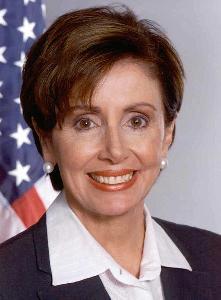
Pelosi needs to support the Fair Elections Act

8

In the wake of the horrible Supreme Court decision in Citizens United, Rep. John Larson of Connecticut has introduced a bill that would reform substantially the way members of Congress are elected. It’s not perfect, but it’s a big step. The Fair Elections Now Act, H.R. 1826, would create partial public funding for Congressional races, with a 4-1 match for contributions of $100 or less. The money would come from a small fee on goverment contractors.


There are now more than 130 co-sponsors in the House, and they’re pusing for a floor vote. But Speaker Nancy Pelosi hasn’t decided whether to allow the bill to come to the floor.


The politics of that are crazy. If the Democrats want to keep control of the House, they need to have something to campaign on this fall. During the presidential campaign, the party promise reform — but so far, other than a mild health care bill, there’s no real reform on the table.


“If Democrats don’t have a real reform agenda that includes election reform — and that shows the party wants to change how business is done in Washington — we could be in big trouble in the fall,” Steve Hildebrand, a former Obama strategist who is helping the Fair Elections Now Act folks, told me.


So what’s up. Nancy?  Why not at least give the bill a chance.


Should bicycling adults wear helmets?

91

Did you pedal today, on Bike to Work Day? And if so, did you wear a helmet? I biked without a helmet, and in the eyes of some, that makes me reckless and irresponsible. Similarly, they say the Guardian has done a disservice to the community by featuring photos of cyclists-sans-helmets in our current issue, a criticism we also received about our Bike Issue last year. It’s an interesting enough debate that I thought I’d move it from the comments section on my latest story up into its own blog post.

“Helmets save lives. I was amazed to go through the entire issue and not see one helmet on your biker models. Please mention this in your paper,” Jim A wrote in our comments section. And when I responded that it was a personal decision for adults (children are required by law to wear them), another commenter wrote, “So isn’t requiring bicyclists to wear helmets something that would benefit all of us in terms of preventing injuries we all pay for (not to mention emergency room costs and police reports, ambulances etc) — and therefore much more than a ‘personal decision?’”

It’s certainly true that helmets make cyclists safer and that’s why most cyclists in San Francisco wear them, but there is a significant minority who regularly ride without head protection, for reasons ranging from a simple preference to philosophical opposition to the notion that cycling is dangerous enough to require armor. The best way to make cyclists safe is to prevent them from crashing, and that means wide, hazard-free bike lanes and awareness by motorists of cyclists and our right to share the road.

“It’s an extremely fraught and charged issue. People have very strong views on both sides,” says Andy Thornley, program director with the San Francisco Bicycle Coalition. The SFBC does bike safety and urban cycling classes, which include instruction on properly fitting one’s helmet, but they stop short of exhorting everyone to wear them.

In fact, Thornley is among those who rarely wears a helmet. “On balance, you’re going to be a little safer riding with a helmet,” he told me.”But I choose not to for my own personal reasons.”

Context is important here. The most recent federal statistics on bicyclist accidents shows there were 716 bicyclists killed on roadways in the U.S. in 2008, or about 2 percent of all traffic fatalities. Certainly, helmets might have prevented some of those deaths, but from public health or statistical perspectives, this is a pretty low number.

By contrast, there were 4,378 pedestrians killed in traffic that year, but nobody is suggesting they should wear helmets, even though it’s likely helmets would have saved many of their lives. So this is about how much risk adults are willing to accept, and Thornley argues that if you’re safely cycling at the typically leisurely pace that most people ride at in cities, you’re unlikely to ever need your helmet.

“We want bicycling to be something that everyone can do without special clothing or gear or feeling the need to wear armor on their heads,” Thornley said.

He notes that in the most bike-friendly cities in the world, such as Amsterdam and Copenhagen, helmets are rare because riding a bike is widely seen as a safe, everyday activity. It would be a bit like pedestrians strapping on a helmet to cross the street, something most would interpret as slightly paranoid overkill.

Yet Thornley also admits that he’s perhaps a little ahead of his time for San Francisco, a city with few separated bike lanes or other features that would make cycling safer. But that’s starting to change, particularly on a day like today when there are so many cyclists the road, something that studies show makes them safer because motorists are more aware of them and drive more carefully.

Personally, I wear a helmet when I go mountain biking, when it’s raining, when I go for long recreational rides, sometimes when I’m wearing headphones, or if I’m just feeling unlucky or not on my game – but most of the time, I don’t. And I resent the condescending criticism that I’m being irresponsible or that I somehow deserve to be injured.

But what do you think?

P.S. BTW, those federal statistics also show that about a quarter of the bicyclists who were killed were legally drunk at the time, something to keep in mind if you hit any of the BTWD evening afterparties, including the SFBC event at Rickshaw Stop, the Rock the Bike event at the Academy of Sciences, or the Timbuk2 party at their 583 Shotwell Street headquarters. Come think of it, perhaps I should swing by my apartment on the way and grab my helmet.

Court to Chevron: consider climate change

0

By Adam Lesser

news@sfbg.com

GREEN CITY When a California appellate court rejected Chevron Corporation’s attempt to expand its Richmond refinery without clarifying whether it intends to process heavier, more polluting crude oil two weeks ago, planetary concerns loomed even larger than local impacts.

Environmental and local groups celebrated a ruling against a project that would have fouled Bay Area air, but legal experts have pointed out that the long-term impact of the ruling may have less to do with crude oil refining and more to do with global warming.

Justice Ignacio John Ruvolo took nine pages of the 35-page decision specifically to address the fact that the environmental impact report (EIR) failed to outline how Chevron was going to mitigate the approximately 898,000 metric tons of carbon dioxide emissions the refinery expansion would create. The Richmond refinery is already the largest emitter of CO2 in California, clocking in at just under 4.8 million metric tons annually.

The appellate court’s ruling is the first to state that it is illegal under the California Environmental Quality Act (CEQA) to defer to a later date the mitigation of greenhouse gases. Ruvolo, representing the 3-0 ruling, wrote “incremental increases in greenhouse gases would result in significant adverse impacts to global warming, the EIR was now legally required to describe, evaluate, and ultimately adopt feasible mitigation measures that would ‘mitigate or avoid’ those impacts.”

Ruvolo goes on to point out that if the greenhouse gas mitigation is worked out later, the public wouldn’t have a chance to comment on how best to offset those emissions. Or worse: maybe adequate mitigation isn’t even possible. An amicus brief filed by the Center for Biological Diversity pointed out that mitigating 898,000 tons of greenhouse gases is equivalent to taking 160,000 cars off the road. That’s a tall order, and the appellate court wants a better EIR that lays out adequate measures to offset the added emissions.

“There was absolutely no specificity on whether the mitigation could be accomplished,” said Matt Vespa, who wrote the amicus brief. “There needs to be a clear road map of what will happen.”

Possible mitigation measures include internal efficiencies at the refinery, ranging from improved heat exchangers to carbon sequestration. But Vespa and Earthjustice attorney Will Rostov, who argued the case, are hopeful that a plan could include measures that would aid the Richmond community, such as retrofitting low income homes or installing clean sources of energy like solar panels.

The issue of mitigating greenhouse gases comes as Democrats in the U.S. Senate prepare to introduce a cap-and-trade bill. Rostov expressed concern that mitigation could occur far away from Richmond, where residents could suffer environmental harm and receive no benefits from Chevron.

Chevron has not yet said what its plans are, only that it is reviewing its options. They include cooperating with a new EIR, halting the expansion, or appealing the ruling to the California Supreme Court. On the possibility of appealing, Vespa commented, “I certainly don’t think the decision was a stretch in terms of the law.”

For now, the community waits. Richmond has a 19 percent unemployment rate and there have been mixed reactions to the project ever since a Contra Costa Superior Court halted the expansion last summer. The project had support from trade unions in need of jobs, although many residents are fearful of more pollution from a corporation it views as a bad and untrustworthy neighbor.

The political fight between the city and Chevron got worse this year as a battle over how much utility tax Chevron should pay became irresolvable. The situation is heading for a showdown in November, with both sides authoring competing ballot measures and the potential for the city to lose $10 million in revenue. A proposed 15-year agreement recently has been outlined.

The conflict over taxes is another milestone in a difficult relationship between Chevron and the citizens of Richmond. The near-term victory for those living in Richmond is a legal framework for holding Chevron responsible for pollutants it puts in the air Richmond citizens breathe.

“CEQA has been around for 40 years and it’s been protecting air and water,” Rostov told the Guardian. “This case shows that CEQA is going to protect the public health from greenhouse gases.”

The sound of the city

3

STREETS OF SAN FRANCISCO Do you have a favorite musician who plays outside in San Francisco? I’d name many, if I knew their names. There’s the kid no older than 10 who led a two-piece rock band (himself on voice-guitar) through a great show to a growing crowd at Dolores Park, then played soccer immediately after. There’s the guy at 24th Street BART who sounds like Johnny Cash. There’s the man with the white guitar by San Francisco Center, and the guy who used to sing opera by Macy’s. It’s all too easy to miss the sound of life when your ears are plugged by little headphones. With that in mind, and with Heddy Honigmann’s great 1998 documentary The Underground Orchestra as one inspiration, it seemed right to talk to some of the people who make music for those who listen. Thanks to Elise-Marie Brown, Nicole Gluckstern, D. Scot Miller and Amber Schadewald for their contributions to this piece. (Johnny Ray Huston)


Name: Antone Lee

What styles of music do you play? I play a mix of folk and modern country on my guitar. Most of my music is original.

Where are your favorite places to play? I usually like to play down here (Civic Center BART station) because of the great sound and acoustics in the hallway.

How long have you been gigging on the streets or underground? I’ve been playing on the streets since I quit my job 3 years ago. This is what I do for a living. It’s pure joy.

What do you like about it and why do you do it? I like vibing off of people as they come and go. It’s nice to play whatever I’m feeling at the moment.

What don’t you like about it? Sometimes the people walking by can be sort of distracting. I usually just close my eyes and sink into the song.

Do you have recordings or a Web site? I have a MySpace (www.myspace.com/antoneleemusic) where some of my songs are, but I have about thirty songs that I’m waiting to record.

What street musicians and other musicians do you admire? I really like Fiddle Dave. He’s got a great original bluegrass sound. I also like Federico who plays more gypsy-styled café music.(Elise-Marie Brown)

Name: Ilya Kreymer

What styles of music do you play? I play eastern European music. A lot of Klezmer, Russian and Balkan music.

Where are your favorite sites to play? My favorite places to busk are the BART stations in the Mission, and also farmers’ markets. I usually like to busk two or three times a week.

How long have you been playing on the streets or underground? For five months.

What do you like about it, and why do you do it? I like the fact that it gives me a chance to practice and I get to see how people react to the music. The acoustics in the 16th and 24th BART stations are especially good. It’s also a good way to meet other musicians.

What don’t you like about it? Obviously there’s a lot of outside noise. You never know when you might be interrupted. Sometimes I might be doing really well and no one will be there to listen, but when I mess up more people might be around.

Do you have recordings or a Web site? I’ve actually got some recordings on reverbnation (www.reverbnation.com). But I’m hoping to update it soon with more songs. I’m also working on having a band that plays Russian music, too.

What street musicians or other musicians do you admire? There’s an accordion player that plays down at Civic Center. I think during morning rush hour. He also does magic tricks and wears outfits that match his accordion. He’s a longtime busker who I really admire.

What’s been your best experience playing? I had a really good experience at the Alemany market recently. A friend of mine was working at the farmers’ market. I was busking next to her booth while she danced. People were stopping by and taking notice, so that was really nice. (Brown)


Names: The Haight Street Vagabonds: Peter, Bucky, Crisp and Jack

Where do you play? Fisherman’s Wharf, on the sidewalk next to Cold Stone Creamery.

What styles of music do you play? Gypsy music, folk, Russian Folk. We jam. That’s like asking what kind of music the Grateful Dead play.

What are your usual instruments? Broken mandolin, harmonica, pots and pans, guitar, hand drums, children’s toys, hands, feet.

Why do you play? For fun, to entertain, and to keep our spirits up. I don’t want the money — then I feel like I’m whoring myself out to capitalism. I want food, beer, weed, cigarettes, and the best thing — instruments!

When do you play? Everyday. Sometimes the members change. Sometimes people walking by will join for a few minutes, hours or days.

How many years have you been playing on the street? Crisp has been playing for a year, Bucky since he left home four years ago at age 14.

What’s your philosophy about music? The best music has never been recorded. The best music is played for family and friends, at night, around a campfire. Or when you’re alone. (Amber Schadewald)

Name: Benjamin Barnes

What styles of music do you play? I play guitar and viola, but violin projects better and I know a lot of repertory. I’ve got maybe 3 hours of Bach memorized. It’s a meditative thing. There are six sonatas and six cello suites, and I play the cello suites on viola and violin. They’re nice profound pieces and sometimes people will stop and listen. I was playing Bach’s Chaconne and this guy stopped and listened to the whole piece and tipped me afterward.

Where are your favorite places to play? The Mission BART stations. The acoustics aren’t bad — you get a little reverb like you would in a hall. The first place I played was Powell Street station. It was 1989. I put my can down and basically practiced and made 15 dollars. I packed it all up and went home and threw the money on my bed and laughed. I was working at a coffee shop and putting myself through school.

I had a string quartet (the Rilke String Quartet) and we used to play at Montgomery and Embarcadero. We called it guerrilla musicianship.

What do you like about it, and why do you do it? It’s fulfilling to play these great pieces. I’ve been working on memorizing all these pieces and finding new ways to interpret them.

I was just in NY and saw people busking in Central Park and Greenwich Village. There’s a famous violinist, Joshua Bell, who played in the NY subway for a couple hours, and no one recognized him or that he was playing on a Stradivarius. Most people walked by or gave him a dollar, and one kid played air violin. He made 26 dollars.

Do you have recordings or a Web site? I have a lot of songs and string quartet and solo viola stuff that I’ve written and played on my website (www.benjaminbarnes.com). You can download it for free. There’s a spot where you can make a donation. I’ve gotten about 26 dollars. (Laughs)

I’m playing a free show at Caffeinated Comics on May 16th. We’re going to play an acoustic show, with songs I wrote and Bowie covers, Beatles covers, Led Zep and “The Devil Went Down to Georgia.” (Huston)

Name: Anthony

Where are your favorite places to play? Montgomery Bart Station, sometimes Fisherman’s Wharf.

What styles of music do you play? Love songs.

What are your favorite songs? “All The Woman I Need” by Luther Vandross, and anything Barry White.

How many years have you been playing on the street? 10.

What are your necessary accessories? Sparkly blue nail polish, mini Bible, Newports.

How long do you play? I stay until my dick gets hard and then probably longer.

Why do you do it? To entertain people and make some money. I don’t play for my health. (Schadewald)

Name: Brass Liberation Orchestra

When was the BLO founded? 2002-ish

How many members are there? Probably about 20 at the moment. 50 or more for the life of the band.

Where are your favorite spots to play? How do you get the word out? We play for change: picket lines, street marches, demonstrations. Wherever people want to dance in the street. We mostly play at events that other people are publicizing, (but) when we do our own shows, we use email and word of mouth.

What’s been your most memorable performance? Depends on who you ask! Demos at the start of the Iraq War where the band was arrested en masse? Oakland Oscar Grant marches? Whole Foods “Hey Mackey” pro-healthcare protest?

Are there other street bands you admire? There are many street bands whose music we admire. Some bands with similar political orientation include Rude Mechanical Orchestra (NYC), Chaotic Insurrection Ensemble (Montreal), Cackalack Thunder (Greensboro, NC). We also respect the youth work of Loco Bloco in the Mission, who are currently facing a budget crisis and could use some fundraising support.

What’s your favorite song to play together? A lot of us love New Orleans Second Line, and also Balkan brass music. One song we play at almost every gig is “Roma Rama,” a simplified Balkan-style tune written for us by Axel Hererra. (Nicole Gluckstern)

Name: Federico Petrozzino

What styles of music do you play? I play mostly folk and Beatles covers.

Where are your favorite places to play? I’ve played at Mills College and Ireland’s 32. But I make my living as a street musician playing around here (Powell BART station).

How long have you been playing on the streets or underground? I’ve been out here for about 3 months since I got in to town from Argentina.

What do you like about it, and why do you do it? It’s nice when you feeling like you’re doing good and people will walk by and smile or give you a wink.

What don’t you like about it? To be honest, I love the bums. But sometimes they can be crazy, which can turn some people away. It’s a distraction, but we try to be respectful.

Do you have recordings or a Web site? I have some of my stuff at purevolume (www.purevolume.com/fefon). The next step is to play at more places in the area.

What street musicians and other musicians do you admire? Frank Lynn. He’s been down here for over 30 years and is kind of a father to all of us street musicians. He’s an amazing musician and only plays on two strings. He has such a deep voice and everyone respects him.

What’s been your best experience playing? Just watching parents teach their children to appreciate music and give money. It’s great to see them learn how to be humble and respectful of the arts. (Brown)


Name: Larry “Bucketman” Hunt

How long have you been playing music? I’ve playing drums for 49 years. My first kit was a set of buckets when I was three years old.

I’m not from here. I’m from Kansas and I’ve had the chance to play with some of the greats all across the United States — Jimmy Smith, Pearl Bailey, The Drifters. I played with John Lee Hooker when he opened up the Boom Boom Room. This is what I do.

Where are your favorite places to play? 4th and Market, Powell and Geary (with New Funk Generation).

What don’t you like about playing music on the streets or underground? Old Navy, the Flood Building, their security is chasing me off now. I’ve been out here for fourteen years, was in Pursuit Of Happyness with Will Smith, and now they’re trying to get rid of me. They call the cops. The cops don’t want to do it, but they have to. (D. Scot Miller)


Time travel

0

arts@sfbg.com

LIT Sometimes when I’m bored walking around Union Square, I wonder how many of the well-heeled white guys heading toward the Financial District are really criminal types who should be followed. Say, maybe some higher-up at Wells Fargo or Citigroup who helped rip off thousands through subprime loans before getting a nice slice of that sweet Wall Street bailout money.

When I’m feeling that way, I’m under the influence of a seminal 20th century writer who spent his most productive years in San Francisco. Here’s a passage that sends me there:

She walked on down Post Street to Kearny, stopping, stopping every now and then to look — or to pretend to look — in store windows; while I ambled along sometimes beside her, sometimes, almost by her side, and sometimes in front.

She was trying to check the people around her, trying to determine whether she was being followed or not. But here, in the busy part of town, that gave me no cause for worry. On a less crowded street it might have been different, though not necessarily so.

There are four rules for shadowing: Keep behind your subject as much as possible; never try to hide from him; act in a natural manner no matter what happens; and never meet his eye. Obey them, and, except in unusual circumstances, shadowing is the easiest thing that a sleuth has to do.

The narrator so hep to the ways of the tail is Dashiell Hammett’s “Continental Op,” an operative for the fictional Continental Detective Agency, whose adventures in print include some of Hammett’s finest San Francisco tales.

Don Herron’s walking tour of landmarks associated with Hammett’s time in San Francisco is well worth making for anyone curious about the history of the author of The Maltese Falcon and The Thin Man, who helped create hardboiled crime fiction and was one its greatest practitioners. At three to four hours of often hilly trekking, it’s a bit of a commitment, but at $10, it’s an affordable way to engage in the next best thing to time travel.

Herron, author of books about pulp actioneer Robert Howard and noir craftsman Charles Willeford, has been informally conducting the tour for three decades. It started in 1977 as part of a “free college” known as Communiversity. The Dashiell Hammett Tour: Thirtieth Anniversary Guidebook (2009), which updates earlier versions, is a nifty package that belongs on the shelf of any self-respecting San Francisco denizen with a passion for our city’s often twisted past. It’s a lively combination of biographical material about Hammett, assorted related trivia that never seems trivial, and Herron’s memories from 30 years of accompanying a broad spectrum of writers, fans, and eccentrics through the former stomping grounds of Hammett and his fictional creations.

The tour starts near the former site of the San Francisco Library Main Branch, now the Asian Art Museum. In an era of economic collapse papered over with massive subsidies to the same financial entities that brought us to collapse in the first place, lessons from earlier belt-tightening eras are useful. Hence it’s only appropriate to tip our fedoras to the memory of an autodidact left-winger who never finished high school but, by devoting years to reading in public libraries, got a better education than most who did. Though Hammett was making good money from writing crime fiction by the late 1920s, when he lived at 620 Eddy St. in the early 1920s, he couldn’t afford books and the library was a lifeline. The 1923 photo on page 66 of the guidebook, of what Heron calls “Hammett’s Reading Room” in the old main library branch at 200 Larkin St., is a beaut.

When Hammett and his family lived at 620 Eddy, their landlady was a bootlegger. Hammett’s wife later recalled cops rousting people in front of their window to the street. As Herron notes, today’s prohibition on hard drugs is about as effective at deterring users as the earlier one on alcohol, and equally effective at creating endless business opportunities for motivated entrepreneurs. If you’re not legally blind and are paying any attention at all, it’s likely you may see one or two such enterprising businesspeople on the streets of the Hammett tour. It’s also a safe bet they might bear a resemblance to the Continental Op’s self-description: “My face doesn’t scare children, but it’s a more or less truthful witness to a life that hasn’t been overburdened with refinement and gentility.”

The 1920s in San Francisco were wild, wide-open years full of fast living and dodgy characters. The late venerable columnist Herb Caen wrote of the period: “The Hall of Justice was dirty and reeked of evil. The City Hall, the D.A., and the cops ran the town as though they owned it, and they did … You could play roulette in the Marina, shoot craps on O’Farrell, play poker on Mason, and get rolled at 4 a.m. in a bar on Eddy.”

Hammett toiled on his used Underwood typewriter late into the night, creating characters and stories based on what he’d seen in that milieu. During World War I, he contracted both Spanish influenza and tuberculosis. When his TB got so bad that it was hazardous to the health of his wife and baby to maintain a family abode, he moved out and lived in a succession of apartments, including one up the hill from Eddy Street at 891 Post St., at the corner of Hyde. In a corner apartment on the fourth floor of that building, Hammett pounded out his first three novels. If you’re lucky, on Herron’s tour you’ll be buzzed in and get to see where Hammett typed, ate, drank, and smoked furiously — and sometimes pulled down the Murphy bed to sleep. The apartment of The Maltese Falcon‘s tough detective Sam Spade was based on the snug little dwelling.

The current occupant is Bill Arney, an architect and Hammett fan. When he showed the tour I was on around the small one-bedroom unit, I noticed a great compilation of “crime jazz,” soundtrack music from black and white crime movies and TV shows, on top of a pile of CDs. Appropriate, since Arney serves as announcer for the Noir City film festival local mover and shaker Eddie Muller puts on at the Castro Theatre every January.

Hammett left a permanent mark on San Francisco. Specifically, on the block-long street that used to be called Monroe, which runs south off Pine in the block between Powell and Stockton. From what is now called Dashiell Hammett Street, walk east on Bush and on the right, at Burritt Street, just before the Stockton tunnel overpass, ponder the plaque that reads: ON APPROXIMATELY THIS SPOT/MILES ARCHER,/PARTNER OF SAM SPADE,/WAS DONE IN BY/BRIGID O’SHAUGHNESSY.

We are lucky to be in a city that commemorates one of its most accomplished past local residents with a plaque honoring a killing that was a product of that writer’s imagination. *

MORE ON SFBG.COM: Johnny Ray Huston’s illustrated look at the Vertigo tour


Alerts

0

alert@sfbg.com

WEDNESDAY, MAY 12

Fix California’s budget


Ever wonder if you could do a better job balancing the California budget than the professionals? Now’s your chance to take part in a simulated Budget Challenge that mirrors the decisions the Legislature will make in the next few weeks, accounting for all revenue and expenditures, the governor’s cuts, and more. Share your responses with the Legislature.

6 p.m., free

Richmond City Hall

450 Civic Center Plaza, Richmond

(510) 286-1400

THURSDAY, MAY 13

Ride ’em, city slickers


Join thousands of SF commuters in cycling solidarity at this year’s Bike to Work Day. Slip into the commuter convoy, which provides cool company and the safety of riding in a group; stop by an energizer station, where you can fuel up with free coffee, snacks, and goodies; and use the complimentary downtown bike parking station located at Market and Battery streets.

All day, free

Everywhere SF

www.sfbike.org/btwd

FRIDAY, MAY 14

Berkeley Critical Mass


Live in the carfree world you dream of for an evening at this monthly critical mass ride promoting self-powered commuting and community. Fill the streets with human interaction and DIY transportation!

6 p.m., free

Meet at Berkeley BART Station

Center and Shattuck, Berk.

www.berkeleycriticalmass.org

SATURDAY, MAY 15

Mourning Mothers’ March


Help raise awareness for ongoing homicide violence in Oakland and the impact it has on victims, survivors of victims, and the community at large. Mourn the senseless loss of life and spread hope for the future at this march around Lake Merritt.

Noon, free

Meet at Lake Merritt bandstand

Grand and Bellevue, Oak.

(510) 581-0100

Peace Flag-raising Ceremony


Celebrate International Conscientious Objector’s Day at this raising of a second Peace flag with war resisters from World War II, the Korean War, the Vietnam War, the Gulf War, and the Iraq and Afghanistan wars.

11 a.m., free

Civic Center Park, flagpole

2180 Milvia, Berk.

www.couragetoresist.org

Stop the Tea Party


Attend "Tea Party: Corporate and Racist Politics in Disguise," a public forum on how to fight back against extremist Tea Party politics. The event features Marsha Feinland from the Peace and Freedom Party, Don Belcher from Single-Payer Now, and Mark Ostapiak from Socialist Action.

7 p.m., $3–$5 donation

Center for Political Education

522 Valencia, SF

(415) 401-7471

TUESDAY, MAY 18

"Oakland’s Health Disparities in Black and White"


According to a report produced by the Alameda County Public Health Department, "compared to a white child in the Oakland Hills, African American children born in West Oakland can expect to die almost 15 years earlier." Hear Dr. Muntu Davis, one of the authors of the report, and representatives from the African People’s Education and Defense Fund (APEDF) discuss how the African American community can control of health care as part of the solution to the current community health crisis in Oakland.

7 p.m., free

Humanist Hall

390 27th St., Oakl.

(510) 763-3342 2

Mail items for Alerts to the Guardian Building, 135 Mississippi St., SF, CA 94107; fax to (415) 255-8762; or e-mail alert@sfbg.com. Please include a contact telephone number. Items must be received at least one week prior to the publication date.

Carville: like Black Rock City, but more history-like

0

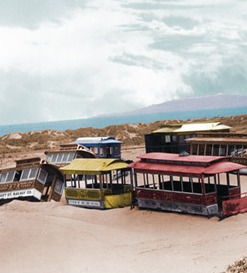
Repurposed streetcars perch haphazardly in dunes not yet cowed by asphalt and the Java Beach coffeeshops. They’re homes to a community of urban escapists and artists. Some of them have front porches, some of them house bicycle clubs. It’s like a Dali painting, it’s like the boxcar children — but it’s also an accurate picture of the first non-indigenous inhabitants of the Sunset, on whom local historian Woody LaBounty has written an awesome book, Carville-by-the-Sea.

The book’s images of 19th century Carville are chicken soup for the boho soul. I want one. My room mate wants one. LaBounty himself says he’d live in one — were the lone streetcars still surviving in the western neighborhoods’ not firmly in the grips of their current owners. There’s even one still-standing house built in 1908 that’s made of three cars; a two street car living room, and a bedroom from one that was horse drawn.

One of Carville-by-the-Sea‘s trippy colorized historical photographs

There used to be hundreds of these things. People moved out to Ocean Beach despite the subpar public transit service that places without sidewalks are often subject to — when the community was first started in 1895 was a steam car that ran out Lincoln Way down to the Cliff House, a service intended mainly for the weekend day trippers. They went to escape the city, to improve their health. There were bars and restaurants in street cars, shoe repair stores, artist studios.

So how did I not know about these things before? LaBounty says he grew up in the Richmond in the ‘60s and 70’s, a few blocks from one of the surviving streetcars, which latched a steampunk-sized hold in his childhood psyche.

More pages from Carville-by-the-Sea. Where’s a Delorean when you need one?

“I loved planes, trains, and automobiles, so living in a street car — it just seemed like the coolest thing in the world,” says LaBounty, who is one of the founders of the Western Neighborhoods Project, proprietor of what is reportedly the most popular SF history website/propagator of history walks, plays, and films by teenagers who interview older residents in their neighborhoods. “I used to watch Wild, Wild West, the ‘60s TV show, and they were living in a train, which I thought was great.”

To research, he began interviewing historians he knew, and motor vehicle enthusiastists, and learning all he could about the old community on the beach. Though he’s privy to all kinds of juicy info on the town’s colorful past, LaBounty found interest in his stories of the bohos and families living on the cars really captured listeners. “We all thought, there needs to be a book on this,” he says. “And then I realized that I should probably write it.”

So here it is, colorized like the postcards of yore for that extra oomph of fantasy creation. Newspaper articles from the 19th century on the streetcars, biographies of the community’s founding members, lots of lovely photos from the dunes.

La Bounty’s doing a series of live talks on his Carville expertise which are open to the public. Just be forewarned: he’s not versed in how to get you a steetcar of your own. Still fun to hear, though.

Carville-by-the-Sea presentation
Wed/19 7 p.m., free
History Guild of Daly City/Colma
Doelger Senior Center
Westlake Park
101 Lake Merced, Daly City
www.carville-book.com

If Nancy Pelosi’s such a ‘progressive’ ….

32

… and even though Randy Shaw has become convinced that she is, I’ve never bought it, and I still don’t. A progressive in Congress would never have privatized a national park. A progressive wouldn’t have ducked same-sex marriage. But whatever — here’s my question for the day:


If Pelosi really believes in progressive causes, why doesn’t she do anything about it at home?


Pelosi’s almost never on the progressive side in local races. She never helps local progressive causes, raises money (which she’s really, really good at) for local progressive campaigns or takes visible stands on local progressive issues. Would it kill the Democratic Party if she helped defeat Prop. 16? Would it be the end of the Democratic majority if she went to bat for her own city’s sanctuary policies (and tried to block the horrible new policy on deporting anyone who gets arrested?)


Pelosi helped push health-care reform through, and that’s a fine thing. But unless you want to redefine “progressive,” I don’t think Nancy Pelosi fits the bill. (And I’m still proud I voted for Harry Britt for Congress.)

Benefits: May 5-May 11

0

Ways to have fun while giving back this week

Thursday, May 6

Art Changes Lives 2010: Celebrating Color
Attend this benefit auction for Creativity Explored programs, that positively impact the lives of artists with developmental disabilities and the community that is connected to them. Featuring mistress of ceremonies Peaches Christ, cuisine by Foreign Cinema, cocktails, live music, and more. Auction features original art by Creativity Explored artists. Guests are encouraged to wear chromatic attire.
6:30 p.m., $125
Foreign Cinema
2534 Mission, SF
www.creativityexplored.org

Hysteria
Attend this benefit for the Women’s Community Clinic, a non-profit health care provider for women in San Francisco, featuring a silent auction and a comedy performance by Maria Bamford.
6 p.m., $100
Jewish Community Center
3200 California, SF
hysteria.womenscommunityclinic.org

Kestral Sound Review
Enjoy this benefit project from a local collaborative of music lovers, where curators will showcase up and coming talent through a series of mini festivals they call “Volumes.” Proceeds from the first installment will go to help fight breast cancer. The festival to feature live performances by Bye Bye Blackbirds, Grand Lake, Misirlou, and more, art by Ted Folstand and KC Skinner, photography by Christine Zona, and more.
8 p.m., $5 donation
The Tempest
431 Natoma, SF
www.kestral.org

SF AIDS Foundation Leadership Recognition Dinner
Join other community members and allies in commending vanguards in the community’s efforts to end HIV and AIDS by honoring Dr. Grant Colfax, Director of the HIV Prevention and Research Section in the SF Department of Public Health AIDS Office, Lonnie Payne-Clark, California AIDS Hotline volunteer, fundraiser, and former board member of San Francisco AIDS Foundation and Pangaea Global AIDS Foundation, and Sports Basement, a sponsor and community partner of AIDS/LifeCycle and the Greater Than One training program.
6 p.m., $200
InterContinental Hotel
Grand Ballroom, 888 Howard, SF
(415) 487-3013

Friday, May 7

First Graduate
Attend this Cap and Gown celebration and help support First Graduate, an organization that helps local youth finish high school and become the first in their families to graduate from college. Featuring live jazz, food, dancing, and dessert.
6 p.m., $175
San Francisco City Hall
1 Dr. Carlton B. Goodlett Place, SF
www.firstgraduate.org

Saturday, May 8

National Kidney Walk
Take part in this fundraising walk to help provide resources and raise awareness for the 20 million people with kidney disease in the U.S.
9 a.m.; free to walk, walkers encouraged to raise $200
One Maritime Plaza
300 Clay, SF
www.kidneywalk.org

Peralta Elementary School Community Festival
Help support Peralta Elementary, an Oakland public school for kindergarten through fifth grades, at this spring festival featuring carnival games, sing a song and pot a plant, climbing wall, music, and edible carnival treats.
Noon – 4 p.m., free
Peralta Elementary School
460 63rd St., Oak.
(510) 658-8161

Sunday, May 9

Space Odyssey
Attend Southern Exposure’s annual fundraiser and art auction featuring live and silent art auction, creative projects, food and drink, and music. Proceeds help SoEx continue to be an independent local hub for the Bay Area visual arts community.
7:30 p.m., $35-$65
Southern Exposure
3030 20th St., SF
www.soex.org

Walk to Empower
Join over 1, 000 walkers participating in this Mother’s Day Breast Cancer Walk with a goal of raising $190,000 for those affected by breast cancer.
9 a.m., minimum group purchase of $50.00
Justin Herman Plaza
Market at Embarcadero, SF
www.networkofstrength.org

Quick Lit: May 5-May 11

0

Literary readings, book tours, and talks this week

Jillian Lauren, Anna Quindlen, Bookswap, ghost photos, how to enjoy food and stay slim, New Yorker cartoonists, an author who claims she can revolutionize youir spending habits, and more.

Wednesday, May 5

Swinging from My Heels
The colorful, bawdy golfer Christina Kim teams up with author Alan Shipnuck to write a novel about the 2009 Ladies Professional Golf Association tour.
7 p.m., free
Borders
400 Post, SF
(415) 399-1633


Thursday, May 6

Beatrix Farrand: Private Gardens, Public Landscapes
Listen as author Judith B. Tankard discusses her new book about the life and work of Beatrix Farrand, one of the foremost landscape architects of the early 1900s in a time when most women were barred from the professional world. Tankard’s book presents readers with watercolor renderings of Farrand’s designs, archival photos, and design plans.
6 p.m., $12
Mechanics’ Institute
57 Post, SF
(415) 393-0100

The Big Bang Symphony: A novel of Antartica
Author Lucy Jane Bledsoe will discuss and sign her new novel about three women who become involved in each other’s lives after finding themselves transformed by their time on “the Ice.”
7 p.m., free
DIESEL, A Bookstore
5433 College, Oak.
(510) 653-9965

“The Ecopoetics of Water”
Participate in this special presentation by Professor and poet Brenda Hillman and Biodiversity scientist Healy Hamilton at this “Expert’s Mind” discussion, that asks scholars, poets, artists, scientists, and audience members to reexamine and challenge established ideas.
7:30 p.m., $22
Koret Auditorium
de Young Museum
50 Hagiwara Tea Garden Drive
Golden Gate Park, SF
(415) 354-0437

Picture the Dead
Attend this celebration and launch party for Lisa Brown’s and Adele Griffin’s new mystery book set against the backdrop of the American Civil War. Civil War-era attire encouraged. Featuring raffle prizes, ghost photos taken of all book buyers, refreshments, and special guest host Daniel Handler.
7:30 p.m., free
The Booksmith
1644 Haight, SF
(415) 863-8688
Friday, May 7

Booksmith Bookswap
Bring a book you loved but are prepared to part with and join other smart, creative lit-minded souls of the city for a night of good company, swell atmosphere, delicious Reverie food, free-flowing wine, wise discourse and hilarious anecdotes. Author Lewis Buzbee, of The Yellow Lighted Bookshop and Steinbeck’s Ghost, will be there. You’ll also receive a 20% off discount card.
6:30 p.m., $25
The Booksmith
1644 Haight, SF
(415) 863-8688


Human Rights Zine

Join authors and artists from SFSU for the release of their recently published human rights zine, Survival Rx: Knowledge for Health Equality, that focuses on themes of peace, clean water, food security, indigenous peoples’ and prisoners’ rights.
6 p.m., free
Pegasus Books Downtown
2349 Shattuck, Berk.
(510) 649-1320

Saturday, May 8

Bernal Yoga Literary Series
Enjoy this reading from local writers KM Soehnlein, Maggie Shipstead, Dina Hardy, Karin Cotterman, Francois Luong, Melissa Stein, and Paul Festa. Reception to follow.
7pm, $5 suggested donation
Bernal Yoga
461 Cortland, SF
www.bernalyoga.com


French Women Don’t Get Fat

Hear author Mireille Guiliano discuss her new cookbook organized around her three favorite pastimes, breakfast, lunch, and dinner, and learn from the writer of the ultimate non–diet book on how to enjoy food and stay slim.
11:45 a.m., free
CUESA Teaching Kitchen, North Arcade
Ferry Building
101 Embarcadero, SF
(415) 291-3276, ext. 101

I Hotel
Author Karen Tei Yamashita wrote this book consisting of ten novellas after interviewing activists from the Asian American movement, TWLF Strikers, I-Hotel tenants, and community residents to capture the International Hotel tenants fight against eviction in the Bay Area. The book is illustrated by Leland Wong.
3 p.m., free
Eastwind Books of Berkeley
2066 University, Berk.
(510) 548-2350

Sunday, May 9

Anna Quindlen
Bestselling novelist and award-winning journalist Anna Quindlen will discuss her body of work including her new book, Every Last One, a story about a mother, a father, a family, and the explosive, violent consequences of what seem like inconsequential actions.
8 p.m., $20
Herbst Theater
401 Van Ness, SF
www.city boxoffice.com

Monday, May 10

America, War, and Empire: A love-hate relationship
Newsweek editor and author Evan Thomas will explore our nation’s idiosyncratic urge to invade via the context of the Spanish-American war.
6 p.m., $35
Commonwealth Club
595 Market, 2nd floor, SF
(415) 597-6700

Fix It, Make It, Grow It, Bake It
Hear author Billee Sharp shares her freecycling, budgey-savvy, barter-better wisdom that she expounds in her new step-by-step handbook that can revolutionize your spending habits. Learn how to raise organic veggies, , eco-clean your house, cure minor maladies, save money on small repairs, and more.
7:30 p.m., free
Pegasus Books Downtown
2349 Shattuck, Berk.
(510) 649-1320

Sy Montgomery
Hear naturalist, bestselling author, documentary scriptwriter, and radio commentator Sy Montgomery discuss her new book, Birdology: Lessons learned from a pack of hens, a peck of pigeons, cantankerous crows, fierce falcons, hip hop parrots, baby hummingbirds, and one murderously big cassowary. Don’t miss Montgomery revealing seven essential truths about birds at this reading.
7:30 p.m., free
The Booksmith
1644 Haight, SF
(415) 863-8688

Tuesday, May 11

George Booth and Matthew Diffee
Hear these two New Yorker cartoonists discuss Booth’s new book, About Dogs,  and Diffee’s work on the off-Broadway event, The Rejection Show, featuring the rejected work of otherwise successful comedic writers and performers. With special guest Sophie McCall.
8 p.m., $20
Herbst Theater
401 Van Ness, SF
www.cityboxoffice.com

Chinese Immigrant Poetry of Angel Island
Hear author and scholar Marlon Hom discuss the poetry that thousands of Chinese immigrants inscribed on the walls of Angel Island detention centers during their immigration in the early 20th century, and how these poems give us a rare glimpse into these immigrants reasons for leaving China and their thoughts and dreams upon arrival in the United States.
12:30 p.m., free
111 Minna Gallery
111 Minna, SF
(415) 974-1719

Dead in the Family
Hear author Charlaine Harris discuss her new mystery novel about Sookie Stackhouse, a telepathic Luisiana barmaid and friend to vampires, werewolves, and other odd creatures. the television series True Blood was based on Harris’ Sookie Stackhouse novels.
7 p.m., free
Borders
233 Winston Drive, SF
(415) 731-0665

Private Life
Author Jane Smiley will discuss her novel about a 27 year old girl who marries a self-absorbed, obsessive man in 1905, when women were expected to live utterly subordinated to their husbands, and how historical disasters like the 1906 San Francisco earthquake helped to shape this woman’s private life and how to come to terms with it.
6 p.m., $12
Mechanics’ Institute
57 Post, SF
(415) 393-0100

Some Girls: My life in a harem
Hear author Jillian Lauren discusss her new book outlineing her coming of age, from a punk rock loving girl in New Jersey, to a stripper that winds up in a prince’s harem in Brunei, to the wife of Weezer bassist Scott Shiner.
7:30 p.m., free
Books Inc.
2251 Chestnut, SF
(415) 931-3633

Appetite: 3 culinary gifts for mom

Last minute Mother’s Day gifts needed? Here are a few delectable possibilities:

WINE OF THE MONTH CLUB
There’s nothing like having Mom reminded of your thoughtfulness and love all year… no, not a Christmas Vacation disappointment like the Jelly of the Month Club. Something better: wine. This is the “original” (family-owned since 1972) Wine of the Month Club with a slew of gift options from 1 red/1 white per month for four months to one year of reds or whites only. The club averages $29 a month for the Classic Series or upgrade your wine selections to Vintners Series ($39) or Limited Series ($49). With hand-selected wines from literally all over the globe, the biggest plus if Mom doesn’t like one of the wines is that they promise to send out another selection, no questions asked. In trying out the club for a short time, I can say the Classic level is not for the wine expert as the red in any given month might be a 2007 Frosted Cake Merlot from Napa or a 2006 Gerard Bertrand Syrah/Mourvedre from France. So upgrade your membership if Mom is a wine snob, or if not, she’ll enjoy a broad cross-section of solid wines for every day imbibement, with descriptions, tasting notes and stories behind each region, winery and wine itself. All gift memberships come nicely wrapped so your Mother will feel like it’s Mother’s Day all over again every month.

CLARINE’S FLORENTINES
First trying local (Berkeley) Clarine’s Florentines at the Chocolate Salon, I was impressed… trying them again later, I was hooked. I think your Mom will be, too. This buttery, crispy, golden Almond Brittle on Guittard bittersweet chocolate, is a recipe from Clarine and her Mother, so even the roots of the product have special meaning for Mother’s Day. You can buy a bag at shops around town like Bi-Rite or order directly from Clarine’s to have it shipped.

KUSMI TEA
A favorite of late has been Kusmi’s luxurious teas. Founded in St. Petersburg in 1867, these Russian-style teas have been Paris-based since 1917, so there’s an Old World elegance and refinement with modern sensibilities (even Lady Gaga is a big fan, though that may not be as much of a selling point for Mom!) They’re offering Mother’s Day blends, like Rose Green Tea, though there are crowd-pleasers everywhere, from a lovely Moroccan Spearmint to Sweet Love, a blend of Black China tea, pink pepper, licorice roots, guarana seeds and spices. If Mom’s on a health kick, their Detox mate/green tea with lemongrass is particularly popular… and a rich antioxidant.

Little Chihuahua

2

paulr@sfbg.com

DINE On the hunt for the Little Chihuahua one unsettled April evening, we came upon … a little cockapoo, or maybe a Tibetan terrier. The dog, wrapped in a coat of shaggy fur the color of milky coffee, was moored to the façade of a Lower Haight storefront and had been provided a stainless-steel water dish, which seemed superfluous. Since the storefront was occupied by the Little Chihuahua, a Mexican restaurant opened by Andrew Johnstone two years ago, we naturally wondered whether the dog was just waiting for its person (or persons) to finish eating within or was a mascot of sorts. Did Little Chihuahua’s chihuahua take the day off? The dog lay on the sidewalk, staring intently through the open door, which I interpreted as a clue that a vigil was being patiently held. Or maybe the smell of the food appealed.

Mexican food gets my vote as one of the world’s most underappreciated cuisines. Recently I made this claim to a health-nut friend, who scoffed at first but gradually warmed to the evidence. This includes: the dominance of whole-grain corn (in many varieties and cultivars), the omnipresence of beans, a light hand with red meat, a wide range of vegetables, herbs, and spices, many of them indigenous, and of course salsa, whose flavor-to-calories ratio is unmatched among condiments I can think of.

Little Chihuahua lays out an impressive salsa bar to enhance the chip-dipping experience, although the chips are pretty good naked — warm, with just enough salt to make the corn flavor pop. The salsas themselves range from a rather mainline version (tomatoes, garlic, chili, cilantro, lime), to a spicy tomatillo kind that looks like melted emeralds, to a chipotle-charged concoction with the innocent face of ketchup.

A small irony of pozole, the wonderful soup-stew of hominy in chili broth, is that it traditionally features pork, a meat brought from the Old World by the conquistadores. La Chihuahua’s pozole ($7.95) deploys pork, in the form of a small semi-slab of baby back ribs, but its most striking elements are the rich, slightly viscous guajillo-chile broth and an abundance of hominy kernels and pinto beans. It’s more stew than soup and very sustaining.

If Mexican food’s reputation has suffered on this side of the border, a good part of the blame must be attributed to the burrito, a neither-here-nor-there hybrid that emphasizes mass at the expense of just about everything else and, worse, comes wrapped in a flour tortilla. The flour tortilla must have its virtues — I’ve never seen burrito-sized tortillas made from masa — but we eat more than enough wheat flour in this country already. Having said that, the quesadilla with shrimp ($8.95) is lovely, with a blistering like that of a good pizza crust and a pronounced melody of marine sweetness proclaiming itself through the cheesy murk. For a bit of refreshing balance, the spicy cabbage salad ($3) makes a good choice; it’s basically like cole slaw without the mayonnaise (and fat) and is a bowlful of virtue, though we didn’t detect much spiciness, just plenty of lime juice.

There is a slight party atmosphere to the Little Chihuahua. Seating is mostly at long communal tables, and the clientele is young. So it’s no surprise that the nacho plates pack some real throw-weight. Even the meatless one ($7.95) will keep three or four hungry people busy for quite a few minutes. Of course it isn’t quite meatless if you get it with the refried pinto beans, which are spiked with chorizo and bacon. But there is a wealth of avocado, salsa, and sour cream, along with enough melted white cheese to make it seem like somebody spilled a bottle of Elmer’s Glue all over the chips.

The one element of Mexican authenticity the Little Chihuahua seems to lack is the presence of actual Mexicans. The crowd is heavily Anglo, and somewhere in this detail is a story about a hipster neighborhood that simultaneously resembles and differs from the city’s great hipster neighborhood — the hipster superpower — the Mission. It might also help explain why the Little Chihuahua will soon be expanding, not to 22nd and South Van Ness streets but to 24th and Castro streets — the heart of Noe Valley. That’s as dog-friendly a neighborhood as there is in this town. *

THE LITTLE CHIHUAHUA

Continuous service: Mon.–Wed., 11 a.m.–10 p.m.; Thurs.–Fri., 11 a.m.–11 p.m.;

Sat., 10 a.m.–11 p.m.; Sun., 10 a.m.–11 p.m.

292 Divisadero, SF

(415) 255-8225

www.thelittlechihuahua.com

Beer and wine

MC/V

Noisy

Wheelchair accessible


Our 2010 Small Business Awards

culture@sfbg.com

The mallification of America continues apace, with faceless conglomerates training new generations of shoppers to look for the cheapest deals at bland big box outlets, regardless of what “cheap” might actually mean in terms of pollution, transportation, labor, and the local economy. (For starters, out of every $100 dollars spent at a big box, only $43 remains in the local economy, compared to $68 if you buy local.) But in San Francisco at least, the little guys keep on swinging, maintaining unique shops and service companies with a vibrant local feel and contributing to the patchwork of optimism, individuality, and community effort that make the city great. Each year, we honor several of them for sticking to their guns and pursuing their visions.


WOMEN IN BUSINESS AWARD

DEENA DAVENPORT, GLAMA-RAMA SALON

“The higher the hair, the closer to God,” a wise Southern drag queen once said. Here in San Francisco, one of our own heavenly salons, Glama-Rama, is about to get a whole lot more divine, expanding from its homey kitsch digs in SoMa to a new 2500 square foot space on Valencia Corridor, creating 16 new jobs. The driving force behind that expansion is owner Deena Davenport, who combined her hairdressing talent, natural business acumen, and deep connection to the local arts scene into a formula for sheer success when she opened Glama-Rama 11 years ago.

“My dream was not to have a business, but a community space,” Davenport told me. “I wanted a place for all my gifted friends to express themselves. Not just our excellent stylists, but artists, designers, musicians, event producers — we all came together to make this happen. I think that’s the key to our success. We work with all kinds of styles and we don’t price ourselves out of the nonprofit sector. That allows a great mix of clientele, and an element of comfort for everyone.”

Davenport, a creative blur, plans to kickstart a Valencia Corridor merchants association once she gets settled in, and dreams of a future in politics. (She currently hosts a show on Pirate Cat Radio and appears onstage in local productions.) “I’m fortunate to have always had great friends and great landlords — and to be in a business the Internet can’t compete with,” she says.

“By the way, the new space will be two shades of cream with gold accents,” Davenport adds, ever the stylish professional. “We’re taking off our Doc Martens and putting on some heels.” (Marke B.)

GLAMA-RAMA

304 Valencia, SF

415-861-4526

www.glamarama.com


GOLDEN SURVIVOR AWARD

CAFÉ DU NORD

It’s no secret that nightlife in San Francisco has taken a big hit lately. A combination of economic woes and persistent crackdowns by the Department of Alcoholic Beverage Control and local police, a.k.a. the War on Fun, has taken its toll — even on 100-year-old live-venue mainstays like Café Du Nord.

“It’s been tough for us and for everyone out there,” says Guy Carson, who took over the space with Kerry LaBelle in 2003. “They don’t call it ‘hard times’ for nothing. But we love what we do, and we know how to run a quality business. I’ve been promoting live shows since I was nine years old, so you know it’s what I love. You have to be willing to weather the storms.”

The intimate basement space retains its speakeasy vibe and velvet-curtained, cabaret-like setting, while playing host to mighty big names and burgeoning local upstarts. As a “venue with a menu” that serves food and puts on all ages and 18+ shows, Café Du Nord has been specifically targeted by the city and ABC for what Carson calls “differing interpretations of the law.” He looks forward to the upcoming launch of the new California Music and Culture Association, which will bring together several local venues and nightlife activists to fight the tide of local nightlife repression. “When we all work together, we can return the city’s nightlife to its former glory,” Carson says. (Marke B.)

CAFÉ DU NORD

3174 Market, SF

(415) 861-5016

www.cafedunord.com


GOOD NEIGHBOR AWARD

OPPORTUNITY FUND

Eric Weaver put his first nonprofit loan package together in 1995. His small startup, called Opportunity Fund, helped brothers who wanted to expand their pet shop borrow $17,000 for aquariums and fish. The deal worked out well; the pet store prospered, the money got repaid, and Opportunity Fund was on its way to becoming one of the most successful microlending outfits in California.

Weaver, a Stanford MBA and the fund’s CEO, now oversees a staff of 35 that makes loans to small businesses, most of them minority owned, that might have trouble getting financing from a traditional bank. And the nonprofit continues to grow by helping entrepreneurs in the Bay Area get the financing they need to create jobs and build community businesses. “We just made our 1,000th loan,” he told me. “We’re on target to make 200 loans this year, more than ever.”

Unlike most banks, Opportunity Fund sees its clients almost as partners. The staff takes time to help borrowers work up a successful business plan and learn how to manage their finances. “We do one-on-one business counseling with almost all of our clients,” Weaver said.

The group also helps finance affordable housing developments and offers individual development accounts (IDAs)— special savings accounts that come with financial training and grants — for everything from education to home purchases to putting aside the cash it now takes to become a U.S. citizen.

A recent study showed that Opportunity Fund has created or retained 1,200 in the Bay Area. “With a median loan size of $7,000, and a focus on making loans to people who have historically been underserved by banks, Opportunity Fund has been a particularly valuable resource for women, minority, and low-income entrepreneurs,” Weaver noted. He added that 73 percent of Opportunity Fund borrowers are members of an ethnic minority, and 90 percent of borrowers have incomes at or below 80 percent of area median income.

Imagine a traditional bank making a statement like that. (Tim Redmond)

OPPORTUNITY FUND

785 Market Street, Suite 1700, SF

408-297-0204

opportuityfund.org


CHAIN ALTERNATIVE AWARD

NORTHERN CALIFORNIA INDEPENDENT BOOKSELLERS ASSOCIATION

Independent booksellers are a wonder. Up against giant chains like Wal-Mart, facing technological changes like Kindle and online behemoths like Amazon.com (which doesn’t even have to pay state sales taxes), it’s hard to believe they can even survive. Yet they do — in fact, the Northern California Independent Booksellers Association keeps growing.

“The mainstream press wants to write about bookstores closing,” Calvin Crosby, NCIBA’s vice president, told me. “But actually, stores are opening. We have two new members this year.”

The booksellers group keeps the small, community-based stores in the public eye, with promotions, events like the annual NCIBA awards (see page 28) and political lobbying (NCIBA is a big supporter of a bill by Assembly Member Nancy Skinner, D-Berkeley, that would force Amazon to pay sales tax).

One of the group’s biggest tasks is education — reminding the public that local bookstores serve a critical function. “I was at a book-signing recently with a major author, and a bunch of people showed up with books they bought on Amazon and they wanted to trade them for signed copies,” Crosby, who is community relations director at Books Inc., recalled. “I had to explain to all of them that Amazon doesn’t pay taxes and hurts the locals.”

And with 300 bookseller members, NCIBA is helping preserve the notion that buying a book from someone who actually cares about books is an idea whose time will never pass. (Redmond)

NCIBA

1007 General Kennedy, SF.

415-561-7686

www.nciba.com


SMALL BUSINESS ADVOCATE AWARD

KEITH GOLDSTEIN

“Money spent in a small business — far, far more of it stays here in the neighborhood than with a chain store,” says Keith Goldstein, president of the Potrero Hill Association of Merchants and Businesses. A Potrero Hill resident since 1974, and owner of Everest Waterproofing and Restoration, Inc., Goldstein has spent the last six years with the merchant’s association promoting a sense of community in the inclined blocks of Potrero.

He’s overseen the growth of the Potrero Hill Festival from what he calls “a small affair” to a yearly event that’s “great for residents and businesses,” and also serves on the Eastern Neighborhood Advisory Committee, where he works on issues, like new transit plans, that affect local businesses.

Somehow he has found the time to start SEEDS (www.nepalseeds.org), a group that provides infrastructure and health support to underserved Tibetan villages, and is involved in Food Runners (www.foodrunners.org), an organization that links homeless shelters to food sources.

The superlative community member incorporates the ‘buy local’ mentality into every aspect of his life, even placing the administration of the health care plan for his 50 employees into the hands of a fellow Potrero Hill Merchant’s Association member. “It’s all richly rewarding,” Goldstein says of his hands-on role in his neighborhood’s economic viability. “I like to walk around the hill and be able to chat with my neighbors about quality of life issues.” (Caitlin Donohue)

KEITH GOLDSTEIN

Potrero Hill Association of Merchants and Businesses

1459 18th St., SF.

(415) 341-8949

www.potrerohill.biz


EMPLOYEE-OWNED BUSINESS AWARD

RED VIC MOVIE HOUSE

“Once it got going, it was like a perpetual-motion machine. And I have to say, I think it was the collective nature of the thing that’s kept the Red Vic going this long,” says Jack Rix, long time worker and cofounder of the Red Vic Movie House, which celebrates its 30th anniversary this year.

The Red Vic’s employees put a lot into the neighborhood theater’s showings of unique and classic flicks. Each worker-owner does a little of everything, from sweeping the lobby floor to washing dishes. “We’re all utility players here, this is very much a labor of love,” Rix says. Launched in 1980 by community organizers, the theater’s focus has not only been on providing great movies but doing it sustainably, installing solar paneling on the roof and eschewing paper products. “Back then I don’t think the phrase ‘green’ existed,” Rix recalls. “We were trying to be ‘green’ and we didn’t even know it!”

The Red Vic’s workers aren’t the only ones with a certain affection for the theater’s bench seating, environmentally friendly ceramic coffee mugs, and wooden popcorn bowls. Rix says some Upper Haight residents will wait for blockbusters to make their way out of “corporate” movie cinemas to the Red Vic’s second-run screen. “We’re very much a community theater,” he says proudly. (Donohue)

RED VIC MOVIE HOUSE

1727 Haight, SF

(415) 668-3994

www.redvicmoviehouse.com


CHAIN ALTERNATIVE AWARD

OTHER AVENUES

Nestled in a part of the city best known for its tiny pastel homes and bracing sea breezes, Ocean Beach’s Other Avenues is everything you could desire in a neighborhood grocery store: Warm atmosphere, vast swaths of bulk food bins, and a well-edited health food selection, including vitamins, medicines, and cheery shelves of produce. Plus health insurance for all its knowledgeable employees.

Trader who? No need for big box stores near Other Avenues, which has earned a loyal clientele in the 36 years since it first opened its doors. “Since we’re a co-op, I like to think of us as a giant organism,” says Other Avenues worker Ryan Bieber. “Occasionally we lose parts and regrow them. A lot of customers have been coming here for 10, 20 years.” Their loyalty might be in response to Other Avenues’ commitment to keeping its beachside clientele healthy and well. “The aim is to make sure that people have access to things like this,” says Bieber.

Asked what he thinks would happen if one of the chain grocery behemoths encroaches on the shop’s territory, Bieber is unconcerned. “I think people will come here regardless. [We] have been doing this forever and we take pretty good care of ourselves. I think our customers really respond to that. We wouldn’t want a world where there was only Whole Foods — that’d be too boring!” (Donohue)

OTHER AVENUES

3930 Judah, SF

(415) 661-7475

www.otheravenues.coop


ARTHUR JACKSON DIVERSITY IN SMALL BUSINESS AWARD

RAYMOND OW-YANG

Raymond Ow-Yang tends to downplay the impact he’s had on the North Beach-Chinatown artistic landscape. The owner of New Sun Hong Kong restaurant, Ow-Yang put up the funds to have the iconic Jazz Mural painted on the Columbus and Broadway walls of his Chinese restaurant. The artist Bill Weber approached him in 1988 — securing an approximately $70,000 aesthetic gift to the community that Ow-Yang has never sought public recognition for.

“Back then you’re young, you have no brain. I thought, this is nice — it’s something you do because you feel like it,” Ow-Yang recalls dismissively.

“Nice”is an understatement. The mural, which depicts famous San Francisco figures and scenes, has become one of the neighborhood’s visual joys, stopping tourists in their photo-snapping tracks. The gift reflects Ow-Yang’s commitment to the streets he grew up on

He immigrated to Chinatown from Canton in 1962, at age 13. A lifelong entrepreneur, Ow-Yang owned a photo studio, a floral shop, and a restaurant in Oakland’s Chinatown (the original Sun Hong Kong) before opening at 606 Broadway in 1989. The restaurant is open until 3 a.m. every day — a timetable residents can appreciate for more reasons than just Ow-Yang’s post-bar won ton soup. “Before, people were afraid to walk through this area,” says the businessman. “Now there’s a lot more foot traffic — the city even put up traffic lights. With the bright lights [from New Sun Hong Kong], it’s a lot safer in this area.” (Donohue)

RAYMOND OW-YANG

New Sun Hong Kong

606 Broadway, SF

(415) 956-3338


Event Listings

0

Event Listings are compiled by Paula Connelly. Submit items for the listings at listings@sfbg.com.

WEDNESDAY 5

California Nights: Cinco de Mayo California Historical Society and Museum, 678 Mission, SF; (415) 357-1848. 6pm, free. Celebrate Mexico’s victory over invading French troops in 1862 and the continuous changes and developments in Latino communities throughout California since that time. Featuring complimentary Cinco de Mayo refreshments, DJ music, and admission to the museum’s Think California exhibit.

BAY AREA

Arctic Images David Brower Center, 2150 Allston, Berk.; (510) 550-6700. 6pm; free, RSVP at www.earthjustice.org/arctic. See the beauty of the Arctic along with the impending threats to this iconic region at this photo presentation with acclaimed wildlife photographer Florian Schulz.

THURSDAY 6

Fair Trade Wine Night Participating bars around the city, SF; www.fairtradewinenight.com. 7pm, free admission. Drink wine that tastes good and does good, where $1 from every glass you order will go to TransFair USA, a non profit dedicated to ensuring fair wages, safe working conditions, education for workers’ kids, and health care access for all workers.

Letters from the Other Side ATA, 992 Valencia, SF; (415) 821-6545. 7:30 p.m., $6 suggested donation. Watch this film that documents the realities of immigration and the families left behind through video letters carried across the U.S.-Mexico border, putting a human context onto the immigration debate. Sponsored by the A.N.S.W.E.R. Coalition.

FRIDAY 7

BAY AREA

Oakland Art Murmur Centered around 23rd St. and Telegraph, Oak.; oaklandartmurmur.com. 7pm, free. Wander between 19 Oakland galleries enjoying local art, free wine and snacks, occasional outdoor movies and other surprises. Participating galleries include Front Gallery, Mercury 20, Chandra Cerrito, Rock Paper Scissors Collective, and more. For a full list of participating galleries and for a map visit, oaklandartmurmur.com/map.

SATURDAY 8

Aorta Magazine Million Fishes Arts Collective, 2501 Bryant, SF; www.aortamagazine.com. 8pm, $5-10 sliding scale. Enjoy radical readings of poetry and prose, visuals, live music, and a dance party with DJ Puppet at the release party for the new issue of Aorta Magazine, Cardiac Unrest. Aorta is a self-produced, collectively-created publication that features emerging and established female, queer and transgender artists.

Art, Om, and Fortune Cookies Meet at sculpture on Patricia’s Green, Octavia at Hayes, SF; www.sfbike.org. 11am, $5 donation. Join local artists Erin Augustine and Colleen Mauer for a biking tour of the best outdoor sculptures in SF, followed by a mini-tour of the Golden Gate Fortune Cookie Factory and some light yoga. Bring a sketch book, camera, and thermos of tea.

Bacon Camp Chez Poulet, 3359 Cesar Chavez, SF; baconcamp.org. Noon, free. Share and learn about bacon in an event filled with discussions, demos and participant interaction centered around the uniting theme…bacon. Everyone is encouraged to participate by presenting food, art, demonstrations, judging contests, or volunteering.

Family Art Workshop The Imagine Bus Project, 342 9th St., SF; (415) 252-9125. 1pm, free. Explore an art exhibition from students who participate in the Imagine Bus Project’s after school programs, join in an art workshop led by Marcela Florez, and help create a short illustrated story about "The River of Things I Dream About," that will be included with the exhibit for its duration.

Meet the Animals Randall Museum, 199 Museum Way, SF; (415) 554-9600. 11am, free. Meet a variety of interesting creatures, from rodents to reptiles to birds of prey, that the Randall Museum provides a home to because they can no longer survive in the wild, and learn about California’s diverse and disappearing wildlife. This event is happening every Saturday in May.

BAY AREA

Pagan Festival Martin Luther King Jr. Civic Center Park, Berk.; thepaganalliance.org. 10am, free. Noon parade through Berkeley. Enjoy a procession, interfaith ritual, traditional dance, music, poetry, crafts, authors circle, vendors, food, altars, and more. This year’s theme is "Spiral of Life," which focuses on the turning of the wheel through the seasons and the stages of our lives.

Sweet and Savory Festival Jack London Square, 20th St. at Webster, Oak.; www.sweetshoppefests.com. Sat. 11am-10pm, Sun. 11am -6pm; $12. Celebrate all that is sweet at this two-day confectionary festival featuring goodies from SF Bay Area pastry chefs, confectioners, cupcake fairies, local restaurants, cheese makers, and more including a Champagne Bubble Bar.

SUNDAY 9

How Weird Street Faire Centered at Howard and 2nd St, 37° 47′ 12.4? N x 122° 23′ 53.7? W
San Francisco, Earth; howweird.org. Noon – 8pm; $10 suggested donation, $5 in costume. Enjoy ten blocks of art and celebration, and ten stages of music playing electronica, downtempo, dubstep, breaks, drum and bass, and more. Also featuring performances, colorful costumes, vendors, food and drinks, and a chance to take part in the setting of a new world record at 7:40pm, when all the stages broadcast a special peace song and revelers are invited to join in on the World’s Largest Bollywood Dance.

Walk the Tenderloin Meet at Powell, Eddy, and Market Streets, SF; www.sfcityguides.org. 9am, free. Explore the Tenderloin that evolved from an isolated rural village to it’s crucial role in the start of the California movie industry. Learn about famous madams, see where Billie Holiday was busted for opium, and discover the neighborhood poker clubs.

MONDAY 10

"Leaders at the Lab" Margaret Jenkins Dance Lab, Suite 200, 301 8th St., SF; (415) 861-3940. 7pm, free. Choreographers, dancers, dance-makers, and enthusiast are invited to take part in an intimate conversation with choreographer Simone Forti, where she will discuss the innovative career choices she made in order to flourish in the ever-changing climate of dance-making.

Pension reform: don’t blame workers

8


By Larry Bradshaw and Roxanne Sanchez

OPINION Members of Service Employees International Union Local 1021, who make up about half of all San Francisco city employees — the lowest-paid half — are currently at the negotiating table with the Mayor’s Office working out a deal to give back $100 million toward the city’s deficit over the next two years. Last year our members gave back $48 million.

Now San Francisco Public Defender Jeff Adachi is proposing a new charter amendment to make city workers pay huge increases in their pensions and health care coverage. Never mind that he draws no distinction between the highly paid managers and the lower paid workers, between those feeding at the trough and those who toil to make and fill the trough. It’s all the rage these days to blame the economy’s woes on public workers, whatever the facts are, no matter who the culprit really is.

Wall Street speculators crashed the stock market, causing workers’ pension funds to lose billions and wiping out their other retirement savings. The losses require local and state governments to spend more to keep the funds solvent. So who do Gov. Arnold Schwarzenegger, Republican gubernatorial candidate Meg Whitman — and Adachi — blame? The victims: the workers.

Insurance companies continue to raise premiums on health care coverage, making money hand over fist. They use those funds to lobby against reforms, from single-payer to the public option. When they win, the costs of continuing to cover workers and their families continue to escalate. Who do Schwarzenegger, Whitman — and Adachi — blame? The victims: the workers.

In an op-ed piece published last week in the right-wing Republican blog FlashReport, Schwarzenegger came out in support of a SB 919, a measure that would significantly increase employees’ contribution to the pension fund and decrease their pension payments upon retirement.

Whitman, who is spending millions of dollars of the money she made at Goldman Sachs in quasi-legal transactions, is proposing to not only double employees’ contributions to their pension fund and reduce the benefit, but to increase the retirement age and eliminate the defined pension benefit for new hires.

Into this company comes Adachi. He is concerned with the deficit since budget cuts have meant that his office has been unable to cover all the cases it is mandated to defend, and now some of those are being contracted out. Welcome to our world, Jeff.

Adachi has only two months to gather at least 70,000 valid signatures to get the required number to qualify for the ballot. It’s highly unlikely that can be accomplished without hiring signature-gatherers.

Herein lies the irony. Adachi is going to have to turn to downtown interests, the very financial and corporate interests that tanked the stock market, and the pension funds, for the money to penalize workers for Wall Street’s crimes.

Certainly San Francisco is facing financial problems. But instead of attacking workers, perhaps Adachi and his friends should join us in attacking the real problem. We are working on ideas for ballot measures that can raise new revenue for the city. Now that the city’s unions have stepped up and given back together $200 million, it’s time for downtown financial interests to contribute. *

Larry Bradshaw is a paramedic and Local 1021 vice president. Roxanne Sanchez is president of Local 1021.

Fun with political ads

0

Wowee wow, the political ads are getting strange.


Steve Poizner, desperate to find some kind of traction in the final weeks of the GOP primary campaign, has released a new attack on Meg Whitman that continues in a long line of weird Republican animal flicks. It’s not quite as odd as Carly Fiorina’s demon sheep, but still: There are vultures flying around, vulture squawks in the background, and at one point, a vulture lands on the ground and starts chowing on some carrion.


But there’s a serious point here, too. The ad attacks Whitman for her ties to Goldman Sachs, and points out that she was making big money on dubious insider stock deals just as the rest of the nation’s economy was going to hell. ANd if Poizner thinks this will play with conservative voters, imagine what the Democrats will be able to do with it in the fall.


Then there’s Gavin Newsom’s ad, which starts out reminding us all that his state of the city speech was seven hours long (this is something we want to remember?) then lists all the great accomplishments he’s taking credit for, even though none of them were his initiatives. He talks about San Francisco having the best urban school district in California (although the mayor has no control at all over the schools, and the main reason the district’s finances aren’t worse is because of the Rainy Day Fund, a project of Tom Ammiano). He talks about paid sick leave (which came from the Board of Supervisors, not the mayor’s office) and universal health care (which was sponsored by Ammiano, not Newsom).


Then the ad winds up with Newsom walking back to his office and finding that Willie Brown is sitting in his chair. That, I guess, is a joke — but it only serves to remind viewers that (1) Newsom owes his political life to Brown, one of the most corrupt mayors in San Francisco history and (2) if Newsom wins, he’ll be leaving office early, allowing the supervisors to vote in a new mayor.


Did Gavin’s people even make this ad?

Let’s talk

0

SUPEREGO The last time I got on the horn with scaldingly hilarious comedian Sandra Bernhard — one of the few people who can make me blush without pulling down their pants — it was the tail-end of that heady year, 2007. Remember then? Baby electro-hipsters were tiring of Justice, shutter shades caused several horrible traffic accidents, and Sandra was just about to blossom into a full-fledged political scandaleuse, among the first to publicly call out Sarah Palin for her anti-woman stance. (“A turncoat bitch whore in cheap-ass fucking New Vision plastic glasses” — those were fightin’ words back then.) I seem to recall we ranted about tight-fisted lesbians who won’t pay for extra corn bread. Things seemed so innocent …

Sandra’s coming into town to host a star-studded fundraiser for one of my favorite HIV/AIDS charities, Maitri, which cares for people severely debilitated by the disease. Although she’s settled down in New York City with her partner, daughter, and new dog, George, her sharp sense of outrage hasn’t dimmed one whit. This time, our goats were got and blazing over the just-passed, heinous Arizona “immigration law” that effectively criminalizes walking while brown. I love Real America! It’s like a marshmallow with a mullet. And not the hip kind of pony-hair mullet with shaved patches all the kids in Mexico are rocking this year.

“What the fuck is wrong with these people?” Sandra warmed up. “Nobody wants to say that these Teabaggers are racist, but, honey, let there be no question, they are racists. Here we have a handsome, incredibly intelligent black man as president, with a smart, beautiful wife and two great children — and these people are fucking losing their shit over it. They just can’t deal! All these creepy white men in their little super-secret militias who are freaking out because there are so many hot, chic people of color around them.

“Seriously, it makes me want to hurl. ‘Brown people get out!’ All I can say is, they better look into their family tree. We all started brown, honey. You want to take your country back? Back to what? Slavery? When women had to shut up? When we were all sharecroppers? Go have your little fantasy backwards country on the Internet or something. Look, I pay a lot more money in taxes than most of these tea people, and I am just fine with helping people afford health care, helping people get educated, fixing the infrastructure. Whatever happened to compassion? The world is so out of balance. We need to pull together and do what we can to make things better for everyone.”

BLISS

Hosted by Sandra Bernhard

Sunday, May 2, 6 p.m.–10 p.m., $150

Golden Gate Club

135 Fisher Loop, SF

www.maitrisf.org

MEAT VS. DEATH GUILD

Retro madness will surely be the fly on the windscreen, the fetus on your breath when SF’s biggest goth and industrial nights black-celebrate four years of unnerving collaboration. DJs Decay, BaconMonkey, Melting Girl, and more are your skinny puppies.

Fri/30, 8:30 p.m.–late, $8. DNA Lounge, 375 11th St., SF. www.meatsf.com

QUEENSDAY 2010

Did you know that, on one magical day a year, Dutch kids wear bright orange and dance around to Tiësto trance and Hollandaise hip-hop in honor of Queen Beatrix van Oranje-Nassau’s birthday? Neither-lands did I. DJ Marcus brings the hiep hiep hoera.

Fri/30, 8 p.m., $10/$20. Apartment 24, 440 Broadway, SF. www.mjdjevents.com

DEVOTION

Old school househeds will be in soul heaven when this long-awaited reunion of local rhythm giants Ruben Mancias and David Harness smokes out the EndUp, in honor of the ninth anniversary of Mancias’ Devotion party. Peace in the valley, people.

Sunday, May 2, 8 p.m.– 4 a.m., $12. The EndUp, 401 Sixth St., SF. www.theendup.com


ENDORSEMENTS: San Francisco ballot measures

0

 PROPOSITION A

SCHOOL FACILITIES SPECIAL TAX

YES

This measure would extend a 1990 parcel tax that expires in 2010 by another 20 years, keeping it at its current rate ($32 a year for single family homes and commercial enterprises, $16 a year per dwelling unit for mixed use buildings). The tax brings in $7 million a year for San Francisco school facilities and would finance seismic upgrades, structural strengthening and related improvements of its facilities, and child care centers. Vote yes.


PROPOSITION B

EARTHQUAKE SAFETY AND EMERGENCY RESPONSE BONDS

YES

It’s hard to argue against a $430 million bond act to upgrade police, fire, and water facilities to prevent a catastrophic collapse of the city’s most basic public safety infrastructure in the event of an inevitable earthquake. Hard — but not impossible: Sup. Chris Daly, the lone vote against Prop. B, points out that the bond money would be used to upgrade police stations but that the old County Jail at 850 Bryant St. wouldn’t get any help. Prisoners, it seems (even those who are awaiting trial and have been convicted of nothing) aren’t worth protecting. And the Fire Department has been very hazy about where it’s going to spend the cash. So we’ve got some concerns here — but on balance, we’re endorsing Yes on B.


PROPOSITION C

FILM COMMISSION

YES

By some accounts, this measure was put together in retaliation for Mayor Gavin Newsom’s November 2009 demand that Film Commission executive director Stefanie Coyote resign — shortly after her husband, actor Peter Coyote, supported Attorney General Jerry Brown over Newsom for governor. But Bill Barnes, who works as a legislative aide for Newsom ally Sup. Michela Alioto-Pier, the author of Prop. C, says Alioto-Pier was working on this measure even before Coyote got ousted.

Either way, it’s a positive step. Prop. C would streamline a convoluted permitting process for shooting films in San Francisco — a process that can involve multiple departments — and would create a one-stop shop. It would also split the power to appoint the film commissioners between the mayor and the board (6-5, respectively), and require that all 11 commissioners have specific qualifications or experience. Vote yes.


PROPOSITION D

RETIREMENT BENEFITS

YES

Prop. D is a compromise. Sup. Sean Elsbernd wanted to reform the city’s pension system by mandating higher employee contributions and an end to what’s known as “spiking” — giving some employees a big raise just before they retire. Under current law, that worker would get a pension based on the inflated salary.

Elsbernd wanted to change the calculation and base pensions on an average of the final three years of salary an employee earned. Labor countered that some lower-paid workers only reach their top pay at the end of their careers. The final deal would base pensions on a two-year average. Prop. D would also require future employees to contribute and extra 2 percent to their pensions and require the city to set aside some money every year for the pension and retiree health care systems. In the end, progressive Sups. David Campos and Eric Mar signed on, and the city employee unions aren’t opposed. Vote yes.


PROPOSITION E

BUDGET LINE ITEM FOR POLICE SECURITY

YES

Prop. E would make one simple tweak to the reporting requirements for San Francisco’s annual city budget: a line-item on how much is spent on security for city officials and visiting dignitaries. As things stand, the amount the police department spends to protect people like, oh, say Mayor Gavin Newsom while he is crisscrossing the state campaigning for (lieutenant) governor is kept secret. That’s information the public has a right to know. Vote yes.


PROPOSITION F

RENTERS’ FINANCIAL HARDSHIP APPLICATIONS

YES

Prop. F would allow a tenant facing a rent increase to file a petition with the Rent Board claiming financial hardship. If the tenant was unemployed, or had his or her wages cut by 20 percent or more, or didn’t get a cost of living increase in government benefits and was paying at least 33 percent of his or her income as rent, the rent hike would be delayed for 60 days pending a hearing. If the renter can establish hardship, the landlord would have to hold off on the increase until the tenant’s employment or benefit situation improved. Few San Francisco landlords would be hurt by the delay in what are typically modest rent hikes — but a lot of tenants could avoid eviction. Vote yes.


PROPOSITION G

TRANSBAY TRANSIT CENTER

YES

Prop. G, a policy statement, became a moot point earlier this year, but it’s still good for San Franciscans to affirm the city’s support for bringing high-speed rail service downtown. The California High-Speed Rail Project is moving to create bullet train service from SF to downtown Los Angeles using bond money approved by voters in 2008. Even though that bond measure named the Transbay Terminal as the northern terminus of the first phase, some officials raised doubts about whether the downtown location was the best choice. That rail service was integral to plans for the transit center, which is currently being rebuilt, so the Board of Supervisors placed this measure on the ballot to support that choice. Earlier this month, the California High-Speed Rail Authority considered other alternatives and voted to stay with the Transbay Terminal. That’s the right way to go; vote yes.

ENDORSEMENTS: National and state races

15

Editor’s note: the file below contains a correction, updated May 5 2010. 


National races


U.S. SENATE, DEMOCRAT


BARBARA BOXER


The Republican Party is targeting this race as one of its top national priorities, and if the GOP can dislodge a three-term senator from California, it will be a major blow for the party (and agenda) of President Obama. The pundits are happily talking about how much danger Barbara Boxer faces, how the country’s mood is swinging against big-government liberals.


But it’s always a mistake to count out Boxer. In 1982, as a Marin County supervisor with little name recognition in San Francisco, she trounced then-SF Sup. Louise Renne for an open Congressional seat. Ten years later, she beat the odds and won a hotly contested primary and tough general election to move into the Senate. She’s a fierce campaigner, and with no primary opposition, will have a united party behind her.


Boxer is one of the most progressive members of the not-terribly progressive U.S. Senate. She’s been one of the strongest, most consistent supporters of reproductive rights in Washington and a friend of labor (with 100 percent ratings from the AFL-CIO and National Education Association). We’ve had our disagreements: Boxer supported No Child Left Behind, wrote the law allowing airline pilots to carry guns in the cockpit, and was weak on same-sex marriage when San Francisco sought to legalize it (although she’s come around). But she was an early and stalwart foe of the war in Iraq, split with her own party to oppose a crackdown on illegal immigration, and is leading the way on accountability for Wall Street. She richly deserves reelection, and we’re happy to endorse her.


CONGRESS, 6TH DISTRICT, DEMOCRAT


LYNN WOOLSEY


It’s odd that the representative from Marin and Sonoma counties is more progressive by far than her colleague to the south, San Francisco’s Nancy Pelosi. But over the years, Lynn Woolsey has been one of the strongest opponents of the war, a voice against bailouts for the big Wall Street banks, and a foe of cuts in the social safety net. We’re proud to endorse her for another term.


CONGRESS, 7TH DISTRICT, DEMOCRAT


GEORGE MILLER


George Miller has been representing this East Bay district since 1974, and is now the chair of the Education and Labor Committee and a powerhouse in Congress. He’s too prone to compromise (with George W. Bush on education policy) but is taking the right line on California water (while Sen. Dianne Feinstein is on the wrong side). We’ll endorse him for another term.


CONGRESS, 8TH DISTRICT, DEMOCRAT


NANCY PELOSI


We’ve never been terribly pleased with San Francisco’s most prominent Congressional representative. Nancy Pelosi was the author of the bill that created the first privatized national park at the Presidio, setting a horrible standard that parks ought to be about making money. She was weak on opposing the war, ducked same-sex marriage, and has used her clout locally for all the wrong candidates and issues. But we have to give her credit for resurrecting and pushing through the health care bill (bad as it was — and it’s pretty bad — it’s better than doing nothing). And, at a time when the Republicans are trying to derail the Obama presidency, she’s become a pretty effective partner for the president.


Her fate as speaker (and her future in this seat) probably depends on how the Democrats fare in the midterm Congressional elections this fall. But if she and the party survive in decent shape, she needs to take the opportunity to undo the damage she did at the Presidio.


CONGRESS, 9TH DISTRICT, DEMOCRAT


BARBARA LEE


Barbara Lee, who represents Berkeley and Oakland, is co-chair of the Progressive Caucus in the House, one of the most consistent liberal votes in Congress, and a hero to the antiwar movement. In 2001, she was the only member of either house to oppose the Bush administration’s Use of Force resolution following the 9/11 attacks, and she’s never let up on her opposition to foolish military entanglements. We’re glad she’s doing what Nancy Pelosi won’t — represent the progressive politics of her district in Washington.


CONGRESS, 13TH DISTRICT, DEMOCRAT


PETE STARK


Most politicians mellow and get more moderate as they age; Stark is the opposite. He announced a couple of years ago that he’s an atheist (the only one in Congress), opposed the Iraq war early, called one of his colleagues a whore for the insurance industry, and insulted President Bush and refused to apologize, saying: “I may have dishonored the commander-in-chief, but I think he’s done pretty well to dishonor himself without any help from me.” He served as chair of the House Ways and Means Committee for exactly one day — March 3 — before the Democratic membership overruled Speaker Pelosi and chucked him out on the grounds that he was too inflammatory. The 78-year-old may not be in office much longer, but he’s good on all the major issues. He’s also fearless. If he wants another term, he deserves one.


State races


GOVERNOR, DEMOCRAT


EDMUND G. BROWN


Jerry Brown? Which Jerry Brown? The small-is-beautiful environmentalist from the 1970s who opposed Pacific Gas and Electric Co.’s Diablo Canyon nuke and created the California Conservation Corps, the Office of Appropriate Technology, and the Farm Labor Relations Board (all while running a huge budget surplus in Sacramento)? The angry populist who lashed out at corporate power on a KPFA radio talk show and ran against Bill Clinton for president? The pro-development mayor of Oakland who sided with the cops on crime issues and opened a military academy? Or the tough-on-crime attorney general who refuses to even talk about tax increases to solve the state’s gargantuan budget problems?


We don’t know. That’s the problem with Brown — you never know what he’ll do or say next. For now, he’s been a terribly disappointing candidate, running to the right, rambling on about preserving Proposition 13, making awful statements about immigration and sanctuary laws, and even sounding soft on environmental issues. He’s started to hit his stride lately, though, attacking likely GOP contender Meg Whitman over her ties to Wall Street and we’re seeing a few flashes of the populist Brown. But he’s got to step it up if he wants to win — and he’s got to get serious about taxes and show some budget leadership, if he wants to make a difference as governor.


LIEUTENANT GOVERNOR, DEMOCRAT


JANICE HAHN


Not an easy choice, by any means.


Mayor Gavin Newsom jumped into this race only after it became clear that he wouldn’t get elected governor. He sees it as a temporary perch, someplace to park his political ambitions until a better office opens up. He’s got the money, the statewide name recognition, and the endorsement of some of the state’s major power players, including both U.S. Senators and House Speaker Nancy Pelosi. He’s also been a terrible mayor of San Francisco — and some progressives (like Sup. Chris Daly) argue, persuasively, that the best way to get a better person in Room 200 is to ship Newsom off to an office in Sacramento where he can’t do much harm and let the supervisors pick the next mayor.


But it’s hard to endorse Newsom for any higher office. He’s ducked on public power, allowing PG&E to come very close to blocking the city’s community choice aggregation program (See editorial, page 5). His policies have promoted deporting kids and breaking up families. He’s taken an approach to the city budget — no new revenue, just cuts — that’s similar to what the Republican governor has done. He didn’t even bother to come down and talk to us about this race. There’s really no good argument for supporting the advancement of his political career.


Then there’s Janice Hahn. She’s a Los Angeles City Council member, the daughter of a former county supervisor, and the sister of a former mayor. She got in this race way before Newsom, and her nightmare campaign consultant, Garry South, acts as if she has some divine right to be the only Democrat running.


Hahn in not overly impressive as a candidate. When we met her, she seemed confused about some issues and scrambled to duck others. She told us she’s not sure she’s in favor of legalizing pot, but she isn’t sure why she’s not sure since she has no arguments against it. She won’t take a position on a new peripheral canal, although she can’t defend building one and says that protecting San Francisco Bay has to be a priority. She won’t rule out offshore oil drilling, although she said she has yet to see a proposal she can support. Her main economic development proposal was to bring more film industry work to California, even if that means cutting taxes for the studios or locating the shoots on Indian land where there are fewer regulations.


On the other hand, she told us she wants to get rid of the two-thirds threshold in the state Legislature for passing a budget or raising taxes. She supports reinstating the car tax at pre-Gov. Arnold Schwarzenegger levels. She supports a split-roll measure to reform Prop. 13. She wants to see an oil-severance tax to fund education. She’s one of the few statewide candidates who openly advocates higher taxes on the wealthy as part of the solution to the budget crisis.


We are under no illusions that Hahn will be able to use the weak office of lieutenant governor to move on any of these issues, and we’re not at all sure she’s ready to take over the top spot. But on the issues, she’s clearly better than Newsom, so she gets our endorsements.


SECRETARY OF STATE, DEMOCRAT


DEBRA BOWEN


Debra Bowen is the only Democrat running, a sign that pretty much everyone in the party thinks she’s doing a fine job as Secretary of State. She’s run a clean office and we see no reason to replace her.


CONTROLLER, DEMOCRAT


JOHN CHIANG


Like Bowen, John Chiang has no opposition in the primary, and he’s been a perfectly adequate controller. In fact, when Gov. Schwarzenegger tried two years ago to cut the pay of thousands of state employees to the minimum wage level, Chiang defied him and refused to change the paychecks — a move that forced the governor to back down. We just wish he’d play a more visible role in talking about the need for more tax revenue to balance the state’s books.


TREASURER, DEMOCRAT


BILL LOCKYER


Bill Lockyer keeps bouncing around Sacramento, waiting, perhaps, for his chance to be governor. He was attorney general. Now he’s treasurer seeking a second term, which he will almost certainly win. He’s done some good things, including trying to use state bonds to promote alternative energy, and has spoken out forcefully about the governor’s efforts to defer deficit problems through dubious borrowing. He hasn’t, however, come out in favor of higher taxes for the rich or a change in Prop. 13.


ATTORNEY GENERAL, DEMOCRAT


KAMALA HARRIS


There are really only two serious candidates in this race, Kamala Harris, the San Francisco district attorney, and Rocky Delgadillo, the former Los Angeles city attorney. Harris has a comfortable lead, with Delgadillo in second and the others far behind.


Delgadillo is on his second try for this office. He ran against Jerry Brown four years ago and got nowhere. And in the meantime, he’s come under fire for, among other things, using city employees to run personal errands for him (picking up his dry-cleaning, babysitting his kids) and driving his car without insurance. On a more significant level, he made his reputation with gang injunctions that smacked of ethnic profiling and infuriated Latino and civil liberties groups. It’s amazing he’s still a factor in this race; he can’t possibly win the general election with all his baggage.


Harris has a lot going for her. She was among the first California elected officials to endorse Barack Obama for president, and remains close to the administration. She’s a smart, articulate prosecutor and could be one of the few women atop the Democratic ticket this year. We were never comfortable with her ties to Willie Brown, but he’s no longer a factor in state or local politics. These days, she’s more closely allied with the likes of State Sen. Mark Leno.


That said, we have some serious problems with Harris. She’s been up in Sacramento pushing Republican-style tough-on-crime bills (like a measure that would bar registered sex offenders from ever using social networking sites on the Internet) and forcing sane Democrats like Assembly Member and Public Safety Committee Chair Tom Ammiano to try to tone down or kill them (and then take the political heat). If she didn’t know about the problems in the SFPD crime lab, she should have, and should have made a bigger fuss, earlier.


But Harris has kept her principled position against the death penalty, even when it meant taking immense flak from the cops for refusing to seek capital punishment for the killer of a San Francisco police officer. She’s clearly the best choice for the Democrats.


INSURANCE COMMISSIONER, DEMOCRAT


DAVE JONES


Two credible progressives are vying to run for this powerful and important position regulating the massive — and massively corrupt — California insurance industry. Dave Jones and Hector De La Torre are both in the state Assembly, with Jones representing Sacramento and De La Torre hailing from Los Angeles. Both have a record opposing insurance industry initiatives; both are outspoken foes of Prop. 17; and either would do a fine job as insurance commissioner. But Jones has more experience on consumer issues and health care reform, and we prefer his background as a Legal Aid lawyer to De La Torre’s history as a Southern California Edison executive. So we’ll give Jones the nod.


BOARD OF EQUALIZATION, DISTRICT 1, DEMOCRAT


BETTY T. YEE


Betty Yee has taken over a job that’s been a stronghold of progressive tax policy since the days of the late Bill Bennett. She’s done well in the position, supporting progressive financial measures and even coming down, as a top tax official, in favor of legalizing (and taxing) marijuana. We’re happy to endorse her for another term.


SUPERINTENDENT OF PUBLIC INSTRUCTION


TOM TORLAKSON


Two prominent Democratic legislators are running for this nonpartisan post, state Sen. Gloria Romero of Los Angeles and Assembly Member Tom Torlakson of Martinez. It’s a pretty clear choice: Romero is a big supporter of charter schools who thinks parents should be able to move their kids out of one school district and into another (allowing wealthier white parents, for example, to abandon Los Angeles or San Francisco for the suburban districts). She’s been supported in the past by Don and Doris Fisher, who put a chunk of their GAP Inc. fortune into school privatization efforts. Torlakson wants more accountability for charters, opposes the Romero district-option bill, and has the support of every major teachers union in the state. Vote for Torlakson.


STATE SENATE, DISTRICT 8, DEMOCRAT


LELAND YEE


Sen. Leland Yee can be infuriating. Two years ago, he was hell-bent on selling the Cow Palace as surplus state property and allowing private developers to take it over. In the recent budget crisis, he pissed off his Democratic colleagues by refusing to vote for cuts that everyone else knew were inevitable (while never making a strong stand in favor of, say, repealing Prop. 13 or raising other taxes). But he’s always been good on open-government issues and has made headlines lately for busting California State University, Stanislaus over a secret contract to bring Sarah Palin in for a fundraiser — and has raised the larger point that public universities shouldn’t hide their finances behind private foundations.


Yee will have no serious opposition for reelection, and his campaign for a second term in Sacramento is really the start of the Leland Yee for Mayor effort. With reservations over the Cow Palace deal and a few other issues, we’ll endorse him for reelection.


 Correction update: Yee’s office informs us that the senator suports an oil-severance tax and a tax on high-income earners and “believes that Prop. 13 should be reformed,” although he hasn’t taken a position on Assemblymember Tom Ammiano’s reform bill. 


STATE ASSEMBLY, DISTRICT 12, DEMOCRAT


FIONA MA


Fiona Ma’s a mixed bag (at best). She doesn’t like Pacific Gas and Electric Co. and supports public power, but comes up with strange bills that make no sense, like a 2009 measure to limit rent control in trailer parks. Why does Ma, who has no trailer parks in her district, care? Maybe because the landlords who control the mobile home facilities gave her some campaign cash. She faces no opposition, and we’re not thrilled with her record, but we’ll reluctantly back her for another term.


STATE ASSEMBLY, DISTRICT 13, DEMOCRAT


TOM AMMIANO


When the history of progressive politics in modern San Francisco is written, Tom Ammiano will be a central figure. His long-shot 1999 mayoral campaign against Willie Brown brought the left to life in town, and his leadership helped bring back district elections and put a progressive Board of Supervisors in place in 2000. As a supervisor, he authored the city’s landmark health care bill (which Newsom constantly tries to take credit for) and the rainy day fund (which saved the public schools from debilitating cuts). He uses his local influence to promote the right causes, issues, and candidates.


And he’s turned out to be an excellent member of the state Assembly. He forced BART to take seriously civilian oversight of the transit police force. He put the battle to reform Prop. 13 with a split-role measure back on the state agenda. And his efforts to legalize and tax marijuana are close to making California the first state to toss the insane pot laws. As chair of the Public Safety Committee, he routinely defies the police lobbies and the right-wing Republicans and defuses truly awful legislation. We’re glad Ammiano’s still fighting in the good fight, and we’re pleased to endorse him for another term.


STATE ASSEMBLY, DISTRICT 14, DEMOCRAT


NANCY SKINNER


Nancy Skinner has taken on one of the toughest, and for small businesses, most important, battles in Sacramento. She wants to make out-of-state companies that sell products to Californians collect and remit sales tax. If you buy a book at your local bookstore, you have to pay sales tax; if you buy it from Amazon, it’s tax-free. That not only hurts the state, which loses hundreds of millions of dollars in tax revenue, it’s a competitive disadvantage to local shops. Skinner’s a good progressive vote and an ally for Ammiano on the Public Safety Committee. We’re happy to endorse her for another term.


STATE ASSEMBLY, DISTRICT 16, DEMOCRAT


SANDRE SWANSON


Sandre Swanson represents the district where BART police killed Oscar Grant, but he wasn’t the one out front pushing for more civilian accountability; that was left to SF’s Ammiano. And while Swanson was generally supportive of Ammiano’s bill, he was hardly a leader in the campaign to pass it. This is too bad, because Swanson’s almost always a progressive vote and has been good on issues like whistleblower protection (a Swanson bill that passed this year protects local government workers who want to report problems confidentially). We’ll endorse him for another term, but he needs to get tougher on the BART police.

A fitting memorial to labor’s dead and injured

0

Dick Meister, formerly labor editor of the SF Chronicle and KQED-TV Newsroom, has covered labor and politics for a half-century.

We’re coming up on another Workers Memorial Day April 28 – a day when organized labor and its allies honor the millions of men and women who’ve needlessly suffered and died because of workplace hazards and to demand that the government act to lessen the hazards.

It’s certain that unless federal authorities do act to expand and adequately enforce the neglected job safety laws, the number of victims will remain at a terrible and unnecessarily high level.

Every year, more than 6,000 Americans are killed on the job. More than 6 million are injured, at least half of them seriously. Another 60,000 die from their injuries or from cancer, lung and heart ailments and other occupational diseases caused by exposure to toxic substances.

 Think of that: An average of at least 16 workers killed and nearly 5,500 badly hurt on each and every day, plus 135 or more dying daily from job-related illness. The financial toll also is high: More than $3 billion in health care expenses and other costs to employers and workers, such as lost wages and production.

Trying to reduce workplace dangers, always a difficult task, became even more difficult when the Bush administration took office in 2000 and began eight years of what the United Auto Workers accurately cited as  “a harsh, vindictive attack on health and safety standards.”

Under President Bush, important new health and safety regulations proposed by experts were brushed aside by the Labor Department. Job-site inspections were all but abandoned and employers were asked merely to certify that they had voluntarily complied with the existing regulations.  Fines for violations were rare, in any case, as were criminal charges against employers whose willful violations led to injury, illness or death.

There was, in short, very little enforcement of the job safety laws, and absolutely no progress in reducing workplace dangers or the ever-mounting number of work-related injuries and fatalities.

But under President Obama, there’s genuine hope for change. As Obama’s Secretary of Labor, Hilda Solis, made clear at her swearing-in: “There’s a new sheriff in town.”

Solis has shifted from reliance on voluntary compliance to stricter enforcement, hiring hundreds of new investigators and enforcers for the Labor Department’s Occupational Safety and Health and Mine Safety Administrations. Most of them are longtime advocates for working people, some of them from organized labor. They’re holding jobs held during the Bush years by employer advocates whose main concern was shielding employers from the costs of making work safer.

Solis’ team has moved to enforce new rules to better protect some of the most endangered workers, including mine workers and crane operators. She’s also stressing the need to help the millions who suffer chronic pain in the neck, back, shoulders, arms or wrists and other suffering resulting from the endlessly repetitive movements and often heavy lifting required in many jobs today.

Those so-called ergonomic injuries are the most common  – and most neglected – of the  serious injuries suffered by U.S. workers.

Solis has put a task force to work designing a much tougher enforcement program for serious or repeat offenders, who will face mandatory job-site inspections. What’s more, she and Obama have named one of the country’s most distinguished safety experts, David Michaels of Georgetown University, to head the Occupational Safety and Health Administration (OSHA).

Michaels’ main goal is to get employers and workers and their unions to jointly develop programs that would include safety training for workers as part of an effort to meet what Michaels and other safety experts see as a great need to change  OSHA’s  direction and philosophy.

Michaels and Solis have gotten important help from congressional Democrats who introduced legislation to strengthen the safety laws, in part by increasing  penalties imposed on violators. Penalties now are so minimal that many employers simply ignore the law and consider the fines, if any, a routine cost of doing business.

The measures also call for more strongly protecting workers who report safety violations by their employers, extending the laws’ coverage to farmworkers, local and state government employees and other groups not currently covered, and otherwise strengthening workers’ job safety rights.

It’s certain, at any rate, that labor, Obama, Solis and their supporters will indeed wage the major battle for true job safety that they’ve promised and have, in fact,  already started. There could be no more fitting a memorial to the millions who’ve been needlessly maimed or killed while working to sustain themselves and their families.

Dick Meister, formerly labor editor of the SF Chronicle and KQED-TV Newsroom, has covered labor and politics for a half-century. Contact him through his website, www.dickmeister.com, which includes more than 350 of his  recent columns.