Health

Why is the Potrero Power Plant still going strong?

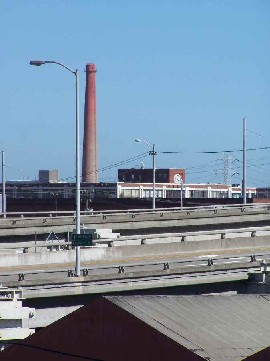
The Potrero Power Plant, a longtime source of pollution and health concerns for residents of San Francisco’s southeastern neighborhoods, is slated for partial closure once the Trans Bay Cable begins transmitting electricity into the city.

The Trans Bay Cable is an undersea cord that will transmit 400 megawatts of power underneath the San Francisco Bay from power plants in the Pittsburg / Antioch area. Last we heard, from a January article in the San Francisco Examiner, the project was running a full month ahead of schedule.

From the Examiner update:

“The cable was scheduled to become operational in March. However, the $505 million project is moving ahead of schedule, according to PJ Johnston, a spokesman for the joint venture that’s financing and installing the cable. The planned date to switch on the cable is now Feb. 1, according to Johnston.”

Well, Feb. 1 came and went. March came and went. Now, it’s April – and the Potrero Power Plant is still going strong, its telltale plume issuing from the tall brick smokestack.

We called PJ Johnston, the spokesperson, for another update. “We’re still testing,” he explained. “We’re going to be testing at least into the next month or longer. We’re working with the [California Independent System Operator] to determine a commercial operation date.”

The construction of the Trans Bay Cable and the converter stations were completed last year; and the system was energized in December; Johnston noted.

“We won’t speculate on a latest start date,” he responded after being asked when, at the very latest, it would go into service.

That elusive date is key, because that’s when the city can kiss the primary unit of its only remaining power plant goodbye. Unit 3, which accounts for the lion’s share of harmful emissions, will no longer be required to operate by the California Independent System Operator (Cal-ISO) once the alternative source is in place, clearing a major obstacle that stood in the way of the plant’s closure for years. Three smaller diesel-fired units at the plant will remain in service until a Pacific Gas & Electric Co. cabling project is finished later this year, but they’ll run far less frequently than the workhorse Unit 3, according to Cal-ISO spokesperson Gregg Fishman.

“We had heard March too,” Fishman commented. He confirmed that “the large unit at Potrero will no longer be needed,” once the cable comes online, and referred us to Johnston for more information. In an accord reached with City Attorney Dennis Herrera last year, Mirant — the company that owns the Potrero plant — agreed that it would shutter the plant once the Cal-ISO gives the nod.

When the cable comes online and Unit 3 finally does become history, the air quality in San Francisco’s Bayview Hunter’s Point neighborhood is sure to improve. Yet as the Guardian has noted in the past, there are environmental justice questions surrounding a project that essentially shifts the pollution impact of the city’s energy needs from one low-income community to a similar neighborhood, farther away. 

Si Se Puede: The legacy of Cesar Chavez

0

(Scroll down for a personal note from Dick Meister)

March 31st is a special day in eleven states, including California, and in dozens of cities and counties nationwide– and should be. It’s Cesar Chavez Day, honoring the late founder of the United Farm Workers union on the 83rd anniversary of his birth.

Certainly there are few people in any field more deserving of such an honor, certainly no one I’ve met in more than 50 years of labor reporting.

I first met Cesar Chavez when I was reporting on labor for the SF Chronicle.  It was a hot summer night in 1965 in the little San Joaquin Valley town of Delano, California. Chavez, shining black hair trailing across his smooth brown forehead, wearing a red plaid shirt that had become almost a uniform, sat behind a makeshift desk topped with bright red Formica, deadly serious but quick to smile.

 “Si se puede,” he said repeatedly to me, a highly skeptical reporter, as we talked deep into the early morning hours there in the cluttered shack that served as headquarters for him and the others who were trying to create an effective farm workers union.  “Si se puede — it can be done!”

But I would not be swayed.  Too many others, over too many years, had tried and had failed to win for farm workers the union rights they had to have if they were to escape the severe economic and social deprivation inflicted on them by their grower employers.

Although they did the indispensable work of harvesting the food that sustains us all, farm workers typically were paid at or below the poverty level, had few fringe benefits and very little legal protection from employer mistreatment. Most lacked even such on-the-job amenities as toilets and fresh drinking water, and were regularly exposed to pesticide poisoning and other hazards. Their living conditions were generally as abominable.

The futile attempts to arm the workers with the essential weapon of unionization began with  the Industrial Workers of the World,  who stormed across western fields early in the last century. Next came Communists, socialists, AFL and CIO organizers. All their efforts had collapsed under the relentless pressure of growers and their powerful political and corporate allies.

I was certain Chavez’ effort would be no different.  I was wrong.  I had not accounted for the tactical brilliance, creativity, courage and just plain stubbornness of Cesar Chavez, a sad-eyed, disarmingly soft-spoken man who talked of militancy in calm, measured tones, a gentle and incredibly patient man who hid great strategic talent behind shy smiles and an attitude of utter candor.

Chavez grasped the essential fact that farm workers had to organize themselves.  Outside organizers, however well-intentioned, could not do it. Chavez, a farm worker himself, carefully put together a grass-roots organization that enabled the workers to form their own union, which then sought out — and won — widespread support from influential outsiders.

The key weapon of this United Farm Workers union was the boycott. The UFW’s boycotts against grape and lettuce growers and wineries in the late 1960s won the first farm union contracts in history.  That in turn led to enactment in 1975 of the California law — also a first — that requires growers to bargain collectively with workers who vote for unionization. That has brought  substantial improvements in the pay, benefits, working conditions and general status of the state’s farmworkers.

The struggle was extremely difficult for the impoverished workers, and Chavez risked his health — if not his life — to provide them extreme examples of the sacrifices necessary for victory.  Most notably, he engaged in lengthy, highly publicized fasts that helped rally the public to the farm workers’ cause and that may very well have contributed to his untimely death in 1993 at age 66.

Fasts, boycotts.  It’s no coincidence that those were among the principal tools of Mohandas Gandhi, for Chavez drew much of his inspiration from the Indian leader.  Like Gandhi and another of his models, Martin Luther King Jr., Chavez believed fervently in the tactics of non-violence. Like them, he showed the world how profoundly effective they can be in seeking justice from even the most powerful of opponents.

As Chavez explained,  “We have our bodies and spirits and the justice of our cause as our weapons.”

What the UFW accomplished, and how the union accomplished it, will never be forgotten — not by the millions of social activists who have been inspired and energized by the farm workers’ struggle, nor by the workers themselves.

The struggle continues, for despite the UFW’s successes, most farm workers are still mired in poverty. But because of the union, they have a genuine hope of bettering their condition.

The UFW won important legal rights for them.  But more than union contracts, and more than laws, farm workers now have what Cesar Chavez insisted was needed above all else.  That, as he told me so many years ago, “is to have the workers truly believe and understand and know that they are free, that they are free men and women, that they can stand up and say how they feel.”

Freedom.  No leader has ever left a greater legacy.

Dick Meister, former labor editor of the SF Chronicle and KQED-TV Newsroom, is co-author of “A Long Time Coming: The Struggle to Unionize America’s Farm Workers (Macmillan). Contact him through his website, www.dickmeister.com.

Sidebar: Let’s truly honor Cesar Chavez

It’s way past time that Congress declared the birthdate of Cesar Chavez a national holiday. President Obama agrees. So do the millions of people who are expected to sign petitions being circulated by the United Farm Workers, the union founded by Chavez. And so do Democratic Rep. Joe Barca of California and 43 co-sponsors who have introduced a bill designating March 31st as Cesar Chavez Day nationwide.

President Obama says Chavez should be honored  “for what he’s taught us about making America a stronger, more just, and more prosperous nation” and for providing inspirational strength “as farm workers and laborers across America continue to struggle for fair treatment and fair wages.”

Like Martin Luther Jr., who’s rightly honored with a national holiday, Chavez inspired and energized millions of people worldwide to seek – and to win – basic human rights that had long been denied them, and inspired millions of others to join the struggle.  He, too, showed that the poor and oppressed can prevail against even the most powerful opponents – if they can organize themselves and adopt non-violence as their principal tactic.

A national holiday would be a well-deserved tribute, not only to Chavez, but also to Latinos generally, to organized labor and to all those who do the hard, dirty and dangerous work that puts food on our tables.

–Dick Meister

Ross on the road: The great white north

1

Editors note: Guardian correspondent John Ross is traveling across the nation pomoting his new book, El Monstruo — Dread & Redemption in Mexico City, and is sending us dispatches from the road. This week: Twin Cities, Madison and Northern Michigan.


 1. BLUE IGLOO


As I deplaned the Southwest Shuttle from Denver wrapped in my blue igloo, a puffed up garment that doubles my skeletal girth, a sudden spasm of panic punched me in the gut. Had I slept through my stop and disembarked in Fargo, North Dakota instead?
Minneapolis might just as well have been Fargo. The dead winter landscape lay frozen under week-old snowdrifts and the Twin Cities shivered in negative wind chill numbers beneath a leaden sky from which a cold hard rain would pelt down for a week. Fargo or Minneapolis? It didn’t much matter where I had landed – just don’t toss me into the wood chipper.


On my first evening in this desolate region, I was invited to dialogue with the Minnesota Immigrant Freedom Network at a community center in St. Paul. About 15 transplanted Mexicans, many of them related by marriage or friendship, pulled together in a circle in the gymnasium while the kids romped in the other room. Each called out his or hers’ “patria chica,” their home state or region or town. I talked about Mexico down on the ground today in the cheerless winter of 2010, the 100th anniversary of a distant revolution. How four out of every ten heads of households are out of work. 10,000 farmers and their families forced to abandon their milpas as millions of tons of NAFTA corn inundate the country. 19,000 dead in Felipe Calderon’s disastrous attempt to beat down the drug cartels. Who will be next?


Those in the circle leaned forward on their folding chairs, bending into my words as if I was a messenger bringing bad news from home. One woman began to weep and another rose to comfort her.


Later, I pulled out my book, El Monstruo – Dread & Redemption in Mexico City to show them what I had written. Families who would probably not eat meat for a week if they bought one snapped up three Monsters and asked me to sign them for their children — Alejandra, Yesica, Jeni, Alfonso, Jonaton — so that they could learn about the country they had been forced to abandon, in their new language.


As the session wound down, Mariano (not his real name) invited the families to a Jewish Seder the next week at a progressive Minneapolis schul. Then they would get on the buses and head for Washington D.C., a 150 hour round trip, to march for immigration reform on March 21st, the first day of spring. In the nooks and crannies of Obama’s America, Mexicans were beginning to come out of four years of social hibernation to rally for immigration reform, not a hot button issue in this economically strewn landscape.


I hung up with my old camarada Tomas Johnson, one of the apostles of fair trade Zapatista coffee — similar dispensaries like Just Coffee in Madison and Higher Grounds in Michigan are sprinkled over the frigid Midwest. Café has played a diminished role in the slender Zapatista economy ever since Muk’Vitz, a Tzotzil Indian cooperative, imploded when coffee prices soared — coyotes, bottom-feeder speculators, started showing up on the members’ doorsteps offering a few pesos more than the fair trade price.


Coffee is not an ideal resource upon which to build Zapatista autonomy — the price is set far away on commodity exchanges in London and New York and the product itself is destined for the jaded palettes of the connoisseur class in the cities of the north. Moreover, the coffee crop soaks up corn land and adds nothing to indigenous nutrition.


I marked my journey into my 73rd year at a house fiesta hosted by Tomas’s steady squeeze, an audiologist who gifted me with a hearing aid so that I might be able to decipher that questions hurled at me from the small audiences I address. This time last year, I was being wheeled into a green, antiseptic operating room for a round of chemotherapy that would k.o. the tumor that had taken over my liver. This birthday is the real gift.


I entertained privileged white students at several universities during my stay in the Twin Cities, got hopelessly lost in a frigid wasteland trying to find a Lutheran college, told tall tales to a handful of Raza at the U. of Minn, and attended a showing of the Benny More bio-pic at a jam-packed local theater. Benny’s scintillating calor radiating from the screen in waves of tropical heat juxtaposed oddly against the backdrop of the frozen north. Minneapolis-St Paul, with their new populations of color – Somalis, Ethiopians, Eritreans, Hmung, and Latinos – spice up this staid old state with exotic flavors. The music has changed: Reggaeton and Rancheros have replaced Spider John Koerner. I drink in the Albert Ayler-like contortions of a longhaired white boy at a jam session downstairs at the Clown Lounge.


Politics too are not as usual in this once-upon-a-time farmer-labor socialist paradise: Keith Ellison is the nation’s first Muslim congress person and a middle-of-the-road Democrat comedian stands small in the shoes of Paul Wellstone. In the other corner, the pit viper Michelle Bachman spits her venom into the black lagoons of Obamalandia.


II. TURKEY MOLE


I’m back on the Big Dog — there are plenty of Mexicans here but no Mexican bus. On the jump over to Madison, I chat with a well-seasoned black man during a smoke break. He wants to know where I’m headed. I’m on a low-rent book tour, I explain, I move from city to city to sell my books. “I’m on a book tour myself,” he laughs, “I get off where I want to and see if I like it or not. Hung up in Oswego for eight days but wasn’t anything there for me…”


There is a down-at-the-heels traveling class — the evicted and foreclosed, laid off and uprooted — rolling around the underbelly of this damaged country with no fixed destination in mind, looking for a place to light, some place that feels like home.


Norm Stockwell, who keeps WORT-FM, the Voice of Madison’s Voiceless, choogling, picks me up at the Greyhound depot, a furniture-less warehouse that resembles an immigrant detention center on the outskirts of town, and drives me over to the once-a-month Socialist pot-luck, but only scraps and few stained paper plates are left. A few hours earlier, the Madison P.D. visited the premises at the behest of the Wisconsin Socialist Party to remove a truculent member who had been abruptly expelled from its ranks, an astonishingly unpolitical resolution to a political dispute.


Madison is a city that doesn’t leave much up to chance. Cops are ever at the ready to surveil radical meetings. One cannot post a hand-scrawled street sign protesting injustice without first obtaining a permit from the city. No household is allowed to house more than three chickens (no roosters), a law that necessitates chicken inspectors and has given birth to the Chicken Liberation Front.


The State Capitol, a knock-off the Nation’s, is forever on the eyeline in Madison to remind one of the power of the State, I expect. The city is laid out on a grid so that all avenues spoke off from its monstrous dome – you have to move out of town to escape the radiation.


On Saturday, March 20th, a fistful of eternal protestors gathered at the foot of this granite beast to mark the start of the eighth year of the illegal invasion and occupation of Iraq and the decimation of millions of its people. As I trudged up State Street towards the Capitol, I flashed back to our feverish days as Human Shields in Baghdad in March 2003 and thought about Sasha for whom the war never goes home, climbing the hills of Amman, delivering collateral repair from dawn to dusk to the million Iraqi refugees that forgotten war has exiled to the Jordanian capitol.


Our presidents invade so many foreign countries that they can’t even remember the name of the last one they destroyed. Iraq has been erased from the North American mind screen in favor of Afghanistan, the Good War on Obama’s agenda. Last month, Sasha and Mary’s Collateral Repair Project took in just $50 in donations and CRP is in danger of folding. Send them some Yanqui shekels at (www.collateralrepairproject.org.)


The annual commemoration of the Iraqi genocide draws smaller and smaller knots of humanity each year — 80 or so souls in Madison, 500 in San Francisco, not 10,000 in Washington. But the next day, as Baracko’s Dems braved the racist jibes and hard fruit of the Teabaggers to enter the hallowed halls of Congress and narrowly vote up a phony health care reform bill that excludes immigrants from coverage and leaves the insurance congloms on top, 200,000 assembled outside to back up a proposed immigration reform that smells just as cheesy as Obamacare.


The rally proved to be the largest confluence of immigrant workers since that miraculous May 1st four years ago when millions came out of the shadows to shout “aqui estamos y no nos vamos.” After that milestone moment, the immigrant rights movement was driven into the underground by Bush’s ICE raids, Lou Dobbs, the Minutemen, real-time Mexico bashing with knives and bottles, Sheriff Joe’s Arizona storm troopers, good ol’ American-as-apple-pie racism, and the squeamish response of the official Latino leadership.


Now the indocumentados are taking their first baby steps back into the maelstrom of U.S. politics. Hundreds of grassroots groups like the Minnesota Immigration Freedom Network rented buses and drove off to Washington on the first day of spring and May 1st, the day on which immigrant workers first took to the streets of America 124 years ago in the battle for the eight hour day, now looms large on the calendar of resistance.


Lester Dore is a graphic artist who operates under the influence of the king of the calaveras Jose Guadalupe Posada, the brothers Flores Magon, and the breathtaking explosion of popular art that detonated on the walls of Oaxaca during the 2006 uprising in that southern city. Lester whips up a pair of prints to celebrate the publication of “El Monstruo” and the life after death of Praxides G. Guerrero, the first anarchist to fall in the 100 year-old-this-year Mexican revolution. He serves up a big pot of Mole de Guajalote (Turkey) and invites us over. Three compas from Toluca in Mexico State share the sumptuous repast and the conversation quickly slides into Mexican. I learn the origin of the Chilango-ismo “teparocha” (falling down drunk) but eschew the vino (the liver lives on.)


III. SANCTUARY IN THE HEARTLAND


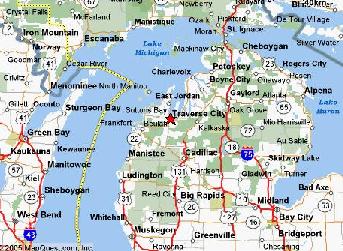
Driving the long route around Lake Superior into northern Michigan, the first tentative fingers of spring have brought a thawing to the land. The cherries that draw thousands of migrant workers to the Lower Peninsula are threatening to burst into bud. Gladys Munoz (her real name) directs Migrant Health Services for seven northern Michigan counties. She is based in Traverse City, a comfortable upper crust enclave — the billion buck mansions out on the peninsula are in the El Chapo Guzman category of ostentation (Michael Moore is rumored to be in residence in the environs ensconced in a lavish log cabin roughly the size of downtown Flint.)


Gladys knows where the bodies are buried. We ply the backroads to the labor camps hidden away down in the dank gullies. Guatemalans and Mexicans stream into this region each spring to do the stoop labor no gringo will do and pick the Maraschinos that top off the parfaits of the few upwardly mobile Americans left in the wake of the ravaged economy (Michigan unemployment clocks in around 15%.) Gladys tells me about three babies born without brains — she suspects pesticides. She speaks about a man from Chiapas who hung himself when he found out that he had contacted AIDS — a priest was called upon to perform an exorcism at the house where he expired. And a young Triqui Indian mother from Oaxaca picking cucumbers for a Vlasic pickle contractor who was stranded in a country that doesn’t recognize her language after her husband went fishing for supper without a license and Fish & Game turned him over to the Migra.


We visit with Liliana (not her real name) from the drug war-riddled hot lands of Guerrero state. The patron is a kindly old farmer who has installed cable TV for the workers and we watch Barack Obama extol the wonders of his tarnished health care bill. Liliana’s husband is picking oranges in Florida but will soon return to work the cherry. She says he doesn’t much believe that an immigration reform measure will make it out of congress – “just some more blahblahblah…” But Liliana will march this May 1st if she can get a ride — undocumented workers are not permitted drivers’ licenses in the state of Michigan.


Traverse City is good to me. I perform at a local organic coffee roaster for a roomful of social change agents. The next morning, Jody T. who gave up her life to drive this garrulous old gaffer around the bioregion, steers the Viva into a trepidatious triangle. Cadillac was once the home base for Timothy McVeigh and the Michigan Militia, a recent flashback on the Ten O’clock News after a Christian posse purportedly targeted cops for blood sacrifice in preparation for the appearance of the Anti-Christ. To the west, small towns with Dutch-inflected names like Holland and Zeeland and Vreland dot the lakeside.


White clapboard outposts of the Dutch Reform Church, the architect of South African apartheid, their steeples spiring piously into the spring breeze, hug the highway. The Dutch Reform Church is the spiritual home of the Prinz family whose most celebrated spawn, Eric, is the go to guy at Blackwater. Further south we slide into Grand Rapids where the similarly affiliated DeVos dynasty’s Amway holds sway. The Prinzes and the DeVoses (a good reason not to root for the Orlando Magic) finance such repositories of right-wing fanaticism as Focus On The Family and Operation Rescue. The largesse of Dick DeVos rivaled the Mormon Church in putting California’s homophobic Proposition 8 over the top.


Grand Rapids, once the furniture capitol of the known universe and now the home of the Gerald Ford Museum of Presidential Imbeciles, is a good boxing town (Buster Mathis and Roger Mayweather have gyms here) and a swelling Latino population has changed the complexion of the city. Despite the downturn, Grand Rapids is trying to upgrade its downtown but the further one gets from the core of the city, the seedier things look.


Koinonia House is a sanctuary near the old demolished heart of Grand Rapids — in fact, it is the only structure left standing on its block. Established by disaffected seminarians like Jeff Smith in the early 1980s when the U.S. waged war on Central America, K House became a station on the underground railroad built by the Sanctuary Movement. The first refugees were Guatemalan Indians fleeing the scorched earth genocide of Efrain Rios Montt. In recent years, K House has taken in Mexicans fleeing that “desgraciada pobreza” back home, like Carlos and Alynn (their real names) who have brought their remarkable art with them to El Norte.


Jeff kicks back and reminisces about the fates of former tenants. The big-bellied wood stove belches out waves of warmth on a chill late March morning. The big arms of the fluffy old lounger envelop a weary traveler and hold him close. K House remains a sanctuary deep in the heart of a wounded land.


Stay tuned. Chicago, St Louis, Jackson Mississippi – there is still a whole lot of traveling to do as the Monstruo tour moves eastwards.               


FIN


John Ross and “El Monstruo – Dread & Redemption in Mexico City” will visit St. Louis April 4th-7th, and Millsaps College Jackson Mississippi April 9th for a symposium on Mexico City – he will tour Baltimore, Washington, New York, and Boston April 19th through May 1st. For details write johnross@igc.org.


Is BARFing good for your pet?

1

tredmond@sfbg.com

It’s called the BARF diet — and it’s the hottest thing in San Francisco pet stores these days. No, it’s not food that makes your pet throw up; BARF stands for biologically appropriate raw food. And its advocates are passionate about its advantages over old-fashioned commercial pet food.

“Dogs and cats in the wild would eat raw meat,” said Susan Yannes, who co-owns Pawtrero pet store and bathhouse on Mississippi Street. “They didn’t have doggie barbecues.”

The idea is to mimic as closely as possible what your pets would have eaten way back when — in the natural state, before they became so close to humans that they started eating the same sort of processed food (some would say processed crap) many of us eat.

And the trend is growing — fast. Matt Koss, who owns Primal Pet Foods, a supplier of frozen raw animal feed, reports 20 percent annual growth. He cites a massive pet food recall in 2007 as a spur to his business, adding that “there’s more and more consumer awareness about pet food.” Primal Pet supplies food to 2,000 pet stores nationwide, 15 in San Francisco.

But the BARF diet also has its critics — and not just in the multibillion dollar pet food industry.


A BETTER DOG IN JUST WEEKS

Yannes got into the raw food business when one of her dogs developed skin problems. “We were feeding him standard dry dog food, and the vet said it was fine,” she said. “His coat had all these bumps, so they gave him allergy medicine.”

Instead, she tried shifting the dog to an all-natural diet — “and a week later, he was fine.”

That’s a common story among some pet owners, who say that raw meat, combined with raw bones and some specially prepared grain and vegetable matter, makes dogs and cats healthier and happier. “Business is growing,” Yannes said. “People who try this don’t go back.”

The argument is similar to what you hear from people who have given up processed human food in favor of fresh fruits and vegetables and organic, free-range meat. It’s more natural; all that processing (and even heat) destroys essential nutrients.

A summary published on Pawblog that Yannes passed on to me sums it up: “When switching your pet to a raw food diet, there are many differences you will notice in a few weeks, including improved breath and white teeth, better digestion resulting in much smaller and firmer stools, less itching, scratching, and allergies, increased energy, healthy skin, and a shiner coat.”

The reason? “Dogs and cats stomachs are designed to digest raw meat and soft bones, utilizing the very strong concentrations of hydrochloric acid as well as the short length of their gastrointestinal tract. Any bacteria are taken care of with this acid.”

But some vets — including those that support and practice non-Western medicine — are more cautious.

“A raw diet is fine,” said Dr. Randy Bowman, a vet at Pets Unlimited. “Dogs were meant to eat raw food in the wild. But we’ve come far beyond that. Their gastrointestinal system has evolved, and they don’t need it.”

Adds Dr. Jeffrey Bryan, a veterinary oncologist who teaches at the University of Washington: “I think highly processed foods are problematic, but I wish we had more scientific evidence on the value of the raw diet.”


NOT FOR ALL

I think it’s safe to say that the raw food diet isn’t for everyone. For one thing, it’s more expensive — but if it winds up keeping our dog out of the vet’s office, it will more than pay for itself over time. More important, it requires a fair amount of work — and a lot of attention.

Raw meat has to be handled carefully. All the preparation surfaces have to be washed, and the pets’ dishes need to be washed with soap and water after every meal. That’s because raw meat — even organic, free-range stuff — contains bacteria that can carry diseases to pets and humans.

And according to Bowman, even the best grade of meat can carry diseases: “Even human-grade meat that’s processed and shipped distances carries bacteria, and it’s not meant for raw consumption.” Bowman suggests that pet owners at least sear the meat first, since the bacteria tend to be on the surface.

Dr. Rebecca Remillard, a veterinarian and pet nutritionist, is one of the harshest critics of the raw diet. “This is not a safe practice,” she writes on her Web site. “Dogs fed raw meat or eggs may develop mild to severe gastrointestinal disease from consuming products contaminated” with disease-causing bacteria.

Koss says that’s just misinformation. “Bacteria and pathogens are a concern in the entire food industry,” he said. “But if the food is handled properly, there is no danger at all to pets.”

Susan Lauten, who has a master’s degree in animal nutrition and a doctorate in biomedical science, runs a veterinary consulting business in Knoxville, Tenn. She agrees that, for the most part, healthy dogs and cats can safely eat raw food. But she’s less enthusiastic about comparisons to the diet these creatures ate in the wild.

“In the wild, dogs didn’t live very long,” she told me. “And one reason was that they got sick from eating contaminated meat.”

Lauten has a different concern about the raw diet. Animals that eat raw meat can release salmonella and other dangerous pathogens in their stool. “You don’t want that around if you have kids or immune-compromised people,” she said. “You can clean up after your dog, but you might not get everything.”

And she raised another issue: economics. “Do you tell people that they can’t have a cat unless they can afford the most expensive kind of food?”

Dr. Hannah Good, who practices holistic veterinary medicine in Santa Cruz, argues that “there’s a lot that can be accomplished by going in a different direction than kibble.” She noted that “a lot of diets are 100 percent garbage.”

But she also said that high-grade kibble diets are balanced to include all the nutrients an animal needs.

And what do the vets feed their pets? Good said her dog “eats whatever I eat”; she prepares a version of her own meals for her canine companion. Lauten’s dog has inflammatory bowel disease “and does very well on a commercial veterinary diet.”

Bryan, who thinks what a dog eats is an important factor in its health, doesn’t do the BARF thing either: “I give my dog Science Diet.”

Finding the right dog walker

8

news@sfbg.com

If you wake up every morning and begin your day with a leisurely stroll to the park to spend time frolicking with your beloved pup and other pup friends, you’re blessed. But if your schedule isn’t so flexible — and you’ve got a little cash to spare — there’s an easy way to keep your BFF (best furry friend) exercised, socialized, trained, and happy.

Hundreds of dog walkers in this city are looking for your business. There are companies and independent walkers, playgroups and privates. Some pet sit, some don’t. Some even bathe your pooch if it happens to get too dirty while out on the town.

But there are also some operators who cram too many dogs into small vehicles, pay little attention to them while they run amok on public land, and don’t show much concern for your pet’s overall health. So it’s important to take some time finding someone who has a good reputation, a good rapport with your dog, and has a training philosophy you either share or would like to learn.

Start with your doggie’s temperament. If she thrives with other dogs, go playgroup. If not, one-on-one time is best. Endless energy and in need of a vigorous workout? Maybe a daily jogging session is required. Dogs who don’t get along with other dogs won’t be accepted by most dog walkers — although some specialize in behavior problems.

Next, pick a setting. It’s not always the case that off-leash park romps are the best option. If your pooch has anxiety in new places, say due to poor eyesight, maybe a neighborhood haunt is best. If she is limited by arthritis, a stroll close to home might be ideal.

Then go observe the dog walkers in action. Find someone whose energy fits your dog’s and start asking questions. Ask for references. Ask happy dog owners or your veterinarian’s office for recommendations.

Transparency, friendliness, and willingness to spend time answering your questions are good signs; nevertheless, the proof is in the meeting. Make sure you have an interview with all potential dog walkers. Most dogs get driven together to parks, so make sure the vehicle is safe, large, and cool enough.

Good dog walkers train their charges during their time with them. Great ones become extended family members. And remember: you’re trusting this person with the keys to your home. There’s no state or city licensing required, so make sure your dog walker is bonded and insured. Top-end dog walkers are often members of the Association of Pet Dog Trainers and have taken classes in animal behavior.

I recently spent an hour romping around in the Presidio with 10 ecstatic dogs and walker Andrew Frye. Frye is the newest partner of Who Let the Dogs Out (WLTDO). Lauren Goldboss, who started the company seven years ago after deciding she’d rather be outside with dogs than inside with bankers, calls Frye "the best dog walker in the city."

Frye takes out two playgroups a day, and Goldboss says people beg to be in his group. After 30 minutes of picking up the pups and getting to the park — favorites are Crissy Field, the Presidio, Bernal Heights, and McClaren Park — he runs around with the dogs playing ball and teaching them tricks. He taught Birdie the cattle dog to weave in and out of his legs as he walks.

Frye loves his job and is great at training the pups to behave while showing them a fabulous time. He has no formal education in dog training, but reads extensively about classical conditioning and spends his free time talking to other people and dog walkers about tips for making the animals learn and behave.

Goldboss says the most important thing she looks for when hiring dog walkers is the way they interact with the dogs. They need to be willing, able, and happy to run around with the dogs everyday — rain or shine.

For an hour of park time five days a week WLTDO charges a monthly rate of $385 — a relative bargain. Some independent walkers I spoke with charge $15– $30 per trip, depending on the details, so you can spend as much as $600 a month for a daily walk. Typically, there are discounts for households with multiple dogs.

One benefit of hiring an established company is consistency. If your dog walker gets sick or takes a vacation, other staff can fill in, leaving your schedule is undisturbed.

But if your own schedule is flexible or is subject to sudden changes, make sure your dog walker is open to that and won’t charge you for days when you don’t need the services. Individual dog walkers are often willing to be accommodating.

Finally, different companies offer different services: SF Puppy Prep, for example, (sfpuppyprep.com) specializes in adolescent dogs.

On a beautiful, sunny Tuesday, it definitely didn’t suck going out to the park to bounce around with the dogs. As Ernie the bulldog rolled around on the beach, covering his wrinkly face with a thin brown mask of sand, I knew he had found the perfect dog walker in Frye. Earlier that morning, I saw the same honest grin on Jack the standard poodle as he wrestled with his neighborhood friends in the run. That’s one of the best standards of all — your dog walker is having fun, and so is your BFF.

Bark if you like needles

4

tredmond@sfbg.com

The dog named Hank Stamper got paralyzed on a sunny Saturday afternoon. One moment he was hanging out in the backyard, lying in the little patch of grass and giving the cats next door the evil eye, and the next thing I knew he was making a yelping sound like nothing my dog had ever uttered in his four years of healthy life.

When I got there, Hank was dragging himself around by his front paws, his back legs and hindquarters completely limp and useless.

So I picked up the 90-pound beast and wrestled him into the car and carried him to the pet hospital, where a young vet poked and prodded and confirmed that Hank’s entire hindquarters were numb and paralyzed. The doc didn’t know why, or what might have happened; there was no obvious injury. He said it might get better on its own, or it might not.

The specialist vet we saw the next day didn’t know what was wrong, either; it seemed to be some sort of stroke. An x-ray showed what might have been something screwy in his spine. “There’s a surgical procedure they do at UC Davis,” the specialist vet said. “It costs $10,000, and has about a 50 percent chance of success. I could call them if you want.”

Uh, no. I loved my dog, but that was way beyond our means, and my health insurance didn’t cover family members of the canine persuasion. So, sadly, with much weeping, we took poor Hank home. We figured we’d give it a day or two and, if he didn’t improve, his next trip to the vet would be his last.

While I was lamenting all this at work the following morning, one of my colleagues made a wild suggestion: take him to Irving Street Veterinary Clinic, she told me; there’s a vet there who does acupuncture.

Well, hell. I’d never heard of doggie acupuncture, but Hank wasn’t getting better, plus he was miserable, and we were at the end of the line. So I called and made an appointment. Dr. Jeffrey Bryan met me at the clinic, took a look at the poor mutt, and went to get his gear.

“To be totally honest, I can’t explain scientifically exactly why this works,” he said as he started sticking needles in Hank’s back and legs. “But in a remarkable number of cases, it does.”

We sat on the floor, the dog and I, while Bryan hooked a very low electric current up to some of the needles, then he told me to wait. Thirty minutes later, the doc turned the juice off, took the needles out — and goddamn if that dog didn’t stand up and start to walk.

Seriously — the animal that couldn’t even hold himself up to poo (it was gross, don’t ask) ambled stiffly out of the clinic and got into the car. Four acupuncture sessions later, Hank was running again, and within a few months, we did a 5K race — and the human member of the team wasn’t the one setting the pace.

That was back in 1996, when veterinary acupuncturists were fairly rare, even in San Francisco. I think Bryan was one of only two licensed vets who did it. Today it’s a growth industry.

In fact, an increasing number of vets — people with a doctor of veterinary medicine degree, folks who spent four years in graduate school studying Western science and medical techniques — are treating some of their patients with acupuncture, chiropractic, herbs, and other holistic approaches.

“It’s expanded quite a bit in the past five years,” said Dr. Randy Bowman, who practices at Pets Unlimited, a nonprofit animal hospital and adoption center in San Francisco. “We as vets have become more informed and more in touch with what our clients want.”

Bowman practices what he calls complementary and integrative medicine — a combination of traditional Western techniques and holistic treatments like acupuncture and herbs. “I think a lot of us get fed up with chronic conditions, pets that have problems Western medicine doesn’t have a cure for,” he said. “I wanted to offer my clients something more than the same antibiotic over and over.”

Acupuncture’s been around much longer than what we now call Western medicine. A recent article in accupuncture.com noted that primitive acupuncture therapies may have been practiced in India as long as 7,000 years ago, and it’s been part of Chinese culture for centuries.

“One of the earliest records of veterinary acupuncture was some 3,000 years ago, for the treatment of elephants,” explained the article, which was written by Susan Thorpe Vargas and John Cargill.

But the technique didn’t find widespread acceptance in America until much more recently. California first legalized acupuncture in the 1970s. And while some licensed acupuncturists have quietly been treating animals for years, it’s only recently that significant numbers of university-trained veterinarians have started to adopt the practice.

Although most humans have to choose between a doctor with an M.D. and an acupuncturist, in the animal world, the spheres of traditional and holistic medicine have grown closer.

Dr. Hannah Good, who practices in Santa Cruz, is an early disciple. She’s been offering animal acupuncture and chiropractic for more than 20 years. “I look at every case individually,” she told me. “Sometimes it’s herbal treatment, sometimes it’s surgery.”

There are many reasons for the shift toward holistic medicine in the animal world — and one, frankly, is cost. Invasive procedures, antibiotics, steroids — all the things traditional vets tend to do for sick animals — come at a stiff price. Hank’s $10,000 surgical estimate is unusual, but spending hundreds of dollars — many hundreds of dollars — on an animal’s illness is all too common.

The acupuncture that saved Hank’s life cost $40 a session, and the bottle of Chinese medicine Bryan prescribed as a supplement cost $8 at the herbalist down the street.

That’s not always the case — extended acupuncture treatment can be pricey. “But it’s still less expensive, particularly with chronic diseases,” Bowman noted.

I tracked down Bryan recently; these days, he’s a professor at the University of Washington School of Veterinary Medicine and an expert in veterinary oncology. He remembered Hank well — and although he has spent years in advanced training learning to treat animal cancer, he still uses acupuncture at times.

“One of my students had a dog with chronic pain and we gave him a very powerful steroid, but it had no affect,” he said. “But acupuncture made a lot of difference.”

He finds that his clients — even those whose animals have advanced diseases — are interested in alternatives. “A lot of people who have had acupuncture themselves find that this kind of treatment is more in line with their core values,” he noted. “It’s certainly growing in the public consciousness.”

Bryan would like to see the veterinary establishment — which is still dominated by Western scientific models — move more quickly to adopt nontraditional techniques. “Most of what we’re seeing is demand-driven,” he said. “People are asking for it. Veterinary medicine as a whole has done a poor job of being a leader in the field.”

Study: Cuts to health programs a bad plan for state economy

It doesn’t take a Ph.D. to understand that people who earn less shell out a greater percentage of their income from month to month than those occupying more elite ranks. Anyone fortunate enough to be holding down even a low-paying gig in a state where unemployment stands at 12.5 percent knows that basic living expenses can quickly consume a paycheck in San Francisco.

A study released by the Center for Labor and Research Education at the University of California at Berkeley has found that cutting relatively low-paying jobs in the state’s health and human services sector would deal a harsher blow to California’s financial health than alternative budget-balancing measures, like raising taxes on the wealthiest residents. Gov. Arnold Schwarzenegger has proposed cutting $6.4 billion from California’s health and human services budget, part of his solution for closing a roughly $20 billion budget gap.

“The budget proposals that the governor is making would … significantly worsen the economic crisis in the state, rather than pull us out,” said Ken Jacobs, chair of the Labor Center at UC Berkeley.

The report highlights “multiplier” effects of hypothetical cuts to statewide health and human services programs. The study examined the impacts of cutting $1 billion each from Medi-Cal, Healthy Families, and CalWORKS – state programs that assist low-income families – and found that the resulting losses would total 98,600 jobs for all three combined. The worst impacts from cuts to those programs would come from indirect consequences, according to Jacobs. Since those programs are funded in part from federal dollars, a loss in federal funding matched for every dollar the state invests also takes a toll.

A $1 billion cut to state funding for In-Home Supportive Services (IHSS), which aids disabled and elderly people who want to remain in their homes, would result in a statewide loss of 215,900 jobs, the report found.

Meanwhile, generating that same $1 billion through taxes from households in the highest income bracket in California would result in a comparatively lower job loss of 6,400, the research group estimated.

Health Access, a nonprofit consumer advocacy group, used the study’s findings in its own report to predict ramifications of the actual proposals in Schwarzenegger’s budget. According to Health Access, a minimum of 42,384 jobs would be lost as a result of proposed health cuts to Healthy Families and Medi-Cal, with more than $2.7 billion lost in business activity. It predicted 370,000 jobs would be wiped out if IHSS were eliminated altogether.

In a tumultuous economic downturn like the one facing California right now, “the best stimulus is funds in the pockets of low-income families,” according to Jacobs. Cutting these health and human service programs, which employ low-income workers and serve residents living near the poverty line, would do just the opposite.

Speaking of multipliers, Jacobs noted that corporate tax cuts produce the absolute worst bang for the buck out of any other schemes to fix the economy.

Obama nominates Melinda Haag

0

President Obama has nominated veteran attorney Melinda Haag to serve as the U.S. Attorney for the Northern District of California, which stretches from the Monterey Coast to California’s northern border with Oregon and from the Pacific Ocean nearly to Sacramento, an area that more than 7.3 million people call home. Obama also nominated Jerry E. Martin as U.S Attorney for the Middle District of Tennessee, and James A. Lewis as U.S. Attorney for Central District of Illinois.

“I am so pleased the President has nominated veteran attorney Melinda Haag to serve as the top federal prosecutor in San Francisco,” said U.S. Sen. Barbara Boxer, who recommended Haag for the post. “She is well respected in the California legal community and will bring more than two decades of experience handling white collar crime cases to the U.S. Attorney’s Office.”

Boxer likely isn’t the only one pleased by this nomination: San Francisco’s embattled immigrant community has been hoping that Obama would replace the current top federal prosecutor Joseph Russoniello, an ardent opponent of sanctuary legislation.

According to a press release issued by Boxer’s office, Haag has been a partner since 2003 at San Francisco-based Orrick, Herrington & Sutcliffe in the white collar criminal defense and corporate investigations group, which handles cases involving fraud, antitrust violations, environmental crimes, health care fraud and other corporate matters. 

Before that, former U.S. Attorney and current FBI Director Robert Mueller recruited Haag to serve in the San Francisco U.S. Attorney’s Office, where she headed the White Collar Crime Unit and was the deputy chief of the General Crimes Unit. Haag also has experience as a prosecutor in the Los Angeles U.S. Attorney’s Office.

Haag received her bachelor’s degree from the University of California San Diego and she earned her law degree at UC Berkeley.

Hank Plante’s exit interview

2

Hank Plante ends a three-decade run as a political journalist with tonight’s (March 24) broadcast of the CBS 5 Eyewitness News, where he has worked since 1986 after starting his career with newspapers in Washington DC. So we took the occasion to talk politics with him, learning that his loyalties lie downtown.

Plante agreed that politics has become ugly these days. “It’s just so much more acrimonious, that’s one thing that’s changed. The other is just the money that’s involved,” Plante told us, marveling at Meg Whitman’s plans to spend $40 million of her own money to run for governor and the $1 million per day that corporations spent lobbying against the health reform bill signed by President Obama.

But the changes haven’t gotten Plante down, as they have many political junkies, who decry the crippling of government’s ability to combat corporate power and address real social and economic problems. “I’ve never become a cynic, and I think that’s one thing that sets me apart from many political journalists,” he said, adding, “I still think politicians can make a difference.”

Yet like many political journalists, when I ask who his favorite politicians have been, he rates them based on whether they’ve made good stories, not whether they good for the people. For journalists, bad is often good, whether it be natural disasters or disgraceful politicians.

“Arnold is a great story. Willie Brown was a great story. Gray Davis was a dull story until he got recalled, then he was a good story,” Plante said.

What about Mayor Gavin Newsom, who has often given Plante exclusive access (including Newsom’s first extended interview after his 2007 sex scandal), but who has also angrily walked out in the middle of an interview with Plante. 

“Personally, I like the mayor. But I have to ask him tough questions, so he can be mercurial. Right now, he’s running for office again, so he’s charming,” Plante said.

In fact, for a journalist, Plante makes clear his preference for Newsom over the progressive majority on the Board of Supervisors, joking, “If I had a month to live, I’d spend it with the Board of Supervisors because it would seem like five years.”

Plante also said that he opposes district elections — which he said have prevented the emergence of big-stature political figures like Dianne Feinstein and Quintin Kopp — and Plante said he doesn’t see the value of district elections in counteracting the political power of downtown corporations. “I’m a capitalist and I have no problem with people making money,” he said.

Yet Plante acknowledges the divide between downtown and progressives is San Francisco’s dominant political dynamic, noting, “You see how afraid downtown is of the Board of Supervisors appointing the new mayor.”

While Plante said he believes in the importance of politics, he does decry how political science and public relations have been manipulated in recent years.

“They’re taken a page out of the Karl Rove playbook to talk over the journalists right at the public,” Plante said, noting how many politicians no longer feel the need to be accessible to journalists or honestly and directly answer their questions. “They really want to control the message, so the accessibility is diminished.”

Nonetheless, Plante said he regularly emphasizes the importance of political engagement: “In a place like the Bay Area, where people are inundated with lots of information sources, you have to keep saying it over and over again.” 

Plante, 63, is retiring and moving to his home in Palm Springs with his partner, Roger. Among the many awards and accolades he earned during his career are several Emmys and a prestigious Peabody Award. His station sent out a press release praising Plante, including this comment by anchor Dana King: “There is an entire population of politicians breathing a sigh of relief at the news of Hank’s retirement. Hank was the consummate professional, never combative but he did his homework and asked tough, pointed questions. Politicians, love him or hate him, respected and answered them, every single time. Our newsroom will suffer a huge intellectual void when he leaves.”

Endless hookup

0

arts@sfbg.com

MUSIC Where are the turntablist masters of yore? They’ve gone missing, replaced by the likes of the Hood Internet.

It’s true. The art of the hip-hop mix, once protected by the Skratch Piklz and the X-Men (a.k.a. X-ecutioners) and the Beat Junkies and Triple Threat, has returned to the province of the sound editors, just like in the early 1980s. The problem was the turntable itself. A painful lesson of the ugly aughts was to never trust technology. Hardware emerges, changes, and is destroyed according to consumerist tastes. The alchemical idea may be subject to manipulation by the likes of Steve Jobs, Rupert Murdoch, and Eric Schmidt, but it is eternal in its adaptability to any mechanical form.

So while scratch DJs take to message boards and cry over Panasonic allegedly discontinuing its Technics 1200 line (which turned out be a false rumor), rockists and electronic heads open their laptops, launch Serato and Reason software, and get to mixing. It’s not like those turntable masters aren’t missed, though. While they spun and cut soul, funk, and hip-hop with finely nuanced techniques, like 16th century woodblock cutters, the new editors and mashup artists skip stones across genres, leaving small ripples of pop delight that quickly dissipate.

It’s a different aesthetic, that’s for sure. The Hood Internet consists of Chicago-based musicians Aaron Brink and Steve Reidell. Both moved there after finishing college — Brink at the University of Michigan and Reidell at University of Wisconsin, Madison. Initially they formed May or May Not, a “noisy pop band,” as Reidell called it, and made beats on the side for rappers “you would have never have heard of” until producers like Girl Talk and Them Jeans inspired them to create the Hood Internet Web site in 2007. Using Acid Pro and Ableton Live, they flooded the Web with smart, imaginative mashups of the Shins vs. Crime Mob, and Jim Jones vs. Daft Punk. It was a hobby: Reidell was an art director for Smart Bar, and the site’s array of cheeky collages is testament to his superior design skills. Brink is a clinical psychologist. They’ve performed around town and occasionally landed spot gigs on the weekend, but this spring marks their first extended national tour.

“I left my job earlier this year to be able to focus on the Hood Internet,” Reidell says. He’s calling from a video set in Chicago, and the resulting clip will be for “Chicago 3016,” a new single the Hood Internet produced with local MC Kid Static. It’s a reference to Chicago’s failed bid for the 2016 Summer Olympics. “There’s a great hip-hop scene here right now, from Kid Static to the Cool Kids and Kidz in the Hall. Freddie Gibbs, he’s from Gary, Indiana, but he’s basically Chicago since we’re such close neighbors.”

Unless they’re showing some hometown love — they recently mashed together buzzing Chi-town newcomers Bin Laden Blowin’ Up’s “Chi Don’t Dance” with Broken Bells’ “Citizen” — the Hood Internet tends to use radio hits, flipping recognizable raps over rock and dance tracks. Hence, The Hood Internet Mixtape Vol. 4 includes “Bring the Tabloid Sores,” where Chuck D.’s stentorian boom from “Bring the Noise” rides over Nosaj Thing’s eerie electronic remix of Health’s “Tabloid Sores.” Less brilliantly, it also includes “Swaggin’ Out,” which pairs Soulja Boy’s muttering boast from “Turn My Swag On” with Joe Jackson’s smooth jazz-pop “Steppin’ Out.” “There’s a handful of irony in what we do. The mashup itself is an ironic form of music,” Reidell says. “We live in an age where anyone can do it if you’ve got Garageband and download some a cappellas.”

The Hood Internet operates in a pop context. It isn’t simply plundering black music for source material and reshaping it for white hipsters. Collected into the ongoing Hood Internet Mixtape series, these sounds represent how much of the audience, black and white, consumes music today. To the duo’s credit, their approach is more innovative than the hordes of mixtape DJs that artlessly smack Lil Wayne “exclusives” together with little care for flow or context, or even the old-school jocks who scratch and blend like it was still the ’90s. But these tracks also demonstrate how hip-hop has been reduced by much of its audience into a series of sugary sensations — again, the skipping stones analogy. It’s music for partying, getting laid, and working out at the gym, not for intellectual exploration. You can’t blame the Hood Internet’s clever and innovative response for the current pop miasma, though.

“In recent months I’ve digested the new Freeway & Jake One album, Pill’s 4180 mixtape and Freddie Gibbs’ mixtapes as intensely as the CFCF and Caribou album,” Reidell answers when asked if he takes hip-hop seriously. “That said, a lot of pop music — and a lot of hip-hop falls into that being that it’s popular — is disposable. It’s not because it’s hip-hop, it’s because a lot of pop music is disposable. The Hood Internet mixes a lot of that stuff. But while we might mix Gucci Mane one day, we’ll mix a really thoughtful Anti-Pop Consortium track the next day.

“I think there’s some value to it because it’s introducing people to things they might not otherwise have heard,” he continues. “It’s time-stamped to a certain degree, and it’s for partying. But there’s value to that, too. People like to have a good time.”

THE HOOD INTERNET

With Tobacco (of Black Moth Super Rainbow) and the New Slave

Sat/27, 10 p.m., $12

Bottom of the Hill

1233 17th St., SF

(415) 621-4455

www.bottomofthehill.com

Nihon Whisky Lounge

0

paulr@sfbg.com

DINE Among the stand-tall, manly-man libations, none stands taller than whiskey, or (for Caledonophiles) whisky. Caledonia was the Roman name for Scotland, of course, and in Scotland the manly men drink whisky. And wear kilts. What is the implication of all this for us fey, pampered, urban Americans? At the edge of our very own Mission District, a five-year-old restaurant called Nihon styles itself a “whisky lounge” and serves the small plates known to the Japanese as izakaya. So: take Japanese food, present it in a gorgeous, moody setting, sprinkle far and wide with Scotch whisky (including 400 varieties of single malt) as if watering your Chia Pet, and and lo! you get hipsters. Hipsters don’t wear kilts — yet — but they do like to wear their tight-fitting shirts untucked. Why?

Nihon’s whisky installation is impressive: a soaring architecture of bottles behind the bar. The bottle battlement dominates the main floor (which you enter through a set of huge, frosted-glass doors trimmed with wrought iron) and rises nearly as high as the mezzanine, the place to go if you seek some coziness. On your way up, note the porthole and, at the rear of the second floor, a semi-private lounge set with comfy chairs and a sofa under exposed roof joists. The only fly in this rich design ointment is the view: the windows gaze onto the unromantic intersection of Folsom and 14th streets and the immense, neon-glare parking lot of Foods Co. No wonder the panes are hung with screens of fine steel mesh.

Izakaya-style food reminds us that Japanese cuisine includes cooked as well as uncooked items, although it’s probably a stretch to call Nihon’s cooking Japanese in any purist sense. Evidence of California whimsy is laced throughout the menu, perhaps nowhere so plainly as in the rolls, which bear clever names and, like the fancier sorts of burritos, emphasize variety and plenitude. The thunderbird roll ($16) is a cornucopia of tempura soft-shell crab, gobo, and daikon sprouts, topped by a roof of eel, avocado, tobiko, and a glaze of tsume — a sweetish sauce made from boiled eel. A bit too sweet, I thought, like over-honeyed barbecue sauce. Better was the quite spicy samurai roll ($13) with spicy tuna, rounds of pickled jalapeño pepper the color of black olives, daikon spicy sesame sauce, and habañero tobiko. The chili heat here was measured but intense and sustained. The kamikaze roll ($15) resembled the thunderbird more than the kamikaze, with the chief difference being salmon instead of tuna. Salads abound. A familiar wakame edition ($5) mixed the blackish threads of seaweed with baby greens for a nice textural contrast; the salad looked like a small wig someone had plugged into an electric socket. We did find the dressing too salty. The Nihon salad ($8), by contrast, a tangle of somen noodles and cucumber slices within a ring of thin-sliced, nori-wrapped rice coins, benefited from a white miso dressing that, like ponzu sauce, found a balance among salt, sweetness, and acid.

You can go spicy or not. On the mild end of the scale, we found that a plate of broccoli and cauliflower florets ($5) had been roasted just enough to give them a hint of give and char while (as with a proper stir-fry) leaving them with plenty of snap. Not much else was done to them beyond a splash or two of ginger-soy sauce; they were left to speak for themselves. At the far end: Dr. Octopus ($10), a row of broiled octopus flaps seated on cucumber coins and squirted with some sort of fiery red chili paste. Red chili paste can be a doomsday weapon, obliterating every flavor around it — and that was pretty much the case here, although (also as here) such obliteration can be exhilarating. Notable was the tenderness of the octopus, which can toughen so quickly when cooked. If it’s beautifully tender, who cares about some chili overload?

Green tea might offer many health benefits, but it’s problematic as a dessert player, with a tendency to be pale and bitter at the same time. Green tea ice cream? Wake me up when it’s over. So when our attentive, smiling server mentioned green tea cheesecake, I saw a set of lips across the table crinkle with distaste. But the cheesecake ($4 for a slender slice) turned out to be sublime, with the tea’s edge wrapped in creaminess and sweetness, like a chef’s knife in a handsome leather sheath. Across the way, those skeptical lips smacked with pleasure.

NIHON WHISKY LOUNGE

Dinner: Tues.–Sat., 5:30 p.m.–2 a.m.

1779 Folsom, SF

(415) 552-4400

www.nihon-sf.com

Full bar

AE/MC/V

Noisy

Wheelchair accessible


Shit show

5

By Brady Welch


news@sfbg.com

GREEN CITY Food safety groups complain that the San Francisco Public Utilities Commission has until recently been dumping its crap in the backyards and gardens of any residents who unwittingly asked for it.

The city calls this crap “biosolids compost,” and for Mayor Gavin Newsom and the SFPUC, it seemed like a green dream come true. But it turns out that putting processed human excrement into people’s vegetable gardens might not be the elegant — if somewhat gross — reuse strategy it once seemed to be.

The vexing sewage sludge left over after treatment and separation of the city’s wastewater was being treated, combined with woodchips and paper waste, and labeled compost so it could, according to the SFPUC’s Web site, “provide essential plant nutrients, improve soil structure, enhance moisture retention, and reduce soil erosion.” Not bad for the ultimate human waste product.

The problem, say groups including the Center for Food Safety and Organic Consumers Association, is that the SFPUC’s compost contains a host of other toxins and hazardous materials not necessarily originating with what the city’s granola-munching denizens flush down the toilet. In fact, a January 2009 Environmental Protection Agency study of sewage sludge from 74 treatment plants found, in nearly every sample, “28 metals, four polycyclic aromatic hydrocarbons, two semi-volatiles, 11 flame retardants, 72 pharmaceuticals, and 25 steroids and hormones.” Yikes.

“You name it, it’s in there,” John Mayer, said spokesperson for the Organic Consumers Association. The compost “is hazardous waste, and it’s absurd to claim that it’s safe to consume. No matter what the sludge processing industry claims, it is by definition dangerous.” The EPA report would certainly seem to support Mayer’s claim, except that it expressly stops short of doing just that, stating that the results “do not imply that the concentrations for any [substance] are of particular concern to EPA.”

Then again, it was the EPA that started promoting the use of biosolid compost in the first place, back in 1978. The only safety thresholds the agency sets for biosolids compost concern nine heavy metals and the elimination of pathogens — none of the flame retardants, steroids, semi-volatiles, and carcinogens found in their study — a standard that has remained largely unchanged for a decade.

But that’s only part of the story, because as it turns out, San Francisco’s sewage sludge isn’t that contaminated compared to the shit generated in other regions. “We found in our tests that it’s really low for all the emerging pollutants,” SFPUC spokesperson Tyron Jue told us, citing data listed on its Web site indicating that testing goes beyond what the EPA requires, and even beyond more stringent European Union standards. Jue even said that the SFPUC’s biosolids compost has “metal limits lower than in a daily vitamin, and lower or comparable to store-bought compost.”

Yet Paige Tomaselli of the Center for Food Safety understands the data differently. “San Francisco may test above and beyond the national standards. They may think their testing is green. But the truth of the matter is that that the compost they’re giving away is not generated here in San Francisco.”

Indeed, the sewage sludge the SFPUC tested is not the same stuff it was handing out for three years as “organic biosolids compost.” After the organic food industry complained, the utility recently dropped the “organic” designation, offering the admittedly sheepish defense that the label was meant to imply “carbon-rich,” a definition that would make, among nearly everything else, the Guardian you hold in your hands organic.

Jue told us that the utility spends over $3 million annually on its biosolids program, $500,000 of which last year went to contracts with Synagro, “the largest recycler of organic residuals in the United States,” according to its Web site. The compost in the SFPUC’s giveaways came from the corporation’s Central Valley Composting Facility in Merced County, where it was mixed with sludge from at least eight other counties, including municipalities whose safety requirements are nowhere near as stringent as San Francisco’s.

“The vast majority [of sludge] comes from Fresno,” Tomaselli said, adding that the SFPUC continues to cite its own numbers, “completely ignoring the fact that this sewage sludge comes from a city with agricultural and industrial toxins that may be going into the waste stream.”

Many of those toxins remain in the “compost” San Franciscans have been applying to their tomato plants. “You can cook it all day,” Mayer told us. “Those things aren’t going anywhere.”

Both OCA and CFS say that, given such a broad avenue by which toxic material could enter the SFPUC’s compost, the SFPUC is violating San Francisco’s environmental standards. For example, the opening chapter of the Environment Code for the City and County of San Francisco explicitly states that all members of the city’s government should employ the “precautionary principle” in conducting its affairs, requiring the city to err on the side of caution in environmental policy.

One sentence in particular would seem to address biosolids and the 2009 EPA study specifically: “Any gaps in scientific data uncovered by the examination of alternatives will provide a guidepost for future research, but will not prevent the city from taking protective action.” And in the case of so-called biosolids, protective action would seem to call for keeping this shit away from food.

Hugh Kaufman, a senior policy analyst at the EPA and founder of the Superfund program, flatly stated to us over the phone that “there’s no scientific consensus that this stuff is safe. They test less than 1 percent of the stuff that has been tested to be in it.”

The health effects of even that 1 percent can be alarming. Of the nine heavy metals the EPA tests for, chromium is a known carcinogen and mercury can cause permanent nervous system and kidney damage. But if that stuff doesn’t kill you, prolonged exposure to low levels of arsenic, another heavy metal, “can cause a discoloration of the skin and the appearance of small corns or warts,” according to the federal Occupational Safety and Health Administration Web site.

Considering that Kaufman works in the Office of Solid Waste and Emergency Response (as apposed to the Office of Water that oversees biosolids), we asked him how and why his own employer is encouraging the land application of something so potentially hazardous.

“I think it’s very similar to the reason why the government doesn’t ban naked credit-default swaps. You’ve got a situation here where the cheapest way to dispose of the sludge is land application,” he said. By giving away the sludge as compost, as San Francisco has been doing, “you can transfer liability from the government to the public where the stuff is ultimately dumped. There is tremendous economic pressure to keep the ball rolling in the same direction.”

A February 2008 ruling of 11th Circuit Court of Appeals would seem to bear this out. The case involved the McElmurrays, a family of farmers that allowed the city of Augusta, Ga., to apply biosolids on their land from 1979 to 1990. The sludge eventually poisoned their crops and even the cows who fed on them.

Citing Augusta’s lack of disclosure about the noxious effects of the sludge, the McElmurrays sought compensation subsidies under a 2002 Farm Bill, going first to the county, then the U.S. Department of Agriculture’s Farm Service Agency, a state-level agency. After a number of back-and-forth denials and delays, the matter was appealed to the national USDA, which then sought the EPA’s advice for their ruling.

The court found that the series of opinions the EPA subsequently issued were unrelated to the case before the USDA and were nevertheless based on Augusta’s faulty land application data. “In short,” the ruling’s conclusion states, “it appears that the only persons to consider [the McElmurrays’] applications ended up ruling in their favor…. The USDA’s decision to accept a contrary decision, based on no review of the applications by the EPA, was arbitrary and capricious. The conclusions of the EPA were not based on substantial evidence.”

As for SFPUC’s biosolids giveaway, “They wanted a program that would green-wash this dangerous substance,” Mayer told us. “And they participated in this ruse for the benefit of Synagro. Even the mayor got pulled in.”

Tony Winnicker, the spokesperson for the SFPUC before becoming Newsom’s press secretary in January, told us the idea behind the program was a good one. “The spirit behind this is right, in terms of reuse and sustainability,” he said. “This was one of the PUC’s environmental initiatives from the beginning, and the mayor supports the agency’s efforts at environmental sustainability.”

But Winnicker said he was not aware that San Francisco’s well-tested biosolids were being mixed with those of other areas, and that Newsom would defer to SFPUC experts on how to handle the situation.

“I have no doubt that they tell people it’s biosolids compost,” CFS’s Paige Tomaselli told us. But she echoed the 11th Circuit court’s findings when she added, “On the other hand, I don’t think people know what that entails.”

This could be why SFPUC recently suspended the compost giveaways. “We’re reevaluating,” Jue told us. “What we’re trying to do is take a step back. We’re always looking at all the new information presented in front of us.” As for the utility’s record of disclosure, “We’ve always been very transparent with everyone coming to pick up compost. This is bringing awareness to an issue people don’t want to think about. [Sewage] doesn’t disappear. We have to think about it.”

So what’s to be done? Newsom has pushed San Francisco to the national forefront in sustainability and generating zero waste. Unfortunately, “they’re part of the wrong side of the sludge game,” said EPA’s Kaufman. “Is it possible to manage it better? Yes. Is there a black box to spin gold out of hay? No. Can one be invented in the future? Maybe.”

Kaufman found quite a bit of potential in the city’s successful green-bin composting. “San Francisco collects biodegradable waste material, good waste material, that can make very good compost,” he noted. “It’s not made from industrial waste; it’s made from real organic material. That’s not what the giveaway compost is made from. If San Francisco had taken what homeowners had put in for recycling and composted that and given that away, that would be fantastic.”

It would certainly have been better than the shit it has been giving away.

The pool next door

0

“Oh yeah, the best part of the job is the swim lessons,” says Al Hardy, senior swim instructor at the newly reopened Hamilton Recreation Center. We were standing at the corner of his new pool, where the San Francisco native worked for 20 years before renovations closed down the lanes two years ago. The center opened back up for business on March 6th. During my visit within weeks of its rebirth it was filled with community members using every aspect of its varied fitness facilities. Clearly, I’m not the only one that’s stoked my neighborhood has a swimming pool once again.

San Francisco has approximately 808,976 people living within its city limits. SF Parks and Recreation operates nine public swimming pools, each a major boon to their communities, which if you average them out amount to 89,886 people per pool. That’s a lot of floaty toys. 

Hardy is happy that once again, the Western Addition neighborhood can take a dip. We watched local high school swim teams race up and down the lanes- the swim teacher himself swam competitively through his youth and his years at Lincoln High School- and Hardy tells me “the kids love it here. But a lot of people that come through say that it’s long overdue.” Admission to the pool is only a dollar for kids under 18, five for adults- manageable even for the families of Western Addition, where a lot of the city’s low income housing is situated.

Four out of five babies agree: Hamilton Rec Center beats bathtime

The changes wrought through two years of renovations constitute a definite upgrade in the center’s services. “The pool is the major draw,” says Cherease Coates, one of the center’s fitness directors. Maybe that’s the centerpiece, but the facilities were all pretty impressive, starting with sprawling outside playground areas, each cluster appropriate for a different age group and foam floored- free of the sand that can cause health concerns.

There were major changes inside, too. “This is a total 180 from what we had before,” Coates comments as we survey the sweeping, floor length windows that illuminate the swimming pool where before stood a blank wall. 

In the gym, a new ecosystem of pickup hoop games was already in full flourish, along with a schedule that can accommodate casual games whenever the center is open. An adult league is in the works for this summer.

“We’ve been talking to the community to see what they want from this place,” Coates tells me. “It’s important to them to have this time to play.” The teams on-court were framed nicely by the new facelift; adjustable backboards, perfect for when the little ones want to ball out, and new paint everywhere, with much of the bleacher space removed for reasons Coates doesn’t quite understand.

And then I saw it. Sparkling, pristine- the fitness room. Free weights, cardio machines- an elliptical? Compared to the “makeshift” setup Coates recalls from before the renovations, this is major. The equipment is available for free public use everyday — Hamilton holds special, women-only hours on Wednesdays from 5-7 p.m. and Saturdays 10 a.m.- noon. 

I left high on the new center’s possibilities. Rooms for my next birthday party? A full schedule of fitness and art classes? A reason to ditch my high priced gym membership and get fit with my community? Welcome back to the neighborhood, Hamilton.

Hamilton Rec Center

1900 Geary, SF

(415) 292-2008

www.sfgov.org


Anti-war movement seeks allies

7

By Jobert Poblete

This Saturday (March 20) will mark the seventh anniversary of the Iraq war and local groups are mobilizing for another round of protests to oppose the occupation of Iraq and the expansion of the war into Afghanistan. But this year’s program will also highlight local struggles as well, with speakers delving into the fight for more public education funding and the march passing by two hotels where union workers are in strained negotiations for a new contract.

The protest is being organized by ANSWER – Act Now to Stop War and End Racism – a coalition notorious for its everything-but-the-kitchen-sink approach to protest. Besides its plugs for Iraq, Afghanistan, public education, and local labor struggles, flyers promoting Saturday’s protest include demands around jobs, Palestine, Latin America, and Haiti. ANSWER organizer Chris Banks told us that these seemingly disparate issues are connected.

“There is a finite amount of resources in our society,” Banks said. “And if those resources are used on wars and to bail out banks, then we can’t use them for schools, health care, and public transit. The wall between foreign policy and domestic policy is a fictitious wall.”

This year’s protest will focus on the economic crisis and on “bailing out people instead of banks.” Students who helped organize the recent March 4 Day of Action are part of the coalition mobilizing for the Saturday protest and students and teachers will be among the speakers at the rally at Civic Center. Protest endorsers include the United Educators of San Francisco, a union that represents more than 6,000 public school employees. Dennis Kelly, president of UESF, told us that the protest “ties directly in with our concerns about the California state budget, that the priorities being set are the wrong priorities.”

The rally will be followed by a march that will pass by the Hilton and the Four Seasons, two hotels where members of Unite Here Local 2 are without a contract because of a negotiating impasse with management. The biggest point of contention between the hotels and union is over health care. (Union members currently pay $10 a month for family coverage but the hotels want to increase that to $200 a month.)

Israel Alvaran, a community organizer at Local 2, said that the health care issue provides a connective thread between the anti-war movement and his union’s struggles. “We believe in stopping the wars in the Middle East,” Alvaran said. “They’re driving the war economy that’s preventing people at home from getting affordable health care, public education, programs for creating jobs and building the economy.”

Alvaran hopes the March 20 protest will help raise the visibility of hotel workers and show the hotel corporations that the union has broad community support. He also said that including workers’ struggles in the protest is important because it exposes young activists joining the anti-war movement to labor and union issues.

Banks echoed this desire to raise public consciousness about local issues. “As much as possible, we want people to make the connection between local struggles and imperialist wars,” Banks said. “People go into political motion for different reasons. We want them to come out on March 20 and they’ll have opportunities to hear speakers representing different movements.”

Saturday’s protest will begin with a rally at Civic Center Plaza at 11 a.m. At noon, protesters will march through downtown San Francisco before returning to Civic Center. 

Editorial: Who wins with the Transamerica condos?

4

The developers aren’t offering to build something that will create permanent jobs for local residents. They want a huge favor from San Francisco: they want the city to ignore its own planning rules, ignore its park-shadow ordinance, and hand over a piece of city street, just to make their project more profitable.

EDITORIAL  As the Planning Commission prepares to vote March 18 on a pointless and overly large condominium complex next to the Transamerica Pyramid, let us take a moment to look at who would benefit from the project’s approval.

The project sponsors, Aegon USA and Lowe Enterprises, would get the right to shadow public parkland, turn a city street into a private parking garage, and construct a project far beyond the allowable height for the location. They’d construct 248 luxury condos, which the city doesn’t need and will do nothing for the housing crisis. The developers would also make a lot of money on the deal; that’s why they want spot zoning to double the allowable height. When it comes to these sorts of projects, taller is more profitable.

And the two companies asking for these civic favors aren’t exactly San Francisco outfits that share the city’s values.

Aegon is a giant insurance and finance company based in the Netherlands that bought out the local Transamerica Company in 1999. The money Aegon makes on the deal won’t stay in San Francisco; even Aegon’s American subsidiary doesn’t have a home office here.

The company’s PAC is a major contributor to Republican causes and candidates (although some Democrats get money, too, particularly the likes of Sen. Blanche Lincoln of Arkansas, one of Aegon’s top-dollar friends, who is among the main reasons the Senate won’t pass a public option for health insurance). And over the past 10 years, Aegon PAC has contributed $39,500 to Lifepac, a Columbus, Ohio-based anti-abortion group.

Then there’s Lowe Enterprises, based in Los Angeles. The company’s chairman, Robert Lowe, and his employees were among Arnold Schwarzenegger’s top donors, with a whopping $159,500 in contributions to the Republican governor. Lowe is also a big supporter of Meg Whitman’s campaign for governor, and is on her finance committee.

So here we are in Democratic San Francisco, with a mayor who will be running on a Democratic ticket for statewide office (and a mayor, by the way, who loves to talk about supporting small local business and keeping money in the local economy) preparing to give a huge financial gift to a pair out out-of-town companies that share their wealth with right-wing Republicans.

Of course, it’s no surprise that a real estate developer would support Republican candidates — and it’s no surprise an insurance company would be working against health care reform. And if the city granted or denied building permits based on the politics of the applicant, there’d be serious legal consequences (and there should be). These things ought to be decided on the merits; developers who contribute to Democrats (like the Shorenstein Company) deserve the same scrutiny as the ones who give to Republicans.

But this isn’t a typical development deal. Aegon and Lowe aren’t asking for a permit for a project that meets the current zoning laws. They aren’t offering to build something that will create permanent jobs for local residents. They want a huge favor from San Francisco: they want the city to ignore its own planning rules, ignore its park-shadow ordinance, and hand over a piece of city street, just to make their project more profitable — and to give them more money that can go to opposing health-care reform and opposing abortion rights and electing right-wing Republicans. And they’re offering the city nothing in return.

On the merits, the project richly deserves to be rejected. The only reason to approve it is to grant a civic boon to a bunch of out-of-town corporations that ought to be embarrassed to be asking a favor from San Francisco. And the Planning Commission should be embarrassed to consider granting it.

Who wins with the Transamerica condos?

0

EDITORIAL As the Planning Commission prepares to vote March 18 on a pointless and overly large condominium complex next to the Transamerica Pyramid, let us take a moment to look at who would benefit from the project’s approval.

The project sponsors, Aegon USA and Lowe Enterprises, would get the right to shadow public parkland, turn a city street into a private parking garage, and construct a project far beyond the allowable height for the location. They’d construct 248 luxury condos, which the city doesn’t need and will do nothing for the housing crisis. The developers would also make a lot of money on the deal; that’s why they want spot zoning to double the allowable height. When it comes to these sorts of projects, taller is more profitable.

And the two companies asking for these civic favors aren’t exactly San Francisco outfits that share the city’s values.

Aegon is a giant insurance and finance company based in the Netherlands that bought out the local Transamerica Company in 1999. The money Aegon makes on the deal won’t stay in San Francisco; even Aegon’s American subsidiary doesn’t have a home office here.

The company’s PAC is a major contributor to Republican causes and candidates (although some Democrats get money, too, particularly the likes of Sen. Blanche Lincoln of Arkansas, one of Aegon’s top-dollar friends, who is among the main reasons the Senate won’t pass a public option for health insurance). And over the past 10 years, Aegon PAC has contributed $39,500 to Lifepac, a Columbus, Ohio-based anti-abortion group.

Then there’s Lowe Enterprises, based in Los Angeles. The company’s chairman, Robert Lowe, and his employees were among Arnold Schwarzenegger’s top donors, with a whopping $159,500 in contributions to the Republican governor. Lowe is also a big supporter of Meg Whitman’s campaign for governor, and is on her finance committee.

So here we are in Democratic San Francisco, with a mayor who will be running on a Democratic ticket for statewide office (and a mayor, by the way, who loves to talk about supporting small local business and keeping money in the local economy) preparing to give a huge financial gift to a pair out out-of-town companies that share their wealth with right-wing Republicans.

Of course, it’s no surprise that a real estate developer would support Republican candidates — and it’s no surprise an insurance company would be working against health care reform. And if the city granted or denied building permits based on the politics of the applicant, there’d be serious legal consequences (and there should be). These things ought to be decided on the merits; developers who contribute to Democrats (like the Shorenstein Company) deserve the same scrutiny as the ones who give to Republicans.

But this isn’t a typical development deal. Aegon and Lowe aren’t asking for a permit for a project that meets the current zoning laws. They aren’t offering to build something that will create permanent jobs for local residents. They want a huge favor from San Francisco: they want the city to ignore its own planning rules, ignore its park-shadow ordinance, and hand over a piece of city street, just to make their project more profitable — and to give them more money that can go to opposing health-care reform and opposing abortion rights and electing right-wing Republicans. And they’re offering the city nothing in return.

On the merits, the project richly deserves to be rejected. The only reason to approve it is to grant a civic boon to a bunch of out-of-town corporations that ought to be embarrassed to be asking a favor from San Francisco. And the Planning Commission should be embarrassed to consider granting it.

Gav’s running for (lite) guv!

1

It’s not any big surprise that Gavin Newsom is officially running for lieutenant governor; we all knew that was in the cards. Newsom’s downtown allies don’t want him running, because he might win — which would mean a vacancy in the mayor’s office. But it’s really all about Newsom, and he doesn’t want to be termed out with nowhere to go.


Calitics makes the point that


In many ways, this race will showcase the future leadership of California Democrats. The winner of the primary will go on to defeat Abel Maldonado and will be a top contender to be the next governor, whether they succeed Jerry Brown or (god forbid) Meg Whitman. It’s to the benefit of Democrats and progressives that this race be issue-oriented, and free of the unfortunate personal attacks that would undermine all the candidates involved.


And Newsom loves the idea of being showcased as the future leader of California Democrats.


Newsom got a big bounce the moment he announced, when state Sen. Dean Florez, one of two other Democratic candidates for the office, dropped out and endorsed Newsom.


That leaves just Newsom and Janice Hahn, a Los Angeles City Council member who’s got an aggressive campaign (featuring Garry South, the asshole political consultant who used to work for Newsom).


Newsom starts off with a major lead; all the money he spent campaigning for governor gave him significant name recognition, and in a Democratic primary for a low-profile office, that makes a lot of difference. And his likely opponent in November is Abel Maldonado, a not-terribly-appealing Republican.


So the talk in San Francisco is all about who becomes the next mayor if Newsom wins — and already, the Newsom strategists are trying to figure out how to prevent the progressive district-elected board from appointing his replacement. The latest strategy: A Charter amendment establishing that a vacancy in the Mayor’s Office has to be filled in a special election.


Hard to argue against that — except that the special election would be in the spring of 2011, and the general election would be that fall, meaning two expensive elections (one of them guaranteed to have low turnout) in the course of 11 months.


There’s no way Newsom’s getting six votes on this board for his idea, which means he’s going to have to raise the money to gather 47,000 signatures. And if he does, the supervisors ought to respond with their own Charter amendment — establishing that vacancies on the Board of Supervisors (now filled by a mayoral appointment) also require a special election. That’s only fair.


And while Newsom and his allies talk about how unfair it is to have district supervisors, some of whom were elected with as few as 10,000 votes, decide on the next mayor, it’s worth thinking through what a special election for mayor would look like. For starters, a lot of people would probably run — and the results would be utterly unpredictable. Suppose everyone who really wants to be mayor jumped in: Leland Yee, Dennis Herrera, Aaron Peskin, Ross Mirkarimi, Bevan Dufty, maybe Michela Alioto-Pier, maybe Sean Elsbernd, maybe even Mark Leno … and the turnout will be ultra-low, and, well, the next mayor’s going to be elected with a remarkably small number of votes.


Assume a turnout of 100,000 — high for a special election. And assume seven candidates (there would probably be a lot more). That means the winner would be unlikely to have more than 20,000 first-place votes.


If it’s a ranked-choice voting situation, any of the above could pull it off. If it’s a simple plurality, hey: someone like Chris Daly, who has a small but highly devoted constituency, would have as good a chance as anyone.


The bottom line is that a special election doesn’t guarantee anything — in fact, it could turn out to be downtown’s worst nightmare.


Here’s the letter Newsom sent to potential supporters:


I didn’t come to this decision easily, but, after a great deal of consultation with my family, constituents and supporters, I believe that the best way for me to serve is by taking all of the many things that are right about California and applying them to fixing what’s wrong in Sacramento.  


The issues I fought for when I ran for Governor last year haven’t changed: our state still faces a massive budget crisis, painful unemployment, and rising student fees that threaten the stability and accessibility of our University system.  Too many Californians lack access to quality health care and too many schools are overcrowded and underfunded.


But, despite our challenges, I will always believe in California – the dynamism of its past and the promise of its future.  I’m also convinced that those of us who love this state have both an obligation and the capacity now to reform it and make it better. To do that, we need to embrace a new way of doing things in Sacramento and we need new leaders who are willing to stand up and change state government.


I’m proud that I have the support of Speaker Nancy Pelosi, Senate President Darrell Steinberg, Assembly Speaker John Perez, Sacramento Mayor Kevin Johnson, United Farm Workers co-founder Delores Huerta and California Nurses and teachers and I hope I can count on your support too.


And here’s some of the press coverage:


LA Times on Newsom run, including information on early fundraising.


Calitics on Florez’s exit from the race, including text of Florez
message and press release.


Newsom announces his candidacy in an interview with reporter Phil
Matier
on CBS 5. (video)

 Chronice on Newsom’s chances.


 Willie Brown on who will succeed Newsom as mayor.
 
Chronicle speculates on who will replace Newsom, specifically on the
possibility of David Chiu becoming mayor.

LA Observed on Gary South vs. Newsom.


LA Times blog on awkward Newsom-Brown pairing.

The Green Party’s nadir

2

This should be a great time for the Green Party. Its namesake color is being cited by every corporation and politician who wants to get in good with the environmentally-minded public; voters in San Francisco are more independent than ever; and progressives have been increasingly losing the hope they placed on President Barack Obama.
But the Green Party of San Francisco — which once had an influence on city politics that was disproportionate to its membership numbers — has hit a nadir. The number of Greens has steadily dwindled since its peak in 2003; the party closed its San Francisco office in November; and it has now lost almost all its marquee members.
Former mayoral candidate Matt Gonzalez, school board member Jane Kim, community college board member John Rizzo, and Planning Commissioner Christina Olague have all left the party in the last year or so. Sup. Ross Mirkarimi — a founding member of the Green Party of California and its last elected official in San Francisco — has also been openly struggling with whether to remain with an organization that doesn’t have much to offer him anymore, particularly as he contemplates a bid for higher office.
While a growing progressive movement within the Democratic Party has encouraged some Greens to defect, particularly among those with political ambitions, that doesn’t seem to be the biggest factor. After all, the fastest growing political affiliation is “Decline to State” and San Francisco now has a higher percentage of these independent voters than any other California county: 29.3 percent, according to state figures.
Democratic Party registration in San Francisco stood at 56.7 percent in November, the second-highest percentage in the state after Alameda County, making this essentially a one-party town (at last count, there were 256,233 Democrats, 42,097 Republicans, and 8,776 Greens in SF). Although Republicans in San Francisco have always outnumbered Greens by about 4-1, the only elected San Francisco Republican in more than a decade was BART board member James Fang.
But Republicans could never have made a real bid for power in San Francisco, as Gonzalez did in his electrifying 2003 mayoral run, coming within 5 percentage points of beating Gavin Newsom, who outspent the insurgent campaign 6-1 and had almost the entire Democratic Party establishment behind him.
That race, and the failure of Democrats in Congress to avert the ill-fated invasion of Iraq, caused Green Party membership to swell, reaching its peak in San Francisco and statewide in November 2003. But it’s been a steady downward slide since then, locally and statewide.
So now, as the Green Party of California prepares to mark its 20th anniversary next month in Berkeley, it’s worth exploring what happened to the party and what it means for progressive people’s movements at a time when they seem to be needed more than ever. Mirkarimi was one of about 20 core progressive activists who founded the Green Party of California in 1990, laying the groundwork in the late 1980s when he spent almost two years studying the Green Party in Germany, which was an effective member of a coalition government there and something he thought the United States desperately needed.
“It was in direct response to the right-wing shift of the Democrats during the Reagan and Bush Sr. administrations. It was so obvious that there had been an evacuation of the left-of-center values and policies that needed attention. So the era was just crying out woefully for a third party,” Mirkarimi said of the Green Party of California and its feminist, antiwar, ecological, and social justice belief system.
But he and the other founding Greens have discovered how strongly the American legal, political, and economic structures maintain the two-party system (or what Mirkarimi called “one party with two conservative wings”), locking out rival parties through restrictive electoral laws, control of political debates, and campaign financing mechanisms.
“I’m still very impassioned about the idea of having a Green Party here in the United States and here in California and San Francisco, vibrantly so. But I’m concerned that the Green Party will follow a trend like all third parties, which have proven that this country is absolutely uninviting — and in fact unwelcoming — of third parties and multiparty democracy,” Mirkarimi said.
Unlike some Greens, Mirkarimi has always sought to build coalitions and make common cause with Democrats when there were opportunities to advance the progressive agenda, a lesson he learned in Germany.
When he worked on Ralph Nader’s 2000 presidential campaign — a race that solidified the view of Greens as “spoilers” in the minds of many Democrats — Mirkarimi was involved in high-level negotiations with Democratic nominee Al Gore’s campaign, trying to broker some kind of leftist partnership that would elect Gore while advancing the progressive movement.
“There was great effort to try to make that happen, but unfortunately, everyone defaulted to their own anxieties and insecurities,” Mirkarimi said. “It was uncharted territory. It had never happened before. Everyone who held responsibility had the prospect of promise, and frankly, everybody felt deflated that the conversation did not become actualized into something real between Democrats and Greens. It could have.”
Instead, George W. Bush was narrowly elected president and many Democrats blamed Nader and the Greens, unfairly or not. And Mirkarimi said the Greens never did the post-election soul-searching and retooling that they should have. Instead, they got caught up in local contests, such as the Gonzalez run for mayor — “that beautiful distraction” — a campaign Mirkarimi helped run before succeeding Gonzalez on the board a year later.
Today, as he considers running for mayor himself, Mirkarimi is weighing whether to leave the party he founded. “I’m in a purgatory. I believe in multiparty democracy,” Mirkarimi said. “Yet tactically speaking, I feel like if I’m earnest in my intent to run for higher office, as I’ve shared with Greens, I’m not so sure I can do so as a Green.”
That’s a remarkable statement — in effect, an acknowledgement that despite some success on the local level, the Green Party still can’t compete for bigger prizes, leaving its leaders with nowhere to go. Mirkarimi said he plans to announce his decision — about his party and political plans — soon.
Gonzalez left the Green Party in 2008, changing his registration to DTS when he decided to be the running mate of Nader in an independent presidential campaign. That move was partly necessitated by ballot access rules in some states. But Gonzalez also thought Nader needed to make an independent run and let the Green Party choose its own candidate, which ended up being former Congress member Cynthia McKinney.
“I expressly said to Nader that I would not run with him if he sought the Green Party nomination,” Gonzalez told us. “The question after the campaign was: is there a reason to go back to the Green Party?”
Gonzalez concluded that there wasn’t, that the Greens had ceased to be a viable political party and that it “lacks a certain discipline and maturity.” Among the reasons he cited for the party’s slide were infighting, inadequate party-building work, and the party’s failure to effectively counter criticisms of Nader’s 2000 and 2004 presidential campaigns.
“We were losing the public relations campaign of explaining what the hell happened,” he said.
Gonzalez was also critical of the decision by Mirkarimi and other Greens to endorse the Democratic Party presidential nominees in 2004 and 2008, saying it compromised the Greens’ critique of the two-party system. “It sort of brings that effort to an end.”
But Gonzalez credits the Green Party with invigorating San Francisco politics at an important time. “It was an articulation of an independence from the Democratic Party machine,” Gonzalez said of his decision to go from D to G in 2000, the year he was elected to the Board of Supervisors.
Anger at that machine and its unresponsiveness to progressive issues was running high at the time, and Gonzalez said the Green Party became one of the “four corners of the San Francisco left,” along with the San Francisco Tenants Union, the Harvey Milk LGBT Democratic Club, and the San Francisco Bicycle Coalition, which helped set a progressive agenda for the city.
“Those groups helped articulate what issues were important,” Gonzalez said, citing economic, environmental, electoral reform, and social justice issues as examples. “So you saw the rise of candidates who began to articulate our platform.” But the success of the progressive movement in San Francisco also sowed the seeds for the Green Party’s downfall, particularly after progressive Democrats Chris Daly, Tom Ammiano, and Aaron Peskin waged ideological battles with Mayor Gavin Newsom and other so-called “moderate Democrats” last year taking control of the San Francisco Democratic Party County Central Committee.
“Historically, the San Francisco Democratic Party has been a political weapon for whoever was in power. But now, it’s actually a democratic party. And it’s gotten progressive as well,” Peskin, the party chair, told us. “And for a lot of Greens, that’s attractive.”
The opportunity to take part in that intra-party fight was a draw for Rizzo and Kim, both elected office-holders with further political ambitions who recently switched from Green to Democrat.
“I am really concerned about the Democratic Party,” Rizzo, a Green since 1992, told us. “I’ve been working in politics to try to influence things from the outside. Now I’m going to try to influence it from the inside.”
Rizzo said he’s frustrated by the inability of Obama and Congressional Democrats to capitalize on their 2008 electoral gains and he’s worried about the long-term implications of that failure. “What’s going on in Washington is really counterproductive for the Democrats. These people [young, progressive voters] aren’t going to want to vote again.”
Rizzo and Kim both endorsed Obama and both say there needs to be more progressive movement-building to get him back on track with the hopes he offered during his campaign.
“I think it’s important for progressives in San Francisco to try to move the Democratic Party back to the left,” Kim, who is considering running for the District 6 seat on the Board of Supervisors, told us. “I’ve actually been leaning toward doing this for a while.”
Kim was a Democrat who changed her registration to Green in 2004, encouraged to do so by Gonzalez. “For me, joining the Green Party was important because I really believed in third-party politics and I hope we can get beyond the two-party system,” Kim said, noting the dim hopes for that change was also a factor in her decision to switch back.
Another Green protégé of Gonzalez was Olague, whom he appointed to the Planning Commission. Olague said she was frustrated by Green Party infighting and the party’s inability to present any real political alternative.
“We had some strong things happening locally, but I didn’t see any action on the state or national level,” Olague said. “They have integrity and they work hard, but is that enough to stay in a party that doesn’t seem to be going anywhere?”
But many loyal Greens dispute the assertion that their party is on the rocks. “I think the party is going pretty well. It’s always an uphill battle building an alternative party,” said Erika McDonald, spokesperson for the Green Party of San Francisco, noting that the party plans to put the money it saved on its former Howard Street headquarters space into more organizing and outreach. “The biggest problem is money.”
Green Party activist Eric Brooks agrees. “We held onto that office for year and year and didn’t spend the money on party building, like we should have done a long time ago,” he said. “That’s the plan now, to do some crucial party organizing.”
Mirkarimi recalls the early party-building days when he and other “Ironing Board Cowboys” would canvas the city on Muni with voter registration forms and ironing boards to recruit new members, activities that fell away as the party achieved electoral successes and got involved with policy work.
“It distracted us from the basics,” Mirkarimi said. Now the Green Party has to again show that it’s capable of that kind of field work in support of a broad array of campaigns and candidates: “If I want to grow, there has to be a companion strategy that will lift all boats. All of those who have left the Green Party say they still support its values and wish it future success. And the feeling is mostly mutual, although some Greens grumble about how their party is now being hurt by the departure of its biggest names.
“I don’t begrudge an ambitious politician leaving the Green Party,” said Dave Snyder, a member of the Golden Gate Bridge, Highway, and Transportation District Board of Directors, and one of the few remaining Greens in local government.
But Snyder said he won’t abandon the Green Party, which he said best represents his political values. “To join a party means you subscribe to its ideals. But you can’t separate its ideals from its actions. Based on its actions, there’s no way I could be a member of the Democratic Party,” Snyder said.
Current Greens say many of President Obama’s actions — particularly his support for Wall Street, a health reform effort that leaves insurance companies in control, and the escalation of the war in Afghanistan — vindicate their position and illustrate why the Green Party is still relevant.
“The disillusionment with Obama is a very good opportunity for us,” McDonald said, voicing hope they Green can begin to capture more DTS voters and perhaps even a few Democrats. And Brooks said, “The Obama wake-up call should tell Greens that they should stick with the party.”
Snyder also said now is the time for Greens to more assertively make the case for progressive organizing: “The Democrats can’t live up to the hopes that people put on them.”
Even Peskin agrees that Obama’s candidacy was one of several factors that hurt the Green Party. “The liberal to progressive support for the Obama presidency deflated the Greens locally and beyond. In terms of organizing, they didn’t have the organizational support and a handful of folks alienated newcomers.”
In fact, when Mirkarmi and the other Green pioneers were trying to get the party qualified as a legal political party in California — no small task — Democratic Party leaders acted as if the Greens were the end of the world, or at least the end of Democratic control of the state Legislature and the California Congressional delegation. They went to great lengths to block the young party’s efforts.
It turns out that the Greens haven’t harmed the Democrats much at all; Democrats have even larger majorities at every legislative level today.
What has happened is that the Obama campaign, and the progressive inroads into the local party, have made the Greens less relevant. In a sense, it’s a reflection of exactly what Green leaders said years ago: if the Democrats were more progressive, there would be less need for a third party.
But Mirkarimi and other Greens who endorsed Obama see this moment differently, and they don’t share the hope that people disappointed with Obama are going to naturally gravitate toward the Greens. Rizzo and Kim fear these voters, deprived of the hope they once had, will instead just check out of politics. “They need to reorganize for a new time and new reality,” Rizzo said of the Greens.
Part of that new reality involves working with candidates like Obama and trying to pull them to the left through grassroots organizing. Mirkarimi stands by his decision to endorse Obama, for which the Green Party disinvited him to speak at its annual national convention, even though he was one of his party’s founders and top elected officials.
“After a while, we have to take responsibility to try to green the Democrats instead of just throwing barbs at them,” Mirkarimi said. “Our critique of Obama now would be much more effective if we had supported him.”
Yet that’s a claim of some dispute within the Green Party, a party that has often torn itself apart with differences over strategy and ideology, as it did in 2006 when many party activists vocally opposed the gubernatorial campaign of former Socialist Peter Camejo. And old comrades Mirkarimi and Gonzalez still don’t agree on the best Obama strategy, even in retrospect.
But they and other former Greens remain hopeful that the country can expand its political dialogue, and they say they are committed to continuing to work toward that goal. “I think there will be some new third party effort that emerges,” Gonzalez said. “It can’t be enough to not be President Bush. People want to see the implementation of a larger vision.”

Newsom’s plan means service cuts

15

The San Francisco Controller’s Office says that Mayor Newsom’s plan to lay off 15,000 city employees then hire most of them back at a reduced workweek will save $110 million. The Examiner quotes the mayor:


“The 37½-hour idea was a way of equalizing,” Newsom said in an interview Tuesday. “I would have to go to every single labor union, open contracts that are closed and engage with those open contracts in collective bargaining for each and every local.
“Every labor union is in this together. We aren’t going to pick and choose. That being said, they are coming back Thursday with a set of alternatives, and I will keep an open mind.”


Actually, it’s not exactly equalizing — no police officers or firefighters will get what amounts to 6.25 percent pay cuts. But here’s the more important issue:


The mayor — and, to a great extent, the newspapers — present this as a simple way of saving money; sure, the workers take a little hit in their pay, but jobs are preserved. What nobody’s saying is that this will amount to more very significant service cuts.


Take 15,000 employees and cut 2.5 hours from each of their workweeks. That’s 37,500 hours of work a week, or the equivalent of 937 full-time jobs. So one of two things are going to happen: Either city employees are going to be working 40 hours for 37.5 hours pay — that is, taking a direct pay cut, which is what I think Newsom really wants — or the city’s going to lose the equivalent of 937 workers.


If you assume that it’s unfair to ask people to work 40 hours for 37.5 hours pay (and if you assume, as I do, that the unions won’t stand for that), we’re going to be talking about service cuts — work that doesn’t get done. And where will those cuts happen? Guess what — it’s the usual places.


Public health takes the biggest hit, with $35.5 million in “savings” (actually, cuts) over the next 14 months. Human Services gets $10 million cut, and Muni about $8 million.


That means longer lines and sicker people at SF General, and more broken buses with no mechanics to fix them, which means slower Muni service … you get the picture.


I’m not saying that we don’t need cuts, and you could argue that it’s more fair to cut everyone’s pay a little than to eliminate 937 jobs altogether. But let’s be honest about this — it’s not just “salary savings.” It’s service cuts. On top of last year’s service cuts, on top of the previous year’s service cuts … and it’s being done without any real overall plan for what services we need to provide and what takes priority.


And of course, it’s being done with no discussion at all of raising new revenue.  

5A5

0

paulr@sfbg.com

DINE How odd that the world’s best beef should come from Japan, a small island nation where pastureland is scarce and whose gastronomic renown largely has to do with the sea. Beef’s natural home is a big, flat place: the pampas of Argentina, say, or our own Great Plains. Throw in a few zillion acres of wheat — for the refined white flour whence come soft buns — and you have the culture of mass-produced, drive-through hamburgers that defines us. Given the powerful connection between the burger and the car, it’s a wonder that someone hasn’t yet closed the circle by putting tread marks on a burger: the Treadburger.

At 5A5, a next-generation steak house in the Barbary Coast, beef is treated as the delicacy it can be, and not surprisingly the restaurant’s tones and accents are Japanese and east Asian. Beef is a — pricey — delicacy in Japan, the Land of the Rising Sun but not the 32-ounce steak. The name refers to the wagyu beef the restaurant actually imports from Japan and sells for prices beginning at about $16 an ounce. On that scale, your 32-ounce steak would cost you … well, let’s say bailout money

But the 32-ounce steak represents life out of balance in a particularly American way — “koyaanisqatsi” is the Indian term and title of the 1982 movie — and 5A5 is all about a Zen-like equilibrium. The restaurant reposes in an unassuming brick building on a narrow, quiet street. Inside, the look is thoughtfully understated, with cream-colored, 1960s-looking chairs, nests of horseshoe banquettes, lots of open space (a witty hint at prairies?), and a ceiling of perforated concavity that looks like a giant, upside-down, backlit colander.

For a steak house, 5A5 lays a surprisingly light hand on the meat. Chef Allen Chen’s menu contains a full page-and-a-half of smaller courses, including shooters, bites, starters, soups, and salads — many of them as clever, elegant, and meatless as you would find in any temple of California cuisine — before you reach flesh country. Even the list of main dishes transcends beef to include buffalo, fish, poultry, and a vegetarian option. And vegetables here aren’t an afterthought. Behold a platter of glisteningly green-white bok choy ($8), tossed with chunks of meaty bacon and crumblings of macadamia nuts, or a berm of baby spinach ($8), sautéed with onion and garlic and topped with a fine thatch of shredded, fried naan.

Flavor patterns are polycultural but vigorous. A shooter of hamachi ($4), for instance, includes not only a small chunk of yellowtail (a fish familiar to sushi lovers) but a creamy, tangy blend of avocado, ginger, yuzu juice, and tobiko. It’s like a piece of sushi roll liquified into a health drink and presented in a wide-mouth, heavy-bottom shot glass. A plate of ribs and chips ($12) gives you several exquisitely tender spare ribs in a spicy hoisin glaze, accompanied by a stack of lacy fried-potato disks. And truffle fries ($8) introduce a distinctly occidental note, though modified by the ramekin of sriracha aioli. Sriracha is a Thai hot sauce, but in aioli it produces an outcome quite similar to cayenne or other hot red pepper.

As for the meat: even the plebeian cuts of Angus are sensuous and delicate. Like cheesecake, their texture is soft, with just enough firmness to hold their shape. And, perhaps in a nod to a pair of unsettled Zeitgeists, financial and cardiovascular, you can have either a smaller or larger portion of several of the main courses. I thought the smaller, six-ounce portion of filet mignon ($23) was just right: enough to register as a proper serving of meat but not so much as to induce that sickening feeling of overload. Better yet, the meat was juicy and flavorful, which, if you’ve ever cooked filet mignon yourself, is far from a given. Tender bonelessness does carry its price. For a bit of extra insurance (and a bit more money, $29), you can get your filet on the bone.

After all that, dessert should be light-hearted, and maybe just plain light. A nice example is the plate of green-tea doughnuts ($8), presented with a globe of macha ice cream and a pot of intense, coarse, barely sweet raspberry jam. Hints of bitter, sour, sweet, creamy, crunchy, gooey — and we have at least one small slice of life in balance.

5A5

Dinner: Mon.–Sat., 5:30–9:30 p.m.;

Sun., 5:30–9 p.m.

244 Jackson, SF

(415) 989-2539

www.5A5stk.com

Full bar

AE/MC/v

Gentle noise

Wheelchair accessible (elevator to restrooms)


Making the protests count

37

It was wonderful to see so many people all over the state taking to the streets to protest cuts in education and public services. The rally at San Francisco’s Civic Center wasn’t just young radical agitators, either — most of the people there were parents with kids, families, people who are just fed up with the threats to the future of this state and don’t want to take it any more.


And now that the press and public and maybe even the elected officials are focused on the issue, it’s time to move to the next step. Politicians can talk all they want about “standing with the families” and supporting education, but in the end, there’s only one way to adequately fund K-12 and higher education in California. And that’s to raise taxes.


You can talk about waste all you want, and there’s certainly waste at the University of California. But we’re looking at a need that runs into the billions, multiple billions, tens of billions — and eliminating a few million bucks of waste here and there isn’t going to solve the problem.


You’re not going to solve it by reallocating the state’s budget money, either, since there’s no single large pot of cash that can be taken and given to the schools without devastating another necessary public service. The only real possibility is the prison system, a financial sink hole if ever there were one — but again: You can’t just cut prison spending by eliminating services to prisoners. They get so little as it is — and the federal courts won’t allow any reductions in health care and the state’s already under court order to reduce overcrowding.


You could probably solve half of the schools’ fiscal problems by releasing from prison every single inmate serving time for a drug offense; that’s the kind of dramatic steps we’re talking about. And if anyone wants to launch a political campaign to let 30,000 prisoners free tomorrow, I’m with you.


But it’s not going to happen, not in this climate. So the only real option is to get more revenue. That means raising taxes at the state level, repealing Prop. 13 to allow local property tax hikes, or raising taxes at the city level.


And here’s who the protesters need to be targeting:


1. The governor. Arnold Schwarzenegger not only refuses to allow new taxes as part of the budget, he vetoed Sen. Mark Leno’s bill that would have allowed local government to raise its own car taxes. He’s at (916)-445-2841.


2. The Republican leadership of the state Legislature. These folks go into the budget talks with the power of a minority that can block the two-thirds vote required for tax hikes, and they’ve both signed “no new taxes” pledges. These two people are among the single largest reason that the California school are facing such huge cuts. Assemblymember Martin Garrick,  916-319-2074. Senator Dennis Hollingsworth, (916) 651-4036.


3. Attorney General Jerry Brown. He’s running for governor as the Democratic candidate, and he has already announced that he won’t raise taxes and that Prop. 13 is untouchable. He won’t even support Assemblymember Tom Ammiano’s bill to legalize and tax marijuana. He needs to hear from his constituents that those positions won’t fly. (916) 322-3360


4. The mayor of San Francisco. Gavin Newsom is happy to announce that he supports education funding, but he’s never come forward with a single significant new tax increase for the city. Local taxes could be split between the general fund and the schools, and the progressives on the Board of Supervisors are looking for revenue options. Call the mayor and tell him: If Sacramento won’t raise taxes to educate our kids, we’d like to do it at home, in San Francisco. 415-554-6141.


5. Any state or local official who claims to support the schools but won’t publicly endorse and work for higher taxes. Folks, there’s no other way out of this.


And at the next rally, let’s chant: Repeal Prop. 13, Now! Tax the rich in San Francisco — Now!

SF State students march

0

Story and photos by Nima Maghame

San Francisco State University added pageantry to the Day of Action protest, one of the many schools from around the Bay Area from Kindergarten to Ph.D that united on the steps of San Francisco City Hall yesterday.

Students, faculty and staff painted their faces, wore colorful t-shirts and paraded 10-feet high puppets depicting a skull-faced grad, a crying queen and a fossilized dinosaur; each representing greedy politics and the killing of education.

SF State students started the day with blocking traffic on Holloway and 19th streets, an echo of the 1968 student strike when SF State students did the same thing to protest civil rights. Police were ordered to clear the protesters out of the streets, but students continued on the sidewalk before merging with several other organized demonstrations in Malcolm X plaza.

Hundreds of students filled the open-air plaza to dance to music, hear spoken word poetry and chant. By 3:30 p.m. the festivities moved to City Hall where university students marched along side elementary, middle and high school students. “We’re in solidarity with everyone in this protest. Not centralized but many coming together to send one message. We have elementary students protesting, for the first time ever all facets of education are joining up. It’s beautiful and it’s healthy,” Phil Lassky, an Ethnic Studies teacher.

Empowerment was the feeling in the air. Many who participated had stories about how budget cuts have kept them from graduating, sitting on the floor in classrooms and not receiving their financial aid checks. “They have forgotten about us. Here we are paying for the bank’s debt and we get our budgets cut? Time for this to stop,” said Andrea Thomas a senior at SF State. Some teachers were uncertain if they’ll have work in the fall, and some were certain they would have no classes to teach.

Not all on the Gator campus were eager to spray paint a sign. Some students said they thought the Day of Action was futile and contradictory. “Ditching class is a hypocritical message that goes against what we are all trying to do,” said Travis Northup, SF State sophomore. “Instead of posters with vague statements we should be trying to find solutions that are reasonable.”

But most of the campus community seemed down with the cause. Ramon Castellblanch, health professor and California Faculty Association president for the university, was one of the leading protest organizers for SF State. Planning had begun back in January and he was astounded by the number of students willing to volunteer. Speaking on those who have chosen not to join in, Castellblanch remarked, “They need to decide the best way to spend their time, usually it’s being in the classroom, other times it’s not. If something doesn’t happen, there may not be any classes left to be in.”

Safe at last?

0

Dick Meister, former labor editor of the SF Chronicle and KQED-TV Newsroom, has covered labor and politics for a half-century. Contact him through his website, www.dickmeister.com, which includes more than 250 of his recent columns.

It’s called musculoskeletal disorder or MSD, the most common of the serious injuries suffered by U.S. workers. But because corporate employers fear that greater public awareness would force them to spend more on job safety, MSD has remained one of the least understood of injuries.

The latest government figures show that more than 60 percent of the million or more on-the-job injuries reported annually are MSD-related. Some of the victims are permanently disabled, and many more have to take time off from work while their injuries heal.

The victims include computer operators, factory and construction workers, meat and poultry processors, hospital and restaurant employees, supermarket clerks and many others.  They suffer serious neck, shoulder and back problems, chronically sore arms and wrists and other repetitive motion injuries resulting from work that requires them to be in almost constant motion, bending, reaching, typing, or frequently lifting heavy objects.

The first serious government efforts to combat the rapidly growing problem of MSD came ten years ago, in the final days of the Clinton administration. The Occupational Safety and Health Administration (OSHA) issued a lengthy set of so-called ergonomic regulations that were designed to lessen the dangers of MSD.

The regulations, which had taken three years to draft, covered such things as how long and how many breaks workers in particular occupations should get, what protective equipment should be issued to them, how their work stations should be designed and hundreds of related matters.

That was way too much for the U.S. Chamber of Commerce and other corporate employer representatives. They got their Republican allies, who controlled Congress, to repeal OSHA’s regulations just before the decidedly anti-labor George W. Bush succeeded Clinton.

Certainly neither Bush nor his OSHA appointees would even consider such impingements on their corporate friends. Signing the legislation that repealed the ergonomic regulations was one of Bush’s first acts as president. He followed that quickly by revoking 19 previously approved grants that were to go to unions, universities and labor-management groups to finance safety and health training programs for small business employers and particularly vulnerable groups such as construction workers and immigrants.

Bush’s OSHA appointees, many of them former executives of the industries they were supposed to regulate, blocked, withdrew or weakened dozens of other safety regulations in addition to those covering MSD. They discontinued safety education and training programs, worked with Congress to cut their own barely adequate budgets and instead of enforcing the safety laws, stressed  “voluntary compliance” by employers.

But now comes Barack Obama and his labor and Democratic Party allies to resume the fight for the ergonomic regulations President Clinton had been forced to abandon.

The initial proposals of President Obama’s OSHA appointees are modest. They’re asking merely that employers note, on the accident reports they are required to file, whether the injury was MSD-related. No such designation is currently required, which makes it difficult – if not impossible – for OSHA to collect the accurate data required to develop a program for effectively dealing with MSD, the most serious safety problem faced by American workers.

Corporate employers headed by the Chamber of Commerce oppose even that simple reform. They fear it would be a first step toward development of an ergonomic safety program that could cost employers millions of dollars to implement.

It also could bring badly needed protections to U.S. workers. But workers’ concerns are, of course, of secondary interest to the Chamber of Commerce and its Republican friends. They’re not much interested in helping working people. Their role is to further the profit-seeking of employers, even if that should come at the expense of the men and women who do the nation’s work.

Dick Meister, former labor editor of the SF Chronicle and KQED-TV Newsroom, has covered labor and politics for a half-century. Contact him through his website, www.dickmeister.com, which includes more than 250 of his recent columns.

Editorial: Where landlords, developers, and cars are king

1

EDITORIAL Are cars more important than people? Is it OK to evict a tenant just to make space for a garage? Should new garages be designed to preserve on-street parking too? Seems like a no-brainer to us. But legislation by Sup. David Chiu that would put some limits on the expansion of garages — an increasing problem in Chinatown and North Beach — has infuriated some real estate interests, and it’s possible that this eminently reasonable bill might fail.

It’s a sad statement on San Francisco politics, and the implications go way beyond this one planning measure.

The problem has its roots in the Ellis Act, the state law that allows landlords to clear all the tenants out of a building, then sell it to wealthier people who want to buy their units as tenants in common (TICs). The Ellis Act has been responsible for thousands of San Franciscans losing their homes — and a new twist has been developing in Chiu’s district.

In the crowded Chinatown-North Beach area, parking is at a premium and people who are buying TICs want a place to put their cars. So landlords and speculators are throwing out tenants not just for new owners, but to make room for garages.

Chiu’s law — which would apply only in parts of District 3 — would deny building owners a permit to construct a new garage if a tenant was evicted under the Ellis Act in the past 10 years. And it would require a conditional use authorization from the City Planning Department for any new garage construction.

Chiu also wants new rules for curb cuts — the openings in sidewalks that allow cars to drive into garages. The cuts would have to be as small as possible and designed to preserve on-street parking.

On a larger level, the bill would make it easier to construct new housing without parking — a significant change in how San Francisco has handled off-street parking for many years. Instead of mandating garages in new apartment buildings, Chiu wants to discourage them. He’s saying, in essence, that space for people is more important than space for cars.

That’s a logical step in a city that is trying to enforce a transit-first policy. It’s a small piece of a larger political battle to transform a city planning system that for too long has been driven by the needs of the private automobile. It should have passed unanimously and Mayor Newsom should sign it into law.

In fact, the bill passed on first reading Feb. 9, with only Sups. Sean Elsbernd and Carmen Chu voting against it. But Sup. Bevan Dufty now says he has concerns about the measure, and Chiu has agreed to postpone the final vote until March 9.

Dufty’s a key vote, because it’s likely at this point that the mayor will veto the measure. And with Elsbernd and Chu opposed and Michela Alioto-Pier still out with health problems, supporters can’t override a veto without Dufty.

We couldn’t reach Dufty, but supporters of the bill say he wants the measure watered down to eliminate the conditional use requirement — which would force city planners to check and make sure the builder or landlord was following the rules — and replace it with a discretionary review requirement, which would allow the garage construction unless someone objected. That puts the burden on the tenants (who in many cases are low income people whose primary language isn’t English) to protect themselves. And it would undermine much of the power of the bill.

It’s insane for Dufty to oppose a reasonable measure that only applies to a small part of one district, protects vulnerable tenants, and pushes the city away from further automobile dependence. It’s insane that the mayor is expected to veto the bill. It’s insane that it’s even an issue. And if the ordinance fails, it will be a sign that even in San Francisco, in 2010, landlords, developers, and cars are still king.