Health

St. Mary’s Medical Center upcoming events and seminars

0

STROKE HEALTH FAIR: AWARENESS AND EDUCATION

May is Stroke Awareness month. Join us for our Stroke Health Fair to get educated and be aware.
FREE Blood Pressure and Diabetes Screenings as well as handouts and giveaways.
Thursday, May 24 from 11am-2pm @ Level B, Cafeteria

WEEKLY DIABETES SEMINARS:

FREE weekly classes on diabetes care. Learn how to make informed choices when living with Diabetes.
Every Monday at 4:00 pm @ Level C, Mercy Conference Room in the main hospital.

BARIATRIC SEMINAR:

“Bariatric Surgery Cures Diabesity”
Discussion on the weight loss surgical procedure, the Duodenal Switch.
Wednesday, June 13 @ Level B, Cafeteria- Doctor’s lounge

St. Mary’s Medical Center is located at 450 Stanyan Street in San Francisco. Call (800) 444-2303 or visit www.stmarysmedicalcenter.org for more information.

Bullet blender

0

Max Payne 3

(Rockstar Games/Take-Two Interactive)

Xbox 360, PS3, PC

GAMER There will be fans who complain that Rockstar Games doesn’t “get” Max Payne. Remedy Entertainment, a Finnish developer that has since moved on to the Alan Wake franchise, developed the action-noir series’ first two titles, and Rockstar picked up the ball in much the same way they revived Red Dead a few years back. The truth is there may be no company better suited to reimagining Max Payne; Rockstar and Remedy share a fascination and fetishization with the old cop movies, comic books, and cinematic style that inspired the series.

After the deaths of his wife and child in the first game, Max has given up. Holed up in a dingy bar in Jersey, he’s drinking himself to death when an old police academy buddy suggests private security work in São Paulo, Brazil. The suntanned change of scenery is pleasant, and the authentic music, un-subtitled Portuguese and po-faced grime of the dangerous favelas is typical Rockstar distillation of what makes Brazil “cool” to outsiders.

The wife of a wealthy aristocrat is kidnapped, and Max sets out to retrieve her from the corrupt cops and drug lords of Sao Paolo’s streets and slums. It’s got a Man on Fire (2004) vibe, one the developers encourage by incorporating Tony Scott-esque editing tricks like double exposures and scrolling key words of dialogue across the screen as characters speak them.

If one element will divide old fans from new, it’s a certain self-seriousness, something scoffed at by the original Max Payne. There’s a joke about gaming in the aughts and how every developer seemed to turn their protagonist into alcoholic, bearded scumbags, but at least Max embodies these traits thematically. The game’s grizzled noir clichés aren’t overtly tongue-in-cheek and aside from some superficial commentary about the divide between rich and poor in a predominately poor city, this is a game about slow-motion bullets and it’s hard to take too seriously.

Max Payne invented “bullet time” gaming, where the game world slows down as you dive through the air, picking off multiple enemies in slow-motion, and the mechanics haven’t changed. Basically, (1) keep moving, (2) keep shooting, and (3) kill thousands of people. Level design is inspired — though flashbacks to New York feel like a consolation to fans unhappy with the change of setting — and rock band HEALTH delivers a moody score that’s equal parts Jan Hammer and Japanese taiko drums.

There’s something quietly retro about a game that isn’t anything more than shooting a ton of bad guys. It’s a simple pleasure, and Max Payne 3 feeds that monster. But Rockstar Games aren’t known for “simple”; when they took over Red Dead Redemption they transformed a game about gunslinger showdowns into an epic open-world western. Part of me hoped for something revolutionary to happen here, and the final product looks quaint compared with the caliber of Rockstar’s past releases, but there’s no denying Max Payne 3 is a uniquely stylish take on Latin American crime.

The battle of 8 Washington

tredmond@sfbg.com

More than 100 people showed up May 15 to testify on a condominium development that involves only 134 units, but has become a symbol of the failure of San Francisco’s housing policy.

I didn’t count every single speaker, but it’s fair to say sentiment was about 2-1 against the 8 Washington project. Seniors, tenant advocates, and neighbors spoke of the excessive size and bulk of the complex, the precedent of upzoning the waterfront for the first time in half a century, the loss of the Golden Gateway Swim and Tennis Club — and, more important, the principle of using public land to build the most expensive condos in San Francisco history.

Ted Gullicksen, director of the San Francisco Tenants Union, calls it housing for the 1 percent, but it’s worse than that — it’s actually housing for the top half of the top half of the 1 percent, for the ultra-rich.

It is, even supervisors who voted in favor agreed, housing the city doesn’t need, catering to a population that doesn’t lack housing opportunities — and a project that puts the city even further out of compliance with its own affordable-housing goals.

And in the end, after more than seven hours of testimony, the board voted 8-3 in favor of the developer.

It was a defeat for progressive housing advocates and for Board President David Chiu — and it showed a schism on the board’s left flank that would have been unthinkable a few years ago. And it could also have significant implications for the fall supervisorial elections.

Sup. Jane Kim, usually an ally of Chiu, voted in favor of the project. Sup. Eric Mar, who almost always votes with the board’s left flank, supported it, too, as did Sup. Christina Olague, who is running for re-election in one of the city’s most progressive districts.

At the end of the night, only Sups. David Campos and John Avalos joined Chiu in attempting to derail 8 Washington.

The battle of 8 Washington isn’t over — the vote last week was to approve the environmental impact report and the conditional use permit, but the actual development agreement and rezoning of the site still requires board approval next month.

Both Mar and Olague said they were going to work with the developer to try to get the height and bulk of the 134-unit building reduced.

But a vote against the EIR or the CU would have killed the project, and the thumbs-up is a signal that opponents will have an upward struggle to change the minds of Olague, Kim, and Mar.


DEFINING VOTES

The 8 Washington project is one of a handful of defining votes that will happen over the next few months. The mayor’s proposal for a business tax reform that raises no new revenue, the budget, and the massive California Pacific Medical Center hospital project will force board members to take sides on controversial issues with heavy lobbying on both sides.

In fact, by some accounts, 8 Washington was a beneficiary of the much larger, more complicated — and frankly, more significant — CPMC development.

The building trades unions pushed furiously for 8 Washington, which isn’t surprising — the building trades tend to support almost anything that means jobs for their members and have often been in conflict with progressives over development. But the Hotel and Restaurant Employees Union joined the building trades and lined up the San Francisco Labor Council behind the deal.

And for progressive supervisors who are up for re-election and need union support — Olague and Mar, for example — defying the Labor Council on this one was tough. “Labor came out strong for this, and I respect that,” Olague told me. “That was a huge factor for me.”

She also said she’s not thrilled with the deal — “nobody’s jumping up and down. This was a hard one” — but she thinks she can get the developer to pay more fees, particularly for parking.

Kim isn’t facing re-election for another two years, and she told me her vote was all about the $11 million in affordable housing money that the developer will provide to the city. “I looked at the alternatives and I didn’t see anything that would provide any housing money at all,” she said. The money is enough to build perhaps 25 units of low- and moderate-income housing, and that’s a larger percentage than any other developer has offered, she said.

Which is true — although the available figures suggest that Simon Snellgrove, the lead project sponsor, could pay a lot more and still make a whopping profit. And the Council of Community Housing Organizations, which represents the city’s nonprofit affordable housing developers, didn’t support the deal and expressed serious reservations about it.

Several sources close to the lobbying effort told me that the message for the swing-vote supervisors was that labor wanted them to approve at least one of the two construction-job-creating developments. Opposing both CPMC and 8 Washington would have infuriated the unions, but by signing off on this one, the vulnerable supervisors might get a pass on turning down CMPC.

That’s an odd deal for labor, since CPMC is 10 times the size of 8 Washington and will involve far more jobs. But the nurses and operating engineers have been fighting with the health-care giant and there’s little chance that labor will close ranks behind the current hospital deal.

Labor excepted, the hearing was a classic of grassroots against astroturf. Some of the people who showed up and sat in the front row with pro-8 Washington stickers on later told us they had been paid $100 each to attend. Members of the San Francisco Planning and Urban Research Association, to which Snellgrove has donated substantial amounts of money in the past, showed up to promote the project.


BEHIND THE SCENES

But the real action was behind the scenes.

Among those pushing hard for the project were Chinese Chamber of Commerce consultant Rose Pak and community organizer David Ho.

Pak’s support comes after Snellgrove spent years courting the increasingly powerful Chinatown activist, who played a leading role in the effort that got Ed Lee into the Mayor’s Office. Snellgrove has traveled to China with her — and will no doubt be coughing up some money for Pak’s efforts to rebuild Chinese Hospital.

Ho was all over City Hall and was taking the point on the lobbying efforts. Right around midnight, when the final vote was approaching, he entered the board chamber and followed one of Kim’s aides, Matthias Mormino, to the rail where Mormino delivered some documents to the supervisor. Several people who observed the incident told us Ho appeared to be talking Kim in an animated fashion.

Kim told me she didn’t actually speak to Ho at that point, although she’d talked to him at other times about the project, and that “nothing he could have said would have changed anything I did at that point anyway.” Matier and Ross in the San Francisco Chronicle reported that Ho was heard outside afterward saying “don’t worry, she’s fine.”

Matier and Ross have twice mentioned that the project will benefit “Chinatown nonprofits,” but there’s nothing in any public development document to support that assertion.

Chiu told me that no Chinese community leaders called him to urge support for 8 Washington. The money that goes into the affordable housing fund could go to the Chinatown Community Development Corp., where Ho works, but it’s hardly automatic — that money will go into a city fund and can’t be earmarked for any neighborhood or organization.

CCDC director Norman Fong confirmed to me that CCDC wasn’t supporting the project. In fact, Cindy Wu, a CCDC staffer who serves on the city Planning Commission, voted against 8 Washington.

I couldn’t reach Ho to ask why he was working so hard on this deal. But one longtime political insider had a suggestion: “Sometimes it’s not about money, it’s about power. And if you want to have power, you need to win and prove you can win.”

Snellgrove will be sitting pretty if 8 Washington breaks ground. Since it’s a private deal (albeit in part on Port of San Francisco land) there’s no public record of how much money the developer stands to make. But Chiu pointed out during the meeting, and confirmed to me later by phone, that “there are only two data points we know.” One is that Snellgrow informed the Port that he expects to gross $470 million in revenue from selling the condos. The other is that construction costs are expected to come in at about $177 million. Even assuming $25 million in legal and other soft costs, that’s a huge profit margin.

And it suggests the he can well afford either to lower the heights — or, more important, to give the city a much sweeter benefits package. The affordable housing component could be tripled or quadrupled and Snellgrove’s development group would still realize far more return that even the most aggressive lenders demand.

Chiu said he’s disappointed but will continue working to improve the project. “While I was disappointed in the votes,” he said, “many of my colleagues expressed concerns about height, parking, and affordable housing fees that they can address in the upcoming project approvals.”

So what does this mean for the fall elections? It may not be a huge deal — the symbolism of 8 Washington is powerful, but if it’s built, it won’t, by itself, directly change the lives of people in Olague’s District 5 or Mar’s District 1. Certainly the vote on CPMC will have a larger, more lasting impact on the city. Labor’s support for Mar could be a huge factor, and his willingness to break with other progressives to give the building trades a favor could help him with money and organizing efforts. On the other hand, some of Olague’s opponents will use this to differentiate themselves from the incumbent. John Rizzo, who has been running in D5 for almost a year now, told me he strongly opposed 8 Washington. “It’s a clear-cut issue for me, the wrong project and a bad deal for the city.” London Breed, a challenger who is more conservative, told us: “I would not have supported this project,” she said, arguing that the zoning changes set a bad precedent for the waterfront. “There are so many reasons why it shouldn’t have happened,” she said. And while Mar is in a more centrist district, support from the left was critical in his last grassroots campaign. This won’t cost him votes against a more conservative opponent — but if it costs him enthusiasm, that could be just as bad.

What small business owners care about

14

Since the mayor’s office still insists that any business-tax reform ought to be revenue-neutral, and since he and other continue to talk about the myth that a payroll tax hurts job growth, I found the latest Bank of America survey of local small business owners fascinating.

Here’s what the survey found: Small business owners are concerned about (1) the cost of healthcare (2) access to credit and (3) finding qualified employees. Local taxes aren’t even on the list.

Now, if you ask almost any business operator whether he or she would like to pay lower taxes, most will probably say, sure. And I agree that a gross receipts tax is a better way of spreading the burden around. But the notion that slightly raising business taxes would hinder job growth in any significant way isn’t supported by reality.

In fact, if you used higher taxes to improve the schools (and thus the education of the future workforce) it would do more to keep employers from leaving San Francisco than cutting taxes. If the state of California went to a single-payer health-care system — dramatically reducing the cost to employers — it would do more to attract jobs to this state than all the tax cuts in a Republican’s wet dreams.

And if Bank of America and Wells Fargo would start loaning money to small businesess, you’d see almost immediate job growth.

How’s that for a Small Business Week agenda?

SF needs healthy housing

My greatest frustration as a tenants’ rights and affordable-housing advocate in San Francisco is that, despite all the good efforts by a lot of good people, we never address the root cause of our housing crisis. We routinely enact laws and ballot initiatives, organize endless demonstrations and elect progressive politicians, but in the final analysis, these efforts are just a Band Aid on a bad system that leaves a lot of people without a roof over their heads.

A few years ago, Brian Basinger of the AIDS Housing Alliance and I pushed “no fast pass to eviction” legislation to stop the eviction of seniors and people with AIDS and other disabilities through the state Ellis Act.

Ellis allows a landlord to override just-cause eviction protections and evict all of the tenants in a building. It’s often used by speculators to flip properties — that is, buy them, evict the tenants, and create a tenancy-in-common (where there’s the same number of owners as there are apartments). The new owners apply for condo conversion so that, instead of sharing a percentage in the building, they actually own their own units.

No Fast Pass says that if someone uses Ellis to evict tenants, then the building can’t convert to condos for ten years. If any of those tenants are seniors or disabled, it can never be converted. The legislation helped. There was a drop in Ellis evictions. Unfortunately, landlords and speculators now employ intimidation, harassment and buy-outs to get rid of tenants, so that they don’t have to Ellis.

It’s time to get beyond Band-Aids. Housing should be a human right, guaranteed for all, as healthcare is in other nations.

When former Supervisor Tom Ammiano realized that 65,000 San Franciscans (15% of the population) were without health coverage, he (not former Mayor Gavin Newsom, who takes credit for it) introduced legislation to create what is now “Healthy San Francisco,” our city’s version of universal healthcare. It’s not perfect, but it tackles the problem the way it should be tackled: by making healthcare a human right and not a luxury.

The same needs to be done for housing.

As long as housing is a commodity, affordable only to those who have the dough, there will always be people left out in the cold — literally. Our city has more than 10,000 homeless people, not to mention scores of others living (through no choice of their own) in deplorable conditions. The city builds more market-rate housing than it needs, while units for those below 50 percent of the city’s median income fall far short of the demand.

A mandate to house everyone in the city has never been tried. I don’t have an exact plan, but a “Housing SF” (like Healthy SF) might be created by pooling together all of our housing resources and aggressively working to pull in more. If the proposed Housing Trust Fund happens, it should be initially used only for those who need it most — the homeless and the poor, remembering that shelters are not housing, even if they’re considered such under Care Not Cash.

Put a moratorium on market-rate housing. Turn all abandoned properties (both city and privately owned) into affordable units. Raise money by letting the big businesses (including the tech companies) cough up some dough. Use land trusts as much as possible to keep the new places affordable into perpetuity.

It’s time to dream big.

Tommi Avicolli Mecca, editor of Smash the Church, Smash the State: The Early Years of Gay Liberation, is a longtime affordable housing advocate.

Our 2012 Small Business Awards

5

WOMEN IN BUSINESS

KELLY MALONE, WORKSHOP AND INDIE MART

In a tech-obsessed society, our hands navigate today’s gleaming gadgets more often than those of yesteryear: a sewing machine, say, or a manual drill. DIY goddess Kelly Malone has spent years trying to change that — and in so doing has created a business that serves as a cultural touchstone for the budding Divisadero Street corridor.

Malone’s brick-and-mortar shop is named Workshop (1798 McAllister, SF. 415-874-9186. www.workshopsf.org), and it’s a place where aspiring crafters receive hours of instruction in oft-neglected skills like sewing, knitting, and terrarium-making — all while drinking Pabst Blue Ribbon and meeting new friends. After receiving an enthusiastic response from her Indie Mart (www.indie-mart.com), a handmade craft fair she started six years ago in the backyard of her Mission digs, Malone saw a need for a hub for would-be crafters.

“I wanted to create a space that was super ‘hit it and quit it,'” she says. “Where you could come in and take a class, but you didn’t necessarily need to become some expert knitter. A place for people to sit down and get their hands dirty, learn to make something, and get inspired.”

Malone started Workshop on scant funding. Instead of relying on bank loans, she looked to her immediate community for investors. “I’ve started every business without money, which has forced me to really put myself out there and grow my businesses by meeting people and being super-passionate about what I do,” she says.

Malone says having a big budget to open her businesses would have been fun, but saving her pennies and having flea markets and garage sales to pay for sewing machines gives her more street cred, DIY all the way.

And like our favorite kind of businesspeople, Malone hardly sees her enterprises as a sterile way to make a quick buck. “I’m never going to get rich off these businesses, but if I get to the point where I can have a couple people on staff like I do now, and have enough to pay bills and go get some beers, hey, that’s good enough for me.” (Mia Sullivan)

CHAIN ALTERNATIVE

SPORTS BASEMENT

Although based locally, Sports Basement (www.sportsbasement.com) is technically a chain, as it now boasts four locations: an 80,000 square-foot building at the old commissary in the Presidio, SoMa’s brick-and-wood location, a store in Sunnyvale that once mimicked the inside of a computer (look for the remaining “ESC” keyboard sign), and another nearing Mount Diablo in Walnut Creek. But beyond the fact that it offers the only real alternative to national conglomerates when it comes to one-stop athletic and outdoor gear, the retail company is fiercely dedicated to its Bay Area community. Plus, its cozy, with hand-painted cardboard signs detailing specials, comfy couches, and super-friendly staff.

Founder Eric Prosnitz came up with the Sports Basement idea in an effort to create a more personalized experience in an off-price retail outlet, something tailored more closely to Northern California’s environment. Products change every week, discounts rule, and employees are encouraged to treat customers as individuals with a continuum of outdoor lifestyle needs. And the Basement recognizes that it’s an expansive company with the power to affect various neighborhoods. Last year, its locations hosted more than 2,000 community groups at 7,000 events, averaging around four events per store per day. Ten-15% of the retail space serves as free community space. Examples: Walnut Creek holds a fundraiser in the form of a kid apparel fashion show, Sunnyvale hosts ASHA for India, an organization dedicated to providing education for underprivileged children in India; Bryant St. houses the AIDS Lifecycle organization, and Presidio is the meeting spot for Golden Gate Mother’s Group — just to mention a few.

Aaron Schweifler, Director of Operations at Sports Basement, says the staff is encouraged to be creatively autonomous, and hopes each store will provide a shopping experience that can “wow” local residents. We are wowed! (Soojin Chang)

TENANT ADVOCATE

GREG MARKOULIS, AMERICAN INDUSTRIAL CENTER

In 1975, Greg Markoulis of American Industrial Center (2345 Third St., SF. www.aicproperties.com) was scouring San Francisco to find a new home for his family’s 25-year-old shoe manufacturing company. When American Can Company, one of the city’s oldest and busiest industrial complexes, offered an attractive deal on a vacant Third Street building, Markoulis gladly took them up. The new abode reinvigorated the company, transforming it from a street corner location to a community space housing more than 285 businesses — now including graphic designers, commercial photographers, architects, light industrial manufacturers, a winery, a yoga center, a martial arts studio, and a medley of Web-based companies and art collectives. That expansive spirit soon spread, helping to reinvigorate the entire Dogpatch area, which had suffered a lengthy period of industrial decline.

Thirty-seven years later, AIC still keeps the family ethos alive. When making executive decisions, Greg Makoulis says the company’s priorities align much more with how relatives interact with one another rather than those of a typical business. “The ideas of the oldest generation with the most experience are considered first,” says Markoulis.

As this side of town is rapidly undergoing gentrification, he could very well have sold the building to a corporation. But he sees his tenants as valuable community members, not just paychecks. Markoulis thrives on finding working solutions to accommodate his tenants, and respects the fact that people’s needs are ever-changing. Markoulis describes AIC’s priority to be “giving everyone a stable place to operate in.”

In Markoulis’ experience, one of the biggest challenges that AIC has faced over the years has to do with the cost and time for newly opening businesses to acquire permits. He hopes to see changes in San Francisco’s building and planning department, because he thinks a faster turnaround would help foster employment opportunities. (Soojin Chang)

CULTURE CHAMPION

DON ALAN, HEMLOCK TAVERN AND CASANOVA LOUNGE

“I think the challenge for San Francisco is to take care of the venues that its got,” says Don Alan of the ever-shrinking live music scene here. Alan has contributed enormously to the preservation of live rock in the City by the Bay with his raucous Hemlock Tavern space in Polk Gulch (1131 Polk, SF. 415-923-0923, www.hemlocktavernsf.com) on the site of former gay bar the Giraffe. He’s also a preservationist of dive bar ambiance, opening Mission District favorite Casanova Lounge, full to the brim of attractive indie young ‘uns on the make.

Alan got his rock start in the on community radio in Madison, WI, soon coming to SF and opening storied live bluegrass and jazz cafe Radio Valencia. “We opened the Casanova while we still had Radio Valencia and we realized that a bar format would work better for live entertainment than a cafe format,” Alan says. “We opened the Hemlock in 2001 after we closed Radio Valencia. I was really excited about having a space like this. I was very interested in having a kind of old Wisconsin tavern feel because that’s where I grew up. It was perfect for me, finding a space that had a small venue so we didn’t have to be concerned about getting 200 people in every night, so we could book the kind of music that we wanted and to have a big enough bar to support that.”

“But basically this is a subsidized entertainment operation. The money is made at the Hemlock’s bar and the culture happens in the back room with the shows. The culture wouldn’t happen without this up here.” So go buy a beer or eight, already, and then take in one of those rarer-and-rarer raging shows. (Mirissa Neff)

EMPLOYEE-OWNED BUSINESS AWARD

MANDELA FOODS COOPERATIVE

“In high school, all I wanted was there to be a place to find fruits and vegetables,” says Mandela Foods Cooperative (1430 Seventh St., Oakl. 510-452-1133, www.mandelafoods.com) worker-owner James Berk. “I never thought I’d be the one that could provide that. It’s an interesting place to be in.”

Before the store opened, Berk’s native West Oakland was a food dessert. A dependence on convenience stores for nutrition was leading to rampant bad health in his community, so when the opportunity arose to be a part of a for-profit, organic-heavy grocery store in Mandela Marketplace, he took it. Responding to the neighborhood’s request, the shop employs and is owned by community residents. These worker-owners make all the shop’s decisions in group meetings, aiming for consensus when it comes to many essential issues.

Now, nearly three years after opening its doors, Mandela Foods Cooperative is a neighborhood staple. The majority of customers live within a radius of a few blocks and come to snap up bestselling items like orange juice, coconut water, and kale (a vegetable Berk said he had never heard of before working at the store.)

Ready-made food is also popular, from full plate meals to sandwiches that neighbors drop in to buy, despite a Subway next door. Though the shop’s focus continues to be on organic, naturally-produced foods, worker-owners see a need for a greater diversity of products: cheap staples alternating with more spendy products geared towards sustainable foodies. Business is stronger than ever right now, too — Berk says the small shop is on pace to break even this year.

So how is it banding with your neighbors to bring the rest of the block ingredients for a healthy diet? About as positive as you’d imagine it to be. “There’s a unity here that I’m not accustomed to,” says Berk. (Caitlin Donohue)

ARTHUR JACKSON DIVERSITY IN SMALL BUSINESS AWARD

CHERYL BURR, PINKIE’S BAKERY AND CITIZEN’S BAND

Cheryl Burr has no idea why her first bakery boss left her 16-year old self in charge of the pastries. “I would never have let a teenager do that at my business!” she chuckles. But really, the guy was showing prescience — Burr and business partner Chris Beerman, who originally shared space in a bakery-bento retail window in Potrero Hill, opened the doors of their Pinkie’s Bakery (1196 Folsom, SF. 415-556-4900, www.pinkiesbakerysf.com) in SoMa nearly three years ago and have been tickling sweet teeth with their skills there ever since.

“I’ve always been a super-strong personality,” Burr tells us, sitting in the sunny table area of Pinkie’s. Though the Asian American breadsmith built a respectable career in high-class kitchens around the city, there came a moment when she wanted to be able to execute her own vision. “I’ve gotten to this point in my career where I didn’t want to answer to anybody.”

So she took control of her own trajectory, renting space in a commercial kitchen, starting her own hustle. Burr supplied pies to wholesale accounts, mainly friends of friends she’d met through her years in the restaurant business. Her commercial space is part of a culinary reinvigoration of the neighborhood around Seventh Street and Folsom. Pinkie’s is a stone’s throw from Bloodhound Bar, Sightglass Coffee, Radius restaurant, Terroir wine bar and more. “There is definitely a sense of community and partnership around here,” says Burr, who will sometimes refer to the strip as “Folsoma.”

Pinkie’s is also a room away from Citizen’s Band, Beerman and Burr’s freshly-sourced diner. The same customers that come for Burr’s famous levain bread and apple butter morning buns can now also order a dinner of poutine with wild mushroom gravy and crispy pork belly right next door.

“We want to continue to refine what we’re doing here,” Burr says when asked about her future business plans. Did that young woman on her first baking job envision the success of her own bread basket? She smiles. “I’m not entirely sure what I envisioned, but it’s different.” (Caitlin Donohue)

GOLDEN SURVIVOR AWARD

PHIL’S ELECTRIC

During World War II, Phil Sidari was commissioned to make artificial limbs for disabled US veterans returning home. The shortage of finished goods during wartime also prompted Sidari to begin constructing small appliances out of spare parts. Thus, 61 years ago, Phil’s Electric (2701 Lombard, SF. 415-921-3776, www.philselectric.com) was born.

Sidari passed away at the ripe old age of 103, but his friends Vicki and Bob Evans took the reins in the 1970s when Phil decided to retire. Vicki says the store has gone through quite a few changes over the years, including a relocation 28 years ago from Fillmore Street to a quiet corner near the gates of the Presidio.

The shop is intimate, homey, and entirely a family affair. Bob and Vicki’s sons Tom and Ken help their parents run the business and provide excellent customer service to their patrons. Phil’s Electric specializes in the repair of vacuums and lamps but also sells coffee makers, blenders, vacuums, razors, and a host of other small electronic items.

Yet the rise of cheap, disposable electronics has made it difficult a business that’s founded on, well, fixing things. “In the past, almost everything got repaired, but that’s changing,” says Vicki. “For example, you can buy a Cuisinart coffeemaker that, after its warranty, there are no parts for it. So you throw it out. Whereas, say 12 years ago, we would have had a part for that and fixed it for you.”

Phil’s Electric also faces stiff competition from the Internet and larger stores. But it does have some advantages. “Internet companies are working out of a warehouse somewhere, so they don’t really have any commitment to the neighborhood or the city or the community,” Vicki says. And the unique thing about San Franciscans, according to Vicki, is our interest in supporting neighborhood businesses. “If we moved this to a suburban area, I don’t know if we’d have that many loyal customers.”

Vicki’s favorite part about the business? The human aspect and her autonomy. “You can interact with your customers and really try to be flexible and meet people’s needs.” (Mia Sullivan)

SMALL BUSINESS ADVOCATE

CALIFORNIA MUSIC AND CULTURE ASSOCIATION

Two years ago, during the climax of the police and regulatory crackdown on San Francisco nightlife that we dubbed the “War of Fun,” the California Music and Culture Association (www.cmacsf.org) was formed to advocate for all the club owners, promoters, DJs, and other creatures of the night who create our urban soundtrack and culture.

Since then, CMAC has become powerful advocate on behalf of nightlife, demonstrating an influence on Mayor Ed Lee and other city leaders and promoting an understanding at City Hall of the important role played by nightlife, which a recent Controller’s Office report found accounts for $4.2 billion in annual economic activity.

“As the recent Controller’s report demonstrated, the small businesses that make up the nightlife economy have a huge impact on the overall economy, and we’re happy the city is starting to realize this,” Alix Rosenthal, co-chair of the CMAC board, told us.

Now, with the help of newly hired Executive Director Laura Hahn, CMAC hopes to move from playing defense against crackdowns and punitive legislation to playing offense by expanding its membership and developing a proactive agenda that will help nightlife and its purveyors flourish.

“Now that we don’t have our back against the wall, we’re trying to expand,” Hahn told us. “We want to bring it to even smaller business owners like individual DJs, promoters, and individual musicians — the backbone of nightlife in San Francisco.”

But not matter what new realms CMAC gets into, small business advocacy will always be at the core of its mission. As Hahn said, “We want to focus on standing up for the little guys who don’t have people fighting for them in City Hall.” CMAC will host the 2012 San Francisco Nightlife Awards, Thursday, May 31 at Mezzanine, doing even more to bring local nightlife to the fore. (Steve Jones)

GOOD NEIGHBOR

SHANNON AMITIN, FARM:TABLE

“People always ask me if I ever consider expanding,” Shannon Amitin, owner of farm:table (754 Post, SF. 415-292-7089, www.farmtablesf.com) says over the phone, although I swear I can hear his eyes twinkling. “I usually laugh and say, ‘Yes, but only if I can find a much smaller space.'”

The joke — or rather the good fortune — here is that Amitin’s bustling Tenderloin cafe and restaurant squeaks just shy of 265 square feet, with a large communal table for sharing some of the best gourmet dishes in the area. Those dishes are delectably evanescent: the three-year-old resto’s changing daily menu is Tweeted each morning for your rising and shining appetite. Featured as I write this: polenta cake + yukon potato hash + soft egg, asiago + rooftop herb frittata.

“Rooftop”? Yep, farm:table harvests most of its herbs and many greens from its roof, adding a bit of green to the neighborhood. Coming soon, another bit of green in the form of a farm:table parklet, whose funding was secured via, what else, Kickstarter. Farm:table itself has become a community hub for nightlife characters, nonprofit advocates, and office workers.

And yes, there is delicious coffee. Amitin cut his teeth dripping cups of Blue Bottle behind the original’s counter, but became disillusioned when Blue Bottle tipped from a friendly experiment into a chain-aspirational juggernaut. “I saw what I didn’t want to do,” he says. “That’s what led me to something small and personal. I have really good people working for me, in a vibrant area, with a crowd that’s open to new flavors. I want to keep that magic.” (Marke B.)

READERS’ CHOICE

PINK BUNNY

It’s been open less than a year, yet Marina luxury erotic goods boutique Pink Bunny (1772 Union, SF. 415-441-7399, www.pinkbunny.biz) has hopped into our readers’ hearts — and possibly other parts as well. Founder and CEO Serene Martinez showcases quality adult toys from the likes of Jimmyjane and gorgeous lingerie in a lovely, well-curated space. Union Street, get kinky!


Challenging the duopoly

4

By Adam Morris

news@sfbg.com

On May 12, the Green Party held a presidential debate between Massachusetts physician and longtime progressive activist Jill Stein and comedian turned TV star turned macadamia nut farmer Roseanne Barr. The debate was moderated by Rose Aguilar, host of KALW’s Your Call, and took place at San Francisco’s historic Victoria Theater.

Outside the theater before the event, a battalion of senior-citizen canvassers collected signatures to petition Gov. Jerry Brown to take up single-payer health care. Inside, the audience steadily grew to about 100 people, nearly filling the Victoria, but still was a grim turnout for what was once the Valhalla of progressive politics in America.

The audience was primarily gray; notably absent were the 20- and 30-something Occupiers, indebted students, and underemployed ranks of America’s youth, a political class actively courted by the Green Party and its candidates.

Barr read her opening remarks straight from her laptop computer, in a hurried monotone that nevertheless reached a crescendo as she called for “an end to the system of slavery, war, and usury” in America, and pledged to “make getting food to the hungry our final cause.” Ending hunger resurfaced later in the debate, when Barr observed that the military could be used to distribute food. She also claimed that “there would be no global warming” if humans chose to get their protein from nuts rather than eating animals. This would only happen, she charged, by getting Monsanto “off the necks of small farmers.”

Cribbing lines by turn from JFK and Jesus (via Lincoln), Barr continued, “I beseech the debt creators to ask not what this country can do for them, but what they can do for this country,” and asked America to give the 1 percent a chance to be our partners and not our adversaries, “for a house divided against itself cannot stand.”

Stein’s opening statement indicted the Obama administration for adopting the policies of the Bush administration and called for a Green New Deal to reform transportation, health care, and environmental standards. Throughout the night, Stein repeatedly invoked the power of grassroots social movements witnessed across the globe, asking the audience to help her and the Greens “go viral” with their message of environmental and social reform.

Both candidates demanded vengeance on Wall Street, with Stein calling for a breakup of the banks and the establishment of public banks. Barr said that current laws allowed for the prosecuting of what she called “the biggest heist in history,” which is how she referred to the “transfer of wealth upward” of the last decade. “Everything filthy and disgusting originates right there on Wall Street,” she said, “and we want our money back.”

On the military, Stein vowed to “bring our dollars home to stop being the exploiter of the world,” and to turn the bomber factories into windmill factories for green jobs. Barr warned against the militarization of the police and the dangers of what she called the “prison-military-industrial complex,” which she said will be “holding a gun on your neighbor while your neighbor does free labor for a corporation.” Barr’s condemnation of the prison complex continued into the debate on legalization of marijuana, which Barr said would thrust the “tip of the spear into the beast” of the incarceration industry.

Stein echoed Barr’s support of legalization, leaning on her authority as a physician to proclaim that “marijuana is dangerous because it is illegal, not illegal because it is dangerous.” As a doctor, Stein also called for a real health care system involving bikeable cities and reform of the FDA to replace the current “sick-care” system favored by the major parties. Barr said that she too would “lift the curse on single payer universal health care.”

The candidates also came out strong in their support of labor reform, slamming NAFTA and suppression of workers’ rights. Stein called for “fair trade” over “free trade,” faulting the Obama administration for its recent free trade deal with a “union-destroying country” like Colombia. Barr choked up when she told the audience that she is able to “represent the people from whom I came,” quickly adding “and I’ll fight hard too—I’ve got balls bigger than anybody.” Women’s rights also drew fiery proclamations from the candidates, with Stein vowing to “resurrect the Equal Rights Amendment,” and Barr stating flatly that “patriarchy needs to go.”

The signature issue of the Green Party—the environment—was a minor if constantly underlying thread to the discussion, emerging as a topic only later in the debate. While Stein repeated Barr’s jabs at Monsanto and pledged to “deny the Keystone Pipeline on Day 1,” Barr grew solemn, acknowledging the possibility that it might be too late to save the environment from impending catastrophes. We would need to learn, she said, to create “a new system that is not money dependent.”

Both candidates broke debate protocol on time limits and turns of speech, but the atmosphere was collegial and supportive, with Barr chiming in “yeahs” to many of Stein’s remarks. Each woman repeatedly said she “agreed completely” with what the other said. “Our greatest weapon,” Barr said, is to “resist the fear they force-feed us,” linking her remarks to Stein’s claim that “the politics of fear has brought us everything we were afraid of.”

Stein railed against a mainstream press that has effectively sequestered discussion of political alternatives. “We do not have a functioning press,” she told the audience, “We have an o-press. We have a re-press.” She repeated her call for Greens to mobilize online to get the word out about alternative party movements. Barr said that she was being very careful not to bring any discredit to the Green Party. Though biting and at times sarcastic, Barr said she her campaign was “dead serious. And the message is dead serious too.”

Sonic attack on the poor

3

news@sfbg.com

It was 11pm on Thursday, May 3, and the ballet was just letting out. Affluently dressed dance enthusiasts streamed arm in arm down Grove street towards the Civic Center BART station chatting about the evening performance. That night’s show of Don Quixote at War Memorial and Performing Arts Center was likely excellent judging by the theatergoers’ exuberance.

As they passed by the Bill Graham Civic Auditorium, a half-dozen homeless people seated along the route begged the procession for change. Across the street and a block down Grove, a few homeless individuals had bedded down for the night in front of the Main Library.

It is these encounters, normal to urban life, that are at the center of a controversial strategy by Another Planet Entertainment, which leases the auditorium from the city, to drive the homeless away. They hope that by blasting a late night sampling of industrial noise through the venue’s sound system between the hours of 11pm and 7am, making sleep nearly impossible, that the homeless will be discouraged from congregating there.

A women selling the Street Sheet newspaper on the corner sums up the social tension that invoked the strategy. “They’re doing it to keep the homeless from sleeping there. All these people don’t want to see the homeless when they come through here,” she said, gesturing to the now thin stream from the ballet.

She had heard the noise over the past few nights and described it as deafening. “The first time I heard it I thought the building was under construction, then I thought a motorcycle gang was coming through. It is so bad it makes the windows of the building shake.”

Another Planet had no comment on the racket and would not say if the strategy would continue. But in an interview with the San Francisco Chronicle, company founder Gregg Perloff said the venue has had “an enormous amount of complaints” from their patrons about the homeless.

Late at night, police are powerless to respond to such complaints. The city’s carefully crafted sit-lie ordinance, which bars people from assuming either of those postures on city sidewalks during the day, is lifted between the hours of 11pm and 7am to satisfy constitutional concerns that have overturned similar ordinances in other cities.

“This it the first time I’ve heard of a strategy like this used against the homeless,” Bob Offer-Westort, civil rights organizer with the Coalition on Homelessness, said of the noise. “It is really problematic for a business to say that people on public property not breaking the law are a public nuance. It is a intrusion of a private company on public space.”

Standing in front of the building late on a foggy night, it’s easy to see why the homeless would gravitate to here. The building’s huge awning, covering much of the broad sidewalk, must be the easiest place to stay dry outdoors for many blocks. And since the demolition of the city’s old central bus terminal last year, it is perhaps the largest dry public space in the city’s core.

But is this sonic attack even legal? That’s a question that the Mayor’s Office and the San Francisco Police Department, neither of which answered our repeated inquiries, don’t seem to want to address.

San Francisco’s noise ordinance is a weighty document. Most cities suffice with a paragraph or two to regulate noise, while San Francisco’s ordinance runs nine pages. Noise, or rather the relative lack of it, seems of great importance to the city. There is even a city committee on noise.

The reason for the seriousness the city gives the issue of controlling excess noise is expressed in the very first paragraph of the noise ordinance: “Persistent exposure to elevated levels of community noise is responsible for public health problems including, but not limited to: compromised speech, persistent annoyance, sleep disturbance, physiological and psychological stress, heart disease, high blood pressure, colitis, ulcers, depression, and feelings of helplessness.”

Many of the cities homeless already suffer acutely from conditions on this list. Asked how an already vulnerable population could be affected by random industrial noise known to (and in this case intended to) cause agitation, Offer-Westort said, “It’s crazy to try to create these conditions, they are quite literally trying to create a civil disturbance, and not on their own property, but in a public space.”

With the adverse effects of noise pollution well-outlined, the ordinance goes on to state, “In order to protect public health, it is hereby declared to be the policy of San Francisco to prohibit unwanted, excessive, and avoidable noise.”

The ordinance pays particularly attention to licensed entertainment venues like the Bill Graham auditorium: “No noise or music associated with a licensed Place of Entertainment shall exceed the low frequency ambient noise level defined in Section 2901(f) by more than 8 dBC.”

As a matter of comparison the difference between a whisper and a quiet conversation is roughly an eight decibel increase, a relatively narrow margin. It seems reasonable that if you’re standing outside a venue, and the music coming from inside sounds louder than the person talking next to you, the city’s noise ordinance has been exceeded.

So motorcycles, saws, and other industrial sounds that were described at the auditorium late at night would range around 100 decibels without being amplified. Amplify it enough to shake the window in the building, one can assume it’s louder than a power tool, louder by far than the noise ordinance permits.

Everyone who has ever held a loud late night event in the city know the consequences of breaking the noise ordinance. A knock on the door by the SFPD that comes with a ticket and the end of your gathering. Do it again in a year and the fines doubles.

The strategy at the auditorium seems to be having some effect, but where the homeless will be shuffled off to is anybody’s guess. The reality of the homelessness crisis is there is no place for the homeless to simply move off too. With their numbers in the thousands, only bold political action on behalf of the city’s leadership can solve the problem.

“The root of the problem is that people can’t afford rent. Everyone who rents in San Francisco knows that it is way too expensive to live in this city,” says Offer-Westort. “We stopped creating public housing. Housing has become a commodity, an investment rather then a home, and that has driven up prices.”

Passing back through the area later at night, the building was quiet for the moment. A tow truck was loading a car out front with a beeping alarm, a motorcycle roars by, a boombox is playing across Civic Center Plaza, a man is yelling around the corner only to be drown out by a broken wheeled shopping cart clanking by. If this is the normal late night quiet of the streets, it’s a wonder the homeless get a moments sleep at all. But the building itself remains quiet right now.

A lone homeless man has bedded down in front but has not yet fallen asleep. Young and dreadlocked, he tells me that he has been in town only two days and is unaware of the controversial blasts of noise.

“God I hope they don’t do that,” he said from his sleeping bag. “It’s supposed to rain tonight. Why would they do that? As long as you are up before sunrise and move on, who are you bothering?”

And here in front of the auditorium in the middle of the night, with the concert patrons at home getting a comfortable night’s sleep, the question seemed valid. “It’s mean spirited. I think that we as society agree noise should be maintained at a reasonable level to not bother your neighbors,” said Offer-Westort. “The fact that their neighbors are homeless doesn’t mean they are not part of society.”

Tax equity

3

steve@sfbg.com, yael@sfbg.com

A broad consensus in San Francisco supports reforming the city’s business-tax structure by replacing the payroll tax with a gross receipts tax through a November ballot measure. But the devil is in the details of how individual tax bills are affected, which has divided the business community and given a coalition of labor and progressives the opportunity to overcome the insistence by Mayor Ed Lee and other pro-business moderates that any change be revenue-neutral.

Service Employees International Union Local 1021, San Francisco’s biggest city employee union, last month launched a campaign demanding that the measure increase city revenue, setting a goal of at least $50 million, which represents the amount the city has lost annually since 2001 when 52 large downtown corporations sued to overturn the last gross receipts tax. The union is threatening to place a rival measure on the fall ballot.

“This call for it to be revenue-neutral didn’t make a lot of sense given all the reductions in city services in recent years,” said Chris Daly, the union’s interim political director. “It’s fair to at least get the money back that we lost in 2001.”

The union and the city recently agreed on a new contract that avoids more of the salary cuts that SEIU members have taken in recent years, but workers could still face layoffs under a new city budget that Lee is scheduled to introduce June 1. Lee, Board of Supervisors President David Chiu, and business leaders working on the tax-reform proposal have until June 12 to introduce their ballot measure.

But they don’t yet have an agreement on what the measure should look like — largely because the technology sector (led by billionaire venture capitalist Ron Conway, the biggest fundraiser for Lee’s mayoral campaign last year), the traditional businesses represented by the San Francisco Chamber of Commerce, and the small business community are pushing different interests and priorities.

“The technology industry has to realize they have a tax obligation like any member of the business community does,” Jim Lazarus, the Chamber’s vice president for public policy, told us.

Conway is reportedly using his influence on Lee to push for a model that keeps taxes low for tech companies — even if that comes at the expense of other economic sectors, such as commercial real estate and big construction firms, which will likely see their tax obligations increase. Yet some Chamber counter-proposals could end up costing small businesses more money, creating a puzzle that has yet to be worked out.

But one thing is clear: The business leaders don’t want to see overall city revenue increase. “If there’s anything that is unifying in the business community is that it’s revenue neutral,” small business advocate Scott Hauge told us. “We’re not going to increase revenues, that’s just a given, so if we have to do battle then so be it.”

SEIU and other members of progressive revenue coalition that has been strategizing in recent weeks are hoping to exploit the divisions in the business community and arrive at a compromise that increases revenue, and if not then they say they’re willing to go to the ballot with a rival measure.

“We’re working on trying to recover what we lost in the 2001 settlement and then some,” Sup. John Avalos, who has been working with the progressive coalition, told us. “We have to have something going to the ballot that is revenue generating.”


LABOR’S CAMPAIGN

For labor and progressives, this is an equity issue. Workers have been asked to give back money, year after year, despite the fact that big corporations have been doing well in recent years but haven’t contributed any of that wealth to the cash-strapped city. Labor leaders say that after they supported last year’s pension-reform measure, it’s time for the business community to support city services.

“When we talked about Prop C, we said if our members are doing this with our pensions now, we’ll see next year what businesses do with business tax,” said Larry Bradshaw, vice president of SEIU Local 1021. “Then we read about secret meetings where the labor movement was excluded from those talks.”

Anger over the “secret meetings” of business leaders that Lee assembled to craft the tax reform measure — meetings at which no labor leaders were included — helped inspire the fierce protest campaign that defined the SEIU’s recent contract negotiations.

In the first weeks of negotiations, workers were already up in arms. Protest marches at SF General Hospital and Laguna Honda Hospital brought hundreds of hospital workers to the streets. These hospitals serve some of the city’s poorest populations: Laguna Honda patients are mostly seniors on Medi-Cal and General is the main public hospital serving the city’s poor.

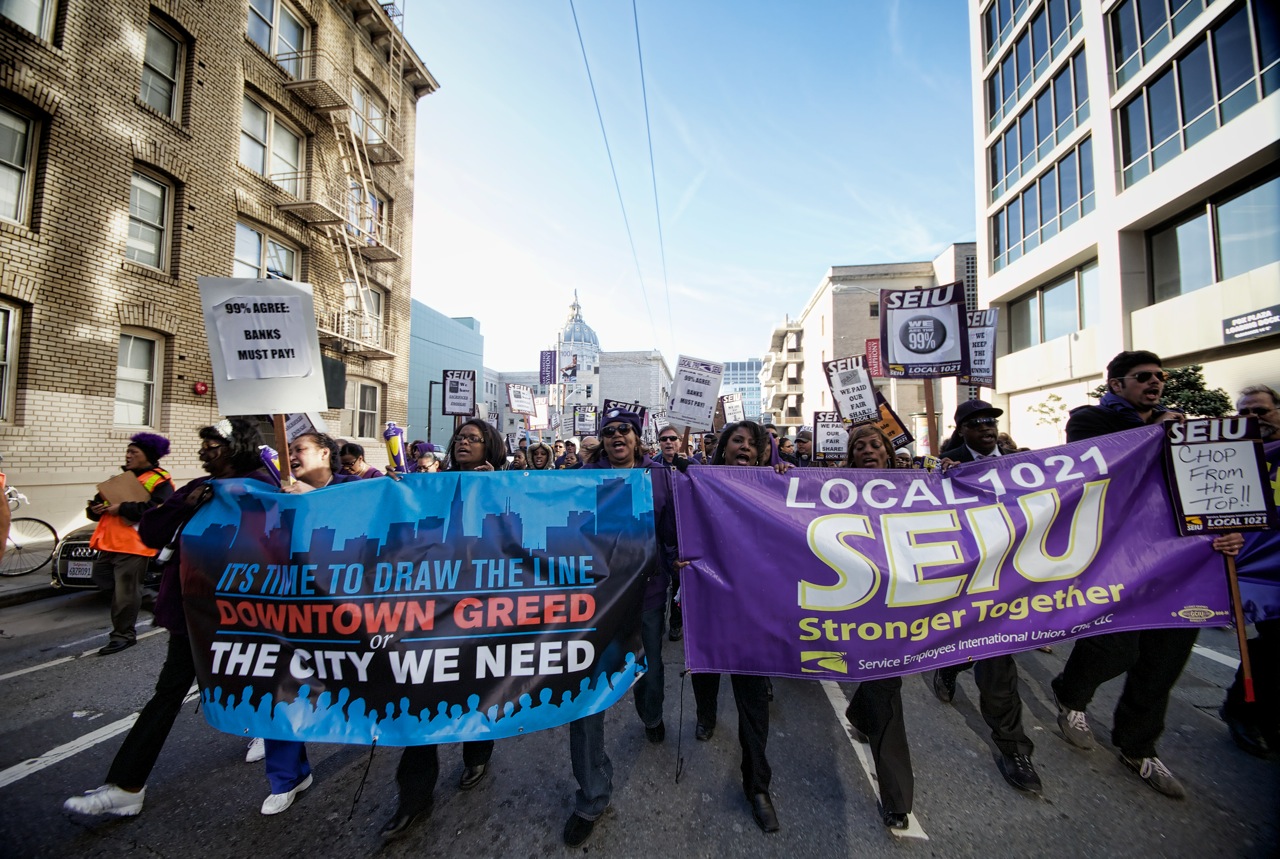
On April 5, city workers got creative with a street theater protest that involved six-story projections on the iconic Hobart Building. Protesters dressed as rich CEOs and handed out thank-you cards to commuters at the Montgomery transit station. SEIU’s “The City We Need, Not Downtown Greed” campaign included a website (www.neednotgreed.org), slick video, and direct mailers portraying CEOs as panhandlers on the street asking city residents, “Can you spare a tax break?”

The most dramatic civil disobedience came on April 18, when more than 1,000 workers rallied outside City Hall — along with several progressive supervisors — and then marched to Van Ness and Market. Protesters blocked the street, resulting in 23 arrests. At that point, increases in health care cuts and pay cuts to city workers were still on the table.

That was followed the next week by hundreds of workers staging noisy demonstrations in City Hall, and then again on May Day when SEIU workers were well represented in actions that took over parts of the Financial District.

In the end, the demands of union representatives were met in the contract agreement. Health care cost increases and pay cuts were eliminated, and a 3 percent pay raise will kick in during the two-year contract’s second year, a deal overwhelmingly approved by union members. Labor leaders hope to use that momentum to force a deal with the Mayor’s Office on the tax reform measure — which some sources say is possible. Otherwise, they say the campaign will continue.

“We may end up on the streets gathering signatures soon,” Daly said. “We need to figure it out in the next few weeks.”


THOSE DEVILISH DETAILS

The Controller’s Office released a report on May 10 that made the case for switching to a gross receipts tax and summed up the business community’s meetings, and the report was the subject of a joint statement put out by Lee and Chiu. “After months of thorough analysis, economic modeling and inclusive outreach to our City’s diverse business community, the City Controller and City Economist have produced a report that evaluates a gross receipts tax, a promising alternative to our current payroll tax, which punishes companies for growing and creating new jobs in our City'” the statement said. “Unlike our current payroll tax, a gross receipts tax would deliver stable and growing revenue to fund vital city services, while promoting job growth and continued economic recovery for San Francisco.”

Daly and Avalos say progressives agree that a gross receipts tax would probably be better than the payroll tax, and they say the controller’s report lays out a good analysis and framework for the discussions to come. But despite its detailed look at who the winners and losers in the tax reform might be, Daly said, “We haven’t seen an actual proposal yet.”

Lazarus made a similar statement: “Nobody likes the payroll tax, but the devil is in the details.”

But it’s clear some businesses those with high gross receipts but low payrolls — would pay more taxes. For example, the finance, insurance, and real estate sector now pays about 16 percent of the $410 million the city collects in payroll taxes. That would go up to about 21 percent under a gross receipts tax.

“Several industries that could face higher taxes under the proposal, such as commercial real estate, large retailers, and large construction firms, felt the increase was too sharp,” the report said under the heading of “Policy Issues Arising From Meetings with Businesses.”

The report highlighted how the change would broaden the tax base. Only about 7,500 businesses now pay the payroll tax (others are either too small or are exempt from local taxation, such as banks), whereas 33,500 companies would pay the gross receipts tax, which the report identified as another issue to be resolved.

“While some businesses appreciated the base-broadening aspect of the gross receipts proposal, others felt that too many small businesses were being brought into the Gross Receipts tax,” the report said. Hauge also told us that he fears a tax increase on commercial real estate firms could be passed on to small businesses in the form of higher rents. “I don’t want to see the business community split,” Hauge said, although it’s beginning to look like that might be unavoidable. The big question now is whether progressives and labor can find any allies in this messy situation, and whether they’ll be able to agree on a compromise measure that all sides say is preferable to competing measures.

Our Weekly Picks: May 16-22, 2012

0

WEDNESDAY 16

>> “Andy Cohen: Bravo’s Man of Moxie”

Without Andy Cohen, there’d be no Bethenny and no NeNe. The world would know nothing of Vicki’s “love tank” or pinot grigio-chugging Ramona. In addition to unleashing the Real Housewives series, Bravo’s Executive Vice President of Development and Talent (or “talent,” as the case may be) also exec-produces Top Chef and hosts his own talk show, the gleefully goofy Watch What Happens Live. Now, Cohen’s an author, with Most Talkative: Stories from the Front Lines of Pop Culture, a breezy autobiography detailing his life in showbiz, from early run-ins with the Bakkers and the Buttafuocos to the many, many Housewives. The book’s stuffed with dish — expect even more when Cohen takes the Castro stage. (Cheryl Eddy)

7:30pm, $25–$80

Castro Theatre

429 Castro, SF

www.commonwealthclub.org


>> The Dandy Warhols

On “Enjoy Yourself” off 2012’s This Machine, a posturing singer looks back enviously: “I used to be cool/used to be a fool/Too cool for rules man/too cool for school.” Call it a rockers lament. But once the rest of the band drowns the whiner out for a shout along chorus — “So look at yourself/Enjoy your health/Let everybody else be everybody else/and really enjoy yourself now” — it becomes something else: the pull-your-head-out-your-ass and feel good song of the summer. The eighth studio album in eighteen years for Portland, Oreg.’s the Dandy Warhols, This Machine finds the band learning from the past and aging gracefully. (Ryan Prendiville)

8pm, $25 Fillmore 1850 Geary, SF (415) 346-6000 www.thefillmore.com


THURSDAY 17

>> “Low Down”

Alex Ketley and Ben Levy: two choreographers, both ambitious, fiercely talented, and willing to go where ever ideas take them. So where are they going? Ketley, in addition to darting all over the country doing commissions, has a flair for the far-out. A few years ago he choreographed the California landscape; he has also created a work in which he danced the syntax of a Carol Snow essay. Levy, whose company celebrates its first decade this weekend, has created edgy dances from the disarmingly comedic to the lurking nightmares. Bringing together these so very different guys is a desire to challenge their own craft by subjecting it to a collaborative process neither of them has tried previously. That just may be enough for a piece they call “Low Down.” (Rita Felciano)

Thu/17-Sat/19, 8pm; Sun/20, 2pm, $18–$50

Z Space

450 Florida, SF

(800) 838-3006

www.zspace.org


>> “Broke & Classy: Broke-Ass Stuart’s 10 Year Anniversary of Living in SF”

I doubt Stuart Schuffman is so broke-ass anymore. The man has written frugal culture guides for San Francisco and New York City, he’s got a popular blog chock full of fun things to do for penny-pinchers, and he has trotted around the country profiling artists and musicians on his own IFC show. Surely that qualifies as a media empire, right? But I can’t begrudge B-AS. He opened my eyes to the tasty treats of the Tamale Lady and created that pick-me-up mantra: “You are young, broke and beautiful.” Local musical acts usher in 10 years of Stuart’s low-money living in San Francisco. (Kevin Lee)

With Judgement Day, Birds & Batteries, Rach W and DJ Carnita 8pm, $3, Must RSVP Public Works 161 Erie (415) 932-0955 www.publicsf.com


>> Ane Brun

Norway’s Ane Brun is perhaps best known in the U.S. to Peter Gabriel fans, having opened for his recent New Blood Tour. But an award-winning songwriter in Europe with four studio and two live albums so far, Brun deserves attention here for all her work, including most recent release, It All Starts With One. Not only a showcase for her majestically touching voice set against gently pulsing rhythms and sparse orchestration, the album also features guests Jose Gonzalez on the entrancing “Worship” and First Aid Kit adding backup vocals to the rolling percussion “Do You Remember.” (Prendiville)

With Gemma Ray, Elin Ruth Sigvardssun

8:30pm, $14-16

Great American Music Hall

859 O’Farrell, SF

(415) 885-0750

www.slimspresents.com


FRIDAY 18

>> Sleepy Sun

Sleepy Sun emerged in 2009 after creating an LP laden with distorted guitar lines, fuzzy vocals, and compositional head nods to Led Zeppelin best taken with psychedelics and ’70s nostalgia. While Spine Hits (2012) features some serious reverb, the album the group released three years later calls to mind ’90s alt rock and the open road; with tracks that feel like epic love ballads after odes to outdoorsy adventure. Lead vocalist Bret Constantino has called his band’s changing sound its “natural evolution.” And judging by the genuine, passionate voice and catchy, seamlessly constructed melodies Spine Hits purveys, I don’t doubt him. (Mia Sullivan)

With Assemble Head in Sunburst Sound, Some Ember, DJ Britt Govea

9pm, $15

Independent

628 Divisadero, SF

(415) 771-1421

www.theindependentsf.com


>> UK with Terry Bozzio

Bay Area-born and raised drummer extraordinaire Terry Bozzio has performed with Frank Zappa, Missing Persons, Jeff Beck, Fantomas, and a host of other musicians over the years. Recognized as one of the best drummers in modern times, he has recorded a variety of instructional videos, been honored by Guitar Center’s RockWalk in Hollywood, and has created some of the most insane custom drum sets ever seen on stage. Be sure to see Bozzio’s amazing talents on display live tonight as he performs with the reunited prog rock supergroup UK, which also features John Wetton (King Crimson, Asia) and Eddie Jobson (Frank Zappa, Roxy Music). (Sean McCourt)

8pm, $65–$99

Regency Ballroom

1290 Sutter, SF

(415) 673-5716

www.theregencyballroom.com


>> The Sahara Tent Party ft. Switch and Sinden

Producer-DJ Switch is best known for his work alongside Diplo in Major Lazer and for producing the pulsating dynamic music behind Sri Lankan singer M.I.A. As Major Lazer, the British duo has brought a Jamaican dance flavor to Beyonce, Santigold, and Christina Aguilera and are apparently collaborating with No Doubt on a release slated for September. Producing in studios as far and wide as Jamaica and India, Switch has blended dancehall infused beats with slick rhymes from a wide net of vocalists. Co-headliner and fellow Brit Sinden brings a soulful, multi-genre vibe rooted in house music. (Lee)

With 5kinandBone5, Vin Sol, Them Jeans, and more 10pm, $10–$20 1015 Folsom (415) 431-1200 www.1015.com


>> Plants and Animals

If Plants and Animals were a person, writes the band, their albums would metaphorically mirror said person’s journey through life. Parc Avenue (2008) represents the Montreal-based indie rock trio as a child, La La Land (2010) as an angsty teenager, and The End of That, released this February, exudes “unmasked” early 20s confidence. Warren Spicer, Matthew Woodley, and Nicholas Basque began playing together and experimenting with instrumental music in 2002. Now, 10 years later, they’ve evolved into post-classic rockers and bearers of soft, ambient harmonization as well as fiery, nostalgic jams like recent hit single “Lightshow.” (Sullivan)

With Cannons and Clouds, Owl Paws

10pm, $12

Bottom of the Hill

1233 17 St., SF

(415) 621-4455

www.bottomofthehill.com


SATURDAY 19

>> Saturday Night Soul Party

Always wanted to check out one of San Francisco’s longest running soul events but stayed away because of potential throngs in the Mission on the weekend? Well here’s your chance for an easy introduction to the Saturday Night Soul Party. Crowds are likely to be sparse in the neighborhood thanks to the lemmings planning to get up early the next morning to make their annual pilgrimage to the breakers, so dance the night away carefree to Disc Jockeys Lucky, Paul Paul, and Phengren Oswald, spinning ’60s soul all night, exclusively on good old vinyl ’45s. Show up wearing a suit and tie or skirt or dress and get half off the cover charge. (McCourt)

10pm, $5–$10

Elbo Room

647 Valencia, SF

(415) 552-7788

www.elbo.com


>> SUNDAY 20

Pansy Division

One of San Francisco’s favorite early ’90s queercore pop punk acts is back, and on tonight of all nights. The steaming pile of hot mess that will rise up post-B2B is enough to make any local puke, but keep it in (or clean it off) and go out anyways. It’ll make you feel much better and brighter catching melodic pop punk, than hiding from the masses on the couch with a cheap wine hangover and a blanket pulled up tight. And perhaps it’ll refresh your memories of the crustier old days in the city before so many bubbles burst and barely clothed, underage dubsteppers swarmed the post-race streets seeking Four Loko and warm blood. Don’t be a Bad Boyfriend, show the gent a good time. (Emily Savage)

With Swann Danger

8:30pm, $12

Cafe Du Nord

2170 Market, SF

(415) 861-5016

www.cafedunord.com


MONDAY 21

>> “Neuroscience of Zen”

What exactly happens to your mind when you undergo meditation? Turns out that meditating Buddhist monks tend to elongate the time they exhale, which calms the mind. Stanford University researcher Phillippe Goldin has studied the effects of mindfulness meditation and stress reduction on brain function. San Francisco Zen Center Abbot Ryushin Paul Haller has taught Buddhist practices for two decades in San Francisco and has led programs to assist with depression and recovery. Together, Goldin and Haller blend academic studies and their own worldly experiences to discuss the intersection of the mind and the spirit. (Lee)

8pm, $22–$26

Herbst Theatre

401 Van Ness, SF

(415) 392-4400

www.cityboxoffice.com


**The Guardian listings deadline is two weeks prior to our Wednesday publication date. To submit an item for consideration, please include the title of the event, a brief description of the event, date and time, venue name, street address (listing cross streets only isn’t sufficient), city, telephone number readers can call for more information, telephone number for media, and admission costs. Send information to Listings, the Guardian Building, 135 Mississippi St., SF, CA 94107; fax to (415) 487-2506; or e-mail (paste press release into e-mail body — no text attachments, please) to listings@sfbg.com. Digital photos may be submitted in jpeg format; the image must be at least 240 dpi and four inches by six inches in size. We regret we cannot accept listings over the phone.

In bed with the cuddle expert

0

“I’ve been enveloped and swimming in love the last few years”

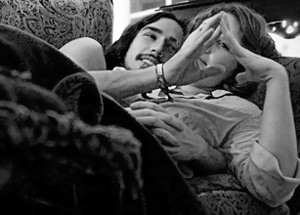
It’s early Saturday morning, and I’m quickly putting fresh sheets on my bed. The door bell rings before I can finish, and I run down the stairs to a incredibly punctual, smiling, and shirtless Travis Sigley, the cuddle therapy practitioner.

Sigley is a San Francisco-based, specializing in private appointments, group sessions, and workshops on non-sexual intimacy. I invited Sigley over to have a conversation about his line of work — and to find out why this beautiful man is always shirtless. He greets me at my door with a big hug. His handsome face and sun-kissed body make it easy to imagine spending an hour in my bed wrapped in his loving arms.

San Francisco Bay Guardian: Before we get started about life as a cuddle therapy practitioner, can you tell us why you don’t wear a shirt? Don’t you get cold?

Travis Sigley: I haven’t worn a shirt in five years. There are some social situations where I have to wear a shirt, like going on a plane. I would say, I live about 98 percent of my time without a shirt.

It started on a beautiful sunny day in Santa Cruz. I was headed to the beach to hang out with some friends, and I really didn’t see why I was putting on a shirt to travel there. So I didn’t put one on. The next day I asked myself, “Why are you putting on a shirt on yet another beautiful sunny day?” And since then, I really can’t seem to have an answer to putting on a shirt anymore. I’ve been enveloped and swimming in love the last few years.

In regards to getting cold, I’ve changed my relationship to weather. My body really embraces the change of season. I find myself eating more in the winter because my body knows it’s going to have to produce more heat. All in all, I have a pleasant experience feeling the change in weather. 

Shots from Sigley’s snuggle scene

SFBG: How did you begin your journey as a cuddle therapy practitioner?

TS: My first professional cuddle client was in the back room of a strip club when I first moved to San Francisco. As a stripper, I found myself spending a lot of my time cuddling with my clients in that back room. It really dawned on me that people are really seeking love and touch more than a sexual experience. And I realized there was no place to really seek this form of non-sexual intimacy. So this inspired me to start an educational and practical forum. A space for people to have intimate experiences and touch. 

SFBG: Where does sex intersect with cuddle therapy — if it does at all?

TS: I started cuddle therapy because I saw a discord between how people understood non-sexual affection and sex. This is a service to help people understand that difference and articulate what their needs are. I facilitate a space for my clients to explore and differentiate between their sexual desires and intimate non-sexual desires. I believe understanding the difference really allows you to live your life more fully..

SFBG: Do you cuddle both men and women?

TS: Yes, I absolutely cuddle both men and women. Every single human deserves love and affection. As long as you are willing to accept my boundaries of hygiene and sexuality I will happily cuddle you.

SFBG: Can you articulate further what your boundaries are around hygiene and sexuality?

TS: I’m referring to general hygiene maintenance. I cuddle lots of people. And in regards to sexuality, I think it’s really important that my clients understand the space we are cultivating is a non-sexually expressed space. I also want my clients to be open to moving whatever sexual energy may arise through conversation, and other ways of expression. 

>>MUST-READ: KELLY LOVEMONSTER’S INTERVIEW WITH TRANSMAN PORN PIONEER JAMES DARLING

SFBG: How do you respond to clients who get aroused during one of your cuddle sessions?

TS: I understand that the body communicates things. It’s about acknowledging the sexual energy in the space, and realizing that you are in control of your sexual energy. Communication is always the best method to move sexual energy during my sessions. It is a great way to help my clients articulate how they can channel their sexual energy in a non-sexual context. 

Some of my clients love doing a meditation. And we meditate on moving the sexual energy up the body, and enlivening their entire body. So the sexual energy is not concentrated in one particular place. I find doing breath work with people also works. Feeling the sexual energy fill their bodies and moving the sexual energy through breath. Singing, humming, and toning are all other methods I’ve used to help move sexual energy.

I’ve even done dream work with one client. She requested we both doze off and move our work to the dream world and the world of the subconscious. That was actually one of the most powerful session of cuddle therapy I’ve ever done. It requires a lot of trust to leave your body and do work from the subconscious. It’s really powerful knowing that you are going on a healing path through the subconscious to change and facilitate positive growth in a person.

SFBG: How do you identify your gender today?

TS: I believe gender is really fluid, and I have a felt sense of both feminine and masculine energies. I am particularly feeling more in line with embodying a masculine energy. And let’s not forget gender is constructed. Being a male to me today means being respectful, mindful, conscious, attentive, and  explorative within the spectrum of masculinity. 

SFBG: What does being sex-positive mean for you?

TS: Well for me being sex-positive has more to do with one’s perspective on sexuality. One who is sex-positive has the expression of health and is open to the spectrum of sex and sexuality. A sex-positive being is mindful to their physical body interactions with others, and they are sensitive to the traumatic experiences of others. Being sex-positive means being educated about sex, being a good listener, and being comfortable with all facets of what sex can look like.

Catch Travis hosting group cuddle workshops at the OmShanTea tea temple, which will be setting up poles at these feel-good festivals across the region

Symbiosis 

May 17-21, $280-$320 three day camping pass; $40-$60 car pass; $35-$60 early entry

Pyramid Lake, Nevada

www.pyramideclipse.com

Lightning in a Bottle

May 24-28, one-day pass $85-$100; four-day pass $215-$240

Oak Canyon Ranch 

Silverado, CA

www.lightninginabottle.org

Movement Play

June 22-25, $260

Willits, CA

www.movementplay.com

Wanderlust 

July 26-29, $99 one-day; $155 two-day; $395 three-day; $475 four-day yoga-music passes; $20-$34.50 music-only day passes 

Squaw Valley, CA

squaw.wanderlustfestival.com

The really bad news about the state budget

24

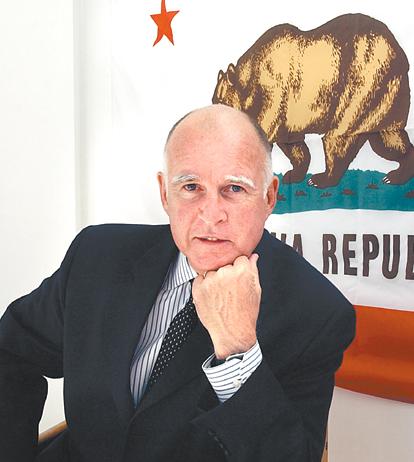
There’s no way to put a good spin on the new budget figures released by the Guv. No matter what happens in November, people who need help are going to get screwed in this state. Public schools will lose money. Health-care for the poor will be near collapse. Cities and counties will struggle to preserve the local safety nets. It’s just a disaster, and there’s no other way to look at it.

Of course, if we don’t approve Jerry’s tax plan in November, it will all be much, much worse. And he seems to be doing the right thing to promote the idea, making it clear just how deep the cuts will be and where they will hit.

But the tax plan is nowhere near enough, not even enough to keep the state at its current austerity level, much less to repair some of the damage and replace the funding that’s already been eliminated. And while the notion of cutting state workers back to a four-day week, or of mandatory furloughs, may sound better than cutting specific services, think about what it means:

First, all that money that the state workers give up will instantly disappear from the economy. Most of these folks aren’t wealthy, and they spend what they earn. That’s a hit to already-depressed demand. Then there’s the impact on the rest of us. Try getting an appointment at the DMV. (You think it’s bad now? Take away 20 percent of the employees.) Try getting a court date if you’ve been injured. (Oh, but if you’re a landlord, don’t worry — evictions won’t be slowed down at all.) This is going to be awful.

Here’s what I would say to Jerry: Push not only for your tax measure but to elect enough Democrats to pass taxes without going to the ballot. There’s no reason this current measure needs a vote of the public; the Legislature has every legal ability to pass all of those taxes. And if it weren’t for a handful of Republicans who drink the no-tax Kool Aide, it would be happening.

Closing a few corporate loopholes and instituting an oil-severance tax would solve much of the remaining deficit. Reinstating Schwarzenneger’s cuts to the vehicle license fee would solve the rest. And all of that can be done without a ballot fight.

The moderate Democrats in Sacto annoy me as much as the Republicans sometimes, but if Brown and Legistlative leaders make it clear that they’re helping candidates in swing districts, but that they expect them not to be obstructionist on taxes, there could be much better news in the years ahead.


Dick Meister: Union rights are civil rights

15

By Dick Meister

Dick Meister, former labor editor of the SF Chronicle and KQED-TV Newsroom, has covered labor and politics for more than a half-century. Contact him through his website, www.dickmeister.com, which includes more than 350 of his columns.

The right of U.S. workers to organize and bargain collectively with their employers unhindered by employer or government interference has been a legal right since the 1930s. Yet there are workers who are unaware of that, and employers who aim to keep them unaware, meanwhile doing their utmost to keep them from exercising what is a basic civil right.

Many employers often claim working people are in any case not much interested in unionization, noting that less than 15 percent of workers currently belong to unions.

But as anyone who has looked beneath the employer claims has discovered, it’s the illegal opposition of employers and the failure of government regulatory agencies to curtail the opposition that’s the basic cause of the low rate of unionization.

If most workers do indeed oppose unionization, then what of the recent polls decisively showing otherwise? And why do so many employers go to the considerable trouble and expense of waging major campaigns against unionization ? Why do they take such illegal actions as firing or otherwise penalizing union supporters?

Could it be that union campaigners might be able to persuade workers to vote for unionization, despite what their employers might have to say? Or despite employer threats to punish them for voting union?

Some employers have now taken the outrageous step of trying to keep employees from even knowing of their legal right to unionization.

Under a National Labor Relations Board ruling last August, employers were to be required as of this April to post notices at their workplaces telling employees of their union rights.

The ruling stemmed from the labor board’s finding that young workers, recent immigrants and workers in non-union workplaces were generally unaware of the labor laws’ guarantees and protections – including, of course, the basic right of workers to unionize.

As the New York Times observed, “the backlash was furious.” The notoriously anti-union National Association of Manufacturers and U.S. Chamber of Commerce filed suits in two federal courts, claiming the law does not expressly permit the NLRB to require employers to post such notices. An appeals court has postponed the effective date of the rule pending further appeals.

The Times noted that the case involves more than “the legality of having to hang a poster in the coffee room. It’s about industry’s attempt to delay rules whenever it cannot derail them outright. It is about preventing workers from gaining knowledge and support to help them press their concerns.”

So unless and until a court rules otherwise, workers will have the right to protections from the labor laws, but not the right to be informed of that through workplace notices and otherwise. Bizarre, certainly, is the word for that.

What workers need above all, even above the right to know their legal rights, is a firm strengthening of those rights. Why not add the right of unionization specifically to the Civil Rights Act? It is, after all, on a par with other basic civil rights such as the right to an education free of discrimination.

The Civil Rights Act, which makes it illegal to discriminate against workers on the basis of their race, ethnicity, gender, religion or national origin, should be expanded to include a specific prohibition of discrimination against pro-union workers.

No less a civil rights champion than Martin Luther King Jr. would agree to that. He knew that the right to unionization is one of the most important civil rights. Virtually his last act was in support of that. For he was slain by an assassin’s bullet in 1968 as he was preparing to lead yet another of the many demonstrations he had led in behalf of striking black sanitation workers in Memphis who were demanding union recognition.

That was but one of many examples of King’s support for workers seeking union recognition as their civil right – a right guaranteed not only by the 77-year-old National Labor Relations Act but also by the Constitution’s First Amendment guarantee of freedom of association.

King declared that the needs of all Americans “are identical with labor’s needs: Decent wages, fair working conditions, livable housing, old-age security, health and welfare measures, conditions in which families can grow, have education for their children, and respect in the community.”

There could be no civil right greater than the right of working people to try to meet such paramount needs, as well as to be clearly informed of their right to

do so through unionization.

Dick Meister, former labor editor of the SF Chronicle and KQED-TV Newsroom, has covered labor and politics for more than a half-century. Contact him through his website, www.dickmeister.com, which includes more than 350 of his columns.

A fair deal for the city’s nurses

12

For San Francisco’s public-sector registered nurses, this year’s Nurse’s Week was a paradox. On May 10, nurses from throughout the city gathered in the cafeteria of San Francisco General Hospital to celebrate Florence Nightingale’s birthday by bestowing gratitude and appreciation on nurses selected by their colleagues. Martha Hawthorne, long-time Castro-Mission Health Center public health nurse, was one of those honored. 

Upon acceptance of the award, Martha said that city nurses would be most appropriately honored by getting a fair contract. The next day a smaller gathering of nurses, including Martha, was back across the bargaining table from city negotiators who have proposed  significant financial and working condition concessions. Decreased compensation threatens the future of nursing in the public sector by impairing recruitment and retention of highly-skilled registered nurses. Working conditions concessions are even more broadly harmful and unacceptable; it is both risky for the nurses and increases the likelihood of adverse outcomes for those we care for.

San Francisco DPH nurses care for the city, quite literally, and with great pride. We are also proud of San Francisco’s historically progressive record on public health. Immigrant pregnant mothers are not interrogated by immigration authorities before giving birth. Public health nurses don’t require insurance company pre-authorized visits before teaching self-care to elderly residents of downtown SROs. The quality of care given by Jail Health nurses is no less than that given to someone living in a nice house by the city’s home health nurses of Health-at-Home. Laguna Honda, one of the last municipal long-term care centers, has a beautiful new campus and San Francisco General Hospital is being noisily rebuilt thanks to voter-approved bond measures. But nice buildings and well-conceived health programs don’t care for the ill and injured, nurses do.

Nurses are professionally pragmatic; we don’t offer false hope. Patient advocacy requires great patience. This is especially true in the public sector, where the population we serve is likely to suffer from intractable extreme poverty and social marginalization. The poor don’t require less health care than wealthy individuals, in fact they require more. It’s not always pretty, but we know that if we are given the human resources to do so we will continue to deliver excellent patient care.

The complexity and intensity of patient care seems to be rising far faster than inflation. Aside from the issues of fairness and quality care, nurses simply don’t have enough hours in the day to do the repair our over-burdened fractured health system requires. Activist nurses are needed to save lives by preserving and expanding health care access. While universal single-payer health-care is elusive nationally, California nurses are optimistic we can do better here. Women’s health is under attack nationally by fanatics who would deny cancer screening and care for rape survivors.

Nurse’s Week is over and we have a lot to do, let’s start with a fair deal for DPH nurses. It’s not to much to ask for and we will all benefit.

Sasha Cuttler, RN, is a San Francisco public health nurse.

SEIU reps pleased with tentative contract

46

After heated negotiations, the city has come to a tentative two-year contract agreement with SEIU Local 1021. 

The union, which represents 12,000 city workers, has staged large protests in recent weeks while negotiators worked on the contract. The union was opposed to pay cuts and increases in health care costs that the city originally proposed.

With the new agreement, city workers will get a three percent pay increase, to kick in next year.

The arbitrator of the negotiations also ruled in favor of the union on the issue of temporary workers, who mostly don’t currently enjoy benefits or job security. Now, temporary city workers who have worked 1500 hours over the past three years will be prioritized for permanent jobs.

The SEIU did compromise on some parts of the deal. The new contract won’t include travel pay previously provided to people who commute outside the city for work. There will also be new restrictions placed on union organizing, as union stewards will need to be “escorted” into what the city deems “confidential areas,” restricting union access to work environments.

Larry Bradshaw, 1021 Vice President, has been at the table since negotiations began in February. “I’m very happy with the results,” said Bradshaw. “Its the first agreement since 2009 where the city is not going to balance the budget on the back of working families.”

In the years since 2009, city workers have had deferred pay wages, wage concessions, and increased health care costs. Bradshaw says the new contract will put base wages back at 2009 levels.

“I think in the first years of the recession our members were willing to sacrifice,” said Bradshaw. “But then year after year, they don’t want to keep doing that when the city is not going after corporations. They’re just sitting on wealth and the city is not taxing that wealth.”

http://vimeo.com/39869973

That sentiment has led to the SEIU’s call for increased taxes on some corporations in the city. That’s the issue they address in the above video, which may become a TV commercial for what may become a ballot measure in November that would restructure the business tax code.

SEIU Local 1021 members are currently in the process of voting to ratify the contract. The vote will be done by Monday evening, just in time for the Board of Supervisors to ratify the agreement at their May 15 meeting.

The capital of cannabis?

4

HERBWISE A few days after House Minority Leader Nancy Pelosi finally voiced her displeasure that federal agencies were making moves to curtail medical marijuana access, I was touring the hallway outside her offices in Washington DC.

“Access to medicinal marijuana for individuals who are ill or enduring difficult and painful therapies is both a medical and a states’ rights issue,” said Pelosi in a statement released on May 2.

And though Pelosi was surely spurred to speak on behalf of her federally-beleaguered California, she gets good reminders of cannabis’ import in her adopted home in Washington. Here, the fight for medical marijuana is finally coming to a head: six cultivation centers have been given final approval and four preliminary approval to open.

“It seems likely that patients will have access to medicinal marijuana later this fall,” said DC councilperson David Catania. Catania is a primary figure responsible for penning DC’s cannabis regulations. He is also — in the words of one local cannabis activist who shall remain nameless — “a gay, Republican-leaning Independent corporate lawyer-type. He is both bright and brash, bordering on arrogant. He is so adamantly anti-California medical cannabis laws that most of the tight restrictions here are driven by his stark dislike for what California’s laws have become.”

Well! Since I was darting about our nation’s capital anyway, an interview seemed to be in order so that councilperson Catania could let us know just how DC regulations worked — and what is was like working on marijuana issues in an office situated less than a mile from the Capitol Building and a block or two from the White House. I spoke to him via email last week.

SFBG You played an integral role in setting up cannabis rules and regulations in DC. Were you drawing on things that work or didn’t work in any specific areas of the United States?

David Catania We set out to implement a well-regulated system that was still accessible for those who need the medication. As we are the nation’s capital, we knew the spotlight would be on the program. We set out to create a system that worked for patients in need and I believe we are well on our way to accomplishing that goal.

SFBG What would you like to see happen with dispensaries in DC?

DC The four dispensaries that have been given preliminary approval are in various neighborhoods throughout the District, each with its own needs and concerns. The District Department of Health is doing extensive community outreach and work to involve residents nearby both dispensaries and cultivation centers, to educate them on the program and ensure open lines of dialogue between cultivation center and dispensary owners and their neighbors. Ensuring that positive relationship between the various parties is going to be a vital component of the program’s success. [note: in DC, dispensaries have been regulated as separate from cultivation centers, which are allowed up to 95 plants per location, an amount which was designated as to avoid harsher punishment in the case of federal action.]

SFBG What is it like setting up regulations regarding a federally illegal substance here in the shadow of the White House?

DC It’s interesting. We were very intentional in how we established the program, as we realized we needed to be extra-sensitive to the fact that we are the home of the federal government.

Who is the brick thrower?

14

Yael@sfbg.com

The brick-throwing man whose projectiles hit two protesters at the Occupy San Francisco takeover of a Turk Street building on May Day has helped spark intense internal debates in the movement about the use of violence.

But nobody has heard the alleged hurler’s side of the story.

Jesse Nesbitt, 34, was arrested on the scene, and is accused of felony assault, assault on a police officer, and vandalism. I interviewed Nesbitt in San Francisco County Jail May 3. He spoke of his associations with drug addicts and revolutionaries; his previous stints in jails, prisons and psych wards; and his countless arrests on the streets of San Francisco for illegal lodging.

What emerged was a picture of a homeless Army veteran who suffers from untreated mental illness and substance-abuse issues — someone who found a degree of help and solace in the Occupy movement but has never fully escaped his problems. His story is, unfortunately, not unusual — there are many thousands of vets who the system has utterly failed.

Nesbitt told me he was diagnosed as schizophrenic at 16. “From bad things happening, my mental illness has snowballed since then,” he explained.

Nesbitt said he grew up in the projects outside Pittsburgh, Pennsylvania during the 1980s. “It wasn’t too nice,” he explained. When he was 18, he joined the Army.

“I wanted to join the military all my life. That’s what I wanted to do,” he said. The schizophrenia could have stopped him — but “I lied my way in.”

His tour in Korea was during peace time, but he says he still saw combat. “We were supposed to be at peace with North Korea, in a ceasefire. But whenever they got a chance, they shot at us. And whenever we got a chance, we shot at them.

“It hardened my heart. And it gave me a sense of duty to uphold our Constitution.”

Nesbitt returned from South Korea in 1996. Afterward, “I hitchhiked from coast to coast twice. I got married three times. I have a kid in Pennsylvania. I went to jail in Pennsylvania for — being young and stupid,” he said.

Later in the interview, he expanded on his prison time in Pennsylvania. “I did four years and eight months for aggravated assault, theft, and possession of an instrument of crime,” said Nesbitt. “I also did time in Georgia for assault. And I did time in Alameda County for vandalism and weapons.”

In fact, as he tells it, Nesbitt’s time in Berkeley was spent mainly in jail, before he got involved with Occupy Berkeley.

“I don’t know how much time I did in total in Alameda County. I’d be in jail two, three weeks, get out five, six days, then get arrested again. That was from last April to July,” he says.

On the days when he was free, “I was doing what I normally do,” said Nesbitt. “I’d squat somewhere. In the daytime I’d panhandle, go to the library. I was doing a lot of drinking. Then I started getting arrested a lot when I started doing meth.”

That was his life before joining Occupy. “A friend of mine who was shooting heroin at the time said, let’s go join the revolution. It will help clean you up. It helped pull me out of a drug addiction and keep me healthy,” said Nesbitt.

But that wasn’t the only reason he joined.

“I’ve always had revolutionary beliefs,” he says. He spoke of his friends in Pittsburgh. They wouldn’t let him go the G20 protests in 2009, fearing he would be incited to violence.

“I’ve been involved with anarchists for a long time. They pointed out documentaries I should watch, things I should read,” said Nesbitt.

But the example he gave me isn’t your classic Emma Goldman. Nesbitt remembered “The Esoteric Agenda” — a conspiracy-theory film that connects stories about corporate greed with apocalyptic prophecies.

“The education was getting me ready for something,” he said.

At Occupy Berkeley, even while Nesbitt recovered from his meth addiction, he continued to live in a cycle of violence.

“It was in Berkeley out at the Occupy camp. I got into a fight with somebody, I was in a black out. It took six cops to hogtie 135-pound me, so I was talking shit. While I was hogtied, they dropped me on my head. I went from talking shit to unconscious. I slept for the next two weeks,” Nesbitt told me.

His involvement with Occupy San Francisco increased after the Occupy Berkeley encampment was taken down.

Occupy San Francisco, however, didn’t quite progress the way he had hoped. “When they started raiding us in December, I was hoping the numbers would go up. Instead they dwindled,” said Nesbitt.

He was part of a small group of people continuing the “occupation” tactic outside the Federal Reserve Building at 101 Market St. Back in the fall, that sidewalk was a spot where dozens of people held protest signs and meetings all day and many slept throughout the night. After a series of police raids, and as most of those organizing with Occupy moved on to different tactics and projects, some decided to remain there.

Even when the Justin Herman Plaza camp was in full functional form, it was derided as “nothing but a homeless camp.” There were homeless people there, but many found food and other resources, as well as security from both police and other people they feared on the street, leading many to devote themselves to the goals of the protest movement.

The 101 Market camp that emerged in February was mostly a homeless camp — and, although the people there remained fiercely political in their convictions, they certainly didn’t enjoy the safety that the Justin Herman camp once provided.

Nesbitt was one of those people. “The SFPD not letting us sleep, telling us sitting on cardboard was lodging, sitting under a blanket to stay warm was lodging, you can only take so much of it,” he said. “They slammed my head against the back of a paddy wagon last time they arrested me for sitting underneath a blanket.”

His story is not unusual.

“Veterans continue to lead the nation in homelessness,” explained Colleen Corliss, spokesperson for the veterans-aid nonprofit Swords to Plowshares. “There are a lot of factors at play. Those who go to war have a higher instance of mental illness and substance abuse, which ultimately can lead to a vicious cycle of homelessness,” she said. “Even if you serve during peace time, you can still have really traumatic experiences.”

Nesbitt’s experience with the city’s mental health facilities wasn’t enough to break this cycle. “I did get 5150-ed,” he said, describing the term for involuntary psychiatric commitment. “I was in the hospital less than 24 hours, they kicked me out.”

Why? “I threatened to kill a doctor,” said Nesbitt.

Nesbitt’s 24-hour stay was in the overburdened, short-staffed psych ward at San Francisco General Hospital. When the psych wards began closing beds in 2007, it was comprised of four units, each with 30 beds; it is now down to one unit, according to Ed Kinchley, a social worker in the medical emergency department at General.

There’s also a floor in the behavioral health center for psychiatric patients with 59 beds, but “they told the staff last week that they’re planning to close 29 of those beds.”

“Since [the beds] are full almost every day, the bar or the standard for who stays there or who goes in-patient is a lot higher than it used to be,” said Kinchley.

Whatever the reason, Nesbitt was not getting treatment the day of the alleged brick-throwing — and he was having problems. “I was getting an episode the day before it all happened,” he said. “I was afraid to go by myself to sleep because I was hearing voices. Normally those voices tell me to hurt people. I try to keep around people I love and trust that wouldn’t let me do anything.”

Mixed with his schizophrenia is a brand of Constitutionalism that’s not common on the left.

“When you join the military or the police department, you take an oath swearing to defend the United States Constitution against all enemies foreign and domestic,” Nesbitt said. “Now they’re passing the NDAA, Patriot Act, and other bills I don’t know about. They’re intentionally taking away our constitutional rights. We’re supposed to defend those rights, not lie down and take it.

“I think Abraham Lincoln said, if the government betrays us, we’re supposed to take them out.” Nesbitt insists he’s “not a terrorist. No matter what they might say about me in the Chronicle or whatnot, I’m not a terrorist. What is he, then? “I’m a freedom fighter,” said Nesbitt. “I’m fighting for the freedom of everyone.”

Obama’s mistake

4

By Gabriel Haaland and Laura Thomas

Last month, Obama came out swinging against medical marijuana in an interview, defended his raids of law-abiding clubs, and is currently positioning himself to the right of former President George Bush — despite the fact that nearly 75 percent of Americans support legalized medical marijuana.

In Northern California, Melinda Haag, Obama’s US Attorney for the Northern District of California, is resolutely determined to shut down medical marijuana access. Her district starts in the Bay Area and runs up the California coast to the Oregon border. Ironically, her district may have the strongest support in the entire country for medical marijuana, from voters, law enforcement, elected officials, businesses, and community members. Why is she so obsessed with shutting down the clubs? She claims that it’s because she is protecting the children of California. Really. So the next time someone is dying of cancer and they don’t have legal access to medical marijuana, we will be sure to remember that the children of California are safe. And let’s be clear: She is going after regulated clubs and the idea of a regulated industry — regulations that communities, sheriffs, Boards of Supervisors, and health departments have built.

Haag is targeting community leaders, such as Richard Lee, the chief promoter of California’s effort to legalize marijuana, and Oaksterdam, the area where most of the medical dispensaries are in Oakland. She also shut down Mendocino’s ground-breaking regulation of marijuana growers — literally driving past illegal grows to one recently inspected and certified by Mendocino sheriff’s deputies. She subpoenaed Department of Public Health records used to issue licenses for dispensaries here. She is going after dispensaries in San Francisco that are in full compliance with local and state law, merely because they are within an arbitrary distance from a school or park, even if the park is unused, or the school opened after the dispensary did.

Her actions are not protecting children from the harms of marijuana. She states that dispensaries attract crime, which is not proven by any evidence. What does cause crime is the black market, especially the black market for marijuana imported from Mexico, where 50,000 people have been lost in prohibition-related violence. The less people can produce, purchase, and consume marijuana grown here in California, the worse things get for Mexico. She also seems oddly concerned about the evils of capitalism, worried that people may be making a living from the medical marijuana industry. While we may not be the biggest fans of capitalism, we don’t think closing small businesses (or even large ones) in these economic times is a great idea. Haag’s actions have put thousands out of work and eliminated tax revenues for localities and the state. She’s using taxpayer resources to make the local economy a little bit worse. Thanks.

In San Francisco, elected officials including the mayor, the Board of Supervisors, the district attorney, the city attorney, Assemblymember Tom Ammiano, State Senator Mark Leno, the Democratic County Central Committee, and most recently, Democratic Congressional Leader Nancy Pelosi, have all spoken out against Obama’s efforts to undermine legal, regulated medical marijuana in California. The San Francisco Chronicle has run not one, but two editorials in the last month on the topic, plus a column from conservative columnist Deb Saunders. There have been rallies, protests, petitions, meetings, and letters asking her to stop going after medical marijuana.

What will it take to get Obama to wake up to the fact that his effort are not supported by three quarters of the country and that, in particular, Melinda Haag is obsessed with shutting down any regulated medical marijuana business? She is making things worse: leaving patients to the black market to find their medication, undermining law enforcement efforts to work with medical marijuana producers, and exacerbating the violence in Mexico.

But instead of reining her in, Obama is doubling down one of the most popular causes in America.. Medical marijuana is far more popular in the U. S. right now than Congress, the president, or Republican candidate Mitt Romney. The most serious moment at the Correspondents Dinner in Washington, DC last week was when comedian Jimmy Kimmel asked Obama point-blank why he was going after medical marijuana. None of it makes much sense. How much evidence is needed to convince Obama and Haag that their actions are creating harm, not eliminating it? How much evidence is needed that this is not what the voters and taxpayers want? What kind of data do they need that regulation reduces crime? How many patients need to tell their stories? What will it take to change her actions?

And when will Obama wake up to the fact that he is making a huge mistake? 

Gabriel Haaland is a member of the San Francisco Democratic County Central Committee. Laura Thomas works with the Drug Policy Alliance.

20 percent by 2020

52

steve@sfbg.com

There’s no doubt that San Francisco is one of the best cities in the United States for bicyclists, a place where near universal support in City Hall has translated into regular cycling infrastructure improvements and pro-cyclist legislation, as a slew of activists and politicians will attest to on May 10 after dismounting from their Bike to Work Day morning rides.

But even the most bike-friendly U.S. cities — including Portland, Ore., Davis, Chicago, and New York City — are still on training wheels compared to our European counterparts, such as Amsterdam and Copenhagen, where around 30 percent of all vehicle trips are by bike. By comparison, even the best U.S. cities are still in the low single digits. [Correction: Davis, which stands alone among U.S. cities, is actually at about 15 percent bike mode share]

Board President David Chiu and other city officials proposed to aggressively address that gap two years ago after returning from a fact-finding trip to Europe that also included Ed Reiskin, executive director of the San Francisco Municipal Transportation Agency (SFMTA), the agency charged with implementing city policies that favor transit riders, cyclists, and pedestrians over motorists.

Chiu sponsored legislation setting the goal of having 20 percent of all vehicle trips in San Francisco be by bike by the year 2020 and calling for the SFMTA to do a study on how to meet that goal. It was overwhelmingly approved by the Board of Supervisors and signed by Mayor Ed Lee, who has regularly cited it and proclaimed his support for what it now official city policy.

But the city will fail to meet that goal, probably by a significant amount, unless there is a radical change on our roadways.

The latest SFMTA traffic survey, released in February, showed that bikes represent about 3.5 percent of vehicle trips, a 71 percent increase in five years. While the San Francisco Bicycle Coalition (SFBC) lauded that gain as “impressive,” it would mean a 571 percent increase in the next seven years to meet the 2020 goal.

The SFMTA study on how to meet the goal is long overdue, with sources telling us its potentially controversial conclusions have it mired by internal concerns and divisions. SFMTA spokesperson Paul Rose told us in March that it was coming out in April, and now he won’t say when to expect it and he won’t even make its authors available to answer our questions.

“We want to make sure everything is addressed before the plan is finalized,” he told us, acknowledging that it’s been a difficult process. “The challenge of reaching the goal is ambitious.”

Chiu acknowledges that the goal he set probably won’t be met and expressed frustration with the SFMTA. “I’m disappointed that two years after we set that goal, there is still no plan,” he told us, adding that to make major gains “will take leadership at the top” and a greater funding commitment to this cost-effective transportation option: “We’re spending budget dust on something that we say is a priority for the city.”

Reiskin also seemed to acknowledge the difficulty in meeting the goal when we asked him about it and he told us, “To get to 20 percent would be a quantum leap, no question, but the good news is there’s strong momentum in the right direction.”

Yet on Bike to Work Day, it’s worth exploring why we’re failing to meet our goal and how we might achieve it. What would have to happen, and what would it look like, to have 20 percent of traffic be people on bikes?


CLOSING THE GAP

SFBC Executive Director Leah Shahum said that all the group’s studies show safety concerns are by far the biggest barrier to getting more people on bikes. Most people are simply scared to share space with automobiles, so SFBC’s top priority has been creating more bikes lanes, particularly lanes that are physically separated from traffic, known as cycletracks, like those on a portion of Market Street.

“We’ve seen it time and again, when you build, they will come,” Shahum said. “People want to feel safe. They want dedicated space on the roadways.”

SFBC’s Connecting the City proposal calls for the creation of four crosstown colored cycletracks totaling 100 miles. Other bike activists emphasize the importance of projects that close key gaps in the current bike network, such as the dangerous section along Oak and Fell streets that separates the Panhandle from the Wiggle, scary spots that deter people from cycling.

That safety concern — and the possibilities for making cycling a more attractive option to more people — extends to neighborhood streets that don’t have bike lanes, where Shahum said measures to slow down automobile traffic and increase motorist awareness of cyclists would help. “What we’re talking about is a calmer, safer, greener, neighborhood-focused street,” she said.

Bike advocates say the goal is to make cycling a safe and attractive option for those 8 to 80 years old, a goal that will require extensive new bike infrastructure — not just new bike lanes, but also more dedicated bike parking — as well as education programs for all road users.

“What I hope is on the drawing board is infrastructure that will make more people feel safe riding, particularly women,” SFMTA board member Cheryl Brinkman, a regular cyclist, told us.

Shahum also praised the Bay Area Rapid Transit District’s new Bike Plan, which seeks to double the percentage of passengers who bike to stations (from 4 percent now up to 8 percent in 10 years), saying Muni should also take steps to better accommodate cyclists. And she praised the city’s bike-sharing program that will debut in August, making 1,000 bikes available to visitors.

But to realize the really big gains San Francisco would need to hit 20 percent by 2020 would take more than just steadily increasing the mileage of bike lanes, says Jason Henderson, a San Francisco State University geography professor who is writing a book on transportation politics. It would take a systemic, fundamental shift, one either deliberately chosen or forced on the city by dire circumstances.

“If gasoline goes to $10 per gallon, sure, we’ll get to 20 percent just because of austerity,” Henderson said. But unless energy prices experience that kind of sudden shock, which would idle cars and overwhelm public transit, thus forcing people onto bikes, getting to 20 percent would take smart planning and political will. In fact, it will require the city to stop catering to drivers and accommodating cars.

Henderson noted that bicycle mode share is as high as 10 percent in some eastern neighborhoods, such as the Mission District, Lower Haight, and in some neighborhoods near Civic Center. “In this part of the city, Muni is crowded and young people get tired of Muni being such a slow option,” Henderson said. “If you live within a certain radius of downtown, it’s easier to bike.”

To build on that, he said the city needs to limit the number of parking spaces built in residential projects in the city core even more than it does now, as well as adding substantially more affordable units. “The most bikeable parts of the city have massive rent increases,” he said. “We have to make sure affordable housing is wrapped around downtown.”

Henderson said city leaders need to show more courage in converting car lanes and street parking spaces into bike lanes, creating bike corridors that parallel those focused on cars or transit, and exempting most bike projects from the detailed environment review that slow their implementation. At the same time, he said the city needs to drastically expand Muni’s capacity to give people more options and compensate for bike improvements that may make driving slower.

“If you want 20 percent bike mode share, you need 30 percent on transit,” he said, noting that public transit ridership in San Francisco is now about 17 percent, far less than in the great bike cities of Amsterdam and Copenhagen, which made a commitment to reducing reliance on the automobile starting in the 1970s. “It’s like a puzzle.”


BARRIERS AND BACKLASH

The kind of active urban planning that Henderson advocates would be anathema to many San Franciscans, particularly people like Rob Anderson, the blogger and activist who sued San Francisco over the lack of studies supporting its Bike Plan and created a four-year court injunction against bike projects that just ended two years ago.

“The only way you could get to 20 percent is creating gridlock in San Francisco. I don’t think it’s going to happen. City Hall is adopting a slogan as transportation policy,” he told us. “It’s a statement of pro-bike, anti-car principle, but it’s not a realistic transportation policy.”

Anderson considers bicycles to be dangerous toys that will never be used by more than a small minority of city residents, believing the majority will always rely on automobiles and there will be a huge political backlash if the city continues to take space from cars for bikes or open space.

Many city officials and cycling advocates say making big gains means convincing people like Anderson that bicycles are not just a viable transportation option, but an important one to facilitate given global warming, oil wars, public health issues, and traffic congestion that will only worsen as the population increases.

“We need to help all San Franciscans see cycling as a legitimate transportation option,” Chiu said. Or as Shahum put it, “It’s prioritizing space for biking, walking, and transit over driving.”

Shahum said the city’s political leaders seem to get it, but she doesn’t feel the same sense of urgency from the city’s planners.

“I feel like the bureaucracy needs to get on board. We have strong political support and the public support is growing,” Shahum said. “We’ve set ambitious, worthwhile, and I think achievable goals, yet nobody is holding the city accountable….It can’t just be a political platitude, it needs to be an actual plan with measureables and people held accountable.”

She cited studies showing that the most bike-friendly cities in the U.S. are spending between $8 million and $40 million a year on bike infrastructure and education programs, “but San Francisco is spending more like $2-3 million, which is peanuts…San Francisco has got to start putting its money where its mouth is to improve biking numbers.”

It’s cheap and easy to stripe new bike lanes. “It’s one of the best investments we can make in terms of mode share,” Reiskin said. That makes cycling advocates question the city’s true commitment to goals like the 2020 policy. “We will need more investment,” Chiu said, “but compared to other modes of transportation, it is far cheaper per mile.”


POLITICAL WILL

So why then has San Francisco slipped back into a slow pace for doing bike projects following a year of rapid improvements after the bike injunction was lifted? And why does the city set arbitrary goals that it doesn’t know how to meet? The answer seems to lie at the intersection of the political and the practical.

“We need a more detailed and comprehensive strategy that says this is where we need to be in five years and this is how we get there,” Sup. David Campos, who chairs the San Francisco Transportation Authority, told us. “I feel like the commitment is there, but it’s a question of what resources you have to devote to that goal.”

But it’s also a question of how those resources are being used, and whether political leaders are grabbing at low-hanging fruit rather than making the tough choices to complete the city’s bike network and weather criticisms like those offered by Anderson.

It often seems as if SFMTA is still prioritizing political projects or experimenting in ways that waste time and money. For example, the most visible improvement to the bike network in the last year, and the one most often cited by Mayor Lee, is the new cycletracks on JFK Drive in Golden Gate Park. But they do little to make cycling more attractive and they may even exacerbate tensions between cyclists and drivers.

It was one of two major bike projects that Mayor Lee announced on Bike to Work Day last year, and it seemed to have more to do with politicians announcing more bike lane mileage that with actually improving the bike network.

The other project Lee announced, just a few blocks of bike lanes on Fell and Oak streets, really was a significant bike safety advance that SFBC has been seeking for several years. But Lee failed to live up to his pledge to install them by the end of 2011 after neighbors complained about the lost parking spots, and the project was pushed back to next year at the earliest.

“We’re talking about three blocks. It’s relatively small in scope but huge in impacts,” Shahum said of the project. “If the pace of change on these three blocks is replicated through the city, it’ll take hundreds of years to meet the [20 percent] goal.” But Lee Press Secretary Christine Falvey said: “The mayor is very much committed to the aggressive goals set to get to 20 percent by 2020 and the city is moving in the right direction. He has also always supported the Oak Fell project and we’re seeing progress.” Yes, but not the kind of progress the city would need to make to meet its own goal. “Chicago is really the leader right now,” Shahum said, noting Chicago Mayor Rahm Emanuel’s commitment to building 25 miles a year of new cycletracks and the city’s advocacy for getting more federal transportation money devoted to urban cycling improvements. “Where does San Francisco fit in this? Do we want to be at that level or not?”

Big trouble in old China

0

cheryl@sfbg.com

LIT It was a cold, windy January morning in 1937 when a horrifically mutilated body was found sprawled at the base of a rumored-to-be-haunted watchtower in what was then called Peking.

Intrigued yet? Paul French’s Midnight in Peking: How the Murder of a Young Englishwoman Haunted the Last Days of Old China (Penguin Books, 260 pp., $26) reads like a mystery thriller, with its dramatic cast of characters (a Chinese-British detective team, a cranky old father with something to prove, a budding beauty filled with secrets, and multiple sinister figures with shadowy pasts) and exotic setting (Peking’s fusty, foreigners-only Legation Quarter — and utterly lawless Badlands district — on the eve of China’s occupation by Japan).

As he wrote Midnight, the Shanghai-based Brit was able to solve the long-cold case — or at least present a rather convincing theory about who killed 19-year-old Pamela Werner. Satisfying closure in a true-crime book about an unsolved murder? Read it and weep, Black Dahlia obsessives. I caught up with French amid his tour to promote Midnight‘s American release.

San Francisco Bay Guardian How did you research what it would have been like to live in 1937 Peking?

Paul French There are quite a lot of both Chinese and foreign memoirs — all of the diplomats, and a lot of the journalists, scholars, and missionaries wrote them. People wrote travel guides. There’s a lot of Chinese literature from that time, too.

SFBG Was the story of Pamela’s murder mentioned in one of the memoirs?

PF I was reading a biography of [journalist] Edgar Snow, which was very dry and boring. The first time I saw the Pamela story was in a little footnote: “and then this girl was murdered, and there was a British detective who worked with a Chinese detective.” There was a whiff of opium, and a bit of sex floating around it, and scandal, and I just thought, “Wow! That sounds really interesting.”

SFBG Was it difficult to dig up more information?

PF At first, I was able to dive in and get all the newspaper reports and the autopsy. I was doing quite well. Then I sort of hit a wall, and thought, “This is all I’m gonna get. I’m going to write a book, but it’s not really going to have an ending. It’ll just be lots of atmosphere, hopefully, and at the end I’ll just say, murders don’t always get solved.” Right on the brink of this collapse of civilization to barbarism, this one girl briefly becomes a kind of symbol of the horrors that China’s about to go into.

So I thought I’d get away with that. But I was in the National Archives in London, and that’s when I completely stumbled across these 150 pages of evidence that Pamela’s father [a former diplomat named E.T.C. Werner] had put together for his own investigation. It had been filed and forgotten for 75 years.

At that moment, the project moved to a whole other level. I looked through everything, and — of course the official line is that I solved the crime, but the truth is, her father really solved it. I compared [his findings] with what the police knew at the time, what the newspapers reported at the time, and the autopsy, and I managed to find four or five people still alive who knew Pamela.

When you cross-reference all of that, I think that it stacks up, which is why I footnoted the back of the book. If people want to have a look at the documents themselves, they’re more than welcome to. And since the book came out — it came out in Australia and Asia first — I have had a few people come to me with new bits of information that sort of confirm what Pamela’s father discovered. Werner was cold, unemotional, and wrapped up in his scholarship; he didn’t pay enough attention to Pamela [while she was alive]. But in the end, he dedicated his whole life, all of his money, and all of his health, to try and track down some kind of justice for her. I came to admire him in the end. *

PAUL FRENCH

May 9, 7 pm, free

Books Inc.

1760 Fourth St., Berk.

(510) 525-7777


May 10, 7pm, free

Book Passage

51 Tamal Vista, Corte Madera

(415) 927-0960

www.midnightinpeking.com

This is your brain on Zulawski

0

arts@sfbg.com

FILM To the extent he’s known at all, Polish director Andrzej Zulawski is known in the U.S. for the only movie of his that’s gotten any real exposure here: Possession, a scandalous 1981 Cannes prize-winner considered to have some commercial potential due to its “horror” elements, including a creature designed by FX master Carlo Rambaldi. Its American distributor cut the film from 127 to 80 minutes, radical surgery turning an already logic-defying narrative into a complete madhouse abstraction with its own considerable charms — though don’t tell that to Zulawski, who hated the truncated results.

Thrown into 1983 grindhouse bills, this version flummoxed mainstream horror fans (too arty) and critics (too distasteful), but earned a cult following eventually surprised to learn there was a very different, longer, at-least somewhat-coherent Possession also in existence. One making it clear that for all its bloody, fantastical, even mystical flights, this movie was what Zulawski claimed all along: a portrait of a marriage in painful dissolution, with Isabelle Adjani and Sam Neill standing in for the director and his first wife (Polish actress Malgorzata Braunek). Even if dramatizing that relationship’s collapse somehow required such metaphorical leaps as Adjani keeping dismembered body parts in her refrigerator and being fucked (happily!) by a tentacled slime monster.

Repaying endless viewings (bonus: after a few you can actually decipher Adjani’s impenetrably accented English), brilliantly acted, and oddly touching despite its myriad outrages, Possession is like nothing else — except, that is, the director’s other films. Five will be shown in the Yerba Buena Center for the Arts series “From A Whisper to a Scream: Discovering Andrzej Zulawski” this week and next. Watching more than one in close proximity may be hazardous to your mental health, but what the hell.

Now apparently retired at 71, Zulawski was born in Lvov, educated all over Europe thanks to his intellectual family’s diplomatic ties, and assisted Andrzej Wajda on several 1960s films. His first feature, The Third Part of the Night (1971), set the precedent: it was as fevered as its hero, already fragile when the senseless murder of his wife (Braunek) and child by Nazi occupiers turns him into a dervish of frantic motion and impulse. Is he mad? Hallucinating? Already dead? “You behave like the wind,” a friend tells him, a judgment applicable to almost any Zulawski feature or character. This debut won acclaim, but was warily viewed by the Polish government. His next, 1972’s The Devil, an even more berserk Pilgrim’s Progress through war-torn 18th century Poland, was banned outright.

http://www.youtube.com/watch?v=J_YOfyMcIwM

Zulawski responded by moving to France, where 1975’s The Most Important Thing: Love, a heated cry against (and of) present-day orgiastic perversity — “Force yourself to look at what revolts you the most,” as one participant puts it — was a success. As a result, Polish authorities invited him back to adapt a great-uncle’s literary sci-fi epic. An allegorical tale of Earth’s civilization grotesquely recreated on another planet, On the Silver Globe was two years into production and 80 percent shot in 1977 when the same authorities shut it down, destroying sets and costumes for good measure. A decade later, Zulawski turned the striking extant footage into both a semi-realized spectacular and a chronicle of its own undoing — 166 minutes’ auto archaeology.

These films are screening at YBCA, though unfortunately the director’s eight French ventures (apart from French-German co-production Possession, showing in an uncut, new 35mm print) were unavailable for inclusion. Most starring subsequent on and off-screen partner Sophie Marceau, they range from 1985’s astonishing Parisian-gangster Dostoyevsky update L’amour Braque to the overblown soap operatics of 2000’s Fidelity, his last work to date.

A sole later Polish endeavor completes YBCA’s quintet. Szamanka‘s sheer extremity — of cinematic and performance frenzy, of often literal wrestling with sex, violence, religion, philosophy, and politics — crystallizes the best, worst, and most purely Zulawskienne (an actual French coinage meaning “over the top”) of this singular career. An older anthropology prof (Bouguslaw Linda) and gorgeous, unlikely engineering student (Iwona Petry) fuck, fuck, fuck around Warsaw, as compulsively and destructively as the duo in 1976’s In the Realm of the Senses, with an endpoint anticipating Hannibal’s cannibal-licious last supper.

Reviled in Poland, barely glimpsed elsewhere, the 1996 film was notorious before it was finished, with Zulawski accused of wildly mistreating 20-year-old “discovery” Petry. She refused to comment, but immediately abandoned acting and reportedly sought spiritual succor in India. Even the sturdier Adjani said it took her years to get over making Possession. What to say about a director who drives actors over the brink? Only that the emotions — as is sometimes said of the millions spent on lavish productions — are all right up there on screen.

“FROM A WHISPER TO A SCREAM: DISCOVERING ANDRZEJ ZULAWSKI”

May 3-13, $6-$8

Yerba Buena Center for the Arts

701 Mission, SF

(415) 978-2878

www.ybca.org