Health

Feds force pot clubs to deal in cash, then ban use of armored cars

22

In the US Drug Enforcement Administration’s latest attempt to smoke out medical marijuana dispensaries in the United States, the federal government agency made the decision to ban the use of armored cars by marijuana providers. Compounding that problem, over the last year banking companies, under pressure from the feds, have been refusing to do business with dispensaries, forcing them conduct all-cash transactions.

Dispensaries and their employees all around the Bay Area are being needlessly endangered by this decision. Businesses such as Oakland’s Harborside Health Center — which brings in about $30 million a year, according to co-founder and executive director Steve DeAngelo — stand to take a big hit.

“This decision puts my staff and I at risk,” DeAngelo told us. “People have been known to stake out the property, and having unarmored transport without a secured professional to the US Treasury makes the job even more dangerous.”

DeAngelo declined to comment on how his dispensary will transport money without armored cars. Others, such as Diane Goldstein, a retired lieutenant commander of the Redondo Beach police department and member of the organization Law Enforcement Against Prohibition, finds the decision to be downright unethical.

“It’s unethical in the sense that the DEA made the decision without considering the collateral damage that could be caused,” Goldstein said. “It endangers the people that have to transport large sums of money unprotected, law enforcement, and the community at large.”

But there is a glimmer of hope: the Department of Justice issued a memo last week that was a step forward in support of the federal government respecting states like Washington and Colorado where even recreational use of marijuana has been made legal by state ballot initiatives. The DOJ memo outlines enforcement policies such as not selling to minors or having revenue from dispensaries go to gangs or drug cartels.

“There is hope with the new memorandum released,” Dan Goldman, community liaison for the Green Cross in San Francisco said. “Though it does not directly apply to states where marijuana has not been legalized, it is a step forward.”

DeAngelo and others decried the memo as vague, but ultimately counted it as progress that may support a “large increase in momentum” in the plight for further legitimacy in the medical marijuana business.

But this clearly isn’t the first or last time DeAngelo and many other dispensaries have had the legality of their business questioned. Harborside has been locked in court battles since U.S. Attorney Melinda Haag made the move for a forfeiture proceeding for the businesses’ Oakland and San Jose properties last July. Last month federal magistrate Judge Maria Elena James granted a temporary halt to the forfeiture proceedings.

Is DeAngelo worried? “We’re in a holding pattern for the next two to two-and-a-half years,” DeAngelo said. “I’m positive that our business will continue to thrive just as it always does.”

In the meantime,  US Sen. Patrick Leahy (D-VT) has invited Attorney General Eric Holder to testify at a Sept. 10 hearing regarding whether the feds should be respecting state marijuana laws. 


California prisoners end hunger strike after Bay Area legislators call hearings

9

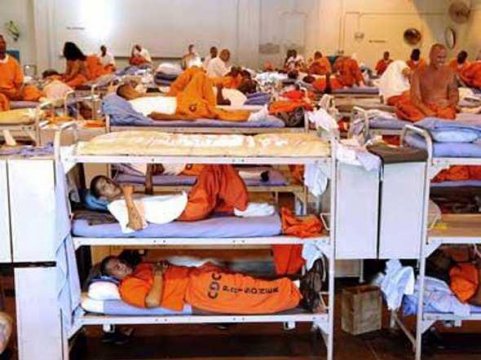
Bay Area legislators Tom Ammiano (D-SF) and Loni Hancock (D-Berkeley) — who chair the Assembly and Senate Public Safety Committees, respectively — played pivotal roles in today’s decision by California prison inmates to end their hunger strike after 60 days.

The legislators last week called for legislative hearings to consider implementing some of the reforms that the prisoners and their supporters have been calling for, including changes to solitary confinement policies that critics say amount to illegal torture under international law.

“I am relieved and gratified that the hunger strike has ended without further sacrifice or risk of human life,” Sen. Hancock said in a joint public statement with Ammiano. “The issues raised by the hunger strike are real – concerns about the use and conditions of solitary confinement in California’s prisons – and will not be ignored.”

“I’m happy that no one had to die in order to bring attention to these conditions,” Ammiano said. “The prisoners’ decision to take meals should be a relief to CDCR and the Brown administration, as well as to those who support the strikers.”

The question now is whether the legislative hearings, set for next month, can persuade the executive branch to finally take action, despite the fact that both Gov. Jerry Brown and the California Department of Corrections and Rehabilitation have taken a hard line on prison issues, even resisting federal court orders to reduce the population in the severely overcrowded prison system and to improve substandard health care.

Ammiano spokesperson Carlos Alcala told the Guardian that the end of the hunger strike could help end that stalemate: “Mr. Ammiano is hopeful that CDCR’s intransigence has been directed at negotiating under the hunger strike pressure, but that they will now be open to making some changes that are meaningful.”

CRCR head Jeffrey Beard issued a public statement saying, “We are pleased this dangerous strike has been called off before any inmates became seriously ill.”

Issac Ontiveros of the Oakland-based California Prisoner Hunger Strike Solidarity group said the hunger strike generated international attention and support, waking the public up to horrific conditions in the prisons and putting pressure on the CDCR to implement reforms.

“Their demands are legitimate and they are pointing out human rigths violations in California’s prisons,” Ontiveros told the Guardian, noting that Amnesty International and a long list of other groups are putting pressure on California to reform its prison practices. “What made them call off the strike was the political gains that they made…It was a thoughtful civil rights strategy.”

This latest hunger strike was called for and organized by prisoners in the “secure housing units,” aka solitary confinement cells, at the maximum security Pelican Bay State Prison, many of whom have gone years without meaningful human interaction. Court filings indicated that more than 400 prisoners have been locked up in solidary for more than a decade, despite the psychological harm that experts say such confinement causes.   

The prisoners today issued a long statement announcing the end of the hunger strike, which includes this excerpt: “To be clear, our Peaceful Protest of Resistance to our continuous subjection to decades of systemic state sanctioned torture via the system’s solitary confinement units is far from over. Our decision to suspend our third hunger strike in two years does not come lightly. This decision is especially difficult considering that most of our demands have not been met (despite nearly universal agreement that they are reasonable). The core group of prisoners has been, and remains 100% committed to seeing this protracted struggle for real reform through to a complete victory, even if it requires us to make the ultimate sacrifice.  With that said, we clarify this point by stating prisoner deaths are not the objective, we recognize such sacrifice is at times the only means to an end of fascist oppression.

“Our goal remains: force the powers that be to end their torture policies and practices in which serious physical and psychological harm is inflicted on tens of thousands of prisoners as well as our loved ones outside.  We also call for ending the related practices of using prisoners to promote the agenda of the police state by seeking to greatly expand the numbers of the working class poor warehoused in prisons, and particularly those of us held in solitary, based on psychological/social manipulation, and divisive tactics keeping prisoners fighting amongst each other. Those in power promote mass warehousing to justify more guards, more tax dollars for “security”, and spend mere pennies for rehabilitation — all of which demonstrates a failed penal system, high recidivism, and ultimately compromising public safety.”

Slipping away

10

By Amy Yannello

Note: This article has been corrected from an earlier version.

As she had done countless times before, Gloria Davidson sat and waited for her son to be brought into the courtroom. His hands and feet were shackled, and his blue uniform branded him as different — someone to be judged apart from the rest of the crowd in this room.

His crime? Aaron Davidson has schizophrenia.

On that day earlier this year, which Gloria recounted and shared with the Guardian in a recent interview, he faced charges for violating one of five restraining orders against him — but he didn’t understand what he’d done to deserve them, his mother said.

“The neurons and synapses in his brain fire inappropriately and he sees and hears things that are not really there,” Gloria explained. “As a result, his responses to his perceived reality are often unwarranted or make no sense,” she continued, “or frighten the people around him.” Aaron could neither speak coherently nor acknowledge that his actions had led to restraining orders, she said.

In his case, the judge deemed Aaron “incompetent to stand trial” and sent him to Napa State Hospital for treatment. He remains there, where he’ll turn 36 later this month.

Davidson is one of three Bay Area mothers with adult sons at NSH to push for full, statewide implementation of Laura’s Law.

Known formally as “assisted outpatient treatment” (AOT), the law is named for Laura Wilcox, a 19-year-old college student who lost her life when Scott Harlan Thorpe, a man with a persistent and severe mental illness who had stopped taking his medication, shot and killed her and a coworker at a Nevada City mental health clinic.

While Thorpe, then 41, was in too deep of a state of psychosis to benefit from AOT at the time of the shootings, his family, psychiatrist, and the Wilcoxes all believed that if the legislation had been in effect even six months earlier, when Thorpe’s family first noticed he’d stopped taking medication, the tragedy could have been averted.


DEBATE ON INVOLUNTARY TREATMENT

Through AOT, an individual’s family, doctor, or trusted third party may advocate to a judge that a patient is at risk of decompensation — serious psychological deterioration making it impossible to function independently — if left untreated. In very narrow circumstances, a judge may order a person to receive AOT as a condition of being allowed to continue living independently.

Currently, only Nevada, Los Angeles and Yolo counties have embraced the law, which allows courts in very limited circumstances to compel into treatment those residents who are too ill to know they are ill.

This “lack of insight” — a neurological condition known as “anosognosia” — is said to affect upward of 40 percent of people with serious mental illnesses.

Gloria Davidson and Teresa Pasquini, another mother of a mentally ill NSH patient, are now pushing for Laura’s Law implementation in Contra Costa County. They’re joined by a third mother, Candy DeWitt, who founded a project called Voices of Mothers Project to bring together parents of people suffering from anosognosia. Alameda County’s Behavioral Health Care Services has issued a report recommending to its Board of Supervisors that it approve a one-year AOT pilot project. The issue is expected to be taken up at the BOS’ Oct. 28 meeting, where it would need a majority vote to be approved, DeWitt said. 

Laura’s Law isn’t without its detractors. “Where does it end?” asked Dan Brzovic, an attorney based in the Oakland office of Disability Rights California. “Pretty soon, we’ll have people saying that anyone with a mental illness cannot think for themselves.”

“The moral issue is that people who are competent to make choices for themselves must be given that right,” he continued. “That’s if they have the capacity. If they don’t, then there are involuntary treatment options already on the books, like conservatorship.”

But the debate surrounding Laura’s Law and mental health service delivery goes deeper, since underlying questions remain about whether dedicated funding has translated to sufficient levels of care. Each of the three mothers told the Guardian that their sons — all deemed to be suffering from “serious mental illness” — never received adequate treatment as they moved through California’s fragmented and broken public mental health system, despite the advent of Proposition 63, the 2004 ballot initiative that created California’s Mental Health Services Act.

A staggering report released in mid-August by State Auditor Elaine Howle brings this claim into focus. According to the audit, the California Department of Mental Health and the Oversight and Accountability Commission have exercised such “minimal oversight” since MHSA went into effect that the state has “little assurance” that $7.4 billion has been used “effectively and appropriately.” That amount represents the total funding generated by the MHSA — which imposes a 1 percent tax on personal income in excess of $1 million — from 2006 to 2012.

In response to these revelations, Rose King, a co-author of Prop. 63 who previously served as a consultant for then-Attorney General Bill Lockyer, stated, “No county has been required to demonstrate its accountability for any spending or program choices. The public — and state officials — have no idea whether counties have improved county mental health systems, whether spending complies with the law, and whether private contractors have delivered promised services.”


“WASTE, FRAUD, MISMANAGEMENT”

The MHSA ramped up services for some 600,000 adults and children in the public mental health system, bringing in $1 billion per year in dedicated funding for the treatment of serious mental illness.

But beyond patients tracked via Medi-Cal, no one tracks the true number of uninsured patients served. There isn’t a data system capturing all the clients or services tied to MHSA funds, making outcomes impossible to track with accuracy.

Some funding has gone to client advocacy groups who actively oppose Laura’s Law. Disability Rights California and the California Network of Mental Health Clients, both opponents of AOT, received $3 million and $1.5 million in MHSA grants respectively. These groups believe voluntary services should be the only programs to receive funding through MHSA and have actively threatened to sue counties that have tried to implement Laura’s Law.

Some of the very people who campaigned hardest for MHSA have since become watchdogs monitoring its implementation. They include King, who lost both a husband and son to suicide due to lack of treatment for their severe mental illnesses, and Pasquini — whose only son is languishing in NSH with a diagnosis of schizophrenia and a felony charge for an alleged assault on a fellow patient while on the incorrect medication.

These embattled mothers say they’ve observed a system awash in “waste, fraud and mismanagement.” They also charge that the system results in disproportionate services for what King terms the “worried well” — people merely experiencing life’s ups and downs — in many cases to the neglect of those struggling with what’s classified as “serious mental illness.”


MISSPENDING OF FUNDS DESIGNATED FOR PREVENTION?

Under the MHSA, only a specified population may receive treatment using these funds. Patients must have been diagnosed with “serious mental illness,” amounting to psychological problems that are severe enough to prevent an individual from functioning independently without assistance should they go untreated.

But critics like King and DJ Jaffe of the Mental Illness Policy Org. (MIPO), a national think tank that has been critical of California’s management of MHSA monies, contend that the 20 percent of MHSA funds designated for Prevention and Early Intervention (PEI) programs are instead being funneled into programs with little connection to mental illness treatment.

The MHSA specifically limits PEI dollars to programs that “prevent mental illnesses from becoming severe or disabling” or that “limit the duration of untreated mental illness.”

Yet King contends that these funds have been used instead to underwrite social service programs ranging from domestic violence prevention and parenting classes, to social skills for disadvantaged youth — all good causes that are nevertheless “not legitimate recipients” of money intended for mental illness treatment, King says.


CONFLICT-OF-INTEREST ALLEGATIONS

Jaffe’s organization has seized on the PEI expenditures as a violation of the MHSA, turning a skeptical eye on the 16-member Mental Health Services Oversight and Accountability Commission.

In 2011, according to a MIPO analysis, more than $23 million in PEI grants went to advocacy organizations and service providers with direct financial ties to both OAC commissioners and committee members. MIPO characterized it as “insider dealing” and a violation of California conflict-of-interest laws.

OAC committee member Rusty Selix, a lobbyist and Prop. 63 co-author, dismissed the MIPO report, saying, “I don’t see any conflict.”

Selix added that unpaid OAC board members recuse themselves from voting whenever it’s deemed to be necessary. And he defended a system where stakeholders, such as consumers and family members, also serve on committees, saying, “You can’t expect to include them in the process without crisscrossing some stakeholders who also receive MHSA grants.”

Jaffe took a different tack. “The problem, besides the blatant conflict-of-interest,” countered Jaffe, “is how these PEI monies are being spent. And they’re not being spent to help the seriously mentally ill,” he continued. “Yet year after year, they’re getting approved. Millions and millions of taxpayer dollars that were supposed to go to treat the sickest among us are being spent on social programs.”


NOT ENOUGH BEDS

Some believe the broad issue of funds not making it to the intended target population might be playing out within the microcosm of San Francisco. In 2010-11, the most recent available data, San Francisco County received $23 million in MHSA funding, 75 percent of which was earmarked for direct services.

But that money hasn’t gone toward ensuring that there are enough beds for treating mentally ill patients, according to Geoff Wilson, president of the Physicians’ Organizing Committee. Wilson’s organization reported that as of August, San Francisco General Hospital had dropped to 19 emergency psychiatric beds, down from 88 two years ago.

“It’s unconscionable. We’ve got the highest 5150 rate in the state,” Wilson told The Guardian, referring to 72-hour psychiatric holds imposed by law enforcement. We’re not saying ‘lock everyone up,’ we’re just saying that for people who need it, the beds need to be there, and there’s barely any left in the city.”

Wilson explained the cuts by saying that when Medi-Cal stopped paying for the care — essentially “raising the bar” for what it took to keep someone in a psychiatric inpatient bed — the county slashed the number of beds because it “simply wasn’t profitable” to keep them open.

Asked to respond to this claim, SFDPH spokesperson Eileen Shields told the Guardian that only Barbara Garcia, the agency director, was in a position to respond. But Garcia was out of town and unavailable for comment.

According to the POC’s Dr. Cameron Quanbeck, it costs $250 per day to house inmates in jail, compared with $1,700 per day for hospital care. In March, Sheriff Ross Mirkarimi testified before the Mental Health Board that the jail system had become the “default” place for people with mental illness, identifying more than 70,000 contacts with Jail Psychiatric Services in 2012 alone.


LAW ENFORCEMENT AND LAURA’S LAW

According to the U.S. Department of Justice, 16 percent of inmates have a severe mental illness, making jails and prisons the largest de facto psychiatric treatment facilities. The National Sheriff’s Association has come out in support of AOT laws in all 50 states.

Pasquini says her son could have benefited from AOT, and she believes that “AOT should be a mandated MHSA program in every county to prevent tragedy and intervene with the criminalization of mental illness.”

Since his initial diagnosis of schizo-affective disorder at 16, Pasquini’s 31-year-old son has had more than 70 emergency contacts with law enforcement and/or ambulance personnel, most of them resulting in 5150 holds.

He is now a patient at NSH, where “he wants to die every day, and I don’t blame him,” continued Pasquini. “It’s a reality for him. His illness has progressed, because every time you have a ‘break,’ you get a little worse. He’s the perfect candidate for Laura’s Law.”


Fulfill MLK’s dream of a guaranteed income

34

OPINION Today, Aug. 28, we mark the 50th anniversary of Martin Luther King’s I Have a Dream speech at the March on Washington. But we are sobered by the fact that 46 million citizens are living in poverty and that we have become two Americas — one for the rich and one for the rest of us.  

Dr. King had a solution to poverty and to the bleak economic conditions faced by many Americans today. “I am now convinced that the simplest solution to poverty is to abolish it directly by a new widely discussed measure: the guaranteed income,” he wrote in his 1967 book, Where Do We Go From Here: Chaos or Community? “A host of psychological changes inevitably will result from widespread economic security.”  

In 1969, a presidential commission recommended, 22-0, that the United States adopt a guaranteed annual income, with no mandatory work requirements, for all citizens in need. The report was buried and forgotten, even though the National Council of Churches, by a vote of 107-1, agreed. So did the Kerner Commission, the California Democratic Council, the Republican Ripon Society, and the 1972 Democratic Party platform.  

Fast forward 50 years and the concept of a guaranteed income — or Basic Income Guarantee — is not discussed much anymore. But it remains, as even the late economist Milton Friedman always maintained, the most practical and sensible way to end poverty in America and provide economic security to all Americans.  

Today we have more than 14 million Americans unemployed with no evidence to back up the claim that we can create jobs for everyone who wants one. Machines are doing work people used to do. Jobs are not coming back and many families teeter on the brink of poverty.  

Relying on jobs and economic growth does not work. Job creation is a completely wrong approach because the world doesn’t need everyone to have a job in order to produce what is needed. We need to rethink the concept of having a job. When we say we need more jobs, what we really mean is we need more money to live on.  

Today there are more than 300 income-tested federal social programs costing more than $400 billion a year. Much of that money goes for administrative expenses, not to the needy.  

Charles Murray, a conservative author whose 1984 book Losing Ground claimed that welfare was doing more harm than good, now agrees with the Rev. King’s approach. Murray calls for giving an annual cash grant of $10,000 — with no work requirement — to every adult over age 21.  

“We still have millions of people without comfortable retirements, without adequate health care, and living in poverty. Only a government can spend so much money so ineffectively. The solution is to give the money to the people,” Murray writes in his book: In Our Hands.  

Indeed, the state of Alaska has given an annual cash grant to its people for the past 30 years of between $800 and $2,000, with no work requirements, reducing poverty and the inequality of income in Alaska.  

The U.S. is a wealthy nation. Our net worth is $58 trillion. That’s an average of $185,000 for each man, woman, and child in the country. A basic income guarantee would establish economic security as a universal right. It will give all of us the assurance that, no matter what happens, we won’t go hungry.  

This year, as we celebrate the March on Washington, the adoption of a basic income guarantee would help to fulfill the Rev. King’s dream of economic security as a universal right of all Americans.  

Allan Sheahen is the author the new book: Basic Income Guarantee: Your Right to Economic Security. He is a board member of the U.S. Basic Income Guarantee (USBIG) Networks (www.basicincomneguarantee.com).

“Refeeding” is prison authorities’ new word for force-feeding

The practice of force-feeding inmates has a branding problem.

The issue first came to light after a U.S. District Judge last week granted the California Department of Rehabilitation and Corrections, or CDRC, the ability to feed inmates who are hunger striking even if they signed “Do Not Resuscitate” waivers, commonly known as DNR’s. The order called any DNR granted during the beginning of the hunger strike 50 days ago as invalid.

As the negotiations wind on, it’s looking more inevitable that the hunger strike holdouts will soon be near death. But when the prisons start force-feeding inmates, a whole new problem will arise: image.

The CDRC have given all the concessions they’re willing to give, they said, and if an inmate dies while fasting they’d become a martyr. At some point, the prisons may have to feed the inmates via liquid in an IV, or even via tubes.

The tubes are inserted through the nose and directly into their stomachs, and conjure images of alleged terrorists at Guantanamo Bay. 

In a video made by musician Mos Def, aka Yasiin Bey, Bey allowed himself to be force fed to bring attention to Guantanamo’s detainees. Bey is strapped to a chair, and a clear plastic tube is inserted through his nose as he screams, writhes, and begs for it to stop.

“The tube went in and the first part of it is not that bad, but then you get this burning,” he said in the video. “It starts to be like really unbearable, like something is reaching into the back of my brain…. I really couldn’t take it.”

For Mos Def, the feeding was brief. For inmates, the process can take two hours.

To address that issue the California Department of Corrections and Rehabilitation (CDCR) has taken to calling force feeding “refeeding,” which is term that already has a definition: feeding someone who has recently ended a fast. It has medical significance because a whole host of ailments can occur when someone who is ending a fast is fed the wrong foods, or fed too quickly. They can even die. 

But now the CDCR has used the word “refeeding” to mean feeding inmates who have already signed DNRs and are fed to prevent death. The word was in every major news report on the court’s recent decision, from Democracy Now to Al Jazeera.

“Refeeding” is the new force-feeding. 

Joyce Hayhoe, legislative director of California Correctional Health Care Services, wanted to make it clear that no one has been force-fed yet, and that refeeding was not force feeding.

“What I would like to say is we’re not force-feeding anybody,” she told the Guardian. “When doctors do not have a valid DNR, in the absence of any other information, when we have an inmate we cannot communicate with, we’re going to save their lives.”

But the sticking point in her statement is the word “valid,” advocates say. What is a valid DNR? The health care providers allege that some inmates began the hunger strike because of intimidation by senior gang members in the jails. Hayhoe said one inmate hid food so his fellow hunger strikers would not know, and that “implied something” to her.

There were 12,000 inmates who started the hunger strike on July 8, according to counts by the prisons themselves. Of those, it’s entirely conceivable that a few were coerced, said Dr. Ronald Ahnen, a politics professor at Saint Mary’s College focusing on prison reform.

“Is it possible some prisoners were coerced,” due to the sheer number of inmates involved, he said in an interview. But, “if you read the call from the hunger strike forward, and you heard from the reps in Pelican Bay (Prison), they have always stated emphatically and clearly that the hunger strike is voluntary. They have said no one should continue with the hunger strike longer than they were willing or able to do.”

Now the number of inmates in the hunger strike is down to 92, according to the CDRC. Of those, 41 have been on a hunger strike continuously since it began on July 8.

Hayhoe said there are only a handful of strikers with DNRs left, but would not reveal specific numbers. 

Ahnen, who is affiliated with the hunger strikers as a reform advocate but did not speak as their spokesperson, said that though those numbers have dwindled, they’re still significant.

“What amazes me is, 41 people who have been without food for 50 days. I think the major media is missing the importance of that,” he said. “When you think of the Irish hunger strike that we all think of from 1980, that’s 23 individuals who all died. We now have 42, risking their lives to have humane conditions in their confinement. Its very, very historic.”

Lost in the debate over food are the actual reasons for striking. The inmates have five core issues which you can see at their website here, but mostly they revolve around quality of life in Segregated Housing Units, commonly referred to as the SHU. The prisoners say it is solitary confinement, and they can be thrown in there easily by being told they have affiliations with gangs.

“I’ve had prisoners tell me their investigators say they can use any evidence and implicate anyone (as a gang member),” Ahnen said.

And the inmates have little recourse once they’ve been labeled a gang member and thrown in the SHU. Toshio Meronek covered this for Bay Guardian last month (“Hungry for Reform,” 7/3/13), saying it would take nearly 20 years to conduct reviews of the over 10,000 inmates presently held in solitary confinement in California.

In a statement circulated shortly after the CDCR’s on Thursday, State Senator Mark Leno wrote, “I have concerns that this review process is moving too slowly and I would like to see it accelerated.”

The hunger strike is one of the inmate’s last tools to reform that system. Now, in a cell that strips away most all human freedoms, “refeeding” may take away an inmate’s choice to die.

The federal judge’s decision to strip away that right reverberated across the world. The United Nations Special Rapporteur on torture, Juan E. Méndez, issued a statement saying “it is not acceptable to use threats of forced feeding or other types of physical or psychological coercion against individuals who have opted for the extreme recourse of a hunger strike.”

Hayhoe, from the prison’s health services, said there is some wiggle room in having your request to not be resuscitated honored.

“If a person has signed a DNR during the hunger strike, the best thing they can do is start having discussions with his primary care physician and expressing their need,” she said. The inmates have been sustained on Gatorade and vitamins, she said, and are not yet at the point of needing resuscitation.

Ahnen also clarified that the violent method of force-feeding may not be used. Another way to do it, he said, is to feed patients through an IV should they lapse into unconsciousness.

“This is a more likely scenario,” he said, but it is still force-feeding. Hayhoe said she would contact a doctor to see when each method would be used, but did not have the information immediately available.

These inmates are close to dehydration, close to organ failure, and close to death for their principles, Ahnen said, and now their political stand won’t be honored. They’ll be force-fed, no matter what terminology is used to describe it.

“Make no mistake about it, if a prisoner is being fed against their will, this is force feeding,” he said.

And with the flip of a word, the inmates have lost their right to die.

To learn see future actions on the hunger strike, visit http://prisonerhungerstrikesolidarity.wordpress.com/take-action-2/ .

Lawsuit alleges Uber unfairly withholds tips from drivers

A class action lawsuit filed against Uber, a tech-based service that connects riders to drivers and has filled San Francisco streets with sleek black town cars, alleges that the company is cheating its drivers out of tips.

The suit also charges that drivers have been misclassified as independent contractors under California law.

Uber’s website tells customers there is “no need to tip,” and drivers are prohibited from accepting any extra cash. The complaint alleges that “drivers do not receive the tips that are customary in the car service industry and that they would otherwise receive were it not for Uber’s communication to customers that they do not need to tip.”

The lawsuit was filed in San Francisco’s Northern District on Aug. 16. Attorney Shannon Liss-Riordan, of the Boston-based firm Lichten & Liss-Riordan, believes that by withholding tips “Uber is artificially trying to make the total price look lower – and in doing so, they’re hurting the drivers.”

Douglas O’Connor, who is named as a plaintiff in the lawsuit, said that when he started working as an Uber driver in San Francisco about 10 months ago, he was told not to accept tips because they were included in the service fees automatically charged to customers’ credit cards. But there’s nothing in his paycheck to indicate whether he has received a gratuity or for what amount, O’Connor said.

“For some of the drivers there has been a line item, but that line item that’s called the gratuity has not gone to the drivers,” Liss-Riordan explained. In those cases, it appears Uber takes half, she said. And in cases like O’Connor’s, “There is no separate gratuity that’s going to the drivers,” Liss-Riordan said, so the representation that any tip was included in the first place is “a lie.”

Liss-Riordan noted that Uber has even been known to send out “secret shoppers” who are directed to take Uber, offer cash tips, and report whether the drivers accepted the tips or declined with the explanation that the tips are included in the service fee, as they are instructed to.

Meanwhile, Uber recently required drivers to agree to revised contract terms, which is mandatory in order to continue their relationship with the ridesharing company. Buried in the fine print is an arbitration clause with a class action waiver. By agreeing to these terms – something Uber not only requires but makes exceptionally easy with the tap of a button on a smartphone – drivers are essentially giving up their rights to join a class action suit against the company. O’Connor noted that the contracts were sent out in English only, but English is not the first language of many Uber drivers.

“In order to opt out of this class action they have to send a hand-delivered letter to the general counsel of Uber in San Francisco,” Liss-Riordan pointed out. “We’re also trying to get the word out to Uber drivers that if they want to participate in this class action case and potentially recover their tips, they actually have to opt out of this arbitration clause.”

O’Connor said he drives between 30 and 70 hours a week, and would like to continue doing so in the long run. But without the additional income he feels he could be earning in tips, “I’m not going to be able to do it. It’s just so expensive to live in the San Francisco Bay Area.” He described what happened when a businessman he’d ferried to the airport offered to add an additional $10 to $15 onto his company credit card for exceptional customer service. He couldn’t, because Uber does not provide a mechanism for attaching an additional driver bonus onto the service fee. 

Asked if there was an estimate as to how much drivers could be losing in tips, Liss-Riordan said, “It adds up to a lot – for someone working there for over a year, you could be talking in the hundreds if not thousands of dollars.” And for the entire class of Uber drivers, who are estimated to number in the thousands across major U.S. cities, she noted that the total damages sought could end up being in the millions.

In addition to charging that Uber is “unjustly enriching” itself by collecting fees that are owed to drivers, the suit also claims that Uber drivers should be classified as employees under California law.  

“Under California law, there’s a multi-factor test to determine whether someone is an employee or an independent contractor and the test looks at things like … whether the workers’ services form the core part of what the business does,” Liss-Riordan explained. In this case, they do, she added: “If there were no drivers, there would be no Uber.”

As independent contractors, Uber drivers must pay for their own gas expenses and vehicle maintenance. They are not eligible for workers compensation or unemployment benefits in the event that they are terminated. Nor is Uber required to make any contributions toward its San Francisco drivers’ health care costs, since its drivers aren’t considered employees. The San Francisco Health Care Security Ordinance mandates that employers contribute toward healthcare for any employee working eight hours or more.

Liss-Riordan specializes in representing tipped employees. She prevailed in a lawsuit against American Airlines on behalf of skycaps who were prevented from receiving tips because the airline created a $2 fee for curbside check-in that led passengers to believe that gratuity was included.

Reached via email, Uber spokesperson Andrew Noyes declined to answer questions about the allegations raised in the complaint, nor would he explain why Uber required its drivers to agree to an arbitration clause waiving their rights to join a class action suit. Noyes declined to comment, saying the complaint had not yet been formally served.

O’Connor, meanwhile, said he agreed to be named as a plaintiff in the case “in order to improve working conditions for myself and my colleagues.” Asked if he was concerned whether this decision would affect his standing as an Uber driver, O’Connor shrugged it off. “I’m probably not going to get the employee driver of the month award,” he joked.

Attorneys debate toxic turf during Beach Chalet project opponents’ last stand

29

Opponents of a city plan to install artificial turf soccer fields and stadium lights at the Beach Chalet soccer fields in Golden Gate Park — after losing at every stage of the project’s approval process — had their day in court Friday, beginning what could be their last chance: to have a judge block the project.

“I wouldn’t be surprised if these were the most heavily scrutinized soccer fields in the country,” attorney James Emery, who is representing the city and the project, said as he started off his opening arguments to defeat the lawsuit.

Groups including the SF Coalition for Children’s Outdoor Play and the Sierra Club’s San Francisco Bay Chapter filed a lawsuit based on the claim that the city violated the California Environmental Quality Act when it chose to use what the plaintiffs lawyers describe as “toxic turf.”

The main argument on the plaintiff’s side was that the styrene-butadiene rubber (SBR) that will be used for the fields is inherently toxic. Other arguments included the lack of hybrid alternatives on the Environmental Impact Report conducted for the fields, as well as deletion of emails by a city department.

Plaintiffs attorney Vernon Grigg started off with the assertion that the SBR turf being used for the soccer fields is made from crushed up tires “that aren’t even allowed in a landfill without a permit,” and that the EIR failed to offer other alternatives such as carpet pad rubber or cork.

His co-counsel Richard Drury also pointed out that SBR turf has a 18.8 in a million chance of causing cancer, exceeding the significant threshold of 10 in a million the Bay Area Air Quality Management District (BAAQMD) adopted in 2010.

Attorney Scott Emblidge, another lawyer contracted by the city on the case, said that wasn’t a standard that the city has adopted, criticizing the oft-repeated point by saying, “San Francisco has not formally adopted significance standards, though they have said it 17 times in their opening brief.”

But Drury emphasized that the city is compelled by CEQA to consider a less toxic option. “There are no alternatives to less toxic turf,” Drury said. “It wouldn’t have been hard for them to do that — they just didn’t do it.”

But Emblidge said the EIR didn’t identify the turf choice as significantly toxic, a point Drury disputed.  

“The EIR does mention alternative forms, and does discuss alternative turf composition,” Drury said. “They consistently covered that there were significant health effects. There’s lots of speculation, but nothing that truly shows it.”

Other points were made that people within the Recreation and Parks Department were deleting emails related to the project, but coverage on that subject ran short as Judge Teri L. Jackson had to leave the court because of other engagements.

Attorneys for both sides are scheduleed to meet on Wednesday to be questioned further by Jackson.

Dick Meister: Still dreaming of justice

2

Dick Meister is a San Francisco-based columnist who has covered labor and politics for more than a half-century.  Contact him through his website,www.dickmeister.com, which includes more than 350 of his columns.

Think back to Aug. 28, 1963.  More than a quarter-million labor and civil rights activists led by Martin Luther King Jr. march onto the National Mall in Washington, D.C., to demand good jobs at decent wages and strict enforcement and expansion of the laws guaranteeing meaningful civil and economic rights to all Americans.

The demands, spelled out in Dr. King’s famous “I have a Dream” speech that day,  will be forcefully raised once again by  a fiftieth  anniversary March from the Lincoln Memorial  to the King Memorial  on the  Mall  this August 24.

The 2013 march has been called for very good reason: The need for greatly strengthened labor and civil rights is at least as urgent today as it was in 1963. By any measure, the 1963 March was a huge success. It had a direct and strong influence on the enactment a year later of laws prohibiting discrimination in public accommodations and the passage two years later of the Voting Rights Act that enabled many African -Americans to freely cast ballots for the first time.

But despite the successes that followed the march, the nation once again faces severe economic and social problems. Consider:

*Voter suppression has become a serious problem once more, with several
states imposing new restrictions on the right to vote that have been upheld
in court.

*Unemployment remains notably high, particularly among African-American
workers, and young workers generally, even as a great need for workers to
rebuild the nation’s crumbling transportation and energy infrastructure
continues to mount.

*Jobless workers now, as then, need much more government aid, with
unemployment insurance payments averaging only $300 a week.  Many workers
who manage to find jobs are able to work only part-time or only temporarily,
and for less pay than they made on previous jobs.

*Millions of women workers face blatant job discrimination, as do older
workers, the young and African-American workers in general. They often are
paid less than others doing the same work, and often are denied promotions
that they’ve earned. Women sometimes face sexual harassment as well.
*Millions of workers, male and female alike, are forced to live on
poverty-level pay, including those workers making the grossly inadequate
federal minimum wage of $7.25 an hour. Many of the country’s fast-food
workers are lucky if they make even that.

*Millions lack paid sick leave needed to care for sick children and other
family members and to keep them from having to work when ill and endanger
the health of others as well as themselves.

*Public employees, who perform some of the country’s most vital work, are
under steady attack by politicians and others who seize on them as
scapegoats by blaming the workers, many of them women and people of color,
for the economic problems that beset government at all levels. They strive
mightily to cut the employees ‘pay and pensions and other benefits and mute
their political and economic voices.

*Income inequality is a severe problem. The gap between the haves and
have-nots is downright spectacular. A recent study by the Economic Policy
Institute showed, for instance, that the CEOs of major companies make on
average about 273 times more than the average worker. That’s right ­­
average executive pay is almost three times  the average pay of ordinary
workers. Are those who direct work really worth so much more than those who
actually do the work?

 *Thousands of workers are endangered by lax enforcement of job safety laws,
thousands shortchanged by employers who fail to pay them what they’ve been
promised and clearly earned.

*Anti-labor employers openly violate laws that promise workers the right of
unionization that would enable them to effectively try to improve their
inadequate pay and working conditions. That’s one of the key reasons the
share of workers in unions has declined to a 97-year low of barely 11
percent.

*Despite the rise of Cesar Chavez and the United Farm Workers union, the
men, women ­-and too often children — who harvest the food that sustains us
all are barely surviving on their poverty level wages.

*Free trade agreements and the offshoring of U.S. jobs have led to the loss
of millions of domestic jobs.

President Clayola Brown of the AFL-CIO’s A. Philip Randolph Institute, a key
2013 march sponsor named for the leader of the 1963 march, notes that as in
1963, “the job situation is deplorable. Today, we have 30-year-old people
who have never had a full-time job in their lives.”

Brown will be among the thousands of union and civil rights advocates who,
like the marchers 50 years ago, are expected to gather on the National
Mall Aug. 24 to raise their demands for justice, as they march from one to
the other of the sculpted likenesses of two of the greatest advocates of
social and economic justice who’ve ever lived.

Dick Meister is a San Francisco-based columnist who has covered labor and
politics for more than a half-century.  Contact him through his website,
www.dickmeister.com, which includes more than
350 of his columns.
   Copyright 2013 Dick Meister.

(Bruce B. Brugmann writes and edits the Bruce Blog on the San Francisco Bay Guardian website. He is the editor at large and former editor and co-founder and co-publisher with his wife Jean Dibble of the SF Bay Guardian, 1966-2012.)

Outside Lands 2013 winners (Paul McCartney, Chic, Bombino) and losers

7

Hall & Oates, or Trombone Shorty? Willie Nelson, or Vampire Weekend? This year’s Outside Lands presented its 65,000 attendees with some perplexing choices, resulting in what might’ve been the festival’s most eclectic lineup of its now six-year run. As always, Golden Gate Park was a most picturesque venue, with patches of sunlight punctuating the heavy fog, great nighttime atmosphere provided by the purply-lit trees, and a generous smattering of what Grizzly Bear’s Edward Droste called, “the bougiest food stands I’ve ever seen at a festival.”

Now, without further adieu, here’s a rundown of several acts that’ve left me beaming in the days since Outside Lands came to a close:

BEST OF THE BEST:

Paul McCartney
“How many people have learned to play that one on guitar?” Paul McCartney asked his enraptured audience after a beautiful solo performance of “Blackbird.” (A sea of hands went up, of course.) Watching the crowd’s reactions to McCartney’s most indelible songs, ranging from ecstatic to reflective, it was obvious: this music really means things to people.

Much like Stevie Wonder last year, Sir Paul delivered an unrelenting hit parade on Friday night, delving into the Beatles and Wings back-catalogues for three hours (!) of immediately recognizable songs, pulled directly from the audience’s collective consciousness, and relayed back again. Sure, McCartney’s stadium-ready backing band has largely sterilized the exploratory wildness of the Beatles’ post-mop-top sound, but what a joy it was to be serenaded by the elder statesman of rock ‘n’ roll, giving it his all at the ripe old age of 71.

McCartney was shrewd to forgo his newer material (honestly, who came to hear that anyway?), in favor of Beatles and Wings songs, ranging from black-tie pop ditties like “Eight Days a Week,” and “Paperback Writer,” (performed on the very guitar he wrote it on), to the explosive, technicolor invention of “Being For the Benefit of Mr. Kite,” and “Magical Mystery Tour,” to wistful ballads like “Yesterday,” (which featured the Kronos Quartet on strings, no less) to the giddy excess of “Helter Skelter” and “Live and Let Die.”

It was surreal to be in the presence of such a towering cultural figure, especially as he rattled off casual anecdotes about hanging with Hendrix and Clapton. Despite his stature, though, McCartney’s stage presence was utterly charming, and the rousing singalong he initiated to his ultimate anthem, “Hey Jude,” was the festival’s most communal moment.

Chic
Faced with the unenviable task of filling a D’Angelo sized void (the neo-soul comeback king cancelled his Friday night appearance at the last minute for unspecified health reasons), Chic hopped onstage with an arsenal of disco-funk party jams, and drove the crowd wild. On any Outside Lands bill before this one, Chic might’ve been disregarded as a throwback novelty act, but considering bandleader Nile Rodgers’ high-profile rhythm guitar work on “Get Lucky,” Daft Punk’s “anthem of the summer,” the entire crowd, young and old, had something to be excited about.

Dressed in white, head to toe, Rodgers’ impeccably tight backing band ripped through a number of Chic originals (“Good Times,” “Le Freak”) as well as a handful of his productions for other artists: most notably Diana Ross’ “I’m Coming Out” and David Bowie’s “Let’s Dance.” Rodgers’ ultra-syncopated rhythm guitar cut through the fabric of each song, and fascinatingly, the looming shadow of “Get Lucky” seemed to place his ever-modular approach to the instrument in a new, fashionable context.

Bombino
Much like Tinariwen, another group from the Tuareg region of West Africa that’s garnered intercontinental attention, Bombino of Niger injects the skipping rhythms and flickering melodies of their homeland’s folk music with a dose of unmistakably Western groove: namely, psychedelic rock and American blues. Bandleader Omara Mochtar hardly spoke a word to the audience, but his lively, smiley stage presence was endearing, especially as he delivered flaming guitar licks that would perk up Hendrix’s ears.

While Bombino’s hooks and melodies were certainly involving, the real magic was in those woozy, hypnotic grooves, often suggestive of the Grateful Dead at its most transportive. Dressed in traditional garb, and reveling in the power of extended jams, Bombino’s set was a welcome departure from the indie rock/EDM same-yness Outside Lands is prone to suffer from.

Nine Inch Nails
Trent Reznor is totally buff now. He looks like the kind of gym-rat who might bully the creator of Pretty Hate Machine for his lunch money. But more notably, he’s sober, happily married, and seems invigorated by the prospect of revisiting his ’90s project that introduced industrial music to the pop mainstream. Reznor and Co. took the stage with great conviction on Saturday night, making an assertive case for NIN 2.0’s relevance in the restructured music world of 2013.

Sure, Reznor’s dream-team touring lineup didn’t quite materialize (King Crimson guitarist Adrian Belew and Eric Avery, the bassist of Jane’s Addiction dropped out early on, citing creative differences), yet his backing band was airtight and incredibly versatile, folding marimbas and even Chinese violins into the usual rock band instrumentation, and resulting in some of the most compelling sonics of the whole weekend. With computer guru Josh Eustis (formerly of Telefon Tel Aviv) on board, NIN’s electronics were richer in detail than ever.

The band’s forceful renditions of bangers such as “Head Like a Hole,” “The Hand That Feeds,” and “Closer” channeled the catharsis that runs through Reznor’s music like a freight train. “Something I Can Never Have,” was the subdued ballad of the night: dramatic and moodily lit, but never contrived or unintentionally goofy. “Hurt,” put the entire audience in singalong mode, suggesting a twisted spin on Pink Floyd’s communal anthem, “Wish You Were Here.” New songs, “Copy of A” and “Come Back Haunted,” were engaging and strong, portraying a band too inspired to lean on its past achievements.                   

As far as spectacle goes, NIN trounced any and all competition. Constantly wheeling instruments and projection screens around, the band utilized the depth of the stage unlike any festival band I’ve ever seen.

It’s always inspiring to see a band return to form with such strength of purpose; between the fantastic visuals, the band’s versatility, and Reznor’s newfound vigor, NIN initiated an astounding return on Saturday night, maybe even turning a new generation of EDM kids on to their brand of industrial menace.

RUNNERS UP:

Jurassic 5 made an explosive comeback after more than five years off the radar. Rappers Chali 2na, Akil, Zaakir, and Mark 7even laid down verses that bounced effortlessly off each other, with DJs Nu-Mark and Cut Chemist providing a thick, but minimal, backbone. The LA-based group delivered one of the most downright fun sets of the entire festival, filling Outside Lands’ glaring hip-hop void with boundless energy.

Willie Nelson was warm and welcoming as ever, with his family band in tow, and a rasp to his Lou Reed-ish speak-singing delivery that’s only grown more endearing with age. “Always On My Mind,” was especially tender, and made me want to give the ponytailed icon a big hug.

Grizzly Bear has a tendency to take the stage with an off-putting sense of self-importance, like the fastidious pastel-wearers their critics accuse them of sounding like. Unlike their uptight performance at the Fox Theater in Oakland last year, the Brooklyn quartet seemed to let loose in the festival environment. The results were fiery, especially on Shields’ dynamic closer, “Sun In Your Eyes.”

Hall & Oates took the stage authoritatively with their signature brand of agreeable soft rock, but more interesting was the crowd’s reaction: many older audience members seemed to take their music at face value, while younger attendees seemed torn between sincere and ironic appreciation.

Jessie Ware‘s vocal prowess, and the quality of her nu-R&B productions, suggest a self-serious performer, but her jokey, self-deprecating stage persona resulted in a disarming, hugely engaging set. A cover of Marvin Gaye’s “I Want You,” thrown in the middle of her groove-laden “No To Love” was an especially nice surprise.

COMPLAINTS:

The National delivered some heartfelt ballads on rust-belt hopelessness, and alcoholism, among other things, and went so far as to bring the Kronos Quartet and Bob Weir on stage. While their set might’ve been incredibly involving in a smaller, indoor venue, something about the band’s intimate songs being performed in the social-media-playground environment of the Lands End stage felt very off.

Vampire Weekend has noticeably beefed up its sound, and grown less insufferably twee since debuting in 2009, but the cutesy, Ivy-League preppiness that continues to draw fans to Ezra Koenig and his Columbia brethren still repels me. Like this year’s much lauded LP Modern Vampires of the City, their set wasn’t exactly “bad,” but that’s the most I have to say for it.

Rudimental surely meant well. The nine-piece, UK based, drum ‘n’ bass-inflected pop ensemble brought infectious energy to the stage, but the result was overwrought and heavy-handed, resembling a busy plate of fusion food with too many sparring elements to result in anything coherent.

Yeah Yeah Yeahs aren’t a low quality band by any means, and songs like “Heads Will Roll” and “Maps” were smartly written, and well delivered, but vocalist Karen O’s incendiary presence made her backing musicians come across as expendable, by comparison.

Red Hot Chili Peppers certainly amped the audience up with their signature Cali vibes, but my overall impression was of a band whose brand-name status has far surpassed its creative potency. Chad Smith and Flea provided a blistering funk-punk rhythm section, especially on bangers like “Higher Ground,” their iconic Stevie Wonder cover, but vocalist Anthony Kedis looked withdrawn, and not quite stoked to be doing his job. The band can certainly fill stadiums in 2013 (and hey, more power to ’em), but at this point, the Chili Pep empire seems to have lapsed into the zone of diminishing returns.

Rep Clock: August 14 – 20, 2013

0

Schedules are for Wed/14-Tue/20 except where noted. Director and year are given when available. Double and triple features marked with a •. All times pm unless otherwise specified.

ANSWER SF 2969 Mission, SF; answer@answersf.org. $5-10 (no one turned away for lack of funds). Black August (Styles, 2007), Wed, 7.

CASTRO 429 Castro, SF; (415) 621-6120, www.castrotheatre.com. •Raging Bull (Scorsese, 1980), Wed, 2:30, 7, and The King of Marvin Gardens (Rafelson, 1982), Wed, 4:55, 9:25. 1984 (Radford, 1984), Thu, 7, and Enemy of the State (Scott, 1998), Thu, 9:15. “Midnites for Maniacs:” •Indiana Jones and the Temple of Doom (Spielberg, 1984), Fri, 7, and Evil Dead II: Dead By Dawn (Raimi, 1987), Fri, 9:30. $12 for one or both films; $5 entry into 11:45pm screening of Tenebre at the Roxie with Castro ticket stub (see listing below). “SF Bear Pride presents Amy Schumer,” comedy performance, Sat, 8. Advance tickets ($32.50-40.50) at www.ticketfly.com. •2001: A Space Odyssey (Kubrick, 1968), Sun, 2, 8:15, and Solaris (Tarkovsky, 1972), Sun, 4:50. •Frances Ha (Baumbach, 2012), Tue, 3:30, 7:15, and The Bling Ring (Coppola, 2013), Tue, 5:15, 9.

CHRISTOPHER B. SMITH RAFAEL FILM CENTER 1118 Fourth St, San Rafael; (415) 454-1222, www.cafilm.org. $6.75-$10.25. Hannah Arendt (von Trotta, 2012), call for dates and times. The Hunt (Vinterberg, 2012), call for dates and times. 20 Feet From Stardom (Neville, 2013), call for dates and times. Ain’t In It For My Health: A Film About Levon Helm (Hatley, 2012), Wed-Thu, 8:45. Hava Nagila (The Movie) (Grossman, 2012), Wed-Thu, 4:30, 6:30. The Act of Killing (Oppenheimer, 2012), Aug 16-22, call for times. Ray Harryhausen: Special Effects Titan (Penso, 2012), Sun and Aug 25, 7.

CLAY 2261 Fillmore, SF; www.landmarktheatres.com. $10. “Midnight Movies:” Willow (Howard, 1988), Fri-Sat, midnight.

“FILM NIGHT IN THE PARK” This week: Creek Park, 451 Sir Frances Drake Blvd, San Anselmo; www.filmnight.org. Free (donations appreciated). Singletrack High (Pedal Born Pictures, 2012), Fri, 8; The Avengers (Whedon, 2012), Sat, 8. Union Square, Geary at Powell, SF. Singin’ in the Rain (Donen and Kelly, 1952), Sat, 8.

JACK LONDON SQUARE Market lawn, Harrison at Water, Oakl; www.jacklondonsquare.com. Free. Grease (Kleiser, 1978), Wed, sundown. Presented sing-along style.

NEW PARKWAY 474 24th St, Oakl; matatu.eventbrite.com. $8-10. “Matatu Film Festival,” films about global journeys presented by Top Ten Social and Broaklyn Film and Theater Co, Thu-Sat.

PACIFIC FILM ARCHIVE 2575 Bancroft, Berk; (510) 642-5249, bampfa.berkeley.edu. $5.50-9.50. “Dark Nights: Simenon and Cinema:” Le train (Granier-Deferre, 1973), Wed, 7; The Clockmaker (Tavernier, 1974), Fri, 8:45. “Tales of Love: The Enchanted World of Jacques Demy:” A Slightly Pregnant Man (Demy, 1973), Thu, 7; A Room in Town (Demy, 1982), Sat, 8:30. “The Hitchcock 9: Rare Silents Restored:” The Lodger: A Story of the London Fog (1926), Fri, 7; The Ring (1927), Sat, 6:15; The Farmer’s Wife (1928), Sun, 7. “Castles in the Sky: Masterful Animation from Studio Ghibli:” Howl’s Moving Castle (Miyazaki, 2004), Sun, 4.

ROXIE 3117 and 3125 16th St, SF; (415) 863-1087, www.roxie.com. $6.50-11. The Canyons (Schrader, 2013), Wed-Thu, 7:15, 9:30. Kid-Thing (Zellner, 2013), Wed-Thu, 7. Great Hymn of Thanksgiving (Mendoza, 2013), Wed, 7. “Frameline Encore Screening,” Thu, 7. Title TBA; check www.frameline.org for updates. “A Night of Neon Slime:” Angel (O’Neill , 1984), Thu, 9:15, and Vice Squad (Sherman, 1982), Thu, 11. Tenebre (Argento, 1982), Fri, 11:45. Portrait of Jason (Clarke, 1967), Aug 16-22, 7. *


On the Cheap: August 14 – 20, 2013

0

On the Cheap listings are compiled by Guardian staff. Submit items for the listings at listings@sfbg.com. For further information on how to submit items for the listings, see Selector.

WEDNESDAY 14

Toby Barlow Booksmith, 1644 Haight, SF; www.booksmith.com. 7:30pm, free. The Detroit-based author reads from his latest novel, Babayaga.

Caleb Crain 1 Ferry Bldg, SF; www.bookpassage.com. 6pm, free. The journalist and literary critic discusses his new work, Necessary Errors.

Fran Moreland Johns Books Inc., 3515 California, SF; www.booksinc.net. 7pm, free. The author shares Perilous Times: An Inside Look at Abortion Before and After Roe V. Wade.

THURSDAY 15

Yangsze Choo 1 Ferry Bldg, SF; www.bookpassage.com. 6pm, free. The author reads from her debut novel, The Ghost Bride.

Dr. Ellen Cutler Books Inc., 2251 Chestnut, SF; www.booksinc.net. 7pm, free. The holistic healing pioneer discusses Clearing the Way to Health and Wellness.

Dr. Christopher Herndon Bone Room, 1573 Solano, Berk; www.boneroompresents.com. 7pm, free. The UCSF physician discusses “Learning from Tribal Healers,” drawing on his own experiences working with Amazonian healers.

“Shipwreck: Competitive Erotic Fanfiction” Booksmith, 1644 Haight, SF; www.booksmith.com. 7pm, $10 (included drinks). The Booksmith and Write Club SF present the third installment of an event in which “six writers destroy one great book” by inserting its characters into new and strange worlds. This time around, it’s The Wizard of Oz. Surrender!

“3rd on Third Arts Celebration” Third St between McKinnon and Quesada, SF; www.bayviewmerchants.org. 5:30-8pm, free. Bayview’s Third Street Corridor hosts activities for the whole family, including live mural painting, pop-up galleries, a “children’s zone,” food vendors, live music by Afrolicious, KBLX DJs Rick and Russ, and more.

FRIDAY 16

Cathleen Miller Books Inc., 601 Van Ness, SF; www.booksinc.net. 7pm, free. The author shares Champion of Choice, a biography of reproductive-rights advocate Nafis Sadik.

“Mugsy Is the New Black” El Rio, 3158 Mission, SF; www.elriosf.com or @musgyawinebar. 5:30-8:30pm, free. It’s a pop-up wine bar focusing on winemakers who are queer, female, and/or people of color. El Rio serves free oysters (limited quantities) starting at 5:30pm, so show up early and sip wares from Gratta Wines, Farina Blanco, and more.

SATURDAY 17

“Family Day Kite Festival” Main Post Lawn, 103 Montgomery, Presidio, SF; www.fdkf.org. 11am-5pm, free. One of the windiest places in San Francisco (and that’s saying a lot) hosts this fun and colorful festival, with a “Make-a-Kite” pavilion for kids, kite acrobatics, a variety of kite-flying contests, the intriguing possibility of “candy-showering kites,” and more.

“San Francisco Street Food Festival” Folsom at 24th St, SF; www.sfstreetfoodfest.com. 11am-7pm, free (bring cash for food). La Cocina hosts what’s sure to be an insanely popular event, with local food trucks, restaurants, and pop-ups selling their wares to the hip and hungry masses. Arriving early and not trying to park nearby are both advised.

“Take the Field” AT&T Park, 24 Willie Mays Plaza, SF; coachingcorps.org/takethefield. 1-5pm, $5 suggested donation. Support kid-helping charity Coaching Corps and live out your own baseball fantasies with this event held on the Giants’ home turf; activities include a “Splash Hits Derby,” a base-running game; photo ops with the World Series trophies, and more.

SUNDAY 18

“Urban Air Market” Pier 70 (near 3rd and 20th Sts), SF; www.urbanairmarket.com. 11am, free. You’ve probably browsed the stalls when this pop-up market has appeared in other neighborhoods (Hayes Valley, for one); now, for the first time, Dogpatch’s Pier 70 plays host to this showcase of local, independent designers, with emphasis placed on sustainable and “green” products.

TUESDAY 20

Ben Alamar Booksmith, 1644 Haight, SF; www.booksmith.com. 7:30pm, free. The sports-statistics expert discusses Sports Analytics: A Guide for Coaches, Managers, and Other Decision Makers with Zyzzyva managing editor Oscar Villalon.

Michael Paterniti 1 Ferry Bldg, SF; www.bookpassage.com. 6pm, free. The author reads from The Telling Room: A Tale of Love, Betrayal, Revenge, and the World’s Greatest Piece of Cheese, a nonfiction work inspired by a highly sought-after variety of Spanish queso. *


Compromises deliver results

5

OPINION When Guardian Editor Steven T. Jones asked me to respond to his recent columns (“Chiu becomes City Hall’s go-to guy for solving tough problems“, 7/23/13; “Chiu: Centrist Compromiser, Effective Legislator, or Both,” 7/30/13), I reflected on how our Board of Supervisors’ 2013 accomplishments exemplifies the lessons and rewards of working together.

After several decades of intense fights between TIC owners and tenants, I asked both sides to sit down, share perspectives, and brainstorm beyond the impasse. To our surprise, when TIC owners shared their struggles and offered to pay a fee to condo convert, tenant advocates agreed to finally support conversions as long as their core principle of preventing evictions — which I strongly shared — was addressed.

After a decade of failed CEQA reform attempts, the pundits predicted an epic battle between developers and neighbors this year. The breakthrough for unanimous support occurred when both sides acknowledged to me that real neighborhood input and predictability in the planning process are not mutually exclusive, and progressive leaders wanted to ensure that pedestrian, bike, affordable housing, and public projects are not delayed.

After years of controversy, CPMC/Sutter and the coalition of dozens of community-based organizations deadlocked over how to rebuild the Cathedral Hill and St. Luke’s hospital campuses. After exposing financial documents challenging the original proposal, I worked with colleagues for six months at a mediation table that refashioned a CPMC plan to rebuild those 21st century hospitals the right way.

While each story is unique, what all of these accomplishments — along with recently balanced budgets, business tax reform, and pension reform — have in common is hard work and extreme patience by dedicated San Franciscans seeking creative solutions.

As Board President, my job is to build consensus among our diverse supervisors and deliver results. When I first came to City Hall, I asked my colleagues to move beyond past politics that had magnified differences. I am proud that today’s Board has the highest approval ratings in a decade, as we do more together working through our differences.

At the negotiation table, it’s essential to stand firm on core values. My vision for San Francisco has been of a city that protects tenants and families; creates good jobs across the economic spectrum; offers high quality public services with Muni, our schools, and our parks; and embraces our diversity, our immigrants, our seniors, and those who have been historically disenfranchised.

When we can’t always find creative win-wins, it’s still important to fight for what’s right. I’ve taken my political lumps championing the right of noncitizen parents to vote in school board elections, standing up for workers requesting family-friendly workplaces, and taking on a Yellow Pages industry dumping millions of phone books on our streets.

When I hear criticisms of “compromise,” I reflect that the most important federal legislation in recent years — from the Civil Rights Act to the Affordable Care Act, Wall Street reform to comprehensive immigration reform — were also criticized as “compromises.” Critics often forget the big picture: by incorporating different views, reforms actually get done, and if we wait forever for the perfect policy, people will suffer.

San Franciscans are at our best when we unite around shared values — from marriage equality to universal health care to environmental protections. We still have plenty of challenges: housing affordability, struggling workforces, family flight, public transit.

Let’s continue to work together to show the rest of the country how our city can govern.

David Chiu, who represents District 3 (North Beach, Chinatown, Nob Hill), is serving his second term as president of the Board of Supervisors.

Boxes in space

38

rebecca@sfbg.com

On a recent weeknight, a group of volunteers met up at a warehouse space in SoMa to hash out plans for The Learning Shelter, a project that has attracted hefty donations and enthusiastic volunteers but lacks a permanent home base. The brainchild of Marc Roth, a maker-movement enthusiast, the idea is to give homeless people a boost toward a brighter future by teaching them how to make things with 3D printers, and other useful skills.

Eight large shipping containers, on loan from supportive organizations, are currently sitting in a gated lot adjacent to the 14,000-square-foot warehouse, which housed a community-based project called [freespace] in June and July.

Roth and his core group of volunteers have plans to retrofit each container to be a “shop in a box” — a mobile classroom, outfitted with whiteboards and enough juice to power the Cubes (a brand name for 3-D printers), CNC routers, laser cutters, and other maker toys. The vision is to use those retrofitted shipping containers to lead three-month intensives in technical skill instruction for up to 30 adult students without homes at a time.

Roth is currently working at a laser company startup, but it wasn’t long ago that he was among his project’s target population. He moved to San Francisco from Las Vegas in September of 2011 and slept in his car (which was “part of the plan,” he explained) while struggling to piece together a new life in the Bay Area.

After one job opportunity fell through, he landed a gig cooking pizzas on Treasure Island. But the long shifts kept him on his feet all day, and aggravated a health condition that causes nerve damage. With few options and a disability sending his health into a downward spiral, it was only a matter of months before he hit rock bottom and checked into a homeless shelter run by the St. Vincent de Paul Society.

It was near 5th and Bryant streets in SoMa. Just a few blocks away, Roth discovered TechShop, a do-it-yourself community workshop that describes itself as being “on a mission to democratize access to the tools of innovation.” An atypical member of the homeless population, Roth had worked as a programmer in the past, and had an itch to learn laser cutting. So he shelled out some of his last dollars for a TechShop membership.

At first, he was grateful just to have found a place where he could tinker for about 10 hours a day while sitting down, since his health problems were still sapping his energy. “I’d never heard of any of these machines,” Roth said. But soon, he was voraciously teaching himself to use them. “When they showed me what a water jet was and what it could do, the hair on the back of my neck stood up,” he said of the device that uses high-pressure water for cutting. “This was Disneyland, multiplied.”

Today, Roth is housed (for now, but he’s still seeking a permanent place to rent) and teaches multiple workshops at TechShop. Yet he’s acutely aware that there are others who were under the roof of St. Vincent with him who still wake up every day to a harsh and destitute life on the streets.

During his time there, he said he befriended several people and got a sense of their innate curiosity and creativity. “I was dragging people with me to the TechShop,” Roth recalled. “In my little group of five to six people, we had a couple ideas for inventions.” With the skills that could be mastered at the community workshop, “they could actually go out and get a part-time job.”


DIY BOOTSTRAPS

Of course, there are obvious barriers preventing the vast majority of San Francisco’s homeless population from following Roth’s example of just going out there and doing-it-yourself.

People who lack income generally cannot afford training programs to learn new skills. Nor is shelter ever a sure bet: Homeless advocates have reported that it can take eight hours of waiting around in line just to reserve a shelter bed through the lottery system, making it difficult even for would-be job hunters to devote time to much else — let alone the challenges presented by addiction, behavioral health problems, or a lack of access to nutritious food or bathing facilities.

Roth’s vision is to combine temporary housing with a 90-day training program, so that up to 30 individuals can participate in intensive trainings in how to use maker tools. His plan is to partner with homeless service providers who already offer basic computer-training courses, and enlist their help in screening for candidates who’ve demonstrated an interest in technical skills and stand to benefit the most.

To date, Roth has collected several Cubes donated by 3D Systems, eight shipping containers loaned by ReAllocate and Ekology, and struck a partnership with a similar project that seeks to convert retired Muni buses to bathing facilities for the homeless.

But things are still coming together, and the looming question (“the elephant in the room,” as one meeting participant put it) is location. The use of shipping containers as the basis for classroom design is intentional and a key element of the plan, Roth said, because the only surefire guarantee for viability in astronomically pricey San Francisco is to build something that can be taken apart and transported somewhere else if necessary. When economic barriers prevent cash-poor idealists from carving out a physical space, they find ways to adapt.

High on Roth’s wish list is finding a church to partner with, since he believes religious establishments can more easily gain residential permitting. And it almost goes without saying that there is a crowd-funding video pitch in his future.

“When I moved into the homeless shelter,” Roth said, “I thought it would be my secret until I died.”

Now, in a city where the idea of harnessing a powerful narrative to fuel crowd-funding campaigns is practically a way of life in some circles, he’s relating that experience to anyone willing to listen. Venture Beat, a magazine that chronicles tech culture, profiled Roth in an article that ran earlier this year (“Homeless to Hacker,” May 16, 2013).

Ilana Lipsett, an organizer who helped launch [freespace], read about Roth’s project and sent the article around to her co-conspirators, saying it seemed to complement their endeavor perfectly. Soon Roth was dubbed a “[freespace] fellow,” his shipping containers had found a home in the lot next door, and one of [freespace]’s final acts before its lease ran out at the end of July was to host a hackathon for The Learning Shelter.


BIG TECH, LITTLE TECH

The buzzy word hackathon is sometimes used to refer to different things; in this case, it was an extended brainstorming session organized over the Internet. Some 40 volunteers attended that event one July weekend, and wound up forming committees dedicated to tasks like promotion, workshop instruction, or soliciting donations.

The foundational reason for [freespace]’s existence was to host a series of hackathons under the umbrella theme “civic hacking,” to inspire a kind of extended collaboration-fest that would produce projects to benefit civic life in some way.

Its doors were open to all, “and you had people who had lived on the street interacting with people who worked in tech companies,” Lipsett recalled of some events hosted at the 14,000-square-foot warehouse space.

Can something with staying power emerge from this short-lived experiment? The concept behind [freespace] was to show what could be accomplished if a dedicated space was provided, and permission granted, for the civic hackers to run wild with their ideas. Emerging from the 60-day experiment was a community garden, a bike-sharing project, a plethora of visual art and a core of volunteers committed to making The Learning Shelter a reality.

[Freespace] came about when the landlords who own the spacious warehouse, a former sewing factory, agreed to rent it to the core group of volunteers for $1 during the month of June. (For the month of July, the tenants crowd-funded $24,000 and used $10,000 of it to pay the rent.) But now, [freespace] is technically homeless, because the space isn’t really free. In fact, the 14,000-square-foot SoMa warehouse is downright unaffordable to the group of makers and idealists who fervently believe they can better the lives of homeless people by teaching them skills that are in demand in the Bay Area’s changing economy. Lipsett says [freespace] will continue in some form, and Roth is still looking for collaborators to help elevate The Learning Shelter, but it’s struggle in a city where the economic forces unleashed by big tech is making things harder for little tech.

Tales from the tracks

83

news@sfbg.com

BART’s trains will keep running, for now, after a San Francisco Superior Court judge ordered the 60-day cooling-off period that Gov. Jerry Brown was angling for last week to address BART’s labor contract impasse. The injunction is in effect until Oct. 10, blocking any strike or lockout until then.

A report by the Bay Area Council said that the four-day strike in early July cost the Bay Area $73 million a day. That estimate was also a conservative one, according to a report put together by a special investigative board convened by Brown to look into the brinkmanship between BART workers and management.

“All parties agree that the major issues of the negotiations remain unresolved, including wages, health benefits, pensions contributions, and workplace safety,” the Aug. 8 report said.

Aside from the nitty gritty of the contracts, the two parties can’t even agree on math. The report found that the “parties do not agree on the magnitude of the gap in their respective economic proposals,” and that they are between $56 and $62 million apart on their forecasts of district finances for the next three years.

Management’s biggest concerns are still capital investments. Last year, BART approved a contract for 410 new cars, at a cost of about $2.2 million per car. The union’s proposals leave little room for capital improvements, BART management said at the Aug. 8 investigatory hearing.

But the unions say that BART is financially healthy and can offer a decent contract to workers. Out of a budget of $1.5 billion, union officials say payroll for their members totals about $200 million.

The unions and management will now have two months to cool off. But will that help along their negotiations? SEIU Local 1021, which represents engineers and custodial workers, doesn’t seem to think so.

“We have bargained unsuccessfully with this employer from May 13 to June 30, 2013 with no true indication from the district that it intended to reach an agreement,” the unions wrote in a letter to the investigative board. “We have no reason to believe that if a 60 day cooling off period were created, we would not be standing then on the precipice of another work stoppage without an agreement.”

Meanwhile, to put a human face on a labor standoff that has provoked sometimes nasty reactions from the public, we ran a couple profiles of BART workers on the SFBG.com Politics blog last week. The response was so passionate and overwhelming, we decided to run them in the paper as well:


ROBERT BRIGHT

First we met Robert Earl Bright, a 47-year-old transit vehicle mechanic at the Hayward yards, where he’s been for three years. BART trains seem tame compared to the machines he used to work with, starting out as an Air Force mechanic working on cargo planes.

It’s that experience he draws from when he said BART’s policies are becoming increasingly dangerous.

Bright is tall but soft-spoken, and while we sat at a bench in a courtyard at Lake Merritt BART station, he talked about the shortcuts BART has taken lately, and how overtime and consolidation are bad practices for everyone involved.

There used to be specific workers called Power & Way controllers who looked out for workers on the train tracks and made sure they were safe, he said, but those responsibilities were consolidated into a separate train controller position. Since then, Bright saw the death of a colleague, a mechanic who switched from a graveyard shift to a day shift and was hit by an oncoming train.

Only after the death did BART take steps to ensure parts of the track where there was less clearance safe from trains were marked, he said.

“The problem is BART seems to wait until someone gets killed until they want to do something about it,” he said.

Bright is a new grandfather. He helps support his daughter and her two toddlers, and he supports his older brother who suffers from dementia. Bright has a home that his fiancée bought, but is “upside-down,” as he says, because of a predatory loan.

He’s one of the lucky ones though, as the military pays for his health care, and the negotiations don’t impact him as far as that goes. But he does worry about his pension, and thinks he may have to cut back on supporting his elderly brother and his grandchildren. Even with those cutbacks in his life, he’ll likely have to look for a part-time job as a car mechanic, he said.

While contemplating that future, his four-hour daily commute, and the new expectations BART asked of his crew to repair more cars in less time, he started to develop an ulcer.

“They’re short on people, and it’s cheaper for the managers to pay for overtime than to pay for another person,” he said. The stress pressed on him and one day at work he grew dizzy and collapsed. That’s when he started to be a little more Zen about what BART asked of him. But he still said it’s not right.

“Our shop is a mod [modification] shop, but we got tasked with doing preventive maintenance. Our shop isn’t set up for that,” he said. And that means workers who aren’t trained for that particular job are pushed to fix up cars when normally they’re doing an entirely different job. That can be dangerous, he said.

“We have to make sure that those trains not only run, we also have to make sure they’re safe,” Bright said. “Something could happen, like a panel popping off. It touches the third rail, it could catch on fire. If we could miss something… it could cause a derailment.”

As far as Bright goes, he said he’s seeing more people working overtime at the request of managers, working longer hours that could lead to unsafe conditions — not just for the mechanics, but for the people who ride BART every day.


PHYLLIS ALEXANDER

Phyllis Alexander has been with BART for 16 years in systems service, which she said basically means, “cleaning, cleaning, cleaning.”

“Wherever they need me, that’s what I do,” she said.

Alexander often starts her days cleaning the elevators and escalators at Powell Street Station, and if you’ve been reading the news lately, you know what that means.

She doesn’t mince words about it: “I clean the urine and the feces out of the elevators and make sure it’s clean and smelling good for the patrons.”

But Alexander doesn’t hold it against the homeless. When she first started at BART, she had little contact with them. But over the years, she’s made good friends out of some of the homeless at Powell and 16th Street stations, and the latter is where she sat and told her story.

“As the years passed, it got worse. People living in their cars on the streets, in their doorways. I’ve met a lot of wonderful homeless people, wonderful people,” she said. And as the years went by, it got harder for the cleaning crew, too. She’s one of two systems service folk who take care of Powell Street Station at any one time.

“Sometimes it can be tough, it can get hectic, but we get it done. It’s hecka huge, and there’s only two of us, but we have to do the best we can do.”

But she keeps with it for herself and her daughter.

Her daughter just finished medical school and is still living with her. Alexander makes about $52,000 a year, she said, and couldn’t figure out major cuts she’d make in her lifestyle to make room for paying more into her pension or health care.

“It would hurt me,” she said. She said that though people in the Bay Area demonize BART workers for wanting a raise, she feels it’s simply been too long since they’ve had one.

“I think I haven’t gotten a raise in two contracts. It’s been like seven or eight years,” she said.

Devoutly religious, ultimately she keeps faith that the workers will prevail in negotiations.

“(God) is going to bring this through,” she said. “This thing with management, it’s going to be all right.”


For the Record: Clearing up misinformation about BART workers


HEALTHCARE

BART workers pay only $92 a month into their health care. Right? Wrong. “That doesn’t tell the full story,” said Vincent Harrington, a lawyer representing the unions at the negotiating table. “These workers contributed 1.627 percent of their wages into a fund to cover not only the ongoing health care of active employees, but also the retirees.”

That brings the total to about $180 per person, he said, with a caveat. Some time ago, employer-provided health care was capped. “Additional (healthcare) costs beyond that cap would be on the workers and their families, not on BART,” he said.


PENSIONS

It’s true that BART workers don’t contribute to their pensions, but the entity responsible for that is BART management. In 1980, BART made the proposal to pay employee contributions to pensions in exchange for wage concessions from BART workers. The unions recently proposed to contribute 7 percent of their pension benefits, with wage increases of 6.5 percent to offset that. BART management said they’d agree, if the wage increase was lowered to 0.5 percent instead.


WAGES VERSUS COST

A database constructed by the San Jose Mercury News lists a BART employee’s full cost to the taxpayer — often at around $100,000. This is their “cost” to BART, not the wages they take home, a common mistake regularly made by angry online commenters. All employees everywhere, private or public sector, have a cost to their employer past their base salary.

According to Intuit.com, a web resource for small businesses, business owners should consider that each employee they hire will cost twice the amount of their wages. This is normal stuff, people. It’s wrong, and not factually significant, to demonize BART workers for costing more than their salaries.


OVERTIME

BART employees have also been villainized for working overtime. But these employees don’t necessarily want to work overtime at all, and often do it at the urging of managers who have slashed so many workers in the past decade that the only way the trains will run is if everyone puts in extra work. A worker at the Aug. 7 BART hearing said, “I go to work before my daughter wakes up, and I’m home from work when my daughter goes to sleep.”

Some mechanics we talked to said that working overtime can also lead to more injuries, and a higher possibility of mistakes that could cost riders their lives.


SAFETY

Since 2010, 1,099 BART customers reported being physically attacked, and so were 99 BART employees. Those station agents often work alone at night and just before dawn, the only staff in the entire station. They want extra staffing to help meet OSHA recommendations that employees work in pairs. They also want better worker’s compensation coverage. Saul Almanza, a BART representative from SEIU Local 1021 and a 17-year railroader, said “The area where [BART mechanic] Mr. [Robert] Rhodes was killed was very dark, and remains that way today. Look at the picture to the left, and that’s where Mr. Rhodes was standing as the southbound train proceeded through the interlock. It was dark and loud, and that’s where he was struck as he stood there with no place to go.”


BATHROOMS

One of the underreported asks at the bargaining table is unlocked bathrooms. Since the terrorist attacks of 9/11/01, many of the bathrooms at most BART’s stations have been locked. This prevents customers and workers alike from doing as nature intended. It’s a matter of respect and dignity to be able to do use a bathroom while at your workplace, said one BART worker, Jon Kozlosky, at the hearing. THE TRAINS DRIVE THEMSELVES One of the accusations we see on our comment board with every article is that since the trains drive themselves, the workers must have little expertise. But the drivers still carry out many functions of the trains. Besides, most BART workers toil behind the scenes: 920 of BART workers are drivers and station agents, but about 1,450 employees are in mechanical maintenance, clerical, and other jobs (like sanitation).

Prison hunger strike enters month two

As a hunger strike staged across California prisons enters its second month, inmates and their advocates are mourning the loss of Billy “Guero” Sells, a Corcoran State Prison inmate who committed suicide on July 22 after 14 days of fasting.

Advocates with the Prison Hunger Strike Solidarity Coalition counts Sells as the first casualty of the mass protest. Donna Willmott, a member of the coalition’s media committee, told the Bay Guardian that “people who knew him  believe that [suicide] was very uncharacteristic of him. As a coalition, we’re not saying, ‘no he didn’t commit suicide,’” Willmott added, “but we still think that the CDCR is responsible for what happened to him.”

State Assembly Member Tom Ammiano noted in an Aug. 1 statement that “although the death of a prisoner who had participated in the hunger strike has been ruled a suicide, I can’t be comforted by the knowledge that conditions in taxpayer funded institutions have led to unusual rates of suicide instead of reasonable rates of rehabilitation.”

Ammiano said he “remain[s] concerned about the hundreds of prisoners still participating in a hunger strike to protest conditions. These are not minor prisoner complaints; they are violations of international standards that have drawn worldwide attention. To keep anyone in severe isolation for indefinite amounts
of time does not meet norms of human rights that civilized countries accept.”

On August 8, the California Department of Corrections and Rehabilitation (CDCR) released a tally of 349 inmates in seven prisons who had skipped the last nine consecutive state-issued meals, including 193 who hadn’t eaten at all since the strike began on July 8.

Strike leaders at Pelican Bay State Prison have demanded reforms surrounding solitary confinement. They have asked the CDCR to address the unreliable method by which inmates are flagged for segregated housing, conditions in confinement, indeterminate and long sentences, and the lack of clear and fair guidelines on how inmates can work towards being released back into the prison’s general population.

Activists have organized a number of recent events to demonstrate support for the inmates. Demonstrators picketed outside of San Quentin State Prison recently. On Aug. 5, seven protesters were arrested after locking themselves to the front doors of the Elihu M. Harris State Building in Oakland.

The loss of Sells spurred a renewed sense of urgency amongst prisoners’ rights advocates. Danny Murillo, a formerly-incarcerated student at UC Berkeley, told the rallying crowd in Oakland that “as time progresses, we do need to put pressure, because we’ve already seen one of our brothers fall.”

Sanyika Bryant, a Civic Engagement Organizer at Causa Justa, added that “when people are going to go on a hunger strike, that’s really a last stand. The conditions are just so bad that you have to take your life on the line to stand up.” He added, “this is for real life and death.”

District 11 Supervisor John Avalos participated in a day of action on July 31 by forgoing meals. “I’m fasting today in solidarity,” he told the Guardian on that day, and went on to describe long-term solitary confinement as “completely inhumane. You take away so much liberty. You shouldn’t take away their humanity. People should have the ability for self-actualization.”

So far, a team of mediators has made little progress in reaching an agreement with state prison officials that could put an end to the strike. In the meantime, California Correctional Health Care Services (CCHCS) says it’s adhering to a care guide crafted by CDCR, outlining the protocol for dealing with inmates who reach the point of starvation.

Care providers are required to conduct body-mass index (BMI) determinations, and after 14 days of striking, fasting prisoners receive informational notifications from CDCR staff, informing them of their options if they reach a critical medical condition. Some inmates have reported not receiving BMI determinations, and being subjected to increased isolation or excessive heat or air conditioning, to the point of severe discomfort.

Ron Ahnen, Associate Professor of Politics at St. Mary’s College and President of the human rights non-profit California Prison Focus, expressed concern about “the coming tsunami of people collapsing and having serious medical issues. Especially all at the same time.”

Inmates have the right to refuse medical treatment, explained Joyce Hayhoe, Director of Legislation and Communications for CCHCS. “We cannot force them to eat or take measures to force them to eat without a court order. We do have inmates that fill out advance directives. If, for some reason, an inmate lost consciousness and there was not an advance directive, doctors would take whatever steps were necessary to preserve their life.” This could include feeding tubes, she said.

Melissa Guillen, who is 22, said her father Antonio Guillen is a strike organizer who has spent a decade in solitary at Pelican Bay. She’d heard from his counselor that “he’s doing okay. That he’s strong. He’s not planning on stopping anytime soon. But, you know, they’re getting weak.” She added, “We know he’s strong. I hope he gets what he wants out of this.”

Solomon: Memo from Oslo: If peace is prized, a Nobel for Bradley Manning

22

Norman Solomon is co-founder of RootsAction.org and founding director of the Institute for Public Accuracy. His books include “War Made Easy: How Presidents and Pundits Keep Spinning Us to Death.”

Oslo, Norway: The headquarters of the Nobel Committee is in downtown Oslo on a street named after Henrik Ibsen, whose play “An Enemy of the People” has remained as current as dawn light falling on the Nobel building and then, hours later, on a Fort Meade courtroom where Bradley Manning’s trial enters a new stage — defense testimony in the sentencing phase.

Ibsen’s play tells of mendacity and greed in high places: dangerous threats to public health. You might call the protagonist a whistleblower. He’s a physician who can’t pretend that he hasn’t seen evidence; he rejects all the pleas and threats to stay quiet, to keep secret what the public has a right to know. He could be content to take an easy way, to let others suffer and die. But he refuses to just follow orders. He will save lives. There will be some dire consequences for him.

The respectable authorities know when they’ve had enough. Thought crimes can be trivial but are apt to become intolerable if they lead to active transgressions. In the last act, our hero recounts: “They insulted me and called me an enemy of the people.” Ostracized and condemned, he offers final defiant words before the curtain comes down: “I have made a great discovery. … It is this, let me tell you — that the strongest man in the world is he who stands most alone.”

Alone, Bradley Manning will stand as a military judge proclaims a prison sentence

As I write these words early Monday, sky is starting to lighten over Oslo. This afternoon I’ll carry several thousand pages of a petition — filled with the names of more than 100,000 signers, along with individual comments from tens of thousands of them — to an appointment with the Research Director of the Norwegian Nobel Committee. The petition urges that Bradley Manning be awarded the Nobel Peace Prize. Like so many other people, the signers share the belief of Nobel Peace laureate Mairead Corrigan-Maguire who wrote this summer: “I can think of no one more deserving.”

Opening heart and mind to moral responsibility — seeing an opportunity to provide the crucial fuel of information for democracy and compassion — Bradley Manning lifted a shroud and illuminated terrible actions of the USA’s warfare state. He chose courage on behalf of humanity. He refused to just follow orders.

“If there’s one thing to learn from the last ten years, it’s that government secrecy and lies come at a very high price in blood and money,” Bradley Manning biographer Chase Madar wrote. “And though information is powerless on its own, it is still a necessary precondition for any democratic state to function.”

Bradley Manning recognized that necessary precondition. He took profound action to nurture its possibilities on behalf of democracy and peace.

No doubt a Nobel Peace Prize for Bradley Manning is a very long longshot. After all, four years ago, the Nobel Committee gave that award to President Obama, while he was escalating the war in Afghanistan, and since then Obama’s dedication to perpetual war has become ever more clear.

Now, the Nobel Committee and its Peace Prize are in dire need of rehabilitation. In truth, the Nobel Peace Prize needs Bradley Manning much more than the other way around.

No one can doubt the sincere dedication of Bradley Manning to human rights and peace. But on Henrik Ibsen Street in Oslo, the office of the Nobel Committee is under a war cloud of its own making.

Norman Solomon is co-founder of RootsAction.org and founding director of the Institute for Public Accuracy. His books include “War Made Easy: How Presidents and Pundits Keep Spinning Us to Death.”

(Bruce B. Brugmann edits and writes the Bruce blog. He  is the editor at large of the Bay Guardian and the former editor of the Guardian  co-founder and co-publisher with his wife Jean Dibble 1966-2012.)

Last tango: Investigators sort through BART’s labor impasse

123

Much of BART’s dirty laundry was aired at the first hearing on the negotiations in Oakland today, part of a seven-day investigation called by Gov. Jerry Brown after Sunday night’s talks between unions and management threatened the Bay Area with another strike.

The particulars of each side’s bargaining offers are normally hush-hush, but the hearing was a chance for the public to get a peek into what each side has been asking for. As the three-person panel on the governor’s fact-finding board sat at a long table facing the audience, management and unions sat on separate tables, much like that in a courtroom. 

Amid all the particulars of wages and economics, the unions levied  major allegations over safety concerns, saying that BART management hasn’t incorporated safety changes after the deaths of workers.

Saul Almanza, a BART representative from SEIU Local 1021 and a 17-year railroader, showed the board a set of photos of the places where BART workers had been killed on the job. 

“I’d like to start out with the picture with the part where Robert [Rhodes] was killed,” he said. “The area where Mr. Rhodes was killed was very dark, and remains that way today. Look at the picture to the left, and that’s where Mr. Rhodes was standing as the southbound train proceeded through the interlock. It was dark and loud, and that’s where he was struck as he stood there with no place to go.”

Almanza said that he brought up lighting improvements to his management at many levels, many times. When no improvements were made, that’s when the safety issues became a major point in bargaining, one sticking point that led to the four-day strike in early July. 

Paul Oversier, BART’s general manager of operations, made it a point to hammer home how pained the Bay Area was during the strikes, alleging that “people who depend on BART, who want to fill their prescriptions” may have been delayed, among others. 

He also touted some drastic numbers, saying the direct cost of the BART strike to the Bay Area was estimated at about $73 million per a weekday. 

“That doesn’t include empty tables at Bay Area restaurants, higher day care payments for working parents, or the  overall increase in personal stress throughout the region,” Oversier said. “None of these are counted in the economic model used for the BART strike.” 

But the union said that management did everything short of inviting them to strike, repeatedly used stalling tactics, making counter-offers that had changes of “point five percent” from their previous offers, and avoiding bargaining for as long as 33 hours at a time. 

Vincent Harrington has represented BART unions in contract negotiations since 1978, but he said this negotiation has had more hardball tactics than he’s seen in any negotiation. “This time around, we couldn’t even reach an agreement on ground rules,” he told the board. 

He also said that management used the media as a way to spread inaccurate information. He wanted to use the hearing as a chance to air the “facts versus myths.”

One commonly misreported figure is that BART workers pay only $92 per month into their healthcare, he said. “That doesn’t tell the full story. These workers contributed 1.627 percent of their wages into a fund to cover not only the ongoing health care of active employees, but also the retirees. There are 3,000 employees in the plans,” he said.

That brings the total to about $180 per person, he said, with a caveat. Some time ago, employer-provided healthcare was capped. “Additional costs beyond that cap would be on the workers and their families, not on BART,” he said.

Harrington also brought up a point of contention in negotiations that is familiar to regular BART riders: how bathrooms in the station are routinely locked and unavailable for use.
“We want BART to reopen bathrooms for patrons. We are not aware of a single transit station today that keeps the bathrooms locked. What does that mean for workers and our patrons? Where do they go? That means they relieve themselves in the stations,” he said. The bathrooms were locked since the 9/11/01 terrorist attacks at nearly every station. “We asked them to open them up. BART has said no.”

Management and the unions both presented their idealized BART systems, with management reiterating their need to invest in new trains and to control pension costs, and unions saying their workers deserve a living wage.

This will be the only public hearing day, and afterward the panel of Jacob Applesmith, Micki Callahan, and Robert L. Balgenort will put together a draft report for Brown, which is due Sunday. 

This could lead to a 60-day cooling off period where no strikes could take place, or Monday morning we could find ourselves with no BART trains and negotiations again at a standstill.

BART union negotiators said that they were willing to talk, and that they could even hammer out a deal with management by Sunday — if management is willing to bargain in good faith.

“It’s like a textbook on how to bargain but not actually be bargaining,” Harrington said. “It’s like a tango: you can’t do it by yourself very effectively.”

Any member of the public that wishes to send a comment about the BART negotiations may do so to communications@dir.ca.gov until 9am tomorrow [Thu/8]. The board said its report, once sent to the governor, would also be made public and likely available on the governor’s website.


California’s refusal to reduce its prison population is a sign of deeper problems

40

California just doesn’t get it when it comes to criminal justice. We have among the highest incarceration rates in the world (just below Russia’s, and about four times the European average); our prisons eat up far too much of our state budget; they are shamefully overcrowded, secretive, and inhumane; yet politicians from Gov. Jerry Brown on down refuse to show the courage or leadership to try a different approach.

When the conservative-dominated US Supreme Court — which on Friday upheld the lower court requirement that California reduce its prison population by 10,000 by the end of the year — is more progressive and enlightened than California’s leaders, you know there’s something seriously wrong here.

Rather than finally doing the right thing and complying with court orders to reduce a population that is still more than 43 percent over design capacity — despite reducing the population by 46,000 since 2006 because of court orders related to woefully inadequate health care in prisons — Corrections Secretary Jeffrey Beard yesterday responded to last week’s news by saying he will send more inmates to prisons in other states, at a high cost to California taxpayers.

What’s wrong with these people?!?! California prisons already lock up 124,363 people as of July 31, with another 8,959 inmates locked up in Arizona, Mississippi, and Oklahoma prisons at our expense. Tens of thousands more have been sent back to county jails under the state’s Realignment policies (which San Francisco, to the credit of its progressive approach to criminal justice, has managed to absorb and still reduce our jail population, thanks to smart alternatives to incarceration). And yet state officials still can’t get our prisons back to anywhere close to their design capacity?!?!

Of course, doing so would require rethinking decades of mindless “tough-on-crime” legislation that swelled our prison population. They’d probably also need to address the gutting of reentry and rehabilitation programs in the state, as well as conditions in some prisons that drive inmates mad (the subject of an onoing prison hunger strike). And they might even need to reform an economic system that is squeezing those on the bottom — sowing widespread economic insecurity that drives even law-abiding citizens to contemplate desperate measures —  just to maintain the wasteful churn of modern capitalism and the obscenely inequitable concentration of wealth at the top.

Hmm, I do believe that I’m starting to understand the motivations of our elected officials after all, those guardians of status quo power and privilege from both major parties. But if we’re ever going to move toward justice and sustainability, California’s prison system is probably a good place to start. 

Rep Clock: August 6 – 13, 2013

0

Schedules are for Wed/7-Tue/13 except where noted. Director and year are given when available. Double and triple features marked with a •. All times pm unless otherwise specified.

ARTISTS’ TELEVISION ACCESS 992 Valencia, SF; www.atasite.org. $5-10. “OpenScreening,” Thu, 8. Email programming@atasite.org for submission info. “New! Form! Fiction!”: “The Nova Avon: Social Media Fiction Screening, Performance, and Maker Opportunity,” Fri, 7.

CASTRO 429 Castro, SF; (415) 621-6120, www.castrotheatre.com. •Un Flic (Delon, 1972), Wed-Thu, 2:45, 7, and Max et les ferrailleurs (Sautet, 1971), Wed-Thu, 4:45. 8:55. •This Is Spinal Tap (Reiner, 1984), Fri, 7:30, and Sgt. Pepper’s Lonely Hearts Club Band (Schultz, 1978), Fri, 9:10. •Big Wednesday (Milius, 1978), Sat, 6, and Apocalypse Now (Coppola, 1979), Sat, 8:20. •M (Lang, 1931), Sun, 1, 6, and Metropolis (Lang, 1927), Sun, 3:15, 8:05.

CHRISTOPHER B. SMITH RAFAEL FILM CENTER 1118 Fourth St, San Rafael; (415) 454-1222, www.cafilm.org. $6.75-$10.25. Hannah Arendt (von Trotta, 2012), call for dates and times. The Hunt (Vinterberg, 2012), call for dates and times. Rebels With a Cause (Kelly, 2012), call for dates and times. Storm Surfers 3D (McMillan and Nelius, 2012), call for dates and times. 20 Feet From Stardom (Neville, 2013), call for dates and times. The Hole (Dante, 2009), Fri and Tue, 4:30, 6:45. Ain’t In It For My Health: A Film About Levon Helm (Hatley, 2012), Fri, Tue, Aug 14-15, 8:45.

CLAY 2261 Fillmore, SF; www.landmarktheatres.com. $10. “Midnight Movies:” The Room (Wiseau, 2003), Sat, midnight.

ERIC QUESADA CENTER 581 Valencia, SF; www.mitfamericas.org. $5-10. Revolutionary Medicine: A Story of the First Garifuna Hospital (Freeston, 2013), Tue, 7.

“FILM NIGHT IN THE PARK” This week: Creek Park, 451 Sir Frances Drake Blvd, San Anselmo; www.filmnight.org. Free (donations appreciated). Being There (Ashby, 1979), Fri, 8; Lincoln (Spielberg, 2012), Sat, 8.

FOUR STAR 2200 Clement, SF; www.lntsf.com. $10. “Live From the Red Square,” concert film featuring Russian opera stars Anna Netrebko and Dmitri Hvorostovsky, Fri, 6; Sat-Sun, 11:30am.

JACK LONDON SQUARE Market lawn, Harrison at Water, Oakl; www.jacklondonsquare.com. Free. Skyfall (Mendes, 2012), Thu, sundown.

NEW PARKWAY 474 24th St, Oakl; www.thenewparkway.com, www.cinekink.com. Donations accepted. “Best of CineKink,” sexy short films, Thu, 7.

PACIFIC FILM ARCHIVE 2575 Bancroft, Berk; (510) 642-5249, bampfa.berkeley.edu. $5.50-9.50. “A Call to Action: The Films of Raoul Walsh:” High Sierra (Walsh, 1941), Wed, 7; They Drive By Night (Walsh, 1940), Sat, 6:30; White Heat (Walsh, 1949), Sat, 8:30. “Tales of Love: The Enchanted World of Jacques Demy:” The Young Girls of Rochefort (Demy, 1967), Thu, 7; The Young Girls Turn 25 (Varda, 1993), Fri, 7; The World of Jacques Demy (Varda, 1994), Sun, 6:45. “Dark Nights: Simenon and Cinema:” Red Lights (Kahn, 2003), Fri, 8:45. “Castles in the Sky: Masterful Animation from Studio Ghibli:” Whispers of the Heart (Kondo, 1995), Sun, 4:30.

ROXIE 3117 and 3125 16th St, SF; (415) 863-1087, www.roxie.com. $6.50-11. Downloaded (Winter, 2013), Wed-Thu, 7:15, 9:30. Terms and Conditions May Apply (Hoback, 2013), Wed-Thu, 7:15, 9:30. Low Movie (How to Quit Smoking) (Harder, 2013), Thu, 7:15, 8:45. The Canyons (Schrader, 2013), Aug 9-15, 7:15, 9:30 (also Sat-Sun, 2:45, 4:45). Kid-Thing (Zellner, 2013), Aug 9-15, 7 (also Sat-Sun, 5).

YERBA BUENA CENTER FOR THE ARTS 701 Mission, SF; www.ybca.org. $8-10. Harana (Bautista, 2012), Fri-Sun, 7 (also Sat-Sun, 1, 3, 5). *


From the mouths of BART workers; cleaning the dreaded escalators, skirting death

213

A reprieve in BART negotiations has given the Bay Area time to breathe before the next possible strike, but a lot of public concerns and animosity toward BART still remains. So the Guardian decided to take a look at BART workers themselves (we found them through their union) and ask, “How would your life change if the unions adopted BART management’s offers on safety, pensions, wages and health care?”

Note: The audio interviews are summarized in this post, but give them a listen to get a fuller picture of the impact of labor negotiations on worker’s lives.

First we met Robert Earl Bright, a 47-year-old transit vehicle mechanic at the Hayward yards, where he’s been for three years. BART trains seem tame compared to the machines he used to work with, as he started out as an Air Force mechanic working on cargo planes.

It’s that experience he draws from when he said BART’s policies are becoming increasingly dangerous.

Bright is tall but soft-spoken, and while we sat at a bench in a courtyard at Lake Merrit BART station, he talked about the shortcuts BART has taken lately, and how overtime and consolidation are bad practices for everyone involved.

There used to be specific workers called Power & Way controllers who looked out for workers on the train tracks and made sure they were safe, he said, but those responsibilities were consolidated into a separate train controller position. Since then, Bright saw the death of a colleague, a mechanic who switched from a graveyard shift to a day shift and was hit by an oncoming train.

Only after the death did BART take steps to ensure parts of the track where there was less clearance safe from trains were marked, he said.

“The problem is BART seems to wait until someone gets killed until they want to do something about it,” he said.

Bright is a new grandfather. He helps support his daughter and her two toddlers, and he supports his older brother who suffers from dementia. Bright has a home that his fiance bought, but is “upside-down,” as he says, because of a predatory loan.

He’s one of the lucky ones though, as the military pays for his health care, and the negotiations don’t impact him as far as that goes. But he does worry about his pension, and thinks he may have to cut back on supporting his elderly brother and his grandchildren. Even with those cutbacks in his life, he’ll likely have to look for a part time job as a car mechanic, he said.

While contemplating that future, his four-hour daily commute, and the new expectations BART asked of his crew to repair more cars in less time, he started to develop an ulcer.

“They’re short on people, and it’s cheaper for the managers to pay for overtime than to pay for another person,” he said. The stress pressed on him and one day at work he grew dizzy and collapsed, and that’s when he started to be a little more zen about what BART asked of him. But he still said it’s not right.

“Our shop is a mod [modification] shop, but we got tasked with doing preventive maintenance. Our shop isn’t set up for that,” he said. And that means workers who aren’t trained for that particular job are pushed to fix up cars when normally they’re doing an entirely different job. That can be dangerous, he said.

“We have to make sure that those trains not only run, we also have to make sure they’re safe,” Bright said. “Something could happen, like a panel popping off. It touches the third rail, it could catch on fire. If we could miss something… it could cause a derailment.”

As far as Bright goes, he said he’s seeing more people working over time at the request of managers, working longer hours that could lead to unsafe conditions — not just for the mechanics, but for the people who ride BART every day.


Phyllis Alexander, a BART systems service worker, cleans up in the Mission. Photo courtesy of Mark Mosher, SEIU 1021

Phyllis Alexander

Phyllis Alexander has been with BART for 16 years in systems service, which she said basically means, “cleaning, cleaning, cleaning.”

“Wherever they need me, that’s what I do,” she said.

Alexander often starts her days cleaning the elevators and escalators at Powell Street Station, and if you’ve been reading the news lately, you know what that means.

She doesn’t mince words about it: “I clean the urine and the feces out of the elevators and make sure it’s clean and smelling good for the patrons.”

But Alexander doesn’t hold it against the homeless. When she first started at BART, she had little contact with them. But over the years, she’s made good friends out of some of the homeless at Powell and 16th St. stations, and the latter is where she sat and told her story.

“As the years passed it got worse. People living in their cars on the streets, in their doorways. I’ve met a lot of wonderful homeless people, wonderful people,” she said. And as the years went by, it got harder for the cleaning crew, too. She’s one of two systems service folk who take care of Powell Street Station at any one time.

“Sometimes it can be tough, it can get hectic, but we get it done. It’s hecka huge, and there’s only two of us, but we have to do the best we can do.”

But she keeps with it for herself and her daughter.

Her daughter just finished medical school and is still living with her. Alexander makes about $52,000 a year, she said, and couldn’t figure out major cuts she’d make in her lifestyle to make room for paying more into her pension or health care.

“It would hurt me,” she said. She said that though people in the Bay Area demonize BART workers for wanting a raise, she feels it’s simply been too long since they’ve had one.

“I think I haven’t gotten a raise in two contracts. Its been like seven or eight years,” she said.

Devoutly religious, ultimately she keeps faith that the workers will prevail in negotiations.

“(God) is going to bring this through … this thing with management, it’s going to be all right,” she said.

Chevron hit by lawsuit and mass march on anniversary of refinery blaze

Almost exactly a year ago, an explosion and chemical fire at Chevron’s Richmond refinery sent a toxic plume of smoke billowing into the air. Visible for miles, the blaze sent 15,000 to the hospital with respiratory and other health problems.

On the eve of the anniversary of that disaster, Chevron faces mounting pressure from all sides as everyone from city officials to environmentalists continue to seek accountability.

On Aug. 2, Richmond city officials held a press conference to announce that the city is suing the multinational oil giant for damages related to the refinery fire. Richmond Mayor Gayle McLaughlin joined other officials and representatives from the firm Cotchett, Pitre & McCarthy in announcing the legal action, which was unanimously approved by City Council.

The complaint charges that Chevron’s failure to address safety issues at the plant is reflective of a deeper problem.

“In our view, the incident on Aug. 6, 2012 was not an isolated incident – it really is one that followed a period of dozens of prior incidents” of harmful chemical releases, attorney Frank Pitre told the Guardian. “These aren’t coincidences, they’re indicative of a problem of corporate culture at Chevron that ignores safety.”

Pitre added that the very year that Chevron’s refinery blaze occurred, it recorded record profits with the Securities and Exchange Commission exceeding $26 billion, and its top executives were paid around $100 million apiece. Additionally, the company recorded about $10 million in spending on political campaigns and lobbying. Meanwhile, Chevron’s spending on City Council races in Richmond alone hovers at around $1 million, according to local activists.

The lawyer refused to speculate on how much Richmond plans to seek in damages, but noted that the city had been impacted by factors like mounting an emergency response to the blaze as well as “intangibles,” like the effect the incident had on the comfortable use and enjoyment of public spaces. “You had people who had to run into their homes, as if they were imprisoned.”

Pitre also said that the suit aims to correct Chevron’s lax attitude toward safety, and to “send a very loud and clear message into the corporate board room that they have to change their behavior.”

That message is also coming from grassroots organizations.

On Saturday, Aug. 3 at 10 a.m., activists with a broad coalition of Bay Area environmental and labor organizations will converge in Richmond for a march and rally to call on Chevron to improve its safety practices.

The event, which is expected to draw quite a crowd, is part of 350.org’s national Summer Heat campaign, which seeks to foster climate change activism at the local level. The march will by led by Idle No More, an indigenous rights organization, and organizers have hinted that there will be some form of civil disobedience at the refinery.

Andres Soto, a Richmond organizer with the environmental justice organization Communities for a Better Environment, explained that the safety issues at the refinery stem from Chevron’s failure to address pipe corrosion, which is worsened by the practice of refining dirty crude oil with high sulfur content. Roughly 80 percent of the crude that is processed in Richmond originates in the Persian Gulf, Soto said, and contains high levels of sulfur.

Refining this type of crude oil can result in worse air pollution, and also makes it harder for the company to predict the degree of corrosion that will result from processing.

This graph is from a report issued by the Chemical Safety Board, showing the steadily increasing levels of sulfur content in the piping circuit that failed and caused the refinery blaze.

“The blast on Aug. 6, 2012 was caused by a failed carbon steel pipe,” Soto explained. A report issued by the federal Chemical and Safety Board contained urgent recommendations directing the company to use pipes that are more resistant to corrosion, Soto said, but not all of those recommendations have been implemented, even after the failed unit was brought back into service.

The safety board report went into great detail about just how bad things were allowed to get before the blast occurred. “The 52-inch component where the rupture occurred had experienced extreme thinning,” the safety board found. “The average wall thickness near the rupture location was approximately 40 percent thinner than a dime.” (A dime.)

Soto regards this level of deterioration as par for the course at Chevron. “It’s about a management culture that allows the equipment to fail,” he told the Guardian. “They’re just waiting until the pipes fail, and then they’re going to replace them.”