Green

Period Piece: Mission Creek houseboat community rocks with the tides

3

Period Piece is Lucy Schiller’s recurring feature on the hidden histories of San Francisco. Give her a shout at culture@sfbg.com if you know of some hot dirt on olden times in the city

Few wander into Mission Creek’s small houseboat community. It’s hard to find, unless you live in the luxury condos across the channel or are tailgating in a nearby parking lot for a Giants game. But tucked under the I-280 ramp floats a tiny neighborhood, an undiscovered fixture of San Francisco.

On a recent visit, I am shown a residence festooned with skulls and racks of antlers, another with windowboxes full of carnivorous plants, and another with a ghoulishly grinning blowfish decorating the front door. Neighbors here include stingrays, anchovies, pelicans, seals, and – according to one resident – an on-again-off-again sea lion visitor of rather large proportions.  During the small-scale tsunami in March, the floating community felt their homes rise up by about three feet. When asked if any families lived in the boats, one resident responded sharply, “Yes. We’re all a family.” It couldn’t get any quainter, really. 

The short waterway has a long history. Before the white settlement of San Francisco, Ohlone Indians lived and boated along Mission Creek’s course, which was then much wider and longer, stretching almost from Twin Peaks to the Bay. Fast-forward some years and butchers were sending unwanted guts downstream, railroad companies were slowly paving it over to make way for new transportation networks, and Del Monte was setting up shop, using cheap labor to offload and can fruit in massive volume.

Today, a few of the creek’s residents are descendents of the dockworkers who worked to unload shipment after shipment of bananas. The houseboat community first began taking form in the early 1960s, with many of the original members moving from neighborhoods only a stone’s throw away. 

Now, the small settlement seems comprised of individuals filling strangely specific roles – I met and heard of the caretaker, the doctor, the weaver, the ex-taxi driver-current waterway historian. A small but productive community garden grows on a nearby bank. Needless to say, all who live here hold their patch of water very dear.

And it has changed considerably. In the still-recent past, San Francisco’s skyline gleamed through the boats’ kitchen windows; façades of the Berry Street condos have replaced that view. Mission Creek Park, a winding green space running parallel to the creek, is also a recent development. The inherent charm of living on a houseboat in the middle of the city is pretty obvious to outsiders, and residents worry about being slowly bought out by folks less devoted to the existing community. After recently renewing a lease with the Port Authority, however, the boaters should be sitting pretty till at least 2043, to the nightly sounds of shrieking egrets and Giants fans alike.


Style Paige: Welcome Stranger rides the Hayes Valley range

0

Follow Paige A. Ricks as she paws through local designers, boutiques, and street trends. Her first SFBG feature focuses on high end Western wear in a Hayes Valley boutique

Inimitably structured leather wallets by Maxx and Unicorn Co., paisley bow ties, old Americana: these are the style cues at Welcome Stranger.

Upon entering the store, you’re greeted with a welcome mat, of course. Before even touching a wool-blend shirt or a pair of dark denim jeans, take in the vintage pieces that decorate the room: picture-less picture frames, rifles, a deer head hanging on the wall, large old trunks and fake novels with wallpaper covers. 

The boutique is inspired by the outdoors, carrying brands like A.P.C Jeans, Burkman Bros, and Pendleton — all Western-style brands that mix plaids, denim, and suede fabrics in their pieces. But store mannequins are dressed San Francisco-appropriate with leather messenger bags and army green military jackets. From corduroy blazers to rainbow socks one could imagine wearing with Oxford shoes, there’s enough variety in the boutique to create an outfit from head to toe. An amazing pair of sunglasses made from bamboo by Waiting for the Sun would pair nicely with most of the outdoorsy, chic designs.

The store is owners Catherine Chow and Corina Nurimba second project on Gough Street – the two also own Azalea Boutique, located across the street from Welcome Stranger. 

As America enters into its fifth year of the recession, a high-end men’s clothing boutique seems like the dubious financial investment. But for these two stores financial worries haven’t been an issue — although there are few items under $100, a diverse clientele seems undeterred from shopping. Welcome Stranger attracts the hipsters, the hip-hop heads, the mountain men, and the well-established businessmen. 

Lesley Tanaka, Welcome Stranger general manager, said soon the store would begin selling their own Welcome Stranger clothing collection. The store already sells a few items under the Welcome Stranger brand – especially eye-catching are the cow skin satchels, which are reconstructed from vintage army sacks.

They epitomize the shop’s rugged flair. This is the kind of place that can make a man really feel at home. 


Welcome Stranger

Open 11 a.m.-6 p.m. daily

46 Gough, SF

(415) 864-2079

www.welcomestranger.com


Counting calories

2

caitlin@sfbg.com

HERBWISE An old factory sits in the outskirts of Oakland. In decades past, this building produced name brand snacks, but the smell of baking still permeates the factory air.

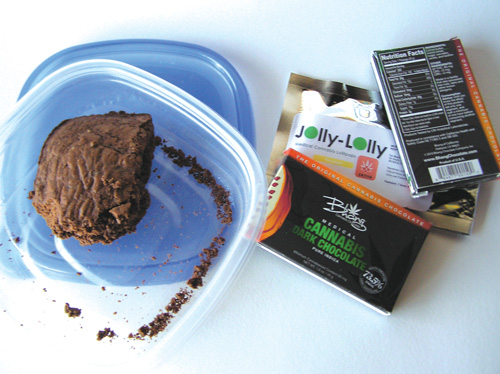
And weed. It smells like weed too. Bhang Chocolate churns out medicinal marijuana sweets here, bars that are smartly packaged in Bhang’s sleek black, orange, and green boxes that are a far cry from the plain wax envelopes and saran wrap that most marijuana edibles used to be sold in. The company is part of the current expansion in edible products — these days, patients can buy medicated cheesecakes, and even savory trail mix.

Adjacent to Bhang’s factory floor, about ten marijuana edibles producers are listening to a man talk about quality control for weed food. Robert Martin, Ph.D., worked for years in corporate food product development and quality assurance. He tells the class his specialty was frozen foods.

Martin is the co-founder of C.W. Analytical, a business that consults marijuana producers and has cannabis testing facilities. A patient himself, he says that marijuana-medicated foods are technically subject to all the same guidelines for commercially-produced non-pot products, although actual enforcement is sparse. C.W. offers these classes for free to interested entrepreneurs. They teach professional skills and serve as an introduction to the for-sale services the business provides.

The students are being treated to quality assurance fail stories from Martin’s career in the corporate world. A sherbet producer he once knew bought a wildly expensive machine to make fudge bars, but when he failed to make the proper tests on his treats, they caused a nasty spate of diarrhea in consumers and he ended up losing his shirt.

“That’s the kind of crap that can happen to you guys,” cautions Martin, and starts reading from a tongue-in-cheek guide to how you can tell food has gone bad. “Flour is spoiled when it wiggles,” he reads. This is quality assurance humor. “I love this stuff!”

One of the day’s students Lacey (not her real name) says she learned a lot from the class that she’ll be able to implement in her own business, Laced Cakes Bakery. She’s been making prettily iced cannabis cookies and brownies since 2007 and has seen the industry requirements shift dramatically.

“Years ago, you could just bring down a tray [to a dispensary] and drop it off,” she says. Nowadays, to sell in San Francisco she has to package the sweets in opaque material and make sure that the design can’t be interpreted as too appealing to kids. “The laws keep changing.”

She had heard about C.W. Analytical at some of the cannabis expos she’s been a vendor at — the firm will have a booth at next weekend’s West Coast Cannabis Expo as well — and was happy that the class was offered for free. She hadn’t finalized her opinion, however, on Martin’s suggestion that producers get their foods analyzed by the company so that they can put nutrition labels on their packaging. “It seems like they might just be trying to make money off of us,” she mused. 

WEST COAST CANNABIS EXPO

Oct. 7-9. Fri/7, 3-9 p.m.; Sat/8, 11 a.m.-9 p.m.; Sun/9 11 a.m.-7 p.m., $18 one day/$45 weekend pass

Cow Palace

Geneva and Santos, Daly City

(650) 591-0420

www.westcoastcannabisexpo.com


Rep Clock

0

Schedules are for Wed/28-Tues/4 except where noted. Director and year are given when available. Double features are marked with a •. All times p.m. unless otherwise specified.

ARTISTS’ TELEVISION ACCESS 992 Valencia, SF; www.atasite.org. $7-9. “Under the Pavement,” five short films by Nara Denning, Thurs-Fri, 8. “Other Cinema:” Works by Sam Green, Peter Miller, Philip Stepp, and more, Sat, 8:30.

BALBOA 3620 Balboa, SF; www.balboamovies.com. $20. “Opera and Ballet at the Balboa:” •Class Concert and Giselle, performed by the Bolshoi Ballet, Wed, 7:30; Manon, performed by Gran Teatre del Liceu, Sat-Sun, 10am; Oct 5, 7:30.

CASTRO 429 Castro, SF; (415) 621-6120, www.castrotheatre.com. $7.50-15. •The Long Goodbye (Altman, 1973), Wed, 2:40, 7, and California Split (Altman, 1974), Wed, 4:45, 9:05. The Tree of Life (Malick, 2011), Thurs, 2, 5, 8. We Were Here (Weissman and Weber, 2011), Sept 30-Oct 6, 7, 9:15 (also Sat and Oct 5, 2:30, 4:45).

CHRISTOPHER B. SMITH RAFAEL FILM CENTER 1118 Fourth St, San Rafael; (415) 454-1222, www.cafilm.org. $5.50-10.25. The Hedgehog (Achache, 2010), call for dates and times. Love Crime (Corneau, 2010), call for dates and times. Mozart’s Sister (Féret, 2010), call for dates and times. Senna (Kapadia, 2011), call for dates and times. Rigoletto in Mantua, Thurs, 7, and Sun, 2. This event, $18. Happy (Belic, 2011), Sept 30-Oct 5, call for times. Passione: A Musical Adventure (Turturro, 2011), Sept 30-Oct 5, call for times. Trust: Second Acts in Young Lives (Kelly, 2010), Sun, 7. American Teacher (Roth, 2011), Tues, 7.

MAIN POST THEATRE LAWN 99 Moraga, Presidio, SF; www.sffs.org. Free. “Film in the Fog:” Dark Passage (Daves, 1947), with live music before the film by Grass Widow, Sat, 7:15.

MECHANICS’ INSTITUTE 57 Post, SF; (415) 393-0100, rsvp@milibrary.org. $10 (reservations required as seating is limited). “CinemaLit Film Series: Euro Passages:” The Edge of Heaven (Akin, 2007), Fri, 6.

MISSION CULTURAL CENTER 2868 Mission, SF; (415) 821-1155, www.missionculturalcenter.org. $5-10. “Serbis: A Night of Film from the Filipino Diaspora,” Sun, 7.

PACIFIC FILM ARCHIVE 2575 Bancroft, Berk; (510) 642-5249, bampfa.berkeley.edu. $5.50-9.50. “Alternative Visions:” Zvenigora (Dovzhenko, 1928), Wed, 7:30. “Anatolian Outlaw: Yilmaz Güney:” The Hungry Wolves (1969), Thurs, 7; The Herd (1978), Sat, 6; Elegy (1971), Sat, 8:45. “The Outsiders: New Hollywood Cinema in the Seventies:” Hickey and Boggs (Culp, 1972), Fri, 7; Sweet Sweetback’s Baadasssss Song (Van Peebles, 1971), Fri, 9:10; Over the Edge (Kaplan, 1979), Sun, 6. “UCLA Festival of Preservation:” Native Land (Hurwitz and Strand, 1942), Sun, 4.

ROXIE 3117 and 3125 16th St, SF; (415) 863-1087, www.roxie.com. $5-9.75. Farmageddon (Canty, 2011), Wed-Thurs, 7, 9:15. The Future (July, 2011), Wed, 7, 9. The Beat is the Law: Fanfare for the Common People (Wood, 2010), Thurs, 7:30, 9:30. “TV Noir:” •”Opening Night: Program One,” Fri, 6, 9:45, and “Program Two,” Fri, 8; •”The Great Directors: Program One,” Sat, 2:15, 6:15, 9:50, and “Program Two,” Sat, 4, 8; •”An Evening with Rod Serling:” “Program One,” Sun, 2:45, 6:15, 9:50, and “Program Two,” Sun, 4:30, 8; •”Legends of Horror Go Noir: Program One,” Mon, 6:15, 9:50, and “Program Two,” Mon, 8; •”Space Age Noir: Program One,” Tues, 6:15, 9:45, and “Program Two,” Tues, 8.

SHATTUCK 2230 Shattuck, Berk; www.berkeleyvideofilmfest.org. $12-15. “20th Annual Berkeley Video and Film Festival,” Fri-Sun.

VICTORIA 2961 16th St, SF; www.reelrocktour.com. $15. “Reel Rock Film Tour,” climbing and adventure films, Thurs, 8.

YERBA BUENA CENTER FOR THE ARTS 701 Mission, SF; (415) 978-2787, www.ybca.org. $6-8. Lola (Mendoza, 2009), Thurs, 7:30; Sun, 2.

Our Weekly Picks: September 28-October 4

0

THURSDAY 29

We Don’t Belong Here Do we belong in our bodies, our skin, our families, this public space, this architectural space, this city space, the Milky Way, the planet, our species, the universe? Inquiring minds want to know. In We Don’t Belong Here, collaborators Katie Faulkner, choreographer and artistic director of little seismic dance company, and multimedia artist Michael Trigilio, along with a robust cast of 20 dancers, premiere a dance and media response to these questions as an impromptu renegade, do-it-yourself sideshow. The free performances, commissioned by Dancers’ Group as part of their Onsite series, take place at San Francisco’s Union Square and Yerba Buena Lane. Be sure to wear your San Francisco layers. (Julie Potter)

Through Fri/29, also Sun/2, 8 p.m., free

Union Square

Powell and Geary, SF

(415) 920-9181

www.dancersgroup.org


Quick Billy

Bruce Baillie’s high masterpiece moves from wounded channeling of The Tibetan Book of the Dead to metaphysical Western in the span of four reels. Baillie had thoroughly mastered his sentient film language of dissolves and superimpositions by the time of this 1970 effort. As Baillie noted then, “All of the film was recorded next to the Pacific Ocean in Fort Bragg, California, from dreams and daily life there; all of it given its own good time to evolve and become clear to me.” It still has that mysterious air of something slowly clarifying itself. Baillie, who founded Canyon Cinema fifty years ago, will be in attendance with a newly restored print of the film. (Max Goldberg)

7 p.m., $7-10

San Francisco Museum of Modern Art

151 Third St., SF

415-337-4000

www.sfmoma.org


Faustin Linyekula/Studios Kabako

“I am an African dancer. I tell exotic stories. Which one would you like today?” Congolese choreographer Faustin Linyekula does have stories to tell. Yet they have little to do with prettified harvest dances and initiation rituals. His tales are gritty, urban, and razor sharp. As a performer Linyekula is mesmerizing, a tornado of rage and vulnerability. For “more, more, more..future”, in addition to his fabulous male dancers, Linyekula is bringing a Congolese band with an indigenous pop style, ndombolo that mashes Western and African influences. Also integral to this local premiere are poems by political prisoner Antoine Vumilia Muhindo, Lineykula’s childhood friend. (Rita Felciano)

Through Sat/1, 8 p.m., $20–$25

Novellus Theater, Yerba Buena Center for the Arts

701 Mission, SF

(415) 978-2787

www.ybca.org


Weedeater

Weedeater is technically a power trio, but when the band performs, all eyes are on “Dixie” Dave Collins, its inimitable bassist-singer. With his instrument slung so low it threatens tangle between his legs, the manic North Carolingian stands cross-eyed at the mic, screaming so vehemently that it often looks like he’s about to swallow it whole. Though guitarist Dave “Shep” Shepard and drummer Keith “Keiko” Kirkum form a potent partnership, it’s Collins’ pungent bass tone that drives the music. Waves of down-tuned punishment and caterwauling fuzz seem to pour forth unabated from his amps, made musical only through Dixie’s nimble-fingered intercession. Channeled into riff after thundering riff, the onslaught is impossible to ignore. (Ben Richardson)

With Fight Amp, Bison, Saviours

8 p.m., $18

The Independent

628 Divisadero, SF

(415) 771-1421

www.theindependentsf.com


FRIDAY 30

Chicken John’s Book Release and Street Party

Chicken John Rinadi — a legendary local showman, provocateur, and one-time mayoral candidate — has written a book: The Book of the IS: Fail…To WIN! Essays in engineered disperfection. And in true Chicken fashion, he’s throwing an over-the-top book launch party featuring a stellar lineup of artists (56 of whom are designing custom book covers, including Swoon, Brian Goggin, and Rosanna Scimeca); installation art pieces by Michael Christian, Charlie Gadeken, and some Flaming Lotus Girls; live performances by Spacecraft and the Art of Bleeding; art cars and Doggie Diner heads; readings by special guests; and all manner of strange countercultural and cacophonic creations, all spilling out of the gallery into a closed-down Minna Street. This one is not to be missed. (Steven T. Jones)

7 p.m.-2 am, free

111 Minna, SF

(415) 974-1719

bookoftheis.com


FRIDAY 30

Saxon

Though they have since been overshadowed by Iron Maiden and Judas Priest, there was a time when Saxon rode on the foam-flecked crest of the New Wave of British Heavy Metal. Members have come and gone throughout the years, but a hard-rocking core formed by singer Peter “Biff” Byford and guitarist Paul Quinn dates back to the band’s beginnings in Yorkshire, in 1976. Eschewing the operatic excesses of its better-known competitors, the band has penned a vast repertoire of hard-charging, blue collar anthems. When Saxon takes the stage in Santa Clara, the fans will be wearing “Denim and Leather,” and they will expect some “Heavy Metal Thunder.” (Richardson)

With Haunted by Heroes, Hatchet, Borealis

8:30 p.m., $20

The Avalon

777 Lawrence Expressway, Santa Clara

(408) 241-0777

www.avalonsantaclara.com


SATURDAY 1

Alternative Press Expo

Although the ranks of off-the-beaten-cape comic artists swell each year at the mega-convention that is Wonder Con, the indie comic crown in San Francisco is reserved for Wonder’s younger sister, the Alternative Press Expo. At APE, special guests include not Stan Lee and Ryan Reynolds, but instead Daniel Clowes, creator of edgily neurotic texts like Wilson; Kate Beaton and her feminist re-takes of the days of the American revolution and Nancy Drew book covers; Adrian Tomime, who masterminds the Optic Nerve series. The convention also places an emphasis on pairing illustrators and writers, a useful tool for those that wish to traverse the underground tunnel to indie fame. (Caitlin Donohue)

Also Sun/2, 11 a.m.-7 p.m., $10 one day/$15 weekend pass

Concourse Exhibition Center

635 Eighth St., SF

www.comic-con.org/ape


World Vegetarian Day

Are you tentatively eying the nutritional yeast bins and blocks of jalapeño smoked tofu in the grocery store, unsure if you’re ready to take the leap beyond an animal product-dependent lifestyle? What you need is a heaping serving of vegetarian community. Enter the SF Vegetarian Society’s World Vegetarian Day expo, a meat-free miracle for those with a craving for more information on the veggie life. Two days of environmental, nutritional, and anti-paleo diet speakers have been scheduled, and those looking for a more experiential weekend can nosh on Saturday’s raw and vegan dinners — or even check out that day’s rounds of vegan speed dating. (Donohue)

Also Sun/2 10 a.m.-6 p.m., $8 suggested donation

County Fair Building

Ninth Ave. and Lincoln, SF

(415) 273-5481

www.sfvs.org/wvd


The Beat Is the Law: Fanfare for the Common People

It’s a musical fairytale story so good it could be a bad Mark Wahlberg movie: a lesser known band (Pulp) gets tapped to replace a headlining act (The Stone Roses) at a music festival (Glastonbury) and ends up blowing the non-existent roof off the place. Okay, so maybe it’s not a Wyld Stallyns level achievement, but it was supposed to be a helluva show and breakthrough in 1990s Britpop. Beyond myth-making in just the one moment, Eve Wood’s documentary, The Beat Is the Law, focuses on the decade building up to Glastonbury, in which Pulp seemed to be the little band that couldn’t. (Ryan Prendiville)

7:30 and 9:30 p.m., $10

Roxie Theater

3117 16th St., SF

(415) 863-1087

www.roxie.com


DARK PASSAGE

Celebrating the 10th anniversary of their “Film In The Fog” series, The San Francisco Film Society is presenting Dark Passage, the classic 1947 film noir thriller starring Humphrey Bogart and Lauren Bacall that was both set and filmed in San Francisco. Follow the exploits of Bogey as the wrongfully-convicted man on the run through the city at this special free outdoor screening, where audience members can set up blankets and lawn chairs and get cozy under the stars — or the city’s signature layers of fog. The movie will be preceded by a performance by local rockers Grass Widow, along with screenings of a ’50s era newsreel and a cartoon. (Sean McCourt)

5:30 p.m., free

Outside of Presidio Main Post Theater

99 Moraga, SF

www.sffs.org


SUNDAY 2

The Hades Channel

Sure, Gwyneth Paltrow just won an Emmy for guest-starring on Glee. Though she’s objectively the personification of modern evil, sinister stunt casting is actually nothing new. The Devil himself has graced the idiot box multiple times, and I’m not just talking South Park. The Vortex Room collects some of his best work (and some of the best work themed around his ominous deeds) for “The Hades Channel,” a marathon screening of episodes of classic shows like Lost in Space, Night Gallery, and Starsky and Hutch — seems Satanic Panic was a ripe plot device back in the day. Can’t get enough Beelzebub? Following “The Hades Channel,” the Vortex unleashes six weeks of hellzapoppin’ double features (sourced from the trashiest depths of the 1960s-80s), “The Vortex Incarnate,” starting October 666. Er, sixth. (Cheryl Eddy)

6:66 p.m.-1:45 a.m., $6.66

Vortex Room

1082 Howard, SF

Facebook: The Vortex Room


TUESDAY 4

John Lithgow

With a career that includes a wide spectrum of artistic output, John Lithgow has proven himself to be a versatile and talented actor, author ,and much more. His film credits such as The World According To Garp (1982) and Harry and The Hendersons (1987), television roles on shows like 3rd Rock From The Sun, and his series of stage performances and children’s books have entertained and enlightened for nearly four decades. Catch Lithgow tonight in an intimate talk about his new book, Drama (HarperCollins), focusing on his life lessons and his craft. (McCourt)

7:30 p.m., $12–$44

Sundance Kabuki Theater

1881 Post, SF

(800) 838-3006

www.booksmith.com


TUESDAY 4

Dum Dum Girls

Only In Dreams, the sophomore album from leatherette rockers Dum Dum Girls is a flavor at first consistent with the bubble gum pop of last year’s I Will Be. Half the album mechanically swings between the theme of romantic obsession, from the person you can’t bear to be without (“Bedroom Eyes”) to the one who needs to go away (“Just A Creep”). But the saccharine sweetness fades in the second half (and real substance) of the album, as singer-songwriter Dee Dee turns somber, reflecting on a loss that’s not just the sort of seasonal regularity she’s used to, but something more permanent. (Prendiville)

With Crocodiles and Colleen Green 9 p.m., $17-19

Great American Music Hall

859 O’Farrell, SF

(415) 885-0750

www.gamh.com


The Guardian listings deadline is two weeks prior to our Wednesday publication date. To submit an item for consideration, please include the title of the event, a brief description of the event, date and time, venue name, street address (listing cross streets only isn’t sufficient), city, telephone number readers can call for more information, telephone number for media, and admission costs. Send information to Listings, the Guardian Building, 135 Mississippi St., SF, CA 94107; fax to (415) 487-2506; or e-mail (paste press release into e-mail body — no text attachments, please) to listings@sfbg.com. Digital photos may be submitted in jpeg format; the image must be at least 240 dpi and four inches by six inches in size. We regret we cannot accept listings over the phone.

Legends of the underground

5

emilysavage@sfbg.com

MUSIC “There are people like us who decide we no longer want to deal with what is fed to us through commercial forces,” says infamous hardcore singer Mike Apocalypse, “We strive to create new things — if I couldn’t create new music, I would fall apart in a month’s time.”

It’s wretchedly hot on a Sunday afternoon at Mission bar Laszlo when Apocalypse, 37, makes the above statement while ordering a shot and a Red Stripe. Over the course of two-and-a-half hours, he orders many more shots and beers, and excitedly bumps into a cadre of fellow music-maker friends.

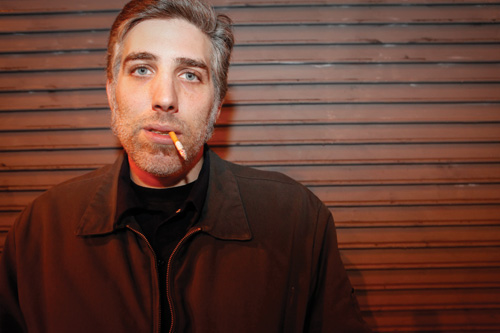
With a broad grin, his sea-green eyes widen as he recalls the early 90s origins of Gehenna, his longstanding hardcore-black metal band. He folds his tattooed fingers (one reads “83%” in ode to Gehenna’s first song) over a beer with a mention of the upcoming chopped and screwed Gehenna mixtape.

In addition to his role as Gehenna’s singer, Apocalypse is also a respected local DJ. He beams while giving me the rundown on his daily routine: recording music at home in the Excelsior District every morning, DJing at Laszlo, Showdown, or Argus Lounge every late night; recently spinning disparate tracks by the likes of Infest, Stone Roses, and Nipsey Hussle.

This, his openness and agreeable demeanor, are in direct contrast with his fabled persona. Mind you, he’s only a legend in the underground, in small pockets of cities like San Diego, Orange, Calif., and Reno, but within certain crowds, the rumors are alive. If you’ve heard of him — and chances are, you haven’t — than you’ve heard the drama.

The rumor mill: Apocalypse stabbed a guy at a punk show. He punched someone in the face at a record store. He contributed to another musician losing his mind. And so becomes a legend. There have been outsized rumors and half-truths, tattooed cupped hands whispering circles around Apocalypse, also known as Mike Cheese or DJ Apocalypse, for decades.

“You know more of the rumors than I do, and you know more of the falsehoods than I do,” he says. Without addressing any specific incidents he lays it out: “The rumors also come from people who have attacked me physically and they thought they could fuck me up. Fact is, I don’t bullshit. If you think you’re going to fuck me up, unfortunately, I’m pretty good at handling my hands, I’ve got some good fist game because I grew up in Detroit.”

That last part is unquestionably true, he lived in Detroit until age 14, when he moved to San Diego alone. By age 17, he was straight-edge and on a cheeseburger diet (hence the name “Cheese”). He met fellow musicians through the hardcore scene and formed Gehenna. With its pummeling drum beats, black metal riffs, droning breakdowns, and Apocalypse’s tortured, growling vocals, it brought something new to the 1993 hardcore table.

“I brought in some of the more metal elements, Mickey [Rhodes Featherstone] brought in 70s proto-punk and DC [Grave] brought in the really fucking heavy stuff and the straight thrash — we were able to incorporate all the things we liked into one sound.”

Through 17 years, the band has self-released seven-inches, splits, and a few full length LPs — most recently, 2011’s re-issue of Land Of Sodom II/Upon The Gravehill — and moved from San Diego to Phoenix to Orange to Reno. Apocalypse, far from straight edge, settled into San Francisco in 2008, but since the other members are spread elsewhere, Gehenna only plays SF once a year. “San Francisco, is one of the greatest cities in the United States. This is the most open-minded city I’ve ever been in.”

He seems pleased with his current lot in life; it might be the alcohol or recreational drugs talking, but he’s truly inspirational in his takes on art, music, life. Truth to those whispered rumors or not, legend or not, Apocalypse is a man of convictions.

“[Gehenna] is not making money, we’re not going to ever sign with a major label, we’re never going to do anything that’s outside of our realm of control. It’s always been about control.”


GEHENNA

With Hoax, Neo Cons, and Neighborhood Brats

Wed/28, 8 p.m., $8

Sub-Mission

2183 Mission, SF www.sf-submission.com

Fighting displacement in Fiji, San Antonio’s community gardens

3

Last Saturday, the website 350.org encouraged people met up to protest dependence on fossil fuels and celebrate community-based activism. The result was 2,000 events across the world for a day of action called Moving Planet Day, a dispersed mix that illustrated how climate change is affecting and being worked on in different parts of the world. We checked in with organizers in San Francisco and Buenos Aires last week (check shots from the celebration in San Francisco’s Civic Center Plaza here) and will round out the series with news from activists in San Antonio, Tex. and Suva, Fiji. Their answers spoke to the breadth of the day’s significance.

Mobi Warren, founder of 350SanAntonio.org and Moving Planet volunteer coordinator, helped organize two events in her city — one at a community garden and one at a repurposed brewery, at the same time as a farmers market. 

SFBG: What was the goal of Moving Planet Day in your town?

MW: Increased awareness among citizens; expanded partnerships and new alliances between environmental, civic, non-profit, and local governmental organizations who engage with the issue of climate change from different perspectives; momentum and inspiration for all the hard work that lies ahead.  


SFBG: How did people mark the day? What was going on in San Antonio?

MW: We had [Moving Planet Day] events at two venues. One was sponsored by the Health Collaborative, a non-profit that works in local schools and that has a beautiful community garden (next door to the school where I am a fifth grade math teacher — the Roots and Shoots Environmental Club I sponsor at my school partners with the garden) — they offered several family-friendly, hands-on activities that explored community gardens and local food as one of the solutions to climate change. They also had two huge pinatas in the shape of Hummers filled with green surprises that children broke open as a symbolic way of breaking an addiction to fossil fuel.

The second event was a larger awareness fair that took place at a popular San Antonio gathering place — the historical Pearl Brewery — a completely solar-powered space that has been repurposed and that holds a popular farmer’s market every Saturday that draws a good crowd. Twenty groups set up tables with hands-on activities and info related to climate change solutions: green building, alternative transportation, recycling, community gardening, etc. Sierra Club members took on the task of inviting an impressive slate of speakers for the Pearl event. We had state representative Mike Villareal, two Texas  Climate Scientists, Gunnar Schade and Gerald North who gave terrific and informative presentations, and Congressman Lloyd Doggett, a strong advocate of 350.org. There was even a poetry reading as part of Moving Planet in the local bookstore at the Pearl, The Twig. Poets read poems on the theme of climate change and environmental issues.


SFBG: Your favorite part of the day?

MW: The entire event was pretty amazing. We estimate 800 to 1000 people passed through the awareness fair and there was a lot of engagement and conversation going on the whole time. Seeing citizens stay after the speakers’ presentations to ask questions and discuss with them how we can better work together on the urgent issue of climate change made me feel that awareness and momentum is growing here in the heart of Texas. But maybe the most inspiring moment was seeing the face of one of my students who came to both venues with her mom and siblings (and this is a low income family that gets everywhere by bus or foot) — explaining to her family what 350.org means.   


Ewan Cameron celebrated two Moving Planet Days — roughly the first and last ones in the world. The coordinator for the Pacific chapter of Moving Planet Day and part of the organizing committee for Moving Planet Samoa, he participated in a Suva, Fiji walk-bike-canoe-run event. We caught up with him via email before he flew the 719 miles — and 22 hour time difference — to Samoa to participate in festivities there. 

SFBG: What is your role in your city’s Moving Planet Day events?

Ewan Cameron: I am the Pacific coordinator for Moving Planet as well as a part of the Samoa Moving Planet organizing committee.


SFBG: What inspired you to get involved?

EC: The problems that small islands face, the interactiveness of 350.org, the friendship and inspiration of others, and the passion.


SFBG: What did Suva get up to on Saturday?

EC: We paddled a six-person canoe, sailed, walked, ran, and cycled from Suva Point to Suva’s grammar school and back.


SFBG: What, for you, was the most inspiring moment?

EC: Sharing this moment with fellow Pacific Islanders, and with the rest of the entire world, in addition the fact that the Pacific officially began the campaign with in Tonga, and we in Samoa will be the last country to close the campaign. I am fortunate at this moment to be in Fiji participating in the Moving Planet event in Suva, I was here attending a 2 week training, and then I fly out tonight back to Samoa where I live to celebrate our event in Samoa which is the last event on the planet. So I will be in two different time zone.


SFBG: How many people attended the event?

EC: Over 50 people participated.


SFBG: Why was this such a big deal?

EC: Because the climatic impacts are already being felt, people, and communities within the Pacific are being forced to relocate and are being displaced. These problems are not being exaggerated, Coastal areas are eroding, saltwater from king tides are damaging staple foods that people rely on, climate change is a real issue. The science is there, it can be proven, and on top of that major emitters are violating people rights!


SFBG: What do you hope that Saturday’s activities achieve?

EC: Major public pressure on governments to commit to a emissions reduction target that will bring the planet down below the safety level of 350ppm, and a serious, rapid display of movement towards the use of cleaner energy sources.  


SFBG: How did you transport yourself to the festivities?

EC: I walked.


SFBG: Complete this sentence: We can reverse the causes of man-made climate change if we… 

EC: … stop burning coal, and not allow the burning of tar sands. 

Alerts

0

steve@sfbg.com


MONDAY 3

CMAC mayoral forum

San Francisco Police crackdowns on nightclubs and private parties, with the tactic and sometimes overt support by then-Mayor Gavin Newsom, led to the creation of the California Music and Culture Association to advocate for the city’s nightlife (see “The new War on Fun,” 3/23/10). Now, CMAC is hosting a mayoral candidate forum to gauge how the next potential inhabitants of Room 200 feel about issues relevant to party-goers and -throwers. The event will be moderated by Priya David Clemens and will feature remarks by Lyrics Born and Sup. Scott Wiener and musical performances by Bob Mould and Zoe Keating.

6-9 p.m., free

The Fillmore

1805 Geary, SF

rsvp to sfmayoralcandidateforum.eventbrite.com


The state of labor

Wilma Liebman, former chair of the National Labor Relations Board, gives a talk entitled “The Battle for a Fair and Realistic National Labor Policy.” Liebman stepped down as chair last month — after 14 years serving on the board, the third longest serving member in its history — during one of the most turbulent years in the body’s history. The event, sponsored by SF State’s Labor and Employment Studies Program, is the first Gerald McKay Memorial Lecture.

6-8 p.m., free

SF State’s Downtown Campus

885 Market, 5th Floor, SF

817-4300

rsvp to jlogan@sfsu.edu


New Coffee Party

The Coffee Party, a consensus-seeking political group formed in reaction to the reactionary Tea Party, is in transition. The leaders of the former SF Coffee Party Group have now dubbed themselves The Bay Area Circle and they’ll meet to decide on a new name and direction for a group that seeks to bring together people of various views around a common agenda.

6:30-8 p.m., free

Cafe La Boheme

3318 24th St., SF

thebayareacircle@yahoo.com


TUESDAY 4

Organizing in radical times

Authors Amy Sonnie and James Tracy will discuss their new book, Hillbilly Nationalists, Urban Race Rebels and Black Power: Community Organizing in Radical Times (Melville House Publishing, 2011), in conversation with Roxanne Dunbar Ortiz. The books shows how the protest movements of the New Left in the ’60s spawned future organizing efforts that have been challenging right-wing networks over a range of important issues vital to the direction of the country. Afterward the talk, attendees will cross the street to the Buck Tavern for a beer bash benefiting the SF Community Land Trust and Jobs with Justice SF.

7 p.m., free

Green Arcade Books

1680 Market, SF

sonnieandtracybook.com

Fear not Folsom first-timers: advice through the lens of local photographers

0

Folsom weekend has arrived and if you’re new to the game, you’ve got all kinds of decisions to contemplate before running out onto the leather field. Those who trot through the gates minus preparation are still going to win on visuals and play, but those who put in just a minute of pre-fair prep will really score– hard. The best place to garner suggestions is obviously via a Folsom veteran, but take it a step further and open your orifices to advice from those who not only make it a point to attend, but whose job it is to professionally observe, capture, and display erotic action at the fair and beyond.

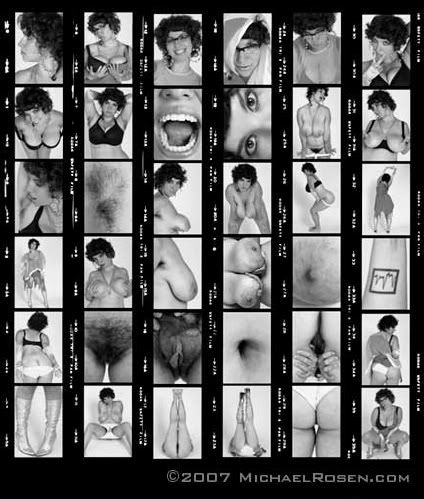
Fear No Art features 17 local photographers and a body of work that will make you cum, gasp, smile, and laugh (not necessarily in that order). From intense bondage, hardcore sex, pretty toys, notes on death and loss, and even a woman strung like a harp, this collection is going to get you all revved up for the weekend’s plethora of sexual opportunities. Since these photographs are more so for offering inspiration and not the obvious logistical advice you may need for your first-time Folsom adventure, a handful of the artists have offered up some helpful hints to get you off in the right direction.

patti_beadles

Patti Beadles

SFBG: Give us a couple notes on etiquette– what to do or not to do? Are there rules?

Beadles: Be respectful. Don’t touch people without permission. Looking is OK but gawking is tacky. Try not to sound like a drunken frat boy by making crude passes at people. 

SFBG: What to wear? Ahh, the choices!

Beadles: Wear whatever you feel comfortable and sexy in. Leather is good. Lace is good. Heels are good. Boots are good. Whatever you wear, remember that you have to spend the afternoon in it while walking around in the hot sun!


morgan

Morgan Weinert

SFBG: Give us three must-sees for newbies.

Weinert: 1. The boot black stand at the intersection of Dore and Folsom. Make sure to tip your boot black! 2. Venus’ Playground. Great performances are open for all to watch but the women/trans only space is a great place to get out of the crowd. 3. The Kink.com booth is a crazy place to watch some interesting public performances. The Kink.com models and directors never hold back!

SFBG: What to wear? It’s so last minute…

Weinert: Multi-Kulti is a great place to get fishnet body suits, sequined booty-shorts, and false eyelashes. Clothes Contact is full of awesome vintage lingerie and great dresses– most of it sold by the pound!


rosen

Michael Rosen

SFBG: Name your absolute must-try?

Rosen: Five dollars gets you three minutes of spanking, flogging, or foot worship via one of the ladies of Fantasy makers, a local BDSM establishment. Five dollars can also get you three minutes to fondle the ample breasts of a beautiful, green-haired lady. All proceeds go to charity, this year to the Center for Sex and Culture. 

SFBG: What should I wear?

Rosen: Dress to impress, or not. Nudity is OK; wear clothing you can stuff into a fanny pack. The police are cool, but they will tell you to stop any sexual touching. Bring your camera. Leave your “certified panty/jockstrap inspector” t-shirt at home. It’s OK to wear a law enforcement officer’s uniform, as long as it’s not from the SF Police. 

mim

Mim Weisburd

SFBG: Three must-sees?

Weisburd: 1. Fear No Art Exhibit 2. My Daddy’s hot ass 3. All your friends nekkid in the sunshine

SFBG: How about a must-try?

Weisburd: Something you have never ever done before.


shilo

Shilo McCabe

SFBG: Thoughts on etiquette?

McCabe: 1. Please refrain from taking photos without permission. 2. Don’t touch anyone without permission– seriously. Just because someone is showing a little (or a lot!) of skin doesn’t mean it’s there for you to touch. 3. Leave the kids at home! It’s kind of unnerving to see parents pushing strollers or walking around with toddlers in hand.

SFBG: What to wear?

McCabe: I always suggest to my friends that the most important things to wear are sunscreen and shit-kicking boots– in case you have to kick shit. 


Fear No Art (Opening Reception)

Fri/23, 7 p.m. to 11 p.m., donations accepted 

Mark I Chester studio

1229 Folsom St, SF

http://markichester.com

Moving the planet: San Francisco speaks

2

As far as the planet is concerned, it’s probably a good thing that Morgan Fitzgibbons is adept at guilt trips. Consider the Huffington Post editorial the SF neighborhood activist and founder of Western Addition’s Wigg Party wrote earlier this year. You know our descendents? “They will either remember you as someone who fought for life against the greatest odds, or someone who simply neglected your most fundamental responsibility — to pass the world on to the next generation,” wrote Fitzgibbons. 

In the same editorial he promised to “see you in the streets.” Well ready your street-walking shoes, because that day has come: Sat/24 is Moving Planet Day, which will see 2,000 events in more than 168 countries, promises to be one of the largest global manifestations for the environment to date. People across the Earth will be speaking out, massing up, and getting loud about the need to stop our fossil-fueled ways before it’s too late.

Morgan Fitzgibbons walks the walk at a tree planting in July. Photo via St. Cyprian’s Episcopal Church

And you should hear the voicemail we got from Fitzgibbons yesterday. Jesus, blistering. Invoking our duty as agents of change in the Bay Area, for chrissakes. So we decided to swing into action: today, tomorrow, and next week we’ll be profiling Moving Planet Day events across the planet. We’ll begin close to home with Fitzgibbons explaining what will be happening in our very own city. Tomorrow: an organizer from Buenos Aires tells us what’s in store down south. 

San Francisco Bay Guardian: What is your role in your city’s Moving Planet Day events?

Morgan Fitzgibbons: As a leader of a neighborhood based resilient community organization, I am of course a long time fan of 350.org and know from previous experience that their annual days of action are the biggest events in the whole world of climate change, sustainability, etc. So I’ve been doing general volunteering since May to help produce the event – anything from finding a scissor lift to media outreach to hopefully being able to say a few words on stage on Saturday.

SFBG: What inspired you to get involved?

MF: I’ve known and worked with the 350.org folks for a number of years now, and so I know there is no bigger event on the scene. They have done an excellent job of galvanizing the whole world to stand together, and that’s really key – this is a global problem that requires a global solution. 


SFBG: What does your city have planned for Saturday?

MF: Our event is going to bring together people from all over the Bay Area. People will meet in their regional cities and towns and then travel to San Francisco at 12 p.m. to march from Justin Herman Plaza down Market Street to Civic Center for a big rally featuring 350.org founder Bill McKibben and the Sierra Club’s executive director Mike Brune as well as a bunch of great music, including Ashel Seasunz!


SFBG: How many people are expected to attend?

MF: We won’t really know until Saturday, but we are anticipating somewhere in the 2,000-4,000 range.


SFBG: Why is this such a big deal?

MF: It’s a huge deal because climate change and the related planetary crises threaten the very foundations of our society. The world’s governments have obviously demonstrated that they are going to put short-term profits ahead of any long-term security and are effectively ignoring these issues. Saturday is the rare time when we can push the clueless governments out of the way and stand together as a concerned global population. Millions of people around the world are going to devote their day to standing up for this cause, because they know that the maintenance of a healthy planet is more important than anything else in the world. 


SFBG: What do you hope that this day achieves?

MF: You know rallies are notoriously tricky because everyone shows up, everyone’s excited, and then at the end of the day you’re not always sure what came out of it. I think obviously a big takeaway is going to be knowing that millions of people around the world feel the same urgency that you do, which is extremely empowering. But what I personally hope people take away from the day is that this isn’t a problem that’s solved with a rally or voting for or against some bill at the  ballot box. It’s something that is going to require us to get out in our neighborhoods every day to organize and build more resilient communities. That’s what I’ll be preaching if they hand me the mic.


SFBG: How will you transport yourself to the festivities?

MF: I’m going to be riding from Tour de Fat in the morning, so I’ll be taking my bicycle through the Wiggle. I wouldn’t have it any other way.


SFBG: Complete this sentence: We can reverse the causes of man-made climate change if we…

MF: …get out in our neighborhoods and organize. This must happen in every community big and small. There is no movement without this. We need no less than a cultural revolution. But as soon as people take this aspect of the work seriously… look out.


Moving Planet Day

Sat/24 10 a.m.-6 p.m., free

March starts at Justin Herman Plaza, SF

Afternoon activities at Civic Center, SF

www.moving-planet.org


The Performant: The mundane sublime

1

Park(ing) and Fold {Live} were far from humdrum

It’s the little things. The things we do over and over again—the automatic, the routine, the de rigueur, the rote—that we need to find ways to celebrate above all, because every moment past could be a moment wasted, or a moment redeemed. But as with conceptual artist Kate Pocrass’ long-running Mundane Journeys project, sometimes the moment needs to be curated in order to be illuminated. That principle got some play over the past weekend with Park(ing) Day and Surabhi Suraf’s “Fold {Live}” installation, two very different projects which nonetheless served to turn the most banal of routines into conscious acts.

On Friday, the mundane act of feeding the meter was celebrated with the now-worldwide annual tradition of Park(ing) Day. Though it was occasionally difficult to tell Parks from Parklets, the Valencia corridor was a hopping Park(ing) Day hotspot, with hay bales and a live sheep parked out front Ritual Coffee, a proto-type vertical garden in front of Range, and a green-roofed doghouse in front of Thrifttown. My favorite concept was a little more scaled back yet more performative: a fundraiser for the Prison Yoga Project spearheaded by Mariah Rooney, whose streetside yoga lessons provided both visual and physical stimulation for passerby. Thank goodness for yoga mats, because there wasn’t much else protecting participants from the asphalt jungle, but there was no sign of discomfort marring the serene faces of the stretchers. Down wiggle way, aka Fell Street, the Wigg Party had set out cushions and camp chairs, and were plying people with tea and books of esoterica from founder Morgan Fitzgibbons’ collection. There was still plenty of traffic, and one bargain hunter who wanted to browse the selection of cushions, but the Wigg party’s little oasis of tranquility held strong though the day, despite the wind and uncomprehending cars rushing past.

Sunday at four p.m., a small group gathered expectantly in front of the Federal Building on the corner of Seventh and Mission to bear witness to the second of four “Fold {Live}” performances, conceptualized and choreographed by recent transplant Surabhi Saraf. Based on her 2010 video project Fold, “Fold {Live}” took the familiar act of folding the laundry and turned it into a group meditation. In silence, nine participants entered the staging ground, collapsible laundry totes in hand, and sat streetside on the round cement “stumps” built as if with this very performance in mind. Carefully, fluidly, each took from their tote a black shirt and began to fold them, in unison, with methodical care. A pair of inside-out jeans followed, which each performer first pulled rightside-out with slow, steady motions, and then gently folded them into little squares. Gradually, particularly in the case of colorful, billowing scarves which made a couple of appearances, the work took on an aesthetic cast which solitary laundry-folding rarely seems to embody, but essentially could.

Like any mundane moment, there is always the potential to turn it into something more meaningful. The hows and whys are up to us.

San Francisco Smut Map

3

culture@sfbg.com

SEX ISSUE 2011 In 1969, San Francisco became the first city in the country to permit the exhibition and sale of hardcore pornography. Although “permit” isn’t exactly right. The city’s vice squad (with the help of Supervisor Dianne Feinstein) fought it every step of the way. But by the time a rag-tag band of hippies with cameras began harnessing the Free Speech movement to challenge obscenity laws, San Francisco had already become, in the words of the New York Times, “a sort of Smut Capital of the United States.”

Earlier this year, director Ben Leon and I produced Smut Capital of America, a documentary short about San Francisco’s flesh-filled reign as the center of U.S. hardcore. (The skin flick industry didn’t move down to San Fernando Valley until the 1980s, when VHS took over and Los Angeles stopped arresting filmmakers.) The film industry itself may have been shaved and plucked, but San Francisco never lost its filthy patina, thank god.

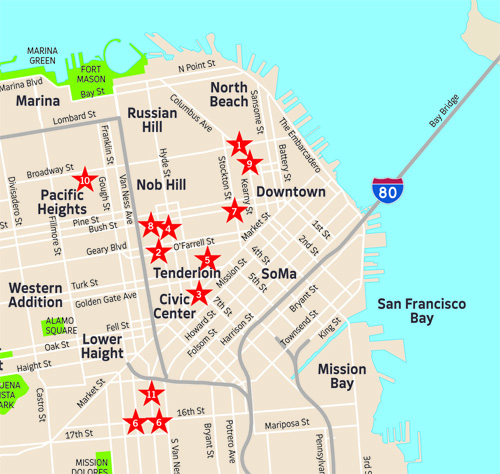
Here are a few of the filthy great places, classic and new, that any self-respecting San Francisco pervert and/or fan might want to map.

1. The Condor Club

560 Broadway

The first topless dance took place in 1964 at the Condor when Carol Doda took to the stage in designer Rudi Gernreich’s revolutionary “monokini.” The bathing suit never really caught on, but topless dancing became an export that would become synonymous with San Francisco.

2. The Mitchell Brothers O’Farrell Theatre

895 O’Farrell

The good ol’ boys from Antioch made a fortune with movies like Behind the Green Door, but when obscenity busts began taking their toll, they moved to live shows. The place still give a great lap dance, but the days when you could eat a girl out for a dollar are long gone.

3. The Strand

1127 Market

I once heard it referred to as a stop on the underground gay railroad — and for good reason. While this theater showed big Hollywood movies and noir retrospectives, the balcony was the cruisiest, bleachiest-smelling place in town.

4. The Magazine

920 Larkin

This still-operational vintage magazine shop has never shied away from porn. And since few museums find it palatable to save smut, it’s a living archive of the sexual revolution, balls, and all.

5. The Screening Room

220 Jones

In 1970, the Screening Room became the first theater in America to show hardcore pornography, with a law-skirting documentary about the free-loving Danes called Pornography in Denmark. Director Alex deRenzy set off a cinematic revolution, and earned a profile in Time magazine. Perhaps fittingly, it’s now the Power Exchange sex club.

6. The Roxie and the New Follies

3117 16th Street and 2961 16th Street

Long before it was an indie movie rep house, the Roxie showed soft-and hardcore 16mm loops shot by the Mitchell Brothers, then just out of college. The New Follies, just down the street on then smut-filled 16th Street (it’s now the Victoria), pioneered bottomless dancing, and later, live sex shows.

7. The Sutter Theatre

369 Sutter

Arlene Elster and Lowell Pickett plotted the International Erotic Film Festival at their theater off Union Square in 1970, when the area was still known as the downtown Tenderloin. The films themselves screened at the prestigious Presidio Theater in the Marina with a red carpet covered by KPIX. Even smut-opponent Dianne Feinstin showed up to rant against the duo’s “very depraved wares.”

8. Le Salon

1118 Polk Street.

“There out to be a plaque on the building,” says Bay Area Reporter porn critic John Karr, who went to this bookstore to cruise and flip through dirty magazines. Store owner Roland Boudreaux eventually opened a non-smut operation next door with a connecting doorway so that customers could leave and enter without attracting stares from high-society queens.

9. The Lusty Lady

1033 Kearny

The original Lusty Lady showed 16mm films, but by the early ’80s this North Beach smut center had live dancers as well. In 1997, the dancers organized an Exotic Dancers Union to make it the first unionized sex club business in the United States. In 2003, they bought the business, making it a worker-owned cooperative.

10. The Gordon Getty Mansion

2050 Jackson

During the ’80s and ’90s, this Pacific Heights mansion was the home of smut merchant and Falcon Studios honcho Chuck Holmes, whose name now graces the LGBT community center on Market Street. In the afternoons, he shot gay porn in the basement. In the evenings, he hosted spectacular galas to raise money for visiting politicians.

11. The Armory

1800 Mission Street

Does anyone not realize that this former munitions warehouse now houses an arsenal of dildo-equipped robots and that the National Guard training hall is used to film “Wired Pussy” episodes? Thanks, Kink.com for making sure San Francisco is still known as the Smut Capital of America.

Rep Clock

0

Schedules are for Wed/21-Tues/27 except where noted. Director and year are given when available. Double features are marked with a •. All times p.m. unless otherwise specified.

ARTISTS’ TELEVISION ACCESS 992 Valencia, SF; www.atasite.org. $6. “Periwinkle Queen Cinema Series,” short films, Wed, 8. “Films from Four Mountain Ranges by Marcy Saude,” Fri, 8.

BALBOA 3620 Balboa, SF; www.balboamovies.com. $20. “Opera and Ballet at the Balboa:” La Traviata, performed at the Royal Opera House, Wed, 7:30. •Class Concert and Giselle, performed by the Bolshoi Ballet, Sat-Sun, 10am.

BERKELEY FELLOWSHIP OF UNITARIAN UNIVERSALISTS 1924 Cedar, Berk; (510) 841-4824, www.bfuu.org. $5-10. The Battle of Chernobyl (Johnson, 2006), Fri, 7.

CASTRO 429 Castro, SF; (415) 621-6120, www.castrotheatre.com. $7.50-15. Mary Lou (Fox, 2010), Wed, 2, 5:15, 8:15. “Good Vibrations Indie Erotic Film Festival,” party and short-film competition (more info at www.gv-ixff.org), Thurs, 7. The Little Mermaid (Clements and Musker, 1989), presented sing-a-long style, Fri-Sun, 7pm (also Sat-Sun, 2:30).

CHRISTOPHER B. SMITH RAFAEL FILM CENTER 1118 Fourth St, San Rafael; (415) 454-1222, www.cafilm.org. $5.50-10.25. The Hedgehog (Achache, 2010), call for dates and times. Love Crime (Corneau, 2010), call for dates and times. Mozart’s Sister (Féret, 2010), call for dates and times. Senna (Kapadia, 2011), call for dates and times. A Fall From Freedom (Minasian, 2011), Sun, 7. Farmageddon (Canty, 2011), Sun, 4:15.

“FILM NIGHT IN THE PARK” This week: Dolores Park, 19th St at Dolores, SF; (415) 272-2756, www.filmnight.org. Donations accepted. Top Gun (Scott, 1986), Sat, 8.

JACK LONDON SQUARE 66 Franklin, Oakl; www.jacklondonsquare.com. Free. “Waterfront Flicks:” Chocolat (Hallström, 2000), Thurs, sunset.

MECHANICS’ INSTITUTE 57 Post, SF; (415) 393-0100, rsvp@milibrary.org. $10 (reservations required as seating is limited). “CinemaLit Film Series: Euro Passages:” Since Otar Left (Bertuccelli, 2003), Fri, 6.

“OAKLAND INTERNATIONAL FILM FESTIVAL” Grand Lake, 3200 Grand, Oakl; www.oakuff.org. $10. Yelling to the Sky (Mahoney), Thurs, 8. Also Fri, 7:30 and Sat, 5:15 at NIMBY, 8410 Amelia, Oakl. Films, music, and food trucks.

PACIFIC FILM ARCHIVE 2575 Bancroft, Berk; (510) 642-5249, bampfa.berkeley.edu. $5.50-9.50. “Kino-Eye: The Revolutionary Cinema of Dziga Vertov:” A Sixth Part of the World (Vertov, 1926), Wed, 7:30; Enthusiasm: Symphony of the Donbass (Vertov, 1930), Fri, 7; Kino-Pravda, Nos. 1-8 (Vertov, 1922), Sun, 2; Kino-Week Nos. 1, 3, 4, 5, 21–25 (1981), Tues, 7. “UCLA Festival of Preservation:” “On the Vitaphone: 1928-1930,” Thurs, 7. “A Theater Near You:” Diary of a Country Priest (Bresson, 1950), Fri, 8:30 and Sun, 4:15. “Anatolian Outlaw: Yilmaz Güney:” Yol (Güney and Gören, 1982), Sat, 6:30; The Friend (Güney, 1974), Sat, 8:40.

LA PEÑA CULTURAL CENTER 3105 Shattuck, Berk; www.lapena.org. $5. “FistUp Hip-Hop Film Festival:” Black August (2010), Thurs, 7:30.

PRESIDIO 2340 Chestnut, SF; sfslunchline.eventbrite.com. $5. “Slow Food on Film presents:” Lunch Line (Park and Graziano, 2009), Thurs, 6.

ROXIE 3117 and 3125 16th St, SF; (415) 863-1087, www.roxie.com. $5-9.75. Cold Fish (Sono, 2011), Wed, 6:50, 9:35 and Thurs, 9. The Future (July, 2011), Wed-Thurs, 7 (also Wed, 9). “San Francisco Irish Film Festival:” The Runaway (Power, 2010), Thurs, 8; festival continues Wed-Sun. Visit www.sfirishfilm.com for schedule.

SAN FRANCISCO PUBLIC LIBRARY 100 Larkin, SF; www.communitycinema.org. Free. “Bay Area Community Cinema:” Women, War, and Peace (Disney, Hogan, and Reticker), Tues, 5:45.

SFFS NEW PEOPLE CINEMA 1746 Post, SF; www.sffs.org. $13-15. “Hong Kong Cinema,” recent films from Hong Kong directors Benny Chan, Ann Hui, Johnnie To, and more, Fri-Sun.

YERBA BUENA CENTER FOR THE ARTS 701 Mission, SF; (415) 978-2787, www.ybca.org. $6-8. “Greetings on Behalf of the People of Our Planet!,” short “live documentaries” by Dave Cerf and Sam Green, Thurs and Sat, 7:30.

Free Farm Stand faces an uncertain fall harvest after call from Rec and Parks Department

1

Every Sunday at the Parque Niños Unidos in the Mission, an eager group of people gather to receive free, organic food from the Free Farm Stand. The incredible project has been going on since since 2008 and has to date given out almost 17,000 pounds of fresh produce.

This is the brainchild of Tree Rub, a volunteer who started the project “to create a network of neighbors and local farmers who grow fruit, vegetables, and flowers and share their surplus with the community and especially with those in need.” But last Sunday Tree announced that the SF Recreation and Parks Department had received two complaints that the Free Farm Stand is “having a negative impact on the park.”

He was also informed that the group would need a permit for its tent, which it set up to protect to food and volunteers from the sun. Tree says he applied for a permit in 2008 but “never heard back” from authorities.

Sometime the produce that’s given out is extremely ripe and almost past it’s peak, but the savvy San Franciscans who receive the Free Farm Stand’s food (the bounty can include heirloom tomatoes and sun-kissed white peaches) are happy to take the time to can and preserve them. The stand not only creates access to extremely nutritious foods, it saves them from getting composted. Tree also distributes organic seedlings so that people can grow their own veggies and then share any surplus they might have with the community — a feedback loop of neighbors nourishing each other.

I contacted the permits office at SF Rec and Park to ask about the future of the Free Farm Stand and got a message back from Dana Ketcham, the permits and reservations manager.

According to Ketcham, her office doesn’t want to shut down the Free Farm Stand, but employees there “have received complaints that families feel overwhelmed by the crowds as they use this park with their children.”

As of two weeks ago, people waited in line outside of the park, and were only actually in the park when receiving produce. Since the lines have gotten long, last Sunday a new system had been implemented in which numbers are handed out so that people can relax in the grass until it their turn to get food.

Ketcham said that parks are “not authorized places for distribution of food” and “that we needed to give the organizer time to find a new location.” The Free Farm Stand has until October 15th to find an alternative location.

As a long time patron of the Free Farm Stand, this came as very sad news. Tree has created an amazing community that feels like a gigantic potluck. You can meet up with friends and enjoy the sunshine there, in addition to getting fresh food for dinner.

Ketcham suggested the Free Farm Stand re-locate to an “empty parking lot” in her email to me. That plan would mar the beauty of having the stand alongside a community garden where people sometimes wander while they wait and are able to relax in the shade of a tree.

I made of a video of the Free Farm Stand right when it opened, back when it was still a pretty small operation. Tree was handing out jars of honey from his personal bee hives and sprouts. Now, there’s the Free Farm and more than 200 people receiving food each week. It would be a horrible loss to San Francisco if Free Farm Stand disappears.

If you know of any locations where the Free Farm Stand might be able to re-locate, please contact Tree at: iamtree99@gmail.com.


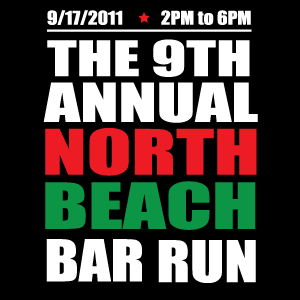
THE 9TH ANNUAL NORTH BEACH BAR RUN

0
Eight years and running, The North Beach Bar Run has grown to be the largest Pub Crawl in San Francisco! Join the CrawlSF Team and 2000 of your new best friends as we take over North Beach on Saturday, September 17th. Expect $2 Premium Beers, $2 Cocktails and $3 Shots at almost 20 great North Beach Bars and Restaurants from 2PM to 6PM. The Crawl Starts at the Northstar Cafe on the corner of Powell and Green at 2PM. Pub Crawl participants can check in and grab their wristbands and maps between 2PM and 4PM.   Purchase tickets here.
Saturday, September 17 at 2PM @ NorthStar Cafe

Harsh times

0

caitlin@sfbg.com

HERBWISE It’s what you would call a recession novel.

The lead character of Tony D’Souza’s Mule: A Novel of Moving Weight (292 pp, Mariner Books, $14.95)has nearly navigated the entirety of the upward-downward spiral to drug kingpin-dom we know so well from Scarface. This is how his story ends, in part:

“And there was the recession and there was not the recession and there was fear from the recession and there was not the fear from the recession. And there was America and there was not America and there was me and there was not me.”

The moment comes after hundreds of pages of violence and paranoia. D’Souza’s James is a successful freelance journalist rendered financially obsolete in the Crash Which Dare Not Speak It’s Name. Reduced from an A-list Austin lifestyle, he decides to drive a pound of marijuana across the country, literally to make ends meet for himself and his young family. His surprising ambition leads to mansions in Florida and reliance on the money-sick and power-mad for business.

Mule reads like an episode of The Wire, drawing from Weeds for some background material. And like those two series, what it has to say about the times we’re living in is worth hearing.

James is a deal-shoot-angst protagonist, a thoroughly middle class character. He wears Lacoste. He can’t get a byline to save his life, hence the drug running. His white skin is an advantage as a mule because it keeps him from being profiled by highway cops.

But if the Obama job plan passes, if unemployment was no longer at 9.1 percent, would James still be hustling? This is where Mule succeeds, its sheer ambiguity making it so much a product of this rightnow. In 2011, it’s not clear if we should be taking deep breathes and job hunting through the madness or straight up losing our shit in the face of economic meltdown, environmental heart attack, and vitriolic culture war.

And yes, Mule is also about marijuana itself. This too is important. How many Cali children have saved their skins by trimming in Mendo?

This is the same substance that supports the professional photographers and glamour shots we profiled in last week’s column. Only in Mule, double murders are performed over the stuff, people lose their minds to transport it. These are the same things that are happening across the hemisphere, despite our privileged Bay Arean cradle where we smoke in the streets and get prescriptions to stoke our appetites. Medicine, felony: marijuana is ambivalence itself these days.

If you’re looking for a novel-length iteration of why cannabis should be legalized, you could do worse than Mule. But you could also do better. That’s because of the book’s omnipresent ghoul, the generation-derailing R-word.

Sure, if selling pot wasn’t grounds for a felony or worse in most of the country, James would never have to smack around that snotty college dealer with the kid’s own textbooks, or been rendered paralyzed by fear in a grotty hotel room in San Angelo, Tex. — but would his world morph to emerald green good vibes? If weed were legal, wouldn’t it be assimilated into that other source of our brave protagonist’s dread? Would it be just one more job field described by our dismal unemployment levels?

Mule is a drug novel. But it’s also a recession novel and it’s not a recession novel and the novel’s about fear from the recession and the novel is not about fear from the recession.

In other words, read it.

Green dreams

0

arts@sfbg.com

FILM Has the landfill, junkyard, and lowly dumpster supplanted the factory as a site of documentary interest and even inspiration? Yerba Buena Center for the Arts features two 2010 docs this week to add to the growing list of recent films centering on scavenging, gleaning, dumpster diving, trash humping, and scrapping — activities illustrating resourcefulness in the shadow of colossal waste.

Scrappers zeroes in on the workaday routines and liabilities facing two laboring subjects, Oscar and Otis, good men who cruise Chicago’s South Side for scrap metal. The film’s three directors spent a couple of years in the passenger seat, long enough for their verité portrait of the scrappers’ lives at work to be anchored in extenuating circumstances: a deportation scare for Oscar, a hospital stay for Otis, and most significantly the collapse of scrap prices as a result of dwindling home construction (the same ton of metal that sold for $200–<\d>$300 in 2007 only brought in 20 bucks in 2008).

Without recourse to a voice-over, Scrappers details economic unrest as well as the complex race and class hierarchies of Chicago’s scrap scene. This is all secondary, however, to the film’s enduring interest in learning how Oscar and Otis actually go about their work — noteworthy in a documentary field crowded with predigested arguments. The filmmakers take liberties in editing together the scrappers’ talk into poetic monologues, but it’s a small price for granting them autonomy in defining not only the necessities but also the dispensations of their work.

While Scrappers works to convey layers of ongoing experience, the Oscar-nominated Waste Land is witness to an exceptional intervention. The film follows Vik Muniz, a successful Brooklyn-based artist originally from São Paolo, as he spearheads a collaborative art project in Jardim Gramacho, a gigantic landfill outside Rio de Janeiro. Muniz first contemplates the site from his Brooklyn studio using land art’s modern surveying tools, Google Earth and YouTube. Once on the ground, his initial disbelief at the scale of the landfill gives way to the more modest realization that many of the pickers working there don’t view themselves as the wretched of the earth.

Waste Land director Lucy Walker omits Muniz’s selection of a handful of the pickers as collaborators and subjects — a thorny process, one imagines — instead fleshing out the backstories of the (admittedly remarkable) chosen ones. They gather material from the dump to help Muniz fashion their iconic portraits back in the studio, with the proceeds of the finished work benefiting the pickers’ labor association.

Muniz’s giving act is more personal and sustained than a benefit concert, but the difference is one of quality not kind. He repeatedly stresses the project as a joint effort in making art of garbage, but the real magic consists of turning garbage into something priced as art, a conversion which undoubtedly helps the pickers but also solidifies Muniz’s privileged position in the world marketplace. In view of this, it’s worth pointing out that many other artists have adapted scavenger aesthetics as a means of dissenting from patronage systems (art or otherwise). In 1965, for instance, Brazilian director Glauber Rocha issued his “Aesthetic of Hunger” manifesto to define Third Cinema’s difference. Some years later filmmakers associated with the Tropicália movement went a step further and called for an “Aesthetics of Garbage.” Needless to say, they envisioned something different than Waste Land‘s sympathetic detachment. It’s not a fair comparison perhaps, but days after seeing the film I’m still bothered by the way it maintains a wry distance from Muniz’s earnest struggle for moral clarity while itself indulging in artsy portraiture of the pickers at work (scored to death by Moby). In any case, magnificent unsigned art grows out of landfill closer to home at the Albany Bulb. There’s a documentary about that too — Bum’s Paradise (2003).

TRASHED: TWO FILMS ABOUT GARBAGE

Scrappers, Thurs/15, 7:30 p.m.; Waste Land, Sun/18, 2 p.m., $8

Yerba Buena Center for the Arts

701 Mission, S.F.

(415) 978-2787

www.ybca.org


Ms. Mirliton

2

CHEAP EATS First time I went to Criolla was with Coach and company and I was just tickled to death to be eating chicken and waffles within walking distance from my home. Chicken and waffles! I forgave them the dry chicken, even though it was all dark meat and dark meat is of course harder to overcook, because the waffle was good. And they offered real, true Vermont maple syrup for one worth-it dollar more.

And it was chicken and waffles. And walking distance. And so forth: sweet potato tater tots, limeade, sunshine, just a beautiful sidewalky San Francisco day at Market and Noe.

I thought: OK, new favorite restaurant. It ain’t Farmer Brown’s Little Skillet, or even Auntie April’s, but it ain’t Baghdad Café anymore, either. It’s chicken and waffles! In the Castro, and that was overall a happy thought.

Next time I went was with Hedgehog on an also-beautiful day, but we sat inside. In the window, and looked out upon the sidewalk there. It’s a colorful corner. Men stroll by naked. Nobody blinks.

All right.

But if you are going to make fried chicken anywhere in the world, including the Castro, including walking distance to my house, you are going to need to make it to order. Fried chicken don’t sit well. It never has, and it never will. So unless you’re a place that sells it as fast as you can crank it out, you’re going to serve some hit-or-miss soggy-breading-ed and dry-meat fried chicken. Most of the time.

I don’t know if Criolla Kitchen fries or tries to fry their chickens to order. If they do, they better get better at it.

The good news is, since it isn’t just a chicken and waffle place, or even a fried chicken place, you’ve got plenty of other options. And a lot of them sound kinda good. Almost all of them, besides the chicken and waffles, sound Louisianic: chicken gizzards with pepper jelly, mirliton salad, red beans and rice, shrimp po’oy …

I got the Louisiana farm-raised catfish mojito isleño on the sheer strength of the number of words in its name. If there were green olives in the tomato-ey, onion-y smother as advertised, I didn’t see or taste them. But it was pretty good anyway.

Hedgehog’s chicken was soggy-topped and dry inside. I’d warned her, but she had to see for herself, poor li’l prickly. Anyway, the red beans and rice that came with it were good.

Warning: the black beans are vegetarian, and therefore not very good. Unless maybe if you’re a vegetarian, but even then I think they might could use a little something.

The best thing I’ve had, in my two visits to Criolla, was the mirliton salad. Hedgehog, being an issue-taker by nature, took issue with our waiterperson’s mispronunciation of mirliton. She’s also a former and future resident of New Orleans, so has heard the word more than most of us’ns.

The way she says it sounds like mella tone, as in melatonin — which has helped me sleep once or twice, so I like it. But the salad is something else entirely: almost see-through, thinly sliced strips of mirliton — or chayote, a kind of gourd with crunch, which tastes pretty much exactly like whatever you put on it, in this case a lemon-cumin vinaigrette.

And avocado, which needs no introduction.

Yum! So that was the best thing I have had at my new favorite restaurant. A little tiny starter salad. Still, I will go back, I’m sure, because even though I’m mad at them for their fried chicken, and disappointed in the catfish, there are still the shrimp po’oys and charbroiled oysters to be tried.

If those oysters come even close to the chargrilled ones I ate one day at Acme Oyster House in Metairie after buying some shirts at the mall last spring, then I will be the happiest little glaze-eyed chicken farmer in the whole wide city, and will promise to never ever leave the Bay Area ever again.

Which. Wait. I have promised before, and broken. And broken. And will break again, I promise. 

le_chicken_farmer@yahoo.com

CRIOLLA KITCHEN

Daily: 7 a.m.-2 a.m.

2295 Market, SF

(415) 552-5811

www.criollakitchen.com

AE/D/MC/V

Beer and wine


Rogue pairings

1

culture@sfbg.com

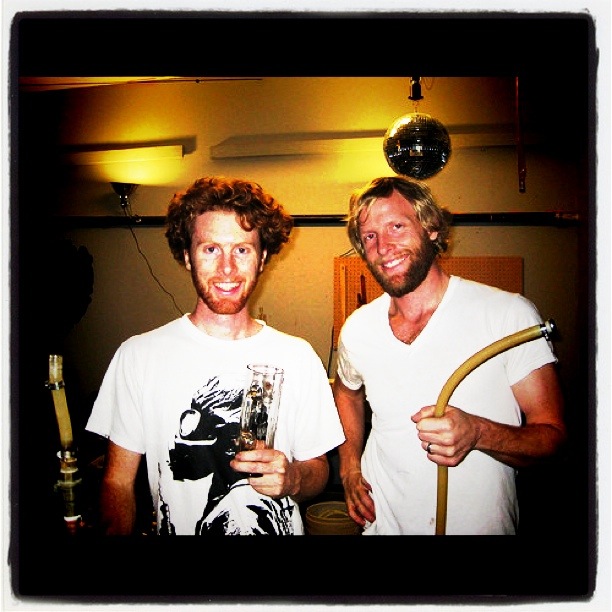
BEER AND WINE The other week, I hit up one of the free, bi-weekly Thursday night tasting parties put on by San Francisco nanobrewery Pacific Brewing Laboratories, located in a small garage on a side street deep in SoMa—and was completely smitten. The adventurous atmosphere and swell-looking crowd were part of that, of course. But the small-batch beers on offer (I quickly downed a gorgeously smooth black IPA), the rogue food vendors (I then dove into a box of Nosh This Bacon Crack chocolate), and the almost-steampunk assemblage of tangled brewing equipment, scuffed kegs, and illustrative blackboards really sealed the deal.

Since they seemed exquisitely attuned to the underground brew-plus-food equation, I asked the guys behind Pac Brew Labs, Patrick M. Horn and Bryan Hermannsson, to tell us a bit about themselves and give us a wee menu of street pairings. Here’s what Patrick came up with for us. (Marke B.)

“Pacific Brewing Laboratory started in a garage as a place for us to experiment with new beer flavors, styles, and brewing techniques. What started out as a place to share new creations with friends grew into a twice-monthly, totally free event with hundreds of our “new” friends and great local street food vendors.

“We brew small, 10-gallon batches which allows for constant beer experimentation. Some of our more exotic beer styles include Hibiscus Saison, Squid Ink Black IPA, Chamomile Ale, Lemongrass IPA, Szechwan Peppercorn Red ale, and wine-soaked oak-aged Brown Ale. We’re always on the lookout for new ingredients and inspirations that will lead us to palate-pleasing creations. For our tastings, we often invite a local food cart to attend, in order to pair our beers against some of the amazing varieties of flavors produced by DIY local food vendors. Below are a few of our favorites, which include beers we enjoy from other local breweries.”

Read about Pac Brew Lab’s upcoming free Thursday Night Beer Nights at www.pacbrewlab.com.


WISE SONS DELI PASTRAMI + PACIFIC BREWING LABORATORIES SQUID INK BLACK IPA

“Leo Beckerman and Evan Bloom of pop-up Wise Sons Deli (Saturdays, 9 a.m.-2 p.m. at Beast and Hare, 1001 Guerrero, SF. www.wisesonsdeli.com) are on a mission from God to bring to us mere mortals the best in Jewish deli. They’ve been serving up their in-house pickles, matzo ball soup, pastries and — most importantly — their weeklong-brined, spice-rubbed, hickory smoked pastrami with home made rye bread to San Francisco and at many of our beer socials since the year 5771. Our Squid Ink is made with darker grains than traditional IPAs and uses West Coast hops to give it a traditional West Coast IPA hop aroma and bitterness. The richness and spices of the pastrami pair perfectly with the citrus-y, hoppy and roasted flavors of the Black IPA. Finish with a house fermented pickle for the perfect sandwich-beer-pickle experience.”


MISSION CHINESE FOOD + TRUMER PILSNER

“Anthony Myint and Danny Bowien have created one of the most creative and community minded pop-up restaurant in the nation with Mission Chinese Food (Thu-Tue, 11:30 a.m.-3 p.m. and 5 p.m.-10:30 p.m., at Lung Shan, 2234 Mission, SF. (415) 863-2800, www.missionchinesefood.com). Their delicious twists on traditional Chinese and Asian cooking include kung pao pastrami, thrice-cooked bacon, tingling lamb noodle soup, salt cod fried rice and cold-poached chicken with chicken hearts. Mission Chinese Food also contributes $0.75 from each entrée to the San Francisco Food Bank. The Trumer (www.trumer-international.com) from Berkeley, with its high carbonation, crisp malt backbone and good hop bitterness, offers a good counterpoint to the exotic flavors and spices of Danny’s cuisine. As the heat and tingling build from chilies and Szechwan peppercorns, a pilsner can really satisfy. (And if you need to douse a flaming palate, the low alcohol content allows for a few brews with minor effect.)”


NOSH THIS CHOCOLATE + 21ST AMENDMENTS MONK’S BLOOD

Beer and chocolate go together like Bert and Ernie or peanut butter, bananas, and Elvis. Kai Kronfield of Nosh This (noshthis.com) makes some of the most creative chocolates in San Francisco. Butter toffee Bacon Crack, salted caramels made with balsamic vinegar, Meyer lemon, or salt & pepper… not to mention the Bacon Bourbon Rocky Road. These chocolates are the perfect balance of sweet, salty, and chocolate-y and pair well with darker, maltier beers. 21st Amendments Monk’s Blood (www.21st-ammendment.com), a dark Belgian ale, fits this bill well. Made with the traditional hops and barley, it also contains figs, vanilla, and cinnamon. It’s a complex beer, in a can, that complements the richness and intricate flavors of Kai’s creations. This combo is a perfect end to an evening, a mid-day snack, or breakfast — whatever, nobody’s judging.


PIZZA HACKER + MOONLIGHT DEATH AND TAXES

“Pizza and beer is typically a no-brainer pairing, but often most choose an IPA, pale ale, or lager to go with their cheesy slice. Moonlight’s Mooonlight’s Death and Taxes (www.moonlightbrewing.com) is a dark lager — but its roasty, crisp and malty flavors lends itself perfectly to the olive oil and salt-covered crust and smoky essence of the Pizza Hacker’s (www.thepizzahacker.com) pies. Jeff, the nominal Pizza Hacker and self-described “occasional Pazi (Pizza nazi)”, has built a custom-made portable wood fired brick oven called the FrankenWeber. He wheels it up outside bar or brewery, assembles, and bakes fresh pizzas on the sidewalk. His sauce is from organic heirloom tomatoes and he uses a method pioneered by Tartine for kneading the dough. Best tasted with a full bodied, flavorful pint of brew!


MAGIC CURRY KART + ALMANAC SUMMER 2010

Almanac’s Summer 2010 Belgian golden (www.almanacbeer.com) is made with blackberries and aged in red wine oak barrels for 11 months. Brian Kimball of Magic Curry Kart (www.magiccurrykart.com) wheels around two burners and two rice cookers on his bike, and whips up the most incredibly Thai-influenced curries in front of you with amazing precision. The ingredients are fresh and the spices are delicious. Almanac’s golden ale will add a nice fruity finish to the spicy and flavorful red or green curry. With an eight percent alcohol count and naturally carbonated in the bottle, Summer 2010 will refresh your palette after every sip without overpowering it, enabling new tastes in every luscious bite of curry. Cheers!

Generation cork

0

virginia@sfbg.com

BEER AND WINE It’s a unique time in Bay Area winemaking. We see more California winemakers finding harmony between New and Old World-style production, laying off heavier-handed extremes of overly-oaked or high alcohol wines, honing in on our region’s true terroir. While global love for big, bold California wines isn’t going anywhere, it’s ever more apparent that our range is far beyond what might be assumed.

Small, family-run wineries have long undergirded our region’s greatness, and today there are many new wines, from Sonoma to Napa, adding nuance to the landscape. As is the case historically, many wineries are a family affair where parents and children share in the work, from production to business operations. Here are a few we felt you should know about; you can order most of their wines through their websites.


SUTTON CELLARS, SAN FRANCISCO

San Francisco holds a treasure in the person of Carl Sutton of Sutton Cellars. He walks the fine line of approachability and Old World-influenced production style. At 22nd Street and Illinois sits a funky warehouse winery where he throws Jug Sundays, tapping barrels and selling jugs or liters of wine (email directly through its website — www.suttoncellars.com — to be added to the event email list). Carl corrals Dogpatch neighbors to supply grub, like Olivier’s Butchery or the TomKat Asian street food truck. His wife Sharon often pours and works with him, both of them wine aficionados and passionate global travelers.

His grapes grow mostly in Sonoma County (with a little Mendocino in the mix), and are often single vineyard wines. At a time when many claim personal care, Sutton’s brown label wines are actually filled and corked by hand. Often this kind of care implies high costs, but Sutton stays amazingly affordable at $14–<\d>$21 a bottle.

Sutton is heavily influenced by France and Spain. He offers a full-bodied Rattlesnake Rosé ($15), but also the stunning Fizé, a 2010 rosé of organic Carignane grapes. It unfolds with each sip: tart cranberry and pomegranate notes, and a crisp effervescence. With no yeast or sulfites added, fermentation actually happens in the bottle. It possess a bready nose, with a profile far beyond typical rosés on either end of the sweet/dry spectrum (find this beauty at the winery, Bi-Rite, Rainbow Grocery, D&M). As of last week, he has keg preview of the 2010 Rattlesnake Rosé on tap at Magnolia Pub and Brewery.

His 2007 Carignane is an acidic, balanced, food-friendly red (barrel fermented in neutral oak). The aged La Solera is an elegant after-dinner imbibement and one of Sutton’s best creations. A blend of syrah, zin, and carignane wines from 1999-2006, it at turns evokes Madeira, Banyuls, sherry, even whiskey, with whispers of burnt orange, and a golden richness from its time resting in the sun, a classic method he picked up in Spain. La Solera is at the top of his price range at a mere $30, a steal for such a complex wine.

Sutton’s Brown Label Vermouth (unaged brandy-fortified neutral white wine, infused with 17 botanicals, bottled fresh weekly) is a winner. The Alembic was the first place to serve this refreshing aperitif on tap, enjoyed on the rocks, Italian-style. Sutton bubbles over with visions for a wide range of wines and liqueurs, including at least one new aperitif/digestif wine due before year’s end.


KELLY FLEMING WINES, CALISTOGA

Head off Silverado Trail, past vines and olive trees, onto a dirt road that leads to a gate. Beyond a sea of cabernet vines, lies Kelly Fleming’s stone winery (www.kellyflemingwines.com), evoking an Italian villa, similar to many I explored in Tuscany. The winery’s stone walls and wood shutters imbue the space with a rustic character far beyond its years.

In an open-air dining room, I sat under stone arches at a handmade wood table crafted from one tree off the 300-acre property. Kelly and her daughter Colleen, who also works for the company, served a Mediterranean-style spread for lunch, using ingredients from their garden (like a silky jam from their fig trees).

We sipped Fleming’s 2009 Sauvignon Blanc (50 percent French oak, 50percent stainless steel), representative of the Oakville soil from which these grapes grow. It’s a balanced white with a floral and fruity (pear, pineapple) profile, rounded out by a hint of vanilla. 2007 Cabernet is 100 percent estate and CCOF organically grown, rested in 85 percent new French oak. Though fruit plays prominently (warm, dusty raspberries), hints of wood, nuts and spice give it contrast.

Winemaker Celia Welch works with the region’s terroir (this is cabernet country, after all), from vines planted in 1999. The wild beauty of the property’s forests and creeks is kept intact with only 12 of the 300 acres planted with vines. Inside limestone caves, the air is naturally cool, storing barrels and bottles of past vintages (unreleased but which they’ve been perfecting for nearly a decade). At a mere 850 cabernet and 675 sauvignon blanc cases a year, these are truly small production wines.

Kelly is hands-on in so many aspects from harvesting to forklift operation. She and Colleen both were recently certified in forklift driving, highlighting the involved, familial nature of the winery. They are gracious hosts, welcoming guests by appointment.


SWANSON VINEYARDS, RUTHERFORD

Think Parisian carnival, classic French estate, Napa’s rich nature, New Orleans’ roots, and you’ll begin to get an idea of the influences on Swanson Vineyards (www.swansonvineyards.com). The winemaker is Chris Phelps — Clarke Swanson founded the winery back in 1985, planting his first merlot grapes. His daughter, Alexis, works as the winery’s creative director. Wife Elizabeth buzzed about as we sipped wine in their enchanting garden, greeting each guest.

The first sign Swanson is different comes when you enter the Sip Shoppe, with red-and-white striped tented walls, Old World French artwork, and Billie Holiday playing soothingly in the background. Elizabeth and Alexis designed the shop themselves, imparting a playful Parisian spirit to what could just be another tasting room. One wants to linger for flights like “Some Like it Red,” paired with the likes of warm pistachios, Alexis bonbons (made by Vosges with curry and Swanson’s Alexis Cabernet), or a potato chip topped with creme fraiche and Hackleback sturgeon caviar (lovely with their Chardonnay).

The 2010 Chardonnay was my favorite, and a complete surprise as a mineral, French-inspired chardonnay, reminiscent of Chablis. Neutral oak allows crisp, green apple notes to shine, while honey adds a tinge of cream to the finish. At a pricey $45, this one is only available at the winery or to wine club members.

Of the reds, Swanson’s signature 2007 Merlot offers the best price-to-taste ratio at $38 per bottle. It’s unexpectedly balanced with tart tannins, hints of black cherry, currant and mocha. On the pricier end, the 2007 Alexis Cabernet ($75) is bold and layered, while a 2006 Petite Syrah ($70) goes the earthier, spice and gentle black pepper route.

Make an appointment to visit the winery for a Salon tasting ($65) or Sip Shoppe flight (around $25), then finish by lingering in the garden. You can taste at dozens of wineries but the Swanson’s chic shoppe and salon deliver a fun, Parisian spirit to the Napa countryside. *

Virginia Miller writes about the latest food and drink news at The Perfect Spot, www.theperfectspotsf.com

Write what you know

8

arts@sfbg.com

LIT Most fans probably associate Will “The Thrill” Viharo with Thrillville, the awesomely cool series of B movie screenings he hosted at the Parkway (now closed) and Cerrito (now operating under new ownership) theaters. But in recent years, Viharo’s become “The Quill,” shifting his focus to his first love: writing. He’s written several novels and numerous short projects in a retro, neo-pulp vein; he’s currently working on new material as well as publishing several of his older novels, some of which go back decades. He started his first novel, Chumpy Walnut — about a foot-tall boy lost in a world of macabre make-believe — when he was only 16.

“I am a born writer, as pretentious as that may sound. I’m basically unemployable, possess no other marketable or practical skills, and so realistically, my career options are severely limited. It’s a matter of simple survival: sink or swim, write or die,” the 48-year-old Alameda resident explains. “Once I started writing, I just couldn’t stop. It’s how I respond to life and the world in general, my natural mode of expression. I really have no choice.”

Viharo’s first published novel, Love Stories Are Too Violent For Me, was released in 1995 by Wild Card Press. Movie rights to the book, which introduced recurring character Vic Valentine, have been owned by the actor Christian Slater for the past ten years — though Valentine, a San Francisco private eye, has yet to make his big-screen debut. Undeterred, Viharo has penned a slew of other killer, colorfully-titled books, including A Mermaid Drowns in the Midnight Lounge, Fate is My Pimp, Romance Takes a Rain Check, and Diary of a Dick. All are written in a feverish style that recalls not only the hard-boiled detective novels of authors like Raymond Chandler, but also a wide variety of cinematic influences.

“My work has always been informed and creatively inspired by films, particularly exploitation cinema, and all kinds of ‘mood music,’ even more so than my sundry literary influences,” Viharo says. “I think that’s why my stuff has a keen visual sense and fluent rhythm unique to the form, kind of like graphic novels, sans the graphics.”

It makes perfect sense then that Viharo has made a book trailer to help promote his work. The clip, posted on his website (www.thrillville.net), recalls a classic film noir narrated by tempting excerpts from Viharo’s books. The brand-newest Viharo tome, Freaks That Carry Your Luggage Up To The Room, is a blistering tale he describes as “gonzo bizarro pulp;” it’s due out in November. He’s self-releasing it, as he has all his works since Love Stories.

“My stuff is good, I know it, and I’m taking it directly to the audience I know is already out there, bypassing the corporate middleman,” Viharo says. He’s learned that the mainstream publishing industry is a conservative, fickle beast — and he’s done trying to win the hearts of corporate titans. “I’m actually riding a new wave since digital publishing has usurped the marketplace, opening doors for many neglected talents at both ends of the scale.”

Viharo’s novels are available online through Lulu as eBooks or print-on-demand paperbacks, and he recently got approval to sell Down a Dark Alley on iTunes after a period of “special review” — it seems his more lurid material had triggered an additional vetting before being given the green light.

“Basically, after several decades of self-exploration, I have no more inhibitions, at least artistically,” Viharo says. “My brain has been irrevocably damaged over the years, via sustained exposure to the insanity of our world as well as endless viewings of seriously fucked-up movies, and it shows, but I’m shameless by nature.”

Although his books can feature sensationalistic and savage settings, events, and characters, they are still meant to be simply entertaining — a goal that they exceedingly achieve, thanks to Viharo’s artistic outlook.

“Even the most graphic depictions of XXX kinky sex and ultra-violence are presented in a satirical, cartoonish context, not meant to be taken too seriously,” says Viharo. “I’m a softie at heart; my hard-boiled veneer is pretty transparent, I think. It’s impossible for me to remove my tongue from my cheek no matter how twisted my subject matter happens to be.”