food

Appetite: More Upper highs and Valley loves

0

In this week’s Appetite column in the paper, I ran down my picks for the best spots to eat a quality meal (without the expense of other areas) in the Upper Haight and Cole Valley region. Below are more of my favorites from my home ‘hood, including picks for coffee, brunch, and cocktails — including delicious sangria, a cheese gem, and a woeful tale of a hot dog scramble to avoid.

COFFEE: Coffee has long been rough in the Haight. Until Haight Street Market opened a Blue Bottle kiosk in their store, one couldn’t get a proper cup. While appealing cafes like Reverie boast a welcome back patio, and the La Boulange chain on Cole serves substantial pastries, none offers a cappuccino or espresso to satisfy coffee snobs. But just in the last week or so, there’s a quiet coffee revolution afoot with two new cafes. Flywheel Coffee Roasters looks like a hipster Mission coffee spot with a handful of laptops and industrial-stark interior. Though they aren’t going the foam art/microfoam route at this point and they have not begun roasting their own beans in-house as they plan to, initial cups are promising. The other new spot is Stanza in the Coco Luxe space. They’ll be doing coffee cuppings on the first Thursday of each month (7pm) and have their coffee roasted by Augies in Southern California. They DO have foam art and proper cappuccinos. A welcome neighborhood addition.

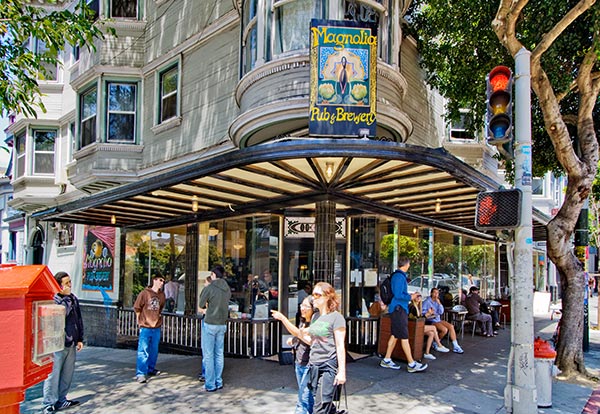
BRUNCH: I’ve never gotten Zazie‘s endless brunch waits. Sure, it’s a charming, little Parisian space, though I’ve had better luck with non-brunch meals. But for 1-2 hour waits (they do have a nice system now that alerts you when your table is ready), it’s amazingly mediocre. Personally, I wouldn’t wait any amount of time for mediocre. There are so many delicious brunches in the city, I am flummoxed as to why, after all these years, this remains many locals’ favorite. The original Pork Store Cafe likewise has waits (though not as painful as Zazie’s) which I likewise don’t find worth it. I once had a “sausage” scramble here that was hot dog slices. What it does have is quirky, old school diner charm and clientele. My brunch recommend in the ‘hood, though, is always Magnolia. Arriving before noon, I’ve never had a wait and the food is quality (plus there’s Blue Bottle coffee and beers).

FOOD: Kezar Bar (the one on Cole, not the pub on Stanyan) can occasionally surprise with above-average bar food, like giant potato pancakes with Andouille sausage, applesauce, sour cream – in a cozy, pub atmosphere. Despite the crowds and its faded glory, there’s still something appealing about the original Cha Cha Cha. Maybe it’s Mother Mary presiding over the bar, plants surrounding tables for that tropical effect, the festive atmosphere, plantains and black beans, or that damn tasty sangria. Citrus Club‘s food is pretty hit and miss – downright average, really (who has time for that in this city?) – but many adore it because it’s cheap and easy Asian “fusion” (they mix and match Asian cuisines with abandon).

For burgers, if you’re not eating Magnolia’s fab burger, local chain Burgermeister is the best bet as Burger Urge just doesn’t cut it. Since the ’70s, Say Cheese is a tiny Cole Valley gem of a market. Their small selection of cheeses, meats, wines, chocolates, is well curated, the staff are responsive and they make worthy deli sandwiches (like Cajun turkey, creole mustard, pepperoncini, pepper havarti), ideal to take to nearby parks.

DRINK: Us spirits and cocktail lovers have a soft spot for Aub Zam Zam. This is not cutting edge cocktails. It’s a slice of SF history, with a strong spirits selection and older, seasoned bartenders who are knowledgeable and sweet (since lovably cantankerous Bruno passed away, God rest his soul, there’s no kicking people out on a whim anymore). They make a mean gin martini, boozy and bright. The space evokes the Art Deco era with an exotic, Moroccan slant. Divey and dingy, it’s a classic I hope we’ll never lose.

Subscribe to Virgina’s twice-monthly newsletter, The Perfect Spot, www.theperfectspotsf.com

The Performant: This shit is bananas

0

BOA strikes again

As the banal, chart-topping strains of Taio Cruz fill the theatre, a whirlwind of pink sportswear and bared teeth commandeers the stage. This is a moment in the evening survivors of BOA X, last year’s edition of the Bay One Acts Festival, have been waiting for.

Onstage, the “dumplings” Sarah Moser, Molly Holcomb, and Megan Trout throw their hands in the air and stomp with menacing playfulness, as their wimpy Daddy (Myron Freedman), grips his magic remote control like a drowning man. A standalone sequel to last year’s “A Three Little Dumpling’s Adventure”, Megan Cohen’s “Three Little Dumplings go Bananas,” is a worthy successor, building disturbingly on themes brought up in the previous incarnation: the perils of pop culture, most particularly in regards to television, the search for self (to the dulcet tones of Gwen Stefani crooning “this shit is bananas”), the horrors of sibling rivalry, and the feral joys of cannibalism all make a protracted reprise.

As disarmingly cute as they are blood-curdlingly vicious, the dumplings somehow manage to agree to band together—just in time to find themselves forced out into the real world, setting the stage for yet another sequel, which I suspect Cohen will happily provide in the future.

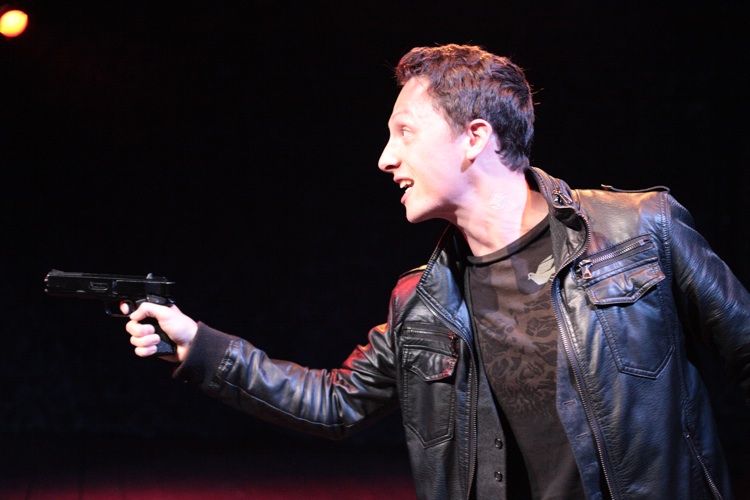
Dumplings included, the festival’s offerings can be likened to those of a dim sum cart, piled high with goodies. Split into two separate programs which run on alternating nights, the festival includes vignettes as short as ten minutes, and others inching closer to thirty (I regret I didn’t keep exact times), as thematically and theatrically diverse as the companies producing them. A fanciful, hyper-kinetic flight into Anton Chekhov’s “Seagull,” exuberantly deconstructed by The 11th Hour Ensemble, bursts on the palate like a plate of dry-fried chicken wings, while Stuart Bousel’s darkly comedic “Brainkill,” featuring one of the most hilariously horrifying arguments in favor of embarking on a conscience-less killing spree, nestles somewhere closer to the scallion pancake zone — light yet substantial, addictive and best devoured immediately without questioning its contents too rigorously. Ken Slattery’s sweet and savory “Death to the Audience,” is a good solid pork bun of a short play, full of clever lines and the enjoyable swagger of Andrew Calabrese as Mars, whereas Erin Bregman’s “I.S.O. Explosive Possibility” and Amy Sass’ “Maybe Baby,” stand in for the ambiguously jellied confections, silky and wriggling, playful and unusual.

Founded in 2001, BOA has become one of the premiere forums in the Bay Area for forging connections between small, independent theatre companies and their talent pool, and it’s not unusual to see combinations of actors, directors, and technicians banding together again in one or another full-length production later in the year. It’s also an excellent tasting platter for their prospective audiences who get to sample a bit of what each company and playwright is about, before committing to a full-length repast. Food metaphors aside, it’s also a good way to get a few top-40 hits that should-never-have-been stuck in your head, at least whenever the three little dumplings are onstage (thanks guys!), but given the context, it’s a forgivable peccadillo.

BOA X continues through May 12, more details here.

Psychic Dream Astrology May 2-8, 2012

0

May 2-8, 2012

ARIES

March 21-April 19

Before you get going, please check the map and make sure you have enough food, water, and supplies for your journey. If you take the time to plot your course you will be quicker and more impactful, Aries. You run the risk of reacting to your life instead of creating it! Don’t move too fast this week.

TAURUS

April 20-May 20

It’s up to you to enact the changes you need to see in your life, Taurus. If you’re willing to put out the effort you can pave the road to success. The key is to be able to see the big picture clearly enough that you can understand what compromises will further your goals and which ones will hinder them.

GEMINI

May 21-June 21

Your life is still in a state of flux, Gemini. There is no certain path that you’ll stay on without continued effort. Look to the future and make sure your actions in the present are likely to get you there. Enlist the support of your loved ones you so that if the going gets rough you don’t have to go it alone.

CANCER

June 22-July 22

Kindness will help you in all matters this week, Moonchild. You need to watch out for prideful or vengeful impulses, because following them will create more anxiety and drama than you want to deal with. If you can’t act in integrity, don’t do anything at all; buy time until you’re calm and clearheaded.

LEO

July 23-Aug. 22

You have so much energy, and when it gets thwarted or blocked that awesomeness can get backlogged and work against you, instead of for you. Stay present in the face of your frustrations this week. Connect with the unpleasant feelings that come up before you check out, Leo.

VIRGO

Aug. 23-Sept. 22

Sometimes you’ve got to take on some crap for the greater good, Virgo. You may need to let someone or something go in order to have the kind of balance in your relationships that keeps things happy and healthy. Be willing to undergo the discomforts of change as you invest in what matters most.

LIBRA

Sept. 23-Oct. 22

Things are not as you’d prefer them to be, but don’t wallow in the dumps. Turn the tide! Let your troubles motivate you to improve your situation. Feel your feelings, even if they suck, so that you can move beyond them in a way that works. Ease on down the road, ’cause avoidance will keep you stuck.

SCORPIO

Oct. 23-Nov. 21

You are meant to be moving through some steep emotional terrain and the best thing you can do is to participate. Don’t hole up and hide from people, Scorpio. Reach out to the folks you trust for not only support, but much needed perspective. If you look from a different vantage point, you’ll have a new view.

SAGITTARIUS

Nov. 22-Dec. 21

If you’re not a team player then the team will feel like you’re rallying against them and that will bite you in the ass later. Stand out on your own and be as powerful and fierce as you truly are without stepping on others toes. Don’t alienate people, even if you want to go it alone; find a way to share, Sagittarius.

CAPRICORN

Dec. 22-Jan. 19

You are being tested by the Universe to embody strength with heart or to be vulnerable and responsible at the same time, friend. Move through your relationships with great care, as your old habits are kicking around, wanting to you to revert back to some old crap. Be intentional with those you care about.

AQUARIUS

Jan. 20-Feb. 18

When all else fails, gravitate towards the people and things that make you happy, Aquarius. The key is to not get momentary pleasure confused with lasting happiness. You may not be able to tell them apart if you go off on impulse, so take some time to yourself to make well considered choices this week.

PISCES

Feb. 19-March 20

You need to foster your self-esteem, because it’s getting so you don’t know what impulses to trust. You need a timeout to collect yourself or you may end up acting in ways that feed your anxieties instead of help them. Deal only with the things you can cope with and that you understand this week. *

Jessica Lanyadoo has been a Psychic Dreamer for 17 years. Check out her website at www.lovelanyadoo.com or contact her for an astrology or intuitive reading at (415) 336-8354 or dreamyastrology@gmail.com


Upper highs, Valley loves

0

virginia@sfbg.com

APPETITE I’m constantly asked what my favorite restaurant is. It’s an impossible question. Inquire about my favorite taqueria, German spot, tea house, French bistro, and I’m ready to talk. There’s a favorite for every style and mood in a metropolitan city such as ours. My current home is on the cusp of Haight-Ashbury and Cole Valley, which, like every neighborhood in our food-rich city, has its treasures. We’ll breeze past the touristy swill and explore its best here. Find more of my picks in this neighborhood, from coffee to cocktails, here.


ALEMBIC

Thank God for The Alembic. The bar has been one of SF’s best since it opened, thanks to bar manager Daniel Hyatt, whose expertise in American whiskeys equals an ahead-of-the-curve selection. Alembic claims many gifted bartenders, like Danny Louie and Janiece Gonzalez, and I’m never disappointed when asking for an off-menu cocktail creation. The food is destination-worthy in its own right — maybe the best in the Haight. Whether at the bar with jerk-spiced duck hearts and a bowl of shishito peppers, or dining on caramelized scallops and sweetbreads over kabocha squash spaetzle, I continue to be satisfied.

1725 Haight, SF. (415) 666-0822, www.alembicbar.com


MAGNOLIA PUB AND BREWERY

Owner and brewmaster Dave McLean opened Magnolia Brewery more than 14 years ago, brewing the best beers in SF (in my humble opinion). Magnolia’s space has Old World, gastropub charm in black leather and wood booths and antique floor tiles. It serves the best brunch in the area — sorry, Zazie and Pork Store — which includes BBQ belly over Anson Mills cheddar grits, or quinoa hash and eggs if you want to cut down the fat quotient. For lunch and dinner, house sausages delight (rabbit currywurst!) as does savory mushroom bread pudding or a near-perfect Magnolia pub burger.

1398 Haight, SF. (415) 864-7468, www.magnoliapub.com


GIOVANNI’S PIZZA AT CLUB DELUXE

Upper Haight’s best hidden gem is Giovanni’s, a pizza kitchen in the back of Club Deluxe (eat in the bar or take-out). Giovanni’s pies aren’t so much Neapolitan perfection as a mix between Italian and East Coast styles, with a classic margherita and spicy Diavola, laden with pepperoncini, salami, Parmigiano, and a Belizean hot sauce. Save room for a West Coast rarity: a fresh cannoli, sweet ricotta stuffing brightened with orange blossom oil. Club Deluxe’s drinks are of the mojito, greyhound kind. Not exactly a cocktailian destination. What makes Deluxe special? Nightly live jazz in a well-loved bar that thankfully hasn’t changed decor for decades, with a 1950s, cozy bar feel. Bands rotate: trios, duos, quartets, even organ acts, providing some of the best jazz in the city, usually free. If only, like New Orleans, our neighborhoods were lined with such clubs.

1511 Haight, SF. (415) 552-6948, www.sfclubdeluxe.com


ICE CREAM BAR AND SODA FOUNTAIN

I wrote much of Ice Cream Bar back in February, so I’ll send you to the review detailing my fascination with this one-of-a-kind, 1930s-era soda fountain. It’s my top pick for dessert.

815 Cole, SF. (415) 742-4932, www.theicecreambarsf.com


PARADA 22

Parada 22 is a vibrant little space with aquamarine walls and vintage South American food products lining the shelves. The casual eatery feels vacation-like, offering Puerto Rican food. My favorite dish here is camarones a la Criolla: sauteed shrimp, tomato and onions in a dreamy-light cream sauce. Sides like plantains and red or white beans in sofrito-based sauces, are fresh and appealing. The restaurant has recently joined forces with sister restaurant Boogaloos (www.boogaloossf.com) in the Mission, serving Boogaloos’ brunch menu every weekend.

1805 Haight, SF. (415) 750-1111, www.parada22.com


THAI DUO: PLOY II AND SIAM LOTUS

Haight-Ashbury has two unexpectedly strong Thai spots serving authentic dishes. Ploy II is upstairs in an old Victorian space, with weathered carpet and decor (elephants, tapestries) straight out of Chang Mai’s Night Bazaar. It does standards well, and I crave the mango panang curry: spicy, creamy with coconut milk and peanut sauce. Siam Lotus also is reliable on Thai classics, though it’s the daily changing chef’s special board that sets it apart. Thankfully on the permanent menu, the Thai tacos are a must. Though the paper thin crepes fall apart at the touch, a filling of ground chicken, shredded coconut, mini-shrimp, and peanuts makes for one of the more fun Thai dishes anywhere.

Ploy II: 1770 Haight, SF. (415) 387-9224, www.ployii.com

Siam Lotus: 1705 Haight, SF. www.siamlotussf.com


HAMA-KO

Hama-Ko husband-and-wife owners Tetsuo and Junko Kashiyama open only when they feel ready and usually treat regulars best, service is slow, and certainly there are no California rolls. But this nearly 30-year-old classic is one of those neighborhood secrets that locals return to and sushi devotees enjoy. It’s straightforward sushi: silky scallops, bright-as-the-sea tai (red snapper), melt-in-your-mouth unagi avocado maki. You won’t find the variety of rare fish found at Zushi Puzzle (www.zushipuzzle.com), but you will find impeccable freshness — Tetsuo sources his fish from the same place The French Laundry and Chez Panisse gets theirs, he proudly tells me — from a couple who cares.

108 Carl, SF. (415) 753-6808

Subscribe to Virgina’s twice-monthly newsletter, The Perfect Spot, www.theperfectspotsf.com 


Film Listings

0

Film listings are edited by Cheryl Eddy. Reviewers are Kimberly Chun, Max Goldberg, Dennis Harvey, Lynn Rapoport, and Matt Sussman. For rep house showtimes, see Rep Clock. For complete film listings, see www.sfbg.com.

SAN FRANCISCO INTERNATIONAL FILM FESTIVAL

The 55th San Francisco International Film Festival runs through Thu/3; most shows $13. Venues: Castro Theatre, 429 Castro, SF; Pacific Film Archive, 2575 Bancroft, Berk.; SF Film Society Cinema, 1746 Post, SF; and Sundance Kabuki Cinema, 1881 Post, SF. For additional info, visit www.sffs.org.

OPENING

The Best Exotic Marigold Hotel John Madden (1998’s Shakespeare in Love) directs this comedy about British retirees (the all-star cast includes Maggie Smith, Bill Nighy, Judi Dench, and Tom Wilkinson) who journey to a dilapidated yet charming hotel in India. (1:42)

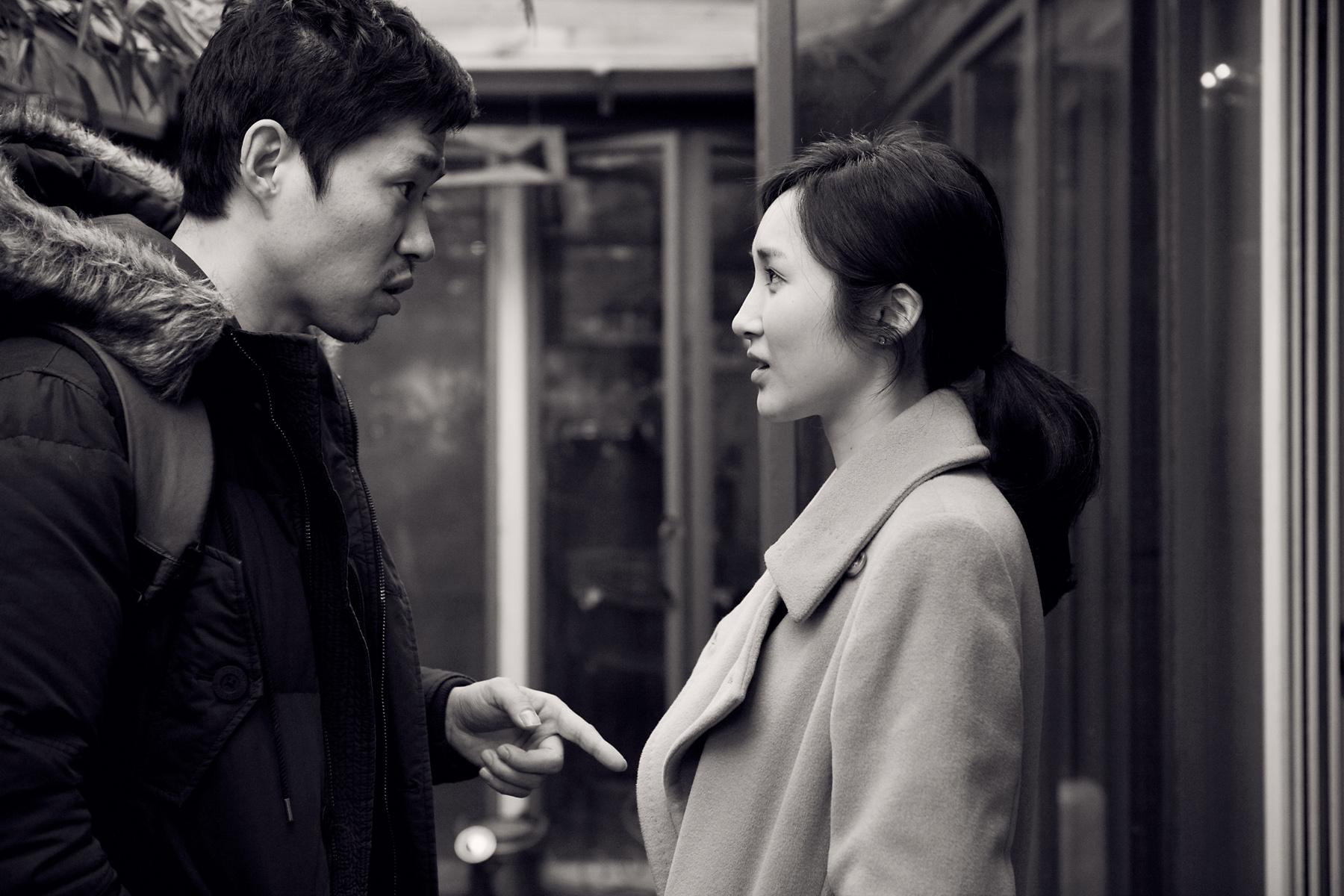
The Day He Arrives Korean auteur (Woman Is the Future of Man, 2004) Hong Sang-soo’s latest exercise in self-consciousness, this black-and-white, fable-like study of a frustrated filmmaker (Yu Jun-sang), returning home to Seoul to visit an old friend after spending time in the countryside teaching, adds up to a kind of formal palimpsest. Surrounded by sycophants, vindictive former leading men, and women who seem to serve a purely semiotic purpose, he participates in an endless loop of drink, smoke, and conversation in a series of dreamlike scenes that play on the theme of coincidence and endless variation. Hong’s layering of alternate scenarios at times feels like a bit of a gimmick, but the way he infuses specific urban spaces with forlorn significance in mostly static shots is affecting — even if the film’s ultimate narrative slightness has the cut-and-paste haphazardness of fridge poetry magnets. (1:19) SF Film Society Cinema. (Michelle Devereaux)

The Fairy Custom-made for those who want more in the vein of 2011’s The Artist — without actually reaching back to the silent era to find it — this feature is the third starring, written and, directed by the Belgian trio of Dominique Abel, Fiona Gordon, and Bruno Romy (2008’s Rumba, 2005’s The Iceberg). It’s a “talkie,” but dialogue here is little more than an occasional inconvenient necessity. Rom (Abel) is a hotel clerk whose routine is interrupted by barefoot Fiona (Gordon). She books a room, but only as an afterthought, having already announced that she is a you-know-what and will grant him three wishes. Expecting nothing, he makes a couple requests, but leaves the third for later. Their evolving romance soon involves police chases, an American tourist (Philippe Martz), his dog, more chases, three African illegals en route to England (Vladimir Zongo, Destine M’Bikula Mayemba, Willson Goma), a women’s soccer team, pregnancy, interpretive dance, prison, and still more chasing. The creators are most clearly influenced by Buster Keaton and Jacques Tati; before you go mad with anticipatory joy, however, know that The Fairy‘s nostalgic slapstick pantomime alternates between the inspired and the too-precious. For every moment that honors their predecessors — the long, clever opening (in which the eating of a sandwich is perpetually delayed) and a rooftop jazz-dance duet — there are times when the film is just cute, or the cuteness feels a little forced. Still, those in the mood for whimsy may find themselves enchanted, and only serious cynics will find this less than an amusing novelty. (1:34) Lumiere, Shattuck. (Harvey)

*Gerhard Richter Painting O to be a eye in the studio, simply taking in a master’s process. Anyone who’s wondered how artist Gerhard Richter makes his monumental paintings — or even just idly pondered art making in general — gets that rare chance with this fascinating, elegant portrait of a man and his method. After capturing Richter for the first time in 15 years in her 2007 short on his stained glass window at the Cologne Cathedral, filmmaker Corinna Belz was entrusted with pointing a camera at the artist as he worked a new series of abstractions and prepared for a major retrospective. Through unusual archival footage, brief discussions of his past, and glimpses of everyone from Richter’s wife to his US dealer Marian Goodman, we end up with a privileged window in the German maker’s world and utterly riveting footage of Richter in the studio — applying color to canvas; taking a squeegee to the blobs and splotches; scraping, manipulating, and morphing the hues with a mesmerizing combination of improvisation and consideration; and then stepping back to study the results, occasionally out loud. Even more than a glance into a workspace, it’s a light into the mind of the man who has recharged painting and its myriad approaches, techniques, and ideas with new relevance. (1:37) Roxie. (Chun)

*Headhunters Despite being the most sought-after corporate headhunter in Oslo, Roger (Aksel Hennie) still doesn’t make enough money to placate his gorgeous wife; his raging Napoleon complex certainly doesn’t help matters. Crime is, as always, the only solution, so Roger’s been supplementing his income by stealthily relieving his rich, status-conscious clients of their most expensive artworks (with help from his slightly unhinged partner, who works for a home-security company). When Roger meets the dashing Clas Greve (Nikolaj Coster-Waldau of Game of Thrones) — a Danish exec with a sinister, mysterious military past, now looking to take over a top job in Norway — he’s more interested in a near-priceless painting rumored to be stashed in Greve’s apartment. The heist is on, but faster than you can say “MacGuffin,” all hell breaks loose (in startlingly gory fashion), and the very charming Roger is using his considerable wits to stay alive. Based on a best-selling “Scandi-noir” novel, Headhunters is just as clever as it is suspenseful. See this version before Hollywood swoops in for the inevitable (rumored) remake. (1:40) Clay, Piedmont, Shattuck. (Eddy)

A Little Bit of Heaven Kate Hudson goes without make-up (but keeps her flowing curls) to play Marley, a New Orleans advertising exec whose social life of drunken good times and booty calls is rudely interrupted by a colon cancer diagnosis. Her movie-perfect friends (Lucy Punch as the artsy one; Rosemarie DeWitt as the pregnant one; Romany Malco as the gay one) and worried parents (Kathy Bates, Treat Williams) gather ’round as Marley undergoes various treatments and works on her personality flaws. Once Gael García Bernal shows up to play her doctor (and yes, that’s some icky boundary-crossing, but come on — it’s GGB!), a romance conveniently enters the mix as well. This is the kind of Hollywood-disease flick where God appears in the wisecracking, champagne-sipping guise of Whoopi Goldberg — and the talented Peter Dinklage (also of Game of Thrones) appears in one scene as an escort whose sole purpose is reveal his nickname, thereby giving the movie its title. (1:46) (Eddy)

*Marvel’s The Avengers The conflict — a mystical blue cube containing earth-shattering (literally) powers is stolen, with evil intent — isn’t the reason to see this long-hyped culmination of numerous prequels spotlighting its heroic characters. Nay, the joy here is the whole “getting’ the band back together!” vibe; director and co-writer Joss Whedon knows you’re just dying to see Captain America (Chris Evans) bicker with Iron Man (a scene-stealing Robert Downey Jr.); Thor (Chris Hemsworth) clash with bad-boy brother Loki (Tom Hiddleston); and the Hulk (Mark Ruffalo) get angry as often as possible. (Also part of the crew, but kinda mostly just there to look good in their tight outfits: Jeremy Renner’s Hawkeye and Scarlett Johansson’s Black Widow.) Then, of course, there’s Nick Fury (Samuel L. Jackson) running the whole Marvel-ous show, with one good eye and almost as many wry quips as Downey’s Tony Stark. Basically, The Avengers gives you everything you want (characters delivering trademark lines and traits), everything you expect (shit blowing up, humanity being saved, etc.), and even makes room for a few surprises. It doesn’t transcend the comic-book genre (like 2008’s The Dark Knight did), but honestly, it ain’t trying to. The Avengers wants only to entertain, and entertain it does. (2:23) Balboa, Marina, Presidio. (Eddy)

*Sound of My Voice Gripped with the need to do something important before they shrivel up and turn 30, Peter (Christopher Denham) and Lorna (Nicole Vicius) pretend to join a mysterious cult with the aim of making a documentary exposé. Their target: an alluring woman named Maggie (co-writer Brit Marling) — all golden hair and new-age wisdom — who lives in a basement and claims to be from the future. What Maggie is preparing her followers for is never quite explained, with their secret handshakes and all-white attire, but director and co-writer Zal Batmanglij builds up plenty of subtle dread: there’s a visit to a shooting range (shades of last year’s Martha Marcy May Marlene), Maggie’s whispery references to an impending civil war, and Peter’s diminishing ability to resist his faux-guru’s prove-your-faith demands. Just when you think you have Maggie figured out (as when she’s put on the spot to sing a song “from the future”), Batmanglij and Marling add another layer of ambiguity. An intriguing presence, Marling also wrote herself a juicy role in 2011’s Another Earth; it’ll be interesting to see if she can hold her own in a movie that doesn’t paint her character as the center of the universe. (1:25) Embarcadero. (Eddy)

ONGOING

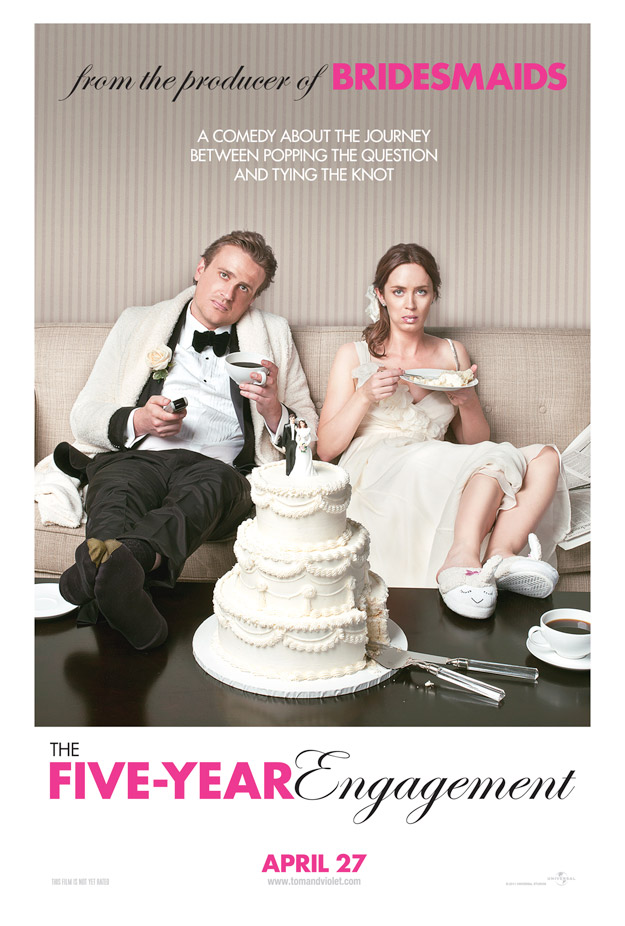
The Five-Year Engagement In 2008’s Forgetting Sarah Marshall, viewers were treated to the startling, tragicomic sight of Jason Segel’s naked front side as his character got brutally dumped by the titular perky, put-together heartbreaker. In The Five-Year Engagement, which he reunited with director Nicholas Stoller to co-write, Segel once again sacrifices dignity and the right to privacy, this time in exchange for fake orgasms (his own), ghastly hand-knit sweaters, egregious facial-hair arrangements, and various other exhaustively humiliating psychological lows — all part of an earnest, undying quest to make people giggle uncomfortably. Segel plays Tom, a talented chef with a promising career ahead of him in San Francisco’s culinary scene (naturally, food carts get a cameo in the film). On the one-year anniversary of meeting his girlfriend, Violet (Emily Blunt), a psychology postgrad, he asks her to marry him in a meticulously planned, gloriously botched proposal scene coengineered by Tom’s oafish friend Alex (Chris Pratt), little realizing that this romantic gesture will soon lead to successive frozen winters in the Midwest (Violet gets offered a job at the University of Michigan), loss of professional stature, cabin fever, mead making, bow-hunting accidents, the titular nuptial postponement, and other, more gruesome events. The humor at times descends to some banally low depths as Segel and Stoller explore the terrain of the awkward, the poorly socialized, and the playfully grotesque. But Segel and Blunt present a believable, likable relationship between two warm, funny, flawed people, and, however disgusted, no one should walk out before a scene in which Violet and her sister (Alison Brie) channel Elmo and Cookie Monster to elaborate on the themes of romantic idealism and marital discontent. (2:04) Marina, 1000 Van Ness, SF Center. (Rapoport)

The Raven How did Edgar Allan Poe, dipsomaniac, lover of 13-year-old child brides, and teller of tales designed to make the flesh creep and crawl, wind up, at age 40, nearly dying in the gutter and spending his last days in a Baltimore hospital, muttering incoherent imprecations about a mysterious fellow named Reynolds? In The Raven, director James McTeigue (2006’s V for Vendetta) makes the case for a crafty, sociopathic serial killer having played a role in the famous yet impoverished writer’s sad, derelict demise. Recently returned to the dark, thickly fog-machined streets of Baltimore, Poe, vehemently embodied by John Cusack, is chagrined to learn from one Detective Fields (Luke Evans) that someone has begun using his macabre stories (“The Pit and the Pendulum” to particularly gory effect) to enact a series of murders. When the killer successfully gains Poe’s full attention by seizing his ladylove, Emily Hamilton (Alice Eve), the pileup of bodies inspires a few last outbursts of genius. The trail of literary clues feels a bit forced, and Cusack’s Poe possesses an admirable quantity of energy, passion, and general zest for life for one so roundly indicted — by everyone from his editor to his barkeep to his sweetheart’s roundly repellent father (Brendan Gleeson) — as a useless, used-up slave to opiates and alcohol. But the script is smart enough and the action absorbing enough to keep us engaged as Poe attempts to rescue Emily and the film attempts to rescue Poe’s reputation through imagined heroics of both the pen and the sword. (1:50) California, 1000 Van Ness, Presidio, SF Center. (Rapoport)

Music Listings

0

Music listings are compiled by Emily Savage. Since club life is unpredictable, it’s a good idea to call ahead or check the venue’s website to confirm bookings and hours. Prices are listed when provided to us. Visit www.sfbg.com/venue-guide for venue information. Submit items for the listings at listings@sfbg.com. For further information on how to submit items for the listings, see Picks.

WEDNESDAY 2

ROCK/BLUES/HIP-HOP

Breathe Owl Breathe, Victoria Williams Brick and Mortar Music Hall. 9pm, $10-$12.

Fezant, Stratic, Blood Wedding Hemlock Tavern. 9pm, $6.

Full Time Beret Make-Out Room. 8pm, $8.

Kids on a Crime Spree, James & Evander, Adios Amigo Bottom of the Hill. 9pm, $8.

La Panique, Buzzmutt Knockout. 10pm.

Manicato Elbo Room. 9pm, $5.

Jason Marion vs. Lee Huff Johnny Foley’s Dueling Pianos. 9:30pm.

Kelly McFarling, Lia Rose, Fox & Woman Rickshaw Stop. 8pm, $10-$12.

James Morrison, HoneyHoney Fillmore. 8pm, $25.

Overkill, God Forbid, Suidakra, Diamond Plate Regency Ballroom. 8pm, $30.

Pro Blues Jam with Keith Crossan & Ron Hacker Biscuits and Blues. 8 and 10pm, $15.

Terry Savastano Johnny Foley’s. 9pm, free.

Ty Segall, White Fence, Shannon and the Clams, Mallard Independent. 8pm, $12.

JAZZ/NEW MUSIC

Cat’s Corner with Nathan Dias Savanna Jazz. 9pm, $10.

Chris Amberger Trio & Jazz Jam Yoshi’s Lounge. 6:30 and 9:30pm.

Cosmo AlleyCats Le Colonial, 20 Cosmo Place, SF; www.lecolonialsf.com. 7-10pm.

Dink Dink Dink, Gaucho, Michael Abraham Amnesia. 7pm, free.

Michael Parsons Revolution Cafe, 3248 22nd St., SF; (415) 642-0474. 8:30pm.

Ricardo Scales Top of the Mark, 999 California, SF; www.topofthemark.com. 6:30pm, $5.

DANCE CLUBS

Booty Call Q-Bar, 456 Castro, SF; www.bootycallwednesdays.com. 9pm. Juanita MORE! and Joshua J host this dance party.

Coo-Yah! Som., 2925 16th St, SF; (415) 558-8521. 10pm, free. DJs Daneekah and Green B spin reggae and dancehall with weekly guests.

KUSF-in-Exile DJ Night: Andre Monarch, 101 Sixth St., SF; www.savekusf.com. 5:30-9:30pm.

Mary Go Round Lookout, 3600 16th St, SF; www.lookoutsf.com. 10pm, $5. Drag with Suppositori Spelling, Mercedez Munro, and Ginger Snap.

Megatallica Fiddler’s Green, 1333 Columbus, SF; www.megatallica.com. 7pm, free. Heavy metal hangout.

Spilt Milk Milk Bar. 9pm, free. With Wentworth, YR SKULL, Citizen Zain, Shaky Premise, Taylor Fife.

THURSDAY 3

ROCK/BLUES/HIP-HOP

A B & the Sea, Tommy & the High Pilots, Yellow Red Sparks Great American Music Hall. 8pm, $13-$15.

Chris Baio, popscene DJs Rickshaw Stop. 10pm, $10-$12.

Willis Earl Beal, Yassou Benedict Cafe Du Nord. 9pm, $12.

Trace Bundy Swedish American Hall. 8pm, $17-$20.

Electric Shepherd & OUTLAW, Blues for Carl Sagan, Douglas Hemlock Tavern. 9pm, $6.

Flytraps, Standard Poodle, Hight Anxiety! Thee Parkside. 9pm, $5.

Katie Herzig, Andrew Belle Independent. 8pm, $15.

Lee Huff vs. Jason Marion Johnny Foley’s Dueling Pianos. 9:30pm.

John Lawton Trio Johnny Foley’s. 9pm, free.

Misisipi Mike and the Midnight Gamblers, Heeldraggers Amnesia. 9pm, $7-$10.

Mumble Mumble, Myonics, Party Land, Tint Sub-Mission. 9:30pm, $2.

Silian Rail, Whiskerman, Michael Musika Bottom of the Hill. 9pm, $10.

“Stevie Ray Vaughan Tribute” Biscuits and Blues. 8 and 10pm, $20. With Alan Iglesias & Crossfire.

Yellow Dubmarine Brick and Mortar Music Hall. 9pm, $7-$12.

JAZZ/NEW MUSIC

Stompy Jones Top of the Mark, 999 California, SF; www.topofthemark.com. 7:30pm, $10.

Ned Boynton Trio Bottle Cap, 1707 Powell, SF; www.bottlecapsf.com. 7-10pm, free.

Dino Piranha Revolution Cafe, 3248 22nd St., SF; (415) 642-0474. 8:30pm.

Savanna Jazz Jam Savanna Jazz, 2937 Mission, SF; www.savannajazz.com. 7:30pm, $5.

FOLK/WORLD/COUNTRY

Deciders Atlas Cafe, 3049 20th St, SF; www.atlascafe.net. 8-10pm, free.

Twang! Honky Tonk Fiddler’s Green, 1330 Columbus, SF; www.twanghonkytonk.com. 5pm. Live country music, dancing, and giveaways.

DANCE CLUBS

Afrolicious Elbo Room. 9:30pm, $5. With DJ/host Pleasuremaker spins Afrobeat, Tropicália, electro, samba, and funk.

Get Low Som., 2925 16th St, SF; (415) 558-8521. 10pm, free. Jerry Nice and Ant-1 spin Hip-Hop, 80’s and Soul with weekly guests.

KUSF-in-Exile DJ Night Lucky 13, 2140 Market, SF; www.savekusf.com. 8pm.

Supersonic Lookout, 3600 16th St., SF; www.lookoutsf.com. 9pm. Global beats paired with food from around the world by Tasty. Resident DJs Jaybee, B-Haul, amd Diagnosis.

Thursdays at the Cat Club Cat Club. 9pm, $6 (free before 9:30pm). Two dance floors bumpin’ with the best of 80s mainstream and underground with DJ’s Damon, Steve Washington, Dangerous Dan, and guests.

Tropicana Madrone Art Bar. 9pm, free. Salsa, cumbia, reggaeton, and more with DJs Don Bustamante, Apocolypto, Sr. Saen, Santero, and Mr. E.

FRIDAY 4

ROCK/BLUES/HIP-HOP

Amen Dunes Elbo Room. 10pm.

Seth Augustus Revolution Cafe, 3248 22nd St., SF; (415) 642-0474. 8:30pm.

Battlehooch, White Cloud, B Hamilton Brick and Mortar Music Hall. 9pm, $7-$10.

“Cowpokes, Gunslingers & Outlaw Country” Red Devil Lounge. 9pm, $13. With Good Luck Thrift Store Outfit, Vandella.

Curren$y, Styles P, Jets, Smoke DZA, Fiend 4 Da Money Regency Ballroom. 8pm, $22.

Early Man, It’s Casual, Shock Diamond, Satya Sena Thee Parkside. 9pm, $8.

Rachel Goodrich, Raffa & Rainer, Jascha & Spiff Amnesia. 8pm, $7-$10.

Lee Huff, Greg Zema, Jason Marion Johnny Foley’s Dueling Pianos. 9:30pm.

Toh Kay, Dan Potthast, Sycarmore Smith Cafe Du Nord. 8pm, $15.

Lambchop Great American Music Hall. 9pm, $20.

Marchforth Marching Band, Diego’s Umbrella Independent. 9pm, $20.

Rocky Votolato, Devotionals, Kevin Long Bottom of the Hill. 9pm, $12.

Ruins Alone, Bronze, Bill Orcutt Hemlock Tavern. 9:30pm, $10.

“Stevie Ray Vaughan Tribute” Biscuits and Blues. 8 and 10pm, $20. With Alan Iglesias & Crossfire.

Steep Canyon Rangers, Carrie Rodriguez Slim’s. 9pm, $21.

Trainwreck Riders, Passage Walkers, Bobby Joe Ebola and the Children MacNuggits, Apogee Sound Club Rickshaw Stop. 8pm, $10-$12.

X-Static Johnny Foley’s. 9pm, free.

JAZZ/NEW MUSIC

Audium 1616 Bush, SF; www.audium.org. 8:30pm, $20. Theater of sound-sculptured space.

Black Market Jazz Orchestra Top of the Mark, 999 California, SF; www.topofthemark.com. 9pm, $10.

Terry Disely Bottle Cap, 1707 Powell, SF; www.bottlecapsf.com. 5:30-8:30pm, free.

Live Dubstep Orchestra Brava Theater, 2781 24th St., SF; www.brava.org. 8pm, $30.

Martin Luther with Siddhartha Yoshi’s SF. 10:30pm, $18.

FOLK/WORLD/COUNTRY

Taste Fridays 650 Indiana, SF; www.tastefridays.com. 8pm, $18. Salsa and bachata dance lessons, live music.

DANCE CLUBS

Braza! Som., 2925 16th St, SF; (415) 558-8521. 10pm, $5-$10. DJs Sabo, Kento, Elan spin Brazilian, Batucada, Samba.

Demdike Stare, Tropic Of Cancer, Water Borders Public Works. 9pm, $10.

Duniya Dancehall Bissap, 3372 19th St, SF; (415) 826 9287. 10pm, $10. With live performances by Duniya Drum and Dance Co. and music by Wontanara Revolution. DJ Juan Data spins bhangra, bollywood, dancehall, African, and more.

Jackhammer Disco with Tiga, Damian Lazarus, Light Year Public Works. 10pm, $20.

Joe Lookout, 3600 16th St.,SF; www.lookoutsf.com. 9pm. Eight rotating DJs, shirt-off drink specials.

Lucio K SOM. 10pm, $10. With DJs Elan and Zamba.

Oldies Night Knockout. 9pm, $2-$4. DJs Primo and Baddass Daniel B.

Old School JAMZ El Rio. 9pm. Fruit Stand DJs spinning old school funk, hip-hop, and R&B.

120 Minutes Elbo Room. 10pm. With DJs S4NtA MU3rTE, Nako, and Planet Death.

Paris to Dakar Little Baobab, 3388 19th St, SF; (415) 643-3558. 10pm, $5. Afro and world music with rotating DJs including Stepwise, Steve, Claude, Santero, and Elembe.

Pledge: Fraternal Lookout. 9pm, $3-$13. Benefiting LGBT and nonprofit organizations. Bottomless kegger cups and paddling booth with DJ Christopher B and DJ Brian Maier.

Retro Attack DNA Lounge. 9pm, $10. DJs Lex and Tripp spin ’80s and ’90s.

Strangelove: Star Wars Night Cat Club. 9:30pm, $3-$7. Goth, industrial, and electro with DJs Tomas Diablo, Bryan Hawk, Sage, and Mz. Samantha.

SATURDAY 5

ROCK/BLUES/HIP-HOP

Antonette G Make-Out Room. 8pm, $7.

Casy & Brian, Hides, Dark Materials, Rare Leather Thee Parkside. 9pm, $6.

“Cinco De Mayo with Historical Merkin Society” Grant and Green. 10pm, free.

Copperwire, Bocafloja Rickshaw Stop. 9pm, $12.

Dirty Ghosts, Dante Vs. Zombies Cafe Du Nord. 9:30pm, $10.

Father John Misty, Har Mar Superstar Bottom of the Hill. 10pm, $12.

Fucking Buckaroos Riptide, 3639 Taraval, SF; www.riptidesf.com. 10 and 11:15pm, free.

Grubstake, Disastroid, Bam! Vox 50 Mason Social House, SF; www.50masonsocialhouse.com. 10pm, free.

Marchforth Marching Band, Diego’s Umbrella Independent. 9pm, $20.

Redwood Wires, Blacktooth Thee Parkside. 3pm, free.

Mark Sultan, Burnt Ones, Primitive Hearts Hemlock Tavern. 9:30pm, $10.

Super Natural, Rabbles Make-Out Room. 7:30pm, $8.

Top Secret Band Johnny Foley’s. 9pm, free.

Trespassers, Windy Hill, Faux Renwah, Melody Walker Great American Music Hall. 8pm, $15.

Greg Zema, Jason Marion,Lee Huff Johnny Foley’s Dueling Pianos. 9:30pm.

Zepparella, Pockit, California Wildebeest Slim’s. 9pm, $16.

JAZZ/NEW MUSIC

Audium 1616 Bush, SF; www.audium.org. 8:30pm, $20. Theater of sound-sculptured space.

Rosanne Cash Herbst Theatre, 401 Van Ness, SF; www.sfjazz.org. 8pm, $30-$70.

Tin Cup Serenade Revolution Cafe, 3248 22nd St., SF; (415) 642-0474. 8:30pm.

FOLK/WORLD/COUNTRY

Bobbito Garcia, La Misa Negra Brick and Mortar Music Hall. 9pm, $12-$15.

G.S. Sachdev and Swapan Chaudhuri Palace of Fine Arts Theatre, 3301 Lyon, SF; www.palaceoffinearts.org. 8pm, $25-$65.

Craig Ventresco & Meredith Axelrod Atlas Cafe, 3049 20th St, SF; www.atlascafe.net. 4-6pm, free.

“Yoshi’s Cinco De Mayo Party: Mexican Institute of Sound DJ set” Yoshi’s SF. 10:30pm, $15.

DANCE CLUBS

Bootie SF: Cinco De Mayo Mashup Party DNA Lounge. 9pm, $10-$20. With DJs Faroff, Mad Murdock, John! Jiohn!, and more.

Cinco De Ill Public Works. 10pm, $20. With DJ Icey, Keith Mackenzie, DJ Fixx, DJ Hero, and more.

Cockfight Underground SF, 424 Haight, SF; (415) 864-7386. 9pm, $7. Rowdy dance night for gay boys .

Foundation Som., 2925 16th St, SF; (415) 558-8521. 10pm, $5-$10. DJs Shortkut, Apollo, Mr. E, Fran Boogie spin Hip-Hop, Dancehall, Funk, Salsa.

Haceteria Deco Lounge, 510 Larkin, SF; www.decosf.com. 9pm, free before 10:30pm, $3 after. With MegaLo.

Icee Hot with Levon Vincent Public Works Loft. 10pm.

Paris to Dakar Little Baobab, 3388 19th St, SF; (415) 643-3558. 10pm, $5. Afro and world music with rotating DJs including Stepwise, Steve, Claude, Santero, and Elembe.

Saturday Night Soul Party Elbo Room. 10pm, $5-$10. With DJs Lucky, Paul Paul, and Phengren Oswald.

SUNDAY 6

ROCK/BLUES/HIP-HOP

Tommy Castro Biscuits and Blues. 8 and 10pm, $20.

HowellDevine Revolution Cafe, 3248 22nd St., SF; (415) 642-0474. 8:30pm.

Jeff Landau and Genevieve Wolff Brainwash Cafe, 1122 Folsom, SF; www.brainwash.com. 7pm, free.

Meshuggah, Baroness & Decapitated Fillmore. 8pm, $29.50.

North Fork, Cry!, Spiral Electric Hemlock Tavern. 9pm, $6.

Peelander-Z DNA Lounge. 8pm, $18.

Jason Reeves, Amber Rubarth, Andy Kong Cafe Du Nord. 8pm, $10.

Terry Savastano Johnny Foley’s. 9pm, free.

JAZZ/NEW MUSIC

Kally Price Old Blues and Jazz Band Amnesia. 8pm. $5.

Kenny Garrett Quartet Yoshi’s SF. 6 and 8pm, $22.

Michael Nelson Rrazz Room. 8pm, $25.

Noertker’s Moxie Quintet Musicians’ Union Hall, 116 Ninth St., SF; www.noertker.com. 7:30pm, free.

Savanna Jazz Jam Savanna Jazz, 2937 Mission, SF; www.savannajazz.com. 7pm, $5.

Tango No. 9 with Dmitri Matheny Bliss Bar, 4026 24th St., SF; www.blissbarsf.com. 4:30pm, $10.

FOLK/WORLD/COUNTRY

Omar Sosa Afreecanos Quartet Yerba Buena Gardens, 760 Howard, SF; www.ybgfestival.org. 1pm, free.

Twang Sunday Thee Parkside. 4pm, free. With Silver Threads.

DANCE CLUBS

Dub Mission Elbo Room. 9pm, $6. Dub, dubstep, roots, and dancehall with DJ Sep, Vinnie Esparza, and J. Boogie.

Jock Lookout, 3600 16th St, SF; www.lookoutsf.com. 3pm, $2. Raise money for LGBT sports teams while enjoying DJs and drink specials.

La Pachanga Blue Macaw, 2565 Mission, SF; www.thebluemacawsf.com. 6pm, $10. Salsa dance party with live Afro-Cuban salsa bands.

MONDAY 7

ROCK/BLUES/HIP-HOP

Damir Johnny Foley’s. 9pm, free.

Garrick Davis, Fabulous FunkyBand Osteria, 3277 Sacramento, SF; www.osteriasf.com. 7pm, free.

Negura Bunget, Eclipse Eternal, Din Brad Thee Parkside. 8pm, $12.

Skinny Singers, John Fullbright, Breathe Owl Breathe Cafe Du Nord. 8pm, $12. Communion.

Luke Sweeney’s Wet Dreams, Dry Magic, Paula Frazier Trio Brick and Mortar Music Hall. 9pm, free.

Wombats, Static Jacks, Neighborhood Great American Music Hall. 8pm, $16.

JAZZ/NEW MUSIC

Bossa Nova Tunnel Top, 601 Bush, SF; (415) 722-6620. 8-11:30pm, free. Live acoustic Bossa Nova.

Marco Eneidi Make-Out Room. 8pm.

Tommy Igoe Big Band Rrazz Room. 7:30pm, $25.

FOLK/WORLD/COUNTRY

Bluegrass Mondays Amnesia. 9pm, free. With Belle Monroe and Her Brewglass Boys.

DANCE CLUBS

Death Guild DNA Lounge. 9:30pm, $3-5. Gothic, industrial, and synthpop with Joe Radio, Decay, and Melting Girl.

Krazy Mondays Beauty Bar, 2299 Mission, SF; www.thebeautybar.com. 10pm, free. Hip-hop and other stuff.

M.O.M. Madrone Art Bar. 6pm, free. DJs Timoteo Gigante, Gordo Cabeza, and Chris Phlek playing all Motown every Monday.

So Fresh Elbo Room. 9pm, $5. With Edison, West Coast Trade School, Rand Warchild, Javie Mosley & the Know Notes, Matt Bloom, and more. Benefits Rob Strawder.

Vibes’N’Stuff El Amigo Bar, 3355 Mission, SF; (415) 852-0092. 10pm, free. Conscious jazz and hip-hop from 1960s-early ’90s with DJs Luce Lucy, Vinnie Esparza, and more.

TUESDAY 8

ROCK/BLUES/HIP-HOP

Allo Darlin,’ Wave Pictures, SorryEverAfter Rickshaw Stop. 8pm, $10-$12.

DragonForce, Holy Grail, Huntress Slim’s. 7:30pm, $20.

Jezabels, Imagine Dragons, Benjamin Frances Lefwich Independent. 8pm, $14.

Origin, Cattle Decapitation, Battlecross, Aborted, Decrepit Birth, Rings of Saturn DNA Lounge. 6:30pm, $25.

Post Paint, Michael Beach Hemlock Tavern. 9pm, $6.

Carina Round Cafe Du Nord. 9:30pm, $12.

JAZZ/NEW MUSIC

Bombshell Betty and Her Burlesqueteers, Fromagique Elbo Room. 9pm, $10.

Crown Syncopators Pier 23. 5-8pm.

Dave Scott Quartet Revolution Cafe, 3248 22nd St., SF; (415) 642-0474. 8:30pm.

Gaucho Bottle Cap, 1707 Powell, SF; www.bottlecapsf.com. 7-10pm, free.

Kenny Garrett Quartet Yoshi’s SF. 8pm, $18.

Valerie Simpson Rrazz Room. 8pm, $45-$55.

DANCE CLUBS

Eclectic Company Skylark, 9pm, free. DJs Tones and Jaybee spin old school hip hop, bass, dub, glitch, and electro.

Post-Dubstep Tuesdays Som., 2925 16th St, SF; (415) 558-8521.10pm, free. DJs Dnae Beats, Epcot, Footwerks spin UK Funky, Bass Music.

Study Hall John Colins Lounge, 138 Minna, SF; www.johncolins.com. 9pm. Hip-hop, dancehall, and Bay slaps with DJ Left Lane. 

Occupy retakes Catholic Church building

11

The Occupy SF Commune is back.

More than 100 activists went from a march on Market Street to the building at 888 Turk, owned by the Catholic Church, that was occupied not long ago.

“This is our home,” said one OSF person. “A lot of folks love this spot.”

He added: “Any vacant building, people have the right to use it, just like with any vacant land. These are resouces of the commuinity and tney’re not being utilized.

“We’re offering medical care and serving food right now. Everyone is welcome here, and open space for the people, just like the camp at Justin Herman Plaza.”

Sam McPheeters is not the angriest man in the world

0

Sam McPheeters has a way with words, and that has translated from lyrics to journalism to his first official solo novel, The Loom of Ruin (Mugger Books, 2012).

The former frontperson to a trilogy of exciting punk and experimental acts (Born Against, Men’s Recovery Project, Wrangler Brutes) has long written columns for the likes of VICE Magazine and more, along with his own fanzines. But his first published output came at age 12, Travelers’ Tales – a patched-together local legends book assembled with a neighborhood teen.

Now he comes full circle, back to book publishing, though this time it’s a bit different. He’s rather grown, married, and writing exquisitely detailed, dark and humorous Los Angeles fiction about the angriest man in the world. Far from grumpy himself, the amusing gent was once known to recite Patrick Henry’s famous “Give me liberty, or give me death” speech during shows.

Last week, on the eve of McPheeter’s book tour to SF, I spoke with the candid author from his home in Pomona about The Loom of Ruin, life beyond the bands, his love for Microsoft Excel, and a brand new literary rag:

SFBG You’ve been writing for so long in different formats, why finally put out your first solo novel now?

Sam McPheeters I’ve been writing fiction for a long time, so I have a large stockpile of unpublished fiction. There came a point about six years ago where I realized I needed to really reconfigure what I was doing.

Part of that was that I was writing fiction on my terms [and] the fiction I was writing was very serious – I really put my heart and soul into it – and it read like that, it was a little labored and probably hard to read. I realized there was a disconnect. A lot of the art that I like – music, fine art, movies – is all on the audiences’ terms. I don’t like really high brow stuff in my media.

I like music that is written for the enjoyment of the listener, that is not for the artist, the musician, to work out whatever demons he or she is trying to work out. I realized I had not been doing that with my fiction. I’d been doing it with some of my journalism – for example I did a long piece for VICE that I was really proud of about Doc Dart, the singer for the Crucifucks and I took pains to provide context for everything, so that you can read it not knowing anything about punk music and still get the gist of the article.

I wanted to start writing fiction in that style and this book came out of that. I wouldn’t say it was easy, it was very arduous, but it was much easier, labor aside, to really get out what I wanted to do and have it flow quickly.

SFBG I’ve just read the first three chapters on VICE.com so I can’t speak with total authority, but to me if feels like a humorous take on modern noir. Was that intentional, to be a modern Los Angeles noir story?

SM I’m way, way, way too close to it. That wasn’t my intention but it sort of developed that way. As a reader I’m really far behind the curve, I feel like I’m playing catch-up. I only started reading my first Raymond Chandler book this year and I’m really enjoying it but I don’t feel equipped at all to be able to hold my own in a conversation about the literature of Los Angeles, especially noir literature, not just Los Angeles – [all of] California. But I think it definitely unconsciously developed that way, which is great. I’m pleased, but that wasn’t the original intention.

SFBG So where did you come up with the idea for this main character [Trang]?

SM You know, I’m not sure. It’s odd to me, a lot of people who talk to me about the book have said the character really resonated with them, which surprises me. I liked the idea of writing a character who was self-consciously one-dimensional. From page one you’re told this character only has one emotional setting – I think that’s a really neat comedic device that hasn’t really been done the way I did it. You can do a lot of funny things with a character who is only angry. I’ve had those experiences in my life with a couple different employers that verged into this realm so some of this is just really crazy caricatures of past bosses I’ve had.

SFBG What were some of the jobs you had, where you had these bosses?

SM I’ve worked a lot of retail, I’ve worked in a bunch of health food stores, I’ve worked in a couple different industrial painting companies, a lot of restaurant jobs. I am kind of scraping out a living now being a freelance writer but it’s very tricky so I’m always looking to supplement it with whatever else I can get.

My job stories are profoundly uninteresting, the only interesting job I had was for six weeks, for a company that designed “things” – I signed a contract explicitly stating that I would never discuss my actual work….I remember thinking, as I was signing the contract, “god dammit, this would make a really good article.”

SFBG Where did you come up with the ideas for your VICE column, they were so varied.

SM Part of that is the same process as fiction. I use spreadsheets for everything, I have for a long time. A job I had six years ago…I got my employer to pay for me to go to a seminar on Microsoft Excel. Honest to god it was like a – I don’t want to say religious – but it was like a serious heavy-duty religious conversion or something where I realized how much of the philosophy of Microsoft Excel I could apply to my life.

So I keep these vast spreadsheets for everything, and part of it is just lists of ideas. I do triage, maybe that’s a good non-fiction idea, but that’s a good idea for fiction….I’m a really good hoarder of ideas. Anyone can come up with stuff on the spot but I don’t need to, I have this tool.

I’m very careful whenever anyone comes over, if the spreadsheets are on my computer, I minimize it, because it looks like I’m a crazy person. The spreadsheet I had for Loom of Ruin was this massive color-coded thing. One friend saw it once, and they said ‘I don’t think that’s how a book is made.’ I said, ‘that’s very much how a book is made. You need these little road maps.’

SFBG Are you also still making music?

SM No, the last band I was in ended at the end of 2004 and I realized that was a good way to just, gracefully bow out. I had some talent as for dramatics on stage, I think when I wanted to be I was a good performer. But there’s not much range in what I can do. I can yell and I can do some funny voices and that’s it. At a certain point it really felt like I was repeating myself. Also I just am not excited about music right now anymore. The bands I listen to – with a few exceptions – it’s all the same music I listened to in high school and I stopped trying to fight that.

http://www.youtube.com/watch?v=ySGLH6XKCgY&feature=endscreen

SFBG So you don’t miss the performing aspect of it?

SM No, no, oh my god no. I would get headaches as I got older. I was in a band in my mid-30s and I’d get really intense headaches, headaches that felt wrong, like I was doing some kind of damage to some part of my brain.

I realized at one point – in the middle of a show that people aren’t designed to scream. I mean, we can scream for certain things but to scream every night for 40 minutes straight is not something we’re built for physically and it does really weird things to you. So I think even if I wanted to I might be prevented anyway.

SFBG As someone who wrote zines when you were younger and has always had a DIY approach to creativity, how has the rise of blogs and the Web in general affected your work?

SM I really enjoy my blog, the way it fulfills my life is absolutely the spot that fanzines used to inhabit. In 1999 and 2000 for awhile I was all set to do a weekly fanzine – I mean, it’s a blog! It just didn’t occur to me that I could do this online.

I was really excited about [the weekly fanzine], but when I sat down and did the math…I got really discouraged, it didn’t make sense. And even this book actually, was supposed to be originally a series of 10 fanzines and the skeleton of that design is still kind of there. So it took awhile for me to shift, to realize that doing a blog filled that spot in my life perfectly.

The big disadvantage obviously, is that it’s harder and harder to find an audience, just ’cause your slice of the pie is getting smaller and smaller every year, there’s just more and more competition. The people who read my stuff now, and also the people who are paying attention to my book, are almost entirely my pre-existing audience, it’s been really hard for me to find new people to notice my stuff.

I think a big part of that is just too much competition. It’s nice to have a physical book, it turned out the design looks really nice and it’s a solid object you can hold. There had been some talk for awhile about doing only e-publishing and I’m completely receptive to e-publishing and all its formats, but it feels like it takes the very high hurdle of having something physical to get people to take notice.

SFBG Are you currently working on anything else?

SM Of course, yeah, I’m starting a new magazine with Jesse Pearson, former editor of VICE. It’s called Exploded View, it’s a literary quarterly that will attempt to fill the gap between very saccharine twee lit magazines and super-serious chore lit magazines that one wants to read to be a good person but that are just simply not fun. We want to find a middle ground between [those].

Good long-form journalism, a lot of fiction, a lot of photography, a strong emphasis on humor. It’s just been a huge amount of work, and clearly this is the wrong time in my life to take it on, while I’m doing a 40-city book tour, but this is what I’ve been shooting for for a long time. It’s an odd coincidence that all these things converged on 2012 for me, but I got what I asked for and I absolutely cannot complain.

The first issue will be out in September. My god, which is only what, four months away? That’s a little scary.

The Loom of Ruin reading
Wed/2, 5-7pm, free
Needles+Pens
3253 16th St., SF
(415) 255-1534
www.needlesandpens.com

Sam McPheeters spoken word
Wed/2, 7pm, $5 donation
FB: The Secret Alley
(415) 553-8944

www.thesecretalley.com

The Loom of Ruin reading
Thu/3, 7:30pm, free
1234Go Records
420 40 St., Oakl.
(510) 985-0325
www.1234gorecords.com

An absolute must-read on taxes (by Stephen King)

10

A lot of things drive me crazy (people making a left turn on 16th and Bryant at 5 p.m., backing up traffic for an entire block; people who get to park in the midde of the street on Sunday because the cops don’t ticket churchgoers; politicians who say “I’ll take a look at that” as a way to duck a question, dog owners who leave piles of shit in the middle of the sidewalk… don’t get me started). But one of the worst, on top of my list, is the claim that wealthy people who think the rich don’t pay enough taxes should just write the government a check.

George W. Bush loved that one. Every time taxes on the rich came up, he’d say: “If you think your taxes are too low, the IRS takes checks and money orders.” You can pay online, too.

So what’s wrong with that argument? Why doesn’t Warren Buffett just pay the taxes he thinks he ought to, and stop complaining? Because taxes don’t work that way, that’s why. And one of the best essays on this critical point just appeared on the Daily Beast. The author of this gem, called “tax me, for F@%&’s sake” is an author, Steven King, who is also part of the 1 percent, a man whose knack for telling horror stories has made him very wealthy. And he has harsh words for just about everyone who tries to get away with suggesting that high taxes ought to be voluntary:

I’ve known rich people, and why not, since I’m one of them? The majority would rather douse their dicks with lighter fluid, strike a match, and dance around singing “Disco Inferno” than pay one more cent in taxes to Uncle Sugar. It’s true that some rich folks put at least some of their tax savings into charitable contributions. My wife and I give away roughly $4 million a year to libraries, local fire departments that need updated lifesaving equipment (Jaws of Life tools are always a popular request), schools, and a scattering of organizations that underwrite the arts. Warren Buffett does the same; so does Bill Gates; so does Steven Spielberg; so do the Koch brothers; so did the late Steve Jobs. All fine as far as it goes, but it doesn’t go far enough.

What charitable 1 percenters can’t do is assume responsibility—America’s national responsibilities: the care of its sick and its poor, the education of its young, the repair of its failing infrastructure, the repayment of its staggering war debts. Charity from the rich can’t fix global warming or lower the price of gasoline by one single red penny. That kind of salvation does not come from Mark Zuckerberg or Steve Ballmer saying, “OK, I’ll write a $2 million bonus check to the IRS.” That annoying responsibility stuff comes from three words that are anathema to the Tea Partiers: United American citizenry.

More:

Most rich folks paying 28 percent taxes do not give out another 28 percent of their income to charity. Most rich folks like to keep their dough. They don’t strip their bank accounts and investment portfolios. They keep them and then pass them on to their children, their children’s children. And what they do give away is—like the monies my wife and I donate—totally at their own discretion. That’s the rich-guy philosophy in a nutshell: don’t tell us how to use our money; we’ll tell you. The Koch brothers are right-wing creepazoids, but they’re giving right-wing creepazoids. Here’s an example: 68 million fine American dollars to Deerfield Academy. Which is great for Deerfield Academy. But it won’t do squat for cleaning up the oil spill in the Gulf of Mexico, where food fish are now showing up with black lesions. It won’t pay for stronger regulations to keep BP (or some other bunch of dipshit oil drillers) from doing it again. It won’t repair the levees surrounding New Orleans. It won’t improve education in Mississippi or Alabama. But what the hell—them li’l crackers ain’t never going to go to Deerfield Academy anyway. Fuck ’em if they can’t take a joke.

He skewers the idea that giving the rich more money creates jobs (“At the risk of repeating myself, here’s what rich folks do when they get richer: they invest. A lot of those investments are overseas, thanks to the anti-American business policies of the last four administrations.”) He explains why the GOP tries so hard to defend tax cuts (“They simply idolize the rich. Don’t ask me why; I don’t get it either, since most rich people are as boring as old, dead dog shit. The Mitch McConnells and John Boehners and Eric Cantors just can’t seem to help themselves. These guys and their right-wing supporters regard deep pockets like Christy Walton and Sheldon Adelson the way little girls regard Justin Bieber … which is to say, with wide eyes, slack jaws, and the drool of adoration dripping from their chins.”) And he warns that life might not be so pretty for the uber-rich if this trend continues:

Last year during the Occupy movement, the conservatives who oppose tax equality saw the first real ripples of discontent. Their response was either Marie Antoinette (“Let them eat cake”) or Ebenezer Scrooge (“Are there no prisons? Are there no workhouses?”). Short-sighted, gentlemen. Very short-sighted. If this situation isn’t fairly addressed, last year’s protests will just be the beginning. Scrooge changed his tune after the ghosts visited him. Marie Antoinette, on the other hand, lost her head.

Think about it.

Yes, think about it: A society that gets more and more economically unequal is a society that won’t be stable for long.


Dick Meister: Only we can save the children

1

By Dick Meister

Dick Meister, former labor editor of the SF Chronicle and KQED-Newsroom, has covered labor and politics for more than a half-century. Contact him through his website, www.dickmeister.com, which includes more than 350 of his columns.

I remember checking into a small hotel in Coimbra, Portugal, with my wife Gerry in 1962, three very heavy suitcases in tow. Rushing out at the urgent clang of the desk clerk’s bell came a uniformed bellhop. A midget, I supposed. But, no, it was a child, nine, maybe ten years old.

He smiled shyly and tugged at the suitcases, eager to lug them up the long, narrow staircases that led to our room. I wouldn’t let go, but the clerk insisted. “It’s his job,” senhor.”

It was indeed his job, one that paid poorly and kept him from school – but a job necessary for his family’s survival.

There were millions of others like him, aged 5 to 15, throughout southern Europe, and Asia and Africa and Latin America, making up as much as one-third of the workforces in some countries. And there still are – 50 years later.

Although most countries have laws against child labor, and it is banned by United Nations’ conventions, there are at least 200 million children now at work in 71 countries.

Many work in slave-like conditions for up to 18 hours a day, seven days a week, on farms, in mines, in factories and elsewhere, to produce goods for sale in this country – food and metal products, jewelry and clothing, toys, carpets, furniture, electronic components, shoes, fireworks, matches, rugs, soccer balls, leather goods, paper cups and much more. Some, like the bellhop we encountered, work in hard, poor paying menial service jobs.

Most must work, whatever the conditions, if their families are to survive. Among them are children sold into bondage by starving parents or put to work to pay off loans made to their parents. Their wages are never enough to erase the debts and are further eroded by exorbitant charges for living accommodations and tools, and fines for “unsatisfactory work.”

Many are forced to live in cramped, dirty housing compounds near their workplaces, some as virtual prisoners forbidden to leave without passes from their overseers

Many of the workplaces are owned, at least in part, by U.S.-based corporations or by local employers under contract to such corporations.

The youngsters’ childhood is denied them. They have little time for play and none for schooling. Like their parents, they are doomed to a life of hard work under abysmal and often dangerous conditions, a life of poverty, ignorance and exploitation.

It could be better for them if the United States would use its great economic strength to challenge the growth of child labor in negotiating trade agreements with nations that allow or encourage the practice. The United States could at least refuse to trade with nations where child labor is common, making U.S. agreement to trade pacts contingent on its trading partners cracking down on child labor.

Given the corporate-oriented stance of Democratic and Republican leaders alike, the prospects for U.S. action are slight. And without U.S. support nothing meaningful can be done to stem the steady growth of child labor.

The nations in which the abuses occur won’t act for fear that would increase labor costs and thus put them at a disadvantage in the highly competitive world market. The United States and other major economic powers won’t act for fear of reducing corporate profits.

That leaves consumers, people like you and me who buy the goods made by children for the great profit of their employers. It’s up to us to find out just what those goods are and refuse to buy them, and to let President Obama, Congress and those who sell the goods know why we are refusing to buy them, and will continue to do so as long as children are used to produce them.

You can be sure that if we don’t act, no one else will. Only we can save the children.

Dick Meister, former labor editor of the SF Chronicle and KQED-Newsroom, has covered labor and politics for more than a half-century. Contact him through his website, www.dickmeister.com, which includes more than 350 of his columns.

What’s going on for Bay Area May Day?

6

UPDATE: The Golden Gate Labor Coalition has announced a change of plans. Instead of Golden Gate Bridge pickets, the coalition will be supporting a strike of ferry workers, who plan to bring all morning ferry service to a standstill. They have announced that the actions at the Golden Gate Bridge are cancelled, and instead workers will be demonstrating in solidarity with ferry workers in Larkspur- specific locations will be announced later today.

May 1, International Workers Day — May Day — used to strike fear into the hearts of bosses. The first May Day in 1867 was a fight for the eight-hour workday in Chicago (see more history at Citizen Radio at the Occupy Oakland Tribune). Since then, May 1 has remained a day when grievances are aired, when students and workers party in the street, when people strike in ways that shows whose really boss (you can’t have that work that keeps everything running without all those workers.) But mostly in other countries.

In the US, the day has diminished in importance, although it has resurged in recent years focused on immigrants rights. But what with Occupy Wall Street, labor and union organizing ramping up, and student strikes, and all these people working more and more closely together, May Day is coming back to the US.

The Bay Area certainly won’t be left out. Here is a list of May Day events, starting tonight and ending–well, who knows when. If you know of others, write them in the comments: it wouldn’t be a decentralized massive attempt at a full-on general strike without you!

THE NIGHT BEFORE (Mon/30)

5:30pm, San Francisco:

City workers from SEIU Local 1021 will gather at City Hall in a continued offensive surrounding their ongoing contract negotiations. The program runs until 7:30 pm, but the protest will go on “until they kick us out!”

8pm, San Francisco:

“The strike starts early” with a gathering at Dolores Park. According to a press release, demonstrators will meet “for a ruckus street party to counter gentrification, capitalism, and the policing of our communities.” www.strikemay1st.com/the-strike-starts-early

MAY DAY (Tue/1)

All day:

National Nurses United/California Nurses United is on strike at Sutter Health locations throughout the Bay Area. According to a press release, “some 4,500 RNs will be affected by the planned walk-out.”

ILWU Local 10, which worked in solidarity with Occupy Oakland in two port shutdowns last fall, is planning another one. They say that a work stoppage will halt the Port of Oakland’s operations all day.

7-10am, San Francisco:

The Golden Gate Bridge labor coalition, representing several unions of workers on the bridge, have been without a contract since April 2011. They originally called for a strike and resulting shut down of the bridge- and had massive support behind them. They’re now saying the protest will involve picketing at the bridge instead. So come join a picket, or if you cross the bridge don’t take the workers for granted- the bridge doesn’t work without them. www.occupythebridge.com

7am, San Francisco:

Meet at 16th st and Mission to be a part of the first SF Bike Cavalry of the day, a critical mass that will ride to the Golden Gate Bridge in solidarity with the picket. www.sfbikecavalry.org

8:30am – 12pm, Oakland:

Occupy Oakland will join others protesting, picketing, and generally striking at three (or four?) “action stations.” Meet at Snow Park for a “flying picket” that will “shut down banks and the Chamber of Commerce.” Meet at First and Broadway to “occupy Child Protective Services” in response to a decision they made to de-grant custody of one woman’s children based in part on her involvement in Occupy Oakland. Meet at 22nd and Telegraph to cause mayhem at uptown and downtown business associations. www.strikemay1st.com/119/

10am, San Francisco:

A rally and march for immigrants rights (the people who have been holding down US May Day for years.) Meet at 24th St Mission Bart for a march to 16th St. 

11am, San Francisco:

Janitors and retail workers at Westfield Mall are engaged in an ongoing labor dispute, and they’ll be picketing in solidarity at 5th and Market. 

11am, San Francisco:

A second SF Bike Cavalry will convene at Justin Herman Plaza to support the janitors strike, the immigrants’ rights march, and the Peoples Street Festival

11:30am, Hayward:

The Amalgameted Transit Union Local 192 will protest “substandard conditions” and “institutionalized racism” (according to a press release) at the operators of AC Transit, A-Para Transit Corporation, 22990 Clawiter Rd in Hayward.

12pm, San Francisco:

All the San Francisco students who walk out of school, workers who call in sick, people who usually do all the housework, who, for the day, say screw it, and other “general strike” participants will converge at Montgomery and Market for the People’s Street Festival. Music, performance, art and fun for the whole family. 

Noon-1pm, Oakland:

A mass rally in Oakland, at 14th and Broadway, with food, speakers, music, activities, and generally a lot to do that you can’t if you’re at work. 

1-3pm, Oakland:

According to Occupy Oakland “After the rally, those in attendance have the opportunity to stay downtown or join one of the autonomous actions that will be departing from 14th & Broadway to continue shutting down various capitalist institutions in the downtown area.”

3pm, Oakland:

Meet at Fruitvale Plaza (next to the Fruitvale Bart station) for likely the biggest action of the day. The March for Dignity and Resistance is being called the Bay Area’s regional protest and supporters will be there from all over the area. mayday2012.blogspot.com

6pm, San Francisco:

Celebrate workers rights at a fundraiser for Young Workers United, a self-described “multi-racial and bilingual membership organization dedicated to improving the quality of jobs for young and immigrant workers.” The party is at El Rio, 3158 Mission. www.occupysf.org

On May Day, local groups who have taken to occupying spaces in ways other than public square-camping will be ramping up their efforts. The occupied farm at Gill Tract will push on, and in a message from Occupy San Francisco: “On May Day, the SF Commune will open it’s doors and conduct another Open Occupation in solidarity with the May 1st General Strike.” So if you’re looking for someone to sleep while protesting a complex web of oppressive forces Tuesday night, you may be in luck.

For more information, see www.strikemay1st.com, a clearinghouse for Bay Area May Day plans.

Also see:

www.occupythebridge.com

www.occupysf.org

mayday2012.blogspot.com

www.decolonizeoakland.org

www.occupyoakland.org

Jasons Segal and Statham close out April as summer (movie season) looms

0

Summer is here! Well, almost. And by “summer” I mean “summer movie season,” which kicks off May 4 with the arrival of Marvel’s The Avengers. No fools when it comes to making a buck (or hundreds of millions of bucks), Hollywood crams in a few last smaller-ish films before the floodgates open, and they’re certainly about to open — Dark Shadows, The Dictator, Battleship, Men in Black 3, and Prometheus all come out before summer actually begins in mid-June. (Side note: fuck yeah, Prometheus!)

All in good time. There’s something for almost everyone this weekend: a rom-com, a murder mystery featuring John Cusack as Edgar Allan Poe, and a Statham (Statham (n): a bare-bones action movie in which one grizzled-yet-handsome antihero distributes as many ass-beatings as possible.) Read on, popcornheads.

The Five-Year Engagement In 2008’s Forgetting Sarah Marshall, viewers were treated to the startling, tragicomic sight of Jason Segel’s naked front side as his character got brutally dumped by the titular perky, put-together heartbreaker. In The Five-Year Engagement, which he reunited with Sarah director Nicholas Stoller to co-write, Segel once again sacrifices dignity and the right to privacy, this time in exchange for fake orgasms (his own), ghastly hand-knit sweaters, egregious facial-hair arrangements, and various other exhaustively humiliating psychological lows — all part of an earnest, undying quest to make people giggle uncomfortably. Segel plays Tom, a talented chef with a promising career ahead of him in San Francisco’s culinary scene (naturally, food carts get a cameo in the film). On the one-year anniversary of meeting his girlfriend, Violet (Emily Blunt), a psychology postgrad, he asks her to marry him in a meticulously planned, gloriously botched proposal scene coengineered by Tom’s oafish friend Alex (Chris Pratt), little realizing that this romantic gesture will soon lead to successive frozen winters in the Midwest (Violet gets offered a job at the University of Michigan), loss of professional stature, cabin fever, mead making, bow-hunting accidents, the titular nuptial postponement, and other, more gruesome events. The humor at times descends to some banally low depths as Segel and Stoller explore the terrain of the awkward, the poorly socialized, and the playfully grotesque. But Segel and Blunt present a believable, likable relationship between two warm, funny, flawed people, and, however disgusted, no one should walk out before a scene in which Violet and her sister (Alison Brie) channel Elmo and Cookie Monster to elaborate on the themes of romantic idealism and marital discontent. (2:04) Marina. (Lynn Rapoport)

http://www.youtube.com/watch?v=CIeLylWccNo

The Raven How did Edgar Allan Poe, dipsomaniac, lover of 13-year-old child brides, and teller of tales designed to make the flesh creep and crawl, wind up, at age 40, nearly dying in the gutter and spending his last days in a Baltimore hospital, muttering incoherent imprecations about a mysterious fellow named Reynolds? In The Raven, director James McTeigue (2006’s V for Vendetta) makes the case for a crafty, sociopathic serial killer having played a role in the famous yet impoverished writer’s sad, derelict demise. Recently returned to the dark, thickly fog-machined streets of Baltimore, Poe, vehemently embodied by John Cusack, is chagrined to learn from one Detective Fields (Luke Evans) that someone has begun using his macabre stories (“The Pit and the Pendulum” to particularly gory effect) to enact a series of murders. When the killer successfully gains Poe’s full attention by seizing his ladylove, Emily Hamilton (Alice Eve), the pileup of bodies inspires a few last outbursts of genius. The trail of literary clues feels a bit forced, and Cusack’s Poe possesses an admirable quantity of energy, passion, and general zest for life for one so roundly indicted — by everyone from his editor to his barkeep to his sweetheart’s roundly repellent father (Brendan Gleeson) — as a useless, used-up slave to opiates and alcohol. But the script is smart enough and the action absorbing enough to keep us engaged as Poe attempts to rescue Emily and the film attempts to rescue Poe’s reputation through imagined heroics of both the pen and the sword. (1:50) California, Presidio. (Rapoport)

http://www.youtube.com/watch?v=QEa1zn3iXZg

Safe The poster would be slightly more on-point if its suave thug of a star, Jason Statham, were hiding behind the scrunched-faced Catherine Chan rather than the other way around — because at times it’s tough to see this alternately enjoyable and credibility-taxing action flick as more than some kind of naked play for the Chinese filmgoer. Jamming the screen with a kind of frantic kineticism, director-writer Boaz Yakin seems to be smoothing over the problems in his vaguely stereotype-flaunting, patchy puzzle of a narrative with a high body count: the cadavers pile like those in an old martial arts flick — made in Asia, it’s implied, where life is cheap and spectacle is paramount. Picking up in the middle, with flashbacks stacked like firewood, Safe opens on young math prodigy Mei (Chan) on the run from the Russian mafia. A pawn and virtual slave of the Chinese mob, she holds a number in her head that they want. To her rescue is mystery man Luke Wright (Statham), who has had his own deadly tussle with the same Russian baddies and is now on the street and on the verge of suicide, believe it or not. It’s tough to wrap your head around the fact that any of Statham’s rock-hard tough guys could possibly crumble — or even have a sense of humor. You’ll need one to accept the ludicrous storyline as well as the notion that a jillion bullets could be fired and never hit his superhuman street-fighting man. (1:35) Various theaters. (Kimberly Chun)

Also worth checking out: Willem Dafoe as a taciturn man tracking down the last Tasmanian tiger in Aussie import The Hunter (see Dennis Harvey’s review), and great new doc about a grunge-era survivor at the Roxie:

Hit So Hard Along with Last Days Here, which screened earlier this year as part of the San Francisco Independent Film Festival, Hit So Hard is one of the most inspiring rock docs in recent memory. Patty Schemel was the drummer for Hole circa Live Through This, coolly keeping the beat amid Courtney Love’s frequent Lollapalooza meltdowns after Kurt Cobain’s 1994 death. Offstage, however, she was neck-deep in substance abuse, weathering several rounds of rehab even after the fatal overdose of Hole bandmate Kristen Pfaff just months after Cobain (who appears here in Schemel’s own remarkable home video footage). P. David Ebersole’s film gathers insight from many key figures in Schemel’s life — including her mother, who has the exact voice of George Costanza’s mother, and a garishly made-up, straight-talking Love — but most importantly, from Schemel herself, who is open and funny even when talking about the perils of drug addiction, of the heartbreak of being a gay teen in a small town, and the ultimate triumph of being a rock ‘n’ roll survivor. (1:43) Roxie. (Cheryl Eddy)

Something to chew on

1

caitlin@sfbg.com

FOOD Veganism isn’t just for rich people. It’s okay to care about what you eat. It doesn’t diminish your commitment to social issues — in fact, it is one.

He just wrote a cookbook that I love, but in his modest home in hills above Fruitvale, food activist and vegan chef Bryant Terry is telling me about class struggle.

“So often, I think that the stories that are told are from young, privileged white kids,” says Terry.

He’s not a young white kid, but he is the epitome of health. Terry’s clean house smells like incense and when I rolled up to the front yard he was gardening in cargo shorts in raised beds of greens. He tells me his beds started a trend — indeed, many of the houses on the block now have a similar vegetal presence.

“Part of my goal is to shed light on other communities that haven’t had much of a voice,” he tells me. If broadening the appeal of healthful cooking is Terry’s goal, then his new book The Inspired Vegan (Da Capo Lifelong Books, 240 pp, $19) is a step in the right direction. Each chapter holds a complete menu with a social justice-related theme. Informative introductions teach about the plant-based, whole food recipes, but the most exciting features are complimentary play lists and reading suggestions that go along with each chapter’s theme. The Inspired Vegan advises you on a lifestyle, not just a shopping list.

Weeks after meeting Terry, I helped host a dinner through the Urban Eating League, a social sustainability project started within the folds of the hyper-educated, environmentally-geared Wigg Party group in the Western Addition. Hosts serve locally-harvested meals, and choose themes to help eaters remember them when it comes time to vote on winners of various honors.

We decided to base the dinner around Terry’s suggestion, his “Detroit Harvest” menu. The recipes pulled their flavor cues from the work of a Motor City nonprofit, Detroit Summer, which started connecting high school students with senior citizens in the early 1990s, young helping old grow produce in their gardens.

My co-hosts and I played the recommended tracks during our meal: Detroit classics like J Dilla, Motown sounds, Aaliyah (yeah, she’s from there). We chatted with the other participants about where they learned about sustainable food systems, what they thought needed to be done to strengthen the good food movement. Few mentioned poor and minority families, but all staunchly believed that the way we eat today will play a big role in what our future will look like tomorrow.

Terry learned about food from his family, from a grandpa whose rows covered a sideyard so large that Terry is reluctant to call it a garden — maybe farm would be a better term for it. He learned early on that growing food could be the basis of independence for African Americans. “Once they decide to stop feeding you, you’re going to starve,” he says simply. He quibbles with the definition of food deserts, saying oftentimes they overlook the DIY kitchen gardening tradition in minority communities.

After going to cooking school “with the express goals of starting a project to help young people,” Terry started b-healthy!, a New York City program that taught kids in poor neighborhoods about healthy eating habits. He counts Edible Schoolyard founder and Chez Panisse icon Alice Waters as a role model. Like Waters, he’s become a national figure, drawing decent crowds across the country to events.

Terry is a realist — he doesn’t believe that everybody needs to be vegan, or a raw foodist, or follow any one nutritional track necessarily. “I’m not that guy. This is someone who understands that we have diverse nutrition needs. To just say that fixing food is going to help resolve issues in these communities — it’s not looking at the bigger picture. If we do have access to healthful foods, that would address a lot of other issues, but we can’t look at food to fix everything.”

It’s not like those raised beds in the front yard are going to save the world. But as far as the sustainable food movement goes, it could do worse than have a mind like Terry’s at its forefront.

All together now

0

virgnia@sfbg.com

APPETITE Incredible burgers in a bowling alley, SF’s deaf community gathering over Neapolitan pizzas, brothers serving food from their hometown of Nice in a tiny restaurant, dining around a U-shaped counter off a FiDi alley… each of the restaurants below opened within the last 6 months, providing a unique communal experience (and, most important, fine food to go with) that makes one feel like actually engaging with, rather than ignoring, fellow diners.


MISSION BOWLING CLUB

Mission Bowling Club (MBC) is one badass bowling alley. Squeaky clean hipster all the way: there’s no funky smell or dated dinginess in this brand new space. Open and industrial, it boasts a front patio, separate dining room downstairs and one upstairs overseeing six lanes and a wood-lined bar area. Cheer on bowlers from comfy couches while sipping a cocktail (solid, though not noteworthy drinks) and filling up on French onion casserole.

As soon as I heard chef Anthony Myint, Mission Chinese Food and Mission Street Food wunderkind, would oversee the menu, it was easy to guess MBC was going to boast exceptional food. The beloved Mission Burger ($15, $10 during happy hour) is back. I missed the rich, granulated patty, lathered in caper aioli. An avowed carnivore, I was shocked to find the vegan burger ($10) is almost as exciting. A fried chickpea, kale, shitake fritter is brightened up with sambal (Indian chili sauce), guacamole, and fennel slaw. A juicy sausage corn dog ($7) arrives upright in molecular fashion, standing watch over a dollop of habanero crema. Only a hard, small “everything pretzel” ($5) disappointed. Not bad for a bowling alley.

3176 17th St., SF. (415) 863-2695, www.missionbowlingclub.com


CASTAGNA

Brothers Jerome and Stephane Meloni from Nice infuse their Italian heritage and French upbringing in Italian and Niçoise dishes. I enjoyed Stephane’s cooking at their former Restaurant Cassis, a far roomier Pac Heights space, but their tiny new Castagna lends itself to connection. Stephane cooks within full view, Jerome interacts with diners, and I found myself in conversation with tables next to me. On a good night, it exudes that neighborhood conviviality found in similar-sized restaurants around Europe. Decor isn’t particularly memorable, though red walls always bring a space to life.

Sticking closer to tradition is the best way to navigate Castagna’s menu. Stephane’s classic Niçoise caramelized onion tart ($7.50) is the best dish, silky with caramelized onions in a flaky crust, with (the good stuff) white anchovies on the side, which they explained neighborhood diners weren’t quite ready for — I say place them on top and let diners sort it out. I found the steak in my steak frites ($18) too well done (medium rare, please) despite a lush green peppercorn sauce. I’d opt instead for French-style campagnarde pizza ($15), in the spirit of flammkuchen (Alsatian flatbread), covered in potato sauce, bacon, crème fraîche and raclette.

2015 Chestnut, SF. (415) 440-4290, www.castagnasf.com


MOZZERIA

The communal award could easily go to the Mission’s Mozzeria. Maybe we didn’t need an umpteenth Neapolitan pizza place, but there’s none quite like this, run by a deaf couple and staff. San Francisco’s deaf community gathers en masse at a hangout where speaking with your eyes and hands is as important as speaking verbally. Of course, verbal processors are welcome, too.

The dining bar is my preferred perch, particularly to engage with chef Russell Stein (who co-owns Mozzeria with wife Melody). He’s hilarious and reads lips like a master, joking with diners as he spreads ingredients over wheels of dough before popping them into a wood-burning oven. His heartwarming Neapolitan pizzas ($12-18) are topped with the likes of caramelized onion, pancetta, mozzarella or goat cheese and eggplant. I must admit, my favorite item, Mozzeria bar ($8), isn’t the most gourmet, but hearkens back to my Jersey youth. Let’s call it what it is: a fried mozzerella cheese log doused in pomodoro sauce and basil. Sheer comfort.

3228 16th St., SF. (415) 489-0963, www.mozzeria.com


CLAUDINE

Claudine’s chic cafe charms. Big picture windows and corner space on an alley up a half flight of stairs appeal, while a u-shaped bar creates a convivial dining experience, the bar is so small so you can’t help but exchange good will with neighboring patrons. You can dine at a table, but the bar is far more fun, and works for a casual meal all day.

Much has been made of the meatball, kale, and fregola soup ($7/10), and rightly so. It is an unexpected culinary delight: olive oil-laced broth, laden with Parmesan, onions, carrots. I can be bored by broth soups at times, but this one holds my interest with plump veal-pork-beef meatballs and pleasantly soggy kale. Roasted mussels ($12 and $17) arrive aromatic with fennel sausage in lemon and white wine, while even avocado toast ($12) delights topped with dill gravlax, Spanish black radish, and lemon. Leave room at the end for Claudine favorite s’mores ($7) baked in a glass bowl with layers of marshmallow and chocolate on graham cracker crust. My meals at dinner have been more satisfying than at lunch, but each visit improves my opinion.

8 Claude Lane, SF. (415) 362-1988, www.myclaudine.com *

Subscribe to Virgina’s twice-monthly newsletter, The Perfect Spot, www.theperfectspotsf.com


Appetite: Pebble Beach Food and Wine Fest delighted with celeb chefs, wine copter

3

Despite chilly breezes and outrageously high ticket prices ($500 was cheap), PBF&W, April 12-15, was a bustling, fun-filled weekend, with celebrity chefs, after (and after-after) parties, copious amounts of caviar, champagne and white Burgundy sipped overlooking the waves from the Inn at Spanish Bay fire pits, and a helicopter ride with sommeliers(!) to Carmel Road’s vineyards.

Film Listings

0

Film listings are edited by Cheryl Eddy. Reviewers are Kimberly Chun, Max Goldberg, Dennis Harvey, Lynn Rapoport, and Matt Sussman. For rep house showtimes, see Rep Clock.

SAN FRANCISCO INTERNATIONAL FILM FESTIVAL

The 55th San Francisco International Film Festival runs through May 3; most shows $13. Venues: Castro Theatre, 429 Castro, SF; Pacific Film Archive, 2575 Bancroft, Berk.; SF Film Society Cinema, 1746 Post, SF; and Sundance Kabuki Cinema, 1881 Post, SF. For additional info, visit www.sffs.org.

OPENING

The Five-Year Engagement Jason Segal and Emily Blunt star in this Judd Apatow-produced rom-com as a couple whose dilemma is pretty adequately summed up by the movie title. (2:04) Marina.

*Hit So Hard Along with Last Days Here, which screened earlier this year as part of the San Francisco Independent Film Festival, Hit So Hard is one of the most inspiring rock docs in recent memory. Patty Schemel was the drummer for Hole circa Live Through This, coolly keeping the beat amid Courtney Love’s frequent Lollapalooza-stage meltdowns after Kurt Cobain’s 1994 death. Offstage, however, she was neck-deep in substance abuse, weathering several rounds of rehab even after the fatal overdose of Hole bandmate Kristen Pfaff just months after Cobain (who appears here in Schemel’s own remarkable home video footage). P. David Ebersole’s film gathers insight from many key figures in Schemel’s life — including her mother, who has the exact voice of George Costanza’s mother on Seinfeld, and a garishly made-up, straight-talking Love — but most importantly, from Schemel herself, who is open and funny even when talking about the perils of drug addiction, of the heartbreak of being a gay teen in a small town, and the ultimate triumph of being a rock ‘n’ roll survivor. (1:43) Roxie. (Eddy)

*The Hunter See “Tiger Woods.” (1:41) Shattuck.

*Natural Selection The Lord taketh away — and the Lord giveth, with the damnedest good-bad sense of timing. That might be one takeaway from this likable, gently mirthful indie comedy — writer-director Robbie Pickering’s debut feature. Working in sweetly mysterious ways, devout, childless Christian haus-maus Linda (Rachael Harris, renowned as The Hangover‘s harpy and here resembling a beleaguered Laura Linney dragged over miles of bad road) discovers that hubby Abe (John Diehl) has been leading a secret life after he suffers a stroke: he’s been regularly spreading his seed hither and yon, via a local sperm bank, all while preaching abstinence at home. To fulfill his final wishes, his dutiful wifey sets out on a journey to find his eldest offspring, who turns out to be a grimy, habitually misbehaving hairball of an ex-con (Matt O’Leary) with a genuine distaste for holy rolling. His past is catching up with him, so he sets off with Linda on a road trip back to “that bilateral father of mine.” On the way home, both the wannabe mom and the prodigal spawn uncover a thing or two about themselves, and we learn that not only is it “time for the meek to inherit the girth,” as one sperm clinic Christian porno puts it, but it’s high time that Harris got a role like this, one that shows us the sweet, select stuff she’s made of. (1:30) Lumiere, Shattuck. (Chun)

The Pirates! Band of Misfits Aardman Animations, home studio of the Wallace and Gromit series as well as 2000’s Chicken Run, are masters of tiny details and background jokes. In nearly every scene of this swashbuckling comedy, there’s a sight gag, double entendre, or tossed-off reference (the Elephant Man!?) that suggests The Pirates! creators are far more clever than the movie as a whole would suggest. Oh, it’s a cute, enjoyable story about a kind-hearted Pirate Captain (Hugh Grant) who dreams of winning the coveted Pirate of the Year award (despite the fact that he gets more excited about ham than gold) — and the misadventures he gets into with his amiable crew, a young Charles Darwin, and a comically evil Queen Victoria. But despite its toy-like, 3D-and-CG-enhanced claymation, The Pirates! never matches the depth (or laugh-out-loud hilarity) of other Aardman productions. Yo ho-hum. (1:27) Presidio. (Eddy)

The Raven John Cusack stars as Edgar Allan Poe in this murder mystery from James McTeigue (2009’s Ninja Assassin). (1:50) California, Presidio.

Safe Jason Statham, man of action, doin’ what he does best. (1:35)

Warriors of the Rainbow: Seediq Bale The head count — as in decapitated noggins — of this epic thrashathon almost rivals that of 2010’s 13 Assassins (hell, maybe even 1976’s Master of the Flying Guillotine), so, er, does that make this high-minded endeavor by Wei Te-Sheng (2008’s Cape No. 7) any more or less worth squirming through? The feeling is mixed — part disgust, part fascination — when it comes to this little-known part of Taiwan’s indigenous history. Moura Rudo (first-time aborigine actor Lin Ching-tai, he of the superheroically muscular calves) is the leader of the once-fierce, now-barely contained Seediq tribe — here depicted as the almost supernaturally gifted hunters of Taiwan’s mountainous jungles. As a young man he waged a valiant guerrilla war of resistance, armed with only shotguns and machetes and the like, against the Japanese colonizers, who took over the island from 1895 to 1945. But the indignities and humiliations his tribesmen suffer at the hands of the police finally spur them to action. Embarking on what would become known as the Wushe Incident Rebellion, the men form a coalition with other aboriginal tribes to undertake a clearly suicidal mission, standing up for their identity and becoming “Seediq Bale,” or true men, capable of crossing a rainbow bridge to meet their ancestors in the next world. All of which sounds noble — and the filmmaker interjects moments of grace, as when Mouna intones a folk ballad alongside his dead father, and foregrounds the intriguing cultural similarities between the Seediq and Japanese warrior codes of honor. Yet as compelling Warrior‘s concept is — and as heartfelt as it seems — it fails to rise above its treatment of violence, at the unnerving center of everything: the cheesily bug-eyed gore, overwrought sentimentality, and sheer bloody body count come off as closer to classic drive-in exploitation than that of a lost, vital history that needs to be remembered. (2:30) Metreon. (Chun)

ONGOING

American Reunion Care for yet another helping of all-American horn dogs? The original American Pie (1999) was a sweet-tempered, albeit ante-upping tribute to ’80s teen sex comedies, so the latest in the franchise, the older, somewhat wiser American Reunion, is obliged to squeeze a dab more of the ole life force outta the class of ’99, in honor of their, em, 13th high school reunion. These days Jim (Jason Biggs) is attempting to fluff up a flagging postbaby sex life with wife Michelle (Alyson Hannigan). Kevin (Thomas Ian Nicholas) yearns to get in touch with his buried bad boy. Oz (Chris Klein) has become a sportscaster-reality competition star and is seemingly lost without old girlfriend Heather (Mena Suvari). Stifler (Seann William Scott) is as piggishly incorrigible as ever—even as a low-hanging investment flunky, while scarred, adventuring biker Finch (Eddie Kaye Thomas) seems to have become “the most interesting man in the world.” How much trouble can the gang get into? About as much of a mess as the Hangover guys, which one can’t stop thinking about when Jim wakes up on the kitchen floor with tile burns and zero pants. Half the cast—which includes Tara Reid, John “MILF!” Cho, Natasha Lyonne, and Shannon Elizabeth — seems to have stirred themselves from their own personal career hangovers, interludes of insanity, and plastic surgery disasters (with a few, like Cho and Thomas, firmly moving on), and others such as parental figures Eugene Levy and Jennifer Coolidge continuing to show the kids how it’s done. Still, the farcical American franchise’s essentially benign, healthy attitude toward good, dirty fun reads as slightly refreshing after chaste teen fare like the Twilight and High School Musical flicks. Even with the obligatory moment of full-frontal penis smooshing. (1:53) Metreon, 1000 Van Ness. (Chun)

*Bully Anyone who’s ever been a kid on the wrong side of a bully — or was sensitive and observant enough not to avert his or her eyes — will be puzzling over the MPAA’s R rating of this doc, for profanity. It’s absurd when the gory violence on network and basic cable TV stops just short of cutting characters’ faces off, as one blurred-out bus bully threatens to do to the sweet, hapless Alex, dubbed “Fish Face” by the kids who ostracize him and make his life hell on the bus. It’s a jungle out there, as we all know — but it’s that real, visceral footage of the verbal (and physical) abuse bullied children deal with daily that brings it all home. Filmmaker Lee Hirsch goes above and beyond in trying to capture all dimensions of his subject: the terrorized bullied, the ineffectual school administrators, the desperate parents. There’s Kelby, the gay girl who was forced off her beloved basketball team after she came out, and Ja’Maya, who took drastic measures to fend off her tormenters — as well as the specters of those who turned to suicide as a way out. Hirsch is clearly more of an activist than a fly on the wall: he steps in at one point to help and obviously makes an uplifting effort to focus on what we can do to battle bullying. Nevertheless, at the risk of coming off like the Iowa assistant principal who’s catching criticism for telling one victim that he was just as bad as the bully that he refused to shake hands with, one feels compelled to note one prominent component that’s missing here: the bullies themselves, their stories, and the reasons why they’re so cruel — admittedly a daunting, possibly libelous task. (1:35) Metreon, Shattuck, Smith Rafael. (Chun)

*The Cabin in the Woods If the name “Joss Whedon” doesn’t provide all the reason you need to bum-rush The Cabin in the Woods (Whedon produced and co-wrote, with director and frequent collaborator Drew Goddard), well, there’s not much more that can be revealed without ruining the entire movie. In a very, very small nutshell, it’s about a group of college kids (including Chris “Thor” Hemsworth) whose weekend jaunt to a rural cabin goes horribly awry, as such weekend jaunts tend to do in horror movies (the Texas Chainsaw and Evil Dead movies are heavily referenced). But this is no ordinary nightmare — its peculiarities are cleverly, carefully revealed, and the movie’s inside-out takedown of scary movies produces some very unexpected (and delightfully blood-gushing) twists and turns. Plus: the always-awesome Richard Jenkins, and in-jokes galore for genre fans. (1:35) California, Metreon, 1000 Van Ness, Presidio. (Eddy)

Chimpanzee (2:00) Metreon, 1000 Van Ness, Shattuck.

*Damsels in Distress Whit Stillman lives! The eternally preppy writer-director (1990’s Metropolitan; 1994’s Barcelona; 1998’s The Last Days of Disco), whose dialogue-laden scripts have earned him the not-inaccurate descriptor of “the WASP Woody Allen,” emerges with this popped-collar take on girl-clique movies like Mean Girls (2004), Clueless (1995), and even Heathers (1988). At East Coast liberal-arts college Seven Oaks (“the last of the Select Seven to go co-ed”), frat guys are so dumb they don’t know the names of all the colors; the school newspaper is called the Daily Complainer; and a group of girls, lead by know-it-all Violet (Greta Gerwig), are determined to lift student morale using unconventional methods (tap dancing is one of them). After she’s scooped into this strange orbit, transfer student (Analeigh Tipton) can’t quite believe Violet and her friends are for real. They’re not, of course — they’re carefully crafted Stillman creations, which renders this very funny take on college life a completely unique experience. Did I mention the musical numbers? (1:38) SF Center. (Eddy)

*The Deep Blue Sea Caught between the devil and the deep blue sea, filmmaker Terence Davies, much like his heroine, chooses a mutable, fluid sensuality, turning his source material, Terence Rattigan’s acclaimed mid-century play, into a melodrama that catches you in its tide and refuses to let go. At the opening of this sumptuous portrait of a privileged English woman who gives up everything for love, Hester (Rachel Weisz) goes through the methodical motions of ending it all: she writes a suicide note, carefully stuffs towels beneath the door, takes a dozen pills, turns on the gas, and lies down to wait for death to overtake her. Via memories drifting through her fading consciousness, Davies lets us in on scattered, salient details in her back story: her severely damped-down, staid marriage to a high court judge, Sir William (Simon Russel Beale), her attraction and erotic awakening in the hands of charming former RF pilot Freddie Page (Tom Hiddleston), her separation, and her ultimate discovery that her love can never be matched, as she hazards class inequities and ironclad gender roles. “This is a tragedy,” Sir William says, at one point. But, as Hester, a model of integrity, corrects him, “Tragedy is too big a word. Sad, perhaps.” Similarly, Sea is a beautiful downer, but Davies never loses sight of a larger post-war picture, even while he pauses for his archetypal interludes of song, near-still images, and luxuriously slow tracking shots. With cinematographer Florian Hoffmeister, he does a remarkable job of washing post-war London with spots of golden light and creating claustrophobic interiors — creating an emotionally resonant space reminiscent of the work of Wong Kar-wai and Christopher Doyle. At the center, providing the necessary gravitas (much like Julianne Moore in 2002’s Far From Heaven), is Weisz, giving the viewer a reason to believe in this small but reverberant story, and offering yet another reason for attention during the next awards season. (1:38) Embarcadero, Smith Rafael. (Chun)

Footnote (1:45) Albany, Opera Plaza.

4:44 Last Day on Earth Abel Ferrara’s latest imagines what the end of the world might be like for a volatile Lower East Side couple — he’s an ex-junkie (Ferrara favorite Willem Dafoe), she’s a young painter (Shanyn Leigh, Ferrara’s real-life companion). The film’s title refers to the predicted instant that an environmental catastrophe will completely dissolve the ozone layer, but 4:44 is mostly set indoors, specifically within the headspace of Dafoe’s character. It’s a gritty film that veers between self-indulgence and stuff that honestly seems pretty practical (sure, there’s a lot of Skyping, but if the world were ending, wouldn’t you?); as far as inward-looking disaster movies go, anyone planning an apocalypse film festival could double-bill 4:44 nicely with 2011’s Melancholia. (1:25) Balboa. (Eddy)

*Friends With Kids Jennifer Westfeldt scans Hollywood’s romantic comedy landscape for signs of intelligent life and, finding it to be a barren place possibly recovering from a nuclear holocaust, writes, directs, and stars in this follow-up to 2001’s Kissing Jessica Stein, which she co-wrote and starred in. Julie (Westfeldt) and Jason (Adam Scott) are upper-thirtysomething New Yorkers with two decades of friendship behind them. He calls her “doll.” They have whispered phone conversations at four in the morning while their insignificant others lie slumbering beside them on the verge of getting dumped. And after a night spent witnessing the tragic toll that procreation has taken on the marriages of their four closest friends — Bridesmaids (2011) reunion party Leslie (Maya Rudolph), Alex (Chris O’Dowd), Missy (Kristen Wiig), and Ben (Jon Hamm), the latter two, surprisingly and less surprisingly, providing some of the film’s darkest moments — Jason proposes that they raise a child together platonically, thereby giving any external romantic relationships a fighting chance of survival. In no time, they’ve worked out the kinks to their satisfaction, insulted and horrified their friends, and awkwardly made a bouncing baby boy. The arrival of significant others (Edward Burns and Megan Fox) signals the second phase of the experiment. Some viewers will be invested in latent sparks of romance between the central pair, others in the success of an alternative family arrangement; one of these demographics is destined for disappointment. Until then, however, both groups and any viewers unwilling to submit to this reductive binary will be treated to a funny, witty, well crafted depiction of two people’s attempts to preserve life as they know it while redrawing the parameters of parenthood. (1:40) SF Center. (Rapoport)

*House of Pleasures Set in a fin de siècle French brothel, Bertrand Bonello’s lushly rendered drama is challenging and frequently unpleasant. Bonello sees the beauty and allure of his subjects, the many miserable women of this maison close, but rarely sinks to sympathy for their selfish and sometimes sadistic clients. Bound as they are by their debts to their Madame, the prostitutes are essentially slaves, held to strict and humiliating standards. All they have is each other, and the movie’s few emotional bright spots come from this connection. The filmmaking is wily and nouvelle vague-ish, featuring anachronistic music and inventive split-screen sequences. Additionally, there is a spidery complexity to the film’s chronology, wherein certain scenes repeat to reveal new contexts. This unstuck sense of newness is perhaps didactic — this could and does happen now as well as then — but it also serves to make an already compelling ensemble piece even richer and more engaging. (2:02) SF Film Society Cinema. (Sam Stander)

The Hunger Games Katniss Everdeen (Jennifer Lawrence) is a teenager living in a totalitarian state whose 12 impoverished districts, as retribution for an earlier uprising, must pay tribute to the so-called Capitol every year, sacrificing one boy and one girl each to the Hunger Games. A battle royal set in a perilous arena and broadcast live to the Capitol as gripping diversion and to the districts as sadistic propaganda, the Hunger Games are, depending on your viewpoint, a “pageant of honor, courage, and sacrifice” or a brutal, pointless bloodbath involving children as young as 12. When her little sister’s name comes up in the annual lottery, Katniss volunteers to take her place and is joined by a boy named Peeta Mellark (Josh Hutcherson), with whom she shares an old, unspoken bond. Tasked with translating to the screen the first installment of Suzanne Collins’s rabidly admired trilogy, writer-director Gary Ross (2003’s Seabiscuit, 1998’s Pleasantville) telescopes the book’s drawn-out, dread-filled tale into a manageable two-plus-hour entertainment, making great (and horrifying) use of the original work’s action, but losing a good deal of the narrative detail and emotional force. Elizabeth Banks is comic and unrecognizable as Effie Trinket, the two tributes’ chaperone; Lenny Kravitz gives a blank, flattened reading as their stylist, Cinna; and Donald Sutherland is sufficiently creepy and bloodless as the country’s leader, President Snow. More exceptionally cast are Woody Harrelson as Katniss and Peeta’s surly, alcoholic mentor, Haymitch Abernathy, and Stanley Tucci as games emcee Caesar Flickerman, flashing a bank of gleaming teeth at each contestant as he probes their dire circumstances with the oily superficiality of a talk show host. (2:22) 1000 Van Ness, Presidio, SF Center, Sundance Kabuki. (Rapoport)

*The Island President The titular figure is Mohamed Nasheed, recently ousted (by allies of the decades long dictator he’d replaced) chief executive of the Republic of Maldives — a nation of 26 small islands in the Indian Ocean. Jon Shenk’s engaging documentary chronicles his efforts up to and through the 2009 Copenhagen Climate Summit to gather greater international commitment to curbing greenhouse gas emissions. This is hardly do-gooderism, a bid for eco-tourism, or politics as usual: scarcely above sea level, with nary a hill, the Maldives will simply cease to exist soon if waters continue to rise at global warming’s current pace. (“It won’t be any good to have a democracy if we don’t have a country,” he half-jokes at one point.) Nasheed is tireless, unjaded, delightful, and willing to do anything, at one point hosting “the world’s first underwater cabinet meeting” (with oxygen tanks, natch) as a publicity stunt. A cash-strapped nation despite its surfeit of wealthy vacationers, it’s spending money that could go to education and health services on the pathetic stalling device of sandwalls instead. But do bigger powers — notably China, India and the U.S. — care enough about this bit-part player on the world stage to change their energy-use and economic habits accordingly? (A hint: If you’ve been mulling a Maldivian holiday, take it now.) Somewhat incongruous, but an additional sales point nonetheless: practically all the film’s incidental music consists of pre-existing tracks by Radiohead. (1:51) Smith Rafael. (Harvey)

*Jeff, Who Lives at Home The failure-to-launch concept will always thrive whenever and wherever economies flail, kids crumble beneath family trauma, and the seduction of moving back home to live for free with the parental units overcomes the draw of adulthood and individuation. Nevertheless brotherly writing and directing team Jay and Mark Duplass infuse a fresh, generous-minded sweetness in this familiar narrative arc, mainly by empathetically following those surrounding, and maybe enabling, the stay-at-home. Spurred by a deep appreciation of Signs (2002) and plentiful bong hits, Jeff (Jason Segel) decides to go with the signals that the universe throws at him: a mysterious phone call for a Kevin leads him to stalk a kid wearing a jersey with that name and jump a candy delivery truck. This despite the frantic urging of his mother (Susan Sarandon), who has set the bar low and simply wants Jeff to repair a shutter for her birthday, and the bad influence of brother Pat (Ed Helms), a striving jerk who compensates for his insecurities by buying a Porsche and taking business meetings at Hooters. We never quite find out what triggered Jeff’s dormancy and Pat’s prickishness — two opposing responses to some unspecified psychic wound — yet by Jeff, Who Lives at Home‘s close, it doesn’t really matter. The Duplass brothers convince you to go along for the ride, much like Jeff’s blessed fool, and accept the ultimately feel-good, humanist message of this kind-hearted take on human failings. (1:22) SF Center. (Chun)

Jiro Dreams of Sushi Celebrity-chef culture has surely reached some kind of zeitgeist, what with the omnipresence of Top Chef and other cooking-themed shows, and the headlines-making power of people like Paula Deen (diabetes) and Mario Batali (sued for ripping off his wait staff). Unconcerned with the trappings of fame — you’ll never see him driving a Guy Fieri-style garish sports car — is Jiro Ono, 85-year-old proprietor of Sukiyabashi Jiro, a tiny, world-renowned sushi restaurant tucked into Tokyo’s Ginza station. Jiro, a highly-disciplined perfectionist who believes in simple, yet flavorful food, has devoted his entire life to the pursuit of “deliciousness” — to the point of sushi invading his dreams, as the title of David Gelb’s reverential documentary suggests. But Jiro Dreams of Sushi goes deeper than food-prep porn (though, indeed, there’s plenty of that); it also examines the existential conflicts faced by Jiro’s two middle-aged sons. Both were strongly encouraged to enter the family business — and in the intervening years, have had to accept the soul-crushing fact that no matter how good their sushi is, it’ll never be seen as exceeding the creations of their legendary father. (1:21) Embarcadero, Piedmont, Shattuck, Smith Rafael. (Eddy)

*The Kid with a Bike Slippery as an eel, Cyril (Thomas Doret) is the bane of authorities as he tries to run away at any opportunity from school and a youth home — being convinced that the whole adult world is conspiring to keep his father away from him. During one such chase he literally runs into hair-salon proprietor Samantha (Cécile De France), who proves willing to host him on weekends away from his public facility, and is a patient, steadying influence despite his still somewhat exasperating behavior. It’s she who orchestrates a meeting with his dad (Jerémié Renier, who played the child in the Dardennes’ 1996 breakthrough La Promesse), so Cyril can confront the hard fact that his pa not only can’t take care of him, he doesn’t much want to. Still looking for some kind of older male approval, Cyril falls too easily under the sway of Wes (Egon Di Mateo), a teenage thug whom everyone in Samantha’s neighborhood knows is bad news. This latest neorealist-style drama from Belgium’s Dardenne Brothers treads on very familiar ground for them, both in themes and terse execution. It’s well-acted, potent stuff, if less resonant in sum impact than their best work. (1:27) Opera Plaza. (Harvey)

*The Lady Luc Besson directs Michelle Yeoh — but The Lady is about as far from flashy action heroics as humanly possible. Instead, it’s a reverent, emotion-packed biopic of Nobel Peace Prize winner Aung San Suu Kyi, a national hero in Burma (Myanmar) for her work against the country’s oppressive military regime. But don’t expect a year-by-year exploration of Suu’s every accomplishment; instead, the film focuses on the relationship between Suu and her British husband, Michael Aris (David Thewlis). When Michael discovers he’s dying of cancer, he’s repeatedly denied visas to visit his wife — a cruel knife-twist by a government that assures Suu that if she leaves Burma to visit him, they’ll never allow her to return. Heartbreaking stuff, elegantly channeled by Thewlis and especially Yeoh, who conveys Suu’s incredible strength despite her alarmingly frail appearance. The real Iron Lady, right here. (2:07) Lumiere, Shattuck. (Eddy)

Letters From the Big Man Don’t fear the yeti. Filmmaker Christopher Munch (1991’s The Hours and Times) gets back to nature — and a more benevolent look at the sasquatch — with the engrossing Letters From the Big Man. Sarah (Lily Rabe, Jill Clayburgh’s daughter, perhaps best known for her ghostly American Horror Story flapper) is a naturalist and artist determined to get off trail, immerse herself in her postfire wilderness studies in southwestern Oregon, and leave the hassles and heartbreak of the human world behind. She’s far from alone, however, as she senses she’s being tailed — even after she confronts another solo hiker, Sean (Jason Butler Harner), who seems to share her deep love and knowledge of the wild. What emerges — as Sarah lives off the grid, sketches soulful-eyed Bigfoots, and powers her laptop with her bike — is a love story that might bear a remote resemblance to Beauty and the Beast if Munch weren’t so completely straight-faced in his belief in the big guys. The question, the mystery, isn’t whether or not sasquatch exist, according to the filmmaker, who paces his tale as if it were as big and encompassing as an ancient forest — rather, whether we can hold onto a belief in nature and its unknowables and coexist. (1:44) Roxie, Smith Rafael. (Chun)

Lockout Just when you thought Luc Besson was turning over a new, serious-minded leaf with Aung San Suu Kyi biopic The Lady, Lockout arrives to remind you that this is the dude whose earliest efforts (1990’s La Femme Nikita, 1997’s The Fifth Element) have since been subsumed beneath piles of dispose-o-flicks that resemble outtakes from the Transporter movies (which he produced, natch). That’s not to say there aren’t certain pleasures to be found in tossed-off action flicks; Lockout, which inexplicably needed two directors (James Mather and Stephen St. Leger, who co-wrote with Besson), is enjoyable enough in the moment, in addition to being completely, consistently ludicrous throughout. Guy Pearce plays the wisecracking Snow, a wrongfully-convicted government agent who’s about to suffer the Punishment of the Future: being sedated and then blasted to space prison for 30 years. That is, until the First Daughter (Maggie Grace) finds herself trapped aboard the facility when a riot breaks out. Naturally, reluctant rescuer Snow is chosen for prison-break-in-reverse duties. The rest goes like this: Boom! Quip! Boom! Quip! Lockout purports to be from an “original idea” by exec producer Besson, a bold claim considering the movie is more or less Con Air (1997) pasted over the Die Hard series and John Carpenter’s Escape movies. (1:35) 1000 Van Ness, SF Center. (Eddy)

The Lucky One Iraq War veteran Logan (Zac Efron) beats PTSD by walking with his German shepherd from Colorado to the Louisiana bayou, in search of a golden-haired angel in cutoff blue jean short shorts (Taylor Schilling). His stated (in soporific voice-over) aim is to meet and thank the angel, who he believes repeatedly saved his life in the combat zone after he plucked her photograph from the rubble of a bombed-out building. The snapshot offers little in the way of biographical information, but luckily, there are only 300 million people in the United States, and he manages to find her after walking around for a bit. The angel, or Beth, as her friends call her, runs a dog kennel with her grandmother (Blythe Danner) while raising her noxiously Hollywood-precocious eight-year-old son (Riley Thomas Stewart) and fending off the regressive advances of her semi-villainous ex-husband (Jay R. Ferguson). Logan’s task seems simple enough, and he’s certainly walked a fair distance to complete it, but rather than expressing his gratitude, he becomes tongue-tied in the face of Beth’s backlit blondness and instead fills out a job application and proceeds to soulfully but manfully burrow his way into her affections and short shorts. Being an adaptation of a Nicholas Sparks novel, The Lucky One requires some forceful yanking on the heartstrings, but director Scott Hicks (1999’s Snow Falling on Cedars, 1996’s Shine) is hobbled in this task by, among other things, Efron’s wooden, uninvolved delivery of queasy speeches about traveling through darkness to find the light and how many times a day a given woman should be kissed. (1:41) Marina, 1000 Van Ness, SF Center, Shattuck. (Rapoport)

*Marley Oscar-winning documentarian Kevin Macdonald (1999’s One Day in September; he also directed Best Actor Forest Whitaker in 2006’s The Last King of Scotland) takes on the iconic Bob Marley, using extensive interviews — both contemporary (with Marley friends and family) and archival (with the musician himself) — and performance and off-the-cuff footage. The end result is a compelling (even if you’re not a fan) portrait of a man who became a global sensation despite being born into extreme poverty, and making music in a style that most people had never heard outside of Jamaica. The film dips into Marley’s Rastafari beliefs (no shocker this movie is being released on 4/20), his personal life (11 children from seven different mothers), his impact on Jamaica’s volatile politics, his struggles with racism, and, most importantly, his remarkable career — achieved via a combination of talent and boldness, and cut short by his untimely death at age 36. (2:25) California, Embarcadero, Smith Rafael. (Eddy)

Mirror Mirror In this glittery, moderately girl-powery adaptation of the Snow White tale (a comic foil of sorts to this summer’s gloomier-looking Snow White and the Huntsman), Julia Roberts takes her turn as stepmom, to an earnest little ingenue (Lily Collins) whose kingly father (Sean Bean) is presumed dead and whose rather-teeny-looking kingdom is collapsing under the weight of fiscal ruin and a thick stratum of snow. Into this sorry realm rides a chiseled beefcake named Prince Alcott (Arnie Hammer), who hails from prosperous Valencia, falls for Snow White, and draws the attentions of the Queen (Roberts) from both a strategic and a libidinal standpoint. Soon enough, Snow White (Snow to her friends) is narrowly avoiding execution at the hands of the Queen’s sycophantic courtier-henchman (Nathan Lane), rustling up breakfast for a thieving band of stilt-walking dwarves, and engaging in sylvan hijinks preparatory to deposing her stepmother and bringing light and warmth and birdsong and perennials back into fashion. Director Tarsem Singh (2000’s The Cell, 2011’s Immortals) stages the film’s royal pageantry with a bright artistry, and Roberts holds court with vicious, amoral relish as she senses her powers of persuasion slipping relentlessly from her grasp. Carefully catering to tween-and-under tastes as well as those of their chaperones, the comedy comes in various breadths, and there’s meta-humor in the sight of Roberts passing the pretty woman torch, though Collins seems blandly unprepared to wield her power wisely or interestingly. Consider vacating your seats before the extraneous Bollywood-style song-and-dance number that accompanies the closing credits. (1:46) Metreon, 1000 Van Ness. (Rapoport)

*Monsieur Lazhar When their beloved but troubled teacher hangs herself in the classroom — not a thoughtful choice of location, but then we never really discover her motives — traumatized Montreal sixth-graders get Bachir Lazhar (Fellag), a middle-aged Algerian émigré whose contrastingly rather strict, old-fashioned methods prove surprisingly useful at helping them past their trauma. He quickly becomes the crush object of studious Alice (Sophie Nelisse), whose single mother is a pilot too often away, while troublemaker Simon (Emilien Neron) acts out his own domestic and other issues at school. Lazhar has his own secrets as well — for one thing, we see that he’s still petitioning for permanent asylum in Canada, contradicting what he told the principal upon being hired — and while his emotions are more tightly wrapped, circumstances will eventually force all truths out. This very likable drama about adults and children from Quebec writer-director Philippe Falardeau doesn’t quite have the heft and resonance to rate among the truly great narrative films about education (like Laurent Cantet’s recent French The Class). But it comes close enough, gracefully touching on numerous other issues while effectively keeping focus on how a good teacher can shape young lives in ways as incalculable as they are important. (1:34) Albany, Embarcadero, Smith Rafael. (Harvey)

*My Way South Korean director Kang Je-gyu (2004 Korean War epic Taegukgi) returns to the battlefield for another bombastic action flick with a very complicated bro-down at its center. This time, it’s World War II, and the head-butting protagonists are not actually brothers, but lifelong frenemies: Japanese Tatsuo (mega-idol Joe Odagiri) and South Korean Joon-sik (Taegukgi star Jang Dong-gun). They meet in occupied South Korea, where class and country lines amp up their frequent confrontations as competitive long-distance runners. When WW2 breaks out, Joon-sik is forced to join the Japanese army, with guess who ordering him around; during My Way‘s meaty war-is-hell section, the men’s relationship endures a Soviet labor camp, knife (and fist) fights, blizzards, gunshot wounds, deafness, countless explosions (including lots of exploding bodies), sprints on the beach, bellowing arguments, runaway tanks, grenades, Nazis, D-Day, and moments of heroism, cowardice, insanity, weepy emotion, and dumb luck. Somehow, Kang keeps the pace between “frenetic” and “superfly TNT” for a solid two hours — the man may not care much for subtlety, but My Way is nothing if not insanely entertaining. (1:59) SF Center. (Eddy)

*The Raid: Redemption As rip-roaring as they come, Indonesian import The Raid: Redemption (from, oddly, a Welsh writer-director, Gareth Huw Evans) arrives to reassure genre fans that action films are still being made without CG-embellished stunts, choppy editing, and gratuitous 3D. Fists, feet, and gnarly weapons do the heavy lifting in this otherwise simple tale of a taciturn special-forces cop (Iko Uwais) who’s part of a raid on a run-down, high-rise apartment building where all the tenants are crooks and the landlord is a penthouse-dwelling crime boss (Ray Sahetapy). Naturally, things go awry almost immediately, and floor-to-floor brawls (choreographed by Uwais and co-star Yayan Ruhian, whose character is aptly named “Mad Dog”) comprise nearly the entirety of the film; of particular interest is The Raid‘s focus on pencak silat, an indigenous Indonesian fighting style — though there are also plenty of thrilling gun battles, machete-thwackings, and other dangerous delights. Even better: Redemption is the first in a planned trilogy of films starring Uwais’ badass (yet morally rock-solid) character. Bring it! (1:40) Metreon. (Eddy)

*Salmon Fishing in the Yemen In Lasse Hallström’s latest film, a sheikh named Muhammed (Amr Waked) with a large castle in Scotland, an ardent love of fly-fishing, and unlimited funds envisions turning a dry riverbed in the Yemeni desert into an aquifer-fed salmon-run site and the surrounding lands into an agricultural cornucopia. Tasked with realizing this dream are London marketing consultant Harriet Chetwode-Talbot (Emily Blunt) and government fisheries scientist Alfred Jones (Ewan McGregor), a reluctant participant who refers to the project as “doolally” and signs on under professional duress. Despite numerous feasibility issues (habitat discrepancies, the necessity for a mass exodus of British salmon, two million irate British anglers), Muhammed’s vision is borne forward on a rising swell of cynicism generated within the office of the British prime minister’s press secretary (Kristin Scott Thomas), whose lackeys have been scouring the wires for a shred of U.K.-related good news out of the Middle East. Ecology-minded killjoys may question whether this qualifies. But putting aside, if one can, the possible inadvisability of relocating 10,000 nonnative salmon to a wadi in Yemen — which is to say, putting aside the basic premise — it’s easy and pleasant enough to go with the flow of the film, infected by Jones’s growing enthusiasm for both the project and Ms. Chetwode-Talbot. Adapted from Paul Torday’s novel by Simon Beaufoy (2009’s Slumdog Millionaire), Salmon Fishing is a sweet and funny movie, and while it suffers from the familiar flurried third-act knotting together of loose ends, its storytelling stratagems are entertaining and its characters compellingly textured, and the cast makes the most of the well-polished material. (1:52) Four Star, Opera Plaza, Piedmont, Shattuck. (Rapoport)

*A Separation Iran’s first movie to win Berlin’s Golden Bear (as well as all its acting awards), this domestic drama reflecting a larger socio-political backdrop is subtly well-crafted on all levels, but most of all demonstrates the unbeatable virtue of having an intricately balanced, reality-grounded screenplay — director Asghar Farhadi’s own — as bedrock. A sort of confrontational impartiality is introduced immediately, as our protagonists Nader (Peyman Moadi) and Simin (Leila Hatami) face the camera — or rather the court magistrate — to plead their separate cases in her filing for divorce, which he opposes. We gradually learn that their 14-year wedlock isn’t really irreparable, the feelings between them not entirely hostile. The roadblock is that Simin has finally gotten permission to move abroad, a chance she thinks she must seize for the sake of their daughter, Termeh (Sarina Farhadi). But Nader doesn’t want to leave the country, and is not about to let his only child go without him. Farhadi worked in theater before moving into films a decade ago. His close attention to character and performance (developed over several weeks’ pre-production rehearsal) has the acuity sported by contemporary playwrights like Kenneth Lonergan and Theresa Rebeck, fitted to a distinctly cinematic urgency of pace and image. There are moments that risk pushing plot mechanizations too far, by A Separation pulls off something very intricate with deceptive simplicity, offering a sort of integrated Rashomon (1950) in which every participant’s viewpoint as the wronged party is right — yet in conflict with every other. (2:03) Four Star, Lumiere, Shattuck. (Harvey)

A Simple Life When elderly Ah Tao (Deanie Ip), the housekeeper who’s served his family for decades, has a stroke, producer Roger (Andy Lau) pays for her to enter a nursing home. No longer tasked with caring for Roger, Ah Tao faces life in the cramped, often depressing facility with resigned calm, making friends with other residents (some of whom are played by nonprofessional actors) and enjoying Roger’s frequent visits. Based on Roger Lee’s story (inspired by his own life), Ann Hui’s film is well-served by its performances; Ip picked up multiple Best Actress awards for her role, Lau is reliably solid, and Anthony Wong pops up as the nursing home’s eye patch-wearing owner. Wong’s over-the-top cameo doesn’t quite fit in with the movie’s otherwise low-key vibe, but he’s a welcome distraction in a film that can be too quiet at times — a situation not helped by its washed-out palette of gray, beige, and more gray. (1:58) Metreon. (Eddy)

Think Like a Man (2:02) Metreon, 1000 Van Ness, Shattuck.

The Three Stooges: The Movie (1:32) Metreon, 1000 Van Ness.

Titanic 3D (3:14) Metreon, 1000 Van Ness.

*21 Jump Street One of the more pleasant surprises on the mainstream comedy landscape has to be this, ugh, “reboot” of the late-’80s TV franchise. I wasn’t a fan of the show — or its dark-eyed, bad-boy star, Johnny Depp — back in the day, but I am of this unexpectedly funny rework overseen by apparent enthusiast, star, co-writer, and co-executive producer Jonah Hill, with a screenplay by Scott Pilgrim vs. the World (2010) co-writer Michael Bacall. There’s more than a smidge of Bacall’s other high school fantasy, Project X, in the buddy comedy premise of nerd (Hill’s Schmidt) meets blowhard (Channing Tatum’s Jenko), but 21 Jump Street thankfully leapfrogs the former with its meta-savvy, irreverent script and har-dee-har cameo turns by actors like Ice Cube as Captain Dickson (as well as a few key uncredited players who shall remain under deep cover). High school continues to haunt former classmates Schmidt and Jenko, who have just graduated from the lowly police bike corps to a high school undercover operation — don’t get it twisted, though, Dickson hollers at them; they got this gig solely because they look young. Still, the whole drug-bust enchilada is put in jeopardy when the once-socially toxic Schmidt finds his brand of geekiness in favor with the cool kids and so-called dumb-jock Jenko discovers the pleasures of the mind with the chem lab set. Fortunately for everyone, this crew doesn’t take themselves, or the source material, too seriously. (1:49) Balboa, Metreon, 1000 Van Ness, Shattuck, Sundance Kabuki. (Chun)

We Have a Pope What if a new pope was chosen … but he didn’t want to serve? In this gentle comedy-drama from Italian writer-director Nanni Moretti (2001’s The Son’s Room), Cardinal Melville (veteran French actor Michel Piccoli) is tapped to be the next Holy Father — and promptly flips out. The Vatican goes into crisis mode, first calling in a shrink, Professor Brezzi (Moretti), to talk to the troubled man, then orchestrating a ruse that the Pope-elect is merely hiding out in his apartments as the crowds of faithful rumble impatiently outside. Meanwhile, Melville sneaks off on an unauthorized, anonymous field trip that turns into a soul-searching, existential journey; along the way he hooks up with a group of actors that remind him of his youthful dreams of the stage — and help him realize that being the next Pope will require a performance he’s not sure he can deliver. Back at the Vatican, all assembled are essentially trapped until the new Pope is publicly revealed; the bored Cardinals kill time by playing cards and, most amusingly, participating in a volleyball tournament organized by Brezzi. Irreverent enough, though I’m not sure what kind of audience this will draw. Papal humorists? (1:44) Opera Plaza. (Eddy)

Wrath of the Titans Playing fast and loose with Greek myths but not agile enough to kick out a black metal jam during a flaming underworld power-grab, Wrath of Titans is, as expected, a bit of a CGI-crammed mess. Still, the sword-and-sandals franchise has attracted scads of international actorly talent — the cast is enriched this time by Édgar Ramírez (2010’s Carlos), Bill Nighy, and Rosamund Pike — and you do get at least one cool monster and paltry explication (Cerberus, which bolts from earth for no discernible reason except that maybe all hell is breaking loose). Just because action flicks like Cloverfield (2008) have long dispensed with narrative handlebars doesn’t mean that age-old stories like the Greek myths should get completely random with their titanic tale-spinning. Wrath opens on the twilight of the gods: Zeus (Liam Neeson) is practically groveling before Perseus (Sam Worthington) — now determined to go small, raise his son, and work on his fishing skills — and trying to persuade him to step up and help the Olympians hold onto power. Fellow Zeus spawn Ares (Ramírez) is along for the ride, so demigod up, Perseus. In some weird, last-ditch attempt to ream his bro Zeus, the oily, mulleted Hades (Ralph Fiennes) has struck a deal with their entrapped, chaotic, castrating fireball of a dad Cronus to let them keep their immortality, on the condition that Zeus is sapped of his power. Picking up Queen Andromeda (Pike) along the way, Perseus gets the scoop on how to get to Hell from Hephaestus (Nighy playing the demented Vulcan like a ’60s acid casualty, given to chatting with mechanical owl Bubo, a wink to 1981 precursor Clash of the Titans, which set the bar low for the remake). Though there are some distracting action scenes (full of speedy, choppy edits that confuse disorientation for excitement) and a few intriguing monsters (just how did the Minotaur make it to this labyrinth?), there’s no money line like “Release the Kraken!” this time around, and there’s way too much nattering on about fatherly responsibility and forgiveness —making these feel-good divinities sound oddly, mawkishly Christian and softheaded rather than mythically pagan and brattily otherworldly. Wasn’t the appeal of the gods linked to the fact that they always acted more like outta-hand adolescents than holier-than-thou deities? I guess that’s why no one’s praying to them anymore. (1:39) Metreon, 1000 Van Ness. (Chun) 

Activists demonstrate, spend the night outside Wells Fargo

4

About 50 gathered for a demonstration April 23 outside the west coast Wells Fargo headquarters on Montgomery and California- and 20 stayed the night- in a plan to “Occupy Wells Fargo” for the bank’s shareholder meeting April 24.

Several organizers from non-profits and community groups aired their complaints about Wells Fargo, including their role in the foreclosure crisis as well as investments in the private prison and coal industries. 

Wells Fargo is a substantial investor in GEO Group, whose “operations include the management and/or ownership of 114 correctional, detention and residential treatment facilities encompassing approximately 80,000 beds,” according to its website. 

Amanda Starbuck of Rainforest Action Network decried Wells Fargo’s investments in the coal industry, especially mountaintop removal mining– a mining technique in which the top of a mountain is blown up, to attain access to coal. Many environmentalists oppose the practice, which leaves mountains flattened and barren, while allowing for the flow of sediment and mining chemicals into rivers and streams. 

“These projects would not be able to happen if banks like Wells Fargo didn’t invest in them,” said Starbuck to the group.

After the events ended around 10pm, protesters remained, serving food to passers-by and preparing for today’s events. One woman projected the word “shame” in glowing letters beneath Wells Fargo’s sign. 

“So John Stumpf [CEO of Wells Fargo] said, that’s a moral hazard to give principal reduction to people who are getting foreclosed on, but it’s not a moral hazard for Fannie Mae to buy up all these crap mortgages from us, and put the taxpayers on the hook,” Jane Smith, a longtime Occupy San Francisco organizer, explained enthusiastically to a small group of other protesters sitting on the sidewalk taking notes. 

Organizers say they expect at least 1,000 people to protest outside the company’s shareholder meeting.

20 remained over night outside the bank, about 16 lined up in sleeping bags. Police stood by throughout the night- there were no conflicts. 

Protesters plan to meet at Justin Herman Plaza at 10am for a march to the shareholder meeting.

On the scene: SFIFF, week one!

0

Guardian film critic Sam Stander was among the crowds this past weekend as the 55th San Francisco International Film Festival kicked off its programming. The festival continues through May 3 at the Castro Theatre, 429 Castro, SF; Pacific Film Archive, 2575 Bancroft, Berk.; SF Film Society Cinema, 1746 Post, SF; and Sundance Kabuki Cinema, 1881 Post, SF. Check out additional Guardian coverage here, here, here, and here. Remaining festival playdates (and additional screening info) are noted after each review below.

The Day He Arrives (Hong Sang-soo, South Korea, 2011) Perhaps the seed was planted by the festival programmer who introduced the screening with a mention of Woody Allen, but this latest black & white film from the South Korean auteur feels akin to Stardust Memories (1980) and 8 1/2 (1963), a cleverly convoluted exploration of an artist’s anxieties. When lapsed filmmaker Sungjoon returns to Seoul to visit a friend, his encounters with compatriots and lovers old and new spiral into repetition and absurdity; the truth of any given situation is essentially inaccessible, leading to often uproarious contradictions, especially with a sympathetic audience like that at the Kabuki Fri/20. This is what one might call a movie-movie, a trip through deception of self and others through the medium of cinematic expression. Mon/23, 9:30pm, Kabuki; April 25, 9pm, PFA. Also plays SF Film Society Cinema May 4-10.

Bonsái (Cristián Jiménez, Chile/France/Argentina/Portugal, 2011) Adapted from Alejandro Zambra’s acclaimed novella, this cleverly structured and sweetly sad film positively wallows in literary allusions. Julio is supposed to transcribe the newest work by novelist Gazmuri, but when he’s passed over for someone cheaper, Julio writes his own manuscript and tells his girlfriend it’s Gazmuri’s. The film flips back and forth between Julio’s college years (the grist for his novel) and his present life, full of anxiety and ennui. He and his lost love, Emilia, used to read every night before bed, and a running joke about Proust serves as a charming framing device. The bonsai tree of the title plays a relatively small role, more a metaphor than a filmic image, but Jiménez’s presentation of how one man tries to shape his own story like a bonsai is touching, if sometimes emotionally simplistic. Tue/24, 6:30pm, PFA.

Oslo, August 31 (Joachim Trier, Norway, 2011) Heroin movies are rarely much fun, and Oslo is no exception, though here the stress lies not in grisly realism but visceral emotional honesty. Following an abortive, Virginia Woolf-esque suicide attempt during evening leave from his rehab center, recovering addict Anders visits Oslo for a job interview. He reconnects bittersweetly with an old friend, tries and fails to meet up with his sister, and eventually submerges himself in the nightlife that once fueled his self-destruction. Expressionistic editing conveys Anders’ sense of detachment and urge for release, with scenes and sounds intercut achronologically and striking sound design which homes in on stray conversations. A late intellectual milieu is signified throughout, quite humorously, by serious discussions of popular television dramas, presumably an update of similar concerns addressed in Pierre Drieu La Rochelle’s 1931 novel Le Feu follet, on which the film is based. April 27, 9:15pm, FSC.

The Source (Jodi Wille and Maria Demopolous, USA, 2012) Remembered for its health food restaurant and musical recordings, the early-’70s cult known as the Source Family was at once an archetypal utopian post-hippy community and a bizarre, unique twist on the notorious subcultures of that era. Charismatic leader Jim Baker, a.k.a. Father Yod, experimented with various branches of mysticism and philosophy, and surrounded himself with over 100 followers at the society’s peak. Eventually casting himself as a god on earth, Yod’s relationship with his “family” became increasingly complex and problematic, but some of his followers still subscribe to his teachings. Among them is family historian Isis Aquarian, whose photos and footage provide the backbone of this engrossing documentary, along with the images taken by other family members. The filmmakers successfully present Yod as an exceptionally powerful personality without valorizing him unduly – a great feat, presenting a not-too-worshipful biography of a self-proclaimed deity. April 27, 3pm, Kabuki; April 29, 6:15pm, FSC.

The Queen of Versailles (Lauren Greenfield, USA/Denmark, 2012) Photographer Lauren Greenfield set out to document the life of the Siegel family, a timeshare dynasty in the process of building the biggest house in America, a palatial edifice inspired by Versailles. But what she stumbled upon was a much richer story, as Westgate Resorts founder David Siegel and his wife, former computer engineer and beauty queen Jackie Siegel, fell on hard times when the economy crashed in 2008. Their maddeningly luxurious lifestyle has suddenly become a strain on their resources; the lives of their seven children and one niece, as well as their domestic staff, change drastically as they struggle to adjust. David’s financial turmoil over the megalithic PH Towers in Las Vegas provides a backdrop to their tumultuous family life, but what emerges is a mix of ironic humor and biting tragedy, and a surprisingly persistent familial bond. Theatrical release, summer 2012.

Jeffrey Sachs: A world adrift

0


By Jeffrey D. Sachs


Jeffrey D. Sachs is Professor of Economics and Director of the Earth Institute at Columbia University. He is also Special Adviser to United Nations Secretary-General on the Millennium Development Goals

NEW YORK – The annual spring meetings of the International Monetary Fund and the World Bank have provided a window onto two fundamental trends driving global politics and the world economy. Geopolitics is moving decisively away from a world dominated by Europe and the United States to one with many regional powers but no global leader. And a new era of economic instability is at hand, owing as much to physical limits to growth as to financial turmoil.

Europe’s economic crisis dominated this year’s IMF/World Bank meetings. The Fund is seeking to create an emergency rescue mechanism in case the weak European economies need another financial bailout, and has turned to major emerging economies – Brazil, China, India, the Gulf oil exporters, and others – to help provide the necessary resources. Their answer is clear: yes, but only in exchange for more power and votes at the IMF. As Europe wants an international financial backstop, it will have to agree.  

Of course, the emerging economies’ demand for more power is a well-known story. In 2010, when the IMF last increased its financial resources, the emerging economies agreed to the deal only if their voting share within the IMF was increased by around 6%, with Europe losing around 4%. Now emerging markets are demanding an even greater share of power.

The underlying reason is not difficult to see. According to the IMF’s own data, the European Union’s current members accounted for 31% of the world economy in 1980 (measured by each country’s GDP, adjusted for purchasing power). By 2011, the EU share slid to 20%, and the Fund projects that it will decline further, to 17%, by 2017.

This decline reflects Europe’s slow growth in terms of both population and output per person. On the other side of the ledger, the global GDP share of the Asian developing countries, including China and India, has soared, from around 8% in 1980 to 25% in 2011, and is expected to reach 31% by 2017.

The US, characteristically these days, insists that it will not join any new IMF bailout fund. The US Congress has increasingly embraced isolationist economic policies, especially regarding financial help for others. This, too, reflects the long-term wane of US power. The US share of global GDP, around 25% in 1980, declined to 19% in 2011, and is expected to slip to 18% in 2017, by which point the IMF expects that China will have overtaken the US economy in absolute size (adjusted for purchasing power).

But the shift of global power is more complicated than the decline of the North Atlantic (EU and US) and the rise of the emerging economies, especially the BRICS (Brazil, Russia, India, China, and South Africa). We are also shifting from a unipolar world, led mainly by the US, to a truly multipolar world, in which the US, the EU, the BRICS, and smaller powers (such as Nigeria and Turkey) carry regional weight but are reticent to assume global leadership, especially its financial burdens. The issue is not just that there are five or six major powers now; it is also that all of them want a free ride at the others’ expense.

The shift to such a multipolar world has the advantage that no single country or small bloc can dominate the others. Each region can end up with room for maneuver and some space to find its own path. Yet a multipolar world also carries great risks, notably that major global challenges will go unmet, because no single country or region is able or willing to coordinate a global response, or even to participate in one.

The US has shifted rapidly from global leadership to that kind of free riding, seeming to bypass the stage of global cooperation. Thus, the US currently excuses itself from global cooperation on climate change, IMF financial-bailout packages, global development-assistance targets, and other aspects of international collaboration in the provision of global public goods.

The weaknesses of global policy cooperation are especially worrisome in view of the gravity of the challenges that must be met. Of course, the ongoing global financial turmoil comes to mind immediately, but other challenges are even more significant.

Indeed, the IMF/World Bank meetings also grappled with a second fundamental change in the world economy: high and volatile primary commodity prices are now a major threat to global economic stability and growth.

Since around 2005, the prices of most major commodities have soared. Prices for oil, coal, copper, gold, wheat, maize, iron ore, and many other commodities have doubled, tripled, or risen even more. Fuels, food grains, and minerals have all been affected.  Some have attributed the rise to bubbles in commodities prices, owing to low interest rates and easy access to credit for commodity speculation. Yet the most compelling explanation is almost certainly more fundamental.

Growing world demand for primary commodities, especially in China, is pushing hard against the physical supplies of global resources. Yes, more oil or copper can be produced, but only at much higher marginal production costs.

But the problem goes beyond supply constraints. Global economic growth is also causing a burgeoning environmental crisis. Food prices are high today partly because food-growing regions around the world are experiencing the adverse effects of human-induced climate change (such as more droughts and extreme storms), and of water scarcity caused by excessive use of freshwater from rivers and aquifers.

In short, the global economy is experiencing a sustainability crisis, in which resource constraints and environmental pressures are causing large price shocks and ecological instability. Economic development rapidly needs to become sustainable development, by adopting technologies and lifestyles that reduce the dangerous pressures on the Earth’s ecosystems. This, too, will require a level of global cooperation that remains nowhere to be seen.

The IMF/World Bank meetings remind us of an overarching truth: our highly interconnected and crowded world has become a highly complicated vessel. If we are to move forward, we must start pulling in the same direction, even without a single captain at the helm.

Jeffrey D. Sachs is Professor of Economics and Director of the Earth Institute at Columbia University. He is also Special Adviser to United Nations Secretary-General on the Millennium Development Goals
.

Copyright: Project Syndicate, 2012.
www.project-syndicate.org