Film

Korean commotion

0

virginia@sfbg.com

APPETITE The nation’s on a kimchi kick. Truth be told, California has long been home to some of the country’s densest Asian populations, so here in the Bay Korean cuisine is at a crossroads — is it a staple? Exotic novelty? With the help of a few new openings, the answer may be shifting. Despite a smattering of Korean BBQ joints in SF and a concentrated Korean population in Oakland, it hasn’t been until the last few years that I’ve witnessed local Korean eateries offering much beyond barbecue.

But now, thanks to the forward-thinking fusion of Namu Gaji and home-cooked joys of To Hyang, Nan, Manna, and Aato, the Bay is getting a crack at more diverse Korean offerings. In Oakland, good times can be had at the “porno bar,” a.k.a. Dan Sung Sa (2775 Telegraph, Oakl. (510) 663-5927), so-called due to the Korean film posters lining its walls, though there’s actually nothing explicit to be seen. Its fried chicken, Korean beers, and comfortably dive-y atmosphere evoke an under-the-radar speakeasy vibe, reminiscent of long-timer Toyose (3814 Noriega, SF. (415) 731-0232), tucked away in a similarly relaxed spot in an Outer Sunset garage.

Here’s two stand-outs in a wave of openings that exemplify the gourmet fun of casual Korean snacking, both an ideal locales for cheap beers with good friends.

ARIA KOREAN AMERICAN SNACK BAR

The Kim family has taken over what was once the Old Chelsea Fish and Chips space in the Tenderloin. Aria Korean American Snack Bar is a closet-sized eatery — still appropriately dingy for its bustling block, but the Kims have infused it with fresh life, greeting visitors with a smile and a record player stocked with Tom Jones and Sinatra LPs. Mom and Pop Kim run the place, though their son and his girlfriend have come up from LA to help them get going.

The family has a hit on its hands with the Korean fried chicken (nine pieces for $6.99-7.99, 16 pieces for $12.99-13.99). It feels like everyone is doing KFC these days, but these boneless, overgrown nuggets are special: crispy-tender and fried in cottonseed oil, with zero trans fat. Dip them into earthy-sweet spicy sauce and an addiction will be born. Mama’s acidic sweet-and-sour radishes are just the right accompaniment to clean the palate and perk up the taste buds.

There’s also an array of fried snacks from mixed veggies (carrots, sweet potato, zucchini, onion) to seaweed rolls packed with potato and glass noodles (eight pieces for $5.99). Hot and spicy rice cakes ($5.99) are another of mom’s recipes. They arrive blessedly chewy, sitting in — what else? — a spicy red sauce. The Kim family good cheer and authentic fried bites make this the kind of snack bar every neighborhood should be so lucky to have.

932 Larkin, SF. (415) 292-6914

FUSEBOX

Tucked away in a sunny courtyard off desolate West Oakland streets sits FuseBOX, a truly exciting haven for Asian fusion. Those looking to categorize its food could satisfy themselves by calling it Korean food served Japanese izakaya style, but the FuseBOX mashup goes above and beyond this simplification.

In the three months it’s been open, this cash-only respite created by Sunhui and Ellen Sebastian Chang offers daily robata specials ($1–$3). Granted, these are merely bites, but there’s real joy in sampling this range of grilled vegetables and meat.

From the spare, industrial interior sparsely dotted with tables to rice purified with binchotan, or Japanese white charcoal ($2), it’s clear this no typical Asian eatery. There is — of course! — KFC ($5), although here it is lightly fried, yielding spicy chicken more akin to buffalo wings than the aforementioned boneless chicken at Aria. Bento box-like “BAP sets” ($6-10) offer meat or veggies alongside rice and banchan or panchan (mini-dishes that often accompany Korean meals that could account for the name of these plates on the menu), which rotate daily. Spinach roots and French breakfast radish crowns are brined in mustard and nori, and sesame leaves are pickled in soy, white zucchini or green mango in vinegar. Kimchi comes in multiple forms, including versions made with bok choy and kale.

Robata specials are grilled on wood skewers. There’s okra and snap peas and tender chicken “oyster” cuts. The best bite of all? Bacon mochi ($2.50). The mochi is sticky, subtly savory, and gummy, satisfying on its own merit — until you reach the bacon and accompanying mustard seeds. I’d eat this fantastic bite for breakfast, dessert — basically any way at all. For bigger appetites, there’s sandwiches ($8) like a Tokyo po’ boy laden with fried chicken, red cabbage slaw, house mayo, and pickles.

To drink there’s a bracing, cool roasted corn tea ($1), chilled and nearly creamy with fresh corn flavor. Other drink options include Tang (yes, Tang!), house barrel-aged soju, and glasses from the neighbors, like Alameda’s Rock Wall Wines and beer on tap from Oakland’s Linden Street Brewery. FuseBOX is only open Wednesday through Friday, 11:30am—2:30pm, but promises that its dinner menu will soon be operational. As its hours expand, I’ve no doubt it will become even more crowded than its three-day-a-week lunches already are. There’s no place like it.

2311A Magnolia, Oakl. (510) 444-3100, www.fuseboxoakland.com

Subscribe to Virgina’s twice-monthly newsletter, The Perfect Spot, www.theperfectspotsf.com


Poppin’ off

1

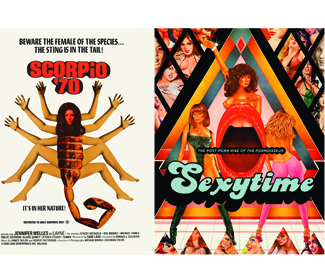
TRASH The late, beloved Werepad begat the Vortex Room, the former closing when co-founder Jacques Boyreau moved from SF to Portland, Ore. But ties between those concerned with both venues remain tight, and August is a big month for them all. Firstly, it sees the release of Boyreau’s latest coffee table tome, Sexytime: The Post-Porn Rise of the Pornoisseur (Fantagraphics, 96pp., $29.95). Really, you might ask, does there need to be a book devoted to full color reproductions of posters from the “golden age” (circa 1971-82) of XXX features?

Ohhhh yes. These hundred pages excavate a retro wonderland of film-shot sleaze with the usual tasteless ad lines (Finishing School: “She took a cram course in pleasure”) and graphics variably dime-novel crude, psychedelic, and disco-era slick. There are titles topically trendy (CB-themed Breaker Beauties; Erotic Aerobics; Patty Hearst-inspired Tanya) and parodic (Blazing Zippers; One Million Years AC/DC; Flash Pants). There’s even cautionary sexploitation, as the sheet for 1976’s Female Chauvinists warns “DO YOU KNOW: Women libbers are planning to take over the world? That they have recruiting camps in every corner of this planet?” So that’s where Rush learned about feminism.

Meanwhile back at the Vortex, the venue’s fifth anniversary is being celebrated through the month’s end with a Pop art-themed series of Thursday night double bills. It doesn’t get any more Pop, or Op, than incredible and inexplicable The Touchables, which despite its obscurity today was actually a mainstream 20th Century Fox release in 1968. Ah, the Sixties. This was just a simple tale of four Swinging London model types who, after stealing a Michael Caine dummy from Madame Tussauds, decide to be more ambitious and kidnap a live male pop star. They then take him to their giant-inflatable-plastic-dome country hideaway, torture him with sex play and go-go dancing, and unknowingly await the arrival of gangsters hired by a gay wrestler who also covets the abducted lad.

You know, that old story. Keen minds thought up this insanity: Robert Freeman, the Beatles’ “official” photographer making his directorial debut, cooked up the screenplay with Ian La Frenais (future Tracey Ullmann collaborator) and Donald Cammell (soon to be responsible for 1970’s Performance and 1977’s Demon Seed). The Touchables‘ co-feature is the almost equally daft Deadly Sweet (1967), another Swinging London artifact, albeit one directed by Italian Tinto Brass, who had yet to meet Caligula or his true calling as ass-man equivalent to Russ Meyer’s boobaholic in the softcore sexploitation hall of fame.

Next week things settle down a bit with Streets of Fire, Walter Hill’s fetishistically stylized 1984 music-video fable, and 1971’s Captain Apache, a weak Euro Western enlivened by a trip sequence and Carroll Baker’s apparent belief that she’s acting in a farce.

Then the weirdness level rises dangerously again August 23, with two lysergically bent missives from the “turbulent” decade. From 1969, Cult of the Damned (a.k.a. Angel, Angel, Down We Go) is the least-known of American International Picture’s psych flicks, and no wonder — compared to giddy The Trip (1967), Psych-Out (1968), and Wild in the Streets (1968), it’s a twisted downer. Future feminist singer-songwriter icon Holly Near plays the plump, unhappy only child of a jaded Hollywood couple whose household is seduced whole by rock singer Bogart (Jordan Christopher) and his entourage. Advertised with “If You’re Over 30 This Is A Horror Story,” Robert Thorn’s only directorial feature is rancid, baroque, and bizarre to no end, offering the opportunity to hear Roddy McDowell say “Baby man, I am just sexual. Like sometimes I can just stare at a carrot and baby man, that carrot can turn me on,” as well as Jennifer Jones (as mom) brag “I made 30 stag films and never faked an orgasm.” (It should be noted that shortly after completing her role, Jones had a nervous breakdown.) Cult‘s co-feature is 1962 sci-fi oddity Creation of the Humanoids, which was purportedly Andy Warhol’s favorite movie — that should be recommendation enough.

The series’ final bill moves upmarket to showcase two expensive early 1970s flops. You may search in vain for defenders of 1972’s Bluebeard, which features Richard Burton as the famed ladykiller and an array of Eurobabes as his victims — alas, not including American lounge-act extraordinaire Joey Heatherton, whose final wife is by far the most annoying but lives to tell. For a movie that features Raquel Welch as a nun, it’s pretty slow going, despite some imaginative production design and hints of a satirical zest that old-school Hollywood director Edward Dmytryk just couldn’t grok.

A more rewarding curio is 1974’s 99 and 44/100% Dead, a gangster spoof that supposedly represented a career nadir for director John Frankenheimer. (Actually, his nadir came the prior year with Story of a Love Story, one of those movies so interesting in concept and cast you can’t imagine it’s worthless — until you see it.) What can you say about a film that features Chuck Connors as a thug who screws different lethal weapons into his severed arm socket? Plus a rare appearance by the mysterious Zooey Hall of I Dismember Mama (1972) and Fortune and Men’s Eyes (1971)? That it can’t be all bad, and in fact it isn’t.

POP GOES THE VORTEX

Thursdays through Aug. 30, 9pm, $7

Vortex Room

1082 Howard, SF

Facebook: The Vortex Room


Fangs, but no fangs

0

arts@sfbg.com

FILM The whole “lesbian vampire” thing may seem a very 20th-century, pop entertainment trope, as it blends sex and violence in one neatly exploitative package offering voyeuristic maximum appeal to straight men, long perceived as the primary audience for both horror and erotica. (In recent years, however, that assumption has begun to seem outdated.) But in fact Irish writer Joseph Sheridan Le Fanu’s Gothic novella Carmilla was published in 1872, a quarter-century before Bram Stoker’s Dracula, thus placing lesbian vampires well ahead of heterosexual ones in literary history. If that order was reversed in movie history, well — you can’t expect much girl-on-girl action to have surfaced before censorship standards began crumbling in the 1960s.

That decade began and ended with two major Carmilla adaptations: French horndog Roger Vadim’s 1960 Blood and Roses (originally titled And To Die of Pleasure) and the English Hammer studio’s 1970 heaving-bodice marathon The Vampire Lovers. Since then, lesbian vampires on screen have become ubiquitous.

They’ve usually been distinctly designed with the “male gaze” in mind, however, appealing to that guy-spot which (to quote the inimitable Axl Rose) would “rather see two women together than just about anything else.” Inevitably, though, someone was going to reclaim the concept for the younger female audience that has made the Twilight books and movies huge.

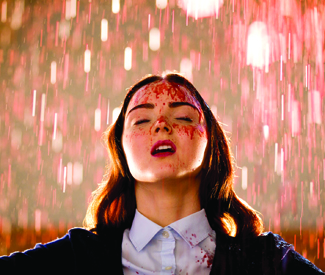
Ergo we now have The Moth Diaries, Rachel Klein’s 2002 novel turned into Mary Harron’s film. Why it’s an Irish-Canadian production that’s landed on our local SF Film Society Cinema screen for a week rather than a Hollywood extravaganza playing a bazillion multiplexes is a matter for further study. It’s certainly the director’s most mainstream-friendly effort, being less edgy and grown-up than American Psycho (2000), I Shot Andy Warhol (1996), or even The Notorious Bettie Page (2005).

It’s the start of a new academic year at an upscale girls’ boarding school. Despite the strictness of their overseers, the girls manage to be ordinary, fun-loving teens. Becca (Sarah Bolger from The Tudors) is particularly happy to be reunited with best friend and roommate Lucie (Sarah Gadon), as the former is still psychologically fragile in the wake of her well-known poet father’s suicide. But a wedge is driven between them by the arrival of Ernessa (Lily Cole), a tall, English-accented student with a face like a creepy porcelain doll. She “colonizes” Lucie, who at first guiltily hides her infatuation from Becca, then (along with everyone else) accuses her of simple jealousy.

But Becca notices things others don’t, or dismiss: how Ernessa never seems to eat, how she can’t abide water, the sickly sweet smell emanating from her room and her odd disappearances into the luxury-hotel-turned-school’s off limits basement. One ally gets expelled; another, after witnessing Ernessa doing something logically inexplicable, meets a more brutal fate. Meanwhile, Lucie (the same name as Dracula’s preliminary victim in Bram Stoker’s novel) grows seriously ill. Turning to a sympathetic (as well as hot) new literature teacher for help, Becca instead gets inappropriate overtures from Mr. Davies (Scott Speedman).

Klein’s book, which had our heroine looking back on this episode from middle age, insisted on ambiguity: we’re never sure whether Ernessa really is a supernatural predator, or if all this is just a hysterical fantasy Becca devises to process (or evade) her profound grief over losing a parent. Adapted by Harron as scenarist, the movie eliminates that frame and leaves little room for doubt that there be vampires here.

But the film’s weakness is that it still tries to play it both ways, as troubled coming-of-age portrait and Gothic horror, with the result that the two elements end up seeming equally half-realized. Despite an inevitably somewhat glamorized surface, a certain attention is paid to real-world adolescent detail, like the presence of casual recreational drug use or the disappointment voiced by one student whose eagerly awaited deflowering turns out neither good or bad, but just an indifferent experience. There’s also a knowing wink at the usual adult dismissal of teenage ideas when Mr. Davies condescendingly shrugs off Becca’s fears: “Cooped up here you girls can get so close, all that emotion can turn toxic.” The movie is handsome enough, with a color palette that aptly grows darker and more untrustworthy as things progress.

Cole is well-cast for her eeriness, while Bolger gives an intelligent performance even if the film ought to be channeling her character’s growing instability more vividly — as Harron managed very well for Valerie Solanis and Patrick Bateman.

There’s little suspense here, however, and the fantastical elements are seldom staged with any inspiration. You get the feeling that this highly talented director ultimately couldn’t find anything all that interesting in her young-adult-fiction material, but still hoped for a Twilight-style hit that might make more personal future projects easier to fund. (Even after Kathryn Bigelow’s 2010 Hurt Locker Oscar, it still seems like the road is always uphill for women directors.) Instead she wound up with a polished but forgettable genre piece that’s probably the mildest entry in the annals of lesbian (or at least Sapphically-tinged) vampire cinema yet.


THE MOTH DIARIES opens Fri/10 at SF Film Society Cinema.

Our Weekly Picks: August 8-14

0

WEDNESDAY 8

Beats for Lunch

Tired of eating lunch at your cubicle, under harsh fluorescent lighting? Monarch feels your pain, and wants to do something about it. Launched last month as RECESS, Beats for Lunch is the second installment of the club’s rather experimental stab at an afternoon, workday dance party. Featuring several Motown DJs from MOM SF, the party crew that’s had our fair city shaking it on a weekly basis since 2009, this is exactly the kind of all-inclusive dance-a-thon we could use more of. With free cover (and free sandwiches!) to boot, checking out this month’s Beats for Lunch should be a no-brainer. It doesn’t matter what you wear, just as long as you are there. (Taylor Kaplan)

Noon-2pm, free

Monarch

101 Sixth St., SF

(415) 284-9774

www.monarchsf.com


Fox & Woman

A group of poets in the Mission District of San Francisco formed the band Fox & Woman over a year ago, with a goal to “stretch and tear at the shortcomings in pop music.” In turn, they offer a refreshing mix of the rambunctious and the beautiful. Along with riveting lyrical and vocal power, the band treats listeners to violin, mandolin, cello, and ukelele, creating lush orchestration. Check out “Break Into My Heart” off its six-song EP (streaming on the band’s website) and peep the rest of the album while you’re at it; nod your head to passionate anthems, stomp your feet to every tight rhythm. Let the slower ballads created by this five-piece woo you, and then be prepared to jump right back into the dance groove. (Shauna C. Keddy)

With the Thoughts, Split Screens

9pm, $10

Brick and Mortar Music Hall

1710 Mission, SF

(415) 800-8782

www.brickandmortarmusic.com


Redd Kross

When brothers Jeff and Steve McDonald first formed the band that would become Redd Kross in the late 1970s, they were just 11 and 15 years old — and famously played their first gig opening for Black Flag. Returning with their first new album in 15 years, the excellent Researching The Blues, which dropped this week, the group continues to twist infectious melodies and pop sensibilities into short, stunning bursts of rock’n’roll. Some acts would struggle to regain that explosive chemistry after such a long break, but Redd Kross picked up right where it left off. (Sean McCourt)

With the Mantles, Warm Soda

8pm, $20

Great American Music Hall

859 O’Farrell, SF

(415) 885-0750

www.slimspresents.com


THURSDAY 9

The Big Eat

Why Leo Beckerman and Evan Bloom would reveal the secrets to their divine pastrami is beyond me. The Wise Sons Delicatessen founders and local meat men-of-the-moment are among the mavens congregating at The Big Eat to discuss the nexus between cuisine and creativity. Each expert has a story to tell — distiller Arne Hillesland, a.k.a The Ginerator, created a kosher-for-Passover gin in 40 days. Artist Deborah Lozier fixed Norwegian wood to vintage silverware in a series of pieces that blend nature and civilization. SFMOMA pastry chef Leah Rosenberg uses ongoing exhibitions as inspirations for her stylized cakes, while Bryon Waibel harvests honey in the Mission, laying legitimate claim to being the world’s first urban beekeeper.

(Kevin Lee)

6:30-8:30pm; $10 general, free for museum members Contemporary Jewish Museum 736 Mission, SF (415) 655-7800 www.thecjm.org


Young Moon

Sure, Phil Spector and My Bloody Valentine are great, but we’ve officially reached a saturation point with this whole wall-of-sound thing. Too many imitators using viscous layers of reverb to conceal lazy songwriting, ill-conceived lyrics, and half-baked hooks. However, Young Moon stands out as an exception. Recalling Deerhunter’s balance between the robust and the ethereal, this project of local multitracker Trent Montgomery pays tribute to the goopy production of Pet Sounds, while churning out the bona-fide hooks to back it up. A release party for his debut album, Navigated Like the Swans, Montgomery’s set this Thursday might well be the beginning of something. (Kaplan)

With Danny Paul Grody, Vestals 9pm, $6 Hemlock 1131 Polk, SF (415) 923-0923 www.hemlocktavern.com


YG

Though his name stands for Young Gangsta, this Compton-based rapper abandoned his gang-affiliated lifestyle when he got signed to Def Jams at just 19 years old. Now 22, YG has produced some of the best guilty-pleasure tracks in recent hip-hop history, including 2010’s “Toot it and Boot it” and this year’s charmingly titled “Bitches Ain’t Shit,” both of which cracked Billboard’s Hot 100. 2012 has also seen YG’s acting debut alongside Snoop Dogg in the hip-hop teen flick We the Party. Though the rapper is yet to release his debut album, he’s been keeping himself busy with side projects and collaborations. YG’s hyper-sexual and hook-laden mix tapes have kept a hold on the industry’s attention. (Haley Zaremba)

8:30pm, $18

New Parish

579 18th, Oakl.

(510) 444-7474

www.thenewparish.com


FRIDAY 10


Christeene

After six video singles — starting with attention-grabber “Fix My Dick” (all directed and produced by PJ Raval) — insatiable, downright nasty, slyly loveable CHRISTEENE is unleashing a full album. The release party for the Austin-based sensation and self-described “drag terrorist” (alter ego of actor Paul Soileau) headlines the first installment of Church, a new nightlife event by co-presenters Peaches Christ, Bearracuda, and DJ Carnita. Sure, the back-alley beauty looks like a thorough mess with stringy black hair framing a wild-eyed pan whose rubbed out lipstick makes a skanky halo around her gold-flecked smile, but her rhymes (delivered over salacious hip-hip, R&B, and techno beats) and balls-out floor show got more business than Mitt. (Robert Avila)

With Peaches Christ, Bearracuda, DJ Carnita

9pm, $20

Public Works

161 Erie, SF

(415) 932-0955

www.publicsf.com

www.peacheschrist.com


SATURDAY 11

James and the Giant Peach

Though 1993’s The Nightmare Before Christmas gets more cult love (and 2009’s Neil Gaiman-inspired Coraline snagged an Oscar nom; we won’t speak of 2001’s Monkeybone), James and the Giant Peach, director Henry Selick’s 1996 take on the beloved Roald Dahl tale, is well worth revisiting. Especially this week, when the Tim Burton-produced film — rendered in an exquisite mix of stop-motion animation and live action — screens at the SF Film Society Cinema alongside a presentation by artists who contributed to the San Francisco-made project. Puppets and props from the film will be in attendance (Miss Spider FTW!), and superfans take note: these artists are also working with Selick on his next film, another spooky Gaiman adaptation. (Cheryl Eddy)

11am, $8

SF Film Society Cinema

1746 Post, SF

sffs.org/cinema


Tornado Wallace

Melbourne-based producer Lewie Day lives a double life. By day, he produces house music for electronic labels like Murmur and 8bit. By night, he’s one of the biggest DJs in Australia’s electronic scene. As a teenager, he threw himself into the DJ scene as a favor to a friend who needed a spot filled. Today, Tornado Wallace is extremely prolific, churning out original disco-tinged tracks and remixes at lightning speed. His quantity plus quality approach has garnered the attention of many of the house scene’s major players, and Resident Advisor recently featured him on their highly esteemed podcast — and named him as an artist to watch out for. This summer marks Tornado Wallace’s first-ever US tour. (Zaremba)

With Bells & Whistles, Habitat SF

9:30pm, $12

Public Works

161 Erie, SF

(415) 932-0955

www.publicsf.com


SUNDAY 12

Al Jarreau, George Duke Trio

One of the most versatile, expressive vocalists of the last 50 years, Al Jarreau jumps restlessly between soul, jazz, pop, and samba traditions, refusing to let any genre tags define him. George Duke is an undisputed keyboard champion, whose ’70s jazz-fusion recordings have permeated modern hip-hop and neo-soul to an astonishing degree. These two legends will share the beautiful Stern Grove stage, collaborating on a range of jazz tunes, in an afternoon of (free!) music, not to be missed. Bring a beach towel and a six-pack, and cross your fingers for some Keytar action from Mr. Duke, himself. (Kaplan)

With Mara Hruby 2pm, free

Stern Grove

19th Ave. and Sloat, SF

(415) 252-6252

www.sterngrove.org


MONDAY 13

“Incredibly Strange Television!”

Sure, your nightly channel-surf turns up some intense weirdness: Extreme Couponing, Cajun Pawn Stars, Bikini Barbershop. But make no mistake — TVs were beaming uber-bizarreness into living rooms long before reality programming took over. The one and only Johnny Legend invades the Roxie for three nights of brain-blowing transmissions, presented under the banner “Incredibly Strange Television!” First up is tonight’s two-part ode to comedy (featuring premiere eps, forgotten pilots, and more, with glimpses of greats like Jackie Gleason, George Burns, Don Knotts, and a young Betty White). Tomorrow, it’s the world premiere of “Johnny Legend’s TV in Acidland,” a live-TV extravaganza spanning decades; Wednesday’s “Shock and Noir!” promises “strange and demented” prime-time snippets from the 1950s and 60s. (Eddy)

Aug. 13-15, 6:15, 8, and 9:45pm, $11

Roxie Cinema

3117 16th St., SF

www.roxie.com


TUESDAY 14

Red Hot Chili Peppers

“Let me tell you about the Chili Peppers,” intoned comedian Chris Rock in April. “If Brian Wilson and George Clinton had a kid, he’d be as ugly as fuck, but he would sound like the Chili Peppers.” Rock helped induct the Chilis into the Rock and Roll Hall of Fame, three decades after four high school friends began jamming together in Los Angeles. Through the drugs and death of founding member Hillel Slovak, through eight Grammy Awards and 85 million records sold, the Chili Peppers have endured with their funk-punk sound. Even now, with lead singer Anthony Kiedis and bassist Flea pushing 50, the Chili Peppers remain one of the most dynamic live shows in rock. Darling Swedish electronic group Little Dragon open. (Lee)

With Little Dragon

8pm, $39.50–$59.50

Oracle Arena

7000 Coliseum Way, Oakl.

(510) 569-2121

 www.coliseum.com


The Guardian listings deadline is two weeks prior to our Wednesday publication date. To submit an item for consideration, please include the title of the event, a brief description of the event, date and time, venue name, street address (listing cross streets only isn’t sufficient), city, telephone number readers can call for more information, telephone number for media, and admission costs. Send information to Listings, the Guardian, 71 Stevenson St., Second Floor, SF, CA 94105; fax to (415) 487-2506; or e-mail (paste press release into e-mail body — no text attachments, please) to listings@sfbg.com. Digital photos may be submitted in jpeg format; the image must be at least 240 dpi and four inches by six inches in size. We regret we cannot accept listings over the phone.

Film Listings

0

Film listings are edited by Cheryl Eddy. Reviewers are Kimberly Chun, Max Goldberg, Dennis Harvey, and Lynn Rapoport. For rep house showtimes, see Rep Clock.

OPENING

The Bourne Legacy Jeremy Renner steps into Matt Damon’s super-spy shoes to play a Jason Bourne-esque international man of ass-kicking mystery. (2:15) Balboa. Presidio.

The Campaign A smug incumbent (Will Ferrell) and a naïve newcomer (Zach Galifianakis) battle over a North Carolina congressional seat. (1:25) Presidio, California, Vogue.

Celeste and Jesse Forever Indie dramedy about a couple (Andy Samberg and co-writer Rashida Jones) who try to stay friends despite their impending divorce. (1:31) Metreon, Sundance Kabuki.

Easy Money A title like that is bound to disprove itself, and it doesn’t take long to figure out that the only payday the lead characters are going to get in this hit 2010 Swedish thriller (from Jens Lapidus’ novel) is the kind measured in bloody catastrophe. Chilean Jorge (Matias Padin Varela), just escaped from prison, returns to Stockholm seeking one last big drug deal before he splits for good; JW (Joel Kinnaman from AMC series The Killing) is a economics student-slash-cabbie desperate for the serious cash needed to support his double life as a pseudo-swell running with the city’s rich young turks. At first reluctantly thrown together, they become friends working for JW’s taxi boss — or to be more specific, for that boss’ cocaine smuggling side business. Their competitors are a Serbian gang whose veteran enforcer Mrado (Dragomir Mrsic) is put in the awkward position of caring for his eight-year-old daughter (by a drug addicted ex-wife) just as “war” heats up between the two factions. But then everyone here has loved ones they want to protect from an escalating cycle of attacks and reprisals from which none are immune. Duly presented here by Martin Scorsese, Daniel Espinosa’s film has the hurtling pace, engrossing characters and complicated (sometimes confusing) plot mechanics of some good movies by that guy, like Casino (1995) or The Departed (2006). Wildly original it’s not, but this crackling good genre entertainment that make you cautiously look forward to its sequel — which is just about to open in Sweden. (1:59) Lumiere, Shattuck. (Harvey)

Hope Springs A married couple (Meryl Streep, Tommy Lee Jones) turn to a counselor (Steve Carell) to help salvage their relationship. (1:40) Four Star, Marina, Piedmont, Shattuck.

Moth Diaries See “Fangs, But No Fangs.” (1:22) SF Film Society Cinema.

Nitro Circus the Movie 3D The daredevil “action sports collective” hits the big screen with ridiculous stunts aimed at delighting Jackass and X Games fans. (1:28)

Nuit #1 Montreal director-writer Anne Émond bares more than her actor’s beautiful bodies: she’s eager to uncover their tenderized souls: hurt, unsavory, vulnerable, terrified, nihilistic, compulsive, and desperate. Nikolai (Dimitri Stroroge) and Clara (Catherine de Lean) are just two kids on the crowded dance floor, jumping up and down in slow motion to the tune of a torch song; before long, they’re in Nikolai’s shabby apartment, tearing off their clothes and making love as if their lives depended on it. But when Nikolai, laid out on his mattress on the floor like a grunge Jesus with a bad haircut, catches Clara sneaking out without saying good-bye, he sits her down for an earful of his reality. She returns the favor, revealing an unexpected double life, and the two embark on a psycho-tango that takes all night. It can seem like a long one to those impatient with the young, beautiful, and possibly damned’s doubts and self-flagellation, though Émond’s artful, coolly empathetic eye takes the proceedings to a higher level. She’s attempting to craft a simultaneously romantic and raw-boned song of self for a generation. (1:31) Elmwood, Lumiere. (Chun)

360 A massive ensemble sprinkled with big-name stars, a sprawling yet interconnected story, and locations as far-flung as Phoenix and Bratislava: 360 is not achieving anything new with its structure (see also: 2011’s Contagion, 2006’s Babel, and so on). And some pieces of its sectioned-off narrative are less successful than others, as with the exploits of a posh, unfaithful duo played by Rachel Weisz (re-teaming with her Constant Gardener director Fernando Meirelles) and Jude Law. Fortunately, screenwriter Peter Morgan (2006’s The Queen) finds some drama (and a lot of melancholy) in less-familiar relationship scenarios. An airport interlude that interweaves a grieving father (Anthony Hopkins), a newly single Brazilian (Maria Flor), and a maybe-rehabilitated sex offender (Ben Foster) is riveting, as are the unexpectedly sweet and sour endpoints of tales spiraling off a Russian couple (Dinara Drukarova, Vladimir Vdovichenkov) who’ve drifted apart. (1:51) Opera Plaza, Shattuck. (Eddy)

Unforgiveable See “When in Venice.” (1:52) Opera Plaza, Shattuck.

ONGOING

Ai Weiwei: Never Sorry Unstoppable force meets immovable object — and indeed gets stopped — in Alison Klayman’s documentary about China’s most famous contemporary artist. A larger than life figure, Ai Weiwei’s bohemian rebel persona was honed during a long (1981-93) stint in the U.S., where he fit right into Manhattan’s avant-garde and gallery scenes. Returning to China when his father’s health went south, he continued to push the envelope with projects in various media, including architecture — he’s best known today for the 2008 Beijing Olympics’ “Bird’s Nest” stadium design. But despite the official approval implicit in such high-profile gigs, his incessant, obdurate criticism of China’s political repressive politics and censorship — a massive installation exposing the government-suppressed names of children killed by collapsing, poorly-built schools during the 2008 Sichuan earthquake being one prominent example — has tread dangerous ground. This scattershot but nonetheless absorbing portrait stretches its view to encompass the point at which the subject’s luck ran out: when the film was already in post-production, he was arrested, then held for two months without official charge before he was accused of alleged tax evasion. (He is now free, albeit barred from leaving China, and “suspected” of additional crimes including pornography and bigamy.) (1:31) Lumiere, Shattuck, Smith Rafael, Sundance Kabuki. (Harvey)

The Amazing Spider-Man A mere five years after Sam Raimi and Tobey Maguire’s Spider-Man 3 — forgettable on its own, sure, but 2002’s Spider-Man and especially 2004’s Spider-Man 2 still hold up — Marvel’s angsty web-slinger returns to the big screen, hoping to make its box-office mark before The Dark Knight Rises opens in a few weeks. Director Marc Webb (2009’s 500 Days of Summer) and likable stars Andrew Garfield (as the skateboard-toting hero) and Emma Stone (as his high-school squeeze) offer a competent reboot, but there’s no shaking the feeling that we’ve seen this movie before, with its familiar origin story and with-great-power themes. A little creativity, and I don’t mean in the special effects department, might’ve gone a long way to make moviegoers forget this Spidey do-over is, essentially, little more than a soulless cash grab. Not helping matters: the villain (Rhys Ifans as the Lizard) is a snooze. (2:18) Metreon, 1000 Van Ness. (Eddy)

Beasts of the Southern Wild Six months after winning the Grand Jury Prize at Sundance (and a Cannes Camera d’Or), Beasts of the Southern Wild proves capable of enduring a second or third viewing with its originality and strangeness fully intact. Magical realism is a primarily literary device that isn’t attempted very often in U.S. cinema, and succeeds very rarely. But this intersection between Faulkner and fairy tale, a fable about — improbably — Hurricane Katrina, is mysterious and unruly and enchanting. Benh Zeitlin’s film is wildly cinematic from the outset, as voiceover narration from six-year-old Hushpuppy (Quvenzhané Wallis) offers simple commentary on her rather fantastical life. She abides in the Bathtub, an imaginary chunk of bayou country south of New Orleans whose residents live closer to nature, amid the detritus of civilization. Seemingly everything is some alchemical combination of scrap heap, flesh, and soil. But not all is well: when “the storm” floods the land, the holdouts are forced at federal gunpoint to evacuate. With its elements of magic, mythological exodus, and evolutionary biology, Beasts goes way out on a conceptual limb; you could argue it achieves many (if not more) of the same goals Terrence Malick’s 2011 The Tree of Life did at a fraction of that film’s cost and length. (1:31) Bridge, California, Embarcadero, Smith Rafael. (Harvey)

Bernie Jack Black plays the titular new assistant funeral director liked by everybody in small-town Carthage, Tex. He works especially hard to ingratiate himself with shrewish local widow Marjorie (Shirley MacLaine), but there are benefits — estranged from her own family, she not only accepts him as a friend (then companion, then servant, then as virtual “property”), but makes him her sole heir. Richard Linklater’s latest is based on a true-crime story, although in execution it’s as much a cheerful social satire as I Love You Philip Morris and The Informant! (both 2009), two other recent fact-based movies about likable felons. Black gets to sing (his character being a musical theater queen, among other things), while Linklater gets to affectionately mock a very different stratum of Lone Star State culture from the one he started out with in 1991’s Slacker. There’s a rich gallery of supporting characters, most played by little-known local actors or actual townspeople, with Matthew McConaughey’s vainglorious county prosecutor one delectable exception. Bernie is its director’s best in some time, not to mention a whole lot of fun. (1:39) Opera Plaza, Smith Rafael. (Harvey)

Bill W. Even longtime AA members are unlikely to know half the organizational history revealed in this straightforward, chronological, fast-moving portrait of its late founder. Bill Wilson was a bright, personable aspiring businessman whose career was nonetheless perpetually upset by addiction to the alcohol that eased his social awkwardness but brought its own worse troubles. During one mid-1930s sanitarium visit, attempting to dry out, he experienced a spiritual awakening. From that moment slowly grew the idea of Alcoholics Anonymous, which he shaped with the help of several other recovering drunks, and saw become a national movement after a 1941 Saturday Evening Post article introduced it to the general public. Wilson had always hoped the “leaderless” organization would soon find its own feet and leave him to build a separate, sober new career. But gaining that distance was difficult; attempts to find other “cures” for his recurrent depression (including LSD therapy) laid him open to internal AA criticism; and he was never comfortable on the pedestal that grateful members insisted he stay on as the organization’s founder. Admittedly, he appointed himself its primary public spokesman, which rendered his own hopes for privacy somewhat self-canceling — though fortunately it also provides this documentary with plenty of extant lecture and interview material. He was a complicated man whose complicated life often butted against the role of savior, despite his endless dedication and generosity toward others in need. That thread of conflict makes for a movie that’s compelling beyond the light it sheds on an institution as impactful on individual lives and society as any other to emerge from 20th-century America. (1:43) Roxie. (Harvey)

Brave Pixar’s latest is a surprisingly familiar fairy tale. Scottish princess Merida (voiced by Kelly Macdonald) would rather ride her horse and shoot arrows than become engaged, but it’s Aladdin-style law that she must marry the eldest son of one of three local clans. (Each boy is so exaggeratedly unappealing that her reluctance seems less tomboy rebellion than common sense.) Her mother (Emma Thompson) is displeased; when they quarrel, Merida decides to change her fate (Little Mermaid-style) by visiting the local spell-caster (a gentle, absent-minded soul that Ursula the Sea Witch would eat for brunch). Naturally, the spell goes awry, but only the youngest of movie viewers will fear that Merida and her mother won’t be able to make things right by the end. Girl power is great, but so are suspense and originality. How, exactly, is Brave different than a zillion other Disney movies about spunky princesses? Well, Merida’s fiery explosion of red curls, so detailed it must have had its own full-time team of animators working on it, is pretty fantastic. (1:33) 1000 Van Ness, SF Center, Shattuck. (Eddy)

Dark Horse You can look at filmmaker Todd Solondz’s work and find it brilliant, savage, and challenging; or show-offy, contrived, and fraudulent. The circles of interpersonal (especially familial) hell he describes are simultaneously brutal, banal, and baroque. But what probably distresses people most is that they’re also funny — raising the issue of whether he trivializes trauma for the sake of cheap shock-value yuks, or if black comedy is just another valid way of facing the unbearable. Dark Horse is disturbing because it’s such a slight, inconsequential, even soft movie by his standards; this time, the sharp edges seem glibly cynical, and the sum ordinary enough to no longer seem unmistakably his. Abe (Jordan Gelber) is an obnoxious jerk of about 35 who still lives with his parents (Mia Farrow, Christopher Walken) and works at dad’s office, likely because no one else would employ him. But Abe doesn’t exactly see himself as a loser. He resents and blames others for being winners, which is different — he sees the inequality as their fault. Dark Horse is less of an ensemble piece than most of Solondz’s films, and in hinging on Abe, it diminishes his usual ambivalence toward flawed humanity. Abe has no redemptive qualities — he’s just an annoyance, one whose mental health issues aren’t clarified enough to induce sympathy. (1:25) Smith Rafael. (Harvey)

The Dark Knight Rises Early reviews that called out The Dark Knight Rises‘ flaws were greeted with the kind of vicious rage that only anonymous internet commentators can dish out. And maybe this is yet another critic-proof movie, albeit not one based on a best-selling YA book series. Of course, it is based on a comic book, though Christopher Nolan’s sophisticated filmmaking and Christian Bale’s tortured lead performance tend to make that easy to forget. In this third and “final” installment in Nolan’s trilogy, Bruce Wayne has gone into seclusion, skulking around his mansion and bemoaning his broken body and shattered reputation. He’s lured back into the Batcave after a series of unfortunate events, during which The Dark Knight Rises takes some jabs at contemporary class warfare (with problematic mixed results), introduces a villain with pecs of steel and an at-times distractingly muffled voice (Tom Hardy), and unveils a potentially dangerous device that produces sustainable energy (paging Tony Stark). Make no mistake: this is an exciting, appropriately moody conclusion to a superior superhero series, with some nice turns by supporting players Gary Oldman and Joseph Gordon-Levitt. But in trying to cram in so many characters and plot threads and themes (so many prisons in this thing, literal and figural), The Dark Knight Rises is ultimately done in by its sprawl. Without a focal point — like Heath Ledger’s menacing, iconic Joker in 2008’s The Dark Knight — the stakes aren’t as high, and the end result feels more like a superior summer blockbuster than one for the ages. (2:44) Balboa, Marina, Metreon, 1000 Van Ness, Sundance Kabuki. (Eddy)

The Devil, Probably This seldom-revived 1977 feature from late French master Robert Bresson was his penultimate as well as most explicitly political work. Newspaper clips at the start betray where these 95 minutes will be heading: they introduce Parisian Charles (Antoine Monnier) as a casualty, a suicide at age 20. The reasons for that act are probed in the succeeding flashback, as we observe his last days drifting between friends and lovers, quitting student activist groups, and generally expressing his disillusionment with everything from politics to religion to human interaction. Then 70, Bresson expresses his own disenchantment in solidarity with the youthful characters by including documentary shots of pollution, clubbed baby seals, A-bomb explosions, and other dire signs of “an Earth that is ever more populated and ever less habitable.” That essential message makes The Devil, Probably more relevant than ever, but unfortunately it’s also one of the filmmaker’s driest, most didactic exercises. There are a few odd, almost farcical moments (as when the constant pondering of man’s fate extends to a spontaneous philosophical debate between passengers on a public bus), but the characters are too obviously mouthpieces with no inner lives of their own. In particular, Charles remains an unengaging blank in Monnier’s performance, which is all too faithful to the director’s usual call for “automatic,” uninflected line readings from his nonprofessional cast. Nothing Bresson did is without interest, but here his detached technique drains nearly all emotional impact from a film ostensibly about profound despair. (1:35) SF Film Society Cinema. (Harvey)

Diary of a Wimpy Kid: Dog Days (1:34) Metreon, 1000 Van Ness, Presidio.

Farewell, My Queen (Benoît Jacquot, France, 2012) Opening early on the morning of July 14, 1789, Farewell, My Queen depicts four days at the Palace of Versailles on the eve of the French Revolution, as witnessed by a young woman named Sidonie Laborde (Léa Seydoux) who serves as reader to Marie Antoinette (Diane Kruger). Sidonie displays a singular and romantic devotion to the queen, while the latter’s loyalties are split between a heedless amour propre and her grand passion for the Duchess de Polignac (Virginie Ledoyen). These domestic matters and other regal whims loom large in the tiny galaxy of the queen’s retinue, so that while elsewhere in the palace, in shadowy, candle-lit corridors, courtiers and their servants mingle to exchange news, rumor, panicky theories, and evacuation plans, in the queen’s quarters the task of embroidering a dahlia for a projected gown at times overshadows the storming of the Bastille and the much larger catastrophe on the horizon. (1:39) Albany, Embarcadero, Piedmont. (Rapoport)

Girlfriend Boyfriend The onscreen title of this Taiwanese import is Gf*Bf, but don’t let the text-speak fool you: the bulk of the film is set in the 1980s and 90s, long before smart phones were around to complicate relationships. And the trio at the heart of Girlfriend Boyfriend is complicated enough as it is: sassy Mabel (Gwei Lun-Mei) openly pines for brooding Liam (Joseph Chang), who secretly pines for rebellious Aaron (Rhydian Vaughan), who chases Mabel until she gives in; as things often go in stories like this, nobody gets the happy ending they desire. Set against the backdrop of Taiwan’s student movement, this vibrant drama believably tracks its leads as they mature from impulsive youths to bitter adults who never let go of their deep bond — despite all the misery it causes, and a last-act turn into melodrama that’s hinted at by the film’s frame story featuring an older Liam and a pair of, um, sassy and rebellious twin girls he’s been raising as his own. (1:45) Metreon. (Eddy)

Ice Age: Continental Drift (1:27) Metreon, 1000 Van Ness.

The Imposter A family tragedy, an international thriller, a Southern-fried mystery, and a true story: The Imposter is all of these things. This unique documentary reveals the tale of Frédéric Bourdin, dubbed “the Chameleon” for his epic false-identity habit. His ballsiest accomplishment was also his most heinous con: in 1997, he claimed to be Nicholas Barclay, a San Antonio teen missing since 1994. Amazingly, the impersonation worked for a time, though Bourdin (early 20s, brown-eyed, speaks English with a French accent) hardly resembled Nicholas (who would have been 16, and had blue eyes). Using interviews — with Nicholas’ shell-shocked family, government types who unwittingly aided the charade, and Bourdin himself — and ingenious re-enactments that borrow more from crime dramas than America’s Most Wanted, director Bart Layton weaves a multi-layered chronicle of one man’s unbelievable deception. (1:39) Lumiere, Shattuck. (Eddy)

The Intouchables Cries of “racism” seem a bit out of hand when it comes to this likable albeit far-from-challenging French comedy loosely based on a real-life relationship between a wealthy white quadriplegic and his caretaker of color. The term “cliché” is more accurate. And where were these critics when 1989’s Driving Miss Daisy and 2011’s The Help — movies that seem designed to make nostalgic honkies feel good about those fraught relationships skewed to their advantage—were coming down the pike? (It also might be more interesting to look at how these films about race always hinge on economies in which whites must pay blacks to interact with/educate/enlighten them.) In any case, Omar Sy, portraying Senegalese immigrant Driss, threatens to upset all those pundits’ apple carts with his sheer life force, even when he’s shaking solo on the dance floor to sounds as effortlessly unprovocative, and old-school, as Earth, Wind, and Fire. In fact, everything about The Intouchables is as old school as 1982’s 48 Hrs., spinning off the still laugh-grabbing humor that comes with juxtaposing a hipper, more streetwise black guy with a hapless, moneyed chalky. The wheelchair-bound Philippe (Francois Cluzet) is more vulnerable than most, and he has a hard time getting along with any of his nurses, until he meets Driss, who only wants his signature for his social services papers. It’s not long before the cultured, classical music-loving Philippe’s defenses are broken down by Driss’ flip, somewhat honest take on the follies and pretensions of high culture — a bigger deal in France than in the new world, no doubt. Director-writer Olivier Nakache and Eric Toledano aren’t trying to innovate —they seem more set on crafting an effervescent blockbuster that out-blockbusters Hollywood — and the biggest compliment might be that the stateside remake is already rumored to be in the works. (1:52) Clay. (Chun)

Jiro Dreams of Sushi Celebrity-chef culture has surely reached some kind of zeitgeist, what with the omnipresence of Top Chef and other cooking-themed shows, and the headlines-making power of people like Paula Deen (diabetes) and Mario Batali (sued for ripping off his wait staff). Unconcerned with the trappings of fame — you’ll never see him driving a Guy Fieri-style garish sports car — is Jiro Ono, 85-year-old proprietor of Sukiyabashi Jiro, a tiny, world-renowned sushi restaurant tucked into Tokyo’s Ginza station. Jiro, a highly-disciplined perfectionist who believes in simple, yet flavorful food, has devoted his entire life to the pursuit of “deliciousness” — to the point of sushi invading his dreams, as the title of David Gelb’s reverential documentary suggests. But Jiro Dreams of Sushi goes deeper than food-prep porn (though, indeed, there’s plenty of that); it also examines the existential conflicts faced by Jiro’s two middle-aged sons. Both were strongly encouraged to enter the family business — and in the intervening years, have had to accept the soul-crushing fact that no matter how good their sushi is, it’ll never be seen as exceeding the creations of their legendary father. (1:21) Four Star. (Eddy)

Killer Joe William Friedkin made two enormously popular movies that have defined his career (1971’s The French Connection and 1973’s The Exorcist), but his resumé also contains an array of lesser films that are both hit-and-miss in critical and popular appeal. Most have their defenders. After a couple biggish action movies, it seemed a step down for him to be doing Bug in 2006; though it had its limits as a psychological quasi-horror, you could feel the cracking recognition of like minds between cast, director, and playwright Tracy Letts. Letts and Friedkin are back in Killer Joe, which was a significant off-Broadway success in 1998. In the short, violent, and bracing film version, Friedkin gets the ghoulish jet-black-comedic tone just right, and his actors let themselves get pushed way out on a limb to their great benefit — including Matthew McConaughey, playing the title character, who’s hired by the Smith clan of Texas to bump off a troublesome family member. Needless to say, almost nothing goes as planned, escalating mayhem to new heights of trailer-trash Grand Guignol. Things get fugly to the point where Killer Joe becomes one of those movies whose various abuses are shocking enough to court charges of gratuitous violence and misogyny; unlike the 2010 Killer Inside Me, for instance, it can’t really be justified as a commentary upon those very entertainment staples. (Letts is highly skilled, but those looking for a message here will have to think one up for themselves.) Still, Friedkin and his cast do such good work that Killer Joe‘s grimly humorous satisfaction in its worst possible scenarios seems quite enough. (1:43) Embarcadero. (Harvey)

Klown A spinoff from a long-running Danish TV show, with the same director (Mikkel Nørgaard) and co-writer/stars, this bad-taste comedy might duly prove hard to beat as “the funniest movie of the year” (a claim its advertising already boasts). Socially hapless Frank (Frank Hvam) discovers his live-in girlfriend Mia (Mia Lyhne) is pregnant, but she quite reasonably worries “you don’t have enough potential as a father.” To prove otherwise, he basically kidnaps 12-year-old nephew Bo (Marcuz Jess Petersen) and drags him along on a canoe trip with best friend Casper (Casper Christensen). Trouble is, Casper has already proclaimed this trip will be a “Tour de Pussy,” in which they — or at least he — will seize any and every opportunity to cheat on their unknowing spouses. Ergo, there’s an almost immediate clash between awkward attempts at quasi-parental bonding and activities most unsuited for juvenile eyes. Accusations of rape and pedophilia, some bad advice involving “pearl necklaces,” an upscale one-night-only bordello, reckless child endangerment, encouragement of teenage drinking, the consequences of tactical “man flirting,” and much more ensue. Make no mistake, Klown one-ups the Judd Apatow school of raunch (at least for the moment), but it’s good-natured enough to avoid any aura of crass Adam Sandler-type bottom-feeding. It’s also frequently, blissfully, very, very funny. (1:28) Roxie. (Harvey)

Magic Mike Director Steven Soderbergh pays homage to the 1970s with the opening shot of his male stripper opus: the boxy old Warner Bros. logo, which evokes the gritty, sexualized days of Burt Reynolds and Joe Namath posing in pantyhose. Was that really the last time women, en masse, were welcome to ogle to their heart’s content? That might be the case considering the outburst of applause when a nude Channing Tatum rises after a hard night in a threesome in Magic Mike‘s first five minutes. Ever the savvy film historian, Soderbergh toys with the conventions of the era, from the grimy quasi-redneck realism of vintage Reynolds movies to the hidebound framework of the period’s gay porn, almost for his own amusement, though the viewer might be initially confused about exactly what year they’re in. Veteran star stripper Mike (Tatum) is working construction, stripping to the approval of many raucous ladies and their stuffable dollar bills. He decides to take college-dropout blank-slate hottie Adam (Alex Pettyfer) under his wing and ropes him into the strip club, owned by Dallas (Matthew McConaughey, whose formidable abs look waxily preserved) and show him the ropes of stripping and having a good time, much to the disapproval of Adam’s more straight-laced sister Brooke (Cody Horn). Really, though, all Mike wants to do is become a furniture designer. Boasting Foreigner’s “Feels like the First Time” as its theme of sorts and spot-on, hot choreography by Alison Faulk (who’s worked with Madonna and Britney Spears), Magic Mike takes off and can’t help but please the crowd when it turns to the stage. Unfortunately the chemistry-free budding romance between Mike and Brooke sucks the air out of the proceedings every time it comes into view, which is way too often. (1:50) SF Center, Sundance Kabuki. (Chun)

Moonrise Kingdom Does Wes Anderson’s new film mark a live-action return to form after 2007’s disappointingly wan Darjeeling Limited? More or less. Does it tick all the Andersonian style and content boxes? Indubitably. In the most obvious deviation Anderson has taken with Moonrise, he gives us his first period piece, a romance set in 1965 on a fictional island off the New England coast. After a chance encounter at a church play, pre-teen Khaki Scout Sam (newcomer Jared Gilman) instantly falls for the raven-suited, sable-haired Suzy Bishop (Kara Hayward, ditto). The two become pen pals, and quickly bond over the shared misery of being misunderstood by both authority figures and fellow kids. The bespectacled Sam is an orphan, ostracized by his foster parents and scout troop (much to the dismay of its straight-arrow leader Edward Norton). Suzy despises her clueless attorney parents, played with gusto by Bill Murray and Frances McDormand in some of the film’s funniest and best scenes. When the two kids run off together, the whole thing begins to resemble a kind of tween version of Godard’s 1965 lovers-on the-lam fantasia Pierrot le Fou. But like most of Anderson’s stuff, it has a gauzy sentimentality more akin to Truffaut than Godard. Imagine if the sequence in 2001’s The Royal Tenenbaums where Margot and Richie run away to the Museum of Natural History had been given the feature treatment: it’s a simple yet inspired idea, and it becomes a charming little tale of the perils of growing up and selling out the fantasy. But it doesn’t feel remotely risky. It’s simply too damn tame. (1:37) California, Four Star, Metreon, 1000 Van Ness, Piedmont, Shattuck, Sundance Kabuki. (Michelle Devereaux)

Prometheus Ridley Scott’s return to outer space — after an extended stay in Russell Crowe-landia — is most welcome. Some may complain Prometheus too closely resembles Scott’s Alien (1979), for which it serves as a prequel of sorts. Prometheus also resembles, among others, The Thing (1982), 2001: A Space Odyssey (1968), and Event Horizon (1997). But I love those movies (yes, even Event Horizon), and I am totally fine with the guy who made Alien borrowing from all of them and making the classiest, most gorgeous sci-fi B-movie in years. Sure, some of the science is wonky, and the themes of faith and creation can get a bit woo-woo, but Prometheus is deep-space discombobulation at its finest, with only a miscast Logan Marshall-Green (apparently, cocky dude-bros are still in effect at the turn of the next millennium) marring an otherwise killer cast: Noomi Rapace as a dreamy (yet awesomely tough) scientist; Idris Elba as Prometheus‘ wisecracking captain; Charlize Theron as the Weyland Corportation’s icy overseer; and Michael Fassbender, giving his finest performance to date as the ship’s Lawrence of Arabia-obsessed android. (2:03) Metreon. (Eddy)

The Queen of Versailles Lauren Greenfield’s obscenely entertaining The Queen of Versailles takes a long, turbulent look at the lifestyles lived by David and Jackie Siegel. He is the 70-something undisputed king of timeshares; she is his 40-something (third) wife, a former beauty queen with the requisite blonde locks and major rack, both probably not entirely Mother Nature-made. He’s so compulsive that he’s never saved, instead plowing every buck back into the business. When the recession hits, that means this billionaire is — in ready-cash as opposed to paper terms — suddenly sorta kinda broke, just as an enormous Las Vegas project is opening and the family’s stupefyingly large new “home” (yep, modeled after Versailles) is mid-construction. Plugs must be pulled, corners cut. Never having had to, the Siegels discover (once most of the servants have been let go) they have no idea how to run a household. Worse, they discover that in adversity they have a very hard time pulling together — in particular, David is revealed as a remote, cold, obsessively all-business person who has no use for getting or giving “emotional support;” not even for being a husband or father, much. What ultimately makes Queen poignantly more than a reality-TV style peek at the garishly wealthy is that Jackie, despite her incredibly vulgar veneer (she’s like a Jennifer Coolidge character, forever squeezed into loud animal prints), is at heart just a nice girl from hicksville who really, really wants to make this family work. (1:40) Embarcadero, Shattuck, Smith Rafael. (Harvey)

Red Lights Skeptics and budding myth busters, get ready. Maybe. Director-writer Rodrigo Cortés blends the stuff of thrillers and horror in this slippery take on psychics and their debunkers. Psychologist Margaret Matheson (Sigourney Weaver) and her weirdly loyal assistant Tom (Cillian Murphy) investigate paranormal phenomena — faith healers, trance mediums, ghost hunters, and psychics — in order to peer behind the curtain and expose all Ozs great and small. Spoon-bending blind ESP master Simon Silver (Robert De Niro) is their biggest prize: he’s come out of retirement after the death of his most dogged critic. Has Silver learned to kill with his mind? And can we expect a brain-blowing finale on the same level as The Fury (1978)? Despite all the high-powered acting talent in the room, Red Lights never quite convinces us of the urgency of its mission — it’s hard to swallow that the debunking of paranormal phenomenon rates as international news in an online-driven 24/7 multiniched news cycle — and feels like a curious ’70s throwback with its Three Days of the Condor-style investigative nail-biter arc, while supplying little of the visceral, camp showman panache of a De Palma. (1:53) (1:53) Metreon. (Chun)

Ruby Sparks Meta has rarely skewed as appealingly as with this indie rom-com spinning off a writerly version of the Pygmalion and Galatea tale, as penned by the object-of-desire herself: Zoe Kazan. Little Miss Sunshine (2006) directors Jonathan Dayton and Valerie Faris helm this heady fantasy about a crumpled, geeky novelist, Calvin (Paul Dano), who’s suffering from the sophomore slump — he can’t seem to break his rock-solid writers block and pen a follow-up to his hit debut. He’s a victim of his own success, especially when he finally begins to write, about a dream girl, a fun-loving, redheaded artist named Ruby (scriptwriter Kazan), who one day actually materializes. When he types that she speaks nothing but French, out comes a stream of the so-called language of diplomacy. Calvin soon discovers the limits and dangers of creation — say, the hazards of tweaking a manifestation when she doesn’t do what you desire, and the question of what to do when one’s baby Frankenstein grows bored and restless in the narrow circle of her creator’s imagination. Kazan — and Dayton and Faris — go to the absurd, even frightening, limits of the age-old Pygmalion conceit, giving it a feminist charge, while helped along by a cornucopia of colorful cameos by actors like Annette Bening and Antonio Banderas as Calvin’s boho mom and her furniture-building boyfriend. Dano is as adorably befuddled as ever and adds the crucial texture of every-guy reality, though ultimately this is Kazan’s show, whether she’s testing the boundaries of a genuinely codependent relationship or tugging at the puppeteer’s strings. (1:44) Metreon, Piedmont, Shattuck, Sundance Kabuki. (Chun)

Safety Not Guaranteed San Francisco-born director Colin Trevorrow’s narrative debut feature Safety Not Guaranteed, written by Derek Connolly, has an improbable setup: not that rural loner Kenneth (Mark Duplass) would place a personal ad for a time travel partner (“Must bring own weapons”), but that a Seattle alt-weekly magazine would pay expenses for a vainglorious staff reporter (Jake Johnson, hilarious) and two interns (Aubrey Plaza, Karan Soni) to stalk him for a fluff feature over the course of several days. The publishing budget allowing that today is true science-fiction. But never mind. Inserting herself “undercover” when a direct approach fails, Plaza’s slightly goth college grad finds she actually likes obsessive, paranoid weirdo Kenneth, and is intrigued by his seemingly insane but dead serious mission. For most of its length Safety falls safely into the category of off-center indie comedics, delivering various loopy and crass behavior with a practiced deadpan, providing just enough character depth to achieve eventual poignancy. Then it takes a major leap — one it would be criminal to spoil, but which turns an admirable little movie into something conceptually surprising, reckless, and rather exhilarating. (1:34) SF Center. (Harvey)

Savages If it’s true, as some say, that Oliver Stone had lost his way after 9/11 — when seemingly many of his worst fears (and conspiracy theories) came to pass — then perhaps this toothy noir marks his return: it definitely reads as his most emotionally present exercise in years. Not quite as nihilistic as 1994’s Natural Born Killers, yet much juicier than 2010’s Wall Street: Money Never Sleeps, this pulpy effort turns on a cultural clash between pleasure-seeking, honky Cali hedonists, who appear to believe in whatever feels good, and double-dealing Mexican mafia muscle, whose apparently ironclad moral code is also shifting like drifting SoCal sands. All are draped in the Stone’s favored vernacular of manly war games with a light veneer of Buddhistic higher-mindedness and, natch, at least one notable wig. Happy pot-growing nouveau-hippies Ben (Aaron Johnson), Chon (Taylor Kitsch), and O (Blake Lively) are living the good life beachside, cultivating plants coaxed from seeds hand-imported by seething Afghanistan war vet Chon and refined by botanist and business major Ben. Pretty, privileged sex toy O sleeps with both — she’s the key prize targeted by Baja drug mogul Elena (Salma Hayek) and her minions, the scary Lado (Benicio Del Toro) and the more well-heeled Alex (Demian Bichir), who want to get a piece of Ben and Chon’s high-THC product. The twists and turnarounds obviously tickle Stone, though don’t look much deeper than Savages‘ saturated, sun-swathed façade — the script based on Don Winslow’s novel shares the take-no-prisoners hardboiled bent of Jim Thompson while sidestepping the brainy, postmodernish light-hearted detachment of Quentin Tarantino’s “extreme” ’90s shenanigans. (1:57) SF Center. (Chun)

Searching for Sugar Man The tale of the lost, and increasingly found, artist known as Rodriguez seems to have it all: the mystery and drama of myth, beginning with the singer-songwriter’s stunning 1970 debut, Cold Fact, a neglected folk rock-psychedelic masterwork. (The record never sold in the states, but somehow became a beloved, canonical LP in South Africa.) The story goes on to parse the cold, hard facts of vanished hopes and unpaid royalties, all too familiar in pop tragedies. In Searching for Sugar Man, Swedish documentarian Malik Bendjelloul lays out the ballad of Rodriguez as a rock’n’roll detective story, with two South African music lovers in hot pursuit of the elusive musician — long-rumored to have died onstage by either self-immolation or gunshot, and whose music spoke to a generation of white activists struggling to overturn apartheid. By the time Rodriguez himself enters the narrative, the film has taken on a fairy-tale trajectory; the end result speaks volumes about the power and longevity of great songwriting. (1:25) Embarcadero. (Chun)

Step Up Revolution The Step Up franchise makes a play for the Occupy brand, setting up its fourth installment’s Miami street crew, the Mob, as the warrior dance champions of the 99 percent — here represented by a vibrant lower-income neighborhood slated for redevelopment. Embodying the one percent is a hotel-chain mogul named Bill Anderson (Peter Gallagher), armed with a wrecking ball and sowing the seeds of a soulless luxury monoculture. Our hero, Mob leader Sean (Ryan Guzman), and heroine, Anderson progeny and aspiring professional dancer Emily (Kathryn McCormick), meet beachside; engage in a sandy, awkward interlude of grinding possibly meant to showcase their dance skills; and proceed to spark a romance and a revolution that feel equally fake (brace yourself for the climactic corporate tie-in). The Mob’s periodic choreographed invasions of the city’s public and private spaces are the movie’s sole source of oxygen. The dialogue, variously mumbled and slurred and possibly read off cue cards, drifts aimlessly from tepid to trite as the protagonists attempt to demonstrate sexual chemistry by breathily trading off phrases like “What we do is dangerous!” and “Enough with performance art — it’s time to make protest art!” Occasionally you may remember that you have 3D glasses on your face and wonder why, but the larger philosophical question (if one may speak of philosophy in relation to the dance-movie genre) concerns the Step Up films’ embrace of postproduction sleights of hand that distance viewers from whatever astonishing feats of physicality are actually being achieved in front of the camera. (1:20) 1000 Van Ness, SF Center. (Rapoport)

Ted Ah, boys and their toys — and the imaginary friends that mirror back a forever-after land of perpetual Peter Pans. That’s the crux of the surprisingly smart, hilarious Ted, aimed at an audience comprising a wide range of classes, races, and cultures with its mix of South Park go-there yuks and rom-commie coming-of-age sentiment. Look at Ted as a pop-culture-obsessed nerd tweak on dream critter-spirit animal buddy efforts from Harvey (1950) to Donnie Darko (2001) to TV’s Wilfred. Of course, we all know that the really untamable creature here wobbles around on two legs, laden with big-time baggage about growing up and moving on from childhood loves. Young John doesn’t have many friends but he is fortunate enough to have his Christmas wish come true: his beloved new teddy bear, Ted (voice by director-writer Seth MacFarlane), begins to talk back and comes to life. With that miracle, too, comes Ted’s marginal existence as a D-list celebrity curiosity — still, he’s the loyal “Thunder Buddy” that’s always there for the now-grown John (Mark Wahlberg), ready with a bong and a broheim-y breed of empathy that involves too much TV, an obsession with bad B-movies, and mock fisticuffs, just the thing when storms move in and mundane reality rolls through. With his tendency to spew whatever profanity-laced thought comes into his head and his talents are a ladies’ bear, Ted is the id of a best friend that enables all of John’s most memorable, un-PC, Hangover-style shenanigans. Alas, John’s cool girlfriend Lori (Mila Kunis) threatens that tidy fantasy setup with her perfectly reasonable relationship demands. Juggling scary emotions and material that seems so specific that it can’t help but charm — you’ve got to love a shot-by-shot re-creation of a key Flash Gordon scene — MacFarlane sails over any resistance you, Lori, or your superego might harbor about this scenario with the ease of a man fully in touch with his inner Ted. (1:46) Metreon, 1000 Van Ness, Sundance Kabuki. (Chun)

To Rome with Love Woody Allen’s film legacy is not like anybody else’s. At present, however, he suffers from a sense that he’s been too prolific for too long. It’s been nearly two decades since a new Woody Allen was any kind of “event,” and the 19 features since Bullets Over Broadway (1994) have been hit and-miss. Still, there’s the hope that Allen is still capable of really surprising us — or that his audience might, as they did by somewhat inexplicably going nuts for 2011’s Midnight in Paris. It was Allen’s most popular film in eons, if not ever, probably helped by the fact that he wasn’t in it. Unfortunately, he’s up there again in the new To Rome With Love, familiar mannerisms not hiding the fact that Woody Allen the Nebbish has become just another Grumpy Old Man. There’s a doddering quality that isn’t intended, and is no longer within his control. But then To Rome With Love is a doddering picture — a postcard-pretty set of pictures with little more than “Have a nice day” scribbled on the back in script terms. Viewers expecting more of the travelogue pleasantness of Midnight in Paris may be forgiving, especially since it looks like a vacation, with Darius Khondji’s photography laying on the golden Italian light and making all the other colors confectionary as well. But if Paris at least had the kernel of a good idea, Rome has only several inexplicably bad ones; it’s a quartet of interwoven stories that have no substance, point, credibility, or even endearing wackiness. The shiny package can only distract so much from the fact that there’s absolutely nothing inside. (1:52) Albany, Opera Plaza, Sundance Kabuki. (Harvey)

Total Recall Already the source material for Paul Verhoeven’s campy, quotable 1990 film (starring the campy, quotable Arnold Schwarzenegger), Philip K. Dick’s short story gets a Hollywood do-over, with meh results. The story, anyway, is a fine nugget of sci-fi paranoia: to escape his unsatisfying life, Quaid (Colin Farrell) visits a company capable of implanting exciting memories into his brain. When he chooses the “secret agent” option, it’s soon revealed he actually does have secret agent-type memories, suppressed via brain-fuckery by sinister government forces (led by Bryan Cranston) keeping him in the dark about his true identity. Shit immediately gets crazy, with high-flying chases and secret codes and fight scenes all over the place. The woman Quaid thinks is his wife (Kate Beckinsale) is actually a slithery killer; the woman he’s been seeing in his dreams (Jessica Biel) turns out to be his comrade in a secret rebel movement. Len Wiseman (writer and sometimes director of the Underworld films) lenses futuristic urban grime with a certain sleek panache, and Farrell is appealing enough to make highly generic hero Quaid someone worth rooting for — until the movie ends, and the entire enterprise (save perhaps the tri-boobed hooker, a holdover from the original) becomes instantly forgettable, no amnesia trickery required. (1:58) California, Metreon, 1000 Van Ness, Presidio. (Eddy)

The Watch Directed by Lonely Island member Akiva Schaffer (famed for Saturday Night Live‘s popular digital shorts, including “Dick in a Box”), The Watch is, appropriately enough, probably the most dick-focused alien-invasion movie of all time. When a security guard is mangled to death at Costco, store manager and uber-suburbanite Evan (Ben Stiller, doing a damn good Steve Carell impersonation) organizes a posse to keep an eye on the neighborhood — despite the fact that the other members (Vince Vaughn as the overprotective dad with the bitchin’ man cave; Jonah Hill as the creepy wannabe cop; and British comedian Richard Ayoade as the sweet pervert) would much rather drink beers and bro down. Much bumbling ensues, along with a thrown-together plot about unfriendly E.T.s. The Watch offers some laughs (yes, dick jokes are occasionally funny) but overall feels like a pretty minor effort considering its big-name cast. (1:38) 1000 Van Ness, SF Center. (Eddy)

The Well-Diggers Daughter Daniel Auteuil owes a debt of gratitude to Marcel Pagnol, courtesy of his breakthrough roles in the 1980s remakes of the writer and filmmaker’s Jean de Florette and Manon of the Spring. He returns the favor with his debut directorial work, reworking the 1940s film and crafting a loving, old-school tribute to Pagnol. The world is poised on the edge of World War I; Auteuil plays salt-of-the-earth Pascal Amoretti. The poor widower does the town’s dirty work (oh, the dangerous symbolism of hole-digging) and cares for his six daughters — his favorite, the eldest and the most beautiful, Patricia (Astrid Berges-Frisbey), has caught the eye of his assistant, Felipe (Kad Merad). The happy home — and tidy arrangement — is shattered, however, when Patricia meets an inconveniently dashing pilot Jacques Mazel (Nicolas Duvauchelle), who sweeps her away, in the worst way possible for a girl of her day. “You’ve sinned, and I thought you were an angel,” says the stunned father when he hears his beloved offspring is pregnant. “Angels don’t live on earth,” she responds. “I’m like any other girl.” Faced with the inevitable, Auteuil and company shine a sweet but, importantly, not saccharine light — one that’s as golden warm as the celebrated sunshine of rural Provence — on the proceedings. And equipped with Pagnol’s eloquent prose, as channeled through his love of the working folk, he restores this tale’s gently throwback emotional power, making it moving once more for an audience worlds away. (1:45) Opera Plaza, Shattuck. (Chun)


 

We need a hero

0

caitlin@sfbg.com

HERBWISE News coverage of the Olympics have successfully converted the world’s premier sporting event into a gossip fest befitting a British royal family divorce, and talk of record-setting Olympic swimmer Michael Phelps’ pot smoking have ignited the cannabis blogosphere. But not so fast: Phelps hasn’t owned up to smoking weed since 2009, when he was spotted ripping a bong during an extended break from training. He told CNN in an interview that aired just last week that the feeling of having the photo published was “the lowest of the low.” Perhaps the cannabis world should look elsewhere for celebrity endorsement…

THERE’S ALWAYS SNOOP

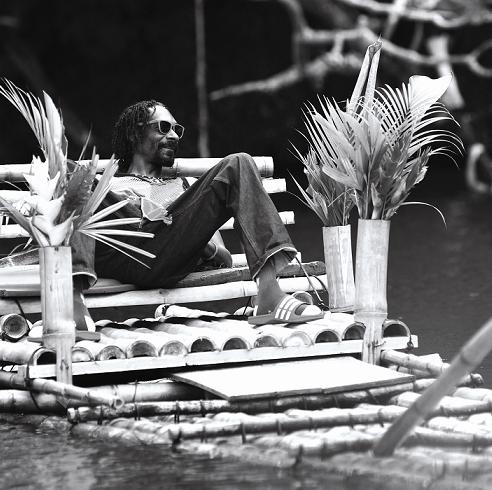
“Kids were walking around light-headed. The animals and everything.” Oakland radio DJ cum-MTV News executive producer Sway had the pleasure of introducing Snoop Dogg’s latest reincarnation at a recent press conference (still available online if this abbreviated sum-up doesn’t cut it for you.) But before he introduced Snoop Lion, he wanted us to know Dogg had smoked out Sway’s guest house on a recent visit — so badly, in fact that it took weeks to air out. Think of the children!

Snoop is. He just recorded Reincarnated, a roots album with Diplo. The first single “La La La” already available to buy. The rapper said the project is for his fans that can’t stomach his career’s gangsterisms. “I can’t just keep taking them to a dead end street and dropping them off,” he said. “I got to teach them how to fish, how to plant, how to grow.” Oh, and he’s bored. ” I’m a wise man in this music industry,” he said. Onto the next genre, where he at least has to hustle.

“I’ve always said I was Bob Marley reincarnated,” the Lion mused. The rebirth apparently took place on visit to a Jamaican temple. A priest informed Snoop “you are Brahimi, you are the light, you are the lion.” Said Snoop, “from that moment on, it was like I began to understand why I was there.” Helpfully, Vice cameras were on hand for the meeting, for Snoop getting dreadlocks, and for the creation of the album. A documentary named Reincarnated will be debuting at the Toronto International Film Festival, but surely the intrepids of Vice Media will be happy to bring it your way after that.

When Sway asked him straight up if he’d be converting to Rastafarianism, Snoop said that being a rasta was more about lifestyle than religion. “It’s the way you live, it’s the way you do what you do. I felt like I’ve always been Rastafari. I just didn’t have my third eye open. But it’s wide open right now.”

What his tri-eye see? Will Snoop Lion shake his mane at cannabis Prohibition in the United States? What would Bob Marley do?

WWBMD?

Tuff Gong would certainly not have been stoked had he been in the Bay on July 31, when SF dispensaries Vapor Room and HopeNet shut their doors for the last time after receiving prohibitory letters from US Attorney Melinda Haag. The next day, activists took to the streets in a mock funeral for medical cannabis, touting “Cannabis is Medicine: Let the States Decide” signs, a coffin, and a paper mache version of Haag to the US Federal Building, where she has an office.

BOOK BEAT

New release exploring the complications involved in ending Prohibition: Marijuana Legalization: What Everyone Needs to Know (Oxford University Press, 288pp, $16.95), co-authored by Oakland’s Beau Kilmer. Kilmer is the co-director of RAND’s Drug Policy Research Center, and appears to be recommending a cautious approach to making pot legal — a prospect being voted on in three states in the fall election.

When in Venice

1

arts@sfbg.com

FILM The distinguishing characteristic of André Téchiné’s movies is the speed and force with which life changes people and their relationships with one another, even as the director’s presentation is so matter-of-fact that no single moment betrays the enormity of changes endured. He’s put out a film every year or two since the mid-1970s, and like a prolific, reliable literary novelist, his efforts are always admirably crafted even when they’re not particularly inspired. When they are inspired, as in Wild Reeds (1994) or My Favorite Season (1993), they’re superb — yet not all that different from the rest, just a bit better.

His latest, Unforgivable, is only quite good, but then one might as well be grateful he’s still this interested and deft at age 69. Francis (the estimable André Dussollier) is the French author of best-selling crime novels who’s decided to recharge his batteries by living in Venice for a year. He’s struck by the brisk attractiveness of Judith (Carole Bouquet), the estate agent he consults to find a rental; she finds his brazen come-on more annoying than amusing, let alone tempting.

Yet 18 months later they’re contentedly married, and hosting two daughters of his by a prior marriage. The eldest, Alice (Mélanie Thierry), clearly takes her mother’s side in a lingering grudge match she’s doing her best to keep alive; when she disappears, probably with a ne’er-do-well local aristocratic boyfriend, there is puzzlement but also a certain relief. That turns to real worry for Francis, however, as days go by and no one at all seems to know Alice’s whereabouts — not even the husband she’s possibly abandoned. Has she eloped with her lover? Or drowned, having last been seen swimming?

Advised on all sides to relax and wait for her to turn up, Francis instead hires a private detective in the form of Anna Maria (Adriana Asti), who was once ex-model Judith’s paramour and, like Francis, has a problem child in the recently prison-sprung, extremely prickly-tempered Jérémie (Mauro Conte). The paternal quest that’s become an obsession oddly fosters a bond between Francis and this mercurial delinquent, even as it erodes the happiness he’s won in autumnal life with Judith.

Unforgivable is based on a novel by Philippe Djian, but feels very much of a piece with films whose stories Téchiné originated with or without collaborators. It hurtles forward with a casual intensity that’s uniquely his own, sometimes surprising or even shocking us, but never inflating incidents to the point of melodrama. It offers a morally complex universe without judgment — Téchiné may be a gay filmmaker, but it’s typical of his unpredictability that the most horrific action here is taken by two minor characters as payback for a homophobic incident. Unforgivable isn’t among the director’s most memorable creations, but particularly in the midst of the usual summertime pap, it’s satisfying to spend two hours with someone who thinks like an adult, and treats the audience as one.


UNFORGIVABLE opens Fri/10 in Bay Area theaters.

Creating activist scholars

13

yael@sfbg.com

This semester, the California Institute for Integral Studies (CIIS) will start a new Anthropology Department featuring teachers who are grassroots organizers with decades of experience, including Boots Riley, Roxane Dunbar-Ortiz, Sasha Lilley, and Chris Carlsson.

The program’s goal is to create “activist scholars,” to get students into communities outside the institution, and to use their research and intellectual opportunities at the school to move social justice projects forward. And the man who organized it all is an unrepentant anarchist.

“The most distinguishing character of anarchism for me is prefigurative politics — creating the new within the shell of the old,” Adrej Grubacic, the new department head, told us.

His classes come at a time when anarchism is being more widely discussed in the US than it has been for generations. Non-hierarchical general assemblies and consensus-based “direct democracy,” long practiced in anarchist and other leftist circles, swept across the country along with the Occupy movement last year.

Anarchists have been associated in the public eye with everything from spirit-fingered affirmations to the masked, black-clad protesters smashing bank windows and scrawling anti-corporate messages on walls. But Grubacic says it’s more than that.

As anarchism exploded into practice in Occupy’s tent cities, it was also experiencing a renaissance in the ivory tower. The North American Anarchist Studies Network was founded in November 2009, and since has brought together a growing number of professors who want to explore and teach anarchism through annual conferences.

Big names such as Yale Anthropology Professor James Scott have declared themselves anarchists. In a country where the study of economics is usually code for the study of capitalism, professors longing to talk alternatives are coming forward in droves.

It’s more than a little ironic that, within an ideology focused on a lack of hierarchy, it can be hard for those on the street to connect with those in the lecture halls. So how can the academic-types truly support The People?

From Zapatista schools in Mexico to universities run by the Landless Worker’s Movement in Brazil to popular universities throughout Canada and Europe, people all over the world have developed institutions based on anarchist and Marxist principles.

Now, in San Francisco, Grubacic is hoping to do the same.

A historian who was an anarchist by age 13, Grubacic grew up in socialist Yugoslavia, a country engulfed in brutal civil war by the time he reached his 20s.

“I was raised a Yugoslav,” Grubacic says. “So I was raised to be a citizen of a country that doesn’t exist anymore.”

He was teaching history at the University of Belgrade, but his political beliefs became a problem.

“The political cultures and political groups in power were either Serbian nationalists or these hyper-capitalists,” Grubacic told me. “And going after them, because I was publishing and I was doing a lot of things, was—let’s say, not a smart career choice.”

It was with input from his mentor, famed leftist writer and academic Noam Chomsky, that Grubacic left the crumbling Balkan state for his own safety. After a frustrating stint at University of San Francisco, he found CIIS.

“This is the first place where I think that I was hired because I was an anarchist, or I am an anarchist. It’s kind of funny,” Grubacic says.

Founded in 1968, CIIS grew out of the California Institute of Asian Studies, and has quietly taught holistic approaches to psychology and integrative approaches to psychology, spirituality and the humanities since then . Today 60 percent of CIIS students are studying clinical or counseling psychology. The Anthropology and Social Change program is part of the School of Consciousness and Transformation.

“It’s the only department like it in the United States,” Grubacic says. “This is going to be one of the few places where anarchism is going to be studied.”

“So anarchist social theory, anarchist education, anarchist ideas in general. We are going to study them, seriously, because they need to be recognized seriously. It’s a beautiful history, it’s a beautiful tradition,” he says. “How important it is, I think, is revealed, by the recent rediscovery or reinvention of anarchism at Occupy. So I think that it’s more relevant than ever to create a space where anarchism will be studied.”

A CIIS education doesn’t come cheap. Two years in the masters program costs at least $35,000, and to earn a PhD will cost more than $60,000. Scholarships and financial aid are available, but Grubacic called the question of access to this program “a huge question.”

“It’s troubled me from the very beginning,” he says. “We are creating an experiment. It’s a social justice, community-based program in a private school.”

He hopes, however, that students will learn applicable skills in the program. Classes on radio, film, and writing, Grubacic says, will give students practical skills. “They will be able to continue, either as academics and go to get their PhDs, or to join the non-governmental sector, to work with NGOs, to work with community groups, to work with labor groups.”

Not the most lucrative professions, perhaps, but likely the chosen fields for many Anthropology and Social Change students.

Grubacic calls creating a program based on teaching grassroots and subversive knowledge in an elite institution “a paradox,” and one he’s not alone in. Grubacic got advice on the issue, he said, from Anibal Quihano, a Peruvian scholar known for his theories on colonial power who now teaches sociology at the Binghamton University in New York.

In fact, Grubacic practically convened a conference of post-colonial and anarchist scholars to help develop Anthropology and Social Change. Grubacic sent the program’s description around to everyone from his buddy Chomsky to Immanuel Wallerstein to World Social Forum organizer Boaventura de Sousa Santos. He got advice, too, from organizers at the Popular University of Quebec and the Popular University of Social Movements, a school in São Paulo, Brazil run by the landless workers’ movement there.

“The deciding thing about our own methodology was that we would like to listen, both to the voices coming from the past, so people who are doing similar things before us, and to people who are doing similar things right now,” Grubacic said. “We also went — and this is the third form, let’s say, of listening — to the people in the community.”

He reached out to contacts and friends of professors in the university, as well as hanging out in gathering places and striking up conversations with those who showed up. He told one story of doing this covert outreach in the Tenderloin National Forest, the botanical garden and neighborhood spot just 10 blocks from CIIS’s building on Mission and 11th streets.

“Some people were completely uninterested and thought, what’s the purpose? Who are you, with this weird accent? Go home,” Grubacic laughed. Some, though, were more receptive, including a woman who said the program could help with those fighting against San Francisco’s problem of environmental racism.

“This person told me that she thinks activists can come to a particular community, do an ethnography, do research, and then present that research to people in the city, and show the people who have power in the city to make decisions why such behavior is unjust,” Grubacic said.

In the end, that is essentially how the program will work. Students will partner with local organizations, neighborhood groups, or other affiliated people working on social justice goals, doing research to help further their goals.

“The document they’re going to produce after two years of activist research is going to be written for that community,” Grubacic said. “We are the second readers. We are less important in the process. What they do has to be useful to the community. They have to be passionate about working with that community group. And they have to produce something that’s going to be useful to what that community group does.”

In addition to classes and research projects, students will participate in “convivias,” one of the most unique aspects of the program. People from the public, scholars, and others with special knowledge will hammer out ideas with students in week-long “political laboratories.” Revolutionary art will be practiced in a convivia called “Atelier of Insurrectionary Imagination.” And Grubacic and his students will turn a certain vacant part of the CIIS building into an “Emergency Library,” a place for books as well as what the program description calls “scholars on call, responding to the emergent needs of the communities in struggle, who might be in need of legal advice, activist companionship, scholarly input, or a media suggestion.” The convivias have corresponding student work-study positions — yes, there will be a paid Emergency Librarian.

CIIS spokesperson James Martin said Grubacic brings a lot to the school: “The thing I’m really excited about is that we’re engaging the local community. We live in San Francisco for a reason. This is one of the places in the world where all these intellectuals come together who have the passion to try and change things.”

Despite the paradoxes and problems that come when the elite meets the grassroots, Grubacic has high hopes. “We need to redefine what it means to be an intellectual who works within academia,” he said. “And the only way to do this is to become a part of a larger social movement’s formation, that is aimed at changing society. We cannot offer much. But we can offer something.”

Alerts

0

WEDNESDAY 8

Speak up: stop and frisk Southeast Community Complex, 1800 Oakdale, SF; Stop and frisk — the controversial, pretty much definitely Fourth Amendment-violating policy that police in New York cling to despite protest and that Mayor Ed Lee recently proposed implementing in San Francisco — just won’t go away, despite opposition from pretty much everyone. This panel discussion and opportunity to debate issues relating to the proposed stop and frisk policy. The event is presented by the Osiris Coalition and filmmaker Kevin Epps.

First District 5 debate of the season Park Branch Library, 1833 Page, SF; District 5 is in the center of San Francisco, and much of the excitement of November’s city elections will center on its race for supervisor. A wide range of candidates will vie for the coveted spot that Ross Mirkarimi left to become sheriff. All of the candidates have promised to show up to this first debate in the hotly contested race. The debate is presented by District 5 Democratic Club, the District 5 Neighborhood Action Committee, and the Wigg Party.

THURSDAY 9

Occupy the Bay Berkeley Fellowship of Unitarian Universalists’ Hall, 1924 Cedar, Berk; www.bfuu.org. 7pm, $5-10 suggested donation. Filmmakers Name Name and Namey Namey have been documenting Occupy in the Bay Area since the fall. Come reminisce, learn, and be inspired by their film at its premier. You made this history happen, celebrate it, baby!

SATURDAY 11

Black Riders Liberation Party La Peña Cultural Center, 10pm, $5-10. The Black Riders Liberation Party considers itself the new generation of the Black Panther Party, organizing similar programs to stop police violence and gang violence and feed communities. This Saturday, the Party parties. Come celebrate the Black Riders and meet organizers, bring a canned food donation for a discount.

Pistahan Yerba Buena Gardens, Mission and Third St., SF; www.pistahan.net. 11am, free. This giant annual Filipino celebration goes all weekend. Start off the weekend with a parade from Beale and Market streets to Yerba Buena Gardens, where the festival of music, food, performance and education begins.

Foreclosure victory block party 376 Bradford, SF; www.occupybernal.org. 10am, free. Shortly after we named Ross Rhodes a Local Hero (Best of the Bay 2012) for his work protecting his home and those of his Bernal Heights neighbors from unjust foreclosure, he received a loan modification agreement. Come celebrate with Ross and others from Occupy Bernal with a block party at his house. There will be educational presentations about banks’ predatory role in the foreclosure crisis and efforts to fight back in the morning, followed by general partying.

SUNDAY 12

Lessons from Vermont Eric Quezada Center, 518 Valenica, SF; www.collectiveliberation.org. 3-5pm, free. Yes, we have the Affordable Care Act, but it leaves much to be desired, unless you’re in Vermont. There, Governor Peter Shumlin signed universal healthcare into law in May 2011. But of course, Shumlin didn’t do this alone. Come hear a presentation from some of the organizers who won this victory, all the way from the Vermont Workers’ Center.

MONDAY 13

Undocumented and unafraid Asian Law Caucus, 55 Columbus, SF; www.asianlawcaucus.org. 12-1:30pm, free. The Asian Pacific Islander undocumented student group ASPIRE will lead this talk on the immigration rights struggle. The last talk in the Asian Law Caucus-led summer brown bag series is especially timely as undocumented youth work on figuring out if and how they might benefit from President Obama’s policy directive giving limited amnesty to undocumented college students, and what it means for family and friends, especially those already in ICE custody. This talk on the issues youth without legal status face and how to keep building towards the DREAM Act, which would offer broader protections that Obama’s policy.

TUESDAY 14

Milk Club District 5 debate Eric Quezada Center, 518 Valencia, SF; www.milkclub.org. 7-8:30 p.m., free. A District 5 supervisors race debate hosted by the Harvey Milk Democratic Club. Milk Club President Glendon Hyde, aka Anna Conda, says candidates will cover drug policy, public space, sex worker rights, the housing crisis, queer seniors’ issues, and much more. As an extra special bonus, the debate will be hosted by transgender performer Ben McCoy and the Guardian Managing Editor Marke Bieschke.

Instrumental duo Silian Rail includes ‘every/one’

0

Do artists need vocals and lyrics to demand audience attention in a place like the Bay Area, where there are new musicians popping up left and right? Eric Kuhn and Robin Landy, better known as instrumental duo Silian Rail, have found the answer to that question to be a resounding “no.”

With a handful of locally well-received releases under its belt and an upcoming headlining show at Bottom of the Hill, Silian Rail has clearly made it work thus far without words. The band’s songs run on a driving rhythm paired with carefully crafted guitar work. The complexity of its sound has continued to kept critics and fans coming back for more – a happy discovery for many, that expansive instrumental music can hold their attention.

For a recent companion piece, however, the band added something somewhat foreign to its repertoire, through collaborations with other artists: vocals. “We do have a couple singers on this album,” Kuhn says.

“Our choice to be an instrumental band is not something we ever really talked about. The way we play together emerged quite naturally – [Landy] plays guitar, I play drums…We thought it would be a fun excuse to collaborate with friends and see what they would contribute.”

Silian Rail’s collaborative recent EP every/one (released in May of this year as a companion to the each/other album) will benefit United Roots Oakland, with all of the proceeds going towards its community engagement programs in the arts and media. That EP includes Lewis Patzner (Judgement Day, the Devotionals), Thao Nguyen, Andrew Maguire (Thao and Mirah, DRMS, the Devotionals), Colleen Johnson (Upside Drown), and Winston Goertz-Giffen (Saything).

“The Bay Area music scene is great – not just to blow smoke up the collective ass of the Bay Area,”  Landy says with a laugh. “It’s non-competitive and very supportive. It seems different than LA or New York in that way… I’m just guessing.”

Kuhn says the title of the album, every/one, is a reflection on the tension and paradox of the strength of a collective or a collaboration versus the importance of individual freedom.

“The songs are more or less all from a similar thematic world, which are various texts, films, experiences relating to non-normative psychological functioning – an attempt at sensitively referring to what is classically termed ‘mental illness’,” Kuhn explains.  

“[We] have a lot of empathy for these perspectives, and relate to them in many ways, and respect the non-normative psychological individual as being someone often possessing of an ability to see beyond the arbitrary limits placed on our experience of the world by the various social codes and ideologies that are part of the status quo. There is a wildness and also a directness and a poetic nonsense clarity that we find inspiring and that generally tickles our fancy.”

The band discovered United Roots Oakland at an Occupy Oakland event, where there were young kids free-styling. “It’s an awesome thing to have a creative outlet for kids, [and] to have competent adults there to coach them,” Landy says.

And since the EP was a collaboration, it seemed strange for the band to personally collect a profit from it, Kuhn says, which is they decided to donate.

Silian Rail has a long history of creative endeavors with other musicians. It first gained attention through its connection with other East Bay acts such as Tartufi, Birds & Batteries, and Low Red Land as the group Thread Productions. Although Thread is no longer active, a lot of what the group used to do still happens informally – the bands frequent each others’ shows, try to spread the word on upcoming concerts, and often perform live together.

“It was a hugely helpful idea at the time,” Landy says. “Lynne Angel from Tartufi still plays with us. Our new record is super lush, so we needed extra instrumentation, and she was kind enough to lend her talents. Tartufi still does a lot of broader community organizing around music. I have no idea how they find the time and energy to do it!”

Yet Silian Rail seems to pack in a lot projects in too. Its working towards scoring more film projects – its music has already turned up in various indie films, short clips, and videos, such as an ad for “Farm Fresh Cocktails” (which both Landy and Kuhn found quite odd). Essentially, the Silian Rail sound seems ideal for soundtracks.

But the band’s own music, of course, always comes first. They’ve both long been drawn to creating music. They were friends who grew up together in North Carolina, and parted ways at 13, only to find one another in California many years later.

“Having a guitar with me through adolescence was a lifesaver, having that emotional outlet.” Landy says, reflecting on the importance of music.
Another charitable activity on the band’s plate: it just finished a session at Bay Area Girls Rock Camp – a nonprofit organization that “empowers girls through music” –  in Oakland before our interview. At the camp, musicians teach workshops, host group activities, and perform live.

“Kids are so honest that we were more nervous to play in front of a group of five to 12-years-olds then we are playing a packed venue in San Francisco,” Landy says, “They asked us why we don’t have a singer.”

“With these arts programs, it’s not like if kids have something to do, their problems will go away, it is clearly more complicated; but music can serve as an outlet.”
Kuhn adds: “Music is a means of expression and communication that transcends a lot of barriers – things like technology – more than just language and culture. It holds a fundamental power to enable communication with people.”

For such a technically impressive band, I was impressed to find out that Landy had no formal training on guitar “I don’t really know what I’m doing at all, which has mostly helped my style evolve. I am free to experiment and do things in a different way. It’s all abut making happy mistakes; of course there are benefits to knowing what you’re doing, but it is also a benefit for me to not know. The way I learn things, it probably would have been a waste of time anyway.”

“I did play flute in band during middle school,” she says. “But guitar is basically the opposite of those instruments.”

While Eric had a moderate amount of formal training (he took guitar lessons in high school and “tried to be a music major in college”), he now learns to write for different instruments for new songs without proper lessons. “I needed to write violin and cello parts for songs I’m doing on the new album, so I sat down with a music book and did that.”

“I’m inspired by painters,” he muses. “The idea of fearlessly exploring new territory and always pushing ourselves to new places.”

Silian Rail
With Shuteye Unison, B. Hamilton
Thu/9, $10, 9pm
Bottom of the Hill
1233 17th, SF
(415) 626-4455
www.bottomofthehill.com

You, too, can win a gold medal in popcorn eating: new movies!

0

This weekend, it’s all about the Women’s Marathon at the London Olympics! If my calculations are correct, I will have to basically stay up all night Saturday to catch the race (11am London time is uggghhhh our time), or descend into a spoiler-free cave where no NBC-borne spoilers can find me before the highlight reel.

Anyone needing a break from gorging on Olympic track and field coverage, however, has an array of options at the movie theater, including two standout docs about mystery men (The Imposter and Searching for Sugar Man) and William Friedkin’s rip-roaring (and NC-17) latest, Killer Joe. Plus, Lovecraft!

Hollywood’s big money is on the Total Recall remake, which stars an agreeable Colin Farrell and is directed with reasonable amounts of style by Len Wiseman (of Underworld series fame; naturally, wife Kate Beckinsale has a juicy part). But if you really want to see Total Recall, stick with the 1990 Verhoeven-Schwarzenegger version. The do-over adds nothing and contains zero quotable lines on par with “Get your AHH-SS to Mars!”

Short takes on other notable releases this week (including a Bresson revival, ooh la la) after the jump.

Bill W. Even longtime AA members are unlikely to know half the organizational history revealed in this straightforward, chronological, fast-moving portrait of its late founder. Bill Wilson was a bright, personable aspiring businessman whose career was nonetheless perpetually upset by addiction to the alcohol that eased his social awkwardness but brought its own worse troubles. During one mid-1930s sanitarium visit, attempting to dry out, he experienced a spiritual awakening. From that moment slowly grew the idea of Alcoholics Anonymous, which he shaped with the help of several other recovering drunks, and saw become a national movement after a 1941 Saturday Evening Post article introduced it to the general public. Wilson had always hoped the “leaderless” organization would soon find its own feet and leave him to build a separate, sober new career. But gaining that distance was difficult; attempts to find other “cures” for his recurrent depression (including LSD therapy) laid him open to internal AA criticism; and he was never comfortable on the pedestal that grateful members insisted he stay on as the organization’s founder. Admittedly, he appointed himself its primary public spokesman, which rendered his own hopes for privacy somewhat self-canceling — though fortunately it also provides this documentary with plenty of extant lecture and interview material. He was a complicated man whose complicated life often butted against the role of savior, despite his endless dedication and generosity toward others in need. That thread of conflict makes for a movie that’s compelling beyond the light it sheds on an institution as impactful on individual lives and society as any other to emerge from 20th-century America. (1:43) Elmwood, Roxie. (Dennis Harvey)

Crazy and Thief Former S.F. resident Cory McAbee of the Billy Nayer Show, as well as cult film faves The American Astronaut (2001) and Stingray Sam (2009), returns for one night only in this multimedia event under the umbrella of his new enterprise “Captain Ahab’s Motorcycle Club.” The Vogue Theatre event will offer music and conversation after a screening of McAbee’s latest. Crazy and Thief stars his children, two-year-old Johnny and slightly senior Willa, in a 52-minute adventure that has them following a “star map” all by themselves around Brooklyn, then journeying out to the country via train. En route they improvise nonsense songs, cross paths with strange adults suspicious and helpful, ride a Mickey Mouse hobby horse, and so forth. A color effort that’s sort of an elaborate home movie compared to the director’s fancifully comic, black and white prior films, it nonetheless gets pretty far on the cuteness of toddlers and a soundtrack of original songs that find McAbee rocking like a five-year-old might — something that’s also pretty cute. (:52) Vogue. (Dennis Harvey)

http://www.youtube.com/watch?v=GPgA79KSpfU&feature=plcp

The Devil, Probably This seldom-revived 1977 feature from late French master Robert Bresson was his penultimate as well as most explicitly political work. Newspaper clips at the start betray where these 95 minutes will be heading: they introduce Parisian Charles (Antoine Monnier) as a casualty, a suicide at age 20. The reasons for that act are probed in the succeeding flashback, as we observe his last days drifting between friends and lovers, quitting student activist groups, and generally expressing his disillusionment with everything from politics to religion to human interaction. Then 70, Bresson expresses his own disenchantment in solidarity with the youthful characters by including documentary shots of pollution, clubbed baby seals, A-bomb explosions, and other dire signs of “an Earth that is ever more populated and ever less habitable.” That essential message makes The Devil, Probably more relevant than ever, but unfortunately it’s also one of the filmmaker’s driest, most didactic exercises. There are a few odd, almost farcical moments (as when the constant pondering of man’s fate extends to a spontaneous philosophical debate between passengers on a public bus), but the characters are too obviously mouthpieces with no inner lives of their own. In particular, Charles remains an unengaging blank in Monnier’s performance, which is all too faithful to the director’s usual call for “automatic,” uninflected line readings from his nonprofessional cast. Nothing Bresson did is without interest, but here his detached technique drains nearly all emotional impact from a film ostensibly about profound despair. (1:35) SF Film Society Cinema. (Dennis Harvey)

Girlfriend Boyfriend The onscreen title of this Taiwanese import is Gf*Bf, but don’t let the text-speak fool you: the bulk of the film is set in the 1980s and 90s, long before smart phones were around to complicate relationships. And the trio at the heart of Girlfriend Boyfriend is complicated enough as it is: sassy Mabel (Gwei Lun-Mei) openly pines for brooding Liam (Joseph Chang), who secretly pines for rebellious Aaron (Rhydian Vaughan), who chases Mabel until she gives in; as things often go in stories like this, nobody gets the happy ending they desire. Set against the backdrop of Taiwan’s student movement, this vibrant drama believably tracks its leads as they mature from impulsive youths to bitter adults who never let go of their deep bond — despite all the misery it causes, and a last-act turn into melodrama that’s hinted at by the film’s frame story featuring an older Liam and a pair of, um, sassy and rebellious twin girls he’s been raising as his own. (1:45) Metreon. (Cheryl Eddy)

Klown A spinoff from a long-running Danish TV show, with the same director (Mikkel Nørgaard) and co-writer/stars, this bad-taste comedy might duly prove hard to beat as “the funniest movie of the year” (a claim its advertising already boasts). Socially hapless Frank (Frank Hvam) discovers his live-in girlfriend Mia (Mia Lyhne) is pregnant, but she quite reasonably worries “you don’t have enough potential as a father.” To prove otherwise, he basically kidnaps 12-year-old nephew Bo (Marcuz Jess Petersen) and drags him along on a canoe trip with best friend Casper (Casper Christensen). Trouble is, Casper has already proclaimed this trip will be a “Tour de Pussy,” in which they — or at least he — will seize any and every opportunity to cheat on their unknowing spouses. Ergo, there’s an almost immediate clash between awkward attempts at quasi-parental bonding and activities most unsuited for juvenile eyes. Accusations of rape and pedophilia, some bad advice involving “pearl necklaces,” an upscale one-night-only bordello, reckless child endangerment, encouragement of teenage drinking, the consequences of tactical “man flirting,” and much more ensue. Make no mistake, Klown one-ups the Judd Apatow school of raunch (at least for the moment), but it’s good-natured enough to avoid any aura of crass Adam Sandler-type bottom-feeding. It’s also frequently, blissfully, very, very funny. (1:28) Roxie. (Dennis Harvey)

Dick and a smile

4

caitlin@sfbg.com

SEX “I was basically wearing a wet sock full of sweat,” porn crossover star of the year James Deen tells me. “There was hair everywhere, I was pulling hair out of the girl’s mouth.”

Perhaps another interviewer would not have led with questions about Deen’s recent involvement in an offbeat Kink.com panda gang bang production. Hey, this isn’t TMZ. And who doesn’t already know the standard gossip about the 26-year old, who has shot porn nearly every day of his life since turning 18?

(Just in case:) This year, Deen became the youngest performer ever to take home the industry’s vaunted AVN Award for Best Male Performer. He recently landed a starring role alongside Lindsay Lohan in a new, non-porn feature film penned by Brett Easton Ellis and directed by Paul Schrader, writer of Taxi Driver, American Gigolo, and Raging Bull.

Anyone remotely familiar with the Deen canon knows about the Deenagers, the actor’s legions of underage fans who fill Tumblr with odes to his dick and smile. These superfans were immortalized in epic fashion by an ABC Nightline segment which host Terry Moran introduced with this warning of corruption and apocalypse: “For any parent concerned about what their teen does online, the huge popularity of the young man you are about to meet may be deeply disturbing.”

But like I said, these facts have been written into public record, and dammit, I want to talk about panda porn. Because although Deen’s crossover from Simpsons porn parodies (he played Moe the Bartender, and fucked Cookie Kwan) to The Lohan and Perez Hilton coverage is certainly interesting, the fact that he has also been shooting brutal BDSM porn for years says something else entirely. And he doesn’t think anything of it! Perhaps this flip, blogging, boy-door-faced individual is the first real sign that BDSM porn is coming out of the closet (dungeon, steel-barred cage), and into mainstream consciousness.

BAMBOOZLED

In PANDAMONIUM!!! PANDA LULLABY!!! PANDA PORNO!!!!! adult star Ashli Orion is subjected to the penises of six, raping panda bears. One of these panda bears was Deen, in a furry suit with a custom-made dick hole.

“But I thought pandas were supposed to be nice!” Orion pants, surrounded by hazy pink lighting, artfully-placed bamboo shoots, and silent pandas who mostly remove their furry paws by the end of the scene because their fluffy baseball mitts turned out to be prohibitive to the nitty-gritty of sex acts.

The mini-movie could be considered the first Kink.com furry shoot — a wry twist on director Princess Donna’s usual product released through Kink subsite Bound Gang Bangs.

Not all of Kink’s regulars, and especially not the Bound Gang Bang enthusiasts found PANDAMONIUM!!! to their liking. User comments expressed their concern that Orion wasn’t even bound. Given the limited mobility of the men in the panda suits, she had to be mobile for copulation to even be possible. “I spent a lot of time holding fur out of the shot so we could see the penetration on camera,” said Princess Donna in an email interview.

“Some people think it’s the best thing that ever happened, some people think it’s the worst porn ever made,” she continued. “That’s what happens when you take risks.”

But Deen says he did the panda gang bang — just like every other project he takes — less because of the viewers, or for the chance to express himself creatively, as much as the kicks. “Princess Donna said she had this idea, I said that’s amazing. While it was going on, I just wanted it to end. There was hair everywhere. But the second it was done and we were all hanging out after I was like, I wanna do it again.”

Deen thinks nothing of a work schedule that takes him from vanilla scenes for Digital Playground to deliberately humiliating public sex in Spain for Kink to Dallas XXX parodies.

“It’s completely standard,” he says in our phone interview. “For pretty much every freelance talent, you go where the call takes you.” Sure, there are a few sex acts that Deen will not perform. These include sex with a person who is not into it, sex with clowns, and sex with men. He apologies to me for this last stipulation. “I’m a lame old straight boy.”

And the fact that Deenagers now refer to him affectionately as Baby Panda? (At ‘5″8, Deen made a shorter bear than his suited Kink peers on the shoot.) No dissonance there, says Deen, who hawked T-shirts emblazoned with the nickname on his website. There was no coordinated attempt to wind up alongside Justin Beiber and Robert Pattinson on dorm room walls, he says. “I’m not Joe Camel. I’m just going out and doing my job.”

Deen has minimal support staff besides his publicist. During our interview, I express my disbelief that a person that has sex for a living wouldn’t be worried about getting exploited without someone to review contracts, approve press requests. Deen shrugs it off. “There’s no reason to battle over everything, just be nice. You catch more bees with ants — honey, vinegar, whatever it is.”

Maybe everything really is just that simple. So seems the tale of Deen’s porn provenance. As a teenager, he heard Jenna Jameson tell a radio host that being in skin flicks simply took a complete lack of modesty, superhuman stamina, and an ability to ejaculate on command. He began proving he had those skills by having public sex at parties. Soon, he was on his way to 300 shoots a year, a figure that seems shocking to those unfamiliar with the standards of those unfamiliar with the grinding nature of the porn industry.

And now, Hollywood is knocking, seemingly uncourted by Deen himself. Ellis bagged him for The Canyons role by tweeting that he was interested in Deen for his low-budget, Kickstarter-funded film. (That momentous tweet mentioned the actor would have “to act and be full-frontal naked banging girls and guys realistically.” Will Deen’s comfort zones shift for fame?)

The two had dinner to talk about the writer’s vision for the tale of disaffected 20-somethings moping around drop-dead beautiful LA locations. Ellis, Deen relates to me, has a somewhat cynical view of modern-day celebrity. “People like Charlie Sheen, his acting didn’t make him famous,” Deen explains. “It was because he was Charlie Sheen.” As actor with next-to-no inhibitions and a famously goofy tell-all blog, Deen was perfect material for Ellis’ experiment in equating stardom with sheer exposure.

And sure enough, Deen is now getting a taste of what’s it’s like to live life à la Sheen — or put more aptly, à la Lohan. All it took was for the two to duck out of a restaurant for a smoke break and paparazzi blew up the Interwebs with rumors they were sleeping together.

This kind of thing seems besides the point for someone like Deen, who it would appear rarely sleeps with someone without posting a picture of their distended orifice on his blog. If the LiLo rumors had been true, he wrote on his site, “I think I would tell everybody.” And search engine optimize it with a shot of her boobs, one wants to add.

“I’m not surprised, because he’s that type of guy,” says a post-panda Orion when I contact her about Deen’s recent rise in profile. “He’s very charismatic and he has a look that’s definitely commercial, so I’m not surprised that he would get into Hollywood, you know what I’m saying.”

And for all of Nightline‘s tut-tutting, porn stars have been making waves in clothes-on culture for decades. Traci Lords appeared on Roseanne and Married With Children. Ron Jeremy, Nina Hartley, and Jenna Jameson have all made Hollywood features. And nowadays, even the hardcore stuff is surfacing more and more — like in Rihanna videos and 50 Shades of Grey, a 2011 novel that has become so ubiquitous that sex activists I’ve interviewed refuse to even say its name, so quick was it to sloppily spotlight their subculture for the viewing pleasure of soccer moms, et. al.

Switching between kink erotica and vanilla porn doesn’t seem to be that unusual anymore for adult talent. “When I first started there was a more clear delineation between ‘porn’ models and ‘BDSM’ models,” says Princess Donna. (“Donna is Kink.com. Without her, the company wouldn’t be as successful, and that’s a fact,” says Deen.) “Most BDSM porn didn’t have penis-in-vagina sex in it,” she continues. “Now that it does, you there is a huge crossover.”

Of course, there are other reasons why porn actors shift between kinds of erotica. It’s because they want to get paid.

“I’m a crazy nympho,” says Orion in a phone interview. “I’m down for everything and I always have been. But there’s a lot of girls who are like no, I would never have sex with [that] guy, or never in my ass, no kink. And now, that’s what they’re doing because they have no money!” In the era of low-budget gonzo porn and the consumer’s unwillingness to pay for any kind of media “You can’t rely on girl-girl scenes to pop up everyday if everyone is competing for that,” says Orion.

So maybe Deen is right, and he’s just a guy who is riding high on porn practicalities coupled with an increased tolerance of sluttiness and bondage in pop culture today.

Where will it all lead? I ask him about his career goals to round out our chat. “I want to keep myself in a constant state of smiles,” he says. “I like to smile. I am currently smiling.”

Doing what, pray tell? He has the day off from The Canyons‘ hectic shooting schedule that’s had him sleeping in odd, daytime spurts. What does James Deen do when he gets a moment to spare? Oh, you know. “I’m shooting some porno,” he says.


Our Weekly Picks: August 1-7

0

WEDNESDAY 1

Erol Alkan

A couple years ago it was easier to define Erol Alkan. He was electro. People would say it like it was the best thing in the world or the worst, but it was clear cut, straightforward, easily understood. Recently, though, the London producer’s already impeccable remix work — for bands including Tame Impala, Metronomy, and St. Etienne — has shown increased range, patience, and emotion. While his continued team-up with Boys Noize shows he’s not afraid to still go HARD, with Connan Mockasin’s “Forever Dolphin Love” (a song so nice, he reworked it twice) Alkan went in an entirely other direction, arguably surpassed the original, and created what might be the ultimate comedown track. (Ryan Prendiville)

With Omar (Popscene) 10pm, $10–$20

Vessel

85 Campton Place, SF

(415) 433-8585

www.vesselsf.com


Mynabirds

After a stint as a member of Bright Eyes’ touring band in 2011, Mynabirds frontwoman Laura Burhenn went back into the studio to work on her Saddle Creek indie collective’s sophomore release, Generals, a concept album about war, tragedy, and disarmament (inspired by Richard Avedon’s photo, “Generals of the Daughters of the American Revolution”). The result is a protest record that embodies the spirit of the Occupy Everything movement. Burhenn’s soulful voice soars over percussive, full-bodied pop melodies to sing about a wide array of conflicts, both political and personal. In a concurrent side project called the New Revolutionists, Burhenn uses a portrait series to highlight women who have taken the initiative to be disarmers and activists in their own communities around the country. (Haley Zaremba)

With Deep Time

9:30pm, $12

Cafe Du Nord

2170 Market, SF

(415) 861-5016

www.cafedunord.com


THURSDAY 2

“City Scenes: Installment Four”

Never spent time with David Bowie’s album Diamond Dogs? Beloved San Francisco musician John Vanderslice wants to change that. In the Vogue Theatre’s fourth installment of its ongoing “City Scenes” series, Vanderslice will perform Diamond Dogs, followed by a screening of Michel Gondry’s The Science of Sleep (2006). Vanderslice says he loves the film because of its “vulnerable and personal vibe,” and he considers the Bowie album to be one of the most underrated records, calling it “casual, rugged, and handmade.” Vanderslice adds that the record, which was inspired by Orwell’s 1984,”[was] his most drugged out, freaked out work.” Gondry’s film, which follows Charlotte Gainsbourg and Gael Garcia Bernal on a journey through the human psyche, certainly connects to a Bowie’d musical introduction exploring the confines of state control on the mind. (Shauna C. Keddy)

8pm, $15

Vogue Theatre

3290 Sacramento, SF

(415) 346-2228

www.voguesf.com


Squarepusher

Sure, Aphex Twin and Boards of Canada are seasoned veterans of electronic powerhouse Warp Records, and rightly so; but where have they been lately? Squarepusher, on the other hand, has been churning out quality records for the UK label, with Woody Allenesque prolificacy, since 1996. From ’70s Miles Davis homages, to laptop geekfests, to Daft Punk nods, to virtuosic bass-guitar workouts worthy of a Steely Dan session player, Squarepusher mastermind Tom Jenkinson has built a career on defying expectations and constantly switching focus — which makes the prospect of a live appearance so damn interesting. (Taylor Kaplan)

With Eric Sharp 8pm, $30

Regency Ballroom

1290 Sutter, SF

888) 929-7849

www.theregencyballroom.com


Buraka Som Sistema

There’s just something fascinating about watching a crowd attempt to dance along to a beat that is as unfamiliar as it is irresistible. That was the scene at last year’s Treasure Island Music Festival, during the performance of Portugal’s Buraka Som Sistema. Buraka’s a reportedly rough and tumble neighborhood in Lisbon; Som Sistema quickly translates to “sound system”; put it together and you have a partying collective of DJs, producers, MCs, and dancers spreading the Angolan-originated, techno and hip-hop influenced genre of kuduro. Understanding Portuguese is not a prerequisite, as the group’s seemingly competitive desire to hype up a crowd (with easily recognizable calls to “shake that ass”) proves immediate and universal. (Prendiville)

9pm, $20  

Independent

628 Divisadero, SF

(415) 771-1421

www.theindependentsf.com


FRIDAY 3

Peaking Lights and Woods

One night, two up-and-coming bands with the blogosphere on their side. Woods might be from Brooklyn, but they forgo the New York state of mind in favor of a pastoral, sun-drenched, Byrds-worshipping brand of lo-fi pop, well suited to your next cabin retreat. Originally from the Bay Area, Madison, Wisconsin-based duo Peaking Lights weaves an infectiously stoney web of dub, Krautrock, and loopy, gloopy pop a la Panda Bear, seemingly tailor-made for record collectors and serial name-droppers. First acoustic, then electronic, on an enticing double-bill unlikely to result in any sense of redundancy. (Kaplan)

With Wet Illustrated 9pm, $16

Great American Music Hall

859 O’Farrell, SF

(415) 885-0750

www.slimspresents.com


Birds & Batteries

With the impending release of their new album Stray Light, Birds & Batteries will once grace our ears with chirping indie-pop bliss smashed with heavy electronic beats. Like the name, the band embraces a meeting of the natural and the digital. While their sound embraces vast expanses, it’s also crisp and wound tight; if you want to wave your arms around in the air like you’re at a bonfire dance circle, but also jump up and down like you would at any good rock show, this will be a lovely fit for you The band kicks off its US tour this weekend at the Rickshaw Stop. (Keddy)

With Radiation City, Trails & Ways

9pm, $10–$12

Rickshaw Stop

155 Fell, SF

(415) 861-2011

www.rickshawstop.com


The Pharcyde

Gangsta rap was important and fun in the beginning — and, in retrospect, so kittenish that 50,000 white kids would end up singing along with an anachronistic hologram 20 years later in the California desert. But all the grim misogyny and hysterical homophobia sure got tired. Luckily, Cali also kept the flame alive in the ’90s for inventive, unabashedly intelligent hip-hop. Surreal lyrical genius-machine the Pharcyde blew up the charts with first album Bizarre Ride II in 1992, now original quartet members Fatlip and SlimKid3, with producers J-Swift and LA Jay, are giving the live full-band treatment to Bizarre. (Bootie Brown and Imani, who tried to jumpstart the band back in 2004 are doing their own thing, notably Bootie’s guest spots with Gorillaz.) SLICK, the graffitist responsible for Bizarre‘s cover, art directs the show. (Marke B.)

10pm-4am, $20–$25

1015 Folsom, SF.

www.1015.com


SATURDAY 4

Castro Theatre’s 90th anniversary

Single-screen movie palace the Castro Theater opened in 1922 — and 90 years later, it’s still going strong, with a robust calendar of festivals, first-run movies, rep screenings, and special events. Celebrate this happiest of birthdays by stopping by this weekend’s festivities (special programming, including a John Huston series, continues throughout August). Today, there’ll be a screening of 1964 classic Mary Poppins (presented sing-a-long style — chim-chim-chir-ee!) plus a Howard Hawks double feature of The Big Sleep (1946) and Where Danger Lives (1950), hosted by Noir City’s Eddie Muller, all with pre-show musical entertainment. Head over tomorrow for a couple of films you might have heard of (1941’s Citizen Kane, 1939’s Gone With the Wind), or mark your calendar for upcoming must-see-on-the-big-screen entries, including Roman Polanski’s 1974 Chinatown (Aug. 28). (Cheryl Eddy)

Mary Poppins, 2 p.m., $8.50–$15

Castro Theatre

429 Castro, SF

www.castrotheatre.com


The English Beat

In 1979, the Beat (known in the US as the English Beat) emerged from struggling, blue-collar Birmingham, England. In an era of widespread unemployment and sociopolitical conflict, the band responded by writing simple, fun ska tunes about something we can all agree on: love. The Beat was an overnight success with its chart-topping cover of Smokey Robinson’s “Tears of a Clown.” These legendary musicians, now considered pioneers of two-tone ska along with the likes of the Specials and Madness, have been touring consistently since they reunited in 2003. In today’s similarly tumultuous political climate, perhaps a little love and skanking is what we all need. (Zaremba)

With the Champions Inc.

8pm, $25

Bimbo’s 365

1025 Columbus, SF

(415) 474-0365

www.bimbos365club.com


Drift of a Curse

Supergroups of our time: Bad Company, Damn Yankees, Traveling Wilburys, uh … Asia? Does Asia count? Dunno. What’s important is that local supergroup of sorts Drift of a Curse (it started as an Old Grandad side project, and also features members of Hammers of Misfortune, Aerial Ruin, and Hazzard’s Cure) is reuniting for its first shows in two years. Tonight’s gig prefaces a mini tour to points Northwest; expect to hear songs off 2008 album The Wrong Witness, recorded before the band had played any live shows, and more in the vein of the group’s self-described sound: “melodic vocals, clean tones, and psychedelic soundscapes” with “elements of metal and rock.” Super! (Eddy)

With Hazzard’s Cure

10pm, $6

Bender’s Bar

806 S. Van Ness, SF

(415) 824-1800

www.bendersbar.com


SUNDAY 5

Radio Moscow

This power trio is a blast from the psychedelic past. Drawing from Cream, Hendrix, and ZZ Top, the Story City, Iowa garage rockers play new-old stoner rock with fuzzed out guitar solos and bluesy, experimental jams as long as their Zeppelin-inspired hair. After the band handed a demo to Dan Auerbach at a Black Keys concert, the retro-rock guru got them signed to Alive Naturalsound Records and produced their first album, released in 2007. The band has since relocated to Northern California and after months on the road to support their third full-length, Radio Moscow is ending its national tour in San Francisco. (Zaremba)

With the Dirty Streets, Coo Coo Birds

8:30pm, $12

Cafe Du Nord

2170 Market, SF

(415) 861-5016

www.cafedunord.com


MONDAY 6

Sutekh Hexen

Juggling noise and ambience with a shrewd sense of balance rarely seen among metal outfits, SF’s own Sutekh Hexen specializes in that rare brand of distortion-based guitar chaos in which the darkness is completely convincing. Like Sunn O)))’s dronier passages, approached with the relentless tunnel-vision of Metal Machine Music, this trio’s output is as mentally/physically draining as it is hypnotic and bliss-inducing. Their newly released full-length, Behind the Throne, might as well be titled Ambient 5: Music for Melting Your Face Off. Might wanna bring some earplugs; this one’ll be a doozy. (Kaplan)

With Hallow, Rain and Endless Fall, Rigis

Elbo Room

647 Valencia, SF

(415) 552-7788

www.elbo.com 

The Guardian listings deadline is two weeks prior to our Wednesday publication date. To submit an item for consideration, please include the title of the event, a brief description of the event, date and time, venue name, street address (listing cross streets only isn’t sufficient), city, telephone number readers can call for more information, telephone number for media, and admission costs. Send information to Listings, the Guardian, 71 Stevenson St., Second Floor, SF, CA 94105; fax to (415) 487-2506; or e-mail (paste press release into e-mail body — no text attachments, please) to listings@sfbg.com. Digital photos may be submitted in jpeg format; the image must be at least 240 dpi and four inches by six inches in size. We regret we cannot accept listings over the phone.

Film Listings

0

Film listings are edited by Cheryl Eddy. Reviewers are Kimberly Chun, Max Goldberg, Dennis Harvey, and Lynn Rapoport. For rep house showtimes, see Rep Clock.

OPENING

The Babymakers The Babymakers would be better titled The Anxiety-Wracked Sperminators. Longtime couple Audrey (Olivia Munn) and Tommy (Paul Schneider) have it all — good looks, smart mouths, crazy-cute chemistry — except the requisite rug rats. Despite Tommy’s trepidation, they try and try and try, only to discover, after much tortuous testing of the neurotic would-be baby daddy, that the man has been shooting sleepy and unmotivated seed. Fortunately, Tommy sold a batch of the still-vital stuff to a local sperm bank in order to buy Audrey’s ring five years ago. So swallowing the shame of purchasing nuptial bling with said whack-off money, Tommy and his gang (Kevin Heffernan, Wood Harris, and Nat Faxon) enlist the help of Indian mobster Ron Jon (director Jay Chandrasekhar, channeling Alfred Molina in Boogie Nights) embark on likely the first sperm bank break-in in cinematic history. With Chandrasekhar (2005’s The Dukes of Hazzard) in the director’s seat, the overall effect is that of a slightly ham-fisted indie striving for sitcom-like appeal — its easy laughs fall slightly short of cheap-date status, and the narrative contortions The Babymakers undergoes to achieve its tidy wrap-up undercut the revelry. Too bad for its attractive leads: the bright and beautiful Munn has been languishing in second-banana parts for too long, and the woefully neglected Schneider has a talent for bringing an angry edge-slash-intensity to every role. (1:38) (Chun)

Bill W. Even longtime AA members are unlikely to know half the organizational history revealed in this straightforward, chronological, fast-moving portrait of its late founder. Bill Wilson was a bright, personable aspiring businessman whose career was nonetheless perpetually upset by addiction to the alcohol that eased his social awkwardness but brought its own worse troubles. During one mid-1930s sanitarium visit, attempting to dry out, he experienced a spiritual awakening. From that moment slowly grew the idea of Alcoholics Anonymous, which he shaped with the help of several other recovering drunks, and saw become a national movement after a 1941 Saturday Evening Post article introduced it to the general public. Wilson had always hoped the "leaderless" organization would soon find its own feet and leave him to build a separate, sober new career. But gaining that distance was difficult; attempts to find other "cures" for his recurrent depression (including LSD therapy) laid him open to internal AA criticism; and he was never comfortable on the pedestal that grateful members insisted he stay on as the organization’s founder. Admittedly, he appointed himself its primary public spokesman, which rendered his own hopes for privacy somewhat self-canceling — though fortunately it also provides this documentary with plenty of extant lecture and interview material. He was a complicated man whose complicated life often butted against the role of savior, despite his endless dedication and generosity toward others in need. That thread of conflict makes for a movie that’s compelling beyond the light it sheds on an institution as impactful on individual lives and society as any other to emerge from 20th-century America. (1:43) Elmwood, Roxie. (Harvey)

Crazy and Thief Former S.F. resident Cory McAbee of the Billy Nayer Show, as well as cult film faves The American Astronaut (2001) and Stingray Sam (2009), returns for one night only in this multimedia event under the umbrella of his new enterprise "Captain Ahab’s Motorcycle Club." The Vogue Theatre event will offer music and conversation after a screening of McAbee’s latest. Crazy and Thief stars his children, two-year-old Johnny and slightly senior Willa, in a 52-minute adventure that has them following a "star map" all by themselves around Brooklyn, then journeying out to the country via train. En route they improvise nonsense songs, cross paths with strange adults suspicious and helpful, ride a Mickey Mouse hobby horse, and so forth. A color effort that’s sort of an elaborate home movie compared to the director’s fancifully comic, black and white prior films, it nonetheless gets pretty far on the cuteness of toddlers and a soundtrack of original songs that find McAbee rocking like a five-year-old might — something that’s also pretty cute. (:52) Vogue. (Harvey)

The Devil, Probably This seldom-revived 1977 feature from late French master Robert Bresson was his penultimate as well as most explicitly political work. Newspaper clips at the start betray where these 95 minutes will be heading: they introduce Parisian Charles (Antoine Monnier) as a casualty, a suicide at age 20. The reasons for that act are probed in the succeeding flashback, as we observe his last days drifting between friends and lovers, quitting student activist groups, and generally expressing his disillusionment with everything from politics to religion to human interaction. Then 70, Bresson expresses his own disenchantment in solidarity with the youthful characters by including documentary shots of pollution, clubbed baby seals, A-bomb explosions, and other dire signs of "an Earth that is ever more populated and ever less habitable." That essential message makes The Devil, Probably more relevant than ever, but unfortunately it’s also one of the filmmaker’s driest, most didactic exercises. There are a few odd, almost farcical moments (as when the constant pondering of man’s fate extends to a spontaneous philosophical debate between passengers on a public bus), but the characters are too obviously mouthpieces with no inner lives of their own. In particular, Charles remains an unengaging blank in Monnier’s performance, which is all too faithful to the director’s usual call for "automatic," uninflected line readings from his nonprofessional cast. Nothing Bresson did is without interest, but here his detached technique drains nearly all emotional impact from a film ostensibly about profound despair. (1:35) SF Film Society Cinema. (Harvey)

Diary of a Wimpy Kid: Dog Days The titular hero (Zachary Gordon) returns in the third family comedy adapted from Jeff Kinney’s YA novels. (1:34) Presidio.

Girlfriend Boyfriend The onscreen title of this Taiwanese import is Gf*Bf, but don’t let the text-speak fool you: the bulk of the film is set in the 1980s and 90s, long before smart phones were around to complicate relationships. And the trio at the heart of Girlfriend Boyfriend is complicated enough as it is: sassy Mabel (Gwei Lun-Mei) openly pines for brooding Liam (Joseph Chang), who secretly pines for rebellious Aaron (Rhydian Vaughan), who chases Mabel until she gives in; as things often go in stories like this, nobody gets the happy ending they desire. Set against the backdrop of Taiwan’s student movement, this vibrant drama believably tracks its leads as they mature from impulsive youths to bitter adults who never let go of their deep bond — despite all the misery it causes, and a last-act turn into melodrama that’s hinted at by the film’s frame story featuring an older Liam and a pair of, um, sassy and rebellious twin girls he’s been raising as his own. (1:45) Metreon. (Eddy)

The Imposter See "Foolin’." (1:39) Lumiere, Shattuck.

Killer Joe See "The Friedkin Connection." (1:43) Embarcadero.

Klown A spinoff from a long-running Danish TV show, with the same director (Mikkel Nørgaard) and co-writer/stars, this bad-taste comedy might duly prove hard to beat as "the funniest movie of the year" (a claim its advertising already boasts). Socially hapless Frank (Frank Hvam) discovers his live-in girlfriend Mia (Mia Lyhne) is pregnant, but she quite reasonably worries "you don’t have enough potential as a father." To prove otherwise, he basically kidnaps 12-year-old nephew Bo (Marcuz Jess Petersen) and drags him along on a canoe trip with best friend Casper (Casper Christensen). Trouble is, Casper has already proclaimed this trip will be a "Tour de Pussy," in which they — or at least he — will seize any and every opportunity to cheat on their unknowing spouses. Ergo, there’s an almost immediate clash between awkward attempts at quasi-parental bonding and activities most unsuited for juvenile eyes. Accusations of rape and pedophilia, some bad advice involving "pearl necklaces," an upscale one-night-only bordello, reckless child endangerment, encouragement of teenage drinking, the consequences of tactical "man flirting," and much more ensue. Make no mistake, Klown one-ups the Judd Apatow school of raunch (at least for the moment), but it’s good-natured enough to avoid any aura of crass Adam Sandler-type bottom-feeding. It’s also frequently, blissfully, very, very funny. (1:28) Roxie. (Harvey)

Searching for Sugar Man See "The Comeback King." (1:25) Embarcadero.

Total Recall Frankly, the 1990 Verhoeven-Schwarzenegger version didn’t need remaking, but Len Wiseman (of Underworld series fame) and star Colin Farrell are here with a new take on Philip K. Dick’s short story "We Can Remember It For You Wholesale" anyway. (1:58) California, Presidio.

ONGOING

Abraham Lincoln: Vampire Hunter Are mash-ups really so 2001? Not according to the literary world, where writer Seth Graham-Smith has been doing brisk trade in gore-washing perfectly interesting historical figures and decent works of literature — a fan fiction-rooted strategy that now reeks of a kind of camp cynicism when it comes to a terminally distracted, screen-aholic generation. Still, I was strangely excited by the cinematic kitsch possibilities of Graham-Smith’s Lincoln alternative history-cum-fantasy, here in the hands of Timur Bekmambetov (2004’s Night Watch). Historians, prepare to fume — it helps if you let go of everything you know about reality: as Vampire Hunter opens, young Lincoln learns some harsh lessons about racial injustice, witnessing the effects of slavery and the mistreatment of his black friend Will. As a certain poetic turn would have it, slave owners here are invariably vampires or in cahoots with the undead, as is the wicked figure, Jack Barts (Marton Csokas), who beats both boys and sucks Lincoln’s father dry financially. In between studying to be a lawyer and courting Mary Todd (Mary Elizabeth Winstead), the adult Lincoln (Benjamin Walker) vows to take revenge on the man who caused the death of his mother and enters the tutelage of vampire hunter Henry (Dominic Cooper), who puts Abe’s mad skills with an ax to good use. Toss in a twist or two; more than few freehand, somewhat humorous rewrites of history (yes, we all wish we could have tweaked the facts to have a black man working by Lincoln’s side to abolish slavery); and Bekmambetov’s tendency to direct action with the freewheeling, spectacle-first audacity of a Hong Kong martial arts filmmaker (complete with at least one gaping continuity flaw) — and you have a somewhat amusing, one-joke, B-movie exercise that probably would have made a better short or Grindhouse-esque trailer than a full-length feature — something the makers of the upcoming Pride and Prejudice and Zombies should bear in mind. (1:45) SF Center. (Chun)

Ai Weiwei: Never Sorry Unstoppable force meets immovable object — and indeed gets stopped — in Alison Klayman’s documentary about China’s most famous contemporary artist. A larger than life figure, Ai Weiwei’s bohemian rebel persona was honed during a long (1981-93) stint in the U.S., where he fit right into Manhattan’s avant-garde and gallery scenes. Returning to China when his father’s health went south, he continued to push the envelope with projects in various media, including architecture — he’s best known today for the 2008 Beijing Olympics’ "Bird’s Nest" stadium design. But despite the official approval implicit in such high-profile gigs, his incessant, obdurate criticism of China’s political repressive politics and censorship — a massive installation exposing the government-suppressed names of children killed by collapsing, poorly-built schools during the 2008 Sichuan earthquake being one prominent example — has tread dangerous ground. This scattershot but nonetheless absorbing portrait stretches its view to encompass the point at which the subject’s luck ran out: when the film was already in post-production, he was arrested, then held for two months without official charge before he was accused of alleged tax evasion. (He is now free, albeit barred from leaving China, and "suspected" of additional crimes including pornography and bigamy.) (1:31) Lumiere, Shattuck, Sundance Kabuki. (Harvey)

The Amazing Spider-Man A mere five years after Sam Raimi and Tobey Maguire’s Spider-Man 3 — forgettable on its own, sure, but 2002’s Spider-Man and especially 2004’s Spider-Man 2 still hold up — Marvel’s angsty web-slinger returns to the big screen, hoping to make its box-office mark before The Dark Knight Rises opens in a few weeks. Director Marc Webb (2009’s 500 Days of Summer) and likable stars Andrew Garfield (as the skateboard-toting hero) and Emma Stone (as his high-school squeeze) offer a competent reboot, but there’s no shaking the feeling that we’ve seen this movie before, with its familiar origin story and with-great-power themes. A little creativity, and I don’t mean in the special effects department, might’ve gone a long way to make moviegoers forget this Spidey do-over is, essentially, little more than a soulless cash grab. Not helping matters: the villain (Rhys Ifans as the Lizard) is a snooze. (2:18) Metreon, 1000 Van Ness. (Eddy)

Beasts of the Southern Wild Six months after winning the Grand Jury Prize at Sundance (and a Cannes Camera d’Or), Beasts of the Southern Wild proves capable of enduring a second or third viewing with its originality and strangeness fully intact. Magical realism is a primarily literary device that isn’t attempted very often in U.S. cinema, and succeeds very rarely. But this intersection between Faulkner and fairy tale, a fable about — improbably — Hurricane Katrina, is mysterious and unruly and enchanting. Benh Zeitlin’s film is wildly cinematic from the outset, as voiceover narration from six-year-old Hushpuppy (Quvenzhané Wallis) offers simple commentary on her rather fantastical life. She abides in the Bathtub, an imaginary chunk of bayou country south of New Orleans whose residents live closer to nature, amid the detritus of civilization. Seemingly everything is some alchemical combination of scrap heap, flesh, and soil. But not all is well: when "the storm" floods the land, the holdouts are forced at federal gunpoint to evacuate. With its elements of magic, mythological exodus, and evolutionary biology, Beasts goes way out on a conceptual limb; you could argue it achieves many (if not more) of the same goals Terrence Malick’s 2011 The Tree of Life did at a fraction of that film’s cost and length. (1:31) Bridge, California, Embarcadero, Smith Rafael. (Harvey)

Bernie Jack Black plays the titular new assistant funeral director liked by everybody in small-town Carthage, Tex. He works especially hard to ingratiate himself with shrewish local widow Marjorie (Shirley MacLaine), but there are benefits — estranged from her own family, she not only accepts him as a friend (then companion, then servant, then as virtual "property"), but makes him her sole heir. Richard Linklater’s latest is based on a true-crime story, although in execution it’s as much a cheerful social satire as I Love You Philip Morris and The Informant! (both 2009), two other recent fact-based movies about likable felons. Black gets to sing (his character being a musical theater queen, among other things), while Linklater gets to affectionately mock a very different stratum of Lone Star State culture from the one he started out with in 1991’s Slacker. There’s a rich gallery of supporting characters, most played by little-known local actors or actual townspeople, with Matthew McConaughey’s vainglorious county prosecutor one delectable exception. Bernie is its director’s best in some time, not to mention a whole lot of fun. (1:39) Opera Plaza, Shattuck, Smith Rafael. (Harvey)

The Best Exotic Marigold Hotel (1:42) Opera Plaza, Shattuck.

Brave Pixar’s latest is a surprisingly familiar fairy tale. Scottish princess Merida (voiced by Kelly Macdonald) would rather ride her horse and shoot arrows than become engaged, but it’s Aladdin-style law that she must marry the eldest son of one of three local clans. (Each boy is so exaggeratedly unappealing that her reluctance seems less tomboy rebellion than common sense.) Her mother (Emma Thompson) is displeased; when they quarrel, Merida decides to change her fate (Little Mermaid-style) by visiting the local spell-caster (a gentle, absent-minded soul that Ursula the Sea Witch would eat for brunch). Naturally, the spell goes awry, but only the youngest of movie viewers will fear that Merida and her mother won’t be able to make things right by the end. Girl power is great, but so are suspense and originality. How, exactly, is Brave different than a zillion other Disney movies about spunky princesses? Well, Merida’s fiery explosion of red curls, so detailed it must have had its own full-time team of animators working on it, is pretty fantastic. (1:33) 1000 Van Ness, SF Center, Shattuck. (Eddy)

Dark Horse You can look at filmmaker Todd Solondz’s work and find it brilliant, savage, and challenging; or show-offy, contrived, and fraudulent. The circles of interpersonal (especially familial) hell he describes are simultaneously brutal, banal, and baroque. But what probably distresses people most is that they’re also funny — raising the issue of whether he trivializes trauma for the sake of cheap shock-value yuks, or if black comedy is just another valid way of facing the unbearable. Dark Horse is disturbing because it’s such a slight, inconsequential, even soft movie by his standards; this time, the sharp edges seem glibly cynical, and the sum ordinary enough to no longer seem unmistakably his. Abe (Jordan Gelber) is an obnoxious jerk of about 35 who still lives with his parents (Mia Farrow, Christopher Walken) and works at dad’s office, likely because no one else would employ him. But Abe doesn’t exactly see himself as a loser. He resents and blames others for being winners, which is different — he sees the inequality as their fault. Dark Horse is less of an ensemble piece than most of Solondz’s films, and in hinging on Abe, it diminishes his usual ambivalence toward flawed humanity. Abe has no redemptive qualities — he’s just an annoyance, one whose mental health issues aren’t clarified enough to induce sympathy. (1:25) Smith Rafael. (Harvey)

The Dark Knight Rises Early reviews that called out The Dark Knight Rises‘ flaws were greeted with the kind of vicious rage that only anonymous internet commentators can dish out. And maybe this is yet another critic-proof movie, albeit not one based on a best-selling YA book series. Of course, it is based on a comic book, though Christopher Nolan’s sophisticated filmmaking and Christian Bale’s tortured lead performance tend to make that easy to forget. In this third and "final" installment in Nolan’s trilogy, Bruce Wayne has gone into seclusion, skulking around his mansion and bemoaning his broken body and shattered reputation. He’s lured back into the Batcave after a series of unfortunate events, during which The Dark Knight Rises takes some jabs at contemporary class warfare (with problematic mixed results), introduces a villain with pecs of steel and an at-times distractingly muffled voice (Tom Hardy), and unveils a potentially dangerous device that produces sustainable energy (paging Tony Stark). Make no mistake: this is an exciting, appropriately moody conclusion to a superior superhero series, with some nice turns by supporting players Gary Oldman and Joseph Gordon-Levitt. But in trying to cram in so many characters and plot threads and themes (so many prisons in this thing, literal and figural), The Dark Knight Rises is ultimately done in by its sprawl. Without a focal point — like Heath Ledger’s menacing, iconic Joker in 2008’s The Dark Knight — the stakes aren’t as high, and the end result feels more like a superior summer blockbuster than one for the ages. (2:44) Balboa, Marina, Metreon, 1000 Van Ness, Sundance Kabuki. (Eddy)

Farewell, My Queen (Benoît Jacquot, France, 2012) Opening early on the morning of July 14, 1789, Farewell, My Queen depicts four days at the Palace of Versailles on the eve of the French Revolution, as witnessed by a young woman named Sidonie Laborde (Léa Seydoux) who serves as reader to Marie Antoinette (Diane Kruger). Sidonie displays a singular and romantic devotion to the queen, while the latter’s loyalties are split between a heedless amour propre and her grand passion for the Duchess de Polignac (Virginie Ledoyen). These domestic matters and other regal whims loom large in the tiny galaxy of the queen’s retinue, so that while elsewhere in the palace, in shadowy, candle-lit corridors, courtiers and their servants mingle to exchange news, rumor, panicky theories, and evacuation plans, in the queen’s quarters the task of embroidering a dahlia for a projected gown at times overshadows the storming of the Bastille and the much larger catastrophe on the horizon. (1:39) Albany, Embarcadero, Piedmont. (Rapoport)

Ice Age: Continental Drift (1:27) Metreon, 1000 Van Ness.

The Intouchables Cries of "racism" seem a bit out of hand when it comes to this likable albeit far-from-challenging French comedy loosely based on a real-life relationship between a wealthy white quadriplegic and his caretaker of color. The term "cliché" is more accurate. And where were these critics when 1989’s Driving Miss Daisy and 2011’s The Help — movies that seem designed to make nostalgic honkies feel good about those fraught relationships skewed to their advantage—were coming down the pike? (It also might be more interesting to look at how these films about race always hinge on economies in which whites must pay blacks to interact with/educate/enlighten them.) In any case, Omar Sy, portraying Senegalese immigrant Driss, threatens to upset all those pundits’ apple carts with his sheer life force, even when he’s shaking solo on the dance floor to sounds as effortlessly unprovocative, and old-school, as Earth, Wind, and Fire. In fact, everything about The Intouchables is as old school as 1982’s 48 Hrs., spinning off the still laugh-grabbing humor that comes with juxtaposing a hipper, more streetwise black guy with a hapless, moneyed chalky. The wheelchair-bound Philippe (Francois Cluzet) is more vulnerable than most, and he has a hard time getting along with any of his nurses, until he meets Driss, who only wants his signature for his social services papers. It’s not long before the cultured, classical music-loving Philippe’s defenses are broken down by Driss’ flip, somewhat honest take on the follies and pretensions of high culture — a bigger deal in France than in the new world, no doubt. Director-writer Olivier Nakache and Eric Toledano aren’t trying to innovate —they seem more set on crafting an effervescent blockbuster that out-blockbusters Hollywood — and the biggest compliment might be that the stateside remake is already rumored to be in the works. (1:52) Clay, Piedmont, Shattuck. (Chun)

Jiro Dreams of Sushi Celebrity-chef culture has surely reached some kind of zeitgeist, what with the omnipresence of Top Chef and other cooking-themed shows, and the headlines-making power of people like Paula Deen (diabetes) and Mario Batali (sued for ripping off his wait staff). Unconcerned with the trappings of fame — you’ll never see him driving a Guy Fieri-style garish sports car — is Jiro Ono, 85-year-old proprietor of Sukiyabashi Jiro, a tiny, world-renowned sushi restaurant tucked into Tokyo’s Ginza station. Jiro, a highly-disciplined perfectionist who believes in simple, yet flavorful food, has devoted his entire life to the pursuit of "deliciousness" — to the point of sushi invading his dreams, as the title of David Gelb’s reverential documentary suggests. But Jiro Dreams of Sushi goes deeper than food-prep porn (though, indeed, there’s plenty of that); it also examines the existential conflicts faced by Jiro’s two middle-aged sons. Both were strongly encouraged to enter the family business — and in the intervening years, have had to accept the soul-crushing fact that no matter how good their sushi is, it’ll never be seen as exceeding the creations of their legendary father. (1:21) Four Star, Opera Plaza. (Eddy)

Madagascar 3: Europe’s Most Wanted (1:33) SF Center.

Magic Mike Director Steven Soderbergh pays homage to the 1970s with the opening shot of his male stripper opus: the boxy old Warner Bros. logo, which evokes the gritty, sexualized days of Burt Reynolds and Joe Namath posing in pantyhose. Was that really the last time women, en masse, were welcome to ogle to their heart’s content? That might be the case considering the outburst of applause when a nude Channing Tatum rises after a hard night in a threesome in Magic Mike‘s first five minutes. Ever the savvy film historian, Soderbergh toys with the conventions of the era, from the grimy quasi-redneck realism of vintage Reynolds movies to the hidebound framework of the period’s gay porn, almost for his own amusement, though the viewer might be initially confused about exactly what year they’re in. Veteran star stripper Mike (Tatum) is working construction, stripping to the approval of many raucous ladies and their stuffable dollar bills. He decides to take college-dropout blank-slate hottie Adam (Alex Pettyfer) under his wing and ropes him into the strip club, owned by Dallas (Matthew McConaughey, whose formidable abs look waxily preserved) and show him the ropes of stripping and having a good time, much to the disapproval of Adam’s more straight-laced sister Brooke (Cody Horn). Really, though, all Mike wants to do is become a furniture designer. Boasting Foreigner’s "Feels like the First Time" as its theme of sorts and spot-on, hot choreography by Alison Faulk (who’s worked with Madonna and Britney Spears), Magic Mike takes off and can’t help but please the crowd when it turns to the stage. Unfortunately the chemistry-free budding romance between Mike and Brooke sucks the air out of the proceedings every time it comes into view, which is way too often. (1:50) 1000 Van Ness, SF Center, Sundance Kabuki. (Chun)

Moonrise Kingdom Does Wes Anderson’s new film mark a live-action return to form after 2007’s disappointingly wan Darjeeling Limited? More or less. Does it tick all the Andersonian style and content boxes? Indubitably. In the most obvious deviation Anderson has taken with Moonrise, he gives us his first period piece, a romance set in 1965 on a fictional island off the New England coast. After a chance encounter at a church play, pre-teen Khaki Scout Sam (newcomer Jared Gilman) instantly falls for the raven-suited, sable-haired Suzy Bishop (Kara Hayward, ditto). The two become pen pals, and quickly bond over the shared misery of being misunderstood by both authority figures and fellow kids. The bespectacled Sam is an orphan, ostracized by his foster parents and scout troop (much to the dismay of its straight-arrow leader Edward Norton). Suzy despises her clueless attorney parents, played with gusto by Bill Murray and Frances McDormand in some of the film’s funniest and best scenes. When the two kids run off together, the whole thing begins to resemble a kind of tween version of Godard’s 1965 lovers-on the-lam fantasia Pierrot le Fou. But like most of Anderson’s stuff, it has a gauzy sentimentality more akin to Truffaut than Godard. Imagine if the sequence in 2001’s The Royal Tenenbaums where Margot and Richie run away to the Museum of Natural History had been given the feature treatment: it’s a simple yet inspired idea, and it becomes a charming little tale of the perils of growing up and selling out the fantasy. But it doesn’t feel remotely risky. It’s simply too damn tame. (1:37) Balboa, California, Metreon, 1000 Van Ness, Piedmont, Presidio, SF Center. (Michelle Devereaux)

Prometheus Ridley Scott’s return to outer space — after an extended stay in Russell Crowe-landia — is most welcome. Some may complain Prometheus too closely resembles Scott’s Alien (1979), for which it serves as a prequel of sorts. Prometheus also resembles, among others, The Thing (1982), 2001: A Space Odyssey (1968), and Event Horizon (1997). But I love those movies (yes, even Event Horizon), and I am totally fine with the guy who made Alien borrowing from all of them and making the classiest, most gorgeous sci-fi B-movie in years. Sure, some of the science is wonky, and the themes of faith and creation can get a bit woo-woo, but Prometheus is deep-space discombobulation at its finest, with only a miscast Logan Marshall-Green (apparently, cocky dude-bros are still in effect at the turn of the next millennium) marring an otherwise killer cast: Noomi Rapace as a dreamy (yet awesomely tough) scientist; Idris Elba as Prometheus‘ wisecracking captain; Charlize Theron as the Weyland Corportation’s icy overseer; and Michael Fassbender, giving his finest performance to date as the ship’s Lawrence of Arabia-obsessed android. (2:03) Metreon. (Eddy)

The Queen of Versailles Lauren Greenfield’s obscenely entertaining The Queen of Versailles takes a long, turbulent look at the lifestyles lived by David and Jackie Siegel. He is the 70-something undisputed king of timeshares; she is his 40-something (third) wife, a former beauty queen with the requisite blonde locks and major rack, both probably not entirely Mother Nature-made. He’s so compulsive that he’s never saved, instead plowing every buck back into the business. When the recession hits, that means this billionaire is — in ready-cash as opposed to paper terms — suddenly sorta kinda broke, just as an enormous Las Vegas project is opening and the family’s stupefyingly large new "home" (yep, modeled after Versailles) is mid-construction. Plugs must be pulled, corners cut. Never having had to, the Siegels discover (once most of the servants have been let go) they have no idea how to run a household. Worse, they discover that in adversity they have a very hard time pulling together — in particular, David is revealed as a remote, cold, obsessively all-business person who has no use for getting or giving "emotional support;" not even for being a husband or father, much. What ultimately makes Queen poignantly more than a reality-TV style peek at the garishly wealthy is that Jackie, despite her incredibly vulgar veneer (she’s like a Jennifer Coolidge character, forever squeezed into loud animal prints), is at heart just a nice girl from hicksville who really, really wants to make this family work. (1:40) Embarcadero, Shattuck, Smith Rafael. (Harvey)

Romantics Anonymous An awkward, bumbling Parisian chocolatier named Jean-Rene (Benoît Poelvoorde) falls for his gorgeous, equally awkward sales rep, Angélique (Isabelle Carré), while never missing an opportunity to say the wrong thing, surrender to shyness, or panic under pressure. It’s crucial for films involving such protracted awkwardness to give the audience something to cling to emotionally, but instead we’re handed a limp, formulaic story, sorely underdeveloped characters, and lazy writing in which the protagonists act uncharacteristically stupid/gullible/oblivious for the sake of plot-expedience. Amélie (2001) mined similar thematic territory, but its success lay in the depth of its characters; Romantics Anonymous is about little more than the idea of two hopeless romantics, and that’s simply not enough to hold interest. It’s beautifully scored, lovingly shot, and steeped in vintage French atmosphere — but that doesn’t compensate for sketchy characterization and weak, predictable storytelling. (1:20) Roxie. (Taylor Kaplan)

Ruby Sparks Meta has rarely skewed as appealingly as with this indie rom-com spinning off a writerly version of the Pygmalion and Galatea tale, as penned by the object-of-desire herself: Zoe Kazan. Little Miss Sunshine (2006) directors Jonathan Dayton and Valerie Faris helm this heady fantasy about a crumpled, geeky novelist, Calvin (Paul Dano), who’s suffering from the sophomore slump — he can’t seem to break his rock-solid writers block and pen a follow-up to his hit debut. He’s a victim of his own success, especially when he finally begins to write, about a dream girl, a fun-loving, redheaded artist named Ruby (scriptwriter Kazan), who one day actually materializes. When he types that she speaks nothing but French, out comes a stream of the so-called language of diplomacy. Calvin soon discovers the limits and dangers of creation — say, the hazards of tweaking a manifestation when she doesn’t do what you desire, and the question of what to do when one’s baby Frankenstein grows bored and restless in the narrow circle of her creator’s imagination. Kazan — and Dayton and Faris — go to the absurd, even frightening, limits of the age-old Pygmalion conceit, giving it a feminist charge, while helped along by a cornucopia of colorful cameos by actors like Annette Bening and Antonio Banderas as Calvin’s boho mom and her furniture-building boyfriend. Dano is as adorably befuddled as ever and adds the crucial texture of every-guy reality, though ultimately this is Kazan’s show, whether she’s testing the boundaries of a genuinely codependent relationship or tugging at the puppeteer’s strings. (1:44) Metreon, Shattuck, Sundance Kabuki. (Chun)

Sacrifice Power-mad General Tu’an (Wang Xueqi) engineers the slaughter of the entire Zhao clan — including the newborn son who’s the last of the line. But the baby’s been swapped with the child of the doctor, Cheng Ying (Ge You), who delivered him, and the deception train pretty much goes off the rails after that. Suffice to say the Zhao heir survives while Cheng Ying’s wife and infant do not, and Tu’an is none the wiser. Revenge seems the only logical move, so Cheng Ying patiently waits years for the boy to grow up and learn martial arts from Tu’an, plotting that he’ll reveal the truth when the (kinda bratty) child becomes capable of killing his beloved "godfather" — a.k.a. the guy who massacred his family (and the family of his adoptive father). If that sounds complicated, know that this epic from Chen Kaige (1993’s Farewell My Concubine) has over two hours to get through all those plot mechanics. Also, it’s gorgeously shot, mixing the classy trappings of a big-budget historical melodrama with thunderous battles and scenes of brutal violence. (2:10) Four Star, SF Film Society Cinema. (Eddy)

Safety Not Guaranteed San Francisco-born director Colin Trevorrow’s narrative debut feature Safety Not Guaranteed, written by Derek Connolly, has an improbable setup: not that rural loner Kenneth (Mark Duplass) would place a personal ad for a time travel partner ("Must bring own weapons"), but that a Seattle alt-weekly magazine would pay expenses for a vainglorious staff reporter (Jake Johnson, hilarious) and two interns (Aubrey Plaza, Karan Soni) to stalk him for a fluff feature over the course of several days. The publishing budget allowing that today is true science-fiction. But never mind. Inserting herself "undercover" when a direct approach fails, Plaza’s slightly goth college grad finds she actually likes obsessive, paranoid weirdo Kenneth, and is intrigued by his seemingly insane but dead serious mission. For most of its length Safety falls safely into the category of off-center indie comedics, delivering various loopy and crass behavior with a practiced deadpan, providing just enough character depth to achieve eventual poignancy. Then it takes a major leap — one it would be criminal to spoil, but which turns an admirable little movie into something conceptually surprising, reckless, and rather exhilarating. (1:34) SF Center, Shattuck. (Harvey)

Savages If it’s true, as some say, that Oliver Stone had lost his way after 9/11 — when seemingly many of his worst fears (and conspiracy theories) came to pass — then perhaps this toothy noir marks his return: it definitely reads as his most emotionally present exercise in years. Not quite as nihilistic as 1994’s Natural Born Killers, yet much juicier than 2010’s Wall Street: Money Never Sleeps, this pulpy effort turns on a cultural clash between pleasure-seeking, honky Cali hedonists, who appear to believe in whatever feels good, and double-dealing Mexican mafia muscle, whose apparently ironclad moral code is also shifting like drifting SoCal sands. All are draped in the Stone’s favored vernacular of manly war games with a light veneer of Buddhistic higher-mindedness and, natch, at least one notable wig. Happy pot-growing nouveau-hippies Ben (Aaron Johnson), Chon (Taylor Kitsch), and O (Blake Lively) are living the good life beachside, cultivating plants coaxed from seeds hand-imported by seething Afghanistan war vet Chon and refined by botanist and business major Ben. Pretty, privileged sex toy O sleeps with both — she’s the key prize targeted by Baja drug mogul Elena (Salma Hayek) and her minions, the scary Lado (Benicio Del Toro) and the more well-heeled Alex (Demian Bichir), who want to get a piece of Ben and Chon’s high-THC product. The twists and turnarounds obviously tickle Stone, though don’t look much deeper than Savages‘ saturated, sun-swathed façade — the script based on Don Winslow’s novel shares the take-no-prisoners hardboiled bent of Jim Thompson while sidestepping the brainy, postmodernish light-hearted detachment of Quentin Tarantino’s "extreme" ’90s shenanigans. (1:57) 1000 Van Ness, SF Center. (Chun)

Shit Year Santa Cruz artist Cam Archer’s 2006 debut feature Wild Tigers I Have Known was a texturally gorgeous but content-lite exercise that often seemed like an extended audition for the role of Next Gus Van Sant. (The real one was, in fact, its executive producer.) This sophomore effort strikes pretty much the same (im-) balance. Colleen West (Ellen Barkin) is a famous, now middle-aged actress who decides to retire — why, we don’t know, particularly since she only seems more brittle, dissatisfied, and hollow upon retreating to an isolated home in a woodsy area. (She doesn’t even seem to like nature.) There, she tolerates a sorta-friendship with an irritatingly chirpy neighbor (Melora Walters), endures a visit by the irritatingly uncomplicated, stable brother she was never close to (Rick Einstein), and recalls an unfulfilling affair with her much younger co-star in a play (Luke Grimes). She also imagines (?) appointments with a terse interrogator (Theresa Randle) offering some sort of futuristic experience-simulation service in an eerie all-white environ. While one questions whether there actually was one, per se, Archer’s fragmentary script alternates these flashbacks, surreal interludes, and present-tense expressions of existential ennui ("I’m surrounded by a world of nothing," Colleen moans) into pretty formations. The film’s B&W photography (by Aaron Platt), editing, production design, musical choices, etc. are all impeccably mannered. But our protagonist’s bored self-absorbsion and self-pity, lacking any backgrounding psychology, is ultimately as vacuous a dead-end as it is when Vincent Gallo is baring his soul. Having a bitchy, platinum-haired Barkin do the job for Archer makes the effect a little campier, but no more resonant. That said, this movie would probably seem brilliant if watched on quaaludes. (1:35) Roxie. (Harvey)

Step Up Revolution The Step Up franchise makes a play for the Occupy brand, setting up its fourth installment’s Miami street crew, the Mob, as the warrior dance champions of the 99 percent — here represented by a vibrant lower-income neighborhood slated for redevelopment. Embodying the one percent is a hotel-chain mogul named Bill Anderson (Peter Gallagher), armed with a wrecking ball and sowing the seeds of a soulless luxury monoculture. Our hero, Mob leader Sean (Ryan Guzman), and heroine, Anderson progeny and aspiring professional dancer Emily (Kathryn McCormick), meet beachside; engage in a sandy, awkward interlude of grinding possibly meant to showcase their dance skills; and proceed to spark a romance and a revolution that feel equally fake (brace yourself for the climactic corporate tie-in). The Mob’s periodic choreographed invasions of the city’s public and private spaces are the movie’s sole source of oxygen. The dialogue, variously mumbled and slurred and possibly read off cue cards, drifts aimlessly from tepid to trite as the protagonists attempt to demonstrate sexual chemistry by breathily trading off phrases like "What we do is dangerous!" and "Enough with performance art — it’s time to make protest art!" Occasionally you may remember that you have 3D glasses on your face and wonder why, but the larger philosophical question (if one may speak of philosophy in relation to the dance-movie genre) concerns the Step Up films’ embrace of postproduction sleights of hand that distance viewers from whatever astonishing feats of physicality are actually being achieved in front of the camera. (1:20) 1000 Van Ness, SF Center, Shattuck. (Rapoport)

Take this Waltz Confined to the hothouse months of a summer in Toronto, Take This Waltz is a steamy, sad takedown of (rather than a take on) the romantic comedy. That’s only because it’s very romantic and very funny, often at once, but otherwise the film has nothing in common with its generic sistren. It’s a feel-good movie for the cynics, directed by actor turned director Sarah Polley (2007’s Away From Her). Margot (Michelle Williams) is a writer married to Lou (Seth Rogen), who is sweet and caring and cooks chicken for a living. Both are in their late 20s, and they are obviously each others’ first loves. It is a love like that of children: idealistic and blooming, but they never have a serious conversation. Enter neighbor Daniel (Luke Kirby) — a conventionally sexier man than Lou, more swarthy and sweaty. Soon, Margot is conflicted and confused, torturing herself with some heavy emotional gymnastics and flip-flopping. Williams is always good at using her face to convey feeling. In one of two scenes of the film set on a Scrambler carnival ride, the entire arc of Margot registers on her facial gestures, from scared to elated to uncertain as the Buggles’ "Video Killed the Radio Star" surrounds her. Margot may be indecisive, but she is never docile about her desires. She does, inevitably, make a decision and there is eventual closure, unlike most everything else out there in the indie ether. (1:56) Opera Plaza, Smith Rafael. (Ryan Lattanzio)

Ted Ah, boys and their toys — and the imaginary friends that mirror back a forever-after land of perpetual Peter Pans. That’s the crux of the surprisingly smart, hilarious Ted, aimed at an audience comprising a wide range of classes, races, and cultures with its mix of South Park go-there yuks and rom-commie coming-of-age sentiment. Look at Ted as a pop-culture-obsessed nerd tweak on dream critter-spirit animal buddy efforts from Harvey (1950) to Donnie Darko (2001) to TV’s Wilfred. Of course, we all know that the really untamable creature here wobbles around on two legs, laden with big-time baggage about growing up and moving on from childhood loves. Young John doesn’t have many friends but he is fortunate enough to have his Christmas wish come true: his beloved new teddy bear, Ted (voice by director-writer Seth MacFarlane), begins to talk back and comes to life. With that miracle, too, comes Ted’s marginal existence as a D-list celebrity curiosity — still, he’s the loyal "Thunder Buddy" that’s always there for the now-grown John (Mark Wahlberg), ready with a bong and a broheim-y breed of empathy that involves too much TV, an obsession with bad B-movies, and mock fisticuffs, just the thing when storms move in and mundane reality rolls through. With his tendency to spew whatever profanity-laced thought comes into his head and his talents are a ladies’ bear, Ted is the id of a best friend that enables all of John’s most memorable, un-PC, Hangover-style shenanigans. Alas, John’s cool girlfriend Lori (Mila Kunis) threatens that tidy fantasy setup with her perfectly reasonable relationship demands. Juggling scary emotions and material that seems so specific that it can’t help but charm — you’ve got to love a shot-by-shot re-creation of a key Flash Gordon scene — MacFarlane sails over any resistance you, Lori, or your superego might harbor about this scenario with the ease of a man fully in touch with his inner Ted. (1:46) Metreon, 1000 Van Ness, Shattuck, Sundance Kabuki. (Chun)

To Rome with Love Woody Allen’s film legacy is not like anybody else’s. At present, however, he suffers from a sense that he’s been too prolific for too long. It’s been nearly two decades since a new Woody Allen was any kind of "event," and the 19 features since Bullets Over Broadway (1994) have been hit and-miss. Still, there’s the hope that Allen is still capable of really surprising us — or that his audience might, as they did by somewhat inexplicably going nuts for 2011’s Midnight in Paris. It was Allen’s most popular film in eons, if not ever, probably helped by the fact that he wasn’t in it. Unfortunately, he’s up there again in the new To Rome With Love, familiar mannerisms not hiding the fact that Woody Allen the Nebbish has become just another Grumpy Old Man. There’s a doddering quality that isn’t intended, and is no longer within his control. But then To Rome With Love is a doddering picture — a postcard-pretty set of pictures with little more than "Have a nice day" scribbled on the back in script terms. Viewers expecting more of the travelogue pleasantness of Midnight in Paris may be forgiving, especially since it looks like a vacation, with Darius Khondji’s photography laying on the golden Italian light and making all the other colors confectionary as well. But if Paris at least had the kernel of a good idea, Rome has only several inexplicably bad ones; it’s a quartet of interwoven stories that have no substance, point, credibility, or even endearing wackiness. The shiny package can only distract so much from the fact that there’s absolutely nothing inside. (1:52) Albany, Lumiere, Marina, Sundance Kabuki. (Harvey)

The Watch Directed by Lonely Island member Akiva Schaffer (famed for Saturday Night Live‘s popular digital shorts, including "Dick in a Box"), The Watch is, appropriately enough, probably the most dick-focused alien-invasion movie of all time. When a security guard is mangled to death at Costco, store manager and uber-suburbanite Evan (Ben Stiller, doing a damn good Steve Carell impersonation) organizes a posse to keep an eye on the neighborhood — despite the fact that the other members (Vince Vaughn as the overprotective dad with the bitchin’ man cave; Jonah Hill as the creepy wannabe cop; and British comedian Richard Ayoade as the sweet pervert) would much rather drink beers and bro down. Much bumbling ensues, along with a thrown-together plot about unfriendly E.T.s. The Watch offers some laughs (yes, dick jokes are occasionally funny) but overall feels like a pretty minor effort considering its big-name cast. (1:38) Four Star, 1000 Van Ness, Presidio, SF Center. (Eddy)

The Well-Diggers Daughter Daniel Auteuil owes a debt of gratitude to Marcel Pagnol, courtesy of his breakthrough roles in the 1980s remakes of the writer and filmmaker’s Jean de Florette and Manon of the Spring. He returns the favor with his debut directorial work, reworking the 1940s film and crafting a loving, old-school tribute to Pagnol. The world is poised on the edge of World War I; Auteuil plays salt-of-the-earth Pascal Amoretti. The poor widower does the town’s dirty work (oh, the dangerous symbolism of hole-digging) and cares for his six daughters — his favorite, the eldest and the most beautiful, Patricia (Astrid Berges-Frisbey), has caught the eye of his assistant, Felipe (Kad Merad). The happy home — and tidy arrangement — is shattered, however, when Patricia meets an inconveniently dashing pilot Jacques Mazel (Nicolas Duvauchelle), who sweeps her away, in the worst way possible for a girl of her day. "You’ve sinned, and I thought you were an angel," says the stunned father when he hears his beloved offspring is pregnant. "Angels don’t live on earth," she responds. "I’m like any other girl." Faced with the inevitable, Auteuil and company shine a sweet but, importantly, not saccharine light — one that’s as golden warm as the celebrated sunshine of rural Provence — on the proceedings. And equipped with Pagnol’s eloquent prose, as channeled through his love of the working folk, he restores this tale’s gently throwback emotional power, making it moving once more for an audience worlds away. (1:45) Opera Plaza, Shattuck. (Chun)

Foolin’

0

cheryl@sfbg.com

FILM A family tragedy, an international thriller, a Southern-fried mystery, and a true story: The Imposter is all of these things. This unique documentary reveals the tale of Frédéric Bourdin, dubbed “the Chameleon” for his epic false-identity habit. His ballsiest accomplishment was also his most heinous con: though his usual tactic was to invent a persona out of thin air, in 1997, he claimed to be Nicholas Barclay, a real San Antonio teen missing since 1994. Amazingly, the impersonation worked for a time, though Bourdin (early 20s, brown-eyed, speaks English with a French accent) hardly resembled Nicholas (who would have been 16, and had blue eyes).

Using interviews — with Nicholas’ shell-shocked family, government types who unwittingly aided the charade, and Bourdin himself — and ingenious re-enactments that borrow more from crime dramas than America’s Most Wanted, director Bart Layton weaves a multi-layered chronicle of one man’s unbelievable deception. I spoke with Layton and producer Dimitri Doganis on their recent visit to San Francisco.

San Francisco Bay Guardian How did you find out about Frédéric Bourdin, and at what point did you decide to make his story into a movie?

Bart Layton I read about him in a magazine in Spain. It didn’t talk about the Texas incident, but he had this reputation in France; he had traveled the length and breadth of Europe pretending to be an orphan or a damaged child.

That was immediately fascinating. And then I found information about this episode, where he’d stolen the identity of a missing child who looked nothing like him. As a documentary maker, to happen upon a story as extraordinary as that is quite unusual. We wanted to understand more about the kind of person who would be capable of going through with a con or a crime like that, and then obviously the kind of family that would be capable of falling victim to it.

Dimitri Doganis You could only tell the story as a documentary, because if you were to tell it as a scripted narrative film, [the audience] would just say, “There’s no way this could have happened.”

SFBG Bourdin seems to enjoy the attention of being filmed — but was it difficult getting access to Nicholas’ family?

BL They were certainly more hesitant. Also, for someone who’s not very trustworthy, [Bourdin is] not very trusting. I think that was one of the key things: realizing that when you engage with him, when you spend time with him, you are quickly on the receiving end of his manipulation. It’s part of what he does, and what he’s done to everyone.

That felt, to me, like a very crucial part of what this story was gonna be about. He is this very devious person, but how could anyone fail to know their own child? I think you have to allow the audience to experience him directly [and be] on the receiving end of the con man. He makes eye contact with you, and you willingly engage with his story.

So that felt like the starting point to what was going to be a very different kind of documentary. It wasn’t going to be an investigation into a factual series of events — it was going to be [more of an] emotional investigation.

The second part of that is talking to the family. They felt that they had had experiences in the media which were incredibly negative — but once they understood that we didn’t have a hidden agenda, they wanted to tell their side of the story. I think they’re really pleased they did.

SFBG Why did you decide to use re-enactments blended into the interviews?

BL In telling a past-tense story, particularly one as vivid as this — if you haven’t got masses of archives, like Capturing the Friedmans (2003) or Man on Wire (2008), you’re limited in what you can do with photographs or animation. Here, you’re experiencing a number of quite accomplished storytellers telling you this very extraordinary story, and I think that inevitably produces quite a visual experience. I wanted to recreate that movie that plays in your head when someone tells you a very compelling but very subjective story.

SFBG With a title like The Imposter, the audience knows the truth about Bourdin from the start — but the film is also able to suggest how his victims might have been fooled.

DD Over the course of the film, you spend a reasonable amount of time with this person who is lots of different things. He’s engaging. He pulls you in. He makes you complicit in this thing that he’s trying to achieve. And you kind of almost root for him, even though he’s trying to do something which seems not only wrong but impossible.

As the film goes on, you understand that he’s also a victim in some ways. He comes from this damaged place, and he’s looking for love and looking for a family. But he also does things which are inexcusable, and at points, I think, looks like a psychopath. When we were talking about making the film, someone asked whether it was the right thing to do, to give this guy a stage from which to hold forth. Here he is, a con man, a convicted felon, and he’s done terrible things to various people.

In a way it felt like allowing him that time wasn’t about being fair to him. It was actually about being fair to the family, or everyone who’s been conned. Because until you actually realize how charming and persuasive he can be, then you have no context for judging all of these people who were taken in by it, whether it’s family members, the FBI, or the American government.

BL Interacting with him is quite complex. It’s not just, “You’re creepy and weird,” it’s “You’re creepy, but now you’re kind of sympathetic. I feel like I need to look after you a little bit. Now I’m falling for your story and beginning to understand your logic.” Those are things we felt the audience needed to have some experience of directly.

DD The audience gets to go on this crazy journey — which is not dissimilar to the journey that we went on as filmmakers — and also follow the journeys that all of these individuals go on as their lives are impacted by these events. I hope the film presents a series of surprises that almost defy credibility — and are only redeemed by the fact that they’re true.


THE IMPOSTER opens Fri/3 in Bay Area theaters.

The Friedkin connection

0

arts@sfbg.com

FILM Like many directors who emerged in the 1960s, William Friedkin started out in television before trying his luck on the big screen. Between 1967 and 1970 he directed four films from which it was difficult to perceive anything beyond a rather wild flexibility.

Two were offbeat quasi-musicals — Good Times (1967), a mod skit-based showcase for Sonny and Cher, and retro burlesque homage The Night They Raided Minsky’s (1968) — while two were vivid if inescapably stagy adaptations of plays by Harold Pinter (1968’s The Birthday Party) and Mart Crowley (groundbreaking 1970 gay drama The Boys in the Band).

Then Friedkin made two enormously popular movies that defined his career, and helped define the early 1970s as an era of unusually adventurous mainstream Hollywood product. The French Connection (1971) was an electric police thriller with a thuggish cop hero (Gene Hackman); it was both familiar as a genre piece and fresh as something harsher, more deeply cynical than before. Then there was 1973’s The Exorcist, a bona fide pop culture phenomenon that scared the pants off millions and somehow drained supernatural hocus-pocus of its usual comforting, campy silliness.

Suddenly Friedkin was a king of the New Hollywood. But four years later Sorcerer, his striking remake of 1953 French suspense classic Wages of Fear, was a disastrous, costly flop. The crown was revoked.

Hardly alone among directors of his generation, he went back to projects that seemed seldom of his choosing — some on TV, some beleaguered by studio or other inference, all hit-and-miss in both critical and popular appeal, none equaling the triumphs of his peak moment. Most have their defenders (I’ll take 1987’s Rampage; you can keep 1980’s Cruising), though not all — 1990’s The Guardian was about a sexy murderous ancient tree spirit, a subject fit perhaps for Apichatpong Weerasethakul but not for a mainstream American horror film.

After a couple biggish action movies, it seemed a step down for him to be doing Bug (2006), a claustrophobic stage adaptation with falling star Ashley Judd, never-was Harry Connick Jr., and as-yet-little-heard-of Michael Shannon. But while Bug had its limits as a psychological quasi-horror that perhaps belabored its narrow concept a bit too far, you could feel the cracking recognition of like minds between cast, director, and playwright Tracy Letts.

The latter two are back in Killer Joe, which was a significant off-Broadway success for Letts in 1998 (and more recently for Marin Theatre Company, in a production that transferred to the Magic Theatre), paving early road to the 2008 Pulitzer for August: Osage County. That last is quippily updated, three-act dysfunctional family “well-made play” par excellence, with Meryl Streep duly on board for the movie somebody else (not Friedkin) is making.

Killer Joe is its bastard cousin — short, violent, bracing, with no assurances that anything, let alone everything, will turn out all right in the end. Once again Friedkin gets the ghoulish jet-black-comedic tone just right, and his actors let themselves get pushed way out on a limb to their great benefit. (We’re informed that Gina Gershon suggested Popeye’s fried chicken be served after a recent promotional screening, an inside joke you won’t appreciate until you’ve seen the film, but one suggesting she is a very, very good sport.) It’s very NC-17, a nasty piece of narrative work just soberly presented enough to trouble you with the similarities to old yokelspoitation like Tobacco Road (1941), Poor White Trash (1957), and Shanty Tramp (1967) — rather than let you dismiss outright it as just a more graphically cruel update of the same.

The Smith clan of Texas may pass many things from generation to generation, but brains are not among them. The current dimmest-bulb end product is Chris (Emile Hirsch), a yelping young fool whose solution to his temporary homelessness and a bungled drug deal is murdering the mother who just threw him out to collect her life insurance money. This scheme doesn’t particularly bother his pa, equally slow Ansel (Thomas Haden Church), or the latter’s somewhat sharper albeit slutty second wife Sharla (Gina Gershon). But none are capable or courageous enough to pull off such a stunt themselves, so an outside party is enlisted in the form of Joe (Matthew McConaughey), a corrupt police detective slash hit man for hire.

“Killer” Joe enters the Smith family mobile home like he owns it, cutting through their fumbling promises and excuses with bored, bullying impatience. When it becomes clear these yokels can’t possibly come up with his required $25,000 deposit, he announces he’ll accept as retainer the temporary possession of Dottie (Juno Temple) — Chris’ younger sister, an untouched innocent so wide-eyed she almost seems mentally deficient — with aforementioned to be forfeited entirely should they fail to come through.

Needless to say, almost nothing goes as planned, escalating mayhem to new heights of trailer-trash Grand Guignol. Things get fugly to the point where Killer Joe becomes one of those movies whose various abuses (physical and otherwise) are shocking enough to court charges of gratuitous violence and misogyny. Unlike the 2010 Killer Inside Me, for instance, it can’t really be justified as a commentary upon those very entertainment staples; Letts is highly skilled, but those looking for a message here will have to think one up for themselves.

Still, Friedkin and his cast do such good work that Killer Joe‘s grimly humorous satisfaction in its worst possible scenarios seems quite enough. He’s never been a moralizing director; The French Connection, The Exorcist, and Sorcerer remain great in part because they stare into spectacular voids with clinical, nonjudgmental fascination.

This latest is a more artificially contrived piece, but it still hits Friedkin’s sweet spot, with his actors more than rising to the occasion. In particular, McConaughey brings a snake’s cold-blooded sinuousness to the role of the most lethal weapon here. Coming on the heels of Bernie and Magic Mike, two movies in which he made deft fun of his own narcissism, this turn makes it a very good year for him — although Killer Joe is sure to be a little too much for awards notice, just as it is for MPAA tolerance. 


KILLER JOE opens Fri/3 in Bay Area theaters.

The comeback king

0

arts@sfbg.com

FILM As told in Searching for Sugar Man, the tale of the lost, and increasingly found, artist known as Rodriguez seems to have it all: the mystery and drama of myth, beginning with the singer-songwriter’s stunning 1970 debut, Cold Fact, a neglected folk rock-psychedelic masterwork. (The record never sold in the states, but somehow became a beloved, canonical LP in the closed Petri dish of repression and imminent revolution of South Africa.) The story goes on to parse the cold, hard facts of vanished hopes and unpaid royalties, all too familiar in pop tragedies.

Yet loping into the Sir Francis Drake Hotel in a black suit and teal troubadour’s shirt, guitar slung around his shoulder, the long-haired man in sunglasses known as Sixto Rodriguez by friends and family in his native Detroit seems far from bitter, decades after his hard-to-classify music failed to make an impact on charts then dominated by BJ Thomas and Simon and Garfunkel.

“People who make me mad don’t inspire me — it’s issues. Hate is too strong a passion to waste on someone you don’t like, if you know what I mean,” he mutters, half easygoing ramble and half shy-guy mumble. In the decades since Cold Fact, Rodriguez has channeled the streetwise poetry of his lyrics into a politically active life, attending demonstrations and running for Detroit city council and even mayor at one point, though he’s never won an office.

“Social issues are more interesting to me. I’m about peace and prosperity and the pursuit of happiness — and how about justice?”

His is a curious, complicated conversational mixture of hipster-philosopher whimsy, stream-of-consciousness bohemian spiel, and numbers as hard as cash. The latter inspires the 70-year-old to start to breaking down his appeal in terms of seats sold (5,000 here; 10,000 there), celebrities in the audience (Alec Baldwin was at one recent show), and the money to be had in licensing (the Rolling Stones can charge $100,000 for a song!) — as if he needs to justify his presence with raw data.

Nonetheless, it’s an understandable response. Searching for Sugar Man lays out the ballad of Rodriguez as a rock’n’roll detective story, with two South African music lovers in hot pursuit of the elusive musician — long-rumored to have died onstage by either self-immolation or gunshot, and whose music spoke to a generation of white activists struggling to overturn apartheid.

Opening with the soulful strains of Rodriguez’s unforgettable “Sugar Man” and images of a sunlit drive along the South African coast, the film makes its way to the snowy urban wasteland of the Motor City. Filmmaker Malik Bendjelloul orients himself around the efforts of Stephen “Sugar” Segerman, who wrote the South African CD liner notes for Rodriguez’s second full-length, Coming From Reality (both of Rodriguez’s Sussex albums have since been reissued by Light in the Attic, which is releasing the doc’s soundtrack with Sony Legacy), and music journalist Craig Bartholomew-Strydom, who wrote the story of the search that eventually led Rodriguez’s eldest daughter, Eva, to make contact with Segerman and ultimately Rodriguez’s wildly disconnected fans.

Swedish documentarian Bendjelloul first got wind of Rodriguez’s tale in 2006, from Segerman. “I saw this was an amazing story, but after I heard the album, I thought, what amazing music — it needs an amazing director,” says the filmmaker, sitting across a conference table from Rodriguez. “I didn’t think it would be me. I was nervous that I would screw it up.”

His devotion to the project — which led him to quit his job, pour his savings into the movie, draw his own animation sequences, and resort to filming Super-8-like footage on his iPhone — took him on his own four-year journey.

Rodriguez came to the project in 2008, memorably materializing out of the shadows in Searching for Sugar Man in the window of the house he’s lived in for the last 40 years (and purchased for $100, he swears). He made a living doing demo on construction projects. “I’m from a working class background and that’s what I do,” the musician declares proudly. “I always like to say, ‘Never throw away your work clothes!’ I think it’s good for people to stay active: you can kick a lot more ass if you stay physically fit.”

Of his story’s fairy-tale trajectory, Rodriguez says, “I didn’t believe I was anything in South Africa. In this music business, everybody’s the greatest and latest. Everyone’s a sweetheart. But underneath that, there’s a lot of realism in music. People aren’t as successful as they appear to be. They talk about the wonderful Motown thing, but if you list all the tragedies they had, it wouldn’t be such a pretty picture.”

Still, even one as familiar with the cold facts as Rodriguez can’t deny the power of a great song — and one that he wrote. “This current issue of Esquire magazine has a song of the month: it’s ‘I Wonder,’ a 20-year-old song. The longevity of music amazes me,” he offers laconically, the barest hint of pleasure creeping into his voice. “It can last.” *

SEARCHING FOR SUGAR MAN opens Fri/3 in San Francisco.

RODRIGUEZ

Sept. 29, 9pm, $20

Bimbo’s 365 Club

1025 Columbus, SF

www.bimbos.com

Love to Lovecraft

1

TRASH The movies had barely begun when adaptations of Edgar Allan Poe stories began appearing onscreen. However, that author’s closest inheritor, H.P. Lovecraft, sparked no interest from the medium until a good quarter century after he died in 1937 at age 46, a death as premature following a life by all accounts as miserable as his predecessor’s. Were his macabre tales too lowbrow (having been published in pulp-fiction magazines like Weird Tales) or just too grisly for film treatment until literary respectability and audience tolerance for graphic horror caught up with them?

That initial neglect has been more than made up for, especially in very recent years: according to one source there have been over 70 Lovecraft derived features and shorts since 2000 alone. Most of these have been very free with their source material; many are pretty bad in the usual way of cheap horror knockoffs. But Lovecraft’s bizarre ideas survive updating fairly well (if not his racism, which the movies seldom touch), and there have been interesting spins like the gay-angled Cthulhu (2007), U.S. indie Pickman’s Muse (2010), Alien (1979) writer Dan O’Bannon’s Shatterbrain (1992), multinational omnibus Necronomicon: Book of the Dead (1993), or John Carpenter’s relatively big-budget In the Mouth of Madness (1994).

The Roxie hosts a Lovecraft double bill Thu/2, offering up two of what are considered the all-time best adaptations to date. Points for extra faithfulness go to the filmmakers of The Whisperer in Darkness, which plays first (and also screens Fri/3 at the Rafael Film Center). But then you might expect special attention to fidelity from the H.P. Lovecraft Historical Society, which produced it last year. You might not expect that attention to extend as far as not only keeping the original short story’s 1930 origin as its setting, but making the film in the style of a black and white early “talkie.” (The Society’s prior film venture, the sub-feature-length The Call of Cthulhu, was based on a tale written in 1926 — so that 2005 enterprise, which plays alongside Whisperer Fri/3 in Marin, is a silent film.)

Tangentially related to the Cthulhu mythology that defined the author’s last decade of activity, Whisperer in Darkness articulates his favored theme: that mankind and its emphasis on scientific logic are pitifully ill-equipped to fathom the otherworldly forces truly shape our hapless destiny. Professional skeptic and professor of folklore Albert Wilmarth is drawn by a late colleague’s strange notes and a farmer’s desperate letters to rural Vermont, where locals believe “monsters” have been abducting their kin since settler days. Many a strange thing occurs before Wilmarth realizes the truth about a “strange colony” in the nearby hills and the alarming cult-like control it exerts over human followers.

Blackly humorous, slow-moving in the cinematic style of another era (things don’t really pick up until after an hour has passed), detailed in its aping of “Golden Age” Hollywood tropes, Whisperer is pulp sci-fi horror of an amusingly camp stripe. Despite content a tad grislier than any 1930s film would have allowed, it’s not far from the thrilling serials that entertained kids at matinees back then.

Striking a very different tone is Stuart Gordon’s From Beyond (1986), the second Roxie feature. The sleeper success of Gordon’s feature debut Re-Animator the prior year had occasioned this second loose Lovecraft adaptation, which would be far from his last — there would follow Castle Freak (1995), Dagon (2001) and a 2005 Masters of Horror episode. All are good, but Beyond is especially, deliciously berserk.

At the outset research assistant Crawford Tillinghast (Jeffrey Combs) has finally, semi-accidentally made Dr. Pretorius’ “Resonator” machine work — but its stimulation of the pineal gland opens a portal between this world and the next that is addicting and dangerous, with results that see the doc dead and Tillinghast committed to a prison psych ward. The latter is sprung, however, by Dr. McMichaels (Barbara Crampton), who returns him to the scene of the crime (accompanied by Ken Foree’s cynical cop) to find out what really happened. Unfortunately, the Resonator soon appears able to turn itself on, literally and figuratively — experiencing one endless “orgasm of the mind,” pervy Pretorius re-materializes again in grotesque form, as eager to mingle pleasure and pain with his unwilling visitors as Hellraiser‘s (1987) considerably less horn dogging Pinhead.

Luridly lit in shades of hot pink and turquoise, From Beyond doubtless would have shocked Lovecraft himself (who was from all evidence vehemently disinterested in sexual matters) with its MPAA-challenging mix of icky lasciviousness and ickier mutational gore. It’s one of those rare films that starts out near climax and just keeps building toward ever greater plateaus of tasteless glee. *

“WEIRD CINEMA: AN H.P. LOVECRAFT DOUBLE FEATURE”

From Beyond, Thu/2, 7pm; The Whisperer in Darkness, Thu/2, 9:15pm, $6.50-$10

Roxie Theater

3117 16th St, SF

www.roxie.com

“AN EVENING WITH H.P. LOVECRAFT”

The Call of Cthulhu and The Whisperer in Darkness

Fri/3, 7pm, $6.75-$10.25

Christopher B. Smith Rafael Film Center

1118 Fourth St, San Rafael

www.cafilm.org

Queens, aliens, isles of wonder, and more: what to watch this week

0

My pick for movie of the week is The Queen of Versailles, a likely (I’m callin’ it in July) inclusion on my top 10 list for 2012. Seriously, this doc is revealing, timely, surprising, beautifully lensed (by photographer-turned-director Lauren Greenfield), and affords an insidery peek into the mysterious borderlands between extreme weath and excessive tackiness.

Hollywood would like you to see either an alien-invasion comedy with Ben Stiller or the fourth Step Up entry … you could do worse, but you could do better. Frankly, I’d pencil in The Queen of Versailles for your Saturday night, and settle in tonight for the 2012 Summer Olympics Opening Ceremony, which comes complete with the amusement park-ish title “Isles of Wonder.” All the buzz indicates that the extravaganza, directed by Danny Boyle (not known for his subtlety), will be one for the ages, or at least supply some juicy fodder for the meme generation.

Reviews of everything opening this week (spoiler: there’s a lot) below the jump.

http://www.youtube.com/watch?v=uoVRetUMub0

Ai Weiwei: Never Sorry Unstoppable force meets immovable object — and indeed gets stopped — in Alison Klayman’s documentary about China’s most famous contemporary artist. A larger than life figure, Ai Weiwei’s bohemian rebel persona was honed during a long (1981-93) stint in the U.S., where he fit right into Manhattan’s avant-garde and gallery scenes. Returning to China when his father’s health went south, he continued to push the envelope with projects in various media, including architecture — he’s best known today for the 2008 Beijing Olympics’ “Bird’s Nest” stadium design. But despite the official approval implicit in such high-profile gigs, his incessant, obdurate criticism of China’s political repressive politics and censorship — a massive installation exposing the government-suppressed names of children killed by collapsing, poorly-built schools during the 2008 Sichuan earthquake being one prominent example — has tread dangerous ground. This scattershot but nonetheless absorbing portrait stretches its view to encompass the point at which the subject’s luck ran out: when the film was already in post-production, he was arrested, then held for two months without official charge before he was accused of alleged tax evasion. (He is now free, albeit barred from leaving China, and “suspected” of additional crimes including pornography and bigamy.) (1:31) (Dennis Harvey)

The Queen of Versailles Lauren Greenfield’s obscenely entertaining The Queen of Versailles takes a long, turbulent look at the lifestyles lived by David and Jackie Siegel. He is the 70-something undisputed king of timeshares; she is his 40-something (third) wife, a former beauty queen with the requisite blonde locks and major rack, both probably not entirely Mother Nature-made. He’s so compulsive that he’s never saved, instead plowing every buck back into the business. When the recession hits, that means this billionaire is — in ready-cash as opposed to paper terms — suddenly sorta kinda broke, just as an enormous Las Vegas project is opening and the family’s stupefyingly large new “home” (yep, modeled after Versailles) is mid-construction. Plugs must be pulled, corners cut. Never having had to, the Siegels discover (once most of the servants have been let go) they have no idea how to run a household. Worse, they discover that in adversity they have a very hard time pulling together — in particular, David is revealed as a remote, cold, obsessively all-business person who has no use for getting or giving “emotional support;” not even for being a husband or father, much. What ultimately makes Queen poignantly more than a reality-TV style peek at the garishly wealthy is that Jackie, despite her incredibly vulgar veneer (she’s like a Jennifer Coolidge character, forever squeezed into loud animal prints), is at heart just a nice girl from hicksville who really, really wants to make this family work. (1:40) Smith Rafael. (Dennis Harvey)

Red Lights Skeptics and budding myth busters, get ready. Maybe. Director-writer Rodrigo Cortés blends the stuff of thrillers and horror in this slippery take on psychics and their debunkers. Psychologist Margaret Matheson (Sigourney Weaver) and her weirdly loyal assistant Tom (Cillian Murphy) investigate paranormal phenomena — faith healers, trance mediums, ghost hunters, and psychics — in order to peer behind the curtain and expose all Ozs great and small. Spoon-bending blind ESP master Simon Silver (Robert De Niro) is their biggest prize: he’s come out of retirement after the death of his most dogged critic. Has Silver learned to kill with his mind? And can we expect a brain-blowing finale on the same level as The Fury (1978)? Despite all the high-powered acting talent in the room, Red Lights never quite convinces us of the urgency of its mission — it’s hard to swallow that the debunking of paranormal phenomenon rates as international news in an online-driven 24/7 multiniched news cycle — and feels like a curious ‘70s throwback with its Three Days of the Condor-style investigative nail-biter arc, while supplying little of the visceral, camp showman panache of a De Palma. (1:53) (Kimberly Chun)

Ruby Sparks Meta has rarely skewed as appealingly as with this indie rom-com spinning off a writerly version of the Pygmalion and Galatea tale, as penned by the object-of-desire herself: Zoe Kazan. Little Miss Sunshine (2006) directors Jonathan Dayton and Valerie Faris helm this heady fantasy about a crumpled, geeky novelist, Calvin (Paul Dano), who’s suffering from the sophomore slump — he can’t seem to break his rock-solid writers block and pen a follow-up to his hit debut. He’s a victim of his own success, especially when he finally begins to write, about a dream girl, a fun-loving, redheaded artist named Ruby (scriptwriter Kazan), who one day actually materializes. When he types that she speaks nothing but French, out comes a stream of the so-called language of diplomacy. Calvin soon discovers the limits and dangers of creation — say, the hazards of tweaking a manifestation when she doesn’t do what you desire, and the question of what to do when one’s baby Frankenstein grows bored and restless in the narrow circle of her creator’s imagination. Kazan — and Dayton and Faris — go to the absurd, even frightening, limits of the age-old Pygmalion conceit, giving it a feminist charge, while helped along by a cornucopia of colorful cameos by actors like Annette Bening and Antonio Banderas as Calvin’s Big Sur-dwelling boho mom and her furniture-building boyfriend. Dano is as adorably befuddled as ever and adds the crucial texture of every-guy reality, though ultimately this is Kazan’s show, whether she’s testing the boundaries of a genuinely codependent relationship or tugging at the puppeteer’s strings. (1:44) (Kimberly Chun)

http://www.youtube.com/watch?v=AW1aAxBG_50

Sacrifice Power-mad General Tu’an (Wang Xueqi) engineers the slaughter of the entire Zhao clan — including the newborn son who’s the last of the line. But the baby’s been swapped with the child of the doctor, Cheng Ying (Ge You), who delivered him, and the deception train pretty much goes off the rails after that. Suffice to say the Zhao heir survives while Cheng Ying’s wife and infant do not, and Tu’an is none the wiser. Revenge seems the only logical move, so Cheng Ying patiently waits years for the boy to grow up and learn martial arts from Tu’an, plotting that he’ll reveal the truth when the (kinda bratty) child becomes capable of killing his beloved “godfather” — a.k.a. the guy who massacred his family (and the family of his adoptive father). If that sounds complicated, know that this epic from Chen Kaige (1993’s Farewell My Concubine) has over two hours to get through all those plot mechanics. Also, it’s gorgeously shot, mixing the classy trappings of a big-budget historical melodrama with thunderous battles and scenes of brutal violence. (2:10) SF Film Society Cinema. (Cheryl Eddy)

http://www.youtube.com/watch?v=nBw1PFjKnrs

Shit Year Santa Cruz artist Cam Archer’s 2006 debut feature Wild Tigers I Have Known was a texturally gorgeous but content-lite exercise that often seemed like an extended audition for the role of Next Gus Van Sant. (The real one was, in fact, its executive producer.) This sophomore effort strikes pretty much the same (im-) balance. Colleen West (Ellen Barkin) is a famous, now middle-aged actress who decides to retire — why, we don’t know, particularly since she only seems more brittle, dissatisfied, and hollow upon retreating to an isolated home in a woodsy area. (She doesn’t even seem to like nature.) There, she tolerates a sorta-friendship with an irritatingly chirpy neighbor (Melora Walters), endures a visit by the irritatingly uncomplicated, stable brother she was never close to (Rick Einstein), and recalls an unfulfilling affair with her much younger co-star in a play (Luke Grimes). She also imagines (?) appointments with a terse interrogator (Theresa Randle) offering some sort of futuristic experience-simulation service in an eerie all-white environ. While one questions whether there actually was one, per se, Archer’s fragmentary script alternates these flashbacks, surreal interludes, and present-tense expressions of existential ennui (“I’m surrounded by a world of nothing,” Colleen moans) into pretty formations. The film’s black and white photography (by Aaron Platt), editing, production design, musical choices, etc. are all impeccably mannered. But our protagonist’s bored self-absorbsion and self-pity, lacking any backgrounding psychology, is ultimately as vacuous a dead-end as it is when Vincent Gallo is baring his soul. Having a bitchy, platinum-haired Barkin do the job for Archer makes the effect a little campier, but no more resonant. That said, this movie would probably seem brilliant if watched on quaaludes. (1:35) Roxie. (Dennis Harvey)

Step Up Revolution The Step Up franchise makes a play for the Occupy brand, setting up its fourth installment’s Miami street crew, the Mob, as the warrior dance champions of the 99 percent — here represented by a vibrant lower-income neighborhood slated for redevelopment. Embodying the one percent is a hotel-chain mogul named Bill Anderson (Peter Gallagher), armed with a wrecking ball and sowing the seeds of a soulless luxury monoculture. Our hero, Mob leader Sean (Ryan Guzman), and heroine, Anderson progeny and aspiring professional dancer Emily (Kathryn McCormick), meet beachside; engage in a sandy, awkward interlude of grinding possibly meant to showcase their dance skills; and proceed to spark a romance and a revolution that feel equally fake (brace yourself for the climactic corporate tie-in). The Mob’s periodic choreographed invasions of the city’s public and private spaces are the movie’s sole source of oxygen. The dialogue, variously mumbled and slurred and possibly read off cue cards, drifts aimlessly from tepid to trite as the protagonists attempt to demonstrate sexual chemistry by breathily trading off phrases like “What we do is dangerous!” and “Enough with performance art — it’s time to make protest art!” Occasionally you may remember that you have 3D glasses on your face and wonder why, but the larger philosophical question (if one may speak of philosophy in relation to the dance-movie genre) concerns the Step Up films’ embrace of postproduction sleights of hand that distance viewers from whatever astonishing feats of physicality are actually being achieved in front of the camera. (1:20) (Lynn Rapoport)

http://www.youtube.com/watch?v=9G8rzHJsWpM

The Watch Directed by Lonely Island member Akiva Schaffer (famed for Saturday Night Live’s popular digital shorts, including “Dick in a Box”), The Watch is, appropriately enough, probably the most dick-focused alien-invasion movie of all time. When a security guard is mangled to death at Costco, store manager and uber-suburbanite Evan (Ben Stiller, doing a damn good Steve Carell impersonation) organizes a posse to keep an eye on the neighborhood — despite the fact that the other members (Vince Vaughn as the overprotective dad with the bitchin’ man cave; Jonah Hill as the creepy wannabe cop; and British comedian Richard Ayoade as the sweet pervert) would much rather drink beers and bro down. Much bumbling ensues, along with a thrown-together plot about unfriendly E.T.s. The Watch offers some laughs (yes, dick jokes are occasionally funny) but overall feels like a pretty minor effort considering its big-name cast. (1:38) (Cheryl Eddy)

http://www.youtube.com/watch?v=_5Z2zG6xMA0

The Well-Diggers Daughter Daniel Auteuil owes a debt of gratitude to Marcel Pagnol, courtesy of his breakthrough roles in the 1980s remakes of the writer and filmmaker’s Jean de Florette and Manon of the Spring. He returns the favor with his debut directorial work, reworking the 1940s film and crafting a loving, old-school tribute to Pagnol. The world is poised on the edge of World War I; Auteuil plays salt-of-the-earth Pascal Amoretti. The poor widower does the town’s dirty work (oh, the dangerous symbolism of hole-digging) and cares for his six daughters — his favorite, the eldest and the most beautiful, Patricia (Astrid Berges-Frisbey), has caught the eye of his assistant, Felipe (Kad Merad). The happy home — and tidy arrangement — is shattered, however, when Patricia meets an inconveniently dashing pilot Jacques Mazel (Nicolas Duvauchelle), who sweeps her away, in the worst way possible for a girl of her day. “You’ve sinned, and I thought you were an angel,” says the stunned father when he hears his beloved offspring is pregnant. “Angels don’t live on earth,” she responds. “I’m like any other girl.” Faced with the inevitable, Auteuil and company shine a sweet but, importantly, not saccharine light — one that’s as golden warm as the celebrated sunshine of rural Provence — on the proceedings. And equipped with Pagnol’s eloquent prose, as channeled through his love of the working folk, he restores this tale’s gently throwback emotional power, making it moving once more for an audience worlds away. (1:45) (Kimberly Chun)

Cell phone radiation documentary screens tomorrow

17

The pre-screening wine bar won’t erase the sinister implications of tomorrow’s Artist’s Television Access showing of Reconnect. On Sat/28, filmmaker Kevin Kunze will show a rough cut of the film that will make you think twice about answering your next phone call.

When East Bay father Alan Marks pegged his brain tumor on cell phone usage a few years ago, the issue of cell phone radiation had its brief moment in the limelight. But the media focus eventually fizzled out. And with so many friends to talk to, deals to make, lunch dates to plan, and distant relatives to keep at bay, our reliance on phones wasn’t so easily put on hold. 

But some kept their eyes on the story. One of these believers was independent filmmaker and activist Kunze, who was deeply affected by meeting Alan Marks’ wife Ellie and later teamed up with Nobel Prize-winning author and scientist Devra Davis to make a documentary on the issue of cell phone radiation and its rather serious implications. The film picks up the story at the industry’s initial boom in 1993. 

Reconnect (formerly called Disconnect) interviews experts hailing from Yale, Stanford, UC Berkeley, and UCLA. Apple co-founder Steve Wozniak and California Senators Mark Leno and Leland Yee offer their thoughts on the matter, and Kunze digs up the stories of multiple brain tumor sufferers, whose stories went oddly uncovered by the media. Though the potential for brain cancer was a projected side-effect that’s been discussed since the promulgation of mobile phones, more and more studies are popping up that suggest the long-term usage of devices cause DNA damage, blood-brain barrier damage, breast cancer, sperm reduction, and infertility.

San Francisco’s own history with cell phone health has been an intense one. The Right to Know Act of 2010 required cell phone retailers post information about possible health risks associated with phone usage. The law came under fierce attack from the telecommunications industry, however. 

“Since the beginning,” says Kunze in explanation of the film on a fundraising website. “There was always talk of cell phone radiation and the possibility it could cause cancer.” Check out the screening at Artists’ Television Access this Saturday, have a drink, and take the post-film Q&A as an opportunity to ask Kunze about what life looks like post-iPhone.

Reconnect

Sat/28 7pm cocktail hour, 8pm screening, free

Artists’ Television Access

998 Valencia, SF 

www.atasite.org

15th annual United Nations Association Film Festiva

0

The United Nations Association Film Festival was originally conceived to celebrate the 50th anniversary of the signing of the Universal Declaration of Human Rights. The 15th annual UNAFF will be held from October 18-28, 2012 in Palo Alto, Stanford University, East Palo Alto and San Francisco. The theme for this year is Human Dignity.

UNAFF celebrates the power of films dealing with human rights, environmental themes, women’s issues, population, homelessness, racism, children, health, universal education, war and peace. In the past fifteen years, UNAFF has attracted a broad audience from the San Francisco Bay Area with regards to ethnicity—many finding the screenings to be a rare chance to see the state of human rights and culture in their own native countries. UNAFF promotes education, awareness and social change through images, dialogue and action. 

October 18-28 @ Palo Alto, East Palo Alto, San Francisco and Stanford University

For more information click here.