Film

New movies: Clooney, vampires, stellar imports, and more!

0

This week’s big release, George Clooney’s The Monuments Men, is a dud. So what else should you see instead? Options include a pair of well-received foreign imports (Gloria and Stranger by the Lake), as well as a tribute to a 1980s comedy classic courtesy of SF Sketchfest. Read on!

Gloria The titular figure in Sebastian Lelio’s film is a Santiago divorcee and white collar worker (Paulina Garcia) pushing 60, living alone in a condo apartment — well, almost alone, since like Inside Llewyn Davis, this movie involves the frequent, unwanted company of somebody else’s cat. (That somebody is an upstairs neighbor whose solo wailings against cruel fate disturb her sleep.) Her two children are grown up and preoccupied with their adult lives. Not quite ready for the glue factory yet, Gloria often goes to a disco for the “older crowd,” dancing by herself if she has to, but still hoping for some romantic prospects. She gets them in the form of Rodolfo (Sergio Hernandez), who’s more recently divorced but gratifyingly infatuated with her. Unfortunately, he’s also let his daughters and ex-wife remain ominously dependent on him, not just financially but in every emotional crisis that affects their apparently crisis-filled lives. The extent to which Gloria lets him into her life is not reciprocated, and she becomes increasingly aware how distant her second-place priority status is whenever Rodolfo’s other loved ones snap their fingers. There’s not a lot of plot but plenty of incident and insight to this character study, a portrait of a “spinster” that neither slathers on the sentimental uplift or piles on melodramatic victimizations. Instead, Gloria is memorably, satisfyingly just right. (1:50) (Dennis Harvey)

The Lego Movie The toy becomes a movie. Fun fact: Nick Offerman gives voice to a character named “Metalbeard,” a revenge-seeking pirate. So it’s got that going for it, which is nice. (1:41) 

The Monuments Men The phrase “never judge a book by its cover” goes both ways. On paper, The Monuments Men — inspired by the men who recovered art stolen by the Nazis during World War II, and directed by George Clooney, who co-wrote and stars alongside a sparkling ensemble cast (Cate Blanchett, Matt Damon, John Goodman, Jean Dujardin, Bob Balaban, Hugh “Earl of Grantham” Bonneville, and Bill Fucking Murray) — rules. Onscreen, not so much. After they’re recruited to join the cause, the characters fan out across France and Germany following various leads, a structural choice that results in the film’s number one problem: it can’t settle on a tone. Men can’t decide if it wants to be a sentimental war movie (as in an overlong sequence in which Murray’s character weeps at the sound of his daughter’s recorded voice singing “White Christmas”); a tragic war movie (some of those marquee names die, y’all); a suspenseful war movie (as the men sneak into dangerous territory with Michelangelo on their minds); or a slapstick war comedy (look out for that land mine!) The only consistent element is that the villains are all one-note — and didn’t Inglourious Basterds (2009) teach us that nothing elevates a 21st century-made World War II flick like an eccentric bad guy? There’s one perfectly executed scene, when reluctant partners Balaban and Murray discover a trove of priceless paintings hidden in plain sight. One scene, out of a two-hour movie, that really works. The rest is a stitched-together pile of earnest intentions that suggests a complete lack of coherent vision. Still love you, Clooney, but you can do better — and this incredible true story deserved way better. (1:58) (Cheryl Eddy)

Oscar Nominated Short Films 2014: DocumentaryThis year, the Oscar-nominated docs are presented in two separate feature-length programs. Program A contains The Lady in Number 6: Music Saved My Life, about a Holocaust survivor; Karama Has No Walls, about protestors in Yemen during the Arab Spring; and Facing Fear, about a gay man who encounters the neo-Nazi who terrorized him 25 years prior. Program B contains Cavedigger, about environmental sculptor Ra Paulette; and Prison Terminal: The Last Days of Private Jack Hall, about a dying prisoner being cared for by other prisoners.

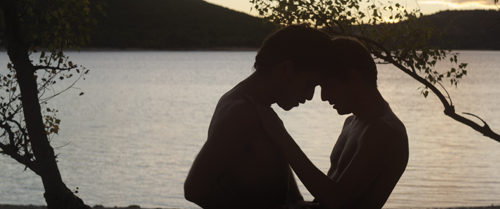
Stranger by the Lake Franck (Pierre Deladonchamps) is an attractive young French guy spending his summer days hanging at the local gay beach, where he strikes up a platonic friendship with chunky older loner Henri (Patrick d’Assumcao). Still, the latter is obviously hurt when Franck practically gets whiplash neck swiveling at the sight of Michel (Christophe Paou), an old-school gay fantasy figure — think Sam Elliott in 1976’s Lifeguard, complete with Marlboro Man ‘stache and twinkling baby blues. No one else seems to be paying attention when Franck sees his lust object frolicking in the surf with an apparent boyfriend, one that doesn’t surface again after some playful “dunking” gets rather less playful. Eventually the police come around in the form of Inspector Damroder (Jerome Chappatte), but Franck stays mum — he isn’t sure what exactly he saw. Or maybe it’s that he’s quite sure he’s happy how things turned out, now that sex-on-wheels Michel is his sorta kinda boyfriend. You have to suspend considerable disbelief to accept that our protagonist would risk potentially serious danger for what seems pretty much a glorified fuck-buddy situation. But Alain Guiraudie’s meticulously schematic thriller- which limits all action to the terrain between parking lot and shore, keeping us almost wholly ignorant of the characters’ regular lives — repays that leap with an absorbing, ingenious structural rigor. Stranger is Hitchcockian, all right, even if the “Master of Suspense” might applaud its technique while blushing at its blunt homoeroticism. (1:37) (Dennis Harvey)

Top Secret! After the sleeper smash of 1980’s Airplane! (and the TV failure of 1982’s Police Squad! series, which nonetheless led directly to the later, successful Naked Gun movies), the Madison, Wisc.-spawned comedy trio of David Zucker, Jim Abrahams, and Jerry Zucker had one more exclamation point up their collective sleeves. That resulted in this hit 1984 parody of Cold War spy movies (and Elvis Presley musicals) starring Val Kilmer (in his perpetually open-mouthed film debut) as hip-swiveling American rock star Nick Rivers, who is dispatched to East Germany on a diplomatic entertainment mission. Instead, he gets yanked into major intrigue that includes kidnapped scientists, Omar Sharif, an elaborate Blue Lagoon (1980) spoof, and of course extremely realistic cow disguises. It also features this immortal exchange between Nazi-Commies, as they’re torturing captured Nick: “Do you vant me to bring out ze LeRoy Neiman paintings?” “No — ve cannot risk violating ze Geneva Convention!” Herrs Zucker, Abrahams, and Zucker will reunite on the Castro stage to screen and discuss their incisive political classic as it enters its fourth decade of cultdom. The 30th anniversary afternoon program Sat/8 is co-presented by SF Sketchfest (www.sfsketchfest.com), Midnites for Maniacs, Noise Pop, and the Jewish Film Festival. Castro. (Dennis Harvey)

Vampire Academy Bloodsuckers go to high school in this adaptation of the YA series directed by Mark Waters (2004’s Mean Girls). (1:45)

Sundance, part six: superlatives

0

More Sundance right here on Pixel Vision.

My biggest excitement of Sundance 2014 was the random email I received asking if I would be able to attend a “super-secret screening of a highly anticipated film by a major filmmaker.” (Answer: DUH.) The packed house at Park City’s defining Main Street theater, the Egyptian, had no clue what film was to be screened, though many thought it might be Wes Anderson’s The Grand Budapest Hotel.

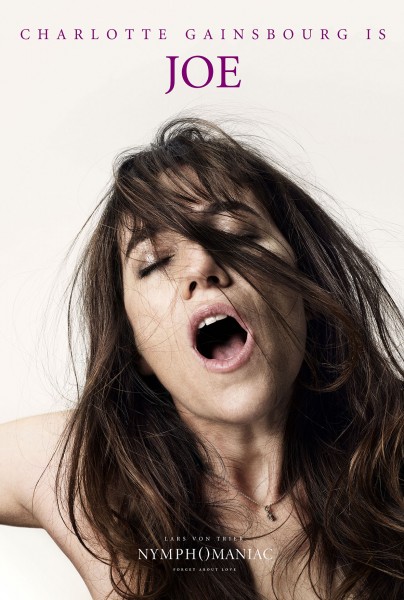
In fact, turned out to be the premiere of Lars von Trier’s Nymphomaniac: Part One (Denmark/Germany/France) which is rated NC-17 (look for its theatrical release on March 21, or catch it On Demand starting March 6). Nymphomaniac: Part Two will follow shortly afterward, with a VOD debut on April 3 and a theatrical release on April 18.

http://www.youtube.com/watch?v=CMnJDyv2a1Y

As regular readers of my festival reports know, I am not here to spoil films. What I attempt to do is entice you to watch movies that are shaping our cinematic landscapes — and this is one you cannot miss. Avoid any and all plot overviews giving away any specific details about this two-part extravaganza exploring the taboo subject of nymphomania. Suffice to say Charlotte Gainsbourg, Stellan Skarsgård, Shia LaBeouf, and the other cast members go the distance for our generation’s most controversial auteur. For true von Trier-ites, the uncut, five-and-a-half-hour European version of Nymphomaniac (compared to the four-hour American version) is being shown at the Berlinale next month. 

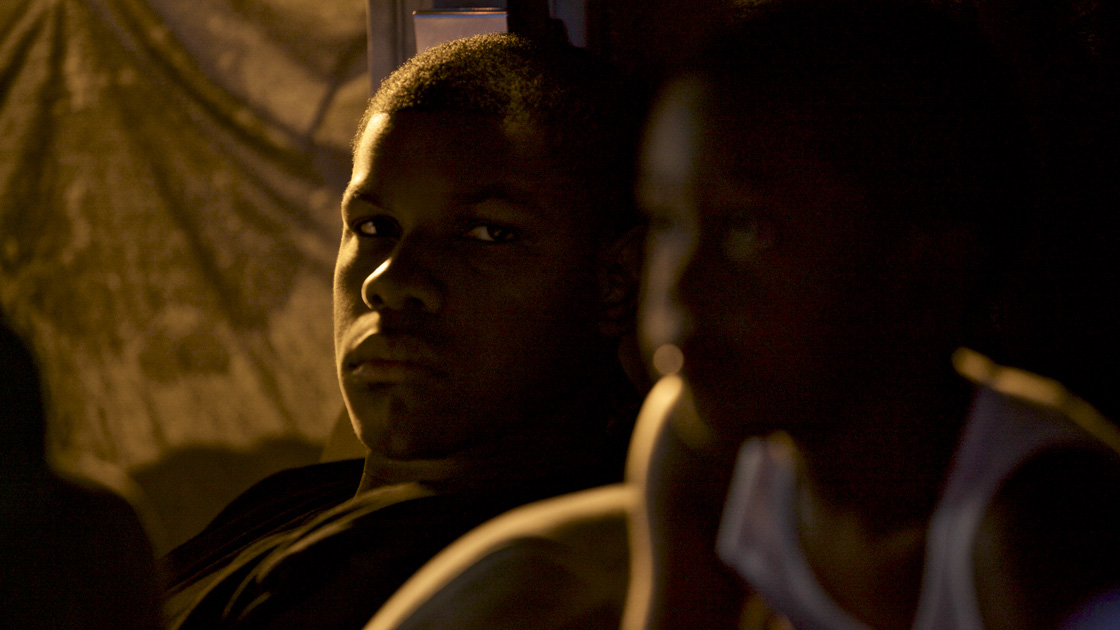
My favorite film at this year’s Sundance was another controversial event: Tim Sutton’s polarizing Memphis (US). I’ve never needed to watch a film three times at Sundance before, but Sutton’s unique “observational journey” (a style he first executed, wondrously, with his 2011 debut Pavilion), which explores the “real” city of Memphis, and its frustrated main character’s own trek to find his own private transcendence kept me coming back for more and more and more. 

Musician Willis Earl Beal, signed to the independent UK label XL Recording, plays himself (he’s sort of a Kool Keith meets Woody Guthrie) on a search to not only find and create a mystical music, but — through sorcery — achieve the next level of existential bliss which may or may not be attainable by any means necessary. Director Sutton said at one post-film Q&A, “All you need to make a movie is a camera, Willis, and a broom.” 

I cannot prepare you for the intense experience you will have when watching this visionary film. At a press screening, 20 of the 30 audience members walked out. At the final public screening I was approached by a family who couldn’t believe I had been able to watch the film more than once. My response: Memphis is an audacious, poetic puzzle, and it requires audiences to put time and energy into finding the method to its madness. Like the path traveled by the lead character in the Coen Brothers’ Inside Llewyn Davis, Beal’s journey is a long, dark, and winding one that many are rightfully terrified to take.

Sundance, part five: Swanberg + Ross Perry

1

Missed a previous Sundance post? Check out Pixel Vision for more.

Director and sometimes actor Joe Swanberg is a household name among South by Southwest fest-goers (and mumblecore fans everywhere), with such gems as Nights and Weekends (2009), Marriage Material (2012), All the Light in the Sky (2012), and his segment in V/H/S (2012) entitled “The Sick Thing That Happened to Emily When She Was Younger.” 

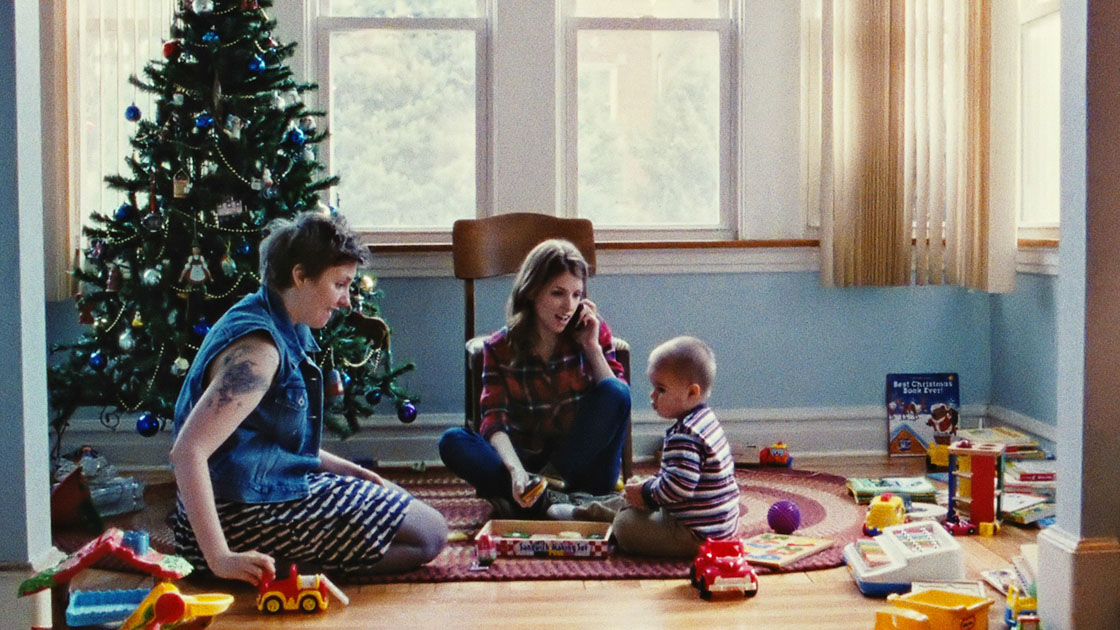
More recently, he’s been embraced by the Sundance community with the hilariously sexual Uncle Kent (2011) and last year’s Drinking Buddies, the latter showcasing mainstream stars Olivia Wilde, Jake Johnson, and Anna Kendrick. But now that he has hit parenthood, it seems that Swanberg is maturing into crossover material, and Happy Christmas (US) will make you one happy cinematic camper. Giving Kendrick the most complicated character of her career — as well as memorable roles for Melanie Lynskey and Girls‘ Lena Dunham — Swanberg may be aligning himself with Noah Baumbach and Alex Ross Perry to grab the title of this generation’s Woody Allen. Note: the scenes with Swanberg’s two-year-old baby Jude are worth the admission alone.

Speaking of Alex Ross Perry, he also had a new film at Sundance, and it rivaled Swanberg’s for “most enjoyably unlikable characters:” Listen Up Philip (US). Jason Schwartzman gives a tour-de-force performance in this follow-up to Perry’s debut feature, 2011’s The Color Wheel, helping Philip fulfill the promise hinted at in that earlier film.

Philip explores three sides of an incorrigible coin, embodied by Schwartzman, Mad Men‘s Elisabeth Moss, and the greatest grumpy old man of the year (so far), Jonathan Pryce. The end result exposes the uncomfortable truths of New York neuroses to such a degree that you may feel dirty just to be a human as you leave the theater — it’s both excruciatingly hilarious and unstoppably ruthless. 

This Week’s Picks: February 5 – 11, 2014

0


WEDNESDAY/5

Action Bronson

Action Bronson lives life large. Imposing both physically and lyrically, the Queens native and former gourmet chef draws upon his joys in life — food, drugs, and women — to construct poetically intricate and technically impressive rhymes. His mix tapes are full of love songs, both highly eloquent and frequently offensive, written about the grit of urban life and the beauty of a great meal. Lines about “pissing through your fishnets” are sprinkled among odes to “bone marrow roasted/spread it on the rosemary bread/lightly toasted,” all delivered with Bronson’s sure, sharp-tongued talent. At his live shows, Bronson is extremely interactive with his (extremely devoted) fans, passing back and forth joints, liquor, and jokes from the stage to the audience. With the brand-new addition of Odd Future thrash punks Trash Talk to the lineup, this show is sure to be insane. (Haley Zaremba)

With Trash Talk

9pm, $25

Slim’s

333 11th Ave, SF

(415) 255-0333

www.slimspresents.com


Alejandro Murguia

In a city overflowing with Google bussers and tech transplants, San Francisco’s newest poet laureate, Alejandro Murguía, seeks to revive a marginalized community through the written word. He’ll be honored at City Lights Bookstore with a reading from his new book, Stray Poems. The bilingual poet is the first Latino laureate, paving the way for the city’s poesía en español revival — not only through his poems but also through his activism. Marguía is the voice of the city’s forgotten residents, the voice of “the waitresses the norteños trios the flowers sellers / the blind guitarist wailing boleros at a purple sky / the shirtless vagrant vagabond ranting at a parking meter / the spray paint visionary setting fire to the word” (from the laureate’s poem “16th and Valencia”). (Laura B. Childs)

7pm, free

City Lights Bookstore

261 Columbus, SF

www.citylights.com


SF Bicycle Coalition’s Dating Game: Love On Wheels

This year’s Love on Wheels fundraiser is back with a ’90s twist. In a modern-day version of MTV’s dating show, Singled Out, bike-lovers looking for a mate will get paired up and sent off to a first date in time for the big V-day. Be sure to look the part — ’90s attire is encouraged. Find love in fellow midriff-bearing, flannel-sporting cyclists, or show off your best Tootsee Roll on the dance floor. Proceeds benefit the SF Bicycle Coalition’s work to make the city more bicycle-friendly. (Childs)

6:30pm, $10

DNA Lounge

375 11th St., SF

www.dnalounge.com


THURSDAY/6

Academy of Sciences Lunar New Year Celebration

Saddle up and celebrate the Year of the Horse at the California Academy of Sciences Lunar New Year Nightlife. The contemporary museum will be decked out with traditional occidental activities and performances. Let your inner wildcat out on the dance floor or watch an authentic lion dance routine. For a little wisdom, participate in a traditional Chinese tea ceremony and if you believe in making your own luck, check out the customized fortune cookie booth. Workshops will teach the lion dance or martial arts moves, but leave most of it to the pros. Throughout the night, live shows will feature authentic lion dance, a martial art demonstration and an ancient Chinese mask performance. (Childs)

6pm, $12

Academy of Sciences

55 Music Concourse

www.calacademy.org


Throwing Shade Live

Throwing Shade is a weekly podcast by LA comedians Bryan Safi and Erin Gibson in which the pair address queer and feminist issues in the news. Though the topics are often heavy, Gibson and Safi’s goofy back-and-forths, impressions, and gimmicks strike the perfect balance. Both hilarious and extremely insightful, Throwing Shade is the ideal way to hear about important and often under-reported topics without getting too blue — although your sides may ache by the end of the segment. Putting their show on the road for SF Sketchfest, the duo will be recording the show at the Punchline for the podcast. Endorsed by both Maximum Fun and Funny or Die, Throwing Shade is a serious laughing matter. Don’t miss this rare live appearance. (Zaremba)

8pm, $20

Punch Line

444 Battery, SF

(415) 397-7573

punchlinecomedyclub.com


Oneohtrix Point Never

Picking up on the ’90s era abstract, contemplative side of Warp Records, recent signee Oneohtrix Point Never’s R Plus Seven is thoroughly brain busting. The elements are disparate: vocals that begin without reference and depart without finishing, gamelan reminiscent rhythms seemingly performed on the Cosmic Key, and an ever-present effect best described as the stuttering sound of audio on an overburdened CPU. Partly playful, with New Age and stereotypically “world” music samples ripped off of Pirate Bay (where, to be fair, R Plus Seven gets the “plunderphonics” genre tag), the album still manages to sound wholly reverent. To what? Let me get back to you on that. (Ryan Prendiville)

With Holly Herndon (Live A/V), Marco de la Vega, DJ Will, Chad Salty

10pm-3am, $17.50-20

1015 Folsom

1015 Folsom St., SF

www.1015.com


FRIDAY/7


ASKEW

Performance art, visual art, and experimental film collide with boundary-pushing results at ASKEW, a Festival of Film and Performance Art, presented by the similarly edgy, female-focused Femina Potens Art Gallery. Three nights of themed events spotlight a variety of unique, fearlessly curious talents; tonight’s “We All Live Here: Primal Expressionism” includes SF Fringe Festival hit Fish Girl, by Siouxsie Q with Sean Andries. Tomorrow, it’s “Breaking Stones: Defining New Roles of Masculinity,” with a performance and screening by fest curator Madison Young, among others. Saturday’s “The Sacred and the Profane” features an appearance by sex-positive icon Annie Sprinkle, plus I Am Lady Samar, a work that mixes dance with “flesh hooks” — an act not for the faint-hearted, or close-minded. (Cheryl Eddy)

Through Sat/8, 7pm, $8-$10

Yerba Buena Center for the Arts

701 Mission, SF

www.ybca.org


Liquid Hymn

Feast your eyes! First Amendment Gallery presents the opening of Liquid Hymn, a solo exhibition of kaleidoscopic multimedia ink paintings by Oakland-based artist J.S. Weis. With wild animals pouring out of splashes of color, Weis’ projects seem like a 1970s acid trip — see: purple elephant, two-headed tiger, and a sea of crab legs; the artist uses ink, pencil, and intricately stacked paper to create a detailed 3D effect on his multimedia creations. Multicolored plants and ethereal animals roam through the psychedelic ink paintings, creating a fantastical symphony where nature and art become one. (Childs)

6:30pm, free

1AM SF

1000 Howard, SF

www.1amsf.com


SATURDAY/8

Top Secret

Continuing in the same zany and hilarious vein of comedy as seen in their earlier films Kentucky Fried Movie and Airplane!, writers and directors Jim Abrahams, Jerry Zucker, and David Zucker decided to spoof both 1960s cold war/spy movies as well as rock n’ roll musicals with 1984’s Top Secret! Featuring Val Kilmer (in one of his very first starring roles) as fictional American rocker Nick Rivers battling the evil empire of East Germany, the flick parodies a host of genre clichés and plays on pun after side-splitting pun. Join Abrahams and the Zucker brothers for what promises to be an unpredictable 30th anniversary screening, audience discussion and Q&A. (Sean McCourt)

1pm, $20

Castro Theatre

429 Castro, SF

www.sfsketchfest.com


Aszure Barton

When Mikhail Baryshnikov’s Hells Kitchen Dance troupe performed at the Zellerbach Play House in 2006, he looked fabulous — at 58, a self-effacing, masterful dancer. He also brought works by two barely known choreographers. Benjamin Millepied, at the time a dancer with New York City Ballet, now runs the Paris Opera Ballet; the Canadian Aszure Barton’s two pieces immediately marked her as someone with chops to burn and a fascinating individual voice. She hasn’t stopped working — all over the world. Now SF Performances is bringing her back with Awáa, a piece inspired by an underwater dream, in which Barton, apparently, explores the masculine and feminine traits we all have. I’ll take her word for it — anytime. (Rita Felciano)

Feb. 7/8. 7:30pm. $35-50

Aszure Barton + Artists

Lam Research Center, YBCA

700 Howard St. SF

415-978-2787

www.sfperformances.org

Thu/6-Sat/8


SUNDAY/9


Shakes The Clown Live

Although it was critically panned and considered a financial flop when it was first released, the 1991 movie Shakes The Clown has gone on to achieve a loyal cult following over the years. Comedian Bobcat Goldthwait wrote, directed, and starred in the dark comedy that follows the life of an alcoholic and depressed clown that shows up for kids’ parties drunk, sees his career going down the toilet, and even eventually gets framed for murder. Join Goldthwait, along with original film cast members Julie Brown, Tom Kenny, and Florence Henderson as they bring the under-appreciated story back to life in all its debaucherous glory, live on stage! (Sean McCourt)

4pm, $25

Cobb’s Comedy Club

915 Columbus, SF

(415) 928-4320

www.cobbscomedyclub.com

www.sfsketchfest.com


TUESDAY/11

Kid Congo

Helping form the influential roots-rock/punk band The Gun Club when he was still a teenager, Kid Congo Powers was quickly persuaded by the Cramps to join as their second guitar player in 1980 before he eventually went on to play with Nick Cave and the Bad Seeds for a time. Continuing to harness the power of American roots music and twist it into a warped web of perverse sounds over the ensuing years with his latest band, The Pink Monkey Birds, Kid Congo ventures further down the deliciously demented path on his latest record, Haunted Head (In The Red).

With Wax Idols, Dancer. (Sean McCourt)

8pm, $15

Slim’s

333 11th St., SF

(415) 255-0333

www.slimspresents.com


Hospitality

This trio’s debut S/T album was essentially a collection of undeniable indie-pop hooks matched by songwriting that combined Belle and Sebastian’s wittiness with the urban social unease of a Shirley Jackson story. Still it didn’t quite capture the appeal as a live band, where I found them to be most endearing. On its freshly minted second album, Trouble, Hospitality has set out to prove their mettle as simply a rock (drop the indie, drop the twee) group as well. While Amber Papini’s voice is still endlessly charming — listen to the way her double esses fill in some hissing hi-hat on The Who-styled percussion on “I Miss Your Bones” — but the band seems in less of a hurry, giving the guitar and bass its due. (Ryan Prendiville)

With Air Waves, Matt Kivel

8pm, $10-12

Rickshaw Stop

155 Fell, SF

(415) 861-2011

 www.rickshawstop.com


The Guardian listings deadline is two weeks prior to our Wednesday publication date. To submit an item for consideration, please include the title of the event, a brief description of the event, date and time, venue name, street address (listing cross streets only isn’t sufficient), city, telephone number readers can call for more information, telephone number for media, and admission costs. Send information to Listings, the Guardian, 225 Bush, 17th Flr., SF, CA 94105; or email (paste press releasea into email body — no attachments, please) to listings@sfbg.com. Digital photos may be submitted in jpeg format; the image must be at least 240 dpi and four inches by six inches in size. We regret w cannot accept listings over the phone.

Rep Clock: February 5 -11, 2014

0

Schedules are for Wed/5-Tue/11 except where noted. Director and year are given when available. Double and triple features marked with a •. All times pm unless otherwise specified.

ARTISTS’ TELEVISION ACCESS 992 Valencia, SF; www.atasite.org. $5-7. “OpenScreening,” Thu, 8. For participation info, contact programming@atasite.org. Boom: The Sound of Eviction (2001), Fri, 7:30.

BALBOA THEATRE 3630 Balboa, SF; cinemasf.com/balboa. $7.50-10. “Popcorn Palace:” The Seventh Voyage of Sinbad (Juran, 1958), Sat, 10am. Matinee for kids. Barbie: The Pearl Princess (2014), Sun, 10am.

BERKELEY FELLOWSHIP OF UNITARIAN UNIVERSALISTS 1924 Cedar, Berk; www.bfuu.org. $5-10. In Transition 2.0, Thu, 6:30. More info at www.transitionberkeley.com.

CASTRO 429 Castro, SF; (415) 621-6120, www.castrotheatre.com. $8.50-11. “SF Sketchfest:” “NPR’s Ask Me Another,” Wed, 8 (this event, $25-35); “Tribute to Alan Arkin:” The In-Laws (Hiller, 1979), Thu, 7 ($25); Cabin Boy (Resnick, 1994), Fri, 7:30 (20th anniversary screening, hosted by Peaches Christ with Chris Elliot in person, $20); Top Secret! (Abrahams, Zucker, and Zucker, 1984), Sat, 1 (30th anniversary screener with writers-directors in person, $20); “The Benson Movie Interruption:” The Twilight Saga: New Moon (Weitz, 2009), Sat, 4:20 ($20); Revenge of the Nerds (Kanew, 1984), Sat, 8:30 (30th anniversary screening with cast in person, $30). Visit www.sfsketchfest.com for tickets and more info on SF Sketchfest events. •The Lady From Shanghai (Welles, 1947), Sun, 3, 7, and Gilda (Vidor, 1946), Sun, 4:45, 8:45. •I Am Divine (Schwarz, 2013), Mon, 7:30, and Bettie Page Reveals All (Mori, 2012), Mon, 9:10. “Veteran Documentary Corps,” short documentaries, Tue, 7. Special event; purchase tickets ($10-50) at www.veterandocs.org.

CHRISTOPHER B. SMITH RAFAEL FILM CENTER 1118 Fourth St, San Rafael; (415) 454-1222, www.cafilm.org. $6.50-$10.75. The Girls in the Band (Chaikin, 2011), call for dates and times. “Oscar Nominated Short Films 2014,” call for dates and times. The Past (Farhadi, 2013), call for dates and times. Gloria (Lelio, 2013), Feb 7-13, call for times. Breathing Earth (2012), Sun, 7.

CLAY 2261 Fillmore, SF; www.landmarktheatres.com. $10. “Midnight Movies:” The Room (Wiseau, 2003), Sat, midnight.

CRANEWAY PAVILION 1414 Harbour Way South, Richmond; www.craneway.com. $20-30. “Lunafest Film Festival,” short films by, for, and about women, Fri, 6:30.

EXPLORATORIUM Pier 15, SF; www.exploratorium.edu. Free with museum admission ($19-25). “Saturday Cinema:” “Teachers Institute Film Festival,” Sat, 11am-2pm.

MECHANICS’ INSTITUTE 57 Post, SF; milibrary.org/events. $10. “CinemaLit Film Series: Villains We Love:” Caged (Cromwell, 1950), Fri, 6.

NEW PARKWAY 474 24th St, Oakl; www.thenewparkway.com. Free. “First Friday Shorts,” films from Creative Growth Video Production Workshop, Fri, 6.

OAKLAND PUBLIC LIBRARY Rockridge Branch, 5366 College, Oakl; www.oaklandlibrary.org. Free. “90-Second Newbery Film Festival,” Sat, noon.

OSHER MARIN JCC 200 N. San Pedro, San Rafael; www.marinjcc.org. $10-20. “Best of the San Francisco Jewish Film Festival:” Arab Labor, Tue, 7. Three episodes from season four of the Israeli TV show.

PACIFIC FILM ARCHIVE 2575 Bancroft, Berk; (510) 642-5249, bampfa.berkeley.edu. $5.50-9.50. “Film 50: History of Cinema:” M (Lang, 1931), with lecture by Emily Carpenter, Wed, 3:10. “African Film Festival 2014:” Tey (Gomis, 2012), Wed, 7. “Funny Ha-Ha: The Genius of American Comedy, 1930-1959:” Will Success Spoil Rock Hunter? (Tashlin, 1957), Thu, 7. “Against the Law: The Crime Films of Anthony Mann:” Strange Impersonation (1946), Fri, 7; Desperate (1947), Fri, 8:30. “Screenagers: 16th Annual Bay Area High School Film and Video Festival,” Sat, 3. “Jean-Luc Godard: Expect Everything from Cinema:” Vivre sa vie (1962), Sat, 6:30; Les carabiniers (1963), Sat, 8:15. “The Brilliance of Satyajit Ray:” Three Daughters (1961), Sun, 3. “Documentary Voices:” The Specialist (Sivian, 1999), Tue, 7.

ROXIE 3117 and 3125 16th St, SF; (415) 863-1087, www.roxie.com. $6.50-11. SF IndieFest, Feb 6-20. For program info, visit www.sfindie.com.

TANNERY 708 Gilman, Berk; berkeleyundergroundfilms.blogspot.com. Donations accepted. “Berkeley Underground Film Society:” “LOOP Presents:” What’s Up, Tiger Lily? (Allen, 1966), Sat, 7:30; Duck Soup (McCarey, 1933), Sun, 7:30.

TEMESCAL ART CENTER 511 48th St, Oakl; www.shapeshifterscinema.com. Free. “Shapeshifters Cinema: Lori Varga,” old and new analog film work, Sun, 8.

YERBA BUENA CENTER FOR THE ARTS 701 Mission, SF; www.ybca.org. $8-10. “Femina Potens’ ASKEW Film and Performance Festival,” screenings and performances, Thu-Sat. *


Film Listings: February 5 – 11, 2014

0

Film listings are edited by Cheryl Eddy. Reviewers are Kimberly Chun, Dennis Harvey, Lynn Rapoport, Sam Stander, and Sara Maria Vizcarrondo. For rep house showtimes, see Rep Clock.

OPENING

Gloria The titular figure in Sebastian Lelio’s film is a Santiago divorcee and white collar worker (Paulina Garcia) pushing 60, living alone in a condo apartment — well, almost alone, since like Inside Llewyn Davis, this movie involves the frequent, unwanted company of somebody else’s cat. (That somebody is an upstairs neighbor whose solo wailings against cruel fate disturb her sleep.) Her two children are grown up and preoccupied with their adult lives. Not quite ready for the glue factory yet, Gloria often goes to a disco for the “older crowd,” dancing by herself if she has to, but still hoping for some romantic prospects. She gets them in the form of Rodolfo (Sergio Hernandez), who’s more recently divorced but gratifyingly infatuated with her. Unfortunately, he’s also let his daughters and ex-wife remain ominously dependent on him, not just financially but in every emotional crisis that affects their apparently crisis-filled lives. The extent to which Gloria lets him into her life is not reciprocated, and she becomes increasingly aware how distant her second-place priority status is whenever Rodolfo’s other loved ones snap their fingers. There’s not a lot of plot but plenty of incident and insight to this character study, a portrait of a “spinster” that neither slathers on the sentimental uplift or piles on melodramatic victimizations. Instead, Gloria is memorably, satisfyingly just right. (1:50) Embarcadero, Smith Rafael, Sundance Kabuki. (Harvey)

The Lego Movie The toy becomes a movie. Fun fact: Nick Offerman gives voice to a character named “Metalbeard,” a revenge-seeking pirate. So it’s got that going for it, which is nice. (1:41) Balboa, Presidio.

Monuments Men George Clooney directs this World War II-set film about an unlikely platoon sent into Germany to rescue artworks being plundered by Nazi thieves. With Matt Damon, Cate Blanchett, Bill Murray, and John Goodman. (1:58) Balboa, Marina.

“Oscar Nominated Short Films 2014: Documentary” This year, the Oscar-nominated docs are presented in two separate feature-length programs. Program A contains The Lady in Number 6: Music Saved My Life, about a Holocaust survivor; Karama Has No Walls, about protestors in Yemen during the Arab Spring; and Facing Fear, about a gay man who encounters the neo-Nazi who terrorized him 25 years prior. Program B contains Cavedigger, about environmental sculptor Ra Paulette; and Prison Terminal: The Last Days of Private Jack Hall, about a dying prisoner being cared for by other prisoners. Opera Plaza.

Stranger by the Lake Franck (Pierre Deladonchamps) is an attractive young French guy spending his summer days hanging at the local gay beach, where he strikes up a platonic friendship with chunky older loner Henri (Patrick d’Assumcao). Still, the latter is obviously hurt when Franck practically gets whiplash neck swiveling at the sight of Michel (Christophe Paou), an old-school gay fantasy figure — think Sam Elliott in 1976’s Lifeguard, complete with Marlboro Man ‘stache and twinkling baby blues. No one else seems to be paying attention when Franck sees his lust object frolicking in the surf with an apparent boyfriend, one that doesn’t surface again after some playful “dunking” gets rather less playful. Eventually the police come around in the form of Inspector Damroder (Jerome Chappatte), but Franck stays mum — he isn’t sure what exactly he saw. Or maybe it’s that he’s quite sure he’s happy how things turned out, now that sex-on-wheels Michel is his sorta kinda boyfriend. You have to suspend considerable disbelief to accept that our protagonist would risk potentially serious danger for what seems pretty much a glorified fuck-buddy situation. But Alain Guiraudie’s meticulously schematic thriller- which limits all action to the terrain between parking lot and shore, keeping us almost wholly ignorant of the characters’ regular lives — repays that leap with an absorbing, ingenious structural rigor. Stranger is Hitchcockian, all right, even if the “Master of Suspense” might applaud its technique while blushing at its blunt homoeroticism. (1:37) Clay, Shattuck. (Harvey)

Top Secret! After the sleeper smash of 1980’s Airplane! (and the TV failure of 1982’s Police Squad! series, which nonetheless led directly to the later, successful Naked Gun movies), the Madison, Wisc.-spawned comedy trio of David Zucker, Jim Abrahams, and Jerry Zucker had one more exclamation point up their collective sleeves. That resulted in this hit 1984 parody of Cold War spy movies (and Elvis Presley musicals) starring Val Kilmer (in his perpetually open-mouthed film debut) as hip-swiveling American rock star Nick Rivers, who is dispatched to East Germany on a diplomatic entertainment mission. Instead, he gets yanked into major intrigue that includes kidnapped scientists, Omar Sharif, an elaborate Blue Lagoon (1980) spoof, and of course extremely realistic cow disguises. It also features this immortal exchange between Nazi-Commies, as they’re torturing captured Nick: “Do you vant me to bring out ze LeRoy Neiman paintings?” “No — ve cannot risk violating ze Geneva Convention!” Herrs Zucker, Abrahams, and Zucker will reunite on the Castro stage to screen and discuss their incisive political classic as it enters its fourth decade of cultdom. The 30th anniversary afternoon program is co-presented by SF Sketchfest (www.sfsketchfest.com), Midnites for Maniacs, Noise Pop, and the Jewish Film Festival. Castro. (Harvey)

Vampire Academy Bloodsuckers go to high school in this adaptation of the YA series directed by Mark Waters (2004’s Mean Girls). (1:45)

ONGOING

American Hustle David O. Russell’s American Hustle is like a lot of things you’ve seen before — put in a blender, so the results are too smooth to feel blatantly derivative, though here and there you taste a little Boogie Nights (1997), Goodfellas (1990), or whatever. Loosely based on the Abscam FBI sting-scandal of the late 1970s and early ’80s (an opening title snarks “Some of this actually happened”), Hustle is a screwball crime caper almost entirely populated by petty schemers with big ideas almost certain to blow up in their faces. It’s love, or something, at first sight for Irving Rosenfeld (Christian Bale) and Sydney Prosser (Amy Adams), who meet at a Long Island party circa 1977 and instantly fall for each other — or rather for the idealized selves they’ve both strained to concoct. He’s a none-too-classy but savvy operator who’s built up a mini-empire of variably legal businesses; she’s a nobody from nowhere who crawled upward and gave herself a bombshell makeover. The hiccup in this slightly tacky yet perfect match is Irving’s neglected, crazy wife Rosalyn (Jennifer Lawrence), who’s not about to let him go. She’s their main problem until they meet Richie DiMaso (Bradley Cooper), an ambitious FBI agent who entraps the two while posing as a client. Their only way out of a long prison haul, he says, is to cooperate in an elaborate Atlantic City redevelopment scheme he’s concocted to bring down a slew of Mafioso and presumably corrupt politicians, hustling a beloved Jersey mayor (Jeremy Renner) in the process. Russell’s filmmaking is at a peak of populist confidence it would have been hard to imagine before 2010’s The Fighter, and the casting here is perfect down to the smallest roles. But beyond all clever plotting, amusing period trappings, and general high energy, the film’s ace is its four leads, who ingeniously juggle the caricatured surfaces and pathetic depths of self-identified “winners” primarily driven by profound insecurity. (2:17) Four Star, Metreon, 1000 Van Ness, Presidio, Sundance Kabuki. (Harvey)

August: Osage County Considering the relative infrequency of theater-to-film translations today, it’s a bit of a surprise that Tracy Letts had two movies made from his plays before he even got to Broadway. Bug and Killer Joe proved a snug fit for director William Friedkin (in 2006 and 2011, respectively), but both plays were too outré for the kind of mainstream success accorded 2007’s August: Osage County, which won the Pulitzer, ran 18 months on Broadway, and toured the nation. As a result, August was destined — perhaps doomed — to be a big movie, the kind that shoehorns a distracting array of stars into an ensemble piece, playing jes’ plain folk. But what seemed bracingly rude as well as somewhat traditional under the proscenium lights just looks like a lot of reheated Country Gothic hash, and the possibility of profundity you might’ve been willing to consider before is now completely off the menu. If you haven’t seen August before (or even if you have), there may be sufficient fun watching stellar actors chew the scenery with varying degrees of panache — Meryl Streep (who else) as gorgon matriarch Violet Weston; Sam Shepard as her long-suffering spouse; Julia Roberts as pissed-off prodigal daughter Barbara (Julia Roberts), etc. You know the beats: Late-night confessions, drunken hijinks, disastrous dinners, secrets (infidelity, etc.) spilling out everywhere like loose change from moth-eaten trousers. The film’s success story, I suppose, is Roberts: She seems very comfortable with her character’s bitter anger, and the four-letter words tumble past those jumbo lips like familiar friends. On the downside, there’s Streep, who’s a wizard and a wonder as usual yet also in that mode supporting the naysayers’ view that such conspicuous technique prevents our getting lost in her characters. If Streep can do anything, then logic decrees that includes being miscast. (2:10) Metreon, Sundance Kabuki. (Harvey)

Dallas Buyers Club Dallas Buyers Club is the first all-US feature from Jean-Marc Vallée. He first made a splash in 2005 with C.R.A.Z.Y., which seemed an archetype of the flashy, coming-of-age themed debut feature. Vallée has evolved beyond flashiness, or maybe since C.R.A.Z.Y. he just hasn’t had a subject that seemed to call for it. Which is not to say Dallas is entirely sober — its characters partake from the gamut of altering substances, over-the-counter and otherwise. But this is a movie about AIDS, so the purely recreational good times must eventually crash to an end. Which they do pretty quickly. We first meet Ron Woodroof (Matthew McConaughey) in 1986, a Texas good ol’ boy endlessly chasing skirts and partying nonstop. Not feeling quite right, he visits a doctor, who informs him that he is HIV-positive. His response is “I ain’t no faggot, motherfucker” — and increased partying that he barely survives. Afterward, he pulls himself together enough to research his options, and bribes a hospital attendant into raiding its trial supply of AZT for him. But Ron also discovers the hard way what many first-generation AIDS patients did — that AZT is itself toxic. He ends up in a Mexican clinic run by a disgraced American physician (Griffin Dunne) who recommends a regime consisting mostly of vitamins and herbal treatments. Ron realizes a commercial opportunity, and finds a business partner in willowy cross-dresser Rayon (Jared Leto). When the authorities keep cracking down on their trade, savvy Ron takes a cue from gay activists in Manhattan and creates a law evading “buyers club” in which members pay monthly dues rather than paying directly for pharmaceutical goods. It’s a tale that the scenarists (Craig Borten and Melisa Wallack) and director steep in deep Texan atmospherics, and while it takes itself seriously when and where it ought, Dallas Buyers Club is a movie whose frequent, entertaining jauntiness is based in that most American value: get-rich-quick entrepreneurship. (1:58) Embarcadero, 1000 Van Ness, Presidio. (Harvey)

Devil’s Due (1:29) Metreon.

Frozen (1:48) Metreon, 1000 Van Ness.

Gimme Shelter Pope Francis has been making up for lost time, but nevertheless, it’s tough to get a good dose of up-with-Catholicism promotional material these days. Like Francis, Gimme Shelter aims to highlight the church’s tangible and spiritual support to those in need — and here, in this movie based on a real story, would-be teen moms uninterested or unwilling to abort. Oh yes, and it’s down to shelter those battered by bad press about pedophile priests and provide a role with some meat to an ingenue itching to grow. Vanessa Hudgens is that actress, who seems to be making the right career moves following last year’s Spring Breakers by playing crust-punk teen runaway Apple. The girl is trying to break away from her abusive, cracked-out mom (Rosario Dawson) and is forced to reconnect with her privileged stranger of a dad (Brendan Fraser). The cherry — or lack thereof — on top of her troubles is the fact that she’s preggers, which inspires her father’s pinched spouse (Stephanie Szostak) to march her straight to the clinic to terminate. With the help of a hospital priest Frank (James Earl Jones), she finds, yes, shelter in a home for teen moms in need, though we never quite understand why Apple is so determined to have the child —especially when her own mother, brought scarily to life by an intense, unrecognizable Dawson, is such a monster. Still, it’s a measure of how believable Hudgens is, working with what little she has in the way of verbiage, that a viewer is touched by her trajectory. Meanwhile the avid film fan can’t help but wonder how this well-meaning movie — which incidentally has absolutely nothing to do with the Stones and doesn’t quite deserve this way-too-literal title — would have unfolded in the hands of a Lee Daniels or even a Olivier Assayas. (1:40) SF Center. (Chun)

The Girls in the Band Judy Chaikin’s upbeat documentary is in step with the recent, not-unwelcome trend of bringing overlooked musicians into the spotlight (think last year’s Twenty Feet from Stardom and A Band Called Death). The Girls in the Band takes a chronological look at women in the big-band and jazz scenes, taking the 1958’s “A Great Day in Harlem” as a visual jumping-off point, sharing the stories of two (out of just three) women who posed amid that sea of male musicians. One is British pianist Marian McPartland, who’s extensively featured in interviews shot before her death last year; the other is gifted composer and arranger Mary Lou Williams, who died in 1981 but left behind a rich legacy that still inspires. Others featured in this doc (which culminates in a re-creation of that famous Harlem photo shoot — with all-female subjects this time) include saxophone- and trumpet-playing members of the multi-racial, all-female International Sweethearts of Rhythm, which toured the segregated south at great peril during the 1930s and was a favorite among African American servicemen during World War II. No matter her race, nearly every woman interviewed cites the raging sexism inherent in the music biz — but the film’s final third, which focuses on contemporary successes like Esperanza Spalding, suggests that stubborn roadblock is finally being chipped away. (1:26) Smith Rafael. (Eddy)

Gravity “Life in space is impossible,” begins Gravity, the latest from Alfonso Cuarón (2006’s Children of Men). Egghead Dr. Ryan Stone (Sandra Bullock) is well aware of her precarious situation after a mangled satellite slams into her ship, then proceeds to demolition-derby everything (including the International Space Station) in its path. It’s not long before she’s utterly, terrifyingly alone, and forced to unearth near-superhuman reserves of physical and mental strength to survive. Bullock’s performance would be enough to recommend Gravity, but there’s more to praise, like the film’s tense pacing, spare-yet-layered script (Cuarón co-wrote with his son, Jonás), and spectacular 3D photography — not to mention George Clooney’s warm supporting turn as a career astronaut who loves country music almost as much as he loves telling stories about his misadventures. (1:31) Metreon, 1000 Van Ness. (Eddy)

The Great Beauty The latest from Paolo Sorrentino (2008’s Il Divo) arrives as a high-profile contender for the Best Foreign Language Film Oscar, already annointed a masterpiece in some quarters, and duly announcing itself as such in nearly every grandiose, aesthetically engorged moment. Yes, it seems to say, you are in the presence of this auteur’s masterpiece. But it’s somebody else’s, too. The problem isn’t just that Fellini got there first, but that there’s room for doubt whether Sorrentino’s homage actually builds on or simply imitates its model. La Dolce Vita (1960) and 8 1/2 (1963) are themselves swaying, jerry-built monuments, exhileratingly messy and debatably profound. But nothing quite like them had been seen before, and they did define a time of cultural upheaval — when traditional ways of life were being plowed under by a loud, moneyed, heedless modernity that for a while chose Rome as its global capital. Sorrentino announces his intention to out-Fellini Fellini in an opening sequence so strenuously flamboyant it’s like a never-ending pirouette performed by a prima dancer with a hernia. There’s statuary, a women’s choral ensemble, an on-screen audience applauding the director’s baffled muse Toni Servillo, standing in for Marcello Mastroianni — all this and more in manic tracking shots and frantic intercutting, as if sheer speed alone could supply contemporary relevancy. Eventually The Great Beauty calms down a bit, but still its reason for being remains vague behind the heavy curtain of “style.” (2:22) Opera Plaza. (Harvey)

Her Morose and lonely after a failed marriage, Theodore (Joaquin Phoenix) drifts through an appealingly futuristic Los Angeles (more skyscrapers, less smog) to his job at a place so hipster-twee it probably will exist someday: beautifulhandwrittenletters.com, where he dictates flowery missives to a computer program that scrawls them onto paper for paying customers. Theodore’s scripting of dialogue between happy couples, as most of his clients seem to be, only enhances his sadness, though he’s got friends who care about him (in particular, Amy Adams as Amy, a frumpy college chum) and he appears to have zero money woes, since his letter-writing gig funds a fancy apartment equipped with a sweet video-game system. Anyway, women are what gives Theodore trouble — and maybe by extension, writer-director Spike Jonze? — so he seeks out the ultimate gal pal: Samantha, an operating system voiced by Scarlett Johansson in the year’s best disembodied performance. Thus begins a most unusual relationship, but not so unusual; Theodore’s friends don’t take any issue with the fact that his new love is a machine. Hey, in Her‘s world, everyone’s deeply involved with their chatty, helpful, caring, always-available OS — why wouldn’t Theo take it to the next level? Inevitably, of course, complications arise. If Her‘s romantic arc feels rather predictable, the film acquits itself in other ways, including boundlessly clever production-design touches that imagine a world with technology that’s (mostly) believably evolved from what exists today. Also, the pants they wear in the future? Must be seen to be believed. (2:00) Four Star, 1000 Van Ness, Presidio, SF Center, Sundance Kabuki. (Eddy)

The Hobbit: The Desolation of Smaug Just when you’d managed to wipe 2012’s unwieldy The Hobbit: An Unexpected Journey from your mind, here comes its sequel — and it’s actually good! Yes, it’s too long (Peter Jackson wouldn’t have it any other way); arachnophobes (and maybe small children) will have trouble with the creepy, giant-spider battle; and Orlando Bloom, reprising his Lord of the Rings role as Legolas the elf, has been CG’d to the point of looking like he’s carved out of plastic. But there’s much more to enjoy this time around, with a quicker pace (no long, drawn-out dinner parties); winning performances by Martin Freeman (Bilbo), Ian McKellan (Gandalf); and Benedict Cumberbatch (as the petulent voice of Smaug the dragon); and more shape to the quest, as the crew of dwarves seeks to reclaim their homeland, and Gandalf pokes into a deeper evil that’s starting to overtake Middle-earth. (We all know how that ends.) In addition to Cumberbatch, the cast now includes Lost‘s Evangeline Lilly as elf Tauriel, who doesn’t appear in J.R.R. Tolkien’s original story, but whose lady-warrior presence is a welcome one; and Luke Evans as Bard, a human poised to play a key role in defeating Smaug in next year’s trilogy-ender, There and Back Again. (2:36) 1000 Van Ness. (Eddy)

The Hunger Games: Catching Fire Before succumbing to the hot and heavy action inside the arena (intensely directed by Francis Lawrence) The Hunger Games: Catching Fire force-feeds you a world of heinous concept fashions that’d make Lady Gaga laugh. But that’s ok, because the second film about one girl’s epic struggle to change the world of Panem may be even more exciting than the first. Suzanne Collins’ YA novel The Hunger Games was an over-literal metaphor for junior high social survival and the glory of Catching Fire is that it depicts what comes after you reach the cool kids’ table. Katniss (Jennifer Lawrence) inspired so much hope among the 12 districts she now faces pressures from President Snow (a portentous Donald Sutherland) and the fanatical press of Capital City (Stanley Tucci with big teeth and Toby Jones with big hair). After she’s forced to fake a romance with Peeta (Josh Hutcherson), the two watch with horror as they’re faced with a new Hunger Game: for returning victors, many of whom are too old to run. Amanda Plummer and Jeffrey Wright are fun as brainy wackjobs and Jena Malone is hilariously Amazonian as a serial axe grinder still screaming like an eighth grader. Inside the arena, alliances and rivalries shift but the winner’s circle could survive to see another revolution; to save this city, they may have to burn it down. (2:26) Metreon. (Vizcarrondo)

I, Frankenstein (1:33) Metreon, 1000 Van Ness.

Inside Llewyn Davis In the Coen Brothers’ latest, Oscar Isaac as the titular character is well on his way to becoming persona non grata in 1961 NYC — particularly in the Greenwich Village folk music scene he’s an ornery part of. He’s broke, running out of couches to crash on, has recorded a couple records that have gone nowhere, and now finds out he’s impregnated the wife (Carey Mulligan) and musical partner of one among the few friends (Justin Timberlake) he has left. She’s furious with herself over this predicament, but even more furious at him. This ambling, anecdotal tale finds Llewyn running into one exasperating hurdle after another as he burns his last remaining bridges, not just in Manhattan but on a road trip to Chicago undertaken with an overbearing jazz musician (John Goodman) and his enigmatic driver (Garrett Hedlund) to see a club impresario (F. Murray Abraham). This small, muted, droll Coens exercise is perfectly handled in terms of performance and atmosphere, with pleasures aplenty in its small plot surprises, myriad humorous idiosyncrasies, and T. Bone Burnett’s sweetened folk arrangements. But whether it actually has anything to say about its milieu (a hugely important Petri dish for later ’60s political and musical developments), or adds up to anything more profound than an beautifully executed shaggy-dog story, will be a matter of personal taste — or perhaps of multiple viewings. (1:45) Sundance Kabuki. (Harvey)

The Invisible Woman Charles Dickens was a regular scold of the British class system and its repercussions, particularly the gentry’s general acceptance that poverty was something the bottom rung of society was suited for, perhaps even deserved. Given how many in positions of power would have preferred such issues go ignored, it was all the more important their highest-profile advocate be of unimpeachable “moral character” — which in the Victorian era meant a very high standard of conduct indeed. So it remains remarkable that in long married middle-age he heedlessly risked scandal and possible career-ruin by taking on a much younger mistress. Both she and he eventually burned all their mutual correspondence, so Claire Tomalin’s biography The Invisible Woman is partly a speculative work. But it and now Ralph Fiennes’ film of the same name are fascinating glimpses into the clash between public life and private passion in that most judgmentally prudish of epochs. Framed by scenes of its still-secretive heroine several years after the central events, the movie introduces us to a Dickens (Fiennes) who at mid-career is already the most famous man in the UK. In his lesser-remembered capacity as a playwright and director, at age 45 (in 1857) he hired 18-year-old actress Nelly Ternan (Felicity Jones) for an ingénue role. He was instantly smitten; she was, at the least, awed by this great man’s attention. Their professional association permitted some further contact without generating much gossip. But eventually Dickens chafed at the restraints necessary to avoid scandal — no matter the consequences to himself, let alone his wife, his 10 (!) children, or Ternan herself. Fiennes, by all accounts an exceptional Shakespearean actor on stage, made a strong directorial debut in 2011 with that guy’s war play, Coriolanus — a movie that, like this one, wasn’t enough of a conventional prestige film or crowd-pleaser to surf the awards-season waves very long. But they’re both films of straightforward confidence, great intelligence, and unshowy good taste that extends to avoiding any vanity project whiff. (1:51) Opera Plaza. (Harvey)

Jack Ryan: Shadow Recruit Throwback Terror Thursday, anyone? If the early Bourne entries leapt ahead of then-current surveillance technology in their paranoia-inducing ability to Find-Replace-Eliminate international villains wherever they were in the world, then Jack Ryan: Shadow Recruit flails in the opposite direction — toward a nonsensical, flag-waving mixture of Cold War and War on Terror phobias. So when covert mucky-muck Thomas Harper (Kevin Costner) solemnly warns that if mild-mannered former Marine and secret CIA analyst Jack Ryan stumbles, the US is in danger of … another Great Depression, you just have to blink, Malcolm Gladwell-style. Um, didn’t we just do that? And is this movie that out of touch? It doesn’t help that director Kenneth Branagh casts himself as the sleek, camp, and illin’ Russian baddie Viktor Cherevin, who’s styled like a ’90s club tsar in formfitting black clothing with a sheen that screams “Can this dance-floor sadist buy you another cosmo?” He’s intended to pass for something resembling sex — and soul — in Shadow Recruit‘s odd, determinedly clueless universe. That leaves a colorless, blank Chris Pine with the thankless task of rescuing whiney physician love Cathy (Keira Knightley) from baddie clutches. Pine’s no Alec Baldwin, lacking the latter’s wit and anger management issues, or even Ben Affleck, who has also succumbed to blank, beefcake posturing on occasion. Let’s return this franchise to its box, firmly relegated to the shadows. (1:45) Metreon, 1000 Van Ness. (Chun)

Labor Day Sweet little home repairs, quickie car tune-ups, sensual pie-making, and sexed-up chili cookery — Labor Day seems to be taking its chick-flick cues from Porn For Women, Cambridge Women’s Pornography Cooperative’s puckish gift-booklet that strives to capture women’s real desires: namely, for vacuuming, folded laundry, and patient listening from their chosen hunks of beefcake. Let’s call it domestic close encounters of the most pragmatic, and maybe most realistic, kind. But that seems to sail over the heads of all concerned with Labor Day. Working with Joyce Maynard’s novel, director-screenwriter Jason Reitman largely dispenses with the wit that washes through Juno (2007) and Up in the Air (2009) and instead chooses to peer at his actors through the seriously overheated, poetically impressionistic prism of Terrence Malick … if Malick were tricked into making a Nicholas Sparks movie. Single mom Adele (Kate Winslet) is down in the dumps over multiple miscarriages and her husband’s (Clark Gregg) departure. Son Henry (Gattlin Griffith) becomes her caretaker of sorts — thus, when escaped convict Frank (Josh Brolin) forces the mother-and-son team to give him a ride and a hideout, it’s both a blessing and a curse, especially because the hardened tough guy turns out to be a compulsively domestic, hardworking ubermensch of a Marlboro Man, able to bake up a peach pie and teach Henry to throw a baseball, all within the course of a long Labor Day weekend. Hapless Adele is helpless to resist him, particularly after some light bondage and plenty of manly nurturing. Ultimately this masochistic fantasy about the ultimate, if forbidden, family man — and the delights of the Stockholm Syndrome — is much harder to swallow than a spoonful of homemade chili, despite its strong cast. (1:51) Metreon, 1000 Van Ness, Sundance Kabuki. (Chun)

The Legend of Hercules What better reason to wield the blunt force of 3D than to highlight the muscle-bound glory of a legendary hero — and, of course, foreground his impressive six-pack abs and impudently jutting nipples. Lead Kellan Lutz nails the eye candy aspect in this sword ‘n’ sandals effort by Renny Harlin (aka the man who capsized Geena Davis’s career), though it’s hard to take him seriously when he looks less like the hirsute, leonine hero depicted in ancient artwork than an archetypal, thick-necked, clean-shaven, all-American handsome-jock star (Lutz’s resemblance to Tom Brady is uncanny). Still, glistening beefcake is a fact of life at toga parties, and it’s clearly a large part of the appeal in this corny popcorner about Greek mythology’s proto-superhero. The Legend of Hercules is kitted out to conquer teen date nights around the world, with a lot of bloodless PG-13 violence for the boys and flower-petal-filled nuzzle-fests between Herc and Hebe (Gaia Weiss) for the girls, along with the added twist that Hercules’s peace-loving mother Alcmene conceived him with Zeus — with Hera’s permission — in order to halt her power-mad brute of a spouse King Amphitryon (Scott Adkins). In any case Harlin and company can’t leave well enough alone and piledrive each action scene with way too much super-slo-mo, as if mainlining the Matrix films in the editing booth to guarantee the attention of critical overseas markets and future installments. And the cheesy badness of certain scenes, like Hercules twirling the broken stone walls he destroys like a pair of giant fuzzy dice, can’t be denied. We all know how rich and riveting Greek mythology is, and by Hera, if the original, complicated Heracles is ever truly encapsulated on film, I hope it’s by Lars von Trier or another moviemaker capable of adequately harnessing a bisexual demi-god of enormous appetites and heroism. (1:38) SF Center. (Chun)

Lone Survivor Peter Berg (2012’s Battleship, 2007’s The Kingdom) may officially be structuring his directing career around muscular tails of bad-assery. This true story follows a team of Navy SEALs on a mission to find a Taliban group leader in an Afghani mountain village. Before we meet the actors playing our real-life action heroes we see training footage of actual SEALs being put through their paces; it’s physical hardship structured to separate the tourists from the lifers. The only proven action star in the group is Mark Wahlberg — as Marcus Luttrell, who wrote the film’s source-material book. His funky bunch is made of heartthrobs and sensitive types: Taylor Kitsch (TV’s Friday Night Lights); Ben Foster, who last portrayed William S. Burroughs in 2013’s Kill Your Darlings but made his name as an officer breaking bad news gently to war widows in 2009’s The Messenger; and Emile Hirsch, who wandered into the wilderness in 2007’s Into the Wild. We know from the outset who the lone survivors won’t be, but the film still manages to convey tension and suspense, and its relentlessness is stunning. Foster throws himself off a cliff, bounces off rocks, and gets caught in a tree — then runs to his also-bloody brothers to report, “That sucked.” (Yesterday I got a paper cut and tweeted about it.) But the takeaway from this brutal battle between the Taliban and America’s Real Heroes is that the man who lived to tell the tale also offers an olive branch to the other side — this survivor had help from the non-Taliban locals, a last-act detail that makes Lone Survivor this Oscar season’s nugget of political kumbaya. (2:01) Metreon, 1000 Van Ness, Sundance Kabuki. (Vizcarrondo)

Nebraska Alexander Payne may be unique at this point in that he’s in a position of being able to make nothing but small, human, and humorous films with major-studio money on his own terms. It’s hazardous to make too much of a movie like Nebraska, because it is small — despite the wide Great Plains landscapes shot in a wide screen format — and shouldn’t be entered into with overinflated or otherwise wrong-headed expectations. Still, a certain gratitude is called for. Nebraska marks the first time Payne and his writing partner Jim Taylor weren’t involved in the script, and the first one since their 1996 Citizen Ruth that isn’t based on someone else’s novel. (Hitherto little-known Bob Nelson’s original screenplay apparently first came to Payne’s notice a decade ago, but getting put off in favor of other projects.) It could easily have been a novel, though, as the things it does very well (internal thought, sense of place, character nuance) and the things it doesn’t much bother with (plot, action, dialogue) are more in line with literary fiction than commercial cinema. Elderly Woody T. Grant (Bruce Dern) keeps being found grimly trudging through snow and whatnot on the outskirts of Billings, Mont., bound for Lincoln, Neb. Brain fuzzed by age and booze, he’s convinced he’s won a million dollars and needs to collect it him there, though eventually it’s clear that something bigger than reality — or senility, even — is compelling him to make this trek. Long-suffering younger son David (Will Forte) agrees to drive him in order to simply put the matter to rest. This fool’s mission acquires a whole extended family-full of other fools when father and son detour to the former’s podunk farming hometown. Nebraska has no moments so funny or dramatic they’d look outstanding in excerpt; low-key as they were, 2009’s Sideways and 2011’s The Descendants had bigger set pieces and narrative stakes. But like those movies, this one just ambles along until you realize you’re completely hooked, all positive emotional responses on full alert. (1:55) Embarcadero, 1000 Van Ness. (Harvey)

The Nut Job (1:26) Metreon.

“Oscar Nominated Short Films 2014: Animated” Five nominees — plus a trio of “highly commended” additional selections — fill this program. If you saw Frozen in the theater, you’ve seen Get a Horse!, starring old-timey Mickey Mouse and some very modern moviemaking techniques. There’s also Room on the Broom, based on a children’s book about a kindly witch who’s a little too generous when it comes to befriending outcast animals (much to the annoyance of her original companion, a persnickety cat). Simon Pegg narrates, and Gillian Anderson voices the red-headed witch; listen also for Mike Leigh regulars Sally Hawkins and Timothy Spall. Japanese Possessions is based on even older source material: a spooky legend that discarded household objects can gain the power to cause mischief. A good-natured fix-it man ducks into an abandoned house during a rainstorm, only to be confronted with playful parasols, cackling kimono fabric, and a dragon constructed out of kitchen junk. The most artistically striking nominee is Feral, a dialogue-free, impressionistic tale of a foundling who resists attempts to civilize him. But my top pick is another dialogue-free entry: Mr. Hublot, the steampunky tale of an inventor whose regimented life is thrown into disarray when he adopts a stray robot dog, which soon grows into a comically enormous companion. It’s cute without being cloying, and the universe it creates around its characters is cleverly detailed, right down to the pictures on Hublot’s walls. Embarcadero. (Eddy)

“Oscar Nominated Short Films 2014: Live Action” With the exception of one entry — wryly comedic The Voorman Problem, starring Sherlock‘s Martin Freeman as a prison doctor who has a most unsettling encounter with an inmate who believes he’s a god — children are a unifying theme among this year’s live-action nominees. Finnish Do I Have to Take Care of Everything?, the shortest in the bunch, follows a cheerfully sloppy family’s frantic morning as they scramble to get themselves to a wedding. Danish Helium skews a little sentimental in its tale of a hospital janitor who makes up stories about a fanciful afterlife (way more fun than heaven) for the benefit of a sickly young patient. Spanish That Wasn’t Me focuses on a different kind of youth entirely: a child soldier in an unnamed African nation, whose brutal encounter with a pair of European doctors leads him down an unexpected path. Though it feels more like a sequence lifted from a longer film rather than a self-contained short, French Just Before Losing Everything is the probably the strongest contender here. The tale of a woman (Léa Drucker) who decides to take her two children and leave her dangerously abusive husband, it unfolds with real-time suspense as she visits her supermarket job one last time to deal with mundane stuff (collecting her last paycheck, turning in her uniform) before the trio can flee to safety. If they gave out Oscars for short-film acting, Drucker would be tough to beat; her performance balances steely determination and extreme fear in equally hefty doses. Embarcadero. (Eddy)

The Past Splits in country, culture, and a harder-to-pinpoint sense of morality mark The Past, the latest film by Asghar Farhadi, the first Iranian moviemaker to win an Oscar (for 2011’s A Separation.) At the center of The Past‘s onion layers is a seemingly simple divorce of a binational couple, but that act becomes more complicated — and startlingly compelling — in Farhadi’s capable, caring hands. Ahmad (Ali Mosaffa) has returned to Paris from Tehran, where he’s been living for the past four years, at the request of French wife Marie (Bérénice Bejo of 2011’s The Artist). She wants to legalize their estrangement so she can marry her current boyfriend, Samir (Tahar Rahim of 2009’s A Prophet), whose wife is in a coma. But she isn’t beyond giving out mixed messages by urging Ahmad to stay with her, and her daughters by various fathers, rather than at a hotel — and begging him to talk to teen Lucie (Pauline Burlet), who seems to despise Samir. The warm, nurturing Ahmad falls into his old routine in Marie’s far-from-picturesque neighborhood, visiting a café owned by fellow Iranian immigrants and easily taking over childcare duties for the overwhelmed Marie, as he tries to find out what’s happening with Lucie, who’s holding onto a secret that could threaten Marie’s efforts to move on. The players here are all wonderful, in particular the sad-faced, humane Mosaffa. We never really find out what severed his relationship with Marie, but in the end, it doesn’t really matter. We care about, and end up fearing for, all of Farhadi’s everyday characters, who are observed with a tender and unsentimental understanding that US filmmakers could learn from. The effect, when he finally racks focus on the forgotten member of this triangle (or quadrilateral?), is heartbreaking. (2:10) Opera Plaza, Smith Rafael. (Chun)

Philomena Judi Dench gives this twist on a real-life scandal heart, soul, and a nuanced, everyday heft. Her ideal, ironic foil is Steve Coogan, playing an upper-crusty irreverent snob of an investigative journalist. Judging by her tidy exterior, Dench’s title character is a perfectly ordinary Irish working-class senior, but she’s haunted by the past, which comes tumbling out one day to her daughter: As an unwed teenager, she gave birth to a son at a convent. She was forced to work there, unpaid; as supposed penance, the baby was essentially sold to a rich American couple against her consent. Her yarn reaches disgraced reporter Martin Sixsmith (Coogan), who initially turns his nose up at the tale’s piddling “human interest” angle, but slowly gets drawn in by the unexpected twists and turns of the story — and likely the possibility of taking down some evil nuns — as well as seemingly naive Philomena herself, with her delight in trash culture, frank talk about sex, and simple desire to see her son and know that he thought, once in a while, of her. It turns out Philomena’s own sad narrative has as many improbable turnarounds as one of the cheesy romance novels she favors, and though this unexpected twosome’s quest for the truth is strenuously reworked to conform to the contours of buddy movie-road trip arc that we’re all too familiar with, director Stephen Frears’ warm, light-handed take on the gentle class struggles going on between the writer and his subject about who’s in control of the story makes up for Philomena‘s determined quest for mass appeal. (1:35) Embarcadero, Four Star, Sundance Kabuki. (Chun)

Ride Along By sheer dint of his ability to push his verbosity and non-threatening physicality into that nerd zone between smart and clueless, intelligent and irritating, Kevin Hart may be poised to become Hollywood’s new comedy MVP. In the case of Ride Along, it helps that Ice Cube has comic talents, too — proven in the Friday movies as well as in 2012’s 21 Jump Street — as the straight man who can actually scowl and smile at the same time. Together, in Ride Along, they bring the featherweight pleasures of Rush Hour-style odd-couple chortles. Hart is Ben, a gamer geek and school security guard shooting to become the most wrinkly student at the police academy. He looks up to hardened, street-smart cop James (Cube), brother of his new fiancée, Angela (Tika Sumpter). Naturally, instead of simply blessing the nuptials, the tough guy decides to haze the shut-in, disabusing him of any illusions he might have of being his equal. More-than-equal talents like Laurence Fishburne and John Leguizamo are pretty much wasted here — apart from Fishburne’s ultra lite impression of Matrix man Morpheus — but if you don’t expect much more than the chuckles eked out of Ride Along‘s commercials, you won’t be too disappointed by this nontaxing journey. (1:40) Metreon, 1000 Van Ness. (Chun)

Saving Mr. Banks Having promised his daughters that he would make a movie of their beloved Mary Poppins books, Walt Disney (Tom Hanks) has laid polite siege to author P.L. Travers (Emma Thompson) for over 20 years. Now, in the early 1960s, she has finally consented to discuss the matter in Los Angeles — albeit with great reluctance, and only because royalty payments have dried up to the point where she might have to sell her London home. Bristling at being called “Pam” and everything else in this sunny SoCal and relentlessly cheery Mouse House environ, the acidic English spinster regards her creation as sacred. The least proposed changes earn her horrified dismissal, and the very notion of having Mary and company “prancing and chirping” out songs amid cartoon elements is taken as blasphemy. This clash of titans could have made for a barbed comedy with satirical elements, but god forbid this actual Disney production should get so cheeky. Instead, we get the formulaically dramatized tale of a shrew duly tamed by all-American enterprise, with flashbacks to the inevitable past traumas (involving Colin Farrell as a beloved but alcoholic ne’er-do-well father) that require healing of Travers’ wounded inner child by the magic of the Magic Kingdom. If you thought 2004’s Finding Neverland was contrived feel-good stuff, you’ll really choke on the spoons full of sugar force-fed here. (2:06) SF Center. (Harvey)

That Awkward Moment When these bro-mancers call each other “idiots,” which they do repeatedly, it’s awkward all right, because that descriptor hits all too close to home. Jason (Zac Efron) and Daniel (Miles Teller) are douchey book-marketing boy geniuses, with all the ego and fratty attitude needed to dispense bad advice and push doctor friend Mikey (Michael B. Jordan), whose wife recently broke it off after an affair with her lawyer, into an agreement to play the field — no serious dating allowed. The pretext: Anything to avoid, yup, that awkward moment when the lady has the temerity to ask, “So — where is this going?” How fortuitous that Jason should run into the smartest, cutest author in NYC (Imogen Poots), all sharp-tongued charisma and sparkling Emma Stone-y cat eyes; that Daniel would get embroiled with his Charlotte Rampling-like wing woman (Mackenzie Davis); and Mikey would edge back into bed with his ex. That’s the worst — or best — these tepid lotharios can muster. The education of these numbskulls when it comes to love and lust aspires to the much-edgier self-criticism of Girls — but despite the presence of Fruitvale Station (2013) breakout Jordan and the likable Poots, first-time director Tom Gormican’s screenplay lets them down. (1:34) Metreon, 1000 Van Ness. (Chun)

12 Years a Slave Pop culture’s engagement with slavery has always been uneasy. Landmark 1977 miniseries Roots set ratings records, but the prestigious production capped off a decade that had seen some more questionable endeavors, including 1975 exploitation flick Mandingo — often cited by Quentin Tarantino as one of his favorite films; it was a clear influence on his 2012 revenge fantasy Django Unchained, which approached its subject matter in a manner that paid homage to the Westerns it riffed on: with guns blazing. By contrast, Steve McQueen’s 12 Years a Slave is nuanced and steeped in realism. Though it does contain scenes of violence (deliberately captured in long takes by regular McQueen collaborator Sean Bobbitt, whose cinematography is one of the film’s many stylistic achievements), the film emphasizes the horrors of “the peculiar institution” by repeatedly showing how accepted and ingrained it was. Slave is based on the true story of Solomon Northup, an African American man who was sold into slavery in 1841 and survived to pen a wrenching account of his experiences. He’s portrayed here by the powerful Chiwetel Ejiofor. Other standout performances come courtesy of McQueen favorite Michael Fassbender (as Epps, a plantation owner who exacerbates what’s clearly an unwell mind with copious amounts of booze) and newcomer Lupita Nyong’o, as a slave who attracts Epps’ cruel attentions. (2:14) Embarcadero. (Eddy)

The Wolf of Wall Street Three hours long and breathless from start to finish, Martin Scorsese’s tale of greed, stock-market fraud, and epic drug consumption has a lot going on — and the whole thing hinges on a bravado, breakneck performance by latter-day Scorsese muse Leonardo DiCaprio. As real-life sleaze Jordan Belfort (upon whose memoir the film is based), he distills all of his golden DiCaprio-ness into a loathsome yet maddeningly likable character who figures out early in his career that being rich is way better than being poor, and that being fucked-up is, likewise, much preferable to being sober. The film also boasts keen supporting turns from Jonah Hill (as Belfort’s crass, corrupt second-in-command), Matthew McConaughey (who has what amounts to a cameo — albeit a supremely memorable one — as Belfort’s coke-worshiping mentor), Jean Dujardin (as a slick Swiss banker), and newcomer Margot Robbie (as Belfort’s cunning trophy wife). But this is primarily the Leo and Marty Show, and is easily their most entertaining episode to date. Still, don’t look for an Oscar sweep: Scorsese just hauled huge for 2011’s Hugo, and DiCaprio’s flashy turn will likely be passed over by voters more keen on honoring subtler work in a shorter film. (2:59) Marina, 1000 Van Ness, SF Center, Sundance Kabuki, Vogue. (Eddy) *


Ennui the people

0

cheryl@sfbg.com

FILM San Francisco IndieFest celebrates its Super Sweet 16 with multiple films presenting an appropriately teenage outlook on humanity: Most of the time, people suck. They suck in ways you expect, ways you don’t expect, and ways you should have expected but chose not to, for your own sucky reasons.

Fortunately, not all of these lessons in disappointment come packaged in depressing movies — though at least one, Bluebird, does. In snowy Maine, an otherwise kind and responsible school bus driver (Amy Morton) screws up the head count at the end of her route, and a child is left behind on a long, cold night. The small town reacts as you’d expect, with stares and whispered gossip. But as it turns out, most of the characters affected by this tragic mistake are already in a pretty bad place, and must now face hitting a floor even lower than they’d imagined was possible.

Chief among them is the bus driver’s weary husband (Mad Men‘s John Slattery, playing nicely against type except for one very Roger Sterling-ish scene), who’s just found out he’ll soon be unemployed, and the neglected boy’s troubled mother (Louisa Krause), who adds this incident to her running list of personal demons. Writer-director Lance Edmands edited Lena Dunham’s 2010 breakthrough Tiny Furniture (blink and you’ll miss Girls‘ Adam Driver in a handful of Bluebird scenes); his first feature as writer-director is very much in the classic American indie mode, with ordinary people’s lives intersecting in an ordinary town, extreme feelings of loneliness and unfulfilled dreams lurking just below the surface. Frankly, it can get morose, though Emily Meade (who resembles a younger Emma Stone) brings some spark as a high-schooler dealing with sucky boy drama on top of sucky everything else.

Less earnest, thank goodness, is the latest short from San Francisco filmmaker Vincent Gargiulo (2011’s The Muppetless Movie), which screens as part of IndieFest’s “#feelings” program. Filmed on location in Minnesota, Duluth is Horrible follows a handful of oddballs working through heartbreak via Reddit posts, awkward blind dates, and karaoke. Gargiulo — who told me during last year’s IndieFest that the idea for Duluth came to him in a dream — wields his own brand of bizarre humor with complete confidence. Here’s hoping he channels that into a feature film next.

Two of IndieFest’s genre standouts also hinge on human shortcomings. Joe Begos’ Almost Human follows a trio of friends dealing with the aftereffects when one is, uh, abducted by aliens, then returns a few years later acting mighty strange. The man’s left-behind former fiancée and best friend have just enough time to come to grips with their guilt and paranoia before they have to start fending off creepy offers of “Join me and be reborn!” Yeah, this is a wall-to-wall John Carpenter homage — the lead character appears to have stepped right off the set of 1982’s The Thing — but it’s done exactly right, with some spectacular, blessedly CG-free gore effects to boot.

Also a must-see for horror fans: Zack Parker’s Proxy, a Hitchcockian mindfuck of a movie that offers up so many plot twists it’d be nearly impossible to relay a spoiler-free plot summary — though as soon as you hear the pregnant woman’s last name is Woodhouse, as in Rosemary, it’s made pretty clear that this grieving-mother tale ain’t gonna be what it seems. If you can make it through the brutal attack that happens in Proxy‘s first five minutes (close your eyes if you must), you’ll be richly rewarded.

It feels almost wrong to lump Hank: Five Years From the Brink into this roll-call of sinister neighbors and emotional vampires, but there are certainly many who’d call former Treasury Secretary and Goldman Sachs CEO Hank Paulson worse names. This latest doc from Joe Berlinger (the Paradise Lost trilogy) follows the template favored by Errol Morris in films like 2003’s The Fog of War and last year’s The Unknown Known, surrounding an extended sit-down interview with news footage and home movies reflecting on a political subject’s career.

In Paulson’s case, he walks us through the 2008 financial crisis (Jon Stewart referred to him as “Baron Von Moneypants”) with the benefit of hindsight, and a certain amount of self-effacing humor. Whether or not you agree with the guy’s actions, he’s actually pretty likeable, and Berlinger’s decision to include interviews with Paulson’s no-nonsense wife, Wendy, adds a human angle to the decisions behind the “too big to fail” fiasco.

I hear you sighing. You demand uplift, dammit! Where are the happy movies? Though it’s not without moments of relationship angst, Mexican filmmaker Fernando Frias’ Rezeta just might be the festival’s feel-good breakout. Largely improvised and filmed using handheld cameras and a cast of first-time actors (how do you say “mumblecore” in Spanish?), Rezeta follows a year or so in the life of Albanian model Rezeta (Rezeta Veliu), who arrives in Mexico with a good grasp of English but little knowledge of the local culture.

On her first job, she meets Alex (Roger Mendoza), a metalhead whose friendship becomes the one constant in her breezy life. As they slowly become a couple — the passage of time is marked out by Alex’s changing facial hair and Rezeta’s developing Spanish-language skills — the places where their personalities don’t quite mesh become increasingly apparent. Rezeta picked up a special jury award at the recent Slamdance Film Festival, and it’s not hard to see why; the characters feel so real. Don’t we all know that sweet girl who turns into a catty pain when she’s drunk, or that guy who’s too cool to get excited about anything, or that couple who’s fun to be around — until they start screaming at each other on the sidewalk outside the bar? Ah, youth.

Also worth mentioning: wonderful centerpiece pick Teenage, a collage film by Matt Wolf (2008’s Wild Combination: A Portrait of Arthur Russell) that’s based on Jon Savage’s Teenage: The Creation of Youth Culture, spanning the adolescent experience from 1875-1945. First-person narrators (voiced by Jena Malone and Ben Whishaw, among others) reflect on the lives of teens from the US, the UK, and Germany, emphasizing both current events (World Wars I and II) as well as dance and music fads.

Finally, I’d be remiss for not calling your attention to A Field in England, easily the single weirdest pick of IndieFest 2014. Fans of Ben Wheatley, a fest vet and one of the most exciting directors to come out of England in years (2011’s Kill List, 2012’s Sightseers), already know what’s up; everyone else, step boldly into this black-and-white slab of insanity set amid a handful of deserters scuttling away from their posts during the English civil war. And then the cape-wearing necromancer shows up, because of course he does. “I think I’ve worked out what God is punishing us for,” one hapless character gasps. “Everything!” *

SAN FRANCISCO INDIEFEST

Feb. 6-20, most shows $12

Various venues, SF and Oakl.

www.sfindie.com


Mann up

2

arts@sfbg.com

FILM Anthony Mann was one of those directors only really appreciated in retrospect — during his life he was considered a solid journeyman rather than an artist. It didn’t help that when he finally graduated to big-budget “prestige” films at the dawn of the 1960s, he was unlucky. He left 1960’s Spartacus after clashing with producer-star Kirk Douglas. (Stanley Kubrick famously replaced him.) He left the 1960 Western epic Cimarron mid-shoot after an argument with its producer, though its poor result was still credited to him, as was A Dandy in Aspic, a 1968 spy drama completed by star Laurence Harvey after Mann died of a heart attack very early on.

He had done very well indeed with 1961’s El Cid, a smash considered one of the few truly good movies resulting from Hollywood’s then-obsession with lavish historical spectaculars. The same judgment is now granted 1964’s The Fall of the Roman Empire, to a more qualified degree. But that film was so titanically expensive it would have stood as the decade’s monument to money-losing excess had 1963’s Cleopatra not already claimed that crown.

Today Mann is probably best regarded for the series of Westerns he made in the 1950s, many starring a more tormented, less aw-shucksy James Stewart. They’ve tended to overshadow the film noirs that in turn preceded them. The Pacific Film Archive is doing its bit to correct that imbalance with “Against the Law: The Crime Films of Anthony Mann,” a three-week retrospective spanning a brief but busy period from 1946 to 1950.

Surprisingly for a talent associated more with action than talk, the San Diego-born Mann first made a modest name for himself as a New York stage director and actor. In 1938 he was invited by Gone With the Wind (1939) producer David O. Selznick to come to Hollywood as a casting scout, then moved up to assistant directing at Paramount (including for Preston Sturges). He was soon deemed fit to direct low-budget features, starting in 1942 — cranking out cheap musicals like Moonlight in Havana (1942) and melodramas like Strangers in the Night (1944) for the bottom half of double bills. His craftsmanship was already strong even if the scripts were weak. To compensate, he began early to concentrate on evocative visual storytelling whose impact could cover the flaws of corny dialogue and situations.

Strangers and first PFA title Strange Impersonation (1946) were proto-noirs that allowed him to up his game. But what really altered his career course was the founding of a new company, Eagle-Lion, that he started working for the following year. There, budgets remained “Poverty Row” low, but more creative freedom was allowed — and he gained a key collaborator in now-revered cinematographer John Alton, who famously said “It’s not what you light, it’s what you don’t light.”

Alton’s often highly stylized, chiaroscuro images lent rich atmosphere and suspense to what were then considered “semi-documentary” shoot-’em-ups. Their first collaboration, 1947’s T-Men, was a highly influential sleeper hit that took its realism seriously enough to start with an audience address from an actual former Treasury Department law enforcement official. The “composite case” ensuing has Dennis O’Keefe and Alfred Ryder as undercover feds who infiltrate a counterfeiting ring in Detroit — one losing his life in the process.

O’Keefe returned on the other side of the law for the following year’s Raw Deal, playing an escaped con determined to avenge himself on the crime boss (future Ironside Raymond Burr) who betrayed him. He travels with two women, one adoring (Claire Trevor), one unwilling (Marsha Hunt) … at least at first she is. This is the rare noir narrated by a moll, as Trevor’s faithful doormat comes to terms with losing the man she’s always loved to the “nice girl” he’s taken hostage. There’s a bitter romantic fatalism to her perspective that’s as masochistic as it is hard-boiled.

The PFA offers two features from 1949. Even more “documentary” in its procedural focus than T-Men, He Walked by Night (officially credited to Alfred Werker, though Mann directed most of it) “stars” the LAPD as its personnel hunt a sociopath clever enough to disguise his tracks as he goes on a murder spree. Focusing on the minutiae of investigative procedure (“Police work is not all glamour and excitement and glory!” our narrator gushes), yet full of visual atmosphere, it was widely considered the uncredited inspiration for the subsequent radio and TV serial Dragnet. (Jack Webb even plays a forensics expert.) The then-inventive location work culminates in a deadly chase through LA storm drain tunnels. Border Incident, unavailable for preview, anticipated the Native American rights-centered Devil’s Doorway (1950) in its forward-thinking treatment of racial minorities — here Mexicans caught between smugglers, bandits, and US immigration agents. It was originally entitled Wetbacks, a moniker that would have ensured lasting notoriety, albeit at the cost of obscuring the film’s anti-discriminatory theme.

Director and DP soon parted ways, alas. Their third 1949 collaboration (the next year’s Doorway would be their last) is not in the PFA retrospective, although it ought to be: Reign of Terror, aka The Black Book, is set during the French Revolution, yet it’s as thoroughly, baroquely noir as any movie involving powdered wigs could possibly manage. *

AGAINST THE LAW: THE CRIME FILMS OF ANTHONY MANN

Feb. 7-28, $5.50-$9.50

Pacific Film Archive

2575 Bancroft, Berk.

bampfa.berkeley.edu


Momentum moment

1

arts@sfbg.com

DANCE For its 10th anniversary, the Black Choreographers Festival: Here & Now won’t start with its customary lineup of performances, but with a ritual so ingrained that many dancers continue it even after they have retired from the stage. Dancers are obsessed with taking classes. Classes are why they scrape money together. If you’re part of a company, classes are a part of your daily routine. If you aren’t, you’re on your own — and at around $10 or $15 a session, that can quickly add up to a serious amount of cash.

So how about 10 cents a class? At this year’s BCF, you can pay 50 cents for an all-day pass, good for up to five classes at Yerba Buena Center for the Arts’ Forum, taught by Robert Moses, Nora Chipaumire, Marc Bamuthi Joseph, and Rashad Pridgen. A showcase by the next generation of dancers — Dimensions Extensions Performance Ensemble, Destiny Arts, and the Village Dancers — is included in this bargain price.

BCF arose from the ashes of the renowned but collapsing festival known as Black Choreographers Moving Toward the 21st Century. At the festival’s final concert in 1995, financial constraints prevented it from inviting out-of-town artists, so it was an all-Bay Area show. That’s where the seed for BCF was planted. Laura Elaine Ellis, who had just started to choreograph, danced that night.

“I was so honored to be included,” she recalls. “After the performance, all of us realized that this was the first time ever that we all had shared a stage together. It felt so good.”

Kendra Barnes didn’t perform that evening — she was still a San Francisco State student — but “I had attended every concert, and I had just started my own company.” The two women realized that they, and many of their colleagues, would have to self-produce. The African and African American Performing Arts Coalition was a first, short-lived attempt.

But it was when Ellis and Barnes had one of those “what if we…” moments that BCF was born. “We wanted to create a community where we could come together and see each others’ work,” Barnes says.

From the beginning BCF turned a wide-angle lens on African American choreography. It aimed to showcase the whole range of ages and experiences, with beginning and experienced choreographers, plus youth dancers. The emphasis has always been on the “here and now” of its name, although that doesn’t mean, Ellis explains, “that folks who are rooted in traditional forms and rethink them are excluded.” The festival developed a format of showing one weekend in the East Bay (at Laney College) and in San Francisco (at Dance Mission Theater) with both established artists and what the BCF calls “Next Wave Choreographers.”

A lesser-known yet important part of the festival offers training opportunities for a handful of pre- and post-college students who are interested in theater management, tech, and other backstage responsibilities. Several of them, says Ellis, have been able to enter those fields professionally after completing the program.

For this anniversary season, BCF created its most ambitious schedule yet: four weekends of performances by an impressively diverse group of African American dance artists. A partnership with YBCA enabled the organizers to bring Zimbabwe-born Nora Chipaumire for the Bay Area premiere (Feb. 13-15 at YBCA) of Miriam, a work inspired by singer Miriam Makeba and the Virgin Mary, among others. “Nora has gone on to an international career, yet she started in the Bay Area,” Ellis points out.

On the penultimate weekend (Feb. 28-March 1 at Laney College), former Lines Ballet dancer-choreographer Gregory Dawson has created birdseye view, a sextet set to an original jazz score performed live by the Richard Howell Quintet. Zaccho Dance Theatre will present the Oakland premiere of Joanna Haigood’s haunting Dying While Black and Brown; it looks at the effect of incarceration on the human spirit. Joining the lineup will be a work in progress by Barnes (Feb. 28 only), Haitian Dancer Portsha Jefferson, and spoken-word artist Joseph.

Financial constraints prevented the programming of an accompanying film component this year, though the bitter pill was sweetened by a last-minute arrival: UPAJ, Hoku Uchiyama’s film about the partnership between Kathak artist Chitresh Das and tap dancer Jason Samuels Smith, will screen Feb. 28 at 6:30pm before that evening’s performance.

Looking back, Ellis figures that over the last decade they have presented almost 80 choreographers. So for this year’s special “Next Wave” program (Feb. 21-23 at Dance Mission), they sent out a call to “alumni.” It’s a homecoming for the 21 artists who accepted, and it should be heady mix, running (alphabetically) from Ramón Ramos Alayo to Jamie Wright.

For the ODC Theater finale (March 6-8), Robert Moses has curated an intriguing and somewhat mysterious evening, which includes a premiere of his own, Bliss Kohlmeyer and Dawson choreographing on his company, and Moses acting as a “host” to various choreographers. So far Raissa Simpson, Byb Chanel Bibene, and Antoine Hunter are confirmed, with more to come. *

BLACK CHOREOGRAPHERS FESTIVAL: HERE AND NOW

Feb 9-March 8, 50 cents-$35

Various venues, SF and Oakl.

www.bcfhereandnow.com


…And horror for all

2

arts@sfbg.com

CULTURE Like a mad scientist who has decided to open up his secret laboratory and show off his work to select guests, Metallica guitarist Kirk Hammett hosts “Fear FestEvil,” a convention bringing together the worlds of horror and heavy metal. Hammett has long been a horror film aficionado, and has amassed an extensive movie memorabilia collection of original props, costumes, posters, toys, and more over the years — an obsession that dates back to his childhood growing up in San Francisco.

“I first got into horror movies as a young kid — I think I was five years old when I saw my first horror movie, The Day of the Triffids, and totally loved it,” remembers Hammett. “I used to go to San Francisco Comic Book Company, which was one of the very first comic book stores in the country, at 23rd and Mission, and that was my repository for buying comic books and magazines. I just got into it and never got out of it.”

The idea for the festival — er, festevil — grew out of Hammett’s desire to share his extensive horror-movie collection with fans; it’s the same urge that first inspired his 2012 book, Too Much Horror Business, stuffed with color photos of his creepy cache. Following the success of that tome, he set up “Kirk’s Crypt,” an exhibit at Metallica’s Orion festival in 2012 and 2013 where fans could catch a glimpse of his collection in person. The next logical step, as Hammett saw it, was to create a mini-convention in his hometown.

“It was so fun, and such a big hit at the festival, I thought, why can’t I keep on doing this, but do it here in the Bay Area, and make it bigger and better, with more stuff, more guests, and with some bands that would fit in music-wise,” says Hammett.

“It’s my way of taking my collection and sharing it and turning it into a more giving process, because for years and years I collected — and collectors to a certain extent are selfish, you know, they collect things for themselves. After a while, I got tired of that feeling, so I decided that I would share it with like-minded people.”

Scheduled guests include several luminaries in the horror and sci-fi genres, such as makeup and special effects innovator Tom Savini, Night of the Living Dead (1968) co-writer John A. Russo, and A Nightmare on Elm Street series star Heather Langenkamp. There will also be some actors whose faces might not be familiar to the public, but are fan-beloved for portraying iconic movie monsters: Kane Hodder, who slaughtered countless camp counselors as Jason Voorhees in four of the Friday The 13th films, and Haruo Nakajima, aka the man who donned Godzilla’s iconic rubber suit in 12 movies, including the original 1954 classic.

“I’ve known Tom Savini for a while now, but for the most part, I don’t really know these people, and for me to be able to have them appear at the festival, and for me to get to meet them, is fantastic. That’s another reason this festival is happening — so I can meet these people for myself! It means as much to me as it does to the person who buys a ticket and comes to the convention.”

The descendents of three of horror’s high royalty — Bela Lugosi, Boris Karloff, and Lon Chaney — will also be in the (haunted) house. “It’s incredible that I have a relationship with the Karloff, Lugosi, and Chaney families,” Hammett enthuses. “It’s a really, really big thrill.”

Adding a dimension to the event that hasn’t been widely seen before in the world of conventions, Hammett wanted to add metal music to the horror genre mix. “To me, it’s such an obvious thing. One of the reasons I embraced heavy metal was because of the imagery, and because the feelings I felt when I listened to heavy metal were very similar to those when I was watching horror movies.”

In addition to bands performing on Friday and Saturday nights — including Carcass, Exodus, and Death Angel — the fest also features music-minded guests who have ventured into horror-film production, such as Scott Ian and Slash, and those who have had a long history of using horror imagery in their artwork and lyrics, like guitar player Doyle of the Misfits. Hammett hero Count Dracula, noted fan of music made by “children of the night,” would surely approve. *


KIRK VON HAMMETT’S FEAR FESTEVIL

Thu/6, 7pm-midnight (preview); Fri/7, noon-midnight; Sat/8 11am-midnight, $37.50–$175

Regency Ballroom

1300 Van Ness, SF

www.fearfestevil.com

Sundance, part four: indie heroes and genre flicks

3

Missed yesterday’s Sundance installment? Right this way!

In Ira Sachs’ Love Is Strange (US), Ben (John Lithgow) and George (Alfred Molina) — together for 39 years — are finally married, and suddenly find themselves having to deal with the fallout from an ill-considered world. Both actors are pitch-perfect at portraying longtime lovers, and Marisa Tomei has an intelligent supporting role as a relative of the couple. 

Sundance favorite Sachs (2012’s Keep the Lights On), who debuted with the shockingly memorable The Delta in 1996, treats the material with finesse, and the end result is genuinely earned heartache (and, likely, will yield serious crossover potential). It’s a cliche, but true: at the screening I attended, there was not a dry eye in the house. 

Changing gears … the 1980s-style genre film is back, and both Jim Mickle’s Cold in July (US) and Adam Wingard’s The Guest (US) perfectly capture the necessary nuances (or lack thereof). 

Cold in July‘s Mickle follows his 2013 reimagining of Jorge Michel Grau’s cannibal tale We Are What We Are (2010) by dropping Dexter‘s Michael C. Hall into a web of Texan revenge alongside ruff n’ tuff alpha males Sam Shepard and Don Johnson. Jeff Grace’s synth score punctuates one of the most enjoyable films of Sundance.

Fresh off his horror hit You’re Next (2013); Adam Wingard has concocted 99 minutes of pure John Carpenter-esque euphoria. Incorporating modern politics, crisp cinematography, and shocking violence, Wingard has made his best film to date and proves he is a force to be reckoned with. It pays homage to the bodacious beauty and cool heaven of the 1980s stalker-slasher genre — Joseph Zito’s The Prowler (1981), William Fruet‘s Killer Party (1986), etc. — and boasts yet another glorious synth score, this time by Steve Moore of the band Zombi. Also worth noting: a memorable performance by erstwhile Downton Abbey heir Dan Stevens.

From cult favorites the Zellner Brothers, Kumiko: The Treasure Hunter (US/Japan) takes the unbelievably true story of young woman who becomes obsessed with the Coen Brothers’ Fargo (1996). So obsessed, and believing that it’s based on a true story, she travels to Fargo from Japan to find the forgotten treasure from the movie. Rinko Kikuchi — Oscar-nominated for Alejandro González Iñárritu’s Babel (2006), and last seen rocking robots in Guillermo del Toro’s Pacific Rim (2013) — stars in this inspired tale of hopeless dreams. It mesmerized me from start to finish. And speaking of memorable music, Kumiko was awarded a Special Jury Prize for its score, as performed by the Octopus Project.

Coming tomorrow: the latest from JOE SWANBERG!

Sundance, part three: diamonds in the rough

1

Missed out on last week’s Sundance glee? Part one here; part two here

Malik Vittal’s Imperial Dreams (US) won the Audience Award in the NEXT category, created for films that stretch limited resources to create impactful art. John Boyega (from 2011’s Attack the Block) delivers another complicated and hypnotic performance as a young father trying to make good in the ‘hood. In this spot-on throwback to powerful, low-budget urban films — think the Hughes Brothers’ Menace II Society (1991) and Spike Lee’s Clockers (1995), and even back to Ulu Grosbard’s Straight Time (1978) — director Vittal coaxes some spectacular acting moments, not just from Boyega but also his forlorn friends, played by De’aundre Bonds and R&B singer Rotimi. You don’t want to miss this little treasure.

Pawel Pawlikowski’s Ida (Poland) — pronounced “Eeda”  — is rooted in a formalistic aesthetic, complete with a 1.37 aspect ratio and a profoundly striking black and white palette. While dreary in its location, this character study of a woman in search of her own identity within a nunnery during the 1960s is anything but colorless. As I’ve warned with other films in my Sundance diary — stay away from plot overviews of this film. Just know that Ida has the power to affect you. This is another quiet jewel that you do not want to miss in 2014.

Geetu Mohandas’ Liar’s Dice (India) is as haunting as it is mesmerizing. Hindi superstar Nawazuddin Siddiqui (Gangs of Wasseypur, 2013) helps a young woman, her daughter, and their pet goat on a grueling odyssey, first to the regional capital, Shimla, and eventually to Delhi, in search of the woman’s missing husband. Gripping, difficult, and effectively abstract, this 104-minute debut feature will hopefully open doors for Mohandas to make more alternative films in the future.

Another feature debut: God Help the Girl (UK), from Stuart Murdoch of the Brit-pop sensation Belle and Sebastian; it’s inspired by his 2009 album of the same name. It’s a mix of musical and magical realism, starring the phenomenal Emily Browning (from Zack Snyder’s unfairly dismissed 2011 Suckerpunch), and offers an affectionate, enjoyable coming-of-age story that has shades of Stephen Chbosky’s Perks of Being a Wallflower (2011). If you were 17, this might become your favorite film of all time, and could be the perfect way to get into works like Jacques Demy’s The Umbrellas of Cherbourg (1964). 

Coming tomorrow: indie heroes and genre picks!

Sundance, part two: Linklater love

5

My second year of attending the Sundance Film Festival was at the age of 15; it was 1991 and I took a chance on a film called Slacker by Richard Linklater. 

This is the ticket stub that started my film journals. It’s still taped into a spiral ring notebook that cradles my coming of age, and I have treasured every film of Linklater’s since: his mainstream breakthrough, cult classic Dazed and Confused (1993); his hilarious remake of The Bad News Bears (2005); his underrated adaptation of Fast Food Nation (2006); his overlooked staging of Tape (2001); his pioneering, existentialist, rotoscoped duet Waking Life (2001) and A Scanner Darkly (2006). And, of course, his soul-searching Before trilogy.


I have consistently been amazed by his solid output and the impressive auteurism of his career. And all the while — as he kept delivering works like the unfairly dismissed Me and Orson Welles (2008) or the universally celebrated School of Rock (2004) — Mr. Richard Linklater had his magnus opus, Boyhood, stirring beneath us. Working from an idea concieved immediately after 1998’s The Newton Boys (the only Linklater film I haven’t seen!), the writer-director decided to follow a boy from the age of six to 18 in real time — following the model of Michael Apted’s Up series, which began in 1964 and has since followed the same group of children, checking in every seven years which is currently at 56 Up (2012). 

Linklater cast frequent collaborator Ethan Hawke and Patricia Arquette as the boy’s parents, along with his own daughter Lorelei Linklater, and has filmed them all every year for the past 13 years. The excitement and anticipation I have felt for this epic journey through adolescence has been something of a personal obsession. In fact, I even questioned Linklater after the premiere of Bernie (2011) as to when this damn film was going to be completed, to which he casually responded, “Oh yeah, I should probably finish that someday.” 

It’s truly wondrous to watch Boyhood‘s titular character, Ellar Coltrane, grow up right before your eyes, enhanced by masterful editing of perfectly scripted moments. The end effect is transcendent; it’s as if you are watching your own childhood, combined with the knowledge and experience of being the older characters who often make even more mistakes than the young boy. There is nothing anyone can say that will deter me from defining this film as an undisputed legendary masterpiece on par with The Godfather (1972) and The Godfather II (1974) combined.

Sundance, part one: crowd-pleasers and dino heists

0

Check out Jesse’s intro to his Sundance Film Festival series here.

This year, there were few films that stood out as across-the-board crowd pleasers. Gareth Evans’ violent, 148-minute The Raid 2: Berandal (UK/Indonesia) — a sequel to his 2011 cult hit — is an absolute must-see, as is the latest from Wet Hot American Summer (2001) director David Wain, They Came Together (US); it’s a comedy spoof that pitches Paul Rudd and Amy Poehler into a slew of rom-com tropes and clichés (delivering some huge laughs in the process).

http://www.youtube.com/watch?v=3MuXrN8L9ro

But the festival’s biggest surprise was perhaps Martha Stephens and Aaron Katz’s Land Ho! (US/Iceland). From the press notes: “A pair of aging ex-brothers-in-law set off to Iceland in an attempt to reclaim their youth through Reykjavik nightclubs, trendy spas, and rugged campsites. This bawdy adventure is a throwback to 1980s road trip comedies, as well as a candid exploration of aging, loneliness, and friendship.” And it really delivered. So it’s no surprise Sony Pictures Classics picked up this hot dog, aiming to bring its magic to audiences beyond Sundance. Stars Paul Eenhoorn (from one of last year’s secret treasures, Chad Hartigan’s This Is Martin Bonner) and relative newcomer Earl Lynn Nelson (who popped up in Martha Stephens’ spellbinding 2012 Pilgrim Song) could be looking at Independent Spirit Award nominations. Yeah, it’s a year away, but I’m calling it now.

Another film that got a distributor at the fest: Todd Miller’s Dinosaur 13 (US), a documentary about a team of independent paleontologists in South Dakota who in 1990 unearthed the largest, most complete Tyrannosaurus rex ever found. What ensues is a twisted and even stomach-churning tale that questions who “Sue” (as the skeleton was dubbed) belongs to. This was one of the most thought-provoking (and, possibly, argument-inducing) films of the fest. Are the paleontologists pirates? Does the government have control of the land, or should the discovery belong to the landowner? And what if those lands are tribal lands? If this sounds intriguing, it is, and you won’t have to wait long to see it for yourself, since Dinosaur 13 was picked up by CNN Films and Lionsgate for a million bucks (or around one-eighth of the value of a T-rex skeleton, as it turns out). 

Along the same lines was Andrew Rossi’s Ivory Tower (US), which does its best to explore the dilemmas facing modern universities — tuition hikes, trillion-dollar debts (did you really need that brand-new swimming pool?), etc. — and what they mean for their students. It poses the modern questions of onsite vs. online, skills vs. information, and most importantly “Is college worth it anymore?” The film feels as confused as the questions it’s attempting to delve into, but I was still deeply affected by many moments. I’d recommend everyone involved with education [ed. note: Ficks is the Film History Coordinator at the Academy of Art University] to jump in.

Stay tuned for more of Jesse Hawthorne Ficks’ Sundance (and Slamdance!) screening adventures, including tomorrow’s look at Richard Linklanter’s epic Boyhood.

I Was a Teenage Sundancer

0

I grew up at the Sundance Film Festival — beginning in 1990, when my father took my 14-year-old self to an archival screening of Melvin Van Peebles’ X-rated Sweet Sweetback’s Baadasssss Song (1971), and my best friend Grayson Jenson’s parents introduced us to Richard Lester’s A Hard Day’s Night (1963). 

These two films have polar-opposite subject matter, but they do share some odd similarities; they both make aggressive statements about counterculture, and both are cut together with hyperkinetic, French New Wave-esque editing. But back then, all I knew was that my life was maniacally changed … forever. 

This transformative experience was enhanced by accidentally sitting next to only movie critic I had ever heard of: Mr. Roger Ebert. As it happens, a documentary about the late writer’s career, Steve James’ Life Itself, was one of the 2014 festival’s biggest hits. Friendly and engaging, Ebert explained to me (at 14) that he personally enjoyed watching the Beatles’ “best film” on 16mm as opposed to 35mm. The conversation we shared (“What are your favorite films?” Me: “Hellraiser II, Aliens, Evil Dead 2, and Phantasm II“) left a long and deep impression on me.

That was my first memorable Sundance moment. But this year’s Sundance and Slamdance Film Festivals — celebrating their 30th and 20th anniversaries, respectively — were (on the occasion of my own 24th Sundance anniversary) maybe the best I’ve ever experienced, overall.

Yeah, I say that every year, but there was something special about 2014. I attended 50 features, a handful of remarkable short films, two intimate concerts (Belle and Sebastian, DJ Steve Aoki), a poetry reading at Sundance with the finest Native and Indigenous filmmakers in the world right now, and a Slamdance awards ceremony for Christopher Nolan — who brought along his entire family!

Based on the above, I feel confident in predicting that this year is gonna be a remarkable one for cinema. Check back tomorrow for the first in my Sundance (and Slamdance) series of spoiler-free reviews, with an emphasis on under-the-radar films that you do not wanna miss. 

Up next: Indonesian action sequel The Raid 2: Berandal and Amy Poehler-Paul Rudd rom-com spoof They Came Together. It’s on!

This Week’s Picks: January 29 – February 4, 2014

0

WEDNESDAY 29

Yuck

The year 2013 was a tumultuous one for this London indie outfit. It recorded and released its sophomore album within a matter of months, simultaneously announcing the record and frontman Daniel Blumberg’s departure from the band. This was a surprising turn of events for a band that should have been basking in the afterglow of the critical success of its 2011 debut, not to mention universal adoration by both music journalists and the blogosphere. Instead of disbanding or recruiting a new vocalist, guitarist Max Bloom has stepped up to the mic and taken a turn from its shoegaze-tinged debut to embrace other forms of alternative rock, but don’t worry — it still sounds like it emerged from a time capsule buried in 1997. (Haley Zaremba)

With GRMLN, The She’s

8pm, $15

The Independent

628 Divisadero, SF

(415) 771-1421

www.theindependentsf.com


THURSDAY 30

Performance Research Experiment #2

It sounds deceptively dry, but “Performance Research Experiment #2” is a fairly accurate description of what Jess Curtis and his partners will show this weekend: It’s simultaneously a show and a scientific inquiry of what a performance does to a viewer — like it or not. Some of it will be sheer fun, some of it puzzling, and some of it difficult to watch. Curtis admits that the experience can be “intense.” The work — about a dozen two-minute episodes performed by Curtis and his partner on stage Joerg Mueller with media artist Yoann Trellu — raises fascinating questions about our bodies’ involuntary responses to what comes at them. This performance shows that science and art, contrary to common assumptions, can in fact inhabit the same universe. (Rita Felciano)

Jan. 30-Feb.1, 8pm, $15-20

Joe Goode Annex

499, Alabamba St. SF

http://www.brownpapertickets.com/event/537659


“Melt: The Art of Macaroni and Cheese”

Oakland food writer and chef Stephanie Stiavetti has gone and done something we were all waiting for: made our near-constant urge to eat only macaroni and cheese for dinner seem like a reasonable, adult thing to do. Her new cookbook marries the sophistication of handcrafted artisan cheeses from around the world with the simple joy produced only by the smell of perfectly browned, parmesan-covered pasta filling your kitchen. There are classic recipes, to be sure; there’s also an entire roasted pumpkin stuffed with Italian sausage, pasta and Fontina. She’ll talk all things mac-and-cheesy at this reading, and of course — don’t forget your Lactaid — she’ll be bringing samples. (Emma Silvers)

6:30pm, free

Omnivore Books on Food

3885a Cezar Chavez, SF

(415) 282-4712

www.omnivorebooksonfood.com


FRIDAY 31

Jean-Luc Godard: Expect Everything from Cinema

We know him best for his 1959 black-and-white debut Breathless, a genre-changing film that came to epitomize the French New Wave with its philosophical angst, tender tragedies, and haphazard American-Western heroism — all set in Paris of the ’60s, with recklessness, heavy eyeliner, and a rejection of the traditional love story. Yet Jean-Luc Godard produced a number of works, and when viewed together they form an inventive collection, to say the least. Beginning Jan. 31, BAM/PFA will screen Godard’s shorts and features in the film series “Expect Everything From Cinema,” allowing Godard die-hards and New Wave newbies the chance to see his films on the big screen, and begin to recognize characteristics of his work on a continuum, from subversive political messages to his ambiguous-realism style. (Kaylen Baker)

Times vary per week, visit BAMPFA website for details, $9.50

Pacific Film Archive Theater

2575 Bancroft Way, Berkeley

(510) 642-1124

bampfa.berkeley.edu


Dirty Harry

Of all of Clint Eastwood’s many iconic film roles, that of rogue San Francisco Police Detective Harry Callahan in 1971’s Dirty Harry is perhaps the most indelible. Shot on location throughout the city and Marin County, the film mixed the traditional cop drama with a harsh and gritty approach, incorporating then-recent events such as the Zodiac into the script about a serial killer terrorizing the populace. Here’s your chance to cheer on one of the most famous — but misquoted — lines in film history: “You’ve got to ask yourself one question: ‘Do I feel lucky?’ Well, do ya, punk?!” Feature preceded by cartoons, newsreels, games, and more. (Sean McCourt)

8pm, $5

Paramount Theatre

2025 Broadway, Oakland

(510) 465-6400

www.paramounttheatre.com


SATURDAY 1

Reggie and the Full Effect

For a guy who played with classic emo outfits like the Get Up Kids and My Chemical Romance, Kansas City’s James Dewees sure seems like a happy guy. His solo act, Reggie and the Full Effect, is the polar opposite of Dewees’ other musical endeavors. This bizarre and completely hilarious side project bounces back and forth between genres as varied as hardcore, emo pop, and bluegrass, sporting song titles like “Happy Chickens” and “Revenge is a Dish Best Served at Park Chan-Wook’s.” Though Dewees hit the road for a farewell tour in 2008, he’s back this year with a new album (thanks, Kickstarter) and his first solo tour in half a decade. The only thing to expect from this show is the unexpected. And trust us, the unexpected is very, very entertaining. (Zaremba)

With Dads, Pentimento

8:30pm, $16

Bottom of the Hill

1233 17th St, SF

(415) 626-4455

www.bottomofthehill.com


Millennium Film Journal: 35th Anniversary Celebration

Sprung from the still-vital Millennium Film Workshop, which had its edgy beginnings in New York City’s fertile 1960s Lower East Side scene, the bi-annual Millennium Film Journal has been studying and celebrating avant-garde film since 1978 (and has since expanded to include video and works in other mediums, too). This San Francisco Cinematheque presentation welcomes current editor Grahame Weinbren to celebrate the publication’s 58th issue with a program of film and video by Stella Brennan, Catherine Elwes, and others, as well as a slideshow that looks back through its long and varied history on the printed page. (Cheryl Eddy)

7:30pm, $6-$10

Yerba Buena Center for the Arts

701 Mission, SF

www.sfcinematheque.org


SUNDAY 2

The Fourth Annual Super Bowl: Men In Tights

If you’d rather do your taxes than watch three hours of football this weekend, join SF Indiefest at the Roxie for the Fourth Annual Super Bowl: Men in Tights comedy show — “Come for the comedy, stay for the commercials.” Indiefest’s SportsSweater comedians will provide hysterical (and most likely incorrect) play-by-play commentary, raunchy sketches, and general debauchery while the game plays on Roxie’s big screen. Ad junkies rejoice, as the only untouched part of the Superbowl comes every 15 minutes. Watch America’s top-notch commercials uninterrupted by the horde of jokesters. And what Sunday football viewing is complete without beer, wine, bloodies, and snacks? Tickets benefit the Roxie Theater and IndieFest. (Laura Childs)

3pm, $10

The Roxie

3117 16th, SF

www.roxie.com


The Toasters

Everything has changed since 1981. The Soviet Union has fallen, the Internet has taken over the world, smartphones have taken over our brains, and no one listens to Kim Carnes. One thing, however, has stayed completely, unflaggingly consistent: New York’s checker-caped crusaders of third-wave ska. Thirty-three years, nine albums, and 40 lineup changes later, the Toasters are still skanking. Though they haven’t released a new record since 2007, these ska kings have been touring nearly constantly for three decades. If you’re looking for up-and-coming, hip, or new and different, this is not the show for you. But if you’re looking for an absolute blast with some well-practiced dudes who know how to put on a show better than just about anyone, you definitely want to be at the Gilman tonight. (Haley Zaremba)

With Monkey, Jokes for Feelings, The Skunkadelics, Skank Bank

5pm, $10

924 Gilman, Berkeley

(510) 524-8180

www.924gilman.org


Groundhog Day

If you’re among the grouchy, local Niners fans looking for something else to do this Sunday, why not enjoy the uniquely brilliant 1993 comedy Groundhog Day screening on the holiday itself? The cult classic stars Bill Murray as a cantankerous TV reporter who is grudgingly sent to cover the annual proceedings in Punxsutawney, Pa., only to be trapped in a mysterious time loop where he is forced to repeat the same day, over and over again. Following his journey, going from annoyed and suicidal to finally embracing life and love, this funny and touching film was added to the National Film Registry in 2006. (Sean McCourt)

2pm, $8-$8.50

CineArts @ Empire Theater

85 West Portal, SF

(415) 661-2539

www.cinemark.com


MONDAY 3

Burroughs at 100: The Films of William S. Burroughs

William S. Burroughs is best known for his powers with the written word. Specifically, his tendency to do terrible, wonderful, innovative, influential, shocking and heroin-laced things with it over the course of 18 novels, six collections of short stories, and four collections of essays. His work in films, however — the result of collaboration with artist Brion Gysin and filmmaker Anthony Balch at the Beat Hotel in Paris — showcases an entirely new side to the writer, who was interested in the ways visual art could adapt his “cut-up” method and other themes in his writing. Part of City Lights’ celebration of Burrough’s 100th birthday, the films Towers Open Fire, The Cut-Ups, and Bill and Tony will be screened with commentary by Burrough’s friend, filmmaker, and film historian Mindaugis Bagdon. (Emma Silvers)

8pm, free

City Lights Bookstore

261 Columbus, SF

www.citylights.com


TUESDAY 4

From Russia Without Love: The 2014 Winter Olympics and Human Rights in Russia

Two good things, at least, that have come from the worldwide outrage at the horrifying persecution of homosexuals going on right now in Russia: a wake-up call that, despite many encouraging gains, us LGBTs are far from out of the woods yet. (The other good thing? Tons of hilarious memes of Putin in drag. Oh, and also we discovered which vodkas were actually Russian, so we could boycott them.) This discussion with educators and advocates will discuss the treatment of Russian homosexuals and queer athletes and spectators in the shadow of the upcoming Winter Olympic Games in Sochi. The panel includes Dr. Krista Hanson, SFSU professor of Russian culture, and Helen Carroll, sports project director at the National Center for Lesbian Rights. (Marke B.)

5:30pm, $8-$20

Commonwealth Club

595 Market, SF

www.commonwealthclub.org

Rep Clock: January 29 – February 4, 2014

0

Schedules are for Wed/29-Tue/4 except where noted. Director and year are given when available. Double and triple features marked with a •. All times pm unless otherwise specified.

ANSWER COALITION 2969 Mission, SF; www.answersf.org. $5-10 donation (no one turned away for lack of funds). We Are the Palestinian People (1973), Wed, 7.

BALBOA THEATRE 3630 Balboa, SF; cinemasf.com/balboa. $7.50-10. “Popcorn Palace:” Jason and the Argonauts (Chaffey, 1963), Sat, 10am. Matinee for kids. Barbie: The Pearl Princess (2014), Sun/2 and Feb 9, 10am.

BAY MODEL 2100 Bridgeway, Sausalito; www.tiburonfilmfestival.com. Free. Heaven’s Mirror: A Portuguese Voyage (Mellars, 2011), Tue, 6.

CASTRO 429 Castro, SF; (415) 621-6120, www.castrotheatre.com. $8.50-12. Check website for shows and times.

CHRISTOPHER B. SMITH RAFAEL FILM CENTER 1118 Fourth St, San Rafael; (415) 454-1222, www.cafilm.org. $6.50-$10.75. The Girls in the Band (Chaikin, 2011), call for dates and times. The Past (Farhadi, 2013), call for dates and times. The Act of Killing (Anonymous, Cynn, and Oppenheimer, 2013), Wed, 6:30. With filmmaker Joshua Oppenheimer in person. “Oscar Nominated Short Films 2014,” Jan 31-Feb 6, call for times.

CLAY 2261 Fillmore, SF; www.landmarktheatres.com. $10. “Midnight Movies:” Teenage Mutant Ninja Turtles (Barron, 1990), Fri-Sat, midnight.

ELLEN DRISCOLL PLAYHOUSE 325 Highland, Piedmont; www.diversityfilmseries.org. Free. “Diversity Film Series:” The Waiting Room (Nicks, 2012), Wed, 7. With filmmaker Peter Nicks in person. Film also screens Sat, 3pm, New Parkway, 474 24th St, Oakl.

EXPLORATORIUM Pier 15, SF; www.exploratorium.edu. Free with museum admission ($19-25). “Saturday Cinema:” Gyre: Creating Art from a Plastic Ocean, Sat, 1. Followed by a talk with photographer Kip Evans, plus a hands-on workshop with artist Claudio Garzón on crafting art from marine debris (2-4:30pm).

MIGHTY 119 Utah, SF; richwho.eventbrite.com. $15-20. “The Future of Soul,” with projections by filmmaker Terence Nance and music spun by King Britt, Rich Medina, and J Boogie, Fri, 9.

PACIFIC FILM ARCHIVE 2575 Bancroft, Berk; (510) 642-5249, bampfa.berkeley.edu. $5.50-9.50. “Film 50: History of Cinema:” The Lodger: A Story of the London Fog (Hitchcock, 1926), with lecture by Emily Carpenter, Wed, 3:10. “Funny Ha-Ha: The Genius of American Comedy, 1930-1959:” The Palm Beach Story (Sturges, 1942), Wed, 7; Adam’s Rib (Cukor, 1949), Sat, 8:15. “Jean-Luc Godard: Expect Everything from Cinema:” Breathless (1965), Fri, 7; Le petit soldat (1960), Fri, 8:50; A Woman Is a Woman (1961), Sat, 6:30. “African Film Festival 2014:” Burn It Up Djassa (Solo, 2012), Thu, 7; Zarafa (Bezançon and Lie, 2012), Sun, 3; Fidaï (Ounouri, 2012), Tue, 7. “The Brilliance of Satyajit Ray:” Davi (1960), Sun, 4:45.

PARAMOUNT THEATRE 2025 Broadway, Oakl; www.ticketmaster.com. $5. Dirty Harry (Siegel, 1971), Fri, 8.

ROXIE 3117 and 3125 16th St, SF; (415) 863-1087, www.roxie.com. $6.50-11. 12 O’ Clock Boys (Nathan, 2013), Jan 31- Feb 6, 6:30, 8:15 (also Sat-Sun, 4:30). 24 Exposures (Swanberg, 2013), Fri-Mon, 10:15 (also Sat-Sun, 2). “Super Bowl XLVII: Men in Tights,” large-screen showing of the big game with running comedy commentary, Sun, 2. Jobriath AD (Turner, 2012), Tue, 7 and 9:15.

YERBA BUENA CENTER FOR THE ARTS 701 Mission, SF; www.ybca.org. $8-10. “Ravishing, Radical, and Restored: The Films of Jack Smith:” Normal Love (1963-65), Thu, 7:30. SF Cinematheque presents: “Millennium Film Journal: 35th Anniversary Celebration,” Sat, 7:30. *


Film Listings: January 29 – February 4, 2014

0

Film listings are edited by Cheryl Eddy. Reviewers are Kimberly Chun, Dennis Harvey, Lynn Rapoport, Sam Stander, and Sara Maria Vizcarrondo. For rep house showtimes, see Rep Clock.

OPENING

At Middleton Andy Garcia and Vera Farmiga play strangers paying introductory visits to the titular (fictive) college with offspring on the brink of leaving home and starting independent adult lives. Everyone is temperamentally ill-matched — jokester mom with humorless daughter, persnickety dad with laid-back son — but during the course of the day strolling around campus, frissons of romance and new self knowledge occur on both sides of the generation gap. Adam Rodgers’ feature is pleasant but a little too pat, relying overmuch on the appeal of lead actors who’ve been better served elsewhere. (1:39) (Harvey)

Labor Day Pie-baking escaped con (Josh Brolin) meets lonely single mom (Kate Winslet) in Jason Reitman’s adaptation of Joyce Maynard’s novel. (1:51) Presidio.

“Oscar Nominated Short Films 2014: Animated” Five nominees — plus a trio of “highly commended” additional selections — fill this program. If you saw Frozen in the theater, you’ve seen Get a Horse!, starring old-timey Mickey Mouse and some very modern moviemaking techniques. There’s also Room on the Broom, based on a children’s book about a kindly witch who’s a little too generous when it comes to befriending outcast animals (much to the annoyance of her original companion, a persnickety cat). Simon Pegg narrates, and Gillian Anderson voices the red-headed witch; listen also for Mike Leigh regulars Sally Hawkins and Timothy Spall. Japanese Possessions is based on even older source material: a spooky legend that discarded household objects can gain the power to cause mischief. A good-natured fix-it man ducks into an abandoned house during a rainstorm, only to be confronted with playful parasols, cackling kimono fabric, and a dragon constructed out of kitchen junk. The most artistically striking nominee is Feral, a dialogue-free, impressionistic tale of a foundling who resists attempts to civilize him. But my top pick is another dialogue-free entry: Mr. Hublot, the steampunky tale of an inventor whose regimented life is thrown into disarray when he adopts a stray robot dog, which soon grows into a comically enormous companion. It’s cute without being cloying, and the universe it creates around its characters is cleverly detailed, right down to the pictures on Hublot’s walls. Embarcadero, Shattuck. (Eddy)

“Oscar Nominated Short Films 2014: Live Action” With the exception of one entry — wryly comedic The Voorman Problem, starring Sherlock‘s Martin Freeman as a prison doctor who has a most unsettling encounter with an inmate who believes he’s a god — children are a unifying theme among this year’s live-action nominees. Finnish Do I Have to Take Care of Everything?, the shortest in the bunch, follows a cheerfully sloppy family’s frantic morning as they scramble to get themselves to a wedding. Danish Helium skews a little sentimental in its tale of a hospital janitor who makes up stories about a fanciful afterlife (way more fun than heaven) for the benefit of a sickly young patient. Spanish That Wasn’t Me focuses on a different kind of youth entirely: a child soldier in an unnamed African nation, whose brutal encounter with a pair of European doctors leads him down an unexpected path. Though it feels more like a sequence lifted from a longer film rather than a self-contained short, French Just Before Losing Everything is the probably the strongest contender here. The tale of a woman (Léa Drucker) who decides to take her two children and leave her dangerously abusive husband, it unfolds with real-time suspense as she visits her supermarket job one last time to deal with mundane stuff (collecting her last paycheck, turning in her uniform) before the trio can flee to safety. If they gave out Oscars for short-film acting, Drucker would be tough to beat; her performance balances steely determination and extreme fear in equally hefty doses. Embarcadero, Shattuck. (Eddy)

That Awkward Moment Zac Efron, Michael B. Jordan, and Miles Teller star in this tale of three best buds struggling with the messy business of growing up and falling in love. (1:34)

12 O’Clock Boys Lotfy Nathan’s documentary starts with a talk radio guy dismissing as “little scumbags” the urban dirt bikers of Baltimore, saying their menace to public safety is tolerated because they’re African American. Boldly leaping past that dread specter of political correctitude, he opines “”I don’t care if they get hurt. I don’t care if one of them dies,” so long as the problem is dealt with. We then meet the problem in the person of Pug, a 12-year-old observed for three years as he grows older if not bigger (he’s got a Napoleon complex), forever trying to get into the titular fabled pack of “renegade riders” who exasperate the city’s police. An ex-member, who no longer rides but provides mobile “support” to the 12 O’Clockers (so named for their near-vertical wheelies) from his van, says, “You will learn the right way to do all the wrong things in Baltimore.” Dirt biking, he offers, is one of very few “positives” available to those growing up in a community beset by joblessness, crime, and poverty. It’s certainly an outlet for Pug, though whether it’s keeping him out of or getting him into more trouble is an open question. It stays open here, as we see him increasingly exasperating former exotic dancer mom Coco and school officials alike. He’s turning into a bit of an asshole, but will he become a major one? Will he even make it to 18? This vérité slice is itself frustrating as well as compelling — but you’ll hope Nathan makes a sequel so we can see what fate has in store for Pug. (1:15) Roxie. (Harvey)

24 Exposures See “Mumble, Mumble, Murder.” (1:20) Roxie.

ONGOING

American Hustle David O. Russell’s American Hustle is like a lot of things you’ve seen before — put in a blender, so the results are too smooth to feel blatantly derivative, though here and there you taste a little Boogie Nights (1997), Goodfellas (1990), or whatever. Loosely based on the Abscam FBI sting-scandal of the late 1970s and early ’80s (an opening title snarks “Some of this actually happened”), Hustle is a screwball crime caper almost entirely populated by petty schemers with big ideas almost certain to blow up in their faces. It’s love, or something, at first sight for Irving Rosenfeld (Christian Bale) and Sydney Prosser (Amy Adams), who meet at a Long Island party circa 1977 and instantly fall for each other — or rather for the idealized selves they’ve both strained to concoct. He’s a none-too-classy but savvy operator who’s built up a mini-empire of variably legal businesses; she’s a nobody from nowhere who crawled upward and gave herself a bombshell makeover. The hiccup in this slightly tacky yet perfect match is Irving’s neglected, crazy wife Rosalyn (Jennifer Lawrence), who’s not about to let him go. She’s their main problem until they meet Richie DiMaso (Bradley Cooper), an ambitious FBI agent who entraps the two while posing as a client. Their only way out of a long prison haul, he says, is to cooperate in an elaborate Atlantic City redevelopment scheme he’s concocted to bring down a slew of Mafioso and presumably corrupt politicians, hustling a beloved Jersey mayor (Jeremy Renner) in the process. Russell’s filmmaking is at a peak of populist confidence it would have been hard to imagine before 2010’s The Fighter, and the casting here is perfect down to the smallest roles. But beyond all clever plotting, amusing period trappings, and general high energy, the film’s ace is its four leads, who ingeniously juggle the caricatured surfaces and pathetic depths of self-identified “winners” primarily driven by profound insecurity. (2:17) Four Star, Metreon, 1000 Van Ness, Presidio, Shattuck, Sundance Kabuki. (Harvey)

Anchorman 2: The Legend Continues Look, I fully understand that Anchorman 2: The Legend Continues — which follows the awkward lumberings of oafish anchor Ron Burgundy (Will Ferrell) and his equally uncouth team (Paul Rudd, Steve Carell, David Koechner) as they ditch San Diego in favor of New York’s first 24-hour news channel, circa 1980 — is not aimed at film critics. It’s silly, it’s tasteless, and it’s been crafted purely for Ferrell fans, a lowbrow army primed to gobble up this tale of Burgundy’s national TV rise and fall (and inevitable redemption), with a meandering storyline that includes chicken-fried bat, a pet shark, an ice-skating sequence, a musical number, epic amounts of polyester, lines (“by the bedpan of Gene Rayburn!”) that will become quoteable after multiple viewings, and the birth of infotainment as we know it. But what if a film critic happened to be a Ferrell fan, too? What if, days later, that film critic had a flashback to Anchorman 2‘s amplified news-crew gang war (no spoilers), and guffawed at the memory? I am fully aware that this ain’t a masterpiece. But I still laughed. A lot. (1:59) Metreon. (Eddy)

August: Osage County Considering the relative infrequency of theater-to-film translations today, it’s a bit of a surprise that Tracy Letts had two movies made from his plays before he even got to Broadway. Bug and Killer Joe proved a snug fit for director William Friedkin (in 2006 and 2011, respectively), but both plays were too outré for the kind of mainstream success accorded 2007’s August: Osage County, which won the Pulitzer, ran 18 months on Broadway, and toured the nation. As a result, August was destined — perhaps doomed — to be a big movie, the kind that shoehorns a distracting array of stars into an ensemble piece, playing jes’ plain folk. But what seemed bracingly rude as well as somewhat traditional under the proscenium lights just looks like a lot of reheated Country Gothic hash, and the possibility of profundity you might’ve been willing to consider before is now completely off the menu. If you haven’t seen August before (or even if you have), there may be sufficient fun watching stellar actors chew the scenery with varying degrees of panache — Meryl Streep (who else) as gorgon matriarch Violet Weston; Sam Shepard as her long-suffering spouse; Julia Roberts as pissed-off prodigal daughter Barbara (Julia Roberts), etc. You know the beats: Late-night confessions, drunken hijinks, disastrous dinners, secrets (infidelity, etc.) spilling out everywhere like loose change from moth-eaten trousers. The film’s success story, I suppose, is Roberts: She seems very comfortable with her character’s bitter anger, and the four-letter words tumble past those jumbo lips like familiar friends. On the downside, there’s Streep, who’s a wizard and a wonder as usual yet also in that mode supporting the naysayers’ view that such conspicuous technique prevents our getting lost in her characters. If Streep can do anything, then logic decrees that includes being miscast. (2:10) Albany, Balboa, Metreon, 1000 Van Ness, Sundance Kabuki. (Harvey)

Blue Jasmine The good news about Blue Jasmine isn’t that it’s set in San Francisco, but that it’s Woody Allen’s best movie in years. Although some familiar characteristics are duly present, it’s not quite like anything he’s done before, and carries its essentially dramatic weight more effectively than he’s managed in at least a couple decades. Not long ago Jasmine (a fearless Cate Blanchett) was the quintessential Manhattan hostess, but that glittering bubble has burst — exactly how revealed in flashbacks that spring surprises up to the script’s end. She crawls to the West Coast to “start over” in the sole place available where she won’t be mortified by the pity of erstwhile society friends. That would be the SF apartment of Ginger (Sally Hawkins), a fellow adoptive sister who was always looked down on by comparison to pretty, clever Jasmine. Theirs is an uneasy alliance — but Ginger’s too big-hearted to say no. It’s somewhat disappointing that Blue Jasmine doesn’t really do much with San Francisco. Really, the film could take place anywhere — although setting it in a non-picture-postcard SF does bolster the film’s unsettled, unpredictable air. Without being an outright villain, Jasmine is one of the least likable characters to carry a major US film since Noah Baumbach’s underrated Margot at the Wedding (2007); the general plot shell, moreover, is strongly redolent of A Streetcar Named Desire. But whatever inspiration Allen took from prior works, Blue Jasmine is still distinctively his own invention. It’s frequently funny in throwaway performance bits, yet disturbing, even devastating in cumulative impact. (1:38) Opera Plaza. (Harvey)

Dallas Buyers Club Dallas Buyers Club is the first all-US feature from Jean-Marc Vallée. He first made a splash in 2005 with C.R.A.Z.Y., which seemed an archetype of the flashy, coming-of-age themed debut feature. Vallée has evolved beyond flashiness, or maybe since C.R.A.Z.Y. he just hasn’t had a subject that seemed to call for it. Which is not to say Dallas is entirely sober — its characters partake from the gamut of altering substances, over-the-counter and otherwise. But this is a movie about AIDS, so the purely recreational good times must eventually crash to an end. Which they do pretty quickly. We first meet Ron Woodroof (Matthew McConaughey) in 1986, a Texas good ol’ boy endlessly chasing skirts and partying nonstop. Not feeling quite right, he visits a doctor, who informs him that he is HIV-positive. His response is “I ain’t no faggot, motherfucker” — and increased partying that he barely survives. Afterward, he pulls himself together enough to research his options, and bribes a hospital attendant into raiding its trial supply of AZT for him. But Ron also discovers the hard way what many first-generation AIDS patients did — that AZT is itself toxic. He ends up in a Mexican clinic run by a disgraced American physician (Griffin Dunne) who recommends a regime consisting mostly of vitamins and herbal treatments. Ron realizes a commercial opportunity, and finds a business partner in willowy cross-dresser Rayon (Jared Leto). When the authorities keep cracking down on their trade, savvy Ron takes a cue from gay activists in Manhattan and creates a law evading “buyers club” in which members pay monthly dues rather than paying directly for pharmaceutical goods. It’s a tale that the scenarists (Craig Borten and Melisa Wallack) and director steep in deep Texan atmospherics, and while it takes itself seriously when and where it ought, Dallas Buyers Club is a movie whose frequent, entertaining jauntiness is based in that most American value: get-rich-quick entrepreneurship. (1:58) Balboa, Embarcadero, 1000 Van Ness, Piedmont, Presidio, Shattuck, Sundance Kabuki. (Harvey)

Devil’s Due (1:29) Metreon, 1000 Van Ness.

Frozen (1:48) Metreon, 1000 Van Ness, Shattuck.

G.B.F. High schooler Brent (Paul Iacono) decides his path to social success will be established once he comes out. I mean, duh — he’ll become the pet pick of the would-be prom queens: the girl-with-the-best-hair Fawcett (Sasha Pieterse), drama mama Caprice (Xosha Roquemore), and Mormon good girl ‘Shley (Andrea Bowen), and mad popularity will ensue. Alas, wholly unprepared comic-book fan Tanner (Michel J. Willet) gets outed first — and the battle for the O.G. G.B.F. (or “gay best friend”) is on. Working with a fast, sassy, and slangy script — and teen comedy vets Natasha Lyonne, Rebecca Gayheart, and Jonathan Silverman — director Darren Stein (1999’s Jawbreaker) has already traversed some of this uber-camp territory; yes, there’s a multiplayer saunter down a high school hall and a major makeover montage. But the snappy, laugh-out-loud dialogue by first-time screenwriter George Northy (fresh from the Outfest Screenwriting Lab), along with some high-speed improvising by the cast, makes for an effortlessly enjoyable viewing experience. (1:38) Metreon. (Chun)

Gimme Shelter Pope Francis has been making up for lost time, but nevertheless, it’s tough to get a good dose of up-with-Catholicism promotional material these days. Like Francis, Gimme Shelter aims to highlight the church’s tangible and spiritual support to those in need — and here, in this movie based on a real story, would-be teen moms uninterested or unwilling to abort. Oh yes, and it’s down to shelter those battered by bad press about pedophile priests and provide a role with some meat to an ingenue itching to grow. Vanessa Hudgens is that actress, who seems to be making the right career moves following last year’s Spring Breakers by playing crust-punk teen runaway Apple. The girl is trying to break away from her abusive, cracked-out mom (Rosario Dawson) and is forced to reconnect with her privileged stranger of a dad (Brendan Fraser). The cherry — or lack thereof — on top of her troubles is the fact that she’s preggers, which inspires her father’s pinched spouse (Stephanie Szostak) to march her straight to the clinic to terminate. With the help of a hospital priest Frank (James Earl Jones), she finds, yes, shelter in a home for teen moms in need, though we never quite understand why Apple is so determined to have the child —especially when her own mother, brought scarily to life by an intense, unrecognizable Dawson, is such a monster. Still, it’s a measure of how believable Hudgens is, working with what little she has in the way of verbiage, that a viewer is touched by her trajectory. Meanwhile the avid film fan can’t help but wonder how this well-meaning movie — which incidentally has absolutely nothing to do with the Stones and doesn’t quite deserve this way-too-literal title — would have unfolded in the hands of a Lee Daniels or even a Olivier Assayas. (1:40) SF Center, Shattuck. (Chun)

The Girls in the Band Judy Chaikin’s upbeat documentary is in step with the recent, not-unwelcome trend of bringing overlooked musicians into the spotlight (think last year’s Twenty Feet from Stardom and A Band Called Death). The Girls in the Band takes a chronological look at women in the big-band and jazz scenes, taking the 1958’s “A Great Day in Harlem” as a visual jumping-off point, sharing the stories of two (out of just three) women who posed amid that sea of male musicians. One is British pianist Marian McPartland, who’s extensively featured in interviews shot before her death last year; the other is gifted composer and arranger Mary Lou Williams, who died in 1981 but left behind a rich legacy that still inspires. Others featured in this doc (which culminates in a re-creation of that famous Harlem photo shoot — with all-female subjects this time) include saxophone- and trumpet-playing members of the multi-racial, all-female International Sweethearts of Rhythm, which toured the segregated south at great peril during the 1930s and was a favorite among African American servicemen during World War II. No matter her race, nearly every woman interviewed cites the raging sexism inherent in the music biz — but the film’s final third, which focuses on contemporary successes like Esperanza Spalding, suggests that stubborn roadblock is finally being chipped away. (1:26) Smith Rafael. (Eddy)

Gravity “Life in space is impossible,” begins Gravity, the latest from Alfonso Cuarón (2006’s Children of Men). Egghead Dr. Ryan Stone (Sandra Bullock) is well aware of her precarious situation after a mangled satellite slams into her ship, then proceeds to demolition-derby everything (including the International Space Station) in its path. It’s not long before she’s utterly, terrifyingly alone, and forced to unearth near-superhuman reserves of physical and mental strength to survive. Bullock’s performance would be enough to recommend Gravity, but there’s more to praise, like the film’s tense pacing, spare-yet-layered script (Cuarón co-wrote with his son, Jonás), and spectacular 3D photography — not to mention George Clooney’s warm supporting turn as a career astronaut who loves country music almost as much as he loves telling stories about his misadventures. (1:31) Metreon. (Eddy)

The Great Beauty The latest from Paolo Sorrentino (2008’s Il Divo) arrives as a high-profile contender for the Best Foreign Language Film Oscar, already annointed a masterpiece in some quarters, and duly announcing itself as such in nearly every grandiose, aesthetically engorged moment. Yes, it seems to say, you are in the presence of this auteur’s masterpiece. But it’s somebody else’s, too. The problem isn’t just that Fellini got there first, but that there’s room for doubt whether Sorrentino’s homage actually builds on or simply imitates its model. La Dolce Vita (1960) and 8 1/2 (1963) are themselves swaying, jerry-built monuments, exhileratingly messy and debatably profound. But nothing quite like them had been seen before, and they did define a time of cultural upheaval — when traditional ways of life were being plowed under by a loud, moneyed, heedless modernity that for a while chose Rome as its global capital. Sorrentino announces his intention to out-Fellini Fellini in an opening sequence so strenuously flamboyant it’s like a never-ending pirouette performed by a prima dancer with a hernia. There’s statuary, a women’s choral ensemble, an on-screen audience applauding the director’s baffled muse Toni Servillo, standing in for Marcello Mastroianni — all this and more in manic tracking shots and frantic intercutting, as if sheer speed alone could supply contemporary relevancy. Eventually The Great Beauty calms down a bit, but still its reason for being remains vague behind the heavy curtain of “style.” (2:22) Metreon, Opera Plaza, Shattuck. (Harvey)

Her Morose and lonely after a failed marriage, Theodore (Joaquin Phoenix) drifts through an appealingly futuristic Los Angeles (more skyscrapers, less smog) to his job at a place so hipster-twee it probably will exist someday: beautifulhandwrittenletters.com, where he dictates flowery missives to a computer program that scrawls them onto paper for paying customers. Theodore’s scripting of dialogue between happy couples, as most of his clients seem to be, only enhances his sadness, though he’s got friends who care about him (in particular, Amy Adams as Amy, a frumpy college chum) and he appears to have zero money woes, since his letter-writing gig funds a fancy apartment equipped with a sweet video-game system. Anyway, women are what gives Theodore trouble — and maybe by extension, writer-director Spike Jonze? — so he seeks out the ultimate gal pal: Samantha, an operating system voiced by Scarlett Johansson in the year’s best disembodied performance. Thus begins a most unusual relationship, but not so unusual; Theodore’s friends don’t take any issue with the fact that his new love is a machine. Hey, in Her‘s world, everyone’s deeply involved with their chatty, helpful, caring, always-available OS — why wouldn’t Theo take it to the next level? Inevitably, of course, complications arise. If Her‘s romantic arc feels rather predictable, the film acquits itself in other ways, including boundlessly clever production-design touches that imagine a world with technology that’s (mostly) believably evolved from what exists today. Also, the pants they wear in the future? Must be seen to be believed. (2:00) Four Star, 1000 Van Ness, Piedmont, Presidio, SF Center, Shattuck, Sundance Kabuki. (Eddy)

The Hobbit: The Desolation of Smaug Just when you’d managed to wipe 2012’s unwieldy The Hobbit: An Unexpected Journey from your mind, here comes its sequel — and it’s actually good! Yes, it’s too long (Peter Jackson wouldn’t have it any other way); arachnophobes (and maybe small children) will have trouble with the creepy, giant-spider battle; and Orlando Bloom, reprising his Lord of the Rings role as Legolas the elf, has been CG’d to the point of looking like he’s carved out of plastic. But there’s much more to enjoy this time around, with a quicker pace (no long, drawn-out dinner parties); winning performances by Martin Freeman (Bilbo), Ian McKellan (Gandalf); and Benedict Cumberbatch (as the petulent voice of Smaug the dragon); and more shape to the quest, as the crew of dwarves seeks to reclaim their homeland, and Gandalf pokes into a deeper evil that’s starting to overtake Middle-earth. (We all know how that ends.) In addition to Cumberbatch, the cast now includes Lost‘s Evangeline Lilly as elf Tauriel, who doesn’t appear in J.R.R. Tolkien’s original story, but whose lady-warrior presence is a welcome one; and Luke Evans as Bard, a human poised to play a key role in defeating Smaug in next year’s trilogy-ender, There and Back Again. (2:36) Metreon, 1000 Van Ness. (Eddy)

The Hunger Games: Catching Fire Before succumbing to the hot and heavy action inside the arena (intensely directed by Francis Lawrence) The Hunger Games: Catching Fire force-feeds you a world of heinous concept fashions that’d make Lady Gaga laugh. But that’s ok, because the second film about one girl’s epic struggle to change the world of Panem may be even more exciting than the first. Suzanne Collins’ YA novel The Hunger Games was an over-literal metaphor for junior high social survival and the glory of Catching Fire is that it depicts what comes after you reach the cool kids’ table. Katniss (Jennifer Lawrence) inspired so much hope among the 12 districts she now faces pressures from President Snow (a portentous Donald Sutherland) and the fanatical press of Capital City (Stanley Tucci with big teeth and Toby Jones with big hair). After she’s forced to fake a romance with Peeta (Josh Hutcherson), the two watch with horror as they’re faced with a new Hunger Game: for returning victors, many of whom are too old to run. Amanda Plummer and Jeffrey Wright are fun as brainy wackjobs and Jena Malone is hilariously Amazonian as a serial axe grinder still screaming like an eighth grader. Inside the arena, alliances and rivalries shift but the winner’s circle could survive to see another revolution; to save this city, they may have to burn it down. (2:26) Metreon, Shattuck. (Vizcarrondo)

I, Frankenstein (1:33) Metreon, 1000 Van Ness.

Inside Llewyn Davis In the Coen Brothers’ latest, Oscar Isaac as the titular character is well on his way to becoming persona non grata in 1961 NYC — particularly in the Greenwich Village folk music scene he’s an ornery part of. He’s broke, running out of couches to crash on, has recorded a couple records that have gone nowhere, and now finds out he’s impregnated the wife (Carey Mulligan) and musical partner of one among the few friends (Justin Timberlake) he has left. She’s furious with herself over this predicament, but even more furious at him. This ambling, anecdotal tale finds Llewyn running into one exasperating hurdle after another as he burns his last remaining bridges, not just in Manhattan but on a road trip to Chicago undertaken with an overbearing jazz musician (John Goodman) and his enigmatic driver (Garrett Hedlund) to see a club impresario (F. Murray Abraham). This small, muted, droll Coens exercise is perfectly handled in terms of performance and atmosphere, with pleasures aplenty in its small plot surprises, myriad humorous idiosyncrasies, and T. Bone Burnett’s sweetened folk arrangements. But whether it actually has anything to say about its milieu (a hugely important Petri dish for later ’60s political and musical developments), or adds up to anything more profound than an beautifully executed shaggy-dog story, will be a matter of personal taste — or perhaps of multiple viewings. (1:45) California, Embarcadero, Piedmont, Sundance Kabuki. (Harvey)

The Invisible Woman Charles Dickens was a regular scold of the British class system and its repercussions, particularly the gentry’s general acceptance that poverty was something the bottom rung of society was suited for, perhaps even deserved. Given how many in positions of power would have preferred such issues go ignored, it was all the more important their highest-profile advocate be of unimpeachable “moral character” — which in the Victorian era meant a very high standard of conduct indeed. So it remains remarkable that in long married middle-age he heedlessly risked scandal and possible career-ruin by taking on a much younger mistress. Both she and he eventually burned all their mutual correspondence, so Claire Tomalin’s biography The Invisible Woman is partly a speculative work. But it and now Ralph Fiennes’ film of the same name are fascinating glimpses into the clash between public life and private passion in that most judgmentally prudish of epochs. Framed by scenes of its still-secretive heroine several years after the central events, the movie introduces us to a Dickens (Fiennes) who at mid-career is already the most famous man in the UK. In his lesser-remembered capacity as a playwright and director, at age 45 (in 1857) he hired 18-year-old actress Nelly Ternan (Felicity Jones) for an ingénue role. He was instantly smitten; she was, at the least, awed by this great man’s attention. Their professional association permitted some further contact without generating much gossip. But eventually Dickens chafed at the restraints necessary to avoid scandal — no matter the consequences to himself, let alone his wife, his 10 (!) children, or Ternan herself. Fiennes, by all accounts an exceptional Shakespearean actor on stage, made a strong directorial debut in 2011 with that guy’s war play, Coriolanus — a movie that, like this one, wasn’t enough of a conventional prestige film or crowd-pleaser to surf the awards-season waves very long. But they’re both films of straightforward confidence, great intelligence, and unshowy good taste that extends to avoiding any vanity project whiff. (1:51) Opera Plaza, Shattuck. (Harvey)

Jack Ryan: Shadow Recruit Throwback Terror Thursday, anyone? If the early Bourne entries leapt ahead of then-current surveillance technology in their paranoia-inducing ability to Find-Replace-Eliminate international villains wherever they were in the world, then Jack Ryan: Shadow Recruit flails in the opposite direction — toward a nonsensical, flag-waving mixture of Cold War and War on Terror phobias. So when covert mucky-muck Thomas Harper (Kevin Costner) solemnly warns that if mild-mannered former Marine and secret CIA analyst Jack Ryan stumbles, the US is in danger of … another Great Depression, you just have to blink, Malcolm Gladwell-style. Um, didn’t we just do that? And is this movie that out of touch? It doesn’t help that director Kenneth Branagh casts himself as the sleek, camp, and illin’ Russian baddie Viktor Cherevin, who’s styled like a ’90s club tsar in formfitting black clothing with a sheen that screams “Can this dance-floor sadist buy you another cosmo?” He’s intended to pass for something resembling sex — and soul — in Shadow Recruit‘s odd, determinedly clueless universe. That leaves a colorless, blank Chris Pine with the thankless task of rescuing whiney physician love Cathy (Keira Knightley) from baddie clutches. Pine’s no Alec Baldwin, lacking the latter’s wit and anger management issues, or even Ben Affleck, who has also succumbed to blank, beefcake posturing on occasion. Let’s return this franchise to its box, firmly relegated to the shadows. (1:45) Marina, Metreon, 1000 Van Ness. (Chun)

The Last Match Yosvani (Milton García) and Reinier (Reinier Díaz) are barely adult, unemployed Havana residents on the margins, each living under a girlfriend or wife’s roof, but more properly living under the thumb of that partner’s parent. While Yosvani has it somewhat easy in the household of black marketeer Silvano (Luis Alberto García), Reinier has to peddle his body to tourists — for a while snagging a good one in visiting Spaniard Juan (Toni Cantó) — to get by. There’s a simmering attraction between the two ostensibly heterosexual best friends that won’t make life any easier — and even when talented player Rey gets scouted by soccer pros, his potential good fortune could be undone by a debt owed to Silvano, who is not to be fooled with. This leisurely but compelling drama, a Spanish-Cuban co-production by director-cowriter Antonio Hens (2007’s Clandestinos) mixes a restrained love story (there’s some nudity but not much hot-guys-making-out titillation here) with observation of Cuban social norms re: macho vs. “down low” life, money (or the lack of it), and so forth. It’s not wildly original in content or style, but there’s an air of unassuming truth that makes the eventual turn toward tragedy feel more resonant than formulaic. (1:34) Opera Plaza. (Harvey)

The Legend of Hercules What better reason to wield the blunt force of 3D than to highlight the muscle-bound glory of a legendary hero — and, of course, foreground his impressive six-pack abs and impudently jutting nipples. Lead Kellan Lutz nails the eye candy aspect in this sword ‘n’ sandals effort by Renny Harlin (aka the man who capsized Geena Davis’s career), though it’s hard to take him seriously when he looks less like the hirsute, leonine hero depicted in ancient artwork than an archetypal, thick-necked, clean-shaven, all-American handsome-jock star (Lutz’s resemblance to Tom Brady is uncanny). Still, glistening beefcake is a fact of life at toga parties, and it’s clearly a large part of the appeal in this corny popcorner about Greek mythology’s proto-superhero. The Legend of Hercules is kitted out to conquer teen date nights around the world, with a lot of bloodless PG-13 violence for the boys and flower-petal-filled nuzzle-fests between Herc and Hebe (Gaia Weiss) for the girls, along with the added twist that Hercules’s peace-loving mother Alcmene conceived him with Zeus — with Hera’s permission — in order to halt her power-mad brute of a spouse King Amphitryon (Scott Adkins). In any case Harlin and company can’t leave well enough alone and piledrive each action scene with way too much super-slo-mo, as if mainlining the Matrix films in the editing booth to guarantee the attention of critical overseas markets and future installments. And the cheesy badness of certain scenes, like Hercules twirling the broken stone walls he destroys like a pair of giant fuzzy dice, can’t be denied. We all know how rich and riveting Greek mythology is, and by Hera, if the original, complicated Heracles is ever truly encapsulated on film, I hope it’s by Lars von Trier or another moviemaker capable of adequately harnessing a bisexual demi-god of enormous appetites and heroism. (1:38) SF Center. (Chun)

Lone Survivor Peter Berg (2012’s Battleship, 2007’s The Kingdom) may officially be structuring his directing career around muscular tails of bad-assery. This true story follows a team of Navy SEALs on a mission to find a Taliban group leader in an Afghani mountain village. Before we meet the actors playing our real-life action heroes we see training footage of actual SEALs being put through their paces; it’s physical hardship structured to separate the tourists from the lifers. The only proven action star in the group is Mark Wahlberg — as Marcus Luttrell, who wrote the film’s source-material book. His funky bunch is made of heartthrobs and sensitive types: Taylor Kitsch (TV’s Friday Night Lights); Ben Foster, who last portrayed William S. Burroughs in 2013’s Kill Your Darlings but made his name as an officer breaking bad news gently to war widows in 2009’s The Messenger; and Emile Hirsch, who wandered into the wilderness in 2007’s Into the Wild. We know from the outset who the lone survivors won’t be, but the film still manages to convey tension and suspense, and its relentlessness is stunning. Foster throws himself off a cliff, bounces off rocks, and gets caught in a tree — then runs to his also-bloody brothers to report, “That sucked.” (Yesterday I got a paper cut and tweeted about it.) But the takeaway from this brutal battle between the Taliban and America’s Real Heroes is that the man who lived to tell the tale also offers an olive branch to the other side — this survivor had help from the non-Taliban locals, a last-act detail that makes Lone Survivor this Oscar season’s nugget of political kumbaya. (2:01) Metreon, 1000 Van Ness, Sundance Kabuki. (Vizcarrondo)

Nebraska Alexander Payne may be unique at this point in that he’s in a position of being able to make nothing but small, human, and humorous films with major-studio money on his own terms. It’s hazardous to make too much of a movie like Nebraska, because it is small — despite the wide Great Plains landscapes shot in a wide screen format — and shouldn’t be entered into with overinflated or otherwise wrong-headed expectations. Still, a certain gratitude is called for. Nebraska marks the first time Payne and his writing partner Jim Taylor weren’t involved in the script, and the first one since their 1996 Citizen Ruth that isn’t based on someone else’s novel. (Hitherto little-known Bob Nelson’s original screenplay apparently first came to Payne’s notice a decade ago, but getting put off in favor of other projects.) It could easily have been a novel, though, as the things it does very well (internal thought, sense of place, character nuance) and the things it doesn’t much bother with (plot, action, dialogue) are more in line with literary fiction than commercial cinema. Elderly Woody T. Grant (Bruce Dern) keeps being found grimly trudging through snow and whatnot on the outskirts of Billings, Mont., bound for Lincoln, Neb. Brain fuzzed by age and booze, he’s convinced he’s won a million dollars and needs to collect it him there, though eventually it’s clear that something bigger than reality — or senility, even — is compelling him to make this trek. Long-suffering younger son David (Will Forte) agrees to drive him in order to simply put the matter to rest. This fool’s mission acquires a whole extended family-full of other fools when father and son detour to the former’s podunk farming hometown. Nebraska has no moments so funny or dramatic they’d look outstanding in excerpt; low-key as they were, 2009’s Sideways and 2011’s The Descendants had bigger set pieces and narrative stakes. But like those movies, this one just ambles along until you realize you’re completely hooked, all positive emotional responses on full alert. (1:55) Balboa, California, Embarcadero, 1000 Van Ness, Piedmont. (Harvey)

The Nut Job (1:26) Metreon.

The Past Splits in country, culture, and a harder-to-pinpoint sense of morality mark The Past, the latest film by Asghar Farhadi, the first Iranian moviemaker to win an Oscar (for 2011’s A Separation.) At the center of The Past‘s onion layers is a seemingly simple divorce of a binational couple, but that act becomes more complicated — and startlingly compelling — in Farhadi’s capable, caring hands. Ahmad (Ali Mosaffa) has returned to Paris from Tehran, where he’s been living for the past four years, at the request of French wife Marie (Bérénice Bejo of 2011’s The Artist). She wants to legalize their estrangement so she can marry her current boyfriend, Samir (Tahar Rahim of 2009’s A Prophet), whose wife is in a coma. But she isn’t beyond giving out mixed messages by urging Ahmad to stay with her, and her daughters by various fathers, rather than at a hotel — and begging him to talk to teen Lucie (Pauline Burlet), who seems to despise Samir. The warm, nurturing Ahmad falls into his old routine in Marie’s far-from-picturesque neighborhood, visiting a café owned by fellow Iranian immigrants and easily taking over childcare duties for the overwhelmed Marie, as he tries to find out what’s happening with Lucie, who’s holding onto a secret that could threaten Marie’s efforts to move on. The players here are all wonderful, in particular the sad-faced, humane Mosaffa. We never really find out what severed his relationship with Marie, but in the end, it doesn’t really matter. We care about, and end up fearing for, all of Farhadi’s everyday characters, who are observed with a tender and unsentimental understanding that US filmmakers could learn from. The effect, when he finally racks focus on the forgotten member of this triangle (or quadrilateral?), is heartbreaking. (2:10) Albany, Clay, Smith Rafael. (Chun)

Philomena Judi Dench gives this twist on a real-life scandal heart, soul, and a nuanced, everyday heft. Her ideal, ironic foil is Steve Coogan, playing an upper-crusty irreverent snob of an investigative journalist. Judging by her tidy exterior, Dench’s title character is a perfectly ordinary Irish working-class senior, but she’s haunted by the past, which comes tumbling out one day to her daughter: As an unwed teenager, she gave birth to a son at a convent. She was forced to work there, unpaid; as supposed penance, the baby was essentially sold to a rich American couple against her consent. Her yarn reaches disgraced reporter Martin Sixsmith (Coogan), who initially turns his nose up at the tale’s piddling “human interest” angle, but slowly gets drawn in by the unexpected twists and turns of the story — and likely the possibility of taking down some evil nuns — as well as seemingly naive Philomena herself, with her delight in trash culture, frank talk about sex, and simple desire to see her son and know that he thought, once in a while, of her. It turns out Philomena’s own sad narrative has as many improbable turnarounds as one of the cheesy romance novels she favors, and though this unexpected twosome’s quest for the truth is strenuously reworked to conform to the contours of buddy movie-road trip arc that we’re all too familiar with, director Stephen Frears’ warm, light-handed take on the gentle class struggles going on between the writer and his subject about who’s in control of the story makes up for Philomena‘s determined quest for mass appeal. (1:35) Embarcadero, Four Star, Shattuck, Sundance Kabuki. (Chun)

Ride Along By sheer dint of his ability to push his verbosity and non-threatening physicality into that nerd zone between smart and clueless, intelligent and irritating, Kevin Hart may be poised to become Hollywood’s new comedy MVP. In the case of Ride Along, it helps that Ice Cube has comic talents, too — proven in the Friday movies as well as in 2012’s 21 Jump Street — as the straight man who can actually scowl and smile at the same time. Together, in Ride Along, they bring the featherweight pleasures of Rush Hour-style odd-couple chortles. Hart is Ben, a gamer geek and school security guard shooting to become the most wrinkly student at the police academy. He looks up to hardened, street-smart cop James (Cube), brother of his new fiancée, Angela (Tika Sumpter). Naturally, instead of simply blessing the nuptials, the tough guy decides to haze the shut-in, disabusing him of any illusions he might have of being his equal. More-than-equal talents like Laurence Fishburne and John Leguizamo are pretty much wasted here — apart from Fishburne’s ultra lite impression of Matrix man Morpheus — but if you don’t expect much more than the chuckles eked out of Ride Along‘s commercials, you won’t be too disappointed by this nontaxing journey. (1:40) Metreon, 1000 Van Ness. (Chun)

Saving Mr. Banks Having promised his daughters that he would make a movie of their beloved Mary Poppins books, Walt Disney (Tom Hanks) has laid polite siege to author P.L. Travers (Emma Thompson) for over 20 years. Now, in the early 1960s, she has finally consented to discuss the matter in Los Angeles — albeit with great reluctance, and only because royalty payments have dried up to the point where she might have to sell her London home. Bristling at being called “Pam” and everything else in this sunny SoCal and relentlessly cheery Mouse House environ, the acidic English spinster regards her creation as sacred. The least proposed changes earn her horrified dismissal, and the very notion of having Mary and company “prancing and chirping” out songs amid cartoon elements is taken as blasphemy. This clash of titans could have made for a barbed comedy with satirical elements, but god forbid this actual Disney production should get so cheeky. Instead, we get the formulaically dramatized tale of a shrew duly tamed by all-American enterprise, with flashbacks to the inevitable past traumas (involving Colin Farrell as a beloved but alcoholic ne’er-do-well father) that require healing of Travers’ wounded inner child by the magic of the Magic Kingdom. If you thought 2004’s Finding Neverland was contrived feel-good stuff, you’ll really choke on the spoons full of sugar force-fed here. (2:06) SF Center, Shattuck. (Harvey)

The Secret Life of Walter Mitty Walter Mitty (Ben Stiller) works at the Life magazine archives, where the world’s greatest photojournalists send him images of their extraordinary adventures. Walter lives vicariously. When he imagines his office crush (Kristen Wiig) trapped in a burning building, his inner superhero arrests his faculties and sends him flying through windows, racing up stairs to liberate children from their flaming homes. It’s all a fantasy, of course: the man works in a basement with pictures and George Bailey-styled dreams of travel, what does he have but his imagination to keep him warm? Turns out his workplace is planning to kill off its print edition and become LifeOnline — so facing the end of Life, and imminent quiet desperation, this office-mouse is tasked with delivering the last cover the magazine will ever have. But frame 25 on the contact sheet — the one the magazine’s star photog (Sean Penn) calls “The Quintessence of Life” — is blank. Instead of crying defeat, Walter goes on a hunt for the photographer, his avatar of rugged outdoorsmanship, and the realization of his dreams of adventure. It’s liberating to watch him take risks — Stiller says years of watching Danny Kaye movies (Kaye starred in the 1947 adaptation of James Thurber’s short story) inspired the awkwardly balletic gestures of roving, frightened, ultimately exuberant Walter. The film, which Stiller also directed, is ultimately a dreamy parable about getting caught up in imagination — or just confusing images for real life — both of which feel timely in a world where libraries are cyberplaces and you can play “tennis” in front of your couch. The kind of guy who thought the biggest threat was making the first move, Walter learns differently when he takes actual risks: there is magic in this. (2:05) SF Center. (Vizcarrondo)

12 Years a Slave Pop culture’s engagement with slavery has always been uneasy. Landmark 1977 miniseries Roots set ratings records, but the prestigious production capped off a decade that had seen some more questionable endeavors, including 1975 exploitation flick Mandingo — often cited by Quentin Tarantino as one of his favorite films; it was a clear influence on his 2012 revenge fantasy Django Unchained, which approached its subject matter in a manner that paid homage to the Westerns it riffed on: with guns blazing. By contrast, Steve McQueen’s 12 Years a Slave is nuanced and steeped in realism. Though it does contain scenes of violence (deliberately captured in long takes by regular McQueen collaborator Sean Bobbitt, whose cinematography is one of the film’s many stylistic achievements), the film emphasizes the horrors of “the peculiar institution” by repeatedly showing how accepted and ingrained it was. Slave is based on the true story of Solomon Northup, an African American man who was sold into slavery in 1841 and survived to pen a wrenching account of his experiences. He’s portrayed here by the powerful Chiwetel Ejiofor. Other standout performances come courtesy of McQueen favorite Michael Fassbender (as Epps, a plantation owner who exacerbates what’s clearly an unwell mind with copious amounts of booze) and newcomer Lupita Nyong’o, as a slave who attracts Epps’ cruel attentions. (2:14) Embarcadero, 1000 Van Ness, Shattuck, Sundance Kabuki. (Eddy)

The Wolf of Wall Street Three hours long and breathless from start to finish, Martin Scorsese’s tale of greed, stock-market fraud, and epic drug consumption has a lot going on — and the whole thing hinges on a bravado, breakneck performance by latter-day Scorsese muse Leonardo DiCaprio. As real-life sleaze Jordan Belfort (upon whose memoir the film is based), he distills all of his golden DiCaprio-ness into a loathsome yet maddeningly likable character who figures out early in his career that being rich is way better than being poor, and that being fucked-up is, likewise, much preferable to being sober. The film also boasts keen supporting turns from Jonah Hill (as Belfort’s crass, corrupt second-in-command), Matthew McConaughey (who has what amounts to a cameo — albeit a supremely memorable one — as Belfort’s coke-worshiping mentor), Jean Dujardin (as a slick Swiss banker), and newcomer Margot Robbie (as Belfort’s cunning trophy wife). But this is primarily the Leo and Marty Show, and is easily their most entertaining episode to date. Still, don’t look for an Oscar sweep: Scorsese just hauled huge for 2011’s Hugo, and DiCaprio’s flashy turn will likely be passed over by voters more keen on honoring subtler work in a shorter film. (2:59) California, Marina, 1000 Van Ness, SF Center, Sundance Kabuki, Vogue. (Eddy) *


 

Mumble, mumble, murder

1

cheryl@sfbg.com

FILM Joe Swanberg’s latest film to play the Roxie, 24 Exposures, isn’t actually his newest. That’d be family drama Happy Christmas, which just premiered at Sundance. Going by festival reviews, Christmas sounds like it’s in the vein of Swanberg’s Drinking Buddies — last year’s Olivia Wilde-starring tiptoe into the mainstream, a departure for the indie writer-director-actor — with a marquee cast that includes Buddies‘ Anna Kendrick and hipster queen Lena Dunham.

24 Exposures is the busy artist’s 15th flick to play the Roxie in a year (the list includes Buddies, 2012’s acclaimed All the Light in the Sky, 2007 breakout Hannah Takes the Stairs, and the only public screening to date of short Privacy Settings). In some ways, 24 Exposures marks another departure, being an “erotic thriller” (scare quotes needed, because it’s highly aware of its genre) — though it also incorporates Swanberg’s affection for relationships that aren’t working out, no matter how much the principals talk about their problems. His interest in horror (see: his participation in 2012 anthology film V/H/S and 2011 cult hit You’re Next, etc.) flavors 24 Exposures‘ plot: Parallel lives collide when photographer Billy (Adam Wingard), who snaps cute, topless women posed in gruesome death scenes, meets depressed cop Michael (Simon Barrett), who happens to be investigating the actual murder of a cute, topless woman.

Yep, this film stars director Wingard and writer Barrett of You’re Next and V/H/S fame. That slurping sound you hear is the mumblecore snake eating its tail, and not for the first time. (Is there anyone in that scene who hasn’t appeared in or worked on a peer’s film? The answer is no.) In 24 Exposures, it’s less of an in-joke than expected, since Billy and Michael don’t achieve BFF mode until the film’s coda. The relationships that form the core of the film are between Billy and the various women in his life, including girlfriend Alex (Caroline White), who is totes cool with his artistic pursuits as long as she’s included in the process, and any three-ways that occur after the shoots. Inevitably, there’s tension when she returns from a weekend away and realizes Billy’s been “taking smutty pictures when I’m not here.”

Billy is a sleaze, but otherwise he’s basically a harmless dude in a cardigan. If 24 Exposures had been made in early 1980s Europe, the film would pump out more bloody bodies for Michael to find; there’d be way more POV creeping and probably a chase involving an unseen killer wearing black leather gloves. Despite a sleek credit sequence illustrated with pulpy artwork, this is no lo-fi giallo. A better reference point is one from the script itself: Silk Stalkings, that 1990s epitome of basic-cable sexy thrillerdom. That it’s brought up jokingly (as in, “Do you feel like a character in Silk Stalkings right now?”) only enforces 24 Exposures‘ aspirations toward meta-ness.

The self-consciousness doesn’t end there. The film’s synthy score, which swells knowingly during suspenseful moments, is another obviously obvious choice. But if you’re expecting 24 Exposures to descend into full-on camp, you’ll come away disappointed. Lurid is perhaps a better descriptor, since 24 Exposures is bulging with “boobies” — a word Billy uses moments after explaining to a skeptical model that he practices “dress-up mixed with fine art.” Earlier, he’s described his work as “personal fetish photos,” clarifying that they’re “classy.” (Truly, they’re not.) We never see the results displayed anywhere, yet this is apparently his profession, not a private hobby, since the photo shoots involve makeup artists and assistants.

Clearly, 24 Exposures is poking fun at the erotic-thriller genre, and itself by extension. Any haters who cry “misogyny!” — because Swanberg’s camera ogles just as much as Billy’s does — are answered in a scene that’s been planned with them in mind. Photographing death is “way more interesting than taking a picture of a fuckin’ tree in your front yard,” Billy tells Michael, who counters by asking, “Why is it always dead women? Why not a dead old guy?” It’s not about that, Billy insists. “It’s ridiculous for me to try and explain this, because it’s not something that I even think about. You can’t say, ‘Why am I doing this?’ You just have to say, ‘OK, I’m attracted to this, and that’s what I’m gonna do.'”

That’s vague, and — again — Billy is a sleaze, but Swanberg’s careful to make his underlying point visually. When Michael asks Billy, “Have you ever seen a real dead body?”, it foreshadows the film’s second cute-girl murder. A distinction is made when a character we’ve come to sympathize with is brutally killed, and hers is the only crime scene that doesn’t invite us to leer at the victim.

The film’s last act cuts some months ahead; we see aspiring memoirist Michael receiving feedback from a book agent (played by Swanberg), who advises him to rewrite his manuscript. There are too many loose ends, he says, and not enough strong connections between the cop and the photographer. Oh, and the ending needs work, too. 24 Exposures, you’re talking to yourself — and you know it, and we know it, and you know we know you know.

Up next for the prolific, probably sleep-deprived Swanberg, who’s likely also got a dozen or so new movies in the pipeline: helming an episode of the San Francisco-set HBO series Looking. Wonder if there’ll be a scene set at the Roxie? *


24 EXPOSURES opens Fri/31 at the Roxie.


META WORLD PIECES: CATCHING UP WITH 24 EXPOSURES DIRECTOR JOE SWANBERG


SF Bay Guardian How’s Sundance?

Joe Swanberg It’s been amazing. [Happy Christmas] is a pretty small, personal movie, so it’s nice that people seem to be liking it.


SFBG When will it be coming out theatrically?

JS We’re probably gonna follow the Drinking Buddies (2013) release pattern of doing VOD and theatrical sometime around July, and then having it come out on DVD around Thanksgiving.


SFBG You’ve had 15 movies screen at the Roxie Theater in the past year, which is a pretty astonishing number.

JS They did a retrospective, which was incredible. Not only was it a great chance to hang out in San Francisco for a week, but it was amazing for me to look back at a lot of movies that I hadn’t seen in a long time. It’s also crazy to think that there’s that much stuff. I sort of forget that I’ve made that many movies.


SFBG Do you not consider yourself prolific?

JS Because I don’t write, I can very quickly jump from one project right into the next. The first six years I was making movies, I was making around one a year, because I had a day job and that was all the time I could spend on it. As soon as I was able to support myself as a filmmaker, I really was making a lot of them [laughs] — there was one year where I made six, which was really too many by anyone’s standards. It made the following year really strange, trying to actually get all of those out into the world. And also, while they’ve all had some form of distribution, there’s really only four or five of my movies that people have heard of. There’s all of these others that only the hardcore cinephiles have checked out.


SFBG When you say you don’t write, do you mean because your films are improvised?

JS Yeah, exactly. I do write, but it’s just an outlining process. I’m working so collaboratively with the actors that it’s not the sort of difficult screenplay process that a lot of filmmakers go through.


SFBG With this long filmography, is it weird for you to be suddenly known as “the director of Drinking Buddies”?

JS It’s totally fine. I tend to like the newest film the best, just because it’s the closest to where my head is at. Drinking Buddies would be the one that I would recommend to people, and talk about as well. And probably Happy Christmas will very quickly become the next center of conversations. I haven’t watched a lot of those early ones in a long time, so I don’t even know if I would like them anymore [laughs]. Hopefully, they’re all leading toward something. Getting better. Let me put it this way: It’s great that people are talking about Drinking Buddies and not some movie I made six years ago.


SFBG You mentioned that Happy Christmas is a personal movie, and obviously Drinking Buddies ties into your much-documented love of beer. So what inspired 24 Exposures?

JS I had been acting in genre movies a lot, especially with Adam Wingard and Simon Barrett. I was really interested in what motivated them to make those kinds of movies instead of romantic comedies or something [laughs]. Also, I think a lot of what 24 Exposures is about is the responsibility and ownership of that stuff. I wanted to investigate where the women fit in. Are they passive models who are being exploited, or are they willing participants? Are they co-authors of the art? Is it a little bit of all of those things? It’s something that I’ve made other movies about, too. I’m genuinely interested in the collaborative process. Who ends up taking the credit, and who ends up feeling taken advantage of?  

SFBG The film is very meta.  

JS Definitely. I was reading Richard Brody’s book on Jean-Luc Godard at the time, so meta was very much on my mind. I was interested in the way that Godard played around with genre movies, but very atypical genre movies. They were always much more like Godard movies than they were genre movies. It was fun to sort of dabble in that space. The other thing that was exciting to me was how my generation’s sexuality was informed by late-night Cinemax and very cheesy, soft-focus, heavy-music kind of stuff. (I’m 32.) When all of us were in junior high, that was the most erotic thing we had access to. That aesthetic is such a joke now. It’s so dated. So I wanted to investigate that as well.  

SFBG Do you worry that someone will come across the film and not pick up on that subtext?

JS This is an interesting one for that question. Pretty much all of my movies have existed very squarely in the art-house audience, so I haven’t really thought much beyond that sort of space. But that’s changing these days, especially with Drinking Buddies, and, I’m assuming, with Happy Christmas too. So maybe 24 Exposures will be seen by considerably more people than some of those earlier ones. But I feel like the movie’s sort of subverting the genre at every turn. It never fully gains momentum as a pure exploitation thriller. Every five minutes it reminds you that you’re watching a movie, and puts in some sort of criticism or other unsexy thought into your head.  

SFBG Totally changing gears, but I noticed you directed an episode of HBO’s Looking, which all anyone here can talk about right now.  

JS Yeah! It was one of the most fun things I’ve done as a filmmaker. I really like the show, too, so I’m just happy to have had some little piece of involvement. I live in Chicago, so I have hometown pride, but San Francisco is without a doubt the most beautiful city in America. I spent three weeks trying to find a bad view, and I couldn’t. *

Alerts: January 29 – February 4, 2014

0

WEDNESDAY 29


“Flying Paper” film screening and discussion Mission Cultural Center, 2868 Mission, SF. www.missionculturalcenter.org. 7pm, $5–$20 sliding scale. “Flying Paper” is the uplifting story of Palestinian children in Gaza on a quest to shatter the Guinness World Record for the most kites ever flown. It showcases the creative resilience of these children despite the difficult realities in their daily lives. The film was co-produced with young Palestinians in Gaza, trained by the filmmakers through a youth media program called Voices Beyond Walls. Featuring a discussion with co-director Roger Hill.

“We are Palestine” film screening ANSWER Coalition Office, 2969 Mission, SF. www.ANSWERsf.org. 7-8:30pm, $5–$10 donation (no one turned away for lack of funds.) “We are Palestinian” was filmed in 1973 and includes an excellent chronology of events leading to the establishment of Israel by using rare historical footage. The film also explains the role of Britain and the US in establishing and supporting the Israeli state, and documents the resistance by the Palestinian people against settlement and expulsion. A discussion will follow the film led by Richard Becker, author of “Palestine, Israel and the US Empire.”


FRIDAY 31

International Day of Action Against Corporate Globalization San Francisco Federal Building, 90 Seventh St, SF. www.tradejustice.ca/tpp/jan31. 4:30pm, free. Join a broad coalition of community, environmental and social justice groups in protest against Fast Track and the Trans-Pacific Partnership, a trade deal that has been described as “NAFTA on steroids.” Protesters will meet at Congresswomen Pelosi’s office, then peacefully march to Senator Feinstein’s office at One Post, SF.


SATURDAY 1

Una Plaza Para la Comunidad/A Plaza for the Community Sixteenth and Mission BART Plaza. 1-3pm, free. This gathering, hosted by The Plaza 16 Coalition/La Plaza 16 Coalición, is being called to advocate for the use of the 1979 Mission SF site to supply much-needed affordable housing for the neighborhood, as well as more public spaces and a local ecosystem of mom and pop business that can meet the needs of the neighborhood. The coalition feels that the proposed $82 million development with 351 housing units does not meet the need for affordable housing.

SUNDAY 2

What’s happening to City College of San Francisco? Niebyl-Proctor Marxist Library, 6501 Telegraph, Oakl. Gene Ruyle (510) 428-1578. 10:30am-12:30pm, free but donations are welcomed. CCSF has been under extreme pressure from a private accrediting agency that is threatening to close the college. Rick Baum, a part-time instructor of Political Science at CCSF for over 15 years, will give an overview of the current situation that CCSF is facing, and answer questions.

The bulging eyes of rock-stardom absurdity: An evening with Tenacious D

2

About 15 minutes into taking a seat at center stage of the Castro Theatre last night before an enthusiastic and fairly inebriated crowd, Jack Black turned to the audience and sheepishly confessed, “I’m getting sleepy.” To which, his cohort Kyle Gass added, “Is any of this even interesting?’

It was an honest, and funny, way to acknowledge a slow-out-of-the-gate interview moment for Tenacious D — comedic duo Black and Gass as the greatest acoustic heavy metal band in the world — who would probably have felt more in their element battling Satan in an epic guitar showdown than awkwardly sitting in tall chairs answering questions with a moderator.

And after all, expectations in the room were considerable. For the high-profile opening night of SF SketchFest on Jan. 23, the devoted audience in attendance had waited outside nearly two hours — in a quarter mile line that rambled throughout the neighbor — in an effort to see the duo take the Castro stage to be honored for their hyper brand of rock-stardom absurdity and Spinal Tap genius. But after a big-screen montage of the duo’s funniest clips got the event rolling, the D sitting down to chat with moderator and fellow comedian Paul F. Tompkins took a moment to get momentum.


Although early musings on how the band got their start via Mr. Show and a short-lived HBO series lumbered along, the interview got interesting as the band deviated from explaining their origins and just started telling funny tour stories, such the D’s disastrous opening slot for TOOL (“The boos had extra strength, cause you know…that band’s music plumbs the depths of man’s soul”), an equally terrible promotional show for Miller Genuine Draft in Las Vegas (“It was unanimous, all these people from the around the country hated us”) and a concert that had to be stopped at the House of Blues because someone had been stabbed (“The Rolling Stones did a whole movie on their stabbing”).

The session of crowd questions got nutty quickly, ranging from the duo being asked to name their favorite Muppet (Animal), to what it would take to get another Tenacious D film made (“If everyone here could just donate $500,000”), as well as fanatical inquiries into the band’s song catalogue (“Alaskan Fan Club here, let’s talk about ‘Jesus Ranch’”).

All in all, the “seated” portion of the show actually proved pretty good, and the stilted vibe that surfaced early on had quickly given way to some genuinely funny off-the-cuff moments, like when a meowing sound filtered through the crowd and Black pondered its source (“I’m like a sommelier of bad trips”).

To the great joy of the crowd, the interview session soon transitioned to the band pulling on their acoustic guitars and charging into a riotous 15-song set ranging from the band’s self-titled debut album (“Tribute,” “Friendship,” and “Kyle Quit the Band”) to Pick of Destiny (“Kickapoo”) and the more recent Rize of the Fenix (“Low Hanging Fruit” and Roadie”).  Finally in their element, the D just started killing place as Jack Black went full throttle — all bulging eyes and rubber expressions — and Gass strummed along with mostly deadpan stage presence to favorites like “Classico” and “Double Team,” as well as covers of Van Halen’s “Panama” and Black Sabbath’s “War Pigs.” By the time the band reached “Fuck Her Gently” the crowd left their theater seats and just flooded to the front of the stage to sing along, “And then I’ll fucking fuck you discreetly/And then I’ll fucking bone you completely.”

What else can you say? It’s the Motherfuckin’ D, and long lines and tall chairs were a small price for such a big showcase. If opening night was any indication, it’s gonna be one hell of Sketchfest this year.


The worst music beats the best bomb: A conversation with legendary composer Van Dyke Parks

1

“Yours falsely!” Van Dyke Parks chimes, as he picks up the phone at home in Pasadena, where the weather is “room temperature.” He adds, “all we have is the attorneys. Get rid of them, and we can have another perfect day.”

Right away, the veteran composer’s way with words resembles his musical sensibility: whimsical, scattered with detail, and liable to make left turns at a moment’s notice. From his lyrics for Brian Wilson’s legendary SMiLE project, to his orchestral arrangements that have served generations of artists (Ry Cooder, Harry Nilsson, Little Feat, Medicine, Joanna Newsom, and Skrillex, to name a few), to his quietly revolutionary solo records that balance Americana and cosmopolitanism, with panoramic scope and whiplash dynamics, Parks’ nonlinear, all-embracing approach to sound has extended pop and rock’s self-imposed limitations as facelessly, yet unmistakably, as that of any American musician alive.

With the release of last year’s wonderful Songs Cycled (his first LP of new material since 1989’s Tokyo Rose) Parks is as focused and driven as ever before, even at age 71. This Sunday, Parks will add to his ever-growing list of collaborators, with a one-off performance at Oakland’s Malonga Casquelord Center featuring LA musician-composer Matt Montgomery, and the Bay Area’s joyfully independent Awesöme Orchestra.

Montgomery, a young musician, whose first exposure to Parks’ arrangements came in the form of Silverchair’s Diorama (2002), has also taken a multifaceted approach to his career, supplying vocals and guitar for the pop punk-tinged three-piece Versus Them, arranging and composing scores for television and film, and developing software (most recently Rocksmith 2014 by Ubisoft) centered around guitar instruction. This weekend’s show will celebrate the release of Montgomery’s debut EP, Petty Troubles: a set of McCartney-esque pop songs recorded in a single day with 30 Bay Area musicians, and accompanied by a documentary film chronicling the zippy creative process.

“I’m really excited to have a package to hand someone, and say, ‘this is me,’” Montgomery tells the Bay Guardian from his parents’ home in San Rafael, where he’s staying during a week of rehearsals leading up to Sunday’s concert, describing the rapidly produced EP as “homemade, but slick at the same time.”

Similarly homemade/slick, casually organized, yet seriously proficient, the Awesöme Orchestra’s approach fits intuitively with those of Montgomery and Parks. A volunteer ensemble with monthly rehearsals, and a repertoire ranging from Mozart, to Terry Riley, to Daft Punk, the group has crossed genre boundaries consistently since its formation last spring, challenging orchestral music’s inherent elitism at every juncture. Sunday’s show will begin with a set from Parks, with Montgomery on guitar, followed by a performance of Montgomery’s Petty Troubles in its entirety. The Awesöme Orchestra will back both musicians, in a lineup that can be expected to deliver maximalist results. “Big is back!” Parks declares. “This is not going to be a ‘think small’ concert. It’s gonna be ‘think big.’”

How did Parks, a living legend among composers, come to join forces with a relatively low-key figure like Montgomery, and a joyfully unorthodox ensemble like the Awesöme Orchestra? I spoke at length with Parks earlier this week about this project’s inception, his return to solo work on Songs Cycled, 50 years of arrangements for pop’s finest, and why he doesn’t like to hear guitar solos while traveling in Czechoslovakia.

SFBG What’s your role in this upcoming performance?

VDP I’m trying to blow some wind in the sails of a youth symphony. That’s a euphemism I use. I’m 71, so anything is youthful. [Laughs.] I will be the oldest thing in the room, I promise you. But, the idea is to bring attention to [the Awesöme Orchestra]. I love the way they spelled… you know the way they spell their name?

SFBG Yeah! With the umlaut over the “ö”, there.

VDP Yeah! The conductor is Dave Möschler. I’m not sure there will be a mosh pit, but at any rate, I’m very impressed with their umlaut.

SFBG What’s your experience with the Awesöme Orchestra, as well as [Montgomery], and how did this collaboration get off the ground?

VDP Well, I’ll tell you something. I met Matt Montgomery at my daughter’s wedding reception in Berkeley. This is maybe five years ago. I know his dad, who’s a celebrated Bay Area musician. So, I was already sold on him. But, I was impressed with the fact that he… reaches out to this acoustic world of instruments that I like to celebrate, in the rock arena, or with pop music. He referred me to [Möschler], and pointed out that its a hard-scrabble thing for musicians. These people, they get together once a month, to just celebrate the fact that they can all play their asses off. Everything from Beethoven, to John Williams… I know they do the overture to Candide, which is one of my favorite pieces.

So he said, “Hey man, let’s get together. What do you need?” I said, I don’t know. I could use a stand-up bassist, five french horns, four trombones. And then he says, “no, how many musicians would you like?” I say, “what do you want? I’ve got the music.” And so, we’re going for, “big”. Big is back. [Laughs.] This is not going to be a “think small” concert. It’s gonna be “think big.” And yeah, I’m delighted. I’m excited. I get to bring a lot of music out of my trunk, bring it up there, and they can blow their brains out. Man, this’ll be great. I don’t know what this set will be… 40 minutes or so, I guess. I have all the music in the world. I have some charts I’ve done for orchestras in Europe, and most recently Australia for a much larger group. But, the point is, I have the charts. Most of them come from the charts that I have in my musical library. Most of it comes from the opportunities I’ve had in film scoring, or in doing albums. And that’s when there was such a thing called “patronage.” There is no patronage now. But, a lot of it, I have simply done for performances, and reconfiguring things that I have recorded, or want to. It’ll be ear candy. It’ll be a fine show.

SFBG Have you had much experience in the past, working with ensembles that are a bit more loosely organized, or less traditional in their approach, like the Awesöme Orchestra? How do you feel ensembles like that facilitate your compositions differently?

VDP That’s an incisive question, because it’s true: most orchestras, let’s call them “legit” orchestras, when they do stuff with pop, or popular musicians, usually it’s wallpaper. Orchestral wallpaper. It’s very ho-hum. But there are some groups that I’ve worked with (the Metropole Orkest in Holland, the Britten Sinfonia in London, I just worked with the Adelaide Symphony) that have a much more inquiring, loose-knit approach, and I like that a lot. I like the idea that they’re trying to bring real interest, and with no fear of what we think of as lowbrow. I think that’s an important ingredient.

I just worked in a Beck concert. I had heightened expectations, and I don’t know for sure that I was any happier about it than the L.A. Philharmonic, who was playing the work. It’s a hit-or-miss thing, but I sense with this group, because of what they’ve tackled, they have a real appetite for real music that matters, and there’s no elitism about it. It’s not elite. And so, to me, they’re like quality folk, and I want to go that way. Matt told me, it’s pro-bono, and I thought, you know, maybe I’ll get a chance to meet Cher, even if her husband isn’t there. [Laughs.] I was making a joke, but it turns out Sonny will not be there, but it is pro-bono. Anyway, I’m very happy about it.

https://www.youtube.com/watch?v=sPOcjHuHWdA

SFBG What about [Montgomery’s] approach to music, or his compositions, really caught your attention initially?

VDP To me, he’s somebody who has the ability to keep reinventing himself. I think this is his first invention, but I suspect that he will make many more. So, you know, I have great respect for him. And, he’s modest. That’s a very desirable rarity. [Also], it’s what he has done with the song form. I feel like I’m in flight formation with him. We both approach that same chamber music sensibility. He likes all kinds of instruments, and I think that shows. And there’s no big taboo about eclecticism. He’s got a big sense of adventure, and I think there are a lot of people that have that now, that I respect.

Yesterday, Rufus Wainwright was over here. I’ve met a young kid, much younger, called Gabriel Kahane, who’s also done a lot of exploration. [I’ve worked] for Joanna Newsom… and a guy by the name of Sondre Lerche: I did an arrangement for him last month. And then, Efterklang, a group you can’t pronounce over here, but they’re very fine. So I kind of gravitate toward people of a new generation, who really aren’t afraid of acoustics, and to mash them up with electronica sometimes. You know, I think it just shows a great deal of inquiry and freethinking, and I like that.

SFBG Your music has an omnivorous quality to it, eating up everything in its path, appropriating the highbrow, the lowbrow, and a lot in between. Are there some people you’ve heard recently who you admire for having a similar perspective?

VDP I think every artist has a primary obligation, and that is to be true to the self. Anything of artistic merit is self-revelatory. It reveals the self; that’s what it does. I’ve heard a whole bunch of stuff. I didn’t just grow up listening to music post-Elvis Presley. I’ve listened to music from the ages, and that’s reflected in who I am. But, the work I’ve done as a recording artist has been a training ground for me, and it has trained me how to serve others, and I’m happy in both those worlds.

Right now, I’m writing an arrangement for Kimbra. She’s 23, and one of the smartest musicians I’ve ever met. That music, it must be seamless, and serve her, and my role in that must be invisible, and yet somehow very pivotal to how she sounds. It’s decidedly an arena that I don’t appear in, myself, in my own works. It’s… techno. Super laptop info comes out of that woman, and I’m so happy with it. I love it all. I love every bit of it. My favorite songwriter is entirely different from me. His name is Paolo Conte. He is, to me, the greatest songwriter of my time, and he’s Italian. I don’t speak a word of Italian, but somehow, I get it.


SFBG
You mentioned the collaborative aspect with Kimbra. When it comes to arranging or producing music for other people, do you ever experience tension between accentuating someone’s work, and imposing a certain brand on it? Do you try to approach your collaborations with a consistent balance between those two?

VDP I don’t come to the conclusion that I’ve imprinted, or put my brand, on anyone else. I think, at best, I’ve magnified who they were, or perhaps sharpened the image they were trying to present. I think that’s the job of an arranger. It’s a matter of immersion in the work. I don’t like to call it collaboration. I think that arranging frames a work, if anything. At best, it brings a proscenium to the work, without imposing any further brand. I like that idea, of recognizing each artist as a maverick, somehow unbranded, and maintaining that. That’s a hard job.

It’s like working for a director who says, “this picture needs a lot of music,” rather than a director who says, “it’s about the flutes in bar 43.” It’s almost like being given complete freedom, and suffering the burden that puts on you. I mean, to be given liberty to arrange is, like, somebody’s handing you a hand in a birthing process, almost. It’s like, “here’s my baby.” So that’s the way I feel about it. Some people think they know when I’ve been in the room with a songwriter. But, I don’t think that’s because I have a brand. I think that’s because there’s very little work being done in arranging, anymore. And, the reason for that is that there aren’t that many people that can afford a few strings. I think that’s the truth.

SFBG Are there any arrangements you’ve done for musicians in the past, where you really saw your sensibility gelling with theirs, and something really nice resulting from that?

VDP Well, I loved working for Ry Cooder on his first record. That was pioneering work, you know, to put a mandolin (that’s a very soft instrument) in a room full of brass and strings, and so forth, and to have it heard. That was when we were just learning those possibilities in recording existed. So, I’m real happy with that. I’m happy that I worked for five weeks on arranging an album for Inara George [An Invitation, 2008], and it took us nine hours to record it. And then, once again, she gave me a voice and a guitar, and then when I did the orchestra, she threw the guitar away.

One person, I think a dear heart from the San Francisco Chronicle, thought it was a very confusing… he said, listening to a Van Dyke Parks arrangement is like being, oh, tossed out to sea. Because, it was highly syncopated. I forget who insulted me, [Aidin Vaziri, for the record] but he forgot to pay attention to the artist, Inara. So, win some, lose some. Make some up in double-headers. You know, to me, it’s the most glorious way I could spend a life, and I have no complaints. I’ve been very fortunate. I know so many people, far more talented than I am, who haven’t had the opportunity to hear what they write, and, my heart… I can’t express my gratitude for this, and for the opportunity to end up someplace like with the Awesöme Orchestra.

There’s a group in Holland. Actually, it’s a nation filled with small groups like this: volunteer, young groups from teens to 30s, and really able players. It’s called the Ricciotti Ensemble, and they’ve done several of my arrangements, and they are totally off the wall, out of the park, inventive. And, you know, to be among the people they have played… they’ve played Zappa, they’ve played Stravinsky, and they’ve played me. Just to say, you know, I could never go back and recover or change a note that I’ve written, that is splayed publicly, but you know, it just makes me feel more like moving forward, and pursuing this thing called arranging.

https://www.youtube.com/watch?v=AFxdAkfjeVg

SFBG You were just in Australia. Are you familiar with an outfit called the Avalanches, by chance?

VDP Oh, yes! I love them. Darren Seltmann: I’ve had some good social time with him down there. Very bright, wonderful people. Why did you bring them up?

SFBG I’ve always noticed a little parallel between your work and theirs. There’s a panoramic way that their music moves, and the way it shifts between music you’d classify as highbrow and lowbrow… this really democratic approach to different forms of music. I think electronic, sample-based music in general has a way of facilitating the impulse to use everything, but on the other hand, you have a focus on rapid production, and doing things quickly, and maybe not arranging things as meticulously…

VDP I’m very honored that you would even make that comparison, as I think a lot of them. But, I’ll tell you: there’s a case in point. Two great arrangements that I’ve done that I’m really happy with, and somehow, in spite of myself, I just sailed right through them: one was a trio for Sam Phillips, called “Wasting My Time.” Three cellos… I added three cellos to her basic track. Then, she threw out the basic track, and all you can hear is three cellos. Never done a better job. Another one, for a fellow by the name of Peter Case… He did a song once, called “Small Town Spree,” a quartet. Somehow or another, hot as a whore’s dream, this thing really sailed.

I can’t say that about all the work I’ve done. There’ve been some pieces of smaller consequence to me, that’ve been giant orchestrations. But, somehow or another, if you weigh an arrangement as if, instead of thinking of it as simple or complex, but if you think of an arrangement as an instrument to bring out some truth, and also to somehow add plausibility to the emotional content in the song, that, to me, that’s something of value. Don’t put it in terms of, complexity as just to be able to use every instrument as economically as possible, to get to the target, which is, of course, the heart of some casual observer.

SFBG Is there anyone you dream of arranging for, or think you’d work especially well with?

VDP There’s nobody that I’d exclude. I did enjoy the Skrillex situation. I enjoy the improbabilities. There’s some Brazilian artists that I would like to work for. I just… they called me the curator of a record called Bamboula by Tom McDermott (2013), and I introduced him to Jules Selwan. He’s really my favorite New Orleans pianist, and I’d like to adorn his work orchestrally. But there are many directions to go in, and a lot of things in discussion, and among them, theater. I have an unfulfilled fascination with musical theater. Not like any theater that I’ve heard, really, but I’m pursuing that. Hey, the rent’s paid this month. What could be wrong?

SFBG About Songs Cycled, and some of your newer material: I was reading an interview you did after working on Ys (2006), by Joanna Newsom. Back then you maybe seemed surprised that she’d have pursued you based on a real fascination with Song Cycle in particular. Now, in 2014, your debut album enjoys its best reputation maybe ever; you have two new issues of SMiLE by Brian Wilson and the Beach Boys; and now there’s this new record: your first of new material since the late ’80s, being discussed as a companion piece to your debut. Would you say you might have more confidence in your early material, or its reception, than you did 10 years ago?

VDP Well, no. I don’t think I have any more confidence. I think I’m more decidedly deer-in-the-headlights than ever before. I’m 71 years old, and I think a lot of reporters would ask…it’s the nature of their event in journalism…“What’s new?” they say. Well, I like what’s old, too, and nobody asks what’s old. But, I’m here to tell you: what’s old begins with me. [Laughs.]

There is an element in what I do…I’m trying to prove to myself that I can do everything I could do, with the athleticism of my youth. For me to move my fingers… and I do move my fingers, unlike a lot of pianists who are famous. I actually move my fingers. It is athletic. This year, I had hand surgery for trigger finger. I was on a table for two hours, in San Francisco. I came up to San Francisco to find the best doctor, and I got him. And I want to tell you something: it was a major event in my life, and so just going out and playing what’s old is obviously very novel, very frightening, and very confirming, too. As far as the record is concerned, the album I just put out last year… to me, a lot of that invention was born of things which have appeared post-9/11. These songs are darker, and I’m not so obsessed with keeping it light, but to admitting what is dark. I made every effort to make it beautiful, but this is not the world I wanted to come out of the ‘60s. I wanted a better world.

If King had lived, if Kennedy had lived, I really feel we would be in a less materialistic, less racially polarized, and economically polarized country. So, there is a tremendous obligation to move forward, and to get pushy with lyrics, and to shake people up, and I attempt to do that. I don’t think it should be obtuse. I still try to maintain a little bit of decorum, you know. I don’t want to get anybody mad But, I like to think we are moving forward, and that my work helps illuminate.

SFBG Would you say you feel a similar disillusionment with the state of affairs now, culturally and politically, to what you might have back then?

VDP Well, there’s an admission of dashed expectations. I have come to learn that people are born to disappoint, and so often meet that expectation. For example, I did a song, and I was criticized for it, for revisiting a song called “The All Golden,” I did on my first record. I stripped it down on this album. But, I think an underpinning consideration to this recent work is, the more things change, the more they stay the same. And I think in many ways, certainly sociopolitically, we have descended.

I think that we’re still a democracy, but we’re a wounded democracy in the face of the plutocracy: the incredible wealth that is centralized among so few. It’s funny, my answers to any question you might have seem tremendously, maybe, mannered or arrogant in a way. You have to accept that I believe that the song form is that important, and that is job one: to make songs that matter. One time, I wrote a song called “Out of Love.” It was an affectionate salute to my wife. She said, “when are you gonna write a love song?” [Laughs.] So, I have come as close as I could to love songs… but now, you see, there’s something else that I have to prioritize, because time is my only enemy. There’s only so much time.

SFBG You mentioned the importance of the song form. Do you feel like there are lots of missed opportunities to aspire to something bigger in modern music artistically, politically, etc.?

VDP I’ll tell you something. I like all kinds of songs. They don’t have to meet my expectations. I try to keep an open heart about what I hear. Honestly, I listen to a lot of music that cannot be branded first-world-pop-culture. I don’t really pay too much attention to folks who theorize from positions of privilege. I don’t listen to a lot of rock ’n’ roll. When I’m in Czechoslovakia, the last thing I want to do is hear a guitar solo by a man who maybe loves Mick Jagger. This is not the world I inhabit, musically. But the worst music, to me, beats the best bomb. The dumbest music is better than the smartest bomb. And, when I start to feel critical of some musician, I try to remind myself: “At least these people are not in munition. They’re not making bombs.” And I try to be merciful. I have a great respect for all kinds of music, as long as it’s well designed.

SFBG Is there any advice you’d like to offer to young people making music right now?

VDP Yeah, I would. Always remember, your best work is ahead of you. It must be. Don’t seek immediate praise. Don’t be crippled by condemnation. It may teach something. So basically, the fundamentals apply: be true to yourself. That’s been enough for me. It hasn’t made me a corporate wonder, but it’s satisfied our family, and it’s easier than the alternative, as telling the truth is easier than trying to remember which lie you told. I’m very happy with the result so far. I’m just petrified about what mayhem could take place on Sunday. To me, live performance is very much like that. The stakes are high. It is, to me, like aerial ballet, without a net, and it’s not safe. There’s nothing safe about it. But, I’m a tough old bird; I can take it.

Sun/26: Van Dyke Parks with Matt Montgomery and Awesome Orchestra
4pm, $15-45
Malonga Casquelord Center
1428 Alice, Oak.
(510) 238-7526
www.mccatheater.com