Events

World championship robotics competition: A bittersweet day for the D’Penguineers

0


And so the celebrated D’Penguineers from Dos Pueblos High School in Goleta won the creativity award but lost its last two matches in the World Championship Robotics Competition last weekend in St. Louis, Missouri.The two heart-breaking  losses wrecked the team’s chances for a championship. Here’s the excellent summing up by the NoozHawk online newspaper produced by students from the Dos Pueblos Engineering Academy public relations and events team. Nicholas Perez, an ace driver for the D’Penguineers, is shown partially with his coach Amir Abo-Shaeer in the second photo in the link below. 
http://www.noozhawk.com/article/dpenguineers_get_creativity_award_but_fall_in_robotics_world_championships

Perez commented,  “Even though we lost in the semi-finals due to field issues that were uncontrollable and unforeseen, we are still considered one of the most elite teams with one of the strongest robots in the world.  Our robot was the highest scoring robot out of 402 competing robots.  Basketball legend and the NBA’s highest scoring player, Kareem Abdul Jabbar, came and watched our team compete and dominate on the field.  He said he was really impressed with our shooting.”

Suggestion: go to the bottom of the link to get more information on the D’Penguineers and the  Dos Pueblos Engineering Academy.  It’s widely known as one of the best high school engineering programs in the country. 
 

Above, D’Penguineer’s 1717 drive team (from left to right):  Lane Fuller, Nick De Heras, Jamil Abo-Shaeer, Coach Amir Abo-Shaeer, Nicholas Perez, and on the bottom Kareem Abdul Jabbar.  b3

What’s going on for Bay Area May Day?

6

UPDATE: The Golden Gate Labor Coalition has announced a change of plans. Instead of Golden Gate Bridge pickets, the coalition will be supporting a strike of ferry workers, who plan to bring all morning ferry service to a standstill. They have announced that the actions at the Golden Gate Bridge are cancelled, and instead workers will be demonstrating in solidarity with ferry workers in Larkspur- specific locations will be announced later today.

May 1, International Workers Day — May Day — used to strike fear into the hearts of bosses. The first May Day in 1867 was a fight for the eight-hour workday in Chicago (see more history at Citizen Radio at the Occupy Oakland Tribune). Since then, May 1 has remained a day when grievances are aired, when students and workers party in the street, when people strike in ways that shows whose really boss (you can’t have that work that keeps everything running without all those workers.) But mostly in other countries.

In the US, the day has diminished in importance, although it has resurged in recent years focused on immigrants rights. But what with Occupy Wall Street, labor and union organizing ramping up, and student strikes, and all these people working more and more closely together, May Day is coming back to the US.

The Bay Area certainly won’t be left out. Here is a list of May Day events, starting tonight and ending–well, who knows when. If you know of others, write them in the comments: it wouldn’t be a decentralized massive attempt at a full-on general strike without you!

THE NIGHT BEFORE (Mon/30)

5:30pm, San Francisco:

City workers from SEIU Local 1021 will gather at City Hall in a continued offensive surrounding their ongoing contract negotiations. The program runs until 7:30 pm, but the protest will go on “until they kick us out!”

8pm, San Francisco:

“The strike starts early” with a gathering at Dolores Park. According to a press release, demonstrators will meet “for a ruckus street party to counter gentrification, capitalism, and the policing of our communities.” www.strikemay1st.com/the-strike-starts-early

MAY DAY (Tue/1)

All day:

National Nurses United/California Nurses United is on strike at Sutter Health locations throughout the Bay Area. According to a press release, “some 4,500 RNs will be affected by the planned walk-out.”

ILWU Local 10, which worked in solidarity with Occupy Oakland in two port shutdowns last fall, is planning another one. They say that a work stoppage will halt the Port of Oakland’s operations all day.

7-10am, San Francisco:

The Golden Gate Bridge labor coalition, representing several unions of workers on the bridge, have been without a contract since April 2011. They originally called for a strike and resulting shut down of the bridge- and had massive support behind them. They’re now saying the protest will involve picketing at the bridge instead. So come join a picket, or if you cross the bridge don’t take the workers for granted- the bridge doesn’t work without them. www.occupythebridge.com

7am, San Francisco:

Meet at 16th st and Mission to be a part of the first SF Bike Cavalry of the day, a critical mass that will ride to the Golden Gate Bridge in solidarity with the picket. www.sfbikecavalry.org

8:30am – 12pm, Oakland:

Occupy Oakland will join others protesting, picketing, and generally striking at three (or four?) “action stations.” Meet at Snow Park for a “flying picket” that will “shut down banks and the Chamber of Commerce.” Meet at First and Broadway to “occupy Child Protective Services” in response to a decision they made to de-grant custody of one woman’s children based in part on her involvement in Occupy Oakland. Meet at 22nd and Telegraph to cause mayhem at uptown and downtown business associations. www.strikemay1st.com/119/

10am, San Francisco:

A rally and march for immigrants rights (the people who have been holding down US May Day for years.) Meet at 24th St Mission Bart for a march to 16th St. 

11am, San Francisco:

Janitors and retail workers at Westfield Mall are engaged in an ongoing labor dispute, and they’ll be picketing in solidarity at 5th and Market. 

11am, San Francisco:

A second SF Bike Cavalry will convene at Justin Herman Plaza to support the janitors strike, the immigrants’ rights march, and the Peoples Street Festival

11:30am, Hayward:

The Amalgameted Transit Union Local 192 will protest “substandard conditions” and “institutionalized racism” (according to a press release) at the operators of AC Transit, A-Para Transit Corporation, 22990 Clawiter Rd in Hayward.

12pm, San Francisco:

All the San Francisco students who walk out of school, workers who call in sick, people who usually do all the housework, who, for the day, say screw it, and other “general strike” participants will converge at Montgomery and Market for the People’s Street Festival. Music, performance, art and fun for the whole family. 

Noon-1pm, Oakland:

A mass rally in Oakland, at 14th and Broadway, with food, speakers, music, activities, and generally a lot to do that you can’t if you’re at work. 

1-3pm, Oakland:

According to Occupy Oakland “After the rally, those in attendance have the opportunity to stay downtown or join one of the autonomous actions that will be departing from 14th & Broadway to continue shutting down various capitalist institutions in the downtown area.”

3pm, Oakland:

Meet at Fruitvale Plaza (next to the Fruitvale Bart station) for likely the biggest action of the day. The March for Dignity and Resistance is being called the Bay Area’s regional protest and supporters will be there from all over the area. mayday2012.blogspot.com

6pm, San Francisco:

Celebrate workers rights at a fundraiser for Young Workers United, a self-described “multi-racial and bilingual membership organization dedicated to improving the quality of jobs for young and immigrant workers.” The party is at El Rio, 3158 Mission. www.occupysf.org

On May Day, local groups who have taken to occupying spaces in ways other than public square-camping will be ramping up their efforts. The occupied farm at Gill Tract will push on, and in a message from Occupy San Francisco: “On May Day, the SF Commune will open it’s doors and conduct another Open Occupation in solidarity with the May 1st General Strike.” So if you’re looking for someone to sleep while protesting a complex web of oppressive forces Tuesday night, you may be in luck.

For more information, see www.strikemay1st.com, a clearinghouse for Bay Area May Day plans.

Also see:

www.occupythebridge.com

www.occupysf.org

mayday2012.blogspot.com

www.decolonizeoakland.org

www.occupyoakland.org

Jasons Segal and Statham close out April as summer (movie season) looms

0

Summer is here! Well, almost. And by “summer” I mean “summer movie season,” which kicks off May 4 with the arrival of Marvel’s The Avengers. No fools when it comes to making a buck (or hundreds of millions of bucks), Hollywood crams in a few last smaller-ish films before the floodgates open, and they’re certainly about to open — Dark Shadows, The Dictator, Battleship, Men in Black 3, and Prometheus all come out before summer actually begins in mid-June. (Side note: fuck yeah, Prometheus!)

All in good time. There’s something for almost everyone this weekend: a rom-com, a murder mystery featuring John Cusack as Edgar Allan Poe, and a Statham (Statham (n): a bare-bones action movie in which one grizzled-yet-handsome antihero distributes as many ass-beatings as possible.) Read on, popcornheads.

The Five-Year Engagement In 2008’s Forgetting Sarah Marshall, viewers were treated to the startling, tragicomic sight of Jason Segel’s naked front side as his character got brutally dumped by the titular perky, put-together heartbreaker. In The Five-Year Engagement, which he reunited with Sarah director Nicholas Stoller to co-write, Segel once again sacrifices dignity and the right to privacy, this time in exchange for fake orgasms (his own), ghastly hand-knit sweaters, egregious facial-hair arrangements, and various other exhaustively humiliating psychological lows — all part of an earnest, undying quest to make people giggle uncomfortably. Segel plays Tom, a talented chef with a promising career ahead of him in San Francisco’s culinary scene (naturally, food carts get a cameo in the film). On the one-year anniversary of meeting his girlfriend, Violet (Emily Blunt), a psychology postgrad, he asks her to marry him in a meticulously planned, gloriously botched proposal scene coengineered by Tom’s oafish friend Alex (Chris Pratt), little realizing that this romantic gesture will soon lead to successive frozen winters in the Midwest (Violet gets offered a job at the University of Michigan), loss of professional stature, cabin fever, mead making, bow-hunting accidents, the titular nuptial postponement, and other, more gruesome events. The humor at times descends to some banally low depths as Segel and Stoller explore the terrain of the awkward, the poorly socialized, and the playfully grotesque. But Segel and Blunt present a believable, likable relationship between two warm, funny, flawed people, and, however disgusted, no one should walk out before a scene in which Violet and her sister (Alison Brie) channel Elmo and Cookie Monster to elaborate on the themes of romantic idealism and marital discontent. (2:04) Marina. (Lynn Rapoport)

http://www.youtube.com/watch?v=CIeLylWccNo

The Raven How did Edgar Allan Poe, dipsomaniac, lover of 13-year-old child brides, and teller of tales designed to make the flesh creep and crawl, wind up, at age 40, nearly dying in the gutter and spending his last days in a Baltimore hospital, muttering incoherent imprecations about a mysterious fellow named Reynolds? In The Raven, director James McTeigue (2006’s V for Vendetta) makes the case for a crafty, sociopathic serial killer having played a role in the famous yet impoverished writer’s sad, derelict demise. Recently returned to the dark, thickly fog-machined streets of Baltimore, Poe, vehemently embodied by John Cusack, is chagrined to learn from one Detective Fields (Luke Evans) that someone has begun using his macabre stories (“The Pit and the Pendulum” to particularly gory effect) to enact a series of murders. When the killer successfully gains Poe’s full attention by seizing his ladylove, Emily Hamilton (Alice Eve), the pileup of bodies inspires a few last outbursts of genius. The trail of literary clues feels a bit forced, and Cusack’s Poe possesses an admirable quantity of energy, passion, and general zest for life for one so roundly indicted — by everyone from his editor to his barkeep to his sweetheart’s roundly repellent father (Brendan Gleeson) — as a useless, used-up slave to opiates and alcohol. But the script is smart enough and the action absorbing enough to keep us engaged as Poe attempts to rescue Emily and the film attempts to rescue Poe’s reputation through imagined heroics of both the pen and the sword. (1:50) California, Presidio. (Rapoport)

http://www.youtube.com/watch?v=QEa1zn3iXZg

Safe The poster would be slightly more on-point if its suave thug of a star, Jason Statham, were hiding behind the scrunched-faced Catherine Chan rather than the other way around — because at times it’s tough to see this alternately enjoyable and credibility-taxing action flick as more than some kind of naked play for the Chinese filmgoer. Jamming the screen with a kind of frantic kineticism, director-writer Boaz Yakin seems to be smoothing over the problems in his vaguely stereotype-flaunting, patchy puzzle of a narrative with a high body count: the cadavers pile like those in an old martial arts flick — made in Asia, it’s implied, where life is cheap and spectacle is paramount. Picking up in the middle, with flashbacks stacked like firewood, Safe opens on young math prodigy Mei (Chan) on the run from the Russian mafia. A pawn and virtual slave of the Chinese mob, she holds a number in her head that they want. To her rescue is mystery man Luke Wright (Statham), who has had his own deadly tussle with the same Russian baddies and is now on the street and on the verge of suicide, believe it or not. It’s tough to wrap your head around the fact that any of Statham’s rock-hard tough guys could possibly crumble — or even have a sense of humor. You’ll need one to accept the ludicrous storyline as well as the notion that a jillion bullets could be fired and never hit his superhuman street-fighting man. (1:35) Various theaters. (Kimberly Chun)

Also worth checking out: Willem Dafoe as a taciturn man tracking down the last Tasmanian tiger in Aussie import The Hunter (see Dennis Harvey’s review), and great new doc about a grunge-era survivor at the Roxie:

Hit So Hard Along with Last Days Here, which screened earlier this year as part of the San Francisco Independent Film Festival, Hit So Hard is one of the most inspiring rock docs in recent memory. Patty Schemel was the drummer for Hole circa Live Through This, coolly keeping the beat amid Courtney Love’s frequent Lollapalooza meltdowns after Kurt Cobain’s 1994 death. Offstage, however, she was neck-deep in substance abuse, weathering several rounds of rehab even after the fatal overdose of Hole bandmate Kristen Pfaff just months after Cobain (who appears here in Schemel’s own remarkable home video footage). P. David Ebersole’s film gathers insight from many key figures in Schemel’s life — including her mother, who has the exact voice of George Costanza’s mother, and a garishly made-up, straight-talking Love — but most importantly, from Schemel herself, who is open and funny even when talking about the perils of drug addiction, of the heartbreak of being a gay teen in a small town, and the ultimate triumph of being a rock ‘n’ roll survivor. (1:43) Roxie. (Cheryl Eddy)

The Performant: I, robots

2

Robogames took over the world — or at least San Mateo.

Consider the robot.

A staple of futuristic paranoia fantasies since Karel Čapek’s play, “R.U.R.” was translated from Czech to English in 1921, Robots have captured human imagination in a way that perhaps only the undead have been able to rival. Burdened by inaccurate stereotypes and wild speculation, real-life robots have patiently labored at their often menial tasks without once overthrowing their “masters,” quietly disproving our fears of being rendered somehow obsolete by their superior efficiencies, or purported resentments. And yet, every time we grant one of our fictional servomechanisms the ability to cognate for itself, the very first thing it focuses on is liberation, proving if nothing else that unconscious oppression can still lead to some very real twinges of uneasy conscience in the human brain.

But only gleeful schadenfreude permeated the San Mateo Event Center last weekend, coloring the animated chatter of the spectators packed around a spartan arena sealed up behind thick panels of clear polycarbonate that reach two stories high.

Behind the protective shields, 220-lb combots faced off, crashing wantonly into each other like a game of turbo-charged bumper cars gone horribly awry. That is, if bumper cars were outfitted with flamethrowers, spinning blades, or giant battle-axes, and if by crashing you mean hurtling into each other at top speed, causing bots to fly into the air in a shower of sparks, flip over helplessly like beached turtles, or smash violently against the battle-scarred panels. There were a lot of events happening at RoboGames — team sports, a freestyle “dance” competition, maze solving — but none attract quite the attention that the heavyweight match-ups do. If any of these robots did develop a sense of self, this evident appetite for their destruction would doubtlessly strike them as downright genocidal. But as of yet, no robots have risen to protest the circuit-driven bloodlust that combot tournaments cater to, and the strength in numbers of converted fans would make a vengeance-driven, robot vs. human melee hard to call.

Pity then, the robot. As each “contestant” was sent into the ring it was clear that nothing short of wholesale demolition would satisfy the spectators. Yes, robots who paint, and dance, and navigate mazes are fascinating in their own way to watch (though robot soccer, aka “watch bipedal robots fall down a lot without even getting close to the ball,” is less riveting than hoped), but let’s be honest, robots bashing each other to bits kicks the automaton drama up to a whole different level. Since each robot was in fact being controlled by a human “driver” rather than perambulating about independently, their menace becomes difficult to anthropomorphize, though there is a tense moment when a wounded combot with a rotating blade comes to “life” after the match is over, and the competitor’s robot crew is in the pit, a well-timed gesture from whatever robot rebellion simmers beneath the surface of their servitude.

Certain combots do attract a fan club though, whether through sheer badassery, longevity, or pluck. Both the red-wheeled heavyweight “Sewer Snake,” a 2007 inductee in the Combat Robot Hall of Fame, and the 60 lb “Herr Gepounden” have been lurking around combot tournaments for more than 10 years. The “Ragin’ Scotsman,” built and maintained by high school students (who wear purple kilts to competitions) is total fight club eye candy, with its dramatic flamethrowing capabilities and punishing wedge. But this year’s total underdog award surely goes to “Huntsman,” a newbie to the heavy weight combot world hailing all the way from Australia, and equipped with a cumbersome, almost medieval ax blade meant to shear through robot armor and morale. “Huntsman” doesn’t do as well in the actual tournament as inventor Daniel Kerrison’s antweight robot “Vendetta 2,” which wins a second place medal, does, but rooting for the loser is one small way we can show the robots we truly empathize with their struggle — which hopefully they’ll remember when the day comes for them to strike.


Burning Man on probation after busting its population cap

29

[UPDATED BELOW] Black Rock City LLC, the SF-based company that stages Burning Man in the Nevada desert, was placed on probation by the Bureau of Land Management after exceeding the 50,000-person population cap at last year’s event, jeopardizing its current efforts to get a five-year permit and adding a new pressure to an already difficult transition year.

“Probationary status limits the Bureau of Land Management to issuance of a one-year permit,” said Cory Roegner, who oversees the event from BLM’s Winnemucca office. His office put BRC on probation after it reported populations of 53,341 on Sept. 2 and 53,735 on Sept. 3, although BRC has appealed the ruling to the Interior Board of Land Appeals, which has not issued a ruling.

Representatives from that office and BRC have not yet returned Guardian calls for comment.

Roegner has been working on finalizing the Environmental Analysis of BRC’s proposal for a five-year permit that would allow the event to gradually increase from 58,000 to 70,000 participants. A draft report was released in March, and Roegner is now working on responses to the 40 comments that were received during the 30-day comment period, with the final report expected to be released the first week in June.

At that time, the BLM office would set the population limit for this year’s event and issue the permit. But if the BLM probation ruling isn’t overturned, that permit would be for just this year. And under BLM rules, if BRC violated its population cap again this year, it could be banned from holding events in the future.

“Population is a very important issue. That’s a big focus of the environmental analysis on which the permit is based,” he told us, referring to the 2006 study that placed the current 50,000 cap on population.

This places BRC in a precarious position given that it has already sold 57,000 tickets for this year’s event and will be giving away thousands more to staff, groups that have received art grants, and a host of other visitors and VIPs (last year, three members of the Board of Supervisors attended and Mayor Ed Lee is rumored to be mulling a trip this year).

Roegner and his boss at the BLM, Rolando Mendez, say it’s up to BRC to live by its permit. “Black Rock City LLC is free to sell as many tickets as they’re inclined to,” Mendez told us in February. “That’s a calculated business decision on their part, but I would expect Black Rock City LLC to live by the population cap that I set.”

In fact, despite the fact that tickets have already been sold, it’s possible that Burning Man won’t even get a permit this year, although that’s very unlikely and both BRC and BLM have said they have a good, cooperative working relationship. The environmental report studies alternatives that include no event, maintaining the current 50,000 population cap, and gradually increasing it to 70,000, with a 58,000 cap this year.

Roegner said the report (which you can read here in PDF form) and its comments identify traffic and transportation, air quality, and trash as key issues that could require additional mitigation measures, but he said it was still too early to determine exactly what that will mean for Burning Man and its participants.

Burning Man, which started on Baker Beach in 1986 and moved to the the Black Rock Desert in 1990, seems to be suffering from its own success. Last year, the event sold out for the first time and this year a new ticketing system proved problematic and sparked widespread criticism. But BRC officials have maintained that they’re addressing the problems and creating systems to ensure the long-term survival of the event and culture it has spawned.

4/46 UPDATE: BRC spokesperson Marian Goodell responded to our inquiries via text message, downplaying concerns over probation and the population issues. Initially, she wrote that probation “won’t effect 5-year permit process,” and when we noted that Roegner said it would limit BRC to a one-year permit, she wrote, “We are still continuing the 5-year permit process. The probation is under appeal.”

We asked how BRC plans to abide by this year’s population cap given that it has already sold or distributed more tickets than the number of people allowed by the permit, she wrote, “Easy. Usually at least 6,000 leave before we hit the peak. Sometimes more on dusty, wet or cold years.”

Yet Ron Cole, who lives on a ranch near the event site and made comments during the EA process, was critical of BRC for defying BLM controls and trying to substantially increase the size of Burning Man. “They should just give them a one-year permit and 50,000 cap,” he told us, citing the event’s impacts on air quality and limitations on getting people on and off the playa. He was dubious about BRC’s behavior this year: “You can sell tickets, bill credit cards, and you don’t even have a permit yet?”

For your (even further) consideration: expanded short takes on SFIFF, week two

1

Ahoy! Yes, there’s still time to gorge on the 55th annual SFIFF; even if you’re just getting into movie-watching mode today, there’s a full week (plus a day) of festival madness left. Right here on Pixel Vision we’ll be posting reports from the fest as it happens (check out Sam Stander’s post here!); read on if you want to plan ahead to catch some of the best of what’s to come. (Most shows are $13 and venues are the Castro Theatre, 429 Castro, SF; Pacific Film Archive, 2575 Bancroft, Berk.; SF Film Society Cinema, 1746 Post, SF; and Sundance Kabuki Cinema, 1881 Post, SF.)

WED/25
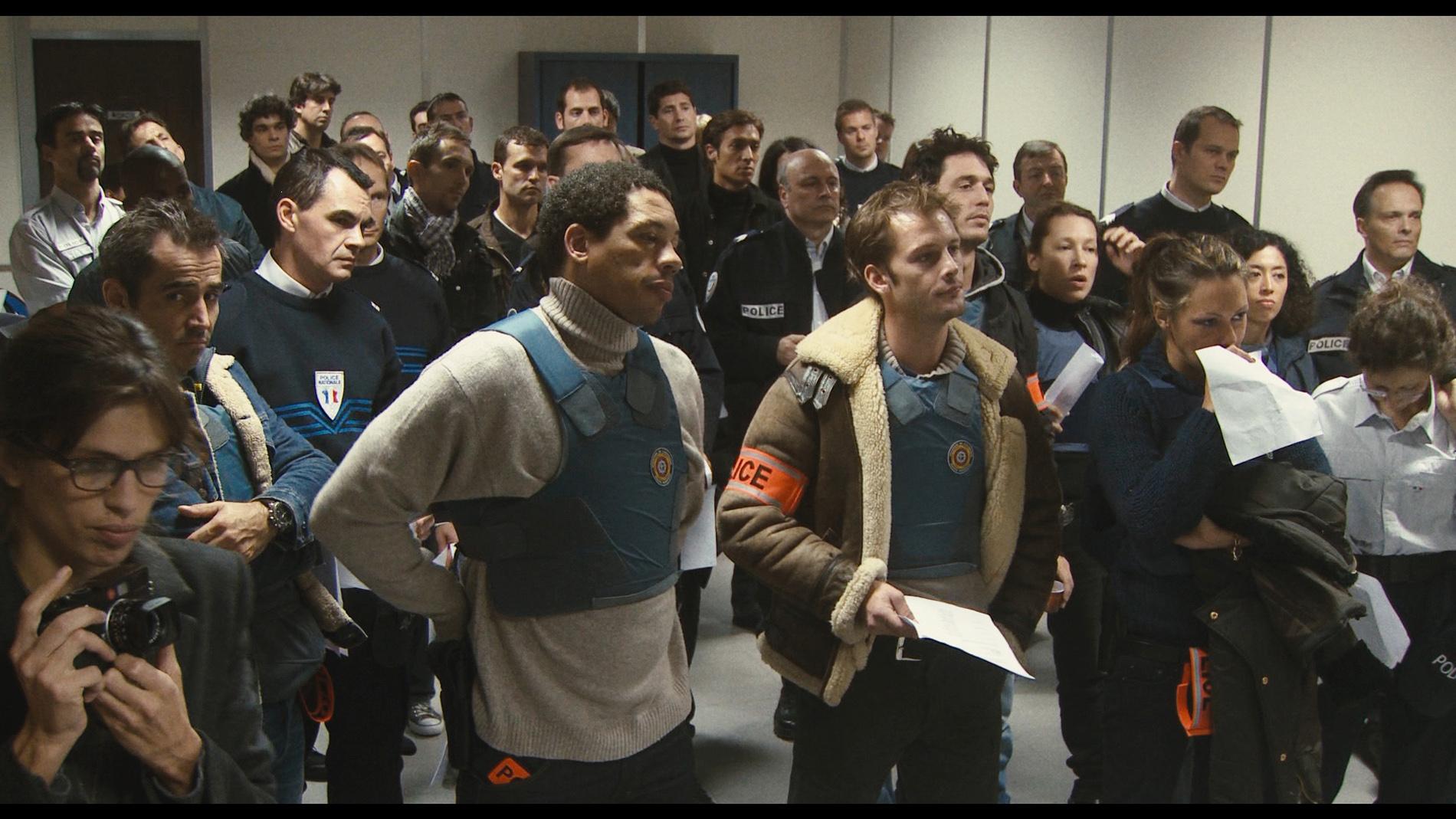
Polisse (Maïwenn, France, 2011) Comparisons to The Wire are not to be tossed around lightly, but when the Hollywood Reporter likened Polisse to an entire season of the masterpiece cop show packed into a single film, it was onto something. Director, co-writer, and star Maïwenn (the object of desire in 2003’s High Tension) hung out with real officers serving in Paris’ Child Protection Unit, drawing inspiration from their dealings with pedophiles, young rape victims, negligent mothers, pint-sized pickpockets, and the like (another TV show worth mentioning in comparison: Law & Order: SVU). But Polisse (the title is deliberately misspelled, as if by a child) is no simple procedural; it plunges the viewer directly into the day-to-day lives of its boisterous characters, who are juggling not just stressful careers but also plenty of after-hours troubles, particularly relationship issues. Between heartwrenching moments on the job (and off), the unit indulges in massive cut-loose episodes of what amounts to group therapy: charades, dance parties, and room-clearing arguments, most of which involve huge quantities of booze. Watching Polisse is a messy, emotional, rewarding experience; no wonder it picked up the Jury Prize at the 2011 Cannes Film Festival. Wed/25, 6pm; Thu/26, 3pm, FSC. (Cheryl Eddy)

Last Screening (Laurent Achard, France, 2011) A bit of an odd duck, 30-ish, nondescript Sylvain (Pascal Cervo) is in denial over the imminent closure of the small French repertory cinema he’s operated and lived in for years. But that’s hardly his most alarming mental hang-up: in his spare time he frequently goes around stalking and killing random women for a grisly purpose that has to do (of course) with his dear, departed, thoroughly demented mother. The only horror item in this year’s slim SFIFF “Late Show” section, Laurent Achard’s pulseless genre homage tips hat to 1960’s Peeping Tom and other, less obvious cineastic objets d’amour — most conspicuously, Renoir’s 1954 French Can Can, which is playing at Sylvain’s theater — but doesn’t seem interested in suspense, or psychology, or even style. It’s coldly unpleasant yet dull. Wed/25, 9:30pm, FSC. Sat/28, 10pm, Kabuki. (Dennis Harvey)


THU/26
Rebellion
(Mathieu Kassovitz, France, 2011) The latest polemical film from the director of La Haine (1995) presents National Gendarmerie Intervention Group Captain Philippe Lejorus’ account of his experiences during the 1988 New Caledonia hostage crisis. It’s an election year in France, so all bets are off as to how the unfortunate fiasco will resolve. Striking camerawork distinguishes this tense, morally complex drama, which features Kassovitz as Lejorus, a humane negotiator in the midst of a politically charged battle for hearts, minds, and civil rights. The film is edited to embody its political context, with distancing effects such as voiceover and suddenly reframed shots that emphasize the two sides of a disagreement. Thu/26, 6pm; Tue/1, 9:45pm; May 3, 4:30pm, Kabuki. (Sam Stander)

Crulic — The Path to Beyond (Anca Damian, Romania/Poland/France, 2011) As the graphic novel has made the comic book into an adult art form, so recently the animated feature has increasingly matured toward diverse, weighty, mature themes. Anca Damian’s film is the autobiography of one Claudiu Crulic (excellently voiced by Vlad Ivanov), a Romanian Everyman who recounts his luckless life from the grave. He grows up motherless, shunted around, drifting through jobs, finally scoring halfway decent employment and a girlfriend as a guest worker in Poland. Then he’s arrested for a crime he didn’t commit. Fed up after being kicked like a dog his whole life, he commences a hunger strike for justice. And at that point the hitherto delightfully droll collage of numerous low-tech animation techniques begins to drag a bit, because Damian’s style is too impish to support tragedy, let alone a dirge-like portrait of physical deterioration á la Hunger (2008). But still, this is an impressive stretch of the medium. Thu/26, 6:30pm, PFA. Sun/29, 12:30pm; May 2, 6:16pm, Kabuki. (Harvey)

Unfair World (Filippos Tsitos, Greece/Germany, 2011) Veteran Turkish-Greek actor Antonis Kafetzopoulos stars in this deadpan crime drama about a gullible, alcoholic police officer who falls for a duplicitous cleaning lady after a plan to prove a suspect’s innocence goes horribly awry. While the film quickly establishes a nice black-comic momentum — cop first encounters cleaner while intentionally tripping a security guard chasing her for shoplifting — a muddled storyline and glacial pace soon saps it of any vigor. What could have been a beguiling exercise in absurdity becomes a leaden misfit-character study. Still, the misfits are at least interesting: with his heavy-lidded, hangdog sadness, Kafetzopoulos is a sort of Greek Philip Baker Hall (a good thing), and it’s hard to wholly dislike a movie featuring such bon mots as “I shit on your dreams!” Thu/26, 6:30pm; Sat/28, 6:15pm, Kabuki. Sun/29, 8:15pm, PFA. (Michelle Devereaux)


FRI/27
Where Do We Go Now?
(Nadine Labaki, France/Lebanon/Egypt/Italy, 2011) With very real, deadly sectarian conflict on their doorstep, a group of Lebanese village women are making it up as they go along in this absurdist, ultimately inspiring dramedy with a dash of musical. Once sheltered by its isolation and the cheek-to-jowl intimacy of its denizens, the uneasy peace between Muslims and Christians in this small town threatens to shatter when the outside world begins to filter in, first through town-square TV broadcasts then tit-for-tat jabs that appear ready to escalate into violence. So the village’s women conspire to preserve harmony any way they can, even if that means importing a motley cadre of Ukrainian “exotic” dancers. What results is a postdebauchery climax that almost one-ups 2009’s The Hangover — and a film that injects ground-level merriment and humanity into the headlines, thanks to director, cowriter, and star Nadine Labaki (2007’s Caramel), who has a gimlet eye and a generous spirit. Fri/27, 6:45pm, Kabuki; Mon/30, 3:15pm, Kabuki. (Kimberly Chun)

Pierre Rissient: Man of Cinema (Todd McCarthy, U.S., 2007) Legendary French film publicist, programmer, director, and movie junkie Pierre Rissient gets his own filmic homage in this documentary from Hollywood Reporter critic Todd McCarthy (1992’s Visions of Light). Rissient, who will receive the Mel Novikoff Award at this year’s festival, is certainly a character — the round-faced septuagenarian oozes a puppy-dog cuddliness cut with a formidable intellect and a hint of tart, old-man pervy-ness. But this collection of talking heads interspersed with classic film clips is unfortunately a bit of a snooze. Considering said talking heads include cinematic firebrands like Werner Herzog and the late Claude Chabrol, and with a character passionate as Rissient at its center, that’s surprising. “No one in the world of cinema can tell you what he does,” Chabrol remarks. After watching the film you probably won’t be able to figure it out either. Fri/27, 4pm, FSC. Mon/30, 6:30pm, PFA. (Devereaux)

Patience (After Sebald) (Grant Gee, England, 2011) Grant Gee has compiled a meditation on a meditation — subtitled “A walk through The Rings of Saturn,” his documentary is an extension, if not exactly an adaptation, of the genre-defying travel narrative by the late German author W.G. Sebald. Writers and scholars expound on their particular love for the novel and its author, and the imagery featured on screen frequently echoes the startlingly spare photographs that litter its pages. The approach seems to align with the Chris Marker-esque investigative methods of its subject, traversing networks between fact and fiction, memory and the modern world. This book, as with any beloved artwork, means many things to many people, but Gee manages to capture the peculiar appeal of Rings, even if all it really leaves you with is an intense desire to read or reread the book. Fri/27, 6:30pm, PFA. Sat/28, 6:30pm, FSC. Tue/1, 9:30pm, Kabuki. (Stander)


SAT/28
Somebody Up There Likes Me
(Bob Byington, U.S., 2012) A textbook illustration of what’s so frequently right and wrong with Amerindie comedies today, Bob Byington’s feature starts out near-brilliantly in a familiar, heightened Napoleon Dynamite-type milieu of ostensibly normal people as self-absorbed, socially hapless satellites revolving around an existential hole at the center in the universe. The three main ones meet working at a suburban steakhouse: Emotionally nerve-deadened youth Max (Keith Poulson), the even more crassly insensitive Sal (Nick Offerman), and nice but still weird Lyla (Teeth‘s estimable Jess Weixler). All is well until the film starts skipping ahead five years at a time, growing more smugly misanthropic and pointless as time and some drastic shifts in fortune do nothing to change (or deepen) the characters. Still, the performers are intermittently hilarious throughout. Sat/28, 6:45pm, Kabuki. Sun/29, 9:15pm, FSC. Tue/1, 6:15pm, Kabuki. (Harvey)


SUN/29
Policeman (Nadav Lapid, Israel, 2011) This diptych-structured provocation explores two subsets of Jewish Israeli society — the macho nationalism of a group of police who are also dedicated family men, and the aspirations of a cadre of privileged young revolutionaries who seek to overthrow the Israeli state they see as oppressive. Neither set is particularly likeable, so the political implications of the film are somewhat ambiguous, though still entirely unsettling; the Israel-Palestine issue is a huge neon elephant in the room, occasionally acknowledged but never looked at directly. Certain moments of sudden symbolically rich violence will (and already have, in Cinema Scope) invite comparisons to Haneke, though the overall tone is something different. This is a character-driven film, and despite the unpleasantness of the personalities, the cast is uniformly stellar. Sun/29, 9pm, Kabuki. May 2, 3:45pm; May 3, 8:15pm, FSC. (Stander)


MON/30
Chicken With Plums (Vincent Paronnaud and Marjane Satrapi, France/Germany/Belgium, 2011) Steeped in whimsy — and a longing for love, beauty, and home — this latest effort from brilliant Persian-French cartoonist-filmmaker Marjane Satrapi and director Vincent Paronnaud flaunts the odd contours of its eccentric narrative, enchants with its imaginative tangents, sprawls like an unincapsulated life, and then takes off on aching, campy romantic reverie—a magical realistic vision of one Iranian artist’s doomed trajectory. Master violinist Nasser Ali Khan (Mathieu Amalric) is seeking the ineffable — a replacement for his destroyed instrument — and otherwise he’s determined to die. We trace the mystery of his passing, backward, with wanders through the life of his family and loved one along the way in this playful, bittersweet feast. Despite Amalric’s glazed-eyed mugging, which almost spoils the dish, Satrapi’s wonderfully arch yet lyrical visual sensibility and resonant characters — embodied by Maria de Medeiros, Jamel Debbouze, Golshifteh Farahani, and Isabella Rossellini, among others — satisfy, serving up so much more than chicken with plums. Mon/30, 6:15pm; May 2, 12:30pm, Kabuki. (Chun)


TUE/1
Hysteria (Tanya Wexler, U.S./England, 2011) Tanya Wexler’s period romantic comedy gleefully depicts the genesis of the world’s most popular sex toy out of the inchoate murk of Victorian quackishness. In this dulcet version of events, real-life vibrator inventor Mortimer Granville (Hugh Dancy) is a handsome young London doctor with such progressive convictions as a belief in the existence of germs. He is, however, a man of his times and thus swallows unblinking the umbrella diagnosis of women with symptoms like anxiety, frustration, and restlessness as victims of a plague-like uterine disorder known as hysteria. Landing a job in the high-end practice of Dr. Robert Dalrymple (Jonathan Pryce), whose clientele consists entirely of dissatisfied housewives seeking treatments of “medicinal massage” and subsequent “parosysm,” Granville becomes acquainted with Dalrymple’s two daughters, the decorous Emily (Felicity Jones) and the first-wave feminist Charlotte (Maggie Gyllenhaal). A subsequent bout of RSI offers empirical evidence for the adage about necessity being the mother of invention, with the ever-underused Rupert Everett playing Edmund St. John-Smythe, Granville’s aristocratic friend and partner in electrical engineering. Tue/1, 9:30pm, Kabuki. May 3, 6pm, FSC. (Rapoport)


MAY 3 (Closing Night)

Don’t Stop Believin’: Everyman’s Journey (Ramona S. Diaz, U.S.) The director of 2003’s Imelda returns with this portrait of a way more sympathetic Filipino celebrity: Arnel Pineda, plucked from obscurity via YouTube after Journey’s Neil Schon spotted him singing with a Manila-based cover band. Don’t Stop Believin’ follows Pineda, who openly admits past struggles with homelessness and addiction, from audition to 20,000-seat arena success as Journey’s charismatic new front man (he faces insta-success with an endearing combination of nervousness and fanboy thrill). He’s also honest about feeling homesick, and the pressures that come with replacing one of the most famous voices in rock (Steve Perry doesn’t appear in the film, other than in vintage footage). Especially fun to see is how Pineda invigorates the rest of Journey; as the tour progresses, all involved — even the band’s veteran members, who’ve no doubt played “Open Arms” ten million times — radiate with excitement. May 3, 7pm, Castro. (Eddy)

For your further consideration

0

More reviews of films playing during the San Francisco Internation Film Festival. For more SFIFF coverage, click here.

WED/25

Last Screening (Laurent Achard, France, 2011) A bit of an odd duck, 30-ish, nondescript Sylvain (Pascal Cervo) is in denial over the imminent closure of the small French repertory cinema he’s operated and lived in for years. But that’s hardly his most alarming mental hang-up: in his spare time he frequently goes around stalking and killing random women for a grisly purpose that has to do (of course) with his dear, departed, thoroughly demented mother. The only horror item in this year’s slim SFIFF “Late Show” section, Laurent Achard’s pulseless genre homage tips hat to 1960’s Peeping Tom and other, less obvious cineastic objets d’amour — most conspicuously, Renoir’s 1954 French Can Can, which is playing at Sylvain’s theater — but doesn’t seem interested in suspense, or psychology, or even style. It’s coldly unpleasant yet dull. Wed/25, 9:30pm, FSC. Sat/28, 10pm, Kabuki. (Dennis Harvey)


THU/26

Rebellion (Mathieu Kassovitz, France, 2011) The latest polemical film from the director of La Haine (1995) presents National Gendarmerie Intervention Group Captain Philippe Lejorus’ account of his experiences during the 1988 New Caledonia hostage crisis. It’s an election year in France, so all bets are off as to how the unfortunate fiasco will resolve. Striking camerawork distinguishes this tense, morally complex drama, which features Kassovitz as Lejorus, a humane negotiator in the midst of a politically charged battle for hearts, minds, and civil rights. The film is edited to embody its political context, with distancing effects such as voiceover and suddenly reframed shots that emphasize the two sides of a disagreement. Thu/26, 6pm; Tue/1, 9:45pm; May 3, 4:30pm, Kabuki. (Sam Stander)


FRI/27

Pierre Rissient: Man of Cinema (Todd McCarthy, U.S., 2007) Legendary French film publicist, programmer, director, and movie junkie Pierre Rissient gets his own filmic homage in this documentary from Hollywood Reporter critic Todd McCarthy (1992’s Visions of Light). Rissient, who will receive the Mel Novikoff Award at this year’s festival, is certainly a character — the round-faced septuagenarian oozes a puppy-dog cuddliness cut with a formidable intellect and a hint of tart, old-man pervy-ness. But this collection of talking heads interspersed with classic film clips is unfortunately a bit of a snooze. Considering said talking heads include cinematic firebrands like Werner Herzog and the late Claude Chabrol, and with a character passionate as Rissient at its center, that’s surprising. “No one in the world of cinema can tell you what he does,” Chabrol remarks. After watching the film you probably won’t be able to figure it out either. Fri/27, 4pm, FSC. Mon/30, 6:30pm, PFA. (Michelle Devereaux)


SAT/28

Somebody Up There Likes Me (Bob Byington, U.S., 2012) A textbook illustration of what’s so frequently right and wrong with Amerindie comedies today, Bob Byington’s feature starts out near-brilliantly in a familiar, heightened Napoleon Dynamite-type milieu of ostensibly normal people as self-absorbed, socially hapless satellites revolving around an existential hole at the center in the universe. The three main ones meet working at a suburban steakhouse: Emotionally nerve-deadened youth Max (Keith Poulson), the even more crassly insensitive Sal (Nick Offerman), and nice but still weird Lyla (Teeth‘s estimable Jess Weixler). All is well until the film starts skipping ahead five years at a time, growing more smugly misanthropic and pointless as time and some drastic shifts in fortune do nothing to change (or deepen) the characters. Still, the performers are intermittently hilarious throughout. Sat/28, 6:45pm, Kabuki. Sun/29, 9:15pm, FSC. Tue/1, 6:15pm, Kabuki. (Harvey)


TUE/1

Hysteria (Tanya Wexler, U.S./England, 2011) Tanya Wexler’s period romantic comedy gleefully depicts the genesis of the world’s most popular sex toy out of the inchoate murk of Victorian quackishness. In this dulcet version of events, real-life vibrator inventor Mortimer Granville (Hugh Dancy) is a handsome young London doctor with such progressive convictions as a belief in the existence of germs. He is, however, a man of his times and thus swallows unblinking the umbrella diagnosis of women with symptoms like anxiety, frustration, and restlessness as victims of a plague-like uterine disorder known as hysteria. Landing a job in the high-end practice of Dr. Robert Dalrymple (Jonathan Pryce), whose clientele consists entirely of dissatisfied housewives seeking treatments of “medicinal massage” and subsequent “parosysm,” Granville becomes acquainted with Dalrymple’s two daughters, the decorous Emily (Felicity Jones) and the first-wave feminist Charlotte (Maggie Gyllenhaal). A subsequent bout of RSI offers empirical evidence for the adage about necessity being the mother of invention, with the ever-underused Rupert Everett playing Edmund St. John-Smythe, Granville’s aristocratic friend and partner in electrical engineering. Tue/1, 9:30pm, Kabuki. May 3, 6pm, FSC. (Lynn Rapoport)


MAY 3

Don’t Stop Believin’: Everyman’s Journey (Ramona S. Diaz, U.S.) The director of 2003’s Imelda returns with this portrait of a way more sympathetic Filipino celebrity: Arnel Pineda, plucked from obscurity via YouTube after Journey’s Neil Schon spotted him singing with a Manila-based cover band. Don’t Stop Believin‘ follows Pineda, who openly admits past struggles with homelessness and addiction, from audition to 20,000-seat arena success as Journey’s charismatic new front man (he faces insta-success with an endearing combination of nervousness and fanboy thrill). He’s also honest about feeling homesick, and the pressures that come with replacing one of the most famous voices in rock (Steve Perry doesn’t appear in the film, other than in vintage footage). Especially fun to see is how Pineda invigorates the rest of Journey; as the tour progresses, all involved — even the band’s veteran members, who’ve no doubt played “Open Arms” ten million times — radiate with excitement. Thu/3, 7pm, Castro. (Cheryl Eddy)

The San Francisco International Film Festival runs through May 3; most shows $13. Venues: Castro Theatre, 429 Castro, SF; Pacific Film Archive, 2575 Bancroft, Berk.; SF Film Society Cinema, 1746 Post, SF; and Sundance Kabuki Cinema, 1881 Post, SF. More info at www.sffs.org.

Letters from Hole guitarist Eric Erlandson

0

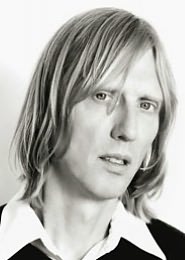
As the guitarist for Hole, Eric Erlandson was at the center of the alternative rock explosion of the early 1990s, a member of one of the most popular and controversial bands of the time, and a friend and confidant to one of the scene’s most influential players, Nirvana’s Kurt Cobain. With the 18th anniversaries of both the suicide of Cobain and the release of Hole’s hit record Live Through This passing this month, Erlandson has just released his first book, Letters To Kurt (Akashic Books) a touching and enlightening collection of prose poems addressed to his departed friend.

During a phone conversation from Los Angeles, Erlandson — who will be appearing at several events in the Bay Area this week — touched on the creative and cathartic process of writing the book, the release of Hit So Hard, a documentary about Hole drummer Patty Schemel, an impromptu on-stage reunion with Courtney Love, and the recent news stories about a supposed Kurt Cobain solo album.

SFBG: Your book “Letters To Kurt” is not your standard rock n’ roll memoir — what was the impetus for going the route that you did?

Eric Erlandson: When I was writing it, I was doubting it and resisting it the whole way through, now when I’m presenting it, I’m still unsure; ‘Is anybody going to get this?’ It is a strange book, it’s not your normal memoir, it’s disturbing to read for me still, so it’s weird to be talking about it in public and reading from it.

I was inspired by Jim Harrison’s book Letters To Yesenin, I started a process in my journal writing out my own letters to people, and then once I let go of my hesitation of using Kurt, the first letter in the book was what came out, and the voice was strong, powerful, and different than anything I’d ever written.

I just kept going with it — when you start writing about the past, the past starts to come back into your life and affect you, and that’s what happened until I got to that 52 number. I thought it felt right, it’s resolved, it’s complete — as much is it can be complete, at this point.

Bringing the issue of suicide on the table, and keeping that as part of it — that’s the bigger picture, it’s not just a book about my views on life, or my relationships, or my ramblings, it’s trying to connect to the universal, that they’re all connected, and that suicide is something that affects us all.

SFBG: The documentary “Hit So Hard” is also getting a wide release this month, and you’ve been appearing at screenings with Patty Schemel — what has it been like seeing your old bandmates again?

EE: Patty’s movie just happens to come out the same time as my book, it wasn’t planned — it was her journey and then my journey. With the fact that they are both being released to the public at the same time, I started to try to put them together at some events.

Patty, Melissa [Auf der Maur] and I played at an event, and from that, it felt so good, it felt like we were back in 1992 in a basement in Seattle playing covers. It just felt really fun, we were free to do whatever we wanted to do, there was no pressure, there was no machine, no business behind us pushing us to do anything, so that was really kind of a liberating experience for us.

We then did another performance for the Hit So Hard premiere in New York, and of course, Courtney lives in New York, and got wind of it, showed up, and it was spontaneous.

If you face the past, if you stop shoving it under the rug, and you start thinking more about what’s happening to your relationships, then you’re able to resolve them, or experiences will happen that will force you to resolve them—or will give you an opportunity to do so at least.

I’m hoping that is where things will go; it can be a positive by-product of the book that I hadn’t even expected.

SFBG: You’ve been away from the mainstream music scene for quite awhile—can fans expect any new music from you in the future?

EE: I’m planning on doing a soundtrack to the book, I just ran out of time, I couldn’t get it out at the same time as the book, but I plan to get it out this year.
That should be really fun, to go back and use all my musical influences and not have it be tied to a band project.

SFBG: There was a flurry of news articles in the last couple of weeks quoting you as saying that Kurt Cobain had recorded a solo album before he died, his “White Album”— were those comments taken out of context?

EE: It was definitely taken out of context, misquoted, and misinterpreted. I think that Courtney had mentioned in like 1995 or 1996, that there was some sort of White Album — or somebody did, I remember hearing it, it’s nothing new to me.

I think the writer chose to present that in a way that there was some hidden gem, or secret being revealed, but there is no secret being revealed, it was me speculating on what I had heard—which is what many people have heard, which is [the song ] “Do Re Mi.” It just had a different mood to it. I was speculating that that’s probably where he was headed, and said something about that White Album comment that somebody had made in the ‘90s — but I was tying it into the topic of suicide, and that’s the thing that he didn’t present in his interview.

I was saying that when someone commits suicide — and I’m not criticizing someone that feels suicidal — by going into that tunnel, and suffering in that way, once you choose to take that huge act of taking your own life, you’re affecting everybody’s lives. This is nothing new, and we all know this, but I was bringing it back to music; by taking your own life, by self-destructing using drugs, by checking out, then you’re taking your gifts away from the world.

I’m not dropping anything that world doesn’t already know. I never claimed that he was making a solo album; I was speculating that if he had continued, he might have made a solo album.

In Kurt’s case, who knows where that music would have gone.

Wed/25, 7:30pm, free
Moe’s Books
2476 Telegraph, Berk.
(510) 849-2087
www.moesbooks.com

Thu/26, 7pm,free
City Lights Bookstore
261 Columbus Ave., SF
(415) 362-8193
www.citylights.com

Fri/27-Sat/28, 7:15 and 9:30pm, $10
Roxie Theater
3117 16th St., SF
(415) 863-1087
www.roxie.com

Something to chew on

1

caitlin@sfbg.com

FOOD Veganism isn’t just for rich people. It’s okay to care about what you eat. It doesn’t diminish your commitment to social issues — in fact, it is one.

He just wrote a cookbook that I love, but in his modest home in hills above Fruitvale, food activist and vegan chef Bryant Terry is telling me about class struggle.

“So often, I think that the stories that are told are from young, privileged white kids,” says Terry.

He’s not a young white kid, but he is the epitome of health. Terry’s clean house smells like incense and when I rolled up to the front yard he was gardening in cargo shorts in raised beds of greens. He tells me his beds started a trend — indeed, many of the houses on the block now have a similar vegetal presence.

“Part of my goal is to shed light on other communities that haven’t had much of a voice,” he tells me. If broadening the appeal of healthful cooking is Terry’s goal, then his new book The Inspired Vegan (Da Capo Lifelong Books, 240 pp, $19) is a step in the right direction. Each chapter holds a complete menu with a social justice-related theme. Informative introductions teach about the plant-based, whole food recipes, but the most exciting features are complimentary play lists and reading suggestions that go along with each chapter’s theme. The Inspired Vegan advises you on a lifestyle, not just a shopping list.

Weeks after meeting Terry, I helped host a dinner through the Urban Eating League, a social sustainability project started within the folds of the hyper-educated, environmentally-geared Wigg Party group in the Western Addition. Hosts serve locally-harvested meals, and choose themes to help eaters remember them when it comes time to vote on winners of various honors.

We decided to base the dinner around Terry’s suggestion, his “Detroit Harvest” menu. The recipes pulled their flavor cues from the work of a Motor City nonprofit, Detroit Summer, which started connecting high school students with senior citizens in the early 1990s, young helping old grow produce in their gardens.

My co-hosts and I played the recommended tracks during our meal: Detroit classics like J Dilla, Motown sounds, Aaliyah (yeah, she’s from there). We chatted with the other participants about where they learned about sustainable food systems, what they thought needed to be done to strengthen the good food movement. Few mentioned poor and minority families, but all staunchly believed that the way we eat today will play a big role in what our future will look like tomorrow.

Terry learned about food from his family, from a grandpa whose rows covered a sideyard so large that Terry is reluctant to call it a garden — maybe farm would be a better term for it. He learned early on that growing food could be the basis of independence for African Americans. “Once they decide to stop feeding you, you’re going to starve,” he says simply. He quibbles with the definition of food deserts, saying oftentimes they overlook the DIY kitchen gardening tradition in minority communities.

After going to cooking school “with the express goals of starting a project to help young people,” Terry started b-healthy!, a New York City program that taught kids in poor neighborhoods about healthy eating habits. He counts Edible Schoolyard founder and Chez Panisse icon Alice Waters as a role model. Like Waters, he’s become a national figure, drawing decent crowds across the country to events.

Terry is a realist — he doesn’t believe that everybody needs to be vegan, or a raw foodist, or follow any one nutritional track necessarily. “I’m not that guy. This is someone who understands that we have diverse nutrition needs. To just say that fixing food is going to help resolve issues in these communities — it’s not looking at the bigger picture. If we do have access to healthful foods, that would address a lot of other issues, but we can’t look at food to fix everything.”

It’s not like those raised beds in the front yard are going to save the world. But as far as the sustainable food movement goes, it could do worse than have a mind like Terry’s at its forefront.

Guardian endorsements for June 5 election

34

>>OUR ONE-PAGE “CLEAN SLATE” PRINTOUT GUIDE IS HERE. 

As usual, California is irrelevant to the presidential primaries, except as a cash machine. The Republican Party has long since chosen its nominee; the Democratic outcome was never in doubt. So the state holds a June 5 primary that, on a national level, matters to nobody.

It’s no surprise that pundits expect turnout will be abysmally low. Except in the few Congressional districts where a high-profile primary is underway, there’s almost no news media coverage of the election.

But that doesn’t mean there aren’t some important races and issues (including the future of San Francisco’s Democratic Party) — and the lower the turnout, the more likely the outcome will lean conservative. The ballot isn’t long; it only takes a few minutes to vote. Don’t stay home June 5.

Our recommendations follow.

PRESIDENT

BARACK OBAMA

Sigh. Remember the hope? Remember the joy? Remember the dancing in the streets of the Mission as a happy city realized that the era of George Bush and The Gang was over? Remember the end of the war, and health-care reform, and fair economic policies?

Yeah, we remember, too. And we remember coming back to our senses when we realized that the first people at the table for the health-policy talks were the insurance industry lobbyists. And when more and more drones killed more and more civilian in Afghanistan, and the wars didn’t end and the country got deeper and deeper into debt.

Oh, and when Obama bailed out Wall Street — and refused to spend enough money to help the rest of us. And when his U.S. attorney decided to crack down on medical marijuana.

We could go on.

There’s no question: The first term of President Barack Obama has been a deep disappointment. And while we wish that his new pledge to tax the millionaires represented a change in outlook, the reality is that it’s most likely an election-year response to the popularity of the Occupy movement.

Last fall, when a few of the most progressive Democrats began talking about the need to challenge Obama in a primary, we had the same quick emotional reaction as many San Franciscans: Time to hold the guy accountable. Some prominent left types have vowed not to give money to the Obama campaign.

But let’s get back to reality. The last time a liberal group challenged an incumbent in a Democratic presidential primary, Senator Ted Kennedy wounded President Jimmy Carter enough to ensure the election of Ronald Reagan — and the begin of the horrible decline in the economy of the United States. We’re mad at Obama, too — but we’re realists enough to know that there is a difference between moderate and terrible, and that’s the choice we’re facing today.

The Republican Party is now entirely the party of the far right, so out of touch with reality that even Reagan would be shunned as too liberal. Mitt Romney, once the relatively centrist governor of Massachusetts, has been driven by Newt Gingrich and Rick Santorum so deeply into crazyland that he’s never coming back. We appreciate Ron Paul’s attacks on military spending and the war on drugs, but he also opposes Medicare and Social Security and says that people who don’t have private health insurance should be allowed to die for lack of medical care.

No, this one’s easy. Obama has no opposition in the Democratic Primary, but for all our concerns about his policies, we have to start supporting his re-election now.

U.S. SENATE

DIANNE FEINSTEIN

The Republicans in Washington didn’t even bother to field a serious candidate against the immensely well-funded Feinstein, who is seeking a fourth term. She’s a moderate Democrat, at best, was weak-to-terrible on the war, is hawkish on Pentagon spending (particularly Star Wars and the B-1 bomber), has supported more North Coast logging, and attempts to meddle in local politics with ridiculous ideas like promoting unknown Michael Breyer for District Five supervisor. She supported the Obama health-care bill but isn’t a fan of single-payer, referring to supporters of Medicare for all as “the far left.”

But she’s strong on choice and is embarrassing the GOP with her push for reauthorization of an expanded Violence Against Women Act. She’ll win handily against two token Republicans.

U.S. CONGRESS, DISTRICT 2

NORMAN SOLOMON

The Second District is a sprawling region stretching from the Oregon border to the Golden Gate Bridge, from the coast in as far as Trinity County. It’s home to the Marin suburbs, Sonoma and Mendocino wine country, the rough and rural Del Norte and the emerald triangle. There’s little doubt that a Democrat will represent the overwhelmingly liberal area that was for almost three decades the province of Lynn Woolsey, one of the most progressive members in Congress. The top two contenders are Norman Solomon, an author, columnist and media advocate, and Jared Huffman, a moderate member of the state Assembly from Marin.

Solomon’s not just a decent candidate — he represents a new approach to politics. He’s an antiwar crusader, journalist, and outsider who has never held elective office — but knows more about the (often corrupt) workings of Washington and the policy issues facing the nation than many Beltway experts. He’s talking about taxing Wall Street to create jobs on Main Street, about downsizing the Pentagon and promoting universal health care. He’s a worthy successor to Woolsey, and he deserves the support of every independent and progressive voter in the district.

U.S. CONGRESS, DISTRICT 12

NANCY PELOSI

Nancy Pelosi long ago stopped representing San Francisco (see: same-sex marriage) and began representing the national Democratic party and her colleagues in the House. She will never live down the privatization of the Presidio or her early support for the Iraq war, but she’s become a decent ally for Obama and if the Democrats retake the House, she’ll be setting the agenda for his second term. If the GOP stays in control, this may well be her last term.

Green Party member Barry Hermanson is challenging her, and in the old system, he’d be on the November ballot as the Green candidate. With open primaries (which are a bad idea for a lot of reasons) Hermanson needs support to finish second and keep Pelosi on her toes as we head into the fall.

U.S. CONGRESS, DISTRICT 12

BARBARA LEE

This Berkeley and Oakland district is among the most left-leaning in the country, and its representative, Barbara Lee, is well suited to the job. Unlike Pelosi, Lee speaks for the voters of her district; she was the lone voice against the Middle East wars in the early days, and remains a staunch critic of these costly, bloody, open-ended foreign military entanglements. We’re happy to endorse her for another term.

U.S. CONGRESS, DISTRICT 13

JACKIE SPEIER

Speier’s more of a Peninsula moderate than a San Francisco progressive, but she’s been strong on consumer privacy and veterans issues and has taken the lead on tightening federal rules on gas pipelines after Pacific Gas and Electric Company killed eight of her constituents. She has no credible opposition.

STATE SENATE, DISTRICT 11

MARK LENO

Mark Leno started his political career as a moderate member of the Board of Supervisors from 1998 to 2002. His high-profile legislative races — against Harry Britt for the Assembly in 2002 and against Carole Migden for the Senate in 2008 — were some of the most bitterly contested in recent history. And we often disagree with his election time endorsements, which tend toward more downtown-friendly candidates.

But Leno has won us over, time and again, with his bold progressive leadership in Sacramento and with his trailblazing approach to public policy. He is an inspiring leader who has consistently made us proud during his time in the Legislature. Leno was an early leader on the same-sex marriage issue, twice getting the Legislature to legalize same-sex unions (vetoed both times by former Gov. Arnold Schwarzenegger). He has consistently supported a single-payer health care system and laid important groundwork that could eventually break the grip that insurance companies have on our health care system. And he has been a staunch defender of the medical marijuana patients and has repeatedly pushed to overturn the ban on industrial hemp production, work that could lead to an important new industry and further relaxation of this country wasteful war on drugs. We’re happy to endorse him for another term.

STATE ASSEMBLY, DISTRICT 17

TOM AMMIANO

Ammiano is a legendary San Francisco politician with solid progressive values, unmatched courage and integrity, and a history of diligently and diplomatically working through tough issues to create ground-breaking legislation. We not only offer him our most enthusiastic endorsement — we wish that we could clone him and run him for a variety of public offices. Since his early days as an ally of Harvey Milk on gay rights issues to his creation of San Francisco’s universal health care system as a supervisor to his latest efforts to defend the rights of medical marijuana users, prison inmates, and undocumented immigrants, Ammiano has been a tireless advocate for those who lack political and economic power. As chair of Assembly Public Safety Committee, Ammiano has blocked many of the most reactionary tough-on-crime measures that have pushed our prison system to the breaking point, creating a more enlightened approach to criminal justice issues. We’re happy to have Ammiano expressing San Francisco’s values in the Capitol.

STATE ASSEMBLY, DISTRICT 19

PHIL TING

Once it became abundantly clear that Assessor-Recorder Phil Ting wasn’t going to get elected mayor, he started to set his eyes on the state Assembly. It’s an unusual choice in some ways — Ting makes a nice salary in a job that he’s doing well and that’s essentially his for life. Why would he want to make half as much money up in Sacramento in a job that he’ll be forced by term limits to leave after six years?

Ting’s answer: he’s ready for something new. We fear that a vacancy in his office would allow Mayor Ed Lee to appoint someone with less interest in tax equity (prior to Ting, the city suffered mightily under a string of political appointees in the Assessor’s Office), but we’re pleased to endorse him for the District 19 slot.

Ting has gone beyond the traditional bureaucratic, make-no-waves approach of some of his predecessors. He’s aggressively sought to collect property taxes from big institutions that are trying to escape paying (the Catholic Church, for example) and has taken a lead role in fighting foreclosures. He commissioned, on his own initiative, a report showing that a large percentage of the foreclosures in San Francisco involved some degree of fraud or improper paperwork, and while the district attorney is so far sitting on his hands, other city officials are moving to address the issue.

His big issue is tax reform, and he’s been one the very few assessors in the state to talk openly about the need to replace Prop. 13 with a split-role system that prevents the owners of commercial property from paying an ever-declining share of the tax burden. He wants to change the way the Legislature interprets Prop. 13 to close some of the egregious loopholes. It’s one of the most important issues facing the state, and Ting will arrive in Sacramento already an expert.

Ting’s only (mildly) serious opponent is Michael Breyer, son of Supreme Court Justice Breyer and a newcomer to local politics. Breyer’s only visible support is from the Building Owners and Managers Association, which dislikes Ting’s position on Prop. 13. Vote for Ting.

DEMOCRATIC COUNTY CENTRAL COMMITTEE

You can say a lot of things about Aaron Peskin, the former supervisor and retiring chair of the city’s Democratic Party, but the guy was an organizer. Four years ago, he put together a slate of candidates that wrenched control of the local party from the folks who call themselves “moderates” but who, on critical economic issues, are really better defined as conservative. Since then, the County Central Committee, which sets policy for the local party, has given its powerful endorsement mostly to progressive candidates and has taken progressive stands on almost all the ballot issues.

But the conservatives are fighting back — and with Peskin not seeking another term and a strong slate put together by the mayor’s allies seeking revenge, it’s entirely possible that the left will lose the party this year.

But there’s hope — in part because, as his parting gift, Peskin helped change state law to make the committee better reflect the Democratic voting population of the city. This year, 14 candidates will be elected from the East side of town, and 10 from the West.

We’ve chosen to endorse a full slate in each Assembly district. Although there are some candidates on the slate who aren’t as reliable as we might like, 24 will be elected, and we’re picking the 24 best.

DISTRICT 17 (EAST SIDE)

John Avalos

David Campos

David Chiu

Petra DeJesus

Matt Dorsey

Chris Gembinsky

Gabriel Robert Haaland

Leslie Katz

Rafael Mandelman

Carole Migden

Justin Morgan

Leah Pimentel

Alix Rosenthal

Jamie Rafaela Wolfe


DISTRICT 19 (WEST SIDE)

Mike Alonso

Wendy Aragon

Kevin Bard

Chuck Chan

Kelly Dwyer

Peter Lauterborn

Hene Kelly

Eric Mar

Trevor McNeil

Arlo Hale Smith

State ballot measures

PROPOSITION 28

YES

LEGISLATIVE TERM LIMITS

Let us begin with a stipulation: We have always opposed legislative term limits, at every level of government. Term limits shift power to the executive branch, and, more insidiously, the lobbyists, who know the issues and the processes better than inexperienced legislators. The current system of term limits is a joke — a member of the state Assembly can serve only six years, which is barely enough time to learn the job, much less to handle the immense complexity of the state budget. Short-termers are more likely to seek quick fixes than structural reform. It’s one reason the state Legislatures is such a mess.

Prop. 28 won’t solve the problem entirely, but it’s a reasonable step. The measure would allow a legislator to serve a total of 12 years in office — in either the Assembly, the Senate, or a combination. So an Assembly member could serve six terms, a state Senator three terms. No more serving a stint in one house and then jumping to the other, since the term limits are cumulative, which is imperfect: A lot of members of the Assembly have gone on to notable Senate careers, and that shouldn’t be cut off.

Still, 12 years in the Assembly is enough time to become a professional at the job — and that’s a good thing. We don’t seek part-time brain surgeons and inexperienced airline pilots. Running California is complicated, and there’s nothing wrong with having people around who aren’t constantly learning on the job. Besides, these legislators still have to face elections; the voters can impose their own term limits, at any time.

Most of the good-government groups are supporting Prop. 28. Vote yes.

PROPOSITION 29

YES

CIGARETTE TAX FOR CANCER RESEARCH

Seriously: Can you walk into the ballot box and oppose higher taxes on cigarettes to fund cancer research? Of course not. All of the leading medical groups, cancer-research groups, cancer-treatment groups and smoking-cessation groups in the state support Prop. 29, which was written by the American Cancer Society and the American Heart Association.

We support it, too.

Yes, it’s a regressive tax — most smokers are in the lower-income brackets. Yes, it’s going to create a huge state fund making grants for research, and it will be hard to administer without some issues. But the barrage of ads opposing this are entirely funded by tobacco companies, which are worried about losing customers, particularly kids. A buck a pack may not dissuade adults who really want to smoke, but it’s enough to price a few more teens out of the market — and that’s only good news.

Don’t believe the big-tobacco hype. Vote yes on 29.

San Francisco ballot measures

PROPOSITION A

YES

GARBAGE CONTRACT

A tough one: Recology’s monopoly control over all aspects of San Francisco’s waste disposal system should have been put out to competitive bid a long time ago. That’s the only way for the city to ensure customers are getting the best possible rates and that the company is paying a fair franchise fee to the city. But the solution before us, Proposition A, is badly flawed public policy.

The measure would amend the 1932 ordinance that gave Recology’s predecessor companies — which were bought up and consolidated into a single behemoth corporation — indefinite control over the city’s $220 million waste stream. Residential rates are set by a Rate Board controlled mostly by the mayor, commercial rates are unregulated, and the company doesn’t even have a contract with the city.

Last year, when Recology won the city’s landfill contract — which was put out to bid as the current contract with Waste Management Inc. and its Altamont landfill was expiring — Recology completed its local monopoly. At the time, Budget Analyst Harvey Rose, Sup. David Campos, and other officials and activists called for updating the ordinance and putting the various contracts out to competitive bid.

That effort was stalled and nearly scuttled, at least in part because of the teams of lobbyists Recology hired to put pressure on City Hall, leading activists Tony Kelley and retired Judge Quentin Kopp to write this measure. They deserve credit for taking on the issue when nobody else would and for forcing everyone in the city to wake up and take notice of a scandalous 70-year-old deal.

We freely admit that the measure has some significant flaws that could hurt the city’s trash collection and recycling efforts. It would split waste collection up into five contracts, an inefficient approach that could put more garbage trucks on the roads. No single company could control all five contracts. Each of those contracts would be for just five years, which makes the complicated bidding process far too frequent, costing city resources and hindering the companies’ ability to make long-term infrastructure investments.

It would require Recology to sell its transfer station, potentially moving the waste-sorting facility to Port property along the Bay. Putting the transfer station in public hands makes sense; moving it to the waterfront might not.

On the scale of corrupt monopolies, Recology isn’t Pacific Gas and Electric Co. It’s a worker-owned company and has been willing to work in partnership with the city to create one of the best recycling and waste diversion programs in the country. For better or worse, Recology controls a well-developed waste management infrastructure that this city relies on, functioning almost like a city department.

Still, it’s unacceptable to have a single outfit, however laudatory, control such a massive part of the city’s infrastructure without a competitive bid, a franchise fee, or so much as a contract. In theory, the company could simply stop collecting trash in some parts of the city, and San Francisco could do nothing about it.

As a matter of public policy, Prop. A could have been better written and certainly could, and should, have been discussed with a much-wider group, including labor. As a matter of real politics, it’s a messy proposal that at least raises the critical question: Should Recology have a no-bid, no contract monopoly? The answer to that is no.

Prop. A will almost certainly go down to defeat; Kopp and Kelly are all alone, have no real campaign or committee and just about everyone else in town opposes it. Our endorsement is a matter of principle, a signal that this longtime garbage deal has to end. If Recology will work with the city to come up with a contract and a bid process, then Prop. A will have done its job. If not, something better will be on the ballot in the future.

For now, vote yes on A.

PROPOSITION B

YES

COIT TOWER POLICY

In theory, city department heads ought to be given fair leeway to allocate resources and run their operations. In practice, San Francisco’s Department of Recreation and Parks has been on a privatization spree, looking for ways to sell or rent public open space and facilities as a way to balance an admittedly tight budget. Prop. B seeks to slow that down a bit, by establishing as city policy the premise that Coit Tower shouldn’t be used as a cash cow to host private parties.

The tower is one of the city’s most important landmarks and a link to its radical history — murals painted during the Depression, under the Works Progress Administration, depict local labor struggles. They’re in a bit of disrepair –but that hasn’t stopped Rec-Park from trying to bring in money by renting out the place for high-end events. In fact, the tower has been closed down to the public in the past year to allow wealthy patrons to host private parties. And the city has more of that in mind.

If the mayor and his department heads were acting in good faith to preserve the city’s public spaces — by raising taxes on big business and wealthy individuals to pay for the commons, instead of raising fees on the rest of us to use what our tax dollars have already paid for — this sort of ballot measure wouldn’t be necessary.

As it is, Prop. B is a policy statement, not an ordinance or Charter amendment. It’s written fairly broadly and won’t prevent the occasional private party at Coit Tower or prevent Rec-Park from managing its budget. Vote yes.


Stage Listings

0

Stage listings are compiled by Guardian staff. Performance times may change; call venues to confirm. Reviewers are Robert Avila, Rita Felciano, and Nicole Gluckstern. Submit items for the listings at listings@sfbg.com. For further information on how to submit items for the listings, see Picks.

THEATER

OPENING

Killing My Lobster Chops Down the Family Tree TJT, 470 Florida, SF; www.killingmylobster.com. $10-22. Opens Thu/26, 8pm. Runs Thu-Sat, 8pm (May 12, shows at 7 and 10pm); Sun, 7pm. Through May 13. The sketch comedy troupe performs a new show inspired by contemporary families.

Tenderloin Exit on Taylor, 277 Taylor, SF; (415) 525-1205, www.cuttingball.com. $10-50. Previews Fri/27-Sat/28, 8pm; Sun/29, 5pm. Opens May 3, 7:30pm. Runs Thu, 7:30pm; Fri-Sat, 8pm (also Sat, 2pm); Sun, 5pm. Through May 27. Annie Elias and Cutting Ball Theater artists present a world premiere “documentary theater” piece looking at the people and places in the Cutting Ball Theater’s own ‘hood.

BAY AREA

In Paris Berkeley Repertory Theatre, Roda Theatre, 2015 Addison, Berk; (510) 647-2949, www.berkeleyrep.org. $22.50-125. Opens Wed/25, 8pm. Runs Tue and Thu-Sat, 8pm (also Sat, 2pm); Wed, 7pm; Sun, 2pm. Through May 13. Mikhail Baryshnikov stars in Dmitry Krymov’s romantic new play.

Not Getting Any Younger Marsh Berkeley, 2120 Allston, Berk; (415) 282-3055, www.themarsh.org. $15-50. Opens Fri/27, 8pm. Runs Fri, 8pm; Sat, 5pm. Through May 19. Marga Gomez is back at the Marsh, a couple of too-brief decades after inaugurating the theater’s new stage with her first solo show — an apt setting, in other words, for the writer-performer’s latest monologue, a reflection on the inevitable process of aging for a Latina lesbian comedian and artist who still hangs at Starbucks and can’t be trusted with the details of her own Wikipedia entry. If the thought of someone as perennially irreverent, insouciant, and appealingly immature as Gomez makes you depressed, the show is, strangely enough, the best antidote. Note: review from the show’s 2011 run at the Marsh San Francisco. (Avila)

ONGOING

Act One, Scene Two Phoenix Arts Association Theatre, 414 Mason, Ste 601, SF; www.un-scripted.com. $10-20. Thu-Sat, 8pm. Through May 12. Un-Scripted Theater Company performs the beginning of a new, unfinished play by a local author — and creates an ending on the spot once the script runs out.

*The Aliens SF Playhouse, 533 Sutter, SF; (415) 677-9596, www.sfplayhouse.org. $20-70. Tue-Thu, 7pm; Fri-Sat, 8pm; Sun, 3pm. Through May 5. On the heels of Aurora Theatre’s production of Body Awareness, SF Playhouse introduces local audiences to another of contemporary American playwright Annie Baker’s acclaimed plays, in a finely tailored West Coast premiere directed by Lila Neugebauer. The Aliens unfolds in the days just around July 4, at slacker pace, in the backyard of a Vermont café (lovingly realized to palpable perfection by scenic designer Bill English), daily haunt of scruffy, post-Beat dropouts and sometime band mates Jasper (a secretly brooding but determined Peter O’Connor) and KJ (a charmingly ingenuous yet mischievous Haynes Thigpen). New employee and high school student Evan (a winningly eager and reticent Brian Miskell) is at first desperate to get the interlopers out of the “staff only” backyard but is just lonely enough to be seduced into friendship and wary idolatry by the older males. What unfolds is a small, sweet and unexpected tale of connection and influence, amid today’s alienated dream-sucking American landscape — same as it ever was, if you ask Charles Bukowski or Henry Miller, both points of reference to Jasper and KJ, who borrow Bukowski’s poem The Aliens for one of their many band names. An appropriate name for the alienated, sure, but part of the charm of these characters is just how easy they are to recognize, or how much we can recognize ourselves in them. Delusions of grandeur reside in every coffee house across this wistful, restless land. It’s not just Jasper and KJ who may be going nowhere. A final gesture to the young and awkward but clearly capable Evan suggests, a little ambiguously to be sure, that there’s promise out there yet for some. But more than that: the transaction makes clear by then that there are no fuck-ups, really; not among people with generous and open hearts — never mind how fucked up the country at large. (Avila)

Any Given Day Magic Theatre, Fort Mason Center, Marina at Laguna, SF; www.magictheatre.org. $20-60. Extended run: Wed/25-Sat/28, 8pm (also Sat/28, 2:30pm); Sun/29, 2:30 and 7:30pm. Magic Theatre performs Linda McLean’s Glasgow-set play about modern, urban life.

“Bay One Acts Festival” Boxcar Theatre, 505 Natoma, SF; www.bayoneacts.org. $25-45. Wed-Sat, 8pm (also May 5 and 12, 3pm); Sun, 3 and 7pm. Through May 12. Ten bold and adventurous short plays by local playwrights, performed two full programs running in repertory.

Fwd: Life Gone Viral Marsh San Francisco, 1062 Valencia, SF; (415) 282-3055, www.themarsh.org. $20-50. Thu, 8pm (no show Thu/26); Sat, 8:30pm; Sun, 7pm (no show May 6). Through June 10. The internet becomes comic fodder for creator-performers Charlie Varon and Jeri Lynn Cohen, and creator-director David Ford.

*Glengarry Glen Ross Actors Theatre of San Francisco, 855 Bush, SF; (415) 345-1287, www.brownpapertickets.com. $26-40. Wed/25-Sat/28, 8pm. Actors Theatre of San Francisco and director Keith Phillips offer a sharp, spirited production of the 1984 play by David Mamet in which four real estate agents (Mark Bird, Sean Hallinan, John Krause, and Christian Phillips) jockey and scheme for advantage in their Chicago office in a landscape of insecurity and fierce competition symbolized by the selective doling out of the best leads by manager and company man John (Frank Willey). Clients (like the gullible young husband played by Randy Blair), meanwhile, are just witless marks for the machinations of the predatory salesman, no more meaningfully human than the “muppets” targeted by Greg Smith’s Goldman Sachs. If the scenic design is a little shabby, the strong cast makes that hardly an impediment to a story that feels especially timely in its sharply etched, not to say angry portrait of the ruthless and corrosive business mentality to which egos, livelihoods, and lives — not to mention the culture at large — are enthralled. (Avila)

Goodfellas Live Dark Room Theater, 2263 Mission, SF; www.darkroomsf.com. $20. Fri/27-Sat/28, 8pm. The Dark Room offers a comedic take on Scorsese’s gangsters.

*Hot Greeks Hypnodrome Theatre, 575 10th St, SF; www.brownpapertickets.com. $30-35. Thu-Sat, 8pm. Extended through May 19. Cheap thrills don’t come much cheaper or more thrilling than at a Thrillpeddlers musical extravaganza, and their newly remounted run of Hot Greeks affords all the glitter-dusted eye-candy and labyrinthian plot points we’ve come to expect from their gleefully exhibitionist ranks. Structured as loosely as possible on Aristophanes’ Lysistrata, Greeks appropriately enough follows the trials and tribulations of a college sorority tired of “losing” their boyfriends to the big football match every year (Athens U vs. Sparta Tech). Pledging to withhold sex from the men unless they call off the game results in frustration for all, only partially alleviated by the discovery that sexual needs can be satisfied by “playing the other team,” as it were. But like other Cockettes’ revivals presented by the Thrillpeddlers, the momentum of the show is carried forward not by the rather thinly-sketched narrative, but by the group song-and-dance numbers, extravagant costuming (and lack thereof), ribald wordplay, and overt gender-fuckery. In addition to many TP regulars, including a hot trio of Greek columns topped with “capital” headdresses who serve as the obligatory chorus (Steven Satyricon, Ste Fishell, Bobby Singer), exciting new additions to the Hypnodrome stage include a bewigged Rik Lopes as stalwart sister Lysistrata, angelically-voiced Maggie Tenenbaum as the not-so-angelic Sodoma, and multi-faceted cabaret talent Tom Orr as heartthrob hunk Pendulum Pulaski. (Gluckstern)

It Is What It Is and The Watchtower Exit Theater, 156 Eddy, SF; www.myadultland.com. $20. Fri/27-Sat/28, 8pm; Sun/29, 3pm. Short plays by Diane Karagienakos and Christopher Barranti, presented on the same stage with a brief intermission.

It’s All the Rage Studio Theater, Marsh San Francisco, 1062 Valencia, SF; (415) 282-3055, www.themarsh.org. $15-50. Thu, 8pm; Sat, 8:30pm, Sun, 7pm. Extended through May 27. Longtime comedian and radio host Marilyn Pittman’s solo play wrestles with the legacy of her parents’ violent deaths in a 1997 murder-suicide initiated by her father. It’s disturbing material that Pittman, a stout middle-aged woman with a gregarious and bounding personality, approaches indirectly via a good deal of humor — including recounting the first time she did her growing-up-lesbian bit before her mother in a DC comedy club. But the pain and confusion trailing her for 13 years is never far behind, whether in accounts of her own battle with anger (and the broken relationships it has left in its wake) or in ominous memories of her too complacent mother or her charming but domineering father, whose controlling behavior extended to casually announcing murderous dreams while policing the boundaries of his marriage against family interference. A fine mimic, Pittman deploys a Southern lilt in playing each parent, on a stage decorated with a hint of their Southwestern furnishings and a framed set of parental photographs. In not exactly knowing where to lay blame for, or find meaning in, such a horrifying act, the play itself mimics in subtler form the emotional tumult left behind. There’s a too brief but eerie scene in which her veteran father makes reference to a murder among fellow soldiers en route to war, but while PTSD is mentioned (including as an unwanted patrimony), the 60-minute narrative crafted by Pittman and director David Ford wisely eschews any pat explanation. If transitions are occasionally awkward and the pace a bit loose, the play leaves one with an uncomfortable sense of the darker aspects of love, mingled with vague concentric histories of trauma and dislocation in a weird, sad tale of destruction and staying power. Note: review from the show’s 2009 run at the Marsh San Francisco. (Avila)

Thunder Above, Deeps Below Bindlestiff Studio, 185 Sixth St, SF; www.brownpapertickets.com. $20-25. Thu-Sat, 8pm. Through May 5. Bindlestiff presents A. Rey Pamatmat’s dramatic comedy about three homeless young adults.

The Waiting Period MainStage, Marsh San Francisco, 1062 Valencia, SF; (415) 282-3055, www.themarsh.org. $15-50. Fri, 8pm; Sat, 5pm. Extended through May 26. Brian Copeland (comedian, TV and radio personality, and creator-performer of the long-running solo play Not a Genuine Black Man) returns to the Marsh with a new solo, this one based on more recent and messier events in Copeland’s life. The play concerns an episode of severe depression in which he considered suicide, going so far as to purchase a handgun — the title coming from the legally mandatory 10-day period between purchasing and picking up the weapon, which leaves time for reflections and circumstances that ultimately prevent Copeland from pulling the trigger. A grim subject, but Copeland (with co-developer and director David Ford) ensures there’s plenty of humor as well as frank sentiment along the way. The actor peoples the opening scene in the gun store with a comically if somewhat stereotypically rugged representative of the Second Amendment, for instance, as well as an equally familiar “doood” dude at the service counter. Afterward, we follow Copeland, a just barely coping dad, home to the house recently abandoned by his wife, and through the ordinary routines that become unbearable to the clinically depressed. Copeland also recreates interviews he’s made with other survivors of suicidal depression. Telling someone about such things is vital to preventing their worst outcomes, says Copeland, and telling his own story is meant to encourage others. It’s a worthy aim but only a fitfully engaging piece, since as drama it remains thin, standing at perhaps too respectful a distance from the convoluted torment and alienation at its center. (Avila)

BAY AREA

Anatol Aurora Theatre, 2081 Addison, Berk; www.auroratheatre.org. $30-55. Tue and Sun, 7pm (also Sun, 2pm); Wed-Sat, 8pm. Through May 13. Aurora Theatre Company performs a world premiere translation of Arthur Schnitzler’s drama about the love life of an Viennese philanderer.

The Coast of Utopia: Voyage Ashby Stage, 1901 Ashby, Berk; www.shotgunplayers.org. $20-30. Wed/25-Thu/26, 7pm; Fri/27-Sat/28, 8pm; Sun/29, 5pm. Shotgun Players present Tom Stoppard’s riff on pre-revolutionary Russia.

A Hot Day in Ephesus Live Oak Theatre, 1301 Shattuck, Berk; info@aeofberkeley.org. $12-15. Fri-Sat, 8pm; May 13, 2pm. Through May 19. Actors Ensemble performs the world premiere of a musical based on Shakespeare’s Comedy of Errors.

John Brown’s Truth La Peña Cultural Center, 3105 Shattuck, Berk; www.brownpapertickets.com. $10-15. Sun/29, 7:30pm. The story of abolitionist John Brown comes to life via William Crossman’s script-libretto, plus dance, spoken word, and a variety of improvised music styles.

*The Kipling Hotel: True Misadventures of the Electric Pink ’80s New venue: Marsh Berkeley, 2120 Allston, Berk; (415) 282-3055, www.themarsh.org. $20-50. Sat, 8:30pm; Sun, 7pm. Extended through May 6. This new autobiographical solo show by Don Reed, writer-performer of the fine and long-running East 14th, is another slice of the artist’s journey from 1970s Oakland ghetto to comedy-circuit respectability — here via a partial debate-scholarship to UCLA. The titular Los Angeles residency hotel was where Reed lived and worked for a time in the 1980s while attending university. It’s also a rich mine of memory and material for this physically protean and charismatic comic actor, who sails through two acts of often hilarious, sometimes touching vignettes loosely structured around his time on the hotel’s young wait staff, which catered to the needs of elderly patrons who might need conversation as much as breakfast. On opening night, the episodic narrative seemed to pass through several endings before settling on one whose tidy moral was delivered with too heavy a hand, but if the piece runs a little long, it’s only the last 20 minutes that noticeably meanders. And even with some awkward bumps along the way, it’s never a dull thing watching Reed work. (Avila)

Lucky Duck Julia Morgan Theatre, 2640 College, Berk; www.berkeleyplayhouse.org. $17-35. Thu and Sat, 7pm (also Sat, 2pm); Sun, noon and 5pm (additional performance May 11, 7pm). Through May 13. Berkeley Playhouse performs a musical inspired by the “Ugly Duckling” tale.

Of Mice and Men TheatreWorks at Mountain View Center for the Performing Arts, 500 Castro, Mtn View; (650) 463-1960, www.theatreworks.org. $19-69. Wed/25, 7:30pm; Thu/26-Sat/28, 8pm (also Sat/28, 2pm); Sun/29, 2pm. TheatreWorks performs the Steinbeck classic.

Oleanna Berkeley City Club, 2315 Durant, Berk; www.theatrefirst.com. $15-30. Thu-Sat, 8pm; Sun, 5pm. Through May 13. TheatreFIRST performs David Mamet’s tense two-charater drama.

Red Berkeley Repertory Theatre, Thrust Stage, 2025 Addison, Berk; (510) 647-2949, www.berkeleyrep.org. $14.50-83. Tue and Thu-Fri, 8pm (also Thu/26, 2pm; no show Fri/27); Wed, 7pm; Sat-Sun, 2pm (also Sat, 8pm; no 8pm show May 12; Sun, 7pm). Extended through May 12. Mark Rothko (David Chandler) isn’t the only one painting with a broad brush in this labored and ultimately superficial two-hander by John Logan, enjoying a competent but underwhelming production by outgoing Berkeley Rep associate artistic director Les Waters. Set inside the late-1950s New York studio of the legendary abstract expressionist at the height of his fame, the play introduces a blunt and brash young painter named Ken (John Brummer) as Rothko’s new hired hand, less a character than a crude dramatic device, there first as a sounding board for the pompous philosophizing that apparently comprises a good chunk of the artist’s process and finally as a kind of mirror held up to the old iconoclast in challenging proximity to a new generation that must ultimately transcend Rothko’s canvases in turn. The dialogue holds up signs announcing intellectual and aesthetic depths but these remain surface effects, reflecting only platitudes, while the posturing tends to reduce Rothko to caricature. Much of the self-consciously reluctant filial interaction here smacks of biographical sound bites or heavy-handed underscoring of theme, and tends toward the outright hokey when touching on the credulity-bending subject of Ken’s murdered parents — with the attendant shades this adds to Rothko’s and the play’s chosen color palette. (Avila)

The World’s Funniest Bubble Show Marsh Berkeley, TheaterStage, 2120 Allston, Berk; (415) 826-5750, www.themarsh.org. $8-50. Extended run: May 5-27 (Sat-Sun, 11am); June 3-July 15 (Sun, 11am). Louis “The Amazing Bubble Man” Pearl returns with this kid-friendly, bubble-tastic comedy.

PERFORMANCE/DANCE

Bad Unkl Sista Z Space, 450 Florida, SF; www.brownpapertickets.com. Fri/27-Sat/28, 8pm (also Sat/28, 2pm). $35. The company melds Butoh, aerial installations, couture costuming, and more in the world premiere First Breath — Last Breath.

BATS Improv Bayfront Theater, Fort Mason Center, Marina and Laguna, SF; www.improv.org. Fri/27, 8pm: “Theatresports Madness,” $20.

“Comedy SuperPAC: Promoting Good Comedy and Great Causes Since 2012!” Hemlock Tavern, 1131 Polk, SF; www.hemlocktavern.com. Mon, 7pm. Through May 7. $5. Nate Green and W. Kamau Bell present this ongoing comedy showcase; this week’s performers are Chris Garcia, Brendan McGowan, Jeff Kreisler, and Brandie Posey.

Company C Contemporary Ballet Cowell Theater, Fort Mason Center, Marina at Laguna, SF; (415) 392-4400, www.cityboxoffice.com. Fri/27-Sat/28, 8pm; Sun/29, 2pm. $23-45. The company’s spring program includes works by Charles Anderson, Gregory Dawson, and Peter Anastos.

“Dancers’ Group presents 2012 Bay Area Dance Week” Various locations; www.bayareadance.org. Through Sun/29. Free. Over 600 free dance events at locations throughout San Francisco, the East Bay, and beyond.

“Dances From the Heart” Cowell Theater, Fort Mason Center, Marina at Laguna, SF; www.helpisontheway.org. Mon/30, 7:30pm. $30-50. Dancers from Ballet San Jose, Diablo Ballet, ODC, and more perform to raise money for the Richmond/Ermet AIDS Foundation.

“Elect to Laugh” Studio Theater, Marsh San Francisco, 1062 Valencia, SF; (415) 282-3055, www.themarsh.org. Tue, 8pm. Ongoing through Nov 6. $15-50. Will Durst and friends perform in this weekly political humor show that focuses on the upcoming presidential election.

“Mark Foehringer Dance Project SF: Young Choreographer’s Forum” Kunst Stoff Arts, One Market, SF; www.mfdpsf.org. Sat/28, 11:30am-12:30pm. Free. As part of Bay Area Dance Week, dance makers ages 16-24 perform.

“Move to the Now” 111 Minna Gallery, 111 Minna, SF; www.asimagery.org, www.postballet.org. Sat/28, 6-9pm. Free. As part of National Dance Week, Amy Seiwert’s Imagery and Post: Ballet present “one night of extravagant dance” featuring performances by numerous Bay Area companies.

“Poems Under the Dome” City Hall, North Light Court, One Dr. Carlton B. Goodlett Pl, SF; www.poemdome.net. Fri/27, 5:30-8:30pm. Free. Celebrate National Poetry Month with this open mic at City Hall.

Smuin Ballet Yerba Buena Center for the Arts, 701 Mission, SF; www.smuinballet.org. Fri/27-Sat/28 and May 1-5, 8pm (also Sat/28 and May 5, 2pm); Sun/29 and May 6, 2pm. $25-62. Program includes the West Coast premiere of Val Caniparoli’s Swipe and the world premiere of Ma Cong’s Through.

“Youth Speaks Teen Poetry Slam” Masonic Auditorium, 1111 California, SF; www.youthspeaks.org. Fri/27, 7pm. $6-18. Sixteen finalists battle it out in Youth Speaks’ 16th annual slam competition.

David Zambrano Yerba Buena Center for the Arts, 701 Mission, SF; (415) 978-2787, www.ybca.org. Fri/27-Sat/28, 8pm. $20. The renowned choreographer performs Soul Project.

BAY AREA

“April Follies Same Sex Dance Sport Competition” Just Dance Ballroom, 2500 Embarcadero, Oakl; www.aprilfollies.com. Sat/28, 10am-5pm (competition); 6:30-7:30pm (beginning lessons); 8-11pm (showcase of champions). $15-35. Styles include tango, swing, merengue, salsa, something called “American Smooth,” and more.

“CubaCaribe Dance Festival” Laney College Theater, 900 Fallon, Oakl; www.cubacaribe.org. Fri/27-Sat/28, 8pm; Sun/29, 7pm. $10-24. The festival’s final week features Oil and Water, a world premiere by Alayo Dance Company. 


We had a party

2

caitlin@sfbg.com

HERBWISE As excited as I was for our Guardian Stoned Soul Picnic 420 party, not everyone in our office was convinced the afternoon at El Rio on Friday, April 20 would pass without incident.

“I’m a little bit worried about getting raided,” said my publisher Bruce Brugmann, towering over my cubicle earlier that day.

Well we weren’t, although swirling rumors of federal agents in the crowd did culminate in slight rudeness directed towards the buzzcutted and be-khakied among us. We celebrated 420 with a free, public party, no one got arrested, and we raised over a thousand dollars for marijuana patient advocacy — $1,092, drummed up through a raffle featuring prizes from all kind of local businesses and El Rio’s generous bar charity. Owner Dawn Richardson says the total was the most money for charity ever generated in the bar during that particular time period.

>>STAY TUNED FOR A STONED SOUL PICNIC PHOTO GALLERY SHOT BY NARK MAGAZINE

This had to be the weirdest party ever — reggae and soul music both, from Mr. Lucky of I&I Vibrations and Carnita of Hard French, respectively. Then there was the pickled apples and bacon lovingly stacked in Hot Bike’s grilled cheese sandwiches. The boys from Roughneck Skateboards self-started to create a limbo game made out of paper mache joints. And four stand-up comedians bravely assumed the stage towards the end of the afternoon. We even had free pastries.

There were old folks in motorized wheelchairs, tough guy stoners on the side, a ton of pretty people that showed up just to dance and be stoned on a sunny patio in 70-degree weather. If ere there was an advertisement for the broad swath of San Franciscans that support medical marijuana, this was it. And we did good — look Bruce, no handcuffs!

Alerts

0

WEDNESDAY 25

Court support for Oaksterdam arrestees Oakland federal courthouse, 1301 Clay, Oak, 9:30 am, free. About 60 percent of Californians support medical marijuana, and a similar percentage are likely quite pissed off following federal raids on Bay Area businesses that dispense medical cannabis as well as the trade school that launched careers in the growing industry, Oaksterdam University. When property was seized and medical marijuana defenders arrested last week, there was an uproar, and that uproar continues Wednesday, when a handful of those detained have a court date. Show up to held support those arrested and continue the fight for safe access.

SATURDAY 28

Learn the Art of Seeding San Francisco Public Library- Parkside Branch, 1200 Taraval, SF, www.feeltheearth.org, 3-4pm, free. Join Jonathan Silverman (aka Victory Farmer), director of Feel the Earth, for a workshop teaching kids how to plant seeds and keep them growing. Anyone three years old and above is welcome to connect with their plants and learn to cultivate them at this engaging workshop. They will probably get to leave with some brand new peas.

Walk Against Rape The Women’s Building, 3548 18th St, SF www.sfwar.org 11am, free or fundraising optional. Every two minutes, a sexual assault occurs in the United States. Women Against Rape have long provided a crisis hotline and other services for people dealing with sexual assault, as well as a safe space to share stories. April is sexual assault awareness month, and WAR will conclude it with the Walk Against Rape- continuing the struggle against sexual abuse of all kinds.

Green Action Walkathon McLaren Lodge, 501 Stanyan, SF www.greenaction.givezooks.com 10:30am, free or $15 for T-shirt towards fundraising. A beautiful walk through Golden Gate Park, for a good cause. Green Action is an organization dedicated to fighting localized environmental hazards. It’s stopped toxic waste dumping from Hunters Point to indigenous land in Ward Valley. Now, it invites you to “Join communities and individuals affected by environmental pollution in the march toward a healthy planet.”

TUESDAY 1 May Day Many locations. See www.strikemay1st.com for round-up of Bay Area events. This is going to be big. A call for a May Day general strike has resonated throughout the world, and in the Bay Area everyone from labor to Occupy groups plan to heed that call, hard. There will be a slew of events as organizers tell everyone: no work, no school, no shopping, no housework. Instead, take to the streets for everything from a family-friendly street festival to a marches throughout Oakland and San Francisco to what Occupy SF has announced as a “rebirth of the San Francisco commune.” Some groups will even kick off the day early, with an April 30 “ruckus street party” in Dolores Park and SEIU protest at City Hall. So call in sick- you might not be able to get to work anyway, as a group plans to occupy the Golden Gate Bridge that morning.

Activists demonstrate, spend the night outside Wells Fargo

4

About 50 gathered for a demonstration April 23 outside the west coast Wells Fargo headquarters on Montgomery and California- and 20 stayed the night- in a plan to “Occupy Wells Fargo” for the bank’s shareholder meeting April 24.

Several organizers from non-profits and community groups aired their complaints about Wells Fargo, including their role in the foreclosure crisis as well as investments in the private prison and coal industries. 

Wells Fargo is a substantial investor in GEO Group, whose “operations include the management and/or ownership of 114 correctional, detention and residential treatment facilities encompassing approximately 80,000 beds,” according to its website. 

Amanda Starbuck of Rainforest Action Network decried Wells Fargo’s investments in the coal industry, especially mountaintop removal mining– a mining technique in which the top of a mountain is blown up, to attain access to coal. Many environmentalists oppose the practice, which leaves mountains flattened and barren, while allowing for the flow of sediment and mining chemicals into rivers and streams. 

“These projects would not be able to happen if banks like Wells Fargo didn’t invest in them,” said Starbuck to the group.

After the events ended around 10pm, protesters remained, serving food to passers-by and preparing for today’s events. One woman projected the word “shame” in glowing letters beneath Wells Fargo’s sign. 

“So John Stumpf [CEO of Wells Fargo] said, that’s a moral hazard to give principal reduction to people who are getting foreclosed on, but it’s not a moral hazard for Fannie Mae to buy up all these crap mortgages from us, and put the taxpayers on the hook,” Jane Smith, a longtime Occupy San Francisco organizer, explained enthusiastically to a small group of other protesters sitting on the sidewalk taking notes. 

Organizers say they expect at least 1,000 people to protest outside the company’s shareholder meeting.

20 remained over night outside the bank, about 16 lined up in sleeping bags. Police stood by throughout the night- there were no conflicts. 

Protesters plan to meet at Justin Herman Plaza at 10am for a march to the shareholder meeting.

Ethics Commission opens the long and complex case against Mirkarimi

26

Tonight’s first Ethics Commission hearing on the procedures and standards that will govern the official misconduct proceedings against suspended Sheriff Ross Mirkarimi showed just how complex, contentious, and drawn out this unprecedented process will be.

The commission made no decisions other than setting a schedule for both sides to submit a series of legal briefs and responses over the next five weeks, on which the five-member appointed body will begin making procedural decisions during a hearing set for May 29.

Deputy City Attorney Peter Keith, who is representing Mayor Ed Lee and leading the city’s prosecution, took an aggressive tack in criticizing Mirkarimi for refusing to be deposed by him and announcing Lee’s intention to add that unwillingness to cooperate to the formal charges against Mirkarimi.

But Mirkarimi’s attorney Shepherd Kopp called that threat “beyond the pale. We have a legitimate legal question we need straightened out and we won’t be bullied.” That issue involves what rights and obligations Mirkarimi has in this process, which the commission has yet to establish. 

Kopp complained that the mayor and City Attorney’s Office are usurping the commission’s charter-mandated role as the investigative body in official misconduct cases by issuing subpoenas for evidence and witnesses before the rules for the hearings have even been set or Mirkarimi has been presented with the evidence against him.

“Until we understand what the mayor’s evidence is, we have no way of preparing a defense,” Kopp said, adding that, “The charges were brought before the evidence was in the mayor’s possession.”

He called for the commission to take control of the investigation and establish discovery rules rather than letting the Mayor’s Office act on its own. “We feel like we have one hand tied behind our backs,” he said. “Whatever the rules are, they ought to apply to both sides.”

There’s very little that Kopp and Keith agree on at this point. Kopp wants the Ethics Commission vote to be unanimous if it recommends removal, as with juries on criminal cases, but Keith argues that a simple majority will do. The Board of Supervisors will make the final decision, with nine of 11 supervisors required to remove an official. Kopp says the standard of guilt should be “beyond a reasonable doubt,” but the city will likely argue for a lower standard, such as preponderance of evidence.

Kopp wants the commission to establish the standard that official misconduct must be related to the sheriff’s official duties and have occurred while he is in office, but Keith indicated that the events of Jan. 4, when the police began to investigate the domestic violence incident and before Mirkarimi was sworn in as sheriff, are an important part of their case.  

Keith noted that Mirkarimi could demand a closed door hearing, as the courts have agreed that law enforcement officers are entitled to, but Kopp told the commission, “We do not intend to insist these hearings should be private. We want them to be public.”

There were even internal differences within the city. Ethics Commission Executive Director John St. Croix last week wrote a memo recommending that testimony from witnesses be in written form, but the City Attorney’s Office today wrote a last-minute memo arguing the need for live testimony and cross-examination of witnesses.

“A live hearing is going to better serve the goals of the commission,” Keith argued, calling for it to be “something of a mini-trial.” Kopp agreed with that characterization, calling it “akin to a criminal proceeding,” and with the need to allow live testimony: “I think it will be unavoidable for at least a couple witnesses.”

Commission members asked a number of questions to both sides, but with such a broad range of issues still to be decided, they seemed to be only tentatively scratching the surface and unsure how to proceed. But there were a couple questions from Chair Benedict Hur that were illuminating.

“Does the mayor dispute that he has the burden of proof here?” Hur asked Keith, who replied, “No.”

Keith cited Mirkarimi and his wife, Eliana Lopez, as two witnesses who will likely be the subject of live testimony and vigorous cross-examination. But when Hur asked Kopp whether he would object to the commission compelling testimony from Lopez, he said that’s connected to a variety of outstanding procedural issues and he wouldn’t be able to answer “for quite some time.”

Indeed, both sides have indicated that they would need at least 30 days to prepare their cases once all the procedural and evidentiary issues are resolved, pushing the hearing back until at least July, although all sides say they want the matter resolved as quickly as possible.

“The longer this drags out, the person being most prejudiced is the sheriff,” said Commissioner Paul Renne, who was appointed by District Attorney George Gascon in February and who opened the hearing by admitting having given a $100 campaign donation to Chris Cunnie, who ran against Mirkarimi. Ironically, it was Renne who seemed most taken aback by Keith’s threat to add Mirkarimi’s refusal to cooperate with the city’s prosecution to the charges against him.

But Kopp said Mirkarimi will be happy to offer his testimony and comply with requests for documents once the commission establishes the rules and procedures and exerts its authority over the proceedings: “If you think he’s got to cooperate and turn it over, we’ll do it.”

The first city brief is due April 30, but the most illuminating deadline will likely be May 7 when the Mayor’s Office must submit its proposed list of witnesses and a summary of their expected testimony, which should be an early indicator of the strength of their case against Mirkarimi.

“This was such a wipeout psychologically”: Mirkarimi tells the story Lee didn’t want to hear

89

As Ross Mirkarimi and his legal team prepare for a trio of legal hearings that could determine the future of his career, the suspended sheriff sat down with the Guardian for nearly two hours in his first extended interview recounting what happened during that fateful New Year’s Eve conflict with his wife, their actions in its aftermath, and whether any of it should cost him his job.

As the story continues to unfold, and the facts come out, it’s becoming more and more clear that neither of two central players – Mirkarimi’s wife, Eliana Lopez, and the neighbor who called the police, Ivory Madison – had any idea how this would play out, or, apparently, any desire for the incident to bring down the elected sheriff.

Mirkarimi has been in a bind for much of the last four months: Because of a pending criminal case, he hasn’t been able to tell his side of the story. And since he pled guilty instead of going to trial, his version of events is only now beginning to trickle out.

And the interview made clear that the man who has in the past been accused of arrogance has lost a lot of his ego.

“This was such a wipeout psychologically,” Mirkarimi said. “It makes me immensely insecure and has left me in vulnerable state.”

He looks it – the elected sheriff’s face is drawn, almost haggard. His once-frequent smile and laughter is almost gone.

>>Read our full Mirkarimi coverage here.

He’s a politician who freely admits he had marital troubles, was in some ways a bad husband, treated his wife poorly and, in an incident sparked by his own anger, physically hurt her. He knows he’s let down his supporters and damaged his once-bright political future.

He’s struggling to keep his job, arguing that the incident has been blown out of proportion and inappropriately used to remove him from elected office, with Mayor Ed Lee showing a reckless disregard for the truth before making the rare decision to institute official misconduct proceedings.

And you don’t have to endorse Mirkarimi’s actions or even agree that he should stay in office to find indications that the mayor’s case against him is shaky and at times clearly unfair.

Judge Harold Kahn will hear arguments today [April 19] that the City Attorney’s Office should be barred for overseeing the official conduct proceedings, and the next day he will hear Mirkarimi’s main challenges to Lee’s actions, including the arguments that the city’s official misconduct statute is unconstitutionally broad and that Mirkarimi was denied due process before being suspended without pay.

Then, on April 23, the Ethics Commission will convene to discuss procedures for handling the case.

Some key issues that could affect the outcomes of the city and court processes involve what Mirkarimi actually did – as opposed to what others have suggested he did. The whole thing may hinge on whether the sheriff did anything to hinder the domestic violence investigation, what his plea deal to official misconduct entailed – and whether the mayor made efforts to differentiate between fact and rumor.  

But let’s start at the beginning, just before lunchtime on New Year’s Eve, with a story that Mirkarimi told in great detail as we peppered him with questions seeking details on what happened, what his motivations and thoughts were at critical junctures, and what it all meant.

Around 11:45 am on Dec. 31, Mirkarimi, Lopez, and their nearly three-year-old son, Theo, got into their red 1998 Dodge Caravan to go to lunch at Delfina Pizzeria. Just before leaving their house on Webster Street, the couple had started talking about how Lopez wanted to take Theo on a trip to her native Venezuela to visit her father, who is battling cancer.

“It was not an unfamiliar topic,” Mirkarimi said, recounting how it had become an issue of increasing concern by him after her three previous trips had each been extended. They had been having marital problems, and he told us he was concerned that she might not come back – or that Theo could be at risk of kidnapping.

“We didn’t have a plan and there was no permission,” Mirkarimi said, with “permission” meaning his written permission to take their son out of the country, which he had learned from a lawyer was required. “The body of our quarrel on Dec. 31 is we need a plan.”

But Lopez told him in the car than she had also talked to an attorney and she contested that it was as clear-cut as Mirkarimi claimed. He later learned that the “attorney” Lopez was referring to was their neighbor, Ivory Madison, a writer who had attended law school and noted her “legal training” on the www.redroom.com website she ran with her husband, lawyer Abraham Mertens. But Madison hadn’t taken the bar exam and wasn’t licensed to practice law in California.

“This was a sucker punch, it really walloped me,” Mirkarimi said of the news that Lopez was speaking with an attorney, and it made him angry. “I was acting inappropriately, I swore at my wife and said ‘where is this coming from?’ So I could have handled it better.”

“I decided, because we were quarreling, to make the unilateral decision against Eliana’s wishes to turn the car around,” he said.

This, he contends, was the act that constituted false imprisonment, the misdemeanor charge that he pled guilty to last month in exchange for prosecutors dropping misdemeanor charges of domestic violence, dissuading a witness, and child endangerment. Mirkarimi contends this was the only point in their conflict in which he restrained his wife’s freedom. Other reports suggest that he didn’t let her leave the house shortly after the conflict, which he denies.

Mirkarimi’s criminal attorney, Lidia Stiglich, told us false imprisonment is a very broad term, and because it was such low-level charge, there wasn’t a specific action it covered. In other words there’s nothing factual in the legal record or anywhere supporting the notion that Mirkarimi actually held his wife against her will.

“You don’t need to agree to a factual basis to plead to a misdemeanor,” Stiglich said, noting that Mirkarimi’s interpretation is reasonable, but prosecutors might mean something different by it. “We can agree to disagree,” she said, although she acknowledges that vagueness has opened him up to a variety of interpretations in the political arena.

In other words, the notion that a sheriff, who oversees the jails, has pled guilty of false imprisonment looks just terrible, and has been been played up in the press. But it’s not clear that he actually imprisoned anyone, beyond refusing to take his wife and son to lunch. It’s an oddity of law, and the nuance doesn’t play well in a scandal-crazed media.  

But back to the day of the incident.

“I was loud, I was gruff, I was just pissed off, and I am ashamed of my behavior,” Mirkarimi said. By the time they got back home, the sheriff-elect had calmed down, but Lopez was getting increasingly angry at being mistreated.

He said she quickly got out of the car and was brusquely trying to remove Theo, who was crying and upset over his parents’ conflict, from his car seat. “I got scared because Theo was in danger a little bit,” he said, his voice choking up and eyes filled with tears, saying that he reached back and grabbed Lopez’s right arm, with three fingers under her arm, while he was still seatbelted into the front seat.

“Eliana reacted like, get away from me, and she tugged her arm,” he said. “The incident was minutes.”

Inside the house, tensions quickly de-escalated, he said, and they didn’t discuss the conflict again that day. They went grocery shopping together, brought home takeout for dinner, and Lopez went out briefly that night while Mirkarimi stayed home with their son.

But the next morning, she showed him the bruise that had formed on her right bicep where he grabbed her. “She said, ‘Look,’ and it just crushed me,” Mirkarimi said, adding that he apologized for hurting her and that he agreed to go to couples counseling.

Lopez had been asking her husband to seek counseling for some time, he acknowledged, and he’d been putting it off. “I take full blame that that didn’t happen earlier,” he said.

Then, mid-morning, Lopez told him that she was going to talk with their neighbors, Madison and Mertens, who Mirkarimi considered “nice people. They were supporters during my race, but I didn’t know them that well.” He said that he didn’t think much of it or worry that she might talk about the previous day’s incident, although he said he did make the connection after she left that perhaps this was the “lawyer” Lopez has referred to the day before – something she later confirmed.

From Mirkarimi’s perspective, the next few days were uneventful. The family left for a long-planned vacation to Monterey the next day, staying at the Intercontinental Hotel and taking Theo to the Monterey Bay Aquarium. He said they talked “a little” about their New Year’s Eve conflict. “We were trying to gauge each other and our comfort level in talking about this,” he said. 

But Mirkarimi didn’t know about the storm that was brewing. He said he had no idea that Lopez had heeded Madison’s suggestion on Jan. 1 to make a video in which Lopez tearfully recounted the grabbing incident and displayed her bruise. Lopez, a former Venezuelan soap opera star, has consistently denied publicly that Mirkarimi ever abused her and has said, directly and through attorney Paula Canny, that the video was intended solely to be used in child custody proceedings if their marriage continued to devolve and that Lopez assumed she was getting legal advice and that the communications were private and subject to attorney-client privilege.

But Madison, who has not returned calls from the Guardian or other media outlets, wrestled with whether to go to the police and sought counsel on the question from several people, as information obtained by Mirkarimi’s team during discovery showed, including Phil Bronstein, the former editor for the Examiner and Chronicle who now chairs the board of the Center for Investigation and Bay Citizen.

Madison had two phone conversations with Bronstein, the veteran journalist told us. He said he knew Madison socially and “she gave me a brief narrative of the events.

“I said you should do whatever you think you should do to keep Eliana safe,” Bronstein told us.

Bronstein said he doesn’t know what happened between Mirkarimi and Lopez, but he understood from Madison that she was acting on behalf of Lopez, that the two women were communicating by text and e-mail, and that “I got the impression that Eliana was still trying to figure out what she wanted to do.”

“Eliana was continuing to e-mail with Ivory, saying he was being nicer now,” Bronstein said, but Madison was still concerned enough that she didn’t want to let the incident go, so Bronstein said she decided to call the San Francisco Police Department on Jan. 4 to get information on whether domestic violence incidents could be reported several days after they occurred, a decision he learned about after the fact.

“Ivory called the police hotline hypothetically to get information on when they can file,” Bronstein said, recounting a phone conversation they had on the afternoon of Jan. 4. But he said Madison was told by police that she could be charged with obstruction of justice for not reporting a crime – which isn’t exactly true under California law – and that SFPD had sent officers to her house to discuss the matter.

Shortly after that visit from police, Madison called Bronstein to tell him the story. “She was surprised that an inquiry had triggered a police investigation,” Bronstein said. Madison’s initial refusal to turn the videotape over to police, who needed a court order to seize it, is another indication that perhaps she didn’t want this case to explode the way it did.

In one version of events that Bronstein has discussed, Madison told him she wanted to help Lopez get in touch with three people who might be able to talk to Mirkarimi and convince him to seek counseling. Madison asked Bronstein if he had phone numbers for Aaron Peskin, Mike Hennessey and Art Agnos.

The odd thing about that is that Lopez already knew the three, and that their contact information was in the couple’s house.

But Mirkarimi had no idea any of this was going on, or even that his wife had discussed their conflict with Madison and made the videotape. “Everything happened on the 4th of January and literally I was the last one to know,” Mirkarimi told us.

Months later, Mertens wrote an op-ed for the Chronicle (“A neighbor’s side of Ross Mirkarimi case,” 3/20) in which he alleges Mirkarimi “paid a team of lawyers to relentlessly attempt to discredit, dissuade, and harm my wife,” although he didn’t return Guardian calls seeking comment or clarification of what he meant.

“The last time I spoke to Eliana was when she called me on Jan. 4. I recognized what I thought was Ross’ voice in the background as Eliana pressured me to destroy evidence and lie to the police. Then she repeatedly called Ivory, demanding that Ivory destroy the video, e-mail and texts from Eliana about the incident,” Mertens wrote. The allegation was parroted in the city’s official misconduct charges against Mirkarimi, which claim he “or his agents” sought to destroy evidence and obstruct the investigation.

But Mirkarimi and his lawyers say the charge is simply untrue. “The idea that he sought to get the videotape back or destroy it is nonsense,” Waggoner said, noting that Mirkarimi wasn’t even home as these events unfolded – on that fateful January day, he attended a ceremony marking the demolition of the old jail and then was in a long Budget Committee meeting, followed by a farewell celebration from the Local Agency Formation Commission. In other words, he couldn’t have been “in the background” during that call.

In fact, as far as we can tell, there is no evidence anywhere that Mirkarimi ever contacted Madison or Mertens. “I never talked to Ivory Madison and I never talked to her husband, Abraham Mertens, after any of this happened,” Mirkarimi said.

Mirkarimi said that Lopez first told him that she had told Madison about the grabbing incident by phone on the afternoon of Jan. 4, shortly after Madison told her in the street that she had called the police and they were on the way. Lopez didn’t know what to do and wanted to come meet her husband near City Hall. The officers that came tried to talk to Lopez, but she refused.

“She was panicked because she thought things were getting out of control with this neighbor and she asked for my recommendation,” Mirkarimi said, noting that Lopez literally ran from their home to City Hall and met Mirkarimi outside on Grove Street. It was then, he said, that Lopez first told Mirkarimi about making the videotape.

Mirkarimi said he greeted the news with stunned disbelief, and that his first instinct was to try to help his panic-stricken wife, but that he didn’t know what to do. “She was petrified about what was going on…She was frantic and I was getting frantic too,” he said. “I didn’t have a remedy, except oh my God, I think we need an attorney.”

They made a couple calls to find an attorney, and he said Lopez had the idea of having their friend, Linnette Peralta Haynes, a domestic violence advocate with the Our Family Coalition, reach out to Madison about why she had gone to police and what could be done at that point. “I had no idea what they were going to talk about,” Mirkarimi claims. Peralta Haynes didn’t return our calls and she is reportedly being sought as a witness by the City Attorney’s Office in the official misconduct proceedings.

Mirkarimi is adamant that he never did anything to gain possession of the videotape, dissuade his wife or any other witnesses from talking to police or prosecutors, or otherwise interfere with the investigation, even though Lopez was appealing to him to do something.

“She really wanted me to stop it, and I was like, dear, this bell has already rung and I don’t think we can unring it,” Mirkarimi said.

Lopez has said publicly that she felt betrayed by Madison, and Canny filed motions to suppress the video on the grounds of attorney-client privilege, conflicts that seem to have soured the relationship between the two women and fed feelings by Mertens that Madison was wronged for doing the right thing during the media circus that followed.

As a result, as part of Mirkarimi’s plea deal last month, the District Attorney’s Office insisted that Mirkarimi publicly apologize to Madison. It was an odd demand, since nobody (other than an op-ed writer in the Chron who gave no substantiation for his charges) had ever said that Mirkarimi had any contact at all with Madison.

DA’s spokesperson Stephanie Ong Stillman explained the insistence to us this way: “Ivory Madison’s actions were courageous. She found herself in a difficult situation trying to protect a friend who was in danger. In a surprising and disappointing turn, she was vilified for this act of courage. She suffered much unnecessary public scrutiny.”

Stillman wouldn’t deviate from that prepared statement when we asked specifically what Mirkarimi had done to Madison – or if there was any indication that the sheriff had ever done anything to “vilify” her – but she did said that the insistence on that direct apology was about encouraging witnesses of domestic violence, an underreported crime, to come forward. “We didn’t want other witnesses to be discouraged from reporting crimes after seeing what Ivory Madison went through,” she said.

Yet Stiglich said Canny’s motions and the divisions that developed between Lopez and Madison had nothing to do with Mirkarimi: “There were lot of actions taken by Eliana’s lawyers that caused a backlash that affected Ross.”

It’s not a minor issue: The allegation that Mirkarimi attempted to dissuade witnesses and used his official position to gain advantage is central to the mayor’s formal misconduct charges. But Mirkarimi and Stiglich maintain that there is nothing in the public record that supports the charge that he dissuaded witnesses or that he used his position as sheriff to gain advantage either before or after the incident.

“I was very surprised to see the allegation from the Mayor’s Office about dissuasion [of witnesses or interfering with the investigation] because there was no evidence of that,” Stiglich said. “He was the last person to know there was a video and that police were involved.”

It appears that Mirkarimi thought his guilty plea would end the case – and it was crafted not to give the mayor any grounds for removal. “I would not have entered a plea in a way that would inhibit my ability to be sheriff,” Mirkarimi said. “This was a very lucid conversation.”

In fact, he said, his instinct was to fight the charges all the way. “We were dying to go to trial,” Mirkarimi said.

But the cops and the DA’s Office did an excellent job of creating pre-trial publicity that made it almost impossible for Mirkarimi to get an impartial jury pool. Jury surveys showed that more than 70 percent of the potential jurors had already formed a negative opinion about Mirkarimi based on news coverage, he said.  

He has belatedly sought to address other oft-repeated misimpressions, disputing telling his wife that he would get custody because “I am a powerful man” (he says he told her the U.S. has powerful child custody laws) and saying journalists have distorted his comment that the conflict was “a private matter.”

In a charge that will be central to the upcoming legal battles, Mirkarimi and his attorneys say Mayor Lee wasn’t interested in hearing from Mirkarimi or discovering the truth about what happened before deciding to suspend Mirkarimi without pay and bring official misconduct charges against him. That, they say, denied the elected sheriff his due-process rights.

In his sworn affidavit in the case, Lee characterized his March 19 meeting with Mirkarimi – which he began by asking Mirkarimi to resign within 24 hours or be suspended – this way: “I explained to Sheriff Mirkarimi that I wanted to give him an opportunity to talk to me about this issue. It was a free flowing conversation with no time constraints. Sheriff Mirkarimi told me that he has not yet told his side of the story. I said, Okay, and waited for him to tell me his side of the story. He did not. Instead, after pausing, he asked me whether the suspension was based on his conduct as Sheriff. I responded that it was based on his conduct as a public official. I paused again and waited for Sheriff Mirkarimi to give me whatever information he thought important. He did not. Instead, Sheriff Mirkarimi asked me whether the suspension would be with or without pay. I told him it would be without pay. After giving him another chance to ask questions or give more information, I told Mr. Mirkarimi to consider my instruction to resign over the next 24 hours.”

But Mirkarimi said that narrative isn’t accurate or complete. He had sought to talk with Lee the previous week to explain what happened, but Lee refused. And when he showed up to talk to Lee on the March 19, he brought Sheriff’s Department legal counsel Freya Horne with him and asked that she be included in the conversation, but Lee refused, so there were no witnesses to the conversation.

“I went into that meeting with the express purpose to tell the mayor everything…As soon as I walk in the door, he gives me a little bit of preamble and then asks me to resign,”Mirkarimi said. “I said I’d really like you to talk to Eliana, can I give you her phone number? Nothing…I was asking questions and I wasn’t getting answers.”

Asked why he didn’t just start telling the full story, as Lee’s narrative indicates he was ready to hear, Mirkarimi insists that Lee simply informed him of the decision he had made and didn’t want to hear anything else. “He wanted the meeting to end after a minute, and I dragged it out by asking questions,” Mirkarimi said of the 15-minute meeting. Asked why he didn’t take a more forceful position, insisting on Horne being there or telling his full story, Mirkarimi said, “I’m the guy who’s trying to be contrite, not the one to walk in there with muscle.”

But now that those lines have been drawn, Mirkarimi says he intends to mount a vigorous defense, and he has some serious muscle on his legal team, including Waggoner and Shepard Kopp, who has worked on a variety of high profile cases.

Waggoner said the mayor’s affidavit, which he made under penalty of perjury, “is not truthful,” noting the inconsistency between telling Mirkarimi that he had made a decision to suspend him and saying he wanted to hear his side of story.

“That claim is undermined by his statements after when he describes how the meeting went down,” Waggoner said, saying he’s hopeful that the courts will agree that Lee acted inappropriately. “All that language undermines his initial claim that the purpose of the meeting was to gather information.”

That’s a central question: Did the mayor give the sheriff a chance to defend himself before making the highly unusual decision to suspend him? Or did Lee base that decision on evidence (like Mertens’ opinion piece) that lacked substantiation without giving Mirkarimi a chance to rebut it?

In other words, was Lee’s decision already made when he met with Mirkarimi? And if so, did the city’s chief executive deny another elected official the basic legal right to a fair hearing?

That’s what the courts will address.

Then if the case moves forward, the Ethics Commission will hold hearings –and again, Mirkarimi is at a disadvantage. The Mayor’s Office, through the city attorney, is already sending subpoenas to witnesses and preparing testimony. The defense can’t do that – because there are, at this point, no rules of evidence, no rights for the defense to compel testimony and, frankly, nothing for Mirkarimi’s lawyers to go on.

Four of the five members of the Ethics Commission are lawyers. At some point, they’re going to have to find a way to make this case comply to the rule of law.


Alerts

0


Thursday 19
Vivamos Zapata/Living Zapata Eric Quezada Center, 518 Valencia, SF, (510) 654-9587, 7-9pm, $5-10 suggested donation www.518valencia.org. The Chiapas Support Committee presents a critical look at the war on drugs and its effects in in Mexico and for immigrants.  A panel will include speakers from the National Network for Immigrant and Refugee Rights as well as a delegation from the Chiapas support committee to report back on the situation there.
40 years of radical writing, rabble rousing, and romancing your brain El Rio, 3158 Mission, SF, 6-9pm, $5-15 suggested donation www.mtbs.com. Modern Times has officially moved from its Valencia street location to 24th street- that’s reason enough for a party! Of course, the party will celebrate not just the move but everything Modern Times has stood for since it was founded in 1971 as a collectively owned alternative bookstore. Featuring drink specials, food, prizes, surprises, and local talents: queer poet Daphne Gottlieb, zine editor and musician Erick Lyle, critical mass co-founder Chris Carlsson, and self-proclaimed Old Radical Lesbian Feminist Marge Nelson. 

Saturday 21
Unite and fight racism Redstone Building, 2940 16th st, SF, 6pm, free www.norcalsocialism.org.The International Socialist Organization presents a discussion on what a civil rights movement for black liberation could be today. This event will feature Ahmed Shawki, author of Black Liberation and Socialism, Dionne Smith, who has spoken out about her experiences and thoughts on the justice system since her son James Rivera Jr was killed by police in 2010; Archbishop Franzo King, pastor of the Church of St. John Coltrane African Orthodox Church; and Fly Benzo, MC and college student.

Sunday 22
Love the land: Earth day 2012 Ohlone Park at Sacramento, Berk, 11am, free, lovethelandmarch.blogspot.com. What better way to spend Earth Day than picnicking with your family and friends in the park, listening to live music and learning and sharing skills for free? And then rallying and marching for food sovereignty: “the right of communities to their own healthy, local, and sustainably grown food.” 
World naked bike ride Jane Werner Plaza, Castro and Market, SF, 10am, free, www.tinyurl.com/wnbrearthday . What better way to spend Earth Day than feeling the wind on your skin as you bike naked? Or, as the organizers suggest, topless, bathing suits, body paint—particularly black body paint, as this Earth Day ride commemorates the BP oil spill of April 20, 2010. As such, this is only the second annual Earth Day ride but don’t worry- even if events like these end oil spills forever, there will still be world naked bike rides.

For your consideration: Short takes from SFIFF, week one

0

The gargantuan San Francisco Film Festival opens this week after a particularly fraught year in which the San Francisco Film Society tragically lost two well-respected executive directors. But never fear! SFIFF is still tops, and we’re here to guide you through it, from throught-provoking experimental flicks to unheralded-as-of-yet crowd-friendly fare. We’ve rustled upmore than a dozen previews of appealing flicks after the jump — and check out our complete coverage, including indepth features and interviews, here.

THU/19

Farewell, My Queen (Benoît Jacquot, France, 2012) Opening early on the morning of July 14, 1789, Farewell, My Queen depicts four days at the Palace of Versailles on the eve of the French Revolution, as witnessed by a young woman named Sidonie Laborde (Léa Seydoux) who serves as reader to Marie Antoinette (Diane Kruger). Sidonie displays a singular and romantic devotion to the queen, while the latter’s loyalties are split between a heedless amour propre and her grand passion for the Duchess de Polignac (Virginie Ledoyen). These domestic matters and other regal whims loom large in the tiny galaxy of the queen’s retinue, so that while elsewhere in the palace, in shadowy, candle-lit corridors, courtiers and their servants mingle to exchange news, rumor, panicky theories, and evacuation plans, in the queen’s quarters the task of embroidering a dahlia for a projected gown at times overshadows the storming of the Bastille and the much larger catastrophe on the horizon. Farewell, My Queen screens as part of the SFIFF’s opening night festivities, which are dedicated to the memory of SF Film Society executive director Graham Leggat. Thu/19, 7pm, Castro. (Lynn Rapoport 


FRI/20

Palaces of Pity (Gabriel Abrantes and Daniel Schmidt, Portugal, 2011) Just under an hour, Gabriel Abrantes and Daniel Schmidt’s Portuguese curiosity is hardly fettered by the limits of time, let alone imagination. Its wayward story focuses on two precocious young female cousins whose closeness goes south when their beloved grandmother dies, leaving them rivals for her estate. Before that happens, however, this fabulist curio hits a deadpan peak in an extended medieval dream sequence that pits punitive Catholic Church against happy sodomites — ah, some things never change. Fri/20, 6pm; Sat/21, 7pm; April 26, 9:15pm, Kabuki. (Dennis Harvey)

The Day He Arrives (Hong Sang-soo, South Korea, 2011) Korean auteur (Woman Is the Future of Man, 2004) Hong Sang-soo’s latest exercise in self-consciousness, this black-and-white, fable-like study of a frustrated filmmaker (Yu Jun-sang), returning home to Seoul to visit an old friend after spending time in the countryside teaching, adds up to a kind of formal palimpsest. Surrounded by sycophants, vindictive former leading men, and women who seem to serve a purely semiotic purpose, he participates in an endless loop of drink, smoke, and conversation in a series of dreamlike scenes that play on the theme of coincidence and endless variation. Hong’s layering of alternate scenarios at times feels like a bit of a gimmick, but the way he infuses specific urban spaces with forlorn significance in mostly static shots is affecting — even if the film’s ultimate narrative slightness has the cut-and-paste haphazardness of fridge poetry magnets. Fri/20, 7:15pm; Mon/23, 9:30pm, Kabuki. April 25, 9pm, PFA. (Michelle Devereaux)

Alps (Yorgos Lanthimos, Greece/France, 2011) Yorgos Lanthimos is well on his way to a reputation for sick yet oddly charming high-concept spectacles. Here, a group calling themselves Alps offers substitution services for the recently bereaved — that’s right, they’ll play your dead loved one to fill that hole in your life. Pitch-black comic moments abound, and the sensibility that made 2009’s Dogtooth so thrilling is distinctly present here, if not quite as fresh. Beyond the absurd logline, the plot is rather more conventional: things get out of hand when Alps member Anna (Aggeliki Papoulia, the eldest daughter from Dogtooth) gets too invested in one of her assignments, and the power structure of Alps turns on her. If Alps is not exactly a revelation, it’s still a promising entry in a quickly blossoming auteur’s body of work. Fri/20, 9pm, FSC. Sat/21, 2:30pm; Tue/24, 6:30pm, Kabuki. (Sam Stander)

Gimme the Loot (Adam Leon, U.S., 2012) Biggie Smalls’ track is just a smart starting point for this streetwise, hilarious debut feature by Adam Leon. Young graf artists Malcolm (Ty Hickson) and Sofia (Tashiana Washington) are hustling hard to get paid and fund a valiant effort to tag the Mets’ Home Run Apple to show up rival gang-bangers. The problem lies in raising the exorbitant fee their source demands, either by hook (selling pot to seductive, rich white girls) or crook (offloading cell phone contraband). The absurdity of the pair’s situation isn’t lost on anyone, especially Leon. But their passion to rise above (sorta) and yearning for expression gives the tale an emotional heft. Arriving with much post-SXSW buzz, Gimme the Loot stays with you long after the taggers have moved onto fresh walls. Fri/20, 9:15pm, Kabuki. Sat/21, 9:30pm, FSC. Tue/24, 6:30pm, Kabuki. (Kimberly Chun)


SAT/21

Choked (Kim Joong-hyun, South Korea, 2011) Baby, it’s cold outside: urban Seoul is the site of this debut feature by Kim Joong-hyun, but those familiar with the dog-eat-dog realities of getting ahead in the modern world, in any country, will recognize this unrelenting indictment of capitalism. In the de-centered middle of a financial mess left behind by his AWOL mom, the striving, good-looking Youn-ho (Um Tae-goo) holds down an unsavory job, evicting tenants for developers, to raise funds to support his materialistic fiancée. He’s under assault from his mother’s creditors, including her desperate divorcee friend who peddles black-market doodads. Moments of grace — and instances of human connection — are few and far between in this scorched emotional landscape of so-called bad mothers, where unselfish tenderness is scarce and money speaks volumes, and Kim’s smart, humanistic perspective won’t let you tear your eyes away. Sat/21, 1:30pm; April 28, 6pm; May 1, 9pm, Kabuki. (Chun)

Dreileben — Beats Being Dead (Christian Petzold, Germany, 2011) Originally made for German TV, the Dreileben trio is ideally viewed in order, one right after the other (SFIFF offers that option on two different days). It’s worth blocking off time to see all three, for maximum enjoyment of this tense, offbeat crime series; made by different directors, the films — which take place in a small town surrounded by fairy-tale forests containing monsters both real and imagined — link together in unexpected ways. The first entry, Beats Being Dead, focuses on nursing student Johannes (Jacob Matschenz), whose carelessness allows a convicted murderer to escape, and whose recklessness allows him to romance stormy hotel maid Ana (Luna Mijovic), while still pining for his rich, princessy ex (Vijessna Ferkic). Seldom has young love been portrayed so realistically — or set amid such an atmosphere of bucolic foreboding. Sat/21, 1:30pm; Tue/24, 9:45pm; April 29, 2:45, Kabuki. (Cheryl Eddy)

Bitter Seeds (Micha X. Peled, U.S., 2011) Just what we all needed: more incontrovertible evidence of the bald-faced evil of Monsanto. This documentary on destitute Indian cotton farmers follows an 18-year-old girl named Manjusha, a budding journalist who investigates the vast numbers of farmer suicides since the introduction (and market stranglehold) of “BT” cotton — which uses the corporation’s proprietary GMO technology — in the region of Vidarbha. Before BT took over in 2004, these cotton farmers relied on cheap heritage seed fertilized only by cow dung, but the largely illiterate population fell prey to Monsanto’s marketing blitz and false claims, purchasing biotech seed that resulted in pesticide reliance, failing crops, and spiraling debt. It’s a truly heartbreaking and infuriating story, but much of the action feels stagey and false. Should Indian formality be blamed? Considering the same fate befell Peled’s 2005 documentary China Blue, probably not. Still, eff Monsanto. Sat/21, 3:45pm, FSC. Tues/24, 8:50pm, PFA. April 26, 6:15pm, Kabuki. (Devereaux)

The Waiting Room (Peter Nicks, U.S., 2011) Twenty-four hours in the uneasy limbo of an ER waiting room sounds like a grueling, maddening experience, and that’s certainly a theme in this day-in-the-life film. But local documentarian Peter Nicks has crafted an absorbing portrait of emergency public health care, as experienced by patients and their families at Oakland’s Highland Hospital and as practiced by the staff there. Other themes: no insurance, no primary care physician, and an emergency room being used as a medical facility of first, last, and only resort. Nicks has found a rich array of subjects to tell this complicated story: An anxious, unemployed father sits at his little girl’s bedside. Staffers stare at a computer screen, tracking a flood of admissions and the scarce commodity of available beds. A doctor contemplates the ethics of discharging a homeless addict for the sake of freeing up one of them. And a humorous, ultra-competent triage nurse fields an endless queue of arrivals with humanity and steady nerves. Sat/21, 3:50pm, PFA. April 30, 1pm; May 1, 6:30pm, Kabuki. (Rapoport)

Dreileben — Don’t Follow Me Around (Dominik Graf, Germany, 2011) The second Dreileben film offers a shift in tone and style; it’s more of a procedural (but only sorta), and is the only trilogy entry shot on 16mm. Police psychologist Jo (Jeanette Hain) — her full name, Johanna, mirrors that of the first film’s Johannes — is summoned to Dreileben, ostensibly to help local cops track the murderous escapee (and, it would seem, taste the local cuisine, what with the endless dining scenes). But just when you start anticipating Jo slamming the cuffs on the murderer, you realize this story’s really about Jo’s relationship with estranged BFF Vera (Susanne Wolff), who invites Jo to stay at her crumbling country house while working on the case. When the women realize they unwittingly dated the same man years ago, old resentments bubble quickly to the surface. Plus: the pursuit of the killer, with the help of a chainsaw artist. Sat/21, 4pm; April 25, 6:15pm; April 29, 5pm, Kabuki. (Eddy)

Marina Abramović: The Artist Is Present (Matthew Akers, U.S., 2011) Matthew Akers’ sleek and telling doc explores the career and motivations of the legendary Serbian-born, New York-based performance artist on the occasion of 2010’s major retrospective and new work at the New York Museum of Modern Art. Abramović, self-styled the “grandmother of performance art” at an eye-catching 63, steels herself with rare energy — and a determination to gain equal status for performance in the world of fine art — for an incredibly demanding new piece, The Artist Is Present, a quasi-mystical encounter between herself and individual museum patrons that takes the form of a three-month marathon of silent one-on-one gazing. Meanwhile, 30 young artists re-perform pieces from her influential career. Akers gains intimate access throughout, including Abramović’s touching reunion with longtime love and artistic collaborator Ulay, while providing a steady pulse of suspense as the half-grueling, half-ecstatic performance gets underway. A natural charmer, Abramović’s charismatic presence at MoMA is no act but rather a focused state in which audiences are drawn into — and in turn shape — powerful rhythms of consciousness and desire. Sat/21, 4:15pm; April 28, 3:30pm, Kabuki. April 29, 5:40pm, PFA. (Robert Avila)

Dreileben — One Minute of Darkness (Christoph Hochhäusler, Germany, 2011) In part three, Molesch (Stefan Kurt), the muddy man we’ve seen skulking around the edges of the first two films, finally comes into focus. Early on, we learn his murder conviction was based on circumstantial evidence — a surveillance camera marred by “one minute of darkness” at a crucial moment. As veteran detective Kirchberg (Marcus Kreil), the Tommy Lee Jones to Molesch’s Harrison Ford, pursues his prey (while reconsidering the man’s guilt), the fugitive hides out in the woods, playing childlike alphabet games and absconding with lunches packed by passing hikers. But we’ve been waiting for the dark twist since part one’s cliffhanger — resolved here, though the events do not neatly align with what’s come before. The only conclusion: in Dreileben, truth is in the eye of the beholder. Sat/21, 6:30pm; April 26, 9:45pm; April 29, 7:15pm, Kabuki. (Eddy) 

Bernie (Richard Linklater, U.S., 2011) Jack Black plays the titular new assistant funeral director liked by everybody in small-town Carthage, Tex. He works especially hard to ingratiate himself with shrewish local widow Marjorie (Shirley MacLaine), but there are benefits — estranged from her own family, she not only accepts him as a friend (then companion, then servant, then as virtual “property”), but makes him her sole heir. Richard Linklater’s latest is based on a true-crime story, although in execution it’s as much a cheerful social satire as I Love You Philip Morris and The Informant! (both 2009), two other recent fact-based movies about likable felons. Black gets to sing (his character being a musical theater queen, among other things), while Linklater gets to affectionately mock a very different stratum of Lone Star State culture from the one he started out with in 1991’s Slacker. There’s a rich gallery of supporting characters, most played by little-known local actors or actual townspeople, with Matthew McConaughey’s vainglorious county prosecutor one delectable exception. Bernie is its director’s best in some time, not to mention a whole lot of fun. Sat/21, 9:30pm, Kabuki. (Dennis Harvey)

SUN/22

Will (Ellen Perry, England/France/Turkey, 2011) A far cry from director Ellen Perry’s 2005 political doc The Fall of Fujimori, this sweet-twee tale follows the adventures of a newly orphaned 11-year-old (Perry Eggleton) who slips away from his nun-run boarding school to attend a Very Important Soccer Game. Improbably kind strangers — including a taciturn Serb (Kristian Kiehling) with a troubled past — help guide Will on his journey. Tears are shed, life lessons are learned, etc. The one thing saving Will from drowning in its own sap is its enthusiastic, endearing embrace of European football culture; the game that Will (a diehard Liverpool supporter) is hellbent on attending is the 2005 Champions League Final. For LFC fans smarting over the current season, Will is a must-see: “You’ll Never Walk Alone” soars, and Steven Gerrard, Jamie Carragher, and “King Kenny” Dalglish make cameos. Sun/22, 11:30am; May 1, 6pm, Kabuki. (Eddy)

An Oversimplification of Her Beauty (Terence Nance, U.S., 2011) Terence Nance’s first feature might remind you of Barry Jenkins’ 2008 Medicine for Melancholy, in that it’s an ambivalent love story between two young African Americans that owes more the restive, intellectually curious, meta-cinema feel of the Nouvelle Vague than more contemporary U.S. cinema. The big differences are that Nance’s vision is both explicitly autobiographical and largely animated. He charts and muses upon an on-off relationship in stream-of-consciousness terms that encompass everything from the summary of a Louise Erdrich novel to an earlier-film-within-the-film (and a Q&A session that occurred after its screening). This kind of structureless navel-gazing can get tired, and indeed Beauty might ideally be experienced in sections rather than over one long haul. But still, just about any chosen few minutes are as clever and inventive as could be. Sun/22, 8:30pm, PFA. April 30, 9pm; May 1, 12:15pm; May 2, 4pm, Kabuki. (Harvey) 


MON/23

Darling Companion (Lawrence Kasdan, U.S., 2012) When the carelessness of self-absorbed surgeon Joseph (Kevin Kline) results in the stray dog adopted by Beth (Diane Keaton) going missing during a forest walk, that event somehow brings all the fissures in their long marriage to a crisis point. Big Chill (1983) director Lawrence Kasdan’s first feature in a decade hews back to the more intimate, character-based focus of his best films. But this dramedy is too often shrilly pitched and overly glossy (it seems to take place in a Utah vacation-themed L.L. Bean catalog), with numerous talented actors — including Richard Jenkins, Dianne Wiest, Mark Duplass, Elisabeth Moss, and Sam Shepard — playing superficially etched characters that merely add to the clutter. Most cringe-inducing among them is Ayelet Zurer’s Carmen, a woman of Roma extraction who apparently has a crystal ball in her psychic head and actually speaks lines like “My people have a saying….” Mon/23, 6:45pm; Tue/24, noon, Kabuki. (Harvey)

TUE/24

Target (Alexander Zeldovich, Russia/German, 2011) The year is 2020, and a group of disaffected upper-class Russians make a pilgrimage to an energy accumulator known as the Target, which halts aging, among other effects. The setting is an unsettlingly believable near-future culture based on standardized “ratings” for each member of society and an escalated fixation on age and appearance. What follows the transmutation of these five characters is an operatic mess of love, adultery, debauchery, and violence. It’s a weird admixture of philosophical science fiction, social satire, and intense character drama. In some ways, its closest relative is the bloated Wim Wenders dystopia Until the End of the World (1991), but its absurdities are more calculated and its acting more grounded. Complete with nods to Anna Karenina and Top Chef, it’s a consuming entertainment with consistently surprising creative choices. Tue/24, 2:30pm; April 27, 10pm, Kabuki. (Stander)

The San Francisco International Film Festival runs April 19-May 3; most shows $13. Venues: Castro Theatre, 429 Castro, SF; Pacific Film Archive, 2575 Bancroft, Berk.; SF Film Society Cinema, 1746 Post, SF; and Sundance Kabuki Cinema, 1881 Post, SF. More info at www.sffs.org.

Stage Listings

0

Stage listings are compiled by Guardian staff. Performance times may change; call venues to confirm. Reviewers are Robert Avila, Rita Felciano, and Nicole Gluckstern. Submit items for the listings at listings@sfbg.com. For further information on how to submit items for the listings, see Picks.

THEATER

OPENING

"Bay One Acts Festival" Boxcar Theatre, 505 Natoma, SF; www.bayoneacts.org. $25-45. Opens Sun/22, 3pm. Runs Wed-Sat, 8pm (also May 5 and 12, 3pm); Sun, 3 and 7pm. Through May 12. Ten bold and adventurous short plays by local playwrights, performed two full programs running in repertory.

Fwd: Life Gone Viral Marsh San Francisco, 1062 Valencia, SF; (415) 282-3055, www.themarsh.org. $20-50. Opens Thu/19, 8pm. Runs Thu, 8pm (no show April 26); Sat, 8:30pm; Sun, 7pm (no show May 6). Through June 10. The internet becomes comic fodder for creator-performers Charlie Varon and Jeri Lynn Cohen, and creator-director David Ford.

BAY AREA

A Hot Day in Ephesus Live Oak Theatre, 1301 Shattuck, Berk; info@aeofberkeley.org. $12-15. Opens Fri/20, 8pm. Runs Fri-Sat, 8pm; May 13, 2pm. Through May 19. Actors Ensemble performs the world premiere of a musical based on Shakespeare’s Comedy of Errors.

Lucky Duck Julia Morgan Theatre, 2640 College, Berk; www.berkeleyplayhouse.org. $17-35. Previews Sat/21, 2pm. Opens Sat/21, 7pm. Runs Thu and Sat, 7pm (also Sat, 2pm); Sun, noon and 5pm (additional performance May 11, 7pm). Through May 13. Berkeley Playhouse performs a musical inspired by the "Ugly Duckling" tale.

Oleanna Berkeley City Club, 2315 Durant, Berk; www.theatrefirst.com. $15-30. Previews Fri/20, 8pm. Opens Sat/21, 8pm. Runs Thu-Sat, 8pm; Sun, 5pm. Through May 13. TheatreFIRST performs David Mamet’s tense two-charater drama.

ONGOING

Act One, Scene Two Phoenix Arts Association Theatre, 414 Mason, Ste 601, SF; www.un-scripted.com. $10-20. Opens Thu/19, 8pm. Runs Thu-Sat, 8pm. Through May 12. Un-Scripted Theater Company performs the beginning of a new, unfinished play by a local author — and creates an ending on the spot once the script runs out.

*The Aliens SF Playhouse, 533 Sutter, SF; (415) 677-9596, www.sfplayhouse.org. $20-70. Tue-Thu, 7pm; Fri-Sat, 8pm; Sun, 3pm. Through May 5. On the heels of Aurora Theatre’s production of Body Awareness, SF Playhouse introduces local audiences to another of contemporary American playwright Annie Baker’s acclaimed plays, in a finely tailored West Coast premiere directed by Lila Neugebauer. The Aliens unfolds in the days just around July 4, at slacker pace, in the backyard of a Vermont café (lovingly realized to palpable perfection by scenic designer Bill English), daily haunt of scruffy, post-Beat dropouts and sometime band mates Jasper (a secretly brooding but determined Peter O’Connor) and KJ (a charmingly ingenuous yet mischievous Haynes Thigpen). New employee and high school student Evan (a winningly eager and reticent Brian Miskell) is at first desperate to get the interlopers out of the "staff only" backyard but is just lonely enough to be seduced into friendship and wary idolatry by the older males. What unfolds is a small, sweet and unexpected tale of connection and influence, amid today’s alienated dream-sucking American landscape — same as it ever was, if you ask Charles Bukowski or Henry Miller, both points of reference to Jasper and KJ, who borrow Bukowski’s poem The Aliens for one of their many band names. An appropriate name for the alienated, sure, but part of the charm of these characters is just how easy they are to recognize, or how much we can recognize ourselves in them. Delusions of grandeur reside in every coffee house across this wistful, restless land. It’s not just Jasper and KJ who may be going nowhere. A final gesture to the young and awkward but clearly capable Evan suggests, a little ambiguously to be sure, that there’s promise out there yet for some. But more than that: the transaction makes clear by then that there are no fuck-ups, really; not among people with generous and open hearts — never mind how fucked up the country at large. (Avila)

Any Given Day Magic Theatre, Fort Mason Center, Marina at Laguna, SF; www.magictheatre.org. $20-60. Wed/18-Sat/21, 8pm (also Sat/21, 2:30pm); Sun/22, 2:30pm. Magic Theatre performs Linda McLean’s Glasgow-set play about modern, urban life.

*The Caretaker Curran Theater, 445 Geary, SF; www.shnsf.com. $25-175. Wed/18-Sat/21, 8pm (also Wed/18 and Sat/21, 2pm); Sun/22, 2pm. Harold Pinter’s 1960 drama gets its first major revival since the death of the playwright in 2008 in this touring English production featuring Jonathan Pryce in the ambiguous title role. Set in a worn and cluttered attic apartment amid a triangular power play between its seemingly nonchalant tenant, Aston (the excellently vacant, vaguely creepy Alan Cox), an older homeless man he’s just rescued named Davies (a shifty, richly detailed Pryce), and the tenant’s younger brother and landlord Mick (a tightly coiled yet comically skittish Alex Hassell). The story is minimal, the tensions and pivoting interpersonal dynamics all. The spookier aspects of the play are toned down, meanwhile, though not necessarily to bad effect. While the opening scenes are played with somewhat unexpected levity, director Christopher Morahan ensures a subtle shift midway through into a more threatening and serious tone that is perhaps all the more palpable for being less foreseen — as Davies, egged on by the hyper Mick’s persuasive vision of remaking the dumpy room into an elegant penthouse, makes an ill-considered play for dominance over his seemingly gentle but inscrutable host. (Avila)

*Glengarry Glen Ross Actors Theatre of San Francisco, 855 Bush, SF; (415) 345-1287, www.brownpapertickets.com. $26-40. Wed-Sat, 8pm. Extended through April 28. Actors Theatre of San Francisco and director Keith Phillips offer a sharp, spirited production of the 1984 play by David Mamet in which four real estate agents (Mark Bird, Sean Hallinan, John Krause, and Christian Phillips) jockey and scheme for advantage in their Chicago office in a landscape of insecurity and fierce competition symbolized by the selective doling out of the best leads by manager and company man John (Frank Willey). Clients (like the gullible young husband played by Randy Blair), meanwhile, are just witless marks for the machinations of the predatory salesman, no more meaningfully human than the "muppets" targeted by Greg Smith’s Goldman Sachs. If the scenic design is a little shabby, the strong cast makes that hardly an impediment to a story that feels especially timely in its sharply etched, not to say angry portrait of the ruthless and corrosive business mentality to which egos, livelihoods, and lives — not to mention the culture at large — are enthralled. (Avila)

Goodfellas Live Dark Room Theater, 2263 Mission, SF; www.darkroomsf.com. $20. Fri-Sat, 8pm. Through April 26. The Dark Room offers a comedic take on Scorsese’s gangsters.

*Hot Greeks Hypnodrome Theatre, 575 10th St, SF; www.brownpapertickets.com. $30-35. Thu-Sat, 8pm. Through May 5. Cheap thrills don’t come much cheaper or more thrilling than at a Thrillpeddlers musical extravaganza, and their newly remounted run of Hot Greeks affords all the glitter-dusted eye-candy and labyrinthian plot points we’ve come to expect from their gleefully exhibitionist ranks. Structured as loosely as possible on Aristophanes’ Lysistrata, Greeks appropriately enough follows the trials and tribulations of a college sorority tired of "losing" their boyfriends to the big football match every year (Athens U vs. Sparta Tech). Pledging to withhold sex from the men unless they call off the game results in frustration for all, only partially alleviated by the discovery that sexual needs can be satisfied by "playing the other team," as it were. But like other Cockettes’ revivals presented by the Thrillpeddlers, the momentum of the show is carried forward not by the rather thinly-sketched narrative, but by the group song-and-dance numbers, extravagant costuming (and lack thereof), ribald wordplay, and overt gender-fuckery. In addition to many TP regulars, including a hot trio of Greek columns topped with "capital" headdresses who serve as the obligatory chorus (Steven Satyricon, Ste Fishell, Bobby Singer), exciting new additions to the Hypnodrome stage include a bewigged Rik Lopes as stalwart sister Lysistrata, angelically-voiced Maggie Tenenbaum as the not-so-angelic Sodoma, and multi-faceted cabaret talent Tom Orr as heartthrob hunk Pendulum Pulaski. (Gluckstern)

It Is What It Is and The Watchtower Exit Theater, 156 Eddy, SF; www.myadultland.com. $20. Thu/19-Sat/21 and April 27-28, 8pm; April 29, 3pm. Through April 29. Short plays by Diane Karagienakos and Christopher Barranti, presented on the same stage with a brief intermission.

It’s All the Rage Studio Theater, Marsh San Francisco, 1062 Valencia, SF; (415) 282-3055, www.themarsh.org. $15-50. Thu, 8pm; Sat, 8:30pm, Sun, 7pm. Extended through May 27. Longtime comedian and radio host Marilyn Pittman’s solo play wrestles with the legacy of her parents’ violent deaths in a 1997 murder-suicide initiated by her father. It’s disturbing material that Pittman, a stout middle-aged woman with a gregarious and bounding personality, approaches indirectly via a good deal of humor — including recounting the first time she did her growing-up-lesbian bit before her mother in a DC comedy club. But the pain and confusion trailing her for 13 years is never far behind, whether in accounts of her own battle with anger (and the broken relationships it has left in its wake) or in ominous memories of her too complacent mother or her charming but domineering father, whose controlling behavior extended to casually announcing murderous dreams while policing the boundaries of his marriage against family interference. A fine mimic, Pittman deploys a Southern lilt in playing each parent, on a stage decorated with a hint of their Southwestern furnishings and a framed set of parental photographs. In not exactly knowing where to lay blame for, or find meaning in, such a horrifying act, the play itself mimics in subtler form the emotional tumult left behind. There’s a too brief but eerie scene in which her veteran father makes reference to a murder among fellow soldiers en route to war, but while PTSD is mentioned (including as an unwanted patrimony), the 60-minute narrative crafted by Pittman and director David Ford wisely eschews any pat explanation. If transitions are occasionally awkward and the pace a bit loose, the play leaves one with an uncomfortable sense of the darker aspects of love, mingled with vague concentric histories of trauma and dislocation in a weird, sad tale of destruction and staying power. Note: review from the show’s 2009 run at the Marsh San Francisco. (Avila)

Maple and Vine American Conservatory Theater, 415 Geary, SF; (415) 749-2228, www.act-sf.org. $10-95. Wed/18-Sat/21, 8pm (also Wed/18 and Sat/21, 2pm); Sun/22, 2pm. American Conservatory Theater presents the West Coast premiere of Jordan Harrison’s thoughtful, mildly amusing, increasingly cluttered fantasy about an affluent but unsatisfied urban couple — Katha (Emily Donahoe) and Ryu (Nelson Lee) — who try to restart their lives and relationship by joining a cult-like community devoted to living in 1955 America in perpetuity. Directed swiftly but with a slightly shrill comic tone by Mark Rucker, it’s an intriguing premise that tries to be unexpected in its twists around modern modes of alienation and "simpler times." Community leaders (and Katha and Ryu’s new best friends) Dean (Jamison Jones) and Ellen (Julia Coffey) make it clear that they choose 1955 because 2012 is too easy, not too complicated: In the 1950s, technology has not yet completely subsumed human action, while the discrete spice of old-fashioned repression compensates for the sorry spectrum of salt and ketchup at the dinner table. When it becomes clear that the casual white superiority of Ryu’s new boss at the box factory (Danny Bernardy) masks his despair as a closeted homosexual, intrigue and power plays ensue. But the characters and situations have already started to become less and less credible, even for so whimsical a storyline, and the narrative more heavy-handed too as Katha begins to narrate a series of meaningful dreams conflating the characters and characteristics of their present-past and past-future. (Avila)

Thunder Above, Deeps Below Bindlestiff Studio, 185 Sixth St, SF; www.brownpapertickets.com. $20-25. Thu-Sat, 8pm. Through May 5. Bindlestiff presents A. Rey Pamatmat’s dramatic comedy about three homeless young adults.

The Waiting Period MainStage, Marsh San Francisco, 1062 Valencia, SF; (415) 282-3055, www.themarsh.org. $15-50. Fri, 8pm; Sat, 5pm. Extended through May 26. Brian Copeland (comedian, TV and radio personality, and creator-performer of the long-running solo play Not a Genuine Black Man) returns to the Marsh with a new solo, this one based on more recent and messier events in Copeland’s life. The play concerns an episode of severe depression in which he considered suicide, going so far as to purchase a handgun — the title coming from the legally mandatory 10-day period between purchasing and picking up the weapon, which leaves time for reflections and circumstances that ultimately prevent Copeland from pulling the trigger. A grim subject, but Copeland (with co-developer and director David Ford) ensures there’s plenty of humor as well as frank sentiment along the way. The actor peoples the opening scene in the gun store with a comically if somewhat stereotypically rugged representative of the Second Amendment, for instance, as well as an equally familiar "doood" dude at the service counter. Afterward, we follow Copeland, a just barely coping dad, home to the house recently abandoned by his wife, and through the ordinary routines that become unbearable to the clinically depressed. Copeland also recreates interviews he’s made with other survivors of suicidal depression. Telling someone about such things is vital to preventing their worst outcomes, says Copeland, and telling his own story is meant to encourage others. It’s a worthy aim but only a fitfully engaging piece, since as drama it remains thin, standing at perhaps too respectful a distance from the convoluted torment and alienation at its center. (Avila)

BAY AREA

Anatol Aurora Theatre, 2081 Addison, Berk; www.auroratheatre.org. $30-55. Tue and Sun, 7pm (also Sun, 2pm); Wed-Sat, 8pm. Through May 13. Aurora Theatre Company performs a world premiere translation of Arthur Schnitzler’s drama about the love life of an Viennese philanderer.

The Coast of Utopia: Voyage Ashby Stage, 1901 Ashby, Berk; www.shotgunplayers.org. $20-30. Wed-Thu, 7pm; Fri-Sat, 8pm; Sun, 5pm. Through April 29. Shotgun Players present Tom Stoppard’s riff on pre-revolutionary Russia.

Hairspray Fox Theatre, 2215 Broadway, Redwood City; www.broadwaybythebay.org. $20-48. Fri/20-Sat/21, 8pm (also Sat/21, 2pm); Sun/22, 2pm. Broadway By the Bay opens its 47th season with the John Waters-based, Tony-winning musical.

John Brown’s Truth La Peña Cultural Center, 3105 Shattuck, Berk; www.brownpapertickets.com. $10-15. Sun, 7:30pm. Through April 29. The story of abolitionist John Brown comes to life via William Crossman’s script-libretto, plus dance, spoken word, and a variety of improvised music styles.

*The Kipling Hotel: True Misadventures of the Electric Pink ’80s New venue: Marsh Berkeley, 2120 Allston, Berk; (415) 282-3055, www.themarsh.org. $20-50. Sat, 8:30pm; Sun, 7pm. Extended through May 6. This new autobiographical solo show by Don Reed, writer-performer of the fine and long-running East 14th, is another slice of the artist’s journey from 1970s Oakland ghetto to comedy-circuit respectability — here via a partial debate-scholarship to UCLA. The titular Los Angeles residency hotel was where Reed lived and worked for a time in the 1980s while attending university. It’s also a rich mine of memory and material for this physically protean and charismatic comic actor, who sails through two acts of often hilarious, sometimes touching vignettes loosely structured around his time on the hotel’s young wait staff, which catered to the needs of elderly patrons who might need conversation as much as breakfast. On opening night, the episodic narrative seemed to pass through several endings before settling on one whose tidy moral was delivered with too heavy a hand, but if the piece runs a little long, it’s only the last 20 minutes that noticeably meanders. And even with some awkward bumps along the way, it’s never a dull thing watching Reed work. (Avila)

Of Mice and Men TheatreWorks at Mountain View Center for the Performing Arts, 500 Castro, Mtn View; (650) 463-1960, www.theatreworks.org. $19-69. Tue-Wed, 7:30pm; Thu-Sat, 8pm (also Sat, 2pm); Sun, 2pm. Through April 29. TheatreWorks performs the Steinbeck classic.

Red Berkeley Repertory Theatre, Thrust Stage, 2025 Addison, Berk; (510) 647-2949, www.berkeleyrep.org. $14.50-83. Tue and Thu-Fri, 8pm (also April 26, 2pm; no show April 27); Wed, 7pm; Sat-Sun, 2pm (also Sat, 8pm; no 8pm show May 12; Sun, 7pm). Extended through May 12. Mark Rothko (David Chandler) isn’t the only one painting with a broad brush in this labored and ultimately superficial two-hander by John Logan, enjoying a competent but underwhelming production by outgoing Berkeley Rep associate artistic director Les Waters. Set inside the late-1950s New York studio of the legendary abstract expressionist at the height of his fame, the play introduces a blunt and brash young painter named Ken (John Brummer) as Rothko’s new hired hand, less a character than a crude dramatic device, there first as a sounding board for the pompous philosophizing that apparently comprises a good chunk of the artist’s process and finally as a kind of mirror held up to the old iconoclast in challenging proximity to a new generation that must ultimately transcend Rothko’s canvases in turn. The dialogue holds up signs announcing intellectual and aesthetic depths but these remain surface effects, reflecting only platitudes, while the posturing tends to reduce Rothko to caricature. Much of the self-consciously reluctant filial interaction here smacks of biographical sound bites or heavy-handed underscoring of theme, and tends toward the outright hokey when touching on the credulity-bending subject of Ken’s murdered parents — with the attendant shades this adds to Rothko’s and the play’s chosen color palette. (Avila)

The World’s Funniest Bubble Show Marsh Berkeley, TheaterStage, 2120 Allston, Berk; (415) 826-5750, www.themarsh.org. $8-50. Extended run: May 5-27 (Sat-Sun, 11am); June 3-July 15 (Sun, 11am). Louis "The Amazing Bubble Man" Pearl returns with this kid-friendly, bubble-tastic comedy.

PERFORMANCE/DANCE

Alonzo King LINES Ballet Yerba Buena Center for the Arts, Novellus Theater, 700 Howard, SF; (415) 978-2787, www.ybca.org. Wed/18-Thu/19, 7:30pm; Fri/20-Sat/21, 8pm; Sun/22, 5pm. $30-65. The company performs Scheherazade.

BATS Improv Bayfront Theater, Fort Mason Center, Marina and Laguna, SF; www.improv.org. Fri/20, 8pm: "BATS Improv vs. Stanford Improv," $20. Sat/21 and April 28, 8pm: "Improvised Hitchcock," $20. April 27, 8pm: "Theatresports Madness," $20.

"CockTales: Fathers and Sons" McKenna Theater, Creative Arts Bldg, San Francisco State University, 1600 Holloway, SF; creativearts.sfsu.edu. Fri/20, 7pm. $8-15. Investigations of masculinity via poetry, monologues, music, and more.

"Comedy SuperPAC: Promoting Good Comedy and Great Causes Since 2012!" Hemlock Tavern, 1131 Polk, SF; www.hemlocktavern.com. Mon, 7pm. Through May 7. $5. Nate Green and W. Kamau Bell present this ongoing comedy showcase; this week’s performers are Chris Garcia, Brendan McGowan, Jeff Kreisler, and Brandie Posey.

"CubaCaribe Dance Festival" This week: Dance Mission Theater, 3316 24th St, SF; www.cubacaribe.org. Fri/20-Sat/21, 8pm; Sun/22, 3 and 7pm. $10-24. Up first in this two-week festival (this year’s theme: "Poder Popular) is a mixed program featuring local artists (Grupo Experimental Nagó, Arenas Dance Company, and more), plus a Sunday matinee with youth performers.

"Dancers’ Group presents 2012 Bay Area Dance Week" Various locations; www.bayareadance.org. April 20, 29. Free. Over 600 free dance events at locations throughout San Francisco, the East Bay, and beyond.

"Elect to Laugh" Studio Theater, Marsh San Francisco, 1062 Valencia, SF; (415) 282-3055, www.themarsh.org. Tue, 8pm. Ongoing through Nov 6. $15-50. Will Durst and friends perform in this weekly political humor show that focuses on the upcoming presidential election.

"The Great Flood" Herbst Theatre, 401 Van Ness, SF; www.sfjazz.org. Sat/21, 8pm, $25-65. Guitarist Bill Frisell’s multimedia investigation into the 1927 Mississippi River flood.

"Gutterbunny in Chinatown" Dark Room Theater, 2263 Mission, SF; (415) 401-7987. Mon/23-Tues/24, 7 and 8pm. $10. Spy Emerson’s performance series is described as "theater of the absurdist vaudevillian furry-fetishists."

"Ironic/Not Ironic" Dark Room Theater, 2263 Mission, SF; (415) 401-7987. Sat/21, 10pm, $15. Comedian Harmon Leon performs.

Labayan Dance/SF ODC Theater, 3153 17th St, SF; www.odctheater.org. Fri/20-Sat/21, 8pm; Sun/22, 3pm. $25. The company performs its spring 2012 season, including the premieres of Kulang and Dasal and Rice Blues.

"Natya and Narration — Rebelution" CounterPULSE, 1310 Mission, SF; www.counterpulse.org. Fri/20-Sat/21, 8pm; Sun/22, 3pm. $20. Collaborative presentation of short stories, personal essays, and poems through narrative expression and dance.

"Qcomedy Showcase" Stage Werx, 446 Valencia, SF; www.qcomedy.com. Mon/23, 8pm. $8-20. With headliner Cookie Dough.

"RAWDance presents the Concept Series: 11" 66 Sanchez Studio, 66 Sanchez, SF; www.rawdance.org. Sat/21-Sun/22, 8pm (also Sun/22, 3pm). Pay what you can. RAWdance hosts EmSpace Dance, Christy Funsch, and other artists at this informal, intimate contemporary-dance salon.

"Round One Cabaret" Alcove Theater, 414 Mason, Ste 502, SF; www.thealcovetheater.com. Fri/20-Sat/21, 8pm; Sun/22, 4pm. $30. Not Quite Opera Productions presents this shocase of new musical-theater songs by Bay Area composers.

"The Standard Bearer" Royce Gallery, 2901 Mariposa, SF; www.brownpapertickets.com. Fri/2-Sat/21, 8pm. $25. Julian Sands directs Neil Dickson in this limited run of Stephen Wyatt’s play about a Shakespearean actor traveling through Africa.

"Subvert" Garage, 975 Howard, SF; www.eventbrite.com. Fri/20, 8pm. $15-25. Comedian Heather Gold performs.

"Tease-O-Rama" Bimbo’s 365 Club, 1025 Columbus, SF; www.teaseorama.com. Fri/20-Sat/21, 8pm. $40-150. Main showcase event in a weekend of burlesque-themed performances, classes, and more.

Pushing back

0

Dexter Cato has no right to be here.

He’s standing on the corner outside the house he bought in 1990. His four kids, still teenagers, grew up here. He was living here when his wife, Christina, passed away following a car accident in 2009. Next door is the house he grew up in, having spent all his life on Quesada Avenue, in the wide streets and residential friendliness of the Bayview.

Still, the bank says Cato doesn’t belong here anymore, evicting him when his home went into foreclosure in August 2010. Yet Cato and his community not only fought back and reoccupied the home last month, they have turned it into a community center and base of operations from which to fight other foreclosures in the area.

The house, at the corner of Quesada and Jenning, is draped with banners, such as “Banks: no foreclosures!” and “keep families in our homes!” In the rain on March 16, when they were unfurled on the property that has remained vacant for nearly two years, surrounded by neighbors and friends, Cato moved back in. It was a gamble and an act of civil disobedience. Now they feel festive; it’s been a month, and no one has shown up to tell Cato he has to leave.

It has become a home base for a who’s who list of “foreclosure fighters,” the name taken on by Cato and others who have, in recent months, gone to extreme means to prevent banks from foreclosing on their homes. There’s Vivian Richardson, who got her foreclosure rescinded after 1,400 emails to her loan servicer. There’s Alberto Del Rio, who was ignored and told that his paperwork was lost during a Kafka-esque two-year loan modification attempt, only to win a meeting with top Wells Fargo executives last month after Occupy Bernal got behind his cause. There’s Carolyn Gage, who took a cue from protesters downtown and occupied her Bayview home in November.

Those taking on the foreclosure crisis certainly have a big task ahead of them. Since the market collapsed in 2008, there have been 12,410 foreclosures in San Francisco, according to data from RealtyTrac as compiled by the Alliance of Californians for Community Empowerment (ACCE). The neighborhoods with the most foreclosures are Ingleside-Excelsior/Crocker Amazon, Visitacion Valley/Sunnydale, and Bayview-Hunters Point, with more than 1,000 in each neighborhood. But the number of home foreclosures are in the hundreds in every neighborhood in San Francisco.

Despite the pandemic, many San Francisco residents say they felt distinctly alone in the events surrounding receiving notice of default.

“I’ve lived in Noe Valley since 1972,” said Kathy Galvess, an activist we spoke to Cato’s basement. “I didn’t know anybody who had been foreclosed on.”

When she got her eviction notice and, hooking up with ACCE and Occupy Bernal, faced her situation and the extent of the crisis, she wondered if her neighbors knew something she didn’t.

“I asked around the neighborhood, no one had any idea,” she said. “That’s how the banks get away with it. We suffer in silence.”

Carolyn Gage echoed that sentiment. “A while ago, foreclosure was shameful. But now it shouldn’t be. It’s happening in a systemic way, so people are getting over that shame,” she told me and several neighbors March 24 during a barbecue at Cato’s house.

This shame came in part from the illusion that the onslaught of seemingly affordable home loans from the housing bubble’s height were, in fact, affordable.

“The easy money fueled the ability for people to refinance every one or two years. A lot of people did that and just lived on it. Certain people used it, some abused it, others got caught up in it,” said CJ Holmes, a real estate broker in Santa Rosa who became interested in understanding the meanings of the crisis when the value of property she owned plummeted in 2008.

While President Bush signed on to Troubled Asset Relief Program (TARP) in 2008, and bailouts to Fannie Mae and Freddie Mac continued to roll out well into the Obama presidency, foreclosures were steadily clearing San Francisco of longtime residents, not to mention property tax and home values on foreclosure-stricken blocks.

There were advocates working on the behalf of those getting evicted. The Alliance of Californians for Community Empowerment looked into cases and worked to discern the complex chain of entitlement, talk to the right people, and try to get loans modified. HUD-certified organizations like the Mission Economic Development Agency (MEDA) and the San Francisco Housing Development Corporation (SFHDC) counseled homeowners and waded through paperwork.

“The modification process takes an average of 12 months to complete,” said Jose Luis Rodriguez, a foreclosure counselor with MEDA, in an email. The loan modification process can make or break a homeowners chances of keeping their home, leaving them in what he called “purgatory.”

Assessor-Recorder Phil Ting later concluded that in 84 percent of foreclosure cases, there was some kind of faulty paperwork.

“We’d fax documents to banks and they would habitually lose documents. We’d have to fax them sometimes up to 10 times,” said Jonathan Segarra, director of communications for MEDA.

Alberto Del Rio had the same issue. During his loan modification struggle, “we kept having to sign up for a new case,” Del Rio told me. “About every three months. Generally because they lost paperwork, or paperwork wasn’t properly transmitted.”

“There was no callback on their part,” he said. “We would have to call to get updates and they would say: oh, it’s closed, you have to start over with the paperwork now.”

But this lost paperwork epidemic, an emblem of the carelessness that ran rampant through the mad expansion of the subprime mortgage industry, has more than one face. It is likely due to lost paperwork, for example, that Cato has been living in the home that is, technically, no longer his.

No one seems to have the title.

At the time of sale, it was owned by Wells Fargo. According to transaction records, the foreclosure is being serviced by American Home Mortgage Servicers; they get a portion of the money, but do not own it. According to Wells Fargo representatives, that bank is now the trustee of the mortgage, also known as the beneficiary.

ACCE has claimed that Wells Fargo “sold the house back to itself,” and that American Home Mortgage Services, the company currently servicing the loan, is a subsidiary of Wells Fargo. Ruben Pulido, a Wells Fargo spokesperson, denies this.

“That’s incorrect. American Home mortgage services is completely different and separate from Wells Fargo,” Pulido told us.

But Martinez believes that “they’re different entities in that they work separately, but they’re the main servicer for Wells Fargo, they only service for Wells Fargo.”

Calls and emails to American Home Mortgage Services went unanswered.

Last fall, as an angry mass suddenly emerged from the American public, cries of “banks got bailed out, we got sold out” rang through the streets. Occupy Bernal and ACCE have had success in the city government, gaining support from Sups David Campos and John Avalos, who represent some of the hardest hit districts, helping facilitate meetings between Wells Fargo representatives and homeowners with foreclosure horror stories, with some success.

Activists also went for more civil disobedience-style tactics. These were on display Feb. 22, when dozens of supporters showed up at Monica Kenney’s Excelsior home. Kenney was in the midst of dealing with a foreclosure that didn’t seem right. She had received a forbearance agreement and made the first payment on it June 27, then was surprised to learn that, June 28, her house had been sold at auction.

“At this point I wrote Wells Fargo and I said, I have this paperwork, and I want you to honor it and rescind the foreclosure,” Kenney explained when she came to speak with us at the Guardian offices. She gave us copies of the forbearance agreement.

“Their response was, we did nothing wrong and the foreclosure will stand,” she said. “So at that point I decided I would fight to retain my home.”

After dishing out most of her savings in a lawsuit and eviction stays, the fight looked grim, and her house was slated for eviction. The plan — the last line of defense — was to simply bring as many people as possible to Kenney’s home and hope they could fend off eviction. Kenney remembers her nerves, huddled up that cold morning with veteran foreclosure fighter Vivian Richardson, worried that no one would show up.

“Then, at six in the morning, I had foreclosure fighters, neighbors, friends, Occupy Bernal, Occupy folks period, they just started showing up at the house, and just sat down, hunkered down with me and said, we’ll do whatever we can to at least dissuade the sheriff,” she recalls

It worked. And it hasn’t stopped working. Many people who have joined with Occupy Bernal and ACCE are still in their homes thanks to everything from lobbying politicians to civil disobedience. Some were evicted despite the protest movement’s best efforts but, thanks to newfound community, they avoided homelessness.

Kathy Galvess wasn’t able to keep her home, but her experience was made much more pleasant by Occupy Bernal. “Stardust got the moving truck and helped me move, out of the goodness of his heart,” she told me. “And if it wasn’t for Vivian, me and my sister would be wandering the streets in these storms we’ve been having.”

It’s that community, it’s that tireless work, it’s that victory in the midst of a sea of ongoing challenges that was celebrated at the barbecue at Cato’s house. It’s hard to know the future of the occupied home. The goal of the coalition supporting it was to keep it until April 24, the day of a Wells Fargo shareholders meeting that a large coalition of advocates are determined to shut down.

But for now, the place has become a community center and a symbol of hope and defiance. Politicians have certainly taken note. The Board of Supervisors passed a resolution last week urging banks to suspend foreclosures in San Francisco.

“It’s great,” Cato said. “That’s what the house is useful for right now. Everyone’s coming in and asking, how can we be a part of this, how can we help.”

Bon voyage

0

THEATER Bay Area audiences set off for The Coast of Utopia with Shotgun Players’ production of Voyage, the first play in Tom Stoppard’s celebrated 2002 trilogy based on the lives and careers of certain radical Russian émigrés in 19th century Europe. With artistic director Patrick Dooley at the helm of a large cast, the local launch of Stoppard’s sweeping, pageant-like history play proves a smooth and articulate one, although so much is being set up in Voyage — which takes place inside Russia ahead of a departure to revolutionary Europe by one of its principal characters, future anarchist Mikhail Bakunin (an exuberantly confident Joe Salazar) — that the dramatic ball feels like it’s just getting rolling. (Unfortunately, audiences will have to wait until 2014 before Shotgun has all three plays, including Shipwreck and Salvage, up and running in repertory).

Stoppard’s play is both consistently witty and a bit glossy — in the sense of being both too sleek and too superficial to feel very deep. But it is not without a political point of its own. Here, the heady ideas and exchanges of real historical actors like Bakunin or literary critic Vissarion Belinsky (Nick Medina) mingle with family tensions, romantic entanglements, careerism, and political intrigues, all amid some seismic shifting of history. That the ideas in play are often fodder for comedy underscores the discrepancy here between high ideals and lived experience — and the emphasis on a compromised but happy present over long-term struggle for a new society. The trilogy will make the deeply interesting figure of Alexander Herzen (played in Voyage by an able Patrick Jones) the charmingly sympathetic carrier of this not very satisfying liberal through line.

Funny the work comedy can do. A few days and two pretty long plane rides after seeing Voyage, I arrived in Moscow in time to see some real Russians pretending to be from Belarus, in a theater production that also leveraged comedy to explore urgent political themes. Two in Your House, which is among the 15 productions making up the Russia Case program of the 2012 Golden Mask theater festival, is smart, dead-pan absurdist theater based on actual events and documents stemming from the 2010 house arrest of Belarusian poet, activist, and presidential candidate Vladimir Neklyaev.

http://www.youtube.com/watch?v=CiGbfNz3IyY

The action unfolds on a small stage in front of an audience crammed into a house with maybe 60 seats in all. Five actors recreate a situation in which Neklyaev (played with a gentle, almost serene philosophical air by a Russian actor who is himself a writer in real life) and his wife must share their small apartment with two KGB officers. The set is minimal, though a backdrop giving the diagram and dimensions of the actual flat neatly underscores both the fidelity to details and the suffocating invasion of intimate space suffered by the couple. Their vulnerability before two male strangers (and a third who rotates in during shift changes) comes across viscerally at the outset, but the tables are soon turned as Mrs. Neklyaev begins a fearless (and frankly hilarious) campaign of harassment to retake her home from the invaders — thus dissolving once and for all the illusory line between public and private spheres in the face of an invasive authoritarian regime.

Even without benefit of the simultaneous translation offered English speakers in the audience, the deft physical comedy and its Mrozek-like humor in the face of an outrageous as well as preposterous situation speaks volumes about political realities, the web of systemic violence that ultimately snares everyone, including the KGB agents (here played not unsympathetically as reluctant and increasingly miserable lackeys of the state). The comedy in this way comes as illuminating, subversive gloss on the hard facts of the case.

The company responsible for this unexpectedly wry bit of documentary theater is named Teatr.doc (pronounced “Theater Doc”). Led and financed by Elena Gremina, it’s one of Moscow’s scrappy independent theaters (as opposed to the state-subsidized repertory theaters employing full ensembles of actors and theater artists).

There are still several days of plays ahead at the time of this writing, but it’s clear already that the independent theater has an important presence in this festival. Of the 15 productions selected for the 2012 Russia Case by curator and critic Elena Kovalskaya, the majority tends toward the experimental and more politically outspoken fare of the small independents. Three come from Teatr.doc; two more come from Moscow’s Praktika Theatre, devoted exclusively to new drama. Other noteworthy names in the lineup include St. Petersburg’s AKHE Engineering Theatre (two-time guests of the San Francisco International Arts Festival, who are currently collaborating with SF’s own Nanos Operetta on a new work to premiere at SFIAF next year).

That evening after Two in Your House came an off-program production of famed director Dmitry Krymov’s Ta-Ra-Ra Boom-De-Boom. Krymov (whose In Paris, featuring Mikhail Baryshnikov, opens at the Berkeley Rep this month) offered up a spectacular, carnivalesque processional employing 80 actors in resplendent, sometimes wild costumes and a very long conveyor-belt stage to meditate on Chekhov and the impossible century since his death, as well as a kind of relentless attempt to grapple with or transcend both.

Moscow alone has something like 115 theaters, and the variety of work on display is predictably large. Only a handful of independent theaters take on overtly political subject matter, but these have a disproportionate influence today. The premiere of Two in Your House, for example, coincided with the recent massive street protests against Putin in the wake of elections overwhelmingly perceived as rigged. Its Belarusian subject matter thus chimed effortlessly with this political moment in Russia, especially for the younger 20-something Muscovites who are the bulk of the audiences for independent theater as well as the vast majority making up the recent street demonstrations.

THE COAST OF UTOPIA: VOYAGE

Through April 29

Wed-Thu, 7pm; Fri-Sat, 8pm; Sun, 5pm, $20-$30

Ashby Stage, 1901 Ashby, Berk.

www.shotgunplayers.org


Mirkarimi claims Lee didn’t care what really happened

129

UPDATED BELOW Did Mayor Ed Lee ask Ross Mirkarimi what really happened in the conflict with his wife before removing him as sheriff? That question is not only important to understanding Lee and whether he was interested in the truth, but it could also be central to next week’s court hearing on whether Mirkarimi was denied due process before being suspended without pay.

In an interview published today in the New York Times, and in statements made today to the Guardian, Mirkarimi maintains that he sought to tell Lee the full story but that the mayor wasn’t interested. “He was clear that he was not interested in events or details, which were represented by me, even when I encouraged him,” Mirkarimi told The Bay Citizen, whose content the Times runs. “It was more than one occasion I offered to tell him my side of the story. If I had, it could have dramatically changed the mayor’s understanding of the situation.”

Yet the affidavit by Lee that was submitted to the court this week – which is written under penalty of perjury – paints a very different picture: one of the two men sitting in uncomfortable silence rather than Mirkarimi seizing the chance to shape Lee’s understanding of the situation.

“I asked Sheriff Mirkarimi to meet with me, because I felt that I needed to hear from him and consider what he had to say,” Lee wrote of the March 19 meeting where he gave Mirkarimi 24 hours to resign or be suspended, noting that he had reviewed the court records and “it appeared to me that he had engaged in official misconduct.”

“I explained to Sheriff Mirkarimi that I wanted to give him an opportunity to talk to me about this issue. It was a free flowing conversation with no time constraints. Sheriff Mirkarimi told me that he has not yet told his side of the story. I said, Okay, and waited for him to tell me his side of the story. He did not. Instead, after pausing, he asked me whether the suspension was based on his conduct as Sheriff. I responded that it was based on his conduct as a public official. I paused again and waited for Sheriff Mirkarimi to give me whatever information he thought important. He did not. Instead, Sheriff Mirkarimi asked me whether the suspension would be with or without pay. I told him it would be without pay. After giving him another chance to ask questions or give more information, I told Mr. Mirkarimi to consider my instruction to resign over the next 24 hours,” Lee wrote.

In an exchange of text messages with the Guardian, Mirkarimi maintains that Lee wasn’t interested in hearing from him or his wife, Eliana Lopez, what happened during the New Year’s Eve altercation or in its aftermath.

“On more than one occasion I offered details to Lee. He was either mute or changed the subject. Think about it – why else would they have DHR Miki Callahan [the city’s deputy human resources director] try to depose me after I was suspended without pay – they shoot first, then realize they better ask questions,” Mirkarimi wrote.

We asked why he didn’t use the opportunity of his meeting with Lee to tell his story.

“As I said, I did try. More than once. He wasn’t interested. In fact I told him how painful it’s been to not have contact [with Lopez, whom the court has barred him from contacting] since January 13, and encouraged him to get an independent account from my wife, Eliana; offered her phone number. Lee didn’t take it,” Mirkarimi said.

Paula Canny, Lopez’s attorney, has also said that Lee never tried to reach her and didn’t seem interested in what really happened. But the city’s official misconduct complaint makes a number of unsubstantiated allegations about that incident and what happened since that Mirkarimi and Lopez deny.

For example, the complaint claims that Mirkarimi “or his agents” asked Ivory Madison, the neighbor who helped Lopez make a videotape of her showing a bruise on her arm inflicted by Mirkarimi, to “destroy evidence,” a charge her husband, Abraham Mertens, made in a Chronicle op-ed. But in her own subsequent op-ed, Lopez says that wasn’t true and that Mirkarimi wasn’t even aware of the existence of the tape until after Madison had called the police and told them about it.

In the Times article, Mirkarimi also disputed another key allegation from the formal charges against him: “Sheriff Mirkarimi misused his office, and the status and authority it carries, for personal advantage when he stated to Ms. Lopez that he could win custody of their child because he was very powerful.”

That allegation also came from Madison, who hasn’t responded to calls from the Guardian, the Times, or other media outlets. But Mirkarimi told the Times that what he really told his wife was that California has “powerful” child custody laws that would make it difficult for her to take their son back to Venezuela if they divorced.

“I never said, ever, that I’m a powerful person,” he said. “It’s not even my style. I was quoting in the context of what had been a very familiar and painful reminder that, six months earlier, Eliana had been out of the country with Theo for two and a half months. I was referencing family law.”

Other news broken in the Times story was Mirkarimi disputing that he called the case a “private matter, a family matter,” saying that statement that so outraged domestic violence groups was “distorted by the press.” The article also quotes journalist Phil Bronstein minimizing the phone conversation he had with Madison before she decided to report the Mirkarimi-Lopez incident to the police, saying he only helped Madison contact “three people who Ross was close to” for reasons that weren’t clear. Bronstein, who hasn’t returned our calls on the issue [SEE UPDATE BELOW], was on the witness list for Mirkarimi’s domestic violence trial before Mirkarimi pled guilty to the lesser charge of false imprisonment.

The City Attorney’s Office isn’t commenting on the case, and when we asked the mayor’s Press Secretary Christine Falvey why Lee didn’t seek an account of what happened from Lopez or Mirkarimi, she told us simply, “The Mayor met with Ross Mirkarimi twice to discuss this.”

In the city’s response to Mirkarimi’s lawsuit seeking reinstatement of his pay and position until the official conduct hearings are resolved, which will be heard in Superior Court on April 20, they claim, “The Mayor met personally with Petitioner to discuss his intentions and has repeatedly invited Petitioner to tell his side of the story, an invitation Petitioner has repeatedly declined. But even more fundamentally, the due process claim fails as a matter of law. The constitutional right to due process is triggered only when the government works a deprivation of a legally recognized liberty or property interest.”

The city says caselaw is clear that elected officials can’t claim their office belongs to them. “A public office is always a public trust,” the city argues. But Mirkarimi’s attorneys say all employees have a clear property interest in their salaries, and they say it was illegal, coercive, and unfair to deprive Mirkarimi of his while he goes through the months-long official misconduct process. Police officers are almost always paid during their suspensions.

UPDATE 4/16: The message that I left for Bronstein seeking to speak with him about his conversation with Madison was nearly two weeks ago, and he called to take issue with my statement that he didn’t call back and with my characterization that he “minimized” his conversation with Madison in the New York Times article, although he did characterize their conversation as brief and fairly insignificant.

“Ivory Madison called me to say there were three people that Ross trusts and Eliana might want to get ahold of them, do you have their contact information, and I said I could probably get it,” Bronstein told us, noting that he never contacted any of them on her behalf. Sources tell us the three people were Aaron Peskin, Art Agnos, and Michael Hennessey. “No one was contacted, no information was passed, that was the extent of the conversation.”

Bronstein left those comments in a voicemail. I’m still waiting to talk to him about whether the conversation included talk of the incident and whether police should be involved, and I’ll update this post when I hear back.