Event

PG&E’s system fails — again

2

EDITORIAL There’s no question that officials from Santa Clara — thrilled to have finalized financing for a new 49ers stadium — were taking full political advantage of the Dec. 19 blackouts at Candlestick Park. There’s no question that the event Mayor Ed Lee called a “national embarrassment” helped guarantee that the team will leave San Francisco after one more season.

But this is about more than football — and the mayor and the supervisors ought to using this latest PG&E screw-up to take a serious look at the company’s reliability and its impact on the city.

This is hardly the first embarrassing PG&E blackout in San Francisco. For the past few years, the private utility’s aging infrastructure has been failing, leaving businesses and residents in the dark. And while PG&E officials are trying to blame the city for the latest snafu, everyone admits that the problem started when a PG&E power line snapped.

Snapping power lines are a dangerous prospect — in this case, nobody was hurt and the arcing electricity didn’t start any fires. But that was largely a matter of luck — the jolt from the broken line lit up TV screens all over the country and if it had happened close to some flammable object (or, worse, some live person), the damage could have been serious.

As it was, millions of people watched San Francisco’s football stadium go dark — twice. The electricians at Candlestick patched things together and the game went on, but the message was clear: PG&E can’t be trusted to keep its equipment in safe, operating condition.

The city of San Bruno is still trying to recover from the natural gas explosion that killed eight people and leveled a neighborhood. And while local and state officials are giving increased scrutiny to PG&E’s underground gas pipes, the electricity system isn’t in much better shape.

Blackouts are more than an embarrassment — they cost the city and its businesses money. And, as the almost certain loss of the 49ers shows, unreliable infrastructure doesn’t help the local business climate. As Santa Clara Mayor Jamie Matthews told the Bay Citizen: “The reason they moved to Santa Clara is the reliability of our services. We have reliability in our electricity system that is unparalleled.”

One reason: Santa Clara has its own municipal power system. Rates are lower, blackouts are unheard of and the equipment is well maintained. Compare that to PG&E, where company executives diverted gas line maintenance money to pay themselves bonuses, and you see why San Francisco, which relies on the private monopoly, has a problem.

The supervisors ought to take this opportunity to hold hearings on the reliability of PG&E’s electric and gas system in the city — looking not just at the Candlestick problem but at the maintenance records, the age of crucial equipment, the company’s replacement plans and the economic impact of a shoddy electrical system. That should be part of Mayor Lee’s investigation, too.

At some point, San Francisco residents are going to have to pay to rebuild this system. They can pay through higher PG&E rates when the utility finally gets around to it — or they can begin the process of creating a municipal utility, which can do the job right, bring down rates and improve the business climate that the mayor so loves to discuss.

Elbo Room benefit to raise funds for fire victim

0

Longtime Gamescaper, Larkin Street social worker, local hip hop emcee, walking comic book encyclopedia, and all-around dear friend Robert Strawder was severely injured in an early morning apartment fire at 24th Street and Valencia on December 1. After nearly a month of intensive care treatment and frequent surgeries, Strawder remains in a medically-induced coma on a long road to recovery. Friends, family, and co-worders are holding a benefit for him today, Tue/26 at the Elbo Room to raise funds for his rehabilitation.

The event will boast a top-notch silent art auction (featuring the likes of Jeremy Fish, Nate VanDyke, and Alex Pardee) as well as a full evening of musical performances (Bigga, Edison, 41FUNK).

Any and all donations and contributions will be welcomed and appreciated. 


Tue/26 8 p.m., donations suggested 

Elbo Room 

647 Valencia, SF

(415) 552-7788

www.robstrawder.org


Guardian editorial: PG&E’s system fails again!

37

EDITORIAL There’s no question that officials from Santa Clara — thrilled to have finalized financing for a new 49ers stadium — were taking full political advantage of the Dec. 19 blackouts at Candlestick Park. There’s no question that the event Mayor Ed Lee called a “national embarrassment” helped guarantee that the team will leave San Francisco after one more season.

But this is about more than football — and the mayor and the supervisors ought to be using this latest PG&E screw-up to take a serious look at the company’s reliability and its impact on the city.

This is hardly the first embarrassing PG&E blackout in San Francisco. For the past few years, the private utility’s aging infrastructure has been failing, leaving businesses and residents in the dark. And while PG&E officials are trying to blame the city for the latest snafu, everyone admits that the problem started when a PG&E power line snapped.

Snapping power lines are a dangerous prospect — in this case, nobody was hurt and the arcing electricity didn’t start any fires. But that was largely a matter of luck — the jolt from the broken line lit up TV screens all over the country and if it had happened close to some flammable object (or, worse, some live person), the damage could have been serious.

As it was, millions of people watched San Francisco’s football stadium go dark — twice. The electricians at Candlestick patched things together and the game went on, but the message was clear: PG&E can’t be trusted to keep its equipment in safe, operating condition.

The city of San Bruno is still trying to recover from the natural gas explosion that killed eight people and leveled a neighborhood. And while local and state officials are giving increased scrutiny to PG&E’s underground gas pipes, the electricity system isn’t in much better shape.

Blackouts are more than an embarrassment — they cost the city and its businesses money. And, as the almost certain loss of the 49ers shows, unreliable infrastructure doesn’t help the local business climate. As Santa Clara Mayor Jamie Matthews told the Bay Citizen: “The reason they moved to Santa Clara is the reliability of our services. We have reliability in our electricity system that is unparalleled.”

One reason: Santa Clara has its own municipal power system with a much better service and reliability record than PG&E.  Rates are lower, blackouts are unheard of and the equipment is well maintained. Compare that to PG&E, where company executives diverted gas line maintenance money to pay themselves bonuses, and you see why San Francisco, which relies on the private monopoly, has a problem.

The supervisors ought to take this opportunity to hold hearings on the reliability of PG&E’s electric and gas system in the city — looking not just at the Candlestick problem but at the maintenance records, the age of crucial equipment, the company’s replacement plans, the expensive loss of the city’s Hetch Hetchy power being wheeled on PG&E lines, and the economic impact of a shoddy electrical system.  That should be part of Mayor Lee’s investigation, too.

At some point, San Francisco residents are going to have to pay to rebuild this system. They can pay through higher PG&E rates when the utility finally gets around to it — or they can begin the process of creating a municipal utility, which can do the job right, bring down rates, improve the business climate that the mayor so loves to discuss, and move  the city  into compliance with the federal Raker Act mandating public power for San Francisco.


Chron picks up gay clergy story, without credit

1

The Chron just picked up the week-old story of how the Catholic archbishop kicked three gay clergy members out of an Advent celebration at Most Holy Redeemer Church in the Castro. John Wildermuth did a fine job getting the details, and while I don’t expect him to have the same approach to the story as I did, it would have been nice — and, I think, journalistically appropriate — to give credit to the publication that broke the story, the Bay Area Reporter.

This isn’t a huge deal, but it’s something of an issue in the media these days, and even the old, traditional New York Times, which never used to mention the names of competitors in news stories (unless they were the subject of the story) now makes it a point to note if a story that appears in the Times first appeared somewhere else.

It’s not hard, and it’s standard fare in the blogosphere. Just add a line that says “as the Bay Area Reporter noted Dec. 15….” A quick phrase, eight words, even if it’s buried in the story, and you’ve done your ethical duty.

I’m glad the story’s getting out, and the archdiocese is going to suffer further embarrassment for a stupid move, but Cynthia Laird, the news editor at the B.A.R., got the scoop on this, and now that it’s all over radio and TV, she’s been ignored.

I asked Wildermuth about it, and he had a thoughtful answer:

I don’t feel a need to credit news stories, i.e., pieces reporting on something that happened and that’s public in nature. Different, of course, with features and investigative pieces, which require credit for fairness sake. And if I had used anything from the BAR piece, I certainly would have credited them. For example, I did credit the California Catholic, since I used quotes from their original story, which predated both the local pieces.And actually, we heard about the incident on KQED, not from the BAR.
 
Anyway, as I’m sure you know, the question of attribution/credit and how/when/where it’s applied is a constantly moving target, particularly at the edges. As someone who has seen my stories grabbed and used without a mention over the years (and experienced the joy of hearing them read, word for word, on local radio stations in days gone by), I’ve got no problem about giving credit and have never had anyone from the Chron complain about giving credit. But my feeling is that news events are public and as long as the new reporting is original, credit isn’t necessary.

But this wasn’t a five-alarm fire or a sports event or a press conference; if Laird hadn’t picked up on the story and pushed it out there, nobody would have known about this. (KQED got it from her.) I realize those of us who are in the alternative press are a little sensitive, since this happens to us all the time, but still: Fair is fair.


Occupying the future

0

p { margin-bottom: 0.08in; }

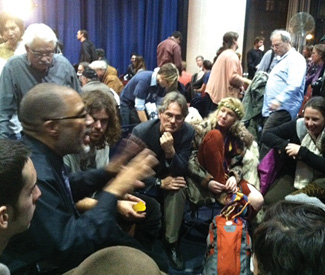
It was a funny feeling, seeing so many faces from Occupy San Francisco and Occupy Oakland in the bright, clean “Gold Room” of San Francisco’s Commonwealth Club, particularly after spending so many nights camping with them and covering the movement.

But they were there on Dec. 15, just up Market Street from their old campsites, along with a couple hundred supporters and interested community members, attending a forum on “Occupy: What now? What’s next?” Facilitator Caroline Moriarty Sacks announced that she “expected a civic conversation.” What she got was a very Occupy answer to the question of the evening which, in typical style, redefined the very concept of “civic” conversation.

The forum involved voices from many different parts of the left. Jean Quan, the Oakland mayor with a progressive activist past. George Lakoff, an outspoken liberal professor of linguistics at UC Berkeley. In the audience, dozens of people who support or are interested in Occupy, the mostly leftist San Francisco political milieu. And, of course, representing most of the panel and a good chunk of the audience were the active occupiers: anarchists, peace activists, labor organizers, and everything in between.

During the panels, their perspectives clashed. Yet Occupy strives to be a coalition of everyone, and all of these voices will be important as it progresses. Sacks had planned a 90-minute forum, featuring a panel to answer both moderator and audience questions, a break-out session, and summary reports back.

In their quest to practice participatory democracy, Occupy protesters have become used to long meetings that strive for non-hierarchical structure and a platform to hear the voice of anyone who would like to speak. If there’s one thing they can all agree upon, it’s that they’re a little tired of waiting patiently for their voices to be heard.

During the panel discussion, a few Occupiers started a Peoples Mic, interrupting Mayor Quan. They were escorted out. This fazed no one, and by the time she left the panel, chants demanding her recall rang in the hall. At each disruption, some Occupy-involved folks would object, “Listen to her! I want to hear all viewpoints!”

The tone was rowdy, but not aggressive. Minutes after disrupting the forum, protesters were back on schedule, sitting in small groups engaged in dialogue with other audience members. Even Quan was fine with it; she told the Oakland Tribune, “It was a chance to talk and have dialogue…We fostered a debate.”

This event was a microcosm of the thorny but crucial way that Occupy is uniting the left. The people in the room had something in common: belief in the visions and goals of Occupy. They just disagreed on how to get there.

Discussing, debating, and creatively bridging these differences has been one of the movement’s greatest struggles. But the more Occupy succeeds on the thorny path to unity, the more its strength builds.

Misrepresenting anarchism

Civil disobedience, peace, non-violence—all of these are critical concepts for the Occupy movement, and wrestling with them frankly has been part of the long road towards unification.

This has been done through the application of what’s originally an anarchist concept: embracing a diversity of tactics.

This is what the Occupy protesters did at the Commonwealth Club Forum. Some disapproved of disruptions, others thought them necessary. Individuals acted as they felt was right.

The Occupy supporters who turned their backs on Quan and interrupted her didn’t do it because they are inexplicably rude. They gave their reasons, including still being hurt and angry after Quan unleashed police using tear gas, rubber bullets, and aggression to break up their encampment on Oct. 25.

Quan also was displeased about that night’s events, saying that “No one is happy about what happened around the tear gas and mutual aid.”

The second reason for the reactions was what an Occupy Oakland protester who mic-checked Quan called her “misrepresentation of anarchism.” This has been dismissed and mocked by many press outlets, as if to say: What’s the point of bothering to understand anarchism?

Many people who identify with anarchist principles and tactics are involved with Occupy groups. This has contributed to the growth and development of autonomous communities at camps, as many anarchists have extensive knowledge and practice in building alternative communities based on horizontalism and collective management of resources. Occupy’s anarchist roots go deep.

This has also created controversy when tactics like property destruction and the black bloc, both associated with anarchism, become a part of Occupy. One example was the bank windows smashed and vacant building occupied during Occupy Oakland’s General Strike on Nov. 2, and riot police again responded with tear gas that night. The next day, 700 attended a General Assembly meeting to focus on discussing violence, its nature, and the ethics surrounding it.

Many have been quick to characterize this ongoing debate as a division in the movement. But if unity is to be achieved, these tough conversations are necessary.

Bringing it home

Occupy has been criticized for its lack of leaders, but that has left it open to exciting possibilities. To start a new Occupy project, you just have to convince some people to help you out—you must gain approval from no one. Some have described the organization as a “do-ocracy.” Don’t ask for permission, they say, just do it.

As such, the ideas for moving forward span from handfuls of people on street corners to millions converging on Washington.

Lakoff presented one of these concepts to the group at the Commonwealth Club, what he called “Occupy Elections.” Lakoff said, “Join Democratic clubs, and insist on supporting those people with your general moral principles. If you join Democratic clubs soon, you decide who gets to run. This is how the Tea Party took over.”

Like most ideas floating around in Occupy, there’s already something similar underway. Berkeley resident Joshua Green started the Occupy the Congress initiative, which hopes to organize and fund efforts for candidates “who support the declaration of the occupation of Wall Street.” Congressional candidates such as Elizabeth Warren in Massachusetts and Norman Solomon here in California have expressed support for and goals similar to the Occupy movement.

Occupy Washington DC has taken the message to Congress in other ways. In an open forum with supporters and renowned economists, they developed their Budget Proposal for the 99 Percent and are coordinating with Occupy groups throughout the country to call for a National Occupation of Washington DC starting March 30.

A call to action like that has a chance of being huge. With the West Coast Port Shutdown on Dec. 12, Occupy has demonstrated an ability to coordinate nationally. Those actions also showed Occupy’s growing unity with labor groups, as ILWU members worked closely with Occupy to plan those actions.

On Dec. 6, Occupy demonstrated its dedication to yet another new frontier—occupying foreclosed homes. That was a national day of action called by Occupy Our Homes and Occupy groups in over two dozen cities participated, defending homeowners threatened with eviction and moving the homeless into empty properties.

Hibernation

By the time moderator Melissa Griffin asked her final question to the panel, it was clear that the “civic conversation” had not gone as planned. Two Occupy protesters had been escorted out for interrupting Jean Quan. A handful of others had stood and turned their backs when she spoke. The crowd was restless for their own chance to grill the panelists, and there were only a few minutes left. With a faint look of dismay and hopelessness, Griffin asked the question that had no chance of being quickly answered: What’s next for occupy?

She quoted Kalle Lasn, co-founder of Adbusters, the “culture-jamming” organization credited with prompting Occupy Wall Street. In a recent interview with NPR, Lasn said: “I think that we should hibernate for the winter. We should brainstorm with each other. We should network with each other and then come out swinging next spring.” Griffin asked the panelists if they agreed with that statement.

Of course, some did and some didn’t. In fact, some form of “hibernation” is what many plan to do. In San Francisco, Occupy reading groups, workshops, and educational circles are on the rise. Small actions happen almost daily, ranging from workshops to meetings to marches to pop-up occupations.

Occupiers who were kicked out of camps are sleeping in networks of squats, safe-houses, and what one long-time camper described as “little homeless encampments around the city. We don’t put up an Occupy banner, and police don’t arrest us.”

The forum was a microcosm of the debates and plans brewing within Occupy, and it ended like most Occupy events. New connections had been made. Most people trickled out while several Occupy campers stayed to help stack chairs and clean up from the event. They all eventually exited the warm building, with its empty lobby that could have slept at least 50 people. OccupySF and Oakland activists chatted and advised each other on where to go.

Occupy is a resurgence in the spirit and power of protest and peoples movements, a recognition that the personal is political, that individuals losing their jobs and their homes can have more power in numbers. Organizing and protest has become a lifestyle.

As the Occupiers left the Commonwealth Club building, the future seemed thrilling, although many still needed a place to sleep for the night while those possibilities continue to percolate.

High whore holy day: A San Francisco tradition turns nine

4

It was Saturday, December 17. A jazz funeral was being held for victims of violence against sex workers at the Center for Sex and Culture. Post-event, its message was still resonating in its attendees. “The holiday was beautiful,” sex activist and post-porn star Annie Sprinkle told the Guardian about the ninth year of the International Day to End Violence Against Sex Workers that she helped to found. 

The tradition goes back to 2003, when hundreds of sex workers and their allies came together on the steps of San Francisco’s City Hall. Gary Ridgeway, Seattle’s “Green River Killer,” had just been convicted, having confessed to murdering 90 women over 20 years before he was caught. Prostitutes, he said, “were easy to pick up without being noticed…I thought I could kill as many of them as I wanted without getting caught.”

Bay Area performance artist and long-time sex worker Sprinkle was incensed. She teamed up with Robyn Few of the Sex Workers Outreach Project (SWOP) to create an event that would raise awareness about the abuse experienced by workers in the sex industry. 

The event has now spread to the far corners of the earth. Last Saturday, vigils, marches, and educational events to commemorate the day took place from Chicago to Cape Town. 

Kitty Stryker, a local sex worker and performer who worked as stage manager for San Francisco’s event, said that the mood in 2011 was more celebratory this year. There were spoken word, humor and musical performances that “were celebratory and fierce and fighting back, and performances that were more introspective and hurt, understanding that these things come in balance,” she said.

“It wasn’t all angry activism or all sad crying,” continued Stryker. “We wanted the event to be a celebration of people who are still here with us, and support so we can continue to do this work.”

Sex workers rights groups decry coerced or forced prostitution, insisiting that many prostitutes have chosen their profession and deserve the same rights as other workers. This message conflicts with that of many anti-sex trafficking groups, who often conflate prostitution and sex trafficking, and depict all prostitutes as victims.

Sprinkle told the Guardian that the day is especially important because it is planned by and for sex workers and their allies. “It’s become a high holy day of whores. The one day that we all remember the real victims, not these made up situations. A lot of them are not victims, but people like to think we are.”

Sprinkle remembered the story of a friend who was raped and robbed while working as an escort in New York City. The friend reported the crime to the police, and the culprit was apprehended — along with the victim, who was arrested for being a prostitute. Many sex workers rights activists campaign for the decriminalization of sex work, arguing that if sex workers could report crimes against them to the police, it could help curb high rates of rape, robbery, assault and murder of sex workers. 

Sprinkle pointed out that sex work is not the only risky business out there. “Working in a convenience store or as a taxi driver is also very dangerous. Your risk being killed working at a 7/11.” 

The modern sex workers’ rights movement demanded the decrimalization of sex work, working to end the stigma against sex workers in the 1970s. San Francisco was the movement’s teeming center. Prostitutes marched on City Hall singing, “Everybody Needs a Hooker Once in Awhile.” Even Willie Brown attended the fabulous annual Hookers’ Ball.

And this year’s news stories provided a poignant reminder of the day’s importance. During last summer a serial killer targeting prostitutes in Long Island murdered eight women. He was the third Long Island-based serial killer in twenty years to target sex workers.

Sex workers may still be considered criminals. But if the now-decades-old sex workers rights movement has anything to say about it, that view will evolve in years to come. Hopefully someday we will all be able to walk the streets a little more safely.

The unlikely sheriff

1

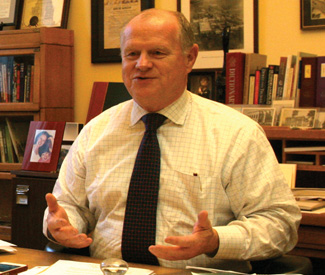
Michael Hennessey has served as San Francisco’s sheriff for half of his life, the longest such career in California history — and by all accounts the most progressive. Since taking office in 1980, Hennessey has been an island of liberal enlightenment in a political climate and law enforcement culture where tough-talking conservatism has been ascendant.

Yet in that era, Hennessey pioneered the creation of innovative programs to compassionately deal with drug abuse, violence, recidivism, and lack of education among jail inmates. He proactively brought unprecedented numbers of minorities, women, LGBT employees, and ex-convicts onto his staff. And he sometimes resisted carrying out evictions or honoring federal immigration hold orders, bold and risky social-justice stands.

His stances drew scorn from the local law enforcement community, which never endorsed him in contested elections, and criticism from political moderates and national media outlets. But San Francisco voters reelected him again and again, until he finally decided to retire as his current term ends next month.

He credits his success and longevity to the people of San Francisco, who have also bucked the harsh national attitude toward criminals and the poor. “San Francisco is still largely a liberal voting town,” he told us in his well-worn office at City Hall, “and not many liberals run for sheriff.”

That logic held up in this year’s election when progressive Sup. Ross Mirkarimi — Hennessey’s hand-picked successor — was elected to the post. Mirkarimi, who led a tribute to Hennessey at the Dec. 13 Board of Supervisors meeting, said he’s honored to be able to continue the legacy of someone he called “the most innovative sheriff in the United States.”


LONG RECORD

Hennessey was a 32-year-old Prisoner Legal Services attorney for the Sheriff’s Department in 1979 as he watched then-Sheriff Eugene Brown letting go of reform-minded staffers and ending his predecessor Dick Hongisto’s early experiment with a school in the jail. So Hennessey quit his job and focused on running for the office.

“I said to myself that I’m not sure if I’ll be a good sheriff or not, but I know I’m better than anyone else running,” he told us, later adding, “I certainly never expected to be sheriff for 32 years.”

Rank-and-file deputies — with whom Hennessey has periodically clashed throughout his career — always preferred one of their own in the job. “As seen in this election, they would like to see someone coming from their ranks,” said Hennessey, even though he notes that at this point, he has hired all but three of the department’s nearly 1,000 employees.

But Hennessey’s outsider status allowed him to deal with the inmate population in a way that the average San Franciscan appreciated, even if the average cop didn’t. “When you’re in law enforcement, all you see are criminals, victims, and people in law enforcement. But I would talk to all kinds of people in the community,” Hennessey said, noting that his experience as a jailhouse attorney gave him a holistic view of his job. “I worked in the jail and I got to know prisoners as people.”

They were people who had certain needs and problems, such as substance abuse, a common problem among criminals. And they were people who would be returning to society at some point, as Hennessey constantly reminded those who expected prisoners to be treated harshly or simply warehoused.

So he broke down the wall between the jail and the community, bringing the city’s social service providers and educators to work programs in the jails, and developing anti-recidivism and vocational programs that allowed ex-offenders to re-engage with the local community.

“Take the bold step of inviting the public in, not all the public, but those who can provide services and help address people’s problems,” Hennessey said. “Then we took the same concept and applied it to violent offenders, which is a little riskier.”

But it was a risk that has paid off as recidivism rates among jail inmates has dropped, and it’s been without any serious cases of inmates harming outsiders. Hennessey is particularly proud of the high school he created in the jail, which will graduate its next class on Jan. 3.

He said the school can truly transform those who end up behind bars. “It gives them a leg up and it’s like a booster shot,” Hennessey said. “They’re at the lowest point in their lives when the come to jail, and then they’re given an opportunity to accomplish something they haven’t been able to on the outside.”

One of many controversial moves during Hennessey’s storied career was his decision to allow female inmates to leave the jails and perform in theaters around San Francisco with the Medea Project, which was created by Rhodessa Jones and the Culture Odyssey art collective to turn the stories of female inmates into plays.

“Rhodessa is a very persuasive person who talked me into letting these women out of jail to perform,” Hennessey said, smiling at the memory. “It was very controversial.”


HIRING REFORMERS

Hennessey’s mentor in the Sheriff’s Department — the man who hired him, ran his first campaign, and then became his longtime chief-of-staff — was the late Ray Towbis, a tough activist whose social justice stands on behalf of tenants, prisoners, and other marginalized members of society would sometimes put Hennessey into difficult positions.

“Ray caused me aggravation many times,” said Hennessey, who nonetheless kept a life-sized cutout photo of Towbis in his office long after he was gone, a reminder to fight for the values he believed in.

There was the time when Towbis angrily flipped over a table and cursed at a panel of parole commissioners after failing to win the release of a model inmate, triggering a demand from the presiding judge that Hennessey fire Towbis, which the sheriff ignored.

Later, Towbis adopted a compassionate approach to the evictions that sheriff’s deputies are forced to perform, allowing deputies to spare tenants who were disabled or elderly and personally calling journalists to help publicize cases in which the parties bringing the eviction action might back off. That sensitivity stays with Hennessey today.

“That’s one of the tough spots I’m in is doing these foreclosure evictions,” Hennessey said, clearly troubled by his duty but also aware that it is one that he is required to perform, despite pressure from progressive groups urging him to refuse to carry them out.

As a lawyer, Hennessey said he must respect court orders and avoid being held in contempt of court, as Hongisto was in the mid-1970s for refusing to carry out evictions against tenants in the International Hotel.

Hennessey and his staff have always been willing to help tenants resist eviction. His office has an eviction assistance program, and Towbis would sometimes tip off the media to publicize certain unjust evictions. One time, Hennessey said Towbis even called hotel magnate Leona Helmsley and talked her out of allowing her company to evict an elderly ParkMerced resident. Instead, Helmsley allowed the woman to live rent-free for the rest of her life, an unlikely gesture of kindness from the “queen of mean” that Towbis helped publicize.

Hennessey draws the line at outright refusal to carry out a judge’s eviction order. “The sheriff shouldn’t be a law-breaker,” he says. Yet Hennessey’s lawyerly approach to complex issues also resulted in his recent policy of not honoring federal detention holds on undocumented immigrants in the jail, after discovering that the holds are administrative — different than arrest warrants — so defying them isn’t a crime.

The policy Hennessey created last year was to ignore ICE requests for prisoners who aren’t charged with felonies or domestic violence charges, noting that the latter charges are often brought but eventually dropped against people who are the victims of domestic violence.

Hennessey tapped federal and foundation grant money to fund his new treatment and educational programs, hiring an ex-convict to write his grant proposals, something that particularly irked many of his deputies.

But Hennessey believed that ex-offenders had something to offer the department so he didn’t back down in hiring them, going so far as to elevate Michael Marcum, who had gone to prison for killing his own abusive father, to the top position of undersheriff in 1993.

Police groups were outraged, but Hennessey said he had known Marcum for many years and valued his counsel and perspective on the criminal justice system. “It wasn’t hard because I knew him and I know of his integrity and loyalty,” Hennessey said.

Hennessy also irked conservative cop culture for aggressive efforts to make the department more diverse. “We wanted more minorities, we wanted more women, and we wanted gay people,” said Hennessey, who initiated outreach efforts to each of those communities.

In 1984, when he approved of an outreach event in Chaps, a gay leather bar in the Castro — complete with flyers around the Castro publicizing the event — it generated a furor that made headlines not just locally in the San Francisco Chronicle, but the National Enquirer tabloid as well.

Yet Hennessey was able to ride out each of the controversies, many of which happened to fall years away from his next reelection campaign. “Those are good times to make dramatic changes,” Hennessey said.

And because he also saw to some neglected basics in the Sheriff’s Department — such as improving training and the jails’ physical structures to prevent escapes and instituting policies to reduce violence between inmates and guards — Hennessey endured and became a beloved sheriff.


VICTORY OF PERSISTENCE

“I’ve always felt somewhat isolated in these beliefs,” said Hennessey, who said that the biggest failure of his career was not proselytizing those beliefs to a statewide and national audience more aggressively. Instead, he has focused on San Francisco, quietly turning the city into a national model for a different kind of policing.

Despite his progressive record, Hennessey has won plaudits and respect from across the political spectrum. In the last election, even the cops who sought to replace him and to undermine his endorsement of Mirkarimi — Chris Cunnie, Paul Miyamoto, and David Wong — all praised Hennessey and promised to continue his programs.

During the Dec. 13 board meeting, Sup. Mark Farrell — consistently one of the most conservative votes on the board — said he has known Hennessey almost his entire life (the sheriff and Farrell’s dad were law school classmates). “I cannot think of anyone with more integrity, a more trustworthy and honest person, than I’ve ever know in my life,” Farrell said.

Sup. David Campos said the immigrant community owes Hennessey a tremendous debt of gratitude. “You have been a tremendous champion for civil rights,” Campos said. “For that, history will judge you very kindly.”

It is a history that Mirkarimi pledges to continue. “Who’s going to fill his shoes? It’s impossible,” Mirkarimi said at the board meeting. “But we certainly have an incredible standard to try to live up to.”

As for Hennessey, he has a fairly clear idea of what he plans to do now that his long and unlikely run as one of the city’s top cops is over: “I’m going to goof around.” *


Pre-Occupied

0

arts@sfbg.com

YEAR IN VISUAL ART “Occupy the Empty,” Amanda Curerri’s 2010 solo show at Ping Pong Gallery (now Romer Young Gallery), seems about as appropriate a tag line as any for this past year. It’s not just Curerri’s prescient title that resonated with the occupations at Zucotti Park, Frank Ogawa Plaza, and the Mario Savio steps at U.C. Berkeley’s Sproul Hall, as well as the populist expressions of protest seen throughout the Arab Spring that many involved with the Occupy movement looked to, not always unproblematically, as sympathetic precedents.

“Occupy the Empty” took seriously the question of how art and aesthetics can create a more democratic society, testing the tensions inherent within the question’s very terms by asking viewers who entered Curerri’s deconstructed courtroom to become witnesses. The efficacy of the entire enterprise was predicated on individuals taking the stand, but also placing their testimony against and alongside those who had spoken before about a form of speech no less personal and performative: last words.

Similarly, the tension of the individual voice in relation to the collective it contributed to has been the engine motor of the Occupy movement. At the encampments no one could speak for anyone else and yet everyone was, at the very least, in agreement on the necessity of being present, a message often relayed (without an apparent sense of irony) back to the assembled, via a re-presentational strategy known as “the human microphone.”

One could also point to the whimsical criers and peddlers of Allison Smith’s “Market Day,” a public performance event held on and around Market Street in June as part of her Southern Exposure exhibit “The Cries of San Francisco,” or Stephanie Syjuco’s “Shadow Shop,” a mom-and-pop-style art market that resided for five months at SFMOMA, as other examples of participatory artistic practice that aimed to insert alternative forms of democratic exchange into public life, in some ways anticipating much of the discussions around aesthetics and politics that Occupy generated.

Whether this exploratory, incessantly present dynamic will — or can — continue to “trickle up” further through the art world remains to be seen. Major museums largely played it safe this year going with tried and true blockbusters (locally, Picasso and Impressionism) or spectacular spectaculars that had critics alternately swooning or pointing at the naked emperor’s relentless march, as in the recent retrospectives of Mauricio Catalan and Carsten Höller in New York.

Certainly, the likes of Charles Saatchi grumpily lecturing about cultural capital and the “vulgarity” of new super-elite art collectors in the pages of the UK Guardian doesn’t make the one percent look necessarily any more “in touch.” (Not that any of the moneyed gawkers I encountered at Art Basel Miami would care.) On the other hand, Alice Walton’s recently opened Crystal Bridges Museum of American Art in Arkansas, funded with Wal-Mart cash, can be seen as presenting both a possible new model and a grim augury about how art’s public future will rely even more transparently but no less troublingly on private beneficence. Why must we travel to a major urban center to see outstanding art? Then again, why donate to a museum when you can build you own?

ADDENDA

Although I don’t do regrets, I believe that putting out something “for the record” should still count as as a positive — despite constant abuse of the phrase by those publicly scandalized for their private moral failings. So, following in the tradition of last year’s “year in art” column, here is an incomplete rundown of art, exhibits, and, institutions that didn’t entirely make it in for myriad reasons, none of which had to do with the work itself.


KATHYRN VANDYKE “PAINT” AT STEPHEN WIRTZ GALLERY, MAR. 16-APRIL 23

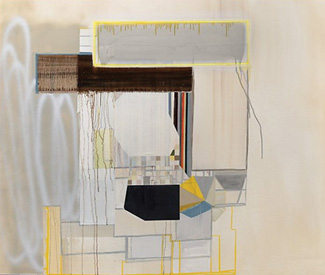
Who said non-representational collage was done for? VanDyke’s colorful, mixed media mash-ups of paint and paper flaunted the grain of their materials and the elegance of their compositional logics with the disciplined flourish of a master flamenco dancer.


SFMOMA PUBLIC PROGRAMMING

Whereas SFMOMA’s track record in regard to exhibitions has been mixed this year (cheers to the recent Richard Serra and Francesa Woodman retrospectives; good riddance to the slog that was “Exposed”), its public programming has brought an invigorating mix of poets, musicians, performers, and audiences to the institution, making that word seem an awfully staid descriptor for a venue that has consistently hosted such unexpectedly engaging and fun events.


“BALENCIAGA AND SPAIN” AT THE DE YOUNG MUSEUM OF FINE ART, MAR. 26-JULY 4

The sculptural, late 1960s pieces in this quiet stunner of a show highlighted the influence of Spain’s many forms of national costume upon its most gifted native sons, couturier Cristobal Balenciaga — and should shush the grousing of anyone upset over the rise of fashion and textile exhibits at major art institutions. To appropriate a nugget of praise once paid to Yves Saint Laurent, we can debate whether or not fashion is art until the cows come home, but there is no doubt that Balenciaga was an artist. Bring on the Gaultier!


DAVID IRELAND AT GALLERY PAULE ANGLIM, NOV. 2-26

Ireland’s early ’70s canvases of cement, dirt, and rock are slices of time, fragments of place. They are numinous, fragile reminders of being, as well one piece of the legacy of this late, great Bay Area artist.


PACIFIC STANDARD TIME, VARIOUS VENUES, LOS ANGELES

If you haven’t already planned a weekend around the Getty’s massive, multi-institution survey of postwar California art (www.pacificstandardtime.org), you owe it to yourself to head south ASAP. Many of the participating exhibits close in late January, so get!

Our Weekly Picks: December 21-27

0

WEDNESDAY 21

Krafty Kuts

Before closing out the year with the Sea of Dreams NYE blowout, the party people at Sunset Promotions (along with Metrowize.com) are throwing a community appreciation show and bringing out the U.K.’s Krafty Kuts. He’s best known for his 2006 album Freak Show and a Fabriclive release in 2007, but is largely building a reputation as an international, multiple award-winning breakbeat DJ and turntablist through live performances. Krafty Kuts’ most recent mix — for his November Canadian tour — unrelentingly shifts between the likes of Beastie Boys, Wolfgang Gartner, Fast Crew, and Bart B More. Like the best of breakbeat, Krafty Kuts plays a high wire act, always keeping energy up without growing tiresome nor ADD addled. (Ryan Prendiville)

With DJ Zeph, Motion Potion

9 p.m., free with RSVP; $5 at door

www.krafty-xmas.eventbrite.com

Mighty

119 Utah, SF

(415) 762-0151

www.mighty119.com


How The Grinch Stole Christmas: The Musical!

First published in 1957, Dr. Seuss” How The Grinch Stole Christmas was adapted into an animated film in 1966, featuring the unforgettable narration of Boris Karloff, and a bevy of now-classic songs such as “You’re A Mean One, Mr. Grinch,” belted out by Thurl Ravenscroft. Fans of all ages can relive the beloved holiday special this month when How The Grinch Stole Christmas: The Musical! brings the classic tale to life on stage with colorful costumes and amazing sets that recreate the magical world of Whoville and the inspirational events that transpire there. (Sean McCourt)

Through Dec. 29, times vary, $25–$85

Golden Gate Theatre

1 Taylor, SF

(888) 746-1799

www.shnsf.com


THURSDAY 22

“Nutcracker”

There is something about the shortest days of the year that invites you to become hopeful about what lies ahead. Perhaps it is that we know that the sun will be back. So you don’t have to be a Christian or hooked on family traditions to celebrate what is an extraordinary, though yearly occurring season. “Nutcracker,” often for sentimental reasons, is part of that feeling. Graham Lustig’s 2000 version, now part of Oakland Ballet Company, has plenty of sentiments but little sentimentality. No whiff of Victorian attitudes inhabits this family’s turn of the 20th century modernity. The home is what was considered high-tech at the time: tile, steel, concrete, and huge expanses of glass that invite the sunny, snow-covered outside in. The very fact that the Oakland Ballet Company exists again, is a sign of hope. (Rita Felciano)

Through Dec. 24; 2 and 7 p.m., $15–$59.50

Paramount Theater

2025 Broadway, Oakl.

(800) 745.3000

www.ticketmaster.com


“RitLab: Hanukkah-Houdini”

The Contemporary Jewish Museum’s RitLab (Ritual Laboratory) series stretches the idea of what can be done with such a space as the CJM. Often museums host children’s interactive events, but RitLab is more like afterschool activity time for adults too — I once learned how to make my own spicy pickles at a RitLab event, m’kay? For this Hanukkah-Houdini version, there will be very-mature holiday crafting (magic card wallets, monkey-fist key chains, thaumatropes), a dreidel spin-off, and perhaps most importantly, a performance by Conspiracy of Beards — a local a capella Leonard Cohen cover group. It’ll be fun for kids of all ages, especially those who dig magic and Cohen. (Emily Savage)

6-8 p.m., free with admission (admission is $5 after 5 p.m.)

Contemporary Jewish Museum

736 Mission, SF

(415) 655-7800

www.thecjm.org


Dan the Automator

Popscene is bringing home someone special for its Xmas Gala. An innovative hip-hop and electronic producer, Dan “the Automator” Nakamura needs little introduction. Collaborating with Kool Keith, Del the Homosapien, Prince Paul, Damon Albarn, and Mike Patton on projects such as Dr. Octagon, Deltron, Handsome Boy Modeling School, Gorillaz, and Lovage (to name a few), Automator always looms large. He’s recently produced albums for English rockers Kasabian and locals Dredg, while contributing to Albarn’s Kinshasa One Two charity project along with the likes of Totally Enormous Extinct Dinosaurs and Jneiro Jarel. (And yes, continuing to tease the long awaited follow-up, Deltron 3040.) (Prendiville)

With DJs Omar, Miles the DJ

10 p.m., $10–$12

Rickshaw Stop

155 Fell, SF

(415) 861-2011

www.rickshawstop.com


FRIDAY 23

Rare Exports: A Christmas Tale

“The Coca-Cola Santa Clause is a hoax,” little Pietari tells his friend. He hands him a picture he’s torn from an old book — St. Nicholas with goatish antlers, dropping a child into a boiling cauldron. “The real Santa Clause, he tears naughty kids to pieces.” Rare Exports: A Christmas Tale (2010) directed by Jalmari Helander and based on ancient Scandinavian mythology — might make the kids sooner want Freddy Kruger coming down the chimney on Christmas rather than Santa. When an archeology dig coincides with a bizarre series of events (slaughtered reindeer, missing children, stolen blow dryers), Pietari knows that the real Santa has been unearthed. Rare Exports is a dark tale that’s full of unsuspecting and outlandish surprises. You’ll never see Santa the same way again. (James H. Miller)

10:30 p.m., $9–$11

SF Film Society Cinema

1746 Post, SF

(415) 561-5000

www.sffs.org


Charlie Chaplin’s 1925 The Gold Rush

You loved The Artist, and now you’re obsessed with seeing every silent movie you can jam into your sockets. The San Francisco Silent Film Festival isn’t until next summer, but you can check out one of the genre’s very best this week at the Smith Rafael: Charlie Chaplin’s 1925 The Gold Rush, a delightful comedy even Buster Keaton 4-Lyfe Fan Club members can get behind. Unspooling in a snazzily restored 35mm print (with Chaplin’s own 1942 score as accompaniment, arranged by composer Timothy Brock), this film follows the Little Tramp as he tries his luck prospecting in the frozen Yukon. As the Smith Rafael notes point out, “it’s the one in which Chaplin eats his boot” and contains “The Dance of the Rolls,” an iconic bit of playing-with-one’s-food familiar to fans of 1993’s Benny & Joon — and the current Muppets movie. (Cheryl Eddy)

Through Dec. 29, call for times, $6.75–$10.25

Christopher B. Smith Rafael Film Center

1118 Fourth St., San Rafael

(415) 454-1222

www.cafilm.org


Jazz Mafia

Jazz Mafia is a Bay Area institution. With its eclectic influences, cutting edge genre crossovers are this musical collective’s forte. Jazz Mafia has featured a ton of talented players, with founding member and trombonist-bassist Adam Theis contributing to no less than 10 acts since its inception. The Shotgun Wedding Quintet is a dynamic hip-hop and jazz hybrid fronted by exceptionally cool lyricist Dublin. Brass Mafia is a weird and wonderful New Orleans-y brass ensemble that covers songs from the likes of Skatalites and the Rolling Stones. And, well, there are simply too many incredible acts to list. It’s Jazz Mafia’s 11th anniversary, and I’m sure this San Francisco family has plenty of surprises in store. (Frances Capell)

With Adam Theis and the Jazz Mafia String Quartet, Joe Bagale, and more

9 p.m., $8–$12

Brick & Mortar Music Hall

1710 Mission, SF

(415) 371-1631

www.brickandmortarmusic.com


“Kung Pao Kosher Comedy”

For those who don’t celebrate Christmas — or those who do, but could use a good laugh after spending the day with family — “The 19th Annual Kung Pao Kosher Comedy” show is a sure-fire bet for entertainment while much of the rest of the city shuts down for the holiday. With a line-up featuring Elayne Boosler, Avi Lieberman, Jeff Applebaum, and Lisa Geduldig, what better way to spend the night than with a bit a bit of Jewish comedy — and what better location than in a Chinese restaurant! (McCourt)

Through Sun/25; 6 and 9:30 p.m. Fri.-Sat.; 5 and 8:30 p.m. Sun.; $42–$62.

New Asia Restaurant

772 Pacific, SF

(415) 522-3737

www.koshercomedy.com


SATURDAY 24

Tony! Toni! Toné!

There’s no expression of love more pure than early 1990s-era R&B. And in the golden age of sensual R&B, few could compete with Oakland’s Tony! Toni! Toné!. During the late ’80s and early ’90s, this trio cranked out the jams, climbed the Billboard charts, and provided the soundtrack for countless moments of passion and romance. Did you slow dance with your high school sweetheart to “(Lay Your Head On My) Pillow?” Did you bump and grind to “Whatever You Want?” The holidays are a time for nostalgia; a time for showing our loved ones how much we care. Why not spend Christmas Eve with Tony! Toni! Toné!? (Frances Capell)

8 p.m., $26

Yoshi’s

510 Embarcadero West, Oakl.

(510) 238-9200

www.yoshis.com/oakland


SUNDAY 25

“Death Guild: X-Mess Night”

Undeniably, the holiday season is an adorable one — children point in store windows and glow; Dads are donned in gay apparel; It’s A Wonderful Life airs without end on basic cable; bells a-ringing, figgy pudding, fa la la la la and what have you. However, for some of us around this time of year, it feels like we’re being smothered by a hand knit stocking. Thankfully Death Guild’s “X-Mess Night” is here for anyone who prefers leather corsets instead of holiday turtle necks, The Sisters of Mercy over Bing Crosby, and of course, gin and tonics, not milk and cookies. DJs Decay, Melting Girl, Daniel Skellington, Sage, and Lexor spin gothic, industrial, synth pop and more. (Miller)

9 p.m., $5

DNA Lounge

375 Eleventh, SF

(415) 626-1409

www.dnalounge.com


“It’s a Jewish Christmas”

Christmas day falls on the fifth night of Hanukkah. It’s also the Make-Out Room’s “It’s a Jewish Christmas,” which means Jews and Gentiles both face a dilemma. In the case of us Jews, it comes down to either enduring Grandpa Eshkol, or shooting over to the Mission for a Woody Allen film festival, Chinese food, and a salacious game of strip dreidel. With all that being offered, I doubt old Eshkol would blame you for schlepping out without him. Hosted by none other than Broke-Ass Stuart, the travel writer behind the recent IFC documentary, Young, Broke & Beautiful, “It’s a Jewish Christmas” also features the sounds of DJs J Dub and M.O.T. Mazz. Ah Freilichen Chanukah! (Miller)

5 p.m., $10

Make-Out Room

3225 22nd St., SF

(415) 647-2888

www.makeoutroom.com


TUESDAY 27

Pal Joey

Set amongst the swingin’ nightclubs of San Francisco, 1957’s Pal Joey stars Frank Sinatra as a womanizing singer who dreams of one day owning his own club — and plans to seduce a wealthy widow (portrayed by Rita Hayworth) to secure the funding. Things begin to go awry, however, when he meets Kim Novak’s character, and starts to fall for her instead. Featuring the iconic tune “The Lady Is A Tramp,” the film earned Ol’ Blue Eyes a Golden Globe for Best Actor (in a Musical), and remains a shining example of why he was the king of the crooners. (McCourt)

Double feature with Bye Bye Birdie, which screens at 2:40 and 7 p.m.

4:45 and 9:05 p.m., $7.50–$10

Castro Theatre

429 Castro, SF.

(415) 621-6120

www.castrotheatre.com

The Performant: Tradition! Tradition!

0

Golden Girls, Kung Pao Kosher, Merry Forking Christmas … the holidays are coming whether you like it or not.

Love ‘em or hate ‘em, the holidays just keep on coming around. And unless you plan on hibernating the entire month of December away, sooner or later someone is going to force you into an ugly sweater and drag you to some seasonal entertainment designed to fill you with goodwill towards all humankind — or some such optimistic twaddle. Even so, there’s certainly no reason you have to subject yourself to endless renditions of Tchaikovsky’s famous suite or stale Bing Crosby carols in order to fulfill your holiday spirit quota. Alternatives abound here in Babylon-by-the-Bay, and you’re sure to stumble across a few that speak to your own imitable tastes.


Call it nostalgia, or call it an abiding love for the dubious fashions of the late 80’s, but whatever the attraction, this year’s edition of Trannyshack’s “The Golden Girls Christmas Episodes,” (through Dec. 23) has been packing the house at the Victoria Theatre with its irreverent rendition of the iconic television show. The four Tranny Grannies — Heklina, Cookie Dough, Pollo del Mar, and Matthew Martin — embody their characters with real affection, as their enthusiastic audiences sing along to the retro jingles of old Dr. Pepper commercials while cat-calling each spectacular costume change.

Another tradition-in-the-making, Pianofight’s third annual production of “A Merry Forking Christmas,” (through Dec. 30) is also packing the house with a good mix of PianoFight first-timers and old “Forking” initiates who are easily identified by their crumpled brown paper BYOB bags. The concept of “Forking” is both deceptively simple and yet infinitely clever — a choose-your-own-adventure story which “forks” off in several, audience-mandated directions, mostly determined by chaotic bursts of applause. Set in that oppressive microcosm otherwise known as “The Mall,” the play follows a handful of characters battling the stress and hopelessness of Christmas Eve either engaged in last minute selling, buying, security guarding, or Santa Claus-ing as the “true meaning” of the holiday in question eludes each.

Since nothing can make one feel more self-consciously Jewish than a month full of Christmas cheer, it’s good to know that Lisa Geduldig’s Kung Pao Kosher Comedy event (Dec. 23-25) has been stuffing holiday orphans of all faiths full of potstickers and potshots for nineteen years. This year’s headliner is Elayne Boosler, and if you go for the dinner show your ticket includes a seven-course feast, which sounds like my kind of Christmas. Or it would if it didn’t compete with the First Satanic Church’s annual Black X Mass (Sun/25) at the Elbo Room. Basically an excuse to throw a high-voltage rock show on the quietest night of the year, Black X Mass consistently boasts some of the most eclectic line-ups imaginable, combining costumed concept bands with “abstract metal” ensembles, mean-tempered go-go devils, various permutations of Mongoloid and Graves Bros. Deluxe, and a black-clad specialist in a rarified musical field — “Theremin Wizard Barney.” It’s a season’s greeting more reminiscent of “The Shining” than “It’s a Wonderful Life” but let’s face it, sometimes that’s exactly the kind of tradition we like best.

Localized Appreesh: the Cosmo Alleycats

10

Localized Appreesh is our weekly thank-you column to the musicians that make the Bay. Each week a band/music-maker with a show, album release, or general good news is highlighted and spotlit. To be considered, contact emilysavage@sfbg.com.

Snap your fingers – jazzy San Francisco swingsters the Cosmo Alleycats have officially released their debut album, The Late Late Show. It’s the kind of story you love to hear: talented local band makes good, a group that formed as a weekly venue houseband makes the leap to fully-realized recording act. And that record beams with tinkling piano, hearty sax, the thumping backbone of upright bass, and a mix of soulful jazz numbers, vintage R&B, and poppy upbeat swing. 

Celebrating their new retro-tinged album this week, the Cosmo Alleycats play two local release shows; one at Le Colonial, at which they were hatched, and then another at Blondie’s Bar & No Grill – there’ll be a special “Alleycat Cosmo” cocktail available at the second event, here’s hoping there’s good booze contained within.

Year and location of origin: January 2010 on Cosmo Alley in SF
Band name origin: Mike: Booze & lack of foresight. Steve & Emily: A couple of us were asked to pull together a band to fill in for Kim Nalley at Le Colonial while she was on vacation for a month. Assuming that there would only be four performances, we wanted the band name to reflect the venue location. Since Le Colonial is on Cosmo Alley, “The Cosmo Alleycats” seemed like a natural fit. Soon after, we were hired as the full time Wednesday night band and started doing gigs all around the Bay Area. The name just stuck.
Band motto: Steve: Get people dancing; Mike: Don’t ask Noam about his hair; Emily: Create fun!
Description of sound in 10 words or less: Emily: Modern vintage R&B and boogaloo swing – we defy classification!; Mike: twang, honk, bang, thump, tinkle, hum.
Instrumentation: Vocals (Emily Wade Adams), Sax (Pete Cornell), Piano (Noam Eisen), Upright Bass (Steve Height) and Drums (Mike Burns). The album also features Nick Rossi on guitar and David Kellerman on keys.
Most recent release: The Late, Late Show (2011)
Best part about life as a Bay Area band: Emily: Loyal, enthusiastic, supportive fans (many of whom wow us with their secret swing dancing skills) and the opportunity to play a range of excellent venues from fun dive bars to hallowed music halls, awesome festivals, and gorgeous winery weddings; Steve: There are so many people here that love seeing live music and are tremendously loyal to bands that they enjoy; Mike: Playing in my home town.
Worst part about life as a Bay Area band: Steve: Bridge traffic; Mike: DJs; Emily: Trying to park to load in!
First record/cassette tape/or CD ever purchased: Mike: Herman’s Hermits; Emily: Oh God. My first tape was either Madonna’s “You Can Dance” or George Michael’s “Faith”. First CD was Soul II Soul’s Club Classics Volume 1. When I was three, I’d listen to the Beatles’ Magical Mystery Tour record over and over, looking at all the pretty pictures in the booklet that came with the record and wondering why all these old dudes were dressed up in costumes. I had no clue that drugs were involved until I was about 20.”
Most recent record/cassette tape/CD/or Mp3 purchased/borrowed from the Web: Emily: Other than our own? The latest releases from Amy Winehouse and the Black Keys; Mike: Arann Harris and the Farm Band.
Favorite local eatery and dish: Steve: Le Colonial’s brussels sprouts; Mike: Cordon Blue, California @ Hyde, menu #5; Emily: Where to begin? The food trucks at Off the Grid are ridiculous. I’m addicted to Curry Up Now’s chicken tikka masala burrito. Also, the veggie burger at the Plant Organic is to die for. And I love my Thursday night ‘liquid dinners’ with the band at Blondie’s Bar & No Grill.”

Cosmo Alleycats
Wed/21, 7-10 p.m.
Le Colonial
20 Cosmo Place, SF
www.lecolonialsf.com

Thurs/22, 9 p.m.-12:30 a.m.
Blondie’s Bar & No Grill
540 Valencia, SF
www.blondiesbar.com

Warren Hellman, the 1 percent exception

103

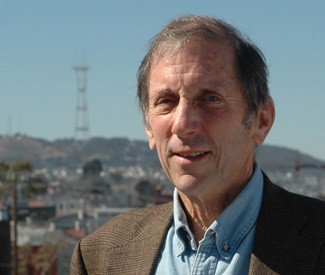
San Francisco lost a piece of its soul when Warren Hellman died last night. In a deeply polarized city, where Occupy’s paradigm of the 99 percent versus the 1 percent resonates more than anywhere, Hellman showed how an extremely wealthy investment banker could champion the interests of all San Franciscans.

I first got to know Warren in 2007 when I did a series of in-depth interviews with him for a Guardian cover story. Before that, he had been a bit of a villain to progressives as he worked with his downtown friends, such as the late Gap founder Don Fisher, to fund political initiatives and groups that aggressively pushed a pro-business agenda, from the Committee on Jobs to the parking garage under Golden Gate Park.

Born into the family that founded Wells Fargo Bank, he became the youngest partner to join Lehman Brothers before founding one of San Francisco’s largest investment banking firms, Hellman was solidly in the 1 percent. But he was a curious man with a good heart, compassionate soul, nimble mind, and strong sense of integrity.

So when the progressives he previously battled over the parking garage pushed for more car-free hours in the park – something Hellmann and his allies had pledged to support if the garage was built – he joined them and battled with his former garage allies who had abandoned that pledge, eventually forcing a compromise when it seemed the car-free crowd was headed for defeat.

That was the reason I got to know him and the focus on my “Out of downtown” story, but it was only the beginning. I came to know about how he was spending his money to help the schools and the poor, about his generous/selfish gift of the Hardly Strictly Bluegrass Festival, and about his belief that George W. Bush and other neo-conservatives – those who so shamelessly and short-sightedly helped consolidate this country’s wealth in fewer and fewer hands – were sullying his Republican Party.

So we stayed in touch and had early morning breakfasts together every six months or so, talking about the issues of the day. We talked about Burning Man, an event he loved and one I was covering and writing a book about. He listened as I complained about my shrinking staff at the Guardian and how the contraction of journalism was bad for San Francisco, and we talked through some possible solutions.
It bothered Warren to see the San Francisco Chronicle being decimated by an out-of-town corporation, and he wanted to help. So he took that kernel of an idea, mulled it, and discussed it with a wide variety of people who had expertise on the topic, just as he would do with his myriad investment banking ideas.

And with that steady heat that he applied to this kernel, he popped it into The Bay Citizen, a non-profit professional newsroom that has already done a great service to San Francisco, and which owes its existence to Hellman, who subsidized it with millions of dollars of his own money and encouraged his rich friends to give millions more. That is among his many legacies, although he was probably most proud of the Hardly Strictly Bluegrass Festival, probably the country’s best free concert. Warren loved that music, and he told me it was mostly because it told the stories of common people so beautifully. “The kind of music is the conscience of our country,” he told me. The San Francisco Board of Supervisors last week offered a bit of appreciation for Warren’s gift, renaming the main venue of Speedway Meadows as Hellman’s Hollow.

I’ll let the Bay Citizen and other media outlets write Warren’s full obituary. What I’m choosing to think about now is the man, and he is someone who I will truly miss. San Francisco just won’t be the same place without the example he set, but I hope it lives on in the hearts and minds of those in a position to help San Francisco find its heart and realize its potential.


Revolutionary bedfellows: What Occupy has in common with the sex-positive movement

2

Guardian reporter Yael Chanoff embedded at the Occupy SF and Occupy Oakland encampments during the months-long protest. Here, she reflects on the non-monogamy movement and what it could mean for the 99 percent

Temperatures were running high at Occupy San Francisco. After a day of hard work, the protesters were decompressing. Talented musicians shared their instruments with friends and strangers in impromptu jam sessions. 

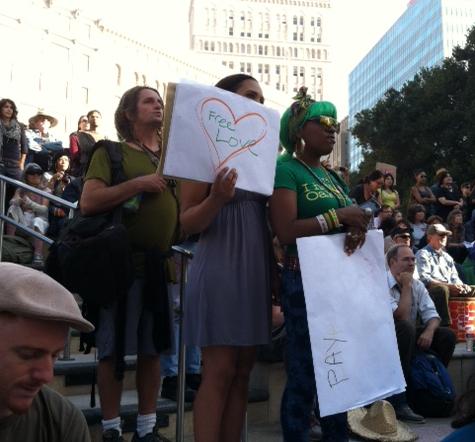
The evening in question took place during Occupy SF’s early stages, back when police would swarm at the first sign of a tent being propped up, and all of the 200 or so people who camped out that night mingled and slept in the open air. I sat with two young women and three young men who were all topless, leaning on each other and using laps as pillows. 

Another occupier, who said he had arrived that day, wandered by. “So,” he asked, “Is this thing about free love?”

“I don’t know” the guy next to me replied. He shrugged at the newcomer. “But we’re definitely doing that.”

RADICAL INTIMACY

One week later, I was sitting in the midst of a very different kind of alternative community. We were inside the Supperclub nightclub, in a hot room scattered with beds. The event’s attendees wore sparse Adam and Eve-themed costumes and glittery pasties winked here and there. A video of bonobos copulating was playing. 

It was a “second base” party, one of the many social calendar offerings of San Francisco’s sex-positive community.  The night – dubbed “Sex at Dawn” after author Christopher Ryan’s book by the same name that explores the historical roots of non-monogamy – would feature a panel discussion with several of the leading lights in the alternative, kinky, political sex community. 

Among the night’s speakers: Dossie Easton, Carol Queen, Philippe Lewis, people who have devoted their lives to creating intellectual and physical spaces where free love is unquestioningly ‘what it’s about.’

Their passion notwithstanding, the party that would follow their talk was not a sex party, strictly speaking. Event producers and Club Exotica founders Philippe “Fuzzy” Lewis and Jocelyn Agloro describe their gatherings as “co-created pieces of temporary social art,” places “for people to explore intimacy, relationships, sensuality, and sexuality — in community.” 

In some ways, the two nights were similar. But in other ways, they were quite different. The cost of admission, for example (Occupy SF: free; Club Exotica’s party: $10-35). And the numerous beds. But I couldn’t help being struck by the similarities. 

Both spaces were populated by humans whose need for connection wasn’t being met anywhere else, humans brought together by an experiment in revolutionary ways of relating to each other based on sharing and compassion. 

As I see it, the two communities have important lessons to share with each other.

THE FUTURE OF LOVE?

Occupy SF’s merry encampment is just a memory now. Justin Herman Plaza is empty these days, and somewhat unsettling – a grim square of concrete, bocce courts, and dead grass where 200 thrilled, at times confused, yet fiercely committed individuals spent two month trying to make a better world. 

But the movement is not over. It’s just in the process of reinventing itself. Forums on “Occupy 2.0” are happening around the country.

And as I think back on that night with those free loving campers, I have to wonder, will Occupy hook up with the sexual liberation movement?

When it comes to sex at Occupy, experiences varied among the individuals I interviewed. One young man who has been involved in polyamorous relationships for several years said he didn’t see anything of the sort at camp. “People have met and started dating here,” he said, “but it’s usually monogamous.”

Be that as it may, more than a few people assured me that “there’s been at least one orgy in the tents.” 

Two campers who had been occupying since late September told me that they were in a polyamorous relationship with a third occupier, and knew of other of other threesomes that had developed at camp. One of them, a calm, smiling young man, said the Occupy SF camp was an environment that definitely encouraged this kind of free love.

“I think it’s because you’re around each other all the time, in this rapid exchange of revolutionary ideas, and that’s another way you connect.”

But is sexual revolution part of the Occupy ethos?

The calm man’s partner was an energetic twenty-year-old known to start dance parties at 4 a.m. when camp was still around. She didn’t think so. 

“I mean, we talk about it with each other,” she said. “But it’s not really a part of the political side of the movement.”

Others found that Occupy had at least encouraged more sexual license, albeit unaccompanied by sex-positive theory. With wide-eyed disbelief one long-time camper told me, “I don’t understand it. I’ve been with more women since I’ve been here, homeless, than I ever did when I was housed.” 

It appeared that societal notions of monogamy were being sloughed off at Occupy SF – but without any of the underlying theories of polyamory espouses by the city’s sex-positive community. Many occupiers I spoke had never heard of any theory of non-monogamy, and agreed that a workshop teaching about alternative relationship models at camp could have helped sort out a lot of their ambiguous sexual experiences. 

Ironically, some of the city’s most qualified teachers might have been in the tent next door to these potential students.

SEXPERTS IN THE TENTS

Joani Blank, founder of Good Vibrations and longtime sexual liberation activist, spent time at Occupy Oakland. She told me that she saw ideas of love, sharing, and interpersonal connection brewing in that camp. 

Said Blank, “the camps encouraged love and acceptance and egalitarianism. With Occupy, there’s been a significant opportunity for the nature of love and friendships to change and be more open, and a lot of people [are] relating to other people who are very much not the same as they are. A variety of relationships are being encouraged and supported because everybody’s united.”

Blank thinks that the camps bred sexual experimentation. “[The occupiers] will jump into sexual experiences they’ve never had. So, for them it’s very liberating. I felt that energy myself the night I stayed there, and it translates easily into other kinds of excitement.”

In the ambiguity that surrounds Occupy’s future, one thing seems clear: this movement won’t survive unless it’s built on our love for our peers. That’s the focus of parties like “Sex At Dawn,” where attendees are not allowed to have intercourse, but instead are encouraged to open up sensually to those around them. 

The quest to open up in ways not traditionally encouraged within the bounds of capitalism was seen by many as a keystone of Occupy. The viral video-upcoming documentary The Revolution is Love focuses on Occupy and protesters’ search to replace consumerism with intimacy. 

Polly Pandemonium, founder of sex club Mission Control and its popular swinger’s party Kinky Salon told me that “the sexual liberation movement and the Occupy movement…we are all working towards the same future. It’s homo sapiens natural predisposition to share rather than hoard and fight. The mutual goal is to help people realize that it’s safe to share, and that they won’t be left out in the cold, and to create a culture which supports and rewards that kind of behavior.”

Even in its current transition phase, Occupy continues to capture the imagination of millions, including many involved in our sexual liberation movement right here in San Francisco. With a new, restless crowd of thousands who saw how community sharing could be applied to sexual relationships at the Occupy camps, some new sexual revolution may be stirring. 

For now, Occupy and the sexual liberation movement are just getting acquainted. But if activists stick with the core notions of sharing and love, we might be seeing the start of a beautiful relationship. 


Rep Clock

0

Schedules are for Wed/14-Tues/20 except where noted. Director and year are given when available. Double and triple features are marked with a •. All times p.m. unless otherwise specified.

ARTISTS’ TELEVISION ACCESS 992 Valencia, SF; www.atasite.org. $6. “Other Cinema:” “New Experimental Works,” Sat, 8:30.

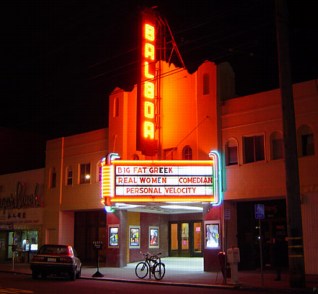
BALBOA 3630 Balboa, SF; www.brownpapertickets.com. $17.50-20. “Opera and Ballet at the Balboa Theatre:” Tosca, performed by the Royal Opera House, Wed, 7:30; The Nutcracker, performed by the Royal Ballet and the orchestra of the Royal Opera House, Sat-Sun, 10am.

CASTRO 429 Castro, SF; (415) 621-6120, www.castrotheatre.com. $7.50-10. “Noir City Xmas:” Lady on a Train (David, 1945), Wed, 7:30; Christmas Holiday (Siodmak, 1944), Wed, 9:20. •The Soft Skin (Truffaut, 1964), Thurs, 2, 7, and Shoot the Piano Player (Truffaut, 1960), Thurs, 5:15, 9:15. The Birds (Hitchcock, 1963), Fri, 2, 4:30, 7, 9:30. “Heeeere’s Christmas!”: The Shining (Kubrick, 1980), presented as part of “The Torrance Family Christmas Revue,” hosted by Peaches Christ, Sat, 8. This event, $25-45; more info at www.peacheschrist.com. “Santa’s Cool Holiday Film Festival:” Santa Claus Conquers the Martians (Webster, 1964), plus vintage Christmas cartoons, and more, Sun, 1:30.

CHRISTOPHER B. SMITH RAFAEL FILM CENTER 1118 Fourth St, San Rafael; (415) 454-1222, www.cafilm.org. $6.75-10.25. The Artist (Hazanavicius, 2011), Wed-Thurs, call for times. Golf in the Kingdom (Streitfeld, 2010), Wed-Thurs, call for times. The Nutcracker, performed by the Royal Ballet and the orchestra of the Royal Opera House, Sun, 1:30; Tues, 7.

ELECTRIC WORKS 230 Eighth St, SF; www.sfelectricoworks.com. “Imagine That,” animation screening curated by Sarah Klein for kids and adults, Sat, 6.

EXPLORATORIUM McBean Theater, 3601 Lyon, SF; www.exploratorium.edu. Free with admission ($10-15). A Child’s Christmas in Wales (Lightner, 1963), Sat, 2.

HOUSE OF AIR 926 Mason, SF; www.houseofair.com. $8. One for the Road, Fri, 8.

PACIFIC FILM ARCHIVE 2575 Bancroft, Berk; (510) 642-5249, bampfa.berkeley.edu. $5.50-9.50. Theater closed through Jan 11.

ROXIE 3117 and 3125 16th St, SF; (415) 863-1087, www.roxie.com. $6.50-10. “Southern (Dis)Comfort: The American South in Cinema:” Wild River (Kazan, 1960), Wed, 6:15; Spring Night, Summer Night (Anderson, 1968), Wed, 8:30; The Beguiled (Siegel, 1971), Fri, 7; Shy People (Konchalovsky, 1987), Fri, 9:15. Golf in the Kingdom (Streitfeld, 2011), Wed-Thurs, call for times. Footprints (Peros, 2011), Dec 16-22, 7, 8:45 (also Sat/17-Sun/18, 3, 4:45). Paul McCartney: The Love We Make (Maysles and Kaplan, 2011), Dec 16-22, 7, 9 (also Sat/17-Sun/18, 3:15, 5).

SAN FRANCISCO PUBLIC LIBRARY Koret Auditorium, 100 Larkin, SF; www.sfpl.org. Free. “Bay Area Community Cinema Series:” Taking Root: The Vision of Wangari Maathai (Merton and Dater), Wed, 5:45.

SFFS | NEW PEOPLE CINEMA 1746 Post, SF; www.sffs.org. $10-11. The Bride Wore Black (Truffaut, 1968), Fri and Dec 18-22, 2, 4:30, 7, 9:30.

VORTEX ROOM 1082 Howard, SF; www.myspace.com/thevortexroom. “Left Out of Radical Light: (A So-Called/Supposed Survey of) Alternative Film and Video in the San Francisco Bay Area, 1945-2000,” Fri, 8.

YERBA BUENA CENTER FOR THE ARTS 701 Mission, SF; (415) 978-2787, www.ybca.org. $6-10. “From Muppets to Metal: Music Movies:” Emmet Otter’s Jug-Band Christmas (Henson, 1977), Thurs, 7:30; Sun, 2; John Zorn: A Film in 15 Scenes (Klahr, Gobolux, Hills, and Izzo, 2011), Sat, 7:30.

Our Weekly Picks: December 14-20

0

WEDNESDAY 14

The Christmas Ballet

Not everyone is nutty enough to celebrate the nuclear family during the holidays. But that’s no reason not to go out and party. Smuin Ballet is a good place to start. The core of the late Michael Smuin’s The Christmas Ballet stays pretty much the same — classical music and (more or less) classical dancing in the first half, and a marvelous-fun, stylistically allover the place second half. Some ingredients have become classics: Santa Baby, Surfer, and Drummer Boy, among others. Every year, however, there are premieres. This December they are by Amy Seiwert and Robert Sund. (Rita Felciano)

Through Dec. 23, times vary

8 p.m., $25–$62

Yerba Buena Center for the Arts

701 Mission St. SF

415-556-5000

www.smuinballet.org


THURSDAY 15

Baths

Baths is 22-year-old electronic musician Will Wiesenfeld. Like many lumped into the chillwave category, Wiesenfeld recorded his debut album Cerulean (Anticon) in his bedroom. Cerulean is a soft and fuzzy collection of melodic, piano-driven love songs endowed with the contemporary flair of inventive rhythms and eclectic samples. The album features lots of strange, distant vocals and some unlikely cameos by clicking pens and rustling blankets. Weisenfeld’s music feels lukewarm, relaxing, laid-back. It’s like, well, warm baths. (Frances Capell)

With Dntel and Raliegh Moncrief

8 p.m., $18

Slim’s

333 11th St., SF

(415) 255-0333

www.slimspresents.com


Emmett Otter’s Jugband Christmas

With the Muppets currently making their highly anticipated comeback in movie theaters, Bay Area fans are in for a special treat, a trip down memory lane to Frogtown Hollow with screenings of 1977’s Emmet Otter’s Jug-Band Christmas. Featuring a cast of beloved furry and felt-covered magical creations of the Jim Henson Company, the film tells the tale of the adorable Ma Otter and her son, who both secretly enter a musical talent contest to win money to buy each other presents for Christmas. Hosted by Kermit the Frog, the talent show is propelled by a variety of foot-stomping musical numbers, and punctuated by the young otter’s heartwarming realization that family is the greatest gift of all. (Sean McCourt)

7:30 p.m.; Dec. 18, 2 p.m., $8

Yerba Buena Center for the Arts

701 Mission, SF

(415) 978-2787

www.ybca.org


Yip Deceiver

Think of Yip Deceiver as Of Montreal’s wicked cousin. Of Montreal multi-instrumentalist Davey Pierce has borrowed the band’s poppiest elements and let them run wild on his electronic side project. Lots of synthesizers and infectious hooks inform the retro dance blow-out that is Yip Deceiver. It’s like an Of Montreal that’s been fed party drugs and handed a glowstick. A naughtier, sweatier Of Montreal. “Dance like you’ve got no soul,” Pierce commands on Yip Deceiver’s “Sadie Hawkins Day.” (Capell)

With Shock, Loose Shus, and Tres Lingerie

8 p.m., $6

Milk Bar

1840 Haight, SF

(415) 387-6455

www.milksf.com


Loco Dice

Dusseldorfer techno DJ Loco Dice is kind of the alpha male of the underground dance scene. Not just because of his sculpted physique, impeccable five o’clock shadow, forceful opinions, and tendency to fill parties up with expensive sunglasses and hot chicks. No, it’s his refreshingly muscular style that elicits awe — he can make anybody’s record sound like his body-pumping own during a set, and his residencies on Ibiza helped add some speaker-engulfing German power to the island’s signature Spanish-samba techno sound. (The party line on this talent is that his years spent playing hip-hop cultivated a certain transformative energy.) Don’t write him off as some Jersey Shore Ibizan, though. Loco Dice also brings a roving ear and polished intelligence to the decks, as well as the kind of improvisatory magic only a live setting, and pulsing psychic conversation with the dancers, can provide. (Marke B.)

10 p.m., $15–$25

Vessel

85 Campton, SF

www.vesselsf.com


Dinosaur Jr.

Of all the pioneering alternative rock groups dragging out their old albums in their entirety, Dinosaur Jr. could easily have kept the past quarantined away. In the seven-odd years since J. Mascis and Lou Barlow put aside a long standing grudge, the band has been operating at peak form, releasing acclaimed albums including 2007’s Beyond and 2009’s Farm. The current tour, however, finds Dino looking back and performing 1988’s Bug, an album remembered for shredded guitars (“Freak Scene”) and destroyed vocal cords (“Don’t”) as much as a tour that resulted in the band’s unceremonious break-up. Former SST labelmate, Henry Rollins, will be on hand for a Q&A looking back on the era, and perhaps lay some issues to rest (Ryan Prendiville)

With Pierced Arrows

8 p.m., $32.50

Fillmore

1850 Geary, SF

(415) 346-6000

www.thefillmore.com


FRIDAY 16

Slow Hands

Slow food, slow cooking, slow money, slow living … why not a slow house movement? Well, at least “slow” in the non-metaphoric sense: NYC DJ Slow Hands was at the vanguard of a dance music moment that a couple of years ago began to slow house music tempos down to a sultry 100 beats per minute from the standard 120bpm. Sometimes he’d play slower tunes from outside the usual dance realm, sometimes he’d actually just slow down the records themselves. (The Moombahton genre followed the second method soon afterwards, slowing Dutch Euro-techno down to reggaeton speed.) But Slow Hands slow never equals boring. His mixes move with the hypnotic complexity of a dream machine, full of dubby effects, chugging momentum, and entrancing riffs. He may not even play slow at all, blasting off into wondrously ecstatic underground pop if the room feels it. Read my interview with him at www.sfbg.com/slowhands (Marke B.)

9 p.m., $15 before midnight, $20 after

Beat Box

314 11th St., SF.

www.ayli-sf.com


SATURDAY 17

A Child’s Christmas in Wales

Dylan Thomas’s prose poem A Child’s Christmas in Wales should stand alongside Dickens’ A Christmas Carol as one of the seasonal classics. It tells the story of a Welsh boy’s Christmas with witty anecdotes and rich language, reviving an earlier time “before the motor car” when everything — even the snow which “came shawling out of the ground and swam and drifted out of the arms and hands and bodies of the trees” — was unspoiled and dreamlike. Originally written for a BBC radio broadcast, the poem became a children’s book after Thomas’s death in 1953. This short film adaptation from 1963 was produced by Marvin Lightner and uses the bold and theatrical original recording by Thomas. (James H. Miller)

2 p.m., $15

Exploratorium

3601 Lyon, SF

(415) 561-0360

www.exploratorium.edu


“One-Minute Play Festival”

One of the shortest plays on record is Samuel Beckett’s Breath — it runs somewhere between 20 and 30 seconds and, from beginning to end, consists purely of sounds of a child crying, followed by heavy breathing, light changes, and a stage cluttered with trash. Not even Beckett attempted to put actors in the terse script. But at the One-Minute Play Festival, they do use actors. With more than 80 one-minute plays written specifically for the occasion, over 30 actors and five directors, the two-day festival provides quite the jarring experience. In 60 seconds, you can probably do little more than read this short article and blow your nose. But by that time at the festival, you would have already seen a contemporary drama. (Miller)

8 p.m.; Dec. 18, 2 and 7 p.m., $20

Thick House

1695 18th St., SF

(415) 626-2176

www.playwrightsfoundation.org


Lagwagon

Growing up, skate-punk trailblazer Lagwagon was a pretty big deal for me. In the band’s heyday, Lagwagon’s frontman Joey Cape was the poster boy for teenage fuck-ups everywhere. The band may have been made up of a bunch of slackers, but its music became the definitive sound of Fat Wreck Chords and inspired countless skate-punk bands to follow in its footsteps. I’d kind of forgotten about Lagwagon until I found out it was re-releasing five of its albums from the ’90s this year. For those of us who downloaded all its music on Napster and spent our allowance money on 40s, it’s payback time. (Frances Capell)

With Druglords of the Avenues and Heartsounds

9 p.m., $22

Slim’s

333 11th St., SF

(415) 255-0333

www.slimspresents.com


Pinback

Pinback tends not to burst into moments of wild intensity, but it doesn’t dwell on the lower end of things either. It finds, rather, a comfortable space between the two, much like the Sea and Cake, with whom it shares a similar texture and mood. Formed in the late 1990s as a side project by Zach Smith and Rob Crow after Smith’s band Three Mile Pilot went on hiatus, the San Diego band released its self-titled debut in 1999. In 2007, the band released Autumn of the Seraphs — an instant classic Pinback album that’s spearheaded by Smith and Crow’s complementary vocals and rhythmic guitar work. Since then, the band has been relatively quiet on the recording end, but it hasn’t yet renounced the tour bus. (Miller)

With Ghetto Blaster

10 p.m., $20

Bottom of the Hill

1233 17th St., SF

(415) 621-4455

www.bottomofthehill.com


SUNDAY 18

“Santa’s Cool Holiday Film Festival”

Something is happening to the children of Mars. Hooked on TV programs beamed from nearby Earth, they can’t eat or sleep — they’ve become fixated on foreign concepts like “playing with toys” and “Christmas.” After consulting with the planet’s resident 800-year-old wise man, Martian leaders come up with a solution: “We need a Santa Claus on Mars.” Interstellar kidnapping ahoy! Forget A Christmas Story (1983) — it’s all about 1965’s Santa Claus Conquers the Martians, an outrageously low-budget fruitcake of spunky kids, robot henchmen, bloop-bloop “space age” sound effects, zapping rays, a German-accented rocket expert, a villain with a mustache, and (naturally) a heartwarming final message about the true spirit of Christmas. This screening also features retro holiday cartoons and trailers, plus a toy drive hosted by the San Francisco Firefighter’s Toy Program. Hooray for Santy Claus! (Cheryl Eddy)

1:30 p.m., $7.50–$10 ($5 admission for children who contribute a new, unwrapped toy)

Castro Theatre

429 Castro, SF

(415) 621-6120

www.castrotheatre.com


TUESDAY 20

Zach Rogue

As an atheist gentile, I don’t know much about Judaism. But I do know that by the midpoint of December the bombardment of everything X-mas has me eyeing all the non-Christian events possible. Luckily, the Idelsohn Society has set up the Tikva Records pop-up shop, a non-red and white, non-ringing of the bells oasis. For the beginning of “the Festival of Lights” (Thanks Wikipedia!), local singing songwriter Zach Rogue, of indie-rock outfit Rogue Wave and recent project Release the Sunbird, will inaugurate the festivities with a performance and candle lighting. Candle lighting? I’ve got to see this. (Prendiville)

7 p.m., donation suggested (RSVP online)

Tikva Records

3191 Mission, SF

(415) 713-0649

www.tikvarecords.eventbrite.com  


The Guardian listings deadline is two weeks prior to our Wednesday publication date. To submit an item for consideration, please include the title of the event, a brief description of the event, date and time, venue name, street address (listing cross streets only isn’t sufficient), city, telephone number readers can call for more information, telephone number for media, and admission costs. Send information to Listings, the Guardian Building, 135 Mississippi St., SF, CA 94107; fax to (415) 487-2506; or e-mail (paste press release into e-mail body — no text attachments, please) to listings@sfbg.com. Digital photos may be submitted in jpeg format; the image must be at least 240 dpi and four inches by six inches in size. We regret we cannot accept listings over the phone.

Guardian editorial: And now we recommend a national Occupy Day

9

EDITORIAL In less than three months, the Occupy movement has changed the national political debate — and possibly the course of U.S. history. A small group of protesters, derided in the mainstream media, grew to a massive outpouring of anger at economic inequality. It’s no coincidence that politicans at all levels have begun to respond. At least five different measures aimed at raising taxes on the rich are in the works in California. In Kansas Dec. 6, President Obama made one of the most progressive speeches of his career, talking directly about the need for economic justice.

While even some supposed allies say the encampments weren’t effective, the truth is that the out-front, in-your-face tactic of holding nonstop protests in the financial heart of places like Manhattan and San Francisco got attention. The visibility of the Occupy camps forced everyone to pay attention. The U.S. economy is in a crisis; less disruptive tactics wouldn’t have worked. But now most of the emcampments are gone, broken up by police forces and scattered from the central areas of major cities. It’s crucial that this growing and powerful national movement not fall apart after the almost inevitable crackdown on one style of protest. Occupy needs to look forward and plan its next steps.

Some of that is already happening, with Occupy activists targeting home foreclosures and marching on West Coast ports. But it’s worth considering another tactic, too: Occupy ought to begin planning now for a massive spring mobilization in Washington and a series of nationwide actions that could bring millions more people into the movement.

Part of the strategy of the Occupy camps was to maintain a presence, day after day — and that made perfect sense when the movement was starting. But single-day events, if organized on a massive scale as part of a larger campaign, can have a profound and lasting impact.

The original Earth Day — April 22, 1970 — involved 20 million people across the United States. There were events in hundreds of cities and thousands of high school and college campuses. It brought together old-school, sometime stodgy conservation groups with radical young environmentalists, the United Auto Workers with people concerned about pollution from car exhaust. It was, by any reasonable account, the birth of the modern American environmental movement.

The other great thing about Earth Day — and the reason it makes a great model for the Occupy movement — is that it was largely a grassroots event. Although there was a national office, most of the work was done spontaneously, in local communities, with no top-down direction.

And everyone — from Washington D.C. to the state capitols and city halls — paid attention.

Mass marches and mobilizations helped end the Vietnam War, spark the Civil Rights Movement and fight the anti-labor politics of the Reagan Administration. None of those events took place in isolation, any more than a national Occupy Day would take place in isolation. The nation’s ready for major economic change — and organizing a national event alone could help make stronger connnections among the broad constituency that is the 99 percent.


Occupy’s next steps

6

EDITORIAL In less than three months, the Occupy movement has changed the national political debate — and possibly the course of U.S. history. A small group of protesters, derided in the mainstream media, grew to a massive outpouring of anger at economic inequality — and it’s no coincidence that politicians at all levels have begun to respond. At least five different measures aimed at raising taxes on the rich are in the works in California. In Kansas Dec. 6, President Obama made one of the most progressive speeches of his career, talking directly about the need for economic justice.

While even some supposed allies say the encampments weren’t effective, the truth is that the out-front, in-your-face tactic of holding nonstop protests in the financial heart of places like Manhattan and San Francisco got attention. The visibility of the Occupy camps forced everyone to pay attention. The U.S. economy is in a crisis; less disruptive tactics wouldn’t have worked. But now most of the encampments are gone, broken up by police forces and scattered from the central areas of major cities. It’s crucial that this growing and powerful national movement not fall apart after the almost inevitable crackdown on one style of protest. Occupy needs to look forward and plan its next steps.

Some of that is already happening, with Occupy activists targeting home foreclosures and marching on West Coast ports. But it’s worth considering another tactic, too: Occupy ought to begin planning now for a massive spring mobilization in Washington and a series of nationwide actions that could bring millions more people into the movement.

Part of the strategy of the Occupy camps was to maintain a presence, day after day — and that made perfect sense when the movement was starting. But single-day events, if organized on a massive scale as part of a larger campaign, can have a profound and lasting impact.

The original Earth Day — April 22, 1970 — involved 20 million people across the United States. There were events in hundreds of cities and thousands of high school and college campuses. It brought together old-school, sometime stodgy conservation groups with radical young environmentalists, the United Auto Workers with people concerned about pollution from car exhaust. It was, by any reasonable account, the birth of the modern American environmental movement.

The other great thing about Earth Day — and the reason it makes a great model for the Occupy movement — is that it was largely a grassroots event. Although there was a national office, most of the work was done spontaneously, in local communities, with no top-down direction.

And everyone — from Washington D.C. to the state capitols and city halls — paid attention.

Mass marches and mobilizations helped end the Vietnam War, spark the Civil Rights Movement and fight the anti-labor politics of the Reagan Administration. None of those events took place in isolation, any more than a national Occupy Day would take place in isolation. The nation’s ready for major economic change — and organizing a national event alone could help make stronger connections among the broad constituency that is the 99 percent.

Style Paige: Homeless youth show off their designing chops

0

Five fashion-minded homeless youth – two men and three women  – had two hours to complete a fashion challenge using only donated clothing and street friendly supplies. That meant no sewing machines – more like dental floss, duct tape, and art supplies. The result? Find out by attending the Homeless Youth Alliance‘s screening of Project Runaway on Fri/16.

Some of the looks created in the series might come across as obvious – the streetpunk aesthetic of Haight-Ashbury’s homeless youth seems to have influenced a few of the garments. But not all. Other HYA participants went for more avant garde looks, like the “business pirate,” (as a HYA volunteer described one of the looks in a Guardian interview).

At Friday’s event, there will also be a fashion show at which a group of well-known fashion-forward judges will critique the garments and choose which DIY fashionista emerged victorious. The judging panel is still up in the air, but the center is hoping to land a former HYA participant who is now working in the fashion industry and a prominent fashion blogger.

Since the long-time haven for homeless youth has seen its funding recently cut by one-third, 100 percent of the ticket profits will go to the center – and in times like these, and particularly with the holidays fast approaching, a little bit of money can go a long way. Seven dollars will allow a youth at HYA the chance to get legal identification, and $30 will purchase 25 pairs of socks.  

The center hopes this is the first of many screenings of Project Runaway. So be an early adaptor –  come enjoy hors d’oeuvres and the inventiveness of young adults who are street and fashion savvy.


Homeless Youth Alliance screening of Project Runaway

Fri/16 7–8:30 p.m., $10-$30

Sports Basement

1590 Bryant, SF

(415) 437-0100

www.homelessyouthalliance.org


The Balboa is here to stay — fundraiser tonight!

0

With all the bad news in the world, the recent announcement that the Richmond District’s historic Balboa Theatre would be keeping its doors open — thanks to a partnership between the non-profit San Francisco Neighborhood Theater Foundation and the theater’s veteran operator, Gary Meyer — is cause for cinematic celebration. (Full release here.)

Under president Alfonso Felder, the SFNTF (which also owns the Vogue on Sacramento Street and oversees the “Film Night in the Park” series) will lease the Balboa through 2024 — taking the built-in-1926 landmark nearly to its 100th birthday. A fundraiser tonight offers the public a chance to step up and show support for this new partnership and help raise some dough for Balboa repairs and upgrades.

The event features a “Then and Now Presentation of San Francisco Theatres” (presumably, focusing more on the pre-multiplex days), plus an Oscar season preview (get a head start on your office pool!), and live and silent auctions, with items contributed by such local luminaries as the Film Noir Foundation‘s Eddie Muller. Some ticket levels include chances to “name” one of the brand-new seats in the auditorium and copies of Jack Tillmany’s Theatres of San Francisco, filled with historic photos of venues — some gone long ago, others shuttered only recently (remember the Coronet? Sigh). Fortunately, the Balboa looks set to thrive for years to come.

“Celebrating the Balboa Theatre: SFNTF Fundraiser”

Tues/13, 7-9 p.m., $35-$1000

Balboa Theatre

3630 Balboa, SF

www.sfntf.org

www.balboamovies.com


Should Occupy pull back and reinvent itself?

14

Maybe it’s time for the Occupy movement to simply take a bow, step off the national stage for now, and start planning its next big production. Because at this point, Occupy has been a smashing success – winning over its audiences and key critics, influencing the national debate – but it’s in danger of losing that luster if its lingers too long in its current form.

Consider the events of this week. When OccupySF’s long-standing encampment was finally removed by police and city workers, the general public barely noticed or reacted. Unlike during previous police raids, hundreds of supporters didn’t pour in to defend the camp and social media sites didn’t light up with messages of indignation and solidarity.

Why? Well it’s not because people don’t support the movement. Polls have consistently shown most people back Occupy, and even higher percentages support its basic message that the 99 percent are being screwed over by the 1 percent. Top political leaders at every level – Mayor Ed Lee, Gov. Jerry Brown, and President Barack Obama – made statements and speeches this week that echo the themes and ideas that Occupy has injected into the national dialogue.

But the tactic of occupation was only going to get us so far. It was a great way to start a conversation and demonstrate a broad discontent with this country’s inequities and plutocratic excess. Finally, the people have started to challenge those who are exploiting them, and it’s been particularly exciting to see young people fighting to reclaim their stolen futures.

That energy hasn’t dissipated, and it’s interesting to see it morphing into other campaigns, such as the recent takeovers of vacant foreclosed homes, the human rights march planned for tomorrow, and West Coast port shutdown scheduled for Monday. But I predict the crowds blockading the Port of Oakland will be a fraction of the size of the tens of thousands who took to the streets during the Oakland General Strike on Nov. 2.

Then, people were reacting to police violently crushing Occupy Oakland’s peaceful political assembly on Oct. 25, a galvanizing event, much like the raid on Occupy Wall Street and the abusive police tactics against occupiers on the UC Berkeley and UC Davis campuses. Each example showcased the police state’s willingness to use a heavy hand against peaceful protesters, demonstrating for a global audience what an important struggle this is and what we’re up against.

Yet it was hard to summon up much indignation over this week’s raid on OccupySF, even as protesters complained about being given just five minutes to get out and having their belonging seized and destroyed. Mayor Lee had been threatening the raid for weeks and had offered the group a free new home in the Mission – an offer they probably should have taken, one that would have allowed the group to declare victory and have a base of operations throughout the winter.

But unlike my cranky, “you kids get off my lawn” colleagues in the mainstream press, who have consistently derided the movement and valued anti-camping laws over the core constitutional right to peaceably assemble to petition for a redress of grievances, I think Occupy has been extremely important and effective. My desire is to see it evolve and continue.

Mayor Lee and other city officials have praised the goals and worldview of Occupy at every turn, even as they oppose the tactic of camping. As Police Chief Greg Suhr raided OccupySF, he told reporters that “part of the 99 percent removed part of the 99 percent to give the other part of 99 percent some relief,” tipping his hat to Occupy’s basic paradigm. Gov. Brown echoed Occupy’s economic inequity language in his call for higher taxes on the rich this week.

“I’m here in Kansas to reaffirm my deep conviction that we’re greater together than we are on our own. I believe that this country succeeds when everyone gets a fair shot, when everyone does their fair share, when everyone plays by the same rules. These aren’t Democratic values or Republican values. These aren’t 1 percent values or 99 percent values. They’re American values. And we have to reclaim them,” Obama said in his big speech this week, embracing the Occupy paradigm even as he tried to transcend it. But go back and read the whole speech and you’ll see that it would have fit right in during any Occupy General Assembly, with its regular calls to tax the rich, something this movement has given him the political cover to more forcefully advocate.

So the conversation has now begun, thanks largely to this movement. But, as most supporters of Occupy already know, our elected officials won’t simply enact the reforms we need on their own. They will need to be pushed and prodded relentlessly by a restive public, so the supporters of Occupy still have a lot of work to do.

How will they do that and what will it look like? I don’t know, but after watching these smart, creative, courageous, and committed young people and their supporters change the political dynamics of this country over the last three months, I’m anxious to see what they come up with and I stand read to chronicle and support the next phase, whatever it’s called and whenever it begins.

Rep Clock

0

Schedules are for Wed/7-Tues/13 except where noted. Director and year are given when available. Double and triple features are marked with a •. All times p.m. unless otherwise specified.

ARTISTS’ TELEVISION ACCESS 992 Valencia, SF; www.atasite.org. $7. “Other Cinema:” Live A/V program with Michael Gendreau and Lisa Seitz and others, Sat, 8:30.

BALBOA 3630 Balboa, SF; www.brownpapertickets.com. $17.50-20. “Opera and Ballet at the Balboa Theatre:” Sleeping Beauty, performed by the Bolshoi Ballet, Wed, 7:30. Tosca, performed by the Royal Opera House, Sat-Sun, 10am.

CASTRO 429 Castro, SF; (415) 621-6120, www.castrotheatre.com. $7.50-10. The Wayshower (John-Roger and Garcia, 2012), Wed, 7:30. Free preview with director and cast in person; for entry, email thewayshowermovie@gmail.com with full name and number of tickets requested. “Long Now Foundation: Seminars About Long-Term Thinking: “Rick Prelinger presents Lost Landscapes of San Francisco 6,” Thurs, 7:30. This event, $10; advance tickets at lostlandscapes.eventbrite.com. “Midnites for Maniacs: Home for the Holidays:” •Home Alone (Columbus, 1990), Fri, 7:30; Weird Science (Hughes, 1985), Fri, 9:45; Career Opportunities (Gordon, 1991), Fri, 11:45. •Saturday Night Fever (Badham, 1977), Sat, 2:20, 7, and Logan’s Run (Anderson, 1976), Sat, 4:35, 9:15. •Throne of Blood (Kurosawa, 1957), Sun, 1:30, 6:15, and Macbeth (Polanski, 1971), Sun, 3:35, 8:20.

CHRISTOPHER B. SMITH RAFAEL FILM CENTER 1118 Fourth St, San Rafael; (415) 454-1222, www.cafilm.org. $6.75-10.25. Eames: The Architect and the Painter (Cohn and Jersey, 2011), call for dates and times. The Artist (Hazanavicius, 2011), Dec 9-15, call for times. Golf in the Kingdom (Streitfeld, 2010), Dec 9-15, call for times. Sutro’s: The Palace at Land’s End (Wyrsch, 2011), Sun, 4:15. Filmmaker Tom Wyrsch in person.

JEWISH COMMUNITY CENTER OF THE EAST BAY 1414 Walnut, Berk; (510) 848-0237, www.brownpapertickets.com. $6-8. San Francisco Jewish Film Festival presents: The Matchmaker (Nesher, 2010), Thurs, 7:30.

PACIFIC FILM ARCHIVE 2575 Bancroft, Berk; (510) 642-5249, bampfa.berkeley.edu. $5.50-9.50. “Jeanne Moreau: Enduring Allure:” The Trial (Welles, 1962), Wed, 7; The Fire Within (Malle, 1964), Thurs, 7; Mademoiselle (Richardson, 1966), Sat, 6:30; The Bride Wore Black (Truffaut, 1968), Sat, 8:35; Chimes at Midnight (Welles, 1966), Sun, 3. “Southern (Dis)comfort: The American South in Cinema:” God’s Little Acre (Mann, 1958), Fri, 7; The Intruder (Corman, 1962), Fri, 9:10; Wise Blood (Huston, 1979), Sun, 5:15. Theater closed Dec 12-Jan 11.

ROXIE 3117 and 3125 16th St, SF; (415) 863-1087, www.roxie.com. $6.50-10. House of Boys (Schlim, 2010), Wed-Thurs, 7, 9:15. “Holidays with the Human Centipede!”: The Human Centipede (First Sequence) (Six, 2009), Fri, 7:30; The Human Centipede 2 (Six, 2011), Fri, 9:20. “2 Drunk 2 Die Hard:” Die Hard (McTiernan, 1988), Thurs, 7:30. “Southern (Dis)Comfort: The American South in Cinema:” Reflections in a Golden Eye (Huston, 1967), Sat, 2:45, 7; The Strange One (Garfein, 1957), Sat, 5, 9:15; Two Thousand Maniacs! (Lewis, 1964), Sun, 5:15, 9:15; God’s Little Acre (Mann, 1958), Sun, 2:45, 7; Moonrise (Borzage, 1948), Mon, 6:45; Swamp Water (Renoir, 1941), Mon, 8:30; Poor White Trash (Daniels, 1957), Tues, 6:15; Hurry Sundown (Preminger, 1967), Tues, 8.

SFFS | NEW PEOPLE CINEMA 1746 Post, SF; www.sffs.org. $12-15. “An Evening with Don Hertzfeldt,” Thurs, 7, 9:15. “The Dardy Family Home Movies By Stephen Sondheim By Erin Markey,” Fri-Sat, 8; Sun, 6.

YERBA BUENA CENTER FOR THE ARTS 701 Mission, SF; (415) 978-2787, www.ybca.org. $6-10. Louder Than a Bomb (Jacobs and Siskel, 2010), Thurs and Sat, 7:30; Sun, 2. “From Muppets to Metal: Music Movies:” Saxon: Heavy Metal Thunder — The Movie (Coolhead Productions, 2010), Fri, 7, 9:30.