Crime

Film Listings: August 21 – 27, 2013

0

Film listings are edited by Cheryl Eddy. Reviewers are Kimberly Chun, Dennis Harvey, Lynn Rapoport, and Sara Maria Vizcarrondo. For rep house showtimes, see Rep Clock.

OPENING

Ain’t Them Bodies Saints See “Lone Stars.” (1:45) California, Smith Rafael.

Austenland Jane (Keri Russell) is a Jane Austen fanatic who finds real-life modern romance highly lacking as compared to the fictive Regency Era variety — though having a life-sized cutout of Colin Firth as Mr. Darcy in her bedroom surely didn’t help recent relationships. After yet another breakup, she decides to live her fantasy by flying to England to vacation at the titular theme park-fantasy role play establishment, where guests and staff meticulously act out Austen-like scenarios of well-dressed upper class leisure and chaste courtship. Upon arriving, however, Jane discovers she’s very much a second-class citizen here, not having been able to afford the “platinum premium” package purchased by fellow guests. Thus cast by imperious proprietor Mrs. Wattlesbrook (Jane Seymour) as the unmarriageable “poor relation,” she gets more flirtatious vibes from the actor cast as sexy stable boy (Bret McKenzie) than the one playing a quasi-Darcy (JJ Feild), at least initially. Adapting Shannon Hale’s novel, Jerusha Hess (making her directorial bow after several collaborations with husband Jared Hess, of 2004’s Napoleon Dynamite) has delightfully kitsch set and costume designs and a generally sweet-natured tone somewhat let down by the very broad, uninspired humor. Even wonderful Jennifer Coolidge can’t much elevate the routine writing as a cheerfully vulgar Yank visitor. The rich potential to cleverly satirize all things Austen is missed. Still, the actors are charming and the progress lively enough to make Austenland harmless if flyweight fun. (1:37) Albany, SF Center, Sundance Kabuki. (Harvey)

Cutie and the Boxer See “Scenes from a Marriage.” (1:22) Opera Plaza, Shattuck.

Long Distance Revolutionary: A Journey with Mumia Abu-Jamal Or, almost everything you ever wanted to know about the guy who inspired all those “Free Mumia” rallies, though Abu-Jamal’s status as a cause célèbre has become somewhat less urgent since his death sentence — for killing a Philadelphia police officer in 1981 — was commuted to life without parole in 2012. Stephen Vittoria’s doc assembles an array of heavy hitters (Alice Walker, Giancarlo Esposito, Cornel West, Angela Davis, Emory Douglas) to discuss Abu-Jamal’s life, from his childhood in Philly’s housing projects, to his teenage political awakening with the Black Panthers, to his career as a popular radio journalist — aided equally by his passion for reporting and his mellifluous voice. Now, of course, he’s best-known for the influential, eloquent books he’s penned since his 1982 incarceration, and for the worldwide activists who’re either convinced of his innocence or believe he didn’t receive a fair trial (or both). All worthy of further investigation, but Long Distance Revolutionary is overlong, fawning, and relentlessly one-sided — ultimately, a tiresome combination. (2:00) Roxie. (Eddy)

The Mortal Instruments: City of Bones Lily Collins stars as a teen who discovers her supernatural powers in this adaptation of Cassandra Clare’s YA fantasy novel. (2:00) Shattuck.

The World’s End The final film in Edgar Wright’s “Blood and Ice Cream Trilogy” finally arrives, and the TL:DR version is that while it’s not as good as 2004’s sublime zombie rom-com Shaun of the Dead, it’s better than 2007’s cops vs. serial killers yarn Hot Fuzz. That said, it’s still funnier than anything else in theaters lately. Simon Pegg returns to star and co-write (with Wright); this time, the script’s sinister bugaboo is an invasion of body snatchers — though (as usual) the conflict is really about the perils of refusing to actually become an adult, the even-greater perils of becoming a boring adult, and the importance of male friendships. Pegg plays rumpled fuck-up Gary, determined to reunite with the best friends he’s long since alienated for one more crack at their hometown’s “alcoholic mile,” a pub crawl that ends at the titular beer joint. The easy chemistry between Pegg and the rest of the cast (Nick Frost, Paddy Considine, Martin Freeman, and Eddie Marsan) elevates what’s essentially a predictable “one crazy night” tale, with a killer soundtrack of 1990s tunes, slang you’ll adopt for your own posse (“Let’s Boo-Boo!”), and enough hilarious fight scenes to challenge This is the End to a bro-down of apocalyptic proportions. (1:49) (Eddy)

You’re Next The hit of the 2011 Toronto Film Festival’s midnight section — and one that’s taken its sweet time getting to theaters — indie horror specialist (2010’s A Horrible Way to Die, 2007’s Pop Skull, 2012’s V/H/S) Adam Wingard’s feature isn’t really much more than a gussied-up slasher. But it’s got vigor, and violence, to spare. An already uncomfortable anniversary reunion for the wealthy Davison clan plus their children’s spouses gets a lot more so when dinner is interrupted by an arrow that sails through a window, right into someone’s flesh. Immediately a full on siege commences, with family members reacting with various degrees of panic, selfishness. and ingenuity, while an unknown number of animal-masked assailants prowl outside (and sometimes inside). Clearly fun for its all-star cast and crew of mumblecore-indie horror staples, yet preferring gallows’ humor to wink-wink camp, it’s a (very) bloody good ride. (1:36) (Harvey)

ONGOING

The Act of Killing What does Anwar Congo — a man who has brutally strangled hundreds of people with piano wire — dream about? As Joshua Oppenheimer’s Indonesia-set documentary The Act of Killing discovers, there’s a thin line between a guilty conscience and a haunted psyche, especially for an admitted killer who’s never been held accountable for anything. In fact, Congo has lived as a hero in North Sumatra for decades — along with scores of others who participated in the country’s ruthless anti-communist purge in the mid-1960s. In order to capture this surreal state of affairs, Oppenheimer zeroes in on a few subjects — like the cheerful Congo, fond of flashy clothes, and the theatrical Herman Koto — and a method, spelled out by The Act of Killing‘s title card: “The killers proudly told us stories about what they did. To understand why, we asked them to create scenes in whatever ways they wished.” Because Congo and company are huge movie buffs, they chose to recreate their crimes with silver-screen flourish. There are costumes and gory make-up. There are props: a stuffed tiger, a dummy torso with a detachable head. There are dancing girls. Most importantly, however, there are mental consequences, primarily for Congo, whose emotional fragility escalates as the filming continues — resulting in an unforgettable, at-times mind-blowing viewing experience. (1:55) Smith Rafael. (Eddy)

Adjust Your Tracking: The Untold Story of the VHS Collector Dan M. Kinem and Levi Peretic’s documentary peeks into the tidy lairs of borderline hoarders (all horror and genre fans) who oversee their massive VHS collections with a mixture of pride, good-natured defensiveness, and culty spirit. A few celebrities drop by (Troma’s Lloyd Kaufman admits he prefers DVDs “because of the extras”), but this is mostly regular-dude turf, with a home-video history lesson (“Blockbuster ruined it for everybody”) mixed into the nostalgia. High points include extended discussions of “VHS covers that lie to you,” as in, when box artwork promises wonders that aren’t actually in the film; and of Tales from the Quadead Zone, a (terrible) film so exquisitely rare it sparked an eBay bidding war and inspired at least one tattoo. (1:24) Balboa. (Eddy)

The Artist and the Model The horror of the blank page, the raw sensuality of marble, and the fresh-meat attraction of a new model — just a few of the starting points for this thoughtful narrative about an elderly sculptor finding and shaping his possibly finest and final muse. Bedraggled and homeless beauty Mercè (Aida Folch) washes up in a small French town in the waning days of World War II and is taken in by a kindly woman (Claudia Cardinale), who seems intent on pleasantly pimping her out as a nude model to her artist husband (Jean Rochefort). As his former model, she knows Mercè has the type of body he likes — and that she’s capable of restoring his powers, in more ways than one, if you know what I mean. Yet this film by Fernando Trueba (1992’s Belle Époque) isn’t that kind of movie, with those kinds of models, especially when Mercè turns out to have more on her mind than mere pleasure. Done up in a lustrous, sunlit black and white that recalls 1957’s Wild Strawberries, The Artist and the Model instead offers a steady, respectful, and loving peek into a process, and unique relationship, with just a touch of poetry. (1:41) Opera Plaza. (Chun)

The Attack After an explosion in Tel Aviv kills 17, respected surgeon Amin Jaafari (Ali Suliman of 2005’s Paradise Now) — an Palestinian with Israeli citizenship, who deflects moments like a bleeding man on his operating table gasping, “I want another doctor!” with a certain amount of practiced detachment — is called to ID a body nestled in the morgue of his hospital. It’s his wife, Siham (Reymonde Amsellem, seen in flashbacks) — the apparent suicide bomber. Amin can’t believe it, but Israeli officers sure do, and the doctor is interrogated for hours about his wife’s alleged terrorist leanings and her suspicious behavior in the days leading up to the attack. When Siham’s involvement in the bombing is confirmed, Amin visits family in the West Bank, intent on discovering more about her secret fundamentalism and answering one simple question: “Why?” Emotions and tension run high as he digs into a world that’s been carefully constructed to keep unsympathetic parties from obtaining access. Lebanese-born director Ziad Doueiri, directing from a script he co-wrote from the 2008 novel by Yasmina Khadra (former Algerian army major Mohammed Moulessehoul, who wrote under his wife’s name to evade military censorship), delivers a suspenseful tale that offers new perspective on the Palestine-Israel divide. (1:42) Vogue. (Eddy)

Blue Jasmine The good news about Blue Jasmine isn’t that it’s set in San Francisco, but that it’s Woody Allen’s best movie in years. Although some familiar characteristics are duly present, it’s not quite like anything he’s done before, and carries its essentially dramatic weight more effectively than he’s managed in at least a couple decades. Not long ago Jasmine (a fearless Cate Blanchett) was the quintessential Manhattan hostess, but that glittering bubble has burst — exactly how revealed in flashbacks that spring surprises up to the script’s end. She crawls to the West Coast to “start over” in the sole place available where she won’t be mortified by the pity of erstwhile society friends. That would be the SF apartment of Ginger (Sally Hawkins), a fellow adoptive sister who was always looked down on by comparison to pretty, clever Jasmine. Theirs is an uneasy alliance — but Ginger’s too big-hearted to say no. It’s somewhat disappointing that Blue Jasmine doesn’t really do much with San Francisco. Really, the film could take place anywhere — although setting it in a non-picture-postcard SF does bolster the film’s unsettled, unpredictable air. Without being an outright villain, Jasmine is one of the least likable characters to carry a major US film since Noah Baumbach’s underrated Margot at the Wedding (2007); the general plot shell, moreover, is strongly redolent of A Streetcar Named Desire. But whatever inspiration Allen took from prior works, Blue Jasmine is still distinctively his own invention. It’s frequently funny in throwaway performance bits, yet disturbing, even devastating in cumulative impact. (1:38) Metreon, 1000 Van Ness. (Harvey)

The Conjuring Irony can be so overrated. Paying tribute to those dead-serious ’70s-era accounts of demonic possession — like 1973’s The Exorcist, which seemed all the scarier because it were based on supposedly real-life events — the sober Conjuring runs the risk of coming off as just more Catholic propaganda, as so many exorcism-is-the-cure creepers can be. But from the sound of the long-coming development of this project — producer Tony DeRosa-Grund had apparently been wanting to make the movie for more than a dozen years — 2004’s Saw and 2010’s Insidious director James Wan was merely applying the same careful dedication to this story’s unfolding as those that came before him, down to setting it in those groovy VW van-borne ’70s that saw more families torn apart by politics and cultural change than those ever-symbolic demonic forces. This time, the narrative framework is built around the paranormal investigators, clairvoyant Lorraine Warren (Vera Farmiga) and demonologist Ed Warren (Patrick Wilson), rather than the victims: the sprawling Perron family, which includes five daughters all ripe for possession or haunting, it seems. The tale of two families opens with the Warrens hard at work on looking into creepy dolls and violent possessions, as Carolyn (Lili Taylor) and Roger Perron (Ron Livingston) move into a freezing old Victorian farmhouse. A very eerie basement is revealed, and hide-and-seek games become increasingly creepy, as Carolyn finds unexplained bruises on her body, one girl is tugged by the foot in the night, and another takes on a new invisible pal. The slow, scary build is the achievement here, with Wan admirably handling the flow of the scares, which go from no-budg effects and implied presences that rely on the viewer’s imagination, to turns of the screws that will have audiences jumping in their seats. Even better are the performances by The Conjuring‘s dueling mothers, in the trenches of a genre that so often flirts with misogyny: each battling the specter of maternal filicide, Farmiga and Taylor infuse their parts with an empathetic warmth and wrenching intensity, turning this bewitched horror throwback into a kind of women’s story. (1:52) 1000 Van Ness, SF Center. (Chun)

Despicable Me 2 The laughs come quick and sweet now that Gru (Steve Carell) has abandoned his super-villainy to become a dad and “legitimate businessman” — though he still applies world-class gravitas to everyday events. (His daughter’s overproduced birthday party is a riot of medieval festoonage.) But like all the best reformed baddies, the Feds, or in this case the Anti-Villain League, recruit him to uncover the next international arch-nemesis. Now a spy, he gets a goofy but highly competent partner (Kristen Wiig) and a cupcake shop at the mall to facilitate sniffing out the criminal. This sequel surpasses the original in charm, cleverness, and general lovability, and it’s not just because they upped the number of minion-related gags, or because Wiig joined the cast; she ultimately gets the short end of the stick as the latecomer love-interest (her spy gadgets are also just so-so). However, Carell kills it as Gru 2 — his faux-Russian accent and awkward timing are more lived-in. Maybe the jokes are about more familiar stuff (like the niggling disappointments of family life) but they’re also sharper and more surprising. And though the minions seemed like one-trick ponies in the first film, those gibberish-talking jellybeans outdo themselves in the sequel’s climax. (1:38) SF Center. (Vizcarrondo)

Drug War The sleek, gloomy Drug War is the latest from Hong Kong’s Johnnie To — a director who needs no introduction for fans of his prolific output (2001’s Fulltime Killer, 2005’s Election, 2006’s Exiled, 2009’s Vengeance). Unlike To’s previous crime dramas, Drug War was shot in mainland China, where heavy-handed censors rule. According to the film’s press notes, To decided “nobody will disagree with the idea of arresting drug dealers,” particularly in a country fond of imposing death sentences for drug-related offenses. The tactic appears to have worked, since this thing’s dripping with vicious shootouts — even as it subtly points out China’s surveillance-state abundance of CCTV cameras, and examines how just far criminals will go to avoid those draconian punishments. Timmy Choi (Louis Koo), for one, is terrified of execution. Busted for manufacturing meth after his factory explodes, Timmy runs up against Captain Zhang (Sun Honglei), a no-nonsense drug cop who reluctantly takes on a new informant with the goal of busting a kingpin higher up the cartel’s chain of command. Timmy’s a slippery character whose motivations remain murky right up until the last act; it’s all Zhang can do to keep up, which he does for the most part. In one incredible sequence, the cop pretends to be Chang, a taciturn junkie accompanying Timmy for a meeting with the flashy “Haha,” named for his staccato laugh. With a quick wardrobe change and seconds to spare, Zhang then morphs into Haha to meet with the real Chang. In the process, tiny cameras are deployed, drugs are snorted, and loyalties are stretched razor-thin. It’s a tour de force — yet remarkably unforced — moment for both actor and director. (1:45) Metreon. (Eddy)

Elysium By the year 2154, the one percent will all have left Earth’s polluted surface for Elysium, a luxurious space station where everyone has access to high-tech machines that can heal any wound or illness in a matter of seconds. Among the grimy masses in burned-out Los Angeles, where everyone speaks a mixture of Spanish and English, factory worker Max (Matt Damon) is trying to put his car-thief past behind him — and maybe pursue something with the childhood sweetheart (Alice Braga) he’s recently reconnected with. Meanwhile, up on Elysium, icy Secretary of Defense Delacourt (Jodie Foster, speaking in French and Old Hollywood-accented English) rages against immigration, even planning a government takeover to prevent any more “illegals” from slipping aboard. Naturally, the fates of Max and Delacourt will soon intertwine, with “brain to brain data transfers,” bionic exo-skeletons, futuristic guns, life-or-death needs for Elysium’s medical miracles, and some colorful interference by a sword-wielding creeper of a sleeper agent (Sharlto Copley) along the way. In his first feature since 2009’s apartheid-themed District 9, South African writer-director Neill Blomkamp once again turns to obvious allegory to guide his plot. If Elysium‘s message is a bit heavy-handed, it’s well-intentioned, and doesn’t take away from impressive visuals (mercifully rendered in 2D) or Damon’s committed performance. (2:00) Balboa, Metreon, 1000 Van Ness, Sundance Kabuki. (Eddy)

Europa Report Directed by Ecuador’s Sebastián Cordero (2004’s Crónicas), deep-space tale Europa Report benefits from its interesting international cast, including Michael Nyqvist (Mikael Blomkvist in the Swedish Girl With a Dragon Tattoo series); Romanian Anamaria Marinca (2007’s 4 Months, 3 Weeks and 2 Days); Bay Area-born Daniel Wu, who’s a megastar in Hong Kong; and South African Sharlto Copley, also in concurrent sci-fi release Elysium. Together, they comprise the bulk of a crew crammed into an elegant ship bound for Europa, a moon of Jupiter that may have water — and therefore, life — beneath its icy surface. These journeys never end well, do they? As we’re told by grim-faced Dr. Unger (Embeth Davidtz), what we’re watching has been pieced together from “recently declassified footage” — and yes, that makes Europa Report yet another “found-footage” movie. At this point, it’s a stale way to tell a story, though it’s mostly plausible in this case; time-stamped scenes are cut together from multiple cameras mounted aboard the spacecraft, plus some astronaut helmet-cam shots. From the start, we know the mission is doomed. But even if its conclusion is a little abrupt and dissatisfying, at least Europa Report heaps on the claustrophobic atmosphere while rocketing toward the inevitable. (1:30) Opera Plaza. (Eddy)

Fruitvale Station By now you’ve heard of Fruitvale Station, the debut feature from Oakland-born filmmaker Ryan Coogler. With a cast that includes Academy Award winner Octavia Spencer and rising star Michael B. Jordan (The Wire, Friday Night Lights), the film premiered at the 2013 Sundance Film Festival, winning both the Audience Award and the Grand Jury Prize en route to being scooped up for distribition by the Weinstein Company. A few months later, Coogler, a USC film school grad who just turned 27, won Best First Film at Cannes. Accolades are nice, especially when paired with a massive PR push from a studio known for bringing home little gold men. But particularly in the Bay Area, the true story behind Fruitvale Station eclipses even the most glowing pre-release hype. The film opens with real footage captured by cell phones the night 22-year-old Oscar Grant was shot in the back by BART police, a tragedy that inspired multiple protests and grabbed national headlines. With its grim ending already revealed, Fruitvale Station backtracks to chart Oscar’s final hours, with a deeper flashback or two fleshing out the troubled past he was trying to overcome. Mostly, though, Fruitvale Station is very much a day in the life, with Oscar (Jordan, in a nuanced performance) dropping off his girlfriend at work, picking up supplies for a birthday party, texting friends about New Year’s Eve plans, and deciding not to follow through on a drug sale. Inevitably, much of what transpires is weighted with extra meaning — Oscar’s mother (Spencer) advising him to “just take the train” to San Francisco that night; Oscar’s tender interactions with his young daughter; the death of a friendly stray dog, hit by a car as BART thunders overhead. It’s a powerful, stripped-down portrait that belies Coogler’s rookie-filmmaker status. (1:24) Metreon, 1000 Van Ness, Sundance Kabuki. (Eddy)

Hannah Arendt New German Cinema’s Margarethe von Trotta (1975’s The Lost Honor of Katharina Blum, 1986’s Rosa Luxemburg) delivers this surprisingly dull biopic about the great German-Jewish political theorist and the heated controversy around her New Yorker article (and subsequent book) about Israel’s 1961 trial of Nazi Adolph Eichmann. Played with dignified, slightly vulnerable countenance by the inimitable Barbara Sukowa, Arendt travels from her teaching job and cozy expat circles in New York to Jerusalem for the trial. There she comes face to face with the “banality of evil” in Eichmann, the petty careerist of the Holocaust, forcing her to “try and reconcile the shocking mediocrity of the man with his staggering deeds.” This led her to further insights into the nature of modern society, and triggered a storm of outrage and vitriol — in particular from the Commentary crowd of future neocons — all of which is clearly of relevance today, and the impetus for von Trotta’s revisiting this famous episode. But the film is too mannered, too slick, too formulaic —burdened by a television-friendly combination of posture and didacticism, and bon mots from famous and about famous figures in intellectual and literary history to avoid being leaden and tedious. A mainstream film, in other words, for a very unconventional personality and dissident intellectual. While not exactly evil, there’s something dispiriting in so much banality. (1:49) Smith Rafael. (Robert Avila)

The Heat First things first: I hated Bridesmaids (2011). Even the BFF love fest between Maya Rudolph and Kristen Wiig couldn’t wash away the bad taste of another wolf pack in girl’s clothing. Dragging and dropping women into dude-ly storylines is at best wonky and at worst degrading, but The Heat finds an alternate route. Its women are unlikable; you don’t root for them, and you’re not hoping they become princesses because such horrifying awkwardness can only be redeemed by a prince. In Bridesmaids and Heat director Paul Feig’s universe, friendship saves the day. Sandra Bullock is Murtaugh to Melissa McCarthy’s Riggs, with tidy Bullock angling for a promotion and McCarthy driving a busted hoopty through Boston like she’s in Grand Theft Auto. Circumstances conspire to bring them together on a case, in one of many elements lifted from traditional buddy-cop storylines. But! The jokes are constant, pelting, and whiz by like so much gunfire. In one running gag, a low-rung villain’s worst insult is telling the women they look old — but neither character is bothered by it. It’s refreshing to see embarrassment humor, so beloved by chick flicks, get taken down a peg by female leads who don’t particularly care what anyone thinks of them. (1:57) Castro. (Vizcarrondo)

The Hunt Mads Mikkelsen has the kind of face that is at once strikingly handsome and unconventional enough to get him typecast in villain roles. Like so many great foreign-accented actors, he got his big international break playing a bad guy in a James Bond film — as groin-torturing gambler Le Chiffre in 2006 franchise reviver Casino Royale. Currently, he’s creeping TV viewers out as a young Dr. Lecter on Hannibal. His ability to evoke both sympathy and a suspicion of otherness are particularly well deployed in Thomas Vinterberg’s very Danish The Hunt, which won Mikkelsen the Best Actor prize at Cannes last year. He plays Lucas, a lifelong small-town resident recently divorced from his son’s mother, and who currently works at the local kindergarten. One day one of his charges says something to the principal that suggests Lucas has exposed himself to her. Once the child’s misguided “confession” is made, Lucas’ boss immediately assumes the worst. She announces her assumptions at a parent-teachers meeting even before police can begin their investigation. By the time they have, the viral paranoia and suggestive “questioning” of other potential victims has created a full-on, massive pederasty scandal with no basis in truth whatsoever. The Hunt is a valuable depiction of child-abuse panic, in which there’s a collective jumping to drastic conclusions about one subject where everyone is judged guilty before being proven innocent. Its emotional engine is Lucas’ horror at the speed and extremity with which he’s ostracized by his own community — and its willingness to believe the worst about him on anecdotal evidence. Engrossing, nuanced, and twisty right up to the fade-out, The Hunt deftly questions one of our era’s defining public hysterias. (1:45) Smith Rafael. (Harvey)

In a World… (1:33) Sundance Kabuki.

Jobs With the upcoming Aaron Sorkin adaptation of Walter Isaacson’s biography nipping at its heels, Jobs feels like a quickie — true to Silicon Valley form, someone realized that the first to ship can end up defining the market. But as this independent biopic goes for each easy cliché and facile cinematic device, you can practically hear Steve Jobs himself spinning in the ether somewhere. Ashton Kutcher as Jobs lectures us over and over again about the virtues of quality product, but little seemed to have penetrated director Joshua Michael Stern as he distracts with a schmaltzy score (he should have stuck to Bob Dylan, Joe Walsh, and era-defining AOR), and relies on corny slow-motion to dramatize the passing of a circuit board. The fact that Kutcher might be the best thing here — he clearly throws himself into impersonating the Apple icon, from his intense, upward-glancing glare to his hand gestures — says a bit about the film itself, as it coasts on its self-made man-captain of enterprise narrative arc. Dispensing with much about the man Jobs became outside of Apple, apart from a few nods to his unsavory neglect of friends and offspring, and simply never acknowledging his work at, say, Pixar, Jobs, in the end, comes off as a lengthy infomercial for the Cupertino heavyweight. (2:02) 1000 Van Ness, SF Center, Sundance Kabuki. (Chun)

Kick-Ass 2 Even an ass-kicking subversive take on superherodom runs the risk of getting its rump tested, toasted, roasted — and found wanting. Too bad the exhilaratingly smarty-pants, somewhat mean-spirited Kick-Ass (2010), the brighter spot in a year of superhero-questioning flicks (see also: Super), has gotten sucker-punched in all the most predictable ways in its latest incarnation. Dave, aka Kick-Ass (Aaron Taylor-Johnson), and Mindy, otherwise known as Hit-Girl (Chloë Grace Moretz), are only half-heartedly attempting to live normal lives: they’re training on the sly, mostly because Mindy’s new guardian, Detective Marcus Williams (Morris Chestnut), is determined to restore her childhood. Little does he realize that Mindy only comes alive when she pretends she’s battling ninjas at cheerleader tryouts — or is giving her skills a workout by unhanding, literally and gleefully, a robber. Kick-Ass is a little unnerved by her semi-psychotic enthusiasm for crushing bad guys, but he’s crushing, too, on Mindy, until Marcus catches her in the Hit-Girl act and grounds her in real life, where she has to deal with some really nasty characters: the most popular girls in school. So Kick-Ass hooks up with a motley team of would-be heroes inspired by his example, led Colonel Stars and Stripes (an almost unrecognizable Jim Carrey), while old frenemy Chris, aka Red Mist (Christopher Mintz-Plasse) begins to find his real calling — as a supervillain he dubs the Motherfucker — and starts to assemble his own gang of baddies. Unlike the first movie, which passed the whip-smart wisecracks around equally, Mintz-Plasse and enabler-bodyguard Javier (John Leguizamo) get most of the choice lines here. Otherwise, the vigilante action gets pretty grimly routine, in a roof-battling, punch-’em-up kind of way. A romance seems to be budding between our two young superfriends, but let’s skip part three — I’d rather read about it in the funny pages. (1:43) 1000 Van Ness, SF Center. (Chun)

Lee Daniels’ The Butler (1:53) Balboa, 1000 Van Ness, SF Center, Sundance Kabuki.

Pacific Rim The fine print insists this film’s title is actually Warner Bros. Pictures and Legendary Pictures Pacific Rim (no apostrophe, guys?), but that fussy studio demand flies in the face of Pacific Rim‘s pursuit of pure, dumb fun. One is tempted to picture director/co-writer Guillermo del Toro plotting out the battle scenes using action figures — Godzillas vs. Transformers is more or less what’s at play here, and play is the operative word. Sure, the end of the world seems certain, thanks to an invading race of giant “Kaiju” who’ve started to adapt to Earth’s decades-long countermeasures (giant robot suits, piloted by duos whose minds are psychically linked), but there’s far too much goofy glee here for any real panic to accumulate. Charlie Hunnam is agreeable as the wounded hunk who’s humankind’s best hope for salvation, partnered with a rookie (Rinko Kikuchi) who’s eager, for her own reasons, to kick monster butt. Unoriginal yet key supporting roles are filled by Idris Elba (solemn, ass-kicking commander); Charlie Day (goofy science type); and Ron Perlman (flashy-dressing, black-market-dealing Kaiju expert). Pacific Rim may not transcend action-movie clichés or break much new ground (drinking game idea: gulp every time there’s an obvious reference or homage, be it to Toho or Bruckheimer), but damn if it doesn’t pair perfectly with popcorn. (2:11) Metreon, 1000 Van Ness. (Eddy)

Paranoia (1:46) Metreon, 1000 Van Ness.

Percy Jackson: Sea of Monsters (1:46) 1000 Van Ness, SF Center.

Planes Dane Cook voices a crop duster determined to prove he can do more than he was built for in Planes, the first Disney spin-off from a Pixar property. (Prior to the film’s title we see “From The World of Cars,” an indicator the film is an extension of a known universe — but also not quite from it.) And indeed, Planes resembles one of Pixar’s straight-to-DVD releases as it struggles for liftoff. Dreaming of speed, Dusty Crophopper (Cook) trains for the Wings Around the World race with his fuel-truck friend, Chug (Brad Garrett). A legacy playing Brewster McCloud and Wilbur Wright makes Stacy Keach a pitchy choice for Skipper, Dusty’s reluctant ex-military mentor. Charming cast choices buoy Planes somewhat, but those actors are feathers in a cap that hardly supports them — you watch the film fully aware of its toy potential: the race is a geography game; the planes are hobby sets; the cars will wind up. The story, about overcoming limitations, is in step with high-value parables Pixar proffers, though it feels shallower than usual. Perhaps toys are all Disney wants — although when Ishani (a sultry Priyanka Chopra) regrets an integrity-compromising choice she made in the race, and her pink cockpit lowers its eyes, you can feel Pixar leaning in. (1:32) Metreon, 1000 Van Ness. (Vizcarrondo)

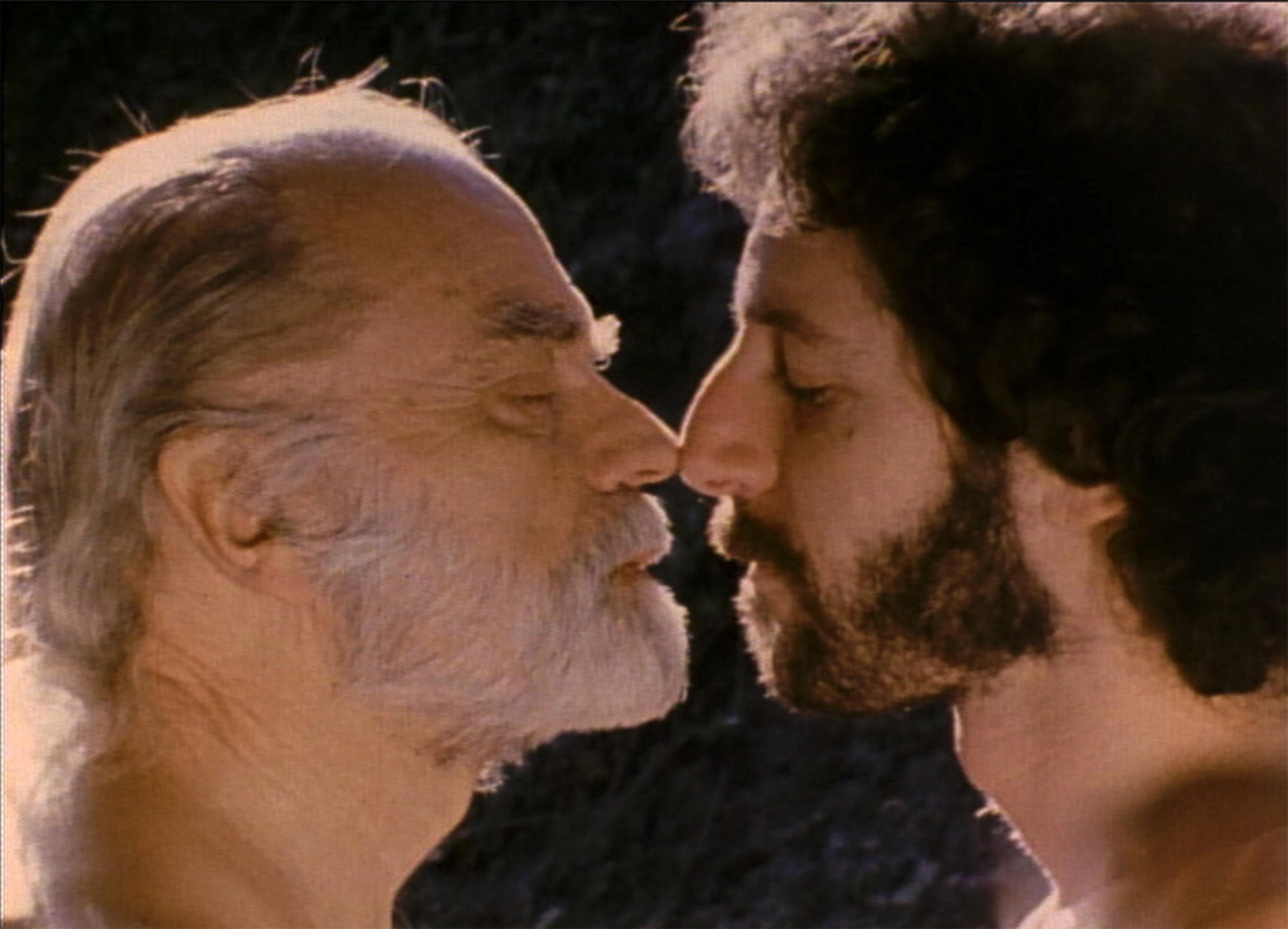
Portrait of Jason Nearly half a century ago, Shirley Clarke’s documentary “portrait” of one rather flaming real-life personality — not just gay, but African American, too — seemed unprecedentedly exotic. The latest in Milestone Films’ “Project Shirley” series of restored Clarke re-releases, Portrait of Jason can’t be experienced that way now. Any surviving exoticism is now related to the subject’s defining a certain pre Stonewall camp persona, and the movie’s reflecting a 1960s cinema vérité style of which its director was a major proponent. The setup couldn’t be simpler: we spend 12 hours in the company of Jason Holliday, née Aaron Payne. Or rather, Clarke and her then-partner, actor Carl Lee, spend those hours — from 9 pm to 9 am — with Jason, while we get a 107-minute distillation. Nattily attired, waving a cigarette around while downing an epic lineup of cocktails, Jason is a natural performer who relishes this filmic showcase as “my moment.” No matter what, he says, he will now “have one beautiful something that is my own.” At first Clarke and Lee simply let him riff, prompting him to speak calculated outrages they’ve probably already heard. (“What do you do for a living, Jason?” “I’m a … I’m a stone whore. And I’m not ashamed of it.”) He’s indeed the life of his own party — increasingly smashed as wee hours encroach in Clarke’s Chelsea Hotel room — but there’s a certain desperation to this act that she and particularly Lee eventually pounce on. “Nervous and guilty and simple as I am,” Jason’s braggadocio camouflages a self-loathing he’s just as willing to expose. When actual tears-of-a-clown are shed, the filmmakers seem cruel. Still, the “portrait” is incomplete — Clarke and Lee don’t press their subject to explicate the past spousal abuse, suicide attempt, and “nuthouse” and jail stays he drops into conversation as casually as he mentions a friendship with Miles Davis. (1:47) Roxie. (Harvey)

Prince Avalanche It has been somewhat hard to connect the dots between David Gordon Green the abstract-narrative indie poet (2000’s George Washington, 2003’s All the Real Girls) and DGG the mainstream Hollywood comedy director (2008’s Pineapple Express, yay; 2011’s Your Highness and The Sitter, nay nay nay). But here he brings those seemingly irreconcilable personas together, and they make very sweet music indeed. Paul Rudd and Emile Hirsch play two men — one a fussy, married grown-up, another a short-attention-spanned manchild — spending the summer in near-total isolation, painting yellow divider lines on recently fire-damaged Texas roads. Their very different personalities clash, and at first the tone seems more conventionally broad than that of the 2011 Icelandic minimalist-comedy (Either Way) this revamp is derived from. But Green has a great deal up his sleeve — gorgeous widescreen imagery, some inspired wordless montages, and a well-earned eventual warmth — that makes the very rare US remake that improves upon its European predecessor. (1:34) Roxie. (Harvey)

Red 2 Are blockbusters entitled to senior moments? Even the best can fail the test — and coast along on past glories on their way to picking up their checks — as Red 2 makes the fatal error of skimping on the grunt work of basic storytelling to simply take up where the first installment on these “retired, extremely dangerous” ex-black ops killers left off. Master hitman Frank (Bruce Willis) and his girlfriend Sarah (Mary-Louise Parker) are semi-contentedly nesting in suburbia when acid-damaged cohort Marvin (John Malkovich) warns them that they’re about to get dragged back into the life. Turns out the cold war isn’t quite as iced out as we all thought, and a portable nuclear device, the brainchild of a physicist (Anthony Hopkins) once in Frank and Marvin’s care, just might be in Moscow. Good-old-days-style high jinks ensue, along with the arrival of old chums like Victoria (Helen Mirren), former flames such as Katja (Catherine Zeta-Jones), and new-gen assassins like Han (Byung-hun Lee). Plus, jet-setting, and the deaths of many, many nameless soldiers, goons, and Iranian embassy staffers (almost all played for laughs, as cued by the comic book-y intertitles). A pity that the thrown-together-ish, throwback story line — somewhat reminiscent of those trashy, starry ’60s clusters, like the original 1960 Ocean’s Eleven — lazily relies on the assumption that we care a jot about the Frank and Sarah romance (the latter now an stereotypically whiny quasi-spouse) and that Frank can essentially talk any killer into joining him out of, er, professional courtesy or basic human decency. Wasting the thoroughbred cast on hand, particularly in the form of Mirren and Hopkins, one wishes the makers had only had the professional courtesy not to phone this effort in. (1:56) Metreon. (Chun)

The Smurfs 2 (1:45) Metreon.

The Spectacular Now The title suggests a dreamy, fireworks-inflected celebration of life lived in the present tense, but in this depiction of a stalled-out high school senior’s last months of school, director James Ponsoldt (2012’s Smashed) opts for a more guarded, uneasy treatment. Charming, likable, underachieving, and bright enough to frustrate the adults in his corner, Sutter (Miles Teller, 2012’s Project X) has long since managed to turn aimlessness into a philosophical practice, having chosen the path of least resistance and alcohol-fueled unaccountability. His mother (Jennifer Jason Leigh), raising him solo since the departure of a father (Kyle Chandler) whose memories have acquired — for Sutter, at least — a blurry halo effect, describes him as full of both love and possible greatness, but he settles for the blessings of social fluidity and being an adept at the acquisition of beer for fellow underage drinkers. When he meets and becomes romantically involved with Aimee (Shailene Woodley), a sweet, unpolished classmate at the far reaches of his school’s social spectrum, it’s unclear whether the impact of their relationship will push him, or her, or both into a new trajectory, and the film tracks their progress with a watchful, solicitous eye. Adapted for the screen by Scott Neustadter and Michael H. Weber (2009’s 500 Days of Summer) from a novel by Tim Tharp, The Spectacular Now gives the quirky pop cuteness of Summer a wide berth, steering straight into the heart of awkward adolescent striving and mishap. (1:35) SF Center, Sundance Kabuki. (Rapoport)

This Is the End It’s a typical day in Los Angeles for Seth Rogen as This Is the End begins. Playing a version of himself, the comedian picks up pal and frequent co-star Jay Baruchel at the airport. Since Jay hates LA, Seth welcomes him with weed and candy, but all good vibes fizzle when Rogen suggests hitting up a party at James Franco’s new mansion. Wait, ugh, Franco? And Jonah Hill will be there? Nooo! Jay ain’t happy, but the revelry — chockablock with every Judd Apatow-blessed star in Hollywood, plus a few random inclusions (Rihanna?) — is great fun for the audience. And likewise for the actors: world, meet Michael Cera, naughty coke fiend. But stranger things are afoot in This Is the End. First, there’s a giant earthquake and a strange blue light that sucks passers-by into the sky. Then a fiery pit yawns in front of Casa Franco, gobbling up just about everyone in the cast who isn’t on the poster. Dudes! Is this the worst party ever — or the apocalypse? The film — co-written and directed by Rogen and longtime collaborator Evan Goldberg — relies heavily on Christian imagery to illustrate the endtimes; the fact that both men and much of their cast is Jewish, and therefore marked as doomed by Bible-thumpers, is part of the joke. But of course, This Is the End has a lot more to it than religious commentary; there’s also copious drug use, masturbation gags, urine-drinking, bromance, insult comedy, and all of the uber-meta in-jokes fans of its stars will appreciate. (1:46) 1000 Van Ness. (Eddy)

20 Feet From Stardom Singing the praises of those otherwise neglected backup vocalists who put the soul into that Wall of Sound, brought heft to “Young Americans,” and lent real fury to “Gimme Shelter,” 20 Feet From Stardom is doing the rock ‘n’ roll true believer’s good work. Director Morgan Neville follows a handful of mainly female, mostly African American backing vocal legends, charts their skewed career trajectories as they rake in major credits and keep working long after one-hit wonders are forgotten (the Waters family) but fail to make their name known to the public (Merry Clayton), grasp Grammy approval yet somehow fail to follow through (Lisa Fischer), and keep narrowly missing the prize (Judith Hill) as label recording budgets shrivel and the tastes, technology, and the industry shift. Neville gives these industry pros and soulful survivors in a rocked-out, sample-heavy, DIY world their due on many levels, covering the low-coverage minis, Concert for Bangladesh high points, gossipy rumors, and sheer love for the blend that those intertwined voices achieve. One wishes the director had done more than simply touch in the backup successes out there, like Luther Vandross, and dug deeper to break down the reasons Fischer succumbed to the sophomore slump. But one can’t deny the passion in the voices he’s chosen to follow — and the righteous belief the Neville clearly has in his subjects, especially when, like Hill, they are ready to pick themselves up and carry on after being told they’re not “the Voice.” (1:30) Smith Rafael. (Chun)

2 Guns Rob a bank of cartel cash, invade a naval base, and then throw down against government heavies — you gotta expect to find a few bullet-hole-sized gaps in the play-by-play of 2 Guns. The action flick is riddled with fun-sized pleasures — usually centered on the playful banter and effortless chemistry between stars Denzel Washington and Mark Wahlberg — and the clever knot of a narrative throws a twist or two in, before director Baltasar Kormákur (last year’s Wahlberg vehicle Contraband) simply surrenders to the tidal pull of action. After visiting Mexican mafia kingpin Papi (Edward James Olmos) and finding the head of their contact in a bag, Bobby (Washington) and Stig (Wahlberg) decide to hit Papi where he’ll feel it: the small border bank where his men have been making drops to safe deposit boxes. Much like Bobby and Stig’s breakfast-time diner gab fest, which seems to pick up where Vincent and Jules left off in Pulp Fiction (1994), as they trade barbs, truisms, and tells, there’s more going on than simply bank robbery foreplay. Both are involved for different reasons: Bobby is an undercover DEA agent, and Stig is a masquerading navy officer. When the payout is 10 times the expected size, not only do Papi, Bobby’s contact Deb (Paula Patton), and Stig’s superior Quince (James Marsden) come calling, but so does mystery man Earl (Bill Paxton), who seems to be obsessed with following the money. We know, sort of, what’s in it for Bobby — all fully identifiable charm, as befits Washington, who makes it rain charisma with the lightest of touches. But Stig? The others? The lure of a major payday is supposed to sweep away all other loyalties, except a little bromantic bonding between two rogue sharp shooters, saddled, unfortunately, with not the sharpest of story lines. (1:49) Metreon. (Chun)

The Way, Way Back Duncan (Liam James) is 14, and if you remember being that age you remember the awkwardness, the ambivalence, and the confusion that went along with it. Duncan’s mother (Toni Collette) takes him along for an “important summer” with her jerky boyfriend, Trent (Steve Carell) — and despite being the least important guy at the summer cottage, Duncan’s only marginally sympathetic. Most every actor surrounding him plays against type (Rob Corddry is an unfunny, whipped husband; Allison Janney is a drunk, desperate divorcee), and since the cast is a cattle call for anyone with indie cred, you’ll wonder why they’re grouped for such a dull movie. Writer-directors Nat Faxon and Jim Rash previously wrote the Oscar-winning screenplay for 2011’s The Descendants, but The Way, Way Back doesn’t match that film’s caliber of intelligent, dry wit. Cast members take turns resuscitating the movie, but only Sam Rockwell saves the day, at least during the scenes he’s in. Playing another lovable loser, Rockwell’s Owen dropped out of life and into a pattern of house painting and water-park management in the fashion of a conscientious objector. Owen is antithetical to Trent’s crappy example of manhood, and raises his water wing to let Duncan in. The short stint Duncan has working at Water Wizz is a blossoming that leads to a minor romance (with AnnaSophia Robb) and a major confrontation with Trent, some of which is affecting, but none of which will help you remember the movie after credits roll. (1:42) Metreon, Sundance Kabuki. (Vizcarrondo)

We’re the Millers After weekly doses on the flat-screen of Family Guy, Modern Family, and the like, it’s about time movieland’s family comedies got a little shot of subversion — the aim, it seems, of We’re the Millers. Scruffy dealer David (Jason Sudeikis) is shambling along — just a little wistful that he didn’t grow up and climb into the Suburban with the wife, two kids, and the steady 9-to-5 because he’s a bit lonely, much like the latchkey nerd Kenny (Will Poulter) who lives in his apartment building, and neighboring stripper Rose (Jennifer Aniston), who bites his head off at the mailbox. When David tries to be upstanding and help out crust punk runaway Casey (Emma Roberts), who’s getting roughed up for her iPhone, he instead falls prey to the robbers and sinks into a world of deep doo-doo with former college bud, and supplier of bud, Brad (Ed Helms). The only solution: play drug mule and transport a “smidge and a half” of weed across the Mexican-US border. David’s supposed cover: do the smuggling in an RV with a hired crew of randoms: Kenny, Casey, and Rose&sdquo; all posing as an ordinary family unit, the Millers. Yes, it’s that much of a stretch, but the smart-ass script is good for a few chortles, and the cast is game to go there with the incest, blow job, and wife-swapping jokes. Of course, no one ever states the obvious fact, all too apparent for Bay Area denizens, undermining the premise of We’re the Millers: who says dealers and strippers can’t be parents, decent or otherwise? We may not be the Millers, but we all know families aren’t what they used to be, if they ever really managed to hit those Leave It to Beaver standards. Fingers crossed for the cineplex — maybe movies are finally catching on. (1:49) Metreon, 1000 Van Ness, Sundance Kabuki. (Chun)

The Wolverine James Mangold’s contribution to the X-Men film franchise sidesteps the dizzy ambition of 2009’s X-Men Origins: Wolverine and 2011’s X-Men: First Class, opting instead for a sleek, mostly smart genre piece. This movie takes its basics from the 1982 Wolverine series by Chris Claremont and Frank Miller, a stark dramatic comic, but can’t avoid the convoluted, bad sci-fi plot devices endemic to the X-Men films. The titular mutant with the healing factor and adamantium-laced skeleton travels to Tokyo, to say farewell to a dying man who he rescued at the bombing of Nagasaki. But the dying man’s sinister oncologist has other plans, sapping Wolverine of his healing powers as he faces off against ruthless yakuza and scads of ninjas. The movie’s finest moments come when Mangold pays attention to context, taking superhero or Western movie clichés and revamping them for the modern Tokyo setting, such as a thrilling duel on top of a speeding bullet train. Another highlight: Rila Fukushima’s refreshing turn as badass bodyguard Yukio. Oh, and stay for the credits. (2:06) Metreon, 1000 Van Ness, Sundance Kabuki. (Sam Stander) *

 

West Oakland hyper gentrification in the WSJ

Two stories on the theme of gentrification and displacement – a topic we at the Guardian have expended plenty of ink on – ran in major news outlets recently, showing how intense the Bay Area housing market pressure has become as it continues to be fueled by a rapid growth in high-salaried jobs in big tech.

Zeroing in on San Francisco, the LA Times turned an eye toward Mission District gentrification, illustrating the growing divide with a succinct comment overheard on a Muni bus: “I don’t know why old people ride Muni. If I were old, I’d just take Uber.”

And a Wall Street Journal article provides an eye-opening account of how REO Homes LLC is literally seeking to accelerate the gentrification process by “beautifying” West Oakland, an historic Black neighborhood that is home to predominantly low-income and working-class residents. (Note: The article may be behind a paywall.)

Minutes from downtown San Francisco via BART, West Oakland is dotted with Victorians and was hit with a wave of foreclosure during the economic crash, destabilizing the lives of many families who lost their homes.

REO is an investment firm helped along by San Francisco billionaire Tom Steyer, a well-connected venture capitalist (he even hosted a Democratic Party fundraiser with President Barack Obama at his Pacific Heights mansion earlier this year).

As the Journal’s Robbie Whelan reports, REO has been shelling out top dollar to spruce up not just its holdings, but residences nearby its West Oakland properties. In a rarely seen form of hyper-gentrification, the company has been planting trees, sprucing up homes (for free) of neighbors who aren’t in the market to sell or rent, mending fences, and making other improvements – all in an effort to lure higher-income residents to the neighborhood.

Since 2008, the height of the real-estate market crash, REO has acquired more than 200 homes in Oakland, Whelan reports, mostly in West Oakland. “Most houses cost around $200,000,” he writes, “and [founder Neill Sullivan] said he invests as much $100,000 to fix each one up.”

Real-estate agents have been marketing the neighborhood – which is no stranger to violent crime – to house-hunters as an affordable, nearby alternative to astronomically expensive San Francisco. Now that many people who weren’t able to keep up with mortgage payments have been forced out by foreclosure (see: robocalls, bungled loan modifications, foreclosure abuses), things are changing swiftly, as if by magic. Armed with cash, bankers are chasing away the blight and rolling out the welcome mat for up-and-comers who can’t swing it for that $3,000 one-bedroom in the city.

All of which will likely result in further displacement of Oakland residents who are barely holding on as it is. As Oakland councilwoman Desley Brooks told the Journal: “I’m not interested in finding housing for San Franciscans who can no longer afford San Francisco. I’m interested in helping people here in Oakland.”

Midsummer mayhem

3

cheryl@sfbg.com

FILM It’s been a zzz summer at the multiplex. The number one movie of the year is Iron Man 3, a highly unmemorable blockbuster. (Quick: Who played the villain? Had to think about it for a second, didn’t you?) With the exception of The Heat and The Conjuring, most everything that’s grossed a crap-ton of dollars recently is either a sequel or based on some well-worn property.

Fear not, genre fans. This weekend, a quartet of films lurks just below the surface, lacking big-budget hype yet worthy of your attention. Among them are a chilly sci-fi epic, a high-octane cop thriller, a classic slab of Italian sleaze, and an eerily relatable (um, if you’re me) documentary about VHS fanatics.

Directed by Ecuador’s Sebastián Cordero (2004’s Crónicas), deep-space tale Europa Report benefits from its interesting international cast, including Michael Nyqvist (Mikael Blomkvist in the Swedish Girl With a Dragon Tattoo series); Romanian Anamaria Marinca (2007’s 4 Months, 3 Weeks and 2 Days); Bay Area-born Daniel Wu, who’s a megastar in Hong Kong; and South African Sharlto Copley, also in concurrent sci-fi release Elysium. Together, they comprise the bulk of a crew crammed into an elegant ship bound for Europa, a moon of Jupiter that may have water — and therefore, life — beneath its icy surface.

These journeys never end well, do they? As we’re told by grim-faced Dr. Unger (Embeth Davidtz), what we’re watching has been pieced together from “recently declassified footage” — and yes, that makes Europa Report yet another “found-footage” movie. By now, it’s a stale way to tell a story, though it’s mostly plausible in this case; time-stamped scenes are cut together from cameras mounted aboard the spacecraft. From the start, we know the mission is doomed. But even if its conclusion is a little abrupt and dissatisfying, at least Europa Report heaps on the claustrophobic atmosphere while rocketing toward the inevitable.

Far more unpredictable is the sleek, gloomy Drug War, the latest from Hong Kong’s Johnnie To — a director who needs no introduction for fans of his prolific output (2001’s Fulltime Killer, 2005’s Election, 2006’s Exiled, 2009’s Vengeance). Unlike To’s previous crime dramas, Drug War was shot in mainland China, where heavy-handed censors rule. According to the film’s press notes, To decided “nobody will disagree with the idea of arresting drug dealers,” particularly in a country fond of imposing death sentences for drug-related offenses. The tactic appears to have worked, since this thing’s dripping with vicious shootouts — even as it subtly points out China’s surveillance-state abundance of CCTV cameras, and examines how just far criminals will go to avoid those draconian punishments.

Timmy Choi (Louis Koo), for one, is terrified of execution. Busted for manufacturing meth after his factory explodes, Timmy runs up against Captain Zhang (Sun Honglei), a no-nonsense drug cop who reluctantly takes on a new informant with the goal of busting a kingpin higher up the cartel’s chain of command. Timmy’s a slippery character whose motivations remain murky right up until the last act; it’s all Zhang can do to keep up, which he does for the most part.

In one incredible sequence, the cop pretends to be Chang, a taciturn junkie with important connections, accompanying Timmy for a meeting with the flashy “Haha,” named for his booming, staccato laugh. With a quick wardrobe change and seconds to spare, Zhang then morphs into Haha to meet with the real Chang. In the process, tiny cameras are deployed, drugs are snorted, and loyalties are stretched razor-thin. It’s a tour de force — yet remarkably unforced — moment for both actor and director.

Back to censors for a minute, since their kind used notoriously brutal shears on the works of Italian horror legend Dario Argento during his late 1970s-early 80s heyday. With the advent of special-edition DVDs and the like, films like 1982’s Tenebre have finally been seen in all their glory. But how often do you get a chance to see Tenebre on 35mm? Thanks to Los Angeles’ Cinefamily, the film — more erotic-thriller giallo than standard spook show — will unfurl for one night only at the Roxie.

The movie follows the nightmarish exploits of American author Peter Neal (Tony Franciosa), who visits Rome to promote Tenebre, his latest murder mystery. It’s not long before a Neal-obsessed maniac starts dropping bodies (weapon of choice: straight razor; victims of choice: scantily clad women). Along the way, there’s a pulse-pounding Goblin soundtrack; a sultry supporting turn by Veronica Lario (as Peter Neal’s ex-wife — in real life, she’s in the process of divorcing Silvio Berlusconi); B-movie sensation John Saxon (as Neal’s agent) looking natty in a fedora; and all the spurting gore and bad dubbing Argento fans demand.

Argento isn’t explicitly mentioned by the subjects of Adjust Your Tracking: The Untold Story of the VHS Collector, opening Friday at the Balboa Theatre, but it’s a sure bet they appreciate his work. Dan M. Kinem and Levi Peretic’s documentary peeks into the tidy lairs of borderline hoarders (all horror and genre fans) who oversee their massive VHS collections with a mixture of pride, good-natured defensiveness, and culty spirit.

A few celebrities drop by (Troma’s Lloyd Kaufman admits he prefers DVDs “because of the extras”), but this is mostly regular-dude turf, with a home-video history lesson (“Blockbuster ruined it for everybody”) mixed into the nostalgia. High points include extended discussions of “VHS covers that lie to you,” as in, when box artwork promises wonders that aren’t actually in the film; and of Tales from the Quadead Zone, a (terrible) film so exquisitely rare it sparked an eBay bidding war and inspired at least one tattoo. *

EUROPA REPORT, DRUG WAR, and ADJUST YOUR TRACKING: THE UNTOLD STORY OF THE VHS COLLECTOR open Fri/16 in Bay Area theaters. TENEBRE screens Fri/16 at the Roxie.

Drawn together

1

marke@sfbg.com

CAREERS AND ED Longtime Bay Area comics superhero Justin Hall basically wrote the textbook on LGBT comics-as-artform (No Straight Lines: Four Decades of Queer Comics, Fantagraphics, 2011) and just came back from a trip to Southeast Asia, where he taught Buddhist monks to express themselves via comic strips.

So when the California College of the Arts launched its new MFA program in comics, Hall was a natural pick to be among the first professors to teach the art, craft, and history of graphic storytelling on a graduate level. The two-year (with summer sessions) 60-student, low-residency program features classes, workshops, talks, and mentorship opportunities designed to immerse students in comics and begin to build an academic base for their study. It looks really cool.

SFBG How do you form a teaching curriculum for something like comics? 

Justin Hall I teach the History and Cultural Impact class during the program’s first summer session. It’s a pretty intense class; for three hours a day I give lectures on the artistic and political history and cultural diversity of the art form, and hold critical discussions on selected readings.

We cover everything from the remarkable rise of the comic strip in the early American newspapers; to the explosion of manga in post-WWII Japan; to the Comics Code Authority and how it wiped out the majority of American romance, horror, and crime comics in the 1950s; to the reimagining of the superhero in the Silver Age; to the development of the competing “clean line” and “comic dynamic” styles in Franco-Belgian comics; to the outrageous work of the underground comix creators, many of them who based here in San Francisco.

I’ve taught some great undergraduate comics classes over the years, but the graduate students are engaged on a different level. I can lecture for hours on the subversive aspects of Wonder Woman, the influences of Japanese woodblocks on Tintin comics, and the artistic legacy of Little Nemo in Slumberland, and their brains don’t melt. They just ask for more. I love it! It’s a slice of geek heaven.

SFBG What’s the homework like? 

JH Over the course of the two years and three Julys, the students will have the majority of work finished on a book-length graphic novel or comics collection, which they can then self-publish on the web or in print, or take to publishers. That’s in addition to individual workshop and online assignments.

SFBG What kind of career opportunities are there for graduates who aren’t immediately contracted to Marvel? 

JH We certainly hope that our graduates find success as creators of comics and graphic novels. There is an exciting expansion of material happening right now in North America, moving beyond the traditional superhero stories and into every genre. While comics are certainly no get-rich-quick scheme, they can allow creators to develop their story ideas with complete control, which can result in a property like The Walking Dead.

Outside of the traditional comic book market, book publishers are now interested in graphic novels, as evinced by the success of works like Alison Bechdel’s bestselling Fun Home. The internet is opening up new territories of creative and professional expansion;

we’re also going to see comics academia snowball, and our graduates will be poised to get those teaching jobs. Comics classes prove extremely popular across the board at high schools, community centers, colleges, and universities, and I have no doubt we’ll see more programs like CCA’s pop up.

Finally, the skills developed at the MFA in Comics don’t just apply to comics themselves; after all, comics require a complex toolbox of writing, illustration, design, calligraphy, color theory, etc. Ultimately, what we’re teaching is how to develop narrative in both verbal and visual ways, and those skills will prove extremely useful in a world that increasingly blends the two. I imagine many of our graduates will wind up in related fields such as animation, advertising, book art, and design, but with a unique perspective on storytelling and communication.

Our plan ends, of course, with comics conquering the world!

For more info, see www.cca.edu/academics/graduate/comics


California’s refusal to reduce its prison population is a sign of deeper problems

40

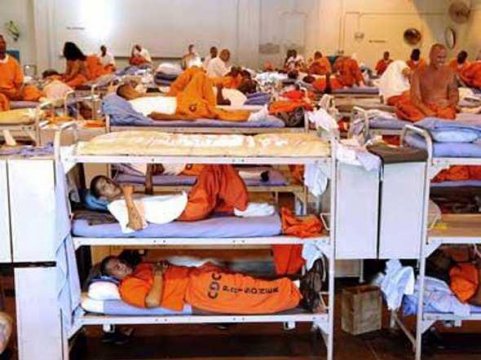
California just doesn’t get it when it comes to criminal justice. We have among the highest incarceration rates in the world (just below Russia’s, and about four times the European average); our prisons eat up far too much of our state budget; they are shamefully overcrowded, secretive, and inhumane; yet politicians from Gov. Jerry Brown on down refuse to show the courage or leadership to try a different approach.

When the conservative-dominated US Supreme Court — which on Friday upheld the lower court requirement that California reduce its prison population by 10,000 by the end of the year — is more progressive and enlightened than California’s leaders, you know there’s something seriously wrong here.

Rather than finally doing the right thing and complying with court orders to reduce a population that is still more than 43 percent over design capacity — despite reducing the population by 46,000 since 2006 because of court orders related to woefully inadequate health care in prisons — Corrections Secretary Jeffrey Beard yesterday responded to last week’s news by saying he will send more inmates to prisons in other states, at a high cost to California taxpayers.

What’s wrong with these people?!?! California prisons already lock up 124,363 people as of July 31, with another 8,959 inmates locked up in Arizona, Mississippi, and Oklahoma prisons at our expense. Tens of thousands more have been sent back to county jails under the state’s Realignment policies (which San Francisco, to the credit of its progressive approach to criminal justice, has managed to absorb and still reduce our jail population, thanks to smart alternatives to incarceration). And yet state officials still can’t get our prisons back to anywhere close to their design capacity?!?!

Of course, doing so would require rethinking decades of mindless “tough-on-crime” legislation that swelled our prison population. They’d probably also need to address the gutting of reentry and rehabilitation programs in the state, as well as conditions in some prisons that drive inmates mad (the subject of an onoing prison hunger strike). And they might even need to reform an economic system that is squeezing those on the bottom — sowing widespread economic insecurity that drives even law-abiding citizens to contemplate desperate measures —  just to maintain the wasteful churn of modern capitalism and the obscenely inequitable concentration of wealth at the top.

Hmm, I do believe that I’m starting to understand the motivations of our elected officials after all, those guardians of status quo power and privilege from both major parties. But if we’re ever going to move toward justice and sustainability, California’s prison system is probably a good place to start. 

Local activists respond to Bradley Manning verdict

Jeff Paterson, an organizer with the Bradley Manning Support Network and Courage to Resist, didn’t hesitate when asked for his initial reaction to the verdict declared for whistleblower Pfc. Bradley Manning on July 30.

“We’re relieved,” Paterson said. “There was a very real possibility that a military judge would convict Bradley Manning of aiding the enemy,” but the 25-year-old U.S. Army private was acquitted of this charge. “So in that sense, we dodged a bullet.”

But Manning was still found guilty on five espionage charges, and five theft charges. Not to mention held in solitary confinement and reportedly “kept naked and tortured emotionally before his trial began in June.”

A month-long sentencing process follows the verdict, and for the charges he was found guilty of, Manning could still face a life behind bars. “We think any more time than he’s served is outrageous,” said Paterson.

Paterson was among a crowd of supporters who convened at Market and Powell Streets July 30 for a rally and march staged in response to the verdict. With chants of “prosecute the war criminals, free Bradley Manning!” and “whistleblowing is not a crime!” protesters marched up crowded Powell Street during rush hour.

“We need to know the truth in this society,” a march participant who introduced herself as Caroljean said, as she peered through the eyes of a Bradley Manning mask and explained that she was there because “we are all Bradley Manning.” Caroljean added, “Whistleblowing is an American democratic right, and if it isn’t, then we don’t live in a democracy anymore.” She’d attended a Buddhist candlelight vigil the previous night, she added, “to support him and give him strength for today.”

Paterson noted that he had traveled to Fort Meade to witness much of the trial. Getting into the courtroom required going through three layers of security, he said, and he’d noticed private security guards in plainclothes trailing him as he came and went. (In a recent interview on Democracy Now, independent journalist Alexa O’Brien noted that she and other journalists who reported on trial “had armed guards roaming the aisles, actually standing behind reporters, peering into our computers, coming every five minutes behind us.”)

But when he heard Manning testify on the stand about why he did what he did, Paterson said, “for those of us who spent so much time working on his behalf, it was an important moment to hear why he felt it was worth risking his life” to carry out the largest leak of classified information in U.S. history.

Brutal murder, wrenching trial: HBO’s must-see doc “The Cheshire Murders”

10

It was, people said, Connecticut’s version of the In Cold Blood murders. In July 2007, Jennifer Hawke-Petit and her two daughters, 11-year-old Michaela and 17-year-old Hayley, were murdered by a pair of strangers — Steven Hayes and Joshua Komisarjevsky, who’d picked the family at random — while patriarch William Petit lay bound and beaten in the basement of their suburban home. He survived; the women perished either at the hands of their attackers or in the fire the men set to cover their tracks.

Clearly, the bare facts of the case — which took place in Cheshire, Conn., a bedroom community near New York City — are horrific enough, without considering any of its other elements. But The Cheshire Murders, created for HBO’s Summer Documentary Series by married filmmaking team Kate Davis and David Heilbroner (2010’s Stonewall Uprising), reveals that the deaths may have been preventable if only police had intervened; a frantic bank teller dialed 911 after observing a frightened Jennifer Petit withdrawing a large sum of money for the waiting Hayes. Or, perhaps the family would have been spared if Komisarjevsky and Hayes, men with long rap sheets, had been more closely monitored by their parole officers and drug counselors — or had received better mental-health care during their respective troubled childhoods.

But all the “what if” scenarios in the world can’t restore three lives — or fill the void felt by those they left behind. Using revealing interviews that explore the many facets of the case, deft editing, and a sensitive yet questioning tone, The Cheshire Murders is a both thought-provoking and disturbing viewing experience. I spoke with Davis and Heilbroner ahead of the film’s Mon/22 HBO debut.

SF Bay Guardian A story like The Cheshire Murders, with its many lurid details, could come across as exploitation, but your film manages to avoid that.

David Heilbroner It would have been very easy to go down the “murder-tainment” path. Obviously, we didn’t go there.

SFBG The earliest interviews in the film seem to occur right after the crimes. How did you first hear about the murders, and how did you go about getting access to your subjects?

DH We heard about the murders, I think, like everybody else — in the papers the next day. We’ve been working with Sheila Nevins, who is the President of HBO Documentary Films, for over a decade, and she called us up. I used to be a prosecutor and I’ve written true crime, and she said, “You guys should go to Cheshire and take a look at what’s going on. There might be a movie — I don’t know, but go look.”

So Kate and I went, and what really got us hooked was that nothing about this case screwed together all that logically right from the beginning. It just was a mystery. It didn’t make sense. It was the wrong town: Cheshire, this stuff just doesn’t happen there. It was the wrong family: usually when you have a crime like this, it turns out one of them was dealing drugs after all. Like Breaking Bad or something, the guy’s actually cooking meth in the basement. But everyone in this family was wonderful. They were all just good, upright citizens. The didn’t bring this upon themselves at all.

And the perpetrators weren’t lifelong arsonists, or sexual predators, or people with vicious assaults in their records. They were petty burglars. And then, Mrs. Petit turns out to have been at the bank and alerted the police in a timely fashion, when the perpetrators were separated and the family was still alive. And yet, 35 minutes later, everybody’s dead.

So, it just was full of weird mysteries that got us immediately hooked on what happened, and why.

SFBG It seemed like you had pretty generous access to everyone (except the police, who refused to comment at all). Several family members on both sides give very open interviews. How forthcoming were they really, and how did you get access to them?

KD It was not easy. The town had virtually shut its doors because it was inundated by a tidal wave of media trucks and reporters. It’s a place where people like to keep to themselves, and privacy is considered a really important commodity. So they were shell-shocked and didn’t want to talk, by and large.

But we stuck around, because we had the latitude to do that with HBO’s support. And beyond that, it really took months for people to understand that this would be a story that really would take place over time, and that we would allow people to speak for themselves, and we weren’t trying to squeeze them into our version of the story. We also assured the people in the film that us filming them, before the trial particularly, wouldn’t affect the trial, because nobody would see the material until after both trials were done. But did it take a long time? Yes.

DH It took months. People were shell-shocked by the horror of the crime, and wary of being taken advantage of. They didn’t want their sound bites taken out of context, and they wanted to trust us. So we spent a long time talking to people about what exactly we were trying to do. They’re hard questions to answer when you’d love someone to open up and be part of your film, but you have to earn their trust.

Now that the film is done, we were able to show it to a few of the central characters in the film — I was actually shaking, I was so nervous showing it to them, because I really wanted them to like it and think we hadn’t abused their kindness — and I’m delighted to say that they all really liked the film, and really believe in it. That’s more gratifying than I can say.

SFBG Did you try to interview either of the killers?

DH We did try. Steven Hayes, shortly after his trial, fell apart mentally. He started writing crazy letters to these sort of death row groupies who are out there, and his letters were intercepted. He’d started taking credit for 17 rape-murder-abductions, none of which were true. He was just losing it, and saying all this crazy stuff, and his lawyer said, “You know, I just can’t have you interview him in this state. He’s a mess.” He was falling apart anyway; he was depressed, he was on meds during the trial, he was deeply suicidal.

As for Joshua Komisarjevsky, the prison authorities have not been kind to any reporting. They literally wouldn’t allow us to film any exteriors of the prison in which he was incarcerated, unless we were off the perimeter of the property. Eventually we hit a brick wall with them. And even if Steven had said yes, we probably wouldn’t have gotten in, ultimately. Not unlike what happened with the Cheshire police, we offered any number of compromises and suggestions, and the prison authorities flatly rebuffed all filming requests.

As for the Cheshire police, if you’ve seen the film, you know there is a terrible scandal about the way they treated the family [of Jennifer Hawke-Petit]. I went and had two meetings with the Chief of Police in Cheshire, and I said, “Our film’s going to come out, and it’s going to say X, Y, and Z, and it’s not very flattering to you. I bet you have good answers to this. Please be in our film. We will honor what you have to say and let you give your point of view, and rebut these allegations if you want to.” And they said no. They didn’t want to say anything.

I’m sorry to say, both the Cheshire police and the correctional authorities have lot of unanswered questions. [After his arrest,] Steven Hayes was able to squirrel away days and days of medication, even though he was on suicide watch, so how did that happen? So many mysteries in this case. It just kept getting weirder as the trial wore on.

SFBG The film’s revelation about the timeline of the crime — that the police could have, maybe, intervened while Jennifer Hawke-Petit was at the bank — was something that the mainstream media hadn’t really covered.

DH What was also missed was that they came up with a cover story. Right after the crime, both the state and the local police had this story about how, the minute they arrived at the crime scene, the house was already on fire and the perpetrators were running out of the building. And that was directly contradicted by their own records. It shows that they had a full complement of officers, about 16 of them, surrounding the house for about half an hour.

That was really troubling — this is a crime that took place in small-town America, with a local police force that everyone knows, and you’d think if anyone was going to stand up for me, and protect me, and tell me the truth about what happened, it would be those guys.

SFBG I appreciated how you included the Hartford Courant reporter in the film. It seemed like he encountered some of the same frustrations that you guys did.

DH Yeah. Colin Poitras. He was a model reporter, I thought, because he was very cool-headed, extremely dogged, just wanted the facts. He had to bring a lawsuit to even pry loose heavily redacted [case] documents. He was very gracious to let us into this real-time process of reporting on an ongoing event.

SFBG The film ends up making a pretty strong statement against the death penalty, although for reasons not normally mentioned in death-penalty debates: it was known from the beginning that the trial would be long and costly, and would make the crime’s most traumatic details public knowledge. Plus, the men were willing to plead guilty in exchange for life sentences, but emotions were so high that the quest for death sentences kind of took over. Did you start out making The Cheshire Murders with that theme in mind, or did it emerge while you were filming?

KD David, you have a legal background, so you may have been aware of the two-part stage of death penalty trials. But it was new to me. I went into the film really being quite open-minded. I was historically anti-death penalty, but with this case, I thought — particularly as a filmmaker — that I would learn more, and make a better film, and think more deeply about things if I could set aside my political beliefs and just watch the story unfold.

So if anything, I went into this thinking that this might steer me toward understanding why somebody would want the death penalty, and that I might end up more pro-death penalty than I was. But in watching the re-victimization of the family members on both sides, and what they had to go through — with these protracted displays of the worst evidence you can imagine — even the jurors suffered from PTSD and many of them had to undergo therapy after the trial.

This was all avoidable, had these guys been locked up for life. In the end, in the end, that’s what will happen, because the chances of them actually being put to death is slim to none.

DH There are any number of documentaries that have looked at the death penalty, and I’ve seen a lot of them. Most of them are about cases where guilt is ultimately in question. Maybe they didn’t do it, this was a miscarriage of justice and god forbid we execute somebody who didn’t do it. That’s the worst indictment of the death penalty.

This is the first case that’s the poster child for the death penalty, if you’re going to have a death penalty. These guys definitely did it. They admitted they did it. And what they did is just awful. There’s no conceivable good spin you can put on tying girls to their beds, dousing them with gasoline, and setting them on fire. It’s as bad as it gets.

Then, since guilt isn’t the question, and since the horribleness of the crime isn’t the question, it becomes, “What is the death penalty going to achieve, emotionally, in terms of society, in terms of finances?” It was a chance to document that and it had never been done before. I think it gives you a chance to really look the death penalty squarely in the eye and decide whether you believe in it, not when someone’s innocent, but when someone’s guilty.

KD And guilty of, arguably, one of the worst domestic crimes in US history.

SFBG Somebody in the movie mentions that it’s like a modern-day In Cold Blood.

DH It’s a comparison that gets made often, and with good reason. There’s an uncanny similarity between the crimes. A family of four in a nice rural home. Two perpetrators who barely know each other break in, in the hopes of stealing money, and by morning nearly everybody’s dead. And they’re eventually sentenced to death. The similarities were resonant in my mind as we were making the film.

SFBG Did you try to get a more formal interview with William Petit, or is what’s in the movie all he was willing to share one-on-one?

DH That was what he was willing to share, and that was more than he was willing to share with anybody but Oprah. He did do one sit-down interview with Oprah, although he refused to discuss the crime. To this day, he refuses to discuss the crime publicly. He doesn’t do interviews. We were close with his family and he agreed to talk with us on camera on a couple of occasions, and he was inundated with requests. I think he spent as much time fending off the media as he did being at the trial. He couldn’t walk down the street without this school of fish of cameras and mics following him, just hoping he might say something.

So to get the few intimate moments we got with him — it was hard to find him when he wasn’t surrounded. We were grateful. And I think it gives you a glimpse into his loneliness and his struggle with pain, anger, and frustration, which is completely understandable, given that he is a man who literally lost everything in his life overnight.

SFBG What are the advantages of working with a company like HBO, and making a film for cable rather than theatrical release?

KD First of all, it really reaches millions of people. The audience is built-in. And for such a national story, I think it was important for us to know that it would be seen if we were going to invest that kind of time. Theatrical documentaries are a wonderful way to see films, but the numbers of people who see them are much smaller.

Also, HBO is one of the few places in the world that has the appetite and the financial backing to support long-term stories like this. The fact that the film went on for years, and the trial took a long time, didn’t stop them from wanting to continue to make the film.

DH Having a place like HBO, which will give you a national audience and potentially an international platform, is really amazing. If your goal as a filmmaker is to get your take on a subject into the public zeitgeist, it’s a great way to go. And they’re wonderful to work with, I have to say. At least with Kate and me, they do not have a heavy editorial hand; they’re just helpful and I have always been really grateful to work with them.

THE CHESHIRE MURDERS airs Mon/22 on HBO.

Trayvon Martin: Can it happen here?

25

OPINION Like many others I have been captivated by the proceedings in the Trayvon Martin case. Personally, and as a member of the Board of Supervisors, it has inspired disappointment, outrage, frustration, and more questions about our criminal justice system than I have answers. But more than anything else this case prompts me to ask: Can this happen here?

However you feel about this particular case, we all like to think that in San Francisco we are more advanced than the rest of the country, and in most ways we are. From our Sanctuary City to our community policing strategies, we have always been conscious about race in our criminal justice system and City policies.

The neighborhoods I represent have 33 percent of the City’s African American population, more than any other area of our City, and we also have the highest concentration of young people, nearly 23 percent. More than half of the individuals who are incarcerated in San Francisco are African American and last year District 10 had the City’s highest number of youth on probation.

Regardless of their ethnicity, residents of areas that experience public safety challenges have a heightened sense of awareness or tension about what goes on in their neighborhoods. Unfortunately, sometimes seeing a young African American man is a trigger. It is a trigger to walk faster, be more alert, notify neighbors, or even call the police to report suspicious behavior.

This is the exact tension that a year ago led Mayor Lee to discuss implementing a version of New York City’s controversial Stop and Frisk Policy. Under this policy, each year police officers stop hundreds of law abiding citizens, the vast majority of which are African American, Latino, and young men on the suspicion that they may be engaging in illegal behavior. I was proud to join with many residents, faith leaders, and even our Police Chief in outlining more productive ways that we can interrupt violent behavior without instituting a policy based on racial profiling.

Thankfully, Stop and Frisk was never implemented in San Francisco, but the debate we had about it demonstrated that we still struggle with the role race plays in our criminal justice system and crime in our neighborhoods.

This verdict serves as a call to action for all of us that if we don’t want a similar tragedy to occur here, we must continue to do what San Francisco has always done best — lead the way. I will continue to push our City to have open dialogues about race in all of our public safety policies. I have spent the last year and will continue to do everything possible to strengthen our City’s regulations on gun control and work collaboratively with all of our communities to develop real solutions to violence that are rooted in protecting and supporting our neighborhoods instead of racial profiling.

Malia Cohen represents southeast San Francisco on the Board of Supervisors.

Parents, behind bars

3

By Ross Mirkarimi

OPINION Nearly 50 percent of the 2.7 million people incarcerated in US prisons and jails are mothers and fathers. In San Francisco, about 40 percent of the prisoners are parents. For their children, the punishment does not fit the crime.

Federal and state recidivism registers at 78 percent; locally the rate is 65 percent and dropping. If we’re serious about breaking the cycle of incarceration, we must get serious about restoring the family ties of the incarcerated.

Studies support what common sense suggests — strengthening the parent-child bond reduces recidivism. It also reduces the prospect that children of the incarcerated are more likely to violate the law. While maintaining appropriate safety and legal protocols, the San Francisco Sheriff’s Department is reexamining policies that invariably damage or strain relationships between an inmate parent and child, starting with birth. In honor of Mother’s Day, on May 9, the Community Works Jail Arts Program, with our department, converted the lobby of the SF women’s jail into a temporary gallery of art created by incarcerated and formerly incarcerated mothers.

That provided a warm environment to announce a policy first in California: The Birth Justice Project, designed to affirm the reproductive rights of all incarcerated women and provide prenatal and postpartum care during the transformative experience of pregnancy, birth and parenthood. With the stewardship of Dr. Carolyn Sufrin, an OB/GYN from UCSF, along with the Department of Public Health, Zellerbach Foundation, and our volunteer doulas (professional birth assistants), we’re radically distancing ourselves from the barbaric attitude of 33 states that still shackle women during labor. Rather, we seek to nurture the inimitable bond between mother and child.

While most jails and prisons shun a lactation policy, we’ve unveiled our pro-lactation program. Breast pumps, refrigeration, and delivery are provided around the clock, facilitated by our jail health professionals. While the arcane national practice is to separate baby and mother after the third day of birth, we’re working to maintain the connection. If we can’t do it through diversion (alternatives to incarceration), then we’ll continue to assess our facility in allowing mother and baby to stay together. I look forward to promoting breast feeding in San Francisco’s jails.

For children of incarcerated parents, the absence of a mother is the loss of a primary caregiver. Ninety percent of incarcerated fathers in the US report that while away, their children live with the child’s mother. In contrast, only 28 percent of incarcerated mothers report that their children live with their father. Routinely, her children are cared for by a grandparent or relative — and about 11 percent are placed in foster care. Many children are bounced from caregiver to caregiver during their parent’s incarceration.

These disruptions to a child’s life negatively affect their social and mental development. Acknowledging the sense of disconnection experienced by children whose parents are incarcerated also means we must grapple with the emotional poverty that increases the likelihood of criminal behavior. In San Francisco, we’re taking steps to bridge this disconnection by reforming visitation policies to facilitating regular contact between children and incarcerated parents.

The people in our jails will eventually be released and will return to communities that historically have been underserved. We’re trying to intensify resources toward exit planning for newly incarcerated parents and guardians. Depending on individuals cases, that could include a regiment of parenting classes, substance abuse and mental health treatment, domestic violence counseling, reunification counseling for parent and child, reading and writing comprehension, high school completion, life skills such as financial literacy, and vocational training.

Many people don’t know what the Sheriff’s Department does or the difference between us and the SFPD; we’ve launched a monthly e-newsletter to keep the public informed. To sign up or contact us at: Ross.Mirkarimi@SFgov.org

Ross Mirkarimi is sheriff of San Francisco

Alerts

0


Wednesday 19

Discussion: Latinos and the criminal justice system Eric Quezada Center, 518 Valencia, SF. www.sflatinodemclub.com. 7-8pm, free. Join SF Public Defender Jeff Adachi, Sheriff Ross Mirkarimi, Criminal Justice Network for youth program manager Roselyn Berry, and Haywood Burns of the Institute for Juvenile Justice, Fairness and Equity for a frank discussion on how the Latino community is affected by systemic aspects of the criminal justice system. The discussion will cover immigrant offenders, the city’s Sanctuary City policy, restorative justice, and juvenile crime. Moderated by Mike Alonso. Sponsored by the SF Latino Democratic Club.

Author Jonathan Alter on Obama — and his enemies St. John’s Presbyterian Church, 2727 College, Berk. $12 advance. www.brownpapertickets.com, (800) 838-3006 This event features the author of The Center Holds: Obama and His Enemies, a book that portrays the president at an historic moment. Alter offers “fresh details about the Koch brothers, Grover Norquist, and the online haters who suffer from ‘Obama Derangement Syndrome,'” according to the KPFA announcement. “He portrays the Obama analytics geeks working out of ‘The Cave’ and the man who secretly videotaped Mitt Romney’s infamous comments on the ’47 percent.'” This is a benefit for KPFA.


Thursday 20

Screening of ‘War on Whistleblowers: Free Press & the National Security State’ Berkeley Fellowship of Unitarian Universalists’ Hall, 1924 Cedar, Berk. http://www.bfuu.org. 7-9pm, $5–$10 suggested donation. A timely screening of a documentary featuring four stories of whistleblowers who took action because they wanted to expose government corruption, misconduct or wrongdoing. Sponsored by the BFUU Social Justice Ctee as part of our Conscientious Projector Series for the 99% For more, visit www.waronwhistleblowers.com


Everyone but Mayor Lee sees SF’s worsening “housing affordability crisis”

43

There was a clear theme that ran through yesterday’s Board of Supervisors meeting from beginning to end, something understood equally by renters, homeowners, and politicians from across the political spectrum: San Francisco has a crisis of housing affordability that is forcing people from the city.

And the only person who doesn’t seem to understand or care about that is the person with the most power to deal with the situation, Mayor Ed Lee, who opened the meeting by essentially dismissing both short- and long-term gentrification forces and claiming “our city has some of the toughest anti-displacement laws in the country.”

It was a claim that Lee made twice, first in response to a question by Sup. Eric Mar about Plan Bay Area and the massive displacement of current San Franciscans that it would create by 2040. And it was also how he answered a question by Sup. John Avalos about rents that are now skyrocketing beyond what most San Franciscans can afford.

I followed Mayor Lee back to his office, asking him to explain his claim, and he cited the city’s “elaborate” rent control laws and the Rent Board recently hiring new personnel as he briskly retreated toward his office. But surely he’s aware that displacement is already happening and getting worse, I told him, citing Rent Board figures showing that evictions are now at a 12-year high.

Lee looked at me dubiously and said, “I’ll have to check the figures on that.” I followed up today with Press Secretary Christine Falvey to ask whether Lee did check those figures — which show 1,757 evictions in the last year, up from 1,395 the previous, both numbers representing returns to the mass displacement of the last dot-com boom — and I’ll update this post if/when I hear back.

“It shows he’s out of touch with what’s happening in San Francisco,” Avalos told me in response to the mayor’s remarks.

Lee seemed to bristle at the suggestion that his aggressive economic development policies might have a downside that he’s going to have to deal with at some point. He touts the 44,000 jobs the city has added during his mayoral tenure, even deflecting criticism that he’s too focused on the technology industry by citing estimates that every tech job creates at least four other jobs (seemingly oblivious to the fact that most of these are low-wage service sector jobs, the very people who are being forced from the city).

“I’m just hoping you’re not blaming the 44,000 jobs we helped created,” Lee told Avalos, saying that he understands the concern about the rising cost of living, “but those are 44,000 people drawing a paycheck and taking care of their families.”

Yes, Mr. Mayor, but those paychecks are having an increasingly tough time paying for housing in San Francisco. That concern animated the condo conversion debate that took place later in the meeting, voiced by those focused on the lack of affordable homeownership opportunities and those focused on reducing the city’s rental stock to create those opportunities.

“I don’t think saying ‘it’s good that we have a growing economy’ is enough to address the issue,” Sup. David Campos said during the condo debate, referring to Lee’s earlier remarks.

Speaking near the end that discussion, Campos summarized the concerns expressed by both sides and sought to put the legislation into perspective: while important, the condo deal is a drop in the anti-displacement bucket. “We are only dealing with the issue of affordability in San Francisco on the margins,” he said, later adding, “I don’t think we’re doing enough to deal with the fundamental issue of who gets to live in San Francisco.”

The debate on the condo conversion began with its original author — Sup. Mark Farrell, who represents District 2, the wealthiest and most conservative in the city — explaining his desire to help middle class people who want to own homes remain in the San Francisco.

“This is the most affordable form of home ownership in San Francisco today,” Farrell said of tenancies-in-common, the fiscally and legally precarious middle step between an apartment and condominium. Later, he said, “We need more affordable homeownership opportunities and not less.”

Farrell argued that “this didn’t need to be a zero sum game,” but that’s exactly what the stock of rent-controlled apartments is in San Francisco, where only housing built before 1979 is protected from the market forces that can drive rents up to whatever a landlord demands.

“We have a fixed rent control stock. Every apartment that converts to a a condo is one less unit,” said Board President David Chiu, who worked with Sups. Jane Kim and Norman Yee and tenant group to amend Farrell’s legislation to help both renters and homeowners.  

“These units were once the homes of tenants who were displaced,” Kim said, objecting to the notion that one person’s apartment should be another person’s affordable homeownership opportunity and arguing that the city should be building more condos for first-time homebuyers instead of cannabalizing the homes of the nearly two-thirds of city residents who rent.

Like Chiu and Kim, Yee said that he wanted to help the TIC owners of today without simply clearing out of the backlog and letting the condo lottery continue unabated, which would green-light even more conversion of apartments. “We want to curb the speculation,” Yee said.

That idea that the city should help people who live in the city, without simply feeding the speculative investors who profiteer off of housing in San Francisco, was a strong theme among critics of condo conversion.

A pro-tenant crowd packed the Board Chambers. Although barred by board rules from addressing the condo legislation directly (that occurred at the committee level), one commenter said, “Giving any more power to the real estate market in San Francisco should be considered a crime.”

To help ward off real estate speculators once the annual condo conversion lottery resumes in 2024, the legisation also limited future conversions to buildings of less than four units, instead of the current cap of six units, a change that Farrell resisted.

“This is not an academic exercise anymore,” Farrell said of the condo conversion restrictions that were added to the legislation. “This will negatively impact thousands of TIC owners in the city.”

Farrell’s original co-sponsor, Sup. Scott Wiener, had a more pro-tenant point-of-view, objecting to the changes that Chiu inserted on more narrow grounds. In his comments, he noted how close the two sides were and how they share the same basic goal: preventing displacement of current city residents.  

“The one thing we can all agree with is we have a housing affordability crisis,” Wiener said, praising the city’s rent control and tenant protection laws, but adding, “TIC owners are also part of this city.”

The price of dealing with the rapid growth in the city — whether it comes to infrastructure or housing affordability — was also a point that Wiener made earlier in the meeting as the board approved the term sheet for a massive office and residential development project proposed at Pier 70.

“We are not doing what we need to do to support the public transportation needed for those projects,” Wiener said, also referring to other projects along the waterfront (the Warrior Arena at Pier 30 and the Giants/Anchor Steam project at Pier 46) and in the southeastern part of the city. “We don’t have the transit infrastructure to support our current population, let alone new growth.”

It’s about striking a balance, as Chiu said he did with the condo legislation, and not just a balance between renters and TIC owners. It’s about striking a balance between how to protect the San Francisco of today while planning for the San Francisco of tomorrow.

Yes, that means working with market rate housing developers, and it also means diverting some of their would-be profits into the city’s affordable housing fund and its infrastructure needs. Yes, it means private-sector job creation, but it also means more public sector jobs and providing a safety net for people without jobs or who work as artists or social workers or other professions that are being driven from the city. And it means beefing up our public housing and turning around the exodus of African-Americans, concerns raised at the meeting by Sup. Malia Cohen.

We at the Guardian last year looked at how Oakland has become cooler than San Francisco, largely because of the displacement from here. And now, even many people within the tech community have begun to decry the gentrifiction that is being driven by Mayor Lee’s narrow economic development vision.

“Plan Bay Area is an opportunity to think regionally and strategically about planned growth,” Lee said when addressing Mar’s question, sidestepping the direct answer that Mar sought on a set of specific proposals for mitigating some of the displacement planned for San Francisco and maintaining this city’s diversity.

Yes, we do have an opportunity to think strategically about the city we’re becoming and who gets to live in it, but only if we don’t think “jobs” is the answer to every question.

Distance and racism

41

Right now, I’m approximately 116 miles from the Mexican border.

When I was growing up, I was 1600 miles from the same border. I was in Boston–I had a discussion today with some musicians from Boston that are “alarmed” at “the end of America” because of “amnesty”. When I pointed out that in the last 24 years, LA had become more “Latino” (I sussed out that the issue wasn’t illegal immigration as it never really is, when they started in with “press 2 for English”) and that crime and pollution was down and land values up–might as have been talking to my toenails.

I think it’s the same syndrome that crazy white folks in gated communities have about “the end of our way of life”–the further removed they are from the actual human beings that terrify them the more terrified they are.

Why do you think Coeur D’Alene, in Idaho’s northern tip was the capital of white power, hundreds of miles away from non whites?

It’s race.

Film listings

0

Film listings are edited by Cheryl Eddy. Reviewers are Kimberly Chun, Dennis Harvey, Lynn Rapoport, and Sara Maria Vizcarrondo. For rep house showtimes, see Rep Clock.

OPENING

Becoming Traviata Philippe Béziat’s backstage doc offers an absorbing look at a particularly innovative production of Verdi’s La Traviata, directed by Jean-François Sivadier and starring the luminous Natalie Dessay (currently appearing in SF Opera’s production of Tales of Hoffman). Béziat eschews narration or interviews; instead, his camera simply tracks artists at work, moving from rehearsal room to stage as Sivadier and Dessay (along with her co-stars) block scenes, make suggestions, practice gestures, and engage in the hit-and-miss experimentation that defines the creative process. The film is edited so that La Traviata progresses chronologically, with the earliest scenes unfolding on a spartan set (Dessay’s practice attire: yoga clothes), and the tragic climax taking place onstage, with an orchestra in the pit and sparkly make-up in full effect. Dessay will appear in person at San Francisco screenings Sat/15 at 7pm and Sun/16 at 2pm. (1:53) Opera Plaza, Shattuck, Smith Rafael. (Eddy)

Dirty Wars Subtitled "the world is a battlefield," this doc follows author and Nation magazine writer Jeremy Scahill as he probes the disturbing underbelly of America’s ongoing counterterrorism campaign. After he gets wind of a deadly nighttime raid on a home in rural Afghanistan, Scahill does his best to investigate what really happened, though what he hears from eyewitnesses doesn’t line up with the military explanation — and nobody from the official side of things cares to discuss it any further, thank you very much. With its talk of cover-ups and covert military units, and interviewees who appear in silhouette with their voices disguised, Dirty Wars plays like a thriller until Osama bin Laden’s death shifts certain (but not all) elements of the story Scahill’s chasing into the mainstream-news spotlight. The journalist makes valid points about how an utter lack of accountability or regard for consequences (that will reverberate for generations to come) means the "war on terror" will never end, but Dirty Wars suffers a bit from too much voice-over. Even the film’s gorgeous cinematography — director Rick Rowley won a prize for it at Sundance earlier this year — can’t alleviate the sensation that Dirty Wars is mostly an illustrated-lecture version of Scahill’s source-material book. Still, it’s a compelling lecture. (1:26) Embarcadero, Shattuck. (Eddy)

The Guillotines Why yes, that is Jimmy Wang Yu, director and star of 1976 cult classic Master of the Flying Guillotine, in a small but pivotal role commanding a team of assassins who specialize in dispatching heads with airborne versions of you-know-which weapon. Unfortunately, this latest from Andrew Lau (best-known stateside for 2002’s Infernal Affairs, remade into Martin Scorsese’s 2006 Oscar-winner The Departed) doesn’t have nearly as much fun as it should; dudes be chopping heads off in a flurry of CG’d-up steampunky whirlygigs, but The Guillotines‘ tone is possibly even more deadly, as in deadly serious. When a rebellious prophet-folk hero known as Wolf (Xiaoming Huang) runs afoul of the Emperor’s top-secret Guillotine brotherhood, led in the field by Leng (Ethan Juan), the squad travels in disguise to a rural, smallpox-afflicted village to track him down. Along for the journey is the Emperor’s top operative, ruthless Agent Du (Shawn Yue), a boyhood friend of Leng’s. Leng and Du share a dark secret: the Guillotines have been deemed expendable — yep, in the Stallone sense — and the Emperor has decided to kill them off and replace them with armies toting guns and cannons in the name of progress. Lau is no stranger to tales of men grappling with betrayals, misplaced loyalties, and hidden personal agendas — and as historical martial-arts fantasies go, The Guillotines has higher production values than most, with sweeping, luscious photography. Too bad all the action scenes are punctuated by episodes of moody brooding — replete with slo-mo gazing off into the distance, dramatically falling tears, solemn heart-to-hearts, swelling strings, and the occasional howl of anguish. (1:53) Presidio. (Eddy)

Man of Steel As beloved as he is, Superman is a tough superhero to crack — or otherwise bend into anything resembling a modern character. Director Zack Snyder and writer David S. Goyer, working with producer Christopher Nolan on the initial story, do their best to nuance this reboot, which focuses primarily on Supe’s alien origins and takes its zoom-happy space battles from Battlestar Galactica. The story begins with Kal-El’s birth on a Krypton that’s rapidly going into the shitter: the exploited planet is about to explode and wayward General Zod (Michael Shannon) is staging a coup, killing Kal-El’s father, Jor-El (Russell Crowe), the Kryptonians’ lead scientist, and being conveniently put on ice in order to battle yet another day. That day comes as Kal-El, now a 20-something earthling named Clark Kent (Henry Cavill) — resigned to his status as an outsider, a role dreamed up by his protective adoptive dad (Kevin Costner) — has turned into a bit of a (dharma) bum, looking like a buff Jack Kerouac, working Deadliest Catch-style rigs, and rescuing people along the way to finding himself. Spunky Lois Lane (Amy Adams) is the key to his, erm, coming-out party, necessitated by a certain special someone looking to reboot the Kryptonian race on earth. The greatest danger here lies in the fact that all the leached-of-color quasi-sepia tone action can turn into a bit of a Kryptonian-US Army demolition derby, making for a mess of rubble and tricky-to-parse fight sequences that, of course, will satisfy the fanboys and -girls, but will likely glaze the eyes of many others. Nevertheless, the effort Snyder and crew pack into this lengthy artifact — with its chronology-scrambling flashbacks and multiple platforms for Shannon, Diane Lane, Christopher Meloni, Laurence Fishburne, and the like — pays off on the level of sheer scale, adding up to what feels like the best Superman on film or TV to date — though that bar seems pretty easy to leap over in a single bound. (2:23) Balboa, Marina. (Chun)

Pandora’s Promise Filmmaker Robert Stone has traveled far from his first film, 1988’s Oscar-nominated anti-nuke Radio Bikini, to today, with the release of Pandora’s Promise, a detailed and guaranteed-to-be-controversial examination of nuclear power and the environmentalists who have transitioned from fervently anti- to pro-nuclear. Interviewing activists and authors like Stewart Brand, Gwyneth Cravens, Mark Lynas, and Michael Shellenberger, among others, Stone eloquently visualizes all angles of their discussion with media, industrial, and newly shot footage, starting with a visit to the largest nuclear disaster of recent years, Fukushima, which he visits with the hazmat-suited environmental activist and journalist Lynas and continuing to Chernobyl and its current denizens. Couching the debate in cultural and political context going back to World War II, Stone builds a case for nuclear energy as a viable method to provide clean, safe power for planet in the throes of climate change that will nonetheless need double or triple the current amount of energy by 2050, as billions in the developing world emerge from poverty. In a practical sense, as The Death of Environmentalism author Shellenberger asserts, "The idea that we’re going to replace oil and coal with solar and wind and nothing else is a hallucinatory delusion." Stone and his subjects put together an enticing argument to turn to nuclear as a way forward from coal, made compelling by the idea that designs for safer alternative reactors that produce less waste are out there. (1:27) Embarcadero, Shattuck. (Chun)

This Is the End See "Hell Boys." (1:46) Four Star, Presidio, Shattuck.

ONGOING

After Earth In around a century, we’ll board penitentiary-style ships and evacuate Earth for a sexier planet. Let’s call it a middle-aged migration — we all saw this coming. It’ll be dour, and we’ll feel temporary guilt for all the trees we leveled, bombs we dropped, and oil refineries we taped for 1960s industrial films. Like any body post-divorce, our planet will develop defenses against its ex — us humans — so when Will Smith and son Jaden crash land on the crater it’s toxic to them, full of glorious beasts and free as the Amazon (because it was partly filmed there). Critically wounded General Raige (Will) has to direct physically incredible Kitai (Jaden) through the future’s most dangerous Ironman triathalon. It’s more than a Hollywood king guiding his prince through a life-or-death career obstacle course, it’s a too-aggressive metaphor for adolescence — something real-world Jaden may forfeit to work with dad. Call that the tragedy beneath After Earth: it makes you wonder why the family didn’t make a movie more like 1994’s The Lion King — they had to know that was an option. Director M. Night Shyamalan again courts the Last Airbender (2010) crowd with crazy CG fights and affecting father-son dynamics, but for once, Shyamalan is basically a hired gun here. The story comes straight from Papa Smith, and one gets the feeling the movie exists primarily to elevate Jaden’s rising star. (1:40) 1000 Van Ness, SF Center, Sundance Kabuki. (Vizcarrondo)

Before Midnight Proving (again) that not all sequels are autonomic responses to a marketplace that rewards the overfamiliar, director Richard Linklater and his cowriters Julie Delpy and Ethan Hawke reconnect with the characters Céline and Jesse, whom we first encountered nearly 20 years ago on a train and trailed around Vienna for a night in Before Sunrise, then met again nine years later in Before Sunset. It’s been nine more years since we left them alone in a Paris apartment, Céline adorably dancing to Nina Simone and telling Jesse he’s going to miss his plane. And it looks like he did. The third film finds the two together, yes, and vacationing in Greece’s southern Peloponnese, where the expansive, meandering pace of their interactions — the only mode we’ve ever seen them in — is presented as an unaccustomed luxury amid a span of busy years filled with complications professional and personal. Over the course of a day and an evening, alone together and among friends, the two reveal both the quotidian intimacies of a shared life and the cracks and elisions in their love story. (1:48) Embarcadero, Piedmont, Shattuck, Sundance Kabuki. (Rapoport)

The East In Zal Batmanglij and Brit Marling’s powerful second film collaboration (Batmanglij directs, and the pair co-wrote the screenplay, as in 2011’s Sound of My Voice), Marling plays Sarah, an intelligence agent working for a private firm whose client list consists mainly of havoc-wreaking multinationals. Sarah, presented as quietly ambitious and conservative, is tasked by the firm’s director (Patricia Clarkson) with infiltrating the East, an off-the-grid activist collective whose members, including Benji (Alexander Skarsgård), Izzy (Ellen Page), and Doc (Toby Kebbell), bring an eye-for-an-eye sensibility to their YouTube-publicized "jams." Targeting an oil company responsible for a BP-style catastrophe, they engineer their own spill in the gated-community habitat of the company’s CEO, posting a video that juxtaposes grisly images of oil-coated shorebirds and the unsettling sight of gallons of crude seeping through the air-conditioning vents of a tidy McMansion. A newspaper headline offers a facile framework for understanding their activities, posing the alternatives as "Pranksters or Eco-Terrorists?" But as Sarah examines the gut-wrenching consequences of so-called white-collar crime and immerses herself in the day-to-day practices of the group, drawn in particular to the charismatic Benji, the film raises more complex questions. Much of its rhetorical force flows from Izzy, whom Page invests with a raw, anguished outrage, drawing our sympathies toward the group and its mission of laying bare what should be unbearable. (1:56) California, Embarcadero, Piedmont, Sundance Kabuki. (Rapoport)

Elemental Even those suffering from environmental-doc fatigue (a very real condition, particularly in the eco-obsessed Bay Area) will find much to praise about Elemental, co-directed by Gayatri Roshan and NorCal native Emmanuel Vaughan-Lee (who also co-composed the film’s score). This elegantly shot and edited film approaches the issues via three "eco-warriors," who despite working on different causes on various corners of the planet encounter similar roadblocks, and display like-minded determination, along the way: Rajendra Singh, on a mission to heal India’s heavily polluted Ganges River; Jay Harman, whose ingenious inventions are based on "nature’s blueprints"; and Eriel Deranger, who fights for her indigenous Canadian community in the face of Big Oil. Deranger cuts a particularly inspiring figure: a young, tattooed mother who juggles protests, her moody tween (while prepping for a new baby), and the more bureaucratic aspects of being a professional activist — from defending her grassroots methods when questioned by her skeptical employer, to deflecting a drunk, patronizing Robert F. Kennedy Jr. at a big-ticket fundraiser — with a calm, steely sense of purpose. (1:33) Smith Rafael. (Eddy)

Epic (1:42) Metreon, 1000 Van Ness, Presidio.

Fast and Furious 6 Forget the fast (that’s understood by now, anyway) — part six in this popcorny series is heavy on the "furious," with constant near-death stunts that zoom past irrational and slam into batshit crazy. Agent Hobbs (Dwayne Johnson) lures the gang out of sunny retirement to bust a fast driver with a knack for strategy and an eye on world domination. Sure, Ludacris jokes their London locale doesn’t mean they’re in a Bond movie, but give cold-blooded Luke Evans some time and he’ll work his way up to antagonizing 007. Shaw (Evans) is smaller than our hero Toretto (Vin Diesel), but he’s convincing, throwing his King’s English at a man whose murky dialect is always delivered with a devilish baritone. If Shaw’s code is all business, Toretto’s is all family: that’s what holds together this cast, cobbled from five Fast and Furious installments shot all over the world. Hottie Gal Gadot (playing Sung Kang’s love interest) reassures Han (Kang) mid-crisis: "This is what we are." It’s not for nothing the gang’s main weapon is a harpoon gun that, once shot, leaves an umbilicus from the shooter to whatever’s in the crosshairs. That’s Torreto for you. Meanwhile, the villain’s weapon is a car with a spatula-like front end, that flips cars like pancakes. The climactic battle on a cargo plane has to give a face time to every member of the eight-person team, so naturally they shot it on the world’s longest runway. Of course the parade features less car porn than previous editions but it’s got a wider reach now — it’s officially international intrigue, not just fun for gearheads. For my money, it’s some of the best action in theaters today. Stick around for the inevitable sequel-suggesting coda during the credits. (2:10) Metreon, 1000 Van Ness. (Vizcarrondo)

Fill the Void Respectfully rendered and beautifully shot in warm hues, Fill the Void admirably fills the absence on many screens of stories from what might be considered a closed world: the Orthodox Hasidic community in Israel, where a complex web of family ties, duty, and obligation entangles pretty, accordion-playing Shira (Hada Yaron). An obedient daughter, she’s about to agree to an arranged marriage to a young suitor when her much-loved sister (Renana Raz) dies in childbirth. When Shira’s mother (Irit Sheleg) learns the widower Yochay (Yiftach Klein) might marry a woman abroad and take her only grandchild far away, she starts to make noises about fixing Shira up with her son-in-law. The journey the two must take, in possibly going from in-laws to newlyweds, is one that’s simultaneously infuriating, understandable, and touching, made all the more intimate given director Rama Burshtein’s preference for searching close-ups. Her affinity for the Orthodox world is obvious with each loving shot, ultimately infusing her debut feature with a beating heart of humanity. (1:30) Albany, Clay, Smith Rafael. (Chun)

Frances Ha Noah Baumbach isn’t exactly known for romance and bright-eyed optimism. Co-writing 2009’s Fantastic Mr. Fox with director Wes Anderson is maybe the closest to "whimsy" as he’s ever come; his own features (2010’s Greenberg, 2007’s Margot at the Wedding, 2005’s The Squid and the Whale, 1997’s Mr. Jealousy, and 1995’s Kicking and Screaming) tend to veer into grumpier, more intellectual realms. You might say his films are an acquired taste. But haters beware. Frances Ha — the black-and-white tale of a New York City hipster (Baumbach’s real-life squeeze, Greta Gerwig, who co-write the script with him) blundering her way into adulthood — is probably the least Baumbach-ian Baumbach movie ever. Owing stylistic debts to both vintage Woody Allen and the French New Wave, Frances Ha relies heavily on Gerwig’s adorable-disaster title character to propel its plot, which is little more than a timeline of Frances’ neverending micro-adventures: pursuing her nascent modern-dance career, bouncing from address to address, taking an impromptu trip to Paris, visiting her parents (portrayed by the Sacramento-raised Gerwig’s real-life parents), "breaking up" with her best friend. It’s so charming, poignant, and quotable ("Don’t treat me like a three-hour brunch friend!") that even those who claim to be allergic to Baumbach just might find themselves succumbing to it. (1:26) Embarcadero, Piedmont, Shattuck, Smith Rafael, Sundance Kabuki. (Eddy)

The Great Gatsby Every bit as flashy and in-your-face as you’d expect the combo of "Baz Luhrmann," "Jazz Age," and "3D" to be, this misguided interpretation of F. Scott Fitzgerald’s classic tale is, at least, overstuffed with visual delights. For that reason only, all the fashion-mag fawning over leading lady Carey Mulligan’s gowns and diamonds, and the opulent production design that surrounds them, seems warranted. And in scenes where spectacle is appropriate — Gatsby’s legendary parties; Tom Buchanan’s wild New York romp with his mistress — Luhrmann delivers in spades. The trade-off is that the subtler aspects of Fitzgerald’s novel are either pushed to the side or shouted from the rooftops. Leonardo DiCaprio, last seen cutting loose in last year’s Django Unchained, makes for a stiff, fumbling Gatsby, laying on the "Old Sports" as thickly as his pancake make-up. There’s nothing here so startlingly memorable as the actor and director’s 1996 prior collaboration, Romeo + Juliet — a more successful (if still lavish and self-consciously audacious) take on an oft-adapted, much-beloved literary work. (2:22) California, 1000 Van Ness, Presidio, SF Center, Sundance Kabuki. (Eddy)

The Hangover Part III Even the friendliest little blackout bacchanal can get tiresome the third time around. The poster depicting Bradley Cooper, Ed Helms, and Zach Galifianakis — stern in suits and ties — says it all: it’s grim men’s business, the care and maintenance of this Hangover franchise, this orgy of good times gone bad. Once a bad-taste love letter to male-bonding, Hangover Part III is ready for a chance, primed to sever some of those misbegotten ties. This time around, the unlikely troika — with the always dispensable normal-dude figurehead Doug (Justin Bartha) in tow — are captured by random sketchy figure Marshall (John Goodman, whose every utterance of the offensive "Chinaman" should bring back Big Lebowski warm-and-fuzzies). He holds Doug hostage in exchange for the amoral, cockfighting, coke-wallowing, whore-hiring, leather-wearing Leslie Chow (Ken Jeong), who stole his gold, and it turns out Alan (Galifianakis) might be his only chum. Jeong, who continues to bring the hammy glee, is still the best thing here, even as the conscience-free instigator; he’s the dark counterpart to tweaked man-child Alan, who meets cute with mean-ass pawn-star soulmate Cassie (Melissa McCarthy). Meanwhile, Cooper and Helms look on, puzzled, no doubt pondering the prestige projects on their plates and wondering what they’re still doing here. (1:40) 1000 Van Ness, SF Center, Shattuck. (Chun)

The Internship The dirty little secret of the new economy continues to be the gerbil cycle of free/cheap labor labeled "internships" that propels so many companies — be they corporate or indie, digital or print media. But gee, who’s going to see an intern comedy titled The Exploitation, besides me and my local union rep? Instead, spinning off a Vince Vaughn story idea and a co-writing credit, The Internship looks at that now-mandatory time-suck for so many college students through the filter of two older, not-quite-wiser salesmen Billy (Vaughn) and Nick (Owen Wilson) hoping to make that working guy’s quantum leap from watch sales to Google’s Mountain View campus, which director Shawn Levy casts as a bright and shiny workers wonderland with its free spring rolls and lattes, bikes, and napping pods. Departing from reality: the debugging/coding/game-playing/app-making competition that forces Billy and Nick to bond with their team of castoffs (Dylan O’Brien, Tiya Sircar, Tobit Raphael), led by noob manager Lyle (Josh Brener), in order to win a full-time job. Part of the key, naturally, turns out to be a Swingers-like visit to a strip club, to release those deeply repressed nerd sexualities — nothing like a little retrograde sexism to bring a group together. Still, the moment is offset by the generally genial, upbeat attitude brought to The Internship by its lead actors: Nick and Billy may be flubs at physics and clueless when it comes to geek culture, but most working stiffs who have suffered the slings and arrows of layoffs and dream of stable employment can probably get behind the all-American ideals of self-reinvention and optimism about the future peddled in The Internship, which easily slips in alongside The Great Gatsby among this year’s Great Recession narratives. Blink too fast and you might miss the microcameo by Google co-founder Sergey Brin. (1:59) Four Star, Marina, Metreon, 1000 Van Ness, Vogue. (Chun)

Iron Man 3 Neither a sinister terrorist dubbed "the Mandarin" (Ben Kingsley) nor a spray-tanned mad scientist (Guy Pearce) are as formidable an enemy to Tony Stark (Robert Downey, Jr.) as Tony Stark himself, the mega-rich playboy last seen in 2012’s Avengers donning his Iron Man suit and thwarting alien destruction. It’s been rough since his big New York minute; he’s been suffering panic attacks and burying himself in his workshop, shutting out his live-in love (Gwyneth Paltrow) in favor of tinkering on an ever-expanding array of manned and un-manned supersuits. But duty, and personal growth, beckon when the above-mentioned villains start behaving very badly. With some help (but not much) from Don Cheadle’s War Machine — now known as "Iron Patriot" thanks to a much-mocked PR campaign — Stark does his saving-the-world routine again. If the plot fails to hit many fresh beats (a few delicious twists aside), the 3D special effects are suitably dazzling, the direction (by series newcomer Shane Black) is appropriately snappy, and Downey, Jr. again makes Stark one of the most charismatic superheros to ever grace the big screen. For now, at least, the continuing Avengers spin-off extravaganza seems justified. (2:06) Metreon, 1000 Van Ness. (Eddy)

Kings of Summer Ah, the easy-to-pluck, easy-to-love low-hanging fruit of summer — and a coming of age. Who can blame director Jordan Vogt-Roberts and writer Chris Galletta, both TV vets, for thinking that a juicy, molasses-thick application of hee-hee-larious TV comedy actors to a Stand by Me-like boyish bildungsroman could only make matters that much more fun? When it comes to this wannabe-feral Frankenteen love child of Terrence Malick and Parks and Recreation, you certainly don’t want to fault them for original thinking, though you can understand why they keep lurching back to familiar, reliably entertaining turf, especially when it comes in the form of Nick Offerman of the aforementioned P&R, who gets to twist his Victorian doll features into new frustrated shapes alongside real-life spouse Megan Mullally. Joe (Nick Robinson) is tired of his single dad (Offerman) stepping on his emerging game, so he runs off with neurotic wrestling pal Patrick (Gabriel Basso) and stereotypically "weirdo foreign" kid Biaggio (Moises Arias) to a patch of woods. There, from scrap, they build a cool-looking house that resembles a Carmel boho shack and attempt to live off the land, which means mostly buying chicken from a Boston Market across a freeway. Pipes are pummeled, swimming holes are swum, a pathetically wispy mustachio is cultivated — read: real burly stuff, until the rising tide of testosterone threatens to poison the woodland well. Vogt-Roberts certainly captures the humid sensuality and ripe potential of a Midwestern summer — though some of the details, like the supposedly wild rabbit that looks like it came straight from Petco, look a bit canned — and who can gripe when, say, Portlandia‘s Kumail Nanjiani materializes to deliver monster wontons? You just accept it, though the effect of bouncing back and forth between the somewhat serious world of young men and the surprisingly playful world of adults, both equally unreal, grows jarring. Kings of Summer isn’t quite the stuff of genius that marketing would have you believe, but it might give the "weirdo foreign" art house crowd and TV comedy addicts something they can both stand by. (1:33) Shattuck, Sundance Kabuki. (Chun)

Kon-Tiki In 1947 Norwegian explorer and anthropologist Thor Heyderdahl arranged an expedition on a homemade raft across the Pacific, recreating what he believed was a route by which South Americans traveled to Polynesia in pre-Columbian times. (Although this theory is now disputed.) The six-man crew (plus parrot) survived numerous perils to complete their 101-day, 4300-mile journey intact — winning enormous global attention, particularly through Heyderdahl’s subsequent book and documentary feature. Co-directors Joachim Roenning and Espen Sandberg’s dramatization is a big, impressive physical adventure most arresting for its handsome use of numerous far-flung locations. Where it’s less successful is in stirring much emotional involvement, with the character dynamics underwhelming despite a decent cast led by Pal Sverr Hagen as Thor (who, incredibly, was pretty much a non-swimmer). Nonetheless, this new Kon-Tiki offers all the pleasures of armchair travel, letting you vicariously experience a high-risk voyage few could ever hope (or want) to make in real life. (1:58) Opera Plaza. (Harvey)

Midnight’s Children Deepa Mehta (2005’s Water) directs and co-adapts with Salman Rushdie the author’s Booker Prize-winning 1981 novel, which mixes history (India’s 1947 independence, and the subsequent division of India and Pakistan) with magical elements — suggested from its fairy-tale-esque first lines: "I was born in the city of Bombay, once upon a time." This droll voice-over (read by Rushdie) comes courtesy of Saleem Sinai, born to a poor street musician and his wife (who dies in childbirth; dad is actually an advantage-taking Brit played by Charles "Tywin Lannister" Dance) but switched (for vaguely revolutionary reasons) with Shiva, born at the same moment to rich parents who unknowingly raise the wrong son. Rich or poor, it seems all children born at the instant of India’s independence have shared psychic powers; over the years, they gather for "meetings" whenever Saleem summons them. And that’s just the 45 minutes or so of story. Though gorgeously shot, Midnight’s Children suffers from page-to-screen-itis; the source material is complex in both plot and theme, and it’s doubtful any film — even one as long as this — could translate its nuances and more fanciful elements ("I can smell feelings!," Saleem insists) into a consistently compelling narrative. Last-act sentimentality doesn’t help, though it’s consistent with the fairy-tale vibe, I suppose. (2:20) Smith Rafael. (Eddy)

Much Ado About Nothing Joss Whedon (last year’s The Avengers) shifts focus for a minute to stage an adaptation of the Shakespeare comedy, drawing his players from 15 years’ worth of awesome fantasy/horror/sci-fi TV and film projects. When the Spanish prince Don Pedro (Reed Diamond) pays a post-battle visit to the home of Leonato (Clark Gregg) with his officers Claudio (Fran Kranz) and Benedick (Alexis Denisof), Claudio falls for Leonato’s daughter, Hero (Jillian Morgese), while Benedick falls to verbal blows with Hero’s cousin Beatrice (Amy Acker). Preserving the original language of the play while setting his production in the age of the iPhone and the random hookup, Whedon makes clever, inventive use of the juxtaposition, teasing out fresh sources of visual comedy as well as bringing forward the play’s oddities and darker elements. These shadows fall on Beatrice and Benedick, whose sparring — before they succumb to a playfully devious setup at the hands of their friends — has an ugly, resentful heat to it, as well as on Hero and Claudio, whose filmy romance is unsettlingly easy for their enemies, the malevolent Don John (Sean Maher) and his cohorts, to sabotage. Some of Acker and Denisof’s broader clowning doesn’t offer enough comic payoff for the hammy energy expenditure, but Nathan Fillion, heading up local law enforcement as the constable Dogberry, delivers a gleeful depiction of blundering idiocy, and the film as a whole has a warm, approachable humor while lightly exposing "all’s well that ends well"’s wacky, dysfunctional side. (1:49) Albany, SF Center. (Rapoport)

Mud (2:18) Balboa, Opera Plaza, Shattuck.

Now You See Me Cheese can be a tough factor to quantify, but you get close to the levels Now You See Me strives for when you picture the hopelessly goofy, tragically coiffed Doug Henning lisping, "It’s magic!" somewhere between Bob "Happy Little Tree" Ross and a rainbow sprinkled with Care Bears. Now You See Me, however, is much less likely to be dusted off and adored by a Bronies-style cult. Four seemingly savvy street and stage magicians (Jesse Eisenberg, Woody Harrelson, Isla Fisher, and Dave Franco) are brought together by tarot card invite by a mysterious host. What follows is a series of corny performances by the crew, now dubbed the Four Horseman, that are linked to a series of Robin Hood-like, or not, thefts. Nipping at their heels are a loudly flustered FBI agent (Mark Ruffalo, working an overcooked Columbo impression), a waifish Interpol detective (Mélanie Laurent, as if slouching through a Sorbonne semester), and a professional debunker (Morgan Freeman, maintaining amusement). In the course of the investigation, the Horsemen’s way-too-elaborate and far-from-apocalyptic illusions are taken apart and at least one vigorously theatrical fight scene takes place — all of which sounds more riveting than what actually transpires under the action-by-the-book watch of director Louis Leterrier, who never succeeds in making the smug, besuited puppets, I mean Horsemen, who strut around like they’re in Ocean’s Eighteen 4D, anything remotely resembling cool. Or even characters we might give a magical rabbit’s ass about. For all its seemingly knowing pokes at the truth behind the curtain, Now You See Me lacks much of the smarts and wit of loving deconstructionists like Penn and Teller —glimmers of which can only be made out in the smirk of Harrelson and the knowing twinkle of Freeman — or even the tacky machismo of Criss Angel, as well as a will to get to a truth behind the mystery. Or is the mystery behind the truth? (1:56) California, 1000 Van Ness, Presidio, SF Center, Sundance Kabuki. (Chun)

Oblivion Spoiler alert: the great alien invasion of 2017 does absolutely zilch to eliminate, or at least ameliorate, the problem of sci-fi movie plot holes. However, puny humans willing to shut down the logic-demanding portions of their brains just might enjoy Oblivion, which is set 60 years after that fateful date and imagines that Earth has been rendered uninhabitable by said invasion. Tom Cruise plays Jack, a repairman who zips down from his sterile housing pod (shared with comely companion Andrea Riseborough) to keep a fleet of drones — dispatched to guard the planet’s remaining resources from alien squatters — in working order. But Something is Not Quite Right; Jack’s been having nostalgia-drenched memories of a bustling, pre-war New York City, and the déjà vu gets worse when a beautiful astronaut (Olga Kurylenko) literally crash-lands into his life. After an inaugural gig helming 2010’s stinky Tron: Legacy, director Joseph Kosinski shows promise, if not perfection, bringing his original tale to the screen. (He does, however, borrow heavily from 1968’s 2001: A Space Odyssey, 1996’s Independence Day, and 2008’s Wall-E, among others.) Still, Oblivion boasts sleek production design, a certain creative flair, and some surprisingly effective plot twists — though also, alas, an overlong running time. (2:05) Metreon. (Eddy)

1 Mile Above When his brother dies suddenly, sheltered Taiwanese student Shuhao takes possession of the older boy’s "riding diaries," determined to complete his sibling’s dream of biking to the highest point in Tibet. It’d be a perilous journey even for an experienced cyclist — but Shuhao’s got gutsy determination that (almost) makes up for his wobbly wheels. Fortunately, nearly everyone he meets en route to Lhasa is a kind-hearted soul, including a food-obsessed fellow traveler who doles out advice on how to avoid government checkpoints, prevent "crotch trouble" (from all that riding), and woo women, among other topics. (The cruel weather, steep inclines, and hostile wild dogs he faces, however, aren’t as welcoming.) Jiayi Du’s based-on-true-events drama doesn’t innovate much on similar adventure tales — spoiler alert: it’s the journey, not the destination, that counts — but it admirably avoids melodrama for the most part, and the gorgeous location photography is something to behold. (1:29) Metreon. (Eddy)

The Purge Writer-director James DeMonaco founds his dystopian-near-future tale on the possibly suspect premise that the United States could achieve one percent unemployment, heavily reduced crime rates, and a virtually carb-free society if only it were to sanction an annual night of national mayhem unconstrained by statutory law — up to and including those discouraging the act of homicide. Set in 2022, The Purge visits the household of home security salesman James Sandin (Ethan Hawke), wife Mary (Lena Headey), and their children, Charlie (Max Burkholder) and Zoey (Adelaide Kane), as the annual festivities are about to begin, and the film keeps us trapped in the house with them for the next 12 hours of bloodletting sans emergency services. While they show zero interest in adding to the carnage, James and Mary seem to be largely on board with what a news commentator describes as "a lawful outlet for American rage," not giving too much credence to detractors’ observations that the purge is a de facto culling of the underclass. Clearly, though, the whole family is about to learn a valuable lesson. It comes when Charlie, in an act of baseline humanity, draws the ire of a gang of purgers running around in bathrobes, prep school jackets, and creepy masks, led by a gleaming-eyed alpha-sociopath whom DeMonaco (whose other screenplay credits include 2005’s Assault on Precinct 13 remake) tasks with wielding the film’s blunt-object message alongside his semi-automatic weaponry. (1:25) Metreon, 1000 Van Ness, Shattuck. (Rapoport)

Rebels with a Cause The huge string of parklands that have made Marin County a jewel of preserved California coastline might easily have become wall-to-wall development — just like the Peninsula — if not for the stubborn conservationists whose efforts are profiled in Nancy Kelly’s documentary. From Congressman Clem Miller — who died in a plane crash just after his Point Reyes National Seashore bill became a reality — to housewife Amy Meyer, who began championing the Golden Gate National Recreation Area because she "needed a project" to keep busy once her kids entered school, they’re testaments to the ability of citizen activism to arrest the seemingly unstoppable forces of money, power and political influence. Theirs is a hidden history of the Bay Area, and of what didn’t come to pass — numerous marinas, subdivisions, and other developments that would have made San Francisco and its surrounds into another Los Angeles. (1:12) Smith Rafael. (Harvey)

Renoir The gorgeous, sun-dappled French Riviera setting is the high point of this otherwise low-key drama about the temperamental women (Christa Theret) who was the final muse to elderly painter Auguste Renoir (Michel Bouquet), and who encouraged the filmmaking urges in his son, future cinema great Jean (Vincent Rottiers). Cinematographer Mark Ping Bin Lee (who’s worked with Hou Hsiao-hsein and Wong Kar Wai) lenses Renoir’s leafy, ramshackle estate to maximize its resemblance to the paintings it helped inspire; though her character, Dédée, could kindly be described as "conniving," Theret could not have been better physically cast, with tumbling red curls and pale skin she’s none too shy about showing off. Though the specter of World War I looms in the background, the biggest conflicts in Gilles Bourdos’ film are contained within the household, as Jean frets about his future, Dédée faces the reality of her precarious position in the household (which is staffed by aging models-turned-maids), and Auguste battles ill health by continuing to paint, though he’s in a wheelchair and must have his brushes taped to his hands. Though not much really happens, Renoir is a pleasant, easy-on-the-eyes experience. (1:51) Smith Rafael. (Eddy)

Shadow Dancer Watching the emotions flicker across the exquisitely smooth, pale plane of Andrea Riseborough’s face is one of the central pleasures of Shadow Dancer. Likely the surest step Madonna made in making 2011’s W.E. was choosing the actress as her Wallis Simpson — her features fall together with the sweet symmetry of a, well, Madonna, and even when words, or the script, fail her, the play of thoughts and feelings rippling across her brow can fill out a movie’s, or a character’s, failings admirably. The otherwise graceful, good-looking Shadow Dancer fumbles over a few in the course of resurrecting the Troubles tearing apart Belfast in the 1990s. After feeling responsible for the death of a younger brother who got caught in the crossfire, Collette (Riseborough) finds herself a single mom in league with the IRA. Caught after a scuttled bombing, the petite would-be terrorist is turned by Mac (Clive Owen) to become an informant for the MI5, though after getting quickly dragged into an attempted assassination, Collette appears to be way over her head and must be pulled out — something Mac’s boss (Gillian Anderson) won’t allow. Director James Marsh (2008’s Man on Wire) brings a keen attention to the machinations and tested loyalties among both the MI5 and IRA, an interest evident in his Red Riding: In the Year of Our Lord 1980 (2009), and even imbues otherwise blanked-out, non-picturesque sites like hotel suites and gray coastal walks with a stark beauty. Unfortunately the funereal pacing and gaps in plotting, however eased by the focus on Riseborough’s responses, send the mind into the shadows. (1:44) Opera Plaza. (Chun)

Star Trek Into Darkness Do you remember 1982? There are more than a few echoes of Star Trek II: The Wrath of Khan in J. J. Abrams’ second film retooling the classic sci-fi property’s characters and adventures. Darkness retains the 2009 cast, including standouts Zachary Quinto as Spock and Simon Pegg as comic-relief Scotty, and brings in Benedict "Sherlock" Cumberbatch to play the villain (I think you can guess which one). The plot mostly pinballs between revenge and preventing/circumventing the destruction of the USS Enterprise, with added post-9/11, post-Dark Knight (2008) terrorism connotations that are de rigueur for all superhero or fantasy-type blockbusters these days. But Darkness isn’t totally, uh, dark: there’s quite a bit of fan service at work here (speak Klingon? You’re in luck). Abrams knows what audiences want, and he’s more than happy to give it to ’em, sometimes opening up massive plot holes in the process — but never veering from his own Prime Directive: providing an enjoyable ride. (2:07) Metreon, 1000 Van Ness, Sundance Kabuki. (Eddy)

Stories We Tell Actor and director Sarah Polley (2011’s Take This Waltz) turns the camera on herself and her family for this poignant, moving, inventive, and expectation-upending blend of documentary and narrative. Her father, actor Michael Polley, provides the narration; our first hint that this film will take an unconventional form comes when we see Sarah directing Michael’s performance in a recording-studio booth, asking him to repeat certain phrases for emphasis. On one level, Stories We Tell is about Sarah’s own history, as she sets out to explore longstanding family rumors that Michael is not her biological father. The missing piece: her mother, actress Diane Polley (who died of cancer just days after Sarah’s 11th birthday), a vivacious character remembered by Sarah’s siblings and those who knew and loved her. Stories We Tell‘s deeper meaning emerges as the film becomes ever more meta, retooling the audience’s understanding of what they’re seeing via convincingly doc-like reenactments. To say more would lessen the power of Stories We Tell‘s multi-layered revelations. Just know that this is an impressively unique film — about family, memories, love, and (obviously) storytelling — and offers further proof of Polley’s tremendous talent. (1:48) Smith Rafael. (Eddy)

Violet and Daisy The 1990s revival has already infiltrated fashion and music; Violet and Daisy, the directorial debut of Oscar-winning Precious (2009) screenwriter Geoffrey Fletcher, suggests that cinema may be next. Unfortunately, not enough time has passed since the first wave of Pulp Fiction (1994) knockoffs to make the genre feel particularly interesting again. And yet here comes a pair of assassins dressed as nuns, cracking long-winded jokes before unloading on their targets with guns they’ve concealed in pizza boxes … as an AM radio hit ("Angel of the Morning") swells in the background, and Danny Trejo stops by for a cameo. At least this Tarantino-lite exploration of crime and daddy issues has an appealing cast; besides Trejo, Alexis Bledel (sporting Mia Wallace bangs) and Saoirse Ronan play the jailbait titular killers, and James Gandolfini pops in as a sad-sack who manages to evade their bullets because, like, he’s nice and stuff. Despite their efforts, the over-stylized Violet and Daisy comes off like a plate of leftovers reheated too long after the fact. (1:28) Metreon. (Eddy)

What Maisie Knew In Scott McGehee and David Siegel’s adaptation of the 1897 Henry James novel, the story of a little girl caught between warring, self-involved parents is transported forward to modern-day New York City, with Julianne Moore and Steve Coogan as the ill-suited pair responsible, in theory, for the care and upbringing of the title character, played by Onata Aprile. Moore’s Susanna is a rock singer making a slow, halting descent from some apex of stardom, as we gather from the snide comments of her partner in dysfunctionality, Beale (Coogan). As their relationship implodes and they move on to custody battle tactics, each takes on a new, inappropriate companion — Beale marrying in haste Maisie’s pretty young nanny, Margo (Joanna Vanderham), and Susanna just as precipitously latching on to a handsome bartender named Lincoln (True Blood‘s Alexander Skarsgård). The film mostly tracks the chaotic action — Susanna’s strung-out tantrums, both parents’ impulsive entrances and exits, Margo and Lincoln’s ambivalent acceptance of responsibility — from Maisie’s silent vantage, as details large and small convey, at least to us, the deficits of her caretakers, who shield her from none of the emotional shrapnel flying through the air and rarely bother to present an appropriate, comprehensible explanation. Yet Maisie understands plenty — though longtime writing-and-directing team McGehee and Siegel (2001’s The Deep End, 2005’s Bee Season, 2008’s Uncertainty) have taken pains in their script and their casting to present Maisie as a lovely, watchful child, not the precocious creep often favored in the picture shows. So we watch too, with a grinding anxiety, as she’s passed from hand to hand, forced to draw her own unvoiced conclusions. (1:38) Opera Plaza. (Rapoport)

A ‘reasonable’ cheek swab

7

Rebecca@sfbg.com

On June 3, the U.S. Supreme Court ruled that it’s legal for law enforcement to collect DNA samples from people who are arrested — even when the individuals taken into custody are never convicted of a crime. The justices were narrowly split, and the decision immediately drew criticism from civil liberties advocates like American Civil Liberties Union, who characterized it as a blow to American’s Fourth Amendment right to privacy.

Does the historic ruling carry implications for law enforcement practices in California? Not exactly. As it turns out, current state law allows police to collect DNA samples through cheek swabbing on a far more routine basis than in Maryland, where only a handful of serious offenses can trigger this kind of search. And in the Golden State, fewer protections are in place for arrestees.

The Supreme Court issued its ruling with a narrow 5-4 vote. “The majority’s take was that cheek-swabbing is reasonable … even without any suspicion of wrongdoing by the arrestee, because the intrusion is minimal, the arrestee has less of an expectation of privacy than a typical citizen, and the state has a strong interest in using DNA to identify people,” explained Andrea Roth, a law professor at the University of California at Berkeley and founding member of a group that studied and litigated forensic DNA typing.

In contrast, Roth said, conservative Justice Antonin Scalia “was concerned that this is the first time that we’ve ever allowed searches of someone’s body, without any type of individualized suspicion, for the purpose of general crime-solving. He thought that was a line the Constitution draws in the sand, and that the law is on the wrong side of that line.”

Despite drawing a scathing critique from a conservative Supreme Court justice, Maryland’s system for the collection and use of DNA is actually much narrower in scope than the law that went into effect in California in 2004, when Proposition 69 passed.

Maryland’s law “only applies to a limited number of offenses, it doesn’t apply at all to people who are simply arrested but not charged, and they can only make use of the sample after there’s been a judicial finding of probable cause,” Michael Risher, a lawyer with the Northern California Chapter of the American Civil Liberties Union, told us.

“California doesn’t have any of those safeguards,” Risher added. “It’s a different law.”

2.1 MILLION SAMPLES

When Prop. 69 was approved, California voters initially sanctioned DNA collection from people convicted of felony offenses. But on January 1, 2009, a different provision of that initiative kicked in, expanding it to allow police to collect DNA samples from “any adult person” arrested for “any felony offense,” regardless of whether that person is ever charged or convicted of a crime.

When used as a form of identification, DNA samples are processed to yield a 26-number sequence that aids law enforcement in verifying suspects’ identities.

Once they’re collected and used to produce unique identifiers, those cotton-swabbed samples aren’t destroyed; instead, they remain in the hands of a state agency. “The problem is that the state keeps your samples,” Roth said. “It’s not like they develop the 26-number profile and then throw the rest of the sample in the trash. So if you’re in a database, state officials still have your entire DNA strand.”

According to the California Department of Justice, since the start of the program, the DNA data bank had received and logged more than 2.1 million samples as of March 31. The data bank is shared with the National DNA Index System (NDIS), part of the Combined DNA Index System (CODIS), which is linked to federal records.

In its decision, the nation’s highest court determined that “taking and analyzing a cheek swab of the arrestee’s DNA is, like fingerprinting and photographing, a legitimate police booking procedure.”

Yet civil liberties advocates point out that the information contained in a DNA sample can reveal much more about an individual than either a fingerprint or a unique identifier generated from a sample.

“There’s a basic difference between your DNA and your fingerprint,” Risher explains. “Your fingerprint doesn’t tell you anything about yourself. And your DNA is your genetic blueprint. The profile that they generate might not say a lot about you … but they are keeping these physical samples. Current law says they can’t be tested for sensitive things, but laws change, and people can violate them.”

And a properly preserved DNA sample can last hundreds of thousands of years — essentially forever.

ANTI-WAR PROTESTER ASKED FOR DNA

Lily Haskell has been fighting the state of California over DNA collection ever since her arrest in March of 2009, at an anti-war demonstration in downtown San Francisco. Held to commemorate the anniversary of the start of the Iraq war, the protest was staged in Civic Center Plaza. “With no prior warning, police charged the crowd, penned us in, arrested us, and charged us with trying to incite a riot,” she told us.

But hours later, after she and a handful of others had been processed at the San Francisco County Jail, Haskell was summoned from her holding cell and presented with what struck her as an odd request. Although she says she had already been fingerprinted, and her identity already confirmed, an officer “told me I had to provide a DNA sample.”

Her first instinct was to decline. “I didn’t believe it was just to have to comply with that,” she said. “I told them I believed it was my right to refuse.” Haskell was told that if she continued to resist the sample collection, she’d be charged with a misdemeanor and would likely spend a few additional nights in jail. So she relented.

Although she was neither charged with a crime nor tried for a felony or any other offense after being released from jail 24 hours later, Haskell’s DNA sample remains in the state databank. Now she’s a lead plaintiff in a class action lawsuit filed by the ACLU.

Haskell said she’s never tried to get her DNA expunged from the state database, because she sees her participation in the lawsuit as an important challenge to a law she views as unjust. “I don’t want my DNA to be held,” Haskell says, “and I don’t want anybody else’s DNA to be held, either.”

Individuals who have tried to go the route of having DNA samples removed have found it can be tedious. “In California, the process of getting your DNA out of a database if your case ends in dismissal or acquittal is an onerous one,” Roth explained. “You have to pay your own filing and attorney fees, you have to wait until the statute of limitations has run, the judge has complete discretion to deny your motion, and you can’t appeal the judge’s decision.”

Legal upshot still unclear

Meanwhile, ACLU attorneys in Northern California were closely watching the Supreme Court case, Maryland v. King, to see how it might affect their class-action challenge to Prop. 69, a case known as Haskell v. Harris. Although a divided panel of Ninth Circuit judges upheld the law in February of 2012, the court took the unusual step last July of voting to rehear the case en banc, with a nine-judge panel. However, the court issued an order after oral arguments saying it wouldn’t issue a ruling until King had been decided in the Supreme Court.

“Yes, they will have to do something with our case — but what they do is actually up to them,” Risher explained. “There’s no binding opinion in our case right now. Everything was up in the air waiting for King to be decided.”

Risher added that in future arguments, the ACLU plans to highlight the differences between Maryland’s DNA collection law and California’s far broader Prop. 69. “If King was a 5-4 decision with a law that was so narrowly focused, with those safeguards,” he said, “well okay — this one crosses the line.”