Crime

On the Cheap May 23-29, 2012

0


WEDNESDAY 23

Cuba in Focus opportunity to hear panel of Cuban experts speak live 2969 Mission, SF. (415) 821-6545, www.answersf.org. 7pm, $5-10 suggested donation. Cuba is becoming more accessible to US citizens, and some of the country’s social accomplishments are admired on a global scale. Is the US government continuing to present a distorted image of Cuba in order to justify its policy of hostility, subversion, and economic and political sanctions? Hear a panel of renowned experts on Cuba’s economy and social issues discuss this and other timely issues.


THURSDAY 24

Revolution, A Love Story book release event Berkeley Fellowship of Unitarian Universalists” Hall, 1924 Cedar, Berk. www.bfuu.org, cindysheehanssoapbox.blogspot.com. 6:30pm potluck, 7pm event, $5-10 suggested donation. No one turned away. Cindy Sheehan presents her reasons for writing this tale about her personal exposure to the Bolivarian revolution in Venezuela in Revolution, A Love Story.


FRIDAY 25

Poetry Reading with Jennifer Arin and Elisabeth Frost 601 Van Ness, SF. (415) 776-1111. 7pm, free. Attend a friendly and fun evening with one poet from the West Coast and one from the East Coast. Tonight, Jennifer Arin reads from her new book of poetry, Ways We Hold, and Elisabeth Frost, winner of the White Pine Press poetry contest, reads from her poetry collection, All of Us.


SATURDAY 26

Dionysian Festival and birthday party for Isadora Duncan Mary Sano Studio 245 Fifth St., SF. (415) 357-1817, www.duncandance.org. 8pm on Sat/26 and 6pm on Sun/27, $16. Celebrate the 135th birthday of local progenitor of modern dance, Isadora Duncan, who was born in San Francisco on May 26, 1877. Mary Sano, one of the foremost interpreters of Duncans legacy will perform traditional Duncan repertoire with her group, as well as some exciting new work.

Urban Homestead Skillshare Festival to inspire self-sustainable living Hayes Valley Farm, 450 Laguna St, SF. www.sfbace.org. 10am-6pm, sliding scale admission. Learn how to backyard compost, create an urban garden, grow fruit trees, raise chickens, grow herbs for medicine, create co-housing, and cultivate oyster mushrooms and more at this sustainable living educational event.

The 34th Annual San Francisco Carnaval Festival Harrison St. between 16th and 23rd Streets, SF. www.sfcarnaval.org. 5/26 and 5/27, 10am-6pm, free. Today and tomorrow, the festival transforms seven blocks of Harrison Street into a wonderland of miscellaneous food, music, dance, art, crafts and other fun activities and events on several stages for the entire family to enjoy. This years festival highlights include three stages of continuous live music from around the globe, salsa dance classes and competitions, childrens activities, and drumming.


SUNDAY 27

A Different Kind of Carnival with Electro Acoustic Brazilian Jungle Music Red Poppy Art House, 2698 Folsom St., SF. www.josegarcia.com. 7pm, $12-20 sliding scale. Take a musical journey into the Amazon in search of healing with Jose Garcia’s new show entitled “Bicho do Mato” (Animal of the Jungle). Introspection, wildlife, and magical deities of Amazonian life are the themes of this show.

Creating a Shamanic Rattle 1663 Mission St., Gruenwald Press 2nd Floor, SF. shamansrattle.eventbrite.com. 2pm-4pm, $15. Within each of us there is a healer/shaman, and in some of us this aspect of the self may appear dormant. During this event you’ll seek to awaken your inner shaman as you create your own unique shamanic rattle using seaweed, dried seeds, stones, sticks, paint, twine, beads and intention, along with some other surprises.


Monday 28

Memorial Day: A Day of Honor and Remembrance Presidio of San Francisco, 34 Graham St., SF. www.presidio.gov, (415) 561-5418. 10am-12pm, free. Join veterans and the community for Memorial Day at the Presidio. A procession will begin along the new green in the Main Post, led by the 191st Army Band. The formal program at 11am in the National Cemetery features music by the 191st Army Band, a color guard, and remarks by military and civilian dignitaries.


TUESDAY 29

Crime and Punishment in SF, a History Association sideshow and talk St. Philip’s Catholic Church, 725 Diamond, SF. 7pm doors, 7:30pm presentation. $5 admission for nonmembers. Almost as soon as gold as discovered at Sutter’s Mill in 1848, the world began to pour (or rush, if you will) into San Francisco. Ever since, sensational crime — frauds, swindles and murders — has been a feature of this city. John Ralston, author of the book This Date in San Francisco, will present an illustrated program on several of these crimes from the beginning of SF through the mid-20th century.


Landlocked

1

arts@sfbg.com

MUSIC Pavement. That’s all I really associate with Stockton. Personally, I’ve only been there once, few weeks back on my way to Yosemite, and I just drove through — 205 to 120 — stopping once for gas. So pavement all the way. Yet, despite the lack of waves, it’s home to Surf Club, a sunny four-piece that’s recently released its debut EP, Young Love, on Death Party Records.

“It’s not that bad living in Stockton,” says guitarist Eddie Zepeda. “You make the best of it.” Zepeda barely finished this optimistic assessment before bassist Fonso Robles offers a conflicting view: “Uh, it’s pretty bad.” Earlier in the week, Robles had been pulled out of his car, in the middle of the day, and held up at gunpoint. Before taking off, the robber cautioned, “Don’t let me catch you slippin’,” a combined threat and unsolicited piece of street advice.

Early last year, Justin Vallesteros of Craft Spells moved his project from Stockton to Seattle (where he was born), citing the former city’s number one placement on Forbes Magazine’s 2011 list of “America’s Most Miserable Cities” among the reasons. Surf Club’s Frankie Soto, then guitarist for Craft Spells, stayed behind in his own hometown. “It wasn’t really a hard decision. It was Justin’s band, so I was just like go ahead, dude,” Soto says.

There doesn’t appear to be bad blood between the groups: “Justin still comes over and we all jam,” Zepeda says, and a few days after the interview I run into Soto and Robles at the Great American Music Hall, where Craft Spells is opening for the Drums.

Still, after the split, Soto tells me he spent a few months depressed in his room, trying to find his own sound. When he re-emerged it was with Zepeda and Robles, as well as drummer Jose Medina, who the rest of the group insists is its most talented member. “He’s probably the best drummer and guitarist in the band, and he doesn’t even play guitar for us,” Soto says.

With individual experience in a variety of other bands, the four switched around on instruments, trying to find the right configuration. Medina went from bass to drums, Soto took on vocals in addition to guitar, and Robles — in a Tina Weymouth move — started learning bass from the beginning.

When the band first started coming together, Zepeda had been listening to a lot of surf rock and Beach Boys. It’s certainly an influence on the sound of material released so far, but they didn’t set out or plan to be a Dick Dale revival band.

“I can’t even swim,” Soto says, in a moment of irony recalling Brian Wilson’s fear of the water. “Of all the band names, Surf Club just seemed the easiest to hear.” (Robles angled for Faucet Water, presumably in reference to Stockton’s E. coli contamination warning a couple years back, and Youth Wave was another aquatic option.) “I don’t consider us a surf band. It’s just pop, and that’s what we focus on for all of our songs,” Soto asserts.

True to its name, Young Love is full of open-hearted lyrics with youthful longing. In addition to vocal harmonies, the biggest surf aspect is the tidal wave tempo, where bouncy guitar rhythms get carried by the super tight drumming, speedy fill, and shifts in patterns that reveal Medina’s background in metal and jazz. Soto sings with a light voice, and comes off as a bit of a tender softy. “I guess I’m still kind of shy,” he explains, “I took choir in high school, but it’s still kind of weird being in front of everyone with them paying attention to what you’re saying.”

Barely in their twenties, friends since fifth grade, a band for less than a year, with less than a dozen shows performed so far, Surf Club is clearly still figuring out how to make it work.

As Zepeda puts it, “we’re pretty young, we really don’t have any money, and we all have bills to pay.” That’s the point where people might give you advice, besides slippin’ or not slippin’. When they played with the Soft Pack a couple months back, singer Matt Lamkin gave them some. “He was telling us to move out of Stockton,” Soto says. But ignoring that kind of advice has worked so far.

SF Popfest Day 2

With Surf Club, Kids On A Crime Spree, Manatee, Dead Angle, Cruel Summer

Sat/26, 4pm, $10

Knockout

3223 Mission, SF

(415) 550-6994

www.theknockoutsf.com

Film Listings May 23-29, 2012

0

Film listings are edited by Cheryl Eddy. Reviewers are Kimberly Chun, Max Goldberg, Dennis Harvey, and Lynn Rapoport. For rep house showtimes, see Rep Clock at www.sfbg.com. Complete film listings also posted at www.sfbg.com.

OPENING

Chernobyl Diaries A group of young tourists visit the nuked-out husk of Chernobyl in this spook flick written and produced by Paranormal Activity series creator Oren Peli. (1:26)

Hysteria Tanya Wexler’s period romantic comedy gleefully depicts the genesis of the world’s most popular sex toy out of the inchoate murk of Victorian quackishness. In this dulcet version of events, real-life vibrator inventor Mortimer Granville (Hugh Dancy) is a handsome young London doctor with such progressive convictions as a belief in the existence of germs. He is, however, a man of his times and thus swallows unblinking the umbrella diagnosis of women with symptoms like anxiety, frustration, and restlessness as victims of a plague-like uterine disorder known as hysteria. Landing a job in the high-end practice of Dr. Robert Dalrymple (Jonathan Pryce), whose clientele consists entirely of dissatisfied housewives seeking treatments of “medicinal massage” and subsequent “parosysm,” Granville becomes acquainted with Dalrymple’s two daughters, the decorous Emily (Felicity Jones) and the first-wave feminist Charlotte (Maggie Gyllenhaal). A subsequent bout of RSI offers empirical evidence for the adage about necessity being the mother of invention, with the ever-underused Rupert Everett playing Edmund St. John-Smythe, Granville’s aristocratic friend and partner in electrical engineering. (1:35) Embarcadero, Shattuck, Sundance Kabuki. (Rapoport)

Keyhole Guy Maddin’s latest is a loose — very loose — take on Homer’s Odyssey, among other elements tossed into a fragmentary whole. Loose enough to keep 30s gangster Ulysses Pick (Jason Patric) traveling no further than between rooms in his decrepit former home. He arrives there with an inept gang, a “drowned” girl (Brooke Palsson) who sure doesn’t act like she’s already dead, a gagged kidnapping victim (David Wontner) who turns out to be his own son — our protagonist is slipshod in the realm of family responsibilities, to say the least — and a powerful desire to see his estranged wife (Isabella Rosellini), who is less than enthused. Already on the premises is the latter’s elderly father, kept naked and chained to her bed for reasons unknown. Impulsive random screwings, killings that immediately give rise to ghosts, an electric chair powered by exercycles, Udo Kier, and other miscellaneous weirdness dots the progress of this phantasmagorical, free associative work — though it’s a lot less fun than that may sound. Maddin is in an experimental mood here (working for the first time in digital, for one thing), and it’s difficult to say just what he’s aiming for, or whether he succeeds. The handsome, cluttered, black-and-white results do ultimately cast a certain spell, but this may be a reliably idiosyncratic director’s least fully realized stab at dream logic and semi-new personal terrain since Twilight of the Ice Nymphs 15 years ago. (1:34) Roxie. (Harvey)

Men in Black 3 Usually movies screw up when casting the younger version of a character, but Josh Brolin as a young Tommy Lee Jones does kinda make sense. (1:42) Four Star, Presidio, Shattuck.

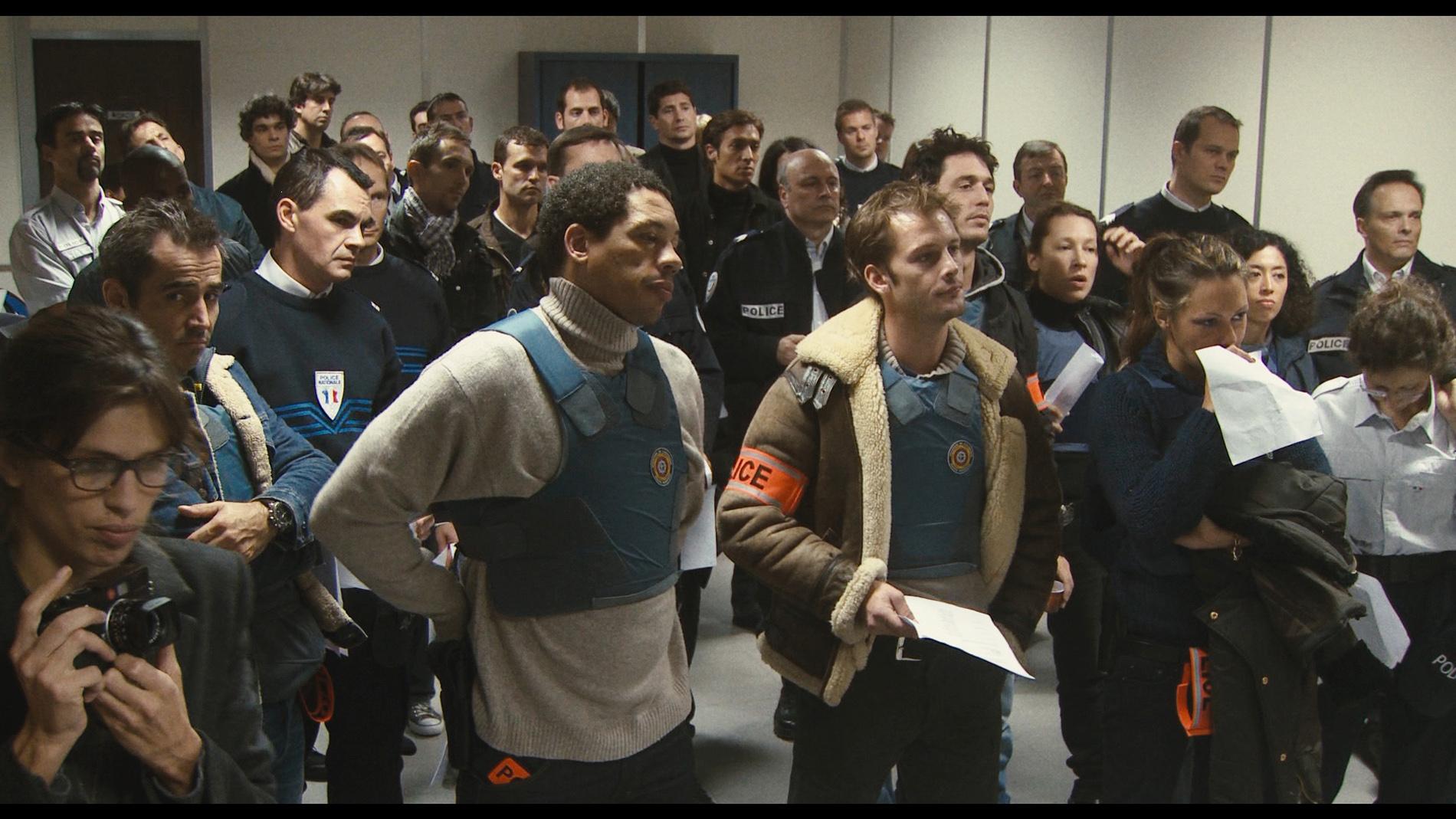
Polisse Comparisons to The Wire are not to be tossed around lightly, but when the Hollywood Reporter likened Polisse to an entire season of the masterpiece cop show packed into a single film, it was onto something. Director, co-writer, and star Maïwenn (the object of desire in 2003’s High Tension) hung out with real officers serving in Paris’ Child Protection Unit, drawing inspiration from their dealings with pedophiles, young rape victims, negligent mothers, pint-sized pickpockets, and the like (another TV show worth mentioning in comparison: Law & Order: SVU). But Polisse (the title is deliberately misspelled, as if by a child) is no simple procedural; it plunges the viewer directly into the day-to-day lives of its boisterous characters, who are juggling not just stressful careers but also plenty of after-hours troubles, particularly relationship issues. Between heart wrenching moments on the job (and off), the unit indulges in massive cut-loose episodes of what amounts to group therapy: charades, dance parties, and room-clearing arguments, most of which involve huge quantities of booze. Watching Polisse is a messy, emotional, rewarding experience; no wonder it picked up the Jury Prize at the 2011 Cannes Film Festival. (2:07) Embarcadero, Shattuck. (Eddy)

Whores’ Glory See “Far From Heaven.” (1:59) Lumiere, Shattuck.

ONGOING

Battleship During idle moments before the action revs up, the aliens start menacing, and the deadly razor balls-cum-air mines start rampaging, wrap your noggin around these random brainwaves: can Taylor Kitsch be any better named? Is it possible for Alexander Skarsgård’s glassy eyes to get any deader? Where are all the Hawaiians, Asians, and people of color in this white-bread vision of Hawaii? All matters to puzzle over in this toy franchise hopeful directed by ex-Chicago Hope regular Peter Berg. The 2007 Transformers is the best this gung-ho hybrid of up-with-the-military “Army of One” commercial and alien invasion flick — with plenty of blow-’em-up-real-good explosions and a dab of J-monster movies, but the writing never quite rises to the occasion. Here, an international group of navy folk and their ships are convening in Hawaii for playful war games, though the exercises turn somewhat more serious when alien vessels splash down in the middle of the fun —and some mild, no-investment family drama: Alex (Kitsch) is the screw-up younger brother of stony-faced naval man Stone (Skarsgård) and courting the daughter (Brooklyn Decker) of the fleet commander (Liam Neesom), who seems to hate his guts. The ultimate battle with space invaders, however, promises to turn that all around, as Alex is forced to sailor up and lead crew mates like Rihanna and work with former opponents like Captain Nagata (Tadanobu Asano). Here, at least, in the shadow of Pearl Harbor, U.S. and Japanese naval dudes can heal the wounds of World War II and bond in battle against the last unimpeachable interstellar villains who couldn’t give a rat’s ass if you say “I sunk your battleship.” But Berg’s muddled direction doesn’t help when it comes to piecing out the chronology and balancing assorted perspectives in this latest effort to equate militarism with the games big and little kids play. (2:11) 1000 Van Ness, SF Center. (Chun)

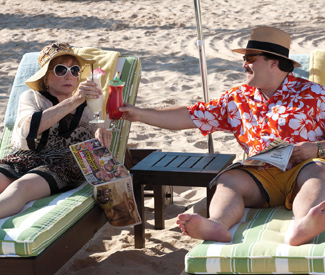
Bernie Jack Black plays the titular new assistant funeral director liked by everybody in small-town Carthage, Tex. He works especially hard to ingratiate himself with shrewish local widow Marjorie (Shirley MacLaine), but there are benefits — estranged from her own family, she not only accepts him as a friend (then companion, then servant, then as virtual “property”), but makes him her sole heir. Richard Linklater’s latest is based on a true-crime story, although in execution it’s as much a cheerful social satire as I Love You Philip Morris and The Informant! (both 2009), two other recent fact-based movies about likable felons. Black gets to sing (his character being a musical theater queen, among other things), while Linklater gets to affectionately mock a very different stratum of Lone Star State culture from the one he started out with in 1991’s Slacker. There’s a rich gallery of supporting characters, most played by little-known local actors or actual townspeople, with Matthew McConaughey’s vainglorious county prosecutor one delectable exception. Bernie is its director’s best in some time, not to mention a whole lot of fun. (1:39) Embarcadero, Piedmont, Shattuck, Smith Rafael. (Harvey)

The Best Exotic Marigold Hotel (1:42) Albany, Marina, Piedmont, SF Center, Sundance Kabuki.

Bully Anyone who’s ever been a kid on the wrong side of a bully — or was sensitive and observant enough not to avert his or her eyes — will be puzzling over the MPAA’s R rating of this doc, for profanity. It’s absurd when the gory violence on network and basic cable TV stops just short of cutting characters’ faces off, as one blurred-out bus bully threatens to do to the sweet, hapless Alex, dubbed “Fish Face” by the kids who ostracize him and make his life hell on the bus. It’s a jungle out there, as we all know — but it’s that real, visceral footage of the verbal (and physical) abuse bullied children deal with daily that brings it all home. Filmmaker Lee Hirsch goes above and beyond in trying to capture all dimensions of his subject: the terrorized bullied, the ineffectual school administrators, the desperate parents. There’s Kelby, the gay girl who was forced off her beloved basketball team after she came out, and Ja’Maya, who took drastic measures to fend off her tormenters — as well as the specters of those who turned to suicide as a way out. Hirsch is clearly more of an activist than a fly on the wall: he steps in at one point to help and obviously makes an uplifting effort to focus on what we can do to battle bullying. Nevertheless, at the risk of coming off like the Iowa assistant principal who’s catching criticism for telling one victim that he was just as bad as the bully that he refused to shake hands with, one feels compelled to note one prominent component that’s missing here: the bullies themselves, their stories, and the reasons why they’re so cruel — admittedly a daunting, possibly libelous task. (1:35) Smith Rafael. (Chun)

The Cabin in the Woods If the name “Joss Whedon” doesn’t provide all the reason you need to bum-rush The Cabin in the Woods (Whedon produced and co-wrote, with director and frequent collaborator Drew Goddard), well, there’s not much more that can be revealed without ruining the entire movie. In a very, very small nutshell, it’s about a group of college kids (including Chris “Thor” Hemsworth) whose weekend jaunt to a rural cabin goes horribly awry, as such weekend jaunts tend to do in horror movies (the Texas Chainsaw and Evil Dead movies are heavily referenced). But this is no ordinary nightmare — its peculiarities are cleverly, carefully revealed, and the movie’s inside-out takedown of scary movies produces some very unexpected (and delightfully blood-gushing) twists and turns. Plus: the always-awesome Richard Jenkins, and in-jokes galore for genre fans. (1:35) Metreon, Shattuck. (Eddy)

Dark Shadows Conceptually, there’s nothing wrong with attempting to turn a now semi-obscure supernaturally themed soap opera with a five-year run in the late 1960s and early ’70s into a feature film. Particularly if the film brings together the sweetly creepy triumvirate of Tim Burton, Johnny Depp, and Helena Bonham Carter and emerges during an ongoing moment for vampires, werewolves, and other things that go hump in the night. Depp plays long-enduring vampire Barnabas Collins, the undead scion of a once-powerful 18th-century New England family that by the 1970s — the groovy decade in which the bulk of the story is set — has suffered a shabby deterioration. Barnabas forms a pact with present-day Collins matriarch Elizabeth (Michelle Pfeiffer) to raise the household — currently comprising her disaffected daughter, Carolyn (Chloë Grace Moretz), her derelict brother, Roger (Jonny Lee Miller), his mournful young son, David (Gulliver McGrath), David’s live-in lush of a psychiatrist, Dr. Hoffman (Carter), and the family’s overtaxed manservant, Willie (Jackie Earle Haley) — to its former stature, while taking down a lunatic, love-struck, and rather vindictive witch named Angelique (Eva Green). The latter, a victim of unrequited love, is the cause of all Barnabas’s woes and, by extension, the entire clan’s, but Angelique can only be blamed for so much. Beyond her hocus-pocus jurisdiction is the film’s manic pileup of plot twists, tonal shifts, and campy scenery-chewing by Depp, a startling onslaught that no lava lamp joke, no pallid reaction shot, no room-demolishing act of paranormal carnality set to Barry White, and no cameo by Alice Cooper can temper. (2:00) California, Metreon, 1000 Van Ness, Sundance Kabuki. (Rapoport)

The Dictator As expected, The Dictator is, yet again, Sacha Baron Cohen doing his bumbling-foreigner shtick. Said character (here, a ruthless, spoiled North African dictator) travels to America and learns a heaping teaspoon of valuable lessons, which are then flung upon the audience — an audience which, by film’s end, has spent 80 minutes squealing at a no-holds-barred mix of disgusting gags, tasteless jokes, and schadenfreude. If you can’t forgive Cohen for carbon-copying his Borat (2006) formula, at least you can muster admiration for his ability to be an equal-opportunity offender (dinged: Arabs, Jews, African Americans, white Americans, women of all ethnicities, and green activists) — and for that last-act zinger of a speech. If The Dictator doesn’t quite reach Borat‘s hilarious heights, it’s still proudly repulsive, smart in spite of itself, and guaranteed to get a rise out of anyone who watches it. (1:23) California, 1000 Van Ness, Presidio, SF Center, Sundance Kabuki. (Eddy)

Elles Graphic sex scenes distinguish this otherwise fairly unremarkable tale of Anne (Juliette Binoche), a magazine writer whose blah life (sure, she has a luxurious apartment, but it’s populated by a distant husband, a sullen teenager, and a younger son who’d rather interface with technology than humans) becomes even more unbearable when she begins a new assignment: an article on college students who moonlight as call girls. The always-reliable Binoche brings depth to her role as a bored woman who finds herself unexpectedly titillated by her close brush with dirty thrills, but her eventual rebellion is anti-climactic after all that naughty build-up. Elles does plenty to earn its NC-17 rating, but filmmaker Malgoska Szumowska could’ve titled it Ennui instead. (1:36) Lumiere, Shattuck. (Eddy)

First Position Bess Kargman’s documentary follows a handful of exceptional young ballet dancers, ranging in age from 10 to 17, over the course of a year as they prepare for the Youth America Grand Prix, the world’s largest ballet scholarship competition. Those who make it from the semifinals (in which some 5,000 dancers aged 9 to 19 perform in 15 cities around the world) to the finals (which bring some 300 contestants to New York City) compete for scholarships to prestigious ballet schools, dance-company contracts, and general notice by both the judges and the company directors in the audience. The film’s subjects come from varied backgrounds — 16-year-old Joan Sebastian lives and studies in NYC, far from his family in Colombia; 14-year-old Michaela was born in civil war-torn Sierra Leone and adopted from an orphanage by an American couple in Philadelphia; 11-year-old Aran, an American, lives in Italy with his mother while his father serves in Kuwait. The common threads in their stories are the daily sacrifices made by them as well as their families, whose energies and other resources are largely poured into these children’s single-minded pursuit. We get a vague sense of the difficult world they are driving themselves, in nearly every waking hour, to enter. But the film largely keeps its focus on the challenges of preparing for the competition, offering us many magnificent shots of the dancers pushing their bodies to mesmerizing physical extremes both on- and offstage. (1:34) Embarcadero, Shattuck, Smith Rafael. (Rapoport)

The Five-Year Engagement In 2008’s Forgetting Sarah Marshall, viewers were treated to the startling, tragicomic sight of Jason Segel’s naked front side as his character got brutally dumped by the titular perky, put-together heartbreaker. In The Five-Year Engagement, which he reunited with director Nicholas Stoller to co-write, Segel once again sacrifices dignity and the right to privacy, this time in exchange for fake orgasms (his own), ghastly hand-knit sweaters, egregious facial-hair arrangements, and various other exhaustively humiliating psychological lows — all part of an earnest, undying quest to make people giggle uncomfortably. Segel plays Tom, a talented chef with a promising career ahead of him in San Francisco’s culinary scene (naturally, food carts get a cameo in the film). On the one-year anniversary of meeting his girlfriend, Violet (Emily Blunt), a psychology postgrad, he asks her to marry him in a meticulously planned, gloriously botched proposal scene coengineered by Tom’s oafish friend Alex (Chris Pratt), little realizing that this romantic gesture will soon lead to successive frozen winters in the Midwest (Violet gets offered a job at the University of Michigan), loss of professional stature, cabin fever, mead making, bow-hunting accidents, the titular nuptial postponement, and other, more gruesome events. The humor at times descends to some banally low depths as Segel and Stoller explore the terrain of the awkward, the poorly socialized, and the playfully grotesque. But Segel and Blunt present a believable, likable relationship between two warm, funny, flawed people, and, however disgusted, no one should walk out before a scene in which Violet and her sister (Alison Brie) channel Elmo and Cookie Monster to elaborate on the themes of romantic idealism and marital discontent. (2:04) 1000 Van Ness, SF Center. (Rapoport)

Footnote (1:45) Opera Plaza.

Girl in Progress (1:30) SF Center.

God Bless America Middle-aged office drone Frank (Joel Murray) is not having a good day-week-month-year-life. His ex-wife is about to happily remarry; his only child is a world-class brat who finds father-daughter time “boring;” his neighbors are a young couple who only get more loudly obnoxious when politely asked to keep the noise down. When that and insistent migraines keep Frank awake night after night, the parade of pundit and reality stupidities on TV only turn his insomnia into wide awake fury. Then he’s fired from his job for unjust reasons — on the same day he gets a diagnosis of brain cancer. Mad as hell, not-gonna-take-it-anymore, he impulsively decides to make a “statement” by assassinating a viral-video poster child for “entitlement.” This attracts admiring attention from extremely pushy, snarky teen Roxy (Tara Lynne Barr), who appoints herself Bonnie to his reluctant Clyde. They drive around the country bestowing “big dirt naps” on other exemplars of what’s wrong with America today, including religious hate mongers, rude moviegoers, and the purveyors of American Idol-type idiotainment. Comedian Bobcat Goldthwait’s latest feature as writer-director has its head in the right place, and so many good ideas, that it’s a pity this gonzo satire-rant runs out of steam so quickly. Aiming splattering paintball gun at the broadest possible targets, it covers them with disdainful goo but not as much wit as one would like. Plus, Barr’s hyper precocious smart mouth is yet another annoying Juno (2007) knockoff — never mind that she counts Diablo Cody among her (many) pet peeves. If God Bless winds up closer to Uwe Boll’s Postal (2007) than, say, Network (1976) in scattershot impact, it nonetheless almost makes it on sheer outré audacity and will alone. A movie that hates everything you hate should not be sneezed at; if only it hated them with more parodic snap, thematic depth and narrative structure. (1:44) Lumiere. (Harvey)

Headhunters Despite being the most sought-after corporate headhunter in Oslo, Roger (Aksel Hennie) still doesn’t make enough money to placate his gorgeous wife; his raging Napoleon complex certainly doesn’t help matters. Crime is, as always, the only solution, so Roger’s been supplementing his income by stealthily relieving his rich, status-conscious clients of their most expensive artworks (with help from his slightly unhinged partner, who works for a home-security company). When Roger meets the dashing Clas Greve (Nikolaj Coster-Waldau of Game of Thrones) — a Danish exec with a sinister, mysterious military past, now looking to take over a top job in Norway — he’s more interested in a near-priceless painting rumored to be stashed in Greve’s apartment. The heist is on, but faster than you can say “MacGuffin,” all hell breaks loose (in startlingly gory fashion), and the very charming Roger is using his considerable wits to stay alive. Based on a best-selling “Scandi-noir” novel, Headhunters is just as clever as it is suspenseful. See this version before Hollywood swoops in for the inevitable (rumored) remake. (1:40) California, Clay. (Eddy)

The Hunger Games Katniss Everdeen (Jennifer Lawrence) is a teenager living in a totalitarian state whose 12 impoverished districts, as retribution for an earlier uprising, must pay tribute to the so-called Capitol every year, sacrificing one boy and one girl each to the Hunger Games. A battle royal set in a perilous arena and broadcast live to the Capitol as gripping diversion and to the districts as sadistic propaganda, the Hunger Games are, depending on your viewpoint, a “pageant of honor, courage, and sacrifice” or a brutal, pointless bloodbath involving children as young as 12. When her little sister’s name comes up in the annual lottery, Katniss volunteers to take her place and is joined by a boy named Peeta Mellark (Josh Hutcherson), with whom she shares an old, unspoken bond. Tasked with translating to the screen the first installment of Suzanne Collins’s rabidly admired trilogy, writer-director Gary Ross (2003’s Seabiscuit, 1998’s Pleasantville) telescopes the book’s drawn-out, dread-filled tale into a manageable two-plus-hour entertainment, making great (and horrifying) use of the original work’s action, but losing a good deal of the narrative detail and emotional force. Elizabeth Banks is comic and unrecognizable as Effie Trinket, the two tributes’ chaperone; Lenny Kravitz gives a blank, flattened reading as their stylist, Cinna; and Donald Sutherland is sufficiently creepy and bloodless as the country’s leader, President Snow. More exceptionally cast are Woody Harrelson as Katniss and Peeta’s surly, alcoholic mentor, Haymitch Abernathy, and Stanley Tucci as games emcee Caesar Flickerman, flashing a bank of gleaming teeth at each contestant as he probes their dire circumstances with the oily superficiality of a talk show host. (2:22) 1000 Van Ness, SF Center. (Rapoport)

Indie Game: The Movie Much like the film business, the video-game biz is mostly controlled by a few huge companies with thousands of employees, hell-bent on ensnaring as many of the billions of dollars spent on games annually as possible. And then, as James Swirsky and Lisanne Pajot’s documentary explores, there are the little guys, who are “not trying to be professional” or produce glossy content for the masses. Instead, these individuals (or pairs) take advantage of the miracle of digital distribution to follow their own visions and create their own games. The best-case scenarios — illustrated by San Francisco indie developer Jonathan Blow and his hugely successful Braid — can reap enormous creative and financial rewards, but getting there — as the struggles facing the creators of Super Meat Boy and Fez plainly attest can be a mentally and physically draining process, filled with frustration and self-doubt, exacerbated by the taunts of haters online. A thoughtful, artfully-shot peek at one tiny corner of a behemoth industry, Indie Game also offers a surprisingly tense, raw look at some very bright minds struggling to triumph on their own terms. (1:36) Roxie. (Eddy)

Jiro Dreams of Sushi Celebrity-chef culture has surely reached some kind of zeitgeist, what with the omnipresence of Top Chef and other cooking-themed shows, and the headlines-making power of people like Paula Deen (diabetes) and Mario Batali (sued for ripping off his wait staff). Unconcerned with the trappings of fame — you’ll never see him driving a Guy Fieri-style garish sports car — is Jiro Ono, 85-year-old proprietor of Sukiyabashi Jiro, a tiny, world-renowned sushi restaurant tucked into Tokyo’s Ginza station. Jiro, a highly-disciplined perfectionist who believes in simple, yet flavorful food, has devoted his entire life to the pursuit of “deliciousness” — to the point of sushi invading his dreams, as the title of David Gelb’s reverential documentary suggests. But Jiro Dreams of Sushi goes deeper than food-prep porn (though, indeed, there’s plenty of that); it also examines the existential conflicts faced by Jiro’s two middle-aged sons. Both were strongly encouraged to enter the family business — and in the intervening years, have had to accept the soul-crushing fact that no matter how good their sushi is, it’ll never be seen as exceeding the creations of their legendary father. (1:21) Bridge, Shattuck. (Eddy)

Marley Oscar-winning documentarian Kevin Macdonald (1999’s One Day in September; he also directed Best Actor Forest Whitaker in 2006’s The Last King of Scotland) takes on the iconic Bob Marley, using extensive interviews — both contemporary (with Marley friends and family) and archival (with the musician himself) — and performance and off-the-cuff footage. The end result is a compelling (even if you’re not a fan) portrait of a man who became a global sensation despite being born into extreme poverty, and making music in a style that most people had never heard outside of Jamaica. The film dips into Marley’s Rastafari beliefs (no shocker this movie is being released on 4/20), his personal life (11 children from seven different mothers), his impact on Jamaica’s volatile politics, his struggles with racism, and, most importantly, his remarkable career — achieved via a combination of talent and boldness, and cut short by his untimely death at age 36. (2:25) Opera Plaza, Smith Rafael. (Eddy)

Marvel’s The Avengers The conflict — a mystical blue cube containing earth-shattering (literally) powers is stolen, with evil intent — isn’t the reason to see this long-hyped culmination of numerous prequels spotlighting its heroic characters. Nay, the joy here is the whole “getting’ the band back together!” vibe; director and co-writer Joss Whedon knows you’re just dying to see Captain America (Chris Evans) bicker with Iron Man (a scene-stealing Robert Downey Jr.); Thor (Chris Hemsworth) clash with bad-boy brother Loki (Tom Hiddleston); and the Hulk (Mark Ruffalo) get angry as often as possible. (Also part of the crew, but kinda mostly just there to look good in their tight outfits: Jeremy Renner’s Hawkeye and Scarlett Johansson’s Black Widow.) Then, of course, there’s Nick Fury (Samuel L. Jackson) running the whole Marvel-ous show, with one good eye and almost as many wry quips as Downey’s Tony Stark. Basically, The Avengers gives you everything you want (characters delivering trademark lines and traits), everything you expect (shit blowing up, humanity being saved, etc.), and even makes room for a few surprises. It doesn’t transcend the comic-book genre (like 2008’s The Dark Knight did), but honestly, it ain’t trying to. The Avengers wants only to entertain, and entertain it does. (2:23) Marina, Metreon, 1000 Van Ness, Presidio, Sundance Kabuki. (Eddy)

Monsieur Lazhar When their beloved but troubled teacher hangs herself in the classroom — not a thoughtful choice of location, but then we never really discover her motives — traumatized Montreal sixth-graders get Bachir Lazhar (Fellag), a middle-aged Algerian émigré whose contrastingly rather strict, old-fashioned methods prove surprisingly useful at helping them past their trauma. He quickly becomes the crush object of studious Alice (Sophie Nelisse), whose single mother is a pilot too often away, while troublemaker Simon (Emilien Neron) acts out his own domestic and other issues at school. Lazhar has his own secrets as well — for one thing, we see that he’s still petitioning for permanent asylum in Canada, contradicting what he told the principal upon being hired — and while his emotions are more tightly wrapped, circumstances will eventually force all truths out. This very likable drama about adults and children from Quebec writer-director Philippe Falardeau doesn’t quite have the heft and resonance to rate among the truly great narrative films about education (like Laurent Cantet’s recent French The Class). But it comes close enough, gracefully touching on numerous other issues while effectively keeping focus on how a good teacher can shape young lives in ways as incalculable as they are important. (1:34) Opera Plaza, Smith Rafael. (Harvey)

The Pirates! Band of Misfits Aardman Animations, home studio of the Wallace and Gromit series as well as 2000’s Chicken Run, are masters of tiny details and background jokes. In nearly every scene of this swashbuckling comedy, there’s a sight gag, double entendre, or tossed-off reference (the Elephant Man!?) that suggests The Pirates! creators are far more clever than the movie as a whole would suggest. Oh, it’s a cute, enjoyable story about a kind-hearted Pirate Captain (Hugh Grant) who dreams of winning the coveted Pirate of the Year award (despite the fact that he gets more excited about ham than gold) — and the misadventures he gets into with his amiable crew, a young Charles Darwin, and a comically evil Queen Victoria. But despite its toy-like, 3D-and-CG-enhanced claymation, The Pirates! never matches the depth (or laugh-out-loud hilarity) of other Aardman productions. Yo ho-hum. (1:27) Metreon, 1000 Van Ness. (Eddy)

Safe The poster would be slightly more on-point if its suave thug of a star, Jason Statham, were hiding behind the scrunched-faced Catherine Chan rather than the other way around — because at times it’s tough to see this alternately enjoyable and credibility-taxing action flick as more than some kind of naked play for the Chinese filmgoer. Jamming the screen with a frantic kineticism, director-writer Boaz Yakin seems to be smoothing over the problems in his vaguely stereotype-flaunting, patchy puzzle of a narrative with a high body count: the cadavers pile like those in an old martial arts flick — made in Asia, it’s implied, where life is cheap and spectacle is paramount. Picking up in the middle, with flashbacks stacked like firewood, Safe opens on young math prodigy Mei (Chan) on the run from the Russian mafia. A pawn and virtual slave of the Chinese mob, she holds a number in her head that all sorts of ruthless crime factions want. To her rescue is mystery man Luke Wright (Statham), who has had his own deadly tussle with the same Russian baddies and is now on the street and on the verge of suicide, believe it or not. It’s tough to wrap your head around the fact that any of Statham’s rock-hard tough guys could possibly crumble — or even have a sense of humor. You’ll need one to accept the ludicrous storyline as well as the notion that a jillion bullets could be fired and never hit his superhuman street-fighting man. (1:35) Metreon. (Chun)

Think Like a Man (2:02) Metreon.

Titanic 3D (3:14) Metreon.

21 Jump Street One of the more pleasant surprises on the mainstream comedy landscape has to be this, ugh, “reboot” of the late-’80s TV franchise. I wasn’t a fan of the show — or its dark-eyed, bad-boy star, Johnny Depp — back in the day, but I am of this unexpectedly funny rework overseen by apparent enthusiast, star, co-writer, and co-executive producer Jonah Hill, with a screenplay by Scott Pilgrim vs. the World (2010) co-writer Michael Bacall. There’s more than a smidge of Bacall’s other high school fantasy, Project X, in the buddy comedy premise of nerd (Hill’s Schmidt) meets blowhard (Channing Tatum’s Jenko), but 21 Jump Street thankfully leapfrogs the former with its meta-savvy, irreverent script and har-dee-har cameo turns by actors like Ice Cube as Captain Dickson (as well as a few key uncredited players who shall remain under deep cover). High school continues to haunt former classmates Schmidt and Jenko, who have just graduated from the lowly police bike corps to a high school undercover operation — don’t get it twisted, though, Dickson hollers at them; they got this gig solely because they look young. Still, the whole drug-bust enchilada is put in jeopardy when the once-socially toxic Schmidt finds his brand of geekiness in favor with the cool kids and so-called dumb-jock Jenko discovers the pleasures of the mind with the chem lab set. Fortunately for everyone, this crew doesn’t take themselves, or the source material, too seriously. (1:49) Metreon. (Chun)

What to Expect When You’re Expecting You needn’t direct what you know, but the first major misstep in this ensemble comedy was tapping a man, Kirk Jones (2005’s Nanny McPhee), to helm. Apparently Nicole Holofcener, Nancy Meyers, and Nora Ephron were too busy — busy making films not based on self-help bestsellers. Instead, What to Expect shows how marginal women can be to certain Hollywood blockbuster decision makers. On the surface, it’s all about the gals and their experiences, as an array of women from somewhat different, if pretty uniformly bourgie, walks of life — fitness star Cameron Diaz, baby store owner Elizabeth Banks, food truck chef Anna Kendrick, and trophy wife Brooklyn Decker — all find themselves knocked up. The odd woman out, surprisingly, is the boho photog played by Jennifer Lopez, who aspires to nest with a baby adopted from Ethiopia. But despite the frantic efforts of Banks, who shoulders the comedy burden here with hormones gone wild and gassy, and the climax, which should choke up all present and wannabe moms, the women are consistently upstaged by the bros, primarily the “Dudes Group” of dads headed up by Chris Rock and Thomas Lennon. Unlike the far-too-prominent, shruggable storyline involving an expectant father and son (Dennis Quaid and Ben Falcone), that crew gets the funniest, and perhaps most perceptive lines, in a baldly patriarchal play to the fellows forced into the cineplexes. Can’t the ladies catch a break, even as their waters are breaking? (1:50) Metreon, 1000 Van Ness, Presidio, Shattuck, Sundance Kabuki. (Chun)

Where Do We Go Now? With very real, deadly sectarian conflict on their doorstep, a group of Lebanese village women are making it up as they go along in this absurdist, ultimately inspiring dramedy with a dash of musical. Once sheltered by its isolation and the cheek-to-jowl intimacy of its denizens, the uneasy peace between Muslims and Christians in this small town threatens to shatter when the outside world begins to filter in, first through town-square TV broadcasts then tit-for-tat jabs that appear ready to escalate into violence. So the village’s women conspire to preserve harmony any way they can, even if that means importing a motley cadre of Ukrainian “exotic” dancers. What results is a post debauchery climax that almost one-ups 2009’s The Hangover — and a film that injects ground-level merriment and humanity into the headlines, thanks to director, co-writer, and star Nadine Labaki (2007’s Caramel), who has a gimlet eye and a generous spirit. (1:40) Opera Plaza. (Chun) *


Stage Listings May 23-29, 2012

0

Stage listings are compiled by Guardian staff. Performance times may change; call venues to confirm. Reviewers are Robert Avila, Rita Felciano, and Nicole Gluckstern. Submit items for the listings at listings@sfbg.com. For further information on how to submit items for the listings, see Picks.

THEATER

OPENING

Othello Phoenix Theatre, 414 Mason, SF; www.brownpapertickets.com. $15-18. Opens Thu/26, 8pm. Runs Thu-Sat, 8pm. Through June 9. Ninjaz of Drama performs Shakespeare’s classic in a contemporary setting.

Slipping New Conservatory Theatre Center, 25 Van Ness, SF; www.nctcsf.org. $25-45. Previews Wed/23-Fri/25, 8pm. Opens Sat/26, 8pm. Runs Wed-Sat, 8pm; Sun, 2pm. Through July 1. New Conservatory Theatre Center performs Daniel Talbott’s drama about a gay teen who finds new hope after a traumatic breakup.

BAY AREA

God of Carnage Marin Theatre Company, 397 Miller, Mill Valley; www.marintheatre.org. $34-55. Previews Thu/24-Sat/26, 8pm; Sun/27, 7pm. Opens Tue/29, 8pm. Runs Tue and Thu-Sat, 8pm (also June 2 and 16, 2pm; June 7, 1pm); Wed, 7:30pm; Sun, 2 and 7pm. Through June 17. Marin Theatre Company performs Yasmina Reza’s Tony-winning comedy about two sets of parents who meet after their children get into a schoolyard fight.

ONGOING

“Best of PlayGround 16: A Festival of New Writers and New Plays” Thick House, 1695 18th St, SF; www.playground-sf.org. $10-40. Thu/24-Sat/26, 8pm; Sun/27, 7pm. Seven short plays and musicals by Bay Area authors, plus a staged-readings series.

“DIVAfest” Exit Theatreplex, 156 Eddy, SF; (415) 673-3847, www.theexit.org. $15-25. Through Sun/27. Entering its second decade, the estrogen-centric DIVAfest at the Exit is so jam-packed with activities — workshops, burlesque, symposiums, readings, singer-songwriter nights — you’d be forgiven for not realizing that plays are also on the menu. But in fact, they are the main course. This year’s smorgasbord features three very different solo shows, each encapsulating a wholly unique female voice. Genevieve Jessee’s Girl in, but not of, the ‘Hood, which won a “Best of the Fringe Festival” award in 2011, has since been reworked with a new director, Exit Theatre stalwart Michelle Talgarow, rendering it sharper and more comic without minimizing the inner turmoil experienced by the main character, Jessee herself. Catherine Debon’s Alma Colarada, which also won a “Best of the Fringe” in 2011, is an emotionally-charged, experimental roller-coaster ride that appropriately begins and ends on a train. Detailing a family history fraught with World War II resistance fighting, concentration camps, communist sympathies, and endless trains, Debon nimbly vacillates between the neuroses of the present day and the deep despair of the past, while still finding a way to end to piece on a triumphal note. Last but by no means least, the laugh-out-loud romantic farce Pussy, by Maura Halloran, details the tricky intricacies of a lesbian-feline-nosy neighbor ménage à “cat-re”. Yes, it’s about a cat … hmmm, or is it? You should really take the opportunity to find out. (Gluckstern)

Down to This Exit Stage Left, 156 Eddy, SF; www.sleepwalkerstheatre.com. $12-20. Thu/24-Sat/26, 8pm. Thirty-something Charlie (Derek Fischer) plays this little game with himself where he tosses a rotten egg at the kitchen trash as if he were making a free-throw in sudden-death overtime. This little moment, innocent and ordinary on the surface, puzzles one-night stand Donna (Tonya Narvaez) after she happens on the scene. That she would be baffled, even momentarily disturbed by so common a flight of sports-dude imagination is our first taste of the strained mechanics of Adam Chanzit’s slight pulp revenge tale: sure enough, this game of chance turns out to be a (pretty ridiculous) psychopathology ruling Charlie’s world. When a moment later his equally imbalanced and estranged wife (Kendra Lee Oberhauser), fresh from prison and packing heat, bursts in on the two lovebirds, Charlie’s fate-game will become the tortured trope in a table-turning showdown between all three — plus Charlie’s hapless roommate (Jomar Tagatac) and his crew-cut–sporting sidekick (Shane Rhoades). Chanzit offers some mild surprises and amusing banter along the way in Sleepwalkers’ world premiere — helmed by artistic director Tore Ingersoll-Thorp — but the plot and characters are stretched thin, and the tension often grows slack despite the able and likable cast. By the time the story climaxes in a coin-toss of an ending (designed to work out one of two ways, depending), it’s too big a muddle to generate more than a momentary quiver of anticipation over anybody’s fate. (Avila)

Endgame and Play American Conservatory Theater, 415 Geary, SF; (415) 749-2228, www.act-sf.org. $10-95. Tue-Sat, 8pm (also Wed, Sat-Sun, 2pm; no matinee Wed/23). Through June 3. ACT presents two absurd dark comedies by Samuel Beckett.

Fwd: Life Gone Viral Marsh San Francisco, 1062 Valencia, SF; (415) 282-3055, www.themarsh.org. $20-50. Thu, 8pm; Sat, 8:30pm; Sun, 7pm. Through June 10. The internet becomes comic fodder for creator-performers Charlie Varon and Jeri Lynn Cohen, and creator-director David Ford.

It’s All the Rage Studio Theater, Marsh San Francisco, 1062 Valencia, SF; (415) 282-3055, www.themarsh.org. $15-50. Thu/24, 8pm; Sat/26, 8:30pm, Sun/27, 7pm. Longtime comedian and radio host Marilyn Pittman’s solo play wrestles with the legacy of her parents’ violent deaths in a 1997 murder-suicide initiated by her father. It’s disturbing material that Pittman, a stout middle-aged woman with a gregarious and bounding personality, approaches indirectly via a good deal of humor — including recounting the first time she did her growing-up-lesbian bit before her mother in a DC comedy club. But the pain and confusion trailing her for 13 years is never far behind, whether in accounts of her own battle with anger (and the broken relationships it has left in its wake) or in ominous memories of her too complacent mother or her charming but domineering father, whose controlling behavior extended to casually announcing murderous dreams while policing the boundaries of his marriage against family interference. A fine mimic, Pittman deploys a Southern lilt in playing each parent, on a stage decorated with a hint of their Southwestern furnishings and a framed set of parental photographs. In not exactly knowing where to lay blame for, or find meaning in, such a horrifying act, the play itself mimics in subtler form the emotional tumult left behind. There’s a too brief but eerie scene in which her veteran father makes reference to a murder among fellow soldiers en route to war, but while PTSD is mentioned (including as an unwanted patrimony), the 60-minute narrative crafted by Pittman and director David Ford wisely eschews any pat explanation. If transitions are occasionally awkward and the pace a bit loose, the play leaves one with an uncomfortable sense of the darker aspects of love, mingled with vague concentric histories of trauma and dislocation in a weird, sad tale of destruction and staying power. Note: review from the show’s 2009 run at the Marsh San Francisco. (Avila)

My Tia Loca’s Life of Crime Bindlestiff Studio, 185 Sixth St, SF; www.brownpapertickets.com. $20. Thu-Sat, 8pm. Through June 2. Guerrilla Rep performs a new play by Roy Conboy, chair of SF State’s Playwriting Department.

A Raisin in the Sun Buriel Clay Theater, African American Art and Culture Complex, 762 Fulton, SF; 1-800-838-2006, www.african-americanshakes.org. $10-35. Sat/26, 8pm; Sun/27, 3pm. African-American Shakespeare Company performs Lorraine Hansberry’s classic drama.

Tenderloin Exit on Taylor, 277 Taylor, SF; (415) 525-1205, www.cuttingball.com. $10-50. Thu/24, 7:30pm; Fri/25-Sat/26, 8pm (also Sat/26, 2pm); Sun/27, 5pm. Annie Elias and Cutting Ball Theater artists present a world premiere “documentary theater” piece looking at the people and places in the Cutting Ball Theater’s own ‘hood.

To Be Young, Gifted and Black: Honoring Lorraine Hansberry In Her Own Words Gough Street Playhouse, Trinity Episcopal Church, 1620 Gough, SF; www.custommade.org. $22-28. Thu/24-Sat/26, 8pm; Sun/27, 7pm. Custom Made Theater and Multi Ethnic Theater collaborate on this tribute to the groundbreaking playwright.

The Waiting Period MainStage, Marsh San Francisco, 1062 Valencia, SF; (415) 282-3055, www.themarsh.org. $15-50. Fri, 8pm; Sat, 5pm. Extended through July 7. Brian Copeland (comedian, TV and radio personality, and creator-performer of the long-running solo play Not a Genuine Black Man) returns to the Marsh with a new solo, this one based on more recent and messier events in Copeland’s life. The play concerns an episode of severe depression in which he considered suicide, going so far as to purchase a handgun — the title coming from the legally mandatory 10-day period between purchasing and picking up the weapon, which leaves time for reflections and circumstances that ultimately prevent Copeland from pulling the trigger. A grim subject, but Copeland (with co-developer and director David Ford) ensures there’s plenty of humor as well as frank sentiment along the way. The actor peoples the opening scene in the gun store with a comically if somewhat stereotypically rugged representative of the Second Amendment, for instance, as well as an equally familiar “doood” dude at the service counter. Afterward, we follow Copeland, a just barely coping dad, home to the house recently abandoned by his wife, and through the ordinary routines that become unbearable to the clinically depressed. Copeland also recreates interviews he’s made with other survivors of suicidal depression. Telling someone about such things is vital to preventing their worst outcomes, says Copeland, and telling his own story is meant to encourage others. It’s a worthy aim but only a fitfully engaging piece, since as drama it remains thin, standing at perhaps too respectful a distance from the convoluted torment and alienation at its center. (Avila)

The Wrong Dick Dark Room Theater, 2263 Mission, SF; www.darkroomsf.com. $20. Thu/24-Sat/26, 8pm. Ham Pants Productions presents a noir-inspired comedy set in San Francisco.

BAY AREA

Crevice La Val’s Subterranean, 1834 Euclid, Berk; www.impacttheatre.com. $10-20. Thu-Sat, 8pm. Through June 9. Just in case you were feeling panicked about the persistently recessed state of the economy and what might be your own less than ideal place in it, the Impact Theatre and Playground co-presentation of Lauren Yee’s Crevice might help to put your woes into perspective. That’s because slacker sibs Liz (Marissa Keltie) and Rob (Timothy Redmond) are only slightly exaggerated representatives of Generation Next whose penchant for making lackluster life choices has sentenced them to an indefinite prison term of couch-surfing and Teen Mom marathons in their childhood home. Naturally, they desire change, but it’s not until their mother (Laura Jane Bailey) starts having a hot fling with a younger man that things do. In an egregious breach of the TMI line, it appears that Mom’s orgasms open a “crevice” into an alternate reality that Rob and Liz subsequently fall into. Thus removed from the entropy of their former reality they begin testing the parameters of their new one, quickly coming to the realization that sometimes the alternatives to what you already have are even worse. Getting home again is a convoluted, not fully mapped-out process, but in the interim, their navigation of their erstwhile wonderland offers most of the play’s best lines as well as the uncomfortably effective transformation of Reggie D. White from Liz’s nerdish best buddy to multi-lingual Mafia killer and casual sadist. (Gluckstern)

The Great Divide Ashby Stage, 1901 Ashby, Berk; www.shotgunplayers.org. $20-30. Previews Wed/23-Thu/24, 7pm. Opens Fri/25, 8pm. Runs Wed-Thu, 7pm; Fri-Sat, 8pm; Sun, 5pm. Through June 24. Shotgun Players performs Adamn Chanzit’s drama about the hot topic of fracking, inspired by Ibsen’s An Enemy of the People.

*The Kipling Hotel: True Misadventures of the Electric Pink ’80s New venue: Marsh Berkeley, 2120 Allston, Berk; (415) 282-3055, www.themarsh.org. $20-50. Sat, 8:30pm; Sun, 7pm. Extended through June 10. This new autobiographical solo show by Don Reed, writer-performer of the fine and long-running East 14th, is another slice of the artist’s journey from 1970s Oakland ghetto to comedy-circuit respectability — here via a partial debate-scholarship to UCLA. The titular Los Angeles residency hotel was where Reed lived and worked for a time in the 1980s while attending university. It’s also a rich mine of memory and material for this physically protean and charismatic comic actor, who sails through two acts of often hilarious, sometimes touching vignettes loosely structured around his time on the hotel’s young wait staff, which catered to the needs of elderly patrons who might need conversation as much as breakfast. On opening night, the episodic narrative seemed to pass through several endings before settling on one whose tidy moral was delivered with too heavy a hand, but if the piece runs a little long, it’s only the last 20 minutes that noticeably meanders. And even with some awkward bumps along the way, it’s never a dull thing watching Reed work. (Avila)

Not Getting Any Younger Marsh Berkeley, 2120 Allston, Berk; (415) 282-3055, www.themarsh.org. $15-50. Fri, 8pm; Sat, 5pm. Extended through June 30. Marga Gomez is back at the Marsh, a couple of too-brief decades after inaugurating the theater’s new stage with her first solo show — an apt setting, in other words, for the writer-performer’s latest monologue, a reflection on the inevitable process of aging for a Latina lesbian comedian and artist who still hangs at Starbucks and can’t be trusted with the details of her own Wikipedia entry. If the thought of someone as perennially irreverent, insouciant, and appealingly immature as Gomez makes you depressed, the show is, strangely enough, the best antidote. Note: review from the show’s 2011 run at the Marsh San Francisco. (Avila)

The Odyssey Angel Island; (415) 547-0189, www.weplayers.org. $40-76 (some tickets include ferry passage). Sat-Sun, Fri/25, and June 1, 10:30am-4pm (does not include travel time to island). Through July 1. We Players present Ava Roy’s adaptation of Homer’s epic poem: an all-day adventure set throughout the nature and buildings of Angel Island State Park.

The World’s Funniest Bubble Show Marsh Berkeley, TheaterStage, 2120 Allston, Berk; (415) 826-5750, www.themarsh.org. $8-50. Sun/27, June 3, 10, 16, 24, and 30, 11am. Louis “The Amazing Bubble Man” Pearl returns with this kid-friendly, bubble-tastic comedy.

PERFORMANCE/DANCE

BATS Improv Bayfront Theater, Fort Mason Center, Marina at Laguna, SF; www.improv.org. Fri/25, 8pm: “Director’s Cut!,” $20. Sat/26, 8pm: “Improvised Murder Mystery,” $20.

“Bitter Melon” Dewey Monument, Union Square, Stockton at Geary, SF; www.pushdance.org. Fri/27-Mon/28, 8pm (or sundown). Free. Push Dance Company and Union Square Live present a world premiere by Raissa Simpson.

“Des Voix … Found in Translation” Z Space, 450 Florida, SF; www.desvoixfestival.com. Fri/25-Sun/27, times vary. $20-75. Playwrights Foundation and Cultural Services of the Consulate General of France/SF present this first-ever festival of newly translated plays by vanguard French authors.

“Dionysian Festival” Mary Sano Studio of Duncan Dancing, 245 Fifth St, Ste 314, SF; (415) 357-1817, www.duncandance.org. Sat/26, 8pm; Sun/27, 6pm. $18. Mary Sano and her Duncan Dancers present the 15th annual festival honoring the birthday of modern dance pioneer Isadora Duncan. Program includes Duncan repertoire as well as new works by Sano.

“Elect to Laugh” Studio Theater, Marsh San Francisco, 1062 Valencia, SF; (415) 282-3055, www.themarsh.org. Tue, 8pm. Ongoing through Nov 6. $15-50. Will Durst and friends perform in this weekly political humor show that focuses on the upcoming presidential election.

“Litquake’s Epicenter: A Night of Edith Piaf” Tosca Café, 242 Columbus, SF; www.litquake.org. Tue/29, 7pm. Free. Litquake and City Lights Books celebrate the French chanteuse with author Carolyn Burke (No Regrets: The Life of Edith Piaf) and singer Betty Roi.

“Parkour Deux” CounterPULSE, 1310 Mission, SF; www.counterpulse.org. Fri/25-Sun/27 and June 1-3, 8pm (also June 3, 2pm). $15-22. Scott Wells and Dancers perform new work. *


Bullet blender

0

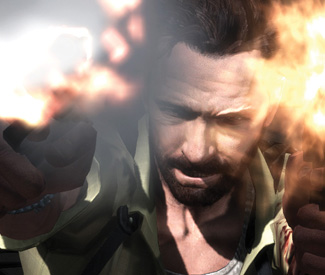
Max Payne 3

(Rockstar Games/Take-Two Interactive)

Xbox 360, PS3, PC

GAMER There will be fans who complain that Rockstar Games doesn’t “get” Max Payne. Remedy Entertainment, a Finnish developer that has since moved on to the Alan Wake franchise, developed the action-noir series’ first two titles, and Rockstar picked up the ball in much the same way they revived Red Dead a few years back. The truth is there may be no company better suited to reimagining Max Payne; Rockstar and Remedy share a fascination and fetishization with the old cop movies, comic books, and cinematic style that inspired the series.

After the deaths of his wife and child in the first game, Max has given up. Holed up in a dingy bar in Jersey, he’s drinking himself to death when an old police academy buddy suggests private security work in São Paulo, Brazil. The suntanned change of scenery is pleasant, and the authentic music, un-subtitled Portuguese and po-faced grime of the dangerous favelas is typical Rockstar distillation of what makes Brazil “cool” to outsiders.

The wife of a wealthy aristocrat is kidnapped, and Max sets out to retrieve her from the corrupt cops and drug lords of Sao Paolo’s streets and slums. It’s got a Man on Fire (2004) vibe, one the developers encourage by incorporating Tony Scott-esque editing tricks like double exposures and scrolling key words of dialogue across the screen as characters speak them.

If one element will divide old fans from new, it’s a certain self-seriousness, something scoffed at by the original Max Payne. There’s a joke about gaming in the aughts and how every developer seemed to turn their protagonist into alcoholic, bearded scumbags, but at least Max embodies these traits thematically. The game’s grizzled noir clichés aren’t overtly tongue-in-cheek and aside from some superficial commentary about the divide between rich and poor in a predominately poor city, this is a game about slow-motion bullets and it’s hard to take too seriously.

Max Payne invented “bullet time” gaming, where the game world slows down as you dive through the air, picking off multiple enemies in slow-motion, and the mechanics haven’t changed. Basically, (1) keep moving, (2) keep shooting, and (3) kill thousands of people. Level design is inspired — though flashbacks to New York feel like a consolation to fans unhappy with the change of setting — and rock band HEALTH delivers a moody score that’s equal parts Jan Hammer and Japanese taiko drums.

There’s something quietly retro about a game that isn’t anything more than shooting a ton of bad guys. It’s a simple pleasure, and Max Payne 3 feeds that monster. But Rockstar Games aren’t known for “simple”; when they took over Red Dead Redemption they transformed a game about gunslinger showdowns into an epic open-world western. Part of me hoped for something revolutionary to happen here, and the final product looks quaint compared with the caliber of Rockstar’s past releases, but there’s no denying Max Payne 3 is a uniquely stylish take on Latin American crime.

Outer Mission opposition

1

steve@sfbg.com

HERBWISE Most medical marijuana dispensaries in San Francisco are clustered around the central part of the city, with the heaviest concentration in SoMa, leaving patients in many outlying parts of the city — such as the Outer Mission and Excelsior districts — with long journeys to visit a cannabis club.

That began to change in February when the Planning Commission approved permits for three new dispensaries to open in the Excelsior: venerable delivery service The Green Cross will open its first brick-and-mortar operation on the 4200 block of Mission, while Tree-Med and Mission Organics each won approval to locate on the 5200 block. All three clubs had been in development for years, delayed by a state case challenging new dispensaries that went all the way to the Supreme Court.

But Steve Currier, president of the Outer Mission Merchants and Residents Association, has appealed the building permit for the first of that trio of clubs to apply for one, Mission Organics, and he allegedly whipped up anti-pot hysteria in the neighborhood that included an April 21 protest march spanning the three dispensary sites.

David Goldman, a member of the city’s Medical Cannabis Task Force, said the Feb. 16 appeal hearing and April 21 demonstration — which he said also included supervisorial candidate Leon Chow — were marked by inaccurate statements that dispensaries attract crime and are harmful to children, even though all three dispensaries are more than 1,000 feet from schools.

“People who are ignorant assume we’re all a bunch of hoodlums or stoners looking to get high,” Goldman said. “We want them to realize that dispensaries don’t bring crime to neighborhood. If anything, it’s the opposite,” he said, citing the value of people, video cameras, and security guards on the street as a crime deterrent, particularly on blocks with vacant storefronts, as is the case with these blocks.

Neither Currier nor Chow returned Guardian calls or emails. Attorney Dorji Roberts, who represents Mission Organics owners Eugene Popok and Mike Mekk, said that he’s also had a hard time reaching project opponents to address their concerns before a Board of Permit Appeals hearing set for June 20.

“We’ve asked them for a meeting recently, but he won’t respond and he can’t articulate any real reasons why he has a problem with it,” Roberts said of Currier and his group.

Roberts said that Popok had attended meetings of the OMMRA to try to integrate into the group and address any concerns it might have, but they were surprised when the project got appealed after being approved 5-2 at the Planning Commission (Tree-Med’s vote was also 5-2, while The Green Cross won unanimous approval), where they saw their first hints of opposition.

“They’re saying it will be a density issue, even though no clubs are out there now,” Roberts said. “They say it will increase crime, which also isn’t true…It’s the same kind of fears and phobias that are offered by people who just don’t like [medical marijuana or its legality].”

Goldman, who had people monitoring the April 21 protest march, said the group would praise businesses along the way while condemning the dispensaries, as one point chanting, “Liquor stores, yes, pot stores, no,” a dichotomy he considers telling of the kind of moralism driving the appeal.

“Fundamentally,” he said, “it’s an attack on patients.”


Smalltown confidential

0

arts@sfbg.com

FILM When trial locations are moved, it is generally because the crime is so notorious, or the local populace so riled, that it is not expected the plaintiff can avoid a hostile jury. It is seldom, if ever, moved for the precise opposite reasons: say, because a defendant is wildly popular and the person he’s accused of murdering was considered “possibly the meanest woman in East Texas.”

Nonetheless, that scenario actually happened 15 years ago when wealthy Carthage, Tex. widow Marjorie Nugent, her absence finally a cause for concern rather than relief after several months, was discovered in her garage freezer under various frozen edibles. The immediately confessed culprit was none other than one Bernhardt Tiede II, the town’s beloved assistant funeral home director turned full-time companion to the elderly Mrs. Nugent. The mild-mannered, much-younger Tiede had simply snapped under the weight of her abuse one day, impulsively pumping four bullets into her backside. Trouble was, at least according to the ambitious local district attorney, that pretty much no one in Carthage blamed him, or felt the crime deserved much more than a slap on the wrist.

What might have appeared an obvious case of money-hungry predation to outsiders — after all, Tiede had become the sole beneficiary of Nugent’s will, in theory forever separating the family fortune from already-exasperated relatives she’d estranged herself from — didn’t look that way to townspeople. Bernie was generous to a fault with his own money; once he’d ingratiated himself to Marjorie, he accomplished the impossible and got her to use her money to help the local needy and contribute to charities. (Check forgery allowed this to continue after her death, until he was arrested.) He’d liberated her from a miserly, hermit-like old age, encouraging her to enjoy life on lavish vacations and cultural outings — which he also enjoyed, natch.

But then, Bernie was a tonic to everyone. At the funeral home he’d been a consummate consoler, corpse make-up artist, seller of upscale caskets, and had sung hymns with the theatrical fervor of a musical-theater queen. (He was also highly active in the local community theater.) He doted on all old ladies, while seemingly oblivious to the overtures of women nearer his age. Even if those gay rumors were true, well, conservative Carthage could turn a blind eye in his case.

Ergo the trial was, at D.A. request, moved to more neutral terrain. This bizarre love-story-gone-wrong of sorts is dramatized in Richard Linklater’s delicious new film, an ideal reunion with his School of Rock (2003) lead Jack Black. Bernie has Black as the pie-sweet titular figure, Shirley MacLaine — face like an old leather boot ready to kick a dog — as the formidable Marjorie, and Matthew McConaughey as Danny “Buck” Davidson, the vainglorious D.A. determined to make his name on this case. They’re all great, but in a way the film’s star is its Greek chorus: a colorful array of Carthage townsfolk (many played by actual residents) narrating and commenting on events that, naturally, they still gossip about today.

In town recently for Bernie‘s San Francisco International Film Festival screening, Linklater says the project had a hard time getting financed precisely because of that running pseudo-documentary commentary, nearly all of it lifted from quotes in co-scenarist Skip Hollandsworth’s original Texas Monthly reportage.

“There was so much of it — no one could make the leap with me,” the director explains. “[To funders] it just didn’t seem like a real movie. Yet now [the commentary] ends up a lot of people’s favorite element.” Once his lead actors signed on, things fell into place, although they still had to squeak by on a tight 22-day shooting schedule.

Linklater calls Bernie “my little ambiguous love letter” to East Texas, where he grew up. “It’s a place you get out of if you feel at all different, like I did in moving to Austin,” he says.

Returning homeward to shoot the film, he found locals “suspicious — they think they’re going to be portrayed as hicks — but still very friendly and open. They all had opinions.” He says the case illustrates “how arbitrary our justice system is,” and that once the trial was moved Tiede was prosecuted “for his otherness — [the D.A. describing] him flying first class on vacations to jurors who’ve never been on a plane.”

Wild rumors still swirl in Carthage, from alleged sex tapes (of Tiede and gentlemen friends) to Nugent family members’ belief that Bernie “still has [stolen] millions stashed in Swiss bank accounts.” Linklater scoffs at such unsubstantiated tales — after all, the truth on record is already quite satisfyingly strange enough. 2


BERNIE opens Fri/18 in Bay Area theaters.

Film Listings May 16-22, 2012

0

Film listings are edited by Cheryl Eddy. Reviewers are Kimberly Chun, Max Goldberg, Dennis Harvey, and Lynn Rapoport. For rep house showtimes, see Rep Clock at www.sfbg.com. Complete film listings also posted at www.sfbg.com.

OPENING

Battleship During idle moments before the action revs up, the aliens start menacing, and the deadly razor balls-cum-air mines start rampaging, wrap your noggin around these random brainwaves: can Taylor Kitsch be any better named? Is it possible for Alexander Skarsgård’s glassy eyes to get any deader? Where are all the Hawaiians, Asians, and people of color in this white-bread vision of Hawaii? All matters to puzzle over in this toy franchise hopeful directed by ex-Chicago Hope regular Peter Berg. The 2007 Transformers is the best this gung-ho hybrid of up-with-the-military “Army of One” commercial and alien invasion flick — with plenty of blow-’em-up-real-good explosions and a dab of J-monster movies, but the writing never quite rises to the occasion. Here, an international group of navy folk and their ships are convening in Hawaii for playful wargames, though the exercises turn somewhat more serious when alien vessels splash down in the middle of the fun —and some mild, no-investment family drama: Alex (Kitsch) is the screw-up younger brother of stony-faced naval man Stone (Skarsgård) and courting the daughter (Brooklyn Decker) of the fleet commander (Liam Neesom), who seems to hate his guts. The ultimate battle with space invaders, however, promises to turn that all around, as Alex is forced to sailor up and lead crew mates like Rihanna and work with former opponents like Captain Nagata (Tadanobu Asano). Here, at least, in the shadow of Pearl Harbor, U.S. and Japanese naval dudes can heal the wounds of World War II and bond in battle against the last unimpeachable interstellar villains who couldn’t give a rat’s ass if you say “I sunk your battleship.” But Berg’s muddled direction doesn’t help when it comes to piecing out the chronology and balancing assorted perspectives in this latest effort to equate militarism with the games big and little kids play. (2:11) (Chun)

Bernie See “Small-Town Confidential.” (1:39) Embarcadero, Shattuck, Smith Rafael.

The Dictator As expected, The Dictator is, yet again, Sacha Baron Cohen doing his bumbling-foreigner shtick. Said character (here, a ruthless, spoiled North African dictator) travels to America and learns a heaping teaspoon of valuable lessons, which are then flung upon the audience — an audience which, by film’s end, has spent 80 minutes squealing at a no-holds-barred mix of disgusting gags, tasteless jokes, and schadenfreude. If you can’t forgive Cohen for carbon-copying his Borat (2006) formula, at least you can muster admiration for his ability to be an equal-opportunity offender (dinged: Arabs, Jews, African Americans, white Americans, women of all ethnicities, and green activists) — and for that last-act zinger of a speech. If The Dictator doesn’t quite reach Borat‘s hilarious heights, it’s still proudly repulsive, smart in spite of itself, and guaranteed to get a rise out of anyone who watches it. (1:23) Balboa, Presidio. (Eddy)

Elles Graphic sex scenes distinguish this otherwise fairly unremarkable tale of Anne (Juliette Binoche), a magazine writer whose blah life (sure, she has a luxurious apartment, but it’s populated by a distant husband, a sullen teenager, and a younger son who’d rather interface with technology than humans) becomes even more unbearable when she begins a new assignment: an article on college students who moonlight as call girls. The always-reliable Binoche brings depth to her role as a bored woman who finds herself unexpectedly titillated by her close brush with dirty thrills, but her eventual rebellion is anti-climactic after all that naughty build-up. Elles does plenty to earn its NC-17 rating, but filmmaker Malgoska Szumowska could’ve titled it Ennui instead. (1:36) Bridge, Shattuck. (Eddy)

Indie Game: The Movie Much like the film business, the video-game biz is mostly controlled by a few huge companies with thousands of employees, hell-bent on ensnaring as many of the billions of dollars spent on games annually as possible. And then, as James Swirsky and Lisanne Pajot’s documentary explores,

there are the little guys, who are “not trying to be professional” or produce glossy content for the masses. Instead, these individuals (or pairs) take advantage of the miracle of digital distribution to follow their own visions and create their own games. The best-case scenarios — illustrated by San Francisco indie developer Jonathan Blow and his hugely successful Braid — can reap enormous creative and financial rewards, but getting there — as the struggles facing the creators of Super Meat Boy and Fez plainly attest can be a mentally and physically draining process, filled with frustration and self-doubt, exacerbated by the taunts of haters online. A thoughtful, artfully-shot peek at one tiny corner of a behemoth industry, Indie Game also offers a surprisingly tense, raw look at some very bright minds struggling to triumph on their own terms. (1:36) Roxie. (Eddy)

Mansome This study of contemporary male grooming — from ironic mustaches to competitive “beardbuilding” to the fine art of the hairpiece — is yet another lighthearted entry from prolific doc-factory Morgan Spurlock (the subject matter being particularly appropriate, given his own trademark ‘stache). With interstitials by co-producers Will Arnett and Jason Bateman — getting pedicures and facials while exchanging barbs, like the TV brothers they are — and input from an array of famous faces (Zach Galifianakis, Paul Rudd, the Old Spice Guy, Judd Apatow, ZZ Top), Mansome is actually most interesting when it focuses on less boldfaced names — like the deadly-serious “beardsman” whose flowing red locks have won him international titles, and the old-school toupee expert who matter-of-factly erases baldness for grateful clients. One quibble: though John Waters appears to discuss his own trademark facial hair, and there’s a Freddy Mercury clip, Mansome remains stubbornly focused on straight dudes — though it does dig up the only man in the galaxy still using the term “metrosexual.” (1:24) Lumiere, Shattuck. (Eddy)

Payback Jumping off Margaret Atwood’s Payback: Debt and the Shadow Side of Wealth, her 2008 meditation on borrowing and lending and the way those acts reverberate through culture, documentarian Jennifer Baichwal finds a thought-provoking, graceful, seemingly free-form way into the writer’s ideas. The film dips into the dynamics between a handful of unlikely debtors and creditors scattered around the globe: two families in Northern Albania tied by a blood feud over disputed land and dishonor; organizing migrant workers and their employers in Florida; and the BP oil spill and an unsuspecting environment. Baichwal, like Atwood, uncovers few easy answers — especially when it comes to handling disasters on the scale of the BP spill — all the while treating her material with elegantly considered imagery and handling her subjects with a cool intelligence. That approach might leave some yearning for an uptick in emotional connection, or simply some connect-the-dots storytelling and, dare we say, drama. Meanwhile fans of the director’s Manufactured Landscapes (2006) will see Payback as its writerly relation, a tone poem about the crimes we’ve manufactured and muddled. (1:26) Lumiere, Shattuck. (Chun)

What to Expect When You’re Expecting The mommy guidebook hits the big screen, with an all-star cast including Jennifer Lopez and Cameron Diaz. (1:50) Presidio, Shattuck.

Where Do We Go Now? With very real, deadly sectarian conflict on their doorstep, a group of Lebanese village women are making it up as they go along in this absurdist, ultimately inspiring dramedy with a dash of musical. Once sheltered by its isolation and the cheek-to-jowl intimacy of its denizens, the uneasy peace between Muslims and Christians in this small town threatens to shatter when the outside world begins to filter in, first through town-square TV broadcasts then tit-for-tat jabs that appear ready to escalate into violence. So the village’s women conspire to preserve harmony any way they can, even if that means importing a motley cadre of Ukrainian “exotic” dancers. What results is a post debauchery climax that almost one-ups 2009’s The Hangover — and a film that injects ground-level merriment and humanity into the headlines, thanks to director, co-writer, and star Nadine Labaki (2007’s Caramel), who has a gimlet eye and a generous spirit. (1:40) Embarcadero. (Chun)

ONGOING

The Artist With the charisma-oozing agility of Douglas Fairbanks swashbuckling his way past opponents and the supreme confidence of Rudolph Valentino leaning, mid-swoon, into a maiden, French director-writer Michel Hazanavicius hits a sweet spot, or beauty mark of sorts, with his radiant new film The Artist. In a feat worthy of Fairbanks or Errol Flynn, Hazanavicius juggles a marvelously layered love story between a man and a woman, tensions between the silents and the talkies, and a movie buff’s appreciation of the power of film — embodied in particular by early Hollywood’s union of European artistry and American commerce. Dashing silent film star George Valentin (Jean Dujardin, who channels Fairbanks, Flynn, and William Powell — and won this year’s Cannes best actor prize) is at the height of his career, adorable Jack Russell by his side, until the talkies threaten to relegate him to yesterday’s news. The talent nurtured in the thick of the studio system yearns for real power, telling the newspapers, “I’m not a puppet anymore — I’m an artist,” and finances and directs his own melodrama, while his youthful protégé Peppy Miller (Bérénice Béjo) becomes a yakky flapper age’s new It Girl. Both a crowd-pleasing entertainment and a loving précis on early film history, The Artist never checks its brains at the door, remaining self-aware of its own conceit and its forebears, yet unashamed to touch the audience, without an ounce of cynicism. (1:40) Metreon. (Chun)

The Best Exotic Marigold Hotel (1:42) Albany, SF Center, Sundance Kabuki.

Bully Anyone who’s ever been a kid on the wrong side of a bully — or was sensitive and observant enough not to avert his or her eyes — will be puzzling over the MPAA’s R rating of this doc, for profanity. It’s absurd when the gory violence on network and basic cable TV stops just short of cutting characters’ faces off, as one blurred-out bus bully threatens to do to the sweet, hapless Alex, dubbed “Fish Face” by the kids who ostracize him and make his life hell on the bus. It’s a jungle out there, as we all know — but it’s that real, visceral footage of the verbal (and physical) abuse bullied children deal with daily that brings it all home. Filmmaker Lee Hirsch goes above and beyond in trying to capture all dimensions of his subject: the terrorized bullied, the ineffectual school administrators, the desperate parents. There’s Kelby, the gay girl who was forced off her beloved basketball team after she came out, and Ja’Maya, who took drastic measures to fend off her tormenters — as well as the specters of those who turned to suicide as a way out. Hirsch is clearly more of an activist than a fly on the wall: he steps in at one point to help and obviously makes an uplifting effort to focus on what we can do to battle bullying. Nevertheless, at the risk of coming off like the Iowa assistant principal who’s catching criticism for telling one victim that he was just as bad as the bully that he refused to shake hands with, one feels compelled to note one prominent component that’s missing here: the bullies themselves, their stories, and the reasons why they’re so cruel — admittedly a daunting, possibly libelous task. (1:35) Smith Rafael. (Chun)

The Cabin in the Woods If the name “Joss Whedon” doesn’t provide all the reason you need to bum-rush The Cabin in the Woods (Whedon produced and co-wrote, with director and frequent collaborator Drew Goddard), well, there’s not much more that can be revealed without ruining the entire movie. In a very, very small nutshell, it’s about a group of college kids (including Chris “Thor” Hemsworth) whose weekend jaunt to a rural cabin goes horribly awry, as such weekend jaunts tend to do in horror movies (the Texas Chainsaw and Evil Dead movies are heavily referenced). But this is no ordinary nightmare — its peculiarities are cleverly, carefully revealed, and the movie’s inside-out takedown of scary movies produces some very unexpected (and delightfully blood-gushing) twists and turns. Plus: the always-awesome Richard Jenkins, and in-jokes galore for genre fans. (1:35) Metreon, 1000 Van Ness, Shattuck. (Eddy)

Chimpanzee (2:00) Metreon, 1000 Van Ness.

Dark Shadows Conceptually, there’s nothing wrong with attempting to turn a now semi-obscure supernaturally themed soap opera with a five-year run in the late 1960s and early ’70s into a feature film. Particularly if the film brings together the sweetly creepy triumvirate of Tim Burton, Johnny Depp, and Helena Bonham Carter and emerges during an ongoing moment for vampires, werewolves, and other things that go hump in the night. Depp plays long-enduring vampire Barnabas Collins, the undead scion of a once-powerful 18th-century New England family that by the 1970s — the groovy decade in which the bulk of the story is set — has suffered a shabby deterioration. Barnabas forms a pact with present-day Collins matriarch Elizabeth (Michelle Pfeiffer) to raise the household — currently comprising her disaffected daughter, Carolyn (Chloë Grace Moretz), her derelict brother, Roger (Jonny Lee Miller), his mournful young son, David (Gulliver McGrath), David’s live-in lush of a psychiatrist, Dr. Hoffman (Carter), and the family’s overtaxed manservant, Willie (Jackie Earle Haley) — to its former stature, while taking down a lunatic, love-struck, and rather vindictive witch named Angelique (Eva Green). The latter, a victim of unrequited love, is the cause of all Barnabas’s woes and, by extension, the entire clan’s, but Angelique can only be blamed for so much. Beyond her hocus-pocus jurisdiction is the film’s manic pileup of plot twists, tonal shifts, and campy scenery-chewing by Depp, a startling onslaught that no lava lamp joke, no pallid reaction shot, no room-demolishing act of paranormal carnality set to Barry White, and no cameo by Alice Cooper can temper. (2:00) California, Marina, Metreon, 1000 Van Ness, Sundance Kabuki. (Rapoport)

Darling Companion When the carelessness of self-absorbed surgeon Joseph (Kevin Kline) results in the stray dog adopted by Beth (Diane Keaton) going missing during a forest walk, that event somehow brings all the fissures in their long marriage to a crisis point. Big Chill (1983) director Lawrence Kasdan’s first feature in a decade hews back to the more intimate, character-based focus of his best films. But this dramedy is too often shrilly pitched and overly glossy (it seems to take place in a Utah vacation-themed L.L. Bean catalog), with numerous talented actors — including Richard Jenkins, Dianne Wiest, Mark Duplass, Elisabeth Moss, and Sam Shepard — playing superficially etched characters that merely add to the clutter. Most cringe-inducing among them is Ayelet Zurer’s Carmen, a woman of Roma extraction who apparently has a crystal ball in her psychic head and actually speaks lines like “My people have a saying….” (1:43) Opera Plaza, Shattuck. (Harvey)

First Position Bess Kargman’s documentary follows a handful of exceptional young ballet dancers, ranging in age from 10 to 17, over the course of a year as they prepare for the Youth America Grand Prix, the world’s largest ballet scholarship competition. Those who make it from the semifinals (in which some 5,000 dancers aged 9 to 19 perform in 15 cities around the world) to the finals (which bring some 300 contestants to New York City) compete for scholarships to prestigious ballet schools, dance-company contracts, and general notice by both the judges and the company directors in the audience. The film’s subjects come from varied backgrounds — 16-year-old Joan Sebastian lives and studies in NYC, far from his family in Colombia; 14-year-old Michaela was born in civil war-torn Sierra Leone and adopted from an orphanage by an American couple in Philadelphia; 11-year-old Aran, an American, lives in Italy with his mother while his father serves in Kuwait. The common threads in their stories are the daily sacrifices made by them as well as their families, whose energies and other resources are largely poured into these children’s single-minded pursuit. We get a vague sense of the difficult world they are driving themselves, in nearly every waking hour, to enter. But the film largely keeps its focus on the challenges of preparing for the competition, offering us many magnificent shots of the dancers pushing their bodies to mesmerizing physical extremes both on- and offstage. (1:34) Embarcadero, Piedmont, Shattuck, Smith Rafael. (Rapoport)

The Five-Year Engagement In 2008’s Forgetting Sarah Marshall, viewers were treated to the startling, tragicomic sight of Jason Segel’s naked front side as his character got brutally dumped by the titular perky, put-together heartbreaker. In The Five-Year Engagement, which he reunited with director Nicholas Stoller to co-write, Segel once again sacrifices dignity and the right to privacy, this time in exchange for fake orgasms (his own), ghastly hand-knit sweaters, egregious facial-hair arrangements, and various other exhaustively humiliating psychological lows — all part of an earnest, undying quest to make people giggle uncomfortably. Segel plays Tom, a talented chef with a promising career ahead of him in San Francisco’s culinary scene (naturally, food carts get a cameo in the film). On the one-year anniversary of meeting his girlfriend, Violet (Emily Blunt), a psychology postgrad, he asks her to marry him in a meticulously planned, gloriously botched proposal scene coengineered by Tom’s oafish friend Alex (Chris Pratt), little realizing that this romantic gesture will soon lead to successive frozen winters in the Midwest (Violet gets offered a job at the University of Michigan), loss of professional stature, cabin fever, mead making, bow-hunting accidents, the titular nuptial postponement, and other, more gruesome events. The humor at times descends to some banally low depths as Segel and Stoller explore the terrain of the awkward, the poorly socialized, and the playfully grotesque. But Segel and Blunt present a believable, likable relationship between two warm, funny, flawed people, and, however disgusted, no one should walk out before a scene in which Violet and her sister (Alison Brie) channel Elmo and Cookie Monster to elaborate on the themes of romantic idealism and marital discontent. (2:04) 1000 Van Ness, Presidio, SF Center, Vogue. (Rapoport)

Footnote (1:45) Opera Plaza, Shattuck.

Girl in Progress (1:30) SF Center.

God Bless America Middle-aged office drone Frank (Joel Murray) is not having a good day-week-month-year-life. His ex-wife is about to happily remarry; his only child is a world-class brat who finds father-daughter time “boring;” his neighbors are a young couple who only get more loudly obnoxious when politely asked to keep the noise down. When that and insistent migraines keep Frank awake night after night, the parade of pundit and reality stupidities on TV only turn his insomnia into wide awake fury. Then he’s fired from his job for unjust reasons — on the same day he gets a diagnosis of brain cancer. Mad as hell, not-gonna-take-it-anymore, he impulsively decides to make a “statement” by assassinating a viral-video poster child for “entitlement.” This attracts admiring attention from extremely pushy, snarky teen Roxy (Tara Lynne Barr), who appoints herself Bonnie to his reluctant Clyde. They drive around the country bestowing “big dirt naps” on other exemplars of what’s wrong with America today, including religious hate mongers, rude moviegoers, and the purveyors of American Idol-type idiotainment. Comedian Bobcat Goldthwait’s latest feature as writer-director has its head in the right place, and so many good ideas, that it’s a pity this gonzo satire-rant runs out of steam so quickly. Aiming splattering paintball gun at the broadest possible targets, it covers them with disdainful goo but not as much wit as one would like. Plus, Barr’s hyper precocious smart mouth is yet another annoying Juno (2007) knockoff — never mind that she counts Diablo Cody among her (many) pet peeves. If God Bless winds up closer to Uwe Boll’s Postal (2007) than, say, Network (1976) in scattershot impact, it nonetheless almost makes it on sheer outré audacity and will alone. A movie that hates everything you hate should not be sneezed at; if only it hated them with more parodic snap, thematic depth and narrative structure. (1:44) Lumiere, Shattuck. (Harvey)

Headhunters Despite being the most sought-after corporate headhunter in Oslo, Roger (Aksel Hennie) still doesn’t make enough money to placate his gorgeous wife; his raging Napoleon complex certainly doesn’t help matters. Crime is, as always, the only solution, so Roger’s been supplementing his income by stealthily relieving his rich, status-conscious clients of their most expensive artworks (with help from his slightly unhinged partner, who works for a home-security company). When Roger meets the dashing Clas Greve (Nikolaj Coster-Waldau of Game of Thrones) — a Danish exec with a sinister, mysterious military past, now looking to take over a top job in Norway — he’s more interested in a near-priceless painting rumored to be stashed in Greve’s apartment. The heist is on, but faster than you can say “MacGuffin,” all hell breaks loose (in startlingly gory fashion), and the very charming Roger is using his considerable wits to stay alive. Based on a best-selling “Scandi-noir” novel, Headhunters is just as clever as it is suspenseful. See this version before Hollywood swoops in for the inevitable (rumored) remake. (1:40) Clay, Piedmont, Shattuck. (Eddy)

Here (2:00) SF Film Society Cinema.

The Hunger Games Katniss Everdeen (Jennifer Lawrence) is a teenager living in a totalitarian state whose 12 impoverished districts, as retribution for an earlier uprising, must pay tribute to the so-called Capitol every year, sacrificing one boy and one girl each to the Hunger Games. A battle royal set in a perilous arena and broadcast live to the Capitol as gripping diversion and to the districts as sadistic propaganda, the Hunger Games are, depending on your viewpoint, a “pageant of honor, courage, and sacrifice” or a brutal, pointless bloodbath involving children as young as 12. When her little sister’s name comes up in the annual lottery, Katniss volunteers to take her place and is joined by a boy named Peeta Mellark (Josh Hutcherson), with whom she shares an old, unspoken bond. Tasked with translating to the screen the first installment of Suzanne Collins’s rabidly admired trilogy, writer-director Gary Ross (2003’s Seabiscuit, 1998’s Pleasantville) telescopes the book’s drawn-out, dread-filled tale into a manageable two-plus-hour entertainment, making great (and horrifying) use of the original work’s action, but losing a good deal of the narrative detail and emotional force. Elizabeth Banks is comic and unrecognizable as Effie Trinket, the two tributes’ chaperone; Lenny Kravitz gives a blank, flattened reading as their stylist, Cinna; and Donald Sutherland is sufficiently creepy and bloodless as the country’s leader, President Snow. More exceptionally cast are Woody Harrelson as Katniss and Peeta’s surly, alcoholic mentor, Haymitch Abernathy, and Stanley Tucci as games emcee Caesar Flickerman, flashing a bank of gleaming teeth at each contestant as he probes their dire circumstances with the oily superficiality of a talk show host. (2:22) 1000 Van Ness, SF Center, Sundance Kabuki. (Rapoport)

Jiro Dreams of Sushi Celebrity-chef culture has surely reached some kind of zeitgeist, what with the omnipresence of Top Chef and other cooking-themed shows, and the headlines-making power of people like Paula Deen (diabetes) and Mario Batali (sued for ripping off his wait staff). Unconcerned with the trappings of fame — you’ll never see him driving a Guy Fieri-style garish sports car — is Jiro Ono, 85-year-old proprietor of Sukiyabashi Jiro, a tiny, world-renowned sushi restaurant tucked into Tokyo’s Ginza station. Jiro, a highly-disciplined perfectionist who believes in simple, yet flavorful food, has devoted his entire life to the pursuit of “deliciousness” — to the point of sushi invading his dreams, as the title of David Gelb’s reverential documentary suggests. But Jiro Dreams of Sushi goes deeper than food-prep porn (though, indeed, there’s plenty of that); it also examines the existential conflicts faced by Jiro’s two middle-aged sons. Both were strongly encouraged to enter the family business — and in the intervening years, have had to accept the soul-crushing fact that no matter how good their sushi is, it’ll never be seen as exceeding the creations of their legendary father. (1:21) Embarcadero, Shattuck. (Eddy)

Last Call at the Oasis If you like drinking water, or eating food, or using mass-produced physical objects, and you also enjoy not being poisoned by virulent chemicals such as hexavalent chromium and atrazine, you probably want to see — but most likely won’t much enjoy — Jessica Yu’s latest documentary, about the impending global water crisis. Or rather, the crisis, the film makes clear, that has already arrived in many parts of the world and — in the sense that it’s about a shortage of safe drinking water — in many parts of the United States. The Academy Award–winning Yu, whose previous films include the 2004 Henry Darger documentary In the Realms of the Unreal, invites various experts to lay out the alarming facts for us, as we sit in the theater clutching our bottles of Dasani. Last Call‘s talking heads include UC Irvine professor Jay Famiglietti, the Pacific Institute’s Peter Gleick (who, regardless of February’s firestorm over an ethical lapse, speaks eloquently here), journalist Alex Prud’homme, whose book The Ripple Effect the documentary is based on, and Erin Brockovich. An unexpected appearance by Jack Black in the role of potential future spokesperson for potable recycled water (one name under consideration: Porcelain Springs) adds levity to a film that is short on silver linings, as well as solutions. The title conveys the sort of gallows humor occasionally displayed by Yu’s subjects — one of whom ponders for a moment the situation he’s just described and then offers this succinct summary: “We’re screwed.” (1:45) Opera Plaza. (Rapoport)

The Lucky One Iraq War veteran Logan (Zac Efron) beats PTSD by walking with his German shepherd from Colorado to the Louisiana bayou, in search of a golden-haired angel in cutoff blue jean short shorts (Taylor Schilling). His stated (in soporific voice-over) aim is to meet and thank the angel, who he believes repeatedly saved his life in the combat zone after he plucked her photograph from the rubble of a bombed-out building. The snapshot offers little in the way of biographical information, but luckily, there are only 300 million people in the United States, and he manages to find her after walking around for a bit. The angel, or Beth, as her friends call her, runs a dog kennel with her grandmother (Blythe Danner) while raising her noxiously Hollywood-precocious eight-year-old son (Riley Thomas Stewart) and fending off the regressive advances of her semi-villainous ex-husband (Jay R. Ferguson). Logan’s task seems simple enough, and he’s certainly walked a fair distance to complete it, but rather than expressing his gratitude, he becomes tongue-tied in the face of Beth’s backlit blondness and instead fills out a job application and proceeds to soulfully but manfully burrow his way into her affections and short shorts. Being an adaptation of a Nicholas Sparks novel, The Lucky One requires some forceful yanking on the heartstrings, but director Scott Hicks (1999’s Snow Falling on Cedars, 1996’s Shine) is hobbled in this task by, among other things, Efron’s wooden, uninvolved delivery of queasy speeches about traveling through darkness to find the light and how many times a day a given woman should be kissed. (1:41) SF Center. (Rapoport)

Marley Oscar-winning documentarian Kevin Macdonald (1999’s One Day in September; he also directed Best Actor Forest Whitaker in 2006’s The Last King of Scotland) takes on the iconic Bob Marley, using extensive interviews — both contemporary (with Marley friends and family) and archival (with the musician himself) — and performance and off-the-cuff footage. The end result is a compelling (even if you’re not a fan) portrait of a man who became a global sensation despite being born into extreme poverty, and making music in a style that most people had never heard outside of Jamaica. The film dips into Marley’s Rastafari beliefs (no shocker this movie is being released on 4/20), his personal life (11 children from seven different mothers), his impact on Jamaica’s volatile politics, his struggles with racism, and, most importantly, his remarkable career — achieved via a combination of talent and boldness, and cut short by his untimely death at age 36. (2:25) California, Opera Plaza, Smith Rafael. (Eddy)

Marvel’s The Avengers The conflict — a mystical blue cube containing earth-shattering (literally) powers is stolen, with evil intent — isn’t the reason to see this long-hyped culmination of numerous prequels spotlighting its heroic characters. Nay, the joy here is the whole “getting’ the band back together!” vibe; director and co-writer Joss Whedon knows you’re just dying to see Captain America (Chris Evans) bicker with Iron Man (a scene-stealing Robert Downey Jr.); Thor (Chris Hemsworth) clash with bad-boy brother Loki (Tom Hiddleston); and the Hulk (Mark Ruffalo) get angry as often as possible. (Also part of the crew, but kinda mostly just there to look good in their tight outfits: Jeremy Renner’s Hawkeye and Scarlett Johansson’s Black Widow.) Then, of course, there’s Nick Fury (Samuel L. Jackson) running the whole Marvel-ous show, with one good eye and almost as many wry quips as Downey’s Tony Stark. Basically, The Avengers gives you everything you want (characters delivering trademark lines and traits), everything you expect (shit blowing up, humanity being saved, etc.), and even makes room for a few surprises. It doesn’t transcend the comic-book genre (like 2008’s The Dark Knight did), but honestly, it ain’t trying to. The Avengers wants only to entertain, and entertain it does. (2:23) Balboa, Marina, Metreon, 1000 Van Ness, Presidio, Sundance Kabuki. (Eddy)

Michael Michael follows a few months in the lives of a pedophile (Michael Fulth) and his captive (David Rauchenberger). It is no surprise that Austrian director Markus Schleinzer previously worked for Michael Haneke: the film’s cold, inanimate aesthetic is the means for psychological torture, on the part of both Michael’s prisoner, and the audience. Michael, a sociopath who works in an office by day, keeps the boy, a pensive 10-year-old named Wolfgang, in a basement behind a bolted door. He visits him nightly, and allows the boy to dine with him. As master and slave go about their mundane routine their level of comfort with one another is just as unsettling as the off-screen sex. Equally disturbing is how Michael manages to maintain such a normal life on the surface. After he tries to bring a new victim home and fails, Wolfgang starts to find ways to push his captor’s buttons. In spite of the loud subject, rarely has such formal reticence registered as this horrifying. (1:36) SF Film Society Cinema. (Ryan Lattanzio)

Monsieur Lazhar When their beloved but troubled teacher hangs herself in the classroom — not a thoughtful choice of location, but then we never really discover her motives — traumatized Montreal sixth-graders get Bachir Lazhar (Fellag), a middle-aged Algerian émigré whose contrastingly rather strict, old-fashioned methods prove surprisingly useful at helping them past their trauma. He quickly becomes the crush object of studious Alice (Sophie Nelisse), whose single mother is a pilot too often away, while troublemaker Simon (Emilien Neron) acts out his own domestic and other issues at school. Lazhar has his own secrets as well — for one thing, we see that he’s still petitioning for permanent asylum in Canada, contradicting what he told the principal upon being hired — and while his emotions are more tightly wrapped, circumstances will eventually force all truths out. This very likable drama about adults and children from Quebec writer-director Philippe Falardeau doesn’t quite have the heft and resonance to rate among the truly great narrative films about education (like Laurent Cantet’s recent French The Class). But it comes close enough, gracefully touching on numerous other issues while effectively keeping focus on how a good teacher can shape young lives in ways as incalculable as they are important. (1:34) Opera Plaza, Piedmont, Shattuck, Smith Rafael. (Harvey)

The Perfect Family Having survived years of hardship by dint of her faith, devout Catholic Eileen Cleary (Kathleen Turner) now lets nothing stand between her and the heavy-handed pursuit of grace — including her own family’s perceived imperfections. The past, in which long-sober husband Frank (Michael McGrady) was an abusive alcoholic, is not discussed. The present — in which ne’er-do-well son Frank Jr. (Jason Ritter) is not yet divorced yet already involved with a Protestant manicurist (Kristen Dalton), while otherwise exemplary daughter Shannon (Emily Deschanel) insists on marrying and child-raising with another woman (Angelique Cabral) — is ignored when it can’t be nagged into submission. These modern aberrations from the Pope-embraced allowable lifestyles must be addressed, however, when Eileen’s endless charitable toil gets her nominated as Catholic Woman of the Year. This would be her crowning achievement, but naturally something’s gotta give: either her family’s going to at least pretend it’s “normal,” or she’s got to grow more accepting at the potential loss of her big moment in the spotlight. Directed by Anne Renton, written by Paula Goldberg and Claire V. Riley, The Perfect Family is an ensemble dramedy (also encompassing Richard Chamberlain and Elizabeth Peña) that trundles as effortfully as its stressed-out protagonist from sitcomish humor to tearjerking, leaving no melodramatic contrivance unmilked along the way. Its intentions (primarily gay-positive ones, in line with the scenarists’ prior features) are good. But the execution is like a sermon whose every calculated chuckle and insight you anticipate five minutes before you hear it. To see Turner really excel as a controlling mother, rent 1994’s Serial Mom again. (1:24) Sundance Kabuki. (Harvey)

The Pirates! Band of Misfits Aardman Animations, home studio of the Wallace and Gromit series as well as 2000’s Chicken Run, are masters of tiny details and background jokes. In nearly every scene of this swashbuckling comedy, there’s a sight gag, double entendre, or tossed-off reference (the Elephant Man!?) that suggests The Pirates! creators are far more clever than the movie as a whole would suggest. Oh, it’s a cute, enjoyable story about a kind-hearted Pirate Captain (Hugh Grant) who dreams of winning the coveted Pirate of the Year award (despite the fact that he gets more excited about ham than gold) — and the misadventures he gets into with his amiable crew, a young Charles Darwin, and a comically evil Queen Victoria. But despite its toy-like, 3D-and-CG-enhanced claymation, The Pirates! never matches the depth (or laugh-out-loud hilarity) of other Aardman productions. Yo ho-hum. (1:27) 1000 Van Ness, SF Center. (Eddy)

The Raven How did Edgar Allan Poe, dipsomaniac, lover of 13-year-old child brides, and teller of tales designed to make the flesh creep and crawl, wind up, at age 40, nearly dying in the gutter and spending his last days in a Baltimore hospital, muttering incoherent imprecations about a mysterious fellow named Reynolds? In The Raven, director James McTeigue (2006’s V for Vendetta) makes the case for a crafty, sociopathic serial killer having played a role in the famous yet impoverished writer’s sad, derelict demise. Recently returned to the dark, thickly fog-machined streets of Baltimore, Poe, vehemently embodied by John Cusack, is chagrined to learn from one Detective Fields (Luke Evans) that someone has begun using his macabre stories (“The Pit and the Pendulum” to particularly gory effect) to enact a series of murders. When the killer successfully gains Poe’s full attention by seizing his ladylove, Emily Hamilton (Alice Eve), the pileup of bodies inspires a few last outbursts of genius. The trail of literary clues feels a bit forced, and Cusack’s Poe possesses an admirable quantity of energy, passion, and general zest for life for one so roundly indicted — by everyone from his editor to his barkeep to his sweetheart’s roundly repellent father (Brendan Gleeson) — as a useless, used-up slave to opiates and alcohol. But the script is smart enough and the action absorbing enough to keep us engaged as Poe attempts to rescue Emily and the film attempts to rescue Poe’s reputation through imagined heroics of both the pen and the sword. (1:50) 1000 Van Ness, SF Center. (Rapoport)

Safe The poster would be slightly more on-point if its suave thug of a star, Jason Statham, were hiding behind the scrunched-faced Catherine Chan rather than the other way around — because at times it’s tough to see this alternately enjoyable and credibility-taxing action flick as more than some kind of naked play for the Chinese filmgoer. Jamming the screen with a frantic kineticism, director-writer Boaz Yakin seems to be smoothing over the problems in his vaguely stereotype-flaunting, patchy puzzle of a narrative with a high body count: the cadavers pile like those in an old martial arts flick — made in Asia, it’s implied, where life is cheap and spectacle is paramount. Picking up in the middle, with flashbacks stacked like firewood, Safe opens on young math prodigy Mei (Chan) on the run from the Russian mafia. A pawn and virtual slave of the Chinese mob, she holds a number in her head that all sorts of ruthless crime factions want. To her rescue is mystery man Luke Wright (Statham), who has had his own deadly tussle with the same Russian baddies and is now on the street and on the verge of suicide, believe it or not. It’s tough to wrap your head around the fact that any of Statham’s rock-hard tough guys could possibly crumble — or even have a sense of humor. You’ll need one to accept the ludicrous storyline as well as the notion that a jillion bullets could be fired and never hit his superhuman street-fighting man. (1:35) Metreon, 1000 Van Ness. (Chun)

Salmon Fishing in the Yemen In Lasse Hallström’s latest film, a sheikh named Muhammed (Amr Waked) with a large castle in Scotland, an ardent love of fly-fishing, and unlimited funds envisions turning a dry riverbed in the Yemeni desert into an aquifer-fed salmon-run site and the surrounding lands into an agricultural cornucopia. Tasked with realizing this dream are London marketing consultant Harriet Chetwode-Talbot (Emily Blunt) and government fisheries scientist Alfred Jones (Ewan McGregor), a reluctant participant who refers to the project as “doolally” and signs on under professional duress. Despite numerous feasibility issues (habitat discrepancies, the necessity for a mass exodus of British salmon, two million irate British anglers), Muhammed’s vision is borne forward on a rising swell of cynicism generated within the office of the British prime minister’s press secretary (Kristin Scott Thomas), whose lackeys have been scouring the wires for a shred of U.K.-related good news out of the Middle East. Ecology-minded killjoys may question whether this qualifies. But putting aside, if one can, the possible inadvisability of relocating 10,000 nonnative salmon to a wadi in Yemen — which is to say, putting aside the basic premise — it’s easy and pleasant enough to go with the flow of the film, infected by Jones’s growing enthusiasm for both the project and Ms. Chetwode-Talbot. Adapted from Paul Torday’s novel by Simon Beaufoy (2009’s Slumdog Millionaire), Salmon Fishing is a sweet and funny movie, and while it suffers from the familiar flurried third-act knotting together of loose ends, its storytelling stratagems are entertaining and its characters compellingly textured, and the cast makes the most of the well-polished material. (1:52) Piedmont. (Rapoport)

Think Like a Man (2:02) Metreon, 1000 Van Ness.

Titanic 3D (3:14) Metreon.

21 Jump Street One of the more pleasant surprises on the mainstream comedy landscape has to be this, ugh, “reboot” of the late-’80s TV franchise. I wasn’t a fan of the show — or its dark-eyed, bad-boy star, Johnny Depp — back in the day, but I am of this unexpectedly funny rework overseen by apparent enthusiast, star, co-writer, and co-executive producer Jonah Hill, with a screenplay by Scott Pilgrim vs. the World (2010) co-writer Michael Bacall. There’s more than a smidge of Bacall’s other high school fantasy, Project X, in the buddy comedy premise of nerd (Hill’s Schmidt) meets blowhard (Channing Tatum’s Jenko), but 21 Jump Street thankfully leapfrogs the former with its meta-savvy, irreverent script and har-dee-har cameo turns by actors like Ice Cube as Captain Dickson (as well as a few key uncredited players who shall remain under deep cover). High school continues to haunt former classmates Schmidt and Jenko, who have just graduated from the lowly police bike corps to a high school undercover operation — don’t get it twisted, though, Dickson hollers at them; they got this gig solely because they look young. Still, the whole drug-bust enchilada is put in jeopardy when the once-socially toxic Schmidt finds his brand of geekiness in favor with the cool kids and so-called dumb-jock Jenko discovers the pleasures of the mind with the chem lab set. Fortunately for everyone, this crew doesn’t take themselves, or the source material, too seriously. (1:49) Metreon. (Chun)

Wrath of the Titans Playing fast and loose with Greek myths but not agile enough to kick out a black metal jam during a flaming underworld power-grab, Wrath of Titans is, as expected, a bit of a CGI-crammed mess. Still, the sword-and-sandals franchise has attracted scads of international actorly talent — the cast is enriched this time by Édgar Ramírez (2010’s Carlos), Bill Nighy, and Rosamund Pike — and you do get at least one cool monster and paltry explication (Cerberus, which bolts from earth for no discernible reason except that maybe all hell is breaking loose). Just because action flicks like Cloverfield (2008) have long dispensed with narrative handlebars doesn’t mean that age-old stories like the Greek myths should get completely random with their titanic tale-spinning. Wrath opens on the twilight of the gods: Zeus (Liam Neeson) is practically groveling before Perseus (Sam Worthington) — now determined to go small, raise his son, and work on his fishing skills — and trying to persuade him to step up and help the Olympians hold onto power. Fellow Zeus spawn Ares (Ramírez) is along for the ride, so demigod up, Perseus. In some weird, last-ditch attempt to ream his bro Zeus, the oily, mulleted Hades (Ralph Fiennes) has struck a deal with their entrapped, chaotic, castrating fireball of a dad Cronus to let them keep their immortality, on the condition that Zeus is sapped of his power. Picking up Queen Andromeda (Pike) along the way, Perseus gets the scoop on how to get to Hell from Hephaestus (Nighy playing the demented Vulcan like a ’60s acid casualty, given to chatting with mechanical owl Bubo, a wink to 1981 precursor Clash of the Titans, which set the bar low for the remake). Though there are some distracting action scenes (full of speedy, choppy edits that confuse disorientation for excitement) and a few intriguing monsters (just how did the Minotaur make it to this labyrinth?), there’s no money line like “Release the Kraken!” this time around, and there’s way too much nattering on about fatherly responsibility and forgiveness —making these feel-good divinities sound oddly, mawkishly Christian and softheaded rather than mythically pagan and brattily otherworldly. Wasn’t the appeal of the gods linked to the fact that they always acted more like outta-hand adolescents than holier-than-thou deities? I guess that’s why no one’s praying to them anymore. (1:39) Metreon. (Chun)


Stage Listings May 16-22, 2012

0

Stage listings are compiled by Guardian staff. Performance times may change; call venues to confirm. Reviewers are Robert Avila, Rita Felciano, and Nicole Gluckstern. Submit items for the listings at listings@sfbg.com. For further information on how to submit items for the listings, see Picks.

THEATER

OPENING

My Tia Loca’s Life of Crime Bindlestiff Studio, 185 Sixth St, SF; www.brownpapertickets.com. $20. Opens Thu/17, 8pm. Runs Thu-Sat, 8pm. Through June 2. Guerrilla Rep performs a new play by Roy Conboy, chair of SF State’s Playwriting Department.

BAY AREA

The Great Divide Ashby Stage, 1901 Ashby, Berk; www.shotgunplayers.org. $20-30. Previews Wed/16-Thu/17 and May 23-24, 7pm; Fri/18-Sat/19, 8pm; Sun/20, 5pm. Opens May 25, 8pm. Runs Wed-Thu, 7pm; Fri-Sat, 8pm; Sun, 5pm. Through June 24. Shotgun Players performs Adamn Chanzit’s drama about the hot topic of fracking, inspired by Ibsen’s An Enemy of the People.

ONGOING

“Best of PlayGround 16: A Festival of New Writers and New Plays” Thick House, 1695 18th St, SF; www.playground-sf.org. $10-40. Thu-Sat, 8pm; Sun, 7pm. Through May 27. Seven short plays and musicals by Bay Area authors, plus a staged-readings series.

“DIVAfest” Exit Theatreplex, 156 Eddy, SF; (415) 673-3847, www.theexit.org. $15-25. Through May 27. Entering its second decade, the estrogen-centric DIVAfest at the Exit is so jam-packed with activities — workshops, burlesque, symposiums, readings, singer-songwriter nights — you’d be forgiven for not realizing that plays are also on the menu. But in fact, they are the main course. This year’s smorgasbord features three very different solo shows, each encapsulating a wholly unique female voice. Genevieve Jessee’s Girl in, but not of, the ‘Hood, which won a “Best of the Fringe Festival” award in 2011, has since been reworked with a new director, Exit Theatre stalwart Michelle Talgarow, rendering it sharper and more comic without minimizing the inner turmoil experienced by the main character, Jessee herself. Catherine Debon’s Alma Colarada, which also won a “Best of the Fringe” in 2011, is an emotionally-charged, experimental roller-coaster ride that appropriately begins and ends on a train. Detailing a family history fraught with World War II resistance fighting, concentration camps, communist sympathies, and endless trains, Debon nimbly vacillates between the neuroses of the present day and the deep despair of the past, while still finding a way to end to piece on a triumphal note. Last but by no means least, the laugh-out-loud romantic farce Pussy, by Maura Halloran, details the tricky intricacies of a lesbian-feline-nosy neighbor ménage à “cat-re”. Yes, it’s about a cat … hmmm, or is it? You should really take the opportunity to find out. (Gluckstern)

Down to This Exit Stage Left, 156 Eddy, SF; www.sleepwalkerstheatre.com. $12-20. Thu-Sat, 8pm. Through May 26. Thirty-something Charlie (Derek Fischer) plays this little game with himself where he tosses a rotten egg at the kitchen trash as if he were making a free-throw in sudden-death overtime. This little moment, innocent and ordinary on the surface, puzzles one-night stand Donna (Tonya Narvaez) after she happens on the scene. That she would be baffled, even momentarily disturbed by so common a flight of sports-dude imagination is our first taste of the strained mechanics of Adam Chanzit’s slight pulp revenge tale: sure enough, this game of chance turns out to be a (pretty ridiculous) psychopathology ruling Charlie’s world. When a moment later his equally imbalanced and estranged wife (Kendra Lee Oberhauser), fresh from prison and packing heat, bursts in on the two lovebirds, Charlie’s fate-game will become the tortured trope in a table-turning showdown between all three — plus Charlie’s hapless roommate (Jomar Tagatac) and his crew-cut–sporting sidekick (Shane Rhoades). Chanzit offers some mild surprises and amusing banter along the way in Sleepwalkers’ world premiere — helmed by artistic director Tore Ingersoll-Thorp — but the plot and characters are stretched thin, and the tension often grows slack despite the able and likable cast. By the time the story climaxes in a coin-toss of an ending (designed to work out one of two ways, depending), it’s too big a muddle to generate more than a momentary quiver of anticipation over anybody’s fate. (Avila)

Endgame and Play American Conservatory Theater, 415 Geary, SF; (415) 749-2228, www.act-sf.org. $10-95. Opens Wed/16, 8pm. Runs Tue-Sat, 8pm (also Wed, Sat-Sun, 2pm; no matinees Wed/16 or May 23; Tues/22 performance at 7pm). Through June 3. ACT presents two absurd dark comedies by Samuel Beckett.

Fwd: Life Gone Viral Marsh San Francisco, 1062 Valencia, SF; (415) 282-3055, www.themarsh.org. $20-50. Thu, 8pm; Sat, 8:30pm; Sun, 7pm. Through June 10. The internet becomes comic fodder for creator-performers Charlie Varon and Jeri Lynn Cohen, and creator-director David Ford.

*Hot Greeks Hypnodrome Theatre, 575 10th St, SF; www.brownpapertickets.com. $30-35. Thu/17-Sat/19, 8pm. Cheap thrills don’t come much cheaper or more thrilling than at a Thrillpeddlers musical extravaganza, and their newly remounted run of Hot Greeks affords all the glitter-dusted eye-candy and labyrinthian plot points we’ve come to expect from their gleefully exhibitionist ranks. Structured as loosely as possible on Aristophanes’ Lysistrata, Greeks appropriately enough follows the trials and tribulations of a college sorority tired of “losing” their boyfriends to the big football match every year (Athens U vs. Sparta Tech). Pledging to withhold sex from the men unless they call off the game results in frustration for all, only partially alleviated by the discovery that sexual needs can be satisfied by “playing the other team,” as it were. But like other Cockettes’ revivals presented by the Thrillpeddlers, the momentum of the show is carried forward not by the rather thinly-sketched narrative, but by the group song-and-dance numbers, extravagant costuming (and lack thereof), ribald wordplay, and overt gender-fuckery. In addition to many TP regulars, including a hot trio of Greek columns topped with “capital” headdresses who serve as the obligatory chorus (Steven Satyricon, Ste Fishell, Bobby Singer), exciting new additions to the Hypnodrome stage include a bewigged Rik Lopes as stalwart sister Lysistrata, angelically-voiced Maggie Tenenbaum as the not-so-angelic Sodoma, and multi-faceted cabaret talent Tom Orr as heartthrob hunk Pendulum Pulaski. (Gluckstern)

It’s All the Rage Studio Theater, Marsh San Francisco, 1062 Valencia, SF; (415) 282-3055, www.themarsh.org. $15-50. Thu, 8pm; Sat, 8:30pm, Sun, 7pm. Extended through May 27. Longtime comedian and radio host Marilyn Pittman’s solo play wrestles with the legacy of her parents’ violent deaths in a 1997 murder-suicide initiated by her father. It’s disturbing material that Pittman, a stout middle-aged woman with a gregarious and bounding personality, approaches indirectly via a good deal of humor — including recounting the first time she did her growing-up-lesbian bit before her mother in a DC comedy club. But the pain and confusion trailing her for 13 years is never far behind, whether in accounts of her own battle with anger (and the broken relationships it has left in its wake) or in ominous memories of her too complacent mother or her charming but domineering father, whose controlling behavior extended to casually announcing murderous dreams while policing the boundaries of his marriage against family interference. A fine mimic, Pittman deploys a Southern lilt in playing each parent, on a stage decorated with a hint of their Southwestern furnishings and a framed set of parental photographs. In not exactly knowing where to lay blame for, or find meaning in, such a horrifying act, the play itself mimics in subtler form the emotional tumult left behind. There’s a too brief but eerie scene in which her veteran father makes reference to a murder among fellow soldiers en route to war, but while PTSD is mentioned (including as an unwanted patrimony), the 60-minute narrative crafted by Pittman and director David Ford wisely eschews any pat explanation. If transitions are occasionally awkward and the pace a bit loose, the play leaves one with an uncomfortable sense of the darker aspects of love, mingled with vague concentric histories of trauma and dislocation in a weird, sad tale of destruction and staying power. Note: review from the show’s 2009 run at the Marsh San Francisco. (Avila)

A Raisin in the Sun Buriel Clay Theater, African American Art and Culture Complex, 762 Fulton, SF; 1-800-838-2006, www.african-americanshakes.org. $10-35. Fri-Sat, 8pm (no show May 25); Sun, 3pm. Through May 27. African-American Shakespeare Company performs Lorraine Hansberry’s classic drama.

“San Francisco International Arts Festival” Various venues, SF; www.sfiaf.org. Free-$70. Through Sun/20. Performance festival featuring theater and dance from Cuba, Iran, Russia, the U.S., China, Japan, Estonia, and more.

Tenderloin Exit on Taylor, 277 Taylor, SF; (415) 525-1205, www.cuttingball.com. $10-50. Thu, 7:30pm; Fri-Sat, 8pm (also Sat, 2pm); Sun, 5pm. Through May 27. Annie Elias and Cutting Ball Theater artists present a world premiere “documentary theater” piece looking at the people and places in the Cutting Ball Theater’s own ‘hood.

To Be Young, Gifted and Black: Honoring Lorraine Hansberry In Her Own Words Gough Street Playhouse, Trinity Episcopal Church, 1620 Gough, SF; www.custommade.org. $22-28. Thu-Sat, 8pm; Sun, 7pm. Through May 27. Custom Made Theater and Multi Ethnic Theater collaborate on this tribute to the groundbreaking playwright.

The Waiting Period MainStage, Marsh San Francisco, 1062 Valencia, SF; (415) 282-3055, www.themarsh.org. $15-50. Fri, 8pm; Sat, 5pm. Extended through July 7. Brian Copeland (comedian, TV and radio personality, and creator-performer of the long-running solo play Not a Genuine Black Man) returns to the Marsh with a new solo, this one based on more recent and messier events in Copeland’s life. The play concerns an episode of severe depression in which he considered suicide, going so far as to purchase a handgun — the title coming from the legally mandatory 10-day period between purchasing and picking up the weapon, which leaves time for reflections and circumstances that ultimately prevent Copeland from pulling the trigger. A grim subject, but Copeland (with co-developer and director David Ford) ensures there’s plenty of humor as well as frank sentiment along the way. The actor peoples the opening scene in the gun store with a comically if somewhat stereotypically rugged representative of the Second Amendment, for instance, as well as an equally familiar “doood” dude at the service counter. Afterward, we follow Copeland, a just barely coping dad, home to the house recently abandoned by his wife, and through the ordinary routines that become unbearable to the clinically depressed. Copeland also recreates interviews he’s made with other survivors of suicidal depression. Telling someone about such things is vital to preventing their worst outcomes, says Copeland, and telling his own story is meant to encourage others. It’s a worthy aim but only a fitfully engaging piece, since as drama it remains thin, standing at perhaps too respectful a distance from the convoluted torment and alienation at its center. (Avila)

The Wrong Dick Dark Room Theater, 2263 Mission, SF; www.darkroomsf.com. $20. Thu-Sat, 8pm. Through May 26. Ham Pants Productions presents a noir-inspired comedy set in San Francisco.

Zorba Eureka Theater, 215 Jackson, SF; (415) 255-8207, www.42ndstmoon.org. $20-50. Wed/16, 7pm; Thu/17-Fri/18, 8pm; Sat/19, 6pm; Sun/20, 3pm. 42nd Street Moon performs Kander and Ebb’s musical salute to Greece.

BAY AREA

Crevice La Val’s Subterranean, 1834 Euclid, Berk; www.impacttheatre.com. $10-20. Thu-Sat, 8pm. Through June 9. Just in case you were feeling panicked about the persistently recessed state of the economy and what might be your own less than ideal place in it, the Impact Theatre and Playground co-presentation of Lauren Yee’s Crevice might help to put your woes into perspective. That’s because slacker sibs Liz (Marissa Keltie) and Rob (Timothy Redmond) are only slightly exaggerated representatives of Generation Next whose penchant for making lackluster life choices has sentenced them to an indefinite prison term of couch-surfing and Teen Mom marathons in their childhood home. Naturally, they desire change, but it’s not until their mother (Laura Jane Bailey) starts having a hot fling with a younger man that things do. In an egregious breach of the TMI line, it appears that Mom’s orgasms open a “crevice” into an alternate reality that Rob and Liz subsequently fall into. Thus removed from the entropy of their former reality they begin testing the parameters of their new one, quickly coming to the realization that sometimes the alternatives to what you already have are even worse. Getting home again is a convoluted, not fully mapped-out process, but in the interim, their navigation of their erstwhile wonderland offers most of the play’s best lines as well as the uncomfortably effective transformation of Reggie D. White from Liz’s nerdish best buddy to multi-lingual Mafia killer and casual sadist. (Gluckstern) (Gluckstern)

A Hot Day in Ephesus Live Oak Theatre, 1301 Shattuck, Berk; info@aeofberkeley.org. $12-15. Fri/18-Sat/19, 8pm. Actors Ensemble performs the world premiere of a musical based on Shakespeare’s Comedy of Errors.

*The Kipling Hotel: True Misadventures of the Electric Pink ’80s New venue: Marsh Berkeley, 2120 Allston, Berk; (415) 282-3055, www.themarsh.org. $20-50. Sat, 8:30pm; Sun, 7pm. Extended through June 10. This new autobiographical solo show by Don Reed, writer-performer of the fine and long-running East 14th, is another slice of the artist’s journey from 1970s Oakland ghetto to comedy-circuit respectability — here via a partial debate-scholarship to UCLA. The titular Los Angeles residency hotel was where Reed lived and worked for a time in the 1980s while attending university. It’s also a rich mine of memory and material for this physically protean and charismatic comic actor, who sails through two acts of often hilarious, sometimes touching vignettes loosely structured around his time on the hotel’s young wait staff, which catered to the needs of elderly patrons who might need conversation as much as breakfast. On opening night, the episodic narrative seemed to pass through several endings before settling on one whose tidy moral was delivered with too heavy a hand, but if the piece runs a little long, it’s only the last 20 minutes that noticeably meanders. And even with some awkward bumps along the way, it’s never a dull thing watching Reed work. (Avila)

Not Getting Any Younger Marsh Berkeley, 2120 Allston, Berk; (415) 282-3055, www.themarsh.org. $15-50. Fri, 8pm; Sat, 5pm. Extended through June 30. Marga Gomez is back at the Marsh, a couple of too-brief decades after inaugurating the theater’s new stage with her first solo show — an apt setting, in other words, for the writer-performer’s latest monologue, a reflection on the inevitable process of aging for a Latina lesbian comedian and artist who still hangs at Starbucks and can’t be trusted with the details of her own Wikipedia entry. If the thought of someone as perennially irreverent, insouciant, and appealingly immature as Gomez makes you depressed, the show is, strangely enough, the best antidote. Note: review from the show’s 2011 run at the Marsh San Francisco. (Avila)

The Odyssey Angel Island; (415) 547-0189, www.weplayers.org. $40-76 (some tickets include ferry passage). Sat-Sun, May 25, and June 1, 10:30am-4pm (does not include travel time to island). Through July 1. We Players present Ava Roy’s adaptation of Homer’s epic poem: an all-day adventure set throughout the nature and buildings of Angel Island State Park.

The World’s Funniest Bubble Show Marsh Berkeley, TheaterStage, 2120 Allston, Berk; (415) 826-5750, www.themarsh.org. $8-50. Extended run: May 5-27 (Sat-Sun, 11am); June 3-July 15 (Sun, 11am). Louis “The Amazing Bubble Man” Pearl returns with this kid-friendly, bubble-tastic comedy.

PERFORMANCE/DANCE

BATS Improv Bayfront Theater, Fort Mason Center, Marina at Laguna, SF; www.improv.org. Fri, 8pm, through May 25: “Director’s Cut!,” $20. Sat, 8pm, through May 26: “Improvised Murder Mystery,” $20.

“A Celebration of Harold Pinter” Royce Gallery, 2901 Mariposa, SF; www.brownpapertickets.com. Fri/18-Sat/19, 7:30pm. $30. John Malkovich directs Julian Sands in this tribute to the famed author and playwright.

“Chanticleer and the Fox: Nun’s Priest’s Tale” Seventh Avenue Performances, 1329 Seventh Ave, SF; www.chaucertheater.org. Sat/19, 7:30pm. $20. Also Sun/20, 2pm, Christ Presbyterian Church, 620 del Ganado, San Rafael. Chaucer Theatre performs musical theater inspired by Canturbury Tales.

City Ballet School Cowell Theater, Fort Mason Center, Marina at Laguna, SF; www.fortmason.org. Sat/19-Sun/20, 2pm. $28. “Spring Showcase” featuring new choreography by Yuri Zhukov.

“Die Blonde Cabaret” Stage Werx Theatre, 446 Valencia, SF; www.stagewerx.org. Mon/21, 6:30pm. $5. Stand-up and burlesque performer Marié Lake presents her comedy cabaret.

“Drinking/Songs: A Night of Beer and the Music That Goes With It” 50 Mason Social House, 50 Mason, SF; www.brownpapertickets.com. Wed/16, 8pm. $20. Singing, beer-drinking, a drinking-songs competition, and more.

“Elect to Laugh” Studio Theater, Marsh San Francisco, 1062 Valencia, SF; (415) 282-3055, www.themarsh.org. Tue, 8pm. Ongoing through Nov 6. $15-50. Will Durst and friends perform in this weekly political humor show that focuses on the upcoming presidential election.

“The Heart of Mexico” Yerba Buena Center for the Arts, Novellus Theater, 700 Howard, SF; (415) 978-2787, www.ybca.org. Sun/20, 3pm. $20-39. Folkloric dance from Mexico performed by the acclaimed Compañia Mazatlán Bellas Artes.

“The Keys to Heaven” Exit on Taylor, 277 Taylor, SF; www.cuttingball.com. Sun/20, 1pm. Free. Cutting Ball Theater presents this August Strindberg reading as part of its “Hidden Classics” series.

“Low Down” Z Space, Theater Artaud, 450 Florida, SF; www.levydance.org. Thu/17-Fri/19, 8pm; Sat/20, 2pm. $18-25. LEVYdance and the Foundry present a world premiere collaboration exploring the body’s ability to tell a story.

“Man vs. Wild: Tales of the Great Outdoors!” Intersection for the Arts, 925 Mission, SF; www.litupwriters.com. Wed/16, 7:30pm. $7. Humor reading with the LitUp Writers.

“Martini Cabaret Burlesque” Biscuits and Blues, 401 Mason, SF; www.eventbrite.com. Sun/20, 6pm. $20. Tasteful striptease with costumes and props.

“Porchlight Storytelling Series: I Surrender” Verdi Club, 2424 Mariposa, SF; www.brownpapertickets.com. Mon/21, 8pm. $15. True tales with Harold Atkins, Dennis Collinson, Heather Gold, and more.

“Previously Secret Information” Stage Werx Theatre, 446 Valencia, SF; www.stagewerx.org. Sun/20, 7pm. $15. Storytelling with Paul Myers, Josh Healey, and Joe Klocek.

“Qcomedy Showcase” Stage Werx Theatre, 446 Valencia, SF; www.stagewerx.org. Mon/21, 8pm. $8-20. With Lisa Geduldig, Matina Bevis, and more.

“Ruth Asawa San Francisco School of the Arts 30th Year Anniversary Dance Concert” Palace of Fine Arts, 3301 Lyon, SF; www.sfsota.org. Fri/18-Sat/19, 8pm. $18-28. Student dancers, guests, and artists in residence perform to celebrate the 30th anniversary of this arts and educational institution.

“Smack Dab” Magnet, 4122 18th St, SF; www.magnetsf.org. Wed/16, 8pm. Free. Open mic with featured reader Jai Arun Ravine.

“Tales of Pangu: Lifting Up the Sky” CounterPulse, 1310 Mission, SF; www.counterpulse.org. Sat/19, 8pm. $10-20. Eth-Noh-Tec storytelling theater and Gay Asian Pacific Alliance present this multimedia performance collaboration.

“The Vagina Monologues” Castro Theatre, 429 Castro, SF; (415) 621-6120. Thu/17, 7:30pm. $30. A one-night-only performance in honor of Asian Pacific American Heritage Month.

“Verbatim Verboten” Garage, 715 Bryant, SF; www.brownpapertickets.com. Fri/18-Sat/19, 8pm. $15. The “invasion-of-privacy revue” created by Michael Martin and hosted by Wonder Dave Crady.

Sketching Sixth Street: In new show, Joel Phillips renders the unseen

0

“I’m really interested in the idea of anonymity within a dense urban environment and how the denser an urban population is, the easier it is to be overlooked,” Joel Phillips says over a glass of red wine on a far too windy night in the Mission. His show, “No Regrets in Life,” opens tonight at Satellite66 and will feature seven charcoal and graphite drawings of men and women he’s met on the corner of Sixth St. and Mission.
 
Phillips, a few months shy of 23, has spent significant chunks of time in Seattle, Santa Barbara, San Francisco, and New York. While he was living in New York, he started thinking more about the social dynamics of cities and how some people tend to get lost in the mix. “In New York no one really looks you in the eye, everyone brushes past you and moves past you,” Phillips says.

In an effort to counter this surplus of vacuous interactions, Phillips started asking one in every ten people he met on the streets of Manhattan if he could take their photo. “The response [was] overwhelmingly negative,” Phillips recalls. “Probably 85 percent of the people said ‘Fuck off, leave me alone, get out of my way, what the hell do you want my picture for?’”

But the ones who willingly posed in front of Phillips lens “were a very particular subset of the population — people who had time and were looking for interactions.” Phillips recalls conversing with Richard, a homeless man who became the subject of his first life size drawing, for three hours before taking his photo. “He had the most amazing story. He had been everything from a horserace photographer to a foot soldier in WWII in General Patton’s division.”

After graduating with an art degree from Westmont College, Phillips moved to San Francisco for a graphic design position; and for the city’s rich imagery and artistic potential. “Part of the reason I fell in love with San Francisco was its amazing diversity of people and how you can look at all these people on the street and really see stories, particularly in their eyes and the lines on their faces.”

Phillips fortuitously fell into an artist homeshare-studio space on the corner of Sixth and Mission — a massive building with high ceilings, large windows, and not much insulation. “I hadn’t really done my research on the corner,” Phillips says. “There’s a lot of homelessness and drug dealing, [and] I didn’t know until I moved there that it was one of the most crime-ridden corners in the city. But it’s a very communal corner in a strange way.”

Since moving to Sixth and Mission less than a year ago, Phillips has rapped with, photographed, and drawn a number of people on his corner.

Phillips says Spaceman OT, a man he approached and decided to draw, was “one of the most lively people I’ve ever met.” Spaceman “wears a life vest at all times in case of a flood, a bicycle helmet, and snowboard goggles. He bargained me into buying him lunch in exchange for a picture, so we hung out and he was just the most fun person — he was dancing around on the sidewalk, sweeping up things, he has these lightsaber battles with his broom — he pretends he’s Darth Vader.”

I’m really interested in “taking people we don’t know how to interact with on a day-to-day basis, particularly people who may be homeless, they might not be homeless, but don’t seem like they’re easy to approach, whether they’re talking to themselves or whether their coat has a hole in it, . . . out of that dark unlit area they’ve fallen into socially and bring[ing] them into a spotlight by obsessively rendering them.”

Phillips’ passion for people comes through within the span of a short (or in our case very long) conversation. “I’m not necessarily trying to make a statement about homelessness in general. I’m really just trying to take my own artistic process and apply it to these kind of people I find really interesting and amazing,” he says.

No Regrets in Life
Opening reception 5/11, 7-11pm
Through June 4
Satellite66 Gallery
66 Sixth St., SF.
www.satellite66.org
www.joeldanielphillips.com

Film Listings May 9-15, 2012

0

Film listings are edited by Cheryl Eddy. Reviewers are Kimberly Chun, Max Goldberg, Dennis Harvey, and Lynn Rapoport. For rep house showtimes, see Rep Clock at www.sfbg.com. Complete film listings also posted at www.sfbg.com.

OPENING

Dark Shadows Conceptually, there’s nothing wrong with attempting to turn a now semi-obscure supernaturally themed soap opera with a five-year run in the late 1960s and early ’70s into a feature film. Particularly if the film brings together the sweetly creepy triumvirate of Tim Burton, Johnny Depp, and Helena Bonham Carter and emerges during an ongoing moment for vampires, werewolves, and other things that go hump in the night. Depp plays long-enduring vampire Barnabas Collins, the undead scion of a once-powerful 18th-century New England family that by the 1970s — the groovy decade in which the bulk of the story is set — has suffered a shabby deterioration. Barnabas forms a pact with present-day Collins matriarch Elizabeth (Michelle Pfeiffer) to raise the household — currently comprising her disaffected daughter, Carolyn (Chloë Grace Moretz), her derelict brother, Roger (Jonny Lee Miller), his mournful young son, David (Gulliver McGrath), David’s live-in lush of a psychiatrist, Dr. Hoffman (Carter), and the family’s overtaxed manservant, Willie (Jackie Earle Haley) — to its former stature, while taking down a lunatic, love-struck, and rather vindictive witch named Angelique (Eva Green). The latter, a victim of unrequited love, is the cause of all Barnabas’s woes and, by extension, the entire clan’s, but Angelique can only be blamed for so much. Beyond her hocus-pocus jurisdiction is the film’s manic pileup of plot twists, tonal shifts, and campy scenery-chewing by Depp, a startling onslaught that no lava lamp joke, no pallid reaction shot, no room-demolishing act of paranormal carnality set to Barry White, and no cameo by Alice Cooper can temper. (2:00) California, Four Star, Presidio.

Darling Companion When the carelessness of self-absorbed surgeon Joseph (Kevin Kline) results in the stray dog adopted by Beth (Diane Keaton) going missing during a forest walk, that event somehow brings all the fissures in their long marriage to a crisis point. Big Chill (1983) director Lawrence Kasdan’s first feature in a decade hews back to the more intimate, character-based focus of his best films. But this dramedy is too often shrilly pitched and overly glossy (it seems to take place in a Utah vacation-themed L.L. Bean catalog), with numerous talented actors — including Richard Jenkins, Dianne Wiest, Mark Duplass, Elisabeth Moss, and Sam Shepard — playing superficially etched characters that merely add to the clutter. Most cringe-inducing among them is Ayelet Zurer’s Carmen, a woman of Roma extraction who apparently has a crystal ball in her psychic head and actually speaks lines like “My people have a saying….” (1:43) Embarcadero. (Harvey)

First Position Bess Kargman’s documentary follows a handful of exceptional young ballet dancers, ranging in age from 10 to 17, over the course of a year as they prepare for the Youth America Grand Prix, the world’s largest ballet scholarship competition. Those who make it from the semifinals (in which some 5,000 dancers aged 9 to 19 perform in 15 cities around the world) to the finals (which bring some 300 contestants to New York City) compete for scholarships to prestigious ballet schools, dance-company contracts, and general notice by both the judges and the company directors in the audience. The film’s subjects come from varied backgrounds — 16-year-old Joan Sebastian lives and studies in NYC, far from his family in Colombia; 14-year-old Michaela was born in civil war-torn Sierra Leone and adopted from an orphanage by an American couple in Philadelphia; 11-year-old Aran, an American, lives in Italy with his mother while his father serves in Kuwait. The common threads in their stories are the daily sacrifices made by them as well as their families, whose energies and other resources are largely poured into these children’s single-minded pursuit. We get a vague sense of the difficult world they are driving themselves, in nearly every waking hour, to enter. But the film largely keeps its focus on the challenges of preparing for the competition, offering us many magnificent shots of the dancers pushing their bodies to mesmerizing physical extremes both on- and offstage. (1:34) Embarcadero, Piedmont, Shattuck, Smith Rafael. (Rapoport)

God Bless America Middle-aged office drone Frank (Joel Murray) is not having a good day-week-month-year-life. His ex-wife is about to happily remarry; his only child is a world-class brat who finds father-daughter time “boring;” his neighbors are a young couple who only get more loudly obnoxious when politely asked to keep the noise down. When that and insistent migraines keep Frank awake night after night, the parade of pundit and reality stupidities on TV only turn his insomnia into wide awake fury. Then he’s fired from his job for unjust reasons — on the same day he gets a diagnosis of brain cancer. Mad as hell, not-gonna-take-it-anymore, he impulsively decides to make a “statement” by assassinating a viral-video poster child for “entitlement.” This attracts admiring attention from extremely pushy, snarky teen Roxy (Tara Lynne Barr), who appoints herself Bonnie to his reluctant Clyde. They drive around the country bestowing “big dirt naps” on other exemplars of what’s wrong with America today, including religious hate mongers, rude moviegoers, and the purveyors of American Idol-type idiotainment. Comedian Bobcat Goldthwait’s latest feature as writer-director has its head in the right place, and so many good ideas, that it’s a pity this gonzo satire-rant runs out of steam so quickly. Aiming splattering paintball gun at the broadest possible targets, it covers them with disdainful goo but not as much wit as one would like. Plus, Barr’s hyper precocious smart mouth is yet another annoying Juno (2007) knockoff — never mind that she counts Diablo Cody among her (many) pet peeves. If God Bless winds up closer to Uwe Boll’s Postal (2007) than, say, Network (1976) in scattershot impact, it nonetheless almost makes it on sheer outré audacity and will alone. A movie that hates everything you hate should not be sneezed at; if only it hated them with more parodic snap, thematic depth and narrative structure. (1:44) Bridge, Shattuck. Harvey)

Here Sparks fly when a satellite-mapping expert (Ben Foster) meets a photographer (Lubna Azabal) while traveling in Armenia. (2:00) SF Film Society Cinema.

Last Call at the Oasis If you like drinking water, or eating food, or using mass-produced physical objects, and you also enjoy not being poisoned by virulent chemicals such as hexavalent chromium and atrazine, you probably want to see — but most likely won’t much enjoy — Jessica Yu’s latest documentary, about the impending global water crisis. Or rather, the crisis, the film makes clear, that has already arrived in many parts of the world and — in the sense that it’s about a shortage of safe drinking water — in many parts of the United States. The Academy Award–winning Yu, whose previous films include the 2004 Henry Darger documentary In the Realms of the Unreal, invites various experts to lay out the alarming facts for us, as we sit in the theater clutching our bottles of Dasani. Last Call’s talking heads include UC Irvine professor Jay Famiglietti, the Pacific Institute’s Peter Gleick (who, regardless of February’s firestorm over an ethical lapse, speaks eloquently here), journalist Alex Prud’homme, whose book The Ripple Effect the documentary is based on, and Erin Brockovich. An unexpected appearance by Jack Black in the role of potential future spokesperson for potable recycled water (one name under consideration: Porcelain Springs) adds levity to a film that is short on silver linings, as well as solutions. The title conveys the sort of gallows humor occasionally displayed by Yu’s subjects — one of whom ponders for a moment the situation he’s just described and then offers this succinct summary: “We’re screwed.” (1:45) Embarcadero, Shattuck. (Rapoport)

Michael Michael follows a few months in the lives of a pedophile (Michael Fulth) and his captive (David Rauchenberger). It is no surprise that Austrian director Markus Schleinzer previously worked for Michael Haneke: the film’s cold, inanimate aesthetic is the means for psychological torture, on the part of both Michael’s prisoner, and the audience. Michael, a sociopath who works in an office by day, keeps the boy, a pensive 10-year-old named Wolfgang, in a basement behind a bolted door. He visits him nightly, and allows the boy to dine with him. As master and slave go about their mundane routine their level of comfort with one another is just as unsettling as the off-screen sex. Equally disturbing is how Michael manages to maintain such a normal life on the surface. After he tries to bring a new victim home and fails, Wolfgang starts to find ways to push his captor’s buttons. In spite of the loud subject, rarely has such formal reticence registered as this horrifying. (1:36) SF Film Society Cinema. (Ryan Lattanzio)

Otter 501 A young woman comes to the aid of an orphaned otter pup in this narrative-doc hybrid shot in the Bay Area. (1:24) Presidio.

The Perfect Family Having survived years of hardship by dint of her faith, devout Catholic Eileen Cleary (Kathleen Turner) now lets nothing stand between her and the heavy-handed pursuit of grace — including her own family’s perceived imperfections. The past, in which long-sober husband Frank (Michael McGrady) was an abusive alcoholic, is not discussed. The present — in which ne’er-do-well son Frank Jr. (Jason Ritter) is not yet divorced yet already involved with a Protestant manicurist (Kristen Dalton), while otherwise exemplary daughter Shannon (Emily Deschanel) insists on marrying and child-raising with another woman (Angelique Cabral) — is ignored when it can’t be nagged into submission. These modern aberrations from the Pope-embraced allowable lifestyles must be addressed, however, when Eileen’s endless charitable toil gets her nominated as Catholic Woman of the Year. This would be her crowning achievement, but naturally something’s gotta give: either her family’s going to at least pretend it’s “normal,” or she’s got to grow more accepting at the potential loss of her big moment in the spotlight. Directed by Anne Renton, written by Paula Goldberg and Claire V. Riley, The Perfect Family is an ensemble dramedy (also encompassing Richard Chamberlain and Elizabeth Peña) that trundles as effortfully as its stressed-out protagonist from sitcomish humor to tearjerking, leaving no melodramatic contrivance unmilked along the way. Its intentions (primarily gay-positive ones, in line with the scenarists’ prior features) are good. But the execution is like a sermon whose every calculated chuckle and insight you anticipate five minutes before you hear it. To see Turner really excel as a controlling mother, rent 1994’s Serial Mom again. (1:24) Sundance Kabuki. (Harvey)

The Road It’s rare that a film from the Philippines gets a commercial release in the US, and The Road is the first horror movie to be widely distributed here. The story is inspired by the tragic tale of the Chiong sisters, allegedly raped and murdered in 1997. The case inspired a sensational, controversial trial, explored in detail in the excellent recent doc Give Up Tomorrow (which screened at the 2012 San Francisco International Asian American Film Festival). Unfortunately, the true story is better than the fictional one; though Yam Laranas’ backwoods creep show has plenty of atmosphere, its flashback-within-a-flashback structure can feel a bit incoherent. Also bummers: the identity of the villain — who comes packaged with a tidy, here’s-my-motivation back story — is patently obvious well before the final reel, and once you get used to The Road‘s silent corpse-ghosts popping up amid the foliage, they cease to wield much shock value. (1:50) Presidio. (Eddy)

ONGOING

The Artist With the charisma-oozing agility of Douglas Fairbanks swashbuckling his way past opponents and the supreme confidence of Rudolph Valentino leaning, mid-swoon, into a maiden, French director-writer Michel Hazanavicius hits a sweet spot, or beauty mark of sorts, with his radiant new film The Artist. In a feat worthy of Fairbanks or Errol Flynn, Hazanavicius juggles a marvelously layered love story between a man and a woman, tensions between the silents and the talkies, and a movie buff’s appreciation of the power of film — embodied in particular by early Hollywood’s union of European artistry and American commerce. Dashing silent film star George Valentin (Jean Dujardin, who channels Fairbanks, Flynn, and William Powell — and won this year’s Cannes best actor prize) is at the height of his career, adorable Jack Russell by his side, until the talkies threaten to relegate him to yesterday’s news. The talent nurtured in the thick of the studio system yearns for real power, telling the newspapers, “I’m not a puppet anymore — I’m an artist,” and finances and directs his own melodrama, while his youthful protégé Peppy Miller (Bérénice Béjo) becomes a yakky flapper age’s new It Girl. Both a crowd-pleasing entertainment and a loving précis on early film history, The Artist never checks its brains at the door, remaining self-aware of its own conceit and its forebears, yet unashamed to touch the audience, without an ounce of cynicism. (1:40) Opera Plaza, Shattuck. (Chun)

The Best Exotic Marigold Hotel (1:42) Albany, SF Center, Sundance Kabuki.

Bully Anyone who’s ever been a kid on the wrong side of a bully — or was sensitive and observant enough not to avert his or her eyes — will be puzzling over the MPAA’s R rating of this doc, for profanity. It’s absurd when the gory violence on network and basic cable TV stops just short of cutting characters’ faces off, as one blurred-out bus bully threatens to do to the sweet, hapless Alex, dubbed “Fish Face” by the kids who ostracize him and make his life hell on the bus. It’s a jungle out there, as we all know — but it’s that real, visceral footage of the verbal (and physical) abuse bullied children deal with daily that brings it all home. Filmmaker Lee Hirsch goes above and beyond in trying to capture all dimensions of his subject: the terrorized bullied, the ineffectual school administrators, the desperate parents. There’s Kelby, the gay girl who was forced off her beloved basketball team after she came out, and Ja’Maya, who took drastic measures to fend off her tormenters — as well as the specters of those who turned to suicide as a way out. Hirsch is clearly more of an activist than a fly on the wall: he steps in at one point to help and obviously makes an uplifting effort to focus on what we can do to battle bullying. Nevertheless, at the risk of coming off like the Iowa assistant principal who’s catching criticism for telling one victim that he was just as bad as the bully that he refused to shake hands with, one feels compelled to note one prominent component that’s missing here: the bullies themselves, their stories, and the reasons why they’re so cruel — admittedly a daunting, possibly libelous task. (1:35) Metreon, Smith Rafael. (Chun)

The Cabin in the Woods If the name “Joss Whedon” doesn’t provide all the reason you need to bum-rush The Cabin in the Woods (Whedon produced and co-wrote, with director and frequent collaborator Drew Goddard), well, there’s not much more that can be revealed without ruining the entire movie. In a very, very small nutshell, it’s about a group of college kids (including Chris “Thor” Hemsworth) whose weekend jaunt to a rural cabin goes horribly awry, as such weekend jaunts tend to do in horror movies (the Texas Chainsaw and Evil Dead movies are heavily referenced). But this is no ordinary nightmare — its peculiarities are cleverly, carefully revealed, and the movie’s inside-out takedown of scary movies produces some very unexpected (and delightfully blood-gushing) twists and turns. Plus: the always-awesome Richard Jenkins, and in-jokes galore for genre fans. (1:35) Four Star, Metreon, 1000 Van Ness, Shattuck. (Eddy)

Chimpanzee (2:00) Metreon, 1000 Van Ness, Shattuck.

The Day He Arrives Korean auteur (Woman Is the Future of Man, 2004) Hong Sang-soo’s latest exercise in self-consciousness, this black-and-white, fable-like study of a frustrated filmmaker (Yu Jun-sang), returning home to Seoul to visit an old friend after spending time in the countryside teaching, adds up to a kind of formal palimpsest. Surrounded by sycophants, vindictive former leading men, and women who seem to serve a purely semiotic purpose, he participates in an endless loop of drink, smoke, and conversation in a series of dreamlike scenes that play on the theme of coincidence and endless variation. Hong’s layering of alternate scenarios at times feels like a bit of a gimmick, but the way he infuses specific urban spaces with forlorn significance in mostly static shots is affecting — even if the film’s ultimate narrative slightness has the cut-and-paste haphazardness of fridge poetry magnets. (1:19) SF Film Society Cinema. (Michelle Devereaux)

The Deep Blue Sea Caught between the devil and the deep blue sea, filmmaker Terence Davies, much like his heroine, chooses a mutable, fluid sensuality, turning his source material, Terence Rattigan’s acclaimed mid-century play, into a melodrama that catches you in its tide and refuses to let go. At the opening of this sumptuous portrait of a privileged English woman who gives up everything for love, Hester (Rachel Weisz) goes through the methodical motions of ending it all: she writes a suicide note, carefully stuffs towels beneath the door, takes a dozen pills, turns on the gas, and lies down to wait for death to overtake her. Via memories drifting through her fading consciousness, Davies lets us in on scattered, salient details in her back story: her severely damped-down, staid marriage to a high court judge, Sir William (Simon Russel Beale), her attraction and erotic awakening in the hands of charming former RF pilot Freddie Page (Tom Hiddleston), her separation, and her ultimate discovery that her love can never be matched, as she hazards class inequities and ironclad gender roles. “This is a tragedy,” Sir William says, at one point. But, as Hester, a model of integrity, corrects him, “Tragedy is too big a word. Sad, perhaps.” Similarly, Sea is a beautiful downer, but Davies never loses sight of a larger post-war picture, even while he pauses for his archetypal interludes of song, near-still images, and luxuriously slow tracking shots. With cinematographer Florian Hoffmeister, he does a remarkable job of washing post-war London with spots of golden light and creating claustrophobic interiors — creating an emotionally resonant space reminiscent of the work of Wong Kar-wai and Christopher Doyle. At the center, providing the necessary gravitas (much like Julianne Moore in 2002’s Far From Heaven), is Weisz, giving the viewer a reason to believe in this small but reverberant story, and offering yet another reason for attention during the next awards season. (1:38) Opera Plaza, Smith Rafael. (Chun)

The Five-Year Engagement In 2008’s Forgetting Sarah Marshall, viewers were treated to the startling, tragicomic sight of Jason Segel’s naked front side as his character got brutally dumped by the titular perky, put-together heartbreaker. In The Five-Year Engagement, which he reunited with director Nicholas Stoller to co-write, Segel once again sacrifices dignity and the right to privacy, this time in exchange for fake orgasms (his own), ghastly hand-knit sweaters, egregious facial-hair arrangements, and various other exhaustively humiliating psychological lows — all part of an earnest, undying quest to make people giggle uncomfortably. Segel plays Tom, a talented chef with a promising career ahead of him in San Francisco’s culinary scene (naturally, food carts get a cameo in the film). On the one-year anniversary of meeting his girlfriend, Violet (Emily Blunt), a psychology postgrad, he asks her to marry him in a meticulously planned, gloriously botched proposal scene coengineered by Tom’s oafish friend Alex (Chris Pratt), little realizing that this romantic gesture will soon lead to successive frozen winters in the Midwest (Violet gets offered a job at the University of Michigan), loss of professional stature, cabin fever, mead making, bow-hunting accidents, the titular nuptial postponement, and other, more gruesome events. The humor at times descends to some banally low depths as Segel and Stoller explore the terrain of the awkward, the poorly socialized, and the playfully grotesque. But Segel and Blunt present a believable, likable relationship between two warm, funny, flawed people, and, however disgusted, no one should walk out before a scene in which Violet and her sister (Alison Brie) channel Elmo and Cookie Monster to elaborate on the themes of romantic idealism and marital discontent. (2:04) Marina, 1000 Van Ness, SF Center, Vogue. (Rapoport)

Footnote (1:45) Opera Plaza, Shattuck.

Friends With Kids Jennifer Westfeldt scans Hollywood’s romantic comedy landscape for signs of intelligent life and, finding it to be a barren place possibly recovering from a nuclear holocaust, writes, directs, and stars in this follow-up to 2001’s Kissing Jessica Stein, which she co-wrote and starred in. Julie (Westfeldt) and Jason (Adam Scott) are upper-thirtysomething New Yorkers with two decades of friendship behind them. He calls her “doll.” They have whispered phone conversations at four in the morning while their insignificant others lie slumbering beside them on the verge of getting dumped. And after a night spent witnessing the tragic toll that procreation has taken on the marriages of their four closest friends — Bridesmaids (2011) reunion party Leslie (Maya Rudolph), Alex (Chris O’Dowd), Missy (Kristen Wiig), and Ben (Jon Hamm), the latter two, surprisingly and less surprisingly, providing some of the film’s darkest moments — Jason proposes that they raise a child together platonically, thereby giving any external romantic relationships a fighting chance of survival. In no time, they’ve worked out the kinks to their satisfaction, insulted and horrified their friends, and awkwardly made a bouncing baby boy. The arrival of significant others (Edward Burns and Megan Fox) signals the second phase of the experiment. Some viewers will be invested in latent sparks of romance between the central pair, others in the success of an alternative family arrangement; one of these demographics is destined for disappointment. Until then, however, both groups and any viewers unwilling to submit to this reductive binary will be treated to a funny, witty, well crafted depiction of two people’s attempts to preserve life as they know it while redrawing the parameters of parenthood. (1:40) Sundance Kabuki. (Rapoport)

Gerhard Richter Painting O to be a eye in the studio, simply taking in a master’s process. Anyone who’s wondered how artist Gerhard Richter makes his monumental paintings — or even just idly pondered art making in general — gets that rare chance with this fascinating, elegant portrait of a man and his method. After capturing Richter for the first time in 15 years in her 2007 short on his stained glass window at the Cologne Cathedral, filmmaker Corinna Belz was entrusted with pointing a camera at the artist as he worked a new series of abstractions and prepared for a major retrospective. Through unusual archival footage, brief discussions of his past, and glimpses of everyone from Richter’s wife to his US dealer Marian Goodman, we end up with a privileged window in the German maker’s world and utterly riveting footage of Richter in the studio — applying color to canvas; taking a squeegee to the blobs and splotches; scraping, manipulating, and morphing the hues with a mesmerizing combination of improvisation and consideration; and then stepping back to study the results, occasionally out loud. Even more than a glance into a workspace, it’s a light into the mind of the man who has recharged painting and its myriad approaches, techniques, and ideas with new relevance. (1:37) Roxie. (Chun)

Headhunters Despite being the most sought-after corporate headhunter in Oslo, Roger (Aksel Hennie) still doesn’t make enough money to placate his gorgeous wife; his raging Napoleon complex certainly doesn’t help matters. Crime is, as always, the only solution, so Roger’s been supplementing his income by stealthily relieving his rich, status-conscious clients of their most expensive artworks (with help from his slightly unhinged partner, who works for a home-security company). When Roger meets the dashing Clas Greve (Nikolaj Coster-Waldau of Game of Thrones) — a Danish exec with a sinister, mysterious military past, now looking to take over a top job in Norway — he’s more interested in a near-priceless painting rumored to be stashed in Greve’s apartment. The heist is on, but faster than you can say “MacGuffin,” all hell breaks loose (in startlingly gory fashion), and the very charming Roger is using his considerable wits to stay alive. Based on a best-selling “Scandi-noir” novel, Headhunters is just as clever as it is suspenseful. See this version before Hollywood swoops in for the inevitable (rumored) remake. (1:40) Clay, Piedmont, Shattuck. (Eddy)

Hit So Hard Along with Last Days Here, which screened earlier this year as part of the San Francisco Independent Film Festival, Hit So Hard is one of the most inspiring rock docs in recent memory. Patty Schemel was the drummer for Hole circa Live Through This, coolly keeping the beat amid Courtney Love’s frequent Lollapalooza-stage meltdowns after Kurt Cobain’s 1994 death. Offstage, however, she was neck-deep in substance abuse, weathering several rounds of rehab even after the fatal overdose of Hole bandmate Kristen Pfaff just months after Cobain (who appears here in Schemel’s own remarkable home video footage). P. David Ebersole’s film gathers insight from many key figures in Schemel’s life — including her mother, who has the exact voice of George Costanza’s mother on Seinfeld, and a garishly made-up, straight-talking Love — but most importantly, from Schemel herself, who is open and funny even when talking about the perils of drug addiction, of the heartbreak of being a gay teen in a small town, and the ultimate triumph of being a rock ‘n’ roll survivor. (1:43) Roxie. (Eddy)

The Hunger Games Katniss Everdeen (Jennifer Lawrence) is a teenager living in a totalitarian state whose 12 impoverished districts, as retribution for an earlier uprising, must pay tribute to the so-called Capitol every year, sacrificing one boy and one girl each to the Hunger Games. A battle royal set in a perilous arena and broadcast live to the Capitol as gripping diversion and to the districts as sadistic propaganda, the Hunger Games are, depending on your viewpoint, a “pageant of honor, courage, and sacrifice” or a brutal, pointless bloodbath involving children as young as 12. When her little sister’s name comes up in the annual lottery, Katniss volunteers to take her place and is joined by a boy named Peeta Mellark (Josh Hutcherson), with whom she shares an old, unspoken bond. Tasked with translating to the screen the first installment of Suzanne Collins’s rabidly admired trilogy, writer-director Gary Ross (2003’s Seabiscuit, 1998’s Pleasantville) telescopes the book’s drawn-out, dread-filled tale into a manageable two-plus-hour entertainment, making great (and horrifying) use of the original work’s action, but losing a good deal of the narrative detail and emotional force. Elizabeth Banks is comic and unrecognizable as Effie Trinket, the two tributes’ chaperone; Lenny Kravitz gives a blank, flattened reading as their stylist, Cinna; and Donald Sutherland is sufficiently creepy and bloodless as the country’s leader, President Snow. More exceptionally cast are Woody Harrelson as Katniss and Peeta’s surly, alcoholic mentor, Haymitch Abernathy, and Stanley Tucci as games emcee Caesar Flickerman, flashing a bank of gleaming teeth at each contestant as he probes their dire circumstances with the oily superficiality of a talk show host. (2:22) 1000 Van Ness, SF Center, Sundance Kabuki. (Rapoport)

Jeff, Who Lives at Home The failure-to-launch concept will always thrive whenever and wherever economies flail, kids crumble beneath family trauma, and the seduction of moving back home to live for free with the parental units overcomes the draw of adulthood and individuation. Nevertheless brotherly writing and directing team Jay and Mark Duplass infuse a fresh, generous-minded sweetness in this familiar narrative arc, mainly by empathetically following those surrounding, and maybe enabling, the stay-at-home. Spurred by a deep appreciation of Signs (2002) and plentiful bong hits, Jeff (Jason Segel) decides to go with the signals that the universe throws at him: a mysterious phone call for a Kevin leads him to stalk a kid wearing a jersey with that name and jump a candy delivery truck. This despite the frantic urging of his mother (Susan Sarandon), who has set the bar low and simply wants Jeff to repair a shutter for her birthday, and the bad influence of brother Pat (Ed Helms), a striving jerk who compensates for his insecurities by buying a Porsche and taking business meetings at Hooters. We never quite find out what triggered Jeff’s dormancy and Pat’s prickishness — two opposing responses to some unspecified psychic wound — yet by Jeff, Who Lives at Home‘s close, it doesn’t really matter. The Duplass brothers convince you to go along for the ride, much like Jeff’s blessed fool, and accept the ultimately feel-good, humanist message of this kind-hearted take on human failings. (1:22) Sundance Kabuki. (Chun)

Jiro Dreams of Sushi Celebrity-chef culture has surely reached some kind of zeitgeist, what with the omnipresence of Top Chef and other cooking-themed shows, and the headlines-making power of people like Paula Deen (diabetes) and Mario Batali (sued for ripping off his wait staff). Unconcerned with the trappings of fame — you’ll never see him driving a Guy Fieri-style garish sports car — is Jiro Ono, 85-year-old proprietor of Sukiyabashi Jiro, a tiny, world-renowned sushi restaurant tucked into Tokyo’s Ginza station. Jiro, a highly-disciplined perfectionist who believes in simple, yet flavorful food, has devoted his entire life to the pursuit of “deliciousness” — to the point of sushi invading his dreams, as the title of David Gelb’s reverential documentary suggests. But Jiro Dreams of Sushi goes deeper than food-prep porn (though, indeed, there’s plenty of that); it also examines the existential conflicts faced by Jiro’s two middle-aged sons. Both were strongly encouraged to enter the family business — and in the intervening years, have had to accept the soul-crushing fact that no matter how good their sushi is, it’ll never be seen as exceeding the creations of their legendary father. (1:21) Embarcadero, Shattuck. (Eddy)

The Lady Luc Besson directs Michelle Yeoh — but The Lady is about as far from flashy action heroics as humanly possible. Instead, it’s a reverent, emotion-packed biopic of Nobel Peace Prize winner Aung San Suu Kyi, a national hero in Burma (Myanmar) for her work against the country’s oppressive military regime. But don’t expect a year-by-year exploration of Suu’s every accomplishment; instead, the film focuses on the relationship between Suu and her British husband, Michael Aris (David Thewlis). When Michael discovers he’s dying of cancer, he’s repeatedly denied visas to visit his wife — a cruel knife-twist by a government that assures Suu that if she leaves Burma to visit him, they’ll never allow her to return. Heartbreaking stuff, elegantly channeled by Thewlis and especially Yeoh, who conveys Suu’s incredible strength despite her alarmingly frail appearance. The real Iron Lady, right here. (2:07) Lumiere. (Eddy)

Letters From the Big Man Don’t fear the yeti. Filmmaker Christopher Munch (1991’s The Hours and Times) gets back to nature — and a more benevolent look at the sasquatch — with the engrossing Letters From the Big Man. Sarah (Lily Rabe, Jill Clayburgh’s daughter, perhaps best known for her ghostly American Horror Story flapper) is a naturalist and artist determined to get off trail, immerse herself in her postfire wilderness studies in southwestern Oregon, and leave the hassles and heartbreak of the human world behind. She’s far from alone, however, as she senses she’s being tailed — even after she confronts another solo hiker, Sean (Jason Butler Harner), who seems to share her deep love and knowledge of the wild. What emerges — as Sarah lives off the grid, sketches soulful-eyed Bigfoots, and powers her laptop with her bike — is a love story that might bear a remote resemblance to Beauty and the Beast if Munch weren’t so completely straight-faced in his belief in the big guys. The question, the mystery, isn’t whether or not sasquatch exist, according to the filmmaker, who paces his tale as if it were as big and encompassing as an ancient forest — rather, whether we can hold onto a belief in nature and its unknowables and coexist. (1:44) Smith Rafael. (Chun)

A Little Bit of Heaven Kate Hudson goes without make-up (but keeps her flowing curls) to play Marley, a New Orleans advertising exec whose social life of drunken good times and booty calls is rudely interrupted by a colon cancer diagnosis. Her movie-perfect friends (Lucy Punch as the artsy one; Rosemarie DeWitt as the pregnant one; Romany Malco as the gay one) and worried parents (Kathy Bates, Treat Williams) gather ’round as Marley undergoes various treatments and works on her personality flaws. Once Gael García Bernal shows up to play her doctor (and yes, that’s some icky boundary-crossing, but come on — it’s GGB!), a romance conveniently enters the mix as well. This is the kind of Hollywood-disease flick where God appears in the wisecracking, champagne-sipping guise of Whoopi Goldberg — and the talented Peter Dinklage (also of Game of Thrones) appears in one scene as an escort whose sole purpose is reveal his nickname, thereby giving the movie its title. (1:46) Metreon. (Eddy)

The Lucky One Iraq War veteran Logan (Zac Efron) beats PTSD by walking with his German shepherd from Colorado to the Louisiana bayou, in search of a golden-haired angel in cutoff blue jean short shorts (Taylor Schilling). His stated (in soporific voice-over) aim is to meet and thank the angel, who he believes repeatedly saved his life in the combat zone after he plucked her photograph from the rubble of a bombed-out building. The snapshot offers little in the way of biographical information, but luckily, there are only 300 million people in the United States, and he manages to find her after walking around for a bit. The angel, or Beth, as her friends call her, runs a dog kennel with her grandmother (Blythe Danner) while raising her noxiously Hollywood-precocious eight-year-old son (Riley Thomas Stewart) and fending off the regressive advances of her semi-villainous ex-husband (Jay R. Ferguson). Logan’s task seems simple enough, and he’s certainly walked a fair distance to complete it, but rather than expressing his gratitude, he becomes tongue-tied in the face of Beth’s backlit blondness and instead fills out a job application and proceeds to soulfully but manfully burrow his way into her affections and short shorts. Being an adaptation of a Nicholas Sparks novel, The Lucky One requires some forceful yanking on the heartstrings, but director Scott Hicks (1999’s Snow Falling on Cedars, 1996’s Shine) is hobbled in this task by, among other things, Efron’s wooden, uninvolved delivery of queasy speeches about traveling through darkness to find the light and how many times a day a given woman should be kissed. (1:41) SF Center. (Rapoport)

Marley Oscar-winning documentarian Kevin Macdonald (1999’s One Day in September; he also directed Best Actor Forest Whitaker in 2006’s The Last King of Scotland) takes on the iconic Bob Marley, using extensive interviews — both contemporary (with Marley friends and family) and archival (with the musician himself) — and performance and off-the-cuff footage. The end result is a compelling (even if you’re not a fan) portrait of a man who became a global sensation despite being born into extreme poverty, and making music in a style that most people had never heard outside of Jamaica. The film dips into Marley’s Rastafari beliefs (no shocker this movie is being released on 4/20), his personal life (11 children from seven different mothers), his impact on Jamaica’s volatile politics, his struggles with racism, and, most importantly, his remarkable career — achieved via a combination of talent and boldness, and cut short by his untimely death at age 36. (2:25) California, Embarcadero, Smith Rafael. (Eddy)

Marvel’s The Avengers The conflict — a mystical blue cube containing earth-shattering (literally) powers is stolen, with evil intent — isn’t the reason to see this long-hyped culmination of numerous prequels spotlighting its heroic characters. Nay, the joy here is the whole “getting’ the band back together!” vibe; director and co-writer Joss Whedon knows you’re just dying to see Captain America (Chris Evans) bicker with Iron Man (a scene-stealing Robert Downey Jr.); Thor (Chris Hemsworth) clash with bad-boy brother Loki (Tom Hiddleston); and the Hulk (Mark Ruffalo) get angry as often as possible. (Also part of the crew, but kinda mostly just there to look good in their tight outfits: Jeremy Renner’s Hawkeye and Scarlett Johansson’s Black Widow.) Then, of course, there’s Nick Fury (Samuel L. Jackson) running the whole Marvel-ous show, with one good eye and almost as many wry quips as Downey’s Tony Stark. Basically, The Avengers gives you everything you want (characters delivering trademark lines and traits), everything you expect (shit blowing up, humanity being saved, etc.), and even makes room for a few surprises. It doesn’t transcend the comic-book genre (like 2008’s The Dark Knight did), but honestly, it ain’t trying to. The Avengers wants only to entertain, and entertain it does. (2:23) Balboa, Marina, Metreon, 1000 Van Ness, Presidio, Sundance Kabuki. (Eddy)

Mirror Mirror In this glittery, moderately girl-powery adaptation of the Snow White tale (a comic foil of sorts to this summer’s gloomier-looking Snow White and the Huntsman), Julia Roberts takes her turn as stepmom, to an earnest little ingenue (Lily Collins) whose kingly father (Sean Bean) is presumed dead and whose rather-teeny-looking kingdom is collapsing under the weight of fiscal ruin and a thick stratum of snow. Into this sorry realm rides a chiseled beefcake named Prince Alcott (Arnie Hammer), who hails from prosperous Valencia, falls for Snow White, and draws the attentions of the Queen (Roberts) from both a strategic and a libidinal standpoint. Soon enough, Snow White (Snow to her friends) is narrowly avoiding execution at the hands of the Queen’s sycophantic courtier-henchman (Nathan Lane), rustling up breakfast for a thieving band of stilt-walking dwarves, and engaging in sylvan hijinks preparatory to deposing her stepmother and bringing light and warmth and birdsong and perennials back into fashion. Director Tarsem Singh (2000’s The Cell, 2011’s Immortals) stages the film’s royal pageantry with a bright artistry, and Roberts holds court with vicious, amoral relish as she senses her powers of persuasion slipping relentlessly from her grasp. Carefully catering to tween-and-under tastes as well as those of their chaperones, the comedy comes in various breadths, and there’s meta-humor in the sight of Roberts passing the pretty woman torch, though Collins seems blandly unprepared to wield her power wisely or interestingly. Consider vacating your seats before the extraneous Bollywood-style song-and-dance number that accompanies the closing credits. (1:46) Metreon. (Rapoport)

Monsieur Lazhar When their beloved but troubled teacher hangs herself in the classroom — not a thoughtful choice of location, but then we never really discover her motives — traumatized Montreal sixth-graders get Bachir Lazhar (Fellag), a middle-aged Algerian émigré whose contrastingly rather strict, old-fashioned methods prove surprisingly useful at helping them past their trauma. He quickly becomes the crush object of studious Alice (Sophie Nelisse), whose single mother is a pilot too often away, while troublemaker Simon (Emilien Neron) acts out his own domestic and other issues at school. Lazhar has his own secrets as well — for one thing, we see that he’s still petitioning for permanent asylum in Canada, contradicting what he told the principal upon being hired — and while his emotions are more tightly wrapped, circumstances will eventually force all truths out. This very likable drama about adults and children from Quebec writer-director Philippe Falardeau doesn’t quite have the heft and resonance to rate among the truly great narrative films about education (like Laurent Cantet’s recent French The Class). But it comes close enough, gracefully touching on numerous other issues while effectively keeping focus on how a good teacher can shape young lives in ways as incalculable as they are important. (1:34) Lumiere, Piedmont, Shattuck, Smith Rafael. (Harvey)

The Pirates! Band of Misfits Aardman Animations, home studio of the Wallace and Gromit series as well as 2000’s Chicken Run, are masters of tiny details and background jokes. In nearly every scene of this swashbuckling comedy, there’s a sight gag, double entendre, or tossed-off reference (the Elephant Man!?) that suggests The Pirates! creators are far more clever than the movie as a whole would suggest. Oh, it’s a cute, enjoyable story about a kind-hearted Pirate Captain (Hugh Grant) who dreams of winning the coveted Pirate of the Year award (despite the fact that he gets more excited about ham than gold) — and the misadventures he gets into with his amiable crew, a young Charles Darwin, and a comically evil Queen Victoria. But despite its toy-like, 3D-and-CG-enhanced claymation, The Pirates! never matches the depth (or laugh-out-loud hilarity) of other Aardman productions. Yo ho-hum. (1:27) 1000 Van Ness, SF Center. (Eddy)

The Raven How did Edgar Allan Poe, dipsomaniac, lover of 13-year-old child brides, and teller of tales designed to make the flesh creep and crawl, wind up, at age 40, nearly dying in the gutter and spending his last days in a Baltimore hospital, muttering incoherent imprecations about a mysterious fellow named Reynolds? In The Raven, director James McTeigue (2006’s V for Vendetta) makes the case for a crafty, sociopathic serial killer having played a role in the famous yet impoverished writer’s sad, derelict demise. Recently returned to the dark, thickly fog-machined streets of Baltimore, Poe, vehemently embodied by John Cusack, is chagrined to learn from one Detective Fields (Luke Evans) that someone has begun using his macabre stories (“The Pit and the Pendulum” to particularly gory effect) to enact a series of murders. When the killer successfully gains Poe’s full attention by seizing his ladylove, Emily Hamilton (Alice Eve), the pileup of bodies inspires a few last outbursts of genius. The trail of literary clues feels a bit forced, and Cusack’s Poe possesses an admirable quantity of energy, passion, and general zest for life for one so roundly indicted — by everyone from his editor to his barkeep to his sweetheart’s roundly repellent father (Brendan Gleeson) — as a useless, used-up slave to opiates and alcohol. But the script is smart enough and the action absorbing enough to keep us engaged as Poe attempts to rescue Emily and the film attempts to rescue Poe’s reputation through imagined heroics of both the pen and the sword. (1:50) 1000 Van Ness, SF Center. (Rapoport)

Safe The poster would be slightly more on-point if its suave thug of a star, Jason Statham, were hiding behind the scrunched-faced Catherine Chan rather than the other way around — because at times it’s tough to see this alternately enjoyable and credibility-taxing action flick as more than some kind of naked play for the Chinese filmgoer. Jamming the screen with a frantic kineticism, director-writer Boaz Yakin seems to be smoothing over the problems in his vaguely stereotype-flaunting, patchy puzzle of a narrative with a high body count: the cadavers pile like those in an old martial arts flick — made in Asia, it’s implied, where life is cheap and spectacle is paramount. Picking up in the middle, with flashbacks stacked like firewood, Safe opens on young math prodigy Mei (Chan) on the run from the Russian mafia. A pawn and virtual slave of the Chinese mob, she holds a number in her head that all sorts of ruthless crime factions want. To her rescue is mystery man Luke Wright (Statham), who has had his own deadly tussle with the same Russian baddies and is now on the street and on the verge of suicide, believe it or not. It’s tough to wrap your head around the fact that any of Statham’s rock-hard tough guys could possibly crumble — or even have a sense of humor. You’ll need one to accept the ludicrous storyline as well as the notion that a jillion bullets could be fired and never hit his superhuman street-fighting man. (1:35) Metreon, 1000 Van Ness. (Chun)

Salmon Fishing in the Yemen In Lasse Hallström’s latest film, a sheikh named Muhammed (Amr Waked) with a large castle in Scotland, an ardent love of fly-fishing, and unlimited funds envisions turning a dry riverbed in the Yemeni desert into an aquifer-fed salmon-run site and the surrounding lands into an agricultural cornucopia. Tasked with realizing this dream are London marketing consultant Harriet Chetwode-Talbot (Emily Blunt) and government fisheries scientist Alfred Jones (Ewan McGregor), a reluctant participant who refers to the project as “doolally” and signs on under professional duress. Despite numerous feasibility issues (habitat discrepancies, the necessity for a mass exodus of British salmon, two million irate British anglers), Muhammed’s vision is borne forward on a rising swell of cynicism generated within the office of the British prime minister’s press secretary (Kristin Scott Thomas), whose lackeys have been scouring the wires for a shred of U.K.-related good news out of the Middle East. Ecology-minded killjoys may question whether this qualifies. But putting aside, if one can, the possible inadvisability of relocating 10,000 nonnative salmon to a wadi in Yemen — which is to say, putting aside the basic premise — it’s easy and pleasant enough to go with the flow of the film, infected by Jones’s growing enthusiasm for both the project and Ms. Chetwode-Talbot. Adapted from Paul Torday’s novel by Simon Beaufoy (2009’s Slumdog Millionaire), Salmon Fishing is a sweet and funny movie, and while it suffers from the familiar flurried third-act knotting together of loose ends, its storytelling stratagems are entertaining and its characters compellingly textured, and the cast makes the most of the well-polished material. (1:52) Opera Plaza, Piedmont, Shattuck. (Rapoport)

A Separation Iran’s first movie to win Berlin’s Golden Bear (as well as all its acting awards), this domestic drama reflecting a larger socio-political backdrop is subtly well-crafted on all levels, but most of all demonstrates the unbeatable virtue of having an intricately balanced, reality-grounded screenplay — director Asghar Farhadi’s own — as bedrock. A sort of confrontational impartiality is introduced immediately, as our protagonists Nader (Peyman Moadi) and Simin (Leila Hatami) face the camera — or rather the court magistrate — to plead their separate cases in her filing for divorce, which he opposes. We gradually learn that their 14-year wedlock isn’t really irreparable, the feelings between them not entirely hostile. The roadblock is that Simin has finally gotten permission to move abroad, a chance she thinks she must seize for the sake of their daughter, Termeh (Sarina Farhadi). But Nader doesn’t want to leave the country, and is not about to let his only child go without him. Farhadi worked in theater before moving into films a decade ago. His close attention to character and performance (developed over several weeks’ pre-production rehearsal) has the acuity sported by contemporary playwrights like Kenneth Lonergan and Theresa Rebeck, fitted to a distinctly cinematic urgency of pace and image. There are moments that risk pushing plot mechanizations too far, by A Separation pulls off something very intricate with deceptive simplicity, offering a sort of integrated Rashomon (1950) in which every participant’s viewpoint as the wronged party is right — yet in conflict with every other. (2:03) Four Star, Opera Plaza. (Harvey)

Sound of My Voice Gripped with the need to do something important before they shrivel up and turn 30, Peter (Christopher Denham) and Lorna (Nicole Vicius) pretend to join a mysterious cult with the aim of making a documentary exposé. Their target: an alluring woman named Maggie (co-writer Brit Marling) — all golden hair and new-age wisdom — who lives in a basement and claims to be from the future. What Maggie is preparing her followers for is never quite explained, with their secret handshakes and all-white attire, but director and co-writer Zal Batmanglij builds up plenty of subtle dread: there’s a visit to a shooting range (shades of last year’s Martha Marcy May Marlene), Maggie’s whispery references to an impending civil war, and Peter’s diminishing ability to resist his faux-guru’s prove-your-faith demands. Just when you think you have Maggie figured out (as when she’s put on the spot to sing a song “from the future”), Batmanglij and Marling add another layer of ambiguity. An intriguing presence, Marling also wrote herself a juicy role in 2011’s Another Earth; it’ll be interesting to see if she can hold her own in a movie that doesn’t paint her character as the center of the universe. (1:25) Lumiere. (Eddy)

Think Like a Man (2:02) Metreon, 1000 Van Ness, Shattuck, Sundance Kabuki.

The Three Stooges: The Movie (1:32) Metreon.

Titanic 3D (3:14) Metreon, 1000 Van Ness.

21 Jump Street One of the more pleasant surprises on the mainstream comedy landscape has to be this, ugh, “reboot” of the late-’80s TV franchise. I wasn’t a fan of the show — or its dark-eyed, bad-boy star, Johnny Depp — back in the day, but I am of this unexpectedly funny rework overseen by apparent enthusiast, star, co-writer, and co-executive producer Jonah Hill, with a screenplay by Scott Pilgrim vs. the World (2010) co-writer Michael Bacall. There’s more than a smidge of Bacall’s other high school fantasy, Project X, in the buddy comedy premise of nerd (Hill’s Schmidt) meets blowhard (Channing Tatum’s Jenko), but 21 Jump Street thankfully leapfrogs the former with its meta-savvy, irreverent script and har-dee-har cameo turns by actors like Ice Cube as Captain Dickson (as well as a few key uncredited players who shall remain under deep cover). High school continues to haunt former classmates Schmidt and Jenko, who have just graduated from the lowly police bike corps to a high school undercover operation — don’t get it twisted, though, Dickson hollers at them; they got this gig solely because they look young. Still, the whole drug-bust enchilada is put in jeopardy when the once-socially toxic Schmidt finds his brand of geekiness in favor with the cool kids and so-called dumb-jock Jenko discovers the pleasures of the mind with the chem lab set. Fortunately for everyone, this crew doesn’t take themselves, or the source material, too seriously. (1:49) Metreon, 1000 Van Ness, Sundance Kabuki. (Chun)

Warriors of the Rainbow: Seediq Bale The head count — as in decapitated noggins — of this epic thrashathon almost rivals that of 2010’s 13 Assassins (hell, maybe even 1976’s Master of the Flying Guillotine), so, er, does that make this high-minded endeavor by Wei Te-Sheng (2008’s Cape No. 7) any more or less worth squirming through? The feeling is mixed — part disgust, part fascination — when it comes to this little-known part of Taiwan’s indigenous history. Moura Rudo (first-time aborigine actor Lin Ching-tai, he of the superheroically muscular calves) is the leader of the once-fierce, now-barely contained Seediq tribe — here depicted as the almost supernaturally gifted hunters of Taiwan’s mountainous jungles. As a young man he waged a valiant guerrilla war of resistance, armed with only shotguns and machetes and the like, against the Japanese colonizers, who took over the island from 1895 to 1945. But the indignities and humiliations his tribesmen suffer at the hands of the police finally spur them to action. Embarking on what would become known as the Wushe Incident Rebellion, the men form a coalition with other aboriginal tribes to undertake a clearly suicidal mission, standing up for their identity and becoming “Seediq Bale,” or true men, capable of crossing a rainbow bridge to meet their ancestors in the next world. All of which sounds noble — and the filmmaker interjects moments of grace, as when Mouna intones a folk ballad alongside his dead father, and foregrounds the intriguing cultural similarities between the Seediq and Japanese warrior codes of honor. Yet as compelling Warrior‘s concept is — and as heartfelt as it seems — it fails to rise above its treatment of violence, at the unnerving center of everything: the cheesily bug-eyed gore, overwrought sentimentality, and sheer bloody body count come off as closer to classic drive-in exploitation than that of a lost, vital history that needs to be remembered. (2:30) Metreon. (Chun)

Wrath of the Titans Playing fast and loose with Greek myths but not agile enough to kick out a black metal jam during a flaming underworld power-grab, Wrath of Titans is, as expected, a bit of a CGI-crammed mess. Still, the sword-and-sandals franchise has attracted scads of international actorly talent — the cast is enriched this time by Édgar Ramírez (2010’s Carlos), Bill Nighy, and Rosamund Pike — and you do get at least one cool monster and paltry explication (Cerberus, which bolts from earth for no discernible reason except that maybe all hell is breaking loose). Just because action flicks like Cloverfield (2008) have long dispensed with narrative handlebars doesn’t mean that age-old stories like the Greek myths should get completely random with their titanic tale-spinning. Wrath opens on the twilight of the gods: Zeus (Liam Neeson) is practically groveling before Perseus (Sam Worthington) — now determined to go small, raise his son, and work on his fishing skills — and trying to persuade him to step up and help the Olympians hold onto power. Fellow Zeus spawn Ares (Ramírez) is along for the ride, so demigod up, Perseus. In some weird, last-ditch attempt to ream his bro Zeus, the oily, mulleted Hades (Ralph Fiennes) has struck a deal with their entrapped, chaotic, castrating fireball of a dad Cronus to let them keep their immortality, on the condition that Zeus is sapped of his power. Picking up Queen Andromeda (Pike) along the way, Perseus gets the scoop on how to get to Hell from Hephaestus (Nighy playing the demented Vulcan like a ’60s acid casualty, given to chatting with mechanical owl Bubo, a wink to 1981 precursor Clash of the Titans, which set the bar low for the remake). Though there are some distracting action scenes (full of speedy, choppy edits that confuse disorientation for excitement) and a few intriguing monsters (just how did the Minotaur make it to this labyrinth?), there’s no money line like “Release the Kraken!” this time around, and there’s way too much nattering on about fatherly responsibility and forgiveness —making these feel-good divinities sound oddly, mawkishly Christian and softheaded rather than mythically pagan and brattily otherworldly. Wasn’t the appeal of the gods linked to the fact that they always acted more like outta-hand adolescents than holier-than-thou deities? I guess that’s why no one’s praying to them anymore. (1:39) Metreon. (Chun) *


Who is the brick thrower?

14

Yael@sfbg.com

The brick-throwing man whose projectiles hit two protesters at the Occupy San Francisco takeover of a Turk Street building on May Day has helped spark intense internal debates in the movement about the use of violence.

But nobody has heard the alleged hurler’s side of the story.

Jesse Nesbitt, 34, was arrested on the scene, and is accused of felony assault, assault on a police officer, and vandalism. I interviewed Nesbitt in San Francisco County Jail May 3. He spoke of his associations with drug addicts and revolutionaries; his previous stints in jails, prisons and psych wards; and his countless arrests on the streets of San Francisco for illegal lodging.

What emerged was a picture of a homeless Army veteran who suffers from untreated mental illness and substance-abuse issues — someone who found a degree of help and solace in the Occupy movement but has never fully escaped his problems. His story is, unfortunately, not unusual — there are many thousands of vets who the system has utterly failed.

Nesbitt told me he was diagnosed as schizophrenic at 16. “From bad things happening, my mental illness has snowballed since then,” he explained.

Nesbitt said he grew up in the projects outside Pittsburgh, Pennsylvania during the 1980s. “It wasn’t too nice,” he explained. When he was 18, he joined the Army.

“I wanted to join the military all my life. That’s what I wanted to do,” he said. The schizophrenia could have stopped him — but “I lied my way in.”

His tour in Korea was during peace time, but he says he still saw combat. “We were supposed to be at peace with North Korea, in a ceasefire. But whenever they got a chance, they shot at us. And whenever we got a chance, we shot at them.

“It hardened my heart. And it gave me a sense of duty to uphold our Constitution.”

Nesbitt returned from South Korea in 1996. Afterward, “I hitchhiked from coast to coast twice. I got married three times. I have a kid in Pennsylvania. I went to jail in Pennsylvania for — being young and stupid,” he said.

Later in the interview, he expanded on his prison time in Pennsylvania. “I did four years and eight months for aggravated assault, theft, and possession of an instrument of crime,” said Nesbitt. “I also did time in Georgia for assault. And I did time in Alameda County for vandalism and weapons.”

In fact, as he tells it, Nesbitt’s time in Berkeley was spent mainly in jail, before he got involved with Occupy Berkeley.

“I don’t know how much time I did in total in Alameda County. I’d be in jail two, three weeks, get out five, six days, then get arrested again. That was from last April to July,” he says.

On the days when he was free, “I was doing what I normally do,” said Nesbitt. “I’d squat somewhere. In the daytime I’d panhandle, go to the library. I was doing a lot of drinking. Then I started getting arrested a lot when I started doing meth.”

That was his life before joining Occupy. “A friend of mine who was shooting heroin at the time said, let’s go join the revolution. It will help clean you up. It helped pull me out of a drug addiction and keep me healthy,” said Nesbitt.

But that wasn’t the only reason he joined.

“I’ve always had revolutionary beliefs,” he says. He spoke of his friends in Pittsburgh. They wouldn’t let him go the G20 protests in 2009, fearing he would be incited to violence.

“I’ve been involved with anarchists for a long time. They pointed out documentaries I should watch, things I should read,” said Nesbitt.

But the example he gave me isn’t your classic Emma Goldman. Nesbitt remembered “The Esoteric Agenda” — a conspiracy-theory film that connects stories about corporate greed with apocalyptic prophecies.

“The education was getting me ready for something,” he said.

At Occupy Berkeley, even while Nesbitt recovered from his meth addiction, he continued to live in a cycle of violence.

“It was in Berkeley out at the Occupy camp. I got into a fight with somebody, I was in a black out. It took six cops to hogtie 135-pound me, so I was talking shit. While I was hogtied, they dropped me on my head. I went from talking shit to unconscious. I slept for the next two weeks,” Nesbitt told me.

His involvement with Occupy San Francisco increased after the Occupy Berkeley encampment was taken down.

Occupy San Francisco, however, didn’t quite progress the way he had hoped. “When they started raiding us in December, I was hoping the numbers would go up. Instead they dwindled,” said Nesbitt.

He was part of a small group of people continuing the “occupation” tactic outside the Federal Reserve Building at 101 Market St. Back in the fall, that sidewalk was a spot where dozens of people held protest signs and meetings all day and many slept throughout the night. After a series of police raids, and as most of those organizing with Occupy moved on to different tactics and projects, some decided to remain there.

Even when the Justin Herman Plaza camp was in full functional form, it was derided as “nothing but a homeless camp.” There were homeless people there, but many found food and other resources, as well as security from both police and other people they feared on the street, leading many to devote themselves to the goals of the protest movement.

The 101 Market camp that emerged in February was mostly a homeless camp — and, although the people there remained fiercely political in their convictions, they certainly didn’t enjoy the safety that the Justin Herman camp once provided.

Nesbitt was one of those people. “The SFPD not letting us sleep, telling us sitting on cardboard was lodging, sitting under a blanket to stay warm was lodging, you can only take so much of it,” he said. “They slammed my head against the back of a paddy wagon last time they arrested me for sitting underneath a blanket.”

His story is not unusual.

“Veterans continue to lead the nation in homelessness,” explained Colleen Corliss, spokesperson for the veterans-aid nonprofit Swords to Plowshares. “There are a lot of factors at play. Those who go to war have a higher instance of mental illness and substance abuse, which ultimately can lead to a vicious cycle of homelessness,” she said. “Even if you serve during peace time, you can still have really traumatic experiences.”

Nesbitt’s experience with the city’s mental health facilities wasn’t enough to break this cycle. “I did get 5150-ed,” he said, describing the term for involuntary psychiatric commitment. “I was in the hospital less than 24 hours, they kicked me out.”

Why? “I threatened to kill a doctor,” said Nesbitt.

Nesbitt’s 24-hour stay was in the overburdened, short-staffed psych ward at San Francisco General Hospital. When the psych wards began closing beds in 2007, it was comprised of four units, each with 30 beds; it is now down to one unit, according to Ed Kinchley, a social worker in the medical emergency department at General.

There’s also a floor in the behavioral health center for psychiatric patients with 59 beds, but “they told the staff last week that they’re planning to close 29 of those beds.”

“Since [the beds] are full almost every day, the bar or the standard for who stays there or who goes in-patient is a lot higher than it used to be,” said Kinchley.

Whatever the reason, Nesbitt was not getting treatment the day of the alleged brick-throwing — and he was having problems. “I was getting an episode the day before it all happened,” he said. “I was afraid to go by myself to sleep because I was hearing voices. Normally those voices tell me to hurt people. I try to keep around people I love and trust that wouldn’t let me do anything.”

Mixed with his schizophrenia is a brand of Constitutionalism that’s not common on the left.

“When you join the military or the police department, you take an oath swearing to defend the United States Constitution against all enemies foreign and domestic,” Nesbitt said. “Now they’re passing the NDAA, Patriot Act, and other bills I don’t know about. They’re intentionally taking away our constitutional rights. We’re supposed to defend those rights, not lie down and take it.

“I think Abraham Lincoln said, if the government betrays us, we’re supposed to take them out.” Nesbitt insists he’s “not a terrorist. No matter what they might say about me in the Chronicle or whatnot, I’m not a terrorist. What is he, then? “I’m a freedom fighter,” said Nesbitt. “I’m fighting for the freedom of everyone.”

Obama’s mistake

4

By Gabriel Haaland and Laura Thomas

Last month, Obama came out swinging against medical marijuana in an interview, defended his raids of law-abiding clubs, and is currently positioning himself to the right of former President George Bush — despite the fact that nearly 75 percent of Americans support legalized medical marijuana.

In Northern California, Melinda Haag, Obama’s US Attorney for the Northern District of California, is resolutely determined to shut down medical marijuana access. Her district starts in the Bay Area and runs up the California coast to the Oregon border. Ironically, her district may have the strongest support in the entire country for medical marijuana, from voters, law enforcement, elected officials, businesses, and community members. Why is she so obsessed with shutting down the clubs? She claims that it’s because she is protecting the children of California. Really. So the next time someone is dying of cancer and they don’t have legal access to medical marijuana, we will be sure to remember that the children of California are safe. And let’s be clear: She is going after regulated clubs and the idea of a regulated industry — regulations that communities, sheriffs, Boards of Supervisors, and health departments have built.

Haag is targeting community leaders, such as Richard Lee, the chief promoter of California’s effort to legalize marijuana, and Oaksterdam, the area where most of the medical dispensaries are in Oakland. She also shut down Mendocino’s ground-breaking regulation of marijuana growers — literally driving past illegal grows to one recently inspected and certified by Mendocino sheriff’s deputies. She subpoenaed Department of Public Health records used to issue licenses for dispensaries here. She is going after dispensaries in San Francisco that are in full compliance with local and state law, merely because they are within an arbitrary distance from a school or park, even if the park is unused, or the school opened after the dispensary did.

Her actions are not protecting children from the harms of marijuana. She states that dispensaries attract crime, which is not proven by any evidence. What does cause crime is the black market, especially the black market for marijuana imported from Mexico, where 50,000 people have been lost in prohibition-related violence. The less people can produce, purchase, and consume marijuana grown here in California, the worse things get for Mexico. She also seems oddly concerned about the evils of capitalism, worried that people may be making a living from the medical marijuana industry. While we may not be the biggest fans of capitalism, we don’t think closing small businesses (or even large ones) in these economic times is a great idea. Haag’s actions have put thousands out of work and eliminated tax revenues for localities and the state. She’s using taxpayer resources to make the local economy a little bit worse. Thanks.

In San Francisco, elected officials including the mayor, the Board of Supervisors, the district attorney, the city attorney, Assemblymember Tom Ammiano, State Senator Mark Leno, the Democratic County Central Committee, and most recently, Democratic Congressional Leader Nancy Pelosi, have all spoken out against Obama’s efforts to undermine legal, regulated medical marijuana in California. The San Francisco Chronicle has run not one, but two editorials in the last month on the topic, plus a column from conservative columnist Deb Saunders. There have been rallies, protests, petitions, meetings, and letters asking her to stop going after medical marijuana.

What will it take to get Obama to wake up to the fact that his effort are not supported by three quarters of the country and that, in particular, Melinda Haag is obsessed with shutting down any regulated medical marijuana business? She is making things worse: leaving patients to the black market to find their medication, undermining law enforcement efforts to work with medical marijuana producers, and exacerbating the violence in Mexico.

But instead of reining her in, Obama is doubling down one of the most popular causes in America.. Medical marijuana is far more popular in the U. S. right now than Congress, the president, or Republican candidate Mitt Romney. The most serious moment at the Correspondents Dinner in Washington, DC last week was when comedian Jimmy Kimmel asked Obama point-blank why he was going after medical marijuana. None of it makes much sense. How much evidence is needed to convince Obama and Haag that their actions are creating harm, not eliminating it? How much evidence is needed that this is not what the voters and taxpayers want? What kind of data do they need that regulation reduces crime? How many patients need to tell their stories? What will it take to change her actions?

And when will Obama wake up to the fact that he is making a huge mistake? 

Gabriel Haaland is a member of the San Francisco Democratic County Central Committee. Laura Thomas works with the Drug Policy Alliance.

Big trouble in old China

0

cheryl@sfbg.com

LIT It was a cold, windy January morning in 1937 when a horrifically mutilated body was found sprawled at the base of a rumored-to-be-haunted watchtower in what was then called Peking.

Intrigued yet? Paul French’s Midnight in Peking: How the Murder of a Young Englishwoman Haunted the Last Days of Old China (Penguin Books, 260 pp., $26) reads like a mystery thriller, with its dramatic cast of characters (a Chinese-British detective team, a cranky old father with something to prove, a budding beauty filled with secrets, and multiple sinister figures with shadowy pasts) and exotic setting (Peking’s fusty, foreigners-only Legation Quarter — and utterly lawless Badlands district — on the eve of China’s occupation by Japan).

As he wrote Midnight, the Shanghai-based Brit was able to solve the long-cold case — or at least present a rather convincing theory about who killed 19-year-old Pamela Werner. Satisfying closure in a true-crime book about an unsolved murder? Read it and weep, Black Dahlia obsessives. I caught up with French amid his tour to promote Midnight‘s American release.

San Francisco Bay Guardian How did you research what it would have been like to live in 1937 Peking?

Paul French There are quite a lot of both Chinese and foreign memoirs — all of the diplomats, and a lot of the journalists, scholars, and missionaries wrote them. People wrote travel guides. There’s a lot of Chinese literature from that time, too.

SFBG Was the story of Pamela’s murder mentioned in one of the memoirs?

PF I was reading a biography of [journalist] Edgar Snow, which was very dry and boring. The first time I saw the Pamela story was in a little footnote: “and then this girl was murdered, and there was a British detective who worked with a Chinese detective.” There was a whiff of opium, and a bit of sex floating around it, and scandal, and I just thought, “Wow! That sounds really interesting.”

SFBG Was it difficult to dig up more information?

PF At first, I was able to dive in and get all the newspaper reports and the autopsy. I was doing quite well. Then I sort of hit a wall, and thought, “This is all I’m gonna get. I’m going to write a book, but it’s not really going to have an ending. It’ll just be lots of atmosphere, hopefully, and at the end I’ll just say, murders don’t always get solved.” Right on the brink of this collapse of civilization to barbarism, this one girl briefly becomes a kind of symbol of the horrors that China’s about to go into.

So I thought I’d get away with that. But I was in the National Archives in London, and that’s when I completely stumbled across these 150 pages of evidence that Pamela’s father [a former diplomat named E.T.C. Werner] had put together for his own investigation. It had been filed and forgotten for 75 years.

At that moment, the project moved to a whole other level. I looked through everything, and — of course the official line is that I solved the crime, but the truth is, her father really solved it. I compared [his findings] with what the police knew at the time, what the newspapers reported at the time, and the autopsy, and I managed to find four or five people still alive who knew Pamela.

When you cross-reference all of that, I think that it stacks up, which is why I footnoted the back of the book. If people want to have a look at the documents themselves, they’re more than welcome to. And since the book came out — it came out in Australia and Asia first — I have had a few people come to me with new bits of information that sort of confirm what Pamela’s father discovered. Werner was cold, unemotional, and wrapped up in his scholarship; he didn’t pay enough attention to Pamela [while she was alive]. But in the end, he dedicated his whole life, all of his money, and all of his health, to try and track down some kind of justice for her. I came to admire him in the end. *

PAUL FRENCH

May 9, 7 pm, free

Books Inc.

1760 Fourth St., Berk.

(510) 525-7777


May 10, 7pm, free

Book Passage

51 Tamal Vista, Corte Madera

(415) 927-0960

www.midnightinpeking.com

Reflecting on violence at the SF Commune

15

Occupy San Francisco protesters entered Catholic Church-owned properties at 888 Turk last night. This is the same building that a similar group occupied April 1, in a peaceful action that lasted about 24 hours. 

The successful reentry was a testament to the spread of skills and cultures surrounding building takeovers by groups like Homes Not Jails. The resulting “rebirth of the SF Commune” was a mellow and pleasant event at first, as protesters on a march from the celebratory Peoples Street Festival joined in the commune. Some held back in the street while others entered the building in hopes of building a “community center”—most remained outside the building, enjoying a free meal cooked and served by some of the same Occupy SF kitchen volunteers that once fed hundreds of people daily at Justin Herman Plaza.


The building occupation was meant to affirm a strong belief in the rights of people to gather and organize, or at the very least have a warm place to sleep at night. It was also an assertion from Occupy: we’re still here, your warnings to property owners to board up their vacant buildings and the chain-link fence you put up in front of 888 Turk (which protesters casually removed upon arrival) won’t stop us.

“The Catholic church owns it. They’re supposed to be doing charity, but they’re leaving it vacant until they can get high rent out of it,” said Jazzie Collins that afternoon, an organizer with Senior Action Network who was there to support the May Day actions.

“There’s too many vacant buildings in this city, while people sleep on the streets.”

Collins spoke only for herself, but her take on the situation matched the sentiments of many who questioned the importance of property rights in the light of unused building and homelessness throughout the city. That’s the same reason that the SF Commune had sprung up in the same building, exactly one month earlier.

Police spokesperson Sergeant Michael Andraychak seemed to believe that this repeat occupation would turn out the same way. “We’re putting up some barricades attempting to restrict access to the building,” said Andraychak around 5pm. “We’re opening traffic back up.”

But not half an hour later, when the police put up the final barricades sealing off access to the building, the dozen or so people who got caught inside pushed back at the barricade. Police responded with intimidating and striking a few with batons. Then, a man appeared on the roof.

His face was covered in a black bandanna. He raised his arms, and in each hand, he held a brick. Onlookers began shouting, “don’t throw those!” He did though. He hit one man in the face, a fellow protester who, according to one source, has supported the Occupy SF effort since the camp.  

The mood of the crowd chilled. The brick-thrower held up more bricks, menacingly. 

Police closed the street off to traffic. Soon most protesters, supporters, and interested bystanders were on the other side of Gough or in the park, watching the events. A few spoke to and yelled at police lined up on the corners. Hundreds more police stood ground on Turk in front of the building. A few dozen remained inside, including one who had appeared on the roof, taken the bricks from the assailant, and tossed them off, out of reach.

Police arrested a suspect for the brick throwing as he exited the building out the back. Jesse Nesbitt, 34, is in custody in San Francisco County jail on $150,000 bail. According to sheriff’s department spokesperson Susan Fahey, he has been charged with three penal code violations: felony assault with force likely to cause great bodily injury (245a), assault on a peace officer with force likely to cause great bodily injury (245c), and felony vandalism of more than $400, 594b1.
 
A dozen or so remained in the building during the stand-off. Some poked their faces out an open window, hung down peace sign painted on a piece of cardboard, and talked into a megaphone. “We are not armed, we are completely peaceful,” one man assured. Meanwhile, police told press that they estimated 200 were inside and were “stockpiling pipes, bricks.”

The stand-off continued for a few hours until, at 7:30pm, police cleared out of the area. Most activists had left- thousands were massing in Oakland. But 40 or so people remained and re-entered the building. Many stayed until police came around 5am, arresting 26. Seven remain in custody, and all have been charged with trespassing. (Indicating that the weapon stockpiling concern turned out to be false. Which, as far as I could tell inside the building, it certainly was).

At that point, I entered the building as well to speak with those that remained. How did they feel about the violence? Did they think it was connected to the previous night’s events, when mysterious protesters destroyed numerous Valencia St businesses and cars in what some Occupy SF protesters suspect was an act of provocateurs?

For a response to come from Occupy SF, it must be consented on at a general assembly, a long process. So all the respondents represent only themselves- though most chose to remain anonymous. This structure can lead to a troubling lack of accountability: if something harmful happens at an action, who can be expected to explain it and help to prevent it in the future if everyone is responsible for only themselves? At the same time, each personal answer is less riddled in spin than a form answer would be, since people speak honestly, and for only themselves.

The Valencia St destruction “was enough that I didn’t come out and do anything today, whether it was Occupy or not,” one woman who had been “pretty involved in camp, back when it was at JHP” told me. “They were there to piggy back off an Occupy event, to use the organization of Occupy to organize themselves,”

The brick incident, however, did not caution her against showing up, as she did later that night. “Incidents like this happen often with mentally ill or violent people, but they get more publicity when they’re at an Occupy event.”

D, a longtime Occupy SF organizer, said wearily that “we were all surprised” at the incident.
“We weren’t expecting any bricks to be thrown,” he said, “and we didn’t want anyone to get hurt.”

But in terms of preventing similar actions in the future, D said, “We can only do so much. Everybody’s an autonomous individual and we can’t control what they do.”

“We can try to clean up everything that could be thrown, we did that last time. This time we focused more on stopping graffiti in the building. There wasn’t any.”

“That’s my friend. When I saw the brick flying at his face, I was hurt. Half our crew is in the hospital with him right now,” said another organizer. “But the real violence is the system putting people on the street, and the cops enforcing that. I’ve seen [Nesbitt] beat up by police.”

“What should we do, just turn our backs on people with mental illnesses?” another piped up.

“This whole occupy thing at this point is so spread out and separated,” said a self-described Occupy SF supporter. “There are parts that are revolutionary and parts that are more reform, and they’re trying to bridge that. I don’t know what it is at this point anymore. But I know I support a movement to articulate the rage at what’s happening in our country right now.”

City case speculates about Mirkarimi’s interference with investigation

111

The City Attorney’s Office laid out much of its case against suspended Sheriff Ross Mirkarimi yesterday when it released a list of witnesses and their expected testimony, as requested by the Ethics Commission, and it offers little support for the city’s accusation that Mirkarimi dissuaded witnesses or sought to destroy evidence of a crime, which are among the most serious allegations in the official misconduct case against him.

The longest and most significant section in the brief was the testimony of Ivory Madison, the neighbor who initiated the police investigation into whether Mirkarimi physically abused his wife, Eliana Lopez, during a Dec. 31 incident that she subsequent reported to Madison, who made a video of her story and a bruise on her arm.

It was the most detailed account yet of what happened from the perspective of Madison, who has refused media interviews, and it differs in some key areas from accounts that Mirkarimi gave to the Guardian and other media outlets.

For example, Mirkarimi said he grabbed his wife’s arm in the car during a heated argument and that tempers had cooled by the time they went inside. But Madison is expected to testify that, “Inside the house, Sheriff Mirkarimi pushed, pulled and grabbed Ms. Lopez, who was crying and screaming, as was their son. Ms. Lopez asked Sheriff Mirkarimi to stop, and said look what you’re doing to our son. Ms. Lopez then ran out of the house. While both inside and outside the house, Lopez was yelling, do you want me to call the police. When Ms. Lopez yelled about calling the police while outside, Sheriff Mirkarimi said no, come inside. Ms Lopez went back inside.”

It is unclear from the memo whether Madison was a direct witness to those events or whether they were relayed to her by Lopez, but it sounds like the latter given that the story is in a paragraph that began with the phrase “According to Ms. Lopez.” Since the incident, Lopez has consistently denied that Mirkarimi abused her and downplayed the conflict. The only other neighbor on the witness list, Callie Williams, wasn’t at home during the conflict, but she’s expected to testify that Lopez told her about that and an earlier instance of abuse and that “Sheriff Mirkarimi was scared that she was going to tell people what happened.”

While Madison’s expected testimony confirms Lopez’s account that the video was made to be used in the event of a child custody battle if the couple divorced, Madison’s account paints Lopez as actively worried about her safety: “Ms. Madison suggested calling the police. Ms. Lopez was afraid that the police would not believe her and would not protect her from Sheriff Mirkarimi, and was concerned about what the police could do to protect her.”

It also confirms what journalist Phil Bronstein, a friend Madison called for advice, told the Guardian about Madison’s initial call to police being a simple inquiry and that she didn’t intend to initiate a police investigation just yet. And it indicates that “Ms. Lopez was unhappy about the investigation. Ms. Lopez called Linnette Peralta Haynes (Sheriff Mirkarimi’s campaign manager in the November 2011 election) on her mobile phone. After speaking with Ms. Haynes, Ms. Lopez handed her phone to Ms. Madison. Ms. Haynes attempted to dissuade Ms. Madison from cooperating with the police and attempted to persuade Ms. Madison to lie to the police.”

Yet there is nothing in Madison’s expected testimony to indicate Mirkarimi was behind any of these efforts, and he denies it and says that he wasn’t even aware that Lopez had talked to Madison or made a video or that police had been called at that point. Peralta Haynes, who sources say is in the late stage of a difficult pregnancy, hasn’t cooperated with the investigation so it’s obviously speculative on the city’s part to indicate that she was acting as Mirkarimi’s “agent” in thwarting the investigation, as the city is claiming.

The only “evidence” that the city seems to offer in support of its accusation that Mirkarimi tried to thwart the criminal investigation comes from Madison’s husband, Abraham Mertens, who is expected to repeat the claim he first made in a controversial March 20 op-ed in the San Francisco Chronicle that, “During the time that SFPD inspectors were interviewing Ms. Madison on January 4, Mr. Mertens received a telephone call from Eliana Lopez urging him to make Ms. Madison stop talking to the police. Mr. Mertens heard Sheriff Mirkarimi’s voice in the background,” a more resolute version than Mertens had previously given when he wrote in the op-ed: “I recognized what I thought was Ross’ voice in the background.” Mertens also has not answered Guardian calls.

Mirkarimi categorically denies that he was present during that phone call and says that he was in meetings at City Hall and that he wasn’t aware that any of this was happening at the time. And he has denied urging Peralta Hayes to get involved, but her testimony could evolve into evidence if the city can show they talked before she spoke to Madison, but that’s still speculative. The city is seeking live testimony from Peralta Haynes about her communications with Mirkarimi on Jan. 4 and before.

During the recent Ethics Commission hearing on setting up procedures for the hearing, Mirkarimi attorney Shepherd Kopp noted that the city hadn’t done key interviews or collected physical evidence (such as phone records or the Lopez video) to support its charges against Mirkarimi before making its allegation, something that Deputy City Attorney Peter Keith didn’t dispute, noting that the the city had not yet received much of the evidence that it intends to present, such as the video.

The city appears to be banking on compelling incriminating testimony from Lopez and Mirkarimi, who they plan to treat as hostile witnesses. The other interesting name on the city’s witness list was Mayor Ed Lee, who the city is recommending give live testimony and who could also likely be subjected to a vigorous cross-examination that could have interesting political ramifications.

Film Listings

0

Film listings are edited by Cheryl Eddy. Reviewers are Kimberly Chun, Max Goldberg, Dennis Harvey, Lynn Rapoport, and Matt Sussman. For rep house showtimes, see Rep Clock. For complete film listings, see www.sfbg.com.

SAN FRANCISCO INTERNATIONAL FILM FESTIVAL

The 55th San Francisco International Film Festival runs through Thu/3; most shows $13. Venues: Castro Theatre, 429 Castro, SF; Pacific Film Archive, 2575 Bancroft, Berk.; SF Film Society Cinema, 1746 Post, SF; and Sundance Kabuki Cinema, 1881 Post, SF. For additional info, visit www.sffs.org.

OPENING

The Best Exotic Marigold Hotel John Madden (1998’s Shakespeare in Love) directs this comedy about British retirees (the all-star cast includes Maggie Smith, Bill Nighy, Judi Dench, and Tom Wilkinson) who journey to a dilapidated yet charming hotel in India. (1:42)

The Day He Arrives Korean auteur (Woman Is the Future of Man, 2004) Hong Sang-soo’s latest exercise in self-consciousness, this black-and-white, fable-like study of a frustrated filmmaker (Yu Jun-sang), returning home to Seoul to visit an old friend after spending time in the countryside teaching, adds up to a kind of formal palimpsest. Surrounded by sycophants, vindictive former leading men, and women who seem to serve a purely semiotic purpose, he participates in an endless loop of drink, smoke, and conversation in a series of dreamlike scenes that play on the theme of coincidence and endless variation. Hong’s layering of alternate scenarios at times feels like a bit of a gimmick, but the way he infuses specific urban spaces with forlorn significance in mostly static shots is affecting — even if the film’s ultimate narrative slightness has the cut-and-paste haphazardness of fridge poetry magnets. (1:19) SF Film Society Cinema. (Michelle Devereaux)

The Fairy Custom-made for those who want more in the vein of 2011’s The Artist — without actually reaching back to the silent era to find it — this feature is the third starring, written and, directed by the Belgian trio of Dominique Abel, Fiona Gordon, and Bruno Romy (2008’s Rumba, 2005’s The Iceberg). It’s a “talkie,” but dialogue here is little more than an occasional inconvenient necessity. Rom (Abel) is a hotel clerk whose routine is interrupted by barefoot Fiona (Gordon). She books a room, but only as an afterthought, having already announced that she is a you-know-what and will grant him three wishes. Expecting nothing, he makes a couple requests, but leaves the third for later. Their evolving romance soon involves police chases, an American tourist (Philippe Martz), his dog, more chases, three African illegals en route to England (Vladimir Zongo, Destine M’Bikula Mayemba, Willson Goma), a women’s soccer team, pregnancy, interpretive dance, prison, and still more chasing. The creators are most clearly influenced by Buster Keaton and Jacques Tati; before you go mad with anticipatory joy, however, know that The Fairy‘s nostalgic slapstick pantomime alternates between the inspired and the too-precious. For every moment that honors their predecessors — the long, clever opening (in which the eating of a sandwich is perpetually delayed) and a rooftop jazz-dance duet — there are times when the film is just cute, or the cuteness feels a little forced. Still, those in the mood for whimsy may find themselves enchanted, and only serious cynics will find this less than an amusing novelty. (1:34) Lumiere, Shattuck. (Harvey)

*Gerhard Richter Painting O to be a eye in the studio, simply taking in a master’s process. Anyone who’s wondered how artist Gerhard Richter makes his monumental paintings — or even just idly pondered art making in general — gets that rare chance with this fascinating, elegant portrait of a man and his method. After capturing Richter for the first time in 15 years in her 2007 short on his stained glass window at the Cologne Cathedral, filmmaker Corinna Belz was entrusted with pointing a camera at the artist as he worked a new series of abstractions and prepared for a major retrospective. Through unusual archival footage, brief discussions of his past, and glimpses of everyone from Richter’s wife to his US dealer Marian Goodman, we end up with a privileged window in the German maker’s world and utterly riveting footage of Richter in the studio — applying color to canvas; taking a squeegee to the blobs and splotches; scraping, manipulating, and morphing the hues with a mesmerizing combination of improvisation and consideration; and then stepping back to study the results, occasionally out loud. Even more than a glance into a workspace, it’s a light into the mind of the man who has recharged painting and its myriad approaches, techniques, and ideas with new relevance. (1:37) Roxie. (Chun)

*Headhunters Despite being the most sought-after corporate headhunter in Oslo, Roger (Aksel Hennie) still doesn’t make enough money to placate his gorgeous wife; his raging Napoleon complex certainly doesn’t help matters. Crime is, as always, the only solution, so Roger’s been supplementing his income by stealthily relieving his rich, status-conscious clients of their most expensive artworks (with help from his slightly unhinged partner, who works for a home-security company). When Roger meets the dashing Clas Greve (Nikolaj Coster-Waldau of Game of Thrones) — a Danish exec with a sinister, mysterious military past, now looking to take over a top job in Norway — he’s more interested in a near-priceless painting rumored to be stashed in Greve’s apartment. The heist is on, but faster than you can say “MacGuffin,” all hell breaks loose (in startlingly gory fashion), and the very charming Roger is using his considerable wits to stay alive. Based on a best-selling “Scandi-noir” novel, Headhunters is just as clever as it is suspenseful. See this version before Hollywood swoops in for the inevitable (rumored) remake. (1:40) Clay, Piedmont, Shattuck. (Eddy)

A Little Bit of Heaven Kate Hudson goes without make-up (but keeps her flowing curls) to play Marley, a New Orleans advertising exec whose social life of drunken good times and booty calls is rudely interrupted by a colon cancer diagnosis. Her movie-perfect friends (Lucy Punch as the artsy one; Rosemarie DeWitt as the pregnant one; Romany Malco as the gay one) and worried parents (Kathy Bates, Treat Williams) gather ’round as Marley undergoes various treatments and works on her personality flaws. Once Gael García Bernal shows up to play her doctor (and yes, that’s some icky boundary-crossing, but come on — it’s GGB!), a romance conveniently enters the mix as well. This is the kind of Hollywood-disease flick where God appears in the wisecracking, champagne-sipping guise of Whoopi Goldberg — and the talented Peter Dinklage (also of Game of Thrones) appears in one scene as an escort whose sole purpose is reveal his nickname, thereby giving the movie its title. (1:46) (Eddy)

*Marvel’s The Avengers The conflict — a mystical blue cube containing earth-shattering (literally) powers is stolen, with evil intent — isn’t the reason to see this long-hyped culmination of numerous prequels spotlighting its heroic characters. Nay, the joy here is the whole “getting’ the band back together!” vibe; director and co-writer Joss Whedon knows you’re just dying to see Captain America (Chris Evans) bicker with Iron Man (a scene-stealing Robert Downey Jr.); Thor (Chris Hemsworth) clash with bad-boy brother Loki (Tom Hiddleston); and the Hulk (Mark Ruffalo) get angry as often as possible. (Also part of the crew, but kinda mostly just there to look good in their tight outfits: Jeremy Renner’s Hawkeye and Scarlett Johansson’s Black Widow.) Then, of course, there’s Nick Fury (Samuel L. Jackson) running the whole Marvel-ous show, with one good eye and almost as many wry quips as Downey’s Tony Stark. Basically, The Avengers gives you everything you want (characters delivering trademark lines and traits), everything you expect (shit blowing up, humanity being saved, etc.), and even makes room for a few surprises. It doesn’t transcend the comic-book genre (like 2008’s The Dark Knight did), but honestly, it ain’t trying to. The Avengers wants only to entertain, and entertain it does. (2:23) Balboa, Marina, Presidio. (Eddy)

*Sound of My Voice Gripped with the need to do something important before they shrivel up and turn 30, Peter (Christopher Denham) and Lorna (Nicole Vicius) pretend to join a mysterious cult with the aim of making a documentary exposé. Their target: an alluring woman named Maggie (co-writer Brit Marling) — all golden hair and new-age wisdom — who lives in a basement and claims to be from the future. What Maggie is preparing her followers for is never quite explained, with their secret handshakes and all-white attire, but director and co-writer Zal Batmanglij builds up plenty of subtle dread: there’s a visit to a shooting range (shades of last year’s Martha Marcy May Marlene), Maggie’s whispery references to an impending civil war, and Peter’s diminishing ability to resist his faux-guru’s prove-your-faith demands. Just when you think you have Maggie figured out (as when she’s put on the spot to sing a song “from the future”), Batmanglij and Marling add another layer of ambiguity. An intriguing presence, Marling also wrote herself a juicy role in 2011’s Another Earth; it’ll be interesting to see if she can hold her own in a movie that doesn’t paint her character as the center of the universe. (1:25) Embarcadero. (Eddy)

ONGOING

The Five-Year Engagement In 2008’s Forgetting Sarah Marshall, viewers were treated to the startling, tragicomic sight of Jason Segel’s naked front side as his character got brutally dumped by the titular perky, put-together heartbreaker. In The Five-Year Engagement, which he reunited with director Nicholas Stoller to co-write, Segel once again sacrifices dignity and the right to privacy, this time in exchange for fake orgasms (his own), ghastly hand-knit sweaters, egregious facial-hair arrangements, and various other exhaustively humiliating psychological lows — all part of an earnest, undying quest to make people giggle uncomfortably. Segel plays Tom, a talented chef with a promising career ahead of him in San Francisco’s culinary scene (naturally, food carts get a cameo in the film). On the one-year anniversary of meeting his girlfriend, Violet (Emily Blunt), a psychology postgrad, he asks her to marry him in a meticulously planned, gloriously botched proposal scene coengineered by Tom’s oafish friend Alex (Chris Pratt), little realizing that this romantic gesture will soon lead to successive frozen winters in the Midwest (Violet gets offered a job at the University of Michigan), loss of professional stature, cabin fever, mead making, bow-hunting accidents, the titular nuptial postponement, and other, more gruesome events. The humor at times descends to some banally low depths as Segel and Stoller explore the terrain of the awkward, the poorly socialized, and the playfully grotesque. But Segel and Blunt present a believable, likable relationship between two warm, funny, flawed people, and, however disgusted, no one should walk out before a scene in which Violet and her sister (Alison Brie) channel Elmo and Cookie Monster to elaborate on the themes of romantic idealism and marital discontent. (2:04) Marina, 1000 Van Ness, SF Center. (Rapoport)

The Raven How did Edgar Allan Poe, dipsomaniac, lover of 13-year-old child brides, and teller of tales designed to make the flesh creep and crawl, wind up, at age 40, nearly dying in the gutter and spending his last days in a Baltimore hospital, muttering incoherent imprecations about a mysterious fellow named Reynolds? In The Raven, director James McTeigue (2006’s V for Vendetta) makes the case for a crafty, sociopathic serial killer having played a role in the famous yet impoverished writer’s sad, derelict demise. Recently returned to the dark, thickly fog-machined streets of Baltimore, Poe, vehemently embodied by John Cusack, is chagrined to learn from one Detective Fields (Luke Evans) that someone has begun using his macabre stories (“The Pit and the Pendulum” to particularly gory effect) to enact a series of murders. When the killer successfully gains Poe’s full attention by seizing his ladylove, Emily Hamilton (Alice Eve), the pileup of bodies inspires a few last outbursts of genius. The trail of literary clues feels a bit forced, and Cusack’s Poe possesses an admirable quantity of energy, passion, and general zest for life for one so roundly indicted — by everyone from his editor to his barkeep to his sweetheart’s roundly repellent father (Brendan Gleeson) — as a useless, used-up slave to opiates and alcohol. But the script is smart enough and the action absorbing enough to keep us engaged as Poe attempts to rescue Emily and the film attempts to rescue Poe’s reputation through imagined heroics of both the pen and the sword. (1:50) California, 1000 Van Ness, Presidio, SF Center. (Rapoport)

Music Listings

0

Music listings are compiled by Emily Savage. Since club life is unpredictable, it’s a good idea to call ahead or check the venue’s website to confirm bookings and hours. Prices are listed when provided to us. Visit www.sfbg.com/venue-guide for venue information. Submit items for the listings at listings@sfbg.com. For further information on how to submit items for the listings, see Picks.

WEDNESDAY 2

ROCK/BLUES/HIP-HOP

Breathe Owl Breathe, Victoria Williams Brick and Mortar Music Hall. 9pm, $10-$12.

Fezant, Stratic, Blood Wedding Hemlock Tavern. 9pm, $6.

Full Time Beret Make-Out Room. 8pm, $8.

Kids on a Crime Spree, James & Evander, Adios Amigo Bottom of the Hill. 9pm, $8.

La Panique, Buzzmutt Knockout. 10pm.

Manicato Elbo Room. 9pm, $5.

Jason Marion vs. Lee Huff Johnny Foley’s Dueling Pianos. 9:30pm.

Kelly McFarling, Lia Rose, Fox & Woman Rickshaw Stop. 8pm, $10-$12.

James Morrison, HoneyHoney Fillmore. 8pm, $25.

Overkill, God Forbid, Suidakra, Diamond Plate Regency Ballroom. 8pm, $30.

Pro Blues Jam with Keith Crossan & Ron Hacker Biscuits and Blues. 8 and 10pm, $15.

Terry Savastano Johnny Foley’s. 9pm, free.

Ty Segall, White Fence, Shannon and the Clams, Mallard Independent. 8pm, $12.

JAZZ/NEW MUSIC

Cat’s Corner with Nathan Dias Savanna Jazz. 9pm, $10.

Chris Amberger Trio & Jazz Jam Yoshi’s Lounge. 6:30 and 9:30pm.

Cosmo AlleyCats Le Colonial, 20 Cosmo Place, SF; www.lecolonialsf.com. 7-10pm.

Dink Dink Dink, Gaucho, Michael Abraham Amnesia. 7pm, free.

Michael Parsons Revolution Cafe, 3248 22nd St., SF; (415) 642-0474. 8:30pm.

Ricardo Scales Top of the Mark, 999 California, SF; www.topofthemark.com. 6:30pm, $5.

DANCE CLUBS

Booty Call Q-Bar, 456 Castro, SF; www.bootycallwednesdays.com. 9pm. Juanita MORE! and Joshua J host this dance party.

Coo-Yah! Som., 2925 16th St, SF; (415) 558-8521. 10pm, free. DJs Daneekah and Green B spin reggae and dancehall with weekly guests.

KUSF-in-Exile DJ Night: Andre Monarch, 101 Sixth St., SF; www.savekusf.com. 5:30-9:30pm.

Mary Go Round Lookout, 3600 16th St, SF; www.lookoutsf.com. 10pm, $5. Drag with Suppositori Spelling, Mercedez Munro, and Ginger Snap.

Megatallica Fiddler’s Green, 1333 Columbus, SF; www.megatallica.com. 7pm, free. Heavy metal hangout.

Spilt Milk Milk Bar. 9pm, free. With Wentworth, YR SKULL, Citizen Zain, Shaky Premise, Taylor Fife.

THURSDAY 3

ROCK/BLUES/HIP-HOP

A B & the Sea, Tommy & the High Pilots, Yellow Red Sparks Great American Music Hall. 8pm, $13-$15.

Chris Baio, popscene DJs Rickshaw Stop. 10pm, $10-$12.

Willis Earl Beal, Yassou Benedict Cafe Du Nord. 9pm, $12.

Trace Bundy Swedish American Hall. 8pm, $17-$20.

Electric Shepherd & OUTLAW, Blues for Carl Sagan, Douglas Hemlock Tavern. 9pm, $6.

Flytraps, Standard Poodle, Hight Anxiety! Thee Parkside. 9pm, $5.

Katie Herzig, Andrew Belle Independent. 8pm, $15.

Lee Huff vs. Jason Marion Johnny Foley’s Dueling Pianos. 9:30pm.

John Lawton Trio Johnny Foley’s. 9pm, free.

Misisipi Mike and the Midnight Gamblers, Heeldraggers Amnesia. 9pm, $7-$10.

Mumble Mumble, Myonics, Party Land, Tint Sub-Mission. 9:30pm, $2.

Silian Rail, Whiskerman, Michael Musika Bottom of the Hill. 9pm, $10.

“Stevie Ray Vaughan Tribute” Biscuits and Blues. 8 and 10pm, $20. With Alan Iglesias & Crossfire.

Yellow Dubmarine Brick and Mortar Music Hall. 9pm, $7-$12.

JAZZ/NEW MUSIC

Stompy Jones Top of the Mark, 999 California, SF; www.topofthemark.com. 7:30pm, $10.

Ned Boynton Trio Bottle Cap, 1707 Powell, SF; www.bottlecapsf.com. 7-10pm, free.

Dino Piranha Revolution Cafe, 3248 22nd St., SF; (415) 642-0474. 8:30pm.

Savanna Jazz Jam Savanna Jazz, 2937 Mission, SF; www.savannajazz.com. 7:30pm, $5.

FOLK/WORLD/COUNTRY

Deciders Atlas Cafe, 3049 20th St, SF; www.atlascafe.net. 8-10pm, free.

Twang! Honky Tonk Fiddler’s Green, 1330 Columbus, SF; www.twanghonkytonk.com. 5pm. Live country music, dancing, and giveaways.

DANCE CLUBS

Afrolicious Elbo Room. 9:30pm, $5. With DJ/host Pleasuremaker spins Afrobeat, Tropicália, electro, samba, and funk.

Get Low Som., 2925 16th St, SF; (415) 558-8521. 10pm, free. Jerry Nice and Ant-1 spin Hip-Hop, 80’s and Soul with weekly guests.

KUSF-in-Exile DJ Night Lucky 13, 2140 Market, SF; www.savekusf.com. 8pm.

Supersonic Lookout, 3600 16th St., SF; www.lookoutsf.com. 9pm. Global beats paired with food from around the world by Tasty. Resident DJs Jaybee, B-Haul, amd Diagnosis.

Thursdays at the Cat Club Cat Club. 9pm, $6 (free before 9:30pm). Two dance floors bumpin’ with the best of 80s mainstream and underground with DJ’s Damon, Steve Washington, Dangerous Dan, and guests.

Tropicana Madrone Art Bar. 9pm, free. Salsa, cumbia, reggaeton, and more with DJs Don Bustamante, Apocolypto, Sr. Saen, Santero, and Mr. E.

FRIDAY 4

ROCK/BLUES/HIP-HOP

Amen Dunes Elbo Room. 10pm.

Seth Augustus Revolution Cafe, 3248 22nd St., SF; (415) 642-0474. 8:30pm.

Battlehooch, White Cloud, B Hamilton Brick and Mortar Music Hall. 9pm, $7-$10.

“Cowpokes, Gunslingers & Outlaw Country” Red Devil Lounge. 9pm, $13. With Good Luck Thrift Store Outfit, Vandella.

Curren$y, Styles P, Jets, Smoke DZA, Fiend 4 Da Money Regency Ballroom. 8pm, $22.

Early Man, It’s Casual, Shock Diamond, Satya Sena Thee Parkside. 9pm, $8.

Rachel Goodrich, Raffa & Rainer, Jascha & Spiff Amnesia. 8pm, $7-$10.

Lee Huff, Greg Zema, Jason Marion Johnny Foley’s Dueling Pianos. 9:30pm.

Toh Kay, Dan Potthast, Sycarmore Smith Cafe Du Nord. 8pm, $15.

Lambchop Great American Music Hall. 9pm, $20.

Marchforth Marching Band, Diego’s Umbrella Independent. 9pm, $20.

Rocky Votolato, Devotionals, Kevin Long Bottom of the Hill. 9pm, $12.

Ruins Alone, Bronze, Bill Orcutt Hemlock Tavern. 9:30pm, $10.

“Stevie Ray Vaughan Tribute” Biscuits and Blues. 8 and 10pm, $20. With Alan Iglesias & Crossfire.

Steep Canyon Rangers, Carrie Rodriguez Slim’s. 9pm, $21.

Trainwreck Riders, Passage Walkers, Bobby Joe Ebola and the Children MacNuggits, Apogee Sound Club Rickshaw Stop. 8pm, $10-$12.

X-Static Johnny Foley’s. 9pm, free.

JAZZ/NEW MUSIC

Audium 1616 Bush, SF; www.audium.org. 8:30pm, $20. Theater of sound-sculptured space.

Black Market Jazz Orchestra Top of the Mark, 999 California, SF; www.topofthemark.com. 9pm, $10.

Terry Disely Bottle Cap, 1707 Powell, SF; www.bottlecapsf.com. 5:30-8:30pm, free.

Live Dubstep Orchestra Brava Theater, 2781 24th St., SF; www.brava.org. 8pm, $30.

Martin Luther with Siddhartha Yoshi’s SF. 10:30pm, $18.

FOLK/WORLD/COUNTRY

Taste Fridays 650 Indiana, SF; www.tastefridays.com. 8pm, $18. Salsa and bachata dance lessons, live music.

DANCE CLUBS

Braza! Som., 2925 16th St, SF; (415) 558-8521. 10pm, $5-$10. DJs Sabo, Kento, Elan spin Brazilian, Batucada, Samba.

Demdike Stare, Tropic Of Cancer, Water Borders Public Works. 9pm, $10.

Duniya Dancehall Bissap, 3372 19th St, SF; (415) 826 9287. 10pm, $10. With live performances by Duniya Drum and Dance Co. and music by Wontanara Revolution. DJ Juan Data spins bhangra, bollywood, dancehall, African, and more.

Jackhammer Disco with Tiga, Damian Lazarus, Light Year Public Works. 10pm, $20.

Joe Lookout, 3600 16th St.,SF; www.lookoutsf.com. 9pm. Eight rotating DJs, shirt-off drink specials.

Lucio K SOM. 10pm, $10. With DJs Elan and Zamba.

Oldies Night Knockout. 9pm, $2-$4. DJs Primo and Baddass Daniel B.

Old School JAMZ El Rio. 9pm. Fruit Stand DJs spinning old school funk, hip-hop, and R&B.

120 Minutes Elbo Room. 10pm. With DJs S4NtA MU3rTE, Nako, and Planet Death.

Paris to Dakar Little Baobab, 3388 19th St, SF; (415) 643-3558. 10pm, $5. Afro and world music with rotating DJs including Stepwise, Steve, Claude, Santero, and Elembe.

Pledge: Fraternal Lookout. 9pm, $3-$13. Benefiting LGBT and nonprofit organizations. Bottomless kegger cups and paddling booth with DJ Christopher B and DJ Brian Maier.

Retro Attack DNA Lounge. 9pm, $10. DJs Lex and Tripp spin ’80s and ’90s.

Strangelove: Star Wars Night Cat Club. 9:30pm, $3-$7. Goth, industrial, and electro with DJs Tomas Diablo, Bryan Hawk, Sage, and Mz. Samantha.

SATURDAY 5

ROCK/BLUES/HIP-HOP

Antonette G Make-Out Room. 8pm, $7.

Casy & Brian, Hides, Dark Materials, Rare Leather Thee Parkside. 9pm, $6.

“Cinco De Mayo with Historical Merkin Society” Grant and Green. 10pm, free.

Copperwire, Bocafloja Rickshaw Stop. 9pm, $12.

Dirty Ghosts, Dante Vs. Zombies Cafe Du Nord. 9:30pm, $10.

Father John Misty, Har Mar Superstar Bottom of the Hill. 10pm, $12.

Fucking Buckaroos Riptide, 3639 Taraval, SF; www.riptidesf.com. 10 and 11:15pm, free.

Grubstake, Disastroid, Bam! Vox 50 Mason Social House, SF; www.50masonsocialhouse.com. 10pm, free.

Marchforth Marching Band, Diego’s Umbrella Independent. 9pm, $20.

Redwood Wires, Blacktooth Thee Parkside. 3pm, free.

Mark Sultan, Burnt Ones, Primitive Hearts Hemlock Tavern. 9:30pm, $10.

Super Natural, Rabbles Make-Out Room. 7:30pm, $8.

Top Secret Band Johnny Foley’s. 9pm, free.

Trespassers, Windy Hill, Faux Renwah, Melody Walker Great American Music Hall. 8pm, $15.

Greg Zema, Jason Marion,Lee Huff Johnny Foley’s Dueling Pianos. 9:30pm.

Zepparella, Pockit, California Wildebeest Slim’s. 9pm, $16.

JAZZ/NEW MUSIC

Audium 1616 Bush, SF; www.audium.org. 8:30pm, $20. Theater of sound-sculptured space.

Rosanne Cash Herbst Theatre, 401 Van Ness, SF; www.sfjazz.org. 8pm, $30-$70.

Tin Cup Serenade Revolution Cafe, 3248 22nd St., SF; (415) 642-0474. 8:30pm.

FOLK/WORLD/COUNTRY

Bobbito Garcia, La Misa Negra Brick and Mortar Music Hall. 9pm, $12-$15.

G.S. Sachdev and Swapan Chaudhuri Palace of Fine Arts Theatre, 3301 Lyon, SF; www.palaceoffinearts.org. 8pm, $25-$65.

Craig Ventresco & Meredith Axelrod Atlas Cafe, 3049 20th St, SF; www.atlascafe.net. 4-6pm, free.

“Yoshi’s Cinco De Mayo Party: Mexican Institute of Sound DJ set” Yoshi’s SF. 10:30pm, $15.

DANCE CLUBS

Bootie SF: Cinco De Mayo Mashup Party DNA Lounge. 9pm, $10-$20. With DJs Faroff, Mad Murdock, John! Jiohn!, and more.

Cinco De Ill Public Works. 10pm, $20. With DJ Icey, Keith Mackenzie, DJ Fixx, DJ Hero, and more.

Cockfight Underground SF, 424 Haight, SF; (415) 864-7386. 9pm, $7. Rowdy dance night for gay boys .

Foundation Som., 2925 16th St, SF; (415) 558-8521. 10pm, $5-$10. DJs Shortkut, Apollo, Mr. E, Fran Boogie spin Hip-Hop, Dancehall, Funk, Salsa.

Haceteria Deco Lounge, 510 Larkin, SF; www.decosf.com. 9pm, free before 10:30pm, $3 after. With MegaLo.

Icee Hot with Levon Vincent Public Works Loft. 10pm.

Paris to Dakar Little Baobab, 3388 19th St, SF; (415) 643-3558. 10pm, $5. Afro and world music with rotating DJs including Stepwise, Steve, Claude, Santero, and Elembe.

Saturday Night Soul Party Elbo Room. 10pm, $5-$10. With DJs Lucky, Paul Paul, and Phengren Oswald.

SUNDAY 6

ROCK/BLUES/HIP-HOP

Tommy Castro Biscuits and Blues. 8 and 10pm, $20.

HowellDevine Revolution Cafe, 3248 22nd St., SF; (415) 642-0474. 8:30pm.

Jeff Landau and Genevieve Wolff Brainwash Cafe, 1122 Folsom, SF; www.brainwash.com. 7pm, free.

Meshuggah, Baroness & Decapitated Fillmore. 8pm, $29.50.

North Fork, Cry!, Spiral Electric Hemlock Tavern. 9pm, $6.

Peelander-Z DNA Lounge. 8pm, $18.

Jason Reeves, Amber Rubarth, Andy Kong Cafe Du Nord. 8pm, $10.

Terry Savastano Johnny Foley’s. 9pm, free.

JAZZ/NEW MUSIC

Kally Price Old Blues and Jazz Band Amnesia. 8pm. $5.

Kenny Garrett Quartet Yoshi’s SF. 6 and 8pm, $22.

Michael Nelson Rrazz Room. 8pm, $25.

Noertker’s Moxie Quintet Musicians’ Union Hall, 116 Ninth St., SF; www.noertker.com. 7:30pm, free.

Savanna Jazz Jam Savanna Jazz, 2937 Mission, SF; www.savannajazz.com. 7pm, $5.

Tango No. 9 with Dmitri Matheny Bliss Bar, 4026 24th St., SF; www.blissbarsf.com. 4:30pm, $10.

FOLK/WORLD/COUNTRY

Omar Sosa Afreecanos Quartet Yerba Buena Gardens, 760 Howard, SF; www.ybgfestival.org. 1pm, free.

Twang Sunday Thee Parkside. 4pm, free. With Silver Threads.

DANCE CLUBS

Dub Mission Elbo Room. 9pm, $6. Dub, dubstep, roots, and dancehall with DJ Sep, Vinnie Esparza, and J. Boogie.

Jock Lookout, 3600 16th St, SF; www.lookoutsf.com. 3pm, $2. Raise money for LGBT sports teams while enjoying DJs and drink specials.

La Pachanga Blue Macaw, 2565 Mission, SF; www.thebluemacawsf.com. 6pm, $10. Salsa dance party with live Afro-Cuban salsa bands.

MONDAY 7

ROCK/BLUES/HIP-HOP

Damir Johnny Foley’s. 9pm, free.

Garrick Davis, Fabulous FunkyBand Osteria, 3277 Sacramento, SF; www.osteriasf.com. 7pm, free.

Negura Bunget, Eclipse Eternal, Din Brad Thee Parkside. 8pm, $12.

Skinny Singers, John Fullbright, Breathe Owl Breathe Cafe Du Nord. 8pm, $12. Communion.

Luke Sweeney’s Wet Dreams, Dry Magic, Paula Frazier Trio Brick and Mortar Music Hall. 9pm, free.

Wombats, Static Jacks, Neighborhood Great American Music Hall. 8pm, $16.

JAZZ/NEW MUSIC

Bossa Nova Tunnel Top, 601 Bush, SF; (415) 722-6620. 8-11:30pm, free. Live acoustic Bossa Nova.

Marco Eneidi Make-Out Room. 8pm.

Tommy Igoe Big Band Rrazz Room. 7:30pm, $25.

FOLK/WORLD/COUNTRY

Bluegrass Mondays Amnesia. 9pm, free. With Belle Monroe and Her Brewglass Boys.

DANCE CLUBS

Death Guild DNA Lounge. 9:30pm, $3-5. Gothic, industrial, and synthpop with Joe Radio, Decay, and Melting Girl.

Krazy Mondays Beauty Bar, 2299 Mission, SF; www.thebeautybar.com. 10pm, free. Hip-hop and other stuff.

M.O.M. Madrone Art Bar. 6pm, free. DJs Timoteo Gigante, Gordo Cabeza, and Chris Phlek playing all Motown every Monday.

So Fresh Elbo Room. 9pm, $5. With Edison, West Coast Trade School, Rand Warchild, Javie Mosley & the Know Notes, Matt Bloom, and more. Benefits Rob Strawder.

Vibes’N’Stuff El Amigo Bar, 3355 Mission, SF; (415) 852-0092. 10pm, free. Conscious jazz and hip-hop from 1960s-early ’90s with DJs Luce Lucy, Vinnie Esparza, and more.

TUESDAY 8

ROCK/BLUES/HIP-HOP

Allo Darlin,’ Wave Pictures, SorryEverAfter Rickshaw Stop. 8pm, $10-$12.

DragonForce, Holy Grail, Huntress Slim’s. 7:30pm, $20.

Jezabels, Imagine Dragons, Benjamin Frances Lefwich Independent. 8pm, $14.

Origin, Cattle Decapitation, Battlecross, Aborted, Decrepit Birth, Rings of Saturn DNA Lounge. 6:30pm, $25.

Post Paint, Michael Beach Hemlock Tavern. 9pm, $6.

Carina Round Cafe Du Nord. 9:30pm, $12.

JAZZ/NEW MUSIC

Bombshell Betty and Her Burlesqueteers, Fromagique Elbo Room. 9pm, $10.

Crown Syncopators Pier 23. 5-8pm.

Dave Scott Quartet Revolution Cafe, 3248 22nd St., SF; (415) 642-0474. 8:30pm.

Gaucho Bottle Cap, 1707 Powell, SF; www.bottlecapsf.com. 7-10pm, free.

Kenny Garrett Quartet Yoshi’s SF. 8pm, $18.

Valerie Simpson Rrazz Room. 8pm, $45-$55.

DANCE CLUBS

Eclectic Company Skylark, 9pm, free. DJs Tones and Jaybee spin old school hip hop, bass, dub, glitch, and electro.

Post-Dubstep Tuesdays Som., 2925 16th St, SF; (415) 558-8521.10pm, free. DJs Dnae Beats, Epcot, Footwerks spin UK Funky, Bass Music.

Study Hall John Colins Lounge, 138 Minna, SF; www.johncolins.com. 9pm. Hip-hop, dancehall, and Bay slaps with DJ Left Lane. 

Fly Benzo sentenced to three years probation

16

Debray Carpenter, aka Fly Benzo, was sentenced in court April 27. He received three years of probation with a long list of conditions.

Benzo, student at City College, was arrested at an Oct. 18 rally in Mendell Plaza. During that incident, police officers John Norment and Joshua Fry of the Bayview precinct apparently unplugged a boombox that they said was not authorized in a street outlet. Then, when officers began videotaping Benzo, he took out his camera phone and began videotaping them as well. He was convicted of misdemeanor assault of a police officer and misdemeanor resisting arrest by Judge Jerome Benson on Feb 22.

April 27, in a courtroom with dozens of supporters, the judge announced that Benzo would serve six months each in county jail for three counts of which we was convicted, but as the six-month sentences for counts one and three could be served concurrently, the jail time would add up to a year total.

However, these sentences were suspended, and barring a change, Benzo will not serve that jail time.

The conditions include a ban on the possession of weapons, a requirement to submit to any search and seizure by police officers with or without a warrant, an order to complete anger management classes, a stay-away order from Third St. between Oakdale and Quesada, a requirement that he be enrolled full time in school and/or work, a requirement to obey all lawful orders by a police officer as well as remain arms-length away from all police officers, and about $1,000 in fees for expenses like booking and court assessment.  

The judge also ordered 30 days in country jail, although 11 days already served brought the sentence to 19. However, Benzo will likely serve those days through the sheriff’s work alternative program (SWAP)—that means 19 days sweeping up the sidewalks in an orange vest. 

Benzo served the 11 days before he was released on $95,000 bail.

Judge Benson also ordered that Benzo apologize to SFPD officers Norment and Fry, although the apology is not a condition of probation.

“A true apology comes from within, and it would not be a true apology if I order it,” said the judge, who came out of retirement to preside over Benzo’s case.

Benzo’s lawyer Severa Keith stated objections to two of the conditions: the requirement to submit to searches and the stay-away order. Keith objected to the search requirement on the grounds that neither contraband nor weapons plays no part in his case, and Benzo was not in the possession of either at the time of his arrest.

The area of the stay-away order includes Mendell Plaza.  An important public square in Bayview, the plaza’s meaning was given new weight when it was the site of the killing of Kenneth Harding, Jr

Harding, 19, was killed in August 2011. Harding was leaving a T train when police asked to see his transfer. Harding presumably panicked and ran away from the police. Officers shot at him as he ran, then, in a video that has circulated widely, stood around him as he bled to death.

Mendell Plaza is directly across the street from the Joseph P. Lee recreation center and the Bayview Opera House, some of the main neighborhood venues for entertainment and community gatherings. This street that divides the plaza from the opera house and rec center- Oakdale- is the cut-off for the stay-away order, so both Keith and Benzo asked Judge Benson to specify whether these locations were included in the stay-away. 

After studying a map of the area, Judge Benson concluded that the opera house and rec center are outside the bounds of the stay-away order. 

“We just did an event a few weekends ago where we fed over 100 people at that location,” said Benzo to the judge. “This order will prevent me from serving the community in the way that I do, as well as providing entertainment and education for the community.”

According to Benson, there’s a chance that the stay-away condition will revoked or altered when it is brought up again at Benzo’s SWAP hearing, scheduled for June 8. 

Keith said of the sentence, “It’s not bad. I was working for probation, not jail time.”

However, she still plans to appeal, in large part due to what she sees as crucial evidence that was excluded from the trial surrounding Benzo’s history with the officers Fry and Norment. 

According to Keith, the jury didn’t hear evidence about “racist and unprofessional things” that the officers said to Benzo on occasions leading up to the incident.

“They deliberated for a long time- four days. And what I heard from the jury was that they though police were baiting him, and didn’t condone the police behavior, but they thought Debray’s reaction was too much under the circumstances,” said Keith.

But Keith said those circumstances include a long history of police harassing Benzo.

“It wasn’t a one-time thing,” she said. “And we have witnesses ready to testify to that.”

As for Benzo, he’s relieved not to be serving jail time, but wary of many of the conditions. 

“They gave me a stay-away order, which they usually don’t give unless you’re caught dealing drugs,” Benzo told the Guardian.

“It will drastically affect my life. Now I can’t even organize in the community.”

For your (even further) consideration: expanded short takes on SFIFF, week two

1

Ahoy! Yes, there’s still time to gorge on the 55th annual SFIFF; even if you’re just getting into movie-watching mode today, there’s a full week (plus a day) of festival madness left. Right here on Pixel Vision we’ll be posting reports from the fest as it happens (check out Sam Stander’s post here!); read on if you want to plan ahead to catch some of the best of what’s to come. (Most shows are $13 and venues are the Castro Theatre, 429 Castro, SF; Pacific Film Archive, 2575 Bancroft, Berk.; SF Film Society Cinema, 1746 Post, SF; and Sundance Kabuki Cinema, 1881 Post, SF.)

WED/25
Polisse (Maïwenn, France, 2011) Comparisons to The Wire are not to be tossed around lightly, but when the Hollywood Reporter likened Polisse to an entire season of the masterpiece cop show packed into a single film, it was onto something. Director, co-writer, and star Maïwenn (the object of desire in 2003’s High Tension) hung out with real officers serving in Paris’ Child Protection Unit, drawing inspiration from their dealings with pedophiles, young rape victims, negligent mothers, pint-sized pickpockets, and the like (another TV show worth mentioning in comparison: Law & Order: SVU). But Polisse (the title is deliberately misspelled, as if by a child) is no simple procedural; it plunges the viewer directly into the day-to-day lives of its boisterous characters, who are juggling not just stressful careers but also plenty of after-hours troubles, particularly relationship issues. Between heartwrenching moments on the job (and off), the unit indulges in massive cut-loose episodes of what amounts to group therapy: charades, dance parties, and room-clearing arguments, most of which involve huge quantities of booze. Watching Polisse is a messy, emotional, rewarding experience; no wonder it picked up the Jury Prize at the 2011 Cannes Film Festival. Wed/25, 6pm; Thu/26, 3pm, FSC. (Cheryl Eddy)

Last Screening (Laurent Achard, France, 2011) A bit of an odd duck, 30-ish, nondescript Sylvain (Pascal Cervo) is in denial over the imminent closure of the small French repertory cinema he’s operated and lived in for years. But that’s hardly his most alarming mental hang-up: in his spare time he frequently goes around stalking and killing random women for a grisly purpose that has to do (of course) with his dear, departed, thoroughly demented mother. The only horror item in this year’s slim SFIFF “Late Show” section, Laurent Achard’s pulseless genre homage tips hat to 1960’s Peeping Tom and other, less obvious cineastic objets d’amour — most conspicuously, Renoir’s 1954 French Can Can, which is playing at Sylvain’s theater — but doesn’t seem interested in suspense, or psychology, or even style. It’s coldly unpleasant yet dull. Wed/25, 9:30pm, FSC. Sat/28, 10pm, Kabuki. (Dennis Harvey)


THU/26
Rebellion
(Mathieu Kassovitz, France, 2011) The latest polemical film from the director of La Haine (1995) presents National Gendarmerie Intervention Group Captain Philippe Lejorus’ account of his experiences during the 1988 New Caledonia hostage crisis. It’s an election year in France, so all bets are off as to how the unfortunate fiasco will resolve. Striking camerawork distinguishes this tense, morally complex drama, which features Kassovitz as Lejorus, a humane negotiator in the midst of a politically charged battle for hearts, minds, and civil rights. The film is edited to embody its political context, with distancing effects such as voiceover and suddenly reframed shots that emphasize the two sides of a disagreement. Thu/26, 6pm; Tue/1, 9:45pm; May 3, 4:30pm, Kabuki. (Sam Stander)

Crulic — The Path to Beyond (Anca Damian, Romania/Poland/France, 2011) As the graphic novel has made the comic book into an adult art form, so recently the animated feature has increasingly matured toward diverse, weighty, mature themes. Anca Damian’s film is the autobiography of one Claudiu Crulic (excellently voiced by Vlad Ivanov), a Romanian Everyman who recounts his luckless life from the grave. He grows up motherless, shunted around, drifting through jobs, finally scoring halfway decent employment and a girlfriend as a guest worker in Poland. Then he’s arrested for a crime he didn’t commit. Fed up after being kicked like a dog his whole life, he commences a hunger strike for justice. And at that point the hitherto delightfully droll collage of numerous low-tech animation techniques begins to drag a bit, because Damian’s style is too impish to support tragedy, let alone a dirge-like portrait of physical deterioration á la Hunger (2008). But still, this is an impressive stretch of the medium. Thu/26, 6:30pm, PFA. Sun/29, 12:30pm; May 2, 6:16pm, Kabuki. (Harvey)

Unfair World (Filippos Tsitos, Greece/Germany, 2011) Veteran Turkish-Greek actor Antonis Kafetzopoulos stars in this deadpan crime drama about a gullible, alcoholic police officer who falls for a duplicitous cleaning lady after a plan to prove a suspect’s innocence goes horribly awry. While the film quickly establishes a nice black-comic momentum — cop first encounters cleaner while intentionally tripping a security guard chasing her for shoplifting — a muddled storyline and glacial pace soon saps it of any vigor. What could have been a beguiling exercise in absurdity becomes a leaden misfit-character study. Still, the misfits are at least interesting: with his heavy-lidded, hangdog sadness, Kafetzopoulos is a sort of Greek Philip Baker Hall (a good thing), and it’s hard to wholly dislike a movie featuring such bon mots as “I shit on your dreams!” Thu/26, 6:30pm; Sat/28, 6:15pm, Kabuki. Sun/29, 8:15pm, PFA. (Michelle Devereaux)


FRI/27
Where Do We Go Now?
(Nadine Labaki, France/Lebanon/Egypt/Italy, 2011) With very real, deadly sectarian conflict on their doorstep, a group of Lebanese village women are making it up as they go along in this absurdist, ultimately inspiring dramedy with a dash of musical. Once sheltered by its isolation and the cheek-to-jowl intimacy of its denizens, the uneasy peace between Muslims and Christians in this small town threatens to shatter when the outside world begins to filter in, first through town-square TV broadcasts then tit-for-tat jabs that appear ready to escalate into violence. So the village’s women conspire to preserve harmony any way they can, even if that means importing a motley cadre of Ukrainian “exotic” dancers. What results is a postdebauchery climax that almost one-ups 2009’s The Hangover — and a film that injects ground-level merriment and humanity into the headlines, thanks to director, cowriter, and star Nadine Labaki (2007’s Caramel), who has a gimlet eye and a generous spirit. Fri/27, 6:45pm, Kabuki; Mon/30, 3:15pm, Kabuki. (Kimberly Chun)

Pierre Rissient: Man of Cinema (Todd McCarthy, U.S., 2007) Legendary French film publicist, programmer, director, and movie junkie Pierre Rissient gets his own filmic homage in this documentary from Hollywood Reporter critic Todd McCarthy (1992’s Visions of Light). Rissient, who will receive the Mel Novikoff Award at this year’s festival, is certainly a character — the round-faced septuagenarian oozes a puppy-dog cuddliness cut with a formidable intellect and a hint of tart, old-man pervy-ness. But this collection of talking heads interspersed with classic film clips is unfortunately a bit of a snooze. Considering said talking heads include cinematic firebrands like Werner Herzog and the late Claude Chabrol, and with a character passionate as Rissient at its center, that’s surprising. “No one in the world of cinema can tell you what he does,” Chabrol remarks. After watching the film you probably won’t be able to figure it out either. Fri/27, 4pm, FSC. Mon/30, 6:30pm, PFA. (Devereaux)

Patience (After Sebald) (Grant Gee, England, 2011) Grant Gee has compiled a meditation on a meditation — subtitled “A walk through The Rings of Saturn,” his documentary is an extension, if not exactly an adaptation, of the genre-defying travel narrative by the late German author W.G. Sebald. Writers and scholars expound on their particular love for the novel and its author, and the imagery featured on screen frequently echoes the startlingly spare photographs that litter its pages. The approach seems to align with the Chris Marker-esque investigative methods of its subject, traversing networks between fact and fiction, memory and the modern world. This book, as with any beloved artwork, means many things to many people, but Gee manages to capture the peculiar appeal of Rings, even if all it really leaves you with is an intense desire to read or reread the book. Fri/27, 6:30pm, PFA. Sat/28, 6:30pm, FSC. Tue/1, 9:30pm, Kabuki. (Stander)


SAT/28
Somebody Up There Likes Me
(Bob Byington, U.S., 2012) A textbook illustration of what’s so frequently right and wrong with Amerindie comedies today, Bob Byington’s feature starts out near-brilliantly in a familiar, heightened Napoleon Dynamite-type milieu of ostensibly normal people as self-absorbed, socially hapless satellites revolving around an existential hole at the center in the universe. The three main ones meet working at a suburban steakhouse: Emotionally nerve-deadened youth Max (Keith Poulson), the even more crassly insensitive Sal (Nick Offerman), and nice but still weird Lyla (Teeth‘s estimable Jess Weixler). All is well until the film starts skipping ahead five years at a time, growing more smugly misanthropic and pointless as time and some drastic shifts in fortune do nothing to change (or deepen) the characters. Still, the performers are intermittently hilarious throughout. Sat/28, 6:45pm, Kabuki. Sun/29, 9:15pm, FSC. Tue/1, 6:15pm, Kabuki. (Harvey)


SUN/29
Policeman (Nadav Lapid, Israel, 2011) This diptych-structured provocation explores two subsets of Jewish Israeli society — the macho nationalism of a group of police who are also dedicated family men, and the aspirations of a cadre of privileged young revolutionaries who seek to overthrow the Israeli state they see as oppressive. Neither set is particularly likeable, so the political implications of the film are somewhat ambiguous, though still entirely unsettling; the Israel-Palestine issue is a huge neon elephant in the room, occasionally acknowledged but never looked at directly. Certain moments of sudden symbolically rich violence will (and already have, in Cinema Scope) invite comparisons to Haneke, though the overall tone is something different. This is a character-driven film, and despite the unpleasantness of the personalities, the cast is uniformly stellar. Sun/29, 9pm, Kabuki. May 2, 3:45pm; May 3, 8:15pm, FSC. (Stander)


MON/30
Chicken With Plums (Vincent Paronnaud and Marjane Satrapi, France/Germany/Belgium, 2011) Steeped in whimsy — and a longing for love, beauty, and home — this latest effort from brilliant Persian-French cartoonist-filmmaker Marjane Satrapi and director Vincent Paronnaud flaunts the odd contours of its eccentric narrative, enchants with its imaginative tangents, sprawls like an unincapsulated life, and then takes off on aching, campy romantic reverie—a magical realistic vision of one Iranian artist’s doomed trajectory. Master violinist Nasser Ali Khan (Mathieu Amalric) is seeking the ineffable — a replacement for his destroyed instrument — and otherwise he’s determined to die. We trace the mystery of his passing, backward, with wanders through the life of his family and loved one along the way in this playful, bittersweet feast. Despite Amalric’s glazed-eyed mugging, which almost spoils the dish, Satrapi’s wonderfully arch yet lyrical visual sensibility and resonant characters — embodied by Maria de Medeiros, Jamel Debbouze, Golshifteh Farahani, and Isabella Rossellini, among others — satisfy, serving up so much more than chicken with plums. Mon/30, 6:15pm; May 2, 12:30pm, Kabuki. (Chun)


TUE/1
Hysteria (Tanya Wexler, U.S./England, 2011) Tanya Wexler’s period romantic comedy gleefully depicts the genesis of the world’s most popular sex toy out of the inchoate murk of Victorian quackishness. In this dulcet version of events, real-life vibrator inventor Mortimer Granville (Hugh Dancy) is a handsome young London doctor with such progressive convictions as a belief in the existence of germs. He is, however, a man of his times and thus swallows unblinking the umbrella diagnosis of women with symptoms like anxiety, frustration, and restlessness as victims of a plague-like uterine disorder known as hysteria. Landing a job in the high-end practice of Dr. Robert Dalrymple (Jonathan Pryce), whose clientele consists entirely of dissatisfied housewives seeking treatments of “medicinal massage” and subsequent “parosysm,” Granville becomes acquainted with Dalrymple’s two daughters, the decorous Emily (Felicity Jones) and the first-wave feminist Charlotte (Maggie Gyllenhaal). A subsequent bout of RSI offers empirical evidence for the adage about necessity being the mother of invention, with the ever-underused Rupert Everett playing Edmund St. John-Smythe, Granville’s aristocratic friend and partner in electrical engineering. Tue/1, 9:30pm, Kabuki. May 3, 6pm, FSC. (Rapoport)


MAY 3 (Closing Night)

Don’t Stop Believin’: Everyman’s Journey (Ramona S. Diaz, U.S.) The director of 2003’s Imelda returns with this portrait of a way more sympathetic Filipino celebrity: Arnel Pineda, plucked from obscurity via YouTube after Journey’s Neil Schon spotted him singing with a Manila-based cover band. Don’t Stop Believin’ follows Pineda, who openly admits past struggles with homelessness and addiction, from audition to 20,000-seat arena success as Journey’s charismatic new front man (he faces insta-success with an endearing combination of nervousness and fanboy thrill). He’s also honest about feeling homesick, and the pressures that come with replacing one of the most famous voices in rock (Steve Perry doesn’t appear in the film, other than in vintage footage). Especially fun to see is how Pineda invigorates the rest of Journey; as the tour progresses, all involved — even the band’s veteran members, who’ve no doubt played “Open Arms” ten million times — radiate with excitement. May 3, 7pm, Castro. (Eddy)

Guardian endorsements for June 5 election

34

>>OUR ONE-PAGE “CLEAN SLATE” PRINTOUT GUIDE IS HERE. 

As usual, California is irrelevant to the presidential primaries, except as a cash machine. The Republican Party has long since chosen its nominee; the Democratic outcome was never in doubt. So the state holds a June 5 primary that, on a national level, matters to nobody.

It’s no surprise that pundits expect turnout will be abysmally low. Except in the few Congressional districts where a high-profile primary is underway, there’s almost no news media coverage of the election.

But that doesn’t mean there aren’t some important races and issues (including the future of San Francisco’s Democratic Party) — and the lower the turnout, the more likely the outcome will lean conservative. The ballot isn’t long; it only takes a few minutes to vote. Don’t stay home June 5.

Our recommendations follow.

PRESIDENT

BARACK OBAMA

Sigh. Remember the hope? Remember the joy? Remember the dancing in the streets of the Mission as a happy city realized that the era of George Bush and The Gang was over? Remember the end of the war, and health-care reform, and fair economic policies?

Yeah, we remember, too. And we remember coming back to our senses when we realized that the first people at the table for the health-policy talks were the insurance industry lobbyists. And when more and more drones killed more and more civilian in Afghanistan, and the wars didn’t end and the country got deeper and deeper into debt.

Oh, and when Obama bailed out Wall Street — and refused to spend enough money to help the rest of us. And when his U.S. attorney decided to crack down on medical marijuana.

We could go on.

There’s no question: The first term of President Barack Obama has been a deep disappointment. And while we wish that his new pledge to tax the millionaires represented a change in outlook, the reality is that it’s most likely an election-year response to the popularity of the Occupy movement.

Last fall, when a few of the most progressive Democrats began talking about the need to challenge Obama in a primary, we had the same quick emotional reaction as many San Franciscans: Time to hold the guy accountable. Some prominent left types have vowed not to give money to the Obama campaign.

But let’s get back to reality. The last time a liberal group challenged an incumbent in a Democratic presidential primary, Senator Ted Kennedy wounded President Jimmy Carter enough to ensure the election of Ronald Reagan — and the begin of the horrible decline in the economy of the United States. We’re mad at Obama, too — but we’re realists enough to know that there is a difference between moderate and terrible, and that’s the choice we’re facing today.

The Republican Party is now entirely the party of the far right, so out of touch with reality that even Reagan would be shunned as too liberal. Mitt Romney, once the relatively centrist governor of Massachusetts, has been driven by Newt Gingrich and Rick Santorum so deeply into crazyland that he’s never coming back. We appreciate Ron Paul’s attacks on military spending and the war on drugs, but he also opposes Medicare and Social Security and says that people who don’t have private health insurance should be allowed to die for lack of medical care.

No, this one’s easy. Obama has no opposition in the Democratic Primary, but for all our concerns about his policies, we have to start supporting his re-election now.

U.S. SENATE

DIANNE FEINSTEIN

The Republicans in Washington didn’t even bother to field a serious candidate against the immensely well-funded Feinstein, who is seeking a fourth term. She’s a moderate Democrat, at best, was weak-to-terrible on the war, is hawkish on Pentagon spending (particularly Star Wars and the B-1 bomber), has supported more North Coast logging, and attempts to meddle in local politics with ridiculous ideas like promoting unknown Michael Breyer for District Five supervisor. She supported the Obama health-care bill but isn’t a fan of single-payer, referring to supporters of Medicare for all as “the far left.”

But she’s strong on choice and is embarrassing the GOP with her push for reauthorization of an expanded Violence Against Women Act. She’ll win handily against two token Republicans.

U.S. CONGRESS, DISTRICT 2

NORMAN SOLOMON

The Second District is a sprawling region stretching from the Oregon border to the Golden Gate Bridge, from the coast in as far as Trinity County. It’s home to the Marin suburbs, Sonoma and Mendocino wine country, the rough and rural Del Norte and the emerald triangle. There’s little doubt that a Democrat will represent the overwhelmingly liberal area that was for almost three decades the province of Lynn Woolsey, one of the most progressive members in Congress. The top two contenders are Norman Solomon, an author, columnist and media advocate, and Jared Huffman, a moderate member of the state Assembly from Marin.

Solomon’s not just a decent candidate — he represents a new approach to politics. He’s an antiwar crusader, journalist, and outsider who has never held elective office — but knows more about the (often corrupt) workings of Washington and the policy issues facing the nation than many Beltway experts. He’s talking about taxing Wall Street to create jobs on Main Street, about downsizing the Pentagon and promoting universal health care. He’s a worthy successor to Woolsey, and he deserves the support of every independent and progressive voter in the district.

U.S. CONGRESS, DISTRICT 12

NANCY PELOSI

Nancy Pelosi long ago stopped representing San Francisco (see: same-sex marriage) and began representing the national Democratic party and her colleagues in the House. She will never live down the privatization of the Presidio or her early support for the Iraq war, but she’s become a decent ally for Obama and if the Democrats retake the House, she’ll be setting the agenda for his second term. If the GOP stays in control, this may well be her last term.

Green Party member Barry Hermanson is challenging her, and in the old system, he’d be on the November ballot as the Green candidate. With open primaries (which are a bad idea for a lot of reasons) Hermanson needs support to finish second and keep Pelosi on her toes as we head into the fall.

U.S. CONGRESS, DISTRICT 12

BARBARA LEE

This Berkeley and Oakland district is among the most left-leaning in the country, and its representative, Barbara Lee, is well suited to the job. Unlike Pelosi, Lee speaks for the voters of her district; she was the lone voice against the Middle East wars in the early days, and remains a staunch critic of these costly, bloody, open-ended foreign military entanglements. We’re happy to endorse her for another term.

U.S. CONGRESS, DISTRICT 13

JACKIE SPEIER

Speier’s more of a Peninsula moderate than a San Francisco progressive, but she’s been strong on consumer privacy and veterans issues and has taken the lead on tightening federal rules on gas pipelines after Pacific Gas and Electric Company killed eight of her constituents. She has no credible opposition.

STATE SENATE, DISTRICT 11

MARK LENO

Mark Leno started his political career as a moderate member of the Board of Supervisors from 1998 to 2002. His high-profile legislative races — against Harry Britt for the Assembly in 2002 and against Carole Migden for the Senate in 2008 — were some of the most bitterly contested in recent history. And we often disagree with his election time endorsements, which tend toward more downtown-friendly candidates.

But Leno has won us over, time and again, with his bold progressive leadership in Sacramento and with his trailblazing approach to public policy. He is an inspiring leader who has consistently made us proud during his time in the Legislature. Leno was an early leader on the same-sex marriage issue, twice getting the Legislature to legalize same-sex unions (vetoed both times by former Gov. Arnold Schwarzenegger). He has consistently supported a single-payer health care system and laid important groundwork that could eventually break the grip that insurance companies have on our health care system. And he has been a staunch defender of the medical marijuana patients and has repeatedly pushed to overturn the ban on industrial hemp production, work that could lead to an important new industry and further relaxation of this country wasteful war on drugs. We’re happy to endorse him for another term.

STATE ASSEMBLY, DISTRICT 17

TOM AMMIANO

Ammiano is a legendary San Francisco politician with solid progressive values, unmatched courage and integrity, and a history of diligently and diplomatically working through tough issues to create ground-breaking legislation. We not only offer him our most enthusiastic endorsement — we wish that we could clone him and run him for a variety of public offices. Since his early days as an ally of Harvey Milk on gay rights issues to his creation of San Francisco’s universal health care system as a supervisor to his latest efforts to defend the rights of medical marijuana users, prison inmates, and undocumented immigrants, Ammiano has been a tireless advocate for those who lack political and economic power. As chair of Assembly Public Safety Committee, Ammiano has blocked many of the most reactionary tough-on-crime measures that have pushed our prison system to the breaking point, creating a more enlightened approach to criminal justice issues. We’re happy to have Ammiano expressing San Francisco’s values in the Capitol.

STATE ASSEMBLY, DISTRICT 19

PHIL TING

Once it became abundantly clear that Assessor-Recorder Phil Ting wasn’t going to get elected mayor, he started to set his eyes on the state Assembly. It’s an unusual choice in some ways — Ting makes a nice salary in a job that he’s doing well and that’s essentially his for life. Why would he want to make half as much money up in Sacramento in a job that he’ll be forced by term limits to leave after six years?

Ting’s answer: he’s ready for something new. We fear that a vacancy in his office would allow Mayor Ed Lee to appoint someone with less interest in tax equity (prior to Ting, the city suffered mightily under a string of political appointees in the Assessor’s Office), but we’re pleased to endorse him for the District 19 slot.

Ting has gone beyond the traditional bureaucratic, make-no-waves approach of some of his predecessors. He’s aggressively sought to collect property taxes from big institutions that are trying to escape paying (the Catholic Church, for example) and has taken a lead role in fighting foreclosures. He commissioned, on his own initiative, a report showing that a large percentage of the foreclosures in San Francisco involved some degree of fraud or improper paperwork, and while the district attorney is so far sitting on his hands, other city officials are moving to address the issue.

His big issue is tax reform, and he’s been one the very few assessors in the state to talk openly about the need to replace Prop. 13 with a split-role system that prevents the owners of commercial property from paying an ever-declining share of the tax burden. He wants to change the way the Legislature interprets Prop. 13 to close some of the egregious loopholes. It’s one of the most important issues facing the state, and Ting will arrive in Sacramento already an expert.

Ting’s only (mildly) serious opponent is Michael Breyer, son of Supreme Court Justice Breyer and a newcomer to local politics. Breyer’s only visible support is from the Building Owners and Managers Association, which dislikes Ting’s position on Prop. 13. Vote for Ting.

DEMOCRATIC COUNTY CENTRAL COMMITTEE

You can say a lot of things about Aaron Peskin, the former supervisor and retiring chair of the city’s Democratic Party, but the guy was an organizer. Four years ago, he put together a slate of candidates that wrenched control of the local party from the folks who call themselves “moderates” but who, on critical economic issues, are really better defined as conservative. Since then, the County Central Committee, which sets policy for the local party, has given its powerful endorsement mostly to progressive candidates and has taken progressive stands on almost all the ballot issues.

But the conservatives are fighting back — and with Peskin not seeking another term and a strong slate put together by the mayor’s allies seeking revenge, it’s entirely possible that the left will lose the party this year.

But there’s hope — in part because, as his parting gift, Peskin helped change state law to make the committee better reflect the Democratic voting population of the city. This year, 14 candidates will be elected from the East side of town, and 10 from the West.

We’ve chosen to endorse a full slate in each Assembly district. Although there are some candidates on the slate who aren’t as reliable as we might like, 24 will be elected, and we’re picking the 24 best.

DISTRICT 17 (EAST SIDE)

John Avalos

David Campos

David Chiu

Petra DeJesus

Matt Dorsey

Chris Gembinsky

Gabriel Robert Haaland

Leslie Katz

Rafael Mandelman

Carole Migden

Justin Morgan

Leah Pimentel

Alix Rosenthal

Jamie Rafaela Wolfe


DISTRICT 19 (WEST SIDE)

Mike Alonso

Wendy Aragon

Kevin Bard

Chuck Chan

Kelly Dwyer

Peter Lauterborn

Hene Kelly

Eric Mar

Trevor McNeil

Arlo Hale Smith

State ballot measures

PROPOSITION 28

YES

LEGISLATIVE TERM LIMITS

Let us begin with a stipulation: We have always opposed legislative term limits, at every level of government. Term limits shift power to the executive branch, and, more insidiously, the lobbyists, who know the issues and the processes better than inexperienced legislators. The current system of term limits is a joke — a member of the state Assembly can serve only six years, which is barely enough time to learn the job, much less to handle the immense complexity of the state budget. Short-termers are more likely to seek quick fixes than structural reform. It’s one reason the state Legislatures is such a mess.

Prop. 28 won’t solve the problem entirely, but it’s a reasonable step. The measure would allow a legislator to serve a total of 12 years in office — in either the Assembly, the Senate, or a combination. So an Assembly member could serve six terms, a state Senator three terms. No more serving a stint in one house and then jumping to the other, since the term limits are cumulative, which is imperfect: A lot of members of the Assembly have gone on to notable Senate careers, and that shouldn’t be cut off.

Still, 12 years in the Assembly is enough time to become a professional at the job — and that’s a good thing. We don’t seek part-time brain surgeons and inexperienced airline pilots. Running California is complicated, and there’s nothing wrong with having people around who aren’t constantly learning on the job. Besides, these legislators still have to face elections; the voters can impose their own term limits, at any time.

Most of the good-government groups are supporting Prop. 28. Vote yes.

PROPOSITION 29

YES

CIGARETTE TAX FOR CANCER RESEARCH

Seriously: Can you walk into the ballot box and oppose higher taxes on cigarettes to fund cancer research? Of course not. All of the leading medical groups, cancer-research groups, cancer-treatment groups and smoking-cessation groups in the state support Prop. 29, which was written by the American Cancer Society and the American Heart Association.

We support it, too.

Yes, it’s a regressive tax — most smokers are in the lower-income brackets. Yes, it’s going to create a huge state fund making grants for research, and it will be hard to administer without some issues. But the barrage of ads opposing this are entirely funded by tobacco companies, which are worried about losing customers, particularly kids. A buck a pack may not dissuade adults who really want to smoke, but it’s enough to price a few more teens out of the market — and that’s only good news.

Don’t believe the big-tobacco hype. Vote yes on 29.

San Francisco ballot measures

PROPOSITION A

YES

GARBAGE CONTRACT

A tough one: Recology’s monopoly control over all aspects of San Francisco’s waste disposal system should have been put out to competitive bid a long time ago. That’s the only way for the city to ensure customers are getting the best possible rates and that the company is paying a fair franchise fee to the city. But the solution before us, Proposition A, is badly flawed public policy.

The measure would amend the 1932 ordinance that gave Recology’s predecessor companies — which were bought up and consolidated into a single behemoth corporation — indefinite control over the city’s $220 million waste stream. Residential rates are set by a Rate Board controlled mostly by the mayor, commercial rates are unregulated, and the company doesn’t even have a contract with the city.

Last year, when Recology won the city’s landfill contract — which was put out to bid as the current contract with Waste Management Inc. and its Altamont landfill was expiring — Recology completed its local monopoly. At the time, Budget Analyst Harvey Rose, Sup. David Campos, and other officials and activists called for updating the ordinance and putting the various contracts out to competitive bid.

That effort was stalled and nearly scuttled, at least in part because of the teams of lobbyists Recology hired to put pressure on City Hall, leading activists Tony Kelley and retired Judge Quentin Kopp to write this measure. They deserve credit for taking on the issue when nobody else would and for forcing everyone in the city to wake up and take notice of a scandalous 70-year-old deal.

We freely admit that the measure has some significant flaws that could hurt the city’s trash collection and recycling efforts. It would split waste collection up into five contracts, an inefficient approach that could put more garbage trucks on the roads. No single company could control all five contracts. Each of those contracts would be for just five years, which makes the complicated bidding process far too frequent, costing city resources and hindering the companies’ ability to make long-term infrastructure investments.

It would require Recology to sell its transfer station, potentially moving the waste-sorting facility to Port property along the Bay. Putting the transfer station in public hands makes sense; moving it to the waterfront might not.

On the scale of corrupt monopolies, Recology isn’t Pacific Gas and Electric Co. It’s a worker-owned company and has been willing to work in partnership with the city to create one of the best recycling and waste diversion programs in the country. For better or worse, Recology controls a well-developed waste management infrastructure that this city relies on, functioning almost like a city department.

Still, it’s unacceptable to have a single outfit, however laudatory, control such a massive part of the city’s infrastructure without a competitive bid, a franchise fee, or so much as a contract. In theory, the company could simply stop collecting trash in some parts of the city, and San Francisco could do nothing about it.

As a matter of public policy, Prop. A could have been better written and certainly could, and should, have been discussed with a much-wider group, including labor. As a matter of real politics, it’s a messy proposal that at least raises the critical question: Should Recology have a no-bid, no contract monopoly? The answer to that is no.

Prop. A will almost certainly go down to defeat; Kopp and Kelly are all alone, have no real campaign or committee and just about everyone else in town opposes it. Our endorsement is a matter of principle, a signal that this longtime garbage deal has to end. If Recology will work with the city to come up with a contract and a bid process, then Prop. A will have done its job. If not, something better will be on the ballot in the future.

For now, vote yes on A.

PROPOSITION B

YES

COIT TOWER POLICY

In theory, city department heads ought to be given fair leeway to allocate resources and run their operations. In practice, San Francisco’s Department of Recreation and Parks has been on a privatization spree, looking for ways to sell or rent public open space and facilities as a way to balance an admittedly tight budget. Prop. B seeks to slow that down a bit, by establishing as city policy the premise that Coit Tower shouldn’t be used as a cash cow to host private parties.

The tower is one of the city’s most important landmarks and a link to its radical history — murals painted during the Depression, under the Works Progress Administration, depict local labor struggles. They’re in a bit of disrepair –but that hasn’t stopped Rec-Park from trying to bring in money by renting out the place for high-end events. In fact, the tower has been closed down to the public in the past year to allow wealthy patrons to host private parties. And the city has more of that in mind.

If the mayor and his department heads were acting in good faith to preserve the city’s public spaces — by raising taxes on big business and wealthy individuals to pay for the commons, instead of raising fees on the rest of us to use what our tax dollars have already paid for — this sort of ballot measure wouldn’t be necessary.

As it is, Prop. B is a policy statement, not an ordinance or Charter amendment. It’s written fairly broadly and won’t prevent the occasional private party at Coit Tower or prevent Rec-Park from managing its budget. Vote yes.


Film Listings

0

Film listings are edited by Cheryl Eddy. Reviewers are Kimberly Chun, Max Goldberg, Dennis Harvey, Lynn Rapoport, and Matt Sussman. For rep house showtimes, see Rep Clock.

SAN FRANCISCO INTERNATIONAL FILM FESTIVAL

The 55th San Francisco International Film Festival runs through May 3; most shows $13. Venues: Castro Theatre, 429 Castro, SF; Pacific Film Archive, 2575 Bancroft, Berk.; SF Film Society Cinema, 1746 Post, SF; and Sundance Kabuki Cinema, 1881 Post, SF. For additional info, visit www.sffs.org.

OPENING

The Five-Year Engagement Jason Segal and Emily Blunt star in this Judd Apatow-produced rom-com as a couple whose dilemma is pretty adequately summed up by the movie title. (2:04) Marina.

*Hit So Hard Along with Last Days Here, which screened earlier this year as part of the San Francisco Independent Film Festival, Hit So Hard is one of the most inspiring rock docs in recent memory. Patty Schemel was the drummer for Hole circa Live Through This, coolly keeping the beat amid Courtney Love’s frequent Lollapalooza-stage meltdowns after Kurt Cobain’s 1994 death. Offstage, however, she was neck-deep in substance abuse, weathering several rounds of rehab even after the fatal overdose of Hole bandmate Kristen Pfaff just months after Cobain (who appears here in Schemel’s own remarkable home video footage). P. David Ebersole’s film gathers insight from many key figures in Schemel’s life — including her mother, who has the exact voice of George Costanza’s mother on Seinfeld, and a garishly made-up, straight-talking Love — but most importantly, from Schemel herself, who is open and funny even when talking about the perils of drug addiction, of the heartbreak of being a gay teen in a small town, and the ultimate triumph of being a rock ‘n’ roll survivor. (1:43) Roxie. (Eddy)

*The Hunter See “Tiger Woods.” (1:41) Shattuck.

*Natural Selection The Lord taketh away — and the Lord giveth, with the damnedest good-bad sense of timing. That might be one takeaway from this likable, gently mirthful indie comedy — writer-director Robbie Pickering’s debut feature. Working in sweetly mysterious ways, devout, childless Christian haus-maus Linda (Rachael Harris, renowned as The Hangover‘s harpy and here resembling a beleaguered Laura Linney dragged over miles of bad road) discovers that hubby Abe (John Diehl) has been leading a secret life after he suffers a stroke: he’s been regularly spreading his seed hither and yon, via a local sperm bank, all while preaching abstinence at home. To fulfill his final wishes, his dutiful wifey sets out on a journey to find his eldest offspring, who turns out to be a grimy, habitually misbehaving hairball of an ex-con (Matt O’Leary) with a genuine distaste for holy rolling. His past is catching up with him, so he sets off with Linda on a road trip back to “that bilateral father of mine.” On the way home, both the wannabe mom and the prodigal spawn uncover a thing or two about themselves, and we learn that not only is it “time for the meek to inherit the girth,” as one sperm clinic Christian porno puts it, but it’s high time that Harris got a role like this, one that shows us the sweet, select stuff she’s made of. (1:30) Lumiere, Shattuck. (Chun)

The Pirates! Band of Misfits Aardman Animations, home studio of the Wallace and Gromit series as well as 2000’s Chicken Run, are masters of tiny details and background jokes. In nearly every scene of this swashbuckling comedy, there’s a sight gag, double entendre, or tossed-off reference (the Elephant Man!?) that suggests The Pirates! creators are far more clever than the movie as a whole would suggest. Oh, it’s a cute, enjoyable story about a kind-hearted Pirate Captain (Hugh Grant) who dreams of winning the coveted Pirate of the Year award (despite the fact that he gets more excited about ham than gold) — and the misadventures he gets into with his amiable crew, a young Charles Darwin, and a comically evil Queen Victoria. But despite its toy-like, 3D-and-CG-enhanced claymation, The Pirates! never matches the depth (or laugh-out-loud hilarity) of other Aardman productions. Yo ho-hum. (1:27) Presidio. (Eddy)

The Raven John Cusack stars as Edgar Allan Poe in this murder mystery from James McTeigue (2009’s Ninja Assassin). (1:50) California, Presidio.

Safe Jason Statham, man of action, doin’ what he does best. (1:35)

Warriors of the Rainbow: Seediq Bale The head count — as in decapitated noggins — of this epic thrashathon almost rivals that of 2010’s 13 Assassins (hell, maybe even 1976’s Master of the Flying Guillotine), so, er, does that make this high-minded endeavor by Wei Te-Sheng (2008’s Cape No. 7) any more or less worth squirming through? The feeling is mixed — part disgust, part fascination — when it comes to this little-known part of Taiwan’s indigenous history. Moura Rudo (first-time aborigine actor Lin Ching-tai, he of the superheroically muscular calves) is the leader of the once-fierce, now-barely contained Seediq tribe — here depicted as the almost supernaturally gifted hunters of Taiwan’s mountainous jungles. As a young man he waged a valiant guerrilla war of resistance, armed with only shotguns and machetes and the like, against the Japanese colonizers, who took over the island from 1895 to 1945. But the indignities and humiliations his tribesmen suffer at the hands of the police finally spur them to action. Embarking on what would become known as the Wushe Incident Rebellion, the men form a coalition with other aboriginal tribes to undertake a clearly suicidal mission, standing up for their identity and becoming “Seediq Bale,” or true men, capable of crossing a rainbow bridge to meet their ancestors in the next world. All of which sounds noble — and the filmmaker interjects moments of grace, as when Mouna intones a folk ballad alongside his dead father, and foregrounds the intriguing cultural similarities between the Seediq and Japanese warrior codes of honor. Yet as compelling Warrior‘s concept is — and as heartfelt as it seems — it fails to rise above its treatment of violence, at the unnerving center of everything: the cheesily bug-eyed gore, overwrought sentimentality, and sheer bloody body count come off as closer to classic drive-in exploitation than that of a lost, vital history that needs to be remembered. (2:30) Metreon. (Chun)

ONGOING

American Reunion Care for yet another helping of all-American horn dogs? The original American Pie (1999) was a sweet-tempered, albeit ante-upping tribute to ’80s teen sex comedies, so the latest in the franchise, the older, somewhat wiser American Reunion, is obliged to squeeze a dab more of the ole life force outta the class of ’99, in honor of their, em, 13th high school reunion. These days Jim (Jason Biggs) is attempting to fluff up a flagging postbaby sex life with wife Michelle (Alyson Hannigan). Kevin (Thomas Ian Nicholas) yearns to get in touch with his buried bad boy. Oz (Chris Klein) has become a sportscaster-reality competition star and is seemingly lost without old girlfriend Heather (Mena Suvari). Stifler (Seann William Scott) is as piggishly incorrigible as ever—even as a low-hanging investment flunky, while scarred, adventuring biker Finch (Eddie Kaye Thomas) seems to have become “the most interesting man in the world.” How much trouble can the gang get into? About as much of a mess as the Hangover guys, which one can’t stop thinking about when Jim wakes up on the kitchen floor with tile burns and zero pants. Half the cast—which includes Tara Reid, John “MILF!” Cho, Natasha Lyonne, and Shannon Elizabeth — seems to have stirred themselves from their own personal career hangovers, interludes of insanity, and plastic surgery disasters (with a few, like Cho and Thomas, firmly moving on), and others such as parental figures Eugene Levy and Jennifer Coolidge continuing to show the kids how it’s done. Still, the farcical American franchise’s essentially benign, healthy attitude toward good, dirty fun reads as slightly refreshing after chaste teen fare like the Twilight and High School Musical flicks. Even with the obligatory moment of full-frontal penis smooshing. (1:53) Metreon, 1000 Van Ness. (Chun)

*Bully Anyone who’s ever been a kid on the wrong side of a bully — or was sensitive and observant enough not to avert his or her eyes — will be puzzling over the MPAA’s R rating of this doc, for profanity. It’s absurd when the gory violence on network and basic cable TV stops just short of cutting characters’ faces off, as one blurred-out bus bully threatens to do to the sweet, hapless Alex, dubbed “Fish Face” by the kids who ostracize him and make his life hell on the bus. It’s a jungle out there, as we all know — but it’s that real, visceral footage of the verbal (and physical) abuse bullied children deal with daily that brings it all home. Filmmaker Lee Hirsch goes above and beyond in trying to capture all dimensions of his subject: the terrorized bullied, the ineffectual school administrators, the desperate parents. There’s Kelby, the gay girl who was forced off her beloved basketball team after she came out, and Ja’Maya, who took drastic measures to fend off her tormenters — as well as the specters of those who turned to suicide as a way out. Hirsch is clearly more of an activist than a fly on the wall: he steps in at one point to help and obviously makes an uplifting effort to focus on what we can do to battle bullying. Nevertheless, at the risk of coming off like the Iowa assistant principal who’s catching criticism for telling one victim that he was just as bad as the bully that he refused to shake hands with, one feels compelled to note one prominent component that’s missing here: the bullies themselves, their stories, and the reasons why they’re so cruel — admittedly a daunting, possibly libelous task. (1:35) Metreon, Shattuck, Smith Rafael. (Chun)

*The Cabin in the Woods If the name “Joss Whedon” doesn’t provide all the reason you need to bum-rush The Cabin in the Woods (Whedon produced and co-wrote, with director and frequent collaborator Drew Goddard), well, there’s not much more that can be revealed without ruining the entire movie. In a very, very small nutshell, it’s about a group of college kids (including Chris “Thor” Hemsworth) whose weekend jaunt to a rural cabin goes horribly awry, as such weekend jaunts tend to do in horror movies (the Texas Chainsaw and Evil Dead movies are heavily referenced). But this is no ordinary nightmare — its peculiarities are cleverly, carefully revealed, and the movie’s inside-out takedown of scary movies produces some very unexpected (and delightfully blood-gushing) twists and turns. Plus: the always-awesome Richard Jenkins, and in-jokes galore for genre fans. (1:35) California, Metreon, 1000 Van Ness, Presidio. (Eddy)

Chimpanzee (2:00) Metreon, 1000 Van Ness, Shattuck.

*Damsels in Distress Whit Stillman lives! The eternally preppy writer-director (1990’s Metropolitan; 1994’s Barcelona; 1998’s The Last Days of Disco), whose dialogue-laden scripts have earned him the not-inaccurate descriptor of “the WASP Woody Allen,” emerges with this popped-collar take on girl-clique movies like Mean Girls (2004), Clueless (1995), and even Heathers (1988). At East Coast liberal-arts college Seven Oaks (“the last of the Select Seven to go co-ed”), frat guys are so dumb they don’t know the names of all the colors; the school newspaper is called the Daily Complainer; and a group of girls, lead by know-it-all Violet (Greta Gerwig), are determined to lift student morale using unconventional methods (tap dancing is one of them). After she’s scooped into this strange orbit, transfer student (Analeigh Tipton) can’t quite believe Violet and her friends are for real. They’re not, of course — they’re carefully crafted Stillman creations, which renders this very funny take on college life a completely unique experience. Did I mention the musical numbers? (1:38) SF Center. (Eddy)

*The Deep Blue Sea Caught between the devil and the deep blue sea, filmmaker Terence Davies, much like his heroine, chooses a mutable, fluid sensuality, turning his source material, Terence Rattigan’s acclaimed mid-century play, into a melodrama that catches you in its tide and refuses to let go. At the opening of this sumptuous portrait of a privileged English woman who gives up everything for love, Hester (Rachel Weisz) goes through the methodical motions of ending it all: she writes a suicide note, carefully stuffs towels beneath the door, takes a dozen pills, turns on the gas, and lies down to wait for death to overtake her. Via memories drifting through her fading consciousness, Davies lets us in on scattered, salient details in her back story: her severely damped-down, staid marriage to a high court judge, Sir William (Simon Russel Beale), her attraction and erotic awakening in the hands of charming former RF pilot Freddie Page (Tom Hiddleston), her separation, and her ultimate discovery that her love can never be matched, as she hazards class inequities and ironclad gender roles. “This is a tragedy,” Sir William says, at one point. But, as Hester, a model of integrity, corrects him, “Tragedy is too big a word. Sad, perhaps.” Similarly, Sea is a beautiful downer, but Davies never loses sight of a larger post-war picture, even while he pauses for his archetypal interludes of song, near-still images, and luxuriously slow tracking shots. With cinematographer Florian Hoffmeister, he does a remarkable job of washing post-war London with spots of golden light and creating claustrophobic interiors — creating an emotionally resonant space reminiscent of the work of Wong Kar-wai and Christopher Doyle. At the center, providing the necessary gravitas (much like Julianne Moore in 2002’s Far From Heaven), is Weisz, giving the viewer a reason to believe in this small but reverberant story, and offering yet another reason for attention during the next awards season. (1:38) Embarcadero, Smith Rafael. (Chun)

Footnote (1:45) Albany, Opera Plaza.

4:44 Last Day on Earth Abel Ferrara’s latest imagines what the end of the world might be like for a volatile Lower East Side couple — he’s an ex-junkie (Ferrara favorite Willem Dafoe), she’s a young painter (Shanyn Leigh, Ferrara’s real-life companion). The film’s title refers to the predicted instant that an environmental catastrophe will completely dissolve the ozone layer, but 4:44 is mostly set indoors, specifically within the headspace of Dafoe’s character. It’s a gritty film that veers between self-indulgence and stuff that honestly seems pretty practical (sure, there’s a lot of Skyping, but if the world were ending, wouldn’t you?); as far as inward-looking disaster movies go, anyone planning an apocalypse film festival could double-bill 4:44 nicely with 2011’s Melancholia. (1:25) Balboa. (Eddy)

*Friends With Kids Jennifer Westfeldt scans Hollywood’s romantic comedy landscape for signs of intelligent life and, finding it to be a barren place possibly recovering from a nuclear holocaust, writes, directs, and stars in this follow-up to 2001’s Kissing Jessica Stein, which she co-wrote and starred in. Julie (Westfeldt) and Jason (Adam Scott) are upper-thirtysomething New Yorkers with two decades of friendship behind them. He calls her “doll.” They have whispered phone conversations at four in the morning while their insignificant others lie slumbering beside them on the verge of getting dumped. And after a night spent witnessing the tragic toll that procreation has taken on the marriages of their four closest friends — Bridesmaids (2011) reunion party Leslie (Maya Rudolph), Alex (Chris O’Dowd), Missy (Kristen Wiig), and Ben (Jon Hamm), the latter two, surprisingly and less surprisingly, providing some of the film’s darkest moments — Jason proposes that they raise a child together platonically, thereby giving any external romantic relationships a fighting chance of survival. In no time, they’ve worked out the kinks to their satisfaction, insulted and horrified their friends, and awkwardly made a bouncing baby boy. The arrival of significant others (Edward Burns and Megan Fox) signals the second phase of the experiment. Some viewers will be invested in latent sparks of romance between the central pair, others in the success of an alternative family arrangement; one of these demographics is destined for disappointment. Until then, however, both groups and any viewers unwilling to submit to this reductive binary will be treated to a funny, witty, well crafted depiction of two people’s attempts to preserve life as they know it while redrawing the parameters of parenthood. (1:40) SF Center. (Rapoport)

*House of Pleasures Set in a fin de siècle French brothel, Bertrand Bonello’s lushly rendered drama is challenging and frequently unpleasant. Bonello sees the beauty and allure of his subjects, the many miserable women of this maison close, but rarely sinks to sympathy for their selfish and sometimes sadistic clients. Bound as they are by their debts to their Madame, the prostitutes are essentially slaves, held to strict and humiliating standards. All they have is each other, and the movie’s few emotional bright spots come from this connection. The filmmaking is wily and nouvelle vague-ish, featuring anachronistic music and inventive split-screen sequences. Additionally, there is a spidery complexity to the film’s chronology, wherein certain scenes repeat to reveal new contexts. This unstuck sense of newness is perhaps didactic — this could and does happen now as well as then — but it also serves to make an already compelling ensemble piece even richer and more engaging. (2:02) SF Film Society Cinema. (Sam Stander)

The Hunger Games Katniss Everdeen (Jennifer Lawrence) is a teenager living in a totalitarian state whose 12 impoverished districts, as retribution for an earlier uprising, must pay tribute to the so-called Capitol every year, sacrificing one boy and one girl each to the Hunger Games. A battle royal set in a perilous arena and broadcast live to the Capitol as gripping diversion and to the districts as sadistic propaganda, the Hunger Games are, depending on your viewpoint, a “pageant of honor, courage, and sacrifice” or a brutal, pointless bloodbath involving children as young as 12. When her little sister’s name comes up in the annual lottery, Katniss volunteers to take her place and is joined by a boy named Peeta Mellark (Josh Hutcherson), with whom she shares an old, unspoken bond. Tasked with translating to the screen the first installment of Suzanne Collins’s rabidly admired trilogy, writer-director Gary Ross (2003’s Seabiscuit, 1998’s Pleasantville) telescopes the book’s drawn-out, dread-filled tale into a manageable two-plus-hour entertainment, making great (and horrifying) use of the original work’s action, but losing a good deal of the narrative detail and emotional force. Elizabeth Banks is comic and unrecognizable as Effie Trinket, the two tributes’ chaperone; Lenny Kravitz gives a blank, flattened reading as their stylist, Cinna; and Donald Sutherland is sufficiently creepy and bloodless as the country’s leader, President Snow. More exceptionally cast are Woody Harrelson as Katniss and Peeta’s surly, alcoholic mentor, Haymitch Abernathy, and Stanley Tucci as games emcee Caesar Flickerman, flashing a bank of gleaming teeth at each contestant as he probes their dire circumstances with the oily superficiality of a talk show host. (2:22) 1000 Van Ness, Presidio, SF Center, Sundance Kabuki. (Rapoport)

*The Island President The titular figure is Mohamed Nasheed, recently ousted (by allies of the decades long dictator he’d replaced) chief executive of the Republic of Maldives — a nation of 26 small islands in the Indian Ocean. Jon Shenk’s engaging documentary chronicles his efforts up to and through the 2009 Copenhagen Climate Summit to gather greater international commitment to curbing greenhouse gas emissions. This is hardly do-gooderism, a bid for eco-tourism, or politics as usual: scarcely above sea level, with nary a hill, the Maldives will simply cease to exist soon if waters continue to rise at global warming’s current pace. (“It won’t be any good to have a democracy if we don’t have a country,” he half-jokes at one point.) Nasheed is tireless, unjaded, delightful, and willing to do anything, at one point hosting “the world’s first underwater cabinet meeting” (with oxygen tanks, natch) as a publicity stunt. A cash-strapped nation despite its surfeit of wealthy vacationers, it’s spending money that could go to education and health services on the pathetic stalling device of sandwalls instead. But do bigger powers — notably China, India and the U.S. — care enough about this bit-part player on the world stage to change their energy-use and economic habits accordingly? (A hint: If you’ve been mulling a Maldivian holiday, take it now.) Somewhat incongruous, but an additional sales point nonetheless: practically all the film’s incidental music consists of pre-existing tracks by Radiohead. (1:51) Smith Rafael. (Harvey)

*Jeff, Who Lives at Home The failure-to-launch concept will always thrive whenever and wherever economies flail, kids crumble beneath family trauma, and the seduction of moving back home to live for free with the parental units overcomes the draw of adulthood and individuation. Nevertheless brotherly writing and directing team Jay and Mark Duplass infuse a fresh, generous-minded sweetness in this familiar narrative arc, mainly by empathetically following those surrounding, and maybe enabling, the stay-at-home. Spurred by a deep appreciation of Signs (2002) and plentiful bong hits, Jeff (Jason Segel) decides to go with the signals that the universe throws at him: a mysterious phone call for a Kevin leads him to stalk a kid wearing a jersey with that name and jump a candy delivery truck. This despite the frantic urging of his mother (Susan Sarandon), who has set the bar low and simply wants Jeff to repair a shutter for her birthday, and the bad influence of brother Pat (Ed Helms), a striving jerk who compensates for his insecurities by buying a Porsche and taking business meetings at Hooters. We never quite find out what triggered Jeff’s dormancy and Pat’s prickishness — two opposing responses to some unspecified psychic wound — yet by Jeff, Who Lives at Home‘s close, it doesn’t really matter. The Duplass brothers convince you to go along for the ride, much like Jeff’s blessed fool, and accept the ultimately feel-good, humanist message of this kind-hearted take on human failings. (1:22) SF Center. (Chun)

Jiro Dreams of Sushi Celebrity-chef culture has surely reached some kind of zeitgeist, what with the omnipresence of Top Chef and other cooking-themed shows, and the headlines-making power of people like Paula Deen (diabetes) and Mario Batali (sued for ripping off his wait staff). Unconcerned with the trappings of fame — you’ll never see him driving a Guy Fieri-style garish sports car — is Jiro Ono, 85-year-old proprietor of Sukiyabashi Jiro, a tiny, world-renowned sushi restaurant tucked into Tokyo’s Ginza station. Jiro, a highly-disciplined perfectionist who believes in simple, yet flavorful food, has devoted his entire life to the pursuit of “deliciousness” — to the point of sushi invading his dreams, as the title of David Gelb’s reverential documentary suggests. But Jiro Dreams of Sushi goes deeper than food-prep porn (though, indeed, there’s plenty of that); it also examines the existential conflicts faced by Jiro’s two middle-aged sons. Both were strongly encouraged to enter the family business — and in the intervening years, have had to accept the soul-crushing fact that no matter how good their sushi is, it’ll never be seen as exceeding the creations of their legendary father. (1:21) Embarcadero, Piedmont, Shattuck, Smith Rafael. (Eddy)

*The Kid with a Bike Slippery as an eel, Cyril (Thomas Doret) is the bane of authorities as he tries to run away at any opportunity from school and a youth home — being convinced that the whole adult world is conspiring to keep his father away from him. During one such chase he literally runs into hair-salon proprietor Samantha (Cécile De France), who proves willing to host him on weekends away from his public facility, and is a patient, steadying influence despite his still somewhat exasperating behavior. It’s she who orchestrates a meeting with his dad (Jerémié Renier, who played the child in the Dardennes’ 1996 breakthrough La Promesse), so Cyril can confront the hard fact that his pa not only can’t take care of him, he doesn’t much want to. Still looking for some kind of older male approval, Cyril falls too easily under the sway of Wes (Egon Di Mateo), a teenage thug whom everyone in Samantha’s neighborhood knows is bad news. This latest neorealist-style drama from Belgium’s Dardenne Brothers treads on very familiar ground for them, both in themes and terse execution. It’s well-acted, potent stuff, if less resonant in sum impact than their best work. (1:27) Opera Plaza. (Harvey)

*The Lady Luc Besson directs Michelle Yeoh — but The Lady is about as far from flashy action heroics as humanly possible. Instead, it’s a reverent, emotion-packed biopic of Nobel Peace Prize winner Aung San Suu Kyi, a national hero in Burma (Myanmar) for her work against the country’s oppressive military regime. But don’t expect a year-by-year exploration of Suu’s every accomplishment; instead, the film focuses on the relationship between Suu and her British husband, Michael Aris (David Thewlis). When Michael discovers he’s dying of cancer, he’s repeatedly denied visas to visit his wife — a cruel knife-twist by a government that assures Suu that if she leaves Burma to visit him, they’ll never allow her to return. Heartbreaking stuff, elegantly channeled by Thewlis and especially Yeoh, who conveys Suu’s incredible strength despite her alarmingly frail appearance. The real Iron Lady, right here. (2:07) Lumiere, Shattuck. (Eddy)

Letters From the Big Man Don’t fear the yeti. Filmmaker Christopher Munch (1991’s The Hours and Times) gets back to nature — and a more benevolent look at the sasquatch — with the engrossing Letters From the Big Man. Sarah (Lily Rabe, Jill Clayburgh’s daughter, perhaps best known for her ghostly American Horror Story flapper) is a naturalist and artist determined to get off trail, immerse herself in her postfire wilderness studies in southwestern Oregon, and leave the hassles and heartbreak of the human world behind. She’s far from alone, however, as she senses she’s being tailed — even after she confronts another solo hiker, Sean (Jason Butler Harner), who seems to share her deep love and knowledge of the wild. What emerges — as Sarah lives off the grid, sketches soulful-eyed Bigfoots, and powers her laptop with her bike — is a love story that might bear a remote resemblance to Beauty and the Beast if Munch weren’t so completely straight-faced in his belief in the big guys. The question, the mystery, isn’t whether or not sasquatch exist, according to the filmmaker, who paces his tale as if it were as big and encompassing as an ancient forest — rather, whether we can hold onto a belief in nature and its unknowables and coexist. (1:44) Roxie, Smith Rafael. (Chun)

Lockout Just when you thought Luc Besson was turning over a new, serious-minded leaf with Aung San Suu Kyi biopic The Lady, Lockout arrives to remind you that this is the dude whose earliest efforts (1990’s La Femme Nikita, 1997’s The Fifth Element) have since been subsumed beneath piles of dispose-o-flicks that resemble outtakes from the Transporter movies (which he produced, natch). That’s not to say there aren’t certain pleasures to be found in tossed-off action flicks; Lockout, which inexplicably needed two directors (James Mather and Stephen St. Leger, who co-wrote with Besson), is enjoyable enough in the moment, in addition to being completely, consistently ludicrous throughout. Guy Pearce plays the wisecracking Snow, a wrongfully-convicted government agent who’s about to suffer the Punishment of the Future: being sedated and then blasted to space prison for 30 years. That is, until the First Daughter (Maggie Grace) finds herself trapped aboard the facility when a riot breaks out. Naturally, reluctant rescuer Snow is chosen for prison-break-in-reverse duties. The rest goes like this: Boom! Quip! Boom! Quip! Lockout purports to be from an “original idea” by exec producer Besson, a bold claim considering the movie is more or less Con Air (1997) pasted over the Die Hard series and John Carpenter’s Escape movies. (1:35) 1000 Van Ness, SF Center. (Eddy)

The Lucky One Iraq War veteran Logan (Zac Efron) beats PTSD by walking with his German shepherd from Colorado to the Louisiana bayou, in search of a golden-haired angel in cutoff blue jean short shorts (Taylor Schilling). His stated (in soporific voice-over) aim is to meet and thank the angel, who he believes repeatedly saved his life in the combat zone after he plucked her photograph from the rubble of a bombed-out building. The snapshot offers little in the way of biographical information, but luckily, there are only 300 million people in the United States, and he manages to find her after walking around for a bit. The angel, or Beth, as her friends call her, runs a dog kennel with her grandmother (Blythe Danner) while raising her noxiously Hollywood-precocious eight-year-old son (Riley Thomas Stewart) and fending off the regressive advances of her semi-villainous ex-husband (Jay R. Ferguson). Logan’s task seems simple enough, and he’s certainly walked a fair distance to complete it, but rather than expressing his gratitude, he becomes tongue-tied in the face of Beth’s backlit blondness and instead fills out a job application and proceeds to soulfully but manfully burrow his way into her affections and short shorts. Being an adaptation of a Nicholas Sparks novel, The Lucky One requires some forceful yanking on the heartstrings, but director Scott Hicks (1999’s Snow Falling on Cedars, 1996’s Shine) is hobbled in this task by, among other things, Efron’s wooden, uninvolved delivery of queasy speeches about traveling through darkness to find the light and how many times a day a given woman should be kissed. (1:41) Marina, 1000 Van Ness, SF Center, Shattuck. (Rapoport)

*Marley Oscar-winning documentarian Kevin Macdonald (1999’s One Day in September; he also directed Best Actor Forest Whitaker in 2006’s The Last King of Scotland) takes on the iconic Bob Marley, using extensive interviews — both contemporary (with Marley friends and family) and archival (with the musician himself) — and performance and off-the-cuff footage. The end result is a compelling (even if you’re not a fan) portrait of a man who became a global sensation despite being born into extreme poverty, and making music in a style that most people had never heard outside of Jamaica. The film dips into Marley’s Rastafari beliefs (no shocker this movie is being released on 4/20), his personal life (11 children from seven different mothers), his impact on Jamaica’s volatile politics, his struggles with racism, and, most importantly, his remarkable career — achieved via a combination of talent and boldness, and cut short by his untimely death at age 36. (2:25) California, Embarcadero, Smith Rafael. (Eddy)

Mirror Mirror In this glittery, moderately girl-powery adaptation of the Snow White tale (a comic foil of sorts to this summer’s gloomier-looking Snow White and the Huntsman), Julia Roberts takes her turn as stepmom, to an earnest little ingenue (Lily Collins) whose kingly father (Sean Bean) is presumed dead and whose rather-teeny-looking kingdom is collapsing under the weight of fiscal ruin and a thick stratum of snow. Into this sorry realm rides a chiseled beefcake named Prince Alcott (Arnie Hammer), who hails from prosperous Valencia, falls for Snow White, and draws the attentions of the Queen (Roberts) from both a strategic and a libidinal standpoint. Soon enough, Snow White (Snow to her friends) is narrowly avoiding execution at the hands of the Queen’s sycophantic courtier-henchman (Nathan Lane), rustling up breakfast for a thieving band of stilt-walking dwarves, and engaging in sylvan hijinks preparatory to deposing her stepmother and bringing light and warmth and birdsong and perennials back into fashion. Director Tarsem Singh (2000’s The Cell, 2011’s Immortals) stages the film’s royal pageantry with a bright artistry, and Roberts holds court with vicious, amoral relish as she senses her powers of persuasion slipping relentlessly from her grasp. Carefully catering to tween-and-under tastes as well as those of their chaperones, the comedy comes in various breadths, and there’s meta-humor in the sight of Roberts passing the pretty woman torch, though Collins seems blandly unprepared to wield her power wisely or interestingly. Consider vacating your seats before the extraneous Bollywood-style song-and-dance number that accompanies the closing credits. (1:46) Metreon, 1000 Van Ness. (Rapoport)

*Monsieur Lazhar When their beloved but troubled teacher hangs herself in the classroom — not a thoughtful choice of location, but then we never really discover her motives — traumatized Montreal sixth-graders get Bachir Lazhar (Fellag), a middle-aged Algerian émigré whose contrastingly rather strict, old-fashioned methods prove surprisingly useful at helping them past their trauma. He quickly becomes the crush object of studious Alice (Sophie Nelisse), whose single mother is a pilot too often away, while troublemaker Simon (Emilien Neron) acts out his own domestic and other issues at school. Lazhar has his own secrets as well — for one thing, we see that he’s still petitioning for permanent asylum in Canada, contradicting what he told the principal upon being hired — and while his emotions are more tightly wrapped, circumstances will eventually force all truths out. This very likable drama about adults and children from Quebec writer-director Philippe Falardeau doesn’t quite have the heft and resonance to rate among the truly great narrative films about education (like Laurent Cantet’s recent French The Class). But it comes close enough, gracefully touching on numerous other issues while effectively keeping focus on how a good teacher can shape young lives in ways as incalculable as they are important. (1:34) Albany, Embarcadero, Smith Rafael. (Harvey)

*My Way South Korean director Kang Je-gyu (2004 Korean War epic Taegukgi) returns to the battlefield for another bombastic action flick with a very complicated bro-down at its center. This time, it’s World War II, and the head-butting protagonists are not actually brothers, but lifelong frenemies: Japanese Tatsuo (mega-idol Joe Odagiri) and South Korean Joon-sik (Taegukgi star Jang Dong-gun). They meet in occupied South Korea, where class and country lines amp up their frequent confrontations as competitive long-distance runners. When WW2 breaks out, Joon-sik is forced to join the Japanese army, with guess who ordering him around; during My Way‘s meaty war-is-hell section, the men’s relationship endures a Soviet labor camp, knife (and fist) fights, blizzards, gunshot wounds, deafness, countless explosions (including lots of exploding bodies), sprints on the beach, bellowing arguments, runaway tanks, grenades, Nazis, D-Day, and moments of heroism, cowardice, insanity, weepy emotion, and dumb luck. Somehow, Kang keeps the pace between “frenetic” and “superfly TNT” for a solid two hours — the man may not care much for subtlety, but My Way is nothing if not insanely entertaining. (1:59) SF Center. (Eddy)

*The Raid: Redemption As rip-roaring as they come, Indonesian import The Raid: Redemption (from, oddly, a Welsh writer-director, Gareth Huw Evans) arrives to reassure genre fans that action films are still being made without CG-embellished stunts, choppy editing, and gratuitous 3D. Fists, feet, and gnarly weapons do the heavy lifting in this otherwise simple tale of a taciturn special-forces cop (Iko Uwais) who’s part of a raid on a run-down, high-rise apartment building where all the tenants are crooks and the landlord is a penthouse-dwelling crime boss (Ray Sahetapy). Naturally, things go awry almost immediately, and floor-to-floor brawls (choreographed by Uwais and co-star Yayan Ruhian, whose character is aptly named “Mad Dog”) comprise nearly the entirety of the film; of particular interest is The Raid‘s focus on pencak silat, an indigenous Indonesian fighting style — though there are also plenty of thrilling gun battles, machete-thwackings, and other dangerous delights. Even better: Redemption is the first in a planned trilogy of films starring Uwais’ badass (yet morally rock-solid) character. Bring it! (1:40) Metreon. (Eddy)

*Salmon Fishing in the Yemen In Lasse Hallström’s latest film, a sheikh named Muhammed (Amr Waked) with a large castle in Scotland, an ardent love of fly-fishing, and unlimited funds envisions turning a dry riverbed in the Yemeni desert into an aquifer-fed salmon-run site and the surrounding lands into an agricultural cornucopia. Tasked with realizing this dream are London marketing consultant Harriet Chetwode-Talbot (Emily Blunt) and government fisheries scientist Alfred Jones (Ewan McGregor), a reluctant participant who refers to the project as “doolally” and signs on under professional duress. Despite numerous feasibility issues (habitat discrepancies, the necessity for a mass exodus of British salmon, two million irate British anglers), Muhammed’s vision is borne forward on a rising swell of cynicism generated within the office of the British prime minister’s press secretary (Kristin Scott Thomas), whose lackeys have been scouring the wires for a shred of U.K.-related good news out of the Middle East. Ecology-minded killjoys may question whether this qualifies. But putting aside, if one can, the possible inadvisability of relocating 10,000 nonnative salmon to a wadi in Yemen — which is to say, putting aside the basic premise — it’s easy and pleasant enough to go with the flow of the film, infected by Jones’s growing enthusiasm for both the project and Ms. Chetwode-Talbot. Adapted from Paul Torday’s novel by Simon Beaufoy (2009’s Slumdog Millionaire), Salmon Fishing is a sweet and funny movie, and while it suffers from the familiar flurried third-act knotting together of loose ends, its storytelling stratagems are entertaining and its characters compellingly textured, and the cast makes the most of the well-polished material. (1:52) Four Star, Opera Plaza, Piedmont, Shattuck. (Rapoport)

*A Separation Iran’s first movie to win Berlin’s Golden Bear (as well as all its acting awards), this domestic drama reflecting a larger socio-political backdrop is subtly well-crafted on all levels, but most of all demonstrates the unbeatable virtue of having an intricately balanced, reality-grounded screenplay — director Asghar Farhadi’s own — as bedrock. A sort of confrontational impartiality is introduced immediately, as our protagonists Nader (Peyman Moadi) and Simin (Leila Hatami) face the camera — or rather the court magistrate — to plead their separate cases in her filing for divorce, which he opposes. We gradually learn that their 14-year wedlock isn’t really irreparable, the feelings between them not entirely hostile. The roadblock is that Simin has finally gotten permission to move abroad, a chance she thinks she must seize for the sake of their daughter, Termeh (Sarina Farhadi). But Nader doesn’t want to leave the country, and is not about to let his only child go without him. Farhadi worked in theater before moving into films a decade ago. His close attention to character and performance (developed over several weeks’ pre-production rehearsal) has the acuity sported by contemporary playwrights like Kenneth Lonergan and Theresa Rebeck, fitted to a distinctly cinematic urgency of pace and image. There are moments that risk pushing plot mechanizations too far, by A Separation pulls off something very intricate with deceptive simplicity, offering a sort of integrated Rashomon (1950) in which every participant’s viewpoint as the wronged party is right — yet in conflict with every other. (2:03) Four Star, Lumiere, Shattuck. (Harvey)

A Simple Life When elderly Ah Tao (Deanie Ip), the housekeeper who’s served his family for decades, has a stroke, producer Roger (Andy Lau) pays for her to enter a nursing home. No longer tasked with caring for Roger, Ah Tao faces life in the cramped, often depressing facility with resigned calm, making friends with other residents (some of whom are played by nonprofessional actors) and enjoying Roger’s frequent visits. Based on Roger Lee’s story (inspired by his own life), Ann Hui’s film is well-served by its performances; Ip picked up multiple Best Actress awards for her role, Lau is reliably solid, and Anthony Wong pops up as the nursing home’s eye patch-wearing owner. Wong’s over-the-top cameo doesn’t quite fit in with the movie’s otherwise low-key vibe, but he’s a welcome distraction in a film that can be too quiet at times — a situation not helped by its washed-out palette of gray, beige, and more gray. (1:58) Metreon. (Eddy)

Think Like a Man (2:02) Metreon, 1000 Van Ness, Shattuck.

The Three Stooges: The Movie (1:32) Metreon, 1000 Van Ness.

Titanic 3D (3:14) Metreon, 1000 Van Ness.

*21 Jump Street One of the more pleasant surprises on the mainstream comedy landscape has to be this, ugh, “reboot” of the late-’80s TV franchise. I wasn’t a fan of the show — or its dark-eyed, bad-boy star, Johnny Depp — back in the day, but I am of this unexpectedly funny rework overseen by apparent enthusiast, star, co-writer, and co-executive producer Jonah Hill, with a screenplay by Scott Pilgrim vs. the World (2010) co-writer Michael Bacall. There’s more than a smidge of Bacall’s other high school fantasy, Project X, in the buddy comedy premise of nerd (Hill’s Schmidt) meets blowhard (Channing Tatum’s Jenko), but 21 Jump Street thankfully leapfrogs the former with its meta-savvy, irreverent script and har-dee-har cameo turns by actors like Ice Cube as Captain Dickson (as well as a few key uncredited players who shall remain under deep cover). High school continues to haunt former classmates Schmidt and Jenko, who have just graduated from the lowly police bike corps to a high school undercover operation — don’t get it twisted, though, Dickson hollers at them; they got this gig solely because they look young. Still, the whole drug-bust enchilada is put in jeopardy when the once-socially toxic Schmidt finds his brand of geekiness in favor with the cool kids and so-called dumb-jock Jenko discovers the pleasures of the mind with the chem lab set. Fortunately for everyone, this crew doesn’t take themselves, or the source material, too seriously. (1:49) Balboa, Metreon, 1000 Van Ness, Shattuck, Sundance Kabuki. (Chun)

We Have a Pope What if a new pope was chosen … but he didn’t want to serve? In this gentle comedy-drama from Italian writer-director Nanni Moretti (2001’s The Son’s Room), Cardinal Melville (veteran French actor Michel Piccoli) is tapped to be the next Holy Father — and promptly flips out. The Vatican goes into crisis mode, first calling in a shrink, Professor Brezzi (Moretti), to talk to the troubled man, then orchestrating a ruse that the Pope-elect is merely hiding out in his apartments as the crowds of faithful rumble impatiently outside. Meanwhile, Melville sneaks off on an unauthorized, anonymous field trip that turns into a soul-searching, existential journey; along the way he hooks up with a group of actors that remind him of his youthful dreams of the stage — and help him realize that being the next Pope will require a performance he’s not sure he can deliver. Back at the Vatican, all assembled are essentially trapped until the new Pope is publicly revealed; the bored Cardinals kill time by playing cards and, most amusingly, participating in a volleyball tournament organized by Brezzi. Irreverent enough, though I’m not sure what kind of audience this will draw. Papal humorists? (1:44) Opera Plaza. (Eddy)

Wrath of the Titans Playing fast and loose with Greek myths but not agile enough to kick out a black metal jam during a flaming underworld power-grab, Wrath of Titans is, as expected, a bit of a CGI-crammed mess. Still, the sword-and-sandals franchise has attracted scads of international actorly talent — the cast is enriched this time by Édgar Ramírez (2010’s Carlos), Bill Nighy, and Rosamund Pike — and you do get at least one cool monster and paltry explication (Cerberus, which bolts from earth for no discernible reason except that maybe all hell is breaking loose). Just because action flicks like Cloverfield (2008) have long dispensed with narrative handlebars doesn’t mean that age-old stories like the Greek myths should get completely random with their titanic tale-spinning. Wrath opens on the twilight of the gods: Zeus (Liam Neeson) is practically groveling before Perseus (Sam Worthington) — now determined to go small, raise his son, and work on his fishing skills — and trying to persuade him to step up and help the Olympians hold onto power. Fellow Zeus spawn Ares (Ramírez) is along for the ride, so demigod up, Perseus. In some weird, last-ditch attempt to ream his bro Zeus, the oily, mulleted Hades (Ralph Fiennes) has struck a deal with their entrapped, chaotic, castrating fireball of a dad Cronus to let them keep their immortality, on the condition that Zeus is sapped of his power. Picking up Queen Andromeda (Pike) along the way, Perseus gets the scoop on how to get to Hell from Hephaestus (Nighy playing the demented Vulcan like a ’60s acid casualty, given to chatting with mechanical owl Bubo, a wink to 1981 precursor Clash of the Titans, which set the bar low for the remake). Though there are some distracting action scenes (full of speedy, choppy edits that confuse disorientation for excitement) and a few intriguing monsters (just how did the Minotaur make it to this labyrinth?), there’s no money line like “Release the Kraken!” this time around, and there’s way too much nattering on about fatherly responsibility and forgiveness —making these feel-good divinities sound oddly, mawkishly Christian and softheaded rather than mythically pagan and brattily otherworldly. Wasn’t the appeal of the gods linked to the fact that they always acted more like outta-hand adolescents than holier-than-thou deities? I guess that’s why no one’s praying to them anymore. (1:39) Metreon, 1000 Van Ness. (Chun) 

Dufty fights Mayor Lee’s dehumanization of homeless people

65

I’ve had some pretty sharp disagreements with Bevan Dufty, but in this case, he’s on the right track: Mayor Lee’s idea of launching an ad campaign to discourage contributions to panhandlanders is ugly, dehumanizing, and a civic disgrace.

Homeless people are people. They’re not animals at Yosemite (“please don’t feed the bears.”) They’re not some sort of public-relations problem for downtown hotels. They’re San Franciscans who for one reason or another have lost the ability to pay rent. That’s not a crime and it shouldn’t be the end of their humanity.

You want to stop agressive panhandling? It’s relatively easy. Increase general assistance grants and make sure that everyone in the city has enough money to eat and get a place to sleep. Oh, but that involves raising taxes — and it also requires a dramatic change in attitude at City Hall. A guaranteed minimum income wasn’t always considered a crazy radical idea; 40 years ago, it was part of the mainstream of American political thought. Now, anybody who isn’t working — for whatever reason — is considered drunk, lazy, a freeloader, a drag on all of the rest of us. Except that a lot of the rest of us are one paycheck away from the same fate.

I always give to panhandlers. I know some of them take the money and buy booze or drugs; I spend part of my money on such things, too, and I don’t even live on the street. If I did, I suspect the beer-and-bourbon portion of my net spending would increase significantly. I know some have substance-abuse problems; I suspect that the buck or two I hand over isn’t going to make that any better or worse, but it might very well keep someone in need of a drink or a fix decide it’s not necessary to rob a passer-by or break a car window to get the money.

Even the “agressive” panhandlers I encounter tend to calm down if you treat them politely. If I have no cash, I look them in the eye, say I’m sorry and would love to help but I can’t do it right now. In more than 30 years walking the streets of San Francisco, treating panhandlers like the human beings they are, I’ve never once had a problem. And I don’t expect to.

Let’s do an ad campaign to discouarge residents and tourists from continuing to allow their tax money to go for loopholes and benefits for large corporations. Don’t feed the rich; they’re already too fat. How about it, Ed?


Judge denies Mirkarimi motions; city process begins Monday

35

Superior Court Judge Harold Kahn today denied all motions by Sheriff Ross Mirkarimi’s legal team challenging his suspension without pay, city procedures, and the constitutionality of the city’s official misconduct charter language, saying it’s premature to conclude Mirkarimi isn’t being treated fairly.

“But the courthouse door remains open,” Kahn concluded, inviting Mirkarimi to return after the Ethics Commission establishes rules of procedure and evidence, which it will begin doing on Monday. Today’s rulings, and another yesterday, in which Kahn ruled against a motion to disqualify the City Attorney’s Office from overseeing the proceedings, clears the way for the Ethics Commission to consider recommending to the Board of Supervisors that Mirkarimi be removed from office.

Kahn also seemed to agree with Mirkarimi’s team that Mayor Ed Lee didn’t give him a fair hearing before suspending him or that he made an argument for suspending him without pay. But Kahn sided with the city on the legal question of whether Mirkarimi has a “property interest” in his salary, which would have triggered the right to a hearing before being suspended, making such procedural questions moot.

“If there was a property right, what the mayor stated would not be adequate due process,” Kahn said, referring to Lee’s affidavit describing their March 19 meeting, where Lee told Mirkarimi to resign or be suspended. Lee claims he gave Mirkarimi the opportunity to tell his side of the story, which Mirkarimi denies, saying the mayor had made up his mind and wasn’t interested in the real story. On the salary question, Deputy City Attorney Sherri Kaiser said Mirkarimi would be entitled to full back pay from his suspension period if the supervisors vote to keep him in office, arguing that he isn’t being harmed.

Mirkarimi was suspended based on language in the city charter that was adopted in 1996 – banning “conduct that falls below the standard of decency, good faith and right action impliedly required of all public officers” – that has never been reviewed by the courts and which Mirkarimi attorney David Waggoner contends is unconstitutionally vague.

But Kahn didn’t agree, saying, “The charter is not so clearly outside the bounds of California law that I should preempt the processes.”

Waggoner complained that the city procedures didn’t set rules of evidence or procedure or standards of guilt, making it difficult to prepare a defense, a point to which Kahn seemed sympathetic, noting the variety of legal standards for different types of cases, from “beyond reasonable doubt” to “a preponderance of evidence.”

“We don’t know which of any of those is going to apply here. Is that a problem?” Kahn asked Kaiser.

She said no, that Mirkarimi and his legal team could return to court for help “if the commissioners really mess up” in the work they’ll begin on Monday. “That summarizes my view. It is hypothetical to say the procedures are going to be unfair,” Kahn agreed. 

Addressing reporters after the hearing, Kaiser praised the judge’s rulings and offered a small window into what will likely transpire in the coming months: “Certainly, the sheriff is going to have to testify under oath and not just to the media.” (Waggoner told reporters “no comment” when asked whether Mirkarimi will indeed testify under oath).

Kaiser’s apparent dig at the various media interviews that Mirkarimi has just started to grant this week echoes statements that have come from District Attorney George Gascón, who has criticized Mirkarimi’s characterization of his guilty plea and the behaviors that constituted false imprisonment, calling the media accounts “disturbing and telling.”

But Mirkarimi shot back at Gascón today, noting that the two men “have had some very high-profile disagreements” when Gascón was police chief and Mirkarimi chaired the Board of Supervisors Public Safety Committee. They had high-profile clashes over requiring police to do foot patrols, the crime lab controversy, budget issues (including Mirkarimi’s unsuccessful efforts to find out how much Mayor Gavin Newsom’s police security detail was costing the city as he ran for governor), and Gascón’s controversial public statement equating people of Middle Eastern descent (such as Mirkarimi, who is Persian) with terrorists.

“It sometimes bubbles up in the course of these proceedings,” Mirkarimi said of Gascón’s alleged personal or political animosity toward him.

Asked for a response, District Attorney’s Office spokeperson Stephanie Ong Stillman wrote, ““It is the duty of the San Francisco District Attorney to uphold the law,
regardless of who violates it and without political motivation.  Ross Mirkarimi was afforded the same rights as any defendant. We treated his case no differently than any of the 776 domestic violence cases our office charged and reviewed last year.”