Congress

Driving up the cost of housing

0

By Jobert Poblette

news@sfbg.com

GREEN CITY If you think living in the Bay Area is expensive, think about what it would be like if you didn’t have access to public transportation. A new report by Chicago-based think tank Center for Neighborhood Technology (CNT) considers just that problem, offering a new way of understanding just what constitutes affordable housing.

The CNT report — dubbed the Housing and Transportation (H+T) Affordability Index (www.htaindex.cnt.org) — maps housing affordability for 337 metropolitan areas and provides before-and-after snapshots that show how affordability changes when transportation costs are taken into account.

Affordable housing is usually defined as consuming 30 percent or less of a household’s income, but CNT proposes a redefinition. Under CNT’s new definition, housing is only considered affordable if the sum of housing and transportation costs constitutes 45 percent or less of household income. That redefinition would have dramatic effects on the Bay Area’s affordability picture.

Many communities in the region that would have been considered affordable under the old definition — including large swaths of Hayward, Marin County, Sacramento, and Stockton — would be unaffordable under the new standard. And San Francisco, well served by public transit, would be deemed a lot more affordable.

The difference that smart planning and public transportation make can be huge, especially for households already feeling the pinch of a weak economy. According to CNT, transportation costs in “location efficient” neighborhoods — its term for “compact, mixed-use communities with a balance of housing, jobs, and stores, and easy access to transit” — can be as low as 12 percent of a household’s budget versus up to 32 percent for less efficient neighborhoods where residents must drive to jobs and services.

For example, CNT calculated an annual transportation cost difference of $2,780 between Oakland’s Rockridge neighborhood, which it calls “compact,” and the city of Antioch, which it considers “dispersed.”

CNT says “location efficiency” in development can translate to big savings. According to its report, if 50 percent of new growth in the Bay Area occurs in compact rather than dispersed neighborhoods, the region could collectively save more than $1.1 billion in transportation costs.

Besides reducing a community’s environmental impact and improving residents’ quality of life, the report argues that things like walkability, proximity to jobs and services, and efficient public transportation help make an area more livable and affordable. The report also raises questions about the wisdom of cutting public transportation, especially in a period when many households are being forced out of their homes.

CNT hopes that its analysis will lead to more awareness for policy makers and more transparency for consumers. “What we’re looking for is a new definition of affordability, transportation cost disclosures for consumers, and incentives to build more compact communities around transit,” CNT spokesperson Nicole Gotthelf told us.

Gotthelf said the Bay Area has been at the forefront of this issue, specifically mentioning the work of the Bay Area Metropolitan Transportation Commission (MTC), the agency that plans, coordinates, and finances transportation in the nine counties that make up the region. “They’ve been actively trying to understand the housing and transportation trade-offs for Bay Area households.”

In turn, MTC offered support for the principles behind the CNT study. “We agree that it is good policy to promote the development of affordable housing at or near transit hubs,” MTC spokesperson John Goodwin told the Guardian.

In its “Transportation 2035 Plan for the San Francisco Bay Area,” which outlines how the agency will spend $218 billion in transportation funds over the next 25 years, MTC even sets out a goal of “decreas[ing] by 10 percent the combined share of low-income and lower-middle-income residents’ household income consumed by transportation and housing.”

Goodwin told us the agency is committed to smart growth principles: “The Bay Area is not unique, but I think the Bay Area is part of a vanguard … We are among the leading metro areas in making this a policy priority, and I feel confident in saying that this priority will continue to be affirmed.”

Goodwin pointed to the agency’s Transportation for Livable Communities (TLC) program, which is designed to promote development that “revitalizes central cities and older suburbs, supports and enhances public transit, promotes walking and bicycling, and preserves open spaces and agricultural lands.” Now in its 12th year, the TLC program has helped fund scores of transportation-related and affordable housing projects.

The MTC also administers the Housing Incentive Program, which “rewards communities … when they successfully promote high-density housing and mixed-use developments at transit stops to support transit use.” The program provides up to $3 million in grants to local governments that partner with developers to build housing near transit hubs.

Conversely, the agency also won’t approve funding for new transit stops that aren’t in dense areas. The thresholds require a minimum number of housing units within a half-mile radius of new transit stops, from 750 units for new ferry terminals to 3,850 units for new BART stations.

But the MTC’s efforts represent only one part of the equation. Goodwin said that coordination is key. “What we have here in the Bay Area is that decisions about transportation funding — for the most part — are conducted at the regional level, while land-use decisions are made at the local level. So it requires coordination between regional agencies like MTC and local cities and counties.”

In spite of the MTC’s efforts, huge problems plague the region. Housing costs in the Bay Area are among the highest in the nation. A recent report conducted by the Urban Land Institute — based on research conducted by CNT — found that, on average, Bay Area households spent $41,420 a year on housing and transportation, a whopping 59 percent of median income.

With budget crises affecting many of the region’s public transit providers, service cuts and fare hikes make the picture bleaker. Recently, AC Transit and Muni services were cut by almost 10 percent, causing longer waits and crowded buses — and a huge budget deficit could mean deep cuts in Caltrain service this summer. If these cuts force more Bay Area households to turn to cars, the region’s affordability can be adversely affected, even as households deal with the pressures of a weak economy.

On the national stage, several developments offer signs that smart growth principles — including the link between housing affordability and transportation — may be gaining wider traction. These developments are presenting smart growth and public transportation advocates with opportunities to push for reform.

Last year, three federal agencies — the Department of Housing and Urban Development, the Department of Transportation, and the Environmental Protection Agency — announced a partnership that would have the agencies working together on housing and transportation initiatives. The partnership laid out six “livability principles,” including commitments to provide more transportation choices, “promote equitable, affordable housing,” support existing communities, and “value communities and neighborhoods.” The new partnership’s rhetoric includes references to location and energy efficiency, transit-oriented and mixed-use development, and walkable neighborhoods.

On Capitol Hill, Congress is working on a new omnibus transportation bill to replace a bill that expired in 2009. The bill would provide billions in federal funding for highways and other forms of surface transportation. Consideration of the new bill in both the House and Senate has stalled, but some proposals emphasize the creation of transportation choices and livable communities. Transportation for America (www.t4america.org), a coalition of housing, transportation, environmental, and other groups, is mobilizing to promote public transportation and sustainable development in the new transportation bill, seeking to make CNT’s way of looking at the world into official U.S. policy.

On Tax Day, are Americans getting our money’s worth?

0

Editor’s Note: While the teabaggers try to claim Tax Day as a national day of protest against government and taxes, San Francisco author and activist Steven Hill (the father of the city’s ranked choice voting system) offers a different perspective, noting that it isn’t taxes and government that we should be so angry about today, but how little we get for them, thanks largely to right-wing opposition to expanding public services

By Steven Hill
Most Americans seem to regard April 15 — the day income tax returns are due to the Internal Revenue Service — as a recurring tragedy akin to a Biblical plague.  Particularly this year, with US government deficits soaring, everyone from the teabaggers to Fox News and Senate Republicans are sounding the alarm about a return to “big government.” Recently former New York mayor Rudy Giuliani even stated that President Obama was moving us towards — gasp — European socialism.
Europe frequently plays the punching bag role during these moments because there is a perception that the poor Europeans are overtaxed serfs.  But a closer look reveals that this is a myth that prevents Americans from understanding the vast shortcomings of our own system.

A few years ago, an American acquaintance of mine who lives in Sweden told me that, quite by chance, he and his Swedish wife were in New York City and ended up sharing a limousine to the theater district with a southern U.S. Senator and his wife. This senator, a conservative, anti-tax Democrat, asked my acquaintance about Sweden and swaggeringly commented about “all
those taxes the Swedes pay.” To which this American replied, “The problem with Americans and their taxes is that we get nothing for them.” He then went on to tell the senator about the comprehensive level of services and benefits that Swedes receive.

“If Americans knew what Swedes receive for their taxes, we would probably riot,” he told the senator. The rest of the ride to the theater district was unsurprisingly quiet.

The fact is, in return for their taxes, Europeans are receiving a generous support system for families and individuals for which Americans must pay exorbitantly, out-of-pocket, if we are to receive it at all. That includes quality health care for every single person, the average cost of which is about half of what Americans pay, even as various studies show that Europeans achieve healthier results.  

But that’s not all.  In return for their taxes, Europeans also are receiving affordable childcare, a decent retirement pension, free or inexpensive university education, job retraining, paid sick leave, paid parental leave, ample vacations, affordable housing, senior care, efficient mass transportation and more. In order to receive the same level of benefits as Europeans, most Americans fork out a ton of money in out-of-pocket payments, in addition to our taxes.

For example, while 47 million Americans don’t have any health insurance at all, many who do are paying escalating premiums and deductibles.  Indeed, Anthem Blue Cross announced that its premiums will increase by up to 40%. But all Europeans receive health care in return for a modest amount deducted from their paychecks.

Friends have told me they are saving nearly a hundred thousand dollars for their children’s college education, and most young Americans graduate with tens of thousands of dollars in debt.  But European children attend for free or nearly so (depending on the country).

Childcare in the U.S. costs over $12,000 annually for a family with two children, but in Europe it cost about one-sixth that amount, and the quality is far superior. Millions of Americans are stuffing as much as possible into their IRAs and 401(k)s because Social Security provides only about half the retirement income needed. But the more generous European retirement system provides about 75-85 percent (depending on the country) of retirement income. Either way, you pay.

Americans’ private spending on old-age care is nearly three times higher per capita than in Europe because Americans must self-finance a significant share of their own senior care. Americans also tend to pay more in local and state taxes, as well as in property taxes.  Americans also pay hidden taxes, such as $300 billion annually in federal tax breaks to businesses that provide health benefits to their employees.

When you sum up the total balance sheet, it turns out that Americans pay out just as much as Europeans — but we receive a lot less for our money.  

Unfortunately these sorts of complexities are not calculated into simplistic analyses like Forbes’ annual Tax Misery Index, a “study” which shows European nations as the most miserable and the low-tax United States as happy as a clam — right next to Indonesia, Malaysia and the Philippines.

In this economically competitive age, increasingly these kinds of services are necessary to ensure healthy, happy and productive families and workers. Europeans have these supports, but most Americans do not unless you pay a ton out-of-pocket. Or unless you are a member of Congress, which of course provide European-level support for its members and their families.

That’s something to keep in mind on April 15.  Happy Tax Day.

[Steven Hill is the author of the recently published “Europe’s Promise: Why the European Way is the Best Hope in an Insecure Age” (www.EuropesPromise.org) and director of the Political Reform Program for the New America Foundation].

alt.sex.column: The family that plays together

0

Dear Andrea:

This summer different members of my family will be going in together on big a beach house. There’s just one thing. “Heather” used to be married to my cousin, but after they split up, my cousin moved and Heather is still invited. She also is younger. The problem? I think she’s hot.

Very very hot. Am I allowed to ask her out? It’s really hard to be around her all weekend in bathing suits and beach clothes and share a bathroom. Is this too incesty a situation? Should I just not go?

Love,

Kissin’ Cousin

Dear Cuz:

Depends on what you call a “problem. There is no legal problem here. No biological one, and no moral one, either. There may be a slight social one, though — cousin marriage may be largely legal but it is still considered freakish most places.

Cousins actually have been coupling as long as there have been cousins; in the small bands and villages of our past there may have been no other choices available. Even brother/sister incest has had its proponents, although these are few and their most famous example, the Egyptian royal families, were remarkably weak and weedy specimens, not to mention all dead now. So we won’t do that.

Ideally, we won’t all hook up with our cousins, either. The occasional intramarriage is harmless, but for the race as a whole that good hybrid vigor seems a worthy goal. Mix it up, it’s good for us! Historically, we have had a nearly universal incest taboo (for first-degree relatives, cousins are third degree and have generally been a gimme) for a reason. And not only have we historically frowned upon congress between first-degrees (people with whom you share half your genes), very few humans even seem to want to.

Does any of this have anything to do with you and your situation? Certainly not. There is no incest taboo in your case because there is no incest, period.

This is not to say that your ex-cousin-in-law will welcome your attentions, and her possible rejection, if any, will have nothing to do with incest taboos or the relative turn-on-itude of exogamy. She may just not like you that way. She may think you are old and creepy and shouldn’t be looking at young women like that. You never know. Neither can I guarantee that your real relatives, who have welcomed this young woman into the bosom of the family, will not be somewhat disgusted by your behavior. These are risks one takes any time one approaches a potential partner, of course, and if you don’t accept the risk of rejection you never get any partners at all. But most of the time when you go out on a limb and risk looking foolish, you’re alone, or in the company of friends, who might rib you a bit and then drop it. Families, as anyone who has ever taken a summer vacation with theirs can attest, never drop anything. So proceed with caution, or go to Italy this year instead.

Love,

Andrea

Got a question? E-mail Andrea at andrea@altsexcolumn.com

The dawn of Earth Day

2

tredmond@sfbg.com

GREEN ISSUE The heavens welcomed Earth Day to America. All over the country, April 22, 1970 dawned clear and sunny; mild weather made it even easier to bring people into the streets. The Capitol Mall was packed, and so many members of Congress were making speeches and appearing at events that both houses adjourned for the day.

Mayors, governors, aldermen, village trustees, elementary school kids, Boy Scout troops, labor unions, college radicals, and even business groups participated. In fact, the only organization in the nation that actively opposed Earth Day was the Daughters of the American Revolution, which warned ominously that "subversive elements plan to make American children live in an environment that is good for them."

By nightfall, more than 20 million people had participated in the First National Environmental Teach-In, as the event was formally known. It established the environmental movement in the United States and helped spur the passage of numerous laws and the creation of hundreds of activist groups.

It was, by almost all accounts, a phenomenal success, an event that dwarfed the largest single-day civil rights and antiwar demonstrations of the era — and the person who ran it, 25-year-old Denis Hayes, wasn’t happy.

His concern with the nascent movement back then says a lot about where environmentalism is 40 years later.

Gaylord Nelson, a mild-mannered U.S. senator from Wisconsin, came up with the idea of Earth Day on a flight from Santa Barbara to Oakland. Nelson was the kind of guy who doesn’t get elected to the Senate these days — a polite, friendly small-town guy who was anything but a firebrand.

A balding, 52-year-old World War II veteran who survived Okinawa, Nelson was a Democrat and generally a liberal vote, but he got along fine with the die-hard conservatives. He kept a fairly low profile, and did a lot of his work behind the scenes.

But long before it was popular, Nelson was an ardent environmentalist — and he was always looking for ways to bring the future of the planet into the popular consciousness.

In August 1969, Nelson was on a West Coast speaking tour — and one of his mandatory stops was the small coastal city that seven months earlier had become ground zero for the environmental movement. Indeed, a lot of historians say that Earth Day 1970 was the coming out party for modern environmentalism — but the spark that made it possible, the event that turned observers into activists, took place Jan. 28, 1969 in Santa Barbara.

About 3:30 on a Tuesday afternoon, a photographer from the Santa Barbara News Press got the word that something had gone wrong on one of the Union Oil drilling platforms in the channel just offshore. The platforms were fairly new — the federal government had sold drilling rights in the area in February 1968 for $603 million, and Union was in the process of drilling its fourth offshore well. The company had convinced the U.S. Geological Survey to relax the safety rules for underwater rigs, saying there was no threat of a spill.

But shortly after the drill bit struck oil 3,478 feet beneath the surface, the rig hit a snag — and when the workers got the equipment free, oil began exploding out. Within two weeks, more than 3 million gallons of California crude was on the surface of the Pacific Ocean, and a lot of it had washed ashore, fouling the pristine beaches of Santa Barbara and fueling an angry popular backlash nationwide.

Nelson received an overwhelming reception at his Santa Barbara talk — and horrified as he was by the spill, he was glad that an environmental concern was suddenly big news. But, as he told me in an interview years ago, he still wasn’t sure what the next steps ought to be — until, bored on an hour-long flight to his next speech in Berkeley, he picked up a copy of Ramparts magazine.

The radical left publication, once described as having "a bomb in every issue," wasn’t Nelson’s typical reading material. But this particular issue was devoted to a new trend on college campuses — day-long "teach-ins" on the Vietnam War.

Huh, Nelson thought. A teach-in. That’s an intriguing idea.

Hayes was a student in the prestigious joint program in law and public policy at Harvard. He’d been something of a campus activist, protesting against the war, but hadn’t paid much attention to environmental issues. He needed a public-interest job of some sort for a class project, though, so when he read a newspaper article about the senator who was planning a national environmental teach-in, he called and offered to organize the effort in Boston. Nelson invited him to Washington, was impressed by his Harvard education and enthusiasm, and hired him to run the whole show.

The senator was very clear from the start: the National Environmental Teach-In would not be a radical Vietnam-style protest. The event would be nonpartisan, polite, and entirely legal. Hayes and his staffers chafed a bit at the rules (and the two Senate staffers Nelson placed in the Earth Day office to keep an eye on things), and they ultimately set up a separate nonprofit called the Environmental Action Foundation to take more aggressive stands on issues.

Meanwhile, Hayes did the job he was hired to do — and did it well. Everywhere he turned, from small towns to big corporations, people wanted to plug in, to be a part of the first Earth Day. Many wanted to do nice, noncontroversial projects: In Knoxville, Tenn., students decided to scour rivers and streams for trash to see if they could each clean up the five pounds of garbage the average American threw away each day. In dozens of communities, people organized tree-plantings. In New York, Mayor John Lindsay led a parade down Fifth Avenue.

A few of the actions were more dramatic. A few protesters smashed a car to bits, and in Boston, 200 people carried coffins into Logan International Airport in a symbolic "die-in" against airport expansion. In Omaha, Neb., so many college students walked around in gas masks that the stores ran out. But it was, Hayes realized, an awful lot of talk and not a lot of action. The participants were also overwhelmingly white and middle-class.

Hayes wasn’t the only one feeling that way. In New York, author Kurt Vonnegut, speaking from a platform decorated with a giant paper sunflower, added a note of cynicism.

"Here we are again, the peaceful demonstrators," he said, "mostly young and mostly white. Good luck to us, for I don’t know what sporting event the president [Richard Nixon] may be watching at the moment. He should help us make a fit place for human beings to live. Will he do it? No. So the war will go on. Meanwhile, we go up and down Fifth Avenue, picking up trash."

Hayes finally broke with the politics of his mentor early on Earth Day morning when it was too late to fire him. The next day, the National Environmental Teach-In office would close and the organization would shut down. From that moment on, he could say what he liked and not worry who he offended.

"I suspect," he told a crowd gathered at the Capitol Mall, "that the politicians and businessmen who are jumping on the environmental bandwagon don’t have the slightest idea what they are getting into. They are talking about filters on smokestacks while we are challenging corporate irresponsibility. They are bursting with pride about plans for totally inadequate municipal sewage plants. We are challenging the ethics of a society that, with only 6 percent of the world’s population, accounts for more than half the world’s annual consumption of raw materials.

"We are building a movement," he continued, "a movement with a broad base, a movement that transcends traditional political boundaries. It is a movement that values people more than technology and political ideologies, people more than profit.

"It will be a difficult fight. Earth Day is the beginning."

I first met Hayes in 1990, near the office in Palo Alto where he was planning the 20th anniversary of Earth Day. He’d continued his environmental work inside and outside government, at one point running the National Energy Laboratory under President Jimmy Carter. Earth Day 20 was shaping up as a gigantic event, one that would ultimately involve 200 million people around the globe. Earth Day was becoming the largest secular holiday on the planet.

Hayes was excited about the event, which he was running this time without the moderating influence of a U.S. senator. And he was aiming for a much more activist message — in fact, at that point, he was pretty clear that the U.S. environmental movement was running out of time.

"Twenty years ago, Earth Day was a protest movement," he told a crowd of more than 300,000 in Washington, D.C. "We no longer have time to protest. The most important problems facing our generation will be won or lost in the next 10 years. We cannot protest our losses. We have to win."

And now another 20 years have passed — and by many accounts, we are not winning. Climate change continues, and even accelerates; an attempt at a global accord just failed; and Congress can’t even pass a mild, watered-down bill to limit carbon emissions.

And Hayes, now president of the Bullitt Foundation, a sustainability organization in Seattle, thinks the movement has a serious problem. "Earth Day has succeeded in being the ultimate big tent," he told me by phone recently. "To some rather great extent, is had some measure of success."

But he noted that "in American politics these days, it’s not the breadth of support, it’s the intensity that matters. Environmentalists tend to be broadly progressive people who care about war and the economy and health care. They aren’t single-issue voters. And somehow, the political intensity is missing."

Hayes isn’t advocating that environmentalists forget about everything else and ignore all the other issues — or that the movement lose its broad-based appeal — but he said it’s time to bring political leaders and policies under much, much sharper scrutiny and to "stop accepting a voting record of 80 percent."

It’s hard today to be bipartisan, and compromise is unacceptable, Hayes told me. "I was probably right [in 1990]," he said. "If what you’re aspiring to do is stop the greenhouse gases before they do significant damage to the environment, it’s too late." At this point, he said, it’s all about keeping the damage from turning into a widespread ecological disaster.

"I would like to see Earth Day 50 be a celebration," he said. "I would like to see by then a real price on carbon, nuclear power not proliferating, and a profound, stable investment in cost-effective, distributed renewable energy." But for that to happen, "we need to have a very intense core of environmental voters who realize that these threats to life on the planet are more important than a lot of other things."

Tim Redmond is the author, with Marc Mowrey, of Not In Our Back Yard: The People and Events that Shaped America’s Modern Environmental Movement (William Morrow, 1993) which can still be found in the remainder bins of a few used book stores.

No time for a trade war

1

By Joseph E. Stiglitz

Here is our monthly installment of Joseph E. Stiglitz’s Unconventional Economic Wisdom column from the Project Syndicate news series. Stiglitz is University Professor at Columbia University, the winner of the 2001 Nobel Prize in economics and has a recently published book, Freefall .

NEW YORK – The battle with the United States over China’s exchange rate continues. When the Great Recession began, many worried that protectionism would rear its ugly head. True, G-20 leaders promised that they had learned the lessons of the Great Depression. But 17 of the G-20’s members introduced protectionist measures just months after the first summit in November 2008. The “Buy America” provision in the United States’ stimulus bill got the most attention. Still, protectionism was contained, partly due to the World Trade Organization.

Continuing economic weakness in the advanced economies risks a new round of protectionism. In America, for example, more than one in six workers who would like a full-time job can’t find one.

These were among the risks associated with America’s insufficient stimulus, which was designed to placate members of Congress as much as it was to revive the economy. With soaring deficits, a second stimulus appears unlikely, and, with monetary policy at its limits and inflation hawks being barely kept at bay, there is little hope of help from that department, either. So protectionism is taking pride of place.

The US Treasury has been charged by Congress to assess whether China is a “currency manipulator.” Although President Obama has now delayed for some months when Treasury Secretary Timothy Geithner must issue his report, the very concept of “currency manipulation” itself is flawed: all governments take actions that directly or indirectly affect the exchange rate. Reckless budget deficits can lead to a weak currency; so can low interest rates. Until the recent crisis in Greece, the US benefited from a weak dollar/euro exchange rate. Should Europeans have accused the US of “manipulating” the exchange rate to expand exports at its expense?

Although US politicians focus on the bilateral trade deficit with China – which is persistently large – what matters is the multilateral balance. When demands for China to adjust its exchange rate began during George W. Bush’s administration, its multilateral trade surplus was small. More recently, however, China has been running a large multilateral surplus as well.

Saudi Arabia also has a bilateral and multilateral surplus: Americans want its oil, and Saudis want fewer US products. Even in absolute value, Saudi Arabia’s multilateral merchandise surplus of $212 billion in 2008 dwarfs China’s $175 billion surplus; as a percentage of GDP, Saudi Arabia’s current-account surplus, at 11.5% of GDP, is more than twice that of China. Saudi Arabia’s surplus would be far higher were it not for US armaments exports.

In a global economy with deficient aggregate demand, current-account surpluses are a problem. But China’s current-account surplus is actually less than the combined figure for Japan and Germany; as a percentage of GDP, it is 5%, compared to Germany’s 5.2%.

Many factors other than exchange rates affect a country’s trade balance.  A key determinant is national savings. America’s multilateral trade deficit will not be significantly narrowed until America saves significantly more; while the Great Recession induced higher household savings (which were near zero), this has been more than offset by the increased government deficits.

Adjustment in the exchange rate is likely simply to shift to where America buys its textiles and apparel – from Bangladesh or Sri Lanka, rather than China. Meanwhile, an increase in the exchange rate is likely to contribute to inequality in China, as its poor farmers face increasing competition from America’s highly subsidized farms. This is the real trade distortion in the global economy – one in which millions of poor people in developing countries are hurt as America helps some of the world’s richest farmers.

During the 1997-1998 Asian financial crisis, the renminbi’s stability played an important role in stabilizing the region. So, too, the renminbi’s stability has helped the region maintain strong growth, from which the world as a whole benefits.

Some argue that China needs to adjust its exchange rate to prevent inflation or bubbles. Inflation remains contained, but, more to the point, China’s government has an arsenal of other weapons (from taxes on capital inflows and capital-gains taxes to a variety of monetary instruments) at its disposal.

But exchange rates do affect the pattern of growth, and it is in China’s own interest to restructure and move away from high dependence on export-led growth. China recognizes that its currency needs to appreciate over the long run, and politicizing the speed at which it does so has been counterproductive. (Since it began revaluing its exchange rate in July 2005, the adjustment has been half or more of what most experts think is required.) Moreover, starting a bilateral confrontation is unwise.

Since China’s multilateral surplus is the economic issue and many countries are concerned about it, the US should seek a multilateral, rules-based solution. Imposing unilateral duties after unilaterally labeling China a “currency manipulator” would undermine the multilateral system, with little payoff. China might respond by imposing duties on those American products effectively directly or indirectly subsidized by America’s massive bailouts of its banks and car companies.

No one wins from a trade war. So America should be wary of igniting one in the midst of an uncertain global recovery – as popular as it might be with politicians whose constituents are justly concerned about high unemployment, and as easy as it is to look for blame elsewhere. Unfortunately, this global crisis was made in America, and America must look inward, not only to revive its economy, but also to prevent a recurrence.

Joseph E. Stiglitz is a professor of economics at Columbia University and winner of the 2001 Nobel Memorial Prize in Economics. His most recent book, Freefall: Free Markets and the Sinking of the World Economy, is now available in French, German, and Japanese, and will be shortly available in Spanish, Italian, and Chinese.

Copyright: Project Syndicate, 2010.
www.project-syndicate.org

Bright futures

0

arts@sfbg.com

DANCE This past weekend, Kendra Kimbrough Barnes and José Navarrete with Violeta Luna — CounterPULSE’s winter artists-in-residence — showed what artists can do, given time and space to work. Both tackled complex issues that extract high human costs. For Barnes it was imprisonment; for the Navarrete-Luna team, water. Both half-hour pieces will benefit from some refinement and rethinking.

Barnes calls her Home Is That Way? a work in progress, so one can hope it will return in a modified form. Home doesn’t even to attempt to untangle the morass surrounding the justice system, instead trying to shed light on the personal cost for prisoners and their families. Intimate yet far-reaching, Home has strong bones; they need to be fleshed out. Seen through Shelley Davis’ chain-link fence, Barnes, Clairemonica Figueroa, Kayos Makaya, and Travis Rowland are four automaton prisoners who do their own version of walking the walk. When Figueroa puts a slight drag into her step, she fills it with the weight in her soul.

The often haunting Home reworks all-too-familiar images well. The dancers spread-eagle themselves against the wall, and you don’t know whether there is guard behind them or whether they are trying to push the stones down. A lineup turns into a row boat with a futile dream of getting away. In a prison yard, the men work at bodybuilding, the women at connecting with each other. When Home attempts to recall a time of innocence, it runs into a common theatrical conundrum. It’s almost impossible for adults to slip into the skin of children. So these games of pattycake, kick the ball, and hopscotch look imposed instead of embodied. The piece’s un-credited writing, though undoubtedly heartfelt, also has a stiff earnestness to it that undercuts its emotional thrust. Davis’ set, including what looks a place for dreaming, needs better lighting.

At the end of another work in progress, New Rituals for a Desperate Era, Navarrete invites the audience to fill out a petition to Congress to recognize water as a human right. He explains that he wants the audience to go away having done something hopeful. Audiences will also take something good with them if a piece is rounded off successfully. He and Luna might try to do that in addition to the political gesture. Luna is a performance artist from Mexico whose finely tuned theatrical skills complement Navarrete’s more exuberant antics. Together they have created a wild ride that starts cosmically and ends in a carnivalesque phantasmagoria. Major credit has to go to long-time Bay Area designer Lauren Elder’s stunning set and costumes, the key to which are that detritus of modern society: the plastic water bottle.

Rituals is divided into distinct episodes, with Luna taking the lead in evoking a holistic perspective of nature with slow-paced but tightly controlled images of birthing and growth through sacred practices. Navarrete is a motor-mouthed huckster of “agua mágica” — the product of multinational greed — that promises to heal everything from asthma to sexual dysfunction. He also beautifully segues into a transformation from an oil-slicked subhuman into a dying fish who dreams of clean water. The final image of the transformation of the gods takes too long, though it’s worth the wait.

Si Se Puede: The legacy of Cesar Chavez

0

(Scroll down for a personal note from Dick Meister)

March 31st is a special day in eleven states, including California, and in dozens of cities and counties nationwide– and should be. It’s Cesar Chavez Day, honoring the late founder of the United Farm Workers union on the 83rd anniversary of his birth.

Certainly there are few people in any field more deserving of such an honor, certainly no one I’ve met in more than 50 years of labor reporting.

I first met Cesar Chavez when I was reporting on labor for the SF Chronicle.  It was a hot summer night in 1965 in the little San Joaquin Valley town of Delano, California. Chavez, shining black hair trailing across his smooth brown forehead, wearing a red plaid shirt that had become almost a uniform, sat behind a makeshift desk topped with bright red Formica, deadly serious but quick to smile.

 “Si se puede,” he said repeatedly to me, a highly skeptical reporter, as we talked deep into the early morning hours there in the cluttered shack that served as headquarters for him and the others who were trying to create an effective farm workers union.  “Si se puede — it can be done!”

But I would not be swayed.  Too many others, over too many years, had tried and had failed to win for farm workers the union rights they had to have if they were to escape the severe economic and social deprivation inflicted on them by their grower employers.

Although they did the indispensable work of harvesting the food that sustains us all, farm workers typically were paid at or below the poverty level, had few fringe benefits and very little legal protection from employer mistreatment. Most lacked even such on-the-job amenities as toilets and fresh drinking water, and were regularly exposed to pesticide poisoning and other hazards. Their living conditions were generally as abominable.

The futile attempts to arm the workers with the essential weapon of unionization began with  the Industrial Workers of the World,  who stormed across western fields early in the last century. Next came Communists, socialists, AFL and CIO organizers. All their efforts had collapsed under the relentless pressure of growers and their powerful political and corporate allies.

I was certain Chavez’ effort would be no different.  I was wrong.  I had not accounted for the tactical brilliance, creativity, courage and just plain stubbornness of Cesar Chavez, a sad-eyed, disarmingly soft-spoken man who talked of militancy in calm, measured tones, a gentle and incredibly patient man who hid great strategic talent behind shy smiles and an attitude of utter candor.

Chavez grasped the essential fact that farm workers had to organize themselves.  Outside organizers, however well-intentioned, could not do it. Chavez, a farm worker himself, carefully put together a grass-roots organization that enabled the workers to form their own union, which then sought out — and won — widespread support from influential outsiders.

The key weapon of this United Farm Workers union was the boycott. The UFW’s boycotts against grape and lettuce growers and wineries in the late 1960s won the first farm union contracts in history.  That in turn led to enactment in 1975 of the California law — also a first — that requires growers to bargain collectively with workers who vote for unionization. That has brought  substantial improvements in the pay, benefits, working conditions and general status of the state’s farmworkers.

The struggle was extremely difficult for the impoverished workers, and Chavez risked his health — if not his life — to provide them extreme examples of the sacrifices necessary for victory.  Most notably, he engaged in lengthy, highly publicized fasts that helped rally the public to the farm workers’ cause and that may very well have contributed to his untimely death in 1993 at age 66.

Fasts, boycotts.  It’s no coincidence that those were among the principal tools of Mohandas Gandhi, for Chavez drew much of his inspiration from the Indian leader.  Like Gandhi and another of his models, Martin Luther King Jr., Chavez believed fervently in the tactics of non-violence. Like them, he showed the world how profoundly effective they can be in seeking justice from even the most powerful of opponents.

As Chavez explained,  “We have our bodies and spirits and the justice of our cause as our weapons.”

What the UFW accomplished, and how the union accomplished it, will never be forgotten — not by the millions of social activists who have been inspired and energized by the farm workers’ struggle, nor by the workers themselves.

The struggle continues, for despite the UFW’s successes, most farm workers are still mired in poverty. But because of the union, they have a genuine hope of bettering their condition.

The UFW won important legal rights for them.  But more than union contracts, and more than laws, farm workers now have what Cesar Chavez insisted was needed above all else.  That, as he told me so many years ago, “is to have the workers truly believe and understand and know that they are free, that they are free men and women, that they can stand up and say how they feel.”

Freedom.  No leader has ever left a greater legacy.

Dick Meister, former labor editor of the SF Chronicle and KQED-TV Newsroom, is co-author of “A Long Time Coming: The Struggle to Unionize America’s Farm Workers (Macmillan). Contact him through his website, www.dickmeister.com.

Sidebar: Let’s truly honor Cesar Chavez

It’s way past time that Congress declared the birthdate of Cesar Chavez a national holiday. President Obama agrees. So do the millions of people who are expected to sign petitions being circulated by the United Farm Workers, the union founded by Chavez. And so do Democratic Rep. Joe Barca of California and 43 co-sponsors who have introduced a bill designating March 31st as Cesar Chavez Day nationwide.

President Obama says Chavez should be honored  “for what he’s taught us about making America a stronger, more just, and more prosperous nation” and for providing inspirational strength “as farm workers and laborers across America continue to struggle for fair treatment and fair wages.”

Like Martin Luther Jr., who’s rightly honored with a national holiday, Chavez inspired and energized millions of people worldwide to seek – and to win – basic human rights that had long been denied them, and inspired millions of others to join the struggle.  He, too, showed that the poor and oppressed can prevail against even the most powerful opponents – if they can organize themselves and adopt non-violence as their principal tactic.

A national holiday would be a well-deserved tribute, not only to Chavez, but also to Latinos generally, to organized labor and to all those who do the hard, dirty and dangerous work that puts food on our tables.

–Dick Meister

Ross on the road: The great white north

1

Editors note: Guardian correspondent John Ross is traveling across the nation pomoting his new book, El Monstruo — Dread & Redemption in Mexico City, and is sending us dispatches from the road. This week: Twin Cities, Madison and Northern Michigan.


 1. BLUE IGLOO


As I deplaned the Southwest Shuttle from Denver wrapped in my blue igloo, a puffed up garment that doubles my skeletal girth, a sudden spasm of panic punched me in the gut. Had I slept through my stop and disembarked in Fargo, North Dakota instead?
Minneapolis might just as well have been Fargo. The dead winter landscape lay frozen under week-old snowdrifts and the Twin Cities shivered in negative wind chill numbers beneath a leaden sky from which a cold hard rain would pelt down for a week. Fargo or Minneapolis? It didn’t much matter where I had landed – just don’t toss me into the wood chipper.


On my first evening in this desolate region, I was invited to dialogue with the Minnesota Immigrant Freedom Network at a community center in St. Paul. About 15 transplanted Mexicans, many of them related by marriage or friendship, pulled together in a circle in the gymnasium while the kids romped in the other room. Each called out his or hers’ “patria chica,” their home state or region or town. I talked about Mexico down on the ground today in the cheerless winter of 2010, the 100th anniversary of a distant revolution. How four out of every ten heads of households are out of work. 10,000 farmers and their families forced to abandon their milpas as millions of tons of NAFTA corn inundate the country. 19,000 dead in Felipe Calderon’s disastrous attempt to beat down the drug cartels. Who will be next?


Those in the circle leaned forward on their folding chairs, bending into my words as if I was a messenger bringing bad news from home. One woman began to weep and another rose to comfort her.


Later, I pulled out my book, El Monstruo – Dread & Redemption in Mexico City to show them what I had written. Families who would probably not eat meat for a week if they bought one snapped up three Monsters and asked me to sign them for their children — Alejandra, Yesica, Jeni, Alfonso, Jonaton — so that they could learn about the country they had been forced to abandon, in their new language.


As the session wound down, Mariano (not his real name) invited the families to a Jewish Seder the next week at a progressive Minneapolis schul. Then they would get on the buses and head for Washington D.C., a 150 hour round trip, to march for immigration reform on March 21st, the first day of spring. In the nooks and crannies of Obama’s America, Mexicans were beginning to come out of four years of social hibernation to rally for immigration reform, not a hot button issue in this economically strewn landscape.


I hung up with my old camarada Tomas Johnson, one of the apostles of fair trade Zapatista coffee — similar dispensaries like Just Coffee in Madison and Higher Grounds in Michigan are sprinkled over the frigid Midwest. Café has played a diminished role in the slender Zapatista economy ever since Muk’Vitz, a Tzotzil Indian cooperative, imploded when coffee prices soared — coyotes, bottom-feeder speculators, started showing up on the members’ doorsteps offering a few pesos more than the fair trade price.


Coffee is not an ideal resource upon which to build Zapatista autonomy — the price is set far away on commodity exchanges in London and New York and the product itself is destined for the jaded palettes of the connoisseur class in the cities of the north. Moreover, the coffee crop soaks up corn land and adds nothing to indigenous nutrition.


I marked my journey into my 73rd year at a house fiesta hosted by Tomas’s steady squeeze, an audiologist who gifted me with a hearing aid so that I might be able to decipher that questions hurled at me from the small audiences I address. This time last year, I was being wheeled into a green, antiseptic operating room for a round of chemotherapy that would k.o. the tumor that had taken over my liver. This birthday is the real gift.


I entertained privileged white students at several universities during my stay in the Twin Cities, got hopelessly lost in a frigid wasteland trying to find a Lutheran college, told tall tales to a handful of Raza at the U. of Minn, and attended a showing of the Benny More bio-pic at a jam-packed local theater. Benny’s scintillating calor radiating from the screen in waves of tropical heat juxtaposed oddly against the backdrop of the frozen north. Minneapolis-St Paul, with their new populations of color – Somalis, Ethiopians, Eritreans, Hmung, and Latinos – spice up this staid old state with exotic flavors. The music has changed: Reggaeton and Rancheros have replaced Spider John Koerner. I drink in the Albert Ayler-like contortions of a longhaired white boy at a jam session downstairs at the Clown Lounge.


Politics too are not as usual in this once-upon-a-time farmer-labor socialist paradise: Keith Ellison is the nation’s first Muslim congress person and a middle-of-the-road Democrat comedian stands small in the shoes of Paul Wellstone. In the other corner, the pit viper Michelle Bachman spits her venom into the black lagoons of Obamalandia.


II. TURKEY MOLE


I’m back on the Big Dog — there are plenty of Mexicans here but no Mexican bus. On the jump over to Madison, I chat with a well-seasoned black man during a smoke break. He wants to know where I’m headed. I’m on a low-rent book tour, I explain, I move from city to city to sell my books. “I’m on a book tour myself,” he laughs, “I get off where I want to and see if I like it or not. Hung up in Oswego for eight days but wasn’t anything there for me…”


There is a down-at-the-heels traveling class — the evicted and foreclosed, laid off and uprooted — rolling around the underbelly of this damaged country with no fixed destination in mind, looking for a place to light, some place that feels like home.


Norm Stockwell, who keeps WORT-FM, the Voice of Madison’s Voiceless, choogling, picks me up at the Greyhound depot, a furniture-less warehouse that resembles an immigrant detention center on the outskirts of town, and drives me over to the once-a-month Socialist pot-luck, but only scraps and few stained paper plates are left. A few hours earlier, the Madison P.D. visited the premises at the behest of the Wisconsin Socialist Party to remove a truculent member who had been abruptly expelled from its ranks, an astonishingly unpolitical resolution to a political dispute.


Madison is a city that doesn’t leave much up to chance. Cops are ever at the ready to surveil radical meetings. One cannot post a hand-scrawled street sign protesting injustice without first obtaining a permit from the city. No household is allowed to house more than three chickens (no roosters), a law that necessitates chicken inspectors and has given birth to the Chicken Liberation Front.


The State Capitol, a knock-off the Nation’s, is forever on the eyeline in Madison to remind one of the power of the State, I expect. The city is laid out on a grid so that all avenues spoke off from its monstrous dome – you have to move out of town to escape the radiation.


On Saturday, March 20th, a fistful of eternal protestors gathered at the foot of this granite beast to mark the start of the eighth year of the illegal invasion and occupation of Iraq and the decimation of millions of its people. As I trudged up State Street towards the Capitol, I flashed back to our feverish days as Human Shields in Baghdad in March 2003 and thought about Sasha for whom the war never goes home, climbing the hills of Amman, delivering collateral repair from dawn to dusk to the million Iraqi refugees that forgotten war has exiled to the Jordanian capitol.


Our presidents invade so many foreign countries that they can’t even remember the name of the last one they destroyed. Iraq has been erased from the North American mind screen in favor of Afghanistan, the Good War on Obama’s agenda. Last month, Sasha and Mary’s Collateral Repair Project took in just $50 in donations and CRP is in danger of folding. Send them some Yanqui shekels at (www.collateralrepairproject.org.)


The annual commemoration of the Iraqi genocide draws smaller and smaller knots of humanity each year — 80 or so souls in Madison, 500 in San Francisco, not 10,000 in Washington. But the next day, as Baracko’s Dems braved the racist jibes and hard fruit of the Teabaggers to enter the hallowed halls of Congress and narrowly vote up a phony health care reform bill that excludes immigrants from coverage and leaves the insurance congloms on top, 200,000 assembled outside to back up a proposed immigration reform that smells just as cheesy as Obamacare.


The rally proved to be the largest confluence of immigrant workers since that miraculous May 1st four years ago when millions came out of the shadows to shout “aqui estamos y no nos vamos.” After that milestone moment, the immigrant rights movement was driven into the underground by Bush’s ICE raids, Lou Dobbs, the Minutemen, real-time Mexico bashing with knives and bottles, Sheriff Joe’s Arizona storm troopers, good ol’ American-as-apple-pie racism, and the squeamish response of the official Latino leadership.


Now the indocumentados are taking their first baby steps back into the maelstrom of U.S. politics. Hundreds of grassroots groups like the Minnesota Immigration Freedom Network rented buses and drove off to Washington on the first day of spring and May 1st, the day on which immigrant workers first took to the streets of America 124 years ago in the battle for the eight hour day, now looms large on the calendar of resistance.


Lester Dore is a graphic artist who operates under the influence of the king of the calaveras Jose Guadalupe Posada, the brothers Flores Magon, and the breathtaking explosion of popular art that detonated on the walls of Oaxaca during the 2006 uprising in that southern city. Lester whips up a pair of prints to celebrate the publication of “El Monstruo” and the life after death of Praxides G. Guerrero, the first anarchist to fall in the 100 year-old-this-year Mexican revolution. He serves up a big pot of Mole de Guajalote (Turkey) and invites us over. Three compas from Toluca in Mexico State share the sumptuous repast and the conversation quickly slides into Mexican. I learn the origin of the Chilango-ismo “teparocha” (falling down drunk) but eschew the vino (the liver lives on.)


III. SANCTUARY IN THE HEARTLAND


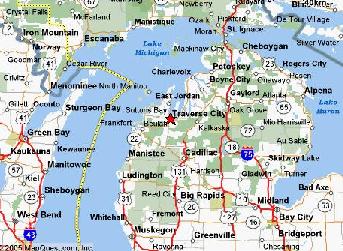
Driving the long route around Lake Superior into northern Michigan, the first tentative fingers of spring have brought a thawing to the land. The cherries that draw thousands of migrant workers to the Lower Peninsula are threatening to burst into bud. Gladys Munoz (her real name) directs Migrant Health Services for seven northern Michigan counties. She is based in Traverse City, a comfortable upper crust enclave — the billion buck mansions out on the peninsula are in the El Chapo Guzman category of ostentation (Michael Moore is rumored to be in residence in the environs ensconced in a lavish log cabin roughly the size of downtown Flint.)


Gladys knows where the bodies are buried. We ply the backroads to the labor camps hidden away down in the dank gullies. Guatemalans and Mexicans stream into this region each spring to do the stoop labor no gringo will do and pick the Maraschinos that top off the parfaits of the few upwardly mobile Americans left in the wake of the ravaged economy (Michigan unemployment clocks in around 15%.) Gladys tells me about three babies born without brains — she suspects pesticides. She speaks about a man from Chiapas who hung himself when he found out that he had contacted AIDS — a priest was called upon to perform an exorcism at the house where he expired. And a young Triqui Indian mother from Oaxaca picking cucumbers for a Vlasic pickle contractor who was stranded in a country that doesn’t recognize her language after her husband went fishing for supper without a license and Fish & Game turned him over to the Migra.


We visit with Liliana (not her real name) from the drug war-riddled hot lands of Guerrero state. The patron is a kindly old farmer who has installed cable TV for the workers and we watch Barack Obama extol the wonders of his tarnished health care bill. Liliana’s husband is picking oranges in Florida but will soon return to work the cherry. She says he doesn’t much believe that an immigration reform measure will make it out of congress – “just some more blahblahblah…” But Liliana will march this May 1st if she can get a ride — undocumented workers are not permitted drivers’ licenses in the state of Michigan.


Traverse City is good to me. I perform at a local organic coffee roaster for a roomful of social change agents. The next morning, Jody T. who gave up her life to drive this garrulous old gaffer around the bioregion, steers the Viva into a trepidatious triangle. Cadillac was once the home base for Timothy McVeigh and the Michigan Militia, a recent flashback on the Ten O’clock News after a Christian posse purportedly targeted cops for blood sacrifice in preparation for the appearance of the Anti-Christ. To the west, small towns with Dutch-inflected names like Holland and Zeeland and Vreland dot the lakeside.


White clapboard outposts of the Dutch Reform Church, the architect of South African apartheid, their steeples spiring piously into the spring breeze, hug the highway. The Dutch Reform Church is the spiritual home of the Prinz family whose most celebrated spawn, Eric, is the go to guy at Blackwater. Further south we slide into Grand Rapids where the similarly affiliated DeVos dynasty’s Amway holds sway. The Prinzes and the DeVoses (a good reason not to root for the Orlando Magic) finance such repositories of right-wing fanaticism as Focus On The Family and Operation Rescue. The largesse of Dick DeVos rivaled the Mormon Church in putting California’s homophobic Proposition 8 over the top.


Grand Rapids, once the furniture capitol of the known universe and now the home of the Gerald Ford Museum of Presidential Imbeciles, is a good boxing town (Buster Mathis and Roger Mayweather have gyms here) and a swelling Latino population has changed the complexion of the city. Despite the downturn, Grand Rapids is trying to upgrade its downtown but the further one gets from the core of the city, the seedier things look.


Koinonia House is a sanctuary near the old demolished heart of Grand Rapids — in fact, it is the only structure left standing on its block. Established by disaffected seminarians like Jeff Smith in the early 1980s when the U.S. waged war on Central America, K House became a station on the underground railroad built by the Sanctuary Movement. The first refugees were Guatemalan Indians fleeing the scorched earth genocide of Efrain Rios Montt. In recent years, K House has taken in Mexicans fleeing that “desgraciada pobreza” back home, like Carlos and Alynn (their real names) who have brought their remarkable art with them to El Norte.


Jeff kicks back and reminisces about the fates of former tenants. The big-bellied wood stove belches out waves of warmth on a chill late March morning. The big arms of the fluffy old lounger envelop a weary traveler and hold him close. K House remains a sanctuary deep in the heart of a wounded land.


Stay tuned. Chicago, St Louis, Jackson Mississippi – there is still a whole lot of traveling to do as the Monstruo tour moves eastwards.               


FIN


John Ross and “El Monstruo – Dread & Redemption in Mexico City” will visit St. Louis April 4th-7th, and Millsaps College Jackson Mississippi April 9th for a symposium on Mexico City – he will tour Baltimore, Washington, New York, and Boston April 19th through May 1st. For details write johnross@igc.org.

Lawsuit could expose SFPD-ABC collaboration

43

Imminent legal actions against San Francisco, its Police Department, and the California Department of Alcohol Beverage Control could reveal whether a pair of undercover agents went rogue in harassing nightclubs and aggressively busting parties or whether they were acting at the direction of top officials.

Attorney Mark Webb – whose work on a racketeering lawsuit against the policing agencies was the subject of cover stories in the Guardian and the SF Weekly – told us that on Monday, he plans to file that racketeering claim against the city (which will then become a lawsuit if the city rejects it, as it routinely does) and a related lawsuit in Superior Court involving the rough, unnecessary arrest of bartender Javier Magallon and harassment of Mike Quan, owner of The Room, Playbar, and Mist. Narrated surveillance video associated with the case was posted on YouTube yesterday.

Central figures in the lawsuit are SFPD Officer Larry Bertrand and ABC agent Michelle Ott, plain-clothes partners in an aggressive crackdown on nightlife over the last year. Webb said he plans to immediately seek police records and communications and to depose Bertrand and Ott to try to determine who ordered the crackdown, why, and when higher-ups became aware of their aggressive tactics.

“I would like to know if Bertrand is being sent places or if he’s just a lone wolf, and the CADs will show that,” Webb said, referring to computer-assisted dispatch reports that track activities and communications involving individual officers. Those and other records that Webb can access through the court-ordered discovery process could finally shed light on what’s behind the crackdown.

Webb had sought to have Mayor Gavin Newsom mediate this dispute before the cases were filed, saying the racketeering lawsuit will be expensive and divisive, and all the nightlife community really wants is an end to the harassment and assurance that it wouldn’t restart once the media attention passes. And Webb did have conversations with top Newsom aide Mike Farrah and with Nicolas King, Newsom’s liaison to the SFPD, but neither indicated that Newsom was willing to get personally involved. Newsom spokesperson Tony Winnicker also told us Newsom preferred to let Police Chief George Gascon handle the matter.

So Webb said he now plans to move forward with litigation. “If they’re not answering the call at City Hall, let’s get into the arena,” Webb told us.

Webb is an experienced litigator who has won multi-million judgments and who started his career in New York City helping prosecute Racketeer Influenced and Corrupt Organizations (RICO) Act cases against the mob, and now he plans to use RICO laws against what he says is a city-state enterprise to interfere with lawful nightlife activities in San Francisco.

“Webb gets it. It’s a weird mentality, the really good trial attorneys, and Webb is that,” said attorney Mark Rennie, who has spent decades working with the city’s entertainment industry and has helped advise Webb on the case.

Among the parties involved in the RICO claim are those involved in Webb’s other lawsuit against the city, as well as Club Caliente, its owner Maurice Salinas, Azul, its owner John Bauer, New York nightclub owners Phillipe Rieser and David Brinkley, Vessel, and Siobhan Hefferman, who was arrested by Bertrand and Ott at a private party. Others may be added soon.

Great American Music Hall, Slims, and DNA Lounge also claim to have been harassed by the ABC and have been involved in several meetings that led up to Webb’s lawsuit, but they’re not taking part in the lawsuit yet, partially because they fear retribution from the ABC.

“I probably would have jumped in, but I don’t want to walk into a hearing suing the ABC,” Slims and GAMH general manager Dawn Holliday told us, referring to Slims’ April 1 appeals hearing stemming from noise complaint citations triggered by one particularly cranky neighbor.

DNA Lounge, which has regularly documented the harassment campaign on its blog, decided to wait with the other two clubs before joining the suit. “We thought it was important to stand as a community and there were too many venues that were worried about retribution from the police or ABC if they joined the suit,” DNA general manager Barry Synoground told us. 

But Synoground said he’s anxious to see what Webb’s suit unearths, noting that Bertrand and Ott haven’t been visible in recent weeks as complaints against them went public, and saying he thinks Commander James Dudley and other top SFPD brass are really driving this crackdown: “We may have taken one of his tools off the street, but he’ll find another.”

Synoground said most SFPD officers are very professional and they have no problem working with them, but Bertrand and Ott have unnecessarily and aggressively interfered with their business. Holliday goes even further in praising the SFPD, saying she has a good relationship with Bertrand and everyone in Southern Station, blaming her clubs’ troubles on the ABC and the unwillingness of top city officials to stand up for them.

So the internal SFPD communications, and those between the city and the ABC, could prove revealing. “On April 17, I can send out subpoenas to the cops and I can take Bertrand’s deposition 30 days from Monday,” Webb said, citing statutory response periods.  

Webb expressed confidence in his case and said the police shakedowns and harassment fit well with the RICO statute, which has been used against a wide variety of enterprises over the years, including government agencies.

In fact, an American Bar Association book, “Civil RICO: A definitive guide,” by Gregory P. Joseph, seems to support Webb’s confidence. “Any person injured in his business or property by reason of a violation of Section 1962 of this chapter may sue therefore in any appropriate United States district court and shall recover threefold the damages he sustains and the costs of the suit, including reasonable attorney fees.’ This simple sentence has generated an avalanche of litigation,” the book begins.

It makes clear the intent of Congress that RICO laws “shall be liberally construed to effectuate the remedial purposes” of targeted individual seeking protection from harassment. A 1981 U.S. Supreme Court ruling (U.S. vs. Turkette) made clear even legitimate enterprises such as government agencies could be sued, and a 1994 ruling (NOW vs. Scheidler) settled a long dispute over whether the racketeering needed to be economically motivated, finding that it doesn’t.

Racketeering was defined by Congress as simply committing any of a long list of “predicate acts,” which include violence or the threat of violence, kidnapping (including false arrest), extortion, physical interference with business, malicious prosecution, and abuse of authority, all of which Webb says apply in his case. He is also reviewing the Guardian’s Death of Fun coverage from the last four years to find more examples of predicate acts involving the SFPD.

The hardest part of proving his case could be to show that it interfered with interstate commerce, although Webb said that’s met by efforts by Bertrand and Ott to prevent Rieser and Brinkley from transferring a liquor license from New York. But “Civil RICO” also said caselaw has established that “RICO requires no more than a slight effect upon interstate commerce,” citing the 1989 case U.S. vs. Doherty.

Like many who have had run-ins with Bertrand and Ott, Webb said he’s anxious to see what he finds in discovery: “What’s fascinating about this is you can uncover the whole system.”

Harry Bridges: Working class hero

0

He died 20 years ago this month, but I can still see him, a tall, wiry, gray-haired, hawk-nosed man. I can hear him.

I see him pacing restlessly back and forth behind the podium at union meetings, nervously twirling a gavel, puffing incessantly on a cigarette. I hear him calling on members, white, black, Asian, Latino, in the broad accent of his native Australia, actually encouraging debate and dissent.

He died in San Francisco at the age of 88 — Harry Bridges, co-founder and for 40 years president of one of the most influential organizations in this or any other country, the International Longshore and Warehouse Union.

Bridges often was irritating to the ILWU’s friends and foes alike. He was irascible and obstinate. But he was unquestionably one of the past century’s greatest leaders.

Bridges was not in it for money. His salary as union president was far less than he would have made had he remained a working longshoreman. Bridges was in it because of his unswerving belief in “the rank-and-file,” as he once told me, a naive and inquisitive young Chronicle reporter — “the working stiff, that’s who! Can you understand that?”

I understood, eventually. And though I and others sometimes harshly questioned Bridges’ specific notions of what was needed by working people, none could legitimately question his incredible commitment, skill and integrity.

“The basic thing about this lousy capitalist system,” Bridges declared, “is that the workers create the wealth, but those who own it, the rich, keep getting richer and the poor get poorer.”

Harry Bridges’ lifelong task, then, was to shift wealth from those who owned it to those who created it – a task he began in 1934, when he led his fellow longshoremen in a strike aimed at winning true collective bargaining rights from West Coast shipowners.

As Bridges’ biographer Charles Larrowe recalled, “The shipowners said ‘no,’ said it with tear gas vigilantes and billy clubs wielded by cops who thought they were in the front lines against a communist takeover. Up and down the coast, the waterfront was turned into a battlefield.”

Police bullets killed 10 men during the three-month-long strike that also prompted a four-day general strike in San Francisco. But the longshoremen ultimately got what they had demanded, most importantly, an end to the notorious system of job allocation known as the “shape-up. “

Previously, jobs were parceled out by hiring bosses in exchange for kickbacks from the longshoremen who lined up on the docks every morning clamoring for work. But after the strike, job assignments were made by an elected union dispatcher at a union-controlled hiring hall, using a rotation system that spread the work evenly among longshoremen. The victory was downright revolutionary, and had a profound impact on workers and employers nationwide.

Within two years, Bridges joined with Lou Goldblatt, the brilliant young leader of the warehousemen who worked closely with longshoremen on the docks. They brought the two groups together into a single powerful union. the ILWU, under the banner of the newly established Congress of Industrial Organizations — the CIO.

The union ultimately extended its jurisdiction to virtually all waterfront workers on the Pacific coasts of the United States and Canada and to workers in a wide variety of occupations in Hawaii.

Bridges and Goldblatt used their potent base to help lead drives by other CIO unions that spread unionization from the waterfront to many other industries throughout the West at a time when employers treated workers as chattel, giving them little choice but to accept near-starvation wages and whatever else the employers demanded.

For the ILWU, Bridges and Goldblatt drafted a union constitution that still is unique in the control it grants members. Many union constitutions give members very little beyond the right of paying dues in exchange for the services provided them by the union’s securely entrenched bureaucrats. But the ILWU constitution guarantees that nothing of importance can be done without direct vote of the rank-and-file.

No one can take ILWU office except through a vote of the entire membership; no agreement with employers can be approved except by a vote of all members; the union cannot take a position on anything without membership approval.

The ILWU helped set important precedents that enhanced the civil liberties of everyone through its strong opposition to those who tried to deny constitutional rights to Bridges and others by labeling them Communists. The union’s efforts included an eight-year-battle against attempts to deport Bridges to Australia that ended with a Supreme Court ruling that enabled him to become a U.S. citizen in 1945.

The ILWU under Bridges was an outspoken foe of U.S. involvement in Vietnam, even at a time when most other unions enthusiastically supported involvement. And members backed their opposition to oppressive regimes abroad by refusing to handle cargo bound for or coming from their countries.

Thanks in large part to Bridges, the ILWU also was one of the first unions to be thoroughly integrated racially, and otherwise has always been probably the country’s most socially conscious union. And its members, now including women, have long been among the most highly compensated workers in any field, while at the same time benefitting from labor-saving equipment that makes their work easier. The new equipment and methods on the docks have brought employers higher profits, which union negotiators have made certain they share with dock workers.
The ILWU used its employer-provided pension funds to finance construction of low-rent apartments in San Francisco’s St. Francis Square, an extremely rare example of what the union calls “cooperative, affordable, integrated working-class housing.”

Harry Bridges led the way to that and much more which benefited the working stiffs to whom he devoted his life — and many, many others. As a newspaper that once reviled him as a dangerous radical said on his death, “He sought the best of all possible worlds. This one is much better due to his efforts.” Boy, is it.

Dick Meister, formerly labor editor of the SF Chronicle and KQED-TV Newsroom, has covered labor and politics for a half-century. Contact him through his website, www.dickmeister.com, which includes more than 250 of his recent columns.

Music listings

0

Music listings are compiled by Paula Connelly and Cheryl Eddy. Since club life is unpredictable, it’s a good idea to call ahead to confirm bookings and hours. Prices are listed when provided to us. Submit items at listings@sfbg.com.

WEDNESDAY 24

ROCK/BLUES/HIP-HOP

Acid Mothers Temple, OGOD Bottom of the Hill. 9:30pm, $12.

Asteroids Galaxy Tour Independent. 8pm, $15.

Bridez Knockout. 10pm, $5.

Keith Crossan Biscuits and Blues. 8pm, $15.

High Places, Mi Ami, Protect Me Rickshaw Stop. 8pm, $12.

Nadas, Blue Bonfire Hotel Utah. 9pm, $8.

No Captains, Black Sails Western Shores, Why I Hate, Singularity Thee Parkside. 8pm, $5.

*Pentagram, Ludicra, Slough Feg, Orchid DNA Lounge. 8:30pm, $22.

Power Solo, Chris Jones, Chief Nowhere, Federale, DJ Neil Martinson Hemlock Tavern. 9pm, $7.

*Rainbow Arabia, Sutekh, K. Flay, Shlohmo, Oy Café du Nord. 8pm, $12.

FOLK/WORLD/COUNTRY

Somerville and Keehan Plough and Stars. 9pm.

Gaucho, Michael Abraham Jazz Session Amnesia. 8pm, free.

DANCE CLUBS

Booty Call Q-Bar, 456 Castro, SF; www.bootycallwednesdays.com. 9pm. Juanita Moore hosts this dance party, featuring DJ Robot Hustle.

Hands Down! Bar on Church. 9pm, free. With DJs Claksaarb, Mykill, and guests spinning indie, electro, house, and bangers.

Jam Wednesday Infusion Lounge. 10pm, free. DJ Slick Dee.

Machine Sloane, 1525 Mission, SF; (415) 621-7007. 10pm, free. Warm beats for happy feet with DJs Sergio, Conor, and André Lucero.

Mary-Go-Round Lookout, 3600 16th St, SF; (415) 431-0306. 10pm, $5. A weekly drag show with hosts Cookie Dough, Pollo Del Mar, and Suppositori Spelling.

RedWine Social Dalva. 9pm-2am, free. DJ TophOne and guests spin outernational funk and get drunk.

Respect Wednesdays End Up. 10pm, $5. Rotating DJs Daddy Rolo, Young Fyah, Irie Dole, I-Vier, Sake One, Serg, and more spinning reggae, dancehall, roots, lovers rock, and mash ups.

Shutter Elbo Room. 10pm, $5. Goth with DJs Nako, Omar, and Justin.

Synchronize Il Pirata, 2007 16th St, SF; (415) 626-2626. 10pm, free. Psychedelic dance music with DJs Helios, Gatto Matto, Psy Lotus, Intergalactoid, and guests.

Yoruba Dance Sessions Bacano! Som., 2925 16th St, SF; (415) 558-8521. 9pm, free. With resident DJ Carlos Mena and guests spinning afro-deep-global-soulful-broken-techhouse.

THURSDAY 25

ROCK/BLUES/HIP-HOP

Al Qaeda, Nondor Devai and Ben Wolcott, Bank of Christ Hemlock Tavern. 9pm, $6.

Cymbals Eat Guitars, Bear In Heaven, Freelance Whales Bottom of the Hill. 9pm, $10.

Deeper, Socialized, Scar Pink Hotel Utah. 9pm, $8.

Enne Enne, Rad Cloud, Sexx Act Café du Nord. 9pm, $10.

Flakes, Hot Lunch, Silver Skies Thee Parkside. 9pm, $6.

Garotas Suecas, Lumerians, Greg Ashley Rickshaw Stop. 8pm, $10.

Phil Gates Biscuits and Blues. 8pm, $15.

Swann Danger, Monozid, Bootblacks, DJ Nako Knockout. 9:30pm, $6.

"Thursday Night Live" Cellspace, 2050 Bryant, SF; thursdaynightnow@gmail.com. 9pm, free. With Holly Saucy, EyeZon, Serendipity Project, and Isis Genesis.

JAZZ/NEW MUSIC

"Full Moon Concert Series: Storm Moon" Luggage Store Gallery, 1007 Market, SF; www.luggagestoregallery.org. 8pm, $6-10. With Joshua Churchill and Paul Clipson, and Peter Kolovos.

Hauschka and Dustin O’Halloran with MagiK*MagiK String Quintet Swedish American Hall (upstairs from Café du Nord). 7:30pm, $16.

"Music at Large: The Rites of Spring" Velma’s, 2246 Jerrold, SF; (415) 824-4606. 7pm. With Lewis Jordan and more.

Najee Yoshi’s San Francisco. 8 and 10pm, $20-26.

FOLK/WORLD/COUNTRY

Bautista Cigar Bar and Grill, 850 Montgomery, SF; www.cigarbarandgrill.com. 9pm, $7.

Bluegrass and Old Time Jam Atlas Café. 8pm, free.

Christopher Dallman Dolores Park Café. 7:30pm, free.

Eric Maskol Café Royale, 800 Post, SF; (415) 641-6033. 8pm, free.

Montana Slim, Greensky Bluegrass, Nat Keefe Independent. 8pm, $15.

Tipsy House Plough and Stars. 9pm.

DANCE CLUBS

Afrolicious Elbo Room. 9:30pm, $5-7. DJs Pleasuremaker and Señor Oz spin Afrobeat, Tropicália, electro, samba, and funk.

Apoptygma Berzerk, Anix, Dismantled DNA Lounge. 9pm, $16.

Caribbean Connection Little Baobab, 3388 19th St, SF; (415) 643-3558. 10pm, $3. DJ Stevie B and guests spin reggae, soca, zouk, reggaetón, and more.

Dirty Dishes LookOut, 3600 16th St., SF; (415) 431-0306. 9pm, $2. With DJs B-Haul and Gordon Gartrell spinning electric-hop, bassy-house, indielectronica, and more.

Drop the Pressure Underground SF. 6-10pm, free. Electro, house, and datafunk highlight this weekly happy hour.

Funky Rewind Skylark. 9pm, free. DJ Kung Fu Chris, MAKossa, and rotating guest DJs spin heavy funk breaks, early hip-hop, boogie, and classic Jamaican riddims.

Good Foot Yoruba Dance Sessions Bacano! Som., 2925 16th St, SF; (415) 558-8521. 9pm, free. A James Brown tribute with resident DJs Haylow, A-Ron, and Prince Aries spinning R&B, Hip hop, funk, and soul.

Gymnasium Matador, 10 Sixth St, SF; (415) 863-4629. 9pm, free. With DJ Violent Vickie and guests spinning electro, hip hop, and disco.

Heat Icon Ultra Lounge. 10pm, free. Hip-hop, R&B, reggae, and soul.

Kick It Bar on Church. 9pm. Hip-hop with DJ Jorge Terez.

Koko Puffs Koko Cocktails, 1060 Geary, SF; (415) 885-4788. 10pm, free. Dubby roots reggae and Jamaican funk from rotating DJs.

Mestiza Bollywood Café, 3376 19th St, SF; (415) 970-0362. 10pm, free. Showcasing progressive Latin and global beats with DJ Juan Data.

Peaches Skylark, 10pm, free. With an all female DJ line up featuring Deeandroid, Lady Fingaz, That Girl, and Umami spinning hip hop.

Popscene 330 Rich. 10pm, $10. Rotating DJs spinning indie, Britpop, electro, new wave, and post-punk.

Represent Icon Lounge. 10pm, $5. With Resident DJ Ren the Vinyl Archaeologist and guest.

Swedish Invasion Club Six. 9pm, $10. With live performances by Looptroop Rockers, Timbuktu and Chords, Adam Tensta, and more and DJ Platurn spinning hip hop.

FRIDAY 26

ROCK/BLUES/HIP-HOP

Chatmonchy Amoeba Music, 1855 Haight, SF; (415) 831-1200. 6pm, free.

Chatmonchy, Red Bacteria Vacuum, Omodaka, Okamotos, JinnyOops! Independent. 8pm, $15.

Coathangers, Spencey Dude and the Doodles, Aerosols Hemlock Tavern. 9:30pm, $7.

Fall of Troy, Envy on the Coast, Twin Atlantic Slim’s. 7:30pm, $16.

Field Music, Old-Fashioned Way, Sands Café du Nord. 9:30pm, $12.

*Hammerfall, Powerglove, Ruffians Regency Ballroom. 9pm, $28-60.

Jeremy Goodfeather Band, Sioux City Kid, Stow Aways, Jeff St. John Hotel Utah. 9pm, $10.

Kite Operations, XYZR_KX, Gold Medalists, Jack Tung Retox Lounge. 10pm, $5.

Life in 24 Frames, Loaded for Bear, Myonics El Rio. 9pm, $5.

Low Anthem, Timbre Timber, Barr Brothers Great American Music Hall. 9pm, $15.

Money Mark, Tommy Guerrero, and Marc and the Casuals Gallery 16, 501 3rd St., SF; (415) 626-7495. 7pm, $20. Part of Soulfood No. 2.

Steve Lucky and the Rhumba Bums Biscuits and Blues. 8 and 10pm, $20.

*Midnight Bombers, Get Dead, My Life in Black and White, Rockfight Thee Parkside. 9:30pm, $7.

Think About Life, Heavenly States, Kill Moi Bottom of the Hill. 10pm, $10.

JAZZ/NEW MUSIC

Audium 9 1616 Bush, SF; (415) 771-1616. 8:30pm, $15.

Black Market Jazz Orchestra Top of the Mark. 9pm, $10.

Eric Kurtzrock Trio Ana Mandara, Ghirardelli Square, 891 Beach, SF; (415) 771-6800. 8pm, free.

Najee Yoshi’s San Francisco. 8 and 10pm, $22-32.

Trombone Trio Rite Spot, 2099 Folsom, SF; www.ritespotcafe.net. 9pm, free.

FOLK/WORLD/COUNTRY

Blind Willies Revolution Café, 3248 22nd St., SF; (415) 642-0474. 8:30pm, free.

Culture Canute Grant and Green Saloon. 9:30pm. With the Rockstone Players and the Realization Crew.

Jeffery Halford and the Healers, Tom Heyman Plough and Stars. 9pm.

Jeremy Goodfeather Hotel Utah. 9pm, $8.

Toshio Hirano Mercury Café, 201 Octavia, SF; (415) 252-7855. 7:30pm, free.

Kathryn Jenson Revolution Café, 3248 22nd St, SF; (415) 642-0474. 8:45pm, free.

Lagos Roots Connecticut Yankee, 100 Connecticut, SF; (415) 552-4440. 10pm, $10. With members of Fela Kuti and the Afrika 70, and more.

Paper Raincoat Noe Valley Ministry, 1021 Sanchez, SF; (415) 454-5238. 8:15pm, $17. With Vienna Teng.

Rob Reich and Craig Ventresco Amnesia. 7pm, free.

Rumbache Cigar Bar and Grill, 850 Montgomery, SF; www.cigarbarandgrill.com. 9pm, $7.

"Sila Presents Sahara" Coda. 9pm, $10.

DANCE CLUBS

Activate! Lookout, 3600 16th St, SF; (415) 431-0306. 9pm, $3. Face your demigods and demons at this Red Bull-fueled party.

Bar on Church 9pm. Rotating DJs Zax, Zhaldee, and Nuxx.

Blow Up Rickshaw Stop. 10pm, $10. With rotating DJs.

Exhale, Fridays Project One Gallery, 251 Rhode Island, SF; (415) 465-2129. 5pm, $5. Happy hour with art, fine food, and music with Vin Sol, King Most, DJ Centipede, and Shane King.

Fat Stack Fridays Koko Cocktails, 1060 Geary, SF; (415) 885-4788. 10pm, free. With rotating DJs Romanowski, B-Love, Tomas, Toph One, and Vinnie Esparza.

4OneFunktion Elbo Room. 10pm, $5-10. Hip-hop and turntablism with Apollo and Shortkut.

Gay Asian Paradise Club Eight, 1151 Folsom, SF; www.eightsf.com. 9pm, $8. Featuring two dance floors playing dance and hip hop, smoking patio, and 2 for 1 drinks before 10pm.

Good Life Fridays Apartment 24, 440 Broadway, SF; (415) 989-3434. 10pm, $10. With DJ Brian spinning hip hop, mashups, and top 40.

Gymnasium Stud. 10pm, $5. With DJs Violent Vickie and guests spinning electro, disco, rap, and 90s dance and featuring performers, gymnastics, jump rope, drink specials, and more.

Hot Chocolate Milk. 9pm, $5. With DJs Big Fat Frog, Chardmo, DuseRock, and more spinning old and new school funk.

House of Voodoo Medici Lounge, 299 9th St., SF; (415) 501-9162. With DJs voodoo, Purgatory, and Stiletto spinning goth, industrial, deathrock, and eighties.

Look Out Weekend Bambuddha Lounge. 4pm, free. Drink specials, food menu and resident DJs White Girl Lust, Swayzee, Philie Ocean, and more.

M4M Fridays Underground SF. 10pm-2am. Joshua J and Frankie Sharp host this man-tastic party.

Psychedelic Radio Club Six. 9pm, $7. With DJs Kial, Tom No Thing, Megalodon, and Zapruderpedro spinning dubstep, reggae, and electro.

Rockabilly Fridays Jay N Bee Club, 2736 20th St, SF; (415) 824-4190. 9pm, free. With DJs Rockin’ Raul, Oakie Oran, Sergio Iglesias, and Tanoa "Samoa Boy" spinning 50s and 60s Doo Wop, Rockabilly, Bop, Jive, and more.

Suite Jesus 111 Minna. 9pm, $20. Beats, dancehall, reggae and local art.

Teenage Dance Craze Party Knockout. 10pm, $3. With DJs Sergio Iglesias, Russell Quann, and dX the Funky Gran Paw.

Trannyshack DNA Lounge. 10pm, $12. Bowie tribute night with David J, Ejector, and more.

Underground Expression Club Six. 9pm, $10. Live performances by Bicasso, Z-Man, Dregs One, and Sound Earth and DJ BeatsMe spinning hip hop.

SATURDAY 27

ROCK/BLUES/HIP-HOP

"Area Codes: The Bay Area’s Regional Hip-Hop Monthly" Etiquette Lounge, 1108 Market, SF; (415) 863-3929. 10pm, $10. With guest DJs Platurn and Doc Fu.

Big Sam’s Funky Nation Independent. 9pm, $15.

Burmese, Mayyors, Arms and Leg Knockout. 9pm, $7.

Copeland, I Can Make a Mess Like Nobody’s Business, Person L, Deas Vail Slim’s. 8pm, $17.

"Dear Companion Tour" Swedish American Hall. 8pm, $15. With Ben Sollee and Daniel Martin Moore.

Dead Meadow, Imaad Wasif, Upside Down Great American Music Hall. 9pm, $15.

Quinn Deveaux Revolution Café, 3248 22nd St, SF; (415) 642-0474. 8:45pm, free.

*Fleshies, Classics of Love, Tubers El Rio. 10pm, $8.

Heavy Liquid and friends Thee Parkside. 3pm, free.

Chrisette Michele, Laura Izibor Regency Ballroom. 9pm, $35.

Moccretro, Feie, Thee Landlords Epicenter Café, 764 Harrison, SF; (415) 543-5436. 7pm, free.

Sacred Profanities, Fiver Brown and the Good Sinners, Jeff Cotton’s Gin Joint Hotel Utah. 9pm, $7.

Neil Schon Fillmore. 9pm, $35.

Sex With No Hands, Minks, Antioquia Café du Nord. 9:30pm, $10.

"Slumberland Records 20th Anniversary Party" Rickshaw Stop. 5pm, $20. With Boyracer, Go Sailor, Henry’s Dress, the How, Brilliant Colors, and more.

Earl Thomas and the Blues Ambassadors Biscuits and Blues. 8 and 10pm, $22.

Tobacco, Hood Internet, New Slave Bottom of the Hill. 10pm, $12.

Tumbledown, Famous, Andrew Anderson, Jesse Morris and the Man Cougars Thee Parkside. 9pm, $8.

*Weedeater, Black Tusk, Gates of Slumber, Struck By Lightning Elbo Room. 9pm, $13.

Wizzard Sleeve, Andy Human, Steeples Hemlock Tavern. 9:30pm, $6.

JAZZ/NEW MUSIC

Audium 9 1616 Bush, SF; (415) 771-1616. 8:30pm, $15.

Eric Kurtzrock Trio Ana Mandara, Ghirardelli Square, 891 Beach, SF; (415) 771-6800. 8pm, free.

"Jazz Mafia Presents Remix: Live" Coda. 10pm, $10.

Josh Jones Cigar Bar and Grill, 850 Montgomery, SF; www.cigarbarandgrill.com. 9pm, $7.

Marlina Teich Quintet Savanna Jazz. 8pm.

Najee Yoshi’s San Francisco. 8 and 10pm, $32.

Ricardo Scales Top of the Mark. 9pm, $15.

FOLK/WORLD/COUNTRY

Big Bad Wolf, Bell Tower Amnesia. 6pm, $5. Part of the Songbird Festival.

Debbie Friedman Congregation Emanu-El, 2 Lake, SF; (510) 451-8874. 8pm, $36.

Toshio Hirano Rite Spot, 2099 Folsom, SF; www.ritespotcafe.net. 9pm, free.

Lagos Roots Connecticut Yankee, 100 Connecticut, SF; (415) 552-4440. 10pm, $10. With members of Fela Kuti, the Afrika 70, and more.

Ralph Towner with Paolo Fresu Yerba Buena Center for the Arts, 701 Mission, SF; www.sfjazz.org. 8pm, $30-50.

Whiskey Richards Plough and Stars. 9pm.

Y La Bamba, Sean Flinn and the Royal We Amnesia. 9pm, $7.

DANCE CLUBS

Bar on Church 9pm. Rotating DJs Foxxee, Joseph Lee, Zhaldee, Mark Andrus, and Niuxx.

Barracuda 111 Minna. 9pm, $5-10. Eclectic 80s music with Djs Damon, Phillie Ocean, and Javier, plus free 80s hair and make-up by professional stylists.

Bootie DNA Lounge. 9pm, $6-12. Mash-ups with Kleptones, Adrian and Mysterious D, Dada, and more.

Flying Lotus, Kode 9 Mezzanine. 9pm, $16.50.

Go Bang! Deco SF, 510 Larkin, SF; (415) 346-2025. 9pm, $5. Dress up as your favorite superhero or villain and enjoy some disco beats with DJs Steve Fabus, Nicky B., Sergio and more.

HYP Club Eight, 1151 Folsom, SF; www.eightsf.com. 10pm, free. Gay and lesbian hip hop party, featuring DJs spinning the newest in the top 40s hip hop and hyphy.

OG Productions In the Darkroom, Club Six. 9pm, $5. With DJs Capp St. Girls, Evergreen Dub, Angel Island, and more spinning house.

Reggae Gold Club Six. 9pm, $15. With DJs Daddy Rolo, Polo Mo’qz, Tesfa, Serg, and Fuze spinning dancehall and reggae.

Social Club Lookout, 3600 16th St, SF; (415) 431-0306. 9pm. Shake your money maker with DJs Lee Decker and Luke Fry.

Spirit Fingers Sessions 330 Ritch. 9pm, free. With DJ Morse Code and live guest performances.

SUNDAY 28

ROCK/BLUES/HIP-HOP

Caspian, Arms and Sleepers, Silian Rail Hotel Utah. 8:30pm, $8.

Paper Chase, Generalissimo, Kiss Kiss Hemlock Tavern. 9pm, $8.

*Bone Cootes, San Similar Rite Spot, 2099 Folsom, SF; www.ritespotcafe.net. 9pm, free.

Titus Andronicus, Let’s Wrestle Slim’s. 8pm, $15.

Washed Out, Small Black, Pictureplane, Young Prisms Knockout. 7pm, $10.

JAZZ/NEW MUSIC

Cyril Guirand Café Royale, 800 Post, SF; (415) 441-4099. 6pm, free.

Hapa Yoshi’s San Francisco. 5 and 7pm, $5-30.

NY Hard Bop Trio Bliss Bar, 4026 24th St, SF; (415) 826-6200. 4:30pm, $10.

"Switchboard Music Festival 2010" Dance Mission Theater, 3316 24th St, SF; www.switchboardmusic.com. 2-10pm, $10-40. Genre-defying, eight-hour marathon concert.

Tord Gustavsen Quintet Yerba Buena Center for the Arts, 701 Mission, SF; www.sfjazz.org. 8pm, $25-40.

FOLK/WORLD/COUNTRY

Bodice Rippers, Gilded Rooks Amnesia. 9pm, $7.

Krishna Das, Deva Premal and Miten, Manose Warfield. 7:30pm, $40.

Modal Kombat Amnesia. 7pm, free.

Ol’ Cheeky Bastards, Howlin’ Houndog Plough and Stars. 4pm.

"Salsa Sundays" El Rio. 4pm, $5. With Andy y Callao.

"Te Gusto Musical" Coda. 8pm, $10. With John Calloway.

Ten Foot Tall and 80 Proof Thee Parkside. 4pm, free.

DANCE CLUBS

DiscoFunk Mashups Cat Club. 10pm, free. House and 70’s music.

Dub Mission Elbo Room. 9pm, $6. Dub, roots, and classic dancehall with DJ Sep, Ludachris, and guest Mexican Dubwiser.

45Club the Funky Side of Soul Knockout. 10pm, free. With Dx the Funky Gran Paw, Dirty Dishes, and English Steve.

Gloss Sundays Trigger, 2344 Market, SF; (415) 551-CLUB. 7pm. With DJ Hawthorne spinning house, funk, soul, retro, and disco.

Honey Soundsystem Paradise Lounge. 8pm-2am. "Dance floor for dancers – sound system for lovers." Got that?

Jock! Lookout, 3600 16th St, SF; (415) 431-0306. 3pm, $2. This high-energy party raises money for LGBT sports teams.

Kick It Bar on Church. 9pm. Hip-hop with DJ Zax.

Lowbrow Sunday Delirium. 1pm, free. DJ Roost Uno and guests spinning club hip hop, indie, and top 40s.

Religion Bar on Church. 3pm. With DJ Nikita.

Stag AsiaSF. 6pm, $5. Gay bachelor parties are the target demo of this weekly erotic tea dance.

MONDAY 29

ROCK/BLUES/HIP-HOP

Agent Orange, Gutwrench, Fukm Kimo’s. 9pm, $10.

"Blue Bear School of Music Band Showcase" Café du Nord. 7:30pm, $12-20.

"Felonious Presents Live City Revue" Coda. 9pm, $7.

Greg Ginn and the Texas Corrugators, Guella, Barney Cauldron Red Devil Lounge. 8pm, $10.

Nellie McKay, Howard Fishman Great American Music Hall. 8pm, $21.

Photo Atlas, Rouge, Rival Parties Elbo Room. 9pm, $6.

Red Light Mind Café Royale, 800 Post, SF; (415) 441-4099. 8pm, free.

Tempo No Tempo, World’s Greatest Ghosts Knockout. 9pm, $5.

DANCE CLUBS

Bacano! Som., 2925 16th St, SF; (415) 558-8521. 9pm, free. With resident DJs El Kool Kyle and Santero spinning Latin music.

Black Gold Koko Cocktails, 1060 Geary, SF; (415) 885-4788. 10pm-2am, free. Senator Soul spins Detroit soul, Motown, New Orleans R&B, and more — all on 45!

Death Guild DNA Lounge. 9:30pm, $3-5. Gothic, industrial, and synthpop with DJs Decay, Joe Radio, and Melting Girl.

M.O.M. Madrone Art Bar. 6pm, free. With DJ Gordo Cabeza and guests playing all Motown every Monday.

Manic Mondays Bar on Church. 9pm. Drink 80-cent cosmos with Djs Mark Andrus and Dangerous Dan.

Monster Show Underground SF. 10pm, $5. Cookie Dough and DJ MC2 make Mondays worth dancing about, with a killer drag show at 11pm.

Network Mondays Azul Lounge, One Tillman Pl, SF; www.inhousetalent.com. 9pm, $5. Hip-hop, R&B, and spoken word open mic, plus featured performers.

Skylarking Skylark. 10pm, free. With resident DJs I & I Vibration, Beatnok, and Mr. Lucky and weekly guest Djs.

Spliff Sessions Tunnel Top. 10pm, free. DJs MAKossa, Kung Fu Chris, and C. Moore spin funk, soul, reggae, hip-hop, and psychedelia on vinyl.

TUESDAY 30

ROCK/BLUES/HIP-HOP

"Blue Bear School of Music Band Showcase" Café du Nord. 7:30pm, $12-20.

Michael Burks Biscuits and Blues. 8pm, $20.

Congress with Valerie Troutt and Mic Blake Elbo Room. 9pm, $8.

Art Elliot, Comeuppance El Rio. 8pm, free.

*Hank III and Assjack, Kyle Turley Regency Ballroom. 8pm, $30.

Moonbell, Sea Bright, Heavy Hills Hemlock Tavern. 9pm, $6.

Morning Benders, Miniature Tigers, Mumlers Independent. 8pm, $15.

Otep, Bury Your Dead, Through the Eyes of the Dead, Destrophy, Arise DNA Lounge. 7pm, $22.

Pierced Arrows, Lullaby Arkestra, Only Sons Bottom of the Hill. 9pm, $12.

Story of the Year, Maylene and the Sons of Disaster, After Midnight Project, Terrible Things Slim’s. 7:30pm, $17.

Jonathan Tyler and the Northern Lights Boom Boom Room. 9:45pm, $5.

FOLK/WORLD/COUNTRY

AJ Roach, Evie Ladin, Sweetwater Revolver Amnesia. 9pm, $5.

Dawn Oberg Rite Spot Café, 2099 Folsom, SF; (415) 552-6066. 8pm, free.

DANCE CLUBS

Alcoholocaust Presents Argus Lounge. 9pm, free. "Stump the Wizard" with DJs What’s His Fuck and the Wizard.

Eclectic Company Skylark, 9pm, free. DJs Tones and Jaybee spin old school hip hop, bass, dub, glitch, and electro.

La Escuelita Pisco Lounge, 1817 Market, SF; (415) 874-9951. 7pm, free. DJ Juan Data spinning gay-friendly, Latino sing-alongs but no salsa or reggaeton.

Rock Out Karaoke! Amnesia. 7:30pm. With Glenny Kravitz.

Share the Love Trigger, 2344 Market, SF; (415) 551-CLUB. 5pm, free. With DJ Pam Hubbuck spinning house.

Womanizer Bar on Church. 9pm. With DJ Nuxx.

Who profits from ICE’s electronic monitoring anklets?

1

One of the many troubling things to emerge from the threatened deportation of the wife and stepsons of Muni bus driver Charles Washington is the extent to which the Department of Homeland Security (DHS) is using electronic monitoring bracelets to track immigrants–and is turning to private contractors to deliver these services.
Take the Washingtons’ case. Charles Washington told reporters that US Immigration and Customs Enforcement (ICE) told him they would release his teenage stepson, if his wife Tracey, went to ICE’s Sansome Street office in San Francisco and agreed to wear an electronic anklet (pictured below).

Tracey's anklet
Tracey Washington agreed to the deal, worried about her 13-year old son, who had spent close to a week in detention at juvenile hall, after he got into a fight at school over 46 cents, and who was now in the hands of federal immigration authorities. And she had cause to worry. The feds have been known to transfer teenage immigrants arrested in San Francisco to detention facilities in Florida, Virginia and Oregon, while their deportation is pending.
So, the Washingtons hurried down to Sansome Street to retrieve their son.  And, there Tracey Washington was given deportation orders for herself and her son, and an electronic monitoring device, which contains a GPS device to monitor her movements 24/7, was placed around her ankle.
Tracey says the device was too tight at first, and, though it has since been adjusted, wearing it makes her feel as if she has committed a serious crime. But so far, no one in her family has actually been found guilty of a crime in this Kafkaesque episode.
Instead, her 13-year-old son has been charged with felony robbery, assault and extortion, charges that sound serious but have yet to be adjudicated in a juvenile justice court, and that were made in the wake of a schoolyard fight, which did not involve weapons, after the parent of the victim called the police.
But these felony charges are the reason why a juvenile probation officer called ICE, who picked up the boy, and, within 5 hours, released him to his mother, once they’d locked an electronic monitoring device on her ankle.
As for the question of the Washingtons’ visa overstay, which is ICE’s grounds for the anklet, the couple say they called the US Citizenship and Immigration Service (US CIS), not once, but twice, two days after they got married in April 2009, when Tracey, who met Charles on vacation six years ago, was midway through a 90-day visa waiver.
The couple say they were given misinformation on the phone about the urgency of applying for a green card, and that’s how they came to be only at the beginning of that process when their son got nabbed—a lag that Charles Washington attributes to the time it took for his family to save up the thousands of dollars that green card applications cost.
And apparently there is no way for the Washingtons or the US government to verify what happened when the couple called US CIS, and spoke to an operator. US CIS spokesperson Sharon Rummery told the Guardian that it is impossible to ascertain if a contractor with the US government misinformed the family.
‘I can’t say that it’s true or not, because it was a private conversation between one of the operators who works on our customer service line,” Rummery said. “Our operators are highly trained and are backed up by our trained officers,” Rummery continued, confirming that the operators are contractors, not US CIS staff.
Either way, Tracey Washington is left wearing an anklet. And as a hard-working, bus-driving US citizen, her husband Charles is not pleased that his tax dollars are being put to use in a way that leaves his wife stressed and feeling like a criminal.

“It’s my belief they are wasting tax payer money,” Washington said, eight days after US ICE granted his wife and stepson 60-day deportation reprieve. “With all the publicity this case has received, and the fact that our green card application has been sent in, I don’t see why she needs to be on the anklet. Everything that immigration has requested, we have complied with.”

So, just how widely spread is the use of anklets to track immigrants?

In 2002, federal immigration authorities created a $3 million Alternatives to Detention (ATD) program, to ensure that “aliens released from detention appear for their court hearings,” according to a 2010 ICE report.Fast forward to 2010 and the program’s FY 2010 budget is set at $69.9 million.
And somewhere along the way, the program began requiring immigrants who are in the process of applying for residency to wear electronic monitoring ankle bracelets 24/7—a requirement otherwise reserved for rapists, child molesters and other convicted criminals on parole.
This pilot program, which began in eight cities, including San Francisco, has since grown to a nationwide multimillion opportunity for contractors and now involves at least 30 cities: Atlanta, Charlotte, Baltimore, Boston, Hartford, Buffalo, Chicago, Kansas City, Dallas, Denver, Detroit, El Paso, Houston, Los Angeles, Delray Beach, Miami, Orlando, Newark, New Orleans, New York, Philadelphia, Phoenix, Portland, Seattle, San Francisco, Salt Lake City, San Antonio, San Diego, St. Paul and Washington.
In July 2009, DHS/ICE’s office of Detention and Removal Operations (DRO) awarded a $372 million, 5-year contract to BI Incorporated, a Boulder Colorado-based company, to provide support services for its Intensive Supervision Appearance Program  (ISAP) 11, as the federal government previously called its electronic monitoring program.
G4S Government Services of Atlanta, Georgia, which held the previous ISAP’s pilot contract, and put in a S489 million bid for ISAP 11, protested the BI award, arguing that DHS’ evaluation and BI’s price proposal were “unreasonable.”
Either way, DHS’ “statement of work” documents, which were posted online as part of that contract bid, suggest that ICE plans to use ATD on an even wider basis, in future.
“Approximately, 32,000 persons are held in secure detention by DRO each day,” the contract’s statement of work (SOW) section states, noting that this figure includes “aliens in the United States who are in violation of the Immigration and Nationality ACT (INA) who pose a threat to community safety, national security, and/or may be a flight risk, in addition to those aliens required to be detained under specific provisions of the INA.”
“Limited detention capacity and an increasing detainee population coupled with the need to lower alien absconder rates have sparked national efforts over the past several years to integrate into DRO’s general practices the use of various alternatives to detention for aliens who do not require mandatory detention in accordance with the INA,” the contract continues. “Alternatives to detention offer the prospect of a considerable cost savings over secure detention for eligible aliens.”
“Depending on available funding during the execution of the ISAP 11 contract, DRO intends to expand its ISAP coverage,” the contract notes. An attached appendix shows a list of 165 cities in which the program would operate nationwide. In addition to San Francisco and Los Angeles, California cities on the list include Bakersfield, San Diego, El Centro, Fresno, Imperial, Lancaster, Lompoc, Sacramento, San Jose, San Pedro, Santa Ana, Stockton, and Ventura.
Under the current contract, BI was expected to be fully prepared with sufficient staff and equipment to fulfill all statement of work requirements for 16,750 ISAP II slots, within two months of assuming control of the program. San Francisco was expected to fill 850 of these slots, putting it in fourth place behind Los Angeles (3,400 slots), New York, (1,500 slots) and Washington, D.C., (1,025).
And by the end of the five-year contract, the numbers of slots are expected to rise to 27,237 slots—a 10,487 increase, along with a steady increase in participating cities. Under those estimates, San Francisco is expected to have 957 slots five years from now,
The federal government touts ISAP, which relies on telephonic reporting, unannounced home visits, and regular face-to-face interviews, as well as electronic GPS monitoring devices, as a “cost-effective alternative to detention for aliens being processed through the Immigration Court system.”
ICE’s Lori Haley stressed that the program, with its focus on alternatives to detention, is part of the department’s “commitment to immigration reform.”
“Our mission is to ID non-citizens here without legal status and move them through the immigration process how the court sees fit,” Haley said.
She also stressed that the anklet program is preferable to detention and is suitable for folks with families who are not posing a danger to their community.
“We also found that as people get closer to the conclusion of the process, they may need a stronger level of monitoring,” Haley added, alluding to the reaction of folks on realizing that they are going to be deported after all.
These statistics paint a perhaps surprising picture to the average American, who likely wasn’t aware that there are thousands of immigrants in the US, who haven’t committed a serious crime, yet are walking around wearing these onerous, privacy-invading devices, hidden beneath their pants, or while they shower, or go to bed, while they await a ruling from the courts on their request to stay here permanently.
And these numbers are only going to grow bigger, if ICE has its way.
“Depending how long an alien remains in the ATD program and the number of individuals enrolled in the ATD program, implementing ATD nationwide would require between $88 million and $513 million,” ICE stated in its 2010 report to Congress. “The most realistic scenario for expansion requires a reduction in the average length in the ATD program to 180 days, down from the current average of 310 days. Reducing the average length on the program requires significant coordination within the Department of Justice, Executive Office for Immigration Review.”
“310 days in an anklet” sounds like the name of a funny film. Unfortunately for the 800 people in San Francisco, including Tracey Washington, who are apparently walking around wearing these devices in any given year, the situation is not funny, but it is all too real. And is this really the way to reform the federal immigration system in a humane and meaningful way?

Editor’s Notes

0

Tredmond@sfbg.com

For decades, the San Francisco City Charter has had a fairly simple process for filling vacancies in local elected offices: the mayor makes an appointment. A supervisor leaves office, or the district attorney leaves office, or the city attorney leaves office, or the controller leaves office, or the assessor leaves office, or the public defender leaves office … there’s no election. It’s up to the mayor to fill the job. It gives the person in Room 200 a tremendous amount of power.

Gavin Newsom’s a beneficiary of this system — he didn’t run for election the first time he took elected office. A mayor named Willie Brown appointed him to the Board of Supervisors.

If the mayor leaves office, on the other hand, the Board of Supervisors, by a majority vote, gets to fill that position. And while Newsom has never complained about any of this in the past, now that he thinks he’s going to get elected lieutenant governor, he’s got a campaign underway to make sure the current district-elected board doesn’t get to name his successor. He wants to change the City Charter to mandate a special election if a mayor leaves office before the end of his or her term.

It’s about as hypocritical and self-serving as you can imagine, although he carefully talks about “democracy” and “the voters choosing.”

I find it kind of silly (and expensive) to plan a special election for mayor in March or April of next year when there’s already a regular election for mayor in November. And special elections have notoriously low turnout (favoring candidates with money and name recognition). But let’s play this out.

I’ve always thought it was odd that the mayor got to appoint supervisors. The governor can’t appoint state legislators; the president doesn’t appoint members of Congress. So if we’re going to change things, let’s be sure to change that, too. And then let’s take away the mayor’s ability to fill any vacancy in any elected office.

But you see, Newsom’s office told me he’s against that. He doesn’t want to limit the mayor’s power — just the power of the supervisors. Go figure.


U.S. Census begins, officials work to quell fears

14

By Adrián Castañeda

Federal Census forms are being mailed out today, March 15. It’s a massive government effort to count everyone who lives in the United States that comes every 10 years, and it’s being matched by an equally strong effort by nonprofit groups to ensure that even marginalized residents get counted.

In a country that once counted slaves as 3/5 a person and did not count Native Americans at all, it appears that the 2010 census will come the closest to counting all people living in the U.S. Millions of dollars are being spent to inform people of the importance, and the function, of responding to the decennial census – and saving the feds from spending further millions on door-to-door enumerating. 

Among other things, the population count is used to determine the apportionment of public funds to various communities and of seats in the U.S. House of Representatives. Despite all the immigrant-bashing by right-wingers who claim to revere the U.S. Constitution, that guiding document requires that all persons, not just citizens, be counted. It is for this reason that special care is being taken to include the historically undercounted communities such as low-income families, non-English speakers, and immigrants both undocumented and documented.

For Alex Darr, office manager of the San Francisco census office that covers all of the Mission and Bayview districts, the task is difficult but familiar. A veteran of the 2000 census, when some estimates say as many as 100,000 San Francsicans were not counted, Darr says the census has evolved in both form and execution. 

What used to be a multi-page document with as many as 52 questions per person has now been whittled down to just 10. “Ten questions in ten minutes, we like to say around here,” says Darr. The questions are of the most basic sort, requesting the age, sex and race of every member of a household. It does not ask about citizenship. Even more reassuring to immigrants, 2010 is the first census that will be available en Español. Spanish language forms will be arriving in the Mission, but that and the laws that require participation may not be enough to encourage people to respond.

 The U.S. Census Bureau is actively recruiting bilingual speakers to work in the Mission and educate residents of the importance of the census for things like social services and infrastructure. Employing residents of the area, Darr says, will reassure people that responding to the census is not a risk when census-takers begin knocking on doors in late May because, “it’s easier to hear this from your neighbor.”

A document released by the census bureau estimates that for each percentage point of the population that does not return its census form by the April 14th deadline, the government will spend $80-90 million sending out census-takers to visit homes. Darr says that his office’s efforts will, “save [residents] some trouble, save the government some money as well.” San Francisco’s census-takers, with a starting salary of $22 per hour, will be among the highest paid in the country.

In addition to the boost in recruitment, Darr’s office has teamed up with a variety of community organizations to form the Mission Complete Count Committee and build on the existing relationships with residents. Rosario Anaya of the Mission Language and Vocational School (MLDS) says students at the center are being urged to pass on information about the census to their families and the building is being used as a training center for census workers. Anaya says the response has been good but there is hesitation. Some residents have told her, “We get counted but there’s no services coming back to us.”

Joel Aguiar of the SF Day Laborer program says his group trained day laborers and domestic workers to go out and engage their friends in discussion about the census. “When they think of the census, they’re not going to think of somebody knocking on their door,” Aguiar says of their program. Many of the workers are worried that by responding to the census, they would put their housing at risk by inadvertently revealing to the landlord or housing authorities how many live in their crowded homes.

But Aguiar says the laborers found that, “really a lot of their fears are unfounded.” Many of the community groups in the Mission will also be hosting Questionnaire Assistance Centers starting March 19th, with multilingual staffs to help anyone who needs help filling out forms. Information on individual QAC sites and much more on the census will be printed in El Tecolote’s late March issue.

MLDS is one of several groups who participated in conjunction with the city and the SF Recreation and Parks Department in a community soccer tournament over the weekend at Garfield Park. The tournament featured both adult and children’s teams representing the various social justice groups as well as a team fielded by the census bureau. Aguiar says the soccer games strengthened the census education effort by “associating it with something which is already a community event.”

The Mission is also home to a number of single room occupancy hotels, or SROs, that are another community that was vastly undercounted by the last census. “Many SROs don’t have buzzers, have absent managers, or have managers who will not let us in,” says Kendra Froshman of the Mission SRO Collaborative. In response, the Mission SRO has joined a citywide coalition formed by the Community Housing Partnership to push for legislation that would change SRO visitor policies to allow census workers to enter.

The Mission is not the only area on Darr’s agenda. While citizenship is not a major issue in Bayview-Hunter’s Point, investigation into the low mail-back rate after the 2000 census found that many residents did not return their forms simply because they did not have a mailbox on their street. It remains unclear if mailbox distribution is one of the many things the government uses census data to calculate, but for the 2010 census, the Postal Service and the Housing Authority have set up various locations in the neighborhood where people can drop off their completed forms to be mailed.

“We are starting at a new beginning point for people to understand the importance of being counted,” Bayview Census representative Omar Khalif says of the outreach effort he has been working on since last July. Khalif attributes the low return rate to misinformation, saying many of the people in the area are hesitant to divulge personal information to the government despite being on government assistance and living in government housing.

As part of the effort, many different groups, such as the SF Housing Development Corporation, have come together to form the Bayview Complete Count Committee and host a series of community events such as a Gospel feast on March 28, giving residents a chance to win prizes for turning in their forms early. Flyers posted in community centers urge residents that being counted could mean thousands of government dollars in funding for their neighborhood. Working with all the established groups has given the census office better access to an often-disenfranchised community, Khalif says: “This is something that benefits us as a whole.”

The first census since the 9/11 attacks and the federal government crackdown that followed has many has many people understandably worried about giving too much personal information to the government. Census data is used by a variety of government agencies as well as private entities for everything from allocating federal funds to academic research and even advertising.

Many undocumented people fear that participating in the Census will tip off ICE agents. However, personal census information, including names, is strictly confidential even to other agencies within the government. “If the president asked me for your census form, I can say ‘No, you can’t get it,'” U.S. Census Bureau Director, Robert Groves recently told a crowd of immigrants in a Texas bordertown.

The long form of the 2000 census asked a variety of questions including employment, living expenses, and citizenship. These questions are now found on the American Community Survey (ACS), which is sent out every year to a small percentage of homes and gives the Department of Commerce more up to date and in depth data on how Americans live. Yet fears on both sides of the issue persist.

Some Latino advocacy groups such as the National Coalition of Latino Clergy and Christian Leaders (CONLAMIC) have launched a campaign urging Latinos to boycott the census until Congress passes comprehensive immigration reform. “Before you count us you must legalize us,” proclaims the president and founder of CONLAMIC, Rev. Miguel Angel Rivera, on his website. Similarly, several conservative politicians have spoken out about counting non-citizens, as it will shift Congressional power and federal money to areas with high populations of immigrants.

Conservative U.S. Rep. Michelle Bachman (R-Minnesota) briefly called for a boycott of the census, saying on air that the survey is intrusive but does not ask the right questions. “This would be your perfect opportunity to find out how many illegal aliens are in [the] United States,” she suggested. She also cited the internment of Japanese-Americans in World War II as a misuse of Census data. Census Bureau officials have stated that the USA Patriot Act does not override the explicit, legally mandated confidentiality of the census. Government assurances do little to quell public fears, but it is possible that the boots on the ground work done by census takers and their partners in the various community groups around the city will make the 23rd census a success.

The Green Party’s nadir

2

This should be a great time for the Green Party. Its namesake color is being cited by every corporation and politician who wants to get in good with the environmentally-minded public; voters in San Francisco are more independent than ever; and progressives have been increasingly losing the hope they placed on President Barack Obama.
But the Green Party of San Francisco — which once had an influence on city politics that was disproportionate to its membership numbers — has hit a nadir. The number of Greens has steadily dwindled since its peak in 2003; the party closed its San Francisco office in November; and it has now lost almost all its marquee members.
Former mayoral candidate Matt Gonzalez, school board member Jane Kim, community college board member John Rizzo, and Planning Commissioner Christina Olague have all left the party in the last year or so. Sup. Ross Mirkarimi — a founding member of the Green Party of California and its last elected official in San Francisco — has also been openly struggling with whether to remain with an organization that doesn’t have much to offer him anymore, particularly as he contemplates a bid for higher office.
While a growing progressive movement within the Democratic Party has encouraged some Greens to defect, particularly among those with political ambitions, that doesn’t seem to be the biggest factor. After all, the fastest growing political affiliation is “Decline to State” and San Francisco now has a higher percentage of these independent voters than any other California county: 29.3 percent, according to state figures.
Democratic Party registration in San Francisco stood at 56.7 percent in November, the second-highest percentage in the state after Alameda County, making this essentially a one-party town (at last count, there were 256,233 Democrats, 42,097 Republicans, and 8,776 Greens in SF). Although Republicans in San Francisco have always outnumbered Greens by about 4-1, the only elected San Francisco Republican in more than a decade was BART board member James Fang.
But Republicans could never have made a real bid for power in San Francisco, as Gonzalez did in his electrifying 2003 mayoral run, coming within 5 percentage points of beating Gavin Newsom, who outspent the insurgent campaign 6-1 and had almost the entire Democratic Party establishment behind him.
That race, and the failure of Democrats in Congress to avert the ill-fated invasion of Iraq, caused Green Party membership to swell, reaching its peak in San Francisco and statewide in November 2003. But it’s been a steady downward slide since then, locally and statewide.
So now, as the Green Party of California prepares to mark its 20th anniversary next month in Berkeley, it’s worth exploring what happened to the party and what it means for progressive people’s movements at a time when they seem to be needed more than ever. Mirkarimi was one of about 20 core progressive activists who founded the Green Party of California in 1990, laying the groundwork in the late 1980s when he spent almost two years studying the Green Party in Germany, which was an effective member of a coalition government there and something he thought the United States desperately needed.
“It was in direct response to the right-wing shift of the Democrats during the Reagan and Bush Sr. administrations. It was so obvious that there had been an evacuation of the left-of-center values and policies that needed attention. So the era was just crying out woefully for a third party,” Mirkarimi said of the Green Party of California and its feminist, antiwar, ecological, and social justice belief system.
But he and the other founding Greens have discovered how strongly the American legal, political, and economic structures maintain the two-party system (or what Mirkarimi called “one party with two conservative wings”), locking out rival parties through restrictive electoral laws, control of political debates, and campaign financing mechanisms.
“I’m still very impassioned about the idea of having a Green Party here in the United States and here in California and San Francisco, vibrantly so. But I’m concerned that the Green Party will follow a trend like all third parties, which have proven that this country is absolutely uninviting — and in fact unwelcoming — of third parties and multiparty democracy,” Mirkarimi said.
Unlike some Greens, Mirkarimi has always sought to build coalitions and make common cause with Democrats when there were opportunities to advance the progressive agenda, a lesson he learned in Germany.
When he worked on Ralph Nader’s 2000 presidential campaign — a race that solidified the view of Greens as “spoilers” in the minds of many Democrats — Mirkarimi was involved in high-level negotiations with Democratic nominee Al Gore’s campaign, trying to broker some kind of leftist partnership that would elect Gore while advancing the progressive movement.
“There was great effort to try to make that happen, but unfortunately, everyone defaulted to their own anxieties and insecurities,” Mirkarimi said. “It was uncharted territory. It had never happened before. Everyone who held responsibility had the prospect of promise, and frankly, everybody felt deflated that the conversation did not become actualized into something real between Democrats and Greens. It could have.”
Instead, George W. Bush was narrowly elected president and many Democrats blamed Nader and the Greens, unfairly or not. And Mirkarimi said the Greens never did the post-election soul-searching and retooling that they should have. Instead, they got caught up in local contests, such as the Gonzalez run for mayor — “that beautiful distraction” — a campaign Mirkarimi helped run before succeeding Gonzalez on the board a year later.
Today, as he considers running for mayor himself, Mirkarimi is weighing whether to leave the party he founded. “I’m in a purgatory. I believe in multiparty democracy,” Mirkarimi said. “Yet tactically speaking, I feel like if I’m earnest in my intent to run for higher office, as I’ve shared with Greens, I’m not so sure I can do so as a Green.”
That’s a remarkable statement — in effect, an acknowledgement that despite some success on the local level, the Green Party still can’t compete for bigger prizes, leaving its leaders with nowhere to go. Mirkarimi said he plans to announce his decision — about his party and political plans — soon.
Gonzalez left the Green Party in 2008, changing his registration to DTS when he decided to be the running mate of Nader in an independent presidential campaign. That move was partly necessitated by ballot access rules in some states. But Gonzalez also thought Nader needed to make an independent run and let the Green Party choose its own candidate, which ended up being former Congress member Cynthia McKinney.
“I expressly said to Nader that I would not run with him if he sought the Green Party nomination,” Gonzalez told us. “The question after the campaign was: is there a reason to go back to the Green Party?”
Gonzalez concluded that there wasn’t, that the Greens had ceased to be a viable political party and that it “lacks a certain discipline and maturity.” Among the reasons he cited for the party’s slide were infighting, inadequate party-building work, and the party’s failure to effectively counter criticisms of Nader’s 2000 and 2004 presidential campaigns.
“We were losing the public relations campaign of explaining what the hell happened,” he said.
Gonzalez was also critical of the decision by Mirkarimi and other Greens to endorse the Democratic Party presidential nominees in 2004 and 2008, saying it compromised the Greens’ critique of the two-party system. “It sort of brings that effort to an end.”
But Gonzalez credits the Green Party with invigorating San Francisco politics at an important time. “It was an articulation of an independence from the Democratic Party machine,” Gonzalez said of his decision to go from D to G in 2000, the year he was elected to the Board of Supervisors.
Anger at that machine and its unresponsiveness to progressive issues was running high at the time, and Gonzalez said the Green Party became one of the “four corners of the San Francisco left,” along with the San Francisco Tenants Union, the Harvey Milk LGBT Democratic Club, and the San Francisco Bicycle Coalition, which helped set a progressive agenda for the city.
“Those groups helped articulate what issues were important,” Gonzalez said, citing economic, environmental, electoral reform, and social justice issues as examples. “So you saw the rise of candidates who began to articulate our platform.” But the success of the progressive movement in San Francisco also sowed the seeds for the Green Party’s downfall, particularly after progressive Democrats Chris Daly, Tom Ammiano, and Aaron Peskin waged ideological battles with Mayor Gavin Newsom and other so-called “moderate Democrats” last year taking control of the San Francisco Democratic Party County Central Committee.
“Historically, the San Francisco Democratic Party has been a political weapon for whoever was in power. But now, it’s actually a democratic party. And it’s gotten progressive as well,” Peskin, the party chair, told us. “And for a lot of Greens, that’s attractive.”
The opportunity to take part in that intra-party fight was a draw for Rizzo and Kim, both elected office-holders with further political ambitions who recently switched from Green to Democrat.
“I am really concerned about the Democratic Party,” Rizzo, a Green since 1992, told us. “I’ve been working in politics to try to influence things from the outside. Now I’m going to try to influence it from the inside.”
Rizzo said he’s frustrated by the inability of Obama and Congressional Democrats to capitalize on their 2008 electoral gains and he’s worried about the long-term implications of that failure. “What’s going on in Washington is really counterproductive for the Democrats. These people [young, progressive voters] aren’t going to want to vote again.”
Rizzo and Kim both endorsed Obama and both say there needs to be more progressive movement-building to get him back on track with the hopes he offered during his campaign.
“I think it’s important for progressives in San Francisco to try to move the Democratic Party back to the left,” Kim, who is considering running for the District 6 seat on the Board of Supervisors, told us. “I’ve actually been leaning toward doing this for a while.”
Kim was a Democrat who changed her registration to Green in 2004, encouraged to do so by Gonzalez. “For me, joining the Green Party was important because I really believed in third-party politics and I hope we can get beyond the two-party system,” Kim said, noting the dim hopes for that change was also a factor in her decision to switch back.
Another Green protégé of Gonzalez was Olague, whom he appointed to the Planning Commission. Olague said she was frustrated by Green Party infighting and the party’s inability to present any real political alternative.
“We had some strong things happening locally, but I didn’t see any action on the state or national level,” Olague said. “They have integrity and they work hard, but is that enough to stay in a party that doesn’t seem to be going anywhere?”
But many loyal Greens dispute the assertion that their party is on the rocks. “I think the party is going pretty well. It’s always an uphill battle building an alternative party,” said Erika McDonald, spokesperson for the Green Party of San Francisco, noting that the party plans to put the money it saved on its former Howard Street headquarters space into more organizing and outreach. “The biggest problem is money.”
Green Party activist Eric Brooks agrees. “We held onto that office for year and year and didn’t spend the money on party building, like we should have done a long time ago,” he said. “That’s the plan now, to do some crucial party organizing.”
Mirkarimi recalls the early party-building days when he and other “Ironing Board Cowboys” would canvas the city on Muni with voter registration forms and ironing boards to recruit new members, activities that fell away as the party achieved electoral successes and got involved with policy work.
“It distracted us from the basics,” Mirkarimi said. Now the Green Party has to again show that it’s capable of that kind of field work in support of a broad array of campaigns and candidates: “If I want to grow, there has to be a companion strategy that will lift all boats. All of those who have left the Green Party say they still support its values and wish it future success. And the feeling is mostly mutual, although some Greens grumble about how their party is now being hurt by the departure of its biggest names.
“I don’t begrudge an ambitious politician leaving the Green Party,” said Dave Snyder, a member of the Golden Gate Bridge, Highway, and Transportation District Board of Directors, and one of the few remaining Greens in local government.
But Snyder said he won’t abandon the Green Party, which he said best represents his political values. “To join a party means you subscribe to its ideals. But you can’t separate its ideals from its actions. Based on its actions, there’s no way I could be a member of the Democratic Party,” Snyder said.
Current Greens say many of President Obama’s actions — particularly his support for Wall Street, a health reform effort that leaves insurance companies in control, and the escalation of the war in Afghanistan — vindicate their position and illustrate why the Green Party is still relevant.
“The disillusionment with Obama is a very good opportunity for us,” McDonald said, voicing hope they Green can begin to capture more DTS voters and perhaps even a few Democrats. And Brooks said, “The Obama wake-up call should tell Greens that they should stick with the party.”
Snyder also said now is the time for Greens to more assertively make the case for progressive organizing: “The Democrats can’t live up to the hopes that people put on them.”
Even Peskin agrees that Obama’s candidacy was one of several factors that hurt the Green Party. “The liberal to progressive support for the Obama presidency deflated the Greens locally and beyond. In terms of organizing, they didn’t have the organizational support and a handful of folks alienated newcomers.”
In fact, when Mirkarmi and the other Green pioneers were trying to get the party qualified as a legal political party in California — no small task — Democratic Party leaders acted as if the Greens were the end of the world, or at least the end of Democratic control of the state Legislature and the California Congressional delegation. They went to great lengths to block the young party’s efforts.
It turns out that the Greens haven’t harmed the Democrats much at all; Democrats have even larger majorities at every legislative level today.
What has happened is that the Obama campaign, and the progressive inroads into the local party, have made the Greens less relevant. In a sense, it’s a reflection of exactly what Green leaders said years ago: if the Democrats were more progressive, there would be less need for a third party.
But Mirkarimi and other Greens who endorsed Obama see this moment differently, and they don’t share the hope that people disappointed with Obama are going to naturally gravitate toward the Greens. Rizzo and Kim fear these voters, deprived of the hope they once had, will instead just check out of politics. “They need to reorganize for a new time and new reality,” Rizzo said of the Greens.
Part of that new reality involves working with candidates like Obama and trying to pull them to the left through grassroots organizing. Mirkarimi stands by his decision to endorse Obama, for which the Green Party disinvited him to speak at its annual national convention, even though he was one of his party’s founders and top elected officials.
“After a while, we have to take responsibility to try to green the Democrats instead of just throwing barbs at them,” Mirkarimi said. “Our critique of Obama now would be much more effective if we had supported him.”
Yet that’s a claim of some dispute within the Green Party, a party that has often torn itself apart with differences over strategy and ideology, as it did in 2006 when many party activists vocally opposed the gubernatorial campaign of former Socialist Peter Camejo. And old comrades Mirkarimi and Gonzalez still don’t agree on the best Obama strategy, even in retrospect.
But they and other former Greens remain hopeful that the country can expand its political dialogue, and they say they are committed to continuing to work toward that goal. “I think there will be some new third party effort that emerges,” Gonzalez said. “It can’t be enough to not be President Bush. People want to see the implementation of a larger vision.”

Safe at last?

0

Dick Meister, former labor editor of the SF Chronicle and KQED-TV Newsroom, has covered labor and politics for a half-century. Contact him through his website, www.dickmeister.com, which includes more than 250 of his recent columns.

It’s called musculoskeletal disorder or MSD, the most common of the serious injuries suffered by U.S. workers. But because corporate employers fear that greater public awareness would force them to spend more on job safety, MSD has remained one of the least understood of injuries.

The latest government figures show that more than 60 percent of the million or more on-the-job injuries reported annually are MSD-related. Some of the victims are permanently disabled, and many more have to take time off from work while their injuries heal.

The victims include computer operators, factory and construction workers, meat and poultry processors, hospital and restaurant employees, supermarket clerks and many others.  They suffer serious neck, shoulder and back problems, chronically sore arms and wrists and other repetitive motion injuries resulting from work that requires them to be in almost constant motion, bending, reaching, typing, or frequently lifting heavy objects.

The first serious government efforts to combat the rapidly growing problem of MSD came ten years ago, in the final days of the Clinton administration. The Occupational Safety and Health Administration (OSHA) issued a lengthy set of so-called ergonomic regulations that were designed to lessen the dangers of MSD.

The regulations, which had taken three years to draft, covered such things as how long and how many breaks workers in particular occupations should get, what protective equipment should be issued to them, how their work stations should be designed and hundreds of related matters.

That was way too much for the U.S. Chamber of Commerce and other corporate employer representatives. They got their Republican allies, who controlled Congress, to repeal OSHA’s regulations just before the decidedly anti-labor George W. Bush succeeded Clinton.

Certainly neither Bush nor his OSHA appointees would even consider such impingements on their corporate friends. Signing the legislation that repealed the ergonomic regulations was one of Bush’s first acts as president. He followed that quickly by revoking 19 previously approved grants that were to go to unions, universities and labor-management groups to finance safety and health training programs for small business employers and particularly vulnerable groups such as construction workers and immigrants.

Bush’s OSHA appointees, many of them former executives of the industries they were supposed to regulate, blocked, withdrew or weakened dozens of other safety regulations in addition to those covering MSD. They discontinued safety education and training programs, worked with Congress to cut their own barely adequate budgets and instead of enforcing the safety laws, stressed  “voluntary compliance” by employers.

But now comes Barack Obama and his labor and Democratic Party allies to resume the fight for the ergonomic regulations President Clinton had been forced to abandon.

The initial proposals of President Obama’s OSHA appointees are modest. They’re asking merely that employers note, on the accident reports they are required to file, whether the injury was MSD-related. No such designation is currently required, which makes it difficult – if not impossible – for OSHA to collect the accurate data required to develop a program for effectively dealing with MSD, the most serious safety problem faced by American workers.

Corporate employers headed by the Chamber of Commerce oppose even that simple reform. They fear it would be a first step toward development of an ergonomic safety program that could cost employers millions of dollars to implement.

It also could bring badly needed protections to U.S. workers. But workers’ concerns are, of course, of secondary interest to the Chamber of Commerce and its Republican friends. They’re not much interested in helping working people. Their role is to further the profit-seeking of employers, even if that should come at the expense of the men and women who do the nation’s work.

Dick Meister, former labor editor of the SF Chronicle and KQED-TV Newsroom, has covered labor and politics for a half-century. Contact him through his website, www.dickmeister.com, which includes more than 250 of his recent columns.

Bill Bennett, the only public official in California to take on PG&E

0

William Morgan Bennett, 1918-2010

On the front page of the Guardian of Oct. 19, 1988, we ran a big picture of Bill Bennett with a caption that read: “Bill Bennett, the only public official in California to take on PG&E.”

The reason we featured Bennett was because the California Public Utilities Commission was poised to make yet another multi-billion giveaway to the Pacific Gas & Electric Company.

This time the CPUC would force the public to pay $3.4 billion worth of PG&E’s mistakes  at its Diable Canyon nuclear power plant and not one public official in San Francisco, home of the PG&E/Raker Act scandal, and not one from any other public agency or public institution was on hand to monitor the CPUC hearings and testify about the horrible impacts the Diablo rate hike will have on the public.

The lone, honorable exception was Bill Bennett. Our editorial noted, “The only public official in California who has taken on the case is Bill Bennett, a member of the State Board of Equalization and a former member of the CPUC, a determined old warrior who fought Diablo from the start and continues to do so today, on his own, against the odds and at considerable personal cost.”

To drive the point home about Bennett’s couirageous stand, we continued, “Those who ignored the case–for example, the supervisors, mayor and city attorney of San Francisco, the board of directors of BART, the regents of the University of California and their counterparts in every other public agency and institution that pays or represents people who pay PG&E bills–ought to be ashamed. The citizens of every city, county and district ought to look at their representatives and ask: Where were you when PG&E walked away with all the marbles.”

 The press in Northern California was ignoring the story, despite the colorful,  forceful and newsworthy campaign that Bennett was waging. He said he had called the  Chronicle and Examiner reporters to try to interest them in the story, but “it was useless so I gave up.”  Guardian Reporter Jim Balderston did the story and quoted Bennett  as saying, among other things, “This commission (the CPUC) must think long and hard of the welfare of the ratepayers and the shareholders of PG&E.” With no Bill Bennett on the CPUC, PG&E once again quietly walked away with billions in ratepayer money.

William Morgan Bennett, the public attorney  who for more than five decades fought the corporate goliaths from taking all the marbles, died Feb.9th at his home in Kentfield after a short illness. He was 91. An overflow crowd paid tribute  to his extraordinary life and career at services held on Feb. 12th at St. Patrick’s Church in Larkspur

When his daughter Joan phoned me about Bennett’s death, I realized once again how much the Guardian and the consumer and the rate-payer would miss Bennett. We are in the middle of PG&E’s biggest monopoly scam ever –Prop l6 and PG&E’s initiative to kill public power and community choice aggregation (CCA)– and Bennett is alas missing in action, for one of the first times in his life. Today, there are other public officials out there fighting PG&E, but there is nobody who can  take on PG&E and its allies as effectively as Bennett.

Our 1988 story had a sidebar with the head, “Bennett vs. PG&E: The 30 years war.” The sidebar recounted an incident characteristic of Bennett and the way he gave new meaning to the term public service.  In 1959 the El Paso/Pacific Northwest natural gas pipeline merger was all but approved by the CPUC, except for an appeal from Bennett as CPUC general counsel.  Before Bennett could file the appeal, he got a phone call from Gregory Harrison, a partner in the politically powerful law firm of Brobeck, Phleger and Harrison. Harrison asked Bennett if he was going to file. Bennett said yes and Harrison responded, “I told them you would say that.”

Harrison told Bennett he would be removed from the case if he filed the appeal. Bennett told Harrison he was going to call a press conference. Harrison responded. “I told them you would say that,” and hung up. Shortly thereafter, Bennett got a call from Gov. Brown, who asked him if he was going to file the appeal. Bennett said yes and Brown refused to discuss the matter further.

Twenty minutes later, Bennett got a telegram from Brown that stated, “You no longer represent me or the State of California in USA v El Paso.” This infuriated Bennett and fueled his relentless 14-year crusade to compel El Paso to divest itself of Pacific Northwest. because of its price-fixing and monopolistic implications for California. In 1969, appearing as a private citizen, he successfully argued the final U.S. Supreme Court appeal in the case, the last oral argument heard by the Earl Warren court.

The Washington Monthly caught the drama and precedent of Bennett’s appearance in its November 1971 issue. “His last appearance before the court in 1969
needs to have been witnessed. Standing alone against an array of the best legal talent that could be provided by El Paso, the states of California and Utah, lawyers for other gas companies and the U.S. government, represented personally by Solicitor General Erwin Griswold, Bennett attacked as the lone surviving avenging angel of the original antitrust action. Finger in the air, voice crying out in toners of retribution, he spoke brilliantly and forcefully without notes for an hour…In the process, Bennett impressed at least one justice privately, and many more observers, as one of the most brilliant and effective lawyers to have gotten to his feet to present oral arguments to the court during the last 14 years.”

 As the final footnote in this legal saga, Bennett  stopped El Paso’s efforts in Congress to pass legislation to void the breakup of El Paso. The result: the largest refund for California ratepayers in the history of regulation to date.  The decision set a  national precedent in antitrust law.

Bennett was born Feb. 20, 1918 in San Francisco to Lt. William M. Bennett of the San Francisco Police Department and Eva Curran of Amador. He attended Most Holy Redeemer Elementary School, St. Ignatius High School, the University of San Francisco and the Hastings College of Law. At the outbreak of World War II, he suspended his law studies and joined the U.S. Army Air Corps.

He was a B-17 pilot in the North African, Mediterranean and European theater of operations, l5th Air Force, 483rd Bombardment Group, 815th Squadron, stationed in North Africa and then in Foggia, Italy. The 483rd flew a total of 215 combat missions during 14 months of combat duty and Bennett was in the middle of it all. “Wherever there were major oil refineries, aircraft and parts factories, tank works, railroad terminals and marshaling yards, supply dumps, bridges and communication networks, he saw action,” Jane Bennett said.  He flew 35 missions and encountered severe flak and fighter attacks at some of the most heavily defended targets in Europe:  Linz’ Herman Goering Tank Works; Berlin’s Daimler-Benz Tank Works; Innsbruck; Vienna; Regensburg; Blechhhammer; Schweinfurt; Salzburg; Landshut; Moosbierbaum, and Ruhland where ME 262 German jets attacked his squadron.

The Tuskegee Airmen, the famous black squadron, escorted Bennett’s missions. “Their base was right next to my father’s,” Joan Bennett said. “They were separated on the ground but equal in the air. That is, they were  equal targets for the Germans.” Bennett often visited some of the fighters across the runway that segregated the blacks.   George McGovern,  the bomber pilot who later became a presidential candidate in l972, was stationed at a nearby base.  He flew B-24s.

Bennett flew some of the first shuttle missions into Russia.  As the bomber squadrons flew deeper into Germany, the planes did not have fuel or were too shot up  to return to their base in Italy. So the squadrons continued on to Poltova,  Russia, to get refueled  and repaired, and  then either flew back  immediately back to their base or stayed over night and flew back the next day.  The missions were kept secret during the war  but later became known as the “Poltova missions.”

 Of the original 646 crew members sent to Italy in March 1944, 38 per cent were killed or missing in action. His bomb group received numerous battle awards, including two outstanding unit presidential citations. Bennett was highly decorated and won three Oak Leaf Clusters, four Bronze Stars and the Distinguished Flying Cross. He was awarded the DFC  for his courage and skill in miraculously bringing his plane back from a mission over Worgi, Austria, in February, 1945.  Bennett’s plane was hit by heavy enemy fire and the two right engines were shot out. He told his crew to bail out but they refused because they counted on Bennett to pull  them through.  Bennett did, safely piloting his crippled plane over the Alps. When the plane limped back to its base in Italy, there was nothing left inside, because the crew had ditched everything to lighten the load.


Col. Paul L. Barton, Bennett’s commanding officer, pins the Distinguished Flying Cross on Bennett in a ceremony on May 12, l945, at the air base on the Sterparone farm in Foggia, Italy.  Gen. Twining, head of the l5th Air Force who ended up as Chief of Staff of the USAF after the war,  attended the ceremony.  “There was no Tom Hanks, Brad Pitt, Tom Cruise WWII move glamor,”  Bennett’s daughter Jane told me.  “The base itself was primitive: steel mats for runways.  Ankle deep mud in the winter along with snow, ice and rain. Open latrines, no toilet paper, tent-living with one crew per tent. No mess halls. One canteen of water per day, etc.”  She said the Bennetts visited the farm in l982.  “The runways were vineyards,” she recalled. “The briefing hall for the men still stands. The interior of white plaster is still lined with drawings of pinup girls. The young girl who lived on the farm during the war is now the owner of the family land. She was very gracious.  She invited us in for coffee.”

 After the war, Bennett finished  law school at the University of San Francisco and then embarked upon a remarkable career of public service. Until I started working on his obituary,  I knew nothing about Bennett’s distinguished war record as a bomber pilot.   But it is clear to me that, having followed Bennett through the years, that  his combat experience under artillery fire and with flak coming at him from all directions served him well in public life.  He spent most of his public career  as a tough, smart and  aggressive attorney who relished  taking on the big cases and the big corporate behemoths who were screwing the public on illegal mergers or monopoly rate increases. To him, this was just combat in a different theater of operations. Sometimes as a public attorney, sometimes acting as an individual citizen, he handled precedent-setting cases  in antitrust, regulatory and criminal law and argued six times before the U.S. Supreme Court. He earned the nickname “the legal Houdini” but I always thought of him as “Fighting Bill” Bennett.

 As a deputy attorney general, he successfully prosecuted public corruption trials in 1954-55 against the State Board of Equalization in San Diego and put l3 public officials in jail. From 1957-59, he handled the celebrated case of Caryl Chessman, known as “the redlight bandit.” After his argument before the U.S. Supreme Court, the court clerk quietly handed him a note from Associate Justice Felix Frankfurter. He wrote, “There is no reason why I should not tell you how admirably you represented the state in this important case.” The clerk told Bennett he should save the note because it was only the second such note that Frankfurter had ever written.

From 1957-58, Bennett represented the state before the CPUC and won many cases against utilities that resulted in hundreds of millions of dollars in ratepayer rebates. Gov. Brown appointed him chief counsel of the PUC in 1958.

In 1960 Bennett was invited to join Sen. John F. Kennedy’s campaign as an advance man canvassing a territory from Chicago to New York.  He became friends with JFK and was considered part of Kennedy’s “Irish mafia.” Kennedy asked him to head the Federal Power Commission but he rejected it to remain with his family.

Bill Bennett and then presidential candidate John F. Kennedy  are pictured in 1960 as they got off the campaign plane at O’Hare field in Chicago.  Bennett was an advance man for JFK and helped stage several rallies in Chicago. Then JFK and Bennett headed east to Hamtramck, Michigan, and finished up at the garment center in New York.  JFK asked Bennett to be head of the Federal Power Commission but Bennett turned the appointment down to remain in California with his family.

In 1962, after Brown appointed Bennett to the CPUC, he promptly took on PG&E with gusto.  With the support of the Sierra Club, Bennett filed the lone dissenting opinion against the CPUC’s approval of a nuclear power plant upwind of San Francisco at Bodega Bay. The  Bodega fight was started in the living room of Prof. Joe Neilands, a UC-Berkeley biochemistry professor and stoked along by the Neilands/CharlieSmith/David Pesonen gang, with help from the Chronicle and its executive editor Scott Newhall and environmental writer Harold Gilliam.  The battle caught on and became a national story and focal point for the emerging anti-nuclear movement. PG&E was forced by public opinion to withdrew its application and skedall down  to Diablo Canyon. And so did Bennett.
Bennett was later visited by the chairman of PG&E, Robert Gerdes. told Bennett, “We don’t mind you dissenting, but do you realize the Russians are trying to stop us from building atomic plants.”

During his CPUC tenure, Bennett led the commission to regularly reduce electricity and gas rates in response to rate cases before the commission. In 1968, then Gov. Ronald Reagan refused to reappoint Bennett to the commission and sent Bennett a letter apologizing for not being able to reappoint him. Reagan did not explain the reason. Before Reagan could kick him off the CPUC,  Bennett  had saved the consumers hundreds of millions of dollars. Ever after Bennett, the CPUC has operated on a supine  basis with PG&E and other utilities and has handed down rate increases and goodies to them on a virtual assembly line basis.  

I first met Bennett in 1967 in his CPUC office overlooking the Civic Center  in the  state building. Lee Fremstad, then the San Francisco correndent for the Sacramento Bee, took me in and introduced me. I had rarely seen a public official like Bennett. He knew about the Guardian and me, had some juicy story ideas for me, and a batch more for Fremstad. Fremstad bantered back and forth with Bennett, noting a couple of ideas but rejecting others as too much even for the Bee and its longtime public power posture.  Bennett was open, expansive,  full of Irish humor,  a populist Democrat full of opinions I liked, jutting the Bennett jaw to make a point, and the kind of guy  who might be good for a lively  three martini lunch.

I thought he would have made a wonderful newspaper columnist or editorial writer, if he could find a newspaper that would publish his  tough consumer-oriented opinions that so  agitated the PG&Es and Hearsts  of the region.  We always enjoyed  Bennett at the Guardian, endorsed and supported him and used him as a friendly source and inspiration.all through the years. 

When Bennett left the CPUC, Neilands and Smith held an appeciation dinner for him in Berkeley that brought together the Bodega Bay/public power warriors of the era.   This was a watershed moment for the Guardian and me.  My wife Jean and I went, met Bennett and Neilands et al and got initiated. We also met Peter Petrakis, a fan of Bennett’s, and a graduate student of Neilands. Neilands did our pioneering expose of the PG&E/Raker Act  scandal in l969.   Petrakis joined the Guardian and  followed up Neilands’ work with a series of investigative storiies that revived the scandal and  the public power movement in San Francisco.  Bennett, as I realized, was a catalyst.  

Bennett’s next move to stay in public service was to run for the State Board of Equalization and Franchise Tax Board. He won his first campaign in l970 even though his opponent outspent him $450,000 to $4,000, all his own money. He was relected to five more terms, despite refusing to accept campaign contributions, and continued to fight the good fight against the special interests in Sacramento and beyond. He was also a professor of law at Hastings while on the board.

Bill Bennett with his wife Jane in 1943 at the primary cadet school in King City, Calif. They were married 67 years.

Bennett is survived by his wife of 67 years, Jane, and sons William (wife Gwendolyn) of Lafayette, James (Paula) of Kentfield, Michael (Roxanne) of Manhattan, Kansas, and daughter Joan of Kentfield and grandsons Jimmy, Will, Jack, and Brendan of Kentfield.

The Bennett family obituary  sums up their patriarch: “Despite his friendships with president and esteemed jurists, his out-going nature was such that he was a friend to all. He was a populist democrat, consumer rights advocate, and a veritable David against the corporate world’s Goliaths, in the vein of his mentor and ultimately friend, Earl Warren. Even with such achievements, his most important and cherished career was as a father and family man. Upon retirement, he embarked upon his most rewarding and enjoyable career: a devoted, loving, entertaining husband, father, and grandfather. For them and through them, he will live forever ‘in his way.'” 

For me, I will stick with our cutline under Bennett’s picture on our l988 front page: “Bill Bennett, the only public official in California to take on PG&E.”


The Bennett family photo was taken in May,  2009, at the Napa airport. A B-l7 was touring the country and Bennett wanted to see it. Jane Bennett said he actually went through the plane. “It was not easy. The access was a skinny, steep, metal ladder to the cockpit. I don’t know how he got up it. He refused a ride in the plane. As he said, ‘If I cannot fly it, what’s the point.'”

The Chronicle’s dishonest hit on district elections

8

The move to get rid of district elections – which is based entirely on the fact that big business and more conservative voices (including the Chron) don’t like the progressive policy positions of the current board – is now well under way. The Chron devoted its Insight section to the issue Feb. 28, leading with a long editorial that wandered back and forth between points and never really made the case.


An example of the Chron’s logic:


But sitting atop the decision-making tree [in San Francisco] are small-time politicos, some elected with fewer than 10,000 votes in a city with a population of 808,976.


Horrifying! It’s as if the United States Congress – which has to decide issues like war and peace — was made up of local politicos who were elected with as few as 100,000 votes in a nation of 350 million.


Or as if the California Assembly – which has to deal with a $28 billion budget deficit – was made up of local politicos who were elected with as few as 50,000 votes in a state of more than 35 million.


A district supes votes could represent about 1.2 percent of the entire city. A state Assembly member could represent only 0.1 percent of the population of the state. And yet, I don’t hear the Chron calling for the state Assembly to be replaced with an at-large body.


More:


A town with sweeping plans to develop two empty Navy bases at Hunters Point and Treasure Island, fill vacant offices with new jobs, and cut its budget by more than a half billion dollars isn’t getting the thought, expertise – and citywide vision – it needs for these challenges.
This lack of broad leadership obstructs the city’s future. A major cause is the district election system that magnifies neighborhood and tight-knit interest groups to produce officeholders with little stake in citywide questions. If all politics is local, as former House Speaker Tip O’Neill famously declared, then San Francisco has pushed this dictum to the max. It’s all about me and my neighborhood.


That’s absolutely, factually untrue – the district elected board has done more to advance citywide issues – from minimum wage to health care to the rainy day fund to infrastructure planning – than any at-large board in the previous 20 years.


And the Chron’s own editorial contradicts that argument:


Supervisor David Campos (a winner with 9,440 votes) led a move to keep illegal immigrants who are juveniles accused of felonies from being turned over to federal authorities, despite a city legal opinion that the idea wouldn’t fly. Supervisor John Avalos (6,918 votes) dreamed up the “must spend” order directing the mayor to maintain expenditures in a record deficit year. Thankfully, he dropped the idea at the 11th hour


Okay, I get that the Chronicle editorial board doesn’t like the Campos sanctuary bill or the Avalos must-spend legislation – but that are both citywide issues. They have nothing to do with “me and my neighborhood.”


Which is really the entire point here. The Chron doesn’t like the outcome of district elections – because over the past ten years, the progressives have shown they can win district races. There’s a good reason for that; in district races, you don’t need to raise huge amounts of money.


As Assemblymember Tom Ammiano and Supervisor David Chiu point out in an opposing editorial:


Part of that increased accessibility to government is the result of the decrease in the cost of running a district versus a citywide election. In the 1994 citywide elections, the average winning candidate spent $456,000 in today’s dollars. That’s 225 percent greater than the amount spent today: In 2008, the winning candidates spent an average of $204,000. Candidates needing to raise money for a citywide race will inevitably turn to special interests for contributions. If you believe elected representatives should speak up for people, not just the special interests that donated to their campaigns, today’s district system serves you better.


They also note:


Before district elections were passed, under a citywide election system, many neighborhoods – the Excelsior, the Sunset, the Mission and Bayview-Hunters Point – had no supervisor of their own. Today, all residents can pick up the phone and reach an office responsible for their neighborhood and responsive to their concerns – a broken streetlight, a dangerous pothole or a consistently tardy Muni line.


A lot of people don’t like Chris Daly’s personality, and some don’t like his politics, but if you’re a person living on SSI in a grubby little hotel room in the Tenderloin and you need help, you can walk into his office and get a welcome reception and assistance with your needs. You won’t get that from the mayor.


On the other hand, do you think, Don Fisher ever needed to stand in line and try to make a 15-minute appointment to talk to Gavin Newsom? Seriously?


And while we’re on the personality stuff: Yeah, some of Daly’s antics have been over the top. But he’s no worse than some of the others who have served on citywide boards. Former Sup. Bill Maher once accused one of his opponents of having a small penis, and waved around two fingers spread about an inch apart to the press and public.


More important, we had supervisors who did nothing. We had supervisors who did exactly what the mayor said without any question. We had supervisors who were wholly-owned subsidiaries of major local corporations. I’ll take Chris Daly over those folks any day.


By any rational standard, the district board over the past ten years has been more productive, more accountable, more representative and more accessible than any at-large board I’ve seen in my almost 30 years of covering this city.


So the Chron needs to shut up about “citywide perspective”’ and personalities. If the paper wants to oppose district elections, it needs to drop the poll-tested downtown talking points and tell the truth:


The current board is too liberal for the Chron. The moderate candidates the paper prefers can’t win in districts. So they want to change the rules.


That’s the story, beginning, middle and end.


John Yoo’s torturous book tour

1

By Adrian Castaneda and Steven T. Jones

John Yoo – the infamous author of legal memos justifying torture for the Bush Administration and a controversial UC Berkeley law professor – continued his surreal book tour yesterday, stopping in San Francisco yesterday to appear on KQED’s forum.

And while host Michael Krasny did little to challenge Yoo’s tortured logic, including the ludicrous assertion that tactics like waterboarding are legal because they weren’t specifically outlawed by Congress, two callers who are lawyers correctly noted that the U.S. is bound by several treaties that bar torture, as well as inhumane or degrading treatment of prisoners, which the U.S. clearly engaged in based on Yoo’s legal advice that only pushing a prisoner to the brink of death or major organ failure constitutes impermissible torture.

One of those callers specifically asked Yoo why his memo to the White House – written in the wake of 9/11, which Yoo considers an “unprecedented” event that conveyed great new powers to the president – didn’t cite the U.S. constitutional provision that makes Congressional-approved treaties the “supreme law of the land,” comparable to any other laws Congress approves.

Yoo never answered that question, and Krasny quickly dropped the issue to quote an e-mail that was supportive of Yoo, the only such comment during the hour-long show. It’s a shame that Krasny was far easier on this locally infamous figure than the Daily Show’s Jon Stewart, whose interview with Yoo last month was far tougher and more revealing.

That’s particularly galling given that is was just last week that the Department of Justice issued its final report criticizing Yoo’s “flawed legal reasoning” even though it stopped short of finding professional misconduct that would warrant criminal sanctions or disbarment. That final report by David Margolis of the Justice Department overruled a preliminary report by the Office of Professional Standards that did find professional misconduct based on the fact that Yoo “knowingly provided incomplete and one-sided advice” to justify the Bush Administration’s desire to torture detainees that it dubbed “enemy combatants.”

Protesters with World Can’t Wait and other groups have been hounding Yoo on his tour to promote his new book, “Crisis and Command: A history of executive power from George Washington to George W. Bush,” calling him and Jay Bybee (another Bush Administration lawyer who approved torture and is now a judge on the Ninth Circuit Court of Appeals in San Francisco) to be tried for their role in facilitating war crimes.

“These are men covered with the blood of countless victims of unspeakably cruel torture, rendition, and imprisonment without any recourse to trial in hell hole dungeons across the planet,” reads a World Can’t Wait missive.

For his part, Yoo is unrepentant and dismissive of critics, repeatedly citing unnamed polls that he says indicate most Americans support the so-called “enhanced interrogation methods” and believe they have prevented terrorist attacks. “I don’t think the majority of the American people think we went too far,” Yoo told Stewart.

On Forum, Yoo criticized the Office of Professional Responsibility’s finding as “shoddy,” saying that the investigators did not take into account the pressure and national urgency of the months just after the 9/11 attacks. Yoo placed blame for the torture scandals not on the one-sided misinformation in his legal briefs but on the fact that Congress didn’t create specific laws to define torture technique after adopting international torture treaties into American law. Yoo also blamed Congress for its inability or unwillingness to reign in the President’s broad wartime powers. “Congress still has enormous authority over national security matters when it chooses to use them,” he said.

Congress also has the power to subpoena Yoo and hold public hearings on the latest Justice Department report, which critics say whitewashed what many consider to be blatantly illegal activities by Yoo and other Bush Administration officials – or to formally support the indictment of Yoo and others by a Spanish judge investigating U.S.-approved torture — if it chooses to do so.

State by state, unions matter

0

Dick Meister, former labor editor of the SF Chronicle and KQED-TV Newsroom, has covered labor and politics for a half-century. Contact him through his website, www.dickmeister.com, which includes more than 250 of his recent columns.

Union members invariably have better pay and benefits than non-union workers. But, as a new study shows, the number of workers who’ve joined unions varies widely from state to state.

Even in some states with a relatively high number of union members, the number is only a small percentage of the state’s overall workforce, according to the study by the Center for Economic and Policy Research.

For example: Texas , the country’s second largest state, has the eighth highest number of union members — 615,000. But that’s only 6 percent of the Texas workforce. It is, in fact, the country’s fourth lowest rate of unionization and less than half the national average of 13.6 percent.

It’s no coincidence that Texas is a so-called right-to-work state that prohibits unions from negotiating contracts that include union shop provisions which require workers to join the union that represents them in dealing with employers. So why should workers in those states join the union when they can get the union’s services and the pay and benefits it negotiates without even paying dues?

Twenty-one other states have right-to-work laws, most in the South, Southwest and Midwest. They include North and South Carolina, where the percentage of workers in unions is at a national low of less than five percent.  It’s at a national high of more than 25 percent in New York and Hawaii.

California, the nation’s largest state, has the most union members — 2.6 million or 18 percent of its workers.  At the other end of the national scale, the numbers drop way down to Wyoming’s total of less than 20,000 unionized workers, only 9 percent of that right-to-work state’s workforce.

Public employees, who make up 10 to 20 percent of the states’ workforces, have unionization rates ranging from below 30 percent to more than 60 percent.
But what, specifically, do they and the 17 million other U.S. workers who’ve unionized get that other workers don’t get?

 The Center’s study found that union members’ pay is generally about 15 percent higher than that of non-union workers — roughly $2.50 or 15 percent more an hour for an average hourly rate of $6.25.  Union members also typically get benefits that many, if not most, non-union workers lack, such as employer-financed health insurance and pensions.

The conclusion should be obvious. The study’ s author, John Schmitt, noted that the findings show clearly that “unions substantially improved the pay and benefits of workers in every state.”

Beyond that, unionized workers have a greater say, not only about their working conditions, but also in political affairs and community activities, given organized labor’s prominence in such matters.

A large part of the reason many workers nevertheless remain outside of unions is the notoriously lax enforcement of the laws that were designed to guarantee working Americans the unfettered right to unionization. 

His findings, said Schmitt, “strongly suggest that better protection of workers right to unionize would have a substantial positive impact on the pay and benefits of workers in every state.”

The Employee Free Choice Act that’s long been stalled in Congress would provide the needed protection by cracking down on the widespread violation of labor laws. Many employers illegally interfere in unionization drives by disciplining, firing or otherwise intimidating union organizers and supporters.  Even those employers who recognize a union as their employees’ representative often refuse to bargain with the union and discipline employees who protest.

Until the Free Choice Act or something much like it is enacted, the growth of unions in California and every other state will be stunted.
                                         
Dick Meister, former labor editor of the SF Chronicle and KQED-TV Newsroom, has covered labor and politics for a half-century. Contact him through his website, www.dickmeister.com, which includes more than 250 of his recent columns.

Robert Skidelsky: The big bank fix

4

If reformers are to win, they must be prepared to fight the world/s most powerful vested interest

By Robert Skidelsky 

Robert Skidelsky, a member of the British House of Lords, is Professor emeritus of political economy at Warwick University, author of a prize-winning biography of the economist John Maynard Keynes, and a board member of the Moscow School of Political Studies.

LONDON – Two alternative approaches dominate current discussions about banking reform: break-up and regulation. The debate goes back to the early days of US President Franklin D. Roosevelt’s “New Deal,” which pitted “trust-busters” against regulators. 


In banking, the trust-busters won the day with the Glass-Steagall Act of 1933, which divorced commercial banking from investment banking and guaranteed bank deposits. With the gradual dismantling of Glass-Steagall, and its final repeal in 1999, bankers triumphed over both the busters and the regulators, while maintaining deposit insurance for the commercial banks. It was this largely unregulated system that came crashing down in 2008, with global repercussions.

At the core of preventing another banking crash is solving the problem of moral hazard – the likelihood that a risk-taker who is insured against loss will take more risks. In most countries, if a bank in which I place my money goes bust, the government, not the bank, compensates me. Additionally, the central bank acts as “lender of last resort” to commercial banks considered “too big to fail.” As a result, banks enjoying deposit insurance and access to central bank funds are free to gamble with their depositors’ money; they are “banks with casinos attached to them” in the words of John Kay.

The danger unleashed by sweeping away the Glass-Steagall barrier to moral hazard became clear after Lehman Brothers was allowed to fail in September 2008. Bail-out facilities were then extended ad hoc to investment banks, mortgage providers, and big insurers like AIG, protecting managers, creditors, and stock-holders against loss. (Goldman Sachs became eligible for subsidized Fed loans by turning itself into a holding company). The main part of the banking system was able to take risks without having to foot the bill for failure. Public anger apart, such a system is untenable.

Premature rejection of bank nationalization has left us with the same two alternatives as in 1933: break-up or regulation. Taking his cue from Paul Volcker, a former chairman of the US Federal Reserve, President Barack Obama has proposed a modern form of Glass-Steagall.

Under the Obama-Volcker proposals, commercial banks would be forbidden to engage in proprietary trading – trading on their own account – and from owning hedge funds and private-equity firms. Moreover, they would be limited in their holding of derivative instruments, and Obama has suggested that no commercial bank should hold more than 10% of national deposits. The main idea is to reduce the risks that can be taken by any financial institution that is backed by the federal government.

The alternative regulatory approach, promoted by Nobel Laureate Paul Krugman and the chairman of Britain’s Financial Service Authority, Adair Turner, seeks to use regulation to limit risk-taking without changing the structure of the banking system. A new portfolio of regulations would increase banks’ capital requirements, limit the debt that they could take on, and establish a Consumer Financial Protection Agency to protect naïve borrowers against predatory lending.

This is not an either-or matter. In testimony to the Senate Banking Committee in early February, MIT’s Simon Johnson endorsed the Volcker approach, but also favored strengthening commercial banks’ capital ratios “dramatically” – from about 7% to 25% – and improving bankruptcy procedures through a “living will,” which would freeze some assets, but not others.

Many details of the Obama package are unlikely to survive (if, indeed, the plan itself does). But there are powerful arguments against the principles of his approach. Critics point out that “plain old bad lending” by the commercial banks accounted for 90% of banks’ losses. The classic case is Britain’s Royal Bank of Scotland, which is not an investment bank.

The commercial banks’ main losses were incurred in the residential and commercial housing market. The remedy here is not to break up the banks, but to limit bank loans to this sector – say, by forcing them to hold a certain proportion of mortgages on their books, and by increasing the capital that needs to be held against loans for commercial real estate.

Moreover, many countries with integrated banking systems did not have to bail out any of their financial institutions. Canada’s banks were not too big to fail – just too boring to fail. There is nothing in Canada to rival the power of Wall Street or the City of London.  This enabled the government to swim against the tide of financial innovation and de-regulation. It is countries like the US and Britain, with politically dominant financial sectors competing to take over financial leadership of the world, that suffered the heaviest losses.

This is the point that the well-intentioned regulators miss. At root, the battle between the two approaches is a question of power, not of technical financial economics. As Johnson pointed out in his Congressional testimony, “solutions that depend on smarter, better regulatory supervision and corrective action ignore the political constraint on regulation and the political power of big banks.”

Such proposed solutions assume that regulators will be able to identify excess risks, prevent banks from manipulating the regulations, resist political pressure to leave the banks alone, and impose controversial corrective measures “that will be too complicated to defend in public.” They also assume that governments will have to the courage to back them as their opponents accuse them of socialism and crimes against freedom, innovation, dynamism, and so on. In fact, this chorus of abuse has already started, led by Goldman Sachs Chairman Lloyd Blankfein.

There is another interesting parallel with the New Deal. Roosevelt got the Glass-Steagall Act through Congress within a hundred days of his inauguration. Obama has waited over a year to suggest his bank reform, and it is unlikely to pass. This is not just because the banking crisis in 1933 was greater than today’s crisis; it is because much more powerful financial lobbies now stand between pen and policy. If reformers are to win, they must be prepared to fight the world’s most powerful vested interest.

Robert Skidelsky, a member of the British House of Lords, is Professor emeritus of political economy at Warwick University, author of a prize-winning biography of the economist John Maynard Keynes, and a board member of the Moscow School of Political Studies.

Copyright: Project Syndicate, 2010.
www.project-syndicate.org

Playtime

0

“It’s like he was waiting for someone to find him. It was overwhelming at first because I was just this little person trying to write a dissertation, and here was someone I thought needed to be recognized by history.”

Filmmaker and University of San Francisco professor Melinda Stone is telling me about Sid Laverents, the backyard auteur whose Multiple SIDosis (1970) is unlike any other work enshrined by the National Registry. Laverents died last May, at 100, but not before receiving the Library of Congress honor in 2000 — the result of years of faithful barnstorming by Stone and other enthusiasts (notably filmmaker and preservationist Ross Lipman). The 35mm UCLA restoration of SIDosis screening at a Pacific Film Archive tribute fits with Lipman’s ongoing historiographic missive to refurbish exemplars of Southern California’s “minor cinemas.” Charles Burnett, Kent Mackenzie, John Cassavetes, and Kenneth Anger are heady company, but then Laverents may yet be seen as San Diego’s own Georges Méliès.

So then, what is Multiple SIDosis? Film archivist David Francis’ description of the nine-minute short as a “technical comedy” is apt. The film opens in Laverents’ conservative San Diego spread. It’s Christmas morning, and his wife has given him a reel-to-reel machine. He records a little banjo jaunt and listens to the playback, grabbing a few more instruments. Partly due to Laverents’ straight appearance, we begin to think we’re watching an ordinary demonstration. We’re not. Following a slightly psychedelic title card, Laverents’ trusty metronome is telescoped into a masked, locket-shaped image in the top-left of the frame. His banjo, ukulele, and whistling parts are split into three other miniatures, Brady Bunch style. Then, an amazing geometric panoply of six Sids, nine Sids, 16 Sids; chimes over here, harp over there, Sid, Sid, everywhere.

Laverents created these pre-digital effects with a syncing system of his own devising (he honed his one-man band chops touring the Southern vaudeville circuit in the 1920s and ’30s). Multiple SIDosis is not merely inventive; it is, in some real way, an invention. “It’s so perfectly that confluence of aeronautical engineer and vaudeville performer,” Stone gushes. Local film buffs still drunk on a month’s worth of Jacques Tati screenings at various venues may well note a family resemblance in the way Laverents bends modern technology to his own idiosyncratic vision.

Multiple SIDosis is not your typical home movie, but Laverents didn’t work in a vacuum — he was a proud member of the San Diego Amateur Moviemakers Club (motto: “If it moves, we’ll shoot it”), a once-thriving community group that, like many such organizations, provided encouragement, tech support, and elevated expectations. In proper club fashion, Stone graciously brings out tea and cookies when we meet.

“I really came to believe in the cinema clubs and what they might tell us about the longevity of civic engagement,” she muses. But the number of clubs is dwindling. Even before YouTube presented a virtual forum (but definitely no tea and cookies), film schools attracted the young, would-be filmmakers who might have replenished the clubs’ stocks. Without wanting to disparage university programs, their emphasis on specialization comes at a cost — not to mention that the clubs offered a lifetime membership rather than a two- to four-year shot at community.

The Pacific Film Archive’s “For the Love of It” program features a few recent selections from clubs in Cupertino, San Jose, and Los Angeles, along with one minor masterpiece from the now-defunct, SF-based Westwood Movie Club. Moods of a City (1972) may be the closest San Francisco ever gets to its Berlin: Symphony of a Great City (1927). To make the film, the club split into different teams covering fog, architecture, the sea, public gatherings, and typical San Franciscans.

It’s a patchwork, but one with surprisingly perceptive seams: a perfect graphic match between a gleaming spider’s web and the Golden Gate Bridge’s cables, for instance, or the hard cut between a flock of suits rolling the Financial District and scattered hobos down and out in the urban wilderness. The postcard views all come at a local slant, and the architecture segment, with its minute focus on variations in windows and doorframes, reminds us that the etymological root of amateur is lover. The fog slides off, and we’re treated to a North Beach round of bocce. Better yet are the gestures (spitting, cigarettes held on the lower lip) that have disappeared — like so many buildings, but not so easily memorialized by a plaque.

Moods of a City is a collective work, made during a period when avant-garde circles grappled with questions of authorship and community. Though Stone admits being somewhat resigned about bridging these worlds, she hasn’t stopped trying. When San Jose Movie Club rep Bernard Wood gave her a few rolls of discontinued Kodachrome stock — coincidentally, Nathaniel Dorsky’s last Kodachrome film, Compline (2009), premiers Feb. 23 at PFA — Stone distributed the film to a quartet of top Bay Area experimentalists. Their three-minute rolls will run with the club films at PFA. Refreshments to follow.

“FOR THE LOVE OF IT: SEVENTH ANNUAL FESTIVAL OF AMATEUR FILMMAKING”

Sun/21, 3 p.m.

“SID’S CINEMA: A TRIBUTE TO AMATEUR FILMMAKER SID LAVERENTS”

Feb. 28, 3 p.m.

Both events $5.50–$9.50

Pacific Film Archive

2575 Bancroft, Berk.

(510) 642-5249

www.bampfa.berkeley.edu


Music Listings

0

Music listings are compiled by Paula Connelly and Cheryl Eddy. Since club life is unpredictable, it’s a good idea to call ahead to confirm bookings and hours. Prices are listed when provided to us. Submit items at listings@sfbg.com. For further information on how to submit items for the listings, see Picks.

WEDNESDAY 17

ROCK/BLUES/HIP-HOP

Tommy Castro Biscuits and Blues. 8pm, $20.

Deeper, Socialized, American Professionals El Rio. 7pm, $5.

Epica, Threat Signal, Blackguard Slim’s. 8pm, $18.

Excuses for Skipping, Jetskiis, DJ Omar Harlot, 46 Minna, SF; www.harlotsf.com. 9pm, $5.

Indian Wars, Dead Ghosts, Bare Wires Pissed Off Pete’s, 4456 Mission, SF; www.pissedoffpetes.com. 9pm.

Mark Matos and Os Beaches, Little Wings, Apache Thunderbolt, Moomaw Hemlock Tavern. 9pm, $7.

Sister Grizzly, Big Blue Whale, Meta Elbo Room. 9pm, $6.

Theory of a Deadman, Halestorm, Adelitas Way, Taking Dawn Regency Ballroom. 7pm, $25.

White Cloud, Ash Reiter, TV Mike and the Scarecrowes Rickshaw Stop. 8pm, $10.

DANCE CLUBS

Booty Call Q-Bar, 456 Castro; www.bootycallwednesdays.com. 9pm. Juanita Moore hosts this dance party, featuring DJ Robot Hustle.

Fringe Madrone Art Bar. 9pm, free. With DJs Blondie K and subOctave spinning indie music videos.

Hands Down! Bar on Church. 9pm, free. With DJs Claksaarb, Mykill, and guests spinning indie, electro, house, and bangers.

Jam Wednesday Infusion Lounge. 10pm, free. DJ Slick Dee.

Mary-Go-Round LookOut, 3600 16th St., SF; (415) 431-0306. 10pm, $5. A weekly drag show with hosts Cookie Dough, Pollo Del Mar, and Suppositori Spelling.

RedWine Social Dalva. 9pm-2am, free. DJ TophOne and guests spin outernational funk and get drunk.

Respect Wednesdays End Up. 10pm, $5. Rotating DJs Daddy Rolo, Young Fyah, Irie Dole, I-Vier, Sake One, Serg, and more spinning reggae, dancehall, roots, lovers rock, and mash ups.

Synchronize Il Pirata, 2007 16th St.; (415) 626-2626. 10pm, free. Psychedelic dance music with DJs Helios, Gatto Matto, Psy Lotus, Intergalactoid, and guests.

Yoruba Dance Sessions Bacano! Som., 2925 16th St., SF; (415) 558-8521. 9pm, free. With resident DJ Carlos Mena and guests spinning afro-deep-global-soulful-broken-techhouse.

THURSDAY 18

ROCK/BLUES/HIP-HOP

Alkaline Trio, Cursive, Dear and Departed Regency Ballroom. 8pm, $23.

Brendan Benson, Frank Fairfield Independent. 8pm, $16.

Big Nasty, Honey Dust, Rattlesnakes Rock-It Room. 9pm, $3.

Daniel Castro Biscuits and Blues. 8pm, $15.

G. Love and Special Sauce, Redeye Emperor Fillmore. 8pm, $25.

I Love My Label, Gang of Fourty, Economen Knockout. 9:30pm, $6.

DJ Lebowitz, Binky, Reaction Hotel Utah. 8pm, $8.

Rykarda Parasol, Chambers, Summer Blonde Hemlock Tavern. 9pm, $8.

*POS, Grieves + Budo, Dessa Bottom of the Hill. 9pm, $12.

“Rex Foundation Presents: The Make Believe Ball” Great American Music Hall. 8pm, $10. Celebration of the Grateful Dead’s 1975 GAMH concert.

Sermon, Richard Bitch, Slipstream Sparrows Rickshaw Stop. 8pm, $10. With a live performance by the Devil-Ettes and Mini-Skirt Mob.

JAZZ/NEW MUSIC

Terry Disley Experience Coda. 9:30pm, $7.

Zapp Yoshi’s San Francisco. 8 and 10pm, $18-25.

FOLK/WORLD/COUNTRY

Cowlicks, Whiskey Richards, Mad Cow String Band, Lady A and Her Heel Draggers Café du Nord. 8:30pm, $15. Part of the SF Bluegrass and Old-Time Festival.

High Country, Dark Hollow Atlas Café. 7pm, free. Part of the SF Bluegrass and Old-Time Festival.

Nell Robinson and Red Level, Gayle Lynn and the Hired Hands, Kitchen Help Amnesia. 9pm, $8. Part of the SF Bluegrass and Old-Time Festival.

DANCE CLUBS

Afrolicious Elbo Room. 9:30pm, $5-6. DJs Pleasuremaker, Señor Oz, and guests Yogoman Burning Band spin Afrobeat, Tropicália, electro, samba, and funk.

Caribbean Connection Little Baobab, 3388 19th St; 643-3558. 10pm, $3. DJ Stevie B and guests spin reggae, soca, zouk, reggaetón, and more.

Club Jammies Edinburgh Castle. 10pm, free. DJs EBERrad and White Mice spinning reggae, punk, dub, and post punk.

Drop the Pressure Underground SF. 6-10pm, free. Electro, house, and datafunk highlight this weekly happy hour.

Electric Feel Lookout. 9pm, $2. With DJs subOctave and Blondie K spinning indie music videos.

Good Foot Yoruba Dance Sessions Bacano! Som., 2925 16th St., SF; (415) 558-8521. 9pm, free. A James Brown tribute with resident DJs Haylow, A-Ron, and Prince Aries spinning R&B, Hip hop, funk, and soul.

Koko Puffs Koko Cocktails, 1060 Geary; 885-4788. 10pm, free. Dubby roots reggae and Jamaican funk from rotating DJs.

Mestiza Bollywood Café, 3376 19th St., SF; (415) 970-0362. 10pm, free. Showcasing progressive Latin and global beats with DJ Juan Data.

Nightvision Harlot, 46 Minna, SF; (415) 777-1077. 9:30pm, $10. DJs Jacques Renault and Sleazemore spinning house, electro, hip hop, funk, and more.

Popscene 330 Rich. 10pm, $10. Rotating DJs spinning indie, Britpop, electro, new wave, and post-punk.

Solid Club Six. 9pm, $5. With resident DJ Daddy Rolo and rotating DJs Mpenzi, Shortkut, Polo Mo’qz and Fuze spinning roots, reggae, and dancehall.

FRIDAY 19

ROCK/BLUES/HIP-HOP

Airfix Kits, Tropical Sleep, Ingot Rot Hemlock Tavern. 9:30pm, $6.

Birdmonster, Girl Band, Boy in the Bubble, Here Come the Savoirs Bottom of the Hill. 9pm, $12.

Face the Rail, La Corde Pissed Off Pete’s, 4456 Mission, SF; www.pissedoffpetes.com. 9pm, $5.

Funk Revival Orchestra Mojito. 9pm, $5.

JGB, Melvin Seals, Stu Allen Great American Music Hall. 9pm, $25.

Junior Panthers, Addison, High Nobles Café du Nord. 9:30pm, $10.

Los Lonely Boys, Alejandro Escovedo, Carrie Rodriguez Fillmore. 9pm, $28.50.

Oona, Soft White Sixties, Sonya Cotton Red Devil Lounge. 8pm, $10. Proceeds benefit the San Francisco-set independent film I Think It’s Raining.

Rod Piazza and the Mighty Flyers Biscuits and Blues. 8 and 10pm, $22.

Pirate Radio, Alright Class, El Capitan Hotel Utah. 9pm, $8.

“Scatterbrain Jamboree 2010” Thee Parkside. 9pm, $16. With Top Critters, Unit Breed, Helene Renaut, Sleeptalks, Ugly Winner, and DJ Neil Martinson.

Sidestepper, Diego’s Umbrella, DJ Stepwise Independent. 9pm, $20.

Sloan, HIJK Slim’s. 9pm, $15.

Stripmall Architecture Retox Lounge. 9:30pm, $8.

Sweet Psychosis, Death Valley High, Blush My Dear, Goodbye Gadget, DJ Hem-Dog Elbo Room. 9pm, $8.

JAZZ/NEW MUSIC

Audium 9 1616 Bush, SF; (415) 771-1616. 8:30pm, $15.

Black Market Jazz Orchestra Top of the Mark. 9pm, $10.

Isaac Delgado Bimbo’s 365 Club. 8 and 10:30pm, $35-40.

8 Legged Monster Coda. 10pm, $10.

Eric Kurtzrock Trio Ana Mandara, Ghirardelli Square, 891 Beach, SF; (415) 771-6800. 8pm, free.

Lucid Lovers Rex Hotel, 562 Sutter, SF; (415) 433-4434. 6-8pm.

RTD3, Tony Dryer and Jacob Felix Heule Meridian Gallery, 535 Powell, SF; (415) 398-7229. 8pm, $5-10.

Savanna Jazz Trio Savanna Jazz. 8pm, $5.

Terry Disley Experience Vin Club, 515 Broadway, SF; (415) 277-7228. 7:30pm, free.

Zapp Yoshi’s San Francisco. 8 and 10pm, $23-30.

FOLK/WORLD/COUNTRY

*Sonya Cotton Red Devil Lounge. 7pm, donations encouraged. With Oona Garthwaite.

Earl Brothers, Dalton Mountain Gang, Forest Fires Plough and Stars. 9pm, $10-15 sliding scale. Part of the SF Bluegrass and Old-Time Festival.

Jackstraw, Crooked Jades, Black Crown Stringband Noe Valley Ministry, 1021 Sanchez, SF; (415) 454-5238. 7:30pm, $20.

Mt. Diablo String Band, Roadoilers Red Poppy Art House. 8pm, $10-15 sliding scale. Part of the SF Bluegrass and Old-Time Festival.

BAY AREA

Balandougou Kan Connection, Lanyee La Peña Cultural Center. 8pm, $15. An evening of West African music and dance in response to recent political unrest in Guinea.

DANCE CLUBS

Activate! Lookout, 3600 16th St; (415) 431-0306. 9pm, $3. Face your demigods and demons at this Red Bull-fueled party.

Bar on Church 9pm, free. With DJ Kid Sysko spinning mash ups, hip hop, and top 40.

Blow Up Rickshaw Stop. 10pm, $10-15. With Roxy Cottontail.

Deep Fried Butter, 354 11th St., SF; (415) 863-5964. DJs jaybee, David Justin, and Dean Manning spinning indie, dance rock, electronica, funk, hip hop, and more.

Dirty Rotten Dance Party Madrone Art Bar. 9pm, $5. With DJs Morale, Kap10 Harris, and Shane King spinning electro, bootybass, crunk, swampy breaks, hyphy, rap, and party classics.

Exhale, Fridays Project One Gallery, 251 Rhode Island; (415) 465-2129. 5pm, $5. Happy hour with art, fine food, and music with Vin Sol, King Most, DJ Centipede, and Shane King.

Fat Stack Fridays Koko Cocktails, 1060 Geary, SF; (415) 885-4788. 10pm, free. With rotating DJs Romanowski, B-Love, Tomas, Toph One, and Vinnie Esparza.

Flourish Paradise Lounge. 9pm, $7. With DJs Campbell and Andre spinning a classy queer dance party.

Gay Asian Paradise Club Eight, 1151 Folsom, SF; www.eightsf.com. 9pm, $8. Featuring two dance floors playing dance and hip hop, smoking patio, and 2 for 1 drinks before 10pm.

Good Life Fridays Apartment 24, 440 Broadway, SF; (415) 989-3434. 10pm, $10. With DJ Brian spinning hip hop, mashups, and top 40.

Hellatight Amnesia. 9pm, $5. With DJs Asti Spumante and Vinnie Esparza spinning 80s, soul, hip hop, and disco.

Hot Chocolate Milk. 9pm, $5. With DJs Big Fat Frog, Chardmo, DuseRock, and more spinning old and new school funk.

Look Out Weekend Bambuddha Lounge. 4pm, free. Drink specials, food menu and resident DJs White Girl Lust, Swayzee, Philie Ocean, and more.

Loose Stud. 10pm-3am, $5. DJs Domino and Six spin electro and indie, with vintage porn visual projections to get you in the mood.

M4M Fridays Underground SF. 10pm-2am. Joshua J and Frankie Sharp host this man-tastic party.

Oldies Night Knockout. 9pm, $2-4. Doo wop, one-hit wonders, soul, and more with DJs Primo, Daniel, and Lost Cat.

TekAndHaus Anu, 43 6th St., SF; (415) 543-3505. 10pm, free. With DJs Jason Short, Kim Kong, and Zenith.

SATURDAY 20

ROCK/BLUES/HIP-HOP

ALO Fillmore. 8pm, $32.50.

BLVD, Mimosa Independent. 9pm, $15.

Café R & B Biscuits and Blues. 8 and 10pm, $22.

Hot Lunch, Sassy!, Smoke Stacks Hemlock Tavern. 9:30pm, $7.

I The Mighty, Via Coma, Finish Ticket, Ryan Karazija Bottom of the Hill. 9pm, $10.

*Nodzzz Grace Cathedral, 1100 California, SF; (415) 869-7817. 7pm. Part of EpiscoDisco.

“Scatterbrain Jamboree 2010” Thee Parkside. 3pm, $10. With Street Score, Hightower, Clay Wheels, Dan P and the Bricks, Hans Keller, Evacuee, and more.

Super Adventure Club, Tiger Cat, Robustitron, Weather Pending Hotel Utah. 9pm, $8.

Weapons of the Future, Shovelman El Rio. 7pm, free.

Wicked Mercies, Titan-Ups, Minks El Rio. 9:30pm, $8.

JAZZ/NEW MUSIC

Audium 9 1616 Bush, SF; (415) 771-1616. 8:30pm, $15.

Bop City Coda. 10pm.

Eric Kurtzrock Trio Ana Mandara, Ghirardelli Square, 891 Beach, SF; (415) 771-6800. 8pm, free.

Ricardo Scales Top of the Mark. 9pm, $15.

Susanna Smith and Band Savanna Jazz. 8pm, $8.

Indre Viskontas and Allison Lovejoy Red Poppy Art House. 8pm, $12-15.

Zapp Yoshi’s San Francisco. 8 and 10pm, $30.

FOLK/WORLD/COUNTRY

Gayle Schmitt and the Toodala Ramblers Randall Museum, 199 Museum Way, SF; (415) 554-9600. 1pm and 3pm, $6-9. Part of the SF Bluegrass and Old-Time Festival.

Old Tunnel Road, West County Professional Tea Sippers, Redwing, Bay Island Ramblers, Anderson Family Bluegrass Swedish American Hall (upstairs from Café du Nord). 4pm, $5. Part of the SF Bluegrass and Old-Time Festival.

Pine Box Boys, Pine Hill Haints, Old Man Markley Café du Nord. 9pm, $15. Part of the SF Bluegrass and Old-Time Festival.

Peter Rowan Bluegrass Band, Eric and Suzy Thompson Slim’s. 9pm, $18. Part of the SF Bluegrass and Old-Time Festival.

Square Dance feat. Water Tower Bucket Boys, Striped Pig Stringband Swedish American Hall (upstairs from Café du Nord). 8pm, $15. Part of the SF Bluegrass and Old-Time Festival.

DANCE CLUBS

Bar on Church 9pm. Rotating DJs Foxxee, Joseph Lee, Zhaldee, Mark Andrus, and Niuxx.

Booty Bassment Knockout. 10pm, $5. DJs Ryan Poulsen and Dimitri Dickenson spin booty-shaking hip-hop.

Cock Fight Underground SF. 9pm, $6. Locker room antics galore with electro-spinning DJ Earworm and hostess Felicia Fellatio.

Dead After Dark Knockout. 6-9pm, free. With DJ Touchy Feely.

Fire Corner Koko Cocktails, 1060 Geary; 885-4788. 9:30pm, free. Rare and outrageous ska, rocksteady, and reggae vinyl with Revival Sound System and guests.

HYP Club Eight, 1151 Folsom, SF; www.eightsf.com. 10pm, free. Gay and lesbian hip hop party, featuring DJs spinning the newest in the top 40s hip hop and hyphy.

Industry Mighty. 10pm, $20. With DJs Abel, Rico, Russ Rich, and Byron Bonsall.

NonStop Bhangra Rickshaw Stop. 9pm, $20. With Dholrhythms and DJ Jimmy Love.

OK Hole Amnesia. 9pm, $5. With live performances by Sex Worker and JAWS and a DJ set by Marbeya Sound.

Prince vs. Michael Madrone Art Bar. 8pm, $5. With DJs Dave Paul and Jeff Harris battling it out on the turntables with album cuts, remixes, rare tracks, and classics.

Saturday Night Live Fat City, 314 11th St; selfmade2c@yahoo.com. 10:30pm.

Saturday Night Soul Party Elbo Room. 10pm, $10. Sixties sould with DJs Lucky, Phengren Oswald, and Paul Paul.

Social Club LookOut, 3600 16th St., SF; (415) 431-0306. 9pm. Shake your money maker with DJs Lee Decker and Luke Fry.

Spirit Fingers Sessions 330 Ritch. 9pm, free. With DJ Morse Code and live guest performances.

TremoloSF Noc Noc, 557 Haight, SF; (415) 861-5811. 9:30pm, free. With DJ Zazou spinning shoegaze, new wave, and dreampop.

Vitalic Mezzanine. 9pm, $20.

SUNDAY 21

ROCK/BLUES/HIP-HOP

Pete Bernhard, Jake Mann, Leopold and His Fiction Café du Nord. 8pm, $10.

Nick Castro and the Young Elders, Raul Rauelsson, Kacey Johansing Hemlock Tavern. 5:30pm, $6.

Marco Eneidi, Steve Adams Group Hemlock Tavern. 9pm, $7.

Insomniacs Biscuits and Blues. 8pm, $15.

Instrumental Dynamic Duo Crack Spackle El Rio. 7pm, free.

Jorma Kaukonen, G.E. Smith Great American Music Hall. 8pm, $26.

*MC Lars, k.flay, ytcracker Bottom of the Hill. 7pm, $12.

Powerdove, Ramon and Jessica, Team Nistro Hotel Utah. 8pm, $6.

Bob Schneider, Smile Smile Independent. 8pm, $20.

Sharp Objects, Rebel Spell, Dreadful Children, Ruleta Rusa Knockout. 5:30pm, $6.

JAZZ/NEW MUSIC

“A Great Night in the Fillmore” Yoshi’s San Francisco. 7pm, $50. Benefit for the California Jazz Foundation, hosted by Rita Moreno and featuring John Handy, Bobby Hutcherson, Tuck and Patti, Wayne Wallace Latin Jazz Quintet, and more.

Bobbe Norris and Larry Dunlap Noe Valley Ministry, 1021 Sanchez, SF; www.noevalleyministry.org/jazzvespers. 5pm, free.

Tinariwen Palace of Fine Arts Theatre, 3301 Lyon, SF; www.sfjazz.org. 7pm, $25-65.

DANCE CLUBS

DiscoFunk Mashups Cat Club. 10pm, free. House and 70’s music.

Dub Mission Elbo Room. 9pm, $6. Dub, roots, and classic dancehall with DJ Sep, Ludachris, and guest Jeremy Sole.

Gloss Sundays Trigger, 2344 Market, SF; (415) 551-CLUB. 7pm. With DJ Hawthorne spinning house, funk, soul, retro, and disco.

Good Clean Fun LookOut, 3600 16th St., SF; (415) 431-0306. 3pm, $2. With drink specials, DJs and tasty food.

Honey Soundsystem Paradise Lounge. 8pm-2am. “Dance floor for dancers – sound system for lovers.” Got that?

Jock! Lookout, 3600 16th; 431-0306. 3pm, $2. This high-energy party raises money for LGBT sports teams.

Kick It Bar on Church. 9pm. Hip-hop with DJ Zax.

Lowbrow Sunday Delirium. 1pm, free. DJ Roost Uno and guests spinning club hip hop, indie, and top 40s.

Religion Bar on Church. 3pm. With DJ Nikita.

Stag AsiaSF. 6pm, $5. Gay bachelor parties are the target demo of this weekly erotic tea dance.

MONDAY 22

ROCK/BLUES/HIP-HOP

Blacklisted, Skin Like Iron, Grace Alley Thee Parkside. 8pm, $8.

Build Them to Break, Sprains, Daikon El Rio. 7pm, $5.

Disgust of Us, Venus Bogardus, Tomihira Elbo Room. 9pm, $5.

Fanfarlo, April Smith and the Great Picture Show Great American Music Hall. 8pm, $16.

*Sir Lord Von Raven, Fancy Space People, Harry Merry Knockout. 9pm, $7.

We the Kings, Mayday Parade, A Rocket to the Moon, There for Tomorrow Regency Ballroom. 6:30pm, $19.

DANCE CLUBS

Bacano! Som., 2925 16th St., SF; (415) 558-8521. 9pm, free. With resident DJs El Kool Kyle and Santero spinning Latin music.

Black Gold Koko Cocktails, 1060 Geary; 885-4788. 10pm-2am, free. Senator Soul spins Detroit soul, Motown, New Orleans R&B, and more — all on 45!

King of Beats Tunnel Top. 10pm. DJs J-Roca and Kool Karlo spinning reggae, electro, boogie, funk, 90’s hip hop, and more.

M.O.M. Madrone Art Bar. 6pm, free. With DJ Gordo Cabeza and guests playing all Motown every Monday.

Manic Mondays Bar on Church. 9pm. Drink 80-cent cosmos with Djs Mark Andrus and Dangerous Dan.

Monster Show Underground SF. 10pm, $5. Cookie Dough and DJ MC2 make Mondays worth dancing about, with a killer drag show at 11pm.

Network Mondays Azul Lounge, One Tillman Pl; www.inhousetalent.com. 9pm, $5. Hip-hop, R&B, and spoken word open mic, plus featured performers.

Spliff Sessions Tunnel Top. 10pm, free. DJs MAKossa, Kung Fu Chris, and C. Moore spin funk, soul, reggae, hip-hop, and psychedelia on vinyl.

TUESDAY 23

ROCK/BLUES/HIP-HOP

Buxter Hoot’n, Red Abbey El Rio. 7pm, $5.

Calling Doctor Howard, Benvenue, Raelin Bottom of the Hill. 9pm, $8.

Congress Elbo Room. 9pm, $8.

Groundation Independent. 9pm, $25.

Tony Lucca, Keaton Simons Hotel Utah. 8pm, $12.

Nicole Reynolds, Andy Markham El Rio. 8pm, free.

Richard Thompson Band Great American Music Hall. 8pm, $28.

Kelley Stoltz, Royalchord, Greg Dalbey, Prairie Dog Hemlock Tavern. 9pm, $7.

DANCE CLUBS

Alcoholocaust Presents Argus Lounge. 9pm, free. Play “Stump the Wizard” with DJs What’s His Fuck and The Wizard.

Eclectic Company Skylark, 9pm, free. DJs Tones and Jaybee spin old school hip hop, bass, dub, glitch, and electro.

La Escuelita Pisco Lounge, 1817 Market, SF; (415) 874-9951. 7pm, free. DJ Juan Data spinning gay-friendly, Latino sing-alongs but no salsa or reggaeton.

Rock Out Karaoke! Amnesia. 7:30pm. With Glenny Kravitz.

Share the Love Trigger, 2344 Market, SF; (415) 551-CLUB. 5pm, free. With DJ Pam Hubbuck spinning house.

Womanizer Bar on Church. 9pm. With DJ Nuxx.

Big Brother Obama

0

The Federal Bureau of Investigation illegally collected thousands of telephone records between 2002 and 2006, a Jan. 20 Justice Department report revealed. Senate Judiciary Committee Chairman Patrick Leahy (D-Vt.) publicly scolded FBI Director Robert Mueller for the transgression, but the practice of secretly spying on Americans’ international communications has become standard practice, even under the new presidential administration.

In late 2005, The New York Times exposed how the George W. Bush administration authorized the National Security Agency (NSA) to spy on Americans’ e-mails and phone calls without then-required court orders. The scoop prompted retired AT&T technician Mark Klein to reveal the existence of a NSA-controlled secret room at a San Francisco AT&T facility, providing undisputed proof of this public-private spy operation and the extensive amount of personal data that is collected.

Not only was no one held accountable, but the Democrat-controlled Congress legalized the operation after the fact by passing the Foreign Intelligence Surveillance Amendments Act (FISA Amendments Act) in 2008. Klein responded last year with the self-published book Wiring Up the Big Brother Machine … And Fighting It to narrate his version of the civil liberties and privacy battle.

The creeping intrusion on Americans’ privacy continues unabated under the Obama administration, according to government watchdog groups and media pundits. “Things have changed slightly — for the worse,” said Rebecca Jeschke from the Electronic Frontier Foundation (EFF).

Barack Obama, while still a Senator, hinted what his later inclination might be when he voted for the FISA Amendments Act, arguing that it was needed to foil terrorist plots (after having previously stated his intention to oppose the bill). Now that the legislation is law, his administration is using the same rationale as its predecessor to fend off attempts to repeal it, namely that it is crucial to national security.

Yet the EFF and the American Civil Liberties Union (ACLU) deem the practice and the legislation that authorized it to be unconstitutional. They’re challenging it in courts but having a difficult time in light of executive branch opposition and national security claims.

The 1978 Foreign Intelligence Surveillance Act (FISA) was originally crafted to constrain and oversee the government’s spying activities on Americans after the Nixon administration abused its power to eavesdrop on Vietnam War protesters and political adversaries.

FISA required officials to obtain from a judge individual warrants with specific named individuals or specific phone numbers before it wiretapped phone calls or read e-mails in the U.S. Outside the borders, spying remained unrestricted. The FISA Amendments Act subtly blurs those lines and leaves loopholes whereby the government can intercept U.S. residents’ communications without having to notify the FISA court.

Under the new protocols, the FISA court can authorize NSA to conduct surveillance on U.S. soil as long as the target isn’t American and is “reasonably believed” to be located abroad, no matter who the interlocutor may be, foreigner or American. When information is incidentally collected on American citizens, “minimization procedures” are designed to prevent the unnecessary retention or dissemination of such information.

“Now under the new law, the FISA court is looking at bulk surveillance under which the government doesn’t specify who it’s going to wiretap, which phone numbers it’s going to monitor, or which e-mail addresses it’s going to surveil. All the government has to say to the court is that the targets of its surveillance are overseas. Once the government has said that, the court just checks a box and grants permission. So insofar as Americans engage in international communications, this is a law that gives the government carte blanche to monitor those communications,” explained ACLU National Security Project Director Jameel Jaffer.

Civil liberties advocates say this unchecked eavesdropping power violates the Fourth Amendment, which protects against unreasonable searches and seizures. Yet the Obama administration is “aggressively defending the FISA Amendments Act,” Jaffer said. It is arguing that the courts don’t even have a role in evaluating the constitutionality of the government’s surveillance activities.

A brief filed by the Justice Department in January 2009 maintains that the FAA “strikes a reasonable balance between the critical intelligence it serves and the privacy interests of Americans it indirectly affects,” and that “plaintiffs’ arguments from the start have rested on speculation and surmise.” In short: trust in the government’s good faith for not abusing its power.

Another worrisome aspect of the FISA Amendments Act is the immunity from liability it retroactively granted to telecommunications carriers that assisted the government in carrying out its warrantless wiretapping program before Congress consented to it.

In January 2006, Klein gave EFF critical engineering documents proving that AT&T, his former employer, let NSA access its 611 Folsom St. office building to tap into its Internet data flow to duplicate it and send it to a secret room the agency controlled. That included e-mails, Web browsing, voice-over Internet Protocol (VoIP) phone calls, pictures, and streaming video, be they international or domestic.

Thanks to this installation, anything transmitted on the AT&T network was swept by the NSA. And there were clues that the San Francisco secret room was just one in a series set up all over the country. In his book, available on Amazon, Klein gives an account of his personal protest and involvement in the case spearheaded by EFF against AT&T.

Klein tells how he figured out what the San Francisco room was about, how he struggled to get the story out, and how he tried in vain to inform Congress. But following approval of the FISA Amendments Act, the lawsuit was dismissed in June 2009, along with 32 other similar cases brought by customers against their telecommunications service providers.

“The surveillance system now approved by Congress provides the physical apparatus for the government to collect and store a huge database on virtually the entire population, available for data mining whenever the government wants to target its political opponents at any given moment — all in the hands of an unrestrained executive power. It is the infrastructure for a police state,” he wrote. According to his sources, the equipment is still in place. Security even has been beefed up at the Folsom Street building where he used to work: the entrance to the entire floor where the diversion device is inserted is now restricted.

EFF is appealing the dismissal of the AT&T lawsuit, arguing that the communications companies’ amnesty is unconstitutional in that it grants to the president broad discretion to block the courts from considering the core constitutional privacy claims of millions of Americans. Officials with the Justice Department told us they wouldn’t comment because of the ongoing litigation.

In the meantime, the current judicial and legal gridlock is barring the public from reviewing what took place under the Bush administration and what is going on right now. Can our communications channels be trusted? Klein says he won’t be appeased unless the equipment is torn out.