Congress

Welcome to Peter Darbee’s world

“The only thing worse than a thug is an ineffective thug,” a source, who has closely tracked Pacific Gas & Electric Co.’s activities for years, told us yesterday. “And that’s what [PG&E CEO] Peter Darbee is revealing himself to be.”

That’s pretty harsh, and isn’t just some hot air blown off by a disgruntled employee or a customer angry about a power shutoff. PG&E’s problem now is that since Darbee set out on the political adventure known as Proposition 16, this kind of characterization isn’t so far off from the sentiments publicly expressed by a number of powerful figures that the company must continue to work with.

California Public Utilities Commission President Michael Peevey wrote in an op-ed in the San Jose Mercury News that, “Pure and simple, Proposition 16 is a clever, brazen, buzzword-driven effort by one company to manipulate the California Constitution to protect its current monopoly.” Peevey isn’t exactly known as a PG&E hater –- green-power advocates have complained to the Guardian in the past that they think he’s too willing to honor the company’s requests. But Prop 16 clearly irked Peevey, who presides over the commission that decides whether PG&E will be allowed to raise rates.

Half a dozen state senators, including Senate pro tem Darrell Steinberg, rebuked PG&E over Prop 16, writing in a formal letter in December that it “calls into question your company’s integrity.”

On June 9, the day after voters shot down Prop 16, PG&E shares dropped 2.2 percent — the greatest decline of electricity utilities in the S&P 500 — possibly signaling a fluctuation in shareholder confidence. The Los Angeles Times ran a story pointing out (as the Guardian did) that the majority of counties that voted “no” on Prop 16 overlap with PG&E’s service territory, suggesting that the initiative dubbed by opponents as “PG&E’s power grab” was roundly rejected by its own customers.

Yet amid all the signs that PG&E had gone too far, despite all the indications that the utility had alienated regulators and political allies and royally pissed off its customers to boot, CEO Peter Darbee was patting himself on the back. While others were beginning to see Darbee as an unaccountable power-monger, Darbee evidently regarded himself as a fearless, courageous leader.

In a memo obtained by the Guardian that the CEO sent out to PG&E employees the day after Prop 16 was defeated, Darbee compares PG&E’s $46 million, failed quest to alter the state constitution through Prop 16 to the company’s decision to withdraw from the U.S. Chamber of Commerce. The utility won the respect of environmentalists when it dumped the national business organization last fall, denouncing its do-nothing approach to climate change.

Darbee suggests that PG&E’s willingness to take a stand in both instances is evidence of strong corporate leadership, but it’s an odd comparison to make. As Steinberg and other senators pointed out in their December letter, Prop 16 would’ve served to limit renewable energy development, not facilitate it. “It is unacceptable for a company that is falling behind in meeting state adopted goals for clean energy to impede the efforts of others who would attain those goals through innovative means,” Steinberg wrote.

Without further ado, here’s what Darbee had to say after Prop 16 went down. The essay, which was submitted as an opinion piece to the San Francisco Chronicle, is prefaced with a note to employees.

——————————————————————————————–
From: A Message From Peter Darbee
Sent: Wednesday, June 09, 2010 2:18 PM
To: All PG&E Mail Recipients; All PGE Corp Employees
Subject: After Election Day, A Reflection On Leadership

To All Employees:

As we look forward after the culmination of a hard campaign on Proposition 16, I wanted to share with you a short opinion essay that we submitted today to the San Francisco Chronicle. It addresses head on some of the questions we have all seen about PG&E’s stance on tough issues-from Proposition 16 to climate change, or any number of other examples many of us can no doubt recall. It makes clear that, in each case, our focus is on leadership, even-or maybe especially-when it requires tremendous courage.

I believe passionately that this is one of the aspects of our character that sets PG&E apart from many other companies. That’s been true throughout our history, and it’s even more true today.

As is always the case, the paper may or may not choose to print this piece. We hope they will. It’s an important and timely message for our customers. But it’s just as important and timely for all of us as employees. And, whether it appears in print or not, it’s a message we can all take heart in and carry forward proudly to others.

________________________________

The Price of Leadership

By Peter Darbee, Chairman, CEO and President, PG&E Corporation

Prime Minister Tony Blair said a few years ago, “I do not seek unpopularity as a badge of honour, but sometimes it is the price of leadership. And the cost of conviction.”

I was reminded of that observation this spring, as Pacific Gas and Electric Company came under widespread criticism for its support of Proposition 16, a statewide initiative to give people the right to vote on proposals to create risky new public agencies to provide electric power.

Many of those who criticized our support of Proposition 16 have long applauded our leadership at the state and national level on environmental issues and as a clean-energy provider. At the state level, PG&E helped champion passage of AB32, the Global Warming Solutions Act of 2006.

PG&E also supported California’s aggressive vehicle emissions standards, opposing efforts by a national business organization to overturn them.

At the national level, we were instrumental in forging an historic alliance of major utilities, other large businesses, national environmental groups and labor unions to support comprehensive and effective clean-energy and climate change legislation in Congress. The work of the U.S. Climate Action Partnership, of which PG&E has been a major contributor, is widely credited with inspiring major congressional initiatives on this vital issue.

While PG&E has been frequently honored for its environmental performance and commitment, including Newsweek magazine’s ranking as the country’s greenest utility in 2009, our environmental leadership has aroused controversy as well.

Last year, in a widely discussed move, PG&E withdrew its membership in a national business organization over fundamental differences on the need for climate change legislation. While a number of other major businesses followed our lead, others questioned why we broke ranks to support actions that could increase energy costs. We have explained, without apology, the science behind our stand and our careful choice of policies to utilize market forces to minimize costs.

Some of our longtime supporters, who decried Proposition 16, believe the PG&E they once admired lost its way somewhere along the line. I would tell them that their disagreement with us-which we respect-is the price of our leadership on important issues of the day. By staking out bold positions, we of course invite controversy. But the alternative is to be cowed by fear of criticism into ducking our leadership opportunities and responsibilities. Surely our society needs more leadership, not less.

After a lively debate, the voters have now spoken on Proposition 16 and we respect the outcome. We hope our critics will equally respect our willingness to participate in the system and engage on the important issues of the day. Through mutual engagement and mutual dialog, we can improve our company, our communities and our country.

Death and (estate) taxes

14

There’s an interesting story in the NY Times about a Texas billionaire whose entire estate will be passed along tax-free, thanks to a rather silly act of Congress. It’s obviously a bit of a scandal that a guy worth $9 billion will pay no estate tax at all, but the really interesting tidbit was deep in the story:


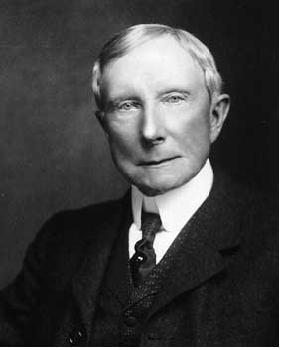
The United States enacted an estate tax in 1916, and when John D. Rockefeller, America’s first billionaire, died in 1937, his estate paid 70 percent. Since then, the rates have fluctuated, but this is the first time the tax has been repealed altogether.


John D. Rockefeller’s estate was taxed at 70 percent.


Of course, since the guy died with a couple of billion to his name, his kids had to make do with a paltry few hundred million — and oh, how it crimped their lifestyles. I grew up about five miles from the Rockefeller estate in Pocantico Hills, New York, and I can tell you: The family owned 7,000 acres of pristine, beautiful land only 30 miles north of New York City. Chauffers drove the brothers, Nelson and David, to their offices every day. Security guards armed with salt guns patrolled the property to keep kids like me out. Nelson managed to get elected governor of New York and became vice-president of the United States (before dying of a heart attack while having sex with his secretary). David was the chairman of Chase Manhattan Bank. The brothers donated an original Chagall window to their tiny church in the nearby town, and bought their wives brand new Rolls Royces every year.


Their kids have managed to survive on the tiny remants of that fortune, too. And their kids’ kids.


The point is, the 70 percent estate tax didn’t wipe out John D. Rockefeller’s wealth or harm his family’s future. There was plenty left. That’s the thing to remember when we talk about taxing the rich: They always wind up with plenty left.

Now: full-speed ahead with CCA

2

EDITORIAL Proposition 16 — Pacific Gas and Electric Co.’s monopoly power grab — has to rank as the most venal, corrupt abuse of the initiative system in California history. The utility spent nearly $50 million to pay for a misleading signature drive, mount a campaign of lies and distortions, create bogus front groups, and flood the airwaves with ads — all in an effort to convince Californians to vote against their own interests. It’s a case study in why the state needs initiative reform (a ban on paid signature gatherers and limits on corporate campaign contributions would be good places to start).

At press time, we didn’t know how the election would turn out — but this much is clear: San Francisco needs to move ahead with community choice aggregation and continue to push for public power anyway.

Prop. 16 was never about "taxpayer rights." The whole point of the initiative was to block communities from replacing PG&E with public power. But it’s too late to stop San Francisco. Thanks to heroic efforts by Sup. Ross Mirkarimi, the city has already reached a deal with Power Choice LLC to create and operate a CCA system in town. Under state law, every resident and business in the city is automatically a customer of the CCA unless they opt out — so Prop. 16, which bars public-power agencies from signing up new customers, doesn’t apply.

It was a battle royal to get to this point. The PG&E-friendly San Francisco Public Utilities Commission, operating under a PG&E-friendly mayor, had more than a year to find a vendor and negotiate a contract. But PUC General Manager Ed Harrington dragged his feet at every turn. In fact, just a few weeks ago, Harrington tried to delay the contract until after the June election — thus giving PG&E a better shot at invalidating any contract. But with enough pressure from the supervisors, the basic terms of the deal were sealed in plenty of time.

Besides, San Francisco is in a unique position. Federal law (the Raker Act) requires the city to operate a public power system — and that act of Congress would trump any state law.

So the supervisors should move forward on finalizing the CCA, Mayor Gavin Newsom should sign off on it, and City Attorney Dennis Herrera should prepare to defend it vigorously if PG&E tries to sue.

Herrera has told us repeatedly that he thinks the city’s legal position is sound. In the past, he’s refused to use the Raker Act as a legal strategy — to go to court and force his own city to follow the law — but he needs to be ready to use that powerful weapon if PG&E tries to interfere with the implementation of CCA.

City officials at every level also have to make a concerted effort to counter PG&E’s lies — particularly the sort of misinformation that made it into the Matier and Ross column in the Chron June 7, the day before the election. Quoting unnamed sources, the reporters insisted that San Francisco CCA’s electricity rates would be higher than PG&E’s. That’s only true if you ignore the fact that PG&E’s rates are unstable and going up every year and that the cost of alternative energy is coming down every year — and if you don’t consider the costs of climate change, oil spills, coal mining disasters, nuclear waste storage, and all the other impacts of PG&E’s nonrenewable energy mix. And remember: San Francisco is asking the CCA to provide 51 percent renewables by 2019; PG&E’s portfolio doesn’t even meet the state’s weak 15 percent requirement. (There is also, of course, the multibillion dollar risk that San Francisco could lose the Hetch Hetchy dam if the city continues to violate the Raker Act.)

But the private utility that spent gobs of money on the Prop. 16 campaign will spend millions more in San Francisco to convince customers to opt out of the CCA. So the city needs its own campaign to explain why public power is not only much greener, but in the long run, much, much cheaper.

San Francisco has had a mandate for public power since 1913, nearly 100 years. The implementation of CCA would be a big step toward fulfilling that mandate. The supervisors should not let anything stand in the way.

Editorial: No matter who wins on Prop 16, full speed ahead with CCA

0

EDITORIAL Proposition 16 — Pacific Gas and Electric Co.’s monopoly power grab — has to rank as the most venal, corrupt abuse of the initiative system in California history. The utility spent nearly $50 million to pay for a misleading signature drive, mount a campaign of lies and distortions, create bogus front groups, and flood the airwaves with ads — all in an effort to convince Californians to vote against their own interests. It’s a case study in why the state needs initiative reform (a ban on paid signature gatherers and limits on corporate campaign contributions would be good places to start).

At press time, we didn’t know how the election would turn out — but this much is clear: San Francisco needs to move ahead with community choice aggregation and continue to push for public power anyway.


Prop. 16 was never about “taxpayer rights.” The whole point of the initiative was to block communities from replacing PG&E with public power. But it’s too late to stop San Francisco. Thanks to heroic efforts by Sup. Ross Mirkarimi, the city has already reached a deal with Power Choice LLC to create and operate a CCA system in town. Under state law, every resident and business in the city is automatically a customer of the CCA unless they opt out — so Prop. 16, which bars public-power agencies from signing up new customers, doesn’t apply.

It was a battle royal to get to this point. The PG&E-friendly San Francisco Public Utilities Commission, operating under a PG&E-friendly mayor, had more than a year to find a vendor and negotiate a contract. But PUC General Manager Ed Harrington dragged his feet at every turn. In fact, just a few weeks ago, Harrington tried to delay the contract until after the June election — thus giving PG&E a better shot at invalidating any contract. But with enough pressure from the supervisors, the basic terms of the deal were sealed in plenty of time.

Besides, San Francisco is in a unique position. Federal law (the Raker Act) requires the city to operate a public power system — and that act of Congress would trump any state law.

So the supervisors should move forward on finalizing the CCA, Mayor Gavin Newsom should sign off on it, and City Attorney Dennis Herrera should prepare to defend it vigorously if PG&E tries to sue.

Herrera has told us repeatedly that he thinks the city’s legal position is sound. In the past, he’s refused to use the Raker Act as a legal strategy — to go to court and force his own city to follow the law — but he needs to be ready to use that powerful weapon if PG&E tries to interfere with the implementation of CCA.
City officials at every level also have to make a concerted effort to counter PG&E’s lies — particularly the sort of misinformation that made it into the Matier and Ross column in the Chron June 7, the day before the election. Quoting unnamed sources, the reporters insisted that San Francisco CCA’s electricity rates would be higher than PG&E’s. That’s only true if you ignore the fact that PG&E’s rates are unstable and going up every year and that the cost of alternative energy is coming down every year — and if you don’t consider the costs of climate change, oil spills, coal mining disasters, nuclear waste storage, and all the other impacts of PG&E’s nonrenewable energy mix. And remember: San Francisco is asking the CCA to provide 51 percent renewables by 2019; PG&E’s portfolio doesn’t even meet the state’s weak 15 percent requirement. (There is also, of course, the multibillion dollar risk that San Francisco could lose the Hetch Hetchy dam if the city continues to violate the Raker Act.)

But the private utility that spent gobs of money on the Prop. 16 campaign will spend millions more in San Francisco to convince customers to opt out of the CCA. So the city needs its own campaign to explain why public power is not only much greener, but in the long run, much, much cheaper.

San Francisco has had a mandate for public power since 1913, nearly 100 years. The implementation of CCA would be a big step toward fulfilling that mandate. The supervisors should let  nothing stand in the way.

In Mexico, turtles and oil privatization

0

MEXICO CITY (June 3rd) — The turtles of Caribbean Mexico are an ancient race. Their ancestors paddled with dinosaurs and prehistoric fish. Kemp’s Ridley turtles were burying their eggs in Gulf Coast sanctuaries countless millennia before the Olmecs, Mexico’s matrix civilization, installed their mysterious giant heads on the Veracruz plain. The presence of turtles in indigenous iconography is evidenced by artifacts displayed in anthropological museums in Mexico City and Jalapa Veracruz. The 20th Century naturalists recorded “arribos” (“arrivals”) of tens of thousands of Kemp’s Ridley females at Rancho Nuevo beach Tamaulipas; with few exceptions, Kemp’s Ridleys (named for an amateur turtle-ologist and the smallest and rarest of all sea turtles) nest only at Rancho Nuevo and Padre Island, Texas.


But for Gulf waters, turtles are like canaries in the coalmines. The 1979 blowout of Ixtoc 1, a Mexican National Petroleum Company (PEMEX) platform off the southern state of Tabasco, gushed uncontrollably for nine months. Some 3,000,000 barrels spewed into the Gulf of Mexico, fouling beaches and nesting grounds. The Rancho Nuevo arribos shrank below 4,000. Although Mexican Kemp’s Ridleys have staged a modest comeback (the population is now calculated at 8,000), the April 20th explosion of a British Petroleum deep-sea drilling rig on the Macondo Prospect (with apologies to Gabriel Garcia Marquez) 130 miles southeast of New Orleans could spell doomsday for these primordial creatures.


Across the Gulf, Mexican authorities are watching this travesty unfold with furrowed brows. The blow-out of the Deepwater Horizon platform that killed 11 and wounded 17 workers is now the largest oil spill in U.S. history, almost doubling the size of the Exxon Valdez fiasco in Alaskan waters (10,000,000 gallons) and threatening biblical devastation of Caribbean wildlife from Mexico to Cuba. Already, Gulf Coast fishing grounds have been shut down, shrimp and oyster beds contaminated, colonies of marine mammals such as dolphins and manatees are menaced, and bird life, particularly brown pelicans, is at extreme risk. In just the first 20 days of the catastrophe, 156 dead Kemp’s Ridley sea turtles were counted.


The good news — at least for Mexico — is that deep-water oil plumes have been caught up in loop currents that threaten environmental mayhem as far east as the Florida Keys and Communist Cuba, but will not touch home. The bad news is that, come August, when the hurricane season blows in (2010 is being touted as a record year for tropical hurricanes with 15 giant storms headed for the Caribbean and the Gulf of Mexico), those currents will shift dramatically south towards Mexico. Even now, deep water “cyclones” are sweeping gobs of oil towards Veracruz and Tamaulipas turtle breeding grounds, and Mexico’s environmental secretary, Rafael Elvira, is preparing to file suit against BP, whose $325 billion earnings in 2009 is larger than Mexico’s total annual budget.


BP efforts to plug the leak with everything from old tires to tons of mud, robot submarines and never-before-tested “domes” have met with serial failure. A slant drill to relieve pressure on the undersea gusher will not be in place until August, when the currents turn towards Mexico. Kemp’s Ridleys nest from April through August.


President Felipe Calderon’s brow is further corrugated by the prospect that the mammoth BP spill will torpedo his pledge to privatize (he calls it “modernize”) both Mexico’s oil industry and PEMEX, the national petroleum consortium. The explosion of the Deepwater Horizon, a joint venture between BP, Halliburton, and TransOcean (controlled by a Swiss holding company), has certainly slowed, if not slain, Calderon’s plans to contract similar transnationals for deep sea drilling in Mexico’s slice of the Gulf.


According to U.S. Department of Energy evaluations, Mexico has only nine years of proven reserves left before it becomes a net oil importer. Major offshore wells like Cantarell in the Sound of Campeche are played out, and no new land-based deposits have been located. Rummaging through the remains of the old Chicontepec field in Veracruz (Halliburton is an important subcontractor) has yielded meager results.


One joke making the rounds has Calderon delighted by the BP spill, because it will bring more oil to Mexican waters.


In the vision of Big Oil, Mexico’s only hope for economic survival lies in its “aguas profundas,” or deep waters, five miles down in the Gulf. Of course, only Big Oil has the technology to get at these riches. According to the transnationals, PEMEX must be reformed and partner up with them (“an association of capitals”) for a percentage of the take. So-called risk contracts are currently barred by the Mexican Constitution. 


Following orders from his backers (Halliburton, the number one PEMEX subcontractor, was a generous contributor to Calderon’s fraud-tarred 2006 election victory), the Mexican president submitted “energy reform” legislation to Congress in 2008 that laid out a “strategic alliance” with Big Oil and “flexibilization” of PEMEX opening the state company to private investment and risk contracts. The Calderon media machine cranked up an infomercial campaign depicting an azure Caribbean under which Mexico’s true wealth lay buried. “The Treasure of Mexico” was repeatedly shown at prime time on this distant neighbor nation’s two-headed television monopoly, Televisa and TV Azteca.


Mexico is fast running out of oil, the president warned to make his point. Deep sea drilling is the only option. “Energy reform” was put on congressional fast track.


By seeking to privatize Mexico’s petroleum industry, Felipe Calderon is swimming against global currents. World-class producers like Russia and Saudi Arabia are consolidating their state-run oil companies, Glasprom and Aramco, rather than selling them off to the private sector.


Petroleum is a volatile liquid in the Mexican mix. Oil and sovereignty have been joined at the hip ever since depression-era president Lazaro Cardenas expropriated and nationalized the industry in 1938 from Anglo and American owners — the so-called Seven Sisters — when they defied the Mexican Supreme Court during an oil workers’ strike. Those opposed to Calderon’s scheme went into hullabaloo mode to push back his privatization legislation.


Ex-left presidential candidate Andres Manuel Lopez Obrador, from whom many Mexicans believe Calderon stole the 2006 election, organized his social base and the “Adelitas,” women partisans dressed up as “soldaderas” or female fighters in the Mexican revolution, donned sombreros and long skirts, toy carbines and bandaleros of fake bullets crisscrossed across their breasts, and encircled the Mexican Senate. Inside both houses of congress, Lopez Obrador’s colleagues seized the podiums and paralyzed all legislative activity for ten days.


The stand-off resulted in a series of nationally televised debates over the next four months during which energy experts, academics, Big Oil reps, PEMEX honchos, lawyers, leftists, senators, deputies, impresarios, and even a poet or two argued about the privatization proposal. The debates were carried live on a big screen in the great Zocalo plaza, where hundreds of outraged citizens gathered every afternoon to cuss out the privatizers.


By autumn 2008, a compromise was struck between Calderon’s PAN party and the former ruling PRI, which still holds a majority in both houses. Anti-Lopez Obrador elements within the left-center PRD also signed off on the deal, which delineated hundreds of exploration tracts in Mexican deep sea waters, but put a hold on transnational participation and risk contracts. The compromise did not please the transnationals, but Calderon okayed it reluctantly and was preparing fresh legislation to assuage their concerns when the Deepwater Horizon blew out at the bottom of the Gulf, putting the kibosh on Big Oil’s pipedreams.


The struggle to stop the privatization of PEMEX is symbolic and illusory. Thirty one out of the company’s 41 divisions are, in effect, subcontracted out to the likes of BP and Halliburton;  most contracts are concentrated in the PEP or exploration and perforation sector. Ironically, players like BP, the biggest producer in the Gulf of Mexico today, and Shell are reincarnations of British interests that dominated petroleum production in Veracruz before expropriation — Royal Dutch Shell evolved from Lord Cowdry’s (Weetman Pierson) Aguila Oil. Moreover, Exxon is reported to be dickering for BP (which now incorporates Amoco and Atlantic-Richfield), a merger that would restore John D. Rockefeller’s Standard Oil taken down by trustbusters in 1911. Standard Oil’s James Doheny and Pierson ruled Mexican oilfields before 1938, and once threatened to secede and form their own “Republic of The Gulf of Mexico.” 


The U.S. and Mexico dispute a pair of potentially abundant fields in the deep waters of the Gulf. Designated “Donas,” the eastern polygon is triangulated between the Yucatan, New Orleans, and Cuba. The much-larger (16,000 square kilometers) western polygon sits between Tamaulipas and Texas. Mexico’s share of the western “Dona” (62%) purportedly holds up to 34,000,000,000 barrels, twice current reserves.


Preliminary delineation of the Donas was agreed upon by Washington and Mexico City in 2000, and deep-sea drilling is set to begin as early as next year. Chevron and Shell have reportedly already won contracts to work the U.S. sites. But Mexico does not have the technology to get at its “treasure” and Houston oil guru George Baker confirms that it will be another decade before PEMEX comes into possession of the tools to drill baby drill at such depths.


Advocates for continued state control of Mexico’s oil like Professor Fabio Barbosa of the National Autonomous University (UNAM) rebut the claim that PEMEX cannot drill deep, citing development of the Nab platform in mile-deep waters off Yucatan  (the Dona reserves are thought to be three to five miles down in the Gulf.)


In a recent El Universal op-ed, Barbosa recalled then-BP vice president Cris Sladen’s warning to a 2006 oil conference in Veracruz that Mexico would go belly-up if it didn’t dissolve PEMEX and let the latest version of the Seven Sisters handle the deep sea exploration and drilling.


Closer to the bottom of the food chain, the voices of the turtles are not heard in this debate between privatizers and nationalists. Deep sea drilling presages unprecedented carnage for their already exhausted species. BP itself has an unblemished record of species genocide — its Arctic projects threaten protected bowhead whales in the Beaufort Sea and a 900,000 gallon spill in Prudhoe Bay in 2000 plus its plans to trash the Alaska National Wildlife Refuge put dozens of species, from Polar bears and caribou to the Arctic tern, the longest-flying migratory bird on Planet Earth, on the brink of extinction.


In an exhibition of unbridled cynicism, BP greenwashes its tarnished image with full-page New York Times professions of its concern for the environment and by handing out conservation awards and grants. So far as is known, no Kemp’s Ridley sea turtle has ever won one.


The indigenous peoples of the Pacific Northwest liken the American continent to the back of a turtle — humans are allowed to live on it but must do so in harmony with the planet. “Turtle Island” is the translation of the name of the place where we live in several Indian languages, a designation that once lent its name to Gary Snyder’s Pulitzer Prize-winning poems imploring environmental respect and salvation.


But the poet’s metaphors do not carry much weight in the boardroom. BP and its cronies in corporate crime and capitalist greed have put Turtle Island at the top of their hit list.          


John Ross is back in “El Monstruo,” the title of his latest cult classic (“pulsating and gritty” the NY Post) and can be reached at johnross@igc.org

Labor’s small business friends

0

Dick Meister, former labor editor of the SF Chronicle and KQED-TV Newsroom, has covered labor and politics for a half-century. Contact him through his website, www.dickmeister.com, which includes more than 250 of his recent columns.

The U.S. Chamber of Commerce and other outspoken foes of organized labor like to claim that small business owners are as anti-union as the notoriously anti-union Chamber and its big business members. But don’t you believe it.

Unfortunately, plenty of people do believe it. They accept the conventional wisdom that employers, large or small, don’t like unions in general and especially don’t like their employees joining or organizing unions to represent them in determining their working conditions.


Certainly many employers resist unionization. But what the Chamber of Commerce and its corporate friends don’t tell you is that many employers welcome unions for a variety of pragmatic as well as philosophical reasons.

Listen, for instance, to a small business owner in Virginia who was included in a representative sampling of some 1,200 small business owners and self-employed workers who were surveyed recently by American Rights at Work, a respected labor advocacy group:

“When workers form unions, they can secure benefits and rights in the workplace, including a decent wage and health care. They have economic and job stability. Unions lift workers and workers lift the economy. It’s as simple as that.”

The survey included much more that you’re not likely to hear from the Chamber of Commerce. “Unions,” said one small businessman, “help level the playing field for companies that voluntarily treat their employees right and compensate them fairly, When companies compete on equal footing, consumers fare better.”

Among the many other contradictions of the Chamber of Commerce ‘s anti-union line was this from a small businesswoman in Boulder, Colo.:

“The free market system is driven b y workers’ productivity and unions tend to produce more educated and well-trained – and therefore productive – employees. When competitors prevent their employees from forming a union, it is usually a pretty good indication that they are also underpaying their employees. That hurts our business and others in the industry because it allows them to unfairly undercut the market.”

Kimberly Freeman Brown, executive director of American Rights at Work, noted that unionization not only helps individual businesses and their employees, but also “makes the free market system stronger by increasing consumer purchasing power – which is good for their businesses’ bottom line.”

Eighty percent of the small business owners surveyed by Brown’s organization agreed. Other significant findings:

* About half of those surveyed expressed “strong concern that unions have been weakened so much our economy has actually been hurt.”

* More than half agreed that “strong unions make the free market system stronger.”

* Almost 60 percent “strongly agreed that labor unions are necessary to protect the working person.”

* Nearly 70 percent said it was very important for their businesses that Congress “enact legislation that rewards employers who respect their workers’ right to join a union.”

* More than 70 percent agreed that “a good business person can make a profit and respect their workers’ choice to form a union.”

* Eighty-two percent “strongly agreed that it’s morally wrong for employers to fire or threaten employees for wanting to form a union.”

So, despite conventional anti-union wisdom, many small businesses are quite aware that unionization benefits them, their employees and society in general.

The U.S. Chamber of Commerce and its anti-union members and allies know that, but their interest is not in benefitting those who do the work of society. Their interest, of course, is in maximizing the profits of big business.

Dick Meister, former labor editor of the SF Chronicle and KQED-TV Newsroom, has covered labor and politics for a half-century. Contact him through his website, www.dickmeister.com, which includes more than 250 of his recent columns.

The hidden zinger in Prop. 14

11


By Richard Winger

OPINION Proposition 14, a June 8 ballot measure, would mandate that all candidates for Congress and state office appear on the same June ballot, and that all voters use that ballot. Only the two candidates who got the highest vote totals could run in November. Even write-ins would be banned in November for Congress and state offices.

Prop. 14 also has a hidden zinger in it that would remove the Peace and Freedom and Libertarian parties from the ballot. But so far only one daily newspaper has mentioned it — the San Francisco Chronicle, in a March 11 story by Wyatt Buchanan. The state ballot pamphlet says nothing about this particularly nasty detail of Prop. 14.

California has six recognized political parties: Democratic, Republican, American Independent, Green, Libertarian, and Peace and Freedom. The parties remain ballot-qualified either by polling 2 percent of the vote for any statewide race in a midterm year (all parties get a free ride in presidential years) or by maintaining registration equal to 1 percent of the last gubernatorial vote.

In practice, it’s far easier for the smaller parties to meet the first test. The Peace and Freedom Party has 58,000 registered members, and the Libertarian Party has 85,000 registered members. But these parties always meet the 2 percent vote test. Minor parties typically draw far more votes than they have registered members.

The problem is that Prop. 14 eliminates, in practice, the 2 percent vote test. Under Prop. 14, no party officially has any nominees for any office except president and vice-president. And since minor party candidates almost never place first or second in the June primary, minor party members would never be able to run for statewide office in November. And, the catch is that only the November vote counts for meeting the 2 percent vote test.

Prop. 14 also says that members of unqualified parties will not be permitted to list their party label on the June ballot.

The real irony is that the big newspapers of California know about this problem with Prop. 14 but refuse to mention it. That’s ironic because back in 1981, when Democrats in the Legislature wanted to toughen the ballot-access requirements, the big newspapers of California denounced that bill with full fury. Forty of California’s biggest newspapers, TV stations, and radio stations editorialized against that measure.

This year the Los Angeles Times (which led the charge for minor-party access in 1981) refused to mention that Prop. 14 has the same characteristic as that bill, only worse. The Times has rejected at least 10 op-eds submitted by various individuals in the last year that mentioned this problem. None of the Los Angeles Times stories about Prop. 14 have mentioned it. None of the political columnists for that newspaper have mentioned it.

Prop. 14 is supported by the Chamber of Commerce, the for-profit health insurance companies, the for-profit hospitals, and various multimillionaires, and the Yes on 14 campaign has a huge war chest. Why won’t the L.A. Times even mention this flaw in the measure? Who are the big dailies afraid of offending?

Richard Winger is the editor of Ballot Access News.


Why is SFUSD signing on to Race to the Top?

4

The Obama administration, to its credit, is actually paying attention to, and putting money into, urban public education. But Arne Duncan, the education secretary, is using some of the money to push a broad agenda that, frankly, drives me nuts and undermines a lot of what public education ought to be about.


The New York Times Magazine did a good job laying out the agenda May 23. The self-styled reformers want to encourage charter schools, push standardized testing (and other easily quantifiable methods of evaluating classroom performance) and change the way teachers are hired and fired. In fact, in many ways, the Duncan agenda is all about blaming the teachers for the problems in public schools.


There are, absolutely, some bad teachers out there. There are people who are so burned out they should leave and find other work. There are people who never were terribly good at teaching anyway. There are people who can’t do the job, and somehow stick around year after year, dooming students to poor-quality classes. There are 300,000 public-school teachers in California; not all of them will be great. (There are also, by the way, terrible lawyers who never get disbarred and terrible doctors who kill and maim patients and manage to protect their medical licenses.)


But in California, certainly, the relatively modest number of poor teachers is not by any stretch the biggest problem with public education. And tests, particularly standardized tests, are not remotely a valid way of determining which teachers are good and which aren’t.


Teachers in California cities face widely divergent student populations. In some San Francisco classrooms, a majority of the students are English learners, or come from broken or troubled families, or lack proper nutrition, or are homeless … and those are just the surface issues. Telling a dedicated first-grade teacher that he or she is going to be fired because of test scores in a classroom where it takes heroic efforts every day to get 20 troubled kids to sit down and pay attention for even 15 minutes isn’t just unfair. It’s crazy.


The teachers unions have fought some of these efforts, and — thanks to world-class organizing efforts and a fair amount of campaign money — have managed to beat some of them back in Congress and state Legislatures. That’s where Race to the Top comes in.


Duncan and his merry band of “reformers” are dangling out federal money to districts that desperately, desperately need any pennies they can get — but the price is high. In essence, you have to sign on to at least part of the Duncan agenda, which promotes testing, charter schools, etc. 


The highest number of points — 138 of the 500-point scale that Duncan and his staff created for the Race — would be awarded based on a commitment to eliminate what teachers’ union leaders consider the most important protections enjoyed by their members: seniority-based compensation and permanent job security.


It’s almost a cruel bargain: You don’t have enough money to buy chalk for the chalkboard or pencils for the kids, and the feds are happy to help — as long as you stick it to the teachers unions and sign onto an agenda that a lot of progressive school boards despise.


And that’s where San Francisco is.


In a special meeting May 20, the San Francisco School Board signed on to a Memorandum of Understanding with the state of California that will be part of California’s application for Race to the Top funding. You can read the MOU here. It’s not as bad as some of what Duncan is pushing, but still: SFUSD is participating in this madness.


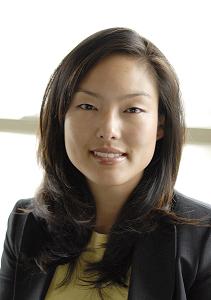
I asked Jane Kim, president of the School Board, about it, and she told me that the district’s proposal “doesn’t have anything about charter schools or merit pay. It’s really just a continuation of the work that we’re already doing.” And that’s true, although Dennis Kelly, the head of the local teachers union, United Educators of San Francisco, isn’t happy about it, though; he told me that “this is not something we could sign on to. It’s pretty much the standard state form.”


And the board passed it unanimously, and a lot of the local board members are good progressives who know more about education than I do. And as Kim pointed out, at a time like this, “I don’t think we should refuse to go for the extra funding.”


Frankly, the San Francisco Unified School District isn’t going to get any Race to the Top money anyway — not with districts all over the country selling their souls and going way, way further than we are to scrap for that cash. But I have to ask: Since Race to the Top is such a bad idea, why are we even playing the game?

An extraordinarily good man

0

Dick Meister, former labor editor of the SF Chronicle and KQED-TV Newsroom, has covered labor and politics for a half-century. Contact him through his Web site, www.dickmeister.com, which includes more than 250 of his recent columns.

It was 40 years ago this month that Walter Reuther died in a plane crash. Forty years. Yet the auto workers leader remains an important inspirational figure – a man whose life holds crucial lessons for those who are today seeking to revitalize the American labor movement.
 
I came upon him late in his career, and to me he seemed verbose, distant and a bit pompous: a do-gooder who didn’t smoke, didn’t drink, didn’t wench; who did only good things, and always in the artfully arranged glare of publicity.
 
He couldn’t possibly be as good as those who had known the man for a long time claimed him to be. But they were right. Walter Reuther was an extraordinarily good man.
 
He was truly the conscience of organized labor – a crusader struggling very, very hard against the stagnation he found in a movement he had helped found, lead, and, finally, had tried to reform.
 
Reuther was the conscience as well of a lot of people who never paid union dues in their lives. I mean those who saw him as the embodiment of their hopes to change this imperfect society in ways that would better the lives of those at the bottom of its social, economic and political ladder.
 
It was Reuther, as much as any union leader, who brought dignity and economic security to the mass of Americans, expanding the country’s major concerns beyond the elementary economic concerns that preoccupied most people in the years before World War II.
 
Reuther’s specific contributions were many. There was the central role he played in establishing the United Auto Workers Union, over which he eventually presided.  There was his role in forging together the country’s industrial unions and in leading them, as president of the Congress of Industrial Organization – the CIO – in struggles for broad economic and social causes.
 
There was Reuther’s exceptional success in negotiating better wages, hours and working conditions for the auto workers that were pace-setting marks for workers in all industries and all occupations.
 
And there were Reuther’s many efforts to shift the labor movement in new directions.  His last attempt, and surely his boldest, came in 1969 when he led the United Auto Workers out of the AFL-CIO and into an “Alliance for Labor Action” with the then-unaffiliated Teamsters Union.
 
Reuther hoped the alliance of the country’s two largest unions could begin carrying out the programs he had suggested repeatedly to the AFL-CIO, only to be rebuffed by the former American Federation of Labor leaders who dominated the federation.
 
The alliance planned organizing drives among white-collar workers and other groups, particularly in the South, that the AFL-CIO had been neglecting. But the new organization hoped to go beyond organizing the unorganized, as important as that was.
 
The goals of the alliance were nothing less than a summary of the great needs of the country: Helping build low-cost housing, for instance; developing new job training programs; unifying the poor and minority groups; vastly improving education and health services; effectively attacking racial discrimination, poverty,  consumer fraud, and the particular problems of the young and the aged, and attacking urban decay, pollution and other environmental problems.
 
The alliance never really got going before Reuther’s death and dissolved shortly afterward.  Some of Reuther’s fellow labor leaders had scoffed, in any case, that it was actually nothing more than an attempt by Reuther to satisfy the ambitions for broad union leadership he had been unable to realize within the AFL-CIO.
 
“Walter,” they would tell you, “is just being Walter – all talk and no action.”
 
Well, they were right about one thing at least. The man could talk. Others were accustomed to it, after three decades of Reuther-watching, But he was new to me, and I marveled to see him hold audiences of thousands for an hour and more while speaking without a single note – strictly off the top of his head – and doing so with great and forceful eloquence.
 
I especially remember a talk he gave in 1966, in a dilapidated little auditorium in Delano, California, where vineyard workers led by Cesar Chavez just a few months before had begun the strike that someday would capture the attention of the entire country.
 
I played the sophisticate and smiled knowingly over Reuther’s wordy and dramatic promises to the farm workers. But then came the terrible news, four years later, of a plane down in Michigan, and I thought back to that cold December day in the grape country.
 
I remembered what those words had meant to the penniless, obscure and powerless band of farm workers who had gathered in the auditorium. There he was, one of the great leaders of America, promising to “stand with you until the end.”
 
I may have been fooled, but the farm workers were not fooled.  They knew that Walter Reuther meant exactly what he said.  He always did.
 
Dick Meister, former labor editor of the SF Chronicle and KQED-TV Newsroom, has covered labor and politics for a half-century. Contact him through his website, www.dickmeister.com, which includes more than 250 of his recent columns.

Immigration update: good news, bad news

7

Yesterday, the Board of Supervisors unanimously appointed tireless immigrant rights advocate Angela Chan to the San Francisco Police Commission.
That’s the good news.
The bad news? Attorney General and gubernatorial candidate Jerry Brown declined San Francisco Sheriff Mike Hennessey request to allow San Francisco to opt out of Secure Communities, ICE’s latest federal-local law enforcement collaboration.
“I think this program serves both public safety and the interests of justice,” Brown said. “ICE’s program advances an important law enforcement function by identifying those individuals who are in the country illegally and who have a history of serious crimes or who have previously been deported.”
“ Before the inception of Secure Communities allowing fingerprint identification, if a county suspected an arrestee was in the country illegally, the county submitted the person’s name to ICE for a background check,” Brown stated.

What Brown’s letter didn’t say was that, up until now in San Francisco, the county only submitted folks’ names to ICE if they were charged with a felony. Nor did he address why the federal government is sneaking around, switching this program on, without openly and transparently announcing their intentions to the local community.

Eileen Hirst, spokesperson for the San Francisco Sheriff’s Office said that, as a result of Brown’s letter, “As far as we know, San Francisco will be a part of Secure Communities as of June 1.”
In a statement, Sheriff Hennessey said, “I am disappointed with the Attorney General’s position and continue to be concerned that U.S. citizens and minor offenders will be caught up in the broad net of Secure Communities, and I will be studying the issue further to see how this program can be applied as fairly as possible and in the spirit of the sanctuary ordinance.”

So far, ICE’s data reveals the number of folks caught up in the Secure Communities net, plus a brief breakdown of the deportees’ level of crime.

It would be helpful, as several immigrants rights groups have suggested, if ICE revealed the nationality of these deportees, clarified if these folks were convicted of crimes or simply charged with them, and had to make frequent reports to Congress in which they included this data along with evidence that the program actually deports convicted criminals rather than folks simply arrested. Otherwise, the program could potentially be abused by renegades who realize that all you have to do to get someone deported is arrest them on trumped up charges

Anyways, you can read the rest of AG Brown’s letter below. My favorite line from Brown’s letter is, “Many of the people booked in local jails end up in state prison or go on to commit crimes in other counties or states.”  

Hmm. Does that mean that folks charged with crimes in this state are presumed guilty then, until proven otherwise? Or is that just the presumption about immigrants?


AG Brown’s letter:
“Dear Sheriff Hennessey:

I am writing in response to your letter regarding the Secure Communities program developed by U.S. Immigration and Customs Enforcement (ICE). The program is scheduled to be rolled out in San Francisco next month. You requested that the California Department of Justice (DOJ) block ICE from running checks on the fingerprints collected in San Francisco. The Secure Communities program is up and running in 169 counties in 20 states, including 17 counties in California. Because I think this program serves both public safety and the interest of justice, I am declining your request.

The DOJ Bureau of Criminal Identification and Investigative Services is the entity designated by California law to maintain a database of fingerprints used in the state for law enforcement purposes. When someone is arrested, the county forwards the fingerprints to the DOJ to identify the person, determine his or her criminal history and to discover any outstanding warrants. As in every other state, the DOJ forwards those fingerprints to the FBI to check for a history of criminal activity outside of the state. Under the Secure Communities program, the FBI forwards fingerprints collected at arrest to ICE. If ICE finds a match to prints in its database, ICE notifies the county. ICE’s stated intent and practice is to place holds on those individuals who are in the country illegally and who have a history of serious crimes or who have been previously deported.

Prior to the Secure Communities program, the name, but not the fingerprint, provided by an individual on arrest was run through ICE’s database of people known by ICE to be in the country illegally. Often, individuals with a criminal history were released before their immigration status was discovered. Using fingerprints is faster, race neutral and results in accurate information and identification.

In these matters, statewide uniformity makes sense. This is not simply a local issue. Many of the people booked in local jails end up in state prison or go on to commit crimes in other counties or states.

I appreciate your concern. But I believe that working with the federal government in this matter advances important and legitimate law enforcement objectives.

Sincerely,

EDMUND G. BROWN JR.
Attorney General.”

A public power landmark — and the battle to come

0

CCA allows communities to offer an alternative — to buy cleaner power in bulk and resell it at comparable or cheaper rates to residents and businesses

EDITORIAL It’s been 97 years since Congress passed a landmark law mandating public power in San Francisco, 67 years since the U.S. Supreme Court ruled that the city was violating the law by allowing Pacific Gas and Electric Co. to operate a private monopoly in town, and 42 years since the Guardian first broke the story of the Raker Act scandal and launched a campaign to bring public power to the city. And now, even operating under a tight PG&E-imposed deadline, the San Francisco is moving very close to establishing a modest type of public power.

Community choice aggregation (CCA) isn’t what John Edward Raker and his supporters had in mind in 1913 when they allowed San Francisco to build a dam in Yosemite National Park, breaking John Muir’s heart. The idea — which the city explicitly accepted in a formal written agreement — was to use the dam not just for water but for electricity, specifically to create a public power beachhead in Northern California that would prevent any private company, specifically PG&E, from getting control of the electricity grid.

CCA leaves PG&E’s private grid in place and allows the investor-owned utility to continue to sell power in the region. But it also allows communities to offer an alternative — to buy cleaner power in bulk and resell it at comparable or cheaper rates to residents and businesses.

Since 2002, when the state Legislature passed a bill authorizing CCAs, the concept has slowly started to take hold. Marin County launched its CCA this spring. San Francisco last week reached an agreement with PowerChoice LLC, a vendor that will oversee the procurement of electricity, to begin service here, and the contract is headed to the SF Public Utilities Commission and the Board of Supervisors for approval.

That’s a huge step forward for public power — but the city faces a tight deadline. PG&E has placed Proposition 16 on the June 8 ballot, which would require a two-thirds vote before any local agency could get into the electricity business. That’s an almost impossible threshold (see: the state Legislature). Prop. 16 may still go down to defeat, despite PG&E’s $45 million campaign to pass it.

But even if it passes, any existing agency — that is, any community that has its CCA in place before the election is certified — will be grandfathered in.

City Attorney Dennis Herrera argues, with good authority, that San Francisco is already protected from Prop. 16. The city already has taken enough steps to implement CCA (the implementation plan has been approved by the supervisors) that the inevitable lawsuit by PG&E will probably fail. But every step the city takes to bring the process closer to completion provides more protection, and the stakes could not be higher.

With CCA, the city will have control of its own energy future, be able to offer power that doesn’t contribute to global warming — and be able, at long last, to take a step toward complying with the Raker Act. (And remember: the law says, and the Supreme Court confirmed, that the federal government can move at any time to seize the Hetch Hetchy dam and uproot the city’s entire water system for failure to comply with the 1913 agreement.)

It seems almost certain that by June 8 the city will have a contract with a vendor and state certification that defines San Francisco as a CCA. Then, whatever the outcome of Prop. 16, the city needs to move forward with the program. And if PG&E sues to block it, then every official in San Francisco will have to be prepared to wage the legal and political battle of all time. PG&E can and probably will take the city to court — and the city can immediately start talking about breaking the 1930s-era franchise agreement that gives PG&E a low franchise fee in perpetuity, and enforcing the Raker Act, and taking the corrupt utility to task on every possible front.

A public power landmark — and the battle to come

1

EDITORIAL It’s been 97 years since Congress passed a landmark law mandating public power in San Francisco, 67 years since the U.S. Supreme Court ruled that the city was violating the law by allowing Pacific Gas and Electric Co. to operate a private monopoly in town, and 42 years since the Guardian first broke the story of the Raker Act scandal and launched a campaign to bring public power to the city. And now, even operating under a tight PG&E-imposed deadline, the San Francisco is moving very close to establishing a modest type of public power.

Community choice aggregation (CCA) isn’t what John Edward Raker and his supporters had in mind in 1913 when they allowed San Francisco to build a dam in Yosemite National Park, breaking John Muir’s heart. The idea — which the city explicitly accepted in a formal written agreement — was to use the dam not just for water but for electricity, specifically to create a public power beachhead in Northern California that would prevent any private company, specifically PG&E, from getting control of the electricity grid.

CCA leaves PG&E’s private grid in place and allows the investor-owned utility to continue to sell power in the region. But it also allows communities to offer an alternative — to buy cleaner power in bulk and resell it at comparable or cheaper rates to residents and businesses.

Since 2002, when the state Legislature passed a bill authorizing CCAs, the concept has slowly started to take hold. Marin County launched its CCA this spring. San Francisco last week reached an agreement with PowerChoice LLC, a vendor that will oversee the procurement of electricity, to begin service here, and the contract is headed to the SF Public Utilities Commission and the Board of Supervisors for approval.

That’s a huge step forward for public power — but the city faces a tight deadline. PG&E has placed Proposition 16 on the June 8 ballot, which would require a two-thirds vote before any local agency could get into the electricity business. That’s an almost impossible threshold (see: the state Legislature). Prop. 16 may still go down to defeat, despite PG&E’s $45 million campaign to pass it.

But even if it passes, any existing agency — that is, any community that has its CCA in place before the election is certified — will be grandfathered in.

City Attorney Dennis Herrera argues, with good authority, that San Francisco is already protected from Prop. 16. The city already has taken enough steps to implement CCA (the implementation plan has been approved by the supervisors) that the inevitable lawsuit by PG&E will probably fail. But every step the city takes to bring the process closer to completion provides more protection, and the stakes could not be higher.

With CCA, the city will have control of its own energy future, be able to offer power that doesn’t contribute to global warming — and be able, at long last, to take a step toward complying with the Raker Act. (And remember: the law says, and the Supreme Court confirmed, that the federal government can move at any time to seize the Hetch Hetchy dam and uproot the city’s entire water system for failure to comply with the 1913 agreement.)

It seems almost certain that by June 8 the city will have a contract with a vendor and state certification that defines San Francisco as a CCA. Then, whatever the outcome of Prop. 16, the city needs to move forward with the program. And if PG&E sues to block it, then every official in San Francisco will have to be prepared to wage the legal and political battle of all time. PG&E can and probably will take the city to court — and the city can immediately start talking about breaking the 1930s-era franchise agreement that gives PG&E a low franchise fee in perpetuity, and enforcing the Raker Act, and taking the corrupt utility to task on every possible front.

Arizona strikes out

1

By Adrian Castañeda

The backlash over Arizona’s recently enacted Senate Bill 1070, which requires law enforcement to demand proof of citizenship if an individual is suspected of being in the U.S. illegally, is spreading faster than crude in the gulf, bringing America’s favorite pastime to the political battlefront.

In nearly every city the Arizona Diamondbacks have played baseball in during the last month, they have been met by hundreds of activists protesting the law as unjust. Beginning May 29, the San Francisco Gigantes will host the unintended ambassadors of bigotry for a three-game series. San Franciscans are already gearing up for a strong show of force with a protest march that begins at Justin Herman Plaza at 4 p.m. and follows the waterfront to AT&T Park.

Although batter’s box may be far removed from the governor’s desk, as David Zirin of The Nation reported May 10 in “Diamondbacks Owner Ken Kendrick Continues to Support SB1070,” Kendrick has stated his opposition to SB1070 but held a May 20 fundraiser for Republican Arizona State Sen. Jonathan Paton. The fundraiser for Paton, a supporter of the bill who is now running for Congress, was reportedly held inside the owner’s box during the Diamondbacks 8-7 win over the Giants in Phoenix.

Even before The Nation broke the story of using the publicly-funded stadium as a hub for Republican fundraising, bloggers and commentators were railing against Kendrick for his half-hearted attempts to distance the team from the political uproar. “The fallout from recent state legislation has a direct impact on many of our players, employees, and fans in Arizona, not to mention our local businesses, many of which are corporate partners of ours,” says a press release on the team’s Web site. Many take the statement as a sign that the demonstrations are working.

Articles on Kendrick’s political activities spurred the nationwide protests, but every city’s protest seems to be locally and spontaneously organized. Brian Cruz, part of the May 1st Coalition for Worker and Immigrant Rights, said that although the May 29 event may not have much economic impact on the Diamondbacks, it is a political statement: “We are boycotting the game because we need to do what we can to stop the state from implementing this law.”

Cruz hopes the protests draw national attention to the issue and force President Obama to take action. Cruz advocates for immigration reform and amnesty for those in the country without papers. “We believe in a world without borders,” Cruz told us. Cruz believes that U.S. foreign and economic policies are to blame for immigrants leaving their home countries, and that America’s rich people are merely using undocumented people as scapegoats. “We see it as a racist attack against immigrants that demonizes those who come to this country to work,” Cruz says of SB 1070.

Jevon Cochran, a student at Oakland’s Laney College, has been organizing along with others to boycott the law he says is racist against all people of color, not just Hispanics. Cochran says the protest is crucial in overturning Arizona’s law and preventing similar laws from spreading to other states. College campuses have been huge sources of support for immigrants’ rights with a wide variety of student groups coming out against the law. Most recently, Alpha Phi Alpha fraternity, the largest black fraternity in the U.S., cancelled its 40,000-member convention in Phoenix. The move came at great personal cost to the group but represents an even greater loss in revenue for Arizona businesses. “We want to strangle Arizona financially,” Cochran said.

In addition to the city’s resolution to boycott Arizona, Sup. Chris Daly called on the city and fans to protest at the Giants games against the Diamondbacks, home and away, and asked the Giants to wear their Gigantes jerseys in solidarity with the protestors.

But the Diamondbacks aren’t the only team facing scrutiny. Many teams, including the Giants, are being asked by immigrants’ rights groups to boycott Arizona by relocating their spring training camps to other states. The site (www.movethegame.org) hosts an online petition demanding MLB move its 2011 All-Star Game to another state. According to the site, there is a historical precedent for targeting professional sports for social change. In 1987, Arizona decided to ignore the Martin Luther King Jr. holiday. The NFL responded by moving the 1993 Super Bowl to from Tempe to California, costing Arizona millions in lost revenue. When Arizona later began recognizing the holiday, the 1996 Super Bowl was held in Phoenix.

Music listings

0

Music listings are compiled by Paula Connelly and Cheryl Eddy. Since club life is unpredictable, it’s a good idea to call ahead to confirm bookings and hours. Prices are listed when provided to us. Submit items at listings@sfbg.com.

WEDNESDAY 19

ROCK/BLUES/HIP-HOP

Dead Souls, Winston Tong, Graves Bros. Deluxe, Carletta Sue Kay Elbo Room. 9pm, $8. Ian Curtis memorial show.

Francis and the Lights, Teen Inc. Great American Music Hall. 8pm, $16.

Frightened Rabbit Fillmore. 8pm, $22.50.

Gosta Berling, Matinees, Foreign Cinema El Rio. 8pm, $5.

Groundation, Orgone, DJ Jeremiah Independent. 9pm, $27.

Hounds and Harlots, Bomber, Poison Control, Mick Leonardi Thee Parkside. 8pm, $10.

Kacey Johansing, Honeycomb, Dovekins, Range of Light Wilderness Rickshaw Stop. 8pm, $10.

Jerry Joseph and the Jackmormons, Jeremy Messersmith Hotel Utah. 9pm, $12.

Khi Darag!, Charming Hostess, Mitch Marcus Quintet Bottom of the Hill. 9pm, $12.

Pebble Theory, Fleeting Trance, JJ Schultz, Wolf Larsen Café du Nord. 8pm, $10.

Planet Loop Madrone Art Bar. 9:30pm, free.

Chris Pureka, Ramaya Soskin, Fences Slim’s. 8pm, $16.

Todd Wolfe Biscuits and Blues. 8 and 10pm, $15.

FOLK/WORLD/COUNTRY

Michael Abraham Jazz Session, Gaucho Amnesia. 8pm, free.

Jim Page Plough and Stars. 9pm.

DANCE CLUBS

Booty Call Q-Bar, 456 Castro, SF; www.bootycallwednesdays.com. 9pm. Juanita Moore hosts this dance party, featuring DJ Robot Hustle.

Hands Down! Bar on Church. 9pm, free. With DJs Claksaarb, Mykill, and guests spinning indie, electro, house, and bangers.

Machine Sloane, 1525 Mission, SF; (415) 621-7007. 10pm, free. Warm beats for happy feet with DJs Sergio, Conor, and André Lucero.

Mary-Go-Round Lookout, 3600 16th St, SF; (415) 431-0306. 10pm, $5. A weekly drag show with hosts Cookie Dough, Pollo Del Mar, and Suppositori Spelling.

RedWine Social Dalva. 9pm-2am, free. DJ TophOne and guests spin outernational funk and get drunk.

Respect Wednesdays End Up. 10pm, $5. Rotating DJs Daddy Rolo, Young Fyah, Irie Dole, I-Vier, Sake One, Serg, and more spinning reggae, dancehall, roots, lovers rock, and mash ups.

Synchronize Il Pirata, 2007 16th St, SF; (415) 626-2626. 10pm, free. Psychedelic dance music with DJs Helios, Gatto Matto, Psy Lotus, Intergalactoid, and guests.

Yoruba Dance Sessions Bacano! Som., 2925 16th St, SF; (415) 558-8521. 9pm, free. With resident DJ Carlos Mena and guests spinning afro-deep-global-soulful-broken-techhouse.

THURSDAY 20

ROCK/BLUES/HIP-HOP

Danny Cohen, Jonah Kit, Powell St. John and the Aliens Hemlock Tavern. 9pm, $7.

Roky Erickson, Okkervil River Fillmore. 8pm, $29.50.

Funk Revival Orchestra, Stymie and the Pimp Jones Luv Orchestra, Loveseat Trio Red Devil Lounge. 9pm, $8.

*Sean Hayes, Laura Goldhamer and the Silvernail, DJ Harry D Independent. 8pm, $17.

In the Belly of the Falcon, Tiny Television, Sons of Eden Rickshaw Stop. 8pm, $10.

Izabella, Nat Keefe, Aaron Redner, and Erik Yates Café du Nord. 9pm, $12.

Kehoe Nation, HoneyDust, Polar Bears Bottom of the Hill. 9pm, $10.

John Németh Biscuits and Blues. 8 and 10pm, $18.

Tender Box, Deadbeat Darling, Margins Hotel Utah. 9pm, $7.

30db Great American Music Hall. 9pm, $20.

DANCE CLUBS

Afrolicious Elbo Room. 9:30pm, $10. DJs Pleasuremaker and Señor Oz with guest Black Dynamite Sound spin Afro-tropical, samba, and funk.

Caribbean Connection Little Baobab, 3388 19th St, SF; (415) 643-3558. 10pm, $3. DJ Stevie B and guests spin reggae, soca, zouk, reggaetón, and more.

Club Jammies Edinburgh Castle. 10pm, free. DJs EBERrad and White Mice spinning reggae, punk, dub, and post punk.

Drop the Pressure Underground SF. 6-10pm, free. Electro, house, and datafunk highlight this weekly happy hour.

Electric Feel Lookout, 3600 16th St, SF; (415) 431-0306. 9pm, $2. With DJs subOctave and Blondie K spinning indie music videos.

Good Foot Yoruba Dance Sessions Bacano! Som., 2925 16th St, SF; (415) 558-8521. 9pm, free. A James Brown tribute with resident DJs Haylow, A-Ron, and Prince Aries spinning R&B, Hip hop, funk, and soul.

Koko Puffs Koko Cocktails, 1060 Geary, SF; (415) 885-4788. 10pm, free. Dubby roots reggae and Jamaican funk from rotating DJs.

Mestiza Bollywood Café, 3376 19th St, SF; (415) 970-0362. 10pm, free. Showcasing progressive Latin and global beats with DJ Juan Data.

Nightvision Harlot, 46 Minna, SF; (415) 777-1077. 9:30pm, $10. DJs Danny Daze, Franky Boissy, and more spinning house, electro, hip hop, funk, and more.

Peaches Skylark, 10pm, free. With an all female DJ line up featuring Deeandroid, Lady Fingaz, That Girl, and Umami spinning hip hop.

Popscene 330 Rich. 10pm, $10. Rotating DJs spinning indie, Britpop, electro, new wave, and post-punk.

Rock Candy Stud. 9pm-2am, $5. Luscious Lucy Lipps hosts this electro-punk-pop party with music by ReXick.

Solid Thursdays Club Six. 9pm, free. With DJs Daddy Rolo and Tesfa spinning roots, reggae, dancehall, soca, and mashups.

FRIDAY 21

ROCK/BLUES/HIP-HOP

Bonerama Red Devil Lounge. 9pm, $15.

Broken Bells, Morning Benders Regency Ballroom. 9pm, $37.

Clem Snide, Whiskey and the Devil Chaplain, Heligoats Bottom of the Hill. 10pm, $12.

Dredg, Facing New York, Trophy Fire Great American Music Hall. 9pm, $20.

Dynamic Coda. 10pm, $10.

Nokie Edwards, Venturesmania, Deke Dickerson and the Ecco-Fonics, Pollo Del Mar Rickshaw Stop. 8pm, $20.

*Fresh and Onlys, Jacuzzi Boys, Sonny and the Sunsets, Art Museums Thee Parkside. 9pm, $8.

Katie Garibaldi Abbey Tavern, 4100 Geary, SF; www.abbeytavern-sf.com. 9:30pm, free.

Heticide, Sweet Nothing, Le Fleur El Rio. 9pm, $3-5.

Shooter Jennings and Hierophant, Lukas Nelson and Promise of the Real Independent. 9pm, $20.

Jetskiis, Repeater, Northern Key Hemlock Tavern. 9:30pm, $6.

Kaki King Fillmore. 9pm, $20.

Mata Leon, Silent Comedy, Mississippi Man, Steelwells Elbo Room. 9pm, $8-10.

Paper Suns, Scraping for Change, Attack Plan, Five Minutes to Freedom Café du Nord. 9pm, $10.

Jackie Payne and Steve Edmonson Band Biscuits and Blues. 8 and 10pm, $20.

Pillows, Noodles, Pop Chocolat, Monokuro Slim’s. 8pm, $28.

Soul Delights Rite Spot, 2099 Folsom, SF; www.myspace.com/ritespot. 9pm, free.

Temporary Rock Formation, Tsigoti Hotel Utah. 9pm, $7.

JAZZ/NEW MUSIC

Audium 9 1616 Bush, SF; (415) 771-1616. 8:30pm, $15.

Black Market Jazz Orchestra Top of the Mark. 9pm, $10.

Emily Anne’s Delights Revolution Café, 3248 22nd St, SF; (415) 642-0474. 8:45pm, free.

Eric Kurtzrock Trio Ana Mandara, Ghirardelli Square, 891 Beach, SF; (415) 771-6800. 8pm, free.

Eddie Palmieri and La Perfecta II Yoshi’s San Francisco. 8 and 10pm, $25-30.

FOLK/WORLD/COUNTRY

Bluegrass Revolution Plough and Stars. 9pm.

Johnny G and Hi Ukelele Socha Café, 3235 Mission, SF; (415) 643-6848. 8:30pm, free.

Rob Reich and Craig Ventresco Amnesia. 7pm, free.

DANCE CLUBS

Activate! Lookout, 3600 16th St, SF; (415) 431-0306. 9pm, $3. Face your demigods and demons at this Red Bull-fueled party.

Blow Up Rickshaw Stop. 10pm, $10. With rotating DJs.

Deep Fried Butter, 354 11th St, SF; (415) 863-5964. DJs jaybee, David Justin, and Dean Manning spinning indie, dance rock, electronica, funk, hip hop, and more.

Dirty Rotten Dance Party Madrone Art Bar. 9pm, $5. With DJs Morale, Kap10 Harris, and Shane King spinning electro, bootybass, crunk, swampy breaks, hyphy, rap, and party classics.

Exhale, Fridays Project One Gallery, 251 Rhode Island, SF; (415) 465-2129. 5pm, $5. Happy hour with art, fine food, and music with Vin Sol, King Most, DJ Centipede, and Shane King.

Farewell to Berlin Mezzanine. 9pm, free. With Claude, Justin Martin, Worthy and Christian Martin.

Fat Stack Fridays Koko Cocktails, 1060 Geary, SF; (415) 885-4788. 10pm, free. With rotating DJs Romanowski, B-Love, Tomas, Toph One, and Vinnie Esparza.

Gay Asian Paradise Club Eight, 1151 Folsom, SF; www.eightsf.com. 9pm, $8. Featuring two dance floors playing dance and hip hop, smoking patio, and 2 for 1 drinks before 10pm.

Good Life Fridays Apartment 24, 440 Broadway, SF; (415) 989-3434. 10pm, $10. With DJ Brian spinning hip hop, mashups, and top 40.

Hot Chocolate Milk. 9pm, $5. With DJs Big Fat Frog, Chardmo, DuseRock, and more spinning old and new school funk.

House of Voodoo Medici Lounge, 299 9th St., SF; (415) 501-9162. 9pm. With DJs voodoo and Purgatory spinning goth, industrial, deathrock, glam, darkwave, and eighties.

Hubba Hubba Revue DNA Lounge. 9pm, $10-15. With the Ogres and burlesque performances.

Lago Roots Blue Macaw, 2565 Mission, SF; (415) 920-0577. 9pm, $12. With DJs Kush Arora, Matt Haze and Manitous, and B-Haul spinning afrobeat.

Look Out Weekend Bambuddha Lounge. 4pm, free. Drink specials, food menu and resident DJs White Girl Lust, Swayzee, Philie Ocean, and more.

Loose Stud. 10pm-3am, $5. DJs Domino and Six spin electro and indie, with vintage porn visual projections to get you in the mood.

M4M Fridays Underground SF. 10pm-2am. Joshua J and Frankie Sharp host this man-tastic party.

*Oldies Night Knockout. 9pm, $2-4. Doo-wop, one-hit wonders, and soul with DJs Primo, Daniel, and Lost Cat.

Radioactivity 222 Hyde, SF; (415) 440-0222. 6pm. Followed by Warm Leatherette at Space Gallery, 1141 Polk, SF; (415) 377-3325. 9pm. A back to back traveling Cold Wave night with DJs spinning danceable post-punk and psychedelic.

Rockabilly Fridays Jay N Bee Club, 2736 20th St, SF; (415) 824-4190. 9pm, free. With DJs Rockin’ Raul, Oakie Oran, Sergio Iglesias, and Tanoa “Samoa Boy” spinning 50s and 60s Doo Wop, Rockabilly, Bop, Jive, and more.

SATURDAY 22

ROCK/BLUES/HIP-HOP

Seth Augustus Revolution Café, 3248 22nd St, SF; (415) 642-0474. 8:45pm, free.

Stacy Dee and Lil Jen, Jeson Welt, Mike McGuire, Roland Finn Hemlock Tavern. 5pm, $5.

Evelyn Evelyn, Sxip Shirley, Amanda Palmer, Jason Webley Great American Music Hall. 9pm, $26.

*Finches, Key Losers, Breezy Days Band Hemlock Tavern. 9:30pm, $8.

“Forever Young: Bob Dylan Birthday Tribute” Ireland’s 32. 9pm, $10. With Crooked Roads, Warehouse Eyes, Z-Trane Electric Band, and more.

Leatherface, Ninja Gun, Young Livers Bottom of the Hill. 9pm, $12.

Motherlode, Devil’s Own, Belltower, Brad Brooks Thee Parkside. 9pm, free.

Rod Piazza and the Mighty Flyers Biscuits and Blues. 8 and 10pm, $22.

Splinters, Superstitions, Larry and the Angriest Generation, Machete Pissed-Off Pete’s, 4528 Mission, SF; (415) 584-5122. 9pm.

State Radio, Kelley James Independent. 9pm, $20.

Sugar Spun, Sky Flakes, Lost Puppy Thee Parkside. 3pm, free.

This Charming Band, Love Vigilantes, Fascination Street Slim’s. 9pm, $15.

“Traffic: A Benefit for the Somaly Mam Foundation” Elbo Room. 10pm, $15-20. With Cold Shot.

We Be the Echo, Ventid, Form and Fate, Art in Heaven El Rio. 9pm, $7.

Y&T, Don Dokken Fillmore. 9pm, $36.50

JAZZ/NEW MUSIC

Audium 9 1616 Bush, SF; (415) 771-1616. 8:30pm, $15.

Eric Kurtzrock Trio Ana Mandara, Ghirardelli Square, 891 Beach, SF; (415) 771-6800. 8pm, free.

Eddie Palmieri and La Perfecta II Yoshi’s San Francisco. 8 and 10pm, $30.

Marlina Teich Quintet and Two Generations of Perkoff Savanna Jazz. 7:30pm.

Soulive, Will Blades OGD Palace of Fine Arts Theatre, 3301 Lyon, SF; www.sfjazz.org. 8pm, $25-45.

FOLK/WORLD/COUNTRY

Yacouba Diarra Red Poppy Art House. 8pm, $10-$15.

Frank Jordan and the Wrenboys Plough and Stars. 9pm.

Hallflowers Rite Spot, 2099 Folsom, SF; www.myspace.com/ritespot. 9pm, free.

Honky-Tonk Showdown Café Du Nord. 8pm, $13. With Whisky Richards, Misisipi Rider, Bootcuts, and Toshio Hirano.

Honoring St. Francis Mission Dolores Basilica, 3321 Dolores, SF; (415) 621-8203. 8pm, free.

Kafana Balkan, Brass Menazeri Rickshaw Stop. 9pm, $10.

Nay Virtuoso, Bassam Saba, and guests Yerba Buena Gardens, Mission between 3rd and 4th St., SF; www.arabculturalcenter.org. 1pm, free.

Royal Deuces, Old Death Whisper Amnesia. 9pm, $7-$10.

Socha All-Stars Socha Café, 3235 Mission, SF; (415) 643-6848. 8:30pm, free.

DANCE CLUBS

Bar on Church 9pm. Rotating DJs Foxxee, Joseph Lee, Zhaldee, Mark Andrus, and Niuxx.

Barracuda 111 Minna. 9pm, $5-10. Eclectic 80s music with Djs Damon, Phillie Ocean, and Javier, plus free 80s hair and make-up by professional stylists.

Bootie DNA Lounge. 9pm, $6-12. Prom-themed festivities and mash-ups with Adrian and Mysterious D.

Colombia y Panama Coda. 10pm, $5. With DJs Beto, Vinne Esparza, and Guillermo.

Dead After Dark Knockout. 6-9pm, free. With DJ Touchy Feely.

Debaser Knockout. 9pm, $5. The 90s dance party goes hip-hop this week with DJs Jamie Jams, EmDee, and Stab Master Arson.

DJ Kaskade Mezzanine. 9pm, $40.

EpiscoDisco Grace Cathedral, 1100 California, SF; (415) 869-7817. 7pm, free. A monthly event featuring art, installations, live music, drinks, and DJs.

Go Bang! Deco SF, 510 Larkin, SF; (415) 346-2025. 9pm, $5. Recreating the diversity and freedom of the 70’s/ 80’s disco nightlife with DJs Tres Lingerie, Steve Fabus, Nicky B., and more.

HYP Club Eight, 1151 Folsom, SF; www.eightsf.com. 10pm, free. Gay and lesbian hip hop party, featuring DJs spinning the newest in the top 40s hip hop and hyphy.

Junk Food Love Madrone Art Bar. 9pm, $5. With DJ A-Ron, Sneak-E Pete, and more spinning hip hop, soul, reggae, and electrofunk.

Reggae Gold Club Six. 9pm, $15. With DJs Daddy Rolo, Polo Mo’qz, Tesfa, Serg, and Fuze spinning dancehall and reggae.

Slide into Summer Mighty. 9pm, $20. With DJs Solar and Galen, Sammy D, Chris Smith and Rooz, and more.

Social Club Lookout, 3600 16th St, SF; (415) 431-0306. 9pm. Shake your money maker with DJs Lee Decker and Luke Fry.

Spirit Fingers Sessions 330 Ritch. 9pm, free. With DJ Morse Code and live guest performances.

SUNDAY 23

ROCK/BLUES/HIP-HOP

“Battle of the Bands” DNA Lounge. 5:30pm, $12. With Alrt, Sirly, Sherlock Tones, and more.

Caribou, Toro y Moi Independent. 8pm, $17.

Bone Cootes, Joe and Vicki Price Rite Spot, 2099 Folsom, SF; www.myspace.com/ritespot. 6pm, free.

Evelyn Evelyn, Sxip Shirley, Amanda Palmer, Jason Webley Great American Music Hall. 9pm, $26.

Horse Feathers, Dawn Landes, Garrett Pierce Bottom of the Hill. 9pm, $12.

Indian Valley Line, Drew Grow and the Pastors’ Wives, James Finch Jr. Hotel Utah. 9pm, $7.

Lecherous Gaze, Switchblade Riot, Butcher Cover, Bang Maiden Thee Parkside. 8pm, free.

Lucabrazzi Pissed-Off Pete’s, 4528 Mission, SF; (415) 584-5122. 9pm.

Raccoons, Slaves, Tunnels, Kevin Shields Hemlock Tavern. 9pm, $6.

Emily Jane White, Slow Motion Cowboys, Devotionals Café du Nord. 8pm, $12.

JAZZ/NEW MUSIC

Helladelics Red Poppy Art House. 7pm, $12-$15. Greek roots music.

Jamie Davis Quintet San Francisco Conservatory of Music Concert Hall, 50 Oak, SF; www.sfjazz.org. 7pm, $25.

Eddie Palmieri and La Perfecta II Yoshi’s San Francisco. 5 and 7pm, $5-30.

FOLK/WORLD/COUNTRY

Louie Romero y su Mazacote Coda. 8pm, $10.

John Sherry, Kyle Thayer and friends Plough and Stars. 9pm.

Starlene Thee Parkside. 4pm, free.

Vission Latina El Rio. 4pm, $8.

Zithers of East Asia Mercy High School, 3250 19th Ave., SF; (415) 668-8111. 3pm, $15-$20. Part of the 28th annual San Francisco Gu-Zheng Music Society Concert.

DANCE CLUBS

DiscoFunk Mashups Cat Club. 10pm, free. House and 70’s music.

Dub Mission Elbo Room. 9pm, $6. Dub, roots, and classic dancehall with Vinnie Esparza and Ludichris.

Gloss Sundays Trigger, 2344 Market, SF; (415) 551-CLUB. 7pm. With DJ Hawthorne spinning house, funk, soul, retro, and disco.

Honey Soundsystem Paradise Lounge. 8pm-2am. “Dance floor for dancers – sound system for lovers.” Got that?

Jock! Lookout, 3600 16th St, SF; (415) 431-0306. 3pm, $2. This high-energy party raises money for LGBT sports teams.

Kick It Bar on Church. 9pm. Hip-hop with DJ Zax.

Lowbrow Sunday Delirium. 1pm, free. DJ Roost Uno and guests spinning club hip hop, indie, and top 40s.

One Love Sundays Gravity Room, 3251 Scott, SF; (415) 776-1928. 9pm, $8. With DJs Senseless and Young Fyah spinning reggae, dancehall, and soca.

Religion Bar on Church. 3pm. With DJ Nikita.

Stag AsiaSF. 6pm, $5. Gay bachelor parties are the target demo of this weekly erotic tea dance.

MONDAY 24

ROCK/BLUES/HIP-HOP

Baths, Future Islands, Lower Dens El Rio. 7pm, $5.

Demon Hunter, Stick To Your Guns, War of Ages, Great Commission Slim’s. 7:30pm, $16.

“Felonious Presents Live City Revue” Coda. 9pm, $7.

Kina Grannis Café du Nord. 8pm, $14.

*Talib Kweli and Hi-Tek Fillmore. 8pm, $29.50.

Shalants, Bitter Honeys, Harry Merry, Dark Sun Sky Pilot Knockout. 9pm, $7.

Worm Ouroboros, Pussygutt, A Story of Rats, Prizehog Elbo Room. 9pm, $7.

X (Australia), A-Frames, Hank IV Hemlock Tavern. 7pm, $12.

FOLK/WORLD/COUNTRY

Earl Brothers Amnesia. 8:30pm, free.

DANCE CLUBS

Bacano! Som., 2925 16th St, SF; (415) 558-8521. 9pm, free. With resident DJs El Kool Kyle and Santero spinning Latin music.

Black Gold Koko Cocktails, 1060 Geary, SF; (415) 885-4788. 10pm-2am, free. Senator Soul spins Detroit soul, Motown, New Orleans R&B, and more — all on 45!

Death Guild DNA Lounge. 9:30pm, $3-5. Gothic, industrial, and synthpop with Decay, Joe Radio, and Melting Girl.

Krazy Mondays Beauty Bar. 10pm, free. With DJs Ant-1, $ir-Tipp, Ruby Red I, Lo, and Gelo spinning hip hop.

M.O.M. Madrone Art Bar. 6pm, free. With DJ Gordo Cabeza and guests playing all Motown every Monday.

Manic Mondays Bar on Church. 9pm. Drink 80-cent cosmos with Djs Mark Andrus and Dangerous Dan.

Monster Show Underground SF. 10pm, $5. Cookie Dough and DJ MC2 make Mondays worth dancing about, with a killer drag show at 11pm.

Network Mondays Azul Lounge, One Tillman Pl, SF; www.inhousetalent.com. 9pm, $5. Hip-hop, R&B, and spoken word open mic, plus featured performers.

Skylarking Skylark. 10pm, free. With resident DJs I & I Vibration, Beatnok, and Mr. Lucky and weekly guest DJs.

TUESDAY 25

ROCK/BLUES/HIP-HOP

Califa, Astral Force El Rio. 8pm, free.

Congress Elbo Room. 9:30pm, $8.

Crow, Talk Is Poison, Yakodai Knockout. 9pm, $10.

Massive Attack, Martina Topley-Bird, Anti Pop Consortium Regency Ballroom. 8pm, $47.50-52.50.

Maus Haus, Boomsnake, Hosannas Hemlock Tavern. 8pm, $8.

Olehole, Build Us Airplanes, Kairu Bottom of the Hill. 9pm, $8.

Landon Pigg, Madi Diaz Café du Nord. 8:30pm, $14.

Plants and Animals, Lost in the Trees Independent. 8pm, $14.

Spectrum, Wooden Shjips, DJ Britt Govea Great American Music Hall. 8pm, $20.

DANCE CLUBS

Alcoholocaust Presents Argus Lounge. 9pm, free. With DJ Ravi Rocka and DJ Big Nate.

Eclectic Company Skylark, 9pm, free. DJs Tones and Jaybee spin old school hip hop, bass, dub, glitch, and electro.

La Escuelita Pisco Lounge, 1817 Market, SF; (415) 874-9951. 7pm, free. DJ Juan Data spinning gay-friendly, Latino sing-alongs but no salsa or reggaeton.

Rock Out Karaoke! Amnesia. 7:30pm. With Glenny Kravitz.

Share the Love Trigger, 2344 Market, SF; (415) 551-CLUB. 5pm, free. With DJ Pam Hubbuck spinning house.

Womanizer Bar on Church. 9pm. With DJ Nuxx.

Loving LaHood

0

By Jobert Poblete


news@sbg.com

GREEN CITY U.S. Department of Transportation Secretary Ray LaHood wowed urban cycling advocates at the National Bike Summit in Washington, D.C., in March when he climbed atop a table to praise them for their work promoting livable, bike-friendly communities. LaHood followed up that connection with a blog post in which he announced a "sea change" in federal policy, declaring: "This is the end of favoring motorized transportation at the expense of nonmotorized."

The groundbreaking post was accompanied by a DOT policy statement urging local governments and transportation agencies to treat walking and bicycling as equal to other modes of transportation. The statement concluded that "increased commitment to and investment in bicycle facilities and walking networks can help meet goals for cleaner, healthier air; less congested roadways; and more livable, safe, cost-efficient communities."

Since then, LaHood has come under fire for his pro-bike statements. The National Association of Manufacturers’ blog said that the policy would result in "economic catastrophe." At a House hearing, a representative implied that the secretary was on drugs.

But bike advocates, who were initially wary of having this key post occupied by one of the few Republicans in the Obama administration, have rallied to LaHood’s defense. In San Francisco, bike and livability advocates are optimistic that LaHood’s statements will be backed up with meaningful action.

"LaHood is not just talking the talk," San Francisco Bicycle Coalition program director Andy Thornley told the Guardian. "He seems to be actively moving federal transportation policy toward a broader, more sustainable program."

As DOT secretary, LaHood has enormous influence on how federal money is spent and on the Obama administration’s transportation policies. Thornley is hopeful the new policy direction will free more money for bikeways and other alternatives to the automobile. The federal government doles out billions of dollars for transportation, and beyond some direct funding of bike and transit projects, removing conditions that have forced recipients of federal transportation dollars to spend it on roads and highways could have a big impact on bike and pedestrian-friendly regions like the Bay Area.

"We’re already doing a good job regionally of prioritizing how we spend our money," Thornley said. "But on the federal end, the money comes out already conditioned and has to be spent on highways."

Tom Radulovich, executive director of Livable City, echoed Thornley’s enthusiasm for the DOT’s new policy direction. "If livable, walkable communities become a priority of the federal government, that could be really revolutionary," he said.

But Radulovich acknowledged that much of this depends on the outcome of a new surface transportation bill being drafted in Congress. The bill would allocate hundreds of billions in federal transportation dollars, and bike and transit advocates are already mobilizing to make sure it’s written in a way that promotes livability and sustainability. Transportation for America, a national coalition that includes a number of Bay Area groups, is lobbying Congress and the Obama administration to create a "21st century transportation system" that supports walking, biking, and sustainable development.

To succeed, advocates will have to overcome a number of other challenges. Thornley pointed out that outside of urban centers like the Bay Area and Seattle, bikes aren’t taken seriously as a form of transportation. He also warned that the industries that benefit from automobiles will be pushing back and telling the public that more bikes and transit will cost their industries jobs.

But Thornley is hopeful that other industries are getting the message that sustainable development is good for business. He said people are returning to cities and developers are taking note. "Developers are casting positive votes by investing in the city, building up residential options, and recognizing that the market wants these choices."

If new bike-friendly and pro-livability policies are to gain traction, Thornley said, "it will be about showing folks that spending money on transit, biking, and walking is just as productive for jobs and building communities. In the long run, it’s a much better investment."

Pelosi needs to support the Fair Elections Act

8

In the wake of the horrible Supreme Court decision in Citizens United, Rep. John Larson of Connecticut has introduced a bill that would reform substantially the way members of Congress are elected. It’s not perfect, but it’s a big step. The Fair Elections Now Act, H.R. 1826, would create partial public funding for Congressional races, with a 4-1 match for contributions of $100 or less. The money would come from a small fee on goverment contractors.


There are now more than 130 co-sponsors in the House, and they’re pusing for a floor vote. But Speaker Nancy Pelosi hasn’t decided whether to allow the bill to come to the floor.


The politics of that are crazy. If the Democrats want to keep control of the House, they need to have something to campaign on this fall. During the presidential campaign, the party promise reform — but so far, other than a mild health care bill, there’s no real reform on the table.


“If Democrats don’t have a real reform agenda that includes election reform — and that shows the party wants to change how business is done in Washington — we could be in big trouble in the fall,” Steve Hildebrand, a former Obama strategist who is helping the Fair Elections Now Act folks, told me.


So what’s up. Nancy?  Why not at least give the bill a chance.


If Nancy Pelosi’s such a ‘progressive’ ….

32

… and even though Randy Shaw has become convinced that she is, I’ve never bought it, and I still don’t. A progressive in Congress would never have privatized a national park. A progressive wouldn’t have ducked same-sex marriage. But whatever — here’s my question for the day:


If Pelosi really believes in progressive causes, why doesn’t she do anything about it at home?


Pelosi’s almost never on the progressive side in local races. She never helps local progressive causes, raises money (which she’s really, really good at) for local progressive campaigns or takes visible stands on local progressive issues. Would it kill the Democratic Party if she helped defeat Prop. 16? Would it be the end of the Democratic majority if she went to bat for her own city’s sanctuary policies (and tried to block the horrible new policy on deporting anyone who gets arrested?)


Pelosi helped push health-care reform through, and that’s a fine thing. But unless you want to redefine “progressive,” I don’t think Nancy Pelosi fits the bill. (And I’m still proud I voted for Harry Britt for Congress.)

Is ICE planning to destroy sanctuary city?

10

Virginia Kice, spokesperson for the Department of Homeland Security’s Immigration and Customs Enforcement (ICE), sounded hopping mad at the way that ICE’s Secure Communities initiative is being represented as undermining San Francisco’s sanctuary policy and possibly creating an even worse federal immigration system.

“It’s just an information sharing system,” Kice told the Guardian. “Any time someone is electronically booked by local or state law enforcement agencies, their fingerprints will be compared up against biometrics in U.S. Department of Justice, the F.B.I. and the Department of Homeland Security (DHS) databases. “


If a match is found, then ICE will do the follow-up investigation, Kice said.

“Not everyone in the system has violated the law,” Kice explained. “They may have applied for an immigration benefit or they could already be naturalized [have become a U.S. citizen]. It just means that they have had an encounter with DHS.”

Alluding to the ongoing debate about immigration law and racial profiling, Kice stressed that this new system doesn’t selectively finger print.

“It finger prints everybody, and because this system uses biometrics, it’s going to be accurate in terms of i.d.ing people who have had prior encounters with D.H.S,” she said.
“Some people use multiple aliases and give misinformation about their history. We know people have escaped deportation this way in the past, but fingerprints don’t lie.”

Local law enforcement officials are concerned that though the new policy is supposed to target folks charged with serious crimes, including murder, rape, sex crimes, serious assault, and resisting arrest, it will also sweep up folks charged with minor infractions, such as being drunk in public, who could now fall into ICE’s hands for deportation, especially if they resist arrest at the time, which happens to be defined as a serious crime.

“Not everybody who is in the country illegally has ever been encountered by D.H.S. and because we don’t have their biometrics, the system would not detect a match,” Kice continued. “But that does not mean they won’t be referred for a follow-up investigation. And it ensures that we get their information shortly after an encounter occurs.”

But despite Kice’s rosy assessment of the federal government’s Secure Communities program which she says has already been set up in 15 other California communities, 20 states and about 160 municipalities nationwide, the San Francisco Sheriff’s Office continued to express unease at how the new program will shift the local landscape.

 “The ground rules in the jails have changed, but not due to any decision on our part,” Eileen Hirst, spokesperson for the San Francisco Sheriff’s Department told the Guardian.

The interlinking automated database will remove the firewall that used to protect folks booked with low-level crimes from being referred to federal immigration authorities.

“The firewall was the discretion of local law enforcement,” Hirst explained.

In San Francisco, the Sheriff’s Department developed laws that were consistent with federal laws, as well as San Francisco’s sanctuary ordinance, which was enacted in 1989.

Under San Francisco’s current “City of Refuge” ordinance, local law enforcement officials refer individuals who are booked on felony charges, or have a history of felony charges, and are foreign born and have previous deportation orders or ICE holds.

But now everyone who gets arrested will be fingerprinted and referred to ICE, not through human intervention, but through a fingerprint database that connects to similar databases in Canada, Mexico and within Interpol.

“DHS, of which ICE is part, has interoperability agreements with California’s Department of Justice, which maintains a fingerprint database for state,” Hirst said.” ICE now has complete access to the DOJ databases and vice versa.”

This fundamental change in policy means that any time anyone is booked in San Francisco, they will be fingerprinted and automatically reported, including folks charged with misdemeanors, such as minor drug possession, low level financial crimes and misdemeanor battery.

“What happens next will depend on DOJ’s response,” Hirst said. “We are putting the word out because it was clear that the immediate community did not know about this.”

Local law enforcement officials say they were verbally informed of the new initiative at a recent meeting at ICE’ office at 630 Sansome Street in San Francisco. Asked if the system will go into effect June, Kice said the agency doesn’t typically inform communities when the program will be deployed, but promised to get back to us.

David Venturella, who has been involved with ICE for years and is currently the head of ICE’s Secure Communities initiative was not available for comment, but Kice sent a fact sheet, which claims the program “is leading ICE’s efforts to modernize and transform its criminal alien enforcement model, through technology, integration and information sharing.”

“This is the first time that the Federal government has used biometric identification technology to enforce immigration laws at the state and local law enforcement level,” the fact sheet states. “This enables ICE to accurately identify dangerous criminal aliens much more efficiently, and in significantly greater numbers. This also helps local law enforcement officials get dangerous criminals off their streets, at little or no additional cost. If an individual’s fingerprints match those of a person in DHS’s biometric system, the new automated process will notify ICE and the participating agency submitting the fingerprints. ICE will evaluate each case to determine the individual’s immigration status and take appropriate enforcement action. Top priority will be given to offenders who pose a threat to the public safety, such as aliens with prior convictions for major drug offenses, murder, rape, robbery, and kidnapping.”

The ICE fact sheet notes that, “Deployment of this interoperable technology across the nation is now underway as is expected to be complete by 2012.”

“Congress has allocated $350 million for Secure Communities in FY 2008 and FY 2009,” the fact sheet continues.  “As of March 2009, Secure Communities has been deployed to 48 sites in seven states – Arizona, Florida, Massachusetts, North Carolina, Pennsylvania, Texas, and Virginia.”

And clearly, it’s already expanded beyond those boundaries and is about to kick in, right here in San Francisco and other Bay Area municipalities.

Will Arizona trigger even worse federal immigration laws?

5

During interviews with civil and immigrant rights advocates about the complicated dynamics around immigration, several expressed concern that Arizona won’t be the ultimate game changer. Instead, they worried that it could result in the creation of an even worse federal immigration system.  And President Barack Obama, who has been accused of not doing enough to push ahead with federal immigration reform since he came into office, came under renewed fire last week, when he told reporters that “may not be an appetite” in Congress to deal with immigration, after a tough legislative year.

At the time, Obama had already denounced the Arizona bill as “misguided” and outlined a series of steps that he believes needs to happen to bring millions of undocumented residents out of the shadows.

“We are a nation of immigrants,” Obama said. “But we are also a nation of laws. The truth is that 11 or 12 million folks, we’re gonna have to make them take responsibility for what they did. And the way to do that is to make them register, make them pay a fine, make them learn English, make them take responsibility for the fact that they broke the law.”

But when the president praised as “an important first step” an April 29 framework for reform that Sen. Charles Schumer and a handful of other Democratic senators put together within a week of SB 1070’s passage, civil rights advocates voiced concerns.

The Democratic senators proposal includes efforts to enhance border security and create fraud-resistant social security cards. But some immigrant advocates fear such steps will lead to a less democratic society, without addressing the underpinning causes of undocumented immigration such as international trade agreements and the appetite of U.S. employers for cheap, but legally unprotected and easily disposable, migrant workers.

Latino advocate Robert Lovato, who co-founded presente.org and led the successful “Basta Dobbs!” campaign, isn’t convinced that SB 1070 will be the ultimate game changer.

“SB 1070 gives a national platform to the kind of sinister policies that extremist hate groups like FAIR and the Minute Men have been pushing for some time in Arizona,” he warned. “Those policies that have been in effect at the border are now going statewide and perhaps nationally.”

“The Obama administration has expressed brief and tepid concerns but has not done anything to demolish the legal foundation on which these racist policies are built,” Lovato continued.

Lovato points to the Bush administration’s flawed Section 287(g) program, which authorizes local and state law enforcement officials to be enforcers of federal immigration law, and has led to serious civil rights abuses and public safety concerns.

‘Now Obama and the Democrats are going to try and pin the tail of failure for federal immigration reform on the Republicans, ” Lovato claimed, criticizing, amongst other things, the Democrats’ national I.D. card program proposal.

Lovato believes the immigrant rights community and Latinos will rise to the occasion and face “unprecedented sinister hate.”
But he is less confident in spineless Democratic officials.
‘Immigration is a thorny issue, especially for spineless Democrats,” Lovato said. “That Mayor Gavin Newsom would waffle and water down boycott attempts is no surprise.”

Lovato recalled how national Latino organizations begged and pleaded with Newsom not to require local probation officers to refer youth to U.S. Immigration and Customs Enforcement (ICE) before they had their day in court, a policy Newsom ordered in July 2008, when he was running for governor.
Lovato said Newsom’s subsequent failure to respond to the community and their concerns “reflects an utter lack of leadership.”

Meanwhile, the American Civil Liberties Union is urging senators to press Department of Homeland Security secretary Janet Napolitano to terminate the 287(g) programs, and to make sure that lawmakers don’t acquiesce on civil liberties and privacy concerns in their rush to respond to demands for comprehensive immigration reform.

ACLU legislative counsel Joanne Lin told the Guardian that while Northern California does not have any official 287(g) agreements in place, Newsom’s flawed juvenile immigrant policy is part of a bigger and equally worrisome trend.

“The city’s sanctuary ordinance collapses criminal justice and the law enforcement system into one process,” Lin said. “And if we look at the federal Secure Communities Initiative that is now in over 100 jails, primarily those in southwest border districts, everyone is fingerprinted and run through a DHS and FBI database. It’s basically a way for DHS to i.d. everyone who is booked, whether they are here lawfully or their charges as are subsequently dropped or dismissed, and to fast track deportation.”

Sounds and slides from May 1 immigration rally

Thousands of people spilled out into the streets of San Francisco on Saturday, May 1, to march for federal immigration reform and to denounce Arizona’s SB 1070, an anti-immigration measure widely perceived as a racist, ill-advised approach to addressing illegal U.S. border crossings. The law makes it a state-level crime to be in the U.S. illegally, and criminalizes failure to carry immigration papers at all times.

Sup. David Campos, who introduced a resolution at last week’s Board of Supervisors meeting calling for a city boycott of Arizona-based businesses until the law is repealed, delivered remarks in Spanish to a crowd of rally participants, which can be heard in the slideshow below. (Those of you with delicate sensibilities may want a heads up that his remarks are interrupted a couple times by a guy screaming “Fuck Arizona!!!” right into the mic.) Campos’ resolution is on the agenda for the May 4 Board of Supervisors meeting.

Here’s a translation of the Supervisor’s remarks: “Power to immigrants! Power to the workers! Power to the Latino community! Power to America! This is our country, we’re Americans like anyone else. We’re sending a clear message to the president and the Democratic Congress. They’ve been elected by the Latino Community. They were elected to pass immigration reform. It makes me proud that San Francisco was the first to send a message to the whole country. We’re going to boycott Arizona. We’re going to send a message to Arizona that they’re not going to violate our rights, that they’re not going to violate this country’s constitution. Let’s send a message to our brothers and friends in Arizona that you are not alone. We’re with you. Power to the immigrants! Yes we can! Let’s keep fighting onto victory!”

Audio and photos by Rebecca Bowe

For a more detailed story about the day’s events and local responses to the Arizona legislation, pick up this week’s Guardian.


GOP debate sets up Brown for gov campaign

0

I don’t know how many people were watching a Sunday afternoon Republican gubernatorial debate, but it hardly matters: All that Steve Poizner and Meg Whitman did was help the Democrats.


This race is over — Poizner can’t win. He’s too far down, with too little money against a candidate who will spend every penny it takes, and has the pennies to do it. All he can do now — and he’s getting really good at it — is create soundbites for the Jerry Brown campaign (or more likely, for the well-funded independent expenditure effort that we all know is coming).


Whitman’s greatest vulnerability is her background as a rich businesswoman with ties to Goldman Sachs and a fortune built and expanded at a time when much of the state is badly hurting. Every time you say the words “Whitman” and “Goldman Sachs” in the same sentence, she loses votes.


And Poizner did that wonderfully during the debate:


“Meg Whitman has massive investments in Goldman Sachs, made huge amounts of money from the collapse of the housing market, and then, when it was time for Goldman Sachs to get bailed out by taxpayers, Meg Whitman actively campaigned for a taxpayer funded (bailout). The question is, did she let people know?”


And:


Wow, you really don’t get this Meg…You were the CEO of eBay receiving investment banking services from Goldman Sachs, then you joined the Goldman Sachs board and their compensation committee, then Goldman Sachs started to feed you these sweetheart deals, not one, not two but 100 of them, and you made a fortune, a separate fortune from your eBay fortune and then until you got caught you didn’t think anything was wrong. But the fact is, Congress investigated what you did, they called it corrupt, the SEC investigated what you did and immediately declared what you did illegal, and the eBay shareholders investigated what you did and they sued you. They sued you for a huge conflict of interest and the only reason why you paid back any of this money is because you had to settle the lawsuit.


None of that is going to elect Poizner (who essentially ceded the Latino vote by announcing he supports the Arizona immigration law), but it’s going to make great copy for the attack ads on Whitman this fall.


That’s the problem with primaries that become entirely negative — they come back to get you in the general election.


The dubious high-speed rail report

1

The Chron’s blast at the state’s high-speed rail system is a big headline, but the report it’s based on is pretty dubious.


As the always-insightful Robert Cruikshank at Calitics points out, the state auditor is trying to blame the High Speed Rail Authority for the fact that federal funding for the project isn’t yet in place. But there’s no reason to believe that situation will remain forever; both Congress and the Obama administration have been friendly toward high-speed rail, and California is in line to get a significant amount of it.


And in the worst-case scenario, if there’s no federal funding at all, the money California voters have already approved won’t go to waste — it will go, for example, to improve the existing Caltrain lines.


Cruikshank:


For some HSR critics and skeptics, the uncertainty around federal funding is a reason to either not build the project, or to not build it in their backyard. The proper response, however, is not to be a passive actor, but to instead actively work to secure federal funding for HSR. You can go to the FourBillion.com site and told their Congressional representatives they want $4 billion in the FY 2011 budget, as a first step toward advocacy for the $50 billion in the transportation bill reauthorization.


ENDORSEMENTS: National and state races

15

Editor’s note: the file below contains a correction, updated May 5 2010. 


National races


U.S. SENATE, DEMOCRAT


BARBARA BOXER


The Republican Party is targeting this race as one of its top national priorities, and if the GOP can dislodge a three-term senator from California, it will be a major blow for the party (and agenda) of President Obama. The pundits are happily talking about how much danger Barbara Boxer faces, how the country’s mood is swinging against big-government liberals.


But it’s always a mistake to count out Boxer. In 1982, as a Marin County supervisor with little name recognition in San Francisco, she trounced then-SF Sup. Louise Renne for an open Congressional seat. Ten years later, she beat the odds and won a hotly contested primary and tough general election to move into the Senate. She’s a fierce campaigner, and with no primary opposition, will have a united party behind her.


Boxer is one of the most progressive members of the not-terribly progressive U.S. Senate. She’s been one of the strongest, most consistent supporters of reproductive rights in Washington and a friend of labor (with 100 percent ratings from the AFL-CIO and National Education Association). We’ve had our disagreements: Boxer supported No Child Left Behind, wrote the law allowing airline pilots to carry guns in the cockpit, and was weak on same-sex marriage when San Francisco sought to legalize it (although she’s come around). But she was an early and stalwart foe of the war in Iraq, split with her own party to oppose a crackdown on illegal immigration, and is leading the way on accountability for Wall Street. She richly deserves reelection, and we’re happy to endorse her.


CONGRESS, 6TH DISTRICT, DEMOCRAT


LYNN WOOLSEY


It’s odd that the representative from Marin and Sonoma counties is more progressive by far than her colleague to the south, San Francisco’s Nancy Pelosi. But over the years, Lynn Woolsey has been one of the strongest opponents of the war, a voice against bailouts for the big Wall Street banks, and a foe of cuts in the social safety net. We’re proud to endorse her for another term.


CONGRESS, 7TH DISTRICT, DEMOCRAT


GEORGE MILLER


George Miller has been representing this East Bay district since 1974, and is now the chair of the Education and Labor Committee and a powerhouse in Congress. He’s too prone to compromise (with George W. Bush on education policy) but is taking the right line on California water (while Sen. Dianne Feinstein is on the wrong side). We’ll endorse him for another term.


CONGRESS, 8TH DISTRICT, DEMOCRAT


NANCY PELOSI


We’ve never been terribly pleased with San Francisco’s most prominent Congressional representative. Nancy Pelosi was the author of the bill that created the first privatized national park at the Presidio, setting a horrible standard that parks ought to be about making money. She was weak on opposing the war, ducked same-sex marriage, and has used her clout locally for all the wrong candidates and issues. But we have to give her credit for resurrecting and pushing through the health care bill (bad as it was — and it’s pretty bad — it’s better than doing nothing). And, at a time when the Republicans are trying to derail the Obama presidency, she’s become a pretty effective partner for the president.


Her fate as speaker (and her future in this seat) probably depends on how the Democrats fare in the midterm Congressional elections this fall. But if she and the party survive in decent shape, she needs to take the opportunity to undo the damage she did at the Presidio.


CONGRESS, 9TH DISTRICT, DEMOCRAT


BARBARA LEE


Barbara Lee, who represents Berkeley and Oakland, is co-chair of the Progressive Caucus in the House, one of the most consistent liberal votes in Congress, and a hero to the antiwar movement. In 2001, she was the only member of either house to oppose the Bush administration’s Use of Force resolution following the 9/11 attacks, and she’s never let up on her opposition to foolish military entanglements. We’re glad she’s doing what Nancy Pelosi won’t — represent the progressive politics of her district in Washington.


CONGRESS, 13TH DISTRICT, DEMOCRAT


PETE STARK


Most politicians mellow and get more moderate as they age; Stark is the opposite. He announced a couple of years ago that he’s an atheist (the only one in Congress), opposed the Iraq war early, called one of his colleagues a whore for the insurance industry, and insulted President Bush and refused to apologize, saying: “I may have dishonored the commander-in-chief, but I think he’s done pretty well to dishonor himself without any help from me.” He served as chair of the House Ways and Means Committee for exactly one day — March 3 — before the Democratic membership overruled Speaker Pelosi and chucked him out on the grounds that he was too inflammatory. The 78-year-old may not be in office much longer, but he’s good on all the major issues. He’s also fearless. If he wants another term, he deserves one.


State races


GOVERNOR, DEMOCRAT


EDMUND G. BROWN


Jerry Brown? Which Jerry Brown? The small-is-beautiful environmentalist from the 1970s who opposed Pacific Gas and Electric Co.’s Diablo Canyon nuke and created the California Conservation Corps, the Office of Appropriate Technology, and the Farm Labor Relations Board (all while running a huge budget surplus in Sacramento)? The angry populist who lashed out at corporate power on a KPFA radio talk show and ran against Bill Clinton for president? The pro-development mayor of Oakland who sided with the cops on crime issues and opened a military academy? Or the tough-on-crime attorney general who refuses to even talk about tax increases to solve the state’s gargantuan budget problems?


We don’t know. That’s the problem with Brown — you never know what he’ll do or say next. For now, he’s been a terribly disappointing candidate, running to the right, rambling on about preserving Proposition 13, making awful statements about immigration and sanctuary laws, and even sounding soft on environmental issues. He’s started to hit his stride lately, though, attacking likely GOP contender Meg Whitman over her ties to Wall Street and we’re seeing a few flashes of the populist Brown. But he’s got to step it up if he wants to win — and he’s got to get serious about taxes and show some budget leadership, if he wants to make a difference as governor.


LIEUTENANT GOVERNOR, DEMOCRAT


JANICE HAHN


Not an easy choice, by any means.


Mayor Gavin Newsom jumped into this race only after it became clear that he wouldn’t get elected governor. He sees it as a temporary perch, someplace to park his political ambitions until a better office opens up. He’s got the money, the statewide name recognition, and the endorsement of some of the state’s major power players, including both U.S. Senators and House Speaker Nancy Pelosi. He’s also been a terrible mayor of San Francisco — and some progressives (like Sup. Chris Daly) argue, persuasively, that the best way to get a better person in Room 200 is to ship Newsom off to an office in Sacramento where he can’t do much harm and let the supervisors pick the next mayor.


But it’s hard to endorse Newsom for any higher office. He’s ducked on public power, allowing PG&E to come very close to blocking the city’s community choice aggregation program (See editorial, page 5). His policies have promoted deporting kids and breaking up families. He’s taken an approach to the city budget — no new revenue, just cuts — that’s similar to what the Republican governor has done. He didn’t even bother to come down and talk to us about this race. There’s really no good argument for supporting the advancement of his political career.


Then there’s Janice Hahn. She’s a Los Angeles City Council member, the daughter of a former county supervisor, and the sister of a former mayor. She got in this race way before Newsom, and her nightmare campaign consultant, Garry South, acts as if she has some divine right to be the only Democrat running.


Hahn in not overly impressive as a candidate. When we met her, she seemed confused about some issues and scrambled to duck others. She told us she’s not sure she’s in favor of legalizing pot, but she isn’t sure why she’s not sure since she has no arguments against it. She won’t take a position on a new peripheral canal, although she can’t defend building one and says that protecting San Francisco Bay has to be a priority. She won’t rule out offshore oil drilling, although she said she has yet to see a proposal she can support. Her main economic development proposal was to bring more film industry work to California, even if that means cutting taxes for the studios or locating the shoots on Indian land where there are fewer regulations.


On the other hand, she told us she wants to get rid of the two-thirds threshold in the state Legislature for passing a budget or raising taxes. She supports reinstating the car tax at pre-Gov. Arnold Schwarzenegger levels. She supports a split-roll measure to reform Prop. 13. She wants to see an oil-severance tax to fund education. She’s one of the few statewide candidates who openly advocates higher taxes on the wealthy as part of the solution to the budget crisis.


We are under no illusions that Hahn will be able to use the weak office of lieutenant governor to move on any of these issues, and we’re not at all sure she’s ready to take over the top spot. But on the issues, she’s clearly better than Newsom, so she gets our endorsements.


SECRETARY OF STATE, DEMOCRAT


DEBRA BOWEN


Debra Bowen is the only Democrat running, a sign that pretty much everyone in the party thinks she’s doing a fine job as Secretary of State. She’s run a clean office and we see no reason to replace her.


CONTROLLER, DEMOCRAT


JOHN CHIANG


Like Bowen, John Chiang has no opposition in the primary, and he’s been a perfectly adequate controller. In fact, when Gov. Schwarzenegger tried two years ago to cut the pay of thousands of state employees to the minimum wage level, Chiang defied him and refused to change the paychecks — a move that forced the governor to back down. We just wish he’d play a more visible role in talking about the need for more tax revenue to balance the state’s books.


TREASURER, DEMOCRAT


BILL LOCKYER


Bill Lockyer keeps bouncing around Sacramento, waiting, perhaps, for his chance to be governor. He was attorney general. Now he’s treasurer seeking a second term, which he will almost certainly win. He’s done some good things, including trying to use state bonds to promote alternative energy, and has spoken out forcefully about the governor’s efforts to defer deficit problems through dubious borrowing. He hasn’t, however, come out in favor of higher taxes for the rich or a change in Prop. 13.


ATTORNEY GENERAL, DEMOCRAT


KAMALA HARRIS


There are really only two serious candidates in this race, Kamala Harris, the San Francisco district attorney, and Rocky Delgadillo, the former Los Angeles city attorney. Harris has a comfortable lead, with Delgadillo in second and the others far behind.


Delgadillo is on his second try for this office. He ran against Jerry Brown four years ago and got nowhere. And in the meantime, he’s come under fire for, among other things, using city employees to run personal errands for him (picking up his dry-cleaning, babysitting his kids) and driving his car without insurance. On a more significant level, he made his reputation with gang injunctions that smacked of ethnic profiling and infuriated Latino and civil liberties groups. It’s amazing he’s still a factor in this race; he can’t possibly win the general election with all his baggage.


Harris has a lot going for her. She was among the first California elected officials to endorse Barack Obama for president, and remains close to the administration. She’s a smart, articulate prosecutor and could be one of the few women atop the Democratic ticket this year. We were never comfortable with her ties to Willie Brown, but he’s no longer a factor in state or local politics. These days, she’s more closely allied with the likes of State Sen. Mark Leno.


That said, we have some serious problems with Harris. She’s been up in Sacramento pushing Republican-style tough-on-crime bills (like a measure that would bar registered sex offenders from ever using social networking sites on the Internet) and forcing sane Democrats like Assembly Member and Public Safety Committee Chair Tom Ammiano to try to tone down or kill them (and then take the political heat). If she didn’t know about the problems in the SFPD crime lab, she should have, and should have made a bigger fuss, earlier.


But Harris has kept her principled position against the death penalty, even when it meant taking immense flak from the cops for refusing to seek capital punishment for the killer of a San Francisco police officer. She’s clearly the best choice for the Democrats.


INSURANCE COMMISSIONER, DEMOCRAT


DAVE JONES


Two credible progressives are vying to run for this powerful and important position regulating the massive — and massively corrupt — California insurance industry. Dave Jones and Hector De La Torre are both in the state Assembly, with Jones representing Sacramento and De La Torre hailing from Los Angeles. Both have a record opposing insurance industry initiatives; both are outspoken foes of Prop. 17; and either would do a fine job as insurance commissioner. But Jones has more experience on consumer issues and health care reform, and we prefer his background as a Legal Aid lawyer to De La Torre’s history as a Southern California Edison executive. So we’ll give Jones the nod.


BOARD OF EQUALIZATION, DISTRICT 1, DEMOCRAT


BETTY T. YEE


Betty Yee has taken over a job that’s been a stronghold of progressive tax policy since the days of the late Bill Bennett. She’s done well in the position, supporting progressive financial measures and even coming down, as a top tax official, in favor of legalizing (and taxing) marijuana. We’re happy to endorse her for another term.


SUPERINTENDENT OF PUBLIC INSTRUCTION


TOM TORLAKSON


Two prominent Democratic legislators are running for this nonpartisan post, state Sen. Gloria Romero of Los Angeles and Assembly Member Tom Torlakson of Martinez. It’s a pretty clear choice: Romero is a big supporter of charter schools who thinks parents should be able to move their kids out of one school district and into another (allowing wealthier white parents, for example, to abandon Los Angeles or San Francisco for the suburban districts). She’s been supported in the past by Don and Doris Fisher, who put a chunk of their GAP Inc. fortune into school privatization efforts. Torlakson wants more accountability for charters, opposes the Romero district-option bill, and has the support of every major teachers union in the state. Vote for Torlakson.


STATE SENATE, DISTRICT 8, DEMOCRAT


LELAND YEE


Sen. Leland Yee can be infuriating. Two years ago, he was hell-bent on selling the Cow Palace as surplus state property and allowing private developers to take it over. In the recent budget crisis, he pissed off his Democratic colleagues by refusing to vote for cuts that everyone else knew were inevitable (while never making a strong stand in favor of, say, repealing Prop. 13 or raising other taxes). But he’s always been good on open-government issues and has made headlines lately for busting California State University, Stanislaus over a secret contract to bring Sarah Palin in for a fundraiser — and has raised the larger point that public universities shouldn’t hide their finances behind private foundations.


Yee will have no serious opposition for reelection, and his campaign for a second term in Sacramento is really the start of the Leland Yee for Mayor effort. With reservations over the Cow Palace deal and a few other issues, we’ll endorse him for reelection.


 Correction update: Yee’s office informs us that the senator suports an oil-severance tax and a tax on high-income earners and “believes that Prop. 13 should be reformed,” although he hasn’t taken a position on Assemblymember Tom Ammiano’s reform bill. 


STATE ASSEMBLY, DISTRICT 12, DEMOCRAT


FIONA MA


Fiona Ma’s a mixed bag (at best). She doesn’t like Pacific Gas and Electric Co. and supports public power, but comes up with strange bills that make no sense, like a 2009 measure to limit rent control in trailer parks. Why does Ma, who has no trailer parks in her district, care? Maybe because the landlords who control the mobile home facilities gave her some campaign cash. She faces no opposition, and we’re not thrilled with her record, but we’ll reluctantly back her for another term.


STATE ASSEMBLY, DISTRICT 13, DEMOCRAT


TOM AMMIANO


When the history of progressive politics in modern San Francisco is written, Tom Ammiano will be a central figure. His long-shot 1999 mayoral campaign against Willie Brown brought the left to life in town, and his leadership helped bring back district elections and put a progressive Board of Supervisors in place in 2000. As a supervisor, he authored the city’s landmark health care bill (which Newsom constantly tries to take credit for) and the rainy day fund (which saved the public schools from debilitating cuts). He uses his local influence to promote the right causes, issues, and candidates.


And he’s turned out to be an excellent member of the state Assembly. He forced BART to take seriously civilian oversight of the transit police force. He put the battle to reform Prop. 13 with a split-role measure back on the state agenda. And his efforts to legalize and tax marijuana are close to making California the first state to toss the insane pot laws. As chair of the Public Safety Committee, he routinely defies the police lobbies and the right-wing Republicans and defuses truly awful legislation. We’re glad Ammiano’s still fighting in the good fight, and we’re pleased to endorse him for another term.


STATE ASSEMBLY, DISTRICT 14, DEMOCRAT


NANCY SKINNER


Nancy Skinner has taken on one of the toughest, and for small businesses, most important, battles in Sacramento. She wants to make out-of-state companies that sell products to Californians collect and remit sales tax. If you buy a book at your local bookstore, you have to pay sales tax; if you buy it from Amazon, it’s tax-free. That not only hurts the state, which loses hundreds of millions of dollars in tax revenue, it’s a competitive disadvantage to local shops. Skinner’s a good progressive vote and an ally for Ammiano on the Public Safety Committee. We’re happy to endorse her for another term.


STATE ASSEMBLY, DISTRICT 16, DEMOCRAT


SANDRE SWANSON


Sandre Swanson represents the district where BART police killed Oscar Grant, but he wasn’t the one out front pushing for more civilian accountability; that was left to SF’s Ammiano. And while Swanson was generally supportive of Ammiano’s bill, he was hardly a leader in the campaign to pass it. This is too bad, because Swanson’s almost always a progressive vote and has been good on issues like whistleblower protection (a Swanson bill that passed this year protects local government workers who want to report problems confidentially). We’ll endorse him for another term, but he needs to get tougher on the BART police.