Comics

On the Cheap Listings

0

On the Cheap listings are compiled by Lucy Schiller and Caitlin Donohue. Submit items for the listings at listings@sfbg.com. For further information on how to submit items for the listings, see Picks.

WEDNESDAY 18

Pinball tournament Vitus, 201 Broadway, Oakl. www.vitusoakland.com. 6:50 p.m., $5. Those adept at flipping the bird may discover an easy crossover into the dexterous world of pinball. Vitus hosts a tournament chock-full of raffle prizes.

A Negotiated Landscape discussion University Press Books, 2430 Bancroft, Berk. www.universitypressbooks.com. 6-7:30 p.m., free. Urban studies professor Jasper Rubin follows and examines the political wranglings over the San Francisco waterfront in his latest book, detailing grassroots activism against major development projects.

Stand-up comedy showcase Bazaar Cafe, 5927 California, SF. (415) 831-5620, www.dannydechi.com. 7 p.m., free. Bizarro winter germs got you feeling a little under-the-fog-cover? Head out to this yuckfest, featuring Danny Dechi and a passel of his funny buddies: Jill Bourque, Dhaya Lakshminarayanan, Mike Capozzola, and Rebecca Arthur, to name a few.

THURSDAY 19

Inside Story Time Café Royale, 800 Post, SF. www.caferoyale-sf.com. 6:30-8:30 p.m., $3-5. Local authors doing readings that match tonight’s theme, “aspirations.” Hopeful readings, at that.

Eric Shanower’s Road to Oz Cartoon Art Museum, 655 Mission, SF. www.cartoonart.org. 7-9 p.m., $5 suggested donation. Accomplished cartoonist Eric Shanower has made it his life’s work to convert L. Frank Baum’s Oz books into Marvel Comics graphic novels. He details his journey down his own yellow brick road as a struggling artist.

FRIDAY 20

Fullmetal Alchemist: the Sacred Star of Milos screening Film Society Cinema, 1746 Post, SF. www.sffs.org. 2, 4:30, 7, 9:15 p.m. $9-11. The latest installment in an anime series which explores Europe’s industrial revolution, alchemy, and popular resistance comes to the SF Film Society.

SF Dump artist-in-residency art opening Environmental Learning Center Gallery, 503 Tunnel, SF. www.recologysf.com. 5-9 p.m., free; Also Sat/21 1-5 p.m., free. There can be no cooler artist-in-residency program than that of Recology, which sets up its creative types to craft art from the detritus found in the dump itself. Great works have sprung from this collaboration, and this weekend Ethan Estess, Donna Anderson, and Terry Berlier will surely add to that canon.

SATURDAY 21

Gina Osterloh lecture Yerba Buena Center for the Arts, 701 Mission, SF. www.ybca.org. 2-4 p.m., $7. Osterloh’s latest work Anonymous Front, created in conjunction with a massage therapy school for the blind in the Philippines, explores blindness and identity with eye-deceiving photographs.

Ikebana demonstration Ortega Branch Library, 3223 Ortega, SF. www.sfpl.org. 2 p.m., free. Chizuko Nakamura gently coaxes flowers into sophisticated submission in a demonstration of the traditional Japanese arranging art.

Kulinarya: A Filipino culinary showdown Carnelian by the Bay, 1 Ferry Plaza, SF. www.kulinarya2.eventbrite.com. 4 p.m., free. Featuring a cornucopia of Filipino edibles and goods, this second annual event showcases the pili nut, which according to one expert is pretty much the next macadamia.

SUNDAY 22

Seasonal plant sale Hayes Valley Farm, 450 Laguna, SF. www.hayesvalleyfarm.com. Noon-5 p.m., free. Windowbox chard beats out the six-dollar variety any day. Hayes Valley Farm provides sturdy seedlings, hardy fruit trees (including pluots!), and those ever-prolific seedbombs, perfect for those whose personal green space is constrained to a crack in the sidewalk.

MONDAY 23

Ben Ehrenreich and Robert Arellano reading The Booksmith, 1644 Haight, SF. www.booksmith.com. 7:30 p.m., free. Ehrenreich’s dystopian novel Ether has been likened to “Bambi directed by Quentin Tarantino,” while Arellano’s Curse the Names is the story of an apocalypse-to-be deep in the Sangre de Cristo Mountains.

TUESDAY 24

“The Language of Flowers” lecture San Francisco Library, 100 Larkin, SF. www.sfpl.org. 6 p.m., free. Never send an ill-timed chrysanthemum again! Author Vanessa Diffenbaugh is doing a reading from her new book about the Victorian art of figuring out what severed dead blooms can say about you and the object of your affection.

The brawn identity

0

arts@sfbg.com

YEAR IN FILM How did the tiger get its stripes? Or, more pertinently, how did the superman get his tights? This has been the thrust of most big-budget superhero movies since the genre’s big boom a decade ago — a strict adherence to monomythic convention, with modern action movie trappings to make the material accessible to newcomers.

But these titans from Marvel and DC’s pages weren’t born yesterday. Indeed, many are inextricable from the historical contexts that birthed them. Recent adaptations often seek contemporary relevance or fresh spins on old characters. Sure, some of these superfolks need an upgrade, but when new interpretations have the integrity to treat the source comics as stories worth telling on their own terms, the results can far surpass convoluted attempts to “improve” upon the originals.

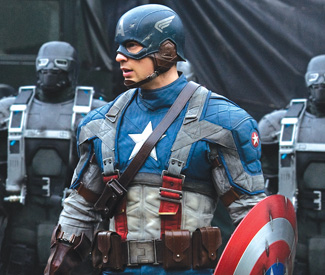
The heroes finally returned to their roots in 2011, with two major productions taking up specific historical periods. Matthew Vaughn’s sleek if slightly smarmy X-Men: First Class flashes back to the merry mutants’ rise during the swingin’ sixties, while Joe Johnston forges a thrilling wartime adventure in Captain America: The First Avenger. But not all period superhero movies are created equal.

First Class is, for all its potential, a mishmash of sub-Mad Men costuming and mortifyingly ham-fisted social messages. Inspired casting doesn’t salvage the film from its central flaw: it’s a standard-issue superhero blockbuster masquerading as something savvier. It plays fast and loose with genre but never to its advantage, and mishandles the source material’s anti-prejudice themes. It also warps real history, revising the Cuban Missile Crisis in order to force a historical context. But its mawkish civil rights rhetoric and Cold War paranoia can’t conceal the fact that the film feels essentially contemporary.

Captain America, conversely, hits all the right beats. Others have noted that Johnston previously helmed 1991’s The Rocketeer, so it’s no surprise he knows how to put on a good pulpy show. But the movie blends Nazi occult weirdness with a grounded, convincing patriotism that reinforces the World War II setting. It has its problems as a historical film — for one thing, it never directly treats the Holocaust. But it doesn’t feel like the same origin story we’ve repeatedly seen; instead it feels like a superhero movie successfully taking on a different genre. It’s just this sort of adventurousness we can hope for as the studios continue to mine the funnybooks for ideas — comics have a rich history, so why not explore it instead of update it?

Get read!

0


ROCK AND ROLL ALWAYS FORGETS

By Chuck Eddy

Duke University Press

352 pp., paper, $24.95

Chuck Eddy glides through music criticism like a grumpy fanatic. Each article included in Rock and Roll Always Forgets — culled from Eddy’s vast back catalogue of music journalism articles, beginning with the early 1980s — is packed with cultural references, touchstones, facts, witty asides, a dash of snark, and acknowledgments of once-obscure acts. Yet, he approaches each band like he’s the first to have discovered it. He’s a musical anthropologist, but also, archeologist, digging up the remains of musicians past, lest we forget. Take a piece on a Marilyn Manson show, written in 1996. More than simply describing the stage and the crowd (which he does, expertly: “[they] wore too much black makeup, but they didn’t scare me — most seemed to be upper-middle-class Catholic school teens from the burbs…”). He wanders near profundity, dissecting Manson’s overall persona, his ticks, his own cultural references, and those who came before him, namely Alice Cooper, but a great many more. Most importantly, Eddy alludes to why that all matters in the least. (Emily Savage)


TROPIC OF CHAOS

By Christian Parenti

Nation Books

295 pp., hardcover, $25.99

Through historical research and on-the-ground reporting in Kenya, war-torn areas of Afghanistan, and other regions marked by intense conflict, Christian Parenti offers an unusual and compelling analysis of violence through the lens of the environment. Tropic of Chaos: Climate Change and the New Geography of Violence teases out the idea that increasingly unstable weather patterns stemming from climate change have fueled conflict throughout impoverished areas of the Global South. In the savannahs of northwest Kenya, for instance, deadly cattle raids have intensified as intertribal warfare heats up in the face of water scarcity. Recurring droughts and floods in Afghanistan have made it exceedingly difficult for farmers raise traditional crops, making them increasingly reliant drought-resistant poppy — the raw ingredient for heroin — for economic survival. Parenti also turns a sharp eye upon the repression, surveillance, and counterinsurgency that first-world nations have employed to combat growing violence in water-scarce, conflict-ridden regions, and calls for a more enlightened approach. (Rebecca Bowe)


CAFE LIFE SAN FRANCISCO

by Joe Wolff

Interlink Books

224 pp., paperback $20

Small quirks in this guide to the city’s cafes and coffeehouses — the sixth in a series that includes Sydney, New York, and Venice — will let you know its not strictly, strictly for locals. Java Beach is lumped in with more gearhead-oriented Mojo Bicycle Cafe and Ninth Avenue’s Arizmendi Bakery is filed under the catchall “Sunset District and vicinity.” The introduction’s discussion of “San Fran” versus “Frisco” versus “the City” is one that became boring long ago. But those things matter little. In-depth histories of some of your favorite cafes, from Java Beach to Philz’ to Caffé Baonecci are lucid looks at the facts and rewards of small entrepreneurship in the city. And Roger Paperno’s loving photography of velvet crema and foccacia sheets combines with words to create an ode to the city’s third spaces that any caffeine-laptop addict will appreciate in their stocking. (Caitlin Donohue)


LIONS OF THE WEST: HEROES AND VILLAINS OF THE WESTWARD EXPANSION

By Robert Morgan

Algonquin Books

497 pp., hardcover, $29.95

Biography can be the best history; stories of the people who changed the world (for better, and often for worse) are more compelling than turgid texts of dates and places. Lions of the West recounts the development of the American frontier from the end of the Revolutionary War to the Civil War era through the lives of 10 men. Yeah, all men. In fact, Morgan (by choice or by the longtime bias of American historians) makes it appear as if all of the great and evil deeds done as the nation moved Westward Ho were the province of the male of the species. At times, the profiles are a bit over the top (I don’t really care that much about Kit Carson’s personal life.) Overall, though, it’s a detailed, lively, and informative book that minces no words, especially when discussing the theft of much of the southwest from Mexico. San Franciscans will enjoy learning who Stockton, Sloat, Castro, Winfield, and a few other streets were named after. (Tim Redmond)


VHS: ABSURD, ODD, AND RIDICULOUS RELICS FROM THE VIDEOTAPE ERA

By Joe Pickett and Nick Prueher

Running Press

272 pp., paper, $14

Found Footage Festival founders and comedy writers Joe Pickett and Nick Prueher are apparently the Indiana Joneses of VHS, unearthing remarkable video package cover art that would otherwise be relegated to hoarder basements, bonfires, and anywhere else the worst (a.k.a., the best) videotapes go to die. I salute these dudes, even though the captions they tag each page with aren’t always funny or necessary. Truly, the covers (soft-focus and garish, tacky and baffling) speak for themselves, direct dispatches from ye olden days, long before YouTube brought WTF-ness to anyone with an Internet connection. You see, children, back in the 1980s or 90s, home viewers had to seek this shit out: instruction in squirrel-calling, chair-dancing, seduction, hairstyling (“What the Heck Am I Going to Do With My Hair?”), baby-proofing, spotting counterfeit Beanie Babies, etc. Straight-to-video masterpieces (F.A.R.T.: The Movie). Horrible exercise fads (“Bunnetics: The Buttocks Workout”). Well-meaning but also ghoulish-looking self-improvement vids (“Face Aerobics”). Every page is magical. Your mind will be blown. (Cheryl Eddy)


BI-RITE MARKET’S EAT GOOD FOOD

By Sam Mogannam and Dabney Gough

Ten Speed Press

297 pp., hardcover, $32.50

Bi-Rite Market is the ultimate neighborhood grocery. Shockingly small (with ambition to expand), it’s jam-packed with the best in organic produce, meats, cheeses, and artisan food products, much of it local. Now, Bi-Rite founder Mogannam has a new book loaded with recipes for such inviting delectables as white bean puree with prosciutto crespelle and strawberry rhubarb pie. But don’t relegate it to the cookbook category. Hewing to Bi-Rite’s mantra of creating community through food, the authors share extensive tips on shopping seasonally and locally for the healthiest and best-tasting products, no matter where you may live. You’ll learn what to look for at the grocery, storage and usage tips, and more. Well-illustrated sections feature produce (broken down by season), wine, beer, cheese, deli meats, butchery, baked goods, and even farmer profiles. Bonus: stay tuned for Sweet Cream and Sugar Cones, Bi-Rite’s ice cream and frozen treats recipe book from its renowned creamery, out this April. (No word yet on whether it’ll tell us how to beat the ever-present line outside.) (Virginia Miller)


DAMNED

By Chuck Palahniuk

Doubleday

247 pp., hardcover, $25

Welcome to Hell, as seen through the eyes of 13-year-old Madison Spencer, the daughter of a jet-setting yet eco-hyperconscious movie starlet and philanthropist. This is Dante’s Inferno meets The Breakfast Club, a film that overtly informs the plot and its main characters. As in Palahniuk’s breakout novel Fight Club, it’s hard distinguish between reality and perception as Maddy leads readers past the Vomit Pond, across Dandruff Desert, and right into Satan’s black Town Car. As she recalls her final weeks on earth, you’re pretty sure that she didn’t really die from a marijuana overdose. Clearly, things are not what they seem as the novel looses an American teenager’s perspective on modern life in both the underworld and earthly realm, with wry commentary on everything from pop culture and capitalist excess to the defeated religions whose fallen gods roam Hades. The gags alone — like the telemarketing and chatroom porn the damned deliver to Earth, and Hell’s endless loop of The English Patient — make this a tough book to put down, all the way to its slightly unsatisfying conclusion. (Steven T. Jones)


BEST AMERICAN COMICS 2011

edited by Alison Bechdel

Houghton Mifflin Harcourt,

352 pp., paperback $25

Chris Ware’s textbooky flowcharts; Angie Wang’s Technicolor, spiraling pistil-armed super-flower-heroine; Peter and Maria Hoy’s intricately plotted cause-and-effect grid art — the sixth year of this hardcover assemblage of the year in superlative strip art soars as a holiday gift for your fave comic nerd. Visual trickery and innovative page staging aside, many of the graphic narratives in this book hold up on plot alone. An excerpt from Kevin Mutch’s Fantastic Life effectively mines zombie philosophy, dating paranoia, and begging drinks off your service industry friends for comic gold. Many of the best pieces, perhaps indicative of the graphic novel mood these days, explore the darker side of the human psyche. But what graphic novel fan is unfamiliar with complicated? (Caitlin Donohue)


THE TIPSY VEGAN

By John Schlimm

Lifelong Books/Da Capo

164 pp., paper, $17

Every time I think we’re past the stereotype of the sullen, uptight vegan, I get another comment like, “Wait, don’t you only eat vegetables?” Why yes, I do eat plenty of veggies, but I also eat decadent dishes such as The Tipsy Vegan‘s Party Monster Pancakes, loaded with the sweet nectar of amaretto and drenched in syrup. This book is a carnivorous teetotaler’s nightmare, boasting 75 boozy recipes stuffed with everything from “beer to brandy” for the liquor-loving vegan cooks among us. It’s not, as I initially imagined, a book on vegan cocktails — that would be far too easy. Written by John Schlimm (Ultimate Beer Lover’s Cookbook), a member of “one of the oldest brewing families in the United States,” the book includes booze-infused treats for parties, brunch, and supper: fried avocados, slur-baaaaked peaches with Cointreau, “Bruschetta on a Bender” — all of which kind of sound like stoner food to me. An nice touch: glossy food porn shots on every page. (Emily Savage)


PROJECT DOG

By Kira Stackhouse

self-published

352 pp., hardcover, $34.99

Local photographer Kira Stackhouse experienced an inspiration so intense that she ditched her high-profile marketing job to pursue it: she would photograph specimens of the 50 most popular canine breeds officially registered with the American Kennel Club (“purebred dogs”) that had been purchased from professional breeders — and pair them with photos of the exact same kinds of dogs found in local dog rescues and shelters. The purpose was to start a dialogue about the effects of professional breeding and highlight the many kinds of dogs available for adoption (and also to change peoples’ perceptions about rescue dogs). But a major part of the story — and what makes this book so fantastic — is the wonderful doggy photography and sumptuous layout. Dogs are posed, or pose themselves, against iconic Bay Area backdrops, accompanied by often hilarious, always revealing, biographies and profiles. Project Dog became an online sensation: this book cements its reputation. Available at www.projectdog.net. (Marke B.)


LISTEN TO THIS

By Alex Ross

Picador

384 pp., paper, $18

In the expanded paperback edition of his absorbing and erudite collection of essays, Alex Ross of the New Yorker writes what could be called his mantra as critic: “I have always wanted to talk about classical music as if it were popular music, and popular music as if it were classical.” Ross listened exclusively to classical until he was 20, something he admits may sound “freakish.” But whether he’s describing Björk in her recording studio in Iceland, or composer John Luther Adams’ sound and light installation in Alaska, Ross draws from an immeasurable well of knowledge and plunges into his subject with gusto. He can find commonalities between Radiohead’s “Pyramid Song” and Stravinsky’s Firebird Suite, clear away the myths that have clouded both Franz Shubert and Bob Dylan, and thoroughly explain why OK Computer and John Cage’s 4’33” are equally astonishing. Informative, eye opening, Ross is every lover of music thrown harmoniously into one. (James H. Miller)


MY FAMILY TABLE

By John Besh

Andrews McMeel Publishing

272 pp., hardcover, $35

To know anything about New Orleans’ dining scene is to know John Besh. As one of Nola’s great chefs, he has a number of restaurants, including the acclaimed August, elevating local cuisine in forward-thinking ways. His original book My New Orleans is a striking post-Katrina tome to one of the greatest cities in the world and its vibrant culinary history. It’s a gorgeous coffee table volume packed with photos of the region’s people, places, and foods — more than 200 recipes from Mardi Gras specialties to gumbo, many with a contemporary twist. Besh just released, My Family Table, with welcoming, everyday recipes he cooks with his family that are healthy, fresh, simple, and heartwarming. Besh’s star power (Iron Chef champion and James Beard award-winner that he is) never dominates. Like New Orleans, it’s a visually beautiful book, but this time themed by “School Nights,” “Breakfast with my Boys,” and recipes like “Curried Anything” or “Creamy Any Vegetable Soup.” Closing with the key element of cooking, the communal, he writes: “If asked what my last meal would be, I’d reply, ‘Any Sunday supper at home, cooked with love, for people I love.'” (Virginia Miller)


FOUR SEASONS OF YOSEMITE: A PHOTOGRAPHER’S JOURNEY

By Mark Boster

Time Capsule Press

128 pages, hardcover, $34.95

John Muir would have loved this book, the spectacular result of a passionate love affair with Yosemite National Park involving all of the principals in this impressive project. Muir helped glorify and preserve Yosemite with his voice and pen. Robert Redford, who fell in love with Yosemite as an 11-year-old boy recovering from a mild case of polio, wrote an eloquent introduction to the book. Photojournalist, Mark Boster was smitten by the beauty and grandeur of the Yosemite when he first visited the park as a child with his family. He spent a year in the park detailing its seasonal changes in more than 100 magnificent pictures. “I felt the breezes, analyzed the light, listened to the sound of the rivers and falls, and tried to capture the images that moved me,” he writes in his introduction. Catherine Hamm’s delicate haiku add a poetic touch to many scenes. (The two principals who brought this project to life with loving care are Narda Zacchino, a former editor of LA Times and the Chronicle, and Dickson Louie, a former executive at both those papers. Zacchino serves as publisher and editor and Louie as president and CEO of Time Capsule Press, which specializes in creating books by using the archival content of newspapers and magazines.) Available at www.fourseasonsofyosemite.com (Bruce B. Brugmann)


THE PDT COCKTAIL BOOK

By Jim Meehan

Sterling Epicure

368 pp., hardcover, $24.95

Few bars have made as much impact on the New York cocktail (and thus the international) scene than PDT. Known as an early mover in the speakeasy trend, PDT revives classic recipes and invents new ones in the classic spirit. Bartender Jim Meehan put PDT on the map, and he’s since gone on to write about drink and educate bar managers and tenders everywhere. In the PDT Cocktail Book, he shares more than 300 cocktail recipes in a comprehensive collection inspired by classic tomes like The Savoy Cocktail Book. There are recipes from generations of hard-working bartenders, tips on glassware, bar tools, equipment, garnishes, techniques, a listing of seasonal ingredients, even a spirits primer. In keeping with PDT’s connection to neighboring Crif Dogs who serve creative dogs in the bar, there’s a section of hot dog recipes from big-name chefs who are regulars at the bar, including David Chang (Momofuku), Wylie Dufresne (WD-50), and Daniel Humm (Eleven Madison Park). From the comfort of home, cook up a Mason Dog fried in cornmeal and huitlacoche (corn smut/fungus, a Mexican specialty) to go with the Little Bit of Country cocktail, which mixes bourbon, maple, and jalapeño. (Virginia Miller)


EVERYTHING IS ITS OWN REWARD: AN ALL OVER COFFEE COLLECTION

By Paul Madonna

City Lights

240 pp., hardcover, $27.95

Like Ben Katchor’s classic “Julius Knipl, Real Estate Photographer,” local artist Paul Madonna’s “All Over Coffee” — published every Sunday in the Chronicle and on essential Web zine The Rumpus (www.therumpus.net) — draws me into a psychic space that is at once serene and troubled, surreal and hyperreal. The effect comes as much from the drawing style as the dreamlike non-narrative: both are direct descendants of Winsor McKay’s “Little Nemo.” Madonna gets an extra chills-up-the-spine boost from his illustrations of semi-familiar San Francisco architecture and intersections, lucid as etchings of bleached Kodachrome shots. For this second collection of the strip, he broadens his nib to include not only the City by the Bay, but Paris, Rome, Buenos Aires, and Tokyo. Overheard quotes, snatches of philosophical discourse, interior monologue snippets, existential doubts, random observations, and short stories are floated over the images to capture a peculiarly lovely eddies in the zeitgeist.


I DON’T WANT TO KILL YOU

By Dan Wells

Tor

320 pp., paperback, $11.95

Some of this is sick shit. You need a warped sense of humor and a love for random violence to enjoy the tale of a young man who lives with his mom in a mortuary and fights a demon made of black goo who takes over the minds and bodies of humans. But it’s a different type of thriller — complete with its own kinda sweet moments of teenage love and angst — and it’s packed with great detail. (Did you know that undertakers use Vaseline to fill up bullet holes? Cool.) John Wayne Cleaver, perfect name for a demon hunter, is a sociopath who is beastly to his mother and can’t get along with the other kids . Except for a super-hot chick who he thinks must be a demon, otherwise why would she like such a loser geek? The demon is nasty and gouges out eyes, cuts off tongues, sticks bodies on poles … you gotta check it out. (Tim Redmond)


RICE AND CURRY: SRI LANKAN HOME COOKING

S.H. Fernando, Jr.

Hippocrene Books

224 pp., paperback, $19.95

After a tongue-inflaming visit to the East Village’s fantastic Sigiri restaurant in NYC a couple weeks back, my interest in — and lust for — spicy Sri Lankan treats like kiri hodhi (coconut milk gravy), rossam (coriander-tamarind broth), kool (seafood soup), Jaffna goat curry, and ulundu vai (savory donuts) was, er, inflamed. Fortunately for me, author “Skiz” Fernando recently spent a year on the island rediscovering his roots and delving into the varied cuisine (later serving as a guide for that cheeky culinary colonist Anthony Bourdain). The punchy, informative Rice and Curry is the result, and includes nice introductions to Sri Lankan geography and history, as well as tips on what to stock in your cupboard to achieve the certain Sri Lankan “oomph” that sets the cuisine apart from Indian. A particular passage that profiles Leela, Fernando’s aunt’s ancient maid, offers some real insight into the island’s food tradition and customs — and yields a marvelous, corruscating crab curry from her hometown of Chilaw, just in time for Dungeness season. (Marke B.)


HEDY’S FOLLY: THE LIFE AND BREAKTHROUGH INVENTIONS OF HEDY LAMARR

By Richard Rhodes

Doubleday

261 pp., hardcover, $26.95

An author best-known for his 1986 Pulitzer-winning The Making of the Atomic Bomb, Richard Rhodes might seem like an unlikely biographer for movie stunner Hedy Lamarr, who lit up Golden Age films like Cecil B. DeMille’s 1949 epic Samson and Delilah. But her above-average qualities (she was called “the most beautiful woman in the world”) extended beyond the superficial. After escaping her gilded-cage marriage to an Austrian munitions magnate, Lamarr found success — and five more husbands — in Hollywood; between roles, she started inventing “to challenge and amuse herself.” During World War II, she got serious about her hobby. Showbiz circles led her to avant-garde musician George Antheil, renowned for his groundbreaking composition for 1924 short Ballet Mécanique. As Rhodes writes, “[Lamarr] began thinking about how to invent a remote-control torpedo to attack submarines just at the time she met Antheil, who knew quite a lot about how to synchronize player pianos.” Together, the “charming Austrian girl” and “the bad boy of music” worked on that torpedo, as well as “spread-spectrum radio,” an innovation that paved the way for contemporary wireless technology. Unlikely? Yes. Fascinating? Indeed. Never underestimate a beautiful woman — or a skilled writer’s ability to humanize complicated characters and bring drama to a tale loaded with tech-speak. (Cheryl Eddy)


COME, THIEF

By Jane Hirschfield

Knopf

98 pp., hardcover, $25

As it happens, one of Bay Area poet Jane Hirschfield’s passages currently adorns the famous Kahn and Keville auto repair shop’s marquee in the Tenderloin: “What some could not have escaped/ others will find by decision/ each we call fate.” Well, you could never blame her for not thinking big. As a well-known and approachable poet, she sports a blurb from O, The Oprah Magazine on this, her ninth collection, the first in six years since releasing her arresting After. And while her slightly witchy, be-scarved, grandiloquent persona screams marketable poetess, there’s some understated magic in her latest poems. These ones are full of plums and glass and vague Zen spells that give off, in their overall effect, an rueful, anticipatory sigh. Some childlike wonder seeps in: “Another year ends./ This one, I ate Kyoto pickles,” says “Washing Doorknobs,” my favorite from the collection. “But one thing you’ll never hear from a cat/ is Excuse me” goes “A Small-Sized Mystery.” Sometimes you can almost Hirschfield her straining for ambiguity, the poems’ heavy life lessons tearing through her delicate webs of observation. Still, each poem here showcases Hirschfield’s incisive power. (Marke B.)


PLENTY

By Yotam Ottolenghi

Chronicle Books

287 pp., hardcover, $35

Recently I returned to London, eating my way extensively through the city. One of my gustatory highlights was Yotam Ottolenghi’s beloved bakery and restaurant, Ottolenghi (with four locations). Not only were his baked goods otherworldly delights, his straightforward but elegant dishes using pristine ingredients were among the freshest and satisfying of my London travels. Plenty, his new cookbook, is a cleanly designed book with vivid photos of recipes like broccoli gorgonzola pie and mushroom herb polenta. Most impressive? Ottolenghi’s recipes are 100% vegetarian. The meat-free aspect is barely emphasized, and one feels no lack in the diverse range of flavors (with Middle Eastern influences) presented. Since 2006, Ottolenghi has penned the UK Guardian’s vegetarian column — and he’s not even a vegetarian! This speaks to how respected he’s become as a chef in his use of veggies and grains. Plenty shows this talent off, but most importantly delivers approachable, easy-to-replicate recipes to tickle our palates. (Virginia Miller)


HILLBILLY NATIONALISTS, URBAN RACE REBELS, AND BLACK POWER

By Amy Sonnie and James Tracy

Melville House

201 pp., paper, $16.95

Gazing back in time to the era when the Black Panthers were serving up free breakfast to low income youth and coming into the crosshairs of COINTELPRO, few may be aware that an interracial coalition of radical organizers included a contingent of poor white southerners bent on fighting capitalism in solidarity with communities of color. Written by a cofounder of the Center for Media Justice and a longtime San Francisco housing activist, this detailed bit of radical history spotlights the organizing efforts of poor whites, transplanted from rural Appalachia to the low-income Uptown neighborhood of Chicago, to build coalitions of poor people in solidarity with civil rights leaders. Groups like Jobs or Income Now (JOIN), the Young Patriots, and Rising Up Angry launched campaigns against neglectful landlords and cops who brutalized their youth. They represented the white arc of the multiracial Rainbow Coalition, initiated by the Black Panthers in Chicago as “a code word for class struggle.” Bizarre as it may seem, “It became common to see [Panther] Fred Hampton ‘give a typically awe-inspiring speech on revolutionary struggle, while white men wearing berets, sunglasses, and Confederate rebel flags sewn into their jackets helped provide security for him.'”

(Rebecca Bowe)


MR. KILL

By Martin Limon

Soho Press

376 pp., hardcover, $24

Korea in the 1970s. The United States has 50,000 troops in country, mostly near the Demilitarized Zone, and they don’t always behave. In general, the Korean authorities allow the military to police its own — but when a young Korean woman is brutally raped on a train to Seoul, and the assailant appears to be an American, all hell breaks loose. Martin Limon lived in Korea for ten years, and he does a (fairly) good job of presenting a portrait of the Cold War tensions between the two supposed allies. There’s a little bit of American bias — the author is former military himself — and his potrayal of Korean society isn’t as sensitive or oddly loving as John Burdett’s descriptions of Thailand in the Bankok 8 series. Limon’s great storytelling and his lively and compelling protagonists, Sergeants George Sureno and Ernie Bascom, pull readers past those issues. Perfect gift for someone who likes international crime thrillers. (Tim Redmond)


THE RECIPE PROJECT

By One Ring Zero

Black Balloon Publishing

116 pp., hardcover, $24.95

It’s part cookbook, part music journalism, part rock opus, and hell, part coffee table book. The Recipe Project (subhead “A Delectable Extravaganza of Food and Music”) is a concept spearheaded by New York-based gypsy-klezmer act One Ring Zero. The band’s co-founders, Michael Hearst and Joshua Camp, created songs using the recipes of well-known chefs (Mario Batali, Isa Chandra Moskowitz, Chris Cosentino) as the word-for-word lyrics. The meals themselves served as musical influence; each recipe inspired a different sound. While the songs are not likely ones you’d listen to say, on a long lonesome drive, they do have a glint of childlike glee. It’s conceptual. The true genius of this project is its overall cohesiveness. It’s an all-in-one package. Follow the recipe, listen to the song, get some interesting background factoids. The Recipe Project also includes full recipe playlists, articles by rock journalists, and some pretty interesting interviews with chefs. (Emily Savage)


CARY GRANT: DARK ANGEL

By Geoffrey Wansell

Arcade Publishing

192 pp., hardcover, $24.95

Back in print (it was originally released in 1996), this paen to the dapper star of North By Northwest (1959), An Affair to Remember (1957), Notorious (1946), His Girl Friday (1940), and approximately 10 zillion other classic films is somewhere between a biography and a coffee-table book. It’s worth picking up for the lavish black-and-white photos alone, illustrating the span of Cary Grant’s career with film stills, behind-the-scenes shots, and the occasional almost-candid image (did he ever take a bad picture)? The accompanying text is straightforward, but — as its title suggests — doesn’t shy away from Grant’s well-documented countercultural experiments. (“Grant became so enthusiastic about the value of LSD that he extolled its virtues during the shooting of his next picture.”) Nor does it gloss over Grant’s vices (he smoked 30 to 40 cigarettes a day) and sometimes troubled personal life (he was married five times). But the book’s chief focus is Grant’s brilliant career. As Stanley Donen, who directed him three times, remarks to author Geoffrey Wansell, “He’s thought of as a man who achieved a certain elegance and savoir faire. But in truth he was a fantastic actor.” (Cheryl Eddy)


NATURAL HISTORY OF SAN FRANCISCO BAY

By Ariel Rubissow Okamoto and Kathleen M. Wong

University of California Press

352 pp., paperback, $24.95

Drag queens, beat poets, burlesque dancers, hyphy rappers, dot com techies — the human species of the Bay Area have been well-documented, but information on the non-human dwellers of the bay itself has been left to scattered guidebooks, obscure blogs, and academic sources. Authors Rubissow Okamoto and Wong have collected a wealth of biological and environmental information in their book, published this November. The cross-country saga of the striped bass, the hidden beauty of eelgrass, the varied contentions of the California water wars are presented in highly readable, easily digestible sections. The emphasis here is on environmental impact and recent conservation developments — I did not know that it’s officially dangerous to eat more than one pound a month of fish from the bay! — and the history of decades of restoration triumphs and setbacks is related sleekly and straightforwardly. Absorbing all the information in this illuminating primer helped me appreciate the seething loveliness and churning forces that make up the place I call home. (Marke B.)


Get lit! A handy guide to Saturday night’s LitCrawl

0

LitQuake has been rough. You’ve been dashing out of work, shoving people away from their cabs to make it to the Chuck Klosterman event and sprinting after buses to catch Karen Russell; you’ve had to make the hard decision between “Kafkaesque” and “Rock Out with your Book Out;” and all the while, you keep thinking Jeffrey Eugenides has just passed you on the street. With LitCrawl coming up Sat/15, things become even more overwhelming and terrific. In the Mission, bars, cafes, and bookstores together host 450 readers in 79 readings, all free and open to the public. One way to navigate the event might be to pick your favorite bar or cafe, find a chair, order a drink and wait for something to happen. Or, you can check these readings out:
 
I Live Here: SF. How We Got Here, Why We Stay
Not a lot of us can say we were born and raised in San Francisco. Most of us fled here from elsewhere for one reason or another: failed relationships, parents kicked you out, a nervous breakdown, a mid-life crisis, you formed an indie-rock band. Maybe you came for LoveFest and simply forgot whom you were. There are a thousand reasons for arriving and a thousand more for staying. In Clarion Alley, writers and non-writers alike including Mark Bittner and M.C. Mars talk about what brought them here and why they haven’t budged. 6 p.m., Clarion Alley, between Mission and Valencia, and 17th and 18th Sts, SF

BARTab’s Blame it on the a a a a a Alcohol: Tall Tales of Inebriated Adventures
Alcohol and writers have always had a vital, if tumultuous relationship. Hemingway said that when you worked in your head day after grueling day, the only viable remedy was whiskey; that “The only time it isn’t good for you is when you write or when you fight. You have to do that cold.” Luckily, a drunken night can become a source of inspiration, if not the next morning, sometime when you’re “cold.” At this reading, writers like Daphne Gottlieb, Jon Ginoli, Brenda Knight, and the editor of BARtab, Joe Provenzano, read about nights of drunken debauchery. 6 p.m., Martuni’s, 4 Valencia, SF
 
Come Cheer the Reaper: Readings from the San Francisco Writers’ Grotto
The San Francisco Writers’ Grotto was founded because, dammit, this writing business can be agonizing, but it’s more manageable when others surround you with whom you can collectively suffer. Convening at the Elbo Room for a night of readings tied around death, you might think that collectively suffering wasn’t working out so well for the Grotto. However, tonight is not a night for morbidity and gloom. Nine writers, including Janis Cooke Newman, Marianna Cherry, Gerard Jones, and Chris Colin read work that looks at death with humor and lightheartedness. 7:15 p.m., Elbo Room, 647 Valencia, SF
 
The Three-Penny Review Presents…
The Three-Penny Review, based out of Berkeley, would naturally host a night of premium writers at LitCrawl. The journal has been hosting the best authors, poets, and critics in its pages since 1980, and it publishes reviews and essays about everything under the sun (their recent issue features 3 great essays about live music). A good way to gauge the journal’s breath is looking at tonight’s lineup at the Summit. Kay Ryan is, of course, the former Poet Laureate of the U.S. and the Pulitzer Prize winner for The Best of It: New and Selected Poems; Walter Murch is a three-time Oscar-winning film and sound editor famous for his work on Apocalypse Now and The English Patient; Louis B. Jones is an author whose most recent novel is Radiance. Others tonight are poet Victoria Chang and the playwright and screenwriter Erik Tarloff. 7:15 p.m., Summit, 760 Valencia, SF
 
Zyzzyva Presents…
If you’ve taken a look at the West Coast writers and artists magazine Zyzzyva lately, you probably noticed some substantial changes: a new design, a full color art spread, an additional 40 pages of content. The changes are credited to the magazine’s first new editor since its founding in 1985, Laura Cogan. At 29, Cogan has breathed new life into the magazine and given it more presence in the community by doing, among other things, events like this one. Contributors to the fall issue of the magazine W.S. Di Piero and Troy Jollimore are joined by Heather Altfeld, and Malena Watrous. 7:15 p.m., Blue Macaw, 2565 Mission, SF
 
From Buddha to Batman
If you’re a fan of comic superheroes and also have a costume you’re dying to wear before Halloween, this event is most certainly for you. Gotham Chopra, co-founder of Liquid Comics and co-author of the comic Bullet Proof Monk, discusses our persistent fascination with muscles, spandex, super powers, and sidekicks. If you’re one of the first 20 to arrive to the event in a superhero costume, you get a free drink, while the best three costumes win signed books. 8:30 p.m., Laszlo Bar, 2526 Mission, SF

McSweeny’s and The Believer Present…
McSweeny’s and The Believer need no introduction. They are of what they are, and everyone knows that, together, the publisher and magazine support the very best writing. This event features a handful of those talent writers and personalities: poets Matthew Zapruder and Tess Taylor, columnist Daniel Handler (known by some as Lemony Snicket), and Anthony Myint and Karen Leibowitz, founders of Mission Street Food, and authors of the book Mission Street Food: Recipes and Ideas from an Improbable Restaurant. 8:30 p.m., Latin American Club, 3286 22nd St., SF

The World Cries Out for Revolution
Some, like the protestors defiantly camping outside the Federal Reserve Building for OccupySF, get their voices heard by taking to the streets. Others, like us at the San Francisco Bay Guardian, stir things up with the written word. You can see this every week in the articles written by our own Steven T. Jones (check out his article on the pot club crackdowns in this week’s issue). At Cafe La Boheme, Jones reads in the spirit of dissent with former Black Panther Richard Brown, as well as Larry Everest, the author of Oil Power & Empire: Iraq and the U.S. Global Agenda.
8:30 p.m., Cafe La Boheme, 3318 24th St., SF

A decade of DocFest

2

cheryl@sfbg.com

>>Read even more Docfest reviews here!

FILM The San Francisco Documentary Film Festival (Oct. 14-27), now in its 10th year, is probably my most-anticipated local film event. One of my favorite docs of all time, Cropsey, first crossed my path at the 2009 fest. This year, I didn’t even try to come up with a coherent theme or find one film to focus on — I just started grabbing titles and watching as many of them as possible. It’s been a gluttonous feast of true stories, friends. Short takes follow, with more online at Guardian blog Pixel Vision.

Ecstasy of Order: The Tetris Masters (Adam Cornelius, U.S., 2011) I can’t think of anything more boring than watching someone else play a video game. Especially Tetris. The goofy, good-natured Ecstasy of Order skirts that basic dilemma by focusing on its subjects, all contenders at the 2010 Classic Tetris World Championship. Most everyone involved was a full-on teenage geek back in gaming’s early days; now, with years of experience under their belts, they’re far more skilled and (for the most part) way less dorky. Trouble is, there’s no villain — unlike 2007’s mighty The King of Kong (an obvious inspiration here), a film elevated by its epic good-vs.-blowdried-evil central conflict. By contrast, Ecstasy‘s crew is comprised of friendly misfits who seem to genuinely enjoy playing against each other; without much drama, the stakes don’t seem as high. Oct. 23, 12:30 p.m., and Oct. 25-26, 9:30 p.m., Roxie.

The Furious Force of Rhymes (Joshua Atesh Litle, France/Germany/U.S., 2010) San Francisco native Joshua Atesh Litle’s vivid, cross-cultural study of contemporary hip-hop offers ample examples of how and why, as one German rapper says, music has become “an international language for those without voices.” After a brief recap of hip-hop’s Bronx, NY origins, the film jets to Paris and Berlin, the West Bank and Israel, and Dakar, Senegal, highlighting performers who rhyme about social injustice, political unrest, racism, immigrant struggles, and other issues affecting their daily lives. Kinda makes you sorry that mainstream American hip-hop has become so superficial and swag-obsessed. Fri/14 and Oct. 20, 9:30 p.m., Roxie; Mon/17, 9:30 p.m., Shattuck.

Holy Rollers (Brian Storkel, U.S., 2010) For a time, one of the most successful card-counting outfits in America was “the Churchteam,” a group of 20-somethings who mapped out a businesslike way of relieving casinos of millions of dollars. Two managers trained a pack of players, who would then travel to Las Vegas and other places, armed with stacks of bills (contributed by investors) and the cojones to cheat until they were “backed off” from the blackjack table. (As 2009’s The Hangover, excerpted here, points out, counting cards isn’t illegal — it’s merely “frowned upon.”) Neat story, but the real hook here is that the Churchteam was comprised almost entirely of practicing Christians; their shared faith insured that nobody would steal from the team’s profits. (Of course, when the team started losing, and theft was suspected, all eyes fastened upon the single non-Christian in the pack.) The fast-paced Holy Rollers tends toward the highly enjoyable, but the Churchteam members are so self-satisfied that they prove difficult to root for at times. Holy smugness, bro! Sun/16 and Oct. 20, 7:15 p.m., Roxie; Tues/18, 9:30 p.m., Shattuck.

Scenes of a Crime (Grover Babcock and Blue Hadaegh, U.S., 2011) Scenes of a Crime proves that “good cop/bad cop” interrogation techniques are used in the real world, not just crime films. It also affirms, distressingly, that the American justice system often travels through murky waters. When a baby dies under mysterious circumstances, his father is taken into custody; after an epic interrogation, he confesses to causing his child’s death, complete with a harrowing demonstration. At his trial, experts argue over the medical evidence, but the police-station videotape remains the case’s most pivotal factor. Was the father guilty, or did he deliver a false confession, egged on by the cops’ manipulative questions? The verdict says one thing; after watching Crime, you may believe another. Oct. 22, 12:30 p.m., and Oct. 24, 9:30 p.m., Roxie; Fri/14, 2:45 p.m., Shattuck.

With Great Power: The Stan Lee Story (Will Hess and Nikki Frakes, U.S., 2011) DocFest’s closing-night film defines “hagiography,” but if you don’t love Marvel Comics maestro Stan Lee, you might not have a pulse. Basically everyone ever associated with a Lee-based project (movie stars, directors, artists) pops up to fawn over the 88-year-old dynamo, but most delightful is the man himself, a hilarious, heartfelt character who has clearly spent his entire adult life working at a job he loves, influencing and entertaining millions along the way. With Great Power doesn’t quite come out and say it, but I will: he’s a real-life superhero. Oct. 23, 9:30 p.m., and Oct. 27, 7:15 p.m., Roxie; Oct. 20, 9:30 p.m., Shattuck.

The Woodmans (Scott Willis, U.S., 2010) Francesca Woodman jumped off a building in 1981 when she was 22, despondent over the fact that her photographs hadn’t found a niche in New York’s competitive art world. She was no stranger to competition — she’d grown up with a parents who placed art-making above all other obligations. Fast-forward to the 21st century, and Francesca remains the most-acclaimed Woodman; her haunting black-and-white photos, often featuring the artist’s nude figure, have proven hugely influential in the realms of both fine art and fashion. She was, as the San Francisco Museum of Modern Art website says (an exhibit of her work opens Nov. 5), “ahead of her time.” Scott Willis’ documentary features extensive interviews with her parents, George and Betty, and to a lesser extent Francesca’s brother, Charles (also an artist); the film is both Woodman bio and incisive exploration of the family’s complex dynamics. Most fascinating is Charles, who remarks of his daughter’s posthumous success, “It’s frustrating when tragedy overshadows work.” But after her death, he took up photography, making images that resemble those Francesca left behind. Sat/15, 7:15 p.m., and Oct. 22, 12:30 p.m., Roxie; Sun/16, 12:30 p.m., Shattuck.

SAN FRANCISCO DOCUMENTARY FILM FESTIVAL

Oct 14-27, $11

Roxie Theater

3117 16th St, SF

Shattuck Theatre

2230 Shattuck, Berk

www.sfindie.com


Sequel smackdown

1

GAMER Though video game sequels abound every season, fall 2011 plays host to an unusual profusion. Three is indisputably the magic number, though five and a pair of un-numbered twos make a strong case. Decide for yourself which game deserves your dollars by delving into the details below.

Shooter wars In terms of sheer seismic impact, it’s hard to match Call of Duty: Modern Warfare 3, which hits store shelves Nov. 8. Successor to Call of Duty: Black Ops — literally the best-selling video game in the history of world — Modern Warfare 3 is the 2011 iteration in a once-yearly parade of market-dominating games released by publishers Activision. Defined, for better or worse, by its frenetic gameplay and rabid fans, Call of Duty‘s vast popularity has resulted in uncanny levels of cultural saturation. It’s the video game of choice for people who only own one video game.

This appeal to the lowest common denominator has been tacitly criticized by the team behind Battlefield 3, another hyper-realistic military shooter from rival publishers Electronic Arts. Released exactly a fortnight earlier than its megalithic competitor (Oct. 24), Battlefield 3 will point to a less puberty-addled player base and the excitement of pilotable vehicles (tanks, helicopters, etc.) as its main selling points.

Though the chivalric code of video game public relations prevents these two giant franchises from really laying into each other, the gaming intelligentsia expects a consumerist cage match come late October. By the time the first-week sales numbers are compared, they’ll be baying for blood.

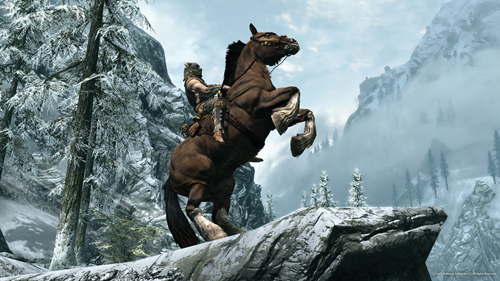
Open worlds Evaluated superficially, The Elder Scrolls V: Skyrim seems like a parody of itself. Every gaming stereotype is represented, starting with the portentous title. Screenshots reveal barbarians swathed in fur, casting wary glances at the dragons wheeling overhead.

But despite its conventional high fantasy trappings, Skyrim (Nov. 11) represents the sophisticated, forward-thinking apex of modern RPG design. Its new Creation Engine allows surprising flexibility — the A.I. modifies quests on the fly to test a player’s strengths and weaknesses, and to showcase the content that player might be missing. The aforementioned dragons are given license to roam, appearing randomly to ruin your day at the expense of choreographed, scripted sequences.

Speaking of ruined days, no game will kill you quite as dead as Dark Souls. The follow-up to the cult Japanese import Demon’s Souls will expand on its predecessor’s distinctively punishing gameplay, turning players loose in an ominous open world filled with booby traps and seemingly invincible monsters. It will take unwavering concentration and an iron will to succeed when the game releases Oct. 4.

Gamers who prefer a more modern open world are gearing up for Batman: Arkham City (Oct. 18.), sequel to 2009’s surprise smash Arkham Asylum. Escaping the confines of the comics world’s most recognizable prison, Arkham City will allow the Caped Crusader freedom to explore a wide swath of dystopian Gotham, putting paid to recognizable Batman adversaries like the Penguin, Bane, Two-Face, Catwoman, the Riddler, and the Joker.

Arkham Asylum won players over with its fluid, timing-based combat system, which will return improved, able to pit Batman against 27 heavily-muscled henchmen at once without breaking a technological sweat. Fisticuffs aside, Arkham City will also allow you to swoop down off buildings with only an inky-black cape to break your fall — who wouldn’t want to try that?

Trilogies completed Like Batman, Uncharted protagonist Nathan Drake is no stranger to precipitous heights. The wisecracking Indiana Jones homage returns Nov. 1 in Uncharted 3: Drake’s Deception, rounding out a trilogy of cinematic, visually stunning adventure titles.

Clambering up priceless ancient architecture while dispatching baddies with bullets and bon mots, Drake will take advantage of huge investments in motion capture and hardware optimization that will make Uncharted 3 one of the most realistic looking games ever. You can also expect it to set new benchmarks for video game writing and voice acting — traditional strengths of the series.

Gears of War 3 might not boast the same level of insouciant wit, but its graphical and gameplay bona fides are second to none. Due out Sept. 20, the new game from influential studio Epic Games (famed for their extensively licensed Unreal 3 engine) aims to wrap up the story of hydrant-shaped marine Marcus Fenix, who first growled his way onto consoles in 2006. The plot is conventional stuff — find your missing father; save the world — but Epic’s satisfying cover-based shooting mechanics and popular multiplayer modes will attract customers in droves.

Bestivals

0

caitlin@sfbg.com

FALL ARTS Now that even the quaintest neighborhood block parties publish music lineups in advance and big beat fests give as much shine to snack vendors as secondary stages, it’s becoming clear that the events on our fall fair and festival listings are all just part of one big movement. Leading to what, you might ask? Leading to you having a celebrate-good-times kind of autumn in the Bay Area. Seize the day, pack your sunscreen, bring cash: from film to activism to chocolate, here comes the sun.


NOW-SEPT. 25

Shakespeare in the Park Presidio’s Main Post Parade Ground Lawn, between Graham and Keyes, SF. (415) 558-0888, www.sfshakes.org. Times vary, free. Whilst thou be satisfied with the Bard’s hits in the open air, free for you and the clan? The line-up, from Cymbeline to Macbeth, suggests that it won’t be so hard.


AUG. 27

J Pop Summit Japantown Peace Plaza, SF. www.newpeopleworld.com. 11 a.m.-6 p.m., free. Enter the kaleidoscope of anime, manga, Lolita, androgynously cute boys in tuxedo jackets, keyboard theatrics, and Vocaloid (a computer program that creates complete songs, vocals and all) contests at this unique festival marathon of Japanese pop culture.

Rock The Bells Shoreline Amphitheatre, Mountain View. www.rockthebells.net. 10:55 a.m.-10:25 p.m., $55.50-281.00. Lauryn Hill, Nas, GZA, Common, Black Star — the country’s biggest hip-hop festival hits the Bay, bigger than ever.


SEPT. 3

International Cannabis and Hemp Expo Telegraph from 16th to 20th sts. and Frank Ogawa Plaza, Oakl. intche.eventbrite.com. Noon-8 p.m., $18-300. 120 different strains of Mary Jane should be enough to get you through eight hours of festival — if not, there will be three stages of music and educational speakers for pot pals to trip on.


SEPT. 3-4

Zine Fest SF County Fair Building, 1199 Ninth Ave., SF. www.sfzinefest.org. 11 a.m.- 6 p.m., free. If arbiter of Bay indie comic cute Lark Pien’s original kitty cat Zine Fest 2011 poster doesn’t hook you (how?), you’re sure to find something that tickles your cut-and-paste among the aisles at this assemblage of DIY publishers and comic heads.

Millbrae Art and Wine Festival Broadway between Victoria and Meadow Glen, Millbrae. (650) 697-7324, www.miramarevents.com. 10 a.m.- 5 p.m., free. Celebrate Labor Day at this multi-faceted celebration of artisan comestibles, classic cars, live tunes, and hundreds of crafters — it even has a kids talent show.


SEPT. 4

EcoFair Marin Marin County Fairgrounds, San Rafael. www.ecofairmarin.org. 10 a.m.-7 p.m., $5. The keynote speaker at this expo of all things green and cutting-edge is Temple Grandin, Ph.D., one of the world’s leading autism advocates.


SEPT. 7-18

Fringe Festival Various locations, times, prices. www.sffringe.org. This festival’s egalitarian method of stage assignments mean that there’s no better time of year in the city to check out first-time playwrights and original (yes, sometimes wonky) scripts.


SEPT. 8-11

Electronic Music Festival Brava Theater Center, 2789 24th St., SF. www.sfemf.org. The Bay’s new music artists pop off together for this long weekend of exploration of the sonic spectrum.


SEPT. 10

Brews on the Bay Pier 45, SF. www.sfbrewersguild.org. Noon-5 p.m., $45. The city’s biggest brewers: Magnolia, Beach Chalet, Anchor, and Speakeasy among others, pour out endless tastes at this Bay-side swigfest


SEPT.10-11

Ghirardelli Square Chocolate Festival Ghriradelli Square, North Point and Larkin sts., SF. (415) 775-5500, www.ghirardellisq.com. Noon-5 p.m., $20 for 15 samples. A benefit for chronically ill and housebound elderly folks, chocolatier demonstrations and ice cream sandwich-eating contests sprinkle over this day of chocolate tasting par excellence.


SEPT. 14-18

Berkeley Old Time Music Convention Times, locations, and prices vary. www.berkeleyoldtimemusic.org. Loosen up them joints — it’s time to get goofy and gangly to some banjos and flat-footin’ at this multi-day Americana celebration of film screenings, concerts, open jams, and more.

Power and Sailboat Expo Jack London Square, Broadway and First St., Oakl. (510) 536-6000, www.ncma.com. Wed.-Fri., noon — 6 p.m.; Sat.-Sun., 10 a.m.-6 p.m., $10. In the market for a rubber inflatable raft? Wanna scope haute yachts? Sail away to this family-friendly event on the Bay.


SEPT. 15 — DEC. 18

SF Jazz Fest Times, locations, and prices vary. (866) 920-5299, www.sfjazz.org. Esperanza Spalding, Booker T., Aaron Neville, and performances by SF’s most talented high school jazz players mark this season of innovative concerts and jazz appreciation events.


SEPT. 23-25

Eat Real Jack London Square, Broadway and First St., Oakl. (510) 250-7811, www.eatrealfest.com. Fri, 1-8 p.m.; Sat, 11 a.m.-8 p.m.; Sun, 11 a.m.-7 p.m., free. A celebration of all foods local and sustainable, you can enter your prize pickles in a contest at this burgeoning fest, learn how to be a backyard farmer, and of course, eat good food til you burst.


SEPT. 23 — OCT. 16

24 Days of Central Market Arts www.centralmarketarts.org. Most events are free. The heart of the city organizes this smorgasboard of art events — from world class dance to circus to quirky theater pieces. Take your brown bag (lunch? something else?) down to Civic Center for one of the free performances.


SEPT. 24

Lovevolution Oakland Coliseum, 7000 Coliseum Way, Oakl. www.sflovevolution.org. Noon- 8 p.m., $25. The days of prancing neon-ly down Market Street are over but hey, Oakland’s got better weather! This year’s massive outdoor rave stages its traditional parade around the circumference of the coliseum’s parking lot.


SEPT. 25

Folsom Street Fair Folsom between Seventh and 12th sts., SF. www.folsomstreetfair.org. 11 a.m.- 6 p.m., $10 suggested donation. Sure, it’s touristy, but this kink community mega-event has its heart in the right place (between its legs). The premier place to get whipped in public, hands down.


SEPT. 30 — OCT. 2

Hardly Strictly Bluegrass Speedway Meadows, Golden Gate Park, SF. www.strictlybluegrass.com. Sure this homegrown free twangfest gets more crowded by the year — but attendance numbers are directly tied to the ever-more-badass lineup of multi-genre legends. This year: Emmylou Harris, Bright Eyes, Broken Social Scene, Robert Plant — and yes, MC Hammer.

Oktoberfest By the Bay Pier 48, SF. 1-888-746-7522, www.oktoberfestbythebay.com. Fri, 5 p.m.-midnight; Sat, 11 a.m.-5 p.m. and 6 p.m.-midnight; Sun, 11 a.m.-6 p.m., $25-65. Oompah, it’s time for some bratwurst! Raise your stein to this boozy celebration of German culture.


OCT. 1

Wildlife Conservation Expo Mission Bay Conference Center, 1675 Owens, SF. www.wildnet.org. 10 a.m.- 6 p.m., $30-60. Save the Botswanan cheetahs and okapis! Learn from leading conservationists about innovative environmental projects around the world.


OCT. 1-2

World Vegetarian Day County Fair Building, 9th Ave. and Lincoln, SF. (415) 273-5481, www.worldvegfestival.com. 10 a.m.-6 p.m., $10 suggested donation, free before 10:30 a.m. The 40-year old SF Vegetarian Society sponsors this expo of veggie livin’ — expert speakers talk science and advocacy, and there’ll even be a round of vegan speed dating for those hoping to share their quinoa with a like-minded meatless mama.

Alternative Press Expo (APE) Concourse Exhibition Center, 635 Eighth St., SF. (619) 491-1029, www.comic-con.org/ape. Check website for times and prices. The indie version of Comic-Con offers a weekend designed to give budding comics a leg up: workshops, keynote talks by slammin’ scribblers, issue-based panel discussions, and tons of comics for sale.


OCT. 2

Castro Street Fair Castro and Market, SF. (415) 841-1824, www.castrostreetfair.org. 11 a.m.- 6 p.m., free. This is no standard block party — big name acts take the stage at our historic homo ‘hood’s neighborhood get down, and along the curbs, crafters and chefs park alike.


OCT. 7-15

Litquake Times, locations, and prices vary. www.litquake.org. Our very own literary festival has grown a lot — the Valencia Street LitCrawl tradition has even spread to Austin and New York — check out its schedule for a chance to see one of your favorite scribes live and reading.


OCT. 9

Italian Heritage Day Parade Begins at Jefferson and Stockton sts., SF. (415) 703-9888, www.sfcolumbusday.org. 12:30 p.m., free. Peroni floats and courts of teenaged “Isabellas” reign supreme at this long-running North Beach cultural day.

Decompression Indiana outside Cafe Cocomo, SF. www.burningman.com. Check website for times prices. The Burning Man after-after-after party will be slammin’ this year, what with all the playa peeps that couldn’t score a ticket in the sell-out.


OCT. 15

Potrero Hill Festival 20th St. between Missouri and Arkansas, SF. potrerohillfestival.eventbrite.com. 9 a.m.- 4:30 p.m., free. $12 for brunch. A New Orleans-style mimosa brunch with live music kicks off this neighborhood gathering, also featuring a petting zoo and traditional Chinese dancers.

Noe Valley Harvest Festival 24th St. between Sanchez and Castro, SF. www.noevalleyharvestfestival.com. 10 a.m.- 5 p.m., free. Your little pumpkins can get their faces painted at this neighborhood fest, while you cruise the farmer’s market and meet the neighbors.


OCT. 15-16

Treasure Island Music Festival Treasure Island, SF. www.treasureislandfestival.com. $69.50-219.50. Indie fever takes a hold of the island this weekend, with a varied lineup this year featuring Aloe Blacc, Death Cab for Cutie, Empire of the Sun, and Dizzee Rascal.


OCT. 22

CUESA Harvest Festival In front of the Ferry Building, Embarcadero and Market, SF. www.cuesa.org. 10 a.m.-1 p.m., free. Butter churning, cider pressing, weaving demonstrations, and a chance to pick the mind of Bi-Rite Market founder Sam Morgannam.


NOV. 12-13

Green Festival SF Concourse Exhibition Center, 635 Eighth St., SF. www.greenfestivals.org. Sat, 10 a.m.- 7 p.m.; Sun, 11 a.m.- 6 p.m. Check website for prices. What would the sustainability movement be without endless halls of hemp backpacks and urban farming lectures? Keep up with the (Van) Joneses at this marquee environmental event.

Our Weekly Picks: August 10-16

0

WEDNESDAY 10

MUSIC

Outdoorsmen

Seeking some pissed-as-shit garage rock from San Francisco? Eschewing the contemporary lyrical idiom of pizzas, fun, and friends, the band Outdoorsmen has more in common with early GG Allin (minus the racism, sexism, and other things about the baddest of rock ‘n’ roll’s bad boys that were generally inexcusable, no matter how good he was otherwise) than the Seeds or 13th Floor Elevators. If you want the raging fury of punk run through too many pedals and spat out in songs like “Summer of Hate” and “Decapitated,” these cats are here to save you from the paisley wave of vintage rock wannabes. Get angry! (Cooper Berkmoyer)

With San Francisco Water Cooler

9 p.m., $6

Hemlock Tavern

1131 Polk, SF

(415) 923-0923

www.hemlocktavern.com


MUSIC

Breakestra

I’ve never quite been able to wrap my head around L.A. band Breakestra. With a tendency to change members and labels as frequently as it switches from one break beat to another, the expectation is inconsistency. But instead, its collective effort manages to reach a level of esteem that puts them somewhere between other encyclopedic genre bands like the Roots and the Dap-Kings (or to go back further, the J.B.’s), reliably grooving across funk, hip-hop, and soul. Its last album, 2009’s Dusk Till Dawn, saw the band resurrecting the feel of a Norman Whitfield-era Temptations track one moment, only to later lay down a proper beat for Chali 2na. (Ryan Prendiville)

With California Honeydrops

9 p.m., $15

Brick and Mortar Music Hall

1710 Mission, SF

(415) 800-8782

www.brickandmortarmusic.com


FRIDAY 12

COMEDY

Dave Attell

Often regarded as the epitome of a “comedian’s comedian” while paying his dues in the New York City stand-up circuit, Dave Attell finally caught his well-earned break in 2001 with the debut of Insomniac, his late night reality show on Comedy Central. His blunt and unabashed style, blue-collar looks, and approachability made him the perfect comic to maneuver the run-ins with all the drunks and freaks on that show, and those same qualities translate to his live performances. As a former writer for Saturday Night Live and contributor to The Daily Show, Attell’s credentials run deep, and his balance of the lewd and the incredibly clever has helped make him one of the best and most-respected comics around. (Landon Moblad)

Fri/12-Sat/13, 8 and 10:15 p.m., $35

Cobb’s Comedy Club

915 Columbus, SF

(415) 928-4320

www.cobbscomedyclub.com


MUSIC

Sadies

Comprised of guitarists Dallas and Travis Good (who are also brothers), drummer Mike Belitsky, and bassist Sean Dean, the Sadies have recorded and toured with everyone from John Doe and Neko Case to Andre Williams and Heavy Trash — all for very good reason. The Canadian rockers seamlessly incorporate country, surf, rockabilly, garage rock, and more into their musical foundation, creating a wide sonic pallet to work with. The band shines just as brightly on its own as in its collaborations, as was the case with its latest excellent release, 2010’s Darker Circles — so expect nothing short of an amazing live set tonight. (Sean McCourt)

With Jesse Sykes and the Sweet Hereafter

9 p.m., $17

Great American Music Hall

859 O’Farrell, SF

(415) 885-0750

www.gamh.com


MUSIC

Javelin

Though you may hear descriptors like electro and hip-hop bandied about to describe Javelin’s music, neither really captures the wide-eyed charm of the group’s eccentric cut-and-paste style. Originally from Providence, RI but now rooted in New York City, the duo is comprised of two cousins who are just as intrigued by MPCs and old, dusty vinyl samples as they are by homemade instruments and beat-up toy keyboards. No Mas, Javelin’s 2010 debut, showed off its ability to filter lo-fi psychedelia, playful electronica, and fractured R&B into a perfectly balanced, collage-style mix of live and electronic sounds. Its follow-up, Candy Canyon, is a 24-minute exercise in cowboy folk and spaghetti Western scores. (Moblad)

With Siriusmo, Pictureplane, Krystal Klear, Vin Sol, and Charles McCloud

10 p.m., $15

103 Harriet, SF

(415) 264-1015

www.1015.com/onezerothree


MUSIC

Trainwreck Riders

What do you get when you cross the epic guitar work of stadium rock and the audacity of punk with the drunken swagger of country? A trainwreck? Trainwreck Riders actually. This San Francisco four-piece will have you stumbling along in commiseration and drifting into rock heaven with its boozy lullabies, but that’s only half the equation. As genuinely beautiful and sad as Trainwreck Riders can be (just check out their single “Christmas Time Blues” — goddamn) it’s just as apt to slam you back to earth with leaden shredding and headbanging goodness. Sing along and dance or just let the melodies carry you away. Trainwreck Riders will make a fan of you yet. (Berkmoyer)

With Pine Hill Haints, Mahgeetah, and Pops

8:30 p.m., $12

Café Du Nord

2170 Market, SF

(415) 861-5016

www.cafedunord.com


MUSIC

DJ Lo Down Loretta Brown a.k.a. Erykah Badu

Following a live performance at Outside Lands, Erykah Badu — the reigning queen of whatever genre she’s in — will be donning her DJ Lo Down Loretta Brown persona at Mezzanine. Whether you catch the soulful singer, who’s reportedly working on material with Flying Lotus, following Big Boi at the festival, or just the DJ set, she’ll be keeping the party going for the Ankh Marketing (the people behind Rock the Bells and plenty of Bay Area hip-hop) seventh anniversary celebration. Ankh has delivered on their events — the last time they brought the Roots’ Questlove for a set (which they’ll repeat Saturday at Public Works) Ghostface Killah popped on stage in the two o’clock hour. (Prendiville)

With D-Sharp

9 p.m. Doors, $25 Advance

Mezzanine

444 Jessie, SF

(415) 625-8880

www.mezzaninesf.com


SATURDAY 13

MUSIC

Inciters

Although it hails from Santa Cruz, the band known as Inciters sounds as though it could have come straight out of England circa the late 1960s, steeped in the rich sound and traditions of Northern Soul, albeit with an energy and attitude all its own. Currently recording its next album, the 11-piece outfit has been rocking stages both locally and internationally since 1995, and tonight finds it both performing an opening slot and also acting as the backing band for genre favorite Dean Parrish, known for 1960s hits like “I’m On My Way.” (McCourt)

With Champions, Soul Fox, Shawn and Miss T, and Mattie Valentine

9 p.m., $8

Rockit Room

406 Clement, SF

www.rock-it-room.com


VISUAL ART

“Scab-Free”

Is there anything more fun than a scab? Pick, pick, pick. The tension between patience and raw fulfillment makes them better than blackheads, dandruff, and ingrown hairs combined. And while blood streams through the gutters to the Bay from the tatted-up flesh of everyone from your barista to rock stars to your aunt, before the scabs and permanent skin art came the sketches and paintings. As the co-owners of Black Heart Tattoo, Scott Sylvia, Tim Lehi, and Jeff Rassier are globally renowned knights with tattoo-machine swords, swivel-stool steeds, and holy grails of pigments. Their canvases, and those of five other Black Heart dudes, may not bleed, but they’ll surely inspire your next inky scab. (Kat Renz)

Through Sept. 3

Opening reception tonight, 7 p.m.-midnight, free

Space Gallery

1141 Polk, SF

(415) 377-3325

www.spacegallerysf.com


FILM

Jaws

Discovery Channel’s annual Shark Week wrapped up August 5. As a floundering nation collapses into Great White Withdrawl Syndrome, Bay Area residents can feed (-ing frenzy) their obsession with bloody, toothy good times at Film Night in the Park’s screening of 1975’s Jaws. One of the first-ever summer blockbusters, Steven Spielberg’s seaside classic actually doesn’t feature much fishy footage, thanks to a cranky mechanical shark that taught all involved a valuable lesson about stories actually being scarier when you don’t reveal too much of the monster. But since Discovery just served up plenty of savage shark porn (Top Five Eaten Alive!), bundle up and enjoy Jaws‘ human standouts: Roy Scheider as the sheriff trying to cope with the deadly waters off his beaches; Richard Dreyfuss as the nerdy ichthyologist; Robert Shaw as the crusty shaaak hunter; and composer John Williams, who spun epic menace from a few simple notes and created one of cinema’s most recognizable themes in the process. (Cheryl Eddy)

8 p.m., donations accepted

Dolores Park

19th St. at Dolores, SF

(415) 272-2756

www.filmnight.org


MUSIC

“Incest Fest”

Incest is really bad if you’re a cheetah — one of the fastest species on Earth is nearly extinct because of its shrinking gene pool. Luckily, the Bay Area metal scene is not the African savannah. Here, such cozy relations are less about genetic mutations and all about a healthy synergy. Our local slaying skills are legendary throughout the headbanging realm, and Incest Fest is searing testimony: a dozen musicians composing five bands: Orb of Confusion (last show! CD release!), Hazzard’s Cure, Floating Goat, Owl, and Hellship. The night’s not only celebrating diverse permutations of heaviness; it’s also the birthday of one of the triple-duty guitarists. Buy the man a drink! And cheers to cheetahs, too. (Renz)

10 p.m., $5

Bender’s Bar and Grill

806 South Van Ness, SF

(415) 824-1800

www.bendersbar.com


TUESDAY 16

MUSIC

Heavy Hawaii

Heavy Hawaii aren’t really that heavy. Actually, they aren’t heavy at all. They are very “Hawaii.” What the hell does that mean, you ask? These minimalist weirdoes from San Diego tap into the same dream state that the islands and their beaches inspired in the Beach Boys and Jan and Dean and a whole generation of vacation-going Americans. It’s surf-pop for a new generation, one reared on shoegaze and surrealism. The classic pop vocals are there, and catchy melodies abound, but the instrumentation is an exercise in simplicity and unsettling strangeness that will leave you swaying like kelp in a creepy underwater forest. (Berkmoyer)

With Bleached and Plateaus 9 p.m., $7

Hemlock Tavern 1131 Polk, SF

(415) 923-0923

www.hemlocktavern.com


The Guardian listings deadline is two weeks prior to our Wednesday publication date. To submit an item for consideration, please include the title of the event, a brief description of the event, date and time, venue name, street address (listing cross streets only isn’t sufficient), city, telephone number readers can call for more information, telephone number for media, and admission costs. Send information to Listings, the Guardian Building, 135 Mississippi St., SF, CA 94107; fax to (415) 487-2506; or e-mail (paste press release into e-mail body — no text attachments, please) to listings@sfbg.com. Digital photos may be submitted in jpeg format; the image must be at least 240 dpi and four inches by six inches in size. We regret we cannot accept listings over the phone.

The man, the myth, the legend

0

LIT To comics cognoscenti, Grant Morrison is something of a superhero himself. He is the scribe behind such subversions of comics convention as the avant-garde super team adventures of Doom Patrol and the confoundingly, sinisterly cartoonish Seaguy. But he’s also taken on the heavy hitters, from Batman to the X-Men, winning new fans and pissing off purists in the process.

In his new venture into prose nonfiction, Supergods: What Masked Vigilantes, Miraculous Mutants, and a Sun God from Smallville Can Teach Us About Being Human, Morrison presents what he calls “a personal overview of the superhero concept from 1938 until the present day.” In some ways, it’s a mystifying text, tumbling as it does between cultish history, autobiography, and the pop philosophy suggested by its title. Undoubtedly a labor born of immense passion, Supergods gives the impression of a transcribed walking tour through the Hall of Justice, narrated by an obsessively knowledgeable fanboy-made-good.

The work is founded on the conceit that superheroes are manifestations not only of mythic principles (shades of Joseph Campbell) but of thoroughly utopian humans. Morrison posits this as a reason that the superhero genre has endured decades of changing public sentiment, and he furthermore wholeheartedly endorses it as a metaphysical truth. Stories are real in themselves, he concludes — “the paper skin of the next dimension down from our own.”

Morrison’s text is organized chronologically, taking as its starting point the blistering novelty of Superman’s first appearance in 1938’s Action Comics No. 1. Morrison dissects the subliminal symbolism of its cover with shamanic wisdom, and goes on to contrast Superman with his eternal counterpart, Batman. From there, he embarks upon a whirlwind of descriptions of the editors, artists, and writers who shaped the form, from the rough visionary mythos of Jack Kirby to the psychoanalytic preoccupations of Superman editor Mort Weisinger. Morrison’s accounts of their works are ecstatic, often deconstructing the minutiae of the comics page to get at the effects these sacred texts had on young contemporary readers; the descriptions become weirdly, repetitiously formal as Morrison details each creator’s transcendent improvement over his predecessors.

Woven throughout this historical review are anecdotal references to Morrison’s youthful encounters with superhero comics, as a child of Scottish pacifists living in constant fear of the bomb. But as the narrative catches up to his earliest work as a comics writer and artist, the content resolutely shifts towards his feverish autobiographical account of adolescent displacement and punk-influenced experimentation. Suddenly Supergods is about Grant Morrison, the writer-as-superhero-as-human. From here on out, he is inextricably bound to even the historical portions, as he becomes a major player in DC and Marvel superhero comics.

After Morrison experiences visions in Kathmandu that reveals to him the 5D nature of reality, and writes himself into a comic to become “semifictional,” his perspective changes radically. Morrison definitely gets that each reader’s mileage may vary as to the real source of his “magical” visions, but he insists on their symbolic usefulness in understanding that fictional universes are just as real as ours, and can translate into inspiration for real change.

Morrison makes no effort to separate his personal philosophy from his narration of comics history, tending towards polemic in the book’s second half. The observations about superheroes are generally brilliant, as one would expect from Morrison’s fantastic comics output, but the book’s structural inconsistency and forced New Age-y conclusions are a bit disappointing. The book works as yet another profession of Morrison’s love for superheroes as a form of life-changing magic, but it’s neither a complete history nor a coherent statement of how to make superheroes work for you, self-help style. But it makes you desperately want to read the books he describes, and perhaps that’s enough. 


GRANT MORRISON


Fri/5, 7 p.m.
Book Passage
51 Tamal Vista, Corte Madera
www.bookpassage.com

All-ages signing, Sat/6, 2-5 p.m., $28 (includes copy of Supergods) 

Supergods celebration, Sat/6, 8 p.m.-midnight, $40 (includes copy of Supergods)

Isotope

326 Fell, S.F.

www.isotopecomics.com

Best of the Bay 2011: BEST GEEKDOM: THE GATHERING

0

It’s a constant nerd alert — not that that’s a bad thing — at Cards and Comics Central, a Richmond District shop where employees know the difference between vine whips and seed bombs and can explain why destroy effects don’t harm a cattank. Kids into Yu-Gi-Oh, Pokémon, or Magic will be overwhelmed by the shop’s vast selection. Parents will be overwhelmed at the price tag — you can spend more than $100 on a single card, though assorted decks (available for under $10) might keep the average young collector sated. Check out the back room for the real action — pale adults playing Magic with an intensity you won’t find at most Vegas poker tables.

5424 Geary, SF. (415) 668-3544, www.candccentral.com

Best of the Bay 2011 Editors Picks: Shopping

0

Best of the Bay 2011 Editors Picks

Shopping


BEST VINYL FLIPPERS

Tweekin Records in the Lower Haight was one of the centers of Bay Area dance music culture for the better part of two decades. But besides the basic insanity of operating a specialty record store in these e-times, the Tweekin brand had gotten a bit ragged over the years. So it was a charge for vinyl lovers when Manny Alferez and crew stepped up for a reinvigoration, unveiling Black Pancake Records. Pretty much the same concept reigns: great funk, soul, house, techno, jazz, and even (gasp!) rock records, plus a friendly staff with some primo recommendations. Perhaps best of all, there are a couple of those rarest of beasts — listening stations. Yep, you can put the actual circular whatsit on the doohickey that spins around and hear it make the music, little Johnny. All without clickety-clicking on the wee mouse-thingy.

593 Haight, SF. (415) 626-6995, www.blackpancakerecords.com


BEST EVERYDAY KAN DO

Peruse the labels of say, a kitty-shaped exfoliating washcloth or exquisitely lacquered bento box at Ichiban Kan, and you’re likely to see a Good Housekeeping seal of approval-style label trumpeting that the item won a design award in Japan. At times it seems like everything wins a design award in Japan, then the realization sets in that no other country seems to have dedicated itself so fervently to assuring that the everyday things of life — from paper clips to cooking utensils — be attractive, eminently functional, durable, and well-designed. When we want to load up on the best of the quotidian (we’re particular fans of the rolls of plastic wrap for $1), we come here.

Various locations, www.ichibankanusa.com


BEST GEEKDOM: THE GATHERING

It’s a constant nerd alert — not that that’s a bad thing — at Cards and Comics Central, a Richmond District shop where employees know the difference between vine whips and seed bombs and can explain why destroy effects don’t harm a cattank. Kids into Yu-Gi-Oh, Pokémon, or Magic will be overwhelmed by the shop’s vast selection. Parents will be overwhelmed at the price tag — you can spend more than $100 on a single card, though assorted decks (available for under $10) might keep the average young collector sated. Check out the back room for the real action — pale adults playing Magic with an intensity you won’t find at most Vegas poker tables.

5424 Geary, SF. (415) 668-3544, www.candccentral.com


BEST REFILL, NOT LANDFILL

What does it take to win a gazillion green business awards? It certainly starts with a great concept, a seriously vetted supply chain, and a commitment to spreading the eco-word. It also helps to have a pleasing storefront in Noe Valley, cute and eager staff, luscious products, and bulk-store prices without the forklifts and doublewide shopping carts. Green 11, launched by married couple Marco Pietschmann and Bettina Limaco and inspired by a Rachel Carson observation (“For the first time in history, every human being is being subjected to contact with dangerous chemicals, from the moment of conception to death.”), offers soaps, cleaning supplies, pet food, shampoo, conditioners, and lotions, all ready for your refillable, affordable use. Bring your own containers or put for up a starter container at the store.

3980 24th St., SF. (415) 425-5195. www.shopgreen11.com


BEST FAIR FEATHERS

You think your head hurts from the plumage parade that alit on Dolo Park this year? Think of the feather-farm roosters and other avian amigos that have lost their lives to appease the current mania for quill jewelry and hair extensions. Happily, two gentle crafters have taken the torture out of the trend: Erykah Prentice and Martha Hudson started their accessories label Divine Dandelions for peace, not plucking. The two create their cascading earrings and fanciful headdresses from foraged feathers, selling them from a sweet little gazebo at festivals up and down the West Coast. If you find yourself Bay-bound during next month’s Gaia Festival (up in the hills of Laytonville), you can always check out their Kahlil Gibran-quoting website for custom-made creations.

www.divinedandelions.com


BEST MEMORY TRANSFERENCE

Are your childhood camcorder memories gathering worrisome mildew by the minute? Entrust your VHS-ed precious moments to the Mission’s Video Transfer Center run by Jennifer Miko, a 2008 graduate of the L. Jeffrey Selznick School of Film Preservation and a collaborator with the Image Permanence Institute. Miko, along with husband Buck Bito, boasts some of the best equipment in the biz — including a fancy-pants transfer system for 8mm and Super-8 that the center says is California’s first and only. For a small fee, the team will inspect, repair, and transfer your film memories to a digital format that will last forever … or at least until we figure out brain-to-brain info-beaming.

395 South Van Ness, SF. (415) 558-8815, www.videotransfercenter.com


BEST BUGS BUNNY B-BOY FLASHBACKS

Mission vintage stores tend to cater to your typical high-waisted jean-clad, chain-smoking-in-front-of-Four-Barrel kind of girl. (We love her!) But New Jack City is a breath of fresh hype air. This “throwback goods” outpost at 15th and Guerrero streets specializes in sports gear and B-boy stylings straight from your favorite scene in Houseparty 2. Vintage Giants jackets, old school stripes, Bugs Bunny tees of various ages, priceless Afro-centric relics, and breezy caps repping teams or just plain reppin’ … . Actual 1980s and ’90s B-boys (and newer admirers) will feel they never left their Cold Crush Brothers and KRS-One cassettes in their cousin’s janky hoopty’s deck once they step inside.

299 Guerrero, SF. (415) 624-3751, newjackcitysf.blogspot.com


BEST REASON TO NOT GET OUT OF BED

You know those girls who flounce down 24th Street, vintage pastel print sundresses fluttering over their kicky cork wedge sandals, carrying a perfect sexy grandma purse? We know their style secret. Oakland’s Field Day Wearables’ bedding dresses are handmade by a crunchy-awesome label that wants to take the disposable out of fashion. They’ve got pockets and detachable straps that double as a matchy-match headband, and you can find them in patterns from striped to pansied to Batman (yes, they’re made from actual sheets). Score ’em at myriad brick-and-mortar distributing boutiques — or even better, by trying them on over your jeans at one of the craft fairs and street walks where FDW sets up a pretty post.

Available at various Bay Area locations. www.fielddaywearables.com


BEST SMALL WORLDS AFTER ALL

Apparently all the people who came of age in the late 1960s and early ’70s are either dead or too busy filling out Social Security forms to notice that at least one of their cherished craft projects is making a comeback. (No, not candle-splattered Mateus wine bottles or macramé hanging plant slings.) We’re talking about terrariums, the terrestrial equivalent of a ship in a bottle. So what if many G4-era terrarium enthusiasts call them “terraniums”? Their variation on vivarium nomenclature does nothing to diminish the charm of these glassed-in mini-worlds. And particularly high on the charm assessment scale are the creations of the good women of Studio Choo, part of Prairie Collective, whose arrangements of tiny ferns, succulents, and other floral inspire full minutes of unbroken, smart phone-free contemplation.

Available at Prairie Collective 262 Divisadero. (415) 701-8701, www.studiochoo.com, www.prairiecollective.com


BEST BET FOR BAROQUE BEAUTY

You’ve redecorated your living room, but still something is missing. Could it be? Yes it is — a fuchsia-toned chaise lounge. Do not despair, for we have your marching orders: SF Antiques and Design Mall. The 13-year-old Bayview behemoth is something akin to an indoor flea market, and is home to 200 experts in the art of antique, all of whom have booths filled to the brim with fanciful paperweights, glittering heaps of costume jewelry, and ever-so-whimsical seating options. Seriously, if your interior design is hankering for a touch of the over-embellished, a whiff of kitsch, or perhaps a splash of hanging basket chair, you will find it here.

701 Bayshore, SF. (415) 656-3530, www.sfantique.com


BEST FASHION SHRINE

Natural wooden tables, colorful blankets spread here and there, a goat’s head staring placidly down on wonder-covered shelves — Hayes Valley’s Reliquary could be a gaucho explorer’s treasure room. And — minus the gaucho part — that’s pretty much what boutique owner Leah Bershad has created it to be. Bershad stocks the year-old space with crafts and vintage finds from all around the country, plus Europe and — in the case of some elaborate bead-and-quilt satchels stacked near the counter — Afghanistan. The store’s racks of secondhand embroidered dresses and its smattering of designer wear like high-waisted Court denim mean that, as far as fashion church goes, Reliquary lives up to its name: a container for sacred relics.

537 Octavia, SF. (415) 431-4000, reliquarysf.tumblr.com


BEST PLACE TO BUY 300 PAIRS OF PANTS, 250 TELEPHONES, OR 7,651 RUBBER GASKETS

If you’ve ever spent an afternoon wistfully clicking your way through the Craigslist “free” section — pondering all you could do with an extra this or that — you’ve sampled a certain seductive sweet taste. Beware: the California Materials Exchange is crack to Craigslist’s cocaine. It’s eBay on steroids, Urban Ore for colossi. A state-sponsored recycling program, CalMAX facilitates the transfer of bulk, odd, and industrially useful products for wholesale and discount rates, and sometimes for free. So, looking for extra cubicles? How ’bout a free 1000-gallon asphalt-emulsion tank? Or 7,500 pounds of apparel, including 300 women’s black twill pants missing only the waist button? That’ll cost you a paltry 10 grand, but for someone with a plan — and a lot of storage — it could be just the thing.

www.calrecycle.ca.gov/CalMAX


BEST SHOP FOR THE SOCIALLY CONSCIOUS STITCH

A sobering fact: your clothes were probably made in a sweatshop (sorry). Most of our industrially produced togs — you are probably aware — are made by people making far from decent wages, working with toxic, health-shattering dyes. Small wonder then that local fiber movements are beginning to stitch. Visit Oakland yarn shop A Verb For Keeping Warm to be indoctrinated. Owner Kristine Vejar sells an in-house line of local fibers and natural dyes, and stocks other brands as well. Plus she gives classes on the skills you need to clothe yourself sustainably and hosts free sewing nights to develop community among people who purl — responsibly.

6328 San Pablo, Oakl. (510) 595-8372, www.averbforkeepingwarm.com


BEST WAY TO SIGN UP

Beautify the street and bolster your curb appeal in classic style with some legit hand-lettering from New Bohemia Signs. Using traditional enamels and gold leaf, New Bohemia practices its old-school art with pride — snazzing up placards with over-the-top fonts, providing elegant window signage for boutiques and restaurants, crafting appetizing menu boards, even revamping your Victorian with a gilded transom. Founder Damon Styer and crew have also branched out into the gallery scene: a recent art show at Guerrero Gallery featured work by present and past New Bohemia staff. The vintage feel, handmade aesthetic, and design-addict cache — New Bohemia’s products have even been salivated over in The New York Times — seem a perfect sign of our local, small-batch, skill-appreciative times.

281 Ninth St., SF. (415) 864-7057, www.newbohemiasigns.com


BEST PROTOTYPES (PRIMATE OR OTHERWISE)

The website of the Foam Monkeys concept modeling studio has an “awards” section that admits, “While we can’t honestly recall Foam Monkeys ever actually being mentioned for an award, the company has certainly been a part of many award-winning product development teams.” But we’re giving the company itself a real, bona fide Best of the Bay to boast about. Why? Because! Here you can not only construct a polyurethane primate, but also all sorts of useful stuff — like prototypes for everything from MacBooks to microchips. Sure, the company is geared toward creating serious conceptual models for industrial design and product development, but that doesn’t make the idea of an accessible foam-based 3-D modeling studio any less awesome.

32 Shotwell, SF. (415) 552-5577, www.foammonkeys.com


BEST SONIC SAFARI

Deep in the thick of the taquerias, bodegas, butcher shops , and joyerias of 24th Street dwells this exotic little shopping outpost for fearless cultural adventurers. Explorist International captain Chris Dixon (known on assorted music bills as Phengren Oswald) lets his collector come out to play here, sharing new and used recordings of global party riddims, heady jazz, weird old folk and country blues, and various unclassifiables — as well as art books, micro-run zines, and McSweeney’s volumes. The record bins are where the real action is, though: Moondog vinyl canoodles with Sperm Walls rarities, and Charlie Nothing crashes with the Indonesian prog and funk of Those Shocking, Shaking Days. Would we like to snag that vinyl copy of Luk Thung: Classic and Obscure 78s from the Thai Countryside? Yes, Dr. Livingstone, we would indeed.

3174 24th St., SF. (415) 400-5850, www.exploristinternational.com


BEST CHEAP PLACE TO SCORE A CUP AND A CONRAD

Literature and coffee: such sweet, sweet dependencies. Enable both on the cheap at Reader’s Café . Inconspicuous to those on a casual Fort Mason stroll, this used book treasure trove on the bay is infinite and grand once found. With $20, it’s possible to take home a few written works (some only $1!) and still have change for indulging in a custom-brewed cup of Blue Bottle. Reader’s is a production of the San Francisco Friends of the Library, so not only does each purchase soothe the DTs, it’s for a good cause.

Building C, Room 165, Fort Mason Center, SF. (415) 771-1076, www.readerscafe.org


BEST PARTNER IN PREUSED PURCHASE

In a perfect world, each visit to the Apartment would be a leisurely half-day treasure hunt. The Mission District store is packed with vintage furnishings, boxes of old family photos and 1960s magazines, even a $1 tray for affordable finds. No plywood or cheap IKEA stuff here — everything on offer is well maintained and crafted. Of course, that quality comes with some heft, but if you’ve fallen in love with a cedar armoire when you were supposed to be on the hunt for a throw rug, the Apartment will pay for its delivery: $65 plus $10 for every flight of stairs it must ascend to your door. So accommodating!

3469 18th St., SF. (415) 255-1100


BEST ANTI-GOLIATH GAME FACE

After a five-year effort by chain-wary neighborhood activists to keep it off the grand hippie boulevard, megachain Whole Foods opened at Haight and Stanyan streets early this year. It furthered the neighborhood’s fitful transmogrification into Fancy Town (or Ashbury Valley, the ‘hood’s new NoPa-like real estate agency-created moniker), but Haight Street Market is rising to this market-share challenge. With shifts starting before the crack of dawn, the 30-year-old family-owned shop has stepped it up, adding a high-quality butcher counter, a deli, the least pricey and most diverse beer selection in the Upper Haight, and a buffed-up coffee selection. If only all small businesses could up their game in the face of corporate claims.

1530 Haight, SF. (415) 255-0644, www.haightstreetmarket.com


BEST LEATHER-SCENTED TIME WARP

Stepping into cobbler Suzanne George’s shop is like entering a hide-covered time warp. George crafts her clodhoppers in much the same way that shoes were made several hundred years ago. She works the leather by hand, stitching the pieces with thread and hammering it all together with actual nails. Not only are the shoes custom-made to fit every tootsie they encase, they are also unique pieces of art, nearly too lovely to take tramping on the dirty pavement. George shares her high-quality, low-technology workshop with Peter, a shoemaker originally from Italy who used to make sandals for Mother Teresa. Together they make some damn fine throwback sling-backs.

1787 Church, SF. (415) 775-1775, www.suzannegeorgeshoes.com


BEST COUCH-BOUND — BUT COMMUNITY-MINDED — STONER’S DREAM COME TRUE

While a marijuana home delivery business may sound like nothing more than a couch-bound stoner’s dream come true, the Green Cross actually offers a valuable service to many of the city’s neediest residents who are less mobile as a result of illness, disability, or age. And this is no slapdash selection, either. Brick-and-mortar dispensaries can’t beat its impressive array of hard-to-find THC-infused specialty items like olive oil and agave nectar. Plus it boasts vegan, gluten-free, and nut-free goodies, all made in-house. So toke it all in — a portion of the proceeds are reinvested in the community, supporting social service agencies like the SF AIDS Foundation and the YMCA.

(415) 648-4420, www.thegreencross.org


BEST GOAL-GETTERS

Toby and Libby Rappolt hardly leave the balls behind when they exit their 20-year business, Sunset Soccer Supply, for the day. The Rappolts are players, coaches, and fans too. If they’re not holding up the counter at their shop, chatting with regulars about the most recent match or the best way to teach a kid to dribble or selling a team-sized box of scrimmage vests, there’s a good chance they’re out supporting the SF soccer community. The business is especially into rooting for women’s teams: it was present at the Civic Center showing of the World Cup final, it sponsors tournaments, and it has even invited players to in-store signings.

3401 Irving, SF. (415) 753-2666, www.sunsetsoccer.com


BEST PLACE TO PUT A CORD ON IT

Where to trundle if you want to wear that pretty pierced stone you found on your first anniversary hike up Mount Diablo? The Bead Store has a vast assortment of necklace-ready cords, and the Castro shop’s friendly staff can point you toward a nice clasp, or even tie a slip-knot for you if you’re not fancy. It’s the city’s smallest and oldest bead store — it has been in the same spot since 1964 — and stocks centuries-old beads and rare stones you won’t find anywhere else, as well as the standard tools you need to take your diamonds from the rough.

417 Castro, SF. (415) 861-7332, www.thebeadstoresf.com


BEST RING OF SUCCESS

Jewelry — it can be scary! We don’t mean the fun ornamental kind of jewelry, like Celtic nipple rings or jade idol earrings or purple pentagram pendants (although those can be scary too). No, we’re referring to real jewelry — like the fancy traditional kind you’d better get right or Bridezilla/o is gonna ‘splode and slap you silly with a rolled-up copy of Country Weddings magazine. How will you know how to score the perfect engagement ring, or wedding band, or anniversary bracelet, or birthday watch? Don’t fret. The enormously helpful and nice folks of Just Bands will help you with everything, from sizing and color to design and polish. Their showroom in the labyrinthine San Francisco Gift Center sparkles not just with diamonds and silver, but with the smiles of satisfied lovers whose romance wasn’t tarnished by stressful transactions.

888 Brannan, Suite 151, SF. (415) 626-2318


BEST THROUGH THE RABBIT HOLE

The N-Judah thunders by it dozens of times a day, but because it’s tucked well back in a garden courtyard, you’d never know this spirited, magickal little “multitraditional world mysticism” shop existed. Unless you capital-K Know. Look into your third eye: do you Know? Randy, the genial owner of the Sword and the Rose — a man who is part Keith Richards, part Baba Yaga — definitely Knows. And he’ll graciously tell you, spinning tales of about gods and goddesses from esoteric cultures past and present, or reading your tarot cards in a cozy nook warmed by an amber fire, or selling you his house-produced incense, or offering lessons in spellcraft, all while bestowing friendly (if a bit confusing to the uninitiated) guidance to more transcendent realms. First stop: Cole and Carl streets. Next stop: the Divine.

85 Carl, SF. (415) 681-5434


BEST BARREL FULL OF MONKEY SUITS

Let’s face it, if you’re a happenin’ gentleman or a trouser-trusting lady in this fancy-pants city, you’re going to need to bust out the occasional tuxedo. But who wants to spend a few hundred bucks on a new tux? Screw that noise, get over to Held Over, and check out the selection of $20 used tux shirts and wide variety of full monkey suits — from the 1970s-style mariachi look to something a bit more classic. Hell, why don’t you mix-and-match it up? They’ve already got you in a suit, so you might as well have some fun with it.

1542 Haight, SF. (415) 864-0818


BEST GRAND POOBAH OF THE PAST

A visit to the cavernous Potrero Hill digs of Big Daddy’s Antiques ushers you into a wondrous, uncannily postmodern version of the past. There’s definitely a little vintage-meets-steampunk aesthetic going on — Big Daddy grand poobah Shane Brown and his magic elves have collected enough old-school film lights, globes, wooden angel wings, horse-drawn buggies, large animal heads, giant pillars, and studio cameras with bellows to kit out the dreams of antique queens and cyber-fanboys alike. (Tech guys, please get your decor here.) And the large collection of Depression-era Americana like shoe shop signs and flag bunting adds to the pleasantly discombobulating Twilight Zone feel. Don’t worry though; the amiable Big Daddy’s staff will guide you though it all.

1550 17th St., SF. (415) 621-6800, www.bdantiques.com


BEST SHOT OF PANACHE

We just have one question for you, Revolver: can we move in? We would fit so well in your charming, roomy, homey, comfy store-and-gallery. On warm summer days, we could don one of your light summer frocks and Illesteva sunglasses, like contemporary post-ironic preppies but not that heavy; seal in our dewy look with one of your delicious moisturizers; and have coffee while pondering the art on display in your back room. Evenings, we could venture out in a pair of Tretorn rubber boots or suede Volta high tops and Creep khaki chinos, then settle in for the night on one of your durable cotton Japanese Workers pillow covers. In short, Revolver, we like everything about your small, beautifully curated store. Just one more thing: Is that a pistol in your pocket, or are you glad to see us?

136 Fillmore, SF. (415) 578-3363, www.revolversf.com


BEST HOLGA ROLLS

You know what’s tired? Using your iPhone to take a picture of yourself in the mirror for your Google+ profile. You know what’s not tired? Using a low-fi medium format 120 film Chinese toy camera from the 1980s to snap that same pic. Sure, you could just download Hipstamatic, but the hardcore among us prefer to use the delightful original mechanism — an actual Holga camera — which, thanks to a mini-craze in the past few years, has become readily available in the U.S. But you’ll need the right roll of film, and the awesome Photoworks is here to provide. Photoworks stocks hard-to-find film from all over the world, offers excellent print production services, and will even stretch your Holga hotness on a canvas to hang in your hallway.

2077-A Market, SF. (415) 626-6800, www.photoworkssf.com


BEST NATURE NOOKIE NAPSACKS

Backpacks, tents, and BPA-free utensils designed with an eye for classic retro outdoors-y accouterments (think 1980s L.L. Bean and 1970s RV campers), Mission District-based camping company Alite Designs‘ gear is innovative, body conscious, and oh-so-considerate of our decadent ways. Take for example its Sexy Hotness sleeping bag — at first glance, just a pretty sack for camp-crashing, but unzip the center fastener and it becomes a thermo-Snuggie with built-in feet, its center zipper freeing your nether regions for trips to the john or even a little nature nookie. Plus, the bags connect endlessly, so if you roll deep ‘n’ dirty, your camp orgies will be well served.

2505 Mariposa, SF. (415) 626-1526, www.alitedesigns.com

Film Listings

0

Film listings are edited by Cheryl Eddy. Reviewers are Kimberly Chun, Michelle Devereaux, Peter Galvin, Max Goldberg, Dennis Harvey, Johnny Ray Huston, Louis Peitzman, Lynn Rapoport, Ben Richardson, and Matt Sussman. For rep house showtimes, see Rep Clock.

OPENING

Beats, Rhymes & Life See “Buggin’ Out.” (1:38) Shattuck.

*”An Evening With Andy and Jonathan” Before the 80s standup craze dredged up so much bottom-feeding crap, the comedy world had room for a few chameleonic improv innovators like the subjects of this Roxie program hosted by Johnny Legend. Making its theatrical debut is his recent DVD assembly Jonathan Winters: Birth of a Comedy Genius, a compilation bringing together clips from various long-forgotten shows like The NBC Comedy Hour and The Steve Allen Plymouth Show. A man of a thousand voices, Winters (who’s still occasionally active — he voices Papa Smurf in the imminent Smurfs feature) anticipated the manic improvisational glee of Jim Carrey and others as he sped through myriad instantly-created characters, often leaving any fellow players silenced and agog. If these segments predating his peak fame in the late 60s aren’t necessarily stellar in terms of material — it was an era when TV allowed very little that was “edgy” — the performer himself is always a marvel to watch. The co-feature is cult fave My Breakfast with Blassie, the 55-minute semi-staged, all-improv vehicle for the late Andy Kaufman — very much “playing” himself — and his older pro wrestler friend Fred Blassie. Legend co-directed that 1983 oddity, made just a year before the “dadaist” comedian’s untimely death; also on the bill is a one-hour program of ultra-rarities featuring Kaufman, Blassie, Legend and more. Roxie. (Harvey)

Harry Potter and the Deathly Hallows Part 2 Game over. (2:10)

If A Tree Falls: A Story of the Earth Liberation Front If A Tree Falls: A Story of the Earth Liberation Front traces the roots and development of the controversial environmental activist organization through one of its members, Daniel McGowan, as he faces trial for the newly imagined charge of eco-terrorism. McGowan is thoughtful and open about his participation in numerous actions against perceived enemies of Earth, allowing director Marshall Curry to craft an intelligent documentary as much about McGowan and the E.L.F. as the almost insurmountable ethical murkiness of activism in America. Frustrated by the apparent ineffectuality of peaceful protest and faced with the continued despoiling of our planet, McGowan and his peers pose a difficult question: how far is too far? Or, what price do we pay by failing to go far enough? Curry is careful to allow both sides of the debate ample time on screen in a timely consideration of the viability of direct action and the human face behind a media frenzy. (1:30) Shattuck. (Cooper Berkmoyer)

*Project Nim This is the story of an individual plucked from their native culture even before birth, separated from parents shortly after, handed over to a chaotic if loving urban foster family, yanked from them to a lavish, isolated country estate, then shipped off to a medical experimentation lab, “rescued” only to be placed in prison like solitary confinement, and … well, things finally get a little better, but isn’t this enough abuse for several lifetimes? Before you call Child Services or the ACLU, be informed that this is not the saga of a human being, but one Nim Chimpsky, a chimpanzee born in U.S. captivity, then set on a highly unusual life course as the subject of a study in animal language acquisition by Columbia University linguist Herbert S. Terrace. Nim did indeed prove remarkably adept at learning sign language to communicate with his teachers/minders — even if Terrace finally belittled that as no more than imitation performed to beg food and other favor. Nim was a prodigy, and for a while a media sensation. He was also a temperamental, physically powerful wild beast who could (and sometimes did) cause considerable harm to those around him. Regardless, both his adaptation to human habitats and animal instincts should have been deal with a great deal more care and consistency — there was no overall plan for his well-being beyond serving (or being abandoned by) whoever his keepers were at any given moment. This latest documentary by James Marsh (2008’s Man on Wire, 1999’s Wisconsin Death Trip) is an involving story whose latter-day interviewees — tumbling rather easily into hero and villain categories, with Prof. Terrance not in the first camp — annotate an enormous amount of archival footage shot throughout Nim’s life. (1:33) (Harvey)

*Snow Flower and the Secret Fan Working with Lisa See’s novel, director Wayne Wang returns to the crowd-pleasing territory of his wildly popular Joy Luck Club (1993) — fortunately it’s also material that feels intensely personal, even transposed in 21st century China (one of those modern Chinese women, Rupert Murdoch’s wife Wendi bought the rights to the book and provides a financial boost here). Modern-day Nina (Bingbing Li) is about to leave her native Shanghai for NYC and certain success in the banking world when she learns that her best friend, her laotong or sworn sister, Sophia (Gianna Jun), is in a coma. She must piece together the mystery of her friend’s life since they last parted, studying the book written about her 19th century forbearer Snow Flower (also Jun) and her own laotong Lily (Li). An uncredited turn by Hugh Jackman as a caddish boyfriend is beside the point here; Wang’s take on the bond of friendship that ties two women together, beyond the pain of foot-binding, marriage, class, and adversity is tremulously sentimental, in way that will have many would-be Joy Luck Club-ers happily identifying with these sisters from other mothers — and leave everyone else sobbing in the darkness. (1:40) Albany. (Chun)

*Tabloid Taking a break from loftier subjects, Errol Morris’ latest documentary simply finds a whopper of a story and lets the principal participant tell her side of it — one we gradually realize may be very far from the real truth. In 1978 former Miss Wyoming Joyce McKinney flew to England, where the Mormon boy she’d grown infatuated with had been posted for missionary work by his church. What ensued became a U.K. tabloid sensation, as the glamorous, not at all publicity-shy Yankee attracted accusations of kidnapping, imprisonment, attempted rape and more. Her victim of love, one Kirk Anderson, is not heard from here — presumably he’s been trying to live down an embarrassing life chapter ever since. But we do hear from others who shed considerable light on the now middle-aged McKinney’s continued protestations that it was all just one big misunderstanding. Most importantly, we hear from the lady herself — and she is colorful, unflappable, unapologetic, and quite possibly stone-cold nuts. (1:28) California. (Harvey)

*Terri What happens when the camera stops on the quiet, shy and heavy 15-year-old in the corner of the classroom? Terri might be his story — if he cut class regularly to avoid being teased about his man-breasts, wore PJs to school, and befriended an affable, straight-talking Shrek of a teacher. Painfully awkward Terri (Jacob Wysocki) is ignored or mocked by most, left to feed the mice he catches in traps to passing raptors, care for his ailing uncle, and avoid the school bullies as best he can. But assistant principal Mr. Fitzgerald (John C. Reilly), who has a habit of nurturing the school’s misfits, recognizes Terri’s tender heart and takes him under his wing. It’s catching, apparently, as Terri first befriends the hair-pulling Chad (Bridger Zadina) and then Heather, the girl who allows herself be fingered in home ec (Olivia Crocicchia). What transpires among these school outcasts, shaped by director-writer Azazel Jacobs, subtly subverts your conventional teen identity story arc —Terri isn’t the only one here that’s good-hearted. (1:45) California. (Chun)

Trigun: Badlands Rumble Set in a futuristic western border town with as much variety in firepower as in its inhabitants (think Mos Eisley with way more guns), anime import Trigun: Badlands Rumble follows Vash the Stampede, an apparently bungling but actually expert gunslinger, as he attempts to both woo the beautiful and dangerous Amelia and prevent the infamous robber Gasback from pulling off the most daring heist in history. The orgy of destruction that results wears thin, as does the philosophical side to a movie that employs “rolling the dice” as a metaphor at least seven times. Vash’s staunch thou-shalt-not-kill posturing is somewhat intriguing if not wildly incongruous with the level of chaos celebrated by Badlands Rumble; there’s simply no way that everyone lives with the sheer tonnage of lead in the air. I’m guessing this could be a blast for those more familiar with the manga and animated series it’s based upon, but as for the casual viewer, it may leave you somewhat confused. (1:30) Viz Cinema. (Berkmoyer)

*”TV Noir” This-three night retrospective of broadcast episodes from the boob tube’s formative decade — in which it went from being the luxury of a few to the nation’s primary entertainment — spotlights moody crime, procedural, and morality dramas that fit into the medium’s early fast-cheap requirements. Network TV in the 1950s wasn’t yet mostly L.A.-based, and as a result providing a starting point for a lot of actors, writers and directors who’d soon make a splash on Broadway or in Hollywood, as well as established stars willing to slum a bit. Among those whose work you’ll catch in the series’ six separate programs are Leslie Nielsen, Sidney Lumet, Joanne Woodward, Boris Karloff, James Coburn, Robert Aldrich, Blake Edwards, Angie Dickinson, Lee Marvin, and even Harpo Marx. Highlights include Charles Bronson, atypically manic as an ex-con released to terrorize his wife (“Don’t you understand I love you, I’d never hurt you…” [Five seconds later] “You let a cop in here, Laura, and I’ll blow off his head, then yours!”) in an episode from forgotten 1955 series Treasury Men in Action. Jack Palance is swell as usual in “The Kiss Off,” a 1953 segment from long-running omnibus Suspense. And Brian Keith, a long way from the treacle train of Family Affair a decade later, plays Mike Hammer in a failed pilot of that name, the first attempted TV version of Mickey Spillane’s take-no-prisoners private eye. It was excellent but evidently too hardboiled for the tube at the time, although subsequent attempts both big- and small-screen would be more successful. While not all the largely very rare, commercially unavailable materials here qualify as “noir” by even a generous stretch of the imagination, they’re all testaments to the TV’s industry and invention back when many programs were broadcast “live.” Collector-curator Johnny Legend will be on hand to introduce all shows. Roxie. (Harvey)

Winnie the Pooh John Cleese narrates this new animated film about the honey-loving bear and his pals in the Hundred Acre Wood. (1:09)

ONGOING

Bad Teacher Jake Kasdan, the once-talented director of a few Freaks and Geeks episodes and 2002’s underrated Orange County, seems hell-bent on humiliating everyone in the cast of Bad Teacher. Cameron Diaz is Elizabeth, the title’s criminally bad pedagogue who prefers the Jack Daniels method to the Socratic. Her impetus for pounding Harper Lee into her middle school students’ bug-eyed little heads is to cash in on a bonus check to fund her breast-y ambitions and woo Justin Timberlake and his baby voice. The only likable onscreen presence is Jason Segal as a sad sack gym teacher in love with Elizabeth. But he could do so much better. There’s no shortage of racist jokes and potty humor in this R-rated comedy pandering to those 17 and below. When asked if she wants to go out with her coworkers, Elizabeth ripostes, “I’d rather get shot in the face!” That scenario is likely a better alternative than suffering this steaming pile of cash cow carcass. (1:29) 1000 Van Ness, SF Center, Shattuck. (Lattanzio)

*Beginners There is nothing conventional about Beginners, a film that starts off with the funeral arrangements for one of its central characters. That man is Hal (Christopher Plummer), who came out to his son Oliver (Ewan McGregor) at the ripe age of 75. Through flashbacks, we see the relationship play out — Oliver’s inability to commit tempered by his father’s tremendous late-stage passion for life. Hal himself is a rare character: an elderly gay man, secure in his sexuality and, by his own admission, horny. He even has a much younger boyfriend, played by the handsome Goran Visnjic. While the father-son bond is the heart of Beginners, we also see the charming development of a relationship between Oliver and French actor Anna (Mélanie Laurent). It all comes together beautifully in a film that is bittersweet but ultimately satisfying. Beginners deserves praise not only for telling a story too often left untold, but for doing so with grace and a refreshing sense of whimsy. (1:44) Balboa, Piedmont, Sundance Kabuki. (Peitzman)

A Better Life (1:38) Shattuck, Sundance Kabuki.

*Bill Cunningham New York To say that Bill Cunningham, the 82-year old New York Times photographer, has made documenting how New Yorkers dress his life’s work would be an understatement. To be sure, Cunningham’s two decades-old Sunday Times columns — “On the Street,” which tracks street-fashion, and “Evening Hours,” which covers the charity gala circuit — are about the clothes. And, my, what clothes they are. But Cunningham is a sartorial anthropologist, and his pictures always tell the bigger story behind the changing hemlines, which socialite wore what designer, or the latest trend in footwear. Whether tracking the near-infinite variations of a particular hue, a sudden bumper-crop of cropped blazers, or the fanciful leaps of well-heeled pedestrians dodging February slush puddles, Cunningham’s talent lies in his ability to recognize fleeting moments of beauty, creativity, humor, and joy. That last quality courses through Bill Cunningham New York, Richard Press’ captivating and moving portrait of a man whose reticence and personal asceticism are proportional to his total devotion to documenting what Harold Koda, chief curator at the Costume Institute at the Metropolitan Museum of Art, describes in the film as “ordinary people going about their lives, dressed in fascinating ways.” (1:24) Castro. (Sussman)

*Bridesmaids For anyone burned out on bad romantic comedies, Bridesmaids can teach you how to love again. This film is an answer to those who have lamented the lack of strong female roles in comedy, of good vehicles for Saturday Night Live cast members, of an appropriate showcase for Melissa McCarthy. The hilarious but grounded Kristen Wiig stars as Annie, whose best friend Lillian (Maya Rudolph) is getting hitched. Financially and romantically unstable, Annie tries to throw herself into her maid of honor duties — all while competing with the far more refined Helen (Rose Byrne). Bridesmaids is one of the best comedies in recent memory, treating its relatable female characters with sympathy. It’s also damn funny from start to finish, which is more than can be said for most of the comedies Hollywood continues to churn out. Here’s your choice: let Bridesmaids work its charm on you, or never allow yourself to complain about an Adam Sandler flick again. (2:04) 1000 Van Ness, Shattuck, Sundance Kabuki. (Peitzman)

Buck This documentary paints a portrait of horse trainer Buck Brannaman as a sort of modern-day sage, a sentimental cowboy who helps “horses with people problems.” Brannaman has transcended a background of hardship and abuse to become a happy family man who makes a difference for horses and their owners all over the country with his unconventional, humane colt-starting clinics. Though he doesn’t actually whisper to horses, he served as an advisor and inspiration for Robert Redford’s The Horse Whisperer (1998). Director Cindy Meehl focuses generously on her saintly subject’s bits of wisdom in and out of a horse-training setting — e.g. “Everything you do with a horse is a dance” — as well as heartfelt commentary from friends and colleagues. In the harrowing final act of the film, Brannaman deals with a particularly unruly horse and his troubled owner, highlighting the dire and disturbing consequences of improper horse rearing. (1:28) Shattuck, Smith Rafael, Sundance Kabuki. (Sam Stander)

Cars 2 You pretty much can’t say a bad thing about a Pixar film. Cars 2 is by no means Ratatouille (2007) or Wall-E (2008), but the sequel to the 2006 hit Cars offers plenty of sleek visuals and one-note gags under its hollow hood. If nothing else, Pixar seems to have overcome the dingy, dark glaze that plagues 3-D films. Directors John Lasseter and Joe Ranft return to beloved autos Lightning McQueen (Owen Wilson) and the “extremely American” Mater (Larry the Cable Guy). This time around, secret agents Finn McMissile (Michael Caine) and Holley Shiftwell (Emily Mortimer) come along for the ride while working to expose sabotage in the alternative fuel industry. Compelling chase sequences, explosions and more than a few jabs at cultural stereotypes follow suit. This is the lightest, silliest Pixar film to date, but you probably don’t have any business seeing it unless you’ve got a kid in tow. (1:52) 1000 Van Ness, SF Center, Shattuck. (Lattanzio)

*Cave of Forgotten Dreams The latest documentary from Werner Herzog once again goes where no filmmaker — or many human beings, for that matter — has gone before: the Chauvet-Pont-d’Arc Cave, a heavily-guarded cavern in Southern France containing the oldest prehistoric artwork on record. Access is highly restricted, but Herzog’s 3D study is surely the next best thing to an in-person visit. The eerie beauty of the works leads to a typically Herzog-ian quest to learn more about the primitive culture that produced the paintings; as usual, Herzog’s experts have their own quirks (like a circus performer-turned-scientist), and the director’s own wry narration is peppered with random pop culture references and existential ponderings. It’s all interwoven with footage of crude yet beautiful renderings of horses and rhinos, calcified cave-bear skulls, and other time-capsule peeks at life tens of thousands of years ago. The end result is awe-inspiring. (1:35) SF Center, Shattuck. (Eddy)

Green Lantern This latest DC Comics-to-film adaptation fails to recognize the line between awesome fantasy-action and cheeseball absurdity, often resembling the worst excesses of the Christopher Reeve Superman movies. A surprisingly palatable Ryan Reynolds stars as Hal Jordan, the cocky test pilot who is chosen to wield a power ring as a member of an intergalactic police force called the Green Lantern Corps. He must face down Parallax, an alien embodiment of fear, who appears here as a chuckle-inducing floating head surrounded by tentacles. Peter Sarsgaard is effectively nauseating as Hector Hammond, who becomes Parallax’s crony after he is transformed by a transfusion of fear energy. The acting is all over the map, with Blake Lively’s blank-faced love interest caricature as the weakest link, and the effects are hit-or-miss, but scenes featuring alien Green Lanterns should please fans, and you could probably do worse if you’re looking for an entertaining popcorn flick. (1:45) 1000 Van Ness. (Stander)

The Hangover Part II What do you do with a problematic mess like Hangover Part II? I was a fan of The Hangover (2009), as well as director-cowriter Todd Phillips’ 1994 GG Allin doc, Hated, so I was rooting for II, this time set in the East’s Sin City of Bangkok, while simultaneously dreading the inevitable Asian/”ching-chang-chong” jokes. Would this would-be hit sequel be funnier if they packed in more of those? Doubtful. The problem is that most of II‘s so-called humor, Asian or no, falls completely flat — and any gross-out yuks regarding wicked, wicked Bangkok are fairly old hat at this point, long after Shocking Asia (1976) and innumerable episodes of No Reservations and other extreme travel offerings. This Hangover around, mild-ish dentist Stu (Ed Helms) is heading to the altar with Lauren (The Real World: San Diego‘s Jamie Chung), with buds Phil (Bradley Cooper) and Doug (Justin Bartha) in tow. Alan (Zach Galifianakis) has completely broken with reality — he’s the pity invite who somehow ropes in the gangster wild-card Mr. Chow (Ken Jeong). Blackouts, natch, and not-very-funny high jinks ensue, with Jeong, surprisingly, pulling small sections of II out of the crapper. Phillips obviously specializes in men-behaving-badly, but II‘s most recent character tweaks, turning Phil into an arrogant, delusional creep and Alan into an arrogant, delusional kook, seem beside the point. Because almost none of the jokes work, and that includes the tired jabs at tranny strippers because we all know how supposedly straight white guys get hella grossed out by brown chicks with dicks. Lame. (1:42) SF Center. (Chun)

Happy Happy, a documentary by Roko Belic (1999’s Genghis Blues), traces the contented lifestyles of men and women around the globe. Manoj Singh is a Kolkata rickshaw driver sustained by his son’s smile. Anne Bechsgaard’s life is enriched by her co-housing community in Denmark. These soothingly sentimental profiles are intercut with commentary from leading neuroscientists and psychologists. They provide a cursory guide to the rare balancing act that is happiness in the 21st century. A brisk 75 minutes, the film is saturated with thought-provoking tidbits (the Bhutan government aims for gross national happiness instead of GDP) and an ambient backing track that’s heavy on the chimes. However, sometimes there’s the sense that these mechanics of happiness aren’t cinematically compelling enough, and that rifling through a couple Wikipedia pages might offer just as much insight. At its best, Happy sparks a reflection on how many of the unofficial criteria for joy one has fulfilled, and suggests ideas for simple happiness boosters. (1:15) Roxie. (Getman)

Horrible Bosses Lead by a clearly talented ensemble of comic actors, Horrible Bosses is yet another example of a big-budget summer comedy with a promising conceit (see Bad Teacher) that fails to deliver anything but crude alms to the lowest common denominator. Seth Gordon directs Jason Bateman, Jason Sudeikis, and Charlie Day as three pals fed up with their evil employers (Kevin Spacey, Colin Farrell and Jennifer Aniston, respectively) so they hatch a plan to have them killed. Because the answer to their problem obviously lies in a dive bar in the “bad part of town,” Jamie Foxx plays Motherfucker Jones, their murder consultant and the film’s most likable character-stereotype. In the tradition of The Hangover (2009) and its ilk of beer-guzzling, frat-boy cousins, Horrible Bosses is a disastrous pile-up of idiocy that’s more vapid than vulgar despite a few amusing performances. See it for no other reason than Michael Bluth and Charlie Kelly on coke. (1:33) 1000 Van Ness, Sundance Kabuki. (Lattanzio)

Larry Crowne While Transformers: Dark of the Moon may be getting all the attention for being the most terrible summer movie, I’d like to propose Larry Crowne as the bigger offender. No, it doesn’t have the abrasive effects of a Michael Bay blockbuster, but it’s surely just as incompetent. And coming from an actor as talented as Tom Hanks — who co-wrote, directed, produced, and stars in the film —Larry Crowne is insulting. The plot, insofar as there is one, centers around the titular Larry (Hanks), a man who goes to community college, joins a scooter gang led by Wilmer Valderrama, and ends up falling for his cranky, alcoholic teacher Mercedes (Julia Roberts). The scenes are thrown together hapharzadly, with no real sense of character development or continuity. Larry Crowne doesn’t even feel like a romantic comedy until a drunk Mercedes begins kissing and dry humping her student. But hey, who can resist a shot of Larry’s middle-aged bottom as he tries to wriggle into jeans that are just too small? (1:39) 1000 Van Ness, Piedmont, SF Center. (Peitzman)

Midnight in Paris Owen Wilson plays Gil, a self-confessed “Hollywood hack” visiting the City of Light with his conservative future in-laws and crassly materialistic fiancée Inez (Rachel McAdams). A romantic obviously at odds with their selfish pragmatism (somehow he hasn’t realized that yet), he’s in love with Paris and particularly its fabled artistic past. Walking back to his hotel alone one night, he’s beckoned into an antique vehicle and finds himself transported to the 1920s, at every turn meeting the Fitzgeralds, Gertrude Stein (Kathy Bates), Dali (Adrien Brody), etc. He also meets Adriana (Marion Cotillard), a woman alluring enough to be fought over by Hemingway (Corey Stoll) and Picasso (Marcial di Fonzo Bo) — though she fancies aspiring literary novelist Gil. Woody Allen’s latest is a pleasant trifle, no more, no less. Its toying with a form of magical escapism from the dreary present recalls The Purple Rose of Cairo (1985), albeit without that film’s greater structural ingeniousness and considerable heart. None of the actors are at their best, though Cotillard is indeed beguiling and Wilson dithers charmingly as usual. Still — it’s pleasant. (1:34) Albany, Balboa, 1000 Van Ness, Piedmont, Sundance Kabuki. (Harvey)

Monte Carlo (1:48) 1000 Van Ness.

Mr. Popper’s Penguins (1:35) SF Center.

*My Perestroika Robin Hessman’s very engaging documentary takes one very relatable look at how changes since glasnost have affected some average Russians. The subjects here are five thirtysomethings who, growing up in Moscow in the 70s and 80s, were the last generation to experience full-on Communist Party indoctrination. But just as they reached adulthood, the whole system dissolved, confusing long-held beliefs and variably impacting their futures. Andrei has ridden the capitalist choo-choo to considerable enrichment as the proprietor of luxury Western menswear shops. But single mother Olga, unlucky in love, just scrapes by, while married schoolteachers Lyuba and Boris are lucky to have inherited an apartment (cramped as it is) they could otherwise ill afford. Meanwhile Ruslan, once member of a famous punk band (which he abandoned on principal because it was getting “too commercial”), both disdains and resents the new order just as he did the old one. Home movies and old footage of pageantry celebrating Soviet socialist glory make a whole ‘nother era come to life in this intimate, unexpectedly charming portrait of its long-term aftermath. (1:27) Balboa. (Harvey)

*Page One: Inside the New York Times When Andrew Rossi’s documentary premiered at Sundance this January, word of mouth on it was respectable but qualified, with nearly everyone opining that it was good … just not what they’d been led to expect. What they expected was (in line with the original subtitle A Year Inside the New York Times) a top-to-bottom overview of how the nation’s most respected — and in some circles resented — arbiter of news, “style,” and culture is created on a day-to-day as well as longer term basis. That’s something that would doubtless fascinate anyone still interested in print media, or even that realm of web media not catering to the ADD nation. But that big picture and the wealth of minute cogs within isn’t Page One‘s subject. Instead, Rossi focuses on the Gray Lady’s wrestling with admittedly fast-changing times in which newspapers and any other information source on paper seem to constitute an endangered species. This particular Times, however, is such a special case that that crisis might better have been explored by training a camera on a less fabled publication, perhaps one of the many that have succumbed to a once unthinkable, market-shrunk mortality in recent years. The film finds its colorful protagonist in David Carr, an ex-crack addict turned media columnist who retains his cranky, nonconformist edge even as he defends the Times itself from the same out-with-the-old cheerleaders who 15 years ago were inflating the dot-com boom till it burst. Facing one particularly smug champion of the blogosphere at a forum, Carr notes that without a few remaining outlets — like the Times — doing the hard work of serious research and reportage, the web would have nothing to purloin or offer but its own unending trivia and gossip. Page One does what it does entertainingly well, but if you’re looking for insight toward this not-dead-yet U.S. institution as a whole, you’d be better off simply picking up this week’s Sunday edition and reading every last word. (1:28) Smith Rafael. (Harvey)

Pirates of the Caribbean: On Stranger Tides The last time we saw rascally Captain Jack Sparrow (Johnny Depp), he was fighting his most formidable enemy yet: the potentially franchise-ending Pirates of the Caribbean: At World’s End (2007). The first Pirates movie (2003) was a surprise critical success, earning Depp his first-ever Oscar nomination; subsequent entries, though no less moneymaking, suffered from a detectable case of sequel-itis. Overseeing this reboot of sorts is director Rob Marshall (2002’s Chicago), who keeps the World’s End notion of sending Jack to find the Fountain of Youth, but adds in a raft of new faces, including Deadwood‘s Ian McShane (as Blackbeard) and lady pirate Penélope Cruz. The story is predictably over-the-top, with the expected supernatural elements mingling with sparring both sword-driven and verbal — as well as an underlying theme about faith that’s nowhere near as fun as the film’s lesser motifs (revenge, for one). It’s basically a big swirl of silly swashbuckling, nothing more or less. And speaking of Depp, the fact that the oft-ridiculous Sparrow is still an amusing character can only be chalked up to the actor’s own brand of untouchable cool. If it was anyone else, Sparrow’d be in Austin Powers territory by now. (2:05) SF Center. (Eddy)

*Super 8 The latest from J.J. Abrams is very conspicuously produced by Steven Spielberg; it evokes 1982’s E.T.: The Extra-Terrestrial as well as 1985’s The Goonies and 1982’s Poltergeist (so Spielbergian in nature you’d be forgiven for assuming he directed, rather than simply produced, the pair). But having Grandpa Stevie blessing your flick is surely a good thing, especially when you’re already as capable as Abrams. Super 8 is set in 1979, high time for its titular medium, used by a group of horror movie-loving kids to film their backyard zombie epic; later in the film, old-school celluloid reveals the mystery behind exactly what escaped following a spectacular train wreck on the edge of their small Ohio town. The PG-13 Super 8 aims to frighten, albeit gently; there’s a lot of nostalgia afoot, and things do veer into sappiness at the end (that, plus the band of kids at its center, evoke the trademarks of another Grandpa Stevie: Stephen King). But the kid actors (especially the much-vaunted Elle Fanning) are great, and there’s palpable imagination and atmosphere afoot, rare qualities in blockbusters today. Super 8 tries, and mostly succeeds, in progressing the fears and themes addressed by E.T. (divorce, loneliness, growing up) into century 21, making the unknowns darker and the consequences more dire. (1:52) Empire, 1000 Van Ness, Shattuck. (Eddy)

Transformers: Dark of the Moon I’ll never understand the wisdom behind epic-length children’s movies. What child — or adult, for that matter — wants to sit through 154 minutes of assaultive popcorn entertainment? It’s an especially confounding decision for this third installment in the Transformers franchise because there’s a fantastic 90-minute movie in there, undone at every turn by some of the worst jokes, most pointless characters, and most hateful cultural politics you’re likely to see this summer. But when I say a fantastic movie, I mean a fantastic movie. It took two very expensive earlier attempts before director Michael Bay figured out that big things require a big canvas. Every shot of Dark of the Moon‘s predecessors seemed designed to hide their effects by crowding the screen. Finally we get the full view — the scale is now rightly calibrated to operatic and ridiculous. The marquee set pieces are inspired and terrifying, eliciting a sense of vertigo that’s earned for once, not imposed by the editing. The human hijinks are less consistent but ingratiatingly batshit, and without resorting to preening self-awareness and elaborately contrived mea culpas. But unfortunately Bay is too unapologetic even to walk back the ethnic buffoonery that not only upsets hippies like me but also seems defiantly disharmonious with the movie he’s trying to make. Bay is like that guy at the party who thinks amping up the racism will prove he’s not a racist. It’s that kind of garbage (plus, I guess, some universal primal hatred of Shia LaBeouf that I don’t really get) that makes people dismiss these movies wholesale. This time it’s just not deserved. I wouldn’t want to meet the asshole who made this thing, but credit where credit is due. It’s a visual marvel with perfectly integrated, utterly tactile, brilliantly choreographed CG robotics — a point that’ll no doubt be conceded in passing as if it’s not the very reason the movie exists. As if it’s not a feat of mastery to make a megaton changeling truck look graceful. (2:34) Empire, 1000 Van Ness, Sundance Kabuki. (Jason Shamai)

The Tree of Life Mainstream American films are so rarely adventuresome that overreactive gratitude frequently greets those rare, self-conscious, usually Oscar-baiting stabs at profundity. Terrence Malick has made those gestures so sparingly over four decades that his scarcity is widely taken for genius. Now there’s The Tree of Life, at once astonishingly ambitious — insofar as general addressing the origin/meaning of life goes — and a small domestic narrative artificially inflated to a maximally pretentious pressure-point. The thesis here is a conflict between “nature” (the way of striving, dissatisfied, angry humanity) and “grace” (the way of love, femininity, and God). After a while Tree settles into a fairly conventional narrative groove, dissecting — albeit in meandering fashion — the travails of a middle-class Texas household whose patriarch (a solid Brad Pitt) is sternly demanding of his three young sons. As a modern-day survivor of that household, Malick’s career-reviving ally Sean Penn has little to do but look angst-ridden while wandering about various alien landscapes. Set in Waco but also shot in Rome, at Versailles, and in Saturn’s orbit (trust me), The Tree of Life is so astonishingly self-important while so undernourished on some basic levels that it would be easy to dismiss as lofty bullshit. Its Cannes premiere audience booed and cheered — both factions right, to an extent. (2:18) California, Empire, Smith Rafael, Sundance Kabuki. (Harvey)

*The Trip Eclectic British director Michael Winterbottom rebounds from sexually humiliating Jessica Alba in last year’s flop The Killer Inside Me to humiliating Steve Coogan in all number of ways (this time to positive effect) in this largely improvised comic romp through England’s Lake District. Well, romp might be the wrong descriptive — dubbed a “foodie Sideways” but more plaintive and less formulaic than that sun-dappled California affair, this TV-to-film adaptation displays a characteristic English glumness to surprisingly keen emotional effect. Playing himself, Coogan displays all the carefree joie de vivre of a colonoscopy patient with hemorrhoids as he sloshes through the gray northern landscape trying to get cell reception when not dining on haute cuisine or being wracked with self-doubt over his stalled movie career and love life. Throw in a happily married, happy-go-lucky frenemy (comic actor Rob Brydon) and Coogan (TV’s I’m Alan Partridge), can’t help but seem like a pathetic middle-aged prick in a puffy coat. Somehow, though, his confused narcissism is a perverse panacea. Come for the dueling Michael Caine impressions and snot martinis, stay for the scallops and Brydon’s “small man in a box” routine. (1:52) Shattuck, Smith Rafael. (Devereaux)

Zookeeper (1:42) 1000 Van Ness, Shattuck.

Film Listings

0

Film listings are edited by Cheryl Eddy. Reviewers are Kimberly Chun, Michelle Devereaux, Peter Galvin, Max Goldberg, Dennis Harvey, Johnny Ray Huston, Louis Peitzman, Lynn Rapoport, Ben Richardson, and Matt Sussman. For rep house showtimes, see Rep Clock.

OPENING

Beats, Rhymes & Life See “Buggin’ Out.” (1:38) Shattuck.

*”An Evening With Andy and Jonathan” Before the 80s standup craze dredged up so much bottom-feeding crap, the comedy world had room for a few chameleonic improv innovators like the subjects of this Roxie program hosted by Johnny Legend. Making its theatrical debut is his recent DVD assembly Jonathan Winters: Birth of a Comedy Genius, a compilation bringing together clips from various long-forgotten shows like The NBC Comedy Hour and The Steve Allen Plymouth Show. A man of a thousand voices, Winters (who’s still occasionally active — he voices Papa Smurf in the imminent Smurfs feature) anticipated the manic improvisational glee of Jim Carrey and others as he sped through myriad instantly-created characters, often leaving any fellow players silenced and agog. If these segments predating his peak fame in the late 60s aren’t necessarily stellar in terms of material — it was an era when TV allowed very little that was “edgy” — the performer himself is always a marvel to watch. The co-feature is cult fave My Breakfast with Blassie, the 55-minute semi-staged, all-improv vehicle for the late Andy Kaufman — very much “playing” himself — and his older pro wrestler friend Fred Blassie. Legend co-directed that 1983 oddity, made just a year before the “dadaist” comedian’s untimely death; also on the bill is a one-hour program of ultra-rarities featuring Kaufman, Blassie, Legend and more. Roxie. (Harvey)

Harry Potter and the Deathly Hallows Part 2 Game over. (2:10)

If A Tree Falls: A Story of the Earth Liberation Front If A Tree Falls: A Story of the Earth Liberation Front traces the roots and development of the controversial environmental activist organization through one of its members, Daniel McGowan, as he faces trial for the newly imagined charge of eco-terrorism. McGowan is thoughtful and open about his participation in numerous actions against perceived enemies of Earth, allowing director Marshall Curry to craft an intelligent documentary as much about McGowan and the E.L.F. as the almost insurmountable ethical murkiness of activism in America. Frustrated by the apparent ineffectuality of peaceful protest and faced with the continued despoiling of our planet, McGowan and his peers pose a difficult question: how far is too far? Or, what price do we pay by failing to go far enough? Curry is careful to allow both sides of the debate ample time on screen in a timely consideration of the viability of direct action and the human face behind a media frenzy. (1:30) Shattuck. (Cooper Berkmoyer)

*Project Nim This is the story of an individual plucked from their native culture even before birth, separated from parents shortly after, handed over to a chaotic if loving urban foster family, yanked from them to a lavish, isolated country estate, then shipped off to a medical experimentation lab, “rescued” only to be placed in prison like solitary confinement, and … well, things finally get a little better, but isn’t this enough abuse for several lifetimes? Before you call Child Services or the ACLU, be informed that this is not the saga of a human being, but one Nim Chimpsky, a chimpanzee born in U.S. captivity, then set on a highly unusual life course as the subject of a study in animal language acquisition by Columbia University linguist Herbert S. Terrace. Nim did indeed prove remarkably adept at learning sign language to communicate with his teachers/minders — even if Terrace finally belittled that as no more than imitation performed to beg food and other favor. Nim was a prodigy, and for a while a media sensation. He was also a temperamental, physically powerful wild beast who could (and sometimes did) cause considerable harm to those around him. Regardless, both his adaptation to human habitats and animal instincts should have been deal with a great deal more care and consistency — there was no overall plan for his well-being beyond serving (or being abandoned by) whoever his keepers were at any given moment. This latest documentary by James Marsh (2008’s Man on Wire, 1999’s Wisconsin Death Trip) is an involving story whose latter-day interviewees — tumbling rather easily into hero and villain categories, with Prof. Terrance not in the first camp — annotate an enormous amount of archival footage shot throughout Nim’s life. (1:33) (Harvey)

*Snow Flower and the Secret Fan Working with Lisa See’s novel, director Wayne Wang returns to the crowd-pleasing territory of his wildly popular Joy Luck Club (1993) — fortunately it’s also material that feels intensely personal, even transposed in 21st century China (one of those modern Chinese women, Rupert Murdoch’s wife Wendi bought the rights to the book and provides a financial boost here). Modern-day Nina (Bingbing Li) is about to leave her native Shanghai for NYC and certain success in the banking world when she learns that her best friend, her laotong or sworn sister, Sophia (Gianna Jun), is in a coma. She must piece together the mystery of her friend’s life since they last parted, studying the book written about her 19th century forbearer Snow Flower (also Jun) and her own laotong Lily (Li). An uncredited turn by Hugh Jackman as a caddish boyfriend is beside the point here; Wang’s take on the bond of friendship that ties two women together, beyond the pain of foot-binding, marriage, class, and adversity is tremulously sentimental, in way that will have many would-be Joy Luck Club-ers happily identifying with these sisters from other mothers — and leave everyone else sobbing in the darkness. (1:40) Albany. (Chun)

*Tabloid Taking a break from loftier subjects, Errol Morris’ latest documentary simply finds a whopper of a story and lets the principal participant tell her side of it — one we gradually realize may be very far from the real truth. In 1978 former Miss Wyoming Joyce McKinney flew to England, where the Mormon boy she’d grown infatuated with had been posted for missionary work by his church. What ensued became a U.K. tabloid sensation, as the glamorous, not at all publicity-shy Yankee attracted accusations of kidnapping, imprisonment, attempted rape and more. Her victim of love, one Kirk Anderson, is not heard from here — presumably he’s been trying to live down an embarrassing life chapter ever since. But we do hear from others who shed considerable light on the now middle-aged McKinney’s continued protestations that it was all just one big misunderstanding. Most importantly, we hear from the lady herself — and she is colorful, unflappable, unapologetic, and quite possibly stone-cold nuts. (1:28) California. (Harvey)

*Terri What happens when the camera stops on the quiet, shy and heavy 15-year-old in the corner of the classroom? Terri might be his story — if he cut class regularly to avoid being teased about his man-breasts, wore PJs to school, and befriended an affable, straight-talking Shrek of a teacher. Painfully awkward Terri (Jacob Wysocki) is ignored or mocked by most, left to feed the mice he catches in traps to passing raptors, care for his ailing uncle, and avoid the school bullies as best he can. But assistant principal Mr. Fitzgerald (John C. Reilly), who has a habit of nurturing the school’s misfits, recognizes Terri’s tender heart and takes him under his wing. It’s catching, apparently, as Terri first befriends the hair-pulling Chad (Bridger Zadina) and then Heather, the girl who allows herself be fingered in home ec (Olivia Crocicchia). What transpires among these school outcasts, shaped by director-writer Azazel Jacobs, subtly subverts your conventional teen identity story arc —Terri isn’t the only one here that’s good-hearted. (1:45) California. (Chun)

Trigun: Badlands Rumble Set in a futuristic western border town with as much variety in firepower as in its inhabitants (think Mos Eisley with way more guns), anime import Trigun: Badlands Rumble follows Vash the Stampede, an apparently bungling but actually expert gunslinger, as he attempts to both woo the beautiful and dangerous Amelia and prevent the infamous robber Gasback from pulling off the most daring heist in history. The orgy of destruction that results wears thin, as does the philosophical side to a movie that employs “rolling the dice” as a metaphor at least seven times. Vash’s staunch thou-shalt-not-kill posturing is somewhat intriguing if not wildly incongruous with the level of chaos celebrated by Badlands Rumble; there’s simply no way that everyone lives with the sheer tonnage of lead in the air. I’m guessing this could be a blast for those more familiar with the manga and animated series it’s based upon, but as for the casual viewer, it may leave you somewhat confused. (1:30) Viz Cinema. (Berkmoyer)

*”TV Noir” This-three night retrospective of broadcast episodes from the boob tube’s formative decade — in which it went from being the luxury of a few to the nation’s primary entertainment — spotlights moody crime, procedural, and morality dramas that fit into the medium’s early fast-cheap requirements. Network TV in the 1950s wasn’t yet mostly L.A.-based, and as a result providing a starting point for a lot of actors, writers and directors who’d soon make a splash on Broadway or in Hollywood, as well as established stars willing to slum a bit. Among those whose work you’ll catch in the series’ six separate programs are Leslie Nielsen, Sidney Lumet, Joanne Woodward, Boris Karloff, James Coburn, Robert Aldrich, Blake Edwards, Angie Dickinson, Lee Marvin, and even Harpo Marx. Highlights include Charles Bronson, atypically manic as an ex-con released to terrorize his wife (“Don’t you understand I love you, I’d never hurt you…” [Five seconds later] “You let a cop in here, Laura, and I’ll blow off his head, then yours!”) in an episode from forgotten 1955 series Treasury Men in Action. Jack Palance is swell as usual in “The Kiss Off,” a 1953 segment from long-running omnibus Suspense. And Brian Keith, a long way from the treacle train of Family Affair a decade later, plays Mike Hammer in a failed pilot of that name, the first attempted TV version of Mickey Spillane’s take-no-prisoners private eye. It was excellent but evidently too hardboiled for the tube at the time, although subsequent attempts both big- and small-screen would be more successful. While not all the largely very rare, commercially unavailable materials here qualify as “noir” by even a generous stretch of the imagination, they’re all testaments to the TV’s industry and invention back when many programs were broadcast “live.” Collector-curator Johnny Legend will be on hand to introduce all shows. Roxie. (Harvey)

Winnie the Pooh John Cleese narrates this new animated film about the honey-loving bear and his pals in the Hundred Acre Wood. (1:09)

ONGOING

Bad Teacher Jake Kasdan, the once-talented director of a few Freaks and Geeks episodes and 2002’s underrated Orange County, seems hell-bent on humiliating everyone in the cast of Bad Teacher. Cameron Diaz is Elizabeth, the title’s criminally bad pedagogue who prefers the Jack Daniels method to the Socratic. Her impetus for pounding Harper Lee into her middle school students’ bug-eyed little heads is to cash in on a bonus check to fund her breast-y ambitions and woo Justin Timberlake and his baby voice. The only likable onscreen presence is Jason Segal as a sad sack gym teacher in love with Elizabeth. But he could do so much better. There’s no shortage of racist jokes and potty humor in this R-rated comedy pandering to those 17 and below. When asked if she wants to go out with her coworkers, Elizabeth ripostes, “I’d rather get shot in the face!” That scenario is likely a better alternative than suffering this steaming pile of cash cow carcass. (1:29) 1000 Van Ness, SF Center, Shattuck. (Lattanzio)

*Beginners There is nothing conventional about Beginners, a film that starts off with the funeral arrangements for one of its central characters. That man is Hal (Christopher Plummer), who came out to his son Oliver (Ewan McGregor) at the ripe age of 75. Through flashbacks, we see the relationship play out — Oliver’s inability to commit tempered by his father’s tremendous late-stage passion for life. Hal himself is a rare character: an elderly gay man, secure in his sexuality and, by his own admission, horny. He even has a much younger boyfriend, played by the handsome Goran Visnjic. While the father-son bond is the heart of Beginners, we also see the charming development of a relationship between Oliver and French actor Anna (Mélanie Laurent). It all comes together beautifully in a film that is bittersweet but ultimately satisfying. Beginners deserves praise not only for telling a story too often left untold, but for doing so with grace and a refreshing sense of whimsy. (1:44) Balboa, Piedmont, Sundance Kabuki. (Peitzman)

A Better Life (1:38) Shattuck, Sundance Kabuki.

*Bill Cunningham New York To say that Bill Cunningham, the 82-year old New York Times photographer, has made documenting how New Yorkers dress his life’s work would be an understatement. To be sure, Cunningham’s two decades-old Sunday Times columns — “On the Street,” which tracks street-fashion, and “Evening Hours,” which covers the charity gala circuit — are about the clothes. And, my, what clothes they are. But Cunningham is a sartorial anthropologist, and his pictures always tell the bigger story behind the changing hemlines, which socialite wore what designer, or the latest trend in footwear. Whether tracking the near-infinite variations of a particular hue, a sudden bumper-crop of cropped blazers, or the fanciful leaps of well-heeled pedestrians dodging February slush puddles, Cunningham’s talent lies in his ability to recognize fleeting moments of beauty, creativity, humor, and joy. That last quality courses through Bill Cunningham New York, Richard Press’ captivating and moving portrait of a man whose reticence and personal asceticism are proportional to his total devotion to documenting what Harold Koda, chief curator at the Costume Institute at the Metropolitan Museum of Art, describes in the film as “ordinary people going about their lives, dressed in fascinating ways.” (1:24) Castro. (Sussman)

*Bridesmaids For anyone burned out on bad romantic comedies, Bridesmaids can teach you how to love again. This film is an answer to those who have lamented the lack of strong female roles in comedy, of good vehicles for Saturday Night Live cast members, of an appropriate showcase for Melissa McCarthy. The hilarious but grounded Kristen Wiig stars as Annie, whose best friend Lillian (Maya Rudolph) is getting hitched. Financially and romantically unstable, Annie tries to throw herself into her maid of honor duties — all while competing with the far more refined Helen (Rose Byrne). Bridesmaids is one of the best comedies in recent memory, treating its relatable female characters with sympathy. It’s also damn funny from start to finish, which is more than can be said for most of the comedies Hollywood continues to churn out. Here’s your choice: let Bridesmaids work its charm on you, or never allow yourself to complain about an Adam Sandler flick again. (2:04) 1000 Van Ness, Shattuck, Sundance Kabuki. (Peitzman)

Buck This documentary paints a portrait of horse trainer Buck Brannaman as a sort of modern-day sage, a sentimental cowboy who helps “horses with people problems.” Brannaman has transcended a background of hardship and abuse to become a happy family man who makes a difference for horses and their owners all over the country with his unconventional, humane colt-starting clinics. Though he doesn’t actually whisper to horses, he served as an advisor and inspiration for Robert Redford’s The Horse Whisperer (1998). Director Cindy Meehl focuses generously on her saintly subject’s bits of wisdom in and out of a horse-training setting — e.g. “Everything you do with a horse is a dance” — as well as heartfelt commentary from friends and colleagues. In the harrowing final act of the film, Brannaman deals with a particularly unruly horse and his troubled owner, highlighting the dire and disturbing consequences of improper horse rearing. (1:28) Shattuck, Smith Rafael, Sundance Kabuki. (Sam Stander)

Cars 2 You pretty much can’t say a bad thing about a Pixar film. Cars 2 is by no means Ratatouille (2007) or Wall-E (2008), but the sequel to the 2006 hit Cars offers plenty of sleek visuals and one-note gags under its hollow hood. If nothing else, Pixar seems to have overcome the dingy, dark glaze that plagues 3-D films. Directors John Lasseter and Joe Ranft return to beloved autos Lightning McQueen (Owen Wilson) and the “extremely American” Mater (Larry the Cable Guy). This time around, secret agents Finn McMissile (Michael Caine) and Holley Shiftwell (Emily Mortimer) come along for the ride while working to expose sabotage in the alternative fuel industry. Compelling chase sequences, explosions and more than a few jabs at cultural stereotypes follow suit. This is the lightest, silliest Pixar film to date, but you probably don’t have any business seeing it unless you’ve got a kid in tow. (1:52) 1000 Van Ness, SF Center, Shattuck. (Lattanzio)

*Cave of Forgotten Dreams The latest documentary from Werner Herzog once again goes where no filmmaker — or many human beings, for that matter — has gone before: the Chauvet-Pont-d’Arc Cave, a heavily-guarded cavern in Southern France containing the oldest prehistoric artwork on record. Access is highly restricted, but Herzog’s 3D study is surely the next best thing to an in-person visit. The eerie beauty of the works leads to a typically Herzog-ian quest to learn more about the primitive culture that produced the paintings; as usual, Herzog’s experts have their own quirks (like a circus performer-turned-scientist), and the director’s own wry narration is peppered with random pop culture references and existential ponderings. It’s all interwoven with footage of crude yet beautiful renderings of horses and rhinos, calcified cave-bear skulls, and other time-capsule peeks at life tens of thousands of years ago. The end result is awe-inspiring. (1:35) SF Center, Shattuck. (Eddy)

Green Lantern This latest DC Comics-to-film adaptation fails to recognize the line between awesome fantasy-action and cheeseball absurdity, often resembling the worst excesses of the Christopher Reeve Superman movies. A surprisingly palatable Ryan Reynolds stars as Hal Jordan, the cocky test pilot who is chosen to wield a power ring as a member of an intergalactic police force called the Green Lantern Corps. He must face down Parallax, an alien embodiment of fear, who appears here as a chuckle-inducing floating head surrounded by tentacles. Peter Sarsgaard is effectively nauseating as Hector Hammond, who becomes Parallax’s crony after he is transformed by a transfusion of fear energy. The acting is all over the map, with Blake Lively’s blank-faced love interest caricature as the weakest link, and the effects are hit-or-miss, but scenes featuring alien Green Lanterns should please fans, and you could probably do worse if you’re looking for an entertaining popcorn flick. (1:45) 1000 Van Ness. (Stander)

The Hangover Part II What do you do with a problematic mess like Hangover Part II? I was a fan of The Hangover (2009), as well as director-cowriter Todd Phillips’ 1994 GG Allin doc, Hated, so I was rooting for II, this time set in the East’s Sin City of Bangkok, while simultaneously dreading the inevitable Asian/”ching-chang-chong” jokes. Would this would-be hit sequel be funnier if they packed in more of those? Doubtful. The problem is that most of II‘s so-called humor, Asian or no, falls completely flat — and any gross-out yuks regarding wicked, wicked Bangkok are fairly old hat at this point, long after Shocking Asia (1976) and innumerable episodes of No Reservations and other extreme travel offerings. This Hangover around, mild-ish dentist Stu (Ed Helms) is heading to the altar with Lauren (The Real World: San Diego‘s Jamie Chung), with buds Phil (Bradley Cooper) and Doug (Justin Bartha) in tow. Alan (Zach Galifianakis) has completely broken with reality — he’s the pity invite who somehow ropes in the gangster wild-card Mr. Chow (Ken Jeong). Blackouts, natch, and not-very-funny high jinks ensue, with Jeong, surprisingly, pulling small sections of II out of the crapper. Phillips obviously specializes in men-behaving-badly, but II‘s most recent character tweaks, turning Phil into an arrogant, delusional creep and Alan into an arrogant, delusional kook, seem beside the point. Because almost none of the jokes work, and that includes the tired jabs at tranny strippers because we all know how supposedly straight white guys get hella grossed out by brown chicks with dicks. Lame. (1:42) SF Center. (Chun)

Happy Happy, a documentary by Roko Belic (1999’s Genghis Blues), traces the contented lifestyles of men and women around the globe. Manoj Singh is a Kolkata rickshaw driver sustained by his son’s smile. Anne Bechsgaard’s life is enriched by her co-housing community in Denmark. These soothingly sentimental profiles are intercut with commentary from leading neuroscientists and psychologists. They provide a cursory guide to the rare balancing act that is happiness in the 21st century. A brisk 75 minutes, the film is saturated with thought-provoking tidbits (the Bhutan government aims for gross national happiness instead of GDP) and an ambient backing track that’s heavy on the chimes. However, sometimes there’s the sense that these mechanics of happiness aren’t cinematically compelling enough, and that rifling through a couple Wikipedia pages might offer just as much insight. At its best, Happy sparks a reflection on how many of the unofficial criteria for joy one has fulfilled, and suggests ideas for simple happiness boosters. (1:15) Roxie. (Getman)

Horrible Bosses Lead by a clearly talented ensemble of comic actors, Horrible Bosses is yet another example of a big-budget summer comedy with a promising conceit (see Bad Teacher) that fails to deliver anything but crude alms to the lowest common denominator. Seth Gordon directs Jason Bateman, Jason Sudeikis, and Charlie Day as three pals fed up with their evil employers (Kevin Spacey, Colin Farrell and Jennifer Aniston, respectively) so they hatch a plan to have them killed. Because the answer to their problem obviously lies in a dive bar in the “bad part of town,” Jamie Foxx plays Motherfucker Jones, their murder consultant and the film’s most likable character-stereotype. In the tradition of The Hangover (2009) and its ilk of beer-guzzling, frat-boy cousins, Horrible Bosses is a disastrous pile-up of idiocy that’s more vapid than vulgar despite a few amusing performances. See it for no other reason than Michael Bluth and Charlie Kelly on coke. (1:33) 1000 Van Ness, Sundance Kabuki. (Lattanzio)

Larry Crowne While Transformers: Dark of the Moon may be getting all the attention for being the most terrible summer movie, I’d like to propose Larry Crowne as the bigger offender. No, it doesn’t have the abrasive effects of a Michael Bay blockbuster, but it’s surely just as incompetent. And coming from an actor as talented as Tom Hanks — who co-wrote, directed, produced, and stars in the film —Larry Crowne is insulting. The plot, insofar as there is one, centers around the titular Larry (Hanks), a man who goes to community college, joins a scooter gang led by Wilmer Valderrama, and ends up falling for his cranky, alcoholic teacher Mercedes (Julia Roberts). The scenes are thrown together hapharzadly, with no real sense of character development or continuity. Larry Crowne doesn’t even feel like a romantic comedy until a drunk Mercedes begins kissing and dry humping her student. But hey, who can resist a shot of Larry’s middle-aged bottom as he tries to wriggle into jeans that are just too small? (1:39) 1000 Van Ness, Piedmont, SF Center. (Peitzman)

Midnight in Paris Owen Wilson plays Gil, a self-confessed “Hollywood hack” visiting the City of Light with his conservative future in-laws and crassly materialistic fiancée Inez (Rachel McAdams). A romantic obviously at odds with their selfish pragmatism (somehow he hasn’t realized that yet), he’s in love with Paris and particularly its fabled artistic past. Walking back to his hotel alone one night, he’s beckoned into an antique vehicle and finds himself transported to the 1920s, at every turn meeting the Fitzgeralds, Gertrude Stein (Kathy Bates), Dali (Adrien Brody), etc. He also meets Adriana (Marion Cotillard), a woman alluring enough to be fought over by Hemingway (Corey Stoll) and Picasso (Marcial di Fonzo Bo) — though she fancies aspiring literary novelist Gil. Woody Allen’s latest is a pleasant trifle, no more, no less. Its toying with a form of magical escapism from the dreary present recalls The Purple Rose of Cairo (1985), albeit without that film’s greater structural ingeniousness and considerable heart. None of the actors are at their best, though Cotillard is indeed beguiling and Wilson dithers charmingly as usual. Still — it’s pleasant. (1:34) Albany, Balboa, 1000 Van Ness, Piedmont, Sundance Kabuki. (Harvey)

Monte Carlo (1:48) 1000 Van Ness.

Mr. Popper’s Penguins (1:35) SF Center.

*My Perestroika Robin Hessman’s very engaging documentary takes one very relatable look at how changes since glasnost have affected some average Russians. The subjects here are five thirtysomethings who, growing up in Moscow in the 70s and 80s, were the last generation to experience full-on Communist Party indoctrination. But just as they reached adulthood, the whole system dissolved, confusing long-held beliefs and variably impacting their futures. Andrei has ridden the capitalist choo-choo to considerable enrichment as the proprietor of luxury Western menswear shops. But single mother Olga, unlucky in love, just scrapes by, while married schoolteachers Lyuba and Boris are lucky to have inherited an apartment (cramped as it is) they could otherwise ill afford. Meanwhile Ruslan, once member of a famous punk band (which he abandoned on principal because it was getting “too commercial”), both disdains and resents the new order just as he did the old one. Home movies and old footage of pageantry celebrating Soviet socialist glory make a whole ‘nother era come to life in this intimate, unexpectedly charming portrait of its long-term aftermath. (1:27) Balboa. (Harvey)

*Page One: Inside the New York Times When Andrew Rossi’s documentary premiered at Sundance this January, word of mouth on it was respectable but qualified, with nearly everyone opining that it was good … just not what they’d been led to expect. What they expected was (in line with the original subtitle A Year Inside the New York Times) a top-to-bottom overview of how the nation’s most respected — and in some circles resented — arbiter of news, “style,” and culture is created on a day-to-day as well as longer term basis. That’s something that would doubtless fascinate anyone still interested in print media, or even that realm of web media not catering to the ADD nation. But that big picture and the wealth of minute cogs within isn’t Page One‘s subject. Instead, Rossi focuses on the Gray Lady’s wrestling with admittedly fast-changing times in which newspapers and any other information source on paper seem to constitute an endangered species. This particular Times, however, is such a special case that that crisis might better have been explored by training a camera on a less fabled publication, perhaps one of the many that have succumbed to a once unthinkable, market-shrunk mortality in recent years. The film finds its colorful protagonist in David Carr, an ex-crack addict turned media columnist who retains his cranky, nonconformist edge even as he defends the Times itself from the same out-with-the-old cheerleaders who 15 years ago were inflating the dot-com boom till it burst. Facing one particularly smug champion of the blogosphere at a forum, Carr notes that without a few remaining outlets — like the Times — doing the hard work of serious research and reportage, the web would have nothing to purloin or offer but its own unending trivia and gossip. Page One does what it does entertainingly well, but if you’re looking for insight toward this not-dead-yet U.S. institution as a whole, you’d be better off simply picking up this week’s Sunday edition and reading every last word. (1:28) Smith Rafael. (Harvey)

Pirates of the Caribbean: On Stranger Tides The last time we saw rascally Captain Jack Sparrow (Johnny Depp), he was fighting his most formidable enemy yet: the potentially franchise-ending Pirates of the Caribbean: At World’s End (2007). The first Pirates movie (2003) was a surprise critical success, earning Depp his first-ever Oscar nomination; subsequent entries, though no less moneymaking, suffered from a detectable case of sequel-itis. Overseeing this reboot of sorts is director Rob Marshall (2002’s Chicago), who keeps the World’s End notion of sending Jack to find the Fountain of Youth, but adds in a raft of new faces, including Deadwood‘s Ian McShane (as Blackbeard) and lady pirate Penélope Cruz. The story is predictably over-the-top, with the expected supernatural elements mingling with sparring both sword-driven and verbal — as well as an underlying theme about faith that’s nowhere near as fun as the film’s lesser motifs (revenge, for one). It’s basically a big swirl of silly swashbuckling, nothing more or less. And speaking of Depp, the fact that the oft-ridiculous Sparrow is still an amusing character can only be chalked up to the actor’s own brand of untouchable cool. If it was anyone else, Sparrow’d be in Austin Powers territory by now. (2:05) SF Center. (Eddy)

*Super 8 The latest from J.J. Abrams is very conspicuously produced by Steven Spielberg; it evokes 1982’s E.T.: The Extra-Terrestrial as well as 1985’s The Goonies and 1982’s Poltergeist (so Spielbergian in nature you’d be forgiven for assuming he directed, rather than simply produced, the pair). But having Grandpa Stevie blessing your flick is surely a good thing, especially when you’re already as capable as Abrams. Super 8 is set in 1979, high time for its titular medium, used by a group of horror movie-loving kids to film their backyard zombie epic; later in the film, old-school celluloid reveals the mystery behind exactly what escaped following a spectacular train wreck on the edge of their small Ohio town. The PG-13 Super 8 aims to frighten, albeit gently; there’s a lot of nostalgia afoot, and things do veer into sappiness at the end (that, plus the band of kids at its center, evoke the trademarks of another Grandpa Stevie: Stephen King). But the kid actors (especially the much-vaunted Elle Fanning) are great, and there’s palpable imagination and atmosphere afoot, rare qualities in blockbusters today. Super 8 tries, and mostly succeeds, in progressing the fears and themes addressed by E.T. (divorce, loneliness, growing up) into century 21, making the unknowns darker and the consequences more dire. (1:52) Empire, 1000 Van Ness, Shattuck. (Eddy)

Transformers: Dark of the Moon I’ll never understand the wisdom behind epic-length children’s movies. What child — or adult, for that matter — wants to sit through 154 minutes of assaultive popcorn entertainment? It’s an especially confounding decision for this third installment in the Transformers franchise because there’s a fantastic 90-minute movie in there, undone at every turn by some of the worst jokes, most pointless characters, and most hateful cultural politics you’re likely to see this summer. But when I say a fantastic movie, I mean a fantastic movie. It took two very expensive earlier attempts before director Michael Bay figured out that big things require a big canvas. Every shot of Dark of the Moon‘s predecessors seemed designed to hide their effects by crowding the screen. Finally we get the full view — the scale is now rightly calibrated to operatic and ridiculous. The marquee set pieces are inspired and terrifying, eliciting a sense of vertigo that’s earned for once, not imposed by the editing. The human hijinks are less consistent but ingratiatingly batshit, and without resorting to preening self-awareness and elaborately contrived mea culpas. But unfortunately Bay is too unapologetic even to walk back the ethnic buffoonery that not only upsets hippies like me but also seems defiantly disharmonious with the movie he’s trying to make. Bay is like that guy at the party who thinks amping up the racism will prove he’s not a racist. It’s that kind of garbage (plus, I guess, some universal primal hatred of Shia LaBeouf that I don’t really get) that makes people dismiss these movies wholesale. This time it’s just not deserved. I wouldn’t want to meet the asshole who made this thing, but credit where credit is due. It’s a visual marvel with perfectly integrated, utterly tactile, brilliantly choreographed CG robotics — a point that’ll no doubt be conceded in passing as if it’s not the very reason the movie exists. As if it’s not a feat of mastery to make a megaton changeling truck look graceful. (2:34) Empire, 1000 Van Ness, Sundance Kabuki. (Jason Shamai)

The Tree of Life Mainstream American films are so rarely adventuresome that overreactive gratitude frequently greets those rare, self-conscious, usually Oscar-baiting stabs at profundity. Terrence Malick has made those gestures so sparingly over four decades that his scarcity is widely taken for genius. Now there’s The Tree of Life, at once astonishingly ambitious — insofar as general addressing the origin/meaning of life goes — and a small domestic narrative artificially inflated to a maximally pretentious pressure-point. The thesis here is a conflict between “nature” (the way of striving, dissatisfied, angry humanity) and “grace” (the way of love, femininity, and God). After a while Tree settles into a fairly conventional narrative groove, dissecting — albeit in meandering fashion — the travails of a middle-class Texas household whose patriarch (a solid Brad Pitt) is sternly demanding of his three young sons. As a modern-day survivor of that household, Malick’s career-reviving ally Sean Penn has little to do but look angst-ridden while wandering about various alien landscapes. Set in Waco but also shot in Rome, at Versailles, and in Saturn’s orbit (trust me), The Tree of Life is so astonishingly self-important while so undernourished on some basic levels that it would be easy to dismiss as lofty bullshit. Its Cannes premiere audience booed and cheered — both factions right, to an extent. (2:18) California, Empire, Smith Rafael, Sundance Kabuki. (Harvey)

*The Trip Eclectic British director Michael Winterbottom rebounds from sexually humiliating Jessica Alba in last year’s flop The Killer Inside Me to humiliating Steve Coogan in all number of ways (this time to positive effect) in this largely improvised comic romp through England’s Lake District. Well, romp might be the wrong descriptive — dubbed a “foodie Sideways” but more plaintive and less formulaic than that sun-dappled California affair, this TV-to-film adaptation displays a characteristic English glumness to surprisingly keen emotional effect. Playing himself, Coogan displays all the carefree joie de vivre of a colonoscopy patient with hemorrhoids as he sloshes through the gray northern landscape trying to get cell reception when not dining on haute cuisine or being wracked with self-doubt over his stalled movie career and love life. Throw in a happily married, happy-go-lucky frenemy (comic actor Rob Brydon) and Coogan (TV’s I’m Alan Partridge), can’t help but seem like a pathetic middle-aged prick in a puffy coat. Somehow, though, his confused narcissism is a perverse panacea. Come for the dueling Michael Caine impressions and snot martinis, stay for the scallops and Brydon’s “small man in a box” routine. (1:52) Shattuck, Smith Rafael. (Devereaux)

Zookeeper (1:42) 1000 Van Ness, Shattuck.


Film Listings

0

Film listings are edited by Cheryl Eddy. Reviewers are Kimberly Chun, Michelle Devereaux, Peter Galvin, Max Goldberg, Dennis Harvey, Johnny Ray Huston, Louis Peitzman, Lynn Rapoport, Ben Richardson, and Matt Sussman. For rep house showtimes, see Rep Clock. For first-run showtimes, see Movie Guide. Due to the Fourth of July holiday, theater information was incomplete at presstime.

OPENING

A Better Life Demian Bichir (Weeds) stars in this drama about an immigrant family struggling to realize the American dream. (1:38)

Horrible Bosses Jason Bateman and Jennifer Aniston star in this workplace comedy. (1:33)

How to Live Forever After his mother died, documentarian Mark S. Wexler began to seriously contemplate aging and, inevitably, his own death. A certain amount of baby boomer naval-gazing is the inevitable result, but Wexler is curious enough to expand his quest into realms beyond his own graying hair and expanding midsection. The film’s (mostly) tongue-in-cheek title comes into play as he visits scientists, inventors, new age types, cryonics-facility workers, and doctors with various anti-aging philosophies and agendas. But probably the most compelling long-life widsom comes from the elderly folks he visits for practical advice. While the Guinness record-holding 114-year-olds aren’t much for coherent communication, quite a few of the 80-, 90- and 100-somethings Wexler talks to suggest that simply being a spitfire is a key to longevity. Highlights include the late fitness guru Jack LaLanne, enviably energetic in his mid-90s; a 104-year-old Brit who’s a smoker, drinker, and aspiring marathoner; and an 80-year-old tap dancer who decides to compete in a beauty pageant for senior citizens. “I’m older than he is,” she giggles of her boyfriend. “But he can drive at night!” (1:34) (Eddy)

Vincent Wants to Sea An anorexic, an obsessive-compulsive, and someone with Tourette syndrome go on a roadtrip: it’s not the setup to a bad joke, it’s the gist of Vincent Wants to Sea, a mostly fun, sometimes touching, but often improbable film. When Vincent’s mother dies, his father (Heino Ferch) decides it’s time for Vincent (Florian David Fitz — who also wrote the screenplay) to once and for all eradicate his tics and spasms and sequesters him at a summer camp-esque institution in the German countryside. The subsequent escape and journey to the Italian coast (where Vincent hopes to scatter his mother’s ashes) with two fellow patients, the anorexic Marie (Karoline Herfuth) and the Bach-loving compulsive Alex (Johannes Allmayer), is rife with self-discovery and uplifting music, so much so that it sometimes resembles a Levi’s ad more than a feature film. There’s real heart and humor beneath the cheese, but there’s a lot of cheese. (1:36) (Cooper Berkmoyer)

Zookeeper Kevin James graduates from policing mall rats to hanging with talking zoo animals. (1:42)

ONGOING

The Art of Getting By The Art of Getting By is all about those confusing, mixed-up and apparently sexually frustrating months before high school graduation. George (Freddie Highmore) is a trench coat-wearing misanthrope — an old soul, as they say — whose parents and teachers are always trying to put him inside a box and tell him how to think. He finds a kindred sprit in Sally (Emma Roberts) who smokes and watches Louis Malle films. Hot. Heavily scored by the now-ancient songs of early ’00s blog bands, it may all sound like indie bullshit but this one has charm and wit despite its post-trend package. Like a sad little crayon, Highmore is a competent Michael Cera surrogate du jour. Writer-director Gavin Wiesen embraces hell of clichés, but he suitably sums up a generational angst along the way. The film may not always feel real, but it does have real feeling. Look out for great performances from Blair Underwood and Alicia Silverstone. (1:24) (Ryan Lattanzio)

Bad Teacher Jake Kasdan, the once-talented director of a few Freaks and Geeks episodes and 2002’s underrated Orange County, seems hell-bent on humiliating everyone in the cast of Bad Teacher. Cameron Diaz is Elizabeth, the title’s criminally bad pedagogue who prefers the Jack Daniels method to the Socratic. Her impetus for pounding Harper Lee into her middle school students’ bug-eyed little heads is to cash in on a bonus check to fund her breast-y ambitions and woo Justin Timberlake and his baby voice. The only likable onscreen presence is Jason Segal as a sad sack gym teacher in love with Elizabeth. But he could do so much better. There’s no shortage of racist jokes and potty humor in this R-rated comedy pandering to those 17 and below. When asked if she wants to go out with her coworkers, Elizabeth ripostes, “I’d rather get shot in the face!” That scenario is likely a better alternative than suffering this steaming pile of cash cow carcass. (1:29) (Lattanzio)

*Beginners There is nothing conventional about Beginners, a film that starts off with the funeral arrangements for one of its central characters. That man is Hal (Christopher Plummer), who came out to his son Oliver (Ewan McGregor) at the ripe age of 75. Through flashbacks, we see the relationship play out — Oliver’s inability to commit tempered by his father’s tremendous late-stage passion for life. Hal himself is a rare character: an elderly gay man, secure in his sexuality and, by his own admission, horny. He even has a much younger boyfriend, played by the handsome Goran Visnjic. While the father-son bond is the heart of Beginners, we also see the charming development of a relationship between Oliver and French actor Anna (Mélanie Laurent). It all comes together beautifully in a film that is bittersweet but ultimately satisfying. Beginners deserves praise not only for telling a story too often left untold, but for doing so with grace and a refreshing sense of whimsy. (1:44) (Peitzman)

*Bill Cunningham New York To say that Bill Cunningham, the 82-year old New York Times photographer, has made documenting how New Yorkers dress his life’s work would be an understatement. To be sure, Cunningham’s two decades-old Sunday Times columns — “On the Street,” which tracks street-fashion, and “Evening Hours,” which covers the charity gala circuit — are about the clothes. And, my, what clothes they are. But Cunningham is a sartorial anthropologist, and his pictures always tell the bigger story behind the changing hemlines, which socialite wore what designer, or the latest trend in footwear. Whether tracking the near-infinite variations of a particular hue, a sudden bumper-crop of cropped blazers, or the fanciful leaps of well-heeled pedestrians dodging February slush puddles, Cunningham’s talent lies in his ability to recognize fleeting moments of beauty, creativity, humor, and joy. That last quality courses through Bill Cunningham New York, Richard Press’ captivating and moving portrait of a man whose reticence and personal asceticism are proportional to his total devotion to documenting what Harold Koda, chief curator at the Costume Institute at the Metropolitan Museum of Art, describes in the film as “ordinary people going about their lives, dressed in fascinating ways.” (1:24) (Sussman)

Bride Flight Who doesn’t love a sweeping Dutch period piece? Ben Sombogaart’s Bride Flight is pure melodrama soup, enough to give even the most devout arthouse-goer the bloats. Emigrating from post-World War II Holland to New Zealand with two gal pals, the sweetly staid Ada (Karina Smulders) falls for smarm-ball Frank (Waldemar Torenstra, the Dutchman’s James Franco) and kind of joins the mile high club to the behest of her conscience. The women arrive with emotional baggage and carry-ons of the uterine kind. As the harem adjusts to the country mores of the Highlands, Frank tries a poke at all of them in a series of sex scenes more moldy than smoldery. This Flight, set to a plodding score and stuffy mise-en-scene, never quite leaves the runway. Not to mention the whole picture, pale as a corpse, resembles one of those old-timey photographs of your great grandma’s wedding. These kinds of pastoral romances ought to be put out to, well, pasture. (2:10) (Lattanzio)

*Bridesmaids For anyone burned out on bad romantic comedies, Bridesmaids can teach you how to love again. This film is an answer to those who have lamented the lack of strong female roles in comedy, of good vehicles for Saturday Night Live cast members, of an appropriate showcase for Melissa McCarthy. The hilarious but grounded Kristen Wiig stars as Annie, whose best friend Lillian (Maya Rudolph) is getting hitched. Financially and romantically unstable, Annie tries to throw herself into her maid of honor duties — all while competing with the far more refined Helen (Rose Byrne). Bridesmaids is one of the best comedies in recent memory, treating its relatable female characters with sympathy. It’s also damn funny from start to finish, which is more than can be said for most of the comedies Hollywood continues to churn out. Here’s your choice: let Bridesmaids work its charm on you, or never allow yourself to complain about an Adam Sandler flick again. (2:04) (Peitzman)

Buck This documentary paints a portrait of horse trainer Buck Brannaman as a sort of modern-day sage, a sentimental cowboy who helps “horses with people problems.” Brannaman has transcended a background of hardship and abuse to become a happy family man who makes a difference for horses and their owners all over the country with his unconventional, humane colt-starting clinics. Though he doesn’t actually whisper to horses, he served as an advisor and inspiration for Robert Redford’s The Horse Whisperer (1998). Director Cindy Meehl focuses generously on her saintly subject’s bits of wisdom in and out of a horse-training setting — e.g. “Everything you do with a horse is a dance” — as well as heartfelt commentary from friends and colleagues. In the harrowing final act of the film, Brannaman deals with a particularly unruly horse and his troubled owner, highlighting the dire and disturbing consequences of improper horse rearing. (1:28) Smith Rafael. (Sam Stander)

Cars 2 You pretty much can’t say a bad thing about a Pixar film. Cars 2 is by no means Ratatouille (2007) or Wall-E (2008), but the sequel to the 2006 hit Cars offers plenty of sleek visuals and one-note gags under its hollow hood. If nothing else, Pixar seems to have overcome the dingy, dark glaze that plagues 3-D films. Directors John Lasseter and Joe Ranft return to beloved autos Lightning McQueen (Owen Wilson) and the “extremely American” Mater (Larry the Cable Guy). This time around, secret agents Finn McMissile (Michael Caine) and Holley Shiftwell (Emily Mortimer) come along for the ride while working to expose sabotage in the alternative fuel industry. Compelling chase sequences, explosions and more than a few jabs at cultural stereotypes follow suit. This is the lightest, silliest Pixar film to date, but you probably don’t have any business seeing it unless you’ve got a kid in tow. (1:52) Balboa. (Lattanzio)

*Cave of Forgotten Dreams The latest documentary from Werner Herzog once again goes where no filmmaker — or many human beings, for that matter — has gone before: the Chauvet-Pont-d’Arc Cave, a heavily-guarded cavern in Southern France containing the oldest prehistoric artwork on record. Access is highly restricted, but Herzog’s 3D study is surely the next best thing to an in-person visit. The eerie beauty of the works leads to a typically Herzog-ian quest to learn more about the primitive culture that produced the paintings; as usual, Herzog’s experts have their own quirks (like a circus performer-turned-scientist), and the director’s own wry narration is peppered with random pop culture references and existential ponderings. It’s all interwoven with footage of crude yet beautiful renderings of horses and rhinos, calcified cave-bear skulls, and other time-capsule peeks at life tens of thousands of years ago. The end result is awe-inspiring. (1:35) (Eddy)

Conan O’Brien Can’t Stop Conan O’Brien Can’t Stop seems less of a movie title and more like a hushed comment shared between one of the many hangers-on during the filming of the “Legally Prohibited From Being Funny On Television Tour.” Throughout 23 cities’ worth of footage, O’Brien seethes, paces, sweats, yells and beats dead jokes so hard that they spring back to life, as he is wont to do. At this point, the Leno/Coco drama is a bit stale — at least in internet time — but the documentary is a fascinating comedian character study nonetheless. It may be hard to sympathize with a man nursing a bruised ego as he cashes a $45 million dollar check, but it’s easy to see that he’s one of the best late night hosts (temporarily off) the air. Split primarily between clips of O’Brien performing songs on stage with a myriad of celebrity guests and bemoaning how exhausted and frustrated he is, Can’t Stop derives most of its hilarity from the off-the-cuff comments that pepper Conan’s everyday conversations. (1:29) (David Getman)

*The Double Hour Slovenian hotel maid Sonia (Ksenia Rappoport) and security guard Guido (Filippo Timi) are two lonely people in the Italian city of Turin. They find one another (via a speed-dating service) and things are seriously looking up for the fledgling couple when calamity strikes. This first feature by music video director Giuseppe Capotondi takes a spare, somber approach to a screenplay (by Alessandro Fabbri, Ludovica Rampoldi, and Stefano Sardo) that strikingly keeps raising, then resisting genre categorization. Suffice it to say their story goes from lonely-hearts romance to violent thriller, ghost story, criminal intrigue, and yet more. It doesn’t all work seamlessly, but such narrative unpredictability is so rare at the movies these days that The Double Hour is worth seeing simply for the satisfying feeling of never being sure where it’s headed. (1:35) (Harvey)

Empire of Silver Love, not money, is at the core of Empire of Silver — that’s the M.O. of a Shanxi banking family’s libertine third son, or “Third Master” (Aaron Kwok) in this epic tug-of-war between Confucian duty and free will. The Third Master pines for his true love, his stepmother (Hao Lei), yet change is going off all around the star-crossed couple in China at the end of the 19th century and the start of the 20th, and the youthful scion ends up pouring his passion into the family business, attempting to tread his own path, apart from his Machiavellian father (Tielin Zhang). Much like her protagonist, however, director (and Stanford alum) Christina Yao seems more besotted with romance than finance, bathing those scenes with the love light and sensual hues reminiscent of Zhang Yimou’s early movies. Though Yao handles the widescreen crowd scenes with aplomb, her chosen focus on money, rather than honey, leaches the action of its emotional charge. It doesn’t help that, on the heels of the Great Recession, it’s unlikely that anyone buys the idea of a financial industry with ironclad integrity — or gives a flying yuan about the lives of bankers. (1:52) (Chun)

Green Lantern This latest DC Comics-to-film adaptation fails to recognize the line between awesome fantasy-action and cheeseball absurdity, often resembling the worst excesses of the Christopher Reeve Superman movies. A surprisingly palatable Ryan Reynolds stars as Hal Jordan, the cocky test pilot who is chosen to wield a power ring as a member of an intergalactic police force called the Green Lantern Corps. He must face down Parallax, an alien embodiment of fear, who appears here as a chuckle-inducing floating head surrounded by tentacles. Peter Sarsgaard is effectively nauseating as Hector Hammond, who becomes Parallax’s crony after he is transformed by a transfusion of fear energy. The acting is all over the map, with Blake Lively’s blank-faced love interest caricature as the weakest link, and the effects are hit-or-miss, but scenes featuring alien Green Lanterns should please fans, and you could probably do worse if you’re looking for an entertaining popcorn flick. (1:45) (Stander)

The Hangover Part II What do you do with a problematic mess like Hangover Part II? I was a fan of The Hangover (2009), as well as director-cowriter Todd Phillips’ 1994 GG Allin doc, Hated, so I was rooting for II, this time set in the East’s Sin City of Bangkok, while simultaneously dreading the inevitable Asian/”ching-chang-chong” jokes. Would this would-be hit sequel be funnier if they packed in more of those? Doubtful. The problem is that most of II‘s so-called humor, Asian or no, falls completely flat — and any gross-out yuks regarding wicked, wicked Bangkok are fairly old hat at this point, long after Shocking Asia (1976) and innumerable episodes of No Reservations and other extreme travel offerings. This Hangover around, mild-ish dentist Stu (Ed Helms) is heading to the altar with Lauren (The Real World: San Diego‘s Jamie Chung), with buds Phil (Bradley Cooper) and Doug (Justin Bartha) in tow. Alan (Zach Galifianakis) has completely broken with reality — he’s the pity invite who somehow ropes in the gangster wild-card Mr. Chow (Ken Jeong). Blackouts, natch, and not-very-funny high jinks ensue, with Jeong, surprisingly, pulling small sections of II out of the crapper. Phillips obviously specializes in men-behaving-badly, but II‘s most recent character tweaks, turning Phil into an arrogant, delusional creep and Alan into an arrogant, delusional kook, seem beside the point. Because almost none of the jokes work, and that includes the tired jabs at tranny strippers because we all know how supposedly straight white guys get hella grossed out by brown chicks with dicks. Lame. (1:42) (Chun)

Happy Happy, a documentary by Roko Belic (1999’s Genghis Blues), traces the contented lifestyles of men and women around the globe. Manoj Singh is a Kolkata rickshaw driver sustained by his son’s smile. Anne Bechsgaard’s life is enriched by her co-housing community in Denmark. These soothingly sentimental profiles are intercut with commentary from leading neuroscientists and psychologists. They provide a cursory guide to the rare balancing act that is happiness in the 21st century. A brisk 75 minutes, the film is saturated with thought-provoking tidbits (the Bhutan government aims for gross national happiness instead of GDP) and an ambient backing track that’s heavy on the chimes. However, sometimes there’s the sense that these mechanics of happiness aren’t cinematically compelling enough, and that rifling through a couple Wikipedia pages might offer just as much insight. At its best, Happy sparks a reflection on how many of the unofficial criteria for joy one has fulfilled, and suggests ideas for simple happiness boosters. (1:15) Roxie. (Getman)

Kung Fu Panda 2 The affable affirmations of 2008’s Kung Fu Panda take a back seat to relentlessly elaborate, gag-filled action sequences in this DreamWorks Animation sequel, which ought to satisfy kids but not entertain their parents as much as its predecessor. Po (voiced by Jack Black), the overeating panda and ordained Dragon Warrior of the title, joins forces with a cavalcade of other sparring wildlife to battle Lord Shen (Gary Oldman), a petulant peacock whose arsenal of cannons threatens to overwhelm kung fu. But Shen is also part of Po’s hazy past, so the panda’s quest to save China is also a quest for self-fulfillment and “inner peace.” There’s less character development in this installment, though the growing friendship between Po and the “hardcore” Tigress (Angelina Jolie) is occasionally touching. The 3-D visuals are rarely more than a gimmick, save for a series of eye-catching flashbacks in the style of cel-shaded animation. (1:30) (Stander)

Larry Crowne While Transformers: Dark of the Moon may be getting all the attention for being the most terrible summer movie, I’d like to propose Larry Crowne as the bigger offender. No, it doesn’t have the abrasive effects of a Michael Bay blockbuster, but it’s surely just as incompetent. And coming from an actor as talented as Tom Hanks — who co-wrote, directed, produced, and stars in the film —Larry Crowne is insulting. The plot, insofar as there is one, centers around the titular Larry (Hanks), a man who goes to community college, joins a scooter gang led by Wilmer Valderrama, and ends up falling for his cranky, alcoholic teacher Mercedes (Julia Roberts). The scenes are thrown together hapharzadly, with no real sense of character development or continuity. Larry Crowne doesn’t even feel like a romantic comedy until a drunk Mercedes begins kissing and dry humping her student. But hey, who can resist a shot of Larry’s middle-aged bottom as he tries to wriggle into jeans that are just too small? (1:39) (Peitzman)

Midnight in Paris Owen Wilson plays Gil, a self-confessed “Hollywood hack” visiting the City of Light with his conservative future in-laws and crassly materialistic fiancée Inez (Rachel McAdams). A romantic obviously at odds with their selfish pragmatism (somehow he hasn’t realized that yet), he’s in love with Paris and particularly its fabled artistic past. Walking back to his hotel alone one night, he’s beckoned into an antique vehicle and finds himself transported to the 1920s, at every turn meeting the Fitzgeralds, Gertrude Stein (Kathy Bates), Dali (Adrien Brody), etc. He also meets Adriana (Marion Cotillard), a woman alluring enough to be fought over by Hemingway (Corey Stoll) and Picasso (Marcial di Fonzo Bo) — though she fancies aspiring literary novelist Gil. Woody Allen’s latest is a pleasant trifle, no more, no less. Its toying with a form of magical escapism from the dreary present recalls The Purple Rose of Cairo (1985), albeit without that film’s greater structural ingeniousness and considerable heart. None of the actors are at their best, though Cotillard is indeed beguiling and Wilson dithers charmingly as usual. Still — it’s pleasant. (1:34) Balboa. (Harvey)

Monte Carlo (1:48)

Mr. Nice By the second hour of Mr. Nice, star Rhys Ifans and company have exhausted every possible pot smoking flourish. There’s the seductive French inhale by the pool, the suggestive mouth to mouth, the euphoric dragon release in the deserts of Pakistan: all rendered in extreme close-up with improbably thick plumes of white smoke. Mr. Nice is mostly sexy drug use tutorial, though it’s also part biography of real-life drug smuggler Howard Marks. His claim to fame — at least according to the movie’s tagline — is the sheer number of aliases, phone lines, and children he had (43, 89, and 4, respectively). Unexpectedly, it’s the period costuming, cinematography, and the enchanting listlessness of Chloe Sevigny that redeem the film. Mr. Nice is captivatingly interlaced with vintage news and scenery clips from the period and it’s shot in a way that is both hyper-stylized and erratic. Those twists and turns of Marks’s life turn out to be not nearly as suspenseful onscreen as they should be, making the movie less of a traditional drug thriller and more of a mildly interesting reflection on the culture of the period. (2:01) (Getman)

Mr. Popper’s Penguins (1:35)

*My Perestroika Robin Hessman’s very engaging documentary takes one very relatable look at how changes since glasnost have affected some average Russians. The subjects here are five thirtysomethings who, growing up in Moscow in the 70s and 80s, were the last generation to experience full-on Communist Party indoctrination. But just as they reached adulthood, the whole system dissolved, confusing long-held beliefs and variably impacting their futures. Andrei has ridden the capitalist choo-choo to considerable enrichment as the proprietor of luxury Western menswear shops. But single mother Olga, unlucky in love, just scrapes by, while married schoolteachers Lyuba and Boris are lucky to have inherited an apartment (cramped as it is) they could otherwise ill afford. Meanwhile Ruslan, once member of a famous punk band (which he abandoned on principal because it was getting “too commercial”), both disdains and resents the new order just as he did the old one. Home movies and old footage of pageantry celebrating Soviet socialist glory make a whole ‘nother era come to life in this intimate, unexpectedly charming portrait of its long-term aftermath. (1:27) Balboa. (Harvey)

*Page One: Inside the New York Times When Andrew Rossi’s documentary premiered at Sundance this January, word of mouth on it was respectable but qualified, with nearly everyone opining that it was good … just not what they’d been led to expect. What they expected was (in line with the original subtitle A Year Inside the New York Times) a top-to-bottom overview of how the nation’s most respected — and in some circles resented — arbiter of news, “style,” and culture is created on a day-to-day as well as longer term basis. That’s something that would doubtless fascinate anyone still interested in print media, or even that realm of web media not catering to the ADD nation. But that big picture and the wealth of minute cogs within isn’t Page One‘s subject. Instead, Rossi focuses on the Gray Lady’s wrestling with admittedly fast-changing times in which newspapers and any other information source on paper seem to constitute an endangered species. This particular Times, however, is such a special case that that crisis might better have been explored by training a camera on a less fabled publication, perhaps one of the many that have succumbed to a once unthinkable, market-shrunk mortality in recent years. The film finds its colorful protagonist in David Carr, an ex-crack addict turned media columnist who retains his cranky, nonconformist edge even as he defends the Times itself from the same out-with-the-old cheerleaders who 15 years ago were inflating the dot-com boom till it burst. Facing one particularly smug champion of the blogosphere at a forum, Carr notes that without a few remaining outlets — like the Times — doing the hard work of serious research and reportage, the web would have nothing to purloin or offer but its own unending trivia and gossip. Page One does what it does entertainingly well, but if you’re looking for insight toward this not-dead-yet U.S. institution as a whole, you’d be better off simply picking up this week’s Sunday edition and reading every last word. (1:28) Smith Rafael. (Harvey)

*Super 8 The latest from J.J. Abrams is very conspicuously produced by Steven Spielberg; it evokes 1982’s E.T.: The Extra-Terrestrial as well as 1985’s The Goonies and 1982’s Poltergeist (so Spielbergian in nature you’d be forgiven for assuming he directed, rather than simply produced, the pair). But having Grandpa Stevie blessing your flick is surely a good thing, especially when you’re already as capable as Abrams. Super 8 is set in 1979, high time for its titular medium, used by a group of horror movie-loving kids to film their backyard zombie epic; later in the film, old-school celluloid reveals the mystery behind exactly what escaped following a spectacular train wreck on the edge of their small Ohio town. The PG-13 Super 8 aims to frighten, albeit gently; there’s a lot of nostalgia afoot, and things do veer into sappiness at the end (that, plus the band of kids at its center, evoke the trademarks of another Grandpa Stevie: Stephen King). But the kid actors (especially the much-vaunted Elle Fanning) are great, and there’s palpable imagination and atmosphere afoot, rare qualities in blockbusters today. Super 8 tries, and mostly succeeds, in progressing the fears and themes addressed by E.T. (divorce, loneliness, growing up) into century 21, making the unknowns darker and the consequences more dire. (1:52) (Eddy)

*13 Assassins 13 Assassins is clearly destined to be prolific director Takashi Miike’s greatest success outside Japan yet. It’s another departure for the multi-genre-conquering Miike, doubtless one of the most conventional movies he’s made in theme and execution. That’s key to its appeal — rigorously traditional, taking its sweet time getting to samurai action that is pointedly not heightened by wire work or CGI, it arrives at the kind of slam-dunk prolonged battle climax that only a measured buildup can let you properly appreciate. In the 1840s, samurai are in decline but feudalism is still hale. It’s a time of peace, though not for the unfortunates who live under regional tyrant Lord Naritsugu (Goro Inagaki), a li’l Nippon Caligula who taxes and oppresses his people to the point of starvation. Alas, the current Shogun is his sibling, and plans to make little bro his chief adviser — so a concerned Shogun official secretly hires veteran samurai Shinzaemon (Koji Yakusho) to assassinate the Lord. Fully an hour is spent on our hero doing “assembling the team” stuff, recruiting other unemployed, retired, or wannabe samurai. When the protagonists finally commence their mission, their target is already aware he’s being pursued, and he’s surrounded by some 200 soldiers by the time Miike arrives at the film’s sustained, spectacular climax: a small village which Shinzaemon and co. have turned into a giant boobytrap so that 13 men can divide and destroy an ogre-guarding army. A major reason why mainstream Hollywood fantasy and straight action movies have gotten so depressingly interchangeable is that digital FX and stunt work can (and does) visualize any stupid idea — heroes who get thrown 200 feet into walls by monsters then getting up to fight some more, etc. 13 Assassins is thrilling because its action, while sporting against-the-odds ingeniousness and sheer luck by our heroes as in any trad genre film, is still vividly, bloodily, credibly physical. (2:06) (Harvey)

Transformers: Dark of the Moon I’ll never understand the wisdom behind epic-length children’s movies. What child — or adult, for that matter — wants to sit through 154 minutes of assaultive popcorn entertainment? It’s an especially confounding decision for this third installment in the Transformers franchise because there’s a fantastic 90-minute movie in there, undone at every turn by some of the worst jokes, most pointless characters, and most hateful cultural politics you’re likely to see this summer. But when I say a fantastic movie, I mean a fantastic movie. It took two very expensive earlier attempts before director Michael Bay figured out that big things require a big canvas. Every shot of Dark of the Moon‘s predecessors seemed designed to hide their effects by crowding the screen. Finally we get the full view — the scale is now rightly calibrated to operatic and ridiculous. The marquee set pieces are inspired and terrifying, eliciting a sense of vertigo that’s earned for once, not imposed by the editing. The human hijinks are less consistent but ingratiatingly batshit, and without resorting to preening self-awareness and elaborately contrived mea culpas. But unfortunately Bay is too unapologetic even to walk back the ethnic buffoonery that not only upsets hippies like me but also seems defiantly disharmonious with the movie he’s trying to make. Bay is like that guy at the party who thinks amping up the racism will prove he’s not a racist. It’s that kind of garbage (plus, I guess, some universal primal hatred of Shia LaBeouf that I don’t really get) that makes people dismiss these movies wholesale. This time it’s just not deserved. I wouldn’t want to meet the asshole who made this thing, but credit where credit is due. It’s a visual marvel with perfectly integrated, utterly tactile, brilliantly choreographed CG robotics — a point that’ll no doubt be conceded in passing as if it’s not the very reason the movie exists. As if it’s not a feat of mastery to make a megaton changeling truck look graceful. (2:34) (Jason Shamai)

The Tree of Life Mainstream American films are so rarely adventuresome that overreactive gratitude frequently greets those rare, self-conscious, usually Oscar-baiting stabs at profundity. Terrence Malick has made those gestures so sparingly over four decades that his scarcity is widely taken for genius. Now there’s The Tree of Life, at once astonishingly ambitious — insofar as general addressing the origin/meaning of life goes — and a small domestic narrative artificially inflated to a maximally pretentious pressure-point. The thesis here is a conflict between “nature” (the way of striving, dissatisfied, angry humanity) and “grace” (the way of love, femininity, and God). After a while Tree settles into a fairly conventional narrative groove, dissecting — albeit in meandering fashion — the travails of a middle-class Texas household whose patriarch (a solid Brad Pitt) is sternly demanding of his three young sons. As a modern-day survivor of that household, Malick’s career-reviving ally Sean Penn has little to do but look angst-ridden while wandering about various alien landscapes. Set in Waco but also shot in Rome, at Versailles, and in Saturn’s orbit (trust me), The Tree of Life is so astonishingly self-important while so undernourished on some basic levels that it would be easy to dismiss as lofty bullshit. Its Cannes premiere audience booed and cheered — both factions right, to an extent. (2:18) (Harvey)

*The Trip Eclectic British director Michael Winterbottom rebounds from sexually humiliating Jessica Alba in last year’s flop The Killer Inside Me to humiliating Steve Coogan in all number of ways (this time to positive effect) in this largely improvised comic romp through England’s Lake District. Well, romp might be the wrong descriptive — dubbed a “foodie Sideways” but more plaintive and less formulaic than that sun-dappled California affair, this TV-to-film adaptation displays a characteristic English glumness to surprisingly keen emotional effect. Playing himself, Coogan displays all the carefree joie de vivre of a colonoscopy patient with hemorrhoids as he sloshes through the gray northern landscape trying to get cell reception when not dining on haute cuisine or being wracked with self-doubt over his stalled movie career and love life. Throw in a happily married, happy-go-lucky frenemy (comic actor Rob Brydon) and Coogan (TV’s I’m Alan Partridge), can’t help but seem like a pathetic middle-aged prick in a puffy coat. Somehow, though, his confused narcissism is a perverse panacea. Come for the dueling Michael Caine impressions and snot martinis, stay for the scallops and Brydon’s “small man in a box” routine. (1:52) Smith Rafael. (Devereaux)

*Trollhunter Yes, The Troll Hunter riffs off The Blair Witch Project (1999) with both whimsy and, um, rabidity. Yes, you may gawk at its humongoid, anatomically correct, three-headed trolls, never to be mistaken for grotesquely cute rubber dolls, Orcs, or garden gnomes again. Yes, you may not believe, but you will find this lampoon of reality TV-style journalism, and an affectionate jab at Norway’s favorite mythical creature, very entertaining. Told that a series of strange attacks could be chalked up to marauding bears, three college students (Glenn Erland Tosterud, Tomas Alf Larsen, and Johanna Morck) strap on their gumshoes and choose instead to pursue a mysterious poacher Hans (Otto Jespersen) who repeatedly rebuffs their interview attempts. Little did the young folk realize that their late-night excursions following the hunter into the woods would lead at least one of them to rue his or her christening day. Ornamenting his yarn with beauty shots of majestic mountains, fjords, and waterfalls, Norwegian director-writer André Ovredal takes the viewer beyond horror-fantasy — handheld camera at the ready — and into a semi-goofy wilderness of dark comedy, populated by rock-eating, fart-blowing trolls and overshadowed by a Scandinavian government cover-up sorta-worthy of The Girl with the Dragon Tattoo (2009). (1:30) (Chun)

*X-Men: First Class Cynics might see this prequel as pandering to a more tweeny demographic, and certainly there are so many ways it could have gone terribly wrong, in an infantile, way-too-cute X-Babies kinda way. But despite some overly choppy edits that shortchange brief moments of narrative clarity, X-Men: First Class gets high marks for its fairly first-class, compelling acting — specifically from Michael Fassbender as the enraged, angst-ridden Magneto and James McAvoy as the idealistic, humanist Charles Xavier. Of course, the celebrated X-Men tale itself plays a major part: the origin story of Magneto, a.k.a. Erik Lehnsherr, a Holocaust survivor, is given added heft with a few tweaks: here, in an echo of Fassbender’s turn in Inglourious Basterds (2009), his master of metal draws on his bottomless rage to ruthlessly destroy the Nazis who used him as a lab rat in experiments to build a master race. The last on his list is the energy-wrangling Sebastian Shaw (Kevin Bacon), who’s set up a sweet Bond-like scenario, protected by super-serious bikini-vixen Emma Frost (January Jones). The complications are that Erik doesn’t ultimately differ from his Frankensteins — he pushes mutant power to the detriment of those puny, bigoted humans — and his unexpected collaborator and friend is Xavier, the privileged, highly psychic scion who hopes to broker an understanding between mutants and human and use mutant talent to peaceful ends. Together, they can move mountains—or at least satellite dishes and submarines. Jennifer Lawrence as Raven/Mystique and Nicholas Hoult as Hank McCoy/Beast fill out the cast, voicing those eternal X-Men dualities — preserving difference vs. conformity, intoxicating power vs. reasoned discipline. All core superhero concerns, as well as teen identity issues — given a fresh charge. (2:20) (Chun)

The Fourth of July in Rock Rapids, Iowa, 1940-53

5

(Note: In July of l972, when the Guardian was short a Fourth of July story, I sat down and cranked out this one for the front page on my trusty Royal Typewriter. I now reprint it each year on the Bruce blog (by popular demand, of course), with some San Francisco updates and postscripts. My update for  this year’s Fourth  is the story on  today’s Chronicle front page that reports sadly, “Leaner budgets douse fireworks shows.” But, if you read to the end of this piece, I will point you to a little known spot in town where the amateurs and semi-pros  and parents with children will go to fire off their cherry bombs and Roman candles.

Back where I come from, a small town beneath a tall standpipe in northwestern Iowa, the Fourth of July was the best day of a long, hot summer.

The Fourth came after YMCA camp and Scout camp and church camp, but before the older boys had to worry about getting into shape for football. It was welcome relief from the scalding, 100-degree heat in a town without a swimming pool and whose swimming holes at Scout Island were usually dried up by early July. But best of all, it had the kind of excitement that began building weeks in advance.
The calm of the summer dawn and the cooing of the mourning doves on the telephone wires would be broken early on July Fourth: The Creglow boys would be up by 7 a.m. and out on the lawn shooting off their arsenal of firecrackers. They were older and had somehow sent their agents by car across the state line and into South Dakota where, not far above the highway curves of Larchwood, you could legally buy fireworks at roadside stands.

Ted Fisch, Jim Ramsey, Wiener Winters, the Cook boys, Hermie Casjens, Jerry Prahl, and the rest of the neighborhood would race out of their houses to catch the action. Some of them had cajoled firecrackers from their parents or bartered from the older boys in the neighborhood: some torpedoes (the kind you smashed against the sidewalk); lots of 2 and 3-inchers, occasionally the granddaddy of them all, the cherry bomb (the really explosive firecracker, stubby, cherry red, with a wick sticking up menacingly from its middle; the kind of firecracker you’d gladly trade away your best set of Submariner comics for).

Ah, the cherry bomb. It was a microcosm of excitement and mischief and good fun. Bob Creglow, the most resourceful of the Creglow boys who lived next door,  would take a cherry bomb, set it beneath a tin can on a porch, light the fuse, then head for the lilac bushes behind the barn.

“The trick,” he would say, imparting wisdom of the highest order, “is to place the can on a wood porch with a wood roof. Then it will hit the top of the porch, bang, then the bottom of the porch, bang. That’s how you get the biggest clatter.”

So I trudged off to the Linkenheil house, the nearest front porch suitable for cherry bombing, to try my hand at small-town demolition. Bang went the firecracker. Bang went the can on the roof. Bang went the can on the floor. Bang went the screen door as Karl Linkenheil roared out in a sweat, and I lit out for the lilacs behind the barn with my dog, Oscar.

It was glorious stuff – not to be outdone for years, I found out later, until the Halloween eve in high school when Dave Dietz, Ted Fisch, Ken Roach, Bob Babl, and rest of the Hermie Casjens gang and I made the big time and twice pushed a boxcar loaded with lumber across Main Street and blocked it for hours. But that’s another story in my annual  Halloween blog.

Shooting off fireworks was, of course, illegal in Rock Rapids, but Chief of Police Del Woodburn and later Elmer “Shinny” Sheneberger used to lay low on the Fourth. I don’t recall ever seeing them about in our neighborhood and I don’t think they ever arrested anybody, although each year the Rock Rapids Reporter would carry vague warnings about everybody cooperating to have “a safe and sane Fourth of July.” My father, a bit of a law and order sort, would take Jimmy DeYoung and me  five miles north of town and across the state line to Minnesota where it was legal to shoot off fireworks. 

Perhaps it was just too dangerous for them to start making firecracker arrests on the Fourth – on the same principle, I guess, that it was dangerous to do too much about the swashbuckling on Halloween or start running down dogs without leashes (Mayor Earl Fisher used to run on the platform that, as long as he was in office, no dog in town would have to be leashed. The neighborhood consensus was that Fisher’s dog, a big, boisterous boxer, was one of the few that ought to be leashed).

We handled the cherry bombs and other fireworks in our possession with extreme care and cultivation; I can’t remember a single mishap. Yet, even then, the handwriting was on the wall. There was talk of cutting off the fireworks supply in South Dakota because it was dangerous for young boys. Pretty soon, they did cut off the cherry bomb traffic and about all that was left, when I came back from college and the Roger boys had replaced the Creglow boys next door, was little stuff appropriately called ladyfingers.

Fireworks are dangerous, our parents would say, and each year they would dust off the old chestnut about the drugstore in Spencer that had a big stock of fireworks and they caught fire one night and much of the downtown went up in a spectacular shower of roman candles and sparkling fountains.

The story was hard to pin down, and seemed to get more gruesome every year – but, we were told, this was why Iowa banned fireworks years before, why they were so dangerous and why little boys shouldn’t be setting them off. The story, of course, never made quite the intended impression; we just wished we’d been on the scene.
My grandfather was the town druggist (Brugmann’s Drugstore, “where drugs and gold are fairly sold,” since 1902) and he said he knew the Spencer druggist personally. Fireworks put him out of business and into the poorhouse, he’d say, and walk away shaking his head.

In any event, firecrackers weren’t much of an issue past noon – the Fourth celebration at the fairgrounds was getting underway and there was too much else to do. Appropriately, the celebration was sponsored by the Rex Strait post of the American Legion (Strait, so the story went, was the first boy from Rock Rapids to die on foreign soil during World War I); the legionnaires were a bunch of good guys from the cleaners and the feed store and the bank who sponsored the American Legion baseball team each summer.

There was always a big carnival, with a ferris wheel somewhere in the center for the kids, a bingo stand for the elders, a booth where the ladies from the Methodist Church sold homemade baked goods, sometimes a hootchy dancer or two, and a couple of dank watering holes beneath the grandstand where the VFW and the Legion sold Grainbelt and Hamms beer  at 30¢ a bottle to anybody who looked of age.

Later on, when the farmboys came in from George and Alvord, there was lots of pushing and shoving, and a fist fight or two.

In front of the grandstand, out in the dust and the sun, would come a succession of shows that made the summer rounds of the little towns. One year it would be Joey Chitwood and his daredevil drivers. (The announcer always fascinated me: “Here he comes, folks, rounding the far turn…he is doing a great job out there tonight…let’s give him a big, big hand as he pulls up in front on the grandstand…”)

Another year it would be harness racing and Mr. Hardy, our local horse trainer from nearby  Doon, would be in his moment of glory. Another year it was tag team wrestling and a couple of barrel-chested goons from Omaha, playing the mean heavies and rabbit-punching their opponents from the back, would provoke roars of disgust from the grandstand. ( The biggest barrel-chest would lean back on the ropes, looking menacingly at the crowd and yell, “ Aw, you dumb farmers. What the hell do you know anyway?” And the grandstand would roar back in glee.)

One year, Cedric Adams, the Herb Caen of Minneapolis and the Star-Tribune, would tour the provinces as the emcee of a variety show. “It’s great to be in Rock Rapids,” he would say expansively, “because it’s always been known as the ‘Gateway to Magnolia.” (Magnolia, he didn’t need to say, was a little town just over the state line in Minnesota which was known throughout the territory for its liquor-by-the-drink roadhouses. It was also Cedric Adams’ hometown: his “Sackamenna.”) Adams kissed each girl (soundly) who came on the platform to perform and, at the end, hushed the crowd for his radio broadcast to the big city “direct from the stage of the Lyon County Fairgrounds in Rock Rapids, Iowa.”

For a couple of years, when Rock Rapids had a “town team,” and a couple of imported left-handed pitchers named Peewee Wenger and Karl Kletschke, we would have some rousing baseball games with the best semi-pro team around, Larchwood and its gang of Snyder brothers: Barney the eldest at shortstop, Jimmy the youngest at third base, John in center field, Paul in left field, another Snyder behind the plate and a couple on the bench. They were as tough as they came in Iowa baseball.

I can remember it as if it were yesterday at Candlestick, the 1948 game with the Snyders of Larchwood. Peewee Wenger, a gawky, 17-year-old kid right off a high school team, was pitching for Rock Rapids and holding down the Snyder artillery in splendid fashion. Inning after inning he went on, nursing a small lead, mastering one tough Larchwood batter after another, with a blistering fastball and a curve that sliced wickedly into the bat handles of the right-handed Larchwood line-up.

Then the cagey Barney Snyder laid a slow bunt down the third base line. Wenger stumbled, lurched, almost fell getting to the ball, then toppled off balance again, stood helplessly holding the ball. He couldn’t make the throw to first. Barney was safe, cocky and firing insults like machine gun bullets at Peewee from first base.

Peewee, visibly shaken, went back to the mound. He pitched, the next Larchwood batter bunted, this time down the first base line. Peewee lurched for the ball, but couldn’t come up with it. A couple more bunts, a shot through the pitcher’s mound, more bunts and Peewee was out. He could pitch, but, alas, he was too clumsy to field. In came Bill Jammer, now in his late 30’s, but in his day the man who beat the University of Iowa while pitching at a small college called Simpson.

Now he was pitching on guts and beer, a combination good enough for many teams and on good days even to take on the Snyders. Jammer did well for a couple of innings, then he let two men on base, then came a close call at the plate. Jammer got mad. Both teams were off the bench and onto the field and, as Fred Roach wrote in the Rock Rapids Reporter, “fisticuffs erupted at home plate.” When the dust cleared, Jammer has a broken jaw, and for the next two weeks had to drink his soup through a straw at the Joy Lunch. John Snyder, it was said later, came all the way in from center field to throw the punch, but nobody knew for sure and he stayed in the game. I can’t remember the score or who won the game, but I remember it as the best Fourth ever.

At dusk, the people moved out on their porches or put up folding chairs on the lawn. Those who didn’t have a good view drove out to the New Addition or parked out near Mark Curtis’ place or along the river roads that snaked out to the five-mile bridge and Virgil Hasche’s place.

A hush came over the town. Fireflies started flickering in the river bottom and, along about 8:30, the first puff of smoke rose above the fairgrounds and an aerial bomb whistled into the heavens. BOOM! And the town shook as if hit by a clap of thunder.

Then the three-tiered sky bombs – pink, yellow, white, puff, puff, puff. The Niagara Falls and a gush of white sparks.

Then, in sudden fury, a dazzling display of sizzling comets and aerial bombs and star clusters that arched high, hung for a full breath and descended in a cascade of sparks that floated harmlessly over the meadows and cornfields. At the end, the flag – red, white and blue – would burst forth on the ground as the All-American finale in the darkest of the dark summer nights. On cue, the cheers rolled out from the grandstand and the cars honked from the high ground and the people trundled up their lawn chairs and everybody headed for home.

Well, I live in San Francisco now, and I drive to Daly City with my son, Danny, to buy some anemic stuff in gaudy yellow and blue wrapping and I try unsuccessfully each year to get through the fog or the traffic to see the fireworks at Candlestick. But I feel better knowing that, back where I come from, everybody in town will be on their porches and on the backroads on the evening of the Fourth to watch the fireworks and that, somewhere in town, a little boy will put a big firecracker under a tin can on a wood porch, then light out for the lilacs behind the barn.

P.S. Our family moved in l965 from Daly City to a house in the West Portal area of San Francisco. There are, I assure you, few visible fireworks in that neighborhood. However, down where we work at the Guardian building at the bottom of Potrero Hill, the professional and amateur action is spectacular.

From the roof of the Guardian building at 135 Mississippi, and from any Potrero Hill height, you can see the fireworks in several directions: the waterfront fireworks in the city, fireworks on the Marin side of the Golden Gate bridge, fireworks at several points in the East Bay, fireworks along the Peninsula coast line.

And for the amateur action, parents with kids, kids of all ages, spectators in cars and on foot, congregate after dusk along Terry Francois Boulevard in San Francisco along the shoreline between the Giants ballpark and Kellys Mission Rock restaurant.

The action is informal but fiery and furious: cherry bombs, clusters, spinning wheels, high flying arcs, whizzers of all shapes and sizes. The cops are quite civilized and patrol the perimeter but don’t bother anybody. I go every year. I think it’s the best show in town. B3.

Film Listings

0

Film listings are edited by Cheryl Eddy. Reviewers are Kimberly Chun, Michelle Devereaux, Peter Galvin, Max Goldberg, Dennis Harvey, Johnny Ray Huston, Louis Peitzman, Lynn Rapoport, Ben Richardson, and Matt Sussman. For rep house showtimes, see Rep Clock. For first-run showtimes, see Movie Guide.

OPENING

Happy Happy, a documentary by Roko Belic (1999’s Genghis Blues), traces the contented lifestyles of men and women around the globe. Manoj Singh is a Kolkata rickshaw driver sustained by his son’s smile. Anne Bechsgaard’s life is enriched by her co-housing community in Denmark. These soothingly sentimental profiles are intercut with commentary from leading neuroscientists and psychologists. They provide a cursory guide to the rare balancing act that is happiness in the 21st century. A brisk 75 minutes, the film is saturated with thought-provoking tidbits (the Bhutan government aims for gross national happiness instead of GDP) and an ambient backing track that’s heavy on the chimes. However, sometimes there’s the sense that these mechanics of happiness aren’t cinematically compelling enough, and that rifling through a couple Wikipedia pages might offer just as much insight. At its best, Happy sparks a reflection on how many of the unofficial criteria for joy one has fulfilled, and suggests ideas for simple happiness boosters. (1:15) Roxie. (David Getman)

Larry Crowne A recently unemployed man (Tom Hanks, who also co-wrote and directs the film) starts attending college, where he promptly becomes hot for teacher (Julia Roberts). (1:39) Four Star, Piedmont, Presidio, Shattuck.

Monte Carlo Selena Gomez, Leighton Meester, and Katie Cassidy play friends who fake their way to an awesome European vacation. (1:48)

Mr. Nice By the second hour of Mr. Nice, star Rhys Ifans and company have exhausted every possible pot smoking flourish. There’s the seductive French inhale by the pool, the suggestive mouth to mouth, the euphoric dragon release in the deserts of Pakistan: all rendered in extreme close-up with improbably thick plumes of white smoke. Mr. Nice is mostly sexy drug use tutorial, though it’s also part biography of real-life drug smuggler Howard Marks. His claim to fame — at least according to the movie’s tagline — is the sheer number of aliases, phone lines, and children he had (43, 89, and 4, respectively). Unexpectedly, it’s the period costuming, cinematography, and the enchanting listlessness of Chloe Sevigny that redeem the film. Mr. Nice is captivatingly interlaced with vintage news and scenery clips from the period and it’s shot in a way that is both hyper-stylized and erratic. Those twists and turns of Marks’s life turn out to be not nearly as suspenseful onscreen as they should be, making the movie less of a traditional drug thriller and more of a mildly interesting reflection on the culture of the period. (2:01) Lumiere, Shattuck. (Getman)

*Page One: Inside the New York Times When Andrew Rossi’s documentary premiered at Sundance this January, word of mouth on it was respectable but qualified, with nearly everyone opining that it was good … just not what they’d been led to expect. What they expected was (in line with the original subtitle A Year Inside the New York Times) a top-to-bottom overview of how the nation’s most respected — and in some circles resented — arbiter of news, “style,” and culture is created on a day-to-day as well as longer term basis. That’s something that would doubtless fascinate anyone still interested in print media, or even that realm of web media not catering to the ADD nation. But that big picture and the wealth of minute cogs within isn’t Page One‘s subject. Instead, Rossi focuses on the Gray Lady’s wrestling with admittedly fast-changing times in which newspapers and any other information source on paper seem to constitute an endangered species. This particular Times, however, is such a special case that that crisis might better have been explored by training a camera on a less fabled publication, perhaps one of the many that have succumbed to a once unthinkable, market-shrunk mortality in recent years. The film finds its colorful protagonist in David Carr, an ex-crack addict turned media columnist who retains his cranky, nonconformist edge even as he defends the Times itself from the same out-with-the-old cheerleaders who 15 years ago were inflating the dot-com boom till it burst. Facing one particularly smug champion of the blogosphere at a forum, Carr notes that without a few remaining outlets — like the Times — doing the hard work of serious research and reportage, the web would have nothing to purloin or offer but its own unending trivia and gossip. Page One does what it does entertainingly well, but if you’re looking for insight toward this not-dead-yet U.S. institution as a whole, you’d be better off simply picking up this week’s Sunday edition and reading every last word. (1:28) Bridge, Shattuck, Smith Rafael. (Harvey)

Transformers: Dark of the Moon Just wondering how Michael Bay could possibly improve on the previous film’s robot balls. (2:34) Presidio.


ONGOING

The Art of Getting By The Art of Getting By is all about those confusing, mixed-up and apparently sexually frustrating months before high school graduation. George (Freddie Highmore) is a trench coat-wearing misanthrope — an old soul, as they say — whose parents and teachers are always trying to put him inside a box and tell him how to think. He finds a kindred sprit in Sally (Emma Roberts) who smokes and watches Louis Malle films. Hot. Heavily scored by the now-ancient songs of early ’00s blog bands, it may all sound like indie bullshit but this one has charm and wit despite its post-trend package. Like a sad little crayon, Highmore is a competent Michael Cera surrogate du jour. Writer-director Gavin Wiesen embraces hell of clichés, but he suitably sums up a generational angst along the way. The film may not always feel real, but it does have real feeling. Look out for great performances from Blair Underwood and Alicia Silverstone. (1:24) Sundance Kabuki. (Ryan Lattanzio)

Bad Teacher Jake Kasdan, the once-talented director of a few Freaks and Geeks episodes and 2002’s underrated Orange County, seems hell-bent on humiliating everyone in the cast of Bad Teacher. Cameron Diaz is Elizabeth, the title’s criminally bad pedagogue who prefers the Jack Daniels method to the Socratic. Her impetus for pounding Harper Lee into her middle school students’ bug-eyed little heads is to cash in on a bonus check to fund her breast-y ambitions and woo Justin Timberlake and his baby voice. The only likable onscreen presence is Jason Segal as a sad sack gym teacher in love with Elizabeth. But he could do so much better. There’s no shortage of racist jokes and potty humor in this R-rated comedy pandering to those 17 and below. When asked if she wants to go out with her coworkers, Elizabeth ripostes, “I’d rather get shot in the face!” That scenario is likely a better alternative than suffering this steaming pile of cash cow carcass. (1:29) Marina, 1000 Van Ness, Shattuck, SF Center. (Lattanzio)

*Beginners There is nothing conventional about Beginners, a film that starts off with the funeral arrangements for one of its central characters. That man is Hal (Christopher Plummer), who came out to his son Oliver (Ewan McGregor) at the ripe age of 75. Through flashbacks, we see the relationship play out — Oliver’s inability to commit tempered by his father’s tremendous late-stage passion for life. Hal himself is a rare character: an elderly gay man, secure in his sexuality and, by his own admission, horny. He even has a much younger boyfriend, played by the handsome Goran Visnjic. While the father-son bond is the heart of Beginners, we also see the charming development of a relationship between Oliver and French actor Anna (Mélanie Laurent). It all comes together beautifully in a film that is bittersweet but ultimately satisfying. Beginners deserves praise not only for telling a story too often left untold, but for doing so with grace and a refreshing sense of whimsy. (1:44) Embarcadero, Piedmont, Sundance Kabuki. (Peitzman)

*Bill Cunningham New York To say that Bill Cunningham, the 82-year old New York Times photographer, has made documenting how New Yorkers dress his life’s work would be an understatement. To be sure, Cunningham’s two decades-old Sunday Times columns — “On the Street,” which tracks street-fashion, and “Evening Hours,” which covers the charity gala circuit — are about the clothes. And, my, what clothes they are. But Cunningham is a sartorial anthropologist, and his pictures always tell the bigger story behind the changing hemlines, which socialite wore what designer, or the latest trend in footwear. Whether tracking the near-infinite variations of a particular hue, a sudden bumper-crop of cropped blazers, or the fanciful leaps of well-heeled pedestrians dodging February slush puddles, Cunningham’s talent lies in his ability to recognize fleeting moments of beauty, creativity, humor, and joy. That last quality courses through Bill Cunningham New York, Richard Press’ captivating and moving portrait of a man whose reticence and personal asceticism are proportional to his total devotion to documenting what Harold Koda, chief curator at the Costume Institute at the Metropolitan Museum of Art, describes in the film as “ordinary people going about their lives, dressed in fascinating ways.” (1:24) Opera Plaza. (Sussman)

Bride Flight Who doesn’t love a sweeping Dutch period piece? Ben Sombogaart’s Bride Flight is pure melodrama soup, enough to give even the most devout arthouse-goer the bloats. Emigrating from post-World War II Holland to New Zealand with two gal pals, the sweetly staid Ada (Karina Smulders) falls for smarm-ball Frank (Waldemar Torenstra, the Dutchman’s James Franco) and kind of joins the mile high club to the behest of her conscience. The women arrive with emotional baggage and carry-ons of the uterine kind. As the harem adjusts to the country mores of the Highlands, Frank tries a poke at all of them in a series of sex scenes more moldy than smoldery. This Flight, set to a plodding score and stuffy mise-en-scene, never quite leaves the runway. Not to mention the whole picture, pale as a corpse, resembles one of those old-timey photographs of your great grandma’s wedding. These kinds of pastoral romances ought to be put out to, well, pasture. (2:10) Opera Plaza. (Lattanzio)

*Bridesmaids For anyone burned out on bad romantic comedies, Bridesmaids can teach you how to love again. This film is an answer to those who have lamented the lack of strong female roles in comedy, of good vehicles for Saturday Night Live cast members, of an appropriate showcase for Melissa McCarthy. The hilarious but grounded Kristen Wiig stars as Annie, whose best friend Lillian (Maya Rudolph) is getting hitched. Financially and romantically unstable, Annie tries to throw herself into her maid of honor duties — all while competing with the far more refined Helen (Rose Byrne). Bridesmaids is one of the best comedies in recent memory, treating its relatable female characters with sympathy. It’s also damn funny from start to finish, which is more than can be said for most of the comedies Hollywood continues to churn out. Here’s your choice: let Bridesmaids work its charm on you, or never allow yourself to complain about an Adam Sandler flick again. (2:04) Marina, 1000 Van Ness, Shattuck, Sundance Kabuki. (Peitzman)

Buck This documentary paints a portrait of horse trainer Buck Brannaman as a sort of modern-day sage, a sentimental cowboy who helps “horses with people problems.” Brannaman has transcended a background of hardship and abuse to become a happy family man who makes a difference for horses and their owners all over the country with his unconventional, humane colt-starting clinics. Though he doesn’t actually whisper to horses, he served as an advisor and inspiration for Robert Redford’s The Horse Whisperer (1998). Director Cindy Meehl focuses generously on her saintly subject’s bits of wisdom in and out of a horse-training setting — e.g. “Everything you do with a horse is a dance” — as well as heartfelt commentary from friends and colleagues. In the harrowing final act of the film, Brannaman deals with a particularly unruly horse and his troubled owner, highlighting the dire and disturbing consequences of improper horse rearing. (1:28) Embarcadero, Shattuck, Smith Rafael, Sundance Kabuki. (Sam Stander)

Cars 2 You pretty much can’t say a bad thing about a Pixar film. Cars 2 is by no means Ratatouille (2007) or Wall-E (2008), but the sequel to the 2006 hit Cars offers plenty of sleek visuals and one-note gags under its hollow hood. If nothing else, Pixar seems to have overcome the dingy, dark glaze that plagues 3-D films. Directors John Lasseter and Joe Ranft return to beloved autos Lightning McQueen (Owen Wilson) and the “extremely American” Mater (Larry the Cable Guy). This time around, secret agents Finn McMissile (Michael Caine) and Holley Shiftwell (Emily Mortimer) come along for the ride while working to expose sabotage in the alternative fuel industry. Compelling chase sequences, explosions and more than a few jabs at cultural stereotypes follow suit. This is the lightest, silliest Pixar film to date, but you probably don’t have any business seeing it unless you’ve got a kid in tow. (1:52) Balboa, Empire, 1000 Van Ness, Presidio, SF Center, Shattuck, Sundance Kabuki. (Lattanzio)

*Cave of Forgotten Dreams The latest documentary from Werner Herzog once again goes where no filmmaker — or many human beings, for that matter — has gone before: the Chauvet-Pont-d’Arc Cave, a heavily-guarded cavern in Southern France containing the oldest prehistoric artwork on record. Access is highly restricted, but Herzog’s 3D study is surely the next best thing to an in-person visit. The eerie beauty of the works leads to a typically Herzog-ian quest to learn more about the primitive culture that produced the paintings; as usual, Herzog’s experts have their own quirks (like a circus performer-turned-scientist), and the director’s own wry narration is peppered with random pop culture references and existential ponderings. It’s all interwoven with footage of crude yet beautiful renderings of horses and rhinos, calcified cave-bear skulls, and other time-capsule peeks at life tens of thousands of years ago. The end result is awe-inspiring. (1:35) SF Center, Shattuck. (Eddy)

Conan O’Brien Can’t Stop Conan O’Brien Can’t Stop seems less of a movie title and more like a hushed comment shared between one of the many hangers-on during the filming of the “Legally Prohibited From Being Funny On Television Tour.” Throughout 23 cities’ worth of footage, O’Brien seethes, paces, sweats, yells and beats dead jokes so hard that they spring back to life, as he is wont to do. At this point, the Leno/Coco drama is a bit stale — at least in internet time — but the documentary is a fascinating comedian character study nonetheless. It may be hard to sympathize with a man nursing a bruised ego as he cashes a $45 million dollar check, but it’s easy to see that he’s one of the best late night hosts (temporarily off) the air. Split primarily between clips of O’Brien performing songs on stage with a myriad of celebrity guests and bemoaning how exhausted and frustrated he is, Can’t Stop derives most of its hilarity from the off-the-cuff comments that pepper Conan’s everyday conversations. (1:29) Lumiere, Shattuck. (Getman)

*The Double Hour Slovenian hotel maid Sonia (Ksenia Rappoport) and security guard Guido (Filippo Timi) are two lonely people in the Italian city of Turin. They find one another (via a speed-dating service) and things are seriously looking up for the fledgling couple when calamity strikes. This first feature by music video director Giuseppe Capotondi takes a spare, somber approach to a screenplay (by Alessandro Fabbri, Ludovica Rampoldi, and Stefano Sardo) that strikingly keeps raising, then resisting genre categorization. Suffice it to say their story goes from lonely-hearts romance to violent thriller, ghost story, criminal intrigue, and yet more. It doesn’t all work seamlessly, but such narrative unpredictability is so rare at the movies these days that The Double Hour is worth seeing simply for the satisfying feeling of never being sure where it’s headed. (1:35) Opera Plaza. (Harvey)

Empire of Silver Love, not money, is at the core of Empire of Silver — that’s the M.O. of a Shanxi banking family’s libertine third son, or “Third Master” (Aaron Kwok) in this epic tug-of-war between Confucian duty and free will. The Third Master pines for his true love, his stepmother (Hao Lei), yet change is going off all around the star-crossed couple in China at the end of the 19th century and the start of the 20th, and the youthful scion ends up pouring his passion into the family business, attempting to tread his own path, apart from his Machiavellian father (Tielin Zhang). Much like her protagonist, however, director (and Stanford alum) Christina Yao seems more besotted with romance than finance, bathing those scenes with the love light and sensual hues reminiscent of Zhang Yimou’s early movies. Though Yao handles the widescreen crowd scenes with aplomb, her chosen focus on money, rather than honey, leaches the action of its emotional charge. It doesn’t help that, on the heels of the Great Recession, it’s unlikely that anyone buys the idea of a financial industry with ironclad integrity — or gives a flying yuan about the lives of bankers. (1:52) Four Star. (Chun)

Green Lantern This latest DC Comics-to-film adaptation fails to recognize the line between awesome fantasy-action and cheeseball absurdity, often resembling the worst excesses of the Christopher Reeve Superman movies. A surprisingly palatable Ryan Reynolds stars as Hal Jordan, the cocky test pilot who is chosen to wield a power ring as a member of an intergalactic police force called the Green Lantern Corps. He must face down Parallax, an alien embodiment of fear, who appears here as a chuckle-inducing floating head surrounded by tentacles. Peter Sarsgaard is effectively nauseating as Hector Hammond, who becomes Parallax’s crony after he is transformed by a transfusion of fear energy. The acting is all over the map, with Blake Lively’s blank-faced love interest caricature as the weakest link, and the effects are hit-or-miss, but scenes featuring alien Green Lanterns should please fans, and you could probably do worse if you’re looking for an entertaining popcorn flick. (1:45) 1000 Van Ness, Sundance Kabuki. (Stander)

The Hangover Part II What do you do with a problematic mess like Hangover Part II? I was a fan of The Hangover (2009), as well as director-cowriter Todd Phillips’ 1994 GG Allin doc, Hated, so I was rooting for II, this time set in the East’s Sin City of Bangkok, while simultaneously dreading the inevitable Asian/”ching-chang-chong” jokes. Would this would-be hit sequel be funnier if they packed in more of those? Doubtful. The problem is that most of II‘s so-called humor, Asian or no, falls completely flat — and any gross-out yuks regarding wicked, wicked Bangkok are fairly old hat at this point, long after Shocking Asia (1976) and innumerable episodes of No Reservations and other extreme travel offerings. This Hangover around, mild-ish dentist Stu (Ed Helms) is heading to the altar with Lauren (The Real World: San Diego‘s Jamie Chung), with buds Phil (Bradley Cooper) and Doug (Justin Bartha) in tow. Alan (Zach Galifianakis) has completely broken with reality — he’s the pity invite who somehow ropes in the gangster wild-card Mr. Chow (Ken Jeong). Blackouts, natch, and not-very-funny high jinks ensue, with Jeong, surprisingly, pulling small sections of II out of the crapper. Phillips obviously specializes in men-behaving-badly, but II‘s most recent character tweaks, turning Phil into an arrogant, delusional creep and Alan into an arrogant, delusional kook, seem beside the point. Because almost none of the jokes work, and that includes the tired jabs at tranny strippers because we all know how supposedly straight white guys get hella grossed out by brown chicks with dicks. Lame. (1:42) 1000 Van Ness, SF Center. (Chun)

Kung Fu Panda 2 The affable affirmations of 2008’s Kung Fu Panda take a back seat to relentlessly elaborate, gag-filled action sequences in this DreamWorks Animation sequel, which ought to satisfy kids but not entertain their parents as much as its predecessor. Po (voiced by Jack Black), the overeating panda and ordained Dragon Warrior of the title, joins forces with a cavalcade of other sparring wildlife to battle Lord Shen (Gary Oldman), a petulant peacock whose arsenal of cannons threatens to overwhelm kung fu. But Shen is also part of Po’s hazy past, so the panda’s quest to save China is also a quest for self-fulfillment and “inner peace.” There’s less character development in this installment, though the growing friendship between Po and the “hardcore” Tigress (Angelina Jolie) is occasionally touching. The 3-D visuals are rarely more than a gimmick, save for a series of eye-catching flashbacks in the style of cel-shaded animation. (1:30) 1000 Van Ness, SF Center. (Stander)

*Making the Boys In 1968 The Boys in the Band revolutionized Broadway and opened a lot of minds by being a hit play (and film) about NYC homosexuals. Yet on the cusp of “Gay Liberation” and for many years thereafter, much of the actual gay community hugely objected to author Mart Crowley’s fictive portrait of its ‘mos as insular, shallow, classist, bitchy, and guilt-ridden. It was (as interviewee Edward Albee notes here) a picture ideally suited to straight Broadway audiences who lined up to see queers rendered pitiful if still identifiably human. Crayton Robey’s absorbing documentary chronicles the bumpy road of Boys and its creators — Crowley never had another hit, floundering until he moved into TV series scripting. The cast of the 1970 movie version, directed by William Friedkin (one year before The French Connection, followed by The Exorcist), saw their big break turn into a virtual industry blacklisting. Exceptions were unimpeachably heterosexual thespians Laurence Luckinbill and Cliff Gorman, who only “played” gay. This engrossing document recalls a work that trailblazed, was rejected as politically correct, then re embraced as an important touchstone in gay visibility and self-empowerment. (1:33) Roxie. (Harvey)

Midnight in Paris Owen Wilson plays Gil, a self-confessed “Hollywood hack” visiting the City of Light with his conservative future in-laws and crassly materialistic fiancée Inez (Rachel McAdams). A romantic obviously at odds with their selfish pragmatism (somehow he hasn’t realized that yet), he’s in love with Paris and particularly its fabled artistic past. Walking back to his hotel alone one night, he’s beckoned into an antique vehicle and finds himself transported to the 1920s, at every turn meeting the Fitzgeralds, Gertrude Stein (Kathy Bates), Dali (Adrien Brody), etc. He also meets Adriana (Marion Cotillard), a woman alluring enough to be fought over by Hemingway (Corey Stoll) and Picasso (Marcial di Fonzo Bo) — though she fancies aspiring literary novelist Gil. Woody Allen’s latest is a pleasant trifle, no more, no less. Its toying with a form of magical escapism from the dreary present recalls The Purple Rose of Cairo (1985), albeit without that film’s greater structural ingeniousness and considerable heart. None of the actors are at their best, though Cotillard is indeed beguiling and Wilson dithers charmingly as usual. Still — it’s pleasant. (1:34) Albany, Balboa, Embarcadero, 1000 Van Ness, Piedmont, Sundance Kabuki. (Harvey)

Mr. Popper’s Penguins (1:35) 1000 Van Ness.

*My Perestroika Robin Hessman’s very engaging documentary takes one very relatable look at how changes since glasnost have affected some average Russians. The subjects here are five thirtysomethings who, growing up in Moscow in the 70s and 80s, were the last generation to experience full-on Communist Party indoctrination. But just as they reached adulthood, the whole system dissolved, confusing long-held beliefs and variably impacting their futures. Andrei has ridden the capitalist choo-choo to considerable enrichment as the proprietor of luxury Western menswear shops. But single mother Olga, unlucky in love, just scrapes by, while married schoolteachers Lyuba and Boris are lucky to have inherited an apartment (cramped as it is) they could otherwise ill afford. Meanwhile Ruslan, once member of a famous punk band (which he abandoned on principal because it was getting “too commercial”), both disdains and resents the new order just as he did the old one. Home movies and old footage of pageantry celebrating Soviet socialist glory make a whole ‘nother era come to life in this intimate, unexpectedly charming portrait of its long-term aftermath. (1:27) Balboa. (Harvey)

Submarine (1:37) Opera Plaza.

*Super 8 The latest from J.J. Abrams is very conspicuously produced by Steven Spielberg; it evokes 1982’s E.T.: The Extra-Terrestrial as well as 1985’s The Goonies and 1982’s Poltergeist (so Spielbergian in nature you’d be forgiven for assuming he directed, rather than simply produced, the pair). But having Grandpa Stevie blessing your flick is surely a good thing, especially when you’re already as capable as Abrams. Super 8 is set in 1979, high time for its titular medium, used by a group of horror movie-loving kids to film their backyard zombie epic; later in the film, old-school celluloid reveals the mystery behind exactly what escaped following a spectacular train wreck on the edge of their small Ohio town. The PG-13 Super 8 aims to frighten, albeit gently; there’s a lot of nostalgia afoot, and things do veer into sappiness at the end (that, plus the band of kids at its center, evoke the trademarks of another Grandpa Stevie: Stephen King). But the kid actors (especially the much-vaunted Elle Fanning) are great, and there’s palpable imagination and atmosphere afoot, rare qualities in blockbusters today. Super 8 tries, and mostly succeeds, in progressing the fears and themes addressed by E.T. (divorce, loneliness, growing up) into century 21, making the unknowns darker and the consequences more dire. (1:52) California, Empire, 1000 Van Ness, Presidio. (Eddy)

*13 Assassins 13 Assassins is clearly destined to be prolific director Takashi Miike’s greatest success outside Japan yet. It’s another departure for the multi-genre-conquering Miike, doubtless one of the most conventional movies he’s made in theme and execution. That’s key to its appeal — rigorously traditional, taking its sweet time getting to samurai action that is pointedly not heightened by wire work or CGI, it arrives at the kind of slam-dunk prolonged battle climax that only a measured buildup can let you properly appreciate. In the 1840s, samurai are in decline but feudalism is still hale. It’s a time of peace, though not for the unfortunates who live under regional tyrant Lord Naritsugu (Goro Inagaki), a li’l Nippon Caligula who taxes and oppresses his people to the point of starvation. Alas, the current Shogun is his sibling, and plans to make little bro his chief adviser — so a concerned Shogun official secretly hires veteran samurai Shinzaemon (Koji Yakusho) to assassinate the Lord. Fully an hour is spent on our hero doing “assembling the team” stuff, recruiting other unemployed, retired, or wannabe samurai. When the protagonists finally commence their mission, their target is already aware he’s being pursued, and he’s surrounded by some 200 soldiers by the time Miike arrives at the film’s sustained, spectacular climax: a small village which Shinzaemon and co. have turned into a giant boobytrap so that 13 men can divide and destroy an ogre-guarding army. A major reason why mainstream Hollywood fantasy and straight action movies have gotten so depressingly interchangeable is that digital FX and stunt work can (and does) visualize any stupid idea — heroes who get thrown 200 feet into walls by monsters then getting up to fight some more, etc. 13 Assassins is thrilling because its action, while sporting against-the-odds ingeniousness and sheer luck by our heroes as in any trad genre film, is still vividly, bloodily, credibly physical. (2:06) Four Star, Opera Plaza, Shattuck. (Harvey)

The Tree of Life Mainstream American films are so rarely adventuresome that overreactive gratitude frequently greets those rare, self-conscious, usually Oscar-baiting stabs at profundity. Terrence Malick has made those gestures so sparingly over four decades that his scarcity is widely taken for genius. Now there’s The Tree of Life, at once astonishingly ambitious — insofar as general addressing the origin/meaning of life goes — and a small domestic narrative artificially inflated to a maximally pretentious pressure-point. The thesis here is a conflict between “nature” (the way of striving, dissatisfied, angry humanity) and “grace” (the way of love, femininity, and God). After a while Tree settles into a fairly conventional narrative groove, dissecting — albeit in meandering fashion — the travails of a middle-class Texas household whose patriarch (a solid Brad Pitt) is sternly demanding of his three young sons. As a modern-day survivor of that household, Malick’s career-reviving ally Sean Penn has little to do but look angst-ridden while wandering about various alien landscapes. Set in Waco but also shot in Rome, at Versailles, and in Saturn’s orbit (trust me), The Tree of Life is so astonishingly self-important while so undernourished on some basic levels that it would be easy to dismiss as lofty bullshit. Its Cannes premiere audience booed and cheered — both factions right, to an extent. (2:18) California, Embarcadero, Empire, Smith Rafael, Sundance Kabuki. (Harvey)

*The Trip Eclectic British director Michael Winterbottom rebounds from sexually humiliating Jessica Alba in last year’s flop The Killer Inside Me to humiliating Steve Coogan in all number of ways (this time to positive effect) in this largely improvised comic romp through England’s Lake District. Well, romp might be the wrong descriptive — dubbed a “foodie Sideways” but more plaintive and less formulaic than that sun-dappled California affair, this TV-to-film adaptation displays a characteristic English glumness to surprisingly keen emotional effect. Playing himself, Coogan displays all the carefree joie de vivre of a colonoscopy patient with hemorrhoids as he sloshes through the gray northern landscape trying to get cell reception when not dining on haute cuisine or being wracked with self-doubt over his stalled movie career and love life. Throw in a happily married, happy-go-lucky frenemy (comic actor Rob Brydon) and Coogan (TV’s I’m Alan Partridge), can’t help but seem like a pathetic middle-aged prick in a puffy coat. Somehow, though, his confused narcissism is a perverse panacea. Come for the dueling Michael Caine impressions and snot martinis, stay for the scallops and Brydon’s “small man in a box” routine. (1:52) Albany, Clay, Smith Rafael. (Devereaux)

*Trollhunter Yes, The Troll Hunter riffs off The Blair Witch Project (1999) with both whimsy and, um, rabidity. Yes, you may gawk at its humongoid, anatomically correct, three-headed trolls, never to be mistaken for grotesquely cute rubber dolls, Orcs, or garden gnomes again. Yes, you may not believe, but you will find this lampoon of reality TV-style journalism, and an affectionate jab at Norway’s favorite mythical creature, very entertaining. Told that a series of strange attacks could be chalked up to marauding bears, three college students (Glenn Erland Tosterud, Tomas Alf Larsen, and Johanna Morck) strap on their gumshoes and choose instead to pursue a mysterious poacher Hans (Otto Jespersen) who repeatedly rebuffs their interview attempts. Little did the young folk realize that their late-night excursions following the hunter into the woods would lead at least one of them to rue his or her christening day. Ornamenting his yarn with beauty shots of majestic mountains, fjords, and waterfalls, Norwegian director-writer André Ovredal takes the viewer beyond horror-fantasy — handheld camera at the ready — and into a semi-goofy wilderness of dark comedy, populated by rock-eating, fart-blowing trolls and overshadowed by a Scandinavian government cover-up sorta-worthy of The Girl with the Dragon Tattoo (2009). (1:30) Lumiere. (Chun)

*X-Men: First Class Cynics might see this prequel as pandering to a more tweeny demographic, and certainly there are so many ways it could have gone terribly wrong, in an infantile, way-too-cute X-Babies kinda way. But despite some overly choppy edits that shortchange brief moments of narrative clarity, X-Men: First Class gets high marks for its fairly first-class, compelling acting — specifically from Michael Fassbender as the enraged, angst-ridden Magneto and James McAvoy as the idealistic, humanist Charles Xavier. Of course, the celebrated X-Men tale itself plays a major part: the origin story of Magneto, a.k.a. Erik Lehnsherr, a Holocaust survivor, is given added heft with a few tweaks: here, in an echo of Fassbender’s turn in Inglourious Basterds (2009), his master of metal draws on his bottomless rage to ruthlessly destroy the Nazis who used him as a lab rat in experiments to build a master race. The last on his list is the energy-wrangling Sebastian Shaw (Kevin Bacon), who’s set up a sweet Bond-like scenario, protected by super-serious bikini-vixen Emma Frost (January Jones). The complications are that Erik doesn’t ultimately differ from his Frankensteins — he pushes mutant power to the detriment of those puny, bigoted humans — and his unexpected collaborator and friend is Xavier, the privileged, highly psychic scion who hopes to broker an understanding between mutants and human and use mutant talent to peaceful ends. Together, they can move mountains—or at least satellite dishes and submarines. Jennifer Lawrence as Raven/Mystique and Nicholas Hoult as Hank McCoy/Beast fill out the cast, voicing those eternal X-Men dualities — preserving difference vs. conformity, intoxicating power vs. reasoned discipline. All core superhero concerns, as well as teen identity issues — given a fresh charge. (2:20) 1000 Van Ness, Sundance Kabuki. (Chun)


Film Listings

0

Film listings are edited by Cheryl Eddy. Reviewers are Kimberly Chun, Michelle Devereaux, Peter Galvin, Max Goldberg, Dennis Harvey, Johnny Ray Huston, Louis Peitzman, Lynn Rapoport, Ben Richardson, and Matt Sussman. For rep house showtimes, see Rep Clock. For first-run showtimes, see Movie Guide.

FRAMELINE

The 35th San Francisco International LGBT Film Festival runs through Sun/26 at the Castro, 429 Castro, SF; Rialto Cinemas Elmwood, 2966 College, Berk; Roxie, 3117 16th St., SF; and Victoria, 2961 16th St., SF. For tickets (most films $9-$15) and complete schedule, visit www.frameline.org.

OPENING

Bad Teacher Cameron Diaz don’t need no education. (1:29) Shattuck.

Buck This documentary paints a portrait of horse trainer Buck Brannaman as a sort of modern-day sage, a sentimental cowboy who helps “horses with people problems.” Brannaman has transcended a background of hardship and abuse to become a happy family man who makes a difference for horses and their owners all over the country with his unconventional, humane colt-starting clinics. Though he doesn’t actually whisper to horses, he served as an advisor and inspiration for Robert Redford’s The Horse Whisperer (1998). Director Cindy Meehl focuses generously on her saintly subject’s bits of wisdom in and out of a horse-training setting — e.g. “Everything you do with a horse is a dance” — as well as heartfelt commentary from friends and colleagues. In the harrowing final act of the film, Brannaman deals with a particularly unruly horse and his troubled owner, highlighting the dire and disturbing consequences of improper horse rearing. (1:28) Embarcadero, Shattuck, Smith Rafael. (Sam Stander)

Cars 2 Owen Wilson, Larry the Cable Guy, Michael Caine, and others give voice to the autos in this spy-themed Pixar sequel. (1:52) Balboa, Shattuck.

Conan O’Brien Can’t Stop Conan O’Brien Can’t Stop seems less of a movie title and more like a hushed comment shared between one of the many hangers-on during the filming of the “Legally Prohibited From Being Funny On Television Tour.” Throughout 23 cities’ worth of footage, O’Brien seethes, paces, sweats, yells and beats dead jokes so hard that they spring back to life, as he is wont to do.

At this point, the Leno/Coco drama is a bit stale — at least in internet time — but the documentary is a fascinating comedian character study nonetheless. It may be hard to sympathize with a man nursing a bruised ego as he cashes a $45 million dollar check, but it’s easy to see that he’s one of the best late night hosts (temporarily off) the air. Split primarily between clips of O’Brien performing songs on stage with a myriad of celebrity guests and bemoaning how exhausted and frustrated he is, Can’t Stop derives most of its hilarity from the off-the-cuff comments that pepper Conan’s everyday conversations. (1:29) Lumiere, Shattuck. (David Getman)

Oki’s Movie See review at www.sfbg.com. (1:20) Yerba Buena Center for the Arts.

*Viva Riva! Gritty, riveting, and even heartbreaking, Viva Riva!, the first Congolese feature film to get distribution in the states, is much like its small-time crook of an anti-hero, Riva (Patsha Bay Mukuna) — in love with life and prepared to laugh in the face of death when it comes knocking. Director Djo Tunda Wa Munga’s African Movie Academy Award winner tumbles with the grimy details of its Kinshasa, Congo, backdrop, and rarely stumbles. A mere foot soldier in a sprawling crime world, Riva has seized his chance at breaking into the big time, with a score of stolen gasoline, and has returned home. His eyes are on an unlikely prize, Nora (Marie Malone), the well-guarded moll of a Kinshasa gangster. As Riva stalks his lithe prey, he’s tailed by the ruthless Angolan crime boss he’s crossed (Hoji Fortuna) and a local military commander under the thug’s thumb (Marlene Longage). As sexy and violent as a contemporary noir, and as familiar as a folk tale unraveled round a campfire, Viva Riva! holds your attention with all the bruised bravado of its Stagger Lee-like protagonist, catching you in with the way the gorgeous Nora undulates at an outdoor gathering at one moment, then squats in the dirt to take a piss at the next. (1:36) Lumiere, Shattuck. (Chun)

ONGOING

*L’Amour Fou Pierre Thoretton’s documentary L’amour fou opens with two clips of men bidding farewell. The first, from 2002, is of the French-Algerian couturier Yves Saint Laurent announcing his retirement in a moving and emotional speech worthy of his favorite writer Marcel Proust. The second is of Pierre Bergé, Saint Laurent’s longtime business partner and former lover, eulogizing his departed friend at the designer’s memorial service six years later. Thoretton’s film is suffused with goodbyes, many tender and candid, some portentous and rehearsed. To be sure, L’amour fou is a touching portrait of the powerful and tempestuous bond between Saint Laurent and Bergé, a bond that lasted close to five decades and resulted in one of the great empires of 20th century fashion. But it is also, alongside David Teboud’s two 2002 YSL documentaries, another entry in the hagiography of Saint Laurent, one cannily steered by Bergé as much as by Thoretton. Well-spoken and charming, Bergé still comes off as the punchy entrepreneurial foil to Saint Laurent’s dazzling but fragile genius. He can be both hyperbolic (praising Saint Laurent’s gifts) but also forthcoming (discussing the designer’s demons). Former muses Loulou de la Falaise and Betty Catroux are also interviewed, but this is clearly Bergé’s show. (1:43) Opera Plaza. (Sussman)

The Art of Getting By The Art of Getting By is all about those confusing, mixed-up and apparently sexually frustrating months before high school graduation. George (Freddie Highmore) is a trench coat-wearing misanthrope — an old soul, as they say — whose parents and teachers are always trying to put him inside a box and tell him how to think. He finds a kindred sprit in Sally (Emma Roberts) who smokes and watches Louis Malle films. Hot. Heavily scored by the now-ancient songs of early ’00s blog bands, it may all sound like indie bullshit but this one has charm and wit despite its post-trend package. Like a sad little crayon, Highmore is a competent Michael Cera surrogate du jour. Writer-director Gavin Wiesen embraces hell of clichés, but he suitably sums up a generational angst along the way. The film may not always feel real, but it does have real feeling. Look out for great performances from Blair Underwood and Alicia Silverstone. (1:24) 1000 Van Ness, Sundance Kabuki. (Ryan Lattanzio)

*Beautiful Boy Save the children, but pity the parents. Director-cowriter Shawn Ku’s Beautiful Boy is one of two recent films concerning parents of kids who go on school killing sprees, and it’ll get potentially shortchanged due to the forthcoming We Need to Talk About Kevin‘s head-turning cast and its Hitchcockian literary source material. Still, Beautiful Boy shines in its own humble way, by dint of its quiet sense of integrity and refusal to pander. The bone-deep unhappiness suffusing the family concerned was present long before 18-year-old college student Sammy (Kyle Gallner) picked up a gun, killed more than a dozen people, then took his own life. Surviving parents Kate (Maria Bello) and Bill (Michael Sheen) already kept separate bedrooms under the same roof and led separate lives, with Bill pasting an unsettling grin on for work and Maria relentlessly pushing to make everything all right, neither noticing the barely perceptible warning signs that their only son was succumbing to despair. Belying its title, Beautiful Boy is less focused on the desperate youngster than on the adults attempting to cope with the horror he’s wrought — not necessarily cleaning up after him or picking up the pieces, but somehow finding their way through their own explosive responses. Bolstered by fine performances by Bello and Sheen, it’s yet another installment in the post-9/11 cinema of trauma — this time, attempting to imagine the unimaginable and to comprehend a kind of healing. (1:40) SF Center. (Chun)

*Beginners There is nothing conventional about Beginners, a film that starts off with the funeral arrangements for one of its central characters. That man is Hal (Christopher Plummer), who came out to his son Oliver (Ewan McGregor) at the ripe age of 75. Through flashbacks, we see the relationship play out — Oliver’s inability to commit tempered by his father’s tremendous late-stage passion for life. Hal himself is a rare character: an elderly gay man, secure in his sexuality and, by his own admission, horny. He even has a much younger boyfriend, played by the handsome Goran Visnjic. While the father-son bond is the heart of Beginners, we also see the charming development of a relationship between Oliver and French actor Anna (Mélanie Laurent). It all comes together beautifully in a film that is bittersweet but ultimately satisfying. Beginners deserves praise not only for telling a story too often left untold, but for doing so with grace and a refreshing sense of whimsy. (1:44) Embarcadero, Piedmont, Sundance Kabuki. (Peitzman)

*Bill Cunningham New York To say that Bill Cunningham, the 82-year old New York Times photographer, has made documenting how New Yorkers dress his life’s work would be an understatement. To be sure, Cunningham’s two decades-old Sunday Times columns — “On the Street,” which tracks street-fashion, and “Evening Hours,” which covers the charity gala circuit — are about the clothes. And, my, what clothes they are. But Cunningham is a sartorial anthropologist, and his pictures always tell the bigger story behind the changing hemlines, which socialite wore what designer, or the latest trend in footwear. Whether tracking the near-infinite variations of a particular hue, a sudden bumper-crop of cropped blazers, or the fanciful leaps of well-heeled pedestrians dodging February slush puddles, Cunningham’s talent lies in his ability to recognize fleeting moments of beauty, creativity, humor, and joy. That last quality courses through Bill Cunningham New York, Richard Press’ captivating and moving portrait of a man whose reticence and personal asceticism are proportional to his total devotion to documenting what Harold Koda, chief curator at the Costume Institute at the Metropolitan Museum of Art, describes in the film as “ordinary people going about their lives, dressed in fascinating ways.” (1:24) Opera Plaza. (Sussman)

Bride Flight Who doesn’t love a sweeping Dutch period piece? Ben Sombogaart’s Bride Flight is pure melodrama soup, enough to give even the most devout arthouse-goer the bloats. Emigrating from post-World War II Holland to New Zealand with two gal pals, the sweetly staid Ada (Karina Smulders) falls for smarm-ball Frank (Waldemar Torenstra, the Dutchman’s James Franco) and kind of joins the mile high club to the behest of her conscience. The women arrive with emotional baggage and carry-ons of the uterine kind. As the harem adjusts to the country mores of the Highlands, Frank tries a poke at all of them in a series of sex scenes more moldy than smoldery. This Flight, set to a plodding score and stuffy mise-en-scene, never quite leaves the runway. Not to mention the whole picture, pale as a corpse, resembles one of those old-timey photographs of your great grandma’s wedding. These kinds of pastoral romances ought to be put out to, well, pasture. (2:10) Opera Plaza. (Lattanzio)

*Bridesmaids For anyone burned out on bad romantic comedies, Bridesmaids can teach you how to love again. This film is an answer to those who have lamented the lack of strong female roles in comedy, of good vehicles for Saturday Night Live cast members, of an appropriate showcase for Melissa McCarthy. The hilarious but grounded Kristen Wiig stars as Annie, whose best friend Lillian (Maya Rudolph) is getting hitched. Financially and romantically unstable, Annie tries to throw herself into her maid of honor duties — all while competing with the far more refined Helen (Rose Byrne). Bridesmaids is one of the best comedies in recent memory, treating its relatable female characters with sympathy. It’s also damn funny from start to finish, which is more than can be said for most of the comedies Hollywood continues to churn out. Here’s your choice: let Bridesmaids work its charm on you, or never allow yourself to complain about an Adam Sandler flick again. (2:04) Empire, 1000 Van Ness, Shattuck, Sundance Kabuki. (Peitzman)

*Cave of Forgotten Dreams The latest documentary from Werner Herzog once again goes where no filmmaker — or many human beings, for that matter — has gone before: the Chauvet-Pont-d’Arc Cave, a heavily-guarded cavern in Southern France containing the oldest prehistoric artwork on record. Access is highly restricted, but Herzog’s 3D study is surely the next best thing to an in-person visit. The eerie beauty of the works leads to a typically Herzog-ian quest to learn more about the primitive culture that produced the paintings; as usual, Herzog’s experts have their own quirks (like a circus performer-turned-scientist), and the director’s own wry narration is peppered with random pop culture references and existential ponderings. It’s all interwoven with footage of crude yet beautiful renderings of horses and rhinos, calcified cave-bear skulls, and other time-capsule peeks at life tens of thousands of years ago. The end result is awe-inspiring. (1:35) SF Center, Shattuck. (Eddy)

*The Double Hour Slovenian hotel maid Sonia (Ksenia Rappoport) and security guard Guido (Filippo Timi) are two lonely people in the Italian city of Turin. They find one another (via a speed-dating service) and things are seriously looking up for the fledgling couple when calamity strikes. This first feature by music video director Giuseppe Capotondi takes a spare, somber approach to a screenplay (by Alessandro Fabbri, Ludovica Rampoldi, and Stefano Sardo) that strikingly keeps raising, then resisting genre categorization. Suffice it to say their story goes from lonely-hearts romance to violent thriller, ghost story, criminal intrigue, and yet more. It doesn’t all work seamlessly, but such narrative unpredictability is so rare at the movies these days that The Double Hour is worth seeing simply for the satisfying feeling of never being sure where it’s headed. (1:35) Opera Plaza. (Harvey)

Green Lantern This latest DC Comics-to-film adaptation fails to recognize the line between awesome fantasy-action and cheeseball absurdity, often resembling the worst excesses of the Christopher Reeve Superman movies. A surprisingly palatable Ryan Reynolds stars as Hal Jordan, the cocky test pilot who is chosen to wield a power ring as a member of an intergalactic police force called the Green Lantern Corps. He must face down Parallax, an alien embodiment of fear, who appears here as a chuckle-inducing floating head surrounded by tentacles. Peter Sarsgaard is effectively nauseating as Hector Hammond, who becomes Parallax’s crony after he is transformed by a transfusion of fear energy. The acting is all over the map, with Blake Lively’s blank-faced love interest caricature as the weakest link, and the effects are hit-or-miss, but scenes featuring alien Green Lanterns should please fans, and you could probably do worse if you’re looking for an entertaining popcorn flick. (1:45) 1000 Van Ness, Sundance Kabuki. (Stander)

The Hangover Part II What do you do with a problematic mess like Hangover Part II? I was a fan of The Hangover (2009), as well as director-cowriter Todd Phillips’ 1994 GG Allin doc, Hated, so I was rooting for II, this time set in the East’s Sin City of Bangkok, while simultaneously dreading the inevitable Asian/”ching-chang-chong” jokes. Would this would-be hit sequel be funnier if they packed in more of those? Doubtful. The problem is that most of II‘s so-called humor, Asian or no, falls completely flat — and any gross-out yuks regarding wicked, wicked Bangkok are fairly old hat at this point, long after Shocking Asia (1976) and innumerable episodes of No Reservations and other extreme travel offerings. This Hangover around, mild-ish dentist Stu (Ed Helms) is heading to the altar with Lauren (The Real World: San Diego‘s Jamie Chung), with buds Phil (Bradley Cooper) and Doug (Justin Bartha) in tow. Alan (Zach Galifianakis) has completely broken with reality — he’s the pity invite who somehow ropes in the gangster wild-card Mr. Chow (Ken Jeong). Blackouts, natch, and not-very-funny high jinks ensue, with Jeong, surprisingly, pulling small sections of II out of the crapper. Phillips obviously specializes in men-behaving-badly, but II‘s most recent character tweaks, turning Phil into an arrogant, delusional creep and Alan into an arrogant, delusional kook, seem beside the point. Because almost none of the jokes work, and that includes the tired jabs at tranny strippers because we all know how supposedly straight white guys get hella grossed out by brown chicks with dicks. Lame. (1:42) 1000 Van Ness, SF Center, Shattuck, Sundance Kabuki. (Chun)

Judy Moody and the Not Bummer Summer Try not trying so hard, Judy Moody. The tween paperback fave gets an OTT makeover for the cineplex, as director John Schultz and company throw as many bells, whistles, silly new slang, kooky gruesome colors, CGI twinkles, sing-along subtitles, and zany hijinks into the mix as possible, in vain hope of keeping kiddie eyeballs from drifting. Bright-eyed redhead Judy Moody (Jordana Beatty) — think Pippi Longstocking, only way more annoying — is stuck at home for the season, sans most of her pals and parentals, scuttling her plans for a Not Bummer Summer filled with weirdly competitive thrill points (her very own invention) and pointless faux adventures (ditto). Her cute, arty, wack-eee Aunt Opal (Heather Graham) offers some diverting solace, but the summer seems to find its groove only after Judy slimily co-opts younger bro Stink’s (Parris Mosteller) obsession with Bigfoot. Lovers of visceral kid stuff will appreciate Judy and mob’s affection for pee and puke references — too bad the entire enterprise just reeks of very bummer desperation. (1:31) 1000 Van Ness. (Chun)

Kung Fu Panda 2 The affable affirmations of 2008’s Kung Fu Panda take a back seat to relentlessly elaborate, gag-filled action sequences in this DreamWorks Animation sequel, which ought to satisfy kids but not entertain their parents as much as its predecessor. Po (voiced by Jack Black), the overeating panda and ordained Dragon Warrior of the title, joins forces with a cavalcade of other sparring wildlife to battle Lord Shen (Gary Oldman), a petulant peacock whose arsenal of cannons threatens to overwhelm kung fu. But Shen is also part of Po’s hazy past, so the panda’s quest to save China is also a quest for self-fulfillment and “inner peace.” There’s less character development in this installment, though the growing friendship between Po and the “hardcore” Tigress (Angelina Jolie) is occasionally touching. The 3-D visuals are rarely more than a gimmick, save for a series of eye-catching flashbacks in the style of cel-shaded animation. (1:30) 1000 Van Ness, SF Center. (Stander)

*Making the Boys In 1968 The Boys in the Band revolutionized Broadway and opened a lot of minds by being a hit play (and film) about NYC homosexuals. Yet on the cusp of “Gay Liberation” and for many years thereafter, much of the actual gay community hugely objected to author Mart Crowley’s fictive portrait of its ‘mos as insular, shallow, classist, bitchy, and guilt-ridden. It was (as interviewee Edward Albee notes here) a picture ideally suited to straight Broadway audiences who lined up to see queers rendered pitiful if still identifiably human. Crayton Robey’s absorbing documentary chronicles the bumpy road of Boys and its creators — Crowley never had another hit, floundering until he moved into TV series scripting. The cast of the 1970 movie version, directed by William Friedkin (one year before The French Connection, followed by The Exorcist), saw their big break turn into a virtual industry blacklisting. Exceptions were unimpeachably heterosexual thespians Laurence Luckinbill and Cliff Gorman, who only “played” gay. This engrossing document recalls a work that trailblazed, was rejected as politically correct, then re embraced as an important touchstone in gay visibility and self-empowerment. (1:33) Roxie. (Harvey)

Midnight in Paris Owen Wilson plays Gil, a self-confessed “Hollywood hack” visiting the City of Light with his conservative future in-laws and crassly materialistic fiancée Inez (Rachel McAdams). A romantic obviously at odds with their selfish pragmatism (somehow he hasn’t realized that yet), he’s in love with Paris and particularly its fabled artistic past. Walking back to his hotel alone one night, he’s beckoned into an antique vehicle and finds himself transported to the 1920s, at every turn meeting the Fitzgeralds, Gertrude Stein (Kathy Bates), Dali (Adrien Brody), etc. He also meets Adriana (Marion Cotillard), a woman alluring enough to be fought over by Hemingway (Corey Stoll) and Picasso (Marcial di Fonzo Bo) — though she fancies aspiring literary novelist Gil. Woody Allen’s latest is a pleasant trifle, no more, no less. Its toying with a form of magical escapism from the dreary present recalls The Purple Rose of Cairo (1985), albeit without that film’s greater structural ingeniousness and considerable heart. None of the actors are at their best, though Cotillard is indeed beguiling and Wilson dithers charmingly as usual. Still — it’s pleasant. (1:34) Albany, Balboa, Embarcadero, 1000 Van Ness, Piedmont, Sundance Kabuki. (Harvey)

Mr. Popper’s Penguins (1:35) 1000 Van Ness.

*My Perestroika Robin Hessman’s very engaging documentary takes one very relatable look at how changes since glasnost have affected some average Russians. The subjects here are five thirtysomethings who, growing up in Moscow in the 70s and 80s, were the last generation to experience full-on Communist Party indoctrination. But just as they reached adulthood, the whole system dissolved, confusing long-held beliefs and variably impacting their futures. Andrei has ridden the capitalist choo-choo to considerable enrichment as the proprietor of luxury Western menswear shops. But single mother Olga, unlucky in love, just scrapes by, while married schoolteachers Lyuba and Boris are lucky to have inherited an apartment (cramped as it is) they could otherwise ill afford. Meanwhile Ruslan, once member of a famous punk band (which he abandoned on principal because it was getting “too commercial”), both disdains and resents the new order just as he did the old one. Home movies and old footage of pageantry celebrating Soviet socialist glory make a whole ‘nother era come to life in this intimate, unexpectedly charming portrait of its long-term aftermath. (1:27) Balboa. (Harvey)

Submarine (1:37) Opera Plaza, SF Center.

*Super 8 The latest from J.J. Abrams is very conspicuously produced by Steven Spielberg; it evokes 1982’s E.T.: The Extra-Terrestrial as well as 1985’s The Goonies and 1982’s Poltergeist (so Spielbergian in nature you’d be forgiven for assuming he directed, rather than simply produced, the pair). But having Grandpa Stevie blessing your flick is surely a good thing, especially when you’re already as capable as Abrams. Super 8 is set in 1979, high time for its titular medium, used by a group of horror movie-loving kids to film their backyard zombie epic; later in the film, old-school celluloid reveals the mystery behind exactly what escaped following a spectacular train wreck on the edge of their small Ohio town. The PG-13 Super 8 aims to frighten, albeit gently; there’s a lot of nostalgia afoot, and things do veer into sappiness at the end (that, plus the band of kids at its center, evoke the trademarks of another Grandpa Stevie: Stephen King). But the kid actors (especially the much-vaunted Elle Fanning) are great, and there’s palpable imagination and atmosphere afoot, rare qualities in blockbusters today. Super 8 tries, and mostly succeeds, in progressing the fears and themes addressed by E.T. (divorce, loneliness, growing up) into century 21, making the unknowns darker and the consequences more dire. (1:52) California, Empire, 1000 Van Ness. (Eddy)

*13 Assassins 13 Assassins is clearly destined to be prolific director Takashi Miike’s greatest success outside Japan yet. It’s another departure for the multi-genre-conquering Miike, doubtless one of the most conventional movies he’s made in theme and execution. That’s key to its appeal — rigorously traditional, taking its sweet time getting to samurai action that is pointedly not heightened by wire work or CGI, it arrives at the kind of slam-dunk prolonged battle climax that only a measured buildup can let you properly appreciate. In the 1840s, samurai are in decline but feudalism is still hale. It’s a time of peace, though not for the unfortunates who live under regional tyrant Lord Naritsugu (Goro Inagaki), a li’l Nippon Caligula who taxes and oppresses his people to the point of starvation. Alas, the current Shogun is his sibling, and plans to make little bro his chief adviser — so a concerned Shogun official secretly hires veteran samurai Shinzaemon (Koji Yakusho) to assassinate the Lord. Fully an hour is spent on our hero doing “assembling the team” stuff, recruiting other unemployed, retired, or wannabe samurai. When the protagonists finally commence their mission, their target is already aware he’s being pursued, and he’s surrounded by some 200 soldiers by the time Miike arrives at the film’s sustained, spectacular climax: a small village which Shinzaemon and co. have turned into a giant boobytrap so that 13 men can divide and destroy an ogre-guarding army. A major reason why mainstream Hollywood fantasy and straight action movies have gotten so depressingly interchangeable is that digital FX and stunt work can (and does) visualize any stupid idea — heroes who get thrown 200 feet into walls by monsters then getting up to fight some more, etc. 13 Assassins is thrilling because its action, while sporting against-the-odds ingeniousness and sheer luck by our heroes as in any trad genre film, is still vividly, bloodily, credibly physical. (2:06) Bridge, Shattuck. (Harvey)

The Tree of Life Mainstream American films are so rarely adventuresome that overreactive gratitude frequently greets those rare, self-conscious, usually Oscar-baiting stabs at profundity. Terrence Malick has made those gestures so sparingly over four decades that his scarcity is widely taken for genius. Now there’s The Tree of Life, at once astonishingly ambitious — insofar as general addressing the origin/meaning of life goes — and a small domestic narrative artificially inflated to a maximally pretentious pressure-point. The thesis here is a conflict between “nature” (the way of striving, dissatisfied, angry humanity) and “grace” (the way of love, femininity, and God). After a while Tree settles into a fairly conventional narrative groove, dissecting — albeit in meandering fashion — the travails of a middle-class Texas household whose patriarch (a solid Brad Pitt) is sternly demanding of his three young sons. As a modern-day survivor of that household, Malick’s career-reviving ally Sean Penn has little to do but look angst-ridden while wandering about various alien landscapes. Set in Waco but also shot in Rome, at Versailles, and in Saturn’s orbit (trust me), The Tree of Life is so astonishingly self-important while so undernourished on some basic levels that it would be easy to dismiss as lofty bullshit. Its Cannes premiere audience booed and cheered — both factions right, to an extent. (2:18) California, Embarcadero, Smith Rafael, Sundance Kabuki. (Harvey)

*The Trip Eclectic British director Michael Winterbottom rebounds from sexually humiliating Jessica Alba in last year’s flop The Killer Inside Me to humiliating Steve Coogan in all number of ways (this time to positive effect) in this largely improvised comic romp through England’s Lake District. Well, romp might be the wrong descriptive — dubbed a “foodie Sideways” but more plaintive and less formulaic than that sun-dappled California affair, this TV-to-film adaptation displays a characteristic English glumness to surprisingly keen emotional effect. Playing himself, Coogan displays all the carefree joie de vivre of a colonoscopy patient with hemorrhoids as he sloshes through the gray northern landscape trying to get cell reception when not dining on haute cuisine or being wracked with self-doubt over his stalled movie career and love life. Throw in a happily married, happy-go-lucky frenemy (comic actor Rob Brydon) and Coogan (TV’s I’m Alan Partridge), can’t help but seem like a pathetic middle-aged prick in a puffy coat. Somehow, though, his confused narcissism is a perverse panacea. Come for the dueling Michael Caine impressions and snot martinis, stay for the scallops and Brydon’s “small man in a box” routine. (1:52) Albany, Clay, Smith Rafael. (Devereaux)

*Trollhunter Yes, The Troll Hunter riffs off The Blair Witch Project (1999) with both whimsy and, um, rabidity. Yes, you may gawk at its humongoid, anatomically correct, three-headed trolls, never to be mistaken for grotesquely cute rubber dolls, Orcs, or garden gnomes again. Yes, you may not believe, but you will find this lampoon of reality TV-style journalism, and an affectionate jab at Norway’s favorite mythical creature, very entertaining. Told that a series of strange attacks could be chalked up to marauding bears, three college students (Glenn Erland Tosterud, Tomas Alf Larsen, and Johanna Morck) strap on their gumshoes and choose instead to pursue a mysterious poacher Hans (Otto Jespersen) who repeatedly rebuffs their interview attempts. Little did the young folk realize that their late-night excursions following the hunter into the woods would lead at least one of them to rue his or her christening day. Ornamenting his yarn with beauty shots of majestic mountains, fjords, and waterfalls, Norwegian director-writer André Ovredal takes the viewer beyond horror-fantasy — handheld camera at the ready — and into a semi-goofy wilderness of dark comedy, populated by rock-eating, fart-blowing trolls and overshadowed by a Scandinavian government cover-up sorta-worthy of The Girl with the Dragon Tattoo (2009). (1:30) Lumiere. (Chun)

*X-Men: First Class Cynics might see this prequel as pandering to a more tweeny demographic, and certainly there are so many ways it could have gone terribly wrong, in an infantile, way-too-cute X-Babies kinda way. But despite some overly choppy edits that shortchange brief moments of narrative clarity, X-Men: First Class gets high marks for its fairly first-class, compelling acting — specifically from Michael Fassbender as the enraged, angst-ridden Magneto and James McAvoy as the idealistic, humanist Charles Xavier. Of course, the celebrated X-Men tale itself plays a major part: the origin story of Magneto, a.k.a. Erik Lehnsherr, a Holocaust survivor, is given added heft with a few tweaks: here, in an echo of Fassbender’s turn in Inglourious Basterds (2009), his master of metal draws on his bottomless rage to ruthlessly destroy the Nazis who used him as a lab rat in experiments to build a master race. The last on his list is the energy-wrangling Sebastian Shaw (Kevin Bacon), who’s set up a sweet Bond-like scenario, protected by super-serious bikini-vixen Emma Frost (January Jones). The complications are that Erik doesn’t ultimately differ from his Frankensteins — he pushes mutant power to the detriment of those puny, bigoted humans — and his unexpected collaborator and friend is Xavier, the privileged, highly psychic scion who hopes to broker an understanding between mutants and human and use mutant talent to peaceful ends. Together, they can move mountains—or at least satellite dishes and submarines. Jennifer Lawrence as Raven/Mystique and Nicholas Hoult as Hank McCoy/Beast fill out the cast, voicing those eternal X-Men dualities — preserving difference vs. conformity, intoxicating power vs. reasoned discipline. All core superhero concerns, as well as teen identity issues — given a fresh charge. (2:20) Empire, 1000 Van Ness, Sundance Kabuki. (Chun)


The creepy circumcision comics

92

I’m not the sort to cry racism, or sexism, or anti-thisorthat-ism every time something offends me. There’s stuff that’s intentionally offensive and still funny, stuff that’s unintentionally offensive and harmless and all sorts of other stuff that might be in poor taste but doesn’t rise to the “ism” level. But I have to say: The comics that the anti-circumcision folks are putting out are just creepy.  

The Chron story on this was a classic of its kind, with quotes from both “sides” and an academic interlude. But it all becomes a bit more clear with this comparison of the circumcision comics and some classic graphics from Nazi Germany (thanks to Sen. Mark Leno, who passed these along to me).

I’m not going to claim the authors of the comics were motivated by anti-Semitism; I don’t even know them. But folks, get a clue — this is beyond offensive. Anyone with any sense at all should know better.

Shaking the city

0

arts@sfbg.com

LIT Activist, writer, and fast-talking leftist public intellectual Chris Carlsson, cofounder of the monthly bike happening Critical Mass, spearheads the online local history repository Shaping San Francisco. I recently spoke with Carlsson about Shaping SF and his associated projects, including three collections of cultural and political essays published by City Lights Books, the most recent of which, Ten Years that Shook the City: San Francisco 1968-1978, will be released June 15.

Carlsson began work on Shaping SF — a multimedia digital history project — in 1994 with co-conspirators from his often hilarious dissident magazine Processed World.

Reclaiming San Francisco: History , Politics, Culture, edited by James Brook, Carlsson, and Nancy Peters, was published in conjunction with the first CD and kiosk release of Shaping SF in early 1998. The collection of essays sets the tone for what would become, in Carlsson’s words, “an ongoing series of contrarian history anthologies about San Francisco.”

The second book in the series, The Political Edge (2004), examines cultural and political dynamics behind the popular mobilization to elect Green Party candidate Matt Gonzalez, a surprisingly close mayoral race that Gavin Newsom won in part with massive support from the San Francisco Chronicle and the national Democratic Party.

Carlsson says Ten Years that Shook the City continues his work “to counter our amnesiac culture.” More specifically, the book takes on the argument that the 1960s were filled with experiments that didn’t work out. Carlsson told me that evidence to the contrary “has systematically been flushed down the toilet” by mainstream commentators.

The book begins with a remembrance of the 1968 San Francisco State College strike, but in his introduction Carlsson writes: “From today’s organic food and community gardening movements to environmental justice, gay rights, and other social identity movements, neighborhood anti-gentrification efforts, and much more, the 1970s are the years when transformative social values burrowed deeply into society.”

In more than 30 years of activism, he also has crossed paths with many who became contributors to the series. Carlsson recalls when he attended an anti-nuclear rally in 1979 and was handed a flyer from a group called the “Union of Concerned Commies.” The leaflet featured a drawing of the White House with nuclear cooling towers on either wing, done by veteran underground cartoonist Jay Kinney. Kinney contributed one of the most entertaining pieces in Ten Years, a short history of underground comix (in a move below mainstream radar, “comics” became “comix”).

Former Guardian staffer Rachel Brahinsky contributed a heart-wrenching look at the (ongoing) African American exodus from the City by the Bay in the wake of the neighborhood-destroying process officially called “urban renewal.” In the chapter that follows Brahinsky’s, veteran organizer Calvin Welch describes further tenant victories in the creation of what he refers to as “the community housing movement.”

Carlsson’s chapter, “Ecology Emerges,” parallels a series of green history talks of the same name held this year at Counterpulse, Shaping SF’s home base at 1310 Mission St. Carlsson links the 1990s emergence of the environmental justice movement to David Brower, especially the more radical work Brower began when he left the Sierra Club and cofounded Friends of the Earth in 1969. Brower felt Greens should be antiwar, and was keen on making connections between movements. The ecologically-minded individuals and groupings Carlsson highlights also shared a disinterest in becoming a permanent cheering section for Democrats, working instead to keep pressure building from below.

I asked Carlsson for his take on the Obama administration’s announced plans to allow the mining of millions, possibly billions, of tons of coal on public lands.

“Obama was supported from the beginning by Big Finance an Big Coal,” Carlsson responded. He has never shown any indication he is anything but their front man. His lack of imagination on the energy crisis, the economic crisis, the military-empire crisis, and the social crisis is nothing less than remarkable.”

CHRIS CARLSSON

Thurs/2, 7 p.m., free

City Lights Bookstore

261 Columbus, SF

(415) 362-8193

www.citylights.com


Film Listings

0

Film listings are edited by Cheryl Eddy. Reviewers are Kimberly Chun, Michelle Devereaux, Peter Galvin, Max Goldberg, Dennis Harvey, Johnny Ray Huston, Louis Peitzman, Lynn Rapoport, Ben Richardson, and Matt Sussman. For rep house showtimes, see Rep Clock. For first-run showtimes, see Movie Guide.

OPENING

*Bridesmaids For anyone burned out on bad romantic comedies, Bridesmaids can teach you how to love again. This film is an answer to those who have lamented the lack of strong female roles in comedy, of good vehicles for Saturday Night Live cast members, of an appropriate showcase for Melissa McCarthy. The hilarious but grounded Kristen Wiig stars as Annie, whose best friend Lillian (Maya Rudolph) is getting hitched. Financially and romantically unstable, Annie tries to throw herself into her maid of honor duties — all while competing with the far more refined Helen (Rose Byrne). Bridesmaids is one of the best comedies in recent memory, treating its relatable female characters with sympathy. It’s also damn funny from start to finish, which is more than can be said for most of the comedies Hollywood continues to churn out. Here’s your choice: let Bridesmaids work its charm on you, or never allow yourself to complain about an Adam Sandler flick again. (2:04) Balboa. (Peitzman)

*The Double Hour Slovenian hotel maid Sonia (Ksenia Rappoport) and security guard Guido (Filippo Timi) are two lonely people in the Italian city of Turin. They find one another (via a speed-dating service) and things are seriously looking up for the fledgling couple when calamity strikes. This first feature by music video director Giuseppe Capotondi takes a spare, somber approach to a screenplay (by Alessandro Fabbri, Ludovica Rampoldi, and Stefano Sardo) that strikingly keeps raising, then resisting genre categorization. Suffice it to say their story goes from lonely-hearts romance to violent thriller, ghost story, criminal intrigue, and yet more. It doesn’t all work seamlessly, but such narrative unpredictability is so rare at the movies these days that The Double Hour is worth seeing simply for the satisfying feeling of never being sure where it’s headed. (1:35) Clay, Smith Rafael. (Harvey)

*Everything Must Go Just skirting the edge of sentimentality and banality, Everything Must Go aims to do justice by its source material: Raymond Carver’s rueful, characteristically spare short story, “Why Don’t You Dance?,” from the 1988 collection Where I’m Calling From. And it mostly succeeds with some restraint from its director-writer Dan Rush, who mainly helmed commercials in the past. Everything Must Go gropes toward a cinematic search for meaning for the Willy Lomans on both sides of the camera — it’s been a while since Will Ferrell attempted to stretch beyond selling a joke, albeit often extended ones about masculinity, and go further as an actor than 2006’s Stranger Than Fiction. The focus here turns to the despairing, voyeuristic whiskey drinker of Carver’s highly-charged short story, fills in the blanks that the writer always carefully threaded into his work, and essentially pushes him down a crevasse into the worst day of his life: Ferrell’s Nick has been fired and his wife has left him, changing the locks, putting a hold on all his bank accounts, and depositing his worldly possessions on the lawn of their house. Nick’s car has been reclaimed, his neighbors are miffed that he’s sleeping on his lawn, the cops are doing drive-bys, and he’s fallen off the wagon. His only reprieve, says his sponsor Frank (Michael Pena), is to pretend to hold a yard sale; his only help, a neighborhood boy Kenny who’s searching for a father figure (Christopher Jordan Wallace, who played his dad Notorious B.I.G. as a child in 2009’s Notorious) and the new neighbor across the street (Rebecca Hall). Though Rush expands the characters way beyond the narrow, brilliant scope of Carver’s original narrative, the urge to stay with those fallible people — as well as the details of their life and the way suburban detritus defines them, even as those possessions are forcibly stripped away — remains. It makes for an interesting animal of a dramedy, though in Everything Must Go‘s search for bright spots and moments of hope, it’s nowhere near as raw, uncompromising, and tautly loaded as Carver’s work can be. (1:36) (Chun)

Forks Over Knives Lee Fulkerson steps up as the latest filmmaker-turned-guinea-pig to appear in his own documentary about nutrition. As he makes progress on his 12-week plan to adopt a “whole foods, plant-based diet” (and curb his Red Bull addiction), he meets with other former junk food junkies, as well as health professionals who’ve made it their mission to prevent or even reverse diseases strictly through dietary changes. Along the way, Forks Over Knives dishes out scientific factoids both enlightening and alarming about the way people (mostly us fatty Americans, though the film investigates a groundbreaking cancer study in China) have steadily gotten unhealthier as a direct result of what they are (or in some cases, are not) eating. Fulkerson isn’t as entertaining as Morgan Spurlock (and it’s unlikely his movie will have the mainstream appeal of 2004’s Super Size Me), but the staunchly pro-vegan Forks Over Knives certainly offers some interesting, ahem, food for thought. (1:36) Bridge. (Eddy)

*Hesher See “Ride the Lightning.” (1:45) Embarcadero.

*Nostalgia for the Light Chile’s Atacama Desert, the setting for Patricio Guzmán’s lyrically haunting and meditative documentary, is supposedly the driest place on earth. As a result, it’s also the most ideal place to study the stars. Here, in this most Mars-like of earthly landscapes, astronomers look to the heavens in an attempt to decode the origins of the universe. Guzmán superimposes images from the world’s most powerful telescopes — effluent, gaseous nebulas, clusters of constellations rendered in 3-D brilliance — over the night sky of Atacama for an even more otherworldly effect, but it’s the film’s terrestrial preoccupations that resonate most. For decades, a small, ever dwindling group of women have scoured the cracked clay of Atacama searching for loved ones who disappeared early in Augusto Pinochet’s regime. They take their tiny, toy-like spades and sift through the dirt, finding a partial jawbone here, an entire mummified corpse there. Guzmán’s attempt through voice-over to make these “architects of memory,” both astronomers and excavators alike, a metaphor for Chile’s reluctance to deal with its past atrocities is only marginally successful. Here, it’s the images that do all the talking — if “memory has a gravitational force,” their emotional weight is as inescapable as a black hole. (1:30) Lumiere. (Devereaux)

Priest Paul Bettany stars as the titular vampire-fighter in this graphic novel adaptation. (1:27)

True Legend “Directed by Yuen Woo Ping” = high-flying martial arts galore. (1:56) Lumiere.

ONGOING

The Beaver It’s been more than 15 years since Jodie Foster sat in the director’s chair; she’s back with The Beaver, which tells the unique story of Walter Black (Mel Gibson), a clinically depressed man who struggles through his suicidal desires with the help of a beaver puppet. Walter uses the puppet — which he also voices — as a way of connecting with his family and the outside world. The film examines both the comedic aspects and the devastating reality of mental illness, and the script walks the line between dark and light — it’s the first feature from Kyle Killen, who created the critically adored but short-lived TV series Lone Star. The Beaver gets points for ambition, but it’s ultimately too all over the place to come together in the end. The moments of humanity are undercut by scenes of Walter and his wife Meredith (Foster) having sex with the puppet in the bed — intentionally funny, but jarring nonetheless. Still, Foster’s direction is solid and, for all its faults, The Beaver is a great reminder of Gibson’s legitimate talent. (1:31) SF Center, Sundance Kabuki. (Peitzman)

*Bill Cunningham New York To say that Bill Cunningham, the 82-year old New York Times photographer, has made documenting how New Yorkers dress his life’s work would be an understatement. To be sure, Cunningham’s two decades-old Sunday Times columns — “On the Street,” which tracks street-fashion, and “Evening Hours,” which covers the charity gala circuit — are about the clothes. And, my, what clothes they are. But Cunningham is a sartorial anthropologist, and his pictures always tell the bigger story behind the changing hemlines, which socialite wore what designer, or the latest trend in footwear. Whether tracking the near-infinite variations of a particular hue, a sudden bumper-crop of cropped blazers, or the fanciful leaps of well-heeled pedestrians dodging February slush puddles, Cunningham’s talent lies in his ability to recognize fleeting moments of beauty, creativity, humor, and joy. That last quality courses through Bill Cunningham New York, Richard Press’ captivating and moving portrait of a man whose reticence and personal asceticism are proportional to his total devotion to documenting what Harold Koda, chief curator at the Costume Institute at the Metropolitan Museum of Art, describes in the film as “ordinary people going about their lives, dressed in fascinating ways.” (1:24) Embarcadero. (Sussman)

*Cave of Forgotten Dreams The latest documentary from Werner Herzog once again goes where no filmmaker — or many human beings, for that matter — has gone before: the Chauvet-Pont-d’Arc Cave, a heavily-guarded cavern in Southern France containing the oldest prehistoric artwork on record. Access is highly restricted, but Herzog’s 3D study is surely the next best thing to an in-person visit. The eerie beauty of the works leads to a typically Herzog-ian quest to learn more about the primitive culture that produced the paintings; as usual, Herzog’s experts have their own quirks (like a circus performer-turned-scientist), and the director’s own wry narration is peppered with random pop culture references and existential ponderings. It’s all interwoven with footage of crude yet beautiful renderings of horses and rhinos, calcified cave-bear skulls, and other time-capsule peeks at life tens of thousands of years ago. The end result is awe-inspiring. (1:35) SF Center, Sundance Kabuki. (Eddy)

The Conspirator It may not be your standard legal drama, but The Conspirator is a lot more enjoyable when you think of it as an extended episode of Law & Order. The film chronicles the trial of Mary Surratt (Robin Wright), the lone woman charged in the conspiracy to assassinate Abraham Lincoln. It’s a fascinating story, especially for those who don’t know much of the history past John Wilkes Booth. But while the subject matter is compelling, the execution is hit-or-miss. Wright is sympathetic as Surratt, but the usually great James McAvoy is somewhat forgettable in the pivotal role of Frederick Aiken, Surratt’s conflicted lawyer. It’s hard to say what it is that’s missing from The Conspirator: the cast — which also includes Evan Rachel Wood and Tom Wilkinson — is great, and this is a story that’s long overdue to be told. Still, something is lacking. Could it be the presence of everyone’s favorite detective, the late Lennie Briscoe? (2:02) Embarcadero. (Peitzman)

Fast Five There are plenty of laugh-out-loud moments in Fast Five, in addition to a much demolition derby-style crunch — instances that stretch credulity and simultaneously trigger a chuckle at the OTT fantasy of the entire enterprise. Two unarmed men chained to the ceiling kick their way out of a torture cell, jump favela rooftops to freedom with nary a bullet wound in sight, and, in the movie’s smash-’em-up tour de force, use a bank vault as a hulking pair of not-so-fuzzy dice to pulverize an unsuspecting Rio de Janeiro. Not for nothing is rapper Ludacris attached to this franchise — his name says it all (why not go further than his simple closing track, director Justin Lin, now designated the keeper of Fast flame, and have him providing the rap-eratic score/running commentary throughout?) In this installment, shady hero Dominic (Vin Diesel) needs busting out of jail — check, thanks to undercover-cop-turned-pal Brian (Paul Walker) and Dominic’s sis Mia (Jordana Brewster). Time to go on the lam in Brazil and to bring bossa nova culture down to level of thieving L.A. gearheads, as the gearhead threesome assemble their dream team of thieves to undertake a last big heist that will set ’em up for life. Still, despite the predictable pseudo-twists — can’t we all see the bromance-bonding between testosteroni boys Diesel and Dwayne Johnson coming from miles of blacktop away? — there’s enough genre fun, stunt driving marvels, and action choreography here (Lin, who made his name in ambitious indies like 2002’s Better Luck Tomorrow, has developed a knack for harnessing/shooting the seeming chaos) — to please fans looking for a bigger, louder kick. (1:41) Empire, 1000 Van Ness. (Chun)

*Hanna The title character of Hanna falls perfectly into the lately very popular Hit-Girl mold. Add a dash of The Boys from Brazil-style genetic engineering — Hanna has the unfair advantage, you see, when it comes to squashing other kids on the soccer field or maiming thugs with her bare hands — and you have an ethereal killing/survival machine, played with impassive confidence by Atonement (2007) shit-starter Saoirse Ronan. She’s been fine-tuned by her father, Erik (Eric Bana), a spy who went out into the cold and off the grid, disappearing into the wilds of Scandinavia where he home-schooled his charge with an encyclopedia and brutal self-defense and hunting tests. Atonement director Joe Wright plays with a snowy palette associated with innocence, purity, and death — this could be any time or place, though far from the touch of modern childhood stresses: that other Hannah (Montana), consumerism, suburban blight, and academic competition. The 16-year-old Hanna, however, isn’t immune from that desire to succeed. Her game mission: go from a feral, lonely existence into the modern world, run for her life, and avenge the death of her mother by killing Erik’s CIA handler, Marissa (Cate Blanchett). The nagging doubt: was she born free, or Bourne to be a killer? Much like the illustrated Brothers Grimm storybook that she studies, Hanna is caught in an evil death trap of fairytale allegories. One wonders if the super-soldier apple didn’t fall far from the tree, since evil stepmonster Marissa oversaw the program that produced Hanna — the older woman and the young girl have the same cold-blooded talent for destruction and the same steely determination. Yet there’s hope for the young ‘un. After learning that even her beloved father hid some basic truths from her, this natural-born killer seems less likely to go along with the predetermined ending, happy or no, further along in her storybook life. (1:51) 1000 Van Ness, SF Center. (Chun)

Hoodwinked Too! Hood vs. Evil (1:25) 1000 Van Ness.

*Incendies When tightly wound émigré Nawal (Luba Azabal) dies, she leaves behind adult twins Jeanne (Mélissa Désormeaux-Poulin) and Simon (Maxim Gaudette) — and leaves them documents that only compound their feelings of grief and anger, suggesting that what little they thought they knew about their background might have been a lie. While resentful Simon at first stays home in Montreal, Jeanne travels to fictive “Fuad” (a stand-in for source-material playwright Wajdi Mouawad’s native Lebanon), playing detective to piece together decades later the truth of why their mother fled her homeland at the height of its long, brutal civil war. Alternating between present-day and flashback sequences, this latest by Canadian director Denis Villeneuve (2000’s Maelstrom) achieves an urgent sweep punctuated by moments of shocking violence. Resembling The Kite Runner in some respects as a portrait of the civilian victimization excused by war, it also resembles that work in arguably piling on more traumatic incidences and revelations than one story can bear — though so much here has great impact that a sense of over-contrivance toward the very end only slightly mars the whole. (2:10) Embarcadero. (Harvey)

*Jane Eyre Do we really need another adaptation of Jane Eyre? As long as they’re all as good as Cary Fukunaga’s stirring take on the gothic romance, keep ’em coming. Mia Wasikowska stars in the titular role, with the dreamy Michael Fassbender stepping into the high pants of Edward Rochester. The cast is rounded out by familiar faces like Judi Dench, Jamie Bell, and Sally Hawkins — all of whom breathe new life into the material. It helps that Fukunaga’s sensibilities are perfectly suited to the story: he stays true to the novel while maintaining an aesthetic certain to appeal to a modern audience. Even if you know Jane Eyre’s story — Mr. Rochester’s dark secret, the fate of their romance, etc. — there are still surprises to be had. Everyone tells the classics differently, and this adaptation is a thoroughly unique experience. And here’s hoping it pushes the engaging Wasikowska further in her ascent to stardom. (2:00) Opera Plaza. (Peitzman)

Jumping the Broom (1:48) 1000 Van Ness, Shattuck.

Last Night Married for three years and together “since college,” New York City yuppies Michael (Sam Worthington) and Joanna (Keira Knightley) have a comfortable, loving relationship, though it’s unclear how much passion remains. Still, it doesn’t take much for Joanna to bristle jealously when she meets Michael’s co-worker and frequent business-trip companion, Laura (Eva Mendes). As Michael and Laura flirt their way to an overnight meeting in Philly, Joanna runs into an old flame (Guillaume Canet); before long, it becomes a cross-cutting race to see who’ll cheat first. Writer-director Massy Tadjedin isn’t spinning a new story here — and though the film offers a sleek look at contemporary marriage, Last Night takes itself a tad too seriously, purporting to showcase realistic problems and emotions amid a cast beamed directly from Planet Gorgeous Movie Star. Beautiful people: they’re just like us? (1:30) Sundance Kabuki. (Eddy)

*Limitless An open letter to the makers of Limitless: please fire your marketing team because they are making your movie look terrible. The story of a deadbeat writer (Bradley Cooper) who acquires an unregulated drug that allows him to take advantage of 100 percent of his previously under-utilized brain, Limitless is silly, improbable and features a number of distracting comic-book-esque stylistic tics. But consumed with the comic book in mind, Limitless is also unpredictable, thrilling, and darkly funny. The aforementioned style, which includes many instances of the infinite regression effect that you get when you point two mirrors at each other, and a heavy blur to distort depth-of-field, only solidifies the film’s cartoonish intentions. Cooper learns foreign languages in hours, impresses women with his keen attention to detail, and sets his sights on Wall Street, a move that gets him noticed by businessman Carl Van Loon (Robert DeNiro in a glorified cameo) as well as some rather nasty drug dealers and hired guns looking to cash in on the drug. Limitless is regrettably titled and masquerades in TV spots as a Wall Street series spin-off, but in truth it sports the speedy pacing and tongue-in-cheek humor required of a good popcorn flick. (1:37) 1000 Van Ness. (Galvin)

*Meek’s Cutoff After three broke down road movies (1994’s River of Grass, 2006’s Old Joy, 2008’s Wendy and Lucy), Kelly Reichardt’s new frontier story tilts decisively towards socially-minded existentialism. It’s 1845 on the choked plains of Oregon, miles from the fertile valley where a wagon train of three families is headed. They’ve hired the rogue guide Meek to show them the way, but he’s got them lost and low on water. When the group captures a Cayeuse Indian, Solomon proposes they keep him on as a compass; Meek thinks it better to hang him and be done with it. The periodic shots of the men deliberating are filmed from a distance — the earshot range of the three women (Michelle Williams, Zoe Kazan, and Shirley Henderson) who set up camp each night. It’s through subtle moves like these that Meek’s Cutoff gives a vivid taste of being subject to fate and, worse still, the likes of Meek. Reichardt winnows away the close-ups, small talk, and music that provided the simple gifts of her earlier work, and the overall effect is suitably austere. (1:44) Opera Plaza. (Goldberg)

*My Perestroika Robin Hessman’s very engaging documentary takes one very relatable look at how changes since glasnost have affected some average Russians. The subjects here are five thirtysomethings who, growing up in Moscow in the 70s and 80s, were the last generation to experience full-on Communist Party indoctrination. But just as they reached adulthood, the whole system dissolved, confusing long-held beliefs and variably impacting their futures. Andrei has ridden the capitalist choo-choo to considerable enrichment as the proprietor of luxury Western menswear shops. But single mother Olga, unlucky in love, just scrapes by, while married schoolteachers Lyuba and Boris are lucky to have inherited an apartment (cramped as it is) they could otherwise ill afford. Meanwhile Ruslan, once member of a famous punk band (which he abandoned on principal because it was getting “too commercial”), both disdains and resents the new order just as he did the old one. Home movies and old footage of pageantry celebrating Soviet socialist glory make a whole ‘nother era come to life in this intimate, unexpectedly charming portrait of its long-term aftermath. (1:27) Balboa. (Harvey)

*The Princess of Montpensier Marie (Mélanie Thierry), the titular figure in French director Bertrand Tavernier’s latest, is a young 16th century noblewoman married off to a Prince (Grégoire Leprince-Ringuet) of great wealth and property. But they’ve barely met when he’s called off to war — leaving her alone on his enormous estate, vulnerable to myriad suitors who seem to be forever throwing themselves at her nubile, neglected body. Lambert Wilson (2010’s Of Gods and Men) is touching as the older soldier appointed her protector; he comes to love her, yet is the one man upstanding enough to resist compromising her. If you’ve been jonesing for the kind of lush arthouse period epic that feels like a big fat classic novel, this engrossing saga from a 70-year-old Gallic cinema veteran in top form will scratch that itch for nearly two and a half satisfyingly tragic-romantic hours. (2:19) Opera Plaza, Smith Rafael. (Harvey)

Potiche When we first meet Catherine Deneuve’s Suzanne — the titular trophy wife (or potiche) of Francois Ozon’s new airspun comedy — she is on her morning jog, barely breaking a sweat as she huffs and puffs in her maroon Adidas tracksuit, her hair still in curlers. It’s 1977 and Suzanne’s life as a bourgeois homemaker in a small provincial French town has played out as smoothly as one of her many poly-blend skirt suits: a devoted mother to two grown children and loving wife who turns a blind eye to the philandering of husband Robert (Fabrice Luchini), Suzanne is on the fast track to comfortable irrelevance. All that changes when the workers at Robert’s umbrella factory strike and take him hostage. Suzanne, with the help of union leader and old flame Babin (Gerard Depardieu, as big as a house), negotiates a peace, and soon turns around the company’s fortunes with her new-found confidence and business savvy. But when Robert wrests back control with the help of a duped Babin, Suzanne does an Elle Woods and takes them both on in a surprise run for political office. True to the film’s light théâtre de boulevard source material, Ozon keeps things brisk and cheeky (Suzanne sings with as much ease as she spouts off Women’s Lib boilerplate) to the point where his cast’s hammy performances start blending into the cheery production design. Satire needs an edge that Potiche, for all its charm, never provides. (1:43) Embarcadero, Smith Rafael. (Sussman)

Prom (1:44) 1000 Van Ness.

Queen to Play From first-time feature director Caroline Bottaro comes this drama about … chess. Wait! Before your eyes glaze over, here are a few more fast facts: it’s set in idyllic Corsica and features, as an American expat, Kevin Kline in his first French-speaking role. (Side note: is there a Kline comeback afoot? First No Strings Attached, then The Conspirator, and now Queen to Play. All within a few short months.) Lovely French superstar Sandrine Bonnaire plays Héléne, a hotel maid who has more or less accepted her unremarkable life — until she happens to catch a couple (one half of which is played by Jennifer Beals, cast because Bottaro is a longtime fan of 1983’s Flashdance!) playing chess. An unlikely obsession soon follows, and she asks Kline’s character, a reclusive doctor who’s on her freelance house-cleaning route, to help her up her game. None too pleased with this new friendship are Héléne’s husband and nosy neighbors, who are both suspicious of the doctor and unsure of how to treat the formerly complacent Héléne’s newfound, chess-inspired confidence. Queen to Play can get a little corny (we’re reminded over and over that the queen is “the most powerful piece”), and chess is by nature not very cinematic (slightly more fascinating than watching someone type, say). But Bonnaire’s quietly powerful performance is worth sticking around for, even when the novelty of whiskery, cardigan-wearing, French-spouting Kline wears off. (1:36) Opera Plaza, Smith Rafael. (Eddy)

Rio (1:32) 1000 Van Ness, SF Center.

Scre4m Back in 1996, Wes Craven’s Scream revitalized the slasher genre with a script (by Kevin Williamson) that poked fun at horror clichés while still delivering genuine scares. The sequels offered diminishing returns on this once-clever formula; Scream 4 arrives 11 years past Scream 3, presumably hoping to work that old self-referential yet gory magic on a new crop of filmgoers. But Craven and Williamson’s hall-of-mirrors creation (more self-satisfied than self-referential, scrambling to anticipate a cynical audience member’s every second-guess) is barely more than than a continuation of something that was already tired in 2000, albeit with iPhone and web cam gags pasted in for currency’s sake. Eternal Ghostface target Sidney Prescott (Neve Campbell) returns to her hometown to promote what’s apparently a woo-woo self-help book (Mad Men‘s Alison Brie, as Sidney’s bitchy-perky publicist, steals every scene she’s in); still haunting Woodsboro are Dewey (David Arquette), now the sheriff, and Gale (Courteney Cox), a crime author with writer’s block. When the Munch-faced one starts offing high school kids, local movie nerds (Rory Culkin, Hayden Panettiere) and nubile types (Emma Roberts, Hayden Panettiere) react by screening all seven Stab films, inspired by the “real-life” Woodsboro murders, and spouting off about the rules, or lack thereof in the 21st century, of horror sequels. If that sounds mega-meta exhausting, it is. And, truth be told, not very scary. (1:51) 1000 Van Ness. (Eddy)

Something Borrowed (1:53) 1000 Van Ness.

*Source Code A post-9/11 Groundhog Day (1993) with explosions, Inception (2010) with a heart, or Avatar (2009) taken down a notch or dozen in Chicago —whatever you choose to call it, Source Code manages to stand up on its own wobbly Philip K. Dick-inspired legs, damn the science, and take off on the wings of wish fulfillment. ‘Cause who hasn’t yearned for a do-over — and then a do-over of that do-over, etc. We could all be as lucky — or as cursed — as soldier Colter Stevens (Jake Gyllenhaal), who gets to tumble down that time-space rabbit hole again and again, his consciousness hitching a ride in another man’s body, while in search of the bomber of a Chicago commuter train. On the upside, he gets to meet the girl of his dreams (Michelle Monaghan) — and see her getting blown to smithereens again and again, all in the service of his country, his commander-cum-link to the outside world (Vera Farmiga), and the scientist masterminding this secret military project (Jeffrey Wright). On the downside, well, he gets to do it over and over again, like a good little test bunny in pinball purgatory. Fortunately, director Duncan Jones (2009’s Moon) makes compelling work out of the potentially ludicrous material, while his cast lends the tale a glossed yet likable humanity, the kind that was all too absent in 2010’s Inception. (1:33) 1000 Van Ness, Sundance Kabuki. (Chun)

Stake Land Not gonna lie — the reason I wanted to review this one was because of the film still in the San Francisco International Film Festival catalogue. Rotten-faced vampire with a stake through its neck? Yes, please! But while Jim Mickle’s apocalyptic road movie does offer plenty of gore, it’s more introspective than one might expect, following an orphaned teenage boy, Martin (Connor Paolo, Serena’s little bro on Gossip Girl), and his gruff mentor, Mister (Snake Plissken-ish Nick Damici), on their travels through a ravaged America. As books, films, and comics have taught us, whenever a big chunk of the human race is wiped out (thanks to zombies, vampires, an unknown cataclysm, etc.), the remaining population will either be good (heroic, like Mister and Martin, or helpless, like the stragglers they rescue, including a nun played by Kelly McGillis), or evil — cannibals, rapists, religious nuts, militant survivalists, etc. Stake Land doesn’t throw many curveballs into its end-times narrative, but it’s beautifully shot and doesn’t hold back on the brutality. Larry Fessenden (director of 2006’s The Last Winter) produced and has a brief cameo as a helpful bartender. (1:38) Roxie. (Eddy)

There Be Dragons (2:00) SF Center, Sundance Kabuki.

These Amazing Shadows If you love movies, it’ll be hard to resist These Amazing Shadows (subtitled “A story about the National Film Registry and the power of the movies”) — it’s chock full o’ clips from films that’ve been deemed worthy of inclusion in the National Film Registry’s elite ranks. This includes, of course, the likes of 1942’s Casablanca and 1939’s Gone With the Wind, but also more recent cultural touchstones like 1985’s Back to the Future and a number of experimental, short, and silent works, and even a few cult films too. Along the way film scholars and makers (including locals Barry Jenkins, Rick Prelinger, and Mick LaSalle) chime in on their favorite films and stress why preserving film is important. There’s a healthy dose of film history, as well, with mentions of groundbreaking director Lois Weber (one of early cinema’s most prolific artists, despite her gender) and a discussion of why racially questionable films like 1915’s The Birth of a Nation — a film that Boyz n the Hood (1991) director John Singleton recommended for Registry inclusion — are historically important despite their content. Dedicated film buffs won’t discover any surprises, and there’s not much discussion of queer film (unless John Waters talking about 1939’s The Wizard of Oz counts?), nor any mention of the current shift from film to digital formats (of course preserving old films is important, but will the Registry also start considering digital-only films for inclusion?) But perhaps these are topics for another film, not this nostalgia-heavy warm fuzzy that’ll affect anyone who remembers the magic of seeing a personally significant film — join the mob if it’s 1977’s Star Wars — for the first time. (1:28) Sundance Kabuki. (Eddy)

*Thor When it comes to superhero movies, I’m not easily impressed. Couple that with my complete disinterest in the character of Thor, and I didn’t go into his big-screen debut with any level of excitement. Turns out Kenneth Branagh’s Thor is a genre standout — the best I’ve seen since 2008’s Iron Man. For those who don’t know the mythology, the film follows Thor (Chris Hemsworth) as he’s exiled from the realm of Asgard to Earth. Once there, he must reclaim his mighty hammer — along with his powers — in order to save the world and win the heart of astrophysicist Jane Foster (Natalie Portman). Hemsworth is perfectly cast as the titular hero: he’s adept at bringing charm to a larger-than-life god. The script is a huge help, striking the ideal balance between action, drama, and humor. That’s right, Thor is seriously funny. On top of that, the effects are sensational. Sure, the 3D is once again unnecessary, but it’s admittedly kind of fun when you’re zooming through space. (2:03) Empire, 1000 Van Ness, Sundance Kabuki. (Peitzman)

Tyler Perry’s Madea’s Big Happy Family (2:00) 1000 Van Ness.

Water for Elephants A young man named Jacob Jankowski (Robert Pattinson) turns his back on catastrophe and runs off to join the circus. It sounds like a fantasy, but this was never Jacob’s dream, and the circus world of Water for Elephants isn’t all death-defying feats and pretty women on horses. Or rather, the pretty woman also rides an elephant named Rosie and the casualties tend to occur outside the big top, after the rubes have gone home. Stumbling onto a train and into this world by chance, Jacob manages to charm the sadistic sociopath who runs the show, August (Christophe Waltz), and is charmed in turn by August’s wife, Marlena (Reese Witherspoon), a star performer and the object of August’s abusive, obsessive affections. Director Francis Lawrence’s film, an adaptation of Sarah Gruen’s 2006 novel, depicts a harsh Depression-era landscape in which troupes founder in small towns across America, waiting to be scavenged for parts — performers and animals — by other circuses passing through. Waltz’s August is a frightening man who defines a layoff as throwing workers off a moving train, and the anxiety of anticipating his moods and moves supplies most of the movie’s dramatic tension; Jacob and Marlena’s pallid love story feeds off it rather than adding its own. The film also suffers from a frame tale that feels awkward and forced, though Hal Holbrook makes heroic efforts as the elderly Jacob, surfacing on the grounds of — what else? — a modern-day circus to recount his tale of tragedy and romance. (2:00) Empire, 1000 Van Ness, SF Center. (Rapoport)

*Win Win Is Tom McCarthy the most versatile guy in Hollywood? He’s a successful character actor (in big-budget movies like 2009’s 2012; smaller-scale pictures like 2005’s Good Night, and Good Luck; and the final season of The Wire). He’s an Oscar-nominated screenwriter (2009’s Up). And he’s the writer-director of two highly acclaimed indie dramas, The Station Agent (2003) and The Visitor (2007). Clearly, McCarthy must not sleep much. His latest, Win Win, is a comedy set in his hometown of New Providence, N.J. Paul Giamatti stars as Mike Flaherty, a lawyer who’s feeling the economic pinch. Betraying his own basic good-guy-ness, he takes advantage of a senile client, Leo (Burt Young), when he spots the opportunity to pull in some badly-needed extra cash. Matters complicate with the appearance of Leo’s grandson, Kyle (newcomer Alex Shaffer), a runaway from Ohio. Though Mike’s wife, Jackie (Amy Ryan), is suspicious of the taciturn teen, she allows Kyle to crash with the Flaherty family. As luck would have it, Kyle is a superstar wrestler — and Mike happens to coach the local high school team. Things are going well until Kyle’s greedy mother (Melanie Lynskey) turns up and starts sniffing around her father’s finances. Lessons are learned, sure, and there are no big plot twists beyond typical indie-comedy turf. But the script delivers more genuine laughs than you’d expect from a movie that’s essentially about the recession. (1:46) Lumiere. (Eddy)


Say si to the Latino Comics Expo

0

Last month we got all amped up about the growing voice of Asian Americans in the comics industry, and this weekend the diversification of the comics nation continues with the Cartoon Art Museum’s Latino Comics Expo (Sat/7 and Sun/8) — purported to be the first all-Latino comic convention, ever. So enough with your sad, gringo-fied alcoholic binge of a Cinco de Mayo — read on for looks at the expo artists with whom you can spend the weekend celebrating the Hispanic contribution to that paneled place in our hearts.

Anthony Oporeza created Amigoman to combat the dearth of Latino superheroes on American shelves. Amigoman is the crime-fighting alter ego of schoolteacher Antonio Alverado, out to avenge the death of his good-natured Gramps. Will he defeat the sexpot overtures of Señorita Sin and the murderous musicality of DJ Kill to make the city of Del Oro safe for all? Oporeza’s titles have been available in bilingual editions since 2005, so it’ll be easy for Spanish and English monolinguists to keep up. 

Rafael Navarro will be at the expo touting Sonambulo, his lucha libre-masked noir hero who has been battling werewolves and Dia de los Muertos zombies since 1996. The name is no coincidence — Navarro’s Hammet-esque stories take on the cast of dreams. Is this really, really real?

Hector Cantú‘s Baldo is supposed to be the first daily comic about a Latino family ever marketed to the general public, which makes me think of the George Lopez Show, but the strip (going strong since 2000) is actually pretty good. The title character, a 15 year old boy, has to navigate all the pitfalls of classic daily comic adolescence (lame parental expectations, driving lessons, being broke), but also run-ins with peer pressure, racist website comments, and lowrider envy. 

And your special guest! Mario Hernandez helped to start the genre of alternative comics, let alone create one of the most well-known Latino series of all time. He and brothers Jaime and Gilbert started Love and Rockets in 1982, the soap operatic tales of punk culture, lesbian love, violence, divorce, and other dramatic turns that saw their main characters progress into middle age. Hernandez will be signing and reading from the series — which is due for a special exhibition at the Cartoon Art Museum in honor of its 30th anniversary in 2012. 


Latino Comics Expo

Sat/7-Sun/8 11 a.m.-5 p.m., free with $7 museum admission

Cartoon Art Museum

655 Mission, SF

(415) CAR-TOON

www.cartoonart.org


Film Listings

0

Film listings are edited by Cheryl Eddy. Reviewers are Kimberly Chun, Michelle Devereaux, Peter Galvin, Max Goldberg, Dennis Harvey, Johnny Ray Huston, Louis Peitzman, Lynn Rapoport, Ben Richardson, and Matt Sussman. For rep house showtimes, see Rep Clock. For first-run showtimes, see Movie Guide.

SAN FRANCISCO INTERNATIONAL FILM FESTIVAL

The 54th annual San Francisco International Film Festival runs through Thurs/5. Venues are the Sundance Kabuki, 1881 Post, SF; Castro, 429 Castro, SF; New People, 1746 Post, SF; San Francisco Museum of Modern Art, 151 Third, SF; and Pacific Film Archive, 2575 Bancroft, SF. For tickets (most shows $13) and complete schedule visit www.sffs.org.

OPENING

The Beaver See “The Darkness Underneath.” (1:31)

*Cave of Forgotten Dreams The latest documentary from Werner Herzog once again goes where no filmmaker — or many human beings, for that matter — has gone before: the Chauvet-Pont-d’Arc Cave, a heavily-guarded cavern in Southern France containing the oldest prehistoric artwork on record. Access is highly restricted, but Herzog’s 3D study is surely the next best thing to an in-person visit. The eerie beauty of the works leads to a typically Herzog-ian quest to learn more about the primitive culture that produced the paintings; as usual, Herzog’s experts have their own quirks (like a circus performer-turned-scientist), and the director’s own wry narration is peppered with random pop culture references and existential ponderings. It’s all interwoven with footage of crude yet beautiful renderings of horses and rhinos, calcified cave-bear skulls, and other time-capsule peeks at life tens of thousands of years ago. The end result is awe-inspiring. (1:35) (Eddy)

*Incendies When tightly wound émigré Nawal (Luba Azabal) dies, she leaves behind adult twins Jeanne (Mélissa Désormeaux-Poulin) and Simon (Maxim Gaudette) — and leaves them documents that only compound their feelings of grief and anger, suggesting that what little they thought they knew about their background might have been a lie. While resentful Simon at first stays home in Montreal, Jeanne travels to fictive “Fuad” (a stand-in for source-material playwright Wajdi Mouawad’s native Lebanon), playing detective to piece together decades later the truth of why their mother fled her homeland at the height of its long, brutal civil war. Alternating between present-day and flashback sequences, this latest by Canadian director Denis Villeneuve (2000’s Maelstrom) achieves an urgent sweep punctuated by moments of shocking violence. Resembling The Kite Runner in some respects as a portrait of the civilian victimization excused by war, it also resembles that work in arguably piling on more traumatic incidences and revelations than one story can bear — though so much here has great impact that a sense of over-contrivance toward the very end only slightly mars the whole. (2:10) Embarcadero. (Harvey)

Jumping the Broom It’s wedding (movie) season! Angela Bassett and Paula Patton star in this one. (1:48) Shattuck.

Last Night Married for three years and together “since college,” New York City yuppies Michael (Sam Worthington) and Joanna (Keira Knightley) have a comfortable, loving relationship, though it’s unclear how much passion remains. Still, it doesn’t take much for Joanna to bristle jealously when she meets Michael’s co-worker and frequent business-trip companion, Laura (Eva Mendes). As Michael and Laura flirt their way to an overnight meeting in Philly, Joanna runs into an old flame (Guillaume Canet); before long, it becomes a cross-cutting race to see who’ll cheat first. Writer-director Massy Tadjedin isn’t spinning a new story here — and though the film offers a sleek look at contemporary marriage, Last Night takes itself a tad too seriously, purporting to showcase realistic problems and emotions amid a cast beamed directly from Planet Gorgeous Movie Star. Beautiful people: they’re just like us? (1:30) (Eddy)

*Meek’s Cutoff See “Nothing Was Delivered.” (1:44) Albany, Embarcadero.

Queen to Play From first-time feature director Caroline Bottaro comes this drama about … chess. Wait! Before your eyes glaze over, here are a few more fast facts: it’s set in idyllic Corsica and features, as an American expat, Kevin Kline in his first French-speaking role. (Side note: is there a Kline comeback afoot? First No Strings Attached, then The Conspirator, and now Queen to Play. All within a few short months.) Lovely French superstar Sandrine Bonnaire plays Héléne, a hotel maid who has more or less accepted her unremarkable life — until she happens to catch a couple (one half of which is played by Jennifer Beals, cast because Bottaro is a longtime fan of 1983’s Flashdance!) playing chess. An unlikely obsession soon follows, and she asks Kline’s character, a reclusive doctor who’s on her freelance house-cleaning route, to help her up her game. None too pleased with this new friendship are Héléne’s husband and nosy neighbors, who are both suspicious of the doctor and unsure of how to treat the formerly complacent Héléne’s newfound, chess-inspired confidence. Queen to Play can get a little corny (we’re reminded over and over that the queen is “the most powerful piece”), and chess is by nature not very cinematic (slightly more fascinating than watching someone type, say). But Bonnaire’s quietly powerful performance is worth sticking around for, even when the novelty of whiskery, cardigan-wearing, French-spouting Kline wears off. (1:36) Embarcadero, Shattuck, Smith Rafael. (Eddy)

Something Borrowed Kate Hudson and Ginnifer Goodwin play frenemies of the highest order in this rom-com adapted from the best-selling novel. (1:53) Shattuck.

There Be Dragons Dougray Scott and Wes Bentley star in this drama set against the backdrop of the Spanish Civil War. (2:00)

*These Amazing Shadows If you love movies, it’ll be hard to resist These Amazing Shadows (subtitled “A story about the National Film Registry and the power of the movies”) — it’s chock full o’ clips from films that’ve been deemed worthy of inclusion in the National Film Registry’s elite ranks. This includes, of course, the likes of 1942’s Casablanca and 1939’s Gone With the Wind, but also more recent cultural touchstones like 1985’s Back to the Future and a number of experimental, short, and silent works, and even a few cult films too. Along the way film scholars and makers (including locals Barry Jenkins, Rick Prelinger, and Mick LaSalle) chime in on their favorite films and stress why preserving film is important. There’s a healthy dose of film history, as well, with mentions of groundbreaking director Lois Weber (one of early cinema’s most prolific artists, despite her gender) and a discussion of why racially questionable films like 1915’s The Birth of a Nation — a film that Boyz n the Hood (1991) director John Singleton recommended for Registry inclusion — are historically important despite their content. Dedicated film buffs won’t discover any surprises, and there’s not much discussion of queer film (unless John Waters talking about 1939’s The Wizard of Oz counts?), nor any mention of the current shift from film to digital formats (of course preserving old films is important, but will the Registry also start considering digital-only films for inclusion?) But perhaps these are topics for another film, not this nostalgia-heavy warm fuzzy that’ll affect anyone who remembers the magic of seeing a personally significant film — join the mob if it’s 1977’s Star Wars — for the first time. (1:28) Sundance Kabuki. (Eddy)

*Thor When it comes to superhero movies, I’m not easily impressed. Couple that with my complete disinterest in the character of Thor, and I didn’t go into his big-screen debut with any level of excitement. Turns out Kenneth Branagh’s Thor is a genre standout — the best I’ve seen since 2008’s Iron Man. For those who don’t know the mythology, the film follows Thor (Chris Hemsworth) as he’s exiled from the realm of Asgard to Earth. Once there, he must reclaim his mighty hammer — along with his powers — in order to save the world and win the heart of astrophysicist Jane Foster (Natalie Portman). Hemsworth is perfectly cast as the titular hero: he’s adept at bringing charm to a larger-than-life god. The script is a huge help, striking the ideal balance between action, drama, and humor. That’s right, Thor is seriously funny. On top of that, the effects are sensational. Sure, the 3D is once again unnecessary, but it’s admittedly kind of fun when you’re zooming through space. (2:03) (Peitzman)

ONGOING

The Adjustment Bureau As far as sci-fi romantic thrillers go, The Adjustment Bureau is pretty standard. But since that’s not an altogether common genre mash-up, I guess the film deserves some points for creativity. Based on a short story by Philip K. Dick, The Adjustment Bureau takes place in a world where all of our fates are predetermined. Political hotshot David Norris (Matt Damon) is destined for greatness — but not if he lets a romantic dalliance with dancer Elise (Emily Blunt) take precedence. And in order to make sure he stays on track, the titular Adjustment Bureau (including Anthony Mackie and Mad Men‘s John Slattery) are there to push him in the right direction. While the film’s concept is intriguing, the execution is sloppy. The Adjustment Bureau suffers from flaws in internal logic, allowing the story to skip over crucial plot points with heavy exposition and a deus ex machina you’ve got to see to believe. Couldn’t the screenwriter have planned ahead? (1:39) Shattuck. (Peitzman)

African Cats (1:40) 1000 Van Ness, Shattuck.

*Bill Cunningham New York To say that Bill Cunningham, the 82-year old New York Times photographer, has made documenting how New Yorkers dress his life’s work would be an understatement. To be sure, Cunningham’s two decades-old Sunday Times columns — “On the Street,” which tracks street-fashion, and “Evening Hours,” which covers the charity gala circuit — are about the clothes. And, my, what clothes they are. But Cunningham is a sartorial anthropologist, and his pictures always tell the bigger story behind the changing hemlines, which socialite wore what designer, or the latest trend in footwear. Whether tracking the near-infinite variations of a particular hue, a sudden bumper-crop of cropped blazers, or the fanciful leaps of well-heeled pedestrians dodging February slush puddles, Cunningham’s talent lies in his ability to recognize fleeting moments of beauty, creativity, humor, and joy. That last quality courses through Bill Cunningham New York, Richard Press’ captivating and moving portrait of a man whose reticence and personal asceticism are proportional to his total devotion to documenting what Harold Koda, chief curator at the Costume Institute at the Metropolitan Museum of Art, describes in the film as “ordinary people going about their lives, dressed in fascinating ways.” (1:24) Embarcadero, Shattuck. (Sussman)

Certified Copy Abbas Kiarostami’s beguiling new feature signals “relationship movie” with every cobblestone step, but it’s manifestly a film of ideas — one in which disillusionment is as much a formal concern as a dramatic one. Typical of Kiarostami’s dialogic narratives, Certified Copy is both the name of the film and an entity within the film: a book written against the ideal of originality in art by James Miller (William Shimell), an English pedant fond of dissembling. After a lecture in Tuscany, he meets an apparent admirer (Juliette Binoche) in her antique shop. We watch them talk for several minutes in an unbroken two-shot. They gauge each other’s values using her sister as a test case — a woman who, according to the Binoche character, is the living embodiment of James’ book. Do their relative opinions of this off-screen cipher constitute characterization? Or are they themselves ciphers of the film’s recursive structure? Kiarostami makes us wonder. They begin to act as if they were married midway through the film, though the switch is not so out of the blue: Kiarostami’s narrative has already turned a few figure-eights. Several critics have already deemed Certified Copy derivative of many other elliptical romances; the strongest case for an “original” comes of Roberto Rossellini’s Voyage to Italy (1954). The real difference is that while Rossellini’s masterpiece realizes first-person feelings in a third-person approach, Kiarostami stays in the shadow of doubt to the end. (1:46) Opera Plaza, Smith Rafael. (Goldberg)

The Conspirator It may not be your standard legal drama, but The Conspirator is a lot more enjoyable when you think of it as an extended episode of Law & Order. The film chronicles the trial of Mary Surratt (Robin Wright), the lone woman charged in the conspiracy to assassinate Abraham Lincoln. It’s a fascinating story, especially for those who don’t know much of the history past John Wilkes Booth. But while the subject matter is compelling, the execution is hit-or-miss. Wright is sympathetic as Surratt, but the usually great James McAvoy is somewhat forgettable in the pivotal role of Frederick Aiken, Surratt’s conflicted lawyer. It’s hard to say what it is that’s missing from The Conspirator: the cast — which also includes Evan Rachel Wood and Tom Wilkinson — is great, and this is a story that’s long overdue to be told. Still, something is lacking. Could it be the presence of everyone’s favorite detective, the late Lennie Briscoe? (2:02) Embarcadero, Empire, 1000 Van Ness, Piedmont. (Peitzman)

Dylan Dog: Dead of Night (1:47) SF Center.

Fast Five There are plenty of laugh-out-loud moments in Fast Five, in addition to a much demolition derby-style crunch — instances that stretch credulity and simultaneously trigger a chuckle at the OTT fantasy of the entire enterprise. Two unarmed men chained to the ceiling kick their way out of a torture cell, jump favela rooftops to freedom with nary a bullet wound in sight, and, in the movie’s smash-’em-up tour de force, use a bank vault as a hulking pair of not-so-fuzzy dice to pulverize an unsuspecting Rio de Janeiro. Not for nothing is rapper Ludacris attached to this franchise — his name says it all (why not go further than his simple closing track, director Justin Lin, now designated the keeper of Fast flame, and have him providing the rap-eratic score/running commentary throughout?) In this installment, shady hero Dominic (Vin Diesel) needs busting out of jail — check, thanks to undercover-cop-turned-pal Brian (Paul Walker) and Dominic’s sis Mia (Jordana Brewster). Time to go on the lam in Brazil and to bring bossa nova culture down to level of thieving L.A. gearheads, as the gearhead threesome assemble their dream team of thieves to undertake a last big heist that will set ’em up for life. Still, despite the predictable pseudo-twists — can’t we all see the bromance-bonding between testosteroni boys Diesel and Dwayne Johnson coming from miles of blacktop away? — there’s enough genre fun, stunt driving marvels, and action choreography here (Lin, who made his name in ambitious indies like 2002’s Better Luck Tomorrow, has developed a knack for harnessing/shooting the seeming chaos) — to please fans looking for a bigger, louder kick. (1:41) Empire, 1000 Van Ness. (Chun)

*Hanna The title character of Hanna falls perfectly into the lately very popular Hit-Girl mold. Add a dash of The Boys from Brazil-style genetic engineering — Hanna has the unfair advantage, you see, when it comes to squashing other kids on the soccer field or maiming thugs with her bare hands — and you have an ethereal killing/survival machine, played with impassive confidence by Atonement (2007) shit-starter Saoirse Ronan. She’s been fine-tuned by her father, Erik (Eric Bana), a spy who went out into the cold and off the grid, disappearing into the wilds of Scandinavia where he home-schooled his charge with an encyclopedia and brutal self-defense and hunting tests. Atonement director Joe Wright plays with a snowy palette associated with innocence, purity, and death — this could be any time or place, though far from the touch of modern childhood stresses: that other Hannah (Montana), consumerism, suburban blight, and academic competition. The 16-year-old Hanna, however, isn’t immune from that desire to succeed. Her game mission: go from a feral, lonely existence into the modern world, run for her life, and avenge the death of her mother by killing Erik’s CIA handler, Marissa (Cate Blanchett). The nagging doubt: was she born free, or Bourne to be a killer? Much like the illustrated Brothers Grimm storybook that she studies, Hanna is caught in an evil death trap of fairytale allegories. One wonders if the super-soldier apple didn’t fall far from the tree, since evil stepmonster Marissa oversaw the program that produced Hanna — the older woman and the young girl have the same cold-blooded talent for destruction and the same steely determination. Yet there’s hope for the young ‘un. After learning that even her beloved father hid some basic truths from her, this natural-born killer seems less likely to go along with the predetermined ending, happy or no, further along in her storybook life. (1:51) 1000 Van Ness, SF Center. (Chun)

Hoodwinked Too! Hood vs. Evil (1:25) 1000 Van Ness.

*In a Better World Winner of this year’s Best Foreign Language Film Oscar, this latest from Danish director Susanne Bier (2004’s Brothers, 2006’s After the Wedding) and her usual co-scenarist Anders Thomas Jensen (2005’s Adam’s Apples, 2003’s The Green Butchers) is a typically engrossing, complex drama that deals with the kind of rage for “personal justice” that can lead to school and workplace shootings, among other things (like terrorism). Shy, nervous ten-year-old Elias (Markus Rygaard) needs a confidence boost, but things are worrying both at home and elsewhere. His parents are estranged, and his doting father (Mikael Persbrandt) is mostly away as a field hospital in Kenya tending victims of local militias. At school, he’s an easy mark for bullies, a fact which gets the attention of charismatic, self-assured new kid Christian (William Jøhnk Nielsen), who appoints himself Elias’ new (and only) friend — then when his slightly awed pal is picked on again, intervenes with such alarming intensity that the police are called. Christian appears a little too prone to violence and harsh judgment in teaching “lessons” to those he considers in the wrong; his own domestic situation is another source of anger, as he simplistically blames his earnest, distracted executive father (Ulrich Thomsen) for his mother’s recent cancer death. Is Christian a budding little psychopath, or just a kid haplessly channeling his profound loss? Regardless, when an adult bully (Kim Bodnia as a loutish mechanic) humiliates Elias’ father in front of the two boys, Christian pulls his reluctant friend into a pursuit of vengeance that surely isn’t going to end well. With their nuanced yet head-on treatment of hot button social and ethical issues, Bier and Jensen’s work can sometimes border on overly-schematic melodrama, meting out its own secular-humanist justice a bit too handily, like 21st-century cinematic Dickenses. But like Dickens, they also have a true mastery of the creating striking characters and intricately propulsive plotlines that illustrate the points at hand in riveting, hugely satisfying fashion. This isn’t their best. But it’s still pretty excellent, and one of those universally accessible movies you can safely recommend even to people who think they don’t like foreign or art house films. (1:53) Lumiere. (Harvey)

Insidious (1:42) California.

*Jane Eyre Do we really need another adaptation of Jane Eyre? As long as they’re all as good as Cary Fukunaga’s stirring take on the gothic romance, keep ’em coming. Mia Wasikowska stars in the titular role, with the dreamy Michael Fassbender stepping into the high pants of Edward Rochester. The cast is rounded out by familiar faces like Judi Dench, Jamie Bell, and Sally Hawkins — all of whom breathe new life into the material. It helps that Fukunaga’s sensibilities are perfectly suited to the story: he stays true to the novel while maintaining an aesthetic certain to appeal to a modern audience. Even if you know Jane Eyre’s story — Mr. Rochester’s dark secret, the fate of their romance, etc. — there are still surprises to be had. Everyone tells the classics differently, and this adaptation is a thoroughly unique experience. And here’s hoping it pushes the engaging Wasikowska further in her ascent to stardom. (2:00) Albany, Lumiere, Piedmont. (Peitzman)

Kill the Irishman If you enjoy 1970s-set Mafia movies featuring characters with luxurious facial hair zooming around in Cadillacs, flossing leather blazers, and outwitting cops and each other — you could do a lot worse than Kill the Irishman, which busts no genre boundaries but delivers enjoyable retro-gangsta cool nonetheless. Adapted from the acclaimed true crime book by a former Cleveland police lieutenant, the film details the rise and fall of Danny Greene, a colorful and notorious Irish-American mobster who both served and ran afoul of the big bosses in his Ohio hometown. During one particularly conflict-ridden period, the city weathered nearly 40 bombings — buildings, mailboxes, and mostly cars, to the point where the number of automobiles going sky-high is almost comical (you’d think these guys would’ve considered taking the bus). The director of the 2004 Punisher, Jonathan Hensleigh, teams up with the star of 2008’s Punisher: War Zone, Ray Stevenson, who turns in a magnetic performance as Greene; it’s easy to see how his combination of book- and street smarts (with a healthy dash of ruthlessness) buoyed him nearly to the top of the underworld. The rest of the cast is equally impressive, with Vincent D’Onofrio, Val Kilmer, Christopher Walken, and Linda Cardellini turning in supporting roles, plus a host of dudes who look freshly defrosted from post-Sopranos storage. (1:46) Opera Plaza. (Eddy)

Legend of the Fist: The Return of Chen Zhen (1:46) Four Star.

*Limitless An open letter to the makers of Limitless: please fire your marketing team because they are making your movie look terrible. The story of a deadbeat writer (Bradley Cooper) who acquires an unregulated drug that allows him to take advantage of 100 percent of his previously under-utilized brain, Limitless is silly, improbable and features a number of distracting comic-book-esque stylistic tics. But consumed with the comic book in mind, Limitless is also unpredictable, thrilling, and darkly funny. The aforementioned style, which includes many instances of the infinite regression effect that you get when you point two mirrors at each other, and a heavy blur to distort depth-of-field, only solidifies the film’s cartoonish intentions. Cooper learns foreign languages in hours, impresses women with his keen attention to detail, and sets his sights on Wall Street, a move that gets him noticed by businessman Carl Van Loon (Robert DeNiro in a glorified cameo) as well as some rather nasty drug dealers and hired guns looking to cash in on the drug. Limitless is regrettably titled and masquerades in TV spots as a Wall Street series spin-off, but in truth it sports the speedy pacing and tongue-in-cheek humor required of a good popcorn flick. (1:37) 1000 Van Ness, SF Center. (Galvin)

*The Lincoln Lawyer Outfitted with gym’d-tanned-and-laundered manly blonde bombshells like Matthew McConaughey, Josh Lucas, and Ryan Phillippe, this adaptation of Michael Connelly’s LA crime novel almost cries out for an appearance by the Limitless Bradley Cooper — only then will our cabal of flaxen-haired bros-from-other-‘hos be complete. That said, Lincoln Lawyer‘s blast of morally challenged golden boys nearly detracts from the pleasingly gritty mise-en-scène and the snappy, almost-screwball dialogue that makes this movie a genre pleasure akin to a solid Elmore Leonard read. McConaughey’s criminal defense attorney Mickey Haller is accustomed to working all the angles — hence the title, a reference to a client who’s working off his debt by chauffeuring Haller around in his de-facto office: a Lincoln Town Car. Haller’s playa gets truly played when he becomes entangled with Louis Roulet (Phillippe), a pretty-boy old-money realtor accused of brutally attacking a call girl. Loved ones such as Haller’s ex Maggie (Marisa Tomei) and his investigator Frank (William H. Macy) are in jeopardy — and in danger of turning in some delightfully textured cameos — in this enjoyable walk on the sleazy side of the law, the contemporary courtroom counterpart to quick-witted potboilers like Sweet Smell of Success (1957). (1:59) 1000 Van Ness. (Chun)

*My Perestroika Robin Hessman’s very engaging documentary takes one very relatable look at how changes since glasnost have affected some average Russians. The subjects here are five thirtysomethings who, growing up in Moscow in the 70s and 80s, were the last generation to experience full-on Communist Party indoctrination. But just as they reached adulthood, the whole system dissolved, confusing long-held beliefs and variably impacting their futures. Andrei has ridden the capitalist choo-choo to considerable enrichment as the proprietor of luxury Western menswear shops. But single mother Olga, unlucky in love, just scrapes by, while married schoolteachers Lyuba and Boris are lucky to have inherited an apartment (cramped as it is) they could otherwise ill afford. Meanwhile Ruslan, once member of a famous punk band (which he abandoned on principal because it was getting “too commercial”), both disdains and resents the new order just as he did the old one. Home movies and old footage of pageantry celebrating Soviet socialist glory make a whole ‘nother era come to life in this intimate, unexpectedly charming portrait of its long-term aftermath. (1:27) Balboa. (Harvey)

*The Princess of Montpensier Marie (Mélanie Thierry), the titular figure in French director Bertrand Tavernier’s latest, is a young 16th century noblewoman married off to a Prince (Grégoire Leprince-Ringuet) of great wealth and property. But they’ve barely met when he’s called off to war — leaving her alone on his enormous estate, vulnerable to myriad suitors who seem to be forever throwing themselves at her nubile, neglected body. Lambert Wilson (2010’s Of Gods and Men) is touching as the older soldier appointed her protector; he comes to love her, yet is the one man upstanding enough to resist compromising her. If you’ve been jonesing for the kind of lush arthouse period epic that feels like a big fat classic novel, this engrossing saga from a 70-year-old Gallic cinema veteran in top form will scratch that itch for nearly two and a half satisfyingly tragic-romantic hours. (2:19) Opera Plaza, Smith Rafael. (Harvey)

*Of Gods and Men It’s the mid-1990s, and we’re in Tibhirine, a small Algerian village based around a Trappist monastery. There, eight French-born monks pray and work alongside their Muslim neighbors, tending to the sick and tilling the land. An emboldened Islamist rebel movement threatens this delicate peace, and the monks must decide whether to risk the danger of becoming pawns in the Algerian Civil War. On paper, Of Gods and Men sounds like the sort of high-minded exploitation picture the Academy swoons over: based on a true story, with high marks for timeliness and authenticity. What a pleasant surprise then that Xavier Beauvois’s Cannes Grand Prix winner turns out to be such a tightly focused moral drama. Significantly, the film is more concerned with the power vacuum left by colonialism than a “clash of civilizations.” When Brother Christian (Lambert Wilson) turns away an Islamist commander by appealing to their overlapping scriptures, it’s at the cost of the Algerian army’s suspicion. Etienne Comar’s perceptive script does not rush to assign meaning to the monks’ decision to stay in Tibhirine, but rather works to imagine the foundation and struggle for their eventual consensus. Beauvois occasionally lapses into telegraphing the monks’ grave dilemma — there are far too many shots of Christian looking up to the heavens — but at other points he’s brilliant in staging the living complexity of Tibrihine’s collective structure of responsibility. The actors do a fine job too: it’s primarily thanks to them that by the end of the film each of the monks seems a sharply defined conscience. (2:00) California, Opera Plaza. (Goldberg)

*Poetry Sixtysomething Mija (legendary South Korean actor Yun Jung-hee) impulsively crashes a poetry class, a welcome shake-up in a life shaped by unfulfilling routines. In order to write compelling verse, her instructor says, it is important to open up and really see the world. But Mija’s world holds little beauty beyond her cheerful outfits and beloved flowers; most pressingly, her teenage grandson, a mouth-breathing lump who lives with her, is completely remorseless about his participation in a hideous crime. In addition, she’s just been disgnosed with the early stages of Alzheimer’s, and the elderly stroke victim she housekeeps for has started making inappropriate advances. Somehow writer-director Lee Chang-dong (2007’s Secret Sunshine) manages not to deliver a totally depressing film with all this loaded material; it’s worth noting Poetry won the Best Screenplay Award at the 2010 Cannes Film Festival. Yun is unforgettable as a woman trying to find herself after a lifetime of obeying the wishes of everyone around her. Though Poetry is completely different in tone than 2009’s Mother, it shares certain elements — including the impression that South Korean filmmakers have recognized the considerable rewards of showcasing aging (yet still formidable) female performers. (2:19) Smith Rafael. (Eddy)

Pom Wonderful Presents: The Greatest Movie Ever Sold Don’t even think about shortening the title: Morgan Spurlock’s new documentary POM Wonderful Presents: The Greatest Story Ever Sold is ingenious, bitingly funny, and made possible by corporate sponsorship. POM paid good money to earn a spot about the title, so damned if I’m going to leave them out. Instead of keeping product placement subliminal — or at least trying — Spurlock shows exactly what goes into the popular marketing practice. His film isn’t so much critical as it is honest: he doesn’t fight product placement, but rather embraces it to his own advantage. It’s win-win. Spurlock gets to make his movie without losing any cash, and the audience gets a hilarious insider look into a mostly hidden facet of advertising. As he says, it’s about transparency, and no one can claim Spurlock is trying to go behind our backs. And what of the advertising that pops up throughout the film? I can only speak to my own experience, but yes, I’m drinking POM as I write this. (1:26) SF Center, Shattuck. (Peitzman)

Potiche When we first meet Catherine Deneuve’s Suzanne — the titular trophy wife (or potiche) of Francois Ozon’s new airspun comedy — she is on her morning jog, barely breaking a sweat as she huffs and puffs in her maroon Adidas tracksuit, her hair still in curlers. It’s 1977 and Suzanne’s life as a bourgeois homemaker in a small provincial French town has played out as smoothly as one of her many poly-blend skirt suits: a devoted mother to two grown children and loving wife who turns a blind eye to the philandering of husband Robert (Fabrice Luchini), Suzanne is on the fast track to comfortable irrelevance. All that changes when the workers at Robert’s umbrella factory strike and take him hostage. Suzanne, with the help of union leader and old flame Babin (Gerard Depardieu, as big as a house), negotiates a peace, and soon turns around the company’s fortunes with her new-found confidence and business savvy. But when Robert wrests back control with the help of a duped Babin, Suzanne does an Elle Woods and takes them both on in a surprise run for political office. True to the film’s light théâtre de boulevard source material, Ozon keeps things brisk and cheeky (Suzanne sings with as much ease as she spouts off Women’s Lib boilerplate) to the point where his cast’s hammy performances start blending into the cheery production design. Satire needs an edge that Potiche, for all its charm, never provides. (1:43) Clay, Shattuck, Smith Rafael. (Sussman)

Prom (1:44) 1000 Van Ness.

Rio (1:32) 1000 Van Ness, SF Center.

The Robber (1:37) Lumiere, Shattuck.

Scre4m Back in 1996, Wes Craven’s Scream revitalized the slasher genre with a script (by Kevin Williamson) that poked fun at horror clichés while still delivering genuine scares. The sequels offered diminishing returns on this once-clever formula; Scream 4 arrives 11 years past Scream 3, presumably hoping to work that old self-referential yet gory magic on a new crop of filmgoers. But Craven and Williamson’s hall-of-mirrors creation (more self-satisfied than self-referential, scrambling to anticipate a cynical audience member’s every second-guess) is barely more than than a continuation of something that was already tired in 2000, albeit with iPhone and web cam gags pasted in for currency’s sake. Eternal Ghostface target Sidney Prescott (Neve Campbell) returns to her hometown to promote what’s apparently a woo-woo self-help book (Mad Men‘s Alison Brie, as Sidney’s bitchy-perky publicist, steals every scene she’s in); still haunting Woodsboro are Dewey (David Arquette), now the sheriff, and Gale (Courteney Cox), a crime author with writer’s block. When the Munch-faced one starts offing high school kids, local movie nerds (Rory Culkin, Hayden Panettiere) and nubile types (Emma Roberts, Hayden Panettiere) react by screening all seven Stab films, inspired by the “real-life” Woodsboro murders, and spouting off about the rules, or lack thereof in the 21st century, of horror sequels. If that sounds mega-meta exhausting, it is. And, truth be told, not very scary. (1:51) 1000 Van Ness. (Eddy)

I Am File in the dusty back drawer of An Inconvenient Truth (2006) wannabes. The cringe-inducing, pretentious title is a giveaway — though the good intentions are in full effect — in this documentary by and about director Tom Shadyac’s search for answers to life’s big questions. After a catastrophic bike accident, the filmmaker finds his lavish lifestyle as a successful Hollywood director of such opuses as Bruce Almighty (2003) somewhat wanting. Thinkers and spiritual leaders such as Desmond Tutu, Howard Zinn, UC Berkeley psychology professor Dacher Keltner, and scientist David Suzuki provide some thought-provoking answers, although Shadyac’s thinking behind seeking out this specific collection of academics, writers, and activists remains somewhat unclear. I Am‘s shambling structure and perpetual return to its true subject — Shadyac, who resembles a wide-eyed Weird Al Yankovic — doesn’t help matters, leaving a viewer with mixed feelings, less about whether one man can work out his quest for meaning on film, than whether Shadyac complements his subjects and their ideas by framing them in such a random, if well-meaning, manner. And sorry, this film doesn’t make up for Ace Ventura: Pet Detective (1994). (1:16) Shattuck. (Chun)

*Source Code A post-9/11 Groundhog Day (1993) with explosions, Inception (2010) with a heart, or Avatar (2009) taken down a notch or dozen in Chicago —whatever you choose to call it, Source Code manages to stand up on its own wobbly Philip K. Dick-inspired legs, damn the science, and take off on the wings of wish fulfillment. ‘Cause who hasn’t yearned for a do-over — and then a do-over of that do-over, etc. We could all be as lucky — or as cursed — as soldier Colter Stevens (Jake Gyllenhaal), who gets to tumble down that time-space rabbit hole again and again, his consciousness hitching a ride in another man’s body, while in search of the bomber of a Chicago commuter train. On the upside, he gets to meet the girl of his dreams (Michelle Monaghan) — and see her getting blown to smithereens again and again, all in the service of his country, his commander-cum-link to the outside world (Vera Farmiga), and the scientist masterminding this secret military project (Jeffrey Wright). On the downside, well, he gets to do it over and over again, like a good little test bunny in pinball purgatory. Fortunately, director Duncan Jones (2009’s Moon) makes compelling work out of the potentially ludicrous material, while his cast lends the tale a glossed yet likable humanity, the kind that was all too absent in Inception. (1:33) 1000 Van Ness. (Chun)

Stake Land Not gonna lie — the reason I wanted to review this one was because of the film still in the San Francisco International Film Festival catalogue. Rotten-faced vampire with a stake through its neck? Yes, please! But while Jim Mickle’s apocalyptic road movie does offer plenty of gore, it’s more introspective than one might expect, following an orphaned teenage boy, Martin (Connor Paolo, Serena’s little bro on Gossip Girl), and his gruff mentor, Mister (Snake Plissken-ish Nick Damici), on their travels through a ravaged America. As books, films, and comics have taught us, whenever a big chunk of the human race is wiped out (thanks to zombies, vampires, an unknown cataclysm, etc.), the remaining population will either be good (heroic, like Mister and Martin, or helpless, like the stragglers they rescue, including a nun played by Kelly McGillis), or evil — cannibals, rapists, religious nuts, militant survivalists, etc. Stake Land doesn’t throw many curveballs into its end-times narrative, but it’s beautifully shot and doesn’t hold back on the brutality. Larry Fessenden (director of 2006’s The Last Winter) produced and has a brief cameo as a helpful bartender. (1:38) Roxie. (Eddy)

Tyler Perry’s Madea’s Big Happy Family (2:00) 1000 Van Ness, Shattuck.

Water for Elephants A young man named Jacob Jankowski (Robert Pattinson) turns his back on catastrophe and runs off to join the circus. It sounds like a fantasy, but this was never Jacob’s dream, and the circus world of Water for Elephants isn’t all death-defying feats and pretty women on horses. Or rather, the pretty woman also rides an elephant named Rosie and the casualties tend to occur outside the big top, after the rubes have gone home. Stumbling onto a train and into this world by chance, Jacob manages to charm the sadistic sociopath who runs the show, August (Christophe Waltz), and is charmed in turn by August’s wife, Marlena (Reese Witherspoon), a star performer and the object of August’s abusive, obsessive affections. Director Francis Lawrence’s film, an adaptation of Sarah Gruen’s 2006 novel, depicts a harsh Depression-era landscape in which troupes founder in small towns across America, waiting to be scavenged for parts — performers and animals — by other circuses passing through. Waltz’s August is a frightening man who defines a layoff as throwing workers off a moving train, and the anxiety of anticipating his moods and moves supplies most of the movie’s dramatic tension; Jacob and Marlena’s pallid love story feeds off it rather than adding its own. The film also suffers from a frame tale that feels awkward and forced, though Hal Holbrook makes heroic efforts as the elderly Jacob, surfacing on the grounds of — what else? — a modern-day circus to recount his tale of tragedy and romance. (2:00) Empire, 1000 Van Ness, SF Center. (Rapoport)

*Win Win Is Tom McCarthy the most versatile guy in Hollywood? He’s a successful character actor (in big-budget movies like 2009’s 2012; smaller-scale pictures like 2005’s Good Night, and Good Luck; and the final season of The Wire). He’s an Oscar-nominated screenwriter (2009’s Up). And he’s the writer-director of two highly acclaimed indie dramas, The Station Agent (2003) and The Visitor (2007). Clearly, McCarthy must not sleep much. His latest, Win Win, is a comedy set in his hometown of New Providence, N.J. Paul Giamatti stars as Mike Flaherty, a lawyer who’s feeling the economic pinch. Betraying his own basic good-guy-ness, he takes advantage of a senile client, Leo (Burt Young), when he spots the opportunity to pull in some badly-needed extra cash. Matters complicate with the appearance of Leo’s grandson, Kyle (newcomer Alex Shaffer), a runaway from Ohio. Though Mike’s wife, Jackie (Amy Ryan), is suspicious of the taciturn teen, she allows Kyle to crash with the Flaherty family. As luck would have it, Kyle is a superstar wrestler — and Mike happens to coach the local high school team. Things are going well until Kyle’s greedy mother (Melanie Lynskey) turns up and starts sniffing around her father’s finances. Lessons are learned, sure, and there are no big plot twists beyond typical indie-comedy turf. But the script delivers more genuine laughs than you’d expect from a movie that’s essentially about the recession. (1:46) Bridge, California, Piedmont. (Eddy)

REP PICKS

*A Place in the Sun A poor relation to wealthy manufacturers, George Eastman (31-year-old Montgomery Clift) accepts his uncle’s offer of a job, starting at the bottom but proving a quick study. As he rises up the ladder, he acquires an altatross — an atypically demure Shelley Winters as factory girl Alice — that becomes a serious liability as his stature rises enough to attract socialite goddess Angela (17 year-old Elizabeth Taylor). This kickoff to the Mechanics Institute’s month-long Taylor tribute was a sensation in 1951. Taylor had been a juvenile star (1944’s National Velvet), then a teenage ingenue, but this film established her as the most beautiful movie star of her generation — matched with dreamily vague Clift, a newcomer who’d created a sensation himself in 1948’s Red River and 1949s The Heiress. George Stevens — smack amidst his journey from being a lively iconoclast (Astaire and Rogers, Tracy and Hepburn, 1939’s Gunga Din) to the decreasingly prolific maker of solemn Oscar-bait epics — filmed the two of them in swooning, gigantic close ups that were the most star-makingly heated since Garbo met John Gilbert. In 1951, nobody read Clift’s aching sensitivity as gay; women wanted to clutch his bony, Brylcreemed body to their bosoms. Despite the actor’s tragic history — guarantee of his continued mythologizing — he’s a remote screen presence, as opposed to Taylor’s superficial ease. (She became an interesting actress later, when permitted to play harpies and hysterics.) But he’s very poignant in a monologue where George confesses all — well, nearly all — his vulnerable points to a potential future father-in-law. This adaptation of Theodore Dreiser’s 1925 An American Tragedy — an actual Great American Novel, published the same year as yea greater The Great Gatsby — is fairly frank for its era about unwedded pregnancies, the inaccessibility of abortion, and unbridgeable class divides. But it’s also aged unevenly, with awkward use of back-projection and a crucial softening of the novel’s most intense narrative turning point. The climatic courtroom drama is graceless; later progress more Christian-inspirational than Dreiser envisioned; nor does the fabled romance chemistry register as it once did. Still, this is a moment in film history: not one of Elizabeth Taylor’s best performances, but the one that secured her status as upmarket bombshell for a generation. Plus it won six Oscars, including Best Director. (2:02) Mechanics’ Institute. (Harvey)


 

Land of the undead

0

VAMPIRE APOCALYPSE There are no sparkly torsos in Jim Mickle’s Stake Land, a movie that depicts a vampire snacking on a human infant within its first five minutes. After that bold declaration that this is not a film to be fucked with, Stake Land shifts its focus to a ragtag pair of travelers who’ve taken to rural America’s back roads, trying to annihilate as many vamps as possible: teenage Martin (Gossip Girl‘s Connor Paolo), and his gruff mentor, Mister (Nick Damici, who co-wrote the script with Mickle).

As books, films, and comics have taught us, whenever a big chunk of the human race is wiped out (thanks to zombies, an unknown cataclysm, etc.), the remaining population will either be good (heroic, like Mister and Martin, or helpless, like the stragglers they rescue, played by Kelly McGillis and Danielle Harris, among others), or evil — cannibals, rapists, religious nuts, militant survivalists, etc. Stake Land doesn’t throw many curveballs into its end-times narrative, but it’s beautifully shot and doesn’t hold back on the brutality. The film opens at the Roxie on the heels of its local debut at the San Francisco International Film Festival. I recently chatted with up-and-comer Mickle about horror, the Internet, and … well, what else is there, really?

SFBG Stake Land feels very much like a zombie apocalypse film, except for the choice of monster. Why vampires?

Jim Mickle [Co-writer Damici and I] had just done zombies — we had rat zombies in [2006’s] Mulberry Street — but I think we both felt we didn’t get to do everything that we wanted to do there. Yet, also, we didn’t want to do the Romero thing and just do one zombie movie after another. I think we were looking for another monster, and we both liked vampires. They’re human-based, so I think you can treat them like characters and not just monsters, and be able to have them stand in for a lot of different things socially — but also have a lot of fun with them.

SFBG A lot of vampire stories depict the vampires as living secretly among the human race, but in Stake Land, they’ve basically taken over.

JM Originally, we [planned the film as a Web series], and that was how it started. The first 10 pages were always the same, and from there it went to different webisodes, where, for example [the characters] stopped off in New York City and had to fight a hopping vampire in Chinatown. It was all about, “When are people gonna wake up and realize they are surrounded by vampires?” But we were gonna do it very low-budget, and the question was always, like, “Holy shit. How are we gonna pull this off?” When the idea became to make a feature out of it and to sort of merge all these stories together, it just felt like that — a bunch of stories strung together and very chapterized. We wanted to hang onto that, but also give it a backbone and an overriding theme.

SFBG Do you have plans to follow through on the Web series?

JM We did try to keep it going — we have these prequels that have come out [on the iTunes Movie Trailers page at trailers.apple.com]. There are seven total — each character has their own short film, basically, sort of right before we meet them in the movie. We wanted to keep the idea of the serial going. We liked the idea that there are these new ways to release movies, and the online presence really matters for movies now. I still have yet to see a really successful Web series, so we tried to find a way to do that and mix that in [with the prequels]. But we still have all those scripts, you know, and when people talk about sequels and stuff — we still have that material there, and it’ll be interesting to see where it goes.

STAKE LAND opens Fri/29 at the Roxie.