Cars

Was the cyclist who killed a pedestrian reckless?

215

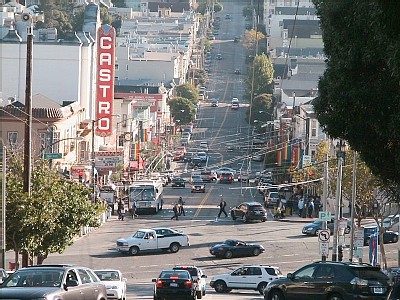
San Francisco’s bicycling community is bracing for a backlash following the second recent case of a cyclist hitting and killing a pedestrian, particularly given a callous online posting by someone claiming to be the cyclist, whose 71-year-old victim this week died of injuries sustained a week ago at the intersection of Castro and Market streets.

The case was a hot topic at last night’s monthly Carfree Happy Hour, a gathering of cyclists, transportation professionals, and alternative transportation activists, many of whom had unearthed new information about a case they’re all grappling with. And the consensus opinion was that the cyclist seemed reckless and may deserve to face criminal charges.

Yet activists also sought to place this case in context, noting that an average of almost three pedestrians are hit by cars everyday in San Francisco, even though that rarely makes headlines. There were 220 pedestrians killed in San Francisco from 2000-2009, the vast majority hit by cars whose drivers rarely faced criminal charges. In fact, the same week that Sustchi Hui was killed there was another pedestrian killed by a motorist and another one by a Muni bus.

But that doesn’t lessen the importance of this latest bike-vs.-pedestrian fatality, which is sure to make news precisely because it’s so rare, and because it comes just weeks after 23-year-old Randolph Ang pled guilty to vehicular manslaughter for running a red light at Embarcadero and Folsom Street in July 2001, hitting a 68-year-old woman who later died from her head injury.

San Francisco Police Department won’t identify the cyclist in the latest incident unless he’s charged with a crime, and its investigation is still ongoing, said SFPD spokesperson Albie Esperanza. “It’s a tragic accident,” he told us, noting that the cyclist was cooperating with the investigation. Once the investigation is complete, the District Attorney’s Office will decide whether to bring criminal charges against the cyclist.

Someone who identified himself as Chris Bucchere posted a note on the Mission Cycling Google group on the afternoon of the incident, March 29, describing an accident that apparently took place at the same time and place. And the description that Bucchere gave of the accident is not likely to garner much public sympathy for him (We contacted Bucchere by e-mail and telephone, we’re waiting to hear back for him, and we can’t independently confirm the authenticity of the message or its contents).

“I wrecked on the way home today from the bi-weekly Headlands Raid today. Short story: I’m fine. The pedestrian I clobbered? Not so much,” the message began.

The post then goes on to describe the incident, which matches the details of other reported accounts of the fatal crash: “Around 8 am I was descending Divisidero Street southbound and about to cross Market Street. The light turned yellow as I was approaching the intersection, but I was already way too committed to stop. The light turned red as I was cruising through the middle of the intersection and then, almost instantly, the southern crosswalk on Market and Castro filled up with people coming from both directions. The intersection very long and the width of Castro Street at that point is very short, so, in a nutshell, blammo.”

Another member of the Carfree Happy Hour group who is a regular competitive cyclist said that Bucchere was a member of the website strava.com, which tracks minute-by-minute data of cyclists for training purposes. And this source said he was able to use the site to determine that Bucchere was traveling through the intersection – which is at the bottom of a steep hill – at approximately 35 mph at the time of the collision.

Bucchere’s message continued: “The quote/unquote ‘scene of the crime’ was that intersection right by the landmark Castro Theatre – it leads from a really busy MUNI station to that little plaza where The Naked Guy always hangs out. It was commuter hour and it was crowded as all getup. I couldn’t see a line through the crowd and I couldn’t stop, so I laid it down and just plowed through the crowded crosswalk in the least-populated place I could find.

“I don’t remember the next five minutes but when I came to, I was in a neck brace being loaded into an ambulance. I remember seeing a RIVER of blood on the asphalt, but it wasn’t mine. Apparently I hit a 71-year old male pedestrian and he ended up in the ICU with pretty serious head injuries. I really hope he ends up OK.

“They asked me a bunch of stupid easy questions that I couldn’t answer, so they kept me for a few hours for observation, gave me a tetanus shot and sent me on my way.

“Anyway, other than a stiff neck, a sore jaw/TMJ, a few bruises and some raspberries, I’m totally fine. I got discharged from the hospital during the lunch hour. The guy I hit was not as fortunate. I really hope he makes it.

“The cops took my bike. Hopefully they’ll give it back.

“In closing, I want to dedicate this story to my late helmet. She died in heroic fashion today as my head slammed into the tarmac. Like the Secret Service would do for a president, she took some serious pavement today, cracking through-and-through in five places and getting completely mauled by the ragged asphalt. May she die knowing that because she committed the ultimate sacrifice, her rider can live on and ride on. Can I get an amen?

“Amen.

“The moral of this little story is: WYFH”

Several members of the newsgroup took issue with the lesson Bucchere claims to have learned : WYFH, or “Wear Your Fucking Helmet.” One poster wrote, “I’m not sure that’s the moral of the story,” to which several others agreed. Another poster wrote: “What were you thinking ? As a 15 year sf resident and a 10 year cyclist and a pedestrian at that intersection every weekday .. I’m kind of embarrassed to wear my mc kit anywhere nearby now. I truly hope you’ve learned your lesson but I’d have to say this is not the end of the story for you, and yes you should get yourself a lawyer.”

Recent studies have shown that San Francisco is a dangerous city for pedestrians, but not as dangerous as many other cities on a per capita basis given our density and high pedestrian populations. A study released in January by the Alliance for Biking & Walking concludes San Francisco has the third highest biking and walking levels among major US cities, but ranks eighth in bicycle and pedestrian fatality rates.

A 2011 study by the group Transportation for America, “Dangerous by Design,” analyzed factors associated with pedestrian deaths – some of which seem to be at play in this case – and concluded, “Especially when combined with unsafe street and road design, vehicle speed presents a deadly threat to pedestrians.”

Inside OccupySF’s ongoing building takeover

14

UPDATE 1:15 PM: Without warning or an order to disperse, riot police arriving by bus suddenly raided the building moments ago, making more than a dozen arrests so far. More soon as the story develops.

Editor’s Note: Guardian staff writer Yael Chanoff reports from the inside of vacant building that Occupy SF has taken over in hopes of creating a community center.

The inside is mainly filled with people organizing, exchanging ideas, and e-mailing and calling contacts from around the city who may be able to provide assistance for the effort. Many are coordinating for a meeting with the Catholic Archdiocese – which owns this former mental health clinic at 888 Turk Street – that is scheduled to take place this afternoon. A delegation from the Interfaith Council of San Francisco and the National Lawyers Guild are also on their way to building to help plan for the meeting.

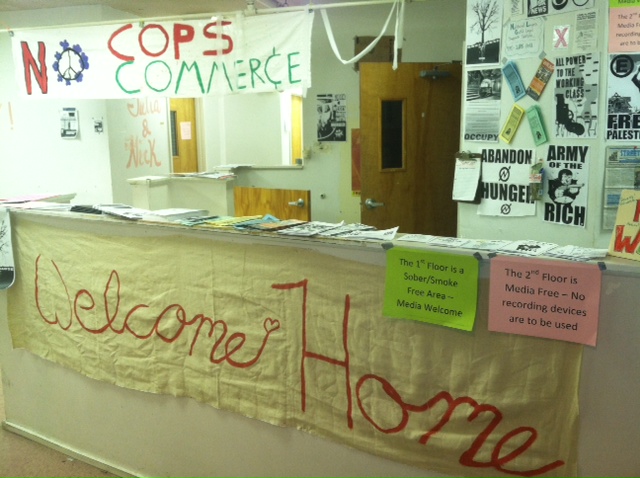
A head count last night showed there were about 125 people here. Some have left, but many arrived this morning, leaving about 100 at this point. Various rooms in the building have been organized for different purposes including a welcome desk and information center, sleeping quarters, library, and medical clinic.

Last night, it was a relaxed party atmosphere with groups in every room expressing ideas for the community center and employing strategies for keeping the space. Graffiti art and messages were painted in hallways, a free hot meal was served, and people mostly respected designated composting, recycling, and trash bins. The commune received at least five deliveries of donated pizza.

By 7 am today, occupiers were sweeping, scrubbing and picking up stray trash, as well as painting over most of the message on the walls with white paint. The police are holding a partial line, with barricades blocking the sidewalk on two sides of Gough and Turk streets, and officers are attempting to prevent people from entering the building.

However, they have not blocked off the street and many people have entered by riding up to the entrance in bikes, cars, or simply walking past police. Deliveries of supplies this morning includes breakfast of cereal, milk, coffee and fruit; as well as mattresses and warming clothing.

About 20 people are sitting outside the building in the sun blasting KPOO radio, which made an announcement on air a few minutes ago that it is the soundtrack of the SF Commune. There is a tent set up on the roof, and a group up there doing a coordinated dance number.

There is a general assembly meeting set for 6 pm and most occupiers are hopeful that there won’t be a police raid before then.

Guest opinion: Free Muni for all youth

20

On Tuesday, April 3, the Municipal Transportation Agency board faces a decision between providing free Muni passes for all San Francisco youth or providing free passes to only low-income youth. ComMunity advocates and Sup. David Campos have identified the funding. We are calling on the MTA board to take this opportunity to invest in a new generation of transit riders by establishing free Muni for ALL youth.

The movement to win free Muni passes for youth originated from cuts of between 40 percent and 100 percent to yellow school busses over the next two years.  As a society, we have responsibility to make sure youth can access free public education — and as a city we have a responsibility to get kids to school even as state funding is eliminated.

Right now 60 percent of all trips in San Francisco are taken by car, and for years we have not seen a huge change in transit mode share. If San Francisco wants to meet our climate objectives, we need to take steps now to encourage young people to get out of their cars.  In New York City, a program of free transit passes for youth has created generations of loyal transit riders. In order to truly become a transit-first city, we need to do the same here.

While the struggle to afford bus fare is obviously a larger challenge for very low-income families, due to the high cost of living in the city, there are many working-class and middle-income families who also struggle with the costs of transit for their children. The costs of housing, food, healthcare, and transit add up quickly for San Francisco families and have all contributed to a crisis of family flight out of San Francisco.

San Francisco currently has the smallest child population of any major U.S. city. While this is complex problem, requiring a huge investment in affordable housing and a strategy to bring more working-class jobs to the city, by establishing free Muni for all youth the city can take a very concrete step forward towards making the city more family friendly. Thousands of families would benefit from an extremely modest investment of $8.7 million a year.

The low-income youth and parents who have been at the forefront of this movement advocating for the free youth passes are nervous about their own ability to access a low-income-only pass because of the bureaucratic challenges they experience trying to apply to other government programs. The Muni Lifeline pass for low-income adults is very hard to access, requiring applicants to wait for hours during a weekday at the Human Service Agency headquarters.

The Federal Free School Lunch Program requires parents to provide documentation of income level. Using a means test would be difficult and costly to administer and could exclude some low-income young people — especially those from undocumented families and the children of parents who work in the informal economy. San Francisco should not create paperwork barriers that will prevent our young people from getting to school.

The documentation required now to get youth clipper cards prevents many families from getting them. Immigrant families who do not have copies of all their birth certificates are prevented from getting youth passes when they encounter difficulties getting birth records from their native countries.

With all of those factors, it just makes sense to make Muni free for all youth.

Jane Martin is an organizer with People Organized to Win Employment Rights (POWER).

Four hours in Mendell Plaza

5

Everyone stops what they were doing and ducks behind the plastic tables set up on the sidewalk. Flyers and  packaging rustle in the wind. There’s no yelling or chaos, but three police cars speed onto the scene from three different directions. 

I had been at Feed the People Day all of thirty seconds before gunshots were fired.

Feed the People Day, an international effort in which people get together to share food in black and poor communities from Australia to South Africa, was on its fourth year, and organizers from Bayview were joining in. 

A few minutes after the gunshots, we all get up from behind the table. “God is good,” one volunteer says. “That could have been us.”

The volunteers get back to serving food.

“It’s a typical day in the life,” says Jameel Patterson, one of the volunteers serving food. “Not every day. But every so often.”

They chose to set up at Mendell Plaza. It’s full of people, a common place to spend free time. It’s next to the Bayview Opera House, which holds frequent events, as well as a complex that includes a gym, elementary schools, a playground, and a 300-person auditorium. Those buildings don’t hold many events, though—they’re mainly used for storage by the school district.

Mendell Plaza is directly off the T train, whose installation was supposed to bring prosperity and foot traffic to Bayview. But most of the businesses on the few blocks surrounding the plaza are still boarded up. And this T stop has become well known for a different reason: it was here that Kenneth Harding, Jr, exited the train July 16, ran away after police asked for his transfer, got shot in the back and died.

And it was in Mendell Plaza that police stood around the bleeding Harding for 30 minutes, allegedly denying him medical care, before he died.

Tracey Bell-Borden, one of the organizers of Bayview’s Feed the People Day, wants to rename the spot Kenneth Harding Jr. Plaza. 

Fly Benzo, a musician and college student who has become well known after speaking out for Harding and a subsequent arrest–again at Mendell Plaza– while filming police, was a block away when the shots were fired. He was trying to take a young girl that he was looking after inside the gym to play. It was, inexplicably for a Sunday afternoon, locked.

“It’s never open,” said Benzo. “Where are we supposed to take our kids so they can be inside?”

The police, whose lightning-quick response time implies that they had a tip—according Patterson, it generally takes them 15 to 17 minutes to respond to gunshots– haven’t found a gun yet. Most of them are standing around three teenagers who, bystanders insist, were on the sidewalk doing nothing when the gunshots went off. The police run their IDs and take them to jail; probably on a gang injunction. 

20 minutes have gone by before a cop drives up to the tables. “What organization are you with?” he asks.

Bell-Borden replies, “the Kenneth Harding Foundation.” Denika Chatman, Harding’s mother who moved to San Francisco after his death to try and find out more details surrounding its circumstances, asks “do you have a contribution?” the cop gets back in his car and speeds off. 

“They didn’t want to know, is anyone here hurt? Are you guys OK?” says Patterson.

One man says he saw the smoke when the shots went off, directly behind him. The police rolled right past.

Patterson tells a story of the past Friday night, when lots of people had been out in Mendell Plaza. When one teenager who was playing with a remote control car accidentally steered it onto the street, a police officer pulled up and ran his ID.

Despite some dangers, neighbors continue to congregate in Mendell Plaza, and Bell-Borden says she is planning on turning Feed the People Day into a monthly event; the next date will be April 15.

Dewayne Isaacs, a community organizer who grew up in the Fillmore and Haight-Ashbury and had several Black Panther relatives killed in the 70s, says he, for one, will keep coming back for it.

“It’s us Bay Area natives,” says Isaacs. “We always fight back.”

The Performant: The mourning after

0

Explorations in the language of the living at SFAI and NOHspace

Long before I moved to San Francisco, there were already certain things I’d learned to associate as being quintessentially San Franciscan via some kind of cross-cultural osmosis: the Castro, the cable-cars, Critical Mass, and George Kuchar.

True, the prolific filmmaker was himself a transplant, but his influence was indelibly stamped on San Francisco’s filmic underground. And unlike some heroes, who live impossibly removed from their admirers, George was accessible to his as a teacher, a neighbor, a legend, and a friend. Six months after his passing, a thoughtfully-curated tribute to his legacy opened at the San Francisco Art Institute — where he  taught absurdly-monikered classes in filmmaking such as “Electro-graphic Sinema” for 40 years. 

Since the hallmark of a successful memorial is to celebrate in the company of the living, a string of heartfelt eulogies and screenings of clips took place in the SFAI lecture hall, presented by friends and family, elders and youth. United thusly in our pleasant memories of the man, we entered the Walter and McBean Galleries, which had been transformed into a monument to the myth — a gleeful hodgepodge of photographs, set dressing, racks of cheap costume pieces, sketchbooks, choose-your-own screenings of the over 200 films in George’s oeuvre, and playful, personal ephemera.

Down the hall, an interactive studio installation encouraged visitors to get dressed up in a costume and “star” in their own straight-to-video blockbuster. A veritable Rosetta Stone on the language and legacy of Kuchar’s no-budget filmmaking, the exhibit runs through April 21, and is free to the public: adoring fans and the unconverted alike.

Part memorial for the dead, and part fundraiser for the living, the nationwide, one-night only performance series Shinsai found San Francisco stage time at both NOHspace and ACT. Directed by Theatre of Yugen apprentice Nick Ishimaru, the NOHspace edition opened with a trilogy of monologues penned by Suzan-Lori Parks that begged the question “where were you on 3/11”? Similarly themed play-lettes followed, including an introspective monologue on grieving by Phillip Kan Gotanda. Mixing dance, classic noh, and a quixotic bit of performance art (Jose Navarrete’s “Found and Lost”) into the evening put a distinctive stamp on the event. 

What most tied the disparate disciplines together were the expressive nuances of the hands, mimicking in certain ways the purported intricacies of the language of fans, secretive yet overt. In the dances of Las Japonesas Flamencas, each finger held its own position, extending the arch of an elbow or the turn of a wrist, a gestural eloquence. In contrast, the extremities of Nick Ishimaru and Meg Theil in a comical excerpt from kabuki drama Vengeful Sword, remained actively poised yet perfectly still as they each portrayed Manno, a wily Madame. The event ended with Heather Law’s graceful Hula ’Auana, hands fluttering like startled birds and 1960’s Go-Go girls, hearkening to an era of popular dance “moves” like the hand jive with the subtle grace of her more refined art: an expressive, whole-body sign language which spoke of life. 

SF allows bikes indoors, but its cycling goal is elusive

63

When the Board of Supervisors this week voted 9-2 to require commercial building owners to allow employees to bring their bicycles indoors while they work, ordinance sponsor Sup. John Avalos hailed the legislation as an important step toward meeting the city goal of having 20 percent of all vehicle trips in the city be by bike by the year 2020.

“We are removing a barrier to people getting around the city by bicycle,” Avalos said at the March 6 hearing, noting that the measure addresses cyclists’ concern about bike theft and helps keep sidewalks uncluttered and racks and poles free for other cyclists to use.

While it’s true this may help make cycling a bit more attractive, San Francisco would have to take far bolder actions to get anywhere near meeting its 20 percent by 2020 goal, a target it set in 2010 with legislation sponsored by Board President David Chiu and one regularly touted in speeches by Mayor Ed Lee.

Just last month, the San Francisco Municipal Transportation Agency released its latest bike count survey, which showed that about 3.5 percent of vehicle trips in the city are taken by bike, a 71 percent increase in the last five years, gains the San Francisco Bicycle Coalition lauded as “impressive.” Yet to reach the city’s goal would require a 571 percent increase in the next seven years – one that would seem unattainable at this pace.

“It’s a very ambitious but realistic goal,” SFBC director Leah Shahum told us, although she acknowledged it would require a drastic change in the city’s approach. “I’ve been impressed by how much Mayor Lee has touted the 20 percent by 2020 goal, but our city agencies need to step up their sense of urgency and commitment to meet that goal.”

The SFMTA is now finalizing a report on how to hit that 2020 target, which is scheduled for release next month. But agency spokesperson Paul Rose acknowledged the difficulty in meeting that goal: “It would take funding resources which at this point we don’t have.” He can’t yet say would it would take to meet the goal, which the report will outline, but he said, “We’re exploring what can be achieved with our available funding.”

Shahum said all studies by SFBC and other groups show concerns about safety is the biggest barrier to substantially increasing cycling in the city, and that most people need bike lanes – particularly paths physically separated from cars, known as cycle tracks – to feel safe. She praised the SFMTA for installing 20 miles of new bike lanes in the last two years, its fastest pace ever, “but that pace needs to double or triple to meet that goal.”

Instead, Mayor Lee has backed off a pledge he made last year to fast-track a short segment of bike lanes on dangerous sections of Oak and Fell streets that would connect two popular east-west bikeways: the Panhandle and the Wiggle. That project was delayed by a year for more meetings and work after motorists objected to the loss of street parking spots.

“We’re talking about three blocks. It’s relatively small in scope but huge in impacts,” Shahum said of the project. “If the pace of change on these three blocks is replicated through the city, it’ll take hundreds of years to meet the goal.”

In his run for mayor last year, Chiu regularly touted the 20 percent goal he set in 2010 after returning from a fact-finding trip to the Netherlands – where about 38 percent of vehicle trips are by bike – that he took with SFMTA Director Ed Reiskin, SFBC members, and officials from other cities. Chiu says that San Francisco might be further along than the SFMTA figures show, citing an SFBC poll showing that 5 percent of San Franciscans say they ride a bike daily and another 12 percent ride more than once a week.

“Whatever the current percentage is, we have a long way to go. We have to be bolder about specific projects and strategies,” Chiu told us. He said there is a growing recognition that promoting cycling is an important way to address traffic congestion and greenhouse gas reduction and that “segregated bikes lanes are the most efficient way to move the most people through areas of urban density.”

Chiu also said that San Francisco could be poised for rapid progress on the creation of new bikes lanes, citing early opposition to replacing parking spaces with parklets and the car-free Sunday Streets (which kicks off its new season this Sunday along the Embarcadero) events, with the business community and many neighborhood groups fearing that restrictions on motorists would hurt businesses.

“The experience has turned out to be exactly the opposite,” Chiu said, noting the explosion in demand for parklets and new Sunday Streets events in the last couple years, saying that a widening embrace of more cycle tracks and other biking infrastructure could be next.

Mayoral Press Secretary Christine Falvey told us, “The mayor is very much committed to the aggressive goals set to get to 20 percent by 2020 and the city is moving in the right direction. He has also always supported the Oak Fell project and we’re seeing progress. It will be complete in 2013 and he has been talking to the SFMTA about the project to keep up to date. San Francisco is on its way to becoming the most bicycle friendly city in the U.S. and in this era of limited public funding, the mayor is working with the SFMTA to explore what ways we can increase trips taken by bicycle with available funding and increased public awareness.”

She cited the Avalos legislation and the current installation of cycle tracks on JFK Drive in Golden Gate Park as examples of the city’s commitment to “move us toward the goal of 20 percent,” but many in the cycling community consider these efforts to be low-hanging fruit – easy, cheap, and non-controversial improvements – that won’t get the city anywhere near its stated goal.

Bike activist Marc Salomon is critical of the incremental approaches taken by SFBC and the city, saying that to make significant progress the city needs to address enforcement and the culture on the roadways, protecting cyclists from aggressive or impatient motorists and recognizing that many traffic laws don’t make sense for cyclists.

“We need to change the culture of the cops to make sure every street is a safe street,” he said. Shahum said that’s an issue SFBC is trying to address: “We are talking to them about how police could better enforce dangerous behaviors.”

Yet any efforts to promote cycling will likely be met with a backlash by motorists who resent losing space to cyclists and the fact that many cyclists routinely run stop signs and lights. Sups. Sean Elsbernd and Carmen Chu voted against the Avalos legislation, with Chu objecting to city staff evaluating businesses that seek waivers based on limited space or other factors, calling it a waste of precious resources.

But Avalos noted that his ordinance – which will be up for final approval on its second reading this Tuesday – has no enforcement mechanisms and “overall, this is a cost effective way to promote bicycling in the city. The costs are minimal.”

He also thanked the conservative Building Owners and Managers Association for supporting the legislation. Shahum said BOMA strongly opposed similar legislation almost 10 years ago and its embrace of it now shows how attitudes toward cyclists have changed. “There are so many more people biking now and the business community recognizes the benefits of having more of their employees biking,” she said.

Even politically moderate supervisors have been supportive of promoting cycling, with Sup. Scott Wiener saying at this week’s hearing, “It’s very important to make it as easy as possible to bike, and bike theft is a big issue in this city as well.”

The case against 8 Washington

35

tredmond@sfbg.com

In city planning terms, it’s a fairly modest project: 134 condos, no buildings more than 12 stories tall, on a 27,000-square-foot site. It’s projected to meet the highest environmental building standards and offers new open space and pedestrian walkways. It’s near Muni, BART, and ferry lines. And the city will collect millions of dollars in new taxes from it.

But the 8 Washington project, which will come before the Planning Commission March 8, has become a flashpoint in city politics, one of the defining battles of Mayor Ed Lee’s administration — and a symbol of how the city’s housing policy has failed to keep pace with the needs of the local workforce.

Put simply, it will create the most expensive condos in city history, housing for the richest of the 1 percent on the edge of the waterfront — and will further push San Francisco toward becoming a city that caters almost entirely to the very wealthy.

So in a city where the growing divide between the 1 percent and the rest of us has become a central issue and where the lack of affordable housing is one of the top civic concerns, 8 Washington is an important test. By any rational standard, this sort of development is the last thing San Francisco needs.

But some of the best-connected lobbyists in the city are pushing it. One of the mayor’s closest allies, Chinatown powerbroker Rose Pak, is a leading advocate — and the final outcome will say a lot about city politics in the Lee administration.

There are all sorts of half-truths and misleading statements by supporters of 8 Washington. Here are the five main reasons the project shouldn’t be approved.

1. It fills no housing need. San Francisco has no shortage of housing for the very rich; the dramatic need, outlined in both regional planning documents and the city’s own General Plan, is for low- and moderate-income housing for the people who actually work in this city (see “Dollars or sense?” 9/28/10). While San Francisco is getting richer by the day, the core workforce — public employees, workers in the hotel and restaurant industry, service workers, construction and trade workers, and a majority of the people in the lower levels of the finance and tech sector — are being priced out of the city. That means more people working here and living far out of town, often commuting by car, in what everyone agrees is an unsustainable situation. Meanwhile, more and more high-paid workers from Silicon Valley are living in San Francisco — again, commuting to distant jobs, either by car or by corporate bus.

The city’s General Plan states that some 60 percent of all new housing built in the city should be below market rate. San Francisco desperately needs housing for its workforce. This type of project simply puts the city deeper in the hole and further from its housing goals.

2. It’s a reward for bad actors. The main developer of this project is Simon Snellgrove, but one of his partners is, by necessity, Golden Gateway, which owns a significant part of the land — and which has been flouting at least the spirit if not the letter of city and state law and costing San Francisco tens of millions of dollars.

As project opponent Brad Paul has noted in written testimony, when Timothy Foo, the current owner, bought the complex from Perini Corp. about 20 years ago, he used a loophole in state law that allowed him to avoid a formal transfer of ownership. That means the property wasn’t re-assessed, costing the city about $1.5 million a year. According to the Assessor’s Office, the deal wasn’t illegal (and these tricks to avoid reassessment are relatively common) but still: He’s costing the city millions by using a loophole not available to most people.

Golden Gateway, which was built in a redevelopment area as middle-class housing, is now renting out apartments as short-term tourist or corporate rentals. There are dozens of examples right now on Craigslist. City law bars the owners of rental housing from converting it to hotel rooms, but a loophole in that law makes what Foo’s outfit is doing technically legal. But he’s clearly violating the spirit of the city ordinance that seeks to protect rental housing from hotel conversions.

One of the main aesthetic complaints about the area — something Snellgrove’s lobbyists have tried to use to support the project — is the ugly fence that now surrounds the Golden Gateway Tennis and Swim Club. But who do you suppose put that fence there?

Do we as a city want to be giving special zoning benefits to companies that try to circumvent tax and housing laws?

3. It’s an environmental disaster. Snellgrove and his architects, Skidmore Owning and Merrill, are seeking LEED platinum certification for the project, saying that its energy-efficiency, water use, and green building materials will make it one of the most sustainable structures in San Francisco. It is, the project website notes, close to all types of public transit.

But LEED doesn’t take into account what the building is used for (see “Is LEED really green,” 7/5/11) — and in this case, the use makes a huge amount of difference.

People who buy multi-million-dollar condos don’t tend to take Muni or BART when they go places. That’s not conjecture, it’s a proven fact. A 2008 study by the American Public Transportation Association notes, bluntly, that wealthier people are more likely to drive cars. When you move into the stratospheric regions of the ultra-rich, that’s even more true. A 2011 report on the Charting Transport website notes: “The very rich tend to shun public transport.”

The current zoning in the area allows for one parking space for every four residential units. Snellgrove is asking for one space per unit — in other words, he figures every single buyer will have a car.

Many of the people who buy these condos won’t be working or even living most of the time in San Francisco. These are condos for world travelers, second and third homes for people who want to spend a few weeks a year in San Francisco. “They aren’t going to be living here all year,” Christina Olague, a former Planning Commission member who is now the District 5 supervisor, told us last July.

If five of the 165 residents of 8 Washington fly in a private or corporate jet from, say, New York to their SF pad once a month, the project will cause the use of jet fuel equivalent to what a normal family would use driving a car for 330 years, Paul noted.

“How many solar panels are needed compensate for burning 396,000 gallons of jet fuel a year?” he asked.

Then there’s the construction issue. If the developer’s projections are correct, as many as 20,000 dump truck runs will be trundling along the Embarcadero for several months, one every two minutes — and it could be happening right as the traffic nightmare called the America’s Cup is hitting the waterfront.

It also goes against some 40 years of waterfront planning policy, all of which as focused on downzoning and creating open space. This would be the first upzoning of San Francisco waterfront property in decades.

4. It will wipe out what is mostly a middle-class recreation facility. The Golden Gateway Tennis and Swim Club will be closed for three years, then (possibly) reopened later as a smaller facility. The club — with two outdoor pools and six tennis courts — sounds like something for the elite, and it’s managed by the upscale Bay Club, but a lot of the users are longtime Golden Gateway residents and seniors. “I would say 30 or 35 percent of the users are seniors,” Lee Radner, chair of Friends of Golden Gateway, told me. Most, he said, are middle-class people, and the expense isn’t that high. “My wife and I pay $3 a day to use the pool,” he said. “I swim every day, and it would cost more than that to use the public pools in the city.” He added: “There are some wealthier people, of course, but many of us are retired and on fixed incomes.”

We’re talking about 90,000 total square feet of outdoor recreation space — which dwarfs the 20,000 square feet of open space the developer promised to provide.

5. The city doesn’t get much out of the deal. In exchange for upzoning the waterfront, creating a big all of buildings and screwing up the city’s housing balance, what does the San Francisco general fund get? Not a lot. The estimates for new tax revenue run about $1.5 million a year of the next 60 years — and when you translate that to what economist call “net present value,” the cash equivalent today of that revenue stream, it’s about $30 million. The Port of San Francisco is talking about creating a special infrastructure financing district — sort of the equivalent of a redevelopment area — to pull that money out in advance, which may not even be legal (since part of the land is a former redevelopment area, the state law that allows these special finance districts may not apply). But even so, a Jan. 14 Port memo suggests that the agency has plans to spend all that money on its own infrastructure — setting up a potential battle between the supervisors and the Port Commission over where the money, if it actually can be collected up front, will go.

Like any developer, Snellgrove will pay into the city’s affordable housing fund — in this case, about $9 million to pay for the equivalent of 27 units. No affordable units will be on site, of course; that would detract from the uber-wealthy ambience of the place. And it’s not clear when those units would be built. “Nobody builds 27-unit buildings any more,” Paul, a former deputy mayor for housing, said. “We’ll have to wait until there’s enough money for a bigger project, somewhere, sometime down the road. That’s what we’re getting here.”

Either way, it’s not a huge benefit for allowing this disaster of a project — and it’s a terrible statement for San Francisco to make. At a time when the mayor has cleared the Occupy protesters — who are talking about how little the rich pay in taxes — off the waterfront, the city is preparing to move in the exceptionally rich, who aren’t paying anywhere near their fair share in tax revenue to local government.

(Nobody knows for sure whether the costs of servicing high-end residential exceed the revenue the city gets from property taxes. In 1971, the Guardian put together the first-ever cost-benefit study for highrise office development, which showed that commercial buildings cost the city more than they paid; that’s been confirmed and demonstrated over the years to the point where it’s hardly even an argument any more. The supervisors ought to ask the city economist or the budget analyst to do the same sort of analysis for luxury condos.)

There’s another element here: Mayor Lee made a point during his campaign to say over and over again that he was an independent thinker, that powerful and influential allies like Rose Pak would not be calling the shots at City Hall. This will be his first major test: Pak and lobbyist Marcia Smolens are working hard to promote 8 Washington. And we’re already getting some disturbing signals out of the mayor’s office.

Lee told us that he has “no thoughts” about the project and hasn’t been paying any attention to it. That’s an odd stance, considering that his own Port Commission is pushing it and staffers in his office are working with the developer. This is a big priority for Pak, and the notion that she has never mentioned it to the mayor defies reason. Board President David Chiu, who talks to the mayor regularly, opposes the project, which is in Chiu’s district.

It’s hard to imagine that anyone who pays attention to local politics could be missing what will be one of the landmark votes this spring on the Planning Commission — which will take up the project March 8 — and the Board of Supervisors.

The mayor, may, indeed, be ignoring everything that supporters and opponents of 8 Washington have said and may be waiting until the Planning Commission vote to take a position. But if he’s just ducking questions because he’s planning to support it, he’s making a big mistake.

This is a chance for San Francisco to go beyond the platitudes about building housing, go beyond the hype about “green” buildings, see through the fraud about community benefits and consider what this really is: A special favor for a developer who wants to cater to the top 1 percent of the 1 percent and move San Francisco even closer to being a city of, by, and for the elite. The only reasonable vote on 8 Washington is No.


Editorial: The case against the 8 Washington tower

27

Editorial note: In 1971, at the height of the Alvin Duskin anti-highrise battle, the Guardian did a special first ever cost benefit study for high rise office development.

We found that highrises cost the city  more in services than they produce in revenue.  This meant that the commercial high rise boom could be fought on economic grounds, not just aesthietic and environmental grrounds, and the Chamber of Commerce/Big development gang could never adequately refute our findings.  In fact, they are now taken for  granted. So, as the 8 Washington battle is poised to open the floodgates even further for a forest of market rate residential  buildings, it’s time for the city to do its own study to determine the economics of high end  residential buildings.  Does the cost of servicing luxury residential buildings exceed the taxes they pay? We and many others in the neighborhoods are certain that market rate housing doesn’t pay for itself. But the facts are needed and so we urge the supervisors to direct the budget analyst or the city economist to do a similar analysis  for luxury condos.  Below is Executive Editor Tim Redmond’s powerful argument against 8 Washington.

By Tim Redmond

tredmond@sfbg.com

In city planning terms, it’s a fairly modest project: 134 condos, no buildings more than 12 stories tall, on a 27,000-square-foot site. It’s projected to meet the highest environmental building standards and offers new open space and pedestrian walkways. It’s near Muni, BART, and ferry lines. And the city will collect millions of dollars in new taxes from it.

But the 8 Washington project, which will come before the Planning Commission March 8, has become a flashpoint in city politics, one of the defining battles of Mayor Ed Lee’s administration — and a symbol of how the city’s housing policy has failed to keep pace with the needs of the local workforce.

Put simply, it will create the most expensive condos in city history, housing for the richest of the 1 percent on the edge of the waterfront — and will further push San Francisco toward becoming a city that caters almost entirely to the very wealthy.

So in a city where the growing divide between the 1 percent and the rest of us has become a central issue and where the lack of affordable housing is one of the top civic concerns, 8 Washington is an important test. By any rational standard, this sort of development is the last thing San Francisco needs.

But some of the best-connected lobbyists in the city are pushing it. One of the mayor’s closest allies, Chinatown powerbroker Rose Pak, is a leading advocate — and the final outcome will say a lot about city politics in the Lee administration.

There are all sorts of half-truths and misleading statements by supporters of 8 Washington. Here are the five main reasons the project shouldn’t be approved.

1. It fills no housing need. San Francisco has no shortage of housing for the very rich; the dramatic need, outlined in both regional planning documents and the city’s own General Plan, is for low- and moderate-income housing for the people who actually work in this city (see “Dollars or sense?” 9/28/10). While San Francisco is getting richer by the day, the core workforce — public employees, workers in the hotel and restaurant industry, service workers, construction and trade workers, and a majority of the people in the lower levels of the finance and tech sector — are being priced out of the city. That means more people working here and living far out of town, often commuting by car, in what everyone agrees is an unsustainable situation. Meanwhile, more and more high-paid workers from Silicon Valley are living in San Francisco — again, commuting to distant jobs, either by car or by corporate bus.

The city’s General Plan states that some 60 percent of all new housing built in the city should be below market rate. San Francisco desperately needs housing for its workforce. This type of project simply puts the city deeper in the hole and further from its housing goals.

2. It’s a reward for bad actors. The main developer of this project is Simon Snellgrove, but one of his partners is, by necessity, Golden Gateway, which owns a significant part of the land — and which has been flouting at least the spirit if not the letter of city and state law and costing San Francisco tens of millions of dollars.

As project opponent Brad Paul has noted in written testimony, when Timothy Foo, the current owner, bought the complex from Perini Corp. about 20 years ago, he used a loophole in state law that allowed him to avoid a formal transfer of ownership. That means the property wasn’t re-assessed, costing the city about $1.5 million a year. According to the Assessor’s Office, the deal wasn’t illegal (and these tricks to avoid reassessment are relatively common) but still: He’s costing the city millions by using a loophole not available to most people.

Golden Gateway, which was built in a redevelopment area as middle-class housing, is now renting out apartments as short-term tourist or corporate rentals. There are dozens of examples right now on Craigslist. City law bars the owners of rental housing from converting it to hotel rooms, but a loophole in that law makes what Foo’s outfit is doing technically legal. But he’s clearly violating the spirit of the city ordinance that seeks to protect rental housing from hotel conversions.

One of the main aesthetic complaints about the area — something Snellgrove’s lobbyists have tried to use to support the project — is the ugly fence that now surrounds the Golden Gateway Tennis and Swim Club. But who do you suppose put that fence there?

Do we as a city want to be giving special zoning benefits to companies that try to circumvent tax and housing laws?

3. It’s an environmental disaster. Snellgrove and his architects, Skidmore Owning and Merrill, are seeking LEED platinum certification for the project, saying that its energy-efficiency, water use, and green building materials will make it one of the most sustainable structures in San Francisco. It is, the project website notes, close to all types of public transit.

But LEED doesn’t take into account what the building is used for (see “Is LEED really green,” 7/5/11) — and in this case, the use makes a huge amount of difference.

People who buy multi-million-dollar condos don’t tend to take Muni or BART when they go places. That’s not conjecture, it’s a proven fact. A 2008 study by the American Public Transportation Association notes, bluntly, that wealthier people are more likely to drive cars. When you move into the stratospheric regions of the ultra-rich, that’s even more true. A 2011 report on the Charting Transport website notes: “The very rich tend to shun public transport.”

The current zoning in the area allows for one parking space for every four residential units. Snellgrove is asking for one space per unit — in other words, he figures every single buyer will have a car.

Many of the people who buy these condos won’t be working or even living most of the time in San Francisco. These are condos for world travelers, second and third homes for people who want to spend a few weeks a year in San Francisco. “They aren’t going to be living here all year,” Christina Olague, a former Planning Commission member who is now the District 5 supervisor, told us last July.

If five of the 165 residents of 8 Washington fly in a private or corporate jet from, say, New York to their SF pad once a month, the project will cause the use of jet fuel equivalent to what a normal family would use driving a car for 330 years, Paul noted.

“How many solar panels are needed compensate for burning 396,000 gallons of jet fuel a year?” he asked.

Then there’s the construction issue. If the developer’s projections are correct, as many as 20,000 dump truck runs will be trundling along the Embarcadero for several months, one every two minutes — and it could be happening right as the traffic nightmare called the America’s Cup is hitting the waterfront.

It also goes against some 40 years of waterfront planning policy, all of which as focused on downzoning and creating open space. This would be the first upzoning of San Francisco waterfront property in decades.

4. It will wipe out what is mostly a middle-class recreation facility. The Golden Gateway Tennis and Swim Club will be closed for three years, then (possibly) reopened later as a smaller facility. The club — with two outdoor pools and six tennis courts — sounds like something for the elite, and it’s managed by the upscale Bay Club, but a lot of the users are longtime Golden Gateway residents and seniors. “I would say 30 or 35 percent of the users are seniors,” Lee Radner, chair of Friends of Golden Gateway, told me. Most, he said, are middle-class people, and the expense isn’t that high. “My wife and I pay $3 a day to use the pool,” he said. “I swim every day, and it would cost more than that to use the public pools in the city.” He added: “There are some wealthier people, of course, but many of us are retired and on fixed incomes.”

We’re talking about 90,000 total square feet of outdoor recreation space — which dwarfs the 20,000 square feet of open space the developer promised to provide.

5. The city doesn’t get much out of the deal. In exchange for upzoning the waterfront, creating a big all of buildings and screwing up the city’s housing balance, what does the San Francisco general fund get? Not a lot. The estimates for new tax revenue run about $1.5 million a year of the next 60 years — and when you translate that to what economist call “net present value,” the cash equivalent today of that revenue stream, it’s about $30 million. The Port of San Francisco is talking about creating a special infrastructure financing district — sort of the equivalent of a redevelopment area — to pull that money out in advance, which may not even be legal (since part of the land is a former redevelopment area, the state law that allows these special finance districts may not apply). But even so, a Jan. 14 Port memo suggests that the agency has plans to spend all that money on its own infrastructure — setting up a potential battle between the supervisors and the Port Commission over where the money, if it actually can be collected up front, will go.

Like any developer, Snellgrove will pay into the city’s affordable housing fund — in this case, about $9 million to pay for the equivalent of 27 units. No affordable units will be on site, of course; that would detract from the uber-wealthy ambience of the place. And it’s not clear when those units would be built. “Nobody builds 27-unit buildings any more,” Paul, a former deputy mayor for housing, said. “We’ll have to wait until there’s enough money for a bigger project, somewhere, sometime down the road. That’s what we’re getting here.”

Either way, it’s not a huge benefit for allowing this disaster of a project — and it’s a terrible statement for San Francisco to make. At a time when the mayor has cleared the Occupy protesters — who are talking about how little the rich pay in taxes — off the waterfront, the city is preparing to move in the exceptionally rich, who aren’t paying anywhere near their fair share in tax revenue to local government.

(Nobody knows for sure whether the costs of servicing high-end residential exceed the revenue the city gets from property taxes. In 1971, the Guardian put together the first-ever cost-benefit study for highrise office development, which showed that commercial buildings cost the city more than they paid; that’s been confirmed and demonstrated over the years to the point where it’s hardly even an argument any more. The supervisors ought to ask the city economist or the budget analyst to do the same sort of analysis for luxury condos.)

There’s another element here: Mayor Lee made a point during his campaign to say over and over again that he was an independent thinker, that powerful and influential allies like Rose Pak would not be calling the shots at City Hall. This will be his first major test: Pak and lobbyist Marcia Smolens are working hard to promote 8 Washington. And we’re already getting some disturbing signals out of the mayor’s office.

Lee told us that he has “no thoughts” about the project and hasn’t been paying any attention to it. That’s an odd stance, considering that his own Port Commission is pushing it and staffers in his office are working with the developer. This is a big priority for Pak, and the notion that she has never mentioned it to the mayor defies reason. Board President David Chiu, who talks to the mayor regularly, opposes the project, which is in Chiu’s district.

It’s hard to imagine that anyone who pays attention to local politics could be missing what will be one of the landmark votes this spring on the Planning Commission — which will take up the project March 8 — and the Board of Supervisors.

The mayor, may, indeed, be ignoring everything that supporters and opponents of 8 Washington have said and may be waiting until the Planning Commission vote to take a position. But if he’s just ducking questions because he’s planning to support it, he’s making a big mistake.

This is a chance for San Francisco to go beyond the platitudes about building housing, go beyond the hype about “green” buildings, see through the fraud about community benefits and consider what this really is: A special favor for a developer who wants to cater to the top 1 percent of the 1 percent and move San Francisco even closer to being a city of, by, and for the elite. The only reasonable vote on 8 Washington is No.
What’s wrong with the America’s Cup deal? A lot

21

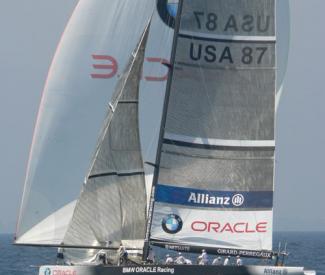
Let’s start out with a premise that even Larry Ellison’s minions have come to accept: The race is happening here. Too late now to move it to another city. Worst-case scenario, according to Stephen Barclay, the point person for the world’s sixth-richest man: “If we don’t meet those dates, the teams will be forced to relocate to other places around the bay.”

That’s right — the teams will relocate to other places around the bay. The host city will still, for all practical purposes, be San Francisco; the races will happen off SF’s waterfront (where the Coast Guard is willing to allow them and the conditions are right) and the rich tourists will stay here, not in Burlingame or Fremont.

If Ellison decides the city’s not giving him enough, he won’t put up $55 million to fix up some of the waterfront piers. The city may decide that a development deal of some sort with him makes economic sense. But it’s a real-estate deal at this point, not a deal for the race. At least, that’s what the Ellison team seems to be confirming.

And I fear that the real-estate deal that the Board of Supervisors Finance Committee sent forward yesterday, 2-1, is a bad deal for the city.

The terms are really complicated, and it makes my head hurt just trying to figure it all out — and still, the supes are expected to vote on the 120-plus-page document Feb. 28. Here’s what we do know, though:

The supervisors originally came to a deal with the America’s Cup Event Authority back in December. The concept was — and is — pretty straightforward, the same sort of deal the city has done (or, certainly, the Redevelopment Agency has done) many times in the past. In exchange for putting cash into renovating several piers, Ellison’s group would get long-term leases and development rights on the property. The idea: The city can’t afford to fix the piers. Ellison’s organization can. And once the property is renovated, the developer can make back that initial investment, and a profit, by building commercial space, condos and whatever else the Port decides to allow.

In a perfect world, San Francisco (and the state and the feds) would tax the hell out of people like Ellison, and there’d be public money to rebuild the waterfront as public open space, recreational facilities and the like. And wouldn’t that be utterly cool? Wouldn’t this city have the most awesome waterfront in the world?

But no: The only way the piers are going to anything but a place to park cars until they fall into the bay is if some private developer gets the rights to build something that I won’t like.

Supervisors Jane Kim and Mark Farrell, who don’t agree on a lot of things, both agreed with my basic analysis of the politics here: We shouldn’t let the excitement over the prospect of a boat race get in the way of analyzing this for what it is: A financing tool for the Port to get its infrastructure fixed up. Without a private investor, “they just don’t have the capacity to do that,” Kim told me.

So let’s just stipulate for a moment that this is the best, maybe the only way the city can restore the Port. Then it comes down to the real issue: Has the Mayor’s Office negotiated a good enough deal? Is San Francisco getting enough out of this? Or is everyone so hyper-buzzed about fancy carbon-fiber boats in the water (and I admit, they’re pretty cool) and free-spending tourists in the hotels and restaurants that we’re letting Mr. Ellison — who didn’t get so stinky rich by being a weak negotiator — walk away with most of the cookies?

Remember: Ellison’s not doing the city any favors. He’s only fixing up the piers that he will effectively own (as least for most of the rest of this century).

Back in December, the rough outlines looked like this: A corporation set up by Oracle, called the America’s Cup Event Authority, would put $55 million into repairing and renovating piers, then would get  66-year leases and development rights on piers 30-32, 26 and 28, as well as seawall lot 330, across the Embarcadero, which Ellison’s team wants to turn into more condos for rich people. If that’s not enough to pay for Ellison’s investment, Ellison’s heirs or successors get half the rent for the piers for another 15 years. That’s 81 years.

The original deal mandated that the city would collect a 1 percent fee on the re-sale of the new condos. It also had a requirement that Ellison share with the city any profits he made by flipping the long-term leases.

That’s a big deal, because almost nobody in the city actually holds onto development entitlements anymore. A developer wins the right to build an office building — and next week, he or she sells that right to somebody else. It’s almost certain that at some point, Ellison — whose sole goal here is going to be making a profit off city land — will decide that the best way to make money is to cash out. He’ll keep his 66-year leases for a few years, maybe lobby his way to approvals for office, condos, time-shares (gasp! yeah, they’ll do that if it’s legal) restaurants or whatever — then sell the remaining time on the leases, plus the development rights, to somebody else. And because he’s Larry Ellison, he’ll wind up making a nice tidy profit.

That used to be what happened with Port property (see: Pier 39) but lately, the Port’s gotten a bit wiser and has, in some cases, insisted that part of the profit from flipping a lease goes back to the city. In the original discussions, Ellison was going to have to pay the Port 15 percent of any net gains he made from the almost inevitable sale of the valuable leases.

But that’s gone now. After the board approved Newsom’s deal, the former mayor — who was always terrible at negotiation with the rich and powerful and always gave away the store — went back and monkeyed around with it. He and Sup. David Chiu insisted that the changes were just technical, not substantive enough to require a new board vote — but the current deal has no 15 percent cut for the Port, and the 1 percent levy on condo sales only applies after the second owner sells — which will be years down the road.

Then there’s the part where the city has to reimburse Ellison if the cost of renovating the piers exceeds what’s expected (oh, and we have to pay him 11 percent interest, which is about ten times what I get on my bank account; how about you?) There’s no cap on what the city might have to pay. And Ellison gets to develop a new marina.

And while Pier 29 is no longer a part of the deal, the city has to give Ellison $12 million — or rights to a pier to be named later. (Maybe Ellison figures that in a few years the people who opposed Pier 29 development will be out of office and he can convince the new mayor and supervisors to give Pier 29 back. It’s not legally excluded.)

Kim told me she’s going to insist that the final deal include a local-hire provision, which the rest of the board would be crazy not to support (and which Ellison, despite his company’s problems with local labor laws in the past, would be crazy not to accept).

But overall, Kim — who with Sup. Carmen Chu was part of the 2-1 majority sending the package to the full board — told me she thought the city got a good deal. “It took me a while,” she said. “But [Port Director] Monique Moyer convinced me that this was good for them.”

Sup. John Avalos, the dissenting vote on the Finance Committee, isn’t convinced. He’s got a long list of concerns, starting with the fact that he thinks the projected attendance and economic benefits are a bit delusional. “The figures seem farfetched,” he told me. “I’m seeing a lot of pumped up numbers. And those numbers drive whether this is a good deal for the city or not.”

He’d like to see the 1 percent rule apply to the second condo sale, not the third. He’d like to see the Port get 15 percent of the profits from any sale. And he’d like a cap on the reimbursements the city has to give to Ellison.

But here’s the problem: When the development agreement comes before the board, sitting as a Committee of the Whole Feb. 28, it will be hard to put any of that back in the agreement. This is a contract, and while the board can pass a resolution asking for more, in the end, it’s a matter of voting it up or down.

Vote yes and it’s done — more or less as is — although Kim says there will be another chance to make changes down the road, since the board and the Planning Commission will have to sign off on whatever type of development Ellison wants to do. The problem with that scenario? Ellison’s lawyers will wave this development agreement around like a Giants victory towel and proclaim that it binds the city and limits any ability to demand any more changes later. That’s how these people operate.)

Vote no and the ball goes back to Larry’s Court: His group can sit down with the Mayor’s Office and make some changes, or they can walk away (and build their boat sheds in …. where? Oakland? Foster City? Who’s got waterfront that can handle this?)

When the Finance Committee send the package to the full board, Avalos said, “we pretty much lost our ability to influence the agreement. Now we have to decide if we want to call [Ellison’s] bluff.”

PS: One of the lingering issues is whether the America’s Cup Organizing Committee can raise the $30 million-odd that is needed to make the numbers pencil out. If I were a rich person and Mark Buell, the ACOC point person, called me for money, here’s what I’d say:

How much is Larry Ellison contributing?

See, Ellison’s improvements on the waterfront aren’t charity. He’s looking to make a buck off everything he does. In past eras, the great robber baron capitalists would donate civic monuments — libraries and museums and stuff — and by any traditional standard of great wealth, Ellison ought to be writing a personal check for that $30 million. Or at least for some of it.

But so far, he hasn’t given a penny. The sixth richest man in the world isn’t actually donating anything to San Francisco. Yeah, he’s gracing us with his lordly presence, but cash? Nada.

Good luck with that one, Mark.

PPS: This whole concept that the city needs to fix the “crumbling” piers ought to be examined. First of all, nobody’s ever said that Pier 29 was in anything but fine shape. But beyond that, the Bay Conservation and Development Commission considers piers to be bay fill, and in the long term, wants San Francisco to get rid of some of them. “Maybe it’s a good thing if some of the piers fall into the bay,” former Sup. Aaron Peskin told me. “Then we’ll have more leeway with BCDC when we want to fix up some of the others.”

Research assistance by Royce Kurmelovs

Our Weekly Picks: February 22-27

0

WEDNESDAY 22

Way Behind the Music

Famous rockers may have a way with riffs, but their grammar and syntax can often prove cringe-worthy. And yet, their inflated egos and turmoil-filled musings within literary efforts provide insight into worlds otherwise unknown. This, my friends, is the perfect set-up for an evening of music obsessed over-sharing. At the return of Litquake and Noise Pop’s collaborative event, Way Behind the Music, a collection of esteemed local musicians and writers will read from the autobiographies of Ozzy Osbourne, Sammy Hagar, Jewel, Slash, Ted Nugent, Marianne Faithfull, Angela Bowie, Jim Hutton (boyfriend of Freddie Mercury), and Christopher Ciccone (brother of Madonna). The group on stage — which includes Penelope Houston, Carletta Sue Kay, Jennifer Maerz, and more — will extract tales of Olympic-level drug use, epic bands fights, and rock star trials and tribulations, giving the audience just a taste of that wild ride to infamy. (Emily Savage)

7 p.m., $15

Make-Out Room

3225 22nd St., SF

(415) 647-2888

www.makeoutroom.com


THURSDAY 23

Big Black Delta

Big Black Delta is the solo project of Los Angeles maestro Jonathan Bates, lead singer of lo-fi rock band Mellowdrone. Legend has it Bates launched BBD after buying a used laptop off frequent Nine Inch Nails collaborator Alessandro Cortini and using it to create electronic soundscapes. Good thing too, because BBDLP1 is a crafty compilation made up of equal parts power and panache. “Huggin & Kissin” sounds so aggressive, it’s as if Depeche Mode’s synths decided to take steroids and beat up little kids. On the flip side, “Dreary Moon” with Morgan Kibby (the Romanovs, M83) has all the ethereal, vocal playfulness of an Air track. Bates brings in dueling drummers Mahsa Zargaran and Amy Wood for the live show. (Kevin Lee)

With New Diplomat, Aaron Axelsen & Nako 9 p.m., $10–<\d>$12 Rickshaw Stop 155 Fell, SF (415) 861-2011 www.rickshawstop.com


FRIDAY 24

“More Light”

If you’re up for a dose of reifying pessimism, check out “More Light” —a joint exhibition featuring new works by Francesco Deiana and Lafe Harley Eaves. In an effort to explore how society diverts humans from primordial joys, Deiana creates ballpoint pen drawings and images on photographic paper that juxtapose society’s adulterating tendencies with natural beauty (e.g. a drawing of an impenetrable brick wall flushed with a photograph of the ocean). Eaves, who’s said he views the world as “one dark joke after another,” makes line and pattern narratives that delve into the occult, religion, and the psychedelic. He also focuses on illustrating human duality and the uncertainty of relationships. (Mia Sullivan)

7 p.m. opening reception, free

Park Life

220 Clement, SF

(415) 386-7275

www.parklifestore.com


Image Comic Expo

With San Francisco’s WonderCon moving to Anaheim while Moscone Center South undergoes renovation, Image Comic Expo in Oakland is the primary destination for Bay Area comic book nerdery this season. Instead of focusing on Marvel and DC — the comics industry’s “Big Two” — the Expo bills itself as a “celebration of creator-owned comics.” Exhibitors include a number of independent publishers besides Berkeley-based Image Comics. Guests include Image luminaries Rob Liefeld, Todd McFarlane, and Robert Kirkman (The Walking Dead), plus fan favorites Jonathan Hickman (FF, Pax Romana), Joe Casey (Gødland), Brian K. Vaughan (Y: The Last Man, ABC’s Lost) and Blair Butler. (Sam Stander)

Fri/24, 3-8 p.m.; Sat/25, 10 a.m.-6 p.m.; Sun/26, 10 a.m.-5 p.m., $20–$150

Oakland Convention Center 550 10th St., Oakl.

www.imagecomicexpo.com


Dave Holland Overtone Quartet

English bassist Dave Holland came to the United States at the request of the legendary Miles Davis and became part of music lore as part of the quartet that birthed jazz fusion and its opus, Bitches Brew (Columbia). Holland has since worked with a number of jazz masters including Herbie Hancock, Stan Getz, Thelonious Monk and Chick Corea. When Holland was coming into his own as a musician in the 1970s, the rest of the Overtone Quartet were just entering into the world. But saxophonist Chris Potter (a frequent Holland collaborator), drummer Eric Harland (a SFJazz Collective performer) and pianist Jason Moran (a MacArthur Fellowship “Genius”) have established themselves as potent forces in their own right. (Lee)

8 p.m., $25–$65

Palace of Fine Arts

3301 Lyon, SF

(415) 567-6642

www.sfjazz.org


“Oracle and Enigma”

For a while, thanks to a series of festivals organized by producer Brechin Flournoy, San Francisco was the place in the country to see Butoh. The excitement and puzzlement surrounding the art has died down as it has simply become another form of international dance. So it should be good to again see one of its original practitioners, the Kyoto-born Katsura Kan who in 1997 moved to Thailand and has since become one of those peripatetic choreographer-dancers who takes inspiration from wherever he alights. As part of his winter residency at CounterPULSE, Kan and Shoshana Green will present “Oracle and Enigma” which they describe as “a journey towards the celestial horizon”. Sounds like Butoh . (Rita Felciano)

Fri/24-Sat/25, 8 p.m., $18–<\d>$20

CounterPULSE

1310 Mission, SF

(800) 350-8850

www.counterpulse.org


SATURDAY 25

Monster Jam

A stampede of horsepower comes thundering into the Bay Area today with the Monster Jam series of monster truck races and events, featuring 16 ground-shaking custom creations such as the long-running fan favorite “Grave Digger,” which is celebrating its 30th anniversary this year. Fans can get up close and personal with the burly behemoths during the afternoon “Party In The Pits” before the night’s main events, where the 10,000 pound muscle machines will fly through the air at distances up to 130 feet, reach heights up to 35 feet in the air, and of course, gloriously smash a series a puny regular cars. (Sean McCourt)

3-6 p.m. pit party, 7 p.m. main event; $12.50–<\d>$32, $125 for total access pass

O.co Coliseum

7000 Coliseum Way, Oakl.

(800) 745-3000

www.monsterjam.com


“Cum and Glitter: A Live Sex Show”

Perhaps you’re one of those people — that yes, do exist — left nonplussed by your standard strip club experience. Let’s face it, fried chicken buffets and atrocious choreography amplified by glitter platform heels don’t do it for us all. For you, then, queer pornographer Maxine Holloway’s new monthly sex show. Holloway, a vintage-loving local coquette, has bolstered her sex industry chops heading Madison Young’s women’s only POV website and used her connections to line up a crack cast for Cum and Glitter’s opening night: Kitty Stryker, Courtney Trouble, and Annika Amour among other superlative sex workers. Live cello music. Specialty cocktails named after the performers. Class. (Caitlin Donohue)

9 p.m., $30–$55 individuals, $50 couples

RSVP for location

www.cumandglitter.com


SUNDAY 26

“Up the Oscars!”

For a particular breed of movie fiend, the Academy Awards are more like a sporting event than a glamorous celebration of Hollywood. You know the type: catcalling the screen like they’re giving a blind ref the business (2006 flashback: “Crash? Are you fucking kidding me? Brokeback Mountain forever!”) This year’s ceremony will no doubt evoke its own array of passionate responses to awkward presenters and awkward gowns, omissions from the Tribute to the Dead, faux-surprised winners who unfurl pre-scripted lists of people to thank (“My agent! My masseuse!”), etc. The Roxie’s annual “Up the Oscars!” bash is aimed squarely at those who enjoy cheering and jeering the gold man in equal measure. D.I.Y. drinking games optional. (Cheryl Eddy)

3:45 p.m., $15

Roxie Theater

3117 16th St., SF

www.roxie.com


Stardust Sunday

Cover band? Try cover cult. The First Church of the Sacred Silversexual takes all the Christ allusions David Bowie made with The Rise and Fall of Ziggy Stardust and the Spiders from Mars and The Man Who Fell to Earth, exorcising one little bit — Jesus. The resulting mass is a blasphemous celebration of the 65-year-young rock God’s music. With as many members as Bowie has personas, all fully embracing their deity’s love of costume, the Church’s service has the campy theatricality of The Rocky Horror Picture Show and all the sparkle of a Ken Russell movie. (Ryan Prendiville)

With Space Cowboys DJs Mancub and 8Ball

8 p.m., $5

Public Works

161 Erie, SF

(415) 932-0955

www.publicsf.com


The Dodos

Listening to the Dodos kind of makes you feel like you’re part of a drum march that’s heading down a sunny country road via Brooklyn. Logan Kroeber, who’s been known to play a drum kit sans bass and to tape a tambourine to his foot, creates catchy rhythms that compel you to dance frenetically (really, it’s unavoidable), while lead vocalist Meric Long finger-picks an acoustic guitar and traverses the octaves with deep, introspective lyrics you can’t help Googling. This San Francisco-based indie folk duo most recently released fourth album, No Color (Frenchkiss) last year, and is closing out Noise Pop this year with what will likely be a memorable performance. (Sullivan)

With Au, Cannons and Clouds, Here Here

7 p.m., $20

Great American Music Hall

859 O’Farrell, SF

(415) 885-0750

www.gamh.com


MONDAY 27

Leslie and the LY’s

Long known for her 1980s-esque minimal dance-pop numbers encased in stretchy gold lame (referred to in “Gold Pants”), and even longer for her extensive bejeweled sweater collection (ahem, “Gem Sweater”), Leslie of Leslie and the LY’s boasts a newish additional talent to add to the mix: wedding officiant. The Ames, IA-based confetti-puke performance artist began officiating weddings when Iowa voted yes on gay marriage in 2009. The weddings she oversees are said to twinkle with her typical megawatt star quality — there’s even a documentary about one affair called Married in Spandex — and Mother Gem performs a personalized dance number for each lucky couple. While she may not be hosting any impromptu weddings during her appearance at Rickshaw this week, the world just feels more glamorous knowing that she could (for this, we listen to “Power Cuddle”). (Savage)

With Pennyhawk, Ramona & the Swimsuits

8 p.m., $13

Rickshaw Stop

(415) 861-2011

155 Fell, SF

www.rickshawstop.com


TUESDAY 28

Stephen Malkmus and the Jicks

Following 2010’s high profile Pavement reunion tour — which gave fans of the ’90s alternative rockers a chance to see the group live for the first or last time (as well as reportedly giving some of the members funds to pay off some financial debts) — leader Stephen Malkmus returned to the studio with his band the Jicks to record an album with Beck on board as producer. The result, Mirror Traffic, carries over the tour’s energy, and is the closest thing to a Terror Twilight follow-up to date. And as showcased by the Jicks’s all-too-short performance at the last Treasure Island Music Festival, Malkmus remains the slacker king of the nonchalant guitar solo. (Prendiville)

With Nurses

8 p.m., $20

Slim’s

333 11th St., SF

(415) 255-0333

www.slimspresents.com 

The Guardian listings deadline is two weeks prior to our Wednesday publication date. To submit an item for consideration, please include the title of the event, a brief description of the event, date and time, venue name, street address (listing cross streets only isn’t sufficient), city, telephone number readers can call for more information, telephone number for media, and admission costs. Send information to Listings, the Guardian Building, 135 Mississippi St., SF, CA 94107; fax to (415) 487-2506; or e-mail (paste press release into e-mail body — no text attachments, please) to listings@sfbg.com. Digital photos may be submitted in jpeg format; the image must be at least 240 dpi and four inches by six inches in size. We regret we cannot accept listings over the phone.

Mayor Lee’s vanishing bike lanes

77

By Morgan Fitzgibbons

OPINION When Mayor Ed Lee announced in February 2011 that he understood both the critical importance and the severe dangers inherent in the current bicycle infrastructure along the dual three-block stretches of Fell and Oak between Scott and Baker, a shot went through the community of people who had worked for so long to bring awareness to this troubled path.

Finally, it seemed, we had a mayor who understood that if San Francisco was serious about living up to its own nearly 40-year-old pledge to be a transit-first city, a narrow bike lane sandwiched between parked cars and fast-moving traffic on Fell Street and a complete absence of any bicycle infrastructure on Oak simply wouldn’t do.

Finally, we had a mayor who wouldn’t be satisfied with mere words on a page, who had the courage to carve out one single safe bike route from the east side of town to the west, to create a viable alternative to automobile transportation, to prepare our city for the inevitable challenges presented by climate change, peak oil, and economic collapse, and to do it in the face of the predictable objections from a few small-picture citizens who couldn’t look at the 60 square feet of a parking spot and imagine anything other than a privately owned two-ton pile of steel taking up precious public space.

The community of people who had waited nearly 40 years for the city to live up to its own word kept on waiting throughout 2011, patiently allowing the Municipal Transportation Agency to perform its due diligence, attending multiple public meetings in the hundreds, and delivering a resounding verdict: bring us our separated bike lanes. Make this neighborhood a better place to live. Begin the long work of preparing our city for a way of living that doesn’t center around the automobile.

With the public process complete and the calendar turning to nearly one year since Lee called for the MTA to “move quickly” to create separated bike lanes on Fell and Oak, the MTA handed down a jarring announcement. The Fell and Oak Bikeways were being delayed because the agency needed to take extra time to do all that could be done to find nearby replacements for the 80 parking spots set to be removed for the bike lanes.

That’s right — in a city that has for 40 years had an explicit policy of giving preference to transit options that weren’t the automobile, in a city that, nevertheless, has over 440,000 public parking spots and zero safe, accessible bike routes from the east side of town to the west, the creation of a separated bikeway that the vast majority of the community wants, and that the mayor’s own newly appointed District Supervisor, Christina Olague, is in support of, was being delayed by nearly a year so that the loss of private automobile parking would be as small as possible.

How does this happen? In a word: fear. The mayor and MTA are afraid of ruffling a few feathers to do what they know is right.

Cities like New York, Portland, and Minneapolis are leapfrogging us in building the cities of tomorrow. Chicago is creating 100 miles of separated bike lanes in the next four years. Don’t call us America’s Greenest City — you’re thinking of the San Francisco of 40 years ago.

Morgan Fitzgibbons is co-founder of the Wigg Party, a Western Addition neighborhood sustainability group

Before Burning Man’s big announcement, some final bits and bytes…

27

[UPDATE: Goodell posted details on the new system, which distributes remaining tickets through theme camps. We’ll have interviews and analysis tomorrow.]  Burning Man participants are anxiously awaiting tomorrow’s (Wed/15, release expected at 6:30 pm) announcement by Black Rock City LLC about how it will solve this year’s ticket fiasco that left most veteran burners – those who work through theme camps and art collectives to create the event’s infrastructure, entertainment, and artistic offerings – without tickets.

As I reported last week, sources say all or most of the remaining 10,000 tickets will likely be distributed through these theme camps and collectives, and representatives from many of the major ones have been invited to a meeting at Burning Man’s mid-Market headquarters tomorrow to discuss the new system.

Sources say the LLC is also trying to implement a system of having those who were awarded tickets on Feb. 1 register those tickets to specific individuals before they are mailed out in June and to create a regulated aftermarket ticket exchange in order to prevent scalpers from charging more than face value. The LLC has resisted creating such a system, which many burners have suggested since the event sold out for the first time last year and scalpers gouged buyers.

LLC board member Marian Goodell still has not returned my repeated calls for comment, so we can’t say exactly what the new system will look like, or how the LLC will decide which of the hundreds of theme camps that have registered over the years get tickets. Or how the registration system will work, or to sort out many of the other tricky details associated with this mess.

Hopefully, much of that will become clear tomorrow, and I’m sure there will still be many issues to explore then. But for now, I’d like to do a bit of a notebook dump to air a few of the interesting bits from the voluminous input that has been coming my way since I started writing (and being interviewed by the Sacramento Bee and New York Times) about the snafu a few weeks ago:


CHICKEN THE SCALPER

The LLC has been urging burners to freeze out ticket scalpers and refuse to pay more than face value for a ticket, urging the community to stick together. “You’re really hurting your community if you’re treating this like a commodity,” Goodell told me in late January, a message that I helped to convey.

As hundreds of burners commented on my stories and others, I was a bit surprised by the silence of longtime burner Chicken John Rinaldi, who has been a regular vocal critic of the LLC’s leadership since I first started reporting on Burning Man for the Guardian in late 2004 and who then became a major character in my book.

Chicken had predicted the new ticket lottery system would fail and be gamed by scalpers, so when I finally talked to him late last week, I asked about his relative recent silence. “I really don’t think I belong in this conversation because I’m the scalper,” he told me. “I got dozens of tickets and I’m planning to make tens of thousands of dollars.”

Chicken said he used confederates and multiple credit cards to game the system, just like the scalpers. And to justify his mercenary approach, he cited last year’s announcement by event founder Larry Harvey that he and the other five LLC board members are in the process of cashing out their ownership interest over the trademarks and logos for significant sums of money before turning control of the event over to a new nonprofit.

“They want capitalism. Larry wants to make millions of dollars off of this, so I’m going to make some money, too,” Chicken said. “I deserve that money.”

Now, I don’t know whether Chicken is telling the truth or just making a provocative point, but he does say that he’s only taking this tack because the LLC has commodified Burning Man and failed to heed community input and guard against scalpers. “If I ran Burning Man, I wouldn’t let people make tens of thousands of dollars off my members,” he said. “Our community needs some leadership.”


SERVING THE DISABLED

Many theme camp members have publicly said that their camps won’t be able to attend this year because so few of their campmates got tickets, making it impossible to pull off large scale projects, thus diminishing Black Rock City. But there was one story I found particularly poignant, and one that the LLC might be forced to help.

For the last six years, the Black Rock Department of Mobility (formerly known as Hotwheelz) has been providing shuttle services and electric wheelchairs to those with disabilities, helping them to get around a city where private cars aren’t allowed to drive during the week and where dusty, uneven terrain can to be problematic for the disabled.

But this year, camp founder Wayne Merchant told me, the Southern California-based camp scored just three tickets for its 27 active members. Already, he said they lined up almost 10 golf carts to do shuttles, nine electric wheelchairs for people to use, a few art cars with lifts, and at least 10 clients with disabilities have signed up for their services.

“I have the best core team that we’ve ever had on this camp,” he said, “but this is totally putting us out of business.”

He also raised the specter that without the voluntary services that this camp provides, the event itself might be out-of-compliance with the Americans with Disabilities Act (ADA), possibly exposing the LLC to legal liability: “It will basically dump all the ADA compliance on Burning Man.”

“Depending on what happens tomorrow,” said Merchant, who plans to the attend the meeting at BM HQ, “I could be totally be done with Burning Man.”


WAITING ON THE FEDS

Many burners have suggested the LLC deal with this year’s ticket demand issues by simply increasing the city’s population, but organizers have said that’s not really within their power. Not only are there transportation and other logistical constraints, but determining the population cap is at the sole discretion of the Bureau of Land Management, which manages the Black Rock Desert.

More precisely, it is at the sole discretion of Rolando Mendez, the BLM field manager for the region, who I interviewed last week, along with assistant field manager Cory Roegner. And one of the things I learned that I found most interesting is that the population cap won’t even be set until this June, after all the tickets have been distributed.

“Black Rock City LLC is free to sell as many tickets as they’re inclined to,” Mendez said. “That’s a calculated business decision on their part, but I would expect Black Rock City LLC to live by the population cap that I set.”

Right now, both the LLC and BLM are awaiting completion of an Environmental Assessment (EA) report on the LLC’s request for a five-year permit that seeks a population cap that would gradually increase from 58,000 to 70,000. A draft report is expected next month, after which there will be a public comment period, with the final report expected in June.

“I have not determined how to allocate that population cap over time,” Mendez said, expressing concerns over limited highway access to the site and other factors. “Too sudden of a change at too great a level could overwhelm the system.”

Both Mendez and Goodell say the two entities have a good working relationship. “We work together at problem solving and brainstorming,” Mendez said. “But right now, I’m depending on the EA.”

While he did indicate that Burning Man will probably be allowed to maintain at least its current size, as the LLC is relying on, even that isn’t guaranteed. It all depends on what the report says. So what happens if the LLC sells too many tickets now? Mendez said that’s not his call: “I don’t know the business strategy Black Rock City LLC is using or what their contingency plans are.”


CHANGING NUMBERS

When Goodell and Harvey called me on Jan. 27 to let me know that requests for tickets had far exceeded supply and to enlist my help in spreading the word that people should remain calm, rely on those in the community who had most of the extra tickets, and avoid buying from scalpers, I asked how many ticket requests there were.

They refused to tell me. I’ve been a journalist for 20 years, so I’m used to corporations denying me financial information that I’ve sought. And it wasn’t even a surprise from this LLC, which claims financial transparency but which has refused to disclose lots of information that I’ve sought over the years.

But as it became clear that their initial beliefs about how many tickets would be available within the community proved overly optimistic, and as pressure grew from both the Burning Man community and other journalism organizations, the LLC went into damage control mode and started to be a little more forthcoming.

So, how many ticket requests did they actually have? Well, it depends on who you believe. Goodell told the New York Times and other outlets that it was about 80,000 requests. But longtime event spokesperson Andie Grace – in a post that was widely lauded for a frankness and contrition that had been lacking in earlier communications from the LLC – wrote “we had nearly three times the number of tickets requested than we had available tickets.”

So, was 80,000 or 120,000? That’s a pretty big difference, particularly given that all the official posts so far have claimed that scalpers gaming the new system wasn’t as big a factor as is widely believed, although few have offered convincing evidence for that self-serving belief (after all, if it was scalpers gaming the system, than its creators made a mistake).

Personally, I’ve long believed that the LLC should be more transparent. As I discuss in my book, the LLC reveals general expenditure data (sometimes belatedly), but no information on revenues or current balances. The most recent report, for 2010, shows total expenses of $17.5 million, which includes a payroll of $7.3 million and fees to BLM and other agencies of more than $1.5 million.

Harvey has said that everything will be opened up once control is turned over to the nonprofit Burning Man Project in two to five years, but Chicken and others have complained that the board members will already have made off their their payouts by then and that those have contributed their sweat equity for decades have a right to know how much that is.

Maybe a bit more consistency in numbers and transparency now would help quell some of this restive community’s concerns, but clearly we’re not the ones making those kinds of decisions.

Behind-the-scenes pics from Courtney Trouble’s Guardian cover shoot (NSFW)

5

When the Guardian team and photographer Molly DeCoudreaux converged on 18th and Castro Streets to shoot naked pics of Courtney Trouble and her Queerporn.tv posse, we knew we’d attract some attention. But the hood’s laissez-faire attitude coupled with the fact that for months there’s been an ongoing nude-in one block away made us think, eh, perhaps our wee photo shoot wouldn’t cause too much of a stir. Well, as it turns out, it did. Cars screeched and honked, people dodged traffic to get their own photos, and Courtney, Sunny, and Billy worked it to the hilt. Here are some behind-the-scenes images from that afternoon shot by Molly DeCoudreaux and Caitlin Donohue.

The story of hip-hop

0

By Courtney Garcia

MUSIC From the start, Ice-T was a versatile chameleon, the product of an integrated culture, and a student of the marginalized.

Born in New Jersey, raised in the Crenshaw District of LA, he joined the Crips then pursued the army to pay his bills. His career was blazed in rap, though he once flipped the game to heavy metal. Multifaceted talent that he is, Ice would later grow even more famous on television.

It’s no surprise, then, that he now adds the title of director to his resume, with the debut of his first documentary, Something From Nothing: The Art of Rap, at this year’s Sundance Film Festival. The feature length endeavor is the pioneering artist’s tribute to the culture that bred him, beat him, and made him who he is; it’s a culture he feels is slowly slipping from his grasp. It’s a story as much about the traditions of hip-hop as it is a fervent call to action, told through the eyes of its maker and his impressive posse of friends.

The premise, nevertheless, is simple: this is the story of hip-hop. “It’s a lot of life lessons because you’re not only hearing about rap, but experiences and struggles,” explained Ice during a one-on-one breakfast interview at The Lift in Park City, Utah. He was present for the screenings, along with Grandmaster Caz and Chuck D, both of whom appear in the film.

Other notable feature players include Eminem, Dr. Dre, Kool Moe Dee, Kanye West, Royce da 5’9,” Common, Rakim, KRS-One, Bun B, and Snoop Dogg. “You’re hearing people who you thought woke up successful talk about how they thought about quitting, how they had to find their voice,” Ice said. “I wanted to catch these guys when they were vulnerable, to show they’re real people, and that success doesn’t come without some blows.”

Ice got into rap initially to avoid falling back into gang life, first experimenting with turntables while enlisted in the military. Musically, he made his name as an underground artist before signing with Warner Music/Sire Records, and eventually winning a Grammy for his song, “Back On the Block.” He would follow such success with a branch into acting, currently starring in the primetime series, Law & Order: Special Victims Unit. And while his schedule is more than demanding, he found time between shoots to direct this documentary, a film he believes had to be made to challenge the fallacious imagery of hip-hop in American culture.

“This movie is not about the money or the cars, it’s about the craft,” he says. “The only questions we get asked by the press were, you know, ‘Who are you having sex with?’ ‘How high do you get?’ ‘Who don’t you like?’ They don’t care about your work…I wanted people to see the hip-hop I know, not the hip-hop that’s been given out until now. You’re getting this image that’s not real.”

Something From Nothing begins on the streets of New York, and follows the beat to the sunny coast of Los Angeles. Interviewing the gamut of rap’s finest, Ice catches his friends at the record store, in the studio, on their patio and at the diner. They eat; they smoke; they talk hip-hop. Some, like Kanye, freestyle for the camera; others spit the rhymes they can’t get out of their heads.

In one of the more poignant scenes, Ice speaks with Eminem about his toil to commit to the trade amidst extreme discouragement, and the moment he realized it was his raison d’etre. Equally surreal, the filmmaker travels to Dr. Dre’s lavish estate in the Hollywood Hills, where the two converse about the late, Tupac Shakur.

Because the name ‘Ice-T’ signifies authority, the strength of this film is his access to the inside, exposing tales most people would never have a chance to hear. He hits on every shade of the genre, from gangster rap to native tongue, the poetics of Q-Tip to the in-your-face anarchy of Immortal Technique.

Introducing the film at Sundance, he described his impetus as a dissatisfaction with the current state of hip-hop, and an earnest aim to improve the situation.

Later, he elaborated. “To me, the most pinnacle moment in the movie was when Mos Def quoted Q-Tip saying ‘rap is not pop; rap never had pop ambitions.’ It’s a counterculture. Now it’s become pop, and how you gonna get mad at the kids? They want to eat; they want to make money; they want to live. If you ask me what my dream is, I would love to see a 19 year-old Public Enemy come out of nowhere; I would love to see the new 18 year-old Ice Cube just come kick in the door, and start telling motherfuckers, ‘Fuck the bling, this is what’s good. Let’s talk about Obama, let’s talk about Occupy Wall Street. Let’s go in.'”

He added, “It will never get radio play, but I believe if a young group of kids really nailed it, they could get a movement going. And it’s needed. I took Rage Against the Machine out as my opening act, so of course I want to see that. The terrain is wide open.”

It’s rare to catch Ice-T without his signature shades, and somehow it’s obvious he truly is the OG he claims. Yet his inner sincerity and passion show through in this project, an ode to the first platform to ever give him a voice. He sold the rights to film after the Sundance showings to The Indomina Group for worldwide distribution; a theatrical release is planned for summer.

“Music has that power to give people emotion, and that’s what’s lacking right now,” he reiterated. “They’re not using art form at full power. They’re just rubbing the surface of it.”

Burning Man ticket fiasco creates an uncertain future

259

UPDATED WITH LLC RESPONSES BELOW   Is it the end of Burning Man as we know it? That’s certainly the way things are looking to thousands of longtime burners who didn’t get tickets when the results of a controversial new ticket lottery system were announced on Tuesday evening, particularly as big picture information emerged in online discussions yesterday.

[SFBG update: Will theme camps receive the remaining tickets?]

Personally, I was awarded the maximum two tickets I requested at the $320 level (my sister already claimed the other, so don’t even ask), but I’m feeling a little survivor’s guilt as I hear from the vast majority of my burner friends who didn’t get tickets. And if it wasn’t already clear that scalpers have effectively gamed the new system, that became apparent yesterday when batches of up to eight tickets were listed for as much as $1,500 each on eBay and other online outlets.

As I’ve attended Burning Man since 2001 and covered it for the Guardian and my book, The Tribes of Burning Man, I’ve become involved with many camps and collectives over the years. So over the last couple days, I’ve been privy to lots of online discussions and surveys, and it appears that only about a third of burners who registered for tickets actually received them (organizers have refused to say how many people registered for the 40,000 tickets sold this week, so it’s tough to assess whether scalpers were more effective than burners at buying them).

The huge number of burners without tickets is a big problem for theme camps and art collectives that rely heavily on their members to pay dues and work long hours to prepare often elaborate camps, art cars, or installations, some of which are now in doubt. Many people are so frustrated that they’ve pledged not to attend this year, and even those of us that did get tickets are questioning whether we want to go if some of our favorite people aren’t – particularly if they’re replaced by rich newbies willing to spend a grand on a ticket.

Theme camps are the basic building blocks of Black Rock City – a central tenet of my book and regular claim of event organizers – and the work they do to build their camps and plan fundraisers to pay for them has already begun, only with far more uncertainty than usual this year. And that will also exacerbate a tension that already exists between grant-funded art projects (which usually get free tickets for their volunteer builders) and big camps that don’t qualify for tickets, such as sound camps or independently funded art projects.

For now, most burners seem to be willing to wait a beat or two – as Black Rock City LLC is urging, a message that I willingly helped disseminate and that I support – to see whether enough extra tickets purchased by community-minded burners are offered for sale at face value using an aftermarket ticket exchange the LLC is hurriedly setting up right now. Some camps and projects have created internal ticket exchanges to try to take care of their own first. And there’s still the secondary ticket sale with the last 10,000 tickets coming on March 28.

But the frustrations are palpable, and there is widespread concern that Burning Man has jumped the shark and will be changed by the series of official missteps in the last year. Dozens of people have independently asked why, after the event sold out last year and scalpers made a killing, the LLC didn’t require each ticket to be registered to an individual and transferred only through a regulated aftermarket system, which would prevent gouging by scalpers. I’ve asked organizers that same question each of the last two years, and I was only told that it seemed like too much trouble and that things would work out.

Well, most burners don’t think things are working out very well. Many are still willing to wait and see, and this certainly is a resourceful community, so perhaps things seem more bleak now than they will in a month or two when playa preparations really kick into gear. But if not, the LLC could be facing a real crisis of confidence in its leadership of an event that we all help create, and perhaps even an open rebellion of its core members.

Many longtime burners are already making other vacation plans for this year, some are even pondering plans to create alternative events, and there are a significant number of them who have tapped the spirit of these political times and suggested it’s time to “Occupy Burning Man” or “Occupy Black Rock City.”

Whatever happens, the Year of the Dragon seems to have brought with it the old Chinese proverb: may you live in interesting times. I’ll continue covering new developments in this most interesting of years, so stay in touch.

Sincerely, Scribe

UPDATE (5 PM): LLC board member Marian Goodell just returned my call and said the organization leaders huddled up today to work on solutions to problems raised by the ticket shortfalls. “We’re genuinely really putting our heads together today. We’re listening, we really are,” she said. “It’s very real for us, I get it.”

She recognizes that it’s a big problem for established theme camps and art collectives having tickets for only about a third of their members, a figure that she also confirmed. “It’s clear that the theme camps and art projects are a significant part of the community, and this situation is causing problems for them,” she said. “That’s the part that will hurt us if we don’t take another look at this.”

Goodell also acknowledges that it doesn’t appear there are as many tickets available within those established burner networks as she had hoped would be the case: “I doesn’t look like camps are sitting on a lot of tickets.” But she also said that she doesn’t think the lion’s share went to scalpers. “We don’t think there are 10,000 people out there looking to scalp tickets,” she said. “Putting them up for sale is not the same thing as them being sold.” She reiterated her appeal that people don’t use scalpers for tickets but wait for community-based sources and solutions.

But Goodell said it was too late to re-do this week’s lottery — “not possible,” she said — even though the physical tickets won’t be mailed out until June. She said the LLC has divided up information-gathering tasks now and will regroup soon to decide how to proceed, with options including tweaks to the rules for the March 28 ticket sale or working with the BLM to bump up the population cap, an option that would raise other problems.

“We have many different challenges: scalping, community development, and population,” Goodell said, reiterating her concern that increasing the population would make logistical problems like the long exodus wait even worse. But whether that’s even a possibility will depend on the Environmental Impact Statement that is expected to be completed in March.

Bike lightly

1

DIY has long been an integral part of San Franciscan culture. Underground music venues, art cars, pop-up food trucks — San Franciscans have been crafting their own good times for years. And while the concept of creating and customizing your own bike isn’t new, a bike studio in the Tenderloin is putting a lightweight, environmentally-friendly spin on it.

Bamboo Bike Studio, started in 2009 by three Brooklyn-based bike obsessives, gives patrons the opportunity to build a safe, quality, visually-striking bike from the ground up by attending one of its weekend workshops. (Kits start at $459.) The shop uses bamboo — a plentiful, regenerative material — harvested from the Yucatan Peninsula.

While the concept of creating a bike from scratch may seem like a tall order, the friendly, committed staff makes the bike-building fun and fascinating. (For those without a lot of time to tinker, the studio also offers a steel frame option that only takes about four to six hours to complete.)

Worries about the legitimacy, safety, and durability of bamboo bikes can be assuaged by a quick test-drive and conversation with someone who has either built one or ridden one. The bikes come in a variety of different sizes and with a variety of fixtures and are exceptionally smooth and strong. They are also pretty light and easy to take care of, perfect for commuters. And if you ever have a problem with your bike, you can always drop into the studio and get it fixed.

“It was intimidating for me before I built them,” says BBS co-founder Justin Aguinaldo, a Mendocino County native who originally opened the shop in Brooklyn, but moved it here in 2009. “I can understand that. But actually, we are specifically looking to help people who are not already experienced builders because the empowerment from building your own things so exceeds the part of being afraid. It’s something that everyone can enjoy and benefit from, which is what we build our program around.

Aguinaldo, a longtime bike messenger, never seems far from two wheels. “I ride a bamboo bike mostly because it’s incredibly comfortable. I use other bikes, but I mostly ride bamboo. I don’t use it for racing or working, but just day-to-day and functionality-wise, it’s really enjoyable and reliable.”

When you walk into the Tenderloin BBS studio, it’s clear that the DIY ethos is as integral to the shop as the bikes themselves. From the homemade tool racks to the not-yet-completed shop sign that is being worked on by an employee, nearly everything (save for the foosball table) was built by the studio workers from scratch. As someone who struggles to tie their own shoes, just being in the place was inspiring, and the process of building my own bike was, well, enlightening.

“DIY has always really appealed to me,” studio worker Erik Castillo said. “You don’t have to go get a fancy bike and pay for the brand. You can get just as good a bike here — whether it’s the steel frame ones or the bamboo ones. The actual bamboo bike is just one of our ships that we use to get where we’re going.”

That’s what’s really interesting about the studio — that its goal is not even necessarily to get you on their bamboo wheels, but to spread bike culture in general. In 2010, the founding members of the studio even traveled to Ghana to help open up a bamboo bike factory to serve those who couldn’t afford expensive rides.

The shop is also committed to integrating into the Tenderloin, and building a inspiring, positive haven in a community that is short on such places. Spend a half an hour in the unpretentious studio, and you’re liable to meet a cast of characters including bike messengers, regular citizens working on their bikes, and Tenderloin neighbors.

“It’s not closed off to anyone,” Castillo explained. “It’s totally open to everyone. If you need help, we are here for you. But if you want to just hang out, you can do that too. Everyone is welcome.”

“If just owning a bamboo bike was the end goal, we’d just build them for you,” Aguinaldo told me. “For us, it’s about empowering more people and providing people with the value of creating your own thing. The bike isn’t the end goal. It’s about building it, riding it, learning from it — seeing how it affects everything else in life.” *

Bamboo Bike Studio 982 Post, SF. www.bamboobikestudio.com


The parking war

29

EDITORIAL When you talk about changing parking rules in San Francisco, you’re setting off the political equivalent of shooting war. Nobody wants more parking tickets, nobody wants more expensive parking meters, nobody wants to pay for parking that’s been free for years — and the Municipal Transportation Agency has, by most accounts, done a pretty poor job of selling its new parking management program.

That’s too bad, because the MTA proposals aren’t all bad. In fact, the agency is doing exactly the right thing by looking at a long-term citywide plan for altering the way people pay for and use on-street parking. If the bureaucrats at a city department that isn’t used to San Francisco’s often slow community-oriented planning process can shift their outreach efforts into a different gear, there’s no reason they can’t come up with a plan that most neighborhood residents and small businesses will support.

The MTA’s SFPark program uses high-tech meters that accept credit cards and change prices at different points of the day to maximize turnover on the streets. That’s actually good for local businesses — the less time people spend circling the block looking for a parking space, the more likely they are to stop and shop. Limiting the number of cars cruising for a space improves traffic flow. And parking for an hour or two at a meter is still much cheaper than parking in a garage.

But when the MTA announced that it was expanding SFPark into the Northeast Mission, Dogpatch, Potrero Hill and Mission Bay, the neighborhoods rebelled. Some of that was just anger over the prospect of meters being installed on streets that don’t have them. Some of it comes from the changing land use in areas that are increasingly both residential and commercial. Some of it comes from the intense development pressure in those areas.

But a lot of it was a legitimate response to a perception that the MTA was trying to ram the changes through without making a serious effort to work with the community. It’s not surprising — the MTA has been somewhat isolated from the politics of land use and planning in the city. So the staff isn’t used to the fact that San Francisco is a process-oriented place where a wide range of constituent groups want input before anything happens where they live or work.

The neighborhoods need to understand reality, too: The era of free parking in San Francisco is coming to an end. That’s a good thing — the city as a matter of policy should discourage the use of cars, and charging drivers for parking (and using that money to improve Muni) is an obvious solution. And the proposals aren’t that onerous: Paying 25 cents an hour for all-day parking where you work is hardly a terrible financing burden. (And let’s face it — the neighborhood parking stickers are way, way too cheap.)

But much of the southeast is badly served by transit and there are vehicle-intensive production, distribution and repair uses, and MTA needs to understand that. The agency has wisely delayed the program — and after its shown it can work with the neighborhoods, this sort of bold initiative will be possible.

Guardian editorial: The parking war

3

EDITORIAL When you talk about changing parking rules in San Francisco, you’re setting off the political equivalent of shooting war. Nobody wants more parking tickets, nobody wants more expensive parking meters, nobody wants to pay for parking that’s been free for years — and the Municipal Transportation Agency has, by most accounts, done a pretty poor job of selling its new parking management program.

That’s too bad, because the MTA proposals aren’t all bad. In fact, the agency is doing exactly the right thing by looking at a long-term citywide plan for altering the way people pay for and use on-street parking. If the bureaucrats at a city department that isn’t used to San Francisco’s often slow community-oriented planning process can shift their outreach efforts into a different gear, there’s no reason they can’t come up with a plan that most neighborhood residents and small businesses will support.

The MTA’s SFPark program uses high-tech meters that accept credit cards and change prices at different points of the day to maximize turnover on the streets. That’s actually good for local businesses — the less time people spend circling the block looking for a parking space, the more likely they are to stop and shop. Limiting the number of cars cruising for a space improves traffic flow. And parking for an hour or two at a meter is still much cheaper than parking in a garage.

But when the MTA announced that it was expanding SFPark into the Northeast Mission, Dogpatch, Potrero Hill and Mission Bay, the neighborhoods rebelled. Some of that was just anger over the prospect of meters being installed on streets that don’t have them. Some of it comes from the changing land use in areas that are increasingly both residential and commercial. Some of it comes from the intense development pressure in those areas.

But a lot of it was a legitimate response to a perception that the MTA was trying to ram the changes through without making a serious effort to work with the community. It’s not surprising — the MTA has been somewhat isolated from the politics of land use and planning in the city. So the staff isn’t used to the fact that San Francisco is a process-oriented place where a wide range of constituent groups want input before anything happens where they live or work.

The neighborhoods also  need to understand reality: The era of free parking in San Francisco is coming to an end. That’s a good thing — the city as a matter of policy should discourage the use of cars, and charging drivers for parking (and using that money to improve Muni) is an obvious solution. And the proposals aren’t that onerous: Paying 25 cents an hour for all-day parking where you work is hardly a terrible financing burden. (And let’s face it — the neighborhood parking stickers are way, way too cheap.)

But much of the southeast is badly served by transit and there are vehicle-intensive production, distribution and repair uses, and MTA needs to understand that. The agency has wisely delayed the program — and after its shown it can work with the neighborhoods, this sort of bold initiative will be possible.


Jeffrey Sachs: The necessity for sustainable development

2

By Jeffrey D. Sachs
Jeffrey D. Sachs is Professor of Economics and Director of the Earth Institute at Columbia University. He is also Special Adviser to United Nations Secretary-General on the Millennium Development Goals.

ADDIS ABABA – Sustainable development means achieving economic growth that is widely shared and that protects the earth’s vital resources. Our current global economy, however, is not sustainable, with more than one billion people left behind by economic progress and the earth’s environment suffering terrible damage from human activity. Sustainable development requires mobilizing new technologies that are guided by shared social values.

United Nations Secretary-General Ban Ki-moon has rightly declared sustainable development to be at the top of the global agenda. We have entered a dangerous period in which a huge and growing population, combined with rapid economic growth, now threatens to have a catastrophic impact on the earth’s climate, biodiversity, and fresh-water supplies. Scientists call this new period the Anthropocene – in which human beings have become the main causes of the earth’s physical and biological changes. 

The Secretary-General’s Global Sustainability Panel has issued a new report that outlines a framework for sustainable development. The GSP rightly notes that sustainable development has three pillars: ending extreme poverty; ensuring that prosperity is shared by all, including women, youth, and minorities; and protecting the natural environment. These can be termed the economic, social, and environmental pillars of sustainable development, or, more simply, the “triple bottom line” of sustainable development.

The GSP has called for world leaders to adopt a new set of Sustainable Development Goals, or SDGs, that will help to shape global policies and actions after the 2015 target date for achieving the Millennium Development Goals (MDGs). Whereas the MDGs focus on reducing extreme poverty, the SDGs will focus on all three pillars of sustainable development: ending extreme poverty, sharing the benefits of economic development for all of society, and protecting the Earth.

It is, of course, one thing to set SDGs and quite another to achieve them. The problem can be seen by looking at one key challenge: climate change. Today, there are seven billion people on the planet, and each one, on average, is responsible for the release each year of a bit more than four tons of carbon dioxide into the atmosphere. This CO2 is emitted when we burn coal, oil, and gas to produce electricity, drive our cars, or heat our homes. All told, humans emit roughly 30 billion tons of CO2 per year into the atmosphere, enough to change the climate sharply within a few decades.

By 2050, there will most likely be more than nine billion people. If these people are richer than people today (and therefore using more energy per person), total emissions worldwide could double or even triple. This is the great dilemma: we need to emit less CO2, but we are on a global path to emit much more.

We should care about that scenario, because remaining on a path of rising global emissions is almost certain to cause havoc and suffering for billions of people as they are hit by a torrent of droughts, heat waves, hurricanes, and more. We have already experienced the onset of this misery in recent years, with a spate of devastating famines, floods, and other climate-related disasters.

So, how can the world’s people – especially its poor people – benefit from more electricity and more access to modern transportation, but in a way that saves the planet rather than destroys it? The truth is that we can’t – unless we improve dramatically the technologies that we use.

We need to use energy far more wisely while shifting from fossil fuels to low-carbon energy sources. Such decisive improvements are certainly possible and economically realistic.

Consider the energy inefficiency of an automobile, for example. We currently move around 1,000 to 2,000 kilograms of machinery to transport only one or just a few people, each weighing perhaps 75 kilograms (165 lbs.). And we do so using an internal combustion engine that utilizes only a small part of the energy released by burning the gasoline. Most of the energy is lost as waste heat.

We could therefore achieve huge reductions in CO2 emissions by converting to small, lightweight, battery-powered vehicles running on highly efficient electric motors and charged by a low-carbon energy source such as solar power. Even better, by shifting to electric vehicles, we would be able to use cutting-edge information technology to make them smart – even smart enough to drive themselves using advanced data-processing and positioning systems.

The benefits of information and communications technologies can be found in every area of human activity: better farming using GPS and micro-dosing of fertilizers; precision manufacturing; buildings that know how to economize on energy use; and, of course, the transformative, distance-erasing power of the Internet. Mobile broadband is already connecting even the most distant villages in rural Africa and India, thereby cutting down significantly on the need for travel.

Banking is now done by phone, and so, too, is a growing range of medical diagnostics. Electronic books are beamed directly to handheld devices, without the need for bookshops, travel, and the pulp and paper of physical books. Education is increasingly online as well, and will soon enable students everywhere to receive first-rate instruction at almost a zero “marginal” cost for enrolling another student.

Yet getting from here to sustainable development will not just be a matter of technology. It will also be a matter of market incentives, government regulations, and public support for research and development. But, even more fundamental than policies and governance will be the challenge of values. We must understand our shared fate, and embrace sustainable development as a common commitment to decency for all human beings, today and in the future.

Jeffrey D. Sachs is Professor of Economics and Director of the Earth Institute at Columbia University. He is also Special Adviser to United Nations Secretary-General on the Millennium Development Goals.

Copyright: Project Syndicate, 2012.
www.project-syndicate.org

Pay to park

62

The San Francisco Municipal Transportation Agency has hailed the success of its SFpark program — which uses high-tech meters and demand-variable pricing to manage on-street parking — noting that expired meter citations are down and meter revenue is up. The resulting 11 percent net increase in revenue  is all going to improve Muni. So transit improves, drivers get more spots and fewer tickets — everybody wins.

[CLARIFICATION (2/1): The new meters had an 11 percent net revenue increase compared to the old meters, but overall net revenues from citations and meters was still down by 3 percent.]

But the SFMTA has run into a hornet’s nest of opposition with its latest proposal to expand SFpark into the Northeast Mission District, Potrero Hill, Dogpatch, and Mission Bay, largely because the plan involves placing meters on streets where parking is now free. And even those who don’t object to paying for parking say the SFMTA has bungled this process.

The problem isn’t just what critics say are arrogance and dubious outreach efforts by agency officials. It may be that the SFMTA pursued too many goals at once, mixing them in ways that muddled the message. Or it may just be that charging for parking will always anger drivers, no matter how it’s proposed.

The agency wants to discourage driving — particularly cruising for parking, hence SFpark’s “Circle Less, Live More” slogan — to speed up Muni and reduce traffic congestion. But that also means charging for street parking so cars won’t just sit in those spaces, and that involves a complicated balancing act in mixed use neighborhoods.

Residents, many employers, and commuters want all-day street parking, preferably free and easy. But most business owners want enough parking turnover so their customers can find a spot. City policies call for prioritizing residents’ needs, and the SFMTA needs money to fund and expand Muni service.

Meeting all of those needs isn’t easy. But over the last couple of months, the SFMTA’s effort to expand its successful and popular SFpark program have managed to turn thousands of residents angrily against that program, the agency, and the proposition that people shouldn’t expect free parking.


COMMUNITY OUTRAGE

Architect John Lum and artist-designer Miranda Caroligne didn’t know each other a couple months ago, but now they’re helping to lead a movement that is uniting neighborhood groups in the Mission, Dogpatch, and Potrero Hill against the parking meter proposals.

“You have an agency that is not listening at all to the community. That’s fascism!” declares Lum. He’s actually an amiable and soft-spoken young guy who employs 10 people at his architecture firm near 17th and Capp streets, but this issue really gets his blood boiling.

And Lum isn’t alone, as the Jan. 13 public meeting before an SFMTA hearing officer showed. Not only did everyone who streamed to the microphone voice opposition to the proposals, but they usually did so in angry and accusatory ways, saying it would destroy businesses, punish the poor, and result in conditions that are simply unworkable and intolerable. And they said the SFMTA simply doesn’t care.

“If you’re a PDR business,” Caroligne said, referring to the Production, Distribution, and Repair businesses whose last bastion is some of the targeted areas, “you’re never going to get people to work at a place that doesn’t have parking…This proposal will push them out.”

There are myriad ways that the plans are flawed, say their critics: Meters were proposed on some residential streets in initial plans, despite SFMTA policies to the contrary; traffic surveys had too small a sampling and weren’t realistic; residential permit districts would be replaced by meters, or meters would be placed where districts might work better; transit service on Potrero Hill is too bad to expect people to use it; live-work spaces were inappropriately treated like retail outlets; and meters near the 22nd Street Caltrain station could actually discourage the use of public transit.

“There’s not that much disagreement, but where there is, it’s really important,” said Tony Kelly, president of the Potrero Boosters Neighborhood Association. “I’m someone who supports parking management, and I’m frustrated that the MTA is so tone deaf with this. We’ve been through a lot of fake public outreach efforts and this is looking like one of those.”

Janet Carpinelli, president of the Dogpatch Neighborhood Association, said her members feel like the SFMTA is ramming this through without regard for the needs or input of that neighborhood.

“The real issue is it’s a very big inconvenience to the businesses and residents in this neighborhood and it’s not really helping anything. It’s just a revenue grab by the MTA,” she said.

Potrero Hill resident Jim Wilkins was so outraged by the proposal to install meters along Pennsylvania Street outside his home that he started an online petition against the proposals that has so far garnered about 1,300 signatures. “We’re forming an organization to resist these proposals,” he told us.

Lum was already a member of the 17th Street Coalition, which formed in 2010 to oppose the renewal of a liquor license at the local Gas’n’Shop, but more recently organized opposition to the meter proposal. It attracted Caroligne, and now they’ve formed a new group, Northeast Mission Neighbors, which held a joint organizing meeting with the Dogpatch and Potrero groups on Jan. 23. They’re all determined to delay and modify the SFMTA’s proposal, which had been scheduled for adoption by the SFMTA Board of Directors Feb. 7.

Lum said the proposed changes are tough to accept: “I don’t think this is about free parking, it’s about living and working in a community with certain things and now those things are changing.”


CHANGE IS HARD

The biggest target of critics’ ire is Jay Primus, who runs the SFpark program for the SFMTA. He maintains that he’s done extensive outreach and gathered community input that has shaped the plans. “These are still proposals and nothing has been approved yet,” he told us.

For example, Wilkins told us his campaign continued even after the meters in front of his house were eliminated from the proposal last month. Primus also noted the proposed meters allow for all-day parking at just 25 cents an hour in most places, so it isn’t really such an inconvenience or financial hardship. And Primus just announced that the Feb. 7 hearing is being pushed back by at least two weeks to heed more community input.

But most of the opposition to the proposals isn’t surprising, and Primus thinks it comes more from the idea of charging for street parking than with the specifics of the proposal.

“Parking is always an emotional and delicate issue in San Francisco, as it is in most cities,” Primus said, citing protests against charging for parking going back to when the first meters were installed in 1947. “This has happened at every block that has gotten meters.”

But now, there are even more benefits and ease of use with modern meters, which motorists can pay with a credit card or even remotely. Variable pricing is also used to ensure more parking based on demand, although it’s being kept at a very low rate in areas where businesses or residents still need all-day parking.

“If people are opposed to paying 25 cents per hour, the lowest rate in the city, then they are opposed to paying for parking,” Primus said. He said it’s a matter of equity among citizens: “There’s nothing equitable about providing parking for free and asking people to pay $4 for a round trip Muni ride.”

That’s a notion that is echoed by others who say it’s time for motorists to start paying their fair share.

“Everybody wants something for nothing. We all want that. Nobody wants to pay for parking, not even me,” Don Shoup, the UCLA professor who wrote the influential book The High Cost of Free Parking, told us. He later added, “That whining you hear is the sound of change.”

At a time when governments are hurting for revenue to provide basic services — among them, maintaining extensive roadway systems for motorists whose taxes don’t come anywhere near covering their societal impacts — he said it just doesn’t make sense to continue subsidizing the storage of automobiles.

“San Francisco has some of the most valuable land on earth. You have expensive housing for people and free parking for cars. It’s not surprising that San Francisco has homeless people and traffic congestion,” Shoup said. “There was never a city that is so liberal about other people’s affairs and so conservative about its own affairs.”

But Shoup did agree with critics that the real goal of managing parking isn’t to discourage driving, although he applauds the SFpark program for using its increased revenue on public transit, which he thinks makes sense from a social justice perspective.

Jason Henderson, a professor of geography at San Francisco State and author of an upcoming book on the politics of parking and mobility, goes even further than Shoup in saying that San Francisco should use its parking policies to discourage driving. But at the very least, Henderson said it is counterproductive to offer free parking.

“The city is giving away valuable real estate with all of this free and underpriced curbside parking at a time when the city’s transportation infrastructure is crumbling and essential city services for parks, after school programs, and libraries are constantly being cut. And here we have thousands of acres of real estate just being given away,” Henderson told us.

“If anything, it needs to be done citywide so that it’s judicious and level, so that merchants won’t say that people won’t come to their neighborhood because they can go to a different neighborhood where there’s free parking.”

Primus said there is a particularly strong need to manage parking around Mission Bay and the North Mission, where much of the city’s growth is occurring.

“In a way, the SFMTA is catching up with the growth of the city. These are some of the last remaining areas that are residential-commercial mixed use areas with no parking management,” Primus said.

Kelly agrees that time has come, but he doesn’t think the SFMTA has helped its case, particularly given the emotions surrounding the issue and the need to maintain public support for improved transit service.

“They’ve been spending all their waking hours in the last couple years pissing people off over parking meters, do you really think people will then support their revenue proposals?” Kelly questioned.

Lum and Caroligne both said the SFMTA should have been willing to make the fundamental argument to people that the days of free parking are coming to an end.

“That’s where a lot of the anger is coming from, you’re doing this for all these reasons that don’t make sense and treating us like children,” Caroligne said, although she also added, “I agree with you that there would still be some outrage, even if the outreach had been better.”

Wall played

0

Also in this issue, Guardian writer Matt Sussman on who got the hype — and who earned it — in the galleries at Art Basel Miami 2011

VISUAL ART The popular face of Miami is made of aqua blue views and chrome rims, but the parts of Wynwood that haven’t been covered by murals yet look more like asphalt and the muted tones of low-cost rentals. Since the 1950s it’s been largely a Puerto Rican neighborhood. It’s also where many African Americans moved when they got priced out of the Overtown neighborhood to the south, where they were originally relegated by Jim Crow laws.

But, in a high-low art tornado last month, Wynwood is also where I learn that the popular legend labeling the Mission District the neighborhood with the most densely-packed street art in the world is total bunk.

Wynwood’s main drag Second Avenue is Clarion Alley on acid. Having come straight from Miami International Airport, my rental car barely inches down the strip, so omnipresent are the weaving, goggling packs of urban art voyeurs in oversized silk shirt-dresses and vertiginous wedge heels or where’d-you-get-’em sneakers. The only sign of the neighborhood’s year-round residents are the sporadic flaggers in self-bought orange vests waving cars into parking spots.

Angry sharks, Persian cat-women, color-washed streetcars, and owls sitting shotgun in convertibles — sometimes layered on top of each other — grace walls here. Designs pour off walls and onto the sidewalk. Here, the fairytale nymphs and walking houses of Os Gemeos on a fancy restaurant; there, a massive black-and-white photo wheatpaste by JR of bulging, watching eyes that echo the look of passers-by. I nearly break my neck on Mexico City artists Sego and Saner’s horned beetle-men, who clutch amulets and wear fanged leopard masks on the backs of their heads. Absolut Vodka has occupied a parking lot with a temporary open-air club, dotting it with human-sized aerosol cans and fencing it off with chainlink. It’s enough to make any street art fan lose their shit, or at least the rental car.

I’ve parachuted into the middle of Miami’s yearly art inferno, a.k.a. the week that the Art Basel art fair comes to town. Since 2002, this Swedish import has filled Miami Beach Convention Center with astronomically-priced works from over 260 international galleries. Umpteen ancillary art and design fairs populate deco hotel-land and its surrounds during this time — the city becomes one largely, loudly turned-out gallery opening.

Wynwood, with its surplus of 80-foot blank walls, hosts many an art collection — but it’s most visible contribution to the scene is its dense network of murals. Of these, the undisputed center is a compound of buildings grouped around a courtyard of marquee works dubbed Wynwood Walls. The properties were purchased by (in)famous neighborhood rejuvenator Tony Goldman in 2004. Many hold Goldman responsible for the gentrification of Soho, South Beach, and city center Philadelphia.

Wynwood Walls is his carefully orchestrated attempt to use the allure of street art to change the area’s economic fortune. Shortly before Art Basel 2011, Goldman produced a series of YouTube shorts dubbed “Here Comes the Neighborhood,” in which longtime graffiti photographer Martha Cooper cheerfully opines “Now we’ve got something [street art] that people are calling the biggest art movement in history of the world. And it just might be.”

The night of my arrival, the amount of in-progress murals at which the crawling traffic gives one an opportunity to gawk is striking. At least a dozen artists labor within a four-block radius, greeting fans, drinking beers and staring up at their half-finished creations contemplatively.

Such was the mood in which I find Buenos Aires street artist Ever, who along with an assistant is completing a massive wall featuring two disembodied heads emitting his signature riotously colorful cognitive mapping hives, which in the past he’s painted emerging from the brains of Mao Tse-Tung and his own younger brother. Ever was flown up by a community-based Atlanta street art festival, Living Walls, to paint a Second Avenue parking lot wall as part of the festival’s first project outside of Georgia.

It’s not his first international street art festival, but Ever is among the artists under-impressed with the Basel-time scene in Wynwood.

“It’s like the alcohol. I hate the shit — but one drink more!” We talk when the dust of Basel has long settled; Ever, fellow street and gallery artist Apex, and I perched around Apex’s studio in a Market and Sixth Street garment factory building.

Apex, who has been to Miami during Basel week four times, and twice to paint the crystallized, color-saturated “super burner” murals he is known for, explains that for him, the problem is exploitation. Street artists typically paint walls for a pittance or for free, in a neighborhood where businesses are making boatloads of money off spectators that come to marvel.

“You have, like, Tony Goldman, he gives a certain amount of money, property owners make money, but artists, a few make money,” Apex explains. “The rest, no. Artists get caught in the excitement of it. But who is getting paid off of it?”

“Who wins,” Ever adds.

“If someone is making money off of it, you should know who that is,” concludes Apex.

But the two artists agree that Art Basel week is an excellent education in the workings of the high art world for aspiring professionals, and that the camaraderie that flourishes between street artists can be important, inspirational.

And of course, the parties. Basel is known for them — 2011 featured everything from the $200-a-ticket “Fuck Me I’m Famous” David Guetta show to surprise kudos for the partykids from Pharrell onstage at Yelawolf’s Saturday night gig at a castle-shaped outdoor club in Wynwood. On my first night in town, the whole Living Walls gang — organizers, artists, errant alternative journalist from San Francisco — pile into cars and hit the Design District to check out the opening of the group show of Primary Flight, a local collective that got its start commissioning murals wall-by-wall in Wynwood.

“We started noticing we weren’t the breadwinners of the galleries,” Primary Flight founder Books Bischof tells me in a phone interview. “It was like fuck you, we’re going to take to the streets. We’re all curators in a sense, so we might as well get up and be seen.” Bischof logged time connecting with local graffiti crews and Wynwood’s homeless population to make sure he had community support for bringing the art crowd into the neighborhood during Basel week. He somewhat resents Goldman’s “just buy it” approach. “When we learned about [his Wynwood building purchases] we were like, well that’s kind of fucked.” (Though officially the two camps exist amicably, Goldman told me he upon arriving in the neighborhood he found Primary Flight’s piecemeal approach to its murals “helter-skelter.”)

But along with Wynwood’s art scene, Primary Flight has grown. In addition to its mural program — through which Apex painted his 2011 Miami wall — attendees at the collective’s gallery space could take in traditional paintings and sculptures, but also Mira Kum’s “I Pig, Therefore I Am” installation featuring the artist in the nude, living with two pigs in a small enclosure for 104 hours. “We represent artists with a street art, fuck you swagger,” comments Bischof.

Things are much more established now in Wynwood, which by most counts serves as Miami’s arts district year-round. There are expensive coffeeshops and bars, fine restaurants, precious florists, and blocks of galleries selling accessible art. (During Art Basel week, one of these is given over to an artist who specializes in kawaii food art printed onto affordable decals and posters. An entire wall is covered in swirly-topped ice cream cones in a hundred color options.)

Though professional street art certainly existed prior to his engagement, this upscaling can largely be attributed to Goldman’s speculative interest. Goldman’s PR agency sends me press materials dubbing Wynwood “the next great discovery in the Goldman Properties portfolio.” His company’s general methodology is to buy up historic buildings in socioeconomically depressed neighborhoods and fill them with upscale businesses that attract more pedestrian traffic.

There is little doubt that Goldman envisions the future of Wynwood as a place where housing units rent for far more than many of its current residents can afford. His team has spent considerable time and effort working with Miami’s city council on creating live-work zoning in Wynwood (not unsimilar to the type of zoning that loaded San Francisco’s SoMa with high cost condos). After the Basel hangover has dissipated, I get a chance to talk with him.

“When I went to Wynwood and I had boxy warehouse buildings, it was a much different challenge for me,” says Goldman during our decorous phone interview. “Now I could be free. Some people would look at ugly buildings and empty parking lots and loading zones — what I saw was an international outdoor street art museum. Huge canvas opportunities.” He bought six of those buildings in the center of the neighborhood, two of which now house spendy restaurants run by his son and daughter.

Goldman is not completely without street art cred. Since 1984, he has owned a massive wall on Manhattan’s Bowery and Houston Streets that has hosted murals from Keith Haring, Barry McGee, and Shepard Fairey. “[Street art] is freer in a lot of ways than walking in a museum, which a lot of street artists consider graveyards,” he says. “Not that I agree with them, not that I disagree with them either. I think Wynwood Walls is one place that has validated the art form as an important contribution to contemporary art.”

But Wynwood Walls also serves as the main attraction to an area in which Goldman Properties has monetarily invested. “It [is] a center place that the arts district really didn’t have, a town square, a centerpiece that was defined architecturally,” reflects Goldman. “It served its purpose.”

But perhaps this use of street art as tool of gentrification is not so incongruous. After all, most if not all professional street artists are able to create murals only by selling gallery-ready pieces. Ever tells of painting a mural for Coca-Cola with studiomate Jaz, only to use his paycheck to create three more public walls. “The reality of art is you always need a rich person,” he says.

Which is, more or less, to say that even in Wynwood, professional street art is not entirely soulless. Take for example one of Ever’s favorite Wynwood pieces, done by Spanish artist Escif. The wall was so popular, in fact, it merited a cameo in a “Here Comes the Neighborhood” episode. And not for its bright colors or revolutionary design; it’s just black capital letters on a flat white background.

But it does have a pretty direct message for good-intentioned folks in Wynwood. It says: “Remember, u’re not doing it for the money.”