California

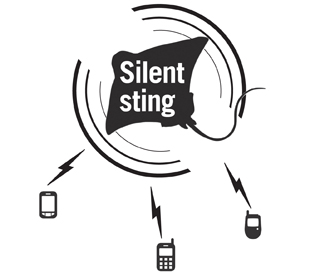
Silent sting

12

rebecca@sfbg.com

If the FBI is trying to track down a suspect in your neighborhood, investigators could sweep up information from your mobile device just because you happen to be nearby.

It’s been going on for years with little public notice or attention.

Records obtained through the Freedom of Information Act request shed new light on a surveillance device known as a Stingray that allows law enforcement to automatically collect cell phone data from potentially hundreds of subscribers in a given area — even when the vast majority of those affected have nothing to do with the criminal investigation at hand.

The documents came in response to an FOIA request from the Bay Guardian and the Northern California Chapter of the American Civil Liberties Union.

Stingray is a brand name; the devices might also be known as a Triggerfish, a digital analyzer, a cell site emulator, or an IMSI catcher, the latter being a technical term describing the gadget’s ability to detect International Mobile Subscriber Identities. It essentially behaves like cell phone tower, putting out a strong signal that tricks mobile devices into connecting automatically.

If there are 200 cell phone customers in an area where it’s being deployed, all of their phones will automatically connect to the device.

Once cell phones are talking to the Stingray, the device scoops up digital information and uses it to help agents ferret out their target. Some Stingrays have the capability to capture actual content — texts or telephone conversations — while others act like eyes and ears that can guide police to the precise geographic location of a targeted suspect, even within a couple meters.

And it doesn’t even require a warrant.

“You can operate it without having to involve the cell phone providers at all,” Peter Scheer, executive director of the California First Amendment Coalition, told us. His organization helped a journalist obtain records about the Los Angeles Police Department’s use of Stingrays.

“The service providers, while they don’t stand as a major barrier, tend to insist on police having some kind of judicial authorization,” Scheer said. “It has been an important check on police use of these technologies.”

MANY AGENTS USING IT

The FBI initially refused to provide the documents, but after the ACLU filed suit, the U.S. Attorney for the Northern District of California finally released some information, including a particularly juicy set of internal emails documenting federal agents’ use of these devices.

In one of the emails, Criminal Division Chief Miranda Kane wrote: “Our office has been working closely with the magistrate judges in an effort to address their collective concerns regarding whether a pen register is sufficient to authorize the use of law enforcement’s WIT technology … to locate an individual.”

(“WIT technology” is described as a box that simulates a cell tower and can be placed inside a van to help pinpoint an individual’s location with some specificity.”)

Kane added: “Many agents are still using [this] technology in the field although the pen register application does not make that explicit.” In a clarifying email sent later on the same thread, Assistant U.S. Attorney Kyle Waldinger noted: “Just to be super clear, the agents may not use the term ‘WIT’ but rather may be using the term … ‘Stingray.'”

Kane’s reference to a “pen register application” describes a request for court approval to use an investigative tactic that can trace the outgoing numbers dialed from a particular phone. While Stingrays can potentially sweep in hundreds of cell phone customers’ information, pen-register wiretaps focus narrowly on the digits being punched in by one individual.

The US Supreme Court ruled in 1979 that the use of a pen register is “not a search under the Fourth Amendment,” Susan Freiwald, a law professor at the University of San Francisco, told us. That means law-enforcement agents don’t need a full-scale search warrant. And court orders permitting pen-register wiretaps are “really easy to get,” Friewald explained.

To secure a judge’s blessing, law enforcement agents need only to submit complete applications and show that the phone numbers dialed are “relevant” to an investigation.

Kane’s email, dated in 2011, is significant because it suggests that “many agents” were using Stingrays for investigations after clearing only the low hurdle of court approval for a pen register. “The federal government was routinely using Stingray technology in the field, but failing to make that explicit in its applications to the court to engage in electronic surveillance,” ACLU Staff Attorney Linda Lye wrote in a recent blog post. “When the magistrate judges in the Northern District of California finally found out what was happening, they expressed ‘collective concerns,’ according to the emails.”

The revelation is closely tied to an electronic surveillance case that’s currently making its way through court, most recently prompting the ACLU and the Electronic Frontier Foundation to file an amicus brief challenging the constitutionality of a Stingray use.

TRACKING A HACKER

It all began back in 2008, when FBI agents used the technology to track down a hacker and alleged fraudster named Daniel David Rigmaiden — a guy who sometimes goes by an alias, represented himself in court, and seems to possess enough technical savvy and disposable income to challenge his prosecutors at every turn.

Through discovery proceedings, Rigmaiden “managed to get the government to admit that it has used this location tracking technology to find him,” Lye noted. “That is quite extraordinary, because there have been suspicions that that this device has been around and in use for quite a long time, but there are really very few cases where we talk about it, and this is the only criminal case where the government has plainly admitted to using it to locate a suspect.”

Because FBI agents used a Stingray to locate Rigmaiden, they not only figured out that he was inside a Santa Clara apartment building, but successfully sniffed down to the level of his exact unit.

But the request for court orders that authorized this investigation made only a fleeting mention of a mobile tracking device, without conveying just how powerful the surveillance tool actually is. “When we read the orders, we were very, very surprised and troubled,” Lye said. “Because the government was arguing in the criminal proceeding in Rigmaiden, yes, we acknowledge that we’ve used this cell site emulator, and we’re even … acknowledging that the device is intrusive enough in the way it operates to constitute a search — which is a significant concession.”

In this case, the FBI agents obtained a court order to use a pen register, and separately obtained court approval to solicit Verizon’s help in locating Rigmaiden, which the government claims constituted a warrant (though this is a point of contention). But nowhere did agents make it clear to the judge that in order to work, this surveillance device vacuums up vast amounts of third-party data. The search potentially affected hundreds of subscribers in Rigmaiden’s apartment complex, none of whom were suspected of any involvement in wrongdoing. The government noted in court filings that it purged the third-party data after the fact, presumably as a way to deflect privacy concerns.

“It did not explain that the device broadcasts signals to all devices in the area, receives information about other devices in the possession of third parties, potentially disrupts the connections of third-party devices, and penetrates the walls of every private residence in the vicinity, not solely that of the target,” the ACLU-EFF brief argues.

At the end of March, Lye argued in an Arizona federal court hearing that evidence gathered using a Stingray should be suppressed in the Rigmaiden case, because the government used the tracking tool but failed to tell the federal magistrate judge that it was doing so. But in the course of that hearing, “the government stated … that ‘use of these devices is a very common practice,'” Lye note in an update following the hearing. “It also stated that there were many parts of the country in which the FBI successfully obtains authorization to use this device through a trap and trace [pen register] order.”

Nor is it just federal agencies that use these surveillance tools. The results of a FOIA request filed by a Los Angeles journalist with the assistance of the First Amendment Coalition revealed that LAPD used this technology in 21 out of 155 cell phone investigation cases — from June to September of last year alone. The devices were used to investigate five homicide cases and a roster of other offenses, including a burglary, a narcotics investigation, two suicides, a robbery and three kidnappings.

For civil liberties advocates, the aim is to require stronger judicial oversight and a warrant before this kind of surveillance practice can be used. “The argument here is about, well this technology is so powerful and so intrusive — it really needs to be under extensive oversight by members of the judiciary,” notes Friewald, the law professor. “And in order for that to happen, the judge needs to have that technology described to them.”

Why CEQA matters

3

By Arthur Feinstein and Alysabeth Alexander

OPINION Is now the time to significantly weaken San Francisco’s most important environmental law? When our world is facing the greatest environmental threats ever experienced, why is there a rush to diminish our hard won environmental protections?

That’s the question we should all ask Supervisor Scott Wiener, who has proposed legislation that would significantly weaken the city’s regulations that enforce the California Environmental Quality Act.

Global climate change and extreme weather events are sending a clear message that the world is in trouble. Unprecedented droughts threaten our food supply and drinking water, while floods and sea level rise threaten our homes (the Embarcadero now floods where it never has before). The ozone hole still exists, threatening us with skin cancer, and the critters with whom we share this world are experiencing an unprecedented extinction rate.

Recent region-wide planning efforts, such as One Bay Area, expect San Francisco to provide housing for more than 150,000 new residents, bringing even more impacts to our city.

The best tool available to city commissioners, supervisors, and the public to understand and effectively reduce negative environmental effects of new projects is CEQA, which requires analysis and mitigation of unavoidable environmental project impacts. CEQA mandates that the public be informed of such impacts, and requires decision-makers to listen to the public’s opinions about what should be done to address them. It allows the people to go to court if decision-makers ignore their concerns.

Without an effective CEQA process, the public is helpless in the face of poor planning, and planning based only on the highest corporate-developer-entrepreneur return on the dollar with no regard for environmental consequences, including noise, night-lighting, aesthetics, and transportation — all issues of concern to urban residents. And with current tight real-estate economics, worker safety is at risk if developers cut corners on environmental review, especially with projects built on toxic and radioactive waste sites like Treasure Island, which potentially endanger construction workers and service employees who will work in these areas after projects are completed.

Wiener’s legislation, introduced at the Land Use Committee April 8, makes it much harder for the public to appeal potentially damaging permit decisions, by shortening timelines and establishing more onerous requirements for such appeals. In many instances it would also steer appeals away from being heard by the entire Board of Supervisors, instead allowing small committees to rule on these crucial issues.

A broad coalition of environmental, social justice, neighborhood, parks protection and historic preservation groups, allied with labor unions, is challenging Wiener’s attack on our environmental protections.

Supervisor Jane Kim recently stepped forward to champion these efforts, and work with these groups to draft a community alternative to make the CEQA process more fair and efficient while carefully protecting our rights to challenge harmful projects.

The supervisors need to reject Wiener’s damaging legislation and consider Kim’s community-based alternative in seeking to truly improve our local California Environmental Quality Act process.

Arthur Feinstein is chair of the Sierra Club Bay Chapter. Alysabeth Alexander is vice-president of politics for SEIU Local 1021.


Where the wild dogs are

1

San Francisco has more dogs than children, which might be a comment on the price of housing — even the largest canine companion doesn’t need a bedroom. But with all of those furry beasts seeking exercise in a dense urban area, the city’s made a point of finding places for dogs to run, romp, and play — with some success, and some … well, not such great success.

We’ve taken on the task of finding some of the best dog parks, and offer this opinionated guide. Remember, not all dog parks are created equal. Some are great if you just want open space to toss a ball; others are better for the dog that likes to wander around and explore. Some are perfect for the social animal that loves lots of canine company; some serve the more solitary types.

Our ratings reflect the level of cleanliness (will I be constantly stepping over, or in, poo?), friendliness (are the park-goers, human and canine, nice to be around and welcoming, or is there a cliquishness or conflicts between different types of users?) and dog-fun terrain (Just dirt? Lots of trees and bushes? Gophers to chase? Water to drink — and play in?)

Results below.

BERNAL HILL 

Legal status: City park, off-leash allowed

Cleanliness: 2 paws

Friendliness: 4 paws

Terrain: 3 paws

Lots of room on this often-windy hilltop. Hiking trails offer spectacular city views; paved roads are nice for jogging. Amazing rock formations surround a couple of open flat areas for romping and ball-chasing. Dog and human water fountains. Very friendly; everyone who uses the place is used to off-leash dogs. Sadly, some take the vegetation and rocky hillsides as an excuse not to clean up; if you’re off trail, watch where you step. Entrances at the top of Bernal Heights Boulevard and at Folsom and Ripley.

GLEN CANYON PARK

Legal status: City park, on-leash rules are not tightly enforced

Cleanliness: 3 paws

Friendliness: 3 paws

Terrain: 4 paws

You can walk a few hundred yards into Glen Canyon and feel miles away from the city. The canyon floor, with a creek (mud! exciting!) running through it, is cool and shady with trees, thickets, and blackberries. The hillsides are grassy, steep, and sometimes attract rock climbers. Most days, there are off-leash dogs walking and playing — but there are also picnic areas, ball fields, and a (fenced) kids’ playground where it’s best not to allow dogs to roam freely, and sensitive habitat restoration areas where off-leash dogs can wreak havoc. Sometimes users complain about off-leash dogs; if you keep poochie on leash, it’s still a great hiking area. Absolutely do not let your dog wander off in the deeper parts of the canyon, where coyotes have made a home; it’s best for all parties if they are undisturbed.

The south side of the park is undergoing renovations right now, but you can enter at Diamond Heights and Sussex (watch the traffic, there’s no crosswalk) or at the end of Bosworth.

McLAREN PARK

Legal status: City park, off-leash areas

Cleanliness: 3 paws

Friendliness: 3 paws

Terrain: 3 paws

The second-largest park in the city is often overlooked, but it’s got some nice wooded trails — and the only pond in the city where dogs are actually allowed to go swimming. It’s not a nasty, slimy-covered puddle, either; the water’s clear and there’s a (concrete) doggie beach where your canine can ease into a dip. It’s shallow enough near shore for those with short legs and deep enough and long enough for the big dogs to have a nice refreshing swim or practice their water-retrieval skills. There’s some misinformation on the web about how to find the dog-swim area. You don’t want McNabb Lake, on the east side of the park; that’s a playground and picnic area with a nice duck pond where dogs are not terribly welcome. The parking lot for the dog area is off the westernmost part of the John F. Shelley loop, near the big blue water tower. You can see the pond from the road, and it’s a very short walk down. Bring a towel and be prepared to get wet; humans can’t swim there, but the beach is small and wet doggies love to shake.

John F. Shelley Drive.

DUBOCE PARK

Legal status: City park, off-leash area

cleanliness: 2 paws

Friendliness: 2 paws

Terrain: 2 paws

This popular spot used to be called “dog shit park.” It’s the place where Harvey Milk famously announced his legislation mandating that people pick up their canine companions’ stinky piles. It’s a lot better now — in fact, this is a rare place where the interaction between dogs and children is well-managed and everyone seems happy. The kids are fenced off in the upper area, the dogs run free in the lower area, and people just out for some sun sit in between. Still: watch where you walk. The ghost of Harvey’s soiled shoe remains.

The dogs here tend to be a bit rambunctious, perhaps because of the limited space, so don’t be surprised if a few more aggressive ones bound up to you as you enter, which can intimidate the more skittish of both species. The (human) regulars tend to know each other. McKinley School’s Dog Fest turns the place into a grand celebration of the canine spirit every spring.

Duboce Avenue and Noe.

FORT FUNSTON

Legal status: National park, off-leash areas (for now)

Cleanliness: 3 paws

Friendliness: 3 paws

Terrain: 4 paws

The walkable trails — surrounded by lush trees, non-native plants, and flora — that lead down to sandy dunes, cliffs, and Ocean Beach itself make up Fort Funston, a former military base, and current highly traveled dog park. In fact, it’s one of the Bay Area’s most popular mixed-use canine-friendly sites, usually sweeping the Bay Woof’s Beast of the Bay awards, this year winning “Best Hiking Trail” and a runner-up for best overall dog park. There are multiple pathways to explore, great views, and a few doggie amenities along the way. On the rare warm weekend (always with a breeze), there might be dozens of pups lapping up the cooling dribble of water from one of the small water fountains. It gets crowded (some dog owners say it’s too crowded) on the weekends, but is less congested during the week. The off-leash factor is also currently up for review, so those in charge caution owners to pick up after and keep a close eye on their pets. It’s part of the Golden Gate National Recreation Area and is operated under the authority of the National Park Service.

Park in the lot off Skyline Boulevard.

ALAMO SQUARE DOG PARK

Legal status: City park, west half is off-leash.

Cleanliness: 4 paws

Friendliness: 3 paws

Terrain: 2 paws

The dogs atop the sloping west side of Alamo Square Park like to play — and they do so in the rather small dirt-and-grass area allotted for off-leash fun. It’s typically a hyper bunch of small pups, chasing, fetching, leaping after frisbees, and entwining regulars in the old twisted leash dance on the vertical pull up the hill. Thankfully, the typically business and/or tech-veering dog owners in Alamo Square are usually quite friendly, pick up after their pets, and won’t give you side-eye if your darling drools on another’s chew toy. There’s also a water fountain for thirsty pups and a give one/take one plastic doo-doo bag stand at the base of the hill. But be forewarned, the other side of that hill is the one with the classic SF view of the Painted Ladies, so it’s where tour buses dump the masses for photos ops. Fido is less than welcome there without a leash, and it can get scary for less sociable pups. Plus, just below, the park dips directly into the busy intersection.

Hayes and Scott.

CRISSY FIELD

Legal status: National park, off-leash areas (excluding the Crissy Field Tidal Marsh and Lagoon)

Cleanliness: 3 paws

Friendliness: 4 paws

Terrain: 4 paws

With boardwalk walkways, grassy play areas, a bombshell view of the Golden Gate Bridge, and long stretches of California coast, Crissy Field, part of the Golden Gate National Recreation Area, is a frisky pup’s beachy playland. There are even small outdoor showers, specifically for washing the sand off paws, not human feet. The regulars know where to avoid walking without a leash, and will kindly tell you so on arrival. And there’s plenty of room for running, fetching, and playing (canine) or catching up (human). Plus, check out interesting wave formations due to sand bars, and the marshy areas of the former Army airfield, first opened to the public in 2001. There’s also enough sanded open space to keep a distance from other pets, if you’re dog’s the less-than-cordial type.

Beach and Mason, in the Presidio.

UPPER NOE RECREATION CENTER DOG PARK

Legal status: City park, off-leash

Cleanliness: 2 paws

Friendliness: 2 paws

Terrain: 1 paws

This relatively diminutive fenced enclosure is more typical of suburban neighborhoods — a very pre-planned park feel. Connected to the Noe Valley Recreation Center, it’s helpful that this dog run is in the heart of the city, fully gated, and easy for humans to access, for a quick game of fetch or poop jaunt. The entirely fenced in park is great for new dog owners and those with easily spooked puppies. Weirdly, this kind of enclosure seems a rarity in the city. But other than convenience and safety (both considerably important in the pup playtime world) it offers little amenities to the average pup or companion. Also, there is sometimes a slight urine odor, likely due to the closed in nature, and while friendly, the crowd often seems more focused on getting in and out, quickly.

299 Day.

Sneaky surveillance

19

steve@sfbg.com

After public outrage stopped the San Francisco Police Department from instituting controversial — and unconstitutional, say civil libertarians — new video surveillance requirements in bars and clubs more than two years ago, the department quietly began inserting that same requirement into new liquor licenses, a move met with concern at City Hall last week.

In late 2010, the SFPD proposed a draconian set of new security requirements for drinking establishments in the city, including requirements that they do video surveillance and take an image of all patrons’ identification cards and make them available to police upon request, without a warrant or any other controls (see “Going to a club — or boarding an airplane?,” 12/7/10).

That proposal ran into a wall of opposition from the American Civil Liberties Union, California Music and Culture Association, progressives on the Board of Supervisors, and others, who said such a blanket policy violates privacy protections in the California Constitution. The Entertainment Commission held a hearing on the proposal in April of 2011 and voted unanimously to reject the proposals.

At that point, they seemed to just disappear, but they didn’t. Instead, SFPD internally decided at that time to begin asking the California Department of Alcoholic Beverage Control to insert a video surveillance requirement in most new liquor licenses in San Francisco, which escaped public notice until Sup. Scott Wiener raised the issue at the April 2 Board of Supervisors meeting.

“If you have an establishment that perhaps has a track record of bad things happening, that’s one thing. But absent that, I don’t believe that this is justified,” Wiener said as he voted against the requirement in a pair of new liquor licenses. Although Wiener was alone in opposing those applications, Sup. David Campos said he shared Wiener’s concern and the pair called an upcoming hearing on the new policy.

Two days later, at the board’s Neighborhood Services and Safety Committee meeting, Wiener again raised the issue and sought to have the new requirement removed from a pair of proposed liquor licenses: Cesar’s Ballroom on 26th and 3rd streets, the latest project of veteran local club owner Cesar Ascarrunz, and Nosa Ria, a market in Hayes Valley that will import gourmet food and wine from Spain.

“It’s the exact opposite of some kind of rowdy bar or nightclub where people are going in and getting drunk and really bad things are happening,” Wiener said of Nosa Ria, for which he persuaded fellow Sups. Eric Mar and Norman Yee to vote to remove the video surveillance condition before approving the application.

That condition stated: “The petitioner shall utilize electronic surveillance and recording equipment that is able to view the outside of the premises, including all entrances and exits, and that is actively monitored and recorded. The electronic surveillance shall be utilized during operating hours. Said electronic recording shall be kept at least 30 days and shall be made available to the Department or Police Department upon demand.”

Mar said he agreed with Wiener that “a broad discussion of electronic surveillance requirements would be important for this committee,” but Mar then voted against removing that condition from the Cesar’s Ballroom application, saying, “I think we need surveillance in certain spots on a case-by-case basis, and I think this is an area that needs surveillance.”

SFPD IS WATCHING

When SFPD first sought new video surveillance tools — back in 2005, when the department asked for 71 video cameras at high-crime intersections around the city — it was rigorously debated in public hearings for months. And when they were finally approved by the Board of Supervisors, they included an extensive set of controls on when SFPD could request footage — the department wasn’t even allowed to control the cameras directly — how it could be used and when it must be erased.

The legislation also required a follow-up study of their effectiveness in deterring and prosecuting crimes. Conducted by the University of California’s Center for Information Technology Research in the Interest of Society (CITRIS) in 2008, the report found the cameras had no impact on violent crime rates but a small deterrent impact on property crimes in the filmed areas.

As a tool for prosecuting crimes after the fact, “There has been limited success with the cameras acting as a ‘silent witness,’ with footage standing in for witness testimony; some anecdotal evidence suggests that the existence of CSC program footage can actually deter witnesses from cooperating under the assumption that the cameras have caught all necessary evidence,” the report said, also noting that twice in the 120 police requests made by 2008, footage resulted in charges being dropped or downgraded.

But today, SFPD apparently believes that times have changed, and that the rigorous oversight and evaluation of video surveillance tactics and their implications on people’s privacy rights — or even the need to notify the public that SFPD is seeking new ways to watch citizens — are no longer necessary.

“Over the last few years, we’ve increased the number of recommendations for video surveillance, for a few reasons,” SFPD spokesperson Gordon Shyy told the Guardian, citing how cheap and ubiquitous the technology has become and the role that video footage can play in solving crimes.

Yet attorney Michael Rischer with the ACLU of Northern California, who actively opposed the SFPD’s proposal in 2011 and was dismayed to hear the department secretly and unilaterally expanded its video surveillance reach after its proposal was rejected, said that reasoning is exactly why there are legal controls on the expanding police state.

“Both of those justifications are exceedingly troubling and they demonstrate why the San Francisco Police Department should not be doing this in some room sealed off from the public,” Rischer said. “The police have this totally backward. The ease and cost of doing this is a reason why these protections are in place.”

PRIVACY PROTECTIONS

Unlike under federal law, Californians have an explicit constitutional privacy guarantee and a body of case law defining that right in great detail. But the SFPD doesn’t seem to be aware of the nuances of that case law, such as the distinction it makes between people’s expectation of privacy on public streets versus in private businesses.

“When you enter a bar or restaurant, you don’t have an expectation of privacy,” Shyy told us.

But Rischer said that just isn’t true under the law. He noted that people do indeed have a reasonable expectation that they can enter a gay bar without being outed, for example, or that police won’t be able to demand video from a gathering in a bar where subversive political ideas are being discussed. And those concerns are exacerbated by SFPD’s policy that bar owners must simply turn over footage “upon demand.”

“The notion that the government is requiring a business to conduct surveillance of its patrons and to turn it over to the Police Department without any judicial oversight or even rules is deeply troubling and probably unconstitutional,” Rischer said.

Shyy said SFPD will “only request them when a crime has been committed,” but he also admitted that the conditions it is requesting on liquor licenses don’t set that limit and the policy hasn’t been reviewed by the Police Commission or other local oversight bodies.

ABC spokesperson John Carr told us his department doesn’t have a position on video surveillance and hasn’t tracked whether other jurisdictions are seeking the condition. As for whether it routinely includes SFPD’s recommended conditions, he said, “ABC reviews each application on a case by case basis.”

There are indications that SFPD sometimes resorts to bullying bar owners into turning over video surveillance without legal authority to do so. Jamie Zawinski with DNA Lounge last month blogged about Officer Simon Chan telling the club that it was required to keep video footage and turn it over upon request, which club operators informed the SFPD wasn’t true. “It’s just another sneaky, backdoor regulation that ABC and SFPD have been foisting on everyone without any kind of judicial oversight, in flagrant violation of the Fourth Amendment,” Zawinski wrote.

Regarding that incident, Shyy would only confirm that most bars aren’t yet required to keep and turn over video footage. And he said SFPD will cooperate with the hearing Campos and Wiener have called. “At this point, we don’t believe we’re violating people’s constitutional rights, but we’re willing to have that discussion,” Shyy said.

Wiener said that on April 3, he discussed the issue with Police Chief Greg Suhr, who indicated a willingness to cooperate with public hearings on the policy. But Wiener said he’s bothered by the fact that SFPD seems to have put this new policy in place right after being unsuccessful in doing this through a public process in 2011.

“I and others expressed opposition to this and I and others thought the Police Department had backed away from it,” Wiener said at the April 4 hearing, noting that “I’m not philosophically opposed to surveillance,” only with how SFPD instituted it. “I have an issue with the Police Department deciding to insert this on its own without a broader policy discussion.”

Spring breakers

0

culture@sfbg.com

DRINK San Francisco: the best bars, mixologists, and produce — not to mention drinkers — in the country. And once the weather warms up (fingers crossed), can a bloom of excellent fruity cocktails be far behind? In honor of the lengthening sunlight, here’s a full day’s selection of spring drinks picks.


DAYTIME JAM: RICKHOUSE

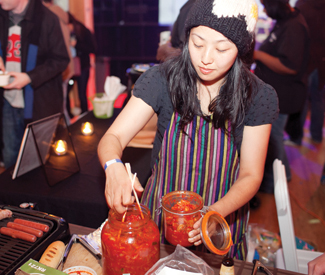
This bustling bar nestled in the FiDi — and brought to us by the contemporary speakeasy minds behind Bourbon and Branch and Tradition (see below) — gets a lot of attention. In fact, I couldn’t stop hearing about its cocktails (most $10–$12) made with fresh fruit and local produce. And when I stepped inside early one sunny afternoon, I wasn’t disappointed. The bar was stocked with vibrantly colored jars of berries, citrus, and mint leaves. Joined by a friend, I quickly dived in.

Our first round of drinks consisted of the Kentucky Buck and the Paloma, a Mexican classic. The Buck, served with soda, is a combination of Bourbon infused with organic strawberries, fresh lemon juice, ginger beer, and bitters. It’s a smooth drink that still packs a punch, so don’t be deceived. The Paloma, a fizzy mix of tequila and grapefruit soda (in Mexico, usually Jarritos or Fresca; here housemade, of course), could be considered a more refreshing version of a margarita. True to the meaning of its name (“dove”), it’s light and floaty.

(Perhaps inspired by our fruit journey, our friendly bartender next treated us to his own invention, consisting of strawberries, cinnamon, and whiskey. It wasn’t named or even perfected yet — but when it’s on the house, I’ll gladly take it.)

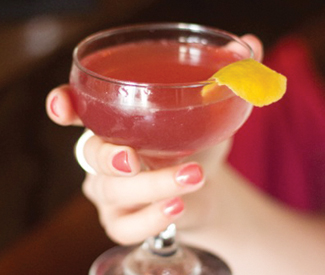
Next round: the Pleasant Evening and my personal favorite, the Berry Bramble. With sparkling wine, crème de cassis, peach bitters, and grapefruit juice, plus a beautiful lemon twist garnish, The Pleasant Evening is also perfect for a warm and boozy afternoon. But the Berry Bramble topped my spring-quest list. Crushed berries and gin with crushed ice yields an invigorating but not overly sweet cocktail, uncloyingly fun, tropical without all the cheesiness.

246 Kearny, SF. (415) 398-2827, www.rickhousebar.com


HAPPY AND HALF-OFF: NIHON WHISKEY LOUNGE

I’d been dying to go to lovely Mission outpost Nihon for its expansive, Japanese-leaning whiskey collection — and its selection of half-off happy hour drinks (many of them $6) provided the perfect opportunity. When I looked at the impressive cocktail menu, I knew I wasn’t ordering anything neat.

I asked our waitress for her recommendation for a nice springtime cocktail and she came back with the California Love, a pretty bourbon cocktail with orange juice, yellow chartreuse liquor, and orange oil. The citrus snaps the bourbon to life, but the drink is a bit too strong for early afternoons: you’ll want to sip this one after work while watching the sun set through Nihon’s windows. (Warning: it does get a bit crowded). If you want my advice, though, grab the Luxury Mojito instead. Topping off silver rum, nigori sake, mint, lime, and sugar with a dash of champagne turns this summer favorite into a bubbly springtime joy.

1779 Folsom, SF. (415) 552-4400


FLY BY NIGHT: TRADITION

With its emphasis on presenting a global selection of cocktail favorites, there isn’t really a season you shouldn’t drink at Tenderloin hotspot Tradition. But I have a great cocktail for you to try during a cool spring night: the Paper Plane ($10). Made with bourbon, Aperol, bittersweet Amaro Nonino, and fresh lemon juice, its zing will launch you skyward. (The drink isn’t on the regular walk-in menu, but appears on the extended menu offered with table reservations, so call ahead.) A variation with honey, adding a level of smoothness, is also amazing. Before you know it, you’ve downed several of this babies, and left any lingering winter blues far behind.

441 Jones, SF. (415) 474-2284, www.tradbar.com


TRUST Act clears committee as immigration reform heats up nationally

It was late at night by the time New Latthivongskorn, then 22, finally started to make his way home from the University of California Berkeley campus after a long night of studying for midterm exams.  A third year molecular and cell biology major who was trying to keep up his grades in preparation for med school applications, Latthivongskorn said he noticed a man in a black hooded sweatshirt walking toward him as he approached his home. At first he didn’t think much of it – but just as he was about to unlock the door to his apartment, the young Thai student heard a voice. “Give me everything you’ve got,” the man commanded.

“I looked at him, and I looked down, and I saw a gun pointed straight at me,” Latthivongskorn recounted. Terrified, he tried to stay calm and simply cooperated; handing over his backpack and cell phone, silently feeling relieved that he hadn’t been carrying his laptop. Fortunately, Latthivongskorn was able to proceed into his apartment unscathed after the man who robbed him at gunpoint vanished down the street.

When his concerned housemate asked if he wanted to file a police report, Latthivongskorn faced a dilemma. “Yes, I wanted to report it,” he told the Guardian in a phone interview, “for me, but also for the community. That same man ended up mugging another individual later that night.”

But there was a problem. Latthivongskorn had moved with his family from Bangkok to Sacramento when he was just nine years old – and despite the fact that his entire life was rooted in California, he’d never obtained U.S. citizenship. Any interaction with police, he feared, could place him in jeopardy – even if he was approaching law enforcement as a crime victim.

“In the end, I couldn’t call,” he said. “What was going through my mind was thinking of all the sacrifices that my family had made for me … and I worked so hard to get to this point, and I’m still not there yet.” His decision not to report the armed robbery came down to “the simple fact that it could all end – that I could get deported.”

Fast-forward to today, and Latthivongskorn has graduated and earned a spot on the waitlist at Stanford while he awaits responses from a number of other med schools. He’s also active with ASPIRE, Asian Students Promoting Immigrant Rights through Education.

On April 9, he shared his experience of being mugged with California legislators at a hearing of the Public Safety Committee, and urged lawmakers to approve the TRUST Act.

Authored by Assembly Member Tom Ammiano, the bill seeks to “limit harmful deportations often stemming from trivial or discriminatory arrests,” according to a statement from Ammiano’s office.

As things stand, all arrestees have their fingerprints recorded and submitted to ICE, or U.S. Immigration and Customs Enforcement. Under the federal Secure Communities program, ICE can then direct local law enforcement to hold arrestees without bail, beyond the time they’d be detained under normal circumstances, for the purposes of immigration proceedings.

The idea is to hold and deport dangerous criminals, but in practice it’s proved problematic. “More than 90,000 Californians have been deported, with 70 percent not convicted of anything, or only of lesser crimes,” Ammiano’s office points out. “Some were never charged with crimes, and some were crime victims.”

The TRUST Act would “establish a statewide policy that says if the person has not been convicted of a serious or violent felony, they would no longer be held any longer than authorities would hold them otherwise,” explained Carlos Alcalá, a spokesperson for Ammiano. The idea is to draw a distinction between violent or serious offenders, and anyone else who could be swept up in the system and needlessly held without bail.

Also on hand to testify at the April 9 hearing was Ruth Montaño, a Bakersfield woman who was arrested and nearly deported after someone complained that her dog was barking too loud.

Alcalá recounted other horror stories that had made their way to the Capitol. There was the day laborer whose employer reported him to immigration authorities at the end of his shift when all he was expecting was a day’s wage, and the woman who was arrested outside of Walmart for trespassing – and nearly deported – for selling tamales. Then there were women who reported incidents of domestic violence only to be subjected to immigration proceedings (and their counterparts, who stayed mum about abuse because they feared deportation).

Members of the Public Safety Committee approved the TRUST Act 4-2, clearing the way for the bill to go to the floor of the Assembly as early as next week. An earlier version made its way to the desk of Gov. Jerry Brown last year, but was ultimately vetoed, leading to a revised version. “Because of last session’s history, we’re hoping to have more substantive discussions with the governor beforehand,” Alcalá told the Guardian.

The timing is significant. “Immigration changes are moving quickly at the national level,” Ammiano noted, “and California needs to make changes here to keep pace.”

Advocates expect a national proposal for immigration reform to be introduced in the Senate any day now, according to Jon Rodney of the California Immigrant Policy Center. West Coast activists are planning an event April 10 to mirror a mass rally and march for immigration reform planned in D.C.

In San Francisco, the march will begin outside Sen. Dianne Feinstein’s office on Post Street and then proceed to Civic Center, where a rally is planned for 5 p.m. Latthivongskorn plans to participate along with other organizers from ASPIRE, and a host of local and regional immigration reform advocates are getting involved.

Those joining the march “will carry 1,000 paper flowers,” Rodney said, “to represent 1,000 deportations that happen every day in the U.S. That’s one piece of Wednesday’s rally, is stopping deportations.”

Good grief

1

arts@sfbg.com

THEATER “Oh, this stupid war. I don’t know who to blame anymore, do you?”

So asks aging American divorcée Mary-Ellen (Marcia Pizzo), in 1975 Southern California, of Vietnamese war refugee Bao (Jomar Tagatac), who has lost his entire family back home. It’s a fraught question that, maybe fittingly, receives no answer. But it’s made all the more complicated and troubling in the Magic Theatre production of Julie Marie Myatt’s 2009 comedy-drama, The Happy Ones.

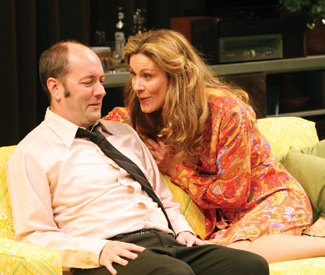
That’s because Bao and Mary-Ellen’s precarious perches, at the edges of the so-called American Dream, do not get pride of place. The narrative center goes to Walter Wells (a sure Liam Craig), cheerful business owner and middle-class patriarch who suffers an irreparable loss after his adored wife and two children die in a head-on collision with a car — driven by Bao.

Of course, the causes of suffering, and the consequences of violence, are very different when comparing a road accident with a war of genocidal proportions. But in The Happy Ones the emphasis on grief as universal, the overweening urge to see everybody just get along, obscures reality, substituting easy humor and sentimentality for a serious look at either systemic violence or, for that matter, the nature of happiness. No wonder Mary-Ellen doesn’t know who to blame.

Helmed by California Shakespeare Theater’s Jonathan Moscone, the production stresses the play’s emotional comedy about sorrow, forgiveness, shared pain, and the power of friendship, offering able performances and well-shaped scenes that smoothly unfold a palatable nostalgia trip whose sentiments are rooted in a claim to a certain class-based suburban memory.

Erik Flatmo’s set is a shabby period living room in a white Orange County suburb, complete with a blown-up studio portrait-photo of the happy family hanging over the fireplace with its untouched Duraflame logs. Martinis, audible splashing from a backyard pool, Sundays at the Unitarian Church, hickeys, tuna casseroles with crumpled potato chips on top — it’s the Kodachrome image of the American 1970s as advertising agencies would have us remember it.

Myatt has worked the terrain of war, home front trauma, uneasy solidarity, and vague spiritualism before to more profound effect. Her earlier play, Welcome Home, Jenny Sutter (produced locally by TheatreFIRST in 2011) dealt head-on with the Iraq War and the plight of its American veterans with its titular character, a black female soldier deeply traumatized by her experience on the front lines who finds some respite among a community of misfits on the desert-edge outside Los Angeles. It’s a perhaps looser but also more acute investigation that wrestles with class, gender, and race in a more vigorous way. The distance offered by the nostalgic period setting in The Happy Ones, by contrast, seems to have made it too easy to hold all of that at arm’s length.

“Things change,” the grief-stricken Walter propounds to his concerned friend Gary (Gabriel Marin), a hapless and commitment-phobic Unitarian minister now dating Mary-Ellen who seems to have been in love with pal Walter’s wife and life. Yes and no, the play suggests — somewhat unwittingly — as we’re left at the launch of a buddy movie instead of on the brink of the world we’ve in fact inherited.

Bao turns out to be the only one who can help Walter navigate his grief. As Gary and Mary-Ellen make awkward attempts to cheer up their friend, it’s Bao who actually helps — taking the place of Walter’s late wife as the person who cleans, cooks, buys groceries, keeps house. Having tried to kill himself just after the accident, Bao now literally begs to serve Walter, in terms that imply a kind of living erasure that has a very gendered dimension to it in the patriarchal culture of the ’70s.

“I’m invisible! I promise!” shouts Bao. “Please! I have to help you.”

“You can’t repay me for killing my family,” objects Walter. “It doesn’t work like that.” Reparations, of whatever kind, seem to be running in the wrong direction here. Would this relationship remain as conceivable as it supposedly is here if Bao were an Iraqi refugee in 2013? If the playwright means for the lines to appall us, as they should, the production seems indifferent to this subtext.

So Mary-Ellen’s rhetorical question about the responsibility for the war lingers between two relative outsiders who, with a combination of pity and desire, orbit around a central character whose social position is the normative one — with real-world power and privilege that neither Bao nor Mary-Ellen can match, and the one most directly associated by reason of class, gender, and race with the interests promulgating war abroad.

This should be the basis of a painful awakening in the audience, a scathing critique of the solipsism of power. But it ends up seeming more like the re-inscribing of the same order. The racism, imperialism, and sexism shaping the lives of Bao and Mary-Ellen are gently broached at best, trivialized at worst. Walter’s grief and personal transformation remain paramount. And if Bao and Mary-Ellen seem to have gained some hopeful ground by the end too, it is only because each has, desperately but also willingly, hitched his or her future to a white man. *

THE HAPPY ONES

Through April 21, $22-$62

Magic Theatre

Fort Mason Center, Bldg. D, Third Flr., SF

www.magictheatre.org


Live Shots: Burgerama II outtakes

1

Ed. note: Andre Torrez’s feature story on Burger Records, tape culture, and Burgerama II will be in next week’s issue of the Guardian. Here’s photographer Dallis Willard‘s images and impressions of the Santa Ana festival.

At the end of March, my friend Andre and I flew down to LA to check out Burgerama II. The second annual garage-slop festival drew a sold out crowd of kids ready to dine on $5 burgers and stage antics. As someone who feels pretty comfortable with the Bay Area’s rock scene, it was a great chance to check out how the other half of California gets down.

Pulling into the Observatory’s parking lot, the differences were readily apparent. Teens dragging along parents, floppy neo-hippy hats, and lots of face make-up seemed to be the norm.

In San Francisco, audiences seems to come in two flavors. Either “This is the first/best concert I’ve ever been to, so I’m going to go completely bananas.” or “I’ve spent two hours on this outfit, so I can be seen at this obscure side project. Please don’t bump me or dance too close to my hair.”

The vibe in Santa Ana seemed to be one of excitement and camaraderie. Kids were all around checking the stage times and discussing who they were looking forward to seeing the most. Security cracked jokes as they hustled everyone through the entrance. Even the bartender was overly apologetic that he couldn’t serve me since I had forgotten to get a drink bracelet.

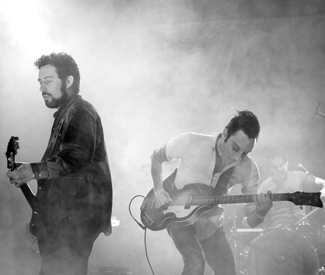
The bands seemed to be having a great weekend as well. Hunx gave a fan a mid-set haircut for her birthday. A sea of female fans washed over the security barriers to swarm the stage, and plant kisses on their favorite Black Lips members. My favorite memory was of the entire venue trying to cram into the tiny Constellation room to watch Shannon and the Clams.

Over all, it was a great weekend. My only regret was not buying a Burger Records t-shirt before they were all sold out. I guess that’ll be first on my agenda for next year. — Dallis Willard, dalliswillard.com.

WTF, Chuck: Repeal the bottle bill?

22

Now, I thought we were all going to have to pay money to read the wisdom of C.W. Nevius, but here it is, for free, right on sfgate: Nevius is calling on California to repeal the “bottle bill,” the measure that requires a (modest) deposit on cans and bottles and that has been widely credited for making this one of the leading places in the world for recycling.

His argument: People are stealing recyclable material and selling it. This leads to drugs. (Seriously, this leads to drugs: “It hurts everybody,” says Adam Alberti, a spokesman for Recology, the city’s garbage collection firm. “We have heard reports of (scavengers) being paid in drugs instead of cash.”)

And, of course, criminal syndicates that underpay desperate people. The old Haight Asbury Recycling Center, which Chuck hated so much, demonstrated how the syndicate racket doesn’t have to work, since small-time individual bottle-pickers could get there without a truck and keep all the money. Oh, but that was also leading to drugs. So now it’s gone. Amazing, Chuck, the law of unintended consequences.

Anyway: Criminal syndicates aren’t a good thing. Wall Street, for example. Certain landlords and businesses that prey on the weak and don’t pay their taxes. Or the people who cheat their low-wage trash-diving workers.

But on the scale of all the things wrong in the world, and the city, this has to be pretty small-time. Because the bottom line for me is this:

The stuff is getting recycled.

That’s what we want, right? We don’t want bottles and cans in a landfill. From a strictly environmental viewpoint, it makes no difference if Recology picks the stuff up and makes money off it, or if a poor person picks up the stuff and makes money (except not in the Haight any more) or if some explotive syndicate hires people to pick the stuff up. It gets to the same place.

Again: Not supporting the criminal syndicates. Their workers should get fair pay, like all workers. Still, repealing the bottle bill seems like a pretty crazy way to address this modest problem.


Feds’ use of spy tools under scrutiny due to privacy concerns

If the FBI is trying to pinpoint the location of a suspect in your neighborhood, investigators could sweep up information from your mobile device just because you happen to be in proximity to their target. Civil liberties advocates are concerned that the practice is a major invasion of privacy.

The results of a Freedom of Information Act request filed by the Northern California chapter of the American Civil Liberties Union (ACLU) and the San Francisco Bay Guardian last year sheds new light on the federal government’s use of Stingrays, a surveillance technology that mimics a cellphone tower by automatically connecting with mobile devices in the area where a search is being conducted.

Stingray is a brand name, but the devices are sometimes called Triggerfish, digital analyzers, or cell site emulators. They’re known to technologists as IMSI catchers, meaning they can intercept a user’s International Mobile Subscriber Identity.

As the ACLU of Northern California noted recently in a blog post, Department of Justice emails obtained in response to the FOIA request, filed with the US Attorney’s Office of the Northern District of California, revealed that federal agents who sought authorization to conduct searches using this technology were “less than forthcoming” about what the devices actually do.

The issue stems from federal investigators’ request for a search warrant several years ago targeting Daniel Rigmaiden, a hacker accused of committing fraud. The search was authorized, but it seems agents never explained just how wide a net they intended to cast.

Because FBI agents used an IMSI catcher rather than, say, triangulation techniques that can utilize subscriber data to find their target, they were able to pinpoint Rigmaiden’s precise location – not only revealing that he was inside a Santa Clara apartment building, but sniffing down to the level of his exact unit. 

But when a search of this kind is conducted, a Stingray automatically connects with every other mobile device in the immediate vicinity that uses the same provider (in this case, Verizon). It works by masquerading as a cell phone tower, tricking mobile devices into automatically communicating with the spy device. So any other Verizon subscribers who happened to be nearby also had their information caught up in the FBI’s net.

There are various kinds of IMSI catchers, and some are capable of sweeping in the contents of communication, such as text messages. In the Rigmaiden case, investigators said were only able to access subscriber information. Investigators also reported that they “purged” unneeded data after the fact, according to ACLU staff attorney Linda Lye. But purging the data also makes it impossible to prove that the information of particular individuals was wrongfully swept up in a search. 

The FOIA request was filed in April of last year. Last July, after the government failed to provide the information, a lawsuit was filed to get the documents.  

The string of emails that was finally provided suggests that federal agents have been using this sort of technology in the field for some time, without clearly representing to judges that Stingrays can vacuum up third party communications data. Instead of being explicit on this point, agents from the Department of Justice merely stated that they wanted to use a mobile tracking device.

“It has recently come to my attention that many agents are still using [IMSI catchers] in the field although the pen register application does not make that explicit,” notes an internal Department of Justice email obtained through the FOIA request, referring to a different kind of search technique that is more narrowly targeted. 

Lye drilled down on this point in her blog post:

“The federal government was routinely using stingray technology in the field, but failing to ‘make that explicit’ in its applications to the court to engage in electronic surveillance. When the magistrate judges in the Northern District of California finally found out what was happening, they expressed ‘collective concerns,’ according to the emails. Notably, this email chain is dated May 2011, some three years after the Stingray’s use in Rigmaiden’s case – meaning the government was not ‘forthright’ in its applications to federal magistrate judges for at least three years.”

After battling for months in court in a separate proceeding, the ACLU of Northern California also succeeded in unsealing the Northern District DOJ orders that authorized use of the surveillance devices. Now, the civil liberties advocates are partnering with the Electronic Frontier Foundation and other groups to file an amicus brief concerning the constitutional implications of using a Stingray to collect evidence in the Rigmaiden case. “Their use implicates the privacy interests of the suspect, as well as untold numbers of third parties as to whom there is no probable cause,” the lawyers argue.

“When we read the orders, we were very, very surprised and troubled,” Lye noted in a recent conversation with the Guardian. “Because the government was arguing in the criminal proceeding in Rigmaiden, yes, we acknowledge that we’ve used this cell site emulator, and we’re even … acknowledging that the device is intrusive enough in the way it operates to constitute a search – which is a significant concession.”

For more on Stingrays, pick up next week’s issue of the SFBG.

Localized Appreesh: Sunbeam Rd.

0

Localized Appreesh is our thank-you column to the musicians that make the Bay. To be considered, contact emilysavage@sfbg.com

I’m a lover of past treasures. I like my music vinyl, and I like my mail snail. Sure, I download thousands (millions would be hyperbolic, right?) of tracks a year, send hundreds of emails a day, tweet with the rest of them, and then some. Technology is still my friend, but vintage pleasures will always be my lover. Hence, my delight with the arrival of a colorfully confetti’d physical postcard from psychedelia-minded local fuzz-pop trio Sunbeam Rd., announcing the group’s 50th show.

The  San Francisco band’s debut LP, Breathers, came out last October, and I slept on it then, so I’m not making the same mistake twice. And while its psychedelic guitars, tender melodies, and fuzz-layered pop hooks may be blissfully of another era, Sunbeam Rd. also knows how to harness modern technology – it raised enough money through Kickstarter last year to press the record on vinyl. 

The band is made up of brothers Trevor Hacker and Clive Hacker, along with Harrison Pollack – all graphic design graduates from California College of the Arts (you might get a sense of that in the cat-filled video for swirling “Lucy”).

Check it out below and then see the trio live this weekend at Bottom of the Hill, celebrating 50 performances on the Sunbeam Rd.
http://www.youtube.com/watch?v=Z8ziAxlNZa4

Year and location of origin: TREVOR: We formed in early 2009 after setting up a drumset and some amps in the kitchen of the flat where Harrison and I used to live near Glen Park. Our roommates must have hated us.

Band name origin: HARRISON: In the ’80s, NASA was planning to build a big spaceport near the Air Force base in our hometown. It was slated to be like the West Coast Cape Canaveral but NASA pulled out at the last minute for some reason relating to the Challenger disaster, leaving the town in a severe recession.

One time my friend that worked on the base took me to the hangars that NASA built and never used. “The Sunbeam Road” was the nickname give to one of the landing strips, which had been gradually falling apart over the last 20-30 years. It was a super eerie place in contrast to the overly optimistic name. It kind of stuck with me for some reason.

Band motto: CLIVE: Wise men say forgiveness is divine, but never pay full price for late pizza.

Description of sound in 10 words or less: Hook-laden, fuzz-saturated trance states.

Instrumentation: CLIVE: Drums; TREVOR: Vox/Guitar; HARRISON: Bass.

Most recent release: BREATHERS (our debut LP) and BREATHERS Remixed.

Best part about life as a Bay Area band:
TREVOR: Road trips to Mt. Diablo, Big Sur, Point Reyes, and course all of the live music & great record stores.

HARRISON: Close proximity to the Based God.

CLIVE: What Harrison said; Also, it’s certainly never boring being a band in the Bay Area. There’s constantly something new and/or different happening that has yet to be explored.

Worst part about life as a Bay Area band:

TREVOR: It aint cheap!

HARRISON: The feeling that the Based God is so close, yet so far away.

CLIVE: What Harrison said; Also, it’s too easy to be complacent here in San Francisco.  

First album ever purchased:

CLIVE: I believe it was Whatever and Ever Amen by Ben Folds Five.

TREVOR: Blur, Blur.

HARRISON: Smash, The Offspring.

Most recent album purchased/downloaded:

CLIVE:  Acquiring the Taste, Gentle Giant.

TREVOR: Stone Shift, Larry Ochs Sax and Drumming Core.

HARRISON: Jack The Tab/Tekno Acid Beat, Psychic TV.

Favorite local eatery and dish:

CLIVE: #19 on the menu at Evergreen Garden (pho with five-spice chicken). It’s just great!

TREVOR: Little Yangon in Daly City. Pork and sour bamboo shoot curry with coconut rice

HARRISON: Taqueria Vallarta’s street tacos are basically the only things I like to eat.

Sunbeam Rd.
With Halsted
Sun/7, 9pm, $9
Bottom of the Hill
1233 17 St., SF
www.bottomofthehill.com

Stage listings

0

Stage listings are compiled by Guardian staff. Performance times may change; call venues to confirm. Reviewers are Robert Avila, Rita Felciano, and Nicole Gluckstern. Submit items for the listings at listings@sfbg.com.

THEATER

OPENING

The Bereaved Thick House, 1695 18th St, SF; www.crowdedfire.org. $10-35. Previews Thu/4-Sat/6, 8pm. Opens Mon/8, 8pm. Runs Wed-Sat, 8pm. Through April 27. Crowded Fire Theater launches its Mainstage season with Thomas Bradshaw’s wicked comedy about “sex, drugs, and the American dream.”

Carnival! Eureka Theatre, 215 Jackson, SF; www.42ndstreetmoon.org. $25-75. Previews Wed/3, 7pm; Thu/4-Fri/5, 8pm. Opens Sat/6, 6pm. Runs Wed, 7pm; Thu-Fri, 8pm; Sat, 6pm (also April 13, 1pm); Sun, 3pm. Through April 21. 42nd Street Moon performs the Tony Award-winning musical.

Show Me Yours: Songs of Innocence and Experience Alcove Theater, 414 Mason, Ste 502, SF; www.thealcovetheater.com. $27. Opens Thu/5, 8pm. Runs Thu-Sat, 8pm; Sun, 5pm. Through April 27. New Musical Theater of San Francisco performs a new musical revue written by Pen and Piano, the company’s resident group of writers and composers.

BAY AREA

The Arsonists Aurora Theatre, 2081 Addison, Berk; www.auroratheatre.org. $35-60. Previews Fri/5-Sat/6 and April 10, 8pm; Sun/7, 2pm; Tue/9, 7pm. Opens April 11, 8pm. Runs Tue and Sun, 7pm (also Sun, 2pm); Wed-Sat, 8pm. Through May 12. Aurora Theatre Company performs Max Frisch’s classic comic parable, translated by Alistair Beaton.

Being Earnest Mountain View Center for the Performing Arts, 500 Castro, Mtn View; www.theatreworks.org. $23-73. Previews Wed/3-Fri/5, 8pm. Opens Sat/6. Runs Tue-Wed, 7:30pm; Thu-Sat, 8pm (also Sat, 2pm); Sun, 2 and 7pm. Through April 28. TheatreWorks performs the world premiere of Paul Gordon’s musical take on Oscar Wilde’s comedy.

Love Letters Various Marin County venues; www.porchlight.net. $15-30. April 5-28. Porch Light Theater performs A.R. Gurney’s romantic play at four different Marin venues; check website for addresses and showtimes.

“Pear Slices” Pear Avenue Theatre, 1220 Pear, Mtn View; www.thepear.org. $10-30. Previews Thu/4, 8pm. Opens Fri/5, 8pm. Runs Thu-Sat, 8pm; Sun, 2pm. Through April 28. Nine original short plays by members of the Pear Playwrights Guild.

ONGOING

The Bus New Conservatory Theatre Center, 25 Van Ness, SF; www.nctcsf.org. $32-45. Wed-Sat, 8pm; Sun, 2pm. Through April 28. NCTC performs James Lantz’s tale of two young men whose meeting place for their secret relationship is a church bus.

The Chairs Exit on Taylor, 277 Taylor, SF; www.cuttingball.com. $20-45. Thu/4, 7:30pm; Fri/5-Sat/6, 8pm (also Sat/6, 2pm); Sun/7, 5pm. In Rob Melrose’s new translation of Eugene Ionesco’s The Chairs, an elderly couple sit in the austere parlor of their lonely lighthouse, chortling over a spate of private wordplay and reminiscing of sprightlier times, until their initially frantic and disjointed dialogue settles into a smooth flow, well-polished by decades of endearments and gentle bickering. Possibly the last two survivors of a not entirely explained apocalypse, the isolated nonagenarians (magnificently played by David Sinaiko and Tamar Cohn) nevertheless make it known that important guests are expected to arrive at any moment in order to hear a hired orator (Derek Fischer) deliver the Old Man’s “message,” which he has spent a lifetime honing. As the doorbell begins to ring, a jarring squall, and invisible guests and dozens of mismatched chairs begin to crowd their peaceable empire in claustrophobia-inducing numbers, their companionable seclusion is shattered for good. Director Annie Elias manages to coax both gravitas and decorum out of this little-produced, yet influential absurdist relic, imbuing her protagonists with a depth of character that belies their farcical circumstances, while Theodore J.H. Hulsker’s murmuring sound design of crashing waves, angry winds, and the strident doorbell could almost be another character in the play, so thoroughly does it set the tone in ways that Ionesco might not have approved of, but is all the better for. (Gluckstern)

The Couch Tides Theatre, 533 Sutter, Second Flr, SF; www.3girlstheatre.org. $30. Thu/4-Sat/6, 8pm; Sun/7, 2pm. As the centerpiece of its second annual festival of plays in honor of Women’s History Month, 3Girls Theatre, devoted to Bay Area women playwrights, revives Lynne Kaufman’s fitful but enjoyable 1985 dramatic comedy about the inception of the famous sexual and psychiatric triangle between Carl Jung (Peter Ruocco), wife Emma Jung (Courtney Walsh), and his mistress and analysand Toni Wolff (Maggie Mason). In this, her first play, Kaufman (whose most recent play, Acid Test, explores the life of Ram Dass) folds in Carl’s critical 1912 break with mentor Sigmund Freud (Louis Parnell) for an action-packed day Chez Jung. (Also on the scene is the Jung’s precocious daughter Katherine, played by a sure and animated Hattie Rose Allen Bellino). Amy Glazer directs a solid cast who convincingly blends the farcical aspects of the dialogue with its meatier and more dramatic ones, as new ties and power dynamics are sometimes roughly, other times genteelly negotiated. The former is usually the stuff of high comedy, as when Freud goes apoplectic upon learning Jung is not necessarily the disciple and “son” he had thought him to be. And Jung’s (proto-) New Agey leanings only add fuel to the fire: When Carl turns to the I Ching to decide on the best course of action for his career going forward, Freud erupts, “You idiot! You’re playing tiddlywinks with the human race!” But it is ultimately the politics of love and the household that take center stage, with Walsh’s vulnerable yet ever dignified Emma emerging as, if not the greatest psychiatrist, perhaps the greatest strategist of them all. (Avila)

Eurydice Gough Street Playhouse, 1622 Gough, SF; www.custommade.org. $25-30. Thu-Sat, 8pm; Sun, 7pm. Through April 14. Custom Made Theatre Co. performs Sarah Ruhl’s inventive take on the Orpheus and Eurydice myth, exploring the story through the heroine’s eyes.

Foodies! The Musical Shelton Theater, 533 Sutter, SF; www.foodiesthemusical.com. $30-34. Fri-Sat, 8pm. Open-ended. AWAT Productions presents Morris Bobrow’s musical comedy revue all about food.

The Happy Ones Magic Theatre, Fort Mason Center, Bldg D, Third Flr, SF; www.magictheatre.org. $22-62. Opens Wed/3, 8pm. Runs Wed-Sat, 8pm (also Sat, 2:30pm; no matinee April 20); Sun, 2:30pm; Tue, 7pm. Through April 21. An Orange County appliance store owner finds his life turned upside down in Julie Marie Myatt’s drama at Magic Theatre.

reasons to be pretty San Francisco Playhouse, 450 Post, Second Flr, SF; www.sfplayhouse.org. $30-100. Tue-Thu, 7pm; Fri-Sat, 8pm (also Sat, 3pm). Through May 11. San Francisco Playhouse’s tenth season continues with Neil LaBute’s romantic drama.

The Resurrection of SHE Brava Theater Center, 2781 24th St, SF; www.brava.org. $20-30. Thu/4-Sat/6, 8pm; Sun/7, 3pm. San Francisco’s inimitable Rhodessa Jones is the beguiling heart of this musically transcendent and visually evocative performance-memoir, co-produced by Brava Theater and Cultural Odyssey. It’s a surefooted meander through a great swath of personal and historical experience led by an African American woman whose decades-long theater career has been the expression and instigation of many female “resurrections.” Backed by a multimedia collage designed by Stephanie Johnson and Pam Peniston, and accompanied onstage by excellent multi-instrumentalists and composers Idris Ackamoor (who also directed the show) and David Molina, Jones begins with a fraught poetical invocation of an African girl child roaming free on the deck of a slave ship. From there she delves into a by turns humorous, harrowing, and inspiring narrative rooted in her own Southern family history and the origins of what she calls her life-saving encounter with theater — one manifestation of which has been her powerful work with incarcerated women in the Medea Project. A recent iteration of the Project, in South Africa’s Naturena prison, forms the narrative anchor of the second act. A formidable performer and expert storyteller, Jones commands attention whether channeling specific characters, speaking impromptu to her audience, or erupting into song (in one a several canny musical numbers). In the process, she makes trivial the show’s few hiccups or loose ends with a sense of communion as impressive as her remarkable life. (Avila)

Sex and the City: LIVE! Rebel, 1760 Market, SF; trannyshack.com/sexandthecity. $25. Wed, 7 and 9pm. Open-ended. It seems a no-brainer. Not just the HBO series itself — that’s definitely missing some gray matter — but putting it onstage as a drag show. Mais naturellement! Why was Sex and the City not conceived of as a drag show in the first place? Making the sordid not exactly palatable but somehow, I don’t know, friendlier (and the canned a little cannier), Velvet Rage Productions mounts two verbatim episodes from the widely adored cable show, with Trannyshack’s Heklina in a smashing portrayal of SJP’s Carrie; D’Arcy Drollinger stealing much of the show as ever-randy Samantha (already more or less a gay man trapped in a woman’s body); Lady Bear as an endearingly out-to-lunch Miranda; and ever assured, quick-witted Trixxie Carr as pent-up Charlotte. There’s also a solid and enjoyable supporting cast courtesy of Cookie Dough, Jordan Wheeler, and Leigh Crow (as Mr. Big). That’s some heavyweight talent trodding the straining boards of bar Rebel’s tiny stage. The show’s still two-dimensional, even in 3D, but noticeably bigger than your 50″ plasma flat panel. (Avila)

Steve Seabrook: Better Than You Marsh San Francisco, 1062 Valencia, SF; www.themarsh.org. $15-50. Thu, 8pm; Sat, 8:30pm. Extended through May 18. Self-awareness, self-actualization, self-aggrandizement — for these things we turn to the professionals: the self-empowerment coaches, the self-help authors and motivational speakers. What’s the good of having a “self” unless someone shows you how to use it? Writer-performer Kurt Bodden’s Steve Seabrook wants to sell you on a better you, but his “Better Than You” weekend seminar (and tie-in book series, assorted CDs, and other paraphernalia) belies a certain divided loyalty in its own self-flattering title. The bitter fruit of the personal growth industry may sound overly ripe for the picking, but Bodden’s deftly executed “seminar” and its behind-the-scenes reveals, directed by Mark Kenward, explore the terrain with panache, cool wit, and shrewd characterization. As both writer and performer, Bodden keeps his Steve Seabrook just this side of overly sensational or maudlin, a believable figure, finally, whose all-too-ordinary life ends up something of a modest model of its own. (Avila)

Tinsel Tarts in a Hot Coma: The Next Cockettes Musical Hypnodrome, 575 10th St, SF; www.thrillpeddlers.com. $30-35. Opens Thu/4, 8pm. Runs Thu-Sat, 8pm. Through June 1. Thrillpeddlers’ sixth annual Theatre of the Ridiculous Revival presents a restored version of the Cockettes’ 1971 Art Deco-inspired musical extravaganza.

The Voice: One Man’s Journey Into Sex Addition and Recovery Stage Werx Theater, 446 Valencia, SF; thevoice.brownpapertickets.com. $10-18. Fri/5-Sat/6, 8pm. Ticket sales for David Kleinberg’s autobiographical solo show benefit 12-step sex addiction recovery programs and other non-profits.

BAY AREA

The Coast of Utopia: Voyage & Shipwreck Ashby Stage, 1901 Ashby, Berk; www.shotgunplayers.org. $20-35. Shipwreck runs Wed-Thu, 7pm; Fri-Sat, 8pm; Sun, 5pm. Through May 5. Voyage opens Wed/3, 3pm. Runs April 13, 20, 27, and May 4, 3pm. Last year in the Shotgun Players’ production of Voyage, the first part of Tom Stoppard’s The Coast of Utopia trilogy (also playing in repertory through May 4), we were introduced to a tight circle of Russian thinkers and dreamers, chafing against the oppressive regime of Nicholas I. In the second part, Shipwrecked, we find them older, perhaps wiser, struggling to keep their revolutionary ideals alive while also juggling familial concerns and personal passions. Focused mainly on Alexander Herzen (Patrick Kelley Jones) and family, Shipwrecked travels from Russia to Germany, France, Italy, and the English Channel, buffeted from all directions by the forces of the uprisings and burgeoning political consciousness of the European proletariat. It’s an unwieldy, sprawling world that Stoppard, and history, have built (made somewhat more so by the Shotgun production’s strangely languid pace during even the most dramatic sequences) but it’s worth making the effort to spend time absorbing the singular world views of Russian émigré Herzen, his impulsively passionate wife Natalie (Caitlyn Louchard), the cantankerous, influential critic Vissarion Belinsky (Nick Medina), professional rabble-rouser Michael Bakunin (Joseph Salazar) and up-and-coming writer Ivan Turgenev (Richard Reinholdt) as they desperately seek to carve out both their personal identities and a greater, cohesive Russian one from the imperfect turmoil of Western philosophy. (Gluckstern)

Fallaci Berkeley Repertory Theatre, 2015 Addison, Berk; www.berkeleyrep.org. $29-89. Tue, Thu-Sat, 8pm (also Sat, 2pm); Wed and Sun, 7pm (also Sun, 2pm). Through April 21. Berkeley Rep performs Pulitzer-winning journalist Lawrence Wright’s new play about Italian journalist Oriana Fallaci.

The Mountaintop Lucie Stern Theatre, 1305 Middlefield, Palo Alto; www.theatreworks.org. $23-75. Wed/3-Thu/4, 11am (also Thu/4, 8pm); Sat/6, 8pm; Sun/7, 2pm. TheatreWorks performs Katori Hall’s play that re-imagines the events on the night before Dr. Martin Luther King, Jr.’s assassination.

The Real Americans Marsh Berkeley, 2120 Allston, Berk; www.themarsh.org. $25-50. Fri/5, 8pm; Sat/6, 5pm. Dan Hoyle shifts his popular show about small-town America to the Marsh’s Berkeley outpost.

The Whipping Man Marin Theatre Center, 397 Miller, Mill Valley; www.marintheatre.org. $36-57. Tue-Sat, 8pm (also April 20, 2pm; April 11, 1pm); Wed, 7:30pm; Sun, 2 and 7pm. Through April 21. Marin Theatre Company performs the Bay Area premiere of Matthew Lopez’s Civil War drama.

PERFORMANCE/DANCE

“The Buddy Club Children’s Shows” Randall Museum, 199 Museum Wy, SF; www.thebuddyclub.com. Sun/7, 11am. $8. The Bubble Lady performs.

“Cabaret Showcase Showdown: Best Pop Cabaret Singer” Martuni’s, 4 Valencia, SF; (415) 241-0205. Sun/7, 7pm. $7. With guest judge Dylan Germick and musical arranger Lynden Bair.

Caroline Lugo and Carolé Acuña’s Ballet Flamenco Peña Pachamama, 1630 Powell, SF; www.carolinalugo.com. Sun/7 and April 13, 6:15pm. $15-19. Flamenco performance by the mother-daughter dance company, featuring live musicians.

“Fifth Annual Flow Show/San Francisco” Dance Mission Theater, 3316 24th St, SF; www.dancemission.com. Fri/5-Sat/6, 8pm; Sun/7, 7pm. $20 (no one turned away for lack of funds). Contemporary dance and flow arts showcase, incorporating props like hoops and yo-yos.

“A Kind of Sad Love Song” Bindlestiff Studio, 185 Sixth St, SF; www.bindlestiffstudio.org. Thu-Sat, 8pm (also Sat, 3:30pm); Sun/7, 3:30pm. Through April 14. $10-20. Bindlestiff Studio presents the world premiere of Jeffrey Lo’s relationship drama, performed in repertory by two separate casts of Pilipino American actors.

“The Madness of the Elephant” Jewish Community Center of San Francisco, Kanbar Hall, 3200 California, SF; www.jccsf.org/arts. Fri/5-Sat/6, 8pm. $15-30. West African dance, music, and theater group Duniya Dance and Drum Company perform an exploration of the reign of Guinea’s first president, Sekou Touré.

“Miss Coco Peru: She’s Got Balls!” Castro Theatre, 429 Castro, SF; www.ticketfly.com. Sat/6, 8pm. $28-45. Miss Coco Peru (a.k.a. Clinton Leupp) reminisces about her life in this solo musical comedy.

“Mission Position Live” Cinecave, 1034 Valencia, SF; www.missionpositionlive.com. Thu, 8pm. Ongoing. $10. Stand-up comedy with rotating performers.

“The Moth StorySLAM” Rickshaw Stop, 155 Fell, SF; www.rickshawstop.com. Mon/8, 7pm. $8-16. Open mic storytelling competition affiliated with KQED’s “The Moth Radio Hour.”

“OCB: Obsessive Compulsive Broadway” Martuni’s, 4 Valencia, SF; www.brownpapertickets.com. Wed/3, 7pm. $7. Steven Slatten performs a comedy about the highs and lows of working on Broadway, with songs from Rent, Hair, and other shows.

Ophelia Fort Mason Center (starting at the Firehouse), Marina at Laguna, SF; www.carteblanche-sf.com. Thu and Sat-Sun, 8:30pm. Through April 14. $22. Carte Blanche performs a walk-through performance featuring dance, theater, and interactive video.

“Pamtastic’s Comedy Clubhouse Presents: The Mutiny Radio Comedy Showcase” Mutiny Radio, 2781 21st St, SF; www.mutinyradio.org. Fri/5, 8:30pm. $5-20. With Jamie Bell, Vince Mancini, Dustin Hempstead, and more.

Red Hots Burlesque El Rio, 3158 Mission, SF; www.redhotsburlesque.com. Wed, 7:30-9pm. Ongoing. $5-10. Come for the burlesque show, stay for OMG! Karaoke starting at 8pm (no cover for karaoke).

“Rotunda Dance Series: San Francisco Ballet School Trainee Program” San Francisco City Hall, Van Ness and Grove, SF; www.dancersgroup.org. Fri/5, noon. Free. The most advanced students at SF Ballet’s school present a free, public performance under City Hall’s rotunda.

“San Francisco Magic Parlor” Chancellor Hotel Union Square, 433 Powell, SF; www.sfmagicparlor.com. Thu-Sat, 8pm. Ongoing. $40. Magic vignettes with conjurer and storyteller Walt Anthony.

“Up in the Air” Garage, 715 Bryant, SF; www.milissapayne.com. Wed/3-Thu/4, 8pm. New dance work inspired by hot air ballooning by the Milissa Payne Project.

BAY AREA

“The Divine Game” Ashby Stage, 1901 Ashby, Berk; www.shotgunplayers.org. April 15 and 29, 8pm. $20. First Person Singular and Shotgun Cabaret present this dramatic re-enactment of Nabokov teaching at Cornell in the 1950s.

“I Look Like An Egg, But I Identify as a Cookie” Ashby Stage, 1901 Ashby, Berk; www.shotgunplayers.org. Mon/8-Tue/9, 8pm. $20. Heather Gold brings her hit solo comedy (with cookies!) to the East Bay.

Music listings

0

Since club life is unpredictable, it’s a good idea to call ahead or check the venue’s website to confirm bookings and hours. Prices are listed when provided to us. Visit www.sfbg.com/venue-guide for venue information. Submit items for the listings at listings@sfbg.com. For further information on how to submit items for the listings, see Picks.

WEDNESDAY 3

ROCK/BLUES/HIP-HOP

"Blue Bear School of Music Band Showcases" Cafe Du Nord. 7:30pm, $12-$20.

Creepers, Meat Market, DJs Primo, Popgang, Tenderlions Elbo Room. 9pm, free.

Fu Manchu, Bloodnstuff, Floating Goat, DJ Rob Metal Bottom of the Hill. 9pm, $12.

Kopecky Family Band, Eastern Sea, Evan P. Donohue Brick and Mortar Music Hall. 9pm, $7-$10.

Lectric Was House, Halcyonaire, Duckyousucker Hemlock Tavern. 8:30pm, $6.

"Paganfest" DNA Lounge. 6pm, $30. With Ensiferum, Tyr, Heidevolk, Trollfest, Helsott.

Terry Savastano Johnny Foley’s. 9pm, free.

Lindsey Stirling, Vibrant Sound Warfield. 8pm, $27.

Nathan Temby vs JC Rockit Johnny Foley’s Dueling Pianos. 9pm, free.

JAZZ/NEW MUSIC

Dink Dink Dink, Gaucho, Eric Garland’s Jazz Session Amnesia. 7pm, free.

Terry Disley’s Mini-Experience Burritt Room, 417 Stockton, SF; www.mystichotel.com. 6-9pm, free.

Freddie Hughes Royal Cuckoo, 3203 Mission, SF; www.royalcuckoo.com. 7:30-10:30pm, free.

Portland Cello Project Yoshi’s SF. 8pm, $25.

Ricardo Scales Top of the Mark, 999 California, SF; www.topofthemark.com. 6:30pm, $5.

Craig Ventresco and Meredith Axelrod Cafe Divine, 1600 Stockton, SF; www.cafedivinesf.com.7-9pm, free.

FOLK/WORLD/COUNTRY

Bluegrass Country Jam Plough and Stars. 9pm.

DANCE CLUBS

Booty Call Q-Bar, 456 Castro, SF; www.bootycallwednesdays.com. 9pm. Juanita MORE! and Joshua J host this dance party.

Cash IV Gold Double Dutch, 3192 16th St, SF; www.thedoubledutch.com. 9pm, free.

Coo-Yah! Slate Bar, 2925 16th St, SF; www.slate-sf.com. 10pm, free. With Vinyl Ambassador, DJ Silverback, DJs Green B and Daneekah.

Hardcore Humpday Happy Hour RKRL, 52 Sixth St, SF; (415) 658-5506. 6pm, $3.

Martini Lounge John Colins, 138 Minna, SF; www.johncolins.com. 7pm. With DJ Mark Divita.

THURSDAY 4

ROCK/BLUES/HIP-HOP

Blue Soul Revue Grant and Green. 9pm, free.

Esben and the Witch, Heliotropes Brick and Mortar Music Hall. 9pm, $10-$13.

Dirtyphonics, Liquid Stranger, Nerd Rage Fillmore. 8pm, $25.

Ghostface Killah, Adrian Younge’s Venice Dawn 1015 Folsom, SF; www.1015.com. 10pm, $20.

Guido vs Nathan Temby Johnny Foley’s Dueling Pianos. 9pm, free.

Misisipi Mike and the Midnight Gamblers Amnesia. 9pm, $7.

Dave Moreno and Friends Johnny Foley’s. 9pm, free.

San Cisco, Chaos Chaos, popscene DJs Rickshaw Stop. 9:30pm, $12-$14.

Station and the Monster Hemlock Tavern. 8:30pm, $6.

Swingrowers, Delachaux and the Klown, JsinJ Cafe Du Nord. 8pm, $15.

Weeks, Human Condition Bottom of the Hill. 9pm, $10.

JAZZ/NEW MUSIC

Hiromi: The Trio Project SFJazz, 201 Franklin, SF; www.sfjazz.org. 7:30pm, $20-$40.

Stompy Jones Top of the Mark, 999 California, SF; www.topofthemark.com. 7:30pm, $10.

Pharoah Sanders Yoshi’s SF. 8pm, $25; 10pm, $21.

Chris Siebert Royal Cuckoo, 3203 Mission, SF; www.royalcuckoo.com. 7:30-10:30pm, free.

FOLK/WORLD/COUNTRY

Shannon Ceili Band Plough and Stars. 9pm.

Craig Ventresco Cafe Divine, 1600 Stockton, SF; www.cafedivinesf.com. 7pm, free.

DANCE CLUBS

Afrolicious Elbo Room. 9:30pm, $8. Pleasuremaker spins Afrobeat, Tropicália, electro, samba, and funk.

All 80s Thursday Cat Club. 9pm, $6 (free before 9:30pm). The best of ’80s mainstream and underground.

Ritual Temple. 10pm-3am, $5. Two rooms of dubstep, glitch, and trap music.

Supersonic Lookout, 3600 16th St., SF; www.lookoutsf.com. 9pm. Global beats paired with food from around the world by Tasty. Resident DJs Jaybee, B-Haul, amd Diagnosis.

Tropicana Madrone Art Bar. 9pm, free. Salsa, cumbia, reggaeton, and more with DJs Don Bustamante, Apocolypto, Sr. Saen, Santero, and Mr. E.

FRIDAY 5

ROCK/BLUES/HIP-HOP

Bayonics, My Peoples, Sean Tabor, Shawn Megofna or TSMB Great American Music Hall. 8pm, $15.

Billy Cramer and Share the Land, Boars, TV Mike and the Scarecrows Hemlock Tavern. 9:30pm, $7.

Double Duchess, Micahtron, Hussyclub Elbo Room. 9:30pm, $8.

Ian Franklin and Infinite Frequency Simple Pleasures, 3434 Balboa, SF; www.simplepleasurescoffe.com. 7:30pm, free.

Let’s Spend the Night Together! First Church of the Sacred Silversexual, Hubba Hubba Revue Rickshaw Stop. 9pm, $13.

Mustache Harbor, Radar Love Bimbo’s. 9pm, $22.

Ivan Neville’s Dumpstaphunk Independent. 9pm, $25.

Papa Grows Funk, Dredgetown, Fillmore Wax Brick and Mortar Music Hall. 9pm, $15-$25.

Parlotones, Dinner and a Suit, Dangermaker Cafe Du Nord. 9pm, $12-$14.

Rue 66, Satin Chaps, Paradise Neck of the Woods, 401 Clement, SF; www.neckofthewoodssf.com. 8pm, $10.

Skin Divers Johnny Foley’s. 9pm, free.

Soilwork, Jeff Loomis, Blackguard, Hatchet Slim’s. 8pm, $21-$24.

Nathan Temby, Jason Marion, Chris A. Johnny Foley’s Dueling Pianos. 9pm, free.

Tontons, Cash for Gold, Bell Tower Thee Parkside. 9pm, $8.

Whiskerman, Decker, Kelly McFarling Bottom of the Hill. 9pm, $10.

JAZZ/NEW MUSIC

Audium 1616 Bush, SF; www.audium.org. 8:30pm, $20. Theater of sound-sculptured space.

Black Market Jazz Orchestra Top of the Mark, 999 California, SF; www.topofthemark.com. 9pm, $10.

George Washington High School Choir GWHS Auditorium, 30th Ave. and Anza, SF; gofundme.com/1su7dk. 7pm, $20. Benefit concert for Washington DC performance trip.

Hammond Organ Soul Jazz, Blues Party Royal Cuckoo, 3203 Mission, SF; www.royalcuckoo.com. 7:30-10:30pm, free.

Hiromi: The Trio Project SFJazz, 201 Franklin, SF; www.sfjazz.org. 7:30pm, $25-$55.

Moonshine Cabaret Chapel, 777 Valencia, SF; www.thechapelsf.com. 9pm, $15-$18.

Pharoah Sanders Yoshi’s SF. 8pm, $32; 10pm, $25.

FOLK/WORLD/COUNTRY

Outbound Plough and Stars. 9pm.

Chucho Valdes and Eddy Navia’s Pena Pachamama Band Pena Pachamama, 1630 Powell, SF; www.pachamamacenter.org. 7 and 9pm.

DANCE CLUBS

Haceteria Slate Bar, 2925 16 St., SF; www.slate-sf.com. 10pm, $5. With Kit Clayton and Earthman.

Joe Lookout, 3600 16th St.,SF; www.lookoutsf.com. 9pm. Eight rotating DJs, shirt-off drink specials.

Mochipet Inner Mission, 2050 Bryant, SF; www.mochipet.com. 8pm, $15.

Old School JAMZ El Rio. 9pm. Fruit Stand DJs spinning old school funk, hip-hop, and R&B.

Paris to Dakar Little Baobab, 3388 19th St, SF; (415) 643-3558. 10pm, $5. Afro and world music with rotating DJs including Stepwise, Steve, Claude, Santero, and Elembe.

Shlohmo 1015 Folsom, SF; www.1015.com. 10pm, $17.

Strangelove Cat Club. 9:30pm, $3-$7.

Twitch: Nightmare Fortress DNA Lounge. 10pm, $8-$9. With Nightmare Fortress, Pressures, DJs Justin, Omar, and Rachel Aiello.

SATURDAY 6

ROCK/BLUES/HIP-HOP

Cum Stain, Pile, Fat History Month, Michael Beach Hemlock Tavern. 9:30pm, $7.

Cut Loose Band Johnny Foley’s. 9pm, free.

"Farewell Transmission: A Tribute to the Songs of Jason Molina" Amnesia. 8pm, $12-$25. With Tyson Vogel, Joanna Lioce, Alex Robins, and more.

Grayceon, Owl, Winter Teeth Thee Parkside. 9pm, $10.

Idiot, Blank Spots, Hewhocannotbenamed El Rio. 9pm, $7.

Netsky, Amtrac Regency Ballroom. 9pm, $35.

Angel Olsen, Villages, Kacey Johansing Rickshaw Stop. 8pm, $10-$12.

Papa Grows Funk, JeConte Band Brick and Mortar Music Hall. 9pm, $18-$25.

Petty Theft, Pretending Cafe Du Nord. 9pm, $15.

Phosphorescent Independent. 9pm, $15.

Polkacide, Fuxedos, Borts Minorts Bottom of the Hill. 9:30pm, $12.

Yes-Go’s, Connies Thee Parkside. 4pm, free.

Greg Zema, Jason Marion, Nathan Temby Johnny Foley’s Dueling Pianos. 9pm, free.

JAZZ/NEW MUSIC

Audium 1616 Bush, SF; www.audium.org. 8:30pm, $20. Theater of sound-sculptured space.

Black Market Jazz Orchestra Top of the Mark, 999 California, SF; www.topofthemark.com. 9pm, $10.

Hiromi: The Trio Project SFJazz, 201 Franklin, SF; www.sfjazz.org. 7:30pm, $25-$65.

Pharoah Sanders Yoshi’s SF. 8pm, $32; 10pm, $25.

FOLK/WORLD/COUNTRY

Chucho Valdes and Eddy Navia’s Pena Pachamama Band Pena Pachamama, 1630 Powell, SF; www.pachamamacenter.org. 7 and 9pm.

Whiskey and Women Plough and Stars. 9pm.

DANCE CLUBS

Bootie SF: DJ Tripp’s Birthday Bootie DNA Lounge. 9pm, $10-$15. With DJ Tripp, David X, and Airsun.

Cockfight Underground SF, 424 Haight, SF; (415) 864-7386. 9pm, $7. Rowdy dance night for gay boys.

DJ Audio1 Public Works. 1am, $20.

Foundation Som., 2925 16th St, SF; (415) 558-8521. 10pm, $5-$10. DJs Shortkut, Apollo, Mr. E, Fran Boogie spin Hip-Hop, Dancehall, Funk, Salsa.

Paris to Dakar Little Baobab, 3388 19th St, SF; (415) 643-3558. 10pm, $5. Afro and world music with rotating DJs.

Saturday Night Soul Party Elbo Room. 10pm, $5-$10. With DJs Lucky, Paul Paul, and Phengren Oswald.

SUNDAY 7

ROCK/BLUES/HIP-HOP

William Beckett, Jillette Johnson, Brandon Zahursky Cafe Du Nord. 8pm, $15.

Jonny Craig, Kurt Travis, Hail the Sun, Seeking Thee Parkside. 8pm, $12.

Hurry Up Shotgun, Bismarck Hemlock Tavern. 6pm, $6.

Necrosin, Infex, Iron Assault, Reckless Flesh, Dizastor, Frailed Sanity DNA Lounge. 5:30pm, $7.

Terry Savastano Johnny Foley’s. 9pm, free.

Sunbeam Rd., Matthew and the Arrogant Sea, Halsted Bottom of the Hill. 9pm, $9.

JAZZ/NEW MUSIC

Hiromi: The Trio Project SFJazz, 201 Franklin, SF; www.sfjazz.org. 7:30pm, $25-$55.

Noertker’s Moxie/Holly Martins Musicians’ Union Hall, 116 Ninth St., SF; www.noertker.com. 7:30pm, $10.

Kally Price Old Blues and Jazz Band Amnesia. 8-11pm, $5.

Reza Rohani and Sara Naini Yoshi’s SF. 7pm, $35-$65.

Lavay Smith Top of the Mark, 999 California, SF; www.topofthemark.com. 9pm, $10.

FOLK/WORLD/COUNTRY

Carolina Lugo and Carole Acuna Pena Pachamama, 1630 Powell, SF; www.pachamamacenter.org. 6:15pm.

Cieran Marsden and Friends Plough and Stars. 9pm.

Rich Mcculley, Golddiggers Thee Parkside. 4pm, free.

DANCE CLUBS

Dub Mission Elbo Room. 9pm, $6. With DJ Sep, Ludichris, and DJ Tomas.

Jock Lookout, 3600 16th St, SF; www.lookoutsf.com. 3pm, $2.

MONDAY 8

ROCK/BLUES/HIP-HOP

Damir Johnny Foley’s. 9pm, free.

E and M, Julia Weldon, Kitten Grenade Bottom of the Hill. 9pm, $8.

Taddy Porter, Virgin Marys DNA Lounge. 8pm, $12.

FOLK/WORLD/COUNTRY

Toshio Hirano, Renegade String Band Amnesia. 9pm.

DANCE CLUBS

Crazy Mondays Beauty Bar, 2299 Mission, SF; www.thebeautybar.com. 10pm, free. Hip-hop and other stuff.

Death Guild DNA Lounge. 9:30pm, $3-$5. With Decay, Joe Radio, Melting Girl.

M.O.M. Madrone Art Bar. 6pm, free. DJs Timoteo Gigante, Gordo Cabeza, and Chris Phlek playing all Motown every Monday.

Soul Cafe John Colins Lounge, 138 Minna, SF; www.johncolins.com. 9pm. R&B, Hip-Hop, Neosoul, reggae, dancehall, and more with DJ Jerry Ross.

Vibes’N’Stuff El Amigo Bar, 3355 Mission, SF; (415) 852-0092. 10pm, free. Conscious jazz and hip-hop with DJs Luce Lucy, Vinnie Esparza, and more.

TUESDAY 9

ROCK/BLUES/HIP-HOP

Nick Cave and the Bad Seeds, Sharon Van Etten Bill Graham Civic Auditorium, 99 Grove, SF; www.apeconcerts.com. 8pm, $59.50.

Cock ESP, Thee Bringdownzz, Rubber O Cement, KROB Hemlock Tavern. 8:30pm, $8.

Trevor Garrod, Lech Wierzynski, Jillian Secor, Kiyosha Foster Brick and Mortar Music Hall. 9pm, free.

James McCartney (Band), Alyssa Graham Cafe Du Nord. 9pm, $15.

Sparks Chapel, 777 Valencia, SF; www.thechapelsf.com. 9pm, $35-$40.

Stan Erhart Band Johnny Foley’s. 9pm, free.

Titan Ups Amnesia. 9pm.

JAZZ/NEW MUSIC

Bombshell Betty and Her Burlesqueteers Elbo Room. 9pm, $10.

Terry Disley’s Mini-Experience Burritt Room, 417 Stockton, SF; www.mystichotel.com. 6-9pm, free.

FOLK/WORLD/COUNTRY

Barry O’Connell Plough and Stars. 9pm.

DANCE CLUBS

Stylus John Colins Lounge, 138 Minna, SF; www.johncolins.com. 9pm. Hip-hop, dancehall, and Bay slaps with DJ Left Lane.

Takin’ Back Tuesdays Double Dutch, 3192 16th St,SF; www.thedoubledutch.com. 10pm. Hip-hop from the 1990s.

CAREERS AND ED: Learn to eat

0

caitlin@sfbg.com

CAREERS AND ED Don’t tell me you’ve been eating your whole life and you don’t need any lessons on food. Hardy har har, how’s your waist line? Energy level? Food budget? You can always learn more about how to make your diet healthier, cheaper, and above all, more sustainable. The Bay Area has to be one of the best places in the world to learn about how to eat well, and the institutions that put on each of these course offerings are phenomenal places to start dabbling in the area. No more plastic-wrapped sandwiches, ill-informed beer purchases, or factory farm chicken for you, boo boo.

“GROW YOUR OWN FOOD”

No excuses: you can garden in San Francisco year-round, and that doesn’t matter anyway because we’re in the rosy pink of spring, when even your uncle up in Minneapolis is turning his thoughts to sprouts and soil. Garden for the Environment has a host of classes dedicated to greening that fat lil’ digit of yours, but today’s offering is particularly salient for snackers. Organic gardening instructor Carey Craddock will take charge among the rows today, teaching you what plants are perfect for April, and how to get your space ready to raise edible flora.

April 13, 10am-2pm, $25. Garden for the Environment, Lawton and Seventh Ave., SF. www.gardenfortheenvironment.org

“BUILD A CHICKEN COOP”

At the end of the day in this urban chickenry class, you’ll have not only witnessed but aided in the construction of a “Garden Ark” portable chicken coop. Carpenter Joan Weir has designed this one-off course to be of maximum service to the community — you’ll learn coop-building skills, and Rosa Parks Elementary School will score a brand-new home for its feathered flock.

April 14, 10am-5pm, $50. Rosa Parks Elementary School, 920 Allston, Berk. www.biofueloasis.com

“DEBUNKING THE MYTHS OF VEGANISM”

The talk is actually part of Oakland Veg Week (April 22-28), which includes tons of free veg and vegan cooking classes, lectures on sustainable eating, a screening of the plant-based diet booster Forks Over Knives (April 25), bus trip to a Grass Valley animal sanctuary (April 27), and grand finale buffet at the Lake Merritt Sailboat House (April 28). But start here, with Colleen “The Compassionate Cook” Patrick-Goudreau’s presentation that addresses all the excuses that fly about for not going veg. No time to be meat-free? Not enough protein in greens? She’ll set you straight.

April 23, 6:30pm, free. Oakland Library, Temescal branch, 5205 Telegraph, Oakl. www.oaklandveg.com

“BREW LAB: HOMEBREW AND BEYOND”

Brew and bottle two batches of your very own suds in this three-class seminar, billed as the most comprehensive homebrew 101 in town that doesn’t require any investment in equipment, for all you newbies to the brew scene. Mission Gastroclub (www.missiongastroclub.org) founder Eric Denman is the instructor, which means you can expect delicious bites at each session, happily crucial in your quest to understand the flavors of your beer.

April 23, 30, and May 14, 7-9pm, $160. 18 Reasons, 1874 18th St., SF. www.18reasons.org

“COTTAGE LAW 101”

Huzzah for the California Homemade Food Act! Recently signed into law, it allows small producers to make low-risk foods like candy, empanadas, baked goods, and dried teas in their home, without renting a spendy commercial kitchen space. If the news has you itching to start a homemade chocolate stand, stop off at ForageSF’s class first. It’s a primer on the law’s ins and outs, perfect for those looking to join the ranks of Forage’s lauded Underground Market artisans. Bring a plate to share with 20 people and get a discount on your tuition.

April 27, $30 if you bring a dish to share, $50 without. SomArts Cultural Center, 934 Brannan, SF. www.somarts.org

CAREERS AND ED: Top 10 careers

0

CAREERS AND ED “Looking into the future is difficult” says Larry Bliss, the director of academic advising and career education at California State University’s East Bay campus. “Ten years ago, would we have been very supportive of a student who said that she wanted to make a career out of designing web pages for businesses? I think not. But today, that’s a pretty handsomely paid job.”

The best advice Bliss tells the Guardian he can offer to college students is to pick a major they like and think about the transferable skills that each course of study will impart.

According to the Bureau of Labor’s predictions, not all of the US job markets with the largest projected growth (outside of the medical field) require a significant academic resume. If you’re after high salary jobs, stay in school — the nursing, technical consulting, and computer system jobs predicted to see salary increases all require a little more educational incubation. 

INDUSTRIES WITH LARGEST PREDICTED GROWTH

All figures in parentheses reflect predicted growth through 2020

1. Personal care aides (70.5%)/home care aides (69.4%)

2. Medical secretaries (41.3%)

3. Medical assistants (30.9%)

4. Retail sales (26%)

5. Physicians and surgeons (24.4%)

6. Receptionists and information clerks (23.7%)

7. Construction (21.3%)

8. Landscaper/groundskeeper (20.9%)

9. Heavy truck driver (206%)

10. Childcare workers (20.4%)

11. Accountants, bookkeepers, auditors (15.7%)

JOBS WITH MOST SALARY GROWTH PREDICTED

1. Home health care aide (61%)

2. Management, scientific, technical consultants (4.7%)

3. Child Daycare Services (2.6%)

4. Nursing and residential care (2.4%)

5. Computer systems design (3.9%)

6. Construction (2.9%)

7. Architectural engineering (2.5%)


Conflicted dictator

0

DANCE “Next door,” you are told in the packed Senegalese restaurant in the heart of the Mission. “Back there,” you hear, as a hand points in a very dark, very empty bar you enter through an unmarked door. What’s “back there”? It’s a large space, perhaps formerly used for storage, lit by blinking Christmas tree lights and two blinding spots. You wonder what a former African dictator would have thought about a celebration of his life being created in such circumstances. But then why would anybody want to pay tribute to a man who was responsible for the death of thousands of his fellow citizens?

The head of state in question is Sékou Touré, nicknamed “Syli” or “the Elephant,” who led Guinea to independence and in 1958 became the country’s first president. On the night I visit its practice space, Duniya Dance and Drum Company is working on piece about Touré, The Madness of the Elephant, which will world-premiere this weekend.

The elephant is still Guinea’s national symbol, says Duniya’s musical director, Guinea-born Alpha Oumar “Bongo” Sidibe, adding with some pride that their national soccer team is also called Syli. (“They are very good — they’ll go to the world championship.”)

But Sidibe also knows all about Touré’s darker side. “He was a Marxist and he did not tolerate dissent,” he explains. “But he also was a good man, a revolutionary and a man with a vision. His madness was both good and bad. He was the first president of my country. He gave hope to the people; he supported and built our culture. I would not be here as a dancer and as a musician if it was not for him.”

The first ensemble that put African dance on the world stage was Guinea’s Les Ballets Africains; it also became the continent’s first national dance company.

But Touré’s major act of “madness” came with independence when, says Sidibe, “he was the first guy in the world who dared to say ‘no’ to Charles de Gaulle,” rejecting Francophone post-colonial attempts to shape and control the country.

It’s with that crucial moment in Guinea’s history that Madness opens. It recalls the speech in which Touré declared Guineans would rather live poor but free than rich and enslaved. The rehearsing crowd leaps, cheers, and embraces each other to the drummers playing the national rhythm created for that historic occasion.

It’s a curious group. Four of the dancers are Africans with professional performance experience, but for the other eight the African rhythms and steps are clearly foreign. Yet they embody them well.

When these dancers auditioned for Duniya’s artistic director, Joti Singh, they thought they were enrolling in Bhangra, a folkloric dance from North East India. “I told them right away that we might also do African dance,” the American-born Sing, who’s of Punjabi descent, explains. As a child Singh learned to perform Bhangra at family celebrations and cultural festival, but she lost interest as she got older.

In college, she discovered West African dance and became passionate about it. She has twice traveled to and studied in Africa, speaks some Sousou — “I can understand much better than I can speak it” — and finds herself very comfortable in both worlds. Evidently, her dancers feel the same way “Everyone is welcome,” smiles Sidibe at a question surrounding possible cultural conflicts.

In another scene, rehearsed between much teasing and laughter, a group of what looked like women in an open-air market is attacked by baton-twirling thugs. They stand up to the men. The incident, explains Sidibe, was based on fact. “Touré created a special police to enforce Marxist economic principles. But one day the women marched to the Presidential Palace singing and chanting their objections. He abolished the force the same day.”

As is wont in much of West African culture, a djeli (a storyteller), accompanied by the balafon (a wooden xylophone) will provide the through line for Madness‘ musical, dramatic, and choreographed sequences. Sighs Singh, “That has been the hardest part of this project — trying to hold all these wonderful artists together in one place.”

“THE MADNESS OF THE ELEPHANT”

Fri/5-Sat/6, 8pm, $15-30

Jewish Community Center of San Francisco

Kanbar Hall, 3200 California, SF

www.jccsf.org/arts


GOP ‘dark wizard’ and Occupy ‘anti-leader’ to speak in SF on the same day

This coming Thursday, a central intellectual figure of the Occupy Wall Street movement will give a talk on “Austerity and its Discontents.” And across the city, at the very same time, powerful anti-tax lobbyist Grover Norquist will mix it up with an elite group of San Francisco Republicans (yes, they really do exist).

Graeber, an American anthropologist and anarchist who teaches at Goldsmiths, University of London, was dubbed “the anti-leader of Occupy Wall Street” in a Bloomberg BusinessWeek Magazine article published shortly after a determined band of committed activists staked a claim on Manhattan’s Zuccotti Park, kicking off the global Occupy movement. Graeber’s tome on wealth inequality, Debt: The First 5,000 Years, recounts the ages of human history through the lens of the indebted, vis-à-vis their creditors. The book helped give rise to Occupy activists’ famous chant: “We are the 99 Percent!”

Norquist hails from the polar opposite end of the political spectrum. An influential lobbyist who leads Americans for Tax Reform, he was once described as “the dark wizard of the Right’s anti-tax cult,” in the words of Arianna Huffington. The fiery conservative is most well known for his role as keeper of “the Pledge,” which essentially asks Republican lawmakers to swear that they will never, ever vote to raise taxes for any reason. 

The Thursday meet-and-greet, billed as “Cocktails with Grover Norquist,” is being hosted by the San Francisco Republican Party – a political body that barely registers as a blip as far as local elections are concerned, but apparently has enough clout to make it worthwhile for a famed operative like Norquist, whose group is based in D.C., to dip into San Francisco for a visit. The cocktail hour will be held at The City Club, a financial district venue. It costs $100.

Just as San Francisco Republicans sip cocktails and discreetly await the chance to engage Norquist in a few moments of powerful face-time, an audience of lefties will gather to hear Graeber’s studious analysis of global austerity measures and anarchist organizing tactics. Billed as a forum that’s free and open to the public, Graeber’s talk is being hosted by the Anthropology and Social Change Department of the California Institute for Integral Studies, located at 1453 Mission Street.

In a recent interview about the round of national budget cuts known as the sequester, Norquist told The Daily Beast: “I’m for the spending cuts. Just let them take effect. … The only thing worse than the sequester would be not reducing spending.”

And here’s Graeber’s take on the underlying economic climate that gave rise to the Occupy movement: “It’s becoming increasingly obvious that the real priority of those running the world for the last few decades has not been creating a viable form of capitalism, but rather, convincing us all that the current form of capitalism is the only conceivable economic system, so its flaws are irrelevant. … The economic crisis of the 1970s never really went away. It was fobbed off by cheap credit at home and massive plunder abroad – the latter, in the name of the ‘third world debt crisis.’ But the global south fought back. … The debt crisis has come home to Europe and North America, replete with the exact same approach: declare a financial crisis, appoint supposedly neutral technocrats to manage it, and then engage in an orgy of plunder in the name of ‘austerity.’”

Precious Metal

0

emilysavage@sfbg.com

MUSIC A lot of elements needed to come together to inspire Metal Mother’s new record, Ionika. You can almost picture the woman behind the sobriquet, crouching in some foggy wooded wonderland, scooping up soil and critters, ancient buried treasures of forgotten societies and precious metals. Before we get into specifics, let’s slip off the mask. Metal Mother is really, mostly, the glossy coating of one delicate Oakland musician: Taara Tati.

In between the release and subsequent tour after her first album, 2011’s Bonfire Diaries, and the making of Ionika, which comes out in a week on April 16, Tati collected experiences that affected her future output. She picked wisdom up from extensive travels, Pagan and Celtic traditions, tales of ancient warrior women, and Sufjan Steven’s ’10 album The Age of Adz (which she listened to while exploring Europe for a month). Add to that Game of Thrones, the city of Oakland, the music of Son Lux, and all of Kate Bush. But the clearest running thread throughout Ionika is fascination with Druids.

“Getting into the whole ancient Celtic cultures thing, it was very matriarchal and tribal,” she says, sitting in her “incredibly cheap” Victorian in downtown Oakland. “It was a really profound lifestyle. The more I discover about that, the more I want to learn about it, to be able to see that history and sort of represent that in a way, or glean some power from that.”

She references the culture’s interest in psychoactive medicines, and Queen Boudica, a Joan of Arc-like figure of a British Iceni tribe who led an uprising against the Roman Empire.

“I really came into a full-on obsession last year when I was traveling in Europe. I went on this full journey to all these different ancient sites and sacred sites, and it was empowering for me to be there, and to feel the history of that land, and… my ancestors.”

Her lifelong inspirations, however, seem to have sprung from competing worlds; darkness and light, the electronic and the natural, woman and machine. And all those influences, all those cosmic connections are poured chaotically into Ionika, a densely layered, moody, and deeply spiritual release of 11 solid tracks.

The key track is first single “Prism,” a stunning Grimes-ish (if Grimes were a bit more wild) song with Tati’s many vocal tracks delicately laced throughout twitchy beats and drums. Equally breathy is “Prism”‘s sonic twin “Tactillium.” Some tracks waver questionably — “Windexx’d” kicks off with a harrowing grind and ghostly howl — while others sound as if they were ripped directly from her innards. The epic “Little Ghost” (clocking in at 7 minutes and 29 seconds) begins lightly with Tati’s crisp, otherworldly soprano vocals and a few click-click-clicks of the machines, then builds into an Enya-esque soundscape, with gently pulsating electronic drum hits.

Much of Ionika’s form and sensibility came from David Earl, an Oakland producer and sound engineer whom Tati met through friends. A multi-instrumentalist, Tati would write the songs’ skeletons alone in her Victorian — along with the vocals, and most of the melodies — then bring them to Earl and the two of them would pile on those folded ribbons of sound, with Earl adding crucial rhythms with beats and additional backing tracks.

“It was kind of insane, we had so many crazy, creative whims we went with. We didn’t really delete as much as I thought we were going to delete in the end, you know? We just went for it.”

“He took everything and put it on digital steroids, basically,” she says.


MOTHER RISING

Tati was raised “literally in the woods in Northern California,” in tiny Occidental, Calif. (population: 1,115) in Sonoma County, just west of Santa Rosa.

“I was left to entertain myself with the birds and insects and the critters out there. I have a huge love for the elemental part of the world, and also tribal rhythms and acoustic music and basic sounds forms in that way.”

These influences are clear in the earthly, rich melodies and rhythms of Metal Mother. The other half to her whole came when she began exploring rave culture in the ’90s. This is where she discovered electronic music.

It took both of these elements — the lush forest hangouts and the eye-opening rave nights to create the Metal Mother sound and aesthetic.

“It’s not super planned out, but those are just my preferences,” Tati says.

And yet, from the beginning, Tati has been almost entirely in control of her sound and career. While she’s picked up local musicians along the way, in particular to play as her backing band at live shows, and of course, Earl was a huge part of Ionika, she’s been the only constant of Metal Mother.

“I made every creative choice around the album,” she says. “I’m trying to really preserve my own sense of spirituality within putting out an image of myself around my music, to the world, outside of my own personal circle. That’s a huge part of who I am on a daily basis. I love herbs, rituals, and everything witchy, and I don’t want to have to tone that side down.” She laughs, a warm, frequent, occasionally nervous-sounding giggle.

After spending her early 20s in the street performance and renegade guerrilla performance art scene — mostly as part of the North Bay Art and Revolution, and a renegade little troupe called Action Creature Theatre — Tati unexpectedly shifted focus to music. She’d always dabbled in keyboards, but had never taken playing too seriously. And she’d all along been crafting poems and songs of her own. (Her mother was a theater director, which might explain the affinity for all things artistic expression.)

After friends discovered her “funny, quirky little keyboard songs,” they convinced her to play live, which she did and then quickly found her calling. “I’ve just been following all the open doors, that’s kind of how I operate my life. It’s just like, [going] where the doors are opening. And the doors started opening with music, rapidly, so I just went that direction.”

She named her new project Metal Mother, after the elemental fierceness of a mother and also a planet.

“I was just kind of wanting it to be like, maternal and loving and nurturing obviously, because I like to make pretty music and feel euphoric, but also that kind of fierceness because yeah, the world is a crazy place,” she says. “You’ve got to have that strength to endure some of the crude realities we’re faced with.” Those realities seem clearer when she describes looking out her bedroom window, to the poverty she’s faced with daily outside her doorstep, the homeless people huddled across the street, the loud chaos of the city whizzing by.

The name “Metal Mother” itself came from Joseph Campbell’s book, The Hero With a Thousand Faces, in which he talks of an ancient Chinese myth about the marriage of the Metal Mother and the Wood Prince — and that’s what brought lightness and darkness together, creating the human race.

It took most critics a minute to figure out that Metal Mother was not, in fact, a metal act.

After first album Bonfire Diaries came out in ’11, with its exhilarating single, “Shake,” Metal Mother was hailed as “ambient, sexy,” “beautiful, eerie, unfamiliar.” One review described the album as “tight, ethereal art pop filled with Bjork avant ambiance, Kate Bush drama, and tense Celtic underpinnings.”

Tati was on the cover of Performer Magazine, and featured in the Guardian’s first “On the Rise” batch of up-and-coming musicians last year, in which I wrote she was “some sort of neon, acid-drenched wood nymph.” (It works especially in the context of the video for “Shake,” viewing of which is highly suggested.)


THRUSTING FORWARD

Now, with the hardest part of Ionika over, Tati is free to pursue her next big project — Post Primal, a kind of loosely defined record label and collective she’s working to put together. Ionika is the label’s first release, and the only other band so far officially involved is Mortar and Pestle. But Tati has big plans for the near-future, boosted by others acts approaching her to express interest in Post Primal. Though, she admits, they’re still in the process of defining just what it will be.

“The whole goal is really to have a platform for more context for all of us to associate ourselves with. It’s also more of a collective, because I don’t really have a ton of money or anything to put out anybody else’s record, it’s just basically like we’re sharing resources, we’re sharing contacts and exposure.”

She also is hoping to find a warehouse space in Oakland to put on interactive collective showcases, and create a hub, a new music community in the heart of the adopted city she’s clearly still enamored of, more than six years after moving here. “I love Oakland so much. I’ve gone to a lot of other cities and checked out a lot of other scenes, but I always come home like, this is where I need to be, and this is where I want to grow.”

Metal Mother’s record release party takes place next month, May 2 at Public Works (www.publicsf.com) with all female-front acts: Tearist, Uncanny Valley, and Some Ember.


Tree-sitter shot, 70 feet up, by CHP rubber bullet

55

Tree-sitting is nothing new. It’s happened all over California, going back decades. It’s a dangerous, but often effective protest tool that stops logging in its tracks.

Nobody with any official sanction is going to cut down a tree while there’s a human perched in it — and it’s been notoriously difficult for the authorities to remove people from platforms high above the forest.

And now, in Mendocino County, police response has entered a new phase.

California Highway Patrol officers April 2 began forcibly removing and arresting tree sitters trying to block Caltrans from clear-cutting an old-growth forest for the Willits Bypass. The tactics involved shooting at least one protester with a rubber bullet while he was 70 feet in the air.

The police used large-scale charry picker trucks to reach and “extract” the activists. Three have been removed so far; another two remain.

“We have reports of between three and nine bullets being fired,” Naomi Wagner, who is supporting the tree sitters, told me.

Matt Callaghan, who was on the scene when the arrests were made, said the man hit by the bullet, who goes by the name of Celsius, was “conscious and seemed okay when they got him down. He shouted that he was being taken to the hospital.”

Callaghan said that “there were also fists flying around up there. We were very concerned for the safety of everyone involved.”

No shit.

Why, exactly, would a rubber bullet be helpful in getting someone out of a tree? Isn’t there a pretty good chance the projectile could knock him to the ground (and his death)? Was this really necessary to build a road that fewer and fewer people in Willits seem to want?

I couldn’t reach anyone at the CHP, but Caltrans spokesperson Phil Frisbie confirmed to the Santa Rosa Press Democrat that “some less lethal means” were used on one of the tree sitters.

I’ll keep you posted as this develops. Seems like a lot of overkill for a simple trespass violation.


Behind the decision to accept cuts to in-home support services

29

For the last four years, advocates for those with disabilities have successfully fought to stave off the 20 percent cut in In-Home Support Services that then-Gov. Arnold Schwarzenegger had proposed to help balance California’s budget, each year winning legal injunctions preventing the cuts while the case wound it way through the federal court system.

Their main argument is that such deep cuts in these vital services would discriminate against disabled or elderly Californians by forcing them into nursing homes rather than allowing them to receive services at home, which they contended was a violation of the Americans with Disabilities Act (I discuss this and other systemic devaluing of caregiving in last week’s Guardian).

The Ninth Circuit of Appeals was set to hear the California case (Oster v. Lightbourne) on March 19, and the judges in this famously liberal San Francisco-based court had just ruled against Washington state’s effort to make similar cuts (MR v. Dreyfus) just over a year ago. But then, on the eve of that hearing, proponents in the case announced a settlement that will result in an 8 percent across-the-board to IHHS services (allowing a 3.6 percent cut made by Gov. Jerry Brown now and another 4.4 percent cut to go into effect July 1).

While disabilities rights groups and other opponents of the IHHS cuts issued public statements that put a happy face on the settlement, emphasizing that it had avoided much deeper cuts, many advocates privately grumbled about accepting still-deep cuts to this popular and important program. After all, these cuts will hurt the families of those with disabilities (it is often relatives who are paid as caregivers by the program) and likely result in greater long-term costs from nursing home care and more emergency room visits.

So why did they settle? Sources close to the case who don’t want to be identified say a big factor was that two of the three judges assigned to the case – Carlos Bea and Diarmuid O’Scannlain – are the most conservative on the Ninth Circuit bench and seemed likely to rule against the disability rights community. In other words, those with disabilities drew bad cards.

Bea was appointed to the Ninth Circuit in 2003 by then-President George W. Bush after serving more than 20 years as a San Francisco Superior Court Judge (appointed in 1990 by another fellow Republican, then-Gov. George Deukmejian), where he received poor marks from local attorneys, who said he was biased in favor of Big Business.

O’Scannlain was a founding member of the right-wing Young Americans for Freedom back in 1960, later serving as a tax attorney for Standard Oil. He was in private law practice and serving as chairman of the Oregon Republican Party in 1986 when then-President Ronald Reagan – whose presidential campaigns he had worked on – suddenly appointed him to the Ninth Circuit bench.

And if their histories and ideological leanings weren’t enough to tip the balance in favor of settling, there’s the fact that it was Bea who wrote a strong dissenting opinion in the MR v. Dreyfus case, dismissing the disability rights arguments completely.

He wrote: “Mind you this case does not involve the provision of certain social services to one group of disabled – those in nursing homes – but not to another group – the disabled residing at their own homes. No, the panel majority’s decision proceeds on the premise that the very reduction of social services currently provided the at-home disabled will risk their going to nursing home, and that such reduction therefore ‘discriminates’ against the at-home disabled, although not in favor of the disabled in nursing homes, or anyone else. But virtually everything the government does involves discrimination; it is in the nature of laws that they treat some people differently from others. This is not generally impermissible discrimination. Most government spending affects some groups more than others, but that doesn’t mean that the result in impermissible discrimination.”

He then rues the fact that “since the decision interprets and applies the ADA, it constitutes binding precedent in our nine Western states, with 20 percent of the nation’s population,” calling it a flawed decision that violates other court precedents with its “strained interpretation of the ADA.” Then, Bea goes on at length about how the state voluntarily and generously provided these in-homes services and says it should be allowed to suddenly withdraw them as well.

“To the contrary, this program is a flexible one: coverage is dependent in part on how much money the state has,” he wrote, later concluding by calling the majority opinion, “anti-democratic budgeting by judicial fiat.” Judge O’Scannlain is also a strong critic of “judicial activism,” which is often right-wing code for any rulings that expand the rights of society’s least powerful members, as opposed to the interests of the wealthy and powerful that they normally protect.

Yeah, I can see why disability right advocates might have wanted to cut their losses and settle the case.

DA’s office makeover may have skirted the rules

In a San Francisco Chronicle article published March 31, District Attorney George Gascon was quoted as saying he would not “even bother to defend” his decision to accept payments and in-kind donations for office furniture, valued at $26,445, from a roster of influential donors.

Although San Francisco’s top law enforcement official minimized the issue when questioned by reporters, it appears the DA may not have followed a number of state disclosure regulations when he accepted and reported the donation, which consists of a new glass-top desk and other trimmings to spruce up his executive office and the DA’s victim services lounge.

And the Guardian has learned that a formal complaint will be filed with the California Fair Political Practices Commission, a government accountability agency, alleging violations.

Charles Marsteller, a public ethics advocate and former co-coordinator of San Francisco Common Cause, sent the Guardian a copy of a complaint he intends to file with the FPPC, charging that Gascon either failed to properly disclose political contributions, or violated a gift limit imposed by state law.

“The District Attorney appears to be actively disregarding the applicable state law regarding the furniture payments,” a statement attached to Marsteller’s complaint notes.

Thirteen well-connected donors contributed payments toward the office set, with billionaire angel investor Ron Conway outspending the rest with a monetary contribution just shy of $10,000.

Other contributors, who gave between $1,000 and $2,000, included the Nibbi Brothers Contractors, who have worked on public housing renovations and other residential housing projects within San Francisco; Victor Makras, a member of the San Francisco Employees Retirement System board; Pius Lee, who previously served on the Police Commission; Charlotte Schultz, who holds the position of San Francisco’s Chief of Protocol, and Ryan Brooks, who formerly served on the city’s Public Utilities Commission.

The kind of disclosure form Gascon filed to report the new furniture, known as a behested payment report, is filed in cases where an elected official solicits a donation to a nonprofit entity or a government agency, and successfully secures a payment exceeding $5,000. In the case of governmental agencies, behested payments benefit a department as a whole, rather than any particular individual.

The fact that the donation was reported on a behested payment report, rather than a gift disclosure form, suggests that the new office furniture arrived only after Gascon requested it specifically, to benefit the DA office as a whole. But Marsteller’s complaint charges: “Since the furniture payments at issue were made for the benefit of Gascon’s own use, they would not constitute a behested payment that must be reported on Form 803.”

The complaint goes on to state that payments for Gascon’s furniture should either be counted as “contributions” or “gifts,” but not “behested payments.”

According to a memo prepared by the San Francisco City Attorney in 2008, department heads must obtain Board approval before accepting donations made to public agencies.

“Generally, the Board of Supervisors must approve, by resolution, any gift with a value greater than $10,000 before a City agency or department accepts such a gift,” according to a 2008 memo drafted by San Francisco Deputy City Attorney Jon Givner. The total value of the new office furniture is $26,445, but the funding was divided up among numerous donors, with payments submitted over the course of several months. Conway contributed $9,999 – exactly one dollar under the $10,000 disclosure threshold.

However, Gascon did not solicit Board approval before accepting the furniture payments. Instead, he submitted a resolution and memo to the Clerk of the Board on March 19, to be introduced at the April 2 Board meeting, seeking retroactive approval.

“Apparently, Gascon decided that he should seek to sanitize any violation of San Francisco’s Charter provision regarding acceptance of gifts by requesting retroactive approval,” Marsteller’s complaint suggests.

Reached on his cell phone and asked to comment for this story, Gascon told the Guardian that he was unable to answer questions at that time because a family member was undergoing surgery.

The 2008 memo from the City Attorney also states that city agencies “must report gifts worth more than $100 on the department’s website.” Visitors to the DA’s website will find a section on the “About” page, titled “Supporters of the San Francisco District Attorney’s Office,” which links to a PDF disclosing the donors’ names and individual gift amounts. However, a search on the Wayback Machine, a historical webpage snapshot service provided by the Internet Archive, shows that as of March 12, that disclosure section had not yet been created.

It’s possible that it was created as a result of questions raised. Larry Bush, who maintains a government watchdog news site called CitiReport, told the Guardian he began raising questions about the gift in March. Marsteller’s complaint is endorsed by Friends of Ethics, an ad hoc government accountability group that has also been scrutinizing the furniture payments.

Reached by phone, City Attorney spokesperson Matt Dorsey said he was unable to offer an official comment on the matter. “I wouldn’t be able to comment on, or even acknowledge whether, we gave advice or were asked for advice,” Dorsey told the Guardian.

Archbishop announces nuptials

1

San Francisco Archbishop Salvatore Cordileone announced today that he would wed his longtime lover, Lupe, a tennis pro at the Bay Club.

“It will be a simple ceremony, as befits two humble servants in the eyes of our Lord,” George Wesolek, spokesman for the Archdiocese of  San Francisco, told us.

The marriage will take place in Connecticut, because same-sex nuptials are not at this point legal in California, Wesolek said. “Jesus casts a wide net, and we are happy to be able to include the Nutmeg State as part of our sister congregation — not that we are really sisters, which might suggest some sort of incest, which would be a sin,” he noted.

Cordileone has been an outspoken foe of same-sex marriage and has repeatedly argued that sex should only occur as part of  a procreative plan.  But Wesolek said the Catholic Church, which once sold tickets to free souls from purgatory and collaborated with the Nazis in World War II, has a history of moral flexibility.

“Plus, Lupe has a really cute ass,” he said.

 The couple plans to honeymoon in Argentina.