Books

Solomon: Why the Washington Post’s new ties to the CIA are so ominous

1

American journalism has entered highly dangerous terrain.

A tip-off is that the Washington Post refuses to face up to a conflict of interest involving Jeff Bezos — who’s now the sole owner of the powerful newspaper at the same time he remains Amazon’s CEO and main stakeholder.

The Post is supposed to expose CIA secrets. But Amazon is under contract to keep them. Amazon has a new $600 million “cloud” computing deal with the CIA.

The situation is unprecedented. But in an email exchange early this month, Washington Post executive editor Martin Baron told me that the newspaper doesn’t need to routinely inform readers of the CIA-Amazon-Bezos ties when reporting on the CIA. He wrote that such in-story acknowledgment would be “far outside the norm of disclosures about potential conflicts of interest at media organizations.”

But there isn’t anything normal about the new situation. As I wrote to Baron, “few journalists could have anticipated ownership of the paper by a multibillionaire whose outside company would be so closely tied to the CIA.”<–break->

The Washington Post’s refusal to provide readers with minimal disclosure in coverage of the CIA is important on its own. But it’s also a marker for an ominous pattern — combining denial with accommodation to raw financial and governmental power — a synergy of media leverage, corporate digital muscle and secretive agencies implementing policies of mass surveillance, covert action and ongoing warfare.

Digital prowess at collecting global data and keeping secrets is crucial to the missions of Amazon and the CIA. The two institutions have only begun to explore how to work together more effectively.

For the CIA, the emerging newspaper role of Mr. Amazon is value added to any working relationship with him. The CIA’s zeal to increase its leverage over major American media outlets is longstanding.  

After creation of the CIA in 1947, it enjoyed direct collaboration with many U.S. news organizations. But the agency faced a major challenge in October 1977, when — soon after leaving the Washington Post — famed Watergate reporter Carl Bernstein provided an extensive expose in Rolling Stone.

Citing CIA documents, Bernstein wrote that during the previous 25 years “more than 400 American journalists … have secretly carried out assignments for the Central Intelligence Agency.” He added: “The history of the CIA’s involvement with the American press continues to be shrouded by an official policy of obfuscation and deception.”

Bernstein’s story tarnished the reputations of many journalists and media institutions, including the Washington Post and New York Times. While the CIA’s mission was widely assumed to involve “obfuscation and deception,” the mission of the nation’s finest newspapers was ostensibly the opposite.

During the last few decades, as far as we know, the extent of extreme media cohabitation with the CIA has declined sharply. At the same time, as the run-up to the U.S. invasion of Iraq attests, many prominent U.S. journalists and media outlets have continued to regurgitate, for public consumption, what’s fed to them by the CIA and other official “national security” sources.

The recent purchase of the Washington Post by Jeff Bezos has poured some high-finance concrete for a new structural bridge between the media industry and the surveillance/warfare state. The development puts the CIA in closer institutionalized proximity to the Post, arguably the most important political media outlet in the United States.

At this point, about 30,000 people have signed a petition (launched by RootsAction.org) with a minimal request: “The Washington Post’s coverage of the CIA should include full disclosure that the sole owner of the Post is also the main owner of Amazon — and Amazon is now gaining huge profits directly from the CIA.” On behalf of the petition’s signers, I’m scheduled to deliver it to the Washington Post headquarters on January 15. The petition is an opening salvo in a long-term battle.

By its own account, Amazon — which has yielded Jeff Bezos personal wealth of around $25 billion so far — is eager to widen its services to the CIA beyond the initial $600 million deal. “We look forward to a successful relationship with the CIA,” a statement from Amazon said two months ago. As Bezos continues to gain even more wealth from Amazon, how likely is that goal to affect his newspaper’s coverage of the CIA?

________________________________________

Norman Solomon is co-founder of RootsAction.org and founding director of the Institute for Public Accuracy. His books include “War Made Easy: How Presidents and Pundits Keep Spinning Us to Death.” Information about the documentary based on the book is at www.WarMadeEasyTheMovie.org. 

(The Bruce blog is written and edited by Bruce B. Brugmann, editor at large of the Bay Guardian.  Bruce is the former editor and co-publisher of the Bay Guardian with his wife Jean from 1966-2013.) 

Solomon: The CIA, Amazon, Bezo, and the Washington Post: An exchange with Executive Editor Martin Baron

0


By Norman Solomon 

(B3 note: This exchange between Norman Solomon and the Washington Post executive editor Martin Baron followed a Solomon column that dramatized the ethical issues involving the Post and its new owner Jeff Bezos, founder and CE0 of  Amazon. Solomon noted that Amazon has landed a $600 million contract with the Central Intelligence Agency.  He wrote that “news media should illuminate conflicts of interest, not embody them” and that Bezo is now doing “big business” with the CIA “while readers of the newspaper’s  CIA coverage are left in the dark.”) 

 
To: Martin Baron, Executive Editor, and Kevin Merida, Managing Editor, The Washington Post
 
Dear Mr. Baron and Mr. Merida:

On behalf of more than 25,000 signers of a petition to The Washington Post, I’m writing this letter to request a brief meeting to present the petition at a time that would be convenient for you on Jan. 14 or 15.


Here is the text of the petition, launched by RootsAction.org:

“A basic principle of journalism is to acknowledge when the owner of a media outlet has a major financial relationship with the subject of coverage. We strongly urge the Washington Post to be fully candid with its readers about the fact that the newspaper’s new owner, Jeff Bezos, is the founder and CEO of Amazon which recently landed a $600 million contract with the CIA. The Washington Post’s coverage of the CIA should include full disclosure that the sole owner of the Post is also the main owner of Amazon — and Amazon is now gaining huge profits directly from the CIA.”

The petition includes cogent comments by many of the people who signed it.

I hope that you can set aside perhaps 10 minutes on Jan. 14or 15 for the purpose of receiving the petition and hearing a summary of its signers’ concerns.

For confirmation of an appointment, I can be reached on my cell phone…

Thank you.

Sincerely,
Norman Solomon
Director and Cofounder, RootsAction.org
 
[January 2, 2014]

********************

Dear Mr. Solomon:
 
Thank you for your note. I was able to read the petition on the RootsAction.org site and to see the list of those who signed it. I certainly would be happy to review any additional information you might send.
 
The Post has among the strictest ethics policies in the field of journalism, and we vigorously enforce it. We have routinely disclosed corporate conflicts when they were directly relevant to our coverage. We reported on Amazon’s pursuit of CIA contracts in our coverage of plans by Jeff Bezos to purchase The Washington Post.
 
We also have been very aggressive in our coverage of the intelligence community, including the CIA, NSA, and other agencies, as you should know. The Post was at the leading edge of disclosures about the NSA in 2013. Most recently, it reported on the CIA’s hidden involvement in Colombia’s fight against FARC rebels, including a fatal missile attack across the border in Ecuador. You can be sure neither the NSA nor the CIA has been pleased with publication of their secrets.
 
Neither Amazon nor Jeff Bezos was involved, nor ever will be involved, in our coverage of the intelligence community.
 
The petition’s request for disclosure of Amazon’s CIA contract in every story we write about the CIA is well outside the norm of conflict-of-interest disclosures at media companies. The Post is a personal investment by Jeff Bezos, whose stake in Amazon is large but well less than a majority. The CIA’s multi-year contract with Amazon is a small fraction of company revenues that have been estimated at roughly $75 billion in 2013. Amazon maintains no corporate connection to The Post.
 
Even so, we have been careful to disclose Jeff Bezos’ connection to The Post and Amazon when directly relevant to our coverage, and we will continue to do so. For example, such disclosures would be called for in coverage circumstances such as the following:  CIA contracting practices, the CIA’s use of cloud services,  big-data initiatives at the CIA, Amazon’s pursuit of cloud services as a line of business, and Amazon corporate matters in general.
 
We take ethics very seriously here at The Post. One of our policies is that we seek comment from the subjects of our stories prior to publishing them and that we make a genuine effort to hear and absorb their point of view. By contrast, I am unaware of any effort to hear us out prior to the launch of this petition drive. A personal meeting now does not seem necessary or useful.
 
I hope this note explains our perspective. And again, if you wish to send additional information that you feel might be helpful to us, we will review it closely.
 
Sincerely,
Martin Baron
Executive Editor
The Washington Post
 
[January 2, 2014]

********************

Dear Mr. Baron:

Thank you for your letter.

Whatever the Post’s guidelines and record on ethical standards, few journalists could have anticipated ownership of the paper by a multibillionaire whose outside company would be so closely tied to the CIA. Updating of the standards is now appropriate.

You write that The Washington Post has “routinely disclosed corporate conflicts when they were directly relevant to our coverage.” But the RootsAction.org petition is urging the Post to provide readers of its CIA coverage with full disclosure that would adequately address — and meaningfully inform readers about — relevant circumstances of the current ownership.

Those circumstances are not adequately met by a narrow definition of “corporate conflicts.” A reality is that the Post is now solely owned by someone who is by far the largest stakeholder in a world-spanning corporate giant that has close business ties — and is seeking more extensive deals than its current $600 million contract — with the CIA, an agency which the newspaper reports on regularly.

The petition requests that The Washington Post adopt a full disclosure policy that is commensurate with this situation. The gist of the request is recognition that, as the saying goes, sunshine is the best disinfectant for any potential conflict of interest.

When you write that the Post has a policy of routinely disclosing corporate conflicts when “directly relevant to our coverage,” a key question comes to the fore:  What is “directly relevant”? Given that few agencies are more secretive than the CIA — and even the most enterprising reporters are challenged to pry loose even a small fraction of its secrets — how do we know which CIA stories are “directly relevant” to the fact that Amazon is providing cloud computing services to the CIA?

Amazon’s contract with the CIA is based on an assessment that Amazon Web Services can provide the agency with digital-data computing security that is second to none. We can assume that a vast amount of information about CIA activities is to be safeguarded by Amazon. With what assurance can we say which stories on CIA activities are not “directly relevant” to Jeff Bezos’s dual role as sole owner of the Post and largest stakeholder in Amazon?

We actually don’t know what sort of data is involved in what your letter calls “the CIA’s use of cloud services.” The disclosure/non-disclosure policy that you’ve outlined seems to presume that, for instance, there would be no direct relevance of the cloud services contract to coverage of such matters as CIA involvement in rendition of prisoners to regimes for torture; or in targeting for drone strikes; or in data aggregation for counterinsurgency. Are you assuming that the Post’s coverage of such topics is not “directly relevant” to the Bezos/Amazon ties with the CIA and therefore should not include disclosure of the financial ties that bind the Post’s owner to the CIA?

Readers of a Post story on the CIA — whether about drones or a still-secret torture report, to name just two topics — should be informed of the Post/Bezos/Amazon/CIA financial ties. In the absence of such in-story disclosure, there is every reason to believe that many readers will be unaware that the Post’s owner is someone with a major financial stake in an Amazon-CIA deal worth hundreds of millions of dollars.

If Amazon’s $600 million multiyear cloud contract with the CIA is a small fraction of the company’s revenue, there is clear intent for it to grow larger. And $600 million is, by itself, hardly insignificant; let’s remember that Mr. Bezos bought the Post for less than half that amount.

“We look forward to a successful relationship with the CIA,” a statement from Amazon said two months ago. In public statements, Mr. Bezos and Amazon have made clear that they view this as a growing part of Amazon’s business: a feather in the corporate cap of the company in its drive to increase market share of such business operations. This is intended as a major and expansive income source for Amazon and for its CEO, Mr. Bezos, whose personal wealth of $25 billion is a consequence of Amazon’s financial gains.

Why not provide a sentence in the Post’s substantive coverage of CIA activities, to the effect that “The Post’s owner Jeff Bezos is the largest stakeholder in Amazon, which has a $600 million contract with the CIA”?

By declining to provide such disclosure, the Post is failing the transparency test when coverage of the CIA falls outside of the circumscribed areas where your letter says Post policy now provides for disclosure (“CIA contracting practices, the CIA’s use of cloud services, big-data initiatives at the CIA, Amazon’s pursuit of cloud services as a line of business, and Amazon corporate matters in general”).

Such concerns are among the reasons why tens of thousands of people, including many Post readers, have signed the petition to The Washington Post that I will be delivering onJanuary 15. While it’s unfortunate that you don’t want to have a meeting for a few minutes on that day, I hope that you will mull over the concerns that are propelling this petition forward.

Sincerely,
Norman Solomon
RootsAction.org

[January 4, 2014]

********************

Dear Mr. Solomon:
 
Thank you for expanding upon your views.
 
Just to reiterate, The Post has among the strictest ethics policies in the field of journalism. Those policies are sufficiently expansive, comprehensive, and current to take into account The Post’s acquisition by Jeff Bezos. The policies are strictly enforced. However, as I explained in detail in my previous note, your proposal is far outside the norm of disclosures about potential conflicts of interest at media organizations.
 
Meantime, as plain evidence of our independence, we will continue our aggressive coverage of the intelligence community, including the CIA. I hope you’ve noticed it. The CIA has, and it’s not happy.
 
Sincerely,
Martin Baron
Executive Editor
The Washington Post
 
[January 4, 2014]

______________________________________________

Norman Solomon is co-founder of RootsAction.org and founding director of the Institute for Public Accuracy. His books include “War Made Easy: How Presidents and Pundits Keep Spinning Us to Death.”

Film Listings: January 8 – 14, 2014

0

Film listings are edited by Cheryl Eddy. Reviewers are Kimberly Chun, Dennis Harvey, Lynn Rapoport, Sam Stander, and Sara Maria Vizcarrondo. For rep house showtimes, see Rep Clock.

OPENING

August: Osage County Considering the relative infrequency of theater-to-film translations today, it’s a bit of a surprise that Tracy Letts had two movies made from his plays before he even got to Broadway. Bug and Killer Joe proved a snug fit for director William Friedkin (in 2006 and 2011, respectively), but both plays were too outré for the kind of mainstream success accorded 2007’s August: Osage County, which won the Pulitzer, ran 18 months on Broadway, and toured the nation. As a result, August was destined — perhaps doomed — to be a big movie, the kind that shoehorns a distracting array of stars into an ensemble piece, playing jes’ plain folk. But what seemed bracingly rude as well as somewhat traditional under the proscenium lights just looks like a lot of reheated Country Gothic hash, and the possibility of profundity you might’ve been willing to consider before is now completely off the menu. If you haven’t seen August before (or even if you have), there may be sufficient fun watching stellar actors chew the scenery with varying degrees of panache — Meryl Streep (who else) as gorgon matriarch Violet Weston; Sam Shepard as her long-suffering spouse; Julia Roberts as pissed-off prodigal daughter Barbara (Julia Roberts), etc. You know the beats: Late-night confessions, drunken hijinks, disastrous dinners, secrets (infidelity, etc.) spilling out everywhere like loose change from moth-eaten trousers. The film’s success story, I suppose, is Roberts: She seems very comfortable with her character’s bitter anger, and the four-letter words tumble past those jumbo lips like familiar friends. On the downside, there’s Streep, who’s a wizard and a wonder as usual yet also in that mode supporting the naysayers’ view that such conspicuous technique prevents our getting lost in her characters. If Streep can do anything, then logic decrees that includes being miscast. (2:10) Presidio. (Harvey)

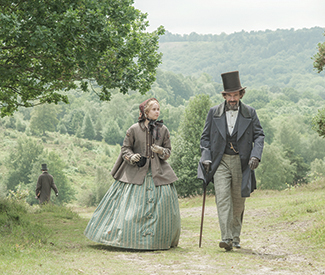
The Invisible Woman See “A Tale of Two.” (1:51) Embarcadero.

The Legend of Hercules Renny Harlin rises from the dead to direct Twilight series hunk Kellan Lutz in this 3D, CG-laden retelling of you know which myth. (1:38)

Lone Survivor Peter Berg (2012’s Battleship, 2007’s The Kingdom) may officially be structuring his directing career around muscular tails of bad-assery. This true story follows a team of Navy SEALs on a mission to find a Taliban group leader in an Afghani mountain village. Before we meet the actors playing our real-life action heroes we see training footage of actual SEALs being put through their paces; it’s physical hardship structured to separate the tourists from the lifers. The only proven action star in the group is Mark Wahlberg — as Marcus Luttrell, who wrote the film’s source-material book. His funky bunch is made of heartthrobs and sensitive types: Taylor Kitsch (TV’s Friday Night Lights); Ben Foster, who last portrayed William S. Burroughs in 2013’s Kill Your Darlings but made his name as an officer breaking bad news gently to war widows in 2009’s The Messenger; and Emile Hirsch, who wandered into the wilderness in 2007’s Into the Wild. We know from the outset who the lone survivors won’t be, but the film still manages to convey tension and suspense, and its relentlessness is stunning. Foster throws himself off a cliff, bounces off rocks, and gets caught in a tree — then runs to his also-bloody brothers to report, “That sucked.” (Yesterday I got a paper cut and tweeted about it.) But the takeaway from this brutal battle between the Taliban and America’s Real Heroes is that the man who lived to tell the tale also offers an olive branch to the other side — this survivor had help from the non-Taliban locals, a last-act detail that makes Lone Survivor this Oscar season’s nugget of political kumbaya. (2:01) (Vizcarrondo)

Liv and Ingmar You wouldn’t expect anything less than soul-scorching intimacy from a documentary on the relationship of acting icon Liv Ullmann and moviemaking maestro Ingmar Bergman. And Dheeraj Akolkar satisfies with the help of plentiful clips from Bergman’s filmography, disarmingly frank interviews with Ullmann, behind-the-scenes footage, and grainy images of and excerpts from letters and memoirs by Bergman. Ullmann was the unforgettable face and inspiration for Persona (1966) and other Bergman classics; he was her director, mentor, and teacher; and they were brought together by film and remained drawn to each other despite the scandal of their respective spouses. Their at-first-happy then increasingly jealously-filled and isolated life is translated into intensely personal, searing visions like Shame (1968), which sparks at least one close-to-the-bone anecdote from Ullmann. She shows Akolkar photos of a bundled-up Bergman in a boat beside a vessel carrying an underdressed, freezing Ullmann and Max Von Sydow. “He was really angry that day,” she recounts. “You ask if he was ever cruel to me. This time, he was really cruel. I hated him so much and I was planning to leave him.” Some might criticize Akolkar for his loose hand with the couple’s story and his heavy reliance on invaluable Bergman works like 1973’s Scenes From a Marriage — no dates or clues to the films or productions used are given until the credits roll — but more irksome are the sentimental montages, “reenactments,” and score: one can picture Bergman convulsed in the beyond during the most saccharine moments. Liv and Ingmar‘s strength is the woman at its center. Revealing mementos from her “dearest Pingmar,” as well as unguarded glimpses into her heart, the almost achingly sincere Ullmann gets the last word here, as befits a survivor and an actress who never hesitated to let the camera see every emotion flitting across her lush features — making this doc less about Ingmar and the specifics of his career, and more about Liv and her still living, breathing emotional life. (1:23) Opera Plaza. (Chun)

ONGOING

American Hustle David O. Russell’s American Hustle is like a lot of things you’ve seen before — put in a blender, so the results are too smooth to feel blatantly derivative, though here and there you taste a little Boogie Nights (1997), Goodfellas (1990), or whatever. Loosely based on the Abscam FBI sting-scandal of the late 1970s and early ’80s (an opening title snarks “Some of this actually happened”), Hustle is a screwball crime caper almost entirely populated by petty schemers with big ideas almost certain to blow up in their faces. It’s love, or something, at first sight for Irving Rosenfeld (Christian Bale) and Sydney Prosser (Amy Adams), who meet at a Long Island party circa 1977 and instantly fall for each other — or rather for the idealized selves they’ve both strained to concoct. He’s a none-too-classy but savvy operator who’s built up a mini-empire of variably legal businesses; she’s a nobody from nowhere who crawled upward and gave herself a bombshell makeover. The hiccup in this slightly tacky yet perfect match is Irving’s neglected, crazy wife Rosalyn (Jennifer Lawrence), who’s not about to let him go. She’s their main problem until they meet Richie DiMaso (Bradley Cooper), an ambitious FBI agent who entraps the two while posing as a client. Their only way out of a long prison haul, he says, is to cooperate in an elaborate Atlantic City redevelopment scheme he’s concocted to bring down a slew of mafioso and presumably corrupt politicians, hustling a beloved Jersey mayor (Jeremy Renner) in the process. Russell’s filmmaking is at a peak of populist confidence it would have been hard to imagine before 2010’s The Fighter, and the casting here is perfect down to the smallest roles. But beyond all clever plotting, amusing period trappings, and general high energy, the film’s ace is its four leads, who ingeniously juggle the caricatured surfaces and pathetic depths of self-identified “winners” primarily driven by profound insecurity. (2:17) Four Star, Marina, Metreon, 1000 Van Ness, Presidio, Sundance Kabuki. (Harvey)

Anchorman 2: The Legend Continues Look, I fully understand that Anchorman 2: The Legend Continues — which follows the awkward lumberings of oafish anchor Ron Burgundy (Will Ferrell) and his equally uncouth team (Paul Rudd, Steve Carell, David Koechner) as they ditch San Diego in favor of New York’s first 24-hour news channel, circa 1980 — is not aimed at film critics. It’s silly, it’s tasteless, and it’s been crafted purely for Ferrell fans, a lowbrow army primed to gobble up this tale of Burgundy’s national TV rise and fall (and inevitable redemption), with a meandering storyline that includes chicken-fried bat, a pet shark, an ice-skating sequence, a musical number, epic amounts of polyester, lines (“by the bedpan of Gene Rayburn!”) that will become quoteable after multiple viewings, and the birth of infotainment as we know it. But what if a film critic happened to be a Ferrell fan, too? What if, days later, that film critic had a flashback to Anchorman 2‘s amplified news-crew gang war (no spoilers), and guffawed at the memory? I am fully aware that this ain’t a masterpiece. But I still laughed. A lot. (1:59) Four Star, Marina, Metreon, 1000 Van Ness. (Eddy)

Blue is the Warmest Color The stars (Adèle Exarchopoulos and Léa Seydoux) say the director was brutal. The director says he wishes the film had never been released (but he might make a sequel). The graphic novelist is uncomfortable with the explicit 10-minute sex scene. And most of the state of Idaho will have to wait to see the film on Netflix. The noise of recrimination, the lesser murmur of backpedaling, and a difficult-to-argue NC-17 rating could make it harder, as French director Abdellatif Kechiche has predicted, to find a calm, neutral zone in which to watch Blue is the Warmest Color, his Palme d’Or–winning adaptation (with co-writer Ghalya Lacroix) of Julie Maroh’s 2010 graphic novel Le Blue Est une Couleur Chaude. But once you’ve committed to the three-hour runtime, it’s not too difficult to tune out all the extra noise and focus on a film that trains its mesmerized gaze on a young woman’s transforming experience of first love. (2:59) Opera Plaza. (Rapoport)

Blue Jasmine The good news about Blue Jasmine isn’t that it’s set in San Francisco, but that it’s Woody Allen’s best movie in years. Although some familiar characteristics are duly present, it’s not quite like anything he’s done before, and carries its essentially dramatic weight more effectively than he’s managed in at least a couple decades. Not long ago Jasmine (a fearless Cate Blanchett) was the quintessential Manhattan hostess, but that glittering bubble has burst — exactly how revealed in flashbacks that spring surprises up to the script’s end. She crawls to the West Coast to “start over” in the sole place available where she won’t be mortified by the pity of erstwhile society friends. That would be the SF apartment of Ginger (Sally Hawkins), a fellow adoptive sister who was always looked down on by comparison to pretty, clever Jasmine. Theirs is an uneasy alliance — but Ginger’s too big-hearted to say no. It’s somewhat disappointing that Blue Jasmine doesn’t really do much with San Francisco. Really, the film could take place anywhere — although setting it in a non-picture-postcard SF does bolster the film’s unsettled, unpredictable air. Without being an outright villain, Jasmine is one of the least likable characters to carry a major US film since Noah Baumbach’s underrated Margot at the Wedding (2007); the general plot shell, moreover, is strongly redolent of A Streetcar Named Desire. But whatever inspiration Allen took from prior works, Blue Jasmine is still distinctively his own invention. It’s frequently funny in throwaway performance bits, yet disturbing, even devastating in cumulative impact. (1:38) Opera Plaza. (Harvey)

Dallas Buyers Club Dallas Buyers Club is the first all-US feature from Jean-Marc Vallée. He first made a splash in 2005 with C.R.A.Z.Y., which seemed an archetype of the flashy, coming-of-age themed debut feature. Vallée has evolved beyond flashiness, or maybe since C.R.A.Z.Y. he just hasn’t had a subject that seemed to call for it. Which is not to say Dallas is entirely sober — its characters partake from the gamut of altering substances, over-the-counter and otherwise. But this is a movie about AIDS, so the purely recreational good times must eventually crash to an end. Which they do pretty quickly. We first meet Ron Woodroof (Matthew McConaughey) in 1986, a Texas good ol’ boy endlessly chasing skirts and partying nonstop. Not feeling quite right, he visits a doctor, who informs him that he is HIV-positive. His response is “I ain’t no faggot, motherfucker” — and increased partying that he barely survives. Afterward, he pulls himself together enough to research his options, and bribes a hospital attendant into raiding its trial supply of AZT for him. But Ron also discovers the hard way what many first-generation AIDS patients did — that AZT is itself toxic. He ends up in a Mexican clinic run by a disgraced American physician (Griffin Dunne) who recommends a regime consisting mostly of vitamins and herbal treatments. Ron realizes a commercial opportunity, and finds a business partner in willowy cross-dresser Rayon (Jared Leto). When the authorities keep cracking down on their trade, savvy Ron takes a cue from gay activists in Manhattan and creates a law evading “buyers club” in which members pay monthly dues rather than paying directly for pharmaceutical goods. It’s a tale that the scenarists (Craig Borten and Melisa Wallack) and director steep in deep Texan atmospherics, and while it takes itself seriously when and where it ought, Dallas Buyers Club is a movie whose frequent, entertaining jauntiness is based in that most American value: get-rich-quick entrepreneurship. (1:58) Sundance Kabuki. (Harvey)

47 Ronin (2:00) Metreon, 1000 Van Ness.

Frozen (1:48) Metreon, 1000 Van Ness.

Gravity “Life in space is impossible,” begins Gravity, the latest from Alfonso Cuarón (2006’s Children of Men). Egghead Dr. Ryan Stone (Sandra Bullock) is well aware of her precarious situation after a mangled satellite slams into her ship, then proceeds to demolition-derby everything (including the International Space Station) in its path. It’s not long before she’s utterly, terrifyingly alone, and forced to unearth near-superhuman reserves of physical and mental strength to survive. Bullock’s performance would be enough to recommend Gravity, but there’s more to praise, like the film’s tense pacing, spare-yet-layered script (Cuarón co-wrote with his son, Jonás), and spectacular 3D photography — not to mention George Clooney’s warm supporting turn as a career astronaut who loves country music almost as much as he loves telling stories about his misadventures. (1:31) Metreon. (Eddy)

The Great Beauty The latest from Paolo Sorrentino (2008’s Il Divo) arrives as a high-profile contender for the Best Foreign Language Film Oscar, already annointed a masterpiece in some quarters, and duly announcing itself as such in nearly every grandiose, aesthetically engorged moment. Yes, it seems to say, you are in the presence of this auteur’s masterpiece. But it’s somebody else’s, too. The problem isn’t just that Fellini got there first, but that there’s room for doubt whether Sorrentino’s homage actually builds on or simply imitates its model. La Dolce Vita (1960) and 8 1/2 (1963) are themselves swaying, jerry-built monuments, exhileratingly messy and debatably profound. But nothing quite like them had been seen before, and they did define a time of cultural upheaval — when traditional ways of life were being plowed under by a loud, moneyed, heedless modernity that for a while chose Rome as its global capital. Sorrentino announces his intention to out-Fellini Fellini in an opening sequence so strenuously flamboyant it’s like a never-ending pirouette performed by a prima dancer with a hernia. There’s statuary, a women’s choral ensemble, an on-screen audience applauding the director’s baffled muse Toni Servillo, standing in for Marcello Mastroianni — all this and more in manic tracking shots and frantic intercutting, as if sheer speed alone could supply contemporary relevancy. Eventually The Great Beauty calms down a bit, but still its reason for being remains vague behind the heavy curtain of “style.” (2:22) Opera Plaza. (Harvey)

Grudge Match If the prospect of watching Rocky go glove-to-glove with Jake LaMotta sounds either tired or exploitive, Grudge Match wants to change your mind. A comedy that delivers a decent bout inside the ring and a worthwhile message about fulfilling your potential at every age, Grudge Match is 100 percent feel-good movie, 100 percent of the time. Yes, the publicity campaign contrived by Kevin Hart’s promoter character is embarrassing. Yes, Alan Arkin plays yet another foul-mouthed curmudgeon. And yes, the boxers have a torn family this match could heal (though fighting threatens to kill them both). But the takeaway is an all-ages lesson our elders are most qualified to teach: having guts is pretty glorious. And at 68 and 70, Sylvester Stallone and Robert De Niro seem delighted to lampoon past greatness. “Kid” (DeNiro) does a puppet show that’s less pathos-filled than the poetry he spouted in 1980’s Raging Bull; the training montages “Razor” (Stallone) slogs through naturally recall 1976’s Rocky. But Grudge Match is about today — not yesterday. Alongside Gravity and The Wolf of Wall Street, Grudge Match is yet another populist lovefest throwaway, but who cares? Few have cornered the market on audience affection like Stallone, and he’s helped De Niro find that love too. (1:53) Metreon. (Vizcarrondo)

Her Morose and lonely after a failed marriage, Theodore (Joaquin Phoenix) drifts through an appealingly futuristic Los Angeles (more skyscrapers, less smog) to his job at a place so hipster-twee it probably will exist someday: beautifulhandwrittenletters.com, where he dictates flowery missives to a computer program that scrawls them onto paper for paying customers. Theodore’s scripting of dialogue between happy couples, as most of his clients seem to be, only enhances his sadness, though he’s got friends who care about him (in particular, Amy Adams as Amy, a frumpy college chum) and he appears to have zero money woes, since his letter-writing gig funds a fancy apartment equipped with a sweet video-game system. Anyway, women are what gives Theodore trouble — and maybe by extension, writer-director Spike Jonze? — so he seeks out the ultimate gal pal: Samantha, an operating system voiced by Scarlett Johansson in the year’s best disembodied performance. Thus begins a most unusual relationship, but not so unusual; Theodore’s friends don’t take any issue with the fact that his new love is a machine. Hey, in Her‘s world, everyone’s deeply involved with their chatty, helpful, caring, always-available OS — why wouldn’t Theo take it to the next level? Inevitably, of course, complications arise. If Her‘s romantic arc feels rather predictable, the film acquits itself in other ways, including boundlessly clever production-design touches that imagine a world with technology that’s (mostly) believably evolved from what exists today. Also, the pants they wear in the future? Must be seen to be believed. (2:00) Presidio, SF Center. (Eddy)

The Hobbit: The Desolation of Smaug Just when you’d managed to wipe 2012’s unwieldy The Hobbit: An Unexpected Journey from your mind, here comes its sequel — and it’s actually good! Yes, it’s too long (Peter Jackson wouldn’t have it any other way); arachnophobes (and maybe small children) will have trouble with the creepy, giant-spider battle; and Orlando Bloom, reprising his Lord of the Rings role as Legolas the elf, has been CG’d to the point of looking like he’s carved out of plastic. But there’s much more to enjoy this time around, with a quicker pace (no long, drawn-out dinner parties); winning performances by Martin Freeman (Bilbo), Ian McKellan (Gandalf); and Benedict Cumberbatch (as the petulent voice of Smaug the dragon); and more shape to the quest, as the crew of dwarves seeks to reclaim their homeland, and Gandalf pokes into a deeper evil that’s starting to overtake Middle-earth. (We all know how that ends.) In addition to Cumberbatch, the cast now includes Lost‘s Evangeline Lilly as elf Tauriel, who doesn’t appear in J.R.R. Tolkien’s original story, but whose lady-warrior presence is a welcome one; and Luke Evans as Bard, a human poised to play a key role in defeating Smaug in next year’s trilogy-ender, There and Back Again. (2:36) Balboa, Metreon, 1000 Van Ness, Sundance Kabuki. (Eddy)

The Hunger Games: Catching Fire Before succumbing to the hot and heavy action inside the arena (intensely directed by Francis Lawrence) The Hunger Games: Catching Fire force-feeds you a world of heinous concept fashions that’d make Lady Gaga laugh. But that’s ok, because the second film about one girl’s epic struggle to change the world of Panem may be even more exciting than the first. Suzanne Collins’ YA novel The Hunger Games was an over-literal metaphor for junior high social survival and the glory of Catching Fire is that it depicts what comes after you reach the cool kids’ table. Katniss (Jennifer Lawrence) inspired so much hope among the 12 districts she now faces pressures from President Snow (a portentous Donald Sutherland) and the fanatical press of Capital City (Stanley Tucci with big teeth and Toby Jones with big hair). After she’s forced to fake a romance with Peeta (Josh Hutcherson), the two watch with horror as they’re faced with a new Hunger Game: for returning victors, many of whom are too old to run. Amanda Plummer and Jeffrey Wright are fun as brainy wackjobs and Jena Malone is hilariously Amazonian as a serial axe grinder still screaming like an eighth grader. Inside the arena, alliances and rivalries shift but the winner’s circle could survive to see another revolution; to save this city, they may have to burn it down. (2:26) Metreon, 1000 Van Ness, Sundance Kabuki. (Vizcarrondo)

I Am Divine Bringing joy to a lot of people during his too-brief life was Glenn Milstead, the subject of Jeffrey Schwarz’s I Am Divine. A picked-on sissy fat kid, he blossomed upon discovering Baltimore’s gay underground — and starring in neighbor John Waters’ underground movies, made by and for the local “freak” scene they hung out in. Yet even their early efforts found a following; when “Divine” appeared in SF to perform at one of the Cockettes’ midnight movie/theater happenings, he was greeted as a star. This was before his greatest roles for Waters, as the fearsome anti-heroines of Pink Flamingos (1972) and Female Trouble (1974), then the beleaguered hausfraus of Polyester (1981) and Hairspray (1988). Despite spending nearly his entire career in drag, he wanted to be thought of as a character actor, not a “transvestite” novelty. Sadly, he seemed on the verge of achieving that — having been signed to play an ongoing male role on Married … with Children — when he died of respiratory failure in 1988, at age 42. (1:25) Roxie. (Harvey)

Inside Llewyn Davis In the Coen Brothers’ latest, Oscar Isaac as the titular character is well on his way to becoming persona non grata in 1961 NYC — particularly in the Greenwich Village folk music scene he’s an ornery part of. He’s broke, running out of couches to crash on, has recorded a couple records that have gone nowhere, and now finds out he’s impregnated the wife (Carey Mulligan) and musical partner of one among the few friends (Justin Timberlake) he has left. She’s furious with herself over this predicament, but even more furious at him. This ambling, anecdotal tale finds Llewyn running into one exasperating hurdle after another as he burns his last remaining bridges, not just in Manhattan but on a road trip to Chicago undertaken with an overbearing jazz musician (John Goodman) and his enigmatic driver (Garrett Hedlund) to see a club impresario (F. Murray Abraham). This small, muted, droll Coens exercise is perfectly handled in terms of performance and atmosphere, with pleasures aplenty in its small plot surprises, myriad humorous idiosyncrasies, and T. Bone Burnett’s sweetened folk arrangements. But whether it actually has anything to say about its milieu (a hugely important Petri dish for later ’60s political and musical developments), or adds up to anything more profound than an beautifully executed shaggy-dog story, will be a matter of personal taste — or perhaps of multiple viewings. (1:45) Embarcadero, Sundance Kabuki. (Harvey)

Mandela: Long Walk to Freedom As tough as it is to separate the man from the monument, Idris Elba, Naomie Harris, director Justin Chadwick manage it in this cinematic rendering of Nelson Mandela’s autobiography — perfectly if unintentionally timed, all us cynics recognize, to coincide with the sad passing of the father of the modern South Africa. Chadwick starts slow, and somewhat chaotically, by quickly sketching out Mandela’s relatively wild youth, with plenty of women and clubbing and few specifics on particulars like, say, the fact that he established the first black law firm in South Africa. So when Mandela finally joins forces with the ANC, you wonder at his sudden radicalization — the context is taken for granted. Not so when Mandela is sentenced to life in prison and he turns into an international symbol of anti-apartheid injustice, and the white authorities turn desperately to him for ways to quell a country erupting in violence. Meanwhile wife Winnie (a surprisingly fiery Harris) gets her just share of screen time as Chadwick concentrates on the couple’s romance and marriage. She’s also offered ample reason for her promotion of violence in the struggle when she’s harassed by the police and put in solitary confinement for more than a year, for no cause. Here the Mandelas come to conveniently embody polar opposite approaches in the movement, and it works, as Chadwick attempts to show how political the personal became. When Mandela’s amazing story takes over, it blows away reservations and inconvenient codas, and remembers the leader at his most triumphant. As the film’s iconic lead character, Elba at first seems physically miscast, but nevertheless effortlessly projects Mandela’s authority, gravitas, and charisma. (2:26) 1000 Van Ness, SF Center. (Chun)

Nebraska Alexander Payne may be unique at this point in that he’s in a position of being able to make nothing but small, human, and humorous films with major-studio money on his own terms. It’s hazardous to make too much of a movie like Nebraska, because it is small — despite the wide Great Plains landscapes shot in a wide screen format — and shouldn’t be entered into with overinflated or otherwise wrong-headed expectations. Still, a certain gratitude is called for. Nebraska marks the first time Payne and his writing partner Jim Taylor weren’t involved in the script, and the first one since their 1996 Citizen Ruth that isn’t based on someone else’s novel. (Hitherto little-known Bob Nelson’s original screenplay apparently first came to Payne’s notice a decade ago, but getting put off in favor of other projects.) It could easily have been a novel, though, as the things it does very well (internal thought, sense of place, character nuance) and the things it doesn’t much bother with (plot, action, dialogue) are more in line with literary fiction than commercial cinema. Elderly Woody T. Grant (Bruce Dern) keeps being found grimly trudging through snow and whatnot on the outskirts of Billings, Mont., bound for Lincoln, Neb. Brain fuzzed by age and booze, he’s convinced he’s won a million dollars and needs to collect it him there, though eventually it’s clear that something bigger than reality — or senility, even — is compelling him to make this trek. Long-suffering younger son David (Will Forte) agrees to drive him in order to simply put the matter to rest. This fool’s mission acquires a whole extended family-full of other fools when father and son detour to the former’s podunk farming hometown. Nebraska has no moments so funny or dramatic they’d look outstanding in excerpt; low-key as they were, 2009’s Sideways and 2011’s The Descendants had bigger set pieces and narrative stakes. But like those movies, this one just ambles along until you realize you’re completely hooked, all positive emotional responses on full alert. (1:55) Embarcadero. (Harvey)

Paranormal Activity: The Marked Ones (1:24) Metreon, 1000 Van Ness.

The Past Splits in country, culture, and a harder-to-pinpoint sense of morality mark The Past, the latest film by Asghar Farhadi, the first Iranian moviemaker to win an Oscar (for 2011’s A Separation.) At the center of The Past‘s onion layers is a seemingly simple divorce of a binational couple, but that act becomes more complicated — and startlingly compelling — in Farhadi’s capable, caring hands. Ahmad (Ali Mosaffa) has returned to Paris from Tehran, where he’s been living for the past four years, at the request of French wife Marie (Bérénice Bejo of 2011’s The Artist). She wants to legalize their estrangement so she can marry her current boyfriend, Samir (Tahar Rahim of 2009’s A Prophet), whose wife is in a coma. But she isn’t beyond giving out mixed messages by urging Ahmad to stay with her, and her daughters by various fathers, rather than at a hotel — and begging him to talk to teen Lucie (Pauline Burlet), who seems to despise Samir. The warm, nurturing Ahmad falls into his old routine in Marie’s far-from-picturesque neighborhood, visiting a café owned by fellow Iranian immigrants and easily taking over childcare duties for the overwhelmed Marie, as he tries to find out what’s happening with Lucie, who’s holding onto a secret that could threaten Marie’s efforts to move on. The players here are all wonderful, in particular the sad-faced, humane Mosaffa. We never really find out what severed his relationship with Marie, but in the end, it doesn’t really matter. We care about, and end up fearing for, all of Farhadi’s everyday characters, who are observed with a tender and unsentimental understanding that US filmmakers could learn from. The effect, when he finally racks focus on the forgotten member of this triangle (or quadrilateral?), is heartbreaking. (2:10) Clay, Smith Rafael. (Chun)

Philomena Judi Dench gives this twist on a real-life scandal heart, soul, and a nuanced, everyday heft. Her ideal, ironic foil is Steve Coogan, playing an upper-crusty irreverent snob of an investigative journalist. Judging by her tidy exterior, Dench’s title character is a perfectly ordinary Irish working-class senior, but she’s haunted by the past, which comes tumbling out one day to her daughter: As an unwed teenager, she gave birth to a son at a convent. She was forced to work there, unpaid; as supposed penance, the baby was essentially sold to a rich American couple against her consent. Her yarn reaches disgraced reporter Martin Sixsmith (Coogan), who initially turns his nose up at the tale’s piddling “human interest” angle, but slowly gets drawn in by the unexpected twists and turns of the story — and likely the possibility of taking down some evil nuns — as well as seemingly naive Philomena herself, with her delight in trash culture, frank talk about sex, and simple desire to see her son and know that he thought, once in a while, of her. It turns out Philomena’s own sad narrative has as many improbable turnarounds as one of the cheesy romance novels she favors, and though this unexpected twosome’s quest for the truth is strenuously reworked to conform to the contours of buddy movie-road trip arc that we’re all too familiar with, director Stephen Frears’ warm, light-handed take on the gentle class struggles going on between the writer and his subject about who’s in control of the story makes up for Philomena‘s determined quest for mass appeal. (1:35) Embarcadero, Sundance Kabuki. (Chun)

Saving Mr. Banks Having promised his daughters that he would make a movie of their beloved Mary Poppins books, Walt Disney (Tom Hanks) has laid polite siege to author P.L. Travers (Emma Thompson) for over 20 years. Now, in the early 1960s, she has finally consented to discuss the matter in Los Angeles — albeit with great reluctance, and only because royalty payments have dried up to the point where she might have to sell her London home. Bristling at being called “Pam” and everything else in this sunny SoCal and relentlessly cheery Mouse House environ, the acidic English spinster regards her creation as sacred. The least proposed changes earn her horrified dismissal, and the very notion of having Mary and company “prancing and chirping” out songs amid cartoon elements is taken as blasphemy. This clash of titans could have made for a barbed comedy with satirical elements, but god forbid this actual Disney production should get so cheeky. Instead, we get the formulaically dramatized tale of a shrew duly tamed by all-American enterprise, with flashbacks to the inevitable past traumas (involving Colin Farrell as a beloved but alcoholic ne’er-do-well father) that require healing of Travers’ wounded inner child by the magic of the Magic Kingdom. If you thought 2004’s Finding Neverland was contrived feel-good stuff, you’ll really choke on the spoons full of sugar force-fed here. (2:06) Balboa, 1000 Van Ness, Presidio, SF Center. (Harvey)

The Secret Life of Walter Mitty Walter Mitty (Ben Stiller) works at the Life magazine archives, where the world’s greatest photojournalists send him images of their extraordinary adventures. Walter lives vicariously. When he imagines his office crush (Kristen Wiig) trapped in a burning building, his inner superhero arrests his faculties and sends him flying through windows, racing up stairs to liberate children from their flaming homes. It’s all a fantasy, of course: the man works in a basement with pictures and George Bailey-styled dreams of travel, what does he have but his imagination to keep him warm? Turns out his workplace is planning to kill off its print edition and become LifeOnline — so facing the end of Life, and imminent quiet desperation, this office-mouse is tasked with delivering the last cover the magazine will ever have. But frame 25 on the contact sheet — the one the magazine’s star photog (Sean Penn) calls “The Quintessence of Life” — is blank. Instead of crying defeat, Walter goes on a hunt for the photographer, his avatar of rugged outdoorsmanship, and the realization of his dreams of adventure. It’s liberating to watch him take risks — Stiller says years of watching Danny Kaye movies (Kaye starred in the 1947 adaptation of James Thurber’s short story) inspired the awkwardly balletic gestures of roving, frightened, ultimately exuberant Walter. The film, which Stiller also directed, is ultimately a dreamy parable about getting caught up in imagination — or just confusing images for real life — both of which feel timely in a world where libraries are cyberplaces and you can play “tennis” in front of your couch. The kind of guy who thought the biggest threat was making the first move, Walter learns differently when he takes actual risks: there is magic in this. (2:05) 1000 Van Ness, SF Center, Sundance Kabuki. (Vizcarrondo)

A Touch of Sin This bleak, gritty latest from Jia Zhangke (2004’s The World) is said to be based on actual incidents of violence in China. The writer-director also drew inspiration — as the title suggests — from King Hu’s martial arts epic A Touch of Zen (1971). And despite some scattered Buddhist references, sin — delivered in heavy doses, hardly just “a touch” — reigns over zen in the film’s four barely connected stories. Before the credits finish rolling, we’ve witnessed a stone-faced man in a Chicago Bulls beanie (Wang Baoqiang) respond to a trio of roadside muggers with a hail of bullets. Is he a vigilante, or did the robbers just mess with the wrong motorcyclist? Next, we visit “Black Gold Mountain,” site of a coal mine whose profits have been funneled into the pockets of its obscenely rich owner and the corrupt local village chief, who’s prone to put-downs like “You’ll be a loser all your life.” On the receiving end of that insult is worker Dahai (the magnetic Wu Jiang), a human pressure cooker of rage and resentment. Later, we pick up the thread of the man in the Bulls hat. He’s a migrant worker, traveling home to a mother who ignores him and a wife who insists “I don’t want your money.” Another fractured family appears in the film’s next chapter, as a woman (Zhao Tao, Jia’s wife and muse) gives her married boyfriend an ultimatum. As the man’s train rumbles away (A Touch of Sin’s characters are constantly in motion: trains, buses, motorcycles, riding in the backs of trucks, etc.), she travels to her job, working the front desk at “Nightcomer Sauna,” as unglamorous a joint as the name suggests. When a pair of wealthy customers decide she’s on the menu (“I’ll smother you with money, bitch!”), she’s forced to defend herself, with blood-drenched consequences. In the film’s final segment, we follow a young man drifting between jobs, finally settling into soul-stifling tech-gadget factory work. That his company housing is dubbed the “Oasis of Prosperity” would be funny, if it wasn’t so depressing. In A Touch of Sin‘s final scene, the film’s one potentially salvageable character passes by an opera being performed in the street. “Do you understand your sin?” the singer warbles. The character pauses, remembering what happened — and why it had to happen. So do we. And yes, we understand. (2:13) Roxie, Smith Rafael. (Eddy)

12 Years a Slave Pop culture’s engagement with slavery has always been uneasy. Landmark 1977 miniseries Roots set ratings records, but the prestigious production capped off a decade that had seen some more questionable endeavors, including 1975 exploitation flick Mandingo — often cited by Quentin Tarantino as one of his favorite films; it was a clear influence on his 2012 revenge fantasy Django Unchained, which approached its subject matter in a manner that paid homage to the Westerns it riffed on: with guns blazing. By contrast, Steve McQueen’s 12 Years a Slave is nuanced and steeped in realism. Though it does contain scenes of violence (deliberately captured in long takes by regular McQueen collaborator Sean Bobbitt, whose cinematography is one of the film’s many stylistic achievements), the film emphasizes the horrors of “the peculiar institution” by repeatedly showing how accepted and ingrained it was. Slave is based on the true story of Solomon Northup, an African American man who was sold into slavery in 1841 and survived to pen a wrenching account of his experiences. He’s portrayed here by the powerful Chiwetel Ejiofor. Other standout performances come courtesy of McQueen favorite Michael Fassbender (as Epps, a plantation owner who exacerbates what’s clearly an unwell mind with copious amounts of booze) and newcomer Lupita Nyong’o, as a slave who attracts Epps’ cruel attentions. (2:14) Embarcadero. (Eddy)

Walking With Dinosaurs Like hungry, fast-moving Chirostenotes, movieland has a habit of poaching from all comers, be it a toy, video game, or here, a hugely successful 1999 BBC documentary miniseries of the same name. This 3D hamburger version of the award-winning six-parter plays to dinos’ most avid audience, traditionally — kids — by anthropomorphizing runt Pachyrhinosaurus, otherwise known as Patchi (voiced by Justin Long), as the scrappy young hero of this adventure and dramatizing life-and-death migrations his herd undertakes each year as rites of passage. Framing the adventure is a present-day dig with archaeologist Zack (Karl Urban), his skeptical nephew (Charlie Rowe), and gung-ho niece (Angourie Rice). With a broken 70 million-year-old tooth in hand — and with help from prehistoric Alexomis bird Alex (John Leguizamo, who provides most of the levity), we learn about Patchi, his brother Scowler (Skyler Stone), and their herd of horned, thick-noised lizards as they make their way south for winter and back, encountering multiple dangers and predators, as well as let’s-make-a-family delights in the form of young female Juniper (Tiya Sircar) along with way. Count on the CGI to be seamless, the 3D to come in handy when it comes to incoming Quetzalcoatlus, and the choice of not having the lizards’ lips move as they speak to seem tasteful and wise — especially when it comes dubbing for a global audience. (1:27) Metreon. (Chun)

The Wolf of Wall Street Three hours long and breathless from start to finish, Martin Scorsese’s tale of greed, stock-market fraud, and epic drug consumption has a lot going on — and the whole thing hinges on a bravado, breakneck performance by latter-day Scorsese muse Leonardo DiCaprio. As real-life sleaze Jordan Belfort (upon whose memoir the film is based), he distills all of his golden DiCaprio-ness into a loathsome yet maddeningly likable character who figures out early in his career that being rich is way better than being poor, and that being fucked-up is, likewise, much preferable to being sober. The film also boasts keen supporting turns from Jonah Hill (as Belfort’s crass, corrupt second-in-command), Matthew McConaughey (who has what amounts to a cameo — albeit a supremely memorable one — as Belfort’s coke-worshiping mentor), Jean Dujardin (as a slick Swiss banker), and newcomer Margot Robbie (as Belfort’s cunning trophy wife). But this is primarily the Leo and Marty Show, and is easily their most entertaining episode to date. Still, don’t look for an Oscar sweep: Scorsese just hauled huge for 2011’s Hugo, and DiCaprio’s flashy turn will likely be passed over by voters more keen on honoring subtler work in a shorter film. (2:59) 1000 Van Ness, SF Center, Sundance Kabuki, Vogue. (Eddy) *


A tale of two

0

arts@sfbg.com


FILM No one reads Uncle Tom’s Cabin today — Harriet Beecher Stowe’s enormously popular novel that almost single-handedly tilted public opinion against slavery enough to support the Civil War — for anything but historical-footnote interest. Yet fellow 19th-century celebrity author Charles Dickens, who had nearly as direct and significant a reformist influence across the Atlantic, is still ubiquitous.

Dickens fairs and staged versions of A Christmas Carol are annual rituals; even people who’ve never read the books or seen the umpteen movie versions recognize the titles Oliver Twist and Great Expectations. As with (the very different) Jane Austen, Dickens still delights in the realms of rich characterization, absorbing narratives, and re-readability — qualities that are very much the same ones his original readers adored.

The thread of social critique to his work comes through less strongly today, when we’re more accustomed to brute realism. Indeed, Dickens can seem too genteel in his descriptions of squalor and suffering — like Stowe, he wrote in an era when an author could be dismissed as “vulgar” for rendering unpleasant matters too vividly unpleasant. (God forbid he or she should do more than faintly imply the existence of prostitution, for instance.) Dickens was a regular scold of the British class system and its repercussions, particularly the gentry’s general acceptance that poverty was something the bottom rung of society was suited for, perhaps even deserved. Beyond expressing indignation in fiction, he lectured, petitioned Parliament, sponsored charities, and personally co-founded a home for the rehabilitation of “fallen women.”

Given how many in positions of power would have preferred such issues go ignored, it was all the more important their highest-profile advocate be of unimpeachable “moral character” — which in the Victorian era meant a very high standard of conduct indeed. So it remains remarkable that in long married middle-age he heedlessly risked scandal and possible career-ruin by taking on a much younger mistress. Both she and he eventually burned all their mutual correspondence, so Claire Tomalin’s biography The Invisible Woman is partly a speculative work. But it and now Ralph Fiennes’ film of the same name are fascinating glimpses into the clash between public life and private passion in that most judgmentally prudish of epochs.

Framed by scenes of its now-married, still-secretive heroine several years after the central events, the movie introduces us to a Dickens (Fiennes) who at mid-career is already the most famous and popular man in the UK, with an enormous readership well beyond its shores. In his lesser-remembered capacity as a playwright and director, at age 45 (in 1857) he hired 18-year-old actress Nelly Ternan (Felicity Jones) for an ingénue role. He was instantly smitten; she was, at the least, awed by this great man’s attention. Their professional association permitted some further contact without generating much gossip. But eventually Dickens chafed at the restraints necessary to avoid scandal — no matter the consequences to himself, let alone his wife, his 10 (!) children, or Ternan herself.

Fiennes, by all accounts an exceptional Shakespearean actor on stage, made a strong directorial debut a couple years ago with that guy’s war play Coriolanus (2011) — a movie that, like this one, wasn’t enough of a conventional prestige film or crowd-pleaser to surf the awards-season waves very long. But they’re both films of straightforward confidence, great intelligence, and unshowy good taste that extends to avoiding any vanity project whiff.

By the standards of most modern movies set in this era, Invisible Woman is perhaps a little too measured, melancholy, not “romantic” or sumptuous enough. It’s not a feel-good costume drama, despite having most of the ingredients for that (famous people, star-crossed love, etc.) Like Coriolanus, it’s a bit somber, thinky, and vigorously unsentimental.

Fiennes (who purportedly only took the role after another actor he’d cast dropped out) is very good as usual. You could put together an extraordinary retrospective of roles he’s played onscreen so far (and a dismaying smaller one of the few he was flat-out wrong in, mostly incongruous mainstream duds like 2002’s Maid in Manhattan and 1998’s non-Marvel Avengers), yet few major actors have done so good a job of circumventing the attention they’ve earned. Jones is also fine, though the jury remains out on whether she’ll turn out an actress as interesting as she is polished (and pretty). She’s a little stiff here, a deliberate choice that nonetheless makes the film a few degrees less emotionally engaging.

The entire cast (also including Kristin Scott Thomas as Ternan’s cautiously approving actress mother, and Tom Hollander as the author Wilkie Collins) is impeccable. But in a quiet way the movie is almost stolen by Joanna Scanlan’s Mrs. Dickens — a great squat, stolid lump of a woman, like Queen Victoria herself, but painfully aware of her social and physical lacks.

One sequence that might seem invented and improbable is based on fact: Dickens cruelly made his by-now-wised-up wife deliver a present to his mistress, a means of asserting his ersatz blamelessness that could only acutely humiliate the two women who best knew otherwise. Even today, large women are so seldom portrayed as anything but nasty and/or comedic that Scanlan makes a striking impression simply for taking an important, non-stereotypical role here. But beyond that, her wounded dignity in the few scenes allowed her is heartbreaking. *

THE INVISIBLE WOMAN opens Fri/10 in San Francisco.

Bits and bots

0

marke@sfbg.com

CAREERS AND ED “When it comes to robots, there’s usually a kneejerk reaction about job loss. But the robotics field is also creating jobs. We haven’t had stagecoach drivers for a hundred years, but still the world has moved forward.” That’s Tim Smith, a robotics public relations expert — talk about robots creating new jobs — speaking to me over the phone from his Element PR home office in Bernal Heights, where he’s busy representing some of the most innovative robotics projects coming out of the Bay Area.

Smith has a gentle way (he’s no robot?) of putting the recent quantum-like advances in the robotics field into perspective — while also noting the limitations of the field. “One of the biggest challenges I face is overcoming the ‘creep factor’ that most people have when it comes to robots. There are different kinds of robots, different niches: industrial, military, personal. Most people, however, jump to a kind of malevolent science fiction combination of all three. And that’s understandable, considering how robots have been presented in the past.

“But really, personal robots are all around us. Thermostats are robots. Smoke alarms are robots,” Smith continues. “And despite people’s misgivings, they really do want the future, they do want science fiction. They want Rosie the Robot to do their laundry, clean the house. But right now, most personal robots do one thing extremely well. It’s when they’re asked to do two things that chaos breaks out. They need controlled environments. For instance, we have robots to clean your floors, but not one to clean your floors and wash your windows. Even Google’s driverless car needs to be in a certain kind of environment to function.

“So that’s what’s really held the industry from advancing. Meanwhile, though, on this side of that wall, there are some spectacular things being done to fine-tune and develop not just robots but the robotics field, including efforts to integrate robotics into daily life. You can see how far intelligent technology has come just by looking in your pocket.”

Smith took me on a tour of some of the Bay Area-based organizations and companies pushing those advances, including direct descendents of Willow Garage, the legendary Menlo Park robotics incubator started by Google developer Scott Hassan in 2006.


ROBOTSLAB BOX

Sure, math in high school was kind of a snoozefest. But what if your geometry class was taught by a box of robots? Yep, that might have you reaching for the protractor a bit more often.

RobotsLAB (www.robotslab.com) has created that box of robots, which is now in use in several schools. “The idea to create RobotsLAB BOX was born after spending hundreds of hours with educators, teachers, and administrators,” founder Elad Inbar told me by email. “The need for a population with basic STEM skills (science, technology, engineering, and mathematics) is imperative, yet we’ve heard over and over again that students don’t understand why they need to learn math, or where math’s core concepts such as linear and quadratic equations are applicable to their lives.

“As a result, they underperform in evaluations and can give up on meaningful careers. But the RobotsLAB BOX robots are serving in the classroom as a bridge between the concrete world we live in and and abstract math concepts.

“There are four robots in the RobotsLAB BOX: a quadcopter, a robotic arm, a rover with a mustache, and a robotic ball. The students love them all. They help teach everything from the law of cosines to the sum of vectors.”

RobotsLAB BOX even offers a STEM kit that guides you through the basics of robotics. Wait, does that mean a robot will actually teach you to build itself?


OPEN SOURCE ROBOTICS FOUNDATION

The Bay Area-based ROS (Robotics Operating System, www.ros.org) organization is a collection of programmers dedicated to advancing robotics development and application through collaborative coding and invention.

The Open Source Robotics Foundation (www.osrf.org) is the nonprofit in charge of overseeing the development of ROS. Basically this means that it helps make robotics coding something shareable and open to all who are interested (and who can gain the technical chops). OSRF also does things like participate in last year’s headline making DARPA Challenge, the awesome-looking, government-sponsored festival and competition aiming to push robotics to the next level, where it completed a challenge to build an open-source robot simulation environment.

“If you want to enter the world of robotics software coding,” advises Brian Gerkey, OSRF CEO, “some familiarity with Linux is helpful. But the best advice is to just dive in. There are tons of resources at ROS for all levels of expertise and a vibrant community ready to help.

“One of the challenges facing robotics is the multi-disciplinary nature of the field — hardware, software, vision, navigation, manipulation — and lots of math. But there are lots of ways for a young person to get started — things like the FIRST Robotics competition and the growing Maker community come to mind.”

To advance the cause of personal robotics containing open-source software, Gerkey is participating in a panel at the Commonwealth Club on Feb. 26 called “Robots in Unconventional Workplaces” (www.commonwealthclub.org).

“Everyone has their own idea of what a robot looks like and what it does, but in many cases those expectations derive from movies, books, and television shows. One of my goals is to help people picture robots in scenarios they never dreamed possible.”


UNBOUNDED ROBOTICS

“The simplest way to describe our UBR-1 robot is that it’s akin to an iPhone without any third party apps,” says Unbounded Robotics (www.unboundedrobotics.org) CEO Melonee Wise of the one-year-old company’s latest protoype.

“The robot, like the phone, is incredibly capable and sophisticated, but the real value comes from what developers are able to add to the platform. For that reason, the practical applications are limited only by the imagination of the ROS developer community.”

Another way to describe the UBR-1 is: squeee.

The little shiny orange robot is so cute I want to have one just to look at when I get tired of Lil Bub pics. The introductory video, in which an “emergency stop” switch is activated to “prevent robot apocalypse” (“not guaranteed to prevent robot apocalypse”) is enough for me to welcome the coming robot apocalypse.

Now I just have to learn to program the darn thing.


Ignore less

0

culture@sfbg.com

CAREERS AND ED Often called the first feminist, Sor Juana Ines de la Cruz could well be your guiding spirit heading into this bright new year. Born in 1651 in colonial Mexico, Sor Juana defied societal expectations about women at the time to study herself into becoming one of the smartest people in New Spain. She became a nun rather than marry, and eventually amassed one of the largest libraries in the Americas.

One of Sor Juana’s enduring catch phrases was “I don’t study to know more, but to ignore less,” a prettily humble bon mot from a woman who constantly had to defend her right to learn. Sadly, threats of censure by the church slowed her educational roll — but nonetheless, her unlikely influence on the fight for women’s rights is still honored today.

Will you ignore less in the new year? Surely there are fewer obstacles in your way than Sor Juana’s. Here are some excellent ways to engage with the world around you in 2014.


FEMINIST BOOK CLUB FOR MEN

So you say you’re a boor? For all the menfolk — or anyone, really — boggled by feminism, this monthly book club may be the ticket. Held at Noisebridge, the Mission’s tech learning center (check its calendar for amazing, mainly free classes and meetups), the club will start with bell hooks’ Feminism is for Everybody and feature conversations about how to be the best ally possible. All gender identities welcome.

Second Wednesdays starting Wed/8, 7pm, free. Noisebridge, 2169 Mission, SF. www.noisebridge.net


BEGINNING STAND-UP COMEDY

The stand-up school with the most working comedians on staff of any similar institution in the country wants to get you in front of an exposed brick wall talking about your boyfriend’s crazy roommate.

Wednesdays Jan. 8-Feb. 12, 6pm, $239-279. SF Comedy College, 442 Post, Fifth Fl., SF. www.sfcomedycollege.com


REGGAETON FUSION DANCE

Instructor Tika Morgan explores the hip-hop, dancehall, Cuban salsa, and other influences that create the pounding rhythms of reggaeton.

Wednesdays, 8-9:30pm, $13. Dance Mission Theater, 3316 24th St., SF. www.dancemission.com


LGBT COUNTRY-WESTERN DANCE

Two-step, skiffle, country swing, and waltz your way through these inclusive country-western lessons and dance parties run by community advocates Sundance Association.

Thursdays 5:30pm, Sundays 7pm, $5. Sundance Saloon, 550 Barneveld, SF. www.sundancesaloon.org


CHOW QIGONG BASICS

Learn about qigong, the Chinese chi-balancing practice that involves breathing, other physical movements, and mental exercises. This free class is taught by Effie Chow, a qigong grandmaster who founded her East West Academy of Healing Arts here in 1973, and has served on White House advisory boards concerning alternative medicine.

Fri/10, 7-9pm, free. Polish Club, 3040 22nd St., SF. tinyurl.com/qigongsf


MEDIA LITERACY

Support your local community college through its battle to retain its accreditation by enrolling in one of its class offerings — there’s no charge for non-credit courses (though you may have to buy books and materials). This class examines the hidden and explicit messages sent out through mass media, and helps students pinpoint how these cues affect the decisions that they and other members of society make.

Fridays Fri/10-May 23, 8am-12:50pm, free. City College of San Francisco, 1125 Valencia, SF. www.ccsf.edu


STAND-UP PADDLING

Start at the Aquatic Center next to Fisherman’s Wharf where you’ll learn safety and equipment basics, then head down with this SF Rec and Park class to Lake Merced’s scenic bird estuary to get down on some core-strengthening, stand-up paddle boarding action. Bring your own wetsuit, kiddies — it gets cold on those waters!

Sat/11, 1-4pm, free. Aquatic Park, Beach and Hyde, SF. www.sfrecpark.org


INTRODUCTION TO GRAPHIC AND WEB DESIGN

To do anything these days, you need a website. To have a website, you need a web designer. So basically, you may need to sign up for one of the Bay Area Video Coalition’s intro courses on dynamic layouts and client interfaces so that you can continue living your life as a functional citizen in 2014.

Sat/11-Sun/12, 10am-6pm, $595. Bay Area Video Coalition, 2727 Mariposa, SF. www.bavc.org


MAGNIFICENT MAGNOLIAS

With 51 species of this lovely, placid bloom sprinkling the premises, the San Francisco Botanical Garden is the perfect place to learn about the majesty of the magnolia. The garden offers daytime walks if you’re scared of the dark, but we think the nocturnal stroll sounds divine.

Jan. 16, 6-8pm, $20. Register in advance. SF Botanical Garden, Ninth Ave. and Lincoln, Golden Gate Park, SF. www.sfbotanicalgardensociety.org


INDOOR CANNABIS HORTICULTURE

Sure the price tag is steep for this class on raising buds in bright indoor light, but you’ll be supporting your green thumb and your local pot movement institution, which has surfed the tsunami of federal persecution and will live to blow clouds right through legalization (we reckon).

Thursdays Jan. 16-March 20, 10:30am-1pm, $1,195. Oaksterdam University, 1734 Telegraph, Oakl. www.oaksterdamuniversity.com


HYPNOTIC RESTORATIVE YOGA

Accessing the subconscious’s potential for healing is the name of the game in this extremely mellow yoga class, during which you’ll be put into a trance-like state through a hybrid method developed by a Reiki, yoga, and hypnotherapy professional. The dream state is said to be highly beneficial for psychic health -– and sounds hella fun.

Jan. 18, 2:30-5:45, $40-50. Yoga Tree Telegraph, 2807 Telegraph, Berk. www.yogatreesf.com


MEZCAL MASTER CLASS

Each month La Urbana, the chic new taqueria on Divisadero, hosts fancy mezcal tastings. But you’re not just getting your drink on: A different producer of the agave-based spirit comes in each time to present a signature mezcal alongside tales of its production. Educated boozery, this is it.

5-6pm, $10-15. La Urbana, 661 Divisadero, SF. mezcalmasterclasses.eventbrite.com


FAN DANCING

Valentine’s Day (sorry for any unwanted reminders) is on its effusive, heart-shaped way, giving you the perfect excuse for you to drop in on this class with Sin Sisters Burlesque co-founder Balla Fire to learn how to swish, conceal, and reveal with the best of them for your sweetheart.

Jan. 21, 7-9pm, $30. Center for Sex and Culture, 1349 Mission, SF. www.sexandculture.org


INEXPENSIVE AND INCREDIBLE: HOW TO SPOT GREAT VALUE WINE

Does paying $40 to learn how to parse affordable wines make sense? Depends on how many bottles of Cab Sauv you’re consuming — and one would think that after partaking in this one-off seminar with Bar Tartine’s old wine director Vinny Eng, that tally will increase.

Jan. 22, 7-9pm, $40. 18 Reasons, 3674 18th St. SF. www.18reasons.org


WORLD OF FISH

A full weekend of learning about ways to cook fish from around the globe will go on at this friendly North Beach cooking school (which tends to book up its workshops early, so book now). On the menu: black cod poached in five-spice broth, brodo di pesce, and much more.

Feb. 1-2, 10am-3pm, $385. Tante Marie’s Cooking School, 271 Francisco, SF. www.tantemaria.com


PORTRAITURE UNVEILED

Do you have a staring problem? Fix your gaze on this 10-session course including anatomy tips, representational tricks, and a focus on the art of portraiture.

Thursdays, Feb. 6-April 10, 6:30-9:30pm, $360. California College of the Arts, 1111 Eighth St., SF. www.cca.edu


THE BASICS OF BUDGETING AND SAVING

If the only thing you can depend on in this wacky 2014 is yourself, it’s time to hone those financial security skills. This free class is held once a month at the LGBT Community Center, and should give you a couple things to think about when it comes to money management.

Feb. 11, 6:30-8:30pm, free. LGBT Community Center, 1800 Market, SF. www.sfcenter.org


HERBS FOR FLUS AND COLDS

In addition to a more long-running courses and a by-donation, student-staffed herbal health clinic that is open to the public, Berkeley’s Ohlone Herbal Center offers practical classes in Western herbalism for regular folks. Your loved ones will thank you for brushing up with this one — it teaches preventative anti-cold and flu measures, and home remedies for when you inevitably catch something. Yes, tea is provided during classtime.

Feb. 12, 7-9:30pm, free. Register at ohlonecenter@gmail.com. Ohlone Herbal Center, 1250 Addison, Berk. www.ohlonecenter.org


AIN’T I A WOMAN? MY JOURNEY TO WOMANHOOD

If you are looking for educational opportunites as to changing the face of culture, look no further than this public lecture hosted by the California Institute of Integral Studies. For two hours, Orange is the New Black breakout star Laverne Cox will discuss her journey to becoming the most visible black transwoman on television (not to mention the first ever to produce and star in her own program with VH1’s “TRANSForm Me”). The talk won’t be lacking in looks-ahead to the important activism that still remains for Cox and her allies.

March 19, 7-9pm, $25-75. Nourse Theater, 275 Hayes, SF. www.ciis.edu


EVENT SPONSORSHIP

You will finally be able to get that organic farmstand delivery service to sponsor your yearly watermelon seed-spitting contest (or whatever) after you take this crash course on getting money to hold events. The secrets to obtaining event sponsorships are divulged during this one-day class: how to pitch potential partners, going market rates, and more, all in a group discussion-centric format.

April 26, 9am-5pm, $300. San Francisco State University Downtown Campus, 835 Market, SF. www.sfsu.edu


Stealing secret records about government spying used to be way more complicated

In 1971, a group of radicals broke into an FBI office in Media, Pennsylvania and stole a bunch of documents about J. Edgar Hoover’s surveillance program targeting dissidents and antiwar activists.

Thanks to their criminal act, which they followed up by anonymously sending copies of the files to major media outlets, awareness of FBI spying under Cointelpro penetrated mainstream consciousness.

More than 40 years later, the people behind that theft have unmasked themselves in a new book, The Burglary: The Discovery of J. Edgar Hoover’s Secret FBI, authored by Betty Medsger. The former Washington Post reporter convinced some of the burglars to come forward and tell their tale. Medsger previously served as chair of the journalism department at San Francisco State University.

A New York Times piece spotlighting the book describes the historic event and draws a comparison with modern day whistleblower Edward Snowden, who used access granted to him as a National Security Agency contractor to shed light on secret documents detailing NSA surveillance programs.

“Unlike Mr. Snowden, who downloaded hundreds of thousands of digital N.S.A. files onto computer hard drives, the Media burglars did their work the 20th-century way: they cased the F.B.I. office for months, wore gloves as they packed the papers into suitcases, and loaded the suitcases into getaway cars. When the operation was over, they dispersed.”

The burglary also entailed lock picking, opening a window with a crowbar, and memorization of FBI staff’s comings and goings; also, they never again met as a group after making off with the files.

Even as technology has given intelligence agencies the ability to build a once unfathomable surveillance system that regularly sweeps in the communications of millions of law-abiding Americans, it’s also made it easier for information about such activities to be brought into the light of day – with just a few simple keystrokes.

Former supervisor displaced after Christmas Day fire

A fire broke out on Christmas night at the home of Christina Olague, a former San Francisco supervisor, and fatally injured her housemate and longtime friend, Randy David Sapp.

Now, Olague’s friends and supporters are holding an online fundraiser to help her get back on her feet in the wake of the tragic event. A benefit has also been planned for Jan. 12 at El Rio.

Olague said she has been staying with friends since the fire, and doesn’t know where she will wind up living in the long run. She said she’d wanted to be respectful of her housemates’ privacy before making any public statements about what happened, and didn’t reach out to many people initially because she was in a state of shock.

She told the Bay Guardian she had lived in the Victorian, located on Baker Street, for more than four years. Her housemates included Sapp, his partner, Patrick Ferry, and Olague’s sister.  She said she’d been friends with Sapp and Ferry for more than 15 years.

When the fire started on the evening of Dec. 25, Olague said, she was downstairs talking to a friend on the phone, and Sapp and Ferry were upstairs. “All of a sudden the commotion started,” she remembered. It was classified as a 3-alarm fire, and both were rushed to the hospital with serious burn injuries. Olague and her sister were unharmed. Sapp died from his injuries the following day.

The cause of the fire remains unknown, Olague said.

Sapp and Ferry were co-owners of a Cole Valley shop, The Sword and Rose, which sells incense, oils, and books. Olague said Sapp was also a musician, and described him as “a kind, understanding human being.” She said, “He gave so much to so many people.”

Ferry is still suffering from burn injuries, but is expected to recover fully.

Gabriel Haaland, a longtime activist and labor organizer, created an online fundraising website to help Olague upon hearing the news. He’d texted her randomly, he said, only to learn that “she’d lost her home and her best friend died. I was just blown away.”

The fundraising page, created on wepay.com, has raised nearly $4,000 so far from 52 donors.

“After a long discussion, she agreed to let people know this happened, and at my urging accepted that she needs financial assistance as well with getting a new apartment and getting back on her feet again,” Haaland wrote in a statement on the fundraising website.

In addition, Haaland said a fundraiser is being coordinated by Sups. David Campos, Jane Kim and Eric Mar. It will be a Salsa Sunday at El Rio and is scheduled to be held from 3 to 8 p.m. on Jan. 12.

Film Listings: Jan. 1-6, 2014

0

Film listings are edited by Cheryl Eddy. Reviewers are Kimberly Chun, Dennis Harvey, Lynn Rapoport, Sam Stander, and Sara Maria Vizcarrondo. For rep house showtimes, see Rep Clock. Due to holiday deadlines, theater information was incomplete at presstime.

OPENING

August: Osage County See “Bad Company.” (2:10)

Caught in the Web See “Breaking Points.” (2:01)

Paranormal Activity: The Marked Ones For those keeping score at home, this is the 756th Paranormal Activity movie. (1:24)

A Touch of Sin See “Breaking Points.” (2:13) Roxie, Smith Rafael.

ONGOING

American Hustle David O. Russell’s American Hustle is like a lot of things you’ve seen before — put in a blender, so the results are too smooth to feel blatantly derivative, though here and there you taste a little Boogie Nights (1997), Goodfellas (1990), or whatever. Loosely based on the Abscam FBI sting-scandal of the late 1970s and early ’80s (an opening title snarks “Some of this actually happened”), Hustle is a screwball crime caper almost entirely populated by petty schemers with big ideas almost certain to blow up in their faces. It’s love, or something, at first sight for Irving Rosenfeld (Christian Bale) and Sydney Prosser (Amy Adams), who meet at a Long Island party circa 1977 and instantly fall for each other — or rather for the idealized selves they’ve both strained to concoct. He’s a none-too-classy but savvy operator who’s built up a mini-empire of variably legal businesses; she’s a nobody from nowhere who crawled upward and gave herself a bombshell makeover. The hiccup in this slightly tacky yet perfect match is Irving’s neglected, crazy wife Rosalyn (Jennifer Lawrence), who’s not about to let him go. She’s their main problem until they meet Richie DiMaso (Bradley Cooper), an ambitious FBI agent who entraps the two while posing as a client. Their only way out of a long prison haul, he says, is to cooperate in an elaborate Atlantic City redevelopment scheme he’s concocted to bring down a slew of mafioso and presumably corrupt politicians, hustling a beloved Jersey mayor (Jeremy Renner) in the process. Russell’s filmmaking is at a peak of populist confidence it would have been hard to imagine before 2010’s The Fighter, and the casting here is perfect down to the smallest roles. But beyond all clever plotting, amusing period trappings, and general high energy, the film’s ace is its four leads, who ingeniously juggle the caricatured surfaces and pathetic depths of self-identified “winners” primarily driven by profound insecurity. (2:17) (Harvey)

Anchorman 2: The Legend Continues Look, I fully understand that Anchorman 2: The Legend Continues — which follows the awkward lumberings of oafish anchor Ron Burgundy (Will Ferrell) and his equally uncouth team (Paul Rudd, Steve Carell, David Koechner) as they ditch San Diego in favor of New York’s first 24-hour news channel, circa 1980 — is not aimed at film critics. It’s silly, it’s tasteless, and it’s been crafted purely for Ferrell fans, a lowbrow army primed to gobble up this tale of Burgundy’s national TV rise and fall (and inevitable redemption), with a meandering storyline that includes chicken-fried bat, a pet shark, an ice-skating sequence, a musical number, epic amounts of polyester, lines (“by the bedpan of Gene Rayburn!”) that will become quoteable after multiple viewings, and the birth of infotainment as we know it. But what if a film critic happened to be a Ferrell fan, too? What if, days later, that film critic had a flashback to Anchorman 2‘s amplified news-crew gang war (no spoilers), and guffawed at the memory? I am fully aware that this ain’t a masterpiece. But I still laughed. A lot. (1:59) (Eddy)

Blue is the Warmest Color The stars (Adèle Exarchopoulos and Léa Seydoux) say the director was brutal. The director says he wishes the film had never been released (but he might make a sequel). The graphic novelist is uncomfortable with the explicit 10-minute sex scene. And most of the state of Idaho will have to wait to see the film on Netflix. The noise of recrimination, the lesser murmur of backpedaling, and a difficult-to-argue NC-17 rating could make it harder, as French director Abdellatif Kechiche has predicted, to find a calm, neutral zone in which to watch Blue is the Warmest Color, his Palme d’Or–winning adaptation (with co-writer Ghalya Lacroix) of Julie Maroh’s 2010 graphic novel Le Blue Est une Couleur Chaude. But once you’ve committed to the three-hour runtime, it’s not too difficult to tune out all the extra noise and focus on a film that trains its mesmerized gaze on a young woman’s transforming experience of first love. (2:59) (Rapoport)

Blue Jasmine The good news about Blue Jasmine isn’t that it’s set in San Francisco, but that it’s Woody Allen’s best movie in years. Although some familiar characteristics are duly present, it’s not quite like anything he’s done before, and carries its essentially dramatic weight more effectively than he’s managed in at least a couple decades. Not long ago Jasmine (a fearless Cate Blanchett) was the quintessential Manhattan hostess, but that glittering bubble has burst — exactly how revealed in flashbacks that spring surprises up to the script’s end. She crawls to the West Coast to “start over” in the sole place available where she won’t be mortified by the pity of erstwhile society friends. That would be the SF apartment of Ginger (Sally Hawkins), a fellow adoptive sister who was always looked down on by comparison to pretty, clever Jasmine. Theirs is an uneasy alliance — but Ginger’s too big-hearted to say no. It’s somewhat disappointing that Blue Jasmine doesn’t really do much with San Francisco. Really, the film could take place anywhere — although setting it in a non-picture-postcard SF does bolster the film’s unsettled, unpredictable air. Without being an outright villain, Jasmine is one of the least likable characters to carry a major US film since Noah Baumbach’s underrated Margot at the Wedding (2007); the general plot shell, moreover, is strongly redolent of A Streetcar Named Desire. But whatever inspiration Allen took from prior works, Blue Jasmine is still distinctively his own invention. It’s frequently funny in throwaway performance bits, yet disturbing, even devastating in cumulative impact. (1:38) (Harvey)

Dallas Buyers Club Dallas Buyers Club is the first all-US feature from Jean-Marc Vallée. He first made a splash in 2005 with C.R.A.Z.Y., which seemed an archetype of the flashy, coming-of-age themed debut feature. Vallée has evolved beyond flashiness, or maybe since C.R.A.Z.Y. he just hasn’t had a subject that seemed to call for it. Which is not to say Dallas is entirely sober — its characters partake from the gamut of altering substances, over-the-counter and otherwise. But this is a movie about AIDS, so the purely recreational good times must eventually crash to an end. Which they do pretty quickly. We first meet Ron Woodroof (Matthew McConaughey) in 1986, a Texas good ol’ boy endlessly chasing skirts and partying nonstop. Not feeling quite right, he visits a doctor, who informs him that he is HIV-positive. His response is “I ain’t no faggot, motherfucker” — and increased partying that he barely survives. Afterward, he pulls himself together enough to research his options, and bribes a hospital attendant into raiding its trial supply of AZT for him. But Ron also discovers the hard way what many first-generation AIDS patients did — that AZT is itself toxic. He ends up in a Mexican clinic run by a disgraced American physician (Griffin Dunne) who recommends a regime consisting mostly of vitamins and herbal treatments. Ron realizes a commercial opportunity, and finds a business partner in willowy cross-dresser Rayon (Jared Leto). When the authorities keep cracking down on their trade, savvy Ron takes a cue from gay activists in Manhattan and creates a law evading “buyers club” in which members pay monthly dues rather than paying directly for pharmaceutical goods. It’s a tale that the scenarists (Craig Borten and Melisa Wallack) and director steep in deep Texan atmospherics, and while it takes itself seriously when and where it ought, Dallas Buyers Club is a movie whose frequent, entertaining jauntiness is based in that most American value: get-rich-quick entrepreneurship. (1:58) (Harvey)

47 Ronin (2:00)

Frozen (1:48)

Gravity “Life in space is impossible,” begins Gravity, the latest from Alfonso Cuarón (2006’s Children of Men). Egghead Dr. Ryan Stone (Sandra Bullock) is well aware of her precarious situation after a mangled satellite slams into her ship, then proceeds to demolition-derby everything (including the International Space Station) in its path. It’s not long before she’s utterly, terrifyingly alone, and forced to unearth near-superhuman reserves of physical and mental strength to survive. Bullock’s performance would be enough to recommend Gravity, but there’s more to praise, like the film’s tense pacing, spare-yet-layered script (Cuarón co-wrote with his son, Jonás), and spectacular 3D photography — not to mention George Clooney’s warm supporting turn as a career astronaut who loves country music almost as much as he loves telling stories about his misadventures. (1:31) (Eddy)

The Great Beauty The latest from Paolo Sorrentino (2008’s Il Divo) arrives as a high-profile contender for the Best Foreign Language Film Oscar, already annointed a masterpiece in some quarters, and duly announcing itself as such in nearly every grandiose, aesthetically engorged moment. Yes, it seems to say, you are in the presence of this auteur’s masterpiece. But it’s somebody else’s, too. The problem isn’t just that Fellini got there first, but that there’s room for doubt whether Sorrentino’s homage actually builds on or simply imitates its model. La Dolce Vita (1960) and 8 1/2 (1963) are themselves swaying, jerry-built monuments, exhileratingly messy and debatably profound. But nothing quite like them had been seen before, and they did define a time of cultural upheaval — when traditional ways of life were being plowed under by a loud, moneyed, heedless modernity that for a while chose Rome as its global capital. Sorrentino announces his intention to out-Fellini Fellini in an opening sequence so strenuously flamboyant it’s like a never-ending pirouette performed by a prima dancer with a hernia. There’s statuary, a women’s choral ensemble, an on-screen audience applauding the director’s baffled muse Toni Servillo, standing in for Marcello Mastroianni — all this and more in manic tracking shots and frantic intercutting, as if sheer speed alone could supply contemporary relevancy. Eventually The Great Beauty calms down a bit, but still its reason for being remains vague behind the heavy curtain of “style.” (2:22) (Harvey)

Grudge Match If the prospect of watching Rocky go glove-to-glove with Jake LaMotta sounds either tired or exploitive, Grudge Match wants to change your mind. A comedy that delivers a decent bout inside the ring and a worthwhile message about fulfilling your potential at every age, Grudge Match is 100 percent feel-good movie, 100 percent of the time. Yes, the publicity campaign contrived by Kevin Hart’s promoter character is embarrassing. Yes, Alan Arkin plays yet another foul-mouthed curmudgeon. And yes, the boxers have a torn family this match could heal (though fighting threatens to kill them both). But the takeaway is an all-ages lesson our elders are most qualified to teach: having guts is pretty glorious. And at 68 and 70, Sylvester Stallone and Robert De Niro seem delighted to lampoon past greatness. “Kid” (DeNiro) does a puppet show that’s less pathos-filled than the poetry he spouted in 1980’s Raging Bull; the training montages “Razor” (Stallone) slogs through naturally recall 1976’s Rocky. But Grudge Match is about today — not yesterday. Alongside Gravity and The Wolf of Wall Street, Grudge Match is yet another populist lovefest throwaway, but who cares? Few have cornered the market on audience affection like Stallone, and he’s helped De Niro find that love too. (1:53) (Vizcarrondo)

Her Morose and lonely after a failed marriage, Theodore (Joaquin Phoenix) drifts through an appealingly futuristic Los Angeles (more skyscrapers, less smog) to his job at a place so hipster-twee it probably will exist someday: beautifulhandwrittenletters.com, where he dictates flowery missives to a computer program that scrawls them onto paper for paying customers. Theodore’s scripting of dialogue between happy couples, as most of his clients seem to be, only enhances his sadness, though he’s got friends who care about him (in particular, Amy Adams as Amy, a frumpy college chum) and he appears to have zero money woes, since his letter-writing gig funds a fancy apartment equipped with a sweet video-game system. Anyway, women are what gives Theodore trouble — and maybe by extension, writer-director Spike Jonze? — so he seeks out the ultimate gal pal: Samantha, an operating system voiced by Scarlett Johansson in the year’s best disembodied performance. Thus begins a most unusual relationship, but not so unusual; Theodore’s friends don’t take any issue with the fact that his new love is a machine. Hey, in Her‘s world, everyone’s deeply involved with their chatty, helpful, caring, always-available OS — why wouldn’t Theo take it to the next level? Inevitably, of course, complications arise. If Her‘s romantic arc feels rather predictable, the film acquits itself in other ways, including boundlessly clever production-design touches that imagine a world with technology that’s (mostly) believably evolved from what exists today. Also, the pants they wear in the future? Must be seen to be believed. (2:00) (Eddy)

The Hobbit: The Desolation of Smaug Just when you’d managed to wipe 2012’s unwieldy The Hobbit: An Unexpected Journey from your mind, here comes its sequel — and it’s actually good! Yes, it’s too long (Peter Jackson wouldn’t have it any other way); arachnophobes (and maybe small children) will have trouble with the creepy, giant-spider battle; and Orlando Bloom, reprising his Lord of the Rings role as Legolas the elf, has been CG’d to the point of looking like he’s carved out of plastic. But there’s much more to enjoy this time around, with a quicker pace (no long, drawn-out dinner parties); winning performances by Martin Freeman (Bilbo), Ian McKellan (Gandalf); and Benedict Cumberbatch (as the petulent voice of Smaug the dragon); and more shape to the quest, as the crew of dwarves seeks to reclaim their homeland, and Gandalf pokes into a deeper evil that’s starting to overtake Middle-earth. (We all know how that ends.) In addition to Cumberbatch, the cast now includes Lost‘s Evangeline Lilly as elf Tauriel, who doesn’t appear in J.R.R. Tolkien’s original story, but whose lady-warrior presence is a welcome one; and Luke Evans as Bard, a human poised to play a key role in defeating Smaug in next year’s trilogy-ender, There and Back Again. (2:36) (Eddy)

The Hunger Games: Catching Fire Before succumbing to the hot and heavy action inside the arena (intensely directed by Francis Lawrence) The Hunger Games: Catching Fire force-feeds you a world of heinous concept fashions that’d make Lady Gaga laugh. But that’s ok, because the second film about one girl’s epic struggle to change the world of Panem may be even more exciting than the first. Suzanne Collins’ YA novel The Hunger Games was an over-literal metaphor for junior high social survival and the glory of Catching Fire is that it depicts what comes after you reach the cool kids’ table. Katniss (Jennifer Lawrence) inspired so much hope among the 12 districts she now faces pressures from President Snow (a portentous Donald Sutherland) and the fanatical press of Capital City (Stanley Tucci with big teeth and Toby Jones with big hair). After she’s forced to fake a romance with Peeta (Josh Hutcherson), the two watch with horror as they’re faced with a new Hunger Game: for returning victors, many of whom are too old to run. Amanda Plummer and Jeffrey Wright are fun as brainy wackjobs and Jena Malone is hilariously Amazonian as a serial axe grinder still screaming like an eighth grader. Inside the arena, alliances and rivalries shift but the winner’s circle could survive to see another revolution; to save this city, they may have to burn it down. (2:26) (Vizcarrondo)

I Am Divine Bringing joy to a lot of people during his too-brief life was Glenn Milstead, the subject of Jeffrey Schwarz’s I Am Divine. A picked-on sissy fat kid, he blossomed upon discovering Baltimore’s gay underground — and starring in neighbor John Waters’ underground movies, made by and for the local “freak” scene they hung out in. Yet even their early efforts found a following; when “Divine” appeared in SF to perform at one of the Cockettes’ midnight movie/theater happenings, he was greeted as a star. This was before his greatest roles for Waters, as the fearsome anti-heroines of Pink Flamingos (1972) and Female Trouble (1974), then the beleaguered hausfraus of Polyester (1981) and Hairspray (1988). Despite spending nearly his entire career in drag, he wanted to be thought of as a character actor, not a “transvestite” novelty. Sadly, he seemed on the verge of achieving that — having been signed to play an ongoing male role on Married … with Children — when he died of respiratory failure in 1988, at age 42. (1:25) Roxie. (Harvey)

Inside Llewyn Davis In the Coen Brothers’ latest, Oscar Isaac as the titular character is well on his way to becoming persona non grata in 1961 NYC — particularly in the Greenwich Village folk music scene he’s an ornery part of. He’s broke, running out of couches to crash on, has recorded a couple records that have gone nowhere, and now finds out he’s impregnated the wife (Carey Mulligan) and musical partner of one among the few friends (Justin Timberlake) he has left. She’s furious with herself over this predicament, but even more furious at him. This ambling, anecdotal tale finds Llewyn running into one exasperating hurdle after another as he burns his last remaining bridges, not just in Manhattan but on a road trip to Chicago undertaken with an overbearing jazz musician (John Goodman) and his enigmatic driver (Garrett Hedlund) to see a club impresario (F. Murray Abraham). This small, muted, droll Coens exercise is perfectly handled in terms of performance and atmosphere, with pleasures aplenty in its small plot surprises, myriad humorous idiosyncrasies, and T. Bone Burnett’s sweetened folk arrangements. But whether it actually has anything to say about its milieu (a hugely important Petri dish for later ’60s political and musical developments), or adds up to anything more profound than an beautifully executed shaggy-dog story, will be a matter of personal taste — or perhaps of multiple viewings. (1:45) (Harvey)

Mandela: Long Walk to Freedom As tough as it is to separate the man from the monument, Idris Elba, Naomie Harris, director Justin Chadwick manage it in this cinematic rendering of Nelson Mandela’s autobiography — perfectly if unintentionally timed, all us cynics recognize, to coincide with the sad passing of the father of the modern South Africa. Chadwick starts slow, and somewhat chaotically, by quickly sketching out Mandela’s relatively wild youth, with plenty of women and clubbing and few specifics on particulars like, say, the fact that he established the first black law firm in South Africa. So when Mandela finally joins forces with the ANC, you wonder at his sudden radicalization — the context is taken for granted. Not so when Mandela is sentenced to life in prison and he turns into an international symbol of anti-apartheid injustice, and the white authorities turn desperately to him for ways to quell a country erupting in violence. Meanwhile wife Winnie (a surprisingly fiery Harris) gets her just share of screen time as Chadwick concentrates on the couple’s romance and marriage. She’s also offered ample reason for her promotion of violence in the struggle when she’s harassed by the police and put in solitary confinement for more than a year, for no cause. Here the Mandelas come to conveniently embody polar opposite approaches in the movement, and it works, as Chadwick attempts to show how political the personal became. When Mandela’s amazing story takes over, it blows away reservations and inconvenient codas, and remembers the leader at his most triumphant. As the film’s iconic lead character, Elba at first seems physically miscast, but nevertheless effortlessly projects Mandela’s authority, gravitas, and charisma. (2:26) (Chun)

Nebraska Alexander Payne may be unique at this point in that he’s in a position of being able to make nothing but small, human, and humorous films with major-studio money on his own terms. It’s hazardous to make too much of a movie like Nebraska, because it is small — despite the wide Great Plains landscapes shot in a wide screen format — and shouldn’t be entered into with overinflated or otherwise wrong-headed expectations. Still, a certain gratitude is called for. Nebraska marks the first time Payne and his writing partner Jim Taylor weren’t involved in the script, and the first one since their 1996 Citizen Ruth that isn’t based on someone else’s novel. (Hitherto little-known Bob Nelson’s original screenplay apparently first came to Payne’s notice a decade ago, but getting put off in favor of other projects.) It could easily have been a novel, though, as the things it does very well (internal thought, sense of place, character nuance) and the things it doesn’t much bother with (plot, action, dialogue) are more in line with literary fiction than commercial cinema. Elderly Woody T. Grant (Bruce Dern) keeps being found grimly trudging through snow and whatnot on the outskirts of Billings, Mont., bound for Lincoln, Neb. Brain fuzzed by age and booze, he’s convinced he’s won a million dollars and needs to collect it him there, though eventually it’s clear that something bigger than reality — or senility, even — is compelling him to make this trek. Long-suffering younger son David (Will Forte) agrees to drive him in order to simply put the matter to rest. This fool’s mission acquires a whole extended family-full of other fools when father and son detour to the former’s podunk farming hometown. Nebraska has no moments so funny or dramatic they’d look outstanding in excerpt; low-key as they were, 2009’s Sideways and 2011’s The Descendants had bigger set pieces and narrative stakes. But like those movies, this one just ambles along until you realize you’re completely hooked, all positive emotional responses on full alert. (1:55) (Harvey)

Out of the Furnace Scott Cooper is best-known for directing Jeff Bridges to a long-overdue Oscar in 2009 country-music yarn Crazy Heart. Perhaps that’s why his follow-up contains so many stars: Christian Bale, Casey Affleck, Forest Whitaker, Willem Dafoe, Sam Shepard, Zoe Saldana, and Woody Harrelson. That cast is the main draw for Out of the Furnace, a glum fable of dying American dreams co-written by Cooper and Brad Inglesby. Furnace retains Crazy Heart‘s melodramatic tendencies and good ol’ boy milieu, though this time we’re deep in Pennsylvania’s Rust Belt, which manages to be even more depressing than Crazy Horse‘s honky-tonks. Cue gray skies, repeated shots of train tracks and smoke stacks, an emo banjo score, and dialogue that casually mentions that “the mill,” the only source of income for miles around, is about to close. Probably the nicest guy in town is Bale’s character, arrested early on for causing a fatal car accident thanks to his inability to turn down a drink offered by the town heavy (Dafoe). Post-prison, he discovers that his girlfriend (Saldana) has taken up with another man, and that his money-troubled Iraq-vet brother (Affleck) has been entering high-stakes pit fights. Really, this can’t end well for anyone. Adding to Out of the Furnace‘s bleak take on modern masculinity is Harrelson, stealing all his scenes with ease as a psychotically violent redneck. Mickey Knox lives! (1:56) (Eddy)

The Past Splits in country, culture, and a harder-to-pinpoint sense of morality mark The Past, the latest film by Asghar Farhadi, the first Iranian moviemaker to win an Oscar (for 2011’s A Separation.) At the center of The Past‘s onion layers is a seemingly simple divorce of a binational couple, but that act becomes more complicated — and startlingly compelling — in Farhadi’s capable, caring hands. Ahmad (Ali Mosaffa) has returned to Paris from Tehran, where he’s been living for the past four years, at the request of French wife Marie (Bérénice Bejo of 2011’s The Artist). She wants to legalize their estrangement so she can marry her current boyfriend, Samir (Tahar Rahim of 2009’s A Prophet), whose wife is in a coma. But she isn’t beyond giving out mixed messages by urging Ahmad to stay with her, and her daughters by various fathers, rather than at a hotel — and begging him to talk to teen Lucie (Pauline Burlet), who seems to despise Samir. The warm, nurturing Ahmad falls into his old routine in Marie’s far-from-picturesque neighborhood, visiting a café owned by fellow Iranian immigrants and easily taking over childcare duties for the overwhelmed Marie, as he tries to find out what’s happening with Lucie, who’s holding onto a secret that could threaten Marie’s efforts to move on. The players here are all wonderful, in particular the sad-faced, humane Mosaffa. We never really find out what severed his relationship with Marie, but in the end, it doesn’t really matter. We care about, and end up fearing for, all of Farhadi’s everyday characters, who are observed with a tender and unsentimental understanding that US filmmakers could learn from. The effect, when he finally racks focus on the forgotten member of this triangle (or quadrilateral?), is heartbreaking. (2:10) (Chun)

Philomena Judi Dench gives this twist on a real-life scandal heart, soul, and a nuanced, everyday heft. Her ideal, ironic foil is Steve Coogan, playing an upper-crusty irreverent snob of an investigative journalist. Judging by her tidy exterior, Dench’s title character is a perfectly ordinary Irish working-class senior, but she’s haunted by the past, which comes tumbling out one day to her daughter: As an unwed teenager, she gave birth to a son at a convent. She was forced to work there, unpaid; as supposed penance, the baby was essentially sold to a rich American couple against her consent. Her yarn reaches disgraced reporter Martin Sixsmith (Coogan), who initially turns his nose up at the tale’s piddling “human interest” angle, but slowly gets drawn in by the unexpected twists and turns of the story — and likely the possibility of taking down some evil nuns — as well as seemingly naive Philomena herself, with her delight in trash culture, frank talk about sex, and simple desire to see her son and know that he thought, once in a while, of her. It turns out Philomena’s own sad narrative has as many improbable turnarounds as one of the cheesy romance novels she favors, and though this unexpected twosome’s quest for the truth is strenuously reworked to conform to the contours of buddy movie-road trip arc that we’re all too familiar with, director Stephen Frears’ warm, light-handed take on the gentle class struggles going on between the writer and his subject about who’s in control of the story makes up for Philomena‘s determined quest for mass appeal. (1:35) (Chun)

Reaching for the Moon Brazilian director Bruno Barreto (1997’s Four Days in September) offers a moving account of the romantic relationship between the American poet Elizabeth Bishop (Miranda Otto) and the Brazilian architect Lota de Macedo Soares (Glória Pires), which spanned the 1950s and the better part of the ’60s. The pair meet under inauspicious circumstances: traveling to Brazil, Elizabeth visits her old Vassar friend Mary (Tracy Middendorf) at the gorgeous rural estate where she lives with Lota, a wealthy woman from one of Brazil’s prominent political families. Unfortunately for Mary, Lota’s regard for the timid, restrained Elizabeth moves along a precipitous arc from irritation to infatuation, her subsequent impetuous pursuit of her lover’s friend revealing a heartless egoism — as well as an attitude toward householding that blends a poly sensibility with a ruling-class sense of entitlement. The film tracks Elizabeth and Lota’s enduring affair during a period marked by professional triumphs, personal lows, and political turmoil, all of which take their toll on the relationship. (1:56) (Rapoport)

Saving Mr. Banks Having promised his daughters that he would make a movie of their beloved Mary Poppins books, Walt Disney (Tom Hanks) has laid polite siege to author P.L. Travers (Emma Thompson) for over 20 years. Now, in the early 1960s, she has finally consented to discuss the matter in Los Angeles — albeit with great reluctance, and only because royalty payments have dried up to the point where she might have to sell her London home. Bristling at being called “Pam” and everything else in this sunny SoCal and relentlessly cheery Mouse House environ, the acidic English spinster regards her creation as sacred. The least proposed changes earn her horrified dismissal, and the very notion of having Mary and company “prancing and chirping” out songs amid cartoon elements is taken as blasphemy. This clash of titans could have made for a barbed comedy with satirical elements, but god forbid this actual Disney production should get so cheeky. Instead, we get the formulaically dramatized tale of a shrew duly tamed by all-American enterprise, with flashbacks to the inevitable past traumas (involving Colin Farrell as a beloved but alcoholic ne’er-do-well father) that require healing of Travers’ wounded inner child by the magic of the Magic Kingdom. If you thought 2004’s Finding Neverland was contrived feel-good stuff, you’ll really choke on the spoons full of sugar force-fed here. (2:06) (Harvey)

The Secret Life of Walter Mitty Walter Mitty (Ben Stiller) works at the Life magazine archives, where the world’s greatest photojournalists send him images of their extraordinary adventures. Walter lives vicariously. When he imagines his office crush (Kristen Wiig) trapped in a burning building, his inner superhero arrests his faculties and sends him flying through windows, racing up stairs to liberate children from their flaming homes. It’s all a fantasy, of course: the man works in a basement with pictures and George Bailey-styled dreams of travel, what does he have but his imagination to keep him warm? Turns out his workplace is planning to kill off its print edition and become LifeOnline — so facing the end of Life, and imminent quiet desperation, this office-mouse is tasked with delivering the last cover the magazine will ever have. But frame 25 on the contact sheet — the one the magazine’s star photog (Sean Penn) calls “The Quintessence of Life” — is blank. Instead of crying defeat, Walter goes on a hunt for the photographer, his avatar of rugged outdoorsmanship, and the realization of his dreams of adventure. It’s liberating to watch him take risks — Stiller says years of watching Danny Kaye movies (Kaye starred in the 1947 adaptation of James Thurber’s short story) inspired the awkwardly balletic gestures of roving, frightened, ultimately exuberant Walter. The film, which Stiller also directed, is ultimately a dreamy parable about getting caught up in imagination — or just confusing images for real life — both of which feel timely in a world where libraries are cyberplaces and you can play “tennis” in front of your couch. The kind of guy who thought the biggest threat was making the first move, Walter learns differently when he takes actual risks: there is magic in this. (2:05) (Vizcarrondo)

12 Years a Slave Pop culture’s engagement with slavery has always been uneasy. Landmark 1977 miniseries Roots set ratings records, but the prestigious production capped off a decade that had seen some more questionable endeavors, including 1975 exploitation flick Mandingo — often cited by Quentin Tarantino as one of his favorite films; it was a clear influence on his 2012 revenge fantasy Django Unchained, which approached its subject matter in a manner that paid homage to the Westerns it riffed on: with guns blazing. By contrast, Steve McQueen’s 12 Years a Slave is nuanced and steeped in realism. Though it does contain scenes of violence (deliberately captured in long takes by regular McQueen collaborator Sean Bobbitt, whose cinematography is one of the film’s many stylistic achievements), the film emphasizes the horrors of “the peculiar institution” by repeatedly showing how accepted and ingrained it was. Slave is based on the true story of Solomon Northup, an African American man who was sold into slavery in 1841 and survived to pen a wrenching account of his experiences. He’s portrayed here by the powerful Chiwetel Ejiofor. Other standout performances come courtesy of McQueen favorite Michael Fassbender (as Epps, a plantation owner who exacerbates what’s clearly an unwell mind with copious amounts of booze) and newcomer Lupita Nyong’o, as a slave who attracts Epps’ cruel attentions. (2:14) (Eddy)

Tyler Perry’s A Madea Christmas (1:45)

Walking With Dinosaurs Like hungry, fast-moving Chirostenotes, movieland has a habit of poaching from all comers, be it a toy, video game, or here, a hugely successful 1999 BBC documentary miniseries of the same name. This 3D hamburger version of the award-winning six-parter plays to dinos’ most avid audience, traditionally — kids — by anthropomorphizing runt Pachyrhinosaurus, otherwise known as Patchi (voiced by Justin Long), as the scrappy young hero of this adventure and dramatizing life-and-death migrations his herd undertakes each year as rites of passage. Framing the adventure is a present-day dig with archaeologist Zack (Karl Urban), his skeptical nephew (Charlie Rowe), and gung-ho niece (Angourie Rice). With a broken 70 million-year-old tooth in hand — and with help from prehistoric Alexomis bird Alex (John Leguizamo, who provides most of the levity), we learn about Patchi, his brother Scowler (Skyler Stone), and their herd of horned, thick-noised lizards as they make their way south for winter and back, encountering multiple dangers and predators, as well as let’s-make-a-family delights in the form of young female Juniper (Tiya Sircar) along with way. Count on the CGI to be seamless, the 3D to come in handy when it comes to incoming Quetzalcoatlus, and the choice of not having the lizards’ lips move as they speak to seem tasteful and wise — especially when it comes dubbing for a global audience. (1:27) (Chun)

The Wolf of Wall Street Three hours long and breathless from start to finish, Martin Scorsese’s tale of greed, stock-market fraud, and epic drug consumption has a lot going on — and the whole thing hinges on a bravado, breakneck performance by latter-day Scorsese muse Leonardo DiCaprio. As real-life sleaze Jordan Belfort (upon whose memoir the film is based), he distills all of his golden DiCaprio-ness into a loathsome yet maddeningly likable character who figures out early in his career that being rich is way better than being poor, and that being fucked-up is, likewise, much preferable to being sober. The film also boasts keen supporting turns from Jonah Hill (as Belfort’s crass, corrupt second-in-command), Matthew McConaughey (who has what amounts to a cameo — albeit a supremely memorable one — as Belfort’s coke-worshiping mentor), Jean Dujardin (as a slick Swiss banker), and newcomer Margot Robbie (as Belfort’s cunning trophy wife). But this is primarily the Leo and Marty Show, and is easily their most entertaining episode to date. Still, don’t look for an Oscar sweep: Scorsese just hauled huge for 2011’s Hugo, and DiCaprio’s flashy turn will likely be passed over by voters more keen on honoring subtler work in a shorter film. (2:59) (Eddy) *


Event Listings: Jan. 1-6, 2014

0

Listings are compiled by Guardian staff. Submit items for the listings at listings@sfbg.com. For further information on how to submit items for the listings, see Selector.

WEDNESDAY 8

"Radar Reading Series" San Francisco Public Library, Main Branch, 100 Larkin, SF; www.radarproductions.org. 6pm, free. With Mica Sigourney, Dax Tran-Caffee, Shanthi Sekaran, and Caitlin Donohue.

THURSDAY 9

"Etsy Night at MCD: Super Hero Emblems" Museum of Craft and Design, 2569 Third St, SF; www.sfmcd.org. 7-9:30pm, $10. Create your own wearable super hero emblem using recycled toy and plastic parts, with the help of Accessorize with Toys founder Emiko Oye. For adults 21 and over.

"Shipwreck: Charlie and the Chocolate Factory Edition" Booksmith, 1644 Haight, SF; www.booksmith.com. 7pm, $10 (includes drinks). "Erotic fan fiction for literary perverts" inspired by Roald Dahl’s classic children’s book — written by local authors and recited by actor Steven Westdahl.

FRIDAY 10

Sid Gershgoren and Zara Raab Nefeli Café, 1854 Euclid, Berk; (510) 841-6374. 7pm, free. The poets read as part of the Last Word Reading Series, followed by an open mic.

Chang-Rae Lee Booksmith, 1644 Haight, SF; www.booksmith.com. 7:30pm, free. The author reads from his latest novel, On Such a Full Sea.

"Prom Night: Redux" Women’s Building, 3543 18th St, SF; www.sfindie.com. 8pm, $5-10. Celebrate the launch of SF IndieFest’s Sweet 16th year with a prom-themed party, with tunes by DJ Shindog (New Wave City) and DJ Junkyard (Litterbox). Don’t forget to also check out the Roxie’s related film series, "I Was a Teenage Teenager" (Jan 10-14, more info at www.roxie.com).

SATURDAY 11

"Dr. Stephen Barton on Berkeley Mayor J. Stitt Wilson — Social Crusader and Socialist" Berkeley Public Library, Third Floor Community Meeting Room, 2090 Kittredge, Berk; www.berkeleypubliclibrary.org. 2-3:30pm, free. A discussion of the first Socialist mayor in America, elected in Berkeley in 1911.

"Save Our Station! A Benefit Show" Boom Boom Room, 1601 Fillmore, SF; www.kpoo.com. 1-4pm, $10 (no one turned away for lack of funds). Help keep nonprofit community radio station KPOO 89.5 on the air by attending this benefit show, featuring performances by Victor Little, DJ Lamont, SoulGlo DJ Miss J, and more.

"Writers with Drinks" Make-Out Room, 3225 22nd St, SF; www.writerswithdrinks.com. 7:30-9:30pm, $5-10. Readings by Richard Kadrey, Melissa Pritchard, Cheeming Boey, Scott Poole, and Neelanjana Banerjee.

MONDAY 13

"Dog Night with Kira Stackhouse" Books Inc., 1760 Fourth St, Berk; www.booksinc.net. 7pm, free. Dogs and owners (and friends) are welcomed to this event featuring Bay Area photographer Kira Stackhouse (Project DOG: A Celebration of Dogs). Come early for free pooch portraits (5:30-6:30pm).

Grace Marie Grafton Book Passage, One Ferry Bldg, SF; www.bookpassage.com. 6pm, free. The author reads from Jester: A Book of Poetry.

Judy Wells Himalayan Flavors Restaurant, 1585 University, Berk; www.himalayanberkeley.com. 7pm, free. Poets Judy Wells and Dale Jensen read.

TUESDAY 14

Maria Hummel Booksmith, 1644 Haight, SF; www.booksmith.com. 7:30pm, free. Launch party for the author’s story collection, Motherland, inspired by tales from her father’s German childhood.

Randy Shaw Books Inc., 601 Van Ness, SF; www.booksinc.net. 7pm, free. The executive director of the Tenderloin Housing Clinic shares his revised and updated Activist’s Handbook: Winning Social Change in the 21st Century. *

Film Listings: December 25 – 31, 2013

0

Film listings are edited by Cheryl Eddy. Reviewers are Kimberly Chun, Dennis Harvey, Lynn Rapoport, Sam Stander, and Sara Maria Vizcarrondo. For rep house showtimes, see Rep Clock.

OPENING

47 Ronin Keanu Reeves, Tadanobu Asano, Rinko Kikuchi, and Cary-Hiroyuki Tagawa star in this action film about a posse of vengeful 18th-century Japanese samurai. (2:00) Shattuck.

Grudge Match If the prospect of watching Rocky go glove-to-glove with Jake LaMotta sounds either tired or exploitive, Grudge Match wants to change your mind. A comedy that delivers a decent bout inside the ring and a worthwhile message about fulfilling your potential at every age, Grudge Match is 100 percent feel-good movie, 100 percent of the time. Yes, the publicity campaign contrived by Kevin Hart’s promoter character is embarrassing. Yes, Alan Arkin plays yet another foul-mouthed curmudgeon. And yes, the boxers have a torn family this match could heal (though fighting threatens to kill them both). But the takeaway is an all-ages lesson our elders are most qualified to teach: having guts is pretty glorious. And at 68 and 70, Sylvester Stallone and Robert De Niro seem delighted to lampoon past greatness. “Kid” (DeNiro) does a puppet show that’s less pathos-filled than the poetry he spouted in 1980’s Raging Bull; the training montages “Razor” (Stallone) slogs through naturally recall 1976’s Rocky. But Grudge Match is about today — not yesterday. Alongside Gravity and The Wolf of Wall Street, Grudge Match is yet another populist lovefest throwaway, but who cares? Few have cornered the market on audience affection like Stallone, and he’s helped De Niro find that love too. (1:53) (Vizcarrondo)

Her Morose and lonely after a failed marriage, Theodore (Joaquin Phoenix) drifts through an appealingly futuristic Los Angeles (more skyscrapers, less smog) to his job at a place so hipster-twee it probably will exist someday: beautifulhandwrittenletters.com, where he dictates flowery missives to a computer program that scrawls them onto paper for paying customers. Theodore’s scripting of dialogue between happy couples, as most of his clients seem to be, only enhances his sadness, though he’s got friends who care about him (in particular, Amy Adams as Amy, a frumpy college chum) and he appears to have zero money woes, since his letter-writing gig funds a fancy apartment equipped with a sweet video-game system. Anyway, women are what gives Theodore trouble — and maybe by extension, writer-director Spike Jonze? — so he seeks out the ultimate gal pal: Samantha, an operating system voiced by Scarlett Johansson in the year’s best disembodied performance. Thus begins a most unusual relationship, but not so unusual; Theodore’s friends don’t take any issue with the fact that his new love is a machine. Hey, in Her’s world, everyone’s deeply involved with their chatty, helpful, caring, always-available OS — why wouldn’t Theo take it to the next level? Inevitably, of course, complications arise. If Her’s romantic arc feels rather predictable, the film acquits itself in other ways, including boundlessly clever production-design touches that imagine a world with technology that’s (mostly) believably evolved from what exists today. Also, the pants they wear in the future? Must be seen to be believed. (2:00) Shattuck. (Eddy)

I Am Divine Bringing joy to a lot of people during his too-brief life was Glenn Milstead, the subject of Jeffrey Schwarz’s I Am Divine. A picked-on sissy fat kid, he blossomed upon discovering Baltimore’s gay underground — and starring in neighbor John Waters’ underground movies, made by and for the local “freak” scene they hung out in. Yet even their early efforts found a following; when “Divine” appeared in SF to perform at one of the Cockettes’ midnight movie/theater happenings, he was greeted as a star. This was before his greatest roles for Waters, as the fearsome anti-heroines of Pink Flamingos (1972) and Female Trouble (1974), then the beleaguered hausfraus of Polyester (1981) and Hairspray (1988). Despite spending nearly his entire career in drag, he wanted to be thought of as a character actor, not a “transvestite” novelty. Sadly, he seemed on the verge of achieving that — having been signed to play an ongoing male role on Married … with Children — when he died of respiratory failure in 1988, at age 42. (1:25) Roxie. (Harvey)

Mandela: Long Walk to Freedom As tough as it is to separate the man from the monument, Idris Elba, Naomie Harris, director Justin Chadwick manage it in this cinematic rendering of Nelson Mandela’s autobiography — perfectly if unintentionally timed, all us cynics recognize, to coincide with the sad passing of the father of the modern South Africa. Chadwick starts slow, and somewhat chaotically, by quickly sketching out Mandela’s relatively wild youth, with plenty of women and clubbing and few specifics on particulars like, say, the fact that he established the first black law firm in South Africa. So when Mandela finally joins forces with the ANC, you wonder at his sudden radicalization — the context is taken for granted. Not so when Mandela is sentenced to life in prison and he turns into an international symbol of anti-apartheid injustice, and the white authorities turn desperately to him for ways to quell a country erupting in violence. Meanwhile wife Winnie (a surprisingly fiery Harris) gets her just share of screen time as Chadwick concentrates on the couple’s romance and marriage. She’s also offered ample reason for her promotion of violence in the struggle when she’s harassed by the police and put in solitary confinement for more than a year, for no cause. Here the Mandelas come to conveniently embody polar opposite approaches in the movement, and it works, as Chadwick attempts to show how political the personal became. When Mandela’s amazing story takes over, it blows away reservations and inconvenient codas, and remembers the leader at his most triumphant. As the film’s iconic lead character, Elba at first seems physically miscast, but nevertheless effortlessly projects Mandela’s authority, gravitas, and charisma. (2:26) Piedmont. (Chun)

The Past Splits in country, culture, and a harder-to-pinpoint sense of morality mark The Past, the latest film by Asghar Farhadi, the first Iranian moviemaker to win an Oscar (for 2011’s A Separation.) At the center of The Past’s onion layers is a seemingly simple divorce of a binational couple, but that act becomes more complicated — and startlingly compelling — in Farhadi’s capable, caring hands. Ahmad (Ali Mosaffa) has returned to Paris from Tehran, where he’s been living for the past four years, at the request of French wife Marie (Bérénice Bejo of 2011’s The Artist). She wants to legalize their estrangement so she can marry her current boyfriend, Samir (Tahar Rahim of 2009’s A Prophet), whose wife is in a coma. But she isn’t beyond giving out mixed messages by urging Ahmad to stay with her, and her daughters by various fathers, rather than at a hotel — and begging him to talk to teen Lucie (Pauline Burlet), who seems to despise Samir. The warm, nurturing Ahmad falls into his old routine in Marie’s far-from-picturesque neighborhood, visiting a café owned by fellow Iranian immigrants and easily taking over childcare duties for the overwhelmed Marie, as he tries to find out what’s happening with Lucie, who’s holding onto a secret that could threaten Marie’s efforts to move on. The players here are all wonderful, in particular the sad-faced, humane Mosaffa. We never really find out what severed his relationship with Marie, but in the end, it doesn’t really matter. We care about, and end up fearing for, all of Farhadi’s everyday characters, who are observed with a tender and unsentimental understanding that US filmmakers could learn from. The effect, when he finally racks focus on the forgotten member of this triangle (or quadrilateral?), is heartbreaking. (2:10) Clay. (Chun)

Reaching for the Moon Brazilian director Bruno Barreto (1997’s Four Days in September) offers a moving account of the romantic relationship between the American poet Elizabeth Bishop (Miranda Otto) and the Brazilian architect Lota de Macedo Soares (Glória Pires), which spanned the 1950s and the better part of the ’60s. The pair meet under inauspicious circumstances: traveling to Brazil, Elizabeth visits her old Vassar friend Mary (Tracy Middendorf) at the gorgeous rural estate where she lives with Lota, a wealthy woman from one of Brazil’s prominent political families. Unfortunately for Mary, Lota’s regard for the timid, restrained Elizabeth moves along a precipitous arc from irritation to infatuation, her subsequent impetuous pursuit of her lover’s friend revealing a heartless egoism — as well as an attitude toward householding that blends a poly sensibility with a ruling-class sense of entitlement. The film tracks Elizabeth and Lota’s enduring affair during a period marked by professional triumphs, personal lows, and political turmoil, all of which take their toll on the relationship. (1:56) Opera Plaza. (Rapoport)

The Secret Life of Walter Mitty Walter Mitty (Ben Stiller) works at the Life magazine archives, where the world’s greatest photojournalists send him images of their extraordinary adventures. Walter lives vicariously. When he imagines his office crush (Kristen Wiig) trapped in a burning building, his inner superhero arrests his faculties and sends him flying through windows, racing up stairs to liberate children from their flaming homes. It’s all a fantasy, of course: the man works in a basement with pictures and George Bailey-styled dreams of travel, what does he have but his imagination to keep him warm? Turns out his workplace is planning to kill off its print edition and become LifeOnline — so facing the end of Life, and imminent quiet desperation, this office-mouse is tasked with delivering the last cover the magazine will ever have. But frame 25 on the contact sheet — the one the magazine’s star photog (Sean Penn) calls “The Quintessence of Life” — is blank. Instead of crying defeat, Walter goes on a hunt for the photographer, his avatar of rugged outdoorsmanship, and the realization of his dreams of adventure. It’s liberating to watch him take risks — Stiller says years of watching Danny Kaye movies (Kaye starred in the 1947 adaptation of James Thurber’s short story) inspired the awkwardly balletic gestures of roving, frightened, ultimately exuberant Walter. The film, which Stiller also directed, is ultimately a dreamy parable about getting caught up in imagination — or just confusing images for real life — both of which feel timely in a world where libraries are cyberplaces and you can play “tennis” in front of your couch. The kind of guy who thought the biggest threat was making the first move, Walter learns differently when he takes actual risks: there is magic in this. (2:05) (Vizcarrondo)

The Wolf of Wall Street Three hours long and breathless from start to finish, Martin Scorsese’s tale of greed, stock-market fraud, and epic drug consumption has a lot going on — and the whole thing hinges on a bravado, breakneck performance by latter-day Scorsese muse Leonardo DiCaprio. As real-life sleaze Jordan Belfort (upon whose memoir the film is based), he distills all of his golden DiCaprio-ness into a loathsome yet maddeningly likable character who figures out early in his career that being rich is way better than being poor, and that being fucked-up is, likewise, much preferable to being sober. The film also boasts keen supporting turns from Jonah Hill (as Belfort’s crass, corrupt second-in-command), Matthew McConaughey (who has what amounts to a cameo — albeit a supremely memorable one — as Belfort’s coke-worshiping mentor), Jean Dujardin (as a slick Swiss banker), and newcomer Margot Robbie (as Belfort’s cunning trophy wife). But this is primarily the Leo and Marty Show, and is easily their most entertaining episode to date. Still, don’t look for an Oscar sweep: Scorsese just hauled huge for 2011’s Hugo, and DiCaprio’s flashy turn will likely be passed over by voters more keen on honoring subtler work in a shorter film. (2:59) California, Vogue. (Eddy)


ONGOING

About Time Richard Curtis, the man behind 2003’s Love Actually, must be enjoying his days in England, rolling in large piles of money. Coinciding with the 10-year anniversary of that twee cinematic love fest comes Curtis’ latest ode to joy, About Time. The film begins in Cornwall at an idyllic stone beach house, as Tim (Domhnall Gleeson) describes his family members (Bill Nighy is dad; Richard Cordery is the crazy uncle) and their pleasures (tea on the beach, ping pong). Despite beachside bliss, Tim is lovelorn and ready to begin a career as a barrister (which feels as out of the blue as the coming first act break). Oh! And as it happens, the men in Tim’s family can travel back in time. There are no clear rules, though births and deaths are like no-trespass signs on the imaginary timeline. When he meets Mary (Rachel McAdams), he falls in love, but if he paves over his own evening by bouncing back and spending that night elsewhere, he loses the path he’s worn into the map and has to fix it. Again and again. Despite potential repetition, About Time moves smoothly, sweetly, slowly along, giving its audience time enough to feel for the characters, and then feel for the characters again, and then keep crying just because the ball’s already in motion. It’s the most nest-like catharsis any British film ever built. (2:03) SF Center. (Vizcarrondo)

American Hustle David O. Russell’s American Hustle is like a lot of things you’ve seen before — put in a blender, so the results are too smooth to feel blatantly derivative, though here and there you taste a little Boogie Nights (1997), Goodfellas (1990), or whatever. Loosely based on the Abscam FBI sting-scandal of the late 1970s and early ’80s (an opening title snarks “Some of this actually happened”), Hustle is a screwball crime caper almost entirely populated by petty schemers with big ideas almost certain to blow up in their faces. It’s love, or something, at first sight for Irving Rosenfeld (Christian Bale) and Sydney Prosser (Amy Adams), who meet at a Long Island party circa 1977 and instantly fall for each other — or rather for the idealized selves they’ve both strained to concoct. He’s a none-too-classy but savvy operator who’s built up a mini-empire of variably legal businesses; she’s a nobody from nowhere who crawled upward and gave herself a bombshell makeover. The hiccup in this slightly tacky yet perfect match is Irving’s neglected, crazy wife Rosalyn (Jennifer Lawrence), who’s not about to let him go. She’s their main problem until they meet Richie DiMaso (Bradley Cooper), an ambitious FBI agent who entraps the two while posing as a client. Their only way out of a long prison haul, he says, is to cooperate in an elaborate Atlantic City redevelopment scheme he’s concocted to bring down a slew of mafioso and presumably corrupt politicians, hustling a beloved Jersey mayor (Jeremy Renner) in the process. Russell’s filmmaking is at a peak of populist confidence it would have been hard to imagine before 2010’s The Fighter, and the casting here is perfect down to the smallest roles. But beyond all clever plotting, amusing period trappings, and general high energy, the film’s ace is its four leads, who ingeniously juggle the caricatured surfaces and pathetic depths of self-identified “winners” primarily driven by profound insecurity. (2:17) Four Star, Metreon, 1000 Van Ness, Sundance Kabuki. (Harvey)

Anchorman 2: The Legend Continues Look, I fully understand that Anchorman 2: The Legend Continues — which follows the awkward lumberings of oafish anchor Ron Burgundy (Will Ferrell) and his equally uncouth team (Paul Rudd, Steve Carell, David Koechner) as they ditch San Diego in favor of New York’s first 24-hour news channel, circa 1980 — is not aimed at film critics. It’s silly, it’s tasteless, and it’s been crafted purely for Ferrell fans, a lowbrow army primed to gobble up this tale of Burgundy’s national TV rise and fall (and inevitable redemption), with a meandering storyline that includes chicken-fried bat, a pet shark, an ice-skating sequence, a musical number, epic amounts of polyester, lines (“by the bedpan of Gene Rayburn!”) that will become quoteable after multiple viewings, and the birth of infotainment as we know it. But what if a film critic happened to be a Ferrell fan, too? What if, days later, that film critic had a flashback to Anchorman 2’s amplified news-crew gang war (no spoilers), and guffawed at the memory? I am fully aware that this ain’t a masterpiece. But I still laughed. A lot. (1:59) Four Star, Marina, Metreon, 1000 Van Ness. (Eddy)

The Armstrong Lie “This is a story about power, not doping,” a talking head points out in Alex Gibney’s latest doc, The Armstrong Lie. Gibney, an Oscar winner for 2007’s Taxi to the Dark Side, set out to make something more along the lines of The Armstrong Return, shadowing Lance Armstrong as he prepped for his 2009 Tour de France comeback. He envisioned crafting a “feel-good movie,” especially when Armstrong notched an impressive third-place finish — a feat intended to silence those performance-enhancing drug rumors once and for all. In the end, it only amplified the skepticism that loomed over his accomplishments. And as the evidence against Armstrong mounted, Gibney scrapped his original concept and went in a decidedly darker direction. Armstrong’s critics, interviewed for Lie, admit they spotted the acclaimed documentarian among Armstrong’s Tour de France entourage and feared he was “buying into the bullshit.” Among these voices are Armstrong’s former US Postal Service teammate, Frankie Andreu, and his wife, Betsy, who’d been excoriated by their former good friend and his supporters for speaking out against him. A feel-good movie, this is not. And ultimately, Gibney’s film probes deeper than Armstrong’s flaws; it’s careful to point out that drug use is widespread among professional cyclists, who are surrounded by an insular, high-stakes culture that encourages it. The sports world lives and dies by the next world record or superhuman achievement. Is it any wonder that elite athletes seek out that extra competitive edge? And that Armstrong, in fully-inflated ego mode, would believe he had the power to rearrange reality to keep his victories intact? (2:03) Smith Rafael. (Eddy)

Bettie Page Reveals All Mark Mori’s affectionate Bettie Page Reveals All is narrated in the form of a rambling, chuckle-punctuated interview with the late pin-up icon herself. (We never actually see her except in archival film and images.) Even die-hards who already know the story behind the legend — a rough childhood, several unsuccessful marriages, mental-health issues — will likely learn some new tidbits. (A friend recalls watching 2005’s unauthorized biopic The Notorious Bettie Page with its subject, who hollered her opinion — “Lies! Lies!” — throughout.) Associates like Hugh Hefner and Dita Von Teese drop by to praise Page’s talents and legacy, but there’s no greater proof of lasting glamour than Page’s famous photographs, which she clearly loved posing for, and never regretted, even after embracing Christianity later in life. (1:41) Smith Rafael. (Eddy)

The Book Thief One of those novels that seems to have been categorized as “young adult” more for reasons of marketing than anything else, Markus Zusak’s international best seller gets an effective screen adaptation from director Brian Percival and scenarist Michael Petroni. Liesl (Sophie Nelisse) is an illiterate orphan — for all practical purposes, that is, given the likely fate of her left-leaning parents in a just-pre-World War II Nazi Germany — deposited by authorities on the doorstep of the middle-aged, childless Hubermanns in 1938. Rosa (Emily Watson) is a ceaseless nag and worrywart, even if her bark is worse than her bite; kindly housepainter Hans (Geoffrey Rush), who’s lost work by refusing to join “the Party,” makes a game of teacher Liesl how to read. Her subsequent fascination with books attracts the notice of the local Burgermeister’s wife (Barbara Auer), who under the nose of her stern husband lets the girl peruse tomes from her manse’s extensive library. But that secret is trivial compared to the Hubermanns’ hiding of Max Vandenburg (Ben Schnetzer), son of Jewish comrade who’d saved Hans’ life in the prior world war. When war breaks out anew, this harboring of a fugitive becomes even more dangerous, something Liesl can’t share even with her best friend Rudy (Nico Liersch). While some of the book’s subplots and secondary characters are sacrificed for the sake of expediency, the filmmakers have crafted a potent, intelligent drama whose judicious understatement extends to the subtlest (and first non-Spielberg) score John Williams has written in years. Rush, Watson, and newcomer Schnetzer are particularly good in the well-chosen cast. (2:11) SF Center. (Harvey)

Blue is the Warmest Color The stars (Adèle Exarchopoulos and Léa Seydoux) say the director was brutal. The director says he wishes the film had never been released (but he might make a sequel). The graphic novelist is uncomfortable with the explicit 10-minute sex scene. And most of the state of Idaho will have to wait to see the film on Netflix. The noise of recrimination, the lesser murmur of backpedaling, and a difficult-to-argue NC-17 rating could make it harder, as French director Abdellatif Kechiche has predicted, to find a calm, neutral zone in which to watch Blue is the Warmest Color, his Palme d’Or–winning adaptation (with co-writer Ghalya Lacroix) of Julie Maroh’s 2010 graphic novel Le Blue Est une Couleur Chaude. But once you’ve committed to the three-hour runtime, it’s not too difficult to tune out all the extra noise and focus on a film that trains its mesmerized gaze on a young woman’s transforming experience of first love. (2:59) Smith Rafael. (Rapoport)

Blue Jasmine The good news about Blue Jasmine isn’t that it’s set in San Francisco, but that it’s Woody Allen’s best movie in years. Although some familiar characteristics are duly present, it’s not quite like anything he’s done before, and carries its essentially dramatic weight more effectively than he’s managed in at least a couple decades. Not long ago Jasmine (a fearless Cate Blanchett) was the quintessential Manhattan hostess, but that glittering bubble has burst — exactly how revealed in flashbacks that spring surprises up to the script’s end. She crawls to the West Coast to “start over” in the sole place available where she won’t be mortified by the pity of erstwhile society friends. That would be the SF apartment of Ginger (Sally Hawkins), a fellow adoptive sister who was always looked down on by comparison to pretty, clever Jasmine. Theirs is an uneasy alliance — but Ginger’s too big-hearted to say no. It’s somewhat disappointing that Blue Jasmine doesn’t really do much with San Francisco. Really, the film could take place anywhere — although setting it in a non-picture-postcard SF does bolster the film’s unsettled, unpredictable air. Without being an outright villain, Jasmine is one of the least likable characters to carry a major US film since Noah Baumbach’s underrated Margot at the Wedding (2007); the general plot shell, moreover, is strongly redolent of A Streetcar Named Desire. But whatever inspiration Allen took from prior works, Blue Jasmine is still distinctively his own invention. It’s frequently funny in throwaway performance bits, yet disturbing, even devastating in cumulative impact. (1:38) Opera Plaza. (Harvey)

Dallas Buyers Club Dallas Buyers Club is the first all-US feature from Jean-Marc Vallée. He first made a splash in 2005 with C.R.A.Z.Y., which seemed an archetype of the flashy, coming-of-age themed debut feature. Vallée has evolved beyond flashiness, or maybe since C.R.A.Z.Y. he just hasn’t had a subject that seemed to call for it. Which is not to say Dallas is entirely sober — its characters partake from the gamut of altering substances, over-the-counter and otherwise. But this is a movie about AIDS, so the purely recreational good times must eventually crash to an end. Which they do pretty quickly. We first meet Ron Woodroof (Matthew McConaughey) in 1986, a Texas good ol’ boy endlessly chasing skirts and partying nonstop. Not feeling quite right, he visits a doctor, who informs him that he is HIV-positive. His response is “I ain’t no faggot, motherfucker” — and increased partying that he barely survives. Afterward, he pulls himself together enough to research his options, and bribes a hospital attendant into raiding its trial supply of AZT for him. But Ron also discovers the hard way what many first-generation AIDS patients did — that AZT is itself toxic. He ends up in a Mexican clinic run by a disgraced American physician (Griffin Dunne) who recommends a regime consisting mostly of vitamins and herbal treatments. Ron realizes a commercial opportunity, and finds a business partner in willowy cross-dresser Rayon (Jared Leto). When the authorities keep cracking down on their trade, savvy Ron takes a cue from gay activists in Manhattan and creates a law evading “buyers club” in which members pay monthly dues rather than paying directly for pharmaceutical goods. It’s a tale that the scenarists (Craig Borten and Melisa Wallack) and director steep in deep Texan atmospherics, and while it takes itself seriously when and where it ought, Dallas Buyers Club is a movie whose frequent, entertaining jauntiness is based in that most American value: get-rich-quick entrepreneurship. (1:58) Embarcadero, 1000 Van Ness, Sundance Kabuki. (Harvey)

Ender’s Game Those entering Ender’s Game in search of homophobic threads or politically unsavory themes will likely be frustrated. After all, Orson Scott Card — once a board member of the National Organization for Marriage, and here serving as a producer intent on preserving the 1985 novel that netted him acclaim — has revisited what was initially a short story multiple times over the years, tweaking it to reflect a new political climate, to ready it for new expedient uses. Who knows — the times are a-changin’ fast enough, with the outcry of LGBT activists and the growing acceptance of gay military members, to hope that a gay character might enter the mix someday. Of course, sexuality of all sorts is kept firmly in check in the Ender’s world. Earth has been invaded by an insect-like species called the Formics, and the planet unifies to serve up its best and brightest (and, it’s implied, most ruthless) young minds, sharpened on first-person-shooters and tactical games, to the cause of defeating the alien “other.” Andrew “Ender” Wiggin (Asa Butterfield) is the knowing hybrid of his sociopath brother Peter (Jimmy Pinchak) and compassionate sister Valentine (Abigail Breslin) — of the trinity, he’s “the One,” as Han Solo, I mean, Harrison Ford, cadet talent-spotter and trainer Colonel Graff, puts it. Ender impresses the leather off the hardened old war horse, though the Colonel’s psychologically more equipped cohort Major Anderson (Viola Davis) suspects there’s more going on within their chosen leader. Director-screenwriter Gavin Hood demonstrates his allegiance to Card’s vision, valorizing the discipline and teamwork instilled by military school with the grim purpose and dead serious pleasure one might take in studying a well-oiled machine, while Ender is sharpened and employed as a stunningly effective tool in a war he never truly conceived of. This game has a bit more in common with the recent Wii-meets-Rock ‘Em Sock ‘Em Godzillas of Pacific Rim than the winking, acidic satire of Starship Troopers (1997), echoing a drone-driven War on Terror that has a way of detaching even the most evolved fighter from the consequences of his or her actions. The question is how to undo, or rewrite, the damage done. (1:54) SF Center. (Chun)

Frozen (1:48) Metreon, 1000 Van Ness, Vogue.

Go For Sisters “Looks like trouble,” grumbles disgraced former LAPD detective Freddy Suárez when he spots Bernice (Lisa Gay Hamilton) and Fontayne (Yolonda Ross) on his front lawn. The women — childhood friends, recently reunited by the awkward circumstance of parole officer Bernice being assigned to recovering drug addict Fontayne’s case — are looking for Bernice’s estranged son, missing and probably in grave danger due to his entanglements with gangsters in Mexico. Suárez, nicknamed “the Terminator” despite his grizzled exterior, agrees to help (for a price), and the unlikely threesome travel to Tijuana on Rodney’s trail. Border tales are the specialty of writer-director John Sayles (1996’s Lone Star), and as usual, “border” doesn’t only refer to a line on a map. Go For Sisters‘ characters are mostly living between worlds, with morals that shift according to the situation. (The constant is the rekindled friendship between Bernice and Fontayne, once so close they could pass for sisters, or “go for sisters,” per the title.) If the resulting film is a little more rambling than Sayles’ best work, it still offers an experience that feels lived-in and authentic. (2:02) Opera Plaza. (Eddy)

Gravity “Life in space is impossible,” begins Gravity, the latest from Alfonso Cuarón (2006’s Children of Men). Egghead Dr. Ryan Stone (Sandra Bullock) is well aware of her precarious situation after a mangled satellite slams into her ship, then proceeds to demolition-derby everything (including the International Space Station) in its path. It’s not long before she’s utterly, terrifyingly alone, and forced to unearth near-superhuman reserves of physical and mental strength to survive. Bullock’s performance would be enough to recommend Gravity, but there’s more to praise, like the film’s tense pacing, spare-yet-layered script (Cuarón co-wrote with his son, Jonás), and spectacular 3D photography — not to mention George Clooney’s warm supporting turn as a career astronaut who loves country music almost as much as he loves telling stories about his misadventures. (1:31) Castro, Metreon, 1000 Van Ness. (Eddy)

The Great Beauty The latest from Paolo Sorrentino (2008’s Il Divo) arrives as a high-profile contender for the Best Foreign Language Film Oscar, already annointed a masterpiece in some quarters, and duly announcing itself as such in nearly every grandiose, aesthetically engorged moment. Yes, it seems to say, you are in the presence of this auteur’s masterpiece. But it’s somebody else’s, too. The problem isn’t just that Fellini got there first, but that there’s room for doubt whether Sorrentino’s homage actually builds on or simply imitates its model. La Dolce Vita (1960) and 8 1/2 (1963) are themselves swaying, jerry-built monuments, exhileratingly messy and debatably profound. But nothing quite like them had been seen before, and they did define a time of cultural upheaval — when traditional ways of life were being plowed under by a loud, moneyed, heedless modernity that for a while chose Rome as its global capital. Sorrentino announces his intention to out-Fellini Fellini in an opening sequence so strenuously flamboyant it’s like a never-ending pirouette performed by a prima dancer with a hernia. There’s statuary, a women’s choral ensemble, an on-screen audience applauding the director’s baffled muse Toni Servillo, standing in for Marcello Mastroianni — all this and more in manic tracking shots and frantic intercutting, as if sheer speed alone could supply contemporary relevancy. Eventually The Great Beauty calms down a bit, but still its reason for being remains vague behind the heavy curtain of “style.” (2:22) Opera Plaza, Smith Rafael. (Harvey)

The Hobbit: The Desolation of Smaug Just when you’d managed to wipe 2012’s unwieldy The Hobbit: An Unexpected Journey from your mind, here comes its sequel — and it’s actually good! Yes, it’s too long (Peter Jackson wouldn’t have it any other way); arachnophobes (and maybe small children) will have trouble with the creepy, giant-spider battle; and Orlando Bloom, reprising his Lord of the Rings role as Legolas the elf, has been CG’d to the point of looking like he’s carved out of plastic. But there’s much more to enjoy this time around, with a quicker pace (no long, drawn-out dinner parties); winning performances by Martin Freeman (Bilbo), Ian McKellan (Gandalf); and Benedict Cumberbatch (as the petulent voice of Smaug the dragon); and more shape to the quest, as the crew of dwarves seeks to reclaim their homeland, and Gandalf pokes into a deeper evil that’s starting to overtake Middle-earth. (We all know how that ends.) In addition to Cumberbatch, the cast now includes Lost‘s Evangeline Lilly as elf Tauriel, who doesn’t appear in J.R.R. Tolkien’s original story, but whose lady-warrior presence is a welcome one; and Luke Evans as Bard, a human poised to play a key role in defeating Smaug in next year’s trilogy-ender, There and Back Again. (2:36) Balboa, Cerrito, Metreon, 1000 Van Ness, Sundance Kabuki. (Eddy)

The Hunger Games: Catching Fire Before succumbing to the hot and heavy action inside the arena (intensely directed by Francis Lawrence) The Hunger Games: Catching Fire force-feeds you a world of heinous concept fashions that’d make Lady Gaga laugh. But that’s ok, because the second film about one girl’s epic struggle to change the world of Panem may be even more exciting than the first. Suzanne Collins’ YA novel The Hunger Games was an over-literal metaphor for junior high social survival and the glory of Catching Fire is that it depicts what comes after you reach the cool kids’ table. Katniss (Jennifer Lawrence) inspired so much hope among the 12 districts she now faces pressures from President Snow (a portentous Donald Sutherland) and the fanatical press of Capital City (Stanley Tucci with big teeth and Toby Jones with big hair). After she’s forced to fake a romance with Peeta (Josh Hutcherson), the two watch with horror as they’re faced with a new Hunger Game: for returning victors, many of whom are too old to run. Amanda Plummer and Jeffrey Wright are fun as brainy wackjobs and Jena Malone is hilariously Amazonian as a serial axe grinder still screaming like an eighth grader. Inside the arena, alliances and rivalries shift but the winner’s circle could survive to see another revolution; to save this city, they may have to burn it down. (2:26) Metreon, 1000 Van Ness, Sundance Kabuki. (Vizcarrondo)

Inside Llewyn Davis In the Coen Brothers’ latest, Oscar Isaac as the titular character is well on his way to becoming persona non grata in 1961 NYC — particularly in the Greenwich Village folk music scene he’s an ornery part of. He’s broke, running out of couches to crash on, has recorded a couple records that have gone nowhere, and now finds out he’s impregnated the wife (Carey Mulligan) and musical partner of one among the few friends (Justin Timberlake) he has left. She’s furious with herself over this predicament, but even more furious at him. This ambling, anecdotal tale finds Llewyn running into one exasperating hurdle after another as he burns his last remaining bridges, not just in Manhattan but on a road trip to Chicago undertaken with an overbearing jazz musician (John Goodman) and his enigmatic driver (Garrett Hedlund) to see a club impresario (F. Murray Abraham). This small, muted, droll Coens exercise is perfectly handled in terms of performance and atmosphere, with pleasures aplenty in its small plot surprises, myriad humorous idiosyncrasies, and T. Bone Burnett’s sweetened folk arrangements. But whether it actually has anything to say about its milieu (a hugely important Petri dish for later ’60s political and musical developments), or adds up to anything more profound than an beautifully executed shaggy-dog story, will be a matter of personal taste — or perhaps of multiple viewings. (1:45) Embarcadero, Sundance Kabuki. (Harvey)

Lenny Cooke In 2001, Brooklyn-raised Lenny Cooke was the number one high school basketball player in America — rated higher than future NBA megastars like Carmelo Anthony and LeBron James. This doc from brothers Joshua and Benny Safdie is largely a cautionary tale, starting with Cooke’s decision to forego college and enter the NBA draft after a much-hyped but unstable high school career. Footage shot by producer Adam Shopkorn — who followed Cooke during his late teenage years, hoping to track a star being born — captures Cooke excitedly watching the 2001 draft, when multiple “prep-to-pro” players were selected in the first round. It also shows him engaged in a fierce basketball camp match-up with the slightly younger James, who gets the better of him. An unlikely voice of reason comes early, when Kobe Bryant advises Cooke and other young players “Don’t rely on basketball for your happiness, because it’s not gonna happen.” Indeed, the 19-year-old Cooke goes undrafted in 2002, instead playing in various lesser leagues (including a stint in Quezon City, Philippines) before drifting away from his dreams. Inevitably, Lenny Cooke catches up with its subject in more recent years: nearing 30, noticeably overweight, and by turns reflective, regretful, angry, and humbled, cooking for his family as a New York Times sports reporter takes notes on what “not making it” looks like. (1:30) Roxie. (Eddy)

Nebraska Alexander Payne may be unique at this point in that he’s in a position of being able to make nothing but small, human, and humorous films with major-studio money on his own terms. It’s hazardous to make too much of a movie like Nebraska, because it is small — despite the wide Great Plains landscapes shot in a wide screen format — and shouldn’t be entered into with overinflated or otherwise wrong-headed expectations. Still, a certain gratitude is called for. Nebraska marks the first time Payne and his writing partner Jim Taylor weren’t involved in the script, and the first one since their 1996 Citizen Ruth that isn’t based on someone else’s novel. (Hitherto little-known Bob Nelson’s original screenplay apparently first came to Payne’s notice a decade ago, but getting put off in favor of other projects.) It could easily have been a novel, though, as the things it does very well (internal thought, sense of place, character nuance) and the things it doesn’t much bother with (plot, action, dialogue) are more in line with literary fiction than commercial cinema. Elderly Woody T. Grant (Bruce Dern) keeps being found grimly trudging through snow and whatnot on the outskirts of Billings, Mont., bound for Lincoln, Neb. Brain fuzzed by age and booze, he’s convinced he’s won a million dollars and needs to collect it him there, though eventually it’s clear that something bigger than reality — or senility, even — is compelling him to make this trek. Long-suffering younger son David (Will Forte) agrees to drive him in order to simply put the matter to rest. This fool’s mission acquires a whole extended family-full of other fools when father and son detour to the former’s podunk farming hometown. Nebraska has no moments so funny or dramatic they’d look outstanding in excerpt; low-key as they were, 2009’s Sideways and 2011’s The Descendants had bigger set pieces and narrative stakes. But like those movies, this one just ambles along until you realize you’re completely hooked, all positive emotional responses on full alert. (1:55) Embarcadero. (Harvey)

Out of the Furnace Scott Cooper is best-known for directing Jeff Bridges to a long-overdue Oscar in 2009 country-music yarn Crazy Heart. Perhaps that’s why his follow-up contains so many stars: Christian Bale, Casey Affleck, Forest Whitaker, Willem Dafoe, Sam Shepard, Zoe Saldana, and Woody Harrelson. That cast is the main draw for Out of the Furnace, a glum fable of dying American dreams co-written by Cooper and Brad Inglesby. Furnace retains Crazy Heart‘s melodramatic tendencies and good ol’ boy milieu, though this time we’re deep in Pennsylvania’s Rust Belt, which manages to be even more depressing than Crazy Horse‘s honky-tonks. Cue gray skies, repeated shots of train tracks and smoke stacks, an emo banjo score, and dialogue that casually mentions that “the mill,” the only source of income for miles around, is about to close. Probably the nicest guy in town is Bale’s character, arrested early on for causing a fatal car accident thanks to his inability to turn down a drink offered by the town heavy (Dafoe). Post-prison, he discovers that his girlfriend (Saldana) has taken up with another man, and that his money-troubled Iraq-vet brother (Affleck) has been entering high-stakes pit fights. Really, this can’t end well for anyone. Adding to Out of the Furnace‘s bleak take on modern masculinity is Harrelson, stealing all his scenes with ease as a psychotically violent redneck. Mickey Knox lives! (1:56) SF Center. (Eddy)

Philomena Judi Dench gives this twist on a real-life scandal heart, soul, and a nuanced, everyday heft. Her ideal, ironic foil is Steve Coogan, playing an upper-crusty irreverent snob of an investigative journalist. Judging by her tidy exterior, Dench’s title character is a perfectly ordinary Irish working-class senior, but she’s haunted by the past, which comes tumbling out one day to her daughter: As an unwed teenager, she gave birth to a son at a convent. She was forced to work there, unpaid; as supposed penance, the baby was essentially sold to a rich American couple against her consent. Her yarn reaches disgraced reporter Martin Sixsmith (Coogan), who initially turns his nose up at the tale’s piddling “human interest” angle, but slowly gets drawn in by the unexpected twists and turns of the story — and likely the possibility of taking down some evil nuns — as well as seemingly naive Philomena herself, with her delight in trash culture, frank talk about sex, and simple desire to see her son and know that he thought, once in a while, of her. It turns out Philomena’s own sad narrative has as many improbable turnarounds as one of the cheesy romance novels she favors, and though this unexpected twosome’s quest for the truth is strenuously reworked to conform to the contours of buddy movie-road trip arc that we’re all too familiar with, director Stephen Frears’ warm, light-handed take on the gentle class struggles going on between the writer and his subject about who’s in control of the story makes up for Philomena’s determined quest for mass appeal. (1:35) Embarcadero, Marina, Sundance Kabuki. (Chun)

The Punk Singer It was strange when Kathleen Hanna — riot grrrl activist, iconic Bikini Kill battle cry leader, electro-popping Le Tigre singer — went silent. Beat down by a mysterious illness, she seemingly tumbled into hardcore self-preservation mode, contributing her personal files of zines, show flyers, and lyrics to the “Riot Grrrl Collection” at New York University’s Fales Library. This archival material would prove key to Sini Anderson’s new documentary about Hanna, The Punk Singer. The film includes many lesser-seen clips from the early days of Bikini Kill, the band’s tours through Europe, and early moments with Hanna’s husband, Beastie Boy Adam Horovitz, and it uses archival footage and present-day interviews to color in Hanna’s childhood, the beginning of the riot grrrl movement, Le Tigre, and her post-Bikini Kill solo project, the Julie Ruin. The bulk of filming was done over the course of a year — and it was a momentous one: Halfway through, Hanna was diagnosed with late-stage neurological Lyme disease. The revelation spurred Anderson (who also has Lyme disease) to focus on the strength in Hanna’s vulnerability, and to depict how her subject chose to view her illness as motivation to return to music. Anderson’s interviews with Hanna are intimate and enlightening; the film also features commentary from Bikini Kill’s Tobi Vail, Billy Karren, and Kathi Wilcox (now of the Julie Ruin); Kim Gordon; Joan Jett; Carrie Brownstein and Corin Tucker; and teenage Rookie Magazine editor Tavi Gevinson. (1:56) Roxie. (Emily Savage)

Saving Mr. Banks Having promised his daughters that he would make a movie of their beloved Mary Poppins books, Walt Disney (Tom Hanks) has laid polite siege to author P.L. Travers (Emma Thompson) for over 20 years. Now, in the early 1960s, she has finally consented to discuss the matter in Los Angeles — albeit with great reluctance, and only because royalty payments have dried up to the point where she might have to sell her London home. Bristling at being called “Pam” and everything else in this sunny SoCal and relentlessly cheery Mouse House environ, the acidic English spinster regards her creation as sacred. The least proposed changes earn her horrified dismissal, and the very notion of having Mary and company “prancing and chirping” out songs amid cartoon elements is taken as blasphemy. This clash of titans could have made for a barbed comedy with satirical elements, but god forbid this actual Disney production should get so cheeky. Instead, we get the formulaically dramatized tale of a shrew duly tamed by all-American enterprise, with flashbacks to the inevitable past traumas (involving Colin Farrell as a beloved but alcoholic ne’er-do-well father) that require healing of Travers’ wounded inner child by the magic of the Magic Kingdom. If you thought 2004’s Finding Neverland was contrived feel-good stuff, you’ll really choke on the spoons full of sugar force-fed here. (2:06) Balboa, Cerrito, 1000 Van Ness, SF Center. (Harvey)

12 Years a Slave Pop culture’s engagement with slavery has always been uneasy. Landmark 1977 miniseries Roots set ratings records, but the prestigious production capped off a decade that had seen some more questionable endeavors, including 1975 exploitation flick Mandingo — often cited by Quentin Tarantino as one of his favorite films; it was a clear influence on his 2012 revenge fantasy Django Unchained, which approached its subject matter in a manner that paid homage to the Westerns it riffed on: with guns blazing. By contrast, Steve McQueen’s 12 Years a Slave is nuanced and steeped in realism. Though it does contain scenes of violence (deliberately captured in long takes by regular McQueen collaborator Sean Bobbitt, whose cinematography is one of the film’s many stylistic achievements), the film emphasizes the horrors of “the peculiar institution” by repeatedly showing how accepted and ingrained it was. Slave is based on the true story of Solomon Northup, an African American man who was sold into slavery in 1841 and survived to pen a wrenching account of his experiences. He’s portrayed here by the powerful Chiwetel Ejiofor. Other standout performances come courtesy of McQueen favorite Michael Fassbender (as Epps, a plantation owner who exacerbates what’s clearly an unwell mind with copious amounts of booze) and newcomer Lupita Nyong’o, as a slave who attracts Epps’ cruel attentions. (2:14) Embarcadero, 1000 Van Ness, Sundance Kabuki. (Eddy)

Tyler Perry’s A Madea Christmas (1:45) Metreon, 1000 Van Ness.

Walking With Dinosaurs Like hungry, fast-moving Chirostenotes, movieland has a habit of poaching from all comers, be it a toy, video game, or here, a hugely successful 1999 BBC documentary miniseries of the same name. This 3D hamburger version of the award-winning six-parter plays to dinos’ most avid audience, traditionally — kids — by anthropomorphizing runt Pachyrhinosaurus, otherwise known as Patchi (voiced by Justin Long), as the scrappy young hero of this adventure and dramatizing life-and-death migrations his herd undertakes each year as rites of passage. Framing the adventure is a present-day dig with archaeologist Zack (Karl Urban), his skeptical nephew (Charlie Rowe), and gung-ho niece (Angourie Rice). With a broken 70 million-year-old tooth in hand — and with help from prehistoric Alexomis bird Alex (John Leguizamo, who provides most of the levity), we learn about Patchi, his brother Scowler (Skyler Stone), and their herd of horned, thick-noised lizards as they make their way south for winter and back, encountering multiple dangers and predators, as well as let’s-make-a-family delights in the form of young female Juniper (Tiya Sircar) along with way. Count on the CGI to be seamless, the 3D to come in handy when it comes to incoming Quetzalcoatlus, and the choice of not having the lizards’ lips move as they speak to seem tasteful and wise — especially when it comes dubbing for a global audience. (1:27) Metreon, 1000 Van Ness. (Chun)

White Reindeer Washington, DC area realtor Suzanne (Anna Margaret Hollyman) is in full Yuletide spirit well before Jesus’ actual b-day, looking forward to moving in the new year to Hawaii with her TV weatherman husband. But holiday cheer goes down the toilet when she comes home one day to find he’s been shot to death during an attempted break-in. While attempting to be supportive, her parents offer further trauma by announcing that they’re about to break up after probably 40 years or so of marriage. And a mourner at the wake unnecessarily unburdens himself of a secret he might well have kept: Suzanne’s late husband was pretty heavily involved with a local stripper, Autumn, a.k.a. Fantasia (Laura Lemar-Goldsborough). Suzanne seeks her out, first to get some closure, then to “hang out” — part of a pretty crazed grieving process that eventually involves much clubbing, drinking, snorting, and some swinging (new neighbors who bought their home through her turn out to be sexually … adventurous). Zach Clark’s bittersweet semi-black comedy set during a very white Christmas delivers outré content in a low-key, attuned to the emotional realities of characters whose actions make a certain internal sense even when they make absolutely none externally. It’s a holiday movie about depression that is not, ultimately, depressing in itself. (1:22) Roxie. (Harvey) *


Film Listings: December 18 – 24, 2013

0

Film listings are edited by Cheryl Eddy. Reviewers are Kimberly Chun, Dennis Harvey, Lynn Rapoport, Sam Stander, and Sara Maria Vizcarrondo. For rep house showtimes, see Rep Clock. For complete film listings, see www.sfbg.com.

OPENING

American Hustle See “All That Glitters.” (2:17)

Anchorman 2: The Legend Continues See “Back in Burgundy.” (1:59) Metreon.

Go For Sisters “Looks like trouble,” grumbles disgraced former LAPD detective Freddy Suárez when he spots Bernice (Lisa Gay Hamilton) and Fontayne (Yolonda Ross) on his front lawn. The women — childhood friends, recently reunited by the awkward circumstance of parole officer Bernice being assigned to recovering drug addict Fontayne’s case — are looking for Bernice’s estranged son, missing and probably in grave danger due to his entanglements with gangsters in Mexico. Suárez, nicknamed “the Terminator” despite his grizzled exterior, agrees to help (for a price), and the unlikely threesome travel to Tijuana on Rodney’s trail. Border tales are the specialty of writer-director John Sayles (1996’s Lone Star), and as usual, “border” doesn’t only refer to a line on a map. Go For Sisters‘ characters are mostly living between worlds, with morals that shift according to the situation. (The constant is the rekindled friendship between Bernice and Fontayne, once so close they could pass for sisters, or “go for sisters,” per the title.) If the resulting film is a little more rambling than Sayles’ best work, it still offers an experience that feels lived-in and authentic. (2:02) Opera Plaza. (Eddy)

Inside Llewyn Davis In the Coen Brothers’ latest, Oscar Isaac as the titular character is well on his way to becoming persona non grata in 1961 NYC — particularly in the Greenwich Village folk music scene he’s an ornery part of. He’s broke, running out of couches to crash on, has recorded a couple records that have gone nowhere, and now finds out he’s impregnated the wife (Carey Mulligan) and musical partner of one among the few friends (Justin Timberlake) he has left. She’s furious with herself over this predicament, but even more furious at him. This ambling, anecdotal tale finds Llewyn running into one exasperating hurdle after another as he burns his last remaining bridges, not just in Manhattan but on a road trip to Chicago undertaken with an overbearing jazz musician (John Goodman) and his enigmatic driver (Garrett Hedlund) to see a club impresario (F. Murray Abraham). This small, muted, droll Coens exercise is perfectly handled in terms of performance and atmosphere, with pleasures aplenty in its small plot surprises, myriad humorous idiosyncrasies, and T. Bone Burnett’s sweetened folk arrangements. But whether it actually has anything to say about its milieu (a hugely important Petri dish for later ’60s political and musical developments), or adds up to anything more profound than an beautifully executed shaggy-dog story, will be a matter of personal taste — or perhaps of multiple viewings. (1:45) Embarcadero. (Harvey)

Lenny Cooke In 2001, Brooklyn-raised Lenny Cooke was the number one high school basketball player in America — rated higher than future NBA megastars like Carmelo Anthony and LeBron James. This doc from brothers Joshua and Benny Safdie is largely a cautionary tale, starting with Cooke’s decision to forego college and enter the NBA draft after a much-hyped but unstable high school career. Footage shot by producer Adam Shopkorn — who followed Cooke during his late teenage years, hoping to track a star being born — captures Cooke excitedly watching the 2001 draft, when multiple “prep-to-pro” players were selected in the first round. It also shows him engaged in a fierce basketball camp match-up with the slightly younger James, who gets the better of him. An unlikely voice of reason comes early, when Kobe Bryant advises Cooke and other young players “Don’t rely on basketball for your happiness, because it’s not gonna happen.” Indeed, the 19-year-old Cooke goes undrafted in 2002, instead playing in various lesser leagues (including a stint in Quezon City, Philippines) before drifting away from his dreams. Inevitably, Lenny Cooke catches up with its subject in more recent years: nearing 30, noticeably overweight, and by turns reflective, regretful, angry, and humbled, cooking for his family as a New York Times sports reporter takes notes on what “not making it” looks like. (1:30) Roxie. (Eddy)

Walking With Dinosaurs Like hungry, fast-moving Chirostenotes, movieland has a habit of poaching from all comers, be it a toy, video game, or here, a hugely successful 1999 BBC documentary miniseries of the same name. This 3D hamburger version of the award-winning six-parter plays to dinos’ most avid audience, traditionally — kids — by anthropomorphizing runt Pachyrhinosaurus, otherwise known as Patchi (voiced by Justin Long), as the scrappy young hero of this adventure and dramatizing life-and-death migrations his herd undertakes each year as rites of passage. Framing the adventure is a present-day dig with archaeologist Zack (Karl Urban), his skeptical nephew (Charlie Rowe), and gung-ho niece (Angourie Rice). With a broken 70 million-year-old tooth in hand — and with help from prehistoric Alexomis bird Alex (John Leguizamo, who provides most of the levity), we learn about Patchi, his brother Scowler (Skyler Stone), and their herd of horned, thick-noised lizards as they make their way south for winter and back, encountering multiple dangers and predators, as well as let’s-make-a-family delights in the form of young female Juniper (Tiya Sircar) along with way. Count on the CGI to be seamless, the 3D to come in handy when it comes to incoming Quetzalcoatlus, and the choice of not having the lizards’ lips move as they speak to seem tasteful and wise — especially when it comes dubbing for a global audience. (1:27) Elmwood. (Chun)

White Reindeer Washington, DC area realtor Suzanne (Anna Margaret Hollyman) is in full Yuletide spirit well before Jesus’ actual b-day, looking forward to moving in the new year to Hawaii with her TV weatherman husband. But holiday cheer goes down the toilet when she comes home one day to find he’s been shot to death during an attempted break-in. While attempting to be supportive, her parents offer further trauma by announcing that they’re about to break up after probably 40 years or so of marriage. And a mourner at the wake unnecessarily unburdens himself of a secret he might well have kept: Suzanne’s late husband was pretty heavily involved with a local stripper, Autumn, a.k.a. Fantasia (Laura Lemar-Goldsborough). Suzanne seeks her out, first to get some closure, then to “hang out” — part of a pretty crazed grieving process that eventually involves much clubbing, drinking, snorting, and some swinging (new neighbors who bought their home through her turn out to be sexually … adventurous). Zach Clark’s bittersweet semi-black comedy set during a very white Christmas delivers outré content in a low-key, attuned to the emotional realities of characters whose actions make a certain internal sense even when they make absolutely none externally. It’s a holiday movie about depression that is not, ultimately, depressing in itself. (1:22) Roxie. (Harvey)

ONGOING

About Time Richard Curtis, the man behind 2003’s Love Actually, must be enjoying his days in England, rolling in large piles of money. Coinciding with the 10-year anniversary of that twee cinematic love fest comes Curtis’ latest ode to joy, About Time. The film begins in Cornwall at an idyllic stone beach house, as Tim (Domhnall Gleeson) describes his family members (Bill Nighy is dad; Richard Cordery is the crazy uncle) and their pleasures (tea on the beach, ping pong). Despite beachside bliss, Tim is lovelorn and ready to begin a career as a barrister (which feels as out of the blue as the coming first act break). Oh! And as it happens, the men in Tim’s family can travel back in time. There are no clear rules, though births and deaths are like no-trespass signs on the imaginary timeline. When he meets Mary (Rachel McAdams), he falls in love, but if he paves over his own evening by bouncing back and spending that night elsewhere, he loses the path he’s worn into the map and has to fix it. Again and again. Despite potential repetition, About Time moves smoothly, sweetly, slowly along, giving its audience time enough to feel for the characters, and then feel for the characters again, and then keep crying just because the ball’s already in motion. It’s the most nest-like catharsis any British film ever built. (2:03) SF Center. (Vizcarrondo)

All Is Lost As other reviewers have pointed out, All Is Lost‘s nearly dialogue-free script (OK, there is one really, really well-placed “Fuuuuuck!”) is about as far from J.C. Chandor’s Oscar-nominated script for 2011’s Margin Call as possible. Props to the filmmaker, then, for crafting as much pulse-pounding magic out of austerity as he did with that multi-character gabfest. Here, Robert Redford plays “Our Man,” a solo sailor whose race to survive begins along with the film, as his boat collides with a hunk of Indian Ocean detritus. Before long, he’s completely adrift, yet determined to outwit the forces of nature that seem intent on bringing him down. The 77-year-old Redford turns in a surprisingly physical performance that’s sure to be remembered as a late-career highlight. (1:46) Elmwood, SF Center, Sundance Kabuki. (Eddy)

The Armstrong Lie “This is a story about power, not doping,” a talking head points out in Alex Gibney’s latest doc, The Armstrong Lie. Gibney, an Oscar winner for 2007’s Taxi to the Dark Side, set out to make something more along the lines of The Armstrong Return, shadowing Lance Armstrong as he prepped for his 2009 Tour de France comeback. He envisioned crafting a “feel-good movie,” especially when Armstrong notched an impressive third-place finish — a feat intended to silence those performance-enhancing drug rumors once and for all. In the end, it only amplified the skepticism that loomed over his accomplishments. And as the evidence against Armstrong mounted, Gibney scrapped his original concept and went in a decidedly darker direction. Armstrong’s critics, interviewed for Lie, admit they spotted the acclaimed documentarian among Armstrong’s Tour de France entourage and feared he was “buying into the bullshit.” Among these voices are Armstrong’s former US Postal Service teammate, Frankie Andreu, and his wife, Betsy, who’d been excoriated by their former good friend and his supporters for speaking out against him. A feel-good movie, this is not. And ultimately, Gibney’s film probes deeper than Armstrong’s flaws; it’s careful to point out that drug use is widespread among professional cyclists, who are surrounded by an insular, high-stakes culture that encourages it. The sports world lives and dies by the next world record or superhuman achievement. Is it any wonder that elite athletes seek out that extra competitive edge? And that Armstrong, in fully-inflated ego mode, would believe he had the power to rearrange reality to keep his victories intact? (2:03) Smith Rafael. (Eddy)

Bettie Page Reveals All Mark Mori’s affectionate Bettie Page Reveals All is narrated in the form of a rambling, chuckle-punctuated interview with the late pin-up icon herself. (We never actually see her except in archival film and images.) Even die-hards who already know the story behind the legend — a rough childhood, several unsuccessful marriages, mental-health issues — will likely learn some new tidbits. (A friend recalls watching 2005’s unauthorized biopic The Notorious Bettie Page with its subject, who hollered her opinion — “Lies! Lies!” — throughout.) Associates like Hugh Hefner and Dita Von Teese drop by to praise Page’s talents and legacy, but there’s no greater proof of lasting glamour than Page’s famous photographs, which she clearly loved posing for, and never regretted, even after embracing Christianity later in life. (1:41) Smith Rafael. (Eddy)

The Book Thief One of those novels that seems to have been categorized as “young adult” more for reasons of marketing than anything else, Markus Zusak’s international best seller gets an effective screen adaptation from director Brian Percival and scenarist Michael Petroni. Liesl (Sophie Nelisse) is an illiterate orphan — for all practical purposes, that is, given the likely fate of her left-leaning parents in a just-pre-World War II Nazi Germany — deposited by authorities on the doorstep of the middle-aged, childless Hubermanns in 1938. Rosa (Emily Watson) is a ceaseless nag and worrywart, even if her bark is worse than her bite; kindly housepainter Hans (Geoffrey Rush), who’s lost work by refusing to join “the Party,” makes a game of teacher Liesl how to read. Her subsequent fascination with books attracts the notice of the local Burgermeister’s wife (Barbara Auer), who under the nose of her stern husband lets the girl peruse tomes from her manse’s extensive library. But that secret is trivial compared to the Hubermanns’ hiding of Max Vandenburg (Ben Schnetzer), son of Jewish comrade who’d saved Hans’ life in the prior world war. When war breaks out anew, this harboring of a fugitive becomes even more dangerous, something Liesl can’t share even with her best friend Rudy (Nico Liersch). While some of the book’s subplots and secondary characters are sacrificed for the sake of expediency, the filmmakers have crafted a potent, intelligent drama whose judicious understatement extends to the subtlest (and first non-Spielberg) score John Williams has written in years. Rush, Watson, and newcomer Schnetzer are particularly good in the well-chosen cast. (2:11) Metreon. (Harvey)

Blue is the Warmest Color The stars (Adèle Exarchopoulos and Léa Seydoux) say the director was brutal. The director says he wishes the film had never been released (but he might make a sequel). The graphic novelist is uncomfortable with the explicit 10-minute sex scene. And most of the state of Idaho will have to wait to see the film on Netflix. The noise of recrimination, the lesser murmur of backpedaling, and a difficult-to-argue NC-17 rating could make it harder, as French director Abdellatif Kechiche has predicted, to find a calm, neutral zone in which to watch Blue is the Warmest Color, his Palme d’Or–winning adaptation (with co-writer Ghalya Lacroix) of Julie Maroh’s 2010 graphic novel Le Blue Est une Couleur Chaude. But once you’ve committed to the three-hour runtime, it’s not too difficult to tune out all the extra noise and focus on a film that trains its mesmerized gaze on a young woman’s transforming experience of first love. (2:59) Clay, Smith Rafael. (Rapoport)

Blue Jasmine The good news about Blue Jasmine isn’t that it’s set in San Francisco, but that it’s Woody Allen’s best movie in years. Although some familiar characteristics are duly present, it’s not quite like anything he’s done before, and carries its essentially dramatic weight more effectively than he’s managed in at least a couple decades. Not long ago Jasmine (a fearless Cate Blanchett) was the quintessential Manhattan hostess, but that glittering bubble has burst — exactly how revealed in flashbacks that spring surprises up to the script’s end. She crawls to the West Coast to “start over” in the sole place available where she won’t be mortified by the pity of erstwhile society friends. That would be the SF apartment of Ginger (Sally Hawkins), a fellow adoptive sister who was always looked down on by comparison to pretty, clever Jasmine. Theirs is an uneasy alliance — but Ginger’s too big-hearted to say no. It’s somewhat disappointing that Blue Jasmine doesn’t really do much with San Francisco. Really, the film could take place anywhere — although setting it in a non-picture-postcard SF does bolster the film’s unsettled, unpredictable air. Without being an outright villain, Jasmine is one of the least likable characters to carry a major US film since Noah Baumbach’s underrated Margot at the Wedding (2007); the general plot shell, moreover, is strongly redolent of A Streetcar Named Desire. But whatever inspiration Allen took from prior works, Blue Jasmine is still distinctively his own invention. It’s frequently funny in throwaway performance bits, yet disturbing, even devastating in cumulative impact. (1:38) Elmwood, Opera Plaza. (Harvey)

Captain Phillips In 2009, Captain Richard Phillips was taken hostage by Somali pirates who’d hijacked the Kenya-bound Maersk Alabama. His subsequent rescue by Navy SEALs came after a standoff that ended in the death of three pirates; a fourth, Abduwali Abdukhadir Muse, surrendered and is serving a hefty term in federal prison. A year later, Phillips penned a book about his ordeal, and Hollywood pounced. Tom Hanks is perfectly cast as Phillips, an everyman who runs a tight ship but displays an admirable ability to improvise under pressure — and, once rescued, finally allows that pressure to diffuse in a scene of memorably raw catharsis. Newcomer Barkhad Abdi, cast from an open call among Minneapolis’ large Somali community, plays Muse; his character development goes deep enough to emphasize that piracy is one of few grim career options for Somali youths. But the real star here is probably director Paul Greengrass, who adds this suspenseful high-seas tale to his slate of intelligent, doc-inspired thrillers (2006’s United 93, 2007’s The Bourne Ultimatum). Suffice to say fans of the reigning king of fast-paced, handheld-camera action will not be disappointed. (2:14) Elmwood, SF Center, Sundance Kabuki. (Eddy)

Dallas Buyers Club Dallas Buyers Club is the first all-US feature from Jean-Marc Vallée. He first made a splash in 2005 with C.R.A.Z.Y., which seemed an archetype of the flashy, coming-of-age themed debut feature. Vallée has evolved beyond flashiness, or maybe since C.R.A.Z.Y. he just hasn’t had a subject that seemed to call for it. Which is not to say Dallas is entirely sober — its characters partake from the gamut of altering substances, over-the-counter and otherwise. But this is a movie about AIDS, so the purely recreational good times must eventually crash to an end. Which they do pretty quickly. We first meet Ron Woodroof (Matthew McConaughey) in 1986, a Texas good ol’ boy endlessly chasing skirts and partying nonstop. Not feeling quite right, he visits a doctor, who informs him that he is HIV-positive. His response is “I ain’t no faggot, motherfucker” — and increased partying that he barely survives. Afterward, he pulls himself together enough to research his options, and bribes a hospital attendant into raiding its trial supply of AZT for him. But Ron also discovers the hard way what many first-generation AIDS patients did — that AZT is itself toxic. He ends up in a Mexican clinic run by a disgraced American physician (Griffin Dunne) who recommends a regime consisting mostly of vitamins and herbal treatments. Ron realizes a commercial opportunity, and finds a business partner in willowy cross-dresser Rayon (Jared Leto). When the authorities keep cracking down on their trade, savvy Ron takes a cue from gay activists in Manhattan and creates a law evading “buyers club” in which members pay monthly dues rather than paying directly for pharmaceutical goods. It’s a tale that the scenarists (Craig Borten and Melisa Wallack) and director steep in deep Texan atmospherics, and while it takes itself seriously when and where it ought, Dallas Buyers Club is a movie whose frequent, entertaining jauntiness is based in that most American value: get-rich-quick entrepreneurship. (1:58) Embarcadero, 1000 Van Ness, Sundance Kabuki. (Harvey)

Delivery Man Twenty years ago David Wozniak (Vince Vaughn) “put love in a cup” 600-plus times to finance a family trip to Italy. His mother was sick, his father couldn’t afford it, and with time running out, David embarked on a harebrained scheme to make (a lot of) “it” happen. The sperm bank that paid him $23K for his “seed” overused it, and 18 years later he has 533 kids, 143 of which are on a hunt to find their biological father, “Starbuck.” (This also the name of the 2011 Canadian comedy on which Delivery Man is based.) With a premise this quirky you’ll have a hard time finding something to hate, even if this is technically a film about runaway jizz. This heartwarming Thanksgiving release isn’t really appropriate for youngsters (unless you’re been trying to find a entrée to explain sperm banks) but the way Delivery Man deals with the seemingly limitless generosity contained in each of us is both touching and inspiring. Maybe David’s contribution to “Starbuck’s Kids” doesn’t obligate him to reveal his identity, but he’s desperately attached, and goes embarrassingly far outside his comfort zone to interact. The kids’ emotional stake in this is murky, but the way their search for identity finds a voice in tune with the current tech-confident yet socially-confused younger generation could make Delivery Man relevant to more generations than X or Y. (1:45) SF Center. (Vizcarrondo)

Ender’s Game Those entering Ender’s Game in search of homophobic threads or politically unsavory themes will likely be frustrated. After all, Orson Scott Card — once a board member of the National Organization for Marriage, and here serving as a producer intent on preserving the 1985 novel that netted him acclaim — has revisited what was initially a short story multiple times over the years, tweaking it to reflect a new political climate, to ready it for new expedient uses. Who knows — the times are a-changin’ fast enough, with the outcry of LGBT activists and the growing acceptance of gay military members, to hope that a gay character might enter the mix someday. Of course, sexuality of all sorts is kept firmly in check in the Ender‘s world. Earth has been invaded by an insect-like species called the Formics, and the planet unifies to serve up its best and brightest (and, it’s implied, most ruthless) young minds, sharpened on first-person-shooters and tactical games, to the cause of defeating the alien “other.” Andrew “Ender” Wiggin (Asa Butterfield) is the knowing hybrid of his sociopath brother Peter (Jimmy Pinchak) and compassionate sister Valentine (Abigail Breslin) — of the trinity, he’s “the One,” as Han Solo, I mean, Harrison Ford, cadet talent-spotter and trainer Colonel Graff, puts it. Ender impresses the leather off the hardened old war horse, though the Colonel’s psychologically more equipped cohort Major Anderson (Viola Davis) suspects there’s more going on within their chosen leader. Director-screenwriter Gavin Hood demonstrates his allegiance to Card’s vision, valorizing the discipline and teamwork instilled by military school with the grim purpose and dead serious pleasure one might take in studying a well-oiled machine, while Ender is sharpened and employed as a stunningly effective tool in a war he never truly conceived of. This game has a bit more in common with the recent Wii-meets-Rock ‘Em Sock ‘Em Godzillas of Pacific Rim than the winking, acidic satire of Starship Troopers (1997), echoing a drone-driven War on Terror that has a way of detaching even the most evolved fighter from the consequences of his or her actions. The question is how to undo, or rewrite, the damage done. (1:54) SF Center. (Chun)

Frozen (1:48) Metreon, 1000 Van Ness, Vogue.

Gravity “Life in space is impossible,” begins Gravity, the latest from Alfonso Cuarón (2006’s Children of Men). Egghead Dr. Ryan Stone (Sandra Bullock) is well aware of her precarious situation after a mangled satellite slams into her ship, then proceeds to demolition-derby everything (including the International Space Station) in its path. It’s not long before she’s utterly, terrifyingly alone, and forced to unearth near-superhuman reserves of physical and mental strength to survive. Bullock’s performance would be enough to recommend Gravity, but there’s more to praise, like the film’s tense pacing, spare-yet-layered script (Cuarón co-wrote with his son, Jonás), and spectacular 3D photography — not to mention George Clooney’s warm supporting turn as a career astronaut who loves country music almost as much as he loves telling stories about his misadventures. (1:31) Castro, Metreon, 1000 Van Ness. (Eddy)

The Great Beauty The latest from Paolo Sorrentino (2008’s Il Divo) arrives as a high-profile contender for the Best Foreign Language Film Oscar, already annointed a masterpiece in some quarters, and duly announcing itself as such in nearly every grandiose, aesthetically engorged moment. Yes, it seems to say, you are in the presence of this auteur’s masterpiece. But it’s somebody else’s, too. The problem isn’t just that Fellini got there first, but that there’s room for doubt whether Sorrentino’s homage actually builds on or simply imitates its model. La Dolce Vita (1960) and 8 1/2 (1963) are themselves swaying, jerry-built monuments, exhileratingly messy and debatably profound. But nothing quite like them had been seen before, and they did define a time of cultural upheaval — when traditional ways of life were being plowed under by a loud, moneyed, heedless modernity that for a while chose Rome as its global capital. Sorrentino announces his intention to out-Fellini Fellini in an opening sequence so strenuously flamboyant it’s like a never-ending pirouette performed by a prima dancer with a hernia. There’s statuary, a women’s choral ensemble, an on-screen audience applauding the director’s baffled muse Toni Servillo, standing in for Marcello Mastroianni — all this and more in manic tracking shots and frantic intercutting, as if sheer speed alone could supply contemporary relevancy. Eventually The Great Beauty calms down a bit, but still its reason for being remains vague behind the heavy curtain of “style.” (2:22) Opera Plaza, Smith Rafael. (Harvey)

The Hobbit: The Desolation of Smaug Just when you’d managed to wipe 2012’s unwieldy The Hobbit: An Unexpected Journey from your mind, here comes its sequel — and it’s actually good! Yes, it’s too long (Peter Jackson wouldn’t have it any other way); arachnophobes (and maybe small children) will have trouble with the creepy, giant-spider battle; and Orlando Bloom, reprising his Lord of the Rings role as Legolas the elf, has been CG’d to the point of looking like he’s carved out of plastic. But there’s much more to enjoy this time around, with a quicker pace (no long, drawn-out dinner parties); winning performances by Martin Freeman (Bilbo), Ian McKellan (Gandalf); and Benedict Cumberbatch (as the petulent voice of Smaug the dragon); and more shape to the quest, as the crew of dwarves seeks to reclaim their homeland, and Gandalf pokes into a deeper evil that’s starting to overtake Middle-earth. (We all know how that ends.) In addition to Cumberbatch, the cast now includes Lost‘s Evangeline Lilly as elf Tauriel, who doesn’t appear in J.R.R. Tolkien’s original story, but whose lady-warrior presence is a welcome one; and Luke Evans as Bard, a human poised to play a key role in defeating Smaug in next year’s trilogy-ender, There and Back Again. (2:36) Balboa, Cerrito, Metreon, 1000 Van Ness, Sundance Kabuki. (Eddy)

Homefront It’s not clear if Jason Statham’s undercover DEA agent is retired, but after a major meth bust he loses his scraggly mop of hair and put-on accent to enter seclusion in a town “not far from Appalachia.” He’s taught his daughter well, but when she defends herself against a school bully, the family incurs the wrath of the local tweaker-tiger mom (Kate Bosworth). Tiger Mom’s brother is the local meth lord, Gator (James Franco). He’s in cahoots with the Sheriff (Clancy Brown) and aspires to the heights of the biker badass Agent Statham put away, so he causes trouble for Statham’s family. Winona Ryder, looking more like Cher’s kid than she did in 1990’s Mermaids, is the “meth-whore” who starts a bustling lab with her business-savvy BF, and while she’s hardly out-performing any of the cast, she’s definitely the film’s best character. This mess of wonky editing and absurd send-ups totally delivers on gags and explosions, and when Franco sees his future he looks at it like a CEO applying at Starbucks. His face says “What the hell happened?” but his mouth yells, regrettably, “Are you retarded?” (1:40) SF Center. (Vizcarrondo)

The Hunger Games: Catching Fire Before succumbing to the hot and heavy action inside the arena (intensely directed by Francis Lawrence) The Hunger Games: Catching Fire force-feeds you a world of heinous concept fashions that’d make Lady Gaga laugh. But that’s ok, because the second film about one girl’s epic struggle to change the world of Panem may be even more exciting than the first. Suzanne Collins’ YA novel The Hunger Games was an over-literal metaphor for junior high social survival and the glory of Catching Fire is that it depicts what comes after you reach the cool kids’ table. Katniss (Jennifer Lawrence) inspired so much hope among the 12 districts she now faces pressures from President Snow (a portentous Donald Sutherland) and the fanatical press of Capital City (Stanley Tucci with big teeth and Toby Jones with big hair). After she’s forced to fake a romance with Peeta (Josh Hutcherson), the two watch with horror as they’re faced with a new Hunger Game: for returning victors, many of whom are too old to run. Amanda Plummer and Jeffrey Wright are fun as brainy wackjobs and Jena Malone is hilariously Amazonian as a serial axe grinder still screaming like an eighth grader. Inside the arena, alliances and rivalries shift but the winner’s circle could survive to see another revolution; to save this city, they may have to burn it down. (2:26) Balboa, Metreon, 1000 Van Ness, Sundance Kabuki. (Vizcarrondo)

Nebraska Alexander Payne may be unique at this point in that he’s in a position of being able to make nothing but small, human, and humorous films with major-studio money on his own terms. It’s hazardous to make too much of a movie like Nebraska, because it is small — despite the wide Great Plains landscapes shot in a wide screen format — and shouldn’t be entered into with overinflated or otherwise wrong-headed expectations. Still, a certain gratitude is called for. Nebraska marks the first time Payne and his writing partner Jim Taylor weren’t involved in the script, and the first one since their 1996 Citizen Ruth that isn’t based on someone else’s novel. (Hitherto little-known Bob Nelson’s original screenplay apparently first came to Payne’s notice a decade ago, but getting put off in favor of other projects.) It could easily have been a novel, though, as the things it does very well (internal thought, sense of place, character nuance) and the things it doesn’t much bother with (plot, action, dialogue) are more in line with literary fiction than commercial cinema. Elderly Woody T. Grant (Bruce Dern) keeps being found grimly trudging through snow and whatnot on the outskirts of Billings, Mont., bound for Lincoln, Neb. Brain fuzzed by age and booze, he’s convinced he’s won a million dollars and needs to collect it him there, though eventually it’s clear that something bigger than reality — or senility, even — is compelling him to make this trek. Long-suffering younger son David (Will Forte) agrees to drive him in order to simply put the matter to rest. This fool’s mission acquires a whole extended family-full of other fools when father and son detour to the former’s podunk farming hometown. Nebraska has no moments so funny or dramatic they’d look outstanding in excerpt; low-key as they were, 2009’s Sideways and 2011’s The Descendants had bigger set pieces and narrative stakes. But like those movies, this one just ambles along until you realize you’re completely hooked, all positive emotional responses on full alert. (1:55) Embarcadero. (Harvey)

Out of the Furnace Scott Cooper is best-known for directing Jeff Bridges to a long-overdue Oscar in 2009 country-music yarn Crazy Heart. Perhaps that’s why his follow-up contains so many stars: Christian Bale, Casey Affleck, Forest Whitaker, Willem Dafoe, Sam Shepard, Zoe Saldana, and Woody Harrelson. That cast is the main draw for Out of the Furnace, a glum fable of dying American dreams co-written by Cooper and Brad Inglesby. Furnace retains Crazy Heart‘s melodramatic tendencies and good ol’ boy milieu, though this time we’re deep in Pennsylvania’s Rust Belt, which manages to be even more depressing than Crazy Horse‘s honky-tonks. Cue gray skies, repeated shots of train tracks and smoke stacks, an emo banjo score, and dialogue that casually mentions that “the mill,” the only source of income for miles around, is about to close. Probably the nicest guy in town is Bale’s character, arrested early on for causing a fatal car accident thanks to his inability to turn down a drink offered by the town heavy (Dafoe). Post-prison, he discovers that his girlfriend (Saldana) has taken up with another man, and that his money-troubled Iraq-vet brother (Affleck) has been entering high-stakes pit fights. Really, this can’t end well for anyone. Adding to Out of the Furnace‘s bleak take on modern masculinity is Harrelson, stealing all his scenes with ease as a psychotically violent redneck. Mickey Knox lives! (1:56) 1000 Van Ness, SF Center, Sundance Kabuki. (Eddy)

Philomena Judi Dench gives this twist on a real-life scandal heart, soul, and a nuanced, everyday heft. Her ideal, ironic foil is Steve Coogan, playing an upper-crusty irreverent snob of an investigative journalist. Judging by her tidy exterior, Dench’s title character is a perfectly ordinary Irish working-class senior, but she’s haunted by the past, which comes tumbling out one day to her daughter: As an unwed teenager, she gave birth to a son at a convent. She was forced to work there, unpaid; as supposed penance, the baby was essentially sold to a rich American couple against her consent. Her yarn reaches disgraced reporter Martin Sixsmith (Coogan), who initially turns his nose up at the tale’s piddling “human interest” angle, but slowly gets drawn in by the unexpected twists and turns of the story — and likely the possibility of taking down some evil nuns — as well as seemingly naive Philomena herself, with her delight in trash culture, frank talk about sex, and simple desire to see her son and know that he thought, once in a while, of her. It turns out Philomena’s own sad narrative has as many improbable turnarounds as one of the cheesy romance novels she favors, and though this unexpected twosome’s quest for the truth is strenuously reworked to conform to the contours of buddy movie-road trip arc that we’re all too familiar with, director Stephen Frears’ warm, light-handed take on the gentle class struggles going on between the writer and his subject about who’s in control of the story makes up for Philomena‘s determined quest for mass appeal. (1:35) Embarcadero, 1000 Van Ness, Sundance Kabuki. (Chun)

The Punk Singer It was strange when Kathleen Hanna — riot grrrl activist, iconic Bikini Kill battle cry leader, electro-popping Le Tigre singer — went silent. Beat down by a mysterious illness, she seemingly tumbled into hardcore self-preservation mode, contributing her personal files of zines, show flyers, and lyrics to the “Riot Grrrl Collection” at New York University’s Fales Library. This archival material would prove key to Sini Anderson’s new documentary about Hanna, The Punk Singer. The film includes many lesser-seen clips from the early days of Bikini Kill, the band’s tours through Europe, and early moments with Hanna’s husband, Beastie Boy Adam Horovitz, and it uses archival footage and present-day interviews to color in Hanna’s childhood, the beginning of the riot grrrl movement, Le Tigre, and her post-Bikini Kill solo project, the Julie Ruin. The bulk of filming was done over the course of a year — and it was a momentous one: Halfway through, Hanna was diagnosed with late-stage neurological Lyme disease. The revelation spurred Anderson (who also has Lyme disease) to focus on the strength in Hanna’s vulnerability, and to depict how her subject chose to view her illness as motivation to return to music. Anderson’s interviews with Hanna are intimate and enlightening; the film also features commentary from Bikini Kill’s Tobi Vail, Billy Karren, and Kathi Wilcox (now of the Julie Ruin); Kim Gordon; Joan Jett; Carrie Brownstein and Corin Tucker; and teenage Rookie Magazine editor Tavi Gevinson. (1:56) Roxie. (Emily Savage)

Saving Mr. Banks Having promised his daughters that he would make a movie of their beloved Mary Poppins books, Walt Disney (Tom Hanks) has laid polite siege to author P.L. Travers (Emma Thompson) for over 20 years. Now, in the early 1960s, she has finally consented to discuss the matter in Los Angeles — albeit with great reluctance, and only because royalty payments have dried up to the point where she might have to sell her London home. Bristling at being called “Pam” and everything else in this sunny SoCal and relentlessly cheery Mouse House environ, the acidic English spinster regards her creation as sacred. The least proposed changes earn her horrified dismissal, and the very notion of having Mary and company “prancing and chirping” out songs amid cartoon elements is taken as blasphemy. This clash of titans could have made for a barbed comedy with satirical elements, but god forbid this actual Disney production should get so cheeky. Instead, we get the formulaically dramatized tale of a shrew duly tamed by all-American enterprise, with flashbacks to the inevitable past traumas (involving Colin Farrell as a beloved but alcoholic ne’er-do-well father) that require healing of Travers’ wounded inner child by the magic of the Magic Kingdom. If you thought 2004’s Finding Neverland was contrived feel-good stuff, you’ll really choke on the spoons full of sugar force-fed here. (2:06) Cerrito, SF Center. (Harvey)

Thor: The Dark World Since any tentacle of Marvel’s Avengers universe now comes equipped with its own money-printing factory, it’s likely we’ll keep seeing sequels and spin-offs for approximately the next 100 years. With its by-the-numbers plot and “Yeah, seen that before” 3D effects, Thor: The Dark World is forced to rely heavily on the charisma of its leads — Chris Hemsworth as the titular hammer-swinger; Tom Hiddleston as his brooding brother Loki — to hold audience interest. Fortunately, these two (along with Anthony Hopkins, Natalie Portman, Idris Elba, and the rest of the supporting cast, most of whom return from the first film) appear to be having a blast under the direction of Alan Taylor, a TV veteran whose credits include multiple Game of Thrones eps. Not that any Avengers flick carries much heft, but especially here, jokey asides far outweigh any moments of actual drama (the plot, about an alien race led by Christopher Eccleston in “dark elf” drag intent on capturing an ancient weapon with the power to destroy all the realms, etc. etc., matters very little). Fanboys and -girls, this one’s for you … and only you. (2:00) Metreon, 1000 Van Ness. (Eddy)

12 Years a Slave Pop culture’s engagement with slavery has always been uneasy. Landmark 1977 miniseries Roots set ratings records, but the prestigious production capped off a decade that had seen some more questionable endeavors, including 1975 exploitation flick Mandingo — often cited by Quentin Tarantino as one of his favorite films; it was a clear influence on his 2012 revenge fantasy Django Unchained, which approached its subject matter in a manner that paid homage to the Westerns it riffed on: with guns blazing. By contrast, Steve McQueen’s 12 Years a Slave is nuanced and steeped in realism. Though it does contain scenes of violence (deliberately captured in long takes by regular McQueen collaborator Sean Bobbitt, whose cinematography is one of the film’s many stylistic achievements), the film emphasizes the horrors of “the peculiar institution” by repeatedly showing how accepted and ingrained it was. Slave is based on the true story of Solomon Northup, an African American man who was sold into slavery in 1841 and survived to pen a wrenching account of his experiences. He’s portrayed here by the powerful Chiwetel Ejiofor. Other standout performances come courtesy of McQueen favorite Michael Fassbender (as Epps, a plantation owner who exacerbates what’s clearly an unwell mind with copious amounts of booze) and newcomer Lupita Nyong’o, as a slave who attracts Epps’ cruel attentions. (2:14) Embarcadero, 1000 Van Ness, Sundance Kabuki. (Eddy)

20 Feet From Stardom Singing the praises of those otherwise neglected backup vocalists who put the soul into that Wall of Sound, brought heft to “Young Americans,” and lent real fury to “Gimme Shelter,” 20 Feet From Stardom is doing the rock ‘n’ roll true believer’s good work. Director Morgan Neville follows a handful of mainly female, mostly African American backing vocal legends, charts their skewed career trajectories as they rake in major credits and keep working long after one-hit wonders are forgotten (the Waters family) but fail to make their name known to the public (Merry Clayton), grasp Grammy approval yet somehow fail to follow through (Lisa Fischer), and keep narrowly missing the prize (Judith Hill) as label recording budgets shrivel and the tastes, technology, and the industry shift. Neville gives these industry pros and soulful survivors in a rocked-out, sample-heavy, DIY world their due on many levels, covering the low-coverage minis, Concert for Bangladesh high points, gossipy rumors, and sheer love for the blend that those intertwined voices achieve. One wishes the director had done more than simply touch in the backup successes out there, like Luther Vandross, and dug deeper to break down the reasons Fischer succumbed to the sophomore slump. But one can’t deny the passion in the voices he’s chosen to follow — and the righteous belief the Neville clearly has in his subjects, especially when, like Hill, they are ready to pick themselves up and carry on after being told they’re not “the Voice.” (1:30) Metreon. (Chun)

Tyler Perry’s A Madea Christmas (1:45) Metreon, 1000 Van Ness. *


Bus stop

85

rebecca@sfbg.com

Each weekday, gleaming white buses operated by Google and other Silicon Valley tech giants roll through congested San Francisco streets and pause for several minutes in public bus stops, picking up passengers bound for sprawling tech campuses.

Using bus zones for private passenger pickup is not legal — but so far, that hasn’t resulted in any kind of systematic enforcement. It did boil over as an issue when it became the focal point of the Dec. 9 Google bus blockade, a Monday morning rush hour episode staged by anti-gentrification activists that went viral thanks to Bay Guardian video coverage, spurring commentary by Wall Street Journal, Fox News, and dozens of other media outlets.


SYMBOLIC ISSUE

The significance of the private buses as a symbol for an economically divided San Francisco, private service that spares a high-salaried class of workers from the delays, crowds, and service breakdowns that can plague Muni, has never been more resonant. The shuttles are frequently mentioned in conjunction with eviction and displacement, since apartment units in proximity to shuttle routes have become more desirable and expensive.

And as more shuttles are sent out to transport passengers, the San Francisco Municipal Transportation Agency has come under increasing pressure to solve the logistical and other problems they create.

“Our policies are catching up to this new transportation mode,” SFMTA spokesperson Paul Rose said in a recent phone call. “The shuttle service has been growing very rapidly.”

Accordingly, SFMTA is working on a pilot program to allow Google and other providers of private shuttle buses to share space in Muni bus zones in an organized fashion. The policy would establish a set of guidelines around boarding and alighting, implement measures to prevent Muni delays, create a formal permitting process, and require the shuttles to display identifying placards.

Although Muni needs funding to improve its aging infrastructure (see “Street Fight”), this plan to accommodate private shuttles would not result in any new revenue collection for the agency. Google and other private shuttle providers would be charged a fee under the program, but it would go only toward cost recovery, allowing the agency to break even.

Leslie Dreyer, one of the masterminds behind the Google bus blockade, calculated that the SFMTA could theoretically collect $1 billion if it aggressively targeted private shuttles for violating the Curb Priority Law, which prohibits vehicles other than Muni from using designated bus zones.

“It’s a ballpark estimate,” Dreyer said, describing her project as more of a thought experiment to illustrate a broader point. “We were trying to get people to think about … the bigger issue of what these things symbolize: evictions, gentrification.”

Dreyer based her findings on a color-coded chart released by SFMTA in July, showing the frequency of shuttle stops at 200 known locations. Paul Rose insisted the $1 billion estimate was too high because the total number of daily private shuttle trips is actually lower. He added that it’s more than just Google that is using the stops: At least 27 institutions and employers provide private shuttles in SF, according to data compiled by SFMTA.

But even based on the information that Rose provided, that same calculation shows that Muni could collect $500-600 million in fines from all the shuttle providers. That’s theoretically enough to augment a sizeable portion of Muni’s annual operating budget, which is around $800 million.

The pilot program for sharing bus zone space with private shuttles is expected to be reviewed by the SFMTA board early next year, and it could be implemented by July of 2014. It does not require approval by the Board of Supervisors.


SCOFFLAW BUSES

In the meantime, given that Google and other private shuttle providers are in rather obvious violation of a law prohibiting them from doing what they do every weekday like clockwork, why doesn’t the SFMTA bother to enforce the law?

Rose offered several answers to this question, but most just pointed to more questions.

The fine for violating the law that prohibits vehicles other than Muni from using bus zones is $271, Rose confirmed. According to a Strategic Analysis Report prepared for the SFMTA in June of 2011, which notes that the Curb Priority Law is part of the City Transportation Code, “enforcement … has been limited.”

“We have only so many resources, and most enforcement is based on complaints,” Rose explained.

But the same strategic analysis report, dating back to 2011, shows that a great number of complaints have flowed in from disgruntled transit riders.

“The frequency of public comment and complaints regarding bus zone conflicts … may indicate a more problematic situation than these limited data imply,” a portion of the 2011 study noted after presenting the results of a field study, in which some analyst was presumably sent out to physically observe the private shuttle buses (illegally) stopping in the bus zones.

Rose’s contention that a lack of complaints was behind the lack of enforcement didn’t really seem to hold up, but he offered another reason, too. “We’d have to ID the bus,” he explained. “There isn’t an identity placard or permit to ID them specifically.”

Establishing an identification system is one of the goals of the pilot program now under consideration, he added. Then again, Google buses have license plates. And if SFMTA has the capability to do anything well, it’s to harness license plate data as a mechanism for collecting fines from offending motorists.

In fact, officers under the parking enforcement division of the SFMTA use an automated system called AutoVu Patroller, made by a tech company called Genetech (not to be confused with Genentech, a pharmaceutical giant that has its own fleet of buses transporting San Francisco employees to its South Bay campus).


EASY TO TRACK

The AutoVu patroller starts automatically when a parking enforcement officer fires up the on-board computer. It works by scanning license plates as the parking vehicles cruise down the street, using plate recognition technology to feed the data into a system that checks the identifying numbers against an existing hotlist.

When a hit occurs, it’s automatically flagged on screen. With the flick of an index finger, an enforcement officer can instantly bring up a vehicle’s model, year, and VIN. If a vehicle lacks a permit, it automatically generates a hit, signaling that enforcement may be needed. Then there’s the obvious point that Google buses and other shuttles are highly visible, and stopping all the time — whether or not an enforcement officer has a license plate scanner or not.

But at the end of the day, the private shuttles are treated differently from other kinds of vehicles that are found to be in violation of the transportation code. No matter what the laws on the books say, it’s difficult to imagine the SFMTA or the SFPD, which also has enforcement power, causing tech employees to be late to work as they roll through the city in climate-controlled coaches with tinted windows.

Far from targeting the shuttles for enforcement, an in-depth conversation has actually been taking place between the shuttle providers and SFMTA for quite some time, with representatives from the Planning Department and other agencies brought to the table as well.

The SFMTA actually regards the shuttles as being somewhat helpful, Rose said, since they get drivers out of their cars and into pooled transportation modes, thereby helping to alleviate congestion.

“We are developing these policies to better utilize the boarding zones for these shuttle providers,” Rose explained. “What we’re trying to do is provide a more efficient transportation network.”

To that end, the city has organized a series of stakeholder meetings in recent years with Google, Apple, Adobe, Genentech, the University of California San Francisco, and other shuttle providers to design a way for Muni buses and private buses to coexist in harmony, in city bus zones. Those conversations were referenced in the 2011 report; three years later, the pilot program is expected to solidify those discussions into a formalized system.

Here and there, some bus zones have already been altered to accommodate the private shuttle buses. “[An] extension of the Muni zone on 8th Street (in the South of Market) appears to be working well; although SFMTA Staff report that shuttle operators using the new zone have balked at the suggestion that they should help pay for the $1,500 improvement,” the 2011 strategic analysis noted.

The plan that’s coming down the pipe will essentially serve to legitimize what the shuttles are already doing. But so far, this deal won’t result in any financial gain for the transportation agency. If it goes forward as planned, the opportunity to make transit improvements by collecting revenue from private companies that use public infrastructure will be passed up.

Crowdfunding apartments

7

rebecca@sfbg.com

We caught up with Dan Miller at a cafe in San Francisco’s Financial District, where solitary patrons hovered over laptop screens as they sipped coffee.

Sporting a goatee and collared shirt, Miller, 26, seemed to blend in perfectly. The Washington DC native, a product of the East Coast real estate development world whose father had a hand in developing several iconic properties, was in San Francisco for meetings about FundRise, a startup he and his older brother Ben cofounded. The company is frequently described as being like Kickstarter, but for real estate investment.

Miller has been meeting with representatives from San Francisco’s Office of Economic and Workforce Development, a city agency in the Mayor’s Office. While nobody in City Hall was willing to get specific about those meetings, it seems officials are looking to FundRise for help tackling the city’s bedeviling housing affordability crisis.

Miller has been meeting with economic development offices in cities nationwide, and he’s convinced that housing affordability is a problem everywhere. “But it’s more acute in San Francisco than anywhere else I’ve seen,” he said, “just because of an influx of tech jobs.”

In the last six months, he added, OEWD representatives have seemed increasingly concerned.

The idea of crowd funding real estate is new, and the whole enterprise is still coming to fruition. But the underlying idea is intriguing: Take real-estate investment out of the hands of exclusive multimillion-dollar investment firms, and open it up instead to anybody who happens to have 100 bucks or more to throw in.

In an affluent city like San Francisco, the tool could create wiggle room for more housing projects that are tailored to actual needs, through partnerships with affordable housing developers.

It started when Miller and his brother encountered across-the-board rejection from big investment firms. To hear him tell it, the rise of private equity firms — which have no meaningful connection to the communities they develop — has produced blandness on a sweeping scale.

Objectives like preserving economic diversity, or honoring a community’s wishes, don’t factor in when these firms determine what to fund; they only consider whether an investment is deemed safe and profitable. That means predictable: think obscenely expensive, characterless market-rate condos. And since they’re the dominant financiers, their judgment is the final call.

“We spun off from our family business and started buying old auto warehouses, converting them, leasing them to local tenants,” Miller explained. “We took these projects to private equity firms, and they just didn’t get it. All the decisions they made were predicated on the financial pro forma,” he added, referring to documents that project expected returns. “They were really constraining what’s possible.”

Sounding like a tech person, he pronounced the whole system woefully inefficient. FundRise seeks to take advantage of little-known Securities and Exchange Commission regulations, as well as new provisions under the federal Jobs Act, to give people the opportunity to use crowd funding instead. (It doesn’t eliminate the need to apply for bank loans, which is a different part of the financing picture.)

The idea is that FundRise vets a project’s viability to make sure it won’t result in widespread loss, then helps proponents attract contributions through an online social network.

In the investment world, the vast majority of transactions are made by “accredited” investors, whose net worth equals $1 million or more, or with annual incomes of $200,000 or higher. But there are others out there who might have extra cash to put toward projects they believe in, like, say, affordable housing complexes for seniors — who don’t mind making a lower return.

The Miller brothers have built an online system they hope will connect these would-be lenders with projects in their own communities.

“Since you can invest directly, digitally, you’ve cut out so many middle men,” Miller explained. “You can make a 6, 8, 10 percent return. The real estate investment firm targets are 20 percent. But that’s because there’s just people taking a piece all the way down the ladder.”

The cofounders may be idealistic, but at the end of the day, they’re businesspeople, not activists. Since the company takes a cut of all investment earnings, it could succeed financially even if it the platform only winds up getting used to finance pet projects for dot-com millionaires.

Nevertheless, some longtime champions of low-income housing have recognized its potential to help solve a perplexing puzzle: How to secure capital for affordable housing in a world where investors are hardwired to make as much money as possible.

“We are hoping that as the larger movement for crowd funding works with the SEC, we can have more people make these investments in the local community,” said Tracy Parent, executive director of the San Francisco Community Land Trust.

Her organization is the first nonprofit affordable housing developer to test the waters with FundRise, in a bid to raise $1 million to keep Marcus Books, a historic African American-owned business, in its current Fillmore Street location. Due to a short timeline, they’re confined to accepting funding only from accredited investors. But in the future, they could use the tool to structure a public offering that would allow anyone to contribute toward preserving affordable housing.

While public subsidies will still be needed for below-market housing, “FundRise allows affordable housing developers to take properties off the speculative market,” Parent explained. “Any way we can democratize capital investment,” she added, “will be a good thing for our community.”

Alerts: December 18 – 24, 2013

0

WEDNESDAY 18

AK Press holiday book sale AK Press warehouse, 674-A 23rd St, Oakl. 4-9pm, free. The AK Press is an anarchist and radical publisher and distributor. Everything in the AK Press warehouse will be 25 percent off, and there are hundreds of blowout $1–$5 books to choose from. Come enjoy snacks and beverages, and pick up some reading for the holidays.


We Are Staying: Rally against eviction The Revolution Cafe, 3248 22nd St, SF. noon, free. Join Eviction Free San Francisco and allies in the fight for housing justice in San Francisco for a rally in opposition to the displacement of seniors, artists, immigrants and workers from this vibrant, diverse, working-class Mission neighborhood and citywide.


THURSDAY 19

Film screening: The World According to Monsanto Berkeley Fellowship of Unitarian Universalists’ Hall, 1924 Cedar, Berk. www.bfuu.com. 7-9pm, $5–$10 suggested donation but no one turned away. Come see a film about Monsanto’s use of genetic modification to radically alter our food supply. The movie will show the effect Monsanto has from America’s Heartland to countries around the world as well as how its practices hurt farmers, communities and the environment. Sponsored by the BFUU Social Justice Committee.


FRIDAY 20

Sonya Renee at Queer Open Mic night Modern Times Bookstore Collective, 2919 24th St, SF. 7-9pm, free. Performance poet, activist and transformational leader Sonya Renee is a national and international poetry slam champion, published author, and transformational leader. She has shared her work and activism across the globe, and is a founder and CEO of The Body is Not An Apology, a movement of over 23,000 members focused on radical self-love and body empowerment. She’ll be featured at Modern Times’ final monthly San Francisco Queer Open Mic event of the year, hosted by Baruch Porras-Hernandez and Blythe Baldwin. You can also sign up to do an open mic performance of your own.

Harvey Milk LGBT Democratic Club Holiday Happy Hour Party Beaux, 2344 Market, SF. www.milkclub.org. 6-9pm, free. RSVP required. Come celebrate at the Castro’s newest bar, Beaux, where you’re sure to be entertained with drag, DJs, a photo booth where you can sit on Santa’s lap, and amazing raffle prizes. Featuring drag performances by Persia, Anna Conda, and Tara Wrist, with music from GO BANG! (DJs Sergio and Steve Fabus), as well as raffle prizes.

SATURDAY 21

Berkeley Farmers Market holiday crafts fair 2151 Martin Luther King Jr. Way, Berk. www.ecologycenter.org. 10am-4pm, free. The Berkeley Farmers’ Market 22nd annual Holiday Crafts Fair, a benefit for the Berkeley Ecology Center, features local craftspeople and artisans selling handcrafted gifts (ceramics, fine art, jewelry, cards, clothes, tote bags, body products, toys, and more). These locally made crafts are in addition to the usual bounty of California organic produce, hot lunch offerings, and live outdoor musical performances.

Dragons and drag: new movies from Peter Jackson and Tyler Perry, plus more!

0

Breathe easy, halfling: the middle installment in Peter Jackson’s Hobbit trilogy is a huge improvement over the first film. Also new this week: Emma Thompson turns in a cranky-yet-lovable performance as the woman who wrote Mary Poppins in Saving Mr. Banks (with Tom Hanks playing Walt Disney); Liev Schreiber battles oddly familiar space monsters in The Last Days on Mars; and Tyler Perry celebrates the holidays as only he can, with A Madea Christmas. Read on for reviews and trailers.

The Hobbit: The Desolation of Smaug Just when you’d managed to wipe 2012’s unwieldy The Hobbit: An Unexpected Journey from your mind, here comes its sequel — and it’s actually good! Yes, it’s too long (Peter Jackson wouldn’t have it any other way); arachnophobes (and maybe small children) will have trouble with the creepy, giant-spider battle; and Orlando Bloom, reprising his Lord of the Rings role as Legolas the elf, has been CG’d to the point of looking like he’s carved out of plastic. But there’s much more to enjoy this time around, with a quicker pace (no long, drawn-out dinner parties); winning performances by Martin Freeman (Bilbo), Ian McKellan (Gandalf); and Benedict Cumberbatch (as the petulent voice of Smaug the dragon); and more shape to the quest, as the crew of dwarves seeks to reclaim their homeland, and Gandalf pokes into a deeper evil that’s starting to overtake Middle-earth. (We all know how that ends.) In addition to Cumberbatch, the cast now includes Lost‘s Evangeline Lilly as elf Tauriel, who doesn’t appear in J.R.R. Tolkien’s original story, but whose lady-warrior presence is a welcome one; and Luke Evans as Bard, a human poised to play a key role in defeating Smaug in next year’s trilogy-ender, There and Back Again. (2:36) (Cheryl Eddy)

http://www.youtube.com/watch?v=F6JiCJ5x3Qw

The Last Days on Mars An eight-member crew of a multinational expedition to Mars are just wrapping up their six-month mission when they discover sign of life — well, “bacterial cell division,” albeit of a virulent strain that seems hellbent on turning anyone who comes in contact with it into violent un-dead. Hence the visiting humans are soon battling for survival, including Liev Schreiber (hero), Romola Garai (sorta-love interest), Olivia Williams (mean girl), and Elias Koteas. Though well crafted, this first feature by Irish director Ruairi Robinson (adapted by Clive Dawson from Sydney J. Bounds’ 1975 short story) can’t help but be a letdown as its menace turns out to be nothing more than transformed humans in pasty “monster” makeup lurching around grabbing the panicked, still-living specimens. You’ve seen all this before, in forms both scarier and cheesier, but either way often more memorably handled than here. (1:38) (Dennis Harvey)

http://www.youtube.com/watch?v=16MdSZH6I4o

Saving Mr. Banks Having promised his daughters that he would make a movie of their beloved Mary Poppins books, Walt Disney (Tom Hanks) has laid polite siege to author P.L. Travers (Emma Thompson) for over 20 years. Now, in the early 1960s, she has finally consented to discuss the matter in Los Angeles — albeit with great reluctance, and only because royalty payments have dried up to the point where she might have to sell her London home. Bristling at being called “Pam” and everything else in this sunny SoCal and relentlessly cheery Mouse House environ, the acidic English spinster regards her creation as sacred. The least proposed changes earn her horrified dismissal, and the very notion of having Mary and company “prancing and chirping” out songs amid cartoon elements is taken as blasphemy. This clash of titans could have made for a barbed comedy with satirical elements, but god forbid this actual Disney production should get so cheeky. Instead, we get the formulaically dramatized tale of a shrew duly tamed by all-American enterprise, with flashbacks to the inevitable past traumas (involving Colin Farrell as a beloved but alcoholic ne’er-do-well father) that require healing of Travers’ wounded inner child by the magic of the Magic Kingdom. If you thought 2004’s Finding Neverland was contrived feel-good stuff, you’ll really choke on the spoons full of sugar force-fed here. (2:06) (Dennis Harvey)

Tyler Perry’s A Madea Christmas Writer-director-star Tyler Perry returns with his seventh Madea film. (1:45)

Film Listings: December 11 – 17, 2013

0

Film listings are edited by Cheryl Eddy. Reviewers are Kimberly Chun, Dennis Harvey, Lynn Rapoport, Sam Stander, and Sara Maria Vizcarrondo. For rep house showtimes, see Rep Clock.

OPENING

The Hobbit: The Desolation of Smaug Peter Jackson’s sequel to last year’s An Unexpected Journey continues J.R.R. Tolkien’s epic story of hobbit Bilbo Baggins’ adventures. (2:36) Presidio.

Last Days on Mars An eight-member crew of a multinational expedition to Mars are just wrapping up their six-month mission when they discover sign of life — well, “bacterial cell division,” albeit of a virulent strain that seems hellbent on turning anyone who comes in contact with it into violent un-dead. Hence the visiting humans are soon battling for survival, including Liev Schreiber (hero), Romola Garai (sorta-love interest), Olivia Williams (mean girl), and Elias Koteas. Though well crafted, this first feature by Irish director Ruairi Robinson (adapted by Clive Dawson from Sydney J. Bounds’ 1975 short story) can’t help but be a letdown as its menace turns out to be nothing more than transformed humans in pasty “monster” makeup lurching around grabbing the panicked, still-living specimens. You’ve seen all this before, in forms both scarier and cheesier, but either way often more memorably handled than here. (1:38) Opera Plaza, Shattuck. (Harvey)

Saving Mr. Banks Having promised his daughters that he would make a movie of their beloved Mary Poppins books, Walt Disney (Tom Hanks) has laid polite siege to author P.L. Travers (Emma Thompson) for over 20 years. Now, in the early 1960s, she has finally consented to discuss the matter in Los Angeles — albeit with great reluctance, and only because royalty payments have dried up to the point where she might have to sell her London home. Bristling at being called “Pam” and everything else in this sunny SoCal and relentlessly cheery Mouse House environ, the acidic English spinster regards her creation as sacred. The least proposed changes earn her horrified dismissal, and the very notion of having Mary and company “prancing and chirping” out songs amid cartoon elements is taken as blasphemy. This clash of titans could have made for a barbed comedy with satirical elements, but god forbid this actual Disney production should get so cheeky. Instead, we get the formulaically dramatized tale of a shrew duly tamed by all-American enterprise, with flashbacks to the inevitable past traumas (involving Colin Farrell as a beloved but alcoholic ne’er-do-well father) that require healing of Travers’ wounded inner child by the magic of the Magic Kingdom. If you thought 2004’s Finding Neverland was contrived feel-good stuff, you’ll really choke on the spoons full of sugar force-fed here. (2:06) (Harvey)

Tyler Perry’s A Madea Christmas Writer-director-star Tyler Perry returns with his seventh Madea film. (1:45)

ONGOING

About Time Richard Curtis, the man behind 2003’s Love Actually, must be enjoying his days in England, rolling in large piles of money. Coinciding with the 10-year anniversary of that twee cinematic love fest comes Curtis’ latest ode to joy, About Time. The film begins in Cornwall at an idyllic stone beach house, as Tim (Domhnall Gleeson) describes his family members (Bill Nighy is dad; Richard Cordery is the crazy uncle) and their pleasures (tea on the beach, ping pong). Despite beachside bliss, Tim is lovelorn and ready to begin a career as a barrister (which feels as out of the blue as the coming first act break). Oh! And as it happens, the men in Tim’s family can travel back in time. There are no clear rules, though births and deaths are like no-trespass signs on the imaginary timeline. When he meets Mary (Rachel McAdams), he falls in love, but if he paves over his own evening by bouncing back and spending that night elsewhere, he loses the path he’s worn into the map and has to fix it. Again and again. Despite potential repetition, About Time moves smoothly, sweetly, slowly along, giving its audience time enough to feel for the characters, and then feel for the characters again, and then keep crying just because the ball’s already in motion. It’s the most nest-like catharsis any British film ever built. (2:03) SF Center. (Vizcarrondo)

The Armstrong Lie “This is a story about power, not doping,” a talking head points out in Alex Gibney’s latest doc, The Armstrong Lie. Gibney, an Oscar winner for 2007’s Taxi to the Dark Side, set out to make something more along the lines of The Armstrong Return, shadowing Lance Armstrong as he prepped for his 2009 Tour de France comeback. He envisioned crafting a “feel-good movie,” especially when Armstrong notched an impressive third-place finish — a feat intended to silence those performance-enhancing drug rumors once and for all. In the end, it only amplified the skepticism that loomed over his accomplishments. And as the evidence against Armstrong mounted, Gibney scrapped his original concept and went in a decidedly darker direction. Armstrong’s critics, interviewed for Lie, admit they spotted the acclaimed documentarian among Armstrong’s Tour de France entourage and feared he was “buying into the bullshit.” Among these voices are Armstrong’s former US Postal Service teammate, Frankie Andreu, and his wife, Betsy, who’d been excoriated by their former good friend and his supporters for speaking out against him. A feel-good movie, this is not. And ultimately, Gibney’s film probes deeper than Armstrong’s flaws; it’s careful to point out that drug use is widespread among professional cyclists, who are surrounded by an insular, high-stakes culture that encourages it. The sports world lives and dies by the next world record or superhuman achievement. Is it any wonder that elite athletes seek out that extra competitive edge? And that Armstrong, in fully-inflated ego mode, would believe he had the power to rearrange reality to keep his victories intact? (2:03) Smith Rafael. (Eddy)

Art Gods: An Oral History of the Tower Records Art Department Bay Area filmmaker Strephon Taylor (2012’s The Complete Bob Wilkins Creature Features) turns his lens on Tower Records circa its 1980s heyday, when the hard-partying bros of the store’s in-house art department crafted displays for the hottest new album releases. Taylor, himself a veteran of the crew, gathers its founding members to reminisce, including original store artist Steve Pollutro, who made eye-catching magic using everyday supplies (posters, foam board, X-Acto knives, spray paint, etc.) and spawned an art style that invaded record stores worldwide. An odd length at just over an hour, Art Gods could have been trimmed of some of its superfluous anecdotes (a story about Pollutro’s failed attempts to enter the UK to help Tower set up its London branch drags on forever) and presented as a more fine-tuned shorter doc — or made more substantial by widening its interview pool beyond nostalgic former artists. (1:12) Balboa. (Eddy)

At Berkeley The latest documentary from the great Frederick Wiseman runs 244 minutes — a time commitment intimidating enough to deter any casual viewer. But viewers intrigued by Wiseman’s long tradition of filming institutions (1968’s High School; 2011’s Crazy Horse) with fly-on-the-wall curiosity will want to carve out an afternoon for At Berkeley, as will those interested in 21st century educational issues, California’s financial crisis, and the care and maintenance of UC Berkeley’s free-spirited image, among other topics. The film divides its interests between classroom scenes and meetings between administrators, none of whom are identified by name. At first, this feels disorienting; most docs strive to hook the viewer with first-act exposition, but At Berkeley simply plunges in with a woman (a teacher?) regaling (a class?) with a myth about Berkeley’s origins that leads into a broader rumination on what the school represents. “A sense of imagination, of diversity,” she says. “An ideal.” Before long, it’s obvious that we don’t need to know the back stories of everyone who appears in the film. This portrait of UC Berkeley — as a complex place, not without unrest, but also not without spontaneous a capella performances — emerges with all of its subjects sharing equal footing, their experiences and points of view presented with equal interest. Filmgoers grasping for a throughline will pick up on the financial stress that permeates every corner of the school, and indeed, the unrest percolating throughout the film culimates in coverage of a late-2011 Occupy Cal demonstration, in which the main campus library is overtaken by protestors. Tellingly, Wiseman’s camera seeks out the most interesting angle, focusing not on the students, but on the bigwigs scrambling to respond behind the scenes. (4:04) Roxie. (Eddy)

The Best Man Holiday (2:00) Metreon.

Bettie Page Reveals All Mark Mori’s affectionate Bettie Page Reveals All is narrated in the form of a rambling, chuckle-punctuated interview with the late pin-up icon herself. (We never actually see her except in archival film and images.) Even die-hards who already know the story behind the legend — a rough childhood, several unsuccessful marriages, mental-health issues — will likely learn some new tidbits. (A friend recalls watching 2005’s unauthorized biopic The Notorious Bettie Page with its subject, who hollered her opinion — “Lies! Lies!” — throughout.) Associates like Hugh Hefner and Dita Von Teese drop by to praise Page’s talents and legacy, but there’s no greater proof of lasting glamour than Page’s famous photographs, which she clearly loved posing for, and never regretted, even after embracing Christianity later in life. (1:41) Opera Plaza. (Eddy)

Black Nativity You have to hand it to director-writer Kasi Lemmons (2001’s The Caveman’s Valentine) for even attempting an adaptation of Langston Hughes’ Black Nativity. The idea of recasting the original play’s straightforward hybrid of the nativity tale, gospel, and African folk traditions in contemporary Harlem as a spiffed-up urban street opera feels inspired, especially when the otherwise-familiar narrative is supercharged with emotion, thanks to Oakland-native music producer and co-composer Raphael Saadiq. The songs and their delivery make those moments when the cast members burst into song seem like the most natural thing in the world. The child rhapsodized about here is — wink, nudge — Langston (Jacob Latimore), who’s getting evicted along with his single mom, Naima (Jennifer Hudson). In an act of self-disgust, or grudging respect, she sends her feisty tween to stay with his estranged grandparents in NYC. Reverend Cornell (Forest Whitaker) and Aretha Cobbs (Angela Bassett) turn out to be proud pillars of their community, with deep connections to the Civil Rights movement, which Langston discovers when the stern Rev shows the boy his most prized possession: an engraved pocket watch given to him by Martin Luther King Jr. Alas, if Lemmons simply stuck to her present-day rework — and refrained from the self-consciously stagy Christmas dream sequences, which actually seem to hew closer to the original Black Nativity, break the momentum, and cue this operetta’s complete break with reality — this version would have fared much better than it does. Still, Black Nativity isn’t without its moments. Whitaker, playing against type and tasked with the heaviest acting effort, and particularly Bassett, who channels a fiery spirit via her upstanding matron to provide much-needed warmth, are mesmerizing, and though Mary J. Blige and Nas are unfortunately given little to do, Hudson pulls her weight, if not with acting, then with her sheer skill at conveying heartbreak amid the melismas. (1:33) Metreon, 1000 Van Ness. (Chun)

The Book Thief One of those novels that seems to have been categorized as “young adult” more for reasons of marketing than anything else, Markus Zusak’s international best seller gets an effective screen adaptation from director Brian Percival and scenarist Michael Petroni. Liesl (Sophie Nelisse) is an illiterate orphan — for all practical purposes, that is, given the likely fate of her left-leaning parents in a just-pre-World War II Nazi Germany — deposited by authorities on the doorstep of the middle-aged, childless Hubermanns in 1938. Rosa (Emily Watson) is a ceaseless nag and worrywart, even if her bark is worse than her bite; kindly housepainter Hans (Geoffrey Rush), who’s lost work by refusing to join “the Party,” makes a game of teacher Liesl how to read. Her subsequent fascination with books attracts the notice of the local Burgermeister’s wife (Barbara Auer), who under the nose of her stern husband lets the girl peruse tomes from her manse’s extensive library. But that secret is trivial compared to the Hubermanns’ hiding of Max Vandenburg (Ben Schnetzer), son of Jewish comrade who’d saved Hans’ life in the prior world war. When war breaks out anew, this harboring of a fugitive becomes even more dangerous, something Liesl can’t share even with her best friend Rudy (Nico Liersch). While some of the book’s subplots and secondary characters are sacrificed for the sake of expediency, the filmmakers have crafted a potent, intelligent drama whose judicious understatement extends to the subtlest (and first non-Spielberg) score John Williams has written in years. Rush, Watson, and newcomer Schnetzer are particularly good in the well-chosen cast. (2:11) Metreon, Shattuck, Sundance Kabuki. (Harvey)

Blue is the Warmest Color The stars (Adèle Exarchopoulos and Léa Seydoux) say the director was brutal. The director says he wishes the film had never been released (but he might make a sequel). The graphic novelist is uncomfortable with the explicit 10-minute sex scene. And most of the state of Idaho will have to wait to see the film on Netflix. The noise of recrimination, the lesser murmur of backpedaling, and a difficult-to-argue NC-17 rating could make it harder, as French director Abdellatif Kechiche has predicted, to find a calm, neutral zone in which to watch Blue is the Warmest Color, his Palme d’Or–winning adaptation (with co-writer Ghalya Lacroix) of Julie Maroh’s 2010 graphic novel Le Blue Est une Couleur Chaude. But once you’ve committed to the three-hour runtime, it’s not too difficult to tune out all the extra noise and focus on a film that trains its mesmerized gaze on a young woman’s transforming experience of first love. (2:59) Clay, Shattuck, Smith Rafael. (Rapoport)

Blue Jasmine The good news about Blue Jasmine isn’t that it’s set in San Francisco, but that it’s Woody Allen’s best movie in years. Although some familiar characteristics are duly present, it’s not quite like anything he’s done before, and carries its essentially dramatic weight more effectively than he’s managed in at least a couple decades. Not long ago Jasmine (a fearless Cate Blanchett) was the quintessential Manhattan hostess, but that glittering bubble has burst — exactly how revealed in flashbacks that spring surprises up to the script’s end. She crawls to the West Coast to “start over” in the sole place available where she won’t be mortified by the pity of erstwhile society friends. That would be the SF apartment of Ginger (Sally Hawkins), a fellow adoptive sister who was always looked down on by comparison to pretty, clever Jasmine. Theirs is an uneasy alliance — but Ginger’s too big-hearted to say no. It’s somewhat disappointing that Blue Jasmine doesn’t really do much with San Francisco. Really, the film could take place anywhere — although setting it in a non-picture-postcard SF does bolster the film’s unsettled, unpredictable air. Without being an outright villain, Jasmine is one of the least likable characters to carry a major US film since Noah Baumbach’s underrated Margot at the Wedding (2007); the general plot shell, moreover, is strongly redolent of A Streetcar Named Desire. But whatever inspiration Allen took from prior works, Blue Jasmine is still distinctively his own invention. It’s frequently funny in throwaway performance bits, yet disturbing, even devastating in cumulative impact. (1:38) Opera Plaza. (Harvey)

Captain Phillips In 2009, Captain Richard Phillips was taken hostage by Somali pirates who’d hijacked the Kenya-bound Maersk Alabama. His subsequent rescue by Navy SEALs came after a standoff that ended in the death of three pirates; a fourth, Abduwali Abdukhadir Muse, surrendered and is serving a hefty term in federal prison. A year later, Phillips penned a book about his ordeal, and Hollywood pounced. Tom Hanks is perfectly cast as Phillips, an everyman who runs a tight ship but displays an admirable ability to improvise under pressure — and, once rescued, finally allows that pressure to diffuse in a scene of memorably raw catharsis. Newcomer Barkhad Abdi, cast from an open call among Minneapolis’ large Somali community, plays Muse; his character development goes deep enough to emphasize that piracy is one of few grim career options for Somali youths. But the real star here is probably director Paul Greengrass, who adds this suspenseful high-seas tale to his slate of intelligent, doc-inspired thrillers (2006’s United 93, 2007’s The Bourne Ultimatum). Suffice to say fans of the reigning king of fast-paced, handheld-camera action will not be disappointed. (2:14) SF Center, Sundance Kabuki. (Eddy)

Dallas Buyers Club Dallas Buyers Club is the first all-US feature from Jean-Marc Vallée. He first made a splash in 2005 with C.R.A.Z.Y., which seemed an archetype of the flashy, coming-of-age themed debut feature. Vallée has evolved beyond flashiness, or maybe since C.R.A.Z.Y. he just hasn’t had a subject that seemed to call for it. Which is not to say Dallas is entirely sober — its characters partake from the gamut of altering substances, over-the-counter and otherwise. But this is a movie about AIDS, so the purely recreational good times must eventually crash to an end. Which they do pretty quickly. We first meet Ron Woodroof (Matthew McConaughey) in 1986, a Texas good ol’ boy endlessly chasing skirts and partying nonstop. Not feeling quite right, he visits a doctor, who informs him that he is HIV-positive. His response is “I ain’t no faggot, motherfucker” — and increased partying that he barely survives. Afterward, he pulls himself together enough to research his options, and bribes a hospital attendant into raiding its trial supply of AZT for him. But Ron also discovers the hard way what many first-generation AIDS patients did — that AZT is itself toxic. He ends up in a Mexican clinic run by a disgraced American physician (Griffin Dunne) who recommends a regime consisting mostly of vitamins and herbal treatments. Ron realizes a commercial opportunity, and finds a business partner in willowy cross-dresser Rayon (Jared Leto). When the authorities keep cracking down on their trade, savvy Ron takes a cue from gay activists in Manhattan and creates a law evading “buyers club” in which members pay monthly dues rather than paying directly for pharmaceutical goods. It’s a tale that the scenarists (Craig Borten and Melisa Wallack) and director steep in deep Texan atmospherics, and while it takes itself seriously when and where it ought, Dallas Buyers Club is a movie whose frequent, entertaining jauntiness is based in that most American value: get-rich-quick entrepreneurship. (1:58) California, Embarcadero, 1000 Van Ness, Piedmont, Sundance Kabuki. (Harvey)

Delivery Man Twenty years ago David Wozniak (Vince Vaughn) “put love in a cup” 600-plus times to finance a family trip to Italy. His mother was sick, his father couldn’t afford it, and with time running out, David embarked on a harebrained scheme to make (a lot of) “it” happen. The sperm bank that paid him $23K for his “seed” overused it, and 18 years later he has 533 kids, 143 of which are on a hunt to find their biological father, “Starbuck.” (This also the name of the 2011 Canadian comedy on which Delivery Man is based.) With a premise this quirky you’ll have a hard time finding something to hate, even if this is technically a film about runaway jizz. This heartwarming Thanksgiving release isn’t really appropriate for youngsters (unless you’re been trying to find a entrée to explain sperm banks) but the way Delivery Man deals with the seemingly limitless generosity contained in each of us is both touching and inspiring. Maybe David’s contribution to “Starbuck’s Kids” doesn’t obligate him to reveal his identity, but he’s desperately attached, and goes embarrassingly far outside his comfort zone to interact. The kids’ emotional stake in this is murky, but the way their search for identity finds a voice in tune with the current tech-confident yet socially-confused younger generation could make Delivery Man relevant to more generations than X or Y. (1:45) 1000 Van Ness, SF Center. (Vizcarrondo)

Ender’s Game Those entering Ender’s Game in search of homophobic threads or politically unsavory themes will likely be frustrated. After all, Orson Scott Card — once a board member of the National Organization for Marriage, and here serving as a producer intent on preserving the 1985 novel that netted him acclaim — has revisited what was initially a short story multiple times over the years, tweaking it to reflect a new political climate, to ready it for new expedient uses. Who knows — the times are a-changin’ fast enough, with the outcry of LGBT activists and the growing acceptance of gay military members, to hope that a gay character might enter the mix someday. Of course, sexuality of all sorts is kept firmly in check in the Ender‘s world. Earth has been invaded by an insect-like species called the Formics, and the planet unifies to serve up its best and brightest (and, it’s implied, most ruthless) young minds, sharpened on first-person-shooters and tactical games, to the cause of defeating the alien “other.” Andrew “Ender” Wiggin (Asa Butterfield) is the knowing hybrid of his sociopath brother Peter (Jimmy Pinchak) and compassionate sister Valentine (Abigail Breslin) — of the trinity, he’s “the One,” as Han Solo, I mean, Harrison Ford, cadet talent-spotter and trainer Colonel Graff, puts it. Ender impresses the leather off the hardened old war horse, though the Colonel’s psychologically more equipped cohort Major Anderson (Viola Davis) suspects there’s more going on within their chosen leader. Director-screenwriter Gavin Hood demonstrates his allegiance to Card’s vision, valorizing the discipline and teamwork instilled by military school with the grim purpose and dead serious pleasure one might take in studying a well-oiled machine, while Ender is sharpened and employed as a stunningly effective tool in a war he never truly conceived of. This game has a bit more in common with the recent Wii-meets-Rock ‘Em Sock ‘Em Godzillas of Pacific Rim than the winking, acidic satire of Starship Troopers (1997), echoing a drone-driven War on Terror that has a way of detaching even the most evolved fighter from the consequences of his or her actions. The question is how to undo, or rewrite, the damage done. (1:54) 1000 Van Ness, SF Center. (Chun)

Frozen (1:48) Four Star, Metreon, 1000 Van Ness, Presidio, Shattuck, Vogue.

Gravity “Life in space is impossible,” begins Gravity, the latest from Alfonso Cuarón (2006’s Children of Men). Egghead Dr. Ryan Stone (Sandra Bullock) is well aware of her precarious situation after a mangled satellite slams into her ship, then proceeds to demolition-derby everything (including the International Space Station) in its path. It’s not long before she’s utterly, terrifyingly alone, and forced to unearth near-superhuman reserves of physical and mental strength to survive. Bullock’s performance would be enough to recommend Gravity, but there’s more to praise, like the film’s tense pacing, spare-yet-layered script (Cuarón co-wrote with his son, Jonás), and spectacular 3D photography — not to mention George Clooney’s warm supporting turn as a career astronaut who loves country music almost as much as he loves telling stories about his misadventures. (1:31) Castro, Metreon, 1000 Van Ness. (Eddy)

The Great Beauty The latest from Paolo Sorrentino (2008’s Il Divo) arrives as a high-profile contender for the Best Foreign Language Film Oscar, already annointed a masterpiece in some quarters, and duly announcing itself as such in nearly every grandiose, aesthetically engorged moment. Yes, it seems to say, you are in the presence of this auteur’s masterpiece. But it’s somebody else’s, too. The problem isn’t just that Fellini got there first, but that there’s room for doubt whether Sorrentino’s homage actually builds on or simply imitates its model. La Dolce Vita (1960) and 8 1/2 (1963) are themselves swaying, jerry-built monuments, exhileratingly messy and debatably profound. But nothing quite like them had been seen before, and they did define a time of cultural upheaval — when traditional ways of life were being plowed under by a loud, moneyed, heedless modernity that for a while chose Rome as its global capital. Sorrentino announces his intention to out-Fellini Fellini in an opening sequence so strenuously flamboyant it’s like a never-ending pirouette performed by a prima dancer with a hernia. There’s statuary, a women’s choral ensemble, an on-screen audience applauding the director’s baffled muse Toni Servillo, standing in for Marcello Mastroianni — all this and more in manic tracking shots and frantic intercutting, as if sheer speed alone could supply contemporary relevancy. Eventually The Great Beauty calms down a bit, but still its reason for being remains vague behind the heavy curtain of “style.” (2:22) Opera Plaza, Shattuck, Smith Rafael. (Harvey)

Homefront It’s not clear if Jason Statham’s undercover DEA agent is retired, but after a major meth bust he loses his scraggly mop of hair and put-on accent to enter seclusion in a town “not far from Appalachia.” He’s taught his daughter well, but when she defends herself against a school bully, the family incurs the wrath of the local tweaker-tiger mom (Kate Bosworth). Tiger Mom’s brother is the local meth lord, Gator (James Franco). He’s in cahoots with the Sheriff (Clancy Brown) and aspires to the heights of the biker badass Agent Statham put away, so he causes trouble for Statham’s family. Winona Ryder, looking more like Cher’s kid than she did in 1990’s Mermaids, is the “meth-whore” who starts a bustling lab with her business-savvy BF, and while she’s hardly out-performing any of the cast, she’s definitely the film’s best character. This mess of wonky editing and absurd send-ups totally delivers on gags and explosions, and when Franco sees his future he looks at it like a CEO applying at Starbucks. His face says “What the hell happened?” but his mouth yells, regrettably, “Are you retarded?” (1:40) 1000 Van Ness, SF Center. (Vizcarrondo)

The Hunger Games: Catching Fire Before succumbing to the hot and heavy action inside the arena (intensely directed by Francis Lawrence) The Hunger Games: Catching Fire force-feeds you a world of heinous concept fashions that’d make Lady Gaga laugh. But that’s ok, because the second film about one girl’s epic struggle to change the world of Panem may be even more exciting than the first. Suzanne Collins’ YA novel The Hunger Games was an over-literal metaphor for junior high social survival and the glory of Catching Fire is that it depicts what comes after you reach the cool kids’ table. Katniss (Jennifer Lawrence) inspired so much hope among the 12 districts she now faces pressures from President Snow (a portentous Donald Sutherland) and the fanatical press of Capital City (Stanley Tucci with big teeth and Toby Jones with big hair). After she’s forced to fake a romance with Peeta (Josh Hutcherson), the two watch with horror as they’re faced with a new Hunger Game: for returning victors, many of whom are too old to run. Amanda Plummer and Jeffrey Wright are fun as brainy wackjobs and Jena Malone is hilariously Amazonian as a serial axe grinder still screaming like an eighth grader. Inside the arena, alliances and rivalries shift but the winner’s circle could survive to see another revolution; to save this city, they may have to burn it down. (2:26) Balboa, California, Marina, Metreon, 1000 Van Ness, Shattuck, Sundance Kabuki. (Vizcarrondo)

Last Vegas This buddy film may look like a Bucket List-Hangover hybrid, but it’s got a lot more Spring Breakers in it than you expect — who beats Vegas for most bikinis per capita? Four old friends reunite for a wedding in Vegas, where they drink, gamble, and are confused for legendary men. Morgan Freeman sneaks out of his son’s house to go. Kevin Kline’s wife gave him a hall pass to regain his lost sense of fun. Kline and Freeman trick Robert De Niro into going — he’s got a grudge against Michael Douglas, so why celebrate that jerk’s nuptials to a 30-year-old? The conflicts are mostly safe and insubstantial, but the in-joke here is that all of these acting legends are confused for legends by their accidentally obtained VIP host (Romany Malco). These guys have earned their stature, so what gives? When De Niro flings fists you shudder inside remembering Jake LaMotta. Kline’s velvety comic delivery is just as swaggery as it was during his 80s era collaborations with Lawrence Kasdan. Douglas is “not as charming as he thinks he is,” yet again, and voice-of-God Freeman faces a conflict specific to paternal protective urges. Yes, Last Vegas jokes about the ravages of age and prescribes tenacity for all that ails us, but I want a cast this great celebrated at least as obviously as The Expendables films. Confuse these guys for better? Show me who. (1:44) Metreon. (Vizcarrondo)

Nebraska Alexander Payne may be unique at this point in that he’s in a position of being able to make nothing but small, human, and humorous films with major-studio money on his own terms. It’s hazardous to make too much of a movie like Nebraska, because it is small — despite the wide Great Plains landscapes shot in a wide screen format — and shouldn’t be entered into with overinflated or otherwise wrong-headed expectations. Still, a certain gratitude is called for. Nebraska marks the first time Payne and his writing partner Jim Taylor weren’t involved in the script, and the first one since their 1996 Citizen Ruth that isn’t based on someone else’s novel. (Hitherto little-known Bob Nelson’s original screenplay apparently first came to Payne’s notice a decade ago, but getting put off in favor of other projects.) It could easily have been a novel, though, as the things it does very well (internal thought, sense of place, character nuance) and the things it doesn’t much bother with (plot, action, dialogue) are more in line with literary fiction than commercial cinema. Elderly Woody T. Grant (Bruce Dern) keeps being found grimly trudging through snow and whatnot on the outskirts of Billings, Mont., bound for Lincoln, Neb. Brain fuzzed by age and booze, he’s convinced he’s won a million dollars and needs to collect it him there, though eventually it’s clear that something bigger than reality — or senility, even — is compelling him to make this trek. Long-suffering younger son David (Will Forte) agrees to drive him in order to simply put the matter to rest. This fool’s mission acquires a whole extended family-full of other fools when father and son detour to the former’s podunk farming hometown. Nebraska has no moments so funny or dramatic they’d look outstanding in excerpt; low-key as they were, 2009’s Sideways and 2011’s The Descendants had bigger set pieces and narrative stakes. But like those movies, this one just ambles along until you realize you’re completely hooked, all positive emotional responses on full alert. (1:55) Albany, Embarcadero, Piedmont, Presidio. (Harvey)

Oldboy In 2003, South Korean director Park Chan-wook released a modern masterpiece of harsh, misanthropic revenge cinema with Oldboy, a twisty and visually stylish adaptation of a Japanese manga. Ten years later, Spike Lee and screenwriter Mark Protosevich have delivered a recombinatory remake of the Korean film. It’s neither satisfying nor particularly infuriating — it plays with the elements of Park’s intensely memorable movie, alluding to scenes and images without always exactly reproducing them, and it makes a valiant effort to restore suspense to a story whose gut-wrenching twist has been slightly softened by a decade. But it’s much less visually engaging, replacing Park’s sinister playfulness with a blander, more direct action palette. Josh Brolin’s Joe Doucett is brooding and brutal, but not as sickly compelling as Choi Min-sik’s wild-eyed Oh Dae-su; Elizabeth Olsen is emotionally powerful as his helper and lover; and Sharlto Copley offers a bizarre, rather gross caricature as the scheming antagonist. (2:00) 1000 Van Ness, SF Center. (Stander)

Out of the Furnace Scott Cooper is best-known for directing Jeff Bridges to a long-overdue Oscar in 2009 country-music yarn Crazy Heart. Perhaps that’s why his follow-up contains so many stars: Christian Bale, Casey Affleck, Forest Whitaker, Willem Dafoe, Sam Shepard, Zoe Saldana, and Woody Harrelson. That cast is the main draw for Out of the Furnace, a glum fable of dying American dreams co-written by Cooper and Brad Inglesby. Furnace retains Crazy Heart‘s melodramatic tendencies and good ol’ boy milieu, though this time we’re deep in Pennsylvania’s Rust Belt, which manages to be even more depressing than Crazy Horse‘s honky-tonks. Cue gray skies, repeated shots of train tracks and smoke stacks, an emo banjo score, and dialogue that casually mentions that “the mill,” the only source of income for miles around, is about to close. Probably the nicest guy in town is Bale’s character, arrested early on for causing a fatal car accident thanks to his inability to turn down a drink offered by the town heavy (Dafoe). Post-prison, he discovers that his girlfriend (Saldana) has taken up with another man, and that his money-troubled Iraq-vet brother (Affleck) has been entering high-stakes pit fights. Really, this can’t end well for anyone. Adding to Out of the Furnace‘s bleak take on modern masculinity is Harrelson, stealing all his scenes with ease as a psychotically violent redneck. Mickey Knox lives! (1:56) 1000 Van Ness, Presidio, Shattuck, SF Center, Sundance Kabuki. (Eddy)

Philomena Judi Dench gives this twist on a real-life scandal heart, soul, and a nuanced, everyday heft. Her ideal, ironic foil is Steve Coogan, playing an upper-crusty irreverent snob of an investigative journalist. Judging by her tidy exterior, Dench’s title character is a perfectly ordinary Irish working-class senior, but she’s haunted by the past, which comes tumbling out one day to her daughter: As an unwed teenager, she gave birth to a son at a convent. She was forced to work there, unpaid; as supposed penance, the baby was essentially sold to a rich American couple against her consent. Her yarn reaches disgraced reporter Martin Sixsmith (Coogan), who initially turns his nose up at the tale’s piddling “human interest” angle, but slowly gets drawn in by the unexpected twists and turns of the story — and likely the possibility of taking down some evil nuns — as well as seemingly naive Philomena herself, with her delight in trash culture, frank talk about sex, and simple desire to see her son and know that he thought, once in a while, of her. It turns out Philomena’s own sad narrative has as many improbable turnarounds as one of the cheesy romance novels she favors, and though this unexpected twosome’s quest for the truth is strenuously reworked to conform to the contours of buddy movie-road trip arc that we’re all too familiar with, director Stephen Frears’ warm, light-handed take on the gentle class struggles going on between the writer and his subject about who’s in control of the story makes up for Philomena‘s determined quest for mass appeal. (1:35) Albany, Embarcadero, Marina, 1000 Van Ness, Sundance Kabuki. (Chun)

The Punk Singer It was strange when Kathleen Hanna — riot grrrl activist, iconic Bikini Kill battle cry leader, electro-popping Le Tigre singer — went silent. Beat down by a mysterious illness, she seemingly tumbled into hardcore self-preservation mode, contributing her personal files of zines, show flyers, and lyrics to the “Riot Grrrl Collection” at New York University’s Fales Library. This archival material would prove key to Sini Anderson’s new documentary about Hanna, The Punk Singer. The film includes many lesser-seen clips from the early days of Bikini Kill, the band’s tours through Europe, and early moments with Hanna’s husband, Beastie Boy Adam Horovitz, and it uses archival footage and present-day interviews to color in Hanna’s childhood, the beginning of the riot grrrl movement, Le Tigre, and her post-Bikini Kill solo project, the Julie Ruin. The bulk of filming was done over the course of a year — and it was a momentous one: Halfway through, Hanna was diagnosed with late-stage neurological Lyme disease. The revelation spurred Anderson (who also has Lyme disease) to focus on the strength in Hanna’s vulnerability, and to depict how her subject chose to view her illness as motivation to return to music. Anderson’s interviews with Hanna are intimate and enlightening; the film also features commentary from Bikini Kill’s Tobi Vail, Billy Karren, and Kathi Wilcox (now of the Julie Ruin); Kim Gordon; Joan Jett; Carrie Brownstein and Corin Tucker; and teenage Rookie Magazine editor Tavi Gevinson. (1:56) Roxie. (Emily Savage)

Sweet Dreams When the all-female drum troupe at the center of Sweet Dreams performs — and we hear some of the players’ stories about their battles to emerge from the enormity of the Rwandan genocide — we fully understand why Oscar-winning editor Lisa Fruchtman and her brother, documentary director Rob Fruchtman, gravitated toward this story. Ingoma Nshya is rooted in a tradition that was once reserved for men, and is composed of the orphans, widows, wives, and offspring of both the victims and perpetrators of the genocide. Music seems to be one of the sole sources of creative expression and healing for them, until founder and theater director Kiki Katese convinces the hipster owners of Brooklyn’s Blue Marble Ice Cream to start a collective with the women to open the country’s first ice cream shop. The Fruchtmans touch on the horrors of the past but devote most of the drama to the quietly emotional as well as physically tangible issues of opening the store and actually going about making its soft-serve treats. With that focus, Sweet Dreams sometimes seems to overlook the obvious — the ever-lingering specter of violence and trauma, the unanswered questions of justice, and the women’s daily struggle to coexist — and those with a journalistic, or even musically ethnographic, mindset, will be frustrated by some of the absences, like the lack of information about the performances and music itself. That’s not to say Sweet Dreams‘ story isn’t worth telling — or relishing. (1:23) Opera Plaza, Shattuck. (Chun)

Thor: The Dark World Since any tentacle of Marvel’s Avengers universe now comes equipped with its own money-printing factory, it’s likely we’ll keep seeing sequels and spin-offs for approximately the next 100 years. With its by-the-numbers plot and “Yeah, seen that before” 3D effects, Thor: The Dark World is forced to rely heavily on the charisma of its leads — Chris Hemsworth as the titular hammer-swinger; Tom Hiddleston as his brooding brother Loki — to hold audience interest. Fortunately, these two (along with Anthony Hopkins, Natalie Portman, Idris Elba, and the rest of the supporting cast, most of whom return from the first film) appear to be having a blast under the direction of Alan Taylor, a TV veteran whose credits include multiple Game of Thrones eps. Not that any Avengers flick carries much heft, but especially here, jokey asides far outweigh any moments of actual drama (the plot, about an alien race led by Christopher Eccleston in “dark elf” drag intent on capturing an ancient weapon with the power to destroy all the realms, etc. etc., matters very little). Fanboys and -girls, this one’s for you … and only you. (2:00) Metreon. (Eddy)

12 Years a Slave Pop culture’s engagement with slavery has always been uneasy. Landmark 1977 miniseries Roots set ratings records, but the prestigious production capped off a decade that had seen some more questionable endeavors, including 1975 exploitation flick Mandingo — often cited by Quentin Tarantino as one of his favorite films; it was a clear influence on his 2012 revenge fantasy Django Unchained, which approached its subject matter in a manner that paid homage to the Westerns it riffed on: with guns blazing. By contrast, Steve McQueen’s 12 Years a Slave is nuanced and steeped in realism. Though it does contain scenes of violence (deliberately captured in long takes by regular McQueen collaborator Sean Bobbitt, whose cinematography is one of the film’s many stylistic achievements), the film emphasizes the horrors of “the peculiar institution” by repeatedly showing how accepted and ingrained it was. Slave is based on the true story of Solomon Northup, an African American man who was sold into slavery in 1841 and survived to pen a wrenching account of his experiences. He’s portrayed here by the powerful Chiwetel Ejiofor. Other standout performances come courtesy of McQueen favorite Michael Fassbender (as Epps, a plantation owner who exacerbates what’s clearly an unwell mind with copious amounts of booze) and newcomer Lupita Nyong’o, as a slave who attracts Epps’ cruel attentions. (2:14) California, Embarcadero, Four Star, 1000 Van Ness, Piedmont, Sundance Kabuki. (Eddy)

Walking the Camino: Six Ways to Santiago How dramatic can a walk be? Very, according to this documentary by Lydia B. Smith, which explores the centuries-old Camino de Santiago and follows a handful of travelers as they embark on the 500-mile journey on foot. Blisters and tendonitis, sparkling sun and heavy rain, weighty packs and roaring snorers, easy friendship and out-of-the-blue romance all occur on this well-traveled pilgrim’s path from Saint-Jean-Pied-de-Port to Santiago’s Santiago de Compostela, where St. James is said to be entombed. But the final destination plays only a small part in these travelers’ expedition, as they traverse astonishingly beautiful countryside and medieval villages, as well as the camino within, as one monk puts it. Director-producer Smith, who walked the life-changing route herself, follows, among others, American Annie, whose physical issues threaten to halt her pilgrimage; Portuguese Tomas, who initially picked the camino over kite surfing as a purely secular endurance activity; French Tatiana, who is devoutly Catholic and journeying with a young son and childlike, agnostic brother; and Brazilian Sam, who is trying to make her way toward healing after her job and relationship went south. At times, Smith seems too reverent when it comes to pushing her pilgrims — she’s clearly a booster of the process and the path — and though the dark nights of the soul are captured, she never attempts to penetrate the core of doubt or learn about those who strayed and gave up. Nature has a way of overcoming those reservations. But against the beauty of Northern Spain, the stories of those she follows are so inspiring, even skeptics will find it hard not to be drawn in. (1:24) Balboa, Smith Rafael. (Chun) *


Investors needed to save Marcus Books

4

Marcus Book Store continues to be threatened with the loss of its Fillmore Street location — but if an ambitious campaign to raise $1 million by Feb. 28 succeeds, the institution can stay where it is.

At a Dec. 5 press conference, attorney Julian Davis announced that the bookstore proprietors and the San Francisco Community Land Trust had reached an agreement with the current property owners, Nishan and Suhaila Sweis, enabling the land trust to purchase the property for $2.6 million.

If the money is raised, the property will be transferred to the trust, which will preserve the bookstore as a permanent tenant while preserving the upstairs flats as affordable housing. “This is an opportunity,” Davis told reporters. If the campaign succeeds, “That is going to be a rare victory for retaining cultural diversity in San Francisco.”

Marcus Book Store has been facing eviction since earlier this year, when the building was sold to the Sweis family in a bankruptcy sale. But after a wide range of community supporters mobilized to halt the eviction, “We felt that the best solution was really to just come to the table. We saw that their property meant so much,” Sweis said.

Raising $1 million in less than three months is a tall order, but the land trust is driving the campaign with a new, web-based fundraising tool.

Called FundRise, it’s similar to a real-estate investment version of the microloan website Kiva.org. It offers some intriguing potential for re-shaping the way real-estate investment happens in practice.

Taking advantage of new federal financial regulations, it opens the doors for a broader subset of individuals to invest, creating new opportunities for community residents to pool resources toward ownership of significant buildings or critical housing.

“The idea that you could invest in a Japanese company but you can’t invest across the street made no sense,” said Ben Miller, who started FundRise three years ago with his brother, Daniel, in Washington, D.C. “I think it’s a revolution in how a city can develop.”

In the campaign to save Marcus Books, any “accredited investor” may provide a loan in the amount they choose and expect an annual return of four percent.

“We are the first nonprofit affordable housing developer to use this platform,” said Tracy Parent of the Land Trust, adding that the plan is to look to “investors across San Francisco and the nation to achieve this fundraising goal.”

Under federal guidelines, investors are considered “accredited” if they have assets totaling more than $1 million, or an annual income of $200,000 a year or higher. Nevertheless, said Parent, the Land Trust is exploring ways to incorporate contributions from anyone who wants to donate.

Ever since the prospect of losing Marcus Bookstore surfaced this past spring, neighbors and supporters from the surrounding community have pitched in to help preserve the cultural institution. It is the oldest African American owned bookstore in the nation, housed in an historic building where, decades ago when it was Jimbo’s Bop City jazz club, luminaries from Dizzy Gillespie to Charlie Parker held late-night jam sessions.

Karen Johnson, a co-owner of the bookstore, remembers when her parents, Raye and Julian Richardson first discovered the building, which had been sitting vacant. “When I found out it was the Bop City building, I figured it was waiting for us,” she said.

Karen Kai is a community member who helped round up supporters for the months long campaign to save the bookstore. When news that the store could be evicted started to spread, “there was such an outpouring,” she said. “People said, we can’t lose this. Because if we lose this, we lose a little piece of our soul.”

On the migrant trail

0

P>From 2007 to 2010, Salvadoran journalist Óscar Martínez made six different excursions on The Beast, a rusted freight train that carries Central American migrants throughout Mexico on their journey to the Southern U.S. border. His vivid, eye-opening account is now available in English, in a recently published edition titled The Beast: Riding the Rails and Dodging Narcos on the Migrant Trail, by Verso Books.

The Beast documents the lives and stories of some of the thousands of migrants who make the perilous trip annually. Whether they are heading north to flee violence in their home countries, or simply in pursuit of una vida mejor (a better life), the migrants who embark on this journey expose themselves to untold risk. The trail leads them isolated Mexican territories where the rule of law holds little sway, and bandits affiliated with drug cartels lie in wait of vulnerable targets.

Some of the figures are appalling: An estimated 20,000 of the quarter million Central Americans who journey along the migrant trail annually are kidnapped along the way. Rape is so commonplace in some areas that coyotes aiding women who venture north frequently give them condoms, with instructions to tell their attackers to use them. “They tell them, trying to fight isn’t an option. Not in that jungle,” Martínez said during a recent book reading at Modern Times, relating what he’d learned from migrants while riding The Beast.

Even more alarming is that the everyday violence afflicted against migrants received scant press attention until Martínez highlighted it. And there are dishearteningly few examples of prosecution targeting those who prey on migrants.

More impressive than the considerable risk Martínez took on to get the story was the level of depth and understanding with which he portrayed the migrants he encountered. He did this by getting to know them, spending hours in their presence, and relating to them by learning the slang used on the migrant trail.

Sometimes he would invent a character in order to slip past gatekeepers who sought to keep journalists out. He pretended to be a john when venturing into a brothel in Chiapas, to get the stories of the women profiled in a chapter titled “The Invisible Slaves.”

“Sometimes, you drink a beer and have a conversation, not an interview,” Martínez said during a book reading at San Francisco’s Modern Times Bookstore Collective. “The migrants, they are very kind to talk to me,” he added. “If you’re on the most dangerous trip of your life, why are you going to talk to a guy who asks you stupid questions for hours?”

Martínez produced the series for El Faro, an online publication based in El Salvador that seeks to produce in-depth, long form reporting.

He initially published a compilation of his experiences dodging narcos and killers on the train in a book titled Los migrantes que no importan [The migrants who don’t matter] in 2010. The Beast was named one of the best books of 2013 by the Financial Times, and has earned praise from the New Yorker.

“We spent a lot of time with the migrants beforehand,” he explained when asked how he gained the trust of the people he wrote about. “The project allowed us to do that. We had the time. That’s impossible to do with the rhythms of conventional journalism.”

Since El Faro is funded through private contributions and grants from foundations, it’s geared toward generating the sort of in-depth, well-researched, carefully crafted journalism that has the power to bring about real change.

“To understand, you need time,” Martínez said. It was only after six harrowing journeys, he said, before “I understood the train.”

Now he is working on a project with El Faro called Sala Negra, investigating gang-related violence in Central America. It’s a dangerous occupation, but Martínez believes he is fulfilling his obligation as a member of the press by bearing witness to the violence taking place in Central America. “Not talking about organized crime is not an option,” he said. “Organized crime is a part of the society.” 


The Performant: Home is where the art is

1

Valencia Street art space struggles to retain its physical and spiritual existence
 
Sometimes you stumble across places that just feel like home the instant you step across the threshold. Maybe not the kind of home where you lounge around in sweatpants binging on Dynamo Donuts and Netflix, but a home that offers comfort for the spirit, where creativity and intention reign. Curiosity shop, design showcase, and artist enclave, Viracocha at 998 Valencia Street has been one such home for many, from the poets who helped build its pallet-wood walls, to the neighborhood literati who donated to and borrowed from Ourshelves, the private lending library that until very recently occupied the back of the building, to the acoustic musicians and spoken-word artists who gathered in the basement to perform and to connect, to the visual artists whose work was treated as décor first and merchandise almost as an afterthought.

One part art installation, one part community outlet, and one part ostensible retail venture, the four year-old Viracocha feels far older, thanks perhaps in part to its proximity to the venerable Artists’ Television Access, or a lingering resonance from santería supply store Botanica Yoruba, which occupied the same space for many years. Stepping inside always feels like stepping through a cool, jazz-infused looking-glass into a parallel world where life is art and art is life, and all that other stuff doesn’t matter quite as much as you thought it did. Plus, typewriters.
 
But it’s a brave new Valencia Street, and in matters of merchantry (some of that “other stuff” we wish didn’t matter) it’s an increasingly challenging atmosphere in which to be experimenting with idiosyncratic business models. And as many creatives-turned-commercialists have discovered, sinking all of your energies into commerce can sap those same energies from creation, and balancing the two can be a constant struggle. So it wasn’t exactly a surprise when Viracocha announced that it was raising funds in order to reorganize in the new year, a reorganization that includes proprietor Jonathan Siegel passing the baton to an as-yet unnamed group of successors, and applications for permits to legalize the heretofore “secret” performance venue below the floorboards of the retail space. Not a surprise, but still a sad shock. We like our quirky empires to remain unchanged and unperturbed by the pressures of the outside world, even when clinging onto the “old ways” can mean driving them out of existence. It’s an often unspoken conundrum, but retaining loyalty is a delicate balance too.
 
It began as much an experiment as anything else. The idea of a space that put the art before the consumption of it had come to Siegel years before while he lived in New York working as an actor and in the construction industry. After moving to San Francisco in 2005 he became a known denominator on the poetry scene, including as the organizer for the Poetry Mission reading series at Dalva, and as a member of the erstwhile Collaborative Arts Insurgency. And when he signed a lease on the space in 2009, it was to members of the latter that he turned for assistance in building the space up from scratch, a modern-day barnraising where a vision of community was constructed along with each new wall. A community Siegel refers to as “an orphanage for the lost creative spirit inside all of us,” where practitioners of many mediums might find a place to commune, and where patrons of same might come to discover new artists and new-to-them treasures in a non-pressured, almost anti-commercial environment.
 
While the future of Viracocha is still uncertain and dependent in large part on what repairs and modifications are deemed necessary by the city (ADA-compliant elevator and restroom for starters, an expense Siegel claims is manageable) and what kind of entertainment venue permits the space is able to secure in the new year. But from Siegel’s POV, he’s leaving Viracocha’s future in capable hands (“the (people) coming onboard don’t want to see the energy of the space shift into something radically different”). As for his own future, he alludes to completion of not one but four books in the works, and a reconnection with his own creativity.

“It’s time for me to let go of many things in my world and rebuild from within,” he muses via email, a sentiment which seems to apply also to Viracocha, and its current state of rebirth, and pretty apropos both for a space named for the Incan god of creation, and for the modern-day visionary who named it.

 (Full disclosure: the author’s collaborative literary bike map is currently for sale at Viracocha.)

Marcus Books can stay if it can raise $1 million

Marcus Book Store continues to be threatened with the loss of its Fillmore Street location – but if an ambitious community-based campaign can succeed in raising $1 million by Feb. 28, the institution will be able to remain where it is for the foreseeable future.

At a Thu/5 press conference at the bookstore’s 1712 Fillmore Street location, attorney Julian Davis announced that the bookstore proprietors and the San Francisco Community Land Trust had reached an agreement with the current property owners, Nishan and Suhaila Sweis, enabling the land trust to purchase the property for $2.6 million.

If the money is raised, the property will be transferred to the trust, which will preserve the bookstore as a tenant in perpetuity and keep the upstairs flats as permanent affordable housing.

“This is an opportunity,” Davis told reporters. If the campaign succeeds, “That is going to be a rare victory for retaining cultural diversity in San Francisco.”

Tomiko Johnson, daughter of Karen and Gregory Johnson, said she was proud of her family for securing the agreement.

Marcus Book Store has been facing eviction since earlier this year, when the building was sold to the Sweis family in a bankruptcy sale after a family member of the proprietors got behind on payments after taking out a bad loan.

The new owners operate a taxicab business in San Francisco and had planned on living there, according to Joe Sweis, who spoke at the press conference. But after a wide range of community supporters mobilized to halt the bookstore eviction, “We felt that the best solution was really to just come to the table. We saw that their property meant so much,” Sweis said.

Raising $1 million in less than three months is a tall order, but the land trust is using a new, web-based fundraising tool it hopes will help attract support.

Called FundRise, the tool is similar to a real-estate investment version of the microloan website Kiva.org. It offers some intriguing potential for re-shaping the way real-estate investment happens in practice, particularly in a city like San Francisco where market pressure is so intense that droves of low and middle-income tenants are being priced out.

Taking advantage of new federal financial regulations, it works by allowing anyone – not just bankers or finance professionals – to contribute investment funding of any amount toward property acquisition.

By opening the doors for a broader subset of individuals to invest, the platform can offer greater potential for community residents to pool their resources toward ownership of significant buildings or critical housing.

“It sort of opens up a new power to change the face of a city,” said Ben Miller, who started FundRise three years ago with his brother, Daniel, in Washington, D.C. The brothers said they started it because “The idea that you could invest in a Japanese company but you can’t invest across the street made no sense. I think it’s a revolution in how a city can develop.”

In the case of the FundRise campaign that is being created by the San Francisco Community Land Trust to save Marcus Books, any “accredited investor” who wants to invest in the bookstore can provide a loan in the amount they choose and expect an annual return of four percent.

“We are the first nonprofit affordable housing developer to use this platform,” said Tracy Parent of the Land Trust, adding that the plan is to look to “investors across San Francisco and the nation to achieve this fundraising goal.”

Under federal guidelines, investors are considered “accredited” if they have assets totaling more than $1 million, or an annual income of $200,000 a year or higher.

If Marcus Book Store had more time, it might have been possible to open the door for supporters of any income level to become investors, Miller said. “That usually takes three to four months for regulators to give the green light,” he explained. “February’s too fast – you can’t get the regulators to sign off that quickly.”

But Parent noted that nevertheless, the Land Trust is investigating ways to incorporate contributions from anyone who wants to donate toward the effort of saving Marcus Books, be they accredited investors or not.  

Ever since the prospect of losing Marcus Bookstore surfaced this past spring, neighbors and supporters from the surrounding community have pitched in to help preserve the cultural institution. It is the oldest African American bookstore in the nation, housed in an historic building where, decades ago when it was Jimbo’s Bop City jazz club, luminaries from Dizzy Gillespie to Charlie Parker held late-night jam sessions.

Karen Johnson, a co-owner of the bookstore, remembers when her parents, Raye and Julian Richardson first discovered the building, which had been sitting vacant. “When I found out it was the Bop City building, I figured it was waiting for us,” she said. They had opened the business in 1960 and moved to a series of locations before settling into the Victorian, which averted demolition during redevelopment because it was put on a truck and transported around the corner.

Johnson said she was overwhelmed by support from the community in recent months. “It’s heartwarming, and it’s a witnessing that humanity is still in San Francisco,” she said. “Humanity is a verb,” she added. “You can’t just think it. It’s an action verb.”

Karen Kai is a community member who helped round up supporters for the months long campaign to save the bookstore. When news that the store could be evicted started to spread, “there was such an outpouring,” she said. “People said, we can’t lose this. Because if we lose this, we lose a little piece of our soul.”