Board of Supervisors

Avalos to call on SF retirement system to divest from fossil fuels

San Francisco’s city pension fund may have as much as $1 billion tied up in companies that control fossil fuel reserves, such as Exxon, BP, Shell and Chevron. At the Board of Supervisor’s meeting this afternoon, Sup. John Avalos plans to introduce a resolution calling on the San Francisco Employees Retirement System (SFERS) to divest from leading fossil fuel giants. 

The resolution, which urges the San Francisco Retirement Board to stop investing in stocks and and mutual funds with shares in coal, oil and gas companies, was created with input from nationwide environmental organization 350.org. Last year, 350.org launched a campaign calling on universities to divest from 200 targeted fossil fuel companies as a way to tackle global climate change.

“They’re the companies that own the vast majority of the world’s fossil fuel reserves – who actually own the carbon that’s sitting in the ground,” explains Jamie Henn, cofounder and communications director of 350.org. When these fossil fuel reserves are extracted and burned to generate power, they’ll emit greenhouse gases such as carbon dioxide, worsening the impact of global climate change.

Scientists have calculated that from here on out, a total of 565 gigatons of carbon dioxide can be emitted into the atmosphere before the planet’s global average temperature increases by two degrees Celsius. Despite widespread international consensus that crossing this threshold would bring unacceptable consequences, says Henn, the 200 targeted companies can access enough oil and gas reserves to eventually emit five times as much CO2 into the atmosphere.

“Their share prices are based on their ability to burn those reserves,” Henn said. “The only way we can tackle climate change in this country is if we weaken the fossil fuel industry.”

To that end, Avalos is acting locally.

“San Francisco has aggressive goals to address climate change,” the District 11 supervisor noted. “It’s important that we apply these same values when we decide how to invest our funds, so we can limit our financial contributions to fossil fuels and instead promote renewable alternatives.”

Supervisors do not have control over the investment decisions of the San Francisco Retirement Board, which controls the city’s $16 billion pension fund, so Avalos’ resolution would not impose a legal obligation to divest. Yet a Budget & Finance Committee hearing about the proposed resolution could help raise awareness of the issue, noted Jeremy Pollock, a legislative aide to Avalos. The idea is to start a conversation about “what our social investment policy is, with regard to retirement funding,”  he explained.

If Avalos’ resolution to divest in fossil fuels is ultimately approved by the full board, San Francisco would become the second city in the nation to take such a step. Seattle Mayor Mike McGinn called on city retirement funds to abandon stocks in coal, oil and gas companies last December.

In addition to the resolution calling for divestment from fossil fuels, Avalos also plans to introduce a resolution urging the San Francisco Retirement Board to divest from publicly traded manufacturers of firearms and ammunition.

City considers making building owners do seismic upgrades

84

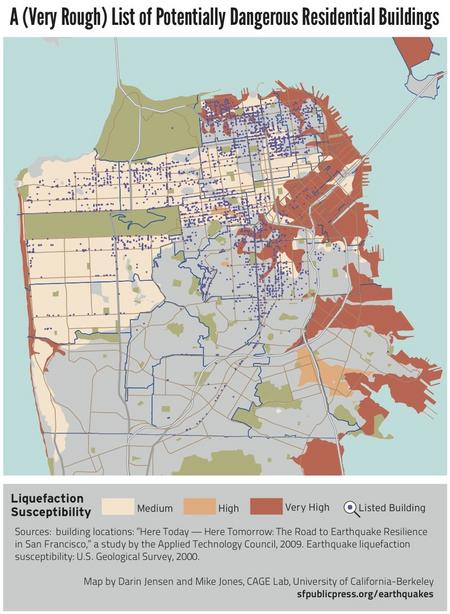
City Hall sources have confirmed the basic details of a San Francisco Public Press report from Friday afternoon that the Board of Supervisors will consider requiring the owners of soft-story buildings of three stories or more to seismically retrofit them by 2020 – at the expense of building owners, something sure to rouse controversy.

The legislation was developed and introduced by the Mayor’s Office and it’s being sponsored by the board’s two most prolific and effective supervisors, Board President David Chiu and Sup. Scott Wiener, which is probably a signal that city officials know this one is going to be “challenging,” as one source told us.

Details are still being hammered out before the measure is introduced at tomorrow’s board meeting, including some of the financing options that would be open to property owners. But after voters in 2010 narrowly rejected Measure A, a bond that would have provided low-cost loans for the seismic retrofits, property owners could be forced to dig deep to ensure their buildings don’t collapse in an earthquake.

Wiener confirmed that the legislation would be mandate on building owners without public money attached: “It would be a mandate that they within a certain time frame do an earthquake retrofit,” Wiener told the Guardian.

As the Public Press reported, the legislation would apply to all wood-framed buildings of three stories or more built before 1978, with smaller buildings and single-family homes exempted. In the most recent print edition of the Public Press, extensive coverage of the city’s earthquake vulnerabilities estimated that about 58,000 San Franciscans live in the nearly 3,000 soft-story buildings deemed dangerous places to be when the next big earthquake hits.

Wiener said city officials have been deeply involved with negotiations with various effected groups, including building owners and their tenants, who could face displacement as the work is done or higher rents if landlords pass through those costs. Wiener said the legislation is bound to evolve as talks and hearings continue: “There are a lot of variables and the introduction is really just a preliminary step.”

Supes call for stronger SRO safety measures

It’s no secret that tenants living in single room occupancy hotels (SROs) often grapple with health and safety issues, from bedbug infestations to plumbing problems.

At a committee hearing this afternoon, members of the Board of Supervisors will consider legislation [PDF] introduced by Sup. Eric Mar that would amend the housing code to require owners of SROs to install grab bars in common-area bathrooms, and to provide working phone jacks in each SRO unit.

These measures may seem relatively small, but Tony Robles of the Senior & Disability Action Housing Collaborative says installing grab bars can go a long way toward preventing falls, a leading cause of injury deaths for people older than 65.

In SROs, “there’s a lot of folks who have mobility problems,” Robles explains. “Many are disabled, or elders.” He said knows an elderly woman living in an SRO who recently fell and now faces hip surgery.

“This legislation is about safety, and it’s about quality of life,” Robles said. “It’s not just affluent folks who deserve to live in reasonably habitable conditions.”

Last June, advocates with Senior Action Network and several SRO collaboratives published detailed findings [PDF] from an in-depth survey of 151 SRO residents living in Chinatown, the Mission, SoMa and the Tenderloin. Most respondents were older than 55, and 62 percent identified as having a disability.

The in-depth study found that safety issues topped the list of residents’ concerns. Many respondents said they feared falling on the stairs or in the shower, and less than half reported having grab bars in their bathrooms.

The legislation, which was co-sponsored by Supervisors Jane Kim, David Campos and David Chiu, would also require SRO operators to install working phone jacks in residents’ rooms, which can be critical for tenants who need a way to communicate in case of an emergency.

According to the study findings, these low-income tenants face a host of other issues too:

“About one-third or more of survey respondents said their hotel had a problem with bedbugs, other infestations, visitor policy violations, electrical problems, unsanitary bathrooms, and harassment/ disrespect. One-fifth of respondents also cited problems with heat, plumbing, personal safety, fire safety, and maintenance and repairs. 
More than half (53%) had no access to a kitchen in their building, and 18% of respondents said they skip meals due to lack of resources or facilities.”

San Francisco has more than 500 residential hotels, according to city records, with more than 19,000 units. An estimated 8,000 seniors and adults with disabilities live in SROs.

Robles remarked that it took courage for the SRO residents to speak up in hopes of improving their living conditions. “Tenants in theses SROs oftentimes are intimidated to say anything,” he said. “Some folks might have feared reprisal.”

More unregulated cabs on the street

17

So the state regulators have decided that it’s just fine for companies that pretend not to be taxi operators to operate taxis in San Francisco. That means Lyft and Uber can keep picking up passengers, charging them a “recommended donation” and avoiding the regulations that San Francisco wisely put in place to protect the public.

But the fact that the state thinks this is just fine and dandy, for now anyway, doesn’t mean San Francisco has to do the same. This city has the right to put rules in place for people conveying passengers within its 49 square miles — and those rules ought to apply to Lyft and Uber and Sidecar, too.

Cabs have to carry medallions, or permits. There are a limited number, and they can’t be owned by corporations, only by active cab drivers. You can buy one now — for about $200,000 — or you can get in line and wait, for about 15 years. If the city wants more cabs on the streets and likes the Lyft model, fine: The Municipal Transportation Agency can issue more permits, and if the venture capitalists backing Lyft want to pay for them, they can do so.

I’m not against Lyft or anyone else who has a good idea to serve the public in a way that isn’t being offered now, and I agree that this is the kick in the pants a slow-moving industry needs to develop (fairly simple) apps that allow people to figure out where the nearest cab is and when it’s coming.

But right now, we have an unregulated industry operating in competition with a heavily regulated industry, and it’s not fair. The City Attorney’s Office ought to look into this; the supervisors ought to investigate and force the newcomers to follow the rules. Sure: Lyft. But not this way.

Activists slam hollow report on SFPD-FBI spying

108

UPDATE: SUHR APOLOGIZES FOR REPORT The San Francisco Police Department continues to resist meaningful oversight of its partnership with the FBI’s Joint Terrorism Task Force. After last year pressuring Mayor Ed Lee into vetoing a strong oversight measure and signing a weaker version, the SFPD last week issued a required report that activists are slamming as “grossly inadequate.”

The Coalition for a Safe San Francisco – which includes civil libertarians and members of Muslim groups and other targets of racial and religious profiling by the FBI – last May stood with Police Chief Greg Suhr and sponsoring Sup. Jane Kim as Lee signed what they called this “historic civil rights legislation.”

But at the time, the activists told the Guardian that the value of the watered-down legislation depended entirely on how it was implemented, particularly in the annual reports on SFPD-FBI operations that it required. To ensure they were specific enough to be meaningful, the coalition says it communicated with Suhr several times asking him to include the number of joint investigations undertaken, how many times FBI requests were denied by the SFPD, and possible violations of department policy and how they were handled.

Instead, when Deputy Chief John Loftus gave the first of these annual reports to the Police Commission on Jan. 23, he spoke for only a couple minutes and said the SFPD was in “full compliance” with the ordinance and a Suhr general order banning surveillance of law-abiding citizens, offering no further details.

“We were very clear with the chief about what we expected to see,” Nadia Kayyali of the Bill of Rights Defense Committee, a coalition member, told the Guardian. She also said the report “was slipped on the agenda at the last minute,” despite assurances that the coalition would be notified and given a chance to respond. “It does show a lack of regard for the ordinance and the work that went into it.”

The activists say that Suhr broke his promise to them to include the more specific information that they sought, even after they recently followed up with messages reminding him about that assurance. “I was in the meeting where he said he would,” Nasrina Bargzie with the Asian Law Caucus, another coalition member, told us. Bargzie said she was disappointed and dismayed by what the report included, “but we’re going to keep pushing on it.”

The controversy surrounding possible SFPD-FBI spying on people who haven’t violated any laws – which is illegal under local and state law – broke almost two years ago when the American Civil Liberties Union obtained a secret 2007 SFPD-FBI memorandum of understanding placing SFPD officers under FBI command. It seemed to bypass local restrictions adopted after past SFPD scandals involving police spying on political groups.

Suhr tried to quell the controversy by issuing a general order banning officers from participating in surveillance that violates local rules or the state constitution’s privacy protections, but activists pushed for a stronger assurance. The Board of Supervisors then voted 6-5 to codify those protections into city law, but Suhr objected and Lee vetoed the measure. A weaker version calling for annual reports and Police Commission reviews of future SFPD-FBI MOUs was approved unanimously by the board.

Now, it appears the SFPD has done little to soften the “trust us” stance that it has taken from the beginning, frustrating activists who had pushed for more, here and in other cities that do domestic surveillance with the FBI.

“These policies are explicit and unequivocal. San Francisco Police Department members and their Joint Terrorism Task Force supervisors are aware of and familiar with these policies,” Loftus told the commission, explaining that the SFPD did its required quarterly reviews in November and two weeks ago, finding nothing to report.

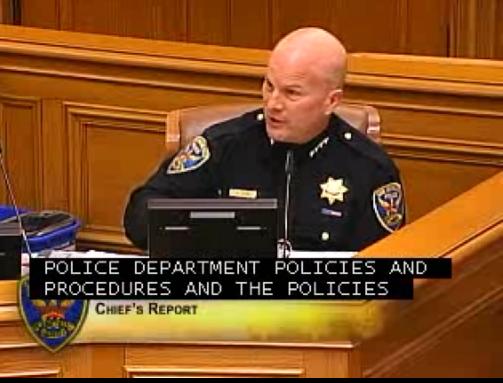
Police Commissioner Suzy Loftus asked if he could “explain a bit more” and Suhr – who was at the stand giving his report as Deputy Chief Loftus (no relation) gave his from the lectern – answered: “All San Francisco police officers are held to the San Francisco Police Department policies and procedures and the policies and laws of San Francisco, whichever is more strict. So depending on wherever they are, their fallback, if you will, is whatever the policies, procedures, laws, ordinances, and all of San Francisco.”

Suhr’s answer seemed to satisfy the commission, which defended the SFPD’s secretive approach rather than asking any more questions.

“Our officers will not participate in any investigation unless there is a predicate offense that is a violation of the California Penal Code or the United States code, so they will not be involved in random surveillance or random assessments or talking to people,” Commission President Thomas Mazzucco said.

Commissioner Joe Marshall also said he trusts Suhr and we all should too: “I want the public to feel reassured that when the chief says that’s going to be the way it is, that’s the way it is.”

But the coalition, which includes 79 organizations, was less than satisfied with that answer. In a statement issued today, it wrote, “Deputy Chief Loftus’ report completely failed to provide the information required to ensure the accountability and transparency required under the Safe San Francisco Civil Rights Ordinance. The Coalition calls on the Chief of Police to promptly issue a public written report containing the information he promised he would provide.”

Neither Kim – who sponsored both the original legislation and weaker alternative – nor the SFPD have returned Guardian calls for comment yet, but I’ll update this post if and when they do. You can watch the hearing yourself here, with that item beginning at the 48:20 mark.


Housing stability for all

9

OPINION San Francisco is in the midst of a housing affordability crisis. It’s way too expensive to live here, and for those fortunate enough to have housing they can afford, we need to provide stability. This need for housing stability applies to renters as well as homeowners. If we’ve learned anything from the foreclosure crisis, homeowners are not all rich, and they are not all stable in their housing.

Last week’s Guardian argued against legislation I’m co-sponsoring, which provides one-time relief to owners of tenancies-in-common (TICs) — mostly middle- and working-class first-time homeowners who reside in their units — while providing strong protection to renters. While the editorial correctly stressed the need to support rent control, it failed to acknowledge the need to support housing stability for homeowners as well.

Rent control is one of the pillars of our city. It stabilizes housing prices, recognizes that housing isn’t just another commodity, keeps communities intact, and helps maintain San Francisco’s diverse fabric. I’ve long supported rent control, as reflected by my voting record. I supported a series of rent control measures designed to reduce evictions, including requiring sales disclosure of a unit’s eviction history, requiring increased relocation benefits to evicted tenants, outlawing harassment of tenants, and restricting use of the Ellis Act by real-estate speculators. As a member of the Board of Supervisors, I authored successful legislation to ban conversion of rent-controlled units to student dorms and to provide temporary affordable units to renters displaced by disasters.

The current legislation I’m co-sponsoring will provide needed relief to struggling TIC owners, many of whom are experiencing serious financial distress, while protecting the small number of tenants who live in these units. TIC owners have group mortgages, meaning that if one owner defaults, all owners default. They pay double the interest rate other homeowners pay and usually cannot refinance. The legislation will allow them to convert their units to condos and obtain their own mortgages, at lower rates and less foreclosure risk.

While some caricature TIC owners as speculators and wealthy people, that’s untrue. Many TIC owners are quite middle class, former renters who scraped together a down payment to purchase a home. Many are teachers, social workers, public employees, and other workers who are anything but speculators. These are people who, if they didn’t own TICs, would be renting. They aren’t Martians who dropped out of the sky. They’re our neighbors, co-workers, and fellow San Franciscans. They are part of the city’s fabric.

Under the legislation, owner-occupied TICs that are in the condo lottery will be able to convert to condos by paying a fee of $20,000 per unit, with the proceeds dedicated to affordable housing. Buildings with Ellis Act and other problem evictions are typically prohibited from condo converting in San Francisco, under a 2006 law, and that restriction applies to this legislation. In other words, this legislation won’t encourage Ellis Act evictions. Moreover, buildings that aren’t owner-occupied can’t condo convert. Nor can buildings with more than six units. The legislation is one-time in nature and not an ongoing invitation to condo convert.

The legislation covers very few units with tenants — 85% are owner-occupied — and protects this small number of tenants by mandating they receive lifetime leases, with full rent and eviction controls identical to our rent control laws. This protection is stronger than what most tenants receive in buildings that win the condo lottery currently.

Renters and homeowners both deserve housing stability. This legislation moves us in that direction.

Supervisor Scott Wiener represents District 8.


Condo conversion legislation on hold for now

Following a contentious five-hour hearing, a committee of the Board of Supervisors postponed voting on a controversial housing proposal, and agreed to revisit the issue on Feb. 25. Over the next few weeks, opposing sides are expected to negotiate a possible alternative.

Authored by Sups. Scott Wiener and Mark Farrell, the proposed condo conversion impact fee would have allowed as many as 2,000 tenancy-in-common (TIC) units to be immediately converted to condos for a fee, allowing owners to bypass a housing lottery system that places an annual cap on conversions.

While TIC owners voiced frustration about the backlogged lottery system, tenants expressed fears that the legislation could give rise to a wave of Ellis Act evictions if landlords or speculators interpreted it as a signal that lucrative condo conversion would be easier to achieve.

Prior to the hearing, a group of tenants gathered in front of City Hall in a show of opposition to the condo-conversion legislation, waving signs that read, “Stop the Attack on Rent Control.”

“The reality is, if this legislation passes, there will be more evictions in San Francisco,” said Tommi Avicolli Mecca of the Housing Rights Committee, who spoke at the rally.

Tenant advocates worry that the legislation would result in a permanent loss of affordable, rent-controlled units from the city’s housing stock, at a time when rents are soaring. When landlords rent out their condos or TICs in San Francisco, there’s a key difference: TICs are covered by rent control, but condos are exempt.

“I’ve been evicted three times,” one woman said while addressing members of the Land Use & Economic Development Committee. “I know so many people who have gotten evicted. I don’t know anyone who’s won their case against eviction.”

During the hearing, Farrell adopted a defensive tone against critics who’d described the proposal as an attack on rent control. “The tactics that these opponents have deployed is out of line,” he said. To assuage concerns, he noted that he and Wiener had included a provision guaranteeing lifetime leases for existing tenants in units that qualified for condo conversion under the program.

But Sup. Jane Kim drilled down on this detail, questioning whether such an agreement would be legally enforceable in the long run. In response, a representative from the City Attorney’s office said he thought the provision was on solid legal ground, but noted that the specific matter “has not been litigated before,” meaning there is still a question as to whether it could withstand a court challenge. When Kim asked if any funding was set aside to enforce these lifetime leases, the response was “no.”

Board President David Chiu proposed holding off on a vote for several weeks. “I do not support the legislation in its current form,” he said. If the current generation of TIC owners were allowed to convert this time, he explained, the next generation’s frustrations with the housing lottery would only “lead us back to an identical debate in a short period of time.”

Kim echoed this point. “My concern was that … folks were looking at this legislation as an ice-break for more condo conversion,” she said just after a public comment session that lasted several hours. And she acknowledged that there is a larger problem to consider. “It’s very tragic that we have set up a situation where [TICs and renters] are pitted against one another,” she said.

On the Cheap Listings

0

On the Cheap listings by Cortney Clift. Submit items for the listings at listings@sfbg.com. For further information on how to submit items for the listings, see Picks.

WEDNESDAY 23

“From Vision to Icon: Building the Golden Gate Bridge” Sports Basement, 1590 Bryant, SF. www.sfwalksandtalks.com. 7pm, free. Local writer, producer, and narrator Peter Moylan presents the story of the Golden Gate Bridge, exploring all the triumphs and challenges encountered throughout its creation The lecture will be told with over 120 historic photos in the live documentary style SF Walks and Talks is known for.

THURSDAY 24

“Pixilated Drift” Johansson Projects, 2300 Telegraph, Oakl. www.johanssonprojects.net. Through March 16. Noon-6pm, free. The show will feature Andrew Benson’s hypnotic pixel prints, David O’ Brien’s explosive and abstract video stills, and Tamara Albaitis’ sound sculptures, sure to be as entrancing and mysterious to look at as they are to listen to.

FRIDAY 25

“Full Wolf Moon” Cotton Mill Studios, 1091 Calcot, Oakl. www.f3oakland.com. 6-10pm, free. F3 at the Cotton Mill will be showing off resident and guest artists’ new work in the collective’s eighth event. The evening will be a bit of a cultural smorgasbord with various galleries and studios open throughout the building, live music, dance, and spoken word in the “Wolf Den,” a design bazaar, and food trucks. Free shuttle transportation will be provided to the Cotton Mill Studios from the Fruitvale BART station from 6-10:30pm.

Fundraiser for KPOO Radio Mercury Café, 201 Page, SF. 7-10pm, free. For over 40 years local nonprofit radio station has been discussing issues facing underserved communities such as GLBT folks, low-income families and young people as well as playing music largely absent in mainstream media. But KPOO has recently lost a significant source of funding due to budget cuts. Head over to Mercury Café for a night of food, drinks, and music to help keep the station on the air. 10 percent of all sales will go to KPOO.

“Deviant Type Press Benefit Show” Temescal Arts Center, 511 Eighth St., Oakl. 7pm, $10 donation suggested. Hosted by Jezebel Delilah X, this evening will consist of readings by Mia McKenzie, fat activist Virgie Tovar, Sister Spit-Valencia queer author Michelle Tea, and Manish Vaidya. After the readings Bay Area band Gaymous rocks.

SATURDAY 26

“All You Can Dance” Alonzo King LINES Dance Center, 26 Seventh St., fifth floor, SF. www.linesballet.org. 1-5pm, $5. Whether you’ve been itching to brush up on your ballet skills or wanting to test your talent in Zimbabwean dance, the $5 entry fee allows you try out any and all classes on today’s schedule. Offering everything from Bollywood dance to Pilates to Argentinean tango, you’re free to dance ’til you drop.

Roe Vs. Wade 40th anniversary celebration Justin Herman Plaza, SF. www.oursilverribbon.org. 10am-noon, free. Reproductive rights pioneer Pat Maginnis, president of the San Francisco Board of Supervisors David Chiu, and other speakers will be addressing women’s issues today in remembrance of the legendary court case that gave us our reproductive rights. It may not technically be a carnival, but there will be face-paining, airbrush tattoos, balloon artists, a bubble artist, and a performance by One Billion Rising, a radical gang of flash mobbers.

SUNDAY 27

“San Francisco Poet Laureate Alejandro Murguía’s Inaugural Address” San Francisco Main Library, Koret Auditorium, 100 Larkin, SF. www.sfpl.org. 1-3pm, free. Murguía will give his inaugural address as the city’s sixth poet laureate and speak about the connection Latino history and San Francisco history have to one another as well as how poetry has affected the local Latino community. A reception will follow his wise words, so you’ll have ample time to chew them over.

“Drunken Spelling Bee” Café Royal, 800 Post, SF. www.caferoyale-sf.com. 6pm, free. Hosted by Jimi Moran, this event is exactly what it sounds like. Maybe you dominated in your sixth grade spelling bee, but how are your skills after a few beers? No iPhone spell checks allowed.

“Oakland Youth Orchestra ‘Russian Romance’ Winter Concert” Holy Names University, 3500 Mountain, Oakl. www.oyo.org. 3pm, free. Get classy Sunday afternoon at what is sure to be something far better than an average high-school music recital. The 75 musicians who make up the Oakland Youth Orchestra range from ages 12 to 22 but possess musical skills far beyond their years. The concert will include festive pieces by Dimitri Shostakovich, Pyotr Ilyich Tchaikovsky, and Sergei Rachmaninov.

MONDAY 28

Berkeley Arts & Letters presents Adam Mansbach’s Rage is Back The Marsh Berkeley, 2120 Allston, Berk. www.berkeleyarts.org. 7:30pm, $5/students, $12/advance. The author of the No. 1 New York Times bestseller Go the F**k to Sleep is back to tell the story of a clever kid, the father who left him, and the greatest graffiti stunt New York City has ever seen in his new book titled Rage is Back. Today Mansbach will read and discuss his new release. The Marsh Cabaret Bar will be open before, during, and after the program.

TUESDAY 29

Recology art exhibit and panel discussion Reception at 503 Tunnel, SF. 5-7pm, free. Panel discussion at 401 Tunnel, SF. 7pm, free. Exhibition also on display Fri/25, 5-9pm; Sat/26, 1-3pm. www.recologysf.com. Recology’s artist in residence program will exhibit work created by Michael Damm, Julia Goodman, and Jeff Hantman over the past four months, made from scavenged materials found at the dump. After the exhibit, head a few doors down to catch the artists talking about their experience working to create art in trashland.

TIC legislation is a rent control issue

177

OPINION If legislation introduced by Supervisors Scott Wiener and Mark Farrell passes the Board of Supervisors next month, up to 2,000 tenancies in common will be allowed to bypass the lottery process and convert to condominiums.

Add those to the nearly 6,000 conversions that have occurred from 2001-2011 (according to stats from the Department of Public Works), and you have a sizable chunk of rent-controlled units that will have been yanked from our housing stock in the past decade or so in a city that can’t afford to lose rental units, especially those that preserve affordability while tenants live in them. TICs are still under rent control; condos lose it when they’re sold.

Which makes the Wiener and Farrell legislation a rent-control issue. Not to mention a really bad idea at a really bad moment in time.

San Francisco’s perennial housing crisis can’t possibly get worse. Rents are the highest in the country — and still rising. The average rent in the city these days is $3,000. The vacancy rate is low.

Ellis Act evictions, a tool for creating TICs by allowing a landlord or speculator to circumvent just-cause eviction protections, are on the upswing. They’re not as high as they were at the height of the dot-com boom of the late 90s, but, considering that these days many landlords and speculators threaten tenants with Ellis or buy them out rather than do the dirty deed, the number of folks displaced for TICs is higher than what is recorded at the Rent Board. Some tenants have actually received letters from new landlords with two checkboxes — one for Ellis and the other for a buyout. Take your pick, which way do you want to be tossed out and possibly left homeless?

The folks being displaced are from every district and represent the diversity about which we always brag: longterm, generally low-income seniors, disabled people, people with AIDS, families, and people of color. And they’re less likely to find other apartments they can afford.

Wiener claims that buildings where there are evictions will not be eligible for conversion, but many of the TICs currently in the lottery, which will be eligible for conversion under the Wiener/Farrell legislation, were created by evictions. Almost 20 percent of the units in the pipeline were formed before legislation was put into place to restrict conversions if tenants are ousted. How many of the other 80 percent are the result of threats and buyouts, de facto evictions? Or were entered into the lottery even when they shouldn’t have been?

Brian Basinger, founder of the AIDS Housing Alliance, was evicted from his apartment for a TIC, yet his place was converted to a condo, despite the fact that he’s a protected tenant.

Allowing as many as 2,000 conversions not only diminishes the rent-controlled housing stock, but it also jacks up rents. Not to mention it gives speculators incentive to do more Ellis evictions or buyouts — after all, though Wiener and Farrell say this is a one-time only deal, once Pandora’s box is opened, it’s going to be hard to keep it shut. I think landlords and speculators know that.

The Housing Element of the City’s General Plan, adopted in 2009, instructs officials to “preserve rental units, especially rent controlled units, to meet the City’s affordable housing needs.”

This legislation won’t preserve rent-controlled units. It’s a bad fit for our city.

Tommi Avicolli Mecca, who’s worked for the Housing Rights Committee for 13 years, is a longtime queer tenants right/affordable housing advocate.

Editor’s notes

3

EDITORIAL Airports are special. There are schools and roads and buildings — and rest stops on the New Jersey Turnpike — named after famous and not-so-famous people, but airports, particularly major international airports, are, in a word, monumental. Tens of millions of people, many of them immigrants, have come through Kennedy Airport in New York, a place named after an inspirational leader who was killed before his time. We’re not so enamored with Reagan National in Washington, but the guy was a hugely influential president of the United States. Lt. Colonel O’Hare was a war hero.

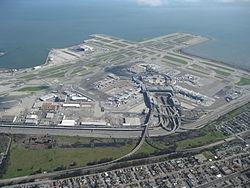
That’s why the idea of naming San Francisco International Airport after Harvey Milk is so wonderful — and entirely appropriate.

There are lots of politicians in the world, and there have been many civic leaders who have done great things in and for San Francisco. But Harvey Milk was different, and special.

Milk was the first openly person gay person elected to public office in a major American city. He was an inspiration to tens of thousands of people, and his speeches, his signature line — “you’ve gotta give them hope — and his role as an LGBT icon made a better life possible for generations of young people who faced, and often still face, oppression, discrimination and fear.

It’s important to remember that, although he only served 11 months in office, Milk changed San Francisco, changed America, and changed the world. His bold actions forced the nation to accept a marginalized community. He represented the best of San Francisco, the essential spirit of rebellion, the demand for justice and the passion for equality that defines this city in the world.

And the struggle he embodied isn’t even close to over: All over the world, LGBT people are beaten, denied basic rights, killed for who they are. And if San Francisco can’t make a giant global statement against that, nobody can.

The renaming of SFO wouldn’t just honor a local political figure. I would make an international statement. The airport is a major West Coast hub, and people from all over the globe pass through its gates. While many of them won’t care who the airport is named for, others will — and an appropriate display in the terminals would educate countless visitors, many from countries and cultures where LGBT people are still not accepted, about the role Milk played in changing society’s attitudes.

We don’t take lightly the naming of civic institutions. There’s too much opportunity for political mischief, for someone like former mayors Willie Brown or Dianne Feinstein — neither of whom changed the city in a positive way or made dramatic statements — to get honored. That’s one reason that the San Francisco Airports Commission has declined to name anything after anyone who is still alive.

Sup. David Campos, who is promoting this idea, has taken the right approach: A decision this serious ought to go before the voters. The supervisors should place his charter amendment on the ballot, and the people of San Francisco should tell the world that the legacy of Harvey Milk is alive — and out there, our front, for everyone to see.

The battle of Brotherhood Way

24

Brotherhood Way is a creature of another era. Tucked between the San Francisco Golf Club and ParkMerced, it was long known as Stanley Way. But in 1958, under Mayor George Christopher, the city, which owned all of the land on the south side of the street, turned that property over to a long list of religious institutions and renamed the street to reflect its role as a place for houses of worship. It’s now home to six churches or synagogues and nine religious schools. It has its own (religious) neighborhood association.

And this quiet little corner of the city has been the scene of a pitched battle over a plan to build 182 housing units on an empty patch of land on the north side of the street.

Opponents of the project say the area was set aside for educational and religious uses, not housing — and they argue that the expansion of ParkMerced will add too much congestion to the area. Supporters say the west side of town needs to acept more housing and more density.

It’s gotten ugly: At one point, the Archbishop himself ordered the pastor of St. Thomas More Catholic Church to quit agitating against the development. Sean Elsbernd, who represented the district for eight years, infuriated neighbors when he supported the project, and later apologized for his insensitivity to their concerns.

And seven years after the Planning Commission and the supervisors gave the project a green light, it still hasn’t broken ground.
Now the developers are ready to go — and the churches, aided by retired Judge Quentin Kopp, are trying once again to shut it down.

Kopp’s been arguing for some time now that the project needs to go back for a new permit because too much time has passed and nothing has happened. But he’s got another argument, too, and he brought it to the Board of Appeals Jan. 9. See, the original deal had a problem with transit access, since there isn’t enough Muni capacity along Brotherhood to handle 300 or so new residents. So the developer agreed to build two pedestrian walkways from the project up to Font Blvd. in Park Merced. But according to Kopp’s appeal, ParkMerced management never agreed to the easements that would be necessary to build a path through its property.

Instead, in 2008, Zoning Administrator Larry Badiner unilaterally changed the requirement, allowing for one footpath to the edge of Park Merced — with some vague agreement that later there might be an extension to the Muni stop. That, Kopp argues, should have triggered a new Conditional Use application and a new hearing. Oh, and in the meantime, ParkMerced has just moved to greatly expand the size of its complex, so maybe that should be considered, too.

The Board of Appeals rejected Kopp’s arguments, but he’s petitioning for a rehearing, in part because the board chair wasn’t present for meeting. Kopp argues that this is a quasi-judicial board — “and you don’t go before the Supreme Court with only eight of the nine members present.” Under city rules, though, four out of five is a quorum and able to hear the matter.

Kopp has another argument, too — one that’s unusual, perhaps unique: He claims none of the board members actually read his original appeal brief.

Kopp, see, asked during the hearing if all of the members had read the papers he submitted, and none of them responded affirmatively. “It is appearent and inferable that no members of the short-handed Board of Appeals had read Appelants’ brief before the hearing, or at all,” the motion for rehearing states. “The manifest failure of the four members present to real Appellants’ carefully-prepared brief constitute extraordinary circumstances and injustice.”

I’ve been able to reach two of the board members, Frank Fung and Darryl Honda, and both insist they read the brief. “I read every case in its entirely,” Fung said, “and so does everyone on this panel.” Honda, who is new to the board, also said he read the documents. “I bust out the highlighter pen and go through all of the briefs in every case,” he said.

So why didn’t they answer Kopp’s question? Well, Fung says, it took them all by surprise: “I don’t think any one has every asked that before.”

I’ll let you know if the petition for rehearing is accepted.

King’s ideals echoed in SF and DC events

2

Labor leaders and a plethora of elected officials from San Francisco – including almost the entire Board of Supervisors – began today at the San Francisco Labor Council’s annual Martin Luther King Jr. Breakfast. They heard inspiring words from speakers on hand, but not from President Barack Obama, whose inaugural address wasn’t broadcast at the event as planned due to technical difficulties.

Yet the ideals voiced here at the West Bay Conference Center on Fillmore Street echoed those sounded on Capitol Mall in Washington DC, channeling the spirit of Dr. King in calling for us to take bold collective action to better care for all people and the planet.

“My fellow Americans, we were made for this moment, and we will seize it as long as we seize it together,” Obama said in his speech. “For we, the people, understand that our country cannot succeed when a shrinking few do very well and a growing many barely make it.”

At his invocation here in San Francisco, Rev. Floyd Trammel, called for a “clarity of thought and unity of purpose” and cast Obama as the inheritor of King’s legacy. “In many ways, you sent one, Dr. Martin Luther King Jr., to pave the way for another, President Barack Hussein Obama,” Trammel said in his prayer.

Sen. Mark Leno – speaking in the place of Mayor Ed Lee, who is in DC for the inauguration – quoted the late Supreme Court Justice Louis Brandeis, who said, “We can have democracy in this country, or we can have great wealth concentrated in the hands of a few, but we can’t have both.” And while Leno praised those present for helping pass Prop. 30 to begin turning around California’s fiscal state with higher taxes on the rich, Leno also said, “The work is just beginning.”

It was a theme echoed by the most dynamic speaker on the program, Thurgood Marshall High School teacher Van Cedric Williams, who said the theme of both MLK Day and Obama’s inaugural address was that there is still much work to do to realize King’s dreams of social and economic justice.

“I believe community and labor are working on the unfinished business that Martin Luther King started,” Williams said, calling it a moral imperative to help create a better world for all. He called on those present to really “embrace your fellow community member,” those of all races and backgrounds, to pursue the solutions the world needs.

“They have to see the passion,” Williams said of young people today, “they have to know we got their backs.”

Obama also appealed to the obligation that we have to future generations. “We will respond to the threat of climate change, knowing the failure to do so would betray our children and future generations.”

It was a call for Americans to move beyond our narrow self-interest. As King once said, in a quote included at the MLK memorial in SF’s Yerba Buena Center, “An individual has not started living until he can rise above the narrow confines of his individualistic concerns to the broader concerns of all humanity.”

The Chron’s bizarre attack on Milk Airport

78

It must have been hard for John Diaz, the Chron’s editorial page editor, to just come out and oppose the idea of renaming San Francisco International Airport for Harvey Milk. So instead he put out a tortured argument that goes like this:

It’s too easy to put things on the ballot in San Francisco. To wit:

San Francisco has a system that is ripe for abuse by politicians who want to call attention to themselves or want to try to acquire at the ballot box what they could not otherwise attain by working with their colleagues.

He actually quotes Lite Guv Gavin Newsom who says, apparently without blushing, that he went to “excrutiating lenghts” to avoid putting things on the ballot that he couldn’t get passed through the Board of Supervisors. Excuse me? Care Not Cash? WiFi?

More Diaz:

The renaming of SFO is an example of an issue that demands a thorough public airing: about its cost, about the implication for the airport’s global brand and about whether other San Franciscans should be considered. The regrettable upshot of the Harvey Milk San Francisco International Airport proposal is that it could devolve into a referendum on the late supervisor’s worthiness for such an honor.

Wait: You don’t think the supervisors will discuss this, that there won’t be public comment, that this proposed city charter amendment won’t go to committee for discussion? You don’t think that’s already happenning, or that a ballot campaign won’t involve all of those issues? That’s just silly.

Yeah, there have been things put on the ballot in the past without adequate hearings, but that’s certainly not the case here. This thing will be discussed and dissected and cost-analyzed and debated at great length. And in the end, it ought to go on the ballot. The Diaz argument is just an excuse to oppose something that’s hard to fight on the merits; if the supes had just gone ahead and done it on their own, we’d be hearing the opposite, that the voters need to weigh in.

And this?

There may be a time when an airport naming makes perfect sense, perhaps because of a San Franciscan’s contribution to the airport itself or aviation generally. Harvey Milk simply does not offer such a natural connection.

Please. John F. Kennedy may have sent a man to the moon, but had nothing substantive to do with New York City aviation. Ronald Reagan didn’t even fly into National Airport; Air Force One lands at Andrews Air Force Base. And his major contribution to civilian aviation was firing all the air traffic controllers and breaking their union.

Naming SFO after Milk would be a political statement on a grand scale. The City and County of San Francisco would be saying that a gay person deserves a monument of international scale, that Milk’s contributions to changing the world are something this city should treat as so special that we should tell the whole world, loudly and forever.

I’m all for it. But if you’re not, let’s at least debate it on the merits

Editor’s notes

12

EDITOR’S NOTES The guy who runs the San Francisco Housing Authority is in pretty serious doo-doo: His agency has just been placed on the federal government’s “troubled” list, and he’s getting sued by his own lawyer, and he’s hiding from the press while tenants complain that they can’t get basic repairs.

Although Mayor Ed Lee has so far officially stuck by Henry Alvarez, he’s already backing off a bit, and it’s pretty likely Alvarez will be gone when his contract expires this summer. He may be gone even sooner than that; there’s a growing chorus of voices calling on the mayor to fire him.

So at some point we’ll get a new director, who will make a handsome salary (Alvarez gets $210,000 a year plus a car and seven weeks paid vacation) and live in a nice house and go into work every day to deal with problems that are pretty damn far from his or her life.

That’s always the case to some extent with the heads of agencies who deal with the poor, but it’s particularly dramatic when you talk about the Housing Authority. Public housing is never luxurious, but in San Francisco, it’s been riddled with problems for many years. And frankly, I’m much more concerned about the tenants than about Alvarez or his management style.

I get that the Housing Authority has financial problems. The federal government long ago abandoned any serious commitment to funding housing in American cities, and the authority only recently managed to pay off a multimillion-dollar judgment from a lawsuit filed by the families of a grandmother and five children killed in a fire on Housing Authority property.

Yet, tenant advocate continue to complain that it can be hard, even impossible to get a response from the agency. When critics complain, the agency goes after them: The Housing Rights Committee went after the Housing Authority over evictions, and wound up getting investigated by SFHA employees who wanted to gut their city funding. And while some say Alvarez is a hard-charging person who demands results (and thus pisses some people off), nobody has used the words open, accessible or compassionate to describe him.

I’ve got an idea for the next director (or for Alvarez, if he wants to stick around). Why not live in public housing?

Seriously: Why shouldn’t the person who controls the safety and welfare of tenants in more than 6,000 units spend a little time understanding what their lives are like? Why not spend, say, one night a week in one of those apartments?

In the old days, judges used to sentence slumlords to live in their own decrepit buildings, which seemed to work pretty well: Once the guy in charge has to deal with the rats and roaches and broken windows, he’s much more likely to expedite repairs.

But it wouldn’t have to be punitive — just a chance to get a first-hand look at how the agency policies are working on the ground. The city employee unions have had a lot of success asking members of the Board of Supervisors to do a union worker’s job for a day; the director of the San Francisco Housing Authority could certainly live like one of his tenants every now and then.

Think of it as a management tool: What better way to figure out whether his staff is doing the job than to look at the end product? Or figure it as a way to stop being an asshole and see what people who live on less than ten percent of his salary really think of his administration.


Chiu’s committee assignments keep the moderates in charge

42

A week after engineering his unanimous re-election to an unprecedented third consecutive term as president of the Board of Supervisors, David Chiu today announced his assignments to board committees, placing fiscal conservatives into two of the most powerful posts and making himself a key swing vote on the Land Use Committee.

“I believe these committee assignments reflect a balanced approach and the diverse interests and talent of the supervisors,” Chiu said just after 4pm during the Roll Call portion of today’s meeting.

But some progressive activists were immediately grousing about some of the selections, which seem to reflect Chiu’s neoliberal approach to governance, preventing progressives from doing much to challenge development interests or the appointment of Establishment insiders to city commissions.

The Land Use Committee is perhaps the most powerful and impactful, particularly as the Warriors arena and other controversial waterfront developments and the CPMC hospital deal come to the board. Scott Wiener – a moderate who is already perhaps the most prolific supervisor – gains far more power as he is named to chair that committee. It is balanced out by Chiu and Sup. Jane Kim, both of whom have some progressive impulses on land use issues but also personal ambitions and a penchant for cutting deals. Developers have to be happy about this lineup.

Sup. Mark Farrell was named chair of the Budget Committee, succeeding Sup. Carmen Chu – a pair that are indisputably the most conservative supervisors on the board. While progressive Sups. Eric Mar and John Avalos will help balance out the permanent committee, their influence will be offset by the temporary members added during budget season: Sups. London Breed and Wiener.

That roster essentially puts Breed in the swing vote role, which should immediately give her some clout. Chiu’s defenders note that Budget’s balance of power is essentially status quo (with Breed now in the same swing vote role that Sup. Malia Cohen played) – and that the committee’s work last year was supported by labor and business interests alike.

Chiu is proposing to combine the Public Safety and City Operations & Neighborhood Services committees, naming Sup. David Campos as chair, Mar as vice-chair, and new Sup. Norman Yee as its third member. Yee, who nominated Chiu for president last week, was also rewarded with a chair on the Rules Committee – controlling appointments, it arguably the board’s third most influential committee after Land Use and Budget – with that committee filled out by Breed and Sup. Malia Cohen.

Speculation that Cohen and Kim would be rewarded for withdrawing their nominations as president before the vote last week don’t seem to have materialized in these appointments. Cohen was also named to the Government Operations Committee, along with Campos, which Sup. Carmen Chu will chair. That doesn’t give Cohen, who told us that she wanted to be on Land Use, much power.

Similarly, Kim was named chair of the City & School District Committee – nice, but not exactly a political launching pad – and Kim’s only real power on Land Use will come when Chiu is opposing some project, as he did with the controversial 8 Washington project that Kim and seven of her colleagues supported.

Aaron Peskin, Chiu’s predecessor as board president, said that he vaguely saw some semblance of Chiu’s claimed strategy of having conservative committee chairs balanced out by liberal majorities (although even that depends on how you define your terms). Yet Peskin questions that approach, and sees committees unlikely to really gel around good decisions or policies.

“It’s a recipe for dysfunction,” Peskin told us. “But it certainly will be fun to watch.”

The Chamber of Commerce becomes even more irrelevant

19

It’s been years since anyone really took the San Francisco Chamber of Commerce seriously as a political force. The verdict from the techies came in long ago; they do their own thing with their own money. Small business never got much out of the Chamber, and most of those folks have their own organizations. Even the big-business agenda was taken over for a while by the Commitee on JOBS. Then there’s SFSOS, Plan C and a bunch of other pro-business and anti-regulation groups. Rose Pak and her allies have their own Chamber of Commerce. You rarely hear anyone at City Hall worried about what the Old Chamber says or is doing.

Steve Falk, the current director, has softened the Chamber’s image a bit and tried to be somewhat diplomatic. But now this organization is about to go backwards.

If what Matier and Ross report is accurate, a former City Hall aide, former failed candidate for supervisor, and current director of the Golden Gate Restaurant Association may be the new chamber director. Rob Black seems to have a line at the top job after Wade Rose, an executive with Catholic Healthcare West, dropped out of the running:

We’re told some of the chamber’s big dogs – like the brokerage house Charles Schwab and Pacific Gas and Electric Co. – weren’t all that enamored of the soft-glove approach that Rose was promising to bring to his dealings with the San Francisco Board of Supervisors.

That jobes with what I’ve been hearing from local politicos, who’ve been saying that there were two candidates for the job — one very good and one very bad. Looks like the very good candidate (good by Chamber standards, anyway) is gone.

I don’t know Rose, but I do know that even this more moderate board of supes isn’t likely to take direction from what many see as an antidiluvean organization, a moribund old white men’s club with a ridiculous out-of-date agenda. Putting a person in charge who actually sought to build bridges (and who, by the way, might not have gone all-out for the new CPMC hospital) might have edged the Chamber back toward some sort of relevance.

But no: If Black gets the job, prepare for the Chamber to stick to its old ways, whine about everything the board does that’s even remotely progressive, issue report cards that nobody cares about — and waste its members dues. Great move.


Much weirdness at the City College Board

44

And you thought the election of the new old Board of Supervisors president was odd. Check out what happened with the Community College Board: After weeks of telling everyone in sight how horrible it would be if any of the three old-timers who helped screw up the school (Natalie Berg, Lawrence Wong and Anita Grier) got elected board prez, current board president John Rizzo won another term — with the support of Berg, Wong, and Grier. And left some of his progressive allies either scratching their heads or fuming.

The backstory: A couple of weeks ago, Rizzo got word that prog colleague Chris Jackson was considering supporting Grier for the top post. That would have given Grier the four votes she needed, since Berg, Wong and her all vote together most of the time. And it would have screwed the progressives, who managed with considerable effort to hold onto a one-vote majority at a critical time in the board’s history, while the college is trying to win reaccreditation. Why bother to win at the polls if you’re just going to turn control over to the other side? I mean, the GOP doesn’t vote for Nancy Pelosi for speaker.

So Rizzo asked former sup. Aaron Peskin, who remains one of the town’s most savvy political operators, to help out. Peskin put an immense amount of time into working out the details and cutting through the various interest-group problems. (Example: By tradition, the top vote-getter becomes board president. That would be Steve Ngo. But the teacher’s union is mad at Ngo because he wants to put more money into the school’s reserves even if it means laying off teachers. So Jackson, a longtime labor guy, couldn’t vote for him. Jackson had already told Grier he’d vote for her, so he’d have to be convinced to withdraw that promise. And on and on.) In the end, after a lot of wrangling (while trying to avoid the fact that the Brown Act prohibits the four progressives from talking to each other outside of a public meeting) Peskin managed to find a solution: Four people were willing to vote for newcomer Rafael Mandelman. Okay, that works.

The vote was Jan. 10. The night before, Berg called Rizzo to say that she didn’t want Mandelman, but would agreed to support … Rizzo. Presumably (she won’t take my phone calls so I don’t know for sure) she had already talked to, or was about to talk to, Grier and Wong to seal the deal. That, of course, would be a direct Brown Act problem, but nobody seems to care about the state’s landmark open-government law anyway (witness the BOS leadership fight, where everyone was talking to everyone else behind the scenes).

So Rizzo agrees that would be dandy, never tells his colleagues on the left — and when the vote goes down, he gets nominated by and re-elected with the support of the people he’s been bad-mouthing all over town for the past couple of weeks. In the end, the progs saw the handwriting on the wall and went along and made it unanimous.

I called Rizzo after the vote and he told me that he hadn’t expected Berg’s offer, but that “it avoided a fight at the meeting, and that’s a good thing for the state accreditors. It shows the board isn’t divided.” Actually, the board IS divided, and Rizzo has been part of that divide, and if the special trustee hasn’t figured that out yet, he’s not terribly observant.

He told me he should have given his allies a heads-up, but “that would have violated the Brown Act.” (Clue phone: The whole deal that re-elected him was a blatant violation of the Brown Act.)

Mandelman just joined the board, and wasn’t pushing for the top job, although he’d agreed to do it. So he’s not that upset. But he was a bit bemused when I talked to him. “To have the two-week shitstorm stirred up by John, who then forms a partnership with the people he’s despising, and not to tell any of us, is wierd,” Mandelman said.

Peskin’s more direct. “Politics is all about keeping your word,” he told me. “This is exactly not how you do politics.”


SFBOS grab bag: Diva Breed, Yee’s jig, delayed Chiu, and more

10

Now that the dust has settled from this week’s San Francisco Board of Supervisors inauguration and presidential vote, I thought I’d return to a few random gems that were still stuck in my notebook, waiting to see the light of day.

Under the heading of There’s a New Diva under the Dome, new D5 Sup. London Breed didn’t wait for the official noon inauguration prescribed by the City Charter to take her oath of office, instead holding a packed event at 10am in the North Light Court, where her oath was administered by a key supporter, Attorney General Kamala Harris.

“I held a swearing in earlier to be able to have a large crowd of supporters,” was how Breed explained it to her colleagues later, and it’s certainly true that attendance at the official event was limited by the size of the room. But it’s equally true that gathering a who’s who list of local power brokers to applaud Breed’s ascendance as a key swing vote sends the signal that she expects to be at the table when the big deals get cut.

President David Chiu, who is also no stranger to political power plays, sounded a tone of humble leadership after maneuvering himself with closed-door negotiations into an unprecedented third consecutive term as president, noting that there is still much more work to do.

In fact, Chiu said he was almost late for Breed’s event because, “my bike light got stolen, the Muni bus was late, and then I had a hard time catching a cab.”

Sup. Eric Mar revisited his reelection race last year with a huge understatement – “In my campaign, I had to do a little more work than my colleagues did.” – noting that he and his supporters overcame an unprecedented $1 million in spending against them: “We sent a strong message that the Richmond District is not for sale and never will be.”

Sup. John Avalos gave credit for his surprisingly easy reelection campaign to a unlikely but deserving source: journalist Chris Roberts, who uncovered evidence that Avalos challenger Leon Chow didn’t really live in the district, which he reported in SF Appeal, forcing Chow to withdraw from the race. Avalos called Roberts “an honorary member of our campaign.”

Meetings like this are often just dripping in sanctimony, and this one was no exception, so it was nice to see a moment of genuine child-like exuberance from new D7 Sup. Norman Yee, who at 63 is about twice as old as most of his colleagues. As he thanked supporters and laid out his goals, Yee suddenly seemed overcome by this opportunity, smiling broadly, doing a little jig, and declaring, “Darn, I’m excited!”

I was less impressed by the rambling mini-lecture that Cohen gave on the topic of leadership before she withdrew her nomination as president. “That’s what leadership is about, stepping forward, outside your comfort zone, and doing things,” said the supervisor with a scant legislative record as she quit the race for president before her colleagues were even given the chance to vote on what she said was the importance of having a women of color in charge. “Every person here has that leadership quality within them.”

From both supervisors and the general public, there were also a number of statements made about the history of the board presidency that were not quite right, particularly as it pertained to Cohen and Jane Kim nominating one another for president and the issue women of color being nominated for that slot.

So, for the record, the last time a woman of color (former D10 Sup. Sophie Maxwell) was nominated for board president was 10 years ago. The last time a woman served as president was Barbara Kaufman (1997-99). And the last time there was a woman of color serving as president was Doris Ward, who served from 1991 to mid-1992 when she left to become Assessor. Also, the last three-term president was John Molinari, who served from 1979-83 and ’85-’87.

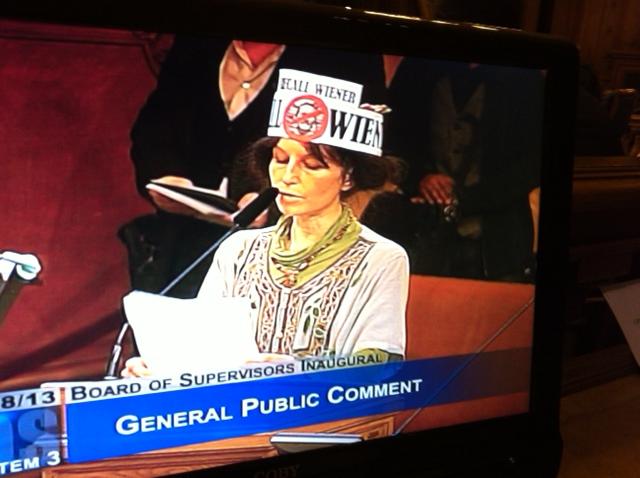
The most colorful moment in public comment was when nudism activist Gypsy Taub came clad in homemade hat that urged people to oppose and recall Sup. Scott Wiener. But because Wiener had already said he wouldn’t accept a nomination as president, she turned her criticism on Chiu, who was also slammed by another leftist speaker who told supervisors, “If you can’t prevent David Chiu from being president, we deserve to be slaves.”

Finally, the meeting included an unremarkable speech by Mayor Ed Lee, who pledged to work with each supervisor and offered this unsupported claim, “We continue to make sure this city is successful for everyone.”

Cheap rent: A thing of the past

Surfed Craigslist for an apartment lately? Then you don’t need us to tell you that rent in San Francisco is too damn high. But what are the broader implications of this becoming a city where median asking rent is above $3,000?

Here’s an example. Today, District 11 Sup. John Avalos shared a story with the Guardian about his arrival to San Francisco in 1989. He had $1,000 to his name, enough to cover rent and a security deposit. He landed a job that paid just $8 an hour, but that was no big deal, since he split the rent for his $675-per-month, two-bedroom apartment in the Haight with a friend.

Translate those 1989 figures to 2013 dollars, and the dramatic rent increases the city has experienced really come into focus. With inflation factored in, that same two-bedroom apartment would cost $1,253 per month today. Noticed any Craigslist ads for two-bedroom apartments in the Haight going for $1,253 lately? (If so, be careful. It’s probably a scam.) Rents for such units hover closer to $4,000 these days.

Avalos joined his colleagues on the Board of Supervisors in highlighting issues of affordability at Tuesday’s meeting. “San Francisco needs to do something specifically to measure how people, particularly those on the bottom rung, are getting by in San Francisco,” he commented just prior to the vote for board presidency.

District 9 Sup. David Campos echoed this sentiment. “I want a city that works, but I want a city that works for everyone,” Campos said. “We have to work collectively to make sure that happens … We have great wealth in the city, but many people are being pushed out.”

War of the waterfront

40

tredmond@sfbg.com

There’s a blocky, unattractive building near the corner of Howard and Steuart streets, right off the Embarcadero, that’s used for the unappealing activity of parking cars. Nobody’s paid much attention to it for years, although weekend shoppers at the Ferry Building Farmers Market appreciate the fact that they can park their cars for just $6 on Saturday and Sunday mornings.

But now a developer has big plans for the 75 Howard Street site — and it’s about to become a critical front in a huge battle over the future of San Francisco’s waterfront.

Paramount Partners, a New York-based real-estate firm that also owns One Market Plaza, wants to tear down the eight-story garage and replace it with a 350-foot highrise tower that will hold 186 high-end condominiums. The new building would have ground-floor retail and restaurant space and a public plaza.

It would also exceed the current height limit in the area by 150 feet and could be the second luxury housing project along the Embarcadero that defies the city’s longtime policy of strictly limiting the height of buildings on the waterfront.

It comes at a time when the Golden State Warriors are seeking permission to build a sports arena on Piers 30 and 32, just a few hundred feet from 75 Howard.

Between the proposed 8 Washington condo project, the arena, and 75 Howard, the skyline and use of the central waterfront could change dramatically in the next few years. Add to that a $100 million makeover for Pier 70, the new Exploratorium building on Pier 15, and a new cruise ship terminal at Pier 27 — and that’s more development along the Bay than San Francisco has seen in decades.

And much of it is happening without a coherent overall plan.

There’s no city planning document that calls for radically upzoning the waterfront for luxury housing. There’s nothing that talks about large-scale sports facilities. These projects are driven by developers, not city planners — and when you put them all together, the cumulative impacts could be profound, and in some cases, alarming.

“There hasn’t been a comprehensive vision for the future of the waterfront,” Sup. David Chiu told me. “”I think we need to take a step back and look at what we really want to do.”

Or as Tom Radulovich, director of the advocacy group Livable City, put it, “We need to stop planning the waterfront one project at a time.”


Some of the first big development wars in San Francisco history involved tall buildings on the waterfront. After the Fontana Towers were built in 1965, walling off the end of the Van Ness corridor in a nasty replica of a Miami Beach hotel complex, residents of the northern part of the city began to rebel. A plan to put a 550-foot US Steel headquarters building on the waterfront galvanized the first anti-highrise campaigns, with dressmaker Alvin Duskin buying newspaper ads that warned, “Don’t let them bury your skyline under a wall of tombstones.”

Ultimately, the highrise revolt forced the city to downzone the waterfront area, where most buildings can’t exceed 60 or 80 feet. But repeatedly, developers have eyed this valuable turf and tried to get around the rules.

“It’s a generational battle,” former Sup. Aaron Peskin noted. “Every time the developers think another generation of San Franciscans has forgotten the past, they try to raise the height limit along the Embarcadero.”

The 8 Washington project was the latest attempt. Developer Simon Snellgrove wants to build 134 of the most expensive condominiums in San Francisco history on a slice of land owned in part by the Port of San Francisco, not far from the Ferry Building. The tallest of the structures would rise 136 feet, far above the 84-foot zoning limit for the site. Opponents argued that the city has no pressing need for ultra-luxury housing and that the proposal would create a “wall on the waterfront.”

Although the supervisors approved it on a 8-3 vote, foes gathered enough signatures to force a referendum, so the development can’t go forward until the voters have a chance to weigh in this coming November.

Meanwhile, the Paramount Group has filed plans for a much taller project at 75 Howard. It’s on the edge of downtown, but also along the Embarcadero south of Market, where many of the buildings are only a few stories high.

The project already faces opposition. “The serious concerns I had with 8 Washington are very similar with 75 Howard,” Chiu said. But the issues are much larger now that the Warriors have proposed an arena just across the street and a few blocks south.

“Because of the increase in traffic and other issues around the arena, I think 75 Howard has a higher bar to jump,” Sup. Jane Kim, who represents South of Market, told me.

Kim said she’s not opposed to the Warriors’ proposal and is still open to considering the highrise condos. But she, too, is concerned that all of this development is taking place without a coherent plan.

“It’s a good question to be asking,” she said. “We want some development along the waterfront, but the question is how much.”

Alex Clemens, who runs Barbary Coast Consulting, is representing the developer at 75 Howard. He argues that the current parking garage is neither environmentally appropriate nor the best use of space downtown.

“Paramount Group purchased the garage as part of a larger portfolio in 2007,” he told me by email. “Like any other downtown garage, it is very profitable — but Paramount believes an eight-story cube of parking facing the Embarcadero is not the best use of this incredible location.”

He added: “We believe removing eight above-ground layers of parked cars from the site, reducing traffic congestion, enlivening street life, and improving the pedestrian corridor are all benefits to the community that fit well with the city’s overall goals. (Of course, these are in addition to the myriad fees and tax revenues associated with the project.)”

But that, of course, assumes that the city wants, and needs, more luxury condominiums (see sidebar).


Among the biggest problems of this rush of waterfront development is the lack of public transit. The 75 Howard project is fairly close to the Embarcadero BART station, but when you take into account the Exploratorium, the arena, and Pier 70 — where a popular renovation project is slated to create new office, retail, and restaurant space — the potential for transit overload is serious.

The waterfront at this point is served primary by Muni’s F line — which, Radulovich points out, “is crowded, expensive, low-capacity, and not [Americans with Disabilities Act]-compliant.”

The T line brings in passengers from the southeast but, Radulovich said, “if you think we can serve all this new development with the existing transit, it’s not going to happen.”

Then there are the cars. The Embarcadero is practically a highway, and all the auto traffic makes it unsafe for bicycles. The Warriors arena will have to involve some parking (if nothing else, it will need a few hundred spaces for players, staff, and executives — and it’s highly unlikely people who buy million-dollar luxury boxes are going to take transit to the arena, so there will have to be parking for them, too. That’s hundreds of spaces and new cars — assuming not a single fan drives.

The 75 Howard project will eliminate parking spaces, but not vehicle traffic — there will still be close to 200 parking spaces.

And all of this is happening at the foot of the Bay Bridge, the constantly clogged artery to the East Bay. “Oh, and there’s a new community of 20,000 people planned right in the center of the bridge, on Treasure Island,” Peskin pointed out.

Is it possible to handle all of the people coming and going to the waterfront (particularly on days where there’s also a Giants game a few hundred yards south) entirely with mass transit? Maybe — “that’s the kind of problem we’d like to have to solve,” Radulovich said. Of course, the developers would have to kick in major resources to fund transit — “and,” he said, “we don’t even know what the bill would be, and we don’t have the political will to stick it to the developers.”

But a transit-only option for the waterfront is not going to happen — at the very least, thousands of Warriors fans are going to drive.

The overall problem here is that nobody has asked the hard questions: What do we want to do with San Francisco’s waterfront? The Port, which owns much of the land, is in a terrible bind — the City Charter defines the Port as an enterprise department, which has to pay for itself with revenue from its operations, which made sense when it was a working seaport.

But now the only assets are real estate — and developing that land, for good or for ill, seems the only way to address hundreds of millions of dollars in deferred maintenance and operating costs on the waterfront’s crumbling piers. And the City Planning Department, which oversees the land on the other side of the Embarcadero, is utterly driven by the desires of developers, who routinely get exemptions from the existing zoning. “There is no rule of law in the planning environment we live in,” Radulovich said. So the result is a series of projects, each considered on its own, that together threaten to turn this priceless civic asset into a wall of concrete.

Disappearing poles

5

steve@sfbg.com

Political dynamics on the Board of Supervisors moved into uncertain new territory this week with the inauguration of two new members -– London Breed and Norman Yee –- who break the mold in representing districts that have long been predictable embodiments of opposite ideological poles.

Breed and Yee are both native San Franciscans with deep roots in their respective districts, which they tapped to win hotly contested races against challengers who seemed more closely aligned with the progressive politics of Dist. 5 and the fiscally conservative bent of Dist. 7. Both tell the Guardian that they represent a new approach to politics that is less about ideology and more about compromise and representing the varied concerns of their diverse constituencies.

“I don’t see everything as a compromise, but I want to be sure we find compromises where we can and don’t let personalities get in the way,” said Yee, whose background working in education and facilitating deals as a school board member belies District 7’s history of being represented by firebrand opponents of the progressive movement.

Some of the strongest champions of the pro-tenant, anti-corporate progressive agenda have come from the Haight and Dist. 5, a role that Breed has no intention of playing. “When you talk about the progressives of San Francisco, I don’t know that I fit in that category,” Breed told us. “I’m a consensus builder. I want to get along with people to get what I want.”

Yet what Breed says she wants are housing policies that protect renters and prevent the exodus of African-Americans, and development standards that preserve the traditional character of neighborhoods against corporate homogenization. “I don’t see the difference between my causes and progressive causes,” she said, claiming a strong independence from some of the monied interests that supported her campaign.

We spoke a few days before the Jan. 8 vote for board president (which was scheduled after Guardian press time, and which you can read about at the SFBG.com Politics blog). Neither Yee nor Breed would tip their hands about who they planned to support -– the first potential indication of their willingness to buck their districts’ ideological leanings.

Breed had raised some progressive eyebrows by telling the Guardian and others that she admired moderate Sup. Scott Wiener and would support him for president, but she had backtracked on that by the time we spoke on Jan. 5, telling us, “I’m going into this with an open mind.

“I’m waiting on my colleagues to decide who has the most votes,” Breed said, ing a candid take on valuing compromise over conflict. “I really would like to see us walk into this all together.”

Yee had similar comments. “They’re all competent people and can be leaders, it just depends on where they want to lead us,” he said. “I value people who can work with anyone and see themselves as facilitators more than as dictators.”

Both Breed and Yee come from humble roots that they say give them a good understanding of the needs of the city’s have-nots. Breed was raised in the public housing projects of the Western Addition, an experience that makes her want to solve the current dysfunction in the San Francisco Housing Authority.

“I can’t tell you what needs to be done, but I can tell you something is wrong,” Breed told us. “My goal is to get to the bottom of it and be extremely aggressive about it.”

Yee grew up in Chinatown, his father an immigrant who worked as a janitor, his mother a garment worker. They later lived in the Sunset and the Richmond, and Yee moved into his district’s Westwood Park neighborhood 26 years ago.

When Yee was eight years old, the family saved enough money to open a grocery store at 15th and Noe, and he said that he basically ran the store in his teen years while his father continued working another job.

That was where Yee developed his deep appreciation for the role that small, neighborhood-serving businesses play in San Francisco. In an era before credit cards, he would offer credit lines to local customers struggling to make ends meet; that experience showed him how stores like his family’s were essential parts of the city’s social and economic fabric.

“That’s why I value small businesses,” Yee said, calling that his top focus as a supervisor. “They’re going to have a bigger voice now.”

Yee draws a clear distinction between the interests of small business and that of the larger corporations that dominate the powerful San Francisco Chamber of Commerce. Asked where he might have placed on the Chamber’s recent scorecard ranking supervisors’ votes — where Yee’s predecessor, Sean Elsbernd, got the highest marks — Yee said, “Probably not on their A list. They are just one entity in San Francisco and I’m not going to be judged just by them.”

At 63 years old, Yee is by far the oldest member of the youngest Board of Supervisors in recent memory, while Breed, at 38, is closer to the current average. Yee hopes his age and experience will help him forge compromises among all the supervisors.

“People draw their lines, but I try to listen to people and see where their lines are,” Yee said. “It’s a balancing act, but at the same time, there’s things I’ve been working on all my life, like education and safety net issues, and this district does care about those things. At the same time, they care about their homes. Are these issues in conflict? I don’t think they have to be.”

Behind today’s unanimous vote for Chiu

37

For all the high-minded talk about diversity and working together on behalf of the public – and the relentless praising of their political colleagues and supporters – today’s unanimous re-election of David Chiu as president of the Board of Supervisors once again demonstrated that much of the people’s business is done behind closed doors.

As most of the supervisors acknowledged publicly or in comments to the Guardian, in recent days there was a flurry of meetings about the president vote among the supervisors, despite the prohibition in the state’s Brown Act against “seriatim meetings,” in which elected officials have serial meetings with each other until an quorum of supervisors has illegally discussed some topic.

How else could Malia Cohen, Jane Kim, and Scott Wiener – all hopefuls for the president’s seat who withdrew themselves from consideration before a vote was cast – have all known that Chiu had the votes he needed to win an unprecedented third consecutive term? But they did know, as they all told the Guardian.

“The reality was the support wasn’t there,” Cohen told reporters after the vote when asked why she withdrew her nomination just before the supervisors were about to vote, just after Kim had done the same thing, leaving Chiu as the sole nominee.

I asked whether she was promised anything in return for withdrawing from consideration, and Cohen said, “There’s always negotiations involved in everything, from committee assignments to appointment to regional bodies…The full story will come out later.”

Cohen even obliquely suggested that Chiu – who is known to have his sights set on Tom Ammiano’s Assembly seat, which comes open in two years – may not serve his full two years as president and that was part of the backroom discussions. In the more immediate future, Cohen said she wants to serve on the Land Use Committee, so don’t be surprised if Chiu appoints her as chair of that powerful body.

“It may seem like a small setback today, but it sets the stage for greater conversations going forward,” Cohen said of her decision to voluntarily step down.

Kim also told reporters that she knew Chiu had the votes – saying “we know there was broad support for David for another term” – and that the decision that she and Cohen made to nominate one another was mostly symbolic, intended to make a point about the need for women of color to be in leadership positions: “I thought it was important that we put the dialogue out there.”

Kim said she really appreciated the opportunity to speak with more fellow supervisors privately in the last few days than she had before. “All of this was last minute. There were really only discussions in the last three days,” Kim told me. “I got a good sense of people’s policies and priorities.” As for Kim’s priorities, she said she wants to serve on the Budget Committee, so don’t be surprised when Chiu names her as chair.

Wiener also told me that he realized a couple days ago that he didn’t have the votes but that Chiu did. “It would have been an honor to serve as board president, but it wasn’t in the cards,” Wiener said.

Some of what the cards showed was made clear as the nominations for president opened today and new Dist. 7 Sup. Norman Yee spoke first and nominated Chiu, thus making it clear that Kim probably didn’t have the six votes she needed. As former Sup. Chris Daly, a veteran vote counter, told me, “Norman Yee and Eric Mar could have made Jane Kim board president. They were the deciding bloc, but it would taken both of them.”

Yet Mar told us that he was caught off guard by how the voting unfolded today. “I was surprised that people dropped out before the vote,” he told me.

Yet he acknowledged that it was perhaps a smart move by the progressive supervisors, who voted against Chiu two years ago and were punished with bad committee assignments, to instead get behind Chiu now and hand him a unanimous victory.

“I think that was the hope when people dropped out. It would have been hard if they didn’t, but these negotiations [with Chiu over committee assignments] will go on over the next few days,” Mar said, noting that he will push for strong representation by supporters of labor and other progressive constituencies on key committees.

Asked about his negotiations with fellow supervisors, Chiu would only say, “My conversation with everyone was very consistent.” As for his pending decision on committee assignments, he told me, “We have a board that is very diverse and we’ll have committees that reflect that.”

During his speech in Board Chambers, Chiu talked about running the board in a way that would let each supervisor have her/his moments in the spotlight to provide leadership on issues they care about, comparing it to the San Francisco Giants and the contributions that so many players made to their World Series sweep.

“They took turns making the big plays,” Chiu said, going on to tick off the list of how he’ll help his colleagues shine. “Whether it’s Sup. Mar advocating for a healthy environment, Sup. Farrell addressing out looming health care costs, whether it’s Sup. Chu disciplining our budget, Sup. Breed getting the jobs that young people need, Sup. Kim making sure that all our kids graduate, Sup. Yee making sure that small businesses succeed, Sup. Wiener fighting for better transportation options, Sup. Campos fighting against wage theft, or Sup. Cohen curbing gun violence, and Sup. Avalos delivering on local hire, by the end of our season, if we’re going to help each other succeed in getting these things done, we are all going to win.”