Berkeley

Brighter Days

0

le.chicken.farmer@gmail.com

CHEAP EATS Kayday, she doesn’t so much like it in Seattle, and this comes as no surprise to me. Or her. Or you, probably, if you’ve ever been there. If not, just go to weather.com and sample a 10-day forecast, any 10 days, this time of year. That’ll give you some idea what she’s up against. It’s a beautiful city with good coffee and, traditionally, strong music, but that doesn’t make it any kind of long-term livable for a sunny-dispositioned nature such as Kayday’s.

This bodes well for the eventual re-existence of our band, which (to be fair) has been not only Seattled but New Orleansed into a pretty perpetual state of discontinuation.

We’ll have our day.

Meanwhile, Kayday keeps coming down for the weekend. One time it was Thanksgiving. Just a day or two beforehand we were talking or texting and I said, not meaning much by it, "What are you doing for the holiday?"

"Oh, I don’t know," she said. "You?"

"Smoking a big fat turkey," I said. "In Berkeley." Then, though it seemed like a long shot: "Wanna come down and eat with us?"

She did! Which impressed me, considering how hard it is to get city-side folks to cross the bridge for dinner.

Kayday came back again just a few weeks after, in the meat of December, by which time the planet was so dang tilted folks up there had mold in their ears. Many had forgotten what daylight even looks like.

It’s dark when she goes to work in the morning, Kayday said, and dark again by the time she comes home.

"That sounds downright Germanic," I said. "What are you doing by way of anti-depressant?"

"Plotting to move back to San Francisco," she said.

When she’s here, she goes for long runs in Golden Gate Park, which is known to fog over, too — but apparently it’s a different, more cheerful quality of fog.

I believe it. Anyway, we went to LCX for dinner: me, her, and Hedgehog. LCX stands for Le Cheval um … used to be. I guess.

Because that’s the situation here. What used to be Le Cheval in downtown Oakland is now Le Cheval a.k.a. LCX in downtown Oakland. Only a block away from where it was.

What happened: about a year ago, after fifteen years at Clay and (I think) 10th, Le Cheval got evicted. Boo. Hiss.

But, in the spirit of showmustgoonmanpersonship — hooray — they opened LCX, which is run by the old owner’s son. There are still Le Chevals in Berkeley and Walnut Creek, but the downtown Oakland one is now this: this … wine bar. With food.

I can’t tell if it’s the same, because I hadn’t been to the old Le Cheval in a long time, before they closed, but my sense is no.

Yes.

Maybe.

Well, the only thing I recognized on our table was fried calamari, which was every bit as tender and delicious as I remembered from the old place. It came with a little bowl of salty peppery lemony dipping juice, which it didn’t really even need. Just a little.

Perhaps not coincidentally, I also ordered bo luc lac, chunks of grilled tenderloin steak with green beans. And that came with the same salt-pepper-lemon dip. With or without which, the dish was fantastic: the meat was tender, rare, and garlicky, and the beans had real snap to them.

Alas, my buds were not so lucky in their ordering. Kayday was OK with her beef with vegetables, but Hedgehog did not like her lemon grass beef. And I agree it was lame — neither lemony nor grassy. I blame her misfortune on Lotus Garden, in the Mission, for making such an event out of their lemon grass chicken. Remember? It was so good that Hedgehog can’t stop ordering lemon grass this and that, even when she’s not at Lotus Garden.

I know how that is.

LCX

Mon.-Thu. 11 a.m.-10 p.m.; Fri. and Sat. 11 a.m.-9:30 p.m.; Sun. 4p.m.-9 p.m.

1019 Clay, Oakl.

(510) 763-8495

AE,D,MC,V

Full bar

Stage Listings

0

Stage listings are compiled by Guardian staff. Performance times may change; call venues to confirm. Reviewers are Robert Avila, Rita Felciano, and Nicole Gluckstern. Submit items for the listings at listings@sfbg.com. For further information on how to submit items for the listings, see Picks.

THEATER

OPENING

Food Stories: Pleasure is Pleasure Z Space, Theater Artaud, 450 Florida, SF; www.brownpapertickets.com. $20-55. Previews Wed/11-Thurs/12, 7pm; Fri/13, 8pm. Opens Sat/14, 8pm. Runs Wed-Thurs, 7pm; Fri-Sat, 8pm; Sun, 2pm. Through Feb 5. Word for Word presents performances of short stories by T.C. Boyle and Alice McDermott.

Humor Abuse American Conservatory Theater, 415 Geary, SF; (415) 749-2228, www.act-sf.org. $10-85. Previews Thurs/12-Sat/14 and Tues/17, 8pm (also Sat/14, 2pm); Sun/15, 7pm. Opens Jan 18, 2pm. Runs Tues-Sat, 8pm (Jan 24, show at 7pm; also Wed and Sat, 2pm; no matinee Jan 18); Sun, 2pm (no matinee Sun/15). Through Feb 5. ACT presents Lorenzo Pisoni and Erica Schmidt’s tale (based on Pisoni’s life; he is also the sole performer) of a child growing up amid San Francisco’s Pickle Family Circus.

New Fire: To Put Things Right Again Brava Theater, 2781 24th St, SF; (415) 647-2822, www.brava.org. $10-30. Previews Thurs/12, 8pm. Opens Fri/13, 8pm. Runs Thurs-Sat, 8pm; Sun, 3pm. Through Jan 29. Brava Theater presents a world premiere by Brava founding member Cherríe Moraga.

BAY AREA

Ghost Light Berkeley Repertory Theatre, Thrust Stage, 2025 Addison, SF; (510) 647-2949, www.berkeleyrep.org. $14.50-73. Opens Wed/11, 8pm. Runs Tues, Thurs-Sat, 8pm (also Sat, Jan 19, and Feb 16, 2pm; no matinee Sat/7 or Jan 21; no show Jan 17); Wed and Sun, 7pm (also Sun, 2pm; no matinee Sun/8). Through Feb 19. Berkeley Rep performs Tony Taccone’s world-premiere play about George Moscone’s assassination, directed by the late San Francisco mayor’s son, Jonathan Moscone.

ONGOING

Future Motive Power Old Mint, 88 Fifth St, SF; www.mugwumpin.org. $15-30. Fri-Sun, 8pm. Through Jan 29. Mugwumpin takes on the life of Nikola Tesla in its latest performance piece.

Not Getting Any Younger Marsh San Francisco, Studio Theater, 1062 Valencia, SF; (415) 826-5750, www.themarsh.org. $15-50. Fri, 8pm; Sat, 5 and 8:30pm. Extended through Feb 25. Marga Gomez is back at the Marsh, a couple of too-brief decades after inaugurating the theater’s new stage with her first solo show — an apt setting, in other words, for the writer-performer’s latest monologue, a reflection on the inevitable process of aging for a Latina lesbian comedian and artist who still hangs at Starbucks and can’t be trusted with the details of her own Wikipedia entry. If the thought of someone as perennially irreverent, insouciant, and appealingly immature as Gomez makes you depressed, the show is, strangely enough, the best antidote. (Avila)

*Period of Adjustment SF Playhouse, 533 Sutter, SF; (415) 677-9596, www.sfplayhouse.org. $20-50. Wed/11-Thurs/12, 7pm; Fri/13-Sat/14, 9pm (also Sat/14, 3pm). A nervous young man with an unaccountable tremor, George Haverstick (a compellingly manic Patrick Alparone) has waited until his honeymoon to finally call on his old Korean War buddy, Ralph (a stout but tender Johnny Moreno) — only to drop his new bride, Isabel (the terrifically quick and sympathetic MacKenzie Meehan), at the doorstep and hurry away. As it happens, Ralph’s wife of five years, Dorothea (an appealing Maggie Mason), has just quit him and taken their young son with her, turning the family Christmas tree and its uncollected gifts into a forlorn monument to a broken home — which, incidentally, has a tremor of its own, having been built atop a vast cavern. Tennessee Williams calls his 1960 play “a serious comedy,” which is about right, since although things end on a warm and cozy note, the painful crises of two couples and the lost natures of two veterans — buried alive in two suburbs each called “High Point” — are the stuff of real distress. SF Playhouse artistic director Bill English gets moving but clear-eyed, unsentimental performances from his strong cast — bolstered by Jean Forsman and Joe Madero as Dorothea’s parents—whose principals do measured justice to the complex sexual and psychological tensions woven throughout. If not one of Williams’s great plays, this is an engaging and surprisingly memorable one just the same, with the playwright’s distinctive blend of the metaphorical and concrete. As a rare snowfall blankets this Memphis Christmas Eve, 1958, something dark and brooding lingers in the storybook cheer. (Avila)

The Two-Character Play Eureka Theatre, 215 Jackson, SF; www.therhino.org. $10-25. Wed/11-Sat/14, 8pm; Sun/15, 3pm. A seldom-performed, experimental Tennessee Williams work written in the later years of his career, The Two-Character Play is a curious piece. Less muscular by far than the earlier works which put him on the map as a playwright to be reckoned with, the play still manages to explore terrain very familiar to the Williams oeuvre including isolation, grief, madness, substance abuse, and a final, unquenchable spark of desperate optimism. Brother and sister duo, Felice (Ryan Tasker) and Clare (Alexandra Creighton), find themselves trapped onstage by their own captive audience, improvising their play-within-a-play, also called The Two-Character Play, without the support of the rest of their company (who have abandoned them, possibly because they haven’t been paid). Tasker plays the role of unsympathetic taskmaster, forcing Creighton’s unapologetically drug-addled and hilariously haughty Clare to play her role, however unwillingly, as she conspires to cut things short, instigating him to violence and an almost existential despair. Although the performance I saw was a preview, the tension building between the two characters culminated in a genuinely provocative moment of death deferred and potentially forbidden lust reawakened, but even the dedication of the performers can’t quite make up for Williams’ murky intentions, and Felice’s observation that it’s “possible the Two-Character Play doesn’t have an ending,” summed the experience up almost too neatly. (Gluckstern)

Xanadu New Conservatory Theatre Center, 25 Van Ness, SF; (415) 861-8972, www.nctcsf.org. $25-45. Wed/11-Sat/14, 8pm; Sun/15, 2pm. New Conservatory Theatre Center performs the retro roller-skating musical.

BAY AREA

*God’s Plot Ashby Stage, 1901 Ashby, Berk; (510) 841-6500, www.shotgunplayers.org. $18-27. Wed/11-Thurs/12, 7pm; Fri/13-Sat/14, 8pm; Sun/15, 5pm. Playwright-director Mark Jackson excavates a bit of deep history for Occupy USA, an episode in the annals of colonial American theater and jurisprudence that played, and plays, like a rehearsal for a revolution — this time with music. Capping Shotgun Players’ 20th anniversary season of new work, God’s Plot comically animates and literally underscores (through song, and irresistible banjo and bass accompaniment courtesy of Josh Pollock and Travis Kindred) the story surrounding “Ye Bare and Ye Cubb,” a play performed in 1665 Virginia but now lost. The legal battle that engulfed this satire of the English crown and its economic and political domination of the colonies was an early instance of the close but little acknowledged relationship between art and politics in proto-American society, with much too of religious conflict in the mix (personified here by a powerfully smoldering John Mercer as closet-Quaker Edward Martin). The playwright, a brash self-inventor named William Darby (a sure, charismatic Carl Holvick-Thomas), colludes with a disgruntled merchant (Anthony Nemirovsky) and a former indentured servant climbing the social ladder as a new tenant hand (Will Hand). Darby, meanwhile, is secretly wooing — and even more, being wooed by — Tryal Pore (an ebullient, magnetic Juliana Lustenader), a young woman even braver and more outspoken than he. As an expression of her novel and unbridled spirit, Tryal alone breaks into song to express her feelings or observations. Her temperament is meanwhile a source of worry to her father (a comically deft Kevin Clarke) and mother (Fontana Butterfield), but also attracts an unwitting suitor (a compellingly serious Joe Salazar). The play’s overarching narrative of nationalist ferment, which reaches an overtly stirring pitch, thus comes mirrored by the tension in two dramatic triangles whose common point is the precocious, golden-throated Tryal Pore. More of the private drama might have served the overall balance of the play, but a good part of the achievement of director Jackson and his generally muscular cast is making a complex play of enduring ideas and conflicts look so effortless and fun. (Avila)

*The Kipling Hotel: True Misadventures of the Electric Pink ’80s New venue: Marsh Berkeley, 2120 Allston, Berk; (415) 282-3055, www.themarsh.org. $20-50. Sat, 8:30pm; Sun, 7pm. Through Feb 12. This new autobiographical solo show by Don Reed, writer-performer of the fine and long-running East 14th, is another slice of the artist’s journey from 1970s Oakland ghetto to comedy-circuit respectability — here via a partial debate-scholarship to UCLA. The titular Los Angeles residency hotel was where Reed lived and worked for a time in the 1980s while attending university. It’s also a rich mine of memory and material for this physically protean and charismatic comic actor, who sails through two acts of often hilarious, sometimes touching vignettes loosely structured around his time on the hotel’s young wait staff, which catered to the needs of elderly patrons who might need conversation as much as breakfast. On opening night, the episodic narrative seemed to pass through several endings before settling on one whose tidy moral was delivered with too heavy a hand, but if the piece runs a little long, it’s only the last 20 minutes that noticeably meanders. And even with some awkward bumps along the way, it’s never a dull thing watching Reed work. (Avila)

*The Wild Bride Berkeley Repertory Theatre, Roda Theatre, 2015 Addison, Berk; (510) 647-2949, www.berkeleyrep.org. $14.50-73. Tues, Thurs-Sat, 8pm (also Sat, 2pm); Wed and Sun, 7pm (also Sun/15, 2pm; Jan 22, show at 2pm only). Extended through Jan 22. In the first act of Kneehigh Theatre’s The Wild Bride, the destinies of an innocent girl (Audrey Brisson), her moonshine-making father (Stuart Goodwin), and a predatory devil in a cheap suit (Stuart McLoughlin) become inextricably entwined by an ill-fated bargain. Steeped in European fairytale logic and American folk and blues music, Bride is inventively staged at the base of a giant tree, combining mime, puppetry, dance, live music, Cirque du Soleil-style vocals, acrobatics, and taut verse into a swooping, expressionistic fable. Accidentally promised to the devil by her doting but drink-dulled dad, “The Girl” suffers first the creepy indignity of being perved on by her preternatural suitor, and secondly the horror of having her hands chopped off by her own father, actions which drive her to flee into the woods, morphing into a character known only as “The Wild” (played by Patrycja Kujawska). After a stint as an unlikely, Edward Scissorhands-esque queen, The Wild too is driven from comfort and morphs a second time into a third character “The Woman” (Éva Magyar), an experience-toughened mother bear who kicks the devil’s ass (literally), and triumphs over adversity, without even uttering a single word. At turns dark, dexterous, fanciful, and fatal, Bride rises above the usual holiday fare with a timeless enchantment. (Gluckstern)

The World’s Funniest Bubble Show Marsh Berkeley, TheaterStage, 2120 Allston, Berk; (415) 826-5750, www.themarsh.org. $8-50. Extended run: Sun/15, Jan 21, Feb 12, 19, 26, March 11, and 18, 11am. Louis “The Amazing Bubble Man” Pearl returns with this kid-friendly, bubble-tastic comedy.

PERFORMANCE/DANCE

“Abracadabra! Stories About Magic with Porchlight” Contemporary Jewish Museum, 736 Mission, SF; www.thecjm.org. Thurs, 7pm. $15 (includes museum admission). Inspired by the museum’s Houdini museum: true tales about magic.

“Cut the Crap! With Semi-Motivational Guru, Clam Lynch” Dark Room, 2263 Mission, SF; www.darkroomsf.com. Fri, 8pm. $15. Get motivated with self-help-guru-satirizing comedian Clam Lynch.

BAY AREA

“In the Name of Love: The 10th Annual Musical Tribute Honoring Dr. Martin Luther King, Jr.” Paramount Theatre, 2025 Broadway, Oakl; 1-800-745-3000, www.mlktribute.com. Sun, 7pm. $8-18. With gospel legend Mavis Staples, America’s Got Talent contestant PopLyfe, the Oakland Interfaith Gospel Choir, Youth Speaks, and the Oakland Children’s Community Choir.

“Michael Jackson the Immortal World Tour” Oracle Arena, 7000 Coliseum Wy, Oakl; www.cirquedusoleil.com. Jan 17-18, 8pm. $50-250. A tribute to the King of Pop, Cirque du Soliel-style.


On the Cheap Listings

0

Submit items for the listings at listings@sfbg.com. For further information on how to submit items for the listings, see Picks.

WEDNESDAY 11

Humpday Happy Hour Good Vibrations, 899 Mission, SF. www.goodvibes.com. 6:30-7:30 p.m., free. How about this: Good Vibes will help you find your G-spot for free. But don’t cancel tonight’s date. Seasoned staff will be telling a come-one-come-all happy hour gang how to use the sex toy shop’s line of G-reat stimulators – and the first 10 attendees get a free tool, which will make any homework assigned a lot easier.

THURSDAY 12

“The Story of an Oyster” discussion California Historical Society Museum, 678 Mission, SF. www.californiahistoricalsociety.org. 5:30 p.m., free. RSVP to rsvp@calhist.org. The salty contention over Point Reyes’ Drakes Bay Oyster Farm revolves around allegations of scientific misconduct as well as possible environmental damage. Today, the owners come to San Francisco for a mediated discussion of all things oyster.

FRIDAY 13

“Four Painters California” opening party Firehouse North Gallery, 1790 Shattuck, Berk. firehouseartcollective.blogspot.com. 7-9 p.m., free. Four painters from Berkeley’s Firehouse Art Collective display their artistic takes on the Golden State at this California-spirited shindig, which will feature a kombucha bar and live music.

“You Must Not Blame Me If I Do Not Talk to Clouds” opening party Satellite66, 66 Sixth St., SF. www.satellite66.org. 7-10 p.m., free. Artist Robert Long has created a rather nebulous dreamscape of an installation through which visitors can roam and explore the cumulonimbus of their imaginations.

“Tall Tales of Bad Luck” Writer’s Grotto open reading The Grotto, 490 Second St., SF. www.sfgrotto.org. 7 p.m., free. You know how you get a writer onstage? Let them talk about how hard their life is, and provide beer. Hey, it would work for us – and will tonight, as Guardian alumni writers take the Friday the 13th stage at this venerable writer’s den. The unaffliated are welcome to read as well if they get there early enough to sign up. Refreshments provided by 21st Amendment Brewery, so no whining.

SATURDAY 14

Writers with Drinks Make Out Room, 3225 22nd St., SF. www.makeoutroom.com. 7:30-9 p.m., $5. Thomas Roche (zombie novelist — no, not undead, just likes to write about them), Mary van Note (zinester supreme) and Justin Chin (forceful poet, writer on subjects like the avian flu) get together for “an evening of uncomfortable sex talk.” Proceeds benefit the Center for Sex and Culture.

Sacred Harp singing convention Casa de Flores, 737 Walnut St., San Carlos. Also Sun/15. 9 a.m.-3 p.m., free. A sort of congenial triathalon for singers across the country, the Sacred Harp style of singing dates back before the Civil War, when church music was more egalitarian in spirit. Particularly noteworthy are the musical notes themselves, conveyed in an obsolete, polygon-based style.

SUNDAY 15

Godwaffle Noise Pancakes performance The Lab, 2948 16th St., SF. www.thelab.org. 12 p.m., $5. Sonic experimenters R K Faulhaber and Hora Flora join forces over vegan pancakes for a “savage and transcendent” performance.

Masala Boom Room for Big Ideas, Yerba Buena Center for the Arts, 701 Mission, SF. www.ybca.org. 2 p.m., free. Derick Ion, nomadic photographer, Burning Man-Day of the Dead busy bee, and Room for Big Ideas’ resident artist, brings Kirtan and gypsy music, chai, and henna to Yerba Buena for an interactive afternoon with guests.

MONDAY 16

Free admission day Museum of the African Diaspora, 685 Mission, SF. www.moadsf.org. 11 a.m.-5 p.m., free. MoAD celebrates Martin Luther King Day with free admission and two filmmaker-led screenings. More Than a Month examines the problems inherent to condensing black history into one month; The Barber of Birmingham recounts, through the lens of the 2008 election, the discovered story of haircutting Civil Rights activist James Armstrong.

TUESDAY 17

“How Money Corrupts Congress – and a Plan to Stop It” Novellus Theater, Yerba Buena Center for the Arts, 700 Howard, SF. www.ybca.org. 7:30 p.m., $10. Sponsored by the Long Now Foundation, responsible for installing a 10,000 year clock in the side of a mountain, Lawrence Lessig talks congress reform.


From prison bars to classroom stars

2

culture@sfbg.com

CAREERS AND EDUCATION Wearing a neatly-pressed army uniform in his office at City College of San Francisco Charles Moore, tells a Guardian reporter that he is a warrior for education.

Moore is the recruiter and outreach developer for the college’s Extended Opportunity Program and Services (EOPS) ex-offender counseling program, Second Chance. His team struggles with the fate of underserved refugees from an expanding state prison population (at last count, comprised of 132,887 adults) and the budget cuts that have dug deep into universities and community colleges across California.

Their battle? On a minuscule budget of $150,000 program staff must find a way to help ex-offenders break the incarceration cycle and get a college degree.

And by most counts, they’re winning. Second Chance is fueled by a surprising mix of personal experience, stretched resources, and a steadfast dedication to an underserved student population. It is one of very few such endeavors in the nation.

Moore says one of the recurring problems that ex-offenders face in the school system are Rip Van Winkel moments, inevitable occurrences after years of incarceration. The most minute-seeming technological changes in the world — an automatic-flush toilet for instance, or unfamiliar crosswalk signage — have shaken advisees, sometimes enough to prompt drop-outs.

This kind of culture shock is precisely what Second Chance works to combat, in addition to more traditional academic concerns. Staff wear a number of hats, answering students’ questions about financial aid and programs of study. Peer counselors are also crucial to the program, students who have themselves matriculated with the help of Second Chance and are available to assist those with questions.

“This is a community college,” says Moore. “And we need to be in touch with our community.”

“Second Chance and EOPS really set up a model for similar programs throughout the state and the country,” says Juanita Gray, the program secretary. She has worked from its beginnings as Project Scorpio to the program’s 1981 refashioning under EOPS’ then-director Bill Chin.

Gray remembers the days when inmates would file off the Sheriff Department’s bus and into EOPS, get their handcuffs unlocked, and complete student applications. Nowadays Second Chance, which boasted 120 students last year, sees ex-offenders arrive of their own accord, having already received essential information about the program in prison.

Moore works within Bay Area neighborhoods to spread the word, but more often than not, prospective students seek him out.

“The majority of our referrals come from word of mouth, from within the state’s prison system. People move to the Bay Area for Second Chance,” he says.

Many of the program’s small staff have made it through both a prison sentence and a degree at City College. As Second Chance students they, like their current advisees, received book vouchers, Muni passes, a basic meal plan, priority registration, and advisory support on their journey towards a college degree.

Moore is one of these graduates.

“Those who work in the program are often ‘been there, done that,’ — we understand the struggle of stepping onto a college campus after 25 years in prison,” says Moore.

Like several of his colleagues, Moore passed through California’s penal system multiple times. After one stint, he remembers, “I began to take a serious look at myself. I always had to start over again with nothing once I was released. Things had not changed in my environment.”

But then he found Second Chance. Moore sees the program in stark terms: “education as an alternative to incarceration.”

The program’s staff and tutors say adjusting to a school environment is a major obstacle for ex-offender-students. Jeffrey Masko, who volunteers with eight Second Chance participants each week, tutoring them in English and math, describes the basic challenges for students who are coming from prison time.

“[Second Chance students] sometimes only have one shot, an hour at a library computer, to do their work,” says Masko. “For a lot of these students, there is no ‘later’ — they have to do the work before they get on the bus home, or [maybe if] they have an hour before class [they can do it then].”

If the program’s longevity alone is not enough to prove its effectiveness, statistics help. In the fall 2010 semester, more than 80 percent of students in Second Chance were in good academic standing, according to a 2011 article by program director Ray Fong. Also in that year, students bent on further study transferred to San Francisco State University, University of California at Berkeley, and Mills College.

Second Chancers have gone on to work as drug counselors, social workers, and activists.

“There’s definitely a strange phenomenon [within the Second Chance student body] of giving back,” explains Masko. “Even though they may have spent 10 years in the penitentiary, they look for fields that they can make a contribution within.”

Alumnus Jason Bell heads San Francisco State’s Project Rebound, a similar program geared towards helping the ex-incarcerated towards college degrees. Rudy Corpuz Jr., another graduate, founded United Playaz in 1994 to combat youth violence.

In 2010, students earned certificates in violence intervention, emergency medicine, administration of justice, trauma prevention, and case management skills.

“I haven’t had one person in my office say they didn’t want to give back,” says Moore, “They say it each and every time. And I’m coming up on 15 years.”

Looks good off paper

0

culture@sfbg.com

CAREERS AND EDUCATION According to the Princeton Review, that bicep-straining tome of college rankings responsible for many a young adult’s breakdown, most of the perennially popular majors (psychology, economics, communications, political science) are still alive and kicking. But plenty of alternative, even radical fields of study are blossoming that meld academic inquiry with tangible work towards change. From crafting tables for an Oakland school library to restoring native California plants, many students around the Bay are getting academic credit for innovative contributions towards a sustainable future. 

CHILD AND ADOLESCENT DEVELOPMENT WITH A CONCENTRATION IN YOUTH WORK AND OUT OF SCHOOL TIME

Ah, to be young… kind of. The adolescent years are rarely anyone’s favorites, which makes SFSU’s Youth Work and Out of School Time concentration in its child and adolescent development bachelor’s degree all the more important. Its students learn to directly address the needs of young people in trouble. Internship-heavy and based on first-hand experience, the program trains students to work with youth in after school programs, the justice system, social services, and beyond.

San Francisco State University, 1600 Holloway, SF. (415) 338-1111, www.sfsu.edu

NUTRITIONAL SCIENCE AND TOXICOLOGY

The Bay Area is not only a gourmand’s nirvana, it’s also at the forefront of food-based activism. Cal’s nutrition-oriented bachelor’s program offers three degrees (physiology and metabolism, dietetics, and molecular toxicology) in addition to courses in “pesticide chemistry and toxicology,” “nutrition in the community,” and “human food practices.” We hope the studies will enable the next generation of food scholars to make a tangibly tasty difference.

UC Berkeley, 103 Sproul Hall, Berk. (510) 624-3175, www.berkeley.edu

AMERICAN SIGN LANGUAGE

A degree in ASL is perfect for those gunning for a career as an interpreter for the hearing-impaired, and this associate’s degree or certificate from Berkeley City College is a great place to get started. Classes provide both practical and theory-based knowledge opportunities for intrepid future signers. Courses in the history and culture of deaf people in the United States augment the study of the language itself.

Berkeley City College, 2050 Center St., Berk. (510) 981-2800, www.berkeleycitycollege.edu

WOMEN’S STUDIES

One of the first such programs in the county, City College’s Women’s Studies department has been feminist-ing since 1971. It schools students in sexual violence prevention, HIV and STI outreach, and the complexities and politics of domestic relationships. Students can study for an associate’s degree, but the sexual health educator certificate programs also a notable thing to walk away with.

San Francisco City College, Ocean Campus, 50 Phelan, SF. (415) 239-3000, www.ccsf.edu

COMMUNITY ARTS

Calling all activist-artists, California College of the Arts’ community arts program is comprised of classes that study and build upon the relationships that creative types forge with their community. Students work aggressively for social change through community interaction. Past projects have revolved around designing furniture for an Oakland school and crafting nesting modules for roosting coastal birds.

California College of the Arts, 1111 Eighth St., SF. (415) 703-9523, www.cca.edu

POLITICAL, LEGAL, AND ECONOMIC ANALYSIS

Fittingly, considering that Mills College is home to less than 1,000 undergrads (all female), students in this popular bachelor’s program can rely on lots of individual attention. Students can choose to concentrate on a political, international, or economic focus, prepping themselves, for instance, for future work in public policy or crusading against the death penalty.

Mills College, 5000 MacArthur Blvd., Oakl. (510) 430-2255, www.mills.edu

ENVIRONMENTAL STEWARDSHIP

Crikey. De Anza’s restoration-geared associate’s degree program trains future stewards in wildlife tracking, ecological management, and conservation work. Less alligator wrestling as much as bird-tagging (in Bay Area, anyway), this major arms eco-warriors with courses with names like “Blueprint for Sustainability” and “Community-Based Coalitions and Stakeholders,” and pushes students to spend quality time out in the field.

De Anza College, 21250 Stevens Creek Blvd., Cupertino. (408) 864-5400, www.deanza.edu

Time is now

0

emilysavage@sfbg.com

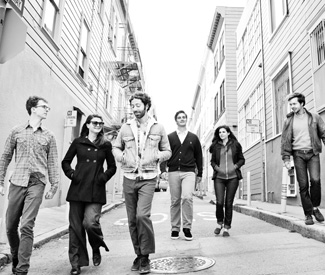
Music Last spring there was no end in sight. The future seemed bleak for what was once a promising project — the chance of a lifetime for Bay Area septet the 21st Century. Now, a full year after its intended release, the colorful debut album, The City, will see the light of day.

The struggle for The City began in 2010 with Kickstarter. Well, technically it began with an idea. Multi-instrumentalist Bevan Herbekian had been bouncing around the world since graduating from U.C. Santa Cruz. He’d come to San Francisco, the city closest to his Northern California-born heart, then promptly traveled to Europe, back to SF, next out to the Middle East — Israel, Egypt, Jordan — a quick stop in New Orleans and he was again back to the Bay. During those years, he was collecting sound. A guitarist, bassist, pianist and singer-songwriter since age 12, he fiddled with mandolin and banjo. In Jerusalem, he was gifted a small guitar and ended up busking a few times at a local shuk.

Upon Herbekian’s return to San Francisco, he decided to create the band of his dreams, an expansive folk-pop act with intricate arrangements, multi-part harmonies, and plenty of acoustic instruments. He gathered up friends, former bandmates, and a few Craigslisters, and created the 21st Century. The band now includes a lead guitarist, rhythm guitarist, bassist, drummer, keyboardists, a trumpet player, a set of musical sisters, and the occasional live saxophonist.

Herbekian then worked on a set of creamy folk-pop tunes with abstract lyrics touching on the darkness and ebullient light of moving to a new city, specifically San Francisco (though he now resides in Berkeley). Sitting in the eternally packed Mission Pie, Herbekian recounts crafting the songs for The City, while he was living just down the street from the restaurant, near 25th and Bryant. “[the song] ‘We Are Waiters’ has some specifics about living in San Francisco, in the Mission,” he pauses, taking a moment to collect his thoughts, “[it’s] about being young, living in this city, and going back and forth between feeling exuberant and like you don’t know how to reconcile that with adulthood.” A common refrain in this adult-kid city of ours.

He recounts the battle to release The City. “It honestly felt like this project was fated to never be completed. There was always some catch, some snag.” In the summer of 2010 the band met a producer who wanted to record and promote the album. Void of funds enough to travel and record, the 21st Century turned to Kickstarter and brought in $11,000, which Herbekian describes as “nuts” and “truly amazing.”

With funding in place, the band flew to Texas, recorded the album, then returned home to await mixing. Something got lost in translation however, and the mixes, which was returned to them months after recording (in spring of 2011) were “way off the mark.”

“[Our music] is relatively pop-based, but I like to think that there’s a sense of artistry to it. We really pay attention to the details and do all these big arrangements, but the mixes just sounded like glossy top 40 pop,” explains Herbekian. He wanted more Brian Wilson, less Justin Bieber. He next made the difficult decision to part ways with the producer, gather the loose tracks, and find another way to finish the album. A few band members left at this point, and Herbekian felt the pressure weighing down.

“Four weeks after that decision was made we were left with a fraction of our musical family, still in debt, and no relationship with the person who we were hoping was going to be our ticket to something — and all these sessions we had no idea what to do with.” Herbekian had worked on home recording projects, but nothing of this scale.

By chance, one of the band members was pals with Ben Tanner, a touring musician and producer who works at Fame Studios in Muscle Shoals, Alabama. “I had him take a shot at the song that I thought was the absolute worst and he resurrected it.” Tanner continued to resurrect the album, piece by piece, working closely with Herbekian. The two wrote tireless emails and many late night phone calls transpired; they were sending mixes back and forth for months. “I’ve never met him in person but he’s a saint to me,” Herbekian enthuses.

The hard work has paid off, and Herbekian beams as he finally holds the completed album in his hands. The City‘s release party is this weekend at Red Devil Lounge and he can hardly believe it. At this point the process has taken so long that the band already has a batch of new songs, two full albums-worth. For this one, Herbekian says, “We might just go back to recording it ourselves.” *


The 21st Century

With the Blank Tapes, Mark David Ashworth, and Muralismo

Fri/6, 8 p.m., $10

Red Devil Lounge

1695 Polk, SF

(415) 921-1695

www.reddevillounge.com

Rep Clock

0

Schedules are for Wed/4-Tues/10 except where noted. Director and year are given when available. Double and triple features are marked with a •. All times p.m. unless otherwise specified.

CASTRO 429 Castro, SF; (415) 621-6120, www.castrotheatre.com. $7.50-10. Bill Cunningham New York (Press, 2010), Wed, 3:30, 7. Jean-Michael Basquiat: The Radiant Child (Davis, 2010), Wed, 5:05, 8:40. Melancholia (Von Trier, 2011), Thurs, 2:30, 5:15, 8. Weekend (Godard, 1967), Fri-Sun, 7, 9:15 (also Sat-Sun, 2:30, 4:45).

CHRISTOPHER B. SMITH RAFAEL FILM CENTER 1118 Fourth St, San Rafael; (415) 454-1222, www.cafilm.org. $6.75-10.25. “Short Films from the 2011 Sundance Film Festival,” Wed-Thurs, call for times.

PACIFIC FILM ARCHIVE 2575 Bancroft, Berk; (510) 642-5249, bampfa.berkeley.edu. $5.50-9.50. Theater closed through Jan 11.

ROXIE 3117 and 3125 16th St, SF; (415) 863-1087, www.roxie.com. $6.50-10. Will the Real Terrorist Please Stand Up? (Landau, 2011), Wed, 6:30, 8. It Came from Detroit (Petrix, 2009), Thurs, 7:30, 9:30. Everyday Sunshine: The Story of Fishbone (Anderson and Metzler, 2010), Jan 6-12, 7:15, 9:15 (also Sat/7-Sun/8, 3:15, 5:15).

SFFS | NEW PEOPLE CINEMA 1746 Post, SF; www.sffs.org. $10-11. King of Devil’s Island (Holst, 2010), Jan 6-12, 2, 4:30, 7, 9:30.

Holeyness

0

le.chicken.farmer@gmail.com

CHEAP EATS Remember when we used to go out to Ocean Beach on New Years Eve nights and burn Christmas trees? I want to do that again. I think you can still have a bonfire, right — at the end of the park?

Maybe next year.

Over the last couple holiday seasons I have been gradually feeling my way back into the spirit of things — last year by visiting Joshua Tree and hacking a chicken’s head off, and this year via the good ol’ American tradition of watching football on TV and eating potato chips and geese.

That was Christmas Eve. I even got some presents for people!

At this rate, by 2013 I will be a good Christian. Until then though, and with due respect to Georgie Bundle’s avocado-smoked goose (out of this world), I think my favorite Christmas Day tradition is how the Jews do: Chinese food and a movie.

There were two shows we would have preferred, but for the occasion it seemed like a good idea to choose a chosen person’s: Woody Allen’s Midnight in Paris, which was by Christmas only still playing in Berkeley.

Now, I know it’s unpopular to like Woody Allen, but I can’t help it, I still do. He repeats himself, he’s predictable, he has a favorite type font, and all the other old problems … but: still fucking funny, and in this case even sweet, to boot.

But I’m not a movie reviewer.

Hi. My new favorite insecticide is Orange Guard®, because it works. And smells good. As part of my re-entrification into religiousness program, I have been practicing genocide. On ants, of which Oakland has several.

In fact, I’m pretty sure Woody Allen played an ant in an animated movie once, in case you’re looking for a tie-in.

Just so you know though, I’m not. I’m trying to find my way — via the scenic route, as usual — to Chinatown.

Oakland’s.

Christmas morning, late morning, before the movie. And as it happens there was a line of ants marching in under our cottage door while we were marching out, so I got the Orange Guard®, sprayed the franks and beans out of them, and then slipped on the mess my massacre made and almost broke my leg.

Restaurantwise, as usual Hedgehog had done her homework, and mine too. We went to Gum Kuo, because they open early and have Chinese donuts. It was the kind of place where we were the only whiteys in the place. The waitressperson seemed to want to ignore us, which gave us time to study the donuts before ordering them.

They are sliced crullerlike thangs that you’re supposed to dunk into rice porridge, or jook. But I’m honestly not very much interested in porridge, or jook. No. I’ll dip my own personal Chinese donuts in a steaming bowl of roast duck won ton noodle soup, thank you. And they were delicious, drowned suchwise, but unnecessary, because roast duck won ton noodle soup is a big enough breakfast for me any day of the week — Christmas included.

And that wasn’t even everything. We also had fried chicken wings, which were weak, and some barbecued pork and cilantro rice rolls, which were strong. Hedgehog wasn’t convinced, but I loved them. They’re chopped up pieces of pork with tons and tons of cilantro, wrapped in a gooey rice dough and drenched with something soy saucy.

Admittedly, the rice wrapper was overdone and gloopy, but the insides were so good I was almost thankful for the flaw. Otherwise, my head might have unscrewed and shot through the ceiling. Which would have been embarrassing.

The soup was not out of this world, but the duck part was excellent, and the won tons had discernible shrimps in them, and the noodles tasted homemade, and, hey, maybe it was a little out of this world.

In any case, we had a good time. By the time we left there was a line out the door of the place. And then it was like that after the movie, too. This leads me to believe that Hedgehog and me are ahead of our time.

Although: there are other possible interpretations.

GUM KUO

Sun.-Thu. 7:30 a.m.-10 p.m.; Fri. & Sat. 7:30 a.m.-midnight

388 9th St., Ste. 182, Oakl.

(510) 268-1288

Cash only

No alcohol

Stage Listings

0

Performance times may change; call venues to confirm. Reviewers are Robert Avila, Rita Felciano, and Nicole Gluckstern. Submit items for the listings at listings@sfbg.com. For further information on how to submit items for the listings, see Picks.

THEATER

OPENING

Future Motive Power Old Mint, 88 Fifth St, SF; www.mugwumpin.org. $15-30 (previews, pay what you can). Previews Fri/6-Sat/7, 8pm. Opens Sun/8, 8pm. Runs Fri-Sun, 8pm. Through Jan 29. Mugwumpin takes on the life of Nikola Tesla in its latest performance piece.

The Two-Character Play Eureka Theatre, 215 Jackson, SF; www.therhino.org. $10-25. Previews Wed/4-Fri/6, 8pm. Opens Sat/7, 8pm. Runs Tues-Sat, 8pm; Sun, 3pm. Through Jan 15. Theatre Rhinoceros performs Tennessee Williams’ backstage drama about a brother and a sister torn apart by secrets.

ONGOING

Not Getting Any Younger Marsh San Francisco, Studio Theater, 1062 Valencia, SF; (415) 826-5750, www.themarsh.org. $15-50. Fri, 8pm; Sat, 5 and 8:30pm. Extended through Feb 25. Marga Gomez is back at the Marsh, a couple of too-brief decades after inaugurating the theater’s new stage with her first solo show — an apt setting, in other words, for the writer-performer’s latest monologue, a reflection on the inevitable process of aging for a Latina lesbian comedian and artist who still hangs at Starbucks and can’t be trusted with the details of her own Wikipedia entry. If the thought of someone as perennially irreverent, insouciant, and appealingly immature as Gomez makes you depressed, the show is, strangely enough, the best antidote. (Avila)

*Period of Adjustment SF Playhouse, 533 Sutter, SF; (415) 677-9596, www.sfplayhouse.org. $20-50. Tues-Thurs, 7pm; Fri-Sat, 9pm (also Sat, 3pm). Through Jan 14. A nervous young man with an unaccountable tremor, George Haverstick (a compellingly manic Patrick Alparone) has waited until his honeymoon to finally call on his old Korean War buddy, Ralph (a stout but tender Johnny Moreno) — only to drop his new bride, Isabel (the terrifically quick and sympathetic MacKenzie Meehan), at the doorstep and hurry away. As it happens, Ralph’s wife of five years, Dorothea (an appealing Maggie Mason), has just quit him and taken their young son with her, turning the family Christmas tree and its uncollected gifts into a forlorn monument to a broken home — which, incidentally, has a tremor of its own, having been built atop a vast cavern. Tennessee Williams calls his 1960 play “a serious comedy,” which is about right, since although things end on a warm and cozy note, the painful crises of two couples and the lost natures of two veterans — buried alive in two suburbs each called “High Point” — are the stuff of real distress. SF Playhouse artistic director Bill English gets moving but clear-eyed, unsentimental performances from his strong cast — bolstered by Jean Forsman and Joe Madero as Dorothea’s parents—whose principals do measured justice to the complex sexual and psychological tensions woven throughout. If not one of Williams’s great plays, this is an engaging and surprisingly memorable one just the same, with the playwright’s distinctive blend of the metaphorical and concrete. As a rare snowfall blankets this Memphis Christmas Eve, 1958, something dark and brooding lingers in the storybook cheer. (Avila)

Xanadu New Conservatory Theatre Center, 25 Van Ness, SF; (415) 861-8972, www.nctcsf.org. $25-45. Wed-Sat, 8pm; Sun, 2pm (no show Sun/1). Through Jan 15. New Conservatory Theatre Center performs the retro roller-skating musical.

BAY AREA

*God’s Plot Ashby Stage, 1901 Ashby, Berk; (510) 841-6500, www.shotgunplayers.org. $18-27. Wed-Thurs, 7pm; Fri-Sat, 8pm; Sun, 5pm. Through Jan 15. Playwright-director Mark Jackson excavates a bit of deep history for Occupy USA, an episode in the annals of colonial American theater and jurisprudence that played, and plays, like a rehearsal for a revolution — this time with music. Capping Shotgun Players’ 20th anniversary season of new work, God’s Plot comically animates and literally underscores (through song, and irresistible banjo and bass accompaniment courtesy of Josh Pollock and Travis Kindred) the story surrounding “Ye Bare and Ye Cubb,” a play performed in 1665 Virginia but now lost. The legal battle that engulfed this satire of the English crown and its economic and political domination of the colonies was an early instance of the close but little acknowledged relationship between art and politics in proto-American society, with much too of religious conflict in the mix (personified here by a powerfully smoldering John Mercer as closet-Quaker Edward Martin). The playwright, a brash self-inventor named William Darby (a sure, charismatic Carl Holvick-Thomas), colludes with a disgruntled merchant (Anthony Nemirovsky) and a former indentured servant climbing the social ladder as a new tenant hand (Will Hand). Darby, meanwhile, is secretly wooing — and even more, being wooed by — Tryal Pore (an ebullient, magnetic Juliana Lustenader), a young woman even braver and more outspoken than he. As an expression of her novel and unbridled spirit, Tryal alone breaks into song to express her feelings or observations. Her temperament is meanwhile a source of worry to her father (a comically deft Kevin Clarke) and mother (Fontana Butterfield), but also attracts an unwitting suitor (a compellingly serious Joe Salazar). The play’s overarching narrative of nationalist ferment, which reaches an overtly stirring pitch, thus comes mirrored by the tension in two dramatic triangles whose common point is the precocious, golden-throated Tryal Pore. More of the private drama might have served the overall balance of the play, but a good part of the achievement of director Jackson and his generally muscular cast is making a complex play of enduring ideas and conflicts look so effortless and fun. (Avila)

*The Kipling Hotel: True Misadventures of the Electric Pink ’80s New venue: Marsh Berkeley, 2120 Allston, Berk; (415) 282-3055, www.themarsh.org. $20-50. Opens Sat/7, 8:30pm. Runs Sat, 8:30pm; Sun, 7pm. Through Feb 12. This new autobiographical solo show by Don Reed, writer-performer of the fine and long-running East 14th, is another slice of the artist’s journey from 1970s Oakland ghetto to comedy-circuit respectability — here via a partial debate-scholarship to UCLA. The titular Los Angeles residency hotel was where Reed lived and worked for a time in the 1980s while attending university. It’s also a rich mine of memory and material for this physically protean and charismatic comic actor, who sails through two acts of often hilarious, sometimes touching vignettes loosely structured around his time on the hotel’s young wait staff, which catered to the needs of elderly patrons who might need conversation as much as breakfast. On opening night, the episodic narrative seemed to pass through several endings before settling on one whose tidy moral was delivered with too heavy a hand, but if the piece runs a little long, it’s only the last 20 minutes that noticeably meanders. And even with some awkward bumps along the way, it’s never a dull thing watching Reed work. (Avila)

*The Wild Bride Berkeley Repertory Theatre, Roda Theatre, 2015 Addison, Berk; (510) 647-2949, www.berkeleyrep.org. $14.50-73. Tues, Thurs-Sat, 8pm (also Sat, 2pm); Wed and Sun, 7pm (also Sun/8 and Jan 15, 2pm; Jan 22, show at 2pm only). Extended through Jan 22. In the first act of Kneehigh Theatre’s The Wild Bride, the destinies of an innocent girl (Audrey Brisson), her moonshine-making father (Stuart Goodwin), and a predatory devil in a cheap suit (Stuart McLoughlin) become inextricably entwined by an ill-fated bargain. Steeped in European fairytale logic and American folk and blues music, Bride is inventively staged at the base of a giant tree, combining mime, puppetry, dance, live music, Cirque du Soleil-style vocals, acrobatics, and taut verse into a swooping, expressionistic fable. Accidentally promised to the devil by her doting but drink-dulled dad, “The Girl” suffers first the creepy indignity of being perved on by her preternatural suitor, and secondly the horror of having her hands chopped off by her own father, actions which drive her to flee into the woods, morphing into a character known only as “The Wild” (played by Patrycja Kujawska). After a stint as an unlikely, Edward Scissorhands-esque queen, The Wild too is driven from comfort and morphs a second time into a third character “The Woman” (Éva Magyar), an experience-toughened mother bear who kicks the devil’s ass (literally), and triumphs over adversity, without even uttering a single word. At turns dark, dexterous, fanciful, and fatal, Bride rises above the usual holiday fare with a timeless enchantment. (Gluckstern)

The World’s Funniest Bubble Show Marsh Berkeley, TheaterStage, 2120 Allston, Berk; (415) 826-5750, www.themarsh.org. $8-50. Extended run: Jan 15, Jan 21, Feb 12, 19, 26, March 11, and 18, 11am. Louis “The Amazing Bubble Man” Pearl returns with this kid-friendly, bubble-tastic comedy.

PERFORMANCE/DANCE

Café Royale 800 Post, SF; (415) 641-6033. Free. Fri, 8pm: Spoken word with Sarah Kay and Phil Kaye. Mon, 7pm: Comedy with Cara Tramontano.

“Cut the Crap! With Semi-Motivational Guru, Clam Lynch” Dark Room, 2263 Mission, SF; www.darkroomsf.com. Fri/6 and Jan 13, 8pm. $15. Get motivated with self-help-guru-satirizing comedian Clam Lynch.

“A Funny Night for Comedy” Actors Theatre of San Francisco, 855 Bush, SF; (415) 345-1287. Sun, 7pm. $10. With host Natasha Muse.

“The Proud” Dance Mission Theater, 3316 24th St, SF; (415) 826-4441, www.dancemission.com. Sat, 8pm; Sun, 6pm; Mon, 5pm. Free. Dance Brigade’s Dance Mission Theater and Iraq Vets Against the War present this workshop production of Aaron Loeb’s new play about post-traumatic stress syndrome.

Events Listings

0

On the Cheap listings are compiled by Lucy Schiller and Caitlin Donohue. Submit items for the listings at listings@sfbg.com. For further information on how to submit items for the listings, see Picks.

WEDNESDAY 4

2012 showing Chinatown Meeting Room, Chinatown Library, 1135 Powell, SF; www.sfpl.org. 2:30-5:30pm, free. Ring in the purported year of our doom with a little cinematic apocalypse: John Cusack and Danny Glover battling mega-tsunamis, an irate Yellowstone super-volcano, and the inevitable detachment of California from the continental U.S.

BAY AREA

“Being and Ideal Grace: Love and Spirituality in Robert and Elizabeth Browning’s Letters” lecture Northbrae Community Church, 941 the Alameda, Berk; (510) 526-3805. 7:30pm, $5 donation suggested. Bay Area actor Julian Lopez-Morillas explores the written missives shot between Robert and Elizabeth Browning, two 19th century romantic poets who penned some of the steamiest pre-Victorian prose known to Fabio.

THURSDAY 5

Lands End restoration Lands End, Presidio, SF; www.parksconservancy.org. 1-4pm, free. The coastal bluffs of the Presidio are calling out for a little TLC. Help plant, water, and weed in a spot more naturally beautiful than any human-made garden.

FRIDAY 6

“Get Lucky” opening reception SOMArts Cultural Center, 934 Brannan, SF; www.somarts.org. 6-9pm, free. Celebrating experimental music pioneer and artist John Cage’s hundredth birthday, SOMArts stages an indeterminacy-themed evening, featuring the creation of a living tarot deck and an involved, improvised poem.

“Taking Stock’ opening reception Z Space, 450 Florida, SF; www.zspace.org. 6:30-8:30pm, free. Venturing daily into the packaged wilderness of grocery stores in San Francisco and Denver, artists Emily Heller and Leah Rosenberg took pains documenting and replicating how food is presented to the American public.

Sharon Lockhart’s pop-up “Lunch Break” SFMOMA, 151 Third St., SF; (415) 357-4035, www.sfmoma.org. 11:30 a.m.-1:30pm, free. An ongoing exhibition looking at the activities Americans pursue on our lunch breaks gets free and interactive today, hosting Vietnamese pop-up cafe Rice Paper Scissors, Blue Bottle Coffee, and a Skype chat with curator Sharon Lockhart. Share your lunch break traditions at a community table that will be set up to encourage conversation among fellow laborers.

“Working Conditions” closing reception Southern Exposure, 3030 20th St., SF; www.soex.org. 7-9pm, free. For almost two months, nine artists have worked in view of the public under the theme of labor and process, and with varying degrees of audience interaction. Jennie Ottinger’s method serves as one example; she promised a certificate of recognition to visitors willing to mix her paints and clean her brushes. Nathaniel Parsons is another; he bestowed a thoughtful woodcarving on every visitor who accompanied him on a walk-and-talk.

SATURDAY 7

Vintage Paper Fair Hall of Flowers, Golden Gate Park, SF; www.vintagepaperfair.com. Through Sun/8. 10am-6 pm, free. “Ephemera” can bring to mind molding moth wings and mildew spots as much as forgotten treasures of yesteryear. But Hal Lutsky’s annual vintage paper fair promises nothing but pristinely-preserved postcards, brochures — even stereoviews.

SUNDAY 8

Battle reenactment Frankenart Mart, 515 Balboa, SF; www.frankenartmart.com. Noon-6 pm, free. A hotdog-fixated art gallery in the Inner Richmond, Frankenart Mart staged a multi-month series of battles and battle-related artwork. Today’s reenactments (participant-led, nonviolent, and accompanied by hotdogs) are less Appomattox as they are Thanksgiving Day.

BAY AREA

“Hiram Johnson and Woman’s Suffrage Vote 1911” lecture Berkeley History Center, 1931 Center, Berk; www.lwvbae.org. 2pm, free. Sure, we’ve got the vote. But failing to learn about our dark(er) past will only doom us to repeat it – reason enough to head to this free lecture at the Berkeley History Center on the progressive revolution sparked by California governor Hiram Johnson. After you get your fill of the talk, all visitors are invited to tour the exhibit on our state’s voting women, which is stacked with memorabilia and facts from the last century.

TUESDAY 10

Word Is Out: A Queer Film Classic book launch SF Public Library, 100 Larkin, SF; www.sfpl.org. 6pm, free. In 1977, a documentary on the lives of gays and lesbians helped shift the political dialogue of the United States – or at least, so says author Greg Youmans, who recently penned a book exploring the significance of the film. At this roundtable discussion with Youmans, an original promoter of the film, and the Word Is Out‘s makers, rarely-seen footage of the video pre-interviews conducted for the documentary will be screened.

Alerts

0

news@sfbg.com

FRIDAY 6

Pathology of wealth

Progressive author and speaker Michael Parenti discusses this country’s dysfunctional political and economic systems during a lecture entitled “Democracy and the Pathology of Wealth,” describing how corporate capitalism has corrupted key institutions. In his books and talks, Parenti has covered a wide array of political topics, always with great passion and insights, and his perspective has never been more relevant than in the current political moment.

7:30, $12–$10

La Peña Cultural Center

3105 Shattuck, Berk.

(510) 849-2568

www.michaelparenti.org

lapena.org/event/1952


End torture now

A screening of the film Ending U.S.-Sponsored Torture Forever will be followed by a discussion led by members of the Bay Area Religious Campaign Against Torture. Berkeley Peace and Justice Commission member Rita Maran will also be honored for her efforts to get the Berkeley City Council to pass a resolution calling for President Barack Obama to honor commitments he made during his presidential campaign to close the prison at Guantanamo Bay, which became notorious for employing torture and other human rights violations.

7 p.m., $5–$10

Berkeley Fellowship of Unitarian Universalists’ Hall

1924 Cedar, Berk.

www.bfuu.org

(510) 841-4824


SATURDAY 7

Occupy and divest

Omar Barghouti, author of Boycott, Divestment, Sanctions: The Global Struggle for Palestinian Rights, gives a lecture entitled “Occupy Wall Street, Not Palestine!: BDS and the Global Struggle for Justice & Freedom.” Proceeds from the event, where Barghouti will be signing his book, benefit the Middle East Children’s Alliance and its Maia Project, which supplies clean drinking water to the children living in Gaza.

7:30, $10 (but no one turned away)

First Presbyterian Church of Oakland

2619 Broadway, Oakl.

events@mecaforpeace.org

(510) 548-0542

www.mecaforpeace.org


SUNDAY 8

Vigil for gun victims

Candlelight vigils remembers the victims of gun violence are being held around the country to mark the first anniversary for the shootings in Tuscon, Arizona that left six people dead and 13 injured, including U.S. Rep. Gabrielle Giffords. So come and light a candle to honor those affected by this senseless violence. Sponsored by Legal Community Against Violence.

6:30 p.m., free

Yerba Buena Gardens

Mission and Third St., SF

(415) 433-2062

ecartwright@lcav.org

www.bradycampaign.org/toomanyvictims


Mail items for Alerts to the Guardian Building, 135 Mississippi St., SF, CA 94107; fax to (415) 437-3658; or e-mail alert@sfbg.com. Please include a contact telephone number. Items must be received at least one week prior to the publication date.

Battling big box

1

news@sfbg.com   

In neighborhood commercial districts, national chains and other formula retail stores such as PETCO, Target, Subway, Walmart, and Starbucks are hot button issues for residents who don’t want to see San Francisco turn into a strip mall or have local money pulled from the community.

Sup. Eric Mar and other city officials want to make sure local small businesses aren’t being unnecessarily hurt by competition from national chains, which is why he called a hearing on Dec. 5 to discuss big box retailers and their impacts on San Francisco’s small businesses, neighborhoods, workers, and economy.

“There is no vehicle to see the impacts of big business on the city,” Mar told us, saying he is contemplating legislation to do just that.

Mar was part of city efforts to keep formula pet stores from locating in the Richmond area, working with a coalition of pet food small businesses concerned about PETCO and Pet Food Express trying to move into the area. But it isn’t just pet stores.

“There is a perception that Walmart might make a move into the city since we already have stores like Fresh n’ Easy,” Mar’s Legislative Aide Nick Pagoulatos told us.

The city doesn’t have a comprehensive analysis on how these companies impact San Francisco. Mar says he wants to “have a clear scale of their influence and see what we need to do to protect small business in San Francisco.”

History of wariness

In 2004, the Board of Supervisors adopted the first Formula Retail Use Control legislation, an ordinance that “prohibited Formula Retail in one district; required Conditional Use Authorization in another; and established notification requirements in all neighborhood commercial districts.”

The Planning Code changed again after a voter ballot initiative in 2007, Proposition G, required any formula retail use in neighborhood commercial districts to obtain a conditional use permit, which gave neighboring businesses a chance to weigh in during a public hearing.

Mar said the intent wasn’t to bar big box retail from entering the city, but to simply give neighborhoods a voice. But now, he said the city needs to take a more comprehensive look at what’s coming and how they will impact the city.

Small Business Commissioner Kathleen Dooley echoed the concern, which extends even beyond city limits. “I’ve heard through the rumor mill that Lowe’s in South San Francisco is going to close and

Walmart is looking to take that space since they know they’d never get into the city,” she told us. “It’s bad enough that Target is opening stores [in San Francisco]. They are the quintessential big box because they sell everything.”

Target is in the process of opening a massive store inside the Metreon in SoMa, and another store at Geary and Masonic. Mar isn’t diametrically opposed to the big box industry, but he thinks those companies should be appropriately situated.

“I’ve seen that people in Richmond are positive toward big box like Target coming into the district, but some are nervous that it will take down business,” he told us. “There are some property spaces that are supposed to be for big box, like the property at Geary and Masonic where the old Sears and Toys”R”Us used to be.”

But it’s not easy to figure out what other big box stores have their sights set on the city. The Planning Department’s list of projects in the pipeline aren’t always filed under the name of the business, making it difficult to stay vigilant.

For example, while application #3710017 at 350 Mission Street describes the project as a “95,000 sq. ft. building of office, retail and accessory uses,” it isn’t clear what businesses are actually setting up shop. And these days, some big box stores are coming in smaller boxes.

Prototype stores such as Unleashed by PETCO are specifically designed to squeeze into smaller property spaces so they can get into neighbor corridors that are typically reserved for small businesses.

More help needed

During the Dec. 5 hearing before the Land Use and Economic Development Committee, Sup. Scott Wiener echoed Mar concerns, commenting that he wants to see how the Planning Commission could “improve the Conditional Use process since we see a pushback of strong neighborhood activity.”

Dooley recalled an issue from 2009 when the Small Business Commission formally asked the Planning Commission not to authorize a PETCO in the Richmond because “the surrounding area was already well served by pet stores.” The board ultimately stopped PETCO, but Pet Food Express did locate a store nearby, which Dooley said has already taken a toll on the locally owned pet food suppliers.

“Big box stores carry a huge number of products that impact other stores,” she said. “Big box is a category killer in the neighborhood…the Planning Commission needs new criteria for formula retail because there are several different types.”

Some superstores require parking lots, taking up additional land, and increasing traffic in certain neighborhoods. Yet one trait that most chain stores have in common is that they extract more money from San Francisco than locally owned businesses, whose revenues tend to circulate locally.

“With every dollar spent at local stores, 65 cents will go back into the community, while only a quarter will be returned from a big box.” Rick Karp, owner of the 50-year-old Cole Hardware, said at the hearing, citing various studies on the issue.

Small business owners are asking for economic impact reports to be included in project applications from chain stores to see just how they measure up to their locally owned counterparts.

When Lowe’s entered his district, Karp says he lost 18 percent of his business and was forced to eliminate six full-time jobs. He appealed to city officials to “keep big box out of San Francisco because it impacts the efficacy of neighborhood shopping.”

Once chain stores puts the locals out of business, the consumer is stuck with set prices and reduced variety. But critics say it isn’t just consumers and small business owners who suffer, but workers as well. They singled out Walmart as notorious for union-busting and poor labor standards.

“We can use our land use ordinances and powers to set a basic minimum labor standard. Big box must abide by that and also include health care if implemented in local government [legislation],” Mar said.

But Steven Pitts, a labor policy specialist at UC Berkeley, told us there is a connection between low prices and low wages.

“People who work at Walmart are poorer than those who shop there,” he told us. “Therefore, if prices were raised to increase wages for employees, the burden wouldn’t be on people of lower income.”
Opposing Walmart

To illustrate how Walmart would adversely affect San Francisco’s workforce, the hearing included two employees of Walmart, Barbara Collins and Ronald Phillips from Placerville, who helped create Organization United for Respect at Walmart (OURWalmart) to push for better benefits and labor standards.

“We want to hold Walmart accountable,” said Collins, whose last annual income from Walmart was $15,000 annually, a salary she realized couldn’t support her four children. “Walmart says they pay living wages. No, they don’t.”

Phillips said that Walmart has “a tendency to fire people for any reason and then does not have to pay for the benefits… I was one of these people, but I was rehired.”

For the past three months, Phillips says she has worked at least six days and 40 hours per week, but that she still qualified for welfare assistance.

Also at the hearing, SF Locally Owned Merchants Alliance unveiled a study showing that formula retail costs nearly as many jobs as it creates. A domino effect occurs when stores close because fewer customers circulate to other nearby stores.

But the group noted that consumer habits are probably even more important than city regulations. The SFLOMA study found that if 10 percent of San Franciscans shifted their spending to locally owned small businesses, consumers would create 1,300 jobs and $190 million in the city.

And that would be good for everyone: owners, consumers, and workers. Steven Cornell, owner of Brownie’s Hardware, said that small business pays good wages, typically above the minimum wage, as well as sick leave, health coverage, and other benefits. As he told the hearing, “Local businesses have been doing this for 20 to 30 years since we are already invested in the community.”

Rep Clock

0

Documentary Holy Rollers: The True Story of Card Counting Christians plays Fri/30-Sat/31 at the Roxie.

Schedules are for Wed/28-Tues/3 except where noted. Director and year are given when available. Double and triple features are marked with a •. All times p.m. unless otherwise specified.

CASTRO 429 Castro, SF; (415) 621-6120, www.castrotheatre.com. $7.50-10. •On the Town (Donen and Kelly, 1949), Wed, 1, 5, 9:05, and Singin’ in the Rain (Kelly and Donen, 1952), Wed. 2:55, 7. •The Umbrellas of Cherbourg (Demy, 1964), Thurs, 3:25, 7, and A Woman Is a Woman (Godard, 1961), Thurs, 5:10, 8:45. West Side Story (Robbins and Wise, 1961), Fri, 7; Sat-Mon, 2 (also Sun, 7). Presented “sing-along” style.

CHRISTOPHER B. SMITH RAFAEL FILM CENTER 1118 Fourth St, San Rafael; (415) 454-1222, www.cafilm.org. $6.75-10.25. The Gold Rush (Chaplin, 1925), Wed-Thurs, call for times. Restored 35mm print. My Reincarnation (Fox, 2011), Wed-Thurs, call for times. “Short Films from the 2011 Sundance Film Festival,” Dec 30-Jan 5, call for times.

PACIFIC FILM ARCHIVE 2575 Bancroft, Berk; (510) 642-5249, bampfa.berkeley.edu. $5.50-9.50. Theater closed through Jan 11.

PARAMOUNT 2025 Broadway, Oakl; 1-800-745-3000, www.ticketmaster.com. $5. The Wizard of Oz (Fleming, 1939), Fri, 8. Costumes paying homage to the film encouraged (suggestion: flying monkey!)

ROXIE 3117 and 3125 16th St, SF; (415) 863-1087, www.roxie.com. $6.50-10. My Reincarnation (Fox, 2011), Wed-Thurs, 7, 8:45. Holy Rollers: The True Story of Card Counting Christians (Storkel, 2011), Fri-Sat, 7, 9 (also Sat, 3, 5). Silent Souls (Fedorchenko, 2010), Sun-Mon, 7, 8:30 (also Sun, 3:15, 5). 4th and Goal (Gilden Seavey, 2011), Tues, 7, 9.

SFFS | NEW PEOPLE CINEMA 1746 Post, SF; www.sffs.org. $10-11. Bill Cunningham New York (Press, 2011), Sun, 4:30, 8:30; Mon, 2:30, 6:30. Buck (Meehl, 2011), Sun, 2:30, 6:30; Mon, 4:30, 8:30. Paul Goodman Changed My Life (Lee, 2011), Jan 3-5, 2:30, 4:30, 6:30, 8:30. Silent Souls (Fedorchenko, 2010), Wed-Mon, 3, 5, 7, 9 (no 9pm show on Sat/31).

Stage Listings

0

Stage listings are compiled by Guardian staff. Performance times may change; call venues to confirm. Reviewers are Robert Avila, Rita Felciano, and Nicole Gluckstern. Submit items for the listings at listings@sfbg.com. For further information on how to submit items for the listings, see Picks.

THEATER

ONGOING

Absolutely San Francisco Alcove Theater, 414 Mason, Ste 502, SF; (415) 992-8168, www.thealcovetheater.com. $32-50. Thurs/29, 8pm. Not Quite Opera Productions presents Anne Nygren Doherty’s musical about San Francisco, with five characters all portrayed by Mary Gibboney.

*On the Air Pier 29 on the Embarcadero (at Battery), SF; (415) 438-2668, love.zinzanni.org. $117 and up (includes dinner). Wed/28-Fri/30, 6:15pm (also Wed/28, 11:30am); Sat/31, 8:30pm. Teatro ZinZanni’s final production at its longtime nest on Pier 29 is a nostalgia-infused banquet of bits structured around an old-time radio variety show, featuring headliners Geoff Hoyle (Geezer) and blues singer Duffy Bishop. If you haven’t seen juggling on the radio, for instance, it’s pretty awesome, especially with a performer like Bernard Hazens, whose footing atop a precarious tower of tubes and cubes is already cringingly extraordinary. But all the performers are dependably first-rate, including Andrea Conway’s comic chandelier lunacy, aerialist and enchanting space alien Elena Gatilova’s gorgeous “circeaux” act, graceful hand-balancer Christopher Phi, class-act tapper Wayne Doba, and radio MC Mat Plendl’s raucously tweeny hula-hooping. Add some sultry blues numbers by raunchy belter Bishop, Hoyle’s masterful characterizations (including some wonderful shtick-within-a-shtick as one-liner maestro “Red Bottoms”), a few classic commercials, and a healthy dose of audience participation and you start to feel nicely satiated and ready for a good cigar. Smoothly helmed by ZinZanni creative director Norm Langill, On the Air signals off-the-air for the popular dinner circus — until it can secure a new patch of local real estate for its antique spiegeltent — so tune in while you may. (Avila)

*Period of Adjustment SF Playhouse, 533 Sutter, SF; (415) 677-9596, www.sfplayhouse.org. $20-50. Tues-Thurs, 7pm; Fri-Sat, 9pm (also Sat, 3pm). Through Jan 14. A nervous young man with an unaccountable tremor, George Haverstick (a compellingly manic Patrick Alparone) has waited until his honeymoon to finally call on his old Korean War buddy, Ralph (a stout but tender Johnny Moreno) — only to drop his new bride, Isabel (the terrifically quick and sympathetic MacKenzie Meehan), at the doorstep and hurry away. As it happens, Ralph’s wife of five years, Dorothea (an appealing Maggie Mason), has just quit him and taken their young son with her, turning the family Christmas tree and its uncollected gifts into a forlorn monument to a broken home — which, incidentally, has a tremor of its own, having been built atop a vast cavern. Tennessee Williams calls his 1960 play “a serious comedy,” which is about right, since although things end on a warm and cozy note, the painful crises of two couples and the lost natures of two veterans — buried alive in two suburbs each called “High Point” — are the stuff of real distress. SF Playhouse artistic director Bill English gets moving but clear-eyed, unsentimental performances from his strong cast — bolstered by Jean Forsman and Joe Madero as Dorothea’s parents—whose principals do measured justice to the complex sexual and psychological tensions woven throughout. If not one of Williams’s great plays, this is an engaging and surprisingly memorable one just the same, with the playwright’s distinctive blend of the metaphorical and concrete. As a rare snowfall blankets this Memphis Christmas Eve, 1958, something dark and brooding lingers in the storybook cheer. (Avila)

Xanadu New Conservatory Theatre Center, 25 Van Ness, SF; (415) 861-8972, www.nctcsf.org. $25-45. Wed-Sat, 8pm; Sun, 2pm (no show Sun/1). Through Jan 15. New Conservatory Theatre Center performs the retro roller-skating musical.

BAY AREA

*God’s Plot Ashby Stage, 1901 Ashby, Berk; (510) 841-6500, www.shotgunplayers.org. $18-27. Wed-Thurs, 7pm; Fri-Sat, 8pm; Sun, 5pm. Through Jan 15. Playwright-director Mark Jackson excavates a bit of deep history for Occupy USA, an episode in the annals of colonial American theater and jurisprudence that played, and plays, like a rehearsal for a revolution — this time with music. Capping Shotgun Players’ 20th anniversary season of new work, God’s Plot comically animates and literally underscores (through song, and irresistible banjo and bass accompaniment courtesy of Josh Pollock and Travis Kindred) the story surrounding “Ye Bare and Ye Cubb,” a play performed in 1665 Virginia but now lost. The legal battle that engulfed this satire of the English crown and its economic and political domination of the colonies was an early instance of the close but little acknowledged relationship between art and politics in proto-American society, with much too of religious conflict in the mix (personified here by a powerfully smoldering John Mercer as closet-Quaker Edward Martin). The playwright, a brash self-inventor named William Darby (a sure, charismatic Carl Holvick-Thomas), colludes with a disgruntled merchant (Anthony Nemirovsky) and a former indentured servant climbing the social ladder as a new tenant hand (Will Hand). Darby, meanwhile, is secretly wooing — and even more, being wooed by — Tryal Pore (an ebullient, magnetic Juliana Lustenader), a young woman even braver and more outspoken than he. As an expression of her novel and unbridled spirit, Tryal alone breaks into song to express her feelings or observations. Her temperament is meanwhile a source of worry to her father (a comically deft Kevin Clarke) and mother (Fontana Butterfield), but also attracts an unwitting suitor (a compellingly serious Joe Salazar). The play’s overarching narrative of nationalist ferment, which reaches an overtly stirring pitch, thus comes mirrored by the tension in two dramatic triangles whose common point is the precocious, golden-throated Tryal Pore. More of the private drama might have served the overall balance of the play, but a good part of the achievement of director Jackson and his generally muscular cast is making a complex play of enduring ideas and conflicts look so effortless and fun. (Avila)

The Secret Garden TheatreWorks at Lucie Stern Theatre, 1305 Middlefield, Palo Alto; (650) 463-1960, www.theatreworks.org. $19-72. Wed/28, 7:30pm; Thurs/29-Fri/30, 8pm (also Fri/30, 2pm); Sat/31, 2pm. TheatreWorks performs the Tony Award-winning musical adaptation of Frances Hodgson Burnett’s novel.

*The Wild Bride Berkeley Repertory Theatre, Roda Theatre, 2015 Addison, Berk; (510) 647-2949, www.berkeleyrep.org. $14.50-73. Tues, Thurs-Sat, 8pm (also Thurs/29 and Sat, 2pm); Wed and Sun, 7pm (also Jan 8 and 15, 2pm; Jan 22, show at 2pm only). Extended through Jan 22. In the first act of Kneehigh Theatre’s The Wild Bride, the destinies of an innocent girl (Audrey Brisson), her moonshine-making father (Stuart Goodwin), and a predatory devil in a cheap suit (Stuart McLoughlin) become inextricably entwined by an ill-fated bargain. Steeped in European fairytale logic and American folk and blues music, Bride is inventively staged at the base of a giant tree, combining mime, puppetry, dance, live music, Cirque du Soleil-style vocals, acrobatics, and taut verse into a swooping, expressionistic fable. Accidentally promised to the devil by her doting but drink-dulled dad, “The Girl” suffers first the creepy indignity of being perved on by her preternatural suitor, and secondly the horror of having her hands chopped off by her own father, actions which drive her to flee into the woods, morphing into a character known only as “The Wild” (played by Patrycja Kujawska). After a stint as an unlikely, Edward Scissorhands-esque queen, The Wild too is driven from comfort and morphs a second time into a third character “The Woman” (Éva Magyar), an experience-toughened mother bear who kicks the devil’s ass (literally), and triumphs over adversity, without even uttering a single word. At turns dark, dexterous, fanciful, and fatal, Bride rises above the usual holiday fare with a timeless enchantment. (Gluckstern)

The World’s Funniest Bubble Show Marsh Berkeley, TheaterStage, 2120 Allston, Berk; (415) 826-5750, www.themarsh.org. $8-50. Wed/28-Sat/31, 11am. Louis “The Amazing Bubble Man” Pearl returns with this kid-friendly, bubble-tastic comedy.

PERFORMANCE/DANCE

“BATS Improv New Year’s Eve Special Performance” Bayfront Theater, Fort Mason Center, Marina at Laguna, SF; (415) 474-6776, www.improv.org. Sat, 8pm. $30-40. The landmark improv company performs to ring in the new year, with a dance party to follow.

“Club Chuckles” Hemlock Tavern, 1131 Polk, SF; (415) 923-0925. Thurs, 7:30 and 9:30pm. $15. Comedy with Tig Notaro, Sean Keane, and Groomed for Success.

“Cut the Crap! With Semi-Motivational Guru, Clam Lynch” Dark Room, 2263 Mission, SF; www.darkroomsf.com. Jan 6 and Jan 13, 8pm. $15. Get motivated with self-help-guru-satirizing comedian Clam Lynch.

“Dream Queens Revue: It’s Almost New Year’s Show” Aunt Charlie’s Lounge, 133 Turk, SF; www.auntcharlieslounge.com. Wed, 9:30pm. Free. Drag with Colette Ashton, Ruby Slippers, Sophilya Leggz, and more.

“Forking II: A Merry FORKING Christmas” StageWerx, 446 Valencia, SF; www.pianofight.com.Wed/28-Fri/30, 8pm. $25-35. Well holy forking shit, it’s been three years already since Daniel Heath’s A Merry Forking Christmas debuted at PianoFight’s old Off-Market Theater digs, and in that time a few new faces have been added to the cast, and a few loose ends tied up in a bow, rendering the overall package a ho-ho-holiday treat worth indulging in. Hate the holidays? Not nearly as much as Goth girl morgue assistant Charlotte (Leah Shesky); her buddy Monique (Emma Shelton), a frustrated culinary genius selling pot cookies to stressed-out shoppers; Adam (Jed Goldstein), a disaffected Jew hired on as a Mall Santa from a temp agency; or Charles (Alex Boyd), an effete metrosexual dangerously enervated by his fiancée’s perfectionist vigor (Nicole Hammersla). Hilariously guided by Ray Hobbs and Gabrielle Patacsil, who play a variety of bit roles (Headbanger vs. Bible Banger, embattled parents fighting over the last coveted “Meat Panda,” feral children), the audience periodically gets to vote over the next permutation of plot, the “forks” alluded to in the title. According to artistic director Rob Ready (also featured in the cast as “Old Ben”), there are 362,880 possible combinations, and yes, the actors have memorized them all. Question is, will you? (Gluckstern)

“The Last Butch Standing” Victoria Theatre, 2961 16th St, SF; www.therhino.org. Sat, 7 and 9pm. $30-35. Singer and comedian Lea DeLaria performs her solo satire.

“Laughter Against the Machine: Guerrilla Stand-Up Comedy Fourth Annual New Year’s Eve” Phoenix Theatre, 414 Mason, Sixth Flr, SF; www.brownpapertickets.com. Thurs-Sat, 7pm (also Fri/30, 9:30pm; Sat/31, 10pm). $20-25. W. Kamau Bell, Nato Green, and Janine Brito perform their trademark brand of socially-conscious comedy.

“Magic and More New Year’s Eve with Frisco Fred” Actors Theatre of San Francisco, 855 Bush, SF; www.actorstheatresf.org. Sat, 7:30pm. $40. Family-friendly variety show starring comedian and circus performer Frisco Fred.

“Not Your Normal New Year’s Eve” Herbst Theatre, 401 Van Ness, SF; www.nynnye.com. Sat, 8pm. $25-59. Cutting-edge comedy with Brent Weinbach, Jill Bourque, Kevin Camia, and more, plus live music and a balloon drop.

“Picklewater Clown Cabaret presents a Prescott Circus Fundraiser” StageWerx, 446 Valencia, SF; www.brownpapertickets.com. Mon, 7 and 9pm. $15. Clowns helping clowns!

“Qcomedy Showcase” Martuni’s, 4 Valencia, SF; www.qcomedy.com. Mon, 8pm. $5-15. With comedians Justin Lucas, Simone Campbell, Jennifer Dronsky, and guest host Pippi Lovestocking.

“A San Francisco New Year’s Comedy Show” Actors Theatre of San Francisco, 855 Bush, SF; www.actorstheatresf.org. Sat, 10pm, $40. With headliner Will Franken.

“Santaland Diaries” Eureka Theatre, 215 Jackson, SF; www.combinedartform.com. Wed/28-Fri/30, 8pm. $20-50. Combined Artform presents David Sedaris’ holiday comedy.

“Yes Sweet Can” Dance Mission Theater, 3316 24th St, SF; (415) 225-7281, www.sweetcanproductions.com. Wed/28-Thurs/29, 2:30 and 4:30pm; Fri/30, 4 and 8pm; Sat/31-Sun/1, 2pm. $15-60. Sweet Can Productions presents an hourlong extravaganza of circus arts for the holidays.


Occupying the future

0

p { margin-bottom: 0.08in; }

It was a funny feeling, seeing so many faces from Occupy San Francisco and Occupy Oakland in the bright, clean “Gold Room” of San Francisco’s Commonwealth Club, particularly after spending so many nights camping with them and covering the movement.

But they were there on Dec. 15, just up Market Street from their old campsites, along with a couple hundred supporters and interested community members, attending a forum on “Occupy: What now? What’s next?” Facilitator Caroline Moriarty Sacks announced that she “expected a civic conversation.” What she got was a very Occupy answer to the question of the evening which, in typical style, redefined the very concept of “civic” conversation.

The forum involved voices from many different parts of the left. Jean Quan, the Oakland mayor with a progressive activist past. George Lakoff, an outspoken liberal professor of linguistics at UC Berkeley. In the audience, dozens of people who support or are interested in Occupy, the mostly leftist San Francisco political milieu. And, of course, representing most of the panel and a good chunk of the audience were the active occupiers: anarchists, peace activists, labor organizers, and everything in between.

During the panels, their perspectives clashed. Yet Occupy strives to be a coalition of everyone, and all of these voices will be important as it progresses. Sacks had planned a 90-minute forum, featuring a panel to answer both moderator and audience questions, a break-out session, and summary reports back.

In their quest to practice participatory democracy, Occupy protesters have become used to long meetings that strive for non-hierarchical structure and a platform to hear the voice of anyone who would like to speak. If there’s one thing they can all agree upon, it’s that they’re a little tired of waiting patiently for their voices to be heard.

During the panel discussion, a few Occupiers started a Peoples Mic, interrupting Mayor Quan. They were escorted out. This fazed no one, and by the time she left the panel, chants demanding her recall rang in the hall. At each disruption, some Occupy-involved folks would object, “Listen to her! I want to hear all viewpoints!”

The tone was rowdy, but not aggressive. Minutes after disrupting the forum, protesters were back on schedule, sitting in small groups engaged in dialogue with other audience members. Even Quan was fine with it; she told the Oakland Tribune, “It was a chance to talk and have dialogue…We fostered a debate.”

This event was a microcosm of the thorny but crucial way that Occupy is uniting the left. The people in the room had something in common: belief in the visions and goals of Occupy. They just disagreed on how to get there.

Discussing, debating, and creatively bridging these differences has been one of the movement’s greatest struggles. But the more Occupy succeeds on the thorny path to unity, the more its strength builds.

Misrepresenting anarchism

Civil disobedience, peace, non-violence—all of these are critical concepts for the Occupy movement, and wrestling with them frankly has been part of the long road towards unification.

This has been done through the application of what’s originally an anarchist concept: embracing a diversity of tactics.

This is what the Occupy protesters did at the Commonwealth Club Forum. Some disapproved of disruptions, others thought them necessary. Individuals acted as they felt was right.

The Occupy supporters who turned their backs on Quan and interrupted her didn’t do it because they are inexplicably rude. They gave their reasons, including still being hurt and angry after Quan unleashed police using tear gas, rubber bullets, and aggression to break up their encampment on Oct. 25.

Quan also was displeased about that night’s events, saying that “No one is happy about what happened around the tear gas and mutual aid.”

The second reason for the reactions was what an Occupy Oakland protester who mic-checked Quan called her “misrepresentation of anarchism.” This has been dismissed and mocked by many press outlets, as if to say: What’s the point of bothering to understand anarchism?

Many people who identify with anarchist principles and tactics are involved with Occupy groups. This has contributed to the growth and development of autonomous communities at camps, as many anarchists have extensive knowledge and practice in building alternative communities based on horizontalism and collective management of resources. Occupy’s anarchist roots go deep.

This has also created controversy when tactics like property destruction and the black bloc, both associated with anarchism, become a part of Occupy. One example was the bank windows smashed and vacant building occupied during Occupy Oakland’s General Strike on Nov. 2, and riot police again responded with tear gas that night. The next day, 700 attended a General Assembly meeting to focus on discussing violence, its nature, and the ethics surrounding it.

Many have been quick to characterize this ongoing debate as a division in the movement. But if unity is to be achieved, these tough conversations are necessary.

Bringing it home

Occupy has been criticized for its lack of leaders, but that has left it open to exciting possibilities. To start a new Occupy project, you just have to convince some people to help you out—you must gain approval from no one. Some have described the organization as a “do-ocracy.” Don’t ask for permission, they say, just do it.

As such, the ideas for moving forward span from handfuls of people on street corners to millions converging on Washington.

Lakoff presented one of these concepts to the group at the Commonwealth Club, what he called “Occupy Elections.” Lakoff said, “Join Democratic clubs, and insist on supporting those people with your general moral principles. If you join Democratic clubs soon, you decide who gets to run. This is how the Tea Party took over.”

Like most ideas floating around in Occupy, there’s already something similar underway. Berkeley resident Joshua Green started the Occupy the Congress initiative, which hopes to organize and fund efforts for candidates “who support the declaration of the occupation of Wall Street.” Congressional candidates such as Elizabeth Warren in Massachusetts and Norman Solomon here in California have expressed support for and goals similar to the Occupy movement.

Occupy Washington DC has taken the message to Congress in other ways. In an open forum with supporters and renowned economists, they developed their Budget Proposal for the 99 Percent and are coordinating with Occupy groups throughout the country to call for a National Occupation of Washington DC starting March 30.

A call to action like that has a chance of being huge. With the West Coast Port Shutdown on Dec. 12, Occupy has demonstrated an ability to coordinate nationally. Those actions also showed Occupy’s growing unity with labor groups, as ILWU members worked closely with Occupy to plan those actions.

On Dec. 6, Occupy demonstrated its dedication to yet another new frontier—occupying foreclosed homes. That was a national day of action called by Occupy Our Homes and Occupy groups in over two dozen cities participated, defending homeowners threatened with eviction and moving the homeless into empty properties.

Hibernation

By the time moderator Melissa Griffin asked her final question to the panel, it was clear that the “civic conversation” had not gone as planned. Two Occupy protesters had been escorted out for interrupting Jean Quan. A handful of others had stood and turned their backs when she spoke. The crowd was restless for their own chance to grill the panelists, and there were only a few minutes left. With a faint look of dismay and hopelessness, Griffin asked the question that had no chance of being quickly answered: What’s next for occupy?

She quoted Kalle Lasn, co-founder of Adbusters, the “culture-jamming” organization credited with prompting Occupy Wall Street. In a recent interview with NPR, Lasn said: “I think that we should hibernate for the winter. We should brainstorm with each other. We should network with each other and then come out swinging next spring.” Griffin asked the panelists if they agreed with that statement.

Of course, some did and some didn’t. In fact, some form of “hibernation” is what many plan to do. In San Francisco, Occupy reading groups, workshops, and educational circles are on the rise. Small actions happen almost daily, ranging from workshops to meetings to marches to pop-up occupations.

Occupiers who were kicked out of camps are sleeping in networks of squats, safe-houses, and what one long-time camper described as “little homeless encampments around the city. We don’t put up an Occupy banner, and police don’t arrest us.”

The forum was a microcosm of the debates and plans brewing within Occupy, and it ended like most Occupy events. New connections had been made. Most people trickled out while several Occupy campers stayed to help stack chairs and clean up from the event. They all eventually exited the warm building, with its empty lobby that could have slept at least 50 people. OccupySF and Oakland activists chatted and advised each other on where to go.

Occupy is a resurgence in the spirit and power of protest and peoples movements, a recognition that the personal is political, that individuals losing their jobs and their homes can have more power in numbers. Organizing and protest has become a lifestyle.

As the Occupiers left the Commonwealth Club building, the future seemed thrilling, although many still needed a place to sleep for the night while those possibilities continue to percolate.

Occupy Berkeley’s overnight clashes with police

In an afternoon raid, the Berkeley Police Department cleared what was left of the Occupy Berkeley protest encampment. Here’s our account of protesters’ attempts to defend the camp last night and early this morning.

After being served an eviction notice the morning of December 21, protesters gathered at the Occupy Berkely camp, established several blocks away from the downtown Berkley BART station. About 100 protesters remained on site throughout the night, clashing a few times with police. But when the park officially opened at 6 a.m., an encampment of about 20 tents remained in Martin Luther King Junior Civic Center Park.

The Occupy Berkeley camp had been in place since October 10. In early December, it boasted more than 60 tents and several hundred protesters, but many packed up and left when the eviction notice was served. The notice stated, “this park is closed at 10:00 p.m. Starting December 21, 2011, this law will be enforced.”

It also noted that protesters were in violation of California Penal Code section 647 (e), which prohibits “public lodging.”

After the Occupy SF State camp was cleared December 20, Occupy Berkeley became the Bay Area Occupy movement’s last remaining tent city.

Around 11 p.m. Thursday, dozens of protesters milled around the camp. About 40 joined hands in a Winter Solstice ritual beside a large Christmas tree in the plaza, decorated by occupiers earlier that evening. Others had moved their tents and belongings to a nearby plaza outside of a Bank of America on Shattuck Avenue.

Two arrests were made around midnight. Some occupiers state that one of those arrested had been causing tension and fights in the camp, which has become notorious after several reports of crime. Yet when the arrests were made around midnight, thirty people followed and stood outside the police station, which is directly across the street from the camp.

Here’s a video from the scene posted by YouTube user akenower:
http://www.youtube.com/watch?v=Cg-maHNl6gs&feature=youtu.be

“I can’t say I like the guy, but I’m in solidarity with my fellow occupiers,” said one longtime OccupySF camper who has been spending time at Occupy Berkeley since the OccupySF eviction December 7.

Said the young man, who preferred to remain anonymous, “I’d rather continue the process of working this out within the camp than see him go to the police.”

At 12:30 a.m., a Berkeley Public Works truck pulled up to the park’s southeast corner, and workers loaded one or two tents and other possessions into the truck bed. About 70 protesters ran over to respond, led by a dozen “citizen journalists” wielding cameras. When one man using a computer to film the police approached a police car, an officer abruptly opened his door and struck the computer, and the man fell to the ground.

The officer then exited the vehicle and brandished his baton. Protesters responded by chanting “go home!” and advancing towards the officer; he retreated several feet into the street before returning to his car and driving away.

About 30 minutes later, protesters began to gather outside the police station on Martin Luther King Junior Way. The BPW truck, packed with their confiscated tents and other items, had pulled up in front of the station.

The truck’s driver initially surged forward. But as more protesters massed, and someone called out “you’re part of the 99 percent too,” the driver slowed to a stop and parked. Protesters, who cried out, “come get your stuff back!” climbed on to the truck and began redistributing items.
Soon, a dozen officers exited the police station with batons and lined up, surrounding the truck. Protesters refused to leave the intersection, chanting “Whose streets? Our streets!”

Holding their batons with both hands, several officers struck protesters, ordering them to get back. About ten “street medics” — protesters tasked with tending to injured occupiers — responded with assistance.

After police left the scene, the mood turned calm. Protesters exchanged stories and ideas for tactics, and donated coffee and food from supporters who stopped by trickled in.

The temperature was in the low 30s as the longest night of the year inched by. Unsure whether police would return, dozens of protesters stayed awake through the night.

Gifted: Double your pleasure with a matched-funds donation to the Berkeley East Bay Humane Society

0

Consider the cat signal illuminated — the pet protectors have stepped in to save the day. Pawesome, a formidably cute website dedicated to the wellbeing of our faithful animal companions, has announced a dollar-for-dollar campaign to help a shelter still reeling from fire damage. Still struggling to think of a gift for your cat-enthused father? You’ve found it, furry friend.

Since 1927, when it was called the “Animal Rescue Haven” and operated out of an old pool hall, the Berkeley East Bay Humane Society has worked to find shelter for more than 40,000 homeless animals. But a disastrous May 2010 fire in the building’s adoption center took a heavy toll.  More than a year and a half later, the shelter struggles to raise money to rebuild their haven for the feline and canine homeless.

Pawesome is able to contribute 500 dollars, meaning a total of $1,000 could be raised to provide the sweet beasts of the bay with an actual roof over their heads. Donations can be made online through the “Shelter Fire Relief Fund”, just remember to then forward your receipt to pawesomehelps@pawesome.net. 


Top flight

0

arts@sfbg.com

YEAR IN DANCE If you are a trend spotter, you will have noticed two changes within the local dance ecology that probably will influence how we see dance in the foreseeable future.

First, not only have dancers been foregoing the proscenium theater — after all, there aren’t that many around here — but they’ve also been sidestepping theaters altogether. They find spaces in museums, bars, parks, and streets, even former newspaper offices. Or they perform in studios which become informal community gatherings where audiences, in addition to seeing work, get a sense of participating in something being created. Dancers’ Group and CounterPULSE’s “2nd Sundays,” the RAWDance’s “CONCEPT Series,” and Kunst-Stoff Arts are among the most prominent examples of this.

The second change relates to funding. No need to spell out how dire the financial picture has become for big organizations that have infrastructures to support. But for the small and medium-sized companies, it’s been just about catastrophic. So how to get the cash to put on a show or take advantage of a touring opportunity? In the commercial world it’s called “direct marketing.” Dancers are nothing if not entrepreneurial. They are taking to the internet, asking for small donations and keeping people informed about the progress of the “campaign.”

Trying to rethink the past 12 months of dance viewing is mind-boggling; coming up with a “best-of list” is no less so. Take the following ten as one observer’s bouquet to all the dancers who have enriched our lives in 2011. They are listed chronologically by the date of when they were seen.

In its third program (Feb. 24, War Memorial Opera House), San Francisco Ballet showcased the classical language as infinitely pliable and capable of contemporary expressiveness. Yet Yuri Possokhov and William Forsythe could not have done it more differently. Possokhov’s 2010 small-scaled Classical Symphony — three couples and a corps of eight — seduced with its speed, wit, and exuberance. Forsythe’s 1984 tour de force Artifact Suite challenged a huge ensemble with gale-force attacks, imploding unisons, and ever-changing designs. In this context even Helgi Tomasson’s 1993 Nanna’s Lied looked decent.

Spanning 55 years of work, the Merce Cunningham Company (Feb. 3, Cal Performances/Zellerbach Hall) bid its farewell with three pieces that beautifully showcased the late choreographer’s extraordinary range. Antic Meet (1958) showed him young and clever; in the lyrical Pond Way (1998) we saw Cunningham’s affinity for the natural world, and in Sounddance (1975) the backdrop swallowed his dancers one by one. It was a good-bye from artist who had the guts to pull the curtain on himself.

Zaccho Dance Theatre‘s The Monkey and the Devil (April 17, Novellus Theater) didn’t pull any punches about the persistence of racism. A tough show to watch, it was low on “entertainment” values but chock-full of convincingly painful confrontations in which two couples, one white, one black, mirrored each others’ anguish and anger.

In 1979, audiences were taken aback by Lucinda ChildsDance (April 28, San Francisco Performances/Novellus Theater) which incorporated a film by Sol LeWitt and a score by Philip Glass. Its rigor, aesthetic purity, and pedestrian vocabulary alienated many. Yet Dance is a gorgeous piece of choreographic architecture. How fun it was to watch, in 2011, dancers doing the exact same steps so differently as those caught on the film more than 30 years ago.

The Polish Teatr Zar‘s stunningly original and impeccably realized The Gospels of Childhood Triptych, (May 25, St. Gregory’s Episcopal Church and Potrero Hill Neighborhood House) is one of the reasons that the San Francisco International Arts Festival has to exist. With its ritualistic pacing and its fusion of music, movement, and language (“Zar” means “funeral song”), Gospels attempted to suggest something approaching the divine and the restrictions of the self.

Pooling resources is today’s mantra. But few go to the depth of intellectual and emotional sharing that Janice Garrett and Charles Moulton do. They co-choreographed the exhilarating The Experience of Flight in Dreams (June 9, ODC Theater) and came up with a soloists-ensemble format rarely seen in modern dance. To have such a unified and well-realized perspective from such different artists was thrilling.

Science, or writers such Maxine Hong Kingston or Gary Snyder, often inspire Kathryn Roszak‘s work. The reprise of the fine Pensive Spring (Sept. 25, Hertz Hall, UC Berkeley), based on the works by Emily Dickinson, proved to be a thoroughly intelligent and finely crafted dance theater piece that illuminated a great creative mind through music, dance, and language.

AXIS Dance Company (Oct. 7, Malonga Casquelourd Theater) commissioned the Australian choreographer Marc Brew to give the company its first story-ballet. Taking a bow to dance history and soap operas, Brew’s slyly voyeuristic Full of Words moved through knotted entanglements with insight, humor, and compassion. It was a fine vehicle for the company and should be around for a long time.

José Limón is a giant of early modern dance, yet few practitioners have ever seen his work live. So for tiny San Jose’s sjDANCEco (Oct. 15, California Theatre, San Jose) to attempt Missa Brevis, a major Limon choreography, just about amounted to hubris. But former Limón dancer and sjDANCEco’s artistic director, Gary Masters, scoured the community and trained the dancers — some of them college and high school students — in the requisite combination of strength and restraint. The performance of this jewel of modernism became a minor miracle.

Finally, Deborah Slater and Julie Hébert‘s Night Falls (Oct. 21, ODC Theater) looked at the process of aging from a “three ages of man” perspective, except that this was a woman’s life crisis. Most intriguing was the way language and dance — much of it gestural — bounced off each other, creating the vibrant environment in which the performers could fully extend themselves.

Tough mustard

2

le.chicken.farmer@gmail.com

CHEAP EATS Zeni said she’d been cooking for three days. But the shopping was the hardest part. She had to go all over town, she said, to get the right sausages and other meat … things.

Such as knuckles.

I have a new favorite butcher shop, but first I have to tell you about Zeni’s feijoada. Her man Nutmeg, who plays soccer with me and Alice Shaw the Person (and some other people) has been talking up Zeni’s feijoada for many, many seasons. Most often after the game, when all of us are hungry. But since our team conducts its games in Portuguese, a language I don’t understand, it’s all pretty much feijoada to me.

There’s always all this hollering on the field: feijoada, feijoada.

"I’m trying," I say, whenever it seems like they might be talking to me.

Generally speaking, we win.

But now Nutmeg and Zeni are moving back to Brazil, and as soon as we learned this our post-game chatter shifted from feijoada to feijoada-with-a-sense-of-urgency.

Then the next thing I knew I had died and gone to heaven. Which I readily identified by the smell of it, and then by this steaming plate of rice and black beans with sausage, pork, and everything but the chicken sink. The dish was sided by finely chopped collard greens, or couve, garnished with orange slices, and sprinkled with farofa — which is cassava flour toasted with butter and bacon.

Jesus, Mary and Joseph, I could have gone straight from that meal to the firing squad, uncomplainingly, but as it was I got to go to Berkeley, instead, and make some kitchen noodle soup with Crawdad’s kids.

Now, my friend Papa is learning to be a butcher, which is about as admirable and honest a line of work as is out there, to my way of thinking. So every time I saw her I would ask about her career and she would say, among other things, "Steak sandwich!" with the same kind of reverence with which Brazilians say feijoada.

I pictured raw, sawed beef on a roll, which made me happy. Then one day, eventually, we climbed that hill to Avedano’s, on Cortland St. in Bernal. Or Holly Park. In any case, Avedano’s is a butcherer of local grass-fed beef and other responsibly-raised animals, and they don’t only just saw and hack them for you to take home; they’ll also make you a nice (and entirely cooked) samwich. If you want.

Hedgehog had the Tuscan pork sandwich, with pickled onions and tomato. I got the steak with pecorino, arugula, and pickled tomatoes.

And these things did we eat on a bench. Outside. There, in the sunlight and warmth of mid-day, San Francisco, my love and I got in a huge fight over mustard. I won’t bore you with the details, cause I don’t remember them. But suffice to say that I loved my sandwich, and Hedgehog loved hers.

I’m not a very experienced sandwich eater, though. With my first bite, I lost a big juicy piece of steak to the sidewalk. It landed right between my feet, where other people’s dogs sit on their asses, between other people’s feet, and stare at other people’s sandwiches, panting and trying to make just the right face.

"Pick it up and eat it," Hedgehog said.

So I did.

I might have pushed the limit of the five-second rule, but it’s the spirit of the rule that matters.

And the steak was that good, I’m saying. Slightly rare, succulent … I couldn’t let some dumbass Bernal dog come and lap it up. It was mine!

And it was delicious, even with residual sidewalk all over it. Anyway, I didn’t get any dog ass cooties, or other exotic diseases. That I know of. Yet.

Although: a big dumb dog did come along, only moments later, and sniff and lick a little at the spot, before it’s owner tugged him away. "Ha," I said.

I am not, as you know, a dog lover.

AVEDANO’S

Mon.-Fri. 11 a.m.-8 p.m.; Sat. 9 a.m.-8 p.m; Sun. 11 a.m.-6 p.m.

235 Cortland, SF.

(415) 285-6328

AE/D/MC/V

No alcohol

Pre-Occupied

0

arts@sfbg.com

YEAR IN VISUAL ART “Occupy the Empty,” Amanda Curerri’s 2010 solo show at Ping Pong Gallery (now Romer Young Gallery), seems about as appropriate a tag line as any for this past year. It’s not just Curerri’s prescient title that resonated with the occupations at Zucotti Park, Frank Ogawa Plaza, and the Mario Savio steps at U.C. Berkeley’s Sproul Hall, as well as the populist expressions of protest seen throughout the Arab Spring that many involved with the Occupy movement looked to, not always unproblematically, as sympathetic precedents.

“Occupy the Empty” took seriously the question of how art and aesthetics can create a more democratic society, testing the tensions inherent within the question’s very terms by asking viewers who entered Curerri’s deconstructed courtroom to become witnesses. The efficacy of the entire enterprise was predicated on individuals taking the stand, but also placing their testimony against and alongside those who had spoken before about a form of speech no less personal and performative: last words.

Similarly, the tension of the individual voice in relation to the collective it contributed to has been the engine motor of the Occupy movement. At the encampments no one could speak for anyone else and yet everyone was, at the very least, in agreement on the necessity of being present, a message often relayed (without an apparent sense of irony) back to the assembled, via a re-presentational strategy known as “the human microphone.”

One could also point to the whimsical criers and peddlers of Allison Smith’s “Market Day,” a public performance event held on and around Market Street in June as part of her Southern Exposure exhibit “The Cries of San Francisco,” or Stephanie Syjuco’s “Shadow Shop,” a mom-and-pop-style art market that resided for five months at SFMOMA, as other examples of participatory artistic practice that aimed to insert alternative forms of democratic exchange into public life, in some ways anticipating much of the discussions around aesthetics and politics that Occupy generated.

Whether this exploratory, incessantly present dynamic will — or can — continue to “trickle up” further through the art world remains to be seen. Major museums largely played it safe this year going with tried and true blockbusters (locally, Picasso and Impressionism) or spectacular spectaculars that had critics alternately swooning or pointing at the naked emperor’s relentless march, as in the recent retrospectives of Mauricio Catalan and Carsten Höller in New York.

Certainly, the likes of Charles Saatchi grumpily lecturing about cultural capital and the “vulgarity” of new super-elite art collectors in the pages of the UK Guardian doesn’t make the one percent look necessarily any more “in touch.” (Not that any of the moneyed gawkers I encountered at Art Basel Miami would care.) On the other hand, Alice Walton’s recently opened Crystal Bridges Museum of American Art in Arkansas, funded with Wal-Mart cash, can be seen as presenting both a possible new model and a grim augury about how art’s public future will rely even more transparently but no less troublingly on private beneficence. Why must we travel to a major urban center to see outstanding art? Then again, why donate to a museum when you can build you own?

ADDENDA

Although I don’t do regrets, I believe that putting out something “for the record” should still count as as a positive — despite constant abuse of the phrase by those publicly scandalized for their private moral failings. So, following in the tradition of last year’s “year in art” column, here is an incomplete rundown of art, exhibits, and, institutions that didn’t entirely make it in for myriad reasons, none of which had to do with the work itself.


KATHYRN VANDYKE “PAINT” AT STEPHEN WIRTZ GALLERY, MAR. 16-APRIL 23

Who said non-representational collage was done for? VanDyke’s colorful, mixed media mash-ups of paint and paper flaunted the grain of their materials and the elegance of their compositional logics with the disciplined flourish of a master flamenco dancer.


SFMOMA PUBLIC PROGRAMMING

Whereas SFMOMA’s track record in regard to exhibitions has been mixed this year (cheers to the recent Richard Serra and Francesa Woodman retrospectives; good riddance to the slog that was “Exposed”), its public programming has brought an invigorating mix of poets, musicians, performers, and audiences to the institution, making that word seem an awfully staid descriptor for a venue that has consistently hosted such unexpectedly engaging and fun events.


“BALENCIAGA AND SPAIN” AT THE DE YOUNG MUSEUM OF FINE ART, MAR. 26-JULY 4

The sculptural, late 1960s pieces in this quiet stunner of a show highlighted the influence of Spain’s many forms of national costume upon its most gifted native sons, couturier Cristobal Balenciaga — and should shush the grousing of anyone upset over the rise of fashion and textile exhibits at major art institutions. To appropriate a nugget of praise once paid to Yves Saint Laurent, we can debate whether or not fashion is art until the cows come home, but there is no doubt that Balenciaga was an artist. Bring on the Gaultier!


DAVID IRELAND AT GALLERY PAULE ANGLIM, NOV. 2-26

Ireland’s early ’70s canvases of cement, dirt, and rock are slices of time, fragments of place. They are numinous, fragile reminders of being, as well one piece of the legacy of this late, great Bay Area artist.


PACIFIC STANDARD TIME, VARIOUS VENUES, LOS ANGELES

If you haven’t already planned a weekend around the Getty’s massive, multi-institution survey of postwar California art (www.pacificstandardtime.org), you owe it to yourself to head south ASAP. Many of the participating exhibits close in late January, so get!

Curtain calls

2

arts@sfbg.com

YEAR IN THEATER With a grateful nod to former colleague Brad Rosenstein, we re-inaugurate a system of accolades and nah-ccolades celebrating some memorable highs and lows of the rapidly closing year in theater and performance.


Most Memorable Food Fight

A Three Little Dumplings Adventure

Within seconds of the appearance of the three titular protagonists of Megan Cohen’s A Three Little Dumplings Adventure — a hot pink and powder blue hurricane wreaking havoc on the subdued prison of a suburban living room — it was impossible not to get sucked into their chaotic orbit. Alternating between being patently obnoxious, emotionally unanchored, and frankly homicidal, the “three little dumplings” played by Sarah Moser, Molly Holcomb, and Megan Trout teased, baited, jabbed, and wrestled each other across the stage, culminating in Moser pinning Trout to the floor threatening to eat her (“dumpling” being no tidy euphemism here, but a physiological condition). Presented at the Bay One Acts Festival, it was definitely the year’s best meta-cannibalistic food frenzy, and it whetted our appetite for more. (Nicole Gluckstern)


Best Drug Story

Greg Proops at “Previously Secret Information”

Admittedly the best highs are often hard to remember. Kudos to the seemingly rock-hard memory of otherwise mellow-ab’d comedian Greg Proops, who recalled prodigious intake and takeout as a Chicken Delite delivery boy in 1970s San Carlos for an edition of Joe Klocek’s storytelling series, “Previously Secret Information.” (Robert Avila)


Best Political-Historical Thesis Disguised as a Wildly Funny and Louche “Songplay”

Beardo

Their own prior hit, 2008’s Beowulf: A Thousand Years of Baggage, was going to be a hard act to follow. But Banana Bag & Bodice and producers Shotgun Players made playwright Jason Craig and composer Dave Malloy’s take on Rasputin look like child’s play — very precocious child’s play — where performances, music, costumes, mise-en-scène, themes, and dialogue all contributed to another hirsute masterpiece. (Avila)


Most Inscrutable Triumvirate

Mimu Tsujimura, Lily Tung Crystal, and Katie Chan in Songs of the Dragons Flying to Heaven

Speaking of frankly homicidal, the otherwise nameless characters “Korean 1, 2, and 3” in the joint Crowded Fire/Asian American Theater Company production of Young Jean Lee’s Songs of the Dragons Flying to Heaven were as outrageously bloodthirsty a collection of countertypical characters as ever graced the Thick House stage. By turns violent, ecstatic, girlish, and demented, the eclectic trio played by Mimu Tsujimura, Lily Tung Crystal, and Katie Chan skewered every tradition-bound Asian stereotype in the book. Clad in the dazzle camouflage of their flowing silk dresses, rendering their monologues in their respective “mother” tongues, not spoken by this or many other audience members, the fiercely energetic characters expertly revealed themselves by not revealing a thing. (Gluckstern)


Best Lighting Design

Allen Willner for inkBoat’s The Line Between

Willner’s worked wonders before, not least with longtime collaborators inkBoat (Heaven’s Radio), but he outdoes himself in this wild and excellent production, making the lighting design a full member of the ensemble with a world of shifting moods and ideas. (Avila)


Best Tentative Revival of a Theatrical Artform

Puppetry

Where have all the puppets gone? It seemed like for a few years there they all went into hiding, perhaps barricading themselves in little puppet bunkers, awaiting the end times. But a modest slew of puppet-driven performances resurfaced over the course of 2011, reigniting our hopes for a full-blown revival in the future. A shortlist of memorable puppets encountered this year include Lone Wolf Tribe’s dark circus of clowns and war veterans in Hobo Grunt Cycle; a beleaguered Orson Welles puppet manipulated by Nathanial Justiniano’s sociopathic Naked Empire Bouffon Company alter ego Cousin Cruelty; Thomas John’s “hard-boiled” egg puppets who populated his Humpty Dumpty noir thriller The Lady on the Wall; the over-the-top awesomeness of a trio of Audrey Jrs. in Boxcar Theatre’s Little Shop of Horrors, and the silently suffering soldier of Aurora Theatre’s A Soldier’s Tale. Here’s hoping this miscellany foreshadows the triumphal return of the missing puppets, to as opposed to their last hurrah. (Gluckstern)


Nicest timing

The Agony and the Ecstasy of Steve Jobs

Just before public figures across the spectrum wailed their approval of a fallen business idol, Seattle-based monologist Mike Daisey, at Berkeley Rep, not-so-quietly reminded people of what a corporation is. Then Occupy Wall Street happened. (Avila)


Most Polarizing Descent Into the Reptilian Complex

Chekhov Lizardbrain

Whether you loved it or loathed it, Pig Iron’s touring production of Chekhov Lizardbrain was certainly one of the year’s most striking. Performing as part of foolsFURY’s Fury Factory, the Philadelphia-based Pig Iron spearheaded an expedition into the inner workings of one man’s brain beset by shifting vagaries of memory and truth. Combining a series of pompously-referenced “rules” of drama, stock Chekhovian alter-egos, and the dual personalities — internal and external — of an undersocialized protagonist (James Sugg) struggling to shape his memories into a recognizable narrative, Chekhov Lizardbrain elicited the most polarized reaction from its sold-out houses I saw all year. From a standing ovation to a fair number of disgruntled walk-outs, this dark-edged exploration inspired a panorama of strong responses in its audience, a solid sign of success in my book. (Gluckstern)


Best Labor of Love

The Companion Piece

Inspired by a concept by Beth Wilmurt, who was inspired by a book about the biological roots of human emotions (A General Theory of Love), Mark Jackson directed Wilmurt and fellow “vaudevillians” Christopher Kuckenbaker and Jake Rodriguez at Z Space in one of the most inspired pieces of devised theater all year (with a close second going to Jackson’s own SF State production of the blissful Wallflower). (Avila)


Best Conversation Starter

The closure of a “remixed” Little Shop of Horrors

Another polarizing moment in Bay Area theater occurred this summer when Boxcar Theatre’s ambitious remix of the cultish Alan Menken and Howard Ashman musical Little Shop of Horrors was shut down by Music Theatre International due to admitted violations of its licensing agreement. The debate inspired by both the violations and the show’s subsequent closure was as passionate and considered as the production that inspired it, from both perspectives of the situation. Without taking sides, I found the conversation about artistic freedom vs. artists’ rights to their own works to be as stimulating and thought-provoking as any night in the theater could strive to be. It seems unlikely that Boxcar Theatre knowingly set out to become the vanguard for open-source theater-making, but here’s hoping it’s a banner they are willing to carry a little longer. (Gluckstern)


Best Part of Getting Old

Geezer at the Marsh

I’m glad I lived long enough to see Geoff Hoyle live long enough to produce this solo piece extraordinaire. (Avila)


Best Couch-Surfing Opportunity

“Home Theater Festival”

Sometimes it’s hard to leave the comfort of one’s home to gamble on the capricious vicissitudes of a theater outing. Gambling in the comfort of someone else’s home was, on the other hand, really easy. (Avila)


Best Ostentatious Design Overload

The Lily’s Revenge

Watching the four-and-a-half-hour epic performance mash-up that was Taylor Mac’s The Lily’s Revenge at the Magic Theatre was in parts harrowing, exhausting, and transcendentally fabulous, but what stuck with me long after the vague twists of plot and character had mostly faded from my memory were indelible images of the seriously overwhelming design. From dazzling, sequined flower costumes by Lindsay W. Davis, to four complete sets built to accommodate five acts designed by Andrew Boyce, to the extravagant lighting by Sarah Sidman, The Lily’s Revenge could have been subtitled The Tech Crew’s Revenge, which would have been a fitting description of the glorious fantasia created by the uniformly top-notch production team. (Gluckstern)


Best Jump on George Clooney

Farragut North

North is better known to multiplex crowds as The Ides of March. But Bay Area theatergoers were first to get a former Howard Dean speechwriter’s fictionalized story of real-deal electoral politics in a so called democracy — and in a nimble low-budge production from OpenTab Productions at Noh Space that made it all the sweeter for not being Hollywooden. (Avila)


Best Planned Revitalization of a Theater District Linchpin

PianoFight at Original Joe’s

When the venerable, family-run Original Joe’s at 144 Taylor burned down in 2007 it was a catastrophic blow to the neighborhood — especially to all the theaters in the area who had adopted it over the years as a go-to post-show hang-out. It even served as a San Francisco Fringe Festival off-site venue for several years, hosting the likes of RIPE Theatre and Dan Carbone. So it was wonderful news on many levels when the turbo-charged PianoFight theater company signed a ten-year lease with the Duggan family to turn the old Original Joe’s into the new home of PianoFight. In addition to rebuilding the restaurant and bar, PianoFight plans to house two theaters, offices, and rehearsal spaces under the same roof — a huge boost to the neighborhood and greater theatrical community both. (Gluckstern)


Worst-Attended Theatrical Gem

Hobo Grunt Cycle at the Exit Theater

I’m not sure why there were so few people in the audience for this stunning cri de coeur against warfare by Kevin Augustine’s rightly acclaimed New York–based puppet theater ensemble, Lone Wolf Tribe. As hard as it can be to look at the real face of war, this piece brilliantly insisted on the need to do just that: manipulated with consummate grace by one or more black-clad puppeteers, Augustine’s life-sized puppets remained strikingly sentient, heartbreakingly damaged beings you absolutely could not take your eyes off. (Avila)


Classiest Beginning to a Final Bow

In the Maze of Our Own Lives

Playwright-director Corey Fischer’s sleekly staged, prescient take on the radically influential Group Theatre ensemble of the thoroughly agitated 1930s, In the Maze of Our Own Lives, which lead off the Jewish Theatre’s 34th and last season. (Avila)

Best Reason to Cross the Bridge: SQUART at Headlands Center for the Arts This 24-hour, all-stops-pulled-out version of choreographer Laura Arrington’s shrewd experimental series in collaborative performance-making capped a residency at the Headlands with a well-attended set of four sneaky, astonishing pieces by a multi-talented ensemble of harried sleep-deprived creator-conspirators. Why isn’t art always made this way? (Avila)

Worst Gas-to-Show Ratio Lolita Roadtrip at San Jose Stage A surprisingly unmoving outing from otherwise quick playwright Trevor Allen, who indeed quickly bounced back with a remounting of his popular solo, Working for the Mouse. (Avila)  

Strangest Encounter Between “Performer” and “Audience” Robert Steijn Steijn questioned everything, including what the hell he was doing onstage in front of the people assembled to see the famed Dutch performer at Joe Goode’s new annex in the Mission. They were all good questions, and the micro-choreography of physical and psychic states to which they pointed charged the room with a delicate intensity that encouraged many thoughtful beers afterward. (Avila)

Short takes: Biggest Dick: Kevin Spacey as Richard III. With balls and chops to match.  

Best Beefcake Ham and Cheese on Wry for under $100: Hugh Jackman at the Curran.

Best use of salvia: Philip Huang at “Too Much!”  

Best medicine for complacency: Cancer Cells, selections from late works and words by Harold Pinter by Performers Under Stress.  

Biggest site-specific punch (with gloves on or off): Peter Griggs’ one-man show, Killer Queen: The Story of Paco the Pink Pounder, at Michael the Boxer Gym and Barbershop.

Most intellectually stimulating drag lecture: David Greenspan reading Gertrude Stein’s Plays at the Contemporary Jewish Museum. (Avila)

Rep Clock

0

Schedules are for Wed/21-Tues/27 except where noted. Director and year are given when available. Double and triple features are marked with a •. All times p.m. unless otherwise specified.

BALBOA 3630 Balboa, SF; www.brownpapertickets.com. $17.50-20. “Opera and Ballet at the Balboa Theatre:” The Nutcracker, performed by the Royal Ballet and the orchestra of the Royal Opera House, Wed, 7:30.

CASTRO 429 Castro, SF; (415) 621-6120, www.castrotheatre.com. $7.50-10. •Drive (Winding Refn, 2011), Wed, 3, 7, and The American (Corbijn, 2010), Wed, 4:50, 8:50. The Tree of Life (Malick, 2011), Thurs, 2, 5, 8. “Joyous, Jolly, Jingles: San Francisco Gay Men’s Chorus 22nd Annual Home for the Holidays,” Sat, 5, 7, 9. •Meet Me in St. Louis (Minnelli, 1944), Mon, 2:30, 7, and The Band Wagon (Minnelli, 1953), Mon, 4:40, 9:10. •Bye Bye Birdie (Sidney, 1963), Tues, 2:40, 7, and Pal Joey (Sidney, 1957), Tues, 4:45, 9:05.

CHRISTOPHER B. SMITH RAFAEL FILM CENTER 1118 Fourth St, San Rafael; (415) 454-1222, www.cafilm.org. $6.75-10.25. The Gold Rush (Chaplin, 1925), Dec 23-29, call for times. Restored 35mm print. My Reincarnation (Fox, 2011), Dec 23-29, call for times.

EXPLORATORIUM McBean Theater, 3601 Lyon, SF; www.exploratorium.edu. Free with admission ($10-15). “Holiday Animation Film Festiva,” Mon-Fri, noon, 2, 4.

PACIFIC FILM ARCHIVE 2575 Bancroft, Berk; (510) 642-5249, bampfa.berkeley.edu. $5.50-9.50. Theater closed through Jan 11.

ROXIE 3117 and 3125 16th St, SF; (415) 863-1087, www.roxie.com. $6.50-10. Footprints (Peros, 2011), Wed-Thurs, 7, 8:45. Paul McCartney: The Love We Make (Maysles and Kaplan, 2011), Wed-Thurs, 7, 9. My Reincarnation (Fox, 2011), Dec 23-29, 7, 8:45 (also Sat/24-Sun/25, 3:15, 5).

SFFS | NEW PEOPLE CINEMA 1746 Post, SF; www.sffs.org. $10-11. Rare Exports: A Christmas Tale (Helander, 2010), Fri, 10:30. Silent Souls (Fedorchenko, 2010), Dec 23-31, 3, 5, 7, 9 (Sat/24, 2 and 4 only; no shows Sun/25).

Stage Listings

0

Stage listings are compiled by Guardian staff. Performance times may change; call venues to confirm. Reviewers are Robert Avila, Rita Felciano, and Nicole Gluckstern. Submit items for the listings at listings@sfbg.com. For further information on how to submit items for the listings, see Picks.

THEATER

ONGOING

Absolutely San Francisco Alcove Theater, 414 Mason, Ste 502, SF; (415) 992-8168, www.thealcovetheater.com. $32-50. Thurs, 8pm. Through Dec 29. Not Quite Opera Productions presents Anne Nygren Doherty’s musical about San Francisco, with five characters all portrayed by Mary Gibboney.

The Golden Girls: The Christmas Episodes Victoria Theatre 2961 16th St, SF; www.trannyshack.com. $30. Thurs/22-Fri/23, 8pm. Despite the unseasonably warm weather, it was beginning to feel a lot like Christmas, circa 1987, thanks to the return of four luminous drag queens and a little TV-to-stage holiday special that, after six years, can safely be called a San Francisco tradition. Heklina (Dorothy), Pollo Del Mar (Rose), Matthew Martin (Blanche), and Cookie Dough (Sophia) are the older ladies of Miami, delivering verbatim two episodes of the famed sitcom, each with a special gay yuletide theme — fleshed out by special guests Laurie Bushman (as Blanche’s gay kid brother Clayton) and Manuel Caneri (as thinly disguised lesbian Jean). (Opening night also saw special appearances by morning-radio personalities and emcees Fernando Ventura and Greg Sherrell.) Of course, a Word for Word production this isn’t. Knowing drag mischief and unflappable performances allow a certain welcome latitude in attitude, not to mention costuming, which is wonderful in that Pasadena estate sale way: a veritable bazaar of ’80s bizarre. (Avila)

*On the Air Pier 29 on the Embarcadero (at Battery), SF; (415) 438-2668, love.zinzanni.org. $117 and up (includes dinner). Wed/21, Fri/23, Tues/27, Dec 28-30, 6:15pm (also Dec 28, 11:30am); Sat/24, 11:30am; Dec 31, 8:30pm. Teatro ZinZanni’s final production at its longtime nest on Pier 29 is a nostalgia-infused banquet of bits structured around an old-time radio variety show, featuring headliners Geoff Hoyle (Geezer) and blues singer Duffy Bishop. If you haven’t seen juggling on the radio, for instance, it’s pretty awesome, especially with a performer like Bernard Hazens, whose footing atop a precarious tower of tubes and cubes is already cringingly extraordinary. But all the performers are dependably first-rate, including Andrea Conway’s comic chandelier lunacy, aerialist and enchanting space alien Elena Gatilova’s gorgeous “circeaux” act, graceful hand-balancer Christopher Phi, class-act tapper Wayne Doba, and radio MC Mat Plendl’s raucously tweeny hula-hooping. Add some sultry blues numbers by raunchy belter Bishop, Hoyle’s masterful characterizations (including some wonderful shtick-within-a-shtick as one-liner maestro “Red Bottoms”), a few classic commercials, and a healthy dose of audience participation and you start to feel nicely satiated and ready for a good cigar. Smoothly helmed by ZinZanni creative director Norm Langill, On the Air signals off-the-air for the popular dinner circus — until it can secure a new patch of local real estate for its antique spiegeltent — so tune in while you may. (Avila)

*Period of Adjustment SF Playhouse, 533 Sutter, SF; (415) 677-9596, www.sfplayhouse.org. $20-50. Tues-Thurs, 7pm (also Wed/21-Thurs/22, 2pm); Fri-Sat, 9pm (also Sat, 3pm; no show Sat/24). Through Jan 14. A nervous young man with an unaccountable tremor, George Haverstick (a compellingly manic Patrick Alparone) has waited until his honeymoon to finally call on his old Korean War buddy, Ralph (a stout but tender Johnny Moreno) — only to drop his new bride, Isabel (the terrifically quick and sympathetic MacKenzie Meehan), at the doorstep and hurry away. As it happens, Ralph’s wife of five years, Dorothea (an appealing Maggie Mason), has just quit him and taken their young son with her, turning the family Christmas tree and its uncollected gifts into a forlorn monument to a broken home — which, incidentally, has a tremor of its own, having been built atop a vast cavern. Tennessee Williams calls his 1960 play “a serious comedy,” which is about right, since although things end on a warm and cozy note, the painful crises of two couples and the lost natures of two veterans — buried alive in two suburbs each called “High Point” — are the stuff of real distress. SF Playhouse artistic director Bill English gets moving but clear-eyed, unsentimental performances from his strong cast — bolstered by Jean Forsman and Joe Madero as Dorothea’s parents—whose principals do measured justice to the complex sexual and psychological tensions woven throughout. If not one of Williams’s great plays, this is an engaging and surprisingly memorable one just the same, with the playwright’s distinctive blend of the metaphorical and concrete. As a rare snowfall blankets this Memphis Christmas Eve, 1958, something dark and brooding lingers in the storybook cheer. (Avila)

A Tale of Two Genres SF Playhouse, 533 Sutter, SF; (415) 869-5384, www.un-scripted.com. $10-20. Wed/21, 8pm. Un-Scripted Theater Company presents an improvised musical inspired by Charles Dickens.

Xanadu New Conservatory Theatre Center, 25 Van Ness, SF; (415) 861-8972, www.nctcsf.org. $25-45. Wed-Sat, 8pm (no show Sat/24); Sun, 2pm (no show Sun/25 or Jan 1). Through Jan 15. New Conservatory Theatre Center performs the retro roller-skating musical.

BAY AREA

*God’s Plot Ashby Stage, 1901 Ashby, Berk; (510) 841-6500, www.shotgunplayers.org. $18-27. Wed-Thurs, 7pm; Fri-Sat, 8pm; Sun, 5pm (no shows Wed/21-Sun/25). Through Jan 15. Playwright-director Mark Jackson excavates a bit of deep history for Occupy USA, an episode in the annals of colonial American theater and jurisprudence that played, and plays, like a rehearsal for a revolution — this time with music. Capping Shotgun Players’ 20th anniversary season of new work, God’s Plot comically animates and literally underscores (through song, and irresistible banjo and bass accompaniment courtesy of Josh Pollock and Travis Kindred) the story surrounding “Ye Bare and Ye Cubb,” a play performed in 1665 Virginia but now lost. The legal battle that engulfed this satire of the English crown and its economic and political domination of the colonies was an early instance of the close but little acknowledged relationship between art and politics in proto-American society, with much too of religious conflict in the mix (personified here by a powerfully smoldering John Mercer as closet-Quaker Edward Martin). The playwright, a brash self-inventor named William Darby (a sure, charismatic Carl Holvick-Thomas), colludes with a disgruntled merchant (Anthony Nemirovsky) and a former indentured servant climbing the social ladder as a new tenant hand (Will Hand). Darby, meanwhile, is secretly wooing — and even more, being wooed by — Tryal Pore (an ebullient, magnetic Juliana Lustenader), a young woman even braver and more outspoken than he. As an expression of her novel and unbridled spirit, Tryal alone breaks into song to express her feelings or observations. Her temperament is meanwhile a source of worry to her father (a comically deft Kevin Clarke) and mother (Fontana Butterfield), but also attracts an unwitting suitor (a compellingly serious Joe Salazar). The play’s overarching narrative of nationalist ferment, which reaches an overtly stirring pitch, thus comes mirrored by the tension in two dramatic triangles whose common point is the precocious, golden-throated Tryal Pore. More of the private drama might have served the overall balance of the play, but a good part of the achievement of director Jackson and his generally muscular cast is making a complex play of enduring ideas and conflicts look so effortless and fun. (Avila)

The Secret Garden TheatreWorks at Lucie Stern Theatre, 1305 Middlefield, Palo Alto; (650) 463-1960, www.theatreworks.org. $19-72. Wed/21, 2 and 7:30pm; Thurs/22-Fri/23, 8pm; Sat/24, 1 and 6pm; Dec 27-28, 7:30pm; Dec 29-30, 8pm (also Dec 30, 2pm); Dec 31, 2pm. TheatreWorks performs the Tony Award-winning musical adaptation of Frances Hodgson Burnett’s novel.

*The Wild Bride Berkeley Repertory Theatre, Roda Theatre, 2015 Addison, Berk; (510) 647-2949, www.berkeleyrep.org. $14.50-73. Tues, Thurs-Sat, 8pm (also Thurs and Sat, 2pm); Wed and Sun, 7pm (no show Sun/25). Through Jan 1. In the first act of Kneehigh Theatre’s The Wild Bride, the destinies of an innocent girl (Audrey Brisson), her moonshine-making father (Stuart Goodwin), and a predatory devil in a cheap suit (Stuart McLoughlin) become inextricably entwined by an ill-fated bargain. Steeped in European fairytale logic and American folk and blues music, Bride is inventively staged at the base of a giant tree, combining mime, puppetry, dance, live music, Cirque du Soleil-style vocals, acrobatics, and taut verse into a swooping, expressionistic fable. Accidentally promised to the devil by her doting but drink-dulled dad, “The Girl” suffers first the creepy indignity of being perved on by her preternatural suitor, and secondly the horror of having her hands chopped off by her own father, actions which drive her to flee into the woods, morphing into a character known only as “The Wild” (played by Patrycja Kujawska). After a stint as an unlikely, Edward Scissorhands-esque queen, The Wild too is driven from comfort and morphs a second time into a third character “The Woman” (Éva Magyar), an experience-toughened mother bear who kicks the devil’s ass (literally), and triumphs over adversity, without even uttering a single word. At turns dark, dexterous, fanciful, and fatal, Bride rises above the usual holiday fare with a timeless enchantment. (Gluckstern)

The World’s Funniest Bubble Show Marsh Berkeley, TheaterStage, 2120 Allston, Berk; (415) 826-5750, www.themarsh.org. $8-50. Sun and Dec 26-30, 11am (no show Sun/25). Through Dec 31. Louis “The Amazing Bubble Man” Pearl returns with this kid-friendly, bubble-tastic comedy.

PERFORMANCE/DANCE

“Cut the Crap! With Semi-Motivational Guru, Clam Lynch” Dark Room, 2263 Mission, SF; www.darkroomsf.com. Jan 6 and Jan 13, 8pm. $15. Get motivated with self-help-guru-satirizing comedian Clam Lynch.

“Dieter und Shiela at the San Francisco International Youth Hostel” Eureka Theatre, 215 Jackson, SF; www.combinedartform.com. Wed-Fri, 9:30pm, $20. Will Franken presents his latest solo, multi-character comedy.

“Forking II: A Merry FORKING Christmas” StageWerx, 446 Valencia, SF; www.pianofight.com.Wed/21-Fri/23 and Dec 25-30, 8pm. $25-35. Well holy forking shit, it’s been three years already since Daniel Heath’s A Merry Forking Christmas debuted at PianoFight’s old Off-Market Theater digs, and in that time a few new faces have been added to the cast, and a few loose ends tied up in a bow, rendering the overall package a ho-ho-holiday treat worth indulging in. Hate the holidays? Not nearly as much as Goth girl morgue assistant Charlotte (Leah Shesky); her buddy Monique (Emma Shelton), a frustrated culinary genius selling pot cookies to stressed-out shoppers; Adam (Jed Goldstein), a disaffected Jew hired on as a Mall Santa from a temp agency; or Charles (Alex Boyd), an effete metrosexual dangerously enervated by his fiancée’s perfectionist vigor (Nicole Hammersla). Hilariously guided by Ray Hobbs and Gabrielle Patacsil, who play a variety of bit roles (Headbanger vs. Bible Banger, embattled parents fighting over the last coveted “Meat Panda,” feral children), the audience periodically gets to vote over the next permutation of plot, the “forks” alluded to in the title. According to artistic director Rob Ready (also featured in the cast as “Old Ben”), there are 362,880 possible combinations, and yes, the actors have memorized them all. Question is, will you? (Gluckstern)

“Kung Pao Kosher Comedy” New Asia Restaurant, 772 Pacific, SF; (415) 522-3737, www.koshercomedy.com. Fri-Sat, 6 and 9:30pm; Sun, 5 and 8:30pm. $42-62. Now in its 19th year, this night of “Jewish comedy on Christmas in a Chinese restaurant (where else?)” features headliners Elaine Boosler, Avi Liberman, Jeff Applebaum, and Lisa Geduldig.

Mark Foehringer Dance Project | SF Children’s Creativity Museum, 221 Fourth St, SF; www.brownpapertickets.com. Wed-Fri, 11am and 2pm. $20-35. The contemporary ballet company performs Mark Foehringer’s Nutcracker Sweets.

“Santaland Diaries” Eureka Theatre, 215 Jackson, SF; www.combinedartform.com. Thurs/22-Sat/24 and Dec 26-30, 8pm (also Fri/23-Sat/24, 3pm). $20-50. Combined Artform presents David Sedaris’ holiday comedy.

Smuin Ballet Yerba Buena Center for the Arts, 701 Mission, SF; www.smuinballet.org. Wed-Fri, 8pm (also Wed, 2pm); Sat, 2pm. $65. The company performs its acclaimed tribute to the holidays, The Christmas Ballet.

“Tenderloin Christmas Hustler: Occupy the ‘Loin!” Phoenix Theater, 414 Mason, Sixth Flr, SF; www.tenderloinxmashustler.com. Wed-Fri, 8pm. $20-25. Mash-up Christmas parody, complete with sock puppet Jesus at intermission.

“Welcome to Boswick’s House” SF Playhouse, 533 Sutter, SF; www.boswick.net. Thurs-Fri and Mon-Tues, 11am. $19. Boswick the Clown performs a goofy holiday show aimed at kids ages 4-8 years old.

“Yes Sweet Can” Dance Mission Theater, 3316 24th St, SF; (415) 225-7281, www.sweetcanproductions.com. Dec 27-29, 2:30 and 4:30pm; Dec 30, 4 and 8pm; Dec 31-Jan 1, 2pm. $15-60. Sweet Can Productions presents an hourlong extravaganza of circus arts for the holidays.
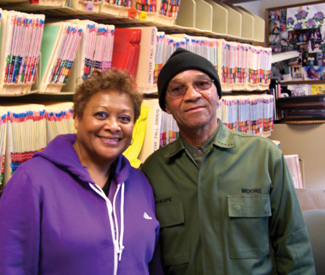
The Performant: Please appropriate me

0

Bryan Boyce and Negativwobblyland pump up the culture jams at L@te

Nighttime at the Berkeley Art Museum. An undercurrent of glee emanating from the patrons, as with a roomful of children up past their bedtimes. Enhancing the playground vibe, a giant orange mountain of rippling wooden waves designed by Thom Faulders, squats in the middle of the room, serving as seating for the assembled crowd, as well as pre-show entertainment as we scramble up its sides.

We’re here for the last L@te program of the year for a fanciful pairing between filmmaker Bryan Boyce and electronic noise ensemble Negativwobblyland, comprised of two parts Negativland (Mark Hosler and Peter Conheim) and one part Wobbly (Jon Leidecker). Pop culture appropriationists all, Boyce may be best known as the creator of the crassly hilarious political short “America’s Biggest Dick,” a tortured marriage of Dick Cheney and “Scarface,” while Negativland has been creating sonic mash-ups of samples and electronically-generated noise since 1979—including the infamous, legally-contested “U2” which combined a rude Casey Kasem rant with a casio-tone undercurrent of “I Still Haven’t Found What I’m Looking For,” and landed Negativland on the Fair Use frontlines.

As the lights dim, a brief burst of fanfare grabs attention, while on the projection screen the face of G.W. Bush superimposed on top of a cartoon sun, rises above the placid hills of Teletubbyland as a baby giggles offscreen. As cute little bunnies come out to play, the G.W. Bush sun firebombs them into oblivion with unexpected superpowers, smiling genially the whole time.

Terry Gilliam springs immediately to mind, and as more politically-pointed clips roll, so do the Yes Men, except instead of dressing up as politicians or corporate shills, the “characters” employed by Boyce is tweaked footage of actual politicians. “This is absolutely unbelievable,” boasts an “infomercial host” G.W. Bush with Jonathan Crosby’s “stunt mouth,” hawking macaroni and glitter “Election Collectibles” alongside Al Gore. Veering into more introspective ground, Boyce’s final two pieces ditch the politics for poetry-in-motion with “More is Always on the Way,” a series of quietly remarkable photographs of signs and billboards in their “native” urban habitat displayed with a spare, electronic soundtrack, and the other, “Whisper Hungarian Softly to Me,” a haunting blend of old Bela Lugosi footage and a trio of modern belly dancers with original music composed by Dan Cantrell. 

Negativwobblyland, clad in identical grey plaid shirts, take their places at a table set with piles of gear, in particular a series of five devices they call “boopers”—feedback devices inventively engineered from recycled radio and amplifier parts. The sonic onslaught created by these deceptively simple devices (and a few judiciously appended drum loops and samples of insect and animal noises) can be likened in some ways to the meandering of jazz improvisation, and inspires (in me, anyway) similar free-associations of image and impression. As the drone of an underwater sea creature, the loneliness of the long-distance trucker, a buzzing chainsaw disco, a teenage Atari foxtrot, the rumble of Tibetan long horns, and the high whine of a Himalayan mosquito swirl through my particular streams of consciousness, onstage, three fearless captains set a course for the opposite shore, jamming our earwaves with their slyly subversive, yet ultimately inclusive, collaboration.