

From Charlotte, Obama had hoped for a bounce.
It came in a way unforeseen.
When William J. Clinton had spoken his piece,
He’d furnished a strong trampoline.
Calvin Trillin, Deadline Poet (The Nation 10/1/2012)
From Charlotte, Obama had hoped for a bounce.
It came in a way unforeseen.
When William J. Clinton had spoken his piece,
He’d furnished a strong trampoline.
Calvin Trillin, Deadline Poet (The Nation 10/1/2012)

I’ve been practicing yoga for 12 years. Over the years, my practice has changed depending on the basic conditions of my life: my age, my health, my schedule, my location, my physical and spiritual interests and needs, my romantic relationships, my relationship with chocolate chip cookies. Each time I’ve come to a point of transition in how I practice, or where I practice, or with whom I practice (and, more recently: how I teach, where I teach, and for whom I teach), I start to question why I’m doing what I am doing and what is the ultimate goal.
The questioning is uncomfortable—who wants to question a thing they love?
It feels dirty, disloyal. It creates murk in a stream that once felt swimmingly clear. But I’ve learned that it’s an inevitable part of any path. Whether we like it or not, questions arise—if they didn’t, we wouldn’t have some version of this symbol in every language: “?” Luckily (or unluckily), I come from Jewish heritage, so questioning is in my blood. In Judaism, it’s godly to question.
So, I’m questioning.
And I’m reading this book right now called A Path With Heart. It’s by Jack Kornfield, one of the founders of Spirit Rock, a Buddhist meditation retreat center up in Marin that runs regular residential silent meditation retreats. (It’s a top local joint that I highly recommend, especially if you’re one of those people who thinks you “could never” sit in silence for a week, which is nearly everyone unless you’ve actually done it and know that you could, in fact, have.)
Anyway: In the first few pages of his book, Jack gets down to the crux of the matter. He says that no matter what road you’re driving your spiritual chariot down, you’ve got to keep coming back to the question of whether or not your path has heart. To paraphrase, you could be touching your first metatarsal to your crown chakra or chanting Om Namah Shivaya until the cows come home (and if you’re doing that in India, it won’t be very long—the cows are always coming home), but if you’re not practicing from a place of love, there’s no point to it. Or, maybe there’s some point to it … but it’s not the point.
This isn’t just about yoga or meditation. The same is true for anything you do. Take art, for instance. If your art has no heart, it may look or sound pretty, but its cosmic shelf life is going to be shorter than a wink. Good art creates soul grooves. It has a ripple effect. It’s a rechargeable battery that powers up each time it connects with a new source. It needs to be infused with real juice, the kind that comes from that metaphorical, physiological blood pumper that sits just to the right of center—in your chest.
There’s a lot of heart in our city.
I went to see a play last weekend called Dogsbody at Intersection for the Arts by Erik Ehn, a gifted spiritual warrior who has crafted 17 poetic theatrical works on genocide as part of a project called Soulographie to wake us up to the realities of war. (The project is en route to NYC, so if you’re out there November 11-18, get in on it.) I also hit Martin Scott’s Saturday morning yoga class at Union Yoga, for which all proceeds generously go to Headstand.org, an organization that brings yoga to at-risk youth. Both Erik and Martin are heart-ists.
Here’s a line from Kornfield’s book, which I’ve been reading to my own classes this past week. He’s quoting Carlos Castaneda who’s referring to a teaching by Don Juan:
“Look at every path closely and deliberately. Try it as many times as you think necessary. Then ask yourself and yourself alone one question …. Does this path have a heart? If it does, the path is good. If it doesn’t, it is of no use.”
Not a bad one to pull out when faced with a moment of evaluation. Here’s to landing in a place where that question has the right answer.
********
Around the Bend
(some upcoming events with heart)
Sweat and Study: Chants and Invocations for Yoga
If you love chanting to Ganesh and the other colorful yoga deities, this workshop is the place to be this Sunday. You’ll learn several of the basic yoga mantras and—if you’re already a regular chanter—you’ll learn how to lead them. Sean Feit is a gem. It’s worth the trip to Berkeley.
9/30, 2-5, $20, Yoga Tree Telegraph
Sivananda Poetry Night
The Sivananda center in San Franciso has a new monthly poetry satsang. This week, hear Virginia Barrett (Vidya devi) read poems from her forthcoming book, I Just Wear My Wings, and bring a short poem (your own or one from a spiritual teacher/writer). Tea and snacks available.
9/28, 7:30 – 9:15 p.m, suggested donation $5-$10, Sivananda Center in SF
Union Yoga’s Donation-Based Vinyasa for Headstand.org
This fun, challenging flow class taught by Martin Scott on Saturday mornings is entirely donation-based, and all of the profits support the non-profit organization Headstand.org, which brings yoga classes to at-risk youth in underserved schools. It fills up (as it should) so register online beforehand.
Every Saturday, 9am, suggested donation $15, Union Yoga
KFOG Harmony by The Bay
KFOG shows some love to yogis in its Harmony by the Bay concert by offering a special yoga stage. (If you go, please report back on what this actually looked like—I’ve no idea!) Musical acts for the outdoor concert include The Shins, Tegan and Sara, and the holy rapper Matisyahu.
9/29, $40-$75, Shoreline Amphitheatre. More info: www.harmonybythebay.org/2012
Karen Macklin is a yoga teacher and multi-genre writer in San Francisco. She’s been up-dogging her way down the yogic path for over a decade, and is a lifelong lover of the word. To learn more about her teaching schedule and writing life, visit her site at www.karenmacklin.com.
Read Jesse Hawthorne Ficks’ first and second reports from the 2012 Toronto International Film Festival.
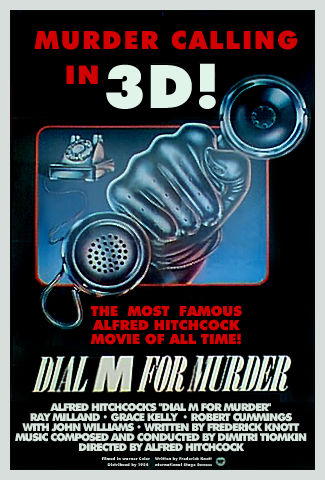
Dial M For Murder 3D Remastered (Alfred Hitchcock, US) The digitally remastered re-release of Alfred Hitchcock’s only 3D production was introduced by none other than film historian David Bordwell, whose introductory textbooks Film Art (1979) and Film History (1994) have shaped countless film students. After an insightful Hitchcock introduction that left me feeling as if I had downloaded an entire book to my central nervous system in only 12 minutes, the 4K, 3D digital restoration began.
What was most exciting about this often-dismissed Hitchcock flick (aside from the highly effective 3D itself) was recognizing how incorrect critics in 1954 had been when they complained about how pathetic the 3D was utilized. Re-evaluating Dial M For Murder in the present 3D age, it is overwhelmingly clear that Hitchcock understood the complexity of his technique; instead of overusing the “in your face” gimmick he directed his attention toward utilizing the depth of the sets and perfectly placed props near the camera. Fifty-eight years later, even one of Hitchcock’s “lesser” films (even according to himself) is still paving the road for future films and filmmakers.
Frances Ha (Noah Baumbach, US) The adorably awkward Greta Gerwig has been this generation’s “It Girl” since arriving on the indie scene in 2006 by way of director Joe Swanberg’s LOL. Frances Ha has given her what should prove to be her defining role in Noah Baumbach’s equally effervescent effort.
Baumbach’s mumblecore-anticipating, French New Wave-inspired films — Kicking and Screaming (1995), Mr. Jealousy (1997), The Squid and the Whale (2005), Margot at the Wedding (2007), and Greenberg (2010) — showcase flawed characters who some find so intolerable that watching a Baumbach film feels like getting stuck at an upper-class dinner party with the most unlikable people on the planet. But as in a Coen Brothers or Woody Allen film, these characters’ ugly truths are the key to what makes them so memorable.
In fact, it’s why all of Baumbach’s films have struck such a chord with me for 15-plus years. I keep seeing my own personality pitfalls in these Gen X-ers’ self-destructive decisions (I will literally say out loud, “I just pulled a Greenberg.”) And Frances Ha‘s hilarious train-of-thought odyssey is as profound as it is whimsical. With a cast pulled straight out of Lena Dunham’s HBO series Girls and added to the glorious black and white cinematography by Sam Levy (2008’s Wendy and Lucy), this ode to Allen’s Manhattan (1979) most definitely will make it to the top of a ton of critic’s lists. But more importantly you’ll find yourself thinking about the film as it relates to the most embarrassing moments of your own life.
http://www.youtube.com/watch?v=THh1krqYwo4
The Act of Killing (Joshua Oppenheimer, Denmark) Easily one of the most horrific and disturbing films ever made, and what’s even more frightening is that it’s a documentary. I have tried to explain this film to numerous people since being utterly transfixed and totally destroyed by it and often I see an odd glaze creep across the listener’s eyes. Filmed over a six-year period in Indonesia by filmmaker Joshua Oppenheimer, The Act of Killing plays out like a misanthropic satire, where the characters are so honest about their pure apathy towards other human lives that you as a viewer become unaware of what psychological quicksand lies ahead.
Again, this is a documentary and as it painstakingly introduces you to a group of elders in a small Indonesian village, self-revered war heroes from the military coup of the Communist government in 1965. Their leader, Anwar, and his friends decide they don’t want to just tell their war stories for a documentary, they want to re-enact each type of their actual killings in all the flair and glory of the movies that they grew up watching — John Wayne Westerns, extravagant musicals, and gangster epics like Scarface (1983). What ensues feels like Alfred Hitchcock’s Murder! (1930) or even the third act of Hamlet and could leave you absolutely accosted, obliterated, and feeling an unwanted amount of affectionate understanding. Either way, you will never be the same after watching this movie.
http://www.youtube.com/watch?v=pKG63WoOFGI
Berberian Sound Studio (Peter Strickland, UK) My favorite film of the festival takes place on the post-production set of a Dario Argento-esque, Italian horror film in the late 1970s-early 80s. This hypnotic, nostalgic, and ultimately transcendental experimental exercise will test the patience of just about every audience member. But anyone who has worked at a job (much less on the production of a film) where the possibility of losing the concept of time, as well as one’s grasp on reality, is a possibility may be able to conquer this monotonous, mind-bending ode to Brian De Palma’s Blow Out (1981). (Actual quote from a fellow press member leaving the screening: “Are you kidding me?!”)
Another quote — this one by filmmaker Paul Schrader, in his life-altering book Transcendental Style In Film (1972) — says it best: “I would rather do something really small of some value than do what Marty Scorsese’s doing. I don’t see the fun in that.”
Top films of the 32 films I saw at the Toronto International Film Festival:
1. Peter Strickland’s Berberian Sound Studio (UK)
2. Joshua Oppenheimer’s The Act of Killing (Denmark)
3. Xavier Dolan’s Laurence Anyways (Canada)
4. Michael Haneke’s Amour (Austria)
5. Rob Zombie’s The Lords of Salem (US)
6. Jun Lana’s Bwakaw (Philippines)
7. Miguel Gomes’ Tabu (Portugal)
8. Noah Baumbach’s Frances Ha (US)
9. Brian De Palma’s Passion (Germany/France)
10. Martin McDonagh’s Seven Psychopaths (UK)
11. Bahman Ghobadi’s Rhino Season (Iran/Turkey)
12. Anurag Kashyap’s Gangs of Wasseypur (India)
http://www.youtube.com/watch?v=vrshKIuQyLk
(Buzzed-about fest favorites that I was sadly unable to screen: David O. Russell’s Silver Linings Playbook, Ben Affleck’s Argo, Sarah Polley’s Stories We Tell, Cristian Mungiu’s Beyond the Hills, and Lee Daniels’ The Paperboy).
Jesse Hawthorne Ficks is the Film History Coordinator at the Academy of Art University and hosts Midnites for Maniacs, a film series devoted to underrated, overlooked, and dismissed cinema.
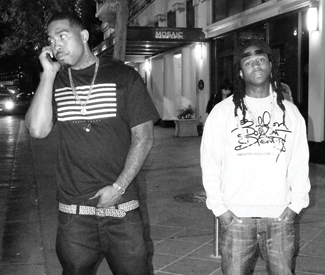
MUSIC “This is our biggest song by far,” Clyde Carson says wearily at his hotel room in San Jose. The song, “Slow Down,” features Clyde alongside his newly reconstituted group, the Team, and we’re waiting for Kaz Kyzah and Mayne Mannish to show. Mayne turns up, along with “Slow Down” producer Sho Nuff, but Kaz remains MIA, and the difficulty of keeping three rappers on the same page probably explains why the song is credited to “Clyde Carson featuring the Team,” though it appears on the crew’s reunion EP, Hell of a Night (Moedoe, 2012). In heavy rotation on KMEL, and branching out to other markets like LA and Chicago thanks to its Youtube-driven dance-craze, “Slow Down” has been bubblin’ for much of the year, as Clyde has doggedly pursued the hit with solo shows and Team dates.
Bay rap fans might experience a little déjà vu here. Back in 2004, when they burst out of Oakland with their regional smash “It’s Gettin’ Hot”— produced by a then-teenaged Sho Nuff — the Team helped launch what became known as the hyphy movement, following up with a memorable onslaught of local hits like “Just Go” and “Patron.” But what should have been the culmination, their sophomore album, World Premiere (Rex/Koch, 2006), was instead interminably delayed, blunting its impact. When Carson moved to LA in 2006 to sign a solo deal with Capitol through The Game’s Black Wall Street, the Team seemed prematurely finished due to business rather than personal or creative reasons.
http://www.youtube.com/watch?v=8l9DJvESFlk
Like several Bay artists signed by the majors during the hyphy era, including Mistah F.A.B., Clyde never got to drop an album; Capitol only released a pair of singles, “2 Step” and the Sean Kingston-featuring “Doin’ That,” in 2007, but didn’t release Clyde until 2009.
“You never know what’s gonna happen so you can never blame a label,” he says. “At the time Capitol was merging with Virgin. [Capitol Executive VP] Ronnie Johnson took over my project once the companies merged. We was getting ready to shoot the ‘Doin’ That’ video and — he died in his sleep. And I didn’t have enough of a foundation where I could move without a label.”
Instead of succumbing to this blow, Carson got back on the grind, and the success of “Slow Down” has resulted from a perfect storm of factors, beginning with an October 2011 call from now-adult Sho Nuff, whose youth had limited his earlier participation in Team activities.
By November, Clyde says, “we were in the studio recording. I put the hook on ‘Slow Down.’ I wanted a feature so I reached out to Keak da Sneak, but it didn’t work out so I reached out to Kaz and he put that verse on. Then I sent Kaz five or six songs and he did them all in one day. So we were like, shit, let’s do a Team album and put Mayne on these songs.”
Mayne himself is a key element of what we might call the Team 2.0.
“There was a time where I fell back from rappin’ and started learning the game by managing Carson,” he admits. “I wasn’t as confident a rapper as Clyde and Kaz, really goin’ in there destroying shit.”
But “destroying shit” is exactly what Mayne does on the third verse of “Slow Down,” and all over the EP, his rapid staccato bark providing a perfect contrast to the low-register growls of Kaz and Clyde.
“Some rapper blood just came out of me,” Mayne laughs, “and when we started back working with Sho Nuff, he helped bring my whole character and style out.”
The final ingredient was unpredictable: when “Slow Down” first dropped early this year, an SF high school student under the handle J12 posted a Youtube video of a dance he invented to the song. “The J12” has gone ghetto viral, racking up 700,000 hits, spawning numerous homage vids, and fueling demand for Team appearances in previously unheard of areas like Chicago. Inevitably J12 converged with the group, dropping the dance in the official video and becoming Carson’s DJ.
“He put that shit on for real,” Clyde says. “I never imagined havin’ a dance to one of our songs. When I was a teen, niggas wasn’t dancin’. But it lets me know the music we makin’ is resonating with that generation.”
“I ain’t gonna start dancin’,” Carson laughs, though I submit he’s doing the J12 at 1:05 of the official video. “But I definitely appreciate it.”
Read Jesse Hawthorne Ficks’ first report from the 2012 Toronto International Film Festival here.
In Another Country (Hong Sang-soo, South Korea) This highly enjoyable Éric Rohmer-esque vehicle for Isabelle Huppert continues Hong’s tradition as being the Korean Woody Allen by making a highly personal comedies. Huppert is masterful bouncing in and out of each random-yet-interconnected sequence, but Yu Jun-sang steals the show as the local lifeguard who hilariously channels Roberto Benigni (circa Jim Jarmusch’s 1986 Down By Law). It’s one of the funniest comic performances of 2012.
http://www.youtube.com/watch?v=kveNw8uD2kY
Passion (Brian De Palma, Germany/France) Brian De Palma is back, and primed for those of us who love the way he remixes his favorite Alfred Hitchcock movies (see: 1976’s Obsession, 1980’s Dressed To Kill, 1984’s Body Double, and 2002’s Femme Fatale). This time, though, De Palma remakes a French thriller: Alain Corneau’s 2010 Love Crime. It begins with a whiter-than-Wonder Bread color scheme and structurally devolves into something much more sinister combined with a crisp HD cinematography by Jose Luis Alcain (of Pedro Almodovar fame.)
De Palma said in the press that he really wanted someone who “understood how to make a woman look beautiful” — and by gawd, leads Rachel McAdams and Noomi Rapace not only look flawless but deliver deliciously diabolical performances. Passion also boasts what has to be one of De Palma’s most exciting conclusions. As soon as it was over, I wanted to watch it again! Who says De Palma peaked with Scarface (1983)?!
http://www.youtube.com/watch?v=j-AkWDkXcMY
Gangs of Wasseypur (Anurag Kashyap, India) Only 10 critics (yes, I counted) at the festival completed both parts of Anurag Kashyap’s Gangs of Wasseypur, which runs five hours and 15 minutes long. But I feel those of us who did are bonded together forever.
This historical Hindi gang epic, which begins in 1941 ends in the present day, is massive film that transcends generations and should make Ram Gopal Varma (of Sarkar films fame, clearly an inspiration here) proud. Director Anurag Kashyap pays attention to the details: wonderfully changing fashion and hair styles, ever-evolving movie posters on the alley walls. Not only is Gangs a tribute to the history of Hindi cinema, it establishs quite brilliantly where and what time period the characters are in — and during a five and half hour movie, you need all the help you can get.
http://www.youtube.com/watch?v=3SiHa6gVuyI&feature=related
Spring Breakers (Harmony Korine, US) This extremely hyped Harmony Korine dream project does exactly what you could ever fantasize about by delivering a T&A-filled exploitation film, led by James Franco as a grimy, gold-grilled-grinning, dreadlocked drug dealer who lives to prey on bikini-clad young girls (which is perfectly punctuated by the brilliant casting of Disney darling Selena Gomez.)
Spring Breakers is poised to become Korine’s most popular film to date, but its commercial appeal will likely overshadow perhaps his greatest film: Lotus Community Workshop, which played the San Francisco International Film Festival earlier this year and features a legendary performance by the almighty Val Kilmer! Don’t miss either of these soon-to-be contemporary cult classics.
http://www.youtube.com/watch?v=jgzkzVI5O3c
Aftershock (Eli Roth and Nicolas Lopez, US) Eli Roth and Nicolas Lopez’s earthquake horror flick Aftershock is a gleefully mean-spirited grindhouse thriller that sends a group of annoying American tourists (led by Roth himself, as the dorkiest douchebag of the year) into earthquake-ridden Santiago, Chile. Throw in every tried and true obstacle from 70s genre flicks such as Mark Robson’s Earthquake (1974) and Wes Craven’s Last House on the Left (1972) and you’ve got either one helluva hilarious tongue-in-cheek horror roughie, or, as some critics leaving the press screening were saying: “One of the worst films of the year. It definitely should go straight-to-streaming.”
http://www.youtube.com/watch?v=1YjIWEky81M
Laurence Anyways (Xavier Dolan, Canada) Winner of the Best Canadian Feature at this year’s fest, Xavier Dolan’s Laurence Anyways is yet another OCD, gorgeously-designed love story; it fits perfectly alongside his extremely personal I Killed My Mother (2009) and his devastatingly spot-on hipster classic Heartbeats (2010).
Once again, Dolan’s characters are allowed to feel obsessive about one another while encased in jaw-dropping mises en scène. Some critics seem to take issue with this 24-year-old’s influences (Wong Kar-wai, Pedro Almodovar), which led many reviews suggesting that Dolan needs to hire an editor (Laurence Anyways clocks in at two hours and 41 minutes).
But I would argue that this epic, gender-bending love story needs to take its time to do what no other film has ever done right. By humanizing not only Laurence, the transgendered lead character (epically performed by Raúl Ruiz’s ingenue, Melvil Poupaud), but also his life-long lover Fred, performed with an Elizabeth Taylor-esque guttural passion by Suzanne Clément, who won the Best Actress prize in this year’s Cannes Film Festival’s sidebar competition, Un Certain Regard.
For those willing to give in to a decade’s worth (1989-1999) of hypnotic set and costume designs, cryptic character development, a crew of campy castaways, and a killer soundtrack ranging from Visage to Celine Dion, Laurence Anyways should elevate Dolan from Canada’s best kept-secret to being an integral leader of a post-gender film movement that is just about to explode.
Jesse Hawthorne Ficks is the Film History Coordinator at the Academy of Art University and hosts Midnites for Maniacs, a film series devoted to underrated, overlooked, and dismissed cinema.
Schedules are for Wed/26-Tue/2 except where noted. Director and year are given when available. Double features marked with a •. All times pm unless otherwise specified.
ARTISTS’ TELEVISION ACCESS 992 Valencia, SF; www.atasite.org. $6. "Other Cinema:" Who Bombed Judi Bari? (Cherney, 2012), plus shorts, Sat, 8:30. More info on this event, www.othercinema.com.
CASTRO 429 Castro, SF; (415) 621-6120, www.castrotheatre.com. $8.50-11. •Pina (Wenders, 2011), Wed, 2:15, 7, and Crazy Horse (Wiseman, 2011), Wed, 4:15, 9. Berlin and Beyond Film Festival, Thu-Sun and Oct 3-4. Films from German-speaking countries; more info at goethe.de/ins/us/saf/prj/bby/enindex.htm.
CHRISTOPHER B. SMITH RAFAEL FILM CENTER 1118 Fourth St, San Rafael; (415) 454-1222, www.cafilm.org. $6.75-$10.25. Arbitrage (Jarecki, 2012), call for dates and times. Beasts of the Southern Wild (Zeitlin, 2012), call for dates and times. 2 Days in New York (Delpy, 2012), call for dates and times. Salomy Jane (1914), with live piano accompaniment and introduction by historians David Kiehn and Laurie Thompson, Sun, 7. This event, $15.
"CINE+MAS SAN FRANCISCO LATINO FILM FESTIVAL" Various Bay Area locations; www.sflatinofilmfestival.com. Most shows $12. Forty features, documentaries, and shorts from Latin America, Spain, and the United States. Through Fri/28.
DELANCEY STREET 600 Embarcadero, SF; www.alittleprince.net. $8. Peter Ford: A Little Prince (Roman, 2012), Sun, 11am and 3pm. With filmmaker Alexander Roman and subject Peter Ford in person.
EMBARCADERO One Embarcadero Center, SF; www.bayareaflamenco.org. $12. "Flamenco on Film:" Flamenco, Flamenco (Saura, 2010), Wed, 7; Morao: Good Flamenco Singing Hurts (Van Beenan and Van De Noort), Wed, 9. Presented in conjunction with the Bay Area Flamenco Festival.
"FILM NIGHT IN THE PARK" This week: Creek Park, 451 Sir Francis Drake, San Anselmo; www.filmnight.org. Donations accepted. Spellbound (Hitchcock, 1945), Fri, 8; Harry Potter and the Deathly Hallows: Part 2 (Yates, 2011), Sat, 8. Washington Square Park, Union at Columbus, SF. Midnight in Paris (Allen, 2011), Sat, 8.
NEW PEOPLE CINEMA 1746 Post, SF; www.newpeopleworld.com. $10. Tiger and Bunny: The Beginning (Sato, 2012), Sat, 4 and 7.
"NORTHERN CALIFORNIA ACTION/SPORTS FILM FESTIVAL" Various Sports Basement locations in SF, Walnut Creek, and Sunnyvale, and Mission Cliffs, 2295 Harrison, SF; www.sfindie.com. $5 (festival pass, $25). Films about outdoor sports, including mountaineering, wakeboarding, kayaking, surfing, and skiing, Fri-Sun.
PACIFIC FILM ARCHIVE 2575 Bancroft, Berk; (510) 642-5249, bampfa.berkeley.edu. $5.50-9.50. "Alternative Visions:" Paraguayan Hammock (Encina, 2006) with "A Wind from the South" (Encina, 2012), Wed, 7. "LA Rebellion: Creating a New Black Cinema:" My Brother’s Wedding (Burnett, 1983/2007), Thu, 7; A Different Image (Larkin, 1982), plus short films, Tue, 7. "Rebel Without Applause: The Films of Alex Cox:" Straight to Hell Returns (Cox, 1987/2010), Fri, 7; Repo Man (Cox, 1984), Fri, 8:50. "Grand Illusions: French Cinema Classics, 1928-1960:" Le bonheur (L’Herbier, 1934), Sat, 6:30; Panique (Duvivier, 1947), Sat, 8:35. "Life is Short: Nikkatsu Studios at 100:" Sun in the Last Days of the Shogunate (Kawashima, 1959), Sun, 5. "A Theater Near You:" The Turin Horse (Tarr, 2011), Sun, 7:15.
ROXIE 3117 and 3125 16th St, SF; (415) 863-1087, www.roxie.com. $6.50-10. Beauty is Embarrassing (Berkeley, 2012), Wed, 7, 8:45. Troop Beverly Hills (Kanew, 1989), Wed, 7. Presented sing-along style; for tickets ($21) visit www.scoutmob.com. Smokin’ Fish (Griswold-Tergis, 2011), Thu, 7 and 9. With filmmakers and film subject in person. •D’Agostino (Ameer, 2012), Thu, 6, and The Dark Side of Love (Ameer, 2012), Thu, 8:10. Detropia (Ewing and Grady, 2012), Sept 28-Oct 4, 7, 9 (also Sat-Sun, 3, 5). San Francisco Irish Film Festival, Sept 28-30. For program info visit www.sfirishfilm.com. "By + About Cindy Sherman:’ Office Killer (Sherman, 1997), Oct 2-4, 7; Guest of Cindy Sherman (Donahue and Hasegawa-Overacker, 2008), Oct 2-4, 8:45.
TANNERY 708 Gilman, Berk; berkeleyundergroundfilms.blogspot.com. Donations accepted. "Berkeley Underground Film Society:" Grandma’s Boy (Newmeyer, 1922), Sun, 7:30.
VORTEX ROOM 1082 Howard, SF; Facebook: The Vortex Room. $7. "Aerobicide Sunday: A Marathon of Murder in Tights:" Aerobicide (a.k.a. Killer Workout) (Prior, 1987), Sun, 7; Death Spa (Fischa, 1990), Sun, 8:30; Murder-Rock: Dancing Death (a.k.a. Slashdance) (Fulci, 1984), Sun, 10.
YERBA BUENA CENTER FOR THE ARTS 701 Mission, SF; www.ybca.org. $8-10. We Won’t Grow Old Together (Pialat, 1972), Thu-Sat, 7:30; Sun, 2.
OPENING
“Aerobicide Sunday: A Marathon of Murder in Tights” Two things that made the 1980s taste great, slasher movies and aerobic exercise, were each too crassly, promiscuously commercial not to hook up a few times — even if the sub-sub-genre they created together is even less well remembered than the Lambada musical. Sun/30, however, it shall reign as king at the Vortex, where a triple bill of exer-psycho obscurities will really make you feel the burn. First up is 1987’s Aerobicide a.k.a. Killer Workout, in which the fitness emporium owned by Rhonda (Marcia Karrof of 1984’s Savage Streets) — as sour a grape as you’ll find in pastel spandex and pouf-shouldered Valley Girl dresses — experiences a rash of hard bodies being reduced to bloody pulp by an unknown killer wielding a large killer safety pin. Totally gross! We get many close-ups of overexposed thighs and over assisted cleavage gyrating to heinous dance tracks with inexplicable lyrics like “Hey baby! I’ve got your number! Red and juicy, warm and sweet” — plus some feathered-hair beefcake too — before the culprit turns out to be exactly who you think it is. This was but an early effort among 32 features to date by writer-director David A. Prior, and based on the evidence present there’s a reason why you’ve never heard of any of them. Slightly slicker was 1990’s Death Spa (a.k.a. Witch Bitch), in which a computer automated gym goes all HAL-slash-The Shining, to the mortal danger of its highly toned staff and clientele. We’re talking death by blender, sauna paneling, and reanimated frozen fish products. The facility’s bitchy programmer is played by Merrick Butrick, who’d portrayed Captain Kirk’s son and a Square Peg earlier in the decade, and died of AIDS before this movie was released. Directed by Austrian Michael Fischa, it’s comparatively glossy but definitely senseless nonsense with a Eurotrash-genre feel. Lastly, in the same vein, and even slicker, there’s 1984’s Murder Rock: Dancing Death a.k.a. Giallo a Disco a.k.a. Slashdance (one of, incredibly, no less than three movies with that third name), a lesser exercise by that occasionally great horror director Lucio Fulci. Rather than a health club, the setting here is a dance school where choreography seems less indebted to Balanchine and Martha Graham than Jane Fonda and Shabba Doo. For that crime the punishment is, of course … death by hatpin? Whatever. If you survive this evening, you will be sore, winded, and desperate to sweat the toxins out of your system. Vortex Room. (Harvey)
Backwards Athletic disappointment is not a new feeling for Abi (Sarah Megan Thomas, who also wrote the script), who has just learned she’s been named the alternate for the Olympic crew team — a bench warming role she was also relegated to in the last Olympics. But after she quits the team in a huff and moves home, it’s not long before she realizes that her life off the water is pretty depressing, too. Enter former boyfriend Geoff (James Van Der Beek), now the athletic director at the high school where Abi honed her rowing talents, who gives her a job coaching the talented but undisciplined girls who make up the current team. Will this new venture help Abi finally grow up and regain her self-confidence? Will she re-ignite her spark with Geoff? Will there be a last-act conflict involving yet another chance at the Olympics? Will there be multiple training montages? As directed by Ben Hickernell, Backwards hits all of the expected themes about following one’s heart and Doing the Right Thing. Thomas, a former rower herself, has an ordinary-girl appeal, but even Backwards’ attention to authenticity can’t elevate what’s essentially a very predictable sports drama. (1:29) Sundance Kabuki. (Eddy)
Detropia See “We Were Here.” (1:30) Elmwood, Roxie, Smith Rafael.
Diana Vreeland: The Eye Has to Travel See “Chronic Youth.” (1:26) Embarcadero.
Hotel Transylvania Genndy Tartakovsky (TV’s Star Wars: The Clone Wars) directs this 3D animated comedy about a resort run by Dracula (voiced by Adam Sandler) for Frankenstein (Kevin James) and other monsters. (1:32) Shattuck.
Liberal Arts See “Chronic Youth.” (1:37) Bridge, Shattuck.
Looper Writer-director Rian Johnson reunites with Brick (2005) star Joseph Gordon-Levitt for this sci-fi thriller about time-traveling assassins. (1:58) Four Star, Piedmont, Presidio.
The Perks of Being a Wallflower Stephen Chbosky wrote and directed this adaptation of his best-selling YA novel, about a high-school misfit (Logan Lerman) comes out of his shell when he befriends a brother-sister duo (Ezra Miller, Emma Watson). (1:43) California, Embarcadero.
Peter Ford: A Little Prince See “Chronic Youth.” (:40) Delancey Street.
Pitch Perfect Anna Kendrick stars in this musical comedy set within the cutthroat world of competitive college a capella groups. (1:52)
Solomon Kane Conceived by Conan the Barbarian creator Robert E. Howard, this 16th-century hero is cut from the same sword-and-sorcery cloth, being a brawny brute of slippery but generally sorta-kinda upright morals. Solomon (James Purefoy) is slaughtering his way to a North African treasure trove when demons swallow up his likewise greedy, conscience-free cohorts and damn his soul for a lifetime of bad deeds. Suddenly committed to the greater good, he returns homeward to cold gray England, where Jason Flemyng’s evil sorcerer soon imperils both our protagonist and the Puritan family (complete with love interest) he’s befriended. This movie has been around a while — since 2009, to be exact, yet barely beating director Michael J. Bassett’s new Silent Hill: Revelation 3D to U.S. theaters — and is a good illustration of what can happen when you make a fairly expensive ($45 million) fantasy-action adventure without major stars nor any marketable novelty. Which is to say: not much. There is absolutely nothing wrong with the good-looking, watchable but generic-feeling Solomon Kane, save that nothing about it feels remotely original or inspired. It’s the perfectly okay, like-a-thousand-others mall flick you’ll forget you saw by Thanksgiving, despite being peopled with such normally interesting actors as Max Von Sydow, Alice Krige, and the late Pete Postlethwaite. (1:54) (Harvey)
“Stars In Shorts” Outside of the festival circuit, it’s an uncommon feat for shorts to make it to the big screen, so it can’t hurt to make name recognition a prerequisite for selection. In writer-director Rupert Friend’s Steve, Keira Knightley plays an embattled Londoner under siege by her lonely, pathologically odd neighbor (Colin Firth). Written by Neil LaBute, Jacob Chase’s After School Special sets up a semi-flirtation between two strangers (Sarah Paulson and Wes Bentley) at a playground, only to deliver the kind of gut-level punch you might expect from the writer-director of 1998’s Your Friends and Neighbors. LaBute’s own Sexting is an entertaining exercise in stream-of-consciousness monologuing by Julia Stiles. As with most shorts programs, “Stars” is a mixed bag. Robert Festinger’s The Procession, in which Lily Tomlin and Modern Family‘s Jesse Tyler Ferguson play reluctant participants in a funeral procession, sounds promising, but the conversation palls during the 10-plus minutes we’re stuck in the car with them. Benjamin Grayson’s sci-fi thriller Prodigal, starring Kenneth Branagh, reaches its predictable crisis points several minutes after the viewer has arrived. More successful are Jay Kamen’s musical comedy Not Your Time, starring Seinfeld‘s Jason Alexander as an old Hollywood hand whose writing career has stalled out, and Chris Foggin’s Friend Request Pending, which treats viewers to the sight of Dame Judi Dench gamely wading into the social network in search of a date. (1:53) Opera Plaza, Shattuck. (Rapoport)
Vulgaria Raunchy HK import about a film producer who convinces a gangster to finance his porn epic. (1:32) Metreon.
Won’t Back Down Determined mothers (Maggie Gyllenhaal, Viola Davis) become education activists in this based-on-true-events drama. (2:00)
ONGOING
Arbitrage As Arbitrage opens, its slick protagonist, Robert Miller (Richard Gere), is trying to close the sale of his life, on his 60th birthday: the purchase of his company by a banking goliath. The trick is completing the deal before his fraud, involving hundreds of millions of dollars, is uncovered, though the whip-smart daughter who works for him (Brit Marling) might soon be onto him. Meanwhile, Miller’s gaming his personal affairs as well, juggling time between a model wife (Susan Sarandon) and a Gallic gallerist mistress (Laetitia Casta), when sudden-death circumstances threaten to destroy everything, and the power broker’s livelihood — and very existence — ends up in the hands of a young man (Nate Parker) with ambitions of his own. It’s a realm that filmmaker Nicholas Jarecki is all too familiar with. Though like brothers Andrew (2003’s Capturing the Friedmans) and Eugene (2005’s Why We Fight), Jarecki’s first love is documentaries (his first film, 2006’s The Outsider, covered auteur James Toback), his family is steeped in the business world. Both his parents were commodities traders, and Jarecki once owned his own web development firm and internet access provider, among other ventures. When he started writing Arbitrage‘s script in 2008, he drew some inspiration from Bernard Madoff — but ultimately, the film is about a good man who became corrupted along the way, to the point of believing in his own invincibility. (1:40) Metreon, Presidio, Smith Rafael, Shattuck, Sundance Kabuki. (Chun)
Beasts of the Southern Wild Six months after winning the Grand Jury Prize at Sundance (and a Cannes Camera d’Or), Beasts of the Southern Wild proves capable of enduring a second or third viewing with its originality and strangeness fully intact. Magical realism is a primarily literary device that isn’t attempted very often in U.S. cinema, and succeeds very rarely. But this intersection between Faulkner and fairy tale, a fable about — improbably — Hurricane Katrina, is mysterious and unruly and enchanting. Benh Zeitlin’s film is wildly cinematic from the outset, as voiceover narration from six-year-old Hushpuppy (Quvenzhané Wallis) offers simple commentary on her rather fantastical life. She abides in the Bathtub, an imaginary chunk of bayou country south of New Orleans whose residents live closer to nature, amid the detritus of civilization. Seemingly everything is some alchemical combination of scrap heap, flesh, and soil. But not all is well: when “the storm” floods the land, the holdouts are forced at federal gunpoint to evacuate. With its elements of magic, mythological exodus, and evolutionary biology, Beasts goes way out on a conceptual limb; you could argue it achieves many (if not more) of the same goals Terrence Malick’s 2011 The Tree of Life did at a fraction of that film’s cost and length. (1:31) Shattuck, Smith Rafael. (Harvey)
Beauty is Embarrassing You may not recognize the name Wayne White offhand, but you will know his work: he designed and operated many of the puppets on Pee-Wee’s Playhouse, including Randy (the blockheaded bully) and Dirty Dog (the canine jazzbo). Neil Berkeley’s Beauty Is Embarrassing — named for a mural White painted on the side of a Miami building for Art Basel 2009 — charts the life of an artist whose motto is both “I want to try everything I can!” and “Fuck you!” The Southern-born oddball, who came of age in the early-1980s East Village scene, is currently styling himself as a visual artist (his métier: painting non-sequitur phrases into landscapes bought from thrift stores), but Beauty offers a complex portrait of creativity balanced between the need to be subversive and the desire to entertain. (1:27) Roxie. (Eddy)
The Bourne Legacy Settle down, Matt Damon fans — the original Bourne appears in The Bourne Legacy only in dialogue (“Jason Bourne is in New York!”) and photograph form. Stepping in as lead badass is Jeremy Renner, whose twin powers of strength and intelligence come courtesy of an experimental-drug program overseen by sinister government types (including Edward Norton in an utterly generic role) and administered by lab workers doing it “for the science!,” according to Dr. Rachel Weisz. Legacy‘s timeline roughly matches up with the last Damon film, The Bourne Ultimatum, which came out five years ago and is referenced here like we’re supposed to be on a first-name basis with its long-forgotten plot twists. Anyway, thanks to ol’ Jason and a few other factors involving Albert Finney and YouTube, the drug program is shut down, and all guinea-pig agents and high-security-clearance doctors are offed. Except guess which two, who manage to flee across the globe to get more WMDs for Renner’s DNA. Essentially one long chase scene, The Bourne Legacy spends way too much of its time either in Norton’s “crisis suite,” watching characters bark orders and stare at computer screens, or trying to explain the genetic tinkering that’s made Renner a super-duper-superspy. Remember when Damon killed that guy with a rolled-up magazine in 2004’s The Bourne Supremacy? Absolutely nothing so rad in this imagination-free enterprise. (2:15) 1000 Van Ness, SF Center. (Eddy)
The Campaign (1:25) 1000 Van Ness, SF Center.
Celeste and Jesse Forever Married your best friend, realized you love but can’t be in love with each other, and don’t want to let all those great in-jokes wither away? Such is the premise of Celeste and Jesse Forever, the latest in what a recent wave of meaty, girl-centric comedies penned by actresses — here Rashida Jones working with real-life ex Will McCormack; there, Zoe Kazan (Ruby Sparks), Zoe Lister Jones (Lola Versus), and Lena Dunham (Girls) — who have gone the DIY route and whipped up their own juicy roles. There’s no mistaking theirs for your average big-screen rom-com: they dare to wallow harder, skew smarter, and in the case of Celeste, tackle the thorny, tough-to-resolve relationship dilemma that stubbornly refuses to conform to your copy-and-paste story arc. Nor do their female protagonists come off as uniformly likable: in this case, Celeste (Jones) is a bit of an aspiring LA powerbitch. Her Achilles heel is artist Jesse (Andy Samberg), the slacker high school sweetheart she wed and separated from because he doesn’t share her goals (e.g., he doesn’t have a car or a job). Yet the two continue to spend all their waking hours together and share an undeniable rapport, extending from Jesse’s encampment in her backyard apartment to their jokey simulated coitus featuring phallic-shaped lip balm. Throwing a wrench in the works: the fact that they’re still kind of in love with each other, which all their pals, like Jesse’s pot-dealer bud Skillz (McCormack), can clearly see. It’s an shaggy, everyday breakup yarn, writ glamorous by its appealing leads, that we too rarely witness, and barring the at-times nausea-inducing shaky-cam under the direction of Lee Toland Krieger, it’s rendered compelling and at times very funny — there’s no neat and tidy way to say good-bye, and Jones and McCormack do their best to capture but not encapsulate the severance and inevitable healing process. It also helps that the chemistry practically vibrates between the boyish if somewhat one-note Samberg and the soulful Jones, who fully, intelligently rises to the occasion, bringing on the heartbreak. (1:31) Shattuck, Sundance Kabuki. (Chun)
The Dark Knight Rises Early reviews that called out The Dark Knight Rises‘ flaws were greeted with the kind of vicious rage that only anonymous internet commentators can dish out. And maybe this is yet another critic-proof movie, albeit not one based on a best-selling YA book series. Of course, it is based on a comic book, though Christopher Nolan’s sophisticated filmmaking and Christian Bale’s tortured lead performance tend to make that easy to forget. In this third and “final” installment in Nolan’s trilogy, Bruce Wayne has gone into seclusion, skulking around his mansion and bemoaning his broken body and shattered reputation. He’s lured back into the Batcave after a series of unfortunate events, during which The Dark Knight Rises takes some jabs at contemporary class warfare (with problematic mixed results), introduces a villain with pecs of steel and an at-times distractingly muffled voice (Tom Hardy), and unveils a potentially dangerous device that produces sustainable energy (paging Tony Stark). Make no mistake: this is an exciting, appropriately moody conclusion to a superior superhero series, with some nice turns by supporting players Gary Oldman and Joseph Gordon-Levitt. But in trying to cram in so many characters and plot threads and themes (so many prisons in this thing, literal and figural), The Dark Knight Rises is ultimately done in by its sprawl. Without a focal point — like Heath Ledger’s menacing, iconic Joker in 2008’s The Dark Knight — the stakes aren’t as high, and the end result feels more like a superior summer blockbuster than one for the ages. (2:44) Metreon. (Eddy)
Dredd 3D Cartoonishly, gleefully gruesome violence abounds in Dredd 3D, a pretty enjoyable comic-book adaptation thanks to star Karl Urban’s deadpan zingers. This is not a remake of the 1995 Sly Stallone flop Judge Dredd, by the way, though it might as well be a remake of 2011 Indonesian import The Raid: Redemption. The stories are identical. Like, lawsuit material-identical: supercop infiltrates (and then becomes trapped in, and must battle his way out of) a high-rise apartment tower run by a ruthless crime boss. Key difference is that Dredd has futuristic weapons, and The Raid had badass martial arts. Also Dredd‘s villain is played by Lena “Cersei Lannister” Headey, so there’s that. (1:38) Metreon, 1000 Van Ness. (Eddy)
End of Watch Buddy cop movies tend to go one of two ways: the action-comedy route (see: the Rush Hour series) or the action-drama route. End of Watch is firmly in the latter camp, despite some witty shit-talking between partners Taylor (a chrome-domed Jake Gyllenhaal) and Zavala (Michael Peña from 2004’s Crash) as they patrol the mean streets of Los Angeles. Writer-director David Ayer, who wrote 2001’s Training Day, aims for authenticity by piecing together much of (but, incongruously, not all of) the story through dashboard cameras, surveillance footage, and Officer Taylor’s own ever-present camera, which he claims to be carrying for a school project, though we never once see him attending classes or mentioning school otherwise. Gyllenhaal and Peña have an appealing rapport, but End of Watch‘s adrenaline-seeking plot stretches credulity at times, with the duo stumbling across the same group of gangsters multiple times in a city of three million people. Natalie Martinez and Anna Kendrick do what they can in underwritten cop-wife roles, but End of Watch is ultimately too familiar (but not lawsuit-material familiar) to leave any lasting impression. Case in point: in the year 2012, do we really need yet another love scene set to Mazzy Star’s “Fade Into You”? (1:49) Marina, 1000 Van Ness, SF Center. (Eddy)
The Expendables 2 (1:43) Metreon.
Finding Nemo 3D (1:40) 1000 Van Ness, SF Center, Shattuck, Sundance Kabuki.
For a Good Time, Call&ldots; Suffering the modern-day dilemmas of elapsed rent control and boyfriend douchebaggery, sworn enemies Katie (Ari Graynor) and Lauren (Lauren Miller) find themselves shacking up in Katie’s highly covetable Manhattan apartment, brought together on a stale cloud of resentment by mutual bestie Jesse (Justin Long, gamely delivering a believable version of your standard-issue young hipster NYC gay boy). The domestic glacier begins to melt somewhere around the time that Lauren discovers Katie is working a phone-sex hotline from her bedroom; equipped with a good head for business, she offers to help her go freelance for a cut of the proceeds. Major profitability ensues, as does a friendship evoking the pair bonding at the center of your garden-variety romantic comedy, as Katie trains Lauren to be a phone-sex operator and the two share everything from pinkie swears and matching pink touch-tone phones to intimate secrets and the occasional hotline threesome. Directed by Jamie Travis and adapted from a screenplay by Miller and Katie Anne Naylon, the film is a welcome response to the bromance genre, and with any luck it may also introduce linguistic felicities like “phone-banging” and “let’s get this fuckshow started” into the larger culture. The raunchy telephonic interludes include cameos by Kevin Smith and Seth Rogen (Miller’s husband) as customers calling from such unfurtive locations as a public bathroom stall and the front seat of a taxicab. But the two roomies supply plenty of dirty as Katie, an abashed wearer of velour and denim pantsuits, helps the more restrained Lauren discover the joys of setting free her inner potty mouth. (1:25) SF Center. (Rapoport)
Hello I Must Be Going Blindsided by her recent divorce, 35-year-old Amy (Melanie Lynskey) flees New York City for quaint Westport, Conn., where she nurses her wounds, mostly by sleeping and watching Marx Brothers movies. Amy’s protracted moping rankles her perfectionist mother (Blythe Danner, bringing nuance to what could have been a clichéd character) and concerns her workaholic father (John Rubenstein). Dad’s trying to land a big client so he can “make back some of the money we lost in the market” — a subtle aside in Sarah Koskoff’s script that suggests Amy’s parents aren’t as well-heeled as they used to be, despite the ongoing renovations to their swanky home, catered dinners, and expensive art purchases. Money woes are just one of Amy’s many concerns, though, and when a distraction presents itself in the form of 19-year-old Jeremy (Girls’ Christopher Abbott), she finds herself sneaking out at night, making out in her mom’s car, smoking weed, and basically behaving like a teenager herself. As directed by indie actor turned director Todd Louiso (2002’s Love Liza), Hello I Must Be Going is a nicely contained, relatable (self-loathing: we’ve all been there) character study — and props for casting the endearing Lynskey, so often seen in supporting roles, as the film’s messy, complex lead. (1:35) SF Center. (Eddy)
House At the End of the Street Tight T-shirts, a creepy cul-de-sac, couples in cars on lonely lanes, and the cute but weird loner kid — all the stuff of classic drive-in horror fare, revisited in this ambitious tribute of sorts. Don’t mistake House at the End of the Street for genre-reviving efforts by super fans like Eli Roth and Rob Zombie; Mark Tonderai’s mash up of Psycho (1960) and Last House on the Left (1972) lacks the rock ‘n’ roll brio and jet-black humor of, say, Cabin Fever (2002) or The Devil’s Rejects (2005). Instead House reads like an earnest effort to add a thin veneer of psychological realism and even girl power sincerity to a blood-spattered back catalog. Teenage musician Elissa (Jennifer Lawrence) and her overwhelmed mom Sarah (Elisabeth Shue) have found themselves quite a deal of a new rental home — a bit too good, since their next door neighbors were both brutally killed by their brain-damaged offspring who was obviously afflicted with the same greasy hair issues as the ghoulish gal in The Ring. Ryan (Bay Area native Max Thieriot), the boy who continues to live in the house where his parents were murdered, is ostracized, attractive, and much like his home, a fixer — making him mighty attractive to Elissa. A hearty, artistic soul who likes to venture where others fear to tread, she’s drawn to him despite the fact that she feels like she’s being watched from the woods that separate their homes. Switching back and forth between various perspectives — like that of a sputtering, spasmodically edited psychopath-cam and the steady, thoughtful gaze of a rebellious yet empathetic girl — House manages to effectively throw a few curveballs your way, while toying with genre conventions and upsetting your expectations. Shoring up its efforts is a talented cast, headed up by Lawrence’s feisty heroine and Shue’s sad-eyed struggling mom. (1:43) Metreon, 1000 Van Ness. (Chun)
How to Survive a Plague David France’s documentary chronicles the unprecedented impact political activism had on the course of AIDS in the U.S. — drastically curtailing its death toll within a few years despite considerable institutional indifference and downright hostility. As the epidemic here first surfaced in, and decimated, the gay male community, much of Reagan America (particularly in religious quarters) figured the death sentence was deserved. The President himself infamously refrained from even saying the word “AIDS” publicly until his final year of office, after thousands had died. Both terrified and outraged, the gay community took it upon themselves to demand treatment, education, and research. Most of this urgent 1980s overview is concerned with the rise of ACT-UP, whose angry young men successfully lobbied and shamed corporate, academic, medical, and pharmaceutical bodies into action, with the result that by the mid-90s new drugs existed that made this dreaded diagnosis no longer a necessarily terminal one. France is a journalist who’s been covering AIDS practically since day one, and his first feature (made with the help of numerous first-rate collaborators) is authoritative and engrossing. Just don’t expect much (or really any) attention paid to the contributions made by S.F. or other activist hotspots — like many a gay documentary, this one hardly notices there’s a world (or gay community) outside Manhattan. (1:49) Opera Plaza. (Harvey)
Lawless Lawless has got to be the most pretentiously humorless movie ever made about moonshiners — a criminal subset whose adventures onscreen have almost always been rambunctious and breezy, even when violent. Not here, bub. Adapting Matt Bondurant’s fact-inspired novel The Wettest County in the World about his family’s very colorful times a couple generations back, director John Hillcoat and scenarist (as well as, natch, composer) Nick Cave have made one of those films in which the characters are presented to you as if already immortalized on Mount Rushmore — monumental, legendary, a bit stony. They’ve got a crackling story about war between hillbilly booze suppliers and corrupt lawmen during Prohibition, and while the results aren’t dull (they’re too bloody for that, anyway), they’d be a whole lot better if the entire enterprise didn’t take itself so gosh darned seriously. The Bondurant brothers of Franklin County, Va. are considered “legends” when we meet them in 1931, having defied all and sundry as well as survived a few bullets: mack-truck-built Forrest (Tom Hardy); eldest Howard (Jason Clarke), who tipples and smiles a lot; and “runt of the litter” Jack (Shia LeBeouf), who has a chip on his shoulder. The local law looks the other way so long as their palms are greased, but the Feds send sneering Special Deputy Charlie Rakes (Guy Pearce), it’s an eye for an eye for an eye, etc. The revenge-laden action in Lawless is engaging, but the filmmakers are trying so hard to make it all resonant and folkloric and meta-cinematic, any fun you have is in spite of their efforts. (1:55) 1000 Van Ness, SF Center. (Harvey)
The Master Paul Thomas Anderson’s much-hyped likely Best Picture contender lives up: it’s easily the best film of 2012 so far. Philip Seymour Hoffman stars as Lancaster Dodd, the L. Ron Hubbard-ish head of a Scientology-esque movement. “The Cause” attracts Freddie Quell (Joaquin Phoenix, in a welcome return from the faux-deep end), less for its pseudo-religious psychobabble and bizarre personal-growth exercises, and more because it supplies the aimless, alcoholic veteran — a drifter in every sense of the word — with a sense of community he yearns for, yet resists submitting to. As with There Will Be Blood (2007), Anderson focuses on the tension between the two main characters: an older, established figure and his upstart challenger. But there’s less cut-and-dried antagonism here; while their relationship is complex, and it does lead to dark, troubled places, there are also moments of levity and weird hilarity — which might have something to do with Freddie’s paint-thinner moonshine. (2:17) Albany, Balboa, Embarcadero, 1000 Van Ness, Presidio, Sundance Kabuki. (Eddy)
Moonrise Kingdom Does Wes Anderson’s new film mark a live-action return to form after 2007’s disappointingly wan Darjeeling Limited? More or less. Does it tick all the Andersonian style and content boxes? Indubitably. In the most obvious deviation Anderson has taken with Moonrise, he gives us his first period piece, a romance set in 1965 on a fictional island off the New England coast. After a chance encounter at a church play, pre-teen Khaki Scout Sam (newcomer Jared Gilman) instantly falls for the raven-suited, sable-haired Suzy Bishop (Kara Hayward, ditto). The two become pen pals, and quickly bond over the shared misery of being misunderstood by both authority figures and fellow kids. The bespectacled Sam is an orphan, ostracized by his foster parents and scout troop (much to the dismay of its straight-arrow leader Edward Norton). Suzy despises her clueless attorney parents, played with gusto by Bill Murray and Frances McDormand in some of the film’s funniest and best scenes. When the two kids run off together, the whole thing begins to resemble a kind of tween version of Godard’s 1965 lovers-on the-lam fantasia Pierrot le Fou. But like most of Anderson’s stuff, it has a gauzy sentimentality more akin to Truffaut than Godard. Imagine if the sequence in 2001’s The Royal Tenenbaums where Margot and Richie run away to the Museum of Natural History had been given the feature treatment: it’s a simple yet inspired idea, and it becomes a charming little tale of the perils of growing up and selling out the fantasy. But it doesn’t feel remotely risky. It’s simply too damn tame. (1:37) Shattuck, Sundance Kabuki. (Michelle Devereaux)
ParaNorman (1:32) Metreon, 1000 Van Ness.
The Possession (1:31) Metreon.
Premium Rush “Fixed gear. Steel frame. No brakes. Can’t stop … don’t want to.” Thus goes the gear breakdown and personal philosophy of New York City bike messenger Wilee (Joseph Gordon-Levitt), an aggro rider who uses his law school-refined brain to make split-second decisions regarding which way to dart through Midtown traffic. Though bike messengers had a pop culture moment in the 1990s, Premium Rush is set in the present day, with one of Wilee’s numerous voice-overs explaining the job’s continued importance even in the digital era. One such example: a certain envelope he’s tasked with ferrying across the city, given to him by the troubled roommate (Jamie Chung) of the pretty fellow messenger (Dania Ramirez) he’s romantically pursuing. The contents of the envelope, and the teeth-gnashingly evil-cop-with-a-gambling-problem (Michael Shannon, adding some weird flair to what’s essentially a stock villain) who would dearly love to get his mitts on it, are less crucial to Premium Rush than the film’s many, many chase scenes featuring Wilee outwitting all comers with his two-wheeled Frogger moves. Silly fun from director David Koepp (2008’s Ghost Town), but not essential unless you’re a fixie fanatic or a JGL completist. (1:31) Metreon, 1000 Van Ness. (Eddy)
Resident Evil: Retribution (1:35) Metreon, 1000 Van Ness.
Robot and Frank Imagine the all-too-placid deadpan of Hal from 2001: A Space Odyssey (1968) coming out of a home-healthcare worker, and you get just part of the appeal of this very likable comedy debut with a nonrobotic pulse directed by Jake Schreier. Sometime in the indeterminate near future, former jewel thief and second-story man Frank (Frank Langella) can be found quietly deteriorating in his isolated home, increasingly forgettable and unable to care for himself and assemble a decent bowl of Cap’n Crunch (though he can still steal fancy soaps from the village boutique). In an effort to cover his own busy rear, Frank’s distracted son (James Marsden) buys him a highly efficient robotic stand-in (voiced by Peter Sarsgaard), much to his father’s grim resistance (“That thing is going to murder me in my sleep”) and the dismay of crunchy sibling Madison (Liv Tyler). The robot, however, is smarter than it looks, as it bargains with Frank to eat better, get healthier, and generally reanimate: it’s willing to learn to pick locks, participate in a robbery, and even plan a jewel heist, provided, say, Frank agrees to a low-sodium diet. Frank flourishes, like the garden the robot nurtures in a vain attempt to interest his human charge, and even goes on a date with his librarian crush (Susan Sarandon), though can the self-indulgent idyll last forever? A tale about aging as much as it is about rediscovery, Robot tells an old story, but one that’s wise beyond its years and willing to dress itself up in some of the smooth, sleek surfaces of an iGeneration. (1:30) Piedmont, Shattuck, Sundance Kabuki. (Chun)
Samsara Samsara is the latest sumptuous, wordless offering from director Ron Fricke, who helped develop this style of dialogue- and context-free travelogue with Koyaanisqatsi (1982) and Baraka (1992). Spanning five years and shooting on 70mm film to capture glimmers of life in 25 countries on five continents, Samsara, which spins off the Sanskrit word for the “ever-turning wheel of life,” is nothing if not good-looking, aspiring to be a kind of visual symphony boosted by music by the Dead Can Dance’s Lisa Gerrard and composers Michael Stearns and Marcello De Francisci. Images of natural beauty, baptisms, and an African woman and her babe give way to the madness of modern civilization — from jam-packed subways to the horrors of mechanized factory farming to a bizarre montage of go-go dancers, sex dolls, trash, toxic discarded technology, guns, and at least one gun-shaped coffin. After such dread, the opening and closing scenes of Buddhist spirituality seem almost like afterthoughts. The unmistakable overriding message is: humanity, you dazzle in all your glorious and inglorious dimensions — even at your most inhumane. Sullying this hand wringing, selective meditation is Fricke’s reliance on easy stereotypes: the predictable connections the filmmaker makes between Africa and an innocent, earthy naturalism, and Asia and a vaguely threatening, mechanistic efficiency, come off as facile and naive, while his sonic overlay of robot sounds over, for instance, an Asian woman blinking her eyes comes off as simply offensive. At such points, Fricke’s global leap-frogging begins to eclipse the beauty of his images and foregrounds his own biases. (1:39) Opera Plaza, Shattuck. (Chun)
Searching for Sugar Man The tale of the lost, and increasingly found, artist known as Rodriguez seems to have it all: the mystery and drama of myth, beginning with the singer-songwriter’s stunning 1970 debut, Cold Fact, a neglected folk rock-psychedelic masterwork. (The record never sold in the states, but somehow became a beloved, canonical LP in South Africa.) The story goes on to parse the cold, hard facts of vanished hopes and unpaid royalties, all too familiar in pop tragedies. In Searching for Sugar Man, Swedish documentarian Malik Bendjelloul lays out the ballad of Rodriguez as a rock’n’roll detective story, with two South African music lovers in hot pursuit of the elusive musician — long-rumored to have died onstage by either self-immolation or gunshot, and whose music spoke to a generation of white activists struggling to overturn apartheid. By the time Rodriguez himself enters the narrative, the film has taken on a fairy-tale trajectory; the end result speaks volumes about the power and longevity of great songwriting. (1:25) Clay. (Chun)
Sleepwalk with Me Every year lots of movies get made by actors and comedians who want to showcase themselves, usually writing and often directing in addition to starring. Most of these are pretty bad, and after a couple of festival appearances disappear, unremembered by anyone save the credit card companies that vastly benefited from its creation. Mike Birbiglia’s first feature is an exception — maybe not an entirely surprising one (since it’s based on his highly praised Off-Broadway solo show and best-seller), but still odds-bucking. Particularly as it’s an autobiographical feeling story about an aspiring stand-up comic (Mike as Matt) who unfortunately doesn’t seem to have much natural talent in that direction, but nonetheless obsessively perseveres. This pursuit of seemingly fore destined failure might be causing his sleep disorder, or it might be a means of avoiding taking the martial next step with long-term girlfriend (Lauren Ambrose, making something special out of a conventional reactive role) everyone else agrees is the best thing in his life. Yep, it’s another commitment-phobic man-boy/funny guy who regularly talks to the camera, trying to find himself while quirky friends and family stand around like trampoline spotters watching a determined clod. If all of these sounds derivative and indulgent, well, it ought to. But Sleepwalk turns a host of familiar, hardly foolproof ideas into astute, deftly performed, consistently amusing comedy with just enough seriousness for ballast. Additional points for “I zinged him” being the unlikely most gut-busting line here. (1:30) Balboa, Opera Plaza, Piedmont, Shattuck. (Harvey)
Somewhere Between Five years ago, when filmmaker Linda Goldstein Knowlton adopted a baby girl from China, she was inspired to make Somewhere Between, a doc about the experiences of other Chinese adoptees. The film profiles four teenage girls, including Berkeley resident Fang “Jenni” Lee, whose American lives couldn’t be more different (one girl has two moms and attends a fancy prep school; another, raised by devout Christians, dreams of playing her violin at the Grand Ole Opry) but who share similar feelings about their respective adoptions. The film follows the girls on trips to London (as part of an organized meeting of fellow adoptees), Spain (to chat with people interested in adopting Chinese babies, and where the question “What does it feel like to be abandoned?” is handled with astonishing composure), and China (including one teen’s determined quest to track down her birth family). Highly emotional at times, Somewhere Between benefits from its remarkably mature and articulate subjects, all of whom have much to say about identity and personal history. Lee and filmmaker Goldstein Knowlton will appear in person at select opening shows; visit www.landmarktheatres.com for more information. (1:28) Shattuck. (Eddy)
Ted Ah, boys and their toys — and the imaginary friends that mirror back a forever-after land of perpetual Peter Pans. That’s the crux of the surprisingly smart, hilarious Ted, aimed at an audience comprising a wide range of classes, races, and cultures with its mix of South Park go-there yuks and rom-commie coming-of-age sentiment. Look at Ted as a pop-culture-obsessed nerd tweak on dream critter-spirit animal buddy efforts from Harvey (1950) to Donnie Darko (2001) to TV’s Wilfred. Of course, we all know that the really untamable creature here wobbles around on two legs, laden with big-time baggage about growing up and moving on from childhood loves. Young John doesn’t have many friends but he is fortunate enough to have his Christmas wish come true: his beloved new teddy bear, Ted (voice by director-writer Seth MacFarlane), begins to talk back and comes to life. With that miracle, too, comes Ted’s marginal existence as a D-list celebrity curiosity — still, he’s the loyal “Thunder Buddy” that’s always there for the now-grown John (Mark Wahlberg), ready with a bong and a broheim-y breed of empathy that involves too much TV, an obsession with bad B-movies, and mock fisticuffs, just the thing when storms move in and mundane reality rolls through. With his tendency to spew whatever profanity-laced thought comes into his head and his talents are a ladies’ bear, Ted is the id of a best friend that enables all of John’s most memorable, un-PC, Hangover-style shenanigans. Alas, John’s cool girlfriend Lori (Mila Kunis) threatens that tidy fantasy setup with her perfectly reasonable relationship demands. Juggling scary emotions and material that seems so specific that it can’t help but charm — you’ve got to love a shot-by-shot re-creation of a key Flash Gordon scene — MacFarlane sails over any resistance you, Lori, or your superego might harbor about this scenario with the ease of a man fully in touch with his inner Ted. (1:46) Metreon. (Chun)
10 Years (1:50) Metreon.
Total Recall Already the source material for Paul Verhoeven’s campy, quotable 1990 film (starring the campy, quotable Arnold Schwarzenegger), Philip K. Dick’s short story gets a Hollywood do-over, with meh results. The story, anyway, is a fine nugget of sci-fi paranoia: to escape his unsatisfying life, Quaid (Colin Farrell) visits a company capable of implanting exciting memories into his brain. When he chooses the “secret agent” option, it’s soon revealed he actually does have secret agent-type memories, suppressed via brain-fuckery by sinister government forces (led by Bryan Cranston) keeping him in the dark about his true identity. Shit immediately gets crazy, with high-flying chases and secret codes and fight scenes all over the place. The woman Quaid thinks is his wife (Kate Beckinsale) is actually a slithery killer; the woman he’s been seeing in his dreams (Jessica Biel) turns out to be his comrade in a secret rebel movement. Len Wiseman (writer and sometimes director of the Underworld films) lenses futuristic urban grime with a certain sleek panache, and Farrell is appealing enough to make highly generic hero Quaid someone worth rooting for — until the movie ends, and the entire enterprise (save perhaps the tri-boobed hooker, a holdover from the original) becomes instantly forgettable, no amnesia trickery required. (1:58) Metreon. (Eddy)
Trouble with the Curve Baseball scout Gus (Clint Eastwood) relies on his senses to sign players to the Atlanta Braves, and his roster of greats is highly regarded by everyone — save a sniveling climber named Sanderson (Matthew Lillard), who insists his score-keeping software can replace any scout. Gus’ skill in his field are preternatural, but with his senses dwindling, his longtime-friend Pete (a brilliant John Goodman) begs Gus’ daughter Mickey (Amy Adams) to go with him — to see how bad the situation is and maybe drive him around. Ultimately, the film’s about the rift between career woman Mickey, and distant dad Gus, with some small intrusions from Justin Timberlake as Mickey’s romantic interest. Trouble with the Curve is a phrase used to describe batters who can’t hit a breaking ball and it’s a nuance — if an incontrovertible one — unobservable to the untrained eye. While Mickey and Gus stumble messily toward a better relationship (with a reasonable amount of compromise), Curve begins to look a bit like The Blind Side (2009), trading the church and charity for therapy and baggage. But what it offers is sweet and worthwhile, if you’re tolerant of the sanitized psychology and personality-free aesthetics. But it’s a movie about love and compromise — and if you love baseball you won’t have trouble forgiving some triteness, especially when Timberlake, the erstwhile Boo-Boo, gets to make a Yogi Berra joke. (1:51) Four Star, Marina, Metreon, 1000 Van Ness, Sundance Kabuki, Vogue. (Sara Vizcarrondo)
2 Days in New York Messy, attention-hungry, random, sweet, pathetic, and even adorable — such is the latest dispatch from Julie Delpy, here with her follow-up to 2007’s 2 Days in Paris. It’s also further proof that the rom-com as a genre can yet be saved by women who start with the autobiographical and spin off from there. Now separated from 2 Days in Paris‘s Jake and raising their son, artist Marion is happily cohabiting with boyfriend Mingus (Chris Rock), a radio host and sometime colleague at the Village Voice, and his daughter, while juggling her big, bouncing bundle of neuroses. Exacerbating her issues: a visit by her father Jeannot (Delpy’s real father Albert Delpy), who eschews baths and tries to smuggle an unseemly selection of sausages and cheeses into the country; her provocative sister Rose (Alexia Landeau), who’s given to nipple slips in yoga class and Marion and Mingus’ apartment; and Rose’s boyfriend Manu (Alexandre Nahon), who’s trouble all around. The gang’s in NYC for Marion’s one-woman show, in which she hopes to auction off her soul to the highest, and hopefully most benevolent, bidder. Rock, of course, brings the wisecracks to this charming, shambolic urban chamber comedy, as well as, surprisingly, a dose of gravitas, as Marion’s aggrieved squeeze — he’s uncertain whether these home invaders are intentionally racist, cultural clueless, or simply bonkers but he’s far too polite to blurt out those familiar Rock truths. The key, however, is Delpy — part Woody Allen, if the Woodman were a maturing, ever-metamorphosing French beauty — and part unique creature of her own making, given to questioning her identity, ideas of life and death, and the existence of the soul. 2 Days in New York is just a sliver of life, but buoyed by Delpy’s thoughtful, lightly madcap spirit. You’re drawn in, wanting to see what happens next after the days are done. (1:31) Smith Rafael. (Chun)
The Words We meet novelist Rory Jansen (Bradley Cooper) as he’s making his way from a posh building to a cab in the rain; it’s important the shot obscures his generally shiny exterior, because we’re meant to believe this guy’s a sincere and struggling novelist. Jeremy Irons, aged with flappy eye makeup, watches him vengefully. Seems Rory fell upon the unpublished novel Irons’ character wrote in sadness and loss — and feeling himself incapable of penning such prose, transcribed the whole thing. When his lady friend (Zoe Saldana) encourages him to sell it, he becomes the next great American writer. He’s living the dream on another man’s sweat. But that’s not the tragedy, exactly, because The Words isn’t so concerned with the work of being a writer — it’s concerned with the look and insecurity of it. Bradley and Irons aren’t “real,” they’re characters in a story read by Clay Hammond (Dennis Quaid) while the opportunistic, suggestive Daniella (Olivia Wilde) comes onto him. She can tell you everything about Clay, yet she hasn’t read the book that’s made him the toast of the town — The Words, which is all about a young plagiarist and the elderly writer he steals from. “I don’t know how things happen!”, the slimy, cowering writers each exclaim. So, how do you sell a book? Publish a book? Make a living from a book? How much wine does it take to bed Olivia Wilde? Sure, they don’t know how things happen; they only know what it looks like to finish reading Hemingway at a café or watch the sun rise over a typewriter. Rarely has a movie done such a trite job of depicting the process of what it’s like to be a writer — though if you found nothing suspect about, say, Owen Wilson casually re-editing his 400-page book in one afternoon in last year’s Midnight in Paris, perhaps you won’t be so offended by The Words, either. (1:36) SF Center. (Vizcarrondo)
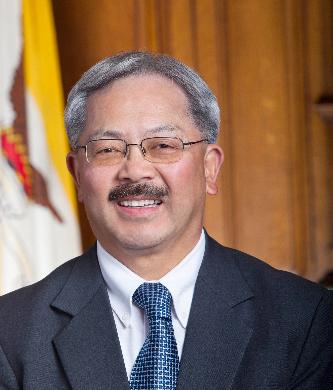
The Chron doesn’t think it’s important, but there’s some serious evidence in today’s Ex that the mayor wasn’t entirely forthcoming when he testified before the Ethics Commission. The declarations from Debra Walker and Aaron Peskin are attached at the end of the story; they’re worth reading.
Walker is very straightforward: She says she’s friends with Sheriff Ross Mirkarimi and his wife, Eliana Lopez. She’s also been close friends with Sup. Christina Olague:
Ms. Olague and I often got together for coffee or movies, and we talked often about land-use issues. I wrote a letter of support for Ms. Olague to Mayor Lee, asking him to appoint her as supervisor. At her request, I loaned her a painting to hang in her office when she took office.
All of that is consistent with what I’ve heard about their friendship, and it doesn’t sound like Walker was ever out to get Olague or to put her in a bad situation.
Then Walker explains that during the week of March 6, she was talking to Olague and complained about the Mirkarimi case. “She said the mayor had asked her about the case when they were talking about other issues, and had asked her for her thoughts.”
The declaration goes on a bit, with plenty of backup to the idea that Olague and Lee had discussed how to deal with the sheriff. Which doesn’t surprise me — I have heard from other prominent people in the city that Lee reached out to them for advice on whether to suspend Mirkarimi.
But it’s a problem for two reasons. One is that Olague, sitting as a judge in this case, isn’t supposed to have talked to anyone else about it — certainly not the prosecuting authority, the mayor.
The other is that Lee denied under oath that he had talked to any of the supervisors about the case.
Debra Walker isn’t a fan of Ed Lee, but she would have had to go to considerable lengths to create this level of fiction. It rings honest to me, particularly when she notes that “on June 29, 2012, at 2:10 pm, I received a phone message from Supervisor Olague saying ‘Debra, the converstaion never happened.'”
Look: This is a sworn statement, made under penalty of perjury. So either Walker’s lying and guilty of perjury, or the mayor is. Which seems more likely?
Ditto for the Peskin declaration, which includes dates, times, places, and specific messages. Again: Did Peskin go out of his way to perjury himself — or did the mayor fail to tell the truth on the stand?
This is now part of the case, like it or not: The credibility of the mayor is one of the issues at hand — and more important, if Lee talked to Olague he probably talked to others. Who would then have to recuse themselves.

Candidates in the District 5 supervisorial race – where one recent poll showed almost half of voters undecided about a field of imperfect candidates seeking to represent the city’s most progressive district – have been sharpening their attacks on one another, learning lessons about hardball politics, and fighting over key endorsements.
Christina Olague, the incumbent appointed by Mayor Ed Lee earlier this year, has been taking flak in recent debates from competitors who are highlighting the schism between her progressive history and her more conservative recent votes and alliances. That gulf was what caused Matt Gonzalez to pull his endorsement of Olague this summer and give it to Julian Davis.
London Breed has now suffered a similar setback when US Sen. Dianne Feinstein revoked her endorsement following colorful comments Breed made to the Fog City Journal, which were repeated in the San Francisco Chronicle, blasting her one-time political patron Willie Brown. Breed, whose politics have been to the right of the district, seemed to be trying to assert her independence and win over progressive voters who have different worldviews than her more conservative endorsers.
But she may have gone a bit too far when she told Fog City Journal’s Luke Thomas: “You think I give a fuck about a Willie Brown at the end of the day when it comes to my community and the shit that people like Rose Pak and Willie Brown continue to do and try to control things. They don’t fucking control me – you go ask them why wouldn’t you support London because she don’t do what the hell I tell her to do. I don’t do what no motherfucking body tells me to do.”
Shortly thereafter, Breed said she got a call from Feinstein’s people withdrawing the endorsement. “There were just some concerns about the kind of language I used in the article,” Breed told us.
Sources say Brown has been in payback mode ever since, urging Feinstein and others to stop supporting Breed and switch to Olague. Neither Brown nor Feinstein returned our calls. On the record, Breed was contrite when we spoke with her and reluctant to say anything bad about Brown or Feinstein, except to offer us the vague, “There are a lot of people who respect and like me, and they don’t like what they see happening.”
Breed went after Olague hard during a Sept. 18 debate sponsored by the Haight-Ashbury Neighborhood Council and other groups, blasting Olague for her ties to Brown, Lee, and Chinatown power broker Rose Pak, claiming Olague is too beholden to that crew and D5 needs a more independent supervisor.
Asked to respond to the attack during the debate, Olague said, “I won’t dignify that with a response.” But it seems clear to anyone watching the race that Olague has been getting lots of support from Lee, Pak, and Brown and the political consultants who do their bidding, David Ho and Enrique Pearce, which is one reason many progressives have been withholding their support.
The Breed campaign this week trumpeted its endorsement by three prominent progressive activists: Debra Walker, Roma Guy, and Alix Rosenthal. But it has been Davis that has captured the endorsements of the most progressive individuals and organizations, including a big one this week: the Harvey Milk LGBT Democratic Club, which gave Davis is sole endorsement even though he’s straight and Olague is from the LGBT community.
Davis also snagged the number one endorsement of the San Francisco Tenants Union, a big one for D5, as well as the sole endorsements of Gonzalez, former Democratic Party Chair Aaron Peskin, and Sup. John Avalos. Assembly member Tom Ammiano also endorsed the Davis campaign, adding that to Ammiano’s earlier endorsement of John Rizzo, the other solid progressive in the race. Rizzo also got the Sierra Club and the number one ranking by San Francisco Tomorrow.
But Olague is enjoying quite a bit of union support, including snagging the sole endorsement of the San Francisco Labor Council, whose members in the trades like her controversial vote on the 8 Washington project more than progressives or her competitors, who all opposed the deal. Olague was also endorsed by the United Educators of San Francisco and California Nurses Association.
The biggest union of city workers, SEIU Local 1021, gave its unranked endorsements to Davis, Olague, and Rizzo, as did Sup. David Campos. Sup. Jane Kim – who has also occasionally parted ways with progressives after Ho and Pearce ran her campaign against Walker – gave Olague an early endorsement, but late this week also extended an endorsement to Davis.
“As someone who has championed rank-choice voting, it is important for me that progressives are thoughtful about how we strategize for victory. I have known Julian Davis a long time, and I believe that he would be a strong leader that fights for progressive values that District 5 cares about, including sustainable streets and livable neighborhoods,” Kim said in a statement given to the Davis campaign.
Another important endorsement in D5 is that of the San Francisco Bicycle Coalition, which carried a faint whiff of controversy this year. The group gave Olague its number one endorsement and Davis its number two, but some SFBC members have secretly complained to us that the fix was in and that Davis actually got more votes from SFBC members, which most people thought was how its endorsements are decided.
SFBC Executive Director Leah Shahum told us she wouldn’t reveal who got the most member votes, but she did say that the SFBC Board of Directors actually decides the endorsements based on several factors. “The member vote is one of the factors the board took into consideration,” she said, listing a candidate’s record, relationship with SFBC, personal history, and other factors. “Nothing special was done in that vote, by any means.”
SFBC has been playing nice with Mayor Lee in the last couple years, despite his broken promise of getting the critical yet controversial Fell/Oak separated bike lanes approved by the SFMTA, which he first said would be done by the end of 2011, then by the end of 2012, but which lately seemed to be dragging into 2013.
At SFBC’s urging, Olague recently wrote a pair of letters to the SFMTA urging quicker action on the project, and it seems to have worked: Shahum said a vote on that project has now been scheduled for Oct. 16, and she’s hopeful that it might now be underway by the end of the year after all. As she said, “We’re thrilled.”
BTW, in case you’re curious, the Guardian’s endorsements come out on Oct. 3.
Where to watch the Nebraska Cornhuskers game with Idaho State today (Saturday, 9/22/2012)
Well, it was beginning to be a desperation The former Jean Dibble and I couldn’t figure out how to watch Saturday’s Nebraska football game with Idaho State on television.
We had faithfully watched the first three games on national television, a real treat, as the Huskers started up a e 2-1 record. Jean and I are both graduates of the University of Nebraska at Lincoln, our grandson Nicholas Perez of Santa Barbara is a freshman mechanical engineering student at Nebraska and has season tickets, and we are now even more faithful fans.
We mentioned our predicament to Richard Boyce, a fellow Cornhusker fan aho is cheerfully addicted to college football, at the Que Syrah Wine Bar on Thursday night. (That’s where the action is on Thursday nights, with Val
crafting excellent Barcelona-style tapas and Stephanie rolling out the flights of specialty wines from small production wineries.)
Richard had the answer: watch the game at Final Final, the neighborhood sports bar at 2990 Baker St. across from the Presidio. Meanwhile, our daughter, Katrina Perez, who has suddenly become a rabid Husker fan, checked the Nebraska alumni site and emailed us the local “watch site” for watching all Nebraska football games. It was Final Final. (The name comes from the days the soldiers got their final drink before heading back to their barracks in the Presidio after a night on the town.)
Amazing. We have been in San Francisco since 1964 and we never knew there was a sports bar featuring Nebraska games.
So I called the bar to check the reports. (I have always been leery of the alleged Herb Caen rule: never check the item, you might lose it.) The owner Arnie Prien answered his own phone, just like any good Nebraskan. He confirmed the reports. It turns out that Arnie is the real thing. He comes from Lyons, Nebraska, and graduated from the university in 1964. He has been running Final Final for the past 35 years loyally broadcasts Nebraska football games every Saturday. The NU faithful, he reports, come from all over the
Bay Area to see the games and enjoy NU camaderie. The game starts at 12:30 p.m. but he warns people to come an hour early to get a seat and first shot at the free popcorn and inexpensive beer.
As the Nebraska song says, “There is no place like Nebraska.” Even in San Francisco. Go Big Red!
Final Final
2990 Baker St.
San Francisco 94123
415-931-7800
P,.S. The alumni site lists three other “watch sites” in the Bay Area. Jack’s Brewing Company in Fremont. Legends and Heroes in Concord. And Knuckles Sports Bar in Monterey,
Watch the Huskers on these four Bay Area Watch sites: http://bayareahuskers.org/

emilysavage@sfbg.com
MUSIC There was a time, not so long ago, when the fanzine was a glittering portal. It was the best avenue for learning about new, underground, innovative music across the country, before the all-powerful grip of the Internet forced us to idly click our way through back catalogs. The ink and paper projects were passed to friends in the same manner one traded handmade mixtapes.
High among those infamous fanzines and punk mags was a pioneering indie pop-centric zine called chickfactor — put out by then-New York based editor-writer-photographer Gail O’Hara and Black Tambourine singer Pam Berry (who moved to London in 1995). Perhaps you’ve heard Belle and Sebastian’s song “Chickfactor” about it?
The publication’s print heyday lasted from 1992 through ’02, and is now present mostly as an online museum, but with some hints of movement in the near future. For one, its first paper issue in 10 years will be released next month, October 2012. And two, to celebrate her zine’s 20th anniversary, O’Hara has put together a series of shows around the country — and in London — featuring bands and musicians that came of age on the pages of the publication.
Just last week I saw something about an EDM blog that’s now putting on club nights up and down the coast. That’s not really what this is. This is a more DIY reunion, of bands, of fans, of readers, and of early twee pop enthusiasts (though the bands and the zine’s founders would probably disagree with the twee part).
“It was just an excuse to have a party with great live music,” says O’Hara, now based in Portland, Oreg. “I am pretty good at setting up shows, and it used to be something I did all the time when I lived in New York and London. One reason I’m good at it is that I ask people who never play, and sometimes they say yes. I really missed doing it, and the 20th anniversary seemed a good excuse to plan something in advance.”
“Many of these bands take a lot of prodding, and I was up for the task,” adds O’Hara.
All of the lineups are slightly different, but share in a common thread of the early twee and indie pop scenes in the ’90s Pacific Northwest. One of the headliners in San Francisco, the Softies, are only doing four shows this year, and the one in SF will be the last one.
The Softies, a beloved guitar-and-vocals duo formed in 1994, was one of those bands that hadn’t played in some time. The Pacific Northwest duo was made up of Rose Melberg and Jen Sbragia, both musicians who were in other bands prior to, during, and after their stint as the Softies (Melberg in Tiger Trap and Go Sailor; Sbragia of the All Girl Summer Fun Band). The Softies’ last show was in 2000 on a brief tour for their last LP, Holiday in Rhode Island.
“We had not even thought about the possibility of playing any shows until [O’Hara] asked us,” says Melberg, “and it never even crossed my mind that we could do it. When [Sbragia] said yes, I was amazed and totally excited. It was a lovely, unexpected surprise.”
Both have young kids and there’s a geographic distance between them now — Melberg in Vancouver BC, and Sbragia in Portland — but they made it work for the chickfactor shows.
Plus, they were never really out of touch, says Sbragia. The Softies first began as an intimate friendship between the two, so it came “as an extension of our friendship” says Melberg.
That closeness was apparent in the music of the Softies, a endearing, melodic blend of influences with tender-hearted vocals that inspire a still-dedicated fan base. It also inspired a somewhat dirty word to those involved: twee.
“[The ‘twee’ label] used to really bother me, because we were writing sad love songs with a lot of meaning packed in. We weren’t singing about daisies and ice cream,” Sbragia says. “But we got lumped in with that. Maybe if you weren’t singing about political ’90s issues then you were twee by default. It doesn’t really bother me anymore.”
chickfactor itself was often mentioned in the same breath as twee, but in truth, it was simply intertwined with indie music and indie pop from the start. “I worked at Spin and took full advantage of advance tapes, free concert tickets, and everything else music related in the early ’90s,” O’Hara explains. “Most of my friends were music intensive nerds too. I had a big Manhattan studio so I put a lot of bands up over the years and set up many concerts at Fez, Under Acme, Tonic, and Mercury Lounge…and I hired musicians to work as writers and/or copy editors at Spin and Time Out New York when I was there.”
She also asked musicians to contribute to chickfactor, including Carrie Brownstein and Stephin Merritt — an aside, O’Hara later co-directed and co-produced the documentary Strange Powers: Stephin Merritt and the Magnetic Fields. And many of the interviews in the zine were casual riffs with soon-to-be-famous indie artists (Stephen Malkmus, Superchunk, Neko Case, Cat Power).
So what’s up for the 30th anniversary, next decade? Who’s left for O’Hara to pester for live shows?
“Well, since you asked. I plan to head into the woods in Northern California and find Kendra Smith and ask her to play. That would be my number one dream. I recently read an entry in a journal from 1995: ‘Kendra Smith called and left a message. She is still working on the chickfactor interview I gave her two years ago.'”
We’re still waiting on that interview, Kendra.
CHICKFACTOR 2012: FOR THE LOVE OF POP
With Stevie Jackon (Belle and Sebastian), the Softies, Lilys, Kim Baxter, Allen Clap, and MC Daniel Handler
Sat/22, 7:30pm, $20–$25
Rickshaw Stop
155 Fell, SF (415) 861-2011
This year’s Toronto International Film Festival showcased 289 films. I attended 32. Mark down any titles that sound interesting, because this upcoming year is gonna be one to remember.
Outrage Beyond (Takeshi Kitano, Japan) The sequel to Takeshi Kitano’s return-to-gangster-form Outrage (2010) sports the same no-nonsense editing that matches extreme violence with perfectly primed pauses. Kitano’s knack for offbeat crime films began almost 25 years ago with his nasty neo-noir classic Violent Cop (1989). Since then, he’s found a perfect blend of humor and artistry over the years, with such masterpieces as Sonatine (1993) and Hana-Bi (1997). Even his more eccentric deliveries, such as the sentimental Kikujiro (1999) and Brother (2000) — his American crossover, co-starring Omar Epps — have the power to make fans out of first-time Takeshi viewers. Outrage Beyond methodically introduces (then destroys) main characters, creates tons of twists and turns that mangle the melodrama, and will either hypnotize you to all its inverted genre glory or leave you completely cold, confused, and unaffected. Either way, Takeshi is his own boss and I will watch everything he touches.
Rhino Season (Bahman Ghobadi, Iraq/Kurdistan/Turkey) This beautifully political narrative is a terrifying tribute to outspoken Iranian artists who find themselves threatened with decades of prison if they dare to question the contradictions around them. Ghobadi himself had to leave Iran a few years ago just so this film could actually be made; fellow film festival fave Jafar Panahi, director of The White Balloon (1995), Crimson Gold (2003), and Offside (2007), is still incarcerated under house arrest and is banned from writing and directing for what looks like 20 more years.
Panahi’s situation brings an extra importance to Ghobadi’s Rhino Season. The casting of Italian superstar Monica Bellucci and Behrouz Vossoughi (one of Iran’s most popular and prolific actors) could make this Ghobadi’s most accessible film since his 2004 Turtles Can Fly. This is cinema of the now — and combined with Ghobadi’s lyrical images, it solidifies him as a leading cinematic voice.
http://www.youtube.com/watch?v=JqqgrUna28w
Dredd 3D (Pete Travis, US/UK) The new and improved Judge Dredd adaptation (which was presented in the Midnight Madness category, and opens in Bay Area theaters Fri/21) takes a much different approach than the uneven (yet under appreciated) 1995 Sylvester Stallone vehicle by making the obvious choice to darken the mood (and not to take Dredd’s helmet off.) By bringing in the screenwriter of 28 Days Later (2002) and 28 Weeks Later (2007), Alex Garland, the story kicks into absolute overdrive, saving an origin script for the already much-anticipated sequel.
While the special effects are spectacular and the deadpan one-liners are delivered with an enjoyable amount of irony, Dredd’s voice (which is quite reminiscent of a certain superhero in Christopher Nolan’s blockbuster franchise) reminds you that every decade has its own dated elements. Perhaps Danny Cannon’s 1995 Judge Dredd is just as representational of its own era as this rambunctious Escape from New York-meets-The Raid homage.
http://www.youtube.com/watch?v=pI3uhHh3DgM
To the Wonder (Terrence Malick, US) For those who were wishing Terrence Malick would explore relationships sans dinosaurs and throbbing solar systems, look no further. Utilizing recognizable techniques like a glorious Steadicam shot gliding through golden fields at dusk, To the Wonder is in fact much more spiritual and even overtly religious than anything else at TIFF.
Especially after 2011’s polarizing The Tree of Life, Malick has become a loaded name for haters and lovers alike — bringing unfair expectations to a filmmaker who is clearly attempting to create ethereal art. To the Wonder features a stunning performance by Rachel McAdams and a curiously perfect, Robert Bresson-esque role for Ben Affleck. This film has to been seen in an actual movie theater.
http://www.youtube.com/watch?v=E0sxqycgYNA
The Lords of Salem (Rob Zombie, US) When Rob Zombie took the stage for the world premiere of his fifth feature film (also a Midnight Madness selection), audience members greeted him with a standing ovation. “Are you guys ready to see a bunch of sexy dancing naked witches?” Zombie yelled. When the audience erupted with “YES!” he replied, “Well … this movie doesn’t have any of that!” and humorously walked off the stage.
What followed was hands-down the most terrifying opening sequence of Toronto (much less 2012). It literally left the entire audience dumbfounded. And when the title The Lords of Salem appeared, you could feel the subconscious collective bracing themselves for what going to be yet another disturbingly brilliant Zombie horror classic.
Let’s take a step back to remember Zombie’s debut House of 1000 Corpses (2003) and sequel The Devil’s Rejects (2005). Both films caught both horror critics and music fans by surprise with how powerful his filmmaking aesthetics are. He arrived on the horror scene smack dab in the middle of the “torture porn” craze; in my opinion, Zombie was tops in the “Splat Pack” (amid Eli Roth, James Wan, Alexandre Aja, etc.) due to his Tarantino-style cinephilia (casting horror icons of the past in major roles; paying homage to genre classics like the original Texas Chainsaw Massacre series), but more importantly his contemporary understanding of music. With his remakes of the Halloween series (2007 and 2009), which many horror fans may need to revisit, Zombie further proved himself a filmmaker who has a lot to say to his audiences.
Which brings us to The Lords of Salem, a contemporary witch tale influenced by Roman Polanski’s Rosemary’s Baby (1968) and Robin Hardy’s The Wicker Man (1973). Showcasing serious suspense, a psychotic soundtrack, and purposeful pacing, the film also boasts one of the most deliciously diabolical denouements in years. Avoid all spoilers and add this creepfest to your must-see list. All hail Salem!
Jesse Hawthorne Ficks is the Film History Coordinator at the Academy of Art University and hosts Midnites for Maniacs, a film series devoted to underrated, overlooked, and dismissed cinema.
Sometimes, the good guys (and gals) win.
And so, after the Guardian started the public power movement in 1969 with the pioneering Joe Neilands expose of the PG&E/Raker Act scandal, after three initiative campaigns to kick PG&E put of City Hall and enforce the public power mandates of the federal Raker Act and bring our own Hetch Hetchy public power to our own people, after hundreds of people worked for years inside and outside City Hall for public power and clean energy, the San Francisco Board of Supervisors voted 8-3 Tuesday to formally launch a CleanPowerSF project that would for the first time challenge the decades-old power monopoly of the Pacific Gas & Electric Company.
It was a historic moment. And it was a historic veto proof vote that Ed Lee, the PG&E- friendly mayor, and his ally and mentor, former mayor Willie Brown, the unregistered $200,000 a year PG&E lobbyist, will have difficulty snuffing out this time around.
The CleanPowerSF 8 were Sups. David Campos, who sponsored the legislation, Scott Weiner, who cast the deciding swing vote, David Chiu, Eric Mar, Christina Olague, Jane Kim, Malia Cohen, and John Avalos, all of whom made helpful remarks during the debate. They also voted down an attempt by the PG&E bloc to continue the vote for a week and voted against crippling amendments.
The PG&E 3 were Sups.Mark Farrell and Carmen Chiu, who tried to dilute the legislation with the crippling amendments, and Sean Elsbernd, who was strangely silent during the debate.
I use the phrase CleanPowerSF 8 and PG&E 3 to dramatize the crucial political point and toss in a bit of Guardian history on the story. For years, as clean energy/public power proposals were routinely voted down as a result of PG&E political muscle and power lobbying, the Guardian would use variations of the phrase. PG&E l0, San Francisco l or whatever was the PG&E margin of victory. The phrase was accurate, pin-pointed the good and bad guys and gals, lifted our spirits, and sent the message that the battle was far from over.
The hero of the afternoon was Ed Harrington, the general manager of the San Francisco Public Utilities Commission who delayed his retirement to complete the project. He got a standing ovation after his testimony backing up his legislation and deft handling of all questions. As Campos said, Harrington’s legislation was as “good as you are going to get.” No one seriously questioned his plan, figures, marketing strategy, or key argument that his plan was fiscally and environmentally sound.
PG&E was never mentioned during the discussion and it was difficult to determine its lobbying strategy. After the vote, I asked Eric Brooks, the crafty clean power leader at the meeting, what happened to PG&E and its strategy. He said that PG&E, after the San Bruno disaster and other notable mishaps, was not the monopoly power it once was and that perhaps the company had decided it would rather face the slower pace of CleanPowerSF rather than another clean energy initiative it would have a good chance of losing
Thanks and congratulations to the CleanPowerSF 8, David Campos, Scott Weiner, John Avalos, David Chiu, Eric Mar, Chritina Olague, Jane Kim, and Malia Cohen, who voted themselves into San Francisco history. Five of them will face the electorate and PG&E in the November election (Campos, Avalos, Chiu, Mar, and Olague.) and they acted and spoke as if voting for CleanPowerSF would be a significant advantage to their campaigns in their districts. And thanks and congratulatons to former Sup. Ross Mirkarimi, who carried the public power flag as the unpaid campaign manager during the first two unsuccessful public power campaigns and then carried the CCA plan inside City Hall during his seven years as supervisor. When he was voted in as sheriff last November, he handed the CCA baton to Campos who pushed the proposal through with style and solid argument that the issue was choice and providing necessary competition to PG&E’s monopoly.
The vote to start public power in San Francisco comes none too soon. The tear-down-tne-Hetch Hetchy dam forces have put the nice-sounding Proposition F to study draining the Hetch Hetch reservoir.on the fall ballot. This is the first step toward tearing down the dam. The problem for the city is that it could ultimately lose the dam, if it isn’t moving to public power, because the Raker Act mandates that San Francisco have a municipal system to distribute public power to its residents and businesses because the act allowed San Francisco to dam Hetch Hetchy Valley in Yosemite National Park. The Guardian’s position is that the dam is in place and should only be torn down after the city has real public power and is able to find and afford an adequate new source for the city’s water and power supply. And that, let me emphasize, will be a massive undertaking involving billions of dollars and incredible political challenges. .
Much more to come in this saga that never ends, b3
Here is Guardian City Editor Steve Jones’ account of the vote: : http://www.sfbg.com/politics/2012/09/18/historic-veto-proof-vote-launches-cleanpowersf
And some Guardian background on the PG&E/Raker Act Scandal in my advance story: http://www.sfbg.com/bruce/2012/09/17/historic-pgeclean-energy-vote-today
Schedules are for Wed/19-Tue/25 except where noted. Director and year are given when available. Double and triple features marked with a •. All times pm unless otherwise specified.
ARTISTS’ TELEVISION ACCESS 992 Valencia, SF; www.atasite.org. $6-12. "Periwinkle Cinema:" The Treatment (Aluvalot and Thustra, 2010), Wed, 8. Cine+Mas presents: Dirty Hearts (Amorim, 2011), Thu, 7:30; Under My Nails (Cruz, 2011), Fri, 7:30. More info on these events, www.sflatinofilmfestival.com. "Other Cinema:" Pig Death Machine (Moritsugu), Sat, 8:30. More info on this event, www.othercinema.com.
CALIFORNIA 2113 Kittredge St, SF; www.landmarktheatres.com. $8-10.50. "Studio Ghibli Animation Retrospective:" Only Yesterday (Takahata, 1991), Japanese with English subtitles, Wed, 1:50, 4:25, 7, 9:35; Spirited Away (Miyazaki, 2001), Japanese with English subtitles, Thu-Fri, 1:30, 4:15, 7, 9:40; Princess Mononoke (Miyazaki, 1997), Japanese with English subtitles, Sat, 1:20, 4:10, 7, 9:50; My Neighbor Totoro (Miyazaki, 1988), Japanese with English subtitles, Sun-Mon, 2:20, 4:40, 7, 9:20; Pom Poko (Takahata, 1994), Japanese with English subtitles, Tue, 1:50, 7; Howl’s Moving Castle (Miyazaki, 2004), English language version, Tue, 4:25, 9:35; Whisper of the Heart (Kondo, 1995), Japanese with English subtitles, Sept 26, 2:15, 7; Ponyo (Miyazaki, 2008), English language version, Sept 26, 4:45, 9:30.
CASTRO 429 Castro, SF; (415) 621-6120, www.castrotheatre.com. $8.50-11. •Risky Business (Brickman, 1983), Wed, 7, and Election (Payne, 1999), Wed, 8:55. •Office Space (Judge, 1999), Thu, 7, and Secretary (Shainberg, 2002), Thu, 8:45. About Cherry (Elliott, 2012), Fri, 7, 9:30. Director Stephen Elliott in person. 3rd I’s San Francisco International South Asian Film Festival. Sat. Complete schedule at www.thirdi.org. •There Will Be Blood (Anderson, 2007), Sat, 2:30, 8:15, and Inglourious Basterds (Tarantino, 2009), Sat, 5:30. •Pina (Wenders, 2011), Sept 25-26, 7 (also Sept 26, 2:15), and Crazy Horse (Wiseman, 2011), Sept 25-26, 9 (also Sept 26, 4:15).
CHRISTOPHER B. SMITH RAFAEL FILM CENTER 1118 Fourth St, San Rafael; (415) 454-1222, www.cafilm.org. $6.75-$10.25. Arbitrage (Jarecki, 2012), call for dates and times. Beasts of the Southern Wild (Zeitlin, 2012), call for dates and times. Cane Toads: The Conquest 3D (Lewis, 2012), call for dates and times. This event, $10-12. 2 Days in New York (Delpy, 2012), call for dates and times.
"CINE+MAS SAN FRANCISCO LATINO FILM FESTIVAL" Various Bay Area locations; www.sflatinofilmfestival.com. Most shows $12. Forty features, documentaries, and shorts from Latin America, Spain, and the United States. Through Sept 28.
COPPOLA THEATRE SFSU, 1600 Holloway, SF; www.asifa-sf.org. Free. Experimental animation screening hosted by Ben Ridgway, featuring works by Zeitguised, Max Hattler, and others, Fri, 7:30.
EMBARCADERO One Embarcadero Center, SF; www.bayareaflamenco.org. $12. "Flamenco on Film:" Flamenco, Flamenco (Saura, 2010), Sept 24-26, 7; Morao: Good Flamenco Singing Hurts (Van Beenan and Van De Noort), Sept 24-26, 9. Presented in conjunction with the Bay Area Flamenco Festival.
"FILM NIGHT IN THE PARK" This week: Creek Park, 451 Sir Francis Drake, San Anselmo; www.filmnight.org. Donations accepted. Mission Impossible: Ghost Protocol (Bird, 2011), Fri, 8; Hugo (Scorsese, 2011), Sat, 8.
GOETHE-INSTITUT SAN FRANCISCO 530 Bush, SF; (415) 263-8760. $5 suggested donation. "Homage to Romy Schneider:" Cesar and Rosalie (Sautet, 1972), Wed, 7:30.
JACK LONDON SQUARE First Street at Broadway, Oakl; www.jacklondonsquare.com. Free. The Devil Wears Prada (Frankel, 2006), Thu, sundown.
MANDELA VILLAGE ARTS CENTER 1357 Fifth St, Oakl; www.ticketweb.com. $10. Brainwash Drive-In/Bike-In/Walk-In Movie Festival, Fri-Sat, 9. Outdoor screenings with live music and food trucks.
NEW PEOPLE CINEMA 1746 Post, SF; www.sffs.org. $12-25. "Hong Kong Cinema:" Love Me Not (Leung, 2012), Fri, 4:30 and Sat, 9; Love in the Buff (Pang, 2012), Fri, 7 and Sun, 4; Nightfall (Yeung, 2012), Fri, 9:45; Made in Hong Kong (Chan, 1997), Sat, 1:30; Comrades, Almost a Love Story (Chan, 1996), Sat, 3:45; The Great Magician (Yee, 2011), Sat, 6:15; A Simple Life (Hui, 2011), Sun, 1:30; Romancing in Thin Air (To, 2011), Sun, 6:30; The Longest Nite (Yau, 1998), Sun, 8:45.
ODC THEATER 3153 17th St, SF; www.odctheater.org. $15-35. How Can You Stay in the House All Day and Not Go Anywhere? (Lemon, 2010), Wed, 7. Tie It Into My Hand (Festa, 2012), Fri-Sat, 7.
PACIFIC FILM ARCHIVE 2575 Bancroft, Berk; (510) 642-5249, bampfa.berkeley.edu. $5.50-9.50. "Alternative Visions:" As Above, So Below (Clark, 1973), plus short films, Wed, 7. "LA Rebellion: Creating a New Black Cinema:" Emma Mae (Fanaka, 1976), Thu, 7; Your Children Come Back to You (Larkin, 1979), plus short films, Tue, 7. "Grand Illusions: French Cinema Classics, 1928-1960:" La ronde (Ophuls, 1950), Fri, 7; Le plaisir (Ophuls, 1952), Fri, 8:55; The Earrings of Madame de … (Ophuls, 1953), Sun, 7. "Life is Short: Nikkatsu Studios at 100:" Singing Lovebirds (Makino, 1939), Sat, 6:30; Rusty Knife (Masuda, 1958), Sat, 8; Made to Order Cloth (Ito, 1931), Sun, 5.
ROXIE 3117 and 3125 16th St, SF; (415) 863-1087, www.roxie.com. $6.50-10. Beauty is Embarrassing (Berkeley, 2012), Wed-Thu, 7, 8:45. Kumaré (Gandhi, 2011), Thu, 6:45, 8:45. Red Hook Summer (Lee, 2012), Thu, 2, 4:15, 6:45, 9. 3rd I’s San Francisco International South Asian Film Festival, Wed-Fri and Sun. Complete schedule at www.thirdi.org. "Other Minds Film Festival: John Cage and Friends," Sat, 2-midnight. Marathon film fest marking the 100th birthday of maverick composer-artist John Cage; more info at www.otherminds.org. Child of Giants: My Journey with Maynard Dixon and Dorothea Lange (Ropelewski) with "Pirkle Jones: Seven Decades Photographed" (Reed), Mon, 7:30. The Rise and Fall of the Clash (Garcia), Tue, 7:30, 9:30.
SPUR URBAN CENTER 654 Mission, SF; www.slowfoodsanfrancisco.com. $5. Cafeteria Man (Chisolm, 2011), Thu, 6. With film subject Tony Geraci in person.
VOGUE 3290 Sacramento, SF; cinemasf.com/vogue. $15. "City Scenes, Installment Six:" It Came from Beneath the Sea (Gordon, 1955), Thu, 9. With a live performance by the Brothers Comatose at 8.
VORTEX ROOM 1082 Howard, SF; Facebook: The Vortex Room. $7. "Storytelling Night at the Vortex Room Hosted by Jack Stevenson," Fri, 9.
YERBA BUENA CENTER FOR THE ARTS 701 Mission, SF; www.ybca.org. $8-10. Celine and Julie Go Boating (Rivette, 1974), Thu-Sat, 7 (also Sat, 2pm); Sun, 2pm.
WEDNESDAY 9/19
As part of a series of ongoing celebrations marking the 100th anniversary of Universal Pictures, Fathom Events and Turner Classic Movies are presenting a special one day only screening of The Birds, Alfred Hitchcock’s classic 1963 horror flick about rampaging flocks of fearsome feathered fiends that invade a sleepy coastal community and wreak havoc on its citizens. Filmed in San Francisco and just to the north in Bodega Bay, the film has been newly restored, and will be preceded by an introduction from TCM host Robert Osborne, along with revealing interviews that he conducted with star Tippi Hedren earlier this year. See website for participating theaters. (Sean McCourt)
2 and 7pm, $10.50–$12.50
Various Bay Area Theaters
THURSDAY 9/20
Orenda Fink and Maria Taylor are Alabama natives, childhood friends, and progenitors of dream pop duo Azure Ray. Throughout most of their Azure work, the pair grounded their tracks in vocal harmonization and added in some folksy acoustic guitar and/or piano melodies, such as in 2010’s Drawing Down the Moon. But in the latest LP released this month, As Above So Below, Fink and Taylor immerse their warm vocals in electronic atmospherics, vocal delay effects, and a smattering of bass. Azure have said for As Above that they drew on the minimalist and electronic aspects of artists such as James Blake, Nicholas Jaar and Apparat. As Above’s tight and intricate feel can be partially credited to co-producer and Orenda’s husband, Todd Fink of The Faint. (Kevin Lee)
With Soko, Haroula Rose 8pm, $15 Swedish American Music Hall 2174 Market, SF (415) 431-7578 www.cafedunord.com
FRIDAY 9/21
Sure, the snacks and sips for sale at Eat Real are superlative, but not all of Oakland’s three-day fest dedicated to fresh, local edibles revolves around pure functionality. Take for example, the Thai fruit carving demonstration manned by staff from mobile Bay Area catering outfit House of Siam. You can learn how to turn a watermelon into a rose, petals fading from pink meat to white rind. It’s just one of a passel of tutorials that will be taking place throughout the fest, which will also feature a beer garden of local brews curated by Eat Real neighbor, Linden Street Brewery, live music, and vendors hawking treats, all for under $5. (Caitlin Donohue) Fri/21 1-9pm; Sat/22 10:30am-9pm; 10:30am-5pm Jack London Square, Oakl. www.eatrealfest.com
FRIDAY 9/21
"Free play!" For lifelong pinball wizards in training — and those, like me, who just enjoy playing Addams Family for hours at the local gay bar — there are few better phrases in the English language. To show off its extensive (and quite historically fascinating) collection of games with balls, and to help promote its intended move to the Palace of Fine Arts from Alameda, the great Pacific Pinball Museum is hosting the supposedly largest pinball expo in the world at the Marin Civic Center. 400 games set on free play! X-Men! Ms. Pacman! Vintage Bally games like Starjet! "Woodrails" from the 1950s! Sorry, there will be no splints provided for those who, in their excitement of such flashing and dinging riches, suffer a case of "flipper wrist." (Marke B.)
Through Sun/16, 10am-midnight, $15–$60
Marin Civic Center Exhibition Hall
10 Avenue of the Flags, San Rafael
(510) 205-6959
FRIDAY 9/21
As recent sold-out performances at the Fox attest, Chicago’s Wilco is an easy sell. Eight albums in with 2011’s The Whole Love, Jeff Tweedy continues to catalog tender hearts at the edge of maddening fights, backgrounded arguably the most expansive band in rock. (While other groups may struggle to create a sound big enough for the Greek, drummer Glenn Kotche could do it on his own.) But the added draw this time are the openers; Friday is a second chance for anyone who missed Cibo Matto’s reunion show at Bimbo’s last year, while Saturday features beloved raconteur Jonathan Richman, with extra of room for him to let loose his signature dance moves. (Ryan Prendiville)
Fri/21 with Cibo Matto; Sat/22 with Jonathan Richman 7:30pm, $49.50 Greek Theatre 2001 Gayley Road, Berk. (510) 548-3010 www.apeconcerts.com
FRIDAY 9/21
Eugene, Oreg.’s Yob has been producing sprawling doom metal landscapes since 1996, but it’s taken until 2012 for it to get noticed. Though the mainstream press has finally picked up on the band — Spin Magazine placed its sixth album, Atma, in its top 50 records of 2011 — Yob’s masterful songwriting and awesomely sinister energy hasn’t lost any of its edge. Atma is a megalith of slow, chugging riffs and discordant melodies, the shortest song clocking in at seven minutes and 33 seconds. Vocalist (and Krav Maga instructor) Mike Scheidt shrieks and growls over the sludge like a demon that has finally been unleashed. (Haley Zaremba)
With Acid King, Norska
9pm, $12
Brick and Mortar Music Hall
1710 Mission, SF
(415) 800-8782
SATURDAY 9/22
Love a variety of California wines, but don’t have the time to travel all over the state to visit all the wineries? Then head over the "California Wines Road Trip" event, where more than 90 wines from 14 different regions of the state will be available to sample, along with artisanal cheeses and other scrumptious food offerings. The party is part of California Wine Month, which will be hosting other events all throughout the state, so drink up for a good cause — part of the proceeds from the event will go to the Center for Urban Education about Sustainable Agriculture and the California Sustainable Winegrowing Alliance. (McCourt)
2-5pm, $35.
Ferry Building, Grand Hall
One Ferry Building, SF
discovercaliforniawines.com/roadtrip
SATURDAY 9/22
They say that Reno is so close to hell you can see sparks. It makes sense that this environment would create one of the most enduring hardcore punk bands in music history. 7 Seconds have been active for three decades. In this time span they’ve gone through lineup changes, genre changes, into the straight edge movement and back out of it. Since its inception in 1980, the Marvelli brothers Kevin Seconds and Steve Youth have remained the backbone of the band, tirelessly touring and releasing 15 albums and numerous EPs and compilations. You’ve seen the logo for years, on T-shirts and patched onto jean jackets, but 7 Seconds have endured based on a lot more than great branding. They’re living, breathing, shredding pioneers of American punk. (Zaremba)
With Heartsounds, Bastards of Young, City of Vain
7pm, $12
924 Gilman, Berkeley
(510) 524-8180
SATURDAY 9/22
Like an enrapturing free-jazz gig, or a moshtastic punk show, Cut Hands’ brand of crushing experimentalism must be seen live to be fully appreciated. The one-man project, commanded by British fringe-artist and Whitehouse bandleader William Bennett, fuses traditional Central African percussion with synthetic drums, laying them atop ambient drones and shrill electronics, with an industrial production sound worthy of Throbbing Gristle at their most unforgiving. Pushing his singular vision to new extremes, Bennett’s forthcoming LP, Black Mamba (the follow-up to his Wire-approved Afro Noise series) is the project’s most relentlessly pulverizing statement to date. Gluttons for avant-punishment shouldn’t pass up the opportunity to experience Bennett’s viscerally draining, yet transcendent, explorations in sound. (Taylor Kaplan)
With Burmese, Bestial Mouths, DJ Crackwhore 9:30pm, $12
Elbo Room 647 Valencia, SF (415) 552-7788 www.elbo.com
MONDAY 9/24
Member of a supernatural hip-hop crew, singer of "Gone ‘Til November" — maybe you even got a bead on his brief, but glorious run at being the president of Haiti, in the face of Sean Penn’s wet-blanket naysaying. But unless you have read his new book Purpose: An Immigrant’s Story (if you have, back pat, the thing was released on Tuesday) you probably did not know that Jean’s pastor father relocated his family into a fire-damaged funeral home in Newark when the sensitive rapper was wee. Face it, many things about this ex-Fugee remain a mystery. Attend tonight’s event and let them be revealed, with insightful prodding by MTV2’s Hip Hop Squares host Peter Rosenberg. (Donohue)
7:30, $25–$30 Palace of Fine Arts 3301 Lyon, SF
(415) 567-6642 www.palaceoffinearts.org
MONDAY 9/24
Serj Tankian started writing his third solo album when he read about the mass disappearance of different species of animals around the world. The result is Harakiri, a self-produced record named for the Japanese idea of ritual suicide. As the frontman for System of a Down, Armenian-born Tankian has a long history of activism and influence in the music community, and now he’s taking on the uncomfortable future of environmental (un)sustainability. In response, Tankian has kicked into overdrive, touring with System, publishing his third book of poetry, collaborating with nonprofits, collaborating with other musicians, and releasing a rock opera all within the last year. With this momentum, Tankian may just take over the world. I don’t know about you, but I trust him with it. (Zaremba)
With Viza
8pm, $35
Fillmore
1805 Geary, SF
(415) 346-3000
TUESDAY 9/25
"Spins the phrases together ’til something starts to make sense" is generally a pretty apt description of what frequently parades as "psychedelic" songwriting, a veil of random weirdness that often obscures an underlying mediocrity and lack of musical talent. On its self-titled, Mercury Prize-nominated debut — which includes those lyrics on the track "Hail Bop" — Britain’s Django Django takes a different approach, combining the the straightforward structure of ’60s vocal pop with a nearly cribbed catalog of inward looking psych imagery, layered over surprisingly shiny production that includes influences from tribal rhythms and metronomic, driving electronica. The result is an album that’s paradoxically bold as it is bare. (Prendiville)
With Vinyl Williams 8pm, $15 Independent 628 Divisadero, SF (415) 771-1421 www.theindependentsf.com
The Guardian listings deadline is two weeks prior to our Wednesday publication date. To submit an item for consideration, please include the title of the event, a brief description of the event, date and time, venue name, street address (listing cross streets only isn’t sufficient), city, telephone number readers can call for more information, telephone number for media, and admission costs. Send information to Listings, the Guardian, 225 Bush, 17th Flr., SF, CA 94105; or e-mail (paste press release into e-mail body — no attachments, please) to listings@sfbg.com. Digital photos may be submitted in jpeg format; the image must be at least 240 dpi and four inches by six inches in size. We regret we cannot accept listings over the phone.

caitlin@sfbg.com
HERBWISE A world in which everyone waits with bated breath for you to turn the bitch on must be an odd one to live in. But such is — presidential candidate — Roseanne Barr’s world, so I am equal parts thrilled and terrified when she reprimands me for going off subject with a question about how she takes her cannabis.
It does not seem quite so off topic to your starstruck, trying-to-hold-shit-together columnist, however. Everyone’s favorite working class feminist sassmouth is running for the highest office in the land (after losing the Green Party nomination to Jill Stein, she is now on the Peace and Freedom ticket with Iraq War momtivist Cindy Sheehan), and Barr has made no bones about the fact that what’s happening with weed is a pre-eminent part of her campaign.
(She does answer the question, though: the marijuana card-carrying superstar says she rubs cannabis lotion on her joints for arthritis and consumes edibles to treat her glaucoma. She told Letterman that she uses weed for her “mental illness.” That guy gets all the good lines.)
“One in eight of the people in our prisons are there for marijuana,” she tells me as I try of think of a way to convince her to be my date to the upcoming drag re-enactment of her epic 1990s sitcom. “So when people think that [ending cannabis Prohibition] is a big joke and that it’s not relevant, they really ought to take a look at how [the government has] used marijuana to get their big boot on everybody’s neck.”
No one will dispute that Barr offers something different as a third-party presidential candidate. Amid the polished speeches and mind-numbing say-nothingness of 2012, hers is the lone voice asserting that yes, Paul Ryan “feasts on the blood of children” and that “anyone who eats Shit Fil-A deserves to get the cancer that is sure to come from eating antibiotic-filled tortured chickens 4Christ,” (sic) as went two of her Twitter missives that have recently inspired commentary from those who surely, never captained a top-five sitcom for six years.
Should these 140-character call-outs sound extreme to you, consider this: smoke more marijuana. “I have to say,” Barr muses, breaking from telling me how she decided to challenge Obama for the White House. “It might be my medical marijuana that allows me to go that deeply away from engrained mind control programming so that I can actually look at solutions. It does get people questioning reality, and I think this is a time when we all need to do that.”
In closing, I ask her the same thing I ask pretty much everyone I interview for Herbwise: why does she think the federal government spent the last year cracking down on state-legal cannabis dispensaries and farmers in California and elsewhere? Everyone always says “I don’t know.”
Not this babe, though. “It’s just to lock people up,” Barr tells me. “They’re arresting people and putting them in prison to make paint, because let me tell you this: 90 percent of the house paint sold in America is made by prison labor.”
Preach! Now, go watch her speak at Oaksterdam University with Cynthia McKinney, the 2008 Green Party presidential candidate and first black female member of Congress elected in Georgia, plus Ed Rosenthal, horticulturist and High Times columnist in the ’80s and ’90s. And/or, see drag queens reinterpret Barr’s working class family show. Whichever version of reality you prefer.
“THE POLITICAL FUTURE OF MEDICAL MARIJUANA” PANEL DISCUSSION
Sept. 27, 6:30-8:30pm, $20 suggested donation
Oaksterdam University
1600 Broadway, Oakl.
ROSEANNE: LIVE!
Wednesdays, Sept. 26-Nov. 14 (no Oct. 31 show), 7 and 9pm, $20-25
Rebel
1760 Market, SF
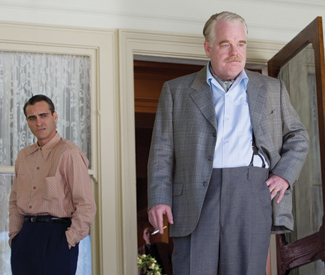
cheryl@sfbg.com
FILM The San Francisco International South Asian Film Festival, presented by 3rd I, celebrates its 10th year with programming at the Roxie (Wed/19-Fri/21 and Sun/23), the Castro (Sat/22), and one night in San Jose (Sept 30). Opening night film The Island President, about former Maldives president Mohamed Nasheed, had a theatrical run in San Francisco earlier this year, but its themes of climate change are as urgent as ever — and the political situation in the Maldives remains tumultuous. Bay Area-based director Jon Shenk will be on hand for updates and discussion.
The rest of the fest busts out, yes, the always-popular Bollywood screening at the Castro — this year: Homi Adajania’s Cocktail, a fizzy rom-com about best friends who almost let a guy come between them — and a reprise screening of Big in Bollywood, a highly entertaining doc about a struggling SoCal actor who stumbles into megafame after starring in 2009 Bollywood hit 3 Idiots.
Among the new docs, Decoding Deepak, directed by the son of New Age guru Deepak Chopra, offers insight into what it’s like to be the son of a man who’s built a career on commodifying spirituality, thanks to a string of best sellers and an Oprah seal of approval. Though the thirtysomething Gotham Chopra seems focused on catching his father off guard, Deepak offstage is exactly what you’d expect: a bit entitled and narcissistic, as many famous folks tend to be; obsessed with Twitter, as all media people tend to be; and “a guy who turns any mundane question into a talking point for a new book.”
Far more revealing is The World Before Her, which contrasts (and finds eerie similarities between) the Miss India pageant and a training camp for young girls run by Hindu nationalists. While the beauty queens are subjected to Botox and painful skin-lightening treatments, the budding extremists are lectured on how women have “natural weakness of character” and must marry by 18 (forget about having a career, in other words). Both groups undergo physical training (one group prizes thinness; the other, the ability to fire guns). But the Miss India contestants are surprisingly practical, pointing out that winning the crown offers hope for a better life in a country that limits options for women. Most alarmingly, a nationalist camp counselor declares that it’s OK for her father to beat her because he let her live, despite being an undesirable “girl child.” Meanwhile, past Miss India winner Pooja Chopra reveals that her own father suggested murdering her as an infant, for the same reason. Chilling and eye-opening, and a standout film in the fest.
Hollywood’s big movie this week is The Master, Paul Thomas Anderson’s much-hyped likely Best Picture contender. Philip Seymour Hoffman stars as Lancaster Dodd, the L. Ron Hubbard-ish head of a Scientology-esque movement. “The Cause” attracts Freddie Quell (Joaquin Phoenix, in a welcome return from the faux-deep end), less for its pseudo-religious psychobabble and bizarre personal-growth exercises, and more because it supplies the aimless, alcoholic veteran — a drifter in every sense of the word — with a sense of community he yearns for, yet resists submitting to.
As with There Will Be Blood (2007), Anderson focuses on the tension between the two main characters: an older, established figure and his upstart challenger. But there’s less cut-and-dried antagonism here; while their relationship is complex, and it does lead to dark, troubled places, there are also moments of levity and weird hilarity. (Might have something to do with Freddie’s paint-thinner moonshine.) Easily the best film of 2012 so far.
Also at the multiplex, you can take in a pair of cop movies; feel free to base your ticket-booth decision on whether you prefer your violence cartoonish or gritty. The former comes courtesy of Dredd 3D, a pretty enjoyable comic-book adaptation thanks to star Karl Urban’s deadpan zingers. This is not a remake of the 1995 Sly Stallone flop Judge Dredd, by the way, though it might as well be a remake of 2011 Indonesian import The Raid: Redemption. The stories are identical. Like, lawsuit material-identical: super cop infiltrates (and then becomes trapped in, and must battle his way out of) a high-rise apartment tower run by a ruthless crime boss. Key difference is that Dredd has futuristic weapons, and The Raid had badass martial arts. (Also Dredd‘s villain is played by Lena “Cersei Lannister” Headey, so there’s that.)
Buddy cop movies tend to go one of two ways: the action-comedy route (see: the Rush Hour series) or the action-drama route, like End of Watch, which follows partners Taylor (a chrome-domed Jake Gyllenhaal) and Zavala (Michael Peña from 2004’s Crash) as they patrol the mean streets of Los Angeles, engaging in witty shit-talk and uncovering gruesome crime scenes. Writer-director David Ayer, who wrote 2001’s Training Day, aims for authenticity by piecing together much of (but, incongruously, not all of) the story through dashboard cameras, surveillance footage, and Officer Taylor’s own ever-present camera, which he claims to be carrying for a school project, though we never once see him attending classes or mentioning school otherwise.
Gyllenhaal and Peña have an appealing rapport, but End of Watch stretches credulity at times, with the duo stumbling across the same group of gangsters multiple times in a city of three million people. Ultimately, End of Watch is way too familiar (but not lawsuit-material familiar) to leave any lasting impression. Case in point: in the year 2012, do we really need yet another love scene set to Mazzy Star’s “Fade Into You”? *
3rd I’s San Francisco International South Asian Film Festival runs Sept. 19-30; tickets and schedule at thirdi.org/festival. The Master, Dredd 3D, and End of Watch open Fri/21 in Bay Area theaters.

yael@sfbg.com
SEX 2012 Anabelle was 20 when she was kicked out of her parents’ house. The way she tells it, she was suffering from mental health issues and desperate for money. So she agreed to work in the sex industry — for a man who said that she would be doing masturbation shows that wouldn’t involve physical contact with customers.
But the man put up ads on Craigslist advertising sex with her. He sexually assaulted her. “I was in a situation that really coercive,” Anabelle, who asked us not to use her real name, recalled on the phone with me, voice shaking.
“He took me by his place but he also took me to a hotel room that he had rented,” she said. “I definitely felt like I was being held. He was around except when I was with a customer.”
“I don’t know how long he was intending to keep me there.”
She didn’t have to find out. Anabelle was able to escape. But the trauma and shame would stay with her.
“The next day I started peeing blood and I went to the ER, but I didn’t let them do a pelvic exam. It wasn’t clear if it came from an infection or some other thing, so I didn’t tell them what had happened,” she recalled.
Anabelle sees herself as a victim of sex trafficking. Stories like hers are driving Proposition 35, a statewide ballot measure called the Californians Against Slavery and Exploitation (CASE) Act.
But Anabelle isn’t supporting the CASE Act. And her arguments — and those of sex workers and their supporters — paint a very different picture of a law that could hurt the people it’s supposed to protect.
The CASE Act would increase prison sentences for sex trafficking. It would mandate that convicted traffickers register, for life, as sex offenders, and would require that registered sex offenders hand over any online usernames and passwords to law enforcement.
It would also increase penalties for trafficking in humans for non-sexual purposes, as well as extortion, although neither of those are mentioned in summaries of the law or pro-Prop. 35 materials.
The act defines a person as “guilty of human trafficking” if that person “deprives or violates the personal liberty of another with the intent to effect or maintain a violation of” several parts of the California Penal Code that already exist.
“Traffickers, driven by greed, are instigating rape and torture on children and women, and treating people like lifeless and soulless things,” says the CASE act website. And the stated intent of the act, to increase penalties for people who commit crimes like these, would garner little opposition.
But the CASE Act may go much farther. The ballot initiative was sponsored by billionaire and former Facebook Chief Privacy Officer Chris Kelly, who ran unsuccessfully for attorney general last year. It never got the rigorous review by legislative staff attorneys that other California bills go through. In fact, the Legislature already rejected a version of the CASE Act, citing concerns that it may have unintended consequences.
Greg Diamond, plaintiff’s attorney who opposes Prop. 35, calls those consequences a “parade of horribles.” Take the clause about deprivation or violation of personal liberty.
The act defines that phrase as “substantial and sustained restriction of another’s liberty accomplished through force, fear, fraud, deceit, coercion, violence, duress, menace, or threat of unlawful injury to the victim or to another person.”
All of the words on that list, of course, have their own legal definitions. Coercion, for example, is defined in part as “the provision and facilitation of any controlled substance to a person with the intent to impair said person’s judgment.”
So if a prostitute shares a joint with fellow worker, she could be guilty of providing a controlled substance, meaning she could be guilty of coercion, meaning she could be guilty of depriving personal liberty. That means triggering the harsh penalties for trafficking. And even if the person isn’t likely to be convicted, the possibility of a draconian sentence could force her to accept a plea bargain.
Opponents say the same “parade of horribles” could lead to a person who drops a sex worker off at work, holds money for a fellow sex worker while he or she is at an appointment, or “unwittingly has a 17-year-old prostitute as a roommate suddenly meeting the standards” for human trafficking, Diamond said.
Everyone guilty of “human trafficking” would be subject to long prison sentences and seizure and freezing of assets.
Sex workers are already adversely affected by laws against pimping and pandering. California Penal Code 266(h) includes in the definition of pimping: “Any person who, knowing another person is a prostitute, lives or derives support or maintenance in whole or in part from the earnings or proceeds of the person’s prostitution, or from money loaned or advanced to or charged against that person.”
That was written in reference to people who use the money a sex worker earns for themselves — that’s what pimps do, right? But sharing money is also what partners, family, and friends do.
“The pimping statute in California is so broadly defined that it includes all our domestic partners, our domestic relationships,” Maxine Doogan, president of the Erotic Service Providers Union, told the Guardian. “Our children are pimps under that legislation.”
Prop. 35 would expand those laws, bringing pimping under the category of human trafficking, with all the expanded penalties that entails.
It’s “an unnecessary expansion of pimping and pandering laws,” said Rachel West of the US Prostitutes Collective in a statement against the measure. “Sex workers are already being wrongly prosecuted for working together as is anyone who associates with sex workers — boyfriends, husbands, even drivers and anyone hired by a woman for protection against attack.”
“It seems to me that anybody who is involved in the milieu is in danger,” Diamond said.
Then there’s the issue of fines. The Yes on Prop. 35 campaign estimates that the law would bring in around $1.5 million, money that would be directed at “victim services.”
The money would be distributed through California’s Victim-Witness Assistance Fund. And 30 percent of that money would go to law enforcement agencies for “prevention, witness protection, and rescue operations,” according to Section 8 of the CASE Act.
The other 70 percent would be reserved for grants for nonprofits and public agencies that provide services like housing and counseling.
It was this section of the bill that made Anabelle most wary.
“I’m concerned about the services, I would hope they would be voluntary and not mandated by the courts,” she said.
As for law enforcement, she said, “with sex work still being illegal, if you give more money to law enforcement to fight trafficking, it gives more money to sex workers being arrested.”
Prop. 35 isn’t meant to further criminalize prostitution; it’s supposed to deal solely with victims of sex trafficking and the people who force them to engage in commercial sex against their will.
But sex workers rights organizers say that they will be collateral damage in the fight against sex trafficking.
“I’ve heard of sex workers charged as pimps when they pass phone numbers to a fellow worker, or when they share an apartment with a fellow worker,” said Carol Leigh, an activist with Bay Area Sex Worker Advocacy Network.
“In practice, in the way it’s written, it expands the fees and sentences that can be applied to anyone depending on how the police want to enforce it,” said Deirdre Wilson, program coordinator at the California Coalition for Women Prisoners.
Instead, Wilson said, lawmakers should “spend money to actually create viable resources for housing, recovery treatment, single mothers, vocational training, and jobs — things that people need to survive.”
Sex workers rights advocates have always argued for decriminalization, saying that if they weren’t afraid to reveal their work to police, they could be allies in identifying people who were being trafficked or otherwise exploited within their industry.
Anabelle, who now works in sex workers rights advocacy, agrees.
Decriminalization would “enable sex workers to actually help people without being in fear of arrest themselves,” she said. “It would remove the fear of arrest from victims, because that’s a big thing that keeps people from speaking out about it.
“I was afraid that if I went to law enforcement, I might be arrested,” she said.
Assemblymember Tom Ammiano has free-speech concerns about the bill. The law would require people, whose crimes had nothing to do with the Internet, to turn over their online usernames and passwords, which may be unconstitutional.
“Requiring someone to turn over every email and username that they have has a chilling effect on their free speech,” said Ammiano aide Carlos Alcala, who also mentioned that Ammiano has been working on a tiered approach to the sex offender registry that takes into account the severity of the crime.
Prop. 35 is well-funded and likely to win. What Californian isn’t against slavery and exploitation? But State Sen. Mark Leno, who is working on legislation to address sex trafficking without the problems in Prop. 35, advises that there’s often more to the picture when it comes to these initiatives:
“I always suggest, beware of billionaires who want to save your life,” Leno said.

culture@sfbg.com
SEX 2012 It’s time for some real sex in the city, dear friends, and as usual San Francisco is whipping and chaining things into a frenzy. Here are some select events (including the great Folsom Street Fair itself, which has some great music this year) to get you in the sling of things.
Leatherman, come hear the true “music of your people.” DJ Bus Station John has been our champion of authentic, old school bathhouse disco for many a fuzzy moon, dive through the gloryhole of his vinyl collection for the special Folsom kickoff edition of his weekly Tubesteak Connection party. He’ll be playing “early 80’s hi-NRG from Bobby O and Divine to Lime and Patrick Cowley!” You’ll be playing, too. And dancing.
Thu/20, 10pm, $5. Aunt Charlie’s Lounge, 133 Turk, SF.
Calling all big, burly lumberjacks! And fans of big. burly lumberjacks who, for the purposes of ribald jocularity we hereby dub “lumberjackers.” Fluff out your flannels and head to — where else? — that hairy den of iniquity, the Lone Star Saloon, as this youthful monthly dance party partners with the hot-hot LA Raunch crew, with DJs Aaron Elvis and the incredible Frankie Sharp. How much wood could a woodchuck chuck, etc.
Thu/20, 9pm, free. Lone Star, 1354 Harrison, SF. www.facebook.com/lonestarsf
More irresistible fuzziness at this huge bear dance party — how does the idea of 1000-plus big, sweaty, hairy men strike you? We’ll be happy just to have a dozen or so strike us, thank you. But the more the bearier! With DJs Hifi Sean, P-Play. Mark Louque, and Bill Tod.
Fri/21, 9pm-3am, $15. public Works, 161 Erie, SF. www.bearacuda.com
Curator Peter Keresztury will be showcasing his oddly alluring breasted zebra women, but that’s not all that will entice you to this roundup of erotic Bay visual artistry. Friday at 7:30pm, come to watch a fashion show of Blacklickorish Latex’s stunningly sexy gowns. Good Vibrations will also host a toy demonstration, and there will be other fetish runway walks throughout the weekend.
Fri/21, 4-10pm; Sat/22, 1-10pm; Sun/23, noon-5pm, $5 (free on Sunday). Gallery 4N5, 863 Mission, SF. www.eroticartevents.com
2008 Britney Spears album notwithstanding, we’ve never found the circus to be particularly sensual. However, sex blogger Vanessa Pinto, a.k.a. Fleur de Lis (check out her recent HuffPo interview with Patient Zero of the porn industry’s recent syphilis outbreak) is bringing back her seven rings of sex acts this year, so perhaps we’ll be swayed to the whips and honk-nose look. A who’s-who of SF sex culture including Carol Queen and Vagina Jenkins take the Supperclub stage for suspension, burlesque, BDSM, and so much more.
Fri/21, 8pm, $40-100. Supperclub, 657 Harrison, SF. sexycircus2012.wix.com/sexycircus2012
A moment of gagged silence for the departed Exotic Erotic Ball — the swinger-fetish big box fantasy event that expired last year in financial flames. Thankfully into this void stepped XO Ball and Expo, a two-day affair featuring fetish gear on sale at the expo that culminates in the Saturday night ball with wrestling women, burlesque performers, porn stars, aerialist Stoya, and a performance by Too $hort, who doubtlessly pull out his 2010 classic “Porno Bitch.”
Expo: Fri/21, 5-11pm; Sat/22, 11am-6pm, $25 advance tickets. Ball: Sat/22, 8pm-1am, $65-200. Cow Palace, 2600 Geneva, SF. www.xoexpo.com
Spectacular boutique Sui Generis is the Castro’s ground zero for stylish, scruffy gentlemen on the make during Folsom season — do check out the amazing horsey bondage window display, good sirs — and its Pegasus party last year was a great place to cop a good feel of the weekend’s coming festivities. This year, Provincetown underground house hottie Mark Louque will DJ, and everyone will be sexy-sexy.
Fri/21, 7pm, free. Sui Generis, 2231Market, SF. www.suigenerisconsignment.com
You gotta fight for your right to cock ring. Castro nudeles unite today for their right to accessorize — cops have been chastizing the pants-free for drawing undue attention to their junk in the neighborhood lately, and the aggression will not stand. Join the disrobed and raise a ruckus, or take your spot among the throngs of gape-mouthed tourists who will surely be snapping away at the sight of so much scrotum.
Sat/22, noon, free. Castro and Market, SF. www.nude-in.blogspot.com
Having sold out its prior incarnations, SF’s sex-positive, live cello-soundtracked skin show takes the stage for two Folsom Street Fair weekend editions, both hosted by sultry genderqueer twink Quinn Cassidy. Attend the matinee for mimosas and well-staged orgasms administered and accomplished by the likes of local pornographers Courtney Trouble and Maxine Holloway, then come back for Act II with Kitty Stryker, Sadie Lune, and more.
Sat/22, 2pm and 10pm, $35-70 one performance, $55-115 for two. Location disclosed upon ticket purchase. www.cumandglitter.com
The polymorphously perverse monthly disco party spanks into full effect for Folsom, with classic atomic action DJs Paul Goodyear, Allen Craig, Steve Fabus, and Sergio. If you can stop dancing long enough, feel free to ask someone if the secret makeout room is open. Coat check by Eva Androgyny!
Sat/22, 9pm-3am, $5–$7. Deco Lounge, 510 Larkin, SF. www.facebook.com/gobangSF
We are happy to report that the music at this year’s International Mr. Leather competition in Chicago was incredible, thanks to this mysterious quartet of leatheristas, who tag-teamed on the tables to produce a blend of danceable tunes that didn’t tip into gym queen carnival schmaltz, pop diva headache, or weepy disco sentimentality. Oil those chaps, girls, boys, and others — this dance party will be off the hook (hooks optional).
Sat/22, 9pm, $10–$15. Holy Cow, 1535 Folsom, SF. www.tinyurl.com/luthersf
Keep those buds busy until the main event tomorrow at this darling little Folsom Street glory-hole-in-the-wall. It’s all in the name of nipple worship this afternoon. Well almost — the dollars you lay down for entry go to the SF GLBT Historical Society, standard practice for a bar whose parties try for more community service than just giving your Grindr app the night off.
Sat/22, 2-6pm, $5. Powerhouse, 1347 Folsom, SF. www.powerhouse-sf.com
This is it — the big, be-harnessed Megillah, benefitting multiple charities and keeping the leather tradition alive. Hundreds of thousands of beautiful freaks, of course, and naughty goods of all description. Most intriguing is the entertainment side of the fair, which has steadily been gaining traction as one of the biggest live electronic music festivals in the city. This year’s players include Ladyhawke, Little Boots, AB Soto, The Limousines, Garcon Garcon, and Hi Fashion.
Sun/23, 11am-6pm, $10 suggested donation. Folsom between Seventh and 12th Sts., SF. www.folsomstreetfair.com
Although last year’s custom-made porn star nest, outdoor Motown fetish fiesta, and indoor Bulgarian underground techno triumph may prove hard to top, the four party crews hosting this annual official post-Folsom blowout — local househeads Honey Soundsystem, old school soul fiends Hard French, London’s disco-riffic Horse Meat Disco, and Australian electro duo Stereogamous — are gonna try their darnedest to finish your slut season strong. Deviants will be the spot to post up with that high fashion off-shoulder fetish gown, or nothing more than a lace-up leather jock, chest hair, and a growl.
Sun/23, 3pm-3am, $20-30. Public Works, 161 Erie, SF. www.publicsf.com
A weekend that explores gaming and sex, gaming sex, and sexing gameplay. Tangibly, this festival will give birth to lectures on things like amorous videogame storylines and the physics of vibrators, an award ceremony for “sex machines, orgasmatrons, and teledildonics,” and live performance. Less concretely, AE is a chance for the significant sex nerd contingent of the Bay Area to critically examine the culture it’s created.
Thu/27-Sun/30, various times, venues, prices. www.monochrom.at/arse-elektronika

caitlin@sfbg.com
SEX 2012 For youse who are considering dipping toes into a pool of liquid latex this weekend, Mollena Williams, co-author of Playing Well With Others: Your Field Guide to Discovering, Exploring and Navigating the Kink, Leather and BDSM Communities (Greenery Press, 312pp, $19.95) and long time player on the Bay Area BSDM scene, has a clarifying statement about making Folsom Street Fair your first kinky sex event.
“It’s probably akin to getting to know the animals on the African plain by visiting the Bronx Zoo,” Ms. San Francisco Leather 2009 told me when I caught her on the phone. “You will have an idea of what the giraffes do when you see them in the Bronx Zoo, but if you travel and see them wandering the plains you’re going to be like, oh my gosh!”
But if the fair that’s launched a thousand sluts isn’t a good place to learn how to be a responsible kinkster, one might ask, how does a nipple clamp-craving individual who just read that book and has a new profile on FetLife (user name: ChristianGreysTie) — or has a yen for rough play that is entirely unrelated to popular fiction — get one’s start on the scene?
Never fear, my corseted dear. Playing Well With Others holds the answer to that question, and then some. Genderqueer leather lad Lee Harrington came up with the idea for the book some years ago, drafting Williams as co-scribe to diversify and deepen the perspective offered in the book. Their voices are perfection — Williams’ experience as a person of color on the scene and Harrington’s as a transperson make for a 101 to the BDSM community that takes very little for granted about the reader.
In straight-forward, friendly language, the book covers basic identity issues such as what and why kinksters exist. There’s a vast chapter that runs down the various kinds of kink events, from woo-woo spiritual retreats to clothing swaps to fetish balls. It’s really all in there: advice on making kinky business cards for passing out to possible paramours, ways to trick out your sexy social networking profile, and how to negotiate safely and sanely with a partner regarding just what your relationship can handle at that pony play conference.
Williams told me there has been a gentle surge in participants in the BDSM scene, offering the real-life, previously-mentioned 50 Shades of Grey-based FetLife handle as proof that popular culture is causing an uptick in online participants, at least. Playing Well With Others offers important tips on the perils and pitfalls of kink community. Williams cited her own sexual assault that occurred during a play scene as an example of something that she had trouble wrapping up into a neat, advice column package for the book. The BDSM scene has its “criminally pathological,” just like every other segment of society, she said.
Boundaries weren’t a real big part of 50 Shades, in which dominant, older Christian Grey does not take no for an answer from his virginal quarry. His doltishness is presented in the book’s pages as the height of romance. “It’s not romantic to stalk someone,” cautions Williams. “I don’t care how wretched hot you are, if someone says they don’t want to see you and you show up on their doorstop — that’s not a thing.”
“We wanted to have a road map, because it is a jungle out there,” she told me.
Sorry to leave you hanging back there if you were waiting to hear what Williams had to say about the perfect starting point for your public pervert-dom. That would be at your local munch, or casual (think streetwear and sneakers, not harnesses) gatherings of kinksters.
The more-intimate affairs take place in non-intimidating public venues and offer a chance to have conversations about who or what you’re trying to kneel to, as opposed to mega-events like this weekend’s fair, where the emphasis is more on show ‘n’ tell peacocking than one-on-one information share.
“I don’t know if Folsom is there to help you find your community,” reflected Williams. “But it’s there to help you celebrate your freakiness. In that, it’s unparalelled. There’s nothing like being able to walk down the street in your corset, bra, and panties, and share that part of you.”
SEX 2012 More swinging, less worrying over swing states. While Obama versus Romney rages, stupidly all around us, here we busy ourselves with what’s sexy. Books, art, porn stars, leather mamas — here’s some of our favorite sex spots in the Bay, today.
Were it not for Jacques Boyreau and Peter Van Horne’s ravishing new coffeetable book of hetero vintage porn posters — we took a page from its reprint of 1982’s Consenting Adults to adorn the cover of this week’s Sex Issue — such gems as Flashpants (1983) and New Wave Hookers (1985) might be lost to the sexysands of time. Sexytime: The Post-Porn Rise of the Pornoisseur (Fantagraphics, 120pp, $29.99) is a lap-sized assemblage of colorful cinematic carnality — big-busted beauties, hilarious popular movie tie-ins, and every once in awhile, a muscled stud.
Boyreau was the proprietor of the dearly departed alt-theater Werepad in Bayview, so you know he has an eye for the wild and weird of the silver screen. His book brings us back to a time when porn was just as reviled as it is in these present days of virgin-brandishing Republicans — which leaves us with the comforting lesson that, no matter what the crazies are saying on Fox News, there will always be something to jerk off to.
All political-porno reassurances aside, there’s another reason we love Sexytime more than most times: big budget porno required big budget lingerie get-ups. The lace ‘n’ garters, gauzy be-ribboned babydoll ‘fits on the Teenage Sex Therapy poster — not to mention the décolletage-to-bellybutton drop fronts of the “jumpsuits” in Garage Girls (a film whose subtitle is “Best Lube Job in Town”)? Ours, please. Let the weekend begin!
“We’ve answered questions on every topic from fisting and negotiating D/S to recipes and thread counts,” says Princess Pandora, who hosts the “Ask A Hot Chick” radio advice program with fellow hot chick Nikki Blakk every Wednesday, 9pm-midnight, on 107.7FM The Bone. “There’s a surprising amount of things in life that can’t be handled with either more communication or more lube, but we’re here to help out with the trickier situations.”
Pandora, who’s also a dancer-owner at beloved erotic dance co-op Lusty Lady (www.lustyladysf.com, check out the Lady booth at Folsom Street Fair), and powerhouse personality Blakk met backstage at a Rammstein show, and have been taking calls for the past year from cute and lovelorn (“One girls asked us about asking another girl to prom”) and the fascinatingly weird. Each week a feisty new guest from the worlds of sex education, burlesque, or adult performance comes on the show to lend an element of surprise — and sometimes major star power.
“One of the most memorable things to happen,” Pandora says, “was when Pickles Kintaro of Hubba Hubba Revue was on. She talked about her ‘Weird’ Al Yankovich tribute. He heard about it, tweeted it, and she sold out.”
“So we know we reach a very broad audience,” she adds.
www.facebook.com/AskAHotChickRadio
Did the Olympics light a fire in your loins? The sight of all those sweaty, multicultural bodies straining against their Spandex, engaged in superhuman feats of strength and endurance, put a little gold on your medal? “Oh, the recent Olympic games created quite a stir with the staff,” Brian Murdy, marketing director of Mr. S Leather’s sporty-fetish Locker Room tells us. “Whether it was men’s gymnastics, swimming, diving, or water polo, everyone was into it. And then there’s soccer. It never hurts when a guy rips off his shirt in celebration and runs around dripping with sweat.”
We’re not gonna argue with that one! The Locker Room, which opened last June, stocks all sorts of yummy, play-ready uniform items in rubber, latex, leather, and Neoprene, including colorful wrestling singlets and drool-worthy knee-high sports socks.
“We had noticed a trend in the leather and rubber communities that was more sports-influenced, and we wanted to cater to this new kink,” Murdy says. “Not only was this new look sexy, it was also more affordable especially for the young up-and-coming leathermen.
“The response has been resoundingly positive, and we’re stocking some well-known brands. We’re exclusive Bay Area source for ES Collection, Addicted, Nasty Pig, Timoteo, and Cellblock 13. And we were just awarded the Puma account which shows the positive impression we’re making.”
So what’s hot for field day at Folsom 2012? “Be on the lookout for our new leather track top. You won’t go wrong in our leather or rubber football pants either. And definitely check out what ES has to offer — sportswear, swimwear, or singlets, they know how to create clothes that show off your assets.”
385 Eighth St., SF. www.mr-s-leather.com
There was a not-so-recent time in porn when transgender adult film stars meant one thing: transwomen, or “chicks with dicks” as the industry so charmingly puts it (porn is not known for its sensitivity of language.) Not so these days, with the success of heavily-muscled transman Buck Angel and other queer stars. The lines surrounding who gets to be an on-camera sexpot are softening, leaving the world of skin flicks even more relevant in these rainbow days.
Enter James Darling, the Feminist Porn Awards’ 2012 Heartthrob of the Year, a local boy who has taken the reins of transgender porn with his new site FTM Fucker. The porn site features transmen coupling with all manner of partners: cis men, transmen, cis women, on roofs, couches, in the office… well you get the picture.
“When I started making porn I was really early in my transition,” Darling said in his Guardian interview. “I thought it was really important to have affirming images of people with bodies like mine, bodies before surgery. I wanted to show people that you can still be sexy and have hot sex prior to transitioning.”
How to make porn more representative of what hot sex is like for all of us? How about more of James Darling, for starters.
We have to admit, author of Girlvert: A Porno Memoir (A Barnacle Book, 256pp, $18) Oriana Small’s paired film and spoken word performance at the recent Femina Potens Gallery-curated sex worker art Askew Festival at Yerba Buena Center for the Arts, nearly made us faint.
Small, who used to perform under the porn name of Ashley Blue, screened footage of herself at 20 years old, shot for a blow job-choking adult site. She says prior to the day’s shoot she thought she could take any kind of rough sex — but couldn’t have prepared herself for a sadistic co-star, who blocked the air to her lungs until her eyes rolled into her head, her tongue lolled out of her mouth, and she died for a moment. We’re not talking petit mort — Blue said she saw the light at the end of the tunnel.
The actual footage of this temporary death was, understandably, tough to handle for audience members at ASKEW. But Orion’s confident, unapologetic voice as she stood onstage reading the corresponding chapter from Girlvert, her new novel on her porn career, made it clear that she hardly considers herself a victim. “I just want to start off by saying, I’m okay now,” she said smilingly to dissipate any chance we’d consider her merely a victim of perversion.
Which is why we’re stoked on her new book. Each chapter title is more rudely titled than the last: “Ass Herpes,” “Double Anal,” “Ass Cream Pie.” Orion’s frank narration reminds us that the adult industry can be a wooly ride, but hey, so can the world outside it.
Imagine a potent folio of homoerotic drawings that combined the Art Nouveau perversity of Aubrey Beardsley; the erotic possibilities of Victorian gentleman’s clubs, classic travel postcards, and early automobile advertising; the unintentional humor of 1970s porn; a splash of ancient Japanese and Indian inked-scroll pornography; and the chaste leer of vintage physique photos. “I have this secret fantasy that some Republican will come upon my drawings one day and think that they really are from the 1800s, and every argument they’ve held about homosexuality is proved wrong,” incredible artist Felix d’Eon tells us over the phone from Mexico City.
A native of Mexico, d’Eon recently moved back after years in San Francisco, but his flashback artworks have been ubiquitous here, illustrating flyers for several scandalous parties and gaining the attention of contemporary aficionados. An excellent mimic, prolific producer, and web-savvy promoter, d’Eon works in a multitude of historical styles — throwing in a boner here, a bit of cunnilingus there — and actually earns his living through sales of his work on eBay, where he’s cultivated a large following.
“Living in San Francisco was incredibly liberating, of course, and connecting with the Radical Faeries provided me with a lot of inspiration — and of course with a lot of models, too, since they love to take their clothes off.” D’Eon moved back to Mexico to connect with his heritage and says he’s as obsessed with the indigenous art in the famed anthropological museum as much as the porn he scrolls through constantly on Tumblr. Mariachis, tarot cards, and Aztec dancers have found their way into his work, as well as Felix himself. “I’m the best model there is,” he says, “since I’ll do anything I say.”
News that a film penned by local writer-perv and Adderall Diaries genius Stephen Elliott and Kink.com star Lorelei Lee was to be acted out by Heather Graham and James Franco and shot at Kink’s historic Armory porn palace was pretty much the most exciting thing to hit the SF sex scene in a sweaty, screaming minute.
http://www.youtube.com/watch?v=ZqQjMSRBveo
The film follows its eponymous character from the boonies, riding the T&A train all the way to San Francisco where she finds fame and fortune in the fetish porn industry. About Cherry is definitely not about Kink — the film doesn’t anywhere near the level of roughness the actual website contains. But similarly to the company, the movie doesn’t reinforce the popular notion of the porn industry as a place where young men and women come to be used up, tore up, and thrown out like a pair of scarlet fishnets. Its characters wind up there intentionally — and not to ruin the ending for you, but you won’t leave the theater despairing for their souls and safety. Porn that doesn’t ruin lives? Bizarre, right.
Strangely enough, there’s only a single evening of screenings planned for San Franciscans looking to see what Cherry‘s deal is. Stephen Elliott will be fielding questions after the early screening on Fri/21, and he’ll be joined by Lorelei for the 9:30pm show.
Fri/21, 7 and 9:30pm, $8.50-11. Castro Theatre, 429 Castro, SF. www.castrotheatre.com
How many of us actually had a positive experience learning about sex from our parents? Don’t you wish that classes existed to teach moms and dads how to communicate effectively about being GGG? Happily, in the Bay Area they do.
“It’s almost a cliché to say that families come in all shapes and sizes, but they really do.” Such were sex educator-mom Airial Clark’s words of wisdom to Kelly Lovemonster in a Guardian interview back in August. Clark was getting ready for her weekend of workshops at the Center for Sex and Culture, two days of lessons for parents who are queer, polygamous, or otherwise interested in teaching kids about sex in a way that goes beyond the dry basics taught in sex-ed at school.
One of Clark’s most important teachings is that talk of the birds and bees shouldn’t be about what the parent thinks is important to know about sex — it’s about giving kids the tools they need to navigate being human, at the time when it’s useful to them.
“A sex-positive child is safe, protected, and knows about consent and boundaries,” Clark said. “They have access to accurate and age-appropriate information about reproductive biology as well as the emotional and social realities of sexuality.” Check her website for upcoming workshops and classes, and get that much closer to an honest and positive relationship with your happy little munchkin.
For the past 20 years, Mama has been one of the lynchpins of the leather community in the Bay Area. Always resplendent in her trademark leather corset, riding crop, and Jaeger shot, she tirelessly hosts fundraisers and community-building events year-round that culminate in the annual Leather Walk, in which dozens of sponsored leather folk raise the giant leather flag in the Castro and march with great fanfare to SoMa. The Leather Walk, started by Mama in 1992, always happens the Sunday before Folsom Street Fair — this year it raised more than $17,000 for the AIDS Emergency Fund and the Breast Cancer Emergency Fund, of which Mama was a founding member. (We’re kind of still hungover from the after party.)
Oh, and did we mention she turned 70 this year?
While we’re at it, we should also mention her huge and extensive “Mama’s Family” of leatherfolk and community leaders — more than 750 “Mama’s Boys and Girls” honored with a nickname and a pin to commemorate their service to the leather tradition. (The list comprises a who’s who of the scene’s recent history and many well-known San Francisco characters, including some who have passed on.) Mama also proudly represents women of color in a subculture usually publicly associated with white males. Also, she takes no shit from anybody.
Cheers, Mama — here’s to many more years of leather family loving!