SFBG Blogs

The Performant: Sometimes a great notion

1

TAP Light Production’s “The Ballad of Michele Myers” goes for the jugular

The genre of the spoof slasher storyline is one always ripe for mining come Halloween season, and this year in the absence of The Primitive Screwheads annual offering, Raya Light and Todd Pickering stepped up to fill the void with their collaborative “The Ballad of Michele Myers.” A cheeky blend of high camp and low blows mixed into a frothy, bloody cocktail of makeovers and machetes, “Ballad” satiates that unique craving for slutty Nancy Reagan costumes, updated Aretha Franklin covers, and buckets of stage blood. Plus it gives trans-folk a misunderstood serial killer to call their very own. You’ve come a long way, baby!

You definitely don’t need to have ever seen a Halloween film featuring Michael Myers in order to follow the events unfolding onstage. “Ballad” amusingly mashes up references from a broad swath of pop culture’s most recognizable tropes including “Friday the 13th,” “The Facts of Life,” and “South Park,” with musical nods to Warren Zevon, Amanda Palmer, Tom Lehrer, and even Hall and Oates. Four moody teenage girls (three mean, one misfit) wind up at Camp Crystal Lake with their scatter-brained, spinsterish chaperone Mrs. Skerritt (Audra Wolfmann), in order to attend a ghastly adolescent rite of passage called “The Pumpkin Prance”. The queen bee of the clique is naturally named Heather (Trixxie Carr), a shapely package of malice and spite, who makes her long-suffering, if equally bitchy, besties Pat (Raya Light, in a fat suit) and Koochi (the formidable Miss Rahni) seem downright saintly.

After terrifying her impressionable charges with a spooky story about the mythical “Michele Myers” who supposedly haunts the Camp, Mrs. Skerritt conveniently disappears, leaving the lasses to their own devices, and setting the stage for some epic teen bullying and a surprise revelation from picked-on misfit Joe (Flynn Witmeyer) that she’s actually a he. Yes, dude looks like a lady (with a mullet), and furthermore, has a crush on Heather, who repays Joe’s advances by setting him up to get bashed: dressing him up in a hot pink, glam rock princess outfit and orchestrating a rowdy game of “Seven Minutes in Heaven” with a posse of doltish boyfriends.

That this sordid chain of events reverberates back to the legend of Michele (Kai Medieros) is lost on our “heroes” until she shows up to stab one of the clueless horndogs in the back and the chase is on! Mayhem ensues, plus extreme makeovers, shocking revelations, and the obligatory “Thriller”-inspired dance bit, while blood and accusations fly through the air. With its hilariously upbeat musical score (Todd Pickering), shrewd costuming (Daniella Turner and Joe Adame) and a cast packed with Thrillpeddlers’ alumni who know their way around a salacious splatterfest, “The Ballad of Michele Myers” satiates all expectations, and heralds (hopefully) the birth of a new Bay Area Halloween tradition. You know we can always use just one more.

First Person Singular steps into “The Twilight Zone”

0

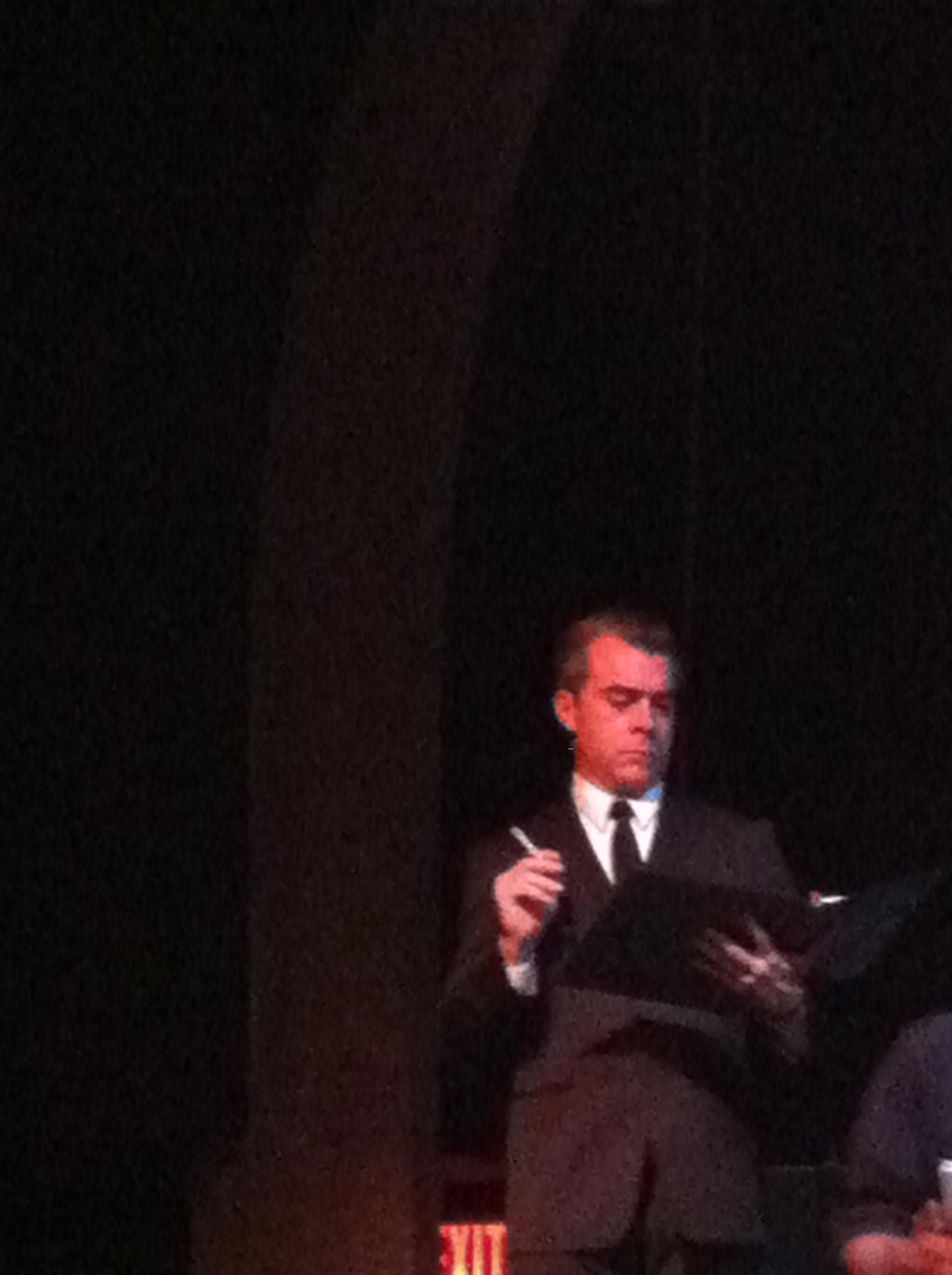
When the narrator walked onto Ashby Stage Monday night with cigarette in hand, head cocked, and eyebrows raised to welcome everyone to The Twilight Zone, the audience let out a collective laugh of recognition for this Rod Serling look-a-like.

First Person Singular‘s Everyday Monsters — despite its inclusion in the ensemble’s “Apocalypse Not Now” season — came dangerously close to doomsday in an imaginative and thought-provoking reading of three classic Twilight Zone episodes.

The company opened with the Armageddon tale “Third from the Sun,” which employs a textbook version of The Twilight Zone’s signature table-turning trick when it’s revealed that the characters are not fleeing from earth but in fact escaping to it. The actors brought the script to life with animated gestures and tones, making it easy for your imagination to take care of the rest. When it came time to depart the planet by space ship, they broke their formation downstage and scrambled to the “landing zone,” dramatizing the act of escape.

Next was up was “It’s a Good Life,” which worked suprisingly well with the dramatic reading format. Anthony, a young monster, terrorizes the inhabitants of a small town in Ohio, turning them into faux-happy drones lest they might be turned into jack-in-the-boxes or three-headed gophers. Reading from the scripts made sense with the characters’ forced positive attitudes. Then, when the characters gathered to watch Anthony’s “TV” (an invention as bad as current day reality TV), the production used an actual audio clip from the episode; this added a layer of complexity to the performance and cleverly paid homage to the original.

The last segment of the evening brought home the political relevance of the show with “The Monsters are Due on Maple Street.” Director Joe Christiano noted before the performance how Rod Serling used his Twilight Zone worlds to play out issues that were relevant in America at the time, and this one was thick with inspiration from Red Scare paranoia. A freak blackout in a small town spurs finger pointing and an alien hunt. This portrayal of how a fear of the unknown can turn people into monsters strikes deeply one of the catalysts for the arms race and stays relevant today with the current war on terror.

First Person Singular has coordinated dramatic readings and literary mash-ups throughout the bay area since its formation in 2010; this year the group has been taken under wing by Berkeley’s Shotgun Players for a series of more formal performances at the Ashby Stage. The only catch about First Person Singular’s performances? They’re one-night-only events — so plan ahead to get your “Apocalypse Not Now” fix. The final two entries are Dec. 3’s Hear Me Now?: Cell Phone Monologues (which Christiano described as, “putting the one-sided conversation where it belongs: onstage”) and Dec. 18’s Schmaltz!: The Genius of Barry Manilow (a holiday sing-a-long).

www.1stpersonsingular.com

Olague attacks led by billionaires and a consultant/commissioner with undisclosed income

72

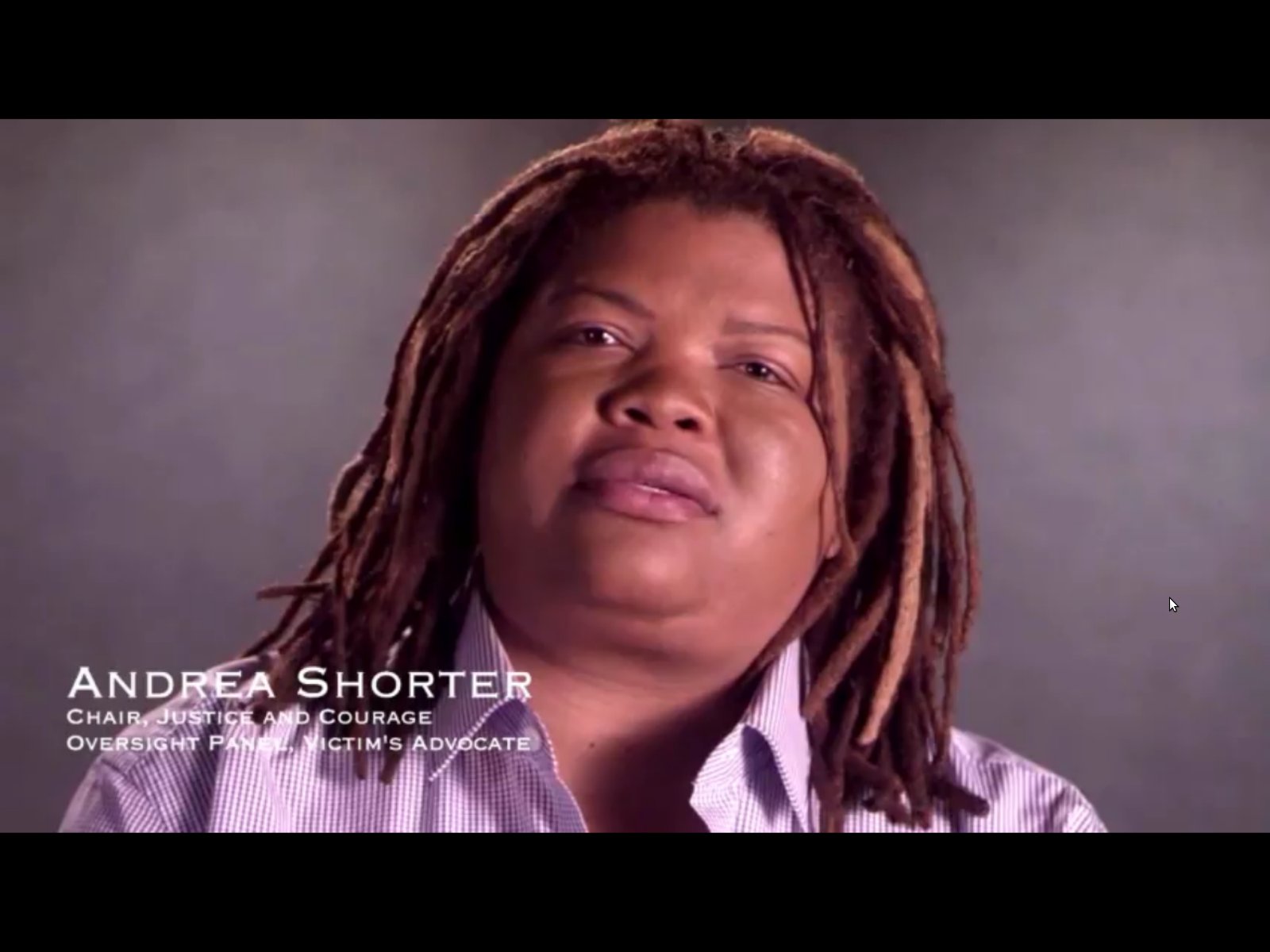
Understanding how political activists are being paid is important to understanding what their motivations are. For example, is Andrea Shorter – a mayor-appointed former president of the Commission on the Status of Women – leading the campaigns against Sup. Christina Olague and Sheriff Ross Mirkarimi out of concern for domestic violence, or is it because of their progressive political stands, such as supporting rent control and opposing corporate tax breaks?

As a city commissioner who is required under state law to report her income on annual financial disclosure forms to the city, the public should be able to know who is paying this self-identified “political consultant.” But we can’t, because for each of the last five years, Shorter has claimed under penalty of perjury on Form 700 to have no reportable income, which means less than $500 from any source – an unlikely claim that was the source of complaints filed today with the Ethics Commission and Fair Political Practices Commission.

Shorter led efforts to have her commission support Mayor Ed Lee’s failed effort to remove Mirkarimi from office for official misconduct, and now she’s become one of the main public faces leading an independent expenditure campaign called San Francisco Women for Accountability and a Responsible Supervisor Opposing Christina Olague 2012, funded with more than $100,000 by Lee’s right-wing financial supporters: venture capitalist Ron Conway and Thomas Coates (and his wife), who has also funded statewide efforts to make rent control illegal.

Neither Shorter nor Conway responded to our requests for comment, but tenant advocates and Olague supporters are pushing back with an 11:30am rally at City Hall tomorrow (Thurs/1). Organizers are calling on activists “to beat back the attacks on rent control and workers by billionaires Ron Conway and the Coates family. The 1 Percent Club, Coates and Conway want San Francisco to be a playground for the rich. Take a stand to say that these opportunists CANNOT buy elections!”

The Ethics Commission complaint against Shorter was filed this morning by sunshine activist Bob Planthold, who also filed a similar complaint a couple weeks ago against District 1 supervisorial candidate David Lee, who also appears to have grossly understated his income of the same financial disclosure form during his service on the Recreation and Parks Commission.

“There’s been too little attention by mayor after mayor after mayor in that the people they appoint are allowed to be sloppy, negligent, unresponsive, and under-responsive to these financial disclosure requirements,” Planthold told us.

Although the Ethics Commission doesn’t confirm or deny receiving complaints or launching investigations, Planthold said Ethics investigators have already notified him that they were investigating the Lee complaint, and he expects similar action against Shorter. “Ethics is pursuing my complaint against David Lee. It’s not one of the many that they decided to ignore,” Planthold said.

The FPPC complaint against Shorter is being filed by former Board of Supervisors President Aaron Peskin, who told us, “The complaint speaks for itself.”

Although Shorter claims no income on public forms, the political consulting firm Atlas Leadership Strategies lists Shorter as the CEO of Political Leadership Coaching, which works with political candidates and causes. Atlas also represents PJ Johnston, who was press secretary for then-Mayor Willie Brown and now represents a host of powerful corporate clients.

“Her brand of discreet, highly confidential, political coaching works to equip leaders with tools to exercise more effective, impactful, innovative and – where possible – transformative leadership,” was one way Atlas describes Shorter.

Is she working in a discreet and confidential way to elect moderate London Breed to one of the city’s most progressive districts? Is she being paid for that work by Conway or anyone else? Is she doing the bidding of Mayor Lee and his allies in hopes of greater rewards?

Or should voters just take at face value her claim to really be standing up for “accountability” from public officials? Is this really about the statement Shorter makes in the video prominently displayed on the sfwomenforaccountability.com website: “Christina Olague has lost the trust of victims’ advocates. She has set our cause back. I’m profoundly disappointed in her and I can’t support her anymore.”?

With less than a week until the election, voters can only speculate.

Now Disney gets a nice tax break

30

There’s an element of Disney buying Lucasfilm that hasn’t made the news yet: The giant SoCal outfit is now inheriting Lucas’s nifty annual tax break, cheating San Francisco out of property taxes worth about $60 million. See, part of what Disney gets is that shiny Lucas building in the Presidio — a private office complex built in a national park. And since it’s on federal land, not San Francisco land, Lucas doesn’t pay the city property taxes.

Nice to know the rest of us working stiffs are helping Disney out.

Oh, and $4 billion for the entire Lucas empire? Disney got it cheap.

Why free Muni for kids makes sense

13

For a moment this morning, Mission Street looked the way it might in a world where the city actually got beyond cars. About a million people were a block away, on Market, and everyone with an ounce of sense knew not to try to drive downtown. So I rode my bike along a busy city street that was given over entirely to pedestrians, bicycles and Muni buses. The buses moved at a rapid clip with no traffic to slow them down. And despite the parade a few hundred feet to the north, it felt … quiet. Peaceful. Yes, Mission Street.

How totally cool.

Imagine how easy it would be for transit to serve the downtown corridor if nobody drove cars. Imagine how comfortable people would be biking and walking to work. It just takes a Giants World Series (and a huge regional parade) to show us that a different urban world is possible.

Which brings me to free Muni for kids.

There’s enough money now, from a federal grant, to do a pilot program in San Francisco. Except that Sup. Scott Wiener thinks the money should go to general system improvements. I get it — Muni has lots of problems and Wiener thinks we should fix the system for everyone before we make it free for some.

I admit I’m biased — I have two kids who go to public school, and ride Muni. The school bus system is nearly gone; most kids can’t get an old-fashioned yellow bus in the morning or at night. So their only option is the have parents or friends drive them, or to ride Muni. Yeah, it would save me a little money if my kids didn’t have to pay, but it’s not making me choose between food and rent.

For a lot of low-income familes, the cost of Muni fare is a real issue — and it’s difficult getting a reduced-fare youth pass. (Among other things, you need a birth certificate or passport to prove your age; you think immigrant families including some members without documents are going to go to a government agency and present that sort of information?) It seems to me it’s the city’s responsibility to help young people get to school, and since we can’t afford school buses, this is one of the best options.

There’s another side of the story, though. Getting kids to ride Muni as a matter of normal course — showing them that it’s the best way to get around town — is a huge investment in the future. We can’t keep going on the way we are with personal automobiles, particularly in urban areas. We want to get to the point where just about everyone uses Muni or rides a bike or walks — and I say, start young.


Listen to the comic! Save CCSF, vote yes on Prop A

10

San Franciscans were bummed when, this summer, it looked for a second like we’d lose our only community college. And we weren’t the only ones who would have been affected — City College of San Francisco isn’t just the biggest school in the city, it’s the biggest school in the entire state, providing vital job training, family development classes, continuing education, and a springboard into four-year university for undergrads. 

The folks at Mission Mini-Comix sent us this comic stating the case for Prop A, which would ensure that CCSF gets the funds it needs to keep educating us. (You can check it out in its full glory on their website, or snag one of the free mini-books they’ve been handing out around town.

>>PRINT OUT OUR QUICK ‘N’ GUIDE TO THE CITY, STATE, AND NATIONAL RACES

>>READ UP ON THE FULL GUARDIAN ENDORSEMENTS 

Here’s the skinny on the panels, from Mini-Comix artist Rio Roth-Barreiro (who won an all-ages Guardian comics contest when he was younger — says mom Robin Roth the recognition “got him started on this path!”): 

So, this is another comic that attempts to tackle local San Francisco issues. We do tend to do this every couple years or so, with mixed results, but we’re normally drawing a comic against whatever legislation is being voted on. In this case, we’re happy to do a comic supporting Proposition A and City College of San Francisco.

City College is a very personal issue for me. Not only are my mom and god-cousin teachers there, but I got my AA degree and most of my job skills training there which did end up setting me up well with a career in the tech industry (newsflash, cartooning doesn’t really pay the bills) and I’d like to see every young person in this city, county and larger bay area have access to the same opportunity and resources I did. This goes to the larger issue of where our priorities are in this country, with trillions being spent on our military, foreign wars and tax cuts for the rich while schools at home are literally falling apart (both physically and financially). Even in the liberal “hotbed” of San Francisco, we’re seeing the same tired arguments that are being trotted out all over the country to justify the systematic dismantling of public education.

“Teacher’s are getting paid too much!” “It’s all the Teacher’s Unions’ fault!” I see this sentiment getting echoed with infuriating regularlity in the Chronicle and in online news sources such as SFGate, but it doesn’t really mesh with the actual facts of life for City’s teachers, who have seen their classes double in size (twice the work) with many not having seen a raise in 5+ years. Having California cut money to education every year isn’t helping things. CCSF is being starved for funds and then the fact that they can’t meet their budget is being used as an excuse to take away their accreditation and/or close them down. Teachers are being painted as being greedy when every year they are getting less and having to work more.

Meanwhile, crushing education is going to have long term negative impact on local and national economies as our schools prepare less kids with the skills they need for technical and skilled jobs. People getting paid less means there will be even less government income to pay for things in the next budget and having a less skilled workforce will only lead to more jobs getting outsourced to India and China. It’s a vicious cycle pulling our economy down the drain, but some can’t see beyond the latest budget or the need to invest in our (and our children’s) future.

Proposition A on the San Francisco ballot and Proposition 30 on California’s ballot both seek to raise funds and prioritize education and I hope y’all be voting for them. And if you aren’t registered to vote yet, go get yourself registered, son! California now has online registration so you can be ready to stand by our schools and CCSF’s mission statement for a affordable and high quality education to be available for all. Registration deadline is October 22nd and voting is on November 6th

Oh yeah, I almost forgot our own accreditations, but this comic was written by me with a lot of help and input from Robin Roth, Leslie Simon and Amber Straus (and my wife Beth came up with the subtitle) and was drawn by me, Mike, Audrey and Justin.


Localized Appreesh: The Parmesans

1

Localized Appreesh is our thank-you column to the musicians that make the Bay. To be considered, contact emilysavage@sfbg.com.

That’ll teach me to judge a book by its cover; or better yet, to judge a whole lineup by its headliners. I first caught the Parmesans opening up for Buffalo Tooth, Poor Sons, and Uzi Rash at Elbo Room this summer, so I naturally assumed they’d be in the same thrashy vein, or at least, they’d play some variation on the loud rockn’roll theme. Untrue: they lined up, strumming guitars, banjos, a mandolin, a stand-up bass, and the like, and launched into a fun set of bluegrass, folk, and Americana ditties, some covers and some originals.

Since then, I’ve been casually following along, occasionally checking their band page for upcoming shows and releases. Turns out, they’re doing one of those Halloween shows I love (bands costumed as other bands, c’mon, I’ve talking about it all week) and they have another record release coming later this month. Get in on the Parmesans early, check them out as the Kinks tonight at Thee Parkside, and read up below: 

http://www.youtube.com/watch?v=ekQ8iC3i4yc

Year and location of origin: 2012, San Francisco

Band name origin: After partaking in the Devil’s lettuce, it seemed like a good idea. 

Band motto: [none]

Description of sound in 10 words or less: Something new and something old. 

Instrumentation: Guitars and mandolins and basses and banjos and trumpets. 

Most recent release: Uncle Dad’s Cabin and Horse Crumbs were released back to back earlier this year.

Best part about life as a Bay Area band: [none]

Worst part about life as a Bay Area band: Being poor. 

First album ever purchased40 Dayz and 40 Nightz by Xzibit 

Most recent album purchased/downloaded: Plumb Restless by Hungry Hands from Brooklyn, NY.

Favorite local eatery and dish: Friday lunch buffet at the Gold Club in SOMA. 

Hallorager at Thee Parkside 

With Glitter Wizard, Twin Steps, Meat Market, the Parmesans

Wed/31, 8pm, $8

Thee Parkside

1600 17th St., SF

www.theeparkside.com


Support the Roxie’s Kickstarter campaign!

1

Yeah, I know — at this point, you have your email set up to funnel any messages with the word “Kickstarter” in them to go directly to spam. But for every CD you never receive or artist who seems to misappropriate her crowd-sourced dollars, there’s an honest cause that’s well worth whatever support ($5 minumum) you can toss its way.

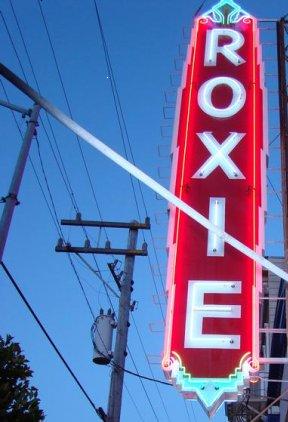
For example: the new campaign for San Francisco’s beloved Roxie Theater, the second-oldest theater in the world and the oldest continuously running theater in the US — though I’d venture a guess programming in 1909 looked a little different than it does today. (Speaking of which, check out Dennis Harvey’s review of the mind-blowing Miami Connection, luring Roxie audiences into its cult starting this Friday.) The Roxie‘s eclectic schedule always features a mix of first-run films, one-off special events, local-filmmaker showcases, and film festivals (DocFest starts next week!)

In 2009, after weathering a financial hit when a partnership with the bankrupt New College fell apart, the theater became a non-profit; several successful fundraisers later, it’s almost reached a landmark goal. From the press release:

“The Roxie is launching a Kickstarter campaign to raise $60,000 to support the final phase of its transition to becoming a sustainable 501c3 non-profit. The proceeds will be used to support our 2012-2013 theater programming, events, and institutional upgrades including a redesign of the Roxie website.
 
The Kickstarter campaign features weekly shorts by filmmakers whose work has been impacted by the Roxie’s commitment to supporting independent filmmakers who take risks with non-traditional and experimental projects. Contributing filmmakers include: John Waters, Barry Jenkins, Lynn Hershman Leeson, Valerie Soe, Hima B., IndiFest, Jane Reed, Zachary Booth, Everything is Terrible, Scarlett Shepard, Chip Lord, Mike Ott, Atsuko Okatsuka, and Michael Tully. Dave Eggers will lend words of Roxie support to the campaign as well.”

Bla-zam! Do your part, San Francisco film lover, and kick in some bucks in honor of this valuable local resource. There are some pretty cool premiums for donating, including getting your name painted into one of the Roxie’s lobby murals (!), so head to the Kickstarter page and give whatever you can.

Halloween 1951: Fast times in Rock Rapids, Iowa

1

The tale of what really happened on Halloween Eve in 1951 in Rock Rapids, Iowa.  (Reprinted by popular demand.)

As I was preparing to update my annual Halloween blog, I checked Tuesday’s San Francisco Chronicle to see what the action looked like for Halloween on Wednesday.

The Giants had just swept the World Series and Kevin Fagan’s front page story caught the spirit of  Wednesday’s parade and celebration, “We’re No. 1, let’s party, Celebration likely to bring a million to downtown SF.”  There was no mention of Halloween in his story and the only reference to mischief on Halloween was a dire warning from Police Chief Gregg Suhr.  “If you’re coming (to San Francisco) to do mischief, don’t come.”
Well, back where I come from in the Halloweens of my youth, we didn’t have parades on Halloween and the cops never issued any public warnings about mischief. But we did have some fast times and created some almost famous smalltown  legends on Halloween. This was in my hometown of Rock Rapids, a small farming community nestled along the Rock River in northwest Iowa. I can speak for a generation or two back in the early 1950s when Halloween was the one night of the year when we could raise a little hell and and hope to stay one step ahead of the cops.

Or, in the case of Rock Rapids, the one and only cop, who happened to be Elmer “Shinny” Sheneberger. Shinny had the unenviable job of trying to keep some semblance of law and order during an evening when the Hermie Casjens gang was on the loose. Somehow through the years, nobody remembered exactly when, the tradition was born that the little kids would go house to house trick and treating but the older boys could roam the town looking to make trouble and pull off some pranks.

It was all quite civilized.

The Casjens gang would gather (no girls allowed) and set out about our evening’s business, being careful to stay away from the houses of watchful parents and Shinny on patrol. Dave Dietz and I specialized in finding cars with keys in the ignition and driving them to the other end of town and just leaving them. We tipped over an outhouse or two, the small town cliche, but one time we thought there was someone inside. We never hung around to find out. There was some mischief with fences and shrubs and lawn sprinklers and potted plants on porches.

After an evening of such lusty adventures, we would go home about 11 p.m. and tell our parents what we had been up to and how we evaded Shinny the whole evening and they would (generally) be relieved. Shinny would just drive around in his patrol car and shine his lights here and there and do some honking. But somehow he never caught anybody or made any serious followup investigation. And the targets of our pranks never seemed to make police complaints. I once asked Paul Smith, the editor of the celebrated Lyon County Reporter, why he never wrote up this bit of zesty small town lore. “Bruce,” he said, “I don’t want things to get out of hand.” During my era, they never did. As a Rock Rapids reporter on special assignment, I feel an obligation to retell this story on Halloween and bring some Rock Rapids values to San Francisco.

Nonetheless, the city elders decided to keep Halloween devastation to a minimum and scheduled a dance in the Community Building, with the misbegotten idea the pranksters would give up their errant ways and come to the dance. The Casjens Gang would have none of this. In fact it was the year of the dance diversion that we made our most culturally significant contribution to Halloween lore in Rock Rapids. We happened upon a boxcar, loaded with coal, parked on a siding a block or so from Main Street, which also served as a busy main arterial highway for cars coming across northwest Iowa.

It is not clear to this day who came up with the idea of rolling the boxcar across Main Street and blocking all traffic coming from both directions. We massed behind the car and pushed and pushed but it wouldn’t budge. Then Bob Babl came up with a brilliant idea:  to use a special lever his dad used to move boxcars full of lumber for his nearby lumberyard. Bob slipped through a fence behind the yard and somehow managed to find the lever in the dark.

We massed again, now some 20 or so strong, behind the car and waited for the signal to push. Willie Ver Meer climbed to the top of the car and wrenched the wheel that loosened the brakes. We heaved in unison and the car moved slowly on the tracks until it reached the middle of Main Street. Willie gave a mighty heave and ground the car to a dead stop, bang, square in the middle of the street. Almost immediately, the cars started lining up on both sides of the car, honking away. Grace under pressure. An historic event. Man, were we proud.

We slipped away and from a safe distance watched the fruits of our labor unfold. Shinny, the ever resourceful police chief, soon came upon the scene. He strode into the dance in the nearby Community Building and commandeered enough of the dancers to come out and help him move the car back onto its siding. We bided our time and then went back and pushed the car once again into the middle of the street. Jerry Prahl added a nice touch by rolling out a batch of Firestone tires onto the street from his Dad’s nearby store. Suddenly, Main Street was a boxcar- blocked, tire-ridden mess. Again, the cars started lining up, honking away. Then we fled, figuring we were now wanted pranksters and needed to be on the lam.

The Casjens gang and groupies have retold the story through the years at our regular get togethers at the Sportsmen Club bar at Heritage Days in Rock Rapids and at our all-Rock Rapids Cocktail Party and Beer Kegger held for years in a Long Beach park and then in the back lawn of the Mary Rose Babl Hindt house in Cupertino. We would jokingly say that the statute of limitations never runs out in Rock Rapids and so we needed to be careful what we said and ought not to disclose fully the involvement of Dave Dietz, Hermie Casjens, Ted Fisch, Ken Roach, Jerry Prahl, Bob Babl, Romain Hahn, Willie Ver Meer, and lots of others, some who were there working in peril, others who declared they were there safely after the fact.

A few years ago, just before Halloween, I was invited back to Rock Rapids to speak to a fund-raising event for the local high school. It was a a crisp clear night just like the night of Halloween in l95l and a perfect setting to tell the story publicly in town for the first time. The event was at the new community building, on Main Street, just a block or so from the old Community Building, and a block or so from the siding where we found the boxcar. I told the audience that Shinny had assured me the statute of limitations had run out in Rock Rapids and that I could now,  five decades later, tell the boxcar- across -Main -Street caper with no fear of prosecution. And so I did, with relish.

Chuck Telford was in the audience and I recalled that he had driven up to us that night, as part of a civilian patrol, and inquired as to what we were doing. When he could see what we were doing, he just quietly drove off. “Very civilized behavior,” I told the audience.  Afterward, I told Chuck I would back him for mayor, on the basis of that incident alone. Craig Vinson, then the highway patrolman for the area, came up to me and said he remembered the incident vividly because he was on duty that night and came upon the boxcar blocking the highway with long lines of honking cars. “I got ahold of Shinny that night and told him it was his job to move the boxcar and get it off the highway,” he said. Others in attendance said they had gotten a whiff of the story but were never able to pin it down and were glad to get the real story.  The high school principal and superintendent didn’t say much and, I suspect, were worried my tale might lead to the Rock Rapids version of the movie “Ferris Buhler Takes A Day Off.”

For years, I said in my talk, I didn’t think that Shinny ever knew exactly what happened or who was involved in the caper or how we pulled it off, twice, almost before his very eyes. Shinny retired in Rock Rapids and I saw him twice a year when I came back to visit my parents. But I never said anything and he never said anything but I finally found the right moment and cautiously filled him in. He chuckled and said, “Let’s drink to it.”  And we did,  for years.

At the 55th reunion of the famous Dream Class of l953, I invited Shinny to sit in with us. He was still going strong at 89. He assured us once again that the statute of limitations had run out and we could speak openly about the Halloween caper in his presence and in front of witnesses. So Dave Dietz and I retold the story with expansiveness and gusto. Shinny supplied some key missing details. For example, he said that he didn’t get his troops out of the dance but out of the nearby movie theater with the threat that he would arrest them if they didn’t help him move the boxcar. However, Dave and I didn’t pin down some key details, such as how Shinny got someone nimble and brave enough to undo the work of Willie Ver Meer, climb to the top of the boxcar, twice, and wrench loose the brake. The boxcar would not budge until that brake was undone. That would have required some  expertise with boxcars, plus some physical skills, and would have been quite a feat to do at night with a gallery of a crowd and honking cars. Thus, there are some tantalizing questions that may never get answered.

So there we were, five decades later, working to make the fast times even faster on Halloween in Rock Rapids. Did Shinny  ever arrest anybody on Halloween? “No,” he said. “I would just shine my car lights and honk my horn and everybody would run.” Any hard feelings? Shinny chuckled. “Naw,” he replied. “Let’s drink to Halloween in the good old days.”

And so we did. Shinny often called me at my office in San Francisco and he always told  the receptionist, “Tell Bruce, it’s Shinny. I’m his parole officer in Rock Rapids.”  I”m glad that we were able to confess properly to the top cop of Rock Rapids in l951 and to hear Shinny’s side of the story.  We plan to go over the story again at our 60th class reunion, coming up next June at the country club in Rock Rapids. Alas, Shinny has died, but his fame as an enlightened, humane, non-arresting peace officer continues on and we will remember him and toast him properly.

Those were the days, my friends. The days of fast times and safe Halloweens in Rock Rapids, Iowa. Let’s hope they never end.  B3

P.S.: Ted Fisch, a key conspirator, and I talk regularly about Rock Rapids. He was the center and I was the left-handed quarterback on our 195l football  team. He became a colonel in the Air Force and loved to say that he was the only field grade officer he knew of who was a solid Democrat. He lives in Redondo Beach and we talk often on the phone and I visit him and and the rest of the Casjens gang now living in Southern California. We discuss Obama’s prospects and the campaign in detail and the eternal question why there are so few Democrats in Rock Rapids. In  one conversation, he said, Bruce, a friend of mine googled my name the other day and found that I was mentioned in your Halloween story. How could that be? Does that mean I am up there forever? Does that mean the boxcar story will be up there forever? Somehow, the news made me feel good.

P.S.1 I love smalltown lore and from time to time lay out the life and fast times and wild adventures of my hometown, the best little town in the territory. I invite others to do the same. B3

Hurricane Sandy and climate change

14

I guess it’s no surprise that most of the news media coverage of Hurricane Sandy was focused on the immediate — when you have six million people without power and transit systems paralyzed and at least 38 deaths, you deal with that stuff first. There will be plenty of time later to talk about causes and preparadness and what to do next time.

But I expected a little more mainstream coverage of the clear and obvious fact that this storm — and the many more severe storms that are likely to follow in places that aren’t used to seeing this type of weather — is the result of climate change caused by humans. 

The scientists — at least, all but the looney ones — are not in denial. The oceans are warmer than they were 20 years ago, and the warm water extends farther north. Warmer oceans mean more, and stornger, hurricanes:

Scientists have long taken a similarly cautious stance, but more are starting to drop the caveat and link climate change directly to intense storms and other extreme weather events, such as the warm 2012 winter in the eastern U.S. and the frigid one in Europe at the same time.

There have been three presidential debates. Both candidates have suspended campaigning because of Sandy. Mitt Romney’s out collecting cans of food that the Red Cross doesn’t want.But at no point in this campaign has climate change been a serious issue.

Maybe people will start paying attention now. Maybe a $20 billion hit to the heavily populated East Coast areas where the heart of the nation’s banking and politics business are will wake up the White House and Congress. Because this ship has sailed — the damage already done is serious and can’t easily be repaired. And preventing serious from becoming catastrophic is now our only option, and we’re running out of time.

Most of Manhattan and Long Island is less than two feet about sea level. Unless you’re going to build massive dikes around both of them, those places are going to be worse off than south Florida in a few years. Sandy was a Category 1 when it hit the Jersey shore; in a few years, that region is going to be dealing with Category 3 and 4 storms and the flooding will be devastating.

Can we please talk about this?

Dick Meister: A Halloween invasion from Mars!

0

By Dick Meister

Dick Meister is a longtime San Francisco-based journalist and writer. Contact him through his website,  www.dickmeister.com

“2X2L calling CQ … 2X2L calling CQ, New York…. Isn’t there anyone on the air?  Isn’t there anyone on the air?  Isn’t there anyone?

Millions of Americans – panic-stricken, many of them – waited anxiously for a response to the message, delivered over the CBS radio network in slow flat, mournful tones on a crisp Halloween eve. It was Oct. 30, 1938.

“Isn’t … there … anyone?”

There wasn’t. Listeners heard only the slapping sounds of the Hudson River.

Many of New York’s residents were dead.  The others had fled in panic from “five great machines,” as tall as the tallest of the city’s skyscrapers, that the radio announcer had described in the last words he would ever utter. The metallic monsters had crossed the Hudson “like a man wading a brook,” destroying all who stood in their way.

“Our army is wiped out, artillery, air force – everything wiped out,” gasped the announcer.

It was the War of the Worlds, Mars versus Earth, and the Martians were winning with horrifying ease. Their giant machines had landed in the New Jersey village of Grovers Mill, and soon they would be coming to your town, too – and yours … and yours.  Nothing could stop them.

The War of the Worlds had sprung with frightening clarity from the extremely fertile imagination of Orson Welles and the other young members of the Mercury Theater of the Air who adopted H.G. Wells’ novel of that name and dramatized it so brilliantly – and believably – from the CBS radio studios on that long ago Halloween eve.

Their use of realistic sounding bulletins and other tools of radio news departments made it sound as if Martian machines truly were everywhere, and everywhere invincible.

Studies done at the time show that at least one million of the program’s estimated six million listeners panicked.

“People all over the United States were praying, crying, fleeing frantically to escape death from the Martians,” noted Hadley Cantril, an actual Princeton professor who directed the most detailed study of the panic that was caused in part by the pronouncements of “Richard Pierson,” a bogus Princeton professor played by Welles.

“Some ran to rescue loved ones. Others telephoned farewells or warnings, hurried to inform neighbors … summoned ambulances and police cars…. For weeks after the broadcast, newspapers carried human interest stories relating the shock and terror of local citizens.”

“When the Martians started coming north from Trenton we really got scared,” a New Jerseyian told one of Professor Cantril’s interviewers. “They would soon be in our town. I drove right through Newberg and never even knew I went through it … I was going eighty miles an hour most of the way. I remember not giving a damn, as what difference did it make which way I’d get killed.”

Those who didn’t join the streams of cars that clogged the highways clogged the phone lines or huddled in cellars and living rooms to await the end, some with pitchfork, shotgun or Bible in hand.

“I knew it was something terrible and I was frightened,” a woman recalled. “When they told us what road to take, and to get up over the hills, and the children began to cry, the family decided to go. We took blankets and my granddaughter wanted to take the cat and the canary.”

It was an extremely rare occurrence, as Cantril noted:  “Probably never before have so many people in all walks of life and in all parts of the country become so suddenly and so intensely disturbed.”

And never since then has the country experienced such deep and widespread fear and anxiety. Not even after Japan’s surprise attack on Pearl Harbor three years later. Not even in the wake of the terrorist attacks of Sept. 11, 2001.   It was a unique display of widespread panic. Many people actually believed their very world was coming to an end and there was nothing anyone could do to stop it.

Welles had made clear at the start that the presentation was fictional. But radio listeners generally paid little attention to opening announcements, and many Sunday night listeners commonly turned first to the very popular Edgar Bergen-Charley McCarthy show that was broadcast over another network in the same 8 p.m. time slot, turning to the Mercury Theater out of curiosity only later.

What they heard that Sunday Halloween eve were primarily news reports and commentaries ingeniously patterned on the real reports and commentaries that were constantly interrupting programs to report the aggressive actions of Nazi Germany and other events that would shortly lead to the outbreak of World War II.

People expected to hear the worst. Most also expected that what they heard would be accurate, radio having supplanted newspapers as the most trusted and relied upon of the mass media.

It helped, too, that much of the information was presented by “experts” – Welles and other make-believe professors from universities around the world, supposed astronomers, army officers and Red Cross officials, even the otherwise unidentified “Secretary of the Interior.”

“I believed the broadcast as soon as I heard the professor from Princeton and the officials in Washington,” as one listener recalled.

Even relatively sophisticated and well-informed listeners were fooled by what Cantril cited as the program’s “sheer dramatic excellence.”

Events developed slowly, starting with the relatively credible – brief news bulletins calmly reporting some “atmospheric disturbances,” later some “explosions of incandescent gas,” and finally the discovery of what appeared to be a large meteorite. Only then came the incredible – the discovery that the “meteorite” was a Martian spaceship, reported in a halting, incredulous manner by the “reporter” supposedly broadcasting live from Grovers Mill.

The police, the New Jersey State Guard, the army – none could subdue the invaders. Finally, the “secretary of the interior” announced that man could do no more, that the only hope for deliverance from the Martians was to ”place our faith in God.”

Few listeners were in a position to make independent judgments about matters Martian. Few knew astronomy, and what standard does one use to judge an invasion from Mars anyway?

Listeners could easily have turned to other radio networks for the truth, of course, but many were too caught up in the masterful drama of the CBS program to think of that.

Even some people who lived near the alleged invasion site were fooled. “I looked out the window and everything was the same as usual,” said one, “so I thought it hadn’t reached our section yet.”

The second half of the hour-long broadcast, with “Professor Pierson” wandering dazedly through the deserted and ravaged streets of New York, should have made it obvious to even the most gullible that they had been listening to drama rather than news. At the program’s end, Welles, shocked and shaken by the listener response,  quickly voiced an ad-libbed assurance that it had all been make-believe.

But by then, many people had left their radios. They had other ways in which to spend their last hours on Earth.

Dick Meister is a longtime San Francisco-based journalist and writer. Contact him through his website,  www.dickmeister.com

Can tech be funny? Baratunde Thurston thinks so

0

Baratunde Thurston has probably racked up more frequent flyer miles in the past year than you or me can hope to log in our lifetimes. Just in the last month, the author, comedian, former digital director of The Onion, founder of comedy startup Cultivated Wit, and Brooklyn resident has made trips to Boston, Detroit, Chicago, Dublin, and London. He’s stopped in Maine, Oregon, Boston, Washington DC, and Puerto Rico on the November itinerary. Clearly, his attempts to bring levity to our tech-saturated culture are resonating outside Silicon Valley. 

This week SF will be on his schedule – he’ll be hosting an event on Sat/3 at Public Works.

2012 has been a banner year for this Renaissance man. In February Thurston released the NYT bestseller How to be Black, a work that doubles as an instruction manual on the nuanced aspects of black life in professional and social realms and as a memoir of his adolescent years growing up with a pan-African single mother, in a neighborhood he describes in the book as “just like The Wire. We had the drug dealing, the police brutality, the murders. Well, it was almost a perfect match. We had everything The Wire had except for universal critical acclaim and the undying love of white people who saw it”

>>CHECK OUT BARATUNDE THURSTON NOW ON REDDIT’S “ASK ME ANYTHING” FORUM 

On a Skype call from his hotel room in London with the Guardian, Thurston remarks that in the time since the book’s release, his own “views on blackness have hardened and become much more staunch.” 

He fondly recalls the wide variety of positive reactions the book has elicited from its readers. He says that among black readers, his chapters on being a racial minority in private school and the workplace – not to mention the tribulations of having an unique name (Baratunde comes from the Yoruba Nigerian name Babatunde) have been especially resonant and validating.

The book has also hit home with non-black readers. On a plane ride from New York to Los Angeles, a Colombian woman overheard Thurston discussing the book and asked to borrow a copy. Before the flight even landed, she had already finished the book, and filled in Thurston on her own experience of being a fair-skinned Colombian. 

In another encounter, a white man from a black neighborhood in Chicago was prompted by reading the book to share with Thurston his epiphany of when he realized he was not black. His friends decided to form a rap group and said he wasn’t allowed to rap. Instead, he was designated as the manager.

As for whether or not this book can actually make you black? Thurston reports that he has not heard of any such transformation.

In the past couple months; the central focus of Thurston’s professional life has been shifting from HTBB to his digital humor lab Cultivated Wit, which he launched last June with fellow Onion alums Brian Janosch and Craig Cannon. Cultivated Wit’s raison d’etre is to infuse humor into Silicon Valley. His reasoning behind this move should be clear. Outside of the occasional Google home page gimmick, tech companies aren’t well known for their ace sense of humor.

Cultivated Wit acts as a consulting firm: it aims to help tech companies produce comedy-tinged marketing and outreach operations – sometimes remixing the conventional hack day by adding standup comedy, creating the hybrid “comedy hack day.” The company plans on releasing a torrent of comedic apps “with the aim to push the envelope on where comedy can happen and also on the types of interactions and personality an app can and should have,” says Thurston.

He’s never lived here, but Thurston says he has deep connections to SF and the tech scene, which should prove crucial now that he’s got his own startup. He starred in an episode of Popular Science’s Future of Everything on the Discovery Channel that was filmed in Berkeley, SF, and Palo Alto. He’s been known to do standup at the Punchline.

And as Cultivated Wit continues to expand and go on the hunt for VC cash, Thurston has recognized the expanding role the Bay Area plays in his professional life. 

“The future should be architected not just by engineers but by art as well. So the Bay is essential for us,” he says.

Such is Thurston’s appreciation for the Bay, he’s throwing a How to be Black reading this Saturday at Public Works to go along with the paperback release of his book. Attendees can pay $5 to attend the pre-reading whiskey hour, where you’ll score a free signed copy of HTBB and meet the whiskey-loving author (fyi, Thurston’s is partial to Whiskey Thieves when drinking in the city.) 

Comedians Kevin Camia and Denae Hannah will join the lineup that night for two-and-a-half hours of standup comedy, readings, and a Q&A session. Just don’t queue up to ask Thurston if he plans on writing How to be a Black Best-Selling Author – we did it for you. Thurston’s response: “I plan on living that, but I don’t necessarily plan on documenting that in book format.”

How To Be Black #paperblack book release

with Kevin Camia and Denae Hannah

Sat/3, 3:30-7pm, $20-25

Public Works

161 Erie, SF

www.publicsf.com

The sleazy money typhoon

106

CORRECTION: This article has been updated to correct inaccurate information.


The flood of money into the San Francisco elections over the past month is mind-boggling. We’ve never seen this level of independent-expenditure attacks in district elections. We’ve never seen an out-of-nowhere conservative candidate with no political experience at all spend half a million of his own money to buy a San Francisco Assembly seat. It could be a very ugly Nov. 6.

The most dramatic entry in the last-minute sewer-money contest is the political action committee just formed to attack Sup. Christina Olague over her vote to retain Sheriff Ross Mirkarimi. San Francisco Women for Responsibility and Accountable Supervisor exists only to oppose Olague; Ron Conway, a close ally Mayor Ed Lee, has thrown $20,000 into the group, and his wife Gayle put up $49,000. Linda Voight, who is married to real-estate industry mogul and rent-control foe Thomas Coates, put up another $49,000. That more than $100,000 coming in during the last 10 days of a campaign and it’s an unprecedented amount of negative money for a district race.

The idea that a tech titan and a big landlord would use the Mirkarimi vote in a hit-campaign is disturbing to a lot of people, particularly Ted Gullicksen, who runs the San Francisco Tenants Union:

Conway’s committee attacks Christina Olague for supporting Ross Mirkarimi.  But really he is just using the issue of domestic violence as a tool to unseat a political opponent.  By doing so, he is cheapening the issue of domestic violence to further his crass political agenda of repealing rent control.

(Conway, in an Oct. 30 note, says he does not oppose San Francisco’s rent control laws. Coates has put significant money into anti-rent-control efforts.)

It’s also, apparently, payback from two of the mayor’s money guys — and it makes a screwy election even stranger. Particularly since none of the other prominent candidates in D5 are out there going after Olague on her vote and most of them probably would have voted the same way.

Conventional wisdom is that attacking Olague helps London Breed, who is the candidate the landlords have chosen (and spent $40,000 on). But nobody knows exactly what will happen when all the ranked-choice ballots are counted. John Rizzo has largely weathered the story of attacks from all sides and will be #2 on a lot of ballots. I think Julian Davis is finished, and more of his supporters will go to Rizzo or Olague than to Breed.

Still, it’s entirely possible that the most progressive district in the city will be represented by someone who is likely to be more aligned with the moderates and conservatives than with the left.

Then there’s Michael Breyer, who has now put more than $500,000 of his own money into the Assembly race against Assessor Phil Ting. Breyer’s never done anything in local politics; he claims to talk about old-fashioned San Francisco values and hypes his family members from past generations who have been active in the community, but he grew up on the East Coast and moved here in 2002. But with that kind of money, the more conservative candidate has been able to bring the race close to even.

And if he can use his own fortune to top Ting — who’s been a decent Assessor and has long ties to the community — it’s going to be a bad moment for San Francisco politics.


SFBG TV: Arse Elektronika brings new meaning to “grab my joystick”

0

It was Saturday before Folsom Street Fair 2012, and I found myself standing in Kink.com’s recently-opened Armory Club, sipping on a well-crafted cocktail and waiting for people to arrive in the bar’s private backroom area. 

As I gazed about the bondage scene portraits on the walls, I think of San Francisco’s history as an extremely open, sexually-progressive city. Only more recently have we seen the proliferation of a tech industry fueled by the Silicon Valley, the city’s high-functioning contado. 

Given our epic confluence of sex and tech, it’s no wonder Monochrom’s Johannes Grenzfurthner created Arse Elektronika, a conference focusing on sex and technology that’s now in its fifth year of existence. This year’s theme of “Fucking Polygons, Fucking Pixels” underlay a focus on procedural representations of sex and gaming, with various speakers, seminars and performances taking part in the event. 

“People actually do this?” asked a bar patron, who was hearing about Arse Elektronika for the first time. “You’re not from here, are you?” I said, chuckling a bit.


Paul Addis, playwright and Burning Man arsonist, dies

55

UPDATED Paul Addis – the San Francisco playwright and performer best known for igniting Burning Man’s eponymous central symbol early in the 2007 event, a crime for which he served two years in a Nevada prison – died Saturday night after jumping in front of a BART train in Embarcadero station. He was 42.

His friend Amacker Bullwinkle told us she was shocked and saddened by the news, first reported by the SF Appeal and confirmed to us by the San Francisco Medical Examiner’s Office, which contacted Addis’ mother. Bullwinkle said she wasn’t sure if there was a suicide note, but given his prolific writings, “I can’t imagine he wouldn’t want to write something.”

After Addis was released from prison in 2010, he came to the Guardian for a three-hour interview to discuss how and why he torched the Man during a Monday night lunar eclipse, another pair of bizarre arrests that followed, and the San Francisco debut of latest one-man play, Dystopian Veneer, which he wrote in prison. That interview was the basis of two Guardian articles and an extended telling of his story in my book, The Tribes of Burning Man, which also draws from an earlier interview with Addis.

“It’s a brand new life and I’ve got all this potential and I want to make the most out of it,” Addis told me in a hopeful moment. But he was also clearly a troubled soul, deeply unhappy with what Burning Man and San Francisco had become and resentful of the role that Burning Man organizers played in supporting his prosecution.

But his frustrations seemed to stem from a desire shake up the city and Burning Man, an event that was personally transformative for him, “to bring back that level of unpredictable excitement, that verve, that ‘what’s going to happen next?’ feeling, because it had gotten orchestrated and scripted.”

Services for Addis are pending.

UPDATE 11/2: Sup. John Avalos adjourned this week’s Board of Supervisors meeting in the memory of Paul Addis and made the following comments about him:

·        Addis was a San Francisco performance artist and playwright who was best known from 2007’s Burning Man when he lit the Man on fire.
·        Addis wrote and performed several one-man plays, including Dystopian Veneerand Gonzo, A Brutal Chrysalis.
·        After years of struggling with mental health issues, Addis took his own life the past weekend. He was forty-two.
·        Addis’ controversial act was viewed by some as a dangerous act of arson and by others as a subversive protest of how Burning Man had strayed from its core principles.
·        Addis served two years in a Nevada prison for burning the Man.
·        On this day when we’re commemorating Mental Health Awareness month, I think it’s appropriate to recognize the loss of Paul Addis, and recognize how our mental health and criminal justice systems failed him, and how they fail so many others who struggle with mental health issues.


Giants sweep the World Series, city goes buck

0

Praise Scutaro, the Giants swept the World Series last night. And San Franciscans, loose after a brilliant sunny day in the city, with ample practice from the Giants’ victory two years ago, and half dressed in their Halloween costumes, acted accordingly. Photographer Charles Russo was on hand to capture everything from the cheers in Civic Center Plaza to the fires that were lit on Mission Street late last night. Not pictured: champagne geysers, the orange-and-black celebration of choice in 2012. 

Realtors and tech spending big to flip the Board of Supervisors

93

Wealthy interests aligned with Mayor Ed Lee, the real estate industry, big tech companies, and other downtown groups are spending unprecedented sums of money in this election trying to flip the balance of power on the Board of Supervisors, with most of it going to support supervisorial candidates David Lee in D1 and, to a lesser degree, London Breed in D5.

The latest campaign finance statements, which were due yesterday, show Lee benefiting from more than $250,000 in “independent expenditures” from just two groups: the Alliance for Jobs and Sustainable Growth PAC, which got its biggest support from tech titans Mark Benioff and Ron Conway; and the Coalition for Responsible Growth, funded by the San Francisco Association of Realtors.

Lee’s campaign has also directly spent another nearly $250,000 on its race to unseat incumbent Sup. Eric Mar – bringing total expenditures on his behalf to more than $500,000, an unheard-of amount for a district election. Mar has spent $136,000 and has $24,100 in the bank, and he is benefiting from another $125,000 that San Francisco Labor Council unions have raised on his behalf.

Breed has benefited from more than $40,000 in spending on her behalf by the two groups. Her campaign is also leading the fundraising field in her district, spending about $150,000 so far and sitting on more than $93,000 in the bank for a strong final push.

Incumbent D5 Sup. Christina Olague has done well in fundraising, but the reports seem to indicate that her campaign hasn’t managed its resources well and could be in trouble in the final leg. She has just $13,369 in the bank and nearly $70,000 in unpaid campaign debts, mostly to her controversial consultant Enrique Pearce’s firm.

Slow-and-steady D5 candidates John Rizzo and Thea Selby seem to have enough in the bank ($20,000 and $33,000 respectively) for a decent final push, while Selby also got a $10,000 boost from the the Alliance, which could be a mixed blessing in that progressive district. Julian Davis still has more than $18,000 in the bank, defying the progressive groups and politicians who have pulled their endorsements and pledging to finish strong.

In District 7, both FX Crowley and Michael Garcia have posted huge fundraising numbers, each spending around $22,000 this year, but Crowley has the fiscal edge going into the final stretch with $84,443 in the bank compared to Garcia’s less than $34,000. But progressive favorite Norman Yee is right in the thick of the race as well, spending $130,000 this year and having more than $63,000 in the bank.

The following is a detailed look at the numbers (we didn’t do Districts 3, 9, and 11, where the incumbents aren’t facing serious or well-funded challenges) for the biggest races:


Independent Expenditures


Alliance for Jobs and Sustainable Growth PAC

The downtown-oriented group is run by notorious campaign attorney Jim Sutton. It has raised $447,500 this year, including $225,000 in this reporting period (Oct. 1 to Oct. 20).

It has spent $107,808 this period and $342,248 this reporting period. It has $243,599 in the bank and $105,334 in outstanding debt.

Donors include: Salesforce CEO Mark Benioff ($100,000), venture capitalist Ron Conway ($35,000), San Francisco Police Officers Association ($25,000), Healthplus Share Services out of Walnut Creek ($20,000), Committee on Jobs ($47,500), and Operating Engineers Local 3 ($10,000)

The Alliance has spent $143,763 this year, including $16,921 in this reporting period, supporting D1 supervisorial candidate David Lee and attacking his opponent Eric Mar; and $10,205 each in support of D5 candidates Thea Selby and London Breed.


Coalition for Sensible Growth (with major funding by the SF Association of Realtors)

Raised nothing this reporting period but $225,000 this year.

Spent $75,636 this period and $287,569 this year. Has $170,744 in the bank and $152,000 in outstand debts.

It has spent $101,267 supporting D1 candidate David Lee, $26,405 support of David Chiu in D3, $2,739 each supporting FX Crowley and Michael Garcia in D7, $12,837 opposing Norman Yee in D7, $29,357 backing London Breed in D5, and $20,615 promoting Prop. C (the Housing Trust Fund).

The San Francisco Labor Council Labor & Neighbor PAC has raised $84,563 for its various member unions and spent $93,539 this year on general get-out-the-vote efforts.

The Labor Council also supports three Teachers, Nurses and Neighbors groups supporting Eric Mar in D1 (raising $125,000 and spending $85,437), FX Crowley in D7 (raising $50,000 and spending $40,581), and Christina Olague in D5 (raising $15,000 and spending $15,231)


Supervisorial Races:

District 1

Eric Mar

Raised $18,270 this period, $135,923 this year, and got no public finances this period.

He has spend $61,499 this period, $187,409 this year, and has $24,180 in the bank with no debt.

Donors include: Sup. David Chiu ($250), board aides Judson True ($100) and Jeremy Pollock ($100), redevelopment attorney James Morales ($200), developer Jack Hu ($500), engineer Arash Guity ($500), community organizer James Tracy ($200), Lisa Feldstein ($250), Marc Salomon ($125), Petra DeJesus ($300), and Gabriel Haaland ($200).

David Lee

Raised $4,174 this period, $140,305 this year, and no public financing matches this period.

He has spent $245,647 this year and $55,838 this period. He has $5,871 in debts and $26,892 in the bank.

Donors include the building trades union ($500), property manager Andrew Hugh Smith ($500), Wells Fargo manager Alfred Pedrozo ($200), and SPO Advisory Corp. partner William Oberndorf ($500).

District 5

John Rizzo

Raised $5,304 this period (10/1-10/20), $29,860 this year, and $14,248 in public financing

He has $19,813 in the bank

Donors are mostly progressive and environmental activists: attorney Paul Melbostad $500), Hene Kelly ($100), Bernie Choden ($100), Dennis Antenore ($500), Clean Water Action’s Jennifer Clary ($150), Matt Dorsey ($150), Arthur Feinstein ($350), Jane Morrison ($200), and Aaron Peskin ($150).


Julian Davis

Raised $8,383 this period, $38,953 YTD, and got $16,860 in public financing in this period (and $29,510 in the 7/1-9/30 period).

He has $67,530 in YTD expenses, $18,293 in the bank, and $500 in debts.

Some donors: Aaron Peskin ($500), John Dunbar ($500), Heather Box ($100), Jim Siegel ($250), Jeremy Pollock ($200), BayView publisher Willie Ratcliff ($174), and Burning Man board member Marian Goodell ($400). Peskin and Dunbar both say they made those donations early in the campaign, before Davis was accused of groping a woman and lost most of his progressive endorsements.


London Breed

Raised $15,959 this period, $128,009 YTD, got $95,664 in public financing this period.

Total YTD expenditures of $150,596 and has $93,093 in the bank

Donors include: Susie Buell ($500), CCSF Board member Natalie Berg ($250), Miguel Bustos ($500), PG&E spokesperson and DCCC Chair Mary Jung ($250), SF Chamber of Commerce Vice President Jim Lazarus ($100), Realtor Matthew Lombard ($500), real estate investor Susan Lowenberg ($500), Municipal Executives Association of SF ($500), Carmen Policy ($500), SF Apartment Association ($500), SF’s building trades PAC ($500), and Sam Singer ($500).


Christina Olague

Raised $7,339 this period, $123,474 YTD, and got $39,770 in public financing this period.

Has spent $54,558 this period, $199,419 this year, has $13,367 in the bank, and has $69,312 in outstanding debt.

Donors include: former Mayor Art Agnos ($500), California Nurses Association PAC ($500), a NUHW political committee ($500), the operating engineers ($500) and electrical workers ($500) union locals, Tenants Together attorney Dean Preston ($100), The Green Cross owner Kevin Reed ($500), SEIU-UHW PAC ($500), Alex Tourk ($500), United Educators of SF ($500), and United Taxicab Workers ($200).

Some expenses include controversial political consultant Enrique Pearce’s Left Coast Communications ($15,000), which documents show is still owed another $62,899 for literature, consulting, and postage.


Thea Selby

Raised $5,645 this period, $45,651 YTD, and got $6,540 in public financing this period.

Spent $29,402 this period, $67,300 this year, and has $33,519 in the bank.

Donors include:

David Chiu board aide Judson True ($100), One Kings Lane VP Jim Liefer ($500), SF Chamber’s Jim Lazarus ($100), Harrington’s Bar owner Michael Harrington ($200), and Arthur Swanson of Lightner Property Group ($400).


District 7


Norman Yee

Raised $8,270 this period and $85,460 this year and received $65,000 in public financing.

Spent $15,651 this period, $130,005 this year, and has $63,410 in the bank and no debt.

Donors include: Realtor John Whitehurst ($500), Bank of America manager Patti Law ($500), KJ Woods Construction VP Marie Woods ($500), and Iron Work Contractors owner Florence Kong ($500).


FX Crowley

Raised $5,350 this period, $163,108 this year, and another $25,155 through public financing.

He spent $76,528 this period, $218,441 this year, and has $84,443 in the bank and $7,291 in unpaid debt.

Donors include: Alliance for Jobs & Sustainable Growth attorney Vince Courtney ($250), Thomas Creedon ($300) and Mariann Costello ($250) of Scoma’s Restaurant, stagehands Richard Blakely ($100) and Thomas Cleary ($150), Municipal Executives Association of SF ($500), IBEW Local 1245 ($500), and SF Medical Society PAC ($350)


Michael Garcia

Raised $8,429 this period, $121,123 this year, and $18,140 through public financing.

He spent $45,484 this period, $222,580 this year, and has $33,936 in the bank.

Donors include: Coalition for Responsible Growth flak Zohreh Eftekhari ($500), contractor Brendan Fox ($500), consultant Sam Lauter of BMWL ($500), Stephanie Lauter ($500), consultant Sam Riordan ($500), and William Oberndorf ($500)


 

Live Shots: Rasputina at Great American Music Hall

11

Guardian music writer Haley Zaremba managed to snap a few shots of Rasputina during the stringed trio’s appearance at Great American Music Hall on Wednesday.

Dick Meister: Your first World Series is always the best

0

Dick Meister, former labor editor of the SF Chronicle and KQED-TV Newsroom has covered labor and politics for more than a half-century. Contact him through his website, www.dickmeister.com, which includes more than 350 of his columns.

Whoopie! Our valiant Giants are in the World Series again, for the fifth time since they moved to the city from New York in 1958. Pretty exciting, but it can’t possibly be more exciting than the first SF Giants series in 1962.
Actually, it was more than excitement that swept San Francisco during that ’62 World Series and the regular season leading up to the series. It was near-hysteria. As a young reporter for the SF Chronicle in those days, I felt it up close and very personal.

It didn’t matter what had happened anywhere in the world during that summer and early fall, the main headline in the Chronicle and the city’s other two daily newspapers, spread in screaming black type 1 1/4 inches high all across the top of page one – day after day – was almost always about them.

Merchants filled the newspapers with ads that offered goods “the Giants look up to,” promised “big league values,” and, of course, congratulated the Giants and their fans for every victory leading to the series.

The hype was too much for some of us at the Chronicle, even me, a former ballplayer. I joined ten others to sign an anti-baseball petition prompted by the airing at the paper – loudly and daily – of the radio broadcasts of Giants’ games.

 “It is not that we have any inherent objection to the Great American Pastime,” the petitioners explained. “Our protest is against the unilateral establishment of an electronic device which broadcasts to a captive city room the trivia associated with the sport. Exhortations like ‘Willie Mays,’ while they obviously provoke a pseudo-religious ecstasy among fans, leave a number of us writhing in embarrassment.”

We gained nothing by our petition. Worse, City Editor Abe Mellinkoff added insult to injury by sending us out, transistor radios in hand, to capture the mood of the “man on the street” during the World Series’ broadcasts. I was the first to get the assignment. I was supposed to rush up to people in the street after particularly exciting plays, get their excited comments and weave them into one of the fluffy page one feature stories my editors favored – “wiggly rulers,” they called them, after the wavy lines used to set them off.

But I stuffed the radio into a jacket pocket and wandered aimlessly around Chinatown, where there were few Giants fans in evidence, returning later to explain lamely that I just couldn’t find any men in the street who cared about the World Series.

The next day, the radio was turned over to another reporter, but he had no more interest in the assignment than I. City Editor Mellinkoff, hinting darkly that he might fire the lot of us for insubordination, got his story on the third try – even though the reporter he sent out that day spent the whole time in his favorite drinking establishment down the street.

The reporter returned to the office barely able to walk, much less type a story or give a coherent excuse for not doing so. We propped him up carefully behind a desk in the far reaches of the city room, safely hidden from the nearsighted city editor, then dictated a story to another reporter at the desk directly in front of his, using the names of friends for our men on the street and quotes we had turns making up to go along with the names.

As he completed a page, the reporter who was typing the story would turn and lay it on the desk of the reporter who supposedly was writing the story, one of us would shout, “Boy!” and a copy boy would grab the page and rush it to the city editor’s desk at the front of the room.

It was a very lively story, quite possibly the best wiggly ruler the Chronicle had run in several months.

The Performant: Pretend that we’re dead

0

Zombie Vixens From Hell and Love in the Time of Zombies offer food for thought and brains for dinner

The living dead are kind of obnoxious. They’re dead, but unlike dead people you might actually want to hang out with for awhile if they happened to be around (Josephine Baker, Hunter S. Thompson) the only truly remarkable thing about them is their inability to lie down and stay put like respectable dead people do.

There they are, skulking around dark alleys and isolated cabins, focusing all of their limited decision-making abilities on trying to feast on human flesh, even though they couldn’t possibly have a working digestive system. The living dead just don’t contribute much to society, and it’s difficult to see what it is about them that we continue to find so fascinating, outside of that whole defiance of biological law thing.

For an answer, you need look no further than the Phoenix Theatre, where Virago Theatre Company’s Zombie Vixens from Hell by John Byrd takes a tired trope and injects it with a syringe of good old-fashioned Sex, Drugs, and Rock-and-Roll.

True to the title, these zombies aren’t shambling revenants in disheveled rags but rather a lusty bunch of voracious brain-munchers—clad in fishnets and wicked stilettos. Inadvertently set loose on the world by a timid, clumsy PhD student, Agnes (Kelly Rauch), who accidentally infects herself with an experimental serum and transmits the resultant “disease” to both her mother (Shelly Lynn Johnson) and her hot-to-trot best pal Tris (Kelsey Bergstrom) with a kiss, the zombie vixens are characterized by two major traits: their taste for brains and their desire for sex. Also, interestingly, only the female of the species is affected by the mysterious virus—leaving the men of the play to serve primarily as (mostly willing) zombie fodder.  

Tongue-in-bloody-cheek songs such as Tris’ ode to undead emancipation “You Don’t Bang Me” and Agnes’ escape-down-a-dark-alley anthem “Paranoia” are expertly scored by the “Shameless Passion Band” (directed by David Manley) and choreographer Lisa Bush Finn throws in plenty of sex kitten slinking and a few patented “Thriller” moves, all of which the zombies attack with vigorous zeal. In fact, everything the zombies do is with vigorous zeal, and therein lies the secret of their appeal. Confidence is so sexy in a reanimated corpse. Just ask zombie fan-boys Vin (Burton Weaver) and Nat (Donald Currie), whose infatuations lead them to blissfully enabling self-sacrifice.

Speaking of enabling, in SF Theatre Pub’s production of Kirk Shimano’s “Love in the Time of Zombies,” middle-aged mad scientist Melinda (Maggie Ziomek) traps four bumbling zombie-slayers in her isolated cabin in order to feed them to her very own test subject zombie, Clara, whom she may secretly love.

The premise behind her madness is that zombies crave not human flesh but human emotion, and by “feeding” Clara the four “major” human emotions as embodied by the clueless band of four, Clara might become human again. According to Shimano, these emotions are anger, fear, lust, and regret, which probably says more about Shimano’s emotional state than that of all humanity, but regardless, watching the experiment unfold, including a very funny lesson on zombie vernacular, does give the oddience the opportunity to empathize with the unique plight of the zombiefied, who frequently come off as far more likable than the living, despite their limited vocabulary (“me want eat you fuzzy”).

And at least with zombies, you know that they want you for your mind, so really, what’s not to love?

Zombie Vixens from Hell

Thursday-Saturday through Nov. 3, 8pm, $15-25

Phoenix Theatre

414 Mason, SF

www.viragotheatre.org


Love in the Time of Zombies 

Monday and Tuesday through Oct. 30, suggested donation

Cafe Royale

800 Post, SF

sftheaterpub.wordpress.com


Hakka in the home: An autumn side dish from one of our fave cookbooks

0

I’ve read few cookbooks as interesting as The Hakka Cookbook, Sunset Magazine recipe editor and food writer Linda Anusasananan’s exploration of her Hakka Chinese roots through the cuisine that the culture’s global diaspora has developed. Check out my interview with her in this week’s food and drink issue Feast for more on Hakka bites, and the journey that led her to write what may be the first cookbook that shares them with the rest of the world. Better yet, do that and then make the recipe below, an easily-prepared vegetarian dish that works as a fab autumn side dish. Spinach is in-season through the end of November here in the Bay Area.

Stir-Fried Spinach and Peanuts

At Lao Hanzi, in Beijing, we ate a platter of stir-fried spinach laced with peanuts. The nuts lend substance, texture, and a heartier flavor to the greens.

Makes 4 servings as part of a multi-course meal

10 to 12 ounces spinach

2 tablespoons vegetable oil

1/3 cup roasted, salted peanuts

1 tablespoon minced garlic

1/4 teaspoon salt, or to taste

1 tablespoon black vinegar or balsamic vinegar

1. Trim and discard the yellow leaves, tough stems and roots off the spinach. Wash the spinach thoroughly and drain well to make 8 to 10 cups.

2. Set a 14-inch wok or 12-inch frying pan over medium-high heat. When the pan is hot, about 1 minute, add the oil and rotate the pan to spread. Add the peanuts, garlic, and salt. Stir-fry until the peanuts are lightly browned, 30 seconds to 1 minute. Increase the heat to high and add the spinach. (If all the spinach doesn’t fit the frying pan, add about half and turn just until it slightly wilts and shrinks, then add the remainder.)  Stir-fry until the spinach is barely wilted, 1 to 2 minutes, then stir in the vinegar. Transfer to a serving dish.