There’s been growing media coverage of the widely anticipated 12/21/2012 date – which marks the end of the Mayan Long Count calendar, a rare Winter Solstice galactic alignment, and associated New Age predictions – with journalists and skeptics scoffing at doomsday predictions that it will trigger the apocalypse.
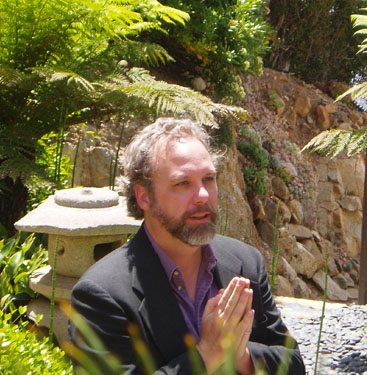
Yet as I’ve researched the prophecies, predictions, and possibilities associated with 2012, it seems that the only significant people offering up such end-of-days views are those seeking to mock them, shoot them down, or whip up hysteria. And nobody is feeling more frustration over this straw man media hype than author/researcher John Major Jenkins, who has written more about the significance of this date than anyone.
Before Jenkins would even let me interview him, he had me read the “Guide to 2012” that he prepared for those interested in writing about the subject, which he begins by reinforcing the accuracy of the 12/21/2012 date and clarifying its significance. “The doomsday assumption is not found in Maya tradition,” wrote Jenkins, who has researched the subject for 25 years and written nearly a dozen books on Mayan cosmology and beliefs. “The evidence indicates that Maya concept for cycle endings (such as 2012) is transformation and renewal.”
That idea – that we’re leaving an age focused on competition and consumption and entering an era of greater cooperation and connection – has been emphasized by everyone that I’ve interviewed on the concept. That includes New Age authors, a professor who studied Mayan folklore, political activists seeking a shift now to avoid real ecological and economic catastrophes later, and astrologers focused on the alignment of the earth, sun, and dark center of the Milky Way for the first time in 13,000 years (when that alignment occurred on the Summer Solstice, double that period for the last time it appeared this way on the longest night of the year, which some view as a more significant catalyst for change).
“I feel like the collective has been unable to receive the basic message I’ve been trying to give,” Jenkins told me, a hint of irritation in his voice as he recounted his painstaking research into Mayan artifacts and beliefs, the significance of which lies largely with their connection to the natural world that many modern people have lost. “That doesn’t seem to be what the collective wants or what the mainstream media want to say.”
Jenkins expresses almost equal frustration with those who seek to discredit or misrepresent his work as he does with those who have appropriated it for their own political or self-aggrandizing purposes. “We don’t know what’s going to happen,” he said. “We’ve been filtering 2012 through this kind of Nostradamus lens.”
Yet beyond his main point of simply understanding and honoring the Mayan people, Jenkins does hope that people use this moment as a prompt to create a transformation in global consciousness: “The challenge is for us to engage in and participate in the world in a more sustainable way and get past the domination mode.” And by “moment,” Jenkins and others emphasize that 12/21/2012 is the peak of moment lasting weeks, months, or years, depending on people’s perspectives.
Rob Brezsny, the San Rafael resident whose down-to-earth Free Will Astrology column has been printed in alt-weeklies throughout the country for decades, told us he respects Jenkins’ work and sympathizes with his current plight. “He gets it from both sides,” Brezsny said, noting how Jenkins gets attacked by both the skeptics and true believers.
Brenzsny is also a little skeptical about all the hype and focused hope surrounding 2012 – mostly because he thinks such magical thinking discounts the need for the long, hard work involved in either spiritual or political transformations – but he does believe in the importance of markers and rituals like those associated with the 12/21/2012 date.
“I think most people these days understand that how the world proceeds is through spectacles,” Brezsny told me. “The activists believe this may be a good moment, a good excuse to have a transformational ritual and to take advantage of this time. We need transformational rituals…Rituals have been a way to marshal our emotional and spiritual resources.”
Both Jenkins and Brezsny acknowledge the difficulty, even the danger, of relying too much on this moment to spark the sociopolitical renewal the world needs. “It’s a complex phenomenon as far as cultural change, and the recognition that things need to be done differently,” Jenkins said.
Yet Brezsny said that to achieve the kind of fundamental transformation that humans need to address issues like global warming and the mass extinctions now underway, that begins with a personal awakening and realization of our connection to one another and the planet. We need to set aside our egos and selfish desires, listen to one another, regain our connection to the natural world, and learn to work together. As Brezsny said, “For me, so much of what the revolution is about is how we treat each other moment to moment.”
These are just two of the dozens of sources that I’ve been interviewing about the 2012 predictions and possibilities, which I’ll take an in-depth look at from a variety of perspectives for the Guardian’s long Dec. 19 cover story (we’ll also include listings and other resources for how to spend that much-anticipated moment, such as the World Unity 2012 online hub).
Then I’ll be traveling through Mayan country in the Yucatan from Dec. 17-23, interviewing fellow pilgrims and wisdom keepers, visiting Tulum and other significant sites, and attending the Synthesis Festival in Chichen Itza, Mexico (and perhaps the Day Zero Festival in Playa del Carmen), so I hope you’ll follow along with my regular postings on this site. See you on the other side.
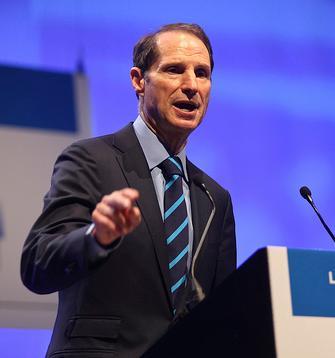
And the really scary thing is that Sen. Dianne Feinstein is pushing this, and only one member of the Senate Intelligence Committee, Ron Wyden (D-Oregon) voted against it — and if if weren’t for his single-handed moves to block the measure, it would probably already be law.
I think Len Downie has one of the best arguments against the measure:
The most troubling provision in the bill would prohibit all contact with the news media or “any person affiliated with the media” by any intelligence officials other than an agency’s director, deputy director or “specifically designated” public affairs officers — all of whom are political appointees. That could limit the flow of intelligence information to what political appointees decide to tell reporters, in “authorized leaks,” for political purposes. Reporters could be cut off from more knowledgeable and impartial career analysts, such as those who disclosed, in the run-up to the Iraq war, their doubts about Bush administration claims of Iraqi weapons of mass destruction. This prohibition “would make everyday reporting about everyday intelligence activities practically impossible,” Jack Goldsmith told me. “It would promote opportunistic spinning by the executive branch, which is already a problem.”
In other words, more official misinformation, more spinning that gets us into more wars — and now way to counter it.
San Francisco’s next great designer, sculptor, or filmmaker could possibly be in attendance this Sat/8 at the second annual San Francisco Youth Arts Summit taking place at SOMArts Cultural Center.
Maybe the next big things will be Maeve Fitzhoward and Brandy Ruedas, two youth artists who we met who will be showcasing – and selling, hey – their printmaking projects from Out of Site youth arts center, which will help host Saturday’s science-fair-meets-arts-gala. Fitzhoward and Ruedas also dish out advice to other artists through their positions on the Out of Site youth advisory board.
The Guardian also spoke with another Out of Site participant Mari Galicer, who’s been taking the digital media class this past semester. Galicer has learned how to create and manipulate film using programs like FinalCut Pro and Photoshop. Right now she’s working on a film with a group of peers about the city’s 11th district. If you stop by to see her, smile pretty – she’s putting together footage of this weeks’ Art Summit for an upcoming promotional video for Out of Site.
The summit will feature a total of 200 teenage artists from over 20 youth arts organizations. Attendees will also get to check out autuers from YBCA’s Young Artists at Work program, the Children’s Creativity Museum, and BAYCAT‘s base of budding Bayview media types.
While you’re perusing the various works of art you may want to indulge in some printmaking at the Out of Site bartering bank and ATM (Art That Matters) machine, or unleash your inner filmmaker by creating a stop-motion video at the mobile animation studio. If you’re a wordsmith, show off your literary skills at a poetry workshop with members of the WritersCorps, SF Mime Troupe, and TILT, the independent film center for young people.
UPDATED A group calling itself the Anti-Colonial Anti-Capitalist 19 (ACAC19), representing 19 demonstrators who were arrested Oct. 6 in downtown San Francisco during a Columbus Day protest that devolved into a violent clash with police officers, says the Twitter account information of two protesters has been subpoenaed by local police or prosecutors.
“They got a letter saying Twitter was going to turn over the files unless the defendants filed a motion to quash, which they’re going to do on Friday,” said Tony Marks-Block, a spokesperson for the group, which has started a blog and campaign of Twitter postings to publicize their plight.
The Guardian could not independently confirm the subpoenas, letter, or the identities of those targeted, which Marks-Block told us the defendants were unwilling to release yet because of legal concerns. [UPDATE 12/10: Marks-Block has shared redacted copies of the subpoenas, which were served on Twitter by the District Attorney’s Office on Nov. 13, with the Guardian. It claims the account information being sought “would tend to show there was a conspiracy or agreement to stage a riot, to unlawfully assembly, and to wear a disguise while partaking in criminal activities; thus, the records or lack thereof are material to the crimes charged.”]
Twitter spokesperson Jim Prosser told us, “We don’t comment on specific requests or an individual user.” And SFPD spokesperson Albie Esparza denied the group’s claim that the SFPD issued the subpoenas, telling us, “This matter was not handled by the SFPD.”
But given that the case is currently with the District Attorney’s Office, with a pretrial conference scheduled for Dept. 16 in Superior Court tomorrow (Fri/7) at 1:30pm, it’s likely that any subpoenas would have come from prosecutors rather than police. DA’s spokesperson Stephanie Ong Stillman told us, “We cannot go into specific details about this case because there is an ongoing investigation.”
Protesters in the group were initially charged with felony conspiracy and inciting to riot charges, which have since been scaled back to misdemeanors. And police officers who broke up the protest came under fire after video from the incident showed a violent crackdown by officers, which police sources said was prompted by block bloc protesters hurling bags of paint and other projectiles.
The group charged that the crackdown and invasive investigation were intended to quell efforts by these and other anarchists to challenge capitalism. “This invasion of privacy is part of a current wave of political repression on the West Coast,” member Marion Delgado said in the press release. “The federal Grand Jury investigations in the Pacific Northwest and this attempt to stop us from using social media are connected. We’re been attacking capitalism; they’re attacking back.”
In the cases that have been made public, San Francisco-based Twitter has generally resisted law enforcement efforts to subpoena information about users engaged in First Amendment-protected activities, starting with the US Department of Justice’s 2010 effort to gather information about Wikileaks and continuing after New York City law enforcement officials issued a subpoena to get account information from an Occupy Wall Street protesters arrested on the Brooklyn Bridge of Oct. 1, 2011, which Twitter has been fighting in court. In August of this year, Twitter complied with an NYPD subpoena for a user who threatened to massacre theater-goers.
As Delgrado said in the press release, “This is not the first time the online information network has been used as a resource for state repression of political activity. This is part of an ongoing effort to chill political movements in the Bay Area and beyond.”
If this week’s openings seem a little thin, it’s because all of the studios are hoping to cash in on the holiday moviegoing spirit, releasing their films next week (The Hobbit: An Unexpected Journey) or, more likely, the week after (Django Unchained, Les Misérables, This is 40, The Impossible, Jack Reacher, etc.) ‘Tis the season, and all that.
But that doesn’t mean you should ignore Friday’s releases (check out my feature on custody drama In the Family), or miss out on two rep programs Dennis Harvey covers in this week’s issue: retro porn-musical showcase “Honk If You’re Horny” at the Yerba Buena Center for the Arts, and a tribute to French comedian Pierre Étaix at the Smith Rafael Film Center.
Plus, more short takes below, including Harvey’s preview of on the Vortex Room‘s weekly (and timely!) apocalypse series. Because if the world ends December 21, you won’t get to see any of those Christmas releases anyway. Tres désolé, Hugh!
http://www.youtube.com/watch?v=Oqe-nNhp0kw
Generation PWhen Babylen Tatarsky (Vladimir Epifantsev) meets an old friend by chance, he’s plucked from penny-ante street level entrepeneurship into the much higher stakes of advertising in early 1990s Russia — a brave new world of post-Communist consumerist capitalism bent on outperforming the West’s, in which new corrupt orders replace the old ones with dizzying speed. His rise from humble copy writer to a “living god” controlling mass reality one commercial at a time is accompanied by a whole lot of recreational drug use, mafia-style violence, and references to Mesopotamian mythology. Adapted from Victor Pelevin’s 1999 novel (published in the US as Homo Zapiens), Victor Ginzburg’s film preserves its heady, gonzo mix of Pynchon, cyberpunk, and Putney Swope (1969) as a satirical conspiracy fantasia in which excess is both the style and the subject. No doubt at least half the in-jokes are lost on non-Russian audiences, but Generation P is so dense and hyperactive you’ll be entertained by its fabulist sociopolitical onslaught regardless. (1:52) (Dennis Harvey)
http://www.youtube.com/watch?v=f9gINU_VT0Q
North Sea Texas Growing up is never easy — especially when you know who you are and who you love from a tender young age, and live in a sleepy Belgian coastal hamlet in the early ’70s. Sexual freedom begins at home, as filmmaker Bavo Defurne’s debut feature opens on our beautiful little protagonist, Pim — a melancholy, shy, diligent soul who has a talent for drawing, a responsible nature, and a yen for ritual dress-up in lipstick and lace. He has an over-the-top role model: an accordion-playing, zaftig mother who has a rep as the village floozy. Left alone far too often as his mom parties at a bar named Texas, Pim takes refuge with kindly single-mom neighbor Marcella, her earnest daughter, and her sexy, motorcycle-loving son, Gino, who turns out to be just Pim’s speed. But this childhood idyll is under threat: Gino’s new girlfriend and a handsome new boarder at Pim’s house promise to change everything. Displaying a gentle, empathetic touch for his cast of mildly quirky characters and a genuine knack for conjuring those long, sensual days of youth, Defurne manages to shine a fresh, romantic light on a somewhat familiar bildungsroman, leaving a lingering taste of sea salt and sweat along with the feeling of walking in one young boy’s very specific shoes. (1:36) (Kimberly Chun)
“The Vortex Apocalypse, or How I Learned to Stop Worrying and Love Thursday Film Cult” With a respectful nod to the Mayans, the Vortex sees off 2012 with four weeks of movies depicting end-of-the-world-as-we-know-it scenarios. First up is an interesting duo from 1974. In Chosen Survivors, 11 strangers selected for their particular knowledge and skills are taken to an elaborate government bunker deep beneath the desert. They’re told they’re among several such groups in different secret locations chosen to preserve the human race in the immediate aftermath of total thermonuclear war. This is pretty hard to take, along with the notion that they’ll be spending at least the next five years in this very 1970s silver discotheque-spaceship environ. But soon the chosen few have an even more jarring crisis to deal with: the scientists who devised this sunken fortress neglected to note it is surrounded by caves filled with hungry vampire bats. There’s a very big twist at the one-hour point, but just when this rare theatrical feature by TV director Sutton Roley (The Man From U.N.C.L.E., Airwolf, etc.) should kick into high gear, it actually seems to slow down. Still, there are a couple very tense sequences, and some interesting character fillips. The co-feature is The Last Days of Planet Earth a.k.a. Prophecies of Nostradamus, a Japanese superproduction that aimed to top both the then-prominent disaster movie genre and the strain of eco-horror dominating much of 1970s fantasy cinema. In addition to the expected earthquakes, tsunamis, and such, Earth’s meltdown triggers such phenomena as pterodactyl-sized vampire bats (again!) and bird-eating flowers. Toshio Masuda’s special effects spectacular also features a really weird modern dance performance, and — in the editorially butchered, atrociously dubbed US release version — dialogue like “But by not allowing them to live, you’re … killing them!” Vortex Room. (Dennis Harvey)
http://www.youtube.com/watch?v=BHpsXGU0gTc
Waiting for Lightning The first voice you hear in Waiting for Lightning is pro skateboarder Danny Way’s mother: “I said, ‘Are you crazy? What do you think you’re doing?'” Can’t really blame her for worrying: Waiting for Lightning is a bio-doc following the fearless Way’s rise from littlest squirt at the Del Mar skate park to his determined quest to jump over the Great Wall of China in 2005. Growing up, he faced problems (his dad was killed in jail; his mom partied … a lot; his mentor died in a car crash; he suffered a broken neck after a surfing accident), but persevered to find his calling, pursuing what a peer calls “life-and-death stuntman shit.” Like all docs about skateboarding — a sport that depends so much on cameras standing by — there’s no shortage of action footage, and big names like Tony Hawk and Christian Hosoi drop by to heap praise on Way’s talents and work ethic. Lightning is aimed mostly at an audience already fond of watching skate footage; it lacks the artistic heft of 2001’s Dogtown and Z-Boys, or the unusually compelling narrative of 2003’s Stoked: The Rise and Fall of Gator, and the whole “Way is a golden god” theme gets a little tiresome. But it must be said: the Great Wall jump — a self-mythologizing publicity stunt that would do Evel Knievel proud — is rather spectacular. (1:32) (Cheryl Eddy)
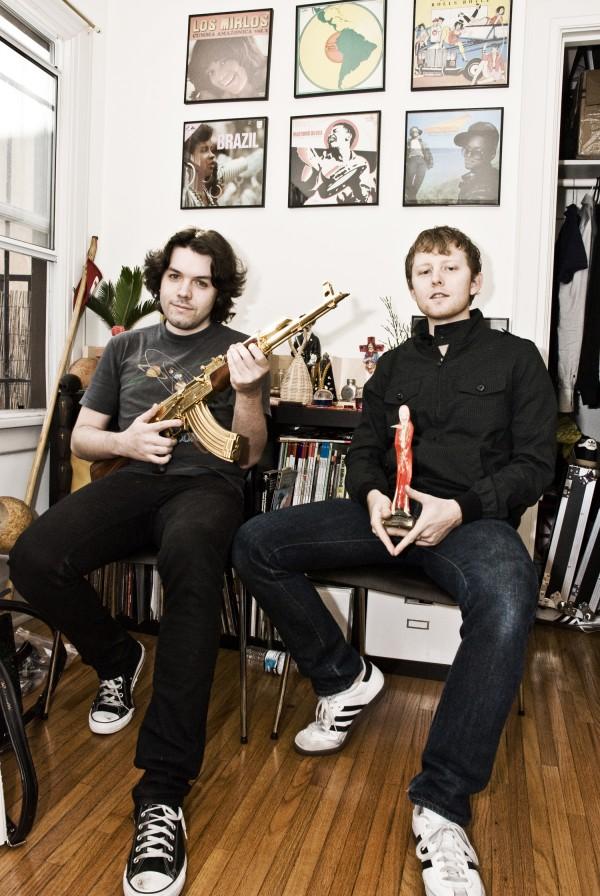
Five years ago the local nightlife scene was broadening its scope in a multitude of awe-inspiring musical directions, from contemporary Afrobeat and baile funk to experimental global indie. In that atmosphere of diverse ferment, a couple of super-talented kids, recently returned from Argentina, started Tormenta Tropical (along with label Bersa Discos), a monthly at the Elbo Room dedicated to the electronic spin many Latin American artists were putting on the traditional cumbia sound.
The sound centered around club Zizek in Buenos Aires and its ZZK label — but it also found a home, strangely enough, in the tropical-hungry underground clubs of Montreal. Tormenta Tropical provided a third leg of the nu-cumbia triangle, and has been known ever since as a go-to for cutting edge global bass and electro-Latin tracks. There were also a lot of glowing Virgin Marys on the DJ booth and a taco truck parked outside.
Even though the party has become known for its insane roster of guest performers — including Buraka Som Sistema, El Guincho, Toy Selectah, DJ Rupture, Maluca, L-Vis 1990 and Bok Bok, Matias Aguayo, Kingdom, Uproot Andy, South Rakkas Crew, Chancha Via Circuito, Sinden, Schlachthofbronx, Roska, Los Rakas, Very Be Careful, and my secret byfirend Ghislain Poirier — this party will feature Shawn and oro tag-teaming on the decks, giving us a full five years’ (and four hours’) worth of pure TT gold. I emailed oro11 and Shawn (who’s also one of the Bay’s best dance music writers) to give us a little update about it all.
SFBGIn the past five years, and in the wake of moombahton, Diplo, and everything else Latin- and tropical-electronic obsessed — how has the nu-cumbia scene changed, are you finding new directions for the music? Will there be a trap hybrid soon? (I AM KIND OF KIDDING.)
TORMENTA TROPICAL When we started the party, there was definitely a sort of bloggy buzz around cumbia and the idea of tropical bass. Between Diplo, Mad Decent, and the attention our friends from ZZK in Buenos Aires were getting, it did feel like some of the crowd was coming out to check out this “new” sound, just because it was fashionable. Over time, that has totally changed. Five years later, it doesn’t feel like Tormenta Tropical is a party for the “cool” kids at all. At this point, it’s just for people who love the music and the vibe, and most importantly, want to dance. Also, it’s totally mixed, which is great, especially when so much of San Francisco nightlife is hopelessly segregated.
As for the music, we’ve seen so many trends and sounds come and go over the past five years, and the SoundCloud generation of producers is totally prone to hopping on whatever new sound they come across, only to abandon it just as quickly. It’s led to a lot of dodgy music, along with artists who fleetingly pass through the scene, but that’s why it’s our job to find the good stuff. Thankfully, even though cumbia and other sounds may not be as trendy as they once were, we still come across great music all the time. If anything, the most interesting producers are the ones operating out of their bedrooms in a virtual vacuum, just creating weird hybrids of Latin music or dancehall or African rhythms or whatever else because they have a passion for it, not because they’re trying to get posted on a blog.
And it’s funny that you mention trap. As cringe-inducing as that world has become, this kid DJ Quality in Chicago has been sending us some amazing cumbia and bachata tunes with trap beats. You never know…
http://www.youtube.com/watch?v=oLfNTztmSXU
SFBGHow many people have you had to kick out due to over-cumbiaing?
TT Thankfully, the crowd at Tormenta Tropical has always been well-behaved. We’ve both been DJing and throwing parties for a long time, and it’s honestly hard to imagine another party where so many people are just dancing and having fun. There’s nothing pretentious about Tormenta Tropical, even when we’re playing totally obscure music or someone from South America is performing live on stage. That’s maybe the most amazing thing about Tormenta Tropical — the vast majority of the people don’t know the vast majority of the songs, but people still show up every month, pack the dancefloor, and get wild.
SFBGHow’s the label doing? Any news?
TT Bersa Discos is still happening, although it’s admittedly been a little while since we’ve had a release. At this point, we’re just trying to promote quality over quantity, and it’s not like there’s any profit in putting out limited-run vinyl releases, so we’re just waiting for the right tunes to come in. It also doesn’t help that some of our favorite artists have a tendency to never finish their tracks. [There will be cool Bersa Discos t-shirts for sale at the party.]
http://www.youtube.com/watch?v=PZOaSX1uT_A SFBGShould I wear booty shorts to the anniversary and shower myself with cheap champagne?
TT Marke, that sounds fine to us. There has never been dress code at Tormenta Tropical, and we’re not going to start one now. Back in 2008, Buraka Som Sistema played their very first San Francisco show at our party. In the middle of the set, this girl hopped on stage, took her shirt off, and kept right on dancing with her boobs out and her sunglasses on. No one seemed to mind.
TOP 11 TORMENTA TROPICAL TRACKS OF ALL TIME
Casa de Leones “No Te Veo” Chancha Via Circuito “Cumbia Malembe” DJ Dus “Cuando Lo Negro Sea Bello” DJ Negro “Sabor a Gaita Remix” DJ Panik “Pintura de Nieve” El Hijo de la Cumbia “La Mara Tomaza” Erick Rincon “Cumbia de Nuevo Leon” Los Rakas “Abrazame (Uproot Andy Remix)” Mr. Vegas “Certain Law (Murlo Remix)” Omega “Si Tú Queres, Tú No Queres (DJ K-Ber Extended Reggaeton Mix)” Sabo and Cassady “La Curura”
Is it really possible? Could California be on the path to repair the damage of Prop. 13? Would Jerry go along?
You wouldn’t think so — it’s been talked about for so long and so little has happened. But it’s an all new year in Sacramento, and the era of Republican dominancy-by-minority is over (in fact, the era when Republicans will have any role at all in state government is pretty much over), and already, some changes are in the works.
Assemblymember Tom Ammiano notes:
“Prop. 13 is not the untouchable third-rail anymore. It’s more like the bad guy with the mustache who has tied California to the rails with the fiscal train wreck coming.”
Ammiano is introducing legislation to change the way Prop. 13 is interpreted — to stop corporations for using loopholes to get around paying higher taxes after commercial property changes hands. But the polls now suggest the voters might be willing to do more — the Public Policy Institute suggests that a sizable majority of Californians would like to see a split-role measure approved. That alone would provide billions of dollars in revenue for public schools.
By a 57-36% margin, voters responded positively when asked this question: Under Proposition 13, residential and commercial property taxes are both strictly limited. What do you think about having commercial properties taxed according to their current market value? Do you favor or oppose this proposal? Democrats favor the idea 66-26% and independents like the prospect 58-36%. Even Republicans are evenly divided 47-48%. Voters aged 18-34, who represent the future, favor the idea 65-28% but the idea is also popular among the most reliable voters, those 55 and older, by 56-39%. Splitting the tax roll is a popular idea in every region of the state, among men and women equally and especially among Asians (65-26%) and Latinos (58-36%) but also among whites (56-38%).
Now: That’s before the commercial property industry and every major landowning corporation in the state pours about $50 million into a campaign to defeat any whisper of a split-roll. But we all know that big-money campaigns don’t always win in California — and right now, the guv is a pretty popular guy. So if he got behind a split-roll measure, and every progressive and labor group in the state (and most local elected officials) did, too, it would be at the very least a level playing field.
That, alone, would change California more than anything else the Legislature or the governor could do. It’s out there; it’s possible. I wouldn’t try in 2013, but 2014 is looking pretty good.
When I first saw Sacramento’s Death Grips — about a year or so ago at 1015 Folsom — they had to work especially hard. The room was half full and Stefan Burnett made up the difference, jumping down into the crowd and taunting it into action. The intervening time before a repeat performance was longer than expected (Death Grips suddenly canceled their last scheduled tour to finish their second album of the year) and at Slim’s Monday the crowd seemed prewound, eager to see the sold-out show, jockeying for position near the front, and admiring freshly purchased t-shirts showcasing the attention-baiting cover art for No Love Deep Web.
“This is a dick,” said one guy who looked older than he sounded. “It’s actually a dude’s dick. And I know whose it is.” For the uninitiated (or at work – don’t Google it), the cover is a photo of drummer Zach Hill’s erection, on which the title is scrawled with a Sharpie marker. The guy finished his observation by pointing to the part of the shaft nearest to the testicles and saying, “That’s like, the grossest part.”
Death Grips came on about two hours later, launching into No Love album opener “Come Up and Get Me,” and I didn’t last particularly long up front. Burnett released a lyrical tide of amped aggression, the feeling of being backed into a corner too many times, and the crowds answered in kind. A wave of people swelled across the pit and I ended up beneath half a dozen other people, desperately attempting to hold onto a shoe, a camera, and my default unflappable expression. But clearly I’d been flapped, and having spent a long time between sets staring at the vertical gashes on the wrists of the 15-year-old cutter in front of me, was fairly relieved to head to the back of the room as the band went into “Little Boy.”
Three albums in, I would still describe my interest in Death Grips’s brand of angst-ridden hybrid punk-rap as morbid curiosity. “Ruthless and free, it’s all suicide to me,” Stefan intoned on “Black Dice,” with the same sense of nihlism that elsewhere says “Fuck this world, fuck this body.” Since the only time I cut myself was slicing a grapefruit with a dull knife, the lyrical nihilism only goes so far. But that doesn’t diminish Death Grips as a live band. Burnett, Hill, and a backing production track layer feed into each other, forming a feedback loop of hype.
When “Guillotine” – the best song off their first album – came on, it was instantly recognizable from the clicking hi-hat that continually rides through the song. The programmed hi-hat is one of the band’s most constant features, freeing up Hill to go wild with complicated syncopated snare beats over his doubling kicks. His kit was little more than a three piece setup, and while the broken assortment of cymbals from his Hella days were noticeably absent, he bought the same furious intensity, rising out of his chair and smashing down onto the snare for full intensity.
The production track set the pace for the night. It was nonstop, peaking with “I’ve Seen Footage.” From the band’s other, slightly neglected album this year, The Money Store, the song showcases the playful variety that’s beneath the the Death Grips’ borderline single minded thematics. When the ’80s guitar riff, played out over a sped up “Push It” beat came on, a few people in the back ran forward, clearly wanting to get in on the action.
The end of the set snuck up on me. Burnett spoke for the first time outside of a song: “Thank you,” he said, and walked off. Maybe sensing that Death Grips isn’t much of an encore band — or just exhausted — the room began to file out. But one guy stood by the bar, holding a beer in is hand and noticeably not clapping. “That’s it?” he asked his friends, more of a statement than a question. “That was only a 30-minute set. That’s some bullshit.” A line from “Lock Your Doors” is stuck in my head: “I’ve got some shit to say, just for the fuck of it. Don’t even ask me.”
Opener: “Life is real, life is real,” Cities Aviv said over and over, pacing the stage as a DJ modulated some noise on a laptop, with just the hint of a beat behind the noise. As it went on, puzzled over what I was seeing and hearing, more like a performance art piece than what was billed (probably at this point more for convenience than anything else) as a hip-hop show.
Distracted, I hardly noticed building bass until I was struck by the Memphis performer dropping off the stage next to me, signaling a slam of the audience.“It’s not that I’m anywhere,” Cities Aviv continued to say in his set, toying with contradictions and asking, “Are you real or a simulation?” Could have asked him the same thing.
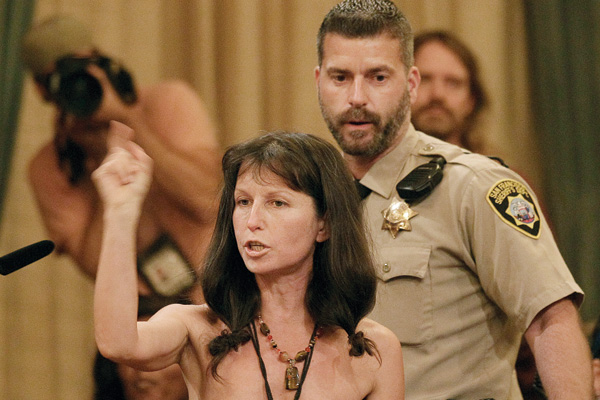
This week, the San Francisco Board of Supervisors passed a ban on public nudity on a party line vote. By “party line,” I mean the Supes voting against nudity are the ones who never go to parties with lines of coke or conga lines. I’m not saying every single one of the progressive supervisors could be found in the naked suntan lotion massage yurt at Burning Man, just that it’s conceivable.
The ban was proposed by District 8 Supervisor Scott Wiener, and supported by the “moderates,” who are Very Serious about sensible governance. First of all, anyone who ever made fun of Supervisor Eric Mar’s happy meal ban owes him an apology. Second, obviously all other problems in the City have been solved, which has freed up the Supes to kowtow to the whims of the gayeoisie.
People are worried about the effects of aggressive nudity on children, but fortunately we’ve gentrified all the families out of the City. Now we’ll have to export nudists to Solano County if we want kids subjected to them. At any rate, during a nippy San Francisco winter it’s vitally important for children to learn about shrinkage.
Nudity doesn’t necessarily harm children. I grew up in San Francisco. In the ’70s. Naked people were everywhere, bare and unshaven. I didn’t see a fully-clothed adult until I was nine. I didn’t see nakedness as sexual, so much as simply covered in naked. Partly because then, as now, the specific naked people were not easy on the eyes. Not to promote normative body images, but if Christina Hendricks and Ryan Gosling showed up naked, the ensuing celebration by all sexualities would make the Giants Victory Parade look like a tupperware party.
Worst of all, nudity was banned in the Castro. If there’s one neighborhood that arguably draws its spirit from the brandishing of genitalia, it’s the Castro. Harvey Milk did not march so his grandchildren could sequester the penis. It’s almost as if the City wanted to abolish hippies sitting on the sidewalk in the Haight-Ashbury. (Damn you, sit/lie.)
If we’re going to ban sitting on the sidewalk in the Haight and nudity in the Castro, here are more options for possible legislation to achieve the goal of draining our neighborhoods of their distinguishing features.
We should also ban:
Bernal Heights—dykes with dogs.
Mission—fixed-gear bicycles, ironic mustaches, and salvadoreños.
Marina—entitlement.
Richmond—Irish pubs with actual Irish people.
Noe Valley—strollers and handmade baby food.
Western Addition—Black people. Whoops. Too late.
Comedian Nato Green (writer for “Totally Biased with W. Kamau Bell” on FX) headlines the San Francisco Punchline December 19 and 20. Tweet him @natogreen
Why should I be surprised? Assemblymember Tom Ammiano tried to introduce a bill providing some basic human rights for homeless people, and the Chron lashes out with a nasty editorial that misses the entire point.
Ammiano’s AB 5 was crafted with the help of homeless advocacy groups, and it’s really not that radical a proposal. It would simply guarantee some basic human rights to people who don’t have a permanent place to live. It would, for example, forbid employment discrimination against homeless people in employment, public services and voting. It would enshrine in law the right of all people to use public space, including as a place to rest, and would establish that 24-hour access to bathrooms and showers is a basic human right.It would protect the rights of homeless children to attend school. It would guarantee homeless people cited under laws that could lead to criminal sanctions the right to a lawyer.
It would also bar local authorities from forcing people into shelters or other programs without their consent and would guarantee equal treatment from law-enforcement.
Oh, and it would prevent local laws that bar homeless people from occupying vehicles that are legally parked, and precent authorities from taking away the personal property of homeless people.
But to read the Chron’s editorial, you’d think the world was coming to an end:
A bill that asserts an individual’s right to urinate, sleep and panhandle wherever he wants is neither compassionate nor wise. To pass it would be to surrender our streets and parks to misery, chaos and squalor.
Misery, chaos and squalor? Whoa. As if the lives of homeless people are not already, in many cases, marked by those characteristics.
And really, the bill doesn’t talk about the right to “urinate wherever he wants;” it mandates that cities provide accessible bathroom facilities so people don’t have to urinate on the streets. “It’s not a good idea or even healthy to have a law that says you can piss or shit wherever you want,” Pauld Boden, director of the Western Regional Advocacy Project, told me. “So having 24-hour access to hygiene centers is a way better alternative.”
But of course, Boden said, opponents of the law “are going to try to make it all about urination and defecation. It’s a way to dehumanize people.”
I don’t understand what’s wrong with asserting that homeless people have the same human rights as the rest of us. If this undermines bad laws like sit-lie and care not cash, so be it; in a rich state, we can and should do better. (But even the Chron’s own reporter says the bill won’t undermine SF’s sit-lie law).
Ammiano’s moving forward with the bill, expecting amendments and open to discussion. But as far as the Chron’s editorial goes, he told me” “It reminds me of Robin Williams’ comment about a bad review he got ” ‘I was going to have a chicken shit on it, but that would be redundant.;”
UPDATE: If you want to see a comparison of the current anti-homeless laws to the “ugly laws,” the Jim Crow laws and a lot of other stuff we all now agree was wrong, check it out here (pdf)
At the end of the day Wednesday, the doors were open, the center was continuing business as usual – and the office of Sheriff Ross Mirkarimi, who is charged with carrying out the eviction, was telling reporters that Dec. 5 was never a firm deadline.
Kathy Gorwood, Mirkarimi’s chief of staff, told us that the law gives tenants five days from the service of an eviction notice before any law-enforcement action can take place. “But that’s not a legal mandate that we evict on the sixth day,” she said.
The notice was served Nov. 30.
Gorwood said all evictions are planned with officer safety, tenant hardships and staff scheduling in mind – and on Dec. 5, the sheriff wasn’t ready to move.
“We surveyed the property, the sheriff personally surveyed the property,” she said. “We can’t say, and we don’t say, when an eviction will take place.”
Gorwood said Mirkarimi wasn’t defying the law or refusing to carry out the eviction. But since there are likely to be protests, possibly civil disobedience, the deputies need to be prepared and the schedule set carefully.
Mirkarimi has a history of supporting HANC. As a former supervisor of District 5, which includes the Haight, he voted to urge SF Rec and Park to and find a solution to keep the center in Golden Gate Park. The vote was nonbinding. He clearly wants to avoid a nasty confrontation, and if he can find a way to work out a voluntary move-out, it’s likely he’ll take the time to negotiate it.
For the past ten years, The Department of Recreation and Parks has aggressively sought to oust HANC. Finally, this fall, Rec-Park filed an eviction through the City Attorney’s Office Interestingly, the “Notice to Vacate” served on the center was signed off by the City Attorney’s Office on September 14, 2012. However, the actual eviction date that SF Rec and Park requested was December 5, 2012.
Why wait three months to evict a center that Rec-Park has been trying to get rid of for a decade?
Jack Fong, a spokesperson for the City Attorney’s office, declined to say if there were any procedural or administrative reasons that an eviction notice given to the sheriff in September would take three months to go through.
We called Phil Ginsburg, director of Rec and Parks, and Sarah Ballard, its spokesperson, to ask about the time disparity. We did not hear back from them before press time.
But you don’t need to be a genius to figure it out — just look at what was happening in November. Ginsburg was pushing Proposition B, which secured $195 million in bonds to shore up neglected playgrounds and open spaces in San Francisco’s parks. The measure needed a two-thirds vote – and Rec-Park was nervous about any bad publicity.
The measure passed by a landslide. Butousting HANC, eliminating a revenue stream for the poor, the homeless, and working class people, would have been bad publicity leading up the November election.
Regina Dick-Endrizzi, the executive director of the Small Business Commission, told us that one business in the SOMA, which she declined to name, faced three months worth of the $100-a- day charge for not buying back recyclables from the state while trying to navigate applying for an exemption. Even after being granted the exemption, that’s a $9,000 charge, which for a small liquor store or grocer is not chump change.
There’s a precedent for a San Francisco sheriff refusing to carry out an eviction notice. Sheriff Richard Hongisto, who later served on the board of supervisors for three terms, famously refused to evict the Filipino and Chinese elderly tenants of the International Hotel in 1976. The scandal was even the subject of a documentary, “The Fall of the I-Hotel.
The International Hotel was sold to developers who were going to cast the elderly tenants out onto the street. News outlets as far flung as the New York and LA times wrote about the mass eviction, and many consider it a black eye on San Francisco to this day.
But this is a different situation: Mirkarimi hasn’t refused to follow the law, and in fact, Gorwood said that he has every intention of carrying out the eviction. The law, Mark Nicco, assistant counsel to the sheriff, told us, only says that an eviction has to happen in a timely manner – and there’s no definition of what that might be.
So if Ginsburg or the mayor think Mirkarimi is dragging his feet, the only recourse would be for Rec-Park to go to court and seek a judge’s order compelling the sheriff to evict the center in a stated period of time. All of which could take weeks.
So for the moment, HANC is still in business, Mirkarimi is avoiding an ugly eviction scene – and there’s still a chance for Rec-Park to come to its senses. But we’re not taking bets.
The Media Alliance, a local media watchdog group leading the media consolidation battles, says in an SOS message that the Federal Communications Commission is once again trying to jam through new rules during the Christmas rush to facilitate more media consolidation. The FCC, the Alliance points out, “touts localism, competition and diversity as the hallmarks of a healthy media ecosystem. This rule change guts all three.” Here is the Alliance’s action alert (b3):
New proposed rules relax media cross-ownership rules (again) paving the way for more media concentration and polishing the path for the Rupert Murdochs of the world to buy up everything that’s left.
In the now-familiar holiday season hurry-up employed by federal agencies when they want to sneak something through before the public has a chance to get outraged about it, FCC commissioner Julius Genachowski has proposed a relaxation of the media cross-ownership rules remarkably similar to Kevin Martin’s try at increasing media consolidation several years ago.
What can you do?
Tell the Democratic commissioners they need to fight this and that as a member of the public, you have their back if they publicly oppose the Christmas rush to media consolidation today – December 4th National Day of Action:
And then send a tweet @fcc no xmas sneak #mediajustice
Background:
The relaxation permits the same corporation to own print, radio and television outlets in the top 20 communication markets in the US, condemning urban populations to canned and repetitive news and information, especially those who depend heavily on free over-the-air broadcasts.
The FCC is trying to jam these rules through during the holiday siesta to avoid the outpouring of public protest engendered during the last attempt at relaxing the rules, when the FCC received the largest quantity of public comments in their history and eventually lost in court and rescinded the attempted rule change.
The FCC was ordered to do research into impact on the diversity of media ownership, particularly by women and minorities. Despite completing a comprehensive whose initial results indicate little to no improvement in increasing ownership diversity and not completing a full impact report on the mounds of ownership data received in the quadrennial report, the FCC seems to be determined to move ahead with the rule change in an evidence-free zone. The FCC touts localism, competition and diversity as the hallmarks of a healthy media ecosystem. This rule change guts all three.
Links:
Politifact ranks Obama’s promise to foster media diversity as a broken promise:
Three lawsuits have been filed against the head of the Housing Authority. Some 30 staffers have complained about Alvarez to senior mayoral staffers. The HA even hired former City Attorney Louise Renne to investigate problems with Alvarez.
This is the kind of thing that used to happen under Willie Brown — the mayor would hire cronies for top dollar, and defend them and brush aside charges of misbehavior. And I hate to see the same style happening under Lee.
Clearly, the two are pals, and I understand the urge to stand by your friends in public life, and at this point, we just have allegations — maybe none of it is true, and maybe Renne will find that everything is just grand over at the Housing Authority. But the mayor ought to at least express concern.
And if this was all really happening without his knowledge, then his staff isn’t doing a very good job of keeping him informed.
The left isn’t winning all that much these days, but Sup. David Campos had a huge victory with the passage of a plan to offer free Muni to some 40,000 low-income kids. The challenges aren’t over — it’s still not clear, for example, how the actual clipper cards will be distributed — but this is a big step forward.
And it didn’t come easily. Campos worked with a coalition of low-income advocates that refused to give up despite two years of setbacks.
“We were relentless, even when we lost,” Campos told me.
It’s no secret that I’ve supported this plan all along (I actually like free Muni for all youth). And I think we’ll get there. In the meantime, for low-income middle-school and high-school kids, most of whom don’t get school bus rides any more, this is a big deal. The price of taking Muni to school ($1 a day for youth fares) is a significant amount of money, particularly for families with several kids who are struggling to make rent and eat. Yeah, there are cheaper youth passes — but you have to go to a Muni office in the middle of the day and bring proof of your kid’s age and it’s a pain in the ass for working parents.
So now it’s up to the MTA to figure out how to make it easy for families, some of them with limited English proficiency and virtually no time to wait in lines at Muni offices, to take advantage of the program. “We’re going to spend a lot of time doing outreach,” Campos said. “We’re working with Muni and with community-based organizations. We’re going to make this as easy as possible.”
The obvious solution, in my mind, is to distribute the passes at public schools. The school district already has income information on the kids, through the free and reduced-price lunch program; in theory, all anyone would have to do is take that list, adjust it a bit (because the eligibility for lunches and Muni passes is a little different) and hand out the passes at middle-school and high-school campuses. (You’d miss low-income kids who go to parochial schools, and a few others, but SFUSD wouldn’t be the only provider, just the first.)
And it’s education-related, since most of these kids take Muni to and from school — or should.
Problem is, there are legal rules about the use of the lunch data (although there must be a way to get around it) and SFUSD doesn’t seem terribly interested. (More work, more hassles for an already overworked and underfunded district.) But you could station one Muni worker at each school to hand out the passes, right? Or Muni could use some of the outreach money to pay for the SFUSD staff time.
At any rate, those are details. The main point is that Campos and his allies managed to beat back the opposition and make this actually happen. Good job.
(Oh, and the same day, Sup. Jane Kim managed to get $1.7 million for the schools to help with graduation rates — without raiding the Rainy Day Fund. Two progressive wins and it’s only the 5th of December.)
Since the late 1990s, Xara Thustra’s art has been inseparable from resistance and community in San Francisco, providing many of the signature visual images of the anti-displacement and anti-war struggles of the era. His work first appeared as graffiti in the streets of the city during the height of the first dot-com boom and soon grew to include artistic collaboration with and in support of neighborhood organizations, like the Mission Anti-Displacement Coalition and the Coalition on Homelessness.
As his work evolved over time from agitprop street art into elaborate performance and filmmaking, Xara has collaborated with countless others on many now-legendary art events like the Anti-Capitalist Fashion Show, the 949 Market Squat, and the band Manhater, while contributing stunning murals to Clarion Alley Mural Project and the Mission Neighborhood Health Center (with Kyle Ranson). Xara appeared in the 2002 Bay Area Now show at Yerba Buena Center for the Arts, but has since resisted overtures from the art world, and preferred to instead make work in spaces like Adobe Books, Needles and Pens, and, still, in the streets.
Thu/6 at a presentation of new work at Needles and Pens, Xara and friends will celebrate the release of the self-published, 500-page book, Friendship Between Artists is an Equation of Love and Survival. It’s an epic photo documentation of the past 15 years of his work and collaborations in San Francisco. Note: this interview took place between Erick Lyle (in Brooklyn) and Xara Thustra (in the Redstone Building) over Skype …
San Francisco Bay Guardian So, let’s talk about the book. I’ve read it twice this week — two four-hour sessions, straight through. Its pretty heavy shit.
Xara Thustra It’s deep. The book is deep.
SFBG As long as we’ve known each other, you’ve always been pretty quick to move on to the next thing. There’s a lot of self-reinvention in your work, not a lot of looking backward. I’m curious why it was then that you wanted to make this retrospective book now and bring all this material together from the past 15 years?
XT Well, it really doesn’t have much to do with the public. I had a pile of documentation that I had collected by throwing things that were mine into a box. I don’t know how much I really want to say about it in an article but the reality of it was that I was evicted about five times, and I kept moving and just throwing stuff in a box, and the box kept coming with me. That’s the stuff that didn’t get thrown out, those pictures.
Mostly, for me, though, it was that if I didn’t make a book out of that stuff then no one would know I did it, because, like you said, I keep moving on.
SFBG Was this the stuff you most wanted to intentionally save, or just what happened to be left over when you had a chance to look at it all?
XT This was just stuff that was saved, period. A lot of stuff was not saved. It’s interesting because [the book] seems like the whole ball of wax, but it really just is the cherries of individual moments — some of the nicer stuff to look at during those happenings. But, really, I’m not very focused on the book right now. I’m working on art show for the book release and I’m more interested in the art show right now.
SFBG OK. What is the art show at Needles and Pens about, then? How does that material for the book release show relate to the book?
XT The book is giving me footing to stand on to continue to speak to the public. Hopefully it creates a platform to show people that I am conscientious about my work and that it’s a daily practice. The residue of that daily practice is in visual form.
For Needles and Pens, I’m working on something about the Valencia Street corridor and its relationship to death from poverty in the streets. That’s the art show I’m working on.
SFBG That’s mostly what I think about these days when I am on Valencia Street. I wonder how you’re approaching that.
XT Well, jeez! [Laughs.] I don’t want to give the show away! That is the backstory of the show, and I just blurted that out. I don’t normally provide even that much information. But I’ll say their relationship will be seen through sugar coating and pretty colors [laughs].
SFBG It seems to me that now more than ever, public streets in SF really are a battleground. That’s something you and I have related to for the last 15 years in what we do. This book starts with pictures of the streets, like establishing shots in a movie, and the narrative that follows threads in and out of the streets. The things you see in the interiors are always situated specifically in the context of this city and, particularly, its streets: homeless guys and cops harassing them and graffiti and protests.
But the streets themselves feel a lot different to me now than when you started out doing work in the streets. Art in the streets is different, too. I wonder what your perspective is on how the streets feel now?
XT I would say I am not necessarily relating to the streets but more like being the streets. [Repeats like a mantra.] Being the streets, being the streets, being the streets … not that you were saying anything much contradictory to that. But, I am only looking at reality and the streets, how they are right in front of me in the present and not in relationship to anything.
Every street in SF is pretty different in a lot of ways. There are so many different realities in SF. But if we want to talk about the bougie rich folks, walking all over people — that’s happening on a lot of streets. The number of streets where that is happening has risen, and the number of streets where there’s good culture … Well, I can’t just say “good culture.” But as for culture that is deeply related to art, and the soul, and history, and kids, and love, and all that shit — yeah, those streets are dwindling.
I have to give it to the people who are able to utilize the Valencia corridor for their eating places. They are healthy, good-looking people. You can’t argue that! They’ve got the teeth and all that shit. They look great! [Laughs.] So you can’t really say nothing bad about them.
SFBG Yeah, but I guess I’m thinking about how it feels different to even put art in the streets now than it did during the first dot-com boom.
XT The demographics of the audience have switched so much to just being privileged people, period. When you are showing stuff to privileged people, they already have so much stuff to look at, so much stuff to choose from and their relationship to it is not the give and take it could be. It’s seen through a commercial lens.
Here’s one way to explain it: if I write the words “None Profit” on a wall in SF, it could easily be seen to be about folks here getting rich and getting money but still not profiting in some way. You’d be making a commentary. Write “None Profit” on the wall in St. Louis or Philadelphia and people walk by and feel like, “Yeah, no shit. Why you shitting on me?” The same words mean different things to different audiences.
SFBG The book features photos of performance in the streets, too. And in empty lots, in squatted abandoned buildings. Or smashed into a corner at Adobe Books — even crammed into a hallway in a house. In some ways, the book’s narrative is to me almost about this search for space in the city. It’s not necessarily a literal search for space, because we could, I suppose, be doing events any night of the week in a bar or something like that.
Even in the Bay Area, there is still space, per se. But it’s a search for a freer space. A non-commodified, less controlled space where perhaps we could be our true, authentic selves. What then is the relationship to this search for space in your work?
XT What’s my relationship to space? I could go for a lot of space! [Laughs.] Space that is lawless and fun and freedom-oriented and sustainable and nice! It’s just such an enormous issue. You and I ran in squats together to try to envision what we though would bring about community. Why did we have to squat a building to get that? It’s just ridiculous.
SFBG I think it’s been maybe 10 years since we sat down and did an interview like this together. At that time it seemed like you were moving past graffiti being your main focus. You were about to appear in the Yerba Buena Now show at Yerba Buena Center for the Arts, but you were not excited about that either. You weren’t feeling like the museum was a real place to make art, and were wondering what for you is a good place for art.
Again, there is the search for a specific type of space. How are you feeling about that search for the right spaces to make art in today?
XT Well, there’s a lot in there, but first of all, graffiti has never NOT been my focus. It’s actually unfortunate how ridiculous of a main focus it has been for me. It’s like the only thing there is — being able to publicly express yourself freely. And I’m not saying that’s all that graffiti is. Sure, you’re taking advantage of people and being a vandal a little, too. But it also relates to what you are saying about space, because graffiti is about space.
SFBGDo you still get offers from museums or more traditional art world venues?
XT Not much right now. I’m fixing to try to get more offers by pushing in that community a little bit. If anybody wants to know, its basically true that if people call you and you don’t answer, and then people call and you tell them to go fuck themselves or whatever, and then they stop calling. So, yeah, I’m not getting too many offers!
SFBG I’m wondering, if you’re more interested now than you once were in doing shows in those environments, is it because there are different things you feel you can say there than, say, in the streets? What would you be looking to do?
XT I’m just trying to step up. In terms and space and the artwork I am interested in doing, I’ll take any stage I can get right now. Right now, I have this show at Needles and Pens and I ask myself first what is interesting to say in that space, and that’s what I always ask myself.
SFBG Where did the title of the book [Friendship Between Artists is an Equation of Love and Survival] come from?
XT I went and showed the book to my friend, Peter Plate, who is a writer and that’s the title he came up with. It’s a romantic title. There are a lot of ways to relate to it but its important to say that a lot of people’s energy and hard work went into the book. Other people’s photographs, too. The majority of the book, I have something to do with it in some manner, but people have been relating to it in their own personal ways and that’s nice.
SFBG And there are people in there that have since died. It’s a lot.
XT Yeah, that’s true. There is a storyline to it in that way, too.
SFBGOne thing I got out of it, was that it seemed that as the narrative of the book progresses, the art moves away from being in support of protest or being literally protest art, and moves into efforts to instead embody a different, freer world.
XT Yeah, I think you’ve said it really well. It’s not a finished conclusion of mine, or anything. But just in terms of time and energy, if I’m going to spend my time and energy fucking with people for change, I think that’s the way to go. But trying to embody freedom and learn how to be healthy and enjoy your mental state on a daily basis … that still goes hand in hand with trying to support organizations and people that are doing the logistical paperwork to fight the system.
SFBG The book’s title, the riff on love and survival, makes me think about how you’ve always been somewhat known for serving meals at your shows. When we were having that talk about Yerba Buena, I remember you were upset then because you wanted to do a big feeding of free food in the museum and they were not interested in allowing that at all. What is the importance of free food in your work?
XT [Laughs.] Uh, it’s actually, like, this cultural thing that people have been doing for years that has been lost on whatever the culture is right now. If you really want people to come and have a good time, there should be dinner there. It creates a vibe, where everybody is eating food and they’re eating the same food and they have different conversation relating to that. It creates warmth.
These days in this city that has shifted, as well, because free food is not really a necessity for people who are coming out to art shows or going to parties or whatever. But it still exists in my work.
SFBG Speaking of the changing demographics in the streets and at art shows, then, let’s talk about Clarion Alley. The Clarion Alley Mural Project just had its 20th anniversary. I think many of us have been thinking about the weird way that murals we have done there as a community to celebrate our lives and community and resistance have ironically ended up being so well-loved and such an attraction to the very people who are moving here to displace us.
It’s something people are starting to think about but it seems like no one really knows what to do about it. Someone told me you suggested that we actually just black out the murals in the alley in protest. I wanted to ask you about that.
XT Yeah, for me, I say buff it. Period. Just drop it. It’s really sad, it’s a terrible way to look at it, and it would be a lot to walk away from, to walk away from those murals. But who knows? It wouldn’t be the worst idea to say something like that, to say that as a group and as a community, we should buff that shit and split and move somewhere else. If we’re not having a conversation about it, then the conversation is just being run by other people, right?
SFBG Yeah. I can see that. It seems nihilistic to me to just self-erase like that, though. On the other hand, the murals themselves have become almost strictly commemorative.
XT Yeah, what happened at the anniversary party wasn’t a celebration of a community that lives here at all. This year it was part of a funeral. People come there to see their folks and relate to the dead. That’s no big deal. We’re all good hard-living people and we’ve moved on and we’re doing interesting shit. But it might not be right here in this neighborhood or within the city walls even right now. It’s in the cracks and on the edges for now. But we’ll see. Personally, I’m looking for Ditter to come out!
SFBG Ditter? What’s that?
XT Ditter! The thing that’s going to replace Twitter! Because you know something’s going to come, right? They think it won’t, but we saw a lot of suckers straight up sad last time this shit crashed. [Laughs.] The next time the crash comes, I just hope it’s not too hard, because all these healthy, good-looking people are basically just MEAT, walking around! Meat! Better hope that economy stays up, y’all!
SFBG [Laughs.] Oh shit! The free food at Xara’s show … “IT’S PEOPLE!” Well, here’s to Ditter … and whatever is next!
Check out Erick Lyle’s review of Friendship Between Artistshere.
XARA THUSTRA BOOK RELEASE AND SOLO SHOW Thu/6, 7-9pm, free Needles and Pens 3252 16th St., SF www.needles-pens.com
There are two moments from my 2011 pilgrimage that duel in my mind for the title of quintessential Miami Art Basel. One, when that couple at the SCOPE Festival was examining the multi-thousand-dollar rhinestone hamburger for purchase. Two, Pharrell climbing onstage before Yelawolf’s set at the much-hyped “party of the year” Basel Castle and telling us that “this week, it’s all about the artists. But also, it’s all about… you guys.”
Someone smart — was it Erick Lyle? — once told me that for an artist, visiting the premier US art festival (which centers around the Art Basel Miami fair proper at the Miami Beach Convention Center, a happening imported of course, from Basel, Switzerland) is akin to seeing one’s parents having sex. Money is thick in the air, because that’s how art survives in capitalistic society. Events like Art Basel are the reason we can have professional artists — even if the action right in front of you can still make indie types feel creepy-crawly.
But Guardian sex writer Kelly Lovemonster and I are nonetheless headed down on Thursday. Because Basel week, for all its wacky, is an artistic convergence like nothing else. Miami becomes the place for superb (and superbly-funded, but more on that later) murals, rhinestone hamburgers, Pharrell cameos, women living in glass boxes with pigs, South Beach promenades that culminate in surprise pool parties, and if you’re lucky like we were last year, Lance Bass sightings.
Of course, if you’re reading something I’ve written, you’re probably more interested in the younger bucks, like the New Art Dealers Association (NADA), where Mission gallery Ratio 3 is showcasing some Barry McGee, Mitzi Pederson, and more. Also at NADA will be the rad Silverman Gallery. We’re not gonna lie, we’re kind of hyped for Untitled, the too-cool beach expo that already has stirred up a rivalry with NADA, which encouraged its artists not to exhibit at both fairs. Ink Miami, a relatively low-key affair that focuses on paper-based art, Berkeley’s Paulson Bott Press will exhibit intaglio prints from Clare Rojas and the luminous Isca Greenfield-Sanders:
Across the causeway, in the Wynwood/Design District/Midtown neighborhoods, will be most of the younger (read: cheaper) scene. White Walls gallery will once again be at SCOPE. I’m particularly stoked to check out SF artist Ferris Plock’s pieces, since I missed his solo show there earlier this year.
SCOPE will also host 11 of Scott Hove‘s freak cakes, which you need to see to believe:
WHAT ELSE? STREET ART?
Wynwood bowled me over last year with its halluciongenic wall-to-wall of fresh murals like, everywhere (I hear the competition this year is fiiiierce for vertical space.) The progenitor of this scene, developer and gentrifier par excellence Tony Goldman, died this year (I snuck in an interview before he passed), which is bound to have some repercussions on street art funding in the years to come. Shepard Fairey is doing an R.I.P. wall for Goldman at the “Come and Dream” memorial being painted for him at 25th Street and 2nd Avenue in Wynwood, so…
There’s noone galleries from California on the line-up, but the seventh annual Fountain Art Fair should also be really good if you’re into younger artists — they’ve got a whole “Breeder Lounge” full of up-and-comers, and one of the largest street artist lineups of the week.
Last year’s Basel street art darling RETNA painted the facade for this year’s new Louis Vuitton Design District store… Another street art oddity will be the six-and-a-half tons of Banksy walls that have been removed from their original settings and plunked down at the ironically-named Context, the first year of 23-year-old Miami Art Fair’s event-within-an-event. There’s a rumor that some of the walls came outta Bethlehem. We’ll investigate for you.
Also at Miami Art Fair, Peter Anton’s amusement park ride “Sugar and Gomorrah,” which plays on themes evident from the title (Peep a slideshow of that toothache here.)
And obviously, keep your eyes peeled for guerrila shows. With so many art fans/warm bodies in one place, there’s bound to be some enterprising, low budget sorts.
Here’s a nice map/comprehensive list of all eight million art fairs. Huffington Post dials it back to 18 high school stereotypes, if you’re more comfortable with boxes (or just wanna know about the frat boys-in-a-box that SCOPE caged a few years ago.)
ANYONE ELSE?
Well, yeah. Bay babies boychild and Dia Dear (freakdrag ingenues of Marke B.’s Super Ego nightlife column this week on the new club performance art) will bring the weird tonight, Wed/5, to Chez Deep’s Scylla party. On Sat/8, Dear’s at the Deauville Beach Resort for the free NADA pool party with Alexis Blair Penney a host of other hotties, and Child takes the stage at Frankie Sharp’s Westgay NYC-in-MIA pool party at the Shore Club. Scene queen Juanita More will be sweeping grandly past the Art Deco hotels, too.
Also, I know where Pharrell will be in advance for more platitudes about not being an actual artist! He’s at the opening party for the clothing store Moncler in Bar Harbour Shops (9700 Collins, Miami Beach) at 6pm on Sat/8. Perhaps you remember Moncler as the clothing line that released jackets designed by Mr. Williams using bionic thread at Art Basel Miami 2009. Pharrell will be signing copies of his new book whose title has his own name in it, Pharrell: Places and Spaces I’ve Been.
Other crazies: Tiesto on Sat/8 and a big-ass, hella expensive hip-hop show that’ll plunk Rick Ross, Wale, Machine Gun Kelly, and others in the same building as Art Basel Miami (ha!) The big UR1 Music Festival that was supposed to be headlined by Kanye got canceled due to “inclement weather conditions” and lingering effects of “Hurricane Sandy,” which hasn’t seemed to have affected anything else this week.
If your dogs are barking from too much gallery strut, I’ve got the perfect spot to chill. Art Basel Miami will be projecting art films onto the Frank Gehry-designed New World Center’s 7,000 square foot outdoor wall — flicks like Ryan McGinley’s lovely video for Sigur Ros and Marie Bovo’s documentation of a watermelon rolling down the streets of Seoul.
CAN I CRASH WITH YOU?
Nope! But due to economic vagaries, I just booked my Airbnb room yesterday ($100/night for a room in a Design District apartment fulla younger types), so I’m pretty sure you can — ahem — make your own arrangements.
I dunno. But for a little perspective on what all this glitter and glitz means in terms of art art, I recommend peeping this disemboweling piece (which I’m recycling from first-timer-this-year Baseler and indie Mission curator Tyler Hanson’s Facebook page) before boarding the flight to MIA.
Follow us on Twitter for of-the-moment favorite walls, outfits, and party mutterings: @caitlindonohue <3 @gurlwhereyouat. And check back with Pixel Vision for images, interviews, musings.
“Funny can mean different things to different people.” Perhaps no tagline better describes the fluctuations of sketch comedy than that of veteran gagsters Killing My Lobster. And they should know, since they’ve been dishing up their irreverent brand of short-attention span comedy since 1997. Even if, as a performance format, sketch comedy isn’t really your thing, the variables built into its basic equation — rotating writers and cast members, wacky themes, and the unique juxtaposition of the ludicrous with the everyday — ensure that, like the weather, if you don’t like something, just wait 10 minutes, and you will probably be rewarded with something you do.
The blink-and-you-missed-it one-night run on Saturday of “Killing My Lobster Takes it to the Streets,” at Stagewerx naturally included the weather in their microhood-specific roundup of familiar, Bay Area moments.
Fog, of course, and even the sun (in the East Bay, natch) got referenced in sketches which ranged topically from botched muggings and marauding food trucks to a series of wildly ineffectual 911 dispatch calls and a night in the life of a drug-loving cabdriver. Using San Francisco as their canvas, the Lobsters created a humorous collage of snapshots of city living, in a city that takes making fun of itself more seriously than most.
Opening with a brief spate of beat-boxing from Tommy Shephed aka Soulati of Felonious, (whose creative partner Dan Wolf directed the show), the first sketch featured the aforementioned mugging. A menacing Brian Allen tried to divest a pair of yupsters of their cash only to have them snort derisively that they don’t carry “money” and obnoxiously compare his mugging skills to that of robbers past, until he was forced to flee out of shame for his poor performance. The obligatory roommates from hell trope got a ribald twist in the form of an orgy, and a flashback to the birth of MUNI gave insight as to why the Richmond District has been deprived of metro lines for all these years.
Other highlights included a tearful wake being held for an amiable youth, Cody (Anthony Tupasi), who, it turns out, wasn’t dead at all, but might as well be, since he moved to the East Bay, a video of clip-board zombies soliciting donations on 18th Street, a retro-hipster faceoff which included the best line of the evening “I want to have your babies so we can watch them die of cholera,” and a visit to Blue Toad Farm which included the second-best line of the evening: “This is a locally-grown, artisanal, heirloom carrot root.” Maybe you had to be there.
Which brings us right back to that tagline. Humor is so highly subjective that conveying it adequately, sight-unseen, can be a tricky business, and it’s precisely why seeing it live is so important. Fortunately, this is a lesson that KML fans seem to have fully absorbed as the house was packed despite the torrential downpour. And happily this is a lesson that KML seems willing to teach often, the only real question being, what sacred cows will these Lobsters skewer next?
A new and unusual coalition of nonprofit, religious, and corporate interests today killed a legislative effort to get more money for Muni through the Transit Impact Development Fee, which was going through its process of being reauthorized every five years and came to the Board of Supervisors today.
The San Francisco Municipal Transportation Agency was hoping to get millions of dollars more per year from the fee to help cover the increasing costs of Muni service, so the city last year commissioned a study establishing a nexus between new development projects and their impact on the public transit system as a way to set the fees developers would pay.
Using that study, Sup. Scott Wiener sponsored legislation that increased the cost per square foot of development for some business types – mostly notably hospitals, big retail and entertainment complexes, and Cultural/Institution/Education facilities – and ended the categorical exemption for nonprofit organizations.
Those who could be impacted by the increased fees banded together into an organization calling itself NOTT (Non-profits Opposed to the Transit Tax), a group that included the city’s major health care providers, religious institutions, and influential nonprofits such as Council of Community Housing Organizations and Chinatown Community Development Center.
“We are gravely concerned that elements of the forthcoming Transportation Sustainability Program (TSP), especially elimination of the non-profit fee exemption, have been selectively imbedded in the TIDF update legislation. Elimination of the non-profit exemption has not been considered through a thorough and transparent process and is not good public policy,” SF Chamber of Commerce President Steve Falk wrote in Nov. 27 letter to supervisors on behalf of the organization.
In the face of opposition from both downtown and progressive groups, and hoping to get SFMTA more money for its next budget cycle, Wiener appealed for support to sustainable transportation activists, who had mixed feelings on the legislation for reasons ranging from its exemption of parking garages and development in Mission Bay to its inclusion of organizations serving low-income communities.
So Sup. Sean Elsbernd – who spoke on behalf of Catholic schools and churches – was able to amend the legislation back to the status quo on a 9-2 vote, with only Wiener and Sup. Carmen Chu opposed (Sup. Christina Olague, who co-sponsored the measure with Wiener, even failed to support it in the end).
While that ends this effort for now, it is really only the first round of efforts that are just getting underway to find more funding for Muni, which is underfunded and at capacity on many lines, and implement the TSP when it is unveiled next year.
The Ethics Commission has serious problems. A detailed report by Board of Supervisors Budget Analyst Harvey Rose, comparing SF’s ethics rules and enfocement to that of Los Angeles, found a long list of ways that this city is falling short. The supervisors asked the commission to have a robust discussion of the findings and propose reforms.
Now Friends of Ethics, made up of a number of former commissioners, activists, and campaign-finance watchdogs, says that the commission is trying to hold a quick hearing that will gloss over much of the criticism of the Rose report. The group wants the hearing delayed until there’s a lot more time to bring a lot more people into the process.
Here’s the letter FOE sent over:
To the Ethics Commission and Staff:
Friends of Ethics is writing with objections and protests regarding the upcoming “Interested Persons” meetings scheduled for December 4 and 10, 2012.
The Commission notified “Candidates, Treasurers and Interested Persons” of meetings “to discuss recommendations of the Budget Analyst report (also known as the Harvey Rose report) comparing programs of the San Francisco Ethics Commission with those of the Los Angeles Ethics Commission.”
The notice was dated November 28, providing only three business days before the first meeting will take place.
The Friends of Ethics bases its protest and objections on the following facts, and by this memo, formally requests that Ethics postpone these meetings until February.
The proposed Interested Persons meetings do not mention inclusion of a representative from the Board Budget Analyst office to present their report and to discuss its findings. Without their direct involvement, as well as the invited presence of Supervisor Campos who requested the Rose report, the Interested Persons meeting will have only the staff’s views of the report as a basis for discussion. We believe this fails to provide the direct interaction and communication that should be part of this process.
Ethics was requested by the Board of Supervisors to conduct robust and inclusive outreach to all participants in San Francisco’s political life. Ethics provided Friends of Ethics with the list used to contact Interested Persons about this meeting. We believe the list provided is not an adequate outreach, includes no community-based organizations active in electoral politics, any of the chartered Democratic clubs or other partisan political organizations, or special focus organizations active in San Francisco elections. We believe the lack of an inclusive outreach as evidenced by this list denies the Commission of a full discussion of the issues and is weighted toward the regulated community. We are puzzled by the fact that many people who do receive the Interested Persons notices are not on the list provided by Ethics, and seek a clarification on whether additional lists were used that were not disclosed to us. We also note that the late Joe Lynn, while the Campaign Finance Officer for Ethics, not only conducted extensive outreaches for IP meetings, including contacting past treasurers and press and posting notices on local political blogs and chat boards, but also later informed Director St. Croix in writing about those practices for the purpose of encouraging the continuation of such outreach.
Ethics provided insufficient time for a review and analysis of recommendations that are significant and meaningful for the operation and success of the Ethics Commission mission. We believe that Ethics has done the bare minimum of notice of a public meeting and failed to take a serious approach to this important issue. Providing notice three days before the meeting, particularly in the holiday period between Thanksgiving and the first of December, means that no organization has an opportunity to place this issue on their agenda for a discussion or to endorse comments to be provided to the Ethics Commission.
Ethics prepared an agenda that omitted significant and critically important comparisons between the Los Angeles and San Francisco Ethics Commissions that were included in the Rose report. While Ethics did list specific recommendations from the Rose report, the report itself detailed a number of additional differences that are significant to the San Francisco political community as we know it, and that should be part of a discussion of the Rose report.
Among the omitted points are:
Los Angeles has a private right of action for citizens to act when Ethics does not; in Los Angeles this can include penalties under a civil action. San Francisco has no such provision. We believe this is essential to meaningfully empower citizens to directly seek compliance with our laws.
Los Angeles requires disclosure of contributors of $100 or more to groups making “third party” expenditures. San Francisco does not require public disclosure of this money stream. Disclosure of donors to third party committees would add transparency, particularly if this has become a strategy to allow city contractors to influence elections.
Los Angeles prohibits contributions from those seeking permits, while San Francisco does not. Friends of Ethics has determined that over 90 percent of all City Hall lobbying involves permit decisions.
Los Angeles prohibits commissioners from fundraising for candidates, while San Francisco does not. This is the heart of pay-to-play politics that infects city appointments as commissioners are often the first stop for fundraising on behalf of city elected officials. We note a recent case where a city commissioner hosted a fundraiser that included contributions from city employees from the same department. The candidate returned the contributions, recognizing that commissioners are prohibited from seeking contributions from city employees. However, this demonstrates the potential abuse and underscores that Los Angeles’ policy is a stronger and more easily enforced prohibition. We recommend it.
Los Angeles prohibits fundraising from city contractors and those seeking city actions. San Francisco allows contractors to fundraise and serve on candidate finance committees, although they may not contribute their own funds. Currently San Francisco also does not require candidates to disclose the names of their Finance Committee members. However, we strongly prefer closing the loophole, as Los Angeles has done, by prohibiting city contractors and permit seekers from fundraising.
Los Angeles requires a more robust disclosure of “paid by” notification on telephone messages when 200 or more people are called. San Francisco sets the threshold at 500 people. Therefore, “paid by” calls to members of political clubs during the endorsement process would be missed under San Francisco’s standard but included under LA’s standard.
Los Angeles provides a “Guide for Contributors” that educates donors and reduces confusion on such issues as aggregate contribution limits, prohibitions on officers of organizations receiving city funds, and so forth. This is done at minimal cost and made available on the Internet with no printing or mailing costs. San Francisco does not provide a Guide. Instead, the Ethics staff has recommended that the Commission rewrite the law to overturn specific prohibitions, stating that contributors are confused about the rules. The best approach is Los Angeles, where an educational outreach to contributors is part of their program. We note that San Francisco provides guides and outreach to most others involved in political activities, including committee treasurers, candidates and others but does not include an educational outreach to donors.
Los Angeles prohibits political contributions from being made at City Hall or other city offices, including offices rented with city funds. San Francisco allows contributions to take place in the mayor’s own office, supervisor’s offices, at Redevelopment, Planning, Port or other offices – in short, anywhere that a donor chooses to make a contribution. We believe allowing contributions to be made in the workplace of city officials undermines public confidence and is inconsistent with other restrictions on the use of city resources for political purposes.
Los Angeles has a more robust view of what constitutes lobbying and includes attorneys who offer strategic advice even if they do not directly contact a city official. San Francisco does not require registering or disclosing clients from such attorneys involved in orchestrating a favorable result for a paying client. Attorneys who serve as committee treasurers also do not face the same level of public disclosure as lobbyists.
We believe this list of omitted topics, coupled with the unacceptable short timeframe provided for analysis and review by the political community, and the failure to provide adequate outreach, raises serious concerns that Ethics is not engaged in a serious effort to obtain the public’s views on its operations and policies based on the Harvey Rose report.
We further note that Ethics has not provided a public schedule of when it will complete a summary of the Interested Persons meeting and comments, or a schedule for consideration by the full Commission of any recommendations.
In addition, Friends of Ethics requests that the San Francisco Ethics Commission audio record the IP meetings regarding the Rose report and post the recordings on its website, as is done by the Los Angeles City Ethics Commission. In the past, the San Francisco Ethics Commission made audio recordings of its IP meetings, though they were not posted online. The Commission’s Directors later discontinued the audio recording altogether, which may have been motivated by valuing the privacy of attendees over public transparency. Given that the Rose report IP meetings are about comparing San Francisco’s good government laws with Los Angeles’ to consider adopting improvements offered by Los Angeles, Friends of Ethics believes that the first improvement that San Francisco should adopt is the Los Angele set of standard practices for conducting IP meetings. When it comes to the development of good government law and policy, the public’s right to know is paramount. Therefore, Friends of Ethics requests that all future IP meetings held by the San Francisco Ethics Commission be audio recorded and the recordings promptly posted online.”
Our reasons for requesting a specific timetable for next steps is based on our observation of lengthy delays in staff action on issues even when raised by the Commission itself. We believe the political community will be unlikely to participate in a process that has no specific and public timetable for action but that could take more than a year to reappear.
For example:
In July 2011, the Ethics Commission requested that staff draft proposals to close the loophole that allows committees seeking to draft a candidate to fall outside the normal reporting and disclosure requirements. However, staff did not produce a proposal until November 2012, 16 months later, and did so without an Interested Persons meeting to discuss their proposal.
Also at the July 2011 meeting, the Ethics Commission requested that staff examine the loophole that prevented the Commission from acting in cases of Official Misconduct by a commissioner. Ethics staff still has not produced a proposal to close that loophole.
Also in 2011, a Superior Court judge suggested that San Francisco adopt a policy prohibiting commissioners from recommending a specific lobbyist to parties seeking a contract or other decision from that commission. Ethics has not prepared any response to that suggestion.
In June 2012, Rules Committee Chair Jane Kim requested that the Ethics Commission provide some information on the city’s Ethics laws in languages other than English, noting that the rules are as important to donors and committees as they are to the public. The Ethics Commission has taken no steps, including in the election just concluded.
Given this record, we believe that any public process to examine the Harvey Rose Report and build new recommendations must include proposed timelines for action if there is to be public confidence that this process is meaningful.
We also strongly recommend that the Ethics Commission set aside time to allow a full discussion before the Commission itself. We believe that such a discussion should not place a two-minute limit on public members making comments.
For the above reasons and cited facts, Friends of Ethics requests that the Interested Persons meeting on the Harvey Rose Report be postponed until February when the political community will have an opportunity to evaluate the proposals and endorse changes, that the Commission immediately engage in a more robust outreach effort that extends beyond the list provided by Ethics to us, that the conversation be broadened to include all topics of comparison between Los Angeles and San Francisco, and that a proposed timeline for a record of the Interested Persons meeting and action by the Commission be provided.
We submit this protest respectfully and with support for the work of the Commission and specifically for the thorough review of any steps that can improve the Commission and public confidence in our political process.
Signed:
Eileen Hansen, former Ethics Commissioner Bob Planthold, former Ethics Commissioner Paul Melbostad, former Ethics Commissioner Sharyn Saslafsky, former Ethics Commissioner Bob Dockendorff, former Ethics Commissioner Joe Julian, former Ethics Commissioner Oliver Luby, former Ethics Commission staffer Aaron Peskin, past President, Board of Supervisors Charles Marsteller, former SF Coordinator, Common Cause Karen Babbitt, community advocate Marc Saloman, community advocate Larry Bush, Publisher, CitiReport
FAIR, the national media watchdog organization, has written an excellent critique of the coverage of the Bradley Manning case, one of the more shameful episodes in U.S.military and journalism history. KPFA’s “Democracy Now” radio program headed by Amy Goodman (9-10 weekdays) has also done regular superlative coverage. Here is FAIR’s report (B3):
Turning Their Back on Bradley Manning: Whistleblower speaks but press doesn’t listen
As the alleged source of many of the most vital WikiLeaks reports of the past several years, U.S. Army Private Bradley Manning shed considerable light on how the United States has prosecuted the Iraq and Afghan wars. Other State Department cables reportedly leaked by Manning conveyed vital information about U.S. foreign policy.
Manning has, in other words, been connected to a lot of news (FAIR Media Advisories, 4/7/10, 12/16/10, 7/30/10): the video of a 2007 U.S. helicopter attack in Baghdad that killed several civilians (two Reuters journalists died in the attack); the revelation that hundreds of U.S. attacks on civilians in Afghanistan had been recorded by the military– but were unreported elsewhere; the cache of diplomatic cables that uncovered U.S. efforts to stymie legal investigations into torture, U.S. involvement in airstrikes in Yemen; and much more. But the developments at his trial last week–including the first time Manning has spoken about his treatment–are evidently not newsworthy.
Manning has been held in conditions that have been criticized as psychological torture, including long periods of solitary confinement in a tiny cell, forced nudity and sleep deprivation.
Last week, the military trial at Fort Meade centered on the question of whether these pre-trial conditions were unlawful. Arrested in May 2010, Manning faces 22 counts associated with the leaks of classified material–including the government argument that Manning’s leaks constitute aiding the enemy, apparently because some of the materials he leaked made their way onto the computers of Al-Qaeda figures.
The government maintained that Manning’s treatment was based on a judgment that he was a suicide risk. But the court proceedings included testimony from military psychiatrists who disagreed, and recommended against holding Manning under such “clinically inappropriate” conditions–recommendations that were ignored at the Quantico military facility where Manning was confined (Guardian, 11/28/12).
These dramatic developments, in particular the testimony from Manning (11/29/12), were mostly unreported in corporate media. The New York Times ran a brief Associated Press wire story (11/30/12). Manning’s story was mentioned by just one of the three big network newscasts (CBS Evening News, 11/29/12). There was a brief mention on the PBS NewsHour (11/30/12), mostly about suicide risk.
CNN did regular reporting on the trial throughout the week. According to the Nexis news database, Manning’s trial last week was not mentioned on the liberal MSNBC channel until a discussion on Up With Chris Hayes (12/1/12). Democracy Now!, which has closely followed the Manning case for the past two years, featured thorough analysis of the trial.
It is not hard, on any level, to see the relevance of the Manning trial. As the Guardian’s Ed Pilkington argued on Up With Chris Hayes (12/1/12), the government’s argument in the case will have a chilling effect, which should obviously concern journalists:
You have to bear in mind that the main charge, charge No. 1 against him, is aiding the enemy. Now this is a massively chilling thing. What he’s being accused of is by posting something via WikiLeaks on the Internet, that by doing so he effectively gave it to Osama bin Laden. They don’t have to show–in the prosecution’s mind, the government’s mind–they don’t have to show that he intended to do that. They’re just saying by the sheer act of putting it on the Internet, it was available to Al-Qaeda.
Indeed, the notion that such trials constitute a threat to freedom of the press was part of the reason that the leak investigation of New York Times reporter Judith Miller was so closely followed by corporate media. Many outlets and editorial pages proclaimed the proceedings an attack on journalism itself–even though in that case, the reporter in question was seeking to protect a government source who was peddling information intended to diminish a government critic (Extra!, 9-10/05).
In the Manning case, the whistleblower apparently responsible for releasing documents that formed the basis for literally thousands of reports of incredible international significance is challenging government mistreatment. The questions about the case have been longstanding. As NPR’s All Things Considered noted (11/26/12), the secrecy around the proceedings has been “so intense that reporters and human rights groups have sued to get access to information.”
All that in mind, the minimal attention to Manning’s trial last week tells us how little corporate media care about the mistreatment of a government whistleblower. The revelations about U.S. foreign policy Manning allegedly made possible were news; the military’s abusive retaliation against him apparently is not.
FAIR, the national media watchdog organization, has written an excellent critique of the Bradley Manning case, one of the more shameful episodes in military and journalism history. Here is its report (B3): Turning Their Back on Bradley Manning Whistleblower speaks–but press doesn’t listen
As the alleged source of many of the most vital WikiLeaks reports of the past several years, U.S. Army Private Bradley Manning shed considerable light on how the United States has prosecuted the Iraq and Afghan wars. Other State Department cables reportedly leaked by Manning conveyed vital information about U.S. foreign policy.
Manning has, in other words, been connected to a lot of news (FAIR Media Advisories, 4/7/10, 12/16/10, 7/30/10): the video of a 2007 U.S. helicopter attack in Baghdad that killed several civilians (two Reuters journalists died in the attack); the revelation that hundreds of U.S. attacks on civilians in Afghanistan had been recorded by the military– but were unreported elsewhere; the cache of diplomatic cables that uncovered U.S. efforts to stymie legal investigations into torture, U.S. involvement in airstrikes in Yemen; and much more.
But the developments at his trial last week–including the first time Manning has spoken about his treatment–are evidently not newsworthy.
Manning has been held in conditions that have been criticized as psychological torture, including long periods of solitary confinement in a tiny cell, forced nudity and sleep deprivation.
Last week, the military trial at Fort Meade centered on the question of whether these pre-trial conditions were unlawful. Arrested in May 2010, Manning faces 22 counts associated with the leaks of classified material–including the government argument that Manning’s leaks constitute aiding the enemy, apparently because some of the materials he leaked made their way onto the computers of Al-Qaeda figures.
The government maintained that Manning’s treatment was based on a judgment that he was a suicide risk. But the court proceedings included testimony from military psychiatrists who disagreed, and recommended against holding Manning under such “clinically inappropriate” conditions–recommendations that were ignored at the Quantico military facility where Manning was confined (Guardian, 11/28/12).
These dramatic developments, in particular the testimony from Manning (11/29/12), were mostly unreported in corporate media. The New York Times ran a brief Associated Press wire story (11/30/12). Manning’s story was mentioned by just one of the three big network newscasts (CBS Evening News, 11/29/12). There was a brief mention on the PBS NewsHour (11/30/12), mostly about suicide risk.
CNN did regular reporting on the trial throughout the week. According to the Nexis news database, Manning’s trial last week was not mentioned on the liberal MSNBC channel until a discussion on Up With Chris Hayes (12/1/12). Democracy Now!, which has closely followed the Manning case for the past two years, featured thorough analysis of the trial.
It is not hard, on any level, to see the relevance of the Manning trial. As the Guardian’s Ed Pilkington argued on Up With Chris Hayes (12/1/12), the government’s argument in the case will have a chilling effect, which should obviously concern journalists:
You have to bear in mind that the main charge, charge No. 1 against him, is aiding the enemy. Now this is a massively chilling thing. What he’s being accused of is by posting something via WikiLeaks on the Internet, that by doing so he effectively gave it to Osama bin Laden. They don’t have to show–in the prosecution’s mind, the government’s mind–they don’t have to show that he intended to do that. They’re just saying by the sheer act of putting it on the Internet, it was available to Al-Qaeda.
Indeed, the notion that such trials constitute a threat to freedom of the press was part of the reason that the leak investigation of New York Times reporter Judith Miller was so closely followed by corporate media. Many outlets and editorial pages proclaimed the proceedings an attack on journalism itself–even though in that case, the reporter in question was seeking to protect a government source who was peddling information intended to diminish a government critic (Extra!, 9-10/05).
In the Manning case, the whistleblower apparently responsible for releasing documents that formed the basis for literally thousands of reports of incredible international significance is challenging government mistreatment. The questions about the case have been longstanding. As NPR’s All Things Considered noted (11/26/12), the secrecy around the proceedings has been “so intense that reporters and human rights groups have sued to get access to information.”
All that in mind, the minimal attention to Manning’s trial last week tells us how little corporate media care about the mistreatment of a government whistleblower. The revelations about U.S. foreign policy Manning allegedly made possible were news; the military’s abusive retaliation against him apparently is not.
You know Lavender Diamond, right? The whimsical LA-based electro-folk band fronted by crystal-clear vocalist/tree fairy Becky Stark? The group plays SF’s newest venue, the Chapel, Tues/11. Turns out, there’s a super-secret surprise guest set to appear, and I’ve got a solid guess now we can announce who it is: John C. Reilly.
The rumored surprise guest (Reilly) is, of course, best known as the curly-haired character actor with a wide range (Magnolia to Tim and Eric Awesome Show Great Job!, Boogie Nights to Chicago to Step-Brothers). But he’s also a pretty solid singer and musician, who played Bimbo’s earlier this year alongside Lavender Diamond’s Stark as John Reilly and Friends.
The duo previously collaborated on a duet covering “I’ll Be There (If You Ever Want Me),” made famous by Ray Price, for Jack White’s Third Man Records, and have played together since. Reilly and Friends also popped up at Hardly Strictly Bluegrass this year.
https://www.youtube.com/watch?v=6JSqN1ROUpo
If you hadn’t already guessed, we’re big fans of the actor-musician.
But we’re also fans of Lavender Diamond, so either way, the show should be a good one. The band released its second full-length, Incorruptible Heart, in September, and a small batch was pressed on lavender vinyl. Amazing. It’s a lush break-up record full of subtle melancholy, torch songs, and chamber pop, with contributions from M. Ward and the Calder Quartet on strings.
https://www.youtube.com/watch?v=SPHZY8IOgIc
Plus, local wonder Jessica Pratt was recently added to the bill.
https://www.youtube.com/watch?v=FF1lESEpYrc
Alright, here’s one more of Stark and John C. Reilly together from when Reilly recently stopped by Stark’s web series, We Can Do It.
https://www.youtube.com/watch?v=xWcEvXWtfvY
Again, it’s rumored he’ll show up. Oh, he’ll be there!
Any time a band breaks up, the beef rumors immediately start to swirl. Throw in Twitter and Facebook, and that rumor tornado can spin quickly out of control – as it did within minutes thanks to the #dasracistbreakup hashtag this past weekend when rapper Heems, on a drunken whim, announced the group’s break up during a show in Berlin.
Interestingly, Das Racist had actually broken up back in September, which means Victor Vazquez aka KOOL A.D. wasn’t actually a part of Das Racist when I interviewed him right before the group’s show at the DNA lounge in October. I should probably go back and correct that.
As for the beef rumors, I don’t mean to disappoint, but when I contacted Vazquez he reassured me that nothing of that sort exists among him, Heems, and/or hypeman Dapwell. It seems the the break-up was a professional parting of ways and will go probably go down as one of the least dramatic endings in the history of hip-hop.
However, this certainly does not mean KOOL A.D. is done with the rap game. During these past couple months when he wasn’t doing Das Racist shows, Vazquez has been a complete studio denizen, working on a new mixtape with Seattle rapper and former Das Racist collaborator Kassa Overall called Peaceful Solutions which will be released early next year.
He also has three other albums in the works, all tentatively titled after AC transit buses just like his mixtape 51. And he co-wrote and executive-produced an EP for local post-poppers Cult Days. Can’t stop, won’t stop.
In addition, Vazquez also plans to return to his punk roots too. He’s reuniting with his old hardcore group Party Animal, for which he plays drums, for a new record that should come out sometime in 2013.
AC transit riders should keep an eye out for Vazquez because he plans to be here for another month. After that, he’ll be heading back to New York for a bit. Then what? Vazquez says, “I don’t know.”
Burning Man founder Larry Harvey sent burners scrambling to Wikipedia on Friday when he announced the art theme for the 2013 event, “Cargo Cult,” and posed the intriguing question, “Who is John Frum?” It was perhaps the most esoteric and obscure theme ever, but one that I heard only positive reactions to at a couple of burner-populated parties over the weekend, including the Black Rock Art Foundation’s Artumnal Gathering.
The theme draws from stories of indigenous cultures in the South Pacific that have been awed by the advanced technology of American visitors, forming cults and rituals to beckon them and their airplanes back. As an art theme, it then morphs into our own modern fascination with the cargo dropped on us by mysterious visitors, whether they be multinational corporations or extraterrestrial life forms.
As Harvey wrote in a description of the theme that’s well-worth reading, “All we can do is look beyond the sky and pray for magic that will keep consumption flowing.” The base of eponymous Man will be a crudely formed flying saucer, artistically trying to summon back alien visitors and their transformative gifts (that is, if they didn’t already arrive on 12/21/12).
In an interview with the Guardian, Harvey cast the Cargo Cult theme as the first one since 1996’s Hellco, in which a demonic corporation had supposedly taken over Burning Man, to have a theme that he called “satirical,” although he’s quick to say this satire sparks layers of meaning as people ponder it.
“People seem to be imagine this in multiple dimensions and that was the intention,” Harvey said, noting the nods it gives to consumerism, religion, anthropology, metaphysics, and a variety of other disciplines and frames of reference. “You see all kinds of glosses on it.”
He said the kernel of the idea began with a rumination on Polynesian themes, sparked by reading Paul Theroux’s book The Happy Isles of Oceania: Paddling the Pacific. When he hit on the notion of cargo cults, Harvey said the ideas and possibilities of it began to immediately expand in his imagination.
They continued to grow ever outward as he collaborated with others on it, include Stuart Mangrum, a Cachophony Society stalwart who Harvey worked with on the Hellco theme (possibly raising the questions for old-school burners, “Who is John Law?” and might he someday return?), and the architect Lewis Zaumeyer, who designed the Man’s UFO base before he died earlier this year
Harvey said the theme prompt is already triggering lots of creative interpretations. “It’s a spur to invention. People are finding all kinds of ways to riff off of it,” Harvey said of that creative, collaborative spark that he tries to provide. “This is what Burning Man has always been about and what we try to give to the world.”
Unlike past years, when themes such as Fertility, Rites of Passage, Metropolis, and Evolution have been easy to safely ignore, Harvey said the intrigue and excitement around the 2013 theme is causing the event organizers to plan on incorporating references and reminders throughout Black Rock City.
“We want to work this in more thoroughly into the event than we’ve done before,” Harvey said, hoping that it prompts all kind of unpredictable and imaginative manifestations. “The beauty of it is it’s ambiguous even when you look at it in the academic literature.”