Business took me into the dark heart of Union Square Friday afternoon, a dolorous place to be indeed for those of us less inclined to celebrate the holidays with slow-moving tourist packs and glittery, non-denominational drifts of plastic crap. But Scrooge all you like, the kitties in the SF SPCA windows at Macy’s are the height of December glory. Feast your eyes on my overly-comprehensive slideshow documenting their glory.
Or better yet, do that and then go adopt one. You can, as local queer pornographer and nudie Guardian coverperson Courtney Trouble informed me she did just last December with her sister. Trouble’s not alone. A volunteer who was collecting donations (P.S., Macy’s will be matching your donations if you give on Dec. 14 “Believe Day”) alongside the colorful, be-kittened displays told me that in 2011, over 320 members of SPCA animalia — there’s doggies in those windows some days — were plucked from their shiny, cardboard snowflake-y surrounds and taken home with bighearted shoppers. (After the proper documentation was exchanged, and a successful getting-to-know-you process that can happen inside the department store takes place, of course.)
This year, 77 furry souls have already found a home — and the windows will be up until January 1st! Hie thee hence, and take advantage of the loveliest sight in the bustling clusterfuck that is downtown in December. If you’re still hesitant to brave the sharp elbowed-sidewalks, the SPCA has been good enough to set up a livestream so that you don’t have to miss any of the napping, staring, or sauntering cuteness.
We all knew it was coming, but the ACLU has the docs to prove it’s about to start happening here: The Alameda County Sheriff’s Office is trying to buy a drone aircraft in part to spy on people.
Now: Sheriff Gregory Ahern has insisted in public statements and in communications to the Board of Supervisors that he wants to use said drone only for search and rescue missions, disaster response, and checking out things like wildfires. But the ACLU and the Electronic Frontier Foundation have documents they obtained under the California Public Records Act that show the sheriff intends to use the drone for “intelligence and information sharing” — oh, and to prevent terrorism. Which he’s not going to do by flying over wildfires and looking for lost kids.
The documents, which will be released in full Dec. 4 at a press conference on the steps of the County Administration Building, include a grant application to the state’s Emergency Management Agency which outlines the proposed uses. “Clearly, if the sheriff’s certification to Cal-EMA is true, his office intends to use the drone for surveillance and intelligence gathering, a purpose not clearly disclosed to the Board,” staff attorney Linda Lye notes in a letter to the supervisors.
There’s an item on the Dec. 4 board agenda giving the sheriff the ability to apply for and receive grants for the drone, and the ACLU, for very good reasons, wants the item continued until there can be some more discussion on this.
Here’s the thing about law-enforcement tools: You give the cops a weapon, they’re going to use it. Give ’em Tasers, they’ll zap people. Give ’em a spy drone, they’ll spy on us.
Can you imagine having a spy drone circling overhead when Occupy groups were meeting to discuss actions and tactics? You want it flying near the offices of political groups that the sheriff may consider a threat to public safety? You want it equipped with cameras and listening devices?
The county supervisors at this point have no policy positions on how a drone can be used, because they haven’t had to address it yet. But here it is — the sheriff has already solicited bids from suppliers, and is itching to get that spy baby up in the air. This whole thing needs to slow down.
In fact, state Sen. Alex Padilla (D-Pacoima) just introduced a bill to regulate drones in the state. “I am concerned because domestic drones have the potential to be used for surreptitious surveillance activities that infringe upon fundamental constitutional rights. We must ensure that there are clear guidelines in place that protect the rights of all Californians,” Padilla says in a press release I just got in my email box.
Maybe the sheriff should hold off spending any money on this thing until there are state guidelines in place. At the very least, the county supervisors should hold off giving him approval until they have rules of their own — rules that specifically ban the use of the drone for spying. (Oh, and the flight logs need to be public records, so we can see what’s really going on with the eye in the sky.)
Since San Francisco’s Local Agency Formation Commission is meeting Dec. 7 to talk about renewable energy, I went and read the 100-page report of the Mayor’s Task Force on Renewable Energy, which offers 39 different suggestions for meeting the goal of 100 renewable electricity in the city by 2020.
That’s a pretty ambitious goal. The guy who set it, Gavin Newsom, loved lofty, ambitious projects, particularly when he was never going to be the one to carry them out. So too here: Newsom announced the city’s goal in 2010, shortly before he left for the Lieutenant Governor’s Office. Ed Le convened the task force earlier this year, and the members, most of whom have legitimate qualifications for the job, got right to work.
The most important conclusion of the report: Yes, it’s financially and technologically feasible to generate all of San Francisco’s electricity from reneweable sources, and we can get their in a short eight years. One key element: More distributed generation — that is, the city needs to create financial and regulatory incentives for people to put solar panels on their roofs. In San Francisco, with sun much of the year (and small houses), a rooftop solar installation can pretty much power the average single-family home and can pick up a fair share of the load of the typical four-unit building.
But while the report gives a shout-out to CleanPowerSF, which will soon be offering 100 percent renewable energy service (for a slightly higher price), and talks about the need for the city to build its own renewable generation facilities, which have to be a part of the plan. But it has a glaring omission — it doesn’t once mention public power.
Why is that an omission? Because San Francisco is never getting to 100 percent renewables while Pacific Gas & Electric Co. still controls the grid.
Right now, with today’s technology, you can’t get close to 100 percent without a significant amount of distributed generation. Lots and lots of people have to generate their own power — at which point, they no longer need PG&E (except that, by law, the grid is the default storage battery, but that’s going to change soon, too). In simple terms, distributed generation puts private utilities out of business. So they won’t ever go for it, and will — quietly, behind the scenes — so everything possible to keep if from happening.
Likewise demand management, something the Renewable Energy Task Force discusses at length. San Francisco already gets about 40 percent of its electricity from the Hetch Hethcy hydro project; If the city could reduce its energy use by 20 percent, that’s 20 percent we don’t have to generate. And reducing use is way cheaper than building new generation facilities.
But why would PG&E want to sell less electricity? There are all sorts of state laws mandating efficiency, but no PG&E CEO is going to make that a big push; it costs the company money. A PG&E that sells 20 percent less electricity is a smaller PG&E, with smaller staff, smaller revenue, and smaller profits.
That’s why the only way the key components of distributed generation and demand management are ever going to work is if San Francisco gets rid of PG&E and sets up a municipal system. Around the country, the munis are leading the way in renewables, because they have no stockholders to satisfy.
Just about everyone who watches news media is calling it the Story of the Week, and it’s probably going to be one of the top stories of the year, my (informal) nominee for a Pulitzer: Louise Story at the New York Times exposes how corporate America shakes down state and local governments — who often get little in return. The biggest perp over the years has been the automotive industry, which Story says first perfected this kind of blackmail (though Southern Pacific Railroad did pretty well in its day). But now just about every big company tries to demand a tax break or threatens to leave town.
In in the end, there’s no evidence that tax breaks, or the lack of tax breaks, is the most important factor in corporate relocations. There’s even less evidence that all these billions of dollars in public money actually help create jobs, pay for themselves, or are the best way to invest in economic development:
One corporate executive, Donald J. Hall Jr. of Hallmark, thinks business subsidies are hurting his hometown, Kansas City, Mo., by diverting money from public education. “It’s really not creating new jobs,” Mr. Hall said. “It’s motivated by politicians who want to claim they have brought new jobs into their state.”
It’s hard to imagine any sane person reading all the way through the story and now wanting to feel like this poor guy:
“I just shake my head every time it happens, it just gives me a sick feeling in the pit of my stomach,” said Sean O’Byrne, the vice president of the Downtown Council of Kansas City. “It sounds like I’m talking myself out of a job, but there ought to be a law against what I’m doing.”
Story even weighs in on San Francisco’s deal with Twitter, which, she notes, was hardly a struggling startup at the time:
Twitter was not short on money — it soon received a $300 million investment from a Saudi prince and $800 million from a private consortium. The two received Twitter equity, but San Francisco got a different sort of deal. The city exempted Twitter from what could total $22 million in payroll taxes, and the company agreed to stay put. The city estimates that Twitter’s work force could grow to 2,600 employees, although the company made no such promise. … Like many places, San Francisco has been cutting its budget. Public parks have lost about $12 million in recent years, though workers at Twitter will not lack for greenery. The company’s plush new office has a rooftop garden with great views and amenities. Enjoying the perks, one employee sent out a tweet: “Tanned on Twitter’s new roof deck this morning as some dude served me smoothie shots. This is real life?”
So what if the city just said that it wasn’t going to tax stock options as payroll? Wouldn’t that have satisfied Twitter — without the city giving up payroll taxes on a large swath of mid-Market and surrounding areas? Could we instead have used some of that payroll tax money to protect the vulnerable small businesses that are getting forced out by the Twitter tech boom?
In the end, considering the pluses and minuses (displacement of existing small businesses and their jobs is a minus), will this dead really help create net new jobs for unemployed San Franciscans? (At least automotive manufacturing jobs are unionized and people without advanced degrees can qualify.)
I bet when the numbers are all crunched a decade from now, we’ll learn that this local tax break, like the others Story discusses, did nothing good for San Francisco.
The liner notes to Brian Eno’s Music for Airports (1978) act as a veritable Ambient Manifesto, outlining the philosophy of a genre he developed as an alternative to Muzak, and other background fluff. In the final sentence, he asserted, “Ambient Music must be able to accommodate many levels of listening attention without enforcing one in particular; it must be as ignorable as it is interesting.” By that count, Eno’s solo Warp debut, LUX, is his most successful foray into ambient territory in quite some time.
A fluid composition presented in four parts, LUX recalls the aesthetic consistency of other protracted works (namely 1985’s Thursday Afternoon and 1993’s Neroli) while employing the broader tonal palette, and diversified instrumentation (guitar, bass, piano and violin, united by lingering, electronic drones) that defined his Ambient 1-4 series.
The result is a remarkably versatile album, shapeless and unobtrusive enough to float in the background and shade the atmosphere, yet dynamic and mutative enough to reward the scrutiny of active listening. Surely, Eno has a number of stronger albums under his belt, but never has he explored the grey area between “ignorable” and “interesting” so delicately.
Attention burrito vendors of the Mission, there is a sale to be made at the arrivals gate of SFO this weekend when newly-minted TV star W. Kamau Bell makes his triumphant return to the city in which he spent 15 years honing his comedic chops. He is aching for a Mission burrito like this city is aching for a more efficient MUNI system.
Culinary yearnings aside, this Sunday Bell headlines a standup show at the Fillmore as part of his “Kamau Mau Uprising” tour. The tour’s moniker should come as no surprise to those who are familiar with Bell’s politically progressive, acerbic wit.
These days, that category includes more people than ever. Earlier this year Bell ditched left our lovely 49-square-mile patch for Gotham when he was offered his own TV show on FX (Thursdays at 11:30pm). And it looks like he’ll be spending more time back east — said show Totally Biased with W. Kamau Bell just got picked up for a second season that will start January 17.
In the inaugural season of Totally Biased, Bell and his crew of writers have covered a lot of ground, exploring the differences between Sikhs and Sheiks, sweet potato and pumpkin pies. They’ve made a fake PSA telling men to stay home and watch porn on Election Day instead of vote, and watched presidential election returns with the Brooklyn Young Republicans (some of whom are not, it turns out, are not so young.)
Now that both he and President Obama will be back in 2013, Bell looks forward to holding our Commander in Chief to task. Right before the Thanksgiving Break, and just hours after finding out his show got renewed, the self-proclaimed “billionth most famous person in the history of New York” took some time to chat with the Guardian about his homecoming, and on what makes a San Francisco comedian different from those from NY, LA, or Boston. Plus, on whether he’ll ever drop a “hella” on Totally Biased.
SFBG:In the past you’ve referred to Totally Biased executive producer Chris Rock as the “foul-mouthed Yoda.” How far along have you come in your Jedi training?
Assuming that this is the original prequel, I would say I’m probably halfway through the first movie. Although Yoda wasn’t in the first movie, so I’m screwing up my nerd status, but I’m at the very beginning of the Jedi training, if it’s Empire Strikes Back, I’m at the point where I lifted the thing out and then I got scared.
SFBG: What’s Mr. Rock’s involvement in the show? Is he more hands-on or hands-off?
WKB: I just talked to him and he literally said, “I’m around if you need me, call me.” He’s as available as we need him and he jokes that’s he’s on sabbatical from show business because he has no projects right now. He comes to all the tapings, but then again he also wants this to be my show so he allows me to use him as much or as little as I want to. Overall, I’ve used him a lot less than people thought I would.
SFBG: Would you say that your show is in competition with The Colbert Report and Daily Show?
WKB: Not really, but I would say that they’re a standard that we’re measuring ourselves against. You know, I’m just the new guy who likes “Hey guys can I hang out!” We’re certainly aiming for a lot of the same people, but I think that by the nature of Totally Biased we’re also reaching a group of way different people.
SFBG: Do you ever plan on saying hella during the show?
WKB: Here’s the thing, by the time I moved to San Francisco, I knew if I started saying hella, people from Chicago would think I had lost my mind. On the back of the set, we have these designs and there are a couple of Bay Area shout-outs and that’s the closest I’ll get to saying hella on air.
WKB: When I wrote that show, the idea behind it was: what kind of show would I write if I was famous? I would have a screen, I would have a computer, I would talk about the world, I would talk about racism all the time, and I would be very topical.
So I did Ending Racism the way I would do it if I had a TV show and through lots of luck and hard work I ended up with Totally Biased. I know for sure that I would not have gotten Totally Biased if I had just done stand up. And by the time Chris saw me at the UCB (Upright Citizens Brigade) Theatre in New York, I had already been doing for about three or four years.
SFBG:Do you have writers from the Bay?
WKB: Janine Brito, Kevin Avery, Kevin Kataoka, and Nato Green.
SFBG: What’s the history of your relationships with them?
WKB: I used to do “Siskel & Negro” with Kevin Avery, who’s from San Jose, on Live 105 back in the day and I met him right when I moved out to San Francisco. We did a lot of shows together, we were writing partners and almost got hired to do a D.L. Hughley show for CNN.
Kevin Kataoka is originally from Oakland and I met him when I first moved to San Francisco, in the SF comedy scene. He actually introduced me to Chuck Scolar who’s an executive producer of the show, and he’s the guy who introduced me to Chris Rock.
I’ve said many times that Janine is my comedy daughter, who’s this little hipster, half Cuban, all lesbian. I met Nato on the scene about six or seven years ago, so I had already been on the scene by the time I had met Nato and Janine.
Myself, Nato, Janine, and at one point Hari Kondabolu (fellow TB writer) had a three-headed standup comedy monster called “Laughter Against the Machine” that we started in the Bay Area and the New Parish in Oakland was the home base for that show. We’re currently working on a documentary about going on the road last year to various political hotspots in America.
SFBG:What’s your take on the SF comedy scene?
WKB: The thing about San Francisco is that it always has had a good reputation as a good comedy city. Ever since Mort Sahl stepped on stage at The Hungry i in the ‘50s San Francisco has had a great reputation as a comedy town. Even though we’re not the biggest city, all the greats come through San Francisco.
I remember seeing [Dave] Chappelle when I moved to town, and he was already packing the club despite not being nationally famous. This is was big because this was before the Internet took hold. He was already a legend and I remember one night when he was stage and he said yeah I just finished filming this movie and it’s all about weed! I saw him go to the next level when he got his own show, and so San Francisco is a great city for developing comedic talent.
If you come up in the San Francisco comedy scene, clubs like The Punchline and Cobb’s are loyal to local talent if you show loyalty to them. You will work with the best in the business. I’ve heard that New York comics say that San Francisco comics know more headliners and have more personal relationships with headliners than New York comics do because San Francisco comics hang out a lot before and after shows, whereas in New York everyone is always running to the next thing. The city is known for having good comedians but there’s not a style called “San Francisco comedian.” You can pick out a Boston, New York, or LA comedian but you can’t really pick out a San Francisco comedian.
SFBG: How does it feel to headline a show at The Fillmore?
WKB: In some sense that’s bigger than getting a TV show [laughs] when they said that I was going to play The Fillmore, I thought “wait a minute! It’s too soon!” And time will tell if it is too soon. It’s just weird to me that it’s happening now. I think a lot of it is because I’ve built up a name in the Bay Area.
SFBG: Will you have time to stop by your old spots?
WKB: I’ll have a chance to visit my old spots and look at the “did that really happen?!” look on people’s faces.
SFBG:What are places and things you miss the most about the Bay Area?
WKB: The one thing overall that both my wife — who’s from Monterrey — and I miss most is that the style of living in Northern California is so easy. When I think about my time in San Francisco, even walking outside my house, it feels like a baby bird being born. When I think about New York, every time I walk out of my house, I feel like a paratrooper jumping out of a plane. And there are definitely five or six Mission burritos in my future because New York does not understand how burritos work.
I also want to go back to The Punchline on a Sunday night where all of it really started for me. That place is my mecca. I just need to go there and walk around the stage seven times and really reflect on all that is happening. And oh! I’ll be probably ride the N-Judah and visit my old block of Ninth and Irving.
SFBG:I know you just found out about the second season but now that the election is over and your boy is back for a second term what direction do you think the show will be taking?
WKB: My career and act has followed Obama’s presidency and a lot of comics say it would have been better if Mitt Romney had won and I’m like noooooo this black president thing has worked out for me nicely. And the great thing about Romney being gone is that now we can actually talk about Obama from a more critical angle. Now we can talk about how Obama is not a great president, we can talk about Guantanamo and immigration. I don’t just want to be a cheerleader.
I don’t even know what to do with this except report it and tell you some background. Because it’s just strange, all around.
Short story: Sup. Scott Wiener’s pressing criminal charges against a blogger who tried to take a photo of him peeing in the City Hall men’s room.
Michael Petrelis, the mad-man blogger who once called me for several days straight in the middle of the night to scream “your wife has syphillis!” into the phone, was at City Hall Oct. 26 with gay Honduran activist Erick Martinez. At some point, he decided to go into the public restroom on the second floor — and noticed that Sup. Scott Wiener was in there, using the urinal.
Petrelis has been fighting with Wiener over a lot of issues, including the nudity ban and Wiener’s efforts to remove benches from the plaza at 18th and Castro, and on the issues, he’s been right. He has a history of demanding accountability from the LGBT power structure, sometimes in ways that are not exactly polite — but he’s still a valuable gadfly, and I’ve gotten over the insanity of the late-night calls (more on that below).
But in this case, Wiener was just trying to take a piss — and Petrelis lifted his phone and tried to take a picture. Wiener’s wiener, I guess. Supervisor taking a leak. I don’t know exactly what he was going after, but the phone didn’t work right and he couldn’t get the photo until Wiener had buttoned up his pants and moved over to the sink, where he was going to brush his teeth.
Instead, he saw Petrelis and picked up the brush and toothpaste and left — but not before the intrepid blogger snapped a pic, which wound up on the Petrelis Files blog. It’s not a terribly attractive or terribly scandalous photo; guy with a toothbrush. Whatever. But Wiener was, well, pissed — and I don’t blame him. We were always taught that you can take journalistic photos without the subject’s permission in a place where people have no expectation of privacy; if there’s any place in the world where a reasonable person would expect privacy, the bathroom would seem to quality.
Wiener called the cops — or in this case, the Sheriff’s Office, since that’s who patrols City Hall.
Wiener’s been complaining (for no reason, really) about the way the deputy sheriffs have responded to the protests over his nudity ban (come on — the nudists really aren’t a threat to anyone). But he asked for an investigation, filed a statement, and got the department to take it seriously enough to bring the matter to the district attorney for possible prosecution.
And the DA has filed charges.
Petrelis surrendered and was booked Nov. 29 on suspicion of violating Penal Code Section 647 (j) 1, which is typically used to prosecute peeping Toms: “Any person who looks through a hole or opening, into, or otherwise views, by means of any instrumentality, including, but not limited to, a periscope, telescope, binoculars, camera, motion picture camera, camcorder, or mobile phone, the interior of a bedroom, bathroom, changing room, fitting room, dressing room, or tanning booth, or the interior of any other area in which the occupant has a reasonable expectation of privacy, with the intent to invade the privacy of a person or persons inside.”
Bail was initially set at $25,000, which is astonishingly high for this level of crime, but Petrelis and his lawyer, Derek St. Pierre, got it reduced and Petrelis was cited and released on his own recognizance.
Wiener’s not talking; his office sent over a statement detailing the facts of the case and stating that Petrelis … has political disagreements with me, has a history of inappropriate and harassing behavior.” Both of those facts are undeniably true.
St. Pierre, though, thinks this is a huge waste of criminal justice resources. “I’m surprised that the D.A.’s Office decided to charge this case,” he told me. “I don’t see this as illegal conduct.”
In fact, he said, “the most concerning part of the case is that Wiener references that face that they have political disagreements. That suggests to me that political differences are driving the supervisor’s concerns.”
Maybe — or maybe he thinks his privacy really was invaded, and that Petrelis needs to be held accountable, too. As I said, I can’t blame him; Petrelis was acting like a total asshole. You can fight with Wiener, as I often do, and you can make speeches and denounce and interrupt meetings at City Hall and do all manner of impolite protests, but Jesus — the guy deserves the right to take a pee in peace.
That said, I have to wonder: Is this really worth turning into a criminal case? Did Wiener really have to take it that far? Petrelis, who loves attention, isn’t going to back down. “We will be fighting this case,” St. Pierre told me, starting with an arraignment hearing Dec. 5, at which I can pretty much guarantee the plea will be “not guilty.”
So we might have a full-blown trial here, and (as a fan of restorative justice) I’m not so sure that the criminal courts are the best way to resolve this. You’d think they could go to Community Boards. Wiener could agree to personally lower the rainbow flag to half-staff every now and then and Petrelis could agree to clean pigeon shit off some newsracks. Or something.
Because I don’t imagine that even Wiener wants to take the stand in a public trial and face cross-examination by Petrelis. The only winners at that spectacle would be the reporters.
PS: I don’t even remember exactly why Petrelis started the late-night calls to my home phone; it was around the same time he was calling lots of other people. I think he was mad that the Guardian ran (or didn’t run) some kind of ad around the doctor who was in charge of STD control at the Department of Public Health. I think there was some report about syphillis among gay men in SF that Petrelis didn’t like. I just remember that my son was two years old and sick and we were having a hell of time getting him to sleep and just when he would finally nod off the phone would ring and Petrelis would yell at me about syphillis. I’d hang up and he’d call back ten seconds later and yell again. I finally paid the phone company $2 a month to block his calls.
I was not among those who sought a restraining order or went to the police; that’s not my style. I was furious, but I knew it would pass, and eventually it did.
In a win for the gentrifiers of the Haight Ashbury, the Haight Ashbury Neighborhood Council’s (HANC) Recycling Center has been issued an official eviction notice, posted by the Sheriff’s Department, and is slated to be out on the street by this Wednesday, Dec. 5. But those who hoped this would rid the neighborhood of poor people recycling bottles and cans may be disappointed.
The HANC site in Golden Gate Park — which houses a community garden, native plant nursery, and recycling center — has been battling eviction pushed by the Mayor’s Office and mayoral appointees for nearly a decade. Previously, the city Recreation and Park Department pushed for HANC to leave, a stand reinforced by court rulings, but the eviction notice looks like the last nail in the coffin. The recycling center’s employees will lose their jobs just as the winter holiday season begins.
“The notion that they’d put people out of work before Christmas was horrendous,” said Ed Dunn, HANC’s director. The eviction caught him totally flat footed, as he had just last week given a tour to San Francisco officials interested in mediating the dispute.
“It seemed like there was growing awareness that we’re a public good,” Dunn said. “I guess that went nowhere.”
Deputies posted the eviction notice at HANC’s doors on Wednesday, Nov. 28. Susan Fahey, the Sheriff’s Department media relations officer, declined to discuss the details on how the department would handle the eviction, saying only that “we plan accordingly.”
And though some, like Chronicle columnist C.W. Nevius, are celebrating HANC’s demise, the unintended consequences should have all small businesses in the Haight Ashbury worried.
State law requires that Californians have easy access to a “convenience zone,” basically somewhere nearby that they can sell the cans and bottles and get back the “redemption” fee charge to consumers. HANC served that purpose for a half mile radius around its location on Frederick, near Stanyan.
“My position is we have to understand the full potential of the decision we’re making,” Regina Dick-Endrizzi, director of San Francisco’s Office of Small Business, told us. Namely, that without HANC, two local grocers will have to pick up the slack and buy back the bottles and cans they sell.
“Whole Foods and Andronicos were serviced by HANC’s existence,” Dick-Endrizzi said. With HANC gone, “they will be required to buy back [bottles and cans] from local stores.”
The whole reason that HANC was being pushed out in the first place was due to a vocal few, like the Haight Ashbury Improvement Association, saying that HANC was a magnet to the homeless population and their shopping carts filled with bottles and cans. Now those same poor folks may take their business from Golden Gate Park to the Haight neighborhood itself, frequenting the local Whole Foods, defeating the whole purpose behind the opposition’s scorn for HANC.
But sometimes local grocery stores defy the state mandate, and instead choose to pay state fines, Dick-Endrizzi said. If they choose not to take recyclables, small businesses all over the Haight would be required to individually pay customers for their used recyclables.
If they don’t, small businesses could be fined as $100 a day under state law. A year gone without dealing with the issue could cripple a business, with fines up to $36,000.
When contacted, Whole Foods representative Adam Smith said that the company was aware of the issue and was still deciding on a course of action for the neighborhood.
Dick Meister, former labor editor of the SF Chronicle and KQED-TV Newsroom, has covered labor and politics for more than a half-century. Contact him through his website, www.dickmeister.com, which includes more than 350 of his columns.
Now that the electioneering and political posturing is done with, it’s time for President Obama and congressional Democrats to finally deliver on their promises to enact the long delayed Employee Free Choice Act that’s at the very top of organized labor’s political agenda.
EFCA, as it’s sometimes called, has been stalled in Congress for three years. It would give U.S. workers the unfettered right to unionization that would raise their economic and political status considerably. But that would come at the expense of employers, who have been able to block a large majority of workers from exercising the union rights that labor law has long promised workers.
EFCA would in essence strengthen the 78-year-old National Labor Relations Act – the NLRA – to make it easier for workers to form and join unions. Which is the clearly stated purpose of the NLRA.
The lack of solid legal protection is a primary reason that, despite the higher pay and benefits and other obvious advantages of union membership, only about 12 percent of the country’s workers belong to unions.
Surveys show that nearly one-third of all U.S. workers want to unionize but won’t try because they fear employer retaliation – and for good reason. Every year, thousands of workers who do try to unionize are illegally fired or otherwise penalized.
Employers faced with organizing campaigns commonly order supervisors to spy on organizers and force workers to attend meetings at which employers describe unions as dues-snatching outsiders, often asserting falsely that unionization will lead to pay cuts, layoffs, outsourcing of work or even force them out of business. Similar messages are delivered to workers one-on-one by supervisors, frequently along with threats of disciplinary action if they support unionization.
In many of the instances in which workers nevertheless vote for unionization, the employer simply refuses to agree to a contract with the union. Workers who strike to try to force employers to reach an agreement or otherwise follow the law face being permanently replaced.
The NLRA is supposed to protect workers from such actions. But employers have been able to blatantly violate the law because the penalties are slight – usually small fines at most, and they’re often not even imposed. Workers fear complaining to the government, knowing it usually takes months – if not years – for the government to act, and that meanwhile they may lose their jobs.
The most important provision of the Employee Free Choice Act would automatically grant union recognition on the showing of union membership cards by a majority of an employer’s workers – unless the workers opted to have recognition decided by an election.
As the law now stands, only employers can decide whether to use a membership card check or an election to determine their workers’ wishes. Employers almost invariably choose elections because of the opportunity the election campaign gives them to pressure workers into opposing unionization.
Other key provisions of the Free Choice Act would fine employers up to $20,000 for each violation of the law and call for arbitrators to dictate the terms of employers’ contracts with unions winning recognition if the employers stalled for more than four months in contract negotiations with the winners.
The act made it through the House shortly after it was originally introduced in 2003, but was blocked from Senate passage by a Republican filibuster. It seems unlikely that the bill would even get through the House now.
Labor, however, has not backed off, and can still expect the support of President Obama, other key Democrats and civil and human rights groups, religious organizations and other influential union allies to back its demand for passage of the Employee Free Choice Act or something very much like it.
But are labor’s political allies willing – and able – to finally do what they have long promised to do? Are they willing – and able – to join labor in assuring American workers the firm union rights that have too long been denied them?
Dick Meister, former labor editor of the SF Chronicle and KQED-TV Newsroom, has covered labor and politics for more than a half-century. Contact him through his website, www.dickmeister.com, which includes more than 350 of his columns.
The San Francisco school district’s achievement gap exploded into the news when district officials learned that as many as 1,900 High School juniors — the vast majority of them students of color — aren’t on track to meet the new graduation standards.
It’s a crisis: The district several years ago mandated that every high school graduate complete the A to G classes required by the California State University system — essentially a requirement that every graduate be prepared for college. It was going to be a tough standard to meet — and that was before the state whacked $77 million out of the SFUSD budget.
Now, with the new standards on the books, the class of 2014 is nowhere near ready. The city’s laudatory 82 percent graduation rate is at risk — and more important, there’s a real possibility that hundreds of kids won’t get a high school diploma, which will severely damage their employment opportunities.
To make things worse, the district’s funding for after-school classes to help students who are behind catch up — known as “credit recovery” — is ending in December.
The statistics are alarming: More than 80 percent of African American kids and 70 percent of Latinos aren’t on track to graduate. And while Prop. 30 passed, preventing any more cuts, it doesn’t add to the district’s funding.
So Sup. Jane Kim is asking the city to pick up the $2.7 million tab for the credit recovery program, which makes perfect sense: If 1,900 kids don’t graduate from high school, the impacts on the city, from crime, unemployment, and social-service needs to homelessness, will vastly exceed that number.
“It’s part of violence and crime prvention,” School Board member Sandra Fewer explained.
It’s also an issue of civic responsibility — we, as San Franciscans, can’t just let those kids fail. “Remember, these are the ones who stuck it out, who are really trying,” Kim told me. “They aren’t the drop-outs.”
There is, of course, the question of whether this is going to be an ongoing problem — what about the class of 2015? Fewer thinks the numbers will be a lot lower then: “”We’ve learned a lot,” she said. “We’ve had early warning indicators and I don’t think we’ll see these numbers again.”
Kim said that at first she thought the appropriation request would be noncontroversial — it is, after all, a fairly modest amount of money, and the city’s budget picture is improving. “We’re doing fairly well,” Kim said. “One of the promises of all this tech growth was that we’d get some more revenue, and I think we need to spread that wealth.”
But the Mayor’s Office and some of her colleagues weren’t ready to go along. So, as often happens in these situations, somebody found some fiscal magic — the Mayor’s Office folks “discovered” that the city had put an additional $1.5 million into the school district’s allocation from the Rainy Day Fund. Gee, maybe that could cover part of the cost.
Now it gets tricky.
The Rainy Day Fund, which Assemblymember Tom Ammiano created when he was supervisor, requires the city to set aside cash in flush years to use when times are tigher — and part of it goes to the school district. That money has been used in the past few years to prevent teacher layoffs. (Another whole crazy issue — the district has to issue layoff notices in the spring, and then rescind them, which sucks for everyone, but at least the Rainy Day Fund money has made most of the recissions possible).
So the teachers union isn’t thrilled with the idea of taking money that would prevent layoffs and using it for another worthy program. “We’re in support of the $2.7 million allocation,” union staffer Ken Tray told me. “We can’t fail these kids. But we’re afraid that the money that would go for this very good thing would lead to teacher layoffs.”
Sup. David Campos has concerns, too: “I think the Rainy Day Fund should stand on its own terms,” he said. “If any time something comes up we say let’s take it from the Rainy Day Fund, it can become a problem.”
He supports spending city money to help the students: “If it’s a crisis, we should handle it as a crisis.”
Which makes perfect sense to me. This IS a crisis, and Kim has properly identified a small amount of money for a one-time effort to address it, and in the end, her allocation would save the city way more than it costs. I can’t see why the mayor and the supervisors have to play games here; this is serious, serious stuff, and if the district thinks it can address it in a serious way for a modest amount of money at a time when the economy is picking up and the city budget is improving, why not just do it?
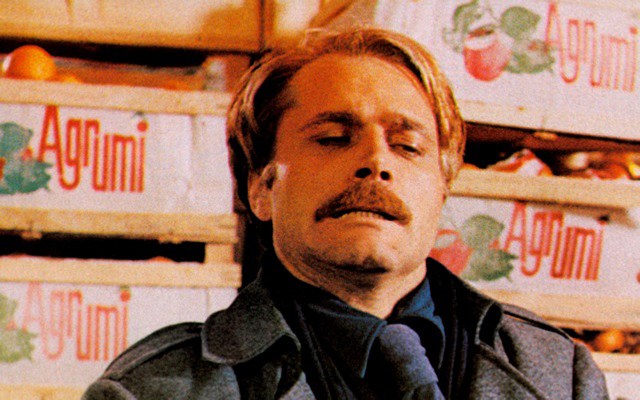
Also! Check out my rundown on the Another Hole in the Head film festival, an annual event stuffed with catnip candy for fans of horror, sci-fi, and cinema du sick ‘n’ wrong. (If you love Franco Nero, John Saxon, Henry Silva, and guys with 1970s mustaches fighting in junkyards like I do, don’t miss my top pick: Eurocrime!)
Other movies opening this week include period detective flick Dragon (it stars Donnie Yen, so you know what that means: sweet fight scenes); and Henry Jaglom’s latest, family drama Just 45 Minutes to Broadway (at the Roxie). http://www.youtube.com/watch?v=8P0PPqUewr8
Back to 1942Multiple storylines wend through Feng Xiaogang’s historical epic about a devastating drought that brought famine to China’s Henan province. Abandoned by their government, millions of refugees would eventually die in a situation compounded by corrupt officials, the Chinese army’s demands on the region’s nonexistent grain stores, and looming Japanese troops. The scenes from the road are grim, on both small (a desperate family tries to trade their child for grain) and larger (Japanese bombing raids, cannibalism) scales — though there are moments of hope, as when rival families put aside their differences to help a pregnant daughter. (Hope doesn’t last, though: when the baby is born, the half-dead mother mutters, “Kill it.”) Meanwhile, an American journalist (Adrien Brody) chases the story with the help of a priest (Tim Robbins, working a distracting accent); after witnessing horrors in Henan, his reporting helps nudge the government into action, however slightly. It would take an exceptionally even hand to prevent this heavily tragic material from sliding face first into melodrama, something Back to 1942 doesn’t even attempt to do. Whether you feel moved or manipulated is up to you. (2:26) (Cheryl Eddy)
http://www.youtube.com/watch?v=msSH5v6tK9k
The Collection As soon as you behold the neon sign “Hotel Argento” shining over the grim warehouse-cum-evil dead trap, you know exactly what you’re in for — a wink, and even a little bit of a horror superfan’s giggle. In other words, to tweak that killer Roach Motel tagline: kids check in, but they don’t check out. No need to see 2009’s The Collector — the previous movie by director-cowriter Marcus Dunstan and writer Patrick Melton (winners of the third season of Project Greenlight, now with the screenplays for multiple Saw films beneath their collective belt) — the giallo fanboy and gorehound hallmarks are there for all to enjoy: tarantulas (straight from 1981’s The Beyond), a factory kitted out as an elaborate murder machine, and end credits that capture characters’ last moments. Plus, there’s plenty of fast-paced shocks and seemingly endless splatter, with a heavy sprinkle of wince-inducing compound fractures. The Collection ups the first film’s ante, as gamine Elena (Emma Fitzpatrick) is lured to go dancing with her pals. Their underground party turns out to be way beyond the fringe, as the killer mows down the dance floor, literally, and gives the phrase “teen crush” a bloody new spin. Stumbling on The Collector’s antihero thief Arkin (Josh Stewart) locked in a box, Elena releases him but can’t prevent her own capture, so killer-bodyguard Lucello (Oz’s Lee Tergesen) snatches Arkin from the hospital and forces him to lead his team of toughs through a not-so-funhouse teeming with booby traps as well as victims-turned-insidious-weapons. All of which almost convinces you of nutty-nutball genius of the masked, dilated-pupiled Collector (here stuntman Randall Archer), who takes trendy taxidermy to icky extremes — even when his mechanism is threatened by a way smart last girl and a lock picker who’s adept at cracking building codes. Despite Dunstan’s obvious devotion to horror-movie landmarks, The Collection doesn’t turn out to be particularly original: rather, it attempts to stand on the shoulders — and arms and dismembered body parts — of others, in hopes of finding its place on a nonexistent drive-in bill. (1:23) (Kimberly Chun)
Killing Them Softly Lowest-level criminal fuckwits Frankie (Scoot McNairy) and Russell (Ben Mendelsohn) are hired to rob a mob gambling den, a task which miraculously they fail to blow. Nevertheless, the repercussions are swift and harsh, as a middleman suit (Richard Jenkins) to the unseen bosses brings in one hitman (Brad Pitt), who brings in another (James Gandolfini) to figure out who the thieves are and administer extreme justice. Based on a 1970s novel by George V. Higgins, this latest collaboration by Pitt and director-scenarist Andrew Dominik would appear superficially to be a surer commercial bet after the box-office failure of their last, 2007’s The Assassination of Jesse James By the Coward Robert Ford — one of the great films of the last decade. But if you’re looking for action thrills or even Guy Ritchie-style swaggering mantalk (though there is some of that), you’ll be disappointed to find Killing more in the abstracted crime drama arena of Drive (2011) or The American (2010), landing somewhere between the riveting former and the arid latter. This meticulously crafted tale is never less than compelling in imaginative direction and expert performance, but it still carries a certain unshakable air of so-what. Some may be turned off by just how vividly unpleasant Mendelsohn’s junkie and Gandolfini’s alchie are. Others will shrug at the wisdom of re-setting this story in the fall of 2008, with financial-infrastructure collapse and the hollow promise of President-elect Obama’s “Change” providing ironical background noise. It’s all a little too little, too soon. (1:37) (Dennis Harvey)
http://www.youtube.com/watch?v=MUSNZGYIfD4
Starlet Fresh off the bus from Florida, Jane (Dree Hemingway, daughter of the perennially undervalued Mariel) is living an indolent existence in the San Fernando Valley — it takes a while for us to realize she even has a job, albeit a pretty irregular and undemanding one. (Hint: What movie industry is largely based in the Valley? Second hint: It’s not the non-porn one.) Most of the time she just hangs about with her equally immature, similarly employed housemates, tanning and playing with her little dog. When a chance find at a yard sale yields a stash of hidden cash, Jane goes on a brief spending spree, then guiltily tries to return the remaining cash to Sadie (Besedka Johnson). The latter is an extra-cranky elderly woman who has no idea she’s missing any money and slams the door in Jane’s face before she can explain. Undaunted, perhaps needing some semblance of family in her vapid new life, Jane basically forces her friendship on the old lady, with eventual success albeit a few speed bumps. Sean Baker’s film is often an uncomfortable watch, because the dynamic between lead characters is so frequently awkward and discordant. (And also because the other major figures, Jane’s housemates played by Stella Maeve and James Ransome, are so completely obnoxious.) But its resistance to easy odd-couple sentimentality ultimately works to Starlet’s favor, making the low key (like everything else here) close unexpectedly poignant. Real-life adult entertainment stars Manuel Ferrara and Asa Akira appear as themselves. (1:59) (Dennis Harvey)
In recent months, I’ve been exploring the rabbit hole of 2012 prophecy and possibility, a beguiling mixture of myth, spirituality, and hope that humans will finally awaken to the global ecological and economic catastrophes we’re creating and make a fundamental shift in our approach, whether that’s sparked by cosmic energies or our own earthly intention.
When the Mayan calendar ends on Dec. 21 – a date that also marks the Winter Solstice and the peak of our alignment with the galactic center (Earth, sun, and the dark center of the Milky Way lining up for the first time in recorded human history) – it will be a day anticipated by millions of people around the world. Thanks to the modern amplification by pop culture and the Internet, it will be an unprecedented and potentially auspicious astrological, energetic, and cultural moment.
“The earth is being flooded with energies from the galactic center,” San Francisco Astrological Society President Linea Van Horn, who has been giving presentations for eight years on the significance of a cosmic alignment that occurs once every 26,000 years, told us. “That was the alignment that the Mayans were marking on their calendars.”
It isn’t just the Mayan Long Count calendar that indicates the current age is ending and a new one dawning. Some Aztec, Toltec, Indian, and Egyptian scholars and writer Terence McKenna (who used the I Ching to make the revelation in his book The Invisible Landscape) and various New Age authors have predicted we’re entering a new era, one many believe will be marked by enhanced human consciousness.
But one needn’t believe any of this to understand the pressing need for humans to wake the fuck up and start working together on issues ranging from global warming and the alarming decrease in the planet’s biodiversity to the many shortcomings of global capitalism and the escalating social unrest it’s creating. So why not use this grand mystical moment to spark that discussion, as many progressive activists and conscious community advocates have suggested.
“It allows us to have a stage for the question, a frame for the question. We have to ask very basic questions about our survival,” said Rev. Billy Talen, an artist/activist whose latest book, The End of the World, delves into the earth’s ecosystems reaching their tipping points. “We have the uncanny, mythic, prophetic calendar ending and beginning. And then we have scientists saying the same thing, so where does that leave you?”
There will be many epicenters and gathering points on Dec. 21, both real and virtual. Personally, I’m headed down into the heart of the Mayan empire to Chichen Itza, Mexico, where I’ll be attending the Synthesis Festival and doing daily dispatches through this website. Daniel Pinchbeck, author 2012: The Return of Quetzacoatl, will be in Egypt at The Great Convergence “celebrating the dawning of a new era.”
“Basically, we are going to have to have a rapid shift in global consciousness,” Pinchbeck told me, arguing that shift has already begun, as seen in movements from Arab Spring to Occupy Wall Street. “It is happening in terms of horizontal, peer-to-peer, cooperative movements with no top down hierarchy…We can make a much more rapid transition than most people realize.”
Both festivals, and many others around the world, will be heavily attended by people from the Bay Area, where many of the concepts behind transformational possibilities and alternative organizing models have incubated and evolved for decades. The organizers of Synthesis have also set up a World Unity 2012 online hub where people can participate with livestreams from where they are and join in conversation about what’s next.
“It’s probably one of the most pointed to and significant times ever,” said Synthesis Executive Producer Michael DiMartino, who has been leading tours of Mayan sites for almost 20 years, establishing a close working relationship with the Mayan community in Piste Pueblo adjacent to the pyramids at Chichen Itza that he’s tapping for this event. “We’re at a crossroads in human history – and the crossroads are self-preservation or self-destruction…We create the future. As we make our decisions, we create the future now.”
While DiMartino and other festival organizers believe in the spiritual and energetic possibilities of this moment, they emphasize that it is an opportunity to bring together people with a variety of worldviews and belief systems and have a conversation about how the global community of people can work together on solutions.
“Obviously, the planet has been getting out of balance and there is a need to go back to basics,” said Debra Giusti, founder of the Harmony Festival and author of Transforming Through 2012. “We need to get back to the values of the indigenous people, but in the modern context making use of our technology.”
As I’ve interviewed people about 2012, from true believers to skeptics, mystics to scientists, a common theme has been that nobody knows what this intriguing moment portends. They have their hopes and their fears, their doubts and their desires. I’ll be looking at the 2012 question from a variety of perspectives in my upcoming coverage, and I’m open to your suggestions and observations as well.
But for now, for me, I’m maintaining an open heart and an open mind. “There are more things in heaven and earth, Horatio, that are dreamt up in your philosophy,” Shakespeare’s Hamlet said, a statement for ages that our modern minds, so rational and cynical, too often forget.
Maybe this metaphysical moment will be the anticlimactic New Age equivalent of Y2K, or maybe it will be an important signpost on the road to global transformation in consciousness, or something in between. Whatever happens, it’s bound to be interesting, and I hope you’ll join me on this journey.
Localized Appreesh is our thank-you column to the musicians that make the Bay. To be considered, contact emilysavage@sfbg.com.
Music should be fun. We forget that little factor, those of us drenched in so many layers of irony we can no longer differentiate between sounds. Lest we draw another blank, I present Coo Coo Birds.
The band – made up of singer-guitarist Jonny Cat, producer-bassist Charles James Gonzalez, and singer-drummer Ryan Zweng – is connected to the Convent arts collective (hence the song, “Convent Girl”), and seems to have a real good time making music together. It dropped full-length debut, Don’t Bring You Boyfriends, in September, quickly followed that up with the forthcoming Psychedelic Warrior, and have another release already on the horizon: Sultan of Cats, due February 2013.
So far, the tracks have been about things like rock and roll animals, sake babies, and marshmallow pies, sonically mixing in swishy psychedelia, swinging 1960s pop, and the band’s professed love of rock’n’roller Link Wrap, and the Kinks.
And the Birds have some pretty fun musician friends too: Steve Mackay of Iggy Pop and the Stooges, who lent some tenor sax to Coo Coo Birds’ first release; fellow locals and Localized Appreeshers Brand New Trash, and legendary song-man/ex-Modern Lover Jonathan Richman, who recently gave them a Big Star boxset, and invited them to open for him at the Great American Music Hall this weekend.
Also, a note for the not-so-distant future: the band will perform as the Order of the Holy Coo at the First Church of Sacred Silversexual’s Very Bowie Glampocalypse blowout Dec. 21 at Cafe Du Nord. So you’ll be able to spend the last night on earth in style.
First, get to know the Coo Coo Birds, the rarest of the species: http://www.youtube.com/watch?v=xT6srRZcEiE
Year and location of origin: November 2011 at the Condor Strip Club in San Francisco. That was when we first played together and felt something extraordinary. At that moment Coo Coo Birds were born.
Band name origin: A film maker who now lives in New York named the band after who knows what. We just like the sound of it so we kept the name. Band motto: Don’t Bring Your Boyfriends.
Description of sound in 10 words or less: The Sound of Coo Coo Birds is 1 part LINK WRAY, 1 Part KISS, and 1 part T-REX.
Instrumentation: All band members sing behind a wall of guitar, bass, and drums.
Most recent release: Our first LP, entitled Don’t Bring Your Boyfriends was released in Sept. 2012. Best part about life as a Bay Area band: Girls, drugs, fun and very loud music. Worst part about life as a Bay Area band: Girls, drugs, fun and very loud music. First album ever purchased:KISS ALIVE II with the cutout corner. Things were never the same afterwards.
Most recent album purchased/downloaded: BIG STAR box set on vinyl. Jonathan Richman gave us a copy a couple weeks ago. I guess that counts.
Favorite local eatery and dish: Coo Coo Birds have regular band meetings at Da’ Pitt BBQ on Divisadero and Grove in SF. We usually order a rack of Ribs, with mac & cheese, collared greens, white bread and hot sauce on the side. We always wash it down with 32oz bottles of Coors (Banquet) beer.
If you are part of the yoga community, here’s what you probably see when you log on to Facebook: invitations to expensive yoga retreats in exotic locations, photos of friends or teachers modeling seemingly impossible yoga poses atop striking mountains, snippets of inspiring poetic wisdom that have garnered varying amounts of likes, and YouTube videos of 95-year-olds, sexy young things, and domesticated animals doing yoga.
The yoga community definitely has a strong presence on Facebook. But is it a good thing for the spiritual path?
During a discussion in a meditation group I went to last year, a woman confessed that Facebook was ruining her life. Every time she’d hop on to the site, she never ceased to become anxious, depressed, and lonely. Why wasn’t her life as cool and exciting as that of all of her “friends”? Why was she just sitting at home, viewing this unrelenting news feed of her acquaintances’ accomplishments, international sojourns, and glamour shots?
It got me thinking about social networking sites, and how they can be detrimental to cultivating a sense of peace and clear seeing. From a broad view, you might say social networking is good for the yoga community. Teachers promote their events and classes. Practitioners post their daily revelations about life, which can be inspiring to their pals. But at its heart, yoga is about things that sites like Facebook implicitly or explicitly counter — like single-pointed focus and diminishment of ego. And you know how your teacher in yoga class is always telling you not to compare yourself to others? Kind of hard not to do that on Facebook. And, when you’re at work on the sofa at home, your teacher’s not there to remind you, either.
Of course, we could make the Facebook experience into a conscious one. For instance, create an intention to stay on it for an allotted period of time, resist the temptation to judge or feel judged by others while trolling its contents, and stay unattached to how many likes we receive on our latest instagram photo. And we could check our intentions when posting: Is it to connect with others, or to strengthen our own egos? Is it to find an old friend or to put a bandaid on loneliness? Or we could just stop using it altogether. (Um, well, could we?)
Maybe this is a question for the community at large. How does social networking affect your practice? And what tricks have you used to make your social networking experience a more conscious one? Let us know what you think.
Top Yoga Pix for Upcoming Weeks:
The Skinny on Fat: Surviving the Holidays without Overeating Do the holidays make you think of weight gain, bloating, and regret? Nutrition coach and founder of Food Freedom Programs Darshana Weil offers this one day workshop for women on how to use yoga, meditation, and mindfulness to stay healthy around holiday time, and live a nourished life. 12/2, 1-5pm, $40-$50, Yoga Tree Mission, SF. www.yogatreesf.com/workshops-retreats/workshops.html
Suzanne Sterling in Concert Join ecstatic vocalist Suzanne Sterling for a concert of epic proportion at this sweet Berkeley spot for sacred art and music. 11/30, 8pm, $15-$25, Rudramandir, Berk. www.rudramandir.com/performance/suzanne-sterling-concert.html-1
Shakticura Healing Lounge This four-hour multisensory event takes place in a healing lounge and offers you the opportunity to revitalize your spirit and body, and deepen your connection with others. Includes contact yoga, sound healing, nourishing herbal elixirs, tea, raw chocolate, and healthy snacks. Sweet. 12/2, 4-8pm, $12-$20, Berkeley Namaste, Berk. www.anjulimahendra.com/shakticura
Restorative Yoga with Live Singing Bowls Don’t miss this juicy opportunity to relax deeply into restorative poses while listening to a blend of live crystal bowls and poetry Dress to be cozy! 12/8, 6:30-9:30, $30-$35, The Mindful Body, San Francisco www.themindfulbody.com/main/workshopkevin24.htm
Hypnoyoga Ready to get hypnotized? In this restful yoga class taught by Brit Fohrman, certified Hypnotherapist Rachel Yelin will guide you into a deep hypnotic state for the sole purpose of bringing you the exact type of healing that your whole body needs. This practice of healing is open to everyone, regardless of health conditions or fitness levels. 12/9, 1-4:15pm, $50, Yoga Tree Valencia, SF. www.yogatreesf.com/workshops-retreats/workshops.html
Karen Macklin been up-dogging her way down the yogic path for over a decade, and is a lifelong lover of the word. To learn more about her teaching schedule and writing life, visit her site at www.karenmacklin.com. Follow On the Om Front on Facebook:www.facebook.com/ontheomfront
I was a little devastated when I found that the owner of Ricardo “Apex” Richey’s Market and Sixth Street studio — where he painted his canvases of street art abstractions — had sold the building to a new owner intent on converting the raw space to tech offices. What of the Asian-run garment factories, the rickety elevators? And what, more importantly, of the rooftop that Apex had the run of, where he’d let his street art friends paint huge burners? Over the years, the space had converted into a guestbook of sorts, with murals done by Mona Caron, Neon, Chez.
In our recent interview, which appeared in this week’s paper, Richey told me that the owner had mentioned that though he intended to gut the structure, he may leave the rooftop gallery standing. Hopefully, that’s the case. In the meantime, here’s some shots from those sky-level works — and a few snaps of Richey’s murals from the Sixth Street neighborhood’s past and present. Hopefully whatever ‘hood he finds for his next studio space will benefit just as much from the aerosol artist’s work.
The University of California Board of Regents today approved the hiring of Columbia University Faculty Dean Nicholas Dirks as the new chancellor of UC Berkeley, a widely lauded selection, but one whose $50,000 pay increase over his predecessor was opposed and criticized by Gov. Jerry Brown and Lt. Gov. Gavin Newsom.
That $50,000 bump will be paid for by private donors through the university’s foundation, but the fact that Chancellor Dirks will be receiving a $487,000 annual salary and a bevy of perks from an underfunded university system that has put the squeeze on faculty and students in recent years still looks really bad.
During the conference call meeting, Brown said the big raise “does not fit within the spirit of servant leadership that I think will be required over the next several years,” according to an account by the Sacramento Bee.
Brown referred to the recent narrow passage of his tax package, Prop. 30, which helped avoid deep trigger cuts to education. “I’ve just come through a campaign where I’ve pledged the people that I will use their funds judiciously and with real stewardship, with prudence,” Brown reportedly said, later adding, “We are going to have to restrain this system in many, many of its elements and this will come with great resistance.”
Matt Haney, executive director of the UC Student Association, praised Brown’s stand. “We would echo those sentiments. At a time when students are paying more and getting less, and the people of California expect the UC to use its money on its most critical priorities, such as serving the students, it’s not the time to be giving more to those at the top,” Haney, who is also a newly elected member of the San Francisco Board of Education, told the Guardian.
Especially irksome to Haney is the fact that it didn’t appear Dirks really needed the extra money to bring him here, calling it a reflection of the mentality of the corporate titans that comprise the Board of Regents. “It’s another indication of the tone deafness of UC management and that’s a big concern,” Haney said. “It’s a reflection of a philosophy that’s problematic and that students have been critical of for a long time.”
While Haney acknowledges $50,000 isn’t a huge amount of money compared to the UC’s needs, he also said that this gesture is more than merely symbolic, noting that it feeds public perceptions that the UC is being wasteful and that could hurt the system’s ability to get needed resources from the Legislature or voters.
Brown also said that he wants the UC to demonstrate “greater efficiency, greater elegance, modesty.”
Dirks is a career academic and professor of anthropology and history, and you can see and hear from him in this You Tube video:
Sharon Jones took to the stage at Davies Symphony Hall on Saturday night with all the energy of fourth-grade recess on a sunny afternoon. Not that she seems to ever take the stage in any other way, but it was the right approach for a big show in a big room.
After all, her sold-out concert with the Dap-Kings at the Symphony was a prestigious booking that spoke to her ever-increasing popularity over the past few years, a reputation that has been steadily earned through the infectious soulfulness and old-school cool of her dynamic live performances.
Saturday night’s show was the perfect showcase of Sharon and company at their best, not because it was a slam-dunk, but because they had to earn in. For as grand of a setting as Davies Symphony Hall can be, it proved more than a bit stilted early in the night, as the diverse audience remained seated and awkward in their space. A dance floor was in order for this performance, if not an out-and-out hefty dose of sweaty, drunken rowdiness. In this regard, the venue was at a disadvantage for what was taking place in its confines.
But Jones didn’t seem to be concerned in the least, and blazed through a 15-song set that increasingly set off pockets of dancing throughout the building, and steadily drew enthralled audience members down the aisles, revival-like, to the front of the stage. By the time the Dap-Kings laid into the opening of “100 Days, 100 Nights,” the entire hall was fully transformed into an appropriately matched dance party.
Indeed, if there had been any question as to how Jones and the Dap-Kings made it to the Symphony, the scores of people dancing their asses off in the aisles was answer enough.
Unlike the last time I saw her perform in California, there was no reason for Chilean rapper Ana Tijoux to apologize to her audience for her English in the La Peña Cultural Center at her pre-Thanksgiving show on Wednesday.
“Quien no habla español?” she asked the crowd. “Muy bien,” she continued when no one could understand Spanish well enough to yell out that they don’t understand Spanish. “El mejor publico in los Estados Unidos.”La Peña was perhaps the perfect venue for Tijoux’s return to the Bay Area (she’s spent a lot of time around here in 2012, playing the New Parish as recently as August.) The 45-year old center is undergoing a sea change. A group of young activists calling themselves La Peña Second Generation are re-doing the famous 3-D mural facade of the building, looking to minimize the center’s dependency on grant monies, and, said the Second Generation guy who jumped on the mic in-between sets by Oakland’s Raw-G and Tijoux (I hear Bang Data also turned in a stellar opening set, though emcee Deuce Eclipse was already hanging out in the crowd by the time we made it to the show), open to new programming ideas.
Anyone wanna host a spoken word event? You can do it at La Peña, whose intimate space hosts science lectures, Chilean feasts, Marga Gomez’s “Day of the Dead Republican” stand-up, and craft fairs celebrating the work of women of color (the 18th annual Womyn of Color craft fair, in fact, takes place this weekend).
Most of the crowd that night was there for Tijoux’s political awareness — she touched on the Palestine-Israel conflict, the possibility for connection between poor people in all countries — which was good because it was a way more mellow set than the times I’ve seen her when she didn’t have a baby girl growing in her belly.
I took notes during the show comparing her outfit with the M.I.A.-like patterned leggings/oversized tee combo she rocked the last time I saw her, because she’s a female artist so obviously her clothes are really important. This time around she had on a flannel shirt that fit her and hella black spandex — stay comfortable, Anita.
After closing her set with her hit single “1977,” Raw-G hopped on stage for a few songs to give Tijoux a rest before coming back out with “La Rosas de los Vientos,” a song from Makisa, her fierce group from before she launched her solo career.
http://www.youtube.com/watch?v=x9vfmcfB1cc
“Me siento que estoy en un boliche de Latin America,” said my date. (Earlier in the evening he made us beat a hasty retreat once we had our plastic-cupped Peruvian Cristal beers from the bar in La Pena’s Cafe Valaparaiso — his Argentinian soccer team was being beat by Brazil on the bar’s TV.)
His vote of confidence was high praise for a spot in Berkeley, and it suggests that the Second Generation group is doing alright in its mission to bring continued life to the beloved La Peña. Maybe in 20 years Tijoux’s babe will be taking the stage, on her own feet this time.
“This place just sort of fell into our lap” says Yuka Ioroi, who opened the Richmond neighborhood’s Cassava Cafe and Restaurant earlier this year with husband Kristoffer. “We always wanted to have our own restaurant, but also wanted to start small with a cafe. So we thought, why not just serve a limited-seating dinner?”With Kris’s culinary knowledge, and Yuka’s eye for aesthetics, this small space in the Richmond is a treat, embellished with flowers, delectable foods. It’s a great space for community — you feel right at home here.
I was lucky enough to film a recent, one-off dinner the couple put together. The footage gives you a taste of their culinary chops, and will probably make you hungry regardless of any recently-finished holiday meal.
Not in the mood for dinner? During the day the cafe offers Ritual coffee, toasted sandwiches, pastries, and dishes that showcase Kris’s range of culinary talents. All ingredients either home-made or local.
Honey Soundsystem, that handsome group of techno and disco rarety-loving DJs and purveyors of one of the best weekly parties in SF (Sundays at Holy Cow), has gone through a few changes this year, parting ways with a couple members — perhaps temporarily — to side projects and expanding their reach greatly with several international appearances.
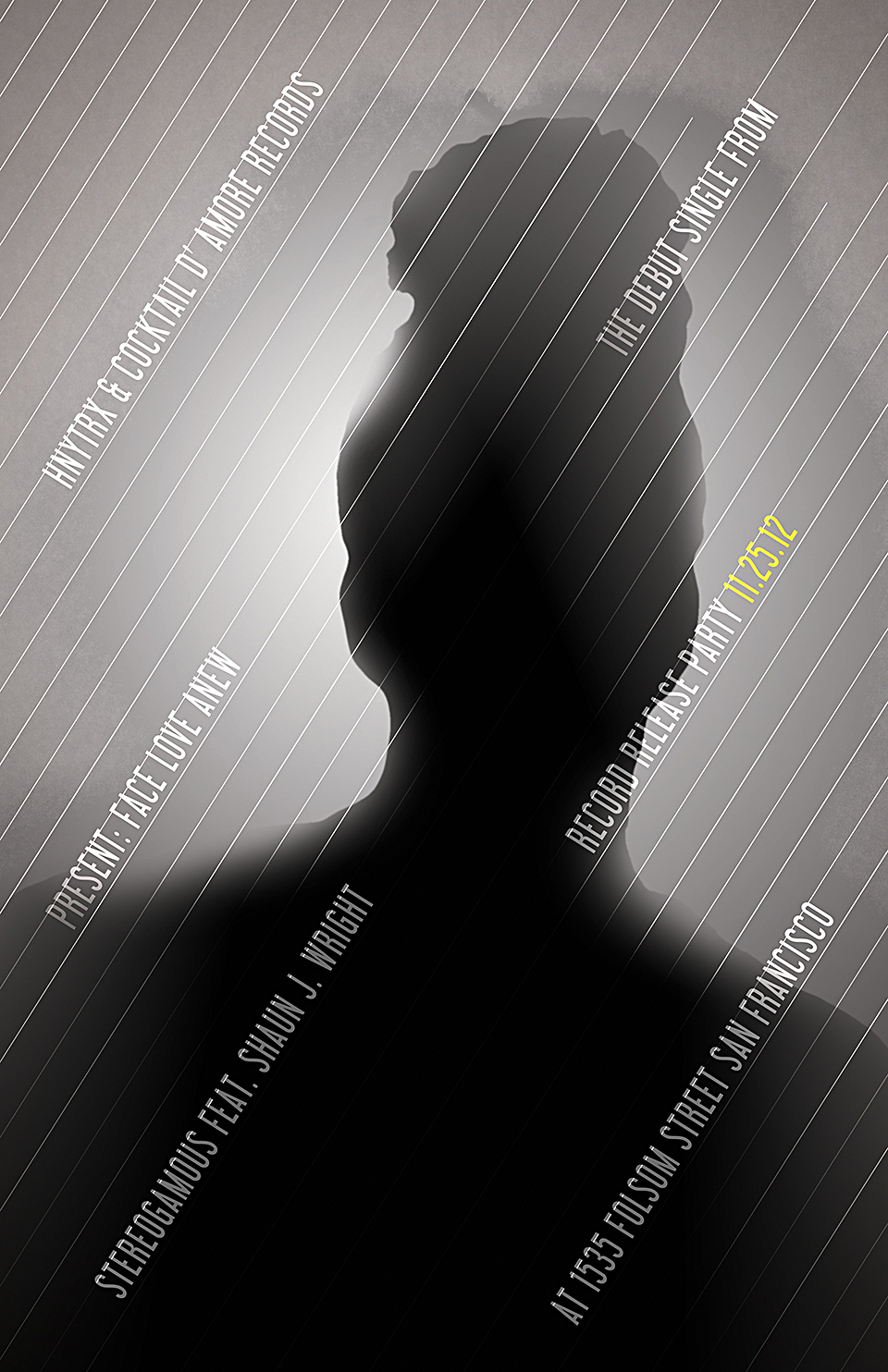
But the honeycomb hasn’t stopped pumping out great tunes, and it looks like Honey’s latest record label, HNYTRX, has launched with an expansive, uplifting new house tune, “Face Love Anew” by Australian favorites Stereogamous featuring singer Shaun J. Wright, formerly of Hercules and Love Affair. It’s a keeper.
If you’ve been to Honey Sundays lately, you know that they’ve been absolutely off the hook, one of the country’s true Sunday night party treasures. But this Sun/25 will be extra special — it’s a release party for the new track, and many favorite Honey patrons will be in the house. Have a listen to a few preview clips below (there are also some tasty remixes by the likes of Discodromo, Jason Kendig, Horse Meat Disco, and Kim Ann Foxman) and then meet me on the dancefloor.
Localized Appreesh is our thank-you column to the musicians that make the Bay. To be considered, contact emilysavage@sfbg.com.
Another blog this week declared Golden Void “the Bay Area’s best new psych band,” and I’m not about to quibble. The band, named after a Hawkwind track, features members of Earthless, and Assemble Head in Sunburst Sound, and just released a mind-bending, fuzzy guitar-bursting beaut of a debut album, out now on Thrill Jockey.
The self-titled LP clearly showcases the band’s love of 1970s psych, proto-metal, and space rock, dipping into Black Sabbath (vocally) and yes, namesake Hawkwind territory throughout. Check out the acid-laced video for “Virtue” below, then check the band’s answers to the Localized Appreesh questionnaire. Once you pick yourself up off the ground, make it out the band’s album release party Friday at the Hemlock Tavern.
Year and location of origin: 2010 in San Francisco.
Band name origin: Song by Hawkwind.
Band motto: Did you see the Giants game?
Description of sound in 10 words or less: Herds of buffalo running through the open plains.
Instrumentation: Bass, drums, keyboards, guitar and vocals.
Most recent release: Self-titled album November 2012 on Thrill Jockey.
Best part about life as a Bay Area band: The Giants, The A’s, redwood trees and great bands to play with.
Worst part about life as a Bay Area band: Cant complain, really.
First album ever purchased: Grateful Dead’s In the Dark.
Most recent albumpurchased/downloaded: Witchcraft’s Legend.
Favourite local eatery and dish: Escape from New York’s “You Say Potato” slice and their mushroom slice.
Play is a powerful tool in almost every human society. The dynamics of play are found in most forms of human interaction as well as in the foundations of problem-solving and analysis. Play provides a learning-by-doing environment that is difficult to replicate in a classroom. Plus, high-minded assertions aside, play provides something even harder to quantify but no less vital to our development — a vehicle for joy.
Since 2006, the Come Out & Play Festival crew has been throwing festivals of interactive games, from New York to Amsterdam to San Francisco, providing a space for players of all ages to gather and game. In between wrangling the many details of her innovative brainchild, festival co-founder Catherine Herdlick graciously let me interrogate her via email as to what San Franciscan’s can expect at this year’s festival (which runs through December 2), and on the importance of games in general.
SFBG:Navigating the festival’s schedule can be daunting, what games do you feel are going to be absolute standouts this year? How many games are represented in total, and how many of them are new or new to the festival?
Catherine Herdlick: There are 35 total games including Art Boy Sin, which we just added. Absolute standouts include Journey to the End of the Night (which happened Nov. 10) as well as Undercover Assassins (Nov. 27)—both are well-established and tuned. Another game that will be amazing is Sloth Chase (Dec. 1), a parkour-inspired game designed by two champion parkour practitioners.
I’m also really excited to play The Hush (Dec. 2), which is a pervasive game with a different tempo than our usual games. It invites players to moments of silence and reflection. Finally, The Third Person OuterBody Experience Labyrinth (Dec. 2) by local artist Jason Wilson is a really interesting way of navigating yourself and a space.
SFBG:What prompted the creation of the festival in 2006 and how has it grown since?
CH: A group of five of us game designers were working together on computer games at Gamelab in NYC in 2006. We were all making different kinds of real world games on the side, staging each of our events as one-offs. We decided to converge and run a festival so that our respective audiences could cross-pollinate. Greg Trefry, who still runs the show in NYC, was able to take the helm and he oversaw the production of the festival as part of his master’s thesis at ITP. When I moved out to SF in 2009 it was a no-brainer to bring the festival with me as there were already so many designers out here that had been involved since the beginning. In terms of playership, we estimate that well over 10,000 players have played at Come Out & Play in NYC or SF. We’ve also directly inspired a bunch of other festivals around the globe in places like London, Bristol, Berlin, Athens, DC, and Pittsburgh.
SFBG: Gaming is a huge part of your resume. What do games provide its participants that can only be received through gaming? What is the socio/cultural value of games?
CH: This is a big question. I heard Ian (Kizu-Blair, from Journey to the End of the Night) say he wants to inspire people and that succinctly sums it up for me as well. We created a new tagline for the exhibition and festival this year: “United By Play,” which also sums it up. Games are a great equalizer. Everyone, everywhere plays in some ways at some ages. Being in the ludic space frees up the mind to see things differently. Further, we love seeing spectators transform into producers, not just participants, but the very creators of the experience. Street games and less-digital games tend to have more “grey areas” for house rules and that’s a very interesting social space.
SFBG: What is your favorite game ever and why? What makes a “successful” game?
CH: It’s successful if I never wonder who designed it and if it leaves enough room for me to express myself in some way. My favorite game? I can’t pick one! If I had to I’d say the first game of Junior Yahtzee I played with my nephew — it was the first game where I didn’t let him win, after watching him learn how the strategy worked. I also love overnight puzzle hunts a lot, Undercover Assassins (gentle use of space), Air Hockey, Zelda, and Super Mario.
Flavor! Napa is a five-day food and wine festival that took place last weekend in its second annual incarnation, potentially the definitive event representing the wines of the region, and the chefs and cooking that make this grouping of small towns and countryside one of the great culinary and wine destinations in the world.
Despite some nasty rainstorms hitting the area for part of the week, festivities were many and varied, classes and demos, dinners and galas. Here are a few highlights in photos, including sessions with two of the biggest chefs in the world: Thomas Keller and Masaharu Morimoto.
Subscribe to Virgina’s twice-monthly newsletter, The Perfect Spot