SFBG Blogs

Flamenco goosebumps: Buika at Herbst Theater

4

Large portions of my life have been chronicled by music. Chopin waltzes from when I was starting to learn piano, Iron and Wine from my college Seattle days, and this summer, Spanish flamenco singer Buika. Sam Love and I have had her music playing literally non-stop, whether it’s while we’re editing photos, having dinner parties with friends, or driving north to Point Reyes for a hike. We’re totally addicted.

But the discovery of Buika and her sultry music came at random one evening when we were curled up on the couch watching the very disturbing Almodovar film The Skin I Live In. (The perfect choice for inducing super-creepy dreams). Buika makes a cameo in the movie, singing at a holiday party.

Although the movie was too scary for my tastes (too much chopped liver, thank you very much!) we Googled the beautiful voice that stood out from all the mayhem. It was Buika. And after a month of total immersion in her music, we found out she was coming to SF for a concert, and we knew we had to go.

Ok. So here it goes. I’ve been to many, many, live concerts. Big shows, small shows, even tiny living room shows. Buika’s concert on Friday night was the most amazing performance I’ve ever been to. I cried throughout the whole show and had a permanent layer of goose bumps frozen over my skin. Buika sings with every inch of her body, her voice wrapped in warmth and passion. She mixes her African and Spanish roots together to create music that is unique, but also traditional and classic in a way that enables everyone to easily connect with her music. Buika has the energy of Janis Joplin on stage, a burning fire that is truly magnificent.


Supervisors approve nudity ban on close vote

139

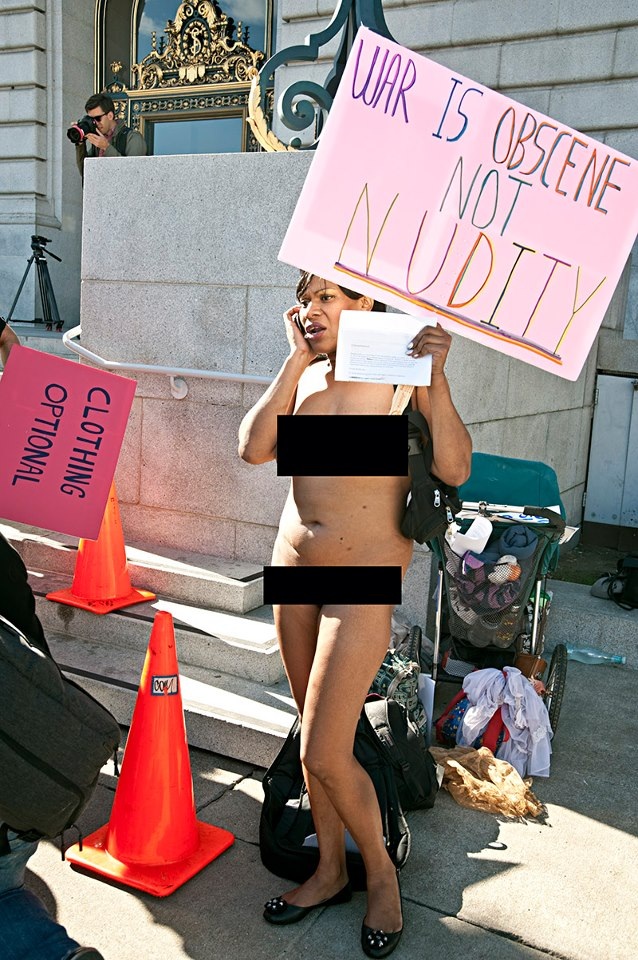
Over the objections of progressive supervisors and under threats of a lawsuit from nudists and civil liberties advocates, the San Francisco Board of Supervisors today voted 6-5 to outlaw public nudity in the city. Supervisors voting against the ban were David Campos, Christina Olague, John Avalos, Eric Mar, and Jane Kim.

Sup. Scott Wiener, who sponsored the measure, cast it as a last resort to deal with what has become daily displays of nudity in the Castro district he represents (and most recently around City Hall as his legislation was being considering in committees), noting that, “Public nudity is part of San Francisco and is appropriate in some circumstances.” His legislation makes exceptions for permitted events such as the Folsom Street Fair and Bay-to-Breakers.

But Wiener said that “public nudity can go too far,” as he says it has over the last two years in the Castro’s Jane Warner Plaza, and that “freedom of expression and acceptance does not mean you can do whatever you want.”

Campos echoed some of the legal concerns that critics of the legislation have raised, noting that, “As a lawyer, I do worry about when you ban specific conduct and then you have exceptions to that.” He also questioned whether Wiener has done enough to try to mediate the increasingly divisive conflict he’s been having with the nudist community and whether this was an appropriate use of scarce police resources.

“I don’t believe we’re at the point of saying this becomes a priority over violent crime,” Campos said, noting that he’s been unable to get more police foot patrols to deal with a recent spate of violent crimes in the Mission, which shares a police station with the Castro.

Avalos said it was absurd to focus city resources on this victimless issue when the city is wrestling with far more serious problems, such as poverty and violence, and he played a clip from the film Catch 22 where a soldier goes naked to a ceremony to highlight that absurdity. “I will refuse to put on this fig leaf, I just can’t do it,” Avalos said.

Mar said he sympathized with Wiener’s concerns, but agreed with Campos that Wiener could have done more to mediate this situation before both sides dug in: “I really don’t think we need citywide legislation, particularly overbroad legislation, to deal with a problem isolated to one neighborhood.”

Wiener seemed stung by the comments and said he could cite example of each supervisor pushing resolutions or ordinances that dealt with similarly trivial issues, comparing it to refusing to deal with a constituent’s pothole complaint until that supervisor fixed Muni and solved the city’s housing problem. But Campos pushed back, calling the comparison ridiculous and saying there was no reason for a citywide ban to deal with such an isolated issue.

Nudists at the hearing reacted angrily to the approval and started to disrobe before President David Chiu ordered deputies to intervene and abruptly recessed the hearing. Now, it will likely be up to the courts to decide whether Wiener’s concerns about weiners can withstand legal scrutiny.

Tango at Red Poppy Art House: A photographic foray

0

Tango is spicy music. It makes you think of deep red dresses, glasses of rich wine, and warm nights for taking a long walk with your lover. Although we didn’t have one-way tickets to Argentina, an evening with the Redwood Tango Ensemble at the intimate and tiny Red Poppy Art House made the audience feel like they were that much closer to the real deal.

This five-piece ensemble of passionate and talented musicians performed a mixture of well-known and danceable tango pieces, along with a selection of its very own originals, which were sometimes a little more dark and moody, but also very different from traditional tango, posessing a certain home-grown flavor.

To top it off, there was even some tango dancing to accompany the music, showing the beautiful collaboration that tango music can bring between musicians and dancers.

http://www.youtube.com/watch?v=gQ24va21P6c


Takei wisdom at San Francisco’s ‘Star Trek’ convention

0

Bay Area Trekkers (don’t call them “Trekkies”!) set their coordinates for the city this past weekend as the official 2012 San Francisco Star Trek Convention took over the Westin St. Francis in Union Square, filling the hotel and the surrounding area with a galaxy’s worth of creative costumes, collectibles vendors, parties, and an impressive slate of stars from the franchise’s 46 year and counting history.

Several of the most esteemed names in the Trek universe made appearances over the course of the three day fete, including George Takei and Walter Koenig (Sulu and Chekov from the original series), along with Brent Spiner, LeVar Burton, Michael Dorn, and Martina Sirtis (Data, Geordi, Worf, and Counselor Troi from The Next Generation).

Fans enthusiastically listened to behind the scenes stories and heard the actors share their thoughts on being part of the Star Trek universe, and also asked about some of their other projects and outside work.

Burton got the crowd going on Sunday morning, charging up the cheering throngs with stories about playing the blind engineer Geordi La Forge, along with reminiscing on the 35th anniversary of the TV mini-series Roots, which was his first starring role. He even elicited a spontaneous group sing-along when he asked if there were any Reading Rainbow fans in the audience, and started singing the theme song to the 1980s literacy-encouraging PBS program that he hosted in the 1980s.

Throughout the weekend’s talks, cast members of The Next Generation — who were celebrating that show’s 25th anniversary, and clearly are all still friends—would sneak up and tease one another during each other’s programs, with Spiner suddenly popping up at an audience microphone during Burton’s Q&A session and asking about the new “Reading Rainbow” iPad app and whether or not it featured a variety of made up of book titles in a nerdy voice.

Burton returned the favor when Spiner took the stage later in the afternoon, as did Sirtis, who proceeded to show off her still-limber body by doing the splits in front of man who played an emotionless robot on the show, but was visibly impressed by her heat, and was hilarious when answering questions from fans.

The keynote speaker for the convention however, was George Takei, who has become a figurehead in Hollywood for LGBT rights over the past several years, after coming out and marrying his long time partner in 2007. After receiving a standing ovation upon his introduction, the 75 year actor charmed the crowd with his signature smooth voice, and went on the emphasize the importance of the Star Trek fan community as a continuing inspiration for him in his current personal and professional endeavors.

“This longevity was created by you fans, of all generations, and I personally am so indebted to you, because my career has been a great blessing,” he said.

Echoing the original sentiments of creator Gene Roddenberry, who wove many of the pressing social issues of the 1960s into the fabric of the Star Trek ethos, Takei urged fans to take the spirit of unity and collaboration that forged the fictional “Federation of Planets” and put it into action in their own lives.

“I am very confident that Star Trek is going to continue to be strong base for making America a better nation, and building a better future for the world, working together.”

Put some cream on it: Warming up the holiday kitchen with Studio of Good Living

0

Five yogis walk into a kitchen and prepare seven dishes made with heavy cream.

This sounds like the beginning of a ridiculous and hilarious joke, but in all honesty, it’s pretty much how Saturday morning started out, with the very first recipe being homemade Irish cream (note: it was 11am). Things were off to an awesome start at the Studio of Good Living, Phoebe Schilla’s school of experiential cooking.

After introducing ourselves in chef Schilla’s beautiful home kitchen (and finding out that we’re all yoga fanatics), we got down to the business of preparing a variety of holiday sides and desserts, excited to master a few new recipes before this weeks holiday cooking bonanza begins.

Our chef, who trained at the Cordon Bleu and the Culinary Institute of America, is a personal chef and cooking instructor whose goal is to teach people how to cook simple, delicious food — and also eat it. Phoebe teaches out of her home, combing cooking with a yoga session and trips to the spa or the Ferry Building Farmers Market for her “signature experiences” offerings. She usually keeps class size under five students, so the experience is intimate, informative, and very hands-on. We not only learned new recipes, but we also got instructions on how to properly hold a knife, the perfect way to dice an onion, and how to crack an egg with one hand (more practice at home may be required on this last item!)

For our holiday cooking class, our lessons included the art of the perfect pie crust, two delectable stuffing recipes (one made with chestnut, another with wild mushroom), a chocolate truffle tart that would make an chocaholic beg for more, and a creamy vegetable soup that came with the option of increased richness with the addition of some heavy cream.

Overall, it was extremely fun — and a wonderful way to explore your kitchen and feel confident for the holidaze.

To add something wonderful to your Thanksgiving table this year, consider baking up a pan of Phoebe’s wild mushroom bread pudding

STUDIO OF GOOD LIVING WILD MUSHROOM BREAD PUDDING

Ingredients (serves 10-12):

1 (1-pound) loaf crusty-style white bread

¼ cup olive oil

1 ½ tsp. dried thyme

2 garlic cloves, chopped

4 TBS. butter

1 pound assorted fresh mushrooms

2 oz. dried porcini mushrooms, rehydrated in 1 cup boiling water, strain, and chop.

Reserve the liquid.

3 cups heavy whipping cream

8 large eggs

2 tsp. salt

1 tsp. freshly ground black pepper

1/3 cup finely grated aged parmesan, pecorino or gouda.

Instructions:

Preheat over to 375 degrees F. Butter a 13x9x2-inch glass baking dish. Cut the crust and short ends off the bread. Cut remaining bread with crust into ½ inch cubes. Place cubes in very large bowl. Add oil, thyme, 1 tsp of salt and ½ tsp of pepper; toss to coat. Spread cubes out on large rimmed baking sheet. Bake until golden brown, about 15-20 minutes. Transfer the toasted cubes to a large bowl.

Melt butter in large skillet over medium-high heat. Add sliced fresh mushrooms. Saute until golden and juices have evaporated, about 15 minutes. Continue cooking and allow to brown – about 10 additional minutes. Deglaze the pan with the porcini mushroom soaking liquid. Add chopped porcini mushrooms and reduce the liquid until it is almost dry. Whisk heavy cream, eggs, salt and ground pepper in large bowl. Pour egg and cream mixture over the bread. Let the custard soak into the bread for 15 minutes. Fold in the mushrooms and grated cheese. Transfer stuffing to prepared baking dish. Bake stuffing uncovered until set and top is golden, about 45 minutes to 1 hour.


SF’s newest political pole gets a new name: Moderate progressives

101

A Daily Kos blogger known as Kurykh has posted an interesting and insightful “crash course in San Francisco politics,” in which he correctly identifies the tri-polar dynamic of local politics. Everyone knows the progressives (Ammiano, Avalos, the Guardian) and the so-called moderates (Wiener, Ma, the Chronicle), and so Kurykh dubs the rising third pole (Chiu, Kim, Mayor Lee) “moderate progressives.”

He calls them “the new kids on the block,” noting that they sided with progressives in 2008 but ushered in a new political reality by siding with the moderates in 2010, now serving essentially as the swing votes on major issues and projects.

“Like other progressives, they are pro-tenant and advocate for more social services to the poor. However, they have pro-business and pro-development tendencies and tend to focus on streamlining bureaucracy and effective government,” he wrote of the moderate progressives.

Personally, I think a more accurate label for this rising new power center is “neoliberal” (I just called them “liberals” in my own San Francisco political primer that I wrote a year ago), a political term describing the belief that any reforms or progress needs to be negotiated with capitalists and corporations instead of coming directly through taxes or regulations.

And I think it underestimates the influence that so-called “moderates” who are actually quite conservative when it come to finances and land use – people like Lee fundraiser Ron Conway and Planning Commissioner Michael Antonini – have in influencing Lee and shaping politics in the city.

But I welcome this contribution to helping San Franciscans understand the political dynamics that are governing this city.

Heads Up: 6 must-see concerts this week

1

Yes, it’s that time of the year again – when I make a faux-turkey. And, I suppose, when many of you eat the real thing. That’s cool. Either way, you’re going to want to relax, decompress, scream into the abyss after the stress of eating and chatting with the family, or over-indulging at multiple Friendsgivings. This Thanksgiving weekend, you can let your conflicted demons out into the night with Dick Dale, Sharon Jones and the Dap-Kings, Cass McCombs, Sébastien Giniaux, Kill Paris, and SISU.

An added bonus: because there are so many transplants to the Bay Area, holidays like this often suck the crowds out, meaning more space for you to shake a tail feather on the dancefloor, and shorter waits at the bar.

Here are your must-see Bay Area concerts this week/end:

Sébastien Giniaux
All Django-ish and la pompe, Parisian musician Sébastien Giniaux is a gypsy jazz guitar virtuoso. He quickly maneuvers from darkly emotional gypsy -spirited compositions to plucky swinging hot jazz, much like genre originator Django Reinhardt. True to inspiration, Giniaux has played France’s Django Reinhardt Festival and Djangofest in the US.
Fri/23, 7:30pm, $10-$15
Red Poppy Art House
2698 Folsom, SF
www.redpoppyarthouse.org
https://www.youtube.com/watch?v=1ElEoy6h6Tg

Kill Paris
“The consistently solid Opulent Temple DJs at the bottom of this eclectic lineup will definitely put down some solid house sets, but also worth checking out is Kill Paris, an EDM up-and-comer with a near fetish for funky ’80s soul and ’90s R&B. Expect to hear Prince, Montell Jordan, and Blackstreet reworked with the sounds of French electro, dubstep, and the fringes of LA’s beat scene.” — Ryan Prendiville
With Big Chocolate, Jelo, Opulent Temple DJs (Tekfreaks, Dutch, Dex Stakker, and more)
Fri/23, 10pm, $15–<\d>$30
1015 Folsom, SF
(415) 431-1200
www.1015.com
http://www.youtube.com/watch?v=eLhEjllbU3E

Sharon Jones and the Dap-Kings
It’s the swinging, soul-funk group’s first headlining show in San Francisco in more than two years, and in the grand Davies Symphony Hall to boot. The Brooklyn nine-piece Dap-Kings, is of course led by the velvety, luminous Sharon Jones and will likely be belting tracks 2010’s I Learned the Hard Way LP.
Sat/24, 8pm, $15–$82
Davies Symphony Hall
201 Van Ness, SF
(415) 864-6000
www.sfsymphony.org
http://www.youtube.com/watch?v=XSvRMiemEGc

Shine On with SISU
Shoe-gazy dreampop fronted by Sandra Vu, drummer of the Dum Dum Girls, creating moody meditations in line with 4AD bands and Broadcast. Hard to resist, no? If you missed it, here’s our chat from earlier this year.
With Sophie Gineau, DSTVV
Sat/24, 10pm, $5 
Knockout
3223 Mission, SF
www.theknockoutsf.com
http://www.youtube.com/watch?v=bNRz020IijQ

Dick Dale
Is there anything more exciting than reverb-heavy surf guitar? It warbles the veins. Last time the King of Surf Guitar, Dick Dale, popped up at the Uptown he roared through all the hits — yes, “Misirilou” was high on the setlist — and then some, rapidly fingering his custom guitar at a blistering speed, his long white hair whipping around him. Trust me, see the 75-year-old maven while you still can.
With Jonny Manek and the Depressives
Sat/24, 9pm, $20
Uptown
1928 Telegraph, Oakl.
(510) 451-8100
www.uptownnightclub.com
https://www.youtube.com/watch?v=X8CnurLcxRY

Cass McCombs
I probably shouldn’t even be writing about this one; people will likely complain that that it’ll sell out quick if everyone knows about it. I mean, it’s talented singer-songwriter Cass McCombs (who is about to embark on tour with the one and only John Cale). At comparatively tiny Amnesia. For just $5. But then I wouldn’t be doing my journalistic duty, right? If I was suppressing – already widely available – show info? It’s done; I apologize. Now breathe, and buy tickets;or you know, throw that Cass McCombs money away on another Four Loko, or whatever the kids are buying these days.
Sun/25, 9pm, $5
Amnesia
853 Valencia, SF
www.amnesiathebar.com
https://www.youtube.com/watch?v=sOcnITphyjk

Cabs v. Lyft et. al. isn’t just about tech

65

Of course the Chron portrays it as “The latest battle pitting disruptive high-tech innovators against old-school industries and regulators,” because that makes for good copy. It also puts the taxicab industry and the people who oversee it in the position of being dinosaurs fighting against an inevitable new world.

But seriously: This has so little to do with smart phones and apps and GPS systems. Those are tools that anyone can use, and the local cab companies ought to and will soon anyway.

What it’s about is the notion that there are such things as public utilities that ought to be regulated in a way that protects the public.

San Francisco decided as a city many, many years ago that you can’t just stick a sign on your car, call yourself a taxi and start charging people for rides. That’s fairly standard practice in American cities, where cabs are considered part of the transportation system — and are a service that, without regulation, is ripe for consumer fraud and safety problems.

Not to make too broad a case, but in California, you can’t just hang out a sign and call yourself a contractor and start applying for building permits. You need a license. You can’t just open a bank and start making loans, at any interest rate you want. You can’t call yourself a dentist and start pulling teeth, either. There are good reasons for these rules. (I suppose some day someone will suggest that surgeons should be chosen not by the AMA or by state licensing boards but by Yelp; some guy cuts off the wrong part of the body or kills someone on the operating table? Hey, he won’t get a good rep on social media and his prices will have to come down. But I don’t think that’s such an excellent idea.)

Even conservatives agree that there needs to be some form of business regulation — and when it comes to cabs in a major urban center, those regulations need to include safety tests and standards on the vehicles, safety checks for drivers (a DUI in the past three years will make you ineligible to drive a cab in SF), a system to regulate fares (so tourists who don’t speak English or understand US currency don’t get cheated) and, perhaps most important, an oversight system that allows people to complain about incompetent or dangerous drivers — and have those complaints investigated and addressed by a government agency.

The battle between the new high(er)-tech faux cabs and the existing industry is also being portrayed as selfish, entitled drivers not wanting to give up their piece of the game:

SideCar’s Paul, a onetime congressional policy analyst, said the issue might eventually work its way up to the governor’s office, which oversees the commission. “The PUC has an existing set of rules that were written for an era when communication technology was literally just a landline telephone, and they’re trying to shoehorn them into this new world,” he said. SideCar is also using social media to drive support of an online petition to the PUC. Within 24 hours, the petition at Change.org had more than 5,000 signatures. “Change always threatens incumbents,” wrote Tim O’Reilly, a Sebastopol business owner. “But some incumbents find ways to get government on their side and try to restrict competition.”

But let’s have a little perspective here. We’re not talking about (unregulated) musicians complaining about MP3 downloads and song-sharing or old-school (unregulated) newspaper publishers complaining that Craigslist took all the classified ads. We’re talking about an industry that is part of a public infrastructure and needs to fall under direct government supervision.

There are good reasons why San Francisco limits the number of cabs on the streets — and it’s not just industry corruption and influence. Too many cabs chasing too little money leads to bad behavior — and to bad drivers. You can’t get someone to drive a cab for so little money that they can’t pay the rent, and the lower the pay, the lower the quality of the drivers. There are excellent cab drivers in this town who have been doing the job for 20 years or more and know every address, every shortcut, every trick to get you there … but there won’t be many more of them if it becomes a business only for the young and the desperate.

Now: The city ought to have a centralized computerized dispatch system, with GPS on all the cars and an app to get the one that’s clsoes to you (and even more important, give you honest, real-time information about when the ride will arrive). These are technological changes that are coming, and that the city can mandate.

But you can’t just let anyone with a smart phone be a cab driver. That’s not innovation against old-school; that’s just good common sense.


Live Shots: Tame Impala at the Fillmore

0

Man, there were a lot of beards at the Fillmore last Thursday. Not the close-cropped beards that I swear some Bay Area men grow in hopes that a girl or boy wants to talk about it. But shaggy ones. The kind that you really can’t make a statement about. Because they aren’t a statement, unless it’s about their state of unwash.

I was at the Tame Impala show, and the beards were out in force. There were also a smattering of mods and hippies, a larger group of rocker girls with tough eyes and shiny hair, with their boyfriends, and a small slice of older music lovers.

I suppose that’s what happens when a band of quality has such disparate influences – think Beatles, circa “Tomorrow Never Knows” with all the musical toys of the Flaming Lips, a good dose of groove, and big, Nirvana-esque drumming. Tame Impala is an Australian psych-rock band with only two full-length albums under its belt, Innerspeaker, and most recently, Lonerism, and it was on its second to last stop of a sold-out tour. 

It was a promising start for Kevin Parker, and his chums. Parker, the mastermind, takes a Brian Wilson-type of musical approach –  bury yourself in the studio, write the songs, and play almost all the bits, make the album, and call in the band for the live shows.

http://www.youtube.com/watch?v=H570ifQfpDk

Tame Impala is Parker’s baby, and it kind of showed a bit more than I would have liked. Yes, the band can play faithful reproductions of the music from the albums, and and I did get the shivery tingles on songs like “Gotta Be Above It,” the show’s opener, and “Apocalypse Dreams.” But in general, the band lacked showmanship, and energy.

Call it tour exhaustion or what-you-will, but Parker, with his politeness and shy smiles, took the stance of a young boy playing at a recital, while the rest of the band pretty much took a step back from the audience and played things spot-on. The most character came from drummer Jay “Gumby” Watson, who took some serious risks during his solos, and leant some drama to the show.

There were some really strong moments, though; “Elephant,” one of the singles off the new album, was one of them, the groove driving and everything played hard, to the wall. And, the audience was into it; there was plenty of bouncing shiny hair, and the bearded folks nodded their heads emphatically. The encore turned into a sing-along for the die-hards.

But there was a lurchiness to the performance — songs didn’t flow from one to the next, and my emotions just weren’t effectively manipulated, dammit. One minute I wanted to dance. The next I just stood and looked at the visuals, an acid-green scribble that pulsated to the beat, like an exploding star on repeat, until the show grabbed my attention again.

I have high hopes for Tame Impala, perhaps too high, which is why I’m disappointed. I think their albums are some of the best in the past couple of years. But they aren’t cohesive performers, and I can only give them a middling grade.

Millbrae BART development conflict raises ethical questions about Fang

11

BART Director James Fang is coming under fire for his close relationship with a developer who is trying to build a hotel project on BART property next to its Millbrae station, a project that Fang promoted with a misleading presentation to the Millbrae City Council in September. But Fang says the attacks on him are coming from a powerful rival developer and that he’s only trying to get something moving on the long dormant site.

Underlying the conflict are questions about how BART develops the properties it owns around the Bay Area, questions that have increasingly high stakes around the Millbrae station. Critics say the station was badly designed and hasn’t lived up to hopes that it would promote economic development in the area, but that could change if it becomes a California high-speed rail station and the southernmost direct connection into the BART system.

On one side of the conflict is Fang, a longtime director who also owns Asian Week newspaper, and his friend and political supporter Lawrence Lui, who is proposing to build a hotel and office building at the site through his company, Justin Development Corp. The BART Board of Directors voted 6-2 in closed session in May 2011 to enter into an exclusive negotiating agreement with him.

But city officials in Millbrae have refused to share their hotel tax revenue with BART, a key aspect of making the project pencil out as a long-term revenue source for the district (BART’s policy is to lease property rather than sell in order to bolster annual operating revenues and retain control of properties that increase in value). “It turned out the economics of the project didn’t work, they wanted a kickback, for lack of a better word, in the [Transient Occupancy Tax charged to hotels] for the city of Millbrae,” said Adam Alberti with Singer Associates, which is representing the Republic Urban project.

So the BART board earlier this year voted to re-open negotiations Republic Urban Properties, which Lui had beat out in the previous vote, requesting best and final offers from the two rival developers by Sept. 28. They are still being evaluated. Once a project is selected, that developer and BART would essentially become partners in going through the city’s project approval process.

But Fang left out the competing proposal when he appeared with Lui and BART Property Manager Jeff Ordway before the Millbrae City Council on Sept. 25, trying to build support for Lui’s hotel project. “Mr. Fang stated that he is looking for official direction from the City in joining with BART to build a hotel,” according to official minutes from the meeting.

Two days later, BART General Manager Grace Crunican sent the City Council a letter clarifying the status of the property and the two competing bids. “I regret that this information was not made clear during the City Council meeting and I apologize for any confusion that this omission may have caused,” she wrote.  

The Republican Urban proposal calls for 140,000 square feet of office space, 350 housing units (probably rental), and 17,300 square feet of restaurants and retail. It would replace the 851 BART parking spaces now on site with 623 spaces, but it would also include 420 parking spaces for the offices and 410 for the residents. Lui’s project calls for a 200-room hotel, 180,000 square feet of office space, 40,000 square feet of retail, and 200 “corporate service apartments.”

Since negotiations were reopened, Republic has gone on the offensive to overcome that it says is improper and unfair interference by Fang: hiring high-powered PR firm Singer Associates, attorney Scott Emblidge, and a design team with connections to other BART directors.

“I did not expect the venom that Republic Urban has launched against me,” Fang said. “It might be high-speed rail, maybe that’s why Urban is pulling out all the stops….That would be a large part of it. Maybe Urban thinks this is something they’ve got to do.”

Fang admits his friendship with Lui and to having received $3,500 in campaign contributions from him, but he denies doing anything improper or of having a conflict-of-interest in the case, a position BART lawyers have supported, ruling that Fang doesn’t have a direct interest that would keep him from voting on the project.

“You have a piece of property at BART that has just been sitting there for 10 years, doing nothing,” Fang said. “My bottom line is whatever is the best deal for the district, I’m going to go for…If it turns out Urban Republic has the best deal, I’ll vote for it.”

In a letter to the BART, Emblidge said the Republic Urban project is clearly better: “Republic simply wants to play on a level playing field. It has presented BART with the objectively superior proposal. It asks that all further Board decisions about the Property be made in public and without the participation of Director Fang in order to ensure the competing proposals are truly evaluated on their merits. To do otherwise would be to do a disservice to BART, its riders and the general public and community of Millbrae.”

Alberti cast the decision as one of improper political influence pushing a bad project over a rival project that he called a “true transit-oriented development project.” But Tom Radulovich, a BART director who also heads the urban design nonprofit Livable City, doesn’t quite agree with that assessment.

“None of the projects seem very transit-oriented. They’re all very automobile dependent,” Radulovich said. “We should be more focused on what kind of development we want for the site and find the right developer.”

He called on BART to work more closely with Millbrae and other cities earlier in the process, and to pursue projects that are in the best interests of both entities and are smart planning for the region, particularly given the coming high-speed rail improvements.

As Radulovich said, “We’re talking about a very important hub in the regional transit system, and for that reason it’s important to get it right.”


Breaking news: How to watch today’s Nebraska vs. Minnesota game

1

And so the former Jean Dibble and I, graduates of the University of Nebraska at Lincoln, will soon be heading for the Final Final sports bar in San Francisco to watch today’s Nebraska football  game against Minnesota at Lincoln, starting at 12:30 p.m.

As attentive readers of the almost famous Bruce blog know, Jean and I were perplexed a few games back to find that we couldn’t watch the Idaho State game on national television and we were desperately trying to figure out how to watch the game. The answer, courtesy of Richard Boyce, an addicted Nebraska (and Iowa)  football fan, was to go to the Final Final bar, at 2990 Baker St., near the Presidio.

The bar has been owned for 35 years by Arnie Prien, a Nebraska native from Lyons and a 1984 NU graduate who loyally runs all Nebraska games on his big screen. He has 11 other screens for other games and will put up customers’ choices.   Just ask. Final Final got its nifty name from the days when it was the final stop for the soldiers at the Presidio coming back to the barracks from a night on the town. The local Nebraska ex-pats and fans gather every Saturday at the bar to watch the games and enjoy the free pop corn, inexpensive beer, and unique NU  camaraderie.

Our daughter Katrina Perez of Santa Barbara turned us on to a website called Huskerbud.com that provides, as the site proclaims, “just the important stuff about the Nebraska Cornhuskers.” The idea for Huskerbud, according to the site, “came about when I was visiting friends in Los Angeles and couldn’t easily find information on how to watch or listen to a game. Huskerbud is the simple solution to this small but nerve-racking problem. Enjoy!” In the tradition of Nebraska modesty, the writer and creator of the site did not provide a byline, or hometown, or NU connection, or otherwise identify him or herself.

Full disclosure: Katrina’s son, Nicholas, is a freshman in mechanical engineering at Nebraska. And so our entire family is now fully addicted to watching all the games.

I checked on Huskerbud this morning and it showed that Nebraska is 8-2 for the year and is ranked 16 in the nation on the Associated Press poll and 14 on the BCS poll. It also gave provded a list of radio stations carrying the game (mostly in Nebraska) and how to listen and watch the game on Sirius and on a computer. It also provided information on the last four Husker seasons.  A handy resource known mainly by the Nebraska faithful.

Parking tip for Final Final. Parking on the street is difficult so try parking in the Presidio and walking a few blocks to the bar. Popcorn tip: As a popcorn addict, I can attest that the popcorn is excellent and freshly popped throughout the afternoon in an old-fashioned pop corn popper in a corner of the bar. Nice Nebraska touch.

There is no place like Nebraska. Especially in San Francisco. Go Big Red.  B3


Final Final

2990 Baker St.

San Francisco 94123

 415-931-7800 

P,.S. The Nebraska alumni site lists three other “watch sites” in the Bay Area.  Jack’s Brewing Company in Fremont.  Legends and Heroes in Concord.  And Knuckles Sports Bar in Monterey,

Watch the Huskers on these four Bay Area Watch sites: http://bayareahuskers.org/


Live Shots: Titus Andronicus at Great American Music Hall

0

If you want to stay in the good graces of Titus Andronicus (which played Great American Music Hall this Tuesday), don’t mention frontman Patrick Stickles’ beard, or his recent lack of beard, or his uncanny vocal likeness to Bright Eyes vocalist Conor Oberst, or really much of anything else. But you didn’t hear it from me. Because of his sensitivity, Stickles has been churning out some of the best anger and angst-driven punk rock of this century. In spite of his sensitivity, he still seems to be a super nice guy.

After making the audience wait a mercifully short time following the rollicking awesomeness of opening Northern California punk band Ceremony, Titus Andronicus humbly shuffled onto the stage, unassuming in T-shirts and ill-fitting jeans. “Ready fellas?” Stickles called out to his bandmates, “Let’s show these people a good time. They deserve it.”

Titus delivered. The band tore through most of its new album, Local Business, and most of its 2010 civil war-themed opus The Monitor with incredible energy and the perfect amount of rage. The crowd, mostly 20-something men, responded with enthusiasm, screaming along to choruses, moshing, and stage diving through the jam-packed, hour-and-a-half-long set.

One fan, presumably not a 20-something man, threw a bra onstage, which Stickles declared to be the second in the history of the band. After bassist Julian Veronesi threw it back, Stickles lamented, “I was looking forward to smelling that. Oh well.”

The new songs, stripped down on the record to more closely mimic the band’s guitar-heavy live sound, translated to a channeled, aggressive performance that proved, along with the seasoned favorites, to be among the show’s standout tracks.

In between songs, friendly audience members struggled to return fallen sweatshirts and packs of cigarettes, shouting out the found items from the pit. During the songs, they returned Veronesi’s pick when he dropped it and crawled onstage to plug in Adam Reich’s guitar when he tugged it out of the hookup.

“There’s a lot of love in the room right now. I can feel it,” Stickles commented before adding, “Get ready to taste the hate.” He then launched into “No Future Part Three: Escape From No Future” whining the opening line, “Everything makes me nervous…”

At the show’s climax Titus covered the Contours’ “Do You Love Me?” and the Replacements’ “Bastards of Young,” restoring a fun, lighthearted atmosphere after the delicious bleakness of “No Future Part Three” which ends with the chant “You will always be a loser.”

Riding the high, Stickles gave shout-outs to friends and to specific fans for everything from their dance moves to the design of their T-shirts. Soon, however, the mood was killed when a fan called out those magic words, “What happened to your beard?” Stickles, disgruntled, accused the fan of taking him out of the zone.

“You’re so sensitive!” someone called out. “What do you want from me?” he retorted. “I’m a fucking artist. I have feelings galore. You’re about to hear some more of them too, so get used to it,” to which I say touché.

‘Holy Motors’ and everything else: new movies

0

This week: Keira Knightley takes on a classic, but Jennifer Lawrence proves more worthy of leading-lady praise in a decidedly contemporary tale. Also, The Twilight Saga takes its fangs and goes home (at last), and HOLY MOTORS HOLY MOTORS HOLY MOTORS.

Anna Karenina Joe Wright broke out of British TV with the 9,000th filmed Pride and Prejudice (2005), unnecessary but quite good. Too bad it immediately went to his head. His increasing showiness as director enlivened the silly teenage-superspy avenger fantasy Hanna (2011), but it started to get in the way of Atonement (2007), a fine book didn’t need camera gymnastics to make a great movie. Now it’s completely sunk a certified literary masterpiece still waiting for a worthy film adaptation. Keira Knightley plays the titular 19th century St. Petersburg aristocrat whose staid, happy-enough existence as a doting mother and dutiful wife (to deglammed Jude Law’s honorable but neglectful Karenin) is upended when she enters a mutually passionate affair with dashing military officer Count Vronsky (Aaron Taylor-Johnson, miscast). Scandal and tragedy ensue.

There’s nothing wrong with the screenplay, by Tom Stoppard no less. What’s wrong is Wright’s bright idea of staging the whole shebang as if it were indeed staged — a theatrical production in which nearly everything (even a crucial horse race) takes place on a procenium stage, in the auditorium, or “backstage” among riggings. Whenever we move into a “real” location, the director makes sure that transition draws attention to its own cleverness as possible. What, you might ask, is the point? That the public social mores and society Anna lives in are a sort of “acting”? Like wow. Add to that another brittle, mannered performance by Wright’s muse Knightley, and there’s no hope of involvement here, let alone empathy — in love with its empty (but very prettily designed) layers of artifice, this movie ends up suffocating all emotion in gilded horseshit. The reversed-fortune romance between Levin (Domhall Gleeson) and Kitty (Alicia Vikander) does work quite well — though since Tolstoy called his novel Anna Karenina, it’s a pretty bad sign when the subsidiary storyline ends up vastly more engaging than hers. (2:10) (Dennis Harvey)

Brooklyn Castle Geeks rock — that much we all know in the science- and math-rich Bay Area. That doesn’t lessen the impact of this documentary about Brooklyn I.S. 318’s young chess players, who have won the most junior high chess championships in the country and were the first middle school team to win the US Chess Federation’s national high school championship. With 60-plus percent of the students below the federal poverty level, the players certainly aren’t rolling in privilege, especially during these budget-slashing times. Nonetheless, with the help of caring teachers and an intensive chess class, the school’s players, spanning a spectrum of skills with some surpassing even Einstein’s rating, have managed to bring home state and national championships for the school — and vastly improved their prospects along the way. They range from Rochelle, the shy girl who has the chance to become the first African American female chess master; Alexis, the boy who yearns to get into a good high school and college to care for his immigrant parents; Justus, the sixth-grade chess prodigy who’s already a master and suffers intensely when he loses; and Pobo, the sweet-faced son of Nigerian émigrés who says he probably wouldn’t even be in school if not for chess. Brooklyn Castle is about chess, yes, as director Katie Dellamaggiore takes the time to spell out the rating and tournament point systems, but it’s also just as importantly about the kids, who are smart, strategic, and getting primed to play the game of life. (1:42) (Kimberly Chun)

Holy Motors Holy moly. Offbeat auteur Leos Carax (1999’s Pola X) and frequent star Denis Lavant (1991’s Lovers on the Bridge) collaborate on one of the most bizarrely wonderful films of the year, or any year. Oscar (Lavant) spends every day riding around Paris in a white limo driven by Céline (Edith Scob, whose eerie role in 1960’s Eyes Without a Face is freely referenced here). After making use of the car’s full complement of wigs, theatrical make-up, and costumes, he emerges for “appointments” with unseen “clients,” who apparently observe each vignette as it happens. And don’t even try to predict what’s coming next, or decipher what it all means, beyond an investigation of identity so original you won’t believe your eyes. This wickedly humorous trip through motion-capture suits, graveyard photo shoots, teen angst, back-alley gangsters, old age, and more (yep, that’s the theme from 1954’s Godzilla you hear; oh, and yep, that’s pop star Kylie Minogue) is equal parts disturbing and delightful. Movies don’t get more original or memorable than this. (1:56) (Cheryl Eddy)

http://www.youtube.com/watch?v=FGXNQu3fpP8

A Royal Affair At age 15 in 1766, British princess Caroline (Alicia Vikander) travels abroad to a new life — as queen to the new ruler of Denmark, her cousin. Attractive and accomplished, she is judged a great success by everyone but her husband. King Christian (Mikkel Boe Følsgaard) is just a teenager himself, albeit one whose mental illness makes him behave alternately like a debauched libertine, a rude two year-old, a sulky-rebellious adolescent, and a plain old abusive spouse. Once her principal official duty is fulfilled — bearing a male heir — the two do their best to avoid each other. But on a tour of Europe Christian meets German doctor Johann Friedrich Struenesse (Mads Mikkelsen), a true man of the Enlightenment who not only has advanced notions about calming the monarch’s “eccentricities,” but proves a tolerant and agreeable royal companion. Lured back to Denmark as the King’s personal physician, he soon infects the cultured Queen with the fervor of his progressive ideas, while the two find themselves mutually attracted on less intellectual levels as well. When they start manipulating their unstable but malleable ruler to push much-needed public reforms through in the still basically feudal nation, they begin acquiring powerful enemies. This very handsome-looking history lesson highlights a chapter relatively little-known here, and finds in it an interesting juncture in the eternal battle between masters and servants, the piously self-interested and the secular humanists. At the same time, Nikolaj Arcel’s impressively mounted and acted film is also somewhat pedestrian and overlong. It’s a quality costume drama, but not a great one. (2:17) (Dennis Harvey)

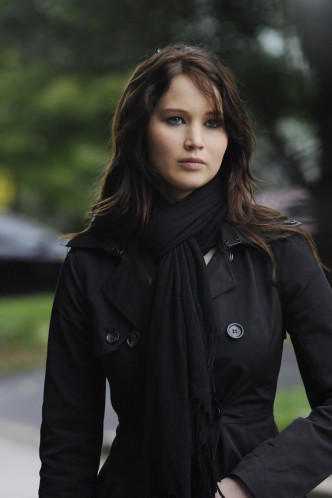
Silver Linings Playbook After guiding two actors to Best Supporting Oscars in 2010’s The Fighter, director David O. Russell returns (adapting his script from Matthew Quick’s novel) with another darkly comedic film about a complicated family that will probably earn some gold of its own. Though he’s obviously not ready to face the outside world, Pat (Bradley Cooper) checks out of the state institution he’s been court-ordered to spend eight months in after displaying some serious anger-management issues. He moves home with his football-obsessed father (Robert De Niro) and worrywart mother (Jacki Weaver of 2010’s Animal Kingdom), where he plunges into a plan to win back his estranged wife. Cooper plays Pat as a man vibrating with troubled energy — always in danger of flying into a rage, even as he pursues his forced-upbeat “silver linings” philosophy. But the movie belongs to Jennifer Lawrence, who proves the chops she showcased (pre-Hunger Games megafame) in 2010’s Winter’s Bone were no fluke. As the damaged-but-determined Tiffany, she’s the left-field element that jolts Pat out of his crazytown funk; she’s also the only reason Playbook‘s dance-competition subplot doesn’t feel eye-rollingly clichéd. The film’s not perfect, but Lawrence’s layered performance — emotional, demanding, bitchy, tough-yet-secretly-tender — damn near is. (2:01) (Cheryl Eddy)

The Twilight Saga: Breaking Dawn – Part 2 The final installment of the Twilight franchise picks up shortly after the medical-emergency vampirization of last year’s Breaking Dawn – Part 1, giving newly undead Bella Swan (Kristen Stewart) just enough time to freshen up after nearly being torn asunder during labor by her hybrid spawn, Renesmee. In a just world, Bella and soul mate Edward Cullen (Robert Pattinson) would get more of a honeymoon period, given how badly Part 1’s actual honeymoon turned out. Alas, there’s just enough time for some soft-focus vampire-on-vampire action (a letdown after all the talk of rowdy undead sex), some catamount hunting, some werewolf posturing, a reunion with Jacob (Taylor Lautner), and a few seconds of Cullen family bonding, and then those creepy Volturi are back, convinced that the Cullens have committed a vampire capital crime and ready to exact penance. Director Bill Condon (1998’s Gods and Monsters, 2004’s Kinsey) knows what the Twi-hards want and methodically doles it out, but the overall effect is less sweeping action and shivery romance and more “I have bugs crawling on me — and yet I’m bored.” Some of that isn’t his fault — he bears no responsibility for naming Renesmee, for instance, to say nothing of a January-May subplot that we’re asked to wrap our brains around. But the film maintains such a loose emotional grip, shifting clumsily and robotically from comic interludes to unintentionally comic interludes to soaring-music love scenes to attempted pathos to a snowy battlefield where the only moment of any dramatic value occurs. Weighed down by the responsibility of bringing The Twilight Saga to a close, it limps weakly to its anticlimax, leaving one almost — but not quite — wishing for one more installment, a chance for a more stirring farewell. (1:55) (Lynn Rapoport)

The nudists file suit

32

You all know the joke: What did the unsuccessful lawyer who joined a nudist colony never have? (A suit. LOL. Sort of.)

But a successful lawyer just filed a detailed suit trying to stop San Francisco from enforcing a ban on public nudity, and it makes a lot of interesting points. You can read the filing here (pdf). I’ll get beyond the fact that a legal argument over nudism uses the terms “prong” and “thrust” and “penal” all in a few short paragraphs, and get to the substance:

Attorney Christina DeEduoardo claims that her clients use nudity as a form of free speech and protest — and given who they are, it’s a pretty good argument. You’ve got a guy who ran as the nudist candidate for mayor and a woman who took her clothes off at a Board of Supervisors meeting for political reasons, and they contend that they have the right to appear naked in public.

The claim seeks a restraining order prohibiting the Board of Supervisors from enacting the law, but a federal judge already nixed that, according to City Attorney spokesperson Matt Dorsey. Instead, all parties have to wait unitl the supes approve the law, at which point this will become a motion for an injunction against the law taking effect.

So banning a handful of people, mostly older guys, from hanging out naked on Castro Street is going to become a legal battle that will cost the city a bunch of money. Unless sanity prevails and Sup. Scott Wiener, the city attorney and the nudists can reach a deal, which might be pretty simple:

It’s cool to get all nekkid (although it won’t be happening much in the next few months, way too cold). But maybe the Castro Guys can agree not to wear cockrings that attract attention to their dicks (and seem to be the proximate cause of all the fuss). Just be natural when you go au naturel, and we can all stop fighting over this.

You think?


The Faint will play ‘Danse Macabre’ in its entirety this weekend

0

It’s been a decade since the release of the Faint’s stand-out album, Danse Macabre. Nuts, right? With Saddle Creek Record‘s release this month of the deluxe edition of its landmark album, the somewhat dormant dark wave band is now touring and playing Danse Macabre in its entirety; that tour takes the Faint to the Regency Ballroom this weekend (Sat/17).

Originally released on Saddle Creek at the height of its buzz, the Faint’s crisp and flashy third studio full-length was a standout during the early electro-pop buzz of the Aughts, sounding like it was crafted by a dance-punk band with a heavy metal guitarist, which it pretty much was. Do you remember “Agenda Suicide” pumping out of boomboxes at every party in 2001, and swallowing up goth club and new wave dancefloors? I do.

On the eve of the Regency show, I shot synth-master Jacob Thiele a few rapid-fire questions about the band’s influences, Danse Macabre, and what the members have been up to the past few years (hint: some have been DJing under the name Depressed Buttons):

San Francisco Bay Guardian What’s it been like revisiting ‘Danse Macabre’? 

Jacob Thiele Actually all the songs on the album that we’ve neglected in our live show over the years have so far been the most fun to play as a band. So I think we’re all looking forward to finally playing those for everyone, as well as showing off our new songs!

SFBG There’s been an increasingly trend of ‘whole album’ shows, what are the advantages to this? Why did you decide to do it for this deluxe version release?

JT With the re-issue coming out it seemed right. We are doing it a little differently than other bands, in terms of how we play the whole album.

SFBG What other songs will you be playing during this tour? 

JT We’re also going to be selling a limited edition 12-inch of the current versions of our new songs, which we’re really excited about! We are playing some of our new songs from the 12-inch and songs from all of our albums.

SFBG Did you feel on the verge of something new when ‘Danse Macabre’ first dropped, or before it with ‘Blank-Wave Arcade’? 

JT At that time all of our friends were also in bands and everyone was doing something, recording, touring, etc, so it did not feel like anything different was happening to us.

SFBG Were you influenced by any of the first wave of dance-punk, ESG and the like? 

JT Yeah totally, all of that stuff was great and really important to us. Todd made a mix for an online magazine [that] sums up a lot of what we have been into over the years and it is a great listen.  

SFBG What have you all been up to since 2008’s ‘Fasciination’? 

JT We have been DJing a lot, some of us did some music under the name Depressed Buttons that our friends at Mad Decent released. 

SFBG Are there any plans for a new record? 

JT We have this 12-ich for now and we are working on more new music. 

The Faint
With Trust, Casket Girls
Sat/17, 8pm, $25-$27
Regency Ballroom
1300 Van Ness, SF
www.theregencyballroom.com

Howard Wallace, LGBT icon, dies at 76

6

Howard Wallace, a longtime organizer who played a key role in bringing the LGBT movement and labor together in San Francisco, died Nov. 14. He was 76 and had been struggling with Alzhiemer’s disease.

Wallace grew up in Denver, and according to a biography by Andrej Koymasky, was forced to drop out of college when his father saw some United World Federalist literatature he’d brought home and told him to drop of of “commie” politics:

“He put a couple of checks on the dining-room table – the checks for next year’s tuition – and said, ‘Get out [of activism] and you can have those checks.’ I tore them up in his face, and that was the end of my college education.” 

Instead, he began a series of blue-collar jobs that brought him into labor organizing.

By the early 1970s he was in San Francisco, part of a generation of activists that included the late Hank Wilson and Assemblymember Tom Ammiano, who together helped form a group called Bay Area Gay Liberation.

“He made bridges,” Ammiano told me. “He came to BAGL and told us we had to support Cesar Chavez, and some of us were reluctant — you know, it was the Catholic Church, homophobia, all of that. But he convinced us to go on that march, and we were all glad we did.”

Wallace was a founder of the Lesbian-Gay Labor Alliance and later Pride at Work, and he was instrumental in bringing LGBT workers into the labor movement — and also bringing labor support to LGBT causes.

In 1974, Wallace worked with members of the Teamsters Union — not a group always known in those days known for enlightened attitudes towards gay people — on a boycott of Coors beer.  The teamsters were fighting bad labor practices at Coors, including a mandate that all employees take a lie-detector test that incuded the question “are you a homosexual?”

Working with both sides, Wallace got the LGBT community to sign on to the boycott, got Coors out of many of the bars in the Castro — and made lasting connections between local labor leaders and the LGBT community.

“He’s the one who brought Harvey Milk into the Coors boycott,” Ammiano recalled. “And he was never afraid to call out labor leaders when they were being homophobic.”

Like all great organizers, he could be persistent to the point where he was sometimes infuriating — but always, always pure of heart. “He was a character,” Ammiano said. “I never knew what color his hair would be, but I always knew what color his politics would be.”

Tommi Avicolli Mecca, a longtime activist and writer on LGBT history, said Wallace was “a giant among us. He was always there, for the rights of union members, the poor and working class, antiwar activists … you could always count on Howard to be there.”

Mecca noted that Wallace “saw the connections between the LBGT movement and disenfranchised people everywhere. He saw the queer struggle as part of a larger struggle for social and economic justice.”

He will be sorely missed, but as Mecca said, “we will always have his legacy; future generations can look back and understand what our movement was about.”

Said Ammiano: “I hope he and Hank Wilson are up there tipping a few back and talking about Lenin vs. Trotsky.”
 
A memorial is pending, and I’ll keep you posted as updates are available.

UPDATE NUMBER 1: State Sen. Mark Leno told me that Wallace “was not only a dear friend but a teacher. His values were strongly intact.” Leno recalled chairing the fundraising drive for the LGBT Center, a huge undertaking, and accepting a check from Coors for $5,000. “I though I had done due diligence, I knew the boycott was over, but Howard came to our board meeting and convinced us that the LGBT Center had to be above reproach.” 

(I’m sure Howard Wallace didn’t use those exact words).

“It was after that that we became good friends,” Leno said.

UPDATE NUMBER 2: From Gabriel Haaland, Pride at Work co-vice-president (SEIU< SF): I don’t know if most progressives know how much Howard gave to us all. I know there are so many who considered him a mentor and an inspiration. For those of you who don’t know him, Howard had a way of connecting the dots across so many issues. A legend and a hero for sure. A fearless warrior for justice, Howard was both passionate and gentle in his own way… He gave so much of himself and taught me so much in the rashness of my younger years. Even in death, he continues to inspire me to be better than I was before, more in integrity. I honor those who took such good care of him in the last year, like Kathy Lipscomb, Carl Finamore, Tab Buckner, Eileen Hansen, and Susan
Englander. I will miss him.

The Performant: Strindberg sans helium

0

A singular marathon

Preparing for a marathon of theatre is similar to preparing for any other kind. Of paramount importance: lots of rest, good hydration, comfortable layers.

This year’s test of my theatre-going tenacity, clocking in at 11.5 hours, came courtesy of the ever-ambitious Cutting Ball Theater, who, with translator Paul Walsh, have been preparing for this event for years: the production of a five-play cycle of August Strindberg’s “chamber plays,” written in the last years of his life. After a year-long series of staged readings, and creation of an archival website, the Strindberg cycle debuted in repertory on October 12, including four all-day marathons of the entire cycle of which I attended the first (the last will play this Sunday, November 18). 

Here’s the play-by-play:

High noon: Settled in our seats we get the obligatory rundown of the planned marathon route, safety announcements, and acknowledgments, after which the cycle kicks off with both bang and whimper. The lonely howl of a night wind groans above the figure of an elderly man haunted by memories of a lady, dazzling in a red, floor-length gown and long velvet gloves, holding her hand out to him. These silent vignettes precede each piece, boiling down the heart of each into a single powerful image.

The first leg lasts just under three hours. Written in 1907, the plots of both “Storm” and “Burned House” revolve around a pair of elderly brothers, played in both instances by James Carpenter and Robert Parsons. The tone is somber, grim, accentuated by the heavy dark wood of Michael Locher’s set, the almost soporific murmuring of Cliff Caruthers’ sound design, and the ice-cold lighting palette of York Kennedy. The pace is deliberate, unhurried, almost languid, the action mostly confined to verbal showdowns and uncomfortable revelations. The calm in the center of “Storm,” the practical, incurious housemaid played by Ponder Goddard, points to a redemptive path not taken, while in “Burned House,” the crime of arson tarnishes even the most innocent characters with a patina of suspicion, almost noirish in its relentless besmirch. 

4:30pm: After a coffee and stretch break the second leg of our journey, “The Ghost Sonata” quickly assumes a level of domestic intrigue only hinted at by the first two plays. Another elderly man nearing the end of his days (James Carpenter again) takes on a youthful protégé (Carl Holvick-Thomas), promising to make him his heir. That’s about the most prosaic moment of the play, as ghosts wander in and out of each character’s periphery, an elderly woman who believes she is a parrot becomes an avenging angel, and a young woman surrounded by “virginal” hyacinths succumbs to her own death perhaps for no other reason than that she’d nothing left to say.

6pm: A welcome dinner break arrives, a time for fortification and rumination, or anyhow Thai food and Irish whiskey. 

8:30pm: The last laps of our journey are, by design, the most harrowing. “The Pelican” features the most dysfunctional family yet (it hardly seems possible). A cruel mother played to the hilt by Danielle O’Hare, who might be about thirty years too young to portray a matriarch who recently celebrated her silver anniversary, but whose fierce, uncompromising demeanor give her villainy an enjoyable heft. Her sleazy, social-climbing son-in-law Axel (Carl Holvick-Thomas) and her cringing, abused children (Caitlyn Louchard and Nick Trengrove) give her ire plenty of reach and when her own comeuppance comes its hard not to feel disappointed that such a witch could not be suffered to live.

By contrast, O’Hare’s self-absorbed character in the evening’s final play “The Black Glove,” gets an opportunity to redeem her reputation in the eyes of her household, as well as those of a pair of supernatural beings (David Sinaiko and Ponder Goddard) sent to teach her a lesson on Christmas—shades of A Christmas Carol. It’s described as Strindberg’s most light-hearted chamber play, but by 11pm weariness begins to take its toll, and my patience for redemptive speechifying worn thin. But when at last the marathon ends at 11:30 a sudden rush of adrenaline buoys us all up and over the finish line, everyone a winner. 


Fell/Oak bike lane project appealed

56

Long-awaited bicycle and pedestrian improvements along Fell and Oak streets – a key east-west connection where fast-moving cars create sometimes-scary conditions for cyclists – approved last month by the Municipal Transportation Agency’s board suffered a couple frustrating setbacks last week.

First, on Nov. 5, the project was appealed to the Board of Supervisors by area residents Mark Brennan, Howard Chabner, and Ted Loewenberg, who charged that it violates state environmental laws and the Americans with Disabilities Act and should be subjected to a full-blown Environmental Impact Report rather than relying on the overall Bicycle Plan’s EIR.

The MTA is confident the appeal will be denied, so its crews went ahead with the project, removing the existing bike lane markings and then just leaving it that way for the last week, creating a confusing and potentially dangerous situation for both motorists and cyclists. It also raised fears among project supporters that the two developments were connected.

But MTA spokesperson Paul Rose told us there is no connection and “we expect to begin striping tomorrow, weather permitting.” He also said the agency heard the concerns from cyclists and this week put up signs urging motorists to share the road with cyclists and placing flyers on cars parked along the stretch.

As for the appeal, Rose said, “We have confidence that the environmental work that went into this project was appropriate and the appeal will be denied.”

Leah Shahum, executive director of the San Francisco Bicycle Coalition – for whom this project has been a top priority for years – echoed the optimism and emphasized the extensive outreach effort that has gone into this project.

“I think it’s unfortunate that there is the threat of delay to a project that has gone through so many years of community input and has such strong support,” Shahum said. “There are a few individuals who are trying to delay the project, but I’m happy to hear the MTA is moving it forward anyway.”

The appeals hearing has been tentatively set for Dec. 11. Once completed, this will be one of just a few cycletracks – or bikeways that are physically separated from automobile traffic – in San Francisco, something bike activists hope to see more of in the coming years.

Oh well, Pelosi’s going to stick around

32

For a while there some of us thought that Rep. Nancy Pelosi, who failed to win back a house majority for the Democrats, might decide her time was up and step down as minority leader (which would probably have meant retiring from Congress). That would have set off one of the hottest political battles in town; just about everyone knows that Pelosi’s daughter is interested in the seat, but there’s no way she was going to get it without a fight. There are lots of ambitious people in this town who would jump at a once-in-a-lifetime chance at a Congressional seat, starting with possibly all of our current state Legislators and a few supervisors.

Would progressives and independents sick of the notion of a Pelosi family dynasty get behind one candidate (say, Mark Leno)? Would Scott Wiener, who Leno has supported and mentored all these years, run anyway, arguing for a younger candidate who could be around for long enough to get seniority? Would Leland Yee, who will be termed out and didn’t get elected mayor, jump in the race? Would Tom Ammiano, who doesn’t seem at all ready to retire?

Lots of crazy speculation — and now it appears we’ll have to wait two more years to go through it again. Because, barring a huge upset in the Democratic Caucus, Pelosi’s sticking around.

I’m not so thrilled about that — and I swear it has nothing (well, almost nothing) to do with the amazing story that a contested race would create for political reporters. It’s just that Pelosi’s been a big disappointment to San Francisco; she cares more about her national constituency that about her district, and her legacy achievement is the privatization of a national park.

It would be nice to get someone representing San Francisco who represented San Francisco values.

Oh well.

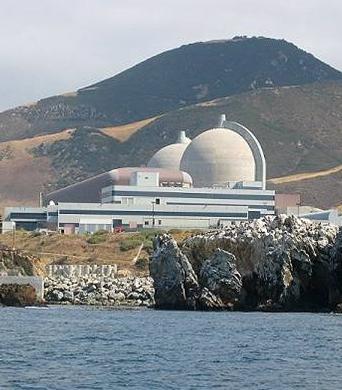
Diablo Canyon: What else do we need to know?

2

So PG&E wants to frighten, deafen, and kill a whole lot of marine mammals and fish by blasting sound waves at the Ocean floor — to discover exactly what? That there are, indeed, a lot of earthquake faults right near the Diablo Canyon nuke — and that a serious quake risks cracking the containment facility or toppling the whole thing into the sea, contaminaing much of the coast and poisoning a huge population area?

Don’t we already know that?

Don’t we already know that the plant was a terrible idea when it was built and is a worse one now?

It’s well established that a major strike-slip fault (the Hosgri) runs right offshore, and that another one (the Shoreline) is even closer. The whole Morro Bay area is riddled with faults. If one of them goes, it could cause others to go, and that could create a whole lot of shaking, quite possibly more than the aging plant could handle.

Nuclear power plants of Diablo’s vintage were designed to operate for maybe 40 years. PG&E wants to relicense it for another 25. Why not? The company paid about $7 billion to build the thing, and the longer it runs, the more money comes into the corporate coffers.

But one would think that, given what we now know about nuclear plant disasters, that the existence of such a precarious seismic zone so nearby would be ground to shut the thing down, or certainly to let its current license expire without renewal. I’m sure PG&E’s scientific study will show that there’s no danger to the public — that’s what every study the company has done on Diablo has shown — but really? Don’t we know better?

Taking flight with Juan Atkins, co-originator of Detroit techno

0

Juan Atkins will perform songs from the Cybotron and Model 500 catalogues with a four-piece electronic group, including “Mad” Mike Banks of Underground Resistance, Mark Taylor, and Milton Baldwin, this Friday at No Way Back’s three-year anniversary party at Mezzanine.

When I first Googled “Model 500” the search results surprised me. I expected to find a clue as to why Juan Atkins named his mid-1980s solo music project after what sounded like a blueprint for a piece of consumer technology, like some sort of hyper-evolution of the Model T.

But the choices between a rotary telephone from the post-war period and a newly minted Smith & Wesson revolver, both model 500s in their own rights, left me wanting. When I ask Atkins whether there was any story behind the name, he suggests another way of reading it: “It was something I used to repudiate ethnic designation. It wasn’t named after any model or any particular piece of equipment.”

A more illuminating answer.

For it’s telling that one of the originators of Detroit techno — who first together with Rik Davis as Cybotron not only exploded what was expected of black American music, but also reinvented the possibilities for machine generated music — would substitute android names for human ones.

https://www.youtube.com/watch?v=KNz01ty-kTQ

Already the word Cybotron contained the material trace of the cyborg, spun into rapid particle acceleration by the cyclotron. “Not that I was hiding my name,” Atkins clarifies. “When I first started making music in the ‘80s, the music industry was still really racially polarized. Even in America it still is that way to a certain degree. It was harder to cross over to certain genres, so I wanted to put more emphasis on the music as opposed to the person behind the music.”

Atkins put emphasis on the music in part by releasing it independently on his own imprints, Deep Space and later Metroplex, which is still operative nearly three decades later. But apart from the prejudices held by the industry, Atkins’ music reminds us that the production, distribution, and consumption of music is already caught up in an artificial network of mass production, even on independent labels.

At the very least, it’s contaminated in advance by the prosthetic apparatus that makes possible recording, listening, and performance. The name Model 500 then uncovers another achievement of techno as a genre: it refuses cheap illusions of authenticity by calling into question any pure separation between human creativity and technology, between feeling and artifice.

It’s strange that the sole contender against Cybotron’s “Alleys of the Mind” for the first techno single is A Number of Names’ “Sharevari.” Apparently they were both released only weeks apart in 1981, and no one has properly settled which came first. Once again, the human name, the proper name of the artist, is put under erasure for the benefit of the machine, this time a number: a number of names.

On the one side, we have the deep recesses of the mind mapped onto the neglected alleys of an otherwise manufactured and pre-programmed city. “Alleys” conjures images and feelings corresponding with a post-industrial wasteland, tempered in the shadow of Motown’s ghost and Detroit’s crumbling automobile industry, or as Ridley Scott’s Bladerunner would come out only one year later, a devastating post-human condition in which all life is gradually but inevitably devoured. On the other side, we have charivari, a word associated with all sorts of discordant music, disarticulated syntax, and mutilated proper names.

Yet, Atkins finds a hint of autonomy in disembodied music, especially in the robotic voice, freed from the social constraints that would root the lyricist in a localized body, and thus delimit its possibilities in a determinate space and time. Working with drum machines and synth keyboards that were made newly available and affordable, Atkins freely allowed the new instruments to guide the course of his music.

“There was no real plan or formula. Even the choice of the words was predicated on how well you can work the software,” he explains. “I used some primitive software — not even a vocoder; it was electronic speech software used for the Commodore 64 computer. The actual delivery of the lyrics was limited by the software, and our vocal skills, to make it work properly; it was really more of a mistake that the lyrics sounded as robotic as they did.”

http://www.youtube.com/watch?v=rRVb47WtINI

Chance encounters between human and machine produced unheard possibilities. In “Clear,” a mechanically fissured voice repeatedly calls for the destruction of old programs in order to make way for the new. But an ambivalence wavers throughout; when the electric speech “tomorrow is a brand new day” emerges over a tremendously explosive rhythm, they invoke an anxious threshold between terror and hope.

As a friend of mine, whose intimacy with “Clear” cannot be overstated, put it: I get the impression that tomorrow has gone dark. Ever hopeful, I still have the impression that this darkness bears the promise of a new dawn.

“There’s a whole ideology that goes hand in hand with techno music, or electronic music,” Atkins says. “My way of thinking is that the ideology comes out in the lyrics. They had to be just as profound as the music.” A recently recovered Cybotron song, “Dreammaker,” depicts at least one of the ideological dimensions of Atkins’ machine-generated music: a cosmic escape.

Over drum sequences snared in delay and worming synth lines, an intoxicated voice addresses the maker of dreams to let him take flight “to the stars.” His appeal repeats, whirls, intoxicates. Punctuating the narrative, sound effects of a spaceship taking liftoff to a distant star culminate the song, calling us to imagine an escape from the disappointments and frustration wrought by planet Earth. For only the workings and unworkings of the imagination are able to resist the pressures of our reality. Perhaps Atkins’ music then becomes the vehicle, an unreal piece of futuristic technology, for the flight of the imagination.

https://www.youtube.com/watch?v=h_Nutr-Mx78

The interconnected thread of speed, flight, and escape is also weaved into the more muscular configuration of sound underwriting the signature of Model 500. In “Night Drive (thru Babylon),” the mechanized refrain of “time, space, transmat” buzzes over speeding sub-bass frequencies, as if the intensified acceleration of the song itself could dematerialize and transmutate our own bodies captured in the web of rhythm.

Kraftwerk’s mark is here unmistakable but calibrated to the propulsive swing of funk. The drums reach such overwhelming claustrophobia in “No UFOs” that it violently increases a growing desire for release. But where could we find this release? When listening, I gather the sense that these injunctions for flight don’t invite the decadent escapism that is so often associated with electronic dance music; rather, they subtly indicate the possibility of the unknown, a world foreign to our own, not yet in being.

Much of Cybotron and Model 500 fuels this desire for the unknown, nourishing a nearly forgotten hope, dim and repressed, for renewal, even for the collective transformation in which proper names would no longer evoke exclusion and carry the weight of injustice. “As long as the theme and the recurring thread is the new, or the future, then basically, the future is what you make it,” Atkins reminds us. “Synthesis means to make something from nothing—almost.” He paused, before qualifying the almost. “I would never put a formula onto what the future is.”

No Way Back with Model 500
Fri/16, $20, 9pm
Mezzanine
444 Jessie St, SF
www.mezzaninesf.com