SFBG Blogs

Feds’ use of spy tools under scrutiny due to privacy concerns

If the FBI is trying to pinpoint the location of a suspect in your neighborhood, investigators could sweep up information from your mobile device just because you happen to be in proximity to their target. Civil liberties advocates are concerned that the practice is a major invasion of privacy.

The results of a Freedom of Information Act request filed by the Northern California chapter of the American Civil Liberties Union (ACLU) and the San Francisco Bay Guardian last year sheds new light on the federal government’s use of Stingrays, a surveillance technology that mimics a cellphone tower by automatically connecting with mobile devices in the area where a search is being conducted.

Stingray is a brand name, but the devices are sometimes called Triggerfish, digital analyzers, or cell site emulators. They’re known to technologists as IMSI catchers, meaning they can intercept a user’s International Mobile Subscriber Identity.

As the ACLU of Northern California noted recently in a blog post, Department of Justice emails obtained in response to the FOIA request, filed with the US Attorney’s Office of the Northern District of California, revealed that federal agents who sought authorization to conduct searches using this technology were “less than forthcoming” about what the devices actually do.

The issue stems from federal investigators’ request for a search warrant several years ago targeting Daniel Rigmaiden, a hacker accused of committing fraud. The search was authorized, but it seems agents never explained just how wide a net they intended to cast.

Because FBI agents used an IMSI catcher rather than, say, triangulation techniques that can utilize subscriber data to find their target, they were able to pinpoint Rigmaiden’s precise location – not only revealing that he was inside a Santa Clara apartment building, but sniffing down to the level of his exact unit. 

But when a search of this kind is conducted, a Stingray automatically connects with every other mobile device in the immediate vicinity that uses the same provider (in this case, Verizon). It works by masquerading as a cell phone tower, tricking mobile devices into automatically communicating with the spy device. So any other Verizon subscribers who happened to be nearby also had their information caught up in the FBI’s net.

There are various kinds of IMSI catchers, and some are capable of sweeping in the contents of communication, such as text messages. In the Rigmaiden case, investigators said were only able to access subscriber information. Investigators also reported that they “purged” unneeded data after the fact, according to ACLU staff attorney Linda Lye. But purging the data also makes it impossible to prove that the information of particular individuals was wrongfully swept up in a search. 

The FOIA request was filed in April of last year. Last July, after the government failed to provide the information, a lawsuit was filed to get the documents.  

The string of emails that was finally provided suggests that federal agents have been using this sort of technology in the field for some time, without clearly representing to judges that Stingrays can vacuum up third party communications data. Instead of being explicit on this point, agents from the Department of Justice merely stated that they wanted to use a mobile tracking device.

“It has recently come to my attention that many agents are still using [IMSI catchers] in the field although the pen register application does not make that explicit,” notes an internal Department of Justice email obtained through the FOIA request, referring to a different kind of search technique that is more narrowly targeted. 

Lye drilled down on this point in her blog post:

“The federal government was routinely using stingray technology in the field, but failing to ‘make that explicit’ in its applications to the court to engage in electronic surveillance. When the magistrate judges in the Northern District of California finally found out what was happening, they expressed ‘collective concerns,’ according to the emails. Notably, this email chain is dated May 2011, some three years after the Stingray’s use in Rigmaiden’s case – meaning the government was not ‘forthright’ in its applications to federal magistrate judges for at least three years.”

After battling for months in court in a separate proceeding, the ACLU of Northern California also succeeded in unsealing the Northern District DOJ orders that authorized use of the surveillance devices. Now, the civil liberties advocates are partnering with the Electronic Frontier Foundation and other groups to file an amicus brief concerning the constitutional implications of using a Stingray to collect evidence in the Rigmaiden case. “Their use implicates the privacy interests of the suspect, as well as untold numbers of third parties as to whom there is no probable cause,” the lawyers argue.

“When we read the orders, we were very, very surprised and troubled,” Lye noted in a recent conversation with the Guardian. “Because the government was arguing in the criminal proceeding in Rigmaiden, yes, we acknowledge that we’ve used this cell site emulator, and we’re even … acknowledging that the device is intrusive enough in the way it operates to constitute a search – which is a significant concession.”

For more on Stingrays, pick up next week’s issue of the SFBG.

Localized Appreesh: Sunbeam Rd.

0

Localized Appreesh is our thank-you column to the musicians that make the Bay. To be considered, contact emilysavage@sfbg.com

I’m a lover of past treasures. I like my music vinyl, and I like my mail snail. Sure, I download thousands (millions would be hyperbolic, right?) of tracks a year, send hundreds of emails a day, tweet with the rest of them, and then some. Technology is still my friend, but vintage pleasures will always be my lover. Hence, my delight with the arrival of a colorfully confetti’d physical postcard from psychedelia-minded local fuzz-pop trio Sunbeam Rd., announcing the group’s 50th show.

The  San Francisco band’s debut LP, Breathers, came out last October, and I slept on it then, so I’m not making the same mistake twice. And while its psychedelic guitars, tender melodies, and fuzz-layered pop hooks may be blissfully of another era, Sunbeam Rd. also knows how to harness modern technology – it raised enough money through Kickstarter last year to press the record on vinyl. 

The band is made up of brothers Trevor Hacker and Clive Hacker, along with Harrison Pollack – all graphic design graduates from California College of the Arts (you might get a sense of that in the cat-filled video for swirling “Lucy”).

Check it out below and then see the trio live this weekend at Bottom of the Hill, celebrating 50 performances on the Sunbeam Rd.
http://www.youtube.com/watch?v=Z8ziAxlNZa4

Year and location of origin: TREVOR: We formed in early 2009 after setting up a drumset and some amps in the kitchen of the flat where Harrison and I used to live near Glen Park. Our roommates must have hated us.

Band name origin: HARRISON: In the ’80s, NASA was planning to build a big spaceport near the Air Force base in our hometown. It was slated to be like the West Coast Cape Canaveral but NASA pulled out at the last minute for some reason relating to the Challenger disaster, leaving the town in a severe recession.

One time my friend that worked on the base took me to the hangars that NASA built and never used. “The Sunbeam Road” was the nickname give to one of the landing strips, which had been gradually falling apart over the last 20-30 years. It was a super eerie place in contrast to the overly optimistic name. It kind of stuck with me for some reason.

Band motto: CLIVE: Wise men say forgiveness is divine, but never pay full price for late pizza.

Description of sound in 10 words or less: Hook-laden, fuzz-saturated trance states.

Instrumentation: CLIVE: Drums; TREVOR: Vox/Guitar; HARRISON: Bass.

Most recent release: BREATHERS (our debut LP) and BREATHERS Remixed.

Best part about life as a Bay Area band:
TREVOR: Road trips to Mt. Diablo, Big Sur, Point Reyes, and course all of the live music & great record stores.

HARRISON: Close proximity to the Based God.

CLIVE: What Harrison said; Also, it’s certainly never boring being a band in the Bay Area. There’s constantly something new and/or different happening that has yet to be explored.

Worst part about life as a Bay Area band:

TREVOR: It aint cheap!

HARRISON: The feeling that the Based God is so close, yet so far away.

CLIVE: What Harrison said; Also, it’s too easy to be complacent here in San Francisco.  

First album ever purchased:

CLIVE: I believe it was Whatever and Ever Amen by Ben Folds Five.

TREVOR: Blur, Blur.

HARRISON: Smash, The Offspring.

Most recent album purchased/downloaded:

CLIVE:  Acquiring the Taste, Gentle Giant.

TREVOR: Stone Shift, Larry Ochs Sax and Drumming Core.

HARRISON: Jack The Tab/Tekno Acid Beat, Psychic TV.

Favorite local eatery and dish:

CLIVE: #19 on the menu at Evergreen Garden (pho with five-spice chicken). It’s just great!

TREVOR: Little Yangon in Daly City. Pork and sour bamboo shoot curry with coconut rice

HARRISON: Taqueria Vallarta’s street tacos are basically the only things I like to eat.

Sunbeam Rd.
With Halsted
Sun/7, 9pm, $9
Bottom of the Hill
1233 17 St., SF
www.bottomofthehill.com

Norquist exposes tax avoiders

12

I’m not a big fan of Grover Norquist, who will be in town April 4 and who is so against taxes that he apparently would have refused to pay his share of the cost of World War II (back when the government actually asked taxpayers to pay for wars as they were being fought, instead of pretending they were free and borrowing money that future generations will have to repay). Michael Krasny, the host of Forum, had Norquist on April 2 and didn’t ask the guy if he would have cut the taxes used to fight the Axis Powers (there was even an “excess profits tax” on corporations during the war years).

But they did have some interesting back and forth about taxes, and Norquist made an interesting observation, one that I actually agree with. (Yes, trolls — I have found myself agreeing with Grover Norquist.)

Krasny asked him about the pledge that Bill Gates and Warren Buffett made to give away half of their wealth before they did. Krasny seemed to think this was a great thing. Norquist was fine with it, too, but he put it in context:

What the great philanthropists are actually doing is avoiding the estate tax.

By giving away their money to causes they choose, Gates and Buffett will prevent the US government from collecting taxes on that money when they die — meaning, in effect, that the very rich who go along with this plan are saying they would rather they choose the beneficiaries of their largesse than allow the elected officials who represent the public to have a hand in redistributing the wealth.

That’s the thing about philanthrophy — it’s a fine, of course, but it’s also a way for the very rich to decide what they want to fund — and in many cases we’re talking about museums and universities, not homeless shelters and indigent mental-health programs.

If we taxed Gates and Buffett at a reasonable level (and even Buffett says his taxes are way too low), then we might not be looking at cuts to in-home support services and other life-saving programs that the government “just can’t afford” these days. (Of course, if we hadn’t spent $2 trillion and counting on wars in Iraq and Afghanistan — or if we’d raised taxes to the level needed to pay for those wars, which would have meant an end to them, we wouldn’t be in such a deep fix anyway.)


GOP ‘dark wizard’ and Occupy ‘anti-leader’ to speak in SF on the same day

This coming Thursday, a central intellectual figure of the Occupy Wall Street movement will give a talk on “Austerity and its Discontents.” And across the city, at the very same time, powerful anti-tax lobbyist Grover Norquist will mix it up with an elite group of San Francisco Republicans (yes, they really do exist).

Graeber, an American anthropologist and anarchist who teaches at Goldsmiths, University of London, was dubbed “the anti-leader of Occupy Wall Street” in a Bloomberg BusinessWeek Magazine article published shortly after a determined band of committed activists staked a claim on Manhattan’s Zuccotti Park, kicking off the global Occupy movement. Graeber’s tome on wealth inequality, Debt: The First 5,000 Years, recounts the ages of human history through the lens of the indebted, vis-à-vis their creditors. The book helped give rise to Occupy activists’ famous chant: “We are the 99 Percent!”

Norquist hails from the polar opposite end of the political spectrum. An influential lobbyist who leads Americans for Tax Reform, he was once described as “the dark wizard of the Right’s anti-tax cult,” in the words of Arianna Huffington. The fiery conservative is most well known for his role as keeper of “the Pledge,” which essentially asks Republican lawmakers to swear that they will never, ever vote to raise taxes for any reason. 

The Thursday meet-and-greet, billed as “Cocktails with Grover Norquist,” is being hosted by the San Francisco Republican Party – a political body that barely registers as a blip as far as local elections are concerned, but apparently has enough clout to make it worthwhile for a famed operative like Norquist, whose group is based in D.C., to dip into San Francisco for a visit. The cocktail hour will be held at The City Club, a financial district venue. It costs $100.

Just as San Francisco Republicans sip cocktails and discreetly await the chance to engage Norquist in a few moments of powerful face-time, an audience of lefties will gather to hear Graeber’s studious analysis of global austerity measures and anarchist organizing tactics. Billed as a forum that’s free and open to the public, Graeber’s talk is being hosted by the Anthropology and Social Change Department of the California Institute for Integral Studies, located at 1453 Mission Street.

In a recent interview about the round of national budget cuts known as the sequester, Norquist told The Daily Beast: “I’m for the spending cuts. Just let them take effect. … The only thing worse than the sequester would be not reducing spending.”

And here’s Graeber’s take on the underlying economic climate that gave rise to the Occupy movement: “It’s becoming increasingly obvious that the real priority of those running the world for the last few decades has not been creating a viable form of capitalism, but rather, convincing us all that the current form of capitalism is the only conceivable economic system, so its flaws are irrelevant. … The economic crisis of the 1970s never really went away. It was fobbed off by cheap credit at home and massive plunder abroad – the latter, in the name of the ‘third world debt crisis.’ But the global south fought back. … The debt crisis has come home to Europe and North America, replete with the exact same approach: declare a financial crisis, appoint supposedly neutral technocrats to manage it, and then engage in an orgy of plunder in the name of ‘austerity.’”

Tree-sitter shot, 70 feet up, by CHP rubber bullet

55

Tree-sitting is nothing new. It’s happened all over California, going back decades. It’s a dangerous, but often effective protest tool that stops logging in its tracks.

Nobody with any official sanction is going to cut down a tree while there’s a human perched in it — and it’s been notoriously difficult for the authorities to remove people from platforms high above the forest.

And now, in Mendocino County, police response has entered a new phase.

California Highway Patrol officers April 2 began forcibly removing and arresting tree sitters trying to block Caltrans from clear-cutting an old-growth forest for the Willits Bypass. The tactics involved shooting at least one protester with a rubber bullet while he was 70 feet in the air.

The police used large-scale charry picker trucks to reach and “extract” the activists. Three have been removed so far; another two remain.

“We have reports of between three and nine bullets being fired,” Naomi Wagner, who is supporting the tree sitters, told me.

Matt Callaghan, who was on the scene when the arrests were made, said the man hit by the bullet, who goes by the name of Celsius, was “conscious and seemed okay when they got him down. He shouted that he was being taken to the hospital.”

Callaghan said that “there were also fists flying around up there. We were very concerned for the safety of everyone involved.”

No shit.

Why, exactly, would a rubber bullet be helpful in getting someone out of a tree? Isn’t there a pretty good chance the projectile could knock him to the ground (and his death)? Was this really necessary to build a road that fewer and fewer people in Willits seem to want?

I couldn’t reach anyone at the CHP, but Caltrans spokesperson Phil Frisbie confirmed to the Santa Rosa Press Democrat that “some less lethal means” were used on one of the tree sitters.

I’ll keep you posted as this develops. Seems like a lot of overkill for a simple trespass violation.


Heads Up: 7 must-see concerts this week

0

Is everyone else emotionally and physically exhausted from the Easter/Passover-torrential hailing downpour-April Fool’s Day (who can you trust on the Internet?) mess of the last few days? I certainly am, and I only participated in a few of those spiritual debacles.

No mind, I’m ready to strap on my wellies and/or sunglasses and embark on a week of Esben and the Witch, Mac DeMarco, Babysitter, Glam.I.Rock, Portland Cello Project, Future Twin, and Polkacide with Fuxedos.

Here are your must-see Bay Area concerts this week/end:

Mac DeMarco
“Mac DeMarco has written seven albums and EPs on a guitar that he bought for 30 Canadian dollars. He uses effects pedals that he claims no serious musician would be caught dead with. He’s self released four albums and coined a new genre — “jizz jazz.” Listening to DeMarco’s jangling, blissed-out pop tends to be a pleasant, laid-back experience, more reminiscent of surf pop than jazz. His calming baritone, soft and velvety, sounds like a less depressed Ian Curtis. Compared to his summery sound, DeMarco’s live shows, full of lewd humor, nudity, and scaling stage equipment with wild abandon, provide a sharp contrast. If you are easily shocked or offended, this may not be the show for you.” — Haley Zaremba
With Trails and Ways, Cocktails, Calvin Love
Wed/3, 8pm, $12
Rickshaw Stop
155 Fell, SF
(415) 861-2011
www.rickshawstop.com
https://www.youtube.com/watch?v=6bfTTeZOrs4

Portland Cello Project
The Portland, Oreg.-based indie orchestra, which is seven-deep on the cello, by the way, will play selections from the Beck song reader featuring Laura Gibson, along with some Brubeck and Bach, for good measure.
Wed/3, 8pm, $25
Yoshi’s SF
1330 Fillmore, SF
www.yoshis.com
http://www.youtube.com/watch?v=4K8ou0iA_68

Esben and the Witch
With swelling crescendos, emotional lyrics, gothy undertones, and shimmering vocals in tow, UK post-rock trio Esben and the Witch comes across the pond for the first time in two years, on tour with newest record, Wash The Sins Not Only The Face (Matador). Should be a witchy one.
With Heliotropes.
Thu/4, 9pm, $13
Brick and Mortar Music Hall
1710 Mission, SF.
www.brickandmortarmusic.com
https://www.youtube.com/watch?v=cnfx0cij2rw

Babysitter
Victoria, BC “grunge-and-roll” / “long-hair scuzz rocker” trio Babysitter has made its way through the tapes-splits-and-EPs scene since forming in 2010. Now signed to Montreal tastemaker label, Psychic Handshake Record, the band released its first proper full-length, Eye, in late ’12. This current tour takes the thrashy punks through house shows and taquerias, as it should.
With Easy Living, Hazels Wart
Thu/4, 7pm, $5
Casa Sanchez
2778 24th, SF
Facebook: Babysitter
https://www.youtube.com/watch?v=5yqP71Y87_4

Glam.I.Rock
Lyrically gifted young Oakland rapper Glam.I.Rock — the first half an acronym for “Good Lyrics And Music” — will perform a free in-store during Art Murmur this Friday. If you want to be in on an artist at the tipping point, this would be your chance. The MC has that classic ’90s female-empowerment hip-hop vibe but with some different interests (check the “Who is Glam.I.Rock?” video of her tapping out the Rugrats theme), and a more modern style. Though like her predecessors, she still very much reps her home-base, performing “Inspire Oakland” at the city’s Digital’s Inspiration Awards last December. Makes sense, she’s the daughter of Nic Nac — the only female member of the Mobb crew — and and Dangerous Dame, a member of Too $hort’s Dangerous Crew. Glam.I.Rock’s debut EP, The Feel, recently dropped on Savvie1ent/The Olive Street Agency.
Fri/5, 8pm, free.
Oaklandish
1444 Broadway, Oakl.
(510) 251-9500
www.oaklandish.com
https://www.youtube.com/watch?v=cHVIRAIFBEU

Rock/See: A Concert for the Roxie Theater
In the grand tradition of Live Aid, Farm Aid, and Kidney Now! (that last one might have been fictional), musicians in SF are stepping up to help something they care about: the Mission’s beloved Roxie Theater. The event is to support the Roxie’s campaign to renovate and upgrade its smaller theater, the Little Roxie. As the theater explains , “While many nonprofit arts organizations are joining forces with corporate entities…[we’re] partnering with members of San Francisco’s indie music community.” The Rock/See benefit boasts live performances by favored Bay Area lo-fi/garage rockers Thee Oh Sees, Sonny and the Sunsets, Future Twin, and Assateague. Being that this is for a movie hub, local filmmakers and artists are also getting in on the support: the event includes projections by Barry Jenkins, Jim Granato, and more.
Fri/5, 8:30pm, $25
Verdi Club
2424 Mariposa, SF
www.roxie.com
https://www.youtube.com/watch?v=ZMEGlZCY1o0

Polkacide and Fuxedos
“Sometimes, sweet serendipity steps up to create a lineup so stunningly perfect you can’t believe it’s true. That pretty much sums up the upcoming Polkacide and Fuxedos co-headlining gig, with the imitable Borts Minorts along for the ride as opening act. Individually, each band is well-worth the price of admission alone. You’ve got your punk rock polka, your post-punk, big band, nihilistic freakout (plus props) — and your avant-garde alien lifeform wields his dangerous dance moves and a bass made from a ski.”  —  Nicole Gluckstern
Sat/6, 9:30pm, $12
Bottom of the Hill
1233 17th St, SF
(415) 861-1615
www.bottomofthehill.com
https://www.youtube.com/watch?v=2IdrMuOdVPg

Live Shots: Texas is the Reason at Bimbo’s

1

Texas is the Reason’s show at Bimbo’s was not sold out, but it sure seemed packed as I struggled to find a good vantage point on Friday night. When I eventually got a clear view, I saw that the stage was hazily lit by dark blue-purple lights. The amplifiers and drum kit on stage were glowing, heavily draped with white Christmas lights. The visual, in its stark simplicity, was stunning.

This perfect, quiet kickoff was the reassurance I needed to prove that this wouldn’t be the gaudy, overwrought reunion that I had feared, but the graceful, tasteful gathering that I had hoped for.

Texas is the Reason was originally created in a flash flood of sad basement bands in the early ’90s. This era in rock saw an extreme surplus of angst and overly-emotional, self-indulgent music that created the term emo and then turned it into a dirty word. Distracted by all the Dashboard Confessionals and Saves the Days, it’s easy to forget about the bands that started the movement and influenced an entire era of musicians — the bands worth listening to.

Texas is the Reason was one of those watershed early emo bands. The band only released an EP and one full album before imploding in 1997, but its take on post-hardcore had already quietly spread its influence across the industry. Just around 16 years later, the group has resurfaced for one final nine-stop tour before it officially and permanently disbands.

The audience, which had been waiting at least a decade, to see this band, screamed as Texas is the Reason slunk onto the stage and started tearing through its first song. The hiatus took no toll on the band’s live presence. Guitarist Norm Arenas’ reverential expression seemed like transcendence as Scott Weingard swung his bass around like a weapon and Garrett Kahn crooned a whine, looking appropriately pained.

The sound, packed in taut layers over Chris Daly’s focused drumming, packed a serious punch. The musicians seem to play with great ease, as their years of experience have created an unbelievably tight groove. The entire performance, more than anything, seemed incredibly sincere. The lyrics didn’t seem outdated or outgrown, the songs were treated with just as much respect and conviction as they would be if they were new.

Fans responded in kind, shouting “thank you” between the songs. Some sang along, but most watched quietly and intently, stoically swaying and nodding. In the midst of shouted requests, one woman called out, “Anything! You guys rock! Play whatever you want!” This comment perfectly embodied the content, appreciative atmosphere of the concert.

The entire show felt like a meeting of old friends, catching up. The band clearly felt this closeness and camaraderie as well. “We’re happy you’re with us,” Kahn shouted, before asking, quite seriously, “Who’s coming to Los Angeles with us tomorrow? We’ve got room in the fucking van! Who’s coming?”

The band made no attempt to shield the crowd from its future state. “How many of you are seeing us for the first time tonight?” Kahn asked. “Well it’s the last time. It’s bittersweet.” After about an hour, the set drew to an emotional close. “This will be our last one,” Kahn told the crowd. “These songs belong to you now. They’re yours.”

Behind the decision to accept cuts to in-home support services

29

For the last four years, advocates for those with disabilities have successfully fought to stave off the 20 percent cut in In-Home Support Services that then-Gov. Arnold Schwarzenegger had proposed to help balance California’s budget, each year winning legal injunctions preventing the cuts while the case wound it way through the federal court system.

Their main argument is that such deep cuts in these vital services would discriminate against disabled or elderly Californians by forcing them into nursing homes rather than allowing them to receive services at home, which they contended was a violation of the Americans with Disabilities Act (I discuss this and other systemic devaluing of caregiving in last week’s Guardian).

The Ninth Circuit of Appeals was set to hear the California case (Oster v. Lightbourne) on March 19, and the judges in this famously liberal San Francisco-based court had just ruled against Washington state’s effort to make similar cuts (MR v. Dreyfus) just over a year ago. But then, on the eve of that hearing, proponents in the case announced a settlement that will result in an 8 percent across-the-board to IHHS services (allowing a 3.6 percent cut made by Gov. Jerry Brown now and another 4.4 percent cut to go into effect July 1).

While disabilities rights groups and other opponents of the IHHS cuts issued public statements that put a happy face on the settlement, emphasizing that it had avoided much deeper cuts, many advocates privately grumbled about accepting still-deep cuts to this popular and important program. After all, these cuts will hurt the families of those with disabilities (it is often relatives who are paid as caregivers by the program) and likely result in greater long-term costs from nursing home care and more emergency room visits.

So why did they settle? Sources close to the case who don’t want to be identified say a big factor was that two of the three judges assigned to the case – Carlos Bea and Diarmuid O’Scannlain – are the most conservative on the Ninth Circuit bench and seemed likely to rule against the disability rights community. In other words, those with disabilities drew bad cards.

Bea was appointed to the Ninth Circuit in 2003 by then-President George W. Bush after serving more than 20 years as a San Francisco Superior Court Judge (appointed in 1990 by another fellow Republican, then-Gov. George Deukmejian), where he received poor marks from local attorneys, who said he was biased in favor of Big Business.

O’Scannlain was a founding member of the right-wing Young Americans for Freedom back in 1960, later serving as a tax attorney for Standard Oil. He was in private law practice and serving as chairman of the Oregon Republican Party in 1986 when then-President Ronald Reagan – whose presidential campaigns he had worked on – suddenly appointed him to the Ninth Circuit bench.

And if their histories and ideological leanings weren’t enough to tip the balance in favor of settling, there’s the fact that it was Bea who wrote a strong dissenting opinion in the MR v. Dreyfus case, dismissing the disability rights arguments completely.

He wrote: “Mind you this case does not involve the provision of certain social services to one group of disabled – those in nursing homes – but not to another group – the disabled residing at their own homes. No, the panel majority’s decision proceeds on the premise that the very reduction of social services currently provided the at-home disabled will risk their going to nursing home, and that such reduction therefore ‘discriminates’ against the at-home disabled, although not in favor of the disabled in nursing homes, or anyone else. But virtually everything the government does involves discrimination; it is in the nature of laws that they treat some people differently from others. This is not generally impermissible discrimination. Most government spending affects some groups more than others, but that doesn’t mean that the result in impermissible discrimination.”

He then rues the fact that “since the decision interprets and applies the ADA, it constitutes binding precedent in our nine Western states, with 20 percent of the nation’s population,” calling it a flawed decision that violates other court precedents with its “strained interpretation of the ADA.” Then, Bea goes on at length about how the state voluntarily and generously provided these in-homes services and says it should be allowed to suddenly withdraw them as well.

“To the contrary, this program is a flexible one: coverage is dependent in part on how much money the state has,” he wrote, later concluding by calling the majority opinion, “anti-democratic budgeting by judicial fiat.” Judge O’Scannlain is also a strong critic of “judicial activism,” which is often right-wing code for any rulings that expand the rights of society’s least powerful members, as opposed to the interests of the wealthy and powerful that they normally protect.

Yeah, I can see why disability right advocates might have wanted to cut their losses and settle the case.

Boooooooooooks: 2 spots to buy ’em cheap

0

Since you might be having a hard time finding the funds for your 1. your ticket to Phu Quoc and 2. the Opening Ceremony-Spring Breakers mall trash collection you’ll need for those white sand beaches, you should at least let us help you out with the third essential component of your hypothetical spring escape: books!

You’ll need them for those hypothetically long hours in the sun, and lucky you, two epic sales are going on shortly so you can save your ducats for neon logo cropped tees and duty-free Toblerones. You might also hit up Adobe Books, which has been served its final eviction notice in the face of incoming yuppie muck *sad face*

Friends of the San Francisco Library book fair

What: 250,000 specimens of all kinds of media, the sale of which will not only augment your lit-loving vacay, but also go towards supporting the good old SF Public Library, YAY. If you’re a Friend of the public library with a capital “F,” you can hit up the space on Tuesday night for a special preview, which we hope goes down like those videos from the ’80s of crazed parents trying to bumrush Toys ‘R’ Us for the best Cabbage Patch Doll.

Cop: There’s gonna be hardcover books for $3, and $1 DVDs and CDs since no one knows what those things are anymore — but for the purposes of your Vietnam getaway, immerse in the $2 paperback section. (Please, not The Beach.)

Fri/3-Sun/7, 10am-6pm, free. Fort Mason Center Pavilion, SF. www.friendssfpl.org

Chronicle Books “Back to School” warehouse sale

What: James Franco specifically told us that spring break was forever, but apparently Chronicle Books didn’t get the memo — it’s celebrating the childrens’ return to classes with this storewide sale — selected titles are 65 percent off. 

Cop: You can get the discounted price on all of Chronicle’s titles in travel, literature, food and drink, etc. We are particularly intrigued by the new NPR book, though the book of Andy Warhol fashion sketches may be better suited to your hypothetical vacay.

April 11-12, 9am-7pm; April 13, 10am-3pm, free. Chronicle Books warehouse, 680 Second St., SF. www.chroniclebooks.com

DA’s office makeover may have skirted the rules

In a San Francisco Chronicle article published March 31, District Attorney George Gascon was quoted as saying he would not “even bother to defend” his decision to accept payments and in-kind donations for office furniture, valued at $26,445, from a roster of influential donors.

Although San Francisco’s top law enforcement official minimized the issue when questioned by reporters, it appears the DA may not have followed a number of state disclosure regulations when he accepted and reported the donation, which consists of a new glass-top desk and other trimmings to spruce up his executive office and the DA’s victim services lounge.

And the Guardian has learned that a formal complaint will be filed with the California Fair Political Practices Commission, a government accountability agency, alleging violations.

Charles Marsteller, a public ethics advocate and former co-coordinator of San Francisco Common Cause, sent the Guardian a copy of a complaint he intends to file with the FPPC, charging that Gascon either failed to properly disclose political contributions, or violated a gift limit imposed by state law.

“The District Attorney appears to be actively disregarding the applicable state law regarding the furniture payments,” a statement attached to Marsteller’s complaint notes.

Thirteen well-connected donors contributed payments toward the office set, with billionaire angel investor Ron Conway outspending the rest with a monetary contribution just shy of $10,000.

Other contributors, who gave between $1,000 and $2,000, included the Nibbi Brothers Contractors, who have worked on public housing renovations and other residential housing projects within San Francisco; Victor Makras, a member of the San Francisco Employees Retirement System board; Pius Lee, who previously served on the Police Commission; Charlotte Schultz, who holds the position of San Francisco’s Chief of Protocol, and Ryan Brooks, who formerly served on the city’s Public Utilities Commission.

The kind of disclosure form Gascon filed to report the new furniture, known as a behested payment report, is filed in cases where an elected official solicits a donation to a nonprofit entity or a government agency, and successfully secures a payment exceeding $5,000. In the case of governmental agencies, behested payments benefit a department as a whole, rather than any particular individual.

The fact that the donation was reported on a behested payment report, rather than a gift disclosure form, suggests that the new office furniture arrived only after Gascon requested it specifically, to benefit the DA office as a whole. But Marsteller’s complaint charges: “Since the furniture payments at issue were made for the benefit of Gascon’s own use, they would not constitute a behested payment that must be reported on Form 803.”

The complaint goes on to state that payments for Gascon’s furniture should either be counted as “contributions” or “gifts,” but not “behested payments.”

According to a memo prepared by the San Francisco City Attorney in 2008, department heads must obtain Board approval before accepting donations made to public agencies.

“Generally, the Board of Supervisors must approve, by resolution, any gift with a value greater than $10,000 before a City agency or department accepts such a gift,” according to a 2008 memo drafted by San Francisco Deputy City Attorney Jon Givner. The total value of the new office furniture is $26,445, but the funding was divided up among numerous donors, with payments submitted over the course of several months. Conway contributed $9,999 – exactly one dollar under the $10,000 disclosure threshold.

However, Gascon did not solicit Board approval before accepting the furniture payments. Instead, he submitted a resolution and memo to the Clerk of the Board on March 19, to be introduced at the April 2 Board meeting, seeking retroactive approval.

“Apparently, Gascon decided that he should seek to sanitize any violation of San Francisco’s Charter provision regarding acceptance of gifts by requesting retroactive approval,” Marsteller’s complaint suggests.

Reached on his cell phone and asked to comment for this story, Gascon told the Guardian that he was unable to answer questions at that time because a family member was undergoing surgery.

The 2008 memo from the City Attorney also states that city agencies “must report gifts worth more than $100 on the department’s website.” Visitors to the DA’s website will find a section on the “About” page, titled “Supporters of the San Francisco District Attorney’s Office,” which links to a PDF disclosing the donors’ names and individual gift amounts. However, a search on the Wayback Machine, a historical webpage snapshot service provided by the Internet Archive, shows that as of March 12, that disclosure section had not yet been created.

It’s possible that it was created as a result of questions raised. Larry Bush, who maintains a government watchdog news site called CitiReport, told the Guardian he began raising questions about the gift in March. Marsteller’s complaint is endorsed by Friends of Ethics, an ad hoc government accountability group that has also been scrutinizing the furniture payments.

Reached by phone, City Attorney spokesperson Matt Dorsey said he was unable to offer an official comment on the matter. “I wouldn’t be able to comment on, or even acknowledge whether, we gave advice or were asked for advice,” Dorsey told the Guardian.

Scholarship fund for poor college reject

17

The Bay Guardian Family Foundation has announced a special scholarship fundraising program to help Suzy Lee Weiss attend the college of her dreams.

Weiss, who slacked off four four years in High School watching The Real Housewives, revealed her plight in the Wall Street Journal, announcing that the elite schools of the US lied to her.

Colleges tell you, “Just be yourself.” That is great advice, as long as yourself has nine extracurriculars, six leadership positions, three varsity sports, killer SAT scores and two moms. Then by all means, be yourself! If you work at a local pizza shop and are the slowest person on the cross-country team, consider taking your business elsewhere.

The remarkable young woman, who in the course of fewer than 700 words manages to be homophobic, racist, and mean to her parents, has a Wall Street Journal career waiting for her — if she can just find a way to slide through a good college. Generations of American leaders have done it — and all they had that she lacks is a famous family and money.

We can’t fix her horrible family problems — her lack of a Tiger Mom, her parents falling asleep before she got home from whatever killer parties she was going to why her peers were studying late in the library and practicing classical piano — but somebody needs to give the kid some money.

Actually, there isn’t a Guardian Family Foundation, now that I think of it. Anyone want to help?

Pope announces evolution

1

Reflecting the growing political acceptance of same-sex marriage around the world, Pope Francis has unexpectedly announced that God’s position on the issue is “evolving.”

Speaking to reporters in the Vatican following Easter services, the recently installed Pope acknowledged his own personal history of expressing opposition to same-sex marriage as Archbishop of Buenos Aires Jorge Mario Bergoglio.

But as Pope, which church doctrine indicates has a direct line to God, Francis said he intends to carry out the new edict once God finalizes His decision, which He is expected to do in the coming weeks.

“God is all-knowing and all-powerful, and He has the right to change His mind,” Pope Francis said. “Even when it comes to evolution.

God’s apparent newfound openness to sanctifying same-sex marriage follows a similar position that President Barack Obama took last year when he announced his own “evolving” position on the issue and decided not to have the federal government continue defending the Defense of Marriage Act.

But unlike Obama, who has opted not to have the federal government proactively enforce the rights of people to marry whomever they choose, sources in the Vatican say that God and Pope Francis are considering a more aggressive stance on the issue. They say the Duo is considering allowing same-sex marriages in Catholic churches even in states and countries where it is now illegal.

“That would be big, the kind of move that only God could really make, politically speaking,” said the source, who asked to remain anonymous because he not authorized to speak to the press.

Pope Francis would not speculate on what may have changed God’s mind on the issue, although He is said be increasingly embarrassed by the intolerant statements of top Catholic officials and he’s worried about losing popular support among younger churchgoers who are more open to same-sex unions.

“Listen, the Book of Deuteronomy was written, what, almost 3,000 years ago?” our source said. “That’s a long time, positions have changed, and I think God recognizes that.”

Wiener to star in porn flick

22

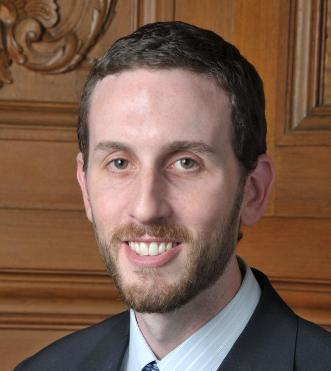
Supervisor Scott Wiener has signed a contract to star in a new porn film satirizing the city’s ban on nudity.

Variety reports that Wiener accepted a deal “in the mid three figures” to play the fictitious Supervisor Scott Cox in “Cover Up,” a film by the legendary Naked Sword productions.

Wiener replaces porn star Dale Cooper, who has left the film “to pursue other interests.”

The film, shot on location in the Castro, would violate the ban on public nudity that Wiener sponsored – but since the producers obatined permits, Wiener said, wieners are permitted.

“Besides,” he told us, “penises and anuses and perineums are good for business. And what’s good for business is good for San Francisco.”

Wiener, who is exceptionally tall and shuns the dating scene, said he expects his appearing in the film to jump-start his sex life. “A six-foot-six naked guy is, well, a six-foot-six naked guy, if you know what I mean,” Wiener told us. “And I think you do,” he added with a giggle.

Outtakes will soon be available at sfgov.org/nakedsupervisorwiener.

Archbishop announces nuptials

1

San Francisco Archbishop Salvatore Cordileone announced today that he would wed his longtime lover, Lupe, a tennis pro at the Bay Club.

“It will be a simple ceremony, as befits two humble servants in the eyes of our Lord,” George Wesolek, spokesman for the Archdiocese of  San Francisco, told us.

The marriage will take place in Connecticut, because same-sex nuptials are not at this point legal in California, Wesolek said. “Jesus casts a wide net, and we are happy to be able to include the Nutmeg State as part of our sister congregation — not that we are really sisters, which might suggest some sort of incest, which would be a sin,” he noted.

Cordileone has been an outspoken foe of same-sex marriage and has repeatedly argued that sex should only occur as part of  a procreative plan.  But Wesolek said the Catholic Church, which once sold tickets to free souls from purgatory and collaborated with the Nazis in World War II, has a history of moral flexibility.

“Plus, Lupe has a really cute ass,” he said.

 The couple plans to honeymoon in Argentina.

He will rise again: Hunky Jesus contest rescheduled

0

Soggy hordes of Dolores Park revelers were caught, mid-day-drunk, when unseemly amounts of rain stopped the Sisters of Perpetual Indulgence‘s famed Hunky Jesus contest in its tracks yesterday. No one likes a wet deviled egg.

But don’t worry heathens, you’ll still get a chance to blaspheme — the Sisters have announced that the event will be resurrected in April.

Full details on the time and place where our Lord and Savior will reincarnate as your hot masseuse wearing his cleanest bedsheet have yet to be released, but we’re confident that He will look just as frightening to your far-off relatives when you Snapchat them shots of your blanketmates WOO HOO-ing appreciatively over Him waltzing with a crucifix made entirely of dildos.

This was the 34th anniversary of the Sisters’ annual Easter celebrations. Back in the ’90s, the mayhem took the form of a 13-stop crawl of gay bars and organizations parodying (/updating) traditional Easter passion plays. Thankfully this year the rain spared the Sisters’ egg hunt and, barely, the bonnet contest. 

Here’s the full text from the press release, jussoyaknow:

Despite our best laid plans, the rain won out on Easter Sunday! After a beautiful morning with a flawless Children’s Celebration, the heavens opened and a downpour put a halt to the festivities just as the Bonnet Contest ended. 

But don’t fret! The Hunky Jesus Contest has been rescheduled! Keep an eye out for the “Second Coming” sometime in April. As soon as details are finalized they’ll be posted on www.thesisters.org

Hunky Jesuses, rejoice! And keep your loin cloths and thorny crowns at the ready- your moment in the spotlight will happen soon!


Lyft to take on Muni routes

37

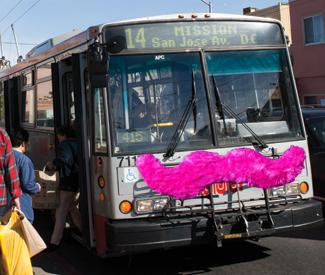
In an announcement that could transform transportation policy in San Francisco, the startup company Lyft is prepared to take over some of the most crowded and dysfunctional Muni routes in San Francisco.

Mayor Ed Lee and the Municipal Transportation Agency have approved a plan that would turn the 38 Geary, 30 Stockton, and 14 Mission over to the tech startup, City Hall sources told us. The plan is still tentative and the Mayor’s Office is trying to keep it tightly under wraps until the financial details are complete.

However, documents provided to the Guardian show that Lyft would buy at least 68 buses, including 12 articulated vehicles, at a price still to be negotiated. In exchange, the city would give the company – known for its pink mustaches on illegal taxi cabs – exclusive rights to operate on the heavily-used lines.

Lyft is developing an  app that would allow customers not only to view approaching buses but to book specific seats for an additional  price. Sensors in the bus seats will emit an electronic buzz to alert passengers that their seats had been purchased by someone else, warning them to vacate by the next stop. If the passengers remain, they will feel a sharp electric shock.

Lee’s office said the plan is similar to the market-based parking-meter program that raises the price of a space in times of heavy demand.

“The free market solves so many problems,” Christine Falvey, spokesperson for Lee, told us. “And it’s pretty clear that too many people who don’t really need to sit down or who are perfectly capable of waiting for a later conveyance are taking up space on the most crowded buses.”

Ron Conway, the venture capitalist who is Lee’s closest ally in the business community, will invest as much as $40 million in the new venture, Silicon Valley sources say.  If the trial public-private partnership works, he’s prepared to raise money to buy out Muni and turn the city’s bus system into a private operation.

“You’ve got a captive market, and demand-based pricing is what’s happening these days,” Falvey said.  “It’s just the next step.”

Live Shots: Flume at the Rickshaw Stop

0

Every time I’ve been to Popscene in the last few years, and I mean every time, I see the same guy. Deep 30s, clean cut, and so meticulously well-dressed that it’s conspicuous. Particularly conspicuous when he’s gravitating around a pair of black lingerie wearing girls dancing like they can’t drink. But I guess that mix is fairly typical of Thursdays at the Rickshaw Stop, for the weekly event that always brings in a new crowd by being an 18+ dance party, while maintaining a certain following with the promise of seeing an emerging music act that “could be the next big thing.”

Or, as the case was with Australian electronic producer Flume on Thursday night, the next Porter Robinson. As in “OMG, can you believe he’s only 20?” and the additional hype that goes with it. The crowd was sold out and eager to hear him DJ, many in the audience probably choosing the show over more established popular EDM acts playing that night like Major Lazer at the Independent or the Skrillex/Diplo (he’s everywhere) event going on for the video game convention.

“Is everyone excited to see Flume?” Dexter Tortoriello of opener Houses asked, in the cliched end of set mic break, before making the astute observation, “If we were in Australia right now, we’d be seeing him in a stadium, but instead we’re at Rickshaw Stop.”  Flume – real name Harley Streten – had a sudden rise that included knocking One Direction off the top chart spot with his self-titled debut.

Sorry to say, despite Tortoriello’s excitement, Houses performance was strangely out of place. I caught what was at the time just a duo of Tortoriello and musical-romantic partner Megan Messina at Public Works in November and, while it had been pretty awkward in a shoegazing sort of way, they showed promise and an underlying energy waiting to get out, particularly with tracks like “Reds.”

Thursday they had the addition of a drummer and a guitarist, and Messina had a lot more to do and seemed less contained by nervousness, but strangely played new, more sonorous, thoughtful, and ultimately indistinct music. It was particularly noticeable as they made a consciously slow start coming off of a pop hip-hop track DJ Aaron Axelson played, causing someone to yell out “Drums!” at the end of their first song. “It feels cold up here,” a guy in a hoodie told his friends, which usually isn’t the case at the event.

Flume came on to the sounds of chopped vocals and faux-Afropop “More Than You Thought” from his album, and I made the conscious choice to not try to get back up front to try and get a picture. The real reason is I wimped out. The aesthetic reason is there are no satisfying photos of anyone in front of Macbooks. But the jealous reason is he’s young* and handsome, as the girls in front of me who have been in love with him for soooooooo long will point out, and doesn’t really need it.

On record, Flume is entirely listenable, a palatable mix of dub grooves, steady hip-hop beats, and jazzy, spacy tweaks that occasionally recall Flying Lotus, perfectly paired with pop vocals from a range of singers. His live show aims to be just as pleasing mixing in recognizable hits like Mos Def’s “Mathmatics” and Biggie’s “Juicy.” A little easy and a little bit too much cultural appropriation for my tastes, but it worked on the crowd.

 At one point – the climax of the set really – Flume followed a version of Major Lazer’s “Get Free” (complete with a trance build and dubstep breakdown) with two of his best songs, “Insane” and “On Top.” Featuring lovely, pitch shifted vocals by Moon Holiday and the line “the only risk is that you go insane,” “Insane” is the kind of euphoric  track  you can get lost in, and the best hints at the depths Flume could delve into in the future.

But the electro hip-hop of “On Top” is the current album’s best statement of where the 20 year old is now. “All that I want in my life is the chance to do my thing,” the chorus says, and it’s entirely aspirational, before the triumphant verses kick in. “The nights forever young, it’s us that gets old,” is basically saying YOLO, but comes off a little closer to “Carpe Diem.” Or whatever is Latin for “night.”

*As his suburban origin story goes, he learned to make music from software he found in a cereal box at an age when people like me were trying to figure out masturbation.

Foreign imports and American heroics: new movies!

1

Hollywood unfurls the latest adaptation of Stephenie Meyer’s ever-popular YA fiction (the mercifully vampire-less The Host), as well as Tyler Perry’s Temptation: Confessions of a Marriage Counselor, the multi-hyphenate mogul’s 5628th film. (One statement in the previous sentence is false.)

Plus: check out Dennis Harvey’s dual review of a pair of refreshingly low-key foreign imports, The Silence (from Germany) and Starbuck (from Canada, set in Quebec). There’s also an American-set movie from singular French director Quentin Dupieux, Wrong, opening at the Roxie; check out my review here.

More reviews, including a surprisingly positive take on toys-gone-wild sequel GI Joe: Retaliation, after the jump.

From Up on Poppy Hill Hayao (dad, who co-wrote) and Goro (son, who directed) Miyazaki collaborate on this tale of two high-school kids — Umi, who does all the cooking at her grandmother’s boarding house, and Shun, a rabble-rouser who runs the school newspaper — in idyllic seaside Yokohama. Plans for the 1964 Olympics earmark a beloved historic clubhouse for demolition, and the budding couple unites behind the cause. The building offers a symbolic nod to Japanese history, while rehabbing it speaks to hopes for a brighter post-war future. But the past keeps interfering: conflict arises when Shun’s memories are triggered by a photo of Umi’s father, presumed lost at sea in the Korean War. There are no whimsical talking animals in this Studio Ghibli release, which investigates some darker-than-usual themes, though the animation is vivid and sparkling per usual. Hollywood types lending their voices to the English-language version include Jamie Lee Curtis, Christina Hendricks, Ron Howard, and Gilllian Anderson. (1:31) (Cheryl Eddy)

http://www.youtube.com/watch?v=bedn8NjyirY

GI Joe: Retaliation The plot exists to justify the action, but any fan of badass-ness will forgive the skimpy storyline for the outlandish badassery in GI Joe: Retaliation. Inspired by action figures and tying loosely to the first flick, Retaliation starts with a game of “secure the defector,” followed by “raise the flag,” but as soon as the stakes aren’t real, the Joes outright suck. They don’t have “neutral,” which is maybe why a mission to rescue and revive the Joes as a force is the most ferocious fight that ever pit metal against plastic. The set pieces are stunning: a mostly silent sequence with Snake Eyes (Ray Park) and Jinx (Elodie Yung) on a mountainside will leave the audience gaping in its high speed wake, and a prison break featuring covert explosives is nonstop amazing. You’ll notice an emphasis on chain link fences and puddles (terra nostra for action figures) and set pieces conceived as if by kids who don’t have a concept of basic irrefutable truths like gravity. It’s just that kind of imagination and ardor and limitlessness that makes this Joe incredible, memorable, and a reason to crack out your toys again. (1:50) (Sara Maria Vizcarrondo)

http://www.youtube.com/watch?v=VnQPnXbj-RY

Mental Toni Collette is a batshit Mary Poppins in this side-splitting comedy about one family and Australia’s identity as the world’s Island of Misfit Toys. According to Shaz (Collette), she and her pit bull Ripper (pronounced “Reippah”) came to the town of Dolphin Head to fulfill their destiny. It’s there philandering Mayor Moochmore (a brilliant Anthony LaPaglia) employs her informally as a “babysitter” (the film’s biggest plot hole). Moochmore’s a pathetic excuse for a dad but he needs someone to take care of his five daughters, since he’s finally pushed his wife into nervous-breakdown mode. Everything in Dolphin Head exists on a fulcrum: when Shaz takes the girls to climb a mountain one asks, “What’s the point of climbing to the top?”, and Shaz answers, “Not being at the bottom.” Mental is not a far cry from the director’s last big import, Muriel’s Wedding, the 1994 film that made Collette a star. Everyone’s nuts here, the message goes, but if we’re confident enough in ourselves, we can sway the rest into seeing how our insanity is better than theirs — or at least strong enough to withstand sharks, knife fights, and pit bulls. Good times, mate, good times. (1:56) (Sara Maria Vizcarrondo)

The Sapphires The civil rights injustices suffered by these dream girls may be unique to Aboriginal Australians, but they’ll strike a chord with viewers throughout the world — at right about the same spot stoked by the sweet soul music of Motown. Co-written by Tony Briggs, the son of a singer in a real-life Aboriginal girl group, this unrepentant feel-gooder aims to make the lessons of history go down with the good humor and up-from-the-underdog triumph of films like The Full Monty (1997) — the crucial difference in this fun if flawed comedy-romance is that it tells the story of women of color, finding their voices and discovering, yes, their groove. It’s all in the family for these would-be soul sisters, or rather country cousins, bred on Merle Haggard and folk tunes: there’s the charmless and tough Gail (Deborah Mailman), the soulful single mom Julie (Jessica Mauboy, an Australian Idol runner-up), the flirty Cynthia (Miranda Tapsell), and the pale-skinned Kay (Shari Sebbens), the latter passing as white after being forcibly “assimilated” by the government. Their dream is to get off the farm, even if that means entertaining the troops in Vietnam, and the person to help them realize that checkered goal is dissolute piano player Dave (Chris O’Dowd). And O’Dowd is the breakout star to watch here — he adds an loose, erratic energy to an otherwise heavily worked story arc. So when romance sparks for all Sapphires — and the racial tension simmering beneath the sequins rumbles to the surface — the easy pleasures generated by O’Dowd and the music (despite head-scratching inclusions like 1970’s “Run Through the Jungle” in this 1968-set yarn), along with the gently handled lessons in identity politics learned, obliterate any lingering questions left sucking Saigon dust as the narrative plunges forward. They keep you hanging on. (1:38) (Kimberly Chun)

http://www.youtube.com/watch?v=F1l-88FcUVU

The Spanish Mirth: The Comedic Films of Luis Garcia Berlanga Noted for his dexterity in outwitting the vigilant censors of Franco’s regime while getting away with subversive themes, Berlanga’s long career outlasted the despot’s by several decades. His social satires are showcased in this Pacific Film Archive retrospective of seven features that run a gamut from parodies of Spanish cultural stereotypes (as when villagers hungry for postwar economic-incentive dough try to look like the essence of tourist-friendly quaintness in 1953’s Bienvenido, Mr. Marshall!) to literal gallows humor (1964’s The Executioner) and kinky black comedy (Michel Piccoli as a mild-mannered dentist carrying on an “affair” with a realistic sex doll in Tamano Natural, a.k.a. Life Size). Once Franco finally kicked the bucket, the frequently prize-winning filmmaker let loose with 1978’s anarchic La Escopeta Nacional, a.k.a. The National Shotgun, leaving no formerly sacred cow unmilked. He remained active until a few years before his 2010 death at age 89. The PFA series (running March 29-April 17) offers archival 35mm prints of these movies that remain esteemed at home but are relatively little-known today abroad. Pacific Film Archive. (Dennis Harvey)

Calvin Trillin: One issue that seems to be getting bipartisan support in the Senate

6

When Cruz begins a crude bombard,

He speaks with reckless disregard.

So even those who share his views

Tend not to want to schmooze with Cruz.

Calvin Trillin: Deadline Poet: The Nation4/8/2013


Foxygen works its uncanny magic at Brick and Mortar Music Hall

0

I experienced a strange phenomenon in the few days leading up to Tuesday’s sold out concert at Brick and Mortar Music Hall. The first in a series of strange events occurred in a coffee shop. I overheard one barista say to another, “Put on that Foxygen song.”

“Who?” she asked.

“It’s like ‘oxygen’ but with an ‘F.’”

The next day, one of my favorite websites listed Foxygen’s “Shuggie” as the “Song of the Day,” and later that evening, a friend mentioned the band in a conversation that had very little to do with music.

These coincidences probably mean nothing other than the fact that the band, whose second album, We Are the 21st Century Ambassadors of Peace & Magic, came out in January, are taking off. But I found something strange in the repetitions, maybe a reflection of the fact that there seems to be a certain uncanniness to Foxygen in the first place.

http://www.youtube.com/watch?v=KtdWGGpvY1s

At first listen, the band struck me as an almost unsettling echo of classic psychedelic rock. Even the album title bears striking resemblance to the names of 45-year-old concept albums such as The Kinks are the Village Green Preservation Society and Sgt. Pepper’s Lonely Hearts Club Band. And the parallels to the Kinks and the Beatles do not stop there. “San Francisco,” with its sparkling circus instrumentals and soft tinny vocals sounds like any song off of Village Green, and a line about introductions in the album opener “In The Darkness” feels like a direct nod to the album opener of Sgt. Pepper’s.

And while this makes for a pleasant listening experience – who doesn’t want more of the Kinks and the Beatles? – I found the derivativeness slightly problematic.

As soon as the band came onto the small stage at Brick and Mortar, though, that didn’t matter. Wearing embroidered frocks, suede coats, and ruffled blouses, costumes to complement the sound, the band played through a long set that, for all of its performative aspects, never felt forced. Each tune, from the feverishly noisy title track to the wistful “No Destruction,” poured out of the five-member band with ease.

Sam France, the diminutive frontperson, is a rockstar from a bygone era. Within the first few songs he had descended into the audience, shed his fur-lined coat to reveal a jean jumpsuit, and invited us all bowling. With beady eyes that shifted their focus in a manner reminiscent of the quietly plotting villain in any psychological thriller and fingers that moved as if he was casting a spell, he exhibited an oddly magnetic breed of charisma. And he had done all this while showing expert vocal range and control. He had the unique ability to sound both like Lou Reed to Nico.

And although the band’s music and style would seemingly make them untouchable, the venue and the familiarity on stage gave the performance an air of intimacy. While France’s swagger commanded the show, Jonathan Rado, with whom France formed the first incarnation of the band at age 15 (seven years ago – these guys are young), played a quietly endearing counterpart. Their interactions, including Rado muttering “asshole” into his mic, reminded us that though they perform like rock stars, they’re also kids that want to have a good time. And that kind of fun is contagious.

At the end of the night, Rado thanked the audience. “We have so many friends here,” he said and then corrected himself. “I mean, you’re all our friends.” And, with the help of that uncanny magic that seems to characterize the group, that felt true; for reasons that go beyond its restitching of classic rock, Foxygen feels like a band you’ve known and loved for a long time.

Privacy and electronic tolls on the Golden Gate Bridge

Now that human toll collectors have vanished from the Golden Gate Bridge, motorists can expect their license plate numbers to be recorded for fare collection. Yet one aspect of this shift to receive little ink in recent media reports is the privacy implications of the new electronic system.

Slowing without stopping may improve traffic flows, but it also means motorists’ movements are tracked by default. Databases logging bridge-crossings can be mined for information: Subpoenas for FasTrak and similar electronic toll collection systems are on the rise, even for purposes such as divorce cases.

As the Electronic Frontier Foundation’s Senior Staff Technologist Seth Schoen noted in a recent blog post: “All of the bridge’s electronic payment options track the identities of those paying the toll, and all represent a loss of privacy for visitors or commuters entering San Francisco by car.” (Full disclosure: Schoen is a friend and former coworker.)

As the Wall Street Journal noted last year, it’s part of a wider trend of privacy erosion: “Storing and studying people’s everyday activities, even the seemingly mundane, has become the default rather than the exception.”

To weigh your bridge-crossing options from a privacy perspective, read Schoen’s full blog post here.

Bow down to the robo-proletariat!

0

 
Radically refashioning a host of reactionary fashions, La Pocha Nostra Live Art Laboratory puts all borders up for grabs. The international performance art troupe returns to San Francisco Sat/30 for the US premiere of La Pocha Nostra’s latest creation, Corpo Insurrecto 3.0: The Robo-Proletariat.
 
A performance project by Guillermo Gómez-Peña, Roberto Sifuentes, and Erica Mott (with LPN associates Brittany Chavez, Rico Martin, Marcos Nájera, Esther Baker Tarpaga, and Allison Wyper), Corpo Insurrecto 3.0: The Robo-Proletariat asks the time-old question: What might you discover at the intersection of “an aging deviant shaman, a Neo-Aztec priest making romantic religious tableaux with a goat, a flamenco drag king, and an Oil Spill Madonna”?


 Audience members are invited to help figure this one out, in corporeal dialogue with the performers, in what LPN calls a “wonderfully clumsy but efficient form of radical democratic practice.” The piece will also be an exactingly strange multidisciplinary exploration of the forms ideology and power take on and through the body. LPN’s exuberant Chicano cyborg/cyberpunk sensibilities brilliantly limn the boundary lines defining the (secretly amorphous) “truths” and “identities” of masscult’s virtual reality show — those hipster beards concealing the voracious colonial maw of capitalist society.
 
In related news: In coming back from Mexico City to home-base San Francisco, LPN’s artistic director — artist/intellectual and border-crosser extraordinaire, Gómez-Peña — returns too from the border town of illness, from whence he is steadily extricating himself and about which he has written powerfully and eloquently here.

Corpo Insurrecto 3.0: The Robo-Proletariat

Sat/30th, 8pm, $15-20

435 23rd St, SF

http://theperformanceartinstitute.org, www.brownpapertickets.com/event/350355